Tag: no-latest

  • Graham Platner, isolated, defies Maine Democrats as they try to hatch a plan

    Graham Platner, isolated, defies Maine Democrats as they try to hatch a plan

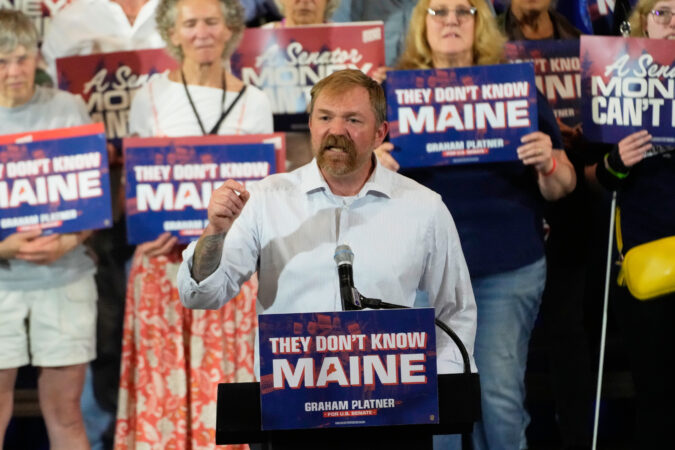
    Increasingly isolated from the Democratic Party, Graham Platner is holed up at his home in rural Maine, navigating the likely end of his once-surging campaign for the U.S. Senate, as establishment fury over his prolonged exit grows louder.

    Platner’s campaign team held a call Wednesday afternoon in which campaign leadership sounded resigned to the idea that the Democrat’s bid could be ending soon, said a Democrat close to Platner. Campaign staff were told that Platner would speak about the future of his run Wednesday night.

    He could drop out of the race soon, probably by prerecorded video, said a second person close to Platner’s team who, like others in this article, spoke on the condition of anonymity to avoid alienating fellow Democrats in what has become an increasingly tense situation.

    One of Platner’s key advisers, Morris Katz, flew up to Maine from New York on Tuesday to discuss his withdrawal, said the person. But Platner, whose political support has evaporated since he was accused of sexual assault on Monday, has struggled with the decision, people close to him said, and has said he would like input on the replacement process, leaving the timing of any announcement unclear.

    “It is him who is wanting to hold on,” the first Democrat said. “He is having to come to terms that his dream is dead. The show is over, this is done.”

    Until Platner pulls the plug, however, the Democratic Party is at an impasse, unable to fully refocus on its uphill battle to defeat five-term Republican Sen. Susan Collins. The race is critical to Democrats’ longshot bid to retake the Senate, where the party must flip four seats held by Republicans to win back control in November.

    That frustration is now spilling into the public.

    On Tuesday night, the Maine Democratic Party released a confrontational video reiterating its call for Platner to drop out so it could select a replacement candidate. If Platner withdraws by Monday, the party has until July 27 to submit a new nominee – though it remains unclear how that decision would be made.

    “Unfortunately, Graham Platner’s team has repeatedly reached out to us in an attempt to put their thumb on the scale of what this process looks like,” Devon Murphy-Anderson, executive director of the Maine Democratic Party, said in the video. “We have repeatedly reiterated to Graham Platner’s team that they have no role in determining our next Democratic nominee for the U.S. Senate.”

    That posture incensed Platner’s more dedicated supporters, some of whom have felt aggrieved by how quickly Democrats turned on him after the sexual assault accusation and who argue that any replacement candidate must be aligned with the populist politics that fueled his rise.

    Party officials are sensitive to the fact that, despite Platner’s downfall, they need to keep the political movement that emerged around him intact in order to win.

    “It is important that someone carry forward the movement that has been built here of everyday working-class people who are fed up with a system in Washington that is so broken,” Maine House Speaker Ryan Fecteau said in an interview. “There are a number of people in Maine politics who share the same views as Graham Platner, who have the same message as Graham Platner, who can carry this work forward.”

    A spokesperson for Platner denied that “the campaign tried to ‘put its finger on the scale’” of the replacement process. But Platner is seeking to influence it as he navigates his exit – and his decision not to drop out immediately has divided many within his campaign.

    Platner’s attempt to continue a campaign detonated by his own alleged behavior has not only exasperated some Maine Democrats but also dumbfounded them.

    “People who have made their political careers decrying a rigged political system are now trying to rig the political system,” quipped a Democratic operative who works in Maine.

    National Democrats, led by the Democratic Senatorial Campaign Committee, have said that they will not spend money in Maine if Platner remains the nominee.

    But their role in selecting his successor is minimal, beyond supporting the Maine Democratic Party’s currently unknown plans for selecting a replacement should Platner drop out. There is belief within the committee that any nominee, at this point, will be stronger than a scandal-plagued Platner, said one person familiar with the committee’s thinking.

    Since he launched his campaign last summer, Platner’s political rise and his outsider message have invigorated Maine Democrats, who have long failed to find a candidate who can defeat Collins, despite the state’s Democratic lean.

    Many voters were willing to overlook earlier controversies that plagued the charismatic 41-year-old oyster farmer and military veteran, including old social media posts where Platner downplayed sexual assault and made other inflammatory comments; a tattoo resembling a Nazi symbol that he had covered up; sexually explicit text messages sent to other women after he married; and accusations of violent behavior by ex-girlfriends.

    Then on Monday, a woman who used to date Platner said he entered her home intoxicated one night in late 2021 and forced himself on her as she told him to stop.

    On Tuesday, a second ex-girlfriend told The Washington Post that Platner repeatedly removed protection without her consent when they were having sex. The campaign called the claim “categorically false and politically motivated.”

    Unlike some politicians engulfed by scandal, Platner retains a core of close advisers who have stuck by him since Monday, allowing him to hold out against calls for his withdrawal.

    In April, when then-Rep. Eric Swalwell (D-California) was accused of sexual assault by a former staffer amid a run for governor, top campaign staff immediately quit and his campaign imploded within days. Platner, by contrast, continues to operate with the inner circle of his campaign from his home in the small coastal town of Sullivan.

    The scene was quiet there Wednesday morning. Several cars were parked in Platner’s driveway near a pile of chopped wood and a boat covered in a green tarp. A few reporters were across the narrow road.

    As the public awaits word from Platner about his plans, longtime friends say this has been a difficult moment, with one even suggesting that Platner could continue to fight.

    “Everybody says they are pulling their support. Is that truly what they are going to do? Are they just going to let Susan Collins win?” the friend said. “That seems highly unlikely to me because we need Maine to flip the Senate.”

    That is not a universal view, however. Some people who have backed Platner for months, even through his many scandals, are too disgusted with him to continue their relationship.

    “At this point, he knows I know he’s lied to me directly too many times,” said a top Maine Democrat who has been close to Platner. “I don’t think he has the shame to speak directly to me.”

    Joanna Slater in Sullivan, Maine, contributed to this article.

  • Kentucky Gov. Andy Beshear asks Sen. Mitch McConnell to give a public update on his condition

    Kentucky Gov. Andy Beshear asks Sen. Mitch McConnell to give a public update on his condition

    Kentucky Gov. Andy Beshear is directly asking Sen. Mitch McConnell, the state’s most powerful figure in Congress, to disclose more about his condition after three weeks of silence from the 84-year-old since he was hospitalized in Washington.

    The letter released Wednesday from Beshear, a Democrat who is considered a potential presidential candidate in 2028, to the former Senate Republican leader says, “Kentuckians have grown increasingly concerned about the current state of your health and well-being, and ability to hold office.”

    McConnell, whose physical condition has visibly declined in recent years, was hospitalized June 14. He has not released a public statement, photos, or videos since. Aides have disclosed nothing specific about his condition, other than to say last week that McConnell “continues to improve, and is working closely with his staff on Kentucky and Senate matters while the Senate is out of session.”

    That lack of detail has fueled rampant speculation about his prognosis and whether he will return to the Senate when it reconvenes next week. The firestorm was enough that Republican Senate leaders on Tuesday made public statements saying they had talked to McConnell and that he was alert and discussing current events.

    McConnell is retiring at the end of his term in January, and the campaign to elect his successor already is underway. Kentucky’s Senate succession law, which Republican legislators have twice changed during Beshear’s tenure, does not give the governor a role in picking a temporary successor should McConnell’s seat become vacant before his term ends.

    Under the latest change in 2024, if the seat becomes vacant before Aug. 3, there would be a special election to pick a replacement, perhaps held concurrently with the general election in November. The special election winner could take office nearly immediately. The general election winner would be sworn in as part of the new Congress in January.

    If the seat were vacated after Aug. 3, there would be no time under the law for a special election and the seat would remain vacant until January.

    Beshear ended the letter by wishing McConnell “a safe and speedy recovery.”

  • The Vances added a chicken coop to the vice president’s residence. We had questions.

    The Vances added a chicken coop to the vice president’s residence. We had questions.

    Vice President JD Vance and his family are raising chickens at their residence at the U.S. Naval Observatory. The family has a dozen hens pecking inside a custom-made coop on a 72-acre federal observatory — but many other details about their experiment in raising chickens are unknown.

    The coop was designed to mirror the Queen Anne-style architecture of the vice president’s residence at Number One Observatory Circle. As such, the henhouse is not cheap: It cost between $100,000 and $120,000, according to the owner of the North Carolina company that built the structure. But U.S. taxpayers didn’t foot the bill. The coop was donated by the company.

    So who exactly will be raising the hens? And why are the Vances taking on this project? For eggs? For educational purposes? For feathered pets? A spokesperson for Vance did not respond to multiple emails seeking comment.

    The Washington Post turned to former and current backyard chicken keepers to gather insights on what may be going on at Number One Observatory Circle. We also talked to the guy who built the pricey coop. We even checked with a city official to discuss whether the Vances are following the proper protocols to raise hens in Washington.

    Who built the Vances’ coop?

    The henhouse and run were custom-built by Carolina Coops, which specializes in high-end structures for those looking to pamper their backyard birds. Owner Matt DuBoise said Fox & Friends Weekend co-host Rachel Campos-Duffy, wife of Transportation Secretary Sean P. Duffy, recommended him to the Vances. DuBoise had built a coop for the Duffys.

    The Vances’ henhouse is elevated — about 2 feet off the ground — and situated inside a shed that is protected from the elements, DuBoise said. The design is such that the owner does not have to walk through “chicken droppings and chicken bedding” to tend to the birds. The keeper can access the hens via interior shed doors. The attached run is predator-proof, DuBoise said, and includes a solid roof, which helps prevent avian flu from spreading to the flock, as it can be “transmitted with migratory birds flying overhead,” he said.

    Why are the Vances raising chickens?

    In the run-up to the 2024 presidential election, Vance raised alarms about the high cost of eggs, which was apparently affecting his family’s budget. He and his wife, Usha, have three children. At a supermarket stop in Reading, Pa., Vance turned to his kids and said, “These guys actually eat about 14 eggs every single morning. Is that right?”

    “Yeah!” one child responds, off-camera.

    The family’s daily consumption is probably a joke, but it highlighted a possible reason the Vances wanted a coop: In their prime, the second family’s 12 hens may each lay up to six eggs a week, nearly enough to cover the Vances’ daily needs. Like many hen keepers, the Vances will have to figure out what to do with their eggs: Eat some, give away some, maybe even donate some to a food bank that will accept them.

    The addition has led to speculation that there may be political motivations behind the flock’s appearance. It’s a theory that resonates with Danny Bowers, who keeps 19 chickens on a suburban property in Utah County, Utah. Bowers, who uses they/them pronouns, points out that some conservatives have embraced the values espoused by “trad wife” influencers, many of whom raise chickens.

    Who will do the actual work of raising the hens?

    It’s not clear, but Usha Vance, who is due to deliver the family’s fourth child later this month, may be off the hook for a little while — numerous state health departments say pregnant women should avoid handling chickens, especially chicks, because of the risk of salmonella infection.

    DuBoise said he expects the family to take a hands-on approach with the chickens. When he was at the Naval Observatory, installing the coop, the Vance children were “very, very active, asking great questions,” DuBoise said. “That’s always a great sign when the kids are very curious and wanting to get involved.”

    Is it legal to raise chickens in D.C.?

    Yes, but chicken keepers must meet some requirements before the city will issue them a permit. Every coop in Washington must be located at least 50 feet from a building “used for human habitation,” according to regulations. A henhouse and run must also be at least 250 feet from any property line or, failing that, the owners must get written permission from all neighbors located within 100 feet of their property line.

    There’s also a rule that you can’t keep roosters, said Tony Tomelden, the D.C. hospitality veteran who owns the Pug on H Street NE. Tomelden and his family raised chickens in their Brookland backyard for years, starting in the 2010s. Tomelden said it’s not easy to determine whether your chicks are cockerels (male) or pullets (female), unless you’re trained to know the difference. It’s only later, when a cockerel matures into a rooster, that owners learn — the hard way.

    “What they say is, ‘You’ll know it’s a rooster when it lets you know,’” Tomelden said. “And so one of them did.”

    I tried to confirm the regulations with a few people at D.C. Health. No one returned my calls or responded to my emails. But one city official said D.C. regulations don’t typically apply to federal property. He spoke on the condition of anonymity because he wasn’t authorized to talk to the media.

    But locals don’t follow the rules, either, the official said. “I know we have plenty of people in the city that are raising chickens on properties that don’t meet [the] requirements,” he said.

    Are there benefits to raising hens aside from eggs?

    Backyard keepers often develop an emotional attachment to their chickens. Take Clara Cho. Her parents, Yon and Francie, have raised hens at their suburban New Jersey home, outside New York City, since Clara, now 27, was a senior in high school. Clara had grown up with dogs and cats.

    The chickens “weren’t as affectionate as the cats or the dogs,” Clara remembered. “But they’d come for pets, and they would come out when you called them from the coop and everything. It was definitely sad when they passed away.”

    Bowers, the Utah chicken keeper, thinks of their hens, especially a bearded white Silkie bantam named Karen, almost as emotional support animals. When Bowers is having a particularly bad day — they suffer chronic pain from several autoimmune disorders — they will cuddle up with Karen.

    “You wouldn’t think a chicken could be such a comfort,” Bowers said. “But all I know is she’s 6 years old, and she better live to be, like, 20.”

    Is this the first time a president or vice president has raised livestock in office?

    Plenty of presidents have had livestock at the White House, including horses and cows, but the White House Historical Association found only one instance of a president raising chickens.

    According to White House chief usher Irwin Hood “Ike” Hoover’s 1934 memoir, Forty-Two Years in the White House, an admirer sent two dozen live chickens to the White House during Calvin Coolidge’s presidency in the 1920s. Coolidge apparently kept the chickens near a mint patch that Theodore Roosevelt started for his mint juleps.

    The White House Historical Association has not been able to verify the account from other contemporary sources.

    DuBoise, however, believes Vance will be the first to raise chickens at the vice president’s residence.

    Will the Vances save money on eggs by raising their own hens?

    It depends on how you crunch the numbers.

    The Post’s Unearthed columnist Tamar Haspel raised chickens for 15 years with her husband, Kevin, on their property in Cape Cod, Mass. If you read Haspel’s book To Boldly Grow, you quickly learn she and Kevin know how to stretch a dollar when it comes to raising birds.

    I asked Haspel to calculate how much it would cost the Vances to produce a dozen eggs, based on the best information we could gather. She figured a laying hen would produce about 24 dozen eggs a year, which, based on feed costs alone, would come to $1.46 per dozen. That’s more than 70 cents cheaper than the average price per dozen of large white Grade A eggs, which stood at $2.19 in May.

    But that price doesn’t factor in expenses such as water, supplemental feed, bedding, and the cost of the chicks. Nor does it factor in the price of the fancy coop, which the Vances did not pay for, but most Americans would. Haspel said that if you amortize the coop over the remaining months of the Trump administration, it would add $139 to every dozen eggs. If you amortize the structure over 10 years, it adds $35 to every dozen eggs.

    In other words, it wouldn’t be a bargain.

    “If you get a coop like that,” Haspel wrote via email, “don’t ever expect to make up the money in eggs. But mostly that’s not why people get chickens.”

  • George Hutchinson, the Supreme Court’s last official crier, dies at 102

    George Hutchinson, the Supreme Court’s last official crier, dies at 102

    George Hutchinson’s words were far from the most important spoken during Brown v. Board of Education. But they were the first.

    With a cry of “Oyez, oyez, oyez,” Mr. Hutchinson announced the arrival of the justices and gaveled the court to order, as he did for virtually every Supreme Court case from 1952 to 1962.

    Mr. Hutchinson, who died June 14 at 102, was the last crier of the U.S. Supreme Court, tasked with carrying out ceremonial duties that were later turned over to the court marshal.

    His tenure as crier coincided with one of the most momentous periods in the court’s history, a time when the justices extended constitutional protections to Mexican Americans, refused to review the espionage convictions of Julius and Ethel Rosenberg, and, in Brown v. Board, held that segregated schools were “inherently unequal” and unconstitutional.

    As court crier, Mr. Hutchinson opened many of those consequential moments and, as if in a high school cafeteria, shepherded discreet notes to the justices, including messages sent from one end of the bench to the other.

    Decades later, he provided a window into the day-to-day activities of one of the government’s most secretive bodies, said Clare Cushman, a historian for the Supreme Court Historical Society. Mr. Hutchinson could speak about the court’s Christmas parties or the carpenter shop in its basement, or recall the way soldiers were deployed to the court building following the Japanese attack on Pearl Harbor.

    “The big pieces are always recorded,” Cushman said, “but the little pieces, no.”

    Mr. Hutchinson was 15 when he joined the court in 1938 as a page, one of the knicker-clad young people who would assist the justices. There were two requirements: You had to be short, according to Mr. Hutchinson, who grew to 5-foot-8, and you had to have a financial need.

    Mr. Hutchinson’s father had died when he was an infant, and his meager page’s salary helped support his mother and sister. He spent his afternoons in the Supreme Court, running books and water to the justices, before being drafted into the Army at age 19, dispatched to Europe in the final months of World War II.

    When he came home, he rejoined the court, working out of the marshal’s office and eventually taking the job of crier, which dates to the Supreme Court’s first meeting in 1790. He was given a handwritten script — the words of the opening proclamation, which concludes, “God save the United States and this honorable court” — as well as a distinctive gavel.

    “There was no handle. All it was was the clonk,” he recalled in a 2019 interview. “I said, ‘Where’s the handle?’ They said, ‘This is tradition. You’ve got to use this.’ So for 10 years I was banging like this.”

    As crier, Mr. Hutchinson oversaw the pages, a group that grew to include Charles V. Bush, the first Black Supreme Court page, who was hired in the aftermath of Brown v. Board at the urging of Chief Justice Earl Warren.

    Mr. Hutchinson worked alongside the pages while assuming a sneakier job within the court each October. Many of the justices were baseball fans and wanted updates on the World Series, said Vance Morrison, a former page who as a teenager worked under Mr. Hutchinson. They would pass a paper to Mr. Hutchinson or a page, who would run to the offices, listen to the radio and quietly report the score.

    “We just worked with discretion,” Morrison said.

    In October 1960, as the Supreme Court considered the conviction of a man who had failed to comply with the House’s anti-communist investigations, Mr. Hutchinson helped Justice Potter Stewart follow along to Game 7 of the World Series, providing score updates every inning and, as the game neared its end, every half-inning. He delivered his final update to Stewart after Bill Mazeroski hit a walk-off home run, giving the Pirates the win over the Yankees.

    “His eyes lit up and he sent the note down to the court,” Mr. Hutchinson recalled.

    Mr. Hutchinson also shared a bond with Justice Felix Frankfurter, according to his daughter, Sara Hutchinson. One day, he was unexpectedly called into the justice’s office to serve as a witness as Frankfurter finalized his will.

    “He said, ‘Have you ever faced death?’ I said, ‘What?’ I had to think about it,” Mr. Hutchinson recounted. “‘I was in the service in World War II.’ He laughed, he said, ‘Here,’ and he threw me his will.”

    George Edward Hutchinson, a fourth-generation Washingtonian — according to his family, two of his relatives were at Ford’s Theatre the night of Lincoln’s assassination — was born Aug. 31, 1923. His father was a lawyer, and his mother was a schoolteacher.

    While working at the Supreme Court, Mr. Hutchinson went to school part time, earning a law degree at George Washington University, and ultimately becoming a member of the Supreme Court Bar.

    After leaving the court in 1962, he became the marshal and then the clerk of the U.S. Court of Customs and Patent Appeals, where he was charged with saying “Hear ye” instead of “Oyez.” Two decades later, when the court merged with the Court of Claims to become the Court of Appeals for the Federal Circuit, he was named its first clerk.

    Mr. Hutchinson retired from federal service in 1985 to join the law firm Finnegan, Henderson, Farabow, Garrett & Dunner, where he remained on staff until 2023, the year he turned 100.

    Few people could recount the customs and procedures of the American court system like Mr. Hutchinson, said James Barney, managing partner at the firm.

    “I always viewed George as a living history,” Barney said.

    His death, at home in Arlington, Va., was confirmed by his daughter, his only immediate survivor. Mr. Hutchinson was predeceased by his wife of 63 years, Dorothy U. Hutchinson, and by another daughter, Carol Hutchinson.

    In 2018, 80 years after he joined the Supreme Court as a page, Mr. Hutchinson returned to the courtroom as a visitor. “He remains a member in good standing of our bar,” Chief Justice John G. Roberts Jr. said from the bench. “Mr. Hutchinson, welcome back!”

  • Justice Department threatens top election officials over noncitizen voting

    Justice Department threatens top election officials over noncitizen voting

    The Justice Department sent letters to all 50 states and the District of Columbia on Tuesday threatening criminal prosecution of top election officials if ballots cast by noncitizens were counted in upcoming elections.

    The letters arrived in the midst of an ongoing campaign by President Donald Trump and his allies to tighten election rules to prevent a problem that doesn’t exist: widespread noncitizen voting in American elections.

    The effort has, however, continued to sow doubt and distrust in the electoral process, most notably among the president’s base of supporters. And his proposals could have the effect of making it more difficult for eligible voters to cast their ballots — an outcome that many voting-right activists say is the president’s real goal.

    The letters sent Tuesday came from Harmeet Dhillon, who runs the Justice Department’s civil rights division. They are largely identical, according to multiple copies obtained by The New York Times. The seven-page letters detail a host of federal election laws that prohibit noncitizens from voting in elections — laws that have been clear for decades.

    “Any election officer, including the chief election officer of the state, who knowingly retains noncitizens on the state’s” voter list “or facilitates noncitizens in receiving and casting ballots could be subject to criminal liability,” Dhillon wrote.

    The letters asked the election officials to respond to the Justice Department “within five days” with details on how their states intended to comply “with these federal laws both at the state and local level and how the Department can assist in those efforts.” It is unclear what would happen if a state does not respond in five days, as the letters are not subpoenas requiring a response.

    Lt. Gov. Deidre Henderson, the top election official in Utah and a Republican, expressed frustration with the Justice Department’s tenor and tactics.

    “Got another love letter this morning from the DOJ sprinkled throughout with threats of criminal prosecution,” Henderson wrote on social media. “I’m sure I’m not the only chief election officer of a state who is being targeted for following state and federal laws by resisting DOJ’s demands for private voter data that have thus far been ruled illegal by at least a dozen courts. This is truly bizarre behavior by the federal agency that is supposed to be protecting civil rights.”

    Adrian Fontes, the Democratic secretary of state in Arizona, criticized the efforts by the Justice Department as politically motivated.

    “It is insulting to insinuate that the good people at our county recorders’ offices across the state are not doing their jobs correctly,” Fontes said. “Arizona election officials have always worked to ensure that only eligible citizens are registered to vote, and we will continue following Arizona law — not directions that come from political rhetoric or intimidation.”

    Justice Department officials have said their purpose in seeking voter roll data is to ensure compliance with federal law requiring states to maintain accurate voting rolls. Some voting-rights advocates have speculated that the department’s specific aim is to look for evidence of noncitizen voting or use voter roll data to challenge future election results.

    Kiersten Pels, a spokesperson for the Justice Department, confirmed that letters were sent to officials in all 50 states and the District of Columbia, seeking “voluntary compliance in a timely manner with their obligations under federal law to ensure only citizens vote in federal elections.”

    David Becker, a former voting rights lawyer for the Justice Department who now runs the Center for Election Innovation and Research, a nonpartisan group that works to build confidence in elections, said that the letters from Dhillon look like a performative display by the Justice Department to show it is working aggressively on one of the president’s priorities despite little success.

    “This is what panic and desperation looks like,” Becker said. “They’ve had 18 months to find evidence of a crime that was never committed, and found nothing. And now they fall back on crude and transparent bullying tactics. They sent these letter to several, perhaps all states, with no specific evidence of a crime.”

    He added that “the election officials I’ve spoken with aren’t intimidated, and are seeing these empty threats for what they are.”

    The Justice Department also sent letters to three cities in Michigan — Detroit, Lansing and East Lansing — stating that federal election monitors from the department would be going to the areas for the upcoming primary election. The department’s stated reasons were observations from the 2024 election, citing a lack of provisional ballots in at least one polling location and voting machines that were not operational in multiple polling locations.

    Michigan election officials roundly rejected both the claims from the Justice Department and the reasons for sending monitors. Janice M. Winfrey, the city clerk in Detroit, wrote in response Tuesday that the Justice Department had made “false assertions that form a baseless conclusion that then becomes the pretext for additional monitoring of Detroit elections.”

    Winfrey added that “according to our records, there were no representatives from the Department of Justice, and if so, they did not comply with regulations requiring them to identify themselves and sign in with supervisory staff at the polling place.”

    For years, Trump has claimed without evidence that noncitizens voting in American elections have benefited Democrats. After the 2016 election, which he won, he claimed that as many as 3 million ballots in California had been cast by noncitizens.

    Since returning to office, Trump has led a relentless effort to prove his claims using the levers of the federal government.

    None of those investigations has provided any evidence of widespread noncitizen voting. An initial review in January of nearly 50 million voter registration records by the Department of Homeland Security referred roughly 0.02% of the names processed for further investigation.

    This article originally appeared in The New York Times.

  • Trans people are fleeing red states for Seattle. The city can’t keep up.

    Trans people are fleeing red states for Seattle. The city can’t keep up.

    SEATTLE — Crow Harmony never felt at ease living in Florida as a transgender guy. The state has some of the most restrictive anti-LGBTQ+ laws in the country, and Harmony said he struggled to find employers willing to hire trans people. Last fall, after Harmony’s boyfriend transitioned, the couple lost their housing.

    They were just 21 and 20 with no money or job prospects, so Harmony reached out to a Seattle nonprofit for help getting out of Florida. The nonprofit, a trans-led organization called Traction, welcomed the couple with a place to sleep and money for moving.

    But unbeknownst to Harmony, Traction was struggling, too.

    Since the 2024 election, Traction has helped 1,500 trans people flee red states — more than 20 times the 70 people it aided in the 18 months before the election. And it’s just one of several Seattle nonprofits whose leaders say they don’t have the resources to help the number of trans people who’ve left their homes for the safety of the Pacific Northwest.

    Though trans people make up just 1% of the population in Washington state, the nonprofits that help them say their budgets are drained and their staffs are stretched so thin that last month the Seattle LGBTQ Commission asked Mayor Katie Wilson (D) to declare a civil state of emergency. Such a declaration would free up general fund dollars to bolster the nonprofits’ finances as they help transplants find housing and jobs.

    “The conditions,” the commission wrote in a June 2 letter to Wilson and the City Council, “are an urgent policy concern and a life-and-death matter for internal displaced persons fleeing to Seattle for safety.”

    Though no one tracks the migration of LGBTQ+ people from one place to another, a poll conducted by NORC suggests that roughly 400,000 trans adults fled red states in the six months after the 2024 election, a time when President Donald Trump issued a slew of executive orders aimed at restricting nearly every facet of trans life. Another 1.2 million trans people were estimated to be considering such moves.

    In the year since, the need for aid has skyrocketed, nonprofit leaders say, as states such as Kansas and Idaho have stripped trans people of their drivers’ licenses and threatened to jail them if they didn’t use bathrooms that conform to the sex they were assigned at birth. Meanwhile, private donations have shrunk and grant opportunities have disappeared as Trump warns against using federal funding to “promote gender ideology.”

    Wilson has said she will decide by the end of August whether to authorize a state of emergency, which could free up $2.1 million and create a program to help LGBTQ+ newcomers navigate the city’s social services. In a nearly three-hour council committee meeting in late June, commission members said that without the declaration, some LGBTQ+ organizations might close, further straining the city’s already overtaxed safety net.

    “We need help,” LGBTQ Commissioner Kody Allen told the City Council. “Our community needs help. And this is the only place we can get it.”

    Seattle has long been known as one of the country’s most trans-friendly cities. It banned discrimination on the basis of gender 40 years ago. Its hospitals were among the first to offer gender transition care to young people. And Washington state was the first in the nation to allow trans athletes to compete.

    Those protections have always drawn trans people from elsewhere, but in the years before Trump won reelection, nonprofit leaders say, the numbers were small enough, and the newcomers so prepared, that organizations could easily help people settle in. Most arrived with jobs and rental agreements. But after Trump took office and further emboldened conservative lawmakers to strip trans people of rights, Seattle leaders say they began to hear from people with no plan, only a desperate need to move immediately.

    “Most people don’t come to us saying, ‘I want to move to Seattle.’ They say, ‘I need to get the hell out now,’” said Aspen Coyle, a program manager for Traction. “It’s been chaos. We have been scaling up as fast as we can, but there is so much need out there. It is this massive, massive wave of people coming in.”

    Nearly 400 people have asked for help in the past two months alone. For a nonprofit that took in less than $84,000 in revenue before the election, those requests can feel “immense.” But Coyle and Traction founder Michael Woodward said securing money has become increasingly difficult under Trump. Last year, the organization applied for a dozen grants and won only two small ones — worth just $17,500. Individual donors have stopped giving as much, too, and some are afraid to donate to organizations Trump might consider part of “a radical ideology.”

    When Harmony and his boyfriend contacted Traction last year, the couple had nearly no resources to rebuild their lives. They were too young to have amassed any real savings, and they were leaving all of their friends and most of their possessions behind.

    A Traction peer navigator met the couple at the airport. Three different couples who volunteer with the group offered to house Harmony and his boyfriend for weeks at a time. The navigator helped Harmony sign up for health insurance and food benefits, and eventually, Traction helped the couple find jobs and enroll in college. A few months ago, the couple signed a lease for their own apartment.

    “For the very first time, I felt like I didn’t have to do it all myself,” Harmony said. “We never had to wonder, ‘What are we going to do now?’ They were already thinking ahead of what we might need.”

    In a council committee meeting in late June, dozens of trans people told similar stories. A person from Kansas said they lost their job driving a bus after the state forced trans people to surrender their licenses. Others from New Orleans and Georgia said they lost access to medical care. And several described themselves as “refugees” who would have been homeless if not for Seattle’s nonprofits.

    Leaders from multiple nonprofits told the council that they were now hearing “every day” from people who were afraid to continue living elsewhere. But Taylor Farley, the executive director of the Queer Power Alliance, said they worried local groups don’t have the resources to help everyone who needs it.

    “Our costs are rising nearly twice as fast as our funding is coming in,” said Farley. “Our community is under attack, and organizations protecting LGBTQIA+ people are struggling to survive.” (One conservative influencer in Seattle decried the “emergency” as an attempt by left-wing groups to tap public tax dollars unnecessarily.)

    Declaring a civil emergency would be a “significant step,” commission members acknowledged in a letter to Wilson this spring — one that could cost the city $2.1 million if it addresses the immediate needs. Seattle is facing a nearly $500 million shortfall over the next three years, and some city officials have told commission members they worry about the financial feasibility of declaring an emergency. But it’s not without precedent: Eight months ago, city leaders set aside $8 million in discretionary dollars to declare a state of emergency after the federal government cut food stamp funding.

    In a written reply to the commission, Wilson said that even though the city is facing “challenging budget restraints,” she will “proactively search for ways” to meet the need and ensure Seattle remains “a place of safety, dignity, and inclusion” for LGBTQ+ newcomers.

    Wilson, whose office did not respond to a request for comment, has convened an interdepartmental group that now meets every other week to evaluate the needs and the city’s capacity to address them. She has said that group will make a recommendation by August.

    If the city chooses not to declare a state of emergency, commission leaders said, they worry what will happen not only to Seattle’s LGBTQ+ organizations but also to ones that help all city residents. Many of the newcomers need shelter, food aid, and subsidized healthcare. And the city’s homeless population has already reached a record high this year.

    Allen, who also works for a youth homeless shelter, said his organization is turning away at least 10 young trans people a night from the shelter because it doesn’t have space.

    The one positive nonprofits say they have seen is an uptick in volunteers. Early last year, Traction had only three or five volunteers. Now it has more than 70, including Harmony. In the months since his life stabilized, Harmony has helped other newcomers navigate Seattle. Many have told him they don’t want to leave their home states, but they have to.

    “If there’s no state of emergency, we’re still going to have an influx of trans people who have been displaced from their homes, their lives,” Harmony said. “Half of them have no connections. They just want to be able to live safely. So it’s up to us to say, ‘Here is your chance. You deserve one.’”

  • Letters to the Editor | July 8, 2026

    Letters to the Editor | July 8, 2026

    Bull’s-eye

    The Inquirer’s recent editorial detailing the deficiencies of America’s current leadership was right on the mark. Donald Trump and the Republicans, including those on the U.S. Supreme Court, claim to be the avatars of American patriotism, but they continually undermine this country’s foundational principles.

    The Declaration of Independence affirms that all men are created equal, while the Trump administration and its allies on the Supreme Court take actions that remove the cherished rights of select groups. The separation of church and state is something that makes America great and is spelled out in our founding documents, yet many Republicans want the United States to be declared a Christian nation. The Constitution makes the rule of law paramount, yet somehow this Supreme Court found a way to give the president immunity for official acts. Robust immigration also has been part of our heritage. But in spite of the fact that birthright citizenship is written clearly into the 14th Amendment, the Supreme Court last week came within one vote of overturning it.

    The editorial asks whether we should fly the flag at half-staff to protest the current state of the country. No, the flag should be flown high, as it doesn’t belong to the current regime. Though it is under threat, we still have the right to vote for change in November.

    Bill Fanshel, Bryn Mawr

    Soft power works

    Jonathan Zimmerman’s recent column gives a poignant view of his experience in the Peace Corps. He points out the real impact of the personal connections forming the grassroots of our government’s soft power.

    Unfortunately, too few of our elected officials understand the reach and potential of soft power. This power cannot be overstated. Like the U.S. Agency for International Development, it is the positive face of America, working with communities on the ground to foster resilience and self-reliance. Communities are able to thrive, not simply survive. This enables people to stay on their own land, eliminating the need to emigrate. It thwarts the attempts of terrorists who infiltrate communities where people are food-insecure.

    Pope Leo XIV has urged countries to take responsibility and address the root causes of migration. The Peace Corps and USAID-sponsored programs are on the front line of the battlefield of immigration crises. Soft power works.

    We are spending $1 billion per day on wars of choice. Soft power delivers a means of eliminating reasons to emigrate while fostering our national security, at less than 1% of the federal budget.

    I encourage all readers to urge their elected officials to support sustained funding levels for lifesaving humanitarian aid and development programs.

    Catherine Poynton, Philadelphia-area chapter, Catholic Relief Services

    Join the conversation: Send letters to letters@inquirer.com. Limit length to 150 words and include home address and day and evening phone number. Letters run in The Inquirer six days a week on the editorial pages and online.

  • Dear Abby | Computer repair leads to upsetting discovery

    DEAR ABBY: I have been married to my wife for three years. She asked me to fix her old computer. As I was doing that, I saw emails from her ex, “Doug,” dated a few months before our wedding. They started with the usual greetings, then proceeded to steamy back-and-forth emails.

    They set up a time to talk, and Doug suggested they use FaceTime. It appears they had several interactions on FaceTime. In his emails afterward (she told him never to text), he described his sexual feelings and how great her body looked and details about what he was going to do to her. She played right back with him. This went on for about a month and a half. When she cut it off, he complained, but she never got back to him.

    Doug emailed her several times after the last interaction and asked why she had stopped, adding that he was giving up after receiving no response. I noted his number was also blocked on her phone. He lives in another country, so I know they didn’t physically get together. We have a good marriage, but this is killing me. What should I do?

    — BETRAYED IN NEW YORK

    DEAR BETRAYED: What you should do is tell your wife you found her correspondence with Doug and how it made you feel. She realized she was making a mistake and ended her inappropriate conversations with Doug before she married you. I presume she has been faithful ever since. Feeling as you do, you may need the help of a licensed marriage counselor to put this matter to rest. Please don’t wait.

    ** ** **

    DEAR ABBY: My husband throws a fit over every minor inconvenience, from the trash can being knocked over to the screen door being in his way. He starts yelling and cursing and slamming doors. I don’t understand it. When things like this happen to other people, they simply pick up the mess or move the object and go about their day.

    I try to help and move stuff around to avoid his fits, but they are inevitable, it seems. I cannot handle the negativity over something so trivial. Our neighbors can hear him, and I’d feel embarrassed, if I were him, to be heard cursing like a child having a tantrum.

    How would you advise I handle this situation? I am at my wits’ end. I feel as though I will have to live with the yelling and anger forever.

    — IN THE LINE OF FIRE

    DEAR IN THE LINE: Could there be some other stressors in your husband’s life that have caused him to have such a short fuse? When folks are troubled about something they can’t control, they sometimes blame their frustration on the nearest person or object. It’s called “displacement.” I hope you realize that his inability to control his temper (and his mouth) is no reflection on you, and that it is not up to you to handle it. If you manage to catch him when he’s rational, ask if anything else might be bothering him, and then be prepared to listen. If he realizes what’s causing this, it might make him better able to cope.

  • Horoscopes: Wednesday, July 8, 2026

    ARIES (March 21-April 19). As Venus packs her bags for the next sign, express your love through acceptance. Give people room to be themselves. Few gifts are more liberating than feeling welcomed without needing to change or perform.

    TAURUS (April 20-May 20). Venus closes out her Leo chapter with an invitation to express your love through reliability. Show up when you said you would. Follow through on a promise. Consistency may not seem romantic, but it creates lasting trust.

    GEMINI (May 21-June 21). Before Venus changes signs, express your love through adventure. Suggest an outing, explore a new place or try something unfamiliar together. Shared experiences have a way of becoming treasured memories.

    CANCER (June 22-July 22). With Venus preparing to leave Leo, express your love through trust. Share something meaningful, listen without judgment or keep a confidence. Emotional intimacy grows when people feel safe revealing themselves.

    LEO (July 23-Aug. 22). Venus spends her final hours in your sign, inviting you to express your love through beauty. Share flowers, music, art or a lovely experience. Aesthetic pleasures become a bridge, bringing people together through delight and enjoyment.

    VIRGO (Aug. 23-Sept. 22). Before Venus exits Leo and moves into your sign, express your love through hospitality. Open your door, make room at the table or help someone feel welcome. Few things are more healing than a sense of belonging.

    LIBRA (Sept. 23-Oct. 23). The curtain call from Venus as she leaves Leo is your chance to express your love through appreciation. Let people know what you admire about them. Recognition is a powerful form of affection, and one that lingers long after the moment passes.

    SCORPIO (Oct. 24-Nov. 21). As Venus takes her final bow in Leo, express your love through conversation. Ask questions, tell stories and stay curious. People feel cherished when someone takes a genuine interest in their thoughts and experiences.

    SAGITTARIUS (Nov. 22-Dec. 21). On the last day of Venus in Leo, express your love through encouragement. Be the first to believe in someone, cheer them on or remind them what they’re capable of. Confidence is contagious, and your faith becomes a gift.

    CAPRICORN (Dec. 22-Jan. 19). As Venus wraps up her stay in Leo, express your love through practical help. Run an errand, solve a problem or notice what needs doing. Thoughtful effort often speaks more clearly than grand declarations.

    AQUARIUS (Jan. 20-Feb. 18). Venus leaves Leo with one final request: Express your love through imagination. Write a note, share a poem or create a small moment of wonder. A touch of magic can make affection unforgettable.

    PISCES (Feb. 19-March 20). Venus leaving Leo is an opportunity to express your love through food. Prepare a favorite meal, share a treat or create a moment of comfort around the table. Nourishment has always been one of your sweetest dialects.

    TODAY’S BIRTHDAY (July 8). It’s your Year of the Scarab. Ancient Egyptians associated the scarab beetle with the daily rebirth of the sun. What appears to be an ending is actually the beginning of a more powerful version of yourself. More highlights: Your mastery of a game brings wins on many levels. You’ll hear words that heal and send your heart soaring. Strategic improvement makes home life better than ever. Leo and Aquarius adore you. Your lucky numbers are: 8, 2, 11, 40 and 16.

  • Atlanta Dream trio of Angel Reese, Rhyne Howard and Allisha Gray among All-Star reserves

    Atlanta Dream trio of Angel Reese, Rhyne Howard and Allisha Gray among All-Star reserves

    Angel Reese felt that Atlanta Dream teammates Rhyne Howard and Allisha Gray were snubbed by not being selected as All-Star starters.

    Now the Dream trio will get to play together in Chicago at the WNBA All-Star Game on July 25 after all three players were selected as reserves by the league’s coaches on Tuesday.

    Reese had said after the All-Star starters came out that she felt her two Dream teammates should have been starting. It’s the fourth time that Atlanta has had three All-Stars.

    Joining the Dream players as reserves are Washington teammates Sonia Citron and Kiki Iriafen. Both made the All-Star Game as rookies last season.

    Toronto’s Marina Mabrey will be making her first All-Star appearance and gave the expansion franchise a player in the game. She matched the WNBA record with a 53-point game last month.

    Other players selected by the coaches were New York’s Jonquel Jones, whose adoptive mother is Temple women’s basketball coach Diane Richardson, Minnesota’s Courtney Williams, Las Vegas’ Jackie Young and Seattle’s Dominique Malonga, who will also be making her All-Star debut.

    New York Liberty center Jonquel Jones (center) will join teammate Breanna Stewart in the WNBA All-Star Game.

    Los Angeles teammates Nneka Ogwumike and Kelsey Plum also were picked. Ogwumike has been an All-Star 11 times and moved into a second-place tie with Diana Taurasi for most All-Star appearances, only trailing Sue Bird’s 13.

    Coaches couldn’t vote for their own players.

    Plum has been sidelined for the last few weeks with a leg injury and will be evaluated again later this month. If she can’t play, WNBA commissioner Cathy Engelbert will choose a replacement.

    New this year, WNBA greats Cynthia Cooper and Teresa Weatherspoon will serve as honorary general managers and select the two teams from the pool of All-Stars. The pair will select the teams at some point soon.

    Chicago, Portland, Connecticut and Phoenix all don’t have All-Stars.