Tag: no-latest

  • Comcast plans to split into two public companies by spinning off NBCUniversal and Sky

    Comcast plans to split into two public companies by spinning off NBCUniversal and Sky

    NEW YORK — Communications giant Comcast is planning to split itself into two: one media-centered business that would include brands like NBCUniversal and Sky and a separate company focused on broadband and wireless services.

    In a Monday announcement, Comcast said the breakup will put both of these operations in a better position to pursue their own priorities and growth. The move arrives as communications companies continue to wrestle with years of cord-cutting, and shifting habits in how consumers now buy subscriptions for anything from their phone plans to streaming budgets more broadly.

    “The world is changing faster than ever,” Comcast Chairman and co-CEO Brian Roberts said on a Monday call — adding that it “has become clear” the company’s technology and media businesses each “have compelling opportunities in front of them that are distinct in nature and best pursued with dedicated focus.”

    Brian L. Roberts: “The world is changing faster than ever.”

    Upon the spinoff’s completion, both businesses would become their own publicly-traded companies. Comcast said it expects to complete the process in about a year, pending regulatory approvals and a final greenlight from its board.

    That means consumers shouldn’t feel immediate impacts. But a host of major brands currently sit under Comcast’s umbrella — from internet and wireless provider Xfinity to streaming platform Peacock, NBC News, and Universal Studios. And analysts are eyeing what those businesses could look like further down the road.

    What could be in store for NBCUniversal and Comcast

    “In the short term, bundles, pricing, and distribution will likely hold,” said Mike Proulx, a vice president and research director at market research firm Forrester. For NBCUniversal — set to head the media-centered company Comcast is spinning off — the split in itself carries little effect on its current business, he noted, and is “more to do with what it becomes longer term.”

    Proulx is bracing for future acquisitions in this space, adding that “Comcast is following a playbook we have already seen.” He pointed to Warner Bros. Discovery, which announced its own intention to split just last June — before becoming a takeover target that erupted into a messy tug-of-war between Netflix and Skydance-owned Paramount. Paramount eventually became victorious, and is now edging closer to closing its $81 billion buyout of Warner’s entire company.

    Comcast executives have appeared to so far dismiss the possibility of heading toward a similar fate. When asked on Monday’s call whether investors should view the separation as a step toward “potential strategic transactions” for either business, Roberts said: “Absolutely not.”

    Mike Cavanaghis co-CEO of Comcast and set to become chief executive of the NBC Universal spinoff in the split. (Comcast Corp./TNS)

    His co-CEO Mike Cavanagh — who is set to become the chief executive of the NBCUniversal spinoff — echoed that sentiment. Cavanagh reiterated plans to “build and invest for growth” with more freedom as a standalone business.

    Still, analysts like Proulx speculate that even if NBCUniversal doesn’t become a takeover target, “it’ll likely be the company doing the acquiring.”

    “As it stands, traditional TV is dying, and Peacock alone isn’t enough to compete at scale against the biggest streaming services,” Proulx said via email. “One way or the other, NBCU’s entertainment business will look different within the next couple of years.”

    This isn’t the first spinoff for Comcast

    Like other companies, Comcast in recent years has shifted its business emphasis away from traditional cable toward streaming and other sources of revenue, such as its movie studio, theme parks, and home wireless and internet services.

    NBCUniversal includes that theme parks division, Universal film and television studios, NBC and Telemundo networks, Peacock, and Bravo — and with the spinoff, European media business Sky will also be part of that portfolio led by Cavanagh.

    Meanwhile, Philadelphia-based Comcast will continue providing internet services to residential and business customers. Comcast’s former Chief Financial Officer Michael Angelakis will become the CEO of that company following its separation.

    Comcast has split off assets before. Monday’s move arrives just months after the company officially completed its separation of Versant Media Group — which, as first announced in November 2024, is the new home of networks like USA, Oxygen, E!, SYFY, and Golf Channel, as well as CNBC and MSNBC (now MS NOW). Movie ticketing platform Fandango and the Rotten Tomatoes movie rating site were also included.

    Once the latest split is complete, Comcast shareholders will own shares in both Comcast and NBCUniversal. Comcast expects to keep a stake of up to 19.9% ownership position in NBCUniversal for up to one year after the spinoff is complete.

    Comcast shares jumped more than 6% as of midday trading following Monday’s announcement. Shares still are down over 10% since the start of 2026.
  • Supreme Court rules mail-in ballots arriving after Election Day can be counted

    Supreme Court rules mail-in ballots arriving after Election Day can be counted

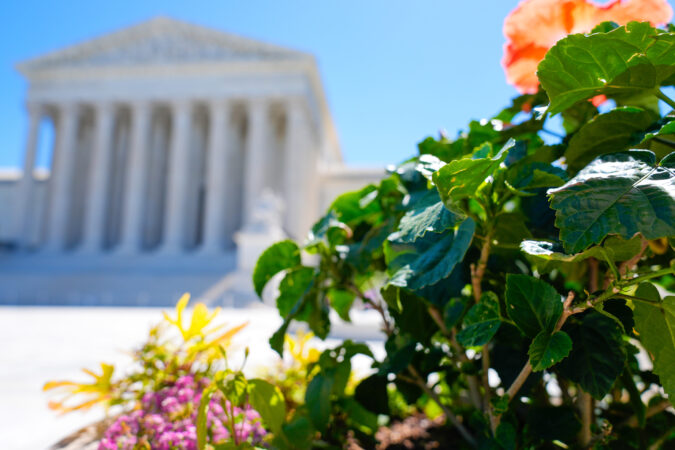
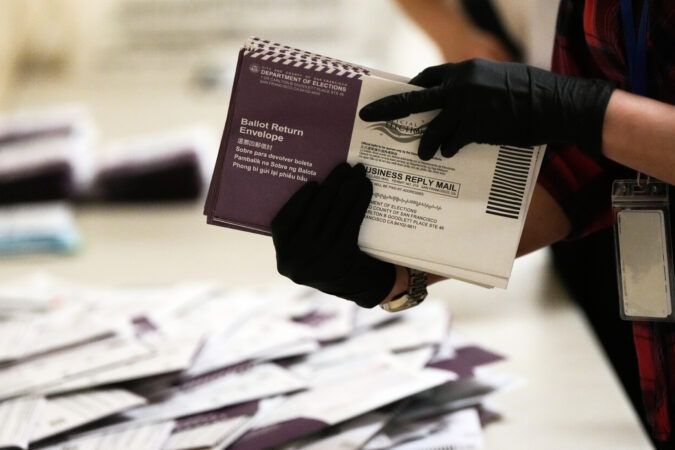
    The Supreme Court on Monday upheld a Mississippi law that allows officials to tally mail-in ballots postmarked by Election Day that arrive later, a decision that keeps voting procedures in place in several states as the midterm elections loom.

    In an ideologically mixed 5-4 ruling, the justices turned aside a challenge by Republicans and Libertarians, who argued federal law preempts a Mississippi statute that allows the counting of such ballots that arrive up to five days after polls close.

    The decision could make less likely similar legal challenges in 14 states that allow the counting of ballots that arrive days or weeks after polls close, and others that allow military members to return ballots later. Most states require mail-in ballots to be received by Election Day.

    Justice Amy Coney Barrett delivered the opinion for the majority, which included Chief Justice John G. Roberts Jr. and the court’s three liberals. Barrett said federal election law did not address when ballots should be received.

    “The election-day statutes say nothing about ballot receipt, and we cannot add to the words Congress chose,” Barrett wrote.

    The ruling came over the objections of four of the court’s conservatives. Justice Samuel A. Alito Jr. wrote the opinion for the group, which included Justices Clarence Thomas, Neil M. Gorsuch, and Brett M. Kavanaugh.

    “Not only is today’s decision inconsistent with statutory text, legal context, historical practice, and precedent; it also threatens to produce lamentable consequences,” Alito wrote. “The majority’s holding spawns a slurry of troubling election-law questions and risks further undermining Americans’ confidence in election integrity.”

    President Donald Trump and some Republican allies have falsely argued that voter fraud is rampant in mail-in balloting. Trump partly blamed his loss in the 2020 presidential election on mail-in votes and unsuccessfully called on states to stop tallying them during the contest.

    Trump called the ruling a “tremendous loss” in a post on Truth Social. He called on Congress to pass the Save America Act, which tightens voter identification laws.

    Republicans in a number of states have launched legal challenges to mail-in voting, which has grown in popularity since the onset of the coronavirus pandemic. One study found about 1 in 3 voters voted by mail in 2024, but the practice is more widespread in Democratic-leaning states.

    Conservatives in Congress also have introduced legislation to limit mail-in voting.

    In March, Trump issued an executive order telling the Postal Service to send ballots only to voters who appear on lists of citizens created by states in conjunction with the federal government. A federal judge in Massachusetts blocked that provision of the executive order last week, saying states — not the president — are responsible for setting election rules.

    Despite his criticism of mail-in voting, Trump voted by mail in a special election in Florida earlier this year.

    In the case decided by the high court, the Republican National Committee, the Mississippi Republican Party, a state voter, and a county election commissioner had sued Mississippi in 2024, claiming it was illegal to count mail-in ballots that arrive after polls close because federal law sets elections for a specific day. The Libertarian Party later filed a similar suit.

    The cases were consolidated by a federal judge, who allowed groups of veterans and retirees to intervene in the suit on behalf of Mississippi. The judge dismissed the case, but the U.S. Court of Appeals for the 5th Circuit reversed that ruling. Mississippi then appealed to the Supreme Court.

    During arguments in March, Paul D. Clement, an attorney for the conservatives, told the justices that casting and counting ballots at the same time has long been “intertwined.” He said allowing mail-in ballots to be counted after Election Day could increase fraud and undermine faith in elections, particularly if the winning candidate was not the one ahead when polls closed.

    “The losers are going to doubt the result, full stop,” Clement said. “That is bad for our system.”

    Mississippi Solicitor General Scott G. Stewart countered that existing law required only that voters fill out their ballots by Election Day. He said mail-in voting has a long history in the United States, pointing to field voting that occurred during the Civil War.

    “States have allowed it for over a century, and Congress has respected it,” Stewart said.

    This term has been an active one for the justices on voting and election issues. In January, the court allowed a Republican congressman from Illinois to challenge the state’s mail-in balloting laws, finding candidates have inherent standing to sue over election rules.

    The case brought by Rep. Mike Bost (R., Ill.) also argues that federal law prohibits ballots from being counted after Election Day. The case was sent back to the lower courts.

    The justices also severely limited a key section of the Voting Rights Act, which has cleared the way for a number of Republican-controlled states in the South to carve up districts held mostly by Black Democrats ahead of the midterm elections. Hundreds of other minority officeholders could be redistricted out of their seats in state and local boards.

    The court has yet to rule in a case challenging limits on spending coordinated between political parties and candidates that is being pushed by the Republican Party. Striking down the spending limits could give Republicans a big money boost in November.

    Fourteen states provide grace periods for all mail ballots, and another 16 provide them for military and overseas voters. Republican-led states have been steering away from ballot grace periods recently, with Kansas, North Dakota, Ohio, and Utah eliminating them last year, according to Voting Rights Lab.

    RNC Chairperson Joe Gruters said Republicans would push Congress to pass legislation requiring ballots in all states to be returned by Election Day.

    “Democrats are inviting chaos at the ballot box by allowing elections to drag on for days and weeks after voters cast their ballots,” he said in a statement.

    Voting rights advocates praised the decision, saying they feared the court could reverse long-standing policies on when ballots are due.

    “Good news rarely comes out of this Supreme Court, but today’s ruling is a win for our democracy,” NAACP President Derrick Johnson said. Virginia Kase Solomón, president of Common Cause, said the decision was correct because voters “shouldn’t lose their voice because of mail delays outside their control.”

  • U.S. and Iran pause strikes but disagree over next steps on talks

    U.S. and Iran pause strikes but disagree over next steps on talks

    DUBAI, United Arab Emirates — The United States and Iran on Monday separately announced they will send delegations to Qatar this week, though Tehran insisted it has not agreed to meet with the U.S. “at any level” after attacks across the Persian Gulf over the weekend challenged negotiations to end the war.

    U.S. President Donald Trump said the Islamic Republic had requested a meeting with U.S. counterparts and that they planned to convene Tuesday in Doha, Qatar.

    But one of Iran’s senior negotiators denied talks had been scheduled. And the spokesperson for Iran’s Foreign Ministry said Tehran was sending its delegation to Qatar, a key mediator in the negotiations, to discuss terms of the interim deal without involving the U.S.

    The U.S. president has tried to preserve a fragile interim deal, but hostilities mounted in recent days in the Strait of Hormuz, through which a fifth of the world’s oil had been shipped before war began. After four days of trading strikes, both sides appeared to pause their attacks Monday.

    The U.S. and Iran agreed to an interim deal earlier this month that calls for Tehran to dilute its stockpile of enriched uranium. It also waives U.S.-backed sanctions on the country, opens the Strait of Hormuz, and gives each side 60 days to hammer out broader agreements.

    Confusion mounts over next round of Iran-U.S. talks

    After Trump said Monday morning on social media that the U.S. and Iran planned to meet, White House press secretary Karoline Leavitt told Fox News’ Fox & Friends that special envoy Steve Witkoff and Jared Kushner, the president’s son-in-law, were flying to Qatar.

    Pakistan, also a key mediator, had said talks between Iran and the U.S. would resume Tuesday.

    But Kazem Gharibabadi, a senior negotiator for Iran, said in comments published by Iranian state media that no talks had been confirmed. And Esmail Baghaei, spokesperson for Iran’s Foreign Ministry, said that its delegation was traveling to Qatar this week to discuss the planned release of frozen Iranian assets and other issues related to the deal.

    “There are no negotiation meetings with the U.S. side at any level scheduled in the coming days,” Baghaei said. “The fact that U.S. representatives are traveling to Qatar has no connection with the visit of the Iranian delegation.”

    Increased tension in waterway

    During the war that began Feb. 28, Iran’s attacks and threats stopped cargo ships and tankers from moving through the Strait of Hormuz, creating a global energy crisis.

    In recent days, Iran has twice attacked vessels in the strait — including a tanker filled with Qatari crude — following efforts to open Oman’s territorial waters to both inbound and outbound traffic from the Persian Gulf.

    The attacks drew retaliatory American airstrikes and raised concerns that negotiations to reach a formal end to the war could be disrupted. Iran launched drone and missile attacks targeting Bahrain and Kuwait on Sunday.

    The strait has long been considered an international waterway despite its location in Iran and Oman’s territorial waters.

    The Trump administration was operating Monday on the understanding that the U.S. and Iran are standing down after the recent back-and-forth strikes and that vessels can move freely through the Strait of Hormuz, said a U.S. official who requested anonymity to discuss the sensitive negotiations.

    Iran’s president, U.S. official say $6 billion coming to Iran

    The U.S. official also said that Qatar planned to release $6 billion in frozen Iranian assets that would be used to purchase U.S. food products for the Iranian people.

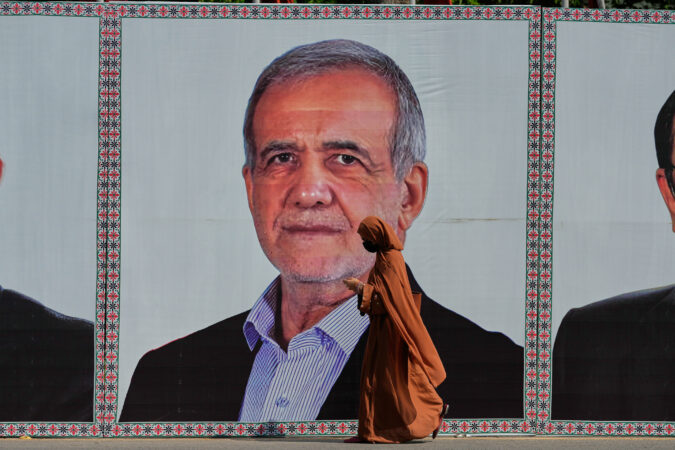
    Iranian President Masoud Pezeshkian had announced the expected release of funds earlier Monday in comments published by the state-run IRNA news agency. He called it “a great victory for the Iranian people.”

    Pezeshkian, a reformist within Iran’s theocracy, is the highest-ranking official within Iran to reference the release of the funds held by Qatar, a key mediator along with Pakistan in the negotiations.

    Oman, Iran discuss possible fees for transiting the strait

    Oman’s foreign minister, Badr Albusaidi, said Monday that Oman and Iran are considering charging service-related fees for commercial ships transiting the Strait of Hormuz.

    Albusaidi said services could include water safety measures, pollution prevention, navigational assistance, and preparedness for incidents such as fires. He told Radio Monte Carlo while visiting France that there are “successful examples” of similar services being provided in compliance with maritime law.

    Albusaidi said Oman does not support imposing transit fees on ships.

    “This is internationally forbidden,” he said, “and we are abiding by these rules.”

    Iran, France clash over clearing mines from strait

    An Iranian official warned France against “provocations” Monday after French President Emmanuel Macron posted on X that France and others were coordinating efforts to clear mines from the Strait of Hormuz.

    Kazem Gharibabadi, an Iranian deputy foreign minister, said on X that under the interim deal “demining is carried out solely by Iran and by no other country.”

    Macron’s post came after he greeted Sultan Haitham bin Tariq of Oman ahead of high-level diplomatic talks in Paris.

    Oman and France called for “free, unconditional, and unrestricted navigation” in the Strait of Hormuz, in a joint statement issued Monday after the Paris meeting. Both parties said they “agreed to work collaboratively with all stakeholders to support freedom of navigation going forward and conduct joint demining operations.”

    Lebanon’s president says it will deploy troops

    Lebanese President Joseph Aoun said Monday that Lebanon is determined to deploy troops along its entire southern border as part of a framework agreement with Israel signed Friday. He made the remark while meeting with Adm. Brad Cooper, the top U.S. military commander in the Middle East.

    The deal was rejected by the Iran-backed Hezbollah militant group, which triggered the latest war with Israel on March 2 when it fired rockets across Lebanon’s southern border and into northern Israel.

    The Israel-Lebanon deal calls for Hezbollah to be disarmed before Israel will withdraw its troops from southern Lebanon. Israel agreed to withdraw initially from a couple of “pilot zones” where the Lebanese army would then deploy, but no details have been shared about how that will work in practice.

    Hezbollah officials have warned that attempts to implement the plan could lead to civil war.

  • America 250 celebrations bring extraordinary security challenge to Washington

    America 250 celebrations bring extraordinary security challenge to Washington

    WASHINGTON — Federal law enforcement authorities in Washington, D.C., are preparing for one of their largest and most complex security operations as the nation’s capital gears up to celebrate the 250th anniversary of the nation’s freedom.

    With rising political violence, including recent incidents near the White House, and a president who enjoys being at the center of public pomp yet has repeatedly faced attempts on his life, a major security challenge awaits.

    “It comes as no surprise to you that D.C. on a normal day is a target-rich environment,” said Darren B. Cox assistant director in charge of the FBI’s Washington Field Office at a recent news conference detailing the security preparations. “We are prepared for any threats.”

    Hundreds of thousands of people are expected to visit Washington in the coming weeks for the festivities.

    The throngs will be joined by thousands of law enforcement officers and agents and 5,000 National Guard troops, along with military-style vehicles and other hardware they don’t often see on the streets of America.

    Authorities are preparing for a major security operation

    The largest crowds are expected July 4, with multiple events happening simultaneously, including the Great American State Fair, a showcase for each state and a signature attraction of the celebrations that stretches across the National Mall.

    The annual fireworks display that night is designated a National Security Special Event for the first time by the Department of Homeland Security, granting it the highest classification for federal security coordination.

    For visitors, that means strict ID requirements, long lines, and magnetometers, similar to air travel security. Snipers are also expected to be deployed at some events.

    Flights at Ronald Reagan Washington National Airport, which is across the Potomac River from Washington, will be suspended longer than in other years because of the scope of the celebrations — from noon on July 4 until the next day. Other America 250 events that include flyovers or parachute jumps could prompt more flight disruptions.

    The FBI, Secret Service, U.S. Capitol Police, U.S. Park Police, and D.C. National Guard have all been involved in security coordination for the events. At the news conference earlier this month, equipment that could be deployed to guard the city was on display, including BearCat armored SWAT vehicles, Mine-Resistant Ambush Protected, known as MRAPs, as well as communication vans and FBI diving boats.

    “Our protective model is meant to adjust to any type of direct or indirect threats that we come across,” said Tara McLeese, special agent in charge of the Secret Service Washington Field Office. “I can assure you that we have no lack of imagination as to the potential threats out there.”

    Brig. Gen. Leland Blanchard II, interim commander of the D.C. National Guard, said the planning had been underway for months and included rehearsals.

    Blanchard said the guard members would continue the roles they have served the last 10 months as part of a deployment to the city President Donald Trump says is meant to fight crime. Blanchard highlighted that guard members, including military police officers, would be helping with duties like traffic and crowd control as well as responding to emergencies around the events.

    Trump, who has already attended several events leading up to July 4, including the kickoff rally last week launching the Great American State Fair, has said on Truth Social that he would hold a rally on the National Mall.

    Speaking at a news conference Monday updating the upcoming security preparations, Cox reiterated that “at this time we are not tracking any credible threats related to the July 4th event, but we always remain vigilant.”

    Recent violence has shaped the threat picture

    The festivities come at a fraught moment, with recent political violence creating a complex threat environment for authorities. One man, Cole Tomas Allen, has been charged with attempting to assassinate the president after he sprinted past security at the White House Correspondents’ Association dinner in April. Allen has pleaded not guilty.

    In the following weeks, two men on two separate occasions opened fired at Secret Service officers, the service said. Each incident happened in the vicinity of the White House.

    More recently, the FBI announced it had thwarted a planned attack targeting Trump’s UFC cage-fighting show at the White House. Several suspects have been arrested in that case.

    Security was already enhanced on the National Mall ahead of the launch of festivities, as Trump claimed without providing evidence that vandals had damaged the Reflecting Pool that he had recently renovated.

    Matt Dallek, a political scientist at George Washington University who studies extremism, said Trump posed a unique security challenge because he is “both an accelerant and a target of political violence.”

    The nation’s bicentennial offers a historical parallel

    Observers draw some parallels to the 1976 bicentennial. The nation was coming off Watergate and Vietnam, and 10 months before the celebration there were two assassination attempts against then-President Gerald Ford.

    “There was a lot of sourness in the country in ’76, a lot of cynicism about the direction of the country,” Dallek said. But both Ford and his democratic opponent Jimmy Carter understood the threat political divisions posed and “were looking to bring down the level of vitriol.”

    Angelyn Spaulding Flowers, professor of homeland security and administration of justice at the University of the District of Columbia, said the amount of security was unparalleled for the city, citing the ongoing and open-ended National Guard presence that has flooded Washington with additional security patrols for months.

  • Venezuelans search more earthquake ruins as aftershock rattles rescuers in disaster zone

    Venezuelans search more earthquake ruins as aftershock rattles rescuers in disaster zone

    LA GUAIRA, Venezuela — With the window for finding survivors shrinking fast, Venezuelans combed Monday through more ruins of buildings toppled by last week’s powerful back-to-back earthquakes, and a 4.6 magnitude aftershock rumbled through the disaster zone in the northern state of La Guaira.

    Relief organizations say the first 72 hours after a natural disaster is the most crucial time period for rescues, though survival can be extended if people have access to food and water. Five days after the twin quakes struck northern Venezuela, attention turned to the humanitarian crisis that was taking shape in devastated regions.

    The death toll stood at more than 1,700 people, according to the government.

    Major questions loomed about whether the cash-strapped government under acting President Delcy Rodríguez — who came to power in January after the Trump administration seized former President Nicolás Maduro — will be able to coordinate the effort needed to care for thousands of people who have been left homeless.

    Facing criticism that authorities have done too little, too slowly, the government has promoted its rescue efforts on social and state-run media. On Monday, it shared footage of Rodríguez inspecting a school-turned-shelter for displaced people in the hard-hit northern town of Catia La Mar and of survivors being lifted out of the ruins to applause.

    But such bright spots are rare at the quake’s epicenter, where families keep vigil at search sites.

    “We have to stay strong, even without food, without sleep,” said Ana Rada, watching as civil defense workers looked for her brother. “Until I see the body, I still have hope.”

    Aftershock rattles rescuers

    Following a weekend of smaller aftershocks, Monday’s temblor struck near the epicenter of last week’s quakes — 17 miles north of Caraballeda on Venezuela’s Caribbean coast — and measured 4.6 magnitude, according to the United States Geological Survey. Colombia’s geological survey put the magnitude at 5.1.

    Jorge Rodríguez, the leader of the Venezuelan National Assembly, said there were no immediate reports of additional damage, but the aftershock sent residents in the capital of Caracas screaming into the streets.

    “Here we are again, back in the street. I don’t know when we’ll have a moment of true peace,” said Concepción Hernández, 51, who evacuated her apartment building in the Chacao municipality of Caracas.

    The Caracas Metro said it would temporarily suspend service Monday to inspect infrastructure following the aftershock.

    Questions over extent of U.S. help

    The disaster has raised expectations for the Trump administration, considering its takeover of Venezuela’s oil industry earlier this year.

    In a briefing with reporters, a senior State Department official said 300 first responders sent from the U.S. are working on the ground — alongside dozens of other international rescue teams — and two dozen C-17 military transport planes arrive every day with supplies. Financial support from the U.S. now exceeds $300 million.

    The American military is also assisting with some repairs, including damage to the port in La Guaira to enable the arrival of more relief supplies by sea. Another team is helping to manage air traffic after the quakes destroyed part of the control tower at Simón Bolívar International Airport in Caracas, said the official, who spoke on condition of anonymity because he was not authorized to speak publicly.

    It seemed unlikely, however, that the Trump administration would grant temporary legal protections to Venezuelans as previous administrations have done for people from disaster-stricken countries already in the U.S. Such action was taken after earthquakes in 2010 in Haiti and 2001 in El Salvador.

    Venezuelans have been a major focus of the Trump administration’s immigration crackdown, with officials revoking temporary legal protections for hundreds of thousands of Venezuelans and stepping up deportation flights.

    Rescuers included a miner deported from the U.S.

    Among the rescuers digging through the rubble Monday in La Guaira was miner Jean Sosa, who said he was deported from the U.S. in January over a missed immigration court hearing and returned to Caracas last month, dazed by an odyssey that he said began in shackles at an Arizona immigration detention center. The journey involved traveling by bus through five countries after immigration agents left him in southern Mexico without his passport, phone, or wallet.

    Since arriving Wednesday in La Guaira to visit family and friends, Sosa has raced to pull people from the rubble in the absence of national rescue teams.

    “I’m not involved in politics, but I believe many people could have been saved if there had been equipment and support from top authorities from the very beginning,” he told the Associated Press, wearing a helmet and a black T-shirt splotched with dust in the port city where he said he had already rescued 20 people alive.

    Those rescues heartened him, he said, and gave him hope for more despite the lack of supplies. “We’re working without gloves, without equipment, borrowing supplies, improvising bandages and whatever else we can.”

    Government, U.N. offer vastly different numbers of people affected

    The full scale of the damage remained unclear. Jorge Rodríguez, who is the brother of the acting president, said that as of Monday, a total of 15,866 people had been affected, while the number of damaged or collapsed buildings had reached 855.

    A preliminary assessment by NASA estimated that the earthquake damaged or destroyed 58,870 buildings. The assessment relied on radar imagery from the European Space Agency’s Sentinel-1 satellites, which can detect changes to infrastructure.

    The United Nations has said that up to 6.8 million of Venezuela’s nearly 30 million residents may be affected, which could mean being displaced or losing access to essential services such as electricity and water.

    Because of the chaos and poor cell phone service, many Venezuelans have turned to non-governmental digital databases to report their loved ones as missing. More than 50,000 people were reported missing on one such database, though it is unclear how many have been found.

  • Supreme Court rules states can count late-arriving mailed ballots, rejecting Trump-led challenge

    Supreme Court rules states can count late-arriving mailed ballots, rejecting Trump-led challenge

    WASHINGTON — The Supreme Court on Monday ruled that states can count ballots that arrive after Election Day, a persistent target of President Donald Trump.

    The decision rejected a Republican-led attack on laws in more than half the states and the District of Columbia that permit mailed ballots to arrive and be counted some number of days after the election, provided they are postmarked by Election Day. The outcome spares officials the headache of changing their ballot rules just a few months before the 2026 midterm congressional elections.

    In just over half those states, the more forgiving deadlines apply only to ballots cast by military and overseas voters.

    The legal challenge was part of Trump’s broader attack on most mail balloting, which he has said breeds fraud despite strong evidence to the contrary and years of experience in numerous states. Trump has repeatedly claimed that his loss to Joe Biden in 2020 resulted from fraud even though more than 60 court decisions and his own attorney general said that argument had no merit.

    The court heard arguments in March in a case from Mississippi pitting the state against Trump’s Republican administration and the Republican and Libertarian parties. At issue was whether federal law sets a single Election Day that requires ballots to be both cast by voters and received by state officials.

    The federal appeals court in New Orleans struck down a Mississippi law allowing ballots to be counted if they arrive within five business days of the election and are postmarked by Election Day.

  • Americans’ pride in U.S. history and democracy drops, polls find

    Americans’ pride in U.S. history and democracy drops, polls find

    WASHINGTON — Americans have grown less proud of their country’s history or the way its democracy works over the past decade, according to a new AP-NORC poll.

    Americans’ pride in the U.S. on several key attributes has dropped since 2017 — including the nation’s military and its political influence around the globe — according to the survey from the Associated Press-NORC Center for Public Affairs Research. This poll was conducted in April, as the United States and Iran fought over the Strait of Hormuz in a prolonged war that started with the U.S. and Israel launching strikes on Iran.

    New Gallup polling also finds that only 53% of U.S. adults are “extremely” or “very” proud to be an American, the lowest reading in the trend dating back to 2001.

    The findings point to a broad decline in patriotic sentiment over a tumultuous period that included most of President Donald Trump’s first term, the COVID-19 pandemic and rising inflation that contributed to a backlash against President Joe Biden. That timeframe also covers Trump’s return to the White House, where he’s taken more aggressive actions on immigration and issues abroad.

    Much of the falling positivity comes from Democrats, who have become increasingly disenchanted with the country since Trump’s first term.

    At the same time, most U.S. adults say that being an American is “extremely” or “very” important to their identity, highlighting an enduring connection, even as some become increasingly critical of the country’s past or the government’s current actions.

    American pride declines on the armed forces, democracy

    Americans’ pride in the way democracy works in the U.S. has declined 14 percentage points, falling from 42% in February 2017 to 28% now.

    In addition, Americans’ pride in their armed forces has dropped 19 percentage points since 2017, and pride in the U.S.’s history has declined 14 percentage points. In each case, the drop is largely driven by Democrats, with some movement among independents as well.

    Karla Galdamez — a 48-year-old Democrat who used to teach U.S. history — believes America has regressed under the Trump administration. While the Californian is not proud of Trump, she is pleased with how far the U.S. has come in 250 years.

    “It’s a country that really wanted to be different and really wanted to be better,” she said. ”Despite some of the very ugly history that we have of segregation and slavery … if you look at the trajectory of the last 250 years, we’ve done nothing but get better and move toward a more egalitarian nation.”

    Only 14% of Democrats and 28% of independents say they are “extremely” proud to be an American, according to Gallup’s new poll, compared with 70% of Republicans.

    The AP-NORC poll found that Republicans are especially likely to be proud of the nation’s armed forces. About 9 in 10 Republicans say the military makes them “extremely” or “very” proud, compared with about 6 in 10 U.S. adults.

    Samantha Fulks, a 40-year-old in San Antonio, Texas, says she’s proud to be an American and doesn’t hide it. The Texas Republican showcases that pride with an American flag in her front yard — as well as Trump flags in the back yard — and she plans to wear red, white, and blue on the Fourth of July. Fulks comes from a military family, and while she believes the country’s involvement in Iran is unnecessary, she remains a proud supporter of the military.

    “I still support our troops no matter what they do,” Fulks said.

    Being an American matters more for identity among Republicans, older adults

    Matt Stafford, a 39-year-old in Massachusetts, is proud of being an American, even if the U.S. political system frustrates him.

    He has a bald eagle tattooed on his back to represent the United States, its freedoms, and “all the things we’re supposed to stand for as a country.” But despite that national pride, he often finds himself frustrated by politicians on both sides. Stafford — a centrist who identifies as “politically homeless” — wants Democrats and Republicans to come together to look out for their constituents in middle America.

    “I love America, but our biggest problem is how we’re pushing both sides — like the left and the right — to the extremes,” he said.

    For many Americans, their partisanship is often intertwined with their national identity. The poll finds that Republicans are much likelier than Democrats or independents to say being an American is “extremely” or “very” important to their personal identity.

    Younger people are also much less likely than older people to say being an American is highly important to their personal identity. About three-quarters of Americans ages 60 and older say being an American is highly important to them, compared with only about one-third of U.S. adults under 30.

    Race or ethnicity matters more to Black Americans

    The AP-NORC survey found that the vast majority of Black Americans — 73% — say their race or ethnicity is “extremely” or “very” important to how they see themselves, higher than the share that say that about being an American.

    Vincent Harris, a 60-year-old in California, says his identity as a Black man rises above other attributes for him because of how Black men are treated in America.

    “A lot of people are scared of Black men just because we are Black and we are male. And that’s crazy,” Harris said. “People don’t even take you for who you are as a person; they just look at your race.”

    About half of Hispanic Americans say their race or ethnicity is highly important to them, compared with 22% of white Americans.

    Black and Hispanic adults are also more likely than white adults to say their family’s ancestry or country of origin is highly important to their personal identity.

    Harris, who identifies as a gay man, says being an American is “a wonderful thing” because of the freedoms that Americans have, despite the obstacles he’s had to overcome.

    “It’s great to be an American — regardless of race, gender, sexual orientation, religion, or whatever. As long as you have that freedom of choice as an American, that’s a great thing,” Harris said. “Right now, I wouldn’t live in any other country in the world. I’m here. I love it.”

  • Medicare is about to cover GLP-1 drugs for weight loss. Here’s what to know.

    Medicare is about to cover GLP-1 drugs for weight loss. Here’s what to know.

    Beginning Wednesday, Medicare will cover GLP-1 drugs for weight loss for the first time, with patients responsible for a $50-a-month co-payment that makes it far cheaper than cash prices without insurance.

    The move will unleash a surge in prescriptions for patients 65 and older and younger people with disabilities who are covered by the government health insurance program.

    Generally, insurance coverage has been spotty for the revolutionary weight-loss drugs, largely because of the budget-busting impacts of high costs and huge demand. Coverage under Medicare, which covers 70 million Americans through the traditional insurance and privatized Medicare Advantage, will go a long way to plugging gaps.

    But there are important considerations under the Trump administration’s initiative. The coverage is temporary, set to expire at the end of 2027. It is not known whether, or how, Medicare will continue coverage after its 18-month pilot, which is called the Bridge program.

    “It’s certainly good news for Medicare beneficiaries who have been essentially shut out of the market for GLP-1s for weight loss if they wanted to use insurance coverage,” said Juliette Cubanski, vice president and director of Medicare policy at KFF, the nonprofit health care research organization. “However, it is a temporary program. It is not a permanent change in Medicare coverage.”

    Unless the coverage is extended, millions of patients who are expected to benefit will face a choice beginning in January 2028 of paying higher cash prices for the drugs or stopping taking them ― which, based on the current GLP-1s, would probably cause their weight to rebound.

    Additionally, coverage is not automatic. It is subject to preapproval under a process known as “prior authorization,” which can slow down access even for patients who qualify. The Centers for Medicare and Medicaid Services has outlined a process requiring multiple steps between providers and pharmacies and its insurance contractor for the project, Humana.

    “I think that is going to cause a bit of friction in the process,” Cubanski said.

    CMS said it expects preapprovals to take under 72 hours. Here are answers to essential questions about how the program will work.

    What drugs will be covered?

    Eli Lilly and Novo Nordisk, the manufacturers of brand-name GLP-1 drugs, are the suppliers through a deal with President Donald Trump’s administration. Eli Lilly’s weekly Zepbound injection and Foundayo daily tablet will be covered, as will Novo Nordisk’s Wegovy, both in weekly injection and daily pill form.

    “These treatments are a major medical advancement, but too many seniors are currently unable to access them due to high cost,” CMS Administrator Mehmet Oz said, announcing the plan last month.

    People taking Zepbound on average lost 21 percent of their body weight over 72 weeks in clinical trials. Wegovy injection patients lost 15 percent over 68 weeks, and Wegovy pill patients lost 13.4 percent after 64 weeks. Foundayo patients attained 11.1 percent weight loss over 72 weeks.

    Who qualifies?

    The government’s criteria for coverage is aimed at making sure beneficiaries whose health is at risk because of obesity get access through Medicare. Patients looking to lose weight for lifestyle or cosmetic reasons won’t qualify.

    The criteria is based on an individual’s “body mass index,” which is a calculation that takes into account height and weight. People will qualify if their BMI is equal to or greater than 35.

    Someone with a BMI of 30 or above will qualify if they also have one or more of these other health conditions that puts them at risk: heart failure, uncontrolled high blood pressure or kidney failure.

    A person can qualify with a BMI as low as 27 — which is considered overweight, not obese — if they also have prediabetes, a history of heart attack, a previous stroke or symptomatic peripheral artery disease.

    Crucially, even if someone’s BMI is below the threshold, if they started one of the weight-loss drugs before the CMS program started when they were within the qualifying range, they still will be covered.

    For example, if patient had a BMI of 38 when they began taking Zepbound, but are now at 31, they will still qualify for the benefit.

    Who handles prior authorization?

    Winning coverage approval could prove to be an ordeal, and doctors are bracing for bottlenecks — especially with a huge volume of prescriptions flooding the system starting Wednesday.

    “It’s going to be a lot all at once: the number of prescriptions, the paperwork, the prior authorizations, the work for the clinics, patients and pharmacies,” said Christopher Weber, medical director of bariatric services at Ascension Wisconsin and a board member of the Obesity Medicine Association.

    CMS is expecting prior authorization requests to be approved within 24 to 72 hours.

    “I would not be surprised if it’s substantially longer,” Weber said.

    The 18-month pilot is being operated outside the Medicare Part D drug benefit, so the private health insurance companies that offer Part D plans are not involved. Instead, the Centers for Medicare and Medicaid Services has selected Humana to serve as the central processing point for deciding coverage. Humana declined to comment.

    CMS said in response to questions that it is working to avoid delays.

    “CMS has disseminated educational materials and will provide ongoing support to pharmacies and providers on the Medicare GLP-1 Bridge to ensure that clinicians and pharmacies have the resources that they need to engage with beneficiaries,” the agency said.

    Why is this program temporary?

    Federal law prohibits Medicare from covering weight-loss drugs, so the Trump administration is doing it under its authority to conduct a temporary “demonstration” project.

    The relatively short-term nature of the benefit — called the Bridge program — is raising practical and policy questions.

    “When it expires, it is unclear how beneficiaries will access GLP-1 medications at an affordable price,” Stacie B. Dusetzina, a health policy professor at Vanderbilt University wrote in a New England Journal of Medicine article published Saturday. That raises the prospect, she said, that patients will stop taking the drugs and regain weight, which will lead to “poor clinical outcomes.”

    “The Bridge program could result in substantial additional governmental and beneficiary spending without providing longer-term health benefits,” she wrote.

    Will the co-payment apply to my Part D deductible?

    The $50-a-month co-payment cost will not count toward annual deductibles in Medicare Part D prescription drug plans, because the pilot program is separate from Part D. It also will not count toward the $2,100 Medicare out-of-pocket spending cap for drug coverage.

    The Trump administration had planned another pilot where Part D plans would have managed the coverage, but not enough of the private plans expressed interest, because they were concerned about exposure to unknown costs with the anticipated burst of new prescriptions, Cubanski said.

    “There is no evidence right now for making assumptions about how many additional beneficiaries will come into this market,” she said. “It left them with a lot of uncertainty.”

    What if I was already getting the drug for diabetes under Medicare?

    Patients who are already receiving Medicare coverage for one of the GLP-1 drugs for diabetes, cardiovascular disease and sleep apnea will continue to be covered by their Part D plan. They are not eligible to switch to the weight-loss pilot.

    How much will covering these drugs cost taxpayers?

    Eli Lilly and Novo Nordisk have agreed to sell the drugs to the government for $245 a month. That is in the middle of the range of what drug companies charge consumers without insurance, depending on dosage.

    The Centers for Medicare and Medicaid Services has not released estimates of the total numbers of patients expected to take advantage of the program, or the expected spending.

    Some clues are contained in a previous estimate released by the Biden administration, which proposed offering similar, long-term coverage in late 2024. It said the cost would be $25 billion over 10 years. That would equal $2.5 billion a year, which is likely to be a low estimate, given the explosion in national demand.

    The Congressional Budget Office estimated it could cost $35 billion over eight years, with 12 million newly eligible people in 2026. That estimate has more generous criteria than what Medicare has adopted.

    Medicare spending on the new breed of weight-loss drugs has been skyrocketing already, without weight-loss coverage, according to an analysis by KFF. It reached $27.5 billion in 2024, although that gross spending was reduced by up to 50 percent by manufacturer rebates.

    Cubanski estimated that weight-loss coverage could add another $4 billion to $5 billion a year to Medicare’s tab. “It’s essentially all additional spending by the federal government,” she said.

    Of course, the hope is that helping millions of Medicare beneficiaries lose weight will reduce diseases linked to obesity, ultimately lowering costs. But when those savings will be realized, and how large they might be, remains unknown. The CBO estimated the savings for a longer-term program at $1 billion a year by 2034, a small fraction of the new spending.

  • Letters to the Editor | June 29, 2026

    Letters to the Editor | June 29, 2026

    Books to bars

    Why can’t Johnny read? That depends on whom you ask. For years, they blamed it on Johnny. Then they blamed his teacher. Now, a new culprit has emerged: They are blaming Johnny’s teacher’s teacher. The new blame came from a recent report from the National Council on Teacher Quality examining whether colleges and universities have aligned their curriculums for future teachers to teach reading. They evaluated 23 graduate and undergraduate programs in Pennsylvania; five received “A’s” and five received “F’s.” Ron Noble, director of teacher preparation, said it all: Pennsylvania is “among the lowest performing states in this analysis.”

    I don’t buy this new scapegoating. Don’t blame it on the colleges and universities. Teachers must know how to teach before they take the job. And, if they have deficiencies, it is their duty — not that of the colleges and universities — to correct them. Sadly, by the time Johnny gets to third grade, if he still can’t read, the system will cease to prepare a curriculum and begin to prepare a jail cell.

    Leon Williams, Philadelphia

    Regulate, don’t ban

    Recently, the Pennsylvania Supreme Court decided that skill games, now found in many local bars and social clubs, should be treated as slot machines. The Inquirer Editorial Board believes Harrisburg would be making a mistake if it tried to tax the games at the same rate as slots.

    I would take the other side. Since Donald Trump became president a second time, many useful federal programs that helped the states, including Pennsylvania, to balance their budgets have been shut down, or at least severely curtailed. Exhibits A, B, and C could be the Supplemental Nutrition Assistance Program, money for hospitals, and funding for federal housing programs. So now the General Assembly is finding its fiscal cupboard bare as it tries to pay for these useful programs.

    With that in mind, why shouldn’t the 70,000 skill games outside the casinos also be taxed?

    The Editorial Board mentioned how skill games contribute to problem gambling. I believe it is possible to seriously reduce the urge to gamble with these skill games. One idea I have is that the legislature declares that someone has to be 18, 21, or even 24 years old to play and win at these skill games. By the age of 24, most people realize money doesn’t grow on trees and know they need to earn it.

    Andrew Saul, Media

    Drop DROP

    I was struck by two articles in a recent issue of The Inquirer. On one hand, Mayor Cherelle L. Parker’s budget slashed $1.5 million from the city’s $5 million arts budget; a rounding error for the city, but a cut that will hurt arts and culture groups throughout the city. And then, I read that Councilmember Curtis Jones Jr. and Jazelle Jones, an appointee of Mayor Parker, by themselves, are grabbing a $750,000 payday thanks to DROP. Fully half of this cut to the arts throughout Philadelphia is being paid out to two people who are gaming the pension system. Councilmember Jones is planning to retire temporarily before his next term starts. We, the voters, should remember this next year and make it permanent.

    Jared Cram, Philadelphia

    Citizenship needs reform

    I applaud The Inquirer’s story of Muhammed Emanet. It highlights the plight of those who have entered our country legally, applied for green cards, and then are left in limbo for years because of our nation’s faulty immigration system. Regardless of where one stands on the issue of immigration and the need to deport criminals who are here without legal status, we know that, like Emanat and his family, most immigrants are here in search of a safer life and are actually contributing to our society. This issue becomes more dire today, as the U.S. Supreme Court cleared the way for the current administration to remove legal protections from thousands of Haitian and Syrian immigrants in the United States, meaning they could be subject to deportation. Again, we are not talking about criminals, but rather people seeking refuge. I hope The Inquirer will continue to publish front-page stories like that of the Emanet family. Readers need to better understand the many difficulties within the pathway to citizenship in this country. We have so much work to do before we can ever be considered “Great Again.”

    Kathleen Coyne, Wallingford

    Profits over patients

    The special interests that have shaped America’s dysfunctional healthcare system remind me of Oliver Hardy’s comment to Stan Laurel: “Well, here’s another nice mess you’ve gotten us into!” The Editorial Board suggests that we need a public option that “would allow eligible participants of all ages to pay adjusted health insurance premiums based on their incomes.” I assume infants would be excluded? While most agree that we need major reform, allowing for profit greed to continue only perpetuates the enormous administrative overhead that sucks 30% of healthcare dollars. It would also allow the “expensive” ill patients to be turfed to the “public option,” accelerating a death spiral for taxpayers. The cost savings we need only come from a single-payer, national health insurance program with a private delivery system focused on public health, prevention, and primary care.

    Walter Tsou, Philadelphia

    The writer is a former health commissioner of Philadelphia.

    Smart meter mandate

    The entire General Assembly should be ashamed of how it let the Public Utility Commission, an out-of-control, unelected bureaucracy, wholly controlled by the utilities it is supposed to regulate for the good of the public, dictate the mandating of electric smart meter installation, with zero opt-out, contrary to the original intent of Act 129, which was electric smart meter opt-in legislation.

    The case had to be taken to the Supreme Court of the United States. It is a complete disgrace that the legislature treats Pennsylvania citizens in this way.

    Tom McCarey, Berwyn

    House Bill 2632

    In their recent op-ed, Michael Marrone and Joseph Marano claim that the average Liguori Academy family’s income is close to the federal poverty line, that Liguori students typically display significant growth in reading and math, and that, according to a study commissioned by the Children’s Scholarship Fund of Philadelphia, educational tax credit scholarship recipients outperform their public and private school peers.

    All of those claims may be true. Or not. We have no way of knowing because current Pennsylvania law prevents such information as a scholarship recipient’s family income levels, household demographics, or former school from being shared with the state government. We, therefore, have no way of knowing whether these tax credits are going toward a quality education for the commonwealth’s neediest students or for a family vacation in the Bahamas.

    This is not simply conjecture. In 2019, a Keystone Crossroads investigation found that many private schools that accept Educational Improvement Tax Credit scholarship admissions have no low-income students in attendance.

    House Bill 2632 will begin to address this problem by allowing the auditor general to acquire the necessary information to determine whether qualified families have access to a quality education.

    The foundation of our children’s education should rely more on accountability than acts of faith. This is the reason we need the state Senate to pass House Bill 2632, and for Gov. Josh Shapiro to sign it into law.

    Diane Payne, retired public schoolteacher, Philadelphia

    Join the conversation: Send letters to letters@inquirer.com. Limit length to 150 words and include home address and day and evening phone number. Letters run in The Inquirer six days a week on the editorial pages and online.

  • Horoscopes: Monday, June 29, 2026

    ARIES (March 21-April 19). Glowing in you: gratitude. It’s often mistaken for a pleasant feeling, when it is actually a powerful way of directing attention. What you appreciate becomes more abundant. Especially sweet: a friendship that has stood the test of time.

    TAURUS (April 20-May 20). Glowing in you: hope. Not wishful thinking, but a practical belief that tomorrow can be better than today. You keep moving forward. Especially sweet: encouragement from someone who not only believes you can do it but will help however possible.

    GEMINI (May 21-June 21). Glowing in you: discernment. You no longer feel compelled to pursue every opportunity that appears. Knowing what to decline creates more room for what matters to you. Especially sweet: the freedom that comes from a clear choice.

    CANCER (June 22-July 22). Glowing in you: curiosity. Questions lead you further than certainty ever could. A willingness to learn opens doors, reveals opportunities and keeps life interesting. Especially sweet: an unexpected conversation that expands your world.

    LEO (July 23-Aug. 22). Glowing in you: adaptability. When plans change, you find another route instead of becoming stuck. Flexibility turns obstacles into detours rather than dead ends. Especially sweet: a solution that appears through improvisation.

    VIRGO (Aug. 23-Sept. 22). Glowing in you: humor. You can spot the absurdity in situations that might otherwise become frustrating. This gift keeps challenges from growing larger than they need to be. Especially sweet: laughter shared with someone you love.

    LIBRA (Sept. 23-Oct. 23). Glowing in you: confidence. Not the loud kind, but the steady belief that you can handle whatever comes next. This changes how people respond to you. Especially sweet: being trusted with greater responsibility.

    SCORPIO (Oct. 24-Nov. 21). Glowing in you: compassion. You recognize that most people are carrying burdens that remain unseen. This awareness helps you move through the world with grace and perspective. Especially sweet: a shared understanding that’s genuine and rare.

    SAGITTARIUS (Nov. 22-Dec. 21). Glowing in you: creativity. You see possibilities where others see limitations. Ideas connect, combine and evolve into something useful, beautiful or entertaining. Especially sweet: a project that takes on a life of its own.

    CAPRICORN (Dec. 22-Jan. 19). Glowing in you: emotional maturity. It shows up in how easily you connect with people and how you’re able to build lasting relationships. Especially sweet: the rhythms and routines you build with others resulting in a true feeling of togetherness and belonging.

    AQUARIUS (Jan. 20-Feb. 18). Glowing in you: focus. Distractions lose some of their appeal as you become more interested in meaningful progress. Your efforts gather momentum. Especially sweet: finally finishing something that has been lingering a long while on your list.

    PISCES (Feb. 19-March 20). Glowing in you: patience. You understand that many worthwhile things require time. Instead of forcing results, you allow growth to unfold at its natural pace. Especially sweet: a long-awaited development finally taking shape.

    TODAY’S BIRTHDAY (June 29). It’s your Year of the Golden Compass in which every detour reveals itself as part of the route. You stop second-guessing your direction and start trusting inner guidance. More highlights: Two fun partnerships in purposeful projects. New income using your expertise. Events you host are a hit as your home is a hub of comfort and celebration. Libra and Capricorn adore you. Your lucky numbers are: 11, 4, 26, 18 and 7.