Tag: no-latest

  • Letters to the Editor | Feb. 10, 2026

    Letters to the Editor | Feb. 10, 2026

    Calling out racism

    As GOP lawmakers trip over themselves condemning President Donald Trump’s vile post of the Obamas, Republican voters need to remember that it did not occur in a vacuum. Ever since Richard Nixon’s “Southern strategy” peeled white supremacists away from the Democrats in 1968, through Ronald Reagan’s “welfare queen” era, the party has been largely defined by racism. These same GOP voices, including Pennsylvania’s Republican senator and our 10 Republican House representatives, have remained silent through Trump’s racist comments about Somalis, Haitians, and so many others, including members of Congress. At the state level, gerrymandering by governors and legislatures has diligently worked to dilute the voting power of people of color. Essentially, anyone who voted Republican anywhere along the line has abetted and been complicit in enabling Trump’s disgusting displays. There is plenty of blame to go around and ample need for true believers in American democracy to examine their consciences for the support they continue to give to Republicans’ voices.

    Stephen E. Phillips, St. Petersburg, Fla.

    . . .

    I was thrilled that huge nationwide protests erupted in frigid winter weather after the killing by armed, masked federal agents of two innocent people in Minneapolis, Renee Good and Alex Pretti. Suddenly, Democrats in Congress quickly acted to threaten a government shutdown and demand reforms of U.S. Immigration and Customs Enforcement, including banning its outlaw methods and reestablishing adherence to the rule of law. Even some Republican leaders finally grew a spine and condemned the killings. And this whitewashing administration born in birtherism, usually unfettered by truth, empathy, or shame, made some noises about changing its ruthless roundup and detention of innocent people.

    But I wondered why this amazing and inspiring reaction to the obviously racist-based attacks on nonwhite immigrants, which have been going on for months and were visible for all to see, took so long to erupt. Was it because two white people had finally died?

    If we ever have a chance to measure up to the ideals of freedom and equality of our beautiful American dream, America needs to confront its racist sickness directly and honestly as an ugly and omnipresent aspect of our national soul that must be exorcised through education and love. Or we and our nation will be torn apart over and over and over again.

    Steve Cickay, Newtown

    Slanted viewpoints

    “The Inquirer offers news, which strives to present unbiased, factual reporting, and opinion, which showcases viewpoints.” These words appear on The Inquirer’s editorial page several times each week. If you actually read these pages on a daily basis, it is clear this is not the case.

    Viewpoints may be showcased, but 95% are slanted to the left. The Inquirer’s obsession with opposing everything Donald Trump has resulted in the abandonment of attempts to provide unbiased editorial content.

    Where are the news articles, editorial pieces, and political cartoons highlighting the tens of thousands of violent, criminal, illegal immigrants whom U.S. Immigration and Customs Enforcement and U.S. Customs and Border Protection have removed from our streets? The same question can be asked about radical ICE protesters impeding law enforcement or disrupting a St. Paul, Minn., church service. And where is the outrage about the massive fraud situations in Minnesota and California?

    The political cartoon in the Feb. 3 edition, which refers to the “slaughtering” of American citizens, was the most egregious to date. The word slaughtering is defined as “the killing of large amounts of people: massacre.” Two people were killed in Minneapolis (unfortunately, both chose to put themselves in danger), but does The Inquirer believe that cartoon is a fair depiction of the current enforcement of federal law? Words matter — particularly inflammatory ones like that. This is especially true for a journalistic organization like The Inquirer. Your readers deserve better.

    Mark Fenstermaker, Warminster, markfense@gmail.com

    Join the conversation: Send letters to letters@inquirer.com. Limit length to 150 words and include home address and day and evening phone number. Letters run in The Inquirer six days a week on the editorial pages and online.

  • Horoscopes: Tuesday, Feb. 10, 2026

    ARIES (March 21-April 19). The easiest time to share your expectations is at the start of an interaction or right after a boundary gets crossed. Waiting too long can feel awkward, but it’s still better to speak up than stay silent. Clear communication makes everything smoother.

    TAURUS (April 20-May 20). Of course you like what’s familiar — it’s comfortable and it works. You also get bored if you stay there too long. Today, curiosity nudges you toward the unknown. You don’t need courage, just enough interest to see what happens next.

    GEMINI (May 21-June 21). You’re so strong and forever showing up for everyone else. It’s not wrong to wish someone would take care of you for a change. Whether or not that person arrives, it’s safe today for you to soften into a moment that holds and supports you.

    CANCER (June 22-July 22). Balance isn’t perfect, but it’s possible. A gentle recalibration can reset a relationship so things can continue in a more sustainable direction. A word spoken, a boundary observed or a choice made in the name of harmony will improve the vibes.

    LEO (July 23-Aug. 22). You’re kind and diplomatic, but that doesn’t mean you miss or overlook the mistakes. It’s good that you see them all — yours and theirs — because each is an opportunity to improve. Make a private note. Strategize before acting.

    VIRGO (Aug. 23-Sept. 22). Expect surprise? That’s an oxymoron. The very nature of surprise is that it defies expectation. Still, when the unexpected arrives, yield to it like a kung fu master yielding to an opponent’s force, incorporating the momentum into your next move.

    LIBRA (Sept. 23-Oct. 23). You don’t require that everyone conform to your expectations. Maybe you don’t even have expectations to begin with. That’s the best position because then you can really see reality for what it is and accurately assess the potential.

    SCORPIO (Oct. 24-Nov. 21). Everything is easier when your head is in the right place, but how do you get there? Like external weather, the internal weather can be unpredictable. Your breath will be like the wind. Deep breathing will blow away the mental clouds and fog, clearing the atmosphere.

    SAGITTARIUS (Nov. 22-Dec. 21). You’re not expecting trouble, but if it comes, you’d be ready, and this gives you quite a lot of confidence. So even if you never use the “emergency protein bar” or candles in case of a power outage, or the Apple AirTag on your key chain, you’ll use the confidence it gives you.

    CAPRICORN (Dec. 22-Jan. 19). You don’t have to go invisible to care for others, but sometimes it’s not a bad idea. Some players are easier to manage when they feel like the main character. Today, you’ll get what you want and need by working behind the scenes.

    AQUARIUS (Jan. 20-Feb. 18). A wise part of you is always listening. Old guidance sometimes waits for the right moment. Someone gave you advice you didn’t think much of at the time, but now it applies rather directly. You’ll act on what you’ve learned to excellent effect.

    PISCES (Feb. 19-March 20). You’ll be choosing your responsibilities, and that feels different from being asked or told what to do. Even when the work is assigned, you’re still ultimately in charge of what you pick up or set down. Those conscious decisions turn obligation into self-respect today.

    TODAY’S BIRTHDAY (Feb. 10). Welcome to your Year of Effervescent Moods. This era shows you most often playing in light, breezy, feel-good tones in a life filled with reasons to be delighted. Relationships give back, meet you in joy and offer you real help. Work challenges you just enough and has you doubling down on what you’re best at. More highlights: Your generosity changes a life, epic gatherings are had and family karma is healed. Leo and Scorpio adore you. Your lucky numbers are: 7, 40, 2, 28 and 8.

  • Dear Abby | Man opts to take ex on trip instead of girlfriend

    DEAR ABBY: My boyfriend of several years, “Guy,” often asks me to take a trip with him. I have researched accommodations at the suggested destinations, only to have him say they are too pricey. Thus, we never go anywhere, although he could easily afford it.

    Now his brother (whom I’ve never met) has suggested a family cruise and suggested that Guy bring along his ex-wife, who is in the early stages of dementia. Guy has been divorced from her for decades. I haven’t said anything to him about this, though I am shocked and hurt that when a trip is finally planned, Guy thinks it’s fine to take her rather than me. I’d be OK with him not taking either of us, but not with choosing her over me. Am I the crazy one here?

    P.S. Right now, I am dog-sitting for Guy for the second time in a month while he’s out of state for a week attending to his ex-wife’s legal matters, including her will.

    — HOME ALONE IN FLORIDA

    DEAR HOME ALONE: Something definitely seems out of focus in this family picture. Your boyfriend has been divorced from his ex for DECADES. Is his brother oblivious to the fact that you have been Guy’s companion for several years? If this is a question of money, it seems to me that a more practical solution than leaving you out would be for Guy to bring you along on the cruise and he and his brother split the cost of including his former wife.

    ** ** **

    DEAR ABBY: My husband, “Dan,” and I are separated. Our children are ages 20 and 22. Dan has just been diagnosed with some type of serious medical issue (likely life-threatening). He has shared the information with our children but refuses to explain to me what is happening. I am not being nosy; I simply believe that I should be aware of what’s going on for the sake of our children.

    Our kids are not currently on speaking terms, so they won’t discuss the issue with each other. One of them still lives at home and has been diagnosed with autism, ADHD, PTSD and major depressive disorder. They are not doing well and have been hospitalized multiple times over the past five years. They have no friends and no contact with extended family. The only people they interact with are me and their father.

    I feel it is very important to keep me informed so I can offer support and help both of our children deal with whatever is happening. Am I wrong to ask my ex to explain to me what is going on?

    — IN THE DARK IN VERMONT

    DEAR IN THE DARK: You are not wrong to ask your estranged husband for that information, in light of the fact that one of the children you share has so many mental health challenges. However, if he refuses, you will have to accept it and deal with your children as best you can with limited information. Believe me, you have my sympathy.

  • Somalia welcomes its first bowling alley as the middle class and diaspora returnees grow

    Somalia welcomes its first bowling alley as the middle class and diaspora returnees grow

    MOGADISHU, Somalia — In a city long defined by conflict, Somalia‘s capital of Mogadishu now echoes with the crash of pins at the country’s first modern bowling alley.

    It’s the latest sign of revival in the once-thriving Indian Ocean port shaped by 35 years of civil war and militant bombings. Millions of people were forced to flee what became one of the world’s most dangerous cities. Those who remained avoided public spaces as the al-Qaeda-linked group al-Shabab waged an insurgency against the Somali state.

    In recent years, improved security measures against al-Shabab, an expanded government presence and growing private investment have allowed daily life to reemerge. Cafes line newly reopened streets, beaches draw evening crowds, and traffic congestion, once unimaginable, now clogs key intersections.

    The Feynuus Bowling Center opened last year and draws many locals and Somalis returning from the diaspora, who bring investment and business ideas after years of sending billions of dollars in remittances from abroad.

    On a recent evening, young Somalis gathered in groups, laughing and filming each other on their phones while music played. Many from the diaspora are visiting Mogadishu for the first time in years, or the first time ever.

    “I couldn’t believe Mogadishu has this place,” said Hudoon Abdi, a Somali-Canadian on holiday, as she prepared to take her turn to bowl.

    “I’m enjoying it. Mogadishu is actually safe,” she said, urging others to visit.

    Mogadishu remains vulnerable to militant attacks, however, with security measures like checkpoints and heavily guarded zones part of daily life. Non-Somalis remain largely confined to a compound at the international airport.

    But residents say the ability to gather for recreation signals an important psychological shift. Such venues provide a welcoming environment for a younger generation eager for safe spaces to socialize.

    Abukar Hajji returned from the United Kingdom on holiday after many years away and found the difference between what he imagined and what he experienced eye-opening.

    “When I was flying from the U.K., I believed it was a scary place, like a war-torn country,” he said. “Everyone told me, ‘Good luck,’ but when I came and saw it with my own eyes, I didn’t want to leave.”

    Sadaq Abdurahman, the manager of the bowling center, said the idea for the business emerged from a growing demand among young people for recreational facilities.

    “It has created employment opportunities for at least 40 youths,” he said.

    According to the Somali National Bureau of Statistics, Somalia’s unemployment rate stands at 21.4%.

    The bowling alley has private security guards, bag checks, and surveillance cameras, reflecting the precautions common at public venues in Mogadishu.

    Urban planners and economists say businesses like the bowling alley signal a broader shift in Mogadishu’s recovery, as private sector growth increasingly complements international aid and government-led rebuilding efforts.

    Ahmed Khadar Abdi Jama, a lecturer in economics at the University of Somalia, said innovative businesses are responding to the needs of diaspora returnees and the growing middle class, “which in turn adds to the expected increase in Somalia’s GDP.”

    Outside the bowling alley, traffic hummed and neon signs flickered, other reminders of Mogadishu’s fragile transformation.

  • Vance is in Armenia, a country no sitting U.S. president or vice president has visited before

    Vance is in Armenia, a country no sitting U.S. president or vice president has visited before

    YEREVAN, Armenia — Vice President JD Vance landed in Armenia on Monday — a country that no sitting U.S. vice president or president has visited before — as the Trump administration offered economic opportunities while it works to advance a U.S.-brokered deal aimed at ending a decades-long conflict with Azerbaijan.

    Vance and Armenian Prime Minister Nikol Pashinyan signed an agreement to push forward negotiations on a civil nuclear energy deal, and Vance said the U.S. was ready to export advanced computer chips and surveillance drones to Armenia, and invest in the country’s infrastructure.

    The visit comes after Pashinyan joined a deal at the White House in August with Azerbaijani President Ilham Aliyev where the leaders signed agreements reaffirming their commitment to signing a peace treaty. The text of the treaty was initialed by foreign ministers, which indicates preliminary approval. But the leaders have yet to sign the treaty and parliaments have yet to ratify it.

    “Peace is not made by cautious people,” said Vance, who planned to travel to Azerbaijan on Tuesday. “Peace is not made by people who are too focused on the past. Peace is made by people who are focused on the future.”

    The August deal between the two former Soviet republics calls for the creation of a major transit corridor dubbed the Trump Route for International Peace and Prosperity. It is expected to connect Azerbaijan and its autonomous Nakhchivan exclave, which are separated by a 20-mile-wide patch of Armenian territory.

    The land bridge had been a sticking point in resolving a conflict that lasted for nearly four decades over control of the Karabakh region, known internationally as Nagorno-Karabakh. The region had been under the control of ethnic Armenian forces backed by Armenia since 1994. A six-week war in 2020 resulted in Azerbaijan regaining control of parts of the region and the surrounding areas. In September 2023, Azerbaijan launched a blitz that forced the separatist authorities to capitulate. After Azerbaijan regained full control of Karabakh, most of its 120,000 Armenian residents fled to Armenia.

    Vance said that the Armenian prime minister had his endorsement in upcoming elections and he emphasized that the country was among the oldest to have identified as Christian.

    Pashinyan expressed his gratitude toward President Donald Trump and Vance, noting that he had accepted an invitation to participate in the first meeting of Trump’s Board of Peace on Feb. 19 in Washington. The group, founded by Trump, is overseeing the ceasefire plan in Gaza.

    He said Vance’s visit was “of truly historic and symbolic importance” and it “reflects the depth of the strong and strategic partnership forged between the Republic of Armenia and the United States of America.”

    The vice president and his wife, Usha, arrived in Yerevan after spending four days in Milan at the Winter Olympics with their family. They were greeted with a red carpet, an honor guard, and a delegation of officials. Armenian and American flags hung from poles from as the delegation drove to the vice president’s meeting, with some demonstrators on the side of the road, including one with a sign that said, “Does Trump support Devils?”

  • Trump leaves Republicans guessing on midterms plans as outlook darkens

    Trump leaves Republicans guessing on midterms plans as outlook darkens

    Republicans looking to the White House to lead in the face of the party’s dimming prospects for November’s midterms are facing a crucial hang-up: the president.

    The party’s flagship campaign committee and super PACs have no indication of how President Donald Trump will deploy his $300 million-plus war chest because he has not approved a spending plan. Republican donors are funding expensive Senate primaries in Texas and Georgia because Trump has not cleared the field with his endorsement, or, in the case of Louisiana, endorsed a challenger to the incumbent Republican.

    People who have spoken with Trump about these obstacles said he at times can sound detached and noncommittal about his plans for spending and endorsements. One person close to the White House said some days the president seems not to care. Having already been impeached twice and indicted four times, Trump is less afraid of being impeached again than he is determined not to let a Democratic-controlled House halt his policy agenda, a White House official said. The official and others spoke to the Washington Post on the condition of anonymity to detail private conversations.

    But a White House official said Trump is excited to get more engaged in midterm strategy and looking forward to increasing his travel this month, including a campaign-style event outside of Washington this week. An Oval Office meeting to go over a handful of House endorsements Wednesday night turned into a five-hour gabfest on the midterms, according to two people present. Trump said he wants to defy the tendency of the president’s party losing seats in Congress in the midterms, one of the people said.

    “We’ll spend whatever it takes,” the person recalled Trump saying. “Go get it done.”

    The president’s political team, led by White House adviser James Blair, campaign strategist Chris LaCivita, and pollster Tony Fabrizio, met in Palm Beach, Fla., on Friday to review research from every competitive race in both chambers and develop estimates for what Republicans will have to spend to win. The team also briefed a retreat of the Senate Republicans’ campaign arm on Saturday.

    For much of last year, the White House was an island of optimism. Trump’s team would argue that Republicans were better positioned than at the same point in his first term, based on data such as the president’s approval rating, the generic ballot, and voter registration.

    Democrats, however, don’t need a 2018-size blue wave to win the House, where Republicans hold the narrowest possible majority and are defending 14 seats rated as toss-ups by the Cook Political Report. Democrats are defending four toss-up seats, and Cook shifted 18 seats in their favor in January.

    Republicans are anxiously awaiting a clear picture of the Trump team’s plans as the president’s sagging approval ratings and Democratic overperformances in special elections have darkened the GOP’s outlook for the midterms. Most Republicans are not ready to criticize Trump in public. But privately, there is rising frustration with an apparent lack of urgency from Trump and his staff, according to people who spoke to the Post.

    “Every time I talk to him on the phone, he says, ‘How’s the race going?’ and then he cites polls back to me so I know he’s following it closely,” Sen. John Cornyn (R., Texas) said, noting that Fabrizio is also his pollster and that LaCivita is a consultant to the super PAC supporting his reelection.

    Still, Trump’s endorsement has eluded Cornyn. “There’s only one person in the world who’s going to make that decision, and we can’t wait,” the senator said.

    Cornyn’s primary in Texas next month is dominating Republican anxieties on the Senate side since national strategists see his toughest challenger, state Attorney General Ken Paxton, as weaker in the general election, according to a memo from the National Republican Campaign Committee obtained by the Post. Holding the Senate seat for the GOP with Paxton as the nominee would cost an additional $100 million in a state where effective advertising costs $8 million a week, according to people involved in the race.

    “Texas cannot be taken for granted,” the memo said, presenting internal polling that puts Cornyn ahead of the Democratic candidates and Paxton behind them. Either Republican would face a competitive general election, the survey showed, with Texas state Rep. James Talarico running stronger than U.S. Rep. Jasmine Crockett on the Democratic side.

    An online survey released Monday that was conducted between Jan. 20 and 31 by the Hobby School of Public Affairs at the University of Houston found Paxton leading Cornyn 38% to 31%, with Rep. Wesley Hunt at 17%. On the Democratic side, Crockett led Talarico 47% to 39%.

    In a presentation to the Republican Senate caucus on Tuesday, National Republican Senatorial Committee Chair Tim Scott of South Carolina said a recent Fox News poll giving Democrats a six-point advantage in House races would put all nine Senate battlegrounds up for grabs, according to two people present. He also noted that Democratic candidates are raising more money for competitive races such as those in Georgia, North Carolina, and Ohio.

    Senate Republicans were heartened Feb. 1 when Trump endorsed John E. Sununu in the Republican primary for Senate in New Hampshire, after extensive lobbying by Senate Majority Leader John Thune (R., S.D.). Sununu has criticized Trump in the past but was leading in polls, and national Republicans saw him as the strongest candidate to flip the seat being vacated by a retiring Democrat, Jeanne Shaheen.

    But lobbying for Trump to endorse Cornyn has stalled as the incumbent has not established a clear polling lead — even after allies have poured $50 million into ads supporting Cornyn. Trump treasures his endorsement as definitive in primaries — and it often is, in part because he resists backing underdogs.

    Early voting opens Feb. 17 for the March 3 primary. If no one wins a majority, the top two candidates will compete in a runoff on May 26.

    Trump renewed hopes that he would wade into the race by telling reporters Feb. 1, “I’m giving it a very serious look.” The day before, a Democrat won a special election in a state Senate district that Trump won by 17 points in 2024.

    “I’ve had many conversations about why I think that makes the most sense to get behind John Cornyn,” Thune told reporters last week. “I don’t have any inside knowledge of when or what that might look like or when it might happen.”

    Trump might clear the field with an endorsement in Georgia to challenge Democrat Jon Ossoff, the person close to the White House said. The Republican primary includes Reps. Buddy Carter and Mike Collins, as well as former football coach Derek Dooley, who is backed by Gov, Brian Kemp. That race, though, is not considered as much a priority for Senate leaders as Texas is.

    Senate Republicans, including Thune, have been frustrated by Trump’s treatment of Senate incumbents, according to two people familiar with the tensions. Sen. Thom Tillis of North Carolina declined to run for reelection in the battleground state after feuding with Trump over Medicaid cuts in the president’s 2025 tax cuts and spending package. Last month, Trump recruited and endorsed a challenger to Sen. Bill Cassidy in Louisiana — which the White House official said was the result of Cassidy’s vote five years ago to convict Trump in the Senate impeachment trial of inciting the Jan. 6, 2021, riot at the Capitol.

    “I do think it’s a real problem when Senate Leadership Fund is on record supporting Cornyn and Cassidy, and President Trump is either silent or in opposition,” Tillis said, referring to the main super PAC supporting Senate Republicans. “We’re literally going to have Republican-on-Republican money being spent, and that makes no sense leading up to a general [election] where we’re going to have headwinds.”

    On the House side, the White House’s push to protect the House majority using redrawn congressional maps in Texas, North Carolina, and Missouri appears poised to net zero seats because of Democratic counteractions in California, Maryland, and Virginia. The latter two still face legislative or judicial hurdles.

    The White House still expects to pick up Republican seats from a new map in Florida, after Gov. Ron DeSantis (R) last month announced a state legislative special session in April. DeSantis said he wanted to wait until then in the hopes of a new Supreme Court ruling that could reshape as many as 19 House districts across the South by further weakening the Voting Rights Act of 1965.

    Trump has noted that the stakes of the midterms include, for him personally, the likelihood of being investigated or even impeached by a Democratic-controlled House. His first administration uniformly disregarded oversight requests and litigated subpoenas until after his term. Now some advisers expect that the administration can stonewall congressional oversight and that Democratic focus on investigating Trump could backfire on them leading up to the 2028 presidential election.

    Republicans still hold an overall advantage in fundraising. The House GOP campaign arm, which historically struggles to attract donors in uphill midterms, outraised its Democratic counterpart in 2025. The Democratic National Committee has more debt than cash, while the Republican National Committee has $95 million in the bank.

    Trump’s main super PAC, MAGA Inc., finished 2025 with a $304 million stockpile. But the PAC, led by LaCivita and Fabrizio, has been mum with allies about its spending plans. The person close to the White House said the president is likely to approve spending in multiple waves, and may reserve funds to maintain his political kingmaker role in future elections and for legal fees.

    “Thanks to President Trump’s leadership, MAGA Inc. will have the resources to help candidates who support President Trump’s America First agenda of securing our border, keeping our streets safe, supercharging our economy, and making life more affordable for all Americans,” PAC spokesperson Alex Pfeiffer said.

    While lawmakers await details on what assistance they can expect from the super PAC, Trump’s team noted it was the largest outside spender in the Dec. 2 special election to retain a House seat in Tennessee.

    “President Trump and his team were all in for me. I wouldn’t have won without them,” said Rep. Matt Van Epps, who won by 8.8 points in a district Trump carried by 22 points in 2024. “I know they’ll do the same for the entire America First team in this year’s midterm.”

    The White House said it is actively scheduling multiple trips for the president in battleground states and districts in the coming weeks and months that will include local lawmakers. The White House has also encouraged cabinet secretaries to minimize foreign trips and focus solely on domestic travel this year, encouraging officials to seek guidance on prioritizing battleground districts. White House officials are also helping to book cabinet members on local media in target areas.

    Since Thanksgiving, Trump has visited the battleground districts of Reps. Rob Bresnahan (R., Pa.) and Don Davis (R., N.C.), as well as Detroit (home to a Senate and governor’s race) and Iowa (home to a Senate race and two target House races). Vice President JD Vance visited battleground House districts held by Ryan Mackenzie (R., Pa.) and Marcy Kaptur (D., Ohio). Medicare administrator Mehmet Oz visited the districts of Rep. Michael Lawler (R., N.Y.) and Brian Fitzpatrick (R., Pa.).

    The White House provided statements from Lawler, North Carolina U.S. Senate candidate Michael Whatley, Sen. Jon Husted of Ohio, Sen. Dan Sullivan of Alaska, and RNC adviser Danielle Alvarez praising Trump and his staff for their support.

    “It is only February, and there is time for more, but I’m glad to have very strong support from the President and his administration,” Husted said.


  • Trump set off a surge of AI in the federal government. Here’s what happened.

    Trump set off a surge of AI in the federal government. Here’s what happened.

    As the Trump administration seeks to sweep away obstacles to developing artificial intelligence, the president’s team has brought its zeal for the new technology to the federal government itself.

    Orders came down from the White House budget office in April urging every corner of the government to deploy AI. “The Federal Government will no longer impose unnecessary bureaucratic restrictions on the use of innovative American AI in the Executive Branch,” the White House said in a statement announcing the push.

    Officials across the government answered the call, according to a Washington Post analysis of more than two dozen recent agency disclosures on AI use. On top of automating rote tasks, government agencies have launched hundreds of artificial intelligence projects in the past year, many of them taking on central and sensitive roles in law enforcement, immigration, and healthcare.

    The Department of Homeland Security has adopted new, more sophisticated facial recognition tools. The FBI has purchased novel systems to sift through reams of images and text to generate leads for investigators. And the Department of Veterans Affairs is developing an AI program to predict whether a veteran is likely to attempt suicide.

    Revoking — even scorning — the Biden administration’s caution, the White House has directed government departments to cut through any red tape that might slow the adoption of AI. “Simply put, we need to ‘Build, Baby, Build!’” the Trump administration’s AI action plan says.

    Federal agencies are doing just that: The 29 that had posted data last week listed 2,987 active uses for AI by the end of 2025, up from 1,684 the year before. The disclosures are required by the budget office and provide basic details about each use of AI. Hundreds of those uses were marked as “high impact,” meaning they are being used as the main basis for making significant decisions or have implications for people’s rights or their safety, according to federal standards.

    The White House argues the technology is a way to make the government vastly more efficient, though it’s impossible to tell from the disclosures how well used any of the thousands of tools are.

    The practical value of many of these tools remains uncertain. The public, meanwhile, remains deeply skeptical of the technology.

    The administration’s focus on speed may come at the expense of ensuring the tools are being used safely, said Suresh Venkatasubramanian, a Brown University computer science professor. AI could spit out erroneous information, leading officials to make bad decisions, or a facial recognition tool could lead to someone being wrongfully placed on a watch list, he said. Venkatasubramanian, who worked on AI safety in the Biden administration, argued that officials previously placed a greater emphasis on oversight and managing risks.

    “It’s not the use case itself that raises the question, it’s do you have the guardrails in place to use what can be very noisy and powerful tools in the right way,” he said. “Any particular use case — even the most innocuous sounding ones — could backfire.”

    The White House Office of Management and Budget, which is overseeing the government’s AI rollout, did not respond to a request for comment. Its April memo directs agency leaders to ensure “that rapid AI innovation is not achieved at the expense of the American people or any violations of their trust.”

    Turbocharged law enforcement

    As the administration has dramatically ramped up its deportation efforts, DHS has increasingly turned to advanced technology to turbocharge its work. The department’s disclosures reveal a suite of facial recognition tools deployed in the past year and another system to help identify people to deport. In all, 151 AI use cases mention either “immigration” or “border” or were filed by immigration and customs agencies.

    Immigration and Customs Enforcement, which is part of DHS, reported adding new facial recognition functions, including the Mobile Fortify app, which is used to scan individuals’ faces in the field. It also disclosed its use of an unspecified system to identify “vulnerable populations,” which the agency defined as including “unaccompanied minors who have crossed the border.”

    ICE also said it began in June using a new generative AI system from the defense contractor Palantir that trawls through handwritten records such as rap sheets and warrants, to automatically extract addresses to aid Enforcement and Removal Operations, the agency’s deportation division. The AI-powered system, called Enhanced Leads Identification and Targeting for Enforcement (ELITE), is not supposed to serve as a “primary basis for enforcement actions,” the agency said. Officers manually review the data and make decisions, it added.

    Another Palantir system helps quickly review ICE’s tip line, summarizing and categorizing each tip, whatever language it is submitted in.

    “Employing various forms of technology in support of investigations and law enforcement activities aids in the arrest of criminal gang members, child sex offenders, murderers, drug dealers, identity thieves and more, all while respecting civil liberties and privacy interests,” DHS previously said in a statement.

    The Justice Department disclosed multiple tools designed to generate leads for investigators, including a facial recognition system at the FBI and another to prioritize tips coming into bureau offices around the country. But many of the department’s descriptions are vague: The output of one FBI tool is described merely as “text.”

    Valerie Wirtschafter, a fellow at the Washington-based think tank Brookings, said a lack of detail in some agency disclosures makes it difficult to fully judge some of their more sensitive uses of AI.

    The Justice Department and Palantir did not respond to requests for comment.

    A Veterans Affairs boom

    The Department of Veterans Affairs listed more high-impact uses of AI than any other agency, disclosing 174 such tools either in development or operation to revamp how it provides healthcare and benefits. The department said it is developing AI helpers to prepare patients for surgery, use computer vision to more precisely measure wounds, and identify potential suicide risks that human clinicians might have missed.

    Another system is designed to help veterans claim their benefits. “This project harnesses the power of artificial intelligence to analyze vast amounts of data, providing personalized recommendations and streamlined access to a wide array of veteran benefits,” the department said in its disclosure.

    Pete Kasperowicz, a VA spokesperson, said those four systems “are still being assessed for their viability and have not been tested or deployed.” He said the department uses AI only as a “support tool,” leaving final healthcare and benefits decisions to agency staff.

    Chris Macinkowicz, an official at Veterans of Foreign Wars, a service group, said that while VA’s use of AI promises to help the agency serve millions of veterans more efficiently, it needs to be carefully overseen.

    “Our experience has shown that, although AI can be a valuable tool, it is not infallible,” Macinkowicz said in an email. “Human judgment is essential to ensure accuracy, fairness, and accountability in decisions that have a direct and lasting impact on veterans and their families.”

    The Department of Health and Human Services disclosed an additional 89 projects connected to medical care. They include using AI to oversee clinical trials and to track the availability of vaccines. The department did not respond to a request for comment.

    Chatbots

    Many government uses are similar to those available to the general public. Agencies operate at least 180 chatbots designed to not only help federal employees complete mundane tasks such as scheduling travel and IT help, but also support them in more sensitive work like understanding labyrinthine internal rule books. Several agencies are using similar tools to help with writing federal rules and deciding how to award contracts.

    In a year that saw hundreds of thousands of federal employees laid off or take buyouts under cuts engineered by the Trump administration, a Defense Department official described at a conference last month how one team was able to use AI to still get a mandatory report finished despite losing the help of a team of about 20 contractors.

    “There’s four people, and guess what?” said Jake Glassman, a senior Pentagon technology official. “They generated the report, and I would dare anyone to see any type of difference on that.”

    National security

    The Pentagon is exempt from the disclosure process, but other government records show how it is aggressively accelerating its AI experimentation. Defense Secretary Pete Hegseth ordered officials to avoid being hamstrung by undue concerns of risks in a memo issued last month. Future AI contracts with vendors must allow for “any lawful use,” he wrote, without further usage constraints.

    “We must eliminate blockers to data sharing,” the memo said. “… We must approach risk tradeoffs … and other subjective questions as if we were at war.” The Pentagon told vendors in recent weeks that it is seeking to acquire cutting-edge “agentic” AI systems that exhibit “decision-making capabilities” and “humanlike agency” for its elite Special Operations forces. One potential use for such systems is to weigh various “constraints” that govern when units can initiate or continue combat and the risk of killing or injuring civilians.

    “These constraints overlap and sometimes include conflicting guidance,” the department said in a request for industry input, adding that the AI agents should understand how certain constraints have priority over others.

    The request said the tools are expected to adapt and learn in real time, though they will be prohibited from “online” learning in contexts such as “kinetic fires” — the use of live ammunition — “since it may lead to undesired behavior.”

    The Defense Department did not respond to a request for comment.

    Science and research

    Government scientists are experimenting with using AI to solve problems in hundreds of niche areas, including eight related to whales and dolphins. Some at the National Oceanic and Atmospheric Administration are working on “Automated whale blow detections” — part of a population-tracking effort. (Some of these biologists are having fun, titling one project “Artificial Fintelligence: Automating photo-ID of dolphins in the Pacific Islands.”) Some 49 other projects use AI to evaluate satellite and aerial imagery to detect ice seals, track invasive species, estimate soybean yields, and locate cooling towers that might be vectors for the spread of Legionnaires’ disease.

    NOAA did not respond to a request for comment.

    Federal archivists have also turned to AI to help make the nation’s history more accessible.

    Jim Byron, a senior adviser at the National Archives and Records Administration, said the agency launched an AI-powered tool last month to let the public search through newly digitized records. They include documents related to the assassinations of President John F. Kennedy and Martin Luther King Jr., as well as the disappearance of pioneering aviator Amelia Earhart.

    Byron said in a statement that the agency plans to build on its work, calling the tool a “giant leap into the present.”

  • Palace says King Charles III will support police assessing former Prince Andrew’s Epstein links

    Palace says King Charles III will support police assessing former Prince Andrew’s Epstein links

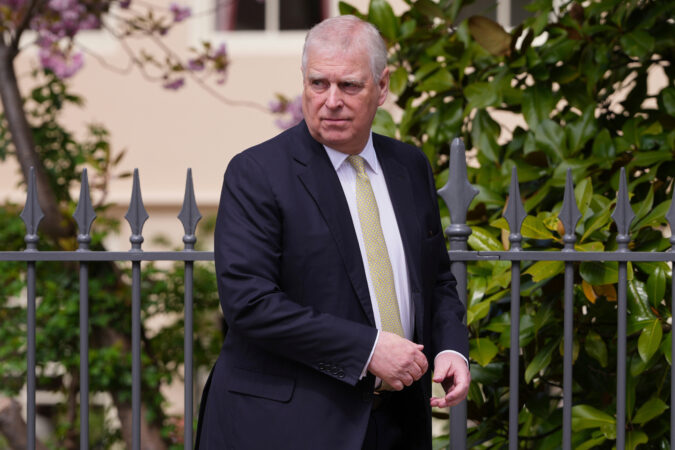
    LONDON — King Charles III is ready to “support’’ U.K. police examining claims that the former Prince Andrew gave confidential information to convicted sex offender Jeffrey Epstein, Buckingham Palace said on Monday.

    The statement came after Thames Valley Police said Monday that they were ”assessing” reports that the former prince, now known as Andrew Mountbatten-Windsor, sent trade reports to Epstein in 2010. The department, which serves an area west of London that includes Mountbatten-Windsor’s former home, previously said it was evaluating allegations that Epstein flew a young woman to Britain to have sex with Andrew, also in 2010.

    “The King has made clear, in words and through unprecedented actions, his profound concern at allegations which continue to come to light in respect of Mr. Mountbatten-Windsor’s conduct,’’ the palace said in a statement. “While the specific claims in question are for Mr. Mountbatten-Windsor to address, if we are approached by Thames Valley Police we stand ready to support them as you would expect.’’

    The statement is just the latest effort by the palace to distance the royal family from Mountbatten-Windsor as the U.S. Justice Department’s release of more than 3 million pages of documents from its investigation into Epstein reveal more embarrassing details about the relationship between the two men. Earlier in the day, Prince William and Princess Catherine released their own statement saying they have been “deeply concerned” by recent revelations.

    The palace also reiterated Charles and Queen Camilla’s concern for the victims of Epstein’s abuse.

    “As was previously stated, Their Majesties’ thoughts and sympathies have been, and remain with, the victims of any and all forms of abuse,’’ the palace said.

    The jeopardy faced by the royal family could be seen Monday when Charles visited Lancashire, in northwest England. While most of the crowd clapped, cheered, and waved flags, one person shouted, “How long have you known about Andrew?”

    Concerns about Mountbatten-Windsor’s links to Epstein have dogged the royal family for more than a decade.

    The late Queen Elizabeth II forced her second son to give up royal duties and end his charitable work in 2019 after he tried to explain away his friendship with Epstein during a catastrophic interview with the BBC. After more details about the relationship emerged in a book published last year, Charles stripped him of the right to be called a prince and ordered him to move out of a royal residence close to Windsor Castle.

    But the Justice Department documents have brought new attention to Mountbatten-Windsor as reporters home in on dozens of email exchanges between Epstein and the former prince, many of which took place after the financier was convicted of soliciting a minor for prostitution in 2008.

    Correspondence unearthed in recent days appears to show that Mountbatten-Windsor sent Epstein copies of his reports from a 2010 tour of Southeast Asia, which he undertook as Britain’s envoy for international trade. An earlier email appears to show Andrew sharing his itinerary for the two-week trip to Hanoi, Saigon, Singapore, Kuala Lumpur, and Hong Kong with Epstein.

    “We can confirm receipt of this report and are assessing the information in line with our established procedures,” Thames Valley police said in a statement released on Monday.

    Adding to the storm, a U.S.-based attorney said on Feb. 1 that he represented a woman who alleges Epstein flew her to Britain to have sex with Mountbatten-Windsor. The encounter took place at Royal Lodge, the former prince’s longtime home in Windsor, the attorney said in an interview with the BBC.

    Police previously said they were assessing this report.

    The king last week forced Mountbatten-Windsor to move out of Royal Lodge months ahead of schedule. Anger over Mountbatten-Windsor’s living arrangements had grown amid concern that he was still reaping rewards from his status as a royal even though he is no longer a working member of the royal family.

    Mountbatten-Windsor is now living on the king’s Sandringham estate in eastern England. He will live temporarily at Wood Farm Cottage while his permanent home on the estate undergoes repairs. Unlike Royal Lodge, which is owned by the crown and managed for the benefit of taxpayers, Sandringham is owned privately by the king.

    Thames Valley Police began its latest inquiry after Graham Smith, chief executive of the antimonarchy group Republic, reported Mountbatten-Windsor for suspected abuse of public office and violations of Britain’s Official Secrets Act.

    Smith, whose group seeks to replace the king with an elected head of state, compared Mountbatten-Windsor’s correspondence with Epstein to earlier revelations about Peter Mandelson, Britain’s former ambassador to the U.S., who is already the subject of a police investigation into whether he shared sensitive information with Epstein. Those communications were also revealed in the Justice Department documents.

    “I cannot see any significant difference between these allegations and those against Peter Mandelson,” Smith said on social media.

  • Vatican again approves Archbishop Fulton Sheen beatification after 2019 ceremony derailed at last minute

    Vatican again approves Archbishop Fulton Sheen beatification after 2019 ceremony derailed at last minute

    ROME — The Vatican has given the green light, again, to beatify Archbishop Fulton Sheen, the popular U.S. radio and TV preacher whose path to sainthood was derailed first by a lengthy court battle over his remains and then by concerns about how he handled clergy sexual misconduct cases.

    After a rare six-year delay to investigate the concerns, Sheen’s beatification can now take place in Peoria, Ill., as originally planned, the Peoria diocese announced Monday.

    No new date for the ceremony, the last major step before possible sainthood, was immediately announced. But the Vatican’s approval now sets the stage for the Illinois-born Sheen to be beatified during the pontificate of the Illinois-born Pope Leo XIV.

    “The Holy See has informed me that the cause for the Venerable Servant of God Archbishop Fulton J. Sheen can proceed to beatification,” Peoria Bishop Louis Tylka said in a written and video statement on the websites of the diocese and the Sheen foundation. “We are working with the Dicastery of the Causes of Saints at the Vatican to determine the details for the upcoming beatification.”

    Sheen was an enormously effective evangelizer in the 20th century U.S. church, who in some ways pioneered televangelism with his 1950s television series, Life Is Worth Living. According to Catholic University of America, where he studied and taught before he was made a bishop, Sheen won an Emmy Award, was featured on the cover of Time Magazine, “and became one of the most influential Catholics of the 20th century.”

    Pope Francis had confirmed a miracle attributed to Sheen’s intercession on July 6, 2019, and had set his beatification for Dec. 21 that year in Peoria. But with less than three weeks’ notice, the Vatican postponed the ceremony indefinitely.

    It acted after the diocese of Rochester, N.Y., where Sheen served as bishop from 1966-1969, asked for further investigation into Sheen’s tenure and “his role in priests’ assignments.”

    The concerns focused on Sheen’s handling of two cases of priests accused of sexual misconduct. Sheen was never accused of abuse himself. A top canonical affairs official from Peoria, Monsignor James Kruse, said in 2019 that an investigation had cleared Sheen of any wrongdoing. Kruse later complained that the Rochester diocese was “sabotaging” the cause, writing a lengthy essay that had been posted on the official Sheen beatification site but later taken down.

    Peoria Bishop Tylka’s statement made no reference to the concerns that prompted the delay in 2019.

    The 2019 investigation was the latest obstacle to hinder Sheen’s cause, coming after an expensive, yearslong legal battle between Sheen’s relatives in Peoria and the New York City archdiocese over his final resting place.

    Sheen, who died in 1979, was interred under the altar of St. Patrick’s Cathedral in New York. His remains were returned to Peoria in 2019 after a court ruled Sheen’s niece could bury him there.

    Among those celebrating the Vatican’s new green light to beatify Sheen was the Pontifical Missions Societies in the U.S., the Vatican’s main missionary fundraising office in the U.S., which Sheen headed from 1950-1966. Sheen left most of his patrimony, including writings and audio recordings, to the organization, which raises money for the Catholic Church in Africa, Asia, Latin America, and other mission areas.

    “It is profoundly moving that, in God’s providence, the first U. S. — born pope is able to advance the cause of his fellow Illinois native, the most iconic evangelizer ever produced by the American Church,” Monsignor Roger Landry, national director of the office, said in a statement.

  • China critic and former media tycoon Jimmy Lai is sentenced to 20 years in a Hong Kong security case

    China critic and former media tycoon Jimmy Lai is sentenced to 20 years in a Hong Kong security case

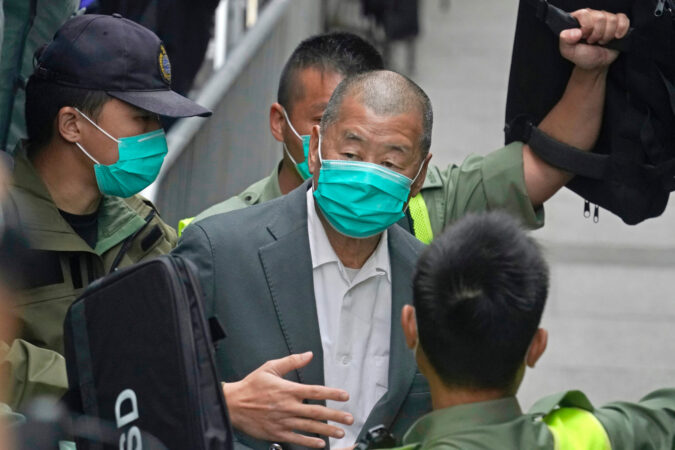
    HONG KONG — Jimmy Lai, the pro-democracy former Hong Kong media tycoon and a fierce critic of Beijing, was sentenced on Monday to 20 years in prison in the longest punishment given so far under a China-imposed national security law that has virtually silenced the city’s dissent.

    Lai, 78, was convicted in December of conspiring with others to collude with foreign forces to endanger national security, and of conspiracy to publish seditious articles. The maximum penalty for his conviction was life imprisonment.

    His co-defendants, six former employees of his Apple Daily newspaper and two activists, received prison terms of between 6 years and 3 months, and 10 years on collusion-related charges.

    Lai smiled and waved at his supporters when he arrived for the sentence. But before he left the courtroom, he looked serious, as some people in the public gallery cried. When asked about whether they would appeal, his lawyer Robert Pang said “no comment.”

    Lai’s daughter says he will die ‘a martyr’ in prison

    The democracy advocate’s arrest and trial have raised concerns about the decline of press freedom in what was once an Asian bastion of media independence. The government insists the case has nothing to do with a free press, saying the defendants used news reporting as a pretext for years to commit acts that harmed China and Hong Kong.

    Lai was one of the first prominent figures to be arrested under the security law in 2020. Within a year, some of Apple Daily’s senior journalists also were arrested and the newspaper shut down in June 2021.

    Lai’s sentencing could heighten Beijing’s diplomatic tensions with foreign governments, which have criticized Lai’s conviction and sentencing.

    U.S. President Donald Trump, who is expected to visit China in April, said he felt “so badly” after the verdict and noted he spoke to Chinese leader Xi Jinping about Lai and asked him “to consider his release.”

    British Prime Minister Keir Starmer’s government also has called for the release of Lai, who is a British citizen. U.K. Foreign Secretary Yvette Cooper called the prosecution “politically motivated,” saying the prison term is tantamount to a life sentence.

    In a statement, Lai’s son, Sebastien, said the “draconian” prison term was devastating for his family and life-threatening for his father. “It signifies the total destruction of the Hong Kong legal system and the end of justice,” he said.

    His sister Claire called the sentence “heartbreakingly cruel” in the same statement. “If this sentence is carried out, he will die a martyr behind bars,” she said.

    Hong Kong leader John Lee said Lai’s sentence demonstrated the rule of law, citing his serious crimes.

    “It’s bringing great satisfaction to the people,” he said in a statement.

    In Beijing, China’s Foreign Ministry spokesperson Lin Jian said Lai is a Chinese citizen and called him a major planner and participant in a series of anti-China destabilizing activities in Hong Kong. He urged “relevant countries” to respect the rule of law in Hong Kong.

    Judges ruled Lai was the mastermind

    Lai founded Apple Daily, a now-defunct newspaper known for its critical reports against the governments in Hong Kong and Beijing. He was arrested in August 2020 under the security law that was used in a yearslong crackdown on many of Hong Kong’s leading activists.

    In their ruling, three government-vetted judges wrote that the starting point of Lai’s sentence was increased because they found him to be the mastermind of the conspiracies. But they also reduced his penalty because they accepted that Lai’s age, health condition, and solitary confinement would cause his prison life to be more burdensome than that of other inmates.

    “Lai was no doubt the mastermind of all three conspiracies charged and therefore he warrants a heavier sentence,” they said. “As regards the others, it is difficult to distinguish their relative culpability.”

    They took into account that Lai is serving a prison term of five years and nine months in a separate fraud case and ruled that 18 years of Lai’s sentence in the security case should be served consecutively to that prison term.

    Urania Chiu, lecturer in law at Oxford Brookes University, said the case is significant for its broad construction of seditious intent and application of the term “collusion with foreign forces” to certain activities by the media. The implication is particularly alarming for journalists and those working in academia, she said.

    “Offering and publishing legitimate critiques of the state, which often involves engagement with international platforms and audiences, may now easily be construed as ‘collusion,’” Chiu said.

    Lai has been in custody for more than five years. In January, Pang said Lai suffered health issues including heart palpitations, high blood pressure, and diabetes. The prosecution said a medical report noted Lai’s general health condition remained stable. The government said his solitary confinement was at Lai’s wish.

    Co-defendants get reduced sentences

    The former Apple Daily staffers and activists involved in Lai’s case entered guilty pleas, which helped reduce their sentences Monday. They earlier admitted to the prosecution charge that said they conspired with Lai to request foreign forces to impose sanctions or blockades, or engage in other hostile activities against Hong Kong or China.

    The convicted journalists are publisher Cheung Kim-hung, associate publisher Chan Pui-man, editor-in-chief Ryan Law, executive editor-in-chief Lam Man-chung, executive editor-in-chief responsible for English news Fung Wai-kong, and editorial writer Yeung Ching-kee. They received prison terms ranging between six years and nine months, to 10 years.

    The two activists, Andy Li and Chan Tsz-wah, were sentenced to six years and three months, and seven years and three months respectively.

    The penalties for Cheung, Chan, and Yeung, alongside the two activists, were reduced in part because they served as prosecution witnesses and the judges said their evidence had “significantly” contributed to the conviction of Lai.

    Before sunrise, dozens of people stood in line outside the court building to secure a seat in the courtroom. One of them was former Apple Daily employee Tammy Cheung.

    “Whatever happens, it’s an end — at least we’ll know the outcome,” Cheung said before the sentence was delivered.

    Case considered a blow to Hong Kong media

    Lai founded Apple Daily in 1995, two years before the former British colony returned to Chinese rule. Its closure in 2021 shocked the local press scene. Hong Kong ranked 140th out of 180 territories in the press-freedom index compiled by media freedom organization Reporters Without Borders in 2025, far from its 18th place in 2002.

    Steve Li, chief superintendent of the police force’s National Security Department, welcomed the heavy sentence on Lai. “Obviously, he has done nothing good for Hong Kong that could serve as a basis for his mitigation,” he told reporters.

    The government said it will confiscate assets related to Lai’s crime.

    Human Rights Watch’s Asia director Elaine Pearson said the harsh 20-year-sentence is effectively a death sentence, calling it cruel and unjust.