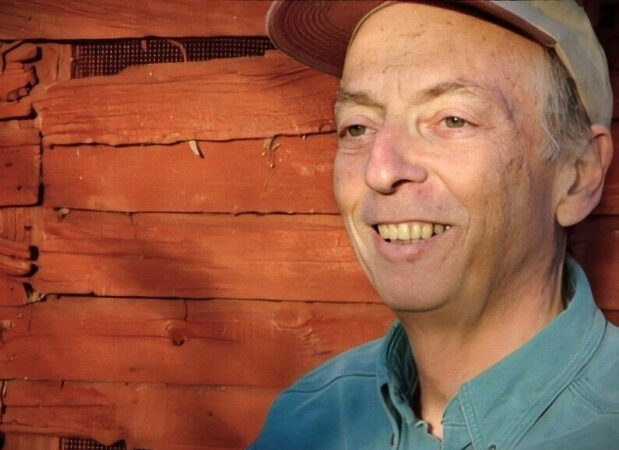
GETTYSBURG — History professor Gabor S. Boritt, a Hungarian immigrant to the United States who wrote widely about the Civil War and President Abraham Lincoln, has died. He was 86.
Mr. Boritt had been a professor at Gettysburg College in Pennsylvania for many years, founding the Civil War Institute and helping establish the $50,000 Lincoln Prize for scholarship related to the Civil War.
He died Monday in Chambersburg, according to his son.
Mr. Boritt was born in Budapest in 1940 and survived World War II, although relatives were killed in the Auschwitz Nazi death camp. He was sent to an orphanage after the war and in 1956 joined the Hungarian Revolution as a 16-year-old, his family recalled.
After the uprising was crushed, he made it to the United States, where he worked in a New York hat factory before furthering his education in South Dakota and earning a history doctorate from Boston University.
He taught at several universities before joining the faculty at Gettysburg in 1981. Mr. Boritt served on the board of the Gettysburg Foundation and was involved in the construction of a new visitor’s center at Gettysburg National Military Park.
He was awarded a National Humanities Medal by President George W. Bush in 2008.
A screening of Budapest to Gettysburg, a documentary about his life created by his son, Jake Boritt, will be held on Lincoln’s Birthday, Feb. 12, in Gettysburg.
WASHINGTON — A man Justice Department officials described as a key participant in the 2012 attack that killed a U.S. ambassador and three other Americans in Benghazi, Libya, was taken into U.S. custody Friday and will face prosecution.
Zubayar al-Bakoush was arrested in an undisclosed country and flown to an airfield near Washington, where he arrived just after 3 a.m. Friday, Attorney General Pam Bondi said. He faces an eight-count indictment on charges including murder, terrorism and arson.
Bondi and FBI Director Kash Patel declined at a news conference to answer questions about where al-Bakoush was arrested and whether the operation that brought him into custody involved the assistance of foreign nations.
“We have never stopped seeking justice for that crime against our nation,” Bondi said.
In the Sept. 11, 2012, attack, at least 20 militants, armed with AK-47s and grenade launchers, stormed the U.S. mission in Benghazi, breaching its gates, forcing their way into offices and setting buildings ablaze. Ambassador J. Christopher Stevens, State Department employee Sean Smith and CIA contractors Tyrone S. Woods and Glen Doherty were killed. Stevens was the first U.S. ambassador slain while performing his duties abroad in nearly four decades
Almost immediately, the incident became a subject for partisan finger-pointing, with Republican lawmakers faulting the Obama administration and especially then-Secretary of State Hillary Clinton for alleged security failures at the facility and what they described as a slow response to the violence. References to Benghazi — nearly 14 years later — remain a potent point of political division.
Even as they announced al-Bakoush’s arrest Friday, Justice Department officials seized the opportunity to swipe at frequent Republican targets, renew old lines of attack, and credit President Donald Trump.
“Hillary Clinton famously once said about Benghazi, ‘What difference, at this point, does it make?’” Bondi said, referring to an irritated response Clinton gave during a 2013 Senate hearing at which she was repeatedly pressed about the motive for the attack.
“Well, it makes a difference to Donald Trump,” Bondi continued. “It makes a difference to those families and 14 years later, it makes a difference to law enforcement who made the difference in this case.”
A Republican-led congressional investigation into the incident later found no evidence of wrongdoing by Clinton, though it faulted the Obama administration more broadly for being slow to respond after the militants breached the gates.
Jeanine Pirro, the Trump-appointed U.S. attorney in Washington whose office is overseeing the prosecution, made reference to that frequent Republican criticism in her remarks Friday about al-Bakoush’s arrest.
In her prior role as a Fox News host, Pirro frequently waded into the debate over Benghazi, at one point accusing then-FBI Director Robert S. Mueller III of orchestrating a cover-up to protect administration officials.
“For 13 hours, the American cavalry never came,” she said Friday. “For 13, hours [the victims] waited for that help that never came.
Democrats have defended their efforts to prosecute individuals tied to the deaths of Stevens and the others, noting that the Justice Department had by late 2013 filed sealed complaints against roughly a dozen overseas militants accused of playing a role in the attack.
Pirro acknowledged Friday that the complaint that led to al-Bakoush’s arrest was first filed in 2015, during the final year of the Obama administration.
Court filings unsealed Friday described al-Bakoush as a member of an extremist Libyan militia who was identified by a cooperating FBI witness as one of the attackers caught on surveillance footage from the compound. Agents described footage showing al-Bakoush, with a firearm slung over his shoulder, attempting to break into cars of U.S. service members and following the crowd into buildings where Stephens and others were killed.
Al-Bakoush is the third man law enforcement officials have brought to the U.S. to face charges.
A federal jury in Washington in 2017 convicted Ahmed Abu Khattala, a Libyan militia leader and the accused mastermind behind the attack, on conspiracy and terrorism charges tied to the incident. A second militant, Mustafa al-Imam, was found guilty on similar charges in 2019. Both men were sentenced to prison terms of more than a decade.
“Time will not stop us from going after these predators, no matter how long it takes, to fulfill our obligation to those families who suffered horrific pain at the hands of these violent terrorists,” Pirro said.
OSLO, Norway — Norway’s crown princess apologized on Friday for the situation she has put the royal family in as she faces scrutiny over her contacts with the late sex offender Jeffrey Epstein, part of a broader apology for all those she has “disappointed.”
Crown Princess Mette-Marit’s communications and contacts with Epstein have put her in the spotlight over the past week, adding to the embarrassment to the royals just as her son went on trial in Oslo for multiple offenses, including charges of rape.
The Epstein files contained several hundred mentions of the crown princess, who said in 2019 that she regretted having had contact with Epstein, Norwegian media reported.
The documents, which include email exchanges, showed that Mette-Marit borrowed an Epstein-owned property in Palm Beach, Fla., for several days in 2013. Broadcaster NRK reported that the stay was arranged through a mutual friend, which was later confirmed by the royal household.
The royal palace said Friday that Mette-Marit wants to talk about what happened and explain herself in more detail, but is unable to at present. It added that she is in a very difficult situation and “hopes for understanding that she needs time to gather her thoughts.”
It also issued a statement from the crown princess — her second in a week — in which she reiterated her deep regret for her past friendship with Epstein.
“It is important for me to apologize to all of you whom I have disappointed,” she said. “Some of the content of the messages between Epstein and me does not represent the person I want to be. I also apologize for the situation I have put the Royal Family in, especially the King and Queen.”
King Harald, 88, and the royals are generally popular in Norway, but the case against Mette-Marit’s son, Marius Borg Høiby, has been a problem for the family’s image since 2024 and the latest Epstein files have compounded that. Mette-Marit is married to Crown Prince Haakon, the heir to the throne.
The release of documents included an email from Mette-Marit to Epstein in November 2012 asking: “Is it inappropriate for a mother to suggest two naked women carrying a surfboard for my 15-year-old son’s wallpaper?”
He replied, “Let them decide,” and advised that the mother should, “Stay out of it.”
Mette-Marit, 52, said in a statement issued shortly after the files were released that she “must take responsibility for not having investigated Epstein’s background more thoroughly, and for not realizing sooner what kind of person he was.” She added: “I showed poor judgment and regret having had any contact with Epstein at all. It is simply embarrassing.”
The crown princess isn’t the only high-profile Norwegian who faces unflattering attention stemming from the documents on millionaire financier and sex offender Epstein released by the U.S. Department of Justice.
The Norwegian Economic Crime Investigation Service, a mixed unit of police and prosecutors, said Thursday that it would look into whether gifts, travel or loans were received by former Prime Minister Thorbjørn Jagland in connection with his positions.
Jagland was Norway’s prime minister between 1996 and 1997. He also has chaired the Norwegian Nobel Committee and was secretary general of the Council of Europe.
The files revealed years of contact between the politician and Epstein. Emails indicate that he made plans to visit Epstein’s island with his family in 2014, when he was chairman of the Nobel committee, with an Epstein assistant organizing the flights.
Norwegian authorities are also looking to lift Jagland’s immunity, which he enjoys because of his past as a diplomat. His legal representative told Norwegian broadcaster NRK that Jagland is cooperating with the investigation.
The World Economic Forum also announced on Thursday that it was opening an internal review into its CEO Børge Brende to determine his relationship with Epstein, after the files indicated the two had dined together several times and exchanged messages. Brende was Norway’s foreign minister from 2013-2017.
He told NRK that he is cooperating with the investigation, that he only met Epstein in business settings and that he had been unaware of Epstein’s criminal background.
Epstein killed himself in 2019 while awaiting trial on charges that he sexually abused underage girls at his homes in the U.S.
MOSCOW — A deputy chief of Russia’s military intelligence agency was shot and wounded in Moscow on Friday in an attack that follows a series of assassinations of senior military officers that Russia has blamed on Ukraine.
Lt. Gen. Vladimir Alekseyev was hospitalized after being shot several times by an unidentified assailant at an apartment building in northwestern Moscow, Investigative Committee spokesperson Svetlana Petrenko said in a statement.
She didn’t say who could be behind the attack on the 64-year-old who has served as the first deputy head of Russia’s military intelligence agency, known as the GRU, since 2011.
He was decorated with the Hero of Russia medal for his role in Moscow’s military campaign in Syria and in June 2023 was shown on state TV speaking to mercenary chief Yevgeny Prigozhin when his Wagner Group seized the military headquarters in the southern city of Rostov-on-Don during his short-lived mutiny.
The shooting came a day after Russian, Ukrainian, and U.S. negotiators wrapped up two days of talks in Abu Dhabi, United Arab Emirates, aimed at ending the nearly 4-year-old war in Ukraine. The Russian delegation was led by Alekseyev’s boss, military intelligence chief Adm. Igor Kostyukov.
President Vladimir Putin was informed about the attack, said Kremlin spokesman Dmitry Peskov, who added that law enforcement agencies need to step up protection of senior military officers during the conflict in Ukraine.
Ukrainian authorities haven’t commented on the attack.
Asked about the shooting, Russian Foreign Minister Sergey Lavrov said it would be up to law enforcement agencies to pursue the investigation but described it as an apparent “terrorist act” by Ukraine intended to derail peace talks.
The business daily Kommersant said the attacker, posing as a delivery person, shot the general twice in the stairway of his apartment building, wounding him in the foot and the arm. Alekseyev tried to wrest away the gun and was shot again in the chest before the attacker fled, the report said.
Alekseyev, who was born in Ukraine when it was part of the Soviet Union, rose steadily through the ranks to lead operations of Russian military intelligence in Syria, Ukraine, and elsewhere.
He was sanctioned by Washington for meddling in the 2016 U.S. election and also faced sanctions in the U.K. and the European Union over his alleged role in the 2018 poisoning of former Russian intelligence officer Sergei Skripal and his daughter with the nerve agent Novichok in Salisbury, England.
Since Moscow sent troops into Ukraine in 2022, Russian authorities have blamed Kyiv for several assassinations of military officers and public figures in Russia. Ukraine has claimed responsibility for some of them.
In December, a car bomb killed Lt. Gen. Fanil Sarvarov, head of the Operational Training Directorate of the Russian Armed Forces’ General Staff.
In April, another senior Russian military officer, Lt. Gen. Yaroslav Moskalik, a deputy head of the main operational department in the General Staff, was killed by a bomb placed in his car parked near his apartment building just outside Moscow.
A Russian man who previously lived in Ukraine pleaded guilty to carrying out the attack and said he had been paid by Ukraine’s security services.
Days after Moskalik’s killing, Ukrainian President Volodymyr Zelensky said he received a report from the head of Ukraine’s foreign intelligence agency on the “liquidation” of top Russian military figures, adding that “justice inevitably comes” although he didn’t mention Moskalik’s name.
In December 2024, Lt. Gen. Igor Kirillov, the chief of the military’s nuclear, biological and chemical protection forces, was killed by a bomb hidden on an electric scooter outside his apartment building. Kirillov’s assistant also died. Ukraine’s security service claimed responsibility for the attack.
An undocumented immigrant is seeking $1 million in damages after he says he was riding his bike in Melrose Park, Ill., when a U.S. Border Patrol agent suddenly tackled him, placed him in a chokehold and punched his head.
A Chicago resident says that federal agents caused $30,000 worth of property damage when they broke a lock on his wrought-iron gate and scaled a wooden fence to chase after construction workers repairing his Victorian-era home.
A Columbia University student and activist who spent 104 days in a U.S. Immigration and Customs Enforcement detention center is demanding $20 million over what he says was a false arrest.
All three should expect a long and difficult fight under the current legal landscape, lawyers warn.
These and scores of other claims expected to arise out of the Trump administration’s crackdown on illegal immigration are winding through a bureaucratic process mandated under the Federal Tort Claims Act. It is the primary legal recourse for people seeking compensation for property damage, injuries and even deaths allegedly caused by federal agencies and their employees.
First, individuals must fill out a form and submit it for review by the agency that they say caused the harm. Agencies such as ICE and Customs and Border Protection have six months to deny a claim, offer a settlement, or not respond at all. Only then can people sue in court under the Federal Tort Claims Act.
But these cases are different from civil rights lawsuits. Judges, not juries, decide the outcome. Awarded damages are likely to be much lower. And individual officers can’t be named as defendants.
“It’s absolutely bonkers,” said Brian Orozco, a Chicago attorney for Ricardo Aguayo Rodriguez, the bike-riding immigrant who was hospitalized and is now detained, awaiting deportation to Mexico. “If a Chicago police officer abuses my civil rights, I can file a claim immediately. I don’t have to wait six months [to file a lawsuit]. I have a right to a jury trial. I don’t have that when I’m up against the federal government. It’s scary to me how protected these federal agents are.”
After the Civil War, Congress passed a law that established the right to sue local and state officials for the violation of constitutional rights. Federal officials weren’t included in the law, though a 1971 Supreme Court ruling established precedence for such lawsuits. But legal experts said that the court’s decisions within the past decade have narrowed that path and made it nearly impossible to successfully sue federal agents for civil rights violations.
“It is arguably harder today in 2026 than at any other time in American history to sue federal officials for money damages if they violate your constitutional rights,” said Harrison Stark, senior counsel at the State Democracy Research Initiative at the University of Wisconsin Law School.
Relatives of both Renée Good and Alex Pretti, Minneapolis residents who were fatally shot in separate encounters by federal immigration officers in January, have hired attorneys. In a statement, Romanucci & Blandin, the law firm retained by Good’s family, said it is pursuing a tort claim and would not be deterred by “the byzantine, time-consuming processes mandated by the Federal Tort Claims Act.” The attorney hired by Pretti’s parents did not respond to a request for comment.
People visit a makeshift memorial on Jan. 26 in Minneapolis for 37-year-old Alex Pretti, who was fatally shot by immigration officers.
An ICE spokesperson said the agency received about 400 tort claims in fiscal 2025, which ended Sept. 30, but did not provide a breakdown of how many resulted in settlements or denials.
“Despite facing a more than 1,300% increase in assaults against them, 8,000% increase in death threats, and a 3,200% increase in vehicle rammings, the men and women of ICE continue working around the clock” to arrest and remove “the worst of the worst criminal aliens from the United States,” ICE said in an emailed statement. The Washington Post could not independently verify these numbers.
A U.S. Customs and Border Protection spokesperson declined to provide data about the number of tort claims the agency received last year.
“Rioters and agitators have created an extraordinary amount of damage to public and private property, not to mention the harm they have put our officers and the public in,” a CBP spokesperson said in a statement. “We expect these agitators will be held responsible for their actions.”
Spokespeople for ICE and CBP declined to comment on individual claims described in this story. They broadly said their agencies adhere to the Federal Tort Claims Act.
A significant settlement is not impossible. The estate of Ashli Babbitt, the woman who was shot and killed on Jan. 6, 2021, during the U.S. Capitol riot, filed a tort lawsuit and reached a nearly $5 million settlement with the government.
But the challenges of navigating the Federal Tort Claims Act — coupled with an anticipated rise in claims as violent encounters continue in cities across the United States — have put pressure on Congress to pass legislation to allow civil rights lawsuits against federal officers and agents.
Such an effort would probably face pushback, experts said. Several years ago, the National Border Patrol Council, a union that represents Border Patrol agents, warned the Supreme Court of the “potentially massive financial impact” that would occur if thousands of its agents were exposed to “liability for personal damages.”
‘Not very hopeful’
Leo Feler said he ran into challenges as soon as he decided to pursue a tort claim. For one thing, he wasn’t sure where to send it: Feler didn’t know which federal agency employed the masked men who came to his Chicago home on Oct. 24.
Feler, a 46-year-old economist, said he wasn’t there at the time. But he received a notification from his Ring security camera: Someone was on his property.
A construction crew had been repairing the windows and siding of his home in the affluent Lakeview neighborhood. As the workers ate lunch outside, armed men in green uniforms jumped from two vehicles and tried to break the locks on the gates of a nearly 6-foot-high wrought-iron fence, according to Feler, who reviewed security camera footage of the incident and a video taken by a neighbor.
The agents, Feler said, had scaled a wooden fence along the side of his house and hopped onto his balcony in pursuit of the fleeing workers.
One worker was injured as he scrambled through a construction site littered with wood and nails, Feler said, leaving a trail of blood in the home. Another worker was detained, he said.
Feler said a tenant who rented a unit on his property asked the officers to provide a warrant that authorized the raid, but they refused to do so. Through his Ring camera’s intercom system, Feler told the agents that they were trespassing and needed to leave. But they ignored him, he said.
Feler later sought legal advice. Attorneys told him he could file a tort claim for damages.
Unsure which agencies had come to his house, Feler sent the paperwork for his tort claim in December to ICE, Customs and Border Protection and the Department of Homeland Security.
He described the damage to his property — including to his locks and fence — and also wrote that the agents “robbed me and my family of the feeling of security we once enjoyed in my home.” His tenant was afraid and asked to break her lease early, which Feler said he agreed to do.
Overall, Feler estimated $30,000 in damage to his property.
He said he is “not very hopeful” that he will receive payment. If his claim is denied, he said he and his attorneys will pursue a lawsuit under the Federal Tort Claims Act.
Others caught up in Operation Midway Blitz, the administration’s immigration enforcement actions in the Chicago area last fall, also said they expect it will be difficult to recover alleged damages.
Leigh Kunkel, a 39-year-old freelance journalist, said she was documenting federal agents shooting pepper balls at protesters in late September outside an ICE facility in Broadview, Ill. An agent then aimed the weapon at her and fired pepper balls, she said, striking her in the back of the head and the nose and leaving her bloodied.
A week later, her fiancé, Kyle Frankovich, also was protesting in Broadview within an area that he said state police monitoring the scene had designated a “free speech zone.” Federal officials, including Border Patrol commander Gregory Bovino, emerged from the ICE facility and began arresting protesters, according to video footage.
Frankovich, 41, said he showed no aggression toward agents; nevertheless, he said, they took him to the ground and put him in handcuffs. They later lined him up with other detainees along a guardrail near the facility. The scene served as a backdrop to a Department of Homeland Security promotional video featuring Secretary Kristi L. Noem.
He said he was detained for eight hours before a federal agent dropped him off at a nearby gas station. Frankovich has not been charged with a crime.
Antonio Romanucci, a civil rights lawyer and founding partner at the Chicago-based firm representing Renée Good’s family, said his office plans to file federal tort claims for Kunkel and Frankovich. The couple said they understand the path may be long and their case could be unsuccessful, while also exposing them to public scrutiny.
“Ultimately, we landed on the feeling that we are privileged enough to have the opportunity to fight back against this as citizens,” Kunkel said, “and that if we can do that, if this is one little way that we can push back, that we should.”
Pushing for change
Previous efforts to change the federal law have failed to gain traction.
A law signed by President Ulysses S. Grant in 1871 established the statutory right to sue local or state officials for constitutional violations. Nearly two years ago, a group of U.S. lawmakers introduced draft legislation that would have amended that law by inserting just four words — “or the United States” — and established the right to sue federal officials as well. But the effort stalled.
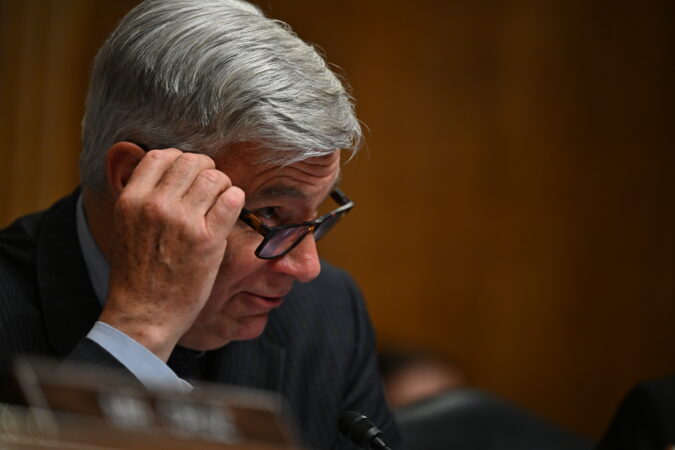
“It’s a somewhat complicated area of law across different jurisdictions,” Sen. Sheldon Whitehouse (D., R.I.) said of the challenges in garnering support for the bill, which he sponsored. “But I didn’t see any huge partisan issues.”
Whitehouse said there was a lack of urgency at the time, even though the Supreme Court had “more or less strangled” the legal pathway that had been used since the 1970s to sue federal officials for civil rights violations.
Last fall, Whitehouse and Rep. Hank Johnson (D., Ga.) reintroduced the measure. Legal experts told the Post they think it is unlikely to pass, citing anticipated concerns about exposing federal law enforcement officers to personal liability.
A handful of states already have laws that authorize claims against federal officials for the violation of constitutional rights, including New Jersey and Massachusetts, according to research compiled by Stark of the University of Wisconsin Law School. Lawmakers in other states are scrambling to draft similar bills.
Last week, the California Senate passed the “No Kings Act” to allow civil rights lawsuits against federal officers. The measure will head to the State Assembly next.
In Colorado, Mike Weissman, a Democratic state senator, recently introduced a similar bill. He described talking with state legislators in Washington, New Mexico, and Virginia, to exchange ideas.
And in Minnesota, State Rep. Jamie Long, a Democrat whose district includes part of Minneapolis, has drafted such a bill for the legislative session that begins later this month.
“We know that there is evidence of these severe constitutional violations happening, and that’s why we think it’s appropriate to create this state remedy,” Long said.
Such measures are likely to be challenged. The U.S. Justice Department has already sued Illinois, alleging that its new law authorizing civil rights claims against federal officers is an “unconstitutional attempt to regulate federal law enforcement officers.”
In the meantime, those who say they have sustained property damage or injuries during immigration enforcement efforts and their attorneys are continuing to press lawmakers to enable them to sue federal officers.
Christopher Parente, a Chicago-based lawyer, is representing Marimar Martinez, a 30-year-old teacher’s assistant who was shot five times by a Border Patrol agent in October and survived. In an interview with the Post, her attorney said he thinks that Congress should change the law.
Parente, a former federal prosecutor who plans to file a tort claim on Martinez’s behalf, said, “There is no deterrence — in fact, these agents are embraced and celebrated by this administration and their colleagues.”
Marimar Martinez (center) is greeted by her family after being released from the Metropolitan Correctional Center on Oct. 6, 2025, after being shot by immigration agents and charged with assaulting federal officers in an incident in Chicago’s Brighton Park.
A chilling effect
People seeking compensation from the federal government may face another roadblock: finding an attorney to take their case.
“I’ve met people who spent the entire statute of limitations period, which is generally two years, looking for attorneys to represent them in cases against the federal government or federal officials and not being able to find them,” said Anya Bidwell, senior attorney for the Institute for Justice, a nonprofit law firm based in the D.C. area.
Bidwell said many attorneys are deterred from taking Federal Tort Claims Act cases because the government often invokes “a very broad immunity that courts traditionally interpret to pretty much swallow any of the claims that involve any kind of a judgment or choice on behalf of an officer.”
In other words, many cases are dismissed. Bidwell said “even getting to trial is extremely difficult.”
Some people who consider filing claims ultimately decide not to, discouraged by the long and difficult process.
In Minneapolis, Gina Christ, a 55-year-old business manager, contacted a lawyer to challenge what she described as an unlawful detention. But the attorney she met with told her suing the government would be “very, very difficult,” Christ recalled.
Christ had driven to a protest that began after Border Patrol agents allegedly tried to arrest a pair of Latino teens. She said she parked along the side of the street to observe the agents, not to obstruct them.
Christ said she was soon surrounded by agents and protesters. Agents yelled at her to move before smashing the window of her Ford Escape. They opened the door, pulled her out of the car, and held her facedown on the pavement, she said.
Agents restrained her wrists with plastic zip ties, Christ said, while her eyes and throat burned from tear gas fired into the nearby crowd.
Authorities took her to a federal building for processing, she said, and placed her in metal arm and leg shackles. She said they walked her to a folding table, where there was a makeshift sign with the criminal code for assaulting an officer. They told her she would face charges and took her fingerprints and a DNA swab.
Christ said she spent nearly four hours in custody before she was released. She hasn’t been charged with a crime.
A Customs and Border Protection spokesperson did not answer questions about the agency’s interaction with Christ.
After weighing the difficulty of pursuing a tort claim, Christ said she plans to pay to fix her window herself. Given what others have lost, she said, it seems too small to pursue.
TUCSON, Ariz. — “Today” show host Savannah Guthrie’s brother on Thursday renewed the family’s plea for their mother’s kidnapper to contact them, hours after an Arizona sheriff said investigators don’t have proof Nancy Guthrie is alive but believe “she’s still out there.”
“Whoever is out there holding our mother, we want to hear from you. We haven’t heard anything directly,” Camron Guthrie said in a video posted on social media.
“We need you to reach out and we need a way to communicate with you so we can move forward,” but first the family needs to know the kidnapper has their mother, he said, echoing a statement his famous sister read the day before.
Five days into the desperate search for 84-year-old Nancy Guthrie, authorities have not identified any suspects or persons of interest, Pima County Sheriff Chris Nanos said.
Authorities think she was taken against her will from her home in Tucson over the weekend. DNA tests showed blood found on Guthrie’s front porch was a match to her, the sheriff said.
“Right now, we believe Nancy is still out there. We want her home,” Nanos said at a news conference earlier Thursday. He acknowledged, however, that authorities have no evidence she’s OK.
Demands for ransom
Investigators said they are taking seriously notes seeking ransom that were sent to some media outlets.
It’s unclear if all of the notes were identical. Heith Janke, the FBI chief in Phoenix, said details included a demand for money with a Thursday evening deadline and a second deadline for Monday if the first one wasn’t met. At least one note mentioned a floodlight at Guthrie’s home and an Apple watch, Janke said.
“To anyone who may be involved, do the right thing. This is an 84-year-old grandma,” Janke said.
At least three media organizations reported receiving purported ransom notes, which they handed over to investigators. Authorities made an arrest after one ransom note turned out to be fake, the sheriff said.
A note e-mailed Monday to the KOLD-TV newsroom in Tucson included information that only the abductor would know, anchor Mary Coleman told CNN.
“When we saw some of those details, it was clear after a couple of sentences that this might not be a hoax,” she said.
The sheriff said it’s possible Nancy Guthrie was targeted, but if she was, investigators don’t know if that’s because her daughter is one of television’s most visible anchors.
Authorities say any decision on whether to fulfill ransom demands ultimately is up to the family.
A day earlier, Savannah Guthrie and her siblings released a message to her mother’s kidnapper, saying they are ready to talk but want proof their mom is still alive. There’s been no response to their pleas so far.
New timeline of Guthrie’s disappearance
Investigators gave a more detailed timeline from the hours after Nancy Guthrie was last seen Saturday night. She was eating dinner and playing games with family members before one of them dropped her off at her home in a upscale neighborhood that sits on hilly, desert terrain, the sheriff said.
About four hours later, just before 2 a.m. Sunday, the home’s doorbell camera was disconnected, Nanos said. But Guthrie did not have an active subscription, so the doorbell company was unable to recover any footage.
Software data recorded movement at the home minutes later, the sheriff said, acknowledging that the motion could have come from an animal.
Then at 2:28 a.m. the app on Guthrie’s pacemaker was disconnected from her phone.
Search enters a fifth day
Guthrie was reported missing shortly before noon Sunday after she didn’t show up at a church.
While she is able to drive and her mind is sharp, the sheriff said she has difficulty walking even short distances. She also requires daily medicine that’s vital to her health, he has said.
A sheriff’s dispatcher said during the search Sunday that Guthrie has high blood pressure, a pacemaker and heart issues, according to audio from broadcastify.com.
Investigators searched in and around Guthrie’s home again for several hours Wednesday.
Authorities are bringing more resources and people into the investigation, and the FBI announced Thursday it was offering up to $50,000 for information. A day earlier, President Donald Trump posted on social media that he was directing federal authorities to help where they can.
Savannah Guthrie has hosted “Today” — NBC’s flagship morning show — for more than a decade and had been set to co-anchor the network’s coverage of Friday’s opening ceremony for the Winter Olympics. For now, she’s staying close to her mother’s home.
She joined her two siblings in an emotional plea on social media Wednesday to say they’re ready to talk to whoever sent the ransom notes.
“We need to know without a doubt that she is alive and that you have her. We want to hear from you and we are ready to listen. Please reach out to us,” she said while fighting off tears.
With her voice cracking, she addressed her mother directly, saying the family was praying for her and that people were looking for her. She was flanked by Camron and their sister, Annie.
“Mamma, If you’re listening, we need you to come home. We miss you,” Annie Guthrie said.
Many Americans stand to collect larger tax refunds this year, whether they itemize or not.
Certain filers can now write off tips, overtime pay, and auto loan interest because of changes enacted under last year’s sweeping tax and spending bill. People 65 and older can collect a $6,000 write-off. And the standard deduction has grown, as has the child tax credit.
Many workers may have had more money withheld from their paychecks than needed because the IRS did not adjust withholding tables after Republicans’ One Big Beautiful Bill was signed into law on July 4.Excess withholding is different from a tax cut, of course, but it generally translates into larger refunds because the government returns the overpayment.
Overall, the law disproportionately benefits the wealthy and shifts government benefits from low-income households to higher-earning ones, according to independent analyses. Though most people will see some reduction in taxes, many low-income households lost more in federal benefits like SNAP or Medicaid than they would gain from tax cuts.
Here’s what filers need to know about the new provisions heading into tax season, which runs through April 15.
Tips
Workers in specific jobs — such as bartenders, gambling dealers, DJs, babysitters, tailors, and many more — can deduct as much as $25,000in tips from their taxable income. They don’t need to itemize; however, married filers must file jointly. Those who earn more than $150,000 (or $300,000 jointly) cannot claim the full deduction.
The new deduction is only available to filers with a Social Security number, which will prevent some immigrants from claiming it.
Next year, employers will have new tax forms for recording their workers’ tips that qualify for the deduction. This year, however, workers will need to figure out their qualifying tips on their own.
The IRS estimates that about 6 million people can claim the new deduction. The Congressional Budget Office estimates they will collectively pay about $10 billion less in taxes this year.
Overtime wages
When workers earn a bonus for working extra hours— the “half” part of those “time-and-a-half” earnings — that money won’t be taxed. The income limitation is the same as those on tips, but the total allowable deduction is capped at $12,500 for an individual and $25,000 for joint filers.
This deduction also requires taxpayers to have a Social Security number and to file jointly if married. It isn’t limited to specific named occupations, though not all workers are entitled to overtime pay under the Fair Labor Standards Act. The number of salaried, full-time workers who are guaranteed overtime based on their wages dropped from roughly 65% in the 1970s to 15% in 2024, according to the National Employment Law Project. Still, this deduction is one of the more costly ones in the new law, projected to decrease tax revenue by more than $32 billion.
Like tips, the deduction is available whether taxpayers itemize or not. And workers will be responsible for calculating their overtime pay this year, as the IRS will not have forms available until next tax season. Many employers will provide workers with pay statements to help them figure out what they can claim.
Car loan interest
If you took out an auto loan in 2025, you may be able to write off as much as $10,000 in interest. The deduction is Republicans’ response to rising car payments: Consumers are now paying more than $50,000, on average, for a new vehicle, leaving 1 in 5 of them with payments in excess of $1,000 a month.
The deduction is reserved for automobiles that had their “final assembly” in the United States. A long list of popular cars and SUVs from both American and foreign brands are assembled here, but some vehicles won’t qualify. The Nissan Sentra, for example, is assembled in Mexico, and many Toyota Corollas are assembled in Japan. You can look up your own car at vpic.nhtsa.dot.gov/decoder.
Only taxpayers with modified adjusted gross income below $100,000, or joint filers below $200,000, can claim the full deduction.
The CBO estimated that the deduction will cost the government $5.4 billion in 2026.
Senior citizens
Taxpayers 65 and older already get a larger standard deduction than younger people. The Republican law bumps it up by $6,000 for low- and moderate-income seniors (individuals with as much as $75,000 in income or joint filers with $150,000). It also allows those seniors who itemize instead of claiming the standard deduction to be eligible for the same additional $6,000 deduction.
Republicans created this deduction instead of exempting Social Security income from taxes, an idea floated by President Donald Trump during his campaign. With the new deduction, few seniors will wind up owing taxes on their Social Security benefits.
The Joint Committee on Taxation has estimated that the enhanced deduction will cost the government more than $17.6 billion a year.
Bigger deductions
The standard deduction rises to $15,750 for individuals, $23,625 for heads of households, and $31,500 for couples filing jointly.
The Republican bill passed in July extended many of the provisions of a 2017 tax law that otherwise would have expired — including a larger standard deduction and no more personal exemptions.
The law increased the maximum Child Tax Credit to $2,200 per child, and the amount of state and local taxes (SALT) that filers can deduct from their taxable income, from $10,000 to $40,000.
Why does it matter so much to the Trump administration that an exhibit about nine enslaved Africans at the President’s House be removed? Yes, we know this display does not allow Americans to skip past the horrors of enslavement and the daily violence that people of African descent faced. Yes, we know the display counters the majestic view of the Founding Fathers as saintly people who fought for the equal rights of all. Yes, we know this memorial ingrains in the American consciousness that Black people were thingified and their free labor built this country.
Simply put, the dismantling of this exhibit is an attempt to erase our collective consciousness so that Black children and white children grow up without a clear reference point of what this nation was. Without understanding what America was, we are bound to make the same oppressive mistakes. And what will efforts like this mean for the future of the curricula in our schools?
The removal of the exhibits was an assault on our spiritual eyes — the eyes we use to invoke our collective memory. My spiritual eyes watched a video of the dismantling and saw my ancestors being brutalized by the crack of the whip again. My spiritual eyes saw my ancestors labor to build a nation and fight for a country that does not see them as fully human.
The Sankofa proverb teaches us that progress occurs when we must recognize our past. Our past is not perfect; it is complex and filled with moments of dehumanization that make us all cringe and feel saddened. But examining and reflecting on the past allows us to build a better, more beautiful society together. Let’s take that path forward as a nation.
Dr. O’Brien will now help make the ultimate decision on both commutation and pardon applications from deserving people who seek to shorten their prison sentence.
My experience with the Board of Pardons is deeply personal. My father was the victim of a kidnap carjack robbery in 1980 and died as a result of the crime. The two accomplices to the carjacking, who did not intend to kill my father and did not kill him, were still convicted of second-degree felony murder, and they were sentenced to the mandatory sentence in Pennsylvania: life in prison without parole. They were 18 and 19 respectively.
They were incarcerated for 40 years. They more than paid for their participation. I felt so strongly about this that I was a key advocate for their release through the commutation process.
Dr. O’Brien is known for being a paid expert witness in criminal cases, almost always for the prosecution, often involving children. He has argued that accused children cannot be rehabilitated and should be charged as adults. This biased point of view goes against science and documented research.
People who committed or were participants in severe crimes when they were teenagers are often incarcerated for years and pay dearly for their crimes. These people deserve consideration (but not automatic release) when applying for commutation. To think otherwise is simply not true.
It is just wrong to deny people who have paid their debt to society a voice as they are fighting to prove they are not the same person they were at such a young age.
Nancy Leichter, Philadelphia
Join the conversation: Send letters to letters@inquirer.com. Limit length to 150 words and include home address and day and evening phone number. Letters run in The Inquirer six days a week on the editorial pages and online.
LOS ANGELES — Austin Reaves scored 35 points in just 25 minutes, and the Los Angeles Lakers overcame Luka Doncic’s departure with a left leg injury for a 119-115 victory over the 76ers on Thursday night.
LeBron James had 17 points and 10 assists for the Lakers, who snapped Philadelphia’s five-game winning streak with a big second-half rally in their first game back from an eight-game road trip.
Joel Embiid had 35 points and Tyrese Maxey added 26 points and 13 assists for the Sixers, who blew a 14-point lead and nearly came back from a 16-point deficit in the second half of their first loss since Jan. 26.
The Lakers led 110-94 with four minutes left, but the Sixers closed the gap to 116-113 when rookie VJ Edgecombe stole James’ inbounds pass and hit a three-pointer with 36 seconds to play. James had eight turnovers.
But Maxi Kleber fed Rui Hachimura for a dunk with 12 seconds left, and the Lakers hung on.
With 12-of-17 shooting and five three-pointers while coming off the bench, Reaves was phenomenal despite playing on a minutes restriction in his second game back from a 5½-week absence with a calf injury.
But just when the Lakers’ core was finally healthy again, Doncic went down during their fifth win in seven games.
Lakers guard Luka Doncic (right) left their game against the Sixers with a leg injury.
The NBA’s leading scorer limped to the locker room with 3 minutes, 3 seconds left in the first half after apparently hurting his leg on the far end of the court moments earlier. He didn’t return for the second half due to what the Lakers called left leg soreness.
Reaves, Doncic and James were playing in only their 10th game together during a season in which all three have struggled with significant injuries.
The Lakers took their first lead with Reaves’ back-to-back three-pointers to open the fourth on a 21-6 run.
The Sixers continue their west coast roadtrip by facing the Phoenix Suns on Saturday (9 p.m., NBCSP).
ARIES (March 21-April 19). You’re trying to be realistic about a relationship, but the fact is that you don’t have enough data to make a prediction. Risk a little more of your time, energy, ego and heart, and what you learn will be a lot.
TAURUS (April 20-May 20). Playmates are not just for children. It’s OK to admit you long for the playfulness born of good chemistry and well-matched intelligence. It’s a surge to your vitality, a boon to your health and worth making a priority.
GEMINI (May 21-June 21). Success creates expectations, constraints and ongoing responsibilities without necessarily giving you more options or freedoms. So before you embark on the journey, make sure the goal is really worth it. Make sure you really like the kind of success it is.
CANCER (June 22-July 22). Those who only hear what they want to hear communicate in a small bubble of their own delusion, cannot learn and will not know the world. The truth is only available to those open to hearing what they don’t want to hear.
LEO (July 23-Aug. 22). Your relationship with yourself is the longest, most consistent and rock-solid one you have. Many people never achieve that, even with partners, families and social abundance. It’s the reason you can be so honest now and make changes.
VIRGO (Aug. 23-Sept. 22). In our solar system, one star holds 99% of the mass. Alpha Centauri, our closest stellar neighbor, has three stars, and it spins perfectly. Today reminds you there’s more than one way to run things. Yours works, and theirs does too.
LIBRA (Sept. 23-Oct. 23). Truly mutual, awake, bonded relationships are rare — not mythically rare, but statistically rare. But this is what you’re looking for. You’ll find it. It’s not a fantasy. It’s out there for you and you won’t confuse substitutes for the real thing.
SCORPIO (Oct. 24-Nov. 21). No need to rush to resolution. Let silence work for you. Let distance reorganize perception. The mind keeps answering after you stop pushing. Once that happens, the next step becomes obvious on its own.
SAGITTARIUS (Nov. 22-Dec. 21). There’s something you’re disgruntled about. You’re not bargaining with the universe or shaking your fist at it. You’re describing a problem as you’ve observed it, over time. You’ve approached with discernment, pattern recognition and honesty. All will be addressed.
CAPRICORN (Dec. 22-Jan. 19). Given the size of your interior world, the breadth of your talent and the range of your appetite for beauty, it would be a shame to waste all that potential on tedious maintenance. Cut the boring tasks short. Go do something generative.
AQUARIUS (Jan. 20-Feb. 18). Your boundaries are like a skilled conductor’s baton. They set tempo and rhythm. Interactions will unfold within your parameters. People work together in harmony, and powerful chords accompany your experience.
PISCES (Feb. 19-March 20). Everyone needs a little change-up now and then. You feel driven to break up the monotony, but only to a certain degree. Too much novelty is destabilizing. So change one variable at a time and see how it feels.
TODAY’S BIRTHDAY (Feb. 6). Welcome to your Year of Magical Guidance, when illumination is whimsical in tone, but dependable, consistently arriving whenever you ask. Matters of love and timing are sorted out on demand, which makes you relax and enjoy your relationships. More highlights: Because you read situations accurately and act with grace, you’ll often be hired and invited. Wise choices compound over time. Memorable, festive hosting and visiting. Cancer and Scorpio adore you. Your lucky numbers are: 17, 13, 1, 40 and 5.