Tag: no-latest

  • As cold-stunned invasive iguanas fall from trees, Floridians scoop them up for killing

    As cold-stunned invasive iguanas fall from trees, Floridians scoop them up for killing

    Ryan Izquierdo woke up on a recent morning groggy, cold and most of all ready — to go iguana hunting.

    Temperatures in Jupiter, Fla., where the 27-year-old social media star lives, had dipped well below 50 degrees, as a cold front swallowed much of the East Coast in snowfall and record-breaking low temperatures. As flurries fell on parts of the state, residents braced for the inevitable: Cold-stunned green iguanas — one of Floridians’ most reviled invasive pests — began to lose consciousness and fall out of trees.

    The dry, scaly deluge is a familiar forecast in those parts. These cold-blooded reptiles’ nervous systems shut down when temperatures dip into the 40s and below. They become paralyzed and fall from their leafy perches. This time, for some unlikely conservationists, as well as state officials, that meant killing season.

    In a first, officials capitalized on the paralyzed pests and told residents they could bring them in for disposal.

    “This is the first time we have organized a removal effort of invasive iguanas,” said Shannon Knowles, communications director for the Florida Fish and Wildlife Conservation Commission (FWC).

    “South Florida has not experienced this level of cold weather in many years,” she added. “So we used this opportunity to remove this invasive non-native species from the landscape.”

    The commission issued an executive order that allowed people without permits to gather and transport the iguanas to one of several offices to be humanely killed, “or, in some cases, transferred to permittees for live animal sales.”

    Typically people can themselves humanely or painlessly do away with green iguanas when they see them, but they’re not allowed to transport them. Knowles added that people lined up, cloth bags and bins brimming with the lizards, to drop them off Sunday and Monday. While she said the commission did not yet have an official estimate, Izquierdo was floored by what he saw.

    “It was a madhouse,” Izquierdo said of the FWC site near Fort Lauderdale where he deposited about 100 iguanas Monday. “There were iguanas that were pushing six to six-and-a-half feet long. They look like dragons, absolutely crazy.”

    Green iguanas are a scourge of South Florida. First documented in the 1960s, their population has since exploded to, by some estimates, more than 1 million. They’ve wreaked havoc on the region’s infrastructure, burrowing holes around homes, sidewalks and seawalls. They’ve chewed through some of the state’s most crucial native plants such as nickerbean, which helps sustain the endangered Miami Blue butterfly.

    Izquierdo has been catching iguanas since he was 10 years old. In his grandmother’s backyard, he found them to use as fishing bait for peacock bass.

    “I’ve always loved nature and the outdoors,” he said.

    Now, he makes a living out of it as a content creator, documenting his fishing excursions around the world. But as the dipping temperatures created a new opportunity last weekend, he decided to temporarily pivot to the quest he dubbed “a Florida man Easter egg hunt for dinosaurs.”

    He jumped into his pickup truck and began hunting.

    In warm temperatures, iguanas are almost impossible to nab. You need either a gun or a 15-foot-long pole with an invisible lasso attached to it, Izquierdo said.

    “If you want to do iguana management, this is a good time to do it because they’re very vulnerable to removal,” said Frank Mazzotti, a professor of wildlife ecology at the University of Florida.

    But in the cold, chase proved easy and bountiful. “This is the most I’ve ever found,” he said. “We were practically almost stepping on them.”

    Despite the fun and viral Instagram reels, he’s not immune to the difficult decisions that come with maintaining a balanced ecosystem.

    “They’re animals, so people do have a soft spot in their heart for them and so do I because they’re really cool, especially the little baby ones,” Izquierdo said. “But you have to look at the bigger picture of things.”

    He’s passionate about making the most of a dead green iguana. On Monday night, he and his friends baked an iguana pizza, (delicious, he said, they’re nicknamed “chicken of the trees”) and he plans to use the skin and some meat for fishing lures and bait.

    On Tuesday morning, as the temperatures in Florida finally began to creep up to milder levels, Izquierdo sat in his truck, filled with about a dozen stunned iguanas, knowing his hours of hunting were numbered.

    “As the temperature starts climbing back up, it’s going to get back to normal,” he said. Two motionless lizards, a male and a female, lay in his lap. “Yeah, these iguanas will be back about their business.”

  • Gavin Newsom sat by his mother during her assisted suicide, and came to terms with anger and grief

    Gavin Newsom sat by his mother during her assisted suicide, and came to terms with anger and grief

    It was the spring of 2002 when Gavin Newsom’s mother Tessa, dying of cancer, stunned him with a voicemail. If he wanted to see her again, she told him, it would need to be before the following Thursday, when she planned to end her life.

    Newsom, then a 34-year-old San Francisco supervisor, did not try to dissuade her, he recounted in an interview with the Washington Post. The fast-rising politician was wracked with guilt from being distant and busy as she dealt with the unbearable pain of the breast cancer spreading through her body.

    Newsom’s account of his mother’s death at the age of 55 by assisted suicide, and his feelings of grief and remorse toward a woman with whom he had a loving but complex relationship, is one of the most revealing and emotional passages in the California governor’s book, Young Man in a Hurry: A Memoir of Discovery, which will be published Feb. 24.

    Newsom, a potential Democratic candidate for president, has seldom spoken of the chapter in his family’s life, which is likely to generate controversy if he enters the race. Assisted suicide, at the time, was illegal in California and remains illegal in all but 12 states and the District of Columbia, according to the advocacy group Death with Dignity.

    When that Thursday in 2002 arrived, Newsom and his sister Hilary did as his mother asked and sat by her bedside in Pacific Heights, Newsom said in an interview this week. He wanted her suffering to end, he said, but it would be years before he could forgive her for asking him to be there.

    “I hated her for it — to be there for the last breath — for years,” he said in an interview in San Diego this week. “I want to say it was a beautiful experience. It was horrible.”

    Forty-five minutes before the “courageous doctor” arrived to administer the medicine that would end her life, Newsom and his sister gave their mother her regular dose of painkillers to keep her comfortable, he said.

    When the doctor arrived, Tessa Newsom lucidly answered his questions and told him she was sure of her decision, Gavin Newsom said. Her labored breathing and the gravity of the moment became too much for Newsom’s sister. She left the room. Newsom stayed.

    “Then I sat there with her for another 20 minutes after she was dead,” he said, his voice breaking briefly and his eyes welling as he told the story. “My head on her stomach, just crying, waiting for another breath.”

    Despite his painful memories, Newsom said that he believes assisted suicide should be legal nationally, that people should have “the freedom to make that decision themselves.” California legalized the practice in 2015 with the “End of Life Option Act.”

    Six years after voters approved the practice, and two years after he became governor in 2019, Newsom signed a second bill that reduced the waiting period for a drug-induced suicide from 15 days to 48 hours and eliminated a requirement for a formal written declaration of intent at the end of the process. Last year, Newsom signed a third bill that eliminated a sunset clause in the 2015 bill, making assisted suicide legal in California indefinitely.

    When the bill came up in the California legislature, Newsom heard objections not only from churches and religious groups, but also from “the old Irish Catholic side of my family.”

    They were “up in arms about that bill, and obviously, by extension, by what my mom did,” he recalled. But Newsom said his own experience with his mother strengthened his support for the bill.

    “I watched the physical deterioration, the mental deterioration, just the cries of pain,” he said this week. “She would have just suffered.”

    Last year in an interview on the Diary of a CEO podcast, Newsom said he had no regrets about his role — “If you want to come after me, come after me, she needed to do it,” he said.

    Tessa Newsom worked three jobs to support her two children after her husband left, Newsom wrote in the book. His father, William Newsom, an attorney who became a judge, was the best friend of the billionaire Gordon Getty — and had for a time helped manage the Getty Trust. Their father’s friendship with the Gettys, which began in high school, created what Newsom described as a “surreal” double life for the two Newsom children, who joined their father and the Gettys during summer vacations that involved private jets, resorts and limousines.

    Tessa Newsom, a quiet but dominant force who shaped his work ethic, he said, did not approve of Newsom’s political ambitions.

    She urged him to stay immersed in his business, the PlumpJack Group, a wine and hospitality company that he founded in 1992.

    “Get out before it’s too late,” Tessa Newsom told her son after he had become a San Francisco supervisor in 1997 and was considering a 2003 run for mayor of San Francisco, which had been his father’s dream.

    She never fully explained the admonition. But William Newsom had also harbored political ambitions for a time — running for San Francisco county supervisor and state senator. And the younger Newsom learned years later, through an oral history his father recorded, that his electoral failures and subsequent debt had led to the unraveling of his parents’ marriage, Newsom said in an interview with the Post and in his book.

    Newsom — a father of four who is married to Jen Siebel, a documentary filmmaker — said his mother’s warning still haunts him.

    “I think about it any time when things are really going down — that she was right,” he said with a laugh. And while many people don’t believe that Newsom is still wrestling with whether he will run for president, his mother’s warnings are part of the quandary, he said.

    “I don’t think people are taking me as literally as they should. We’ll see what happens,” he said of a potential presidential run. “Every day, I just try to get better, and be a better husband, be a better father. I’ve got to take care of them, and I can’t do what my father did.”

  • The latest Epstein files are rife with uncensored photos and victims’ names, despite redaction efforts

    The latest Epstein files are rife with uncensored photos and victims’ names, despite redaction efforts

    NEW YORK — Nude photos. The names and faces of sexual abuse victims. Bank account and Social Security numbers in full view.

    All of these things appeared in the mountain of documents released Friday by the U.S. Justice Department as part of its effort to comply with a law requiring it to open its investigative files on Jeffrey Epstein.

    That law was intended to preserve important privacy protections for Epstein’s victims. Their names were supposed to have been blacked out in documents. Their faces and bodies were supposed to be obscured in photos.

    Mistakes, though, have been rampant. A review by The Associated Press and other news organizations has found countless examples of sloppy, inconsistent or nonexistent redactions that have revealed sensitive private information.

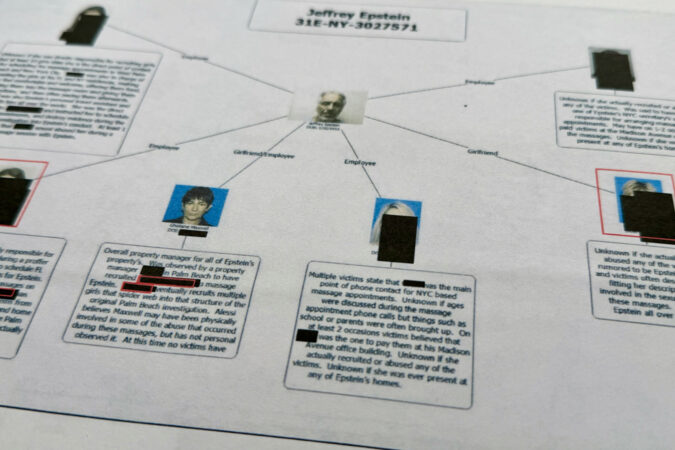
    A photo of one girl who was underage when she was hired to give sexualized massages to Epstein in Florida appeared in a chart of his alleged victims. Police reports with the names of several of his victims, including some who have never stepped forward to identify themselves publicly, were released with no redactions at all.

    Despite the Justice Department’s efforts to fix the oversights, a selfie taken by a nude female in a bathroom and another by a topless female remained on the site, their ages unknown but their faces in full view, as of Wednesday evening.

    Some accusers and their lawyers called this week for the Justice Department to take down the site and appoint an independent monitor to prevent further errors.

    A judge scheduled a hearing for Wednesday in New York on the matter, then canceled it after one of the lawyers for victims cited progress in resolving the issues. But that lawyer, Brittany Henderson, said they were still weighing “all potential avenues of recourse” to address the “permanent and irreparable” harm caused to some women.

    “The failure here is not merely technical,” she said in a statement Wednesday. “It is a failure to safeguard human beings who were promised protection by our government. Until every document is properly redacted, that failure is ongoing.”

    Annie Farmer, who said she was 16 when she was sexually assaulted by Epstein and his confidant, Ghislaine Maxwell, said that while her name has previously been public, other details she’d rather be kept private, including her date of birth and phone number, were wrongly revealed in the documents.

    “At this point, I’m feeling really most of all angry about the way that this unfolded,” she told NBC News. “The fact that it’s been done in such a beyond careless way, where people have been endangered because of it, is really horrifying.”

    Trump administration defends its Epstein files redaction efforts

    The Justice Department has blamed technical or human errors on the problems and said it has taken down many of the problematic materials and is working to republish properly redacted versions.

    The task of reviewing and blacking out millions of pages of records took place in a compressed time frame. President Donald Trump signed the law requiring the disclosure of the documents on Nov. 19. That law gave the Justice Department just 30 days to release the files. It missed that deadline, in part because it said it needed more time to comply with privacy protections.

    Hundreds of lawyers were pulled from their regular duties, including overseeing criminal cases, to try and complete the document review — to the point where at least one judge in New York complained that it was holding up other matters.

    The database, which is posted on the Justice Department website, represents the largest release of files to date in the yearslong investigations into Epstein, who killed himself in a New York jail cell in 2019 while awaiting trial on federal sex trafficking charges.

    Epstein files rife with missed or incomplete redactions

    Associated Press reporters analyzing the documents have so far found multiple examples of names and other personal information of potential victims revealed.

    They have also found many cases of overzealous redactions.

    In one news clipping included in the file, the Justice Department apparently blacked out the name “Joseph” from a photo caption describing a Nativity scene at a California church. “A Nativity scene depicting Jesus, Mary and (REDACTED),” it said.

    In an email released in the files, a dog’s name appeared to have been redacted: “I spent an hour walking (REDACTED) and then another hour bathing her blow drying her and brushing her. I hope she smells better!!” the email said.

    The Justice Department has said staff tasked with preparing the files for release were instructed to limit redactions only to information related to victims and their families, though in many documents the names of many other people were blacked out, including lawyers and public figures.

    Images remain uncensored

    The Justice Department has said it intended to black out any portion of a photo showing nudity, and any photos of women that could potentially show a victim.

    In some photos reviewed by The AP, those redactions did obscure women’s faces, but left plenty of their bare skin exposed in a way that would likely embarrass the women anyway. Photos showed identifiable women trying on outfits in clothing store dressing rooms or lounging in bathing suits.

    One set of more than 100 images of a young woman were nearly all blacked out, save for the very last image, which revealed her entire face.

  • A self-collected test allowed me to finally get cervical cancer screening

    A self-collected test allowed me to finally get cervical cancer screening

    If you have a cervix you may have felt a surge of relief — joy, even — when the American Cancer Society (ACS) announced its updated guidelines for cervical cancer screening in December. I know I did.

    The organization now allows for a self-collection test for human papillomavirus, or HPV, a sexually transmitted infection that causes almost all cases of cervical cancer, as an alternative to a more traditional clinician-collected test. For some women — including me — this endorsement means that we can finally access this lifesaving screening.

    Over the last decade, there have been notable changes in how and when women are screened for cervical cancer. The go-to method used to be the Pap smear, which involves inserting a speculum so that a provider can collect cells from the cervix, the lowest end of the uterus that connects to the vagina. Eventually, in 2020, the ACS began recommending that all women at average risk of cervical cancer start screening at age 25 with a clinician-collected HPV test.

    For the patient, the experience was the same for a Pap or HPV test: Your provider would still have you lie on your back with your feet in stirrups, insert a speculum, and use a swab to collect a sample of cells from your cervix. As someone with vaginismus — a condition that causes my vaginal muscles to involuntarily contract — it would have been impossible for me to get these done.

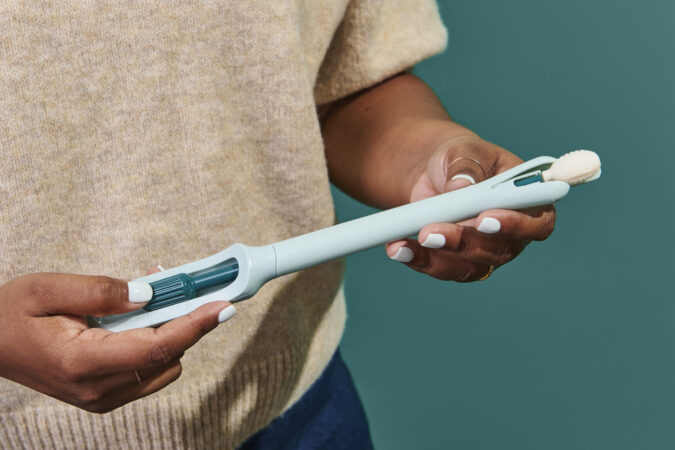
    Then, in 2024, the Food and Drug Administration (FDA) approved self-collected HPV tests for use in healthcare facilities — meaning that women at average risk could opt to do a less-invasive self-swab of their vagina with their provider present. And in 2025, the FDA approved the first at-home tool, a wand made by Teal Health, to screen for cervical cancer, allowing women to collect the sample and mail it to a lab without even needing to visit their doctor. (If you have a personal history of cervical cancer or are at high risk, you may not be a candidate for self-collected testing).

    At 26, I was officially overdue for my first screen, so my doctor recommended I try the in-office self-collection test.

    What the self-collected HPV test was like

    Before self-collection became an option, I would lie on the exam table at my gynecologist’s office, put my legs in stirrups, and involuntarily clench at any touch. I was excited to try the self-collection test, but also skeptical that it would work for me.

    The self-swabs in the clinic looked manageable and controllable, something I could hold and insert myself. The handle was as narrow as a mascara wand, and the brush at the end was made of flexible plastic bristles that felt soft. Most importantly, it did not need to directly touch my cervix. It was less invasive, without the internal pressure that usually made my body tense. I inserted the swab about two inches into my vagina, rotated it for 30 seconds and then handed it to my doctor, who swirled it inside a vial with liquid solution.

    “That’s it?” I asked my doctor once she screwed the cap on the vial. “Is it for sure as accurate as a regular Pap smear?” Yes and yes, she assured me. I was in awe. There was a time earlier in life when my vaginismus made it feel impossible to even insert a tampon — I couldn’t believe I had completed an HPV test.

    My doctor mailed my sample to a lab, and I received the results in less than two weeks. My Pap smear came back normal with no signs of HPV. Even better, this meant I did not need to be tested again for another five years.

    Amy Banulis, an OB/GYN and associate medical director for Women’s and Maternal/Child Health at Kaiser Permanente in Virginia, said most women will be able to comfortably complete the self-collected test, even if they have vaginismus.

    “For those that still do have discomfort, there are relaxation techniques that can be utilized,” Banulis said. These could include progressive muscle relaxation, deep breathing, and imagery or visualization. If these tactics don’t make a difference, your OB/GYN can refer you to a pelvic floor physical therapist that may be able to help you with this, Banulis said.

    How effective it is compared to a traditional Pap

    The experience was so seamless that I actually worried something was wrong. What if I didn’t insert the swab high enough? I wondered when I got home. Would the results of the test still be reliable if, God forbid, I did not rotate it long enough? It almost felt too comfortable, so how effective was it really? Many women share the same concerns, but they don’t need to worry, said Jasmin Tiro, a professor of public health sciences at the University of Chicago.

    Many women who use the test say it’s easy to do and doesn’t hurt, Tiro said, adding: “It’s very hard to do it wrong.”

    It’s important to clarify that the self-collected HPV test is not the exact same test as a Pap smear or a clinician-collected HPV test, she said. The self-test collects vaginal cells, while the latter two tests use a sample of cervical cells. While a cervical sample can be tested for both HPV and abnormal cells (cancerous or precancerous), vaginal cells can only reveal if you have HPV, Tiro said.

    This means that a self-collected test may be only one part of the screening process, Tiro said. About 10% of women will screen positive for HPV, she said. If you get a positive HPV self-collected result, the next step may be a type of test or procedure that involves a pelvic exam to look for precancerous or cancerous cervical cells. That follow-up test is essential for the screening process to be effective, Tiro said.

    However, HPV does not always turn into cervical cancer; especially in people in their teens or early 20s, the virus often clears on its own without causing any health issues — which is why screening isn’t even recommended before 25. So depending on your age, your doctor may just want to retest you a few years later to see if you still have an HPV infection and determine then if that warrants further testing.

    My takeaway: We need to make screening more accessible

    I’m grateful for testing that is less invasive and painful, but I still find myself wondering why it took so long for us to arrive here. How many women would have been protected if our pain and concerns were not routinely diminished? In the past, I had doctors tell me, “Since you’ve had sex before, the speculum shouldn’t feel intimidating.” I became so used to people, including well-meaning physicians, questioning the validity of my pain. And I felt demoralized that I couldn’t even complete a test that was essential for detecting and preventing a disease that kills about 4,000 women in the U.S. each year.

    I also wonder what, if anything, can be done to ensure the new self-swab testing is accessible to all women who want or need it? When I asked Tiro, she told me that gathering more patient testimonials, developing patient-centered guidance for people who may still not want to complete the test, and devoting more research to the testing can all help. These are all things that physicians and researchers are actively working on.

    Personally, the self-collected HPV test has given me a sudden sense of agency, something I have rarely felt in a gynecologist’s office. My hope is that this alternative option can give other women greater control over their healthcare, too. Cervical cancer screening is an essential preventive care service. If you have trouble undergoing a Pap smear, ask for the alternative self-collection test. There is no shame, only power, in advocating for your health.

  • Joi Washington’s ‘whirlwind’ first weeks as mayor | Inquirer Greater Media

    Joi Washington’s ‘whirlwind’ first weeks as mayor | Inquirer Greater Media

    Hi, Greater Media! 👋

    What have the first few weeks of Joi Washington’s time as mayor looked like? We recently caught up with her to discuss her path to the office. Also this week, the former Providence Village general store, which has since turned into a single-family home, is for sale, Media has one of the region’s most romantic under-the-radar restaurants, plus a new cheesesteak joint is opening.

    We want your feedback! Tell us what you think of the newsletter by taking our survey or emailing us at greatermedia@inquirer.com.

    If someone forwarded you this email, sign up for free here.

    Joi Washington dives in headfirst as Media’s new mayor

    Joi Washington was sworn in as Media’s mayor last month.

    Joi Washington’s first few weeks as the mayor of Media have been a whirlwind. Less than three weeks after being sworn into office, the largest snow storm in years hit the region, forcing a snow emergency declaration and swift action on her part.

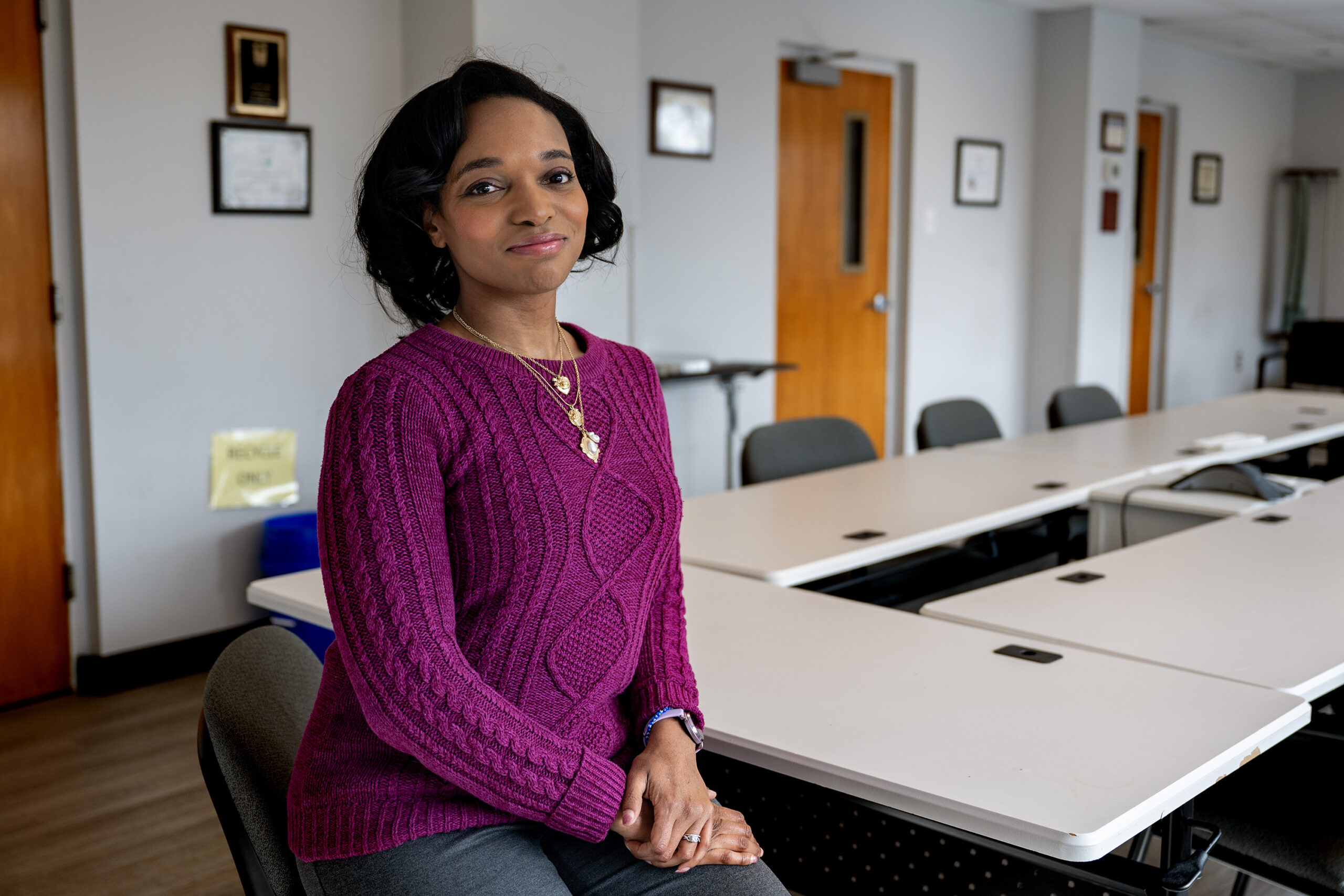
    While Washington might have had to dive into running the borough headfirst, she’s no stranger to Media or local government. Washington was elected to borough council in 2021 and is described by Media’s tax collector as being civically and politically engaged.

    The Inquirer’s Denali Sagner recently caught up with Washington to talk about what drew her to Media and what the last few weeks have looked like.

    💡 Community News

    • A historic five-bedroom Media home that was once the Providence Village general store is on the market for $785,000. The couple who live there expected to stay far longer than two years, but when one of them landed a dream job, those plans changed. Spanning over 4,300 square feet and three stories, the home has a newly renovated kitchen and a formal dining room with built-ins and a fireplace. Take a peek inside.
    • The Delaware County housing market got a slow start to the year, with pending sales down 4% as of Jan. 25, compared to the same time a year ago, according to new Redfin data. While home sales were slow, prices were on the rise, with median sale prices in the county and Philadelphia up 10% from the same timeframe last year.
    • Riddle Hospital was recently ranked among America’s 250 Best Hospitals by Healthgrades. The rankings, released last week, are awarded to the top 5% of institutions in the nation for “overall clinical excellence.”
    • Speaking of Riddle, the hospital is expanding its gastroenterology care this month, offering routine screenings, digestive issue care, and minimally invasive treatments.
    • Delaware County Council recently voted to increase the hotel occupancy tax for non-residents from 3% to 5% beginning April 1. The county projects the change will result in $6.4 million in revenue this year, funds which will be used to support the marketing of Delaware County elsewhere. The increase comes ahead of an anticipated influx of visitors to the region for events like the FIFA World Cup, the MLB All-Star Game, the PGA Championship, and celebrations for the nation’s 250th birthday. The hike also puts Delco on par with neighboring Bucks and Chester Counties.
    • L.L. Bean is targeting an early May opening for its Glen Mills store. The apparel retailer is opening a 20,000-square-foot store in the Concordville Town Centre at 901 Byers Dr., taking over the former Staples space.
    • The future of the Eddie Bauer location at The Shoppes at Brinton Lake in Glen Mills is uncertain with the outdoor apparel brand’s parent company planning to file for bankruptcy. When it does, most stores are expected to close. (Retail Dive)

    🏫 Schools Briefing

    • Some Rutledge Elementary School students were left standing in freezing temperatures last week after a miscommunication over an earlier bus pickup time. Wallingford-Swarthmore School District said it has reviewed its protocols to ensure it won’t happen again. (Fox 29)
    • In the Wallingford-Swarthmore School District, tonight kicks off performances of Strath Haven Middle School’s musical, The Music Man, which runs through Sunday. Tomorrow and Saturday, Strath Haven High is hosting the Pennsylvania Music Educators Association District 12 band festival, which includes a free concert at 7 p.m. on Saturday.
    • In the Rose Tree Media School District, Glenwood Elementary is hosting its Olympics opening ceremonies on Monday. There are Valentine’s parties for Indian Lane kindergartners on Wednesday and Media Elementary kindergartners on Thursday. The high school is also holding a student blood drive next Thursday. See the full calendar here.

    🍽️ On our Plate

    • After spending months converting the former House space at 110 S. Jackson St., Jackson St. Steaks is hosting its grand opening next Wednesday. Its menu includes cheesesteaks, pizzas, cutlet and focaccia sandwiches, grinders, and burgers, as well as drinks from Fishtown-based Meyers Brewing Co.
    • Looking for a great date night spot? La Belle Epoque in Media is one of the region’s under-the-radar romantic dining spots, according to The Inquirer’s food reporters. It has an extensive wine list, bistro-style entrees like steak frites, and a dining room befitting Emily in Paris. If you really want to impress your date, try the escargots de Bourgogne, pan-roasted duck, or bucatini, reporter Beatrice Forman suggests.
    • Amid shifting dining habits and increasing food costs, Harvest Seasonal Grill recently made changes that its leadership team said are paying off. Instead of raising prices, the restaurant, which has a location in Glen Mills, changed some of its meat and seafood sourcing and did away with garnishes to slash prices. The result has been an increase in visitors and revenue that founder Dave Magrogan said doesn’t sacrifice quality.

    🎳 Things to Do

    🩰 Ballet of Lights: Tickets are going fast for this take on Cinderella, which gives the classic fairytale a little extra shine thanks to dancers performing in glow-in-the-dark costumes. ⏰ Friday, Feb. 6, 9 p.m. 💵 $43-$69 📍The Media Theatre

    🎭 And Then There Were None: See the Agatha Christie classic come to life on stage. ⏰ Friday, Feb. 6-Sunday, Feb. 8, and Thursday, Feb. 12-Saturday, Feb. 14, times vary 💵 $21.50-$23.50 📍Players Club of Swarthmore

    🏛️ I Love Media Day: The borough event includes a scavenger hunt to find hidden hearts. There will also be board games, snacks, and bingo. Advanced registration is required. ⏰ Saturday, Feb. 7, 10 a.m.-9 p.m. 💵 Free 📍Downtown Media

    ❤️ Galentine’s Brunch: Towne House is hosting a themed brunch that includes dueling pianos. ⏰ Sunday, Feb. 8, noon-3 p.m. 💵 $40; minimum purchase of four tickets 📍Towne House, Media

    💌 Dear Jack, Dear Louise: Catch the regional premiere of Ken Ludwig’s show about an unlikely courtship between two strangers exchanging letters during World War II. ⏰ Wednesday, Feb. 11-Sunday, March 1, times vary 💵 $20-$35 📍Hedgerow Theatre, Rose Valley

    🏡 On the Market

    A split-level Wallingford home with two family rooms

    The updated kitchen has an island with pendant lights.

    Located in Sproul Estates, this split-level home has hardwood floors throughout its main level, including the living room, eat-in-kitchen, and family room, which has a vaulted ceiling and a fireplace. It has an additional family room at ground level and three bedrooms upstairs. Other features include a walk-up attic, a patio, and a one-car garage.

    See more photos of the home here.

    Price: $625,000 | Size: 2,219 SF | Acreage: 0.33

    🗞️ What other Greater Media residents are reading this week:

    By submitting your written, visual, and/or audio contributions, you agree to The Inquirer’s Terms of Use, including the grant of rights in Section 10.

    This suburban content is produced with support from the Leslie Miller and Richard Worley Foundation and The Lenfest Institute for Journalism. Editorial content is created independently of the project donors. Gifts to support The Inquirer’s high-impact journalism can be made at inquirer.com/donate. A list of Lenfest Institute donors can be found at lenfestinstitute.org/supporters.

  • Letters to the Editor | Feb. 5, 2026

    Letters to the Editor | Feb. 5, 2026

    Election security

    With the midterm elections about eight months away, President Donald Trump is doing his damnedest to undermine the public’s faith in our electoral process. He used his speech at the World Economic Forum in Davos, Switzerland, to tell the whole world the Big Lie about his winning the 2020 election. And now he is sending the FBI to Atlanta to look for evidence of fraud in the 2020 Georgia election.

    But apparently, these tactics are not enough to reassure Trump of a Republican victory in 2026. He wants access to voter rolls in Atlanta and in Minneapolis, where the governor and mayor have refused his bribe: relief from the invasion of armed U.S. Immigration and Customs Enforcement and U.S. Customs and Border Protection agents. We can only speculate on how the personal information contained in voter rolls might be used to manipulate voters.

    So what can be done to protect the integrity of our elections? State election officials — Democrats and some Republicans — are taking steps to ensure election security. And we, as citizens, can help by encouraging our friends and neighbors to exercise their right to vote and by reporting to local election officials any interference with voters accessing the polls or casting their ballots.

    Susan Reisbord, Philadelphia

    Apt comparison

    I read the article headlined “Philly DA Larry Krasner says ‘don’t be a wimp’” after Gov. Josh Shapiro decried Mr. Krasner’s comparison of U.S. Immigration and Customs Enforcement agents to Nazis, and am in agreement with Mr. Krasner. It is indeed appropriate to compare ICE agents to “Nazis.” There is ample historical precedent for this comparison. The protofascist Freikorps that were used by the government to suppress socialists and communists grew into the Sturmabteilung, or SA, which was the paramilitary force initially used by the NSDAP, or Nazi Party, to terrorize Jews, Roma, socialists, and others who opposed the party. What we see now in several largely Democratic cities under siege by ICE is highly reminiscent of what the Freikorps and SA did during the gradual loss of the nascent democracy that was Weimar-era Germany. Our governor and Sen. John Fetterman would do well to consider what my childhood rabbi, Joachim Prinz, stated in 1963, as mentioned in the article: “The most urgent, the most disgraceful, the most shameful, and the most tragic problem is silence.” They should be calling ICE for what it is: a fascist paramilitary force that operates outside the law.

    David Toub, Wyncote

    . . .

    When the now-familiar photo of 5-year-old Liam Conejo Ramos being detained by a U.S. Immigration and Customs Enforcement agent was published, it immediately brought to mind the iconic image taken in 1943 of a small boy — no more than 7 or 8 years old — with his arms raised in surrender as Nazi soldiers clear the Warsaw Ghetto during the 1943 uprising.

    I see no reason to apologize to anyone for drawing that parallel — nor do I understand the outrage that accompanied Larry Krasner’s statement making the same comparison.

    Mark Turetsky, Lower Gwynedd

    Join the conversation: Send letters to letters@inquirer.com. Limit length to 150 words and include home address and day and evening phone number. Letters run in The Inquirer six days a week on the editorial pages and online.

  • Dear Abby | Boyfriend has an unusual annual tradition

    DEAR ABBY: My longtime boyfriend has been divorced for more than 20 years. Every year, his ex comes to stay at his house for a week or two and brings along another female friend. He caters to them, driving them around and entertaining them at restaurants, etc.

    I am never included, even though I have expressed an interest in doing so. Am I wrong in thinking this is disrespectful to me and for feeling resentful over having never been introduced to his annual houseguests? I include him when I have houseguests.

    — LEFT OUT IN FLORIDA

    DEAR LEFT OUT: Your longtime boyfriend is acting like you are his guilty secret rather than his lady friend. (Is his ex aware that he has a girlfriend?) I can’t blame you for feeling disrespected and excluded. Because this is an annual event, it may be time to consider taking a vacation of your own during the time your boyfriend will be AWOL.

    ** ** **

    DEAR ABBY: I am 76 and live in a great neighborhood. However, there are almost as many canines as there are houses. As a result, many of them are walked by my house at least twice a day. I like to go for walks in my neighborhood, but I’m afraid of dogs.

    If I meet someone walking their dog, they usually want me to pet their dog. If I tell them I’m afraid of dogs, they often say I shouldn’t worry because their dog is friendly and would rather lick me than harm me. However, I don’t want to be licked either.

    I’ve tried timing my walks to avoid these encounters, and I don’t want to drive elsewhere and waste gas to go for a walk. Suggestions, please.

    — SOLITARY STROLLER IN THE EAST

    DEAR STROLLER: I do have a suggestion for you. Smile at the dog walkers and KEEP WALKING. That way, you will project friendliness but won’t be forced into an extended encounter that is unpleasant for you. It’s no sin to not want a licking.

    ** ** **

    DEAR ABBY: How do I ratchet down gift-giving? I am 80 years old. I have just about everything I want and far more than I need. Yet, I have a daughter-in-law and a sister-in-law who lavish me with a half dozen or more gifts each holiday and birthday — books I will not read, clothes I will not wear, items I already have. All of them are new and not inexpensive.

    I do not wish to cause a schism. Any suggestions on how to approach these ladies to suggest that, while it is nice to be remembered, one is enough?

    — STUFFED WITH STUFF IN MASSACHUSETTS

    DEAR STUFFED: Talk to your daughter-in-law and sister-in-law individually. Tell them how grateful (and touched) you are that they are so generous with you, but explain that it is causing a problem. You no longer have space for more things and, if they feel they must give you birthday and holiday gifts, you would appreciate it if they would donate the money to a charity of your choosing. It’s honest, and I’m sure the funds would be welcomed.

  • Horoscopes: Thursday, Feb. 5, 2026

    ARIES (March 21-April 19). Your internal compass will not falter. Even when signals seem faint or confusing, your instincts map the path. Trust the process of testing, refining and acting. Every step will confirm what you already intuitively know.

    TAURUS (April 20-May 20). Maybe you don’t think of curiosity as part of your beauty routine or your confidence arsenal, but it is definitely a huge reason you are so charismatic. Your curiosity is magnetic. Your attentiveness simply radiates and draws experiences to you.

    GEMINI (May 21-June 21). Ideas tend to come to you in their own time. Today, peace will be the same way. It will blow in like a breeze and alight on your world. The environment clears to make room for more oxygen.

    CANCER (June 22-July 22). All delays, detours and false starts will be advantageous to the journey, so don’t bother being frustrated. The timing is perfect even when it seems like it’s not. Release expectation and accept what comes.

    LEO (July 23-Aug. 22). There were times you felt fragile, but that was not really the truth. What’s true is that you are overqualified for the life you are currently running, and your body, mind and imagination don’t want you to pretend otherwise.

    VIRGO (Aug. 23-Sept. 22). You’re the ballast. The ballast keeps everyone from tipping into the ocean. The boat can’t go anywhere without it. It’s an honor, even though some days you’d rather be the sail — big, proud and seen. This day is coming.

    LIBRA (Sept. 23-Oct. 23). Complexity doesn’t overwhelm you because you know the secret — it’s just layers, and you can only be on one plane at a time. First you’re handling this, then you’re investigating that, and before you know it a pattern is learned, a contradiction anticipated, a nuance understood.

    SCORPIO (Oct. 24-Nov. 21). For most creatures in the world, behavior is a direct reaction to stimuli. Humans are exceptional: We can deliberately separate thought from action, imagine futures, and plan across time and abstract domains. Today, you use this feature to its fullest.

    SAGITTARIUS (Nov. 22-Dec. 21). Sometimes you feel like a gas station. If they pull into your world and fuel themselves for the rest of the journey, remember: Your value isn’t measured by how long others stay, but by the energy you generate and where you are headed.

    CAPRICORN (Dec. 22-Jan. 19). Anyone who makes it seem like contributing to your joy is burdensome or that your happiness must be justified or rationed is just plain wrong. Let your delight come guilt free. Want and want more, like there’s no such thing as “too much.”

    AQUARIUS (Jan. 20-Feb. 18). We all like being accepted “as-is,” but today has a way of challenging the idea, perhaps by disrupting the status quo so you can discover a new version of you. Challenge could even become an exciting, addicting rhythm — a lifestyle!

    PISCES (Feb. 19-March 20). Most people assemble a workable life out of partial fits, shared histories, habit, convenience and goodwill. That’s how human life usually arranges itself. Every time you choose intention over default, you’re doing something extraordinary.

    TODAY’S BIRTHDAY (Feb. 5). Welcome to your Year of Incredible Noticing, when your detective-level observations steer you to win hearts, make shrewd investments and often save the day. More highlights: You settle into relationships that heal the past and have you loving in new ways. You create ripples of goodness as you protect and preserve what’s precious. High quality “problems” that signal you’ve finally made it. Capricorn and Pisces adore you. Your lucky numbers are: 9, 38, 1, 14 and 45.

  • LaMonte McLemore, singer and founding member of The 5th Dimension, has died at 90

    LaMonte McLemore, singer and founding member of The 5th Dimension, has died at 90

    Singer LaMonte McLemore, a founding member of vocal group The 5th Dimension, whose smooth pop and soul sounds with a touch of psychedelia brought them big hits in the 1960s and ’70s, has died. He was 90.

    Mr. McLemore died Tuesday at his home in Las Vegas surrounded by family, his representative Jeremy Westby said in a statement. He died of natural causes after having a stroke.

    The 5th Dimension had broad crossover success and won six Grammy Awards including record of the year twice, for 1967’s “Up, Up and Away” and 1969’s “Aquarius/Let the Sunshine In.” Both were also top 10 pop hits, with the latter, a mashup of songs from the musical Hair, spending six weeks at No. 1.

    Mr. McLemore had a parallel career as a sports and celebrity photographer whose pictures appeared in magazines including Jet.

    Born in St. Louis, Mr. McLemore served in the Navy, where he worked as an aerial photographer. He played baseball in the Los Angeles Dodgers’ farm system and settled in Southern California, where he began making use of his warm bass voice and skill with a camera.

    He sang in a jazz ensemble, the Hi-Fi’s, with future 5th Dimension bandmate Marilyn McCoo. The group opened for Ray Charles in 1963 but broke up the following year.

    Mr. McLemore, McCoo, and two of his childhood friends from St. Louis, Billy Davis Jr., and Ronald Towson, later formed a singing group called the Versatiles. They also recruited Florence LaRue, a schoolteacher Mr. McLemore met through his photography, to join them. In 1965 they signed to singer Johnny Rivers’ new label, Soul City Records, and changed their name to The 5th Dimension to better represent the cultural moment.

    Their breakthrough hit came in 1967 with the Mamas & the Papas’ song “Go Where You Wanna Go.”

    That same year they released the Jimmy Webb-penned “Up, Up and Away,” which would go to No. 7 on the Billboard Hot 100 and win four Grammys: record of the year, best contemporary single, best performance by a vocal group and best contemporary group performance.

    In 1968 they had hits with a pair of Laura Nyro songs, “Stoned Soul Picnic” and “Sweet Blindness.”

    The peak of their commercial success came in 1969 with “Aquarius/Let the Sunshine In,” which along with its long run at No. 1 won Grammys for record of the year and best contemporary vocal performance by a group.

    That same year they played the Harlem Cultural Festival, which has become known as the “Black Woodstock.” The festival, and The 5th Dimension’s part in it, were chronicled in the 2021 documentary from Ahmir “Questlove” Thompson, Summer of Soul.

    The 5th Dimension also had a rare level of success with white audiences for a group whose members were all Black. The phenomenon came with criticism.

    “We were constantly being attacked because we weren’t, quote, unquote, ‘Black enough,’” McCoo said in Summer of Soul. “Sometimes we were called the Black group with the white sound, and we didn’t like that. We happened to be artists who are Black, and our voices sound the way they sound.”

    The group had hits into the 1970s including “One Less Bell to Answer,” “I Didn’t Get to Sleep at All,” and “If I Could Reach You.”

    They became regulars on TV variety shows and performed at the White House and on an international cultural tour organized by the State Department.

    The original lineup lasted until 1975, when McCoo and Davis left to make their own music.

    “All of us who knew and loved him will definitely miss his energy and wonderful sense of humor,” McCoo and Davis, who married in 1969, said in a statement.

    LaRue said in her own statement that Mr. McLemore’s “cheerfulness and laughter often brought strength and refreshment to me in difficult times. We were more like brother and sister than singing partners.”

    Mr. McLemore is survived by his wife of 30 years, Mieko McLemore, daughter Ciara, son Darin, sister Joan, and three grandchildren.

  • Russia and Ukraine envoys meet in Abu Dhabi for 2 days of U.S.-brokered talks

    Russia and Ukraine envoys meet in Abu Dhabi for 2 days of U.S.-brokered talks

    KYIV, Ukraine — Envoys from Moscow and Kyiv met in Abu Dhabi on Wednesday for another round of U.S.-brokered talks on ending the almost four-year war, as a Russian attack using cluster munitions killed seven people at a market in Ukraine.

    The delegations from Moscow and Kyiv were joined in the capital of the United Arab Emirates by U.S. special envoy Steve Witkoff and President Donald Trump’s son-in-law, Jared Kushner, according to Rustem Umerov, Ukraine’s National Security and Defense Council chief who attended the meeting.

    “The discussions were substantive and productive, focusing on concrete steps and practical solutions,” Umerov said on social media as the first of two days of talks wrapped up.

    Secretary of State Marco Rubio said that a breakthrough in the talks may not come for a while but the Trump administration has made great progress on negotiations over the past year.

    “That’s the good news,” Rubio told reporters Wednesday. “The bad news is that the items that remain are the most difficult ones. And meanwhile the war continues.”

    Kremlin spokesman Dmitry Peskov wouldn’t offer any details on the talks and said that Moscow wasn’t planning to comment on their results.

    He said that “the doors for a peaceful settlement are open,” but that Moscow will proceed with its military campaign until Kyiv meets its demands.

    Last month’s discussions in Abu Dhabi, part of a U.S. push to end the fighting, yielded some progress but no breakthrough on key issues, officials said.

    The current talks also coincide with the expiry of the last remaining nuclear arms pact between Russia and the United States on Thursday. Trump and Russian President Vladimir Putin could extend the terms of the treaty or renegotiate its conditions in an effort to prevent a new nuclear arms race.

    Energy networks targeted

    The Abu Dhabi talks were held as Ukrainians were outraged over major Russian attacks on their energy system, which have occurred each winter since Russia launched its all-out invasion of its neighbor on Feb. 24, 2022.

    A huge Russian bombardment overnight from Monday to Tuesday included hundreds of drones and a record 32 ballistic missiles, wounding at least 10 people. This came despite Ukraine’s understanding that Putin had told Trump that he would temporarily halt strikes on Ukraine’s power grid.

    Ukrainian civilians are struggling with one of the coldest winters in years, which saw temperatures dip to around minus-4 degrees Fahrenheit.

    About 60 foreign ambassadors took part in an organized visit Wednesday to a Kyiv thermal power plant that was almost completely destroyed by missiles and drones in the Monday night attack. The plant provided heating to about 500,000 people.

    Russia is hitting Ukraine’s energy facilities because its armed forces believe the targets are associated with Kyiv’s military effort, Peskov said.

    There has been a lack of clarity about how long Putin had promised to observe a pause on power grid attacks.

    Trump said Tuesday at the White House that Putin had agreed to halt strikes for a week, through Feb. 1, and that the Russian leader had kept his word. But Zelensky said Tuesday that “barely four days have passed of the week Russia was asked to hold off,” before Ukraine was hit with new attacks, suggesting that the Ukrainian leader wasn’t fully aware of the terms of the Trump-Putin agreement.

    Meanwhile, White House press secretary Karoline Leavitt said that Trump was “unfortunately unsurprised” by Moscow’s resumption of attacks.

    On Wednesday, more than 200 repair crews were at work in Kyiv to restore power, according to the Ukrainian Energy Ministry, which said that staff were exhausted and would be rotated. More than 1,100 apartment buildings in the capital were still without heating, Zelensky said.

    The Institute for the Study of War, a Washington think tank, said that the developments were part of Moscow’s negotiating strategy.

    “The Kremlin will likely attempt to portray its adherence to this short-term energy strikes moratorium as a significant concession to gain leverage in the upcoming peace talks, even though the Kremlin used these few days to stockpile missiles for a larger strike package,” it said late Tuesday.

    New attacks

    Russia used cluster munitions Wednesday in an attack on a busy market in eastern Ukraine that killed seven and wounded 15 others, officials said.

    The attack on the town of Druzhkivka darkened prospects for progress in the UAE, with Donetsk regional military administration chief Vadym Filashkin describing Russian talk of a ceasefire as “worthless.”

    Russia also launched 105 drones against Ukraine overnight, and air defenses shot down 88 of them, the Ukrainian air force said Wednesday. Strikes by 17 drones were recorded at 14 locations, as well as falling debris at five sites, it said.

    In the central Dnipropetrovsk region, a Russian strike on a residential area killed a 68-year-old woman and a 38-year-old man, regional military administration head Oleksandr Hancha said.

    The southern city of Odesa also came under a large-scale attack, regional military administration head Oleh Kiper said. About 20 residential buildings were damaged, with four people rescued from under the rubble, he said.