Tag: no-latest

  • Trump’s plan to close Kennedy Center  for 2 years draws backlash

    Trump’s plan to close Kennedy Center for 2 years draws backlash

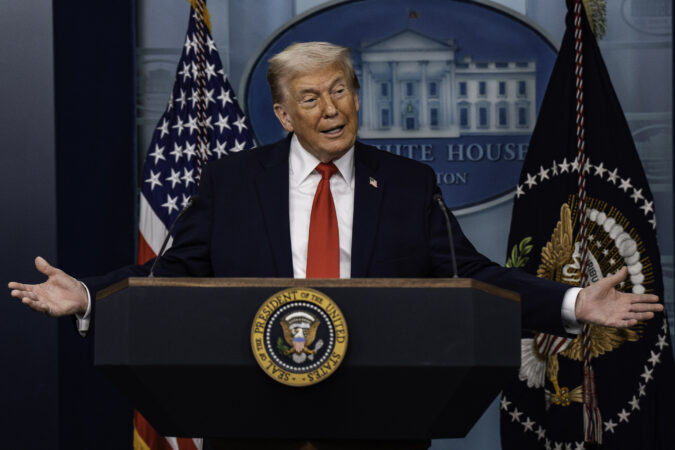
    President Donald Trump said Sunday that he plans to close the Kennedy Center for roughly two years for the facility to undergo construction. The proposal comes amid a series of cancellations and internal upheaval since he took over the arts institution and presidential memorial nearly a year ago and remade it in his name and image.

    “I have determined that The Trump Kennedy Center, if temporarily closed for Construction, Revitalization, and Complete Rebuilding, can be, without question, the finest Performing Arts Facility of its kind, anywhere in the World,” Trump wrote in a post on Truth Social. “In other words, if we don’t close, the quality of Construction will not be nearly as good, and the time to completion, because of interruptions with Audiences from the many Events using the Facility, will be much longer.”

    Under Trump’s proposal, which he said is subject to board approval, the Kennedy Center could close on July 4, coinciding with America’s 250th anniversary, with construction beginning immediately.

    “Financing is completed, and fully in place!,” Trump wrote. “This important decision, based on input from many Highly Respected Experts, will take a tired, broken, and dilapidated Center … and turn it into a World Class Bastion of Arts, Music, and Entertainment, far better than it has ever been before.”

    Kennedy Center President Richard Grenell confirmed the plans in a Sunday evening email to staff obtained by the Washington Post. “We will have more information about staffing and operational changes in the coming days,” he wrote.

    In a post on X, Grenell cited the $257 million designated “for capital repair, restoration, maintenance backlog, and security structures” through the One Big Beautiful Bill last year.

    “It desperately needs this renovation and temporarily closing the Center just makes sense … ,” Grenell wrote. “It also means we will be finished faster.”

    The center has already made some physical changes under the new leadership, adding Trump’s name to the building’s facade, despite legal concerns, and painting the outside columns white. Portraits of the first and second couples now hang in the center’s Hall of Nations, and the exterior is sometimes lit up in red, white and blue.

    It was not immediately clear what the closure would mean for annual events held at the center such as the Mark Twain Prize for American Humor or the Kennedy Center Honors.

    The Kennedy Center did not immediately respond to requests for comment. A White House official referred the Washington Post to Trump’s post.

    Three current staffers, who spoke to the Post on the condition of anonymity for fear of reprisal, said they had not been previously notified of any plans to close the center, though some had long speculated a shutdown was possible.

    “Once again, Donald Trump has acted with a total disregard for Congress,” said Rep. Joyce Beatty (D., Ohio) who had sued the Trump administration in December in her capacity as an ex officio trustee to stop the name change. “The Kennedy Center is congressionally funded, and Congress should have been consulted about any decision to shut down its operations or make major renovations, especially for two years,” she said in a statement.

    The center’s board in December voted to add the president’s name to the arts venue and presidential memorial — its sign now reads “The Donald J. Trump and The John F. Kennedy Memorial Center for the Performing Arts” — prompting a fresh wave of cancellations and tumult.

    Members of the Kennedy family responded to the news of the closure. Jack Schlossberg, John F. Kennedy’s grandson, wrote on X that while Trump can take over the institution, his grandfather’s legacy will endure. “JFK is kept alive by us now rising up to remove Donald Trump, bring him to justice, and restore the freedoms generations fought for,” he said.

    Joe Kennedy III, Robert F. Kennedy’s grandson and a former Democratic congressman for Massachusetts, called the decision “painful,” saying that the center was built by and for the people as a shared point of connection.

    “Do not be distracted from what this Administration is actually trying to erase: our connection, our community, and our commitment to the rights of all,” he wrote on X.

    Rep. Brendan Boyle (D., Pa.) condemned the move, saying on X that “Trump is desecrating our national performing arts center.” Sen. Andy Kim (D., N.J.) pointed to Trump’s bad bet in the late 1980s on what was the world’s largest casino-hotel complex in his state. “We can’t let him do to the Kennedy Center what he did to Atlantic City,” he said in a tweet.

    Most recently, the Washington National Opera announced Jan. 9 it would move out of its longtime home, citing changes to the center’s business model and support.

    The Kennedy Center said it ended the relationship, but a person speaking on the condition of anonymity because they were not authorized to represent either party told the Post that it was “definitely a WNO decision” spurred by the board’s vote.

    U.S. law and customs generally bar memorializing living figures. The statute establishing the center designates it as the John F. Kennedy Center for the Performing Arts and requires the board to “assure” that “no additional memorials or plaques in the nature of memorials shall be designated or installed in the public areas” of the building. The law does allow plaques and inscriptions recognizing major donations.

    Months before the renaming vote, the center’s board changed its bylaws to ensure only members appointed by the president had voting powers, the Post previously reported. The center said it was following long-standing practice.

    Democratic lawmakers have introduced legislation and a lawsuit to reverse the addition of Trump’s name.

    One of the groups behind the litigation is Democracy Defenders Action. In a statement Sunday, co-founder Norm Eisen questioned the motivations behind the center’s closure, which he said would inflict further damage. “We will be considering all legal remedies to address this new and concerning development,” he said.

    Since remaking the board of trustees and becoming chairperson of the Kennedy Center last February, Trump has frequently said the building was in poor shape. The Kennedy Center is “in tremendous disrepair, as is a lot of the rest of our country,” Trump told reporters in March. “Most of it, because of bad management. This is a shame, what I’ve watched and witnessed.”

    Trump and his new leadership have claimed that the center has broken elevators, was infested with rats, and that the concrete in the parking garage was crumbling.

    They also repeatedly accused the previous leadership of financial mismanagement, declining requests from the Post to substantiate the claims. Former leaders denied the accusations. (Senate Democrats are themselves investigating the Kennedy Center, accusing Grenell of “self-dealing, favoritism, and waste,” which he has denied.)

    Grenell has said the center will rely on “common-sense programming,” meaning popular programming that breaks even. In the past year, sales of subscription packages and tickets have fallen dramatically. Empty seats became a common sight at the center.

    Dozens of artists and productions, including composer Philip Glass, soprano Renée Fleming, acclaimed banjoist Béla Fleck, and Wicked composer Stephen Schwartz, have canceled upcoming events.

    Meanwhile, almost every head of programming has resigned or been dismissed. Ben Folds and Fleming quit their roles as artistic advisers earlier last year. Last week, Kevin Couch, the center’s senior vice president of artistic programming, resigned less than two weeks after his hiring was announced.
  • Trump family crypto firm sold major stake to UAE investment firm

    Trump family crypto firm sold major stake to UAE investment firm

    A crypto company run by President Donald Trump’s family members sold a large stake to investors tied to the United Arab Emirates just days before Trump’s inauguration, linking a Trump family business to a prominent member of the UAE’s governing elite.

    The investment, worth a reported $500 million, gave Emirati-backed investors a 49% stake in World Liberty Financial, a crypto company that counts all three of Trump’s sons as cofounders and is also closely tied with Steve Witkoff, a longtime Trump ally who is among his most prominent advisers.

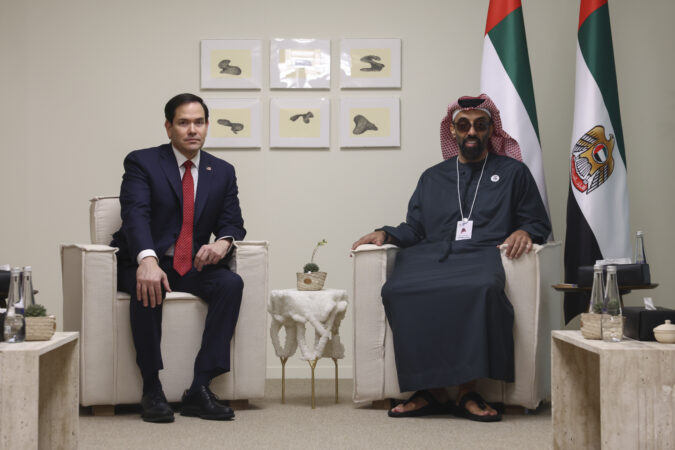
    Sheikh Tahnoon bin Zayed al-Nahyan, the UAE’s national security adviser and a member of the royal family, was involved in the purchase, according to an arrangement first reported by the Wall Street Journal.

    David Wachsman, a spokesperson for World Liberty Financial, defended the parameters of the agreement.

    “We made the deal in question because we strongly believe that it was what was best for our company as we continue to grow,” he said. “The idea that, when raising capital, a privately held American company should be held to some unique standard that no other similar company would be held is both ridiculous and un-American.”

    Wachsman said Trump and Witkoff had no role in the deal and also have not been involved in the company since taking office. White House officials stressed that he turned his businesses over to his children.

    “President Trump only acts in the best interests of the American public — which is why they overwhelmingly reelected him to this office, despite years of lies and false accusations against him and his businesses from the fake news media,” Anna Kelly, a White House spokesperson, said in a statement. “President Trump’s assets are in a trust managed by his children. There are no conflicts of interest.”

    Sheikh Tahnoon, a senior member of the Emirati royal family, oversees a powerful investment empire and chairs both the country’s sovereign wealth fund and G42, the UAE’s artificial intelligence powerhouse. A brother of the president of the United Arab Emirates, he serves as the government’s national security adviser and is known as the “spy sheikh.”

    For years, Sheikh Tahnoon has served as a key foreign policy intermediary with the United States. When the UAE announced $1.4 trillion in investment in the United States, it was Sheikh Tahnoon who met with Trump at the White House last year to deliver the news.

    Several months after the investment in World Liberty Financial, the UAE was granted access to advanced chips made in the United States that can help power artificial intelligence. The Trump administration scrapped rules imposed under President Joe Biden, paving the way for G42 to purchase advanced American-made chips.

    Critics have long raised questions about potential conflicts stemming from Trump’s extensive financial interests, including whether he could benefit as a private citizen from decisions made while in public office.

    A person close to Witkoff, speaking on the condition of anonymity because of the sensitivity of the matter, said he was not involved in G42 negotiations but was briefed on them in his role as special envoy to the Middle East.

    Sen. Elizabeth Warren (Mass.), the top Democrat on the Senate Banking Committee, called on several top Trump administration officials, including Witkoff, to testify before Congress about whether they have profited from the deal.

    “This is corruption, plain and simple,” she said, pointing to the administration’s decision to approve sales of sensitive AI chips to the UAE.

    “Congress needs to grow a spine and put a stop to Trump’s crypto corruption,” she added.

    The White House on Sunday denied any connection between the UAE investment in the company Trump’s family helps run and the administration’s decision to approve sales of advanced chips.

    “The President has no involvement in business deals that would implicate his constitutional responsibilities,” David Warrington, the White House counsel, said in a statement. “President Trump performs his constitutional duties in an ethically sound manner and to suggest so otherwise is either ill-informed or malicious.”

    Warrington said Witkoff complies with government ethics rules and does not participate in any official matters that could affect his financial interests. The person close to Witkoff said that his children run World Liberty Financial and that he “has nothing to do with it.”

    World Liberty Financial was launched in 2024, with Trump explaining that he had come to support cryptocurrency after conversations with his sons. “Barron knows so much about this,” he said of his youngest son. The company lists Trump’s three sons among the co-founders, as well as two of Witkoff’s sons. Trump and Witkoff are each listed as “co-founder emeritus,” a designation reflecting that they stepped away after Trump returned to the White House.

    The business has become one of the most lucrative parts of the president’s portfolio. The financial disclosure forms he filed last year list an income of $57.3 million from token sales, among his largest single sources of revenue.

    Wachsman, the spokesperson for World Liberty Financial, said, “Any claim that this deal had anything to do with the Administration’s actions on chips is 100% false.

    “As a private business, we operate by the same rules and regulations as any other company in our space, do not want or receive any special treatment, and reject the fact-free suggestions to the contrary,” he said.

  • ‘I can’t tell you’: Attorneys, relatives struggle to find hospitalized ICE detainees

    ‘I can’t tell you’: Attorneys, relatives struggle to find hospitalized ICE detainees

    Lydia Romero strained to hear her husband’s feeble voice through the phone.

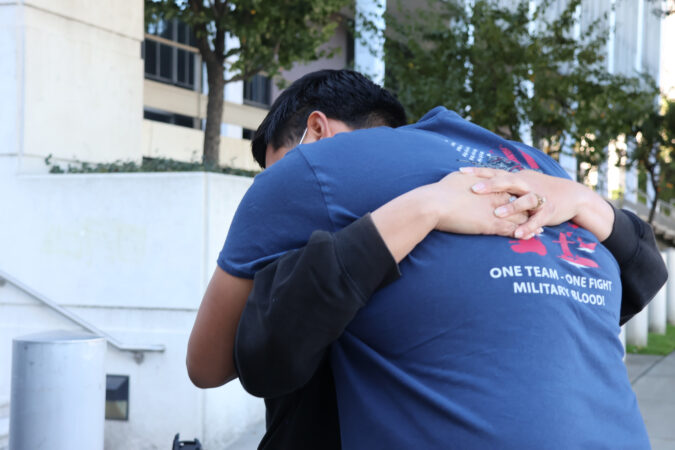
    A week earlier, immigration agents had grabbed Julio César Peña from his front yard in Glendale, Calif. Now, he was in a hospital after suffering a ministroke. He was shackled to the bed by his hand and foot, he told Romero, and agents were in the room, listening to the call. He was scared he would die and wanted his wife there.

    “What hospital are you at?” Romero asked.

    “I can’t tell you,” he replied.

    Viridiana Chabolla, Peña’s attorney, couldn’t get an answer to that question, either. Peña’s deportation officer and the medical contractor at the Adelanto ICE Processing Center refused to tell her. Exasperated, she tried calling a nearby hospital, Providence St. Mary Medical Center.

    “They said even if they had a person in ICE custody under their care, they wouldn’t be able to confirm whether he’s there or not, that only ICE can give me the information,” Chabolla said. The hospital confirmed this policy to KFF Health News.

    Family members and attorneys for patients hospitalized after being detained by federal immigration officials said they are facing extreme difficulty trying to locate patients, get information about their well-being, and provide them emotional and legal support. They say many hospitals refuse to provide information or allow contact with these patients. Instead, hospitals allow immigration officers to call the shots on how much — if any — contact is allowed, which can deprive patients of their constitutional right to seek legal advice and leave them vulnerable to abuse, attorneys said.

    Hospitals say they are trying to protect the safety and privacy of patients, staff, and law enforcement officials, even while hospital employees in Los Angeles, Minneapolis, and Portland, Ore., cities where Immigration and Customs Enforcement has conducted immigration raids, say it’s made their jobs difficult. Hospitals have used what are sometimes called blackout procedures, which can include registering a patient under a pseudonym, removing their name from the hospital directory, or prohibiting staff from even confirming that a patient is in the hospital.

    “We’ve heard incidences of this blackout process being used at multiple hospitals across the state, and it’s very concerning,” said Shiu-Ming Cheer, the deputy director of immigrant and racial justice at the California Immigrant Policy Center, an advocacy group.

    Some Democratic-led states, including California, Colorado, and Maryland, have enacted legislation that seeks to protect patients from immigration enforcement in hospitals. However, those policies do not address protections for people already in ICE custody.

    Julio Cesar Peña, who has terminal kidney disease, sits on his bike in the backyard of his home in Glendale, Calif. His family had a hard time locating him when he was hospitalized after being detained by Immigration and Customs Enforcement.

    More detainees hospitalized

    Peña is among more than 350,000 people arrested by federal immigration authorities since President Donald Trump returned to the White House. As arrests and detentions have climbed, so too have reports of people taken to hospitals by immigration agents because of illness or injury — due to preexisting conditions or problems stemming from their arrest or detention.

    ICE has faced criticism for using aggressive and deadly tactics, as well as for reports of mistreatment and inadequate medical care at its facilities. Sen. Adam Schiff (D., Calif.) told reporters at a Jan. 20 news conference outside a detention center he visited in California City that he spoke to a diabetic woman held there who had not received treatment in two months.

    While there are no publicly available statistics on the number of people sick or injured in ICE detention, the agency’s news releases point to 32 people who died in immigration custody in 2025. Six more have died this year.

    The Department of Homeland Security, which oversees ICE, did not respond to a request for information about its policies or Peña’s case.

    According to ICE’s guidelines, people in custody should be given access to a telephone, visits from family and friends, and private consultation with legal counsel. The agency can make administrative decisions, including about visitation, when a patient is in the hospital, but should defer to hospital policies on contacting next of kin when a patient is seriously ill, the guidelines state.

    Asked in detail about hospital practices related to patients in immigration custody and whether there are best practices that hospitals should follow, Ben Teicher, a spokesperson for the American Hospital Association, declined to comment.

    David Simon, a spokesperson for the California Hospital Association, said that “there are times when hospitals will — at the request of law enforcement — maintain confidentiality of patients’ names and other identifying characteristics.”

    Although policies vary, members of the public can typically call a hospital and ask for a patient by name to find out whether they’re there, and often be transferred to the patient’s room, said William Weber, an emergency physician in Minneapolis and medical director for the Medical Justice Alliance, which advocates for the medical needs of people in law enforcement custody. Family members and others authorized by the patient can visit. And medical staff routinely call relatives to let them know a loved one is in the hospital, or to ask for information that could help with their care.

    But when a patient is in law enforcement custody, hospitals frequently agree to restrict this kind of information sharing and access, Weber said. The rationale is that these measures prevent unauthorized outsiders from threatening the patient or law enforcement personnel, given that hospitals lack the security infrastructure of a prison or detention center. High-profile patients such as celebrities sometimes also request this type of protection.

    Several attorneys and healthcare providers questioned the need for such restrictions. Immigration detention is civil, not criminal, detention. The Trump administration says it’s focused on arresting and deporting criminals, yet most of those arrested have no criminal conviction, according to data compiled by the Transactional Records Access Clearinghouse and several news outlets.

    Taken outside his home

    According to Peña’s wife, Romero, he has no criminal record. Peña came to the United States from Mexico in sixth grade and has an adult son in the U.S. military. The 43-year-old has terminal kidney disease and survived a heart attack in November. He has trouble walking and is partially blind, his wife said. He was detained Dec. 8 while resting outside after coming home from dialysis treatment.

    Initially, Romero was able to find her husband through the ICE Online Detainee Locator System. She visited him at a temporary holding facility in downtown Los Angeles, bringing him his medicines and a sweater. She then saw he’d been moved to the Adelanto detention center. But the locator did not show where he was after he was hospitalized.

    When she and other relatives drove to the detention facility to find him, they were turned away, she said. Romero received occasional calls from her husband in the hospital but said they were less than 10 minutes long and took place under ICE surveillance. She wanted to know where he was so she could be at the hospital to hold his hand, make sure he was well cared for, and encourage him to stay strong, she said.

    Shackling him and preventing him from seeing his family was unfair and unnecessary, she said.

    “He’s weak,” Romero said. “It’s not like he’s going to run away.”

    ICE guidelines say contact and visits from family and friends should be allowed “within security and operational constraints.” Detainees have a constitutional right to speak confidentially with an attorney. Weber said immigration authorities should tell attorneys where their clients are and allow them to talk in person or use an unmonitored phone line.

    Hospitals, though, fall into a gray area on enforcing these rights, since they are primarily focused on treating medical needs, Weber said. Still, he added, hospitals should ensure their policies align with the law.

    Family denied access

    Numerous immigration attorneys have spent weeks trying to locate clients detained by ICE, with their efforts sometimes thwarted by hospitals.

    Nicolas Thompson-Lleras, a Los Angeles attorney who counsels immigrants facing deportation, said two of his clients were registered under aliases at different hospitals in Los Angeles County last year. Initially, the hospitals denied the clients were there and refused to let Thompson-Lleras meet with them, he said. Family members were also denied access, he said.

    One of his clients was Bayron Rovidio Marin, a car wash worker injured during a raid in August. Immigration agents surveilled him for over a month at Harbor-UCLA Medical Center, a county-run facility, without charging him.

    In November, the Los Angeles County Board of Supervisors voted to curb the use of blackout policies for patients under civil immigration custody at county-run hospitals. In a statement, Arun Patel, the chief patient safety and clinical risk management officer for the Los Angeles County Department of Health Services, said the policies are designed to reduce safety risks for patients, doctors, nurses, and custody officers.

    “In some situations, there may be concerns about threats to the patient, attempts to interfere with medical care, unauthorized visitors, or the introduction of contraband,” Patel said. “Our goal is not to restrict care but to allow care to happen safely and without disruption.”

    Leaving patients vulnerable

    Thompson-Lleras said he’s concerned that hospitals are cooperating with federal immigration authorities at the expense of patients and their families and leaving patients vulnerable to abuse.

    “It allows people to be treated suboptimally,” Thompson-Lleras said. “It allows people to be treated on abbreviated timelines, without supervision, without family intervention or advocacy. These people are alone, disoriented, being interrogated, at least in Bayron’s case, under pain and influence of medication.”

    Such incidents are alarming to hospital workers. In Los Angeles, two healthcare professionals who asked not to be identified by KFF Health News, out of concern for their livelihoods, said that ICE and hospital administrators, at public and private hospitals, frequently block staff from contacting family members for people in custody, even to find out about their health conditions or what medications they’re on. That violates medical ethics, they said.

    Blackout procedures are another concern.

    “They help facilitate, whether intentionally or not, the disappearance of patients,” said one worker, a physician for the county’s Department of Health Services and part of a coalition of concerned health workers from across the region.

    At Legacy Emanuel Medical Center in Portland, nurses publicly expressed outrage over what they saw as hospital cooperation with ICE and the flouting of patient rights. Legacy Health has sent a cease and desist letter to the nurses’ union, accusing it of making “false or misleading statements.”

    “I was really disgusted,” said Blaire Glennon, a nurse who quit her job at the hospital in December. She said numerous patients were brought to the hospital by ICE with serious injuries they sustained while being detained. “I felt like Legacy was doing massive human rights violations.”

    Handcuffed while unconscious

    Two days before Christmas, Chabolla, Peña’s attorney, received a call from ICE with the answer she and Romero had been waiting for. Peña was at Victor Valley Global Medical Center, about 10 miles from Adelanto, and about to be released.

    Excited, Romero and her family made the two-hour-plus drive from Glendale to the hospital to take him home.

    When they got there, they found Peña intubated and unconscious, his arm and leg still handcuffed to the hospital bed. He’d had a severe seizure on Dec. 20, but no one had told his family or legal team, his attorney said.

    Tim Lineberger, a spokesperson for Victor Valley Global Medical Center’s parent company, KPC Health, said he could not comment on specific patient cases, because of privacy protections. He said the hospital’s policies on patient information disclosure comply with state and federal law.

    Peña was finally cleared to go home on Jan. 5. No court date has been set, and his family is filing a petition to adjust his legal status based on his son’s military service. For now, he still faces deportation proceedings.

    KFF Health News is a national newsroom that produces in-depth journalism about health issues and is one of the core operating programs at KFF — the independent source for health policy research, polling, and journalism.

  • Trump amasses $483 million war chest to bolster midterm chances

    Trump amasses $483 million war chest to bolster midterm chances

    President Donald Trump has said the “only thing” he worries about is losing Republican control of Congress in the November elections. The latest campaign finance filings show he’s built an unprecedented war chest to help keep that from happening.

    Trump’s political committees and the Republican National Committee amassed $483 million through the end of December, according to documents filed with the Federal Election Commission. That’s nearly triple the $167 million collectively held by the Democratic National Committee and its Senate and House party committees and super PACs.

    The haul comes from tapping Trump’s wealthiest donors with events like “MAGA Inc. dinners” at his Florida and New Jersey resorts as well as relentless appeals via text and email to small-dollar contributors who constitute the Make America Great Again base.

    Since returning to the White House, MAGA Inc. has gotten eight-figure contributions from pipeline billionaire Kelcy Warren and his company Energy Transfer LP; quant trader Jeff Yass; OpenAI co-founder Greg Brockman; and Crypto.com exchange operator Foris DAX Inc. In total, MAGA Inc. alone has raked in $313 million since Trump’s 2024 election victory.

    Targeting the other end of the donor spectrum, Trump’s Never Surrender leadership PAC recently asked potential contributors to make a “small, sustaining contribution so we can complete the MAGA agenda.” It asked for as little as $33.

    Whether all that financial armor is enough to buck history – incumbent presidents almost always lose ground in midterms – isn’t so clear, and Trump knows it.

    “Even presidents, whether it’s Republican or Democrat, when they win, it doesn’t make any difference – they seem to lose the midterms,” Trump said in a Jan. 27 interview on Fox News. “So, that’s the only thing I worry about.”

    Only twice since 1938 has the party in control of the White House gained House seats in a midterm election. During Trump’s first presidency, in 2018, Republicans lost 40 seats. In the two midterms that took place during Barack Obama’s presidency, in 2010 and 2014, Republicans netted 63 seats and 13 seats, respectively.

    – – –

    Growing Frustration

    This year, momentum and history seem to be on the Democrats’ side – they only need to swing a handful of seats to take control of the House.

    Working in their favor, national polls show a majority of voters disapprove of Trump’s handling of the economy, as well as growing frustration with the administration’s approach to deportations and foreign policy. Parts of the coalition that swept him back to office – including independents and young voters as well as Black and Hispanic males – are fraying.

    That handicap for Republicans has been evident in elections over the past three months in which Democrats have outperformed expectations, in part by tapping into voter frustration over cost-of-living concerns.

    “House Republicans are running scared,” said Viet Shelton, a spokesman for the Democratic Congressional Campaign Committee. He added that “with better candidates, a better message, and the public souring on Republicans, Democrats are poised to take back the majority.”

    Reflecting the shifting mood, the non-partisan Cook Political Report last month moved 18 House races toward Democrats, bringing the number of seats considered solidly blue to 189, compared to 186 for Republicans. A party needs 218 seats to win the majority.

    In the latest example of the headwinds Republicans face, this past weekend in Texas a Democratic candidate for a state Senate seat, Taylor Rehmet, defeated a Republican in a district Trump won in 2024 by 17 percentage points over Kamala Harris.

    As the GOP’s fund raiser-in-chief, Trump isn’t waiting until November to put his cash to work. The president intends to use the money he’s amassed to play the role of kingmaker in the midterms, according to people familiar with the strategy.

    That involves doling out money to loyalists, or chosen candidates in competitive primaries or congressional races and punishing lawmakers who’ve crossed him over the past year on everything from the passage of his signature tax bill to the release of the Epstein files.

    Trump allies also expect to tap their stockpile for specific districts in the final two months in the states and races where it’s most needed, flooding the zone to try to ensure victory.

    “MAGA Inc. will have the resources to help candidates who support President Trump’s America First agenda,” Alex Pfeiffer, a spokesperson for the super-PAC, said.

    MAGA Inc. has already intervened in one election: it spent $1.7 million backing Tennessee Republican Matt Van Epps in a special election to fill a vacant House seat. Van Epps won by about 9 points – but that margin was narrower than the cushion of more than 21 points his Republican predecessor enjoyed in 2024.

    Privately, many Trump allies are resigned to the idea the party could lose control of the House. Trump has warned he could be impeached for a third time if that happens, and his signaled he thinks his party’s lawmakers would be to blame.

    House Speaker Mike Johnson, a perennial optimist in his public remarks, said on Sunday that he remains “very bullish on the midterms” and cited the party’s fund-raising prowess as one reason.

    “We’re going to have a war chest to run on,” Johnson said on Fox News Sunday. “I think we’re going to defy history.”

    Trump says his first year as president shows he deserves reelection. Pressed in Iowa last week about why voters may perennially pick the opposition party in midterms, Trump mused about the electorate wanting “fences” or “guardrails” on presidents.

    But, he quickly added, “I don’t need guardrails. I don’t want guardrails.”

  • The first medical evacuees from Gaza enter Egypt as the Rafah crossing reopens

    The first medical evacuees from Gaza enter Egypt as the Rafah crossing reopens

    CAIRO — The first medical evacuees from Gaza entered Egypt on Monday as the Rafah border crossing reopened. It marked a key step in the Israel-Hamas ceasefire but a mostly symbolic one, as few people will be allowed to travel in either direction and no goods will pass through.

    Ambulances waited for hours at the border before ferrying patients across after sunset, Egypt’s state-run Al-Qahera News satellite television channel showed. The crossing had been closed since Israeli troops seized it in May 2024.

    About 20,000 Palestinian children and adults needing medical care hope to leave the devastated territory via the crossing, according to Gaza health officials. Thousands of other Palestinians outside the territory hope to enter and return home.

    The number of travelers is expected to increase over time if the system is successful. Israel has said it and Egypt will vet people for exit and entry.

    The office of the North Sinai governor confirmed that the first Palestinian patient crossed into Egypt.

    Before the war, Rafah was the main crossing for people moving in and out of Gaza. The territory’s handful of other crossings are all shared with Israel. Under the terms of the ceasefire, which went into effect in October, Israel’s military controls the area between the Rafah crossing and the zone where most Palestinians live.

    Violence continued across the coastal territory Monday, and Gaza hospital officials said an Israeli navy ship had fired on a tent camp, killing a 3-year-old Palestinian boy. Israel’s military said it was looking into the incident.

    Egypt prepares to receive the wounded

    Rajaa Abu Mustafa stood Monday outside a Gaza hospital where her 17-year-old son Mohamed was awaiting evacuation. He was blinded by a shot to the eye last year as he joined desperate Palestinians seeking food from aid trucks east of the southern city of Khan Younis.

    “We have been waiting for the crossing to open,” she said. “Now it’s opened and the health ministry called and told us that we will travel to Egypt for (his) treatment.”

    About 150 hospitals across Egypt are ready to receive Palestinian patients evacuated from Gaza through Rafah, authorities said. The Egyptian Red Crescent said it has readied “safe spaces” on the Egyptian side of the crossing to support those evacuated from Gaza.

    Israel has banned sending patients to hospitals in the Israeli-occupied West Bank and east Jerusalem since the war began, cutting off what was previously the main outlet for Palestinians needing medical treatment unavailable in Gaza.

    The Rafah crossing will be supervised by European Union border patrol agents with a small Palestinian presence.

    Historically, Israel and Egypt have vetted Palestinians applying to cross. Fearing that Israel could use the crossing to push Palestinians out of the enclave, Egypt has repeatedly said it must be open for them to enter and exit Gaza.

    Palestinian toddler killed by Israeli fire

    A 3-year-old Palestinian was killed when Israel’s navy hit tents sheltering displaced people in Khan Younis, Palestinian hospital authorities said.

    According to Nasser hospital, which received the body, the attack happened in Muwasi, a tent camp area on Gaza’s coast.

    More than 520 Palestinians have been killed by Israeli fire since the ceasefire went into effect on Oct. 10, according to Gaza’s health ministry. The casualties since the ceasefire are among the over 71,800 Palestinians killed since the start of Israel’s offensive, according to ministry, which does not say how many were fighters or civilians.

    The ministry, which is part of Gaza’s Hamas-led government, keeps detailed casualty records that are seen as generally reliable by U.N. agencies and independent experts.

    Rafah’s opening represents ceasefire progress

    Israeli troops seized the Rafah crossing in May 2024, calling it part of efforts to combat arms smuggling for the militant Hamas group. The crossing was briefly opened for the evacuation of medical patients during a ceasefire in early 2025.

    Israel had resisted reopening the Rafah crossing, but the recovery of the remains of the last hostage in Gaza cleared the way to move forward.

    The reopening is seen as a key step as the U.S.-brokered ceasefire agreement moves into its second phase.

    The truce halted more than two years of war between Israel and Hamas that began with the Hamas-led attack on southern Israel on Oct. 7, 2023. Its first phase called for the exchange of all hostages held in Gaza for hundreds of Palestinians held by Israel, an increase in badly needed humanitarian aid, and a partial pullback of Israeli troops.

    The second phase of the ceasefire deal is more complicated. It calls for installing the new Palestinian committee to govern Gaza, deploying an international security force, disarming Hamas and taking steps to begin rebuilding.

  • Letters to the Editor | Feb. 2, 2026

    Letters to the Editor | Feb. 2, 2026

    Who benefits?

    Some city officials are reportedly upset with District Attorney Larry Krasner for saying he would prosecute federal immigration agents if they commit crimes here. Mayor Cherelle L. Parker’s concern with avoiding confrontation has been reinforced by Police Commissioner Kevin J. Bethel, who recently said, “Who benefits when you’re putting out things and trying to … poke the bear?”

    I’ll tell you who benefits — the bear. Or, in this case, our federal government: “We the people of the United States.” And when the residents of one city fear for their lives and livelihood under the yoke of a violent federal occupation, it concerns all of the states, all of the cities. We all benefit by standing up to tyranny, or we all lose our freedom.

    Barry George, Philadelphia

    . . .

    Some folks have suggested that protesting the operations of U.S. Immigration and Customs Enforcement should be done at a distance and with respect. This opinion infers that getting close enough to help someone who has been pushed to the ground only serves to promote violence.

    The violence initiated by some government agents may not be a characteristic of all of them, but it is a direct result of the words and actions coming from the president and his enforcers, which appeal to the “bad actors” being actively recruited, rewarded, and pardoned. Psychological tests have proven time and time again that cruel behavior by otherwise normal people is facilitated when their identities are hidden.

    The cover for the actions of ICE is “the removal of people who are here illegally,” but even these folk have rights and protection under the law, as do we all. Now it is the “illegals” who are the targets of removal. Will “protesters” be the next target?

    The world has been witness to what happens when too few people protest an authoritarian government’s self-sanctioned actions. In America right now, most protests are happening in “blue” states. God bless the people in these states. When will “red” states folks finally step up and be counted? The world is watching.

    Joe Sundeen, Yardley

    Paid protester trope

    Letter writer Carl Marchi noted recently that today’s “… protesting mobs … have no morals and no credibility.” He contrasts this with activists from the social justice and anti-war movements of the 1960s and 1970s, who he says “… had some moral character.” As someone whose activism started in 1966 and who remains very active to this day, I can tell Mr. Marchi he has no idea what he is talking about. As an active member of Indivisible and supporter of other current groups, I assure him that the moral character of today’s activists matches that of the ’60s and ’70s. I was heavily engaged in Philadelphia and later in Wisconsin in those days. Moral character was abundant then, and it is just as abundant now.

    He also says about today’s protesters that he “sincerely” believes they are “being paid.” It is a truly sad and completely false accusation. As a regular demonstrator, among other activities with Indivisible, I can assure him that no paychecks have been received since I started involvement in 2018. Our only “pay” is the moral support of hanging together and working together to free this country of Donald Trump’s fascism as he threatens the very survival of our democracy. I invite Mr. Marchi to check out Indivisible, but he shouldn’t expect to get paid.

    Bob Groves, Philadelphia

    Moral conviction

    I am a 79-year-old retired attorney and former teacher who took part in the 1963 civil rights march because I was strongly and emotionally outraged by the racism and inequality I saw in my own country. For similar reasons, I participated with my Marine vet son in four large protests last year in opposition to the illegal and unconstitutional actions we’ve seen from the current administration. Not only do I love my country, but I am still committed to the rule of law, which was my occupational cornerstone for almost 40 years. In addition, my 15 years as a high school teacher imbued in me the importance of truth-telling and fostering cognitive thinking skills, so the next generation can rationally analyze news events. Therefore, I must take extreme umbrage at the assertion by Carl Marchi in his letter that we protesters “have no morals and no credibility,” and, in fact, he believes we are being paid. He’s not the lone voice with the latter claim (including from a relative and former friend), and I usually laugh at something so nonsensical. But with the vast amount of disinformation circulating these days, I just can’t let this one pass. Every single person with whom I interacted at the protests (comprised of tens of thousands) voiced similar strongly fearful reactions to the horrors they were witnessing as the separation of powers embodied in the Constitution was being dismantled. How that makes them — and me — immoral and not credible is another example of the statements made by the president et al. that have no basis in fact. Many of us have jokingly asked others at the protests if they had gotten their checks from George Soros yet, as the pro-Trump minions have routinely asserted. Ridiculously false statements like that are dangerous, as they serve only to incite more hatred.

    Diane C. Lucente, Delran

    Official inaction

    We’ve known for a while now that Philadelphia has a mayor who repeatedly sits on her hands when it comes to crucial issues such as U.S. Immigration and Customs Enforcement, SEPTA, immigration, and “sanctuary cities.” The latest example of her inaction involves the removal of the historical panels about slavery from the President’s House. The mayor should take a good look in the mirror and see herself as the enabler of the removal.

    The city has known for months that Donald Trump was planning to get rid of the panels, but there was an easy way to stop him. The city could have relied upon a cooperative agreement drafted in 1950 by the U.S. Department of the Interior and the City of Philadelphia. That agreement prohibits either the city or the federal government from making changes to the buildings or grounds at the Independence National Historical Park site “except by mutual agreement.”

    Given Trump’s stated plans to change the President’s House site, the mayor and/or City Council could have declared the Department of the Interior in breach of that agreement. Further, given the city’s continued ownership of historic parcels, it could have threatened to declare that the portions of the historic district the city owns are off limits to Trump and Co. Instead, by choosing to sit on her hands and not go to court after the fact, the mayor has an uphill battle.

    Our founders would have acted thus against the king, but not so for Philadelphia’s current leadership. They clearly prefer planning a 250th anniversary party to protecting our collective heritage.

    Mark D. Schwartz, Bryn Mawr

    . . .

    Mayor Cherelle L. Parker has now presided over two municipal disasters in less than a year. The city workers’ strike of summer 2025 left heaps of steaming garbage strewn across our neighborhoods. Now, the city is barely functioning days after a snowstorm. Traversing a crosswalk is now a privilege for the fit and able-bodied, and our beloved SEPTA drivers are still navigating sheets of ice on arterial streets.

    It does not have to be this way. Philadelphians should remember this next year when we go to the polls for the 2027 mayoral election.

    Brian Elmore, Philadelphia

    Dueling branches

    Minnesota’s intentional disregard for federal immigration law is the mirror opposite of former Arizona Gov. Jan Brewer’s attempt in 2010 to enforce immigration laws in her state during Barack Obama’s presidency. In an attempt to stem the flood of illegal immigrants into Arizona, she signed into law a statute that authorized state and local police officers to enforce federal immigration laws. The Obama administration challenged in the U.S. Supreme Court Arizona’s sovereign authority to enforce the federal government’s immigration laws. Justice Anthony Kennedy and Chief Justice John Roberts joined the majority in holding that federal immigration authority supersedes Arizona from establishing any immigration rules of its own.

    Gov. Brewer tried to defend her state from drug cartels and other criminal organizations that used America’s open borders to further their interests. Now, Minnesota Gov. Tim Walz and Minneapolis Mayor Jacob Frey are actively subverting federal immigration law and a contingent of activist judges, obstructionist politicians, and intentionally misleading members of the press to pretend that Minnesota can do what Arizona could not: establish its own immigration rules. Fifteen years ago, the Obama team argued that “we can’t have 50 different immigration policies.” Today, Obama’s friends act as if Minnesota can do whatever it wants, the consequences to federal authority and national sovereignty be damned. Either the federal government exercises authority over immigration enforcement or the state of Minnesota does.

    Richard Colucci, Pennsauken

    Join the conversation: Send letters to letters@inquirer.com. Limit length to 150 words and include home address and day and evening phone number. Letters run in The Inquirer six days a week on the editorial pages and online.

  • Dear Abby | Wife discovers abusive husband is planning to go

    DEAR ABBY: My husband and I have been married for 15 years. He is former military, suffers from PTSD, and has been verbally abusive and controlling since our wedding. I have always worked to support us, sometimes with two jobs. We have a 14-year-old son.

    My husband has a sister who bought a house. I picked up items for her new home and looked at his phone to double-check the address. Among the recent messages my husband had sent to her was one in which he told her he was in hell living with me and he didn’t give a damn about me. He also asked his sister if he could move in with her! (She was fine with that.) He said he would figure a way out, and that there was always a way out.

    I am beyond devastated. I have always been supportive of him; now this. Part of me says I should be relieved. Why does it hurt so much?

    — SHOCKED IN TEXAS

    DEAR SHOCKED: This “hurts so much” because you were caught flat-footed, without a clue that your husband is planning on leaving you. Be GLAD you know, because you haven’t a moment to waste. Schedule an appointment with an attorney who can help you protect yourself from the financial assault that’s coming. If there are assets in the marriage, find out exactly what they are and take your cues from your lawyer. I am rooting for you.

    ** ** **

    DEAR ABBY: As a single parent with two children, ages 9 and 10, I am in a challenging situation. I have been diagnosed with pulmonary arterial hypertension, a serious heart-lung illness that progressively worsens. Although I am classified as physically disabled, advancements in new medications have significantly improved my condition compared to when my children were younger.

    My mother helps me with cleaning my apartment each week, and I truly appreciate and often need her support. She holds a key to my home for emergencies. However, during her visits when we are out, she has removed items from my apartment without my consent. When I have mentioned this to her, she has manipulated my feelings and denied any wrongdoing, despite being caught in the act several times. Am I wrong for being angry about this?

    — VIOLATED IN OREGON

    DEAR VIOLATED: You are right for feeling your trust has been violated. It has been. Your mother’s gaslighting you about it is shameful. If there is an alternative to your mother helping with the housekeeping, please consider availing yourself of it. Contact your state department of social services (as well as your doctor) to find out if there are programs to help you with maintaining your household. If that is not possible, you will have to lock up any items of value you don’t want to go missing because of your light-fingered, entitled mother.

  • Horoscopes: Monday, Feb. 2, 2026

    ARIES (March 21-April 19). Don’t confuse missing an absurdly high target with failure. You’re playing a different game than someone setting modest, incremental goals. If you’re going to dream big, make peace with the fact that big dreams come with big gaps between effort and outcome.

    TAURUS (April 20-May 20). That “small issue” is way more complex than it looks and could turn into a big mess if you don’t fix it quickly and completely. A clear, thorough response now, while it’s still containable, will keep you from having to revisit this.

    GEMINI (May 21-June 21). You feel like the protagonist in an antagonistic environment. You’re resistant to joining a culture you don’t quite understand or agree with at the moment. Don’t let them put words in your mouth. Say it your way. Not loud, but clear.

    CANCER (June 22-July 22). You’ll be taking things to the next level. Are you ready to do this? Of course not. That’s not how it works. First, you commit beyond your capability. Then, in the process of the work, your capability grows.

    LEO (July 23-Aug. 22). It feels good to achieve something, but today you’re thinking a bit bigger than getting the job done. You’re arriving at a new identity. Focus not on single achievements but on building the identity you want, day by day, choice by choice.

    VIRGO (Aug. 23-Sept. 22). You’ll be extremely content as you untangle a messy situation. This was caused by someone who isn’t as practical and detail-oriented as you. You could place blame, but you’ll give thanks instead.

    LIBRA (Sept. 23-Oct. 23). A vibe is interesting. Follow-through is informative. Chemistry can write a convincing story very quickly. Watch what people do over time instead of letting a spark decide the plot. Wait to see how someone shows up.

    SCORPIO (Oct. 24-Nov. 21). You needn’t always use your own energy to get things done. Use energy from the outside, too, in the form of inspiring muses, helpers, teachers and tools. You also get energy from simply removing any friction with or resistance to reality.

    SAGITTARIUS (Nov. 22-Dec. 21). Standing between the capers of the past and your wishes for the future, your mind feels taut and energized. So much creativity lives in this tension between memory and possibility. Linger here and write it all down.

    CAPRICORN (Dec. 22-Jan. 19). A focus on home and daily life has you zeroing in on issues of sustainability. You’re seeking habits that nourish you in the long term and organized systems that bring you freedom. A new guide will help.

    AQUARIUS (Jan. 20-Feb. 18). A relationship will bring you playful, intelligent fun, shared language, shared history — heaven on earth. When two people are fully themselves, meeting without effort, it’s a rare bond to treasure.

    PISCES (Feb. 19-March 20). You let others who dominate conversations come away knowing a lot more about themselves than they know about you. Recognize when you’re nearing the limits of your natural curiosity and veering into the territory of emotional labor.

    TODAY’S BIRTHDAY (Feb. 2). Welcome to your Year of Astounding Social Accuracy. You are a master at seeing what is true and predicting what people will do. As you form alliances, strengths combine, comfort increases and pressures ease. More highlights: Prosperity comes incrementally as you learn, invest and work out the systems. Blood family and chosen family give a sense of deep belonging, and an abundance of stellar shared projects increases the skills and cohesiveness of the dream team. Gemini and Taurus adore you. Your lucky numbers are: 5, 29, 50, 1 and 45.

  • Kennedy Center will close for 2 years for renovations in July, Trump says, after performers backlash

    Kennedy Center will close for 2 years for renovations in July, Trump says, after performers backlash

    WASHINGTON — President Donald Trump says he will move to close Washington’s Kennedy Center performing arts venue for two years starting in July for construction.

    Trump’s announcement on social media Sunday night follows a wave of cancellations since Trump ousted the previous leadership and added his name to the building.

    Trump announced his plan days after the premier of Melania, a documentary about the first lady, was shown at the storied venue. The proposal, he said, is subject to approval by the board of the Kennedy Center, which has been stocked with his hand-picked allies.

    Leading performing arts groups have pulled out of appearances, most recently composer Philip Glass, who announced his decision to withdraw his Symphony No. 15 “Lincoln” because he said the values of the center today are in “direct conflict” with the message of the piece.

    “This important decision, based on input from many Highly Respected Experts, will take a tired, broken, and dilapidated Center, one that has been in bad condition, both financially and structurally for many years, and turn it into a World Class Bastion of Arts, Music, and Entertainment,” Trump wrote in his post.

  • Mayor of Portland, Ore., demands ICE leave city after federal agents gas protesters

    Mayor of Portland, Ore., demands ICE leave city after federal agents gas protesters

    PORTLAND, Ore. — The mayor of Portland, Ore., demanded U.S. Immigration and Customs Enforcement leave his city after federal agents launched tear gas at a crowd of demonstrators — including young children — outside an ICE facility during a weekend protest that he and others characterized as peaceful.

    Witnesses said agents deployed tear gas, pepper balls, and rubber bullets as thousands of marchers arrived at the South Waterfront facility on Saturday. Erin Hoover Barnett, a former OregonLive reporter who joined the protest, said she was about 100 yards from the building when “what looked like two guys with rocket launchers” started dousing the crowd with gas.

    “To be among parents frantically trying to tend to little children in strollers, people using motorized carts trying to navigate as the rest of us staggered in retreat, unsure of how to get to safety, was terrifying,” Barnett wrote in an email to OregonLive.

    Portland Mayor Keith Wilson said the daytime demonstration was peaceful, “where the vast majority of those present violated no laws, made no threat, and posed no danger” to federal agents.

    “To those who continue to work for ICE: Resign. To those who control this facility: Leave,” Wilson wrote in a statement Saturday night. “Through your use of violence and the trampling of the Constitution, you have lost all legitimacy and replaced it with shame.”

    The Portland Fire Bureau sent paramedics to treat people at the scene, police said. Police officers monitored the crowd but made no arrests on Saturday.

    The Portland protest was one of many similar demonstrations nationwide against President Donald Trump’s administration’s immigration crackdown in cities like Minneapolis, where in recent weeks federal agents killed two residents, Alex Pretti and Renee Good.

    Federal agents in Eugene, Ore., deployed tear gas on Friday when protesters tried to get inside the Federal Building near downtown. City police declared a riot and ordered the crowd to disperse.

    Trump posted Saturday on social media that it was up to local law enforcement agencies to police protests in their cities. However, Trump said he has instructed Homeland Security Secretary Kristi Noem to have federal agents be vigilant in guarding U.S. government facilities.

    “Please be aware that I have instructed ICE and/or Border Patrol to be very forceful in this protection of Federal Government Property. There will be no spitting in the faces of our Officers, there will be no punching or kicking the headlights of our cars, and there will be no rock or brick throwing at our vehicles, or at our Patriot Warriors,” Trump wrote. “If there is, those people will suffer an equal, or more, consequence.”

    Wilson said Portland would be imposing a fee on detention facilities that use chemical agents.

    The federal government “must, and will, be held accountable,” the mayor said. “To those who continue to make these sickening decisions, go home, look in a mirror, and ask yourselves why you have gassed children.”