Tag: no-latest

  • This app is quietly reformulating America’s food supply

    This app is quietly reformulating America’s food supply

    Julie Chapon was 26 when she finally learned what was in her Nestlé Fitness cereal.

    “I’d eaten this cereal for 10 years,” by 2016 said Chapon, and she considered it to be healthy. “When I checked the label, one quarter of this product was made with sugar,” she recalls. “That’s when we realized we can’t trust the brand and the marketing.”

    So Chapon conceived Yuka, a smartphone app that gives users X-ray vision into the health impacts of 6 million foods and cosmetics.

    Scan a barcode and the app will show you a detailed breakdown of a product’s ingredients based on Nutri-Score, a food labeling system developed by scientists, as well as the presence of additives and organic certification. (Nestlé did not respond to requests for comment. Fitness cereal has been reformulated since Chapon’s encounter.)

    Yuka rates each product with a simple color code: Excellent (green), good (light green), poor (yellow) or bad (red). More than 80 million people, including 25 million in the United States, have used the app to scan groceries or personal care products since it launched in 2017. Yuka said it has 20 million active users worldwide each month and is financed almost entirely by user subscriptions: Premium users pay at a rate they can afford, between $10 to $50.

    The consulting firm BCG coined the term “Yuka Effect” to describe how the app shapes what goes in — or stays out — of shopping carts. Yuka says survey data suggests 94 percent of its users put products back on the shelf after the app shows them low scores. That’s helping to pressure manufacturers to reformulate products to score better, despite objections from some experts that the app oversimplifies complex diet decisions.

    In France, where Yuka says one in three citizens have signed up since its launch, the app appears to be acting as an unofficial food regulator. The supermarket chain Intermarché, noting the app’s influence, has reformulated more than 2,300 private-label products, removing controversial additives, reducing sodium levels and slashing added sugars.

    When France’s charcuterie industry sued Yuka for defamation and unfair business practices regarding its warnings about nitrites, it lost on appeal. Preserved meat producers are now removing nitrates and nitrites from their recipes without a regulatory mandate.

    Yuka, now available in 12 countries, says it is signing up over 25,000 users per day in the United States, where it has been embraced by everyone from average shoppers to leaders of the MAHA movement. Health and Human Services Secretary Robert F. Kennedy Jr. has told reporters that he uses the app.

    That’s adding to pressure on consumer packaged goods manufacturers to change their products. Sales of ultra-processed foods have slowed or contracted, according to BCG, and researchers are calling them a “clear global threat to our health.” Public officials, using the same legal strategies once used against the tobacco industry to target Big Food, have sued major food companies for precipitating a public health crisis by engineering and marketing ultra-processed foods.

    Some U.S. brands are already trimming sugar, salt and additives to cross Yuka’s scoring thresholds, such as moving from a red to yellow rating, said Lauren Taylor, who leads BCG’s research into consumer markets, although few have announced it publicly.

    By making nutrition, additives and processing levels instantly visible at the point of purchase, Yuka is influencing product standards without needing to change the law and quietly reordering R&D priorities across the industry.

    “Regulation moves the floor.” Taylor said. “Consumers, enabled by transparency tools, move the ceiling.”

    That’s now central to Yuka’s mission, Chapon said. Merely offering shoppers the power to make an informed choice wasn’t enough, because few healthy options existed in many categories. “So our approach evolved,” she said, prompting the company to add a “Call-Out” feature that allows shoppers to ask brands to remove additives and free tools to help manufacturers reformulate their products. “Yuka is not only about informing consumers,” she said. “It’s also about shifting the market.”

    The backlash against ultra-processed

    A modern American grocery store carries about 31,800 different unique products. Good luck finding the healthy ones outside the produce aisles: 73 percent of the American food supply is “ultra-processed,” estimates Giulia Menichetti, senior research scientist at Northeastern’s Network Science Institute. These industrial formulations are engineered for maximum shelf-life and “hyper-palatability,” she wrote.

    “Food manufacturers have actually figured out what the bliss point is in ultra-processed foods,” said Tara Schmidt, a registered dietitian at the Mayo Clinic, referring to the precise ratio of salt, sugar, and fat that overrides people’s sense of feeling full, so they keep eating.

    Not all processed foods are unhealthy — breads, pasta, frozen vegetables, for example — and most are fine in moderation. But more than half of all calories consumed by Americans now come from ultra-processed food, which is associated with higher rates of obesity, diabetes, mental health disorders and certain cancers, as well as a 50 percent higher risk of dying from cardiovascular disease.

    That makes what we eat the leading cause of death in the U.S., Schmidt said, responsible for an estimated 500,000 deaths annually from poor diets.

    Two decades ago, David Katz, a doctor, medical researcher and founding director of the Yale-Griffin Prevention Research Center, tried to tackle the same problem. His company, NuVal, which debuted in grocery stores in 2007, rating foods on a nutritional quality index of 1 to 100. It was supposed to help shoppers trade up. “In every supermarket, there is a pasta sauce with more added sugar than ice cream per calorie,” Katz said. “Right next to it is a pasta sauce with no added sugar. The average shopper has no clue.”

    NuVal scores were eventually displayed on products in more than 1,600 grocery stores. Kroger agreed to roll them out after a pilot — then canceled the program. Years later, Katz said, he heard from a former Kroger employee that NuVal was canceled at the behest of PepsiCo. Major food brands, which pay grocery chains for favorable shelf displays, were typically ranked poorly for soft drinks and chips. A PepsiCo spokesperson did not answer questions about the incident, but said “the company uses science‑based standards and regulatory guidance – not any single app – to inform our product decisions.” Kroger declined to comment.

    NuVal folded in 2017. Katz now says it was a mistake to only work with supermarkets. “We needed to put this in the hands of consumers,” he said.

    Does Yuka work?

    Yuka displays a simple score based on nutritional quality (60 percent of a food’s score), additive risk (30 percent), and organic certification (10 percent). It sets limits — such as sugar, sodium, saturated fat and calories — and offsets them with positive elements such as fiber, protein and the proportion of fruits and vegetables. Yuka’s toxicology and nutritional experts rely on published studies, especially the Nutri-Score, a nutritional assessment adopted by several European governments.

    Even as someone who reads food labels, the app changed how I shop. First, I scanned my pantry. Some snacks (oh, crackers) were ranked worse than I expected, while other foods proved far healthier (Tasty Bite’s Indian food pouches). On grocery runs, I could instantly assess the ingredients of almost any item and browse for better choices steps away.

    Some recommendations struck me as silly: My jar of mayonnaise was predictably rated red for being high in saturated fat and calories, as were most indulgences. But I was no longer guessing about obscure ingredients. Just how bad is disodium phosphate, anyway?

    While Yuka’s scores are easy to follow, some scientists and dietitians contend they oversimplify the notoriously nuanced question of what is “healthy.”

    Dariush Mozaffarian, a Tufts University cardiologist and director of its Food Is Medicine Institute, faults Nutri-Score as relying on “outdated science,” such as penalizing some healthy fats, while lacking evidence it leads individuals to eat meaningfully better over time. “It’s not terrible,” he said, “but I don’t think it’s great.” (Mozaffarian has helped develop his own nutritional index called the Food Compass).

    Other food experts say Yuka unhelpfully demonizes additives that can be dangerous at high doses but are usually present in tiny amounts. Some may not be “high-risk” at all: Yuka puts MSG in that category, despite scientific bodies from the FDA to WHO declaring them safe in typical amounts after multiple randomized controlled studies.

    Schmidt of the Mayo Clinic said Yuka’s focus on specific additives can be misleading. “It’s rarely about the individual ingredient,” she said. “Look at the rest of your diet before we demonize these foods. … All foods can fit.”

    Yuka’s Chapon said the company has submitted its scoring system and behavior change research to peer-reviewed journals and expects users to learn how to maker better choices, rather than completely cutting out sweets and snacks.

    Better choices may be on the way. When I contacted 13 leading U.S. food brands and grocery retailers, none would confirm whether they had reformulated products to meet the app’s standards.

    But Yuka has said companies such as Nestlé and Unilever have already done so, with more likely. “We are contacted almost daily by U.S. brands seeking to reformulate their products and asking how they can improve their Yuka score,” Chapon said.

    Yuka is still unlikely to end Americans’ appetite for sweet, salty and ultra-processed food. Nor does it intend to. “The right approach to nutrition isn’t telling people to stop eating pizza or cookies,” said Chapon. “If you want to eat a pizza, there is a better choice. There is always a better choice.”

    There will always be unhealthier choices, too. McKee Foods, maker of Little Debbie snack cakes, says it has no plans to reformulate, despite its products’ “poor” ratings on Yuka.

    “There is no need,” wrote Mike Gloekler, a spokesperson for McKee. “The vast majority buy our cookies and cakes because they love them as they are.”


  • Hundreds of migrants are vanishing in the Mediterranean. Authorities are withholding information

    Hundreds of migrants are vanishing in the Mediterranean. Authorities are withholding information

    ROME — Bodies washing ashore day after day. Phone calls from relatives going unanswered. Migrants’ tents abandoned overnight.

    Migrants trying to reach Europe are vanishing in droves in what are known as “invisible shipwrecks” but governments responsible for search and rescue are withholding information about what they know.

    The beginning of 2026 ranks as the deadliest start to any year for people trying to cross the Mediterranean — an unprecedented 682 confirmed missing as of March 16 — according to the United Nations’ International Organization for Migration. But the real death toll is almost certainly much higher.

    Human rights groups are increasingly struggling to verify tolls as Italy, Tunisia and Malta have quietly restricted information on migrant rescues and shipwrecks along the deadliest migration route in the world. The news barely makes headlines, in part because the lack of transparency prevents journalists from confirming reports.

    “It’s a strategy of silence,” said Matteo Villa, a researcher focusing on migration and data at the Italian Institute for International Political Studies think tank.

    The organization Refugees in Libya and other human rights groups have been sounding the alarm since late January, reporting more than 1,000 people missing after Cyclone Harry hit the region. But authorities have not confirmed, denied or corrected those reports.

    In the weeks that followed the cyclone, more than 20 decomposing bodies washed ashore in Italy and Libya while other human remains were spotted floating in the middle of the sea.

    For the families of missing migrants, not knowing their fate is excruciating.

    “Europe should know that these people who got drowned in the sea have family members, have dreams, have passions,” Josephus Thomas, a migrant from Sierra Leone and community leader in Tunisia’s coastal town of El Amra, told AP.

    Sparse information means fewer deaths recorded

    Even the U.N.’s migration agency is increasingly unable to verify cases of migrants who die in what are known as “invisible shipwrecks” because of the growing lack of information.

    Last year, at least 1,500 people were reported missing whose fates IOM could not confirm, said Julia Black, who leads the organization’s Missing Migrants Project. The issue persists in 2026.

    “We started a new secondary data set of what we are calling unverifiable cases because it’s just become so many,” Black said. For this year, they already have more than 400 missing they could not verify.

    Many humanitarian organizations that previously filled some of the information gaps are no longer able to do so because of the global wave of funding cuts and government-imposed restrictions across the region.

    “We’ve seen the restriction of access for humanitarian actors, which is not right. And now we’re seeing even the restriction of information,” Black said.

    The Associated Press repeatedly asked authorities in Tunisia, Italy and Malta why they aren’t sharing information related to migrant rescues at sea and what their policies are. Not one responded.

    Countries quiet on reports of boats missing after cyclone

    Over the years, authorities in the Mediterranean have gradually reduced information related to migrants. But their silence was even more pronounced in late January after Cyclone Harry unleashed heavy rainfall, winds of 100 kph (62 mph), and 9-meter-tall (30 feet) waves.

    Hundreds of people had departed from Tunisia’s coastal region of Sfax and disappeared, according to information the group Refugees in Libya gathered from migrants in Tunisia and their relatives abroad.

    The group acknowledged it was difficult to be precise “because there is no central system recording departures, losses, or recoveries,” but it warned that the death toll was likely even higher.

    “We are looking at boats that never counted how many kids are inside,” Refugees in Libya founder David Yambio told AP.

    The AP sent five email requests to the Italian coast guard seeking information on the boats reported missing and search efforts but received no response. An officer who answered the phone said the coast guard did not have “any further verified and confirmed information regarding the circumstances.” AP also filed a Freedom of Information request, which is pending.

    The coast guard also declined to comment on an alert it issued on Jan. 24 asking vessels sailing between the Italian island of Lampedusa and Tunisia to be on the lookout for eight small boats in distress carrying some 380 people. The alert was made public by Italian journalist Sergio Scandura.

    One survivor rescued from the boats

    There is only one known survivor from the boats reported missing during Cyclone Harry. He was floating in the water when a merchant vessel rescued him on Jan. 22. The man told crew members he had been traveling with another 50 people, some of whose bodies could be seen in the water in video of the rescue. Thanks to his testimony, their deaths were included in IOM’s tally.

    According to the captain, the survivor was evacuated to Malta. The Maltese Armed Forces did not respond to multiple requests about their involvement or reports that they recovered the man and the bodies.

    The Tunisian Foreign Ministry and the Tunisian National Guard also have not responded to multiple requests for information by email and phone.

    Frontex, a European Union agency that assists nations with border surveillance, told AP that it spotted eight boats carrying about 160 migrants between Jan. 14 and 24 when the cyclone hit. It said six boats were rescued by Italian authorities, but the fate of the other two remains unknown.

    On Feb. 8, migrants prayed and cried during a memorial ceremony in the olive groves near Sfax, presuming their loved ones could not be alive after so many days without news.

    “All of us here are in deep trauma, are in deep agony,” Dr. Ibrahim Fofana, a migrant in Tunisia whose relatives have been missing since late January, said in a video shared by Refugees in Libya. He pleaded for authorities to identify the bodies that washed ashore in Italy.

    Tighter information follows migration crackdown

    Until mid-2024, Tunisian authorities regularly shared the number of migrants they were intercepting at sea, eager to show their European partners compliance with a 2023 deal to curb migration in exchange for financial aid. But the deal was also followed by a brutal crackdown against migrants on land that resulted in thousands being detained or dumped in the desert.

    Nongovernmental organizations such as the Tunisian Forum for Economic and Social Rights, known by its French acronym FTDES, which used to compile and share reports on migrant interceptions, were also caught in the crackdown.

    In June 2024, Tunisia’s Ministry of Interior stopped releasing any information on migrants, citing security reasons, said Romdhane Ben Amor, FTDES’ spokesperson. But in his opinion, the motives were political. The numbers were incompatible with the narrative that Tunisia was not Europe’s border guard, he said.

    Italy’s erosion of information on migrant rescues is even older than Tunisia’s. The Italian coast guard used to provide detailed monthly data on migrants rescued. The monthly reports became quarterly before stopping completely in 2020, Villa said. In 2022, previous reports were also removed from the coast guard’s website.

    This year, the Italian coast guard did not share any migration-related press releases despite nearly 5,000 migrants disembarking on Italian shores, according to Italy’s Interior Ministry statistics.

    “It is very clearly a political strategy to repress as much information as possible from the public,” Villa said.

  • Suspected suicide bombers target Nigeria’s Maiduguri city, killing 23 people

    Suspected suicide bombers target Nigeria’s Maiduguri city, killing 23 people

    MAIDUGURI, Nigeria — At least 23 people were killed and more than 100 wounded in suspected suicide bombings Monday night that targeted Maiduguri city in northeastern Nigeria, police said Tuesday. It was one of the deadliest attacks in the conflict-battered city in recent history.

    Residents and emergency services earlier told The Associated Press that three explosions were reported in crowded places in Maiduguri, the capital of Borno state, including in a major market and at the entrance of the University of Maiduguri Teaching Hospital.

    “Regrettably, a total of 23 persons lost their lives, while 108 others sustained varying degrees of injuries,” Borno police spokesperson Nahum Kenneth Daso said in a statement that blamed the attacks on suspected suicide bombers.

    No group has claimed responsibility for the attacks, but suspicion quickly fell on the Boko Haram jihadi group, which in 2009 launched an insurgency in northeastern Nigeria to enforce their radical interpretation of Shariah.

    Boko Haram has since become stronger, with thousands of fighters and different factions, including the Islamic State West Africa Province, which is backed by the Islamic State group.

    Maiduguri city has been at the heart of the deadly violence but has in recent years experienced relative peace even as the countryside is often battered by extremists.

    The attack took place less than 24 hours after the Nigerian military repelled attacks by militants on the outskirts of Maiduguri, in what some residents say could have been planned as a distraction.

    By Tuesday morning, there was heavy security deployment in the affected locations and along major roads in the city, but many public places remained closed amid heightened fear.

    “Investigations are ongoing to further ascertain the circumstances surrounding the incidents and to bring perpetrators to justice,” the Borno police command said.

    Explosions rocked crowded places almost simultaneously

    The first explosion was recorded at about 7:30 p.m. at the entrance of the teaching hospital, while the second and third followed few minutes later at the popular Monday Market and nearby Post Office business hub, both located about 2.5 miles from the hospital.

    Witnesses recounted the chaos that followed at the scenes and at hospitals as security forces and the emergency services quickly intervened.

    “This attack has been one of the deadliest in Maiduguri in years,” said Mohammed Hassan, a member of a volunteer group assisting security forces in fighting extremists. “We’re in dire need of blood,” he said of the situation hours after the attack.

    The extremists have intensified their attacks against Nigerian military bases in recent weeks, killing several senior officers and soldiers, and stripping the bases of stocks of weaponry and ammunition.

    The multiple attacks could be seen as a major victory for the jihadis in a city seen as impregnable despite the jihadis often targeting troops and villages on the outskirts of the city.

    Past attacks in the city have been limited to one-off incidents that occur once in a long while, including a suicide attack that killed five at a mosque on Christmas Eve last year.

    “Maiduguri being attacked is like an insult for the security forces … and for the (jihadi) groups, it is symbolic because it shows nowhere is out of their reach,” said Malik Samuel, a Nigerian security researcher with Good Governance Africa.

  • Republicans are launching a voting bill debate that could last days or even weeks

    Republicans are launching a voting bill debate that could last days or even weeks

    WASHINGTON — Republicans are launching an unprecedented effort on Tuesday to hold the Senate floor and talk for days about a bill that they know won’t pass — an attempt to capture public attention on legislation requiring stricter voter registration rules as President Donald Trump pressures Congress to act before November’s midterm elections.

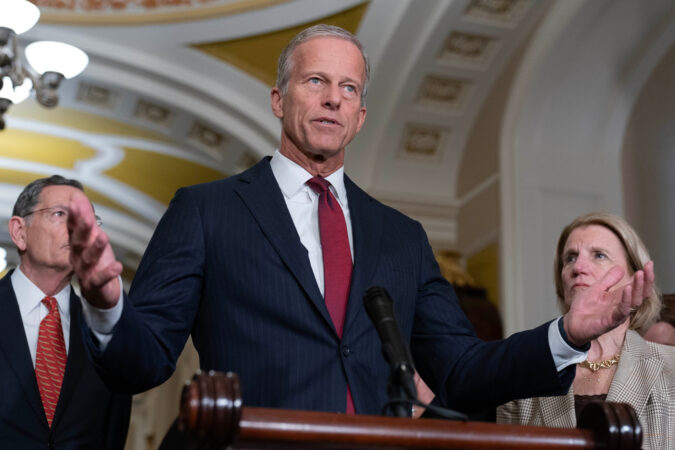
    The talkathon could last a week or longer, potentially through the weekend, as Senate Majority Leader John Thune tries to navigate Trump’s insistence on the issue and Democrats’ united opposition. Trump has urged Thune to scrap the legislative filibuster, which triggers a 60-vote threshold in the 100-member Senate, or find another workaround to pass the bill, but Thune has repeatedly said he doesn’t have the votes to do that.

    Instead, Republicans intend to make a long, noisy show of support for the legislation, which would require Americans to prove they are U.S. citizens before they register to vote and to show identification at the polls, among other things. It’s a risky strategy, with no guarantee it will be enough for Trump, who has said he won’t sign other bills until the Safeguard American Voter Eligibility Act — also known as the SAVE America Act or the SAVE Act — is passed.

    The floor debate is expected to eventually end with a failed vote. Republicans need 60 votes to advance the bill to a final vote, but they hold 53 seats, and all 45 Democrats and both independents, who caucus with the Democrats, oppose it.

    Still, the debate will “put Democrats on the record,” Thune said last week.

    Creating strict voter registration rules

    Trump says, without evidence, that Democrats can only win in the midterms if they cheat and explicitly said Republicans need the SAVE America Act to win in November. The House passed the legislation earlier this year, but the Senate turned to other issues as it became clear that Republicans didn’t have the votes to pass it.

    But Trump made clear he wasn’t satisfied and pushed the Senate to act. The Republican president has said he won’t sign other legislation, including a bipartisan housing bill backed by the White House, until the voting bill passes.

    The bill contains a slew of provisions that Trump and his most loyal supporters have pushed as part of a broad effort to assert federal control over elections. It would require voters nationwide to provide proof of citizenship when they register and to show accepted voter identification when casting a ballot.

    It would also create new penalties for election workers who register voters without proof of citizenship and require states to hand voter data over to the Department of Homeland Security so federal officials could screen for voters who are in the country illegally.

    Trump also wants new provisions added to the bill, including a ban on most mail-in ballots.

    “It’ll guarantee the midterms,” Trump said of the bill last week. “If you don’t get it, big trouble.”

    Democratic opposition to the bill is firm

    Democrats and many groups that champion voter access say there is little evidence of noncitizens voting and say the bill would disenfranchise millions of voters — including Republicans — by creating new burdens to prove citizenship.

    It is already illegal to vote if you are not a U.S. citizen, but the bill would lay out strict new rules for paperwork that people would have to present to register to vote. Opponents of the measure say those documents are not always readily available for many people.

    “There is no new problem to solve here,” said Janai Nelson, president and director-counsel of the Legal Defense Fund, a civil rights law advocacy group. “There is an apparatus already to ensure that elections are safe and secure and that only eligible voters are casting ballots in our elections.”

    Senate Democratic leader Chuck Schumer said that Democrats are not opposed to voter identification but “this is about purging the voter rolls in a massive way, so you never even get the chance to show a voter ID when you showed up to vote because you’d be knocked off the rolls.”

    Expect a show on the Senate floor

    Trump, backed by Republican Sen. Mike Lee of Utah, has pushed for a talking filibuster, which would force Democrats to talk for days or weeks to delay passage of the bill. But Thune and the larger GOP conference rejected that idea, arguing that it would end in failure after giving Democrats a stage and the opportunity to offer endless amendments, potentially adding their priorities to the bill.

    Republicans are instead taking over the floor with their own speeches, proceeding under regular order but operating outside the normal time limits that are customary when debating legislation. Democrats are expected to answer with their own procedural hijinks, potentially forcing Republicans to come to the floor at all hours for votes, meaning they will need to stay close to the Senate for the duration.

    Lee said last week that it’s unclear how it will all play out. He said he thinks Trump “understands that we need to put in an aggressive effort here.”

    “And a lot of that,” he said, “is going to have to be determined in real time as we go about it.”

    The extent of Trump’s satisfaction with the process, Lee said, “will depend on whether, in his view, we gave it everything we have.”

    On Monday night, Lee was rallying Trump’s base voters on X.

    “Once we’re on this bill,” he wrote, “we must stay on it until it’s passed into law.”

  • A journalist reported a missile strike. Then came the death threats.

    A journalist reported a missile strike. Then came the death threats.

    The message appeared in English on Emanuel Fabian’s phone.

    “You have 90 minutes left to update the lie,” said a WhatsApp message reviewed by The Washington Post. “If you do this — you solve in a minute the most serious problem you have caused yourself in life. And you won’t remember me anymore in a week.”

    Five days earlier, Fabian, a 28-year-old war correspondent at the Times of Israel newspaper, had published a short blog post reporting that an Iranian missile had struck an open area outside a Jerusalem suburb, harming no one.

    Until he began to receive messages that threatened his life and family, Fabian didn’t know his brief report had triggered a dispute over bets on the prediction market Polymarket on whether an Iranian missile would strike Israel on March 10. For those with money down, millions of dollars were potentially riding on his blog post.

    Fabian was spooked enough by the threats to at least entertain the idea of revising his published reporting, he told The Post in a phone interview Monday. That could score a win for Polymarket users who had bet against a missile strike occurring that day — and at least one had offered to send Fabian a share of the profits.

    Instead, he stood by his post, reported the threats to the police and wrote an article for the Times of Israel chronicling the harrowing experience. Fabian said he decided to publicize the story in the hope that “anyone who’s ever thinking about threatening a journalist will maybe think twice.”

    Fabian’s run-in with disgruntled bettors follows a string of recent controversies triggered by prediction markets, fast-growing online platforms that host markets where people can bet on the outcome of future events such as elections or the Academy Awards.

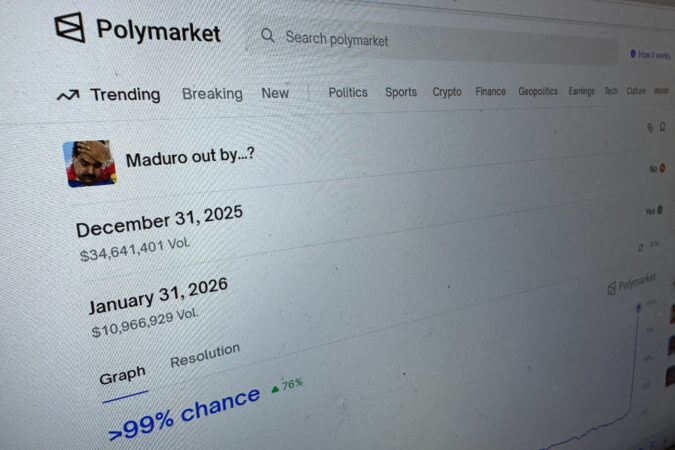
    In January, an anonymous user on Polymarket, which bars U.S. users, won $400,000 betting on the ouster of Venezuelan leader Nicolás Maduro just hours before U.S. forces took him into custody. In February, Fabian reported that an Israel Defense Forces reservist was indicted along with a civilian for using classified information to place bets on Polymarket.

    This month, users of rival Kalshi, which is approved to serve U.S. bettors, complained after the site declined to pay out on bets that Iran’s Ayatollah Ali Khamenei would be ousted, citing a policy of not allowing bets on a person’s death.

    Polymarket and Kalshi say they monitor their platforms for insider trading and improper activity, but U.S. lawmakers have raised concern about the harmful incentives prediction markets create.

    “Polymarket condemns the harassment and threats directed at Emanuel Fabian, or anyone else for that matter,” a company spokesperson told The Post. “This behavior violates our terms of service and has no place on our platform or anywhere else. Prediction markets depend on the integrity of independent reporting. Attempts to pressure journalists to alter their reporting undermine that integrity and undermine the markets themselves.”

    The company added in a post on X that it had “banned the accounts for all involved” and would pass on their information to authorities.

    The bet that would turn into a nightmare for Fabian hinged on whether at least one Iranian missile would strike Israel on March 10.

    As sirens sounded across Jerusalem and the West Bank that day, indicating ballistic missiles in flight from Iran, Fabian began contacting authorities to see whether anything had landed or been intercepted. Within minutes, he published a brief post noting that medics were responding to reports of an impact near Beit Shemesh, a city about 20 miles west of Jerusalem. Soon after, he posted on X a dashcam video provided by a witness that showed a fiery explosion in a forested area not far from a residential complex.

    “One missile struck an open area just outside Beit Shemesh, first responders say and footage shows,” Fabian wrote, noting that no injuries were reported.

    Fabian moved on with his day, but on Polymarket, controversy was brewing. At the end of March 10, about $200,000 was at stake, according to a Post analysis of Polymarket data from crypto analytics data platform Dune and the website Polymarket Analytics.

    His blog post appeared to seal a win for users who had put money on at least one Iranian missile striking Israel that day. But in a group chat on the messaging platform Discord, a user pointed out that a daily report from the Israel Defense Forces did not mention any missile strikes on March 10. That user and others suggested the explosion may have been shrapnel from an intercepted missile.

    Under the terms of the bet on Polymarket, intercepted missiles did not count as strikes. And the terms said that if confirmation of a strike could not be provided within 48 hours, those who bet “no” would be declared the winners.

    Polymarket determines the “truth” used to resolve bets on its platform via a complex system of voting by users who have bought a particular cryptocurrency token. As those users debated who should win the bet over missile strikes on March 10 in the days following the blast, more Polymarket bettors piled in, wagering another $7 million, with some individuals standing to win more than $1 million if the market resolved to “yes.” And Fabian began to receive messages from strangers encouraging him to revisit his reporting.

    At first the messages were polite. “I’d appreciate it if you could update your article, as in its current form it does not reflect reality,” one correspondent told Fabian, according to his Times of Israel article. “Alternatively, if you have information that it was indeed a full missile that was not intercepted, I would be glad to be corrected.”

    Fabian said he didn’t know at the time why the person was so interested in what seemed to be a minor detail, given that the blast had not caused serious damage. His confusion grew as he began to receive similar messages from other strangers.

    “I started getting all these replies on Twitter, or X, where people asked me, ‘Hey, why aren’t you updating this story from the 10th of March?’,” he recounted. “I was so confused. Then I looked at the profiles, and I realized they’re all Polymarket bettors. That’s when it kind of clicked.”

    By Sunday morning one person’s messages to Fabian had grown menacing.

    In messages written in Hebrew on WhatsApp, which Fabian quoted in his published reporting and also shared with The Post, a user who called themselves “Haim” said if Fabian caused him to lose his $900,000 bet, “we will invest no less than that to finish you.” Alternatively, the message said, Fabian could change the article, “end this with money in your pocket, and also earn back the life you had until now.”

    When Fabian didn’t respond, Haim began sending messages counting down the minutes, and claimed that he knew exactly where Fabian lived and who his family members were. Eventually, Haim switched from Hebrew to English, telling Fabian he had “90 minutes to update the lie.”

    Fabian told The Post that he considered conceding to Haim’s demands.

    “I thought, ‘Do I just change it? Because it doesn’t really matter,’” he said. “But then I thought, ‘You know, if I do this now, they’re going to come back to me again and asked for other things to be changed.’ They would have probably never stopped doing that if they knew they could make money this way.”

    Instead, Fabian filed a police report, he said, and began working with his editor at the Times of Israel to publish a first-person account of the attempted shakedown. He said he hopes that the publicity will deter bettors from threatening other journalists in the future. But Fabian said he worries he won’t be the last — and that other journalists might respond differently.

    Asked whether it’s possible the bettors were right and the explosion was from the remains an intercepted missile, Fabian said he was confident it was a warhead, due to the size of the blast and verbal confirmation from the IDF. But he added that it’s not something he’d usually follow up on after a minor blast, given that it doesn’t matter to most people — unless they have money riding on the answer.

    Asked late Monday if they had any more information on the March 10 blast, an IDF spokesperson said they did not have any on hand but would look into it.

    As of Monday, Polymarket was still accepting bets on the March 10 missile strike, nearly a week after something struck the ground near Beit Shemesh. “No” bets were far cheaper than “yes” bets, because bettors appeared to judge that the odds heavily favored “yes.”

    Latecomers to the market were effectively betting not on what hit the ground in Israel but on how the mostly-anonymous voters in Polymarket’s system will ultimately settle the dispute. One trader with the username “poorsob” would win $1.6 million if the market resolved to “yes.” BenzoateOstylezeneBicarbonate would win $1.3 million. But, if the bet ended up as a “no,” Sofia1 and AAAAGAAaA65 would win about $400,000 each.

    Sen. Chris Murphy (D-Connecticut) and Rep. Greg Casar (D-Texas) are expected to introduce draft legislation on Tuesday called the BETS OFF Act, for “Banning Event Trading on Sensitive Operations and Federal Functions.” They were inspired in part by predictions market bets on Maduro’s ouster and the Iran strikes.

    The bill “would put a stop to these corrupt wagers, crack down on prediction markets that flout the law with offshore platforms, and reject the idea that we should commodify every part of our lives,” Murphy’s office said in a statement.

    Amanda Fischer, policy director at the financial advocacy group Better Markets, said the “chilling” threats against Fabian underscore the need for stronger oversight of prediction markets.

    Fabian’s choice to go public rather than change his story “speaks to his integrity,” said Fischer, a former chief of staff at the Securities and Exchange Commission. But she added that pressure like he experienced could add to the risks faced by war reporters.

    “The last thing they need now,” she said, “is folks with a gambling position on life or death harassing them and trying to coerce them to change their reporting so they can get a payout.”

    Jeremy Merrill contributed to this report.

  • How deregulation made electricity more expensive, not cheaper

    How deregulation made electricity more expensive, not cheaper

    American families are feeling the pinch of rising electricity prices. In the past five years alone, the supply portion of the standard service residential electric bill in Philadelphia has increased by 71%. In the Lehigh Valley it has increased by 77%. And in Columbus Ohio, by 110%. These are three data points in a national trend.

    Energy affordability is quickly shaping up to be a key election issue at all levels of American politics. And more than half of U.S. adults surveyed in January 2026 reported being very concerned about the price of electricity.

    New research from the Energy Markets and Policy Group that includes The Ohio State University and Lehigh University where we serve as principal investigators, provides new insights about another factor you were probably not thinking about – middlemen introduced by deregulation.

    How deregulation brought middlemen instead of competition

    Between the late 1990s and early 2000s, several state legislatures deregulated their electricity systems. Deregulation was originally sold as a way to replace inefficient regulation and reduce bureaucracy. People were told that competition would deliver lower prices.

    Under the old system, a state regulatory commission set prices for all electricity services – generation, transmission and distribution – which were supplied by the same monopoly utility company. Each state commission was required by federal law to ensure that rates were “just and reasonable.” Under deregulation, that same commission rate-setting process still holds for transmission and distribution, but the generation part was split off.

    Deregulation created competitive wholesale markets for generation, but price competition did not spread widely at the retail level. In states with active retail deregulation, there are two ways the retail generation price can be set. Consumers get to pick which one – buy from a marketer on the open market, or do nothing. Most people choose to do nothing.

    Rather than introducing efficiency, this system of retail deregulation created a new complexity: middlemen marketers. In most cases, no matter which choice people make, it’s hard for them to understand how their electricity rates are set.

    Option A: The open market

    Electricity customers in deregulated retail markets can choose a company that buys the electricity on their behalf. Energy salespeople have sophisticated marketing programs to sell their companies’ plans.

    For example, people who live in the Cincinnati area can contract with one of more than 50 suppliers to buy electricity on their behalf from the wholesale market. In the Lehigh Valley and Philadelphia there are more than 30 suppliers. Their monthly bill would still come from the regulated distribution company (Duke Energy, PPL, PECO, respectively), and would still include regulated charges for distribution and transmission set by state and federal officials. But it would also include charges from an unregulated retail supplier, for the generation part of their bill – their electric supply.

    Our research has found that these markets are not working as intended.

    Option B: Do nothing – default service

    For people who choose not to shop on the open market, by doing nothing they remain on what is called the “standard offer” or “default service.” Sometimes it is also called “provider of last resort” service because it is not meant to be the best option.

    For these people, state law generally requires each distribution utility to hold auctions or use a procurement process like a request for proposals to determine which middlemen companies get to be their supplier, and of course, at what price.

    People in this category still buy from middleman marketers. But rather than choosing their own middleman, they get the middleman the utility company selects for them.

    Problems in the open market

    People who live in states with deregulated electricity markets know that these open markets have many problems. There have been investigations into unfair trade practices, lawsuits and regulatory penalties for misleading sales practices.

    Other problems include deceptive marketing, a process called “slamming” in which companies change customers’ suppliers without their knowledge, contract loopholes that increase prices, and outright fraud.

    Help for consumers usually comes after problems have arisen, rather than preventing them in the first place.

    Our research team sought to determine whether, and how much, electricity consumers would save money if they used the supposedly competitive open market, rather than going with the default rate. To answer this question, we developed a detailed database of every daily retail choice offer filed by every supplier in all service territories in Ohio for a decade – which meant compiling millions of records.

    We found that 72.1% of the open-market offers exceeded the utility’s default rate. In some years, there was not even one single cost-saving offer for the entire year, or longer. The vast majority of these supposedly competitive electricity prices were higher than customers would get by doing nothing. Taking the time to research the market and compare prices was often not worth consumers’ time.

    Importantly, the study found that suppliers in the open market were not setting their prices based on market fundamentals – like the underlying wholesale price of electricity. Instead, they were setting prices based on the results of the utility’s default supply selection. In a competitive market, that is not supposed to happen.

    Is default service really competitive?

    In a separate study, our team evaluated every default service auction in every utility service territory in Ohio since 2011, nearly 15 years. We found that the number of companies competing with one another in these auctions is a key determinant of the retail markup consumers have to pay.

    In some of the default-option rate auctions, as few as five suppliers placed bids. In others, there were as many as 15 companies vying to provide default-option electricity. Our analysis found that in situations when the underlying costs of generating electricity were the same, default supply auctions with fewer bidders delivered significantly higher prices for consumers than auctions with more bidders.

    It’s important to note that Ohio’s process for setting default service rates is more robust than many other states. In Pennsylvania, the process is similar to Ohio’s. In some states, it is not uncommon for even fewer companies to bid. So Ohio and Pennsylvania’s situation is not actually a worst-case scenario for consumers. Rather, it’s probably better than many other states with deregulated electricity markets.

    Putting it all together

    The first study showed that the open market is not setting efficient retail rates and is not working as intended. Most of the offers made available to consumers are not worth their time, and the suppliers in those markets are not setting their prices based upon market fundamentals. Instead, these companies are taking their cues from the local distribution utility’s default supply auctions. That is not how deregulation was envisioned.

    The second study showed that the process which sets the default supply rate is also not very competitive. Less competition means the middleman companies bidding in those auctions can bid, and win, higher prices – raising electric bills and increasing their profit margin.

    Energy deregulation promised lower prices through competition. But instead, consumers got an army of middleman marketers. And, those middlemen have been taking their cues from a bidding process that often has too few participants to keep prices low.

    Noah Dormady is Associate Professor of Public Policy at The Ohio State University; Alberto J. Lamadrid is James T. Kane Professor of Economics and Industrial and Systems Engineering at Lehigh University . A version of this article appeared on The Conversation., a nonprofit news website sharing the knowledge of researchers.

    The Conversation

  • Letters to the Editor | March 17, 2026

    Letters to the Editor | March 17, 2026

    A senseless war

    In Sunday’s Opinion section, Joe Sestak, Trudy Rubin, and Will Bunch laid out a very convincing accounting of the senselessness of another “endless” war in the Middle East. They also highlighted the lack of understanding that President Donald Trump and his administration have of the history and culture of that part of the world. Given this, why has Congress failed to exercise its constitutional responsibility to end this unlawful war? About 13% of our tax dollars go to funding a military that blindly obeys the orders of a bully president. War is not the answer. Sincere, peaceful, intelligent negotiations, and sensitivity to the needs of the people through community building initiatives are ways to avoid war. Resources spent on military actions could be redirected to address pressing social issues in the U.S., such as poverty, housing, and education.

    Bruce Charlick, Jenkintown

    The Inquirer has performed an outstanding public service by publishing three first-rate opinion pieces about the misguided war in Iran. Joe Sestak provides detail and context about issues such as access to rare earth minerals that hardly ever get attention in news coverage. He chillingly highlights the dominant position that China has achieved while the president’s been out playing golf.

    Inquirer regulars Will Bunch and Trudy Rubin once again offer insights and perspective that all of us really need if we are to respond intelligently to the madness of our deranged president.

    Thank you for your journalistic excellence.

    Laslo Boyd, Philadelphia

    In her most recent column, Trudy Rubin expressed outrage at reports that Russia may be providing Iran with intelligence on locations of U.S. troops. If true, we should all be furious — Russian collusion with Iran puts American service members directly in harm’s way.

    Yet instead of imposing tougher penalties on Russia or strengthening U.S. support for Ukraine, Donald Trump has eased sanctions.

    Meanwhile, lives have already been lost and Americans face the risk of retaliation from a war of choice launched without an imminent threat from Iran.

    Politically, economically, and morally, this “little excursion” is already proving to be a grave mistake.

    Maria Duca, Philadelphia

    Special measures

    As a pediatric rheumatologist in Philadelphia, I care for children living with complex, chronic autoimmune diseases, like juvenile arthritis and lupus, which can cause lifelong pain and disability without timely treatment. But across Pennsylvania, Delaware, and New Jersey, too many families are waiting months or being forced to travel across state lines to get their child the care they need.

    That’s because there are only a handful of pediatric rheumatologists in our state, with some regions having none at all. The shortage is growing worse still as a result of inflation, administrative burdens, and outdated physician reimbursement rates. We have created a system that discourages physicians from entering or staying in fields like pediatric rheumatology — and it’s children who are paying the price.

    It’s time for our leaders in Washington to modernize physician payment to ensure updates that reflect the true cost of care and support the next generation of pediatric specialists. Without reform, families in Pennsylvania and beyond will face longer waits, longer drives, and worsening outcomes for children who deserve better.

    Jay Mehta, Philadelphia

    Join the conversation: Send letters to letters@inquirer.com. Limit length to 150 words and include home address and day and evening phone number. Letters run in The Inquirer six days a week on the editorial pages and online.

  • Federal judge blocks RFK Jr.’s vaccine policy overhaul for now

    Federal judge blocks RFK Jr.’s vaccine policy overhaul for now

    A federal judge on Monday blocked the Trump administration from implementing sweeping changes to the nation’s childhood immunization schedule, mostly siding with major medical organizations that argue Health Secretary Robert F. Kennedy Jr. unlawfully altered vaccine policy and improperly reconstituted a federal vaccine advisory panel.

    Under Kennedy, the federal government has cut the number of shots routinely recommended to children, including for flu, hepatitis A, rotavirus, and meningococcal disease. Kennedy also dismissed all 17 members of the vaccine advisory panel to the Centers for Disease Control and Prevention last year, installing new members, several of whom have criticized vaccines, especially COVID-19 mRNA shots.

    Several groups, including the American Academy of Pediatrics, the American College of Physicians, and the Infectious Diseases Society of America, sued.

    In his opinion, Judge Brian E. Murphy slammed the administration’s approach to revamping government recommendations for how and when children should be immunized. He said the government has undermined its history of recognizing “the importance and value” of involving independent experts in setting our national public health agenda and relying on “a method scientific in nature” to make such decisions.

    The U.S. District Court judge from Massachusetts wrote that the government bypassed the CDC’s vaccine advisory panel — which is how vaccine recommendations have been made for decades — to change the immunization schedule. He called it a “technical, procedural failure” and a “strong indication of something more fundamentally problematic: an abandonment of the technical knowledge and expertise embodied by that committee.”

    The pause on the administration’s actions are temporary as the dispute is expected to wind through multiple rounds of appeals, raising the prospect of a drawn-out court battle over who ultimately calls the shots on the scientific standards shaping federal vaccine recommendations.

    Andrew Nixon, a spokesperson for the Department of Health and Human Services, said the department “looks forward to this judge’s decision being overturned just like his other attempts to keep the Trump administration from governing.”

    As health secretary, Kennedy — the founder of a prominent anti-vaccine group — has made clear that he wants to overhaul the nation’s immunization system and argued the prior ACIP was plagued with conflicts of interest.

    In early December, President Donald Trump ordered federal health officials to review the childhood immunization schedule, including recommending fewer vaccines to align with other developed countries. The judge wrote that HHS cannot circumvent the long-standing practice of getting advice from the federal panel without offering an explanation “simply because they are following the President’s orders.”

    He also wrote that the government removed every member of the panel and replaced them without undertaking the “rigorous screening” traditionally used to select members.

    The judge also paused all votes taken by Kennedy’s handpicked advisers. Some recent votes include moving from broadly recommending everyone 6 months and older get a coronavirus shot to instead advising Americans to first consult a clinician. The panel also voted to drop a recommendation that all newborns receive a vaccine for hepatitis B.

    In court filings, the medical groups contend that Kennedy’s reconstitution of the vaccine panel was improper and that subsequent votes on vaccine recommendations — including changes affecting COVID-19 and other routine childhood immunizations — were, therefore, invalid. They argued that the administration bypassed established procedure and violated the Administrative Procedure Act, which governs how federal agencies make policy.

    Government attorneys have defended the secretary’s authority to remove and appoint advisory committee members, arguing that federal law grants HHS broad discretion over such panels. They also contend that policy disagreements over vaccine recommendations do not amount to legal violations.

    On Substack, Robert Malone, the committee’s vice chair and a prominent critic of coronavirus vaccines, called the opinion a “judicial overreach.” He wrote that there is a compelling “case for bringing intellectual diversity and fresh expertise” to the panel and for aligning vaccine recommendations with the practices of other nations.

    “In the meantime, the administration should continue its work,” he wrote.

  • Dear Abby | Co-workers putting out quite the vibe in the office

    DEAR ABBY: I work in an office with a man who has expressed an interest in me in various subtle (and not-so-subtle) ways, including winks. I have also caught him staring at me with intense longing. We communicate well, and he has told me I have influenced him. We are both disciplined, determined and accomplished men. I envy him for his easy smile, his self-confidence and his effortless, universal appeal.

    This man is married with grown children. I am a widower, 21 years his senior. I am prepared to say to him, “You are spoken for, and I’m not a homewrecker. If you are ever single again, you and I should have a serious conversation. But unless that day comes, much will remain unsaid.” I suspect the two of us would have a good life together. I do not believe I am misreading his intent. Have you any advice for me?

    — INTERESTED IN WASHINGTON

    DEAR INTERESTED: This younger colleague may be as attracted to you as you are to him. However, he could also consider you nothing more than a valued mentor. Because he is married, I’m concerned that if you say what you are thinking to him, it could disrupt your working relationship or even be considered harassment. Do not jeopardize your job by doing it.

    ** ** **

    DEAR ABBY: My husband vapes in our home, and I have run out of ways to get it through his thick skull that this is unhealthy, not only for his health, but for mine. Even more upsetting is that he vapes when our grandchildren are here and when he drives them in his truck.

    I have printed reliable scientific information for him, yet his response is always, “I know, I’m sorry, I need to stop.” It’s been seven years, so that’s how sincere his response is. He just continues trying to hide what he’s doing.

    I’m not wealthy enough to pack his bags and change the locks. But maybe someone will read this and smarten up before they damage their loved ones’ health. Do you have any advice?

    — THINKING ABOUT MY GRANDS

    DEAR THINKING: I do, actually. You imply that your husband is addicted to nicotine, which is why he is vaping. Tell him that you will quit nagging him about it on one condition: that when he vapes, he must step outside to do it, which will ensure that you are not affected by it. As to his vaping with the grands in the vehicle, how do their parents feel about it? Do they realize what Gramps is doing? Your next step should be to make sure they know exactly what is going on so they can put a stop to it.

    ** ** **

    DEAR READERS: This is my timely reminder for all of you who live where daylight saving time is observed: Don’t forget to turn your clocks forward one hour tonight at bedtime. Daylight saving time begins at 2 a.m. Sunday. I look forward to it each year because it signals longer, brighter days and warmer weather. I find the extra light to be a mood elevator and an energizer. Spring has almost sprung!

    — LOVE, ABBY

  • Horoscopes: Saturday, March 7, 2026

    ARIES (March 21-April 19). You’re attentive to the experience of others. Your awareness will be so strong that sometimes you feel you can hear what people are thinking. Even so, stay open and curious, setting assumptions aside as you gather more information.

    TAURUS (April 20-May 20). You don’t need to push today. Progress comes from staying in motion, not from forcing yourself to do things you don’t want to do. You can trust in the systems you already understand and maintain daily. Small actions compound.

    GEMINI (May 21-June 21). People are watching how you move through this chapter. Your progress will inspire them. But it’s your persistence that matters most. Stay in the story until things go your way. It’s the happy ending that decides the genre.

    CANCER (June 22-July 22). Variety isn’t chaos. It keeps things pliantly moving along. Today is like a well-paced exercise class: There’s a warmup, a high-energy burst and then a period of calm and appreciation for all that you were able to do with this day.

    LEO (July 23-Aug. 22). Your good mood opens doors. Conversations flow easily, and useful tidbits effortlessly drift into your awareness. You become the one in the know! This is social momentum at its best — light, curious and advantageous to more than just you.

    VIRGO (Aug. 23-Sept. 22). Cooperation is the smart strategy today. It actually gets you where you’re going. Swimming against the current, you will stay in one place at best; at worst, you will regress and tire yourself out to get to where you’ve already been.

    LIBRA (Sept. 23-Oct. 23). People talk about “overthinking” as though it’s so easy to know when thinking goes “over.” Like overeating, the bad feeling usually comes about 20 minutes after it’s too late to do anything about it. Let it be an invitation to self-compassion.

    SCORPIO (Oct. 24-Nov. 21). Duty will drag on and on if you let it. Meanwhile, you feel like you have to steal your brief moments of pleasure. Maybe this is a simple matter of prioritization. Make it a point to give yourself more time for delight.

    SAGITTARIUS (Nov. 22-Dec. 21). It’s said that “all is fair in love.” If that’s true, perhaps it has something to do with love’s refusal to name one winner or one loser. If one person wins, so does the other. If one person loses, so does the other.

    CAPRICORN (Dec. 22-Jan. 19). No one is perfect. However, you have fallen short of your own expectations. It’s the most common and human thing in the world. The faster you can forgive yourself, the sooner you’ll move into your lighter, brighter tomorrow.

    AQUARIUS (Jan. 20-Feb. 18). The powers that be don’t seem to be on your side, but it doesn’t mean you’re unlucky. In fact, this could be the luckiest day you’ve had in a while because the obstacles give you an idea. As the proverb goes, “When there is no wind, row.”

    PISCES (Feb. 19-March 20). You bring out the good. You can’t help it. You consistently resonate with people’s better angels. Because of this you’ll be met with generosity, trusted with the truth and invited to the most interesting places.

    TODAY’S BIRTHDAY (March 7). Welcome to your Year of Fortune’s Choreography. You leap; life catches you. You spin; life anchors the final loop, holds you tight, and a passionate dip emphasizes the point — you are so cherished, protected and adored. More highlights: You do your best work with new projects, and the financial end gets neatly handled. Contracts are fair and honored. Family sweetness and fulfillment. Taurus and Libra adore you. Your lucky numbers are: 31, 20, 5, 37 and 2.