Tag: no-latest

  • Denver airport security initially missed trespasser who was killed by plane on runway

    Denver airport security initially missed trespasser who was killed by plane on runway

    FORT COLLINS, Colo. — Workers at Denver airport initially missed a security breach by man who scaled an 8-foot perimeter fence and crossed a runway where he was hit and killed in a fiery collision by a plane with 231 people on board, authorities said Tuesday.

    The runway fatality underscores the longstanding challenge of keeping intruders out of major airports. Denver International Airport sprawls across 53 square miles — twice the size of Manhattan — on open prairie northeast of the city center.

    The 41-year-old trespasser triggered an alarm as he crossed into the airport in a remote area about 2 miles from the terminal late Friday night. But security personnel mistakenly attributed that alarm to a herd of deer that was nearby.

    Authorities said the man died by suicide. However, no note from the victim was immediately recovered. The manner of death was determined based on the investigation at the scene, a records review, and a postmortem examination, said Sterling McLaren, chief medical examiner for the city and county of Denver.

    The collision involving the Frontier Airlines plane as it was taking off for Los Angeles sparked an engine fire that forced passengers to evacuate via slides. Twelve people sustained minor injuries and five were taken to hospitals. Four have since been released, said airport Chief Executive Officer Phillip Washington.

    A black-and-white video released by the airport shows, from a distance, a figure walking toward the runway with arms swaying. The person crosses onto the runway at a slight angle and seconds later the plane is seen speeding past. It strikes the person with its right engine, which bursts into flame.

    Federal officials notified the airport

    A few minutes before the man scaled the fence, a ground-based radar system activated in the area, triggering an alarm. An airport worker checked a surveillance camera and saw a herd of deer in the same area but did not initially see the trespasser, Washington said.

    “The camera view was alternating between the wildlife and the individual. There are some ditches in the area, so the person was out of view for a bit as well,” Washington said.

    He said federal officials notified the airport about the trespasser. Because of the remote location and short time period between the man scaling the fence and crossing the runway, Washington said airport personnel were not able to intervene.

    The man crossed about 650 feet from the fence to the runway before being struck and killed by the Frontier Airlines plane traveling at 150 mph on takeoff.

    The plane’s engine caused the man’s death, McLaren said. She described it as “a purposeful act with a foreseeable fatal outcome.”

    Denver Police Chief Ron Thomas said investigators were contacting the man’s family and those who knew him to seek more information about his motivations.

    Trespassers breaching airport perimeters is a regular problem, with perhaps dozens annually nationwide, said security expert Jeff Price, who was assistant director of security at the Denver airport in the 1990s. The airport is surrounded by about 36 miles of perimeter fence, which airport officials say is continuously inspected.

    The vast majority of airport trespassers are intoxicated or simply “messing around just to see if they could do it,” said Price, adding that they typically don’t pose a real threat. Denver also gets the rare individual who will jump the fence seeking to prove a long-running conspiracy theory about a UFO base being based at the airport, he said.

    The Transportation Security Administration oversees airport security programs, including perimeter security requirements.

    “It’s really not that difficult to jump an airport perimeter fence,” Price said. “They meet the standards for TSA, but the standards are not that robust.”

    The fences are typically 6 to 8 feet tall with barbed wire at the top, he said. They must be approved by federal inspectors, but there are no set rules on their construction. Major airports such as Denver typically also have intrusion detection systems that include cameras and motion sensors, he said. Some systems detect the seismic impact of people dropping to the ground, Price said.

    Evacuation under scrutiny

    The person was killed on the airport’s easternmost north-south runway and at least 1.25 miles from any airport buildings. Empty fields and croplands surround Denver International Airport in most directions. Distant trees and structures in the video showed that the person was headed toward the airport when they crossed the runway.

    The Transportation Security Administration has regulatory oversight of airport security programs, including perimeter security requirements.

    Separately, the National Transportation Safety Board on Sunday said it is gathering information about the evacuation.

    An agency spokesperson said an investigation would be launched if it’s determined the injuries meet the agency’s definition for “serious.” That can include a person requiring hospitalization for more than 48 hours, suffering a broken bone or second- or third-degree burns affecting more than 5% of their body.

    This story includes discussion of suicide. If you or someone you know needs help, the national suicide and crisis lifeline in the U.S. is available by calling or texting 988. There is also an online chat at 988lifeline.org

  • Supreme Court wrestles with Trump effort to end temporary protections for migrants

    WASHINGTON — The Supreme Court’s conservative majority on Wednesday appeared sympathetic to the Trump administration’s arguments that it can cancel temporary humanitarian protections for Haitian and Syrian immigrants living legally in the United States, hearing a pair of cases that could let the government deport hundreds of thousands of people starting this year.

    The cases test a key part of President Donald Trump’s immigration agenda, which has sought not only to deport undocumented immigrants but also to narrow the legal pathways for immigrants to reside in the United States. As he campaigned for his second presidential term, Trump vowed to revoke temporary protected status for Haitian immigrants while spreading baseless claims that Haitian residents in Springfield, Ohio, were killing and eating their neighbors’ pets.

    Several of the court’s conservative justices appeared skeptical of arguments made by immigrants’ attorneys that courts have the authority to review whether Kristi Noem, who until recently was the homeland security secretary, took the proper steps to cancel the protections. The 1990 law that created TPS says there is no “judicial review” of the secretary’s “determination.”

    “If we apply ordinary meaning of that term here, I really don’t understand how you can prevail,” Justice Samuel A. Alito Jr. told the lawyers.

    Much of the harder questioning for the Trump administration came from the court’s liberal justices, who probed Solicitor General D. John Sauer on the TPS holders’ allegations that Noem did not take the required steps in canceling the protections. Justice Ketanji Brown Jackson asked if, under the government’s theory, Noem could make a decision using a “Ouija board.

    The liberal justices also highlighted Trump’s past comments that some immigrants were “poisoning the blood” of the United States, his favoring White South African refugees over immigrants of color, and his use of expletives to disparage countries including Haiti. Such comments suggest the administration acted from racial animus, the immigrants’ attorneys have argued.

    “What about ‘poisoning the blood of Americans’?” Jackson asked, before listing other remarks.

    Sauer said the statements referred to immigrants who were criminals or depend on welfare, neither of which applied to TPS holders.

    The potential impact of the Supreme Court’s opinion, which is expected by June, extends well beyond Haitians to approximately 1.3 million immigrants from 17 countries who had temporary protected status when Trump took office. Since then, the Department of Homeland Security has sought to eliminate protections for 13 of those countries, including Haiti, Syria, and several others the State Department still considers highly dangerous.

    Congress created TPS in 1990 to protect immigrants in the United States from being deported to countries engulfed in an armed conflict, a natural disaster, or another extraordinary crisis, allowing them to work legally in the U.S. for up to 18 months. Applicants to the program cannot have serious criminal records, and they must pay fees and pass a background check.

    The U.S. government can renew the protections — and has, multiple times, drawing criticism from Trump for allowing the provisional status to last for years, even decades.

    “Keep in mind, this is temporary protected status,” Sauer told the court. “The word temporary is used again and again in the statute, including its title. And we’re looking at a situation where there have been initial designations that go back to 1991 in the case of Somalia …”

    Attorneys for the immigrants countered that they are entitled to a fair process.

    “We’re talking about the power to mass expel people who have done nothing wrong to countries that remain unsafe,” said attorney Ahilan Arulanantham. “And our view is it is unlikely that a refugee protection statute would have given that power to the secretary.”

    In February 2025, Noem made good on Trump’s promise to limit the program, kicking off the process to cancel temporary protections for more than 353,000 Haitian migrants. They had first received protections in 2010 following Haiti’s devastating 7.0-magnitude earthquake, and the protections had been extended to include those who arrived later. Haiti has faced multiple crises, including the 2021 assassination of its president and widespread gang violence.

    Although conditions in Haiti remained “concerning,” Noem said last year, she argued that Haiti was largely safe for TPS holders to return to. Even if there were safety concerns, she argued, offering protections to Haitians was no longer in the “national interest” because the program was acting as a “pull factor” for illegal immigration.

    In September, Noem terminated temporary protected status for a little more than 6,000 Syrian immigrants. They had received protections starting in 2012 amid the violent crackdown by Syria’s then-leader Bashar al-Assad. Because Assad’s regime fell in 2024 — and the country’s brutal civil war had subsided to “sporadic, isolated episodes of violence” — Noem said she had determined that Syrians also could return to their home country.

    Lawyers for the immigrants pointed to State Department advisories that warn U.S. citizens not to travel to either country because of risks of terrorism, kidnapping, and armed conflict. The advisories recommend that visitors establish “proof of life” protocols in case they are taken hostage, “to confirm that you are being held captive and alive.”

    In light of those dangers, lawyers for Haitians and Syrians sued to block the terminations, arguing that Noem did not follow requirements in the law that she assess a country’s condition before deciding whether it is safe. They said that Noem scarcely consulted with other agencies in identifying risks and that the decisions to end TPS were motivated by racial animus.

    The Trump administration denies that. Moreover, it points to the Immigration Act of 1990, a bipartisan law that established the temporary protected status program, which says terminating a country’s status is entirely the secretary’s decision and cannot be challenged in court.

    “‘[N]o judicial review’ means what it says,” the government wrote in its brief to the court.

    The conservative justices were largely sympathetic to that argument. Justice Neil M. Gorsuch said he was “struggling” with the arguments by the immigrants’ attorneys that a court acting to postpone Noem’s determinations was not an example of the judiciary stepping in.

    Geoffrey M. Pipoly, a lawyer for the Haitian TPS holders, responded, “It’s difficult for me to answer that question without pointing out —”

    “It’s difficult for me to answer the question, too,” Gorsuch cut in.

    In both cases, lower courts sided with the immigrants. In the case of the Haitians, a federal judge in D.C. found that the termination was probably motivated by racial animus, pointing to Trump’s comments about the migrants in Springfield eating dogs and cats.

    When the Supreme Court agreed to hear the cases, the justices left the lower-court orders in effect, meaning Syrian and Haitian immigrants still have valid work permits and are protected from deportation for now.

    The prospect of Haitians losing temporary protections has drawn concern from members of the caregiving industry, who say that nursing homes across the country rely heavily on nurses and nurse’s aides from that country.

    In April, House Democrats and Republicans voted to restore the temporary protections for Haitian migrants, voicing similar concerns. That legislative effort faces an uncertain fate in the Senate, however, and would need Trump’s signature to go into effect.

  • For many patients leaving the ICU, the struggle has only begun

    For many patients leaving the ICU, the struggle has only begun

    The accident happened in Pittsburgh on Nov. 16. Joseph Masterson, a lawyer who was just days from retiring at age 63, suffered cardiac arrest while driving, plowed into a guardrail, and lost consciousness.

    Other drivers stopped, broke the car window, and pulled him to safety. A passing volunteer firefighter performed CPR until an ambulance arrived to take Masterson to UPMC Mercy hospital.

    He spent 18 days in the medical intensive care unit there, 14 of them on a ventilator. He developed delirium, a common ICU condition, and needed antipsychotic drugs. Despite a feeding tube, he lost weight. “We honestly weren’t confident that he would pull through,” said Ron Dedes, his brother-in-law.

    But he did. Masterson was discharged Feb. 1 and returned home with near-constant family support. Working diligently with several kinds of therapists, he has regained his ability to walk, despite lingering weakness, and to manage his personal care. His once-garbled speech has markedly improved. He can make himself a sandwich.

    Now, “our biggest concern is his memory,” Dedes said. Masterson, who so recently handled complex legal matters, forgets conversations and events that happened a few hours earlier, said Patti Dedes, his sister. He can’t yet operate a microwave or place a phone call.

    In an interview, he described himself, accurately, as “much, much better than I was” — but misstated his age. Screening tests after his discharge indicated cognitive impairment and depression.

    Among critical-care doctors, prolonged symptoms like his are known as “post-intensive care syndrome,” or PICS. The fallout can be physical or psychological, as well as cognitive, and can persist for months or years.

    More than 5 million people annually are admitted to intensive care across about 5,000 American hospitals, and research shows that more than half experience such aftereffects. Older age increases the odds.

    Patients and families are often startled by these continuing difficulties. “The belief is that they’ll be discharged from the hospital and in two or three weeks, they’ll be back to normal,” said Brad Butcher, who was Masterson’s doctor and wrote about PICS recently in the medical journal JAMA. “That doesn’t comport with reality.”

    In fact, with greater ICU use and improved treatments — the Society of Critical Care Medicine estimates that 70% to 90% of adults now survive their stays — the population likely to encounter the syndrome is growing.

    “Everyone is grateful that the patient has survived,” said Lauren Ferrante, a pulmonary critical-care doctor and researcher at the Yale School of Medicine. “But that’s just the start of a long road to recovery.” In a study of patients 70 and older that she co-authored, within six months after discharge only about half had returned to their pre-ICU functional ability.

    Intensive care patients face a long list of challenges. PICS symptoms range from the physical — weakness, pain, neuropathy (tingling in arms and legs), and malnutrition — to mental health concerns, primarily anxiety and depression. Cognitive difficulties like Masterson’s are commonplace, including problems with memory, attention and concentration, and language.

    “For many people, surviving a critical illness is a life-altering experience,” Butcher said. Patients in intensive care after emergency or elective surgery also have high rates of new physical, mental, and cognitive problems a year later.

    The same aggressive treatments that save lives contribute to the syndrome. Intensive care patients “have some sort of dramatic organ failure that requires immediate attention” and constant monitoring, explained Carla Sevin, a pulmonary critical-care doctor who directs the ICU Recovery Center at Vanderbilt University Medical Center.

    That could mean a breathing tube attached to a ventilator, which in turn often requires sedating drugs. Sedation “can precipitate delirium, and delirium is the key factor in cognitive symptoms,” Butcher said.

    It doesn’t help that constant beeps and alarms from monitors and round-the-clock bright lighting disrupt sleep, and that restrictive family visiting hours deprive patients of reassuring faces and voices.

    Gregory Matthews, a retired accountant in St. Petersburg, Fla., spent nearly a month in an ICU after a lung transplant in 2014. He still vividly remembers his hallucinations, including mice running across the wall and someone trying to frame him for drug running.

    “One day, I thought a doctor was an assassin — I could see the rifle,” said Matthews, now 80. “So I jumped out of bed,” he said, and yanked out his IVs. The staff put his arms in restraints for days.

    But immobilization exacts its own toll as patients quickly lose muscle mass and strength. “Our bodies were not meant to lie in bed all day,” Ferrante said.

    Psychologically, “PTSD is pretty common, similar to what’s seen in combat veterans or sexual assault survivors,” Sevin said, referring to post-traumatic stress disorder. Families can suffer anxiety and depression along with the patients.

    Alarmed by such discoveries, doctors and administrators at about 35 U.S. hospitals have established post-ICU clinics, where teams of doctors, nurses, pharmacists, therapists (physical, occupational, cognitive, speech), and social workers screen for a host of conditions and help guide patients through them.

    Vanderbilt’s clinic saw its first patient in 2012. The Critical Illness Recovery Center at the University of Pittsburgh Medical Center, which Butcher founded in 2018, works with about 100 patients a year, including Masterson. Yale opened its clinic in 2022.

    They rely on six practices recommended by the Society of Critical Care Medicine that are shown to significantly reduce post-ICU symptoms. The measures call for changes such as using lighter sedation, getting patients up and moving earlier, testing their breathing daily to wean them from ventilators sooner, and removing restrictions on family visiting.

    Clinics often offer support groups for patients and families. There’s evidence that keeping an ICU diary, in which patients and caregivers record their experiences, and engaging in exercise and physical rehabilitation improve mental health after discharge.

    Also on the clinics’ agenda: discussions of what other options patients might prefer if they face another critical illness, as many do. Would they agree to undergo intensive care and risk its aftereffects again? Or choose palliative care, which emphasizes comfort rather than cure? Some post-ICU patients remain permanently impaired.

    Butcher, although he said that the use of the new practices needed to expand dramatically, sounded optimistic about the future of critical care. “We’re going to find better diagnostic tools, better preventive strategies, and better therapies,” he said.

    For now, though, the ICU experience remains disorienting and sometimes traumatic. When Butcher asked 117 patients in his post-ICU clinic those next-time questions, many wanted to place limits on further medical interventions.

    About a third would want to lower the level of aggressive care. Of those, about a quarter would want “do not resuscitate” and “do not intubate” orders, and almost 7% said they never wanted to return to an ICU.

    Masterson is working hard to further his recovery. “I haven’t been out and about much,” he said. “I’ve been kind of homebound.” He hopes to get strong enough to resume running — he used to log 3 to 4 miles several times a week.

    The future for patients contending with post-ICU syndrome often depends on their physical, mental, and cognitive health before their admission. Masterson’s previous fitness and cognitively demanding work bode well for his further progress, Butcher said.

    His family remains alternatively hopeful and worried. “Down the road, what’s it going to be like?” Dedes, his brother-in-law, wondered. “We just take it day by day.”

    The New Old Age is produced through a partnership with The New York Times.

    KFF Health News is a national newsroom that produces in-depth journalism about health issues and is one of the core operating programs at KFF — the independent source for health policy research, polling, and journalism.

  • Letters to the Editor | March 31, 2026

    Letters to the Editor | March 31, 2026

    Protest with purpose

    There are people questioning the purpose of the “No Kings” protests, saying they don’t think there is anything to be accomplished. The answer is right under their noses. When Donald Trump wants to take the process of conducting elections away from the states so he can control who votes, that’s a king. When he wants to erase the histories of Black people and women from museums and memorials, that’s a king. When he bars journalists from press briefings because they won’t slant coverage his way, that’s a king. When he wants to control what is taught in schools and how it is taught, that’s a king. When he has people arrested or demands that talk show hosts be fired because he doesn’t like what they say, that’s a king. When he wants to discard constitutionally legal citizenship so he can pick and choose who gets to be American, that’s a king. When he declares that he plans to “terminate the Constitution” and sets about doing it, in violation of his oath, that’s a king. The protesters are standing up for the Constitution, the foundation that makes this country great. If we allow the Constitution and our rights to be dismantled by a power-hungry wannabe monarch and his willing accomplices, our freedoms and greatness are lost.

    Jean A. Kozel, West Norriton

    . . .

    If you think showing up to express your anger doesn’t make a difference, remember how the Vietnam War protests helped change things, the civil rights protests helped change things, and the women’s suffrage protests helped change things.

    If you have any faith whatsoever in this country, remember when a critical mass of Americans shows up, things happen. We make a difference whenever we’ve united behind a purpose.

    Those millions of Americans who showed up, and even those who didn’t — but who still express their anger — are demonstrating their patriotism and faith in our country. Blindly accepting the obvious lies told by this president and his administration, without questioning or seeking the truth, is just the opposite.

    Joseph Goldberg, Philadelphia

    . . .

    Service members’ lives, and their families, should be protected at all costs and not put in unnecessary danger by a president who didn’t even bother to explain to the American people the reason for going to war — or as he put it, “a little excursion.” Nor did he seek congressional approval. To him, it’s a game. In addition, the Pentagon wants a $200 billion budget supplement to further fund the war.

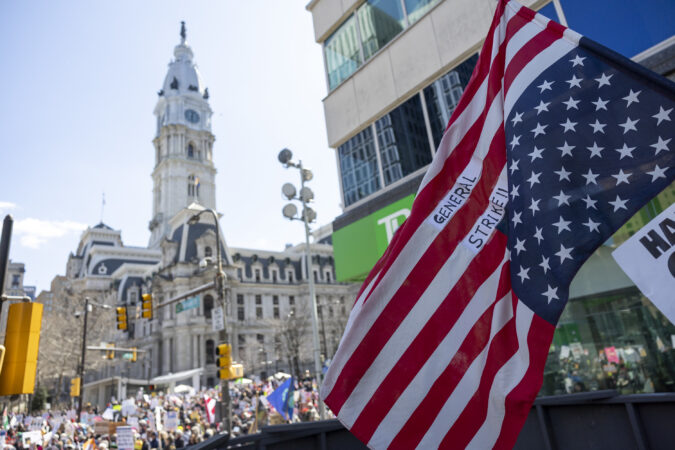
    Prayers to keep service members safe are powerful, but what is also needed are tens of thousands of people across the country to take to the streets and pray with their feet, and say no to war and no to authoritarian rule. That’s what we did on Saturday at the “No Kings” march. Wars don’t decide who wins; they decide who’s left. The loss of life is final.

    Peter Tobia, Philadelphia

    The writer is a former visual journalist at The Inquirer.

    Join the conversation: Send letters to letters@inquirer.com. Limit length to 150 words and include home address and day and evening phone number. Letters run in The Inquirer six days a week on the editorial pages and online.

  • Israeli police prevent Catholic leaders from celebrating Palm Sunday Mass at Jerusalem church

    TEL AVIV, Israel — The Israeli police prevented Catholic leaders from entering the Church of the Holy Sepulchre to celebrate Mass on the Christian holiday of Palm Sunday for the first time in centuries, the Latin Patriarchate said Sunday.

    Jerusalem’s major holy sites are closed because of the ongoing Iran war, including the church, as the city has come under frequent fire from Iranian missiles.

    The Catholic Church called the police decision “a manifestly unreasonable and grossly disproportionate measure.” It prevented two of the church’s top religious leaders, including Cardinal Pierbattista Pizzaballa and the head of the Custos in the Holy Land, from celebrating Palm Sunday at the place where Christians believe Jesus was crucified.

    Palm Sunday commemorates Jesus’ triumphant entry into Jerusalem and launches the Holy Week commemorations for Christians who follow the Latin calendar, which culminates in Easter next Sunday.

    The Israeli police said it had notified the Catholic Church on Saturday that no Mass could take place on Palm Sunday because of safety considerations, the lack of access for emergency vehicles in narrow alleys of the Old City, and lack of adequate shelter.

    However, the Latin Patriarchate said the Church of the Holy Sepulchre has been hosting Masses that aren’t open to the public since the Iran war began on Feb. 28, and it was unclear why Sunday’s Mass and access by the two priests was any different.

    “It’s a very, very sacred day for Christians and in our opinion there was no justification for such a decision or such an action,” said Farid Jubran, the spokesperson for the Latin Patriarchate of Jerusalem.

    Jubran said that the church had requested permission from the police for a few religious leaders to enter the church for a private Mass on Sunday — not one that was open to the public. The Patriarchate said that the decision impeded freedom of worship and the status quo in Jerusalem.

    The traditional Palm Sunday procession normally sees tens of thousands of Christians from around the world walk from the Mount of Olives down the narrow, hilly streets toward the Old City, waving palm fronds and singing.

    The Patriarchate canceled the traditional processional last week because of safety concerns, and has held Masses limited to fewer than 50 worshipers in compliance with the Israeli military’s guidelines for civilians.

    Pizzaballa celebrated Mass in the nearby St. Savior’s Monastery, a soaring marble church which is located next to an underground music school that the Israeli military has deemed a safe shelter space. Later on Sunday, Pizzaballa held a prayer for peace at the Dominus Flevit Shrine on the Mount of Olives, but kept his homily concentrated on Jesus and didn’t mention the morning’s incident.

    In Rome, Pope Leo XIV said Sunday that God doesn’t listen to the prayers of those who make war or cite God to justify their violence, as he prayed especially for Christians in the Middle East during a Palm Sunday Mass in St. Peter’s Square.

    With the U.S.-Israeli war on Iran entering its second month and Russia’s ongoing campaign in Ukraine, Leo dedicated his Palm Sunday homily to his insistence that God is the “king of peace” who rejects violence.

    “Brothers and sisters, this is our God: Jesus, King of Peace, who rejects war, whom no one can use to justify war,” Leo said. “He does not listen to the prayers of those who wage war, but rejects them, saying: ‘Even though you make many prayers, I will not listen: Your hands are full of blood.’”

    Leaders on all sides of the Iran war have used religion to justify their actions. U.S. officials, especially Defense Secretary Pete Hegseth, have invoked their Christian faith to cast the war as a Christian nation trying to vanquish its foes with military might.

    Russia’s Orthodox Church, too, has justified Russia’s invasion of Ukraine as a “holy war” against a Western world it considers has fallen into evil.

    In a special blessing at the end of Mass, Leo said he was praying especially for Christians in the Middle East who are “suffering the consequences of an atrocious conflict. In many cases, they cannot live fully the rites of these holy days.”

    The Vatican spokesperson didn’t immediately respond when asked to comment on the Jerusalem incident.

    Italy condemns decision

    Italy formally protested the incident in Jerusalem to Israeli authorities. Premier Giorgia Meloni said that the police action “constitutes an offense not only against believers but against every community that recognizes religious freedom.”

    “The Church of the Holy Sepulchre in Jerusalem is a sacred site of Christianity, and as such must be preserved and protected for the celebration of sacred rites,” Meloni said. “Preventing the Patriarch of Jerusalem and the Custos of the Holy Land from entering, especially on a solemnity central to the faith such as Palm Sunday, constitutes an offense not only against believers but against every community that recognizes religious freedom.”

    Meloni’s conservative government tried to keep a balanced position with Israel during the war in Gaza, supporting Israel’s right to defense but condemning the toll on Palestinians.

    The Italian leader has also said that Italy won’t participate in the Iran war, while affirming that the Islamic Republic can’t be allowed to possess nuclear weapons.

    Foreign Minister Antonio Tajani instructed Italy’s ambassador to Israel to convey the protest “and to reaffirm Italy’s commitment to protecting religious freedom at all times and under all circumstances.”

    In addition, Tajani summoned the Israeli ambassador to Italy for talks on Monday at the Italian Foreign Ministry to seek clarification about the decision.

    Israeli leader explains closure

    Israeli Prime Minister Benjamin Netanyahu said on Sunday evening that there was no “malicious intent” and that the cardinal was prevented from accessing the church because of safety concerns, but that Israel would try to partially open the Church of the Holy Sepulchre in the coming days.

    “Given the holiness of the week leading up to Easter for the world’s Christians, Israel’s security arms are putting together a plan to enable church leaders to worship at the holy site in the coming days,” Netanyahu wrote on X.

    The Western Wall, the holiest site where Jews can pray, is also mostly closed because of safety issues, but authorities are letting up to 50 people at a time pray in an enclosed area adjacent to the plaza.

    Smaller churches, synagogues, and mosques are open in Jerusalem’s Old City if they are located within a certain distance of a bomb shelter deemed acceptable by Israel’s military and if gatherings are kept under 50 people.

  • Horoscopes: Sunday, March 29, 2026

    ARIES (March 21-April 19). Life awakens a love that was already inside you. You might be tempted to give other people and circumstances the credit, but it’s your perception and reaction that does much of the work. Love was always in you, and it always will be.

    TAURUS (April 20-May 20). Your instructions weren’t written on stone tablets. They are not meant to last thousands of years. In fact, if a better method is invented tomorrow, everyone will switch to that. So stay flexible, open-minded and discerning. Keep refining.

    GEMINI (May 21-June 21). Friendship should not require a big performance from you. Choose friends who inspire a calmness in you and make you feel accepted for however you really are. After time together, you should feel fortified, not on edge or drained.

    CANCER (June 22-July 22). Your thoughts need peace, quiet and room to stretch. Protect your space. Interruptions are more costly than they seem. To honor your process, take measures to prevent interruptions (especially from your phone) before you even begin your work.

    LEO (July 23-Aug. 22). The kitten and the lion do the same moves to different effect. When the kitten prowls, pounces and swipes, no one runs. Today, there’s something so nice about playing the part in a small, ineffectual way. It’s all for fun.

    VIRGO (Aug. 23-Sept. 22). To really serve someone well, you’ll find out the person’s preferences and give full attention to meeting their needs. This kind of detailed work is a rare gift to offer, so don’t be surprised if it makes an impression far beyond what you were aiming for.

    LIBRA (Sept. 23-Oct. 23). Many people are thinking of their own scene without looking at how it affects those they interact with. But you’re considering relationships from every angle, and because of this, you’ll understand the opportunities and treasures on offer.

    SCORPIO (Oct. 24-Nov. 21). The direct route is shorter today — too short, in fact. It will get boring fast. There are lovelier ways to go where you’re going — ways you’ll want to take time and again. A mission of discovery will be worth the experimental wandering.

    SAGITTARIUS (Nov. 22-Dec. 21). Cupid’s arrow isn’t just for Valentine’s Day. You’ll be struck in some small way. Perhaps this does not pertain to romantic love, but rather to a fascination, such as a project or goal that is so seemingly perfect for you that it magnetizes your heart.

    CAPRICORN (Dec. 22-Jan. 19). The right answers seem obvious to you, and there’s no time to waste. It’s a day for strong decisions. You can trust yourself. When you get right to the point, you make other people’s lives easier, too.

    AQUARIUS (Jan. 20-Feb. 18). When people say things they don’t mean and gloss over or neglect to mention the truth, that’s just communication as usual. But so is reading between the lines. Today’s discourse will be layered and deeply understood.

    PISCES (Feb. 19-March 20). The problem with selfishness isn’t that it’s inherently bad, but that it makes the world smaller to keep attention so close to the source. Today, you’ll teach through your generosity, which has you walking in a big, colorful world and inspiring others to join you.

    TODAY’S BIRTHDAY (March 29). Welcome to your Year of Yes, when one “yes” leads to another until your calendar looks like the life you hoped for. Sometimes you’re giving the go-ahead, and other times you’re daring to move forward, agreeing to teachers, offers and adventures. More highlights: A collaboration turns profitable. A relationship deepens through shared plans and laughter on the road. A purchase that once felt out of reach becomes practical. Leo and Gemini adore you. Your lucky numbers are: 4, 22, 31, 9 and 40.

  • Dear Abby |Stress and emotions set best friends against each other

    DEAR ABBY: I have fallen out with my best friend of 20 years, and I’m not sure how to proceed. A few years ago, she started a new job and became too busy for chats or to catch up. However, whenever we do manage to chat or catch up, she wades in with advice and suggestions about what I “need” to do to improve my situation.

    I’m recently separated from a marriage of 20 years, and I’m trying to keep things even for my two teenage children. I became increasingly frustrated by how inappropriate her suggestions were and eventually lost my temper. I told her to stop making suggestions as they weren’t helpful, and that she was too removed from my life. This was three months ago, and since then, she has ceased all contact and didn’t reply to my apology for losing my temper. She said no one has ever hurt her the way I hurt her.

    She has now emailed me asking to meet when she’s less busy, saying she’s still very hurt but she misses me. I miss her too, but at the same time, I don’t miss the stupid suggestions. She’s godmother to one of my children (she has had no contact with her since this happened, even missing her birthday). How should I handle this? I am very hurt at how she deserted me at a time when I needed people around me while going through a painful separation.

    — DESERTED IN DUBLIN, IRELAND

    DEAR DESERTED: Emotions are raw and folks are rarely at their best when going through a divorce. At the same time, your friend appears to be stressed because of her work schedule. Since your separation, you are looking for more emotional support and contact than she is now able to give you. She, too, was hurt when you — with no filter — rejected her attempts to be helpful. You did the right thing to apologize. Be glad there is a thaw on the horizon because, with time, things may improve if you can tactfully communicate what you need and do not need from her.

    ** ** **

    DEAR ABBY: We just moved back to Southern California and into a gated community. My neighbor’s property is higher than mine, and she has a spiky, thorny hedge that’s growing over into my property and staining the side of my house. I went over and introduced myself, wanting to discuss the issue. My neighbor’s reply was, “That’s YOUR hedge!” The next thing I know, she has a person trim it and throw all of the clippings into my backyard for me to clean up. How do I deal with a neighbor like this?

    — THORNY RELATIONSHIP

    DEAR THORNY: Contact the homeowner’s association and describe what has been going on. Your neighbor may be violating the covenants, conditions and restrictions (CC&Rs). (There may be fines for this.) It is important that you establish where your property line ends and hers begins. If the plant really is on your land, you may have the right to remove it entirely.

  • Actor James Tolkan of ‘Top Gun’ and ‘Back to the Future’ fame dies at 94

    Actor James Tolkan of ‘Top Gun’ and ‘Back to the Future’ fame dies at 94

    Actor James Tolkan, known for his roles as a cigar-chomping naval commander in Top Gun and a gruff high school administrator in Back to the Future, has died. He was 94.

    Mr. Tolkan died Thursday in Lake Placid, N.Y., where he lived, his booking agent, John Alcantar, said Saturday. A brief obituary published on the “Back to the Future” website said Mr. Tolkan died “peacefully,” but no cause of death was given.

    In Back to the Future, Mr. Tolkan portrayed the bow tie-wearing vice principal Gerald Strickland, who eyeballed students for trouble in the halls of the fictitious Hill Valley High School — in particular Marty McFly, played by Michael J. Fox.

    “You got a real attitude problem, McFly,” Mr. Tolkan’s character says in the 1985 film. “You’re a slacker. You remind me of your father when he went here. He was a slacker, too.”

    Mr. Tolkan also appeared in Top Gun as commanding officer Tom “Stinger” Jardian. Near the end of the film, when Jardian asks Tom Cruise’s character, Capt. Pete “Maverick” Mitchell, about his choice for future duty, Mitchell replies that he wants to be a Top Gun instructor.

    “God help us,” Mr. Tolkan’s character replies, laughing.

    Born in Calumet, Mich., Mr. Tolkan graduated from high school in Arizona and served in the Navy during the Korean War. He eventually made his way to New York, where he spent a quarter century acting in theater roles. He was a member of the original ensemble cast of Glengarry Glen Ross.

    Mr. Tolkan is survived by his wife of 54 years, Parmelee Welles, who said in a statement that her husband also was an avid art collector and adored animals.

  • No Kings rallies draw crowds across U.S. Springsteen headlines Minnesota demonstration

    No Kings rallies draw crowds across U.S. Springsteen headlines Minnesota demonstration

    ST. PAUL, Minn. — Crowds of people protested Saturday against the war in Iran and President Donald Trump’s actions, in No Kings rallies across the U.S. and in Europe. Minnesota took center stage, in what organizers expected to be mass demonstrations involving millions of people.

    Thousands of people stood shoulder-to-shoulder on the Minnesota Capitol lawn and surrounding streets in St. Paul. Some held upside down U.S. flags, historically a sign of distress.

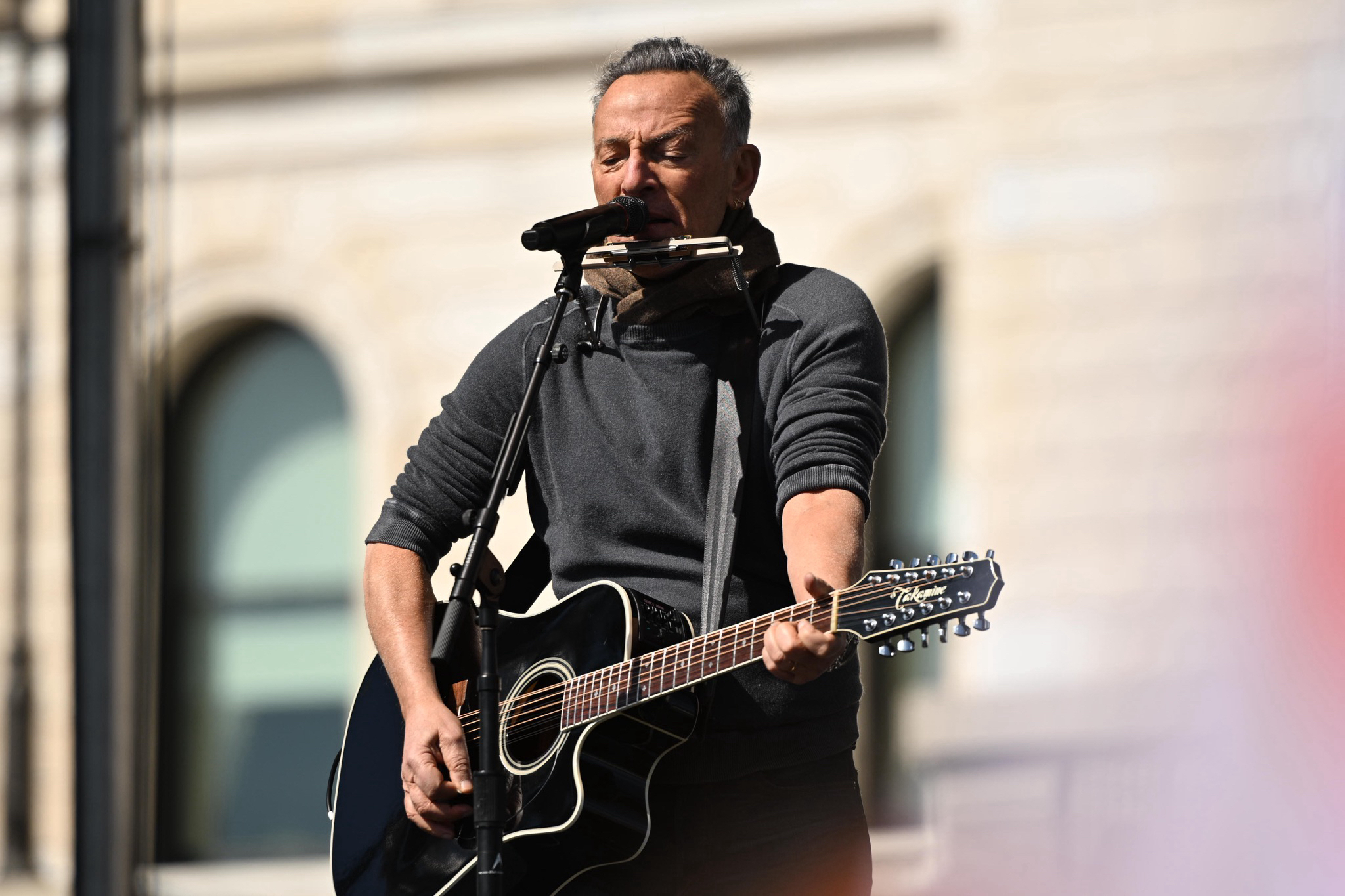
    The event’s headliner was Bruce Springsteen, who performed “Streets of Minneapolis.” He wrote the song in response to the fatal shootings of Renee Good and Alex Pretti by federal agents and in tribute to the thousands of Minnesotans who took to the streets over the winter to protest the Trump administration’s aggressive immigration enforcement.

    Before he launched into the song, Springsteen lamented Good and Pretti’s deaths but said people’s continued pushback against U.S. Customs and Immigration Enforcement has given the rest of the country hope.

    Bruce Springsteen performs during the No Kings protest Saturday in St. Paul, Minn.

    “Your strength and your commitment told us that this was still America,” he said. “And this reactionary nightmare, and these invasions of American cities, will not stand.”

    People rallied from New York City, with almost 8.5 million residents in a solidly blue state, to Driggs, a town of fewer than 2,000 people in eastern Idaho, a state Trump carried with 66% of the vote in 2024.

    Biggest crowds yet expected

    U.S. organizers have estimated that the first two rounds of No Kings rallies drew more than 5 million people in June and 7 million in October. This week they told reporters they expected 9 million participants Saturday, though it was too early to tell whether those expectations were met.

    Organizers said more than 3,100 events — 500 more than in October — were registered, in all 50 states.

    In Topeka, Kansas, a rally outside the Statehouse had people impersonating a frog king and Trump as a baby. Wendy Wyatt drove with “Cats Against Trump” sign from Lawrence, 20 miles to the east, and planned to drive back to her hometown for a later rally there.

    Wyatt said “there are so many things” about the Trump administration that upset her, but “this is very hopeful to me.”

    GOP officials dismissive of protests

    White House spokesperson Abigail Jackson characterized them as the product of “leftist funding networks” with little real public support.

    The “only people who care about these Trump Derangement Therapy Sessions are the reporters who are paid to cover them,” Jackson said in a statement.

    The National Republican Congressional Committee was also sharply critical.

    “These Hate America Rallies are where the far-left’s most violent, deranged fantasies get a microphone,” NRCC spokesperson Maureen O’Toole said.

    Protesters have a long list of causes

    The Trump administration’s aggressive immigration enforcement, particularly in Minnesota, were just one item on a long list of protester grievances that also included the war in Iran and the rollback of transgender rights.

    In Washington, hundreds marched past the Lincoln Memorial and into the National Mall, holding signs that read “Put down the crown, clown” and “Regime change begins at home.” Demonstrators rang bells, played drums and chanted “No kings.”

    Bill Jarcho was there from Seattle, joined by six people dressed as insects wearing tactical vests that said, “LICE,” spoofing ICE as part of what he called a “mock and awe” tour.

    “What we provide is mockery to the king,” Jarcho said. “It’s about taking authoritarianism and making fun of it, which they hate.”

    About 40,000 people marched in a No Kings event in San Diego, police there said.

    In New York, Donna Lieberman, executive director of the New York Civil Liberties Union, said during a news conference that Trump and his supporters want people to be afraid to protest.

    “They want us to be afraid that there’s nothing we can do to stop them,” she said. ”But you know what? They are wrong — dead wrong.”

    But organizers said two-thirds of the RSVPs for the rallies came from outside of major urban centers. That included communities in conservative-leaning states like Idaho, Wyoming, Montana, Utah, South Dakota, and Louisiana, as well in competitive suburban areas of Pennsylvania, Georgia, and Arizona.

    Main event is at the Minnesota Capitol

    Organizers designated the rally there as the national flagship event, in recognition of how the state where federal agents fatally shot two people who were monitoring Trump’s immigration crackdown.

    Springsteen’s Land of Hope & Dreams American Tour has a No Kings theme and kicks off Tuesday in Minneapolis.

    Before the rocker known as “the Boss” took the stage, organizers played a video from Robert DeNiro. The actor said he wakes up every morning depressed because of Trump but was happier Saturday because millions of people were protesting. He also congratulated Minnesota residents for running ICE out.

    An event on the Minnesota Capitol grounds in June drew an estimated 80,000 people and Minnesota organizers expected 100,000 on Saturday.

    The bill also included singer Joan Baez, actor Jane Fonda, Sen. Bernie Sanders, and a long list of other activists, labor leaders, and elected officials.

    Protesters held up a massive sign on the Capitol steps that read, “We had whistles, they had guns. The revolution starts in Minneapolis.”

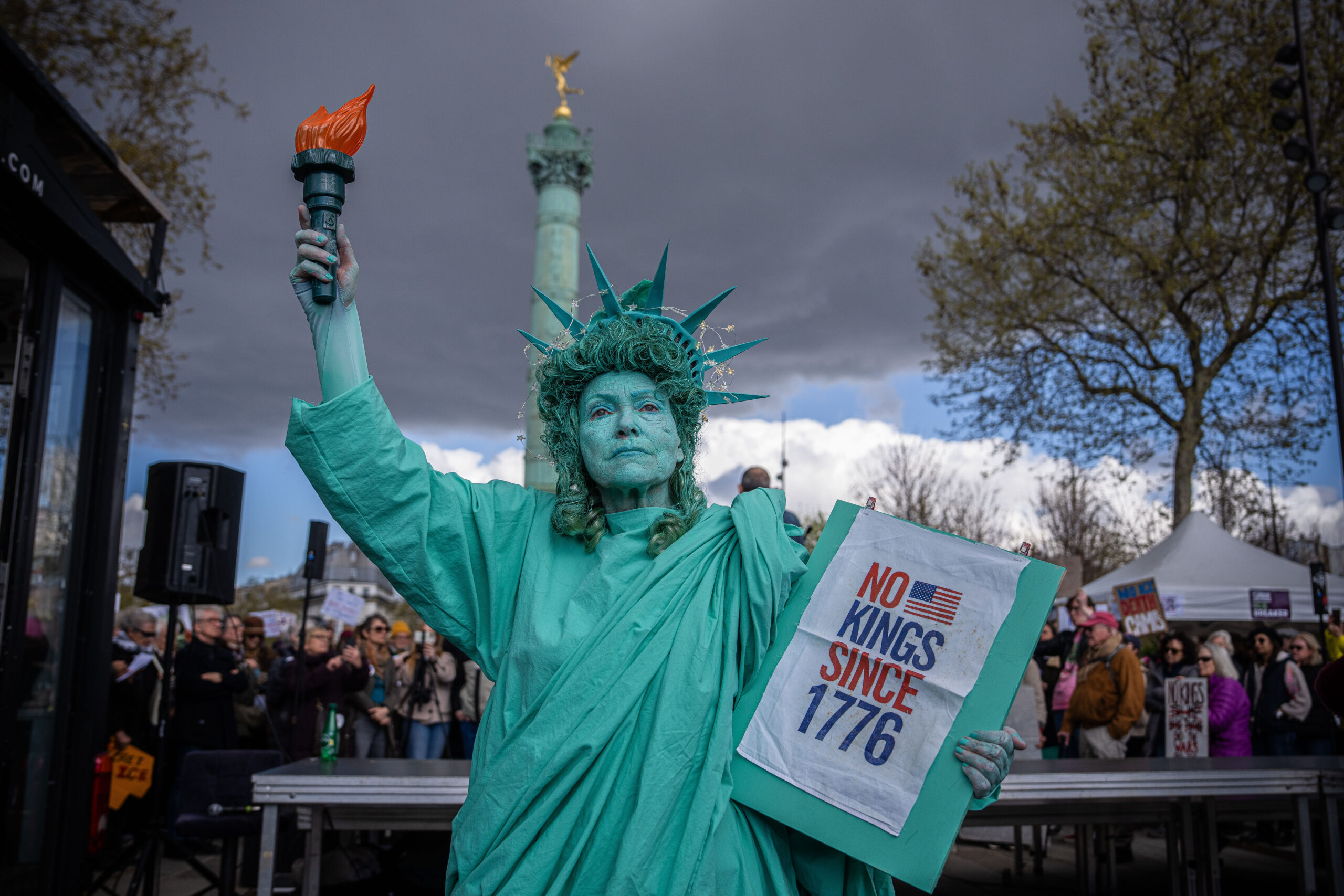
    A woman dressed as the Statue of Liberty takes part in the “No Kings” protest in Paris on Saturday.

    Rallies planned outside the U.S.

    Rallies are also planned in more than a dozen other countries, from Europe to Latin America to Australia, Ezra Levin, a co-executive director of Indivisible, a group spearheading the events, said in an interview. Countries with constitutional monarchies call the protests “No Tyrants,” he said.

    In Rome, thousands of people marched with defiant chants aimed at Premier Giorgia Meloni, whose conservative government saw its referendum for streamlining Italy’s judiciary badly fail earlier this week amid criticism that it was a threat to the courts’ independence. Protesters waved banners protesting the Israeli and U.S. attacks on Iran, calling for “A world free from wars.”

    In London, people protesting the war in Iran held banners that said, “Stop the far right” and “Stand up to Racism.”

    And on Saturday morning in Paris, several hundred people, mostly Americans living in France, along with French labor unions and human rights organizations, gathered at the Bastille.

    “I protest all of Trump’s illegal, immoral, reckless, and feckless, endless wars,” Ada Shen, the Paris No Kings organizer, said.

  • Kash Patel’s push against Democratic lawmaker raises concerns within FBI

    Kash Patel’s push against Democratic lawmaker raises concerns within FBI

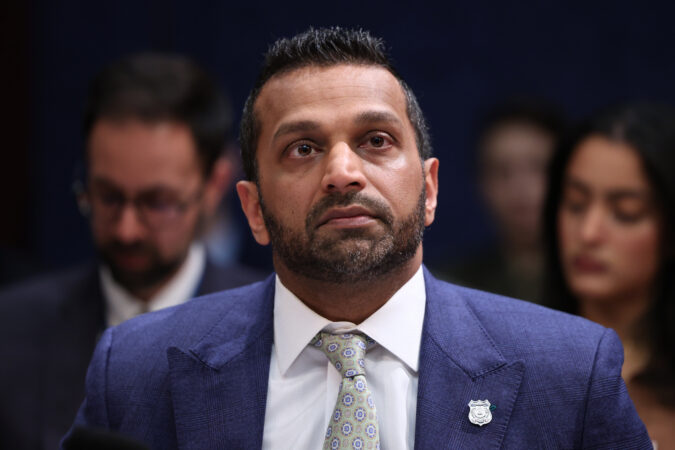
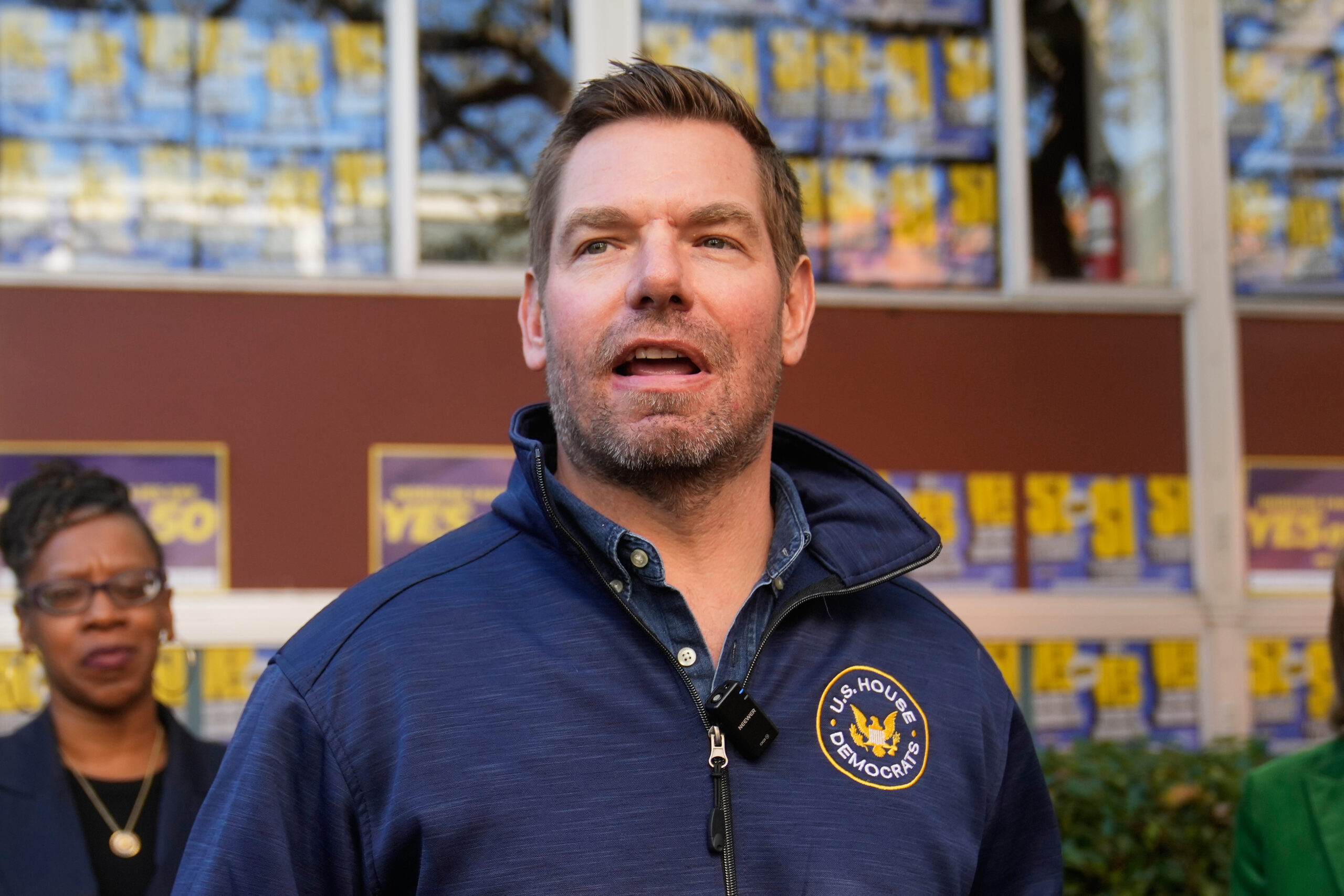
    FBI Director Kash Patel is pressing to release a decade-old investigative file involving Rep. Eric Swalwell (D., Calif.) and a suspected Chinese intelligence operative, recently dispatching agents in the bureau’s San Francisco office to quickly redact the files before they are released publicly despite no evidence of wrongdoing by Swalwell, according to three people familiar with the effort.

    The potential release is part of the Trump administration’s aggressive push to investigate Swalwell, a vocal critic of President Donald Trump and a leading Democratic candidate for California governor, according to the people familiar with the effort. It is highly unusual for the FBI to release case files tied to a probe that did not result in criminal charges.

    As FBI director, Patel has focused on trying to bring a criminal case against the outspoken Democrat, reassigning multiple agents in San Francisco to work on the matter, the current and former officials said. FBI leaders have even discussed sending agents to China to talk to the suspected intelligence operative, believing she could have damaging information about Swalwell, according to two of the people familiar with the investigation. The people familiar with the matter spoke on the condition of anonymity to discuss an investigation that has not been made public.

    The Chinese woman at issue is Christine Fang, also known as Fang Fang, who reportedly courted Swalwell and other California politicians in the United States from 2011 to 2015. She helped with fundraising for Swalwell’s 2014 reelection campaign and even helped place an intern in his congressional office. When federal agents conveyed their concerns about Fang to Swalwell around 2015, he reportedly cut off ties with her and said he helped investigators.

    Swalwell was not accused of any wrongdoing when the FBI investigated his relationship with Fang a decade ago. In 2023, the Republican-led House Ethics Committee closed a two-year investigation into the congressman, deciding to “take no further action.”

    Despite that, FBI leaders have recently suggested in internal discussions that the government could try to arrange for Fang to get a U.S. visa in exchange for speaking with FBI agents about the Democrat, according to the three people with knowledge of Patel’s efforts. It would be highly unorthodox to grant a visa to a person suspected of being an intelligence agent for a foreign superpower.

    An FBI spokesperson disputed any notion of improper motives. “The contentions in this story are incorrect,” the spokesperson said. “This FBI, being the most transparent in history, prepares documents for numerous different reasons, including for release to different agencies and departments to further review investigations that may have been opened under previous administrations.”

    The push to publicly release the investigative files, the people interviewed said, suggests that the FBI has struggled to so far build a criminal case against Swalwell. Even if there is no incriminating evidence in the files, an extensive case file could contain revealing and personal details about Swalwell and his campaign operations.

    The lengths that Patel’s circle is going to in the bid to pursue a political foe of the president has raised alarms within the bureau, where some officials fear that releasing the files — even with redactions — could compromise law enforcement sources and investigatory methods, making it harder for the FBI to gain trust with potential witnesses.

    They also said they feared the repercussions of sending agents to the territory of an adversarial nation to dig up information on a sitting congressman. Such an interview, legal experts said, would be impossible without Chinese interference, and Fang would be considered an unreliable witness.

    “Most troubling about this is that we are now literally at war. We also face threats against the homeland,” Swalwell said in a statement to the Washington Post. “Kash Patel should be spending every moment trying to keep us safe, not scoring political points. A lot of people have bent the knee to this administration. But I will not, and neither will the people of California.”

    Rep. Eric Swalwell (D., Calif.) speaks to reporters after a campaign event on Nov. 3, 2025, in San Francisco.

    Swalwell, who unsuccessfully sought the Democratic presidential nomination in 2020, has been an unusually aggressive and colorful critic of the president, frequently criticizing the president in media interviews and on the dais as a member of the House Judiciary Committee. Swalwell also was a House “manager” — essentially, a prosecutor — in Trump’s 2021 impeachment for his role in the Jan. 6, 2021, attack on the U.S. Capitol.

    Swalwell’s district in Northern California includes a large Chinese American population. Republicans and media personalities frequently criticize Swalwell for his ties to Fang and the Chinese community, suggesting that he is improperly working with them.

    But FBI agents typically need a specific investigative reason to reopen a closed investigation. The people familiar with the probe said it is unclear how or why the FBI reopened its examination of Swalwell.

    Internal Justice Department policy has long said that law enforcement should refrain from taking any public investigatory steps against a political candidate in the 60 days before an election, to prevent even the appearance of the department using its power to sway the vote.

    The Justice Department is not legally bound to follow this rule, however, and it is unclear whether it would do so in Swalwell’s case. The California gubernatorial primary is June 2.

    In California’s primaries, the top two vote-getters, regardless of party affiliation, move on to the November general election. Two Republicans currently lead the governor’s race in recent polls, despite the state’s liberal leanings, as a large number of Democrats — led by Swalwell — split the vote. Democratic leaders hope their voters ultimately coalesce around one or two candidates, but the outcome remains uncertain.

    The investigatory files are likely to include numerous interviews with Swalwell, his aides, friends and others about the congressman’s interactions with Fang, details about his campaign and more.

    Under a long-standing legal principle, agencies do not release potentially damaging material about people against whom they were unable to build a case strong enough to take to court.

    The department recently released the investigatory files in the case of sex trafficker Jeffrey Epstein, who had been indicted on federal sex trafficking charges but had not yet faced trial before killing himself. But in that case, the department’s hand was forced by political pressure and ultimately an act of Congress.

    Republicans and Democrats criticized the Justice Department’s handling of the Epstein release, saying the rollout was disorganized with few effective systems in place to ensure that appropriate redactions were made.

    Since Trump took office, his administration has mounted an aggressive campaign to use federal law enforcement agencies to pursue his political adversaries.

    The Justice Department filed criminal cases against former FBI Director James B. Comey and New York Attorney General Letitia James, for example. A judge threw out both indictments in November, ruling that Lindsey Halligan, the prosecutor overseeing both cases, had been unlawfully appointed.

    Federal Housing Finance Agency Director Bill Pulte — a staunch Trump ally — referred Swalwell to the Justice Department for criminal prosecution over mortgage fraud allegations, but the department never indicted Swalwell. Swalwell sued Pulte, saying he unlawfully looked used his position to look through private mortgage fraud documents, but he ultimately dropped the lawsuit.

    The department is also investigating Federal Reserve Chair Jerome H. Powell over the cost of the Fed’s recent building renovations. A federal prosecutor acknowledged in a closed-door hearing this month that the department did not have evidence of wrongdoing, the Post has reported.

    Even against this backdrop, a proposal to release extensive files, send agents to China to interview a suspected intelligence operative and offer her a U.S. visa in exchange for revelations about a U.S. congressman would be extraordinary.

    Patel, who before becoming FBI director was a conservative firebrand who attacked the “deep state” and vowed to “come after” Trump’s adversaries, has long been a critic of Swalwell. In his 2023 book Government Gangsters, Patel published a list of 60 names in an appendix that has been widely viewed by Patel’s critics as a sort of enemies list. It includes Trump foes, Democrats, and FBI agents who were involved in investigations into the president.

    Swalwell was among those named by Patel, who has said that his critics are mischaracterizing the appendix by calling it an enemies list.

    At a congressional hearing last year, Swalwell asked Patel if he would recuse himself from any investigation of people on the list, and Patel said no.