Tag: no-latest

  • Ally Sentnor’s goal is enough for the USWNT to edge Canada, 1-0, in the SheBelieves Cup

    Ally Sentnor’s goal is enough for the USWNT to edge Canada, 1-0, in the SheBelieves Cup

    COLUMBUS, Ohio — Ally Sentnor scored in the 55th minute and the United States beat Canada 1-0 on Wednesday in the SheBelieves Cup tournament, the Americans’ seventh straight shutout.

    Sentnor scored her seventh international goal off a corner from Rose Lavelle, gathering the ball on a bounce before punching it past two defenders and Canada goalkeeper Kailen Sheridan.

    The U.S. hasn’t allowed a goal since a 3-1 win over Portugal last October, a stretch of 714 minutes.

    “Honestly, our goal was just to win the game,” Sentnor said. “I think going into a rivalry game, we knew what was going to happen. It was going to be on the line and Canada gave us an incredible performance, and we really had to work for this win.”

    United States midfielder Sam Coffey (left) celebrates a goal by teammate Ally Senator in the second half of a SheBelieves Cup soccer match against Canada on Wednesday.

    The United States sat atop the SheBelieves table with two wins, ahead of Canada and Colombia with one each. The Colombians defeated Argentina 1-0 in the early match Wednesday at ScottsMiracle-Gro Stadium.

    The United States is 55-4-9 against Canada since their first meeting in 1986. The U.S. won the last meeting, 3-0, in July.

    The Canadians’ last win in the series came at the Tokyo Olympics in 2021. Jessie Fleming converted a penalty in a 1-0 semifinal victory. Canada went on to win the gold medal.

    U.S. coach Emma Hayes included Trinity Rodman in the starting lineup despite Rodman taking a hit in the back late in Sunday’s 2-0 SheBelieves victory over Argentina in Nashville. Rodman struggled with a nagging back injury last year.

    Canada, which defeated Colombia 4-1 in the tournament opener, was without captain Fleming because of an illness.

    The game was scoreless after the first half despite the United States dominating possession by nearly 70%.

    Sentnor, who plays professionally for the Kansas City Current, broke the stalemate with her third goal of the year. The 22-year-old was named U.S. Soccer’s young player of the year in 2024.

    Canada coach Casey Stoney felt her team showed “huge progress” from the last time the Canadians faced the United States, but was disappointed about conceding on a set piece.

    “I think we were competitive throughout the game. I think we kept our distances better, we had good discipline,” Stoney said. “I think we had moments in their box where we can have a little bit more composure.”

    Colombia will play the United States on Saturday in the tournament finale in Harrison, New Jersey. Canada plays Argentina in the early game.

    It is the 11th annual SheBelieves Cup hosted by the United States. Canada was making its fourth appearance in the tournament.

  • Quentin Grimes’ late free throws helps the Sixers beat the Jazz, 106-102

    Quentin Grimes’ late free throws helps the Sixers beat the Jazz, 106-102

    Quentin Grimes hit two tiebreaking free throws with 16.4 seconds remaining, Tyrese Maxey scored 25 points and the short-handed 76ers beat the Utah Jazz 106-102 on Wednesday night.

    Grimes finished with 16 points and Jabari Walker had 22 points for the Sixers, who were without Joel Embiid, VJ Edgecombe, and suspended Paul George.

    Keyonte George scored 30 points for the Jazz, who have lost seven in a row.

    Philadelphia, which entered in sixth place in the Eastern Conference playoff race, trailed 100-94 with 4 minutes, 51 seconds left after George hit a three. But Utah missed its next six field goals, and Philadelphia tied it at 100 on Adem Bona’s follow dunk with 1:50 left.

    Isaiah Collier’s layup 46 seconds later put the Jazz ahead by two points, but Grimes tied it on a drive with 46.8 seconds remaining. After George misfired on a long-range shot for Utah, Grimes converted both free throws after being fouled. Utah coach Will Hardy did not call timeout, and a wide-open look from long distance by Kyle Filipowski was off.

    Sixers’ Dom Barlow (left) attempts a layup past Utah Jazz’s Kyle Filipowski during the first half of Wednesday’s game.

    Embiid missed his third straight game with a strained right oblique. Edgecombe suffered a lower back contusion in Tuesday’s 131-91 loss to the Spurs.

    Jazz rookie Ace Bailey scored 12 points.

    Jaren Jackson Jr. (left knee injury recovery), Walker Kessler (left shoulder injury recovery), Lauri Markkanen (right hip impingement), Jusuf Nurkic (nose injury recovery) and Vince Williams Jr. (left knee injury management) were out for Utah.

    The Sixers travel to Atlanta on Saturday (6 p.m., NBCSP) to face the Hawks to begin a two-game road trip. After facing the Hawks, the Sixers will play in Cleveland on Monday (7 p.m., NBCSP).

  • House committee votes to subpoena Attorney General Bondi to answer questions over the Epstein files

    House committee votes to subpoena Attorney General Bondi to answer questions over the Epstein files

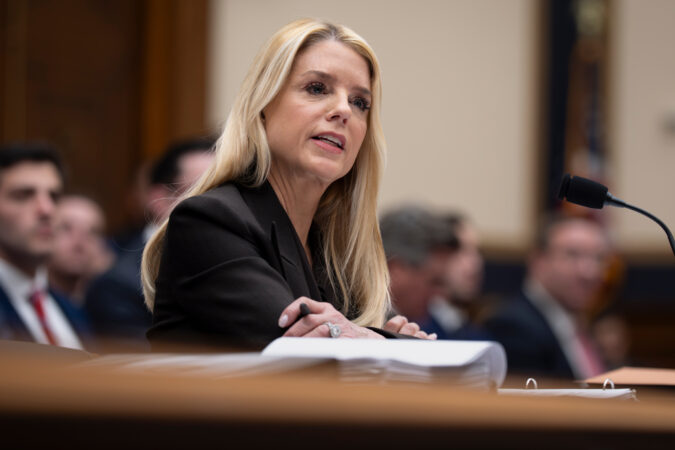
    WASHINGTON — The House Oversight Committee voted Wednesday to subpoena Attorney General Pam Bondi to answer questions over the Justice Department’s handling of files related to the Jeffrey Epstein sex trafficking investigation.

    Five Republicans joined Democrats to support the subpoena proposed by GOP Rep. Nancy Mace of South Carolina in a sign of continued frustration with the department’s review and release of a tranche of documents regarding the disgraced financier.

    The Justice Department had no immediate comment on the subpoena.

    Former President Bill Clinton and his wife, former Secretary of State Hillary Clinton, recently sat with lawmakers on the committee for their own depositions over the former Democratic president’s connections to Epstein from more than two decades ago.

  • The sea is higher than we thought and millions more are at risk, study finds

    The sea is higher than we thought and millions more are at risk, study finds

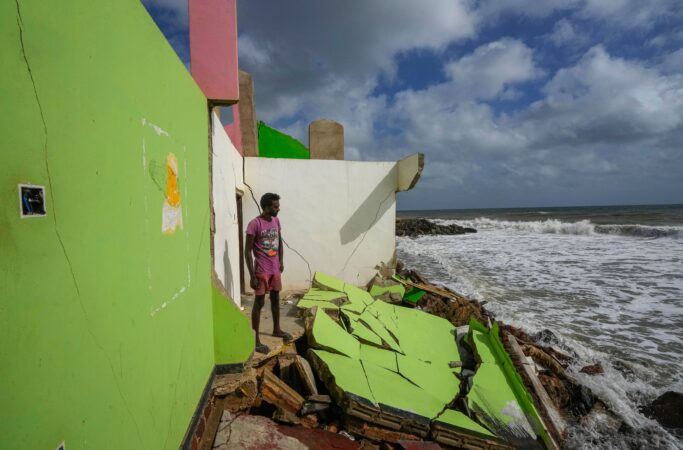
    Climate change’s rising seas may threaten tens of millions more people than scientists and government planners originally thought because of mistaken research assumptions on how high coastal waters already are, a new study said.

    Researchers studied hundreds of scientific studies and hazard assessments, calculating that about 90% of them underestimated baseline coastal water heights by an average of 1 foot, according to Wednesday’s study in the journal Nature. The problem arises far more frequently in the Global South, the Pacific, and Southeast Asia, and less in Europe and along the Atlantic coasts.

    The cause is a mismatch between the way sea and land altitudes are measured, said study coauthor Philip Minderhoud, a hydrogeology professor at Wageningen University and Research in the Netherlands. And he attributed that to a “methodological blind spot” between the different ways those two things are measured.

    Each way measures its own areas properly, he said. But where sea meets land, there are a lot of factors that often do not get accounted for when satellites and land-based models are used. Studies that calculate sea level rise impact usually “do not look at the actual measured sea level, so they used this zero-meter” figure as a starting point, said lead author Katharina Seeger of the University of Padua in Italy. In some places in the Indo-Pacific, the figure is close to 1 meter, or about 3 feet, Minderhoud said.

    One simple way to understand that is that many studies assume sea levels without waves or currents, when the reality at the water’s edge is of oceans constantly roiled by wind, tides, currents, changing temperatures, and things like El Niño, Minderhoud and Seeger said.

    Adjusting to a more accurate coastal height baseline means that if seas rise by a little more than 3 feet — as some studies suggest will happen by the end of the century — waters could inundate up to 37% more land and threaten 77 million to 132 million more people, the study said.

    That would trigger problems in planning and paying for the impacts of a warming world.

    People at risk

    “You have a lot of people here for whom the risk of extreme flooding is much higher than people thought,” said Anders Levermann, a climate scientist at the Potsdam Institute for Climate Impacts Research in Germany, who was not part of the study. Southeast Asia, where the study finds the biggest discrepancy, has the most people already threatened by sea level rise, he said.

    Minderhoud pointed to island nations in that region as an area where the reality of discrepancy hits home.

    For 17-year-old climate activist Vepaiamele Trief, the projections are not abstract. On her island home in the South Pacific archipelago of Vanuatu, the shoreline has visibly retreated within her short lifetime, with beaches eroded, coastal trees uprooted, and some homes now barely 3 feet from the sea at high tide. On her grandmother’s island of Ambae, a coastal road from the airport to her village has been rerouted inland because of encroaching water. Graves have been submerged and entire ways of life feel under threat.

    “These studies, they aren’t just words on a paper. They aren’t just numbers. They’re people’s actual livelihoods,” she said. “Put yourself in the shoes of our coastal communities — their lives are going to be completely overturned because of sea level rise and climate change.”

    Paying attention to the starting point

    This new study is pretty much about what is the truth on the ground.

    Calculations that may be correct for the seas overall or for the land are not quite right at that key intersection point of water and land, Seeger and Minderhoud said. That is especially true in the Pacific.

    “To understand how much higher a piece of land is than the water, you need to know the land elevation and the water elevation. And what this paper says the vast majority of studies have done is to just assume that zero in your land elevation data set is the level of the water — when, in fact, it’s not,” said sea level rise expert Ben Strauss, CEO of Climate Central. His 2019 study was one of the few the new paper said got it right.

    “It’s just the baseline that you start from that people are getting wrong,” said Strauss, who was not part of the research.

    Maybe not so bad, some scientists say

    Other outside scientists said that Minderhoud and Seeger may be making too much of the problem.

    “I think they’re exaggerating the implications for impact studies a bit — the problem is actually well understood, albeit addressed in a way that could probably be improved,” said Gonéri Le Cozannet, a scientist at the French geological survey. Most local planners know their coastal issues and plan accordingly, Rutgers University sea level expert Robert Kopp said.

    That’s true in Vietnam, in the high-impact area, Minderhoud said. Officials there have an accurate sense of elevation, he said.

    The findings come as a new UNESCO report warns of major gaps in understanding how much carbon the ocean absorbs. That report said that models differ by 10% to 20% in estimating the size of that carbon sink, raising questions about the accuracy of global climate projections that rely on them.

    Together, the studies suggest governments may be planning for coastal and climate risks with an incomplete picture of how the ocean is changing.

    “When the ocean comes closer, it takes away more than just the land we used to enjoy,” said Thompson Natuoivi, a climate advocate for Save the Children Vanuatu.

    “Sea level rise is not just changing our coastline, it’s changing our lives. We are not talking about the future — we’re talking about the right now.”

  • Sprawling investigation finds decades of sexual abuse among Catholic priests in Rhode Island

    Sprawling investigation finds decades of sexual abuse among Catholic priests in Rhode Island

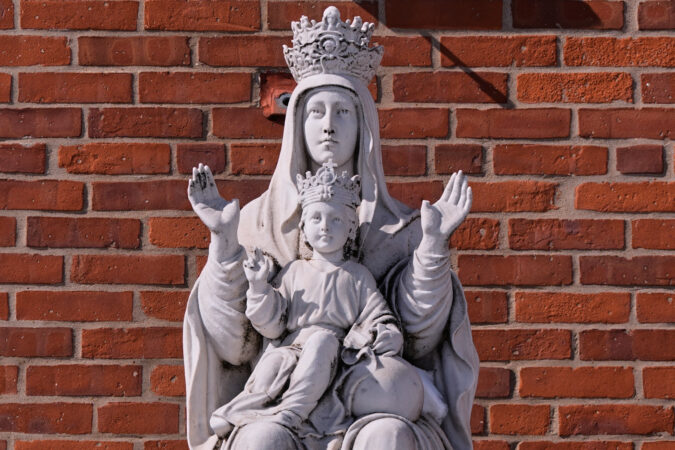
    PROVIDENCE, R.I. — Catholic priests in Rhode Island preyed on hundreds of children for decades, and were protected by bishops more concerned with the church’s reputation than the victims, according to a new report on clergy sexual abuse that echoes findings elsewhere.

    The report, released Wednesday by Attorney General Peter Neronha, follows a multiyear investigation into the Catholic Diocese of Providence, R.I.

    Neronha said the full scope of the priest abuse problem in Rhode Island — the smallest U.S. state but the one with the highest Catholic population per capita, at nearly 40% — had long remained elusive. He agreed with victims who say not enough has been done to address the problem long after it was exposed in the nearby Boston diocese in 2002.

    “Not until now has there been a comprehensive review of this painful chapter in our state’s history, with a view toward offering transparency, accountability, and systemic reforms that will, I hope, lessen the likelihood of future child sexual abuse, not just within the Diocese of Providence, but in our community as a whole,” Neronha wrote in the report.

    Neronha, who was raised Catholic, said he hopes the report will spur legal reforms to boost investigative powers and help victims seek justice.

    The investigation found that 75 Catholic clergy had molested more than 300 victims since 1950, but officials stressed that the number of victimized children and abusive priests is likely much higher.

    The diocese, in response, acknowledged the scourge of child sexual abuse — especially by clergy — but said the report reflects the church’s willingness to share internal records under a 2019 agreement with the state.

    “The report presents this 75-year history in ways that might lead the reader to conclude these issues are an ongoing diocesan problem or that these are new revelations. They are not,” the diocese said in a statement.

    3 priests charged in R.I. awaiting trial

    Church records show the diocese transferred accused priests to new assignments without fully investigating complaints or contacting law enforcement, a practice exposed in investigations in Boston, Philadelphia, and elsewhere.

    And, as in other cities, the Diocese of Providence opened a “spiritual retreat-style facility” in the early 1950s for accused priests to seek treatment. Later, when the abuse was deemed a mental health problem, priests were sent to more formal treatment centers.

    By the 1990s, accused priests were sometimes placed on sabbatical leave.

    For example, a priest named Robert Carpentier resigned after a victim came forward in 1992 to say that he had been sexually abused as a 13-year-old victim in the 1970s. Carpentier acknowledged the abuse, was sent to a treatment center, and later went on sabbatical at Boston College. He retired in 2006 and received support from the diocese until he died in 2012.

    Most accused priests, the report found, avoided accountability from both law enforcement and the diocese.

    Neronha’s office has charged four current and former priests with sexual abuse in connection with allegations stemming from 2020 to 2022. Three of them are still awaiting trial. The fourth priest died after being deemed incompetent to stand trial in 2022.

    Only 20 people — about a quarter of the clergy identified in the report — faced criminal charges, and just 14 were convicted. A dozen others were laicized or otherwise dismissed.

    Diocesan review board member among the accused

    One survivor described being groomed for more than a year before he was abused by the pastor of Immaculate Conception Church in Cranston in 1981. The survivor, who is not named in the report, said the late Msgr. John Allard showered him with attention. By ninth grade, he said, the sexual abuse began in the priest’s bedroom.

    “His comment to me was always, ‘You need a hug,’ and that’s something that I can hear him saying very clearly to this very day,” the survivor told officials in 2013.

    While a review board deemed the abuse credible, the Vatican — at the urging of then-Providence Bishop Thomas Tobin — let Allard retire rather than be defrocked.

    In at least one case, a member of the diocesan review board hearing abuse complaints was himself accused, the report says. The Rev. Francis Santilli stepped down after the complaint, but remained in active ministry even after other complaints surfaced in 2014 and 2021. He was not removed until 2022. A message left at a possible number for him on Wednesday was not immediately returned.

    Church, AG spar over degree of cooperation

    Neronha launched the investigation in 2019, a year after a Pennsylvania grand jury issued a landmark report that found more than 1,000 children had been abused by roughly 300 priests since the 1940s.

    However, Rhode Island law does not allow grand jury reports to become public — a hurdle that Neronha has long tried to change. Instead, he forged an agreement with the diocese to access its trove of records on clergy sexual abuse.

    The church turned over 70 years’ worth of material, including complaints from its secret archives, civil settlement records, treatment costs, and other documents. Yet Neronha called the diocese’s help limited at times.

    “It repeatedly refused my team’s requests for interviews of diocesan personnel responsible for overseeing the diocese’s investigations,” Neronha said in the report.

    The diocese, in its response Wednesday, pushed back on that view, saying the report would not have been possible without the church’s cooperation.

    “Any abuse of children is an abhorrent sin and a terrible crime,” the diocese said in its statement. “The very existence of the Attorney General’s report is the result of the Diocese of Providence’s unprecedented and voluntary agreement to extraordinary transparency. ”

  • ‘MAGA is Trump’: President fires back at right-wing mutiny over Iran

    ‘MAGA is Trump’: President fires back at right-wing mutiny over Iran

    As President Donald Trump directs military strikes on Iran, he is also fighting online attacks at home from some of the loudest voices in his MAGA political movement.

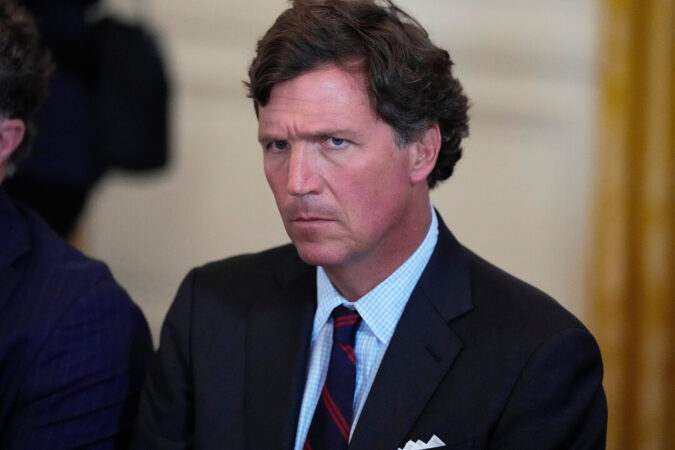
    “This is Israel’s war. This is not the United States’ war,” former Fox News host Tucker Carlson said Tuesday on his weekly political podcast.

    “No one should have to die for a foreign country,” Megyn Kelly, another former Fox News host with a massive online following, said on her podcast Monday.

    Daily Wire podcaster Matt Walsh beseeched fellow conservatives on Monday to stop supporting Trump’s military campaign. “I can’t take the gaslighting, guys. I really can’t,” he wrote on X.

    MAGA critics of Trump’s new military conflict say they are struggling to reconcile it with his “America First” principles and long record of criticizing costly and protracted American military interventions. The president has said operations against Iran could go on for four to five weeks, or longer.

    “I think to them it feels legitimately like a betrayal on a fundamental tenet of Trumpism,” said Matthew Dallek, a professor at George Washington University’s Graduate School of Political Management.

    Trump has dismissed the idea that his critics could speak for the Make America Great Again movement: “MAGA is Trump,” he said in an interview with independent journalist Rachael Bade on Monday.

    Online infighting is common in political movements, but Dallek said the degree of open dissent among conservatives over Iran suggested it could be a “breaking point” for some of Trump’s most influential supporters. Carlson, Kelly, and Walsh together list more than 13 million subscribers among them on YouTube, with millions more on X and other platforms.

    Trump claimed that he alone spoke for MAGA after Bade asked him about the rebellion in the ranks of his supporters, according to a post she published late Monday. “MAGA wants to see our country thrive and be safe. And MAGA loves what I’m doing — every aspect of it,” he said.

    White House spokesperson Olivia Wales echoed the president’s comments in a statement to the Washington Post. “President Trump is MAGA and MAGA is President Trump,” she wrote in an email. “With Operation Epic Fury, President Trump is putting America first, eliminating the threat to our people, and securing our Nation and world for generations to come,” she added.

    Trump has made opposition to foreign military intervention a cornerstone of his political platform since he first sought the presidency. In the 2016 Republican primary, he called the Iraq War “a big, fat mistake” as he sought to tie rival Jeb Bush to his brother George W. Bush’s unpopular legacy. Running against Democrat Kamala Harris in 2024, Trump called himself “the candidate of peace,” and said in his election night victory speech: “I’m not going to start a war.”

    Stephen K. Bannon, Trump’s chief strategist for part of his first term in office, warned that turnaround could become a political problem for the president. He criticized the Iran operations after a guest on his War Room podcast over the weekend suggested the conflict could be “a hard slog.”

    “I’m just going to be brutally frank,” Bannon said. “That was not pitched in the 2024 campaign. It just wasn’t. We’re going to bleed support.”

    Whitney Phillips, a professor of information politics at the University of Oregon, said the president was severely testing his supporters’ loyalty.

    “Trump has put these people in such an impossible position,” she said. “He’s not asking them to bend a little — he’s asking them to entirely reconfigure themselves into a new kind of balloon animal.”

    Walsh, who has long urged Trump to take a hard line on immigration, transgender people, and diversity policies, is among the MAGA influencers refusing to reconfigure.

    He criticized the administration’s “confused” messaging on the justification for the Iran operation in an X post on Monday that drew a lengthy response from Trump’s press secretary, Karoline Leavitt. Her X post listed what she called the “clear objectives” of Trump’s military campaign.

    Instead of Walsh and others falling in line, an online fracas ensued. Some X users mused that Walsh might be fired by Daily Wire founder Ben Shapiro, who had opened his own podcast on Sunday by lauding the operation that killed Ayatollah Ali Khamenei. Shapiro did not respond to a request for comment. Walsh stepped up his online campaign against Trump’s strategy, taking aim at his fellow Trump supporters.

    “Conservatives are now running around saying ‘Iran has been waging war on us for 47 years,’” Walsh posted Monday on X. “Okay, then why didn’t any of you call for an attack on Iran at any point until now? … You and I both know that almost every conservative influencer in the business was opposed to war with Iran until just now.”

    Laura Loomer, a right-wing influencer who has described herself as “Trump’s loyalty enforcer,” has used her own online platform to attack critics of the war and sought to enlist Trump in hitting back at them. She posted on X that she had spoken to Trump and congratulated him, but also told him about the criticism he was receiving from Carlson, Kelly, Rep. Thomas Massie (R., Ky.) and former Rep. Marjorie Taylor Greene (R., Ga.) — a group she lumped in with “communist Democrats.”

    “I’m so glad I was able to speak to President Trump after the strikes on Iran and show him what the Woke Reich, including Tucker, Megyn, and Marjorie Traitor Greene have been saying about him,” Loomer added Tuesday. “He was not happy when I showed him, but he told me he is focused on winning and they aren’t.”

    Conservative figures opposing the war appear to be in the minority despite the attention their criticism has generated.

    An analysis by the Post of about 5,000 online posts, podcasts, and newsletters from 79 conservative politicians and commentators since the Iran conflict began last weekend showed that most supported the operation, but that more than a dozen criticized it at least some of the time. Only a few were staunchly opposed to Trump’s new military intervention in Iran.

    While Trump returned to office amid a wave of online loyalty from leading conservative voices, experts in political communication said that in just a few days the Iran attacks had begun to test the limits of his influence.

    A.J. Bauer, a professor of journalism at the University of Alabama, said the pushback has gained traction in part because the administration has struggled to articulate a clear message on Iran for the right to rally around. That has left conservative influencers to chart their own course based on their personal beliefs, their loyalty to Trump, and their assessment of the risk that the conflict becomes unpopular with MAGA voters.

    A flash poll conducted by the Post over the weekend found that Americans oppose Trump ordering airstrikes on Iran by 52% to 39%; 9% said they were unsure.

    Sam Rosenfeld, a professor of political science at Colgate University, said the influencer backlash over Iran also speaks to wider problems emerging for Trump. His approval rating was 39% ahead of last month’s State of the Union address.

    There is an “emerging sense that Trump’s centrality to right-wing politics has an endpoint in the not-so-distant future,” Rosenfeld said. “That all serves to loosen Trump’s symbolic grip on the right’s discourse.”


  • Claims of ‘rediscovered’ Michelangelos unsettle Renaissance experts

    Claims of ‘rediscovered’ Michelangelos unsettle Renaissance experts

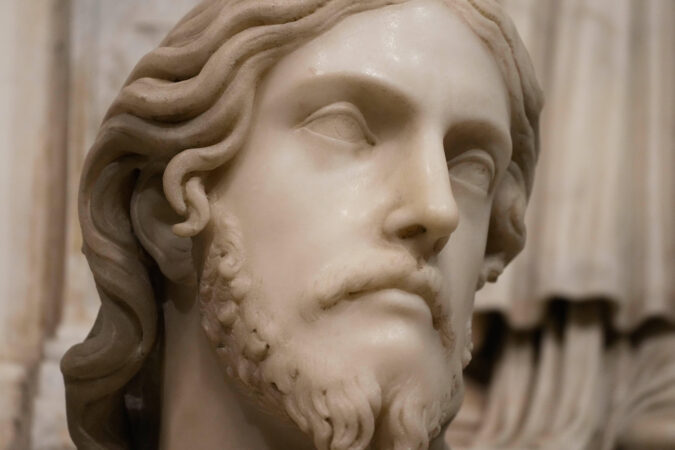
    ROME — An independent researcher claims that a marble bust of Christ in a Roman church is by Michelangelo, the latest purported attribution to the Renaissance genius who is one of the most imitated artists in the world.

    The unverified claim by Valentina Salerno has unsettled Renaissance scholars, especially since a recent sketch of a foot that was attributed to Michelangelo — but disputed by some as a copy — recently fetched $27.2 million at a Christie’s auction.

    Given the stakes — and Salerno’s suggestion that several other works can now be attributed to Michelangelo based on her documentary research — leading experts have declined to comment.

    Salerno has published her theory on the commercial website academia.edu, a non-peer-reviewed social networking site academics use, and announced the first “rediscovery” at a news conference Wednesday.

    The claims have drawn perhaps more attention than they normally would, given the Vatican seemed at least initially interested. Friday marked the 550th anniversary of Michelangelo’s birth, and a number of exhibits, conferences, and commemorations are reviving attention about his genius and legacy.

    The culture ministry was invited to participate in Salerno’s news conference but did not, said the abate of the order that runs the church, the Rev. Franco Bergamin, while the Carabinieri’s art squad refused to weigh in on the authenticity of the statue but said it was being protected and a laminated sign now graces the sculpture: “Alarm armed,” it reads.

    “We hope that this asset, which belongs to our cultural heritage regardless of whether it can be attributed to Michelangelo Buonarroti or not, is part of the national heritage that we are responsible for defending,” said Lt. Col. Paolo Salvatori.

    ‘Documentary evidence on this’

    Michelangelo Buonarroti, who lived from 1475 to 1564, created some of the most spectacular works of the Renaissance: the imposing statues of David in Florence and Pieta in St. Peter’s Basilica, the Sistine Chapel ceiling, and The Last Judgment fresco behind the chapel’s altar. Salerno now says she has located another — a bust of Christ in the Basilica of Sant’Agnese fuori le mura, listed by Italy’s culture ministry as anonymous from the Roman school of the 16th century.

    She is not the first to make the claim. In 1996, Michelangelo expert William Wallace wrote an article in ArtNews about the well-documented history of wrongly attributing works to Michelangelo. It quoted the 19th-century French writer Stendhal as writing that at the Sant’Agnese church, “we noticed a head of the savior which I should swear is by Michelangelo.”

    “Stendhal’s vow notwithstanding, the head has never been taken seriously, and nowadays would not even appear in a catalog raisonné under ‘rejected attributions,’” Wallace wrote.

    Salerno suggests that several documents in the first few hundred years after Michelangelo’s death correctly attribute the work to the artist but that in 1984 a scholar debunked it, erroneously in her view, and it has remained wrongly attributed ever since.

    “I have provided and will continue to provide — I hope, because the research continues — a whole series of documentary evidence on this,” she said. “There will be experts in the field who will conduct their own investigations. To date, we can say that, according to the documents, the object is attributed to Michelangelo.”

    She suggested that the bust was modeled on Michelangelo’s intimate friend, Tomaso De’ Cavalieriis, and was part of the great artistic inheritance Michelangelo left to his friends and students when he died. Salerno said she came to the conclusion tracing wills, inventories, and notarized documents held in church and state archives and the archives of Roman confraternities to which Michelangelo and his students belonged.

    Salerno, an actor and a fiction author, has no college degree or expertise in art history. She has said she fell into the research “by chance” when she set out to write a novel about Michelangelo 10 years ago.

    According to her research published on academia.edu, Salerno uncovered evidence of a secret “pact of indissolubility” among some of Michelangelo’s students and their heirs to keep Michelangelo’s works after he died. The pact included the previously unknown existence of a chamber, whose locks could only be opened with three keys, held by three different students, she said.

    Vatican takes note

    Salerno’s research caught the eye of Cardinal Mauro Gambetti, who runs St. Peter’s Basilica. He named Salerno and her mentor to a scientific committee formed in 2025 to discuss a possible Vatican exhibition to commemorate the anniversary of Michelangelo’s birth.

    Nothing has yet come of the committee’s work. But its members have downplayed the significance of Salerno’s work or refused to discuss it.

    Some expressed surprise at her inclusion in a committee made up of some of the leading Renaissance and Michelangelo scholars in the world, including Barbara Jatta, director of the Vatican Museums; Hugo Chapman, curator of Italian and French drawings, from 1400 to 1800, at the British Museum; and Wallace, professor of art history at Washington University in St. Louis.

    Jatta has distanced herself from the Vatican committee when contacted by the Associated Press.

    The British Museum declined to make Chapman available for comment. Gambetti’s office did not respond to a request. Other committee members declined to comment.

    Wallace told the AP that Salerno’s methodology was sound and noted that there is a strong tradition in Europe of noncredentialed researchers doing solid work. He said he agreed with her thesis that Michelangelo did not destroy his works in a fire, a commonly held belief at the time that has been debunked for years by scholars. Rather, he concurred with Salerno that Michelangelo entrusted what remained of his works in his final years to his students to finish his projects.

    But he disputes Salerno’s conclusion that a huge treasure of Michelangelo’s was secreted away — and is therefore ripe for new discovery — saying Michelangelo simply was not producing that much in his final years. Michelangelo was overseeing six architectural projects in Rome at the time. What drawings he made were sketches to resolve technical problems on the worksite, and likely did not survive because they were merely “working drawings,” he said.

    Wallace concurred that existence of a secret chamber that can be opened only with three keys is new. But he said proper academic scholarship would call for Salerno to transcribe the documents and allow for a peer-review process to take place.

    Italy is no stranger to claims of new discoveries about old artists, with fakes, frauds, and new “discoveries” of Modiglianis and other artists a regular occurrence in art history circles.

    “I think I counted up 45 attributions to Michelangelo since 2000, and not one of which you can remember or mention, but every single one arrived with the headline, ‘The greatest discovery of the time,’ [or] ‘It will change everything we think about Michelangelo,’” Wallace said. “And then, five years later, we can’t even remember what it was.”

  • What Democrats need to do to flip Texas, and how Republicans can hang on

    What Democrats need to do to flip Texas, and how Republicans can hang on

    Texas primary voters of both parties voted with cool heads Tuesday, rejecting candidates who appealed to their parties’ bases with more inflammatory styles that could have proved riskier in a general election.

    But challenges remain for Democrat James Talarico — who won the primary outright on a unifying message of reaching out to all Texans — and for Republican Sen. John Cornyn, who nosed ahead of firebrand Attorney General Ken Paxton but now faces a punishing May 26 runoff against him.

    Democrats face an uphill battle to flip a Senate seat in the red state no matter what happens in the runoff, as they mount their long-shot bid to retake the Senate in November. The chamber is currently controlled by Republicans, 53-47, and Democrats would have to flip several deep-red states like Texas to regain control.

    The next few months will determine how well-positioned Texas Democrats are to regain a Senate seat that has eluded them for more than 30 years, as the party hopes unusually high voter enthusiasm and weariness with President Donald Trump could fuel their comeback. Talarico in the coming months must work to unite the party by attracting Black voters who strongly backed his opponent, all while fending off coming attacks from the right painting him as a radical.

    And Cornyn’s political survival may depend on the actions of someone who is notoriously hard to predict or corral — Trump. The president said Wednesday that he would soon endorse one candidate and that the other should quit the race. If he does not get Trump’s endorsement, Cornyn may struggle to clear the runoff, and either way the next few months will be a divisive slugfest between two Republicans with large megaphones.

    “We are not going to go quietly, and we are not going to let you buy the seat,” Paxton said at his election-night party in Dallas, referencing the tens of millions of dollars Cornyn and his allies poured into the race.

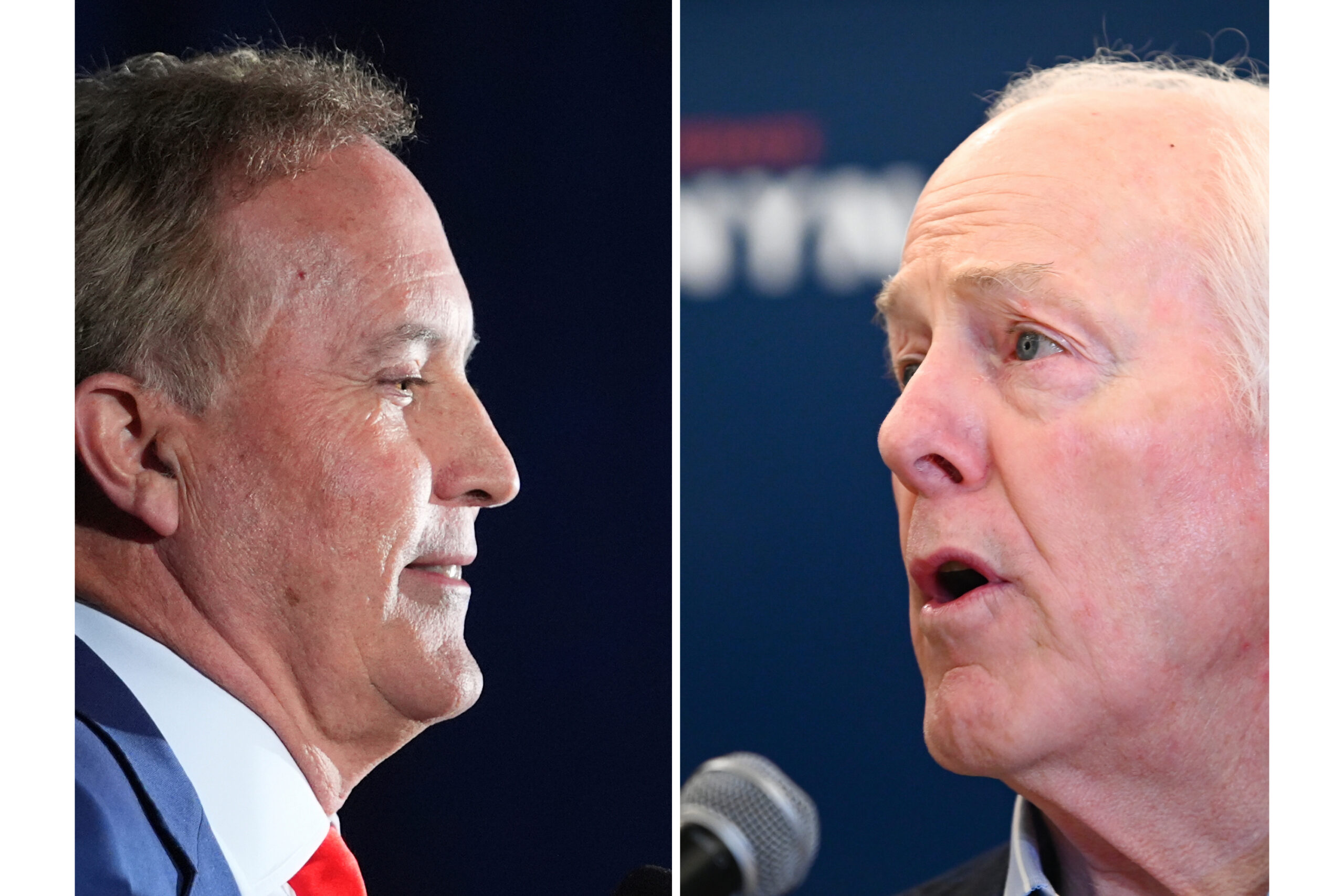
    FILE – This photo combination shows Texas Attorney General Ken Paxton, left, in Dallas and Sen. John Cornyn, R-Texas, in Austin, Texas, both on March 3, 2026. (AP Photo/Julio Cortez, Jack Myer)

    Cornyn, a fourth-term senator who is widely considered to be a stronger general-election candidate than the scandal-plagued Paxton, fell short of the 50% mark that would have avoided a runoff. Paxton was impeached by the GOP-controlled Texas House in May 2023 on charges of bribery but was acquitted by the Senate.

    Cornyn warned Paxton that “judgment” was coming for him. “I refuse to allow a flawed, self-centered, and shameless candidate like Ken Paxton to risk everything we’ve worked so hard to build,” he told reporters.

    The bitter intra-Republican warfare marked a stark contrast to the Democratic side of the ledger, where Rep. Jasmine Crockett set aside her earlier attacks on Talarico — and a legal challenge she filed Tuesday after voters were turned away from polling places in her Dallas district — and urged Democrats to come together Wednesday.

    “Texas is primed to turn blue and we must remain united because this is bigger than any one person,” Crockett wrote in a social media post.

    Talarico also urged unity, telling his supporters Tuesday, “The stakes in Texas are too high for division.”

    Mudslinging in the final weeks of the race may have caused some damage that Talarico will need to repair ahead of November, however. Crockett called the argument that Talarico was more electable than her a “dog whistle” and slammed him for not condemning ads run by a super PAC that supported him as “straight-up racist.” (Talarico does not control the super PAC, and the group denied darkening Crockett’s skin in an ad.)

    Crockett ran strong with the state’s Black voters, while Talarico appeared to run away with the Latino vote in the state. He beat Crockett by 30 percentage points or more in 21 counties that are more than 75% Latino. In counties that were 20% or more Black, Crockett won by 25 percentage points.

    Nancy Zdunkewicz, a Texas Democratic pollster, said she believed that much of the Crockett-Talarico tensions played out online rather than on the campaign trail and that the primary electorate was not divided.

    “She has conceded graciously, and I don’t want to overstate any damage done simply because of the social media dialogue, which was unnoticed by voters,” she said.

    Former Vice President Kamala Harris, who backed Crockett in the final days of the race, urged voters to unify. “I congratulate James Talarico for his win, and the inspiring campaign he continues to build,” she said in a statement. “I offer him my full support in the months ahead.”

    Republicans have a while to go before they can start their postprimary healing process, a delay that could dampen enthusiasm in November. It is also unclear whether Republicans will continue to vote with their heads instead of their hearts in May by backing Cornyn. Runoffs tend to feature a smaller, more intense group of voters compared with regular primaries, which could benefit Paxton. And it remains an open question whether Trump will support Cornyn, a nod that could put him over the top.

    Political analysts also do not know if the roughly 13% of Republicans who voted for GOP Rep. Wesley Hunt, who failed to make the runoff, will show up again in May and, if so, which candidate they would favor.

    Cornyn’s allies have warned the president that should Paxton be their nominee, the party would have to spend $200 million to get him over the finish line — a haul that would take away from other competitive Senate races Republicans are defending in Maine, North Carolina, and Ohio. Paxton historically has not been a strong fundraiser, and Democrats have nominated Talarico, whom they see as a stronger candidate than Crockett in the general election and who may take more resources to beat.

    Cornyn has Trump-connected allies on his side as they make this pitch, including Trump’s former campaign manager Chris LaCivita, who is running his super PAC, and Trump pollster Tony Fabrizio.

    Republicans in the state are sounding the alarm about record-breaking primary turnout for Democrats, which they see as a signifier of high enthusiasm going into November. Ross Hunt, a Republican pollster, called the turnout “a code red alert for Texas Republicans” in an analysis he published earlier this week. He predicted Democrats have added more than 480,000 voters to their turnout in the fall.

    “Republicans will need to do everything right this fall: we will need to select the best nominees for the General Election, maximize GOP turnout, practice intense message discipline, and have a clear-eyed and dispassionate understanding of where the new front line of defense stands after March 3rd,” he wrote.

  • South Africa’s anti-apartheid veteran and ex-defense minister Mosiuoa ‘Terror’ Lekota dies at 77

    South Africa’s anti-apartheid veteran and ex-defense minister Mosiuoa ‘Terror’ Lekota dies at 77

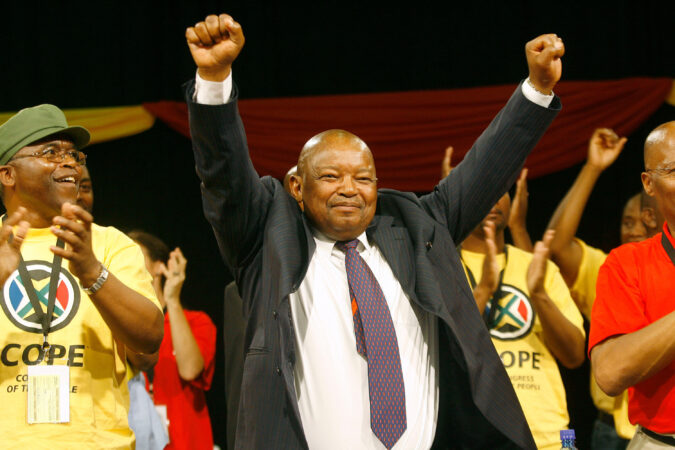
    JOHANNESBURG, South Africa — Mosiuoa “Terror” Lekota, 77, a South African anti-apartheid veteran and former defense minister, has died after a long illness, his political party said Wednesday.

    Mr. Lekota was a prominent activist against white minority rule in South Africa and served eight years in prison on Robben Island alongside other jailed anti-apartheid figures, including Nelson Mandela, from 1974 to 1982.

    Mr. Lekota was a fiery member of various political youth organizations during apartheid and was jailed even after he was released from Robben Island for his continued anti-apartheid activism.

    He served as South Africa’s minister of defense from 1999 to 2008 and was also the national chairperson of the African National Congress, which governed the country after the first democratic election in 1994.

    However, Mr. Lekota’s relationship with the ANC soured after former President Thabo Mbeki was removed as the country’s president in 2008, having lost the presidency of the ANC to former President Jacob Zuma in 2007.

    Mr. Lekota formed a breakaway party, the Congress of the People (COPE), which contested the 2009 elections. It became the third-biggest opposition party, with just over 7% of the national vote and 30 seats in South Africa’s 400-member parliament.

    The breakaway led to a significant decline in the ANC’s electoral support in 2009, with many former ANC members and leaders leaving the party to join Mr. Lekota’s new political outfit.

    In 2024, the ANC lost its outright majority for the first time and is now the biggest party in a coalition government.

    In addition to his accolades as a political activist, Mr. Lekota was well respected as a long-serving lawmaker and political leader who strengthened the voice of opposition parties.

    However, factional struggles within COPE led to its gradual decline and its failure to win any parliamentary seats during the 2024 general elections, ending Mr. Lekota’s career as a lawmaker.

    In 2025 he stepped away from politics for health reasons, with his party appointing an acting leader after his departure.

    Tributes poured in from across South Africa’s political landscape.

    “He decided to leave the ANC and formed COPE with other South Africans; by doing so he literally strengthened the opposition parties,” said Bantu Holomisa, South Africa’s deputy minister of defense and leader of the opposition United Democratic Movement party.

    “His role was not doubted, because he and others from the ANC did understand the passage of the struggle. And they knew very well what was the original agenda, which seemed to have been hijacked,” Holomisa said.

  • Major historical documents start journey across U.S. as part of nation’s 250th anniversary celebration

    Major historical documents start journey across U.S. as part of nation’s 250th anniversary celebration

    Some of the United States’ most important historical documents are embarking on a first-of-its kind journey as part of the country’s 250th anniversary commemoration.

    Typically housed in highly controlled vaults under the watch of preservation experts at the National Archives, documents such as the 1783 Treaty of Paris that formally ended the Revolutionary War and the 1774 Articles of Association that urged colonists to boycott British goods are rarely moved.

    But those documents, signed by George Washington, John Adams, Benjamin Franklin, and other American revolutionary leaders, will be making their way across the country and put on display for free at local museums.

    “It’s tangible history, and tangible history inspires,” said Jim Byron, senior adviser to the acting archivist of the United States. “These documents have not traveled, and they’ve certainly not traveled collectively, ever. They are here in vaults.”

    The Boeing 737 “Freedom Plane” transporting the documents is just one of many events and activities planned across the country to mark America’s forthcoming 250th anniversary celebrating the signing of the Declaration of Independence on July 4, 1776, in Philadelphia. A congressionally chartered commission, America 250, and a separate White House-led initiative, called Freedom 250, are both coordinating events, an overlap that has faced some criticism in Washington.

    Among the planned activities are a fleet of mobile museums driving across the country, a story collection initiative, and a Great American State Fair on the National Mall in Washington. President Donald Trump has even announced plans for a “Patriot Games” sporting event featuring high school athletes and a UFC mixed-martial arts fight at the White House.

    The “Freedom Plane” departed Ronald Reagan Washington National Airport on Monday en route to its first stop in Kansas City, Mo., where the documents are being transferred to the National WWI Museum and Memorial. The records include a rare original engraving of the Declaration of Independence printed in 1823 from a copperplate of the original; the Oaths of Allegiance, signed in 1778 by George Washington, Alexander Hamilton, and other officers of the Continental Army; and a rare draft copy of the U.S. Constitution that includes handwritten notes by the delegates.

    Other planned stops will be in Atlanta, Los Angeles, Houston, Denver, Miami, the Detroit suburb of Dearborn, and Seattle.

    “The reality that these documents are leaving D.C. and coming to the heartland is fantastic,” said Matt Naylor, president and CEO of the National World War I Museum and Memorial, where they will be on display for a little over two weeks starting Friday. “There’s a lot of excitement about that and a lot of talk in and around the city about what that means.”

    Naylor said the early response has been overwhelming. Local schools have already booked visits for more than 5,000 schoolchildren.

    “That’s indicating that there’s a lot of enthusiasm for this,” he said.

    The “Freedom Plane” tour was inspired in part by the “American Freedom Train” that toured 48 states in 1975 and 1976 as part of the country’s Bicentennial celebration. It carried various pieces of American history, including the original Louisiana Purchase documents, Judy Garland’s dress from The Wizard of Oz, and Jesse Owens’ gold medals from the 1936 Olympic Games.