Tag: no-latest

  • Inside the Clintons’ depositions on Epstein and Maxwell

    Inside the Clintons’ depositions on Epstein and Maxwell

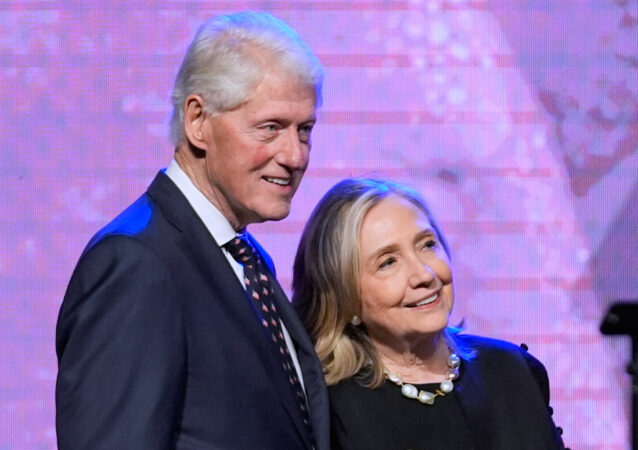
    The Republican-led House Oversight and Government Reform Committee released videos Monday of the closed-door depositions of former President Bill Clinton and former Secretary of State Hillary Clinton, part of its investigation into convicted sex offender Jeffrey Epstein.

    Bill Clinton appeared before the committee on Friday, marking the first time a former president had been compelled to testify before Congress under a subpoena. During his lengthy deposition, the former president sought to distance himself from Epstein, saying he had no knowledge of Epstein’s crimes and stopped associating with him years before his first guilty plea, in 2008.

    “There was nothing that I saw when I was around him that made me realize that he was trafficking women,” Clinton told the committee. “I saw nothing, and I did nothing wrong.”

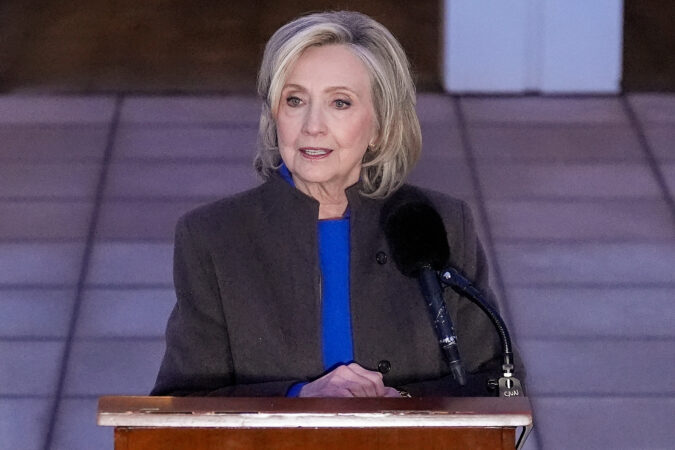
    In her hours-long deposition Thursday, Hillary Clinton said she had no recollection of ever meeting Epstein and had known Epstein associate Ghislaine Maxwell only “casually, as an acquaintance.” Hillary Clinton derided the deposition as “political theater” and sharply questioned why she was being deposed.

    House Republicans have issued subpoenas to several people — mostly Democrats — mentioned in the millions of files related to the federal government’s Epstein investigation that have been released by the Justice Department.

    They have not called in President Donald Trump, who had a long-standing friendship with Epstein. The president has said that he knew Epstein socially in Palm Beach, Fla., and that they had a falling out in the mid-2000s. Trump has maintained that he did not know about Epstein’s criminal behavior.

    Here are some of the highlights of the depositions:

    Bill Clinton says Larry Summers connected him with Epstein

    In his deposition, Bill Clinton said his former treasury secretary Larry Summers, then the president of Harvard University, first recommended that he strike up an acquaintance with Jeffrey Epstein.

    As Clinton recalled, Summers — who recently resigned his positions at Harvard because of his association with Epstein — called Clinton shortly after he left office, in late 2001 or early 2002, when Clinton was setting up a charitable foundation.

    Summers told him of “a man named Jeffrey Epstein” who had made a multimillion-dollar contribution to brain research, Clinton said, and described Epstein as an “information-hungry person” who owned a “massive airplane” and “wanted to spend some time talking to me about economics and politics.”

    Clinton said he saw the plane as an economical means of doing international travel for his foundation.

    After taking about a half-dozen trips aboard Epstein’s jet over a couple of years, Clinton said, he quit doing so because his foundation had launched and he had offers of transportation from people he knew better.

    Clinton said he considered Epstein “an interesting man, but I didn’t think he was really interested in what I was doing.”

    Clinton told the committee that he first learned of Epstein’s crimes “in 2008, when he was prosecuted. There was nothing that I saw when I was around him that made me realize that he was trafficking women.”

    At another point, he told the committee, “I don’t believe any law enforcement agency has ever asked me [about Epstein], and I don’t know enough to volunteer anything.”

    Hillary Clinton says she ‘knew nothing about’ Epstein

    Hillary Clinton repeatedly testified that she did not know Epstein. She characterized him as not being on her “radar,” but was told in preparation for the deposition that she and Epstein both attended an event at the White House that was put on by the White House Historical Association.

    “I have no recollection, in any way, of ever having any conversation at the White House or in any other place or on any kind of device of any sort. I knew nothing about him,” Hillary Clinton said when asked if she had any communication with Epstein.

    She testified that she knew Maxwell “casually” as someone who dated an acquaintance of hers — Ted Waitt, a software developer.

    Waitt, Clinton said, brought Maxwell as a guest to the wedding of the Clintons’ daughter, Chelsea, in 2010.

    Clinton said that she did not consider Maxwell a friend and that her daughter would have been “friendlier” with Maxwell, but that she “had no idea” how often they interacted.

    Clinton declined to characterize the relationship between Maxwell and Bill Clinton.

    “He’ll have to answer that,” she said when asked if Bill Clinton and Maxwell were friends.

    Bill Clinton reacts to hot tub photo during Asia trip

    Bill Clinton was shown a photo of himself in a hot tub that was among the Epstein files and that has generated much attention.

    He recalled that it was taken while he was in Brunei at the end of a long leg of one of his Asia trips.

    He and his party, including Epstein, were guests at a hotel owned by the sultan of Brunei, with whom Clinton had established a warm relationship while he was president, and spent time in the hot tub and pool, which were located on the same floor as some of their suites.

    “I swam around. I sat in the hot tub for five minutes or whatever it was. I got up and went to bed,” Clinton said.

    Bill Clinton denies having visited Epstein’s island

    A Democrat on the committee, Rep. Melanie Stansbury of New Mexico, grilled Bill Clinton on reports that he had been on Epstein’s island.

    Clinton repeatedly denied he had ever visited the island. He also denied a report, cited by Stansbury, that he had visited Epstein’s home while he was president.

    Bill Clinton says he’s not been in touch with Maxwell for a decade

    Bill Clinton said his first recollection of meeting Maxwell was on his first flight aboard Epstein’s plane, when she was working for the financier.

    Clinton’s relationship with her “lasted longer and was more extensive than my relationship with Mr. Epstein,” he said, because she started “going with” Waitt, the tech billionaire, who became a major donor to the Clinton Foundation.

    Clinton said that, by his recollection, he has not been in contact with her for a decade or more.

    He said he did not learn about her participation in Epstein’s sexual abuse of minor girls until “the first evidence against her came out in 2019.”

    Hillary Clinton’s deposition was paused after photos were shared

    Nearly 80 minutes into the deposition, Hillary Clinton’s lawyer interrupted Republican questioning, saying pictures of the former secretary of state testifying had been posted online.

    The attorney argued that the pictures, which had been shared by Rep. Lauren Boebert (R., Colo.), violated the committee’s rules — and noted that the Clintons had repeatedly asked that the depositions be held in public.

    Visibly frustrated, Hillary Clinton told Republicans that if they were going to be sharing pictures of the interview, she was “done.”

    “You can hold me in contempt from now until the cows come home. This is just typical behavior,” she said. “We all are abiding by the same rules.”

    The hearing was then paused. When the interview resumed, Rep. James Comer (R., Ky.), the committee’s chairman, said he advised Republicans that no pictures or videos of the deposition could be released.

    The Clintons were accompanied by trusted lawyers

    The Clintons were accompanied by two lawyers who for decades have been among the most trusted and protective allies in their orbit.

    David Kendall is the Clintons’ longtime personal attorney, and Cheryl Mills was deputy White House counsel during Bill Clinton’s presidency and chief of staff to Hillary Clinton at the State Department. Both are known for their discretion and were part of the legal team that defended Bill Clinton in his 1999 Senate impeachment trial, in which he was acquitted.
  • ICE training was slashed, records show, corroborating whistleblower claims

    ICE training was slashed, records show, corroborating whistleblower claims

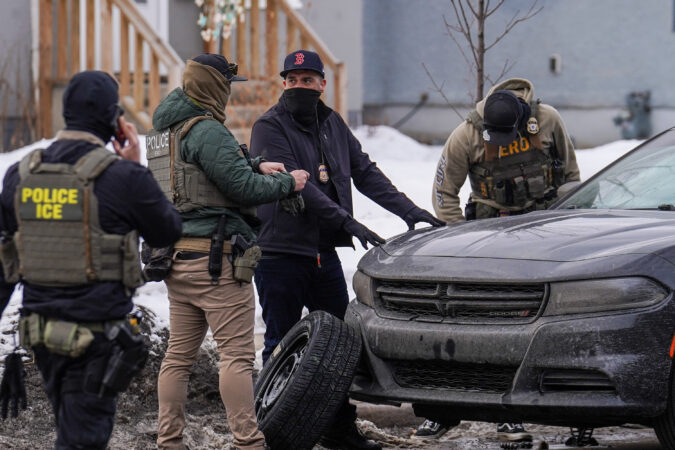
    Immigration and Customs Enforcement dramatically cut its basic training program amid a hiring spree meant to speed up the Trump administration’s deportation efforts, records obtained by the Washington Post show, corroborating a whistleblower’s claim.

    After former ICE instructor Ryan Schwank testified during a congressional hearing last week, the Department of Homeland Security (DHS) denied any reduction in the amount or quality of training provided to ICE recruits. The previously undisclosed records obtained by the Post show that, as the whistleblower said, ICE last year removed about 240 hours from its basic training program, or more than 40% of instructional time.

    The documents also offer new insight into how and when the training program was reduced. The vast majority of the cuts occurred in August, the records show, as the Trump administration pushed ICE to double the number of officers in the field by the end of 2025.

    The initial cuts eliminated more than 100 hours dedicated to hands-on instruction and practice scenarios, including half the 56 hours once spent on firearms training, the records show. Fitness training time was almost entirely cut. Also eliminated were dozens of hours of classroom learning on such topics as case processing and deportation officers’ legal authority.

    With further cuts later that fall, the records show, ICE had eliminated three-quarters of the hours once dedicated to evaluating recruits’ practical skills, including firearms handling. The agency eliminated time for driving tests and cut all 26 hours previously allotted for evaluating recruits’ grasp of skills specific to immigration enforcement and deportation operations.

    As of Jan. 1, records show, more than 900 ICE officers had completed a shortened version of basic training and were destined for field offices across the country. That is more than three times the total number of graduates in the 12 months before August, when the program was first cut.

    Asked about the Post’s findings, ICE acknowledged that the program has been accelerated by increasing the daily training time and adding an extra day of training each week but insisted that there had been no cuts to overall training hours, requirements, or subject matter.

    “ICE officers go through a rigorous on-the-job training and mentorship,” the agency said in a statement. It said new officers take what they learn at the academy and “apply it to real-life scenarios while on duty, preserving ICE’s reputation as one of the most elite law enforcement agencies not only in the U.S., but the entire world.”

    Concerns about the quality of immigration officers’ training have been mounting for months amid reports of violent arrests and heavy-handed crowd-control tactics, along with two high-profile killings of U.S. citizens by federal immigration agents during protests in Minneapolis this year.

    On Feb. 23, Schwank, a lawyer who recently resigned from his teaching position at the ICE academy, testified that the agency had removed so many essential courses from the program that “even in the final days of training, the cadets cannot demonstrate a solid grasp of the tactics or the law required to perform their jobs.”

    That same day, congressional Democrats made public DHS documents indicating that ICE last year removed courses that were once part of its basic training program. The records obtained by the Post were not among those released by the Democrats and did not come from the same source.

    The records obtained by the Post include four training program outlines, dated between July 2025 and January 2026, that break down the hours allocated to instructional topics. The records also track student outcomes and time at the academy. They reveal a steep decline in the graduation rate as DHS ramped up recruitment, part of President Donald Trump’s goal to double the number of ICE officers to 20,000 and deport an unprecedented 1 million people each year.

    “Students must meet all requirements, otherwise they will not be made law enforcement officers,” ICE told the Post, citing the lower graduation rate as evidence that the academy has not lowered standards.

    ICE made slight adjustments to the basic training program after the sweeping cuts last year, the records show. After initially cutting the training time dedicated to use of force by three hours, for instance, ICE later added five hours on that subject. Asked about the change, ICE told the Post that the agency “increased de-escalation training for recruits to ensure they are prepared for attacks from ICE agitators.”

    Before the changes last summer, ICE basic training was a 72-day program held at the headquarters of the Federal Law Enforcement Training Centers, a sprawling campus in southeastern Georgia. ICE never formally announced changes to the program but told reporters on a media tour in August that it had been streamlined to eight weeks.

    Pushed for specifics at the time, the agency said it had eliminated a Spanish-language requirement. But Spanish instruction was not part of the ICE basic training program. It was a separate course for recruits who could not pass a Spanish fluency test. The records obtained by the Post show cutting the language requirement eliminated only four hours from the basic training program — the time previously set aside for that test.

    Since the August media tour, officials have given conflicting accounts about training time. In the past month, they have stated at different times that the basic training last 47 days, 42 days, and 56 days.

    The DHS records obtained and analyzed by the Post show that the program was first cut to 47 days in August and further reduced in September to 42 days. Since then, all trainings have been on a 42-day schedule, the records show.

    DHS and ICE officials have repeatedly said that no training time has been lost, in part because the academy increased daily instruction from eight hours to 12 hours. The Post’s analysis of the records shows that as recently as January, students were receiving about eight hours of daily instruction. That hadn’t changed as of February, according to a DHS official who spoke on the condition of anonymity because they were not authorized to talk to the media.

    Asked about the discrepancy, ICE repeated the claim about 12-hour days and added that those hours include “personalized independent training.” The statement emphasized in bold: “It’s the same hours of training officers have always received.”

    ICE also said graduates of the academy go on to receive “an average of 28 days of on-the-job training.”

    Policing expert Marc Brown, an instructor at the University of South Carolina’s law school, told the Post that “training on the job doesn’t replace training at the academy, especially in a law enforcement career.”

    From 2019 to 2024, Brown taught physical techniques, including the use of handcuffs and defensive tactics, at the ICE basic training program. Incoming deportation officers need time to practice their new skills in safe, controlled environments before going into the field, Brown said, “so that if mistakes are made or there are things you could do better, you have a chance to make that mental correction.”

    Slightly more than 230 new deportation officers began ICE basic training in 2024, records show. In 2025, that same number had started at the ICE academy by the beginning of August. This followed a midsummer recruitment boom spurred by the passage of Trump’s sweeping tax-and-spending legislation, which tripled the agency’s enforcement and deportation budget to about $30 billion.

    To boost the number of applicants, ICE lifted age restrictions, offered student loan forgiveness and $50,000 signing bonuses, and held recruitment events where some prospective agents were told they could receive tentative offer letters on the spot. By the end of September, cohorts of up to 48 trainees were arriving at the facility in Georgia almost daily, records show.

    In the past, all new deportation officers were required to attend the academy. Now, only recruits who have no law enforcement experience are sent to the academy. Recruits with law enforcement experience, including “arrest authorities,” are instead required to take an online course, and then they, too, “receive in-person on the job training,” ICE said.

    The records obtained by the Post show that more than 1,400 ICE recruits attended a shortened version of basic training in Georgia between August and Jan. 1. Those students failed or dropped out at high rates, and the 2025 graduation rate plummeted from around 80% among recruits who went through the full-length training to around 60% for those in shortened versions.

    One in every four recruits destined for field offices by the end of the year flunked out of the shortened training program, records show. Among those who fell short, the majority failed written exams. Most of the remainder failed the physical abilities assessment, which requires recruits to complete a timed run and an obstacle course. Only three people failed that test in the first half of 2025 before ICE loosened certain enrollment standards and slashed more than 40 hours of preparation time.

    Brown attributed the low graduation rate in part to the reduced hours of instruction, which he said don’t provide new officers enough time to absorb material or practice difficult skills one-on-one with instructors in remedial workshops. He said it also appeared ICE’s hiring spree pulled in more than the usual number of recruits who weren’t suited for or capable of the job.

  • Letters to the Editor | March 3, 2026

    Letters to the Editor | March 3, 2026

    Iraq 2003 redux

    Has Iran been developing nuclear bombs? Almost certainly. The detection by the International Atomic Energy Agency of uranium 235 enriched to 60% in recent years proves that. There is no known peaceful use for large quantities of such highly enriched uranium. Many of Iran’s nuclear facilities have been damaged or destroyed, but we do not know what others may be undiscovered and still functional.

    Now, President Donald Trump has joined Israel in an all-out war against Iran. This is the Iraq War of 2003 all over again: Create a boogeyman and get public opinion on board. There is little doubt Trump will press ahead with this operation for who knows how long — he will not want to be seen as backing down and weak — the U.S. and the rest of the world be damned.

    Sam Goldwasser, Bala Cynwyd, samslaser@gmail.com

    Boys to men?

    In a recent article by the Associated Press, Defense Secretary Pete Hegseth is quoted as complaining about so-called woke changes to Scouting America’s policies. He argued that the organization, formerly known as Boy Scouts of America, should return to its roots as “a group that develops boys into men.” I am an old and gray Eagle Scout and the product of one of the most traditional scouting programs anywhere. So believe me when I say: Mr. Hegseth doesn’t have a clue.

    Scouting has never existed simply to “develop boys into men.” It has always existed to teach and practice the unchanging principles of the “Scout Oath and Law.” They are summarized in the first words of the Scout Oath: “On my honor, I will do my best.” In other words, I am a person of integrity, and I will do the right thing regardless of what anyone else is doing. That’s not Mr. Hegseth’s principle — just ask Sen. Mark Kelly — but it is scouting’s unchanging principle.

    The rest is program. Our scouting programs change, or rather evolve, to meet the realities of the day. Otherwise, we are not doing our promised best to teach principles in the here and now. And that would be much worse than even Mr. Hegseth’s uninformed nostalgic exercise.

    Jim Matthews, Wayne

    A time and a place

    I believe the awarding of the Medal of Honor to two of our nation’s bravest warriors during the State of the Union address was entirely inappropriate. Those men deserved a presentation where they would be the center of attention rather than a sideshow to the president’s speech.

    The president politicized the event to cast himself in a positive light. Those valiant service members should have been recognized with a more respectable, personal, and honorable ceremony.

    Ken Biles, Douglassville

    Deadly distraction

    Donald Trump has unconstitutionally launched yet another attack without addressing the American people or securing the approval of Congress. He says he bombed Iran to stop it from using its nuclear arsenal. Didn’t he say eight months ago that we had totally “obliterated” its nuclear capabilities? And Congress? Trump’s Republican minions just follow his lead — it’s a complete disgrace to our democracy. This attack on Iran is simply a distraction from the Jeffrey Epstein files, environmental regulations being rescinded, the economy, farmers declaring bankruptcy at increasing rates, burdensome healthcare costs, cryptocurrency making Trump rich — the list goes on and on. Trump, the self-proclaimed “president of peace,” just started another “forever war.” God help us all.

    Robert LaRosa Sr., Whitestone, N.Y.

    Join the conversation: Send letters to letters@inquirer.com. Limit length to 150 words and include home address and day and evening phone number. Letters run in The Inquirer six days a week on the editorial pages and online.

  • Dear Abby | After months of couples therapy, things haven’t improved

    DEAR ABBY: I have been married more than 20 years to my best friend. She’s the love of my life. We have been through a lot together and have been in couples counseling for eight months. We almost divorced last year because of an emotional affair I had seven years ago. (She had a similar distraction last year.)

    We are friends and do everything together. I try to do everything right. I’m there for her emotionally. I have stopped drinking every day and developed a positive, mindful, and kind mindset. I got myself into shape physically. I earn a good living, help around the house, prepare dinner for all of us, and help with kids’ appointments and activities.

    The problem? My wife has physically withdrawn from me. Anything beyond hugs and kisses is too much for her. Physical intimacy happens less than once a month. I feel alone in my own home because I thrive on touch and affection but receive none.

    I love my wife and don’t want to be with anyone else. The counselor says things “may” turn the corner “in time.” In the meantime, how do I function while feeling undesired and rejected on a daily basis?

    — FORGOTTEN HUSBAND IN THE SOUTH

    DEAR HUSBAND: You have my sympathy. It is possible that as much as you and your wife like and love each other, you are better friends than spouses. Because after eight months of counseling with your wife nothing has changed and there are no gestures of affection and you feel alone in your own home, it’s time you found a psychotherapist of your own. It’s clear that joint counseling has not been helpful.

    ** ** **

    DEAR ABBY: How do I get my daughter-in-law, “Darlene,” to clean up after herself? I live in the house, pay rent, and help with the bills, but she constantly creates a mess in the kitchen and everywhere else. She fills the sink with dishes daily and never washes pots and pans, to the point I can’t use the kitchen to cook.

    Darlene doesn’t work and has nothing to do all day but create a disaster and wait for me or my son (her husband) to clean up behind her.

    My son and I each work full-time. He does all the laundry, cleaning and cooking. If I say anything, Darlene gets defensive and makes all kinds of excuses why she can’t. (It’s sheer laziness.) If I say anything to my son, he defends her because she whines and cries about how “tired” she is and claims to have all kinds of illnesses. (Her stomach hurts, she’s on her period or just too tired.). She stays up late every night and can’t wake up to get my grandson to school, so my son does it every day.

    I’m at my wits’ end, but I don’t want to create an environment where Darlene will ignore me and turn my son against me. Help!

    — OUT OF BALANCE IN THE SOUTH

    DEAR OUT OF BALANCE: You cannot change the unhealthy dynamic in your son’s household unless he and his wife agree to do so. From what you have written, that isn’t likely to happen. Be glad that you are fully employed, because the healthiest situation for you would be to make other living arrangements.

  • Horoscopes: Tuesday, March 3, 2026

    ARIES (March 21-April 19). You don’t always want to update. The decor feels like home, you know the operating system, you’re used to the look, and the old way worked just fine. But in today’s case, the new version will be worth the adjustments it asks of you.

    TAURUS (April 20-May 20). You’re wary of people too focused on short-term gains. In healthy relationships, the value lies in the relationship itself. The trust and understanding you’ve built over time is much more important than any small transaction occurring between you.

    GEMINI (May 21-June 21). There are no extra points for learning the hard way, so you may as well make it as easy as can be. What do you need? Peace and quiet? The right tools? A support system? Definitely an amazing teacher. Get yourself set up.

    CANCER (June 22-July 22). People protect the story of who they are. They edit memory. They assign meaning retroactively. They seek witnesses who confirm their version. You’ll notice where facts don’t line up, but it may be kinder not to point out the discrepancies.

    LEO (July 23-Aug. 22). There are difficult people and circumstances in the mix. You don’t need to hold a position of influence to be influential. You make a difference when you’re simply doing what comes naturally to you: giving your love.

    VIRGO (Aug. 23-Sept. 22). Here comes the prize you didn’t even know was part of this game. It’s coming straight to you. But are you really surprised? You’ve racked up so many points, of course you would be rewarded like this.

    LIBRA (Sept. 23-Oct. 23). Something shook your sense of self recently. Make a tiny, tactical plan for reclaiming your identity — something that honors your genius and energy. That could be your next step while life keeps moving around you.

    SCORPIO (Oct. 24-Nov. 21). Want to end a power struggle? Let them win. In one fell swoop, you are free. Don’t like that idea? Then hold your ground internally. Your freedom doesn’t depend on them agreeing, only on your choice to release the fight.

    SAGITTARIUS (Nov. 22-Dec. 21). The new project you’re thinking about is a big one. You won’t feel ready, but that doesn’t mean that you aren’t. Don’t let the opportunity slip away. Pull your energy together and pounce.

    CAPRICORN (Dec. 22-Jan. 19). You’ll pay your respects. Rules, etiquette, formalities, and protocol will matter. This is the glue holding together transactions, relationships, and so much more.

    AQUARIUS (Jan. 20-Feb. 18). Powerfully commit one more time to your goal. It’s almost as though whatever happened in your past to discourage or distract you has only served to enable you to do better this time around.

    PISCES (Feb. 19-March 20). You’re reading people’s energies correctly, and they are picking up on yours. Social capital compounds. Interactions pay off indirectly in introductions you never saw coming, your name mentioned when you’re not there and invitations that feel almost casual but matter a lot.

    TODAY’S BIRTHDAY (March 3). Enter your Year of Sparkling Currents, when ideas, money and love flow easily, guided by your insight and intuition. Every choice seems buoyed by unseen support. Educational achievement and a flourishing garden or similar project featuring beauty thrive under your tending. Friends regularly join for your favorite kind of entertainments. Aries and Libra adore you. Your lucky numbers are: 5, 29, 15, 42 and 23.

  • Pakistan deploys troops and imposes curfew after deadly protests over US-Israeli strikes on Iran

    Pakistan deploys troops and imposes curfew after deadly protests over US-Israeli strikes on Iran

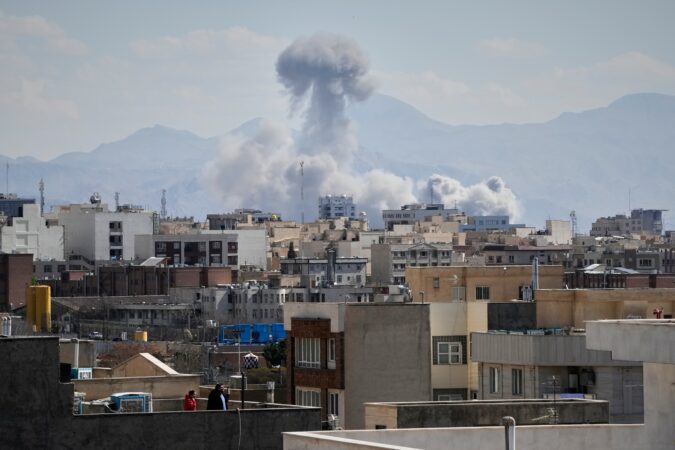
    ISLAMABAD — Pakistani authorities deployed troops and imposed a three-day curfew before dawn Monday in the northern cities of Gilgit and Skardu after several people died and tens were injured in violent protests following the killing of Iran’s Supreme Leader Ayatollah Ali Khamenei in U.S.-Israeli strikes, officials said.

    Thousands of Shiite demonstrators on Sunday attacked the offices of the U.N. Military Observer Group, which monitors the ceasefire along the disputed Himalayan region of Kashmir, and the U.N. Development Program in Skardu city. Protesters also burned a police station and damaged a school and the offices of a local charity in Gilgit, according to officials. At least 12 people were killed and 80 others injured, said police in the Gilgit-Baltistan region.

    U.N. spokesperson Stéphane Dujarric said Monday protesters became violent near the UNMOGIP Field Station, which was vandalized. “The safety and security of U.N. personnel and premises throughout the region remain our top priority, and we continue to closely monitor the situation,” Dujarric said.

    Meanwhile, Shabir Mir, a Gilgit-Baltistan government spokesperson, said Monday the situation was under control and that the curfew would remain in place until Wednesday. Police chief Akbar Nasir Khan urged residents to stay indoors, citing “deteriorating law and order conditions.”

    Demonstrators in Pakistan’s southern port city of Karachi stormed the U.S. Consulate on Sunday, smashing windows and attempting to burn the building. Police responded with batons, tear gas, and gunfire, leaving 10 people dead and more than 50 injured.

    One person was also killed in clashes in Islamabad during an attempted march by Pakistan’s minority Shiites toward the U.S. Embassy. They were protesting in support of Iran, which is majority Shiite.

    On Monday, the U.S. diplomatic mission in Pakistan said its consulate in northwestern Peshawar city would close temporarily, while the embassy in Islamabad would continue providing all routine and emergency consular services for U.S. citizens.

    In a post on X, the embassy said that due to continued disruptions and traffic diversions around the U.S. consulates in Karachi and Lahore, both offices have canceled all appointments for U.S. visas and American citizen services scheduled for Tuesday.

    It added that normal consular operations would resume in Islamabad on Tuesday.

    Pakistani authorities have beefed up security at U.S. diplomatic missions across the country, including around the U.S. consulate building in Peshawar, to avoid any further violence.

    Also Monday, the Pakistan Stock Exchange plunged, with the benchmark KSE-100 Index falling nearly 10% amid rising geopolitical tensions following attacks on Iran. Investors sold off shares across sectors, with analysts citing heightened uncertainty as the main driver behind the sharp decline.

    Anger has been rising in Pakistan, particularly among members of the Shiite minority, following U.S. and Israeli strikes on Iran that killed Khamenei and other senior officials. While Shiites are a minority nationwide, they form a majority in some northern districts and in the province of Khyber Pakhtunkhwa bordering Afghanistan.

    Sunday’s unrest came amid ongoing cross-border fighting between Pakistan and Afghanistan, which began Thursday after Afghanistan launched attacks in retaliation for Pakistani airstrikes the previous Sunday. Pakistan has since carried out repeated operations along the border.

  • Judge nixes latest policy requiring 7 days’ notice for Congress members to visit ICE facilities

    Judge nixes latest policy requiring 7 days’ notice for Congress members to visit ICE facilities

    WASHINGTON — A federal judge agreed on Monday to temporarily suspend the latest version of a Trump administration policy that requires members of Congress to provide a week’s notice before they can visit immigration detention facilities.

    U.S. District Judge Jia Cobb in Washington ruled that a group of Democratic lawmakers is likely to succeed in showing that the seven-day notice requirement is illegal and exceeds the government’s statutory authority.

    The judge said the Republican administration hasn’t cited any “concrete examples of safety issues posed by congressional visits without advanced notice.”

    Thirteen House members sued to challenge the Jan. 8 policy issued by Homeland Security Secretary Kristi Noem. Cobb had blocked a previous version of the policy in December. She ruled that it’s likely illegal for Immigration and Customs Enforcement to demand a week’s notice from members of Congress seeking to visit and observe conditions in ICE facilities.

    “Plaintiffs are undoubtedly frustrated with Defendants’ repeated attempts to impose a notice requirement,” Cobb wrote. ”But in taking further action, Defendants are required to abide by the terms of the Court’s order and act consistently with the legal principles announced in this opinion.”

    However, Noem secretly reinstated another notice requirement one day after an ICE officer shot and killed U.S. citizen Renee Good in Minneapolis. It was nearly identical to the version that Cobb blocked in December.

    Three days after the deadly shooting, three Democratic members of Congress from Minnesota were stopped from visiting an ICE facility near Minneapolis. The Department of Homeland Security didn’t disclose the new version of the policy until after U.S. Reps. Ilhan Omar, Kelly Morrison, and Angie Craig initially were turned away from the facility, according to plaintiffs’ attorneys.

    A law bars the government from using appropriated general funds to prevent members of Congress from entering DHS facilities for oversight purposes. Cobb found that it’s “highly likely” that President Donald Trump’s administration used restricted funds to promulgate and enforce the new policy.

    Cobb was nominated to the bench by President Joe Biden, a Democrat.

  • House panel releases videos of Bill and Hillary Clinton answering questions about Epstein

    House panel releases videos of Bill and Hillary Clinton answering questions about Epstein

    WASHINGTON — Former President Bill Clinton distanced himself from convicted sex offender Jeffrey Epstein in closed-door depositions with lawmakers, according to videos that were released Monday by a House committee.

    The recordings of the depositions, which spanned hours over two days last week, show how Bill Clinton told the committee that he had ended his relationship with Epstein years before the financier entered a 2008 guilty plea to soliciting prostitution from an underage girl. Hillary Clinton told the committee she never even recalled meeting Epstein.

    The closed-door interviews before the House Oversight Committee were taken under oath Thursday and Friday.

    The Clintons’ testimony came as lawmakers are trying to meet demands for a reckoning over Epstein, who killed himself in 2019 in New York while facing charges for sex trafficking and abusing underage girls. High-status men around the world have been forced into resignations because of revelations about their relationships with Epstein, but so far there are few signs in the U.S. of serious legal consequences coming.

    The former Democratic president said he first remembered meeting Epstein when he flew aboard the financier’s private jet in 2002 for the Clintons’ humanitarian work, and they parted ways the year after.

    “There’s nothing that I saw when I was around him that made me realize he was trafficking women,” he told the committee.

    Epstein visited the White House numerous times during Clinton’s presidency and there are photos of them shaking hands. Clinton told lawmakers he did not recall those interactions.

    Democrats, Republicans question Bill Clinton

    Bill Clinton faced searching questions both from Republicans and Democrats about photos of the former president that have been released as part of the case files on Epstein. In response to a Democratic lawmaker’s questions about a photo that showed him in a pool with a woman whose face was redacted, the former president said he did not know the woman and did not engage in sexual activity with her.

    He said the photo was from a trip to Brunei for charitable work and a number of people in their travel party were swimming. He also said that he was not aware that one young woman who was ostensibly working as a masseuse and gave him a neck massage on one flight was in fact a victim of sexual abuse.

    Whether the subject was a note Clinton wrote for Epstein’s 50th birthday or their travel together for the Clinton Foundation, he described their relationship as little more than “cordial.” Bill Clinton described an arrangement with Epstein where the financier provided his private jet for humanitarian trips in exchange for Clinton discussing politics and economics with him.

    Larry Summers, who had worked as treasury secretary in Clinton’s administration, helped make that connection, Clinton said. But Clinton said they went separate ways after he sensed that Epstein was not deeply interested in the humanitarian work.

    “We were friendly, but I didn’t know him well enough to say we were friends,” he said.

    He said he had once visited Epstein’s townhouse in New York City, but said repeatedly he had never visited Epstein’s private island or other properties.

    Asked by Republicans whether they had talked about young women or girls together, Clinton responded emphatically: “No.”

    Clinton acknowledged he maintained a closer relationship with Ghislaine Maxwell, Epstein’s former girlfriend and confidant. But he maintained that was largely because of close mutual connections. He also said “she has to be punished” for her conviction on sex trafficking charges.

    What Bill Clinton said about Trump

    One line of questioning stirred up curiosity from lawmakers, and that was what Clinton had to say about President Donald Trump. He made clear he believed it was important for anyone, including presidents, to come forward and testify to their knowledge of Epstein.

    Clinton also shared how he and Trump had briefly discussed Epstein at a charity golf tournament more than 20 years ago. He said Trump had never “said anything to me to make me think he was involved in anything improper with regard to Epstein,” but also remarked that those two men had a falling-out over a real estate deal.

    Republican lawmakers left the deposition pointing to Clinton’s words and arguing that it showed there is no evidence that Trump ever did anything wrong in his own relationship with Epstein.

    Democrats, meanwhile, said Clinton’s testimony counters what Trump has said more recently about why he and Epstein had a falling-out. Trump has told reporters they had a disagreement because Epstein had hired people away from Trump’s Mar-a-Lago club in Florida.

  • Sanders pitches $4.4 trillion tax on billionaires, in 2028 marker

    Sanders pitches $4.4 trillion tax on billionaires, in 2028 marker

    Sen. Bernie Sanders (I., Vt.) on Monday was set to unveil new legislation that would raise $4.4 trillion in taxes from America’s roughly 1,000 billionaires, aiming to roughly halve their fortunes.

    The plan is a nonstarter in the current Republican-controlled Congress, but could become a litmus test for candidates in the 2028 Democratic presidential primary, much like Sanders’s Medicare-for-all plan was during the 2020 presidential cycle.

    Sanders’s new legislation, which expands on his prior efforts, calls for an annual 5% wealth tax on America’s billionaires. Revenue from the tax would be redirected to social spending programs, including $3,000 cash payments for Americans earning less than $150,000 per year, a $60,000 minimum salary for every public school teacher, and an expansion of Medicare to cover dental, vision, and hearing care, among other measures.

    While Sanders, 84, is not expected to run for president for a third consecutive time, the proposal could prove divisive among Democrats who do run. California Gov. Gavin Newsom, widely viewed as a top Democratic presidential candidate, has objected to a billionaire tax currently being proposed in his state. Sanders’ proposal is being introduced in the House by Rep. Ro Khanna (D., Calif.), a co-chair of Sanders’s 2020 presidential campaign who supports California’s proposed billionaire tax — and who has been testing the waters of his own presidential bid.

    “This is Senator Sanders’ defining vision for our age,” Khanna said. “It is the most ambitious and transformative legislation for our times to tackle inequality in the New Gilded Age.”

    The legislation comes amid a substantial increase in billionaire wealth during the first year of Trump’s presidency, driven by strong stock market gains. The total wealth of America’s billionaires rose last year by roughly 20%, according to Americans for Tax Fairness, a left-leaning organization. Billionaires’ political influence has risen along with their economic clout.

    Sanders argues that the measure is an essentially conservative compromise that would leave most billionaires’ fortunes intact. Tesla CEO Elon Musk’s holdings, according to estimates from Sanders’ office, would go from $833 billion to $792 billion. Meta CEO Mark Zuckerberg’s would go from $220 billion to $209 billion. Amazon founder Jeff Bezos’ would shrink from $218 billion to $207 billion. (Bezos also owns the Washington Post.)

    The amount of revenue raised would be substantial, however, and in addition to the aforementioned initiatives, would be used to provide home healthcare to seniors and people with disabilities through Medicaid. It would also reverse the GOP’s Medicaid cuts. The $3,000 checks would apply per person for households earning under $150,000, which would amount to $12,000 for a family of four.

    Sanders’ revenue estimates were provided by Emmanuel Saez and Gabriel Zucman, two economics professors at the University of California at Berkeley. The economists assume a 10% rate of “tax evasion/avoidance,” and argue that the existing “exit tax” for renouncing American citizenship would make doing so unattractive for the targeted billionaires.

    The plan is unlikely to be backed by any Republicans, but its support even among Democrats, who have a range of opinions about taxing billionaires, remains unclear. During the party’s last contested presidential primary in 2020, several leading candidates embraced far-reaching ideas to restructure the American economy with new levies on the rich and major new spending programs. Those ideas fizzled in Congress under former President Joe Biden, who supported many of them but failed to persuade Sen. Joe Manchin III, then a Democrat from West Virginia, to go along with even a small fraction of what Sanders and many other Democrats called for.

    The defeat of Biden’s ambitious “Build Back Better” agenda — which included many of the ideas Sanders is now attempting to revive — paved the way for passage of a smaller bill focused on climate and energy subsidies, after which Democrats lost control of both Congress and the White House.

    Since then, the party’s policy agenda has been mostly up for grabs. Democrats appear largely unified on reversing the more than $1 trillion in cuts to Medicaid and food stamps approved by Trump and congressional Republicans as part of last year’s One Big Beautiful Bill. But the party’s priorities beyond that appear unclear. Sanders’ proposal attempts to provide one potential blueprint.

    Newsom has been a prominent advocate for a different approach. The governor has warned that the wealth tax currently being pushed in California would hurt his state, driving companies to flee and suppressing the innovation that has helped make Silicon Valley among the richest regions in the world.

    “This will be defeated — there’s no question in my mind,” Newsom said last month of the billionaire tax. “I’ll do what I have to do to protect the state.”

    Other Democrats who are cautious about raising taxes on billionaires believe the party moved too far to the left during the 2020 Democratic presidential primary, alienating potential business allies and driving them into the Republican camp.

    Sanders and Khanna have taken the other side of that debate, and last month Sanders held an event with Khanna in California at which both called for passage of the measure.

    “The billionaire class no longer sees itself as part of American society,” Sanders said in Los Angeles last month. “They see themselves as something separate and apart, like the oligarchs of the 18th century, the kings and the queens and the czars, they believe they have the divine right to rule and are no longer subject to democratic governance.”

  • Trump awards the Medal of Honor to 3 U.S. Army service members in a White House ceremony

    Trump awards the Medal of Honor to 3 U.S. Army service members in a White House ceremony

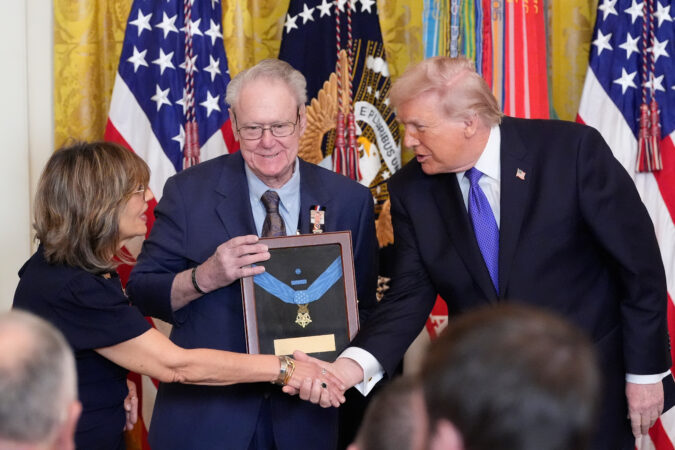
    WASHINGTON — President Donald Trump awarded the Medal of Honor to three U.S. Army soldiers at the White House on Monday, celebrating heroes of old wars as he defended his launch of a new one.

    Retired Command Sgt. Maj. Terry P. Richardson was recognized for actions during the Vietnam War that were credited with saving the lives of 85 other service members.

    Staff Sgt. Michael H. Ollis, who was killed in action in Afghanistan in 2013, was recognized for saving a Polish Army officer’s life.

    Master Sgt. Roderick W. Edmonds, who died in 1985, was recognized for his leadership and resistance as a prisoner of war in Germany during World War II.

    “There’s no ceremony that can be more important than this,” Trump said to begin the East Room ceremony that included the recipients’ family members and the man Ollis shielded from enemy fire.

    “Bravery is amazing,” Trump said. “You never really know who’s brave and who’s not until they’re tested.”

    Trump talks Iran, curtains, and Polish politics

    The Republican president also used the ceremony to talk about his fledgling war in Iran, his immigration crackdown, expansion of the White House, and curtains that he chose at the executive mansion.

    “I picked those drapes in my first term. I always liked gold,” he said.

    When noting Polish government officials there to recognize Ollis, Trump ventured into an aside on his endorsements in Poland’s elections.

    On Iran, Trump said preemptive action was necessary to block Tehran from rebuilding its nuclear program and becoming “an intolerable threat to the Middle East but also to the American people.”

    The Medal of Honor is awarded by U.S. presidents, in the name of Congress, for combat service that goes beyond the call of duty and risks one’s life.

    Richardson led a Vietnam reconnaissance mission

    On Sept. 14, 1968, Richardson was a staff sergeant on a reconnaissance mission as a platoon leader in the vicinity of Loc Ninh, part of the Republic of Vietnam.

    According to his citation, Richardson, a native of Cass City, Mich., came under fire from the North Vietnamese Army, including heavy machine-gun fire as he rescued three wounded soldiers. After the rescues, he led his unit to its intended destination, a hilltop identified as a place to direct airstrikes. He found the location to be part of an enemy camp but remained for at least seven hours, directing strikes even after being wounded by a sniper.

    Enemy forces eventually fled. Richardson, when found by other U.S. forces, declined medical evaluation so he could remain with his troops.

    “His gallant and selfless actions … spared the lives of 85 fellow soldiers,” the White House said.

    Trump praised Richardson, who attended with some members of his unit, as a “brave man” and described him as “central casting.”

    “You feel like fighting? I think we could take him today,” Trump said, joking with Defense Secretary Pete Hegseth.

    Ollis was killed shielding someone else in Afghanistan attack

    As a staff sergeant at Forward Operating Base Ghazni, Ollis was a skilled infantryman who led soldiers during an attack on the base by enemy combatants on Aug. 28, 2013.

    Ollis, 24 at the time, first directed soldiers to a bunker before returning to the building where they had been to check for any more endangered people, according to his citation. The New York City native came upon a Coalition Forces officer, Lt. Karol Cierpica of Poland. They moved toward combatants who breached the base perimeter and joined other coalition forces.

    During fighting, one enemy combatant confronted Ollis and Cierpica.

    “With complete disregard for his own safety, he positioned himself between the insurgent and the Coalition Forces Officer, who had been wounded and unable to walk,” his commendation reads. “Staff Sergeant Ollis fired on the insurgent and incapacitated him, but as he approached the insurgent, the latter’s suicide vest was detonated, mortally wounding him.”

    Called to the podium by Trump, Cierpica at times grew emotional as he paid tribute.

    “A soldier is not something you are from time to time. It is who you are forever,” Cierpica said, later adding, “I am deeply moved, happy, and grateful to God.”

    Cierpica named his son, Michael, after Ollis, and he addressed members of Ollis’ family by name, calling them “my second family from Staten Island” and the U.S. his “second homeland.”

    Edmonds led resistance in POW camp during WW II

    A master sergeant, Edmonds was the ranking non-commissioned officer among American prisoners of war at a German camp in early 1945.

    According to the commendation, the Germans announced on Jan. 26, 1945, that “only Jewish-American prisoners would fall out for roll call the following morning, at the threat of execution.”

    Edmonds, who enlisted from South Knoxville, Tenn., determined that allowing that segregation would result in the torture or death of 200 Jewish American POWs. He directed officers to have all 1,200 American troops present themselves for roll call.

    With a German commandant enraged, Edmonds stood his ground and invoked prisoners’ rights under international law.

    “We are all Jews here,” Edmonds said in a quote that Trump recounted Monday.

    The German officer relented and made no further efforts to identify the Jewish American soldiers.

    “Really amazing, right? It’s an amazing story,” Trump said.

    Weeks later, as Allied forces advanced toward the camp, the Germans ordered POWs to prepare for evacuation. Edmonds prepared the POWs to assemble in formation and resist. German forces eventually retreated from the camp.

    “Without regard for his own life Master Sergeant Edmonds gallantly led these prisoners in a relentless pursuit of opposition and resistance, forcing the Germans to abandon the camp leaving the 1,200 American prisoners behind,” the White House said.

    Edmonds’ son, Chris, first learned of the story when reading his father’s journals after his death, then interviewing surviving veterans who also were POWs. Chris Edmonds spent years pushing for the official recognition and on Monday accepted the medal from Trump on his father’s behalf.