Tag: no-latest

  • Congress will debate an Iran conflict that is well underway

    Congress will debate an Iran conflict that is well underway

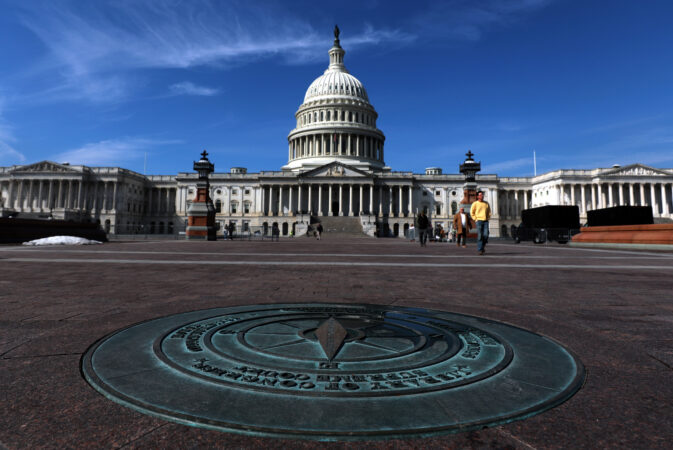
    WASHINGTON — The U.S. Congress is about to launch a war powers debate over President Donald Trump’s authority to bomb Iran under largely unusual circumstances — he has already done it, and the country is essentially already at war.

    Bombs are falling, people are dying and vows of revenge and retribution are being lobbed in escalating threats, all while untold taxpayer dollars are being spent on a military strategy that’s expected to continue for weeks with an undefined goal and conclusion. Unlike the run-up to the Iraq War in 2003, which included long debates in Congress in the aftermath of the Sept. 11, 2001, attacks, or the more recent U.S. military strikes on Venezuela that proved to be limited, the joint U.S.-Israel military attack on Iran, called Operation Epic Fury, is well underway, with no foreseeable end in sight.

    At least three U.S. military personnel have been killed, and Trump warned on Sunday “there will likely be more.”

    The moment is a defining one for Congress, which alone has the authority under the U.S. Constitution to declare war, and for the Republican president, who has consistently seized power during his second term with an apparent limitless view of his own executive reach.

    “The Constitution is intended to prevent the accumulation of power in any one branch of government — and in any one person in government,” said David Janovsky, acting director of The Constitution Project at the Project on Government Oversight, a watchdog organization.

    “Congress is the people’s representatives in a way that the president isn’t, even though we tend to focus on the president,” he said. “We need the people’s representatives to weigh in on whether we, the people, are going to war right now.”

    War powers as a check on presidential power

    In the U.S., the Congress would need to affirmatively approve wartime operations, with a declaration of war, or with an authorization for the use of military force, to essentially approve of the actions. But this rarely happens.

    In fact, Congress has declared war just five times in the nation’s history, most recently in 1941, to enter World War II a day after the Pearl Harbor attack. Congress approved an AUMF for the 1990 Gulf War and did so again in 2001 and 2002 to launch the 9/11-era wars into Afghanistan and then Iraq.

    But Congress also created the war powers resolution during the Vietnam War-era, as something of a tool of last resort — deployed to slap back a president who had embarked on military excursions without congressional approval.

    Both the House and the Senate have prepared war powers resolutions for votes this week.

    Sen. Mark Warner, the top Democrat on the Senate Intelligence Committee, said Trump, as president, “does not have the right to do this on his own.”

    “When the president commits American forces to a war of choice, he needs to come before Congress and the American people and ask for a declaration of war,” Warner said on CNN’s “State of the Union.”

    While lawmakers have criticized the Iranian regime and its nuclear ambitions, Democrats said Trump has not provided a rationale for the war or outlined its strategy for what comes next, and Trump’s MAGA coalition is splintering over what it sees as the president’s failure to keep his “America First” campaign promise by leading the U.S. toward an overseas war. Many lawmakers are wary of a longer entanglement as the operation killed Iran’s Supreme Leader Ayatollah Ali Khamenei and hundreds of people in the region.

    White House officials are scheduled to brief congressional leaders and lawmakers this week, but the question-and-answer sessions will be behind closed doors, without a watchful public.

    Power of the purse can stop wars

    Over time, presidents of both major political parties have accumulated vast authority to engage in what are often more limited U.S. military strikes to accomplish strategic national security goals without approval from Congress. Democrat Barack Obama’s military operations over Libya and Republican George H.W. Bush’s incursions into Panama were conducted without the nod from Congress.

    But restraining a president’s war powers is something lawmakers past and present have rarely been able to accomplish. Even if Congress is able to pass a war powers resolution to curb Trump in Iran, the House and the Senate would be unlikely to tally the two-thirds majority needed to overcome a presidential veto.

    Trump has shrugged at the power of Congress to dictate what he can and can’t do, in war and other matters. He made only a brief mention of Iran in his State of the Union address last week, treating lawmakers’ support as an afterthought.

    John Yoo, a law professor at the University of California, Berkeley, said the Founding Fathers set up a constitutional system in which the president and Congress would battle it out over these issues — but with Congress having one particularly powerful tool, because it controls the federal funding.

    “Congress, they know how to stop this if they want to,” said Yoo, who helped draft the Bush administration’s 2001 and 2002 use of force authorizations. The Vietnam War ended once Congress pulled funding, he said.

    But Congress is controlled by a Republican majority that largely shares Trump’s view of focusing military power against Iran, and it recently approved massive new funds for the Pentagon, some $175 billion, in the big tax cuts bill that he signed into law last yar.

    With the Republican president’s party in power in the House and the Senate, it’s no surprise they are unlikely to object, Yoo said: “They agree with him.”

    Debate in Congress begins

    Ahead of debates, Republican Sen. Tom Cotton, the chairman of the Senate Intelligence Committee, said Trump already laid out his vision for Iran.

    Cotton said Sunday that Trump has made it clear the U.S. won’t be sending ground forces inside Iran. Instead, Americans should expect to see an “extended air and naval campaign” in the region, which could result in pilots being shot down, though he said the military personnel would be recovered.

    He expects a weekslong campaign as Iran names a new leader and determines how it will react to the U.S. attack.

    “There’s no simple answer for what’s going to come next,” Cotton said on CBS’ “Face the Nation.”

  • Letters to the Editor | March 2, 2026

    Letters to the Editor | March 2, 2026

    Dangerous men

    It is beyond disgusting that the prince formerly known as Andrew was finally arrested, not for any of his alleged egregious crimes with underage girls and women, but for some impropriety with government documents. I’m waiting for whatever materializes against our current leader regarding the Jeffrey Epstein files, despite the dozens of women who had already voiced claims of sexual assault before he was first elected president. There is no denying that men have a zipper problem. It transcends race, religion, ethnicity, politics, wealth, age, education, legal status, you name it. Would relaxing views on celibacy, masturbation, and decriminalizing sex work help? I don’t know. Women are still regarded as chattel and statistically have a one in three chance of being the victim of physical or sexual violence in their lifetime. It didn’t spare this writer. It won’t spare your mother, sister, daughter, neighbor, coworker, nurse, teacher, or friend. One in three women is a victim! Please report and support to help end sexual assault against women. Enough!

    K. Mayes, Philadelphia

    Missing documents

    Fifty-two years ago, Richard Nixon famously proclaimed, “People have to know whether or not their president is a crook.” As applied to our current president, one jury has already answered that question, and repeated revelations regarding his (and his family’s) financial dealings suggest an unfortunate answer (unfortunate for the country, but not for his family’s bank accounts).

    Beyond Nixon’s mandate, the American people have to know whether their president is a pedophile. However, under Donald Trump’s absolute control, the U.S. Department of Justice (now staffed with his acolytes, the “Roy Cohns” whose absence Trump lamented during his first term) refuses to release millions of files related to Jeffrey Epstein, and has produced documents rendered meaningless with many redactions in violation of federal law.

    As with his other legal and moral challenges, Trump’s robotic claim of “complete exoneration” rings hollow unless and until the evidence is revealed and analyzed. As Trump continues to give the survivors, members of Congress, and the American public the middle finger, where are the elected Republicans? The answer to that one is also obvious: Still cowering under their beds with the lights out.

    Stephen Ulan, Wynnewood

    Dress for respect

    Two recent comments by Pennsylvania’s senior senator, John Fetterman, caught my attention. For one, he criticized Democrats who boycotted the State of the Union address, saying it was a matter of respect for the office of the presidency. At another point, he acknowledged that he usually “dresses like a slob” before showing up in a suit for Donald Trump’s address. Should we conclude from his own comments that he respects the president but not his colleagues?

    Laslo Boyd, Philadelphia

    Inspired to give

    Ramadan has begun. It’s a sacred month observed by Muslims through fasting and prayer. From dawn to dusk, Muslims abstain not only from food and drink, but also from harsh words and other negative behaviors. As the Holy Quran teaches, “O ye who believe! fasting is prescribed for you … so that you may become righteous” (2:184). Ramadan is, at its heart, a time for spiritual growth and moral renewal.

    Experiencing hunger reminds us of our neighbors who face it daily. The Holy Prophet Muhammad (peace and blessings be upon him) said, “He is not a believer whose stomach is filled while his neighbor goes hungry.” In a nation where one in eight families has faced food insecurity in recent years — disproportionately affecting single-parent households, families below the poverty line, and many families of color — this message feels especially urgent.

    Ramadan calls Muslims to increase their generosity and to feed the needy. We invite our fellow Americans, regardless of faith, to join in supporting local food banks, shelters, and community initiatives. Together, we can transform empathy into action. Though Ramadan is usually marked by joyful gatherings, we are mindful of the many around the world suffering from conflict and hardship. We pray for peace, justice, and for leaders to place our shared humanity above division. May this month inspire compassion and service for all.

    Madeel Abdullah, Garnet Valley

    Little things

    “Don’t sweat the small stuff” is a phrase we usually hear in personal life, not in healthcare. But hospitals would do well to take it seriously — because in medical settings, the “small stuff” is often anything but. Patients and families routinely encounter minor lapses that, taken individually, may seem inconsequential: unanswered call buttons, missing medications, delayed transport, incomplete discharge instructions, inaccurate charts, malfunctioning equipment, or staff who are stretched so thin that basic communication falls apart. None of these failures alone makes headlines. Yet, together, they erode trust, increase risk, and ultimately affect outcomes.

    Hospitals are rightly focused on major metrics — mortality rates, readmissions, infection control, and cutting-edge treatments. But an exclusive focus on big-picture indicators can blind institutions to the everyday breakdowns that define the patient experience. When small problems are tolerated, normalized, or dismissed as inevitable, they accumulate into systemic failure. For patients who are elderly, seriously ill, or frightened, these “little things” are not abstractions. They are moments of confusion, discomfort, and vulnerability. For families, they are warning signs that no one is fully in charge.

    Attention to detail is not cosmetic; it is clinical. Precision, follow-through, and accountability at the smallest levels are the foundation of safe, humane care. Hospitals that truly aspire to excellence must insist on reliability not only in the operating room, but in the hallway, the chart, the shift change, and the bedside conversation. If hospitals want better outcomes, they should start by sweating the small stuff.

    John C. Levine, Philadelphia

    Not a hoax

    It is disturbing to watch Donald Trump’s Environmental Protection Agency take a huge step backward on protecting the world as we know it. We know the climate emergency will determine the future for all living things on Earth. Many aspects related to the weather — extreme storms, droughts, heat waves, freezes — are being affected. Several years ago, I read a small book on climate change by Greg Craven, a science teacher in Corvallis, Ore., who produced a series of short videos that explained phenomena such as the melting of polar ice caps and thawing of the tundra, both of which would likely lead to dramatic shifts in the weather we have known for millennia. Both are now happening.

    Craven created a chart on the impact of taking climate action. There were four squares: 1) Climate change is not a problem, and we don’t take action. 2) Climate change is not a problem, and we take action that proves unnecessary. 3) Climate change is a problem, and we do take action. 4) Climate change is a problem, and we don’t take action. It’s that last box that we are now putting ourselves in, and it’s the one box Craven said we should avoid at all costs.

    Sue Edwards, Swarthmore

    Join the conversation: Send letters to letters@inquirer.com. Limit length to 150 words and include home address and day and evening phone number. Letters run in The Inquirer six days a week on the editorial pages and online.

  • Horoscopes: Monday, March 2, 2026

    ARIES (March 21-April 19). Through your gift for vivid fantasy, you feel what it’s like to live in a world filled with all you value and aspire to, and you can really see it. When you touch back to reality, you use this as a compass.

    TAURUS (April 20-May 20). A little bit of research will show better options, but a lot of research may show you so much that it confuses the issue. Be strategic and to the point, limiting your inquiry process to a few hours.

    GEMINI (May 21-June 21). Your natural mode is curiosity, and you love experimentation, so the unsolicited advice from those who seem to take joy in cautioning you against this and that can feel annoying. It might be more about their need for control than your safety.

    CANCER (June 22-July 22). There are many kinds of justice to be served, including, notably, justice of the poetic variety. A quiet, satisfying ripple of irony washes over the moment. You’ll be validated in some way, and the poetic symmetry of it all will be delicious.

    LEO (July 23-Aug. 22). You’re a giver. Even when you’re receiving, you’re giving. So how do you stay fortified? By rooting yourself where you’ll flourish. Keep in mind that there are no universally correct environments. A cactus thrives in the desert, a vine in the jungle.

    VIRGO (Aug. 23-Sept. 22). It’s like the day keeps slipping you small gifts — little surprises to remind you you’re unique and essential to how it’s all going. Life is collaborating with you and enjoying the collaboration.

    LIBRA (Sept. 23-Oct. 23). You’re hearing a lot today that either doesn’t quite hit you the right way or doesn’t quite ring true. When honest words aren’t pleasing and pleasing words aren’t honest, you’ll take a step back and reassess more than just these sentences.

    SCORPIO (Oct. 24-Nov. 21). Love is as love does. Put stock in action. It’s not that words matter less today; it’s that they hardly matter at all because irrefutable truth is in how people treat one another, and the difference that makes.

    SAGITTARIUS (Nov. 22-Dec. 21). Societal standards of beauty are ever-changing because beauty relies on freshness. Yes, fashions come back around, trends resurface, but it’s never exactly the same twice. You’ll love the version of a classic you knew well.

    CAPRICORN (Dec. 22-Jan. 19). You’re not sure what you’re going to get in a relationship these days. But through the tension, tenderness, friction and fun, you’re reminded that the long haul has many chapters and moods, and that’s what makes it meaningful.

    AQUARIUS (Jan. 20-Feb. 18). People with influence will be impressed with your confidence, ease, curiosity, discernment and how you listen and carry yourself. Don’t talk shop too soon. It can flatten all your vibes into transactional relationships. Feel this out over time.

    PISCES (Feb. 19-March 20). Seems like yesterday’s solution is becoming today’s problem, which only means the world is turning on its typical axis. Still, you’ll have a joyful moment of appreciation for this unique set of less-than-ideal circumstances.

    TODAY’S BIRTHDAY (March 2). Welcome to your Year of Profound Belonging. You’ll work and play in teams that are more like family. There is much to learn and do in the safety of healthy groups where love, talent and vision lift all. More highlights: Financial ease and professional recognition. You’ll try new endeavors, and your daring and commitment blossom into versions of your best self. Inspiration will often strike at midnight. Leo and Pisces adore you. Your lucky numbers are: 3, 27, 14, 39 and 22.

  • Dear Abby | Friendship with neighbor is more one-sided than ever

    DEAR ABBY: I have always looked inside a person before casting judgment. It has been six years that I’ve been close friends with my neighbor “Tim.” I have always regarded him as a Kramer from Seinfeld.

    I have OCD. I am a clean freak. I work hard to support myself and my kids. Tim is on every government program. He’s a hoarder. His dog is filthy, and Tim literally has to leave notes posted in his house to “remind” himself to wash his own hands. Tim is politically my opposite. He’s narcissistic, and if you disagree with him, he gets crazy, raging with anger. I have remained friendly with him because I feel bad for him.

    Tim is always asking me to go out to dinner or an event, and I’m always turning him down. He doesn’t have much money, so when he needs something, I help out. Lately, though, because I feel like he’s taking me for granted, I have been quietly pushing him away. Tim has now become increasingly needy, both emotionally and financially. How can I end the friendship without sending him into a spiral?

    — NEIGHBOR IN NEVADA

    DEAR NEIGHBOR: Friendship is supposed to be reciprocal. From your description of your relationship with Tim, it has been all take and no give. Because this relationship has become so lopsided, continue refusing his invitations, be less available when he wants to dump his troubles on you and quit giving him money.

    ** ** **

    DEAR ABBY: I am tormented by an incident that occurred at a time when I did not have the ability to object or present facts to disagree. My father had given me permission to invite my three close college friends for a holiday dinner. My stepmother evidently objected to it. A week before the dinner, my stepmother’s father began verbally attacking me for inviting my friends, implying that I had been out of line. He said, “Holidays are for family.” I was shocked by his statement because I had been taught from elementary school that people invite others for the holiday to share our gratitude for what we have. This could include those who have no family and are alone for the holiday. After that holiday, my stepmother told me I would never have friends over again for any holiday.

    In each of the 25 or so years that have passed, that painful incident comes to mind, and I wish I had had the ability to speak out. What would you suggest should have been the proper answer, at the time, in this case?

    — SEARCHING FOR CLOSURE

    DEAR SEARCHING: You could have told your stepmother that sharing holidays with friends was never forbidden before she came along, but now that she ruled the roost, you and your friends would be celebrating elsewhere. I hope that in your adulthood you have practiced the principle of inclusion which is intrinsic to your nature.

  • Venezuela’s opposition leader Machado says she will return to the country in the coming weeks

    Venezuela’s opposition leader Machado says she will return to the country in the coming weeks

    CARACAS, Venezuela — Venezuelan opposition leader and winner of the 2025 Nobel Peace Prize María Corina Machado said on Sunday that she will return to Venezuela in the coming weeks and that elections will be held in the South American country.

    Machado did not set a date for her return but said that one of the objectives will be to prepare “for a new and gigantic electoral victory.”

    In a message shared on social media, the politician called on her supporters to “strengthen the unity of Venezuelans that began with the primaries,” a reference to the 2023 process in which she won the vote aimed at establishing a single candidate to compete at the polls against former President Nicolás Maduro.

    Acting President Delcy Rodríguez — in power since Maduro and his wife were captured in a U.S. military operation in January — has warned that Machado “will have to answer” if she returns to the country.

    U.S. Secretary of State Marco Rubio has said that change in Venezuela must go through phases of stabilization, economic recovery, and transition. He has not indicated that elections could be held in the short term.

    The 58-year-old politician, a key figure in the Venezuelan opposition, was awarded the Nobel Peace Prize last year for her fight for democratic transition in Venezuela.

    She controversially later presented her medal to U.S. President Donald Trump after the military intervention that deposed Maduro, who now faces drug-trafficking-related charges in U.S. courts. He has pleaded not guilty.

    After Maduro was declared the victor of the July 2024 elections, protests erupted that sparked widespread repression. The opposition claimed it had credible evidence that the real winner was Edmundo González, who replaced Machado after she was barred from participating.

  • Trump expects his Fed pick and AI to deliver a replay of the ’90s boom. Economists have doubts

    Trump expects his Fed pick and AI to deliver a replay of the ’90s boom. Economists have doubts

    WASHINGTON — President Donald Trump, his Treasury secretary, and his choice to lead the Federal Reserve believe they can coax the U.S. economy into partying like it’s 1999.

    They are putting their faith in artificial intelligence to duplicate what happened when another technology arrived in the 1990s: the internet. Back then, the American economy surged as businesses became more productive, unemployment tumbled, and inflation remained in check.

    Trump is confident that his nominee to become Fed chair, Kevin Warsh, can unleash an even greater economic bonanza by jettisoning what the president sees as the central bank’s hidebound reluctance to slash interest rates.

    Many economists are skeptical.

    The world looks a lot different today than it did when the Spice Girls ruled radio and Titanic dominated the box office. And the story the Trump team is telling — that a visionary Fed chair, Alan Greenspan, fueled the ‘90s boom by keeping interest rates low — is incomplete at best.

    “The administration is offering a rather distorted version of what actually happened in the 1990s,’’ economist Dario Perkins of TS Lombard said in a commentary.

    Nonetheless, the Trump administration believes history can repeat itself. All that’s been missing, in the president’s view, is a Fed chair with Greenspan’s foresight.

    AI’s influence over interest rates

    Trump has repeatedly attacked current Fed chief Jerome Powell, whose term as chair ends in May, for his reluctance to lower rates aggressively while inflation hovers above the central bank’s 2% target. Treasury Secretary Scott Bessent said on social media in January that the president sought to replace Powell with someone with “an open, Greenspan-like mind.”

    “Our nation can see productivity boom like we did in the ’90s when we are not encumbered by a Federal Reserve which throws the brakes on,’’ Bessent said.

    On Jan. 30, Trump said he was picking Warsh.

    In speeches and writings, Warsh has argued that AI-driven improvements in productivity could justify lower interest rates.

    These views align with Trump’s desires for Fed rate cuts but mark a break with Warsh’s own past as an inflation hawk. In the aftermath of the 2007-2009 Great Recession, Warsh — then a Fed governor — objected to some of the central bank’s efforts to help the struggling economy by pushing down rates even though unemployment exceeded 9%. Warsh warned then, wrongly, that inflation would soon accelerate.

    At issue now are gains in productivity and the possibility that AI will make them bigger — much bigger.

    To economists, productivity improvements are almost magical. When companies roll out new machines or technology, their workers can become more efficient and produce more stuff per hour. That allows firms to earn more and to raise employees’ pay without raising prices. In short: Surging productivity can drive economic growth without spurring inflation.

    Greenspan and the internet

    In the mid-1990s, Greenspan was contending with a strange set of economic circumstances: Wages were rising, but inflation wasn’t heating up.

    Big productivity gains might have explained things, but government data showed no sign of them. Other Fed policymakers worried that surging wages and tame inflation couldn’t coexist and that higher prices were coming. They wanted to raise interest rates.

    But Greenspan suspected the official productivity numbers were missing something. For one thing, they didn’t jibe with the amazing tales of efficiency improvements the Fed was hearing from companies investing in computers and turning to the internet.

    So he ordered his lieutenants to dig through decades of productivity numbers. The official statistics they assembled told an implausible story: Services firms — from retailers to legal practices — had supposedly seen productivity fall over the years, despite intense competitive pressure and massive investments in technology.

    Greenspan didn’t believe it. He persuaded his Fed colleagues that the government’s numbers were wrong and were understating productivity. They agreed in September 1996 to hold off on raising rates.

    The economy took flight.

    Tardily, productivity advances began to show up in the official data. Overall, American economic growth surpassed 4% every year from 1997 through 2000, something it would do again only once in the next quarter century. The unemployment rate plunged to 3.8% in April 2000, lowest in three decades. Inflation stayed in its cage, coming in below 2% — later the Fed’s official target — for 17 straight months in 1997-1999.

    History repeats itself … maybe?

    American productivity certainly looked strong in the second and third quarters of 2025, and some economists attribute the improvements to early adoption of AI; they see bigger gains and stronger economic growth ahead.

    Others aren’t so sure.

    Joe Brusuelas, chief economist at the consulting firm RSM, wrote that the 2025 productivity improvements “are not because of artificial intelligence’’ but reflect investments in automation that companies made when they couldn’t find enough workers during and after the COVID-19 pandemic. “Those investments are starting to pay off,’’ Brusuelas wrote.

    Economist Martin Baily, senior fellow emeritus at the Brookings Institution, believes it will take time for AI to have a big impact on the way companies do business and on the nation’s productivity.

    “Companies don’t change that fast,” said Baily, chairperson of President Bill Clinton’s Council of Economic Advisers. “It’s expensive to change. It’s risky to change. The managers don’t necessarily understand the new technology that well. So they have to learn how to use it. They have to train their staff. All that stuff takes a long time.’’

    A productivity boom can raise the economy’s speed limit — how fast it can grow without pushing prices higher. But it might not justify lower interest rates, Federal Reserve Gov. Michael Barr said in a speech earlier this month.

    Businesses will borrow to invest in AI, putting upward pressure on interest rates. Likewise, American workers and their families likely would save less and borrow more in anticipation of higher wages, the payoff for being more productive; that would put still more pressure on rates to rise.

    Bottom line, Barr said: “The AI boom is unlikely to be a reason for lowering policy rates.’’

    Even Greenspan’s Fed eventually came to the same conclusion, reversing course and starting to raise its benchmark rate in mid-1999, taking it from 4.75% to 6.5% in less than a year. (The rate Trump complains about now is around 3.6%.)

    “Warsh and Bessent talk only about the dovish 1995/96 version of Greenspan; they overlook the hawkish 1999/2000 variant,’’ Perkins wrote.

    Then and now

    Many of Warsh’s potential future colleagues on the Fed’s interest-rate setting committee see the late 1990s experience differently than he does, setting up what could be a clash at the central bank if the Senate confirms Warsh as chair.

    Austan Goolsbee, president of the Federal Reserve Bank of Chicago, said earlier this week that “the analogy to the late 90s is a little harder for me to understand.” Greenspan’s insight was that productivity gains meant the Fed could hold off on raising rates, not that it should slash them, Goolsbee noted.

    “It wasn’t, ‘Should we cut rates because productivity growth is higher?’” he said.

    The economic backdrop that awaits Warsh is also far less friendly than the one Greenspan enjoyed.

    Greenspan was avoiding rate hikes at a time when the usually profligate U.S. government was running rare budget surpluses and didn’t need to borrow so desperately. Now, after a series of spending hikes and tax cuts, deficits are piling up year after year, and the Congressional Budget Office expects federal debt to hit a historic high of 120% of America’s GDP by 2035.

    Nor was productivity the only thing controlling inflation in the 1990s. Countries were lowering tariffs and dismantling trade barriers. Immigration was surging.

    Now, thanks largely to Trump’s own policies, notably his sweeping taxes on imports and his crackdown on immigration, the world is much different. “Trade barriers are going up,’’ Perkins wrote. “Globalization has given way to de-globalization.’’

    “That benign era is clearly behind us,’’ said Michael Pearce, chief U.S. economist at Oxford Economics.

  • Trump’s Medicaid work mandates are meant to save money. But first states will have to spend millions

    Trump’s Medicaid work mandates are meant to save money. But first states will have to spend millions

    JEFFERSON CITY, Mo. — To receive Medicaid health coverage, some adults will soon have to show they are working, volunteering, or taking classes. But to gather that proof, many states first will have to spend millions of dollars improving their computer systems.

    Across the nation, states face an immense task and high costs to prepare for the Jan. 1 kickoff of new Medicaid eligibility mandates affecting millions of lower-income adults in the government-funded healthcare program.

    The first half of a $200 million federal allotment has already begun flowing to states to help implement the new requirements. But the tab for the needed technology improvements and additional staff is likely to exceed $1 billion, according to an Associated Press analysis of budget projections in more than 25 states. That extra cost will be borne by a mixture of federal and state tax dollars.

    The task is not as simple as pushing through a software update on your smartphone or personal computer. That’s because each state has its own system for managing Medicaid, often requiring experts to make customized changes.

    “Our current eligibility systems are pretty old, and the ability to change them is very, very difficult,” said Toi Wilde, chief information officer for the Missouri Department of Social Services.

    New requirements affect millions, but not all

    The big tax-cut law signed last year by Trump is financed, in part, by sweeping Medicaid changes intended to cut government spending. Two of the most prominent will apply in four-fifths of the states, affecting Medicaid enrollees ages 19 through 64, without young children, whose incomes are above the typical eligibility cutoff.

    Those Medicaid participants will have to work or do community service at least 80 hours a month, or enroll at least half-time as a student. They also will face eligibility reviews every six months, instead of annually, meaning they could lose coverage more quickly when their circumstances change.

    The two provisions together are projected to save the federal government $388 billion over the next decade, resulting in 6 million fewer people with health insurance, according to the Congressional Budget Office.

    But states first must update their online portals used by Medicaid participants, their aging computer systems used by state workers, and their methods of verifying information through various databases.

    Most will have to turn to private contractors to meet the time crunch. At least 10 companies have agreed to offer discounted services, according to the federal Centers for Medicare and Medicaid Services.

    Making those technology upgrades “is going to be a lift. It’s not something straightforward. It’s not easy,” said Jason Reilly, a partner at Guidehouse, a firm that is advising several states on the Medicaid requirements.

    Most states don’t currently collect employment or education information about Medicaid participants. So states are looking to tap into outside sources to verify job and school data. But there’s no database of community volunteers.

    And states are still waiting on federal rules — not due until June — to define some of the exceptions to the work requirements, such as how to determine who qualifies as “medically frail.”

    States face extra pressure to get it right because the federal government will start penalizing states with too many Medicaid payment errors in October 2029.

    States will be angling for extra federal money

    Congress guaranteed all states a share of the $200 million allotted for Medicaid work and eligibility changes. But states must apply for additional federal money. The federal government covers up to 90% of states’ costs to develop systems for determining Medicaid eligibility, 75% of costs to maintain those systems, and half of most other administrative costs.

    Missouri won early approval for the 90% federal funding rate. State lawmakers now are fast-tracking a $32 million appropriation needed to solicit bids for vendors to start upgrading technology platforms and improving a chatbot for Medicaid participants. Over the next year, the state’s social services agency expects to need about 120 additional workers — at a cost of $12.5 million — to handle the extra administrative workload.

    Other states also project large costs. Maryland expects to spend over $32 million in federal and state funds to implement the Medicaid changes, Kentucky more than $46 million, and Colorado over $51 million. Arizona estimates it could cost $65 million — and require 150 additional staff — to implement the new federal requirements.

    Some states surveyed by the AP reported even higher expected costs, though they didn’t always provide a breakdown for how much is due to new Medicaid mandates and how much pertains to Supplemental Nutrition Assistance Program changes also contained in Trump’s big law.

    Several states, including Arkansas, said they are still working on cost estimates for the Medicaid changes. Arkansas instituted a Medicaid work requirement in 2018-2019, and thousands of people were dropped from the rolls before a federal court ended it. Many of the technology changes required by the new federal mandates could be covered under an existing vendor contract and have “a minimal financial impact on our Medicaid budget,” the Arkansas Department of Human Services said in an email.

    Nebraska has said it plans to launch Medicaid work requirements in May, seven months ahead of the federal deadline. But the state has not detailed any associated costs and did not respond to inquiries from the AP.

    Georgia’s work requirement prompts concerns

    Georgia is currently the only state requiring some Medicaid recipients to work, after receiving special federal approval several years ago to expand coverage to some adults not otherwise eligible.

    The Georgia Pathways to Coverage program racked up more than $54 million of administrative costs from 2021 through the first part of 2025 — twice the amount of medical assistance paid out over that same period, according to the U.S. Government Accountability Office. Almost all of those costs came from technology changes to its eligibility and enrollment system.

    Some Medicaid analysts point to Georgia’s costs and Arkansas’ enrollment losses as reasons for caution as work requirements roll out in other states.

    “A huge amount of funding is going to go to vendors to construct these complicated red-tape systems that prevent people who need it from getting healthcare,” said Joan Alker, executive director of the Center for Children and Families at Georgetown University. “In my view, that is a big, big risk.”

  • Shooter who killed 2, injured 14 at Texas bar wore Iranian flag shirt, official says

    Shooter who killed 2, injured 14 at Texas bar wore Iranian flag shirt, official says

    AUSTIN, Texas — The gunman who killed two people at a bar in Texas early Sunday in a mass shooting being investigated by the FBI as a potential act of terrorism was wearing a sweatshirt that said “Property of Allah,” and another shirt with an Iranian flag design, a law enforcement official told the Associated Press.

    The shooting, which also left 14 wounded, erupted a day after the United States launched an attack on Iran with Israel that killed Ayatollah Ali Khamenei.

    The gunman was identified as 53-year-old Ndiaga Diagne, the Department of Homeland Security said in a statement.

    He first entered the U.S in 2000 on a B-2 tourist visa and became a lawful permanent resident six years later after marrying a U.S. citizen, according to DHS. He became a naturalized U.S. citizen in 2013, the department said. Diagne was originally from Senegal, according to multiple people briefed on the investigation who spoke on the condition of anonymity because they were not authorized to publicly discuss the investigation.

    Officers in Austin shot and killed the gunman, who used both a pistol and a rifle to carry out the attack, police said.

    The suspect drove past the bar several times before stopping and shooting a pistol out the window of his SUV at people on a patio and in front of the bar, according to Austin Police Chief Lisa Davis.

    The gunman then parked the vehicle, got out with a rifle and began shooting at people walking in the area before officers who rushed to the intersection shot him, Davis said. Three of those injured were in critical condition Sunday morning, police said.

    Authorities found “indicators” on the gunman and in his vehicle leading the FBI to look into the possibility of terrorism, said Alex Doran, the acting agent in charge of the FBI’s San Antonio office.

    “It’s still too early to make a determination on that,” Doran said Sunday morning.

    The White House said President Donald Trump had been briefed on the shooting.

    Texas Gov. Greg Abbott warned that the state would respond aggressively to anyone trying to “use the current conflict in the Middle East to threaten Texas.”

    “We will not be intimidated, and we will not be terrorized,” he said in a statement.

    The shooting happened outside Buford’s Backyard Beer Garden just before 2 a.m. along Sixth Street, a nightlife destination filled with bars and music clubs and only a few miles from the University of Texas.

    The school’s president said on social media that some of those impacted included “members of our Longhorn family.”

    “Our prayers are with the victims and all those impacted,” said university President Jim Davis.

    The entertainment district has a heavy police presence on weekends, and officers were able to confront the gunman within a minute of the first call for help, Davis said.

    Austin Mayor Kirk Watson praised the fast response by police and rescuers.

    “They definitely saved lives,” he said.

    One of the victims was found in the street between two parked cars. Inside the multistory bar, there were overturned tables and drinks left behind by fleeing customers.

    There have been at least two other high-profile shootings in Austin’s Sixth Street entertainment district within the past five years, including one in the summer of 2021 that left 14 people wounded. Although this weekend’s shooting doesn’t meet the definition of a mass killing, there have been five of those so far this year.

  • Letters to the Editor | March 1, 2026

    Letters to the Editor | March 1, 2026

    A fan of LaBan

    After reading “Jesse and Matt Ito’s big Japan adventure,” I will never refer to writer Craig LaBan as just a restaurant critic. This essay — concise and cogent, but also expansive and even emotional — is one of the best I’ve ever read in The Inquirer, or anywhere else. I’m a sushi fan who relies on the menu translations when I order, and although LaBan’s piece is full of details about sushi styles, dishes, ingredients, and sources, he fed me a lot of information in digestible form. The same is true of his account of touring remote Japan with the Itos (though I did appreciate the map). Best of all, he wove three generations of Ito family history into the narrative, including some of the tough stuff families endure, evoking the real importance of their trip to their lives together. A must-read for anyone who must work, likes to eat, or has a family.

    Joe Jones, Mount Holly

    Political malpractice

    Many concerned and worried Americans are calling out and condemning the transparent total politicization and weaponization of the U.S. Department of Justice, and deservedly so. But let’s not forget that it was a totally apolitical attorney general, Merrick Garland, whose extreme lack of political sensibility — combined with extreme and debilitating timidity — can rightfully be called out as a primary factor that allowed Donald Trump to run for and subsequently win the presidency. Garland’s interminable two years of foot-dragging before he appointed special counsel Jack Smith to investigate the president were unconscionable.

    Smith, in recent testimony before Congress, stated with categorical certainty that the evidence he compiled could have proved, beyond a shadow of a doubt, that Trump was guilty of crimes, and that he quite likely would have obtained a conviction if he’d had an opportunity to present his evidence. Maybe a modest touch of political awareness would have spared us from enduring and suffering through a second Trump presidency, with consequences whose outline can be seen but have yet to fully unfold.

    Ken Derow, Swarthmore

    West Bank killing

    The Feb. 19 Associated Press story “Israeli settlers kill 19-year-old Palestinian American” included multiple other issues, including Israeli “ethnic cleansing” of Palestinians in the West Bank, Israeli torture of Palestinians journalists, and the basic needs for Palestinians in Gaza. While each subhead in the report deserved a full article, the headline story certainly should receive more attention in a Philadelphia newspaper. The young man killed by Israeli settlers, Nasrallah Abu Siyam, was born here. According to news reports, he was shot while trying to stop settlers from stealing dozens of sheep. The AP story included some context but not all, such as the Israeli government’s de facto approval of the annexation of Palestinian land. Philadelphians should demand that the U.S. Department of State not only “condemn the violence,” but also cease military funding of Israel.

    Donna Sharer, Philadelphia

    Join the conversation: Send letters to letters@inquirer.com. Limit length to 150 words and include home address and day and evening phone number. Letters run in The Inquirer six days a week on the editorial pages and online.

  • Dear Abby | Book club crashers have hijacked its meetings

    DEAR ABBY: My spouse and I host regular meetings of a book club. It has been very successful; lots of people attend. We serve wonderful food and wine. Two attendees rarely miss this event, although they have never actually been invited. They come by default with their spouses, whom we did invite many years ago.

    We are not fond of these two women because they are whiny and annoying. They go on and on about their ailments and life problems, and they rarely have anything insightful to say about the books we discuss.

    My spouse and I wonder if they have ever read any book, much less one of the books we cover. We’re not sure if anyone else who attends feels the same way, but we do know that some of our friends have hung out with them. I often tell my spouse we need to drop them from the invitation list. She says we can’t because the other attendees will notice, and we’ll look like the bad guys.

    Is my partner right? Is there any way to stop inviting them without looking mean? I’m worried we will be stuck hosting the pair forever into our old age.

    — HATES THIS PLOT IN THE WEST

    DEAR HATES THIS PLOT: You very well may wind up hosting those two pills in perpetuity, UNLESS at the next meeting, you establish some rules that should have been made clear from the beginning. In order to participate in these get-togethers, members of the group must have read the book under discussion and refrain from discussing other topics during the meetings. To do this is not unreasonable.

    ** ** **

    DEAR ABBY: My mom and I recently got into an argument about her mortgage. I’m on the mortgage and title to her home because she couldn’t afford to be on it by herself and needed my income and credit to help her. So, I did. I helped her.

    I am now married, and my husband would like to refinance our home. The problem is, I’m still on the mortgage to my mother’s house. I have asked her twice before to let me off the mortgage, and she responded by saying, “I can’t. I need you.” When I asked again this last time, she blew up at me.

    She thinks my husband is controlling me or manipulating me to ask her to let me off the mortgage. Now she “hates him” and doesn’t want to see him or his family. She’s barely talking to me and acting super-cruel and vindictive. It hurts me that she is acting like a 5-year-old having a temper tantrum. I’m so sad. I just don’t know what to do anymore. Advice?

    — ENSLAVED IN MARYLAND

    DEAR ENSLAVED: You have my sympathy. Getting your name (and the financial guarantee that goes with it) off your mother’s mortgage may not be as simple as you would wish. It’s time you spoke about this with an attorney with an expertise in real estate, because extricating yourself may be both time consuming and expensive.