Tag: no-latest

  • Should your therapy session be outdoors? More therapists are trying it.

    Should your therapy session be outdoors? More therapists are trying it.

    Jennifer Udler has been a practicing therapist for 25 years. A little over a decade ago, she started training for a marathon, running with a group near her home in Montgomery County, Maryland.

    “I noticed that people were more comfortable, less inhibited, opening up and talking during our group training runs,” Udler said. “And I started to wonder if there was a way to do a practice where people are moving.”

    Udler sees children and adolescents as well as adults, and she suspected that her younger clients especially might feel more comfortable talking while walking on a nature trail rather than sitting in a therapist’s office. She decided to try it with one of her young clients with his mom’s permission.

    “We met at a park, and we walked around, and he was a different kid,” Udler said. “He was running around, and he was showing me stuff in nature. And he talked.” She said they made more progress in one session outside than they had in two years meeting in her office.

    “That was in the snow in February,” she added. “So I was like, it’s only going to get better.”

    Udler started reading more about outdoor therapy, which is also known as walk-and-talk or nature-informed therapy. At that time she couldn’t find any formal training or certification programs, but she did learn that other therapists had tried it and found many of the same benefits she had.

    “You’ve got the movement, you’ve got nature, which is extremely grounding and stabilizing for people, and you have the co-regulation, walking side-by-side,” Udler said. For her younger clients or anyone uncomfortable with therapy, it also helped to be walking while talking about difficult topics because they didn’t always have to make eye contact with her.

    She wrote her own informed consent for her clients, establishing the additional risks of outdoor therapy and how confidentiality would work in a public park. She started a practice called Positive Strides, specializing in walk-and-talk therapy sessions outdoors in nature.

    “As I did the work and saw different types of people with different kinds of mental health issues, I realized how amazing it is,” Udler said.

    Trading the couch for the great outdoors

    In March of 2020, when many therapists moved their practices online, a smaller number brought their practices outside. The benefits were not felt only by the clients. Nature acts as a sort of “buffer against burnout,” said Heidi Schreiber-Pan, the executive director and founder of the Center for Nature Informed Therapy, where she trains clinicians in how to bring their practices outdoors.

    “What we’re hearing from people is that they can see more clients when they have outdoor sessions or nature-informed sessions,” Schreiber-Pan said.

    The American Psychological Association put out new guidelines this past fall for how clinicians can implement walk-and-talk therapy into their practice.

    The number of therapists working outside is still small. Shreiber-Pan believes that’s in part because therapists don’t realize that nature is all around us. One of the first questions she asks in her trainings is: When you think of nature, what comes to mind?

    “They talk about, like, these beautiful national parks or the mountains or the ocean,” Shreiber-Pan said. “And where is your therapy office? Not there.” She said that part of the training is helping practitioners recognize that nature is all around us — even in a city park.

    Miki Moskowitz is a clinical psychologist who practices in a primary care setting, which means she sometimes sees a patient only a couple of times.

    “We’re trying to make a difference, even in one single session,” she said.

    For Moskowitz, practicing outside has improved her own mental health and increased her capacity, but she also sees the immediate impact for her patients.

    “What I’ve seen that’s so encouraging is that sometimes just that first session we go for the walk, and patients are, like: ‘Wow, I didn’t know this trail was here. This is so beautiful. This feels so great. This is totally something I can do on my own,’” Moskowitz said. “That is so much more powerful than if we’re sitting in my office, which has no windows, just talking about the idea of going outside.”

    The brain benefits of getting outside — even when it’s freezing

    When Marc Berman was doing research at the University of Michigan, he helped devise a study to look at the brain benefits of time in nature. Participants did a challenging task testing their memory and attention, and then they were sent on a walk either through downtown Ann Arbor or in the area arboretum. Those who walked in nature showed a 20% improvement in their short-term memory, while those who walked in an urban environment did not.

    Berman and his colleagues did this experiment in June and January. In the winter, the nature walk was less enjoyable — but just as beneficial.

    “That was pretty cool because it suggested that you didn’t have to enjoy the nature walk to get these cognitive benefits. There was something deeper going on,” Berman said.

    One explanation for why nature is so good for our brains is called the attention restoration theory. The idea is that our ability to pay attention is finite, and spending time in nature can replenish our capacity. Nature is also “softly fascinating” — it captures our attention without overwhelming our senses.

    “I can kind of mind-wander and think about other things when I’m looking at a waterfall,” Berman said. “I can’t really mind-wander or think about other things when I’m in Times Square.”

    Berman is now a psychology professor at the University of Chicago and author of the new book Nature and the Mind: The Science of How Nature Improves Cognitive, Physical, and Social Well-Being.

    How to make the most of time outdoors

    Whether or not you are in therapy, your brain can benefit from a dose of nature, especially during the colder months when many of us are inclined to stay indoors. Here are some science-backed tips for how to get the benefits.

    • Nature can be found anywhere. You just have to look for it. Research has shown that noticing nature and paying attention to it can have positive effects even in an urban environment. Psychologists recommend noting the bird song you hear on the walk to your car, looking at the leaves on the trees and the clouds in the sky, and just taking a moment to appreciate nature’s beauty — even if it’s just a small plant poking through the sidewalk.
    • You don’t have to like it. Nature can be an acquired taste, especially when it’s cold. But you don’t have to be a backpacker or love camping to benefit from time outside. Berman and others have found in their research that we get the brain benefits whether or not we enjoy a walk in the woods.
    • Try a mindfulness exercise. Many people struggle to sit still and meditate, despite its benefits — but Moskowitz said that mindfulness practices can come more easily outside. “Just look up at the treetops and notice what you see, notice what you hear,” Moskowitz said. “Look for something that’s moving, and watch the branches sway in the breeze. Look at something close up, or look at something far away. You’re doing a mindfulness practice, and you’re tuning into your senses, and you are focusing your attention, but it’s not hard work.”
    • Bring nature inside. If you aren’t able to get outside as often as you would like, you can still get some of the benefits. Put a plant in your office — even a fake one — or look at pictures of beautiful landscapes. Listen to bird songs at your desk. “It’s not as strong as the real thing, but you can get benefits from the simulated nature,” Berman said.
    • Embrace the winter. When it’s cold and snowy outside, our impulse is to stay inside. But less time outside can contribute to seasonal depression. Schreiber-Pan recommends following the Scandinavian practices of “friluftsliv” — or “open-air living,” getting outside no matter the weather — and hygge, or embracing the cozy indoors when you come back in. “The happiest people on this planet are the Scandinavians,” Schreiber-Pan said. “They also have the longest winters.”

  • Letters to the Editor | Feb. 19, 2026

    Letters to the Editor | Feb. 19, 2026

    Courage exemplified

    Ukrainian skeleton athlete Vladyslav Heraskevych was disqualified by the International Olympic Committee at the Winter Olympics for wearing a helmet in remembrance of Ukraine’s war dead. He is considered one of the best in this sport and had a good chance of winning a medal.

    This patriot summarized things precisely by saying that there are things “more important than medals.” As Ukrainian President Volodymyr Zelensky said, “Having courage is worth more than any medal.”

    The IOC should be condemned for failing to realize that remembrance is not political propaganda. Ukrainian Foreign Minister Andrii Sybiha hit the nail on the head by saying that it is “Russians who must be banned, not the commemoration of their victims.”

    Leo Iwaskiw, Philadelphia

    . . .

    The Winter Olympics in Italy are spectacular — as always, a world stage celebrating extraordinary human skill and potential — within the realms of good sportsmanship. How inspiring it is to witness the best athletes not only perform but also encourage and congratulate each other, sometimes despite their own personal ambitions as well as disappointments.

    Yet, how disheartening that, as the fourth anniversary of the unprovoked invasion of Ukraine approaches, an issue has developed. Ukrainian skeleton competitor Vladyslav Heraskevych has been disqualified from the 2026 Winter Olympics by the International Olympic Committee for refusing to remove his “helmet of memory” with images of athletes who have been tragically killed as a direct result of Russia’s war on his nation — even as American men’s figure skating competitor Maxim Naumov continues to show a picture of his parents who were tragically killed in the plane crash over Washington, D.C., a year ago. What a double standard for these young people grieving heavy losses. Shame on the IOC for its blatantly biased ruling and its failure to honor basic humanity in each one of us.

    Christine Fylypovych, Blue Bell

    Ingrained images

    The Vietnam War and U.S. Immigration and Customs Enforcement’s Minneapolis War are forever linked by their utter depravity by three photographs seared in the soul of America.

    Saigon Execution. During the Tet Offensive on a Saigon street, a South Vietnamese police chief standing arm’s length from a handcuffed Viet Cong prisoner pulls the trigger. The photo was snapped simultaneously with the gun firing, showing the prisoner’s head beginning to explode.

    Napalm Girl. A 9-year-old girl is running naked, with third-degree napalm burns on a third of her body, arms outstretched, mouth wide open, a terrorized look on her face as if she were attacked by some unimaginable horror. Four other children are running in the same direction, one crying, all followed by soldiers strolling behind, seemingly unconcerned.

    Lost in America. Liam Conejo Ramos, 5 years old, wears a blue and white bunny hat with a Spider-Man backpack, standing next to a dirty vehicle, looking hopelessly forlorn. A man in black stands directly behind Liam with a hand on his backpack, apparently proud that he captured a hardened criminal.

    The pictures encapsulate how both wars are rotten to the core. The Saigon execution and the napalm girl photos helped stir a nation. Liam’s photo and Renee Good’s and Alex Pretti’s executions, along with the courageous Minnesotans, have done the same.

    Gary Goldman, Newtown

    Join the conversation: Send letters to letters@inquirer.com. Limit length to 150 words and include home address and day and evening phone number. Letters run in The Inquirer six days a week on the editorial pages and online.

  • Horoscopes: Thursday, Feb. 19, 2026

    ARIES (March 21-April 19). Stress doesn’t automatically mean something is wrong. Some stress is healthy, and some hard situations are worth sticking with if you know why you’re there. Check back in with your reasons and see if they still make sense.

    TAURUS (April 20-May 20). You know what it’s like to have unappealing options: bad or worse, rock or hard place, lesser of two evils. That’s what makes today’s choices feel luxurious. You’ll appreciate, celebrate and attract even more good fortune with your attitude of gratitude.

    GEMINI (May 21-June 21). You have allies in every area of life — professional, personal, spiritual and more. Call on them before you need them. You may never need them at all, and that’s what makes the relationship real. Otherwise, it’s just transactional.

    CANCER (June 22-July 22). You don’t need to disconnect from the world to connect with yourself again. You just need a little quiet. Two hours of real focus will be enough to finish something that’s been hanging over you and remember that you’re brilliantly competent.

    LEO (July 23-Aug. 22). A riddle you’ll easy guess: What do your loved ones crave when you’re not there, but sometimes take for granted when you are? Your presence. Warm, all-in, so you. Presence is a paradox: invisible in the moment, yet unforgettable in absence.

    VIRGO (Aug. 23-Sept. 22). Your vision energizes you. Bringing a fantasy to life — or even failing to do so — is far more interesting to you than working for the approval of others. You’ll be guided by an internal logic akin to appetite.

    LIBRA (Sept. 23-Oct. 23). Desire and availability are intertwined. When something is rare, it draws the eye and quickens the pulse. Some people, in certain moods, find that the risk of missing out awakens decisiveness they didn’t know they had.

    SCORPIO (Oct. 24-Nov. 21). You’re feeling some uncertainty about the rules, your strategy or how to play the game in general. This is your subconscious nudging you to reevaluate. Go back to the beginning. Is this game even worth playing? What are your odds of winning?

    SAGITTARIUS (Nov. 22-Dec. 21). When someone is defensive, resistant or closed off, new information can’t go in. People don’t learn with their arms crossed. Go where the teachers and students are receptive like you, hearts and minds open, and you’ll learn quickly.

    CAPRICORN (Dec. 22-Jan. 19). The second easiest way to keep your promises is to make promises that are easy to keep. The top easiest way is not to make them in the first place. You’ll deliver more than expected today because you didn’t tell them what to expect.

    AQUARIUS (Jan. 20-Feb. 18). What happens right before becoming? Exposure. Awkwardness. Uncertainty. So in a way, you can see those uncomfortable feelings as a sign of imminent arrival. At the very least, discomfort is the herald of improvement, and at most, transformation.

    PISCES (Feb. 19-March 20). Your mind is open and your curiosity strong. Ideas are everywhere, but some are worth more than others, and you sense right away what’s worth moving on. A small choice today slowly opens a bigger adventure in the future.

    TODAY’S BIRTHDAY (Feb. 19). It’s your Year of Buried Gold when “X” will mark the actual spot on the map where you should start digging. You’ll get the map through solid relationships, a mentorship and your own steady work and continuing education. Your curiosity and follow through are deservedly and richly rewarded. More highlights: a reunion, recognition for unseen efforts, and love that fits on multiple levels. Taurus and Pisces adore you. Your lucky numbers are: 12, 3, 44, 31 and 19.

  • Dear Abby | Daughter levels with mother about her future plans

    DEAR ABBY: I am 67, and my husband is 68. For the past six years, we have been caring for aging parents. My father-in-law, who had Alzheimer’s, passed away a few years ago. We went through a lot with him as his illness progressed. My mother-in-law is 87 and does not want to go into a nursing home. She still lives by herself, but my sister-in-law and I take turns cooking and bringing her food, and my husband works his tail off cutting the grass and doing maintenance and repairs she can no longer do. Although we are retired, our lives revolve around her needs.

    I recently had a conversation with my daughter, my only child. She has three sets of parents — us, my ex and his wife and her husband’s parents. She said she loves us, but she doesn’t want to take care of any of us. When she retires, she wants to enjoy her retirement, travel and not have to worry about caring for anybody.

    Having gone through it myself, I understand her feelings. Nobody WANTS to do this. At the same time, I’m a little hurt. All that we have — money, cars, house — is set up to go to her after we pass. Now it looks like we may need it to pay for assisted living. Abby, is it normal for kids these days to refuse to help aging parents?

    — REVISING PLANS IN MISSOURI

    DEAR REVISING: I don’t know whether it has become “normal,” but it is not unusual. Woe to any parent who assumes their children will take care of them, because it doesn’t always turn out that way. Be glad your daughter is speaking up now, so you can plan accordingly.

    ** ** **

    DEAR ABBY: I lost my beloved mother-in-law five years ago. Since then, my father-in-law has become engaged to a woman who, frankly, is not liked by anyone in our family. She’s unkind and dismissive, and her presence creates tension at family gatherings.

    They have now announced their wedding date, which happens to fall on my birthday. This has hit me hard. My parents have both passed away, and my birthday has always been a cherished day, filled with memories and meaning. It was one of the few days I felt truly celebrated. Now, I worry that every future birthday will be overshadowed by their anniversary and the complicated emotions tied to it.

    Would it be selfish or inappropriate to ask them to consider a different date? I don’t want to cause drama, but I also feel deeply hurt. How do I navigate this without making things worse?

    — TORN BETWEEN GRACE AND GRIEF

    DEAR TORN: I am sorry for your disappointment, but the date of your birth does not belong solely to you. It’s clear that you disapprove of your father-in-law’s choice of a second wife, and I sincerely hope you will be able to adjust. I do not think it will go over well if you approach the happy couple and ask them to change the date of their nuptials to accommodate you.

  • Norman C. Francis, civil rights champion and recipient of Presidential Medal of Freedom, dies at 94

    Norman C. Francis, civil rights champion and recipient of Presidential Medal of Freedom, dies at 94

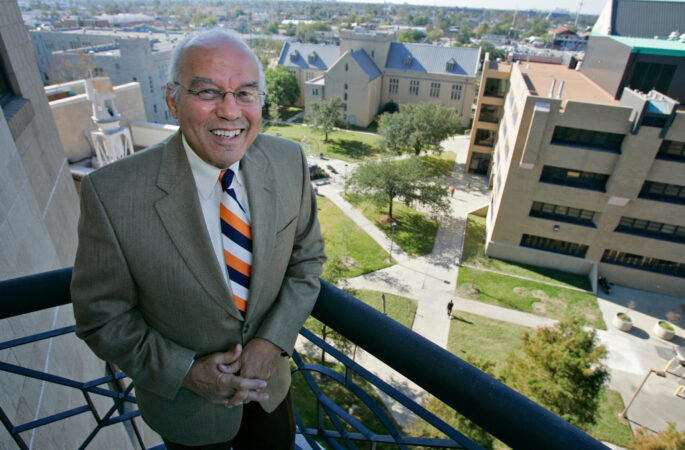
    Norman C. Francis, a civil rights pioneer and champion of education who played a pivotal role in helping rebuild New Orleans after Hurricane Katrina, died Wednesday. He was 94.

    Community members, activists, and leaders across Louisiana celebrated the life and accomplishments of Mr. Francis.

    “The nation is better and richer for his having lived among us,” said Reynold Verret, the president of Xavier University, which confirmed Mr. Francis’ death Wednesday in a statement.

    Mr. Francis took a high-profile role in the state’s response to Katrina, heading the Louisiana Recovery Authority, which was tasked with overseeing the multibillion-dollar rebuilding effort.

    Former New Orleans Mayor Mitch Landrieu said that after Katrina, Mr. Francis “stood in the breach.” Landrieu, who served as lieutenant governor when Katrina decimated New Orleans in 2005, said he often turned to Mr. Francis for advice and counsel — including in “his toughest moments.”

    “The most defining part of his character is that he treats every human being with dignity and respect,” Landrieu posted on X on Wednesday.

    Mr. Francis was well-known for his role as president of Xavier University in New Orleans, the nation’s only predominantly Black Catholic university. Mr. Francis held the position for 47 years beginning in 1968.

    During his tenure, enrollment more than doubled, the endowment mushroomed and the campus expanded. The small school gained a national reputation for preparing Black undergraduates for medical professions and for producing graduates in fields such as biology, chemistry, physics, and pharmacy.

    In the aftermath of Hurricane Katrina, when parts of the school’s campus were submerged under 8 feet of water, Mr. Francis vowed that the college would return.

    Multiple civil rights groups, including the American Civil Liberties Union, honored Mr. Francis as one of the nation’s top college presidents. In 2006, then-President George W. Bush awarded Mr. Francis with the Presidential Medal of Freedom.

    “Dr. Francis was more than an administrator. He was an institution builder, a civil rights champion, and a man of quiet generosity,” Louisiana U.S. Rep. Troy Carter posted on social media. “He believed education was the pathway to justice. He believed lifting one student could lift an entire family.”

    Mr. Francis, the son of a barber, grew up in Lafayette, Louisiana. He received his bachelor’s degree from Xavier in 1952. He became the first Black student at Loyola University’s law school — integrating the school and earning his law degree in 1955.

    He went on to spend two years in the Army, then joined the U.S. Attorney General’s office to help integrate federal agencies.

    Even then, he still couldn’t use the front door to enter many New Orleans hotels, restaurants, or department stores because of his race.

    “Some people say to me, ‘My God! How did you take that?’” Mr. Francis said during a 2008 interview with the Associated Press. “Well, you took that because you had to believe that one day, the words that your parents said to you ‘You’re good enough to be president of the United States’ yes, we held onto that.”

    In 1957, he joined Xavier in the role of Dean of Men, beginning his decades-long career at the university.

    Mr. Francis’ wife, Blanche, died in 2015. The couple had six children and multiple grandchildren.

  • Billionaire Les Wexner says he was ‘duped’ by adviser Jeffrey Epstein, ‘a world-class con man’

    Billionaire Les Wexner says he was ‘duped’ by adviser Jeffrey Epstein, ‘a world-class con man’

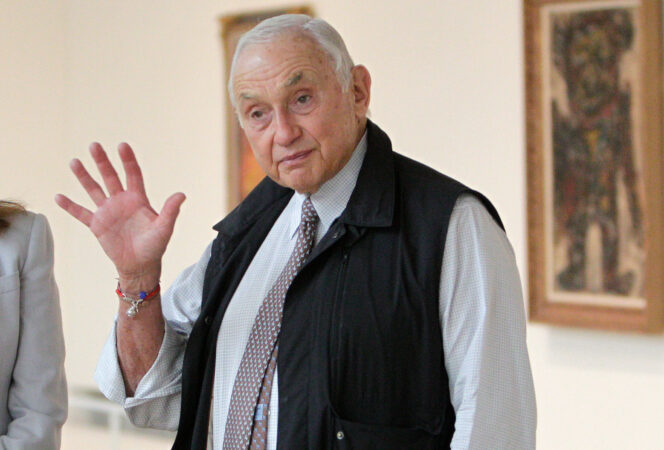
    NEW ALBANY, Ohio — The billionaire behind the retail empire that once blanketed shopping malls with names such as Victoria’s Secret and Abercrombie & Fitch told members of Congress on Wednesday that he was “duped by a world-class con man” — close financial adviser Jeffrey Epstein. Les Wexner also denied knowing about the late sex offender’s crimes or participating in Epstein’s abuse of girls and young women.

    “I was naive, foolish, and gullible to put any trust in Jeffrey Epstein. He was a con man. And while I was conned, I have done nothing wrong and have nothing to hide,” the 88-year-old retired founder of L Brands said in a statement to the House Oversight and Reform Committee released before his interview.

    The panel’s Democrats had subpoenaed him after the latest Justice Department release of Epstein-related documents revealed new details about Wexner’s relationship with the well-connected financier. Ranking member Rep. James Comer, a Kentucky Republican, said that Wexner “answered every question asked of him” during the six-hour proceeding and that a video and transcript would be released soon.

    Wexner described himself to the lawmakers as a philanthropist, community builder and grandfather who always strove “to live my life in an ethical manner in line with my moral compass,” according to the statement. He said he was eager “to set the record straight” about his ties with Epstein. Their relation ended bitterly in 2007, after the Wexners discovered he’d been stealing from them.

    As one of Epstein’s most prominent former friends, Wexner has spent years answering for their decades-long association and he sought to use the proceeding to dispel what he called “outrageous untrue statements and hurtful rumor, innuendo, and speculation” that have shadowed him.

    Rep. Robert Garcia, a California Democrat who sat in on Wednesday’s interview, expressed skepticism in comments to reporters gathered near the proceeding.

    “There is no single person that was more involved in providing Jeffrey Epstein with the financial support to commit his crimes than Les Wexner,” he said.

    In response to allegations by the prominent late Epstein victim Virginia Giuffre, who claimed in court documents that Wexner was among men Epstein trafficked her to, Wexner testified to utter devotion to his wife of 33 years, Abigail. He said he’d never once been unfaithful “in any way, shape, or form. Never. Any suggestion to the contrary is absolutely and entirely false.”

    Wexner’s name appears more than 1,000 times in the Epstein files, which does not imply guilt and Wexner has never been charged with any crimes. His spokesperson said the number of mentions is not unexpected given their long-running ties.

    ‘A most loyal friend’

    Epstein first met Leslie Wexner through a business associate around 1986.

    It was an opportune time for Wexner’s finances. The Ohio business owner had grown a single Limited store in Columbus into a suite of 1980s mall staples: The Limited, Limited Express, Lane Bryant and Victoria’s Secret. Bath & Body Works, Abercrombie & Fitch, Lerner, White Barn Candle Co., and Henri Bendel would follow.

    Wexner told lawmakers that it was several years before he turned over management of his vast fortune to Epstein, after the “master manipulator” connived to gain his trust. He gave Epstein power of attorney in 1991, allowing Epstein to make investments and do business deals and to purchase property and help Wexner as he developed New Albany from a small rural city to a thriving upscale Columbus suburb.

    Epstein had “excellent judgment and unusually high standards,” Wexner told Vanity Fair in a 2003 interview, and he was “always a most loyal friend.”

    On Wednesday, the billionaire said he didn’t circulate in Epstein’s social circle, but often heard accounts of his encounters with other wealthy people.

    Epstein “carefully used his acquaintance with important individuals to curate an aura of legitimacy,” Wexner said. He said he visited Epstein’s infamous island only once, stopping for a few hours one morning with his wife and young children while they were cruising on their boat.

    “It is interesting that Mr Wexner has already begun to clarify in his mind that somehow he and Mr. Epstein weren’t even friends,” Garcia told reporters. “We should be very clear that the two were very close, per reporting. They spent a lot of time together.”

    Epstein recalls ‘gang stuff’

    In one of the newly released documents, Epstein sent rough notes to himself about Wexner saying: “never ever, did anything without informing les” and “I would never give him up.” Another document, an apparent draft letter to Wexner, said the two “had ‘gang stuff’ for over 15 years” and were mutually indebted to each other — as Wexner helped make Epstein rich and Epstein helped make Wexner richer.

    Wexner spokesperson Tom Davies said Wexner never received the letter, characterizing it as fitting “a pattern of untrue, outlandish, and delusional statements made by Epstein in desperate attempts to perpetuate his lies and justify his misconduct.”

    Wexner told the congressional representatives that Epstein “lived a double life,” presenting himself to his wealthy clients as a financial guru with steady girlfriends while “most carefully and fully” hiding his misdeeds with underage girls. “He knew that I never would have tolerated his horrible behavior. Not any of it,” he said.

    Exploiting a sexy brand

    Some accusers said Epstein touted his ties to Wexner and claimed that he could help get them jobs modeling for the Victoria’s Secret catalog.

    One woman, an aspiring actor and model, told the FBI that Epstein said he was best friends with the longtime Victoria’s Secret owner and that she’d have to learn to be comfortable in her underwear and not be a prude, according to recently released grand jury testimony. Another woman said she reported Epstein to police in 1997 after he groped her during what she thought was a modeling interview for the Victoria’s Secret catalog. After Epstein’s 2019 arrest, Wexner’s lawyers told investigators that the business owner had heard a rumor that Epstein might be holding himself out as connected to Victoria’s Secret, prosecutors wrote in a recently disclosed memorandum summarizing the probe. When Wexner asked Epstein about it, Epstein denied doing so, the lawyers said, according to the memo.

    Wexner did not address the specific issue in his statement Wednesday, but repeatedly lamented being deceived by Epstein — “an abuser, a crook, and a liar.” L Brands sold off Victoria’s Secret in 2020, in one of Wexner’s final acts as chair.

    A relationship unravels

    Wexner did not publicly reveal until after Epstein’s arrest on federal sex trafficking charges in July 2019 that he had severed their relationship. In a Wexner Foundation letter that August, he said that happened in 2007. But the Justice Department’s newly released records show the two were in touch after that.

    Wexner emailed Epstein on June 26, 2008, after a plea deal was announced that would require him to serve 18 months in a Florida jail on a state charge of soliciting prostitution from a minor in order to avoid federal prosecution. He wound up serving 13 months.

    “Abigail told me the result … all I can say is I feel sorry. You violated your own number 1 rule … always be careful,” Wexner wrote. Epstein replied: “no excuse.”

    Davies said the 2007 date Wexner cited in 2019 applied to firing Epstein as financial adviser, revoking his power of attorney, and removing his name from Wexner’s bank accounts.

    Wexner also said in the 2019 letter that Epstein had misappropriated “vast sums” of his and his family’s fortune while overseeing his finances. An investigative memo from the latest document release says that Wexner’s attorneys told investigators in 2008 that Epstein had repaid him $100 million. Wexner said in Wednesday’s statement that Epstein returned “a substantial amount” of the undisclosed total.

    Garcia said that congressional investigators have identified more than $1 billion that was “either transferred, provided in stocks or given directly” by Wexner to Epstein — though Wexner “appears to be unaware” of much of it.

    Continuing fallout for Wexner

    On Wednesday, Wexner testified that he had never seen Epstein with any young girls and acknowledged the “unfathomable” pain he inflicted, even as discoveries in the Epstein files have placed new pressure on him.

    One survivor, Maria Farmer, said a redacted FBI report contained in the document release vindicated her longstanding claim that she filed one of the earliest complaints against Epstein while she was under his employ in 1996 working on an art project at the Wexners’ estate.

    Meanwhile, survivors of a sweeping sexual abuse scandal at the Ohio State University are citing Wexner’s association with Epstein to try to get his name removed from a campus football complex and university nurses also want his name scrubbed from the Wexner Medical Center.

  • Mark Zuckerberg quizzed on kids’ Instagram use in social media trial

    Mark Zuckerberg quizzed on kids’ Instagram use in social media trial

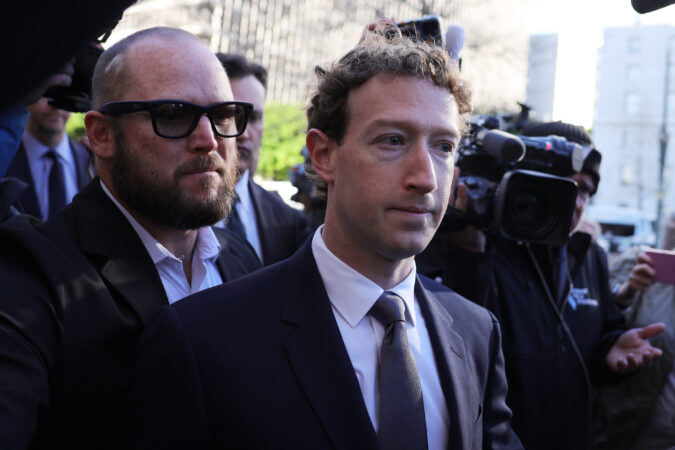
    LOS ANGELES — Mark Zuckerberg and opposing lawyers dueled in a Los Angeles courtroom on Wednesday, where the Meta CEO answered questions about young people’s use of Instagram, his congressional testimony and internal advice he’s received about being “authentic” and not “robotic.”

    Zuckerberg’s testimony is part of an unprecedented social media trial that questions whether Meta’s platforms deliberately addict and harm children.

    As of early afternoon, Zuckerberg has not directly answered the central question of the case: whether Instagram is addictive. The plaintiff’s attorney, Mark Lanier, asked if people tend to use something more if it’s addictive.

    “I’m not sure what to say to that,” Zuckerberg said. “I don’t think that applies here.”

    Attorneys representing the plaintiff, a now 20-year-old woman identified by the initials KGM, claim her early use of social media addicted her to the technology and exacerbated depression and suicidal thoughts. Meta Platforms and Google’s YouTube are the two remaining defendants in the case, which TikTok and Snap have settled.

    Beginning his questioning, Lanier laid out three options of what people can do regarding vulnerable people: help them, ignore them, or “prey upon them and use them for our own ends.” Zuckerberg said he agrees the last option is not what a reasonable company should do, saying, “I think a reasonable company should try to help the people that use its services.”

    When he was asked about his compensation, Zuckerberg said he has pledged to give “almost all” of his money to charity, focusing on scientific research. Lanier asked him how much money he has pledged to victims impacted by social media, to which Zuckerberg replied, “I disagree with the characterization of your question.”

    Lanier questioned the Meta CEO extensively about a comment he made during a past congressional hearing, where he said Instagram employees are not given goals to increase amount of time people spent on the platform.

    Lanier presented internal documents that seemed to contradict that statement. Zuckerberg replied that they previously had goals associated with time, but said he and the company made the conscious decision to move away from those goals, focusing instead on utility. He said he believes in the “basic assumption” that “if something is valuable, people will use it more because it’s useful to them.”

    Lanier also asked Zuckerberg about what he characterized as extensive media training, including for testimonies like the one he was giving in court. Lanier pointed to an internal document about feedback on Zuckerberg’s tone of voice on his own social media, imploring him to come off as “authentic, direct, human, insightful and real,” and instructing him to “not try hard, fake, robotic, corporate or cheesy” in his communication.

    Zuckerberg pushed back against the idea that he’s been coached on how to respond to questions or present himself, saying those offering the advice were “just giving feedback.”

    Regarding his media appearances and public speaking, Zuckerberg said, “I think I’m actually well known to be sort of bad at this.”

    The Meta CEO has long been mocked online for appearing robotic and, when he was younger, nervous when speaking publicly. In 2010, during an interview with renowned tech journalists Kara Swisher and Walt Mossberg, he was sweating so profusely that Swisher asked him if he wanted to “take off the hoodie” that was his uniform at the time.

    Lanier spent a considerable stretch of his limited time with Zuckerberg asking about the company’s age verification policies.

    “I don’t see why this is so complicated,” Zuckerberg said after a lengthy back-and-forth, reiterating that the company’s policy restricts users under the age of 13 and that they work to detect users who have lied about their ages to bypass restrictions.

    Zuckerberg mostly stuck to his talking points, referencing his goal of building a platform that is valuable to users and, on multiple occasions, saying he disagreed with Lanier’s “characterization” of his questions or of Zuckerberg’s own comments.

    Zuckerberg has testified in other trials and answered questions from Congress about youth safety on Meta’s platforms. During his 2024 congressional testimony, he apologized to families whose lives had been upended by tragedies they believed were caused by social media. But while he told parents he was “sorry for everything you have all been through,” he stopped short of taking direct responsibility for it. This trial marks the first time Zuckerberg stands before a jury. Once again, bereaved parents are sitting in the courtroom audience.

    The case, along with two others, has been selected as a bellwether trial, meaning its outcome could impact how thousands of similar lawsuits against social media companies are likely to play out.

    A Meta spokesperson said the company strongly disagrees with the allegations in the lawsuit and said they are “confident the evidence will show our longstanding commitment to supporting young people.”

    One of Meta’s attorneys, Paul Schmidt, said in his opening statement that the company is not disputing that KGM experienced mental health struggles, but rather disputing that Instagram played a substantial factor in those struggles. He pointed to medical records that showed a turbulent home life, and both he and an attorney representing YouTube argue she turned to their platforms as a coping mechanism or a means of escaping her mental health struggles.

    Zuckerberg’s testimony comes a week after that of Adam Mosseri, the head of Meta’s Instagram, who said in the courtroom that he disagrees with the idea that people can be clinically addicted to social media platforms. Mosseri maintained that Instagram works hard to protect young people using the service, and said it’s “not good for the company, over the long run, to make decisions that profit for us but are poor for people’s well-being.”

    Much of Mosseri’s questioning from the plaintiff’s lawyer centered on cosmetic filters on Instagram that changed people’s appearance — a topic that Lanier is sure to revisit with Zuckerberg. He is also expected to face questions about Instagram’s algorithm, the infinite nature of Meta’s feeds and other features the plaintiffs argue are designed to get users hooked.

    Meta is also facing a separate trial in New Mexico that began last week.

  • FDA reverses course and will review Moderna’s mRNA-based flu shot

    FDA reverses course and will review Moderna’s mRNA-based flu shot

    The Food and Drug Administration has reversed course and agreed to review Moderna’s application for the first mRNA-based flu vaccine under a revised approach, company and federal officials said Wednesday.

    Last week, Vinay Prasad, the agency’s top vaccine regulator, declined to review the vaccine, a rare move that shocked the company and that public health experts saw as the latest example of the Trump administration’s hostility toward immunization. Federal health officials argued that Moderna lacked an “adequate and well-controlled” study and should have used a high dose flu shot for adults 65 and older in a large clinical trial.

    The company met with the FDA and proposed seeking full approval for the vaccine for adults 50 to 64 years of age and accelerated approval for adults 65 and older, along with a requirement to further study the vaccine in older adults, according to Moderna.

    “We appreciate the FDA’s engagement in a constructive Type A meeting and its agreement to advance our application for review,” Moderna CEO Stéphane Bancel said in a statement. “Pending FDA approval, we look forward to making our flu vaccine available later this year so that America’s seniors have access to a new option to protect themselves against flu.”

    The target date for completing the review and making a decision is Aug. 5, according to Moderna. If approved, the vaccine could be on the market for the next flu season.

    The Department of Health and Human Services confirmed it held a formal meeting with Moderna, and it had accepted the company’s new approach.

    “FDA will maintain its high standards during review and potential licensure stages as it does with all products,” Andrew Nixon, an HHS spokesman, said in a statement.

    FDA Commissioner Marty Makary personally sought a quick resolution but was not involved in the regulatory decision for the new approach, according to a person familiar with the matter who spoke on the condition of anonymity to share private details.

    Katalin Karikó and her Penn colleague Drew Weissman won the 2023 Nobel Prize in medicine for their messenger RNA research, which paved the way for COVID-19 vaccines that are credited with saving millions of lives.

    MRNA vaccines are faster to develop than traditional vaccines. Medical experts hope such technology could help vaccine makers respond more rapidly to changes in the flu strain. Flu vaccines are updated annually, and their effectiveness varies every season depending on the quality of the match.

    But Health Secretary Robert F. Kennedy Jr. and other health officials in the Trump administration have criticized the use of the technology for respiratory virus immunization and have pulled federal funding for mRNA research, including for flu vaccines.

    Vaccine experts had raised concerns over Prasad’s initial decision to refuse to review the vaccine, saying that shifting guidance from the FDA could deter future investments in pricey clinical trials. For the Moderna vaccine, Blackstone, a private equity company, invested $750 million into conducting a large-scale clinical trial and potential licensure of the vaccine.

    Companies conduct clinical trials in consultation with the FDA. According to Moderna, the FDA in April 2024 told the company that its trial design for the mRNA flu vaccine compared with a standard flu shot was “acceptable.” The FDA recommended comparing the mRNA flu vaccine against a higher-dose flu shot for those 65 and older, but the recommendation was not binding.

    Moderna conducted two late-stage trials — one of the final steps before seeking approval of its mRNA flu vaccine — enrolling more than 43,000 adults ages 50 or older. In one trial, more than 40,000 participants received either a dose of the experimental mRNA flu vaccine or a standard dose of an existing flu shot. In a smaller trial, participants received a dose of the mRNA vaccine, a standard shot or a high-dose influenza shot recommended for adults 65 and older.

    The administration had defended the decision to decline to review the shot. In a statement last week, Nixon said that “Moderna exposed participants aged 65 and over to increased risk of severe illness by giving them a substandard of care against the recommendation of FDA career scientists.”

    In an interview last week, Moderna president Stephen Hoge said the company was “surprised” and “confused” by the refusal. He said the agency had not identified any issues around the safety or efficacy of its product.

    At an event Tuesday held by the major industry lobby organization PhRMA, Makary said the company was given “pretty clear guidance.”

    “The application was reviewed, and that letter, in my mind, is part of a conversation where you’ll see a dialogue between the company and the agency,” he said.

  • 8 backcountry skiers found dead and 1 still missing after California avalanche

    8 backcountry skiers found dead and 1 still missing after California avalanche

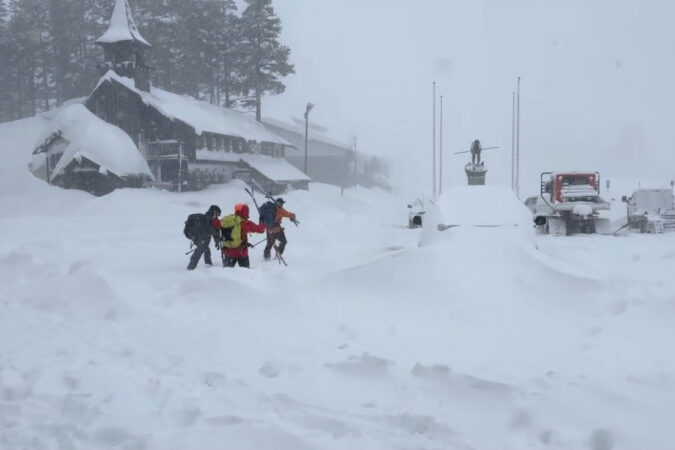
    NEVADA CITY, Calif. — Crews found the bodies of eight backcountry skiers near California’s Lake Tahoe and were searching for one more after they were caught in an avalanche, the nation’s deadliest in nearly half a century, authorities said Wednesday.

    Authorities said the skiers had little time to react.

    “Someone saw the avalanche, yelled avalanche, and it overtook them rather quickly,” said Capt. Russell “Rusty” Greene, of the Nevada County sheriff’s office.

    Six from the guided tour were rescued six hours after the avalanche hit Tuesday morning during a three-day trek in Northern California’s Sierra Nevada, as a monster winter storm pummeled the West Coast.

    Nevada County Sheriff Shannan Moon said investigators would look into the decision to proceed with the trip despite the forecast for relentless weather.

    Authorities have told the families the mission has moved from rescuing people to recovering bodies, Moon said during a news conference.

    The victims, including three guides, were found fairly close together, Greene said. The dead and missing include seven women and two men, ranging in ages from 30 to 55. The crews have not yet been able to remove the victims from the mountain because of the extreme conditions, the sheriff said.

    Three to six feet of snow has fallen since Sunday, when the group started its trip. The area was also hit by subfreezing temperatures and gale force winds. The Sierra Avalanche Center said the threat of more avalanches remained Wednesday and left the snowpack unstable and unpredictable in an area known for its steep, craggy cliffs.

    Rescuers were guided by beacons and a cell phone in dangerous conditions

    Rescuers reached the survivors just before sunset on Tuesday.

    The skiers all had beacons that can send signals to rescuers and at least one of the guides was able to send texts, but it wasn’t clear if they were wearing avalanche bags, which are inflatable devices that can keep skiers near the surface, Greene said.

    While they waited to be rescued, the survivors used equipment to shelter themselves and fend off temperatures dipping below freezing. The survivors located three others who had died during the wait, Moon said.

    Rescuers used a snowcat to get within 2 miles of the survivors, then skied in carefully so they didn’t set off another avalanche, the sheriff said.

    One of those rescued remains in a hospital Wednesday, Moon said.

    The area near Donner Summit is one of the snowiest places in the Western Hemisphere and until just a few years ago was closed to the public. It sees an average of nearly 35 feet of snow a year, according to the Truckee Donner Land Trust, which owns a cluster of huts where the group was staying near Frog Lake.

    The avalanche is the deadliest in the U.S. since 1981, when 11 climbers were killed on Mount Rainier, Wash. Each winter, 25 to 30 people die in avalanches in the U.S., according to the National Avalanche Center.

    It was the second deadly avalanche near California’s Castle Peak this year, after a snowmobiler was buried by one in January.

    Skiers were heading for the trailhead when the avalanche struck

    Greene said authorities were notified about the avalanche by Blackbird Mountain Guides, which was leading the expedition, and the skiers’ emergency beacons. The sheriff’s office said Tuesday night that 15 backcountry skiers had been on the trip, not 16 as initially believed.

    One skier had pulled out at the last minute, Moon said.

    Authorities were waiting to release the victims’ names to give the families time. “They’re still reeling,” Moon said. “I could not imagine what they’re going through.”

    The skiers were on the last day of the backcountry trip and had spent two nights in the huts, said Steve Reynaud, an avalanche forecaster with the Sierra Avalanche Center. He said the area requires navigating rugged mountainous terrain. All food and supplies need to be carried to the huts.

    Reaching the huts in winter takes several hours and requires backcountry skills, avalanche training and safety equipment, the land trust says on its website.

    The area near Donner Summit was closed for nearly a century before it was reopened by the land trust and its partners in 2020. Donner Summit is named for the infamous Donner Party, a group of pioneers who resorted to cannibalism after getting trapped there in the winter of 1846-1847.

    Blackbird Mountain Guides said in a statement that the group, including four guides, was returning to the trailhead when the avalanche occurred.

    When asked what went through her mind as her staff and volunteers responded to the scene, Moon said she was hoping they would be able to make it there safely. Once they did, she said she was “immediately thinking of the folks that didn’t make it, and knowing our mission now is to get them home.”

  • Trump officials limit FEMA travel to disaster areas amid funding lapse, emails show

    Trump officials limit FEMA travel to disaster areas amid funding lapse, emails show

    The Department of Homeland Security has halted almost all travel amid the ongoing standoff over its funding, restricting the ability of hundreds of Federal Emergency Management Agency staff members to move in and out of disaster-affected areas, according to emails and documents obtained by the Washington Post.

    Much of the department ran out of money over the weekend after negotiations stalled between the White House and Democratic lawmakers over restrictions on federal immigration enforcement. It is normal for the department to stop employees from traveling across the country for various assignments, such as trainings, during a funding lapse, 10 current and former FEMA officials said. But it is unusual for a government shutdown to impede ongoing disaster recovery efforts, the officials explained, saying it further reflects sweeping policies instituted under Homeland Security Secretary Kristi L. Noem.

    Typically, FEMA staffers who work on disasters are able to travel to and from ongoing recovery projects regardless of DHS funding issues. And a current veteran officials said that disaster travel is always allowed because it is mission-critical.

    In a statement, DHS criticized Democratic lawmakers over the stalled funding negotiations and said the department and FEMA are coordinating closely to “ensure effective disaster response under these circumstances.”

    “During a funding lapse, FEMA prioritizes life safety and property protection. FEMA continues mission-essential operations for active disasters, including immediate response and critical survivor assistance,” FEMA spokesperson Daniel Llargués said in the statement. “While some non-essential activities will be paused or scaled back, FEMA remains committed to supporting communities and responding to incidents like Hurricane Helene.”

    Congressional Democrats have demanded new restrictions on federal immigration agents after federal personnel killed Alex Pretti and another U.S. citizen, Renée Good, in Minneapolis in January.

    On Tuesday night, DHS sent out an email ordering a stop to all travel, including for disaster-related work, sparking confusion across FEMA as teams continue to respond to 14 ongoing disaster declarations as a result of brutal winter storms that hit parts of the country last month. In another message obtained by the Post, a FEMA official said that “ALL travel stopped” and noted that 360 people who were slated to go to trainings and other assignments had to stand down. People who were supposed to deploy could begin some work virtually, but DHS now had to sign off on their in-person assignment, the message said.

    The next morning, officials within DHS and FEMA had to scramble and negotiate guidance for how disaster-specific workers could continue to travel, according to an official familiar with the situation.

    “In most cases, FEMA’s ability to deploy staff to active disaster response and recovery operations is not impacted by a DHS funding lapse,” said former FEMA administrator Deanne Criswell. “Those personnel are funded through the Stafford Act’s Disaster Relief Fund, which is specifically designed to ensure continuity of operations during emergencies. If DHS experiences a shutdown, FEMA employees supported by the Disaster Relief Fund should still be able to travel and carry out response missions.”

    Emails and documents obtained by the Post show that FEMA officials must submit a justification to DHS headquarters explaining why a staffer needs to travel during the funding lapse, including employees who are paid through the Disaster Relief Fund. Officials also have to state whether the travel is “mission essential,” meaning it involves the “safety of human life or protection of property.”

    “DHS imposing restrictions on FEMA’s ability to deploy our response/recovery workforce slows us down and limits our ability to respond quickly and effectively to the needs of impacted states and communities,” said one official in a region still cleaning up from the heavy onslaught of sleet and snow.

    According to one email sent Tuesday night, agency staff members currently deployed in another region that was hit particularly hard can continue assisting communities. But those who were slated to travel to these locations after Thursday can no longer do so. Employees who were on a rotation — perhaps home for a week to see family or go to the doctor — are not able to return to their job under the order.

    These rotations are critical to disaster work because they enable people who have been working nonstop to take a break and then come back to their work. FEMA is also required to relieve employees who have been working too long in a state where they do not live.

    In the email, FEMA staff members who had not yet begun their deployments or returns from rotation were directed to cancel their travel and notify their point of contact to “receive updated reporting instructions.”

    “Additional agencywide information will be forthcoming,” it read.

    The snag with some FEMA employees being unable to travel for disaster work, take breaks or relieve their colleagues adds to the beleaguered agency’s long list of operational issues since President Donald Trump took office for a second time and his appointees implemented significant changes in how the agency functions.

    The travel pause has also halted some of FEMA’s other critical work, such as leading exercises and assessments for emergency plans and procedures at nuclear facilities, and flood-mapping meetings with communities, according to an email obtained by the Post and an agency official familiar with the situation. That “will delay flood map updates, which directly impacts people waiting on new maps for any number of reasons,” the official said.

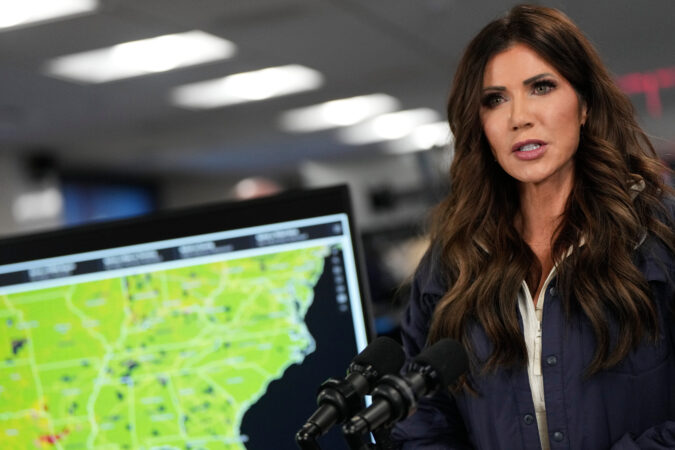
    As the winter storms barreled in last month, Noem, who has been spearheading many of FEMA’s staffing reductions and reforms, was particularly hands-on, embedding at the agency’s headquarters, hosting a call with governors to show her support and holding news conferences with FEMA staff members in front of maps laying out where the weather would hit.

    DHS also made a big push to pre-position teams, millions of ready-made meals and liters of water, blankets, and hundreds of generators in several states that were expected to be slammed.

    That’s why instituting travel restrictions when staffers are still working on these storm responses is even more frustrating, several current employees said.

    “They are just trying to make it hurt, and the only people they are hurting are survivors and FEMA employees,” one veteran official said. “They just pull new rules out every day.”