Tag: no-latest

  • Trump gets pledges for Gaza reconstruction and troop commitments at inaugural Board of Peace talks

    Trump gets pledges for Gaza reconstruction and troop commitments at inaugural Board of Peace talks

    WASHINGTON — President Donald Trump announced Thursday at the inaugural Board of Peace meeting that nine members have agreed to pledge $7 billion toward a Gaza relief package and five countries have agreed to deploy troops as part of an international stabilization force for the war-battered Palestinian territory.

    While lauding the pledges, Trump faces the unresolved challenge of disarming Hamas, a sticking point that threatens to delay or even derail the Gaza ceasefire plan that his administration notched as a major foreign policy win.

    The dollars promised, while significant, represent a small fraction of the estimated $70 billion needed to rebuild the territory decimated after two years of war between Israel and Hamas. While Trump praised allies for making the commitments of funding and troops, he offered no detail on when the pledges would be implemented.

    “Every dollar spent is an investment in stability and the hope of new and harmonious [region],” Trump said. He added, “The Board of Peace is showing how a better future can be built right here in this room.”

    Trump also announced the U.S. was pledging $10 billion for the board but didn’t specify what the money will be used for. It also was not clear where the U.S. money would come from — a sizable pledge that would need to be authorized by Congress.

    Trump touches on Iran and the United Nations

    The board was initiated as part of Trump’s 20-point plan to end the conflict in Gaza. But since the October ceasefire, Trump’s vision for the board has morphed and he wants it to have an even more ambitious remit — one that will not only complete the Herculean task of bringing lasting peace between Israel and Hamas but also help resolve conflicts around the globe.

    But the Gaza ceasefire deal remains fragile, and Trump’s expanded vision for the board has triggered fears the U.S. president is looking to create a rival to the United Nations.

    Trump, pushing back against the criticism, said the creation of his board would help make the U.N. viable in the future.

    “Someday I won’t be here. The United Nations will be,” Trump said. “I think it is going to be much stronger, and the Board of Peace is going to almost be looking over the United Nations and making sure it runs properly.”

    Even as Trump spoke of the gathering as a triumph that would help bring a more persistent peace to the Middle East, he sent new warnings to Iran.

    Tensions are high between the United States and Iran as Trump has ordered one of the largest U.S. military buildups in the region in decades.

    One aircraft carrier group is already in the region and another is on the way. Trump has warned Tehran it will face American military action if it does not denuclearize, give up ballistic missiles and halt funding to extremist proxy groups, such as Hezbollah and Hamas.

    “We have to make a meaningful deal. Otherwise bad things happen,” Trump said.

    Which countries pledged troops and funding

    Indonesia, Morocco, Kazakhstan, Kosovo, and Albania made pledges to send troops for a Gaza stabilization force, while Egypt and Jordan committed to train police.

    Troops will initially be deployed to Rafah, a largely destroyed and mostly depopulated city under full Israeli control, where the U.S. administration hopes to first focus reconstruction efforts.

    The countries making pledges to fund reconstruction are Kazakhstan, Azerbaijan, the United Arab Emirates, Morocco, Bahrain, Qatar, Saudi Arabia, Uzbekistan, and Kuwait, Trump said.

    Maj. Gen. Jasper Jeffers, leader of the newly created international stabilization force, said plans call for 12,000 police and 20,000 soldiers for Gaza.

    “With these first steps, we help bring the security that Gaza needs for a future of prosperity and enduring peace,” Jeffers said.

    Some U.S. allies remain skeptical

    Nearly 50 countries and the European Union sent officials to Thursday’s meeting. Germany, Italy, Norway, Switzerland, and the United Kingdom are among more than a dozen countries that have not joined the board but took part as observers.

    Most countries sent high-level officials, but a few leaders — including Indonesian President Prabowo Subianto, Argentine President Javier Milei, and Hungarian President Viktor Orbán — traveled to Washington.

    “Almost everybody’s accepted, and the ones that haven’t, will be,” Trump offered. ”And some are playing a little cute — it doesn’t work. You can’t play cute with me.”

    Vatican Secretary of State Cardinal Pietro Parolin told reporters this week that “at the international level, it should above all be the U.N. that manages these crisis situations.” French Foreign Minister Jean-Noël Barrot said in a post on X that the European Commission should never have attended the meeting as it had no mandate to do so.

    More countries are “going through the process of getting on,” in some cases, by getting approval from their legislatures, Trump told reporters later Thursday.

    “I would love to have China and Russia. They’ve been invited,” Trump said. “You need both.”

    Official after official used their speaking turns at the gathering to heap praise on Trump for his ability to end conflicts. Pakistani Prime Minister Shehbaz Sharif called him the “savior of South Asia,” while others said that years of foreign policy efforts by his predecessor failed to do what Trump has done in the past year.

    Turkish Foreign Minister Hakan Fidan said Trump and others there deserved thanks for their collective efforts on Gaza. But Fidan, who said Turkey also was prepared to contribute troops to the stabilization force, cautioned that the situation remains precarious.

    “The humanitarian situation remains fragile and ceasefire violations continue to occur,” Fidan said. “A prompt, coordinated and effective response is therefore essential.”

    Questions about disarming Hamas

    Central to Thursday’s discussions was assembling an international stabilization force to keep security and ensure the disarming of the militant Hamas group, a key demand of Israel and a cornerstone of the ceasefire deal.

    Hamas has provided little confidence that it is willing to move forward on disarmament. The administration is “under no illusions on the challenges regarding demilitarization” but has been encouraged by what mediators have reported back, according to a U.S. official who was not authorized to comment publicly and spoke on condition of anonymity.

    Israeli Prime Minister Benjamin Netanyahu, speaking at a dusty army base in southern Israel, repeated his pledge that “there will be no reconstruction” of Gaza before demilitarization. His foreign minister, Gideon Saar, said during Thursday’s gathering that “there must be a fundamental deradicalization process.”

    Trump said Hamas has promised to disarm and would be met “very harshly” if it fails to do so. But he gave few details on how the difficult task would be carried out.

    Secretary of State Marco Rubio acknowledged that there is a “long ways to go” in Gaza.

    “There’s a lot of work that remains that will require the contribution of every nation state represented here today,” Rubio said.


  • Israeli settlers kill 19-year-old Palestinian American, officials and witnesses say

    Israeli settlers kill 19-year-old Palestinian American, officials and witnesses say

    MUKHMAS, West Bank — Israeli settlers in the occupied West Bank shot and killed a Palestinian American during an attack on a village, the Palestinian Health Ministry and a witness said Thursday.

    Raed Abu Ali, a resident of Mukhmas, said a group of settlers came to the village Wednesday afternoon where they attacked a farmer, prompting clashes after residents intervened. Israeli forces later arrived, and during the violence armed settlers killed 19-year-old Nasrallah Abu Siyam and injured several others.

    Abu Ali said that the army shot tear gas, sound grenades, and live ammunition. Israel’s military acknowledged using what it called “riot dispersal methods” after receiving reports of Palestinians throwing rocks but denied that its forces fired during the clashes.

    “When the settlers saw the army, they were encouraged and started shooting live bullets,” Abu Ali said. He added that they clubbed those injured with sticks after they had fallen to the ground.

    The Palestinian Ministry of Health confirmed Abu Siyam’s death from critical wounds sustained Wednesday afternoon near the village east of Ramallah.

    Abu Siyam’s killing is the latest in a surge in violence in the occupied West Bank. Israeli forces and settlers killed 240 Palestinians last year, according to the United Nations Office for the Coordination of Humanitarian Affairs. Palestinians killed 17 Israelis over the same period, six of whom were soldiers. The Palestinian Authority’s Wall and Settlement Resistance Commission said Abu Siyam was the first Palestinian killed by settlers in 2026.

    Mukhmas and its surrounding area — most of which lies under Israeli civil and military administration — have become a hot spot for settler attacks, including arson and assaults, as well as the construction of outposts that Israeli law considers illegal.

    The Israeli military said late Wednesday that unnamed suspects shot at Palestinians, who were later evacuated for medical treatment. It did not say whether any were arrested.

    Abu Siyam’s mother told the Associated Press that he was an American citizen, making him the second Palestinian American to be killed by Israeli settlers in less than a year.

    A U.S. embassy spokesperson said they “condemn this violence.”

    Palestinians and rights groups say authorities routinely fail to prosecute settlers or hold them accountable for violence.

    U.N. says Israel’s acts in West Bank may be ethnic cleansing

    The U.N. human rights office on Thursday accused Israel of war crimes and said practices that displace Palestinians and alter the demographic composition of the occupied West Bank “raise concerns over ethnic cleansing.”

    The Office of the High Commissioner for Human Rights, citing findings collected November 2024 to October 2025, said Israel was engaged in “concerted and accelerating effort to consolidate annexation” while maintaining a system “to maintain oppression and domination of Palestinians.”

    Residents of Palestinian villages and herding communities have been increasingly displaced as Israeli settlements and outposts expand. Since the start of the Israel–Hamas war, the Israeli rights group B’Tselem says about 45 Palestinian communities have been emptied out completely amid Israeli demolition orders and settler attacks.

    Additionally, the office said Israeli military operations in the northern West Bank “employed means and methods designed for warfare” including lethal airstrikes and forcibly transferring civilians from their homes. It also said Israel “forbade” residents from returning to their homes in northern West Bank refugee camps. The operation, which Israel said was aimed against militants, displaced tens of thousands of Palestinians.

    The report also accused Palestinian security forces of using unnecessary lethal force in the same areas, killing at least eight people, and noted that the Palestinian Authority had engaged in “intimidation, detention and ill-treatment of journalists, human rights defenders and other individuals deemed critical of its rule.”

    Neither Israel’s Foreign Ministry nor the Palestinian Authority responded to requests for comment. Israel has repeatedly accused the U.N. rights office of anti-Israel bias.

    Last year, the U.N. human rights monitor warned of what it called “an unfolding genocide in Gaza” with “conditions of life increasingly incompatible with [Palestinians’] continued existence.” Their report on Thursday also warned of demographic shifts in Gaza raising concerns of ethnic cleansing.

    Report finds imprisoned Palestinian journalists were tortured

    The Committee to Protect Journalists said that dozens of Palestinian journalists who were detained in Israel during the war in Gaza experienced conditions including physical assaults, forced stress positions, sensory deprivation, sexual violence, and medical neglect.

    CPJ documented the detention of at least 94 Palestinian journalists and one media worker during the war, from the West Bank, Gaza and Israel Thirty are still in custody, CPJ said.

    Half of the journalists, the report found, were never charged with a crime and were held under Israel’s administrative detention system, which allows for suspects deemed security risks to be held for six months and can be renewed indefinitely.

    Israel’s prison services did not immediately respond to a request for comment about the report, but rejected a similar report in January about conditions for Palestinian prisoners as “false allegations,” contending it operates lawfully, is subject to oversight and reviews complaints.

    U.N. development chief says removing Gaza rubble will take 7 years

    The vast destruction across Gaza will take at least seven years just to remove the rubble, according to the United Nations Development Program.

    Alexander De Croo, the former Belgian prime minister who just returned from Gaza, said that the UNDP had removed just 0.5% of the rubble and people in Gaza are experiencing “the worst living conditions that I have ever seen.”

    De Croo said 90% of Gaza’s 2.2 million people live in “very, very rudimentary tents” in the middle of the rubble, which poses health dangers and a danger from exploding weapons.

    He said UNDP has been able to build 500 improved housing units, and has 4,000 more that are ready, but estimates the true need is 200,000 to 300,000 units. The units are meant to be used temporarily while reconstruction takes place. He called on Israel to expand access for goods and items needed for reconstruction and the private sector to begin development.

  • New DHS memo outlines plan to detain refugees for further vetting

    New DHS memo outlines plan to detain refugees for further vetting

    The Department of Homeland Security issued a memo Wednesday stating that federal immigration agents should arrest refugees who have not yet obtained a green card and detain them indefinitely for rescreening — a policy shift that upends decades of protections and puts tens of thousands of people who entered during the Biden administration at risk.

    The new policy rescinds a 2010 memo that said failing to apply for status as a lawful permanent resident within a year of living in the United States is not a basis for detaining refugees who entered the country legally. Two Trump administration officials wrote in the new directive that the previous guidance was incomplete and that the law requires DHS to detain and subject those refugees to a new set of interviews while in detention.

    The memo appeared in a court filing one day before a scheduled hearing in Minnesota federal court, where a judge temporarily blocked U.S. Immigration and Customs Enforcement in late January from detaining 5,600 refugees in the state after several organizations sued. Immigration officers arrested dozens of resettled people from countries including Somalia, Ecuador, and Venezuela for further questioning as part of an enforcement surge dubbed Operation PARRIS that the Trump administration has said was aimed at combating fraud. Immigration lawyers say many were quickly transported to Texas detention centers and later released without their identity documents.

    The International Refugee Assistance Project, one of the lead counsels for the plaintiffs in the lawsuit, is asking a judge to declare the new refugee detention policy unlawful to prevent more refugees in Minnesota from being arrested.

    “I am concerned that the Feb. 18 memo and the indiscriminate detention of refugees in Minnesota are the opening salvos in an attack on refugees resettled all over the United States,” said Laurie Ball Cooper, the organization’s vice president for U.S. legal programs.

    Refugee resettlement groups across the country see the Minnesota operation as a precursor to an expected shift in refugee policy that could undermine the nation’s half-century-old promise to offer safe harbor to the world’s most persecuted.

    “This memo, drafted in secret and without coordination with agencies working directly with refugees, represents an unprecedented and unnecessary breach of trust,” said Beth Oppenheim, chief executive of HIAS, one of the oldest refugee agencies in the country and the world. “We have both a moral and a legal obligation to demand that DHS immediately rescind this action.”

    A spokesperson for U.S. Citizenship and Immigration Services said the memo directs agencies to implement the plain language of “long established immigration law.”

    “This is not novel or discretionary; it is a clear requirement in law,” the spokesperson said in a statement. “The alternative would be to allow fugitive aliens to run rampant through our country with zero oversight. We refuse to let that happen.”

    Refugees, unless charged with crimes, are not fugitives, and are invited to resettle legally in the U.S. after being vetted abroad.

    President Donald Trump suspended all refugee admissions on his first day in office, including those involving people who had already been approved to come to the U.S. His administration later reopened the program to white South Africans, who he said face race-based persecution in their home country, though they had rarely qualified before for refugee status in the U.S. or any other country.

    More than 200,000 refugees entered the U.S. during the Biden administration and most had waited years to be admitted, according to federal data. Some of those new arrivals have already received green cards, but advocates estimate about 100,000 refugees have not and could be subject to detention under the new policy. Most entered assuming they were protected the moment they stepped on U.S. soil, according to refugee experts and attorneys. Refugees are permitted to apply to become permanent residents after one year of physical presence in the country after their arrival date.

    But the Trump administration is recasting refugee status as conditional instead of permanent — a major change in how refugees have historically been regarded. The memo said refugees who haven’t adjusted their status must endure a second round of “congressionally mandated” vetting to screen for public safety, fraud, and national security risks.

    “This requires DHS to take the affirmative actions of locating, arresting, and taking the alien into custody,” states the memo, signed by acting ICE director Todd M. Lyons and U.S. Citizenship and Immigration Services Director Joseph Edlow.

    DHS based its policy on a section of the Immigration and Nationality Act that says refugees who don’t apply for a green card after a year must return to DHS “custody.” It voids previous guidance indicating that a failure to adjust was not a “proper basis” for removal or detention and if any unadjusted refugee was arrested, they must be released within 48 hours.

    There are many reasons, advocates said, for why a refugee might not apply at the one-year mark, including confusion about the process, language barriers, lost mail from changing addresses, and difficulty navigating the system.

    But returning to DHS “custody” has never meant arrest and unlimited detention, attorneys said in court filings. The historical practice for USCIS was to issue notices for appointments or letters urging compliance, according to court documents in the pending lawsuit.

    Ball Cooper said Congress does not demand revetting as part of the adjustment of status. The law requires the federal government to “inspect” or ask specific questions after the one-year mark, such as whether the person has been physically present in the U.S. throughout that time or whether they have already obtained lawful status through a different channel.

    “None of that requires interrogating a refugee about their original claim, which they’ve already proven to the U.S. government,” Ball Cooper said.

    The Trump administration also halted green-card processing months ago for scores of countries from which refugees originate, making it impossible to satisfy the requirement.

    What has traditionally been treated as a paperwork issue is now a detention issue under the new guidance. Advocates call that a major escalation in the Trump administration’s targeting of legal immigrants. Changing how the law is enforced for refugees who had begun rebuilding their lives under a different set of assumptions is unfair and disproportionately punitive, said Shawn VanDiver, a U.S. Navy veteran who founded the nonprofit organization AfghanEvac.

    “It seems like they are just trying to find new and different ways to put grandma in jail,” said VanDiver. “You don’t invite people into the United States under one set of rules and start moving the goalposts after they arrive.”

    ICE arrested about 100 refugees, some of whom were children, before Minnesota District Judge John Tunheim issued a temporary restraining order in response to the International Refugee Assistance Project’s lawsuit. Dozens were flown to Texas to be asked the same questions they faced during screening overseas, according to attorneys who were present during the interviews. Several of those cases involved refugees with pending green-card applications. There are no confirmed reports of DHS terminating an individual’s refugee status as a result of the operation.

    Former ICE director Sarah Saldaña, who led the agency during President Barack Obama’s administration, said she could not recall a time when immigration officers had arrested refugees for failing to apply on time for a green card. She said this and other actions by the Trump administration signal that “they want to close the door on what has been the country’s welcoming nature when it comes to refugees.”

    The DHS memo cited statistics from an unpublished review from USCIS’s Fraud Detection and National Security Directorate that found insufficient vetting and some public safety concerns in regard to 31,000 recently admitted refugees from the Western Hemisphere. However, it’s unclear where the data came from or what conclusions the internal report reached about “known failures” in screening people from other parts of the world.

    Vetting refugees from specific parts of the world, such as conflict zones, can be challenging, experts said. But the layers of screening, hours of interviews and the fact that would-be refugees can be denied at every step in the process — including the moment they arrive at a U.S. airport — have created a high bar of scrutiny for anyone seeking refugee status. Refugees convicted of aggravated felonies can lose their status and be deported, but studies have repeatedly found — as they have with all immigrants — that refugees commit crimes at far lower rates than native-born citizens.

    Meredith L.B. Owen, senior director of policy and advocacy at Refugee Council USA, said the memo directly threatens the very purpose of why the U.S. brings in refugees. Advocates expect a coming ruling from the Board of Immigration Appeals to set up the legal mechanism for the Trump administration’s broader push to deport thousands of recently admitted refugees. That could ultimately lead to refugees being sent back to the places from which they were fleeing war or political persecution, thus putting their lives in danger.

    That scenario, known as refoulement, violates international law, said Owen, whose group represents all of the national resettlement agencies that provide assistance to refugees upon their arrival to the U.S.

    “This administration stops at nothing to terrorize day after day after day refugee communities in Minnesota and to make sure refugee communities across the country are fearful and bracing themselves for what’s to come,” she said.

  • Robert Duvall, chameleon of the silver screen, has died at 95

    Robert Duvall, chameleon of the silver screen, has died at 95

    Robert Duvall, an Oscar-winning actor who disappeared into an astonishing range of roles — lawmen and outlaws, Southern-fried alcoholics and Manhattan boardroom sharks, a hotheaded veteran and a cool-tempered mob consigliere — and emerged as one of the most respected screen talents of his generation, died Feb. 15. He was 95.

    His wife, Luciana Pedraza Duvall, said in a Facebook post that Mr. Duvall died at home, without citing a cause. He had long lived at Byrnley, a horse farm in Fauquier County, Va., near The Plains.

    By his own account, Mr. Duvall was a late-blooming youth, a Navy rear admiral’s son whose only discernible talent in childhood was for meticulous mimicry. His repertoire included Western ranchers and the military brass, and his stage was the dinner table.

    Metamorphosis became a hallmark of his career. Newsweek film critic David Ansen once called Mr. Duvall “a character actor who approaches each role with the diligence of an ethnologist on a field trip into the soul.”

    Without matinee-idol looks — he had a sinewy frame, chlorine-blue eyes, a slightly bent nose and sandy brown hair slicked back on either side of his balding pate — he seemed destined to portray taciturn outsiders, macho oddballs, and rugged eccentrics.

    Mr. Duvall was a near-constant presence on-screen beginning with his movie debut as the ghostly, feebleminded Boo Radley in To Kill a Mockingbird (1962), based on the Harper Lee novel.

    Over the next half-century, he had a few top-billed parts, notably his Academy Award-winning turn as an alcoholic country-western singer in Tender Mercies (1983). He performed the songs so authentically, with his lived-in tenor, that he was invited to record an album in Nashville with veteran music producer Chips Moman.

    Mr. Duvall received Oscar nominations for his starring roles as a tyrannical, hypercompetitive military father in The Great Santini (1979), based on the Pat Conroy novel, and as a fallen Pentecostal preacher seeking grace in The Apostle (1997), which he also wrote and directed.

    But in a career spanning more than 140 film and TV credits, Mr. Duvall’s prime turf was the supporting role. “The ‘personality’ carries the movie, not someone like me,” he once told the Chicago Tribune. “But the star may have a mediocre part, and there I am in the second or third lead, quietly doing quality things.”

    No two films showcased the spectrum of those “quality things” more than The Godfather (1972) and Apocalypse Now (1979), both critical and cultural juggernauts directed by Francis Ford Coppola and for which Mr. Duvall earned Oscar nominations for supporting work. In the first, he portrayed Tom Hagen, the discreet mob lawyer and the informal foster son of the Corleone family (whose patriarch was played by Marlon Brando).

    Film scholar David Thomson called Mr. Duvall’s Hagen, a role he reprised in the 1974 sequel, a “detailed study of a self-effacing man,” one willing to suffer humiliation to earn his place as the non-Italian among Italians.

    In Apocalypse Now, an epic film about war and madness set in Vietnam, Mr. Duvall played Kilgore, the surfing-obsessed lieutenant colonel who declares, in one of the movie’s oft-quoted lines, that he loves “the smell of napalm in the morning.” Instead of crackpot flamboyance, Mr. Duvall delivered, in the description of New York Times film critic Vincent Canby, a performance of “breathtaking force and charm.”

    Canby called Mr. Duvall “one of the most resourceful, most technically proficient, most remarkable actors in America,” likening him to Laurence Olivier in his shape-shifting prowess.

    Mr. Duvall was a convincingly British Dr. Watson to Nicol Williamson’s Sherlock Holmes in The Seven-Per-Cent Solution (1976), an eyepatch-sporting Nazi colonel who masterminds a plot to kidnap Winston Churchill in The Eagle Has Landed (1976), a hard-boiled Los Angeles police detective in True Confessions (1981) and an aging Cuban émigré in Wrestling Ernest Hemingway (1993).

    Over and over again, he was a top choice of many directors for rural American characters. He was an illiterate sharecropper caring for a woman and her child in Tomorrow (1972), a psychopathic Jesse James in The Great Northfield Minnesota Raid (1972), a good-hearted Southern lawyer in Rambling Rose (1991), and a Tennessee backwoods hermit in Get Low (2009).

    Perhaps his definitive country role was the wise and garrulous Texas Ranger Gus McCrae in the hit CBS TV miniseries Lonesome Dove (1989), based on Larry McMurtry’s Pulitzer Prize-winning novel about a cattle drive. It brought Mr. Duvall (later named an honorary ranger) many crusty cowboy roles. Unsettled by typecasting, he agreed to play Soviet dictator Joseph Stalin, not ultimately one of his better moves, in a TV film.

    In preparing for a role, Mr. Duvall spent time with cowboys, day laborers, policemen, fighter pilots, ballplayers, Bowery drunks, Baptist ministers, and ex-cons, scrupulously studying their rhythms of speech, their hand gestures, the twists of their personalities. He said he tried to find “pockets of contradiction” — shadings to suggest multidimensional character.

    “I hang around a guy’s memories,” he told another interviewer. “I store up bits and pieces about him.”

    ‘Last resort’ becomes a long career

    Robert Selden Duvall was born in San Diego on Jan. 5, 1931. He was the middle of three boys raised by their mother during their father’s long absences at sea.

    Mr. Duvall described himself as an aimless youth, without distinction in the classroom or on the playing field. He frequently indulged in mischievous behavior with his siblings. “We used to put Tide in milkshakes for my mother,” he told the Washington Post in 1983. His practical jokes, including a penchant for mooning other actors, continued well into adulthood.

    After Army service, he enrolled at Principia College, a small Christian Science school (his family’s faith) in Illinois. He was a social studies major on the brink of flunking out when a drama teacher remarked on his promise in several plays. His parents, pleased that he seemed to excel in something, pushed him to major in dramatics and then toward an acting career. “It was like a last resort,” he said.

    He graduated in 1955, then attended the Neighborhood Playhouse workshop in New York, where classmates included Dustin Hoffman, Gene Hackman, and James Caan. His breakthrough came in a 1957 Long Island production of Arthur Miller’s drama A View From the Bridge. The noted director Ulu Grosbard cast Mr. Duvall in the lead role, as a Brooklyn longshoreman struggling with his attraction to his niece.

    “Even then he had the thing you go for as an actor and director, perfect control but the feeling of total unpredictability,” Grosbard later told the Los Angeles Times. “A lot of good actors will give you technique, precision and a character’s arc, and that’s important. But not that many give you the sense that this is actually what’s transpiring at the moment in front of your eyes.”

    The one-night-only show sparked attention and proved “a catalyst for my career,” Mr. Duvall later said, leading to offers to play menacing roles on TV and stage. He made his Broadway debut in the thriller Wait Until Dark (1966), as a criminal who taunts a blind woman (Lee Remick), and played an ex-con in American Buffalo (1977), David Mamet’s first play to reach Broadway.

    Meanwhile, Mr. Duvall gained a foothold in Hollywood. Pulitzer-winning playwright Horton Foote was instrumental in launching the actor’s flourishing movie presence. Foote, who wrote the screenplay for To Kill a Mockingbird, had been “bowled over” by Mr. Duvall’s balance of intensity and naturalism onstage and recommended him for the part of Boo Radley.

    That led to memorable roles in some of the defining movies of the era. He played the pompous hypocrite Maj. Frank Burns in director Robert Altman’s M*A*S*H (1970). In Coppola’s The Conversation (1974), a much-admired drama of Watergate-era paranoia, he was a mysterious businessman who bankrolls a surveillance operation. Mr. Duvall played a corporate hatchet man in Network (1976), a brilliant satire of broadcast journalism morphing into ratings-driven entertainment.

    Mr. Duvall also was top-billed in director George Lucas’s feature-film debut, the dystopian THX 1138 (1971).

    Later in his career, Mr. Duvall enlivened many a big-budget mediocrity with a gruff, leathery persona, on display in the Tom Cruise car-racing drama Days of Thunder (1990), the Nicolas Cage heist film Gone in 60 Seconds (2000), and the violent action thriller Jack Reacher (2012), also starring Cruise.

    Still capable of deft underplaying, Mr. Duvall received Oscar nominations for his supporting roles in A Civil Action (1998), playing a wily corporate attorney who duels over a settlement with John Travolta’s lawyer character, and in The Judge (2014), as a domineering small-town magistrate accused of murder who is defended by his son (Robert Downey Jr.).

    Mr. Duvall’s well-paying Hollywood projects subsidized his passions — small-budget films he wrote and directed, including Angelo, My Love (1983), about gypsies in New York; The Apostle, which was 15 years in the planning; and Assassination Tango (2002), about a Brooklyn hit man with a weakness for the sensual Argentine dance. Like the character, Mr. Duvall was a dedicated tango dancer.

    His marriages to Barbara Benjamin, actress Gail Youngs and dancer Sharon Brophy ended in divorce. In 2004, he married Luciana Pedraza, an Argentine actress 41 years his junior, who appeared with him in Assassination Tango. Complete information on survivors was not immediately available.

    Mr. Duvall said he abhorred acting that called attention to itself, leveling criticism of revered leading men such as Brando (“lazy”) or Olivier (“too stylized”). An actor was at his best and most real, he said, when he could summon emotions from his own life — without actorly ego.

    “Being a leading man? No, I never dreamed of that,” he told the Chicago Tribune. “It’s an agent’s dream, not an actor’s.”

  • Trump appears ready to attack Iran as U.S. strike force takes shape

    Trump appears ready to attack Iran as U.S. strike force takes shape

    The Trump administration appears ready to launch an extended military assault on Iran, current and former U.S. officials said, as the Pentagon amasses an immense strike force in the Middle East despite the risks of U.S. combat fatalities and American ensnarement in an extended war.

    The arsenal, under assembly for weeks, is awaiting the arrival of the aircraft carrier USS Gerald R. Ford and its accompanying warships, officials familiar with the matter said, after military leaders last week extended their deployment and ordered the ships to the region from the Caribbean Sea. The vessels were approaching the Strait of Gibraltar on Thursday, making an attack possible within days, said these people, whom like others spoke on the condition of anonymity to discuss sensitive military planning.

    President Donald Trump, speaking Thursday morning at an event in Washington, was ambiguous about what he might do. “Maybe we’re going to make a deal. Maybe not,” he said at the inaugural meeting of his Board of Peace. “You’re going to be finding out over the next, maybe, 10 days.”

    The administration wants it known, officials said, that they are building combat power in the region. The president also has publicly raised the possibility of toppling Iran’s supreme leader, Ayatollah Ali Khamenei, a longtime U.S. adversary, suggesting last week that it would be “the best thing that could happen,” if Iran ends up with new leaders.

    Still, it remains unclear whether Trump has approved military action, people familiar with the matter said. One consideration, some noted, is the ongoing Winter Olympics, which conclude Sunday in Italy.

    The United States, backed by ally Israel, would have an “overwhelming advantage” militarily over Iran, said Daniel B. Shapiro, a former U.S. ambassador to Israel and senior Pentagon official during the Biden administration. The warships in or nearing the Middle East join a sprawling array of combat power already in position, including dozens of fighter jets, air-defense capabilities, and other weapons.

    But a major conflict with Iran poses grave risks, Shapiro said, including ballistic missiles capable of killing U.S. troops in the region, a network of proxy forces across the Middle East that could quickly turn any attack into a far wider and deadlier war, and the potential for significant disruption to maritime shipping and the global oil market.

    “They’ll definitely take terrible damage from combined U.S.-Israeli strikes,” said Shapiro, a distinguished fellow at the Atlantic Council, referring to Iran. “But that doesn’t mean it ends quickly, or clean — and they do have some ability to impose some costs in the other direction.”

    The military buildup coincides with recent meetings between U.S. and Iranian officials aimed at negotiating changes to Tehran’s nuclear program. White House press secretary Karoline Leavitt told reporters this week that the two sides had “made a little bit of progress” but were still “very far apart on some issues.” Iranian officials, she added, are “expected to come back to us with some more detail in the next couple of weeks.” It is unclear if Trump is willing to wait that long.

    Regional diplomats initially thought that the Trump administration’s military pressure on Iran was meant to push Tehran to offer greater concessions in those negotiations, according to a European diplomat briefed on the Iran talks. But after the most recent talks concluded Tuesday, diplomats now believe that Iran is not prepared to budge from its “core positions,” including its right to enrich uranium.

    “The Iranians were planning to drown them in technicalities and delay substance,” the diplomat said. “While a more traditional approach would have built on the dialogue, … Trump does not have the patience.”

    The U.S. military buildup initially was reassuring to some officials in the region, according to this diplomat, but the indications that the Trump administration is preparing for an extended conflict have become deeply concerning.

    “Some actors may have favored targeted strikes to add pressure on Iran,” said the diplomat, referring to officials from Saudi Arabia and the United Arab Emirates. “But an extended conflict will be bloody and it could bring more countries, either deliberately or by miscalculation, into the war.”

    Secretary of State Marco Rubio plans to travel to Israel on Feb. 28 to meet with Israeli Prime Minister Benjamin Netanyahu, a State Department official said. The trip would be aimed at keeping Netanyahu abreast of the status of U.S.-Iran negotiations, the official said, but it does not preclude the Pentagon from launching strikes first. In summer, the U.S. struck Iran’s nuclear facilities even as the president’s top diplomats had diplomatic meetings with Iranian counterparts on the books.

    Netanyahu is eager for the United States to launch a major attack on Iran, and in a speech Sunday he put forward his own conditions for any U.S. agreement with Tehran. Any deal must ban all enrichment of uranium and dismantle “the equipment and the infrastructure that allows you to enrich in the first place,” Netanyahu told the annual conference of Presidents of Major American Jewish Organizations. It should also require that all enriched uranium leave Iran, restrict Iran’s ballistic missile program and impose sustained inspections of Iran’s civilian nuclear program, he said.

    Middle East experts have said Iran is unlikely to agree to all of Israel’s demands and it views them as a breach of Tehran’s ability to defend itself.

    Khamenei in recent days has resisted signing a deal, arguing in social media posts that Tehran has the right to produce nuclear power and the range of its missile arsenal should not be limited. He also has taunted U.S. officials.

    “The Americans constantly say that they’ve sent a warship toward Iran,” he said in one message Tuesday. “Of course, a warship is a dangerous piece of military hardware. However, more dangerous than that warship is the weapon that can send that warship to the bottom of the sea.”

    An extended assault against Iran could mark the most significant action in decades against the longtime U.S. adversary. For years, Iran has sponsored and facilitated attacks on U.S. troops across the region, U.S. officials broadly agree.

    Trump began pondering new strikes against Iran in January, after he pledged to rescue anti-government protesters there following a wave of executions. The president tabled military action, in part because U.S. defense officials warned it would be difficult to manage Iranian counterattacks while a relatively limited number of U.S. forces were in the region, people familiar with the matter said.

    The administration has since surged U.S. weaponry, including another aircraft carrier, the USS Abraham Lincoln, that was diverted from the South China Sea. Numerous Navy destroyers, scores of fighter jets, and other war planes also have been deployed, including advanced F-35s with the ability to evade radar.

    A review of flight-tracking data in recent days has shown a fleet of tanker planes also relocating to Europe and the Middle East, and many fighter jets repositioned at Muwaffaq Al Salti Air Base in Jordan. Other U.S. military aircraft appear to have relocated to or transited through Vrazhdebna Air Base in Bulgaria, data show.

    The military buildup signals the Trump administration is “prepared for something much more extended than a one-day cycle” of strikes, said Dana Stroul, a former senior Pentagon official during the Biden administration who is now with the Washington Institute.

    An extended conflict would mark a sea change from Trump’s recent military forays, including the January U.S. Special Operations raid to capture Venezuelan President Nicolás Maduro in Caracas, a weekslong bombing campaign last spring against Houthi rebels in Yemen, and the surgical strikes last year against Iran’s nuclear facilities. In each of those cases, Trump authorized significant military action that was significant in scope but limited in duration, declared victory afterward and pivoted to other issues.

    Trump has criticized previous U.S. administrations for allowing the United States to become entrapped in lengthy military interventions in the Middle East that killed thousands of U.S. troops and dominated Pentagon resources.

    A lack of calamities during those previous operations has made it easy to overlook the potential pitfalls of future missions, said Jason Dempsey, a retired Army officer who studies the use of military force for the Center for a New American Security. They include lethal attacks against U.S. troops, aircraft collisions, or U.S. pilots being forced to parachute or crash behind enemy lines.

    “Military operations look quick and easy — right until they are not,” Dempsey said. “What we did in Venezuela was such a unique operation, and a one-off. And even that — I’m not sure it will turn out fine.”

  • An arts panel made up of Trump appointees approves his White House ballroom proposal

    An arts panel made up of Trump appointees approves his White House ballroom proposal

    WASHINGTON — The U.S. Commission of Fine Arts, a panel made up of President Donald Trump’s appointees, on Thursday approved his proposal to build a ballroom larger than the White House itself where the East Wing once stood.

    The seven-member panel is one of two federal agencies that must approve Trump’s plans for the ballroom. The National Capital Planning Commission, which has jurisdiction over construction and major renovation to government buildings in the region, is also reviewing the project.

    Members of the fine arts commission originally had been scheduled to discuss and vote on the design concept after a follow-up presentation by the architect, and had planned to vote on final approval at next month’s meeting. But after the 6-0 vote on the design, the panel’s chairman, Rodney Mims Cook Jr., unexpectedly made another motion to vote on final approval.

    Six of the seven commissioners — all appointed by the Republican president in January — voted once more in favor. Commissioner James McCrery did not participate in the discussion or the votes because he was the initial architect on the project before Trump replaced him.

    The ballroom will be built on the site of the former East Wing, which Trump had demolished in October with little public notice. That drew an outcry from some lawmakers, historians, and preservationists who argued that the president should not have taken that step until the two federal agencies and Congress had reviewed and approved the project, and the public had a chance to provide comment.

    The 90,000-square-foot ballroom would be nearly twice the size of the White House, which is 55,000-square-feet, and Trump has said it would accommodate about 1,000 people. The East Room, the largest room in the White House, can fit just over 200 people at most.

    Commissioners offered mostly complimentary comments before the votes.

    Cook echoed one of Trump’s main arguments for adding a larger entertaining space to the White House: It would end the long-standing practice of erecting temporary structures on the South Lawn that Trump describes as tents to host visiting dignitaries for state dinners and other functions.

    “Our sitting president has actually designed a very beautiful structure and, as was said, in the comments earlier, the United States just should not be entertaining the world in tents,” Cook said.

    The panel received mainly negative comments from the public

    Members of the public were asked to submit written comment by a Wednesday afternoon deadline. Thomas Luebke, the panel’s secretary, said “over 99%” of the more than 2,000 messages it received in the past week from around the country were in opposition to the project.

    Luebke tried to summarize the comments for the commissioners.

    Some comments cited concerns about Trump’s decision to unilaterally tear down the East Wing, as well as the lack of transparency about who is paying for the ballroom or how contracts were awarded, Luebke said. Comments in support referenced concerns for the U.S. image on the world stage and the need for a larger entertaining space at the White House.

    Trump has defended the ballroom in a recent series of social media posts that included drawings of the building. He said in one January post that most of the material needed to build it had been ordered “and there is no practical or reasonable way to go back. IT IS TOO LATE!”

    The commission met Thursday over Zoom and heard from Shalom Baranes, the lead architect, and Rick Parisi, the landscape architect. Both described a series of images and sketches of the ballroom and the grounds as they would appear after the project is completed.

    Trump has said the ballroom would cost about $400 million and be paid for with private donations. To date, the White House has only released an incomplete list of donors.

    A lawsuit against the project is still pending

    The National Trust for Historic Preservation has sued in federal court to halt construction. A ruling in the case is pending.

    Carol Quillen, president and CEO of the privately funded nonprofit organization, said the group was “puzzled” by both votes because the final plans had not been presented or reviewed. But with the votes, she said the commission had “bypassed its obligation to provide serious design review and consider the views of the American people,” including all of the negative public comments.

    Quillen said that while her organization has always acknowledged the usefulness of a larger White House meeting space, “we remain deeply concerned that the size, location, and massing of this proposal will overwhelm the carefully balanced classical design of the White House, a symbol of our democratic republic.”

    At the commission’s January meeting, some members had questioned Baranes, Trump’s architect, about the “immense” design and scale of the project even as they broadly endorsed Trump’s vision.

    On Thursday, Cook and other commissioners complimented Baranes for updating the building’s design to remove a large pediment, a triangular structure above the south portico, that they had had objected to because of its size.

    “I think taking the pediment off the south side was a really good move,” said commissioner Mary Anne Carter, who also is head of the National Endowment for the Arts. “I think that really helps to restore some balance and make it look, just more aligned” with the White House.

    Baranes said it was the biggest design change and that Trump had “agreed to do that.”

    Trump quietly named his final two commissioners to the panel in late January. Pamela Hughes Patenaude has a background in housing policy and disaster recovery, and was as a deputy secretary at the Department of Housing and Urban Development in Trump’s first term. Chamberlain Harris is a special assistant to the president and deputy director of Oval Office operations.

    The ballroom project is scheduled for additional discussion at a March 5 meeting of the National Capital Planning Commission, which is led by a top White House aide. This panel heard an initial presentation about the project in January.

    At the meeting, the White House defended tearing down the East Wing, saying that preserving it was not an option due to structural issues, past decay and other concerns. Josh Fisher, director of the White House Office of Administration, cited an unstable colonnade, water leakage, mold contamination and other problems.

  • Silicon Valley is building a shadow power grid for data centers across the U.S.

    Silicon Valley is building a shadow power grid for data centers across the U.S.

    The GW Ranch project approved on 8,000 windswept acres of West Texas will look like many of the other data centers that have sprung up across the country to support Silicon Valley’s ambitions for artificial intelligence. Dozens of airplane-hangar-size warehouses packed with computing hardware will consume more power than all of Chicago.

    But it’s missing one standard feature: The mammoth project, recently green-lit by state environmental regulators, won’t need new power lines to deliver the electricity that it guzzles. GW Ranch will be walled off from the power grid and generate its own electricity from natural gas and solar plants installed on site.

    GW Ranch is set to become part of a shadow power grid emerging across the country with potentially far-reaching consequences for the U.S. electricity system and environment.

    After the rapid growth of data centers triggered pushback from politicians, utilities, and local residents over the pressures they place on the grid, tech companies are now building their own fleet of private power plants, mostly fueled by natural gas.

    Dozens of sprawling off-grid data center projects are planned across Texas, New Mexico, Pennsylvania, Wyoming, Utah, Ohio, and Tennessee, according to a review of regulatory filings, permits, earnings call transcripts, and other documents by the energy industry research firm Cleanview. Several are already under construction.

    Companies rushing to develop the facilities include Meta, ChatGPT-maker OpenAI, business software provider Oracle, and oil giant Chevron. (The Washington Post has a content partnership with OpenAI.)

    The off-grid projects already approved by state energy and environmental regulators could power all of New York City several times over, a vast new energy infrastructure that will bring huge new industrial facilities to communities across the country and increase U.S. emissions of carbon dioxide and other air pollutants. A handful of states have passed laws to encourage off-grid data centers by loosening rules around who can build power plants and where they can be located.

    The projects are sparking alarm from El Paso to Davis, West Virginia, from residents unhappy to learn that gas plants large enough to fuel major cities are set to sprout in places they were never expected.

    “This came out of nowhere,” said Amy Margolies, a resident fighting an off-grid data center planned near Davis, in one of West Virginia’s major tourism corridors. The project was permitted to operate a gas plant large enough to generate roughly equivalent power to that used by every home in the state. It is being propelled by a 2025 state law that eased approvals for off-grid data centers.

    “They removed local control completely for this speculative gold rush,” Margolies said. “Everything is shrouded in secrecy, and the public is removed from the process.”

    The idea of taking data centers off-grid is the latest in a line of provocative strategies adopted by the tech industry in its pursuit of more electricity that also includes reviving old nuclear plants, backing long-shot fusion energy schemes, and planning to plunk down hundreds of compact nuclear power plants in communities across the U.S. But while these approaches are fossil fuel-free, most of the sector’s immediate investments will be in gas power, driving up the planet-warming emissions the companies long promised to take a lead in curbing.

    Billions of dollars are now being invested in power plants for off-grid data centers, even though key engineering challenges have not been solved, according to veteran energy developers.

    Most of the projects rely on natural gas because the variable output of solar and wind is difficult to manage without the grid as backup. But the most efficient gas turbines are back-ordered for years, forcing developers to use more wasteful and polluting equipment.

    “It is catastrophic for climate goals,” said Michael Thomas, founder of Cleanview, which has identified 47 behind-the-meter projects nationwide.

    Others warn that off-grid projects could struggle to keep the lights on. Gas plants typically spend a third or more of the year down for maintenance, but data centers generally operate around the clock. “I get that cost is no object for these companies and they just want to get online,” said Jigar Shah, an energy entrepreneur who helped manage federal energy investments for the Biden administration. “But they have not figured out even with unlimited funds how to make these plants run with 24/7 reliability.”

    Shah said the projects could also drive up prices for customers who still use the power grid, as developers outbid utilities for equipment and leave other ratepayers to bear the costs of maintenance for older energy infrastructure. “This whole thing feels like a fairy tale concocted on the back of a napkin,” he said.

    Developers of the projects have said they can use backup generators or gas plants to keep data centers operating without interruption. President Donald Trump and White House officials have argued that loosening regulations that gave utilities a monopoly over power generation will make electricity more abundant and protect ordinary consumers.

    “President Trump’s vision really since the beginning of the administration is … ‘Let the AI companies become power companies. Let them stand up their own power generation as they built side by side with these new data centers,’” said David Sacks, Trump’s AI and crypto czar, during a podcast interview at the World Economic Forum meeting in Davos, Switzerland, last month. “We get this infrastructure, [and] residential rates don’t go up.”

    Silicon Valley’s build-out of AI infrastructure is “too onerous for the power grid to take on,” said Kevin Pratt, chief operating officer of Pacifico Energy, the energy developer building GW Ranch in Texas. “We were hearing, ‘We want you to build these projects, but the utility can’t give us the power we need. What can you do?’”

    The off-grid strategy appears to have worked for Elon Musk. In 2024, his company xAI got a Memphis data center up and running in months — instead of the more typical years — in part by largely sidestepping the grid and powering the facility with dozens of portable gas generators.

    Last month, the Environmental Protection Agency ruled the setup illegally breached emissions rules, and required the company to get permits. But tech industry officials say xAI had put rivals on notice that unless companies found work-arounds to lengthy wait times for power grid hookups, they risked being left behind.

    The fallout is now reverberating in places like Tucker County, W.Va. Residents learned through a legal notice in the community newspaper the Parsons Advocate that developer Fundamental Data was seeking to build a massive, off-grid data center with a large gas plant on a ridgeline near Davis.

    The state law promoting such projects strips local officials of their usual authority to vet and approve new developments if these proposals are related to data center campuses using off-grid power. Fundamental Data received a state environmental permit for the gas plant over the loud objections of residents and officials in surrounding communities.

    The company declined to say how many gas turbines it plans to use or what kind they will be. It would not comment on whether the data center would be for AI development, crypto mining, or something else.

    “As designed, it is intended to operate independently and does not rely on ratepayer-funded infrastructure or impact existing residential customers,” Fundamental Data said in a statement.

    The project is one of at least three large off-grid data center developments that builders are pursuing in West Virginia under its 2025 law. One of the others, the Monarch Compute Campus in Mason County, will initially use gas to generate enough electricity to power 1.5 million homes, plans say, and later quadruple its output. That would see the site generate and consume several times the total electricity consumption of West Virginia residents.

    The major tech companies that will tap this shadow grid are mostly keeping their names off the projects while developers go through the messy process of permitting, overcoming community opposition and construction.

    Meta is one exception. Through a subsidiary, it is working with natural gas colossus Williams on a project called Socrates in New Albany, Ohio, that will install a pair of off-grid gas power plants that will each sprawl across 20 acres. Williams says it will be operational this year.

    The social media giant has another off-grid project in El Paso, Texas, where it is working with the local utility to create a large gas generating facility by linking together 813 modest generators. Local officials and activists have protested the plan, alleging that Meta won lucrative city and county incentives after leaving the impression its data center campus would be powered by clean energy.

    Meta’s local partner, El Paso Electric, wrote in regulatory filings first reported on by the Texas Tribune that using solar panels and battery storage “would require thousands of acres adjacent to the Data Center site which are not available.”

    Meta said that the fossil fuel power used in El Paso will be paired with purchases of renewable energy. “As with all of our data centers, including dozens of renewable projects throughout Texas, we work to add energy to the grid and match our data center’s electricity use with 100% clean, and renewable energy,” company spokesman Ryan Daniels said in an email.

    Oracle and OpenAI are also developing off-grid power plants for their data centers. Construction is underway at their Stargate Project Jupiter campus in New Mexico, which will be powered by massive natural gas systems.

    OpenAI chief executive Sam Altman is an investor in aerospace firm Boom Supersonic, which has refashioned a jet engine design to power off-grid data centers. The first batch will go to developer Crusoe, which is building one of the world’s largest data center campuses in Wyoming.

    Despite the immense capital invested and shovels in the ground, the AI industry’s off-grid plans do not compute for some veterans of big energy projects.

    Developers are “trying to rush to market with a bunch of clankety old stuff that was headed to the scrapyard, or with dozens to hundreds of small generating units strung together,” said Aaron Zubaty, CEO of California-based Eolian, which builds large energy installations.

    Those untested designs will inevitably develop maintenance problems that cause cost overruns, malfunctioning equipment and unanticipated outages, Zubaty said. He predicted that spending on the projects may be more likely to pay off by creating pressure on utility companies to accommodate more data centers on the grid.

    “If you are a utility, this can’t be your future,” he said. “You can’t have your biggest customers never need you again.”

  • When Rhode Island shooter started firing, bystanders jumped into action to end the carnage

    When Rhode Island shooter started firing, bystanders jumped into action to end the carnage

    PROVIDENCE, R.I. — Sitting in the stands at a hockey game, Michael Black heard what he thought was popping balloons before quickly realizing it was gunfire. As dozens of people rushed out of the Rhode Island arena, Black told his wife to “run, run” and then lunged toward the shooter’s handgun.

    Black managed to get his left hand caught in the chamber of Robert Dorgan’s gun, jamming it and then briefly attempted to hold Dorgan down. But Dorgan, a former bodybuilder, hoisted Black into the air before at least two other bystanders rushed over to subdue the shooter. One of them could be seen on video putting Dorgan into a choke hold.

    Dorgan fell to the ground, with the 58-year-old Black on top of him. The shooter died from a self-inflicted gunshot after pulling out a second gun as the two locked eyes. Black never heard Dorgan say a word.

    “The first thought was the safety of my wife. And the second thought was, because the bullets were coming out, was to focus in on the gun,” said Black, who ran a printing company until he retired in 2021 and has no specialized emergency response training. “Get the gun and then subdue the shooter.”

    Pawtucket police have said the shooter behind the deadly ice rink tragedy on Monday was Robert Dorgan, who also went by Roberta Esposito and Roberta Dorgano.

    Dorgan’s ex-wife Rhonda Dorgan and adult son Aidan Dorgan were killed in the shooting, and three others were injured: Rhonda Dorgan’s parents, Linda and Gerald Dorgan; and a family friend, Thomas Geruso, all of whom remained in critical condition Wednesday.

    ‘Courageous citizens’ help stop tragedy

    Along with Black, Robert Rattenni, and Ryan Cordeiro are being credited as subduing the suspect. Separately, Chris Librizzi and Glenn Narodowy, both retired Rhode Island firefighters and EMTs, and nurse Maryann Rattenni provided first aid in the immediate aftermath.

    Pawtucket police say this group of “courageous citizens” who rushed to intervene in the attack “undoubtedly prevented further injury and increased the chances of survival for the injured.”

    “I look at it as being fortunate, saddened tremendously in the loss, but fortunate that a small group of people could make a difference,” Black said in a Zoom interview Thursday from South Carolina where he was on a college visit with his son.

    One of the more puzzling unsolved questions surrounding the ice rink shooting is over why Dorgan chose the Dennis M. Lynch arena. It was a familiar spot for Dorgan’s family, with Aidan Dorgan, 23, playing hockey and had once hoped to be recruited by a college hockey team. He’d shown up Monday to watch his little brother’s hockey match with his mom, grandparents, and other family. Dorgan had also been known to frequent the arena to watch family matches.

    On Monday, Amanda Wallace-Hubbard, Aidan Dorgan’s sister and stepdaughter to Rhonda Dorgan, was in the stands. She has since credited Black as the reason she’s still alive since she was likely next in line to have been shot.

    Black also said a detective reached out to him Tuesday to say that one of Dorgan’s daughters wanted to thank him for his efforts.

    Survivors grapple with hero title

    Authorities have not directly said that Dorgan was transgender and have said questions around Dorgan’s gender identity are not relevant to their investigation surrounding the case.

    However, court records from Dorgan’s past show that gender identity was at least one of the contributing factors to Dorgan’s wife filing for divorce in 2020 after nearly 30 years of marriage. Dorgan’s X account mentions being transgender and sharing far-right ideologies.

    With Dorgan dead, other bystanders rushed to provide treatment for the five people who had been shot and were lying between the bleachers. Blood was everywhere. Police arrived within minutes, and Black with his injured hand was escorted outside in the parking lot where he reunited with his wife.

    “My wife saw me and she ran underneath the yellow tape, kind of grabbed me from behind, and we gave a big hug,” Black said. “She said, ‘I heard you helped with the shooter. And she says, what’s all the blood? I said, ’I got my hand caught in the gun.’ And then she said, ‘Honey, I don’t know whether I should be proud of you, but I’m pissed off at you for putting yourself in that situation.’”

    As he was sitting in the hospital getting treatment on his injured hand, Black recalled a nurse calling him a hero — a label that has repeatedly been applied to all three bystanders in recent days.

    “I said I don’t feel like I’m a hero right now,” Black said. “I looked up and I was feeling for the family. So I started getting some tears in my eyes. And then she got tears in her eyes, too. It was just a moment of decompression at that point.”

    Black said after the shooting he initially canceled plans to take his son on a college visit to South Carolina before reconsidering and going ahead with the trip.

    “About an hour and a half later, as I was decompressing a little bit, I was on my couch, the TV, and I had my chocolate Lab next to me, and I started thinking that I’m not going to allow this shooter to change my life,” he said. “I’m not going to allow him to start, you know, dictating or making me afraid.”

  • Former South Korean president receives life sentence for imposing martial law in 2024

    Former South Korean president receives life sentence for imposing martial law in 2024

    SEOUL, South Korea — Former South Korean President Yoon Suk Yeol was found guilty of leading an insurrection on Thursday and sentenced to life in prison for his brief imposition of martial law in 2024, a ruling that marks a dramatic culmination of the country’s biggest political crisis in decades.

    The conservative leader was ousted from office after he declared martial law and sent troops to surround the National Assembly on Dec. 3, 2024, in a baffling attempt to overcome a legislature controlled by his liberal opponents.

    Judge Jee Kui-youn of the Seoul Central District Court said he found Yoon, 65, guilty of rebellion for mobilizing military and police forces in an illegal attempt to seize the Assembly, arrest political opponents and establish unchecked power for an indefinite period.

    Martial law crisis recalled dictatorial past

    Yoon’s martial law imposition, the first of its kind in more than four decades, recalled South Korea’s past military-backed governments when authorities occasionally proclaimed emergency decrees that allowed them to station soldiers, tanks, and armored vehicles on streets or in public places such as schools to prevent anti-government demonstrations.

    As lawmakers rushed to the National Assembly, Yoon’s martial law command issued a proclamation declaring sweeping powers, including suspending political activities, controlling the media and publications, and allowing arrests without warrants.

    The decree lasted about six hours before being lifted after a quorum of lawmakers managed to break through a military blockade and unanimously voted to lift the measure.

    Yoon was suspended from office on Dec. 14, 2024, after being impeached by lawmakers and was formally removed by the Constitutional Court in April 2025. He has been under arrest since last July while facing multiple criminal trials, with the rebellion charge carrying the most severe punishment.

    Yoon’s lawyers reject conviction

    An expressionless Yoon gazed straight ahead as the judge delivered the sentence in the same courtroom where former military rulers and presidents have been convicted of treason, corruption and other crimes over the decades.

    Yoon Kap-keun, one of the former president’s lawyers, accused the judge of issuing a “predetermined verdict” based solely on prosecutors’ arguments and said the “rule of law” had collapsed. He said he would discuss whether to appeal with his client and the rest of the legal team.

    Former President Yoon claimed in court that the martial law decree was only meant to raise public awareness of how the liberals were paralyzing state affairs, and that he was prepared to respect lawmakers if they voted against the measure.

    Prosecutors said it was clear Yoon was attempting to disable the legislature and prevent lawmakers from lifting the measure through voting, actions that exceeded his constitutional authority even under martial law.

    The court also convicted and sentenced five former military and police officials involved in enforcing Yoon’s martial law decree. They included ex-Defense Minister Kim Yong Hyun, who received a 30-year jail term for his central role in planning the measure, mobilizing the military and instructing military counterintelligence officials to arrest 14 key politicians, including National Assembly speaker Woo Won-shik and current liberal President Lee Jae Myung.

    In announcing Yoon and Kim’s verdicts, Jee said the decision to send troops to the National Assembly was key to his determination that the imposition of martial law amounted to rebellion.

    “This court finds that the purpose of [Yoon’s] actions was to send troops to the National Assembly, block the Assembly building and arrest key figures, including the National Assembly speaker and the leaders of both the ruling and opposition parties, in order to prevent lawmakers from gathering to deliberate or vote,” Jee said. “It’s sufficiently established that he intended to obstruct or paralyze the Assembly’s activities so that it would be unable to properly perform its functions for a considerable period of time.”

    Protesters rally outside court

    As Yoon arrived in court, hundreds of police officers watched closely as Yoon supporters rallied outside a judicial complex, their cries rising as the prison bus transporting him drove past. Yoon’s critics gathered nearby, demanding the death penalty.

    There were no immediate reports of major clashes following the verdict.

    A special prosecutor had demanded the death penalty for Yoon Suk Yeol, saying his actions posed a threat to the country’s democracy and deserved the most serious punishment available, but most analysts had expected a life sentence since the poorly planned power grab did not result in casualties.

    South Korea has not executed a death-row inmate since 1997, in what is widely seen as a de facto moratorium on capital punishment amid calls for its abolition.

    Jung Chung-rae, leader of the liberal Democratic Party, which led the push to impeach and remove Yoon, expressed regret that the court stopped short of the death penalty, saying the ruling reflected a “lack of a sense of justice.”

    Song Eon-seok, floor leader of the conservative People Power Party, to which Yoon once belonged, issued a public apology, saying the party feels a “deep sense of responsibility” for the disruption to the nation.

    The office of current President Lee Jae Myung did not immediately comment on the ruling.

    Other officials sentenced for enforcing martial law

    Last month, Yoon was sentenced to five years in prison for resisting arrest, fabricating the martial law proclamation, and sidestepping a legally mandated full cabinet meeting before declaring the measure.

    The Seoul Central Court had previously convicted two other members of Yoon’s Cabinet in connection with the martial law debacle. That includes Prime Minister Han Duck-soo, who received a 23-year prison sentence for attempting to legitimize the decree by forcing it through a Cabinet Council meeting, falsifying records and lying under oath. Han has appealed the verdict.

    Yoon is the first former South Korean president to receive a life sentence since former military dictator Chun Doo-hwan, who was sentenced to death in 1996 for his 1979 coup, a bloody 1980 crackdown on pro-democracy protesters in Gwangju that left more than 200 people dead or missing, and corruption.

    The Supreme Court later reduced his sentence to life imprisonment, and he was released in late 1997 under a special presidential pardon. He died in 2021.

  • Some of the California avalanche victims had roots in Lake Tahoe

    Some of the California avalanche victims had roots in Lake Tahoe

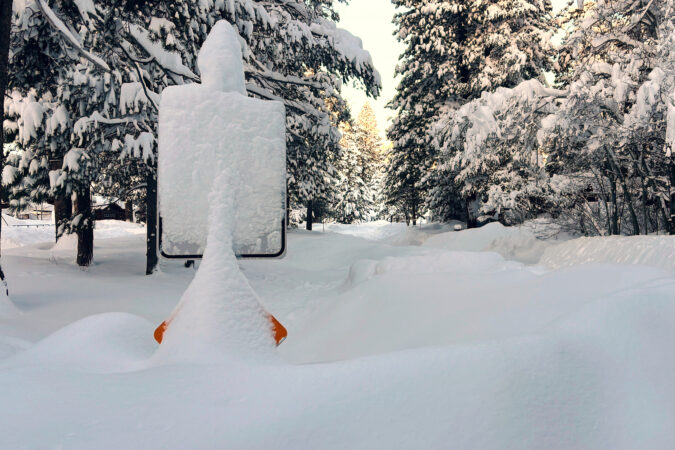
    TRUCKEE, Calif. — After days of increasingly brutal conditions in California’s Sierra Nevada, a group of 15 backcountry skiers set out for home. But as they left remote huts at thousands of feet of elevation and trekked back toward the trailhead, they were slammed by a treacherous avalanche that left eight dead and one missing.

    With avalanche warnings in effect through early Thursday, officials were still waiting for the powerful storm to clear so they could recover the bodies of the victims of Tuesday’s avalanche, the nation’s deadliest in nearly half a century. Officials have not yet released the names.

    The ski group involved has deep ties to the alpine recreation community in Lake Tahoe, including the elite Sugar Bowl Academy, which issued a statement late Wednesday mourning the loss of victims with “strong connections to Sugar Bowl, Donner Summit and the backcountry community.”

    It did not say how the skiers, said to range in age from 30 to 55, were connected to the school, which offers alpine and backcountry ski instruction and academics for young athletes.

    “We are an incredibly close and connected community,” Sugar Bowl Academy executive director Stephen McMahon said in the statement. “This tragedy has affected each and every one of us.”

    Four in the group employed by Blackbird Mountain Guides, which offers mountaineering and backcountry ski trips as well as safety courses across the West and internationally. One of them was among the six survivors.

    The three-day tour, which began Sunday, was for intermediate to expert skiers, according to the company’s website.

    The tour company said in a statement Wednesday night that it has launched an investigation and paused field operations at least through the weekend while it prioritizes supporting the victims’ families.

    The guides who led the group were trained or certified in backcountry skiing, and were instructors with the American Institute for Avalanche Research and Education.

    While in the field, they “are in communication with senior guides at our base, to discuss conditions and routing based upon conditions,” founder Zeb Blais said in the statement.

    “We don’t have all the answers yet, and it may be some time before we do,” the company said. “In the meantime, please keep those impacted in your hearts.”

    Mayor Max Perrey of Marin County’s Mill Valley, a small city about 14 miles (22 kilometers) north of San Francisco, confirmed that some in the group were women from his city. He was not able to provide additional details but told The Associated Press via email that more information would be released later.

    One of the victims was married to a member of a backcountry search and rescue team in the area, said Placer County Sheriff Wayne Woo.

    The Sierra Avalanche Center issued an avalanche watch Sunday morning, and that was elevated to a warning by 5 a.m. Tuesday, indicating that avalanches were expected. It is not clear whether the guides knew about the change before they began their return trek.

    Authorities described a harrowing scene as the survivors scoured the snow for the missing and waited six hours for help to arrive in blizzard conditions. They found three of the bodies, Nevada County Sheriff Shannan Moon said.

    The skiers all had beacons that can send signals to rescuers, and at least one guide was able to send text messages. But it was not clear whether they were wearing avalanche bags, which are inflatable devices that can keep skiers near the surface, sheriff’s Capt. Russell “Rusty” Greene said.

    One of those rescued remained hospitalized Wednesday, Moon said.

    Three to 6 feet (91 centimeters to 1.8 meters) of snow has fallen in the area since Sunday. The area was also hit by subfreezing temperatures and gale force winds.

    The avalanche is the deadliest in the U.S. since 1981, when 11 climbers were killed on Mount Rainier in Washington state, and the second deadly avalanche near Castle Peak this year, after a snowmobiler was buried January. Each winter the slides kill 25 to 30 in the country, according to the National Avalanche Center.

    The area near Donner Summit, where the ski trip took place, is one of the snowiest places in the Western Hemisphere and until just a few years ago was closed to the public. The summit is named for the infamous Donner Party, a group of pioneers who resorted to cannibalism after getting trapped there in the winter of 1846-1847.