Tag: no-latest

  • Georgia students recall horror of being shot as father of accused school shooter goes on trial

    Georgia students recall horror of being shot as father of accused school shooter goes on trial

    ATLANTA — Georgia high school students on Tuesday testified in court about the horrors of being shot during their algebra class, and recounted through tears seeing a classmate in a pool of blood, then seeing blood on their own bodies and fearing they might die.

    Various students took the stand at the trial of Colin Gray, the father of Colt Gray, who investigators said had carefully planned the Sept. 4, 2024, shooting at the school northeast of Atlanta that left two teachers and two students dead and several others wounded.

    This is one of several cases around the nation where prosecutors are trying to hold parents responsible after their children are accused in fatal shootings.

    A ninth-grade girl saw a hole in her wrist and began screaming moments after the gunfire began in her Algebra I class, she testified Tuesday.

    “I was also worried that I was going to die and how that would affect my parents because my dad has a heart problem,” she said.

    As paramedics carried her out of the school building, she saw Colt Gray on the floor with his hands behind his back and screamed obscenities at him as she passed by him.

    “I remember yelling at him that we were kids, because we were kids,” she said. The faces of she and others who testified were not shown during a video livestream of the testimony because of their young ages.

    Other students said the trauma was not limited to their physical wounds, as they spoke of being depressed, anxious and slow to trust people even now, more than a year later.

    “Just seeing what I saw that day, it just sticks with me … and not being able to trust certain people, trust people,” said one girl who sustained a gunshot wound to her left shoulder.

    Many of the students said they were still in counseling to deal with nightmares, fears of loud noises and anxiety at school and at home. “Even to go on a walk around my neighborhood, anxiety would fill my head, and I feel like somebody driving past me would shoot me,” a female student testified.

    Colt Gray, who was 14 years old at the time of the shooting, faces 55 counts, including murder in the deaths of four people and 25 counts of aggravated assault. His father Colin Gray faces 29 counts, including two counts of second-degree murder and two counts of involuntary manslaughter.

    Colin Gray should be held responsible for providing the weapon despite warnings about alleged threats his son made, a prosecutor said as the father’s trial began Monday.

    “This case is about this defendant and his actions in allowing a child that he has custody over access to a firearm and ammunition after being warned that child was going to harm others,” Barrow County District Attorney Brad Smith said in his opening statement.

    Prosecutors argue that amounts to cruelty to children, and second-degree murder is defined in Georgia law as causing the death of a child by committing the crime of cruelty to children.

    But Brian Hobbs, an attorney for Colin Gray, said the shooting’s planning and timing “were hidden by Colt Gray from his father.”

    “That’s the difference between tragedy and criminal liability,” he said. “You cannot hold someone criminally responsible for failing to predict what was intentionally hidden from them.”

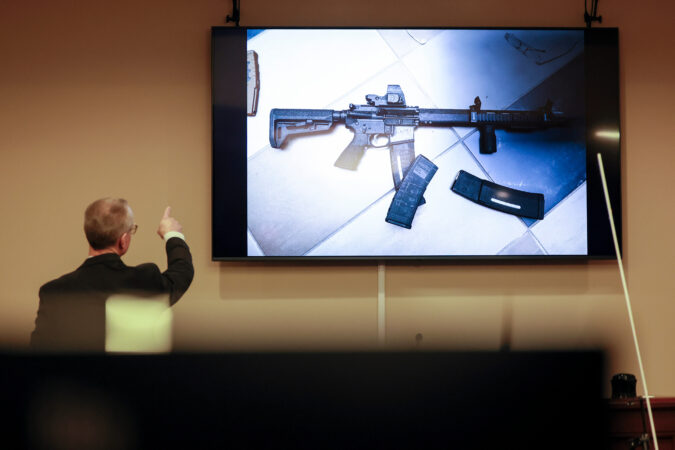
    With a semiautomatic rifle in his book bag, the barrel sticking out and wrapped in poster board, Colt Gray boarded the school bus, investigators said. He left his second-period class and emerged from a bathroom with the gun and then shot people in a classroom and hallways, they said.

    Smith told the jury that in September 2021, Colt Gray used a school computer to search the phrase, “how to kill your dad.” School resource officers were then sent to the home, but it was determined to be a “misunderstanding,” Smith said.

    Sixteen months before the shooting, in May 2023, law enforcement acted on a tip from the FBI after a shooting threat was made online concerning an elementary school. The threat was traced to a computer at Gray’s home, Smith said.

    Colin Gray was told about the threat and was asked whether his son had access to guns. Gray replied that he and his son “take this school shooting stuff very seriously,” according to Smith. Colt Gray denied that he made the threat and said that his online account had been hacked, Smith said.

    That Christmas, Colin Gray gave his son the gun as a gift and continued to buy accessories after that, including “a lot of ammunition,” Smith said.

    Colin Gray knew his son was obsessed with school shooters, even having a shrine in his bedroom to Nikolas Cruz, the shooter in the 2018 massacre at Marjory Stoneman Douglas High School in Parkland, Fla., prosecutors have said. A Georgia Bureau of Investigation agent had testified that the teen’s parents had discussed their son’s fascination with school shooters but decided that it was in a joking context and not a serious issue.

    Three weeks before the shooting, Gray received a chilling text from his son: “Whenever something happens, just know the blood is on your hands,” according to Smith.

    Colin Gray was also aware his son’s mental health had deteriorated and had sought help from a counseling service weeks before the shooting, an investigator testified.

    “We have had a very difficult past couple of years and he needs help. Anger, anxiety, quick to be volatile. I don’t know what to do,” Colin Gray wrote about his son.

    But Smith said Colin Gray never followed through on concerns about getting his son admitted to an inpatient facility.


  • Trump picks his White House assistant for panel reviewing ballroom

    Trump picks his White House assistant for panel reviewing ballroom

    When Congress created the Commission of Fine Arts more than a century ago, its members were intended to be “well-qualified judges of the fine arts” who would review and advise on major design projects in the nation’s capital, lawmakers wrote. The initial slate of commissioners included Daniel Burnham and Frederick Law Olmsted Jr., architects and urban planners who designed much of Washington.

    Now, the 116-year-old commission is set to include its newest, youngest member: Chamberlain Harris, a 26-year-old White House aide and a longtime executive assistant for President Donald Trump, who is slated to be sworn in at the panel’s next public meeting on Thursday.

    Trump’s selection of Harris — who was known as the “receptionist of the United States” during the president’s first term and has no notable arts expertise — comes amid the president’s push to install allies on the arts commission and another panel, the National Capital Planning Commission. Both commissions are reviewing Trump’s planned White House ballroom and are expected to review his other Washington-area construction projects, such as his desired 250-foot triumphal arch.

    Trump has said he hopes to complete the projects as quickly as possible, despite complaints about their size, design, and potential impact on Washington. A historical preservation group has sued the administration over the ballroom project, saying that Trump should have consulted with the federal review panels before tearing down the White House’s East Wing annex and beginning construction on his planned 90,000-square-foot, $400 million ballroom.

    A federal judge weighing whether to halt the ballroom project in December had instructed the White House to go through the commissions before beginning construction.

    Asked about Harris’s qualifications to serve on the fine arts commission, the White House on Tuesday touted her as a “loyal, trusted, and highly respected adviser” to the president.

    “She understands the President’s vision and appreciation of the arts like very few others, and brings a unique perspective that will serve the Commission well,” Steven Cheung, the White House communications director, said in a statement. “She will be a tremendous asset to the Commission of Fine Arts and continue to honorably serve our country well.”

    Harris, who holds the title of deputy director of Oval Office operations, received a bachelor’s degree in political science in 2019 from the University at Albany, SUNY, with minors in communications and economics, according to an archived copy of her resumé on LinkedIn. She continued working for Trump as an executive assistant when he was out of office.

    Harris was one of seven fine arts commissioners Trump appointed during a 19-day spree in January. The president had left the commission empty for months after firing all six members in October but raced to restock the panel ahead of the agency’s January meeting when the ballroom project was first added to the agenda.

    Former fine arts commissioners said they could not recall a commissioner in the panel’s history with as little prior arts experience as Harris. Several former commissioners also noted that Trump has installed multiple appointees with minimal arts and urban planning expertise on both panels set to review his construction projects remaking Washington.

    “It’s disastrous,” said Alex Krieger, an architect and professor at the Harvard Graduate School of Design, who was chosen for the commission in 2012 by President Barack Obama and served a second term in the first Trump administration. “Some of these people just have no qualifications to evaluate matters of design, architecture, or urban planning.”

    Past commissioners have included Billie Tsien, an architect currently working on Obama’s library, and Perry Guillot, a landscape architect who redesigned the White House Rose Garden during Trump’s first term.

    Witold Rybczynski, an architect who was chosen for the Commission of Fine Arts by President George W. Bush and served a second term under Obama, wrote in an email that President Joe Biden also reshaped the panel by firing Trump appointees before their terms had concluded. He also noted that past presidents installed some political appointees and lesser-known experts to the panel, too.

    “The degree of expertise … has varied,” Rybczynski wrote in an email. He is the Martin and Margy Meyerson Professor Emeritus of Urbanism at the University of Pennsylvania.

    The fine arts commission on Thursday is slated to review the latest ballroom designs and may vote to advance the project. The White House has said it hopes to win formal approval from both review panels by March and begin aboveground construction of the ballroom as early as April.

  • Russian and Ukrainian officials meet in Geneva for U.S.-brokered talks after almost 4 years of war

    Russian and Ukrainian officials meet in Geneva for U.S.-brokered talks after almost 4 years of war

    GENEVA, Switzerland — Delegations from Moscow and Kyiv met in Geneva on Tuesday for another round of U.S.-brokered peace talks, a week before the fourth anniversary of Russia’s full-scale invasion of its neighbor.

    However, expectations for any breakthroughs in the scheduled two days of talks in Switzerland were low, with neither side apparently ready to budge from its positions on key territorial issues and future security guarantees, despite the United States setting a June deadline for a settlement.

    The head of the Ukrainian delegation, Rustem Umerov, posted photos on social media of the three delegations at a horseshoe-shaped table, with the Ukrainian and Russian officials sitting across from each other. President Donald Trump’s envoy, Steve Witkoff, and son-in-law Jared Kushner sat at the head of the table in front of U.S., Russian, Ukrainian, and Swiss flags.

    “The agenda includes security and humanitarian issues,” Umerov said, adding that Ukrainians will work “without excessive expectations.”

    Tough talks expected

    Discussions on the future of Russian-occupied Ukrainian territory are expected to be particularly tough, according to a person familiar with the talks who spoke to the Associated Press on condition of anonymity because the person was not authorized to talk to reporters.

    Russa is still insisting that Ukraine cede control of its eastern Donbas region.

    Also in Geneva will be American, Russian, and Ukrainian military chiefs, who will discuss how ceasefire monitoring might work after any peace deal, and what’s needed to implement it, the person said.

    During previous talks in Abu Dhabi, the capital of the United Arab Emirates, military leaders looked at how a demilitarized zone could be arranged and how everyone’s militaries could talk to one another, the person added.

    Kremlin spokesperson Dmitry Peskov cautioned against expecting developments on the first day of talks as they were set to continue on Wednesday. Moscow has provided few details of previous talks.

    Trump describes the talks as ‘big’

    Ukraine’s short-handed army is locked in a war of attrition with Russia’s bigger forces along the roughly 750-mile front line. Ukrainian civilians are enduring Russian aerial barrages that repeatedly knock out power and destroy homes.

    The future of the almost 20% of Ukrainian land that Russia occupies or still covets is a central question in the talks, as are Kyiv’s demands for postwar security guarantees with a U.S. backstop to deter Moscow from invading again.

    Trump described the Geneva meeting as “big talks.”

    “Ukraine better come to the table fast,” he told reporters late Monday as he flew back to Washington from his home in Florida.

    It wasn’t immediately clear what Trump was referring to in his comment about Ukraine, which has committed to and taken part in negotiations in the hope of ending Russia’s devastating onslaught.

    Complex talks as the war presses on

    The Russian delegation is headed by Russian President Vladimir Putin’s adviser Vladimir Medinsky, who headed Moscow’s team of negotiators in the first direct peace talks with Ukraine in Istanbul in March 2022 and has forcefully pushed Putin’s war goals. Medinsky has written several history books that claim to expose Western plots against Russia and berate Ukraine.

    The commander of the U.S. military — and NATO forces — in Europe, Gen. Alexus Grynkewich, and Secretary of the U.S. Army Dan Driscoll will attend the meeting in Geneva on behalf of the U.S. military and meet with their Russian and Ukrainian counterparts, said Col. Martin O’Donnell, a spokesman for the U.S. commander.

    Overnight, Russia used almost 400 long-range drones and 29 missiles of various types to strike 12 regions of Ukraine, injuring nine people, including children, according to the Ukrainian President Volodymyr Zelensky.

    Zelensky said tens of thousands of residents were left without heating and running water in the southern port city of Odesa. He said Moscow should be “held accountable” for the relentless attacks, which he said undermine the U.S. push for peace.

    “The more this evil comes from Russia, the harder it will be for everyone to reach any agreements with them. Partners must understand this. First and foremost, this concerns the United States,” the Ukrainian leader said on social media late Monday.

    “We agreed to all realistic proposals from the United States, starting with the proposal for an unconditional and long-term ceasefire,” Zelensky noted.

    The talks in Geneva took place as U.S. officials also held indirect talks with Iran in the Swiss city.

    Meanwhile, Ukraine’s Security Service, or SBU, used long-range drones to strike an oil terminal in southern Russia and a major chemical plant deep inside the country, a Ukrainian security official who spoke on condition of anonymity because he was not authorized to speak publicly told the AP.

    Drones targeted the Tamanneftegaz oil terminal, one of the biggest ports of its type on the Black Sea, in Russia’s Krasnodar region for the second time this month, starting a fire, the official said.

    Drones also hit the Metafrax Chemicals plan, which manufactures chemical components used in explosives and other military materials, in Russia’s Perm region, more than 1,000 miles from the Ukrainian border, according to the official.

  • New subpoenas issued in inquiry on response to 2016 Russian election interference, AP sources say

    New subpoenas issued in inquiry on response to 2016 Russian election interference, AP sources say

    WASHINGTON — The Justice Department has issued new subpoenas in a Florida-based investigation into perceived adversaries of President Donald Trump and the U.S. government response to Russian interference in the 2016 presidential election, according to multiple people familiar with the matter.

    An initial wave of subpoenas in November asked recipients for documents related to the preparation of a U.S. intelligence community assessment that detailed a sweeping, multiprong effort by Moscow to help Trump defeat Democratic nominee Hillary Clinton in the 2016 election.

    Though the first subpoenas requested documents from the months surrounding the January 2017 publication of the Obama administration intelligence assessment, the latest subpoenas seek any records from the years since then, said the people, who spoke on condition of anonymity to the Associated Press to discuss a nonpublic demand from investigators.

    The Justice Department declined to comment Tuesday.

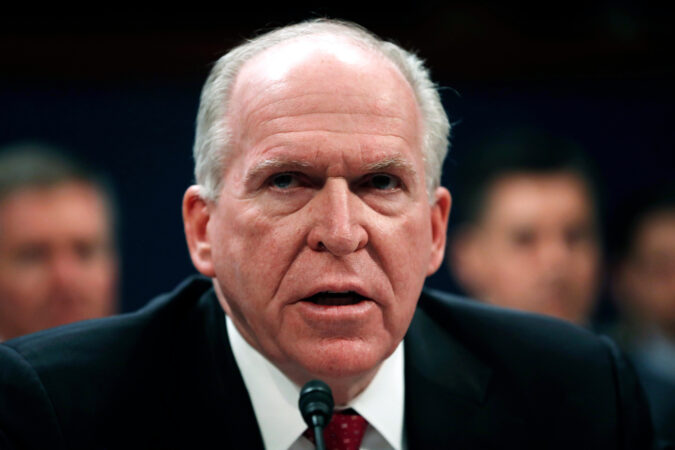
    The subpoenas reflect continued investigative activity in one of several criminal inquiries the Justice Department has undertaken into Trump’s political opponents. An array of former intelligence and law enforcement officials have received subpoenas in the investigation. Lawyers for former CIA Director John Brennan, who helped oversee the drafting of the assessment and who has been called “crooked as hell” by Trump, have said they have been informed he is a target but have not been told of any “legally justifiable basis for undertaking this investigation.”

    The intelligence community assessment, published in the final days of the Obama administration, found that Russia had developed a “clear preference” for Trump in the 2016 election and that Russian President Vladimir Putin had ordered an influence campaign with goals of undermining confidence in American democracy and harming Clinton’s chance for victory.

    That conclusion, and a related investigation into whether the 2016 Trump campaign colluded with Russia to sway the outcome of the election, have long been among the Republican president’s chief grievances and he has vowed retribution against the government officials involved in the inquiries. Former FBI Director James Comey was indicted by the Trump administration Justice Department last year on false statement and obstruction charges, but the case was later dismissed.

    Multiple government reports, including bipartisan congressional reviews and a criminal investigation by former special counsel Robert Mueller, have found that Russia interfered in Trump’s favor through a hack-and-leak operation of Democratic emails as well as a covert social media campaign aimed at sowing discord and swaying American public opinion. Mueller’s report found that the Trump campaign actively welcomed the Russian help, but it did not establish that Russian operatives and Trump or his associates conspired to tip the election in his favor.

    The Trump administration has freshly scrutinized the intelligence community assessment in part because a classified version of it incorporated in its annex a summary of the “Steele dossier,” a compilation of Democratic-funded opposition research that was assembled by former British spy Christopher Steele and was later turned over to the FBI. That research into Trump’s potential links to Russia included uncorroborated rumors and salacious gossip, and Trump has long held up its weaknesses in an effort to discredit the entire Russia investigation.

    A declassified CIA tradecraft review ordered by current Director John Ratcliffe and released last July faults Brennan’s oversight of the assessment.

    The review does not challenge the conclusion of Russian election interference but chides Brennan for the fact that the classified version referenced the Steele dossier.

    Brennan testified to Congress, and also wrote in his memoir, that he was opposed to citing the dossier in the intelligence assessment since neither its substance nor sources had been validated, and he has said the dossier did not inform the judgments of the assessment. He maintains the FBI pushed for its inclusion.

    The new CIA review seeks to cast Brennan’s views in a different light, asserting that he “showed a preference for narrative consistency over analytical soundness” and brushed aside concerns over the dossier because he believed it conformed “with existing theories.” It quotes him, without context, as having stated in writing that “my bottom line is that I believe that the information warrants inclusion in the report.”

    In a letter last December addressed to the chief judge of the Southern District of Florida, where the investigation is based, Brennan’s lawyers challenged the underpinnings of the investigation, questioning what basis prosecutors had for opening the inquiry in Florida and saying they had received no clarity from prosecutors about what potential crimes were even being investigated.

    “While it is mystifying how the prosecutors could possibly believe there is any legally justifiable basis for undertaking this investigation, they have done nothing to explain that mystery,” the lawyers said.

  • Letters to the Editor | Feb. 17, 2026

    Letters to the Editor | Feb. 17, 2026

    A criminal justice overhaul

    The Thursday print edition of The Inquirer provided several reasons why we should applaud the current presidential administration for its contributions to criminal justice reform. For example, unlike many liberal state and local politicians who have talked the talk about providing employment opportunities for former criminals, Associated Press writer Ryan J. Foley reported that enlightened managers from U.S. Immigration and Customs Enforcement have hired these individuals while they were still exhibiting criminal behavior. It should be mentioned that ICE has found creative ways for these individuals to sublimate their violent temperaments and offensive libidos into constructive law enforcement activities that have made cities like New York, Minneapolis, and Chicago so much safer.

    In that same edition of The Inquirer, Washington Post reporters described how the U.S. Department of Justice has successfully kept the names of sexual predators in the Jeffrey Epstein files out of the public eye. In an era in which progressives have rallied to “ban the box” that would otherwise require job applicants to describe their criminal history, the Justice Department has gone one step further in assuring Epstein criminals will not be economically penalized.

    It is refreshing to see that just like Lady Justice, the U.S. Departments of Homeland Security and Justice have undertaken their duties as if they were blindfolded.

    Coleman Poses, Philadelphia

    A cancer within?

    Recent reports that President Donald Trump is threatening to cancel elections and bypass Congress with an executive order on election reforms brought to mind another presidential power grab.

    In 1973, White House counsel John Dean famously warned President Richard Nixon that the Watergate cover-up was a “cancer within — close to the presidency.” He cautioned that this corruption would consume Nixon’s presidency if allowed to fester. History proved him right, as Nixon resigned in disgrace.

    Today, that warning rings with renewed urgency. By appointing Kurt Olsen as director of election security and Heather Honey as deputy assistant secretary for election integrity — both known election deniers — Trump has institutionalized systemic subversion. With his intent to nationalize elections on the heels of these appointments, the administration is poised to seize state-run processes, despite having no constitutional authority to do so.

    Had it not been for the stabilizing counsel from the president’s first-term advisers, who have since been replaced with yes-men and ideologues, the republic may not have survived. With these guardians of democracy gone, the American Experiment is in grave jeopardy.

    Jane Larkin, Tampa, Fla.

    Wrong-headed ‘housing’

    I read the article about plans by U.S. Immigration and Customs Enforcement to spend $38.3 billion on detention centers with revulsion.

    Donald Trump’s administration spends a fortune of our tax dollars to create concentration camps across the country. The cruelty is mind-boggling.

    Meanwhile, we have a housing crisis throughout the nation. Imagine if those funds were diverted from tormenting our immigrant neighbors and devoted to providing affordable housing for our communities.

    Judith Silver, Philadelphia

    . . .

    ICE is going to spend over $38 billion on detention centers. This country has so many needs — medical costs skyrocketing, a housing shortage, people mired in poverty, disaster relief, drunk drivers who kill 10,000 people per year (far more than ever have been killed by foreign nationals in the last half century), and the list goes on and on — and yet, the Trump administration believes this is a good use of our tax dollars. This surge to “mass deportation” is just another solution in search of a problem.

    Steven Morley, Philadelphia

    Join the conversation: Send letters to letters@inquirer.com. Limit length to 150 words and include home address and day and evening phone number. Letters run in The Inquirer six days a week on the editorial pages and online.

  • Dear Abby | Spouse’s world turned upside down by pair of revelations

    DEAR ABBY: My husband and I (both male) have been together for 28 years. The last few years have been less than romantic, but we remain close and in love (or so I thought).

    A few days ago, he called me from work (I’m retired) crying so hard I could hardly understand him. I rushed to his office, and he told me he had just learned from his doctor that he has AIDS. He then confessed that he’d had an affair with a contractor at his place of employment. He said it happened years ago when we were going through a rough patch, and swore it was the only time he had strayed. I am awaiting the results of my HIV test, heartbroken and crushed. What now? I’m so hurt; I don’t know if I should stay or go.

    — CRUSHED IN FLORIDA

    DEAR CRUSHED: Your first order of business should be to ensure you and your husband are getting the best medical advice and treatment possible. A diagnosis of HIV-positive does not necessarily mean the disease will progress to full-blown AIDS because with the advances in medication, it can be held in check. Whether you should stay with your husband or leave is a question that should be tabled until you are less traumatized and thinking rationally.

    ** ** **

    DEAR ABBY: Two of my children are planning weddings two months apart next year. I’m originally from the Netherlands, where my entire family still lives. My kids both want to invite these relatives (which is great), except my parents are 86 and 87 and can make it to only one wedding. For my sisters, nieces and nephews, it’s too costly to come to both. They don’t want to hurt anyone’s feelings, and I have no idea how to advise them about which wedding to attend. My son said he will help them financially if they need it so they can come to both, but even so, I know it would not be possible for my parents to come to both. Any advice?

    — CHALLENGED IN IDAHO

    DEAR CHALLENGED: I do have one suggestion: STEP BACK! It should not be your responsibility to orchestrate who will attend which wedding. Invitations should be sent to everyone. After that, I’m sure conversations will ensue. If financial help is needed, your son is offering it. Should your parents’ degree of infirmity prevent them from attending both celebrations, the decision about which they will attend should be theirs. Even if they can’t be there in person for both, these days many weddings are livestreamed, and photos and videos can be shared on social media.

    ** ** **

    TO MY ASIAN READERS WHO CELEBRATE THE LUNAR NEW YEAR: The Lunar New Year begins today. This is the Year of the Horse. According to Asian culture, individuals born in the year of the horse are dynamic, charming and adventurous. They thrive in settings that are bustling with activity and are often seen as natural leaders and motivators. A healthy, happy and prosperous New Year to you all. Tallyho!

    — LOVE, ABBY

    ** ** **

  • Horoscopes: Tuesday, Feb. 17, 2026

    ARIES (March 21-April 19). Noticing the gap between who you are and who you want to be? That’s a win. Accepting it without shame is the kind of mindset that makes real progress possible. It takes humility to grow, and humility like that will get you far.

    TAURUS (April 20-May 20). With billions of people on the planet, it’s only natural that some paths will cross in messy ways. Conflicts happen. Challenges are unavoidable. And that’s a good thing, especially today because they keep the adventure fun and the story interesting.

    GEMINI (May 21-June 21). Things that are always around get ignored. Things you can never have feel frustrating. The things that keep you wanting more? They show up sometimes, not all the time. That’s the sweet spot. The desire you chase or are chased by will illustrate the concept.

    CANCER (June 22-July 22). After an extended cycle of accommodating others, your own needs are a whisper. At this juncture, it would be normal not to know what you want. It would also be normal to turn the trend around.

    LEO (July 23-Aug. 22). Endless choice can feel like no choice at all because too many options make it hard to know what you like. Everything starts to feel the same. You’ll figure out what you like by choosing and sticking with something.

    VIRGO (Aug. 23-Sept. 22). The day’s dance is a kick line — a cumulative effect, beautiful in its conformity, requiring peripheral awareness. The line becomes one creature with many legs hitting the same rhythm and height. Dancers who can kick higher save it for another dance.

    LIBRA (Sept. 23-Oct. 23). You feel compelled to make a move even though you can’t imagine the outcome just yet. Inability to picture a future doesn’t mean the move is wrong. Right now, your instincts are simply ahead of your perception and imagination.

    SCORPIO (Oct. 24-Nov. 21). Can you be overeducated? Only if all that knowledge keeps you from doing anything. Not everything you learn is immediately useful. By taking action, you’ll learn which part of your education applies, and from there, experience will be your new professor.

    SAGITTARIUS (Nov. 22-Dec. 21). Take your time with today’s decisions, especially financial ones. Note that expensive things aren’t automatically better things, and sometimes they are worse, offered by the greedy to the ignorant, which is why you’ll do the research.

    CAPRICORN (Dec. 22-Jan. 19). Difficulty isn’t just the price of admission. It’s the weight that makes the muscle. Hard things aren’t the dues you pay to be awesome; they are why you’re awesome. The work required to earn them is what makes them transformative rather than hollow.

    AQUARIUS (Jan. 20-Feb. 18). Oddly enough, putting too much thought into a thing can make it less effective. The slapdash version will contain the most honest information, whether you’re on the giving or receiving end of it.

    PISCES (Feb. 19-March 20). Feeling stuck? There are options you’re not using — things you could say, decisions you could make, buttons to push, experiments just waiting for the scientist in you to try. Play a few of those hands and then see how you feel. You’re more powerful than you know.

    TODAY’S BIRTHDAY (Feb. 17). Welcome to your Year of the Bonsai Tree, when you grow in the direction you train in and create circumstances that bring about your most elegant form. Purposeful personal development will include making your own rules, helpful reinforcements and nurturing that has you continually warmed by emotional sunshine. More highlights: Romantic clarity, financial advantage, and spiritual insight that illuminates even your business decisions. Pisces and Capricorn adore you. Your lucky numbers are: 10, 26, 5, 37 and 15.

  • Nancy Guthrie kidnapping investigators work with Walmart after identifying suspect’s backpack

    Nancy Guthrie kidnapping investigators work with Walmart after identifying suspect’s backpack

    Investigators working on the disappearance of “Today” show host Savannah Guthrie’s mother are consulting with Walmart management to develop leads because a backpack the suspect was wearing is sold exclusively at the stores, the Pima County, Arizona, sheriff said Monday.

    Nancy Guthrie, 84, was last seen at her Arizona home on Jan. 31 and was reported missing the following day. Authorities say her blood was found on the front porch. Purported ransom notes were sent to news outlets, but two deadlines for paying have passed.

    The Federal Bureau of Investigation released surveillance videos of a masked person wearing a handgun holster outside Guthrie’s front door in Tucson the night she vanished. A porch camera recorded video of a person with a backpack who was wearing a ski mask, long pants, a jacket and gloves.

    Pima County Sheriff Chris Nanos said in a text message to The Associated Press on Monday that the 25-liter “Ozark Trail Hiker Pack” backpack was the only clothing item that has been “definitively identified.”

    “This backpack is exclusive to Walmart and we are working with Walmart management to develop further leads,” Nanos said.

    The suspect’s clothing “may have been purchased from Walmart but is not exclusively available at Walmart,” the Pima County Sheriff’s Department said in a statement Monday. “This remains a possibility only.”

    Investigators on Sunday announced that a glove discovered near the Guthrie home has been sent for DNA testing. The FBI said that it received preliminary results Saturday and was awaiting official confirmation. The development comes as law enforcement gathers more potential evidence and as the search for Guthrie’s mother heads into its third week. Authorities previously said they had not identified a suspect.

    The FBI said the suspect in the surveillance footage is a man about 5 feet, 9 inches tall with a medium build.

    Nanos said on Monday that members of Guthrie’s family, including siblings and spouses, are not suspects.

    “The family has been nothing but cooperative and gracious and are victims in this case,” Nanos said in a statement.

    Authorities have expressed concern about Nancy Guthrie’s health because she needs vital daily medicine. She is said to have a pacemaker and have dealt with high blood pressure and heart issues, according to sheriff’s dispatcher audio on broadcastify.com.

  • 3 killed, including suspect, in shooting during Rhode Island youth hockey game

    3 killed, including suspect, in shooting during Rhode Island youth hockey game

    PAWTUCKET, R.I. — Three people, including the suspect, were fatally shot during a Rhode Island youth hockey game Monday, authorities said.

    Pawtucket Police Chief Tina Goncalves told reporters that three other victims were hospitalized in critical condition. The shooter died from an apparent self-inflicted gun wound, she said.

    While police were not involved in the shooter’s death, authorities were still investigating, she said.

    “It appears that this was a targeted event, that it may be a family dispute,” she said.

    Goncalves did not provide details about the suspect or the ages of those who were killed, though she said it appeared that both victims were adults.

    She said investigators were trying to piece together what happened and speak with witnesses of the shooting inside Dennis M. Lynch Arena in Pawtucket, a few miles outside Providence. They also were reviewing video taken from the hockey game. Unverified footage circulating on social media shows players diving for cover and fans fleeing their seats after popping sounds are heard.

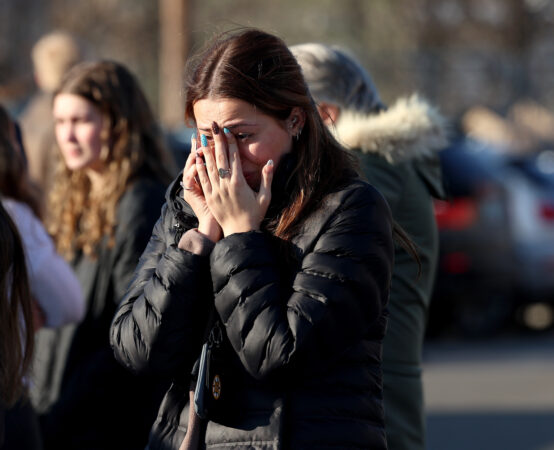
    Outside the arena, tearful families and high school hockey players still in uniform could be seen hugging before they boarded a bus to leave the area. Roads surrounding the arena were shut down as a heavy police presence remained and helicopters flew overhead.

    Monday’s shooting comes nearly two months after Rhode Island was rocked by a separate gun violence tragedy at Brown University, where a gunman killed two students and wounded nine others. That shooter went on to also fatally shoot a Massachusetts Institute of Technology professor. Authorities later found Claudio Neves Valente, 48, dead from a self-inflicted gunshot wound at a New Hampshire storage facility.

    “The fortunate thing is that the two incidents are not related, but it is very tragic,” said Pawtucket Mayor Don Grebien. “These are high school kids. They were doing an event, they were playing with their families watching, a fun time, and it turned into this.”

    Pawtucket is nestled just north of Providence and right under the Massachusetts state border. A city of just under 80,000, Pawtucket had up until recently been known as the home to Hasbro’s headquarters.

  • Prosecutors plan to charge an Israeli settler with killing a Palestinian activist in the West Bank

    Prosecutors plan to charge an Israeli settler with killing a Palestinian activist in the West Bank

    RAMALLAH, West Bank — Israeli prosecutors said Monday that they plan to charge a settler in the killing of a Palestinian activist during a confrontation that was caught on video, opening a rare prosecution of violence by Jewish settlers in the occupied West Bank.

    Attacks from settlers and home demolitions by authorities have spiked dramatically over the past two years, but the death in July of Awdah Hathaleen has drawn particular attention due to his involvement in the 2025 Oscar-winning film No Other Land, which chronicled Palestinian villagers’ fight to stay on their land. The case also stands out because the confrontation between Palestinians and Yinon Levi, an internationally sanctioned settler, was captured on video from multiple vantage points.

    In a video that family members say was taken by Hathaleen himself, Levi could be seen firing toward the person holding the camera. Another showed Levi firing two shots without showing where the bullets struck.

    An Israeli judge released Levi from custody six months ago, citing a lack of evidence that he fired the shots that killed Hathaleen.

    Israel’s State Attorney General’s office confirmed in a statement Monday that it had initiated proceedings to indict Levi. It did not specify the charges.

    Eitan Peleg, an attorney for Hathaleen’s family, said the office had informed them it planned to indict Levi for reckless homicide, triggering a process that allows Levi to contest charges before they’re formally filed.

    “Enforcement of the law in cases like this involving Palestinians in the West Bank is very rare, so this is unique,” Peleg told the Associated Press on Monday.

    Israel’s military referred questions on the indictment to police, who have not yet responded. Both bodies enforce laws in the area.

    More than 3.4 million Palestinians and 700,000 Israelis live in the occupied West Bank and east Jerusalem, territories captured by Israel in 1967 and sought by Palestinians for a future state. The international community overwhelmingly considers Israeli settlement construction in these areas to be illegal and an obstacle to peace.

    Palestinians and rights groups say authorities routinely fail to prosecute settlers or hold them accountable for violence. Under National Security Minister Itamar Ben-Gvir, investigations into settler attacks have plummeted, according to the Israeli rights group Yesh Din.

    Khalil Hathaleen, Awdah’s brother, said the family was glad some measure of justice was being pursued but felt the charge of “reckless homicide” was insufficient.

    “It was an intentional killing in broad daylight, with prior intent and premeditation,” he said.

    Levi’s attorney, Avichai Hajbi, declined Monday to comment on the coming indictment, which he said he hadn’t received. After the shooting, he told the Associated Press that Levi acted in self-defense, without elaborating. Levi did not answer phone calls Monday.

    Parts of confrontation were filmed

    Video released last year by B’Tselem, an Israeli human rights group, showed Levi firing a gun toward the person filming. At the moment that B’Tselem says Hathaleen collapsed, the visuals are jostled but moans of pain can be heard. The group said it obtained the video from the family of Hathaleen, who said he filmed it.

    Additional footage obtained by the AP last year showed Levi waving a pistol during the standoff in Umm al-Khair with a group of Palestinians over an excavator that had rolled down from a nearby settlement and damaged Palestinian property earlier in the day.

    Alaa Hathaleen, a cousin who filmed the encounter, told AP at the time that he had approached Levi to tell him the group was unarmed and to stop the bulldozing.

    In the video, one Palestinian insults Levi and another challenges him to shoot. Levi shoves someone just out of the frame, demands to know who threw stones, and later fires a shot, seemingly away from the crowd. He then fires again and yells toward the crowd to get away from the excavator.

    The footage did not show where bullets struck, though other relatives said they saw Awdah Hathaleen fall immediately after shots were fired.

    Levi was detained before being released to house arrest. That condition was eventually lifted, too.

    Levi was among the Israeli settlers sanctioned by the United States and other Western countries over allegations of violence toward Palestinians in 2024. U.S. President Donald Trump lifted the U.S. sanctions after taking office the following year.

    Attacks spike as spotlight grows

    Activists and crew members on the film No Other Land have said settler attacks have intensified on the village portrayed since the movie won the Oscar.

    Hamdan Ballal, one of the film’s directors, said his family home in Umm al-Khair was subject to another attack on Sunday. Four relatives were arrested during the confrontation, he said.

    Ballal said a soldier, who came to their home accompanied by another soldier and a settler-herder, grabbed his brother by the neck and tried to choke him. Neither the army nor the police responded to requests for comment on the incident.

    “The year after I won the Oscar, the assaults increased significantly. On a daily basis, settlers come and destroy the fields, destroy the trees, destroy the crops around the house,” he said.

    Israeli proof-of-ownership rules spark anger

    As prosecutors move to indict Levi and violence persists across the West Bank, Israel is moving ahead with measures to deepen its control over land in the occupied territory.

    On Sunday, it announced it would resume a land registration process across the West Bank to require anyone with a claim to land to submit documents proving ownership. Rights groups say the process could strip Palestinians of land they’ve lived on and farmed for generations and transfer vast swaths of land to Israeli state control.

    Israel’s Foreign Ministry said the steps countered Palestinian Authority land registration efforts in areas where Israel maintains civil and military control.

    The measures follow years of accusations by Palestinians that actions by settlers and the military — campaigns of violence, harassment and demolitions — have pushed them from their land.

    The decisions have drawn widespread condemnation as violations of international law, including from countries involved in the ceasefire process in the Gaza Strip and Trump’s Board of Peace.

    Saudi Arabia’s Foreign Ministry in a statement on Monday said the measures were part of Israel’s effort to impose a “new legal and administrative reality” that undermines prospects for peace and stability. Egypt’s Foreign Ministry called the move a “flagrant violation” of international law, warning it would escalate tensions in the Palestinian territories and across the region.

    U.N. Secretary-General António Guterres condemned Israel’s decision, calling it not only destabilizing but unlawful according to the International Court of Justice, the U.N.’s highest tribunal, his spokesperson Stéphane Dujarric said.