Tag: no-latest

  • Trump says he will meet Machado — and would accept Nobel Peace Prize from her

    Trump says he will meet Machado — and would accept Nobel Peace Prize from her

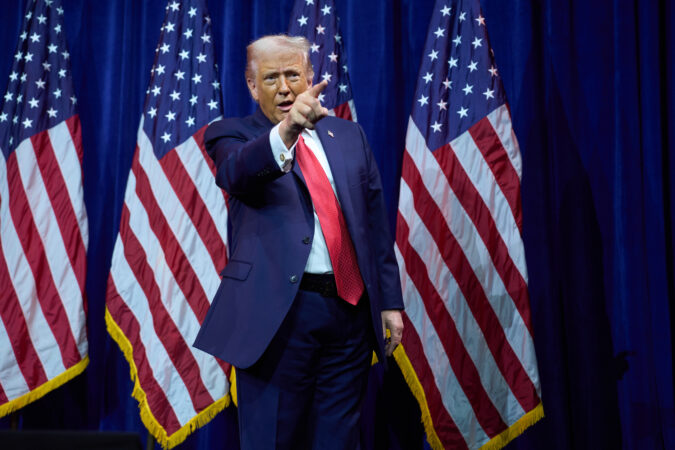
    President Donald Trump said he will meet with Nobel Peace Prize winner María Corina Machado next week — and that he would accept the award she has said she wants to share with him.

    “I understand she’s coming in next week sometime, and I look forward to saying hello to her,” the president said of the Venezuelan opposition leader during an interview with Fox News’s Sean Hannity that aired Thursday. Trump added that he heard Machado wants to give him the prize, “and that would be a great honor.”

    The White House late Thursday did not provide details about Machado’s trip or specify what issues she and Trump would discuss.

    In an interview with Hannity this week in which she heaped praise on Trump, Machado said she had not spoken to the U.S. president since October, when she was announced as the latest Nobel laureate.

    She had been in hiding in Venezuela during President Nicolás Maduro’s last days in power and turned up in Oslo, where her daughter accepted the prize on her behalf. But she promised to return to her country and called for elections to replace Maduro.

    “But I do want to say today, on behalf of the Venezuelan people, how grateful we are for [Trump’s] courageous mission,” Machado said on Hannity’s show this week, adding that she and the Venezuelan people want to “share” the prize with Trump after the U.S. military seized Maduro and his wife and brought them to New York to stand trial on narco-terrorism charges.

    Trump has openly coveted and publicly lobbied for the Nobel Peace Prize, claiming to have “solved” a number of international conflicts. Several world leaders have backed his claims.

    Machado, a former National Assembly member, won the opposition primary in Venezuela two years ago but was barred from running by Maduro in the general election. Maduro claimed victory over the candidate Machado backed, but ballot audits by the Washington Post and independent monitors show the reported election result was invalid.

    Following the U.S. operation to arrest Maduro on Saturday, Trump said the United States would “run” Venezuela with the cooperation of Delcy Rodríguez, Maduro’s vice president, who has become the country’s acting leader. Trump has not given a timeline for when elections would be held and said he did not believe Machado had the support to run the country after Maduro’s removal.

    “I think it would be very tough for her to be the leader,” Trump told reporters last weekend. “She doesn’t have the support within, or the respect within, the country. She’s a very nice woman, but she doesn’t have the respect.”

    Two people close to the White House previously told The Post that Trump was not willing to support Machado because she accepted the Peace Prize. “If she had turned it down and said, ‘I can’t accept it because it’s Donald Trump’s,’ she’d be the president of Venezuela today,” one of the people said, speaking on the condition of anonymity to discuss a sensitive situation.

    Machado told Hannity she believed that if elections were held, she would win the presidency in a landslide.

  • Russia unleashes nuclear-capable missile in latest Ukraine attack

    Russia unleashes nuclear-capable missile in latest Ukraine attack

    KYIV — Russia launched an Oreshnik medium-range ballistic missile, which is capable of carrying nuclear warheads, as part of a large-scale aerial assault on Ukraine overnight Friday, the Russian Defense Ministry said — a menacing reminder to the world of Moscow’s huge nuclear arsenal at a moment when a peace plan promoted by President Donald Trump appears to be faltering.

    The latest Russian aerial barrage largely pummeled Kyiv, leaving close to half a million people without electricity in Kyiv and the surrounding region, officials said, as temperatures plummeted — prompting Mayor Vitali Klitschko to urge residents to temporarily evacuate the capital if possible.

    Klitschko said nearly 6,000 apartment buildings — half of the city’s total — were without heat. Water supply was disrupted in some districts, he said, and he urged residents, “who have the opportunity to temporarily leave the city” to find “alternative sources of power and heat.”

    Russian forces first used the Oreshnik — meaning “hazelnut tree” — in an attack on Ukraine in November 2024, creating concern in Western capitals over Moscow’s potential use of nuclear-capable weapons in the conflict. The missile fired overnight Friday did not carry a nuclear payload.

    Countries friendly to Moscow, such as China, have warned Russia against using nuclear weapons in Ukraine, meaning Russian President Vladimir Putin would risk wide international condemnation even by using a small-scale “tactical” nuclear weapon. Depending on the target, a nuclear strike could also pose the danger of releasing radiation next door to Putin’s own country.

    The Russian Defense Ministry said that the Oreshnik was launched in retaliation for a claimed attack by Ukrainian drones on one of Putin’s residences — an attack that Trump, citing U.S. intelligence, now says never happened.

    Trump initially expressed fury over the alleged drone strike after Putin told him that his residence in the northwestern Novgorod region had been targeted by drones. Kyiv, however, forcefully denied the attack, and local residents did not post anything about it on social media, despite Russia’s claims that 91 drones had been involved and shot down. Days later, Trump rejected Moscow’s claims.

    In its statement, on the Telegram messaging platform, the Russian Defense Ministry called the alleged drone incident a “terrorist attack.”

    Trump told reporters earlier this week: “I don’t believe that strike happened.”

    Trump has been pushing an initiative to halt Russia’s war but with little indication that Putin is willing to support any ceasefire. After a meeting in Paris this week, European leaders and Ukrainian President Volodymyr Zelensky said they had made progress on plans to provide postwar security guarantees and that their initiative was ready for Trump’s approval. Russia, however, quickly rejected any presence of Western peacekeeping forces in Ukraine, a core pillar of the security guarantees.

    On Friday, Ukrainian officials did not specify whether an Oreshnik had been used, but Zelensky later said in a social media post that an Oreshnik had been part of Russia’s overnight aerial assault.

    Ukraine’s security services, the SBU, said that its investigators had found debris indicating the missile was an Oreshnik — including the “stabilization and guidance unit,” which was described as the “brain” of the missile, and “parts from the engine unit.”

    The country’s western air command said in a Facebook post that “the enemy launched a missile strike on infrastructure facilities in Lviv using a ballistic missile.”

    “The air target was moving at a speed of about 13,000 kilometers per hour along a ballistic trajectory,” the air command said. “The type of missile with which the Russian aggressors attacked the city will be established after studying all its elements.”

    Ukrainian media reported six loud explosions in the Lviv region, one after another, shortly before midnight.

    In a Telegram post, Ukraine’s air force said that a “medium-rаnge ballistic missile” was launched from Russia’s Kapustin Yar test site, in the Astrakhan region on the Caspian Sea.

    Ukrainian Foreign Minister Andrii Sybiha said the possible use of an Oreshnik near Ukraine’s border with European Union and NATO member Poland was “a grave threat to the security on the European continent and a test for the transatlantic community.”

    “We demand strong responses to Russia’s reckless actions,” Sybiha wrote on X.

    “It is absurd that Russia attempts to justify this strike with the fake ‘Putin residence attack’ that never happened,” he wrote, adding that Putin used the Oreshnik “in response to his own hallucinations — this is truly a global threat.”

    Alexander Gabuev, director of the Carnegie Russia Eurasia Center, said that Russia’s use of the Oreshnik as a “high precision kinetic weapon with normal warheads” did not make a great deal of sense, since the destruction it caused was “limited.”

    Instead, Gabuev said it was potentially “a signal” — that in striking the Lviv region in far western Ukraine “no part of the country is immune.” It also could be a warning to Western leaders that any peacekeeping contingent sent to Ukraine would be vulnerable.

    “The message could be both to undermine Ukrainian morale but also to show that, look, if you place Western military, it will not be immune, because we have multiple ways to reach these troops,” Gabuev said in an interview.

    In addition to the Oreshnik, Ukraine’s air force said that the Russian attack involved 242 drones “of various types” and 36 missiles, including 13 ballistic missiles. In total, the air force said that 18 missiles and 16 drones pummeled 19 locations.

    “The main direction of the attack was Kyiv region,” the air force said. Air raid alerts in the capital lasted until the early morning hours on Friday, with explosions ringing out regularly — as Ukrainian antiaircraft defenses countered the aerial assault and some of the drones and missiles hit their targets.

    At least four people died and 22 were injured in Kyiv, Ukraine’s state emergency service said.

    Among those killed was a first responder, Serhiy Smolyak. “When the emergency medical team arrived at the scene of the shelling of a residential building, the enemy launched a second strike,” Ukrainian Health Minister Viktor Liashko wrote on social media.

    The damage to Kyiv’s critical infrastructure was extensive, city officials said. Tymur Tkachenko, head of Kyiv’s military administration, said that at least 50 buildings, four educational institutions and 18 cars were damaged, as well as “more than 1,000 broken windows.” A Russian drone also damaged the Qatari Embassy in Kyiv, Zelensky said.

    The difficult energy situation was made worse as temperatures across Ukraine were forecasted to remain well below freezing.

    “This is one of the most difficult attacks on the city,” Tkachenko said. This was in part due to “the challenging weather,” he said, which the Russians were “counting on,” hoping that “we will freeze and our services will collapse.”

    Klitschko warned Kyiv residents that the cold weather would not let up for some time.

    “City services are operating in emergency mode,” the mayor wrote on Telegram. “And the weather conditions, unfortunately, are forecast to be difficult in the coming days.”

  • Renee Good’s wife says she was supporting neighbors when killed by ICE

    Renee Good’s wife says she was supporting neighbors when killed by ICE

    MINNEAPOLIS — Renee Nicole Good and her wife had “stopped to support our neighbors” when she was fatally shot by an ICE officer in a confrontation on a residential street Wednesday, her wife said in a statement.

    The couple had come to Minneapolis almost a year ago, looking for a place that they and their 6-year-old son could feel comfortable.

    “On Wednesday, January 7, we stopped to support our neighbors. We had whistles. They had guns,” Rebecca Good said in a statement Friday.

    “We were raising our son to believe that no matter where you come from or what you look like, all of us deserve compassion and kindness,” the statement said. “Renee lived this belief every day. She is pure love. She is pure joy. She is pure sunshine.”

    Good, 37, was shot and killed Wednesday morning blocks from her home by an ICE agent, who federal officials say fired in self-defense. Details of the shooting, which was captured in videos by private citizens, are in dispute.

    Tricia McLaughlin, a spokesperson for the Department of Homeland Security, told Fox News on Thursday that Good “was stalking agents all day long, impeding our law enforcement.” Asked by the Washington Post what she was basing that description on, McLaughlin said the information came from “firsthand accounts” from law enforcement officers who had been in contact with Good.

    In interviews this week, friends and family members painted a picture of a woman who lived a quiet life not shaped by overt activism — a sharp contrast to comments by Vice President JD Vance, who blamed Good for her own death, and Homeland Security Secretary Kristi L. Noem, who said Good’s actions amounted to “an act of domestic terrorism.”

    Noem’s comments, and the FBI’s apparent move to block state investigators from the probe into the shooting, show the administration has “already come to a conclusion” about what it wants the inquiry to find, Minneapolis Mayor Jacob Frey said Friday.

    “From the very beginning, they’re calling the victim a domestic terrorist, they’re calling the actions of the agent involved as some form of defensive posture,” Frey said from the Minneapolis City Hall rotunda. “We know they’ve already determined much of the investigation.”

    Good’s family members have said they do not believe she was an aggressive activist tailing ICE officers. She had just dropped her son at school, they said. Her father, Tim Ganger, in a brief interview Wednesday, said she got “caught up in a bad situation. I think she was just caught in the crossfire.”

    Videos show Good’s maroon Honda Pilot parked across the road as U.S. Immigration and Customs Enforcement vehicles approach. ICE agents then confront her, demanding she get out of her car. A frame-by-frame analysis by the Post of the footage, however, raises questions about the accounts of administration officials. The SUV did move toward the ICE agent as he stood in front of it. But the agent was able to move out of the way and fire at least two of three shots from the side of the vehicle as it veered past him, according to the analysis.

    Good’s family and friends describe her as a devoted mother to her three children, an artist with a prizewinning talent for poetry who had weathered personal difficulties, including the death of her second husband, a military veteran who suffered from post-traumatic stress disorder.

    She was “a devoted Christian who took part in youth mission trips to Northern Ireland when she was younger,” said her first husband, who spoke on the condition of anonymity out of concern for the safety of his daughter, 15, and son, 12. “She loved to sing and studied vocal performance in college.”

    Good grew up in Colorado Springs. She attended Coronado High School, sang in the school’s show choir and participated in a school group called Community Crew dedicated to learning practical skills like cooking, according to the yearbook. When she graduated in 2006, Good won “Best Personality.”

    “When I found out that I had won, I was like ‘this is pretty flippin’ sweet!’” she told yearbook staff.

    Good attended Metropolitan State University of Denver briefly in 2014 and 2015. After she and her first husband divorced, he said Good married Timmy Macklin Jr., who served in the U.S. Air Force. In 2019, she began studying creative writing at Old Dominion University in Virginia.

    “She was his heart,” her former brother-in-law Joseph Macklin, who lives near Knoxville, Tenn., said of Good and his brother. He described her as “a great and loving mother.”

    One of her professors, Kent Wascom, director of Old Dominion’s MFA and creative writing program, recalled her as a poet studying how to improve her fiction writing, first in a class and then an advanced workshop. Unlike some of her peers, Good never talked about politics, Wascom said, focusing instead on “realist fiction” about those very different from her, from an elderly woman to a veteran.

    “She consistently sought to write outside of her experience,” he said. “She was a really warm presence but not a show-off. She never made a class about herself, even when her work was the focus of a workshop.”

    By then, Good was older than many of her classmates, pregnant with her third child and working to pay for school (as a dental assistant and at a credit union, her first husband said). “My memory of Renee is how much she tried to connect with her peers and support them,” Wascom said. He recalled how Good later brought her newborn son to meet him.

    By 2020, Good had won a prestigious prize for one of her poems, an honor Wascom said demonstrated her promise. She graduated with a bachelor’s degree in English that December.

    In April 2021, Good met a professional photographer named Charles W. Winslow at an Old Dominion football game that he was covering. She wanted advice on how to incorporate photography into covers for book projects she had planned. He said she was a gifted student and accompanied him on many of his professional assignments. But he also remembered her kindness.

    “As a friend she was kindhearted and always helping others in need,” Winslow said. “She didn’t care of race, creed, color. If she had $10 in her pocket, she would give a homeless person $9 that she passes on the street.”

    In 2023, Timmy Macklin died at the age of 36, and Good became primarily a stay-at-home mom, her first husband said.

    Joseph Macklin said Good made an effort to keep her son in touch with his family back in Tennessee: “She always brought him to see us. She was so kindhearted.”

    After she met and married Rebecca Good, 40, the couple settled in Kansas City, Mo., and crafted a quiet life.

    As a gay couple living in a red state, they weren’t overtly political, at least among the residents of their quiet street in the Waldo neighborhood, their neighbor Jennifer Ferguson recalled Thursday. But after Donald Trump was reelected in 2024, the two broke their lease and told Ferguson they were moving to Canada because of the political situation.

    “[Becca] said, ‘We’re getting out,’ ” Ferguson said. “‘We can go to Canada until we figure out what we are going to do.’”

    The couple lived in the neighborhood for only a short time but made an impression on Ferguson, 41, an administrative assistant. Becca Good had sold a home improvement business before they moved in, so she mostly stayed home with their son, cooking and mowing the lawn. Renee Good told Ferguson she was studying for a master’s degree.

    The two families exchanged Christmas treats and their kids played together, she said.

    They were “just such nice people” and “great parents” to their son, then in preschool, Ferguson said. Both were attentive, quick to enforce rules or stop an activity — like splashing in a kiddie pool — when the little boy seemed overly tired. When they moved away, they gave Ferguson their lawn mower after hers had been stolen.

    “We always talked about free stuff for the kids,” Ferguson said. “She asked about a free indoor playground, and I said, ‘Go to the McDonald’s up the street.” The couple also asked her opinion about nearby charter schools, because her son was about to start kindergarten.

    “They rarely left the house,” Ferguson said, except to take the boy to school. “They were homebodies.”

    They were also devotees of the WNBA and the KC Current, the local women’s pro soccer team. (A KC Current sticker was visible on Good’s Honda Pilot.)

    The couple moved from Kansas City to Minneapolis in March of last year, her first husband said, adding that Becca Good was “getting support from friends and her and Renee’s family.”

    Macklin, Good’s former brother-in-law, said Thursday that Good’s children “are hurting and wondering why this happened, especially the youngest.”

    “We just buried his father three years ago in June and now he lost his mother,” Macklin said. “It is definitely a tragedy no kid should have to go through at such a young age. And to have to see it all over social media and television is sickening.”

    He said that after the shooting, Good’s wife contacted his parents. “My heart really hurts for her. I’m praying for her,” he said. “She’s such a sweet and caring woman.”

    Macklin, whose father is a Christian street preacher, struggled to make sense of Good’s death.

    “I wish she would’ve minded her business and stayed out the way,” he said, but added, “I know families are being broken apart … and it’s heartbreaking, but now it’s our family.”

    “She was a good mother and a good person, and she didn’t deserve this. Her [significant other] doesn’t deserve to be without her, her mom doesn’t deserve to be without her, and her kids don’t deserve to be without her,” he said. “It truly is a tragedy that not just our family is going through, but our nation.”
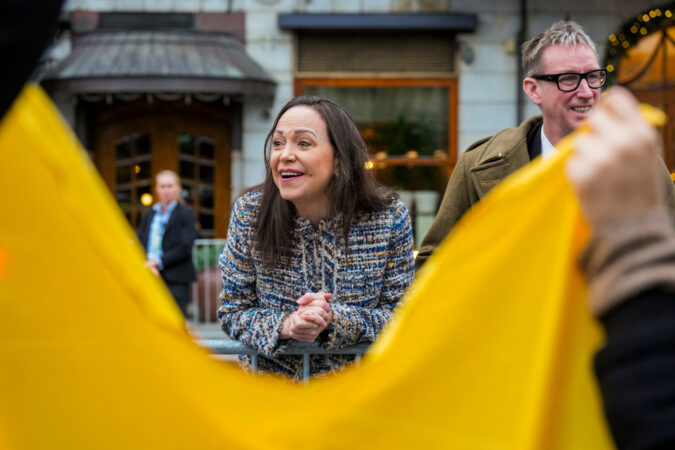
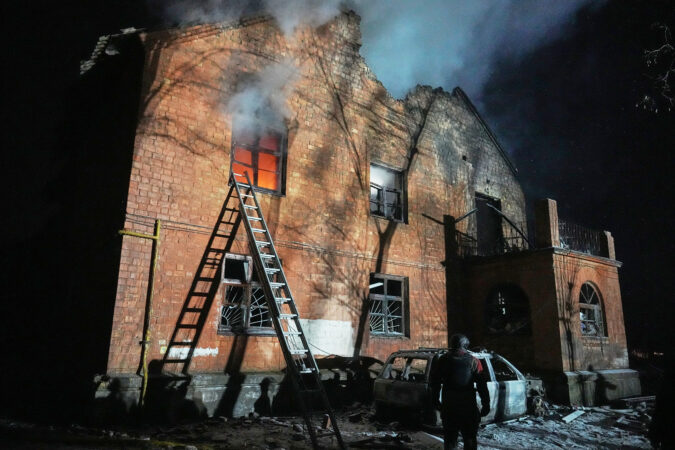
  • Hennepin County prosecutor calls on the public to share Renee Good shooting evidence with her office

    Hennepin County prosecutor calls on the public to share Renee Good shooting evidence with her office

    MINNEAPOLIS — Hennepin County Attorney Mary Moriarty on Friday called on members of the public to send any video or other evidence in the fatal shooting of Renee Good directly to her office, challenging the Trump administration’s decision to leave the investigation solely to the FBI.

    Moriarty said that although her office has collaborated effectively with the FBI in past cases, she is concerned by the Trump administration’s decision to bar state and local agencies from playing any role in the investigation into Wednesday’s killing of Good by an Immigration and Customs Enforcement officer in Minneapolis. Specifically, she said she’s worried the FBI won’t share evidence with state investigators.

    “We do have jurisdiction to make this decision with what happened in this case,” she said at a news conference. “It does not matter that it was a federal law enforcement agent.”

    Moriarty said her office would post a link for the public to submit footage of the shooting, even though she acknowledged that she wasn’t sure what legal outcome submissions might produce.

    She also said that despite the Trump administration’s insistence that the officer who shot Good has complete legal immunity, that isn’t the case.

    A grieving wife speaks

    The prosecutor’s announcement came as Minneapolis braced for another day of protests over Good’s killing and a day after federal immigration officers shot and wounded two people in Portland, Ore.

    Good’s wife, Becca Good, released a statement to Minnesota Public Radio on Friday, saying “kindness radiated out of her.”

    “On Wednesday, January 7th, we stopped to support our neighbors. We had whistles. They had guns,” Becca Good said.

    “I am now left to raise our son and to continue teaching him, as Renee believed, that there are people building a better world for him,” she wrote. “That the people who did this had fear and anger in their hearts, and we need to show them a better way.”

    The reaction to the Good’s shooting was immediate in the city where police killed George Floyd in 2020, with hundreds of people turning up to the scene to vent their outrage at the ICE officers and the school district canceling classes for the rest of the week as a precaution.

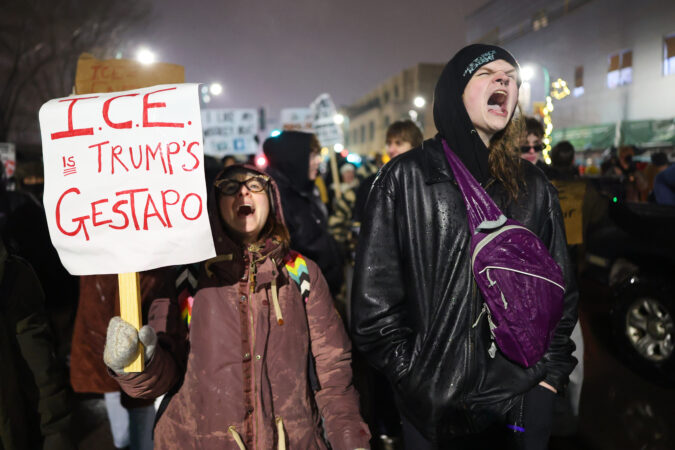
    On Thursday night, hundreds marched in freezing rain down one of Minneapolis’ major thoroughfares, chanting “ICE out now!” and holding signs saying, “Killer ice off our streets.” The day began with a charged demonstration outside of a federal facility that is serving as a hub for the immigration crackdown that began Tuesday in the Twin Cities of Minneapolis and St. Paul. Authorities erected barricades outside the facility Friday.

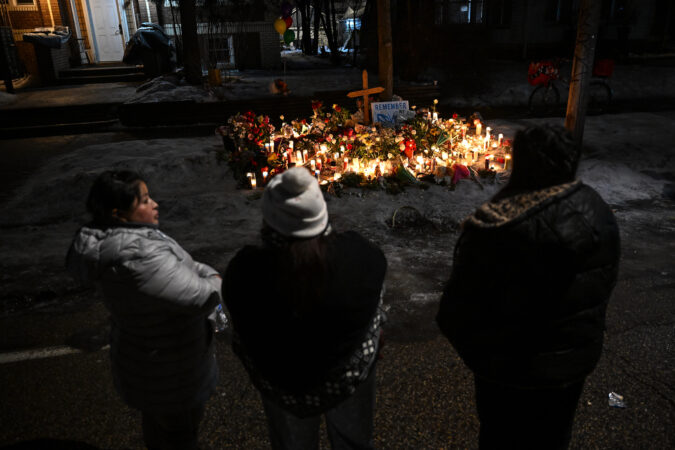
    City workers, meanwhile, removed barricades made of old Christmas trees and other debris that had been blocking the streets near the scene of Good’s shooting. Officials said they would leave up a makeshift shrine to the 37-year-old mother of three.

    Shootings in Portland

    The shootings in Portland took place outside a hospital Thursday afternoon. A man and woman, identified by the Department of Homeland Security as Venezuela nationals Luis David Nico Moncada and Yorlenys Betzabeth Zambrano-Contreras, were shot inside a vehicle, and their conditions were not immediately known. The FBI and the Oregon Department of Justice were investigating.

    Portland Mayor Keith Wilson and the city council called on ICE to end all operations in the city until a full investigation is completed. Hundreds protested Thursday night at a local ICE building. Early Friday, Portland police reported that officers had arrested several protesters after asking the to move from the street to the sidewalk, to allow traffic to flow.

    Just as it did following Good’s shooting, DHS defended the actions of the officers in Portland, saying it occurred after a Venezuelan man with alleged gang ties and who was involved in a recent shooting tried to “weaponize” his vehicle to hit the officers. It wasn’t immediately clear if the shootings were captured on video, as Good’s was.

    The biggest crackdown yet

    The Minneapolis shooting happened on the second day of the immigration crackdown in the Twin Cities, which Homeland Security said is the biggest immigration enforcement operation ever. More than 2,000 officers are taking part and Noem said they have made more than 1,500 arrests.

    The government is also shifting immigration officers to Minneapolis from sweeps in Louisiana, according to documents obtained by The Associated Press. This represents a pivot, as the Louisiana crackdown that began in December had been expected to last into February.

    Good’s death — at least the fifth tied to immigration sweeps since Trump took office — has resonated far beyond Minneapolis, as protests happening in other places, including Texas, California, Detroit and Missouri.

    In Washington, D.C., on Thursday, a woman held a sign that said, “Stop Trump’s Gestapo,” as hundreds of people marched to the White House. Protesters in Pflugerville, Texas, north of Austin, banged on the walls of an ICE facility. And a man in Los Angeles burned an American flag in front of federal detention center.

    A deadly encounter seen from multiple angles

    Homeland Security Secretary Kristi Noem, President Donald Trump and others in his administration have repeatedly characterized the Minneapolis shooting as an act of self-defense and cast Good as a villain, suggesting she used her vehicle as a weapon to attack the officer who shot her.

    But state and local officials and protesters rejected that characterization, with Minneapolis Mayor Jacob Frey saying videos show the self-defense argument is “garbage.”

    Several bystanders captured footage of Good’s killing, which happened in a neighborhood south of downtown.

    The recordings show an officer approaching an SUV stopped across the middle of the road, demanding the driver open the door and grabbing the handle. The Honda Pilot begins to pull forward and a different ICE officer standing in front of it pulls his weapon and immediately fires at least two shots at close range, jumping back as the vehicle moves toward him.

    It is not clear from the videos if the vehicle makes contact with the officer, and there is no indication of whether the woman had interactions with agents earlier. After the shooting, the SUV speeds into two cars parked on a curb before crashing to a stop.

    Officer identified in records

    The federal agent who fatally shot Good is an Iraq War veteran who has served for nearly two decades in the Border Patrol and ICE, according to records obtained by AP.

    Noem has not publicly named him, but a Homeland Security spokesperson said her description of his injuries last summer refers to an incident in Bloomington, Minn., in which court documents identify him as Jonathan Ross.

    Ross got his arm stuck in the window of a vehicle whose driver was fleeing arrest on an immigration violation. Ross was dragged and fired his Taser. A jury found the driver guilty of assaulting a federal officer with a dangerous weapon.

    Attempts to reach Ross, 43, at phone numbers and email addresses associated with him were not successful.

  • How Trump’s plan to charge foreigners more is causing chaos at national parks

    How Trump’s plan to charge foreigners more is causing chaos at national parks

    Visitors traveling to the most popular national parks are facing a new question at the gate: Are you a United States resident?

    That question is already causing longer wait times to enter parks and is leading some foreign tourists to turn away at the gates. Experts describe the “America-first pricing” as another example of the Trump administration targeting immigrants.

    “It’s meant to make people feel nervous and uncomfortable and make the decision to either stay away or to modify their plans based on their identities,” said Mneesha Gellman, a political scientist at Emerson College who serves as an expert witness in U.S. immigration court.

    “It really is being used to sow fear.”

    In November, the Trump administration announced it would hike visitor fees for people who are not U.S. residents, with 11 popular parks charging a $100 surcharge in addition to the entrance fee. America the Beautiful passes, which include admission to the entire National Park system, cost an additional $170 for nonresidents.

    “The updated fee structure reflects the significant investment made by U.S. taxpayers to support these public lands, while still welcoming international visitors who help sustain local economies and share in our nation’s natural and cultural heritage,” said Elizabeth Peace, an Interior Department spokeswoman, in a statement. “This policy reflects the Administration’s belief that America’s public lands should be enjoyed by everyone who visits our country lawfully and responsibly.”

    The parks subject to the additional fees are Acadia National Park, Bryce Canyon National Park, Everglades National Park, Glacier National Park, Grand Canyon National Park, Grand Teton National Park, Rocky Mountain National Park, Sequoia & Kings Canyon National Park, Yellowstone National Park, Yosemite National Park and Zion National Park.

    That policy went into effect on Jan. 1 and is already having an impact, according to four people familiar with the matter, who spoke on the condition of anonymity for fear of retaliation.

    That includes slowing down entry to parks as staff question visitors about whether they are U.S. residents, which can generate confusion because of the wide array of possible immigration statuses and visas.

    At multiple parks, this has led to long lines and wait times at entrance gates, with staff saying they expect the problem to worsen when visitation peaks in the summer months ahead.

    The NPS website says visitors must show proof of citizenship or residency in the form of a passport, driver’s license, state ID or green card to purchase a pass. But an internal NPS directive reviewed by The Washington Post instructs staff to ask groups, “How many people visiting are not U.S. citizens or residents?”

    The document says “the fee collector does not need to check the identification of every visitor.” Two park employees confirmed they are taking visitors at their word and not checking IDs, except when it’s required to buy or use an annual pass.

    Even the questioning leads to uncomfortable conversations, one of the employees said.

    “We feel a bit conflicted in what we’re doing or it doesn’t feel right,” the person said. “We don’t want to make visitors feel unwelcome.”

    The staffers, who work at separate parks, said every day groups of foreign visitors are deciding not to enter the park when asked about their residency and told they will have to pay higher fees.

    “Wait times are absolutely longer because we have to ask more questions,” the second park staffer said. “If someone doesn’t meet residency requirements then we have to explain everything to them. This can be made extra difficult with language barriers.”

    Deciding who counts as a U.S. resident is difficult when there are hundreds of different immigration statuses, said Julia Gelatt, an associate director of U.S. immigration policy at the Migration Policy Institute, a think tank.

    “I don’t know how somebody from the Park Service who’s not trained in immigration law is meant to tell who is a citizen or permanent resident,” she said.

    The policy is part of a larger Trump administration strategy to send a message that the interests of U.S.-born Americans come before those of immigrants, Gelatt said. That includes restricting immigrant access to public programs, as well as escalating Immigration and Customs Enforcement activity, Gelatt said.

    An undocumented immigrant is likely to face a risk at a National Park only if ICE or other immigration enforcement agents are present, she said, noting examples in the Washington, D.C., area of immigration arrests in parks.

    Verifying visitor’s residency status adds to the workload of already overburdened park staff, said Emily Douce, deputy vice president for government affairs for the National Parks Conservation Association, an advocacy group.

    NPCA estimates that the Trump administration cut 4,000 Park Service employees last year, about a quarter of the overall staff.

    “There is going to be a lot of confusion because it’s not easy to implement such a complicated system of new rules in such a short amount of time,” she said.

    She added that it remains unclear how the fee policy “could affect park visitation or the tourism economies of surrounding gateway communities. Any policy that keeps people from visiting our national parks is a problem.”

  • Trump officials prepare executive order on housing affordability

    Trump officials prepare executive order on housing affordability

    The Trump administration is preparing an executive order focused on housing — with special attention to first-time buyers — as the White House attempts to address voter concerns about affordability.

    An order could include policies that President Donald Trump has already floated, like a 50-year mortgage or a ban on institutional investors buying single-family homes, according to five people close to the deliberations, who spoke on the condition of anonymity to discuss private conversations. Other proposals are newer, like helping home buyers withdraw from their 529 or 401(k) savings accounts to make down payments without incurring tax penalties.

    Exact timing or language is not final, and plans have been in flux over the past few weeks, the people said. But it’s clear the White House increasingly sees housing policy as central to its broader affordability agenda. More details are expected when Trump speaks at the World Economic Forum in Davos, Switzerland, later this month, according to the president’s social media posts and housing officials.

    Bill Pulte, head of the Federal Housing Finance Agency and a close Trump confidant, told the Washington Post on Thursday that an executive action was coming and would later need to be “codified by Congress.”

    “We’ve got 30 to 50 different ideas that are in front of the president,” Pulte said. “He’ll be releasing a handful of them in Davos.”

    Officials have been planning an executive order aimed at housing for months. But timing stalled as different factions within the administration clashed over an approach. Two of the people close to the talks said internal divisions sometimes boiled down to how much the federal government should tell states and cities what to do. Other disagreements centered on what role Congress should play.

    White House spokesperson Davis Ingle said in a statement that Trump had pledged to slash red tape, cut interest rates, and tackle unfair business practices that make it harder for Americans to buy homes.

    “As the President indicated over Truth Social, he will be unveiling more details about his housing proposal in Davos — any discussion from unnamed sources until then is baseless speculation,” Ingle said.

    For much of last year, the administration’s policy agenda has involved blaming undocumented immigrants for housing shortages and clawing back fair housing regulations. Officials also want to take mortgage giants Fannie Mae and Freddie Mac public after years of government control — a tremendously complicated endeavor that could lead to a massive stock offering but, if not done carefully, roil the mortgage market.

    Yet fresh momentum appeared to pick up this week after a meeting of top housing and White House officials on Tuesday. Trump announced the ban on institutional investors on Truth Social on Wednesday, saying he would call on Congress to seal the deal, and drawing favorable reaction from GOP lawmakers. On Thursday, he said Fannie and Freddie would use some $200 billion in cash to buy mortgage bonds — which he said would drive mortgage rates and monthly payments down.

    Administration officials are also looking at ways to implement so-called “portable mortgages,” where homeowners can take their old mortgages with them when they move to a new house, the people close to the discussions said. They are considering “assumable mortgages,” where home buyers take over the sellers’ mortgage. Both of those ideas could help offset the rise in mortgage rates over the past several years, and they could also entice homeowners with low rates to sell without fear of taking on a higher mortgage, opening up more supply in the process. Officials are discussing expanding Opportunity Zones — an economic tool for investing in distressed areas — and other deregulatory policies as a means of boosting homeownership, as well.

    Pulte also teed up more actions related to home builders this week, saying on X that they “need to start building out their lot supply, including optioned land which is ‘ready to go.’”

    Builders have been in talks with the administration for the past year on ways to cut environmental regulations, energy codes, and permitting restrictions, including those that make it harder to turn land from raw to developable lots and pile on costs, said Jim Tobin, president and chief executive of the National Association of Home Builders.

    “If there is an executive order, I don’t expect it to be narrow,” Tobin said. “I expect it to be broad.”

    But Trump’s announcements have come with few details or clarity on Congress’s role. Some proposals could also work against affordability goals; many mainstream economists say a 50-year mortgage would likely increase overall costs for borrowers, because they’ll pay far more in interest over five decades than they would with the conventional 30-year loan.

    Inside the administration, officials see a two-pronged approach to addressing home prices, according to a GOP pollster close to the White House, speaking on the condition of anonymity to discuss private conversations. One path is to increase housing supply through construction; another is decreasing the number of buyers by disincentivizing investors and making it easier to sell homes without paying capital gains taxes. Under current law, most married couples can exempt the first $500,000 in capital gains on the sale of their primary residence from taxes.

    White House officials have reviewed polling that shows voters aged 18 to 24 see affordability through a housing lens, said the GOP pollster. That age group helped deliver the presidency to Trump in 2024, which makes the White House especially sensitive to its political standing with them. The pollster said administration officials are focused on first-time home buyers, which often are adults 40 or younger.

    “This voting cohort who is deeply concerned about this and worried about housing prices delivered, in a lot of ways, the election to President Trump in 2024,” the pollster said. “Affordability means housing in every bit of data we’ve seen.”

    The pollster expects the final plan to pave the way for Trump to take Fannie Mae and Freddie Mac public. He also said he expects the administration to “play around” with the step-up in cost basis, a U.S. tax rule that adjusts the value of inherited assets to their market price at the time of death, which can reduce capital gains taxes for heirs. That would include taxes on homes.

    David Dworkin, president and chief executive officer of the National Housing Conference, said making it easier for younger buyers to withdraw from their 401(k)s penalty-free “will have a bigger impact than any down payment program ever proposed.” At the same time, the way to make homes more affordable is to build more of them.

    “Everything the president does to help us build more units is going to have an impact,” Dworkin said. “Some of these ideas are going to be more impactful than others. Some may have unintended consequences we want to be careful about. But it’s too easy to say, ‘Oh this is risky, let’s not do anything.’ We’ve got to make progress here.”

    Fannie and Freddie’s new bond purchases could be part of the strategy around taking them public, because the move would add value to their balance sheets and help the companies make more money. But the broader effect on affordability could be more muted. Mortgage rates typically track Treasury yields, which fall in times of economic uncertainty. In a Thursday analyst note, Gennadiy Goldberg, head of U.S. Rates Strategy at TD Securities, said that based on the projections for Treasury yields, the 30-year mortgage rates could drift down toward 5.25% by the end of the year, compared to 6.16% this week.

    But if Fannie and Freddie’s vast securities purchases happen quickly, mortgage rates could tick down a bit more, to 5% by year-end, Goldberg wrote.

    Democrats this week criticized the Trump administration for promoting policies those on the left have tried before, like banning institutional investors from the single-family market. But housing is one of the only policy areas with bipartisan support lately. A popular bill from Sens. Tim Scott (R., S.C.) and Elizabeth Warren (D., Mass.) would increase housing supply and pare back regulations that slow new construction. Its progress slowed late last year after House Republicans pressed to keep it out of the annual defense policy bill. But a similar bill is moving forward in the House, and there’s hope a breakthrough will come eventually.

    “My focus is on advancing meaningful solutions that expand housing supply and lower costs — including building on our unanimously passed ROAD to Housing Act — because that’s how we make the American Dream more attainable,” Scott, who chairs the Senate Banking Committee, said in a statement.

  • Iran supreme leader signals upcoming crackdown on protesters ‘ruining their own streets’ for Trump

    Iran supreme leader signals upcoming crackdown on protesters ‘ruining their own streets’ for Trump

    DUBAI, United Arab Emirates — Iran signaled Friday that security forces would crack down on protesters, directly challenging U.S. President Donald Trump’s pledge to support those peacefully demonstrating as the death toll rose to at least 62.

    Supreme Leader Ayatollah Ali Khamenei dismissed Trump as having hands “stained with the blood of Iranians” as supporters shouted “Death to America!” in footage aired by Iranian state television. State media later repeatedly referred to demonstrators as “terrorists,” setting the stage for a violent crackdown like those that followed other nationwide protests in recent years.

    Protesters are “ruining their own streets … in order to please the president of the United States,” the 86-year-old Khamenei said to a crowd at his compound in Tehran. “Because he said that he would come to their aid. He should pay attention to the state of his own country instead.”

    Iran’s judiciary chief Gholamhossein Mohseni-Ejei separately vowed that punishment for protesters “will be decisive, maximum, and without any legal leniency.”

    There was no immediate response from Washington, though Trump has repeated his pledge to strike Iran if protesters are killed, a threat that’s taken on greater significance after the U.S. military raid that seized Venezuela’s Nicolás Maduro.

    Internet cut off

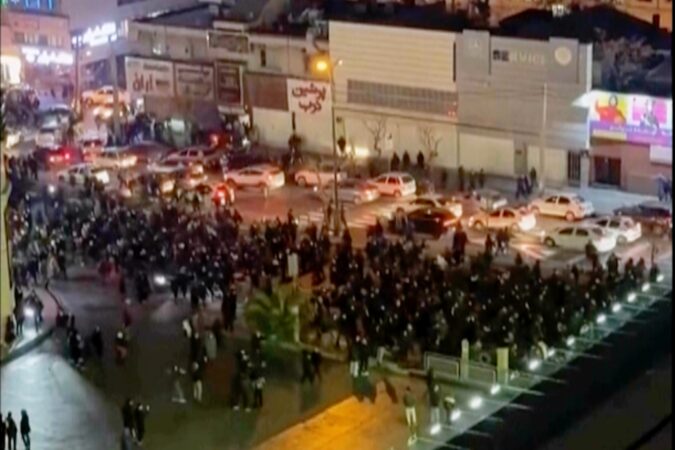
    Despite Iran’s theocracy cutting off the nation from the internet and international telephone calls, short online videos shared by activists purported to show protesters chanting against Iran’s government around bonfires as debris littered the streets in the capital, Tehran, and other areas into Friday morning.

    Iranian state media alleged “terrorist agents” of the U.S. and Israel set fires and sparked violence. It also said there were “casualties,” without elaborating.

    The full scope of the demonstrations couldn’t be immediately determined due to the communications blackout, though it represented yet another escalation in protests that began over Iran’s ailing economy and that has morphed into the most significant challenge to the government in several years. The protests have intensified steadily since beginning Dec. 28.

    The protests also represented the first test of whether the Iranian public could be swayed by Crown Prince Reza Pahlavi, whose fatally ill father fled Iran just before the country’s 1979 Islamic Revolution. Pahlavi, who called for the protests Thursday night, similarly has called for demonstrations at 8 p.m. Friday.

    Demonstrations have included cries in support of the shah, something that could bring a death sentence in the past but now underlines the anger fueling the protests that began over Iran’s ailing economy.

    So far, violence around the demonstrations has killed at least 62 people while more than 2,300 others have been detained, said the U.S.-based Human Rights Activists News Agency.

    “What turned the tide of the protests was former Crown Prince Reza Pahlavi’s calls for Iranians to take to the streets at 8 p.m. on Thursday and Friday,” said Holly Dagres, a senior fellow at the Washington Institute for Near East Policy. “Per social media posts, it became clear that Iranians had delivered and were taking the call seriously to protest in order to oust the Islamic Republic.”

    “This is exactly why the internet was shut down: to prevent the world from seeing the protests. Unfortunately, it also likely provided cover for security forces to kill protesters.”

    Thursday night protests preceded internet shutdown

    When the clock struck 8 p.m. Thursday, neighborhoods across Tehran erupted in chanting, witnesses said. The chants included “Death to the dictator!” and “Death to the Islamic Republic!” Others praised the shah, shouting: “This is the last battle! Pahlavi will return!” Thousands could be seen on the streets before all communication to Iran cut out.

    On Friday, Pahlavi called on Trump to help the protesters, saying Khamenei “wants to use this blackout to murder these young heroes.”

    “You have proven and I know you are a man of peace and a man of your word,” he said in a statement. “Please be prepared to intervene to help the people of Iran.”

    The White House did not immediately respond to a request for comment on Pahlavi’s appeal to Trump.

    Pahlavi had said he would offer further plans depending on the response to his call. His support of and from Israel has drawn criticism in the past — particularly after the 12-day war Israel waged on Iran in June. Demonstrators have shouted in support of the shah in some demonstrations, but it isn’t clear whether that’s support for Pahlavi himself or a desire to return to a time before the 1979 Islamic Revolution.

    The internet cut also appears to have taken Iran’s state-run and semiofficial news agencies offline. The state TV acknowledgment at 8 a.m. Friday represented the first official word about the demonstrations.

    State TV claimed the protests were violent and caused casualties, but did not offer nationwide figures. It said the protests saw “people’s private cars, motorcycles, public places such as the metro, fire trucks, and buses set on fire.” State TV later reported that violence overnight killed six people in Hamedan, some 175 miles southwest of Tehran, and two security force members in Qom, 75 miles south of the capital.

    The European Union and Germany condemned the violence targeting demonstrators as new protests were reported in Zahedan in Iran’s restive southwestern Sistan and Baluchestan province.

    Trump renews threat over protester deaths

    Iran has faced rounds of nationwide protests in recent years. As sanctions tightened and Iran struggled after the 12-day war, its rial currency collapsed in December, reaching 1.4 million to $1. Protests began soon after, with demonstrators chanting against Iran’s theocracy.

    It remains unclear why Iranian officials have yet to crack down harder on the demonstrators. Trump warned last week that if Tehran “violently kills peaceful protesters,” America “will come to their rescue.”

    In an interview with talk show host Hugh Hewitt aired Thursday, Trump reiterated his pledge.

    Iran has “been told very strongly, even more strongly than I’m speaking to you right now, that if they do that, they’re going to have to pay hell,” Trump said.

    He demurred when asked if he’d meet with Pahlavi.

    “I’m not sure that it would be appropriate at this point to do that as president,” Trump said. “I think that we should let everybody go out there, and we see who emerges.”

    Speaking in an interview with Sean Hannity aired Thursday night on Fox News, Trump went as far as to suggest Khamenei may want to leave Iran.

    “He’s looking to go someplace,” Trump said. “It’s getting very bad.”

  • Federal officers are leaving Louisiana immigration crackdown for Minneapolis, documents show

    Federal officers are leaving Louisiana immigration crackdown for Minneapolis, documents show

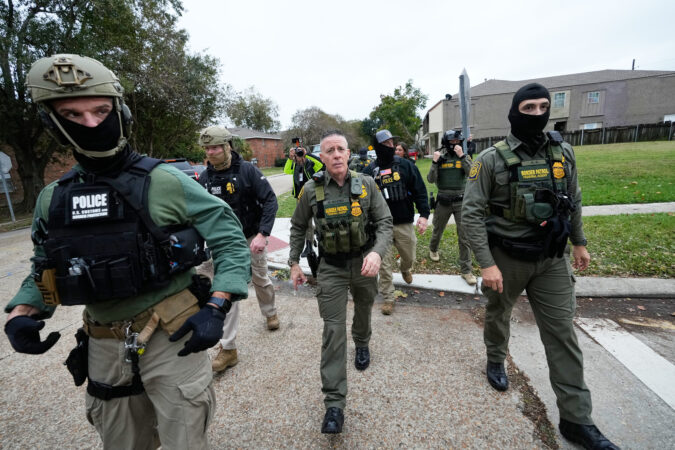
    NEW ORLEANS — Federal immigration officers are pulling out of a Louisiana crackdown and heading to Minneapolis in an abrupt pivot from an operation that drew protests around New Orleans and aimed to make thousands of arrests, according to documents obtained by The Associated Press.

    The shift appeared to signal a wind-down of the Louisiana deployment that was dubbed “Catahoula Crunch” and began in December with the arrival of more than 200 officers. The operation had been expected to last into February and swiftly raised fears in immigrant communities.

    The Trump administration has been surging thousands of federal officers to Minnesota under a sweeping new crackdown tied in part to allegations of fraud involving Somali residents. More than 2,000 officers are taking part in what the Department of Homeland Security has called the biggest immigration enforcement operation ever.

    The officers in Minneapolis have been met with demonstrations and anger after an ICE officer fatally shot a woman on Wednesday.

    Documents obtained by the AP indicated that federal officers stationed in Louisiana were continuing to depart for Minneapolis late this week.

    “For the safety of our law enforcement, we do not disclose operational details while they are underway,” DHS said Friday in response to questions about whether the Louisiana deployment was ending in order to send officers to Minnesota.

    In December, DHS deployed more than 200 federal officers to New Orleans to carry out a monthslong sweep in and around the city under Border Patrol Cmdr. Gregory Bovino, who was also the face of aggressive operations in Chicago, Los Angeles, and Charlotte, North Carolina. Bovino has been seen in Minneapolis this past week.

    “Catahoula Crunch” began with a target of 5,000 arrests, the AP first reported. The operation had resulted in about 370 arrests as of Dec. 18, according to DHS.

    The operation heavily targeted the Hispanic enclave of Kenner just outside New Orleans, leading immigrant-run businesses to close down to protect customers and out of a fear of harassment.

    Documents previously reviewed by AP showed the majority of people arrested in the Louisiana crackdown’s first days lacked criminal records and that authorities tracked online criticism and protests against the deployment.

    Republican Louisiana Gov. Jeff Landry welcomed the crackdown. But New Orleans’ Democratic leaders called the 5,000-arrest target unrealistic and criticized videos that showed agents arresting or trying to detain residents, including a clip of a U.S. citizen being chased down the street by masked men near her house.

    New Orleans’ Democratic leaders have been more welcoming of a National Guard deployment that President Donald Trump authorized after Landry asked for help fighting crime. The troops arrived just before the New Year’s Day anniversary of a truck attack on Bourbon Street that killed 14 people.

  • Protests erupt over federal immigration enforcement operations after shootings in Minneapolis and Portland

    Protests erupt over federal immigration enforcement operations after shootings in Minneapolis and Portland

    MINNEAPOLIS — As anger and outrage spilled out onto Minneapolis’ streets over the fatal shooting of a woman by an Immigration and Customs Enforcement officer, a new shooting by federal officers in Oregon left two people wounded, sparked additional protests and elicited more scrutiny of enforcement operations across the U.S.

    Hundreds of people protesting the shooting of Renee Good marched in freezing rain Thursday night down one of Minneapolis’ major thoroughfares, chanting “ICE out now” and holding signs saying, “killer ice off our streets.” Protesters earlier vented their outrage outside a federal facility that is serving as a hub for the administration’s latest immigration crackdown on a major city.

    Early Friday, city crews removed makeshift barricades made from debris including garbage cans and Christmas trees that blocked streets in the area of Wednesday’s shooting to keep streets open, but Minneapolis officials said they would not remove the memorial the community created there. An estimated 15 tons (13.6 metric tonnes) of debris including metal and tires were removed, officials said.

    The shooting in Portland, Oregon, took place outside a hospital Thursday afternoon. A man and woman were shot inside a vehicle, and their conditions were not immediately known. The FBI and the Oregon Department of Justice were investigating.

    Portland Mayor Keith Wilson and the city council called on ICE to end all operations in the city until a full investigation is completed. Hundreds protested Thursday night at the ICE building. Early Friday, Portland police reported that a handful of arrests were made after officers asked protesters to move to the sidewalk, as traffic remained open in the area.

    Just as it did following Wednesday’s shooting in Minneapolis shooting, the Department of Homeland Security defended the actions of the officers in Portland, saying it occurred after a Venezuelan man with alleged gang ties and who was involved in a recent shooting tried to “weaponize” his vehicle to hit the officers. It was not yet clear if witness video corroborates that account.

    Homeland Security Secretary Kristi Noem, President Donald Trump and others in his administration have repeatedly characterized the Minneapolis shooting as an act of self-defense and cast Good as a villain, suggesting she used her vehicle as a weapon to attack the officer who shot her.

    Vice President JD Vance said the shooting was justified and Good, a 37-year-old mother of three, was a “victim of left-wing ideology.”

    “I can believe that her death is a tragedy while also recognizing that it is a tragedy of her own making,” Vance said, noting that the officer who killed her was injured while making an arrest last June.

    But state and local officials and protesters rejected that characterization, with Minneapolis Mayor Jacob Frey saying video recordings show the self-defense argument is “garbage.”

    An immigration crackdown quickly turns deadly

    The Minneapolis shooting happened on the second day of the Trump administration’s immigration crackdown on the Twin Cities of Minneapolis and St. Paul, which Homeland Security said is the biggest immigration enforcement operation ever. More than 2,000 officers are taking part and Noem said they have made more than 1,500 arrests.

    It provoked an immediate response in the city where police killed George Floyd in 2020, with hundreds of people turning up to the scene to vent their outrage at the ICE officers and the school district canceling classes for the rest of the week as a precaution.

    Good’s death — at least the fifth tied to immigration sweeps since Trump took office — has resonated far beyond Minneapolis, as protests took place or were expected this week in many large U.S. cities.

    Who will investigate?

    The Minnesota agency that investigates officer-involved shootings said Thursday that it was informed that the FBI and U.S. Justice Department would not work with the it, effectively ending any role for the state to determine if crimes were committed. Noem said the state has no jurisdiction.

    “Without complete access to the evidence, witnesses and information collected, we cannot meet the investigative standards that Minnesota law and the public demands,” said Drew Evans, head of the Minnesota Bureau of Criminal Apprehension.

    Minnesota Gov. Tim Walz demanded that the state be allowed to take part, repeatedly emphasizing that it would be “very difficult for Minnesotans” to accept that an investigation excluding the state could be fair.

    Deadly encounter seen from multiple angles

    Several bystanders captured video of Good’s killing, which happened in a neighborhood south of downtown.

    The recordings show an officer approaching an SUV stopped across the middle of the road, demanding the driver open the door and grabbing the handle. The Honda Pilot begins to pull forward and a different ICE officer standing in front of it pulls his weapon and immediately fires at least two shots at close range, jumping back as the vehicle moves toward him.

    It is not clear from the videos if the vehicle makes contact with the officer, and there is no indication of whether the woman had interactions with agents earlier. After the shooting, the SUV speeds into two cars parked on a curb before crashing to a stop.

    Officer identified in records

    The federal agent who fatally shot Good is an Iraq War veteran who has served for nearly two decades in the Border Patrol and ICE, according to records obtained by AP.

    Noem has not publicly named him, but a Homeland Security spokesperson said her description of his injuries last summer refers to an incident in Bloomington, Minnesota, in which court documents identify him as Jonathan Ross.

    Ross got his arm stuck in the window of a vehicle whose driver was fleeing arrest on an immigration violation. Ross was dragged and fired his Taser. A jury found the driver guilty of assaulting a federal officer with a dangerous weapon.

    Attempts to reach Ross, 43, at phone numbers and email addresses associated with him were not successful.

  • Can Pittsburgh rally to save its newspaper?

    Can Pittsburgh rally to save its newspaper?

    Pennsylvania’s two largest cities have more in common politically, demographically, and economically with one another than with the rest of the commonwealth. For decades, they also had in common the presence of great American newspapers serving their diverse and dynamic communities: The Inquirer and the Pittsburgh Post-Gazette. Sadly, that may no longer be the case.

    On Tuesday, Block Communications, the owners of the Post-Gazette, announced that on May 3, it will shutter the newspaper, the roots of which date back 240 years. The loss of a once great newspaper in a major American city is itself a civic tragedy. The fact that this loss was entirely preventable is even more unfortunate.

    It is no secret that the traditional print newspaper business is in sharp decline. Self-inflicted wounds — including a long history of labor strife, family disunity, and financial losses — have compounded these headwinds at the Post-Gazette. The Block family’s announcement cited cumulative losses of over $350 million over a 20-year period.

    Disclosure of a decision to close the paper came the same day the U.S. Supreme Court denied the company’s appeal of a decision that required it to honor the terms of an earlier union contract, and after the resolution of a bitter three-year labor strike. Striking workers agreed to return to work on Nov. 24 and were told this week they would be severed.

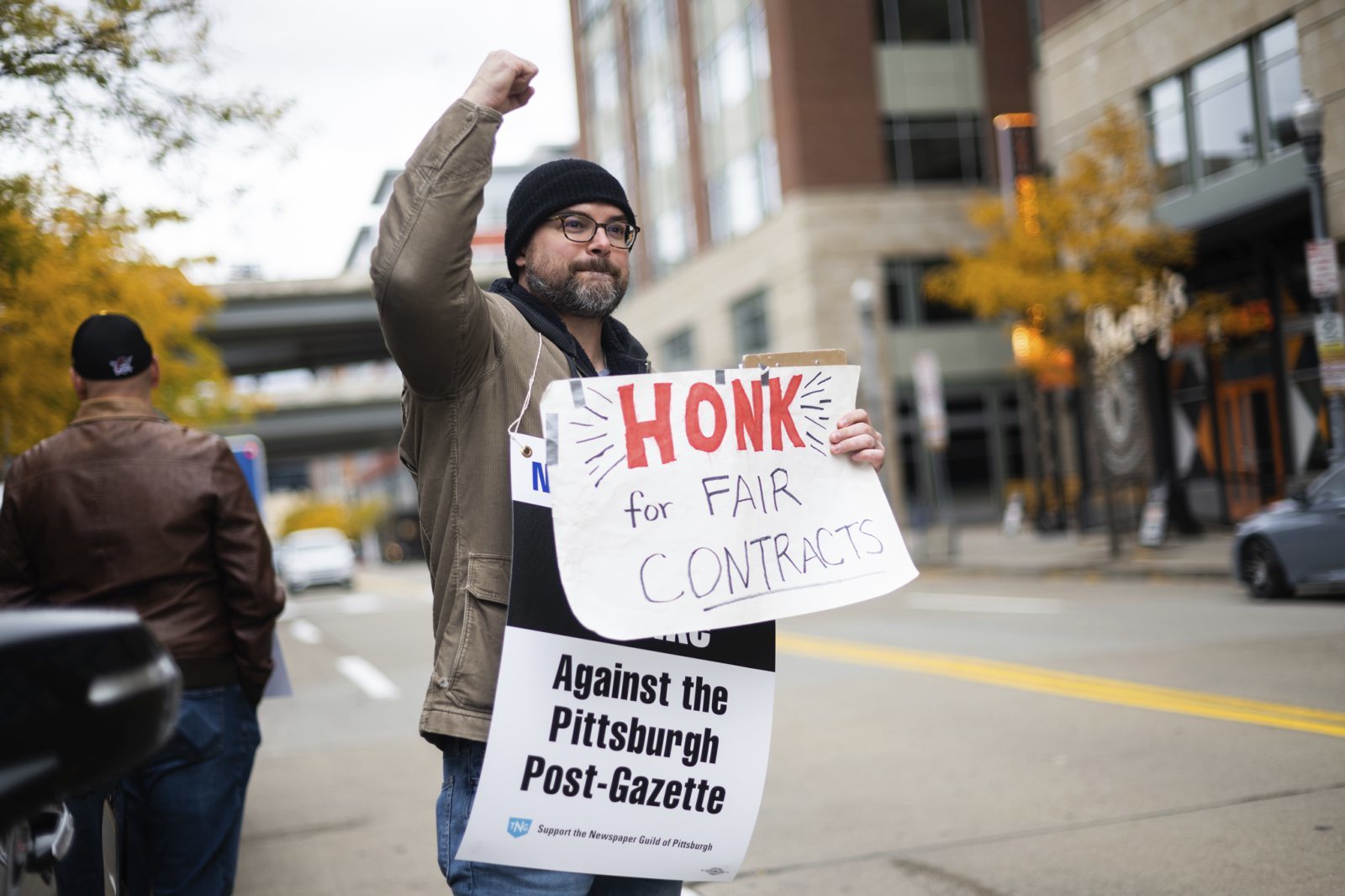
    John Santa, a copy editor at the Pittsburgh Post-Gazette, walks a picket line outside the newspaper’s offices with his fellow journalists in October 2022.

    The Lenfest Institute for Journalism, of which I am CEO, is in the business of helping sustain and support local news. I heard this week from more than half a dozen news industry colleagues about the potential to “save the Post-Gazette.” As a Philly-based journalism executive, I was unsure what was really left of the Post-Gazette to save. So I reached out to Pittsburgh newsroom sources, readers, and local foundations.

    While the Post-Gazette has suffered multiple layoffs and a reduction in its print schedule to two days a week, there is unquestionably still a there, there. The current newsroom numbers 110 employees. And its journalists still produce great public service journalism, covering politics to sports. More importantly, with or without the Post-Gazette, there remains a need and an appetite among readers for independent local news in Pittsburgh. As of the end of 2025, more than 60,000 pay for the P-G in digital form, and 27,000 in print.

    To save, reinvent, or perhaps replace the Post-Gazette, it is instructive to look at recent local news investment in Philadelphia and Baltimore:

    Ten years ago this month, the late H.F. “Gerry” Lenfest, a philanthropist and cable television entrepreneur, donated his ownership of The Philadelphia Inquirer to the nonprofit Lenfest Institute for Journalism, allowing The Inquirer to invest long term in the transformation of its news and business operations.

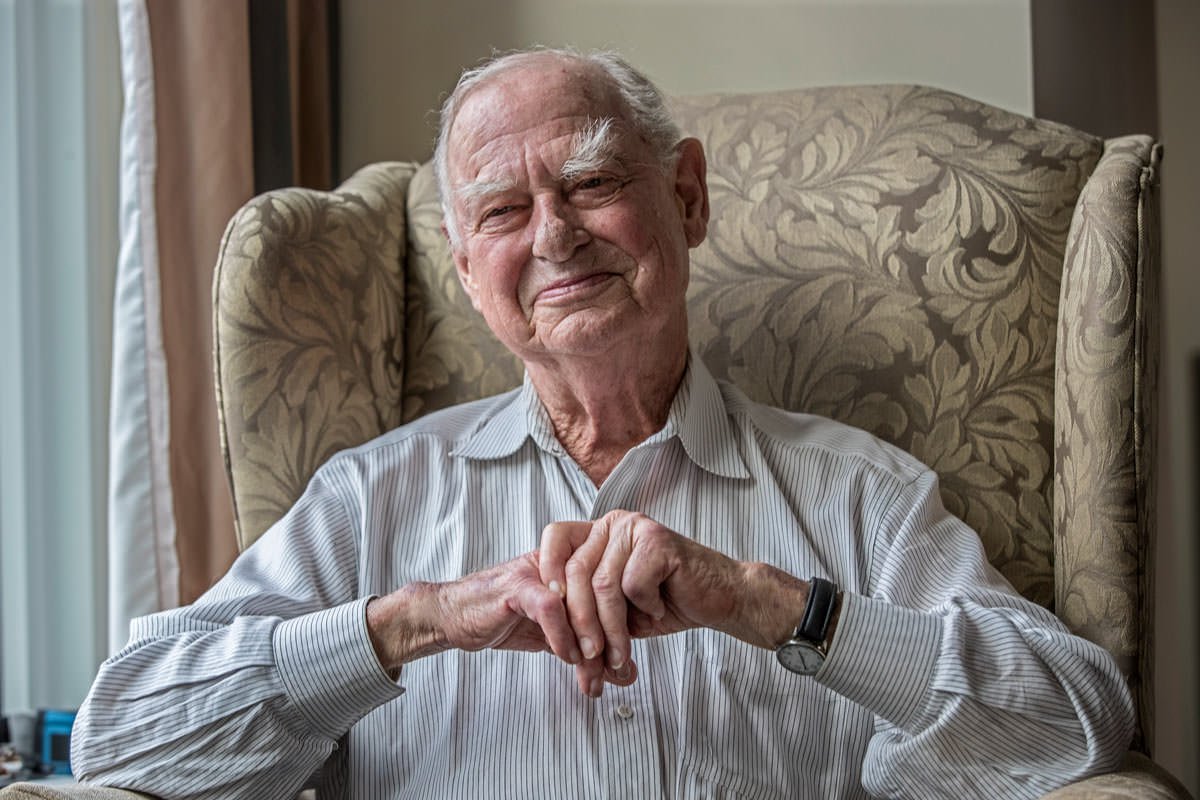
    The late H.F. “Gerry” Lenfest, a philanthropist and cable television entrepreneur, donated his ownership of The Philadelphia Inquirer to the nonprofit Lenfest Institute for Journalism in 2016.

    The Inquirer’s 200-person newsroom is supported in large part by the loyalty of readers, the growth of its digital revenues, and supplemented by donations from readers, foundations, and the Lenfest Institute. The Inquirer, which remains a for-profit enterprise, is well-managed, both editorially and as a business. It has more than 120,000 paying digital subscribers, and philanthropy — a finite resource — is a single-digit percentage of total revenues, although mission-critical.

    Emulating the Lenfest Institute model, Stewart W. Bainum Jr., a Maryland-based hotel and healthcare executive, sought to acquire the Baltimore Sun from its parent company and to convert it to nonprofit ownership. Unable to come to terms with a difficult seller, Bainum chose instead to launch the Baltimore Banner from scratch in 2022, an impressive, all-digital nonprofit news enterprise that won the Pulitzer Prize for local reporting last year for coverage of its city’s opioid crisis.

    Pittsburgh’s journalistic, business, and philanthropic interests have several paths open to them:

    The Post-Gazette could be acquired by a nonprofit organization similar to the Lenfest Institute. However, local leaders with whom I have spoken seem loath to take on its obligations and liabilities.

    The Post-Gazette is by no means the sole source of independent journalism serving Southwest Pennsylvania. The region is covered by NPR station WESA, by Pittsburgh’s Public Source, a small but effective nonprofit, and by Harrisburg-based Spotlight PA, of which the Lenfest Institute was a founder. Each of these entities could help form the foundation of expanded Pittsburgh news.

    Or the community could build from scratch, mirroring the approach of the Baltimore Banner.

    Each path has its complications, but they all have one thing in common: the need for determined, deep-pocketed, and strategically aligned funders to create sustainable local news at scale for the city of Pittsburgh.

    Maxwell E.P. King, a former editor of The Inquirer and past president of two of Pittsburgh’s leading philanthropies — Heinz Endowments and the Pittsburgh Foundation — has sounded the alarm.

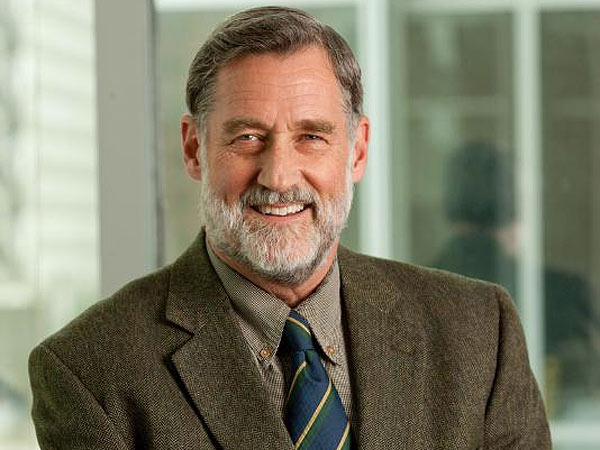
    Maxwell E.P. King served as the editor of The Inquirer from 1990 to 1998.

    “I am heartbroken, both as a reader and a contributor” to the Post-Gazette, King told me. “But the community, particularly the foundation community, must rally to this moment. Nonprofit journalism is succeeding around the country, most notably in Philadelphia with The Inquirer. We have to find a viable nonprofit way to continue daily journalism here. It is crucial for the region.”

    Let’s hope Pittsburgh finds the resolve to serve its residents with the local news they need and deserve. Certainly, we at the Lenfest Institute are here to help.

    Jim Friedlich is CEO and executive director of the Lenfest Institute for Journalism, the nonprofit, noncontrolling owner of The Inquirer. @jimfriedlich