Tag: no-latest

  • AP source: John Harbaugh leaving the Baltimore Ravens after 18 seasons as coach

    AP source: John Harbaugh leaving the Baltimore Ravens after 18 seasons as coach

    OWINGS MILLS, Md. — John Harbaugh is leaving the Baltimore Ravens after 18 seasons as their coach, a person with knowledge of the decision told the Associated Press.

    The person spoke on condition of anonymity Tuesday because the Ravens haven’t announced the decision.

    The move comes after the Ravens were one of the league’s most disappointing teams this season, going 8-9 and missing the playoffs after entering Week 1 as one of the Super Bowl favorites. Baltimore’s season ended Sunday night when Tyler Loop missed a last-second field goal, allowing Pittsburgh to hold on for a 26-24 victory in the game that decided the AFC North title.

    Harbaugh went 193-124 including the postseason. He led the 2012 Ravens to a Super Bowl title and reached the AFC championship game on three other occasions. This season was only the sixth time Baltimore missed the postseason under Harbaugh. That’s the same number of times the Ravens won the AFC North with him at the helm.

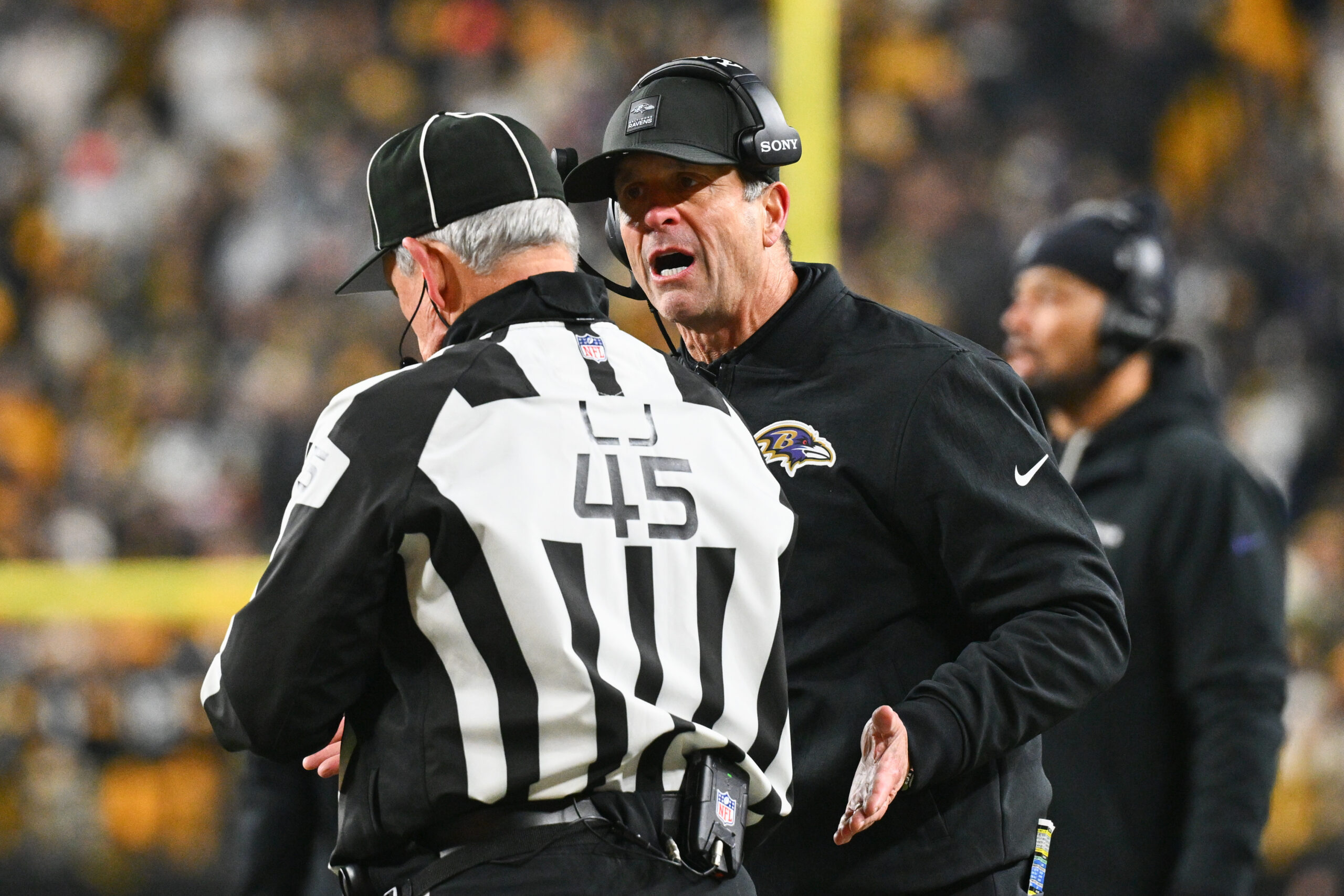
    Baltimore Ravens head coach John Harbaugh talks with an official during a loss to the Steelers on Sunday.

    But most of Baltimore’s postseason success came in his first few seasons. The Ravens went to the AFC title game three times in his first five years as coach, culminating in their run to a Super Bowl title as a wild card, when Harbaugh beat his brother Jim’s San Francisco 49ers for the title.

    At that point, Harbaugh was 9-4 in the postseason, but after that he was just 4-7. After three straight seasons without a playoff berth, Lamar Jackson arrived in 2018 and led Baltimore to a division title. But Harbaugh’s lone trip to an AFC title game with Jackson was wasted two seasons ago when Baltimore lost at home to Kansas City.

    This season was a mess pretty much from the start, when Baltimore looked great for much of its opener at Buffalo before blowing a late lead. Indeed, squandering fourth-quarter advantages become a troubling trend for the Ravens in Harbaugh’s last few seasons, and after a hamstring injury sidelined Jackson, Baltimore stumbled to a 1-5 start in 2025.

    Harbaugh and the Ravens worked their way back into contention and eventually reached Sunday’s winner-take-all matchup as a favorite to beat the Steelers. But despite Derrick Henry’s early dominance on the ground and Jackson’s sensational fourth quarter, another season ended in excruciating fashion.

    AP Pro Football Writer Rob Maaddi contributed to this report.

  • Shooter who killed Brown students and MIT professor planned attack for months, says DOJ

    Shooter who killed Brown students and MIT professor planned attack for months, says DOJ

    BOSTON — The man identified by law enforcement as the shooter who killed two Brown University students and an MIT professor had been planning the attack for at least six semesters, according to information released Tuesday by the U.S. Department of Justice.

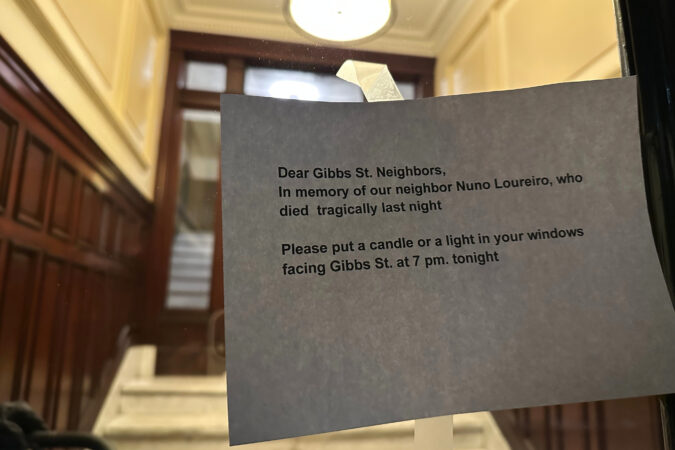
    Claudio Neves Valente, 48, a former Brown student and Portuguese national, was found dead in a New Hampshire storage facility after he killed two students and wounded nine others in an engineering building on Dec. 13. Two days later, he killed MIT professor Nuno F.G. Loureiro in his home in the Boston suburb of Brookline.

    Justice Department officials said Tuesday that during the search of the storage facility where Neves Valente’s body was found, the FBI recovered an electronic device containing a series of short videos made by Neves Valente after the shootings.

    In the recordings, the shooter admits in Portuguese that he had been “planning the Brown University shooting for a long time,” according to a press release. He did not provide a motive for targeting Brown or the MIT professor, with whom he attended school in Portugal decades ago.

    He said he felt he had nothing to apologize for. He also complained in the videos about injuring his eye in the shootings.

    “I’m not going to apologize because during my lifetime no one sincerely apologized to me,” he said.

    Neves Valente said his “only objective was to leave more or less” on his “own terms” and to ensure he “wouldn’t be the one who ended up suffering the most from all this.”

    “No, that cannot happen. So if you don’t like it, tough luck,” he said. Neves Valente called his execution of the murders “a little incompetent.”

    “But at least something was done,” he said.

    In the recording, he said he’d had the storage space where his body was found for about three years.

  • Fear grips Caracas as a new wave of repression is unleashed in Venezuela

    Fear grips Caracas as a new wave of repression is unleashed in Venezuela

    For a brief moment, some Venezuelans allowed themselves to celebrate.

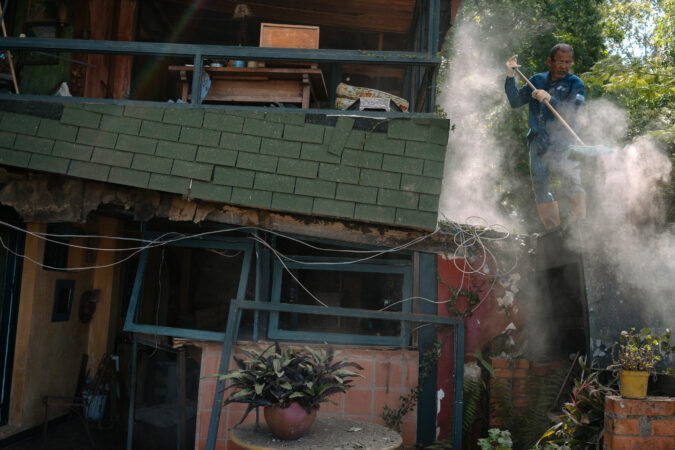
    When they learned Saturday that strongman Nicolás Maduro had been seized by U.S. Special Forces, many group chats filled with messages of joy and relief. Some people cried. One family in Caracas opened a bottle of champagne they had bought months earlier and saved for a special occasion. After more than a decade of living under Maduro, there were cautious hopes for a different future.

    By Monday, however, those feelings had been replaced by more familiar ones: fear, dread, and uncertainty.

    Venezuela’s government has moved quickly to suppress any public expression of support for Maduro’s ouster, launching a nationwide crackdown that has included the detention of journalists, the arrest of civilians, and the deployment of armed gangs across the capital.

    “It feels like it did after the presidential elections in 2024,” said María, 55, who like others in this story spoke on the condition that they be identified by their first name, or on the condition of anonymity, for fear of reprisals. “We won, but we also lost,” she said, referring to the country’s last elections, in which Maduro claimed victory despite tallies showing the opposition had prevailed.

    The crackdown unfolded as Delcy Rodríguez, the country’s vice president, was sworn in as interim president Monday at the National Assembly. Senior military officials publicly pledged their loyalty to her — a signal that while the country had a new leader, the old power structure remained in place.

    At least 14 journalists and media workers were detained Monday — including 11 working for international outlets, according to the National Press Workers Union. Most, the union said, were held for several hours and later released, but several reported that military counterintelligence officers searched their phones. Many of the detentions took place near the National Assembly as Rodríguez took the oath of office in a ceremony overseen by her brother, Jorge Rodríguez, who heads the legislature.

    Authorities also moved against ordinary citizens — empowered by a “state of external commotion” decree that ordered Venezuela’s national, state, and municipal police forces to immediately search for and arrest anyone “involved in promoting or supporting the armed attack by the United States of America.” The decree, which entered into force Saturday but was published in full Monday, also suspended the right to protest and authorized broad restrictions on movement and assembly.

    In the western state of Mérida, two people in their 60s were arrested for shouting anti-government slogans and “celebrating the kidnapping of President Nicolás Maduro and First Lady Cilia Flores,” according to state police.

    Across Caracas, pro-government paramilitary groups known as “colectivos” — a hallmark of the informal security state built by former president Hugo Chávez and inherited by Maduro after his death — set up checkpoints, including along the Cota Mil highway that runs north of the city. Residents described being pulled over, questioned and forced to hand over their phones. Some said the armed men scrolled through their messages and social media, looking for anything that could be construed as support for the U.S. raid.

    “We’re texting each other routes to avoid,” said a Caracas resident. “You hear ‘don’t go there — they’re stopping cars with machine guns.’”

    In the wake of Maduro’s capture, President Donald Trump has said repeatedly that the United States is “running” Venezuela, though it is unclear what influence Washington is exerting on authorities in Caracas.

    Overseeing U.S. involvement in the country, Trump said, would fall to a small group of senior officials, including Secretary of State Marco Rubio, Defense Secretary Pete Hegseth, Deputy White House Chief of Staff Stephen Miller, — and himself. Venezuela, the president told NBC on Monday, was not in a position to hold elections.

    “We have to fix the country first,” he said. “We have to nurse the country back to health.”

    In a news conference Tuesday, Trump suggested that the Venezuelan government planned to shut down El Helicoide, a sprawling, spiral-shaped detention center in Caracas that has long been used to hold and torture dissidents, according to rights groups.

    Foro Penal, a local human rights group, has said more than 860 political prisoners remain in state custody.

    “Of course I have hope things could get better without Maduro,” a 30-year-old man in the capital told the Washington Post. “But from where I am, all I see is the same people who destroyed my country still in power. They’re still persecuting us. And we’re still afraid.”

    In an interview with Fox News’s Sean Hannity, opposition leader María Corina Machado — who left Venezuela in December to accept the Nobel Peace Prize in Norway — called the crackdown “really alarming” and urged the U.S. and the international community to monitor the situation. She described Rodríguez as “one of the main architects of torture, persecution [and] corruption.”

    Late Monday, as weary families bedded down, gunshots rang out near the Miraflores presidential palace. On social media, residents shared videos from their window of armed men in the streets; some speculated that a coup was underway.

    Hours later, the Communication and Information Ministry put out a statement saying police had fired warning shots after “drones flew over the area without authorization.”

    “The entire country is completely calm,” the statement said.

  • U.S. mandates more foreign travelers to pay $15,000 visa bond deposits

    U.S. mandates more foreign travelers to pay $15,000 visa bond deposits

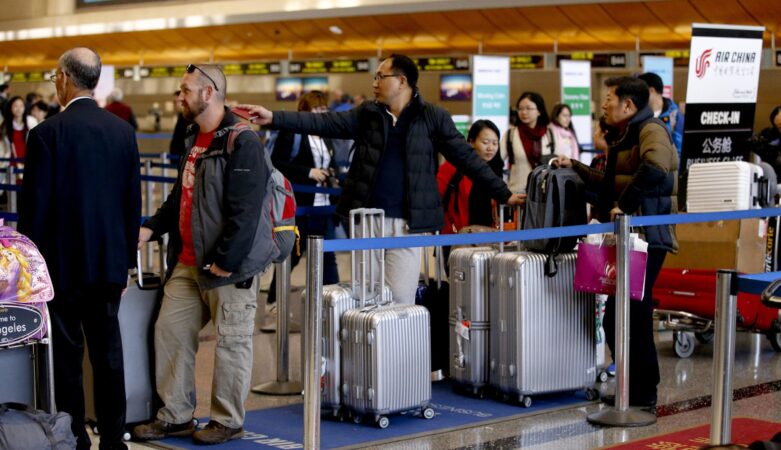
    Foreign travelers from seven additional countries are now required to pay up to $15,000 for a reimbursable bond when applying for a U.S. visitor visa, as the Trump administration continues to tighten entry requirements to the country.

    As of Jan. 1, Bhutan, Botswana, the Central African Republic, Guinea, Guinea-Bissau, Namibia, and Turkmenistan are required to pay the assurances as part of a State Department pilot program launched in August. Thirteen countries are now affected by the program, most of them in Africa.

    The bond deposits — which the department has said are aimed at deterring visitors from staying in the United States longer than they are allowed for business or tourism — range between $5,000 and $15,000, and do not guarantee that a visa will be issued. The payment will be refunded if visitors depart the U.S. within the time specified on their visas, according to the policy.

    Applicants whose visas are approved can only enter the U.S. from three designated airports: Boston Logan International Airport, New York’s John F. Kennedy International Airport, and Washington Dulles International Airport, the State Department notice said. The program is not applicable to those on student visas.

    Travelers from 42 countries that are part of the visa waiver program — who don’t need a visa to enter the U.S. — including much of Europe, Australia, Qatar, and Israel, are also exempt.

    The administration has said the program is aimed at countries with high visa overstay rates, citing a Department of Homeland Security report to Congress. However, some of the countries newly added to the list have low overstay numbers. The department suspects that two of the 137 visitors from the Central African Republic (or about 2%) overstayed their nonimmigrant business and tourist visas in fiscal year 2024, while about 4% from Namibia are suspected of overstaying.

    The pilot was launched in August with Malawi and Zambia. An estimated 234 visitors from Malawi (or 14%) overstayed their nonimmigrant visas in fiscal year 2023, as did 365 (11%) from Zambia. Four countries were added to the list in October.

    For couples or families, the potential up-front cost of $10,000 or $15,000 per person could be prohibitive. At the time of its launch, the State Department predicted the year-long pilot program would cost travelers around $20 million, based on 2,000 potential travelers paying an average bond of $10,000.

    The State Department had planned a six-month visa bond pilot in 2020, but did not implement it as global travel dwindled during the coronavirus pandemic.

  • Iran hospital raid fuels protest anger as crackdown kills 29

    Iran hospital raid fuels protest anger as crackdown kills 29

    Iran’s government ordered an investigation into clashes between protesters and riot police at a hospital in the country’s west as a video emerged online showing another hospital being hit with tear gas by security forces.

    Video posted to social media on Tuesday purportedly showed the courtyard of Sina Hospital submerged in tear gas smoke. The footage cannot be verified by Bloomberg but the hospital is near the capital’s Grand Bazaar, where a fresh bout of protests and clashes with police erupted on Tuesday, according to the Associated Press.

    Security forces fired tear gas at demonstrators in the sprawling market — where unrest began on Dec. 28 — who had shuttered their businesses and were staging a sit-in at the trading hub, the AP said, citing witnesses. Unverified social media footage also appeared to show police rushing crowds in the bazaar’s surrounding streets and in one of its main arteries.

    The U.S.-based Human Rights Activists News Agency said Monday that at least 29 people have been killed in provinces including Lorestan, Fars, and Kurdistan and more than 1,200 people arrested since a sharp currency decline triggered demonstrations in Tehran that later spread to other cities.

    On Sunday, videos emerged on social media appearing to show security forces storming the Imam Khomeini Hospital in the western city of Ilam and firing tear gas inside. The footage fueled even more public anger at the authorities, prompting President Masoud Pezeshkian to order the investigation. Officials haven’t yet responded to the incident at the hospital in Tehran.

    The protests have divided Iran’s leadership over how to respond. While Pezeshkian, a political moderate and a former heart surgeon, has described protesters’ demands as legitimate, judiciary chief Gholam-Hossein Mohseni Ejei has warned that “no leniency or tolerance” would be shown toward protesters and vowed swift trials, according to the official Mizan news agency.

    “Rioters can no longer claim to have been misled,” Ejei said, accusing the U.S. and Israel of openly backing the unrest. “There is now no room for any concessions toward rioters and instigators of unrest.”

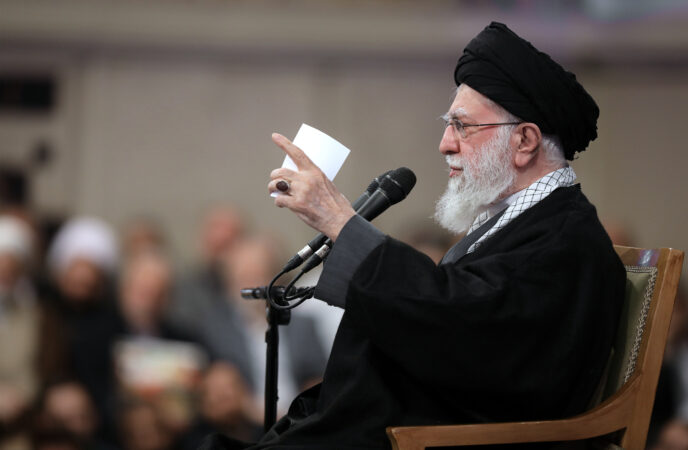
    Supreme Leader Ayatollah Ali Khamenei, who has the final say on most state matters, said Saturday that “rioters must be put in their place.”

    The protests are the biggest to rock Iran since nationwide unrest in 2022 over the death of a young woman, Mahsa Amini, in police custody. But they don’t yet represent a threat to the Islamic Republic’s security, Eurasia Group analysts wrote in a report last week.

    The unrest comes amid deteriorating living conditions in Iran, where high inflation, rising costs and a weak currency have fueled growing public dissatisfaction.

    The government has announced measures to ease the frustration including a monthly cash subsidy of 10 million rials (roughly $7) for each member of every household. It also appointed a new central bank governor to stabilize the declining rial.

    The subsidy is part of a broader “livelihood plan” that’s aimed at offsetting the rising cost of basic goods like cooking oil, milk, sugar, and meat, government spokeswoman Fatemeh Mohajerani said on Monday.

    Iran’s currency has dropped by around 45% on the black market in the past year. It trades at roughly 1.5 million against the dollar, according to bombast, a website that tracks the currency.

  • Congress has four weeks to dodge another shutdown

    Congress has four weeks to dodge another shutdown

    Lawmakers are back in Washington this week for a four-week sprint to finish funding the government before the current spending law runs out on Jan. 30.

    If they fail, they will need to pass another short-term extension or spark another government shutdown just two and a half months after the last one, the longest funding lapse in U.S. history.

    Funding the government usually requires passing 12 individual bills. Lawmakers approved three as part of a deal to end last fall’s shutdown, and they also extended current funding levels for the rest of the government into January. Those levels were last set in March 2024.

    But it will be challenging to finalize the remaining bills, which have not yet been formally negotiated between the House and the Senate or approved by congressional leaders.

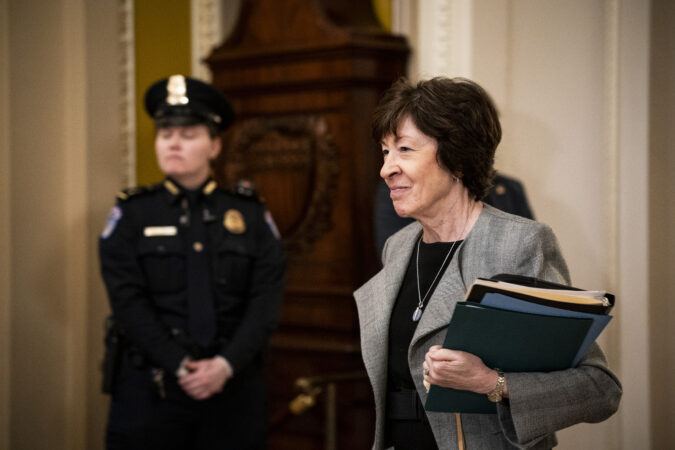
    The two Appropriations Committee chairs, Rep. Tom Cole (R., Okla.) and Sen. Susan Collins (R., Maine), announced in late December that they had finally reached an agreement on the total spending level they’ll shoot for in the remaining bills. They did not reveal the overall cost, but Cole said it is lower than the amount if Congress were to pass another funding extension, known as a continuing resolution.

    “This pathway forward aligns with President [Donald] Trump’s clear direction to rein in runaway, beltway-driven spending,” Cole said in a statement. “We will now begin expeditiously drafting the remaining nine full-year bills to ensure we are ready to complete our work in January.”

    From there, appropriators must navigate political pressures from their right and left: Fiscal hawks, including many in the conservative House Freedom Caucus, insist that funding levels for most agencies should not be higher than the last fiscal year.

    “I believe that we should begin to control our federal deficit and runaway federal debt by keeping this year’s discretionary spending level at or below last year’s level,” said House Freedom Caucus chairman and senior Appropriations Committee member Rep. Andy Harris (R., Md.) in a statement.

    But Democrats must approve any funding agreement, which has to receive at least 60 votes in the Senate to bypass the filibuster. Republicans control the upper chamber 53-47.

    Sen. Patty Murray of Washington, the top Democrat on the Senate Appropriations Committee, slammed the chamber’s newly released Homeland Security spending bill in December, calling it “partisan” and pledging to fight for accountability in Trump’s “out-of-control” DHS.

    The Senate has spent weeks attempting to pass a five-bill appropriations package that had only been negotiated in that chamber. The bill needed consent from all 100 senators to advance, and several conservative senators held up action for weeks over billions of dollars in earmarks tucked into the bills. (The House proposals also include billions in earmarks.)

    Those senators eventually relented, and the chamber was poised to vote on the package right before leaving town for the winter break, but two Democratic senators blocked it — demanding funding be reinstated for the National Center for Atmospheric Research, a Colorado-based research organization that Trump has moved to eliminate.

    The Senate package would tie together two major government funding bills — covering defense, labor, education, and health and human services agencies — with three other bills to fund the departments of Interior, Transportation, Housing and Urban Development, Commerce, Justice, and science-related agencies.

    It would appropriate $1.3 trillion, making up the vast majority of discretionary federal government spending.

    Cole has said that the Senate’s five-bill package would be too big to pass the lower chamber. He suggested passing the remaining nine appropriations bills in three separate three-bill packages in January when lawmakers return, beginning with bills covering the Commerce and Justice Departments, the Interior Department and agencies covering energy and water.

    The political minefield ahead may mean lawmakers once again turn to a funding extension rather than face another shutdown.

    “I don’t want another CR, I don’t think Mr. Cole wants another CR,” said Rep. Rosa DeLauro of Connecticut, the top Democrat on the House Appropriations Committee. “Let’s go. Let’s get the bills done.”

    Congress is supposed to pass all 12 appropriations bills before government funding runs out at the end of each fiscal year on Sept. 30.

    But lawmakers’ inability to adhere to that process is not new: Congress has only passed all its spending bills before the deadline four times in recent decades. Instead, most spending bills in modern history have been approved in one big package known as an “omnibus” right before the holiday break.

    House Speaker Mike Johnson (R., La.) pledged to stop that practice. The political complications of passing all 12 bills separately, however, has made that difficult to achieve. Instead, lawmakers have extended funding levels first approved under President Joe Biden multiple times, and Republicans have passed supplemental spending for their immigration and defense priorities through a party-line tax and spending bill.

  • Danish prime minister says a U.S. takeover of Greenland would mark the end of NATO

    Danish prime minister says a U.S. takeover of Greenland would mark the end of NATO

    COPENHAGEN, Denmark — Danish Prime Minister Mette Frederiksen said Monday an American takeover of Greenland would amount to the end of the NATO military alliance. Her comments came in response to U.S. President Donald Trump’s renewed call for the strategic, mineral-rich Arctic island to come under U.S. control in the aftermath of the weekend military operation in Venezuela.

    The dead-of-night operation by U.S. forces in Caracas to capture leader Nicolás Maduro and his wife early Saturday left the world stunned, and heightened concerns in Denmark and Greenland, which is a semiautonomous territory of the Danish kingdom and thus part of NATO.

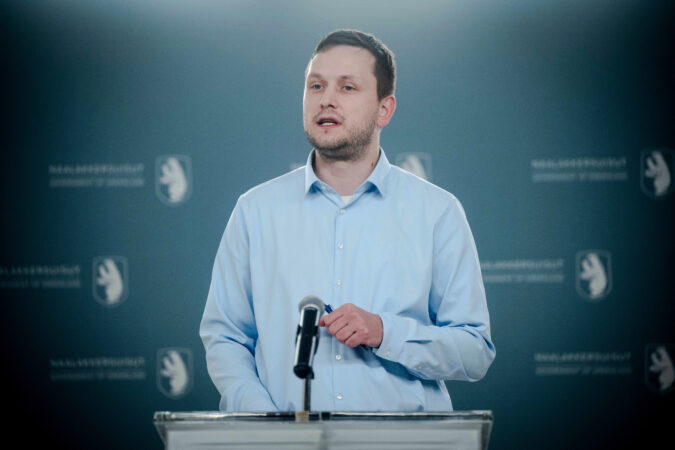
    Frederiksen and her Greenlandic counterpart, Jens Frederik Nielsen, blasted the president’s comments and warned of catastrophic consequences. Numerous European leaders expressed solidarity with them.

    “If the United States chooses to attack another NATO country militarily, then everything stops,” Frederiksen told Danish broadcaster TV2 on Monday. “That is, including our NATO and thus the security that has been provided since the end of the Second World War.”

    20-day timeline deepens fears

    Trump called repeatedly during his presidential transition and the early months of his second term for U.S. jurisdiction over Greenland, and has not ruled out military force to take control of the island. His comments Sunday, including telling reporters “let’s talk about Greenland in 20 days,” further deepened fears that the U.S. was planning an intervention in Greenland in the near future.

    Frederiksen also said Trump “should be taken seriously” when he says he wants Greenland. “We will not accept a situation where we and Greenland are threatened in this way,” she added.

    Nielsen, in a news conference Monday, said Greenland cannot be compared to Venezuela. He urged his constituents to stay calm and united.

    “We are not in a situation where we think that there might be a takeover of the country overnight and that is why we are insisting that we want good cooperation,” he said.

    Nielsen added: “The situation is not such that the United States can simply conquer Greenland.”

    Ask Rostrup, a TV2 political journalist, wrote on the station’s live blog Monday that Mette previously would have flatly rejected the idea of an American takeover of Greenland. But now, Rostrup wrote, the rhetoric has escalated so much that she has to acknowledge the possibility.

    Trump slams Denmark’s security efforts in Greenland

    Trump on Sunday also mocked Denmark’s efforts at boosting Greenland’s national security posture, saying the Danes have added “one more dog sled” to the Arctic territory’s arsenal.

    “It’s so strategic right now,” Trump had told reporters Sunday as he flew back to Washington from his home in Florida. “Greenland is covered with Russian and Chinese ships all over the place.”

    He added: “We need Greenland from the standpoint of national security, and Denmark is not going to be able to do it.”

    But Ulrik Pram Gad, a global security expert from the Danish Institute for International Studies, wrote in a report last year that “there are indeed Russian and Chinese ships in the Arctic, but these vessels are too far away to see from Greenland with or without binoculars.”

    U.S. space base in northwestern Greenland

    Greenlanders and Danes were further rankled this weekend by a social media post following the raid by a former Trump administration official turned podcaster, Katie Miller. The post shows an illustrated map of Greenland in the colors of the Stars and Stripes accompanied by the caption: “SOON.”

    “And yes, we expect full respect for the territorial integrity of the Kingdom of Denmark,” Ambassador Jesper Møller Sørensen, Denmark’s chief envoy to Washington, said in a post responding to Miller, who is married to Trump’s influential deputy chief of staff Stephen Miller.

    The U.S. Department of Defense operates the remote Pituffik Space Base in northwestern Greenland. It was built following a 1951 defense agreement between Denmark and the United States. It supports missile warning, missile defense, and space surveillance operations for the U.S. and NATO.

    On Denmark’s mainland, the partnership between the U.S. and Denmark has been long-lasting. The Danes buy American F-35 fighter jets and just last year, Denmark’s parliament approved a bill to allow U.S. military bases on Danish soil.

    Critics say the vote ceded Danish sovereignty to the U.S. The legislation widens a previous military agreement, made in 2023 with the Biden administration, where U.S. troops had broad access to Danish air bases in the Scandinavian country.

  • Trump team puts a target on Cuba, with threats and oil blockade

    Trump team puts a target on Cuba, with threats and oil blockade

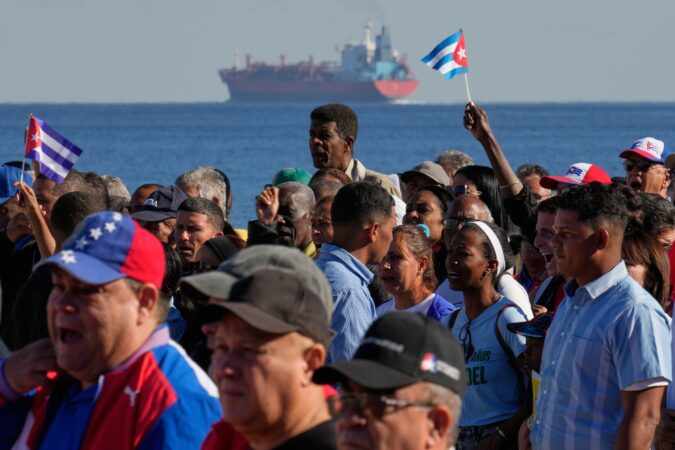
    No place was hit harder than Cuba by the shock waves that Saturday morning’s U.S. military seizure of Venezuela’s Nicolás Maduro sent throughout Latin America and the world.

    Within hours of the operation — long before the government in Havana acknowledged it — phone calls and texts across the island spread the news that dozens of elite Cuban security forces had been killed guarding Maduro.

    But by the time it finally released a statement late Sunday saying that 32 of its military and security personnel were dead in Caracas, the Cuban government had bigger problems on its hands.

    Both President Donald Trump and Secretary of State Marco Rubio made clear over the weekend that the collapse of Cuba’s communist government was not only a likely side benefit of Maduro’s ouster but a goal.

    “I don’t think we need [to take] any action,” Trump said as he flew back to Washington from his extended Florida holiday break. Without Maduro and the oil supplies Venezuela provided, he said, “Cuba looks like it’s ready to fall.”

    Rubio went further, indicating that the United States might be willing to give it a push. “I’m not going to talk to you about what our future steps are going to be,” he told NBC’s Meet the Press on Sunday. But, he added, “If I lived in Havana and I was in the government, I’d be concerned.”

    Their words resonated with many in the Miami-centered exile community, where the struggle to free Cuba from communist rule has dominated politics for decades. On Saturday, South Florida Cuban exiles — some wearing red Trump hats and Cuban flags as capes — joined hundreds of revelers at spirited, impromptu celebrations from Little Havana to Doral, a city nicknamed “Doralezuela” because of its large population of Venezuelans. Cuban American leaders, most of them Republican, issued statements as Venezuela coverage dominated local TV stations.

    Cuba is the “root” of problems with Venezuela, Nicaragua, and other leftist regimes in the region, said Dariel Fernandez, Miami-Dade County’s elected tax collector. “Now the time has come … for the Castro communist and socialist assassin regime to be held accountable as well, and for the Cuban people to finally be free.”

    Absent direct U.S. intervention, however, Cuba experts here and on the island were less certain.

    “If you’re asking if the Cuban government will just collapse on its own because the economic pain is bound to increase” without shipments of Venezuelan oil, “I’m very skeptical,” said Michael J. Bustamante, associate professor of history and director of the Cuban studies program at the University of Miami.

    To keep the lights on and cars running, Cuba has long been dependent on Venezuelan oil supplies, for which it has exchanged security and medical personnel in a sympathetic contract with leftist allies in Caracas.

    “I could very well be proven wrong, but Cuba has been here before” and survived, Bustamente said, referencing what is known in Cuba as the “special period” that began in 1991 with the abrupt cutoff of outside assistance after the demise of the Soviet Union.

    Juan Gonzalez, who served as Western Hemisphere director on the Biden administration’s national security staff, said that “cutting off the oil deliveries is going to put a huge squeeze on the humanitarian situation” in Cuba, which is already suffering regular electricity blackouts and food scarcities. “But I don’t think the regime is going to cry uncle.”

    Aside from an economic uptick during the Obama administration, when the resumption of diplomatic relations between Washington and Havana led to increased tourism and slender openings for private ownership and outside investment, the Cuban economy has never really recovered from the Soviet fall.

    The nation has been on a steady slide into economic chaos for years, owing to U.S. sanctions and what even many of its supporters see as mismanagement by a sclerotic Cuban Communist Party.

    Some chose to see opportunity in the darkness following Maduro’s ouster. Carlos Alzugaray, a retired career Cuban diplomat reached by phone at his Havana home, said, “There is of course an increase of the threat, a very bad thing.”

    But it was possible, he said, that Cuba’s allies in Russia and elsewhere would help, “and just maybe the government will … open up the economy and do what the economists have been telling them for a long time and they have refused to do.”

    Venezuelan support under Maduro’s predecessor, Hugo Chávez, in the early 2000s helped Cuba emerge from the special period and the weight of decades-long U.S. sanctions. Since then, Havana has weathered the death of revolutionary leader Fidel Castro, COVID, Trump’s dismantling during his first administration of the limited Obama opening and furious street protests in 2021.

    But the emboldened second Trump administration presents an entirely new threat to Cuba’s leaders.

    At various points over the years, Cuba’s own government economists have advised overhauling the economy and have been urged to do so by allies in China, Vietnam, and Russia.

    Raúl Castro, who took over from his ailing brother, Fidel, in 2006, warned of needed reforms in a lengthy 2010 speech to the Cuban parliament. “We are playing with the life of the revolution,” he said. “We can either rectify the situation, or we will run out of time walking on the edge of the abyss, and we will sink.”

    But his plans to expand the role of the private sector and reduce state ownership were seen as contradictory and insufficiently implemented, ultimately resolving few of Cuba’s systemic problems. Other pushes for change have run into similar roadblocks over the ruling party’s refusal to allow private businesses and farms to sell their goods directly for market prices, its rejection of currency reforms, heavy government investments in a failing tourism industry and the growing power of GAESA, the military-controlled conglomerate that runs vast swaths of the economy.

    At their peak of about 100,000 barrels a day, Venezuelan oil shipments allowed Cuba to serve its own energy needs and sell refined petroleum products overseas for desperately needed cash. But as Venezuela dealt with sharp drops in output, due to U.S. sanctions and mismanagement, shipments dropped to about 30,000 barrels last year.

    Those cuts, along with Cuba’s aging refineries, failing infrastructure and the occasional hurricane, led to at least five islandwide blackouts last year.

    “They have to realize they can’t depend on foreign help anymore,” Alzugaray said. Russia and Mexico have supplied some oil, although Mexican President Claudia Sheinbaum is likely to come under increasing U.S. pressure to cut off aid to Havana. China, which holds major Cuban debt, has shown little interest in helping.

    Reforms have been approved “on paper,” Alzugaray said. “The problem is they don’t do it. The essence is opening to market economics, allowing expansion of the private sector, and eliminating or selling socialist state enterprises that don’t produce. They have to do it, and they have to do it fast. They have lost too much time.”

    Few Cuba watchers have much confidence that reforms will happen, at least under the party government of President Manuel Díaz-Canel and the current power structure.

    “There are reformers inside the regime,” said Gonzalez, the Biden administration official, who had extensive dealings with the Cuban government. “They have a vision, but they don’t have the wherewithal and the influence to have it done.”

    Even if they did, he said, “it won’t be enough” for Rubio, whose parents fled the island before Fidel Castro’s 1959 takeover, and Cuban American lawmakers and power brokers, he said. “They’re going to want big change.”

    Opposition on the island is diffuse and leaderless since arrests following the 2021 street protests.

    “People who aspire to be opposition leaders are either in Miami or in Madrid or in jail,” said William LeoGrande, a specialist in Latin American affairs at American University. A Venezuela-like removal of even a handful of individuals is unlikely to rattle the multilayered, entrenched party and military power centers to the point of collapse, he said.

    As for Cubans themselves, Alzugaray said, “I wouldn’t think that people are so desperate that they will welcome an American intervention or a group of Miami Cubans taking over. What people want is the Cuban government to change,” he said, “but in Cuban terms, not imposed by the outside.”

  • More than 2 million Epstein documents still unreleased, officials say

    More than 2 million Epstein documents still unreleased, officials say

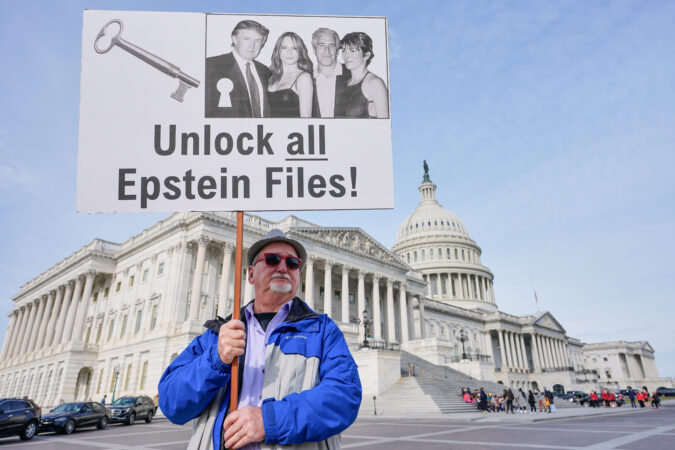
    More than 2 million documents regarding convicted sex offender Jeffrey Epstein remain to be released, Justice Department officials told a federal judge Monday, offering the most precise estimate so far of the size of the file still under review.

    In a letter to U.S. District Judge Paul Engelmayer in New York, officials said the department had released 12,285 documents, comprising about 125,575 pages, but that the vast majority of the Epstein files had not yet been released. Last month, Engelmayer issued an order allowing the department to release grand jury documents related to the 2021 trial and conviction of Ghislaine Maxwell, Epstein’s accomplice, on sex-trafficking charges.

    Justice Department officials had previously given even larger estimates of the number of documents still under review. The letter notes that the department has identified a large number of documents that are “copies of (or largely duplicative of) documents that had already been collected.”

    The letter was signed by Attorney General Pamela Bondi, Deputy Attorney General Todd Blanche, and Jay Clayton, the U.S. attorney in Manhattan.

    A new law passed in November mandated that the entire trove of Epstein files be released by Dec. 19. Justice Department officials said late last month that they hope to release the rest of the documents by Jan. 20. Members of Congress who pushed the legislation say that the department has not released key documents they want to see.

    “DOJ’s refusal to follow the law I passed in Congress and release the full files is an obstruction of justice,” Rep. Ro Khanna (D., Calif.), one of the new law’s main sponsors, said in a statement. “They also need to release the FBI witness interviews which name other men, so the public can know who was involved,” he said.

    More than 400 lawyers and 100 specially trained document analysts “will dedicate all or a substantial portion of their workday” to getting documents ready for release, the officials told the judge.

    The letter — a progress report of sorts — gives a glimpse into the daunting labor that lies ahead for federal officials.

    Those reviewing the unreleased documents must determine whether each document falls under the law’s broad mandate, review the documents to redact information that could identify victims, and respond to requests from victims or their family members for additional redactions, according to the letter.

    Officials offered similar explanations for a delay in releasing all unclassified Epstein documents last month, after the Justice Department failed to meet its deadline.

    Epstein was arrested on federal sex-trafficking charges in 2019 and died in federal custody later that year. His death was ruled a suicide. Judges and lawmakers say that over decades, he abused, trafficked, and molested scores of girls, many of whom have come forward in court and in other public forums.

    Epstein’s friendships with prominent political, business, and cultural figures, including President Donald Trump, also continue to be under intense scrutiny.

    Trump had a long-standing friendship with Epstein. He has said he knew Epstein socially in Palm Beach, Fla., and that they had a falling out in the mid-2000s. Trump has attributed the end of their relationship to a quarrel over a real estate deal and to Epstein hiring employees away from Trump’s Mar-a-Lago Club. White House spokeswoman Karoline Leavitt has said Epstein was ejected from the club “for being a creep” to female workers there.

    Trump has not been accused of participating in Epstein’s criminal conduct.

    Documents released last month confirmed that the FBI received a complaint about Epstein as far back as 1996. But Epstein did not appear to come under serious law enforcement scrutiny until about a decade later, when he was arrested in 2006.

    At the time, Epstein reached an agreement with officials in Florida that enabled him to plead guilty in 2008 to two state charges of soliciting prostitution, including one involving a minor, while avoiding federal charges and serving just over a year behind bars — with ample work-release privileges.

  • Joseph McGettigan, prosecutor in Jerry Sandusky and John du Pont cases, dies at 76

    Joseph McGettigan, prosecutor in Jerry Sandusky and John du Pont cases, dies at 76

    HARRISBURG, Pa. — Joseph E. McGettigan III, a Pennsylvania prosecutor who obtained criminal convictions against Penn State assistant football coach Jerry Sandusky and chemical heir John du Pont, has died at age 76.

    Mr. McGettigan, who lived in the Philadelphia suburb of Media, died on Dec. 31, according to the funeral home Boyd Horrox Givnish Life Celebration Home of East Norriton.

    He was a senior deputy attorney general when he served as a lead prosecutor in the trial of Sandusky on child molestation charges in 2012. During the closing argument, Mr. McGettigan showed jurors photos of eight of Sandusky’s victims as children, all of whom had taken the stand.

    “He molested and abused and hurt these children horribly,” Mr. McGettigan said. “He knows he did it, and you know he did it. Find him guilty of everything.” Sandusky was convicted of 45 of 48 counts.

    Mr. McGettigan was an assistant district attorney in Delaware County when he prosecuted du Pont, who was found guilty of third-degree murder but mentally ill in the death of Olympic gold medal-winning freestyle wrestler David Schultz at du Pont’s palatial estate outside Philadelphia in 1996. Schultz come to live and train at a state-of-the-art training center that du Pont had built on his property.

    Du Pont died in a Pennsylvania prison in 2010 at the age of 72. Sandusky, 81, is currently serving a 30- to 60-year sentence in state prison.

    Mr. McGettigan’s work as prosecutor, which also included a stint in Philadelphia, often involved murder and child molestation cases. More recently he had been a lawyer in private practice, including work on behalf of crime victims.

    Survivors include his wife, Gay Warren; his mother, Ruth L. McGettigan; and six siblings.