Tag: no-latest

  • Jury selection begins in trial for ex-officer accused in police response to Uvalde school shooting

    Jury selection begins in trial for ex-officer accused in police response to Uvalde school shooting

    CORPUS CHRISTI, Texas — A former school police officer in Uvalde, Texas, who was part of the slow law enforcement response to one of the worst school shootings in U.S. history went on trial Monday on charges that he failed to protect children from the gunman.

    Adrian Gonzales, one of the first officers to respond to the 2022 attack, is charged with 29 counts of child abandonment or endangerment in a rare prosecution of an officer accused of not doing more to save lives. Authorities waited more than an hour to confront the teenage shooter who killed 19 students and two teachers at Robb Elementary.

    Gonzales has pleaded not guilty, and his attorney has said the officer tried to save children that day.

    Jury selection began Monday at a Texas courthouse where a long line of prospective jurors stretched outside the building before the proceedings got underway.

    Potential jurors were given a list of questions asking what they knew about the law enforcement response and their impressions of what happened, as well as whether they contributed money to Uvalde victims.

    Judge Sid Harle told several hundred potential jurors that the court was not looking for jurors who know nothing about the shooting but wants those who can be impartial. The trial was expected to last about two weeks, he said.

    Among the potential witnesses are FBI agents, rangers with the Texas Department of Public Safety, school employees, and family members of the victims.

    Nearly 400 officers from state, local, and federal law enforcement agencies responded to the school, but 77 minutes passed from the time authorities arrived until a tactical team breached the classroom and killed the shooter, Salvador Ramos. An investigation later showed that Ramos was obsessed with violence and notoriety in the months leading up to the attack.

    Gonzales and former Uvalde schools police chief Pete Arredondo were among the first on the scene, and they are the only two officers to face criminal charges over the response. Arredondo’s trial has not been scheduled.

    The charges against Gonzales carry up to two years in prison if he is convicted.

    Police and Texas Gov. Greg Abbott initially said swift law enforcement action killed Ramos and saved lives. But that version quickly unraveled as families described begging police to go into the building and 911 calls emerged from students pleading for help.

    The indictment alleges Gonzales placed children in “imminent danger” of injury or death by failing to engage, distract, or delay the shooter and by not following his active shooter training. The allegations also say he did not advance toward the gunfire despite hearing shots and being told where the shooter was.

    State and federal reviews of the shooting cited cascading problems in law enforcement training, communication, leadership, and technology, and questioned why officers waited so long.

    According to the state review, Gonzales told investigators that once police realized there were students still sitting in other classrooms, he helped evacuate them.

    Some family members of the victims have said more officers should be indicted.

    “They all waited and allowed children and teachers to die,” said Velma Lisa Duran, whose sister Irma Garcia was one of the two teachers who were killed.

    Prosecutors will likely face a high bar to win a conviction. Juries are often reluctant to convict law enforcement officers for inaction, as seen after the Parkland, Fla., school massacre in 2018.

    Sheriff’s deputy Scot Peterson was charged with failing to confront the shooter in that attack. It was the first such prosecution in the U.S. for an on-campus shooting, and Peterson was acquitted by a jury in 2023.

    At the request of Gonzales’ attorneys, the trial was moved about 200 miles southeast to Corpus Christi. They argued Gonzales could not receive a fair trial in Uvalde, and prosecutors did not object.

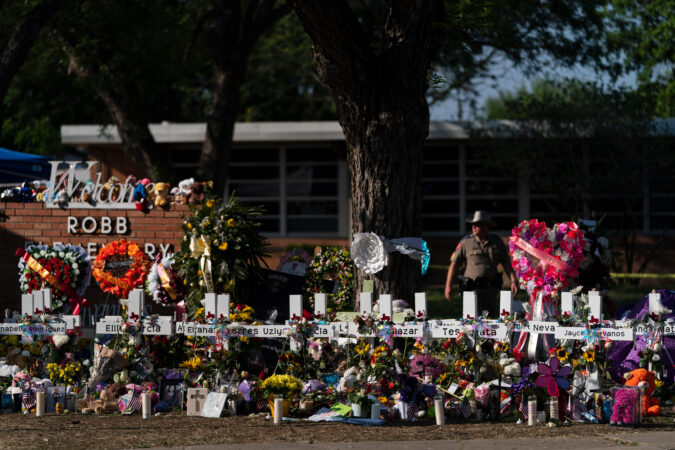
    Uvalde, a town of 15,000, still has several prominent reminders of the shooting. Robb Elementary is closed but still stands, and a memorial of 21 crosses and flowers sits near the school sign. Murals depicting several victims can still be seen on the walls of several buildings.

    Jesse Rizo, whose 9-year-old niece Jackie was one of the students killed, said even with a three-hour drive to Corpus Christi, the family would like to have someone attend the trial every day.

    “It’s important that the jury see that Jackie had a big, strong family,” Rizo said.
  • Man who broke windows at Vance’s Ohio home is detained, the Secret Service says

    Man who broke windows at Vance’s Ohio home is detained, the Secret Service says

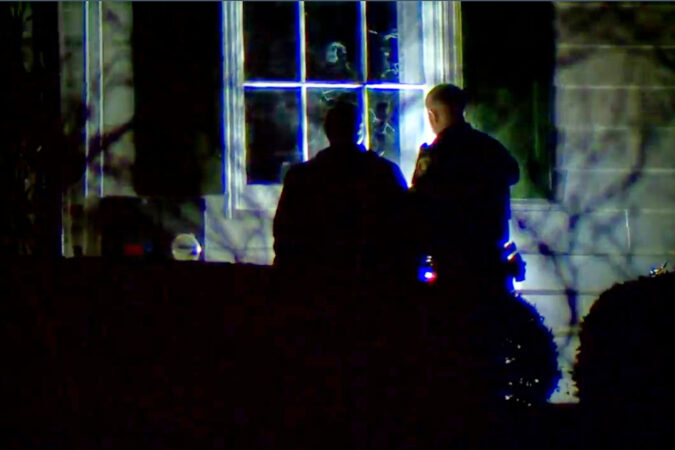
    A man who broke windows at Vice President JD Vance’s Ohio home and caused other property damage was detained early Monday, the U.S. Secret Service said.

    The man was detained shortly after midnight by Secret Service agents assigned to Vance’s home, east of downtown Cincinnati, agency spokesperson Anthony Guglielmi said in a statement emailed to the Associated Press. The vice president and his family were not at home, having returned to Washington on Sunday after a weekend there, his office said.

    The Secret Service heard a loud noise at the house around midnight and found a person who had broken a window with a hammer and was trying to get in, according to two law enforcement officials who were not publicly authorized to discuss the investigation into what happened and spoke on the condition of anonymity. The man had also vandalized a Secret Service vehicle on his way up the home’s driveway, one of the officials said.

    A law enforcement official identified the suspect as William Defoor, 26, who public records list as living in Cincinnati. Calls to the listings for possible relatives and an attorney who previously represented Defoor were not immediately returned.

    Defoor is set to be arraigned Tuesday on misdemeanor charges of vandalism, criminal trespass, criminal damaging, and obstruction of official business, court records show.

    Vance expressed gratitude to the Secret Service and Cincinnati police for responding quickly to the incident in a post on the social platform X.

    “I appreciate everyone’s well wishes about the attack at our home,” Vance tweeted. “As far as I can tell, a crazy person tried to break in by hammering the windows.”

    Court records show that Defoor faced an earlier charge of vandalism in 2024 and agreed to treatment under the county’s Mental Health Court system.

    The Secret Service is coordinating with the Cincinnati Police Department and the U.S. attorney’s office as charging decisions are reviewed, Guglielmi said.

    The Vance home is located in one of the city’s oldest neighborhoods, on hills overlooking the city. Throughout Vance’s vice presidency, protesters have often gathered outside the home — clashing at one point last spring with Vance himself.

    Vance, a Republican, was a U.S. senator representing Ohio before becoming vice president. He moved to Cincinnati after a stint in Silicon Valley following law school, and his half brother ran unsuccessfully for mayor there last year. Vance was raised in nearby Middletown, which figured heavily in his best-selling memoir, Hillbilly Elegy.

    Associated Press writers Mike Balsamo, Sarah Brumfield and Julie Carr Smyth contributed to this article.

  • Hegseth censures Sen. Kelly after Democrats’ video urging troops to resist unlawful orders

    Hegseth censures Sen. Kelly after Democrats’ video urging troops to resist unlawful orders

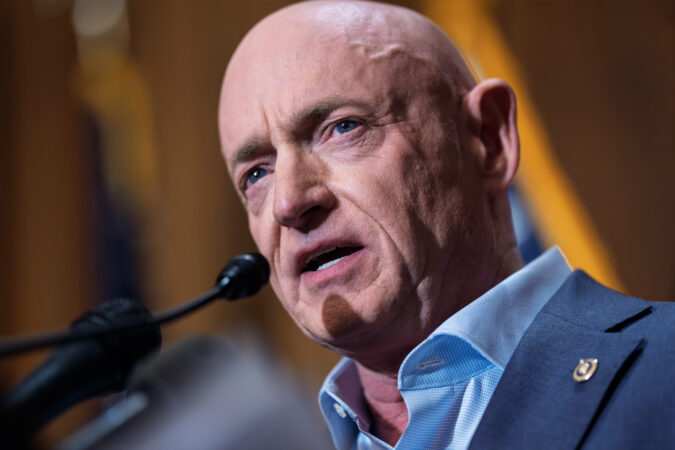
    WASHINGTON — Defense Secretary Pete Hegseth announced Monday that he censured Democratic Sen. Mark Kelly of Arizona over the former Navy pilot’s participation in a video that called on troops to resist unlawful orders.

    Hegseth said the censure — by itself simply a formal letter with little practical consequence — was “a necessary process step” to proceedings that could result in a demotion from Kelly’s retired rank of captain and subsequent reduction in retirement pay.

    Investigating and now punishing a sitting U.S. senator is an extraordinary move for the Pentagon, which until President Donald Trump’s second term had usually gone out of its way to act and appear apolitical. A legal expert says the choice to go after a lawmaker will complicate an already unique case.

    In a lengthy post on social media, Kelly said he “never expected” what he called an “attack” from Trump and Hegseth, recounting his 25 years of Navy service as well as combat and space missions.

    Calling Hegseth’s move “outrageous” and “un-American,” Kelly said he would fight the censure “with everything I’ve got — not for myself, but to send a message back that Pete Hegseth and Donald Trump don’t get to decide what Americans in this country get to say about their government.”

    Hegseth’s action follows video about illegal orders

    The censure comes after Kelly participated in a video in November with five other Democratic lawmakers — all veterans of the armed services and intelligence community — in which they called on troops to uphold the Constitution and defy “illegal orders.”

    Trump, a Republican, accused the lawmakers of sedition “punishable by DEATH” in a social media post days later.

    The 90-second video was first posted from Sen. Elissa Slotkin’s X account. In it, the six lawmakers — Slotkin, Kelly ,and Reps. Jason Crow, Chris Deluzio, Maggie Goodlander, and Chrissy Houlahan — speak directly to U.S. service members, whom Slotkin acknowledges are “under enormous stress and pressure right now.”

    The lawmakers didn’t mention specific circumstances. But their message was released amid a series of military attacks on boats accused of smuggling drugs in the Caribbean Sea and the eastern Pacific Ocean and Trump’s attempts to deploy National Guard troops to American cities.

    The Pentagon announced that it began an investigation of Kelly in late November, citing a federal law that allows retired service members to be recalled to active duty on orders of the defense secretary for possible court-martial or other measures.

    While all six lawmakers served in the military or the intelligence community, Hegseth previously said Kelly was the only one facing investigation because he is the only one of the lawmakers who formally retired from the military and is still under the Pentagon’s jurisdiction.

    Kelly said last month that the investigation was part of an effort to silence dissent: “This is just about sending a message to retired service members, active duty service members, government employees — do not speak out against this president or there will be consequences.”

    Kelly, along with some of the other Democrats in the initial video, have sent out fundraising messages based on Trump’s reaction to their comments, efforts that have gone toward filling their own campaign coffers and further elevating their national-level profiles.

    What accusations Hegseth is leveling against Kelly

    In his post Monday, Hegseth charged that Kelly’s remarks in the video and afterward violated Uniform Code of Military Justice provisions against conduct unbecoming an officer and violating good order and discipline.

    “Captain Kelly’s status as a sitting United States Senator does not exempt him from accountability, and further violations could result in further action,” Hegseth said.

    Todd Huntley, a retired Navy captain and judge advocate general, called this is a “novel” situation that raises legal questions.

    One issue, Huntley said, is whether Kelly’s comments fall under the constitutional protections of the speech or debate clause, which is intended to protect members of Congress from questioning about official legislative acts.

    A 1968 Supreme Court decision said the provision’s intent was “to prevent legislative intimidation by and accountability to the other branches of government.”

    Huntley said that while the type of process Hegseth is using — known as a retirement grade determination — is fairly routine, “as far as I know, they’ve always been based on conduct during the individual’s active duty service, even if it only came to light after retirement.”

    “So, I don’t know if conduct totally after retirement would fit the requirement for such a determination,” he added.

    According to Hegseth, Kelly now has 30 days to submit a response to the proceedings that will decide if he is demoted. The decision will be made within 45 days, Hegseth’s post added.

    Huntley noted that Kelly will also have options to appeal the finding both within the military and in federal court.

  • Flu season surged in U.S. over the holidays and already rivals last winter’s harsh epidemic

    Flu season surged in U.S. over the holidays and already rivals last winter’s harsh epidemic

    NEW YORK — U.S. flu infections surged over the holidays, and health officials are calling it a severe season that is likely to get worse.

    New government data posted Monday — for flu activity through the week of Christmas — showed that by some measures this season is already surpassing the flu epidemic of last winter, one of the harshest in recent history.

    The data was released the same day that the Trump administration said it will no longer recommend flu shots and some other types of vaccines for all children.

    Forty-five states were reporting high or very high flu activity during the week of Christmas, up from 30 states the week before.

    The higher numbers appear to be driven by the type of flu that’s been spreading, public health experts say.

    One type of flu virus, called A H3N2, historically has caused the most hospitalizations and deaths in older people. So far this season, that’s the type most frequently reported. Even more concerning, more than 90% of the H3N2 infections analyzed were a new version — known as the subclade K variant — that differs from the strain in this year’s flu shots.

    Flu seasons often don’t peak until January or February, so it’s too early to know how big a problem that mismatch will be.

    “The fact that we’ve seen steady increases over the last several weeks without much of a decline or even a flattening would suggest to me that we’ve got the peak ahead of us,” said Robert Hopkins, medical director of the National Foundation for Infectious Diseases.

    The second bad flu season in a row

    Last flu season was bad, with the overall flu hospitalization rate the highest since the H1N1 flu pandemic 15 years ago. Child flu deaths reached 288, the worst recorded for regular U.S. flu season.

    Nine pediatric flu deaths have been reported so far this season. For children, the percentage of emergency department visits due to flu has already surpassed the highest mark seen during the 2024-2025 season.

    Hopkins said H3N2 typically hits older adults hardest, and rising rates among children and young adults suggest a severe flu season across all age groups.

    Another ominous sign: The percentage of doctor’s office and medical clinic visits that were due to flulike illness also was higher late last month than at any point during the previous flu season.

    Deaths and hospitalizations have not reached last year’s levels, but those are lagging indicators, Hopkins noted.

    The U.S. Centers for Disease Control and Prevention estimates at least 11 million illnesses, 120,000 hospitalizations, and 5,000 deaths from flu have already occurred this season.

    U.S. government dials back vaccine recommendations

    Public health experts have recommended that everyone 6 months and older get an annual influenza vaccine.

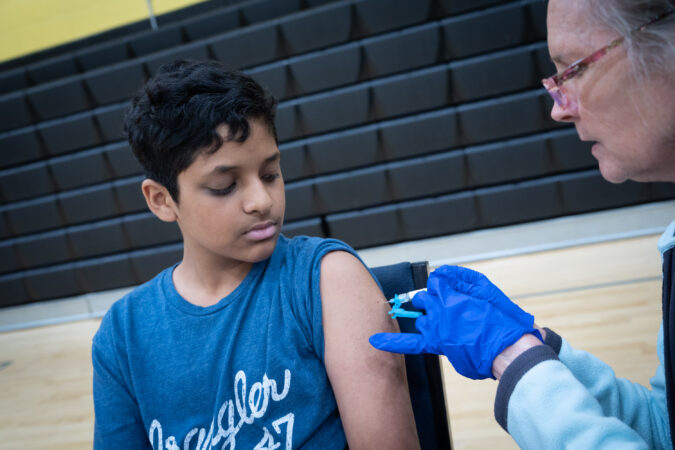
    But federal health officials on Monday announced they will no longer recommend flu vaccinations for U.S. children, saying it’s a decision parents and patients should make in consultation with their doctors.

    However, flu vaccine will continue to be fully covered by private insurers and federal programs, including Medicaid, the Children’s Health Insurance Program, and the Vaccines for Children program, a U.S. Department of Health and Human Services spokesperson said.

    COVID-19 infections also have been rising, other federal data show, though so far this winter they remain less common than flu. The Trump administration stopped recommending COVID-19 shots for healthy children last year.

    U.S. will stop collecting Medicaid data

    Hopkins voiced concern about a federal notice posted last week that said government Medicaid programs, which pay for medical services for low-income families, will no longer have to report on immunization rates.

    CDC survey data suggests that U.S. flu vaccination rates are about the same as last year. But the Medicaid data — for flu as well as measles and other bugs — is a more comprehensive look at children who are at higher risk for many diseases, he said.

    Federal health officials framed the move as part of an effort to distance how Medicaid doctors are rated and paid from how often they provided childhood vaccinations.

    “Government bureaucracies should never coerce doctors or families into accepting vaccines or penalize physicians for respecting patient choice,” wrote Health Secretary Robert F. Kennedy Jr., who was a leading voice in the anti-vaccine community before President Donald Trump put him in charge of federal health agencies.

    “That practice ends now,” Kennedy wrote on social media last week.

    But Hopkins said the move will “eliminate a major source of data” that allows communities to assess efforts to protect children from vaccine-preventable diseases.

    “This is a disastrous plan,” he added.

  • U.S. overhauls childhood vaccine schedule, recommends fewer shots

    U.S. overhauls childhood vaccine schedule, recommends fewer shots

    The Trump administration is overhauling the list of routine shots recommended for all babies and children in the United States, bypassing the government’s typical process for recommending vaccines and delivering on Health Secretary Robert F. Kennedy Jr.’s longstanding goals to upend the nation’s pediatric vaccine schedule.

    Effective immediately, the Centers for Disease Control and Prevention will no longer recommend every child receive vaccines for rotavirus, influenza, meningococcal disease, respiratory syncytial virus (RSV), hepatitis A and hepatitis B, according to materials released Monday by the Department of Health and Human Services. Instead, smaller groups of children and babies should get those vaccines only if they are at high risk or if a doctor recommends it.

    Administration health officials said they were aligning U.S. recommendations more closely with vaccine schedules in other countries, citing decreased public confidence in vaccinations, especially following the COVID-19 pandemic.

    “We are aligning the U.S. childhood vaccine schedule with international consensus while strengthening transparency and informed consent,” Kennedy said in a news release. “This decision protects children, respects families, and rebuilds trust in public health.”

    Children could still receive vaccines that are no longer broadly recommended by the federal government and insurers would still have to pay for them, officials said. Officials said coverage in private plans, Medicare, Medicaid and the Children’s Health Insurance Program wouldn’t be affected by the new recommendations.

    Officials are dividing vaccines into three categories. The first category includes vaccines recommended for all children, such as to protect against measles and polio and whooping cough.

    The second category encompasses vaccines recommended for certain high-risk groups or populations, such as RSV, hepatitis A, hepatitis B and meningitis. The third category includes vaccines that can be given under a designation known as “shared clinical decision-making” that allows children to get the shots after families consult with their healthcare providers. Officials said they didn’t undergo a fresh assessment of who is considered high risk.

    The new set of recommendations align the U.S. more closely with Denmark’s schedule, something administration officials had previously suggested.

    Two of the vaccinations – for influenza and rotavirus – should only be given when a doctor recommends it, under the new CDC guidance. The CDC already shifted to this model for coronavirus vaccines in the fall.

  • What to know about the Trump administration’s latest moves on childcare funding

    What to know about the Trump administration’s latest moves on childcare funding

    President Donald Trump’s administration said Monday that it’s planning to tighten rules for federal childcare funds after a series of alleged fraud schemes at Minnesota daycare centers run by Somali residents.

    A Department of Health and Human Services spokesperson also reiterated the funding is on hold to all states until they provide more verification about the programs.

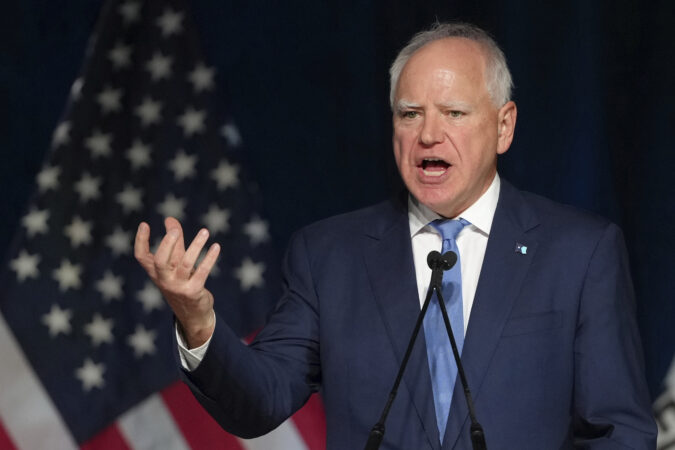
    The plans to change the policies came the same day that Minnesota Gov. Tim Walz, the 2024 Democratic vice presidential nominee who has said the Trump administration is politicizing the issue, announced he’s ending his reelection campaign.

    Here are some things to know about these moves:

    Rule change plans announced

    Health and Human Services announced Monday that it plans to change federal rules around the program, which serves lower-income families. As of last year, it was subsidizing care for about 1.3 million children.

    Among the proposed changes: It would allow states to pay providers based on attendance rather than merely enrollment and to pay providers after care is delivered rather than in advance.

    “Paying providers upfront based on paper enrollment instead of actual attendance invites abuse,” Health and Human Services Deputy Secretary Jim O’Neill said in a statement.

    When advanced payments were required in a 2024 rule change, officials said it would make childcare centers more likely to serve families that use the subsidies.

    Most states received waivers to delay implementing parts of the 2024 rules and many did not start the advance payments immediately.

    Rule changes usually take at least several months to make and include a public comment period.

    More verification needed for all states

    All 50 states will have to provide additional levels of verification and administrative data before they receive more funding from the Child Care and Development Fund, according to an HHS spokesperson.

    Minnesota will have to provide even more verification for childcare centers that are suspected of fraud, such as attendance and licensing records, past enforcement actions, and inspection reports.

    In his social media post last week, O’Neill said all Administration for Children and Families payments nationwide would require “justification and a receipt or photo evidence” before money is sent.

    That announcement came after a right-wing influencer posted a video last month claiming he had found that daycare centers operated by Somali residents in Minneapolis had committed up to $100 million in fraud.

    The departments that administer the programs in California, Iowa, and Oregon all said Monday that they have not received guidance on how to comply with the requirements O’Neill announced.

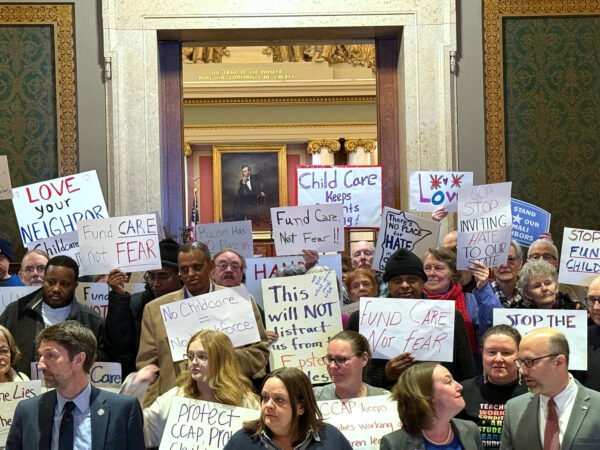
    Cindy Lenhoff, director of National Child Care Association, warned Monday that pausing payments to providers could cause some to close, and keep parents from being able to work.

    “Withholding funds from complaint providers will not fix fraud,” she said. “It will only destabilize an already fragile system.”

    Walz says Trump is politicizing the issue

    Several Democrats including Walz accused Republicans of playing political games, and Walz doubled down Monday when he announced he would end his reelection campaign.

    “Even as we make progress in the fight against the fraudsters, we now see an organized group of political actors seeking to take advantage of a crisis,” he said.

    Walz touted the state’s efforts to crack down on fraud over the last several years, including with the help of the federal government. But now, he said, the Trump administration’s move to withhold childcare funding from the state shows “they’re willing to hurt our people to score cheap points.”

    “They and their allies have no intention of helping us solve this problem, and every intention of trying to profit off of it,” Walz said.

    Minnesota childcare centers alarmed

    Maria Snider, director of the Rainbow Child Development Center and vice president of advocacy group Minnesota Child Care Association, said last week that fear is rising among families — many of which are living paycheck to paycheck — and childcare centers that rely on the federal funding. Without childcare system tuition, centers may have to lay off teachers and shut down classrooms, she said.

    The Administration for Children and Families provides $185 million in childcare funds annually to Minnesota, according to Assistant Secretary Alex Adams.

    Ahmed Hasan, director of the ABC Learning Center that was one of those featured in the video by the influencer, said on Wednesday that there were 56 children enrolled at the center. Since the video was posted, Hasan, who is Somali, said his center has received harassing phone calls making staff members and parents feel unsafe.

    He said the center is routinely subject to checks by state regulators to ensure they remain in compliance with their license.

    “There’s no fraud happening here,” Hasan told the Associated Press. “We are open every day, and we have our records to show that this place is open.”

  • This Jan. 6 plaque was made to honor law enforcement. It’s nowhere to be found at the Capitol

    This Jan. 6 plaque was made to honor law enforcement. It’s nowhere to be found at the Capitol

    WASHINGTON — On the fifth anniversary of the Jan. 6, 2021, attack on the Capitol, the official plaque honoring the police who defended democracy that day is nowhere to be found.

    It’s not on display at the Capitol, as is required by law. Its whereabouts aren’t publicly known, though it’s believed to be in storage.

    House Speaker Mike Johnson, a Louisiana Republican, has yet to formally unveil the plaque. And the Trump administration’s Department of Justice is seeking to dismiss a police officers’ lawsuit asking that it be displayed as intended. The Architect of the Capitol, which was responsible for obtaining and displaying the plaque, said in light of the federal litigation, it cannot comment.

    Determined to preserve the nation’s history, some 100 members of Congress, mostly Democrats, have taken it upon themselves to memorialize the moment. For months, they’ve mounted poster board-style replicas of the Jan. 6 plaque outside their office doors, resulting in a Capitol complex awash with makeshift remembrances.

    “On behalf of a grateful Congress, this plaque honors the extraordinary individuals who bravely protected and defended this symbol of democracy on Jan. 6, 2021,” reads the faux bronze stand-in for the real thing. “Their heroism will never be forgotten.”

    Jan. 6 void in the Capitol

    In Washington, a capital city lined with monuments to the nation’s history, the plaque was intended to become a simple but permanent marker, situated near the Capitol’s west front, where some of the most violent fighting took place as rioters breached the building.

    But in its absence, the missing plaque makes way for something else entirely — a culture of forgetting.

    Visitors can pass through the Capitol without any formal reminder of what happened that day, when a mob of President Donald Trump’s supporters stormed the building trying to overturn the Republican’s 2020 reelection defeat by Democrat Joe Biden. With memory left unchecked, it allows new narratives to swirl and revised histories to take hold.

    Five years ago, the jarring scene watched the world over was declared an “insurrection” by the then-GOP leader of the Senate, while the House GOP leader at the time called it his “saddest day” in Congress. But those condemnations have faded.

    Trump calls it a “day of love.” And Johnson, who was among those lawmakers challenging the 2020 election results, is now the House speaker.

    “The question of January 6 remains — democracy was on the guillotine — how important is that event in the overall sweep of 21st century U.S. history,” said Douglas Brinkley, a professor of history at Rice University and noted scholar.

    “Will January 6 be seen as the seminal moment when democracy was in peril?” he asked. Or will it be remembered as “kind of a weird one-off?”

    “There’s not as much consensus on that as one would have thought on the fifth anniversary,” he said.

    Memories shift, but violent legacy lingers

    At least five people died in the riot and its aftermath, including Trump supporter Ashli Babbitt, who was fatally shot by police while trying to climb through a window toward the House chamber. More than 140 law enforcement officers were wounded, some gravely, and several died later, some by suicide.

    All told, some 1,500 people were charged in the Capitol attack, among the largest federal prosecutions in the nation’s history. When Trump returned to power in January 2025, he pardoned all of them within hours of taking office.

    Unlike the twin light beams that commemorated the Sept. 11, 2001, attack or the stand-alone chairs at the Oklahoma City bombing site memorial, the failure to recognize Jan. 6 has left a gap not only in memory but in helping to stitch the country back together.

    “That’s why you put up a plaque,” said Rep. Mary Gay Scanlon (D., Pa.). “You respect the memory and the service of the people involved.”

    Police sue over plaque, DOJ seeks to dismiss

    The speaker’s office over the years has suggested it was working on installing the plaque, but it declined to respond to a request for further comment.

    Lawmakers approved the plaque in March 2022 as part of a broader government funding package. The resolution said the U.S. “owes its deepest gratitude to those officers,” and it set out instructions for an honorific plaque listing the names of officers “who responded to the violence that occurred.” It gave a one-year deadline for installation at the Capitol.

    This summer, two officers who fought the mob that day sued over the delay.

    “By refusing to follow the law and honor officers as it is required to do, Congress encourages this rewriting of history,” said the claim by officers Harry Dunn and Daniel Hodges. “It suggests that the officers are not worthy of being recognized, because Congress refuses to recognize them.”

    The Justice Department is seeking to have the case dismissed. U.S. Attorney Jeanine Pirro and others argued Congress “already has publicly recognized the service of law enforcement personnel” by approving the plaque and displaying it wouldn’t alleviate the problems they claim to face from their work.

    “It is implausible,” the Justice Department attorneys wrote, to suggest installation of the plaque “would stop the alleged death threats they claim to have been receiving.”

    The department also said the plaque is required to include the names of “all law enforcement officers” involved in the response that day — some 3,600 people.

    Makeshift memorials emerge

    Lawmakers who have installed replicas of the plaque outside their offices said it’s important for the public to know what happened.

    “There are new generations of people who are just growing up now who don’t understand how close we came to losing our democracy on Jan 6, 2021,” said Rep. Jamie Raskin (D., Md.), a member of the Jan. 6 committee, which was opposed by GOP leadership but nevertheless issued a nearly 1,000-page report investigating the run-up to the attack and the attempt to overturn the 2020 election.

    Raskin envisions the Capitol one day holding tours around what happened. “People need to study that as an essential part of American history,” he said.

    “Think about the dates in American history that we know only by the dates: There’s the 4th of July. There’s December 7th. There’s 9/11. And there’s January 6th,” said Rep. Zoe Lofgren (D., Calif.), who also served on the committee and has a plaque outside her office.

    “They really saved my life, and they saved the democracy, and they deserve to be thanked for it,” she said.

    But as time passes, there are no longer bipartisan memorial services for Jan. 6. On Tuesday, the Democrats will reconvene members from the Jan. 6 committee for a hearing to “examine ongoing threats to free and fair elections,” House Democratic Leader Hakeem Jeffries of New York announced. It’s unlikely Republicans will participate.

    The Republicans under Johnson have tapped Rep. Barry Loudermilk of Georgia to stand up their own special committee to uncover what the speaker calls the “full truth” of what happened. They’re planning a hearing this month.

    “We should stop this silliness of trying to whitewash history — it’s not going to happen,” said Rep. Joe Morelle (D., N.Y.), who helped lead the effort to display the replica plaques.

    “I was here that day so I’ll never forget,” he said. “I think that Americans will not forget what happened.”

    The number of makeshift plaques that fill the halls is a testimony to that remembrance, he said.

    Instead of one plaque, he said, they’ve “now got 100.”

  • Eva Schloss, 96, stepsister of Anne Frank and Holocaust educator

    Eva Schloss, 96, stepsister of Anne Frank and Holocaust educator

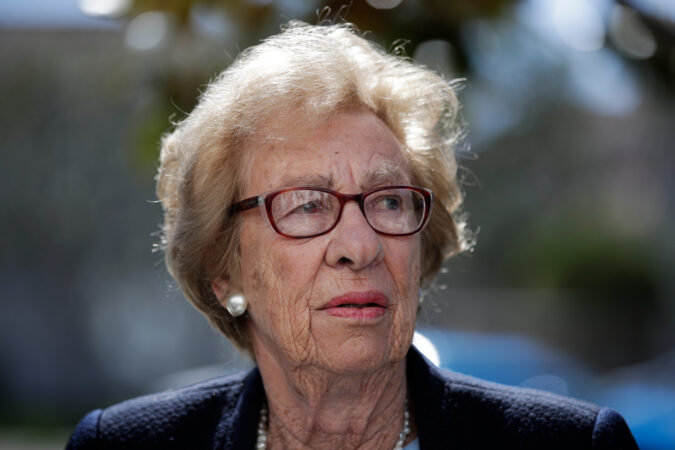
    LONDON — Auschwitz survivor Eva Schloss, the stepsister of teenage diarist Anne Frank and a tireless educator about the horrors of the Holocaust, has died. She was 96.

    The Anne Frank Trust UK, of which Ms. Schloss was honorary president, said she died Saturday in London, where she lived.

    Britain’s King Charles III said he was “privileged and proud” to have known Ms. Schloss, who cofounded the charitable trust to help young people challenge prejudice.

    “The horrors that she endured as a young woman are impossible to comprehend, and yet she devoted the rest of her life to overcoming hatred and prejudice, promoting kindness, courage, understanding, and resilience through her tireless work for the Anne Frank Trust UK and for Holocaust education across the world,” the king said.

    Born Eva Geiringer in Vienna in 1929, Ms. Schloss fled with her family to Amsterdam after Nazi Germany annexed Austria. She became friends with another Jewish girl of the same age, Anne Frank, whose diary would become one of the most famous chronicles of the Holocaust.

    Like the Franks, Eva’s family spent two years in hiding to avoid capture after the Nazis occupied the Netherlands. They were eventually betrayed, arrested, and sent to the Auschwitz death camp.

    Ms. Schloss and her mother, Fritzi, survived until the camp was liberated by Soviet troops in 1945. Her father, Erich, and brother Heinz died in Auschwitz.

    After the war, Eva moved to Britain, married German Jewish refugee Zvi Schloss, and settled in London.

    In 1953, her mother married Frank’s father, Otto, the only member of his immediate family to survive. Anne Frank died of typhus in the Bergen-Belsen concentration camp at the age of 15, months before the end of the war.

    Ms. Schloss did not speak publicly about her experiences for decades, later saying that wartime trauma had made her withdrawn and unable to connect with others.

    “I was silent for years, first because I wasn’t allowed to speak. Then I repressed it. I was angry with the world,” she told the Associated Press in 2004.

    But after she addressed the opening of an Anne Frank exhibition in London in 1986, Ms. Schloss made it her mission to educate younger generations about the Nazi genocide.

    Over the following decades she spoke in schools and prisons and at international conferences and told her story in books including Eva’s Story: A Survivor’s Tale by the Stepsister of Anne Frank.

    She kept campaigning into her 90s. In 2019, she traveled to Newport Beach, Calif., to meet teenagers who were photographed making Nazi salutes at a high school party. The following year she was part of a campaign urging Facebook to remove Holocaust-denying material from the social-networking site.

    “We must never forget the terrible consequences of treating people as ‘other,’” Ms. Schloss said in 2024. “We need to respect everybody’s races and religions. We need to live together with our differences. The only way to achieve this is through education, and the younger we start the better.”

    Ms. Schloss’ family remembered her as “a remarkable woman: an Auschwitz survivor, a devoted Holocaust educator, tireless in her work for remembrance, understanding and peace.”

    “We hope her legacy will continue to inspire through the books, films and resources she leaves behind,” the family said in a statement.

    Zvi Schloss died in 2016. Eva Schloss is survived by their three daughters, as well as grandchildren and great-grandchildren.

  • A man who broke windows at JD Vance’s home in Ohio has been detained, the Secret Service said

    A man who broke windows at JD Vance’s home in Ohio has been detained, the Secret Service said

    A man who broke windows at Vice President JD Vance’s Ohio home and caused other property damage was detained early Monday, the U.S. Secret Service said.

    The man was detained shortly after midnight by Secret Service agents assigned to Vance’s home, east of downtown Cincinnati, agency spokesperson Anthony Guglielmi said in a statement emailed to The Associated Press. He has not been named.

    The Secret Service heard a loud noise at the home around midnight and found a person who had broken a window with a hammer and was trying to get into the house, according to two law enforcement officials who were not publicly authorized to discuss the investigation into what happened and spoke on the condition of anonymity. The man had also vandalized a Secret Service vehicle on his way up the home’s driveway, one of the officials said.

    The home, in the Walnut Hills neighborhood, on hills overlooking the city, was unoccupied at the time, and Vance and his family were not in Ohio, Guglielmi said.

    The Secret Service is coordinating with the Cincinnati Police Department and the U.S. attorney’s office as charging decisions are reviewed, he said.

    Vance, a Republican, was a U.S. senator representing Ohio before becoming vice president. His office said his family was already back in Washington and directed questions to the Secret Service.

    Walnut Hills is one of the city’s oldest neighborhoods and is home to historic sites, including the Harriet Beecher Stowe House.

  • Tim Walz, Democrats’ 2024 candidate for vice president, ends his bid for a third term as Minnesota governor

    Tim Walz, Democrats’ 2024 candidate for vice president, ends his bid for a third term as Minnesota governor

    ST PAUL, Minn. — Minnesota Gov. Tim Walz, Democrats’ 2024 candidate for vice president, is ending his bid for a third term as governor amid President Donald Trump’s relentless focus on a fraud investigation into child care programs in the state.

    Less than four months after announcing his reelection campaign, Walz said Monday that he could no longer devote the energy necessary to win another term, even as he expressed confidence that he could win.

    Walz said in a statement Monday that he “can’t give a political campaign my all” after what he described as an “extraordinarily difficult year for our state.”

    “Donald Trump and his allies – in Washington, in St. Paul, and online – want to make our state a colder, meaner place,” Walz said, referring to the Trump administration withholding funds for the programs. “They want to poison our people against each other by attacking our neighbors. And, ultimately, they want to take away much of what makes Minnesota the best place in America to raise a family.”

    Democratic Sen. Amy Klobuchar of Minnesota is considering running for governor, according to a person close to her. The person, who wasn’t authorized to speak publicly and spoke on the condition of anonymity, said Klobuchar has not made a final decision.

    Around a dozen Republicans are already in the race. They include MyPillow founder and chief executive Mike Lindell, an election denier who is close to Trump. They also include Minnesota House Speaker Lisa Demuth, of Cold Spring; Dr. Scott Jensen, a former state senator from Chaska who was the party’s 2022 candidate; state Rep. Kristin Robbins, of Maple Grove; defense lawyer and former federal prosecutor Chris Madel; former executive Kendall Qualls; and former Minnesota GOP Chair David Hann.

    Walz is a military veteran and union supporter who helped enact an ambitious Democratic agenda for his state, including sweeping protections for abortion rights and generous aid to families.

    Vice President Kamala Harris picked Walz as her running mate after his attack line against Trump and his running mate, then-Ohio Sen. JD Vance — “These guys are just weird” — spread widely.

    Walz had been building up his national profile since his and Harris’ defeat in November. He was a sharp critic of Trump as he toured early caucus and primary states. In May, he called on Democrats in South Carolina to stand up to the Republican president, saying, “Maybe it’s time for us to be a little meaner.”