Tag: no-latest

  • Cleveland Browns fire head coach Kevin Stefanski after six seasons

    Cleveland Browns fire head coach Kevin Stefanski after six seasons

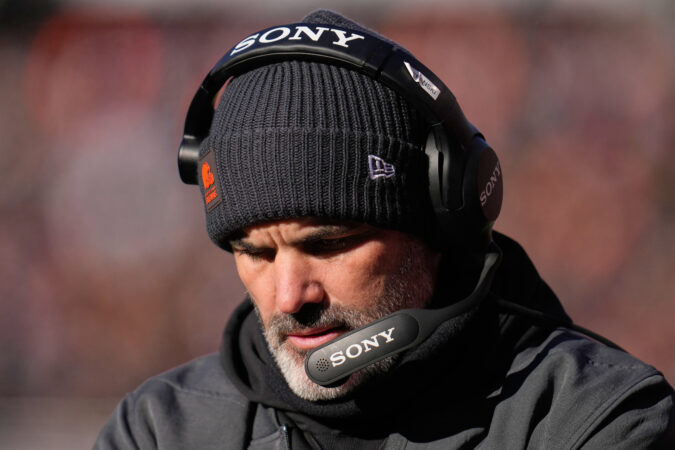
    BEREA, Ohio — The Cleveland Browns have fired coach Kevin Stefanski after six seasons.

    Stefanski, a Wayne native who played quarterback at St. Joseph’s Prep and got his start coaching at his alma mater, Penn, is the fourth NFL coach fired this season. He joins Tennessee’s Brian Callahan, the New York Giants’ Brian Daboll and Atlanta’s Raheem Morris.

    The Browns won their final two games to finish 5-12, including a 20-18 victory over the Cincinnati Bengals on Sunday.

    The 43-year-old Stefanski is a two-time AP NFL Coach of the Year. He led Cleveland to playoff appearances in 2020 and 2023. The Browns’ 48-37 victory over Pittsburgh in an AFC wild-card round game was the franchise’s first since 1993.

    Ironically, Stefanski was not on the Browns’ sideline for that game after he tested positive for COVID-19. He watched the game from the basement at his house.

    Stefanski is the sixth coach fired since owners Jimmy and Dee Haslam bought the franchise in 2012. The five coaches hired by the Haslams have a 73-139-1 regular-season record since 2013, the second-worst mark in the NFL.

  • Maduro appears in court, says ‘I was captured’

    Maduro appears in court, says ‘I was captured’

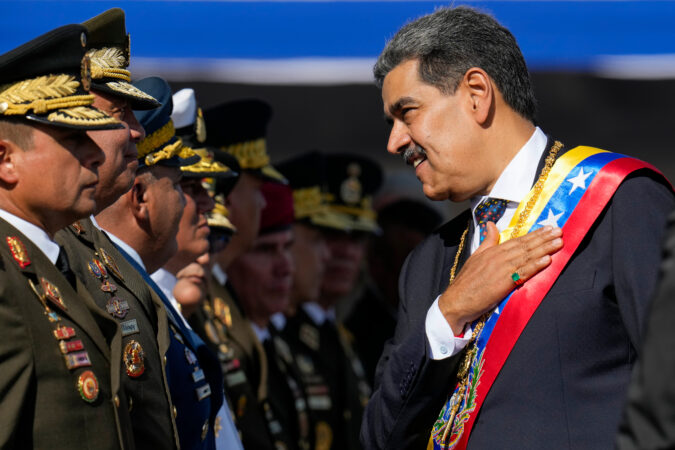
    NEW YORK — Deposed Venezuelan leader Nicolas Maduro declared himself “innocent” and a “decent man” as he pleaded not guilty to federal drug trafficking charges in a U.S. courtroom on Monday.

    “I’m innocent. I am not guilty. I am a decent man, the president of my country,” Maduro told a judge.

    Maduro was making his first appearance in an American courtroom Monday on the narco-terrorism charges the Trump administration used to justify capturing him and bringing him to New York.

    Maduro, wearing a blue jail uniform, and his wife were led into court around noon for a brief, but required, legal proceeding that will likely kick off a prolonged legal fight over whether he can be put on trial in the U.S. Both put on headsets to hear the English-language proceeding as it was translated into Spanish.

    The couple were transported under armed guard early Monday from the Brooklyn jail where they’ve been detained to a Manhattan courthouse.

    The trip was swift. A motorcade carrying Maduro left the jail around 7:15 a.m. and made its way to a nearby athletic field, where Maduro slowly made his way to a waiting helicopter. The chopper flew across New York harbor and landed at a Manhattan heliport, where Maduro, limping, was loaded into an armored vehicle.

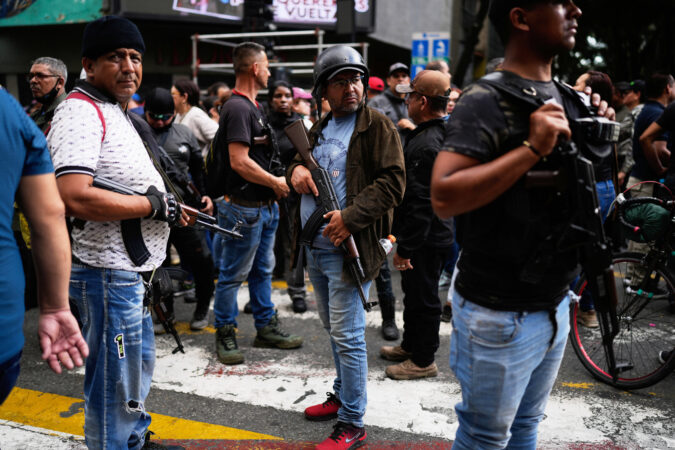
    A few minutes later, the law enforcement caravan was inside a garage at the courthouse complex, just around the corner from the one where Donald Trump was convicted in 2024 of falsifying business records. Across the street from the courthouse, the police separated a small but growing group of protesters from about a dozen pro-intervention demonstrators, including one man who pulled a Venezuelan flag away from those protesting the U.S. action.

    As a criminal defendant in the U.S. legal system, Maduro will have the same rights as any other person accused of a crime — including the right to a trial by a jury of regular New Yorkers. But he’ll also be nearly — but not quite — unique.

    Maduro’s lawyers are expected to contest the legality of his arrest, arguing that he is immune from prosecution as a sovereign head of state.

    Panamanian strongman Manuel Noriega unsuccessfully tried the same defense after the U.S. captured him in a similar military invasion in 1990. But the U.S. doesn’t recognize Maduro as Venezuela’s legitimate head of state — particularly after a much-disputed 2024 reelection.

    Venezuela’s new interim president, Delcy Rodríguez, has demanded that the U.S. return Maduro, who long denied any involvement in drug trafficking — although late Sunday she also struck a more conciliatory tone in a social media post, inviting collaboration with President Trump and “respectful relations” with the U.S.

    Before his capture, Maduro and his allies claimed U.S. hostility was motivated by lust for Venezuela’s rich oil and mineral resources.

    The U.S. seized Maduro and his wife in a military operation Saturday, capturing them in their home on a military base. Trump said the U.S. would “run” Venezuela temporarily, but Secretary of State Marco Rubio said Sunday that it would not govern the country day to day other than enforcing an existing ” oil quarantine.”

    Trump suggested Sunday that he wants to extend American power farther in the Western Hemisphere.

    Speaking aboard Air Force One, he called Colombia’s president, Gustavo Petro, “a sick man who likes making cocaine and selling it to the United States. And he’s not going to be doing it very long.”

    He called on Venezuela’s Rodriguez to provide “total access” to her country, or else face consequences.

    Trump has suggested that removing Maduro would enable more oil to flow out of Venezuela, but oil prices rose a bit more than 1% in Monday morning trading to roughly $58 a barrel. There are uncertainties about how fast oil production can be ramped up in Venezuela after years of neglect and needed investments, as well as questions about governance and oversight of the sector.

    A 25-page indictment made public Saturday accuses Maduro and others of working with drug cartels to facilitate the shipment of thousands of tons of cocaine into the U.S. They could face life in prison if convicted.

    Maduro has retained Barry J. Pollack, a Washington, D.C.-based lawyer known for securing WikiLeaks founder Julian Assange’s release from prison and winning an acquittal for former Enron accountant Michael Krautz.

    Pollack, a partner at the law firm Harris, St. Laurent & Wechsler, negotiated Assange’s 2024 plea agreement — allowing him to go free immediately after he pleaded guilty to an Espionage Act charge for obtaining and publishing U.S. military secrets.

    Krautz, acquitted of federal fraud charges in 2006 after a hung jury the year before, was one of the only Enron executives whose case ended in a not-guilty verdict. Nearly two dozen other executives were convicted of wrongdoing in connection with the energy trading giant’s collapse.

    Maduro and his wife, Cilia Flores, have been under U.S. sanctions for years, making it illegal for any American to take money from them without first securing a license from the Treasury Department.

    While the indictment against Maduro says Venezuelan officials worked directly with the Tren de Aragua gang, a U.S. intelligence assessment published in April, drawing on input from the intelligence community’s 18 agencies, found no coordination between Tren de Aragua and the Venezuelan government.

    Maduro, his wife, and his son — who remains free — are charged along with Venezuela’s interior and justice minister, a former interior and justice minister, and Hector Rusthenford Guerrero Flores, an alleged Tren de Aragua leader who has been criminally charged in another case and remains at large.

    Among other things, the indictment accuses Maduro and his wife of ordering kidnappings, beatings, and murders of those who owed them drug money or undermined their drug trafficking operation. That included a local drug boss’ killing in Caracas, the indictment said.

    Maduro’s wife is also accused of accepting hundreds of thousands of dollars in bribes in 2007 to arrange a meeting between “a large-scale drug trafficker” and the director of Venezuela’s National Anti-Drug Office, resulting in additional monthly bribes, with some of the money going to Maduro’s wife, according to the indictment.

  • Letters to the Editor | Jan. 5, 2026

    Letters to the Editor | Jan. 5, 2026

    The cost of ‘free’ money

    So, what would you do if you received a phone call from someone claiming a way for you to receive “free money”? You’d hang up, knowing full well there is no such thing as “free money” and that the claimant is no doubt a scammer. Better to hang up.

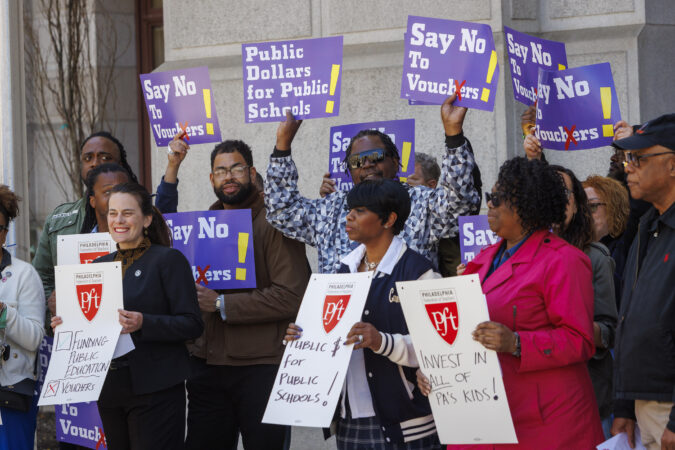
    Well, our always smiling U.S. Sen. David McCormick used the “free money” come-on in a recent Inquirer op-ed to call on readers to buy his and his billionaire friends’ nonsense to support so-called school choice in Pennsylvania. “Free”? There’s nothing free about school choice tax credits to be supplied by the so-called Working Families Tax Cut Act. Guess who pays for these “tax credits”? Not billionaires like McCormick. Taxpayers like you and me.

    Free money, my foot.

    Bryan Miller, Philadelphia

    . . .

    Sen. Dave McCormick’s claim that the school choice tax credit will improve education while delivering “free money to families” is a con job. While he accurately articulates the downsides of educational inequality and the serious harm done by inadequate schools, the “solution” he’s peddling, a $1,700 tax break for private education, will only make the problem worse, giving families who can afford the $10,000 to $50,000 tuition for private school extra cash while keeping it out of reach for the most vulnerable. The net effect will be removing the least vulnerable from challenged schools while leaving behind those who cannot afford the remaining $8,300 in tuition. If Sen. McCormick really wanted to improve education for all, he’d focus on funding early childhood education and creating policy to attract the best teachers to the most challenging schools, rather than attempting to pass off another tax break as good policy.

    Jenny Williams, Havertown

    My siblings and I are products of Catholic schools. Our elementary school was located in a working-class neighborhood of Philadelphia. The classrooms were large, numbering 60 students or so. Books were well-worn and many decades old. The maps on the classroom walls were frayed and outdated, as well, showing countries that no longer existed. And the nuns and young lay teachers who instructed us did not have advanced college degrees other than a bachelor’s degree, I’m sure. These dedicated folks chose to teach in Catholic schools not for money, but out of love for children and the Catholic faith. But in spite of these deficiencies, I received an excellent education that not only emphasized the three R’s, but discipline, love, and charity. And currently, I’m sure conditions are much improved now that tuition is required. When I attended, the parish paid for school expenses; all that was required of the students was to pay a nominal fee — $5 — for use of the textbooks. In the end, my siblings and I went on to college and successful and rewarding careers. My mother and father, having to discontinue their education early — mom in the sixth grade, dad as a junior in high school — to work and help their families during the Great Depression, could not have been more proud to have children who attended college. So please, enough of how more money, smaller class sizes, and better compensated teachers will improve test scores in low-performing, urban public schools. How unfair is it that parents of children in these urban public schools cannot have a portion of their tax dollars refunded to them so they can choose a better option for their children’s education? It’s time for school choice.

    Fred Hearn, Turnersville

    Join the conversation: Send letters to letters@inquirer.com. Limit length to 150 words and include home address and day and evening phone number. Letters run in The Inquirer six days a week on the editorial pages and online.

  • Dear Abby | Son-in-law won’t allow gay couple to stay the night

    DEAR ABBY: My husband and I (we’re both male) have been together since 2007. We moved to Arizona in 2010. Most of our family lives in the Midwest. We have been visiting our families as often as possible, at least every other year. Our son-in-law refuses to let us stay the night in his home when we visit. His excuse is, he doesn’t want to have to explain to his two daughters why we sleep in the same bed. (The daughters are 6 and 8.)

    My husband and I no longer feel comfortable around our son-in-law, and we told our daughter we feel it would be best to skip this year’s visit. She offered to put us up in a hotel. We declined the offer and said we have other friends we can visit. Our daughter then offered to come and visit us with our granddaughters. We also declined that offer.

    Are we doing the right thing? We feel the son-in-law is using his daughters as an excuse for his own homophobic feelings toward us.

    — UNWELCOME IN THE WEST

    DEAR UNWELCOME: I see nothing positive to be gained by punishing your daughter and your 6- and 8-year-old grandchildren, who have offered viable alternatives, because their father is uncomfortable with your sexual orientation. Let your daughter visit and bring the children. Foster a strong relationship with all of them. If you succeed, your narrow-minded son-in-law may find himself increasingly marginalized.

    ** ** **

    DEAR ABBY: In the past, I always disliked my appearance. I have been obese most of my 70 years but am now within 20 pounds of my ideal weight. My problem is, I have met someone I like very much and could see spending the rest of my life with. However, she is obese, and it bothers me greatly. How can I effectively communicate my desire that she lose 30 to 50 pounds without being offensive?

    — FINALLY SLIM IN FLORIDA

    DEAR FINALLY SLIM: Approaching someone and saying you want them to lose 30 to 50 pounds would be like touching the third rail. You can, however, as you get to know this person better, model your healthy lifestyle and encourage her by setting an example. If she picks up on it, she may be the lady for you.

    ** ** **

    DEAR ABBY: About six months ago, I began arranging a group dinner for the wives of my husband’s poker buddies. It started out great. However, a new wife to the group has instigated praying in the restaurant, along with holding hands as we pray.

    This is not my style nor is it for a few others. We feel held hostage to her request and aren’t sure how to put a stop to this display. I’m very private about the spiritual side of my life. Another member of the group is agnostic. Please advise me on a tactful way to address this dear woman.

    — UNCOMFORTABLE IN THE WEST

    DEAR UNCOMFORTABLE: I’m glad to help. Address this privately. Explain to the woman that not everyone in the group is comfortable displaying their religiosity in public, and some may prefer to do their worshiping privately. If necessary, remind her that silent prayer is just as effective as praying aloud.

  • Maduro’s case will revive a legal debate over immunity for foreign leaders tested in Noriega trial

    Maduro’s case will revive a legal debate over immunity for foreign leaders tested in Noriega trial

    MIAMI — When deposed Venezuelan leader Nicolás Maduro makes his first appearance in a New York courtroom Monday to face U.S. drug charges, he will likely follow the path taken by another Latin American strongman toppled by U.S. forces: Panama’s Manuel Noriega.

    Maduro was captured Saturday, 36 years to the day after Noriega was removed by American forces. And as was the case with the Panamanian leader, lawyers for Maduro are expected to contest the legality of his arrest, arguing that he is immune from prosecution as a sovereign head of foreign state, which is a bedrock principle of international and U.S. law.

    It’s an argument that is unlikely to succeed and was largely settled as a matter of law in Noriega’s trial, legal experts said. Although Trump’s ordering of the operation in Venezuela raises constitutional concerns because it wasn’t authorized by Congress, now that Maduro is in the U.S., courts will likely bless his prosecution because, as was the case with Noriega, the U.S. doesn’t recognize him as Venezuela’s legitimate leader.

    “There’s no claim to sovereign immunity if we don’t recognize him as head of state,” said Dick Gregorie, a retired federal prosecutor who indicted Noriega and later went on to investigate corruption inside Maduro’s government. “Several U.S. administrations, both Republican and Democrat, have called his election fraudulent and withheld U.S. recognition. Sadly, for Maduro, it means he’s stuck with it.”

    Noriega died in 2017 after nearly three decades in prison, first in the U.S., then France, and finally Panama. In his first trial, his lawyers argued that his arrest as a result of a U.S. invasion was so “shocking to the conscience” that it rendered the government’s case an illegal violation of his due process rights.

    Justice Department opinion allows ‘forcible abductions’ abroad

    In ordering Noriega’s removal, the White House relied on a 1989 legal opinion by then-Assistant Attorney General Bill Barr, issued six months before the invasion. That opinion said the U.N. Charter’s prohibition on the use of force in international relations does not bar the U.S. from carrying out “forcible abductions” abroad to enforce domestic laws.

    Supreme Court decisions dating to the 1800s also have upheld America’s jurisdiction to prosecute foreigners regardless of whether their presence in the United States was lawfully secured.

    Barr’s opinion is likely to feature in Maduro’s prosecution as well, experts said.

    Drawing parallels to the Noriega case, Barr on Sunday pushed aside criticisms that the U.S. was pursuing a change of government in Venezuela instead of enforcing domestic laws. As attorney general during the first Trump administration, Barr oversaw Maduro’s indictment.

    “Going after them and dismantling them inherently involves regime change,” Barr said in a Fox News Sunday interview. “The object here is not just to get Maduro. We indicted a whole slew of his lieutenants. It’s to clean that place out of this criminal organization.”

    Key differences between Noriega and Maduro

    There are differences between the two cases.

    Noriega never held the title of president during his six-year de facto rule, leaving a string of puppets to fill that role. By contrast, Maduro claims to have won a popular mandate three times. Although the results of his 2024 reelection are disputed, a number of governments — China, Russia, and Egypt among them — recognized his victory.

    “Before you ever get to guilt or innocence, there are serious questions about whether a U.S. court can proceed at all,” said David Oscar Markus, a defense lawyer in Miami who has handled several high-profile criminal cases, including some involving Venezuela. ”Maduro has a much stronger sovereign immunity defense than did Noriega, who was not actually the sitting president of Panama at the time.”

    For U.S. courts, however, the only opinion that matters is that of the State Department, which considers Maduro a fugitive and has for months been offering a $50 million reward for his arrest.

    The first Trump administration closed the U.S. Embassy in Caracas, the capital of Venezuela, and broke diplomatic relations with Maduro’s government in 2019 after he cruised to reelection by outlawing most rival candidates. The administration then recognized the opposition head of the National Assembly as the country’s legitimate leader.

    The Biden administration mostly stuck to that policy, allowing an opposition-appointed board to run Citgo, a subsidiary of Venezuela’s state-owned oil company, even as the U.S. engaged in direct talks with Maduro’s government that were aimed at paving the way for free elections.

    “Courts are so deferential to the executive in matters of foreign policy that I find it difficult for the judiciary to engage in this sort of hairsplitting,” said Clark Neily, a senior vice president for criminal justice at the Cato Institute in Washington.

    U.S. sanctions are a hurdle for Maduro’s defense

    Another challenge that Maduro faces is hiring a lawyer. He and his wife, Cilia Flores, who also was captured, have been under U.S. sanctions for years, making it illegal for any American to take money from them without first securing a license from the Treasury Department.

    The government in Caracas now led by Maduro’s vice president, Delcy Rodríguez, may want to foot the bill, but it is similarly restricted from doing business in the United States.

    The U.S. has indicted other foreign leaders on corruption and drug trafficking charges while in office. Among the most noteworthy is Juan Orlando Hernández, former president of Honduras, who was convicted in 2024 for drug trafficking and weapons charges and sentenced to 45 years in prison.

    Trump pardoned Hernández in November, a move that drew criticism from even some Republicans who viewed it as undercutting the White House’s aggressive counternarcotics strategy centered against Maduro.

    The U.S. had requested Hernández’s extradition from Honduras a few weeks after he left office. After the arrest of Noriega, who had been a CIA asset before becoming a drug-running dictator, the Justice Department implemented a new policy requiring the attorney general to personally sign off on charging of any sitting foreign president, due to its implications for U.S. foreign policy.

    Maduro may have a slightly stronger argument that he is entitled to a more limited form of immunity for official acts he undertook as at least a de facto leader, since that question would not turn on whether he is a head of state recognized by the U.S.

    But even that defense faces significant challenges, said Curtis Bradley, a University of Chicago Law School professor who previously served as a counselor of international law at the State Department.

    The indictment accuses Maduro and five other co-defendants, including Flores and his lawmaker son, of facilitating the shipment of thousands of tons of cocaine into the U.S. by providing law enforcement cover, logistical support, and partnering with “some of the most violent and prolific drug traffickers and narco-terrorists in the world.”

    “The government will argue that running a big narcotrafficking operation … should not count as an official act,” Bradley said.

  • Secret Service plans unprecedented staff surge with anxious eye on 2028

    Secret Service plans unprecedented staff surge with anxious eye on 2028

    The Secret Service has launched one of the most ambitious hiring efforts in its history, seeking to bring on thousands of agents and officers to ease strain on its overstretched workforce and prepare for multiple major events in 2028, including the presidential election and the Olympics.

    Service leaders say they want to hire 4,000 new employees by 2028 — a surge that law enforcement experts say has no clear precedent and reflects mounting concerns about staff burnout, a loss of experienced agents, and a relentless operational tempo. The added staff would make up for expected retirements and increase the size of the agency by about 20%, to more than 10,000 for the first time.

    Under a plan led by Deputy Director Matthew Quinn, the service aims to expand its special agent ranks from about 3,500 to about 5,000. Officials also want to add hundreds of officers to the Uniformed Division, for a total of about 2,000, and hire additional support staff. The figures have not been previously reported.

    The agency faces serious obstacles, however, including a shortage of qualified candidates; competition with other law enforcement agencies, especially in immigration enforcement; and bottlenecks in hiring and training, according to former service officials.

    A previous attempt to reach 10,000 employees over a roughly 10-year period ending in 2025 failed as the agency struggled with leadership turnover and disruptions from the coronavirus pandemic, among other issues. The service fell far short of recruitment and retention goals despite offering some of the biggest financial incentives of any federal law enforcement agency.

    “Our mindset is, we aren’t going to pay our way out of this,” said Quinn, a longtime Secret Service official who returned to the agency in May after several years in the private sector. “We can’t create enough incentives to negate the fact that we’re working our people very, very hard.”

    Quinn said he and Secret Service Director Sean Curran, the former head of President Donald Trump’s protective detail, have set out to make hiring a top priority, second only to protection. Senior administration officials have backed them, he said.

    “The protective mission has expanded,” he said. “Our numbers are low to meet those needs. We have to achieve what we said we were going to do 10 years ago. We’ve got to achieve it now.”

    Agency officials want to improve the quality of life in the service by shortening hours and reducing time on the road for officers and agents, many of whom spend months each year traveling on protective assignments.

    A larger staff could also allow the Secret Service to lean less on other law enforcement agencies for help securing high-profile events, giving it tighter control over venues. Poor communication with other agencies played a major role in the service’s most publicized failure in recent years, the attempted assassination of Trump in 2024 at a campaign rally in Butler, Pa.

    Some former officials questioned whether the service can achieve its goal.

    “They are going to have to eliminate all the management and red-tape barriers,” said Janet Napolitano, a former secretary of the Department of Homeland Security, the service’s parent agency. “They have to be able to swiftly recruit, maintain quality, and train that number of new agents. They’re going to have to turn headquarters into a hiring machine.”

    In 2024, Napolitano helped lead a bipartisan investigation of the Secret Service failures that led up the Butler assassination attempt, the first time a president or former president had been fired upon since 1981.

    Others said even more modest hiring targets could be a stretch on such a short timeline. Getting hired and trained for a job in the Secret Service is a long, strenuous, and heavily bureaucratic process, even by federal government standards. It involves multiple rounds of interviews, an intensive background check, and a notoriously tough polygraph test that officials say screens out some otherwise strong candidates.

    All of those steps place heavy demands on already understaffed field offices, according to a former Secret Service executive familiar with the process, who like others spoke on the condition of anonymity due to concerns about retaliation. The former executive said it was difficult to see how the agency could clear those hurdles while significantly expanding the workforce.

    “I hope they have success in getting those numbers as much as anybody, but it’s not realistic,” said another former senior official, who retired recently. “There’s no part of law enforcement that’s not struggling to hire.”

    Service leaders are adamant that they are not lowering standards to meet their goals.

    Some service officials had floated the possibility of curtailing or suspending the investigative portion of agent training, focusing only on the protective portion of the service’s mission, according to people familiar with the discussions. But Quinn said that was out of the question. “Investigations are the lifeblood of this organization,” he said.

    Instead, officials say, they have found ways to speed the process.

    In November, the service held the first of what officials expect to be multiple accelerated hiring events in which candidates complete assessments over several days, including a physical fitness test, a security interview, and a full polygraph.

    Historically, those assessments have taken months, according to Delisa Hall, the Secret Service’s chief human capital officer. About 350 candidates out of nearly 800 who attended the first event advanced to the next phase, she said.

    “It’s becoming evident that this may be our new normal to push applicants through,” she said.

    Agency officials say they have compressed the timeline for a job offer down to less than a year from the previous 18 months or more and hope to cut the timeline by roughly another four months. The long wait in the past has led some candidates to withdraw or take positions with other agencies that moved more quickly.

    Hall said the agency is recruiting from the military, college athletes, and law enforcement, and it’s staying more engaged with applicants to keep from losing people along the way.

    Getting new hires trained and field-ready on time could also present challenges as the Secret Service races to staff up.

    Officials say the service has secured 42 classes at the federal government’s main training center for law enforcement agents in Glynco, Ga., for the 2026 fiscal year. All the service’s new agents and officers must undergo basic criminal investigator training at the facility, known as FLETC, for about three months alongside recruits from other agencies.

    The campus is expected to remain packed for the foreseeable future with recruits from Immigration and Customs Enforcement and other immigration agencies hired as part of the Trump administration’s crackdown. Secret Service leaders say they have not had to compete for space. But several former officials said they worry the service’s recruits could take a back seat to training for ICE or the Border Patrol, both of which are hiring aggressively.

    The pressure on the agency will only mount as 2028 approaches. Some in the Secret Service have privately referred to the year as “Armageddon” because of the extraordinary security demands posed by the election and other major gatherings, including the Los Angeles Olympics, the first Summer Games in the United States since Atlanta in 1996.

    The workforce carrying out the mission could look dramatically different from the last election cycle. Many experienced agents have departed for other agencies or jobs in the private sector in recent years. Others from a large cohort hired in the years surrounding the Sept. 11, 2001, terrorist attacks may not stay for another breakneck campaign.

    “About a third of the workforce will be retirement-eligible before the start of 2028,” said Derek Mayer, a former deputy special agent in charge of the Secret Service’s Chicago field office. “That’s definitely a cause for concern. There were periods during hiring freezes in the 2010s when we didn’t hire anyone. When that happens, it does hurt, but it hurts five or 10 years later.”

    With Trump term-limited, both major parties are expected to have competitive primaries, raising the number of people the service will have to protect. The eventual nominees, their running mates and their spouses will receive full-time Secret Service details.

    The agency is also tasked with coordinating protection around the 2028 Summer Olympics and Paralympics, scheduled during the last two weeks of July and the last two weeks of August, respectively.

    “No matter what, I don’t care how successful we are,” Quinn said, “it’s still going to be a rough summer.”

  • In Venezuela raid, the specter of U.S. regime change returns to Latin America

    In Venezuela raid, the specter of U.S. regime change returns to Latin America

    The United States will “run” Venezuela — a country of 30 million people spread over hundreds of thousands of square miles — for the foreseeable future, President Donald Trump said Saturday just hours after the shocking, early morning U.S. military assault that captured its head of state and left Latin America and much of the rest of the world reeling.

    “We’re going to stay until … the proper transition takes place,” Trump said in a Florida news conference that glanced past details of how exactly that would be done.

    Two side benefits, he indicated, were that hundreds of thousands of Venezuelans who had fled to the United States would now go home and that the U.S. would now be able to take over the Venezuelan oil industry.

    On social media, Trump posted a photograph of shackled and blindfolded Venezuelan President Nicolás Maduro aboard the amphibious assault ship USS Iwo Jima. Maduro and his wife, both under U.S. indictment for drug trafficking and corruption, were snatched from a safe house by U.S. Special Operations forces in what senior administration officials insisted was not regime change but a law enforcement operation for which the military provided security.

    The Maduros, officials said, were read their rights by an FBI official on the ground before being whisked away in a helicopter. Asked if U.S. forces were prepared to kill Maduro if he resisted, Trump said, “It could have happened.”

    Trump made no distinction between law enforcement and overthrow, seeming to exult in what he called a “spectacular” operation, the likes of which had not been seen “since World War II … one of the most stunning, effective, and powerful displays of American military might and competence in American history.”

    “American dominance in the Western Hemisphere will never be questioned again,” Trump said. “Under the Trump administration we are reasserting American power in a very powerful way in our home region.”

    Asked who would run Venezuela, Trump said, “largely the people behind me,” pointing to Secretary of State Marco Rubio and Defense Secretary Pete Hegseth. “They’re going to be a team that’s working with Venezuela to make sure it’s working right,” he said.

    The vagueness of what happens next recalls the 2003 U.S. takeover of Iraq after the invasion ousting Saddam Hussein. Trump initially supported the Iraq operation, before saying he was against it as it stretched into a yearslong battle with disaffected Iraqis, gave rise to the Islamic State, and left thousands of American troops dead before the formal U.S. withdrawal in 2011.

    Trump made no commitment to María Corina Machado, the leader of the Venezuelan opposition and Nobel Peace Prize laureate, or to Edmundo González, whom the United States and others recognized as the legitimate president after an election last year that Maduro was widely believed to have stolen. Rubio, he said, had spoken by phone with Venezuelan Vice President Delcy Rodríguez, who “said ‘we’ll do whatever you need.’ I think she was quite gracious.”

    Trump said Rodríguez had been sworn in as interim president, although she told Venezuela’s state television Saturday night that “There is only one president here, and his name is Nicolás Maduro.”

    The 20th century was marked with numerous U.S. military interventions and occupations in Central America and the Caribbean, but Saturday’s assault on Venezuela was Washington’s first direct and openly acknowledged military strike in history against a South American government. A strategic gamble with an unpredictable outcome in a deeply divided region, it dramatically alters the security dynamic across the continent.

    In a flash, to both American foe and ally alike, the strikes have made the threat of U.S. military power indisputably real.

    “This is one of the most dramatic moments in modern South America history,” said Oliver Stuenkel, an analyst of international affairs at the Brazilian university, the Getulio Vargas Foundation. “The United States now represents the biggest security threat for the simple fact that it just militarily attacked a South American country with an unclear rationale.”

    Others were more direct. “For most Latin Americans, it’s insulting,” said a senior South American diplomat who spoke on the condition of anonymity so as not to draw Trump’s ire to his own country.

    “Of course we understand that the might of the United States is that it can intervene in any Latin American countries in any way they want,” the diplomat said. “But this will lead to complete destruction of any kind of international law, and to a growing antipathy toward the United States” throughout the Western Hemisphere.

    By Saturday morning, reaction to the strikes was already breaking along ideological lines in a region deeply polarized over security, crime, and corruption. Many on the right cheered the intervention, calling the removal of the self-described socialist Latin American strongman an advancement for liberty and a blow against drug trafficking.

    Argentine President Javier Milei, whose government has received a $20 billion currency swap from the United States to stabilize his country’s troubled economy, lauded the strikes. So did Ecuadorian President Daniel Noboa Azin, who has allied himself with Trump and offered to reopen a U.S. air base closed by one of his predecessors.

    “For all narco-Chavista criminals, your time has come,” Noboa wrote on social media, referring to Maduro’s predecessor, Hugo Chávez. “Your structure will end up falling across the entire continent.”

    Those on the left decried what they called an illegal act of military aggression. Few came directly to the defense of Maduro, who had been left increasingly isolated as his authoritarian and illiberal practices have bankrupted Venezuela, unleashed a refugee crisis, and given drug traffickers increasingly free rein. But they said the unilateral strikes and his removal set a new and dangerous precedent for the region.

    “The bombing of Venezuelan territory and the capture of its president crosses an unacceptable line,” Brazilian President Luiz Inácio Lula da Silva said. “The action recalls the worst moments of interference in Latin American and Caribbean politics and threatens the regional preservation as a zone of peace.”

    Some analysts, however, said it would be a mistake to interpret the strikes as the continuation of U.S. military actions in other Latin American nations, whether the CIA-sponsored overthrow of Guatemala’s government in 1954, the 1983 U.S. invasion of Grenada, or the 1989 capture of Panama leader Manuel Antonio Noriega following a 25,000-troop invasion.

    “This is not going to be a unified Latin American rejection of the action, like you may have seen in the ‘60s or the ‘70s,” when interventions were often influenced by the Cold War, said Eric Farnsworth, a senior associate at the Center for Strategic and International Studies think tank. “This is happening in a divided region, where nobody wanted this to happen, but where many recognized that there was no alternative to this unless you were ready to live with Maduro forever.”

    Several governments and leaders in the region already have an affinity with the Trump administration — ties the White House has sought to expand and exploit over the past year.

    The Trump administration has solidified relations with El Salvador’s president, Nayib Bukele, who accepted millions of dollars to imprison U.S. deportees and whom Trump called a “great friend” and “one hell of a president.” It has promised new trade and security cooperation with Ecuador and Paraguay, whose leaders are also Trump admirers. And it threw an economic lifeline to Milei, whom U.S. Treasury Secretary Scott Bessent called a “beacon” for South America.

    But few disagreed over the significance of the strikes. For decades, the United States has focused its military might elsewhere, in theaters much further away. The attacks have returned Washington to a policy of unabashed interventionism in the region.

    “The reaction in the rest of Latin America will be mixed between euphoria, anger, and fear,” said Brian Winter, an analyst with the Americas Society and Council of the Americas.

    Those in the region who condemn the strikes — most notably Lula, Mexican President Claudia Sheinbaum and Colombian President Gustavo Petro — will have to watch their backs. While Trump last year had what he called a productive meeting with Lula, he repeated at the news conference an earlier warning that Petro, whose country is a major producer of cocaine, had better “watch his ass.”

    In the case of Mexico, “the fact of the matter is that large swaths of the country are under the control of narco-terror organizations,” a senior administration official said, speaking on the condition of anonymity under rules imposed by the White House.

    “This is not a president that just talks,” the official said. “He will take action eventually. … I think the president always retains the option to take action against threats to our national security.’’

    While Petro has called Trump a “murderer” for U.S. military strikes against alleged drug boats in the Caribbean and eastern Pacific, it’s unlikely that either Lula or Sheinbaum will want to risk a lengthy diplomatic dispute with the White House, said Matias Spektor, a Brazilian political scientist at the Getulio Vargas Foundation.

    Referring to Cuba, which has depended on Venezuela for energy supplies and economic and security backing, Rubio said at the news conference Saturday, “If I lived in Havana now and I was in the government, I’d be concerned.” Venezuelan oil, he said, would not be allowed to go there.

    Since he began ratcheting up public threats against Maduro last summer, Trump has offered an evolving list of charges to justify his removal through exile or force, from allowing China, Russia, and Iran to gain a toehold in the hemisphere, to illegal U.S. immigrants that he charged Maduro had released from Venezuelan prisons and “insane asylums,” while asserting Venezuelan “terrorist” drug gangs were engaged in “armed conflict” with the United States.

    Most recently, he has charged that Venezuela “stole” oil and land belonging to the United States when it, like many other countries, nationalized its petroleum resources decades ago.

    In his news conference, Trump said he now plans to take back those assets. Asked how long he planned to run Venezuela, Trump said, “I’d like to do it quickly, but it takes a period of time.”

  • Rubio takes on most challenging role yet: Viceroy of Venezuela

    Rubio takes on most challenging role yet: Viceroy of Venezuela

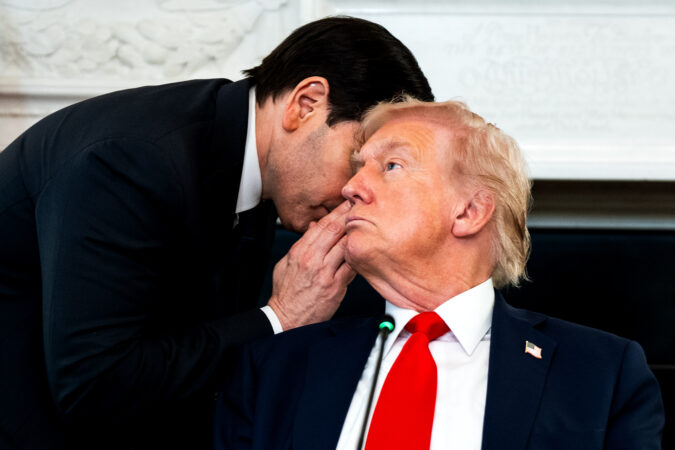
    Marco Rubio has held many titles during Donald Trump’s presidency. He may have just acquired his most challenging one yet: Viceroy of Venezuela.

    The secretary of state, national security adviser, acting archivist, and administrator of the now-defunct U.S. Agency for International Development was central to masterminding the ouster of Venezuelan President Nicolás Maduro on Saturday, officials familiar with the planning said.

    But with no immediate successor to govern the country of roughly 29 million, Trump is leaning on Rubio to help “run” Venezuela, divvy up its oil assets and usher in a new government, a fraught and daunting task for someone with so many other responsibilities.

    On Sunday news shows, Rubio appeared to back off Trump’s assertions that the U.S. was running Venezuela, insisting instead that Washington will use control of the South American country’s oil industry to force policy changes: “We expect that it’s going to lead to results here.”

    “We’re hopeful, hopeful, that it does positive results for the people for Venezuela,” Rubio told ABC’s This Week. “But, ultimately, most importantly, in the national interest of the United States.”

    Asked about Trump suggesting that Rubio would be among the U.S. officials helping to run Venezuela, Rubio offered no details but said, “I’m obviously very intricately involved in the policy” going forward.

    He said of Venezuela’s interim leader, former vice president Delcy Rodríguez: “We don’t believe this regime in place is legitimate” because the country never held free and fair elections.

    “The task in front of him is stupefying,” said a senior U.S. official, noting the dizzying array of policy decisions related to energy, elections, sanctions, and security that await. This person, like others interviewed for this article, spoke on the condition of anonymity to respond freely.

    The moment marks the realization of a long-held goal for Rubio, who has voiced his criticisms of Maduro and desire for change in Venezuela for well over a decade. Those who have worked closely with Rubio, whose parents left Cuba several years before the Communist takeover in 1959, say the issues of the region are close to his heart.

    “Marco’s parents’ experience … is hardwired in him,” said Cesar Conda, a Republican strategist who worked as the former senator’s chief of staff between 2011 and 2014.

    U.S. officials say Rubio will play an outsize role in guiding U.S. policy as the Trump administration attempts to stabilize Venezuela.

    His Spanish proficiency and familiarity with Latin American leaders and the Venezuelan opposition make him a natural point man for Trump, said another senior U.S. official. But this person emphasized that the administration will need to appoint a full-time envoy to assist Rubio given the vast scope of decisions and responsibilities inherent in such a task.

    Trump, speaking to reporters after the operation, was vague when addressing questions about whether his administration is capable of running the Latin American country, saying “the people that are standing right behind me” will do so for a “period of time.”

    The president hailed Rubio’s initial talks with Maduro’s vice president, Rodríguez.

    “He just had a conversation with her, and she’s essentially willing to do what we think is necessary to make Venezuela great again,” Trump said. Shortly after his comments, Rodríguez contradicted Trump’s plans for her country, saying Venezuela “will never return to being the colony of another empire.”

    The U.S. capture of the sweat-pant-clad Maduro not only fulfills a long-held goal of Rubio’s but also represents a bureaucratic victory for him in an administration that includes ardent skeptics of regime change, in particular Vice President JD Vance.

    “Many people were skeptical that some kind of extraction operation could be carried out without a hitch,” said Geoff Ramsey, a nonresident senior fellow at the Atlantic Council. “He will see this as a resounding success for his foreign policy strategy.”

    Justin Logan, director of defense and foreign policy studies at the Cato Institute, said that while the removal of Maduro alone was unlikely to satisfy political exiles, it could help the Trump administration avoid an Iraq- or Afghanistan-style quagmire that hurts Republicans at the next election.

    “The only way it’s a mass political issue is if it gets bigger and costlier,” said Logan. “As long as the blood and treasure costs are this low, you can pretty much do whatever you want.”

    Besides navigating the treacherous minefield of nation-building that lies ahead, Rubio will also have to rebuild trust among U.S. lawmakers, many of whom have accused him of lying to Congress when he said the Trump administration would seek congressional approval before taking military action against Venezuela.

    “Secretaries Rubio and [Pete] Hegseth looked every Senator in the eye a few weeks ago and said this wasn’t about regime change. I didn’t trust them then and we see now that they blatantly lied to Congress,” said Sen. Andy Kim (D., N.J.).

    In an interview with the Washington Post, Rubio denied that he lied and said he promised to get congressional approval only if the United States “was going to conduct military strikes for military purposes.”

    “This was not that. This was a law enforcement operation,” Rubio said, referring to the indictment against Maduro in the Southern District of New York on drug charges.

    When pressed that U.S. forces bombing Venezuela, seizing its leader, and claiming to “run” the country would be widely interpreted as a military operation, Rubio did not relent, saying “the mission last night was in support of the Department of Justice.”

    The argument failed to move some experts. Jennifer Kavanagh, director of military analysis at Defense Priorities, said that the law enforcement justification was a “convenient” excuse for the administration’s decision not to notify Congress.

    The operation to capture Maduro “was extremely massive and complex,” Kavanagh added. “It doesn’t sound like a law enforcement operation to me.”

    Before joining the State Department, Rubio had long indicated that he supported using U.S. military force to oust Maduro, suggesting in a Spanish language interview in 2018 that there was a “strong argument” that the United States should do so.

    The next year, during renewed tension with Maduro, Rubio posted photographs to social media of deposed foreign leaders, including Libya’s Moammar Gaddafi shortly before he was executed by rebel forces in 2011.

    Though Trump had entertained the idea of talks with Maduro early last year, including those brokered in the early part of his term by envoy Richard Grenell that saw several detained U.S. citizens released, people close to the administration say that his instincts largely aligned with Rubio’s harder approach.

    “Rubio and the president are working hand in glove on this,” and the two of them “were really running this thing,” said one individual close to the Trump administration who has known Rubio for many years.

    During a news conference on Saturday, Rubio implied that Cuba could face similar U.S. military action. “If I lived in Havana, and I was in the government, I’d be concerned, at least a little bit,” he said in response to a reporter’s question.

    Though former officials and analysts said they wouldn’t expect imminent military action against Cuba, it was likely that economic pressure would increase with Maduro removed from Venezuela.

    “I presume that one of the first demands that we would have as the United States with whoever is running things in Venezuela is that any support for Cuba will stop on the theory that that will then destabilize that regime and lead to a better outcome,” said Kevin Whitaker, who served as U.S. ambassador to Colombia during the first Trump administration.

    Exactly who is running things in Venezuela now is uncertain. Some Latin America experts said that the United States was probably underestimating the challenge of governing Venezuela with a small U.S. footprint.

    “Credible estimates of the number of boots on the ground required range from tens of thousands to well into the hundreds of thousands,” said Adam Isacson, a scholar at the Washington Office on Latin America. “In Panama in 1989, the occupying force was 27,000, and Venezuela is 12 times the size and 6.5 times the population — with a much broader array of armed and criminal groups.”

    “So it is reasonable to expect the 15,000 troops currently deployed in the region to multiply by a factor of well over five, at the most conservative estimate,” Isacson added.

    By leaving Maduro’s vice president, Rodríguez, in place, the Trump administration may be trying to avoid a situation like the one in Iraq, where the government and military were almost completely purged, because that was a “catastrophe,” said Whitaker.

    A former Senate staffer who remains in touch with Rubio said that they did not think U.S. officials would be performing a formal occupation like Paul Bremer and the Coalition Provisional Authority had done in Iraq.

    “We’re going to tell them: ‘Hey, this is what you have to do in order for there not to be another strike,’” said the former staffer. “That’s what [Trump] sees as running the country.”

    John Feeley, a former senior State Department official and ambassador to Panama who worked on Latin America for decades, said it appears the administration is hoping initially to exercise influence over Venezuela through Rodríguez, whom he described as an “ideological communist” who was at “the heart of chavismo.”

    So far, Feeley said if Rodríguez is engaging behind the scenes, “she’s negotiating with Trump to save her skin.” And it’s unclear to what extent she can sway the rest of the military and political leadership.

    “The Trump administration’s hope is that after witnessing the events of today, all of those Venezuelan military leaders will be too scared to do anything other than follow Delcy’s orders,” he said. “But without boots on the ground, this is just noise.”

    Feeley said he’s been stunned by “the precision and professionalism” of what the public has been told about the military operation in Venezuela. But, he said, that “stands in stark contrast to the uncertainty and lack of clarity that we heard from the president and Secretary Rubio about the future of how Venezuela is going to be run.”

    Information from the Associated Press was used in this story.
  • International aid groups grapple with what Israel’s ban will mean for their work in Gaza

    International aid groups grapple with what Israel’s ban will mean for their work in Gaza

    TEL AVIV — Israel’s decision to revoke the licenses of more than three dozen humanitarian organizations last week has aid groups scrambling to grapple with what this means for their operations in Gaza and their ability to help tens of thousands of struggling Palestinians.

    The 37 groups represent some of the most prominent of the more than 100 independent nongovernmental organizations working in Gaza, alongside United Nations agencies. Those banned include Doctors Without Borders, the Norwegian Refugee Council, Oxfam, and Medical Aid for Palestinians.

    The groups do everything from providing tents and water to supporting clinics and medical facilities. The overall impact, however, remains unclear.

    The most immediate impact of the license revocation is that Israel will no longer allow the groups to bring supplies into the Gaza Strip or send international staffers into the territory. Israel says all suspended groups have to halt their operations by March 1.

    Some groups have already been barred from bringing in aid. The Norwegian Refugee Council, for example, said it has not been allowed to bring in supplies in 10 months, leaving it distributing tents and aid brought in by other groups.

    Israel says the banned groups make up only a small part of aid operations in Gaza.

    But aid officials say they fulfill crucial specific functions. In a joint statement Tuesday, the U.N. and leading NGOs said the organizations that are still licensed by Israel “are nowhere near the number required just to meet immediate and basic needs” in Gaza.

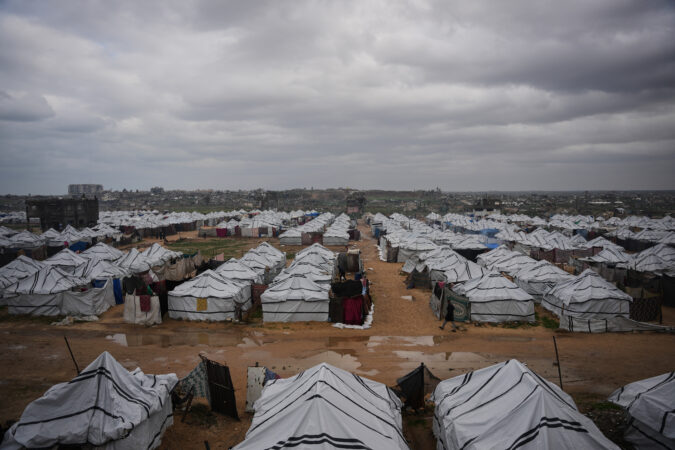
    The ban further strains aid operations even as Gaza’s over 2 million Palestinians still face a humanitarian crisis more than 12 weeks into a ceasefire. The U.N. says that although famine has been staved off, more than a quarter of families still eat only one meal a day and food prices remain out of reach for many; more than 1 million people need better tents as winter storms lash the territory.

    Why were their licenses revoked?

    Earlier this year, Israel introduced strict new registration requirements for aid agencies working in Gaza. Most notably, it required groups to provide the names and personal details of local and international staff and said it would ban groups for a long list of criticisms of Israel.

    The registration process is overseen by Israel’s Ministry for Diaspora Affairs and Combating Antisemitism, led by a far-right member of the ruling Likud party.

    Israel says the rules aim to prevent Hamas and other militants from infiltrating the groups, something it has said was happening throughout the 2-year-old war. The U.N., which leads the massive aid program in Gaza, and independent groups deny the allegations and Israeli claims of major diversion of aid supplies by Hamas.

    Aid organizations say they did not comply, in part, because they feared that handing over staff information could endanger them. More than 500 aid workers have been killed in Gaza during the war, according to the United Nations.

    Israel denies targeting aid workers. But the groups say Israel has been vague about how it would use the data.

    “Demanding staff lists as a condition for access to territory is an outrageous overreach,” Doctors Without Borders, known by its French acronym MSF, said Friday. It said Israeli officials had refused its attempts to find alternatives.

    A December report on MSF issued by an Israeli government team recommended rejection of the group’s license. It pointed primarily to statements by the group criticizing Israel, including referring to its campaign in Gaza as genocide and calling its monthslong ban on food entering the territory earlier this year as “a starvation tactic.” It said the statements violated neutrality and constituted “delegitimization of Israel.”

    The report also repeated claims that an MSF employee killed in by an Israeli airstrike in 2024 was an operative with the Islamic Jihad militant group. That, it said, suggested MSF “maintains connections with a terrorist group.”

    MSF on Friday denied the allegations, saying it would “never knowingly employ anyone involved in military activities.” It said that its statements cited by Israel simply described the destruction its teams witnessed in Gaza.

    “The fault lies with those committing these atrocities, not with those who speak of them,” it said.

    Aid groups have a week from Dec. 31 to appeal the process.

    Medical services could see biggest impact

    Independent NGOs play a major role in propping up Gaza’s health sector, devastated by two years of Israeli bombardment and restrictions on supplies.

    MSF said Israel’s decision would have a catastrophic impact on its work in Gaza, where it provides funding and international staff for six hospitals as well as running two field hospitals and eight primary health centers, clinics, and medical points. It also runs two of Gaza’s five stabilization centers helping children with severe malnutrition.

    Its teams treated 100,000 trauma cases, performed surgeries on 10,000 patients, and handled a third of Gaza’s births, the group says. It has 60 international staffers in the West Bank and Gaza and more than 1,200 local staff — most medical professionals.

    Since the ceasefire began in early October, MSF has brought in about 7% of the 2,239 tons of medical supplies that Israel has allowed into Gaza, according to a U.N. tracking dashboard. That makes it the largest provider of medical supplies after U.N. agencies and the Red Cross, according to the dashboard.

    Medecins du Monde, another group whose license is being halted, runs another four primary health clinics.

    Overburdened Palestinian staff

    Aid groups say the most immediate impact will likely be the inability to send international staff into Gaza.

    Foreign staff provide key technical expertise and emotional support for their Palestinian colleagues.

    “Having international presence in Gaza is a morale booster for our staff who are already feeling isolated,” said Shaina Low, communications adviser for the Norwegian Refugee Council, which is one of the main NGOs providing shelter supplies and fresh water to displaced people.

    NRC has roughly 30 international staff who rotate in and out of Gaza working alongside some 70 Palestinians.

    While any operations by the 37 groups in the West Bank will likely remain open, those with offices in east Jerusalem, which Israel considers its territory, might have to close.

    Halt on supplies

    Many of the 37 groups already had been blocked from bringing supplies into Gaza since March, said Bushra Khalidi, Oxfam’s policy lead for Israel and the occupied Palestinian territories.

    What changes with the formal license revocation is “that these practices are now formalized, giving Israel full impunity to restrict operations and shut out organizations it disagrees with,” she said.

    Some of the groups have turned to buying supplies within Gaza rather than bringing them in, but that is slower and more expensive, she said. Other groups dug into reserve stocks, pared down distribution, and had to work with broken or heavily repaired equipment because they couldn’t bring in new ones.

    Amed Khan, an American humanitarian philanthropist who has been privately donating medicine and emergency nutrition for children to Gaza, said the impact extends beyond the aid groups.

    He relies on NGOs to receive and distribute the supplies, but the fewer groups that Israel approves, the harder it is to find one.

    “It’s death by bureaucracy,” he said.

  • North Korea launches ballistic missiles toward sea ahead of South Korean leader’s visit to China

    North Korea launches ballistic missiles toward sea ahead of South Korean leader’s visit to China

    SEOUL, South Korea — North Korea launched multiple ballistic missiles toward its eastern waters Sunday, its neighbors said, just hours before South Korea’s president left for China for talks expected to cover North Korea’s nuclear program.

    South Korea’s Joint Chiefs of Staff said in a statement it detected several ballistic missile launches from North Korea’s capital region around 7:50 a.m. It said the missiles flew about 560 miles and that South Korea and U.S. authorities were analyzing details of the launches.

    South Korea’s Defense Ministry noted the launches violated U.N. Security Council resolutions that ban any ballistic activities by North Korea. It urged North Korea to cease provocative actions immediately and respond to South Korea’s push to restart talks and restore peace on the Korean Peninsula.

    Japanese Defense Minister Shinjiro Koizumi said that at least two missile launches by North Korea have been confirmed. “They are a serious problem, threatening the peace and security of our nation, the region, and the world,” Koizumi told reporters.

    The U.S. military said in a statement on social media that the missile launches did not “pose an immediate threat to U.S. personnel or territory, or to our allies.”

    “The United States remains committed to the defense of the U.S. homeland and our allies in the region,” the military said.

    North Korea ramps up weapons display

    The launches were the latest weapons demonstration by North Korea in recent weeks. Experts say North Korea is aiming to show off or review its achievements in the defense sector ahead of its upcoming ruling party congress, the first of its kind in five years. Observers are watching the Workers Party congress to see whether North Korea will set a new policy on the U.S. and resume long-stalled talks between the two countries.

    North Korea has been focusing on testing activities to enlarge its nuclear arsenal since its leader Kim Jong Un’s summitry with U.S. President Donald Trump fell apart in 2019. Kim has also boosted his diplomatic credentials by aligning with Russia over its war in Ukraine and tightening relations with China. Observers say Kim would believe his leverage has sharply increased to wrest concessions from Trump if they sit down for talks again.

    North Korea hasn’t announced when it will hold the congress, but South Korea’s spy service said it will likely occur in January or February.

    Launches comes before South Korean leader’s trip

    Sunday’s launches also came hours before South Korean President Lee Jae Myung departed for China for a summit with President Xi Jinping. During the four-day trip, Lee’s office said, he would request China, North Korea’s major ally and biggest trading partner, to take “a constructive role” in efforts to promote peace on the Korean Peninsula.

    South Korea and the U.S. have long asked China to exercise its influence on North Korea to persuade it to return to talks or give up its nuclear program. But there are questions on how much leverage China has on its socialist neighbor. China, together with Russia, has also repeatedly blocked the U.S.‘s and others’ attempts to toughen economic sanctions on North Korea in recent years.

    Later Sunday, South Korea convened an emergency national security council meeting to discuss the North Korean missile launches. The council reported details of the launches and unspecified South Korean steps to Lee, according to the presidential office.

    North Korea condemns U.S. operation in Venezuela

    The launches followed Saturday’s dramatic U.S. military operation that ousted Venezuelan leader Nicolás Maduro from power and brought him to the U.S. to face narco-terrorism conspiracy charges. It represented America’s most assertive action to achieve regime change in a country since the nation’s 2003 invasion of Iraq.

    North Korea’s Foreign Ministry on Sunday slammed the U.S. operation, saying it again shows “the rogue and brutal nature of the U.S.” A ministry statement said it denounces the U.S. act as “the most serious form of encroachment of sovereignty.”

    “Kim Jong Un may feel vindicated about his efforts to build a nuclear deterrent, as he likely did after Trump’s strikes on Iran,” said Leif-Eric Easley, professor of international studies at Ewha Womans University in Seoul. “However, leaders of hostile regimes will probably live with greater paranoia after seeing how quickly Maduro was extracted from his country to stand trial in the United States.”

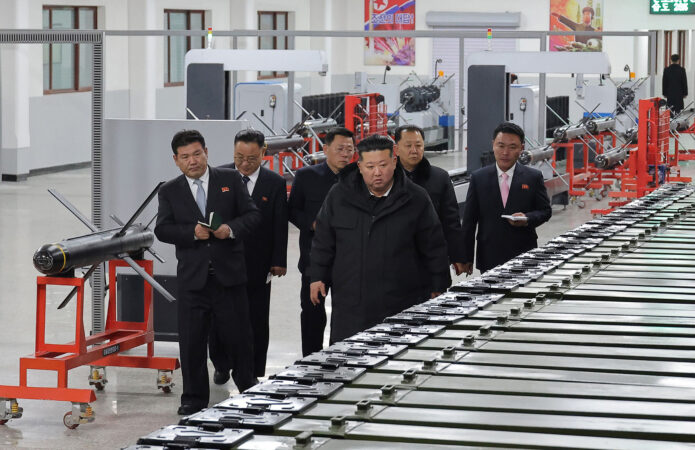
    The official Korean Central News Agency said Sunday Kim visited a weapons factory on Saturday to review multipurpose precision guided weapons produced there. KCNA cited Kim as ordering officials to expand the current production capacity by about 2.5 times.

    Last Sunday, North Korea test-fired what it called long-range strategic cruise missiles. On Dec. 25, North Korea released photos showing apparent progress in the construction of its first nuclear-powered submarine.