Tag: Northeast Philadelphia

  • She was found dead under a pallet in Frankford last year, and was unidentified for months. Her family wants you to know her story.

    She was found dead under a pallet in Frankford last year, and was unidentified for months. Her family wants you to know her story.

    Police found the body of the woman with the crystal pendant necklace stuffed beneath a wooden pallet in an overgrown lot in Frankford one night last June. She had been shot once between the eyes, and wore only a sports bra, with her pants and underwear tangled around her ankles.

    Days in the stifling heat had left her face unrecognizable, nearly mummified.

    Still, Homicide Detective Richard Bova could see traces of the beautiful young woman she had been. She was small, about 100 pounds, with long dark hair tinted red at the ends. Her nails were painted pale pink. She wore small gold hoops in her ears.

    But he didn’t know her name. And for 90 days, the absence of that essential fact stalled everything.

    A victim’s identity is the foundation on which a homicide case is built. Without it, detectives cannot retrace a person’s final moments or home in on who might have wanted them dead and why. For three months, Bova and his partner scoured surveillance footage, checked missing-persons reports, and ran down every faint lead, eager to put a name to the woman beneath the pallet.

    At the same time, in a small house in Northeast Philadelphia, a family was searching, too.

    Olga Sarancha hadn’t heard from her 22-year-old daughter, Anastasiya Stangret, in weeks and was growing worried. Stangret had struggled with an opioid addiction in recent months, but never went more than a few days without speaking to her mother or sister.
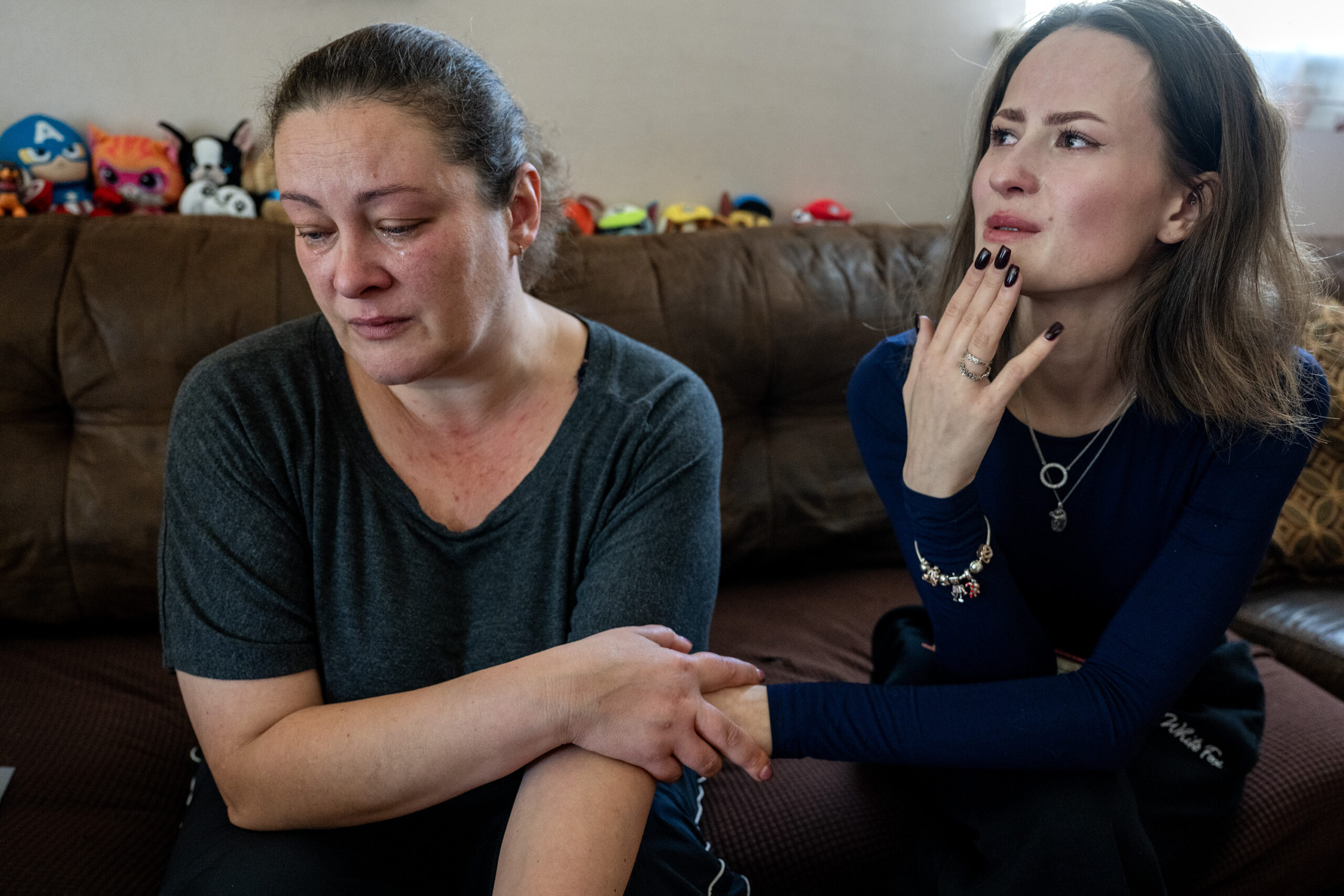
    Olga Sarancha (left) and her daughter, Dasha Stangret, speak of the pain of the death of her eldest daughter, Anastasiya, at their Northeast Philadelphia home. Dasha wears a bracelet featuring Pandora charms gifted by her sister.

    Through July and August that summer, Sarancha and her youngest daughter, Dasha, tried to report Stangret missing, but they said they were repeatedly rebuffed by police who turned them away and urged them to search Kensington instead.

    So they kept checking hospitals, calling Stangret’s boyfriend, and driving through the dark streets of Kensington — looking for any sign that she was still alive.

    It was not until mid-September that the family was able to file a missing-persons report. Only then did Bova learn the name of his victim.

    But by then, he said, the crucial early window in the investigation had closed — critical surveillance footage, which resets every 30 days, was gone. Cell phone data and physical evidence were harder to trace.

    Still, for 18 months, Bova has worked to solve the case, and for 18 months, Stangret’s mother and younger sister have grieved silently, haunted by the horrors of her final moments and the fear that her killer might never be caught.

    Philadelphia’s homicide detectives this year are experiencing unprecedented twin phenomena: The city is on pace to record its fewest killings in 60 years, and detectives are solving new cases at a near-record high.

    But those gains do not erase the reality that hundreds of killings in recent years remain unresolved — each one leaving families suspended in despair, and detectives asking themselves what more they could have done.

    In this case, extensive interviews with Bova and Stangret’s family offer a window into how a case can stall even when a detective puts dozens of hours into an investigation — and what that stall costs.

    Bova has a suspect: a 58-year-old man with a lengthy criminal record who he believes had grown infatuated with Stangret as he traded drugs for suboxone and sex with her. But the evidence is largely circumstantial. He needs a witness.

    And Stangret’s family needs closure — and reassurance that the life of the young woman, despite her struggles, mattered.

    “Everybody has something going on in their life,” said Dasha Stangret, 23. “It doesn’t make her a bad person, and it’s not what she deserved.”
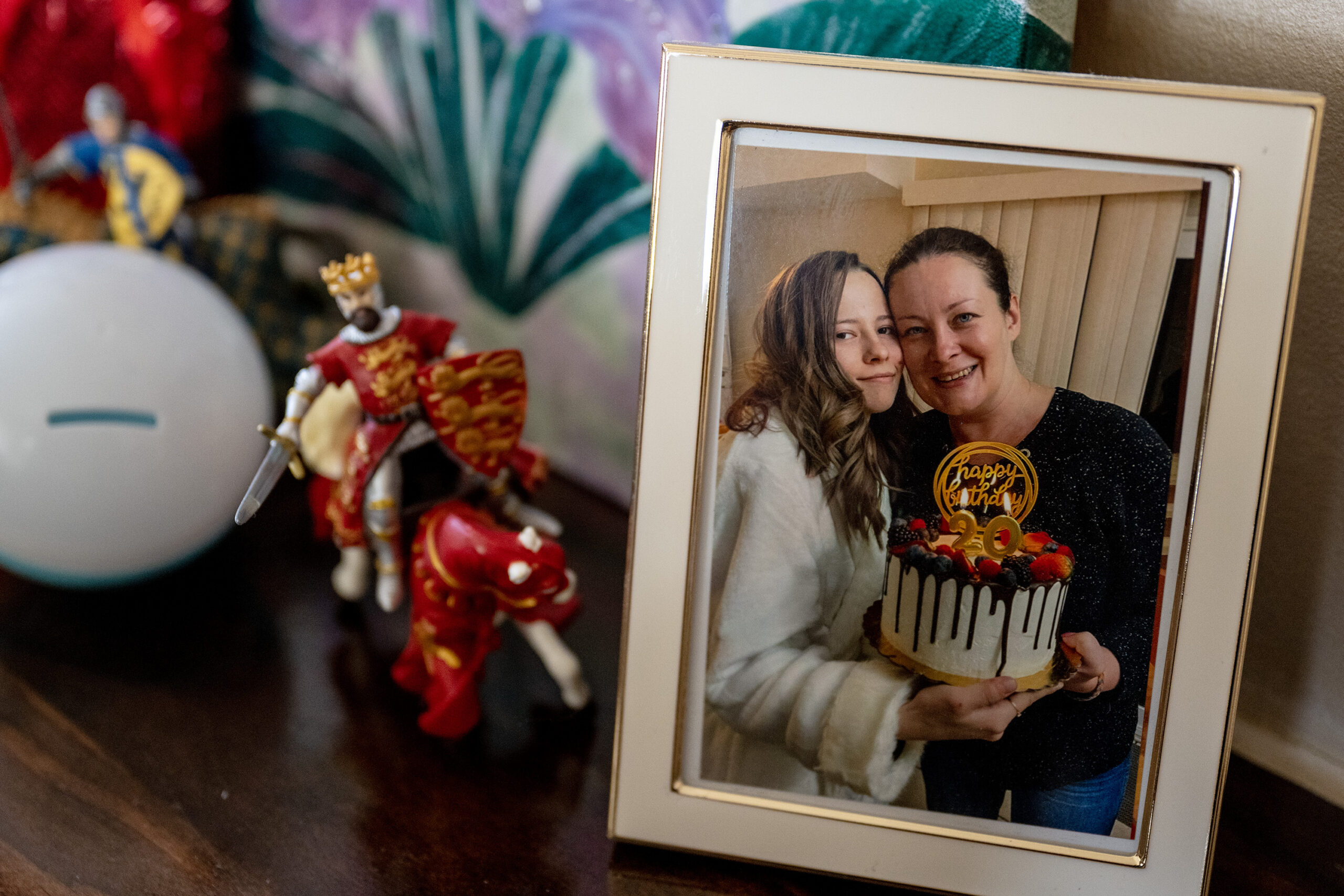
    Anastasiya Stangret, left, celebrated her 20th birthday with her mother in 2022.

    Becoming Anna

    Anastasiya Stangret was born in Lviv, Ukraine, on Nov. 15, 2001. Her family immigrated to Northeast Philadelphia when she was 8 and Dasha was 7.

    The sisters were inseparable for most of their childhood. They cuddled under weighted blankets with cups of tea. They put on fluffy robes and did each other’s eyebrows and nails.

    Anna was bubbly, polite, and gentle, her family said. She enjoyed working with the elderly, and after graduating from George Washington High School, she earned certifications in phlebotomy and cardiology care. She volunteered at a nearby food bank, translated for Ukrainian and Russian immigrants, and later worked at a rehabilitation facility, where she gave patients manicures in her free time.


    Sisters Dasha, left, and Anastasiya Stangret were inseparable as children. They dressed up as princesses for Halloween in 2008.
    Dasha, left, and Anastasiya Stangret at their first day of school in Philadelphia after emigrating from Ukraine.

    “Anna always worked really hard,” Dasha Stangret said. “I looked up to her.”

    But her sister was also quietly struggling with a drug addiction.

    Her challenges began when she was 12, her mother said, after she was hit by a car while crossing the street to catch the school bus. She suffered a serious concussion, Sarancha said, and afterward struggled with PTSD, anxiety, and depression.

    About a year later, as her anxiety worsened, a doctor prescribed her Xanax, her mother said. Not long after, she started experimenting with drugs with friends, her sister said — first weed, then Percocet.

    She hid her drug use from her family until her early 20s, when she became addicted to opioids.

    She sought help in January 2024 and began drug treatment. But her progress was fleeting. She returned to living with her boyfriend of a few years, who they later learned also used drugs, and she became harder to get in touch with, her mother said.

    When Sarancha’s birthday, June 18, came and passed in 2024 without word from her daughter, the family grew increasingly concerned.
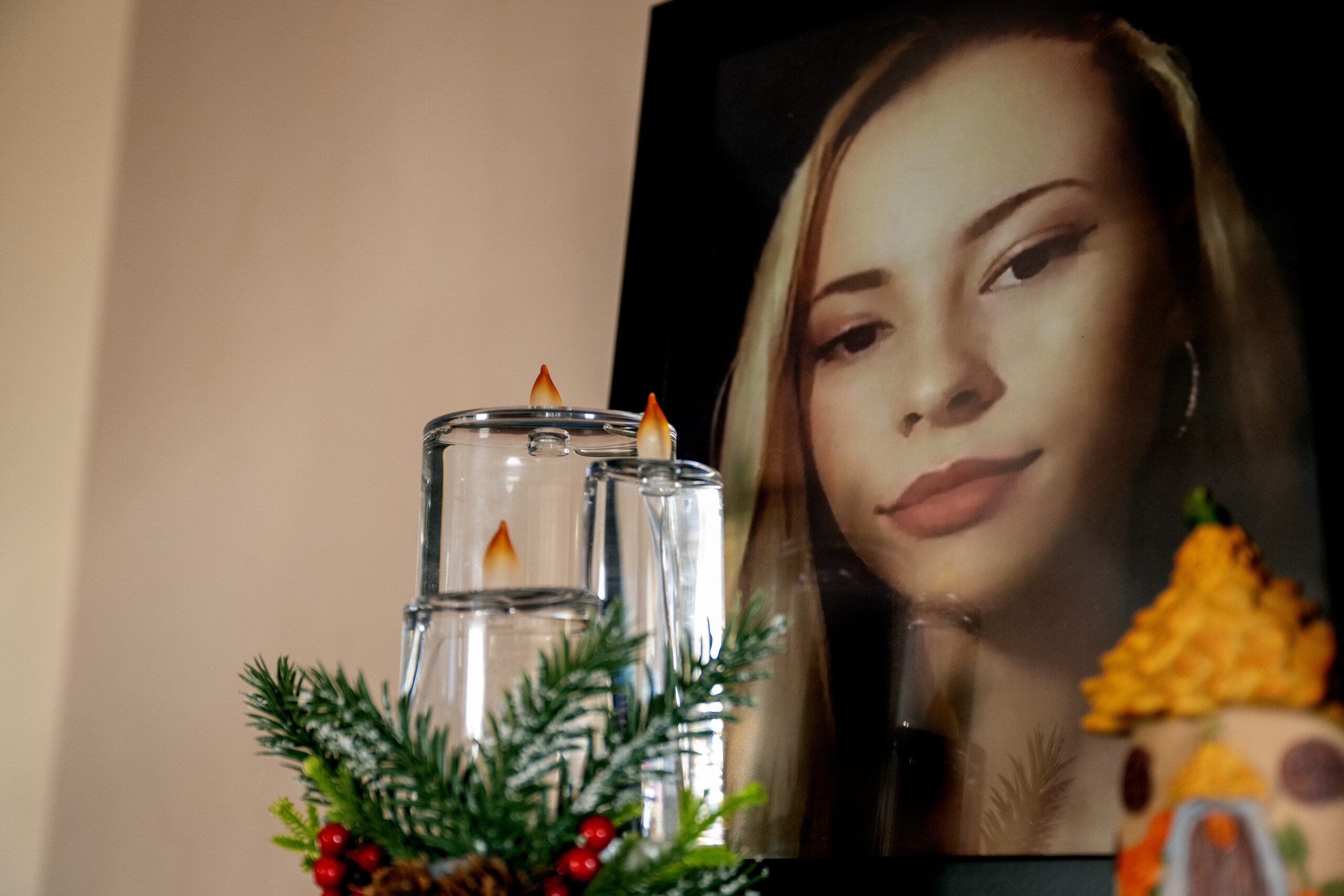
    Anastasiya Stangret was kind, gentle, and polite.

    They checked in with Stangret’s boyfriend, they said, but for weeks, he made excuses for her absence. He told them that she was at a friend’s house and had lost her phone, that she was in rehab, that she was at the hospital.

    On July 27, Sarancha and her daughter visited the 7th Police District in Northeast Philly to report Anna missing, but they said an officer told them to go home and call 911 to file a report.

    Two officers responded to their home that day. The family explained their concerns — Stangret was not returning calls or texts, and her boyfriend was acting strange. But the officers, they said, told them they could not take the missing-persons report because Stangret no longer lived with them. They recommended that the family go to Kensington and look for her.

    Through August, the family visited a nearby hospital looking for Stangret, only to be turned away. Sarancha, 46, and her husband drove through the streets of Kensington without success. They continued to contact the boyfriend, but received no information.

    They wanted to believe that she was OK.

    On Sept. 12, they visited Northeast Detectives to try to file a missing-persons report again, but they said an officer said that was not the right place to make the report. They left confused. Dasha Stangret called the district again that day, but she said the officer on the phone again told her that she should go to Kensington and look for her sister.

    That the family was discouraged from filing a report — or that they were turned away — is a violation of Philadelphia police policy.

    “When in doubt, the report will be taken,” the department’s directive reads.

    Finally, on the night of Sept. 12, Dasha Stangret again called 911, and an officer came to the house and took the missing-persons report. For the first time, they said, they felt like they were being taken seriously.

    A few days later, Dasha Stangret called the detective assigned to the case and asked if there was any information. He asked her to open her laptop and visit a website for missing and unidentified persons.

    Scroll down, he told her, and look at the photos under case No. 124809.

    On the screen was her sister’s jewelry.
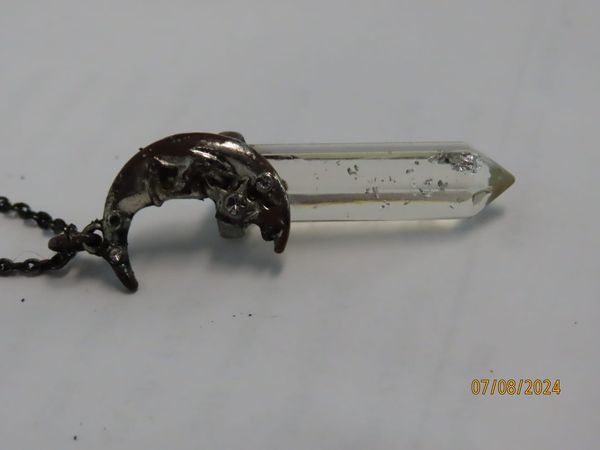
    Dasha Stangret gifted this necklace to her sister for her birthday one year. Police released the image after Anastasiya’s body was found last June, in a hope that someone would recognize it and identify her. Dasha did not see the photo until September 2024.
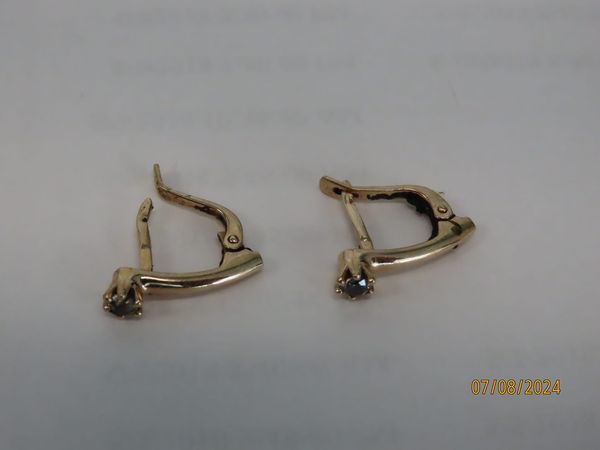
    Olga Sarancha gifted these gold earrings, handmade in Ukraine, to her eldest child on her birthday a few years ago. Police released this image after they recovered the earrings on Anna’s body, hoping it could lead them to her identity.

    A detective’s hunch

    Three months into Bova’s quest to identify the woman under the pallet — of watching hundreds of hours of surveillance footage and chasing fleeting missing-persons leads — dental records confirmed that the victim was Stangret.

    After meeting with her family, Bova questioned the young woman’s boyfriend.

    He told the detective he and Stangret had met a man under the El at the Arrott Transit Center in Frankford sometime in June, Bova said, and that the man gave them drugs in exchange for suboxone and, later, sex with Stangret.

    But the man had grown infatuated with Stangret, he said, and after she left his house, he started threatening her in Facebook messages, ordering her to return and saying that if anybody got in his way, he would hurt them.

    The man lived in a rooming house on Penn Street — almost directly in front of the overgrown lot where Stangret’s body was found. Surveillance video showed Stangret walking inside the rowhouse with him just before 7 p.m. on June 18, Bova said, but video never showed her coming back out.

    Police searched the man’s apartment but found nothing to link him to the crime — no blood, no gun, no forensic evidence that Stangret had ever been inside. The suspect had deleted most of the texts and calls in his phone from June, July, and August, Bova said, and because nearly four months had passed, they could no longer get precise phone location data.

    He said that, at this point, he does not believe the boyfriend was involved with her death, and that he came up with excuses because he was afraid to face her family.

    Surveillance cameras facing the lot where Stangret was found didn’t show anyone entering the brush with a body. Neighbors and residents of the rooming house said they didn’t know or hear anything, he said. And a woman seen on camera pacing the block and talking with the suspect the night they believed Stangret was killed also said she had no information.

    The detective is stuck, he said.

    “Is it enough for an arrest? Sure,” Bova said of the circumstantial evidence against the suspect. “But our focus is securing a conviction.”

    Bova’s theory is that the man, angry that Stangret wanted to leave, shot her in the head. Because the house has no back door, he believes the man then lowered her body out of the second-floor window, used cardboard to drag her through the brush, and then hid her under a pallet.
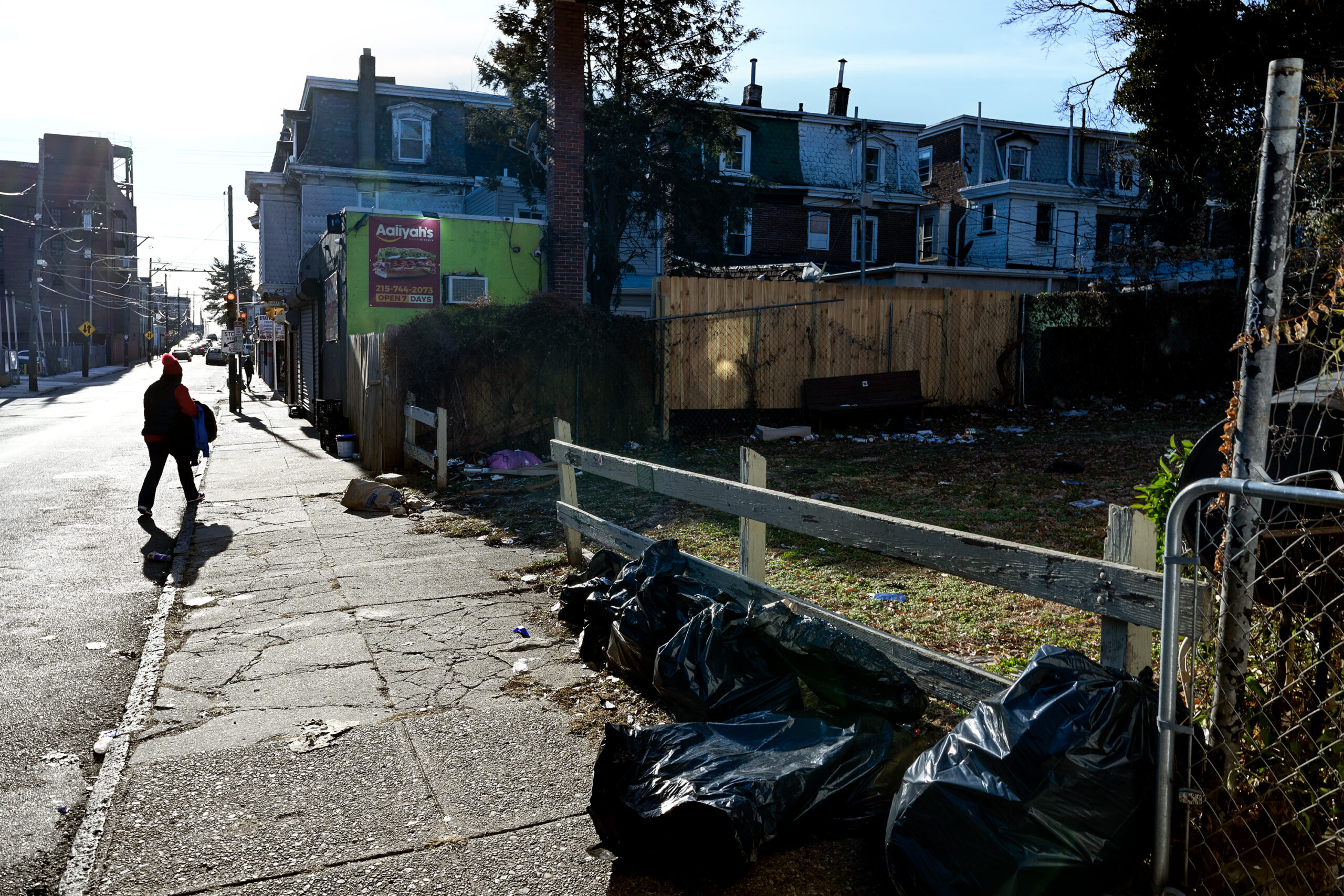
    Anastasiya Stangret’s body was found in the back of this vacant lot, on the 4700 block of Griscom Street, in June 2024.

    He is sure that someone has information that could help the case — that the suspect may have bragged about what happened, that a neighbor heard a gunshot or saw Stangret’s body being taken into the lot.

    There is a $20,000 reward for anyone who has information that leads to an arrest and conviction.

    “The hardest part is patience,” he said. “I’m looking for any tips, any information.”

    Bova has worked in homicide for five years. As with all detectives, he said, some cases stick with him more than others. Stangret’s is one of them.

    “Anna means a lot,” he said. “This is a young girl. We all have children. I have daughters. For her to be thrown in an empty lot and left, to see her life not matter like that, it’s horrifying to me and to us as a unit.”

    “It eats me alive,” he said, “that I don’t have answers for them and I’m not finishing what was started.”
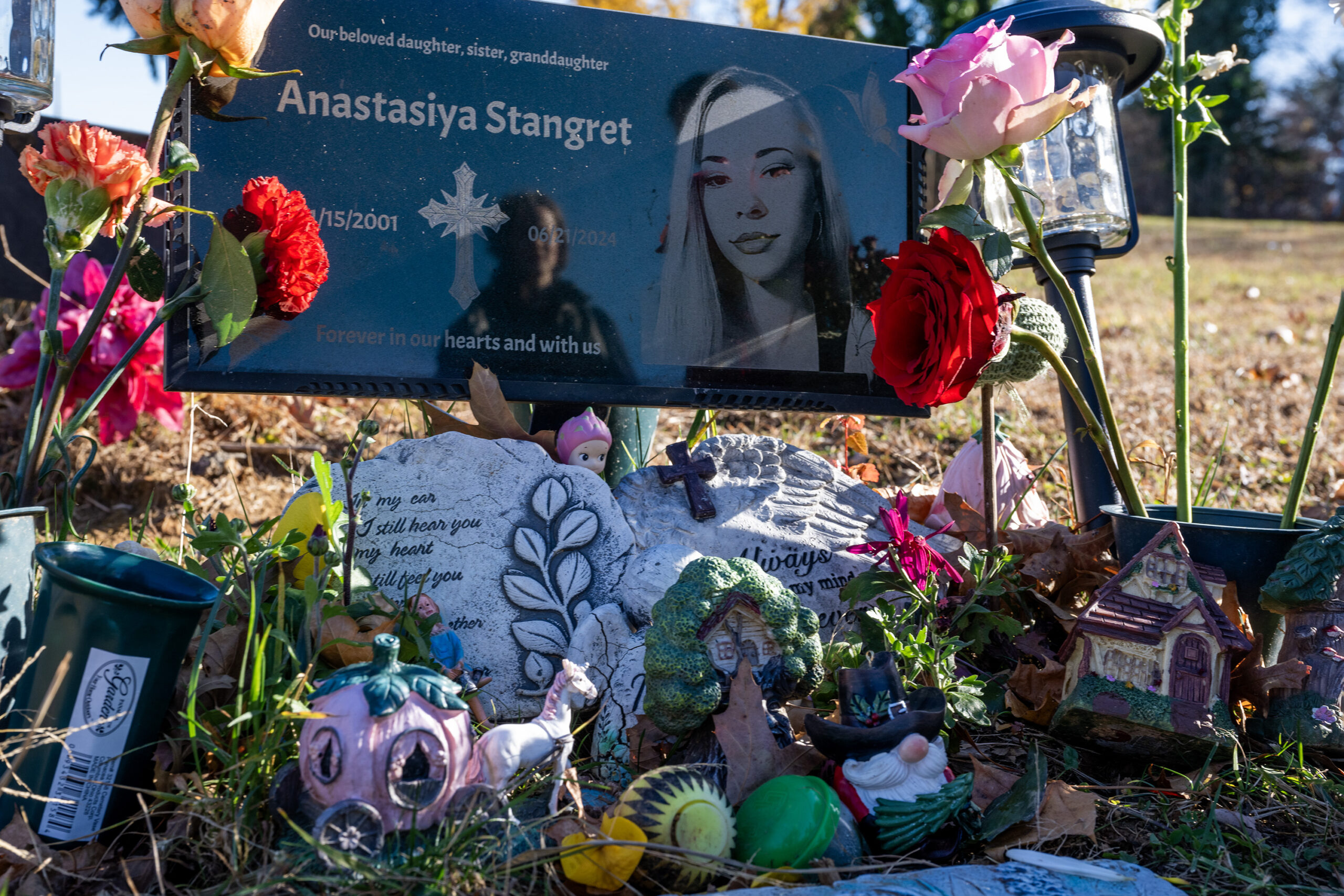
    Dasha Stangret is reflected in the memorial at the grave of her sister, Anastasiya, in William Penn Cemetery.

    ‘I love you. I miss you’

    Stangret’s family suffers every day — the guilt of wondering whether they could have done more to get her help, the anger that her boyfriend didn’t raise his concerns sooner, the fear of knowing the man who killed her is still out there.

    Dasha Stangret, a graphic design student at Community College of Philadelphia, finds it difficult to talk about her sister at length without trembling. It’s as if the grief has sunk into her bones.

    In July, she asked a police officer to drive her to the lot where her sister’s body was found. She sat for almost an hour, crying, placing flowers, searching for a way to feel closer to her.
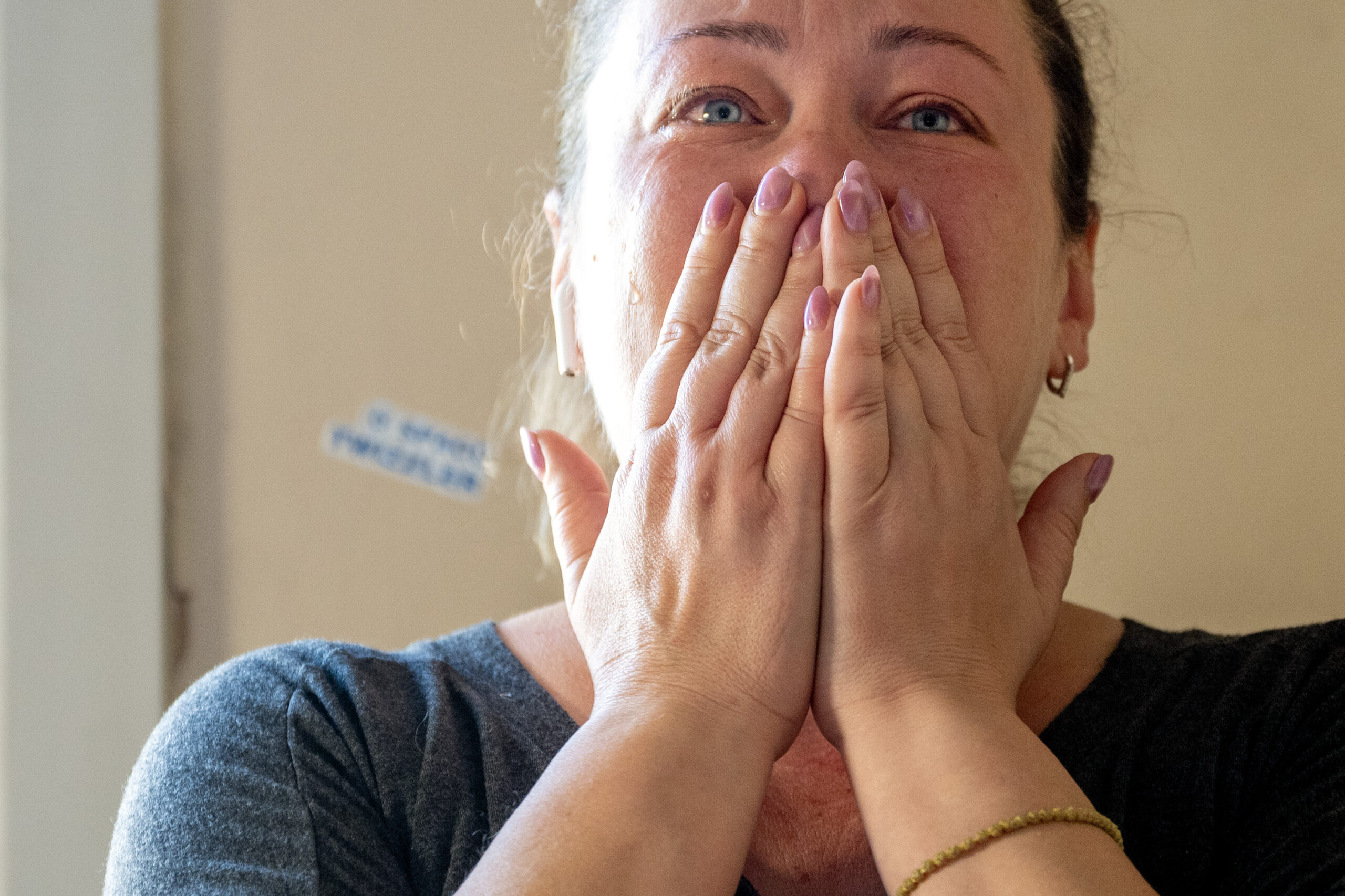
    “I cannot sleep, I cannot live,” Olga Sarancha said of the pain of losing her daughter.

    Sarancha struggles to sleep. She wakes up early in the mornings and rereads old text messages with her daughter. She pulls herself together to care for her 6-year-old son, Max, whose memories of his oldest sister fade daily.

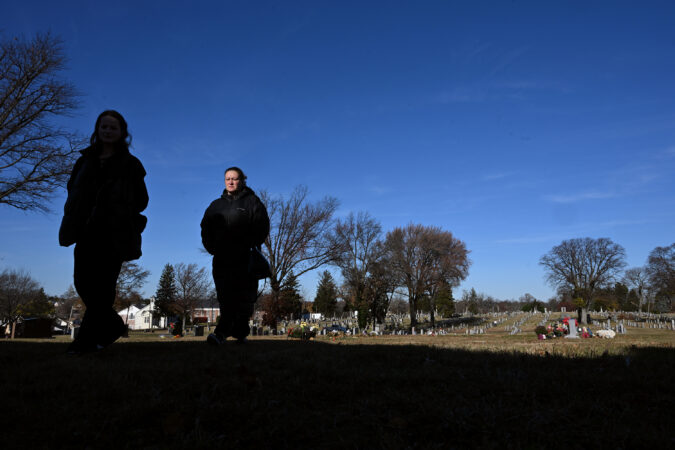
    On a recent day, Dasha Stangret and her mother visited her sister’s grave at William Penn Cemetery. They fluffed up the fresh roses, rearranged the tiny fairy garden around her headstone, and lit a candle.

    Stangret began to cry — and shake. Her mother took her arm.

    “I love you. I miss you,” Stangret told her sister. “I hope you’re happy, wherever you are.”

    And nearly 20 miles south, inside the homicide unit, Bova continues to review the files of the case, waiting for the results of another DNA test, hoping for a witness who may never come.

    If you have information about this crime, contact the Homicide Unit at 215-686-3334 or submit a confidential tip by texting 773847 or emailing tips@phillypolice.com.
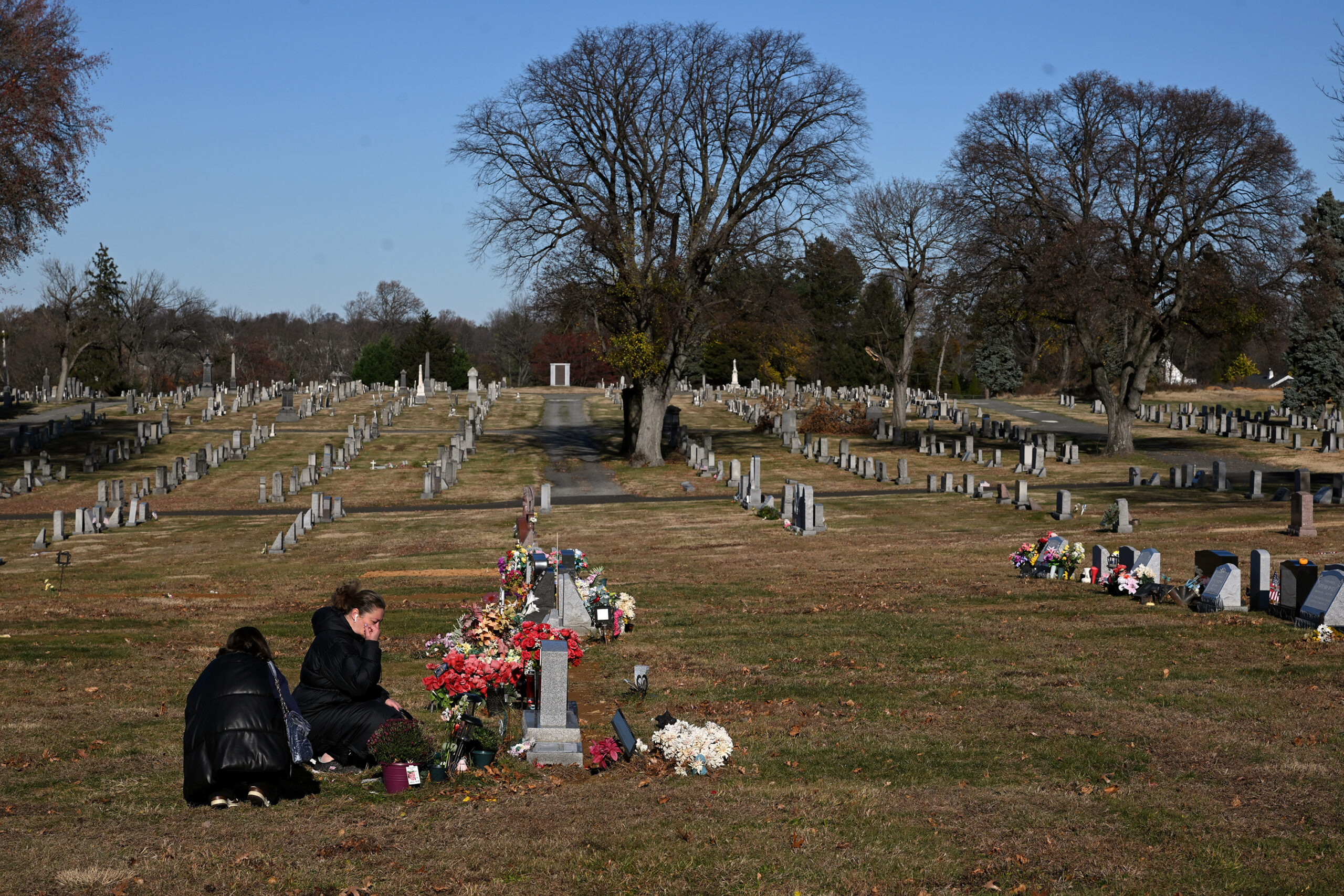

    Olga Sarancha (right) and her daughter Dasha visit the grave of her older daughter Anastasiya Stangret in William Penn Cemetery. “It feels out of body. Like a dream, a movie, like it’s not real,” Dasha said of losing her sister.
  • 10-year-old boy severely burned in Northeast Philadelphia plane crash reunites with bystander who saved him

    10-year-old boy severely burned in Northeast Philadelphia plane crash reunites with bystander who saved him

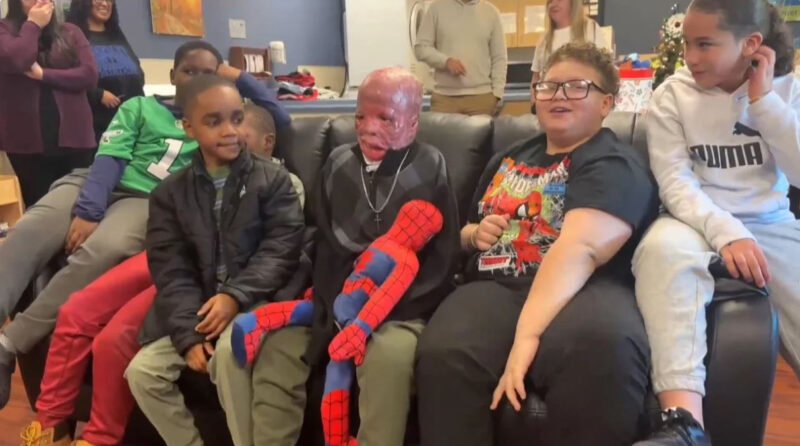
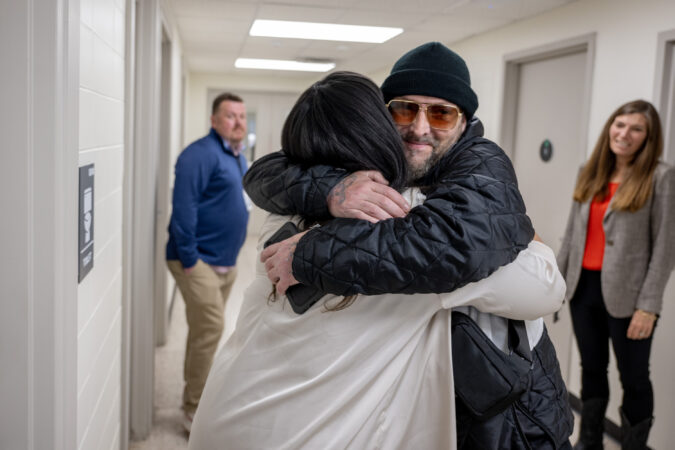
    Ramesses Dreuitt Vazquez scooted his wheelchair on a Mount Airy playground, pressing the ground with his sneakers to approach the man credited with saving his life.

    Caseem Wongus had last seen the child staggering from a flaming car after a medical jet torpedoed onto Cottman Avenue in Northeast Philadelphia, blasting wreckage into the neighborhood around the Roosevelt Mall and killing all six people onboard.

    Now the 10-year-old Philadelphia boy smiled through his scars, reaching his arm out to greet Wongus, who bent down and hugged him.

    Wongus, 26, was nervous to see Ramesses, unsure what to expect. On the night of the Jan. 31 crash, Wongus used his jean jacket to smother flames on Ramesses’ back. He then comforted Ramesses in the back seat of a police cruiser as they raced to St. Christopher’s Hospital for Children. The child’s clothes had burned away; his sneakers had melted to his feet from the heat.

    In the 10 months afterward, Ramesses fought for his life at a Boston hospital. He had 42 surgeries for burn wounds that affected 90% of his body, and had fingers and ears amputated. He was moved to a rehabilitation hospital in South Jersey before being released earlier this month.

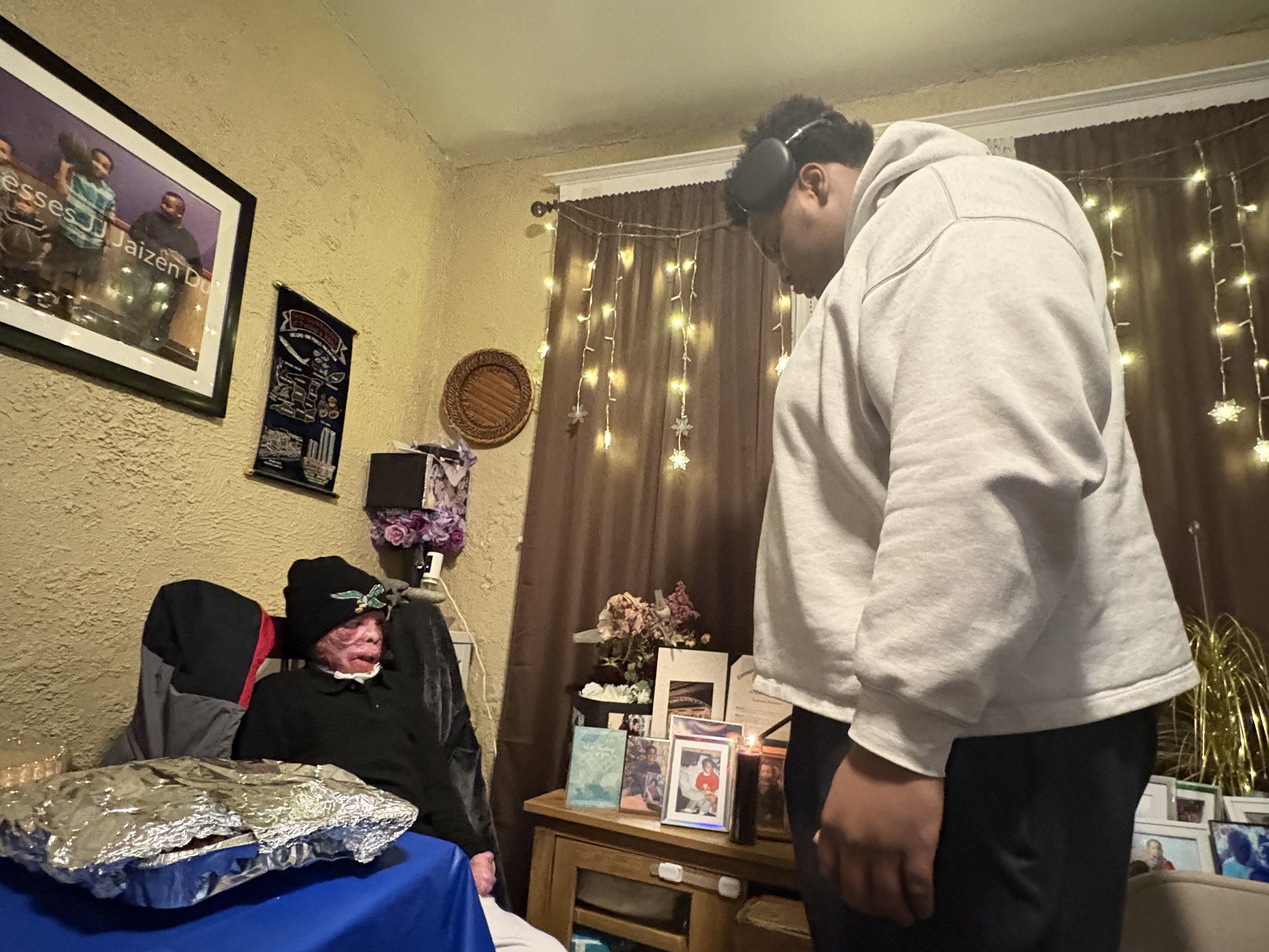
    He reunited with his rescuer on Tuesday night at an event to mark what would have been the 38th birthday of Ramesses’ father, Steven Dreuitt Jr., who died when the car he was driving caught on fire.

    Family and friends gathered on the park’s basketball court to release balloons.

    Wongus asked Ramesses how he felt about getting swag from the Philadelphia Eagles and Phillies while in the hospital. “I’m really not much of a baseball fan; I’m more of an Eagles fan,” replied Ramesses, wearing a knit Eagles hat.

    The boy’s light and casual tone made Wongus smile.

    “I’m glad to see him with his family and to see how well he’s doing — seeing him just trying to function as a kid again and scooting around in the wheelchair on the basketball court,“ Wongus said.

    The balloon release was organized by Alberta “Amira” Brown, 60, Dreuitt’s mother and Ramesses’ grandmother. During the balloon release, she and Ramesses’ mother thanked Wongus for saving him.

    “If it wasn’t for this person here, Ramesses would not be here today,” Brown said, as family and friends applauded.

    Brown also asked those in attendance to support her son’s other child, Dominick Goods, an 11th grader at Imhotep Institute Charter High School in East Germantown.

    Both grandsons, she said, need the community’s love and support: “I have one that is completely, completely mentally distraught and one is physically distraught.”

    Dominick, who is Ramesses’ half brother, lost his father and his 34-year-old mother in the plane crash. Dominique Goods Burke, who was engaged to Dreuitt, was in the car’s passenger’s seat. The Mount Airy couple had picked up Ramesses from his mother’s home in Germantown and then headed to the Roosevelt Mall to run an errand. Goods Burke escaped from the car with severe burns and internal injuries.

    Dominick turned 16 two weeks before his mother died in April at Thomas Jefferson University Hospital.

    “I want each and every one of you to imagine what a 15-year-old kid went through that night, being left home alone and waiting for his parents and his brother to come home, and no one ever did,” Brown said.

    “Don’t forget my grandson Dominick. I beg of you,” she said.

    Dominick Goods, 16, lost both of his parents in the jet crash in Northeast Philadelphia on Jan. 31. The teen and his family gathered at a Mount Airy playground to celebrate what would have been his father’s 38th birthday. The teen’s grandmother, Alberta “Amira” Brown (right), asked those gathered to support him.

    After watching balloons float skyward amid shouts of “Happy birthday, Steven,” Dominick drifted away from the crowd of about 40 people for a few moments alone.

    Ramesses, bundled under a fuzzy white blanket, playfully chased after his mother, Jamie Vazquez Viana, in his wheelchair, teasing about rolling over her feet.

    “Hey, that’s not fair,” she said.

    She declined to talk to a reporter but has shared some details of her son’s recovery on a GoFundMe page.

    “Ramesses is my little warrior who fought death and won, but he now faces a lifetime of reconstruction surgeries, intense therapy, and long-term burn care,” Vazquez Viana wrote.

    Wongus smiled through tears as he watched Ramesses chat with his 12-year-old cousin, Anthony “AJ” Jenkins, about video games. His cousin, who gave him an Xbox game for his birthday in October, asked if he had been playing it.

    Ramesses explained why he had not. “I have to sign in and put in my dad’s email and his number and all that, and I don’t have that,” Ramesses told his cousin.

    Jenkins, a seventh grader who is one of Brown’s seven grandchildren, said he cried during the balloon release, envisioning his uncle watching them.

    Family, friends and community members came out for the balloon release to celebrate the life and birthday of Steven Dreuitt Jr., who would’ve turned 38 on Dec. 23. He died in the Jan. 31 plane crash in Northeast Philadelphia.

    “I imagined in my mind that my uncle asked God, `Can I just look down there for a minute?,’ and he sat on the clouds and he watched as his balloons came up to him,” Jenkins said.

    Later in the evening, at his grandmother’s house, Dominick lit a candle for his father, while Ramesses looked on.

    Jenkins said he again pictured his uncle’s spirit. This time, clasping both his sons’ hands to help them light it.

    Ramesses Dreuitt Vazquez, 10, watches his older brother, Dominick Goods, 16, light a candle to remember their father, Steven Dreuitt Jr., who died in the Jan. 31 plane crash in Northeast Philadelphia. The brothers celebrated what would have been their father’s 38th birthday on Dec. 23.

    Jenkins said he is awed by his cousins’ physical and emotional strength. Ramesses “keeps pushing hard” to get stronger, even though his father is gone. Dominick had clung to hope that his mother would survive and was devastated, the cousin said.

    “It’s been really hard for him. I couldn’t be in that place. I’d be stuck. I couldn’t be strong enough,” Jenkins said. “They inspire me to be a better person. I want to show my uncle and his two sons that I am working hard for them.”

    Before heading over to the playground on Tuesday evening, Dominick gave Ramesses an early Christmas gift.

    Ramesses’ eyes grew wide as his mother helped him unfurl tissue paper to reveal a coveted pair of 2025 Air Jordan 8 “Bugs Bunny” Nike sneakers.

    “You like them. I can see it on your face,” his mother said.

    “I’m gonna hide them,” Ramesses replied. He didn’t want anyone to take them from him.

  • See what homebuyers can get for $390,000 in Lower Merion, Northeast Philly, and Camden County | The Price Point

    See what homebuyers can get for $390,000 in Lower Merion, Northeast Philly, and Camden County | The Price Point

    The Price Point compares homes listed for similar sale prices across the region to help readers set expectations about house hunting.

    Looking for a new home for the new year? You’ve got options if you have the region’s typical homebuying budget.

    Across the Philadelphia metropolitan area, homes sold for a median of $390,000 last month, according to the multiple listing service Bright MLS. That typical sale price is up more than 3% from last year.

    Here’s what a home shopper could get with a budget like this in three different neighborhoods in the region.

    Lower Merion condo in star location

    Wolverton & Co., a Montgomery County-based real estate company, sells and manages a lot of condos in the area of West Montgomery Avenue in the Haverford section of Lower Merion Township.

    “I call that stretch the golden mile of Haverford as it relates to condominiums,” said Will Wolverton, owner and broker of record at Wolverton & Co. “It’s a very desirable area.”

    There are restaurants and national and local stores, including at the nearby Haverford Square and Suburban Square shopping centers. Condo residents can walk to SEPTA’s Haverford station to catch Regional Rail trains. The Merion Cricket Club offers sports facilities and hosts dinners and galas.

    One condo currently for sale in the area is a two-bedroom, two-bathroom unit at Haverford Hunt Club, a building with 16 units on four floors. Condos there include both one-bedroom and two-bedroom units.

    The building is about 45 years old but has been “thoughtfully updated” in both looks and critical infrastructure, such as the elevator and the roof, Wolverton said.

    The condo for sale gets a lot of natural light, he said. And it’s on the top floor, so buyers won’t have upstairs neighbors. It also has a private balcony and a reserved space in the property’s parking lot.

    The last several serious buyers have been most interested in the neighborhood, Wolverton said.

    “It’s a very good property,” he said, “and a great location.”

    The condo was listed for sale for $385,000 on Oct. 20.

    An unusual Mayfair twin

    This home in the Mayfair neighborhood of Northeast Philadelphia stands out in a few ways, said listing agent Xiao Zhen Zhao, who works throughout this section of the city, as well as Fishtown and Northern Liberties.

    The open kitchen is “very unique” for the area and includes bar seating, said Zhao, an agent with Legacy Landmark Realty.

    The primary bedroom has a private bathroom, which isn’t common in older homes in Northeast Philadelphia, she said. A lot of houses have only one full bathroom, she said. One of the bathrooms features a skylight and pink tiles on the walls.

    And the home is “a bigger twin,” she said. It spans 1,868 square feet.

    The home has a backyard and a walk-out finished basement, which has a half bathroom. It also has a garage and driveway.

    The twin is in an area of the city where houses are more affordable and parking is easy. It’s within walking distance of schools. It’s minutes from stores and restaurants along Cottman Avenue, and it’s right off Pennypack Park.

    Potential buyers have liked the layout of the home and also the look of it, Zhao said.

    “A lot of people like the brick,” she said.

    The twin was listed for sale for $389,000 on Nov. 21.

    A Colonial charmer in Gloucester

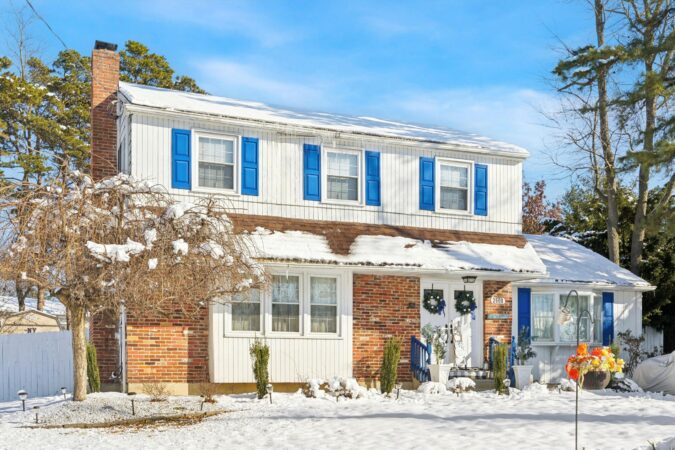
    Potential buyers touring this Colonial in Camden County have fallen for its charm, said real estate agent Evangeline Gambardella. “Because it is a very charming space.”

    The living room features a brick fireplace and a large window that lets in natural light and frames views of the front yard.

    The layout is more open than in a traditional Colonial, especially in this area of Gloucester Township, said Gambardella, a real estate agent with the Mike McCann Team, which is an affiliate of Keller Williams.

    The owners have recently updated the property. The home has new landscaping, a roof that is about 4 years old, a new fence, and a new heating, cooling, and ventilation system.
    Gambardella said this work makes the property ideal for first-time homebuyers, people who are downsizing, or anyone who doesn’t want to undertake large projects.
    “It presents a really lovely value for its price point,” she said.

    The home’s kitchen includes an island with seating. And a door in the formal dining room opens to the deck, which has a retractable awning.

    Home shoppers who have visited the property like its spacious backyard and its location. It is minutes from the Gloucester Premium Outlets and the Deptford Mall, has easy access to major highways, and is close to parks and restaurants.

    The home’s unfinished basement also is a “huge selling point for a lot of people” who want to decide what to do with the space, Gambardella said.

    The house was listed for sale for $389,000 on Dec. 20.

  • Recruiters flew people from Kensington to California for what they described as free luxury rehab. Critics say it’s a scam.

    Recruiters flew people from Kensington to California for what they described as free luxury rehab. Critics say it’s a scam.

    Christina Gallo and Daniel Zehnder came to McPherson Square in the Kensington neighborhood looking for a fix, as they did almost every day.

    But on this day in late April, an SUV pulled up. A woman bounded out with an offer that sounded like a miracle: an all-expenses-paid trip for free treatment at a luxury rehab center in California.

    Gallo and Zehnder, both then 37, hoped their lives were finally about to turn around after two decades struggling with addiction.

    “We wanted to get clean,” Gallo said.

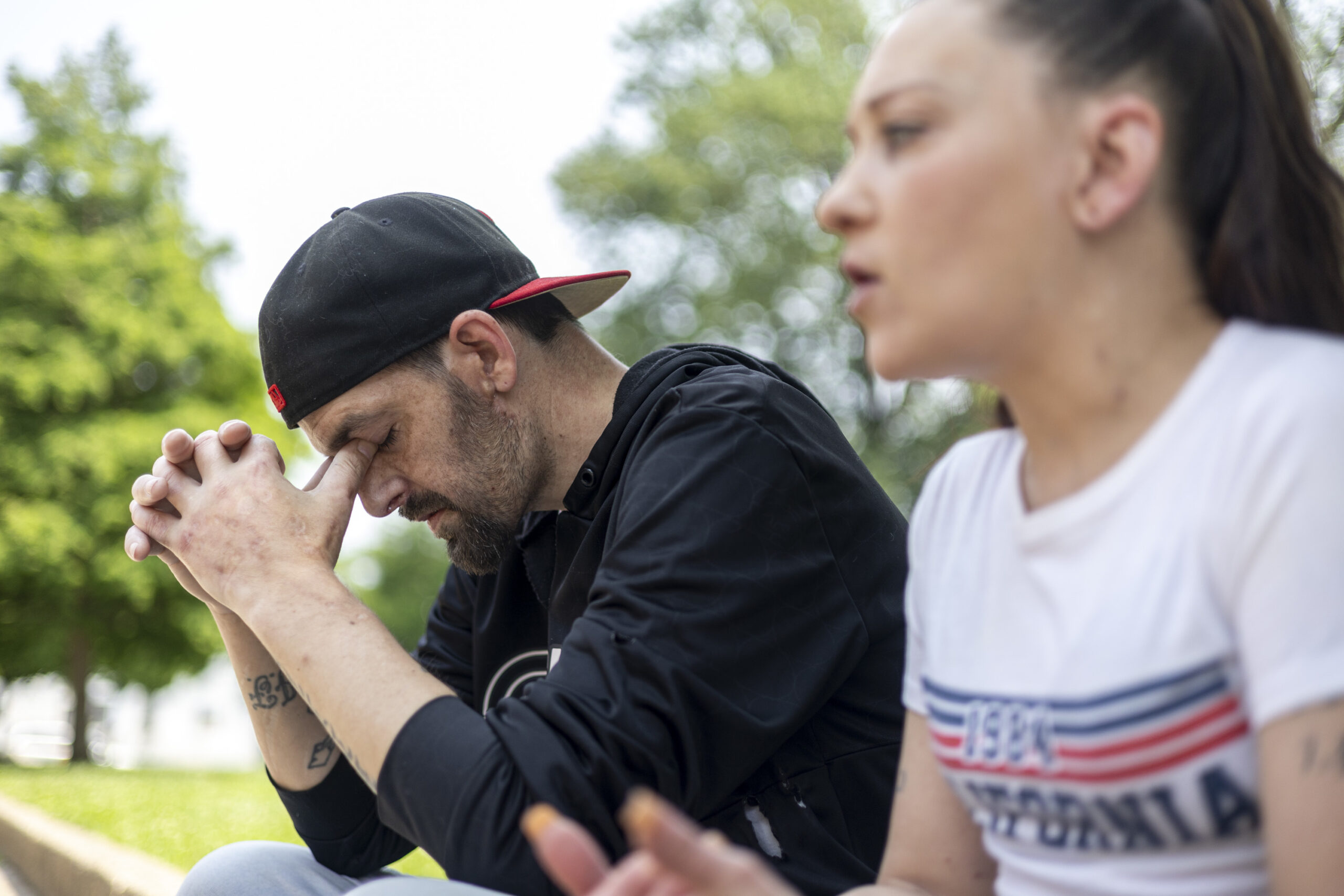
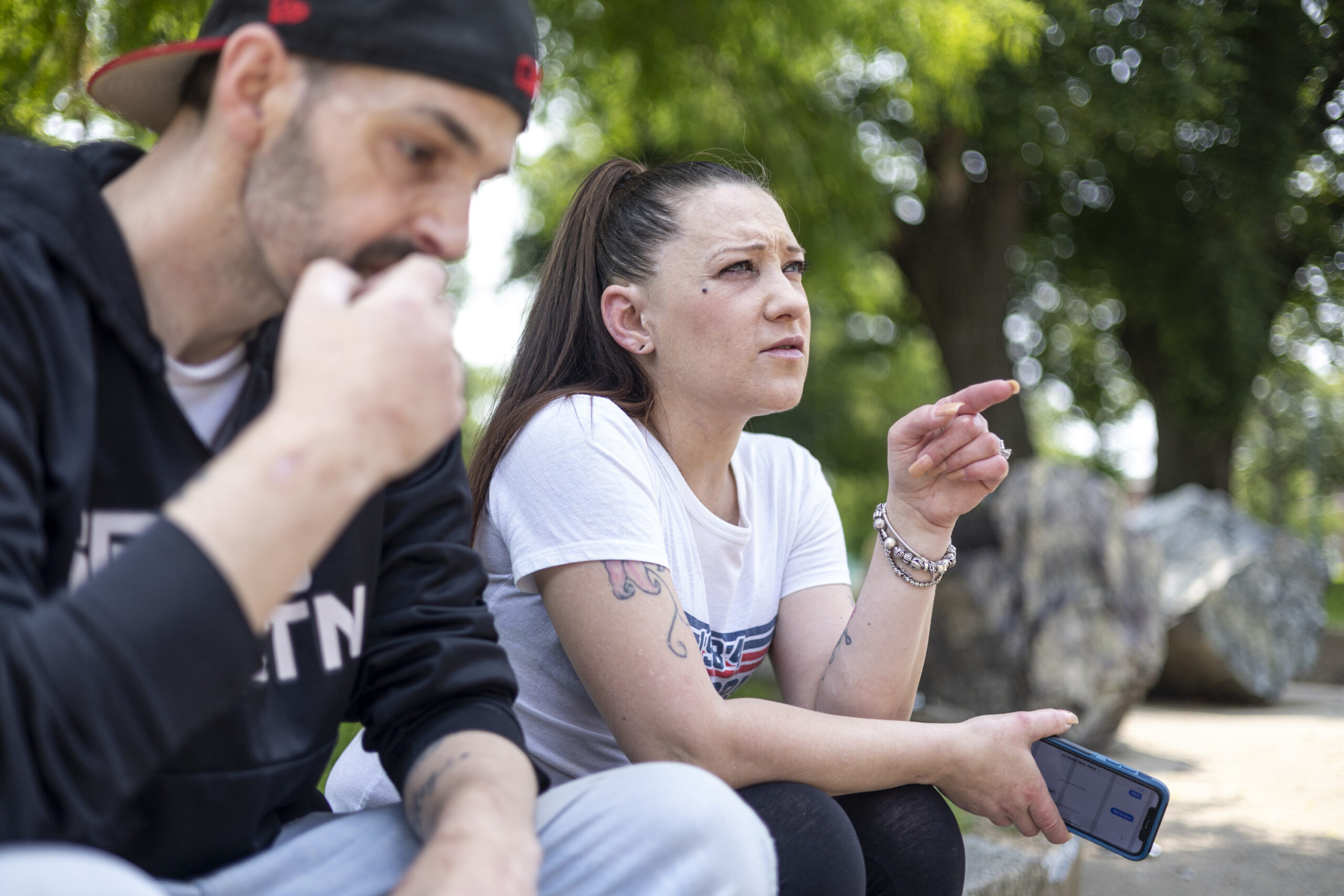
    Christina Gallo and Daniel Zehnder, pictured here in Kensington’s McPherson Square in June, were recruited to what they thought would be a luxury rehab in California.

    Within days, they were in a Lyft from their Bucks County trailer to the Philadelphia airport. Everything — the Lyft, the flight, the rehab — had been paid for, by whom they did not know.

    They landed at a treatment facility in Los Angeles with a gleaming swimming pool, but said they did not see doctors or nurses and were offered little medical treatment to ease their agonizing withdrawal symptoms. Within a few days, the couple had left the clinic, relapsed, and the life-changing trip they envisioned ended in an ambulance rushing to a nearby hospital, where Gallo was admitted to intensive care.

    Their California dreams were dashed. But the trip notched another recruitment for The Rehab Specialist, a year-old operation that makes money by scouting the streets for people in addiction to send to independently run rehab centers across the country.

    Rehab Specialist recruiters working in Philadelphia offered free plane tickets, housing, and medical care — and at times cash, cell phones, cigarettes, and clothes — to entice people into recovery homes, Inquirer reporters found in interviews with seven people who had firsthand knowledge of the recruiting tactics.

    With a single conversation in Kensington, recruiters also got willing patients enrolled in private health insurance that could pay higher rates, often without the patients understanding what they had signed up for — until bills started to arrive.

    Businesses like The Rehab Specialist operate as middlemen in an industry where one person’s recovery can be cashed in for hundreds of thousands of dollars in insurance payments.

    Some referral and marketing services in the addiction treatment industry are legal. But the business is also notoriously rife with insurance fraud and patient brokering — a term that describes referrals to specific clinics in exchange for illegal kickbacks or bribes.

    Rehab Specialist brochure, advertising a Spanish-Colonial style mansion with a pool in the backyard.

    Pennsylvania is seeing a resurgence of patient brokering, according to tracking in 2023 by Highmark Health, a Pittsburgh-based Blue Cross Blue Shield affiliate. Such schemes are especially a concern in Kensington, home to one of the nation’s largest open-air drug markets.

    Federal laws and a patchwork of state laws are supposed to protect vulnerable people. Prosecutors have limited resources, however, and rarely investigate low-level players.

    Pennsylvania considered stronger laws after a major scandal. In 2019, federal and state prosecutors uncovered a multimillion-dollar insurance fraud scheme at Liberation Way, a Bucks County recovery home. The abuses spurred Pennsylvania lawmakers to introduce legislation that would have made it a felony to use money or services to lure patients into addiction rehabs and other healthcare facilities. The measure died without advancing to a vote.

    “People get pretty brazen when nobody’s looking,” said Alan Johnson, chief assistant state attorney in Palm Beach County and a national expert on fraud in the industry.

    Johnson called a description of The Rehab Specialist’s practices “classic patient brokering.”

    For months, Philadelphia advocates for people in addiction circulated warnings about the business and posted photos of its recruiters on Facebook. They tried to alert police, but never heard back.

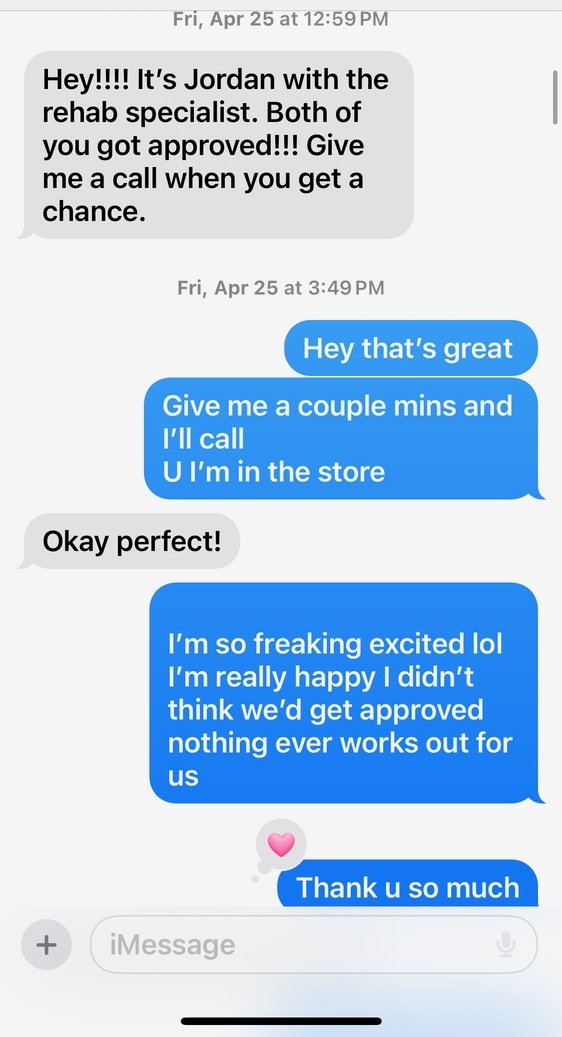
    Screenshot of text messages between Christina Gallo and a Rehab Specialist recruiter, saying that Gallo and Zehnder got approved for private insurance that would pay for their treatment in California.

    The Philadelphia Police Department did not respond to requests for comment, and the Philadelphia District Attorney’s Office said it has not opened an investigation and declined to comment on The Rehab Specialist’s practices. The Pennsylvania Attorney General’s Office also declined comment.

    On social media, The Rehab Specialist’s director and founder, Gus Tarrant, strongly disputed critics who accused his business of patient brokering.

    “I have never and would never give a client money to go to rehab or encourage them to cycle in and out of programs,” Tarrant wrote in a March post to a Facebook group that monitors addiction treatment.

    Tarrant, in a June interview with The Inquirer, reiterated that he and his business have done nothing wrong.

    Tarrant said that his operation has a national focus and came to Philadelphia this spring because the city has “the worst drug epidemic in the country.”

    Tarrant said his recruiters send patients out of their home state to avoid triggers for relapse, a practice he strongly believes in, having gone through his own recovery from addiction about five years ago. (Though popular in some recovery circles, some research suggests that it can be less effective than getting treatment closer to home, where people have established support networks.)

    “Our goal is to help as many people as we can,” Tarrant said. Now based in Myrtle Beach, S.C., Tarrant has channeled his experience into starting at least two businesses in the past five years focused on people in addiction.

    He said rehab centers pay his business a flat fee to arrange for people from Kensington to receive treatment in California, but declined to share details. Two Los Angeles treatment centers told The Inquirer they had paid Tarrant and his operation a flat fee for “marketing,” but both also declined to give specific details of the arrangement.

    On business cards, Tarrant’s title is listed as The Rehab Specialist’s founding partner; his LinkedIn profile says he started working there in 2024.

    The Inquirer was unable to find any documentation indicating the business was formally incorporated in a search of state corporate registries where its recruiters and Tarrant have operated. The Inquirer also did not identify any lawsuits filed against The Rehab Specialist.

    The Inquirer interviewed Tarrant by phone this summer. He did not return multiple calls, texts, and emails this month requesting additional comment.

    Reporters interviewed five people who were approached by The Rehab Specialist’s recruiters on the street, and another two whose relatives were recruited.

    All shared similar stories about how the process worked. Two said they enjoyed eating chef-made meals and benefited from group therapy and daily outings in Los Angeles.

    One mother said her son ultimately decided not to board the plane to California, though he continued to receive frequent calls from Rehab Specialist recruiters urging him to travel for treatment. In another case, a woman said her brother did not get the care he needed in California and ended up in the ICU.

    Gallo and Zehnder were among the three people interviewed who said the medical care they received in California did not meet their expectations for a luxury rehab facility. The couple blames The Rehab Specialist for launching them on a journey that ended with them worse off than before.

    “I don’t know if they have the intention of trying to help people,” Gallo said, “but they’re going about it totally the wrong way.”

    Christina Gallo and Daniel Zehnder in June, sitting in the spot where they were first approached by The Rehab Specialist recruiters in McPherson Square Park.

    Lofty promises and dire warnings

    The fliers that The Rehab Specialist recruiters passed out in Kensington featured photos of a Spanish Colonial-style mansion surrounded by palm trees, with a pool in the backyard. They advertised “holistic treatment” including equine therapy, medical detox, and an intensive outpatient program.

    All that, in sunny California.

    The pitch has particular appeal in Philadelphia, where people have struggled through long waits to access medical detox programs that allow patients to withdraw under the supervision of a doctor or nurse. These programs typically offer medications to help ease intense withdrawal symptoms like nausea, vomiting, and agitation, all of which have become more dangerous as potent animal tranquilizers and industrial chemicals contaminate the local drug supply.

    Despite often lofty promises, the addiction treatment industry has long seen high-profile prosecutions over exploitative practices.

    In the Philadelphia area, the Liberation Way prosecution sent the company’s CEO and medical director to federal prison. Prosecutors said the center had signed patients up for private insurance plans and paid their premiums. It then charged insurers for shoddy or unnecessary treatment that resulted in excessive insurance payouts.

    A few years later in 2022, New Jersey officials found numerous cases of addiction providers illegally paying workers to direct patients with private insurance to their facilities. A second investigation in 2024 prompted two new state laws cracking down on patient brokering.

    California and Florida in particular have emerged as hot spots for addiction treatment fraud. In South Florida, a 2022 federal prosecution of a $112-million scheme led to prison sentences for eight people accused of using cash bribes and free rides, flights, drugs, and alcohol to attract patients to a rehab center. The payments were distributed via a network of lower-level street recruiters, purportedly hired for “marketing,” according to an affidavit from the case.

    California, with its large number of rehab centers and overburdened regulators, has become such a magnet for fraud that industry insiders refer to the greater Los Angeles area as Rehab Riviera.”

    But addiction treatment scams are often ignored because they involve sprawling national investigations that require significant resources. State prosecutors can’t justify the expense and federal prosecutors won’t take on low-level fraudsters, according to Johnson. Palm Beach County prosecutors stepped up enforcement after the state passed stricter laws in 2017.

    “You have to prioritize cases. This is not high on their hit list, unless it’s going to make a big splash,” said Deb Herzog, a former federal prosecutor turned fraud investigator at Anthem Blue Cross.

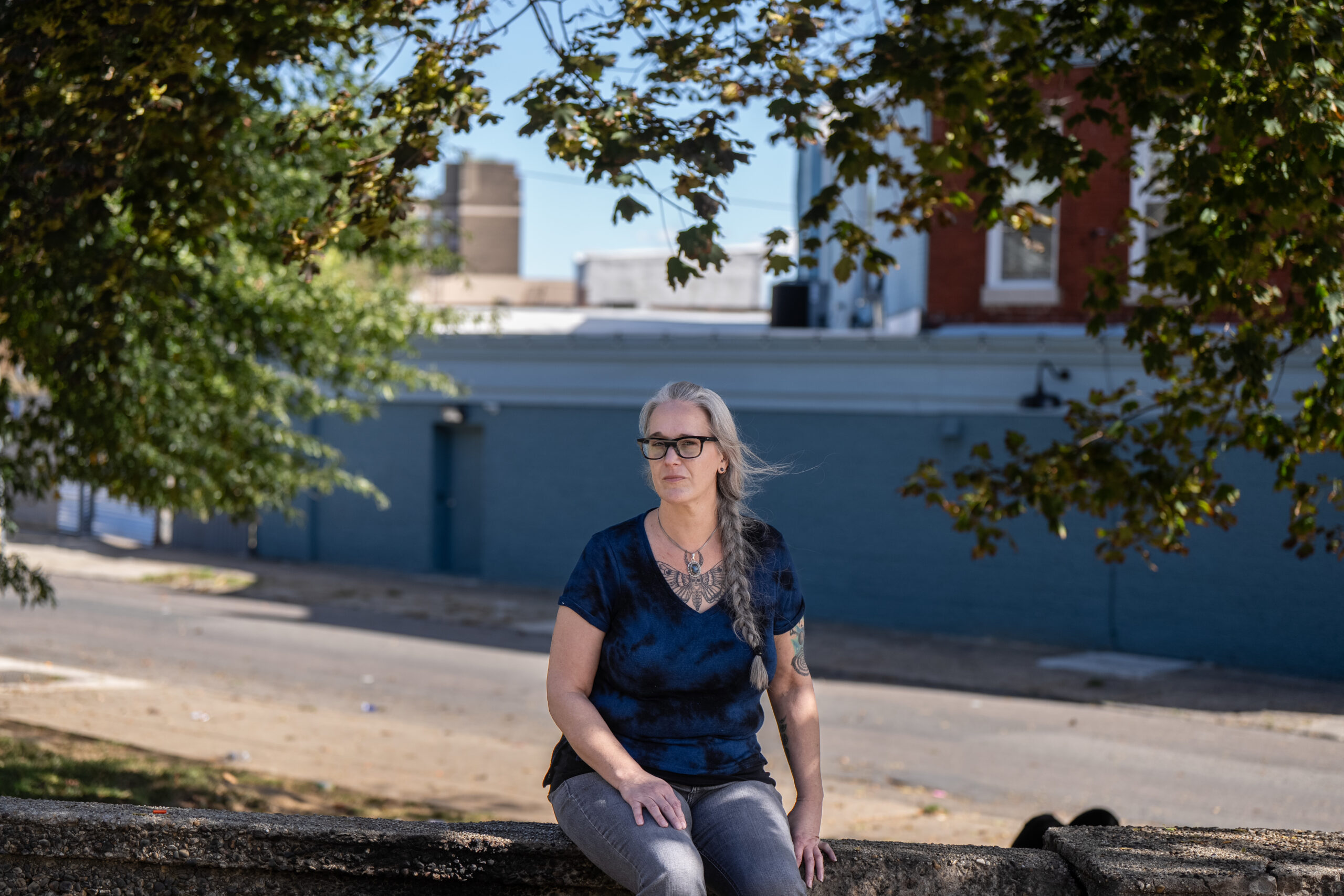
    Melissa Ruby, an activist who runs a national Facebook group to monitor patient brokering, in Philadelphia in October.

    Warnings about The Rehab Specialist instead came from Melissa Ruby, 46, and other local advocates. Ruby runs a Facebook group dedicated to monitoring patient brokering nationwide, and started sharing photos on social media as soon as the recruiters showed up in Kensington. She did the same when they were reportedly spotted in Pittsburgh.

    She said she also alerted a Philadelphia police officer who runs an independent nonprofit to help people in addiction, but never heard back.

    For Ruby, the issue is personal: She has a relative who was a victim of patient brokering.

    “BEWARE!!” she wrote in a March post about The Rehab Specialist, punctuated with red stop sign emojis. “No good will come from any of this!!”

    Tarrant, the Rehab Specialist director, was a member of Ruby’s Facebook group at the time and wrote that the vast majority of the negative information Ruby had posted about him was “completely wrong.”

    “I am not paid by the client or any ‘referral fees’ based on clients sent,” Tarrant wrote.

    When asked in the Facebook group why The Rehab Specialist was sending patients out of state on free flights, he declined to answer, writing that he believed the questions were in bad faith. He encouraged people to reach out to him directly so he could explain.

    After a few weeks, Ruby kicked him out of the group. “Adios, Gus!” she wrote.

    A sunny pitch in Kensington

    One day in April, two female Rehab Specialist recruiters introduced themselves to Samuel Rosato, 47 at the time, as he got off the El near Kensington. He was immediately intrigued.

    “They were just real pretty and tan,” Rosato said.

    They later said all they needed were a few identifying details, and they would be able to set him up with private insurance that would pay for everything at a luxury rehab out west.

    Rosato scribbled down his Social Security number and handed over his ID card. Within 10 minutes, he said, the recruiters told him they had secured him Blue Cross Blue Shield insurance. Rosato, like others interviewed by The Inquirer, did not know who was paying for his insurance or lodging.

    The Rehab Specialist recruiters, whose names he shared with The Inquirer, are not licensed insurance brokers or healthcare navigators in Pennsylvania.

    Allison Hoffman, a health law professor at the University of Pennsylvania, said that without more information on how patients were signed up for insurance plans, it is difficult to say definitively whether insurance laws were violated. But, she added, “it sounds potentially illegal.”

    Tarrant said his employees “don’t deal with any of the insurance.” He said they do not directly enroll clients in insurance, but rather direct recruits to independent, licensed insurance brokers.

    Patients “sign up for the insurance themselves,” he said. He declined to say more, citing patient confidentiality.

    A week later, Rosato said an Uber picked him up at his mother’s home in Northeast Philadelphia for his flight to California. He said he was joined by three other people from Kensington who told him they had also been recruited by The Rehab Specialist.

    “I love it out here,” Rosato said in June, several months into his recovery in California. “I’m trying to rebuild my life now, starting at the bottom.” (Rosato stopped responding to calls and texts from The Inquirer in the fall; his mother said this month that he’s back in Philadelphia, but she is not sure where.)

    Jerome Hayward, 48 at the time, and his girlfriend, Megan McDonald, 39 at the time, also didn’t ask too many questions when they were recruited in front of a Kensington soup kitchen and traveled separately to California in the spring.

    Told only that she had been “approved” for treatment, McDonald said she didn’t realize she had been signed up for a Blue Cross Blue Shield plan until she received paperwork at a hospital.

    “How would we pay for it?” McDonald asked. “Because we’re broke. We got no money.”

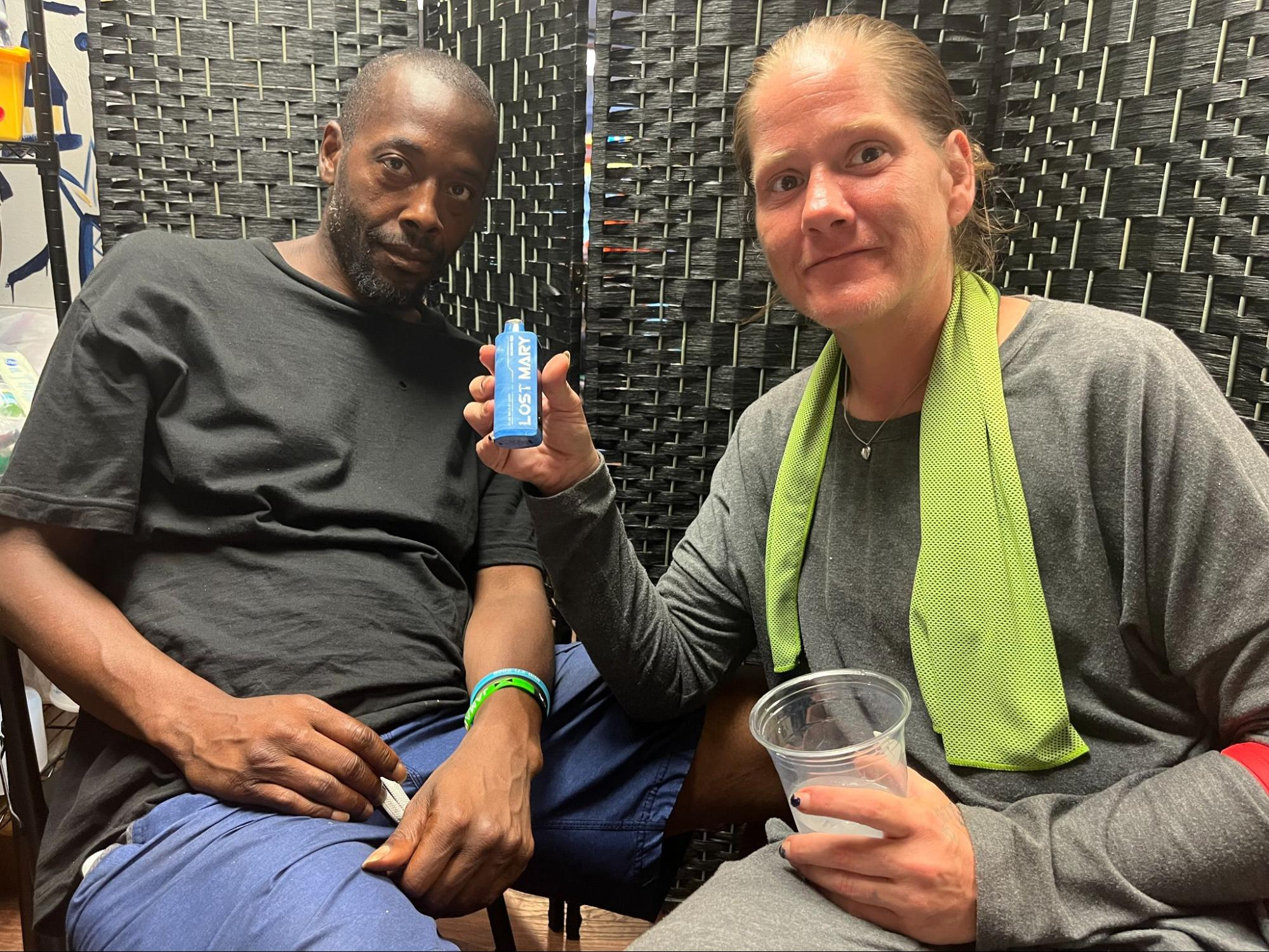
    Megan McDonald and Jerome Hayward at a drop-in center in Philadelphia’s Kensington neighborhood.

    A rising entrepreneur

    Tarrant rose in the rehab industry after getting his start vacuuming floors at a rehab company run by LaMitchell Person, a mentor who Tarrant credited for giving him “the opportunity to get sober and clean,” in an interview with a local news station in California. The two later became business partners.

    They were working together at a California rehab company in 2021 when a 22-year-old named Dean Rea died of a fentanyl overdose after leaving an associated sober home.

    Rea’s mother later accused Tarrant, Person, and other employees of contributing to the death in a lawsuit filed against the facility, Ken Seeley Communities. Neither Tarrant nor Person, then the facility’s executive director, was named as a defendant in the case.

    In court records, Rea’s mother claimed Tarrant falsely told Rea that his insurance wouldn’t cover more intensive treatment elsewhere.

    “Gus is, essentially, a salesman whose goal is to admit as many patients to KSC as possible,” their legal complaint said. The rehab company denied the allegations, and Rea’s suit was settled in a confidential agreement in 2023 for an undisclosed amount.

    In an interview this month, Person called the lawsuit’s claims inaccurate. “Fentanyl killed her son. Not Gus, not me, and not the organization,” Person said.

    By the time the suit was settled, Tarrant and Person had both left the business.

    In 2022, they filed paperwork to incorporate a company called Origin Addiction Services, based in Idaho, according to state corporate records. An official address on the website is a P.O. box in a Boise strip mall.

    The company’s website said it offered addiction recovery services such as interventions, sober companionship, counseling, and transportation.

    The company’s website featured an ‘about’ page with professional headshots of a nine-member executive team. All but three of those headshots appeared to be drawn from stock photo services, and The Inquirer was unable to trace the individuals to authentic social media or LinkedIn accounts.

    After The Inquirer contacted Person about the photos in September, all of them – except his own — were removed overnight. Person later said in a phone interview that the stock photos and some of the employee names were “placeholders,” but insisted that the staffers were real.

    The company filed paperwork to dissolve a year later; Person said it had never done business, and he and Tarrant went on to pursue separate endeavors.

    Person was in Philadelphia recruiting people at the intersection of Kensington and Allegheny Avenues in March, according to a city employee there to help people in addiction. Person handed him a business card identifying himself as a “regional director” of The Rehab Specialist, said the employee, whom The Inquirer is not naming because he was not authorized to speak to the media and feared losing his job.

    Person answered the phone this summer when The Inquirer called the Rehab Specialist’s general number, but he said he did not work there.

    In a follow-up interview this month, he said that Tarrant had hired him to build a call center for a California rehab, saying that was his only involvement with The Rehab Specialist.

    He said he had not come to Kensington and was not responsible for business cards that listed him as the regional director.

    “Gus wanted me to work for him, because we are friends,” Person said.

    Christina Gallo and Daniel Zehnder in McPherson Square Park in June.

    A dream dashed in California

    Desperate to get clean, Christina Gallo and Daniel Zehnder accepted the offer to fly to California after being recruited in Kensington earlier this year. A luxury van picked the couple up when they arrived at Los Angeles International Airport on May 3, they said.

    The driver took the couple to Gevs Recovery, a large gated house in a residential neighborhood in Northridge. Gevs has been licensed as a drug abuse recovery home since 2024. State records show that as of early August, no complaints about its care have been filed with the California Department of Public Health.

    Gallo and Zehnder said the Gevs house was dark and empty when they arrived, aside from a handful of employees. Gallo began to panic as drug withdrawal left her shaking and sweating, with a bloody nose and headache pangs that felt like she had stuck her finger in an electrical outlet.

    “I said, ‘What’s going on here? Where’s any of the nurses or the doctors?’” she recalled. “‘Who’s going to be taking care of us, medically?’”

    “We don’t do that here,” she remembers them saying. The Gevs employees told Gallo they could send her to a hospital, or give her some Tylenol, she said.

    Alarmed, Gallo and Zehnder decided to leave. On their way out, they said a woman descending the stairs told them she had just left the hospital after a month there.

    “Are you guys from Philadelphia, too?” Gallo recalled the woman asking.

    She and Zehnder headed to a cheap motel, but they didn’t feel they could stand the withdrawal effects and decided to buy drugs nearby. By the morning, their symptoms had grown worse, and they returned to Gevs to demand plane tickets home.

    Gevs agreed to buy the tickets, a requirement under California law for rehab centers that provide free one-way airfare.

    Kristine Kesh, an operations manager at Gevs, told The Inquirer the center does have medical staff on site and does offer medication treatment for withdrawal.

    “These clients have been addicts for most of their lives, and they come in expecting this glorious detox,” Kesh said. “Whatever they’re expecting is not realistic. I mean, you can’t help everybody.”

    At the airport, Gallo vomited on herself before collapsing to the ground in pain. Zehnder defecated and vomited on himself. An ambulance took them to the emergency room, where Gallo was placed in intensive care.

    After two days in the emergency room and the intensive care unit, Gallo and Zehnder were released. Zehnder’s mother paid for their flights home.

    While Zehnder was away, bills from Highmark started arriving at his mother’s house — even though he had been promised free treatment.

    The bill, which misspelled his last name, said he owed a $267 premium for the month of May. He said he also received a $700 bill for the ambulance ride from the LA airport to the emergency room, which he threw away.

    Six months after their disastrous trip, recovery feels as far away as when their return flight from California landed. At the Philadelphia airport, they hailed a cab and went straight to Kensington. They wanted to inject heroin, right away.

    Kensington Avenue near McPherson Square.
  • Some of Philly’s most vulnerable residents say they lost medical care without notice after millions of Pa. state agency letters went unsent

    Some of Philly’s most vulnerable residents say they lost medical care without notice after millions of Pa. state agency letters went unsent

    “Do you realize you are going to end my life by doing this?”

    Eliana Chernyakhovsky said she asked the question through an interpreter over and over again to the Pennsylvania Department of Human Services last week, after her 24-hour, state-funded care was cut off without warning. Her meal provider was also cut off. How would she feed herself? What if her oxygen tank ran out?

    “Fear had risen in my heart,” Chernyakhovsky said in Russian during an interview through an interpreter on Wednesday. “I was genuinely afraid.”

    Chernyakhovsky, 73, of Northeast Philadelphia, was born with spina bifida and has a number of physical disabilities associated with the condition, and uses a wheelchair to get around. She is among the Pennsylvania residents who say they have lost their government-funded services because a state-contracted mail vendor failed to deliver a month’s worth of agency mail.

    That breakdown resulted in 3.4 million letters never getting sent, 1.7 million of which were from the Pennsylvania Department of Human Services — the agency that oversees SNAP food assistance and Medicaid and is tasked with serving the state’s most vulnerable populations.

    Millions of letters from state agencies — including notices of health and SNAP benefit renewal, driver’s license and vehicle registration renewal invitations, vehicle registration cards, and more — were never sent by a mail presort vendor, who was contracted by the state to tray and sort agency mail in order to save money on postage. The failure went undetected for a month until early December, when Gov. Josh Shapiro’s administration fired Harrisburg-based Capitol Presort Services and hired another vendor on a $1 million emergency contract to work through the backlog.

    In Chernyakhovsky’s case, a letter dated Nov. 6 said she had failed to submit a renewal packet to continue receiving in-home care, said her attorney, Louise Hayes of Community Legal Services. Chernyakhovsky had 15 days to appeal to continue receiving services, or else her services would be shut off on Nov. 21.

    But due to the monthlong lapse in state agency mail, Chernyakhovsky did not receive the letter until last week, after funding for her in-home nurses and food services had already been cut off, she said.

    Chernyakhovsky’s home health aides opted to continue her care without pay, and with no assurance they would get paid for the time when her care was restored, because her needs are so great.

    Her services restarted last week thanks to efforts by Community Legal Services while her appeal works its way through the system. As of this week, one of her home health agencies has still not received payment from her insurance company.

    Alexander Aybinder, her day-shift nurse, said Wednesday it was still unclear when he would get paid. But he said he would still come to Chernyakhovsky’s home, no matter what.

    “I will come tomorrow, because she cannot stay without service. I will work,” he said. “She’s absolutely helpless.”

    DHS: Extended deadlines and ‘additional flexibility’

    DHS spokesperson Brandon Cwalina said in a statement Thursday the agency will extend deadlines for appeals and provide “additional flexibility for affected Pennsylvanians.” Residents affected by the mail issue will receive notice of their appeal options and deadline extensions, Cwalina said.

    Medicaid, CHIP, and TANF cash assistance recipients whose benefits were reduced or cut off during the mail delay will have their cases reopened, he added. These cases will be again reviewed to determine if the recipients received the necessary notification of a change in benefits. Renewals for the programs, originally due in December, are now due in January.

    DHS cannot extend renewal deadlines for SNAP benefits due to federal guidelines, but affected SNAP recipients who submit the necessary documentation within 30 days of losing their benefits will be able to have them reopened and backdated, Cwalina said.

    At least two dozen affected so far, with more expected

    At least two dozen Community Legal Services clients have had problems with receiving their benefits because of the mail delay, said Maripat Pileggi, a supervising attorney at CLS. The delay affected state agency letters dated Nov. 3 through Dec. 3, officials have said, and all unsent mail should be received by residents in a few days.

    And as the nonprofit legal agency has tried to help restore critical services to some of its most vulnerable clients, CLS attorney Lydia Gottesfeld said, legal advocates have struggled to reach the departments in DHS that could help them, with phone lines going unanswered or hour-long wait times.

    “It’s been very difficult to get information about these delays,” she added.

    Cwalina said Thursday that any DHS appeal hearings that were missed due to the mail disruption are being reopened and rescheduled, and the agency maintains that its callback system is accessible to recipients.

    Cases like Chernyakhovsky’s are among the first and most urgent that CLS has identified since the state said that a month’s worth of agency mail to residents from DHS and the Pennsylvania Department of Transportation was never sent. Residents like Chernyakhovsky who receive care through the Medicaid-funded home and community-based services program often have the most acute health issues and significant needs, meaning a loss in healthcare services can be catastrophic.

    Gottesfeld expects that more residents will realize in the coming weeks that they lost services — such as food assistance or health insurance — because of missed hearings or deadlines the next time they visit the doctor or grocery store.

    When people lose state-funded services, it is not usually because they suddenly no longer need them, Gottesfeld said. Rather, it is usually due to failing to submit paperwork properly, resulting in a loss of food assistance, healthcare, or other services.

    Questions remain

    It remains unclear how the state agency mail piled up for more than a month before officials noticed, how the backlog was discovered, or where the millions of agency letters were located after the vendor stopped sorting them.

    The reported loss of benefits stemming from the mail delay also comes after several tumultuous months for people who receive public benefits, following a federal government shutdown that cut food assistance, new work requirements to maintain benefits, and future uncertainty under federal cuts passed earlier this year. Shapiro was at the forefront of Democratic opposition to federal cuts to Medicaid and SNAP, and was a vocal critic when the department withheld benefits during the federal shutdown.

    On Thursday, a group of 15 state Senate Republicans, including top legislative leaders, sent a letter to the Pennsylvania Department of General Services citing The Inquirer’s reporting and requesting more information about how the mail delivery failure was discovered, why it took a month to find the backlog, and more.

    “Given the broad scope of this mail delivery failure, it is critical to ensure every effort is made to minimize the impact on our constituents and the disruption it may cause in their lives,” the senators wrote.

    Shapiro’s administration is “exploring all legal options” against the fired vendor, Capitol Presort Services, Cwalina said.

  • 10-year-old boy severely burned in Northeast Philadelphia plane crash comes home from hospital

    10-year-old boy severely burned in Northeast Philadelphia plane crash comes home from hospital

    The 10-year-old boy who was severely burned in the Northeast Philadelphia plane crash was headed home on Tuesday after spending nearly a year in the hospital, his grandmother, Alberta “Amira” Brown said.

    “It’s the best thing ever that he’ll be home for the holidays,” Brown said in the morning as the boy prepared to leave Weisman Children’s rehabilitation hospital in South Jersey. “He is truly happy to be coming home.”

    Ramesses Vazquez Viana, then 9, suffered burns to 90% of his body on Jan. 31 when a Learjet medical transport crashed on Cottman Avenue near the Roosevelt Mall, killing all six people on board.

    Ramesses had been riding in a car with his father, Steven Dreuitt Jr., and Dreuitt’s fiancée, Dominique Goods Burke. Dreuitt, 37, died in the blaze. Goods Burke, 34, died in April from her injuries after spending nearly three months at Thomas Jefferson University Hospital.

    A bystander saw Ramesses after he escaped from the car; the boy’s back was on fire, and his shirt was burned away.

    Police took Ramesses to St. Christopher’s Hospital for Children, and he was later airlifted to Shriners Children’s hospital in Boston. He underwent more than 40 surgeries, including multiple skin grafts. He spent months in physical therapy relearning how to get out of bed, walk and climb stairs, according family interviews with CBS News.

    His classmates from Smedley Elementary School in the Philadelphia’s Frankford neighborhood cheered him on from afar, writing him cards and sending videos.

    Ramesses celebrated his 10th birthday in October at the Boston hospital.

    “No matter how many times you knock him down, he’s strong,” his mother, Jamie Vazquez Viana, told CBS News last month.

    A few weeks ago, Ramesses was moved closer to his Philadelphia home to Weisman Children’s in Marlton, N.J.

    During a phone interview with The Inquirer, Brown said her grandson “has a long road ahead of him” and would need additional surgeries.

    During a visit with him Saturday, he kicked a soccer ball around with her.

    Brown confirmed a CBS report that Ramesses was being released from Weisman sometime Tuesday, but declined to provide specifics.

    Brown said her grandson has chilling memories from that night: He was in the car’s backseat texting with Brown at about 6 p.m. when the plane exploded in a giant fireball, and he heard loud booms.

    As flames engulfed the car, Ramesses tried to help his father, who couldn’t move his legs. The child heard his father yell to get out, and that he loved him. Ramesses told his father he loved him back. He could hear Goods Burke screaming.

    Steven Dreuitt Jr. and Goods Burke shared a teenage son, Dominick Goods, who is now a junior at Imhotep Institute Charter High School. Brown said her older grandson is “really struggling” with his parents’ deaths.

    The six passengers killed on the medical transport jet were Mexican nationals. They included the pilot and copilot, two medical personnel, an 11-year-old girl, and her mother. The girl was headed home to Mexico after undergoing treatment for a spinal condition at Shriners Children’s Philadelphia.

    More than a dozen people on the ground were injured, and 16 homes were badly damaged, temporarily or permanently displacing several families.

    Investigators with the National Transportation Safety Board haven’t yet determined why the plane crashed. A preliminary report, released earlier this year, found the cockpit voice recorder “had likely not been recording audio for several years.” No distress calls were made by the pilot or copilot.

  • How quiet is your hospital at night? See how patients rate Philly-area hospitals.

    How quiet is your hospital at night? See how patients rate Philly-area hospitals.

    Once considered the loudest hospital in the Philadelphia area, Riddle Hospital in Media has significantly reduced its nighttime noise levels, newly released federal data shows.

    At the Main Line Health Riddle hospital, only 12% of patients from the most recent survey rated the area around their room at night as “sometimes” or “never” quiet — down from 26% of patients surveyed between July 2022 and June 2023.

    Across the Philadelphia region, 52% of patients said their hospital room was “always” quiet at night. That’s slightly worse than nationally, where patients said hospitals were quiet throughout their stay 57% of the time.

    Virtua Mount Holly Hospital in New Jersey is now rated the loudest by patients.

    Nazareth Hospital in Northeast Philadelphia, owned by Trinity Health, was ranked the second loudest in the region.

    window.addEventListener(“message”,function(a){if(void 0!==a.data[“datawrapper-height”]){var e=document.querySelectorAll(“iframe”);for(var t in a.data[“datawrapper-height”])for(var r,i=0;r=e[i];i++)if(r.contentWindow===a.source){var d=a.data[“datawrapper-height”][t]+”px”;r.style.height=d}}});

    Quieter hospitals have benefits for both patients and staff, helping to lower anxiety levels, improve sleep quality, and ease the flow of communication.

    Riddle Hospital’s improvement follows construction of a new 230,000-square-foot patient pavilion that had temporarily increased noise at its Delaware County campus.

    “With the pavilion’s 2023 completion, as well as the resulting addition of more private rooms, noise is significantly reduced,” spokesperson Larry Hanover said.

    Reducing noise is also priority for Penn Medicine, whose Hospital of the University of Pennsylvania (HUP) was rated the quietest hospital among the 25,000 patients surveyed in the Philly-area.

    Chester County Hospital, also owned by Penn Medicine, was ranked the second quietest.

    The health system has made big investments in recent years to address noise levels at its hospitals, according to the university’s website. The Pavilion, which opened at HUP in Center City in 2021, was designed to reduce noise levels and nightly disruptions by separating nonclinical work from patient care areas.

    Each floor of the $1.6 billion building centers around an “offstage” area for staff to hold conversations and calls away from patient rooms that line the perimeter. The design of the rooms also allows care teams to check vitals and refill medications from the hallway, reducing nighttime disruptions.

    Here’s a look at how patients ranked their Philly-area hospitals on nighttime noise, according to the Centers for Medicare and Medicaid Service’s Hospital Consumer Assessment of Healthcare Providers and Systems data from October 2023 to September 2024.

    window.addEventListener(“message”,function(a){if(void 0!==a.data[“datawrapper-height”]){var e=document.querySelectorAll(“iframe”);for(var t in a.data[“datawrapper-height”])for(var r,i=0;r=e[i];i++)if(r.contentWindow===a.source){var d=a.data[“datawrapper-height”][t]+”px”;r.style.height=d}}});

  • As Philadelphia’s Riverview recovery house expands, residents describe a ‘whole new life’ away from Kensington

    As Philadelphia’s Riverview recovery house expands, residents describe a ‘whole new life’ away from Kensington

    Kevin Bean was a frail 125 pounds last February when he entered a brand-new recovery house, a facility where he landed after spending four years in the throes of addiction — at times on the streets of Kensington, the epicenter of the city’s drug crisis.

    The Frankford native was one of the first residents to enter the Riverview Wellness Village, the 20-acre recovery facility that Mayor Cherelle L. Parker’s administration opened in Northeast Philadelphia nearly a year ago as part of City Hall’s efforts to address opioid addiction and the Kensington drug market.

    Bean, now 46 and boasting a healthier frame, just celebrated one year of sobriety and is preparing to move out of Riverview early next year.

    He described his transition simply: “whole new life.”

    Much of the mayor’s agenda in Kensington has been visible to the neighborhood’s residents, such as increased law enforcement and a reduction in the homeless population. But the operations and treatment outcomes at Riverview, located down a winding road next to the city’s jail complex, happen largely outside of public view. Last spring, some city lawmakers complained that even they knew little about the facility operations.

    An inside look at the Riverview complex and interviews with more than a dozen residents and employees showed that, over the last year, the city and its third-party healthcare providers have transformed the facility. What was recently a construction zone is now a one-stop health shop with about 75 staff and more than 200 residents, many of whom previously lived on Kensington streets.

    Those who live and work at Riverview said the facility is plugging a hole in the city’s substance use treatment landscape. For years, there have not been enough beds in programs that help people transition from hospital-style rehab into long-term stability. The recovery house industry has been plagued with privately run homes that are in poor condition or offer little support.

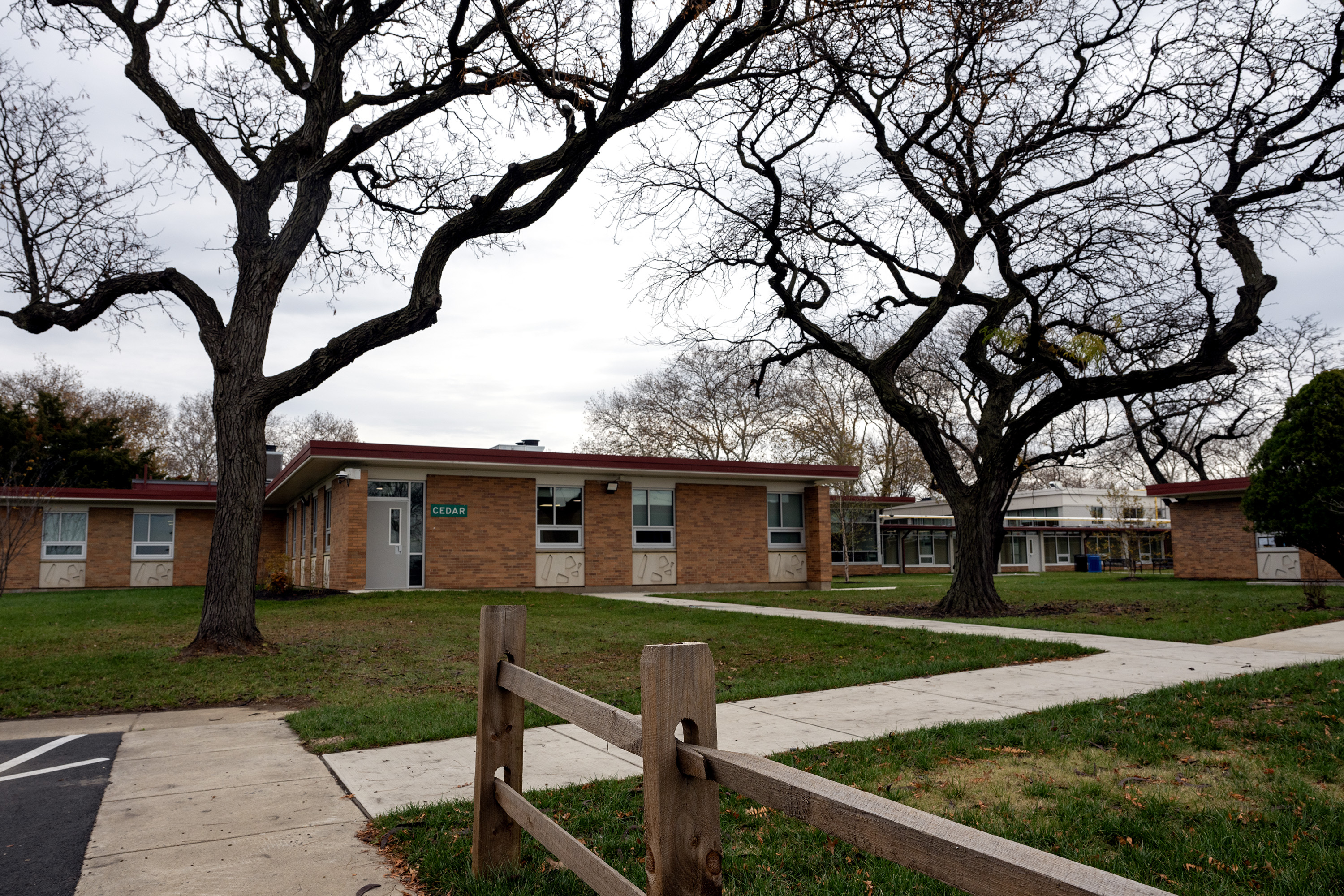
    The grounds and residence buildings at Riverview Wellness Village, a city-owned drug recovery home in Northeast Philadelphia.

    At its current capacity, Riverview has singularly increased the total number of recovery house beds in the city by nearly 50%. And residents — who are there voluntarily and may come and go as they please — have much of what they need on the campus: medical care, mental health treatment, job training, and group counseling.

    They also, as of last month, have access to medication-assisted treatment, which means residents in recovery no longer need to travel to specialized clinics to get a dose of methadone or other drugs that can prevent relapse.

    Arthur Fields, the regional executive director at Gaudenzia, which provides recovery services to more than 100 Riverview residents, said the upstart facility has become a desirable option for some of the city’s most vulnerable. Riverview officials said they aren’t aware of anywhere like it in the country.

    “The Riverview Wellness Village is proof of what’s possible,” Fields said, “when we work together as a community and move with urgency to help people rebuild their lives.”

    While the facility launched in January with much fanfare, it also faced skepticism, including from advocates who were troubled by its proximity to the jails and feared it would feel like incarceration, not treatment. And neighbors expressed concern that the new Holmesburg facility would bring problems long faced by Kensington residents, like open drug use and petty theft, to their front doors.

    But despite some tenets of the mayor’s broader Kensington plan still facing intense scrutiny, the vocal opposition to Riverview has largely quieted. Parker said in an interview that seeing the progress at Riverview and the health of its residents made enduring months of criticism “well worth it.”

    “I don’t know a Philadelphian who, in some way, shape, or form, hasn’t been touched by mental and behavioral health challenges or substance use disorder,” said Parker, who has spoken about how addiction shaped parts of her own upbringing. “To know that we created a path forward, to me, I’m extremely proud of this team.”

    Mayor Cherelle L. Parker places a new block on the scale model of the Riverview Wellness Village on Wednesday, Jan. 8 during the unveiling of Philadelphia’s new city-operated drug treatment facility. At left is Managing Director Adam Thiel. City Councilmember Michael Driscoll is at right.
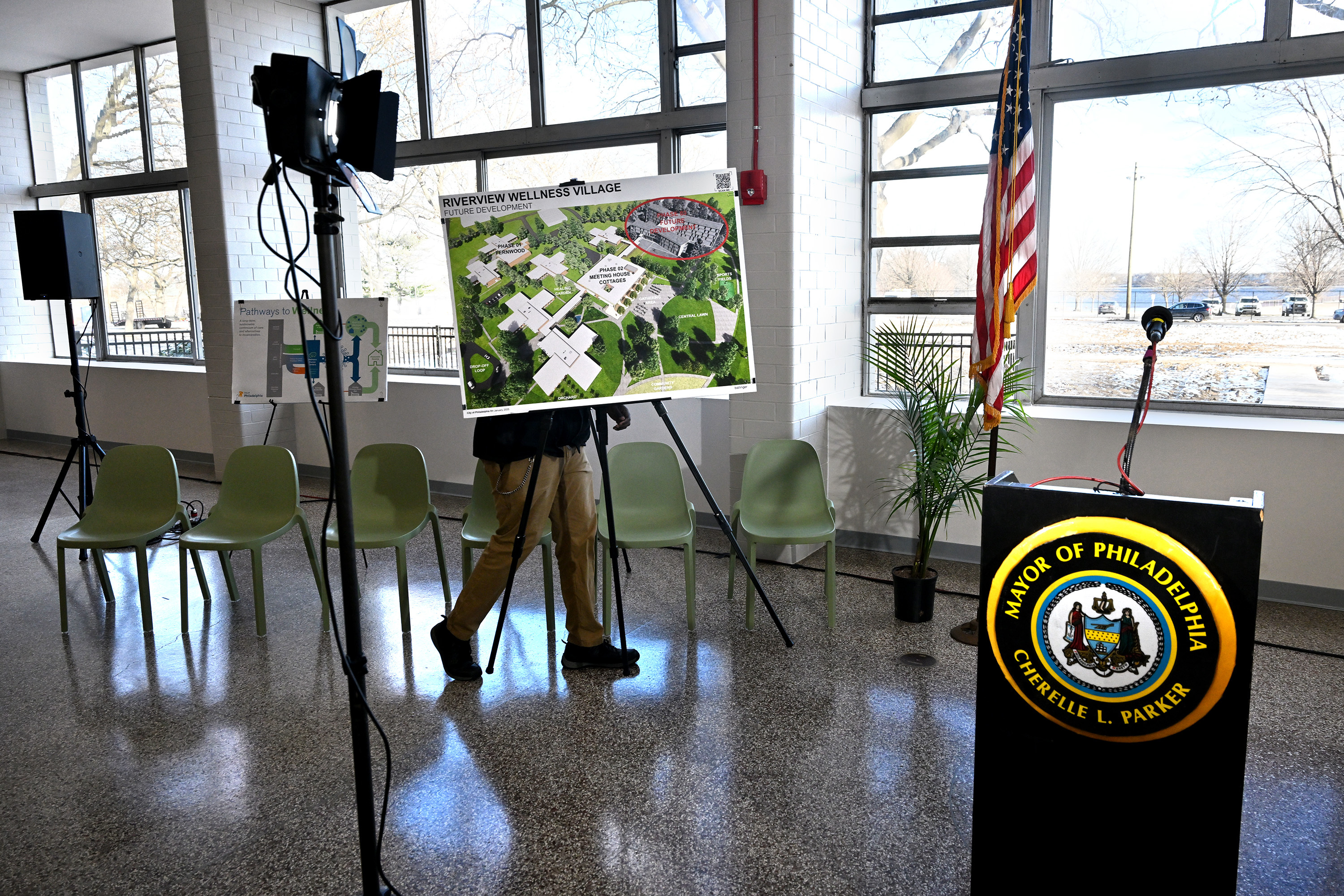
    Isabel McDevitt, executive director of the Office of Community Wellness and Recovery, points to a model with upcoming expansion at Riverview Wellness Village, a city-owned drug recovery home in Northeast Philadelphia on Nov. 25.
    Staffers move photos into place at the Riverview Wellness Village on Jan. 8 before the unveiling of Philadelphia’s new city-operated drug treatment facility.

    Meanwhile, neighbors who live nearby say they have been pleasantly surprised. Pete Smith, a civic leader who sits on a council of community members who meet regularly with Riverview officials, said plainly: “There have been no issues.”

    “If it’s as successful as it looks like it’s going to be,” he said, “this facility could be a model for other cities throughout the country.”

    Smith, like many of his neighbors, wants the city’s project at Riverview to work because he knows the consequences if it doesn’t.

    His son, Francis Smith, died in September due to health complications from long-term drug use. He was 38, and he had three children.

    Getting a spot at Riverview

    The sprawling campus along the Delaware River feels more like a college dormitory setting than a hospital or homeless shelter. Its main building has a dining room, a commercial kitchen, a gym, and meditation rooms. There are green spaces, walking paths, and plans for massive murals on the interior walls.

    Katherine Young, director of Merakey at Riverview Wellness Village, talks with a resident at the city-owned drug recovery home in Northeast Philadelphia on Nov. 25.

    Residents live and spend much of their time in smaller buildings on the campus, where nearly 90% of the 234 licensed beds are occupied. The city plans to add 50 more in January.

    Their stays are funded through a variety of streams. The city allocated $400 million for five years of construction and operations, a portion of which is settlement dollars from lawsuits against pharmaceutical companies that manufactured the painkillers blamed for the opioid crisis.

    (function() {
    var l2 = function() {
    new pym.Parent(‘RIVERVIEW_MAP2.html’,
    ‘https://media.inquirer.com/storage/inquirer/projects/innovation/arcgis_iframe/RIVERVIEW_MAP2.html’);
    };
    if (typeof(pym) === ‘undefined’) {
    var h = document.getElementsByTagName(‘head’)[0],
    s = document.createElement(‘script’);
    s.type = ‘text/javascript’;
    s.src = ‘https://pym.nprapps.org/pym.v1.min.js’;
    s.onload = l2;
    h.appendChild(s);
    } else {
    l2();
    }
    })();

    To get in to Riverview, a person must complete at least 30 days of inpatient treatment at another, more intensive care facility.

    That is no small feat. There are significant barriers to entering and completing inpatient treatment, including what some advocates say is a dearth of options for people with severe health complications. Detoxification is painful, especially for people in withdrawal from the powerful substances in Kensington’s toxic drug supply.

    (function() { var l = function() { new pym.Parent( ‘riverview-flowchart__graphic’, ‘https://media.inquirer.com/storage/inquirer/ai2html/riverview-flowchart/index.html’); }; if(typeof(pym) === ‘undefined’) { var h = document.getElementsByTagName(‘head’)[0], s = document.createElement(‘script’); s.type = ‘text/javascript’; s.src = ‘https://pym.nprapps.org/pym.v1.min.js’; s.onload = l; h.appendChild(s); } else { l(); } })();

    Still, residents at Riverview have come from more than 25 different providers, according to Isabel McDevitt, the city’s executive director of community wellness and recovery. The bulk were treated at the Kirkbride Center in West Philadelphia, the Behavioral Wellness Center at Girard in North Philadelphia, or Eagleville Hospital in Montgomery County.

    They have ranged in age from 28 to 75. And they have complex medical needs: McDevitt said about half of Riverview’s residents have a mental health diagnosis in addition to substance use disorder.

    She said offering treatment for multiple health conditions in one place allows residents to focus less on logistics and more on staying healthy.

    “Many of the folks that are at Riverview have long histories of substance use disorder, long histories of homelessness,” she said. “So it’s really the first time a lot of people can actually breathe.”

    When new residents arrive, they go through an intake process at Riverview that includes acute medical care and an assessment for chronic conditions. Within their first week, every resident receives a total-body physical and a panel of blood work.

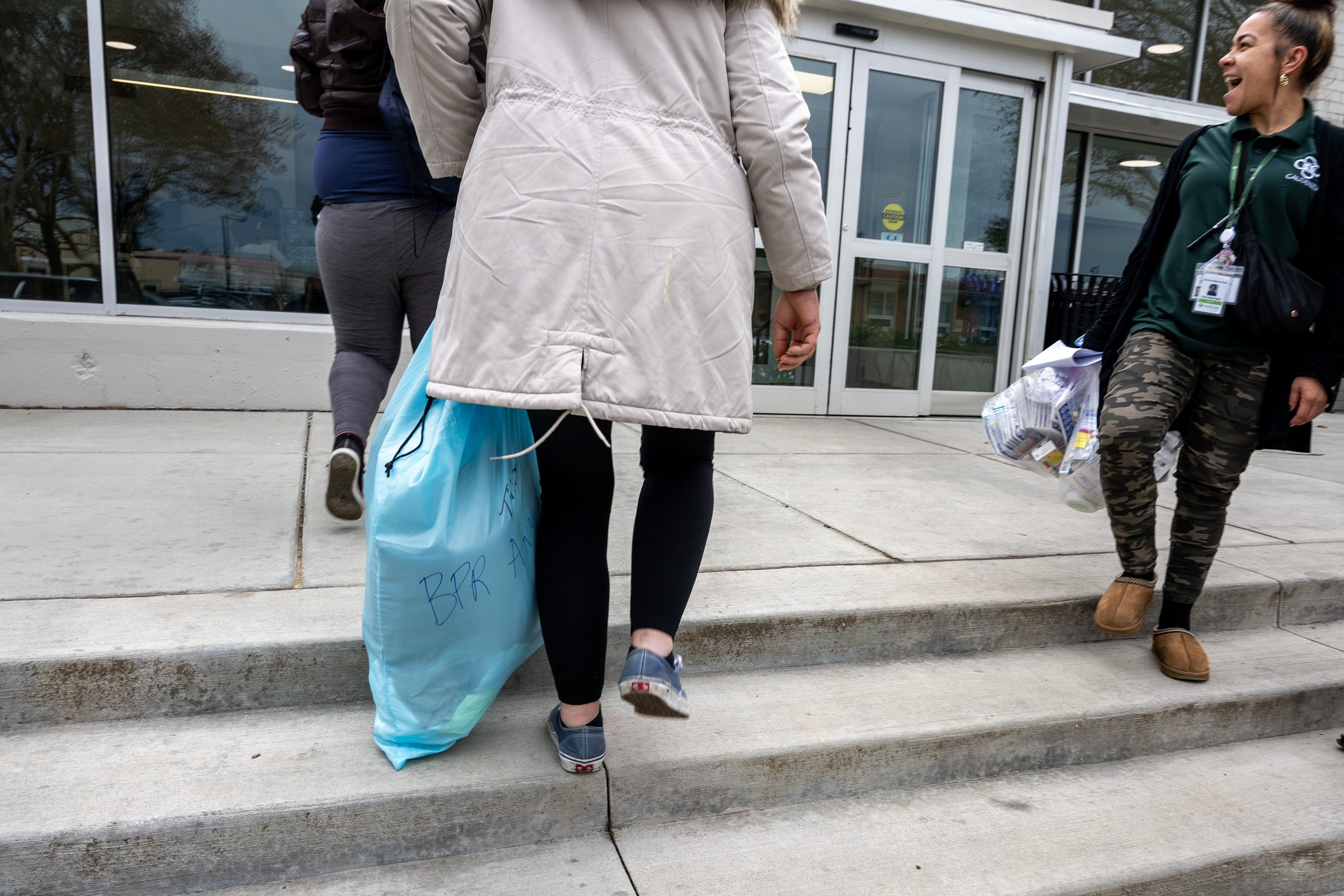
    “They literally arrive with all of their belongings in a plastic bag and their medications and some discharge paperwork,” said Ala Stanford, who leads the Black Doctors Consortium, which provides medical services at Riverview. “We are the ones who greet them and help get them acclimated.”

    Stanford — who this fall announced a run for Congress — said doctors and nurses at Riverview have diagnosed and treated conditions ranging from drug-related wounds to diabetes to pancreatic cancer. And patients with mental health needs are treated by providers from Warren E. Smith Health Centers, a 30-year-old organization based in North Philadelphia.

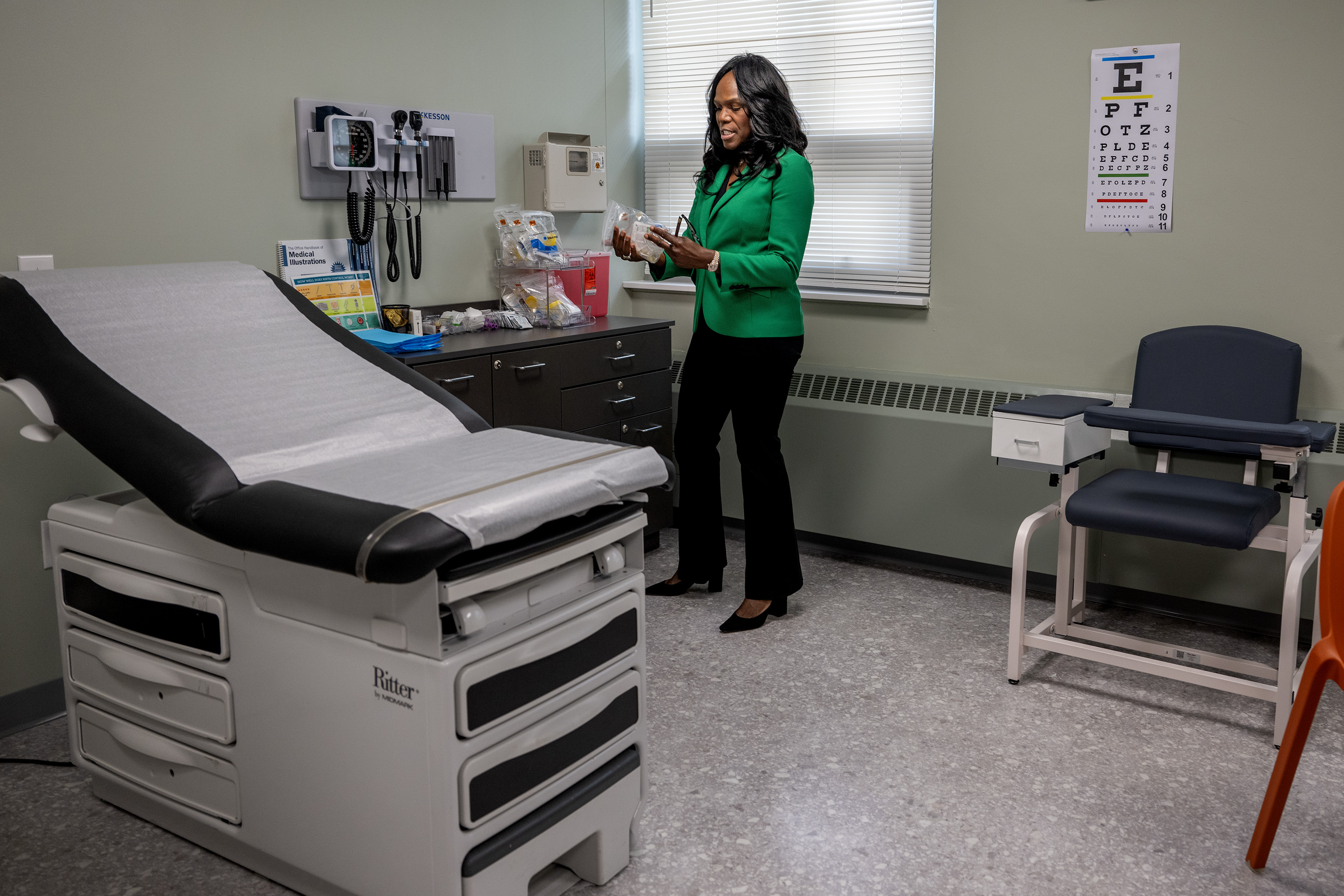
    Physician Ala Stanford in an examination room at the primary medical care center run by her Black Doctors Consortium at Riverview Wellness Village, a city-owned drug recovery home in Northeast Philadelphia, on Nov. 25.
    Francesca Colon (right), a recovery support professional with Gaudenzia, brings people in recovery to the main entrance of the Meetinghouse at Riverview Wellness Village on Nov. 25.

    Residents’ schedules are generally free-flowing and can vary depending on their wants and needs. About 20% have jobs outside the campus. Culinary arts training will be available in the next month or so. And residents can meet with visitors or leave to see family at any time.

    They also spend much of their time in treatment, including individual, family, and group therapy. On a recent day, there were group sessions available on trauma recovery, managing emotions, and “communicating with confidence.”

    Vernon Kostic, a 52-year-old Port Richmond native who said he has previously been homeless, has been in and out of drug treatment facilities for years.

    He said he’s been content as a Riverview resident since July, and called it “one of the smartest things that the city has ever done.”

    “We have the doctor’s office right over here,” he said. “They’ve got counseling right here. Everything we need. It’s like a one-stop recovery place.”

    Resident Vernon Kostic heads to a group meeting at Riverview Wellness Village on Nov. 25.
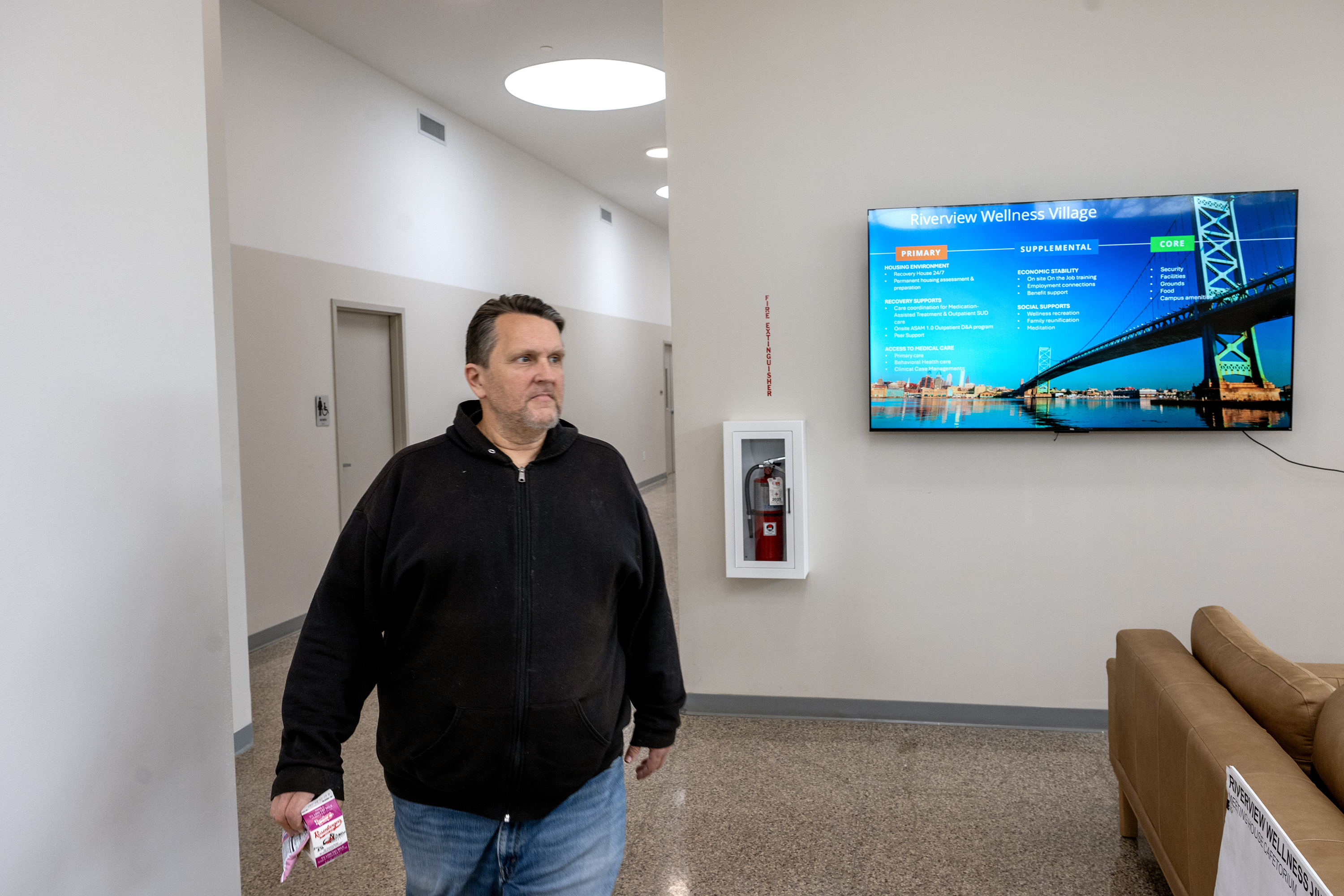
    The dining room and meeting room in the Meetinghouse at Riverview Wellness Village. At rear left is a brand-new, industrial, restaurant-quality kitchen that was not operational yet on Nov. 25.

    Finding ways to stay at Riverview

    Finding success in recovery is notoriously hard. Studies show that people who stay in structured sober housing for at least six months after completing rehab see better long-term outcomes, and Riverview residents may stay there for up to one year.

    But reaching that mark can take multiple tries, and some may never attain sobriety. McDevitt said that on a monthly basis, about 35 people move into Riverview, and 20 leave.

    Some who move out are reunited with family and want to live at home. Others simply were not ready for recovery, McDevitt said, “and that’s part of working with this population.”

    Fields said a resident who relapses can go back to a more intensive care setting for detoxification or withdrawal management, then return to Riverview at a later time if they are interested.

    “No one is punished for struggling,” he said. “Recovery is a journey. It takes time.”

    Providers are adding new programming they say will help residents extend their stays. Offering medication-assisted treatment is one of the most crucial parts, said Josh Vigderman, the senior executive director of substance use services at Merakey, one of the addiction treatment providers at Riverview.

    Entry to the primary medical care center run by the Black Doctors Consortium at Riverview Wellness Village.
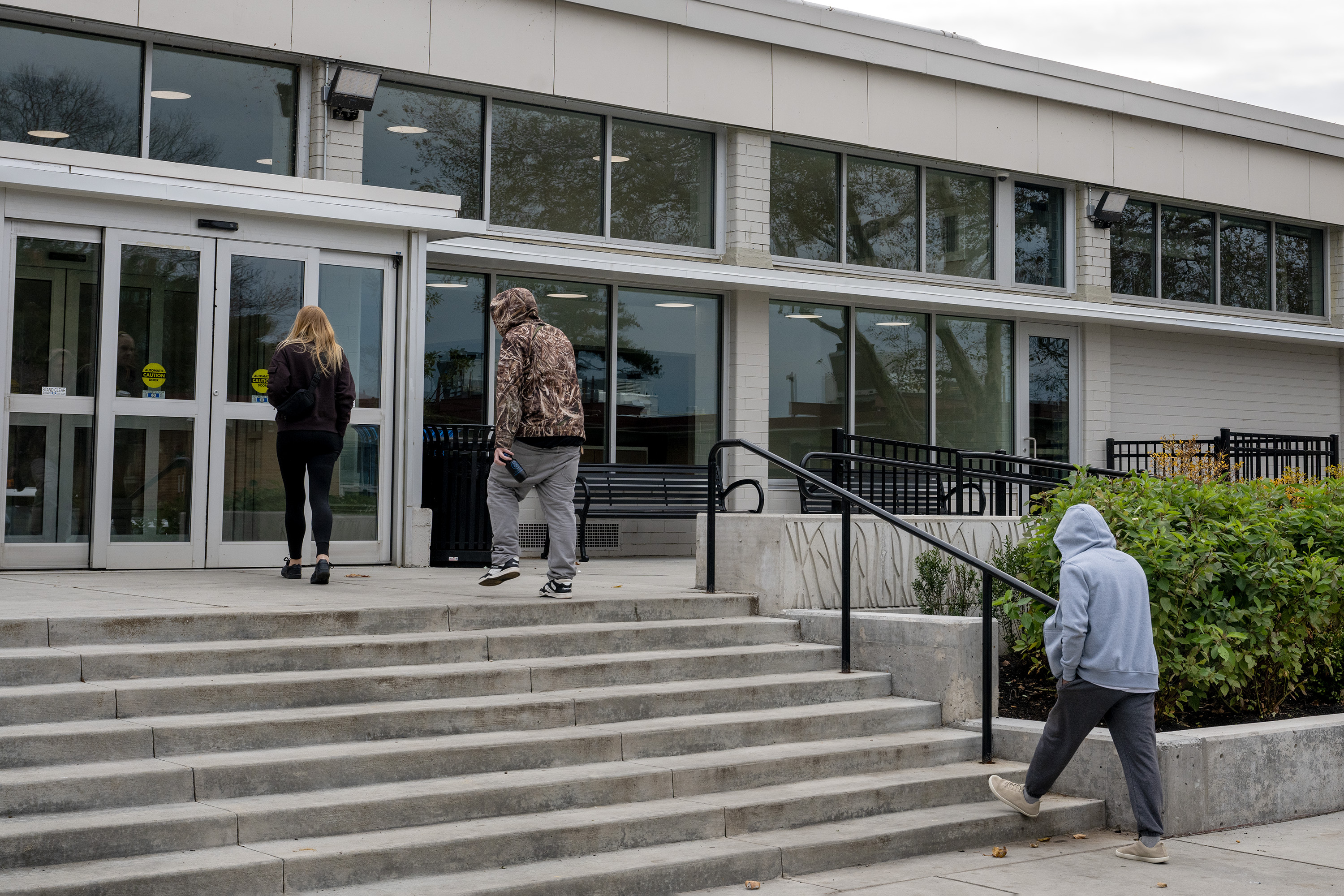
    The main entry Meetinghouse at Riverview Wellness Village.
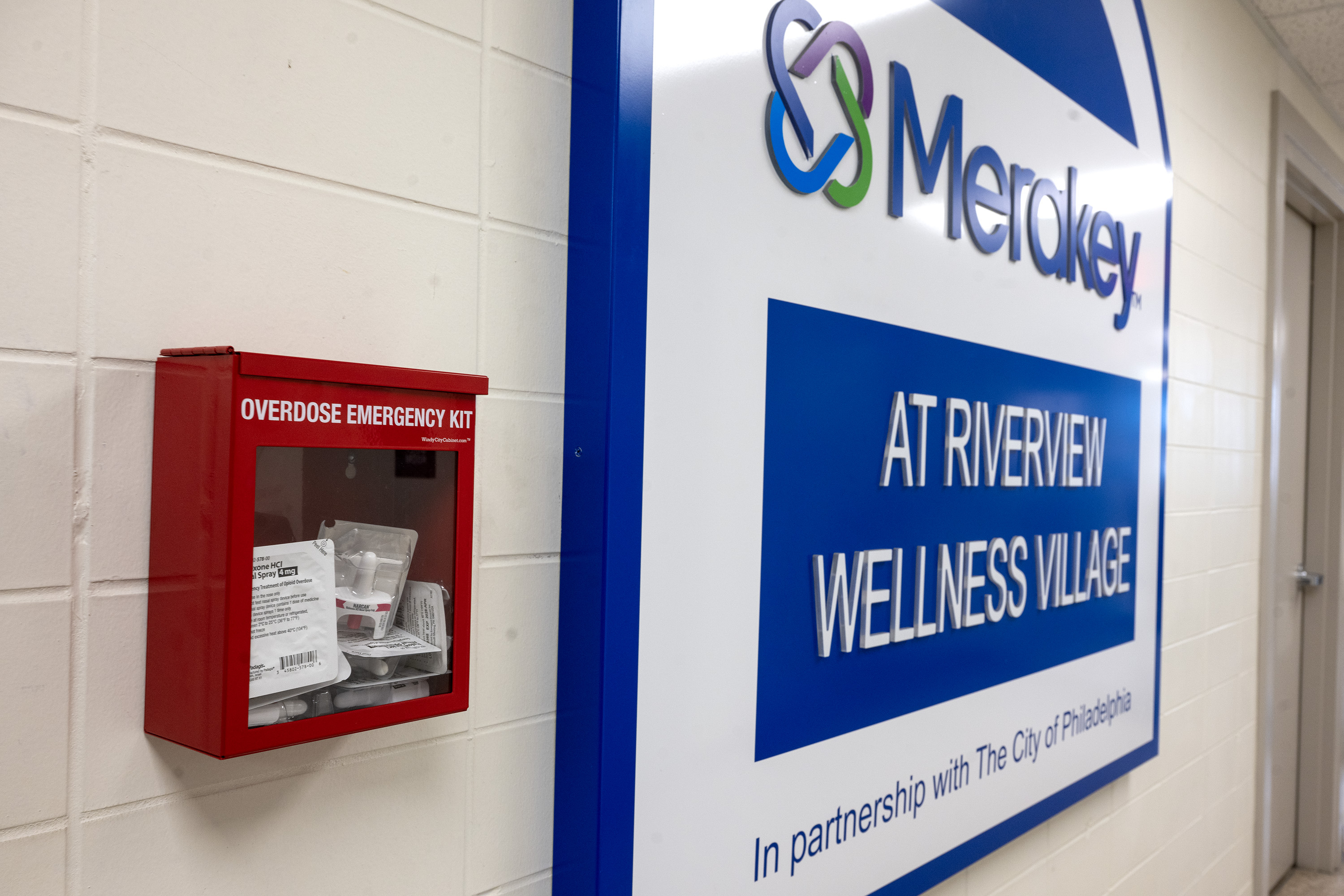
    Naloxone (Narcan) in an “overdose emergency kit” at Riverview Wellness Village.

    In the initial months after Riverview opened its doors, residents had to travel off campus to obtain medication that can prevent relapse, most commonly methadone and buprenorphine, the federally regulated drugs considered among the most effective addiction treatments.

    Typically, patients can receive only one dose of the drug at a time and must be supervised by clinicians to ensure they don’t go into withdrawal.

    Vigderman said staff suspected some residents relapsed after spending hours outside Riverview, at times on public transportation, to get their medication.

    This fall, Merakey — which was already licensed to dispense opioid treatment medications at other locations — began distributing the medications at Riverview, eliminating one potential relapse trigger for residents who no longer had to leave the facility’s grounds every day.

    Interest in the program has been strong, Vigderman said, with nearly 80 residents enrolling in medication-assisted treatment in just a few weeks. Merakey is hiring more staff to handle the demand.

    What’s next at Riverview

    The city is eying a significant physical expansion of the Riverview campus, including a new, $80 million building that could double the number of licensed beds to more than 500. That would mean that about half of the city’s recovery house slots would be located at Riverview.

    Development and construction of the new building, which will also house the medical and clinical facilities, is likely to take several years.

    Parker said the construction is “so important in how we’re going to help families.” She said the process will include “meticulous design and structure.”

    “The people who come for help,” she said, “we want them to know that we value them, that we see them, and that we think enough of them to provide that level of quality of support for them.”

    In the meantime, staff are working to help the center’s current residents — who were among the first cohort to move in — plot their next steps, like employment and housing.

    A rendering of the new, $80 million five-story building to be constructed on the campus of Riverview Wellness Village. It will include residences and medical suites.

    That level of support, Vigderman said, doesn’t happen in many smaller recovery houses.

    “In another place, they might not create an email address or a resumé,” he said. “At Riverview, whether they do it or not is one thing. But hearing about it is a guarantee.”

    Bean is closing in on one year at Riverview. He doesn’t know exactly what’s next, but he does have a job prospect: He’s in the hiring process to work at another recovery house.

    “I’m sure I’ll be able to help some people,” he said. “I hope.”

  • In North Philly, Congreso de Latinos Unidos has spent five decades being ‘here for you’ | Philly Gives

    In North Philly, Congreso de Latinos Unidos has spent five decades being ‘here for you’ | Philly Gives

    The litany of horrors never stopped:

    For more than an hour, one domestic violence survivor after another stepped up to the microphone with tales of pain and resilience.

    “When people get close to me, I flinch because I’m afraid they are going to abuse me,” said one woman, speaking in Spanish, her words translated into English by a staffer at Congreso de Latinos Unidos, a nonprofit social services agency in North Philadelphia that provides help with housing, education, medical needs, workforce training, and after-school activities for youngsters.

    Congreso is celebrating its 48th year in operation, and for 30 of those years, it has maintained a program to support people dealing with, and trying to escape from, domestic violence.

    “I was never allowed to go outside. He would show up at my job,” the woman continued in a room decorated with purple balloons, the color symbolizing domestic violence. Each year, Congreso honors survivors and mourns, in a few moments of poignant silence, the people who lost their lives to domestic violence. Last year, in Pennsylvania, there were 102.

    “He would bruise my face so I couldn’t see my family. I worked in a nightclub, and he would drag me out … No one wanted to get involved,” she said.

    No one, until Congreso did and helped relocate her to a new home.

    Jannette Diaz, president and CEO of Congreso, outside the group’s offices in North Philadelphia.“We’re all feeling the crunch,” she said of recent funding challenges.

    “It takes a lot of courage to come up here and share your story,” Ramona Peralta, Congreso’s director of family wellness, said as the woman finished speaking. “We’re very proud of you, and we are here for you all the way.”

    In the main room, the mood vacillated between the heavy silence of shared pain and the cheerful clamoring of babies. Later, there was music, and before, a friendly lunch of rice with pork and chicken.

    Across the hall, members of the Asociación de Cosmetologas de Pennsylvania offered free hairstyling to the women who attended the celebration.

    Congreso, as part of its program to teach police, educators, social workers, and others to recognize signs of domestic abuse, had trained this group, as well, and because of the intimacy of their work, the stylists were uniquely positioned to do so. More than most, beauty salon operators could readily see the bruises hidden under hair and makeup. They could feel the cuts and scars on the scalp. And then there were the confidences confessed during shampoos and stylings.

    Wanda Gómez, of the Blessings of God beauty salon, styles Franyeimi Abreu’s hair at Congreso’s offices.

    Among the volunteers was Wanda Gómez, owner of the Blessings of God beauty salon in Northeast Philadelphia. “Thank God, I’m no longer in that situation,” she said, speaking through a translator. But because she survived domestic violence, she said she’s in a better position to help others. She tells them about Congreso.

    Elisa Zaro Doran, owner of Dominican Divas Beauty Salon in Olney, twisted a strand of hair around a curling iron as she styled Maria Rodriguez’s long, dark hair. Like Gómez, Doran survived domestic abuse. “The first time, when he hit me, we were having a lot of problems, so I thought it was normal,” Doran said.

    He’d even come into her beauty salon and hit her. “My clients would try to defend me,” she said. Eventually, when her son tried to protect her, she knew she had to take the necessary steps to get away and be safe — for herself and her children.

    Rodriguez was there yesterday to support her daughter, who survived domestic violence, but still lives in fear — which is the reason she would only agree to be interviewed if her name was not used. “He told me that it doesn’t matter how many years — he will come and burn down my house with me in it,” she said.

    Hairdresser Domaris Rodriguez shows her artistry on Raquel Mendez’s hair.

    Rodriguez’s daughter turned to Congreso for help after Thanksgiving a few years ago. Her oldest son told her that day that he would no longer live with her, because every night he dreamed of killing his father. He couldn’t stay and watch the beatings or watch his father, in a rage, destroy the furniture in their home.

    “I don’t know how many dining room tables I bought,” the daughter said.

    On that Thanksgiving, she told her husband he had to leave. It was the end of the relationship, but the beginning of a new nightmare. He followed her to work and even stood in the pharmacy, watching her as she managed the office.

    Counseling at Congreso helped her name her situation for what it was — abuse. “They made me see that I was in danger,” and that what she thought was normal was anything but. In group sessions, she learned a critical lesson: “I understood that I wasn’t the only one. They made me know it wasn’t my fault.”

    She’s still afraid to leave her home. “I’m going through anxiety, PTSD. It still affects me.”

    As she watched her mother get her hair styled, Rodriguez’s daughter hoped her mother would absorb a lesson from the stories she would hear. The daughter wanted her mother to understand the intergenerational legacy of abuse because she believes her mother also suffered from domestic violence.

    That abuse, Rodriguez’s daughter believes, impacted both her and her sister, whose abuser stopped hitting her only when he thought she was dead. She teaches her sister lessons learned from counseling at Congreso. Counseling includes helping women develop a safety plan.

    Rodriguez’s daughter brings her own little girl, 13, to Congreso’s counseling groups for children impacted by domestic violence. “I’m saving my sister’s life, and I’m saving my daughter’s life,” she said. As for her sons, “I’m not raising abusers,” as she reminds them to respect their girlfriends.

    Last month’s celebration in honor of the survivors of domestic abuse took center stage that day at Congreso, but Congreso’s programming benefits many more people in the community, 75% of whom are Latino, said Jannette Diaz, president and chief executive.

    Diaz grew up a few blocks from Congreso, and her father relied on the nonprofit for help with the family’s utility bills.

    These days, she spends time working on strengthening relationships with fellow nonprofit agencies and with Congreso’s friends in the donor community.

    “We’re all feeling the crunch,” Diaz said, describing a double whammy in mid-October of the state’s failure to pass a budget as the national government moved into another week of shutdown. Congreso gets much of its funding from government reimbursements for services provided.

    At Congreso, “we’re very mindful of our spending. So far, we’re continuing to provide services at 100%, but there’s only so much we can do, tapping into our reserves and our line of credit.”

    “Sometimes it’s heavy, but I’m also hopeful,” Diaz said, explaining that the twin state and federal budget crises required a sharper focus even as demand for services increases. Changes in Medicaid regulations may impact finances at Congreso’s health center, for example.

    But, she said, donors can be confident their dollars are being spent wisely.

    Why? Because as nonprofits come and go, Congreso has survived, thanks to providing trauma-informed and culturally responsive services that are informed by data to its clients, Diaz said.

    “We’ve been around for 48 years, and there’s a reason for that. And that is how we operate within our community,” she said. “We forge a trusting relationship, and we try our best to do what they need. It’s important that we make sure our programs have impact.”

    And that impact, Diaz said, goes beyond help given directly to clients. When Congreso assists a first-time home buyer in qualifying for and landing a mortgage, that homeowner becomes a Philadelphia taxpayer, benefiting the community.

    When someone like Gary DeJesus-Walker earns a CDL truck-driving license through Congreso’s workforce training program, he can go on to build a trucking business. Now he employs three people.

    “Congreso — they changed my life,” he said. “From trucking, I started two other companies.” With Congreso’s CDL program, “if you need a second chance, you can have one for the rest of your life. This is a way you can provide for and feed your family, forever.”

    The stories are an inspiration to Diaz.

    “Even in this season,” she said, “we can strategize and design services that our community needs. We’re not paralyzed by this crisis, and in terms of moving the needle forward, we’re progressing.”

    This article is part of a series about Philly Gives — a community fund to support nonprofits through end-of-year giving. To learn more about Philly Gives, including how to donate, visit phillygives.org.

    For more information about Philly Gives, including how to donate, visit phillygives.org.

    About Congreso de Latinos Unidos

    Mission: To enable individuals and families in predominantly Latino neighborhoods to achieve economic self-sufficiency and well-being.

    People served: 13,435 unique clients served in fiscal year 2025.

    Annual Spending: $30 million

    Point of Pride: Trademarked Primary Client Model that drives Congreso’s bilingual and bicultural approach to delivering services in a client-centered, data-informed, and culturally responsive way, whether a community member is receiving support in education, workforce development, housing, health, or family services.

    You can help: Become a monthly donor, a member of Congreso’s Corporate Advisory Council, or a volunteer in the Congreso Cares Program. Volunteers help with participating in program initiatives like Congreso’s free tax preparation, supporting program and agency events, and assisting with fundraising.

    Support: phillygives.org

    To get help:

    866-723-3014 (Philadelphia Domestic Violence Hotline)

    215-763-8870 (Congreso)

    What your Congreso donation can do

    • $25 can help provide food baskets to individuals living with HIV.
    • $50 can help cover past-due utility bills and prevent shutoffs for a family to stay safe in their home.
    • $100 covers an immunization visit at the Congreso Health Center for a child entering the school system.
    • $200 provides a new uniform or professional wardrobe for a community member entering the workforce.
    • $250 provides a semester of after-school programming for a high school student.
  • Philly is poised to launch a retirement savings program for workers without 401(k)s

    Philly is poised to launch a retirement savings program for workers without 401(k)s

    Philadelphia could soon become the first American city to establish its own retirement savings program for residents whose employers don’t offer one.

    City Council is poised to pass legislation that would enable the plan, called PhillySaves, which is modeled on similar state-facilitated “auto-IRA” programs that have been increasingly established across the country.

    The idea is that workers would be automatically enrolled in the city-managed plan and would contribute through payroll deductions at no cost to their employer. The plan would then follow employees, even as they change jobs.

    Council President Kenyatta Johnson, a Democrat, said during a committee hearing on the legislation last week that the program is an anti-poverty measure aimed at generating wealth for more than 200,000 Philadelphians who do not have access to a retirement savings plan through their job.

    “We want to make sure we are lifting all Philadelphians out of poverty, building generational wealth, and ensuring our seniors are financially stable in retirement,” Johnson said.

    A Council committee approved the legislation following a hearing last week, and the full Council is expected to pass it. Voters would have to approve the creation of an investment management board through a ballot question, which could come as early as the May primary election.

    Councilmember Cindy Bass, a Democrat who represents parts of North and Northwest Philadelphia, called the plan a “game changer.”

    “There was a time when you could retire just on Social Security alone,” she said. “That day has come and gone.”

    How would the program work?

    Workers would be automatically enrolled in the plan with a default contribution rate of 3 to 6% of their wages, however they can opt out or change their contributions at any time.

    Employers that do not offer their own retirement plans would be required to sign up. Their only responsibility would be facilitating the payroll deductions for their employees. There is no matching program for employers or the city.

    City Councilmember Mike Driscoll, a Democrat who represents parts of Northeast Philadelphia and is sponsoring the legislation, emphasized last week that there is “no cost” to employers and no fiduciary liability.

    “The goal is to make it easy for employees who want to save,” he said, “and not burden employers who are already managing their many responsibilities.”

    In this 2023 file photo, Council President Kenyatta Johnson (left) greets 6th District Councilmember Michael J. Driscoll (center) and Councilmember At-Large Katherine Gilmore Richardson (right) before the last City Council meeting of the year.

    The legislation includes minimal fines for employers who don’t enroll employees. But Council members said the city will launch a significant public education and outreach campaign before levying fines.

    Who is the program for?

    Under the current version of the legislation — which could still be amended — the program applies to businesses with at least one employee. It must have been operating in Philadelphia for at least two years.

    Auto-IRA plans are especially geared toward hourly workers who generally have fewer employer-covered benefits, such as 401(k) plans, as well as people who work for small businesses that can’t afford to provide retirement benefits.

    Is this a new thing?

    Twenty states have passed legislation creating their own auto-IRA plans and 16 programs are open to participants, according to the Center for Retirement Initiatives at Georgetown University.

    Pennsylvania is not among them, but New Jersey launched a state-run retirement savings program last year. That plan, called RetireReady NJ, was first established in 2019 and signed into law by Gov. Phil Murphy, a Democrat.

    As of July, more than 18,000 workers were saving through the program, according to the state’s Department of the Treasury.

    It is more limited than Philadelphia’s would be, in that it only applies to businesses with at least 25 employees. Philadelphia’s would apply to businesses with just one.

    Gov. Phil Murphy speaks with members of the media after meeting with Governor-elect Mikie Sherrill at the governor’s office in Trenton on Nov. 5.

    Two other cities — New York and Seattle — passed legislation enabling auto-IRA programs, but neither was implemented because both New York and Washington states enacted state-run programs that include the cities.

    The Democratic-controlled Pennsylvania State House passed legislation in 2023 along party lines enabling a similar program called Keystone Saves, but it stalled in the Republican-controlled Senate.

    Treasurer Stacy Garrity, a Republican now running for governor, has for years advocated for the program’s passage.

    How will the investments be managed?

    The city would create a nine-member Retirement Savings Board, which would include four appointees by the mayor, four by the City Council president, and one by the city controller.

    That board would be responsible for facilitating the program and may contract third-party consultants, financial advisers, actuaries, and other experts to manage the investments.

    Why does the money go into a Roth IRA?

    The program defaults to a Roth IRA, though people covered can elect to switch to a traditional IRA.

    John Scott, director of the retirement savings project at Pew Charitable Trust, said during the Council hearing last week that Roth IRAs are often the default in auto IRA programs because participating employees can pull money out of those accounts at any time without taxes or penalty.

    He said that’s especially appealing to workers “who sometimes have fluctuations in their work schedule or they might have a financial shock.”

    “For many of these workers in these programs, this is really the first opportunity to save money,” Scott said. “So, you know, life happens. And sometimes they do need to pull that money out, and the Roth IRA is really the best vehicle to do that.”

    When will this become reality?

    Creating the board that will oversee the investments requires a change to Philadelphia’s Home Rule Charter, the city’s governing document.

    If Council passes legislation and Mayor Cherelle L. Parker signs it — both are expected to support it — then voters could approve the change through a ballot question as early as May.

    The legislation says the program must be launched by July 2027, however there are exceptions in the case of legal challenges or a state-level program superseding the city’s.