Tag: Olympics

  • Travis Sanheim learned hard work growing up on a grain farm in small-town Canada. It helped make him an Olympian.

    Travis Sanheim learned hard work growing up on a grain farm in small-town Canada. It helped make him an Olympian.

    There were no Christmas or birthday presents from Shelly and Kent Sanheim this year for their kids and grandkids. They combined everything into one big present for each family member.

    But those tickets to Italy weren’t for a typical family vacation. Instead, the tickets for three of their kids and their families were bought early in the hope that their brother, Travis Sanheim, had done enough to book his own trip to the 2026 Milan Cortina Olympics and represent Canada.

    The cancellation option, added just in case, was not needed.

    Around 8 a.m. Mountain Time on the morning of New Year’s Eve, the Flyers defenseman called his parents to give them the news that they needed to work on their Italian. The phone rang as they were making their way through airport security, going from Vancouver, British Columbia, to Calgary, Alberta, as they followed the Flyers on their Western Canada trip.

    “I guess maybe three, four years ago, he never thought he would have a shot at this, and now he’s going to, hopefully, bring back a gold, right?” Kent said. “So I don’t know what else to say. I guess, it’s just, I don’t know, it’s hard. It brings tears to my eyes.”

    There was a lot of emotion as Kent and Shelly spoke to The Inquirer a few hours later on the concourse at the Scotiabank Saddledome, the rink where Travis starred for the Hitmen of the Western Hockey League during his junior career. The emotions filled the rink, as it was a family affair with everyone, including his twin brother, Taylor, his teammate in the WHL, there to watch Travis play for the Flyers and celebrate his big moment.

    This is what the Sanheims are all about: family.

    ‘Where the Great Plains begin’

    Driving through the prairies of Canada, the chartreuse of the canola fields can be mesmerizing as the sun hits the bright yellow that stretches across seemingly endless miles. Across that open land, not far from the 100th meridian and tucked into the town of Elkhorn, Manitoba, is one of those fields with some wheat intermixed. In this town of about 500 people, with no street light and one K-12 school, is where Travis Sanheim learned all about responsibility, work ethic, and dedication.

    “Being out on a farm, you get firsthand … how much work my family puts in and being able to help out, at a young age, I remember skipping school for harvest, jumping in the combine, and helping mom and dad out with harvest … and just how excited I was to be able to help and be a part of it,” the 29-year-old defenseman said recently.

    Born and raised a 3½-hour drive west of Winnipeg, Travis grew up wanting to be like Kent and would help him out on the farm as much as he could. He would help plant crops in the spring and harvest them in the fall and complete daily chores throughout the year. If he didn’t help, there would be no time for hockey. And for Travis, it was all about the hockey.

    “Just a die-hard, loved the game — always has,” Shelly said of a young Travis. “Always excited to go to the rink and wanted to go to the rink.

    “It’s funny, I see on Twitter or whatever about Trav being the last one off the ice and working on things, and I’m like, ‘This is this kid his entire life.’”

    Elkhorn is where Travis fell in love with hockey. He always wanted to play, and he and Taylor even would try to scrape off the dugout, a storage reservoir on the farm, to go one-on-one. And while Kent would stay on the farm to work, they’d pile into the car and Shelly would drive them to the local community rink.

    They never wanted to leave.

    “As long as they didn’t look in the waiting room, they didn’t think they ever had to go home because I’d be knocking on the glass and pointing to my watch, and they just would never look up,” she said with a laugh.

    “And then they got to stay longer at the rink. He would always be the last one on the ice, if possible. We dragged him off.”
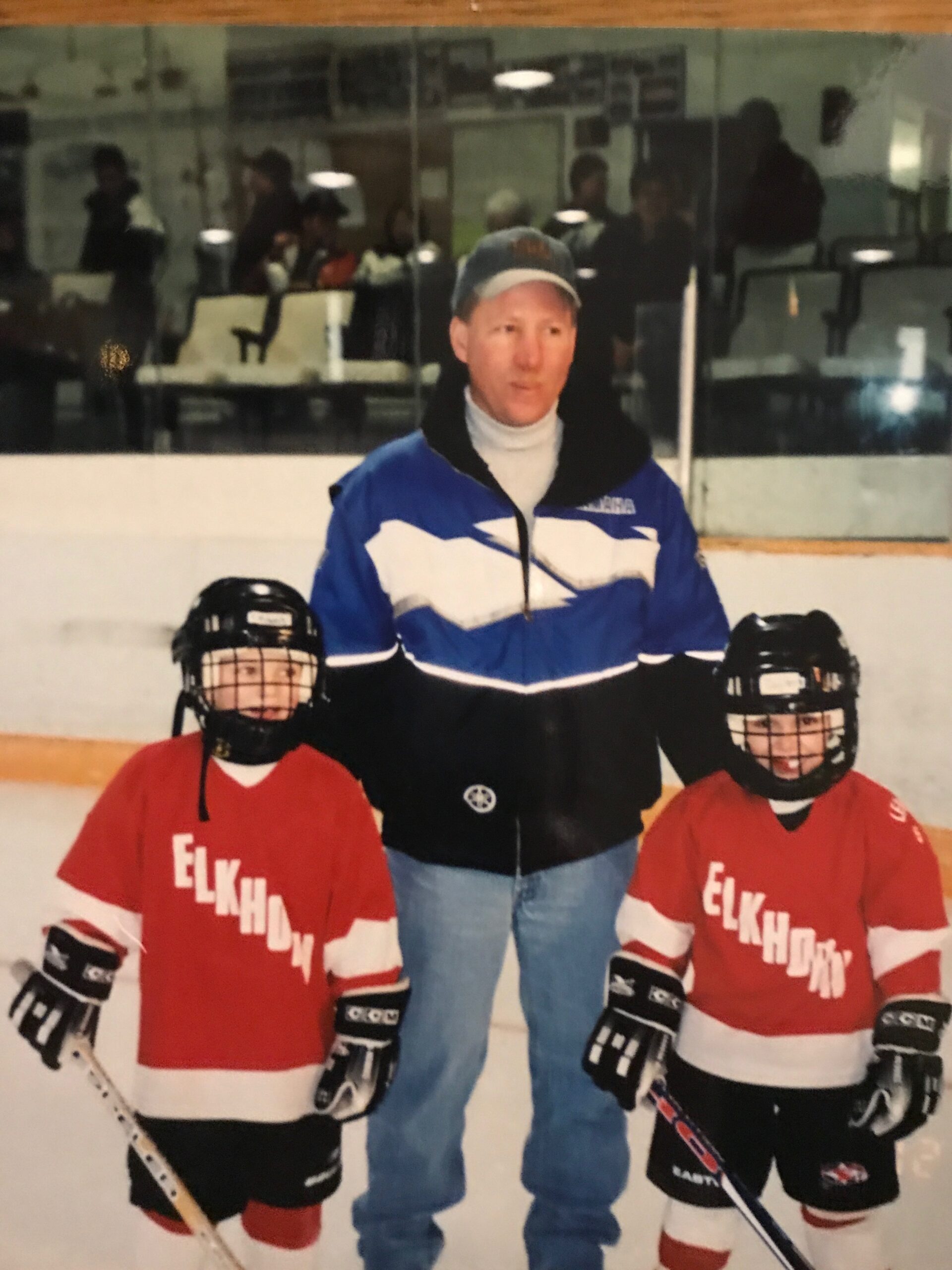
    Kent Sanheim with his twin sons, Travis and Taylor, when they played youth hockey in Manitoba.

    Wheat Kings and hockey things

    At some point growing up, Travis got a key to the rink, which often was open, anyway, in the town that sits near Manitoba’s border with Saskatchewan. While the temperatures could dip well into the teens in the winter months, he’d call his buddies to get games of shinny going with him and his brother.

    “We did everything together,” Travis said of Taylor. “A lot of battles in the basement, playing hockey against each other. That’s kind of where my competitiveness, I would say, came from. … Was really lucky to have the opportunities that I did growing up, that I was able to skate as much as I was, and had the guys that pushed me, and obviously, my brother was a huge reason as to why.”

    The duo also would hit a frozen pond on Boxing Day before watching Canada compete at World Juniors — a fitting tradition for a family that has a sign in the living room asking people not to disturb them because they’re watching hockey. And Travis remembers sitting in front of the television as Sidney Crosby crushed the hearts of Americans everywhere with his golden goal against the U.S. at the 2010 Vancouver Olympics.

    As a 13-year-old, he just wanted to make the NHL; he never expected to now be lining up alongside the all-time great seeking a gold medal.

    “Super excited,” he said. “Obviously, a dream come true. Getting to represent your country and playing in the Olympics and being an Olympian means a lot, and something that I never really thought was possible, but now that it’s here, and then I get the chance to do it, just really excited.”

    Sanheim has donned the maple leaf several times before, including at the 2013 World Under-17 Hockey Challenge and the 2014 U18 World Championship, snagging a bronze medal at the latter; the 2016 World Juniors; and the 2022 and 2025 World Championships, winning silver four years ago.

    Travis Sanheim celebrates after Canada’s victory in the 4 Nations Face-Off last February.

    And he surprised many across Canada last year when he was named to the team for the 4 Nations Face-Off tournament, which the Canadians won. Now he’s going for Olympic gold.

    “You never know, there’s so many good players in Canada. They could take a second team and probably still medal with the second team,” Shelly said. “So, you know, just the fact that he was in the mix was a thrill for us, and then to have the dream come true here just — I think I’m still shell-shocked over it. It’s hard to believe.”

    ‘Across the icy world’

    Tampa Bay Lightning and Team Canada coach Jon Cooper isn’t one to show his hand. However, the way he spoke of Sanheim in November in the bowels of the Lightning’s Benchmark International Arena — with a Cheshire Cat-like grin on his face — there was no denying that the defenseman was on his short list.

    “You see these players, you compete against these players, but you don’t really know till you have them,” Cooper said. “And I’ve always, I’ve really liked his game. I’m a big fan of big [defensemen] that take up a lot of space and can skate, and he can do all those things. But his ability to jump into plays, he’s got an offensive mind to him.”

    After nearly being traded in 2023, Travis Sanheim has developed into a bona fide top-pair defenseman.

    Sanheim has come a long way from being a little nervous and wide-eyed at Hockey Canada’s first practice in Brossard, Quebec, ahead of the 4 Nations Face-Off last February. And while he didn’t start the tournament in the lineup, by the end — half because of injury and half because of his performance with the versatility to play right and left defense — he was not just skating in the championship game, but Cooper had him out there for the first shift of overtime.

    “He was good. … Travis got thrown in when one of the guys, when [Shea Theodore] got hurt, probably,” said Vegas Golden Knights coach Bruce Cassidy, an assistant on Cooper’s staff.

    “Real good player, steady player, liked his pace, transported pucks, got involved. … I think both [he and Thomas Harley] ended up playing a little bit on the right side, and there was no hesitancy to get up the ice and join the rush. And I think that’s the type of team Coop wanted to build, so he fit right in.”

    There will be comfort now for Sanheim, having skated on the same team as some of the game’s biggest names like Crosby, Connor McDavid, Cale Makar, and Nathan MacKinnon. And he’ll surely be comfortable because he’ll be able to look up whenever he wants to see his family in the stands in Milan, Italy.

    And he’ll surely be thinking about how far he’s come from his days on a farm in Elkhorn, Manitoba, a place Shelly says “gives him some time for clearing his head and stuff.” He hasn’t been able to spend too much time there with all his hockey adventures, but it circles back to the biggest question heading into the Games, which for Sanheim will begin Thursday against Flyers teammate Dan Vladař and Czechia (10:40 a.m., USA and Peacock).

    When we spoke to Kent on the Flyers fathers’ trip in 2023, he revealed that “if he can’t make the playoffs, you better get home to help me work.”

    So how about now that his son is heading to the Olympics to represent his town, his province, and Canada?

    “I cut him a little slack now,” Kent said with a chuckle, “but we’ll take his help if he’s coming.”
  • Everyone loves Olympic curling — and some even think it looks easy. So how hard can it be?

    Everyone loves Olympic curling — and some even think it looks easy. So how hard can it be?

    When your social media algorithm starts feeding you videos of Snoop Dogg, and Jason and Kylie Kelce learning how to curl, it must be time for the Winter Olympics.

    Curling, which officially became an Olympic sport in 1998, has already kicked off with mixed doubles, in which Team USA claimed a silver medal, its first ever medal in the event.

    Men’s curling started on Wednesday and women’s curling on Thursday — featuring a local athlete: Marple Newtown High School graduate Taylor Anderson-Heide.

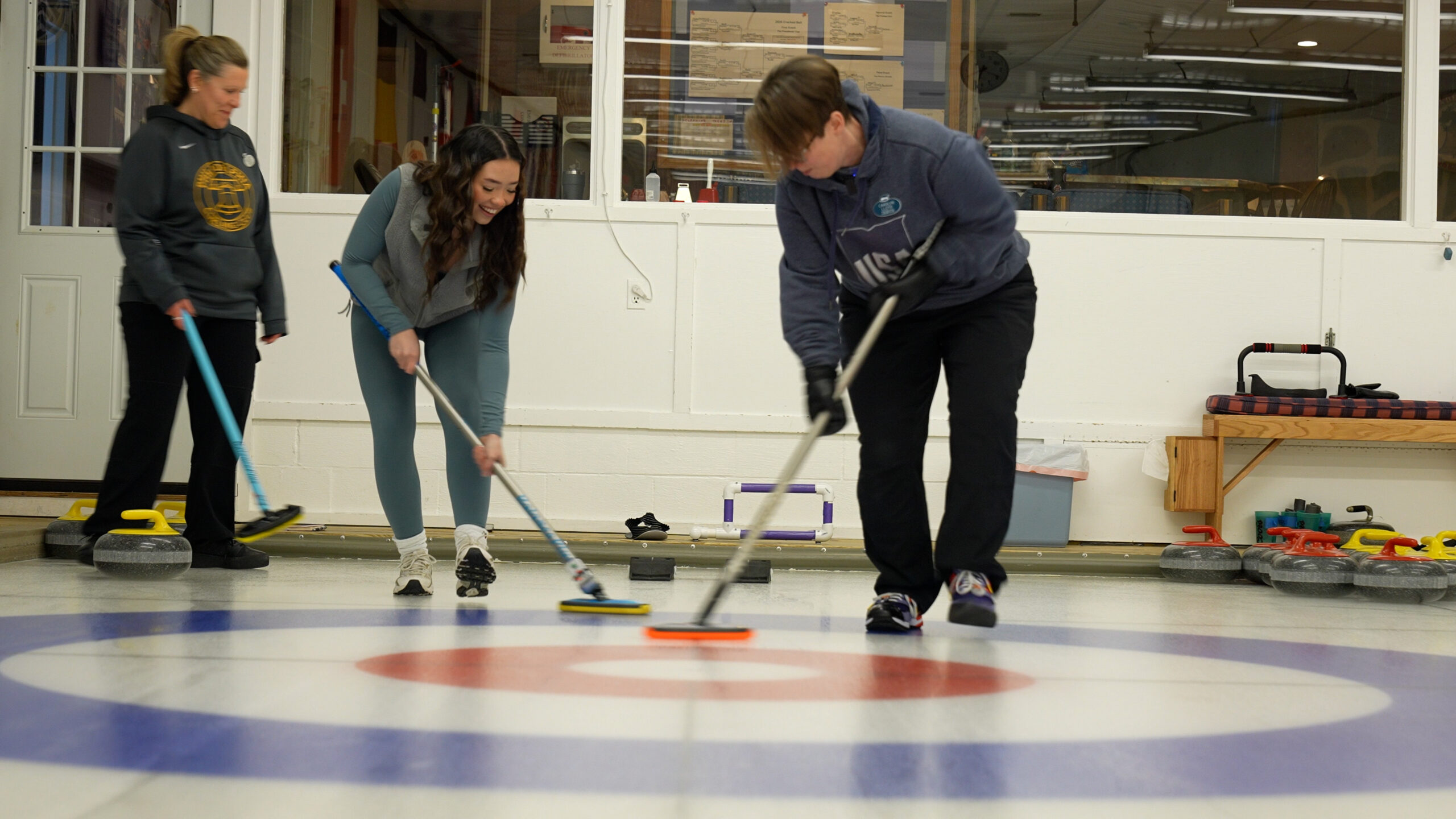
    Ahead of the Milan Olympic Games, similar to the Kelces and Snoop Dogg, I had the opportunity to get some hands-on training. Here’s a look about the training that goes into the sport, my own experience on the ice, and some local places to play.

    Do you really train for curling?

    Curling can look effortless on television, but looks can be deceiving.

    Daniel Laufer, 19, a freshman at Thomas Jefferson University from Richboro, Bucks County, who has been curling for 12 years, had the opportunity to compete on this year’s Olympics ice at the Cortina Olympic Stadium in Italy during last year’s World Junior Curling Championships as a member of Team USA.

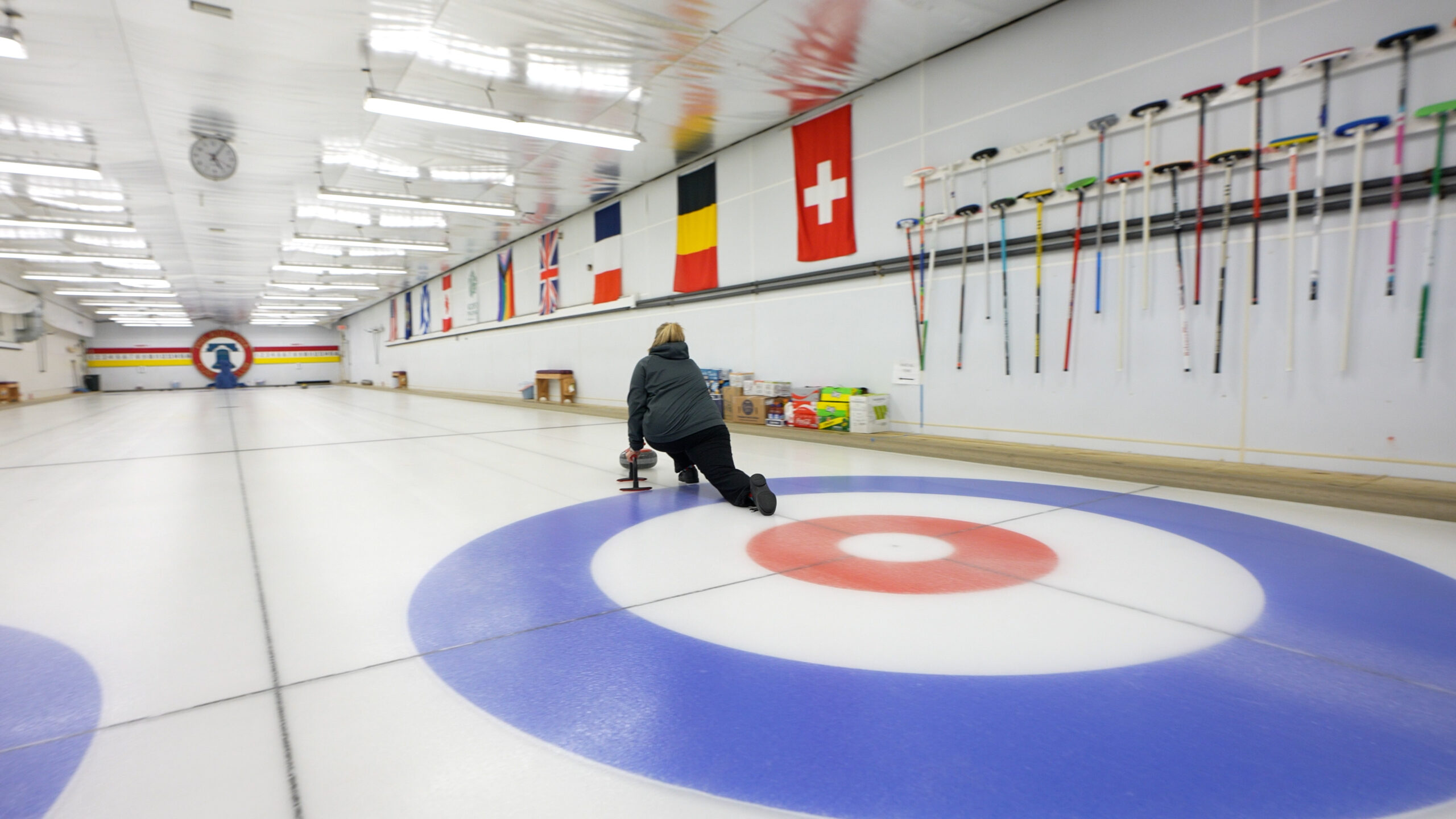
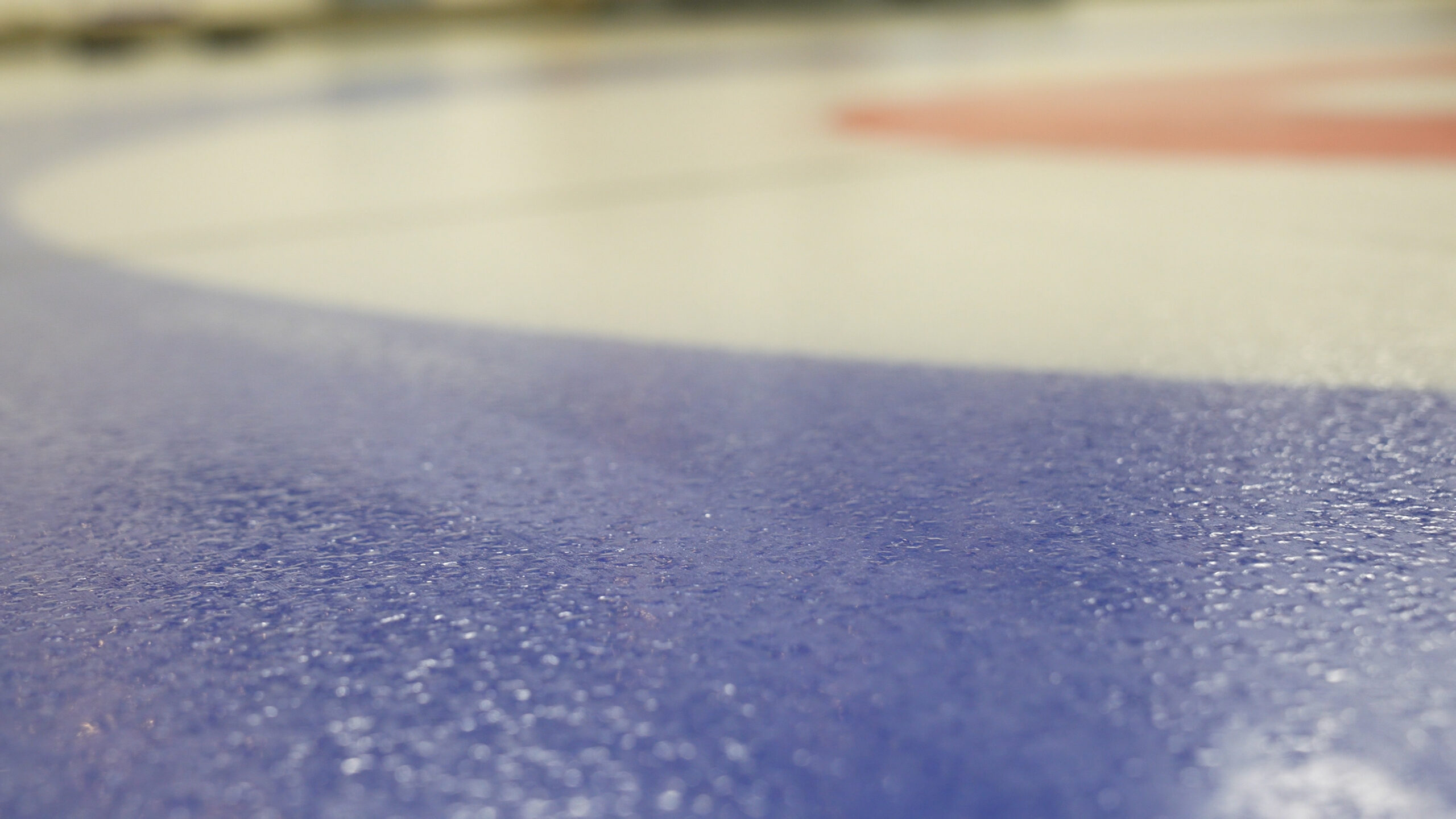
    The ice at the Olympic curling center in Milan, like the ice seen here at the Philadelphia Curling Club in Paoli, is pebbled, which is different than the smooth ice you’d find at a Flyers game.

    “That was a really great experience,” Laufer said. “[The ice] was really good. Obviously, not as good as it is for the Olympics. They were still figuring out the facilities and figuring out the rocks. We had a really good experience with that venue.”

    This year, Laufer again will be competing in the World Junior Curling Championships, just outside Copenhagen, Denmark, from Feb. 24 through March 3. Ahead of the event, he’s been training, working on his strength and cardio.

    “I usually try to lift four to five times a week and do a significant amount of cardio,” Laufer said. “When I was training specifically for Worlds last season, I had like three months where I was practicing five days a week. Practices are like two hours long. I probably throw 50 to 60 rocks every practice.

    “That’s what a higher level training regiment looks like. But, it looks different for everybody.”

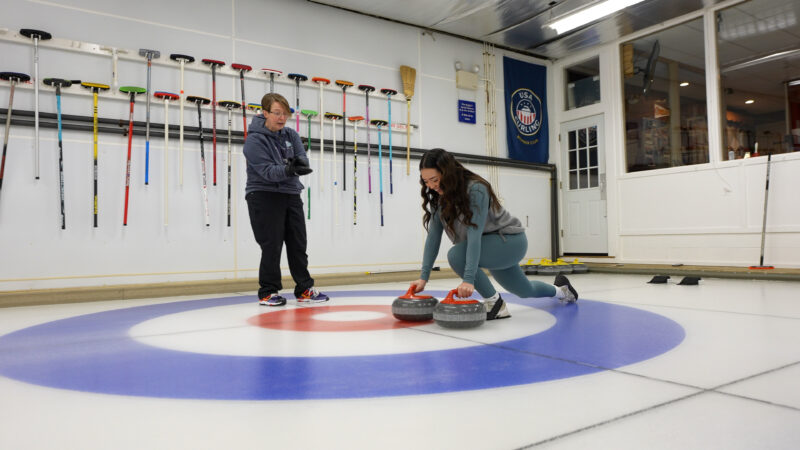
    Inquirer reporter Ariel Simpson (center) gets instructions on how to sweep from Carolyn Lloyd (right) at the Philadelphia Curling Club in Paoli.

    How hard is curling?

    Not everyone trains like Laufer, especially amateurs. So how difficult is curling for the average person? I recently had the opportunity to get a hands-on experience at the Philadelphia Curling Club in Paoli with Carolyn Lloyd, a member for 20 years.

    “I love exposing people to something that’s so special,” said Lloyd, who lives in Collegeville. “People don’t realize just how special it is. It’s different from a lot of sports, certainly in its culture. This sport captures my whole heart.”

    Before this I had never stepped foot on ice — other than the sheet that covered my driveway for two recent weeks. So, I knew this was going to be a bit of a challenge, but Lloyd was more than up to the task of teaching me.

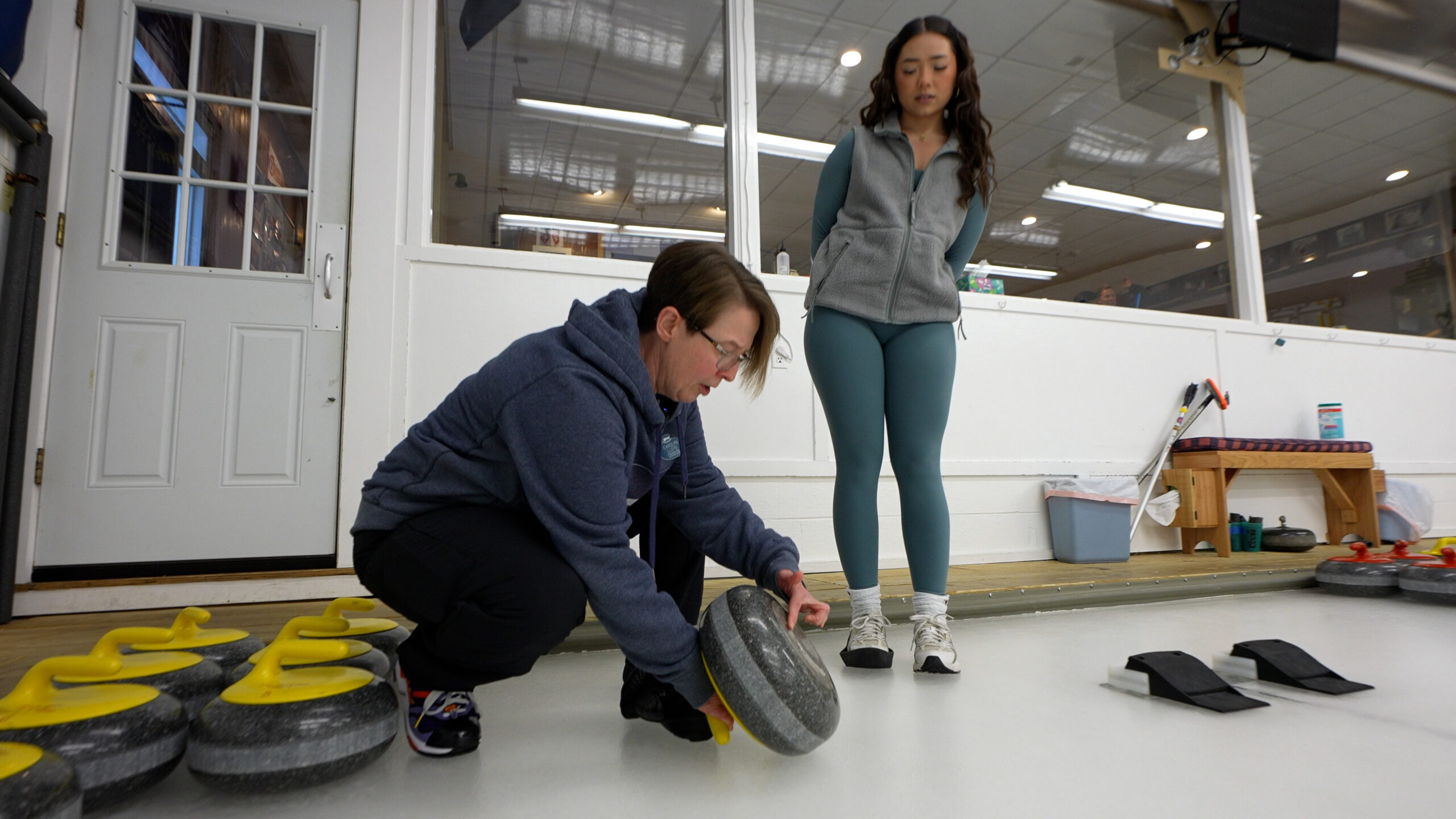
    When it came to delivering the stone, I watched a number of YouTube videos ahead of time. So, of course, I felt like a pro walking in — I didn’t even need special shoes, just some attachments. But once I actually stepped onto the ice, with a gripper covering one shoe and a slider covering the other, I felt like a baby deer trying to walk for the first time.

    Walking on the ice was hard enough. Now, imagine having to get into a squat position and push off the hack — a rubber block embedded into the ice — with one leg and balance on the other while holding a deep lunge and bracing your core.

    Then you have to aim, release, and spin a 42-pound granite stone. Easy? Trust me, it’s not like they make it look on TV.

    Carolyn Lloyd (left) explains Inquirer reporter Ariel Simpson the parts of a curling stone at the Philadelphia Curling Club in Paoli.

    It took me a few tries before I was even mentally prepared to push off with enough strength to move myself a few feet. But, once you get over the fear of falling onto the ice, you start to actually enjoy yourself and can focus on the next step — getting the stone to the house — which I did, eventually.

    And all of this was only learning how to deliver the stone. Sweeping was a whole other issue. By the time I was ready to try sweeping, I had much more confidence walking on the ice, so that’s a plus. But now I had to run on it.

    Afterward, I felt like I had done a full body workout. The amount of core, lower-body, and arm strength needed for curling is substantial and was certainly a surprise.

    The one part of the sport I didn’t get a chance to take part in was the social aspect. It’s a game that’s big on camaraderie, including the post-round tradition of “broomstacking,” when the winning team buys the losing team a drink. But, hey, I was on the clock.

    Where can I try curling in the Philly area?

    If you want to give curling — and its rules and traditions — a try, there are a couple of local clubs where you can learn.

    The Philadelphia Curling Club was started in 1957 but didn’t move to its current location until 1965. Since then they have grown, gaining over 200 members.

    “This building was built for curling,” Lloyd said. “We bought the land. We built the club. And to this day, what you see here is a lot of the club members’ efforts. Most of the work that we do is not things that other people come in and do for us.”

    The club offers a junior program on the weekends where kids can start as early as 5 years old.

    “It’s something that anyone can pick up,” Lloyd said. “The game has adaptations for people who have different types of ability needs. You can learn very quickly, and then you can refine that skill for the rest of your life.”

    A member of the Philadelphia Curling Club in Paoli delivers a stone during warmups last week.

    There’s also the Bucks County Curling Club, located on York Road in Warminster, that was formed in 2010. The four-sheet club also has over 200 members and plays year-round.

    Although it’s usually once every four years when the world tunes in to watch curling on TV, there is plenty of curling content that Laufer wants fans to know about.

    “We have a ton of events,” he said. “There’s the Grand Slam of Curling events, which are our biggest tour events. There’s the World Championships, the European Championships. There’s a lot of events to watch, a lot of events that U.S. teams play in.”

    But first, the Olympics.

  • Wasserman fallout, explained: Musicians speak out after talent agency’s CEO named in Epstein files

    Wasserman fallout, explained: Musicians speak out after talent agency’s CEO named in Epstein files

    A growing number of musicians — including most recently Chappell Roan — are leaving their management company after its founder’s emails were uncovered in the latest release of the Epstein files.

    Wasserman, a major talent management company based out of Los Angeles, represents stars ranging from Billie Eilish and Kendrick Lamar to Phish, Bon Iver, Turnstile, and Kacey Musgraves.

    The company has been in hot water since the Department of Justice dropped over 3 million pages of documents related to Jeffrey Epstein, the disgraced financier and sex offender, and his associate, convicted sex offender Ghislaine Maxwell.

    Those released files included emails between the agency’s founder, Casey Wasserman, and Maxwell. Now, musicians signed to Wasserman Group are speaking out and cutting ties.

    Here’s what you need to know.

    Who is Casey Wasserman?

    Wasserman is a successful entertainment agent and the founder and CEO of the Wasserman Group, which represents sports talent, musicians, artists, and content creators.

    He is the grandson of media mogul and talent agent Lew Wasserman. He is also the chairperson of the organizing committee for the Los Angeles 2028 Olympic and Paralympic Games.

    What did Casey Wasserman’s emails to Ghislaine Maxwell say?

    Wasserman’s emails, which were released by the Justice Department in January, reveal an exchange between him and Maxwell from 2003.

    In the emails, Maxwell offers to give Wasserman a massage that would “drive a man wild.” Later, Wasserman tells Maxwell that he thinks about her “all the time” and asks what he has to do to see her in “a tight leather outfit.”

    The Justice Department has not accused Wasserman of wrongdoing.

    What kind of talent does the Wasserman Group represent?

    Wasserman is regarded as one of the top talent agencies. The company represents hundreds of the world’s biggest touring acts and oversees artists who perform across a range of musical genres.

    The company’s artist roster includes Coldplay; Ed Sheeran; Joni Mitchell; Tyler, the Creator; Kendrick Lamar; Lorde; and many more.

    Wasserman’s artist roster is no longer available on its website.

    How are artists signed to Wasserman reacting?

    Many have spoken out against the Wasserman CEO, calling for him to leave the agency. Some artists have gone as far as leaving the agency.

    Bethany Cosentino, the front woman of Best Coast, was among the first to speak out, posting an open letter on Instagram last week calling for the founder to step down.

    “As an artist represented by Wasserman, I did not consent to having my name or my career tied to someone with this kind of association to exploitation,” Cosentino said. “Staying quiet isn’t something I can do in good conscience — especially in a moment when men in power are so often protected, excused, or allowed to move on without consequence. Pretending this isn’t a big deal is not an option for me.”

    Irish punk band the Dropkick Murphys announced over the weekend that they were also leaving Wasserman.

    “It saddens us to part ways with [our agents], but the namesake of the agency is in the Epstein files so … we GONE,” the band wrote on Instagram.

    Other bands, including Wednesday, Water From Your Eyes, and Beach Bunny, have made statements on social media about their concerns or their intentions to start the process of leaving the agency.

    On Monday, Chappell Roan announced her exit.

    “As of today, I am no longer represented by Wasserman, the talent agency led by Casey Wasserman,” Roan posted on Instagram. “I hold my teams to the highest standards and have a duty to protect them as well. No artist, agent or employee should ever be expected to defend or overlook actions that conflict so deeply with our own moral values. I have deep respect and appreciation for the agents and staff who work tirelessly for their artists and I refuse to passively stand by.”

    In addition to artist pressure, Los Angeles politicians are calling for Wasserman to give up his role on the Olympics committee. The Hollywood Reporter also reported that agents who work at Wasserman are considering spinning off a new firm.

    Still, not all artists believe they can make a clean break like Chappell Roan or the Dropkick Murphys.

    Why can’t every artist leave the agency?

    Wasserman client Alexis Krauss, of the group Sleigh Bells, released a lengthy statement condemning the CEO and detailing why she could not leave the company entirely, citing the financial impact it would cause.

    “Do I wish I could burn it all down, boycott and divest? Sure I do. But to be totally honest, I can’t afford to,” Krauss said.

    Krauss continued, “Would I love to just leave Wasserman Music? Yes I would. Can we? No, because I love and respect our agent and I trust him to make the decision that is best for himself, his family and his artists. The agents at Wasserman are not the villains.”

    Several artists, including Krauss, emphasized that they do not work directly with — and in most cases have never met — Casey Wasserman.

    Krauss added that her income allows her to pay her and her child’s health insurance, saying, “let’s remember that there’s no such thing as healthcare for working musicians. Call me spineless, but this is my truth. This is the hypocrisy of our realities as we try to do the least harm in an unscrupulous system.”

    Are any Philadelphia-area artists managed by Wasserman?

    Yes. Some include: Aaron West and the Roaring Twenties, the A’s, the Bacon Brothers, Diplo, the Disco Biscuits, Dr. Dog, G. Love & Special Sauce, the Menzingers, the Wonder Years, and Spaga.

    As of publication time, none of these artists have made statements about Wasserman. This story will be updated if they do.

    Has Casey Wasserman made a statement?

    Yes. In a statement sent to the New York Times, Wasserman said he “deeply regrets” his correspondence with Maxwell, “which took place over two decades ago, long before her horrific crimes came to light.”

    Wasserman added that he never had a “personal or business relationship” with Epstein.

  • Bad Bunny, MPLS, and the ‘neighborism’ saving America | Will Bunch Newsletter

    Maybe it’s because I’ve watched every blessed one of them, starting as a curious, nearly 8-year-old boy in 1967, but the Super Bowl has always felt like the ultimate barometer of where the American Experiment is at. Super Bowl LX (that’s 60, for those of you smart enough not to take four years of Latin in high school) was no exception. The actual game was something of a snoozefest, but the tsunami of commercials revealed us as a nation obsessed with artificial intelligence, sports betting, weight loss, and anything that can lift us from middle-class peonage without having to do any actual work. As Bad Bunny said, God bless America.

    If someone forwarded you this email, sign up for free here.

    Bad Bunny’s real message: From P.R. to Minnesota, we are neighbors

    Bad Bunny (center top) performs Sunday during the halftime show of the NFL Super Bowl XL football game between the Seattle Seahawks and the New England Patriots in Santa Clara, Calif.

    Right-wing media prattled on for months about how Bad Bunny, the Puerto Rican reggaeton superstar who is the world’s most streamed artist, would politicize and thus ruin the NFL’s halftime extravaganza at Super Bowl LX in Santa Clara, Calif.

    The babble became a scream seven days before the Big Game kicked off, when Bad Bunny won the record of the year Grammy Award and began his acceptance speech with the exhortation “ICE out!” adding, “We’re not savages, we’re not animals, we’re not aliens — we are humans, and we are Americans.”

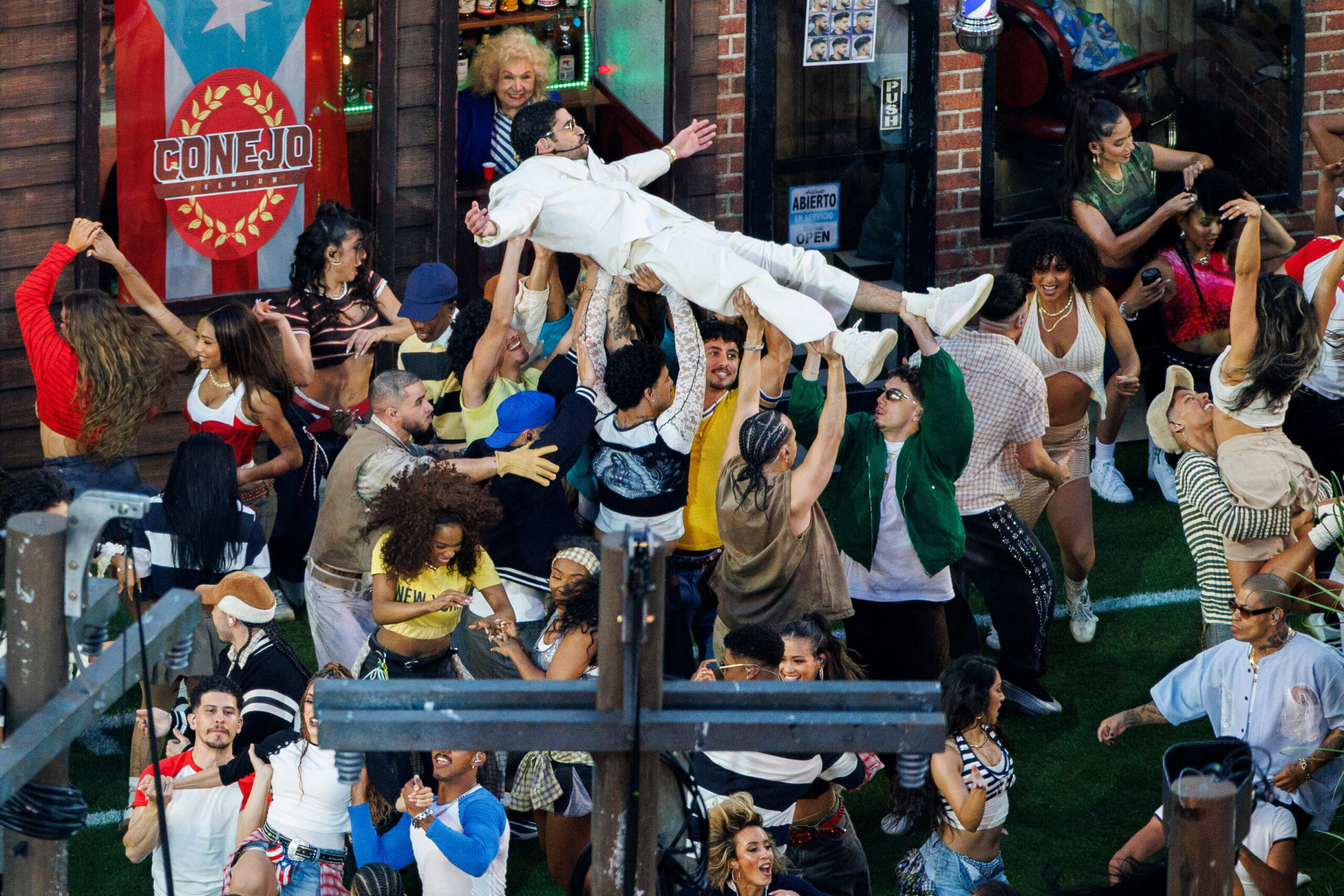
    But on the world’s biggest stage Sunday night — seen by 135 million in the United States, a Super Bowl record — Bad Bunny sang not one word about Donald Trump, not that MAGA fans even bothered to hold up a translation app. The white-suited Benito Antonio Martínez Ocasio danced his way through the history of Puerto Rico and the Americas writ large, from the plantations of yore to the exploding power lines of the hurricane-wracked 21st century. He whirled past an actual wedding, stopped for a shaved ice, and for 13 spellbinding minutes turned a cast of 400 into what his transfixed TV audience craved at home.

    Bad Bunny built his own community — a place not torn asunder by politics, but bonded by love and music.

    Without uttering one word — in Spanish or English — about the dire situation in a nation drifting from flawed democracy into wrenching authoritarianism, the planet’s reigning king of pop delivered the most powerful message of America’s six decades of Super Bowl fever. Shrouded in sugar cane and shaded by a plantain tree, Bad Bunny sang nothing about the frigid chaos 2,000 miles east in Minnesota, and yet the show was somehow very much about Minneapolis.

    Bad Bunny finally gave voice to what thousands of everyday folks in the Twin Cities have been trying to say with their incessant whistles.

    We are all neighbors. The undocumented Venezuelan next door who toils in the back of a restaurant and sends his kids to your kids’ school is a neighbor. But Haiti is also a neighbor, as is Cuba. We are all in this together.

    The word I kept thinking about as I watched Bad Bunny’s joyous performance is a term that didn’t really exist on New Year’s Day 2026, yet has instantly provided a name to the current zeitgeist.

    Neighborism.

    The great writer Adam Serwer — already up for the wordsmithing Hall of Fame after he nailed the MAGA movement in 2018 in five words: “The cruelty is the point” — leaned hard into the concept of “neighborism” after he traveled to Minneapolis last month. His goal was to understand an almost revolutionary resistance to Trump’s mass deportation raids that had residents — many of whom had not been especially political — in the streets, blowing those warning whistles, confronting armed federal agents, and tracking their movements across the city.

    Serwer visited churches where volunteers packed thousands of boxes of food for immigrant families afraid to leave their homes during the U.S. Immigration and Customs Enforcement raids, and talked to stay-at-home moms, retirees, and blue-collar workers who give rides or money to those at risk, or who engaged in the riskier business of tracking the deportation raiders.

    “If the Minnesota resistance has an overarching ideology,” Serwer wrote, “you could call it ‘neighborism’ — a commitment to protecting the people around you, no matter who they are or where they came from.” He contrasted the reality on the ground in Minneapolis to the twisted depictions by Trump and his vice president, JD Vance, who’ve insisted refugees are a threat to community and cohesion.

    Of course, it’s not just Minneapolis, and it’s not just the many, liberal-leaning cities — from Los Angeles to Chicago to New Orleans and more — that were the incubators of the notion that concerned citizens — immigrant and nonimmigrant alike — could prevent their neighbors from getting kidnapped. Even small towns like rural Sackets Harbor, N.Y., the hometown of Trump’s border czar Tom Homan, rose up in protest to successfully block the dairy farm deportation of a mom and her three kids. It’s been like this everywhere regular folks — even the ones who narrowly elected Trump to a second term in 2024 — realize mass deportation doesn’t mean only “the worst of the worst,” but often the nice mom or dad in the house, or church pew, next to theirs.

    Only now that it’s arrived is it possible to see “neighborism” as the thing Americans were looking for all along, even if we didn’t know it. It is, in every way, the opposite vibe from the things that have always fueled fascism — atomization and alienation that’s easy for a demagogue to mold into rank suspicion of The Other.

    I’m pretty sure Bad Bunny wasn’t using the word neighborism when the NFL awarded him the coveted halftime gig last fall. But the concept was deeply embedded in his show. He mapped his native Puerto Rico as a place where oppression has long loomed — from the cruelty of the sugar plantations to the capitalist exploitation of the failed power grid — but where community is stronger.

    Then Benito broadened the whole concept. Reclaiming the word America for its original meaning as all of the Western Hemisphere, Bad Bunny name-checked “Chile, Argentina, Uruguay, Paraguay, Bolivia, Peru, Ecuador, Brazil,” and Canada, as well as the United States. These, too, are our neighbors. “God bless America,” he shouted — his only message of the night delivered in English.

    So, no, Bad Bunny never mentioned Minneapolis, but a tender moment when he seemingly handed the Grammy he’d won just a week ago to a small Latino boy had to remind viewers of the communal fight to save children like the 5-year-old, blue bunny hat-wearing (yes, ironic) Liam Conejo Ramos, who was just arrested, detained, and released by ICE. (A false rumor that the Super Bowl boy was Ramos went viral.)

    But arguably, this super performance had peaked a few moments earlier, when the singer exited the wedding scene stage with a backward trust dive, caught and held aloft by his makeshift community in the crowd below. Bad Bunny had no fear that his neighbors would not be there for him. Viva Puerto Rico. Viva Minneapolis. Viva our neighbors.

    Yo, do this!

    • Some 63 years after he was gunned down by a white racist in his own driveway, the Mississippi civil rights icon Medgar Evers has been having a moment. A fearless World War II vet whose bold stands for civil rights as local leader of the NAACP in America’s most segregated state triggered his 1963 assassination, Evers’ fight has become the subject of a best-selling book, a controversy over how his story is told at the Jackson, Miss., home where he was killed, and now a two-hour documentary streaming on PBS.com. I’m looking forward to watching the widely praised Everlasting: Life & Legacy of Medgar Evers.
    • After the Super Bowl, February is the worst month for sports — three out of every four years. In 2026, we have the Winter Olympics to bridge the frigid gap while we wait for baseball’s spring training (and its own World Baseball Classic) to warm us up. Personally, I try and sometimes fail to get too jacked up around sleds careening down an icy track, but hockey is a different story. At 2:10 p.m. on Tuesday (that’s today if you read this early enough), the puck drops on USA Network for the highly anticipated match between the world’s two top women’s teams: the United States and its heated rival Canada. Look for these two border frenemies to meet again for the gold medal.

    Ask me anything

    Question: How is it that some towns have been able to prevent ICE from buying warehouses and turning them into concentration camps, while others say they are helpless against the federal government? What does it mean that several are planned for within a couple of hours of Philly? — @idaroo.bsky.social via Bluesky

    Answer: Great question. It seems ICE and its $45 billion wad of cash are racing in near-secrecy to make this national gulag archipelago of 23 or so concentration camps a done deal. The places where they’ve been stopped, like one planned for Virginia, happened because locals were able to pressure the developer before a sale to ICE was concluded. That’s no longer an option at the two already purchased Pennsylvania sites in Schuylkill and Berks Counties. The last hope is pressure from high-ranking Republicans, which may (we’ll see) have stopped a Mississippi site. Pennsylvanians might want to focus, then, on GOP Sen. Dave McCormick. Good luck with that.

    What you’re saying about …

    It’s conventional wisdom that the best argument for a Gov. Josh Shapiro 2028 presidential campaign is his popularity in his home state of Pennsylvania, the battleground with the most electoral votes. So it’s fascinating that none of the dozen or so of you who responded to this Philadelphia-based newsletter wants Shapiro to seek the White House, although folks seem divided into two camps. Some of you just don’t like Josh or his mostly centrist politics. “I think he’s all ambition, all consumed with reaching that top pedestal, not as a public servant, but because he thinks he deserves it,” wrote Linda Mitala, who once campaigned for Shapiro, but soured on his views over Gaza protesters, New York Mayor Zohran Mamdani, and other issues. Yet, others think he’s an excellent governor who should remain in the job through 2030. “Stay governor of Pa. when good governance and ability to stand up to federal (authoritarian) overreach is dire,” wrote Kim Root, who’d prefer Kentucky Gov. Andy Beshear for the White House.

    📮 This week’s question: A shocking, likely (though still not declared) Democratic primary win for Analilia Mejia, the Bernie Sanders-aligned left-wing candidate, in suburban North Jersey’s 11th Congressional District raises new questions for the Dems about the 2026 midterms. Should the party run more progressive candidates like Mejia, who promise a more aggressive response to Trump, or will they lose by veering too far left? Please email me your answer and put the exact phrase “Dems 2026” in the subject line.

    Backstory on how the F-bomb became the word of the year

    Billie Joe Armstrong of Green Day performs Sunday before the start of Super Bowl XL in Santa Clara, Calif.

    I’m old enough to remember when the world’s most famous comedy riff was the late George Carlin’s “Seven Words You Can Never Say on Television” — its point driven home by Carlin’s 1972 arrest on obscenity charges that went all the way to the U.S. Supreme Court. A half century later, you still can’t say dirty words on broadcast TV — cable and streaming is a different story — but that fortress is under assault. In 2026, America is under seemingly constant attack from the F-bomb.

    It is freakin’ everywhere. When the top elected Democrat in Washington, House Minority Leader Hakeem Jeffries, cut a short video to respond to the president’s shocking post of a racist video that depicted Barack and Michelle Obama as apes, he said, “[F-word] Donald Trump!” If uttered in, say, 1972, Jeffries’ attack would have been a top story for days, but this barely broke through. Maybe because that word is in the lexicon of so many of his fellow Democrats, like Mayor Jacob Frey, who famously told ICE agents to “get the [F-word] out of Minneapolis,” or Minnesota Sen. Tina Smith, who begged federal agents to “leave us the (bleep) alone.” (Smith is retiring at year’s end and seems to no longer give a you-know-what.)

    The poor guys with their finger on the silence button at the TV networks, where you still can’t say Carlin’s seven words, can barely keep up. The F-bomb was dropped at this year’s Grammys, where award-winner Billie Eilish declared “(Bleep) ICE!” as she brandished her prize. The F-bomb was dropped, of course, at the Super Bowl, when the only true moment of silence during 10-plus hours of nonstop bombast came during Green Day’s pregame performance of “American Idiot,” when NBC shielded America’s tender ears from hearing Billie Joe Armstrong sing about “the subliminal mind(bleep) America.”

    We’re only about six weeks into the new year, but it’s hard not to think that Merriam-Webster or the other dictionary pooh-bahs won’t declare the F-bomb as word of the year for 2026, even if I’m still not allowed to use it in The Inquirer, family newspaper that we are. So what the … heck is going on here? One study found the F-word was 28 times more likely to appear in literature now than in the 1950s, so in one sense it’s not surprising this would eventually break through on Capitol Hill or on the world’s biggest stages.

    But the bigger problem is that America’s descent into authoritarianism and daily political outrage has devolved to such a point where, every day, permissible words no longer seem close to adequate for capturing our shock and awe at how bad things are. Only the F-bomb, it turns out, contains enough dynamite to blow out our rage over masked goons kidnapping people on America’s streets, or a racist, megalomaniac president who still has 35 months left in his term. Yet, even this (sort of) banned expletive is losing its power to express how we really feel. I have no idea what the $%&# comes next.

    What I wrote on this date in 2019

    What a long, strange trip for Amazon founder Jeff Bezos, one of the four richest people on the planet. Today, Bezos is in the headlines for his horrific stewardship of the Washington Post, which has bowed down on its editorial pages to the Trump regime, lost hundreds of thousands of subscribers, and laid off 300 journalists. It’s hard to recall that seven years ago, Bezos and Trump were at war, and there was evidence Team MAGA had enlisted its allies from Saudi Arabia to the National Enquirer to take down the billionaire. I wrote that “a nation founded in the ideals of democracy has increasingly fallen prey to a new dystopian regime that melds the new 21st century dark arts of illegal hacking and media manipulation with the oldest tricks in the book: blackmail and extortion.”

    Read how from Feb. 10, 2019: “Bezos, the National Enquirer, the Saudis, Trump, and the blackmailing of U.S. democracy.”

    Recommended Inquirer reading

    • My first and hopefully not last journalistic road trip of 2026 took me to Pennsylvania coal country, where ICE has spent $119.5 million to buy an abandoned Big Lots warehouse on the outskirts of tiny Tremont in Schuylkill County. I spoke with both locals and a historical expert on concentration camps about their fears and the deeper meaning of a gulag archipelago for detained immigrants that is suddenly looming on U.S. soil. It can happen here. Over the weekend, I looked at the stark contrast between Europe’s reaction to the Jeffrey Epstein scandal — where ties to the late multimillionaire sex trafficker are ending careers and even threatening to topple the British government — and the United States, where truth has not led to consequences so far. The Epstein fallout shows how the utter lack of elite accountability is driving the crisis of American democracy.
    • One last Super Bowl reference: Now that football is over, are you ready for some FOOTBALL? Now just four months out, it’s hard to know what to make of the 2026 World Cup returning to America and coming to Philadelphia for the very first time, and whether the increasing vibe that Donald Trump’s United States is a global pariah will mar the world’s greatest sporting event (sorry, NFL). Whatever happens, The Inquirer is ready, and this past week we published our guide to soccer’s biggest-ever moment in Philly. Anchored by our world-class soccer writer Jonathan Tannenwald and Kerith Gabriel, who worked for the Philadelphia Union between his stints at the paper, the package provides not only an overview of the World Cup in Philly, but previews the dozen teams who will (or might) take the pitch at Lincoln Financial Field, with in-depth looks at the powerhouses (France) as well as the massive underdogs (Curaçao). June is just around the corner, so don’t let the paywall become your goalkeeper. Subscribe to The Inquirer before the first ball drops.

    By submitting your written, visual, and/or audio contributions, you agree to The Inquirer’s Terms of Use, including the grant of rights in Section 10.

  • Czechia goalie Dan Vladař will face Flyers teammate Travis Sanheim at Olympics: ‘That’s going to be a fun one’

    Czechia goalie Dan Vladař will face Flyers teammate Travis Sanheim at Olympics: ‘That’s going to be a fun one’

    Dan Vladař joked that he told Travis Sanheim that once they land in Italy, the Flyers teammates will no longer be buddies, and that he’s blocking his number.

    At least … we think he’s joking.

    The Flyers goalie and native of Czechia, formerly the Czech Republic, will face Sanheim, Flyers coach Rick Tocchet, and Canada in the opening Group A game for both teams at the Milan Cortina Olympics on Thursday (10:40 a.m., USA, Peacock). Defenseman Rasmus Ristolainen will be suiting up for Finland, which is in Group B and plays Slovakia on Wednesday (10:40 a.m., USA, Peacock).

    “That’s going to be a fun one,” Vladař told The Inquirer about playing the Canadians. “You know, I think I know more of his weaknesses than, hopefully, they know about my weaknesses, so I’m going use that power against them.”

    And the chatty goalie will 100% throw some chirps Sanheim’s way — maybe even in Czech — if he’s in net. Of course, there are no guarantees that he will be the starter at Milano Santagiulia Ice Hockey Arena, but there’s a good chance.

    His teammate Karel Vejmelka has more games (44) and wins (27) this season than Vladař (17 wins in 33 games), but the Flyers netminder has a better goals-against average (2.47) and save percentage (.905) than the Utah Mammoth goalie and Lukáš Dostál of the Anaheim Ducks.

    Flyers defenseman Travis Sanheim is ready to take on Czechia with Team Canada.

    “Obviously, you don’t really want to share too much, but he’s been awesome for us this year,” said Sanheim when asked what he’ll tell his Canadian teammates about Vladař.

    “He’s a big reason why we’ve been in a lot of games and [I’m] not really looking too forward to going up against him. He’s been playing great — and I don’t score on him too much in practice.”

    Prague proud

    After toiling behind Tuukka Rask in Boston and Jacob Markström and Dustin Wolf in Calgary, Vladař is getting a chance to be a No. 1 goalie in Philly. And now he’ll get a chance to show his talents on the world stage as he tries to help his country win its first Olympic medal since the 2006 Torino Olympics and its first gold since the 1998 Nagano Games. In the final of that tournament, Dominik Hašek pitched a shutout against Russia, almost six months to the day after Vladař was born in Prague.

    “I was too little to remember anything,” Vladař said, “but just watching the highlights, and basically, I think that’s one of the reasons why I’m even playing hockey, is because, you know, obviously, my parents were watching, and the whole country was watching.

    “So I’m pretty sure a whole new generation of players are coming from that era. So, obviously, it’s going to be a great time for me, and I’m really proud.”

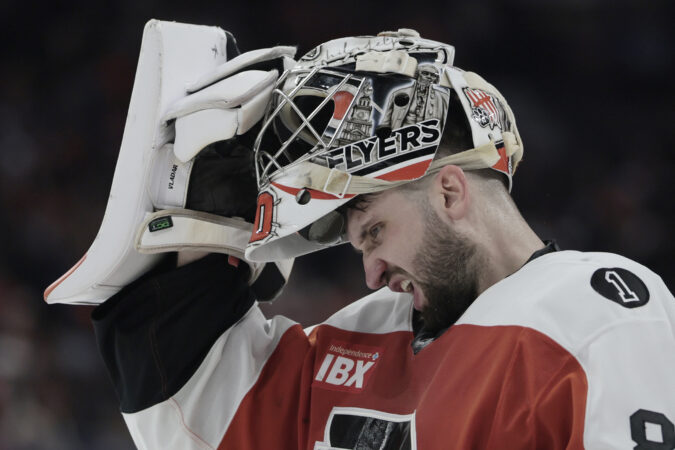
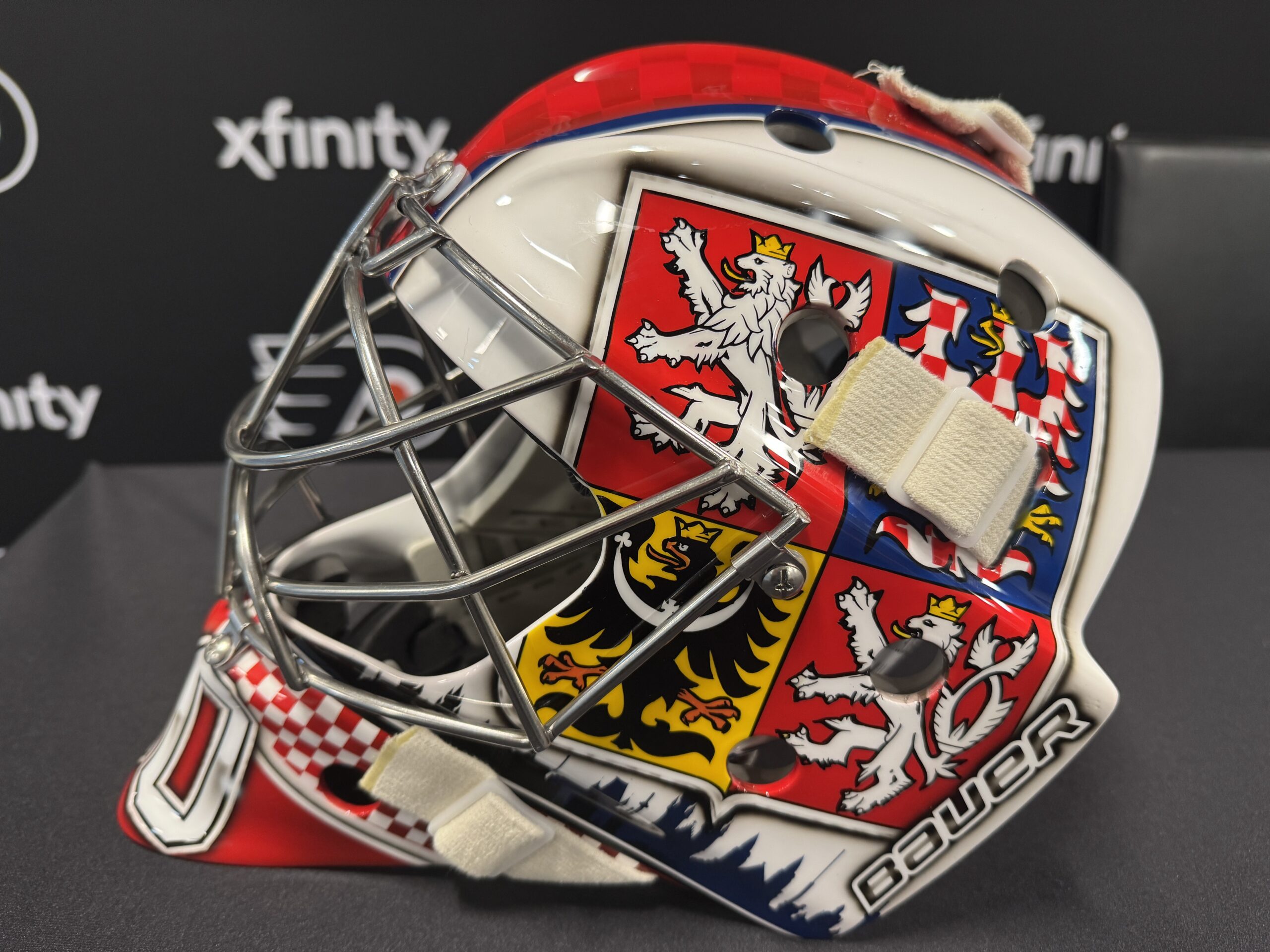
    Vladař is proud of Czechia and his hometown, Prague, and it shines through on his goalie mask. Working with Langhorne’s Franny Drummond of Paint Zoo Studios, who also designed his NHL game mask and worked with the Flyers’ goalies and children on their Hockey Fight Cancer masks, he brought his vision to life — with a twist.

    After having to scrap his original mask plan because the International Ice Hockey Federation and the International Olympic Committee did not approve it — Drummond told the Snow The Goalie podcast at the Flyers Charities Carnival that they originally had lions and lightning on the side — Vladař went simple with a tribute to home.

    On the sides are the national crest with the skyline of Prague, including Prague Castle and Prašná brána or the Powder Tower — “It’s a piece of my heart, back home, and I’m proud that I can be from the beautiful city like that,” he said — underneath each crest.

    Dan Vladař worked with Langhorne’s Franny Drummond of Paint Zoo to design his Olympic goalie mask.

    The checker pattern pulled from the team’s jerseys is intermixed, and the back plate sports the names of equipment managers, athletic trainers, and team service members.

    “I think they deserve it,” Vladař said.

    “Overall, in hockey, they don’t really get enough credit for the time they spend around us, and whatever they do for us. … So this is just a little something that I think I can do for them to get their names out there and just maybe people start recognizing them a little bit more.”

    Although he has the Flyers staff on his mask in Philly, there’s a chance he may need to cover the names in Italy based on IIHF and IOC guidelines.

    “We couldn’t really go wild with that because they’re pretty strict with the Olympics. But at the same time, I think, it’s simple, but simple is power,” he said.

    “I think it turned out to be a pretty cool, simple mask … and I’m always going to look up to it with hopefully a bunch of really good memories.”

    Mettle to Medal

    Like his friend Michal Krčmář, a Czech biathlete who won silver in the 10 kilometer sprint at the 2018 PyeongChang Olympics and is competing on Tuesday, there’s a good chance the Czechs will make some noise.

    David Pastrňák (Boston Bruins), Martin Nečas (Colorado Avalanche), Tomáš Hertl (Vegas Golden Knights), and former Flyers Radko Gudas (Anaheim Ducks) and Lukáš Sedlák (HC Dynamo Pardubice) will play in front of Vladař as he goes for his first medal since the 2014 IIHF Under-18 World Junior Championship.

    At that tournament, he was the backup to Vítek Vaněček when the Czechs lost to the United States in the gold medal game. That same year, he earned another silver as the starter against Canada in the Ivan Hlinka Memorial Tournament, giving up four goals, with one scored by his Flyers teammate Travis Konecny.

    Flyers goaltender Dan Vladař uses his stick to stop the puck against the Ottawa Senators on Feb. 5.

    The netminder last played for Czechia at the 2025 IIHF World Championship — his first appearance since the 2017 World Juniors — posting a 3-0-0 record in four games with a 1.09 GAA and a .951 save percentage; Vladař relieved Vejmelka in the Czechs’ quarterfinal loss to Sweden.

    “I’m just proud I can be there,” he said of being in Milan. “Obviously, we have a lot of goalies that are successful, whether they are playing in NHL or in the top leagues in Europe.

    “So for me, it’s a big honor that I can be part of that group. And, obviously, I’m probably going to have a little tattoo on my body, too, because after 12 years, you just don’t know if you’re going to ever have the opportunity to go.”

  • Tuesday’s Olympic TV schedule: U.S. vs. Canada women’s hockey and more

    Tuesday’s Olympic TV schedule: U.S. vs. Canada women’s hockey and more

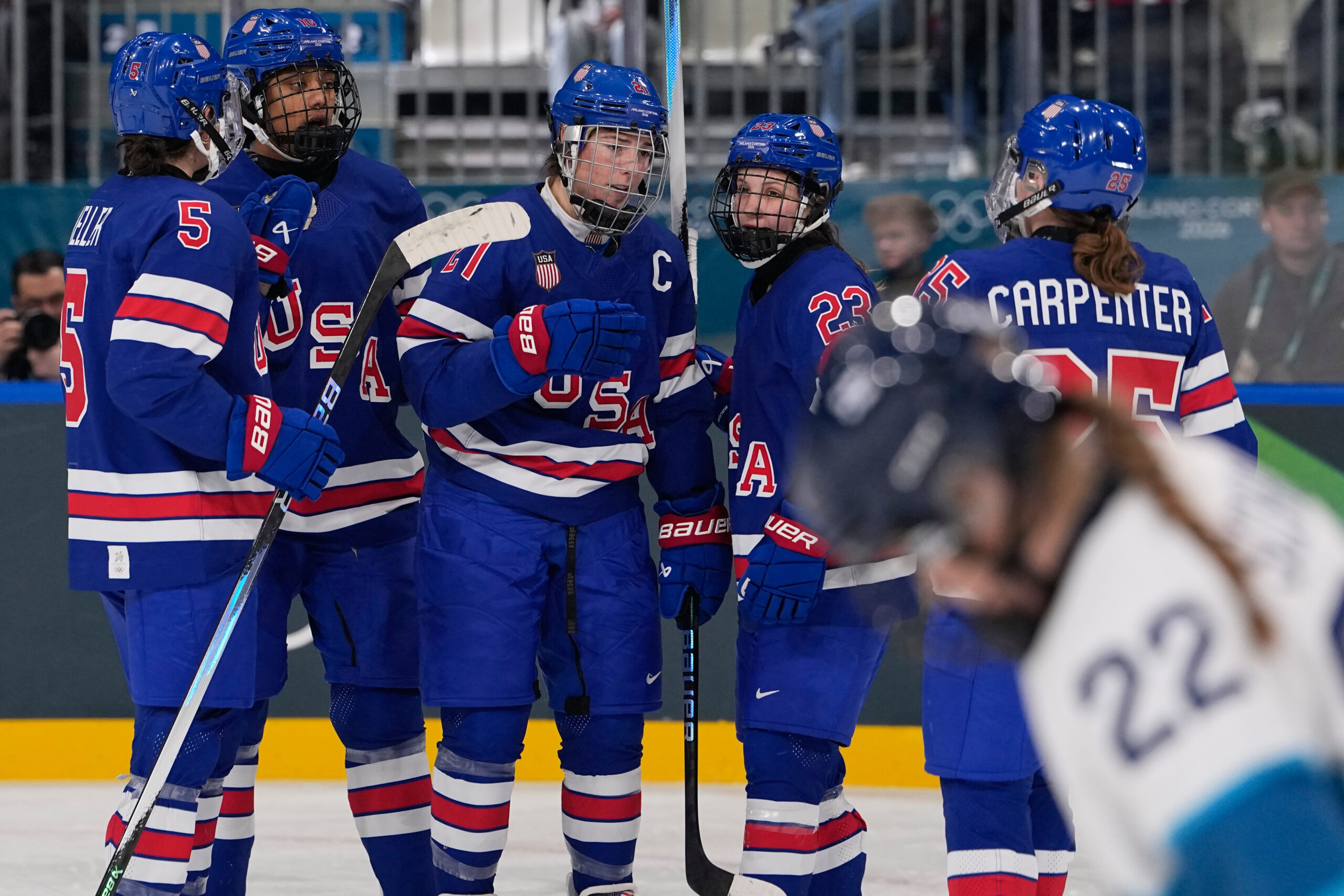
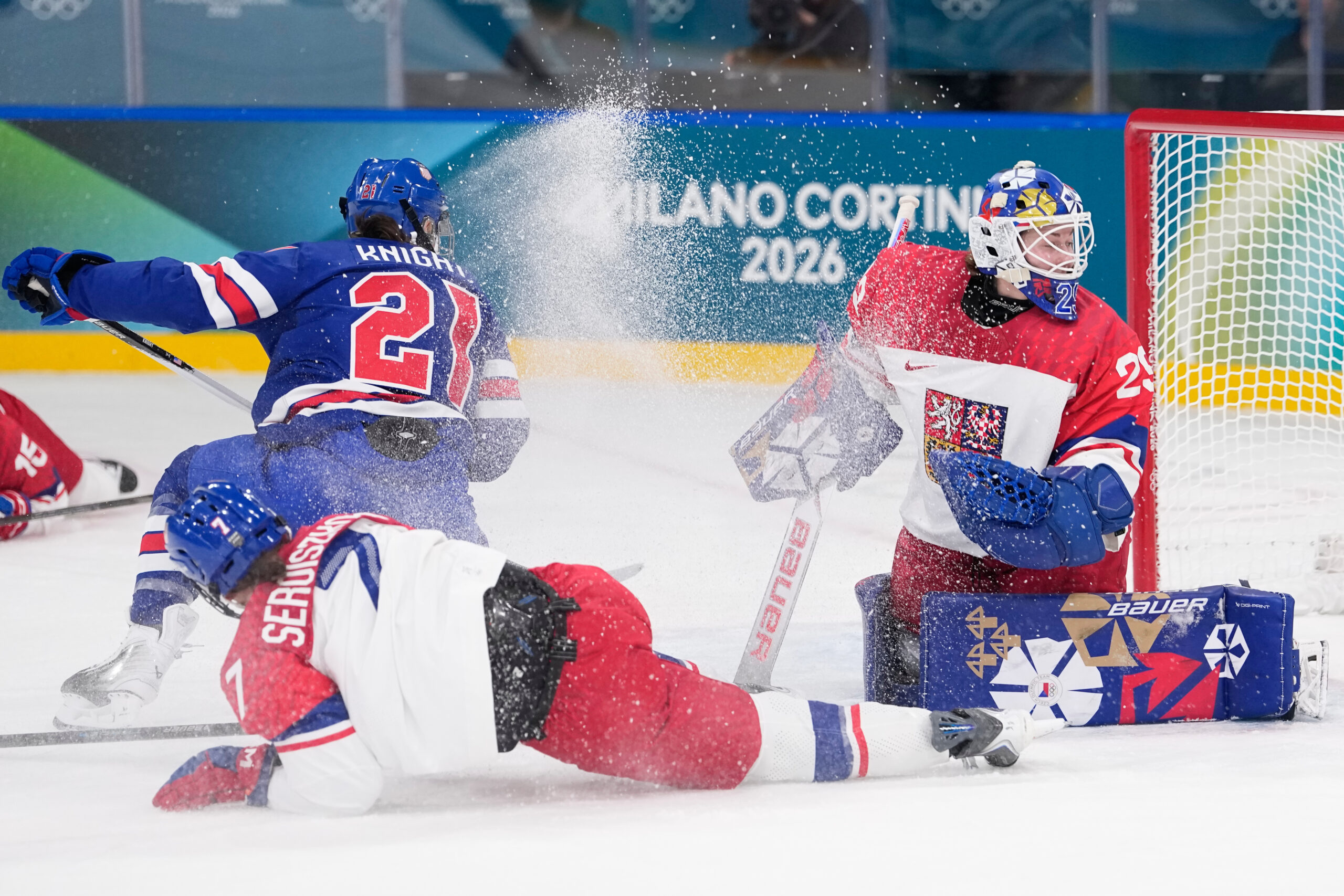
    The undefeated U.S. women’s hockey team, led by Hilary Knight, will take on rival Canada on Tuesday in its final preliminary game of the Milan Cortina Olympics. The game is scheduled to begin at 2:10 p.m. Philadelphia time on USA Network.

    The U.S. women’s team has faced Canada in the gold medal game in six of the seven Olympics that featured women’s hockey, with Team USA winning twice — 2018 in Pyeongchang, South Korea, and 1998 in Nagano, Japan. So there’s a good chance this will be a preview of things to come at Milan Cortina.

    Team USA is a perfect 3-0 in Group A play after defeating Switzerland on Monday, which followed wins against Czechia and Finland. Tuesday’s game against Canada will decide the No. 1 seed in the quarterfinals, which take place Friday.

    And if you’re wondering, the U.S. men’s hockey team will play its first game Thursday against Latvia, followed by Denmark on Saturday and Germany on Sunday.

    In other Tuesday action:

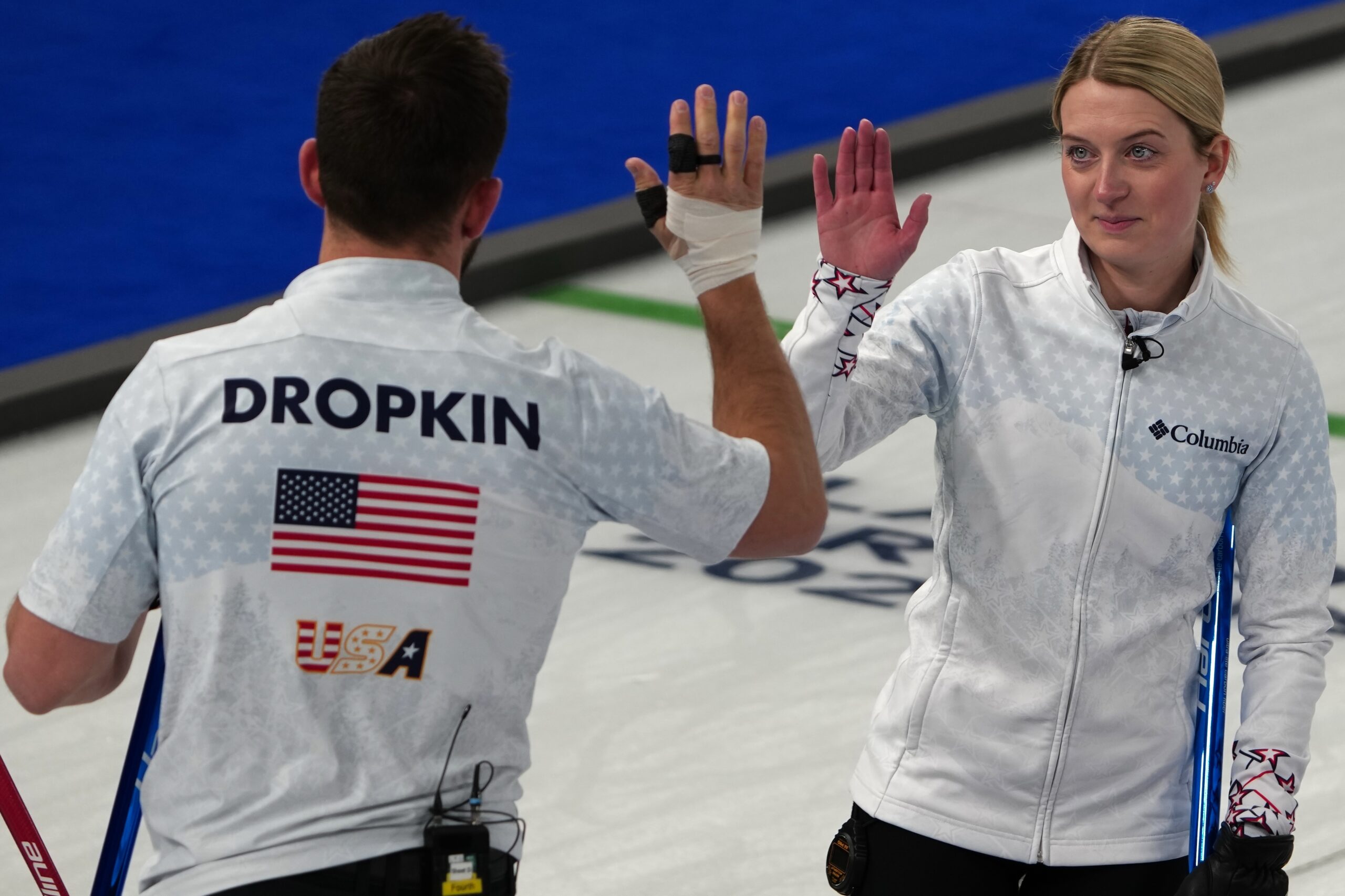
    • The U.S. will be competing for a gold medal in curling, with mixed doubles duo Korey Dropkin and Cory Thiesse taking on siblings Isabella and Rasmus Wranå of Sweden. The final is scheduled to begin at noon on USA Network, and win or lose, it will be the Americans’ first medal in mixed doubles curling since its debut in 2018.
    • Mikaela Shiffrin, the two-time Olympic gold medalist and the winningest Alpine skier of all time, is expected to make her Milan Cortina debut in the team combined slalom. The event begins at 8 a.m. on USA Network.
    • Team USA freestyle skier Alex Hall will be going for his second straight gold medal in the men’s slopestyle final at 6:30 a.m. on USA Network, with a rebroadcast on NBC at noon. Konnor Ralph and Mac Forehand will also represent the U.S. in the event.
    • U.S. figure skater Ilia Malinin will make his individual debut in the Games in the men’s short program, which will start at 12:30 p.m. on USA Network before moving to NBC.

    How to watch the Olympics on TV and stream online

    NBC’s TV coverage will have live events from noon to 5 p.m. Philadelphia time on weekdays and starting in the mornings on the weekends. There’s a six-hour time difference from Italy and here. The traditional prime-time coverage will have highlights of the day and storytelling features.

    As far as the TV channels, the Olympics are airing on NBC, USA, CNBC, and NBCSN. Spanish coverage can be found on Telemundo and Universo.

    NBCSN is carrying the Gold Zone whip-around show that was so popular during the Summer Olympics in 2024, with hosts including Scott Hanson of NFL RedZone. It used to be just on Peacock, NBC’s online streaming service, but now is on TV, too.

    Every event is available to stream live on NBCOlympics.com and the NBC Sports app. You’ll have to log in with your pay-TV provider, whether cable, satellite, or streaming platforms including YouTube TV, FuboTV, and Sling TV.

    On Peacock, the events are on the platform’s premium subscription tier, which starts at $10.99 per month or $109.99 per year.

    Here is the full event schedule for the entire Olympics, and here are live scores and results.

    Tuesday’s Olympic TV schedule

    As a general rule, our schedules include all live broadcasts on TV, but not tape-delayed broadcasts on cable channels. We’ll let you know what’s on NBC’s broadcasts, whether they’re live or not.

    NBC

    • 11 a.m.: Luge — women’s singles
    • noon: Freestyle skiing — men’s slopestyle final (tape-delayed)
    • 1:15 p.m.: Cross-country skiing — women’s and men’s spring classic final (taped delayed)
    • 1:45 p.m.: Figure skating — men’s short program
    • 8 p.m.: Prime time in Milan, with replays including Alpine skiing and figure skating
    • 11:35 p.m.: Late show replays including freestyle skiing and luge

    USA Network

    • 3:15 a.m.: Cross-country skiing — women’s and men’s spring classic qualification
    • 4:30 a.m.: Alpine skiing — women’s team combined downhill
    • 5:15 a.m.: Freestyle skiing — men’s moguls qualification
    • 6:10 a.m.: Cross-country skiing — women’s and men’s sprint classic finals
    • 6:30 a.m.: Freestyle skiing — men’s slopestyle final
    • 8 a.m.: Alpine skiing — women’s team combined slalom
    • 9 a.m.: Curling — Great Britain vs. Italy, mixed doubles bronze medal match
    • noon: Curling — United States vs. Sweden, mixed doubles gold medal match
    • 12:30 p.m.: Figure skating — men’s short program
    • 2:10 p.m.: Ice hockey — Canada vs. United States, women
  • Monday’s Olympics TV schedule: Snowboarding, figure skating, speedskating, and more

    Monday’s Olympics TV schedule: Snowboarding, figure skating, speedskating, and more

    At any Olympics, there’s a chance you might tune in to something you rarely see and get hooked.

    For this writer, long track speedskating is one such sport. Back in the 1990s, Bonnie Blair and Dan Jansen were among the most famous Americans at the Winter Games: Blair for her many gold medals, and Jansen for coming up painfully short many times before finally triumphing in 1994.

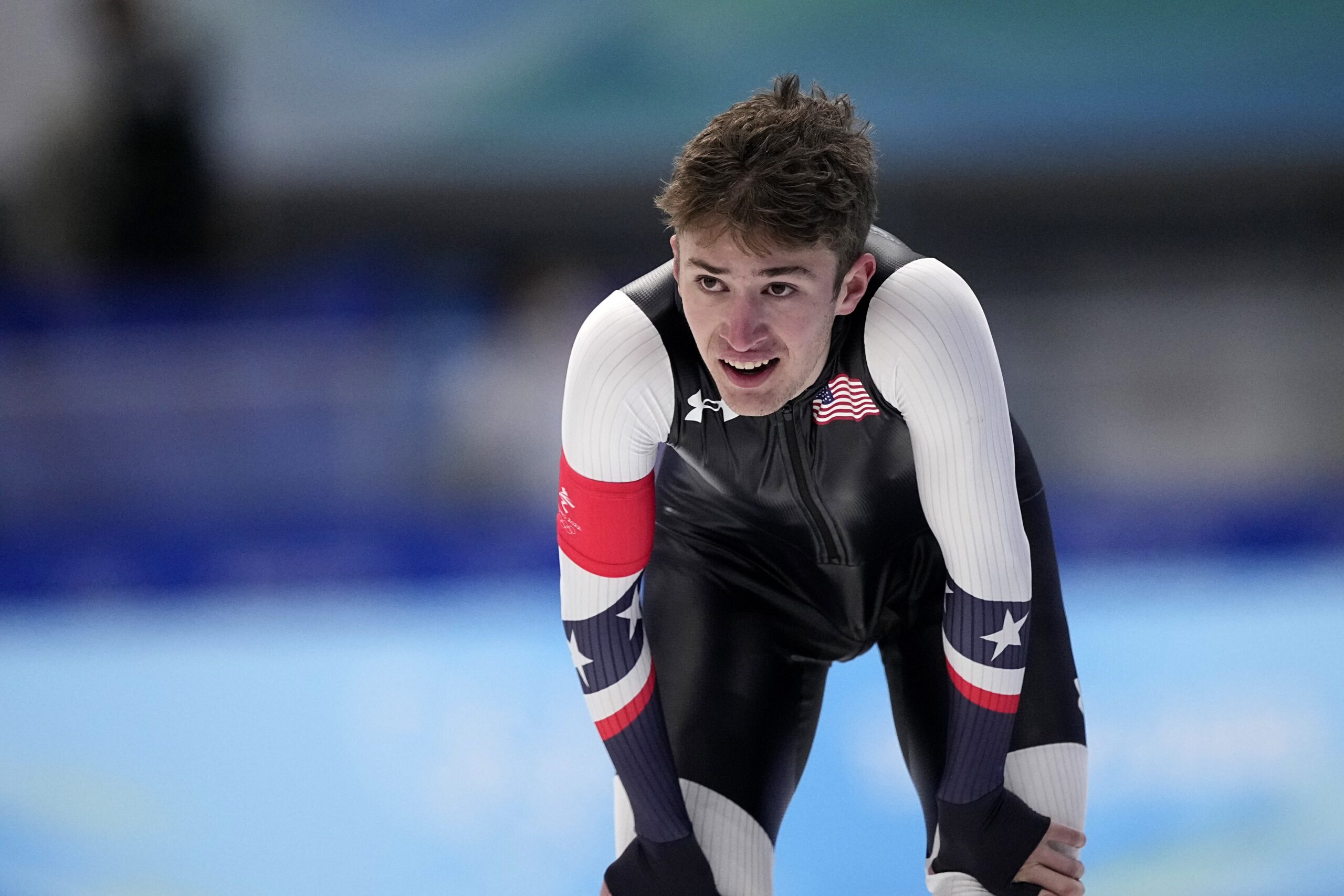
    This year, the top U.S. speedskaters are Erin Jackson on the women’s side and Casey Dawson on the men’s side. There’s also an interesting story in Brittany Bowe, and not just because of her impressive career.

    Bowe is going for her third career Olympic medal at age 37, having won bronze in the team pursuit in 2018 and another bronze in the 1,000 meters in 2022. She has held the 1,000-meter world record three times in her career, including the current mark since 2019, and is the American record holder in the 1,500.

    But that’s only part of Bowe’s story. She’s originally from Ocala, Fla., about an hour and a half north of Tampa — not what you’d think of as fertile ground for an ice sport. She trains at the Olympic facility in Salt Lake City, where the 2002 Games were held and the 2034 Games will be. It’s one of just six long track speedskating ovals in the United States.

    On top of that, Bowe played college basketball from 2006-10 at Florida Atlantic. She didn’t play against any Big 5 teams back then, so not many people around here would be able to say they saw her before she was famous. But plenty of people have seen her in recent times, and more will at these Olympics.

    The women’s 1,000 meters will be live on USA Network from 11:30 a.m. to noon Philadelphia time, then on NBC until 12:45 p.m. Other big events Monday include two that NBC will carry live: snowboarding’s women’s big air final at 1:30 p.m. and figure skating’s ice dance at 2:40 p.m. The ice dance competition will start on USA at 1:20 p.m.

    How to watch the Olympics on TV and stream online

    NBC’s TV coverage will have live events from noon to 5 p.m. Philadelphia time on weekdays and starting in the mornings on the weekends. There’s a six-hour time difference between Italy and here. The traditional prime-time coverage will have highlights of the day and storytelling features.

    The U.S. women’s hockey team plays its next-to-last group game on Monday, against Switzerland at 2:40 p.m.

    As far as the TV channels, the Olympics are airing on NBC, USA, CNBC, and NBCSN. Spanish coverage can be found on Telemundo and Universo.

    NBCSN is carrying the Gold Zone whip-around show that was so popular during the Summer Olympics in 2024, with hosts including Scott Hanson of NFL RedZone. It used to be just on Peacock, NBC’s online streaming service, but now is on TV, too.

    Every event is available to stream live on NBCOlympics.com and the NBC Sports app. You’ll have to log in with your pay-TV provider, whether cable, satellite, or streaming platforms including YouTube TV, FuboTV, and Sling TV.

    On Peacock, the events are on the platform’s premium subscription tier, which starts at $10.99 per month or $109.99 per year.

    Here is the full event schedule for the entire Olympics, and here are live scores and results.

    Cory Thiesse (right) and Korey Dropkin are the first United States team to reach the curling mixed doubles semifinals. They’ll play in that round on Monday, just after noon Philadelphia time.

    Monday’s Olympics TV schedule

    NBC

    • Noon: Speedskating — Women’s 1,000 m
    • 12:45 p.m.: Alpine skiing — Men’s team combined, downhill and slalom (tape-delayed)
    • 1:30 p.m.: Snowboarding — Women’s big air final
    • 2:40 p.m.: Figure skating — Ice dance, rhythm dance
    • 8 p.m.: Prime time show replays including Alpine skiing, figure skating, and freestyle skiing
    • 11:35 p.m.: Late show replays including snowboarding and speedskating

    USA Network

    • 4:30 a.m.: Alpine skiing — Men’s team combined, downhill portion
    • 6:30 a.m.: Freestyle skiing — Women’s slopestyle final
    • 8 a.m.: Alpine skiing — Men’s team combined, slalom portion
    • 11 a.m.: Luge — Women’s singles first run
    • 11:30 a.m.: Speedskating — Women’s 1,000 meters
    • 12:05 p.m.: Curling – Mixed doubles semifinals
    • 12:35 p.m.: Luge — Women’s singles second run
    • 1:20 p.m.: Figure Skating — Ice dance, rhythm dance
    • 2:40 p.m.: Ice hockey — United States vs. Switzerland women
    • 5 p.m.: Ice hockey — Canada vs. Czechia women (joined in progress)
  • Lindsey Vonn undergoes surgery after being airlifted off mountain following Winter Olympics crash

    Lindsey Vonn undergoes surgery after being airlifted off mountain following Winter Olympics crash

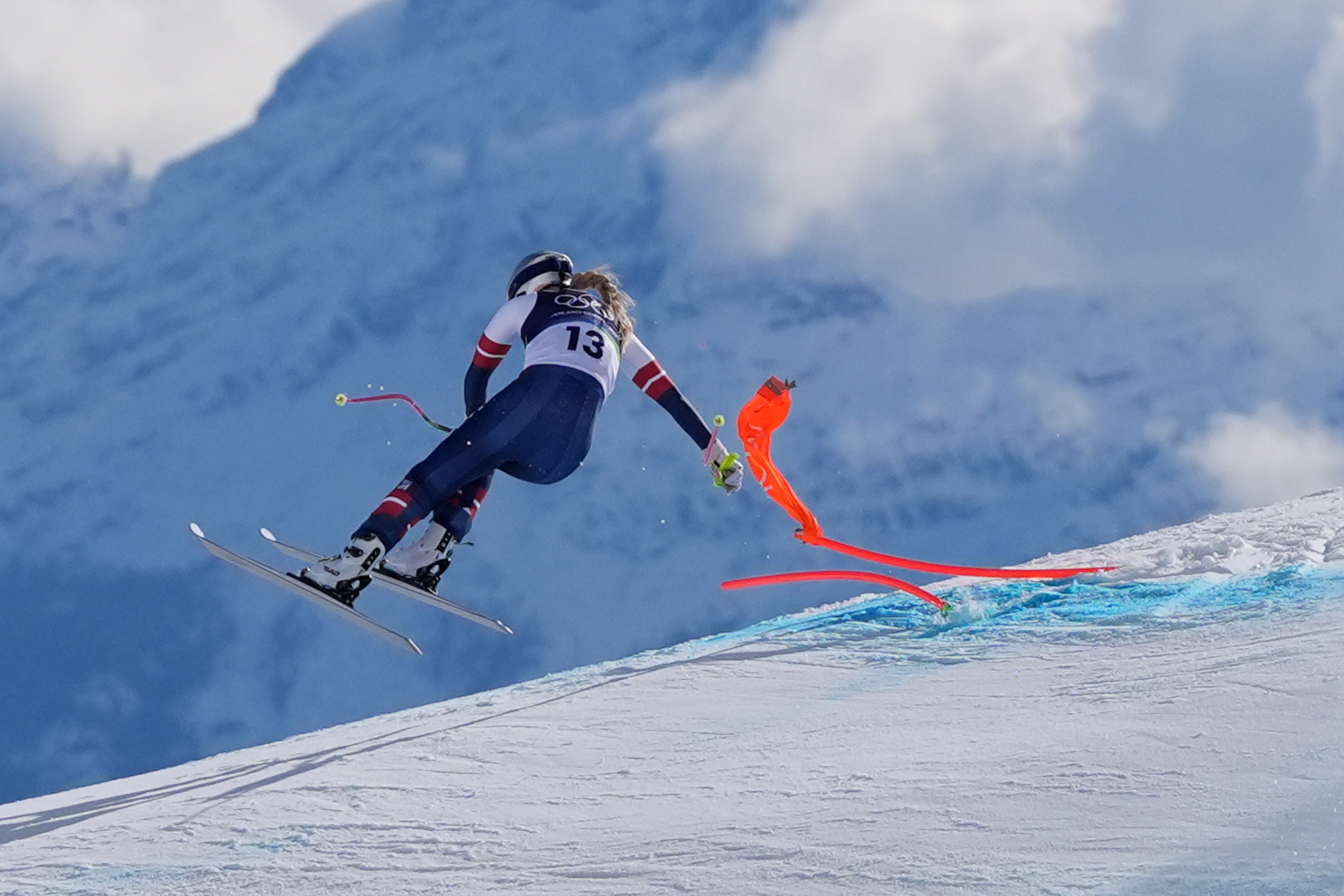
    American ski champ Lindsey Vonn was airlifted off Olympia delle Tofane and was in stable condition following surgery on a broken leg Sunday after crashing during the women’s Alpine skiing event at the Winter Olympics.

    Vonn, skiing with a torn ACL she ruptured last month, lost control near the start of the race and crashed after clipping a flag on the course. She was heard screaming after the crash as she was surrounded by medical personnel before she was strapped to a gurney and flown away by helicopter, possibly ending the skier’s storied career.

    The race was paused for nearly half an hour, with a stunned crowd watching.

    “Lindsey Vonn sustained an injury, but is in stable condition and in good hands with a team of American and Italian physicians,” the U.S. Ski & Snowboard Team said in a statement Sunday afternoon.

    “That definitely was the last thing we wanted to see,” Vonn’s sister, Karin Kildow, said during NBC’s broadcast. “It happened quick. When that happens, you’re just immediately hoping she’s OK. It was scary, because when you start seeing the stretchers being put out, it’s not a good sign.”

    “She does have all of her surgeons and her [physical therapy] staff here and her doctors,” Kildow added.

    All downhill skiers were required to have smart safety air bags in their racing suits, triggered by motion sensors and GPS data in the event of a crash. Vonn’s air bag inflated during her crash, which may have softened her fall, supplier Dainese told the Associated Press.

    Lindsey Vonn the moment she crashed into a gate during an Alpine skiing downhill race at the Olympics.

    The 41-year-old underwent a partial knee replacement in April 2024, which rekindled hope of an Olympic return after retiring in 2019. She suffered another setback last month when she ruptured her ACL skiing at the Alpine Ski World Cup in Switzerland.

    Fellow Team USA skier Breezy Johnson won gold in the event, her first Olympic medal. But speaking after the national anthem, Johnson’s thoughts were on her teammate.

    “It’s devastating,” Johnson said. “It’s not the physical pain — we can deal with physical pain — but the emotional pain is something else. I wish her the best and I hope that this isn’t the end.”

    She has some experience in what happened to Vonn. Johnson crashed at Cortina d’Ampezzo and injured her knee, which forced her to miss the 2022 Winter Olympics in Beijing.

    Andorra’s Cande Moreno and Austria’s Nina Ortlieb both also crashed during their runs Sunday. Ortlieb was able to stand up and walk off the course, while Moreno needed to be airlifted.

  • Sunday Olympics TV schedule: Lindsey Vonn’s return, curling, and speed skating

    Sunday Olympics TV schedule: Lindsey Vonn’s return, curling, and speed skating

    Update: Lindsey Vonn crashed during the women’s downhill skiing event Sunday and had to be airlifted out.

    Lindsey Vonn’s comeback story continues Sunday, where the 2010 gold medalist will hit the slopes in the women’s downhill skiing event, her first competition at the 2026 Winter Olympics.

    Women’s alpine skiing is scheduled to begin at 5:30 a.m. Philly time on USA Network, but will re-air on NBC around 9:20 a.m.

    Vonn, 41, underwent a partial knee replacement in April 2024, which rekindled hope of an Olympic return after retiring in 2019. She suffered another setback last month, when she ruptured her ACL skiing at the Alpine Ski World Cup in Switzerland.

    Skiing on one good knee didn’t seem to slow her down much Friday, where she successfully completed a 100-second training run without any issues … and posting the third-best time.

    In other Olympic action, U.S. mixed doubles curlers Cory Thiesse and Korey Dropkin will take on Estonia at 8:35 p.m. on USA Network. They’ll also face Sweden at 1:05 p.m., which will stream exclusively on Peacock (CNBC will re-air the match at 9 p.m.)

    There’s also speed skating, with American Casey Dawson expected to compete in the men’s 5,000 meter beginning at 10 a.m. on NBC. Dawson is coming off a World Cup win in Calgary, but he’ll face stiff competition in Norway’s Sander Eitrem, who set a new world record at the Speed Skating World Cup in Inzell, Germany, becoming the first skater to finish the 5,000 meter in under six minutes (5:58.52).

    Other competitions to watch Sunday include the men’s skiathlon at 6:45 a.m. on USA Network and NBC, the biathlon mixed relay at 8:45 a.m. on NBC, and the final run of the men’s luge at noon on USA Network.

    How to watch the Olympics on TV and stream online

    NBC’s TV coverage will have live events from noon to 5 p.m. Philadelphia time on weekdays and starting in the mornings on the weekends. There’s a six-hour time difference from Italy and here. The traditional prime-time coverage will have highlights of the day and storytelling features.

    As far as the TV channels, the Olympics are airing on NBC, USA, CNBC, and NBCSN. Spanish coverage can be found on Telemundo and Universo.

    NBCSN is carrying the Gold Zone whip-around show that was so popular during the Summer Olympics in 2024, with hosts including Scott Hanson of NFL RedZone. It used to be just on Peacock, NBC’s online streaming service, but now is on TV, too.

    Every event is available to stream live on NBCOlympics.com and the NBC Sports app. You’ll have to log in with your pay-TV provider, whether cable, satellite, or streaming platforms including YouTube TV, FuboTV, and Sling TV.

    On Peacock, the events are on the platform’s premium subscription tier, which starts at $10.99 per month or $109.99 per year.

    Here is the full event schedule for the entire Olympics, and here are live scores and results.

    Sunday’s Olympic TV schedule

    U.S. speedskater Casey Dawson will hit the ice Sunday in the men’s 5,000 meter event.

    As a general rule, our schedules include all live broadcasts on TV, but not tape-delayed broadcasts on cable channels. We’ll let you know what’s on NBC’s broadcasts, whether they’re live or not.

    NBC
    • 7 a.m.: Cross-country skiing — men’s 10 kilometer skiathlon
    • 7:30 a.m.: Snowboarding — men’s and women’s parallel giant slalom, finals
    • 8:45 a.m.: Biathlon — mixed 4×6 relay
    • 9:20 a.m.: Alpine skiing — women’s downhill
    • 10:15 a.m.: Speed skating — men’s 5,000 meter
    • 10:45 p.m.: Primetime Olympics coverage
    USA Network
    • 5:30 a.m.: Alpine skiing — Women’s downhill
    • 8:30 a.m.: Curling — United States vs. Estonia, mixed doubles
    • 11 a.m.: Luge — men’s singles, run 3
    • 12:30 p.m.: Luge — men’s singles, final run
    • 1:30 p.m.: Figure skating — team pairs free skate
    • 2:45 p.m.: Figure skating — women’s free skate
    • 3:55 p.m.: Figure skating — men’s free skate
    • 5 p.m.: Hockey — Czechia vs Finland, women
  • Saturday’s Olympics TV schedule features skiing, figure skating, and hockey

    Saturday’s Olympics TV schedule features skiing, figure skating, and hockey

    When it comes to the Winter Olympics’ traditional sports, there’s nothing quite like Alpine skiing’s downhill race.

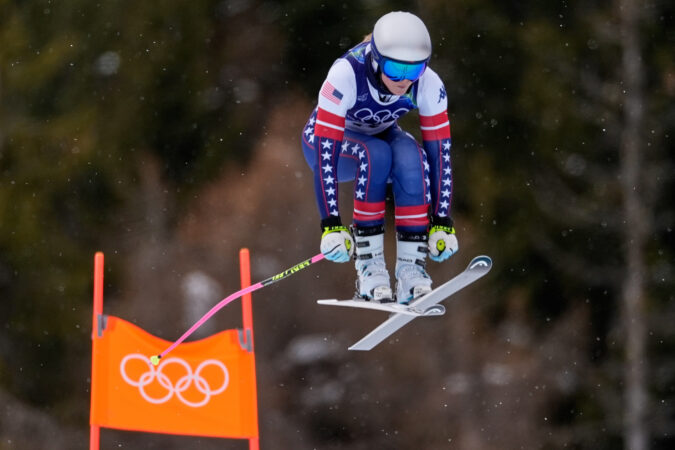
    For decades, the sight of people flying down the slopes as fast as cars on a highway has been one of The Games’ signature spectacles. This year’s stage will make the show even more spectacular: the Stelvio ski course in Bormio, Italy, up in the Dolomite Mountains.

    Bormio has been a tourist attraction for over 2,000 years thanks to its thermal baths. But as the Wall Street Journal wrote on Friday, the Stelvio course is renowned for an icy surface and steep drops, earning the nickname “The Ribbon of Death.”

    That will add more unpredictability to an event with a long history of it. The Olympic men’s downhill has never had a repeat champion since starting in 1948. Even some of the most famous skiers of all time, like France’s Jean-Claude Killy, have only won it once, if at all.

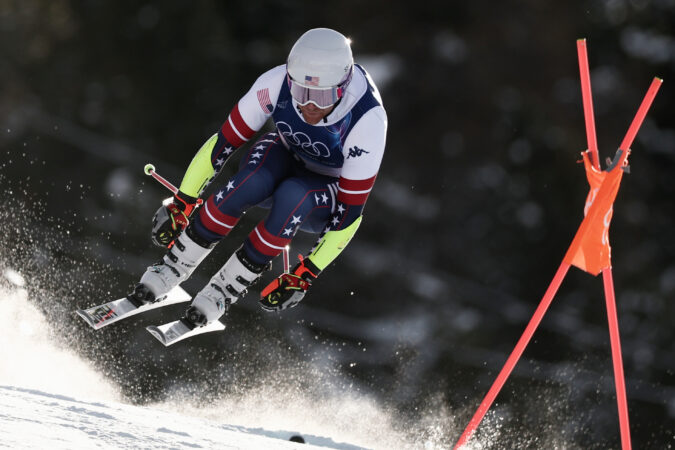
    The last American to take the title was Tommy Moe in 1994. Will that wait end this year? It could, because Vermont native Ryan Cochran-Siegle is among the favorites. He’s challenging Switzerland’s Marco Odermatt, the top name on the board, and Italy’s Giovanni Franzoni and Dominik Paris.

    Marco Odermatt flies down the Stevio course during a training run on Friday.

    You’ll have to wake up early to watch the event live, as it starts at 5:30 a.m. Philadelphia time on USA Network and Peacock. But you can also catch a rebroadcast during NBC’s prime-time show.

    NBC’s live coverage during the day includes women’s speed skating’s 3,000-meter race, which is likely to be dominated by the Netherlands on the ice and in the stands. The Dutch fans are a show on their own. There’s also figure skating’s team event, the women’s Skiathlon with American Jessie Diggins, and the first luge runs on the icy sliding track.

    USA Network’s live coverage includes snowboarding, curling, freestyle skiing, and the U.S. women’s ice hockey team’s second group game against Finland. The Americans routed Czechia, 5-1, in their opener on Thursday.

    How to watch the Olympics on TV and stream online

    NBC’s TV coverage will have live events from noon to 5 p.m. Philadelphia time on weekdays and starting in the mornings on the weekends. There’s a six-hour time difference from Italy and here. The traditional prime-time coverage will have highlights of the day and storytelling features.

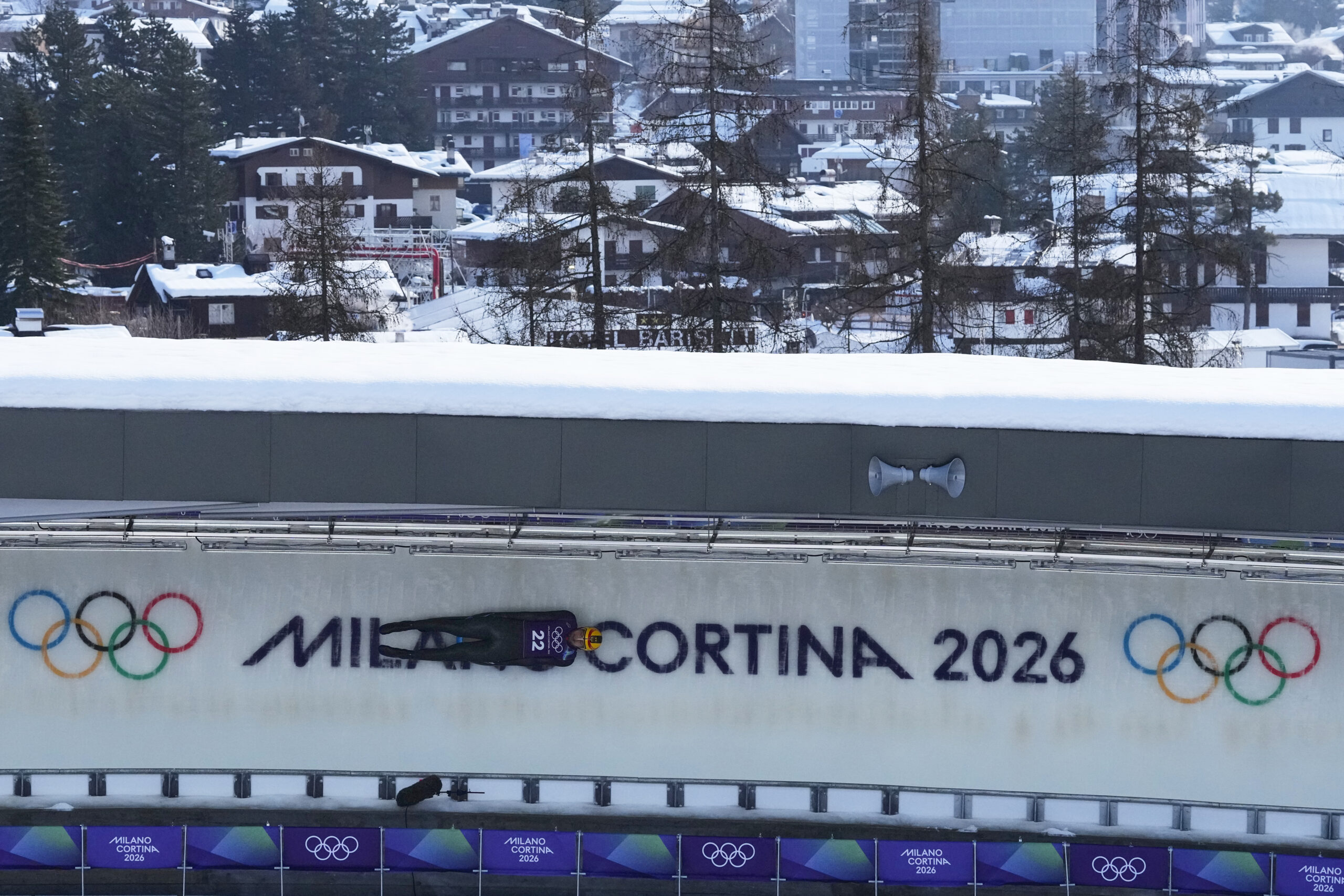
    Germany’s Timon Grancagnolo slides down the track during a luge training session on Friday.

    As far as the TV channels, the Olympics are airing on NBC, USA, CNBC, and NBCSN. Spanish coverage can be found on Telemundo and Universo.

    NBCSN is carrying the Gold Zone whip-around show that was so popular during the Summer Olympics in 2024, with hosts including Scott Hanson of NFL RedZone. It used to be just on Peacock, NBC’s online streaming service, but now is on TV, too.

    Every event is available to stream live on NBCOlympics.com and the NBC Sports app. You’ll have to log in with your pay-TV provider, whether cable, satellite, or streaming platforms, including YouTube TV, FuboTV, and Sling TV.

    On Peacock, the events are on the platform’s premium subscription tier, which starts at $10.99 per month or $109.99 per year.

    Here is the full event schedule for the entire Olympics, and here are live scores and results.

    Hilary Knight (left) watches her shot go in for the fourth goal in the U.S. women’s ice hockey team’s 5-1 rout of Czechia on Thursday.

    Saturday’s Olympics TV schedule

    As a general rule, our schedules include all live broadcasts on TV, but not tape-delayed broadcasts on cable channels. We’ll let you know what’s on NBC’s broadcasts, whether live or not.

    NBC

    7 a.m.: Cross-country skiing — Women’s Skiathlon

    8 a.m.: Freestyle skiing — Men’s slopestyle qualifying

    10:05 a.m.: Speed skating — Women’s 3000-meter

    11:30 a.m.: Freestyle skiing — women’s slopestyle qualifying (tape-delayed)

    12:30 p.m.: Luge — men’s singles, run 2

    1:45 p.m.: Figure skating — team event, men’s short program

    3:15 p.m.: Snowboarding — men’s big air final (delayed)

    4:05 p.m.: Figure skating — team event, free dance

    5 p.m.: Cross-Country Skiing — women’s Skiathlon (delayed)

    8 p.m.: Prime-time show replays, including figure skating, Alpine skiing, and snowboarding

    11:30 p.m.: Late night show replays, including men’s and women’s freestyle skiing

    USA Network

    4:05 a.m.: Curling — Great Britain vs. Canada mixed doubles

    4:30 a.m.: Freestyle skiing — women’s slopestyle qualifying

    5:30 a.m.: Alpine skiing — men’s downhill

    9:30 a.m.: Curling — Great Britain vs. United States mixed doubles

    10:40 a.m.: Ice hockey — United States vs. Finland women

    1:30 p.m.: Snowboarding — men’s big air final

    3:10 p.m.: Ice hockey — Switzerland vs. Canada women