Tag: Olympics

  • Rick Tocchet’s late parents emigrated from Italy. Now, he’ll go back there to coach Canada in the Olympics

    Rick Tocchet’s late parents emigrated from Italy. Now, he’ll go back there to coach Canada in the Olympics

    There are the visible strings.

    The ones that tie a skate or hold up hockey pants. And the ones that some jerseys have near the neck.

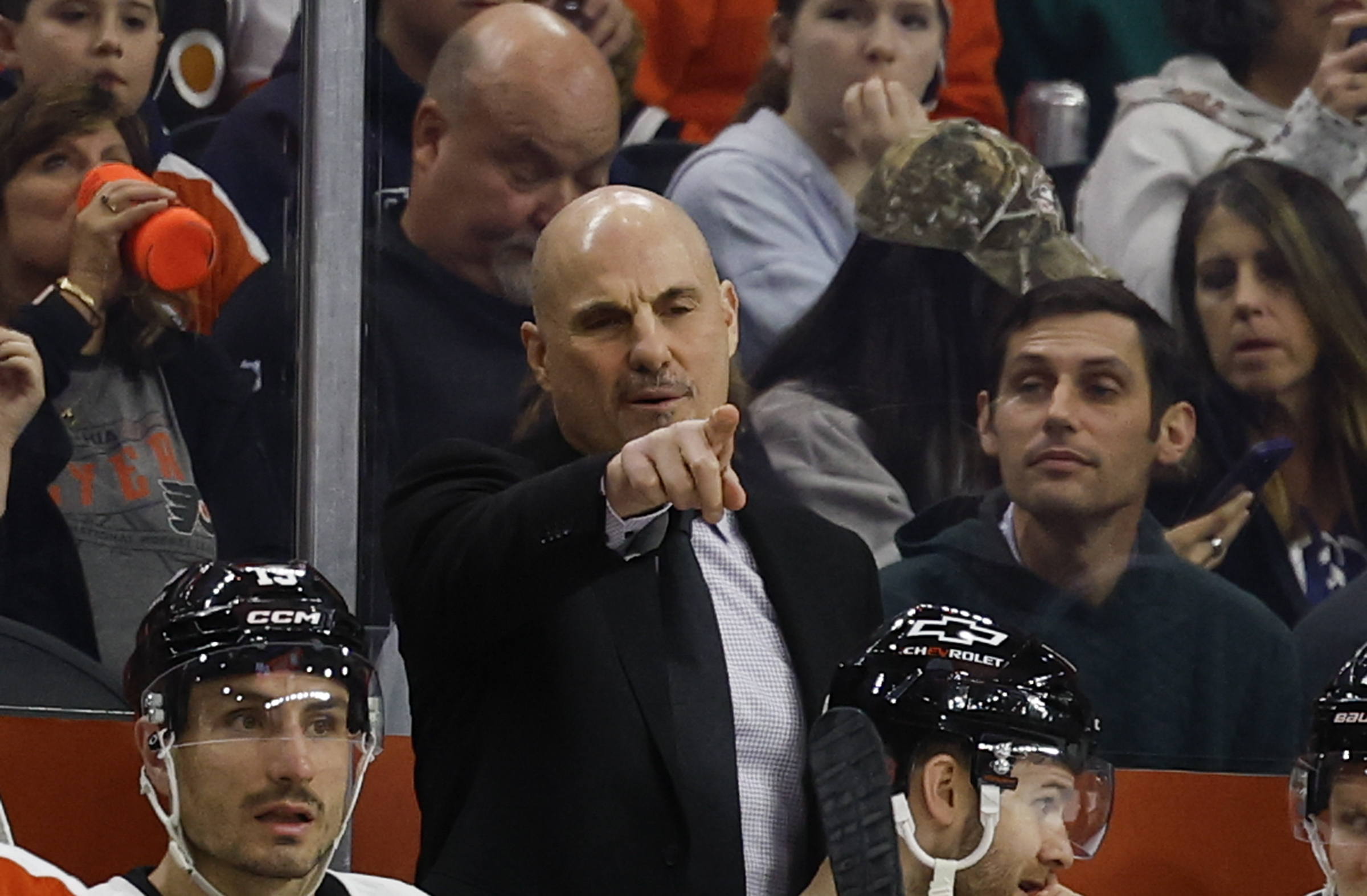
    But then there are the invisible ones that matter all the same — maybe even more. For Flyers coach Rick Tocchet, there’s an invisible string pulling him across the ocean.

    “My parents emigrated from Italy, and I’m really excited to go back there,” said Tocchet, who understands poco, or a little, Italian. “I love the food. … I’m excited to go over there and see a beautiful country.”

    Tocchet’s late parents, Norma and Fortunato ‘Nato’ Tocchet, immigrated to Canada from outside Venice. They settled in Scarborough, Ontario, bringing a blue-collar work ethic — Norma was a seamstress, and Nato a mechanic — that Tocchet carried with him across his 621 games with the Flyers and 1,144 in the NHL.

    A member of the Flyers Hall of Fame, he accumulated 232 goals,508 points, and a franchise-record 1,815 penalty minutes across two stints in Philly while being beloved and revered by the fans for his grit and in-your-face style.

    It is the same work ethic he has carried with him as a coach, including the first 56 games of his tenure behind the Flyers’ bench. And the same one he will carry 173 miles west of Venice, as an assistant coach for Canada’s men’s team at the 2026 Milan Cortina Olympics.

    “Yeah, an unbelievable moment. To be a part of that, to coach for your country, with the talent that we have, it’s going to be a lot of fun,” Tocchet told The Inquirer in Utah after a recent Flyers practice. “So it’s a great honor, and I’m really excited.”

    ‘Sense of pride’

    Across his 61 years, Tocchet has always watched the Olympics. He remembers Sidney Crosby’s golden goal at the 2010 Vancouver Games and captain Mario Lemieux leading Canada to its first gold in 50 years at the 2002 Salt Lake City Olympics. And, for the dual citizen, he’ll pop on Miracle, about the 1980 U.S. Olympic team that stunned the Soviet Union before winning gold in Lake Placid, to get motivated.

    But the most impactful Canadian hockey moment for the Scarborough kid wasn’t on the Olympic stage. In the 1972 Summit Series, as the Tragically Hip’s Gord Downie would sing in Fireworks, Paul Henderson scored “a goal that everyone remembers.”

    In Game 8 of an eight-game series, pitting Canada’s best against the Soviets’ best, Henderson clinched the series. The Flyers’ Bobby Clarke — who infamously slashed Valeri Kharlamov during the series — was linemates with Henderson, but was not on the ice because Phil Esposito stayed on for an elongated shift.

    “So I was 8 or 9 years old and in school, and they actually brought a TV into our classroom to watch that; that’s how the whole country’s eyes were on that series,” Tocchet recalled.
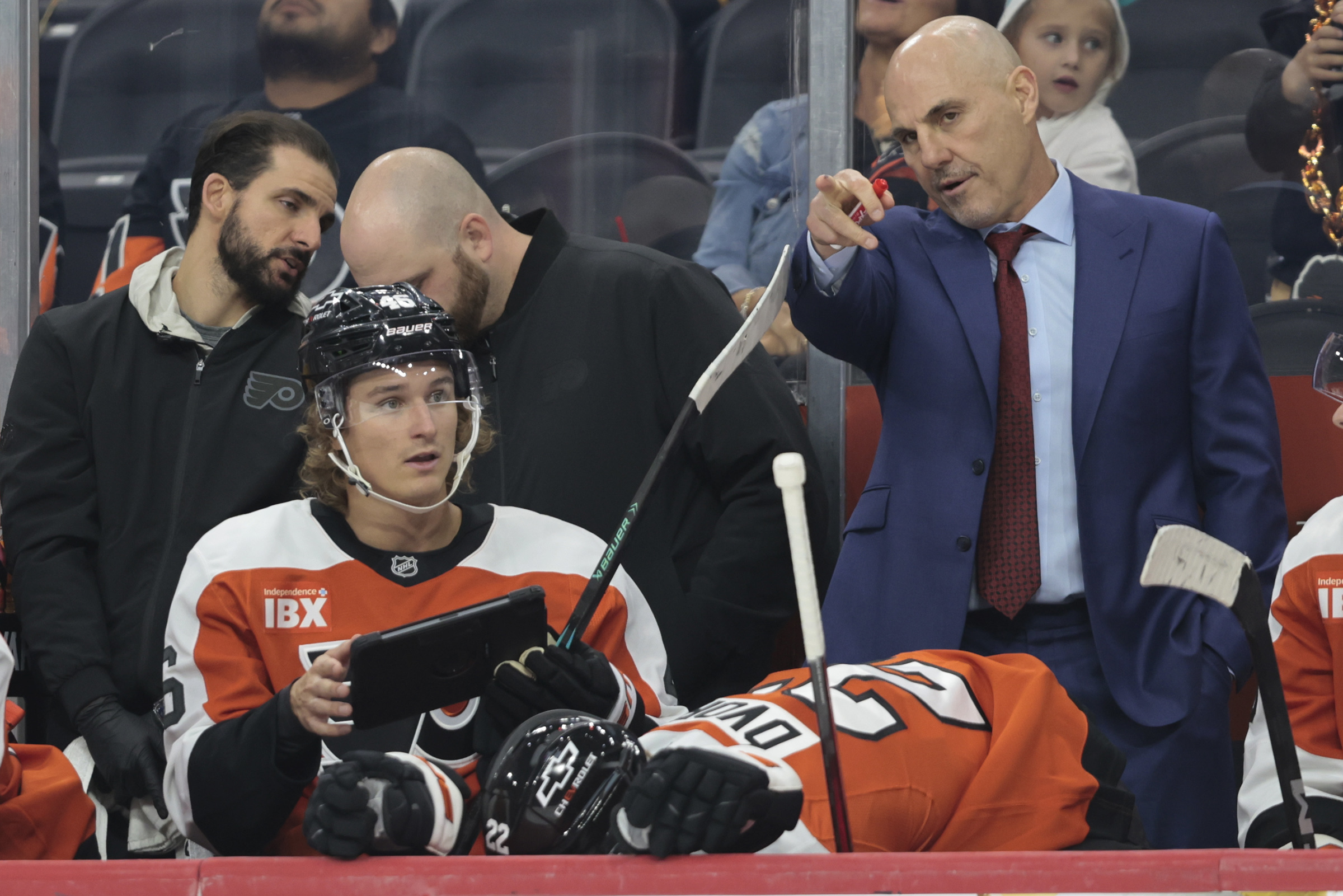
    Rick Tocchet is renowned around the league for his one-on-one instruction with players.

    “But when he scored the goal, the sense of pride — the whole country went crazy, obviously. But what a series. … You go down the list of great players and it impacted my life, because I loved hockey even more when I saw that, and I started to train and wanted to be an NHL player.”

    Fast forward to the present, and on Thursday, like many of his players, including Flyers defenseman Travis Sanheim, Tocchet will make his Olympic debut when Canada plays Dan Vladař and Czechia (10:40 a.m. ET, USA Network). But like all of his players, he has worn the maple leaf before. The forward played in a World Championship and two Canada Cups, winning gold each time.

    “It wasn’t about money. It wasn’t about status. It was about playing for your country,” he said. “To be part of that, I was very lucky as a young kid to play with Wayne Gretzky, Mario Lemieux, and Paul Coffey, guys that I idolized and learned a lot from.

    “And then playing in front of the Canada crowd, how loud it was. Just the sense of pride, it was incredible. Had nothing to do with anything, it wasn’t about individual goals, it was about playing for your country.”

    Tocc-eye

    Tocchet is no stranger to coaching for his country, either. Last February, he was part of Tampa Bay Lightning coach Jon Cooper’s staff at the 4 Nations Face-Off. The Canadians, which included Sanheim and Flyers forward Travis Konecny, won gold by beating the U.S. in overtime.

    At that tournament, Tocchet was a jack-of-all-trades, focusing on the structure, faceoff planning, and in-game adjustments. But what impressed Cooper the most was how he would often meet with players one-on-one or in small groups to watch videos — over a garbage can.

    As Tocchet explained, he would put his laptop on a garbage can and go over things, as he did when he was an assistant coach with the Pittsburgh Penguins and his Flyers’ assistant coaches do now.

    “I couldn’t have surrounded myself with a better guy,” Cooper told The Inquirer in late November. “I will tell you this, because his eye for the game and what happens in real time, having that talent is a real thing. And Tocc has that. He sees it, he processes it, and then gives you the information.

    “And there were countless times at the 4 Nations that he made me think of things, or I saw things in a different light, or I missed something, and he caught it. And so many little adjustments we made in between periods, because of what Tocc did.”

    He’ll have the same role in Italy with Cooper rolling over the same staff in Tocchet, Vegas Golden Knights coach Bruce Cassidy, former NHL coach Pete DeBoer, and former NHL assistant coach Misha Donskov.
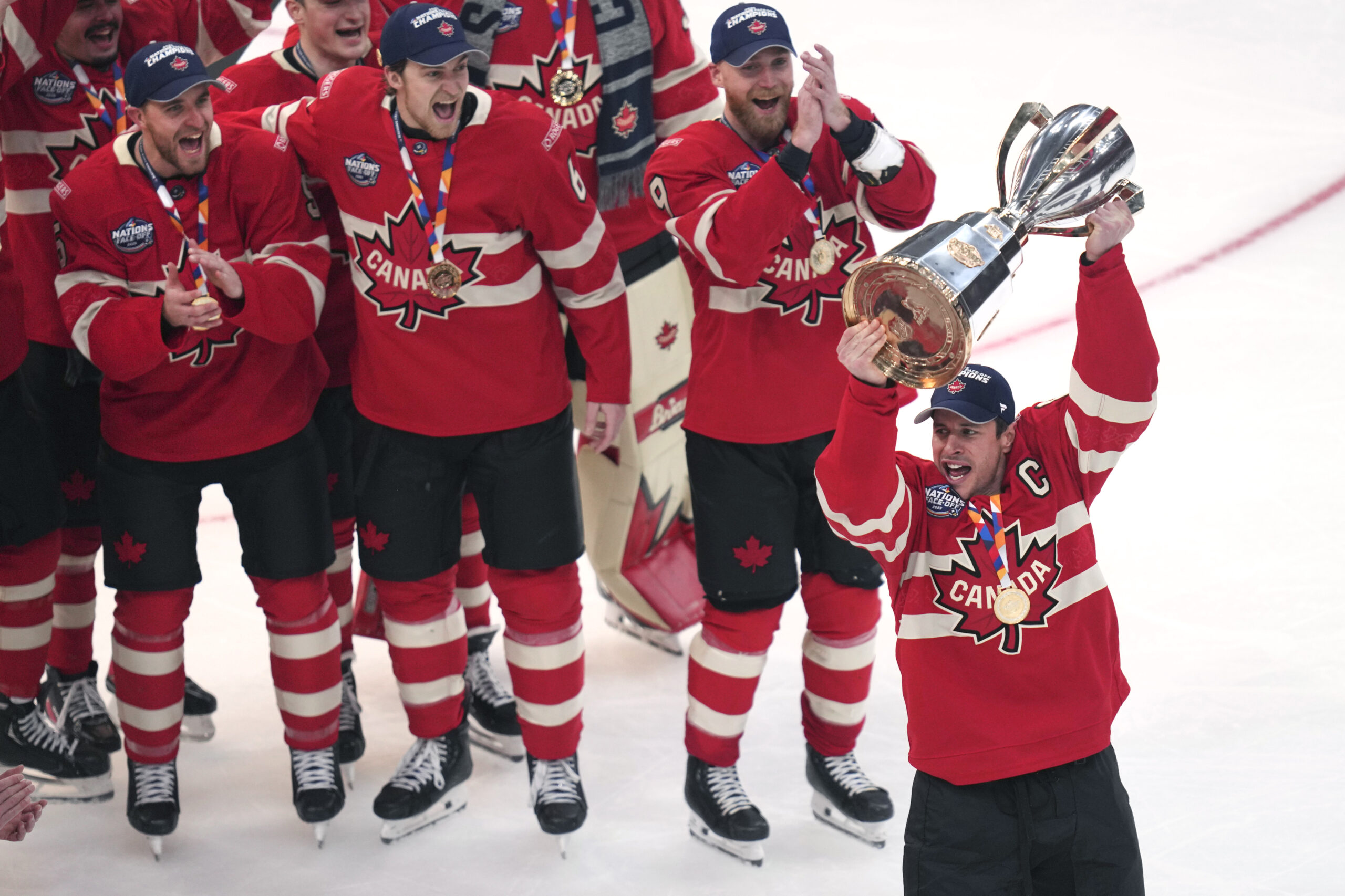
    After winning last year’s 4 Nations Face-Off, Canada enters this year’s Olympics as the favorites.

    Tocchet will assuredly have one eye on the Flyers, who get back to work on Feb. 17 at 2 p.m. in Voorhees, five days before the men’s gold medal game is scheduled. But he may not have his eyes on the Flyers, outside of Sanheim, in Milan. As Vladař said with a laugh, he’s blocking numbers right now.

    He’ll also be taking in other events like speedskating, Canada’s women’s hockey team, and figure skating, which includes South Jersey’s Isabeau Levito, who is co-coached by Slava Kuznetsov, the Flyers’ Russian translator.

    But, with it being 12 years since Canada last won gold in Sochi, Russia, Tocchet’s whole focus will be finishing with a string around his neck and a gold medal hanging from the end. After all, as the winningest country in men’s hockey at the Olympics with nine triumphs, it is the Canadian way: Gold or bust.

  • NBC Olympic TV and streaming schedule for Feb. 6: How to watch the opening ceremony

    NBC Olympic TV and streaming schedule for Feb. 6: How to watch the opening ceremony

    With the Philly region still covered in snow, it shouldn’t take much imagination to get in the mood for the Winter Olympics, which officially begin Friday across Italy.

    NBC will televise the opening ceremony live from San Siro Stadium (slated to be demolished after the Games) in Milan starting Friday at 2 p.m. Philadelphia time. It will also be streamed live via Peacock, NBC’s subscription streaming platform, and on NBCOlympics.com for free with TV provider authentication.

    With Mike Tirico in Santa Clara, Calif., to call Super Bowl LX on Sunday, NBC’s broadcast will be hosted by Mary Carillo and Terry Gannon, who will be joined by three‑time Olympic gold medalist Shaun White.

    Other venues will also be on display Friday night, with the Parade of Athletes featuring athletes marching from three other locations across Italy: Livigno, Predazzo, and Cortina d’Ampezzo (which has its own Olympic cauldron, a first for the Games). Team USA’s flag bearers will be 2022 speed skating gold medalist Erin Jackson and bobsledder Frank Del Duca.

    Greece, where the Olympics originated, will lead the parade. From there it will go alphabetically until the end. The United States, which is hosting the 2034 Winter Olympics in Salt Lake City, will enter third from last (country No. 90, if you’re counting at home), followed by 2030 Winter Olympics host France and this year’s host country, Italy.

    The U.S. has the largest group of athletes — 235, including three alternates. Canada is second with 211 athletes, followed by Italy with 195. All told, more than 2,900 athletes are expected to compete in the 2026 Games.

    There are also plenty of veterans on Team USA, including four-time Olympian Lindsey Vonn, who will attempt to ski on a ruptured ACL. Other U.S. athletes back to compete in their fifth Olympics are bobsledders Kaillie Humphries and Elana Meyers Taylor, snowboarders Nick Baumgartner and Faye Thelen, figure skater Evan Bates, and hockey player Hilary Knight.

    As far as local athletes, there’s South Jersey’s Isabeau Levito, a 18-year-old figure skater looking for gold after winning the silver medal in the 2024 World Figure Skating Championships. Curling team member Taylor Anderson-Heide is a Philly native, speedskater Andrew Heo grew up in Warrington, and Summer Britcher — the all-time singles leader in U.S. luge history — was raised in Glen Rock, Pa., in York County.

    There’s also hockey star Sarah Nurse, who plays for Team Canada but also happens to be the niece of former Eagles quarterback Donovan McNabb.

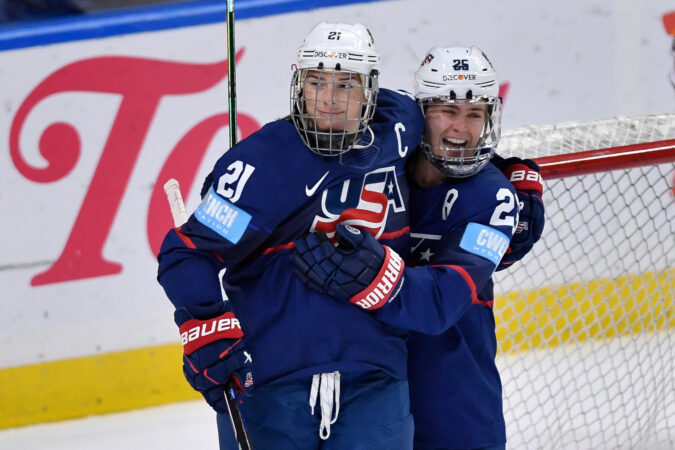
    Ahead of the opening ceremony, some sports have already gotten underway. Curling began Wednesday, while the U.S. women’s hockey team began its quest for gold Thursday with a 5-1 win over Czechia.

    Friday’s Olympic TV schedule

    As a general rule, our schedules include all live broadcasts on TV, but not tape-delayed broadcasts on cable channels. We’ll let you know what’s on NBC’s broadcasts, whether they’re live or not.

    NBC
    • Noon: Team figure skating — rhythm dance
    • 12:30 p.m.: Team figure skating — pairs short
    • 1 p.m.: Team figure skating — women’s short
    • 2 p.m.: Opening ceremony
    • 8 p.m.: Prime-time replay of opening ceremony
    USA Network
    • 7:35 a.m.: Team figure skating — women’s short
    • 8:55 a.m.: Curling mixed doubles — Czechia vs. United States

    How to watch the Olympics on TV and stream online

    NBC’s TV coverage will have live events from noon to 5 p.m. Philadelphia time on weekdays and starting in the mornings on the weekends. There’s a six-hour time difference from Italy and here. The traditional prime time coverage will have highlights of the day and storytelling features.

    As far as the TV channels, the Olympics are airing on NBC, USA, CNBC, and NBCSN. Spanish coverage can be found on Telemundo and Universo.

    NBCSN is carrying the Gold Zone whip-around show that was so popular during the Summer Olympics in 2024, with hosts including Scott Hanson of NFL RedZone. It used to be just on Peacock, NBC’s online streaming service, but now is on TV, too.

    Every event is available to stream live on NBCOlympics.com and the NBC Sports app. You’ll have to log in with your pay-TV provider, whether cable, satellite, or streaming platforms including YouTube TV, FuboTV, and Sling TV.

    On Peacock, the events are on the platform’s premium subscription tier, which starts at $10.99 per month or $109.99 per year.

  • Philly connections to the Winter Olympics, from a young figure skater to Donovan McNabb’s niece

    Philly connections to the Winter Olympics, from a young figure skater to Donovan McNabb’s niece

    The Winter Olympics are underway — and the opening ceremony was Friday night. Team USA features 232 athletes — 117 men, 115 women, 98 returning Olympians, and 18 Olympic champions. And there are a few Philly-area natives competing in Milan and Cortina.

    Here’s look at some Olympians with ties to the region and how to watch them compete:

    Isabeau Levito, figure skating

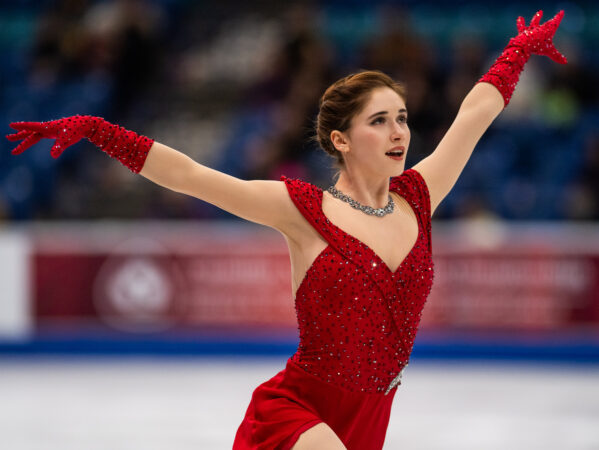
    Isabeau Levito, who was born in Philadelphia and lives and trains in Mount Laurel, will make her Olympic debut in front of family in Milan, where her mother was born and some family still lives. The 18-year-old Levito, who has been skating since she was 3 years old, burst onto the scene with a third-place finish at the 2022 U.S. Figure Skating Championships and won the event the next year when she was 15. She also won a silver medal at worlds in 2024.

    How and when to watch? The women’s individual figure skating competition doesn’t take place until the second half of the Winter Games. The women’s singles short program is Feb. 17 (12:45 p.m. Philadelphia time), and will air on NBC (Part I) and USA Network (Part II). The women’s singles free skate is scheduled for Feb. 19 (1 p.m.), and will air on NBC. Both events will stream live on Peacock, NBCOlympics.com, NBC.com, the NBC Olympics app, and the NBC app. You can check out the full women’s singles figure skating TV schedule here.

    Taylor Anderson-Heide (center) grew up in Broomall and learned to curl with her identical twin sister.

    Taylor Anderson-Heide, curling

    Taylor Anderson-Heide, another Philadelphia-born Olympian, grew up in Broomall and graduated from Marple Newtown High School before attending the University of Minnesota. Anderson-Heide began curling with her identical twin sister, Sarah Anderson, at a young age and trained at the Philadelphia Curling Club in Paoli.

    Anderson-Heide is a five-time national champion, winning twice in mixed doubles (2015, 2018); three times in the women’s event, including twice alongside her sister (2019, 2021); and again in 2025. While Anderson-Heide has finished in the top three in women’s curling in two U.S. Olympic trials, the Milan Games will be her first Olympic events.

    How and when to watch? Mixed doubles curling is underway, but Anderson-Heide is competing in the women’s event, which doesn’t begin until Feb. 12. The U.S. women’s team has round-robin sessions every day between Feb. 12-19, and if it advances, the semifinals take place on Feb. 20. The women’s bronze medal match is on Feb. 21, and the women’s gold-medal match takes place on Feb. 22. You can check out the women’s curling TV schedule here, as the games will air at different times and on a trio of networks — CNBC, USA, and NBC — throughout the tournament.

    Andrew Heo, speedskating

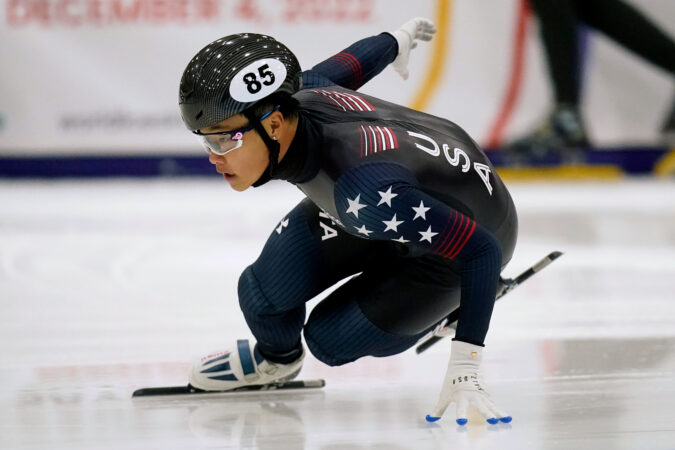
    Heo, the son of South Korean immigrants, grew up in Warrington. He followed his cousins and older brother into speedskating and made his first U.S. national team at just 17. Three years later, he made his Olympic debut at the 2022 Beijing Games, finishing seventh in the men’s 1,000-meter race, 28th in the 1,500, and eighth in the 2,000-meter mixed relay. Heo is a two-time world bronze medalist, and he won his first ISU Short Track World Tour race, the 500 meters, in 2025. Also helping Heo at this Olympics: His parents can attend, after COVID-19 restrictions forced them to watch from their home in Bucks County in 2022.

    How and when to watch? Men’s speedskating runs from Feb. 7-21, with events airing on NBC, USA Network and streaming live on Peacock. Heo will compete in the 1,500- and 500-meter races, and the 2,000-meter mixed relay. The mixed relay finals will be held on Feb. 10; the 1,500-meter finals will be held on Feb. 14; and the 500-meter finals will be on Feb. 18. For more time and channel information, click here.

    Flyers head coach Rick Tocchet is serving as an assistant coach for Team Canada.

    Flyers players and coaches

    While they weren’t born in Philly, there are four members of the Flyers in Italy for the Olympics.

    Rick Tocchet: Tocchet, who represented his native Canada in World Championships and Canada Cups as a player, will get his first Olympic experience in Milan as an assistant coach with the Canadians. The tournament will have added meaning for the Flyers’ bench boss, as both of his parents emigrated from Italy.

    Travis Sanheim: Sanheim’s rise from a small Manitoba town of 500 people to the pinnacle of the sport has been nothing short of remarkable to watch. After winning a 4 Nations Face-Off title last year with Canada, the Flyers defenseman will look to add an Olympic gold medal to his trophy case.

    Dan Vladař: The goaltender, who is in his first year with the Flyers and has been the team’s MVP through the Olympic break, will represent Czechia in Milan. Vladař has the best NHL numbers of the three Czech goalies and could push starter Lukáš Dostál for the net.

    Rasmus Ristolainen: A year after missing out on the 4 Nations Face-Off due to injury, Ristolainen will return to the Finnish setup for the first time in nine years. Pesky Finland always seems to be in contention for a medal, and Ristolainen will provide size and snarl to their blue line.

    *Rodrigo Ābols: The Flyers centerman was announced as one of Latvia’s initial six players, but will be unable to participate after suffering a nasty-looking ankle injury on Jan. 17.

    You can check out the full men’s hockey TV schedule here.

    Penn State’s Tessa Janecke is making her Olympic debut at the Milan Cortina Games.

    Athletes from Penn State

    In addition to Philly natives and pro athletes, there are also some Olympians from Penn State.

    Tessa Janecke, ice hockey: Janecke, 21, holds the title for most career goals, assists, and points in Penn State women’s hockey history. She was named to the U.S. women’s hockey team three years ago and scored the golden goal in the 2025 IIHF World Championships when the U.S. defeated Canada, 4-3. Janecke was raised in Warren, Ill., and started playing hockey at age 3.

    The U.S. women’s hockey team began its schedule with a 5-1 win over Czechia on Thursday, and Janecke recorded a pair of assists. The team’s three remaining preliminary games run through Feb. 10. The knockout rounds begin with the quarterfinals on Feb. 13, and the tournament wraps up with the gold and bronze medal games on Feb. 19. Women’s ice hockey will be live primarily on Peacock, which will stream every game. TV coverage is also available for select games on NBC, USA, and CNBC.

    Dan Barefoot, skeleton: Another Nittany Lion, the 35-year-old Johnstown, Pa., native didn’t take up skeleton until his mid-20s. Barefoot was inspired to start training after looking up online which Olympic sports a novice could learn later in life with little to no experience. When the skeleton was the search result, he got to work. Since then, Barefoot, who graduated from Penn State with a degree in landscape architecture, has competed in three world championships for the U.S. and finished 11th at the 2025 IBSF World Championships in Lake Placid, N.Y. The 2026 Games will be his Olympic debut.

    Skeleton events can be watched live on Peacock, NBC, and USA Network from Feb. 12-15.

    Chloe Kim won gold in the women’s halfpipe at each of the last two Winter Olympics.

    More local connections

    There are more athletes just a bit farther outside the Philadelphia area, as well as one with a familial connection to the city. You can check out the times and TV information for their events here.

    Summer Britcher, luge: Britcher was raised in Glen Rock, Pa., in York County and is no stranger to the Olympic stage. She is a veteran of four Olympic Games, and was the youngest member of the U.S. luge team at the 2014 Sochi Games when she was just 19. Britcher has five career World Cup victories, making her the all-time singles leader in U.S. luge history.

    Kelly Kurtis, skeleton: Kurtis first made history at the 2022 Beijing Games when she became the first Black athlete to compete for Team USA in skeleton. She was raised in Princeton, N.J., and grew up hating the cold. She first took up bobsled in 2013 before transitioning to skeleton a year later after watching the event during the 2014 Olympic Games. In the 2022 Olympic Games, Curtis finished 21st overall.

    Brianna Schnorrbusch, snowboarding: Schnorrbusch grew up in Monroe Township, N.J., and was just 17 when she was named to the U.S. snowboardcross Pro Team. Her specialty is women’s snowboardcross, while her sister, Ty Schnorrbusch, competes in slopestyle snowboarding. Now, at just 20 years old, Schnorrbusch will make her Olympic debut.

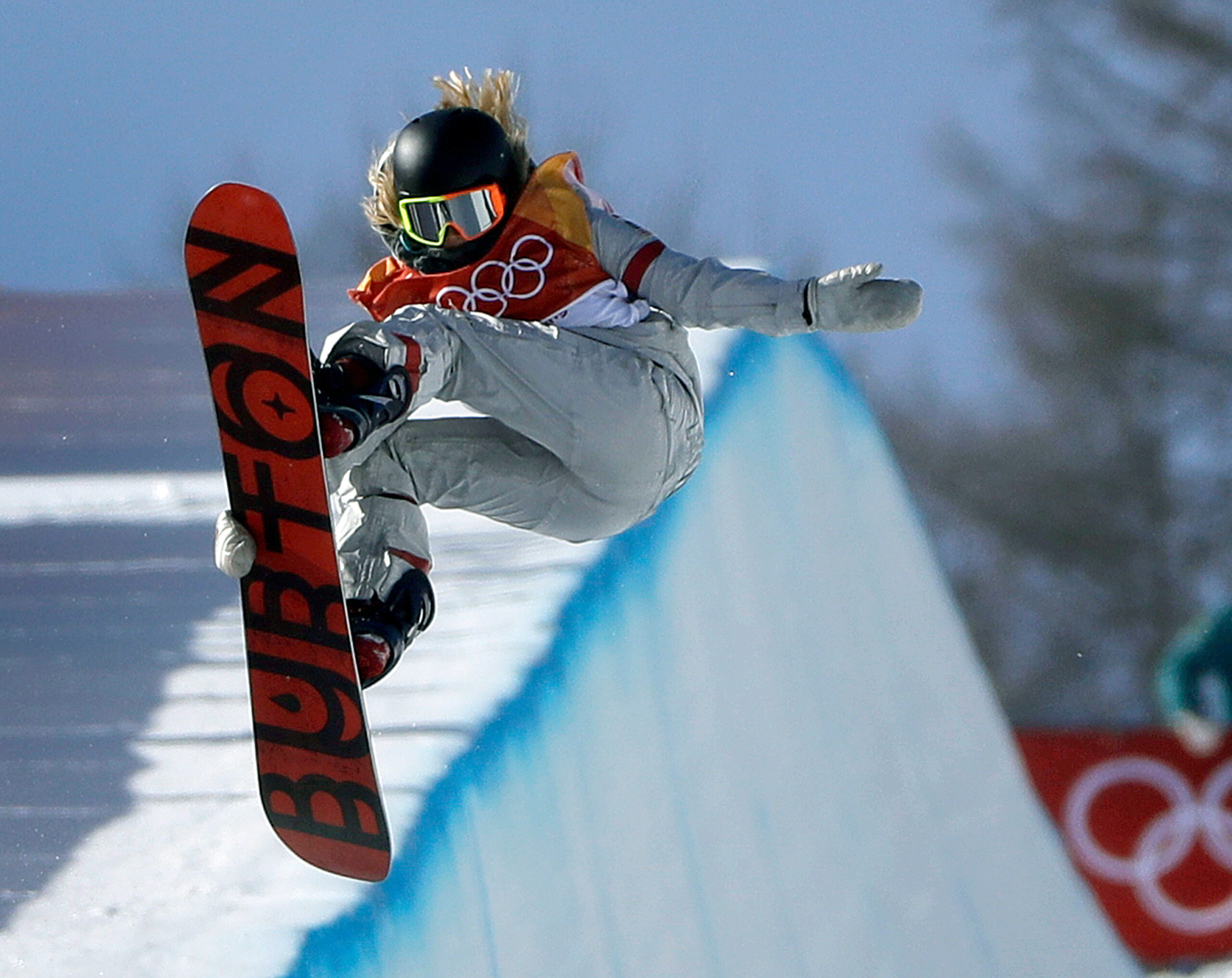
    Chloe Kim, snowboarding: A household name for Team USA, Kim made her Olympic debut in the 2018 Pyeongchang games where she won gold in the women’s halfpipe at 17 years old, making her the youngest woman to win an Olympic snowboarding gold medal. She defended her title in the 2022 Beijing Games. Kim, who attended Princeton, is also the first athlete to win titles at all four major snowboarding events — the Olympics, Youth Winter Olympics, X Games, and FIS World Championships. At age 25, the Torrance, Calif., native is already tied with Shaun White for the most halfpipe wins in X Games history (8).

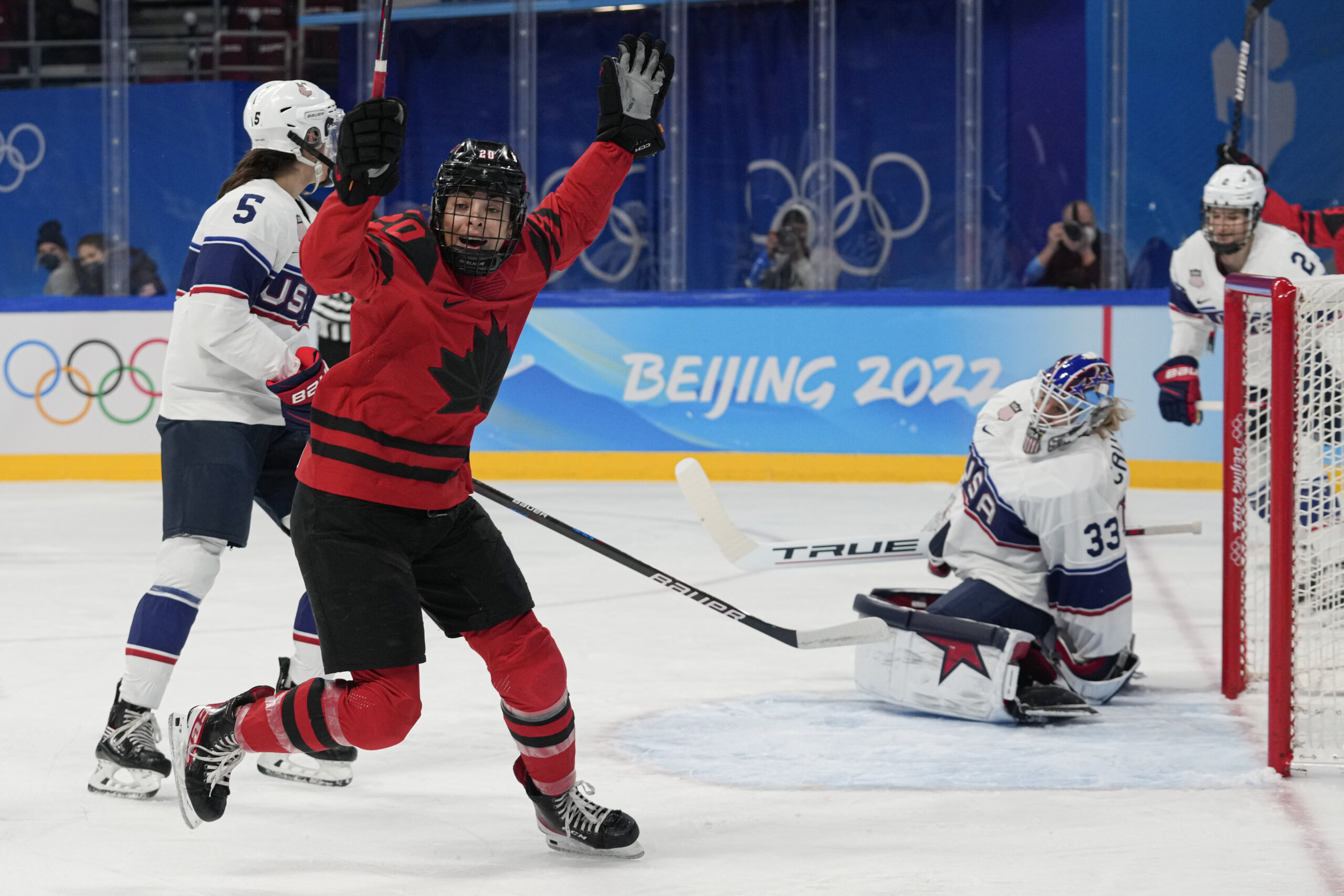
    Sarah Nurse, ice hockey: Nurse isn’t from the area — and doesn’t even play for Team USA — but she’s one of the stars of women’s hockey and is an Olympic veteran. So why should Philadelphians care? She’s also Donovan McNabb’s niece. But the family’s athletic bloodlines extend beyond the former Eagles quarterback. Nurse’s cousins, Darnell and Kia Nurse, play in the NHL and WNBA, respectively. And their father, Nurse’s other uncle, played in the CFL. Nurse has helped Canada, the favorite again this year, to a pair of Olympic medals — gold in 2022 and silver in 2018 — and three World Championships titles.

  • Social media spoilers can ruin big events like the Olympics and Super Bowl. Xfinity has a new way to prevent that.

    Social media spoilers can ruin big events like the Olympics and Super Bowl. Xfinity has a new way to prevent that.

    It’s every sports fan’s nightmare.

    You’re watching a big game, it’s getting into crunch time, and there’s a crucial play about to happen. The only issue is, that play already happened and the people who saw it first are sharing it on social media.

    The notifications begin to flood your feed from X or ESPN informing you what just happened, all before it plays out on your television screen. Now though, with Super Bowl LX just days away and the Winter Olympics officially getting underway, Xfinity has created a way for people to stay current with everything that happens.

    The Philly-based company’s new RealTime4K feature, which will be introduced Sunday during the Super Bowl between the New England Patriots and Seattle Seahawks, will allow Xfinity viewers to keep pace with the game as if they were in attendance, while still watching in high-quality 4K.

    “The benefit here is our customers will be among the first in the country, other than those at the game, to see what happens at the Super Bowl,” said Vito Forlenza, Comcast’s vice president for sports entertainment. “So we’re doing this for a whole day of 4K. It’s going to be Olympics programming in the morning, 7 a.m. to noon, Super Bowl programming all the rest of the day.”

    RealTime4K will debut during the Super Bowl and will allow fans to watch the game in 4K up to 30 seconds faster than other 4K broadcasts.

    Xfinity rolled out its enhanced 4K before creating RealTime4K. At the 2024 Summer Olympics in Paris, enhanced 4K resulted in a nearly 30-second difference between Xfinity viewers and other viewers watching Noah Lyles win the men’s 100-meter gold medal in a photo finish. In other words, Xfinity viewers could have watched Lyles finish the race three times before others would have seen him cross the line once.

    Being able to keep up with sporting events in real time is not the only new feature Xfinity is adding for the Winter Olympics. It’s also adding Fan View, tailoring the Games to each viewer and making sure the events and sports they want to see are on their screens.

    “There’s so much Olympics [content] on here you can get overwhelmed,” said Comcast’s director of product management, Scott Manning. “But what we’re bringing for 2026 is Fan View. What that does is it takes all these experiences and puts it into one.”

    That means viewers will be able to personalize their Olympic experience. They can pick certain events that they find interesting in Fan View. Then, viewers will be able to access a sidebar that will serve them highlights of the events they like, as well as interviews from athletes competing in the sports they picked.

    “I’m able to pick actual broadcasts and then specific sports as I’m going through, and it’s going to remember these selections, and then it will start tailoring some of the experience based on that too,” Manning said. “I don’t have to pick things. If I just want to try to get everything, that’s fine.”

    Viewers can access Xfinity’s new Fan View even while watching four Olympic events at the same time.

    Viewers will be able to also see medal counts, a feature that was there for previous Olympics, but this time it will be integrated into Fan View, which will debut on Friday.

    Fan View can also help customers keep track of several sports at once — even while they’re watching something different, as it won’t interfere with the sport currently on the screen. So, if curling is on the TV, viewers can continue to have their Fan View on the side, and their watching experience will not be impacted.

    After all, there’s a lot to keep track of.

    “Our customers said, ‘Well, that sounds good, but I want to make sure I can find the one sport that I’m looking for,’” Forlenza said. “One of our customers said it doesn’t matter if we have 3,000 hours [of content] if they can’t find the one hour they really want to watch. So that’s the problem we’re trying to solve to make sure customers can get to the Olympics coverage they want to watch quickly and easily.”

    With a big 2026 on tap for Xfinity, both in Philly and nationally, this won’t be the last time fans get this kind of experience.

    “We’re already thinking about the World Cup,” Forlenza said. “We’re building these types of features. We’re already thinking, ‘How’s this?’”

  • A beginner’s guide to watching figure skating at the 2026 Milan Cortina Olympics

    A beginner’s guide to watching figure skating at the 2026 Milan Cortina Olympics

    Figure skating is one of the most popular events at the Winter Olympics.

    But many only follow it every four years, which can make it confusing when the rules change — as they do annually. Most of the names also are new since 2022.

    Plus, figure skating is a judged sport, so sometimes the skater you love might get dinged on rules you don’t know and not place as well as you’d expect.

    Here is a breakdown of how to watch the Olympic figure skating events:

    What are people talking about?

    The Blade Angels

    The American skaters! Team USA has been a powerhouse off and on, but 2026 is very much an on year.

    On the women’s side, all three women — who call themselves the Blade Angels — have major titles to their name. South Jersey’s Isabeau Levito is the 2023 U.S. champion and the 2024 world silver medalist. The 18-year-old was born in Philadelphia and lives and trains in Mount Laurel.

    Amber Glenn is a three-time U.S. champion and won the Grand Prix Final in 2024.

    Alysa Liu is a two-time national champion and the reigning world and Grand Prix Final champion.

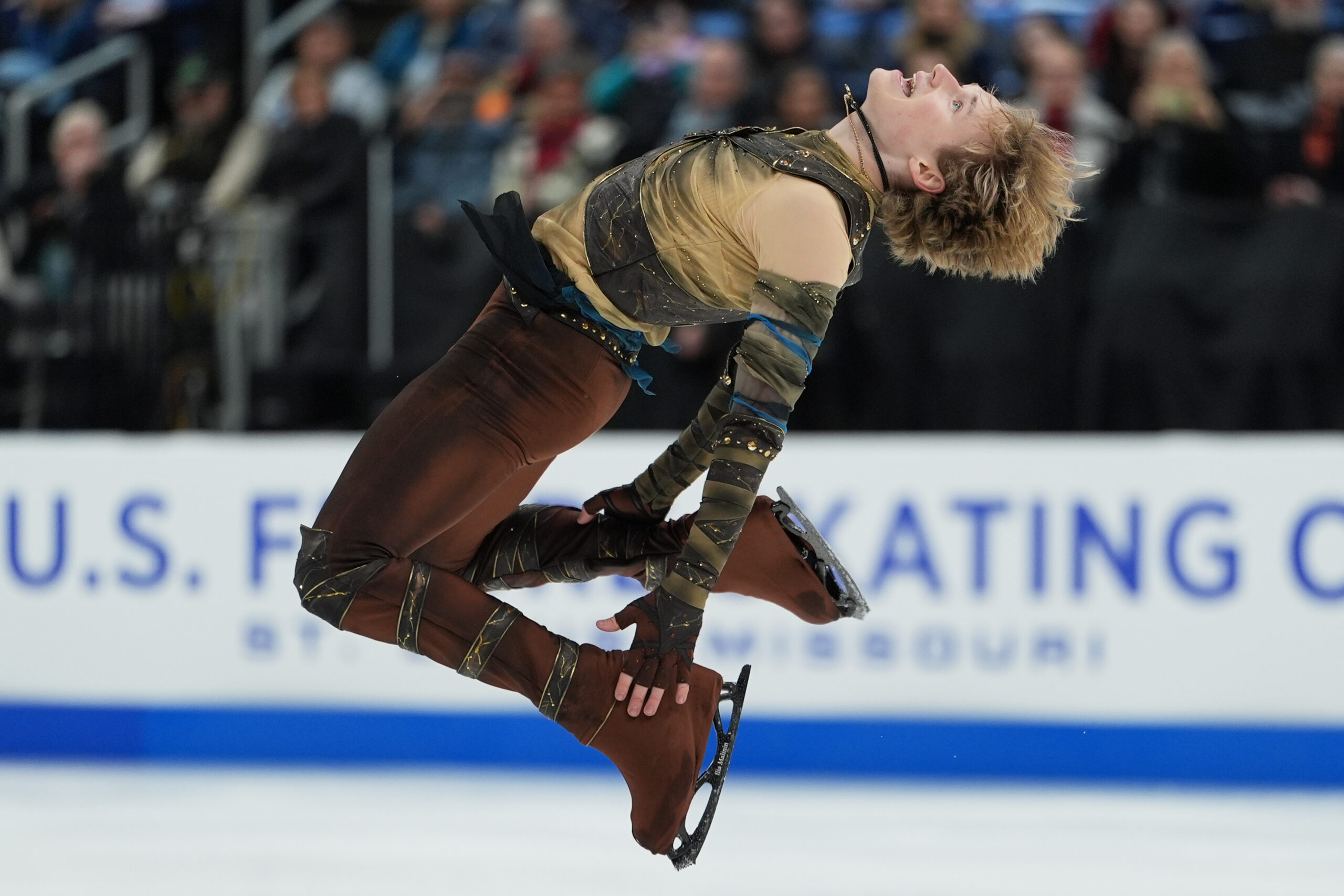
    Ilia Malinin skates his program at the U.S. Figure Skating Championships in January in St. Louis.

    The Quad God

    Ilia Malinin named himself the Quad God early on, and he’s lived up to that name, landing seven triples (the six major jumps plus one in combination at the 2025 Grand Prix Final in December.

    He is the only man in the world to land a quad axel in international competition. Sometimes called the quaxel, it is 4½ revolutions in the air with a forward (read: harder) takeoff.

    The quad axel was the talk of the 2022 Olympics in Beijing because Japan’s Yuzuru Hanyu was going to attempt it. But he did not land it cleanly.

    Malinin has competed it many times since then. Thanks to the difficulty of the move and his consistency, he has not lost a competition he skated in several years.

    Second-generation skaters

    All three men on the U.S. team are second-generation skaters. Malinin’s parents represented Uzbekistan at two Games.

    Andrew Torgashev’s Ukrainian mother, Ilona Melnichenko, competed for the Soviet Union and was the 1987 World Junior champion in ice dancing. His Russian father, Artem Torgashev, was a pairs skater, also for the Soviet Union, and is a two-time World Junior Championships medalist.

    Maxim Naumov’s parents, Evgenia Shishkova and Vadim Naumov, were world champion pairs skaters and Olympians. They were killed last year in a midair plane crash over the Potomac River that also killed many young figure skaters, their parents, and coaches.

    Ice dancer Anthony Ponomarenko’s parents, Marina Klimova and Sergei Ponomarenko, are the only ice dancers to have won an Olympic medal of every color. They are the 1992 Olympic champions.

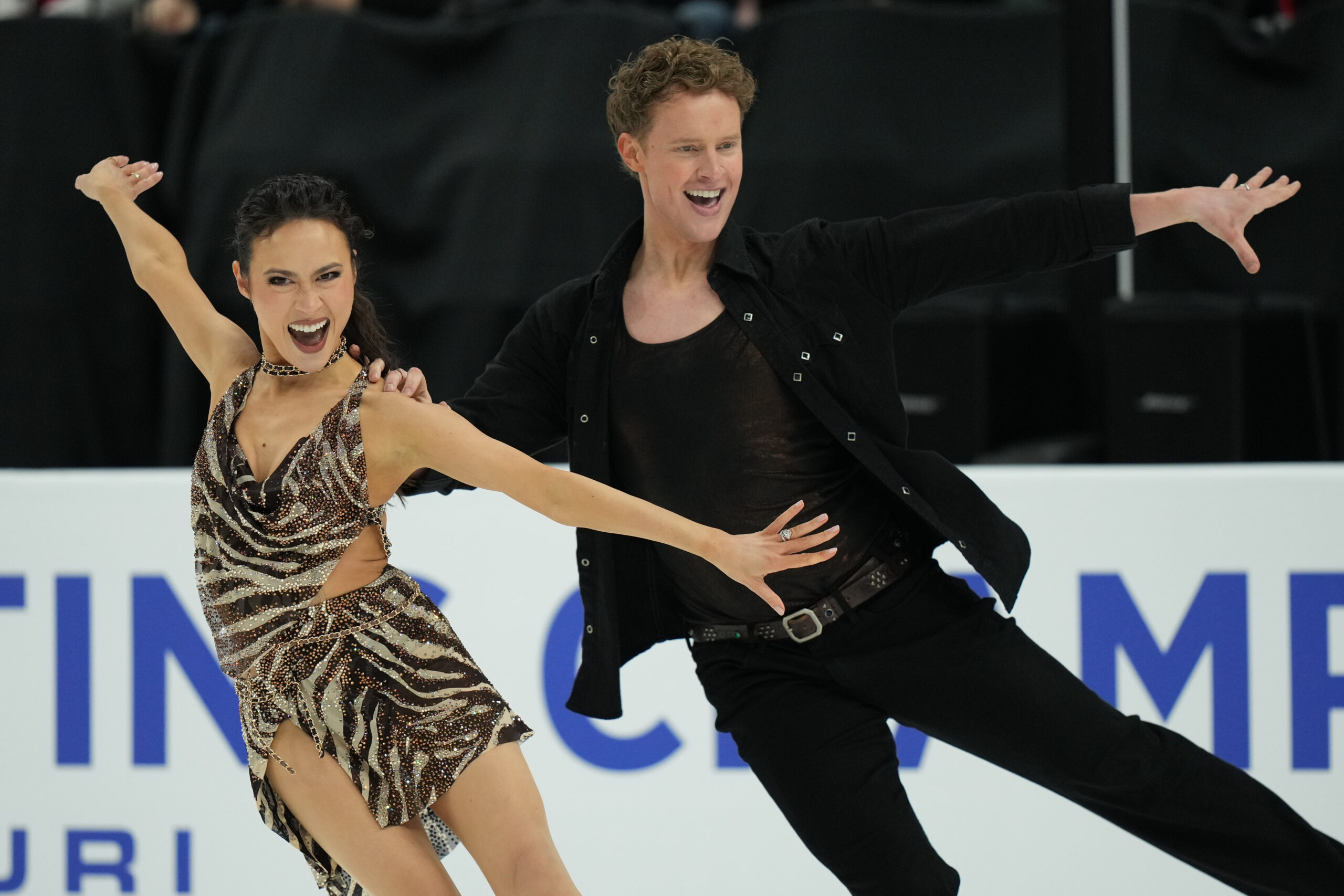
    Married ice dancers Madison Chock and Evan Bates are seven-time national champions.

    Chock and Bates

    American ice dancers Madison Chock and Evan Bates are back for their fourth and fifth Olympics, respectively. The married couple has a team gold medal from the 2022 Winter Olympics. They are seven-time national champions and three-time world champions. The only title they haven’t earned yet is an individual Olympic medal. There are a few other teams who could challenge them for Olympic gold, but they have the edge entering the event.

    The oldest competitor and whether she can skate

    Deanna Stellato-Dudek is 42 and competed in singles for the United States when she was a teenager. She retired because of injury but came back 16 years later when she realized her unfulfilled Olympic dream. She competed in pairs for Team USA before teaming up with Maxime Deschamps and eventually getting her Canadian citizenship.

    She was injured in training and had to withdraw from the team event. In the next few days, her team will decide if she can skate in the individual pairs event.

    Russian skaters

    After a four-year ban because of the war in Ukraine, Russia was allowed to send a limited number of skaters to an Olympic qualifier competition to compete as neutral athletes. They were not considered if they had shown any support for the war. Two women qualified: Adeliia Petrosian and Viktoriia Safonova. Petrosian is in contention for a medal and likely will be the only woman to attempt quads at the Games.

    One neutral Russian man was cleared to compete, Petr Gumennik. No pairs or ice dancers were allowed.

    Who else is on Team USA?

    The other U.S. dance teams in Milan are Ponomorenko and Christina Carreira, who’s from Canada and recently became a U.S. citizen. They are the 2026 U.S. bronze medalists and medaled twice at the World Junior Championships.

    Emilea Zingas and Vadym Kolesnik teamed up in 2022 and quickly found success. They are the 2026 U.S. silver medalists.

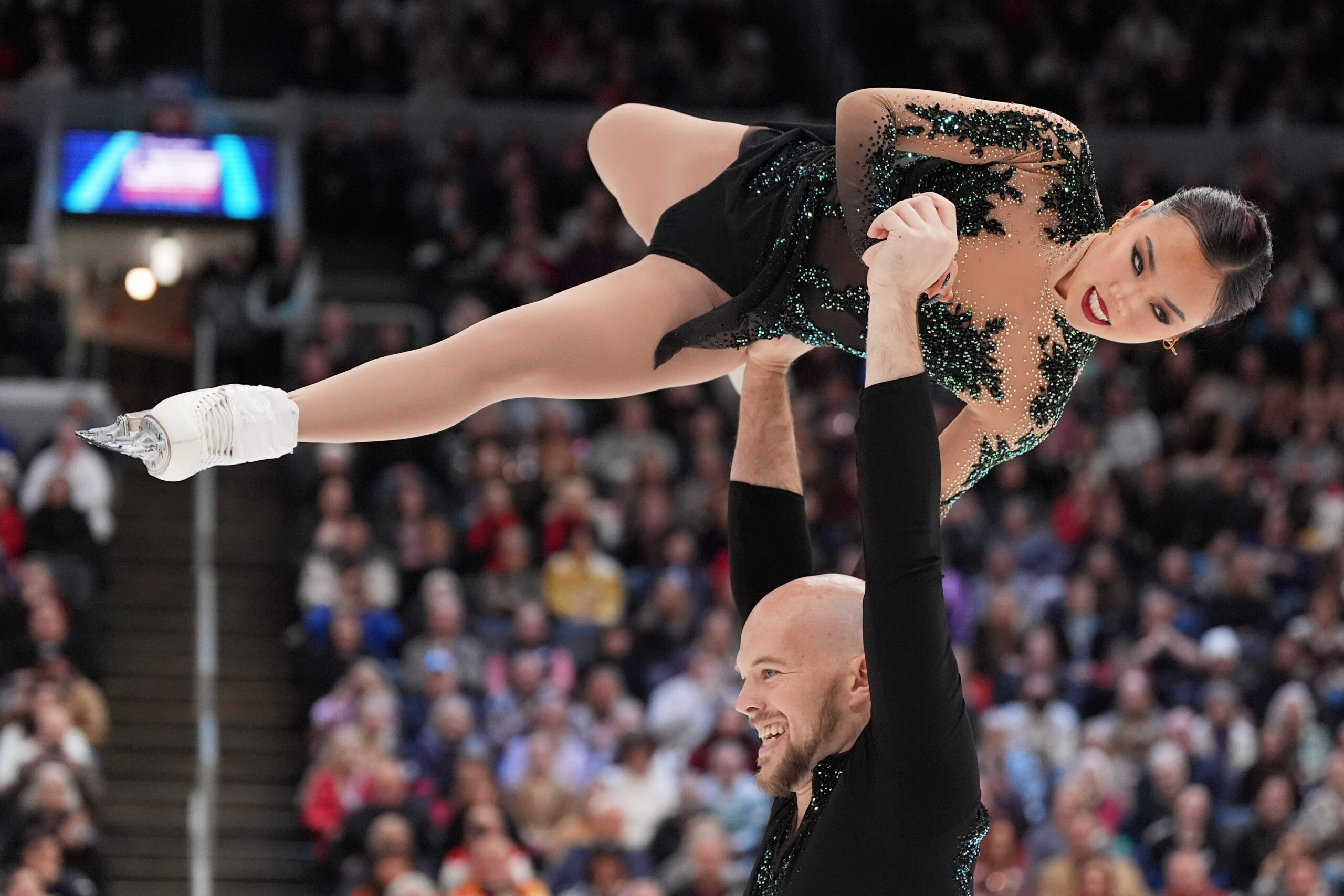
    Ellie Kam and Danny O’Shea compete during the pairs free skate in January.

    In pairs, Ellie Kam and Danny O’Shea, the 2026 U.S. silver medalists and 2024 champs, are fan favorites because O’Shea competed through three Olympic cycles before he made the team. They are 13 years apart.

    Emily Chan and Spencer Akira Howe overcame a rough short program to place fourth (and win the pewter medal) in January’s U.S. championships. They made the team because other top teams’ skaters didn’t share citizenship. Chan and Howe are the 2023 U.S. silver medalists. Howe is in the World Class Athlete Program of the U.S. Army and hopes to become an Army chaplain.

    What is the team event vs. the individual?

    Normally, skaters compete individually or in pairs. In 2014, the team event was added to Olympic competitions. Different skaters can skate the long and short programs for each event (men’s, women’s, pairs, dance), but a team can repeat in two events.

    Only the ones chosen to skate win medals, rather than the entire Olympic team.

    The team event began with ice dance on Friday and ran through Sunday. Individual events begin Monday, also with ice dance.

    In 2022, Russia was poised to win the gold, with the United States right behind it and then Japan. But after 15-year-old Kamila Valieva was found with banned drugs in her system, she was retroactively banned for four years. (That period recently expired, and Valieva is training again.)

    After a nearly two-year legal case, the United States was moved up to the gold medal position, Japan to silver, and Russia to the bronze. The U.S. skaters received their gold medals at the 2024 Summer Olympics in Paris.

    In past team events, the United States won bronze in 2014 and 2018. Russia and Canada were the other medalists both years (Russia won in 2014, and Canada in 2018).

    What is the difference between pairs and dance?

    Pairs has the big jumps, throws, and lifts. Dance is almost entirely footwork and is based on ballroom dance.

    What is the difference between the short program and the long program?

    The short program has a set of required elements that the skaters must perform. They have some freedom within those restrictions. For example, if they are told to do a triple jump, they may choose any triple jump. Generally, they choose the harder jumps because they earn more points. But they may also choose the jump they do best.

    If skaters miss a required element, they get a zero for it. For example, if a triple jump is required and the skater does a double instead, it is as if he or she didn’t jump at all.

    In dance, the short program is called the rhythm dance. A theme is chosen every year. This year, it is “the music, dance styles, and feeling of the 1990s.”

    The long program has more freedom, but it still must be a “well-balanced program,” meaning a combination of elements covering the full surface of the ice.

    How long are the short and long programs?

    The short program for singles and pairs is 2 minutes, 40 seconds, plus or minus 10 seconds. The rhythm dance is 2:50, plus or minus 10 seconds.

    The long program for all is four minutes, plus or minus 10 seconds.

    What are the differences between figure skating jumps?

    The skating blade looks flat, but it actually is sharpened to a curve with two edges.

    Jumps take off from an edge (axel, loop, Salchow) or from the skater tapping in his or her toe (flip, Lutz, toe loop).

    The axel is a forward entry but lands backward. All other jumps start and land backward.

    The flip and Lutz are very similar toe jumps, but the flip is from an inside edge, and the Lutz from the outside, meaning the Lutz requires slightly more rotation, and thus is given more points.

    A common mistake is that a skater will aim to do one but change the edge at the last minute. Commentators often talk about that as a “flutz.”

    Another common mistake is a “cheated” jump, meaning the blade lands at least a quarter turn short of rotation. That results in a deduction or sometimes even a downgrade, meaning an intended triple jump is called a double.

    Which skaters are expected to do well?

    Along with the U.S. women, the Japanese women are very strong. They are led by three-time world champion Kaori Sakamoto, who won the Olympic bronze medal in 2022.

    On the men’s side, along with Malinin, the top contenders include Yuma Kagiyama of Japan, who earned the silver medal at the 2022 Olympics and is also a three-time World silver medalist. France’s Adam Siao Him Fa and Kazakstan’s Mikhail Shaidorov are others to watch.

    The top ice dancers are Chock and Bates. Canadians Piper Gilles and Paul Poirier earned the silver medal behind Chock and Bates in the last two world championships.

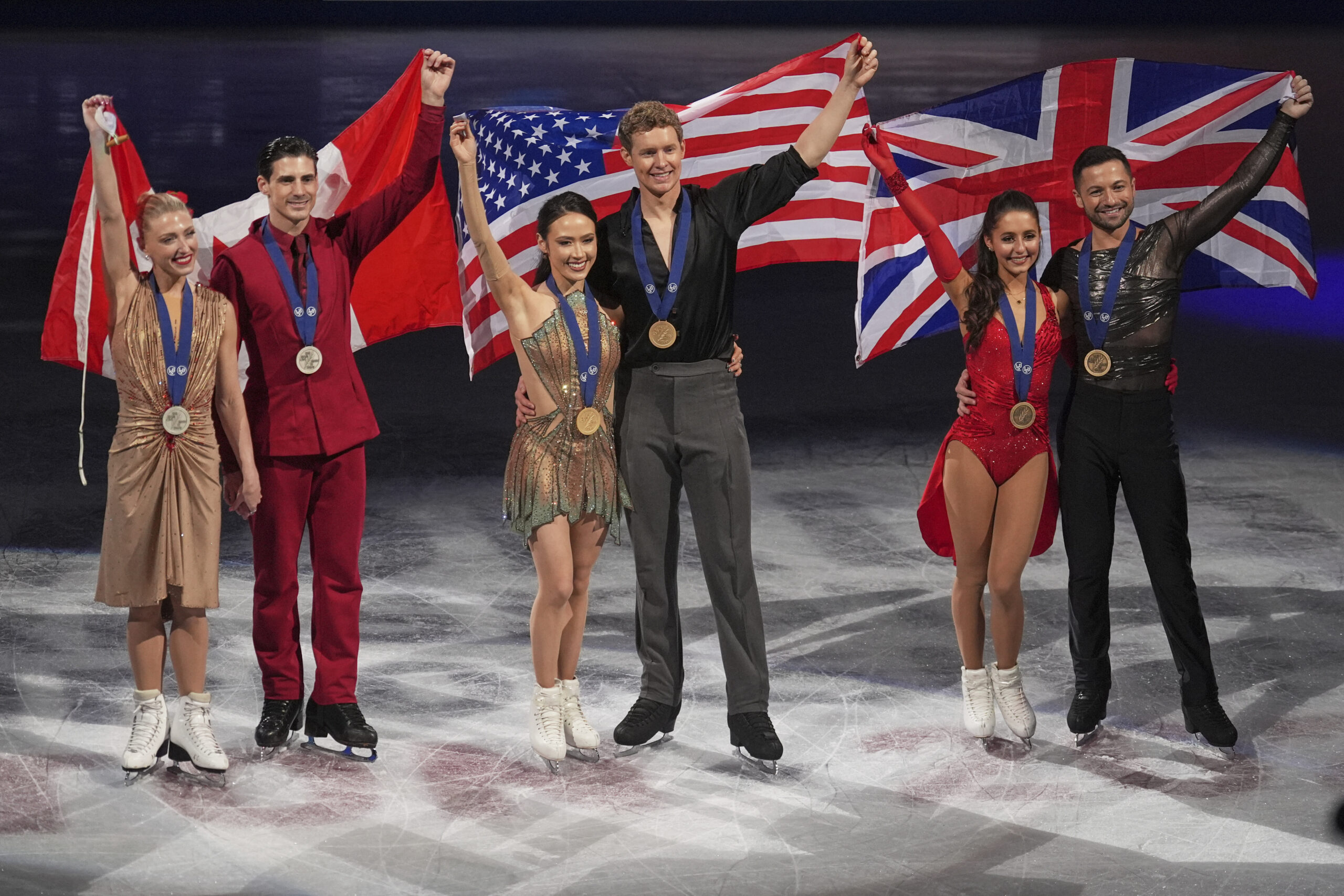
    Silver medalists Piper Gilles and Paul Poirier (left), gold medalists Madison Chock and Evan Bates, and bronze medalists Lilah Fear and Lewis Gibson celebrate their medals at worlds in 2025.

    The pairs contenders are led by Riku Miura and Ryuichi Kihara of Japan, the reigning world champions. Others include Sara Conti and Niccolò Macii (Italy), Minerva Fabienne Hase and Nikita Volodin (Germany), and Anastasiia Metelkina and Luka Berulava (Georgia).

    How is Olympic figure skating judged and scored?

    The judging system was changed after the 2002 Salt Lake Olympics judging scandal, when two judges allegedly colluded to make certain skaters champions. The 6.0 system was replaced by IJS, the international judging system, which defines how many points each element is worth.

    The officials include judges and a technical panel. The technical panel determines an element — including whether a triple should be downgraded to count as a double — and the judges decide the quality of the element. Skaters may be given a positive or negative grade of execution depended on how the element was performed. They also are given points for skating skills, transitions between elements, and performance. This is how a more artistic skate with fewer big jumps, can still do well. It is also how a skater with lots of impressive jumps but easier footwork may not win.

  • Olympics: Finland-Canada women’s hockey game postponed due to norovirus outbreak

    Olympics: Finland-Canada women’s hockey game postponed due to norovirus outbreak

    MILAN (AP) — Finland’s women’s hockey team’s preliminary round opener against Canada on Thursday has been postponed due to a stomach virus depleting Finland’s roster.

    The game was rescheduled to Feb. 12.

    The decision to postpone the game was announced shortly after Finland completed its early afternoon practice with just eight skaters and two goalies. The remaining 13 players were either in quarantine or isolation due to a norovirus that began affecting the team on Tuesday night.

    The postponement provides Finland two extra days to rest before playing the U.S. on Saturday. Had their game against Canada not been postponed, Finnish officials were considering the possibility of a forfeiture.

    “While all stakeholders recognize the disappointment of not playing the game as originally scheduled, this was a responsible and necessary decision that reflects the spirit of the Olympic Games and the integrity of the competition,” Olympic officials announced.

    “All stakeholders thank teams, partners, and fans for their cooperation and understanding, and look forward to the rescheduled game being played under safe and appropriate conditions.”

    Team Finland officials were already weighing the likelihood of not playing before the game was postponed.

    Coach Tero Lehterä said it could be unfair to ask his 10 healthy players to compete in a full game. Lehterä also said the team has to take into account the possibility of Canadian opponents being infected as well.

    “Most of them are getting better but not healthy enough to play. And there’s the chance that if we would play, it could influence Team Canada and their health as well,” Lehterä said following practice.

    “But I couldn’t risk my players if they were ill yesterday to play tonight because that would be wrong against the individual,” he added.

    Lehterä said the first sign of the illness became apparent on Tuesday night — and after the team held a full practice earlier in the day.

    The rescheduled game falls on the second of two consecutive off days during the women’s tournament, and a day before the quarterfinals open.

    The 53-year-old Lehterä is in his first year coaching the women’s team. He played for the Finland national team in the 1990s and previously coached men’s teams.

    Lehterä did his best to stay upbeat despite the situation. At one point, he joked the last time he competed in a game with 10 players was in a beer league outing.

    “It might become a strength. I got to think positive,” he said. “We might be stronger when we come out of this. You never know.”

    Lehterä then noted the potential of facing adversity was among his first messages to the team last summer.

    “Some things might happen, you never know what happens. And you only worry about the things that we can affect,” Lehterä said. “And this is not something we can do anything about it. We have no say whether we play or not. It’s not up to us. When we’re told to show up, we show up. Whether it’s five, six, seven, 15 or 20 [players].”

    Finland captain Jenni Hiirikoski, making her fifth Olympic appearance, said players were leaning on each other for support.

    “It’s not nice, definitely. But we try to focus one day at a time,” the 38-year-old defender said. “The big thing has been how we tolerate different things. I think we try to help each other, whatever it is, and how it goes. So it’s just stay calm and focused.”

    Finland, along with Czechia, entered the tournament as medal contenders behind the two global powers — the favored Americans and defending Olympic champion Canada.

    Finland is a four-time Olympic bronze medalist, with the last coming at the 2022 Beijing Games. And the team has won bronze at the past two world championships, beating Czechia both times.

    Though the 2022 Beijing Games were played amid the Coronavirus pandemic, no games were postponed during a competition that took place in front of few fans and with participants limited to a closed bubble.

    The closest a hockey game came to being postponed or forfeited happened during a preliminary round meeting between Canada and Russia. Team Canada refused to take the ice for pregame warmups and the game time was delayed because COVID test results of Russian players were not available.

    As a compromise, Canada agreed to begin the game after officials ruled all participants had to wear facemasks.

    AP Hockey writer Stephen Whyno contributed.

  • Curling is back at the Olympics. What are the rules? Why do people love it? And how can I watch it?

    Curling is back at the Olympics. What are the rules? Why do people love it? And how can I watch it?

    The opening ceremony of the 2026 Winter Olympics doesn’t take place until Friday at Milan’s San Siro Stadium, but some of the world’s top athletes are already competing in Italy. That includes in the sport of curling, which always seems to shine on the global stage.

    “I love exposing people to something that’s so special,” said Carolyn Lloyd, who’s been a member of the Philadelphia Curling Club for 20 years. “People don’t realize just how special it is. It’s different from a lot of sports, certainly in its culture. This sport captures my whole heart.”

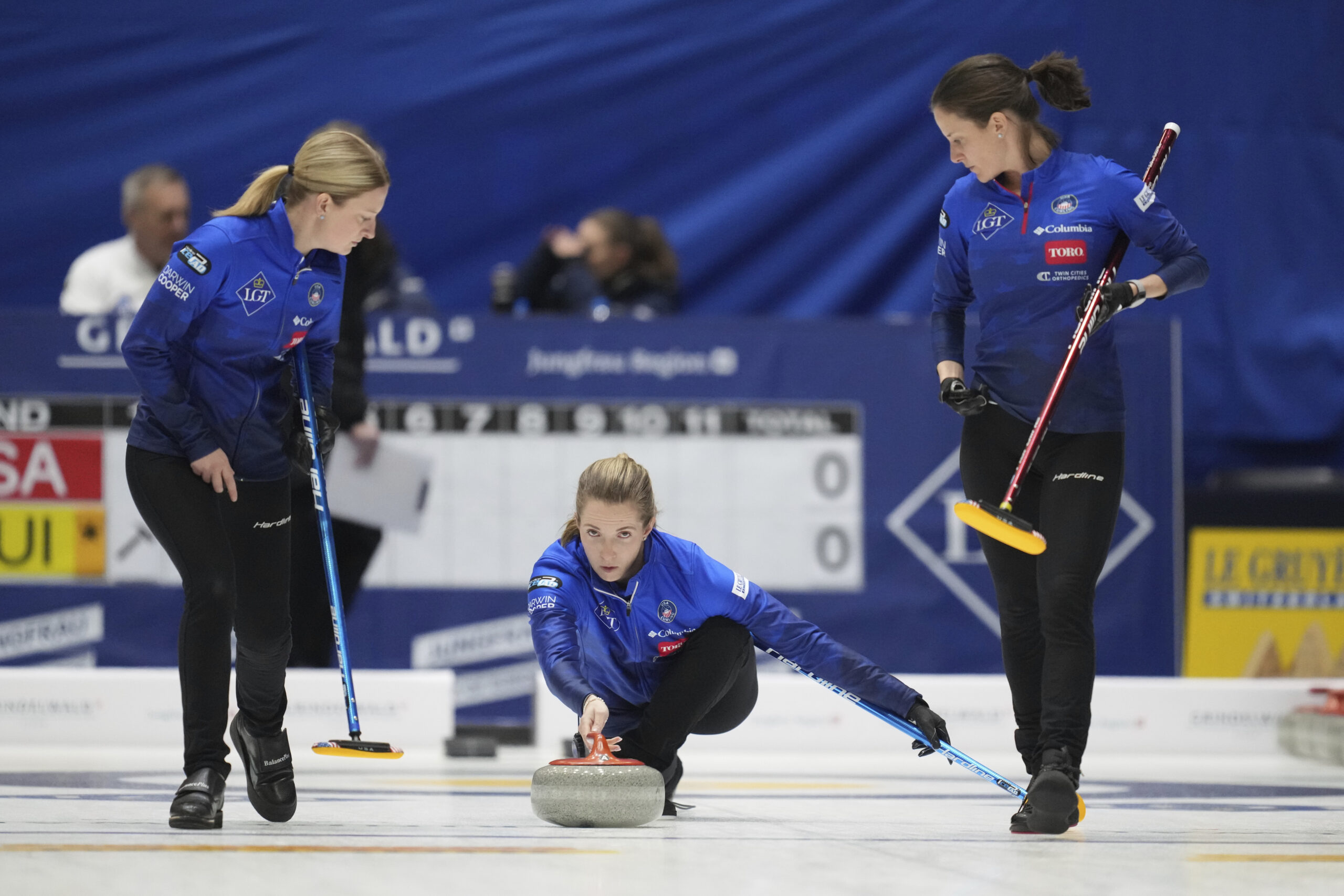
    Curling is one of the first sports to start, with mixed doubles beginning Wednesday. Team USA made its debut early Thursday against Norway and Switzerland in mixed doubles. However, men’s and women’s curling will begin on Feb. 12 and will feature a local athlete: Marple Newtown High School graduate Taylor Anderson-Heide, who attended the University of Minnesota and is making her Olympic debut.

    Anderson-Heide, 30, is a five-time national champion. She trained at the Philadelphia Curling Club in Paoli with her identical twin Sarah Anderson.

    “What I saw watching these kids grow up, was the dedication of coming and continuing to work through adversity,” Lloyd, who lives in Collegeville, said of the Anderson sisters. “Any sport you’re going to lose a lot while you’re learning and you have to be resilient. That’s one thing that I’m always the most impressed at when I think about them. And I cheer their successes. And when they struggle, I feel it too because you know how hard they work.”

    Here’s everything you need to know about curling before it once again captures the world’s attention at the Winter Olympics …

    What are the rules of curling?

    Curling, which officially became an Olympic sport in 1998, involves two teams sliding granite stones across a long strip of ice known as a sheet. Players take turns sliding a 44-pound stone toward a round target, known as a house, that sits at each end of the 150-foot long sheet. Each house consists of four rings and a center, known as the button.

    Two teams of four players take turns delivering one stone at a time. When delivering a stone, a player uses one of the hacks, or fixed rubber blocks, to push off and must release it before what is known as “the hog line” for it to be considered in play.

    Canada’s Brett Gallant releases the stone before the hog line in one of the matches on Wednesday’s opening day.

    Games are typically 10 rounds (or ends), and only one team is awarded points after each. The team with the stone closest to the button after all 16 are thrown (eight per team) receives one point — and one additional point for each stone that is both inside or touching the house and closer to the button than opposing team’s closest stone. The team that goes last has what is called “the hammer,” a distinct advantage that passes to the other team after the team that possess it scores.

    A traditional team consists of a lead, second, third, and fourth — and players throw stones, two each, in that order. A fifth player serves as an alternate. Each team also appoints a captain, known as the skip, and a vice skip. The skip is in charge of directing play for the team and typically stands in the house at the scoring end of the sheet. The vice-skip takes over their duties when the skip, who typically goes last, is delivering stones.

    Then there’s sweeping. In addition to the rotation of the stone helping guide its trajectory, a pair of sweepers can brush the ice, creating friction and influencing how the stone moves. You’ll often see the skip yelling out orders to these players as they quickly move down the sheet and stay ahead of the stone.

    And the ice? It’s not the same as what the Flyers play on.

    “You can’t curl on a skating or ice hockey rink,” former Olympic curler and current Great Britain’s chef de mission (or non-playing captain) Eve Muirhead recently told the Athletic. “The stone wouldn’t go anywhere. So you put millions of tiny water droplets on the sheet to cause less friction between the ice and stone. The droplets freeze into what we call ‘pebble’ — if you run your hand over the ice, it’s rough.”

    In mixed doubles, which joined the Olympics in 2018, the rules are slightly different. The game includes just two players — one male and one female — as well as pre-placed stones, a “power play,” and fewer ends.

    You can find more in-depth rules here.

    How did curling start and why is it so popular?

    Curling is considered one of the oldest team sports. According to World Curling, a 16th century Flemish artist known as Pieter Bruegel painted an activity similar to curling being played on frozen ponds. Written evidence dates to the mid-1500s in Scotland, where the first recognized curling clubs were formed — and where the majority of granite for the stones is produced.

    The game eventually spread across the globe, but the first official international competition didn’t take place until the 1924 Winter Games in Chamonix, France, where curling made its Olympic debut as a men’s competition. While curling made a couple more appearances over the next 60 years as a demonstration event — at the 1932 Olympic Winter Games (Lake Placid), the 1988 Olympic Winter Games (Calgary), and the 1992 Olympic Games (Albertville) — it wasn’t until 1998 in Nagano that curling was included as a full medal sport for both men and women.

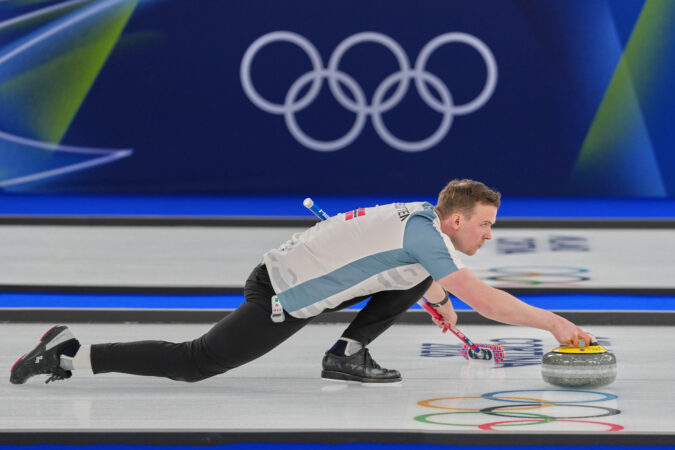
    Kristin Skaslien of Norway faces off against Britain at the 2026 Winter Olympics on Wednesday.

    Since then, Lloyd, 49, has seen the growth in the sport on a local level.

    “We went from having like a couple 50 to 75 people coming to open house to having hundreds of people outside,” Lloyd said. “The police were here and there was a line down the block. It got so crazy so fast.”

    Every four years, curling again captivates the fans around the world. But why? Part of that is likely how different it is from many of the fast-paced Olympic sports. That slower pace allows for more strategy and real-time analysis, like baseball. And it doesn’t look that hard — although looks are deceiving in this case.

    It can also be very satisfying to watch heavy stones effortlessly glide across ice, especially when they do it like this …

    Another reason people enjoy curling is the etiquette and sportsmanship associated with the sport.

    During the week the Philadelphia Curling Club will host league nights where members compete in games. After the competition, it’s tradition to stay after and socialize, with the winning team buying the losing team the first round of drinks.

    The postgame ritual is known as “broomstacking,” and has become a deeply rooted tradition that focuses on the camaraderie of the sport.

    “Broomstacking is usually in the more fun tournaments,” said former Philadelphia Curling Club member, and Olympic curler Taylor Anderson-Heide in a YouTube video on the spirit of curling. “Or we call them bonspiels. You can decide to stack your brooms on the house and then go have a drink inside at the bar.”

    There are other unspoken rules. For instance, similar to golf, the crowd never cheers for missed shots — and you always shake your opponents hand before and after a game. There’s also no talking during an opponent’s shot, and players call their own fouls. And like in chess, you must know when to concede when there’s no way to mathematically win.

    What is the curling schedule for the Olympics?

    If this got you excited to watch, good news: There is curling every day of the Olympics, until Feb. 22, when the women’s gold medal will be decided. There are far too many games to list here, but you can check out the official Olympic schedule here.

    The mixed doubles medal matches will take place first, on Feb. 10 at 8:05 a.m. ET (bronze medal match) and 12:05 p.m. (gold).

    The men’s bronze medal match is Feb. 20 at 1:05 p.m. ET, with the gold medal match the following day at the same time. The women’s bronze medal will be decided on Feb. 21 at 8:05 a.m. ET, with the women’s gold medal match concluding the event on Feb. 22 at 5:05 a.m. ET.

    How can I watch Olympic curling?

    Select matches will air on CNBC and USA Network, with the women’s gold medal match on Feb. 22 scheduled to air on NBC. All of the matches will be available to stream on Peacock and NBCOlympics.com. You can get the full TV schedule here.

  • NBC’s Olympic TV schedule: U.S. women’s hockey team plays a day before opening ceremony

    NBC’s Olympic TV schedule: U.S. women’s hockey team plays a day before opening ceremony

    For as big a deal as the opening ceremony is at the Winter Olympics, it has been a while since that was actually when the Games started.

    That’s the case again this year, as the ice hockey and curling competitions get going before the cauldron is lit in Milan on Friday night.

    Curling’s mixed doubles competition started Wednesday with a few early matchups, and on Thursday, the U.S. women’s hockey team will go into the spotlight.

    The Americans hope to win the gold medal back after perennial rival Canada won in 2022. Either the U.S. or Canada has won every gold since women’s ice hockey became an Olympic sport in 1998 — two for the U.S. (1998 and 2018), and five for Canada.

    On top of that, every gold medal game but one has been a U.S.-Canada clash. Sweden upset the Americans in 2006 in Torino, the last time the Olympics took place in Italy.

    Right now, the widespread expectation is that the Americans and Canadians will meet again for gold this year.

    At 10:40 a.m. Thursday, USA Network will televise the U.S. game against Czechia.

    Sarah Nurse helped Canada top the United States in the 2022 Olympics women’s ice hockey gold medal game.

    How to watch the Olympics on TV and livestreaming online

    There is TV coverage on NBC’s main broadcast network; on cable channels USA, CNBC, and NBCSN; and free-to-air Telemundo and cable channel Universo in Spanish. USA’s coverage is 24/7 every day, with live events when they’re on and replays the rest of the time.

    NBCSN is carrying the Gold Zone whiparound show that was so popular during the Summer Olympics in 2024, with hosts including Scott Hanson of NFL RedZone. It used to be just on Peacock, NBC’s online streaming service, but now is on TV, too.

    Every event is available to stream live on NBCOlympics.com and the NBC Sports app. You’ll have to log in with your pay-TV provider, whether cable, satellite, or streaming platforms including YouTube TV, FuboTV, and Sling TV. On Peacock, the events are on the platform’s premium subscription tier, which starts at $10.99 per month or $109.99 per year.

    NBC’s TV coverage will have live events from noon to 5 p.m. Philadelphia time on weekdays and starting in the mornings on the weekends. There’s a six-hour time difference from Italy to here. The traditional prime time coverage will have highlights of the day and storytelling features.

    The NBC Sports and Peacock apps are available for mobile devices, tablets, and connected-TV devices including Android TV, Apple TV, Google Chromecast, Amazon Fire TV, Roku, Samsung TV, and more. There’s an FAQ page on NBC’s website here with more details.

    If you have a Comcast Xfinity X1 cable box, just say “Olympics” into the remote’s voice control function, and everything will come up, whether it’s on TV or online. Other cable and satellite TV providers may offer similar functions.

    Here is the full event schedule for the entire Olympics, and here are live scores and results.

    Thursday’s Olympic TV schedule

    As a general rule, our schedules include all live broadcasts on TV, but not tape-delayed broadcasts on cable channels. We’ll let you know what’s on NBC’s broadcasts, whether they’re live or not.

    NBC

    8 p.m.: Ice, Snow & Glory: The Winter Olympics, NBC’s preview show for the Games

    USA Network

    8 a.m.: Intro to Milan Cortina show

    8:35 a.m.: Mixed doubles curling — United States vs. Switzerland

    10:40 a.m.: Women’s ice hockey — United States vs. Czechia

    1:05 p.m.: Mixed doubles curling — Italy vs. Canada

    3:45 p.m.: Women’s ice hockey — Finland vs. Canada

  • John du Pont shot and killed Olympic wrestler Dave Schultz on this week in Philly history

    John du Pont shot and killed Olympic wrestler Dave Schultz on this week in Philly history

    The multimillionaire became a murderer on Jan. 26, 1996. That part is known.

    But why John du Pont shot and killed Dave Schultz, an Olympic champion freestyle wrestler who was living and working on du Pont’s Newtown Square estate, is still a mystery.

    Foxcatcher

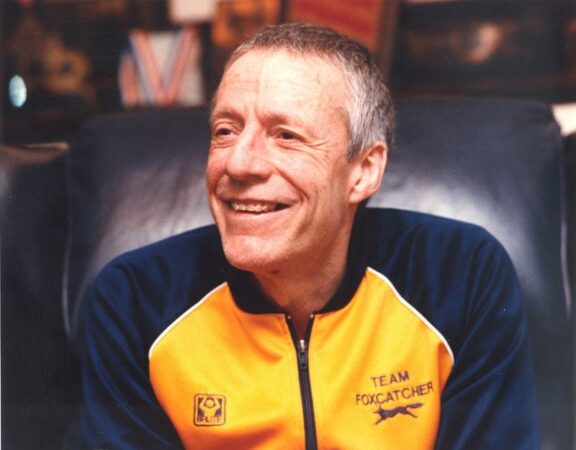
    John Eleuthere du Pont was not a captain of industry, but he was a descendant of one.

    His great-great-great-grandfather was Eleuthere Irenée du Pont de Nemours, who founded the Wilmington chemical giant.

    The most notable title of the du Pont heir’s life was sports enthusiast.

    He transformed his 800-acre estate, known as Foxcatcher Farm, into a world-class athletic training facility. He opened the facility to athletes and their families so they had a place to stay while wrestlers, like Schultz, could prepare for major competitions.

    In 1996, Schultz, a 1984 Olympic gold medalist, and his family stayed there while he trained for that year’s Summer Olympics.

    But even before the run-up to the Summer Games, du Pont’s behavior had become increasingly strange.

    Conviction

    His sister-in-law, Martha du Pont, said they expected something like this to happen.

    Foxcatcher’s overseer had been abusing cocaine and alcohol, and had been walking around with loaded guns for several years.

    During angry outbursts, he would even threaten athletes with guns.

    But why he pointed a .44-caliber revolver at the 36-year-old Schultz during an argument on the estate’s grounds and fired three times will forever be a mystery.

    Du Pont holed up in his mansion for two days before surrendering to police after his heat was cut off during an especially cold weekend.

    On Feb. 25, 1997, he was ruled guilty but mentally ill, and convicted of third-degree murder.

    He offered no explanation for his behavior, only excuses.

    He was sentenced to 13 to 30 years in prison.

    Du Pont died in prison at age 72 on Dec. 9, 2010, four years before an award-winning film starring Steve Carell about the incident would hit theaters.

    Nearly 30 years after his conviction, he is the only member of the Forbes 400 richest Americans to have been convicted of murder.

    Nancy Schultz, who witnessed the shooting, said she never understood why her husband was killed. And she was struck by something du Pont never did.

    “He never just said, ‘I’m sorry.’”

  • CBS, Washington Post blind themselves when America needs eyes on the ground

    CBS, Washington Post blind themselves when America needs eyes on the ground

    She said all the right things.

    The embattled new boss of CBS News, the until-now opinion journalist Bari Weiss, on Tuesday led a town hall-style meeting for editors and reporters at the storied TV network and appeared to understand both the crisis of American media and the values needed to fix it.

    “Our strategy until now has been: Cling to the audience that remains on broadcast television,” Weiss told her newsroom. “I’m here to tell you that if we stick to that strategy, we’re toast.” She called for more investigative reporting and pledged to merge the values of a high-tech start-up with “journalistic principles that will never change — seeking the truth, serving the public, and ferociously guarding our independence …”

    Meanwhile, the overpowering stench of burning toast filled the room.

    That’s because Weiss and her billionaire pro-Trump overlords, the Ellison family, seem to be doing all the wrong things, undercutting those pretty words. Her first concrete move announced in tandem with the town hall was the hiring of 18 thumb-sucking opinion journalists — a ragtag, right-leaning group that includes a medical huckster and an ex-Trump official — even as the newsroom braced for buyouts and feared layoffs that would slash honest shoe-leather reporting.

    The move toward more commentators telling you what to think about an America spiraling into chaos and fewer boots-on-the-ground journalists digging up what’s needed to fix that crisis — objective truth — could not happen at a worse time, and unfortunately, this is not unique to CBS News.

    The Washington Post — which has lost hundreds of thousands of digital subscribers since a self-coup by its billionaire owner, Amazon founder Jeff Bezos, shifted its opinion section to the political right — is also bracing for deep staff cuts that would cripple its international reporting, as well as its sports staff.

    The extent of the widely rumored staff reductions isn’t yet known, but a preview came last week when the paper briefly told the newsroom it was axing its long-standing plan to send 12 journalists to next month’s Winter Olympics in Italy, before slightly backtracking and saying four reporters would still go.

    Still, that move, and the louder rumors about pending layoffs, has led to deep concern over the future of its metro Washington and international desks. “We urge you to consider how the proposed layoffs will certainly lead us first to irrelevance — not the shared success that remains attainable,” stated a letter from 60 journalists on the foreign desk sent this week to Bezos.

    “It’s all very confusing, and no one knows anything,” an anonymous Post staffer told the Guardian. “The anxiety is so sad.”

    America has been losing news reporters for years. Nationally, newsroom staff have plummeted a whopping 26% since 2008, and the pace of job cuts has only accelerated in recent years as vast news deserts with no sources of local journalism expand across rural America. It’s been a perfect storm prompted heavily by internet-driven changes in reader or viewer habits, as well as declining public trust in traditional media.

    But the looming cuts at the Post and CBS are especially painful both in a symbolic sense and also as self-inflicted own goals that will only heighten public mistrust instead of attacking the problem.

    In 1972, with then-President Richard Nixon driving toward a landslide reelection, the Post, under its legendary editor Ben Bradlee, and CBS, with its popular, avuncular anchor Walter Cronkite, were the only two major outlets that took seriously the links between the Watergate break-in and the Nixon White House. Both newsrooms threw major resources into keeping alive the story that eventually caused Nixon to resign, including a 22-minute special report that Cronkite anchored on the CBS Evening News.

    In this undated photo released by Paramount, one of the Free Press’s cofounders, Bari Weiss, poses for a portrait. Weiss is the editor-in-chief of CBS News.

    That kind of accountability journalism created a bond with the audience that should have left CBS and the Post better positioned to weather the economic storms that have battered journalism in the 21st century. The current crises were self-inflicted, albeit for slightly different reasons.

    In Washington, the Post zigzagged from acknowledging what its readers wanted during Donald Trump’s first term — both in its “Democracy Dies in Darkness” slogan to some solid journalism that backed that up — to billionaire Bezos’ embrace of authoritarianism ahead of Trump’s second coming. The Bezos-ordered spiking of a Kamala Harris endorsement and a rightward editorial shift accelerated a steep decline in subscriptions, including about 300,000 lost readers after the nonendorsement.

    One could argue that staff cuts in such an environment are inevitable, but one might also question the priorities of the Post’s owner, the world’s second-richest person. Amazon — where Bezos remains executive chairman — has just spent $75 million on a White House-fluffing Melania documentary expected to bring back just $1 million at the box office.

    The priorities at Weiss-run CBS News seem similarly warped. The money the newsroom is spending on those 18 or so opinion journalists — a motley crew that includes Mark Hyman, who health experts have accused of “quackery,” calling him a “germ theory denialist,” and retired Gen. H.R. McMaster, a key policy adviser in Trump’s first term — could have been spent on new investigative reporters.

    Indeed, a major CBS rival — MS Now, which is also in a state of flux after spinning off from its longtime relationship with NBC News — did exactly that when it hired Pulitzer Prize-winning journalist and author Carol Leonnig away from the Post, of all places. Since late last year, Leonning has been scooping CBS and everybody else on corruption in Trump’s Justice Department, and the curious case of immigration czar Tom Homan and his $50,000 Cava bag.

    But then Weiss’ overlords in the Ellison family, whose recent role in the TikTok takeover and current fight to acquire Warner Bros. Discovery both depend on the blessing of the Trump White House, probably don’t want the stories Leonnig is uncovering.

    This is not a diatribe against all opinion journalism. I am an opinion journalist, and I started moving in that direction in the 2000s when I thought someone needed to be screaming from the rooftops about the lying and the war crimes of the George W. Bush regime. I think commentary and debate are especially needed in the local communities where such jobs have vanished the most, but I also think powerful opinion journalism exists mainly to augment on-the-ground reporting, not replace it.

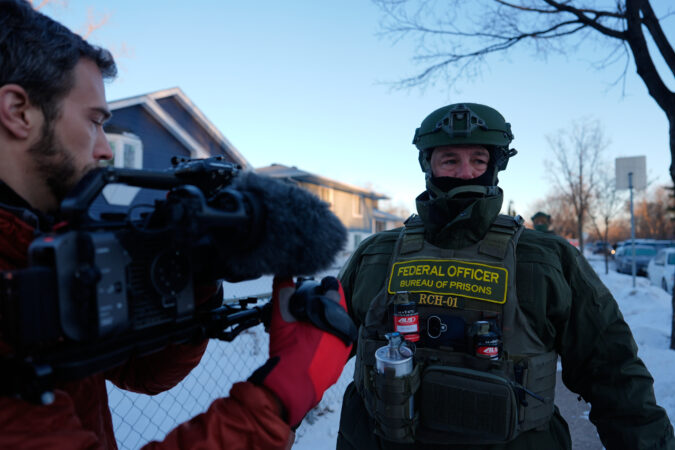
    The greatest irony of the pullbacks at CBS and the Post is that the national crisis over immigration raids in Minnesota and the conduct of U.S. Immigration and Customs Enforcement and U.S. Customs and Border Protection officers who’ve killed two citizens has shown that what American democracy needs most is seekers of the truth — much more than people telling you what to think.

    The over-the-top lies from the highest levels of the U.S. government about how and why Renee Good and Alex Pretti were gunned down on the streets of Minneapolis have fallen apart because multiple videos have allowed citizens to see the truth of what actually happened.

    Most of those videos were shot by citizen observers, but with 3,000 federal agents fanning out across Minnesota and hundreds more conducting immigration raids from Maine to Los Angeles, a web of local and independent journalists has also proved critical in documenting the raids and their many human rights abuses.

    Dozens of journalists have been tear-gassed multiple times or struck with rubber bullets or pepper balls, and yet continue to cover protests and ICE activities, often in the most miserable conditions, and keep going out there to create a public record.

    This week, a federal judge called out ICE for violating nearly 100 court orders just since the start of this year. The reason we know about many of these is because of an army of journalists — some independents, some with small community weeklies, and some with metro newspapers like the Chicago Tribune or the Minnesota Star Tribune — who refused to accept the regime’s lies and refused to be scared off by the projectiles fired at them.

    They are showing people the truth. And the truth is rapidly turning public opinion against Trump’s immigration raids and the rush to authoritarianism. Public opinion is changing policy, including the regime’s abrupt retreat from Maine on Thursday, and possible legislative action on Capitol Hill (we’ll believe it when we see it).

    CBS News and the Washington Post could have been at the vanguard of this movement, which would have been a fitting tribute to the legacies of Cronkite and Edward R. Murrow, Bradlee and Bob Woodward and Carl Bernstein, and their many intrepid colleagues. Instead, the supposed keepers of those flames have made a horrible, doomed bet on autocracy.

    What I’ve watched in recent weeks coming out of Minneapolis and elsewhere on the front lines of the war for America’s soul has given me more hope for the future of journalism than any time since the ball dropped to launch this cursed millennium. That CBS and the Post chose this exact moment to willingly blind themselves is beyond pathetic.