Tag: Philadelphia City Council

  • Philly’s queen of Gay Bingo hangs up her heels after 30 years and $5 million raised for AIDS research

    Philly’s queen of Gay Bingo hangs up her heels after 30 years and $5 million raised for AIDS research

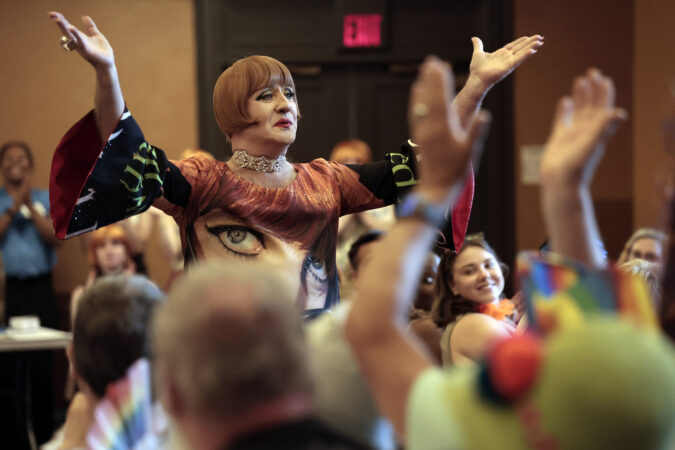
    The legendary redheaded drag queen Carlota Ttendant donned a baby-blue Eva Gabor-inspired gown — its plunging neckline revealing tasteful chest hair — and sensible black heels.

    At 65, arthritis stifles her strut in stilettos.

    “Drag is a young girl’s game,” she said.

    This was her swan song. At the close of its 30th season this Pride Month, the man behind the makeup, Michael Byrne, hung up his heels and bid adieu to his drag persona and his longtime gig hosting Gay Bingo, the camp, irreverent, slightly profane, and undoubtedly silly monthly HIV/AIDS fundraiser.

    “I know it’s time,” Byrne said. And, “I’m excited to never wear Spanx ever again.”

    Across three decades, Carlota Ttendant has called hundreds of games and elicited endless laughs, all while raising millions for people living with HIV/AIDS across the Delaware Valley. She helped steer a community through crisis, providing a respite to those experiencing immense loss and stigma. Even as medicine has advanced and HIV/AIDS has become manageable, she’s crafted a safe space for queer Philadelphians. For one night each month, she’s been an entertainer and an equalizer, responsible for uniting people — gay and straight, from Haddonfield to Phoenixville — around a common goal.

    And since Carlota came into Byrne’s life, she’s taught him to lead with courage, practice gratitude, and be unabashedly unafraid. He’s gone from being the “worst waiter ever” and selling cosmetics, to being a performer, licensed clinical social worker counseling older LGBTQ+ folks through their own next phases of life, and president of Philly AIDS Thrift’s board.

    “None of it would have been possible without all of you,” Carlota told the 400-person crowd — the biggest turnout in years — at her last Gay Bingo on June 13 in the basement ballroom at Congregation Rodeph Shalom. “In the ’90s there was horror happening, and today there is horror happening.

    “But please, let’s do some laughing,” Carlota said.

    “Let’s play bingo!”
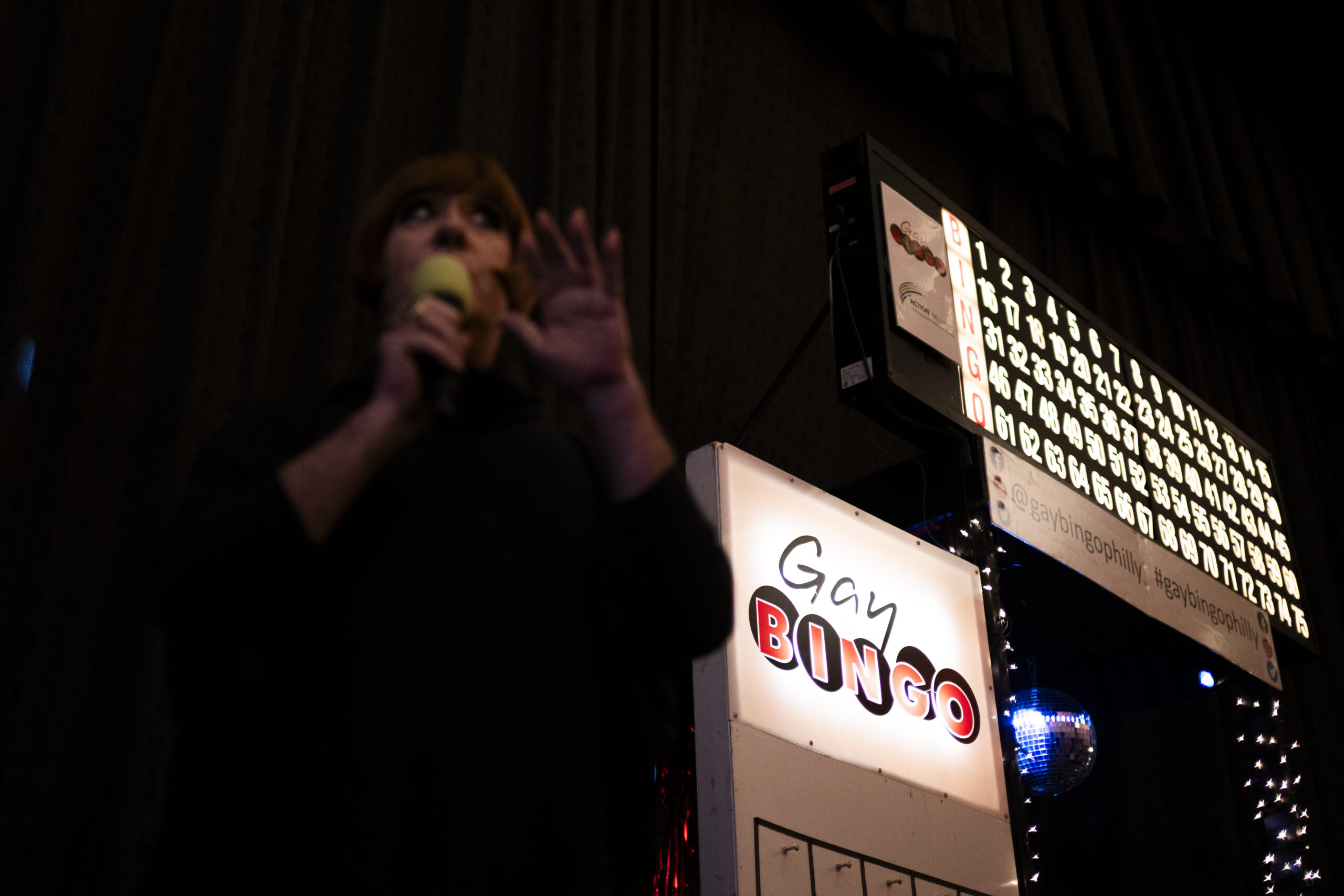
    Michael Byrne, as his drag persona Carlota Ttendant, during Gay Bingo on Saturday, May 9, 2026, at Congregation Rodeph Shalom in Philadelphia.

    Act I

    Like so many Saturdays before, Byrne, on June 13, slathered his face with foundation, carved out his cheeks, deepened his eyes, and painted on his red lip. There was haze — from the dusting of loose setting powder, bronzer, and blush — and musk — from sweat and heat and hairspray — in a Rodeph Shalom classroom, which moonlights as a bridal suite and a boudoir for the Bingo Verifying Divas or BVDs. At 10 minutes till curtain, he futzed with his press-on nails, shimmied into a mod swing dress, straightened the back seams of his tights, and dabbed on some glitter. With each gender-bending step, he transformed into his “twin sister,” Carlota.
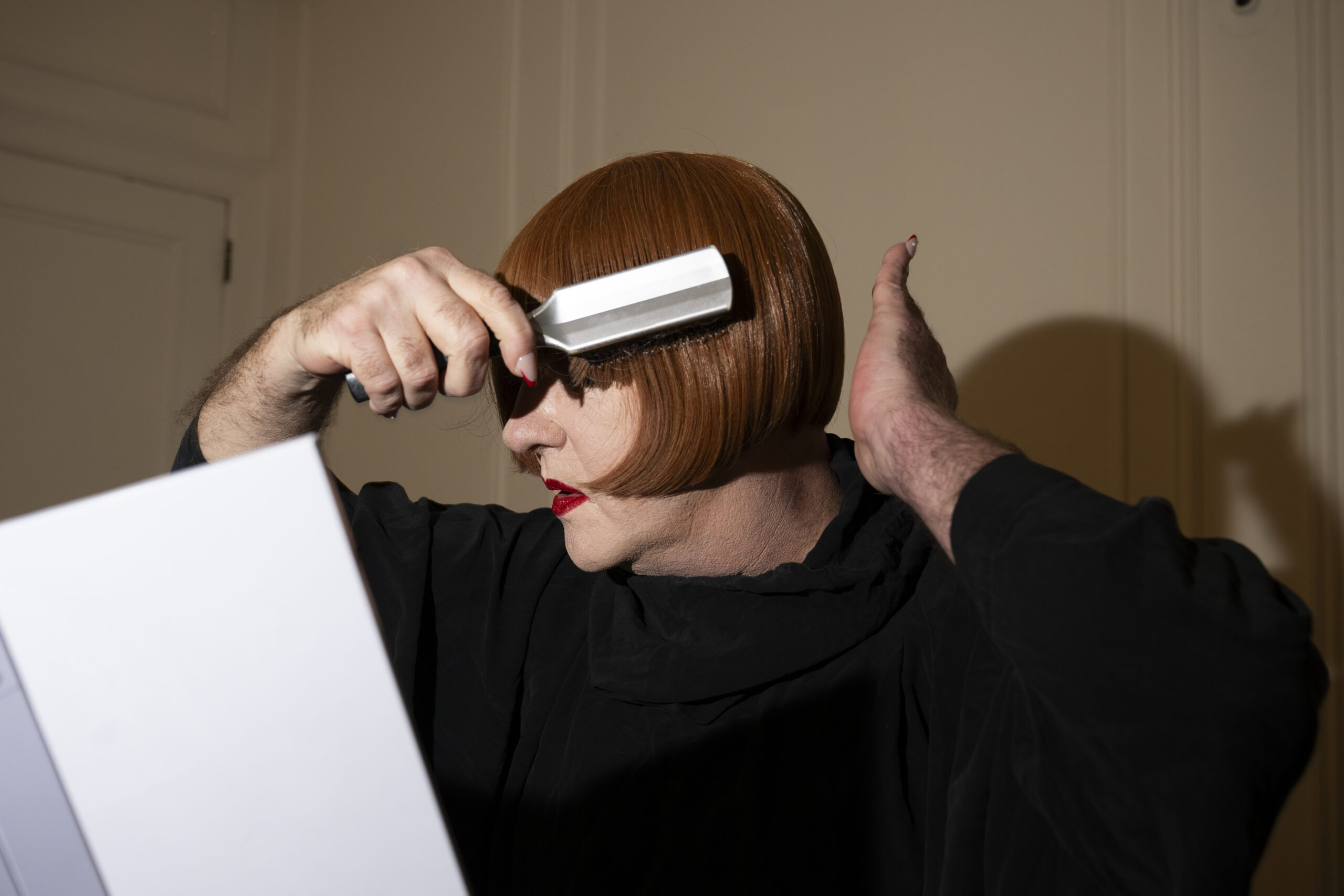
    Michael Byrne transforms into his drag persona Carlota Tendant ahead of Gay Bingo on May 9 at Congregation Rodeph Shalom in Philadelphia.

    Like all classy ladies, Carlota’s exact age is lost to time. In the 1990s, Byrne was organizing a fundraiser for Big Mess Theatre, an avant-garde troupe that he helped establish as the spinning axis of Philadelphia’s alternative performance scene, complete with vaudeville acts, an oompah orchestra, and live auction with a striptease routine. Byrne was to host and make his drag debut, and Carlota Ttendant (read as car lot attendant) was conjured up over bourbon and blackjack. (He learned, years later, that there was a ’60s stripper at the famed Trocadero Theatre with the same name.)

    Byrne never aimed to create a perfect, feminine illusion with Carlota. He left his chest unshaven and unstuffed, but short, thrifted dresses showed off his long and feminine legs. Carlota’s makeup was an extension of the exaggerated theater paint Byrne, who has been on stages since he was 10, knew; cheap wigs hid his sideburns. Nothing could mask his deep, raspy, anything-but-ladylike voice.
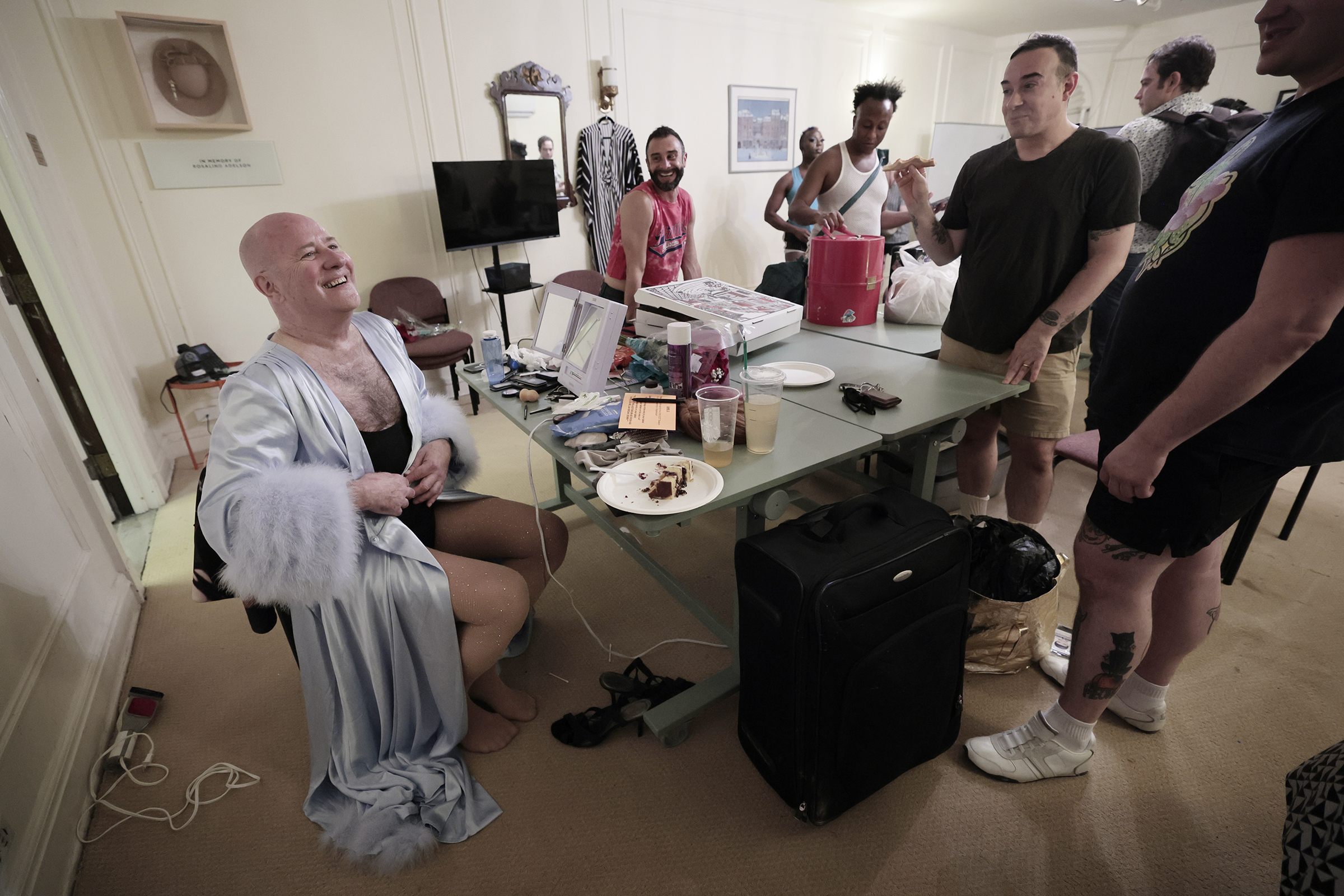
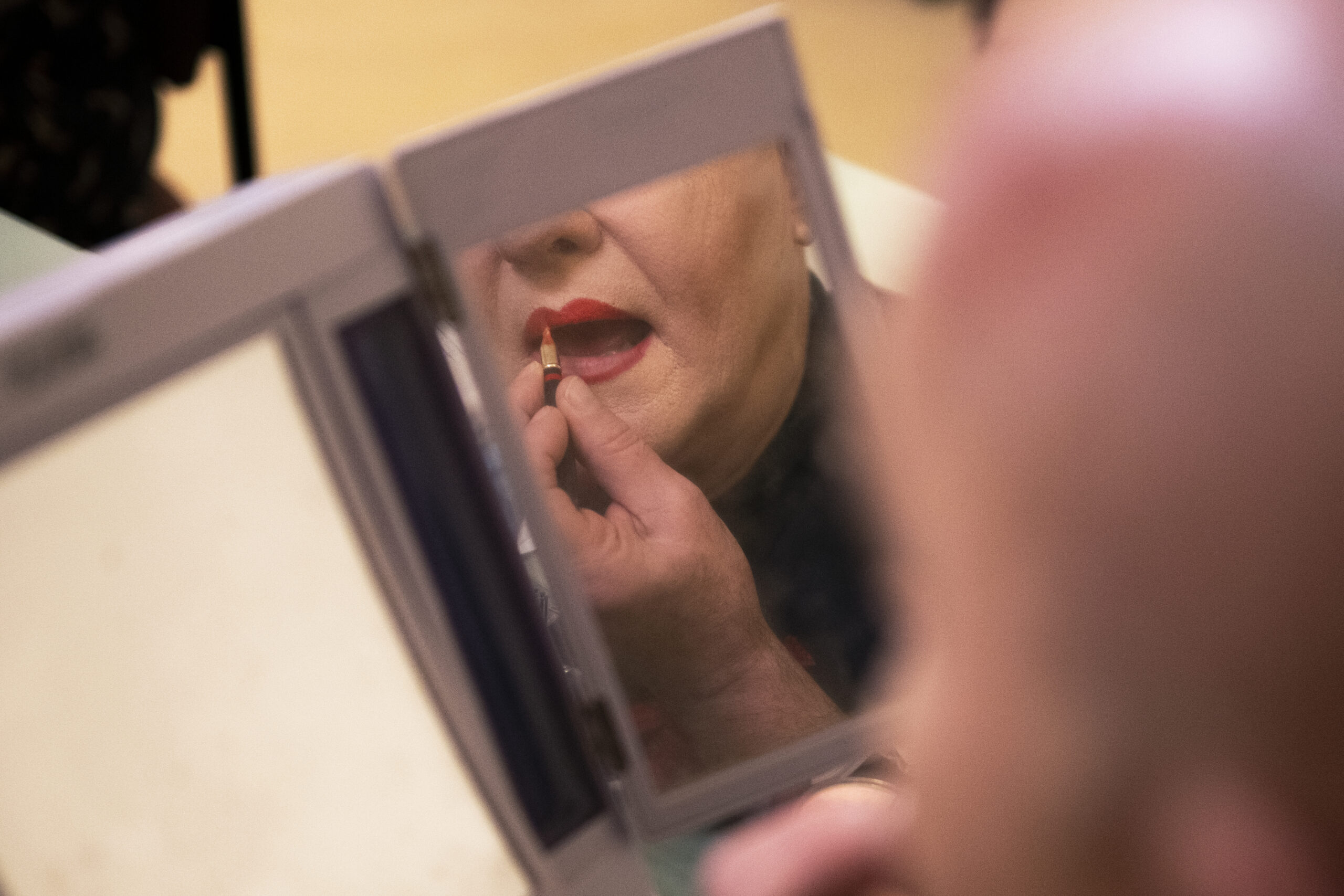
    Carlota Ttendant (Michael Byrne) (at left) laughs with friends and fellow performers after Carlota’s final evening cohosting Gay Bingo at Congregation Rodeph Shalom in Philadelphia on June 13.
    Michael Byrne transforms into his drag persona Carlota Ttendant ahead of Gay Bingo on May 9 at Congregation Rodeph Shalom in Philadelphia.

    Carlota could be bossy and profane but never vulgar; she could poke fun at audiences without being cruel. She became the “drag queen you could bring your grandma to,” Byrne said.

    Around the time Carlota came to be, the number of new AIDS diagnoses and deaths peaked in Philadelphia. In 1992, new AIDS cases surpassed 1,500; in 1994, AIDS deaths topped 900, according to city data.

    (function(){function e(){window.addEventListener(`message`,function(e){if(e.data[`datawrapper-height`]!==void 0){var t=document.querySelectorAll(`iframe`);for(var n in e.data[`datawrapper-height`])for(var r=0,i;i=t[r];r++)if(i.contentWindow===e.source){var a=e.data[`datawrapper-height`][n]+`px`;i.style.height=a}}})}e()})();

    Misinformation about the disease, which strips the body of its natural defenses and leaves it vulnerable to life-threatening infections and ailments, was rampant. People alienated gay men, wrongly fearing HIV/AIDS could be transmitted through a handshake, a hug, or across a dinner table, The Inquirer and Philadelphia Daily News wrote. Diagnostic testing took weeks; what rudimentary treatments were available sometimes made people sicker; and HIV often progressed to AIDS within a few years.

    “It was not unusual to have people dying every month,” said Kevin Burns, who as a case manager with the nonprofit ActionAIDS (now called Action Wellness) connected clients to hospice care. Burns later served as Action Wellness’ executive director.

    The need for resources was rife, and in 1996, Philly’s nonprofit AIDS Fund set out to supplement the money it made from its annual AIDS Walk, according to Sandra Thompson, former chair of its board of directors. An article in City Paper about an irreverent bingo-drag night sweeping Seattle — which, by one report in the Seattle Times, raised $10,000 a night — caught the attention of Mark “Chumley” Singer, then a fledgling events producer, who pitched the idea to the AIDS Fund. (The fund folded in 2024 due to the decrease in new AIDS cases, and turned ownership of Gay Bingo over to Action Wellness.)

    Singer recalled thinking at the time: “I’ve been doing sad, mopey, candlelight vigil fundraisers. … Why can’t we raise money and have fun?”

    Singer and Byrne had never met before the latter was tapped to host Gay Bingo, but their chemistry was kismet.

    “There was never a show where we weren’t having more fun than everybody,” said Singer, who cohosted until the early aughts. Byrne and Singer left Gay Bingo around that time, but Byrne later returned.

    Byrne remembers the magic of those early years of Gay Bingo. He remembers when 600 seats would sell out in 10 minutes, and he remembers doing his glittered red lip from the floor of the Gershman Y’s mirrored dance studio. He remembers two-show Saturdays and how six hours in heels would make him catatonic on Sunday. He remembers riffing with and ribbing Singer and the laughs their off-color jokes and mild profanity elicited. He remembers the constant movement of the bold and bawdy BVDs, on Rollerblades, or the electricity when O-69 was called and hundreds stood up, shaking and shouting with the fervor of their libidos.

    But Byrne also remembers the solemn moments: the steelworker who told a documentarian about watching his bodybuilder son become emaciated; the families who sponsored games on the anniversary of their loved one’s death; the pharmacist who learned all he could about HIV drugs; Byrne’s own friends who were infected.

    “Our community was in crisis,” Byrne said, “while we focused on it, we also focused on being fun and laughing.

    “And we all needed that at that point.”

    Act II

    The “Rainbow Bombshell” Gay Bingo on June 13 doubled as a Pride extravaganza and an homage to all things Carlota. Her first outfit of the night was crafted from a promotional banner from her years hosting the Philadelphia Orchestra’s Halloween Concert. Alongside her, the BVDs dressed as Big Mess-era Carlota, Norma Kamali-inspired Carlota, Phillies Carlota, and fuzzy caftan-wearing Carlota. Attendees, ushers, volunteers, and even the American Sign Language interpreter wore that signature red bob — wigs that Action Wellness bought in bulk. One wore a T-shirt that read, “Dibs on the ginger.”
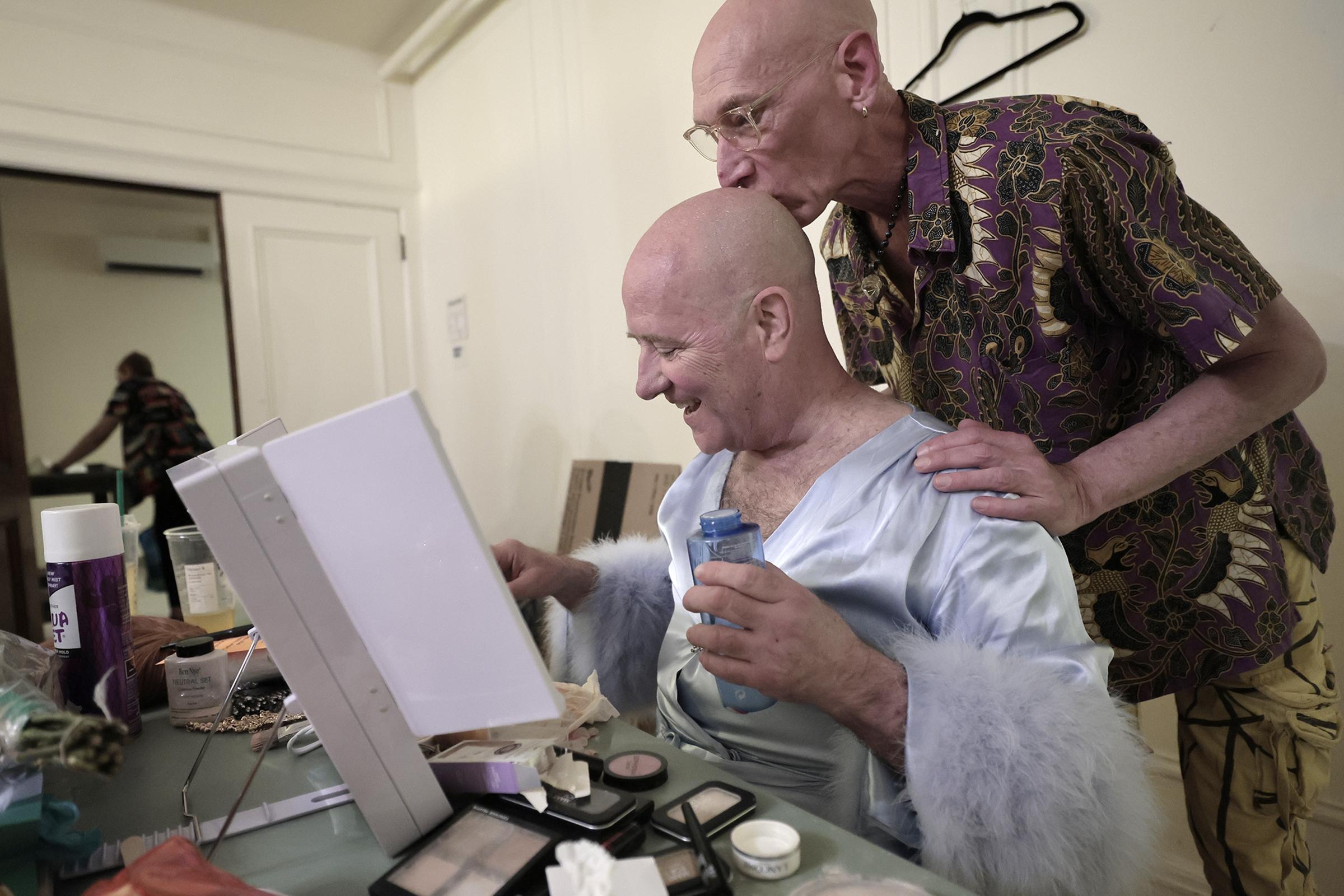

    In the dressing room, Tess Tickle (Paul Struck) kisses Carlota Ttendant (Michael Byrne) on the head after Rainbow Bombshell Gay Bingo at Congregation Rodeph Shalom in Philadelphia on Saturday, June 13, 2026. “I love him” said Struck as he walked out of the dressing room.
    Carlota Ttendant (Michael Byrne) puts on a favorite crystal ring and fake nails before cohosting Rainbow Bombshell Gay Bingo on June 13.

    “Are we ready to win some money?” Carlota said, hyping up the crowd before the first of 12 rounds of bingo. Councilmember Rue Landau, the Philadelphia City Council’s first openly LGBTQ+ member, called the first game:

    I-28.

    I-26.

    G-52.

    B-14.

    O-63.

    B-3.

    “Bingo!” someone cried out, as the audience let out an audible wave of disappointment, exasperation, and defeat, and the BVDs rushed over to authenticate.

    “Did you just get bingo, girl?” Carlota wisecracked.

    For 30 years, these Gay Bingo players have pledged each month to “keep on playing Gay Bingo until this crisis is over.” And today, HIV/AIDS deaths and new diagnoses have stagnated, according to the most recently available health department data, and drug cocktails have made it so people with HIV can live long, healthy lives and may never pass the disease onto others or have their illness advance to AIDS. Preventative medications, like PrEP, can also dramatically decrease the risk of becoming infected.
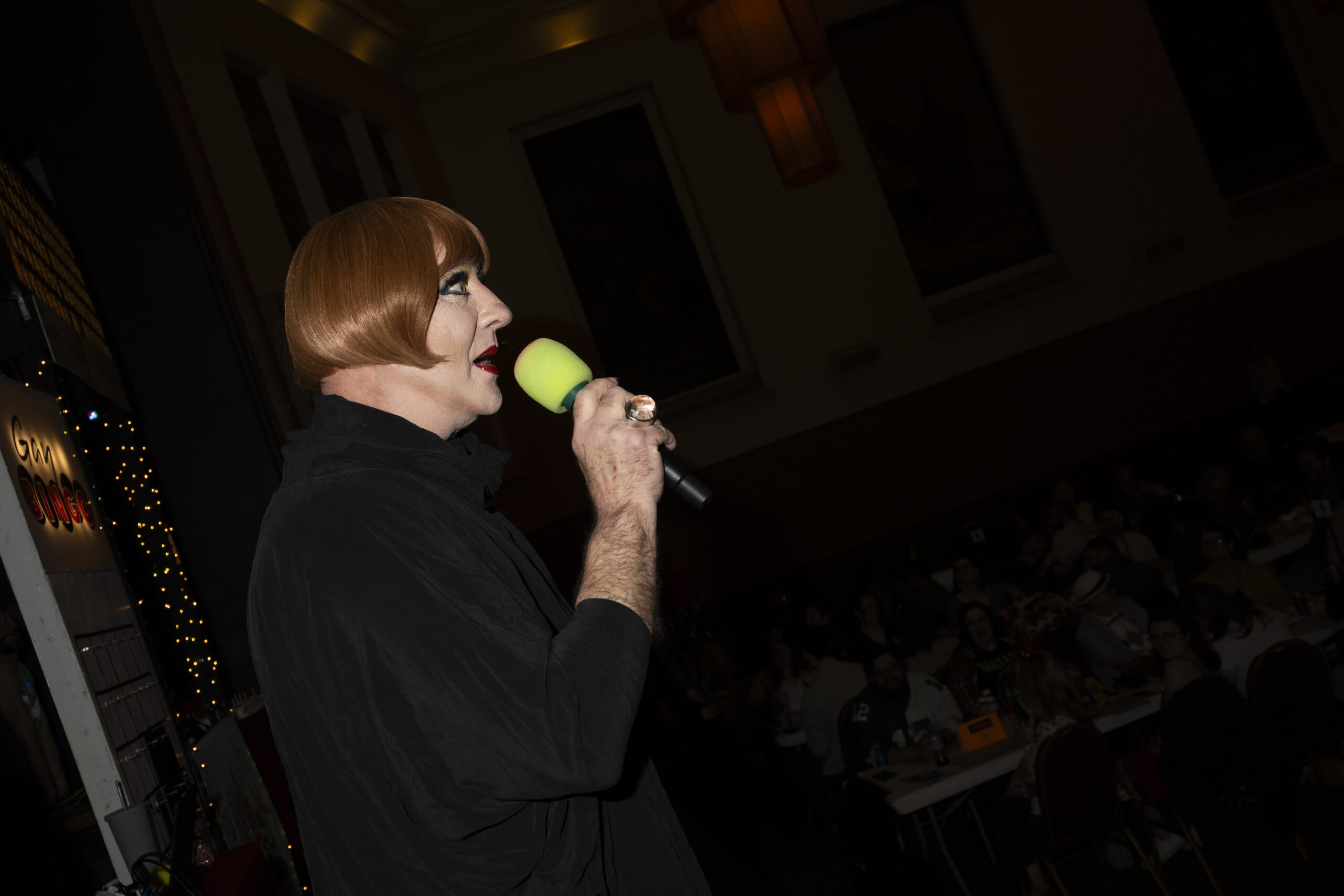
    Michael Byrne, as his drag persona Carlota Ttendant, on May 9 at Congregation Rodeph Shalom in Philadelphia.

    But there are still obstacles to ending the epidemic. HIV/AIDS disproportionately affects Black and brown communities and low-income people who experience barriers to healthcare, according to Action Wellness executive director Mary Evelyn Torres. The geographic disparities are also stark: Current drug regimens may be readily available in well-resourced countries, like the United States, but access is scarce in the world’s vulnerable pockets. These problems have only been exacerbated by President Donald Trump’s proposed cuts to domestic and foreign HIV/AIDS programs. The withdrawal of American dollars overseas, United Nations officials warned, could lead to more than 4 million AIDS-related deaths and 6 million more HIV infections by 2029.

    (function(){function e(){window.addEventListener(`message`,function(e){if(e.data[`datawrapper-height`]!==void 0){var t=document.querySelectorAll(`iframe`);for(var n in e.data[`datawrapper-height`])for(var r=0,i;i=t[r];r++)if(i.contentWindow===e.source){var a=e.data[`datawrapper-height`][n]+`px`;i.style.height=a}}})}e()})();

    Meanwhile, the Trump administration and state legislatures are attempting to roll back protections for LGBTQ+ people. In Philadelphia, Pride celebrations this month in the Gayborhood were disrupted after Philadelphia police pushed and confronted revelers using what some have called outsized and aggressive crowd-control tactics, although Police Commissioner Kevin Bethel said his department’s actions had nothing to do with Pride. City Council has since announced it will hold public hearings to examine the police response.

    “We’ve come a long way, but there’s still work to be done,” Torres said, “and that work is being threatened by this administration.”

    As the epidemic has changed, so has Gay Bingo: The money raised — more than $5 million since its inception — now goes toward Action Wellness’ social services and programming. The BVDs ditched their roller skates at the Gershman Y (because of the new, carpeted venue). Tickets cost $50-$60, compared to $10-$12 in May 1996, and these days, attendance averages between 150 and 200 a month.

    Drag has evolved, too. Spending centuries on the periphery as proto-punk-beatniks and after-midnight acts, queens disrupted and challenged the mainstream with wit and wonder. Then, the exploding popularity of RuPaul’s Drag Race, a drag reality-TV competition, seismically changed the culture, snubbing scrappiness for silicon and kitsch for couture. The show ushered drag into the zeitgeist: Its lingo became commonplace and its contestants turned into social media stars, with businesses, makeup brands, books, and podcasts, as the art form continues to face political bans and threats nationwide.

    The show “has taken everything to a whole other planet,” Byrne said, “and that’s amazing and that’s really great.

    “That’s also not what I do.”

    Carlota was never concerned with “affecting female mannerisms” or “trying to be this woman or this drag queen,” Singer said. To Byrne, she’s come to embody the fiercest, most unafraid, and righteous versions of himself. But “Michael was never far from Carlota,” Singer said.
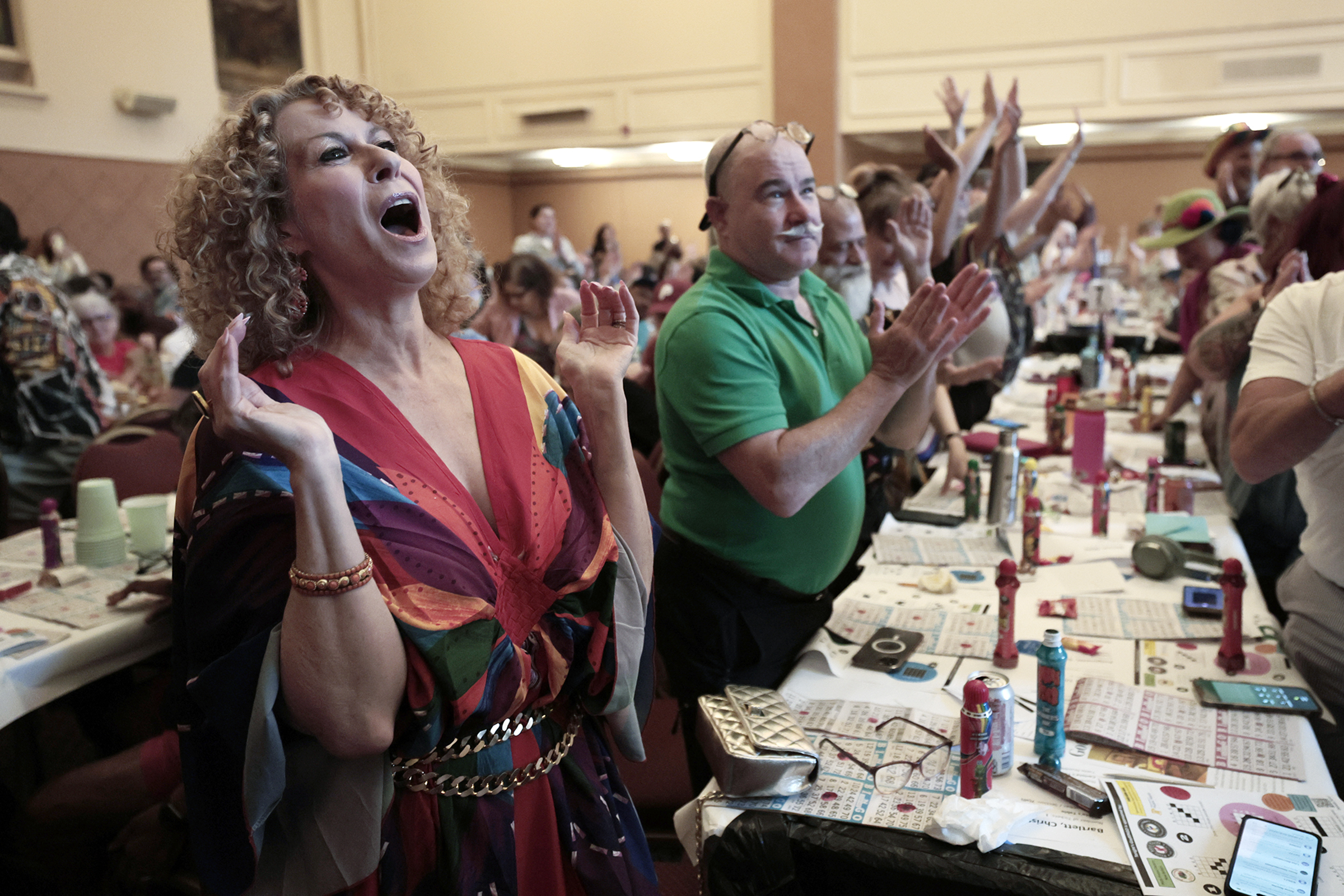
    Janie Lopez of Philadelphia cheers for her friend Carlota Ttendant during Gay Bingo at Congregation Rodeph Shalom.

    To those who know Byrne, Carlota’s come to represent someone purer and more singular, a testament to what joyful resistance and defiant resilience can achieve amid tragedy. Her ingenuity and authenticity have made her synonymous with Gay Bingo, according to Action Wellness event planner and cohost Tim Johnson (otherwise known as Stella D’Oro); her playfulness is what’s engaging, Burns said; the safe space she’s cultivated for the queer community is what keeps people coming back season after season, said regulars Cat Johnson, 47, and Katie Dickerson, 38, of Roxborough.

    “It’s going to be really different without Carlota,” Johnson said. “No one’s going to fill her shoes, but I think that the vibe and the energy is going to live on.”

    “It’s a lot easier to raise money when everyone is having fun,” said Amber Schlesman, 38, of Point Breeze, who’s been coming to Gay Bingo since its Gershman Y days. “And for the shoes, I’m guessing it’s a size 12.”

    All those shoes will be donated to Philly AIDS Thrift soon enough, Byrne said.

    Epilogue

    Byrne’s voice cracked as he thought of the people who made Carlota’s run possible: the AIDS Fund organizers, Singer, the original cast of BVDs, the volunteers, those who came back monthly, the victims, their families. Many sent her off June 13 with a trove of well wishes, notes that read, “thanks for the memories,” and “so proud of all you’ve done.” They told her, “I love you,” and “hang up those high heels, baby.”

    At the end of the night, Byrne’s best friend gifted him a throw pillow.

    “Don’t be a lady,” it said. “Be a legend.”
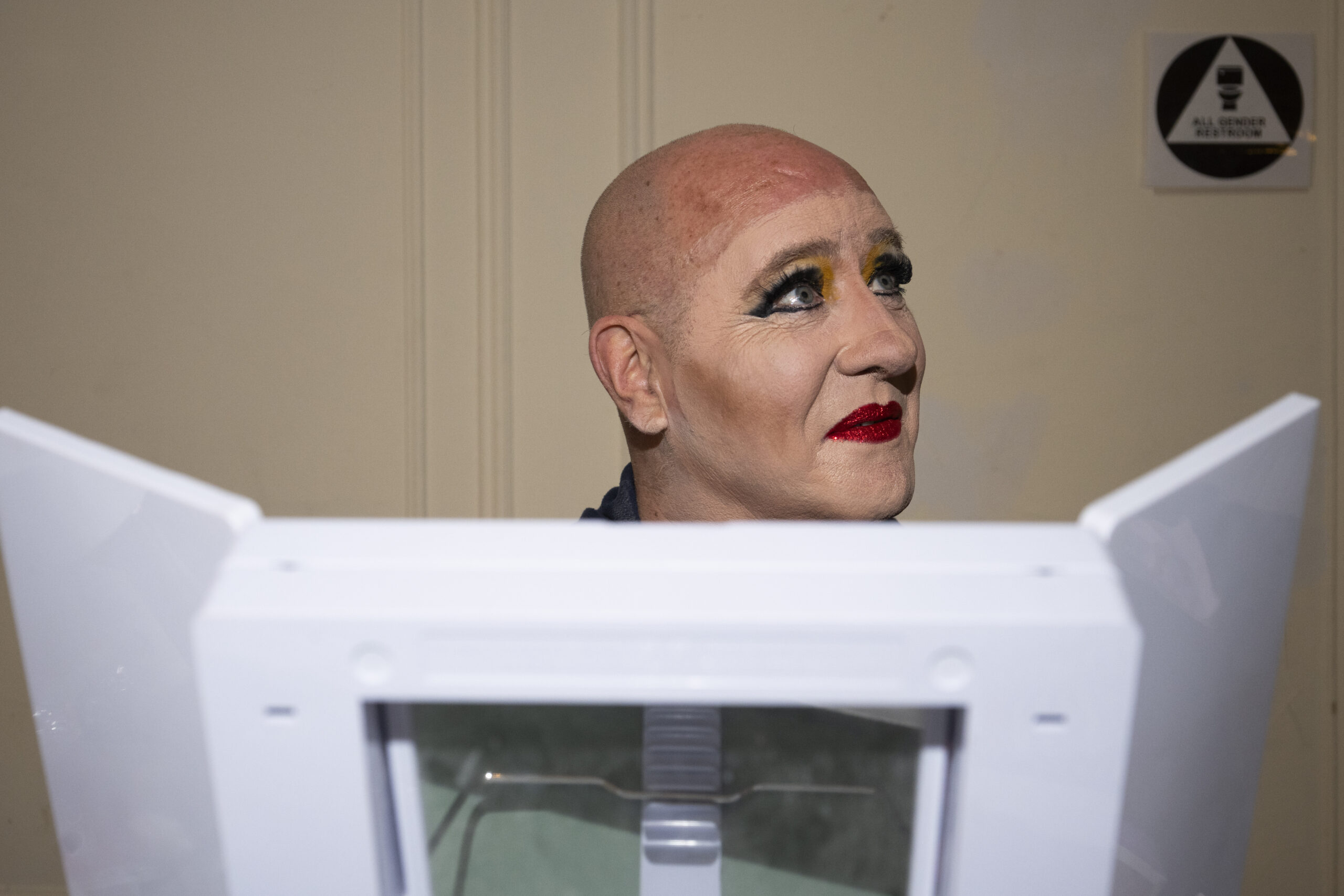
    Michael Byrne transforms into his drag persona Carlota Ttendant ahead of Gay Bingo on Saturday, May 9, 2026, at Congregation Rodeph Shalom in Philadelphia.
  • Ten years after Philly killed hitchBOT, the robots are back. Let’s be nice this time.

    Ten years after Philly killed hitchBOT, the robots are back. Let’s be nice this time.

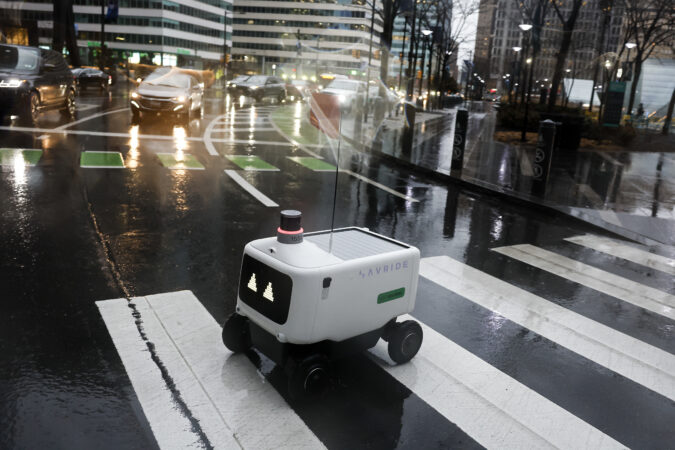
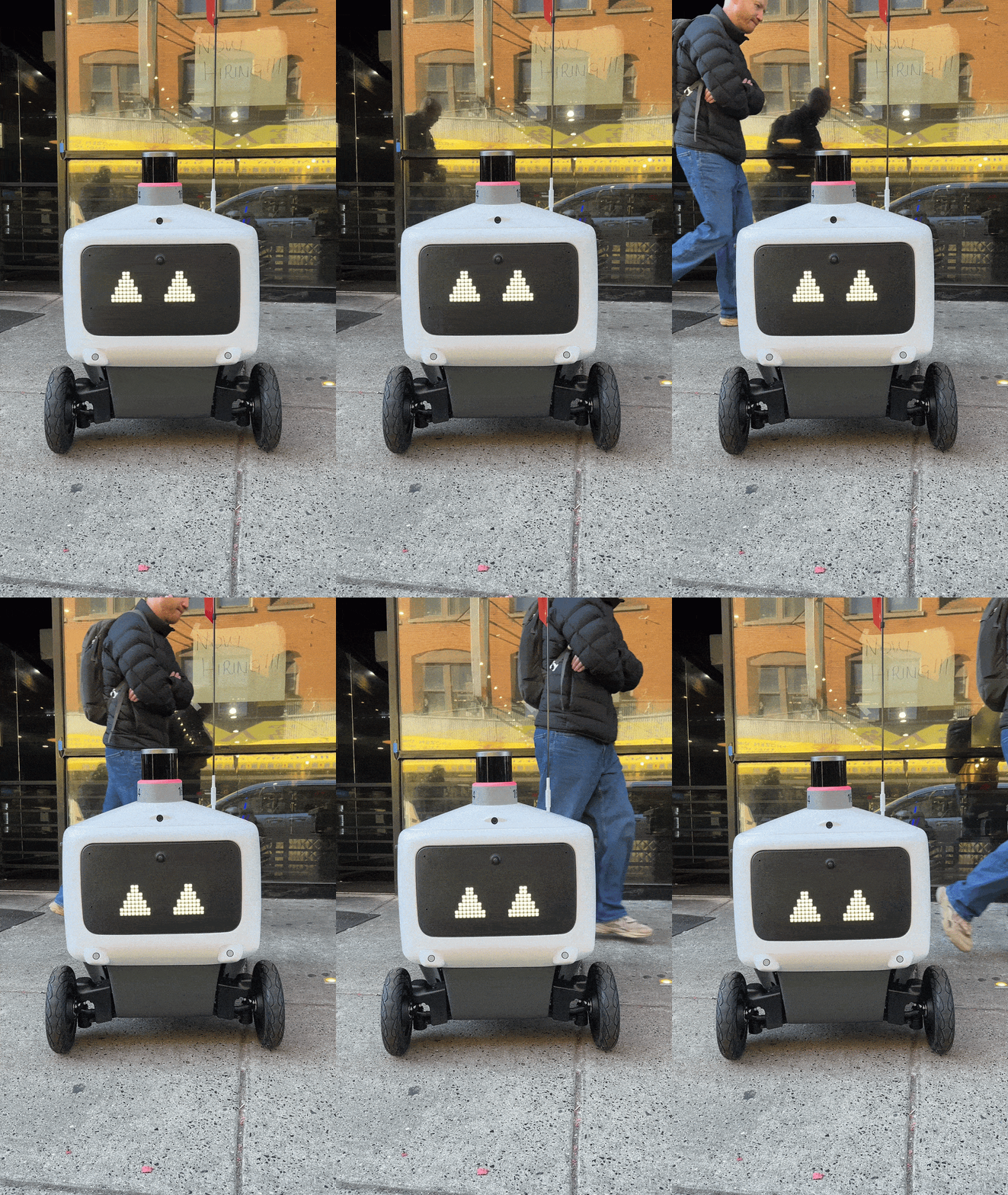
    Philadelphia is known for some great things: the Declaration of Independence (happy 250th!), Rocky, and the cheesesteak. It is also known for “killing” hitchBOT, the famous hitchhiking robot that was dismembered in August 2015. A decade later, there’s a new bot in town: the Uber Eats delivery robot, operated by Avride.

    When these robots first arrived, I had my own spontaneous encounter with one. I was surprised by how unsettled I felt, especially as someone who has spent years researching them. I am an expert in human–robot interaction, and my research focuses on why people abuse robots. I immediately wondered how long it would be before another robot made headlines in this post‑hitchBOT world.

    It only took 18 days.

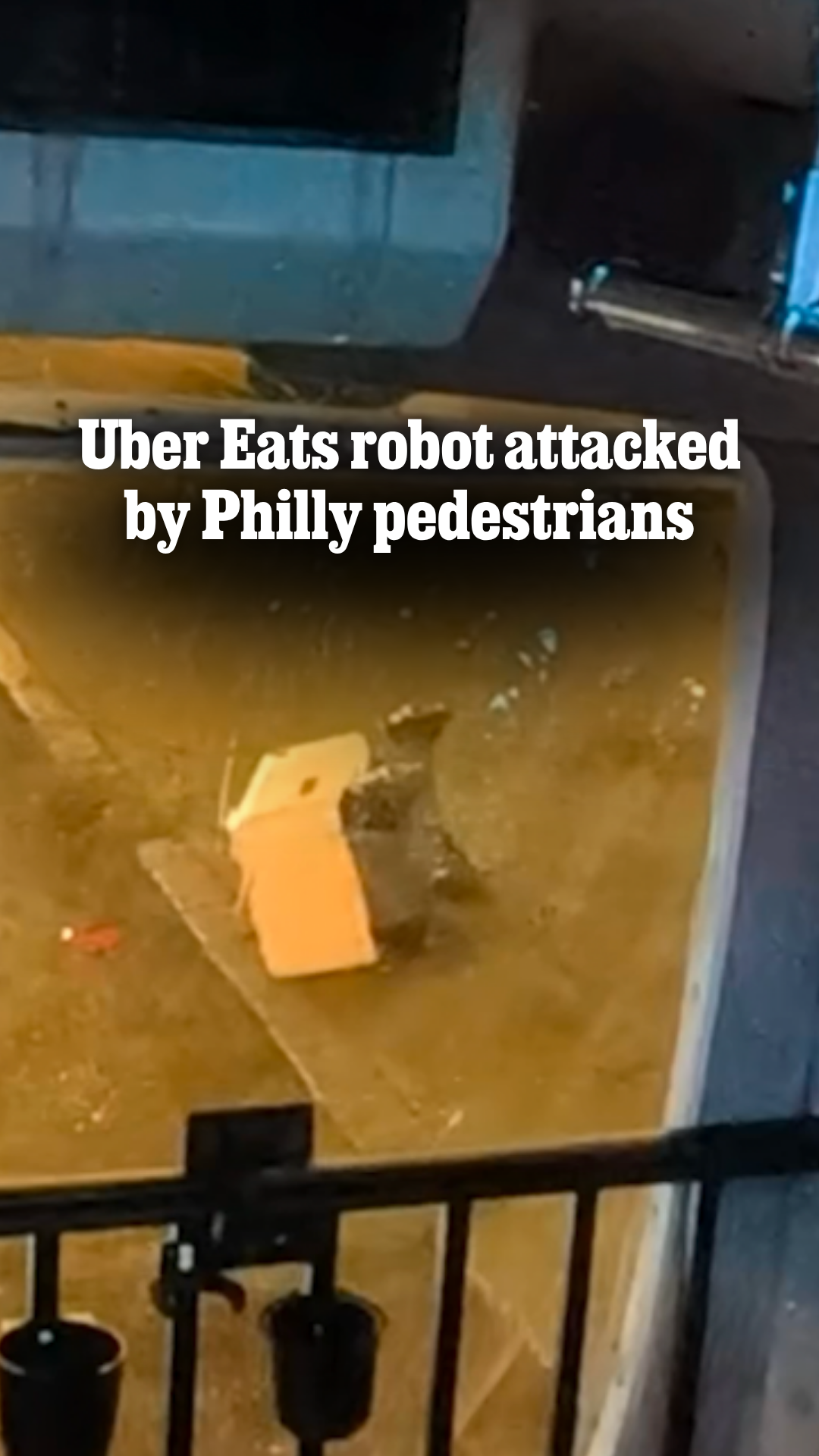
    Uber Eats robot attacked by Philly pedestrians

    Since these delivery robots rolled into town, they have been making headlines for all the wrong reasons: getting beat up, hit by cars, and colliding with pedestrians. These coolers on wheels are having an effect on Philadelphians, and I do not blame my fellow city dwellers.

    We are living in a cultural climate where artificial intelligence and automation are often framed as threats to jobs amid inflation and economic anxiety. Layer on top of that Philadelphia’s unique reputation as a destroyer of robots, and the reaction is hardly surprising.

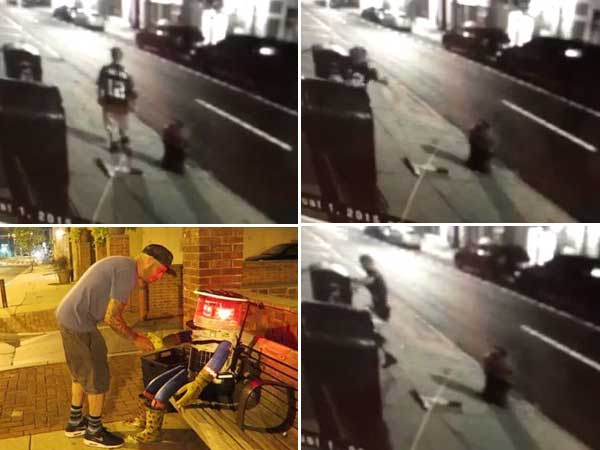
    Clockwise from lower left. 1) Last known image of an intact hitchBOT in Philadelphia in 2018. 2) Frame grab from surveillance video of man in No. 12 jersey after tossing what appear to be hitchBOT’s arms to sidewalk. 3 & 4) Man appears to stomp item believed to be hitchBOT.

    With innovative technology, there is always disruption. When UberX and Lyft arrived, Philadelphians were up in arms about the traffic congestion caused by rideshare vehicles, a problem the city later officially acknowledged.

    Yet in less than a decade, the norm quietly shifted. Today, many of us hail a rideshare instead of a taxi despite the unresolved congestion issue. The question now is whether we will react to delivery robots as another passing disruption, or whether we will choose to use them to actually improve city life.

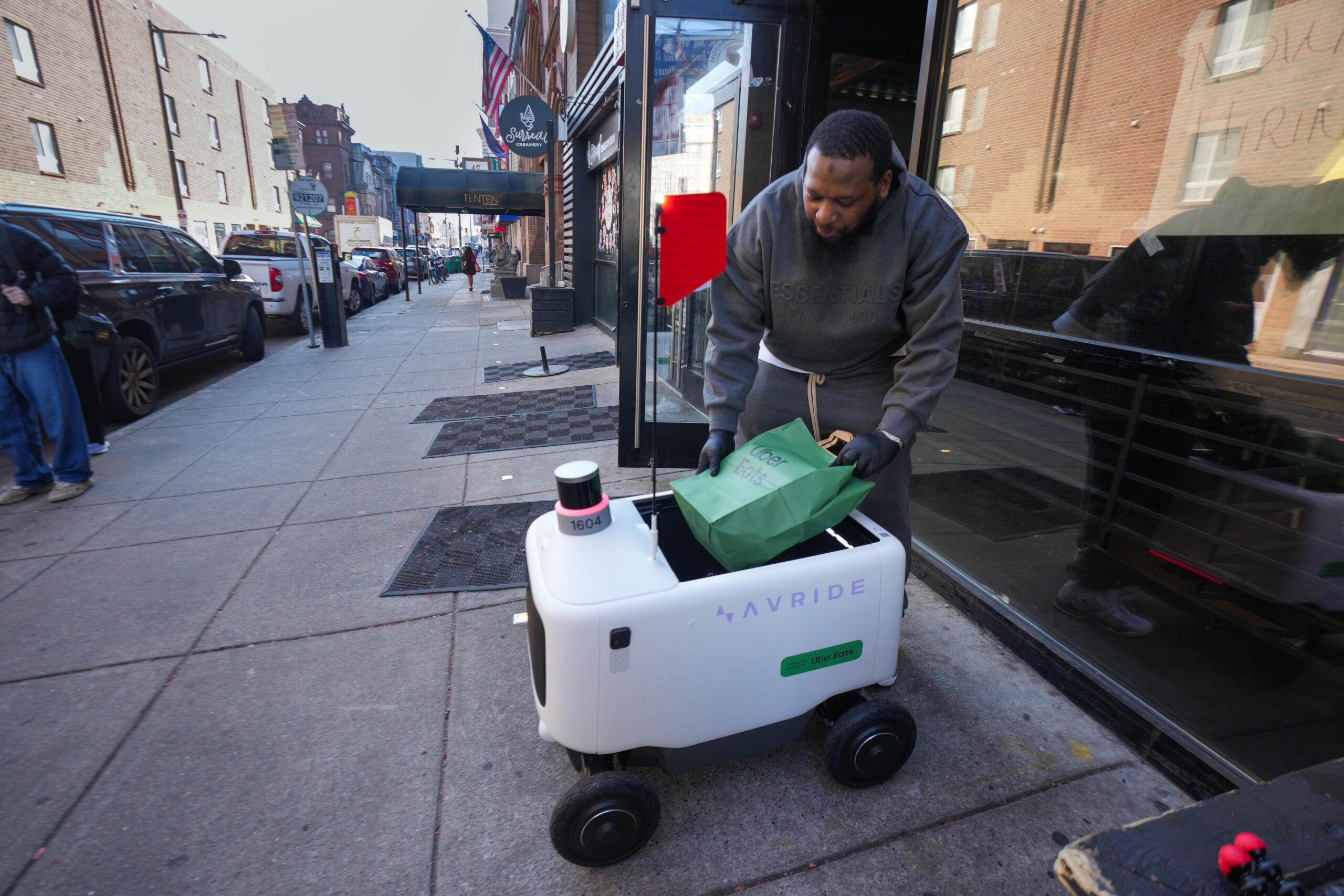
    Garci Peterkin, owner and CEO of Carter’s Cheesesteaks by Garci in the 1000 block of Race Street, demonstrates how food delivery robots work, in March.

    Recently, Councilmember Jeffery Young proposed a $1,000 surcharge on deliveries made by autonomous delivery devices using city sidewalks. That may sound like mere regulation, but in practice it would push the robots out entirely. Before Philadelphia taxes these devices into irrelevance, we should look at how other cities are putting them to work for the public good.

    West Hollywood, for example, has had delivery robots on its sidewalks since 2020. On Jan. 1, 2026, the city implemented a new program, the first of its kind, to use data and fees from these devices to improve and pay for sidewalk repairs. In this program, companies that operate delivery robots partner with an accessibility app used by blind and low-vision residents. As they travel city streets, the robots can report real-time obstacles such as blocked sidewalks, helping make navigation safer. The city then uses information gathered by the robots to map accessibility problems and prioritize sidewalk improvements.

    The companies also pay a daily fee for each robot in their fleet, plus an advertising fee (about four dollars per day per device) with that advertising revenue directed into a sidewalk repair fund that is expected to bring in roughly $40,000 to $80,000 per year.

    In other words, the robots are not just delivering takeout; they are quietly scanning the city, funding basic infrastructure, and making the streets more accessible.

    There are a lot of potential benefits: using robot data to measure and assess street conditions, cutting down on short car trips by shifting them to small electric devices, and easing traffic congestion on already strained streets.

    These are practical, achievable ways to use technology to help address the climate crisis and long‑neglected infrastructure. This moment should also demonstrate that it’s past time for us to stop pretending we can opt out of technological change altogether.

    Philadelphia City Council should resist a blanket $1,000 surcharge that effectively bans delivery robots and instead work with residents, robotic operators, advocates, and experts in human–robot interaction to build a Philadelphia version of West Hollywood’s data‑and‑sidewalk‑repair model.

    Uber Eats’ delivery robot in Chinatown on March 10, 2026.

    If we are going to share our streets with robots, we should make sure the companies profiting from them are paying their way and helping fix the sidewalks they roll on.

    Will Philadelphia embrace that possibility, or will we become a city of Robo-NIMBYs, elected officials and residents alike?

    Lindsay Ouellette is a Philadelphia-based social psychologist and human-robot interaction researcher who studies public responses to robots and emerging technologies. She recently earned her doctorate from Temple University, where her research examined aggression toward robots.

  • Lawmakers honor Philly-born Palestinian American killed by Israeli settlers | City Council roundup

    Lawmakers honor Philly-born Palestinian American killed by Israeli settlers | City Council roundup

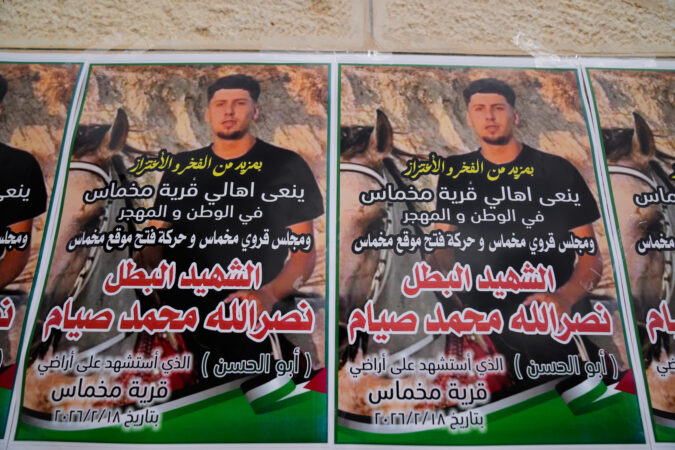
    City Council on Thursday formally honored a Philadelphia-born Palestinian American who was killed last month by Israeli settlers in the occupied West Bank.

    In a unanimous voice vote, Philadelphia lawmakers passed a resolution to celebrate the life of 19-year-old Nasrallah Abu Siyam, who was fatally shot during a violent clash in a village on Feb. 18, the beginning of the Muslim holy month of Ramadan.

    Members of Abu Siyam’s family appeared in Council chambers Thursday alongside representatives from the Council on American-Islamic Relations, who called for an independent U.S.-led investigation into the killing.

    “You don’t know what it means to live under occupation. You don’t know what these settlers are doing,” said Abdelhamid Siyam, Nasrallah Abu Siyam’s uncle. “When justice is attacked, silence is treason. … We should stand together and pressure all those elected officials to stand with justice.”

    City Councilmember Rue Landau, a Democrat who authored the honorary resolution in partnership with Councilmember Nicolas O’Rourke, said Thursday that other members of Abu Siyam’s family are trapped in the Middle East after flying there after his death.

    They are unable to travel home, she said, due to the ongoing war in Iran and restrictions on airspace.

    Landau also called on the U.S. State Department and the Department of Justice to “conduct a full investigation and pursue justice for Nasrallah.”

    “We demand accountability so that no other family here or abroad has to stand where this family stands now,” she said during a later event alongside Abu Siyam’s family.

    Thirty U.S. senators signed a letter to President Donald Trump’s administration Thursday calling for an independent investigation into Abu Siyam’s killing. Pennsylvania’s two senators, Republican Dave McCormick and Democrat John Fetterman, did not sign it.

    Here’s what else happened in Council on Thursday.

    What was the highlight?

    Prioritizing transit-oriented development: Mayor Cherelle L. Parker’s administration is pushing Council to approve a package of legislation that makes it easier to build apartment buildings near SEPTA stations, measures that proponents see as a way to boost ridership and increase the city’s housing stock.

    Parker transmitted a package of zoning bills to Council on Thursday, but no member formally introduced it. Members said they saw the legislation for the first time on Wednesday and want more time to review it before introduction.

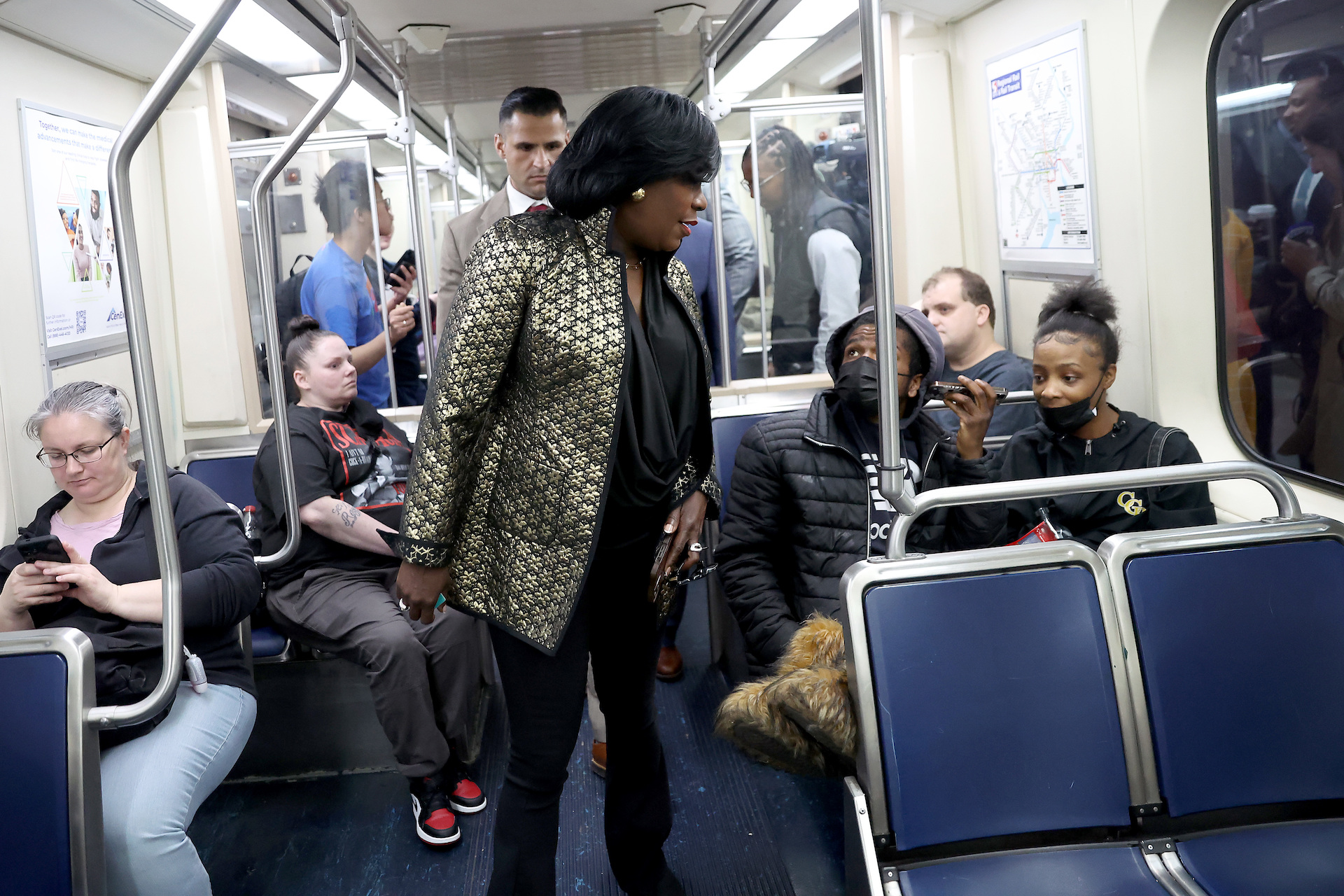
    Mayor Cherelle Parker (center) rides the SEPTA Market-Frankford Line to an event in the Kensington section of Philadelphia, Pa. on Thursday, April 11, 2024.

    The bills are aimed at advancing Parker’s goal to build, preserve, and repair 30,000 housing units.

    Most crucially, one bill expands an existing law that says properties within 500 feet of a Council-designated SEPTA station can receive benefits allowing developers to build more homes. Parker’s legislation increases the radius to 1,320 feet, or a quarter of a mile.

    What else happened?

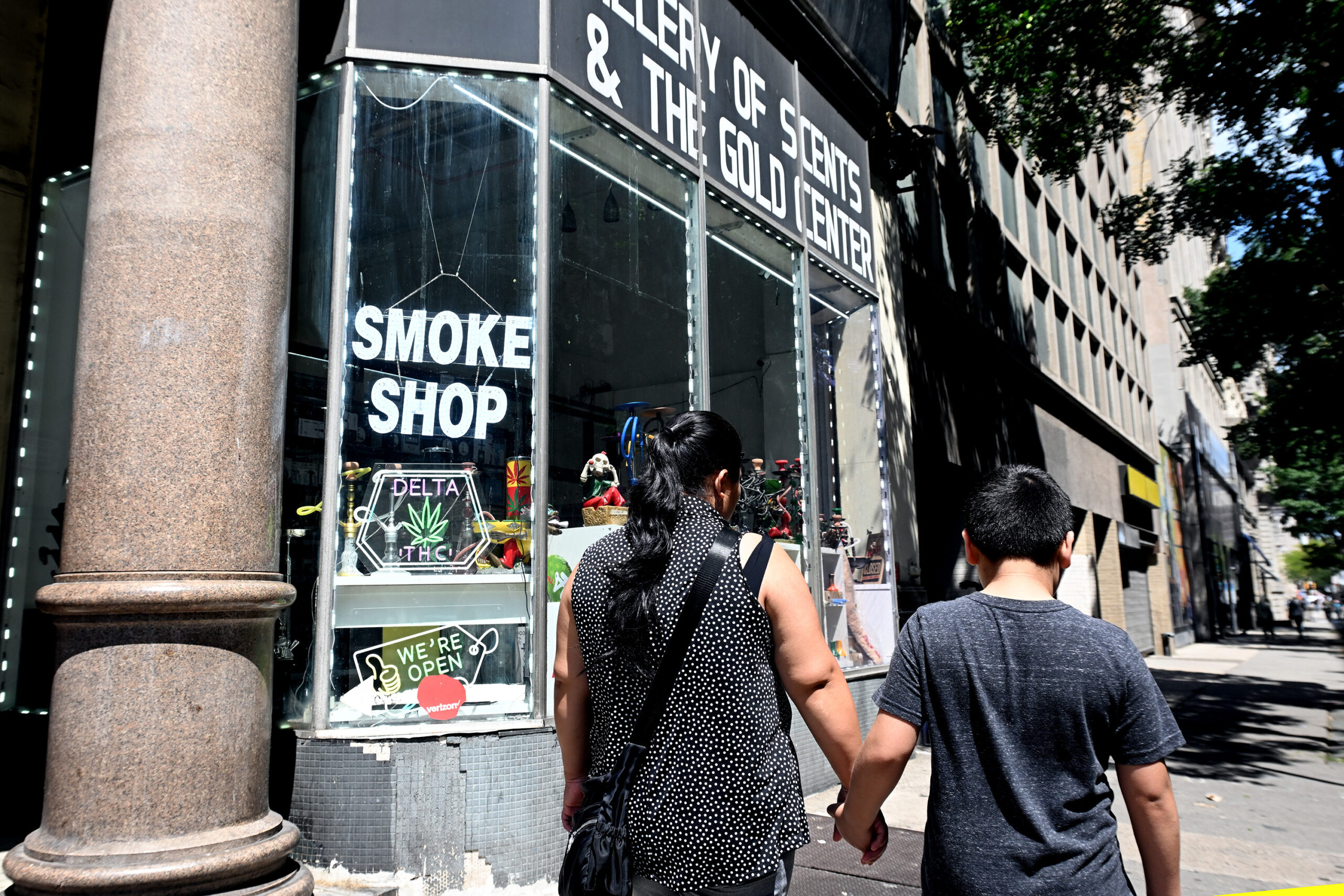
    Smoke-filled doom: Lawmakers continued their crusade against smoke shops and so-called nuisance businesses Thursday, with Councilmember Katherine Gilmore Richardson bringing legislation to hold commercial landlords accountable for renting to illegal smoke shops.

    The bill is a follow-up to a package of legislation lawmakers passed last year that makes it easier for the city to shut down stores that sell cannabis and tobacco products without permits.

    This file photo shows a city smoke shop exterior on the 1000 block of Chestnut Street in July. City Council has advanced several pieces of legislation aimed at curbing smoke shops.

    Gilmore Richardson introduced a second bill to establish a new license requirement for stores selling products like hemp-based THC and kratom. The ordinance would define the products as “intoxicating substances” and establish a 21-plus age minimum.

    What’s next?

    Block off your calendar: Next week will be a busy one. Parker is scheduled to deliver her annual budget address to Council on Thursday, when she will outline her vision for the coming year.

    The speech will kick off weeks of hearings before Council, when members will have the opportunity to question administration officials from every major department, as well as the leaders of other agencies that receive city dollars, including the city courts, the district attorney, and the Philadelphia School District.

    Quote of the week

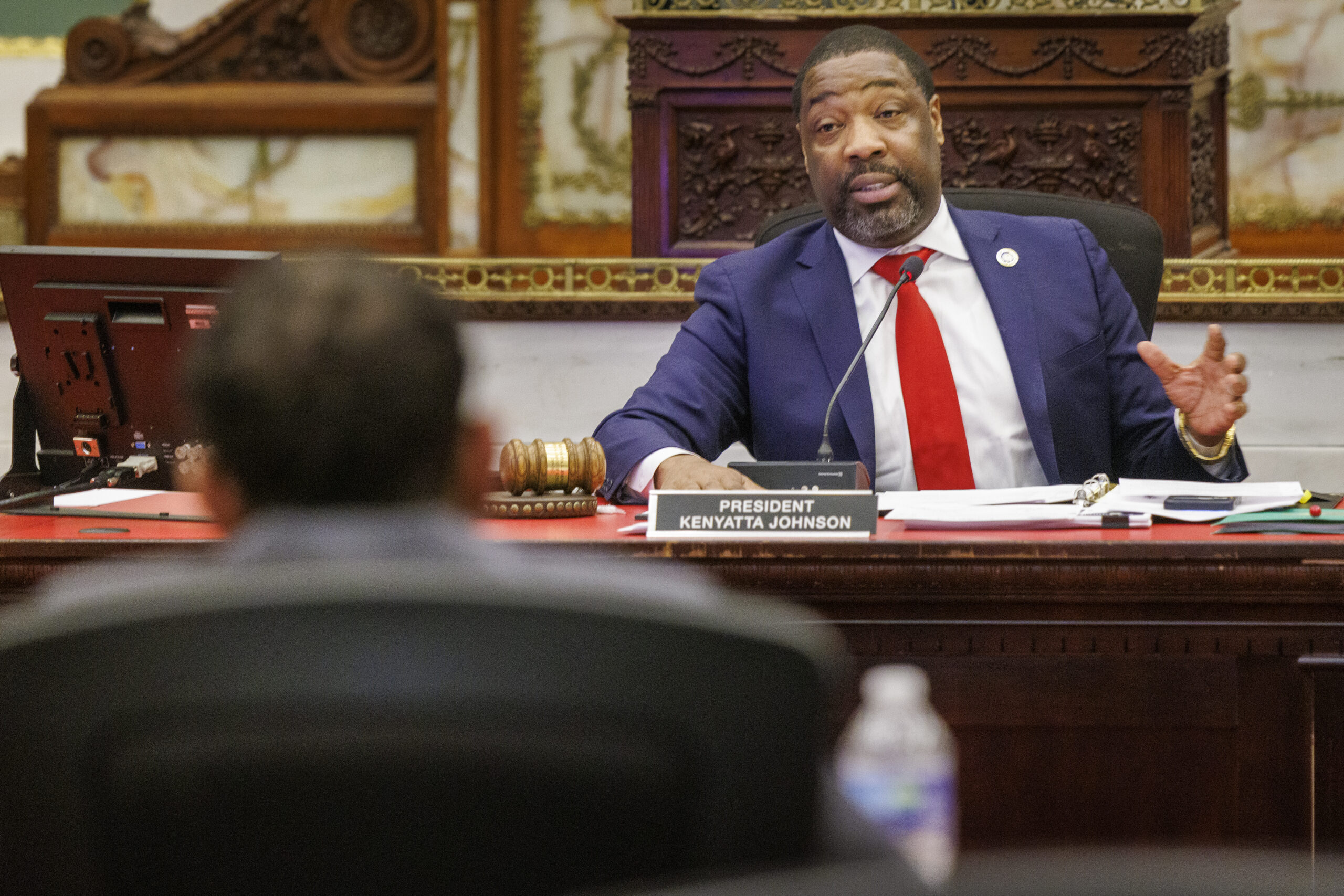
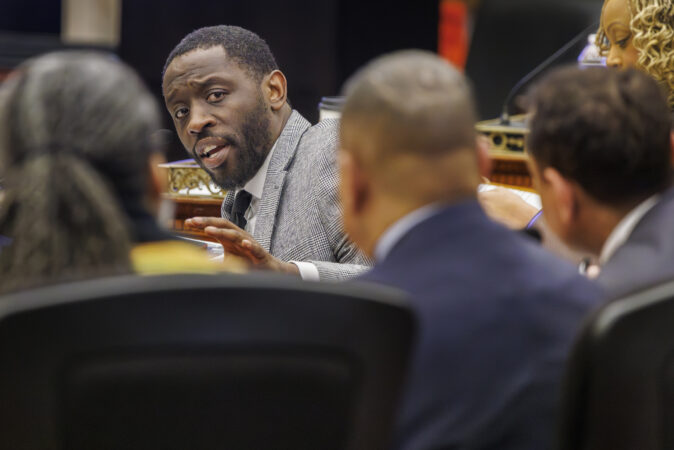
    Philadelphia City Council President Kenyatta Johnson questioning Dr. Tony Watlington, Superintendent of School District of Philadelphia, during a hearing with board members of School District of Philadelphia, Tuesday, Feb. 17, 2026.

    A little school district shade: That was Council President Kenyatta Johnson chiming in on an effort to rename a North Philadelphia street after the late Constance E. Clayton, Philadelphia’s first Black and female schools superintendent.

    Johnson slyly brought up his opposition to parts of the school district’s proposal to close 20 schools as part of its facilities master plan, prompting a wave of “oohs” in the chamber.

    Staff writers Jake Blumgart and Max Marin contributed to this article.

  • Should Philly politicians have to resign to campaign for new seats? Voters will get to weigh in — again | City Council roundup

    Should Philly politicians have to resign to campaign for new seats? Voters will get to weigh in — again | City Council roundup

    For the third time in two decades, Philadelphia voters this May will have the opportunity to weigh in on a city rule requiring local elected officials to step down from their current jobs if they want to seek higher office.

    Voters rejected City Council’s first two attempts to get rid of the resign-to-run rule, which requires a ballot measure because it is part of the city’s Home Rule Charter.

    The latest proposal, which Council approved Thursday in a 15-1 vote, will go before the voters during the May 19 primary election. Councilmember Isaiah Thomas, who authored the measure, is hopeful it will be approved because his proposal is more limited than Council’s previous attempts.

    “Reforming the resign-to-run rule for local elected officials is a critical first step towards ensuring Philadelphians have the best representation possible at all levels of government,” Thomas said in a statement.

    Rather than eliminating the resign-to-run rule, Thomas’ proposal would amend it to allow all elected city officials except the mayor to run for state or federal offices without resigning. (Council members would still have to step down if they wanted to run for mayor, and mayors would still have to resign to seek any other office.)

    What was this week’s highlight?

    Why stop there? Councilmember Jeffery Young Jr. cast the only vote against Thomas’ proposal.

    He said afterward that he believes a measure to alter the resign-to-run rule should be paired with another charter amendment: one that would impose term limits for Council members.

    “I do believe that we should be limited as elected officials,” said Young, a first-term Council member representing North Philadelphia and parts of Center City. “I do think that as a public office, we shouldn’t do these jobs forever.”

    Young’s position echoes that of the Committee of Seventy, Philadelphia’s business-backed good-government group. Committee of Seventy CEO Lauren Cristella told Council last year that pairing a resign-to-run change with term limits would provide “comprehensive, not piecemeal, reform.”

    The group proposed limiting Council members to three four-year terms. Young said he is open to negotiating about what the right number of terms should be.

    What else happened?

    Never read the comments: Is serving on City Council a “real job”?

    Not according to a recent Instagram comment from Young, whose taxpayer-funded salary is about $166,000 per year.

    On Wednesday, Instagram user Alan Fisher criticized the lawmaker in a comment left on an Inquirer video about a controversial zoning bill that Young had authored.

    “Jay Young is a joke of a councilperson and I cannot wait till he’s replaced,” wrote Fisher, who posts about urbanism issues and has thousands of followers across his social media accounts.

    Young replied: “me too so I can get a real job.”

    After Council ended Thursday, Young said the comment was not an indication of his political future.

    “I’m joking,” he told reporters. “The guy called me a joke, and I made a joke.”

    Councilmember Jeffery Young, Jr. in chambers as City Council meets Dec. 11, 2025.

    The backstory: Young, who represents the North Philadelphia-based 5th District, had proposed a zoning bill to prevent the former Hahnemann University Hospital site on North Broad Street from being redeveloped into housing. Young said he was hoping to see the site return to being an employment hub.

    But instead, his efforts to change the area’s zoning led to a rush of housing permit applications from developers hoping to beat him to the punch as his proposal made its way through the legislative process. He has since pressed pause on the bill, and The Inquirer video laid out how the saga had unfolded.

    In a Council speech Thursday, Young appeared to walk back his comment, although he did not directly mention the episode.

    “People say a lot of vile stuff about us. It seems like we’re not allowed to have a sense of humor about it,” Young said. “But I want my constituents to know that in the 5th Council District, we are fighting each and every day to improve their lives.”

    The Instagram comment was not the first time Young has provided curious commentary about his political future.

    Late last year, when The Inquirer asked if he planned to run for reelection in 2027, Young said: “It’s not up to me to make that decision. … It’s up to the people of the 5th District.”

    Usually, the people’s will is discerned through elections. Young, who has already drawn a potential opponent in next year’s race, said he will instead take the pulse of the 5th District by reaching out to people before deciding whether to seek a second four-year term.

    At the time, Young seemed to think being a member of Council was a real job.

    “I like doing my job,” he said last year.

    Quote of the day

    Jerome Richardson, 21, a senior at Temple who is a native of St. Paul, has been charged along with journalist Don Lemon for an anti-ICE protest at a Minnesota church last month.

    Temple student honored: Council on Thursday recognized Jerome Richardson, a Temple University senior who was arrested by federal authorities on charges connected to a January protest in his native St. Paul, Minn.

    During the surge in immigration enforcement activities and civil unrest in the Twin Cities this winter, protesters interrupted a service at a church whose pastor is also a federal immigration officer.

    The fallout from the demonstration led to the controversial arrest of former CNN anchor Don Lemon, who live-streamed the event and said he was covering it as a journalist. Richardson said in a video he assisted Lemon “by helping with logistics and connecting him with local contacts” and posted a text-message exchange in which Lemon said Richardson could “produce” for him.

    Richardson turned himself in to federal authorities in Philadelphia earlier this month. His case is pending, along with those of Lemon and other defendants.

    “Whenever journalists are under attack, we are all under attack,” Richardson said in a speech to Council.

    Staff writers Anna Orso, Jake Blumgart, and Ryan W. Briggs contributed to this article.

  • A three-year ban on puppy breeding in Philly is likely to become law | City Council roundup

    A three-year ban on puppy breeding in Philly is likely to become law | City Council roundup

    A three-year ban on puppy breeding in Philadelphia is likely to become law after City Council members on Thursday passed a bill to relieve overcrowded animal shelters.

    Lawmakers unanimously approved legislation to institute a three-year moratorium on puppy breeding in the city, a ban that applies to all breeders except those that have a state kennel license or are breeding service dogs.

    The bill now heads to Mayor Cherelle L. Parker’s desk. If she signs the bill and it becomes law, the moratorium will take effect 90 days later.

    Also on Thursday, a Council member amended his legislation that would allow lawmakers to keep their jobs while running for another office — but there are exceptions.

    Here’s what happened during Thursday’s meeting.

    What was today’s highlight?

    Tightening the leash on backyard breeders: The bill was authored by Councilmember Cindy Bass, a Democrat who represents parts of North and Northwest Philadelphia.

    Bass was sick and absent from Council on Thursday, but she has previously said that her bill is aimed at limiting people from breeding more puppies than they can sell.

    “Every litter means more dogs in our shelter, more cost for taxpayers, and more suffering that we can prevent,” Bass said last year. “This isn’t about punishment; it’s about compassion and responsibility.”

    Under the bill, it would be illegal to sell puppies or post ads to sell them within city limits. Breeders who violate the moratorium could face a $1,000 fine, with the proceeds going to the city’s Animal Care and Control Team, also known as ACCT Philly. The animal control agency would also enforce the ban.

    Sammi Craven, a local animal welfare advocate, testified Thursday about overcrowding at ACCT Philly’s North Philadelphia shelter. She named the dogs that were recently euthanized or are scheduled to be put down: Stella, Cheese Burrito, Luna, and Muffin, among others.

    “Philadelphia’s current animal welfare policy is ineffective,” Craven said, “and infrastructure and prevention have not kept pace with intake.”

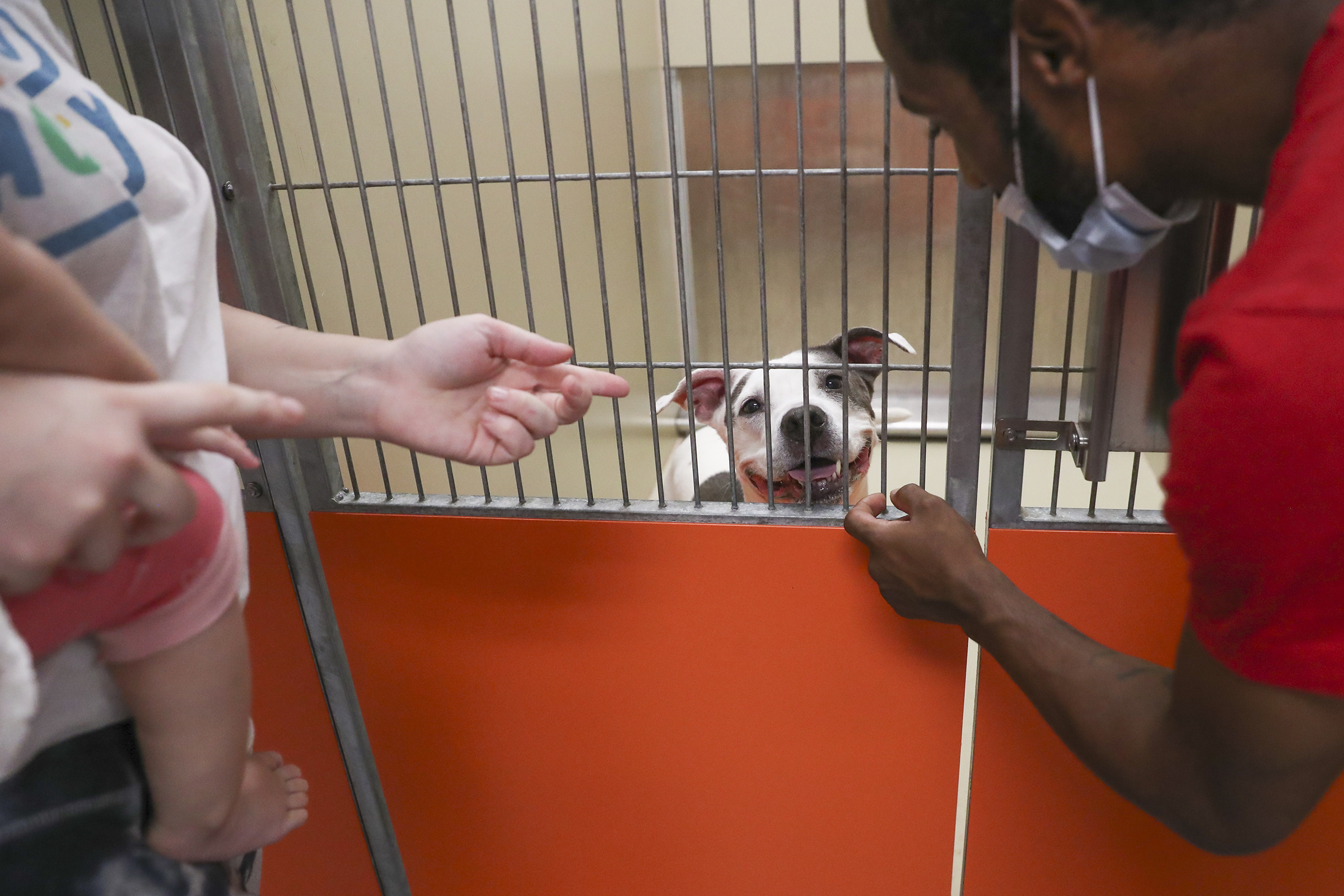
    In this 2022 file photo, Brian Martin, 31, and Vanessa Green, 29, look at their new dog they plan to adopt while Green holds Autumn, 1, at ACCT Philly, which was hosting a pet adoption event.

    Critics of the moratorium say it will be challenging to enforce and could harm smaller, responsible breeders as opposed to those already operating illegally.

    Charley Hall, a government relations official with the American Kennel Club, called on Council to hold the bill and establish a working group to draft new regulations.

    “Working together, we can stop the flow of irresponsible breeders and improve animal welfare and fewer dogs ending up in Philadelphia’s shelters,” Hall said. “The question is how to achieve that goal in a way that is effective, fair, and legally sound.”
    What else happened today?

    Resign to run gets amended: City Councilmember Isaiah Thomas has been trying for more than a year to pass legislation amending a rule that requires city employees quit their jobs to run for higher office.

    He’s attempting to amend the rule so that city officeholders can keep their jobs only if they are running for a state or federal office. That means Council members running for mayor would still have to give up their seats.

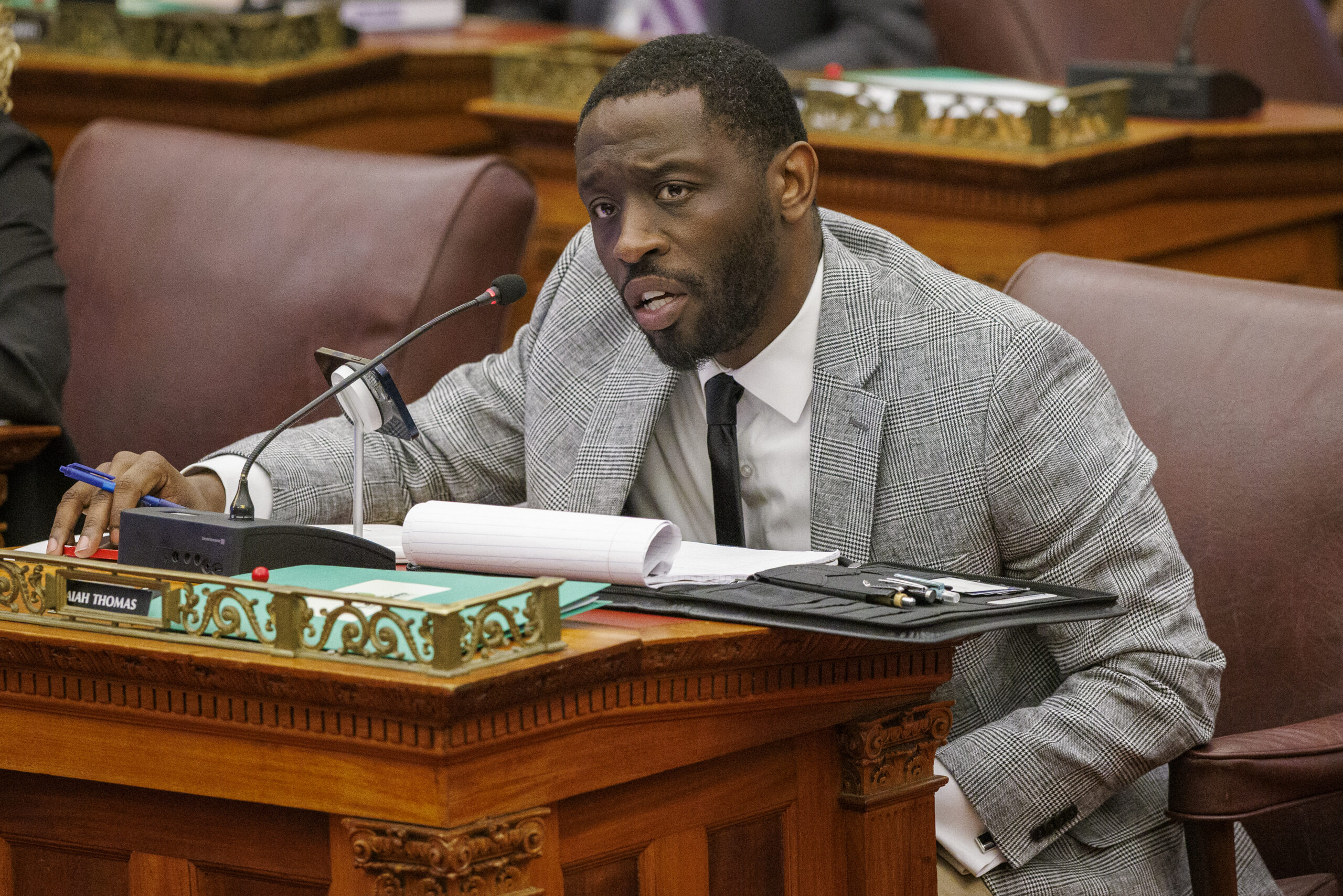
    Councilmember Isaiah Thomas makes a statement at the start of a hearing last week.

    But Thomas has run into roadblocks, including opposition from the city’s Board of Ethics, which asked him to make changes to the legislation in December, just before it appeared poised to pass.

    On Thursday, he introduced an amendment that made a series of tweaks, including clarifying that sitting city officeholders may only run for one public office in any election.

    Jordana Greenwald, general counsel for the city’s Board of Ethics, testified that the board still has concerns and requested more amendments, including prohibiting certain forms of politicking in the workplace.

    She also said the legislation should clarify that the mayor can’t run for another office while serving as the city’s chief executive, a rule that is already enumerated elsewhere in the city charter.

    However, making additional amendments could require Thomas re the legislation entirely. He said he would prefer for the bill to be called up for a final vote next week.

    Amending the resign-to-run rule requires changing the city’s Home Rule Charter, meaning voters would have to approve it through a ballot question. Voters have rejected earlier attempts to repeal resign-to-run.

    Codifying the youth watchdog: Council members also approved legislation to make the city’s Office of the Youth Ombudsperson permanent.

    The office was created through an executive order signed by former Mayor Jim Kenney and is responsible for monitoring child welfare, juvenile justice, and behavioral health residential placement facilities in the city.

    Making the office permanent also requires an amending the charter. A ballot question is likely to appear in the May primary election.

    Quote of the week

    Councilmember Jim Harrity in Council Chambers in September 2025.

    That was Councilmember Jim Harrity, an Irish Catholic who in a speech Thursday honored the sacrifices made during the Muslim holy month of Ramadan.

  • ‘Courage is contagious.’ How Philadelphia churches and neighborhood groups are preparing to confront ICE.

    ‘Courage is contagious.’ How Philadelphia churches and neighborhood groups are preparing to confront ICE.

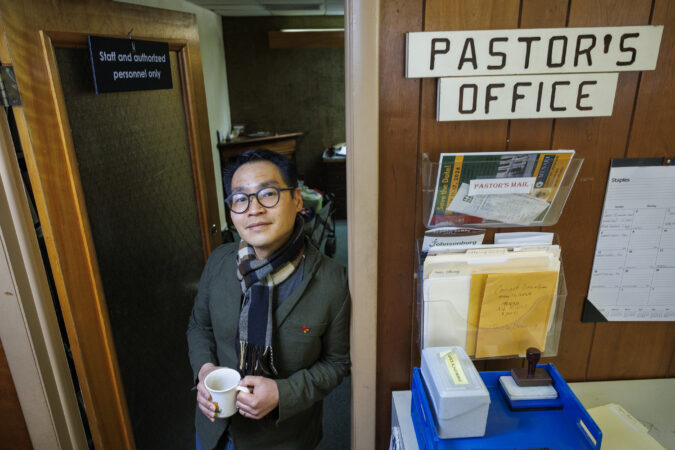
    Within the serpentine halls and stairways of Olivet Covenant Presbyterian Church, congregants have established several private, off-limits rooms ― each a potential last-stand space where members would try to shield immigrants from ICE, should agents breach the sanctuary.

    Church leaders call them Fourth Amendment areas, named for the constitutional protection against unreasonable search and seizure. The plan would be to stop ICE officers at the thresholds and demand proof that they carry legal authority to make an arrest, such as a signed judicial warrant.

    “It’s a protective space,” said the Rev. Peter Ahn, pastor of the Spring Garden church. “While you’re here, you’re safe, is what we want to assert.”

    Could it come to that? A pastor confronting armed Immigration and Customs Enforcement agents in the hallway of a church?

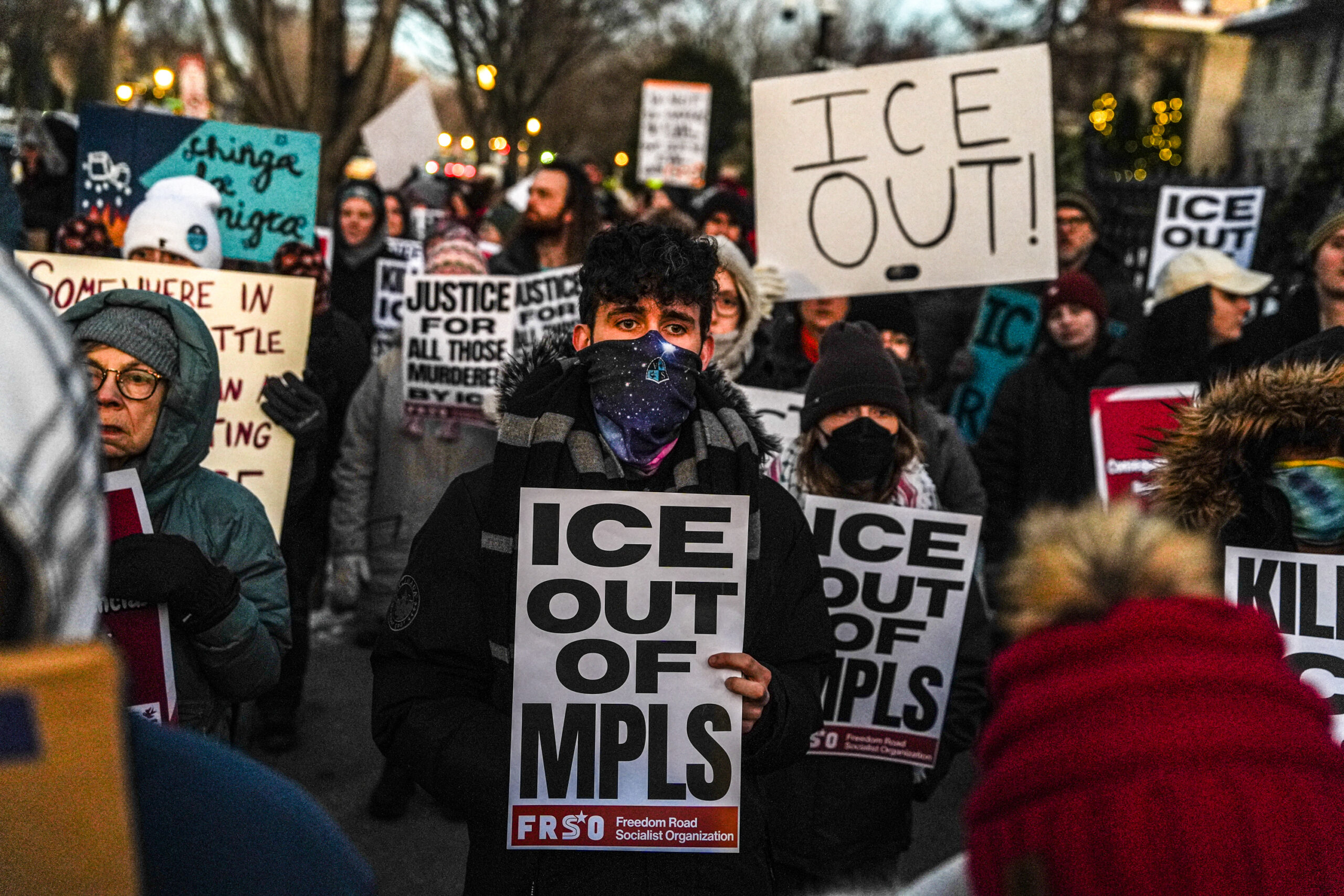
    It’s impossible to know. But across Philadelphia, churches, community groups, immigration advocates, and block leaders are actively preparing for the time ― maybe soon, maybe later, maybe never ― that the Trump administration deploys thousands of federal agents. People say they must be ready if the president tries to turn Philadelphia into Minneapolis ― or Los Angeles, Chicago, or Washington, D.C.

    People participate in an anti-ICE protest outside of the Governors Residence on Feb. 6, in St. Paul, Minn.

    Know-your-rights trainings are popping up everywhere, often to standing-room-only attendance, and ICE-watch groups are abuzz on social media.

    The First United Methodist Church of Germantown held a seminar last week to learn about nonviolent resistance, “so that we will be ready for whatever comes,” said senior pastor Alisa Lasater Wailoo.

    “That may mean putting our bodies in the path to protect other vulnerable bodies,” she said. “We’re seeing that in Minnesota.”

    In Center City, Temple Beth Zion-Beth Israel has ordered 300 whistles ― portable and efficient tools to immediately alert neighbors to ICE presence and warn immigrants to seek safety.

    “There was a sense of needing to support our neighbors if it comes down to it,” said Rabbi Abi Weber. “God forbid, should there start to be ICE raids in our neighborhood, people will be prepared.”
    In other places around the country, immigrant allies have similarly readied themselves for ICE’s arrival, and organized to react in concert when agents show up.

    In Washington state, the group WA Whistles has distributed more than 100,000 free whistles to create what it calls “an immediate first line of community defense.” Chicago residents set up volunteer street patrols to warn immigrants of ICE and to contact family members of those detained. In Los Angeles, people raised money to support food-cart vendors, and organized an “adopt a corner” program to protect day laborers who seek work outside Home Depot stores.
    A small sign at the Olivet Covenant Presbyterian Church, where the Rev. Peter Ahn is creating space to shield immigrants if necessary.

    Ask Philadelphia groups that advocate for immigrants — 15% of the population, including about 76,000 who are undocumented — and they say ICE isn’t about to land in the city. It’s been here.

    The agency’s Philadelphia office serves as headquarters not just for the city but for all of Pennsylvania and for Delaware and West Virginia as well. Arrests take place every day in the Philadelphia region.

    “You all seem to be ‘preparing’ for something that’s already happened,” veteran activist Miguel Andrade wrote on Facebook.

    What has changed, however, is the dramatic escalation in ICE enforcement, particularly visible in Democratic-run cities like Minneapolis, where agents fatally shot two U.S. citizens in January.

    ICE detained 307,713 people across the country in 2025, a 230% increase over the 93,342 in 2024. What federal immigration agencies record as detentions closely mirror arrests.

    Today residents in communities like Norristown and Upper Darby see ICE agents on the streets all the time. Cell phone videos have captured violent footage, including the smashed front door of a Lower Providence home after agents made an arrest on Feb. 9, and two people roughly pulled from a car in Phoenixville earlier this month.

    For immigrants who have no legal permission to be in the U.S. ― an estimated 14 million people ― the rising ICE presence steals sleep and peace of mind. They know not just that they could be arrested and deported at any moment, which has always been true, but also that the U.S. government is expending vast resources to try to make that happen.

    A woman who came to Philadelphia from Jamaica last year, and who asked not to be identified because she is undocumented, said she rarely leaves her home. She said she steps outside only to go to the grocery store, a doctor, or an attorney.

    She recently asked her daughter to check something on the computer, and the girl balked ― afraid to even touch the machine, worried that ICE could track her keystrokes and identify their location, the woman said.

    “How can I tell her it’s going to be OK when I don’t know it’s going to be OK?” asked the woman, who came to the U.S. to escape potential violence in Jamaica. “You come here expecting freedom, but here it’s like you’re in jail except for the [physical] barriers of the four walls.”

    Even as arrests have soared, Philadelphia has been spared the federal intrusions visited on other American cities.

    Why?

    Some say President Donald Trump doesn’t want to ruin the summer celebration of the nation’s 250th birthday, or spoil the grandeur of the World Cup or Major League Baseball’s All-Star Game. Others suggest that he might be timing an ICE deployment to do exactly that.

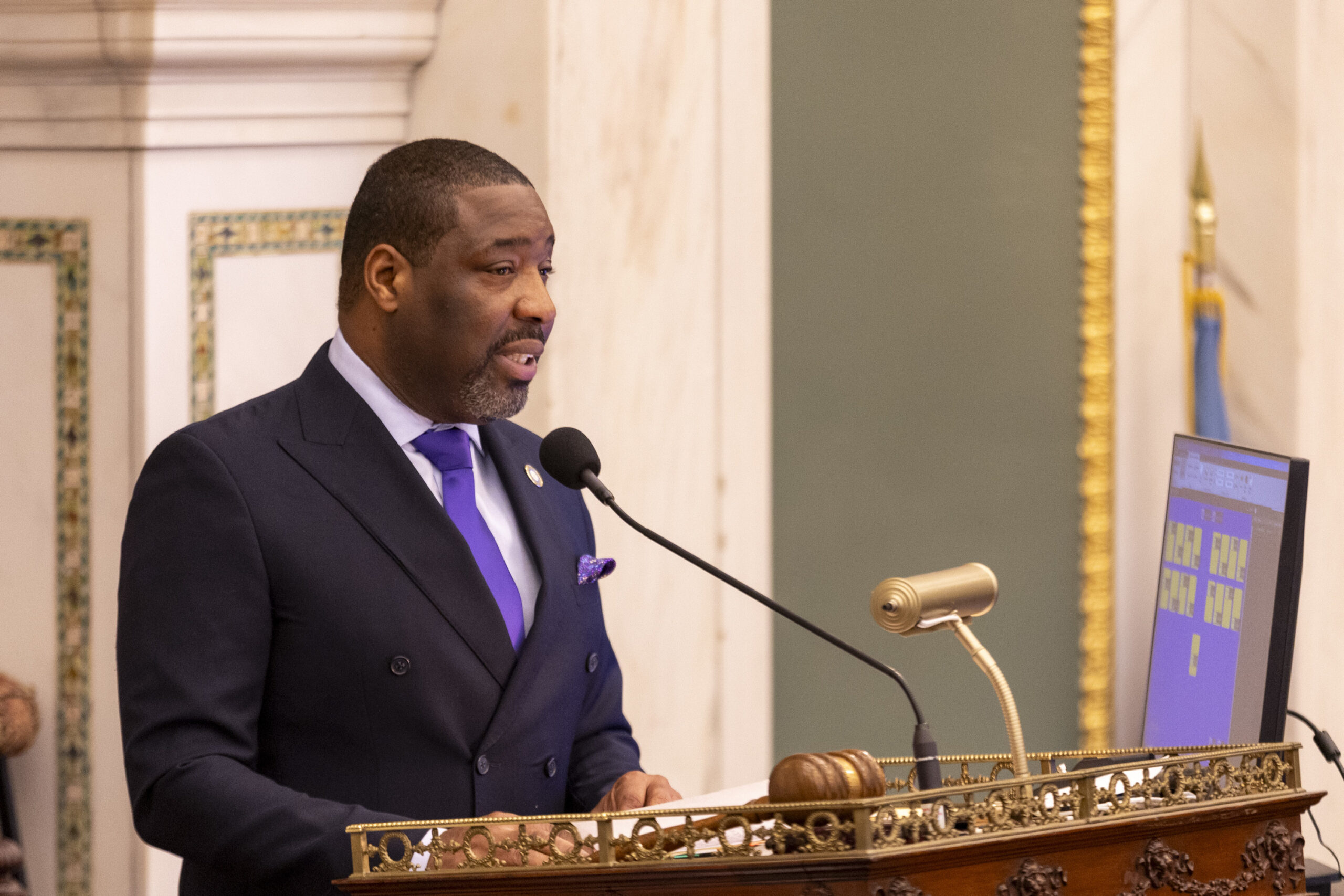
    City Council President Kenyatta Johnson speaking at the City Council’s first session of the year Jan. 22. He said this month that it’s time to stand up for immigrants in Philadelphia. “It’s my responsibility to step up in this space and be more vocal,” he said.

    That as Philadelphia City Council prepares to consider “ICE Out” legislation that would make it more difficult and complicated for the agency to operate in the city.

    Trump told NBC News this month that he is “very strongly” looking at five new cities.

    Some people are not waiting to see if Philadelphia is on the list.

    The monthly Zoom meeting of the Cresheim Village Neighbors usually draws about 20 people. But a hundred logged on in January to hear a presentation: What to do if/when ICE comes to our neighborhood.

    The short advice: If it happens, get out your phone and hit “record.”

    “If I see ICE agents, I will film,” said neighbors group coordinator Steve Stroiman, a retired teacher and rabbi. “I have a constitutional right to do that.”

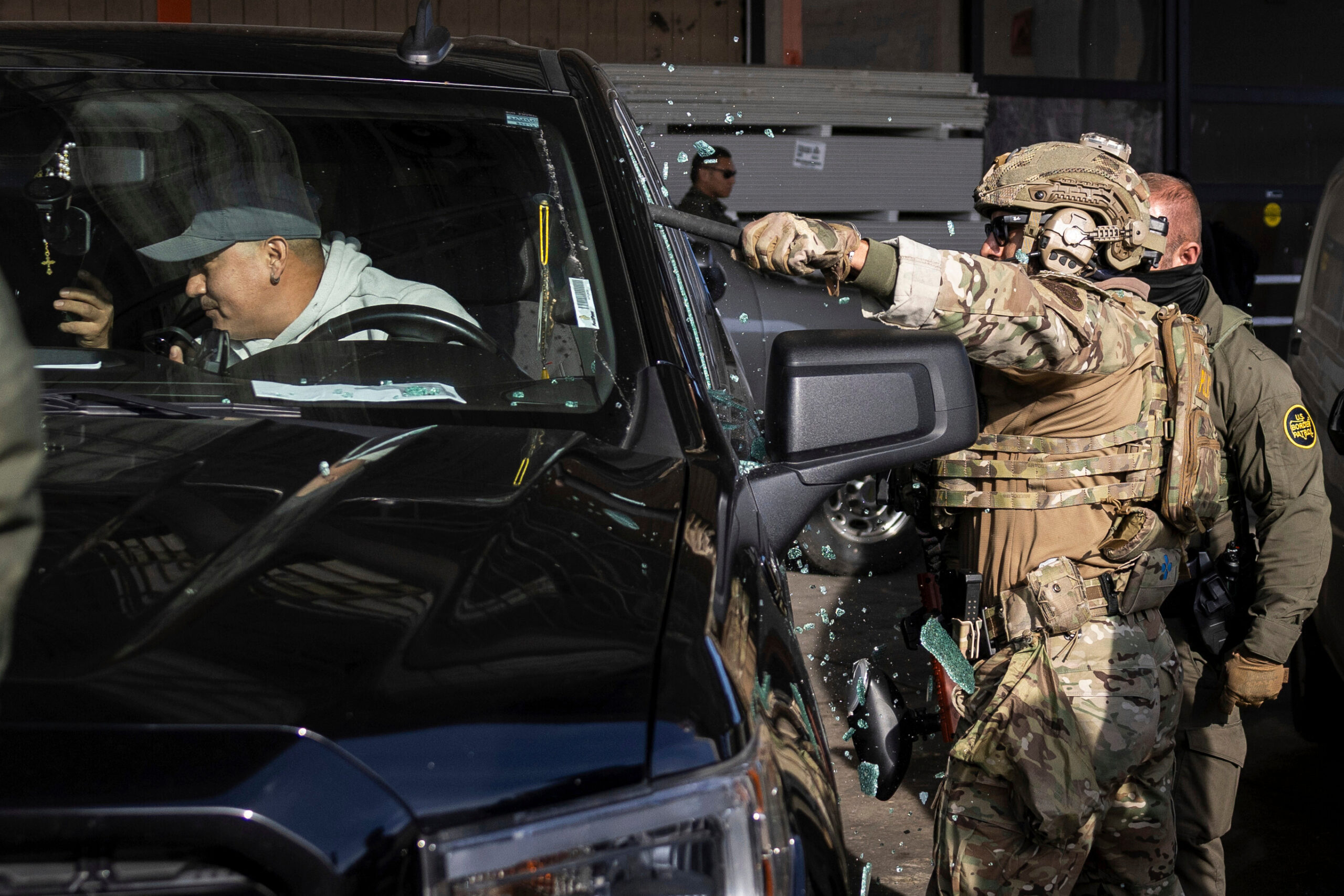
    Federal immigration enforcement agents shatter a truck window and detain two men outside a Home Depot in Evanston, Ill., on Dec. 17, 2025.

    In a sliver of University City, Miriam Oppenheimer has helped lead three block meetings where neighbors gathered to discuss how they would respond.

    They set up a Signal channel so people can communicate. And they formulated a loose plan of action: People will come outside their homes and take video recordings ― and try to get the names and birth dates of anyone taken into custody, so they can be located later.

    “Courage is contagious,” Oppenheimer said. “Everybody is waiting for somebody else to do something, but we have to be the ones.”

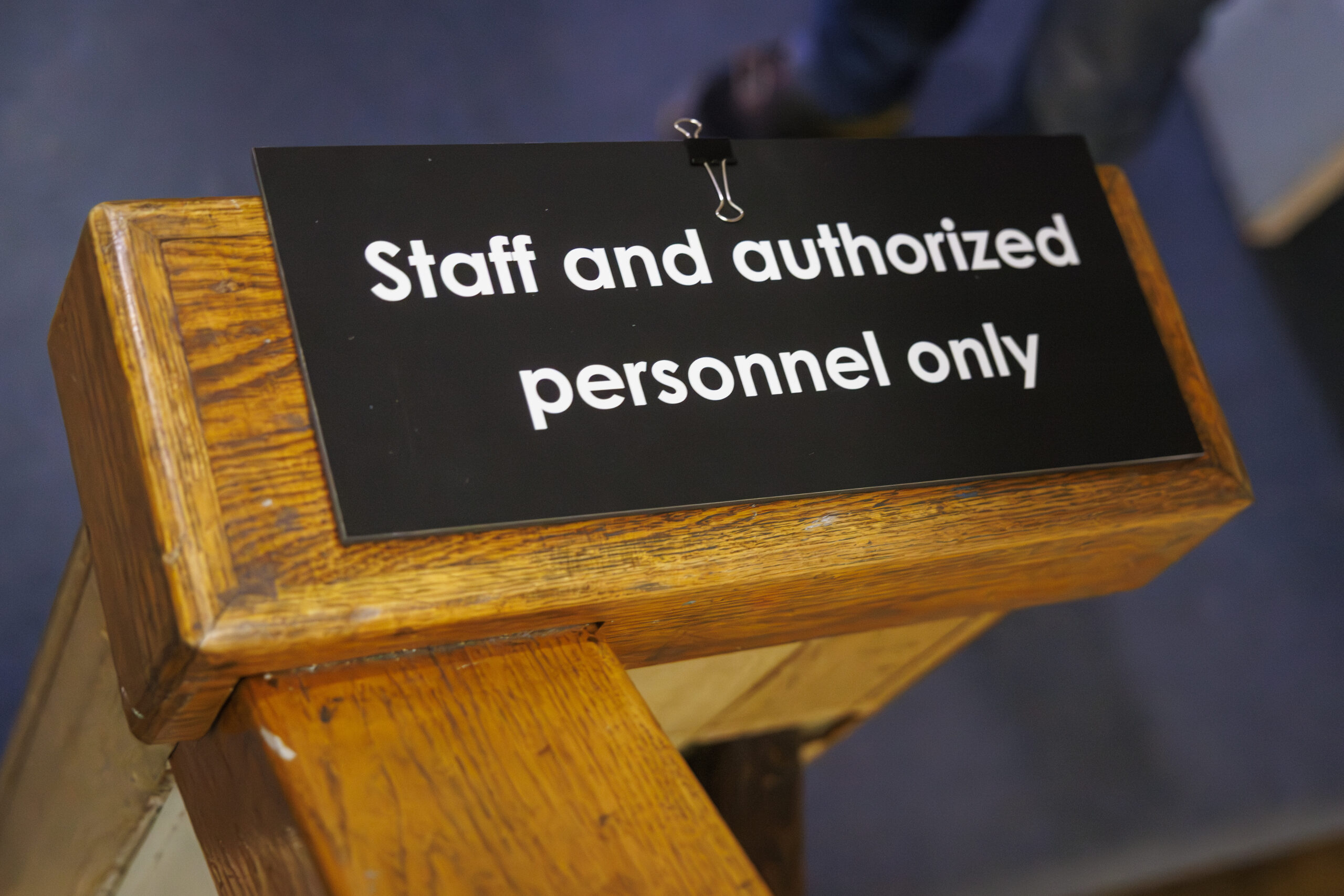
    Inside Olivet Covenant Presbyterian Church, doorways to some rooms now bear black-and-white signs that say, “Staff and authorized personnel only.”

    Issues around ICE access to churches have become more urgent since Trump rescinded the agency policy on “sensitive locations,” which had generally barred enforcement at schools, hospitals, and houses of worship.

    Legal advocates such as the ACLU say ICE agents can lawfully enter the public areas of churches, including the sanctuaries where people gather to worship. But to go into private spaces they must present a warrant signed by a judge.

    “There are many front lines right now,” said Ahn, the Olivet pastor. “We’re not trying to be simply anti-ICE, or anti-anybody. We’re just trying to be for the rights of the Fourth Amendment.”

    Staff writer Joe Yerardi contributed to this article.

  • ‘He loved Philadelphia, and Philadelphia loved him’: Jesse Jackson in Philadelphia through the years

    ‘He loved Philadelphia, and Philadelphia loved him’: Jesse Jackson in Philadelphia through the years

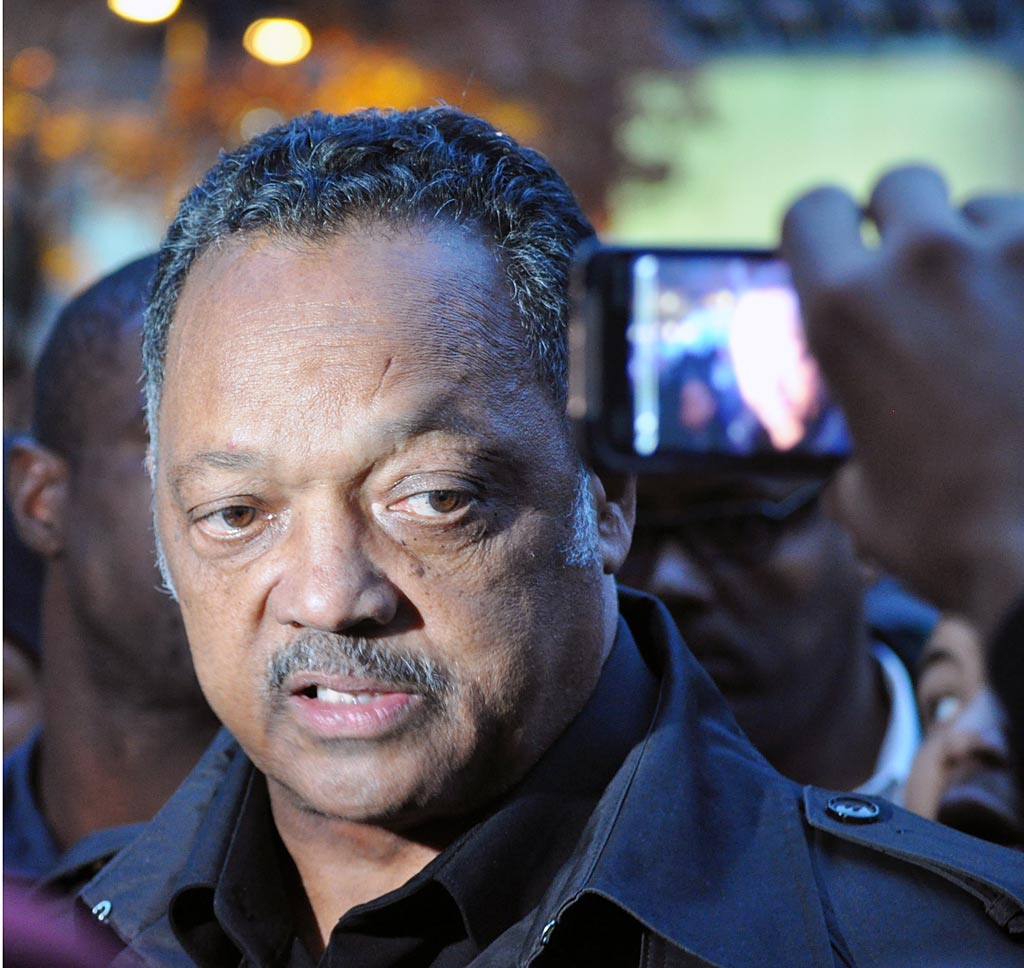
    The Rev. Jesse L. Jackson, a civil rights icon and a regular presence in Philadelphia who energized Black voters both locally and nationally for more than five decades, died Tuesday at his home in Chicago following a prolonged battle with a rare neurological disorder. He was 84.

    “Jesse Jackson will be remembered in Philadelphia as a civil rights hero, and a leader in terms of independent Black politics nationwide,” said former Councilmember W. Wilson Goode Jr., the son of Philly’s first Black mayor, W. Wilson Goode Sr. “He loved Philadelphia, and Philadelphia loved him.”

    A native of Greenville, S.C., Rev. Jackson initially rose to prominence in the mid-1960s, when he joined the 1965 voting rights march that the Rev. Dr. Martin Luther King Jr. led from Selma to Montgomery, Ala. In the years following King’s assassination in 1968, Rev. Jackson largely came to be considered his successor.

    Rev. Jackson would go on to become a prominent Black political and cultural leader in his own right, with his lengthy time in the public eye including presidential runs in 1984 and 1988. His visits to Philadelphia date back to the 1970s, and run the gamut from time in town supporting his own presidential campaigns — though neither of which were successful in the ‘80s — to appearances at the Democratic National Convention in 2016.

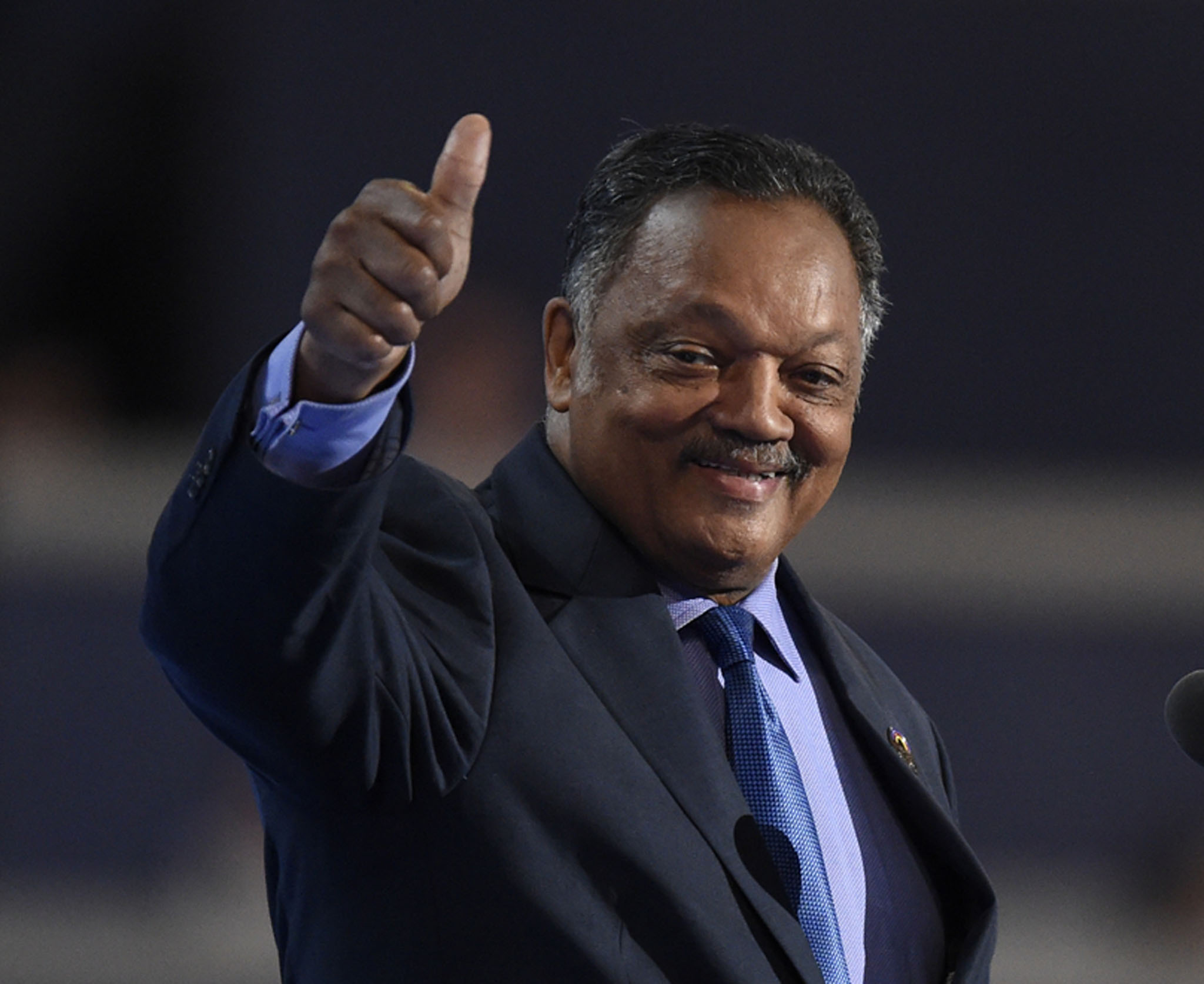
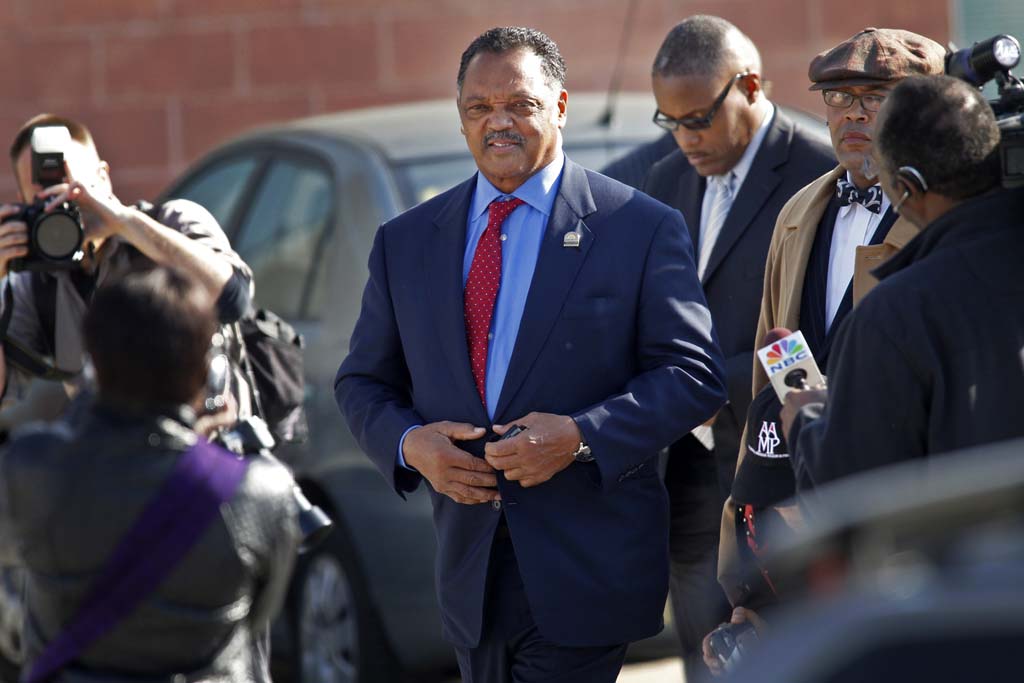
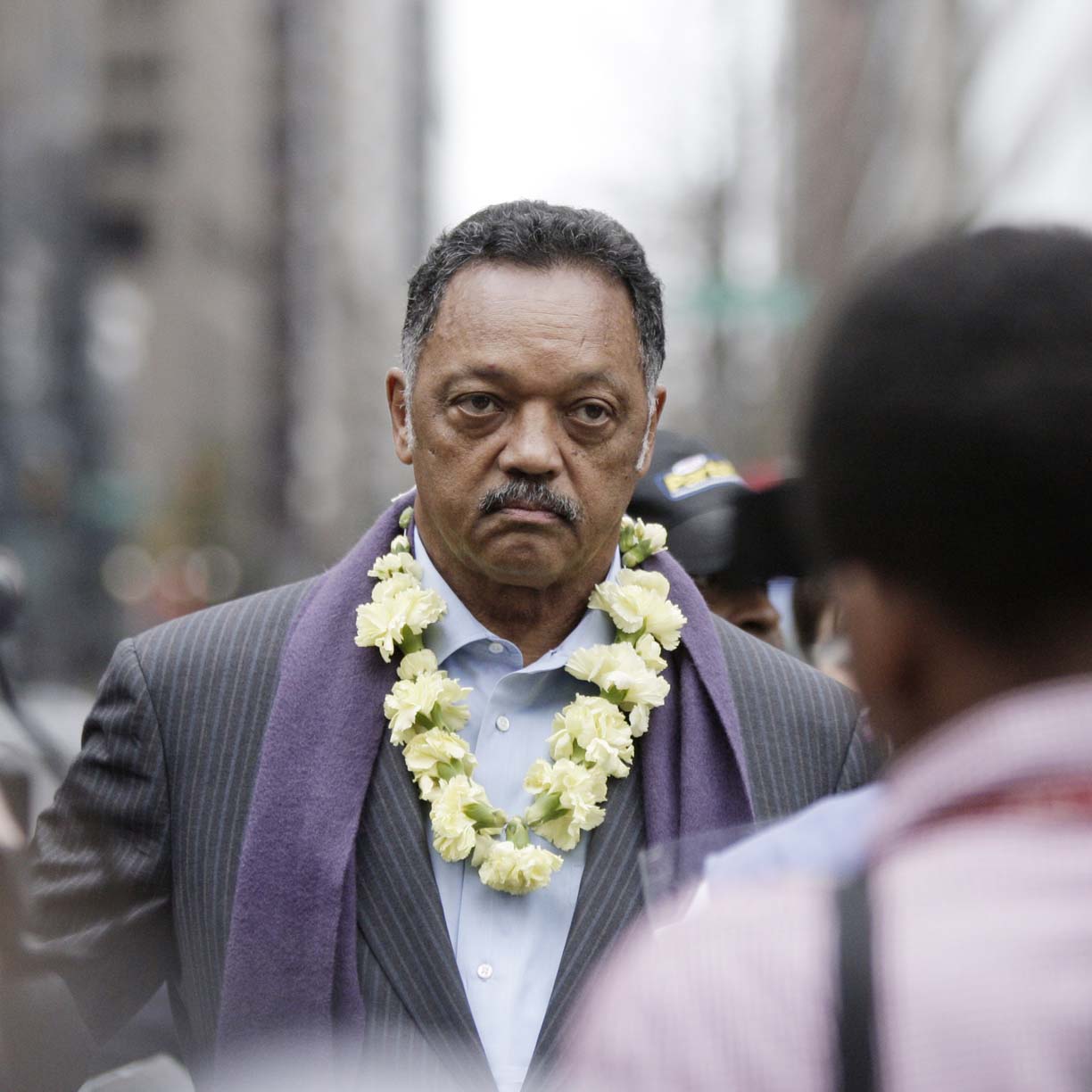
    The Rev. Jesse Jackson, founder and president of the Rainbow/PUSH Coalition, acknowledges the cheers of delegates as he walks to the podium to deliver remarks on the third night of the Democratic National Convention in Philadelphia on July 27, 2016.
    Hillary Clinton supporters and the Rev. Jesse Jackson (right) on the fourth day of the Democratic National Convention at the Wells Fargo Center on July 28, 2016.
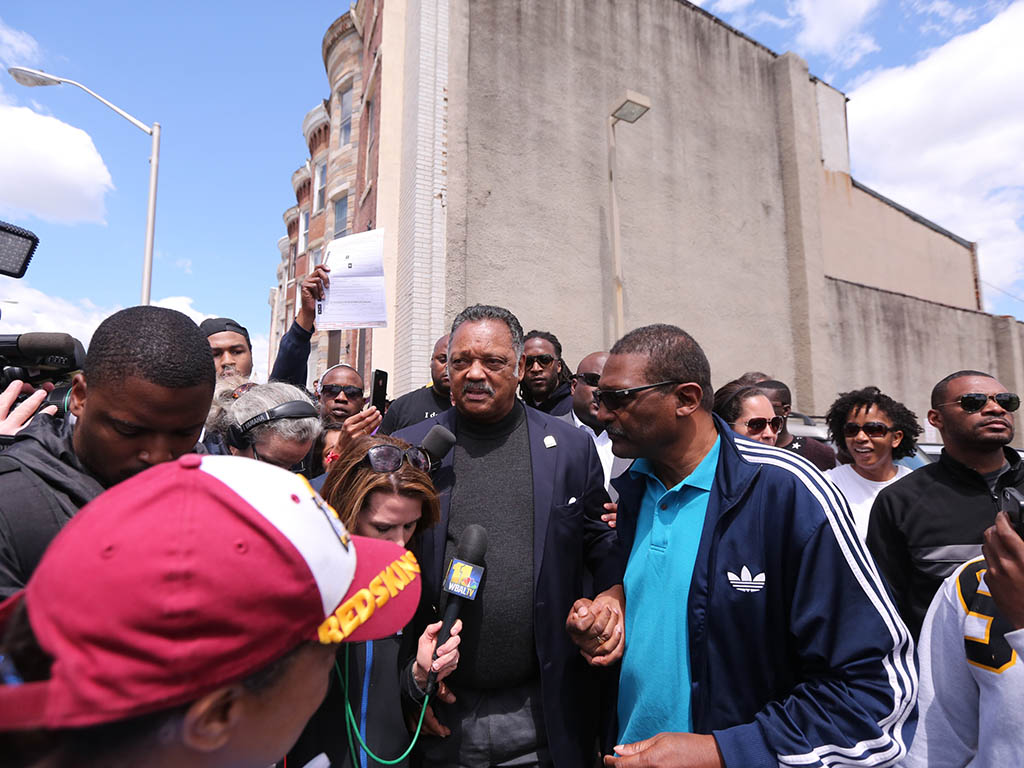
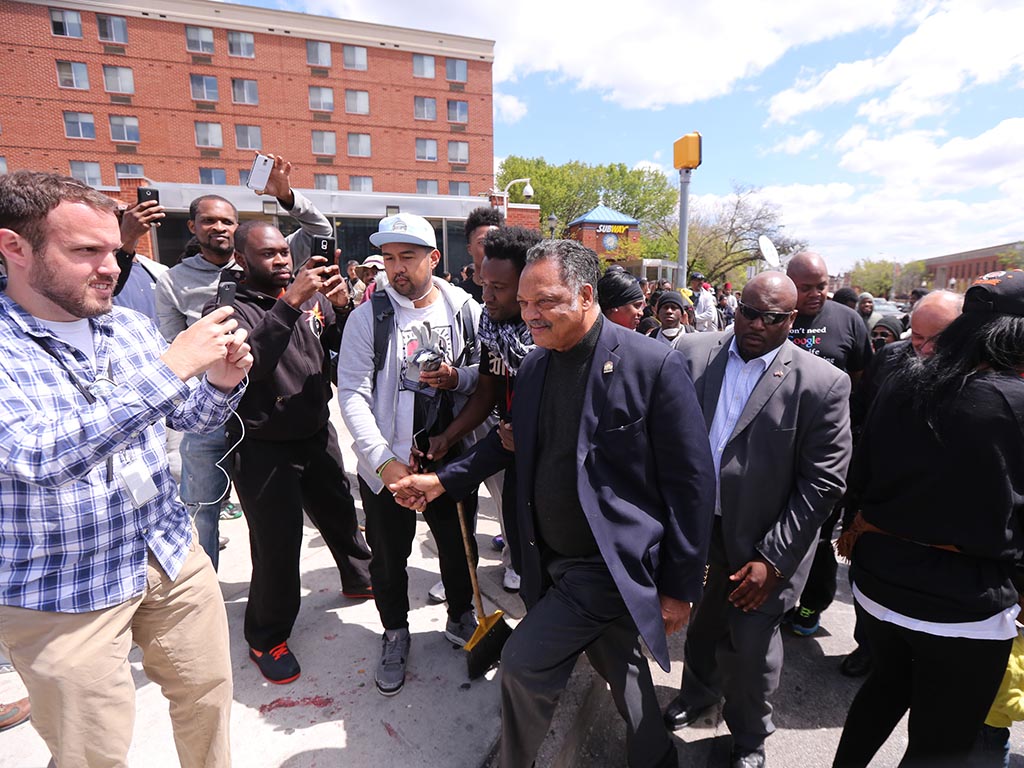
    The Rev. Jesse Jackson visits Baltimore’s turbulent intersection of West North Avenue and Pennsylvania Avenue on April 28, 2015.

    Across that time, Rev. Jackson served as a sort of rallying figure for Black Philadelphians at large, who largely supported his candidacy during his presidential runs, despite him failing to secure the Democratic nomination statewide. Still, his impact for Black voters both in Philadelphia and nationally remains everlasting.

    “That was the Rosetta stone to everything Jackson was trying to achieve,” said former Daily News scribe Gene Seymour, nephew of legendary People Paper columnist Chuck Stone. “We aren’t to be ignored or dismissed or cast aside — we matter.”

    In that sense, Goode Jr. said, Rev. Jackson will remain a political icon who inspired the nationalization of Black political empowerment.

    “Jesse Jackson is also a cultural icon in terms of telling people to be proud of being Black, and telling themselves, ‘I am somebody,’” Goode Jr. said, referencing Rev. Jackson’s famed refrain. “That is something that was indelible in the soul of Black people across the nation and world, and in Philadelphia here as well.”

    The Rev. Jesse Jackson visits the turbulent intersection of West North Avenue and Pennsylvania Avenue in Baltimore on April 28, 2015.
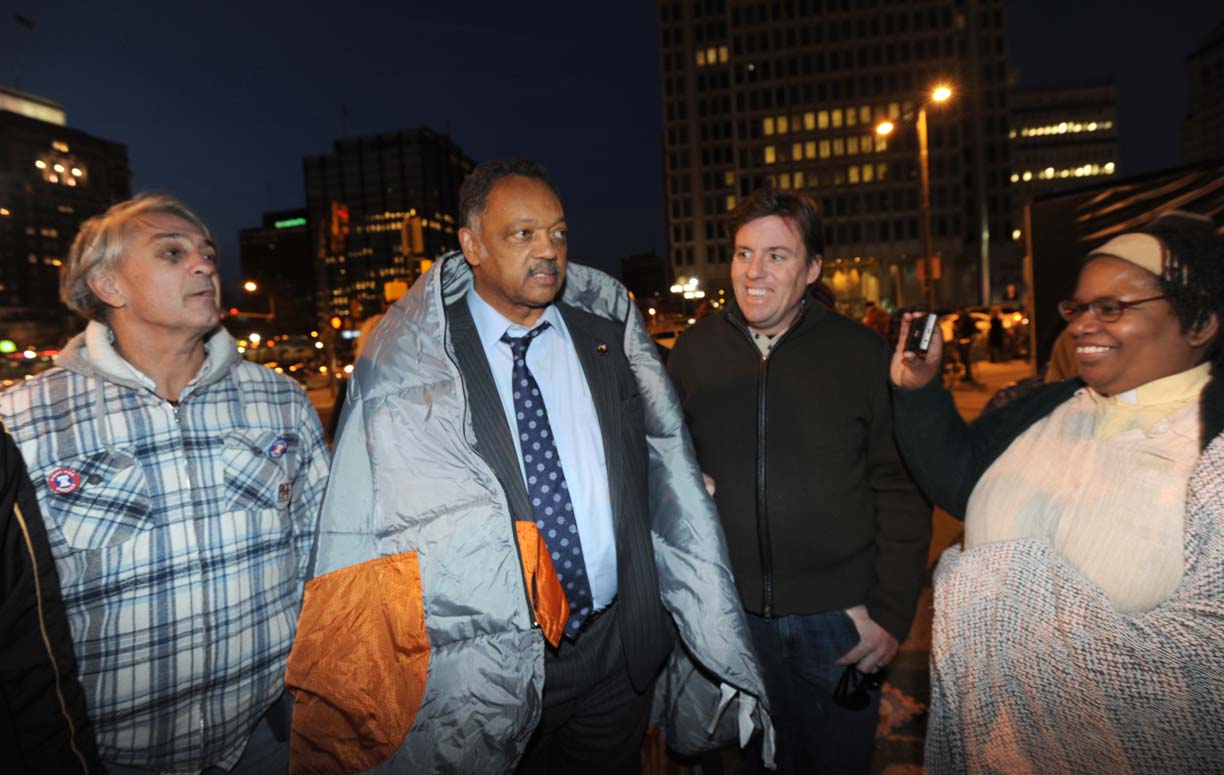
    The Rev. Jesse Jackson visited Occupy Philadelphia protesters on Nov. 13, 2011. He told them to “never surrender.”
    The Rev Jesse Jackson at Joe Frazier’s funeral at Enon Tabernacle Baptist Church on Cheltenham Avenue in Philadelphia on Nov. 14, 2011.
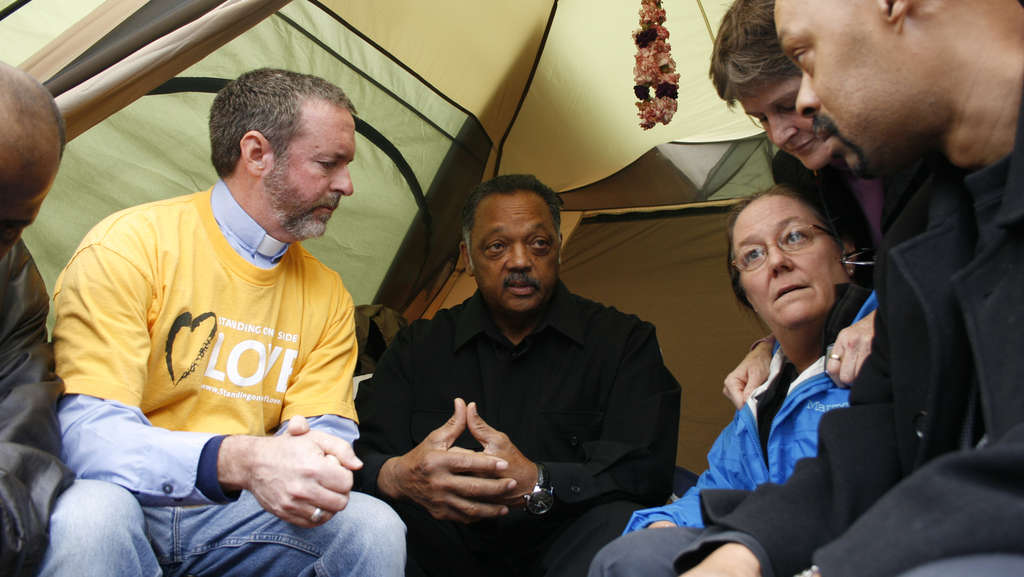
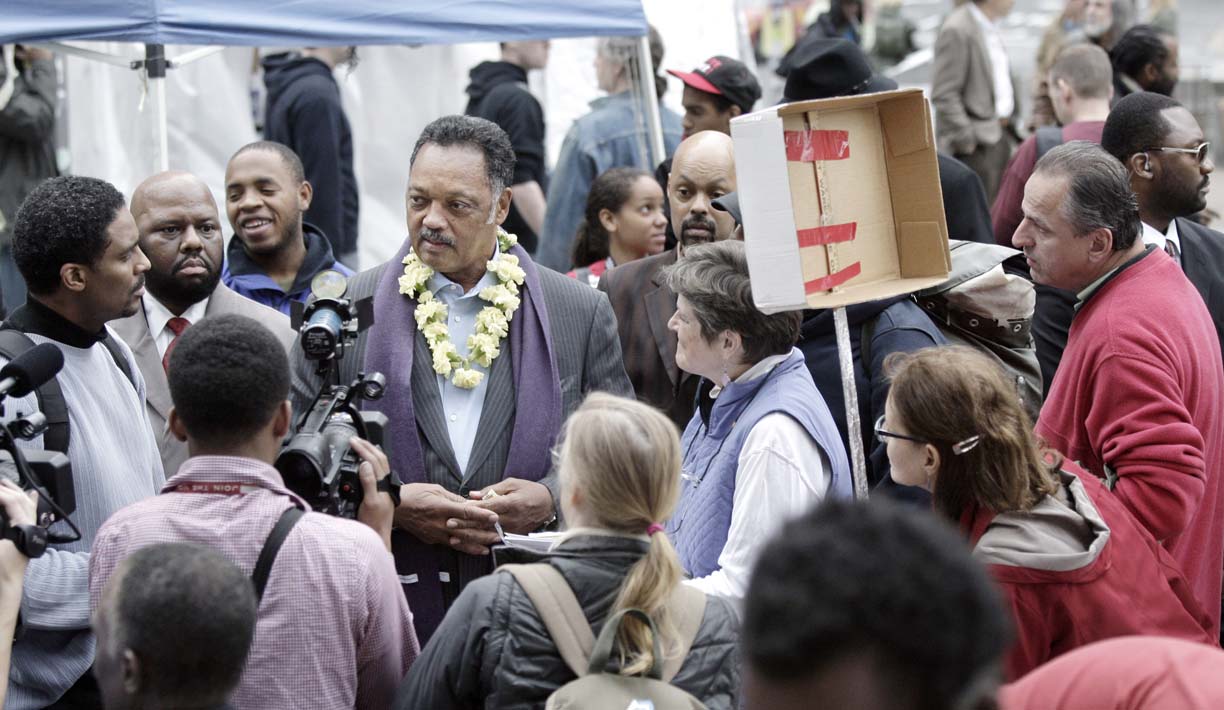
    The Rev. Jesse Jackson (center) visits the Interfaith tent, donated by Quakers, to talk to the Rev. Peter Friedrich (left) and (from right) Phillip Hall, Hollister Knowlton, and Joyce Moore in 2011.

    Though Philadelphia’s Black community generally was supportive of and receptive to Rev. Jackson’s messaging historically, Seymour said, he maintained something of a complicated relationship with the city’s prominent politicians. Wilson Goode Sr., for example, officially supported Walter Mondale and Michael Dukakis for president in the 1980s. At least in 1988, Seymour said, Rev. Jackson likely had “the people’s hearts,” despite lacking the official nomination.

    Wilson Goode Sr. was not immediately available for comment.

    “His presidential campaigns in 1984 and 1988 reshaped American politics,” said the Rev. Gregory Edwards, of the Philly-based POWER Interfaith, in a statement. “Those campaigns widened the political imagination of this country and helped cultivate a generation of Black elected leaders.”

    Rev. Jackson’s relationship with Goode Sr. was somewhat complicated following the 1985 MOVE bombing, which brought the civil rights leader to tour the ruins of the 6200 block of Osage Avenue in its aftermath. Rev. Jackson urged a congressional investigation into the incident, which he called “excessive force,” but avoided criticizing Goode directly in subsequent meetings. Goode, meanwhile, said that the city would cooperate with any groups investigating the incident, The Inquirer reported at the time.

    “He was not happy with what happened in ‘85 with MOVE,” Seymour said.

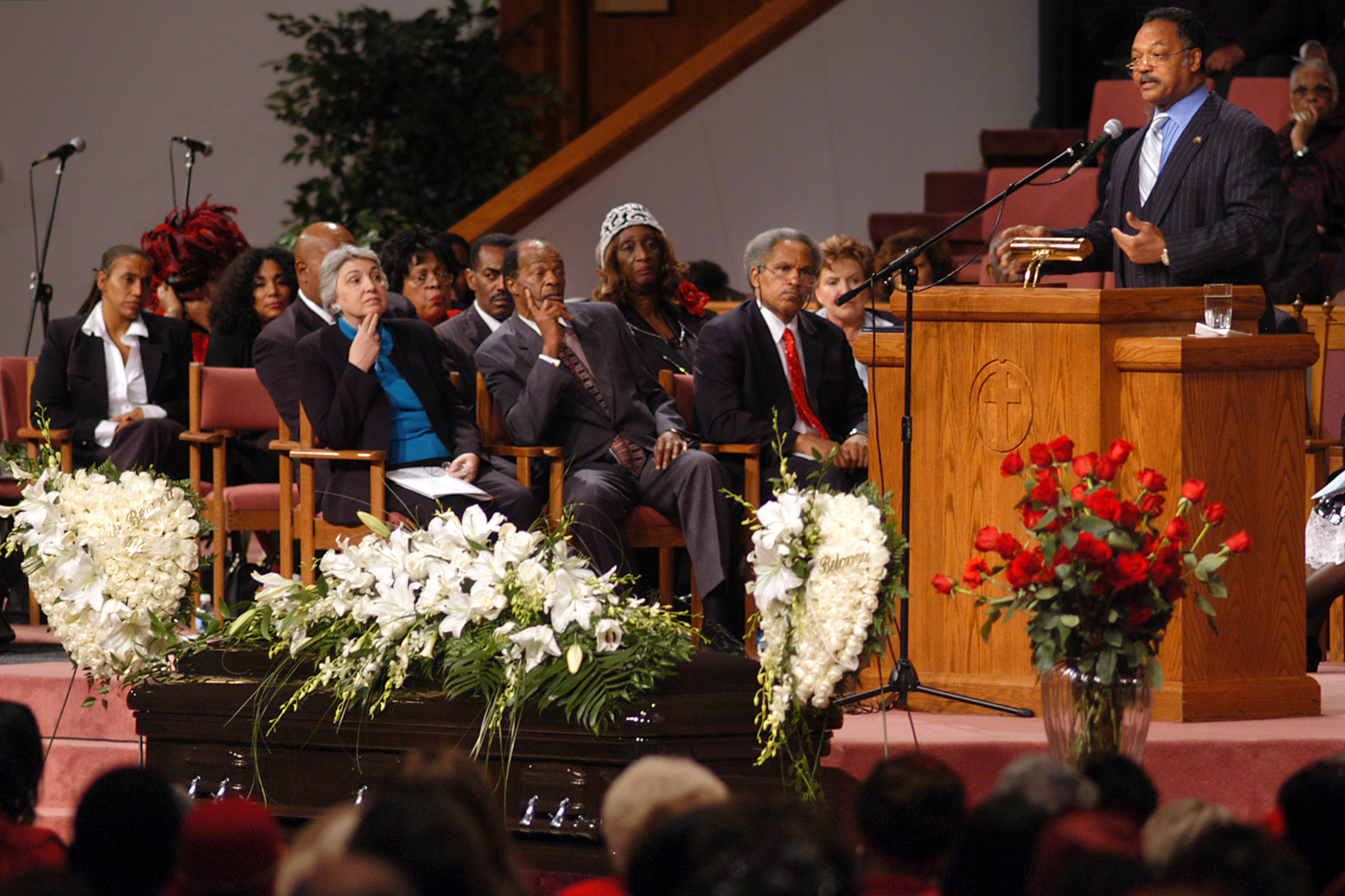
    The Rev. Jesse L. Jackson speaks during during funeral services for civil rights activist C. Delores Tucker at Deliverance Evangelistic Church on Oct. 21, 2005. Seated in front row behind him, left to right are Eleanor Smeal, president of the Feminist Majority Foundation; Marion Barry, former mayor of Washington, and Philadelphia Mayor John Street.
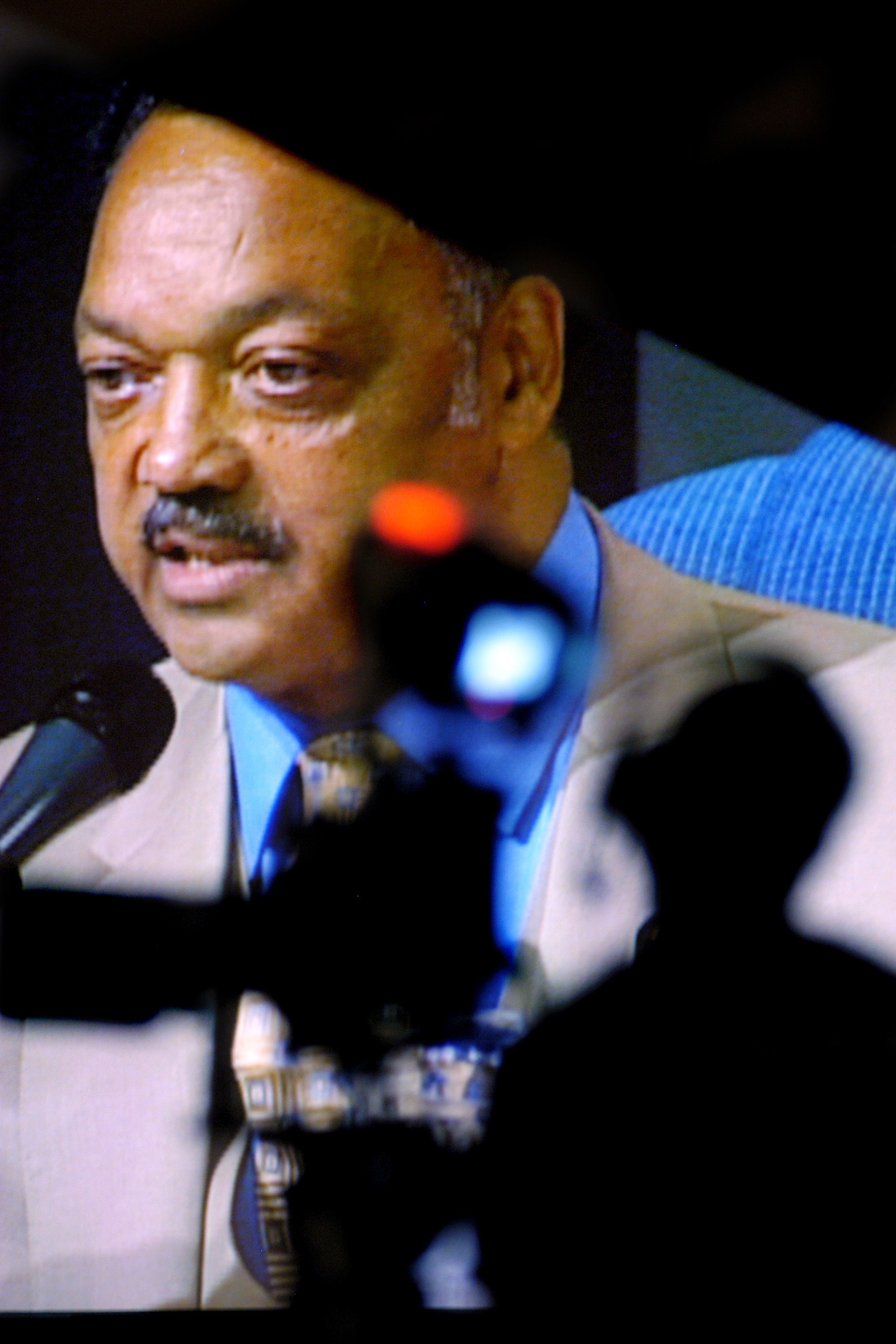
    Rev. Jackson is projected live on a large screen monitor (camera operator in foreground) as he participates in a panel discussion laying out a legal and political strategy for fulfilling Brown v. the Board of Education, at the annual NAACP meeting on July. 14, 2004 at the Convention Center.
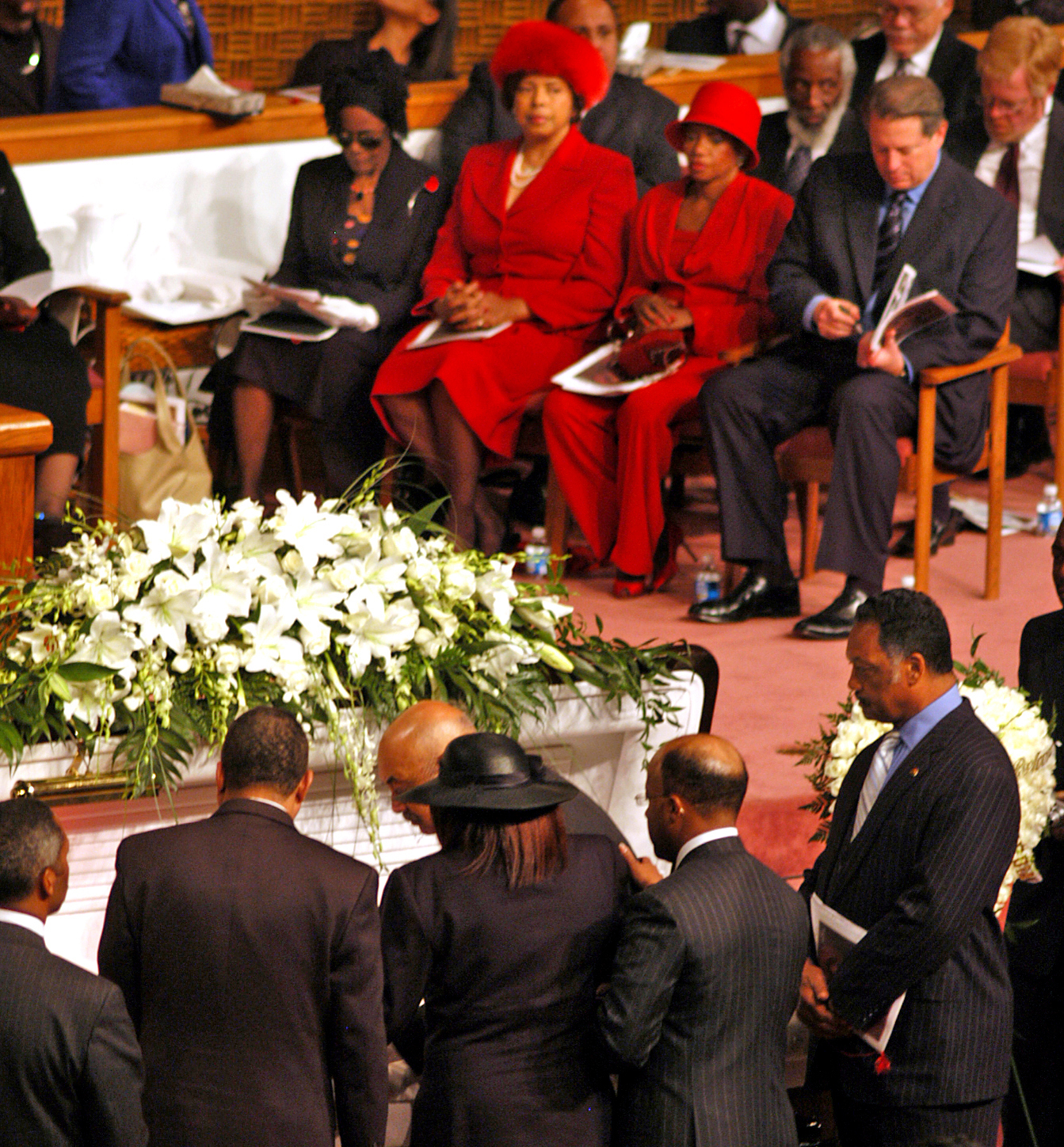
    Her family stands by as husband (partially hidden) William T. Tucker covers the body of civil rights activist C. Delores Tucker in her casket at the beginning of funeral service at Deliverance Evangelistic Church on Oct. 21, 2005. At right is the Rev. Jesse L. Jackson, founder and president of the Rainbow Coalition/PUSH, who later delivered the eulogy. Seated in rear at right is former Vice President Al Gore.
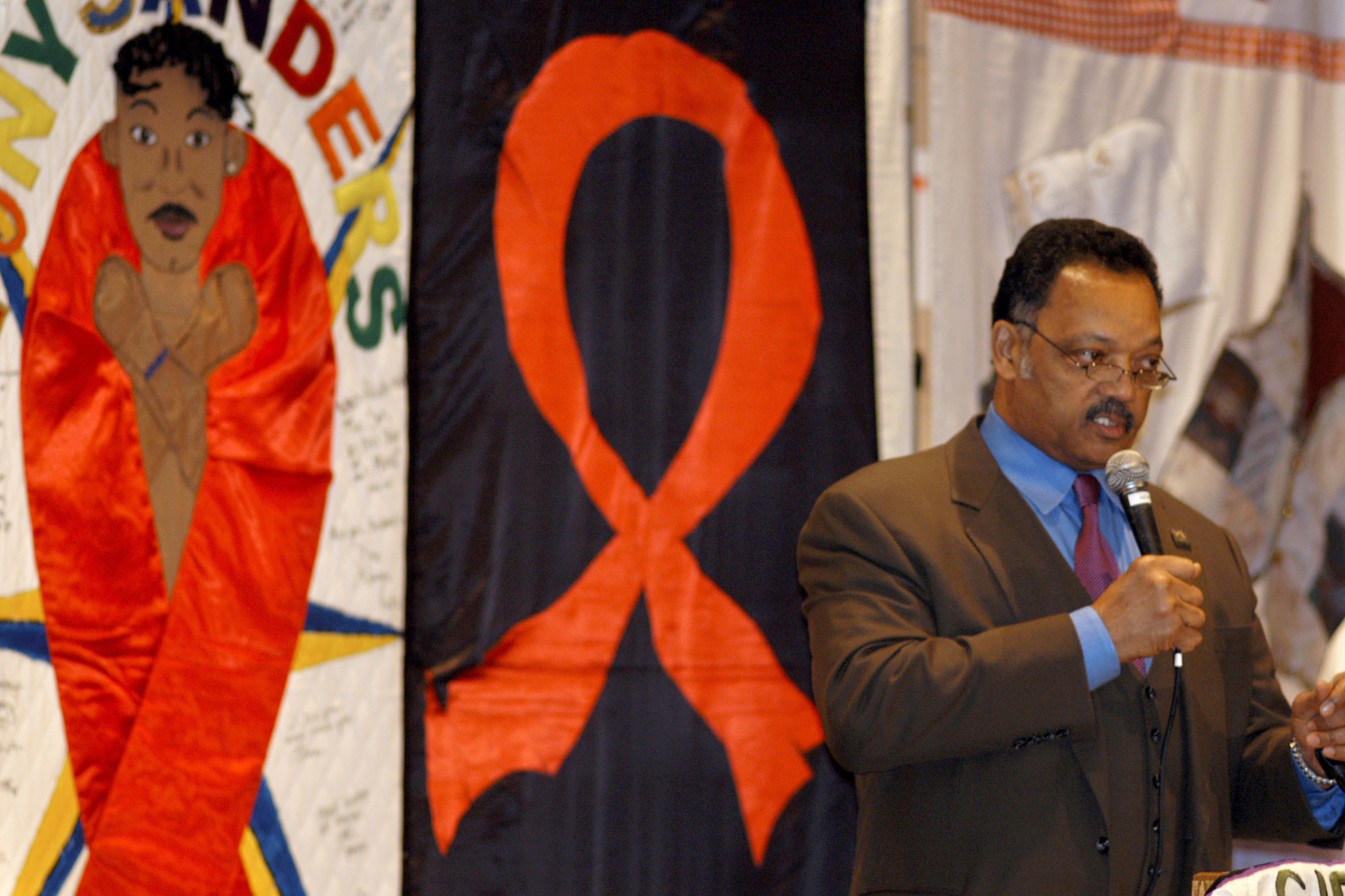
    AIDS quilt panels flank the podium as the Rev. Jesse Jackson speaks at an African American AIDS conference at the Wyndham Franklin Plaza Hotel on Feb. 28, 2005.

    Still, Rev. Jackson often served as a defender of Philadelphia’s famed Black figures. In 2011, for example, Rev. Jackson spoke at the funeral of legendary world heavyweight boxing champion Joe Frazier, who had long competed with the fictional Rocky Balboa for recognition. As Jackson put it at the time, Frazier was the “real champion,” not the “Italian Stallion.”

    The Rev. Jesse Jackson, who has a sleeping bag draped around his shoulders, is talking and praying with Occupy Philadelphia demonstrators: Brad Wilson (from left); the Rev. Bill Golderer, pastor of Broad Street Ministry; and Donna Jones, pastor of the Cookman Baptist Initiative.

    “If you were of importance as a Black person in America during the time [Jackson] was in the public eye,” Seymour said, “he was there to speak on your behalf.”

    Goode Jr.’s most prominent memory of Rev. Jackson, meanwhile, dates back to the mid-1980s, when he was a student at the University of Pennsylvania. At the time, he said, Rev. Jackson attended a National Black Student Union conference following an invitation from its organizers, Goode Jr. included. It was, Goode Jr. said, an inspiration.

    “It meant a lot to us,” Goode Jr. said. “Not just Black leaders at Penn, but across the nation, who were gathered there.”

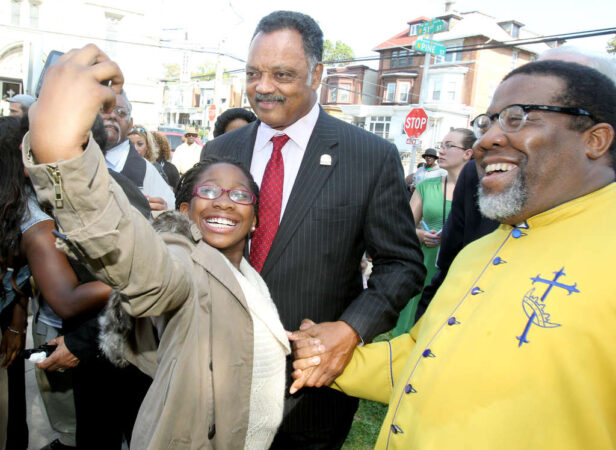
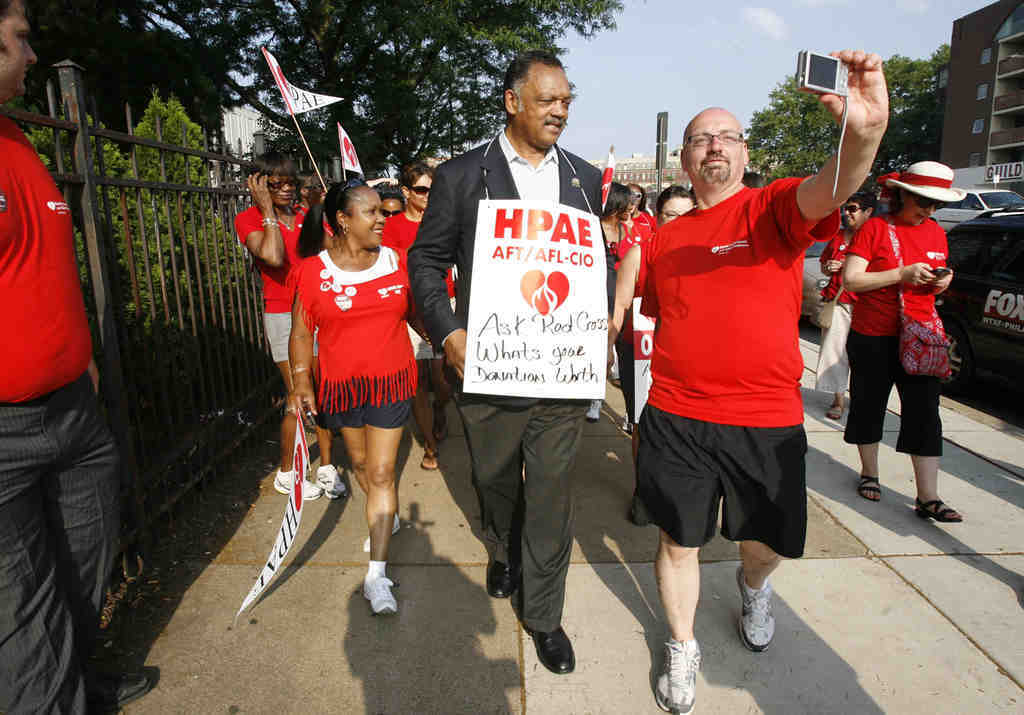
    Striking Red Cross worker Lenny Lerro takes a picture of himself with the Rev. Jesse Jackson as they walk the picket line in 2011 on Spring Garden Street in Philadelphia.
    Rev. Jesse Jackson visits with folks at Occupy Philadelphia, just outside City Hall on Nov. 20, 2011.
    The Rev. Jesse Jackson visits with folks at Occupy Philadelphia, just outside City Hall on Nov. 20, 2011.
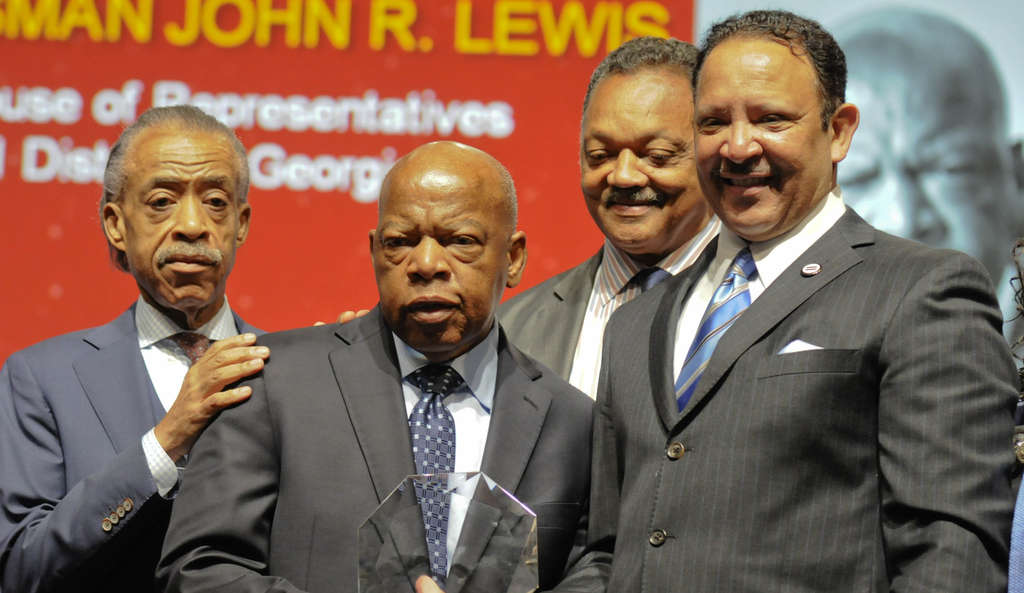
    U.S. Rep. John Lewis (second from left) is presented with the Civil Rights Champion Award in 2013 by (from left) the Rev. Al Sharpton, the Rev. Jesse Jackson, and Marc Morial, president of the Urban League.
  • City Council members grill school district officials on plan to close 20 schools — and superintendent says he could have closed 40

    City Council members grill school district officials on plan to close 20 schools — and superintendent says he could have closed 40

    Philadelphia City Council may not have a vote on Superintendent Tony B. Watlington Sr.’s sweeping facilities plan, but it indicated Tuesday that it will have a say in school closings.

    As a packed hearing began in Council’s chambers Tuesday morning, both Council President Kenyatta Johnson and Isaiah Thomas, chair of the Education Committee, said Council refused to be a “rubber stamp” to Watlington’s proposal to close 20 schools, colocate six, and modernize 159.

    Though only the school board gets to vote directly on the plan, Johnson has indicated he is willing to hold up city funding to the district over the school closure plan. And his colleagues echoed that sentiment Tuesday.

    “I’m infuriated that we don’t get a say,” Councilmember Jimmy Harrity said, warning the district officials who appeared before him. “But, Council president, you and I both know we do get a say, because budget’s coming. And we will be looking. Mindful is the word I would use for today — be mindful.”

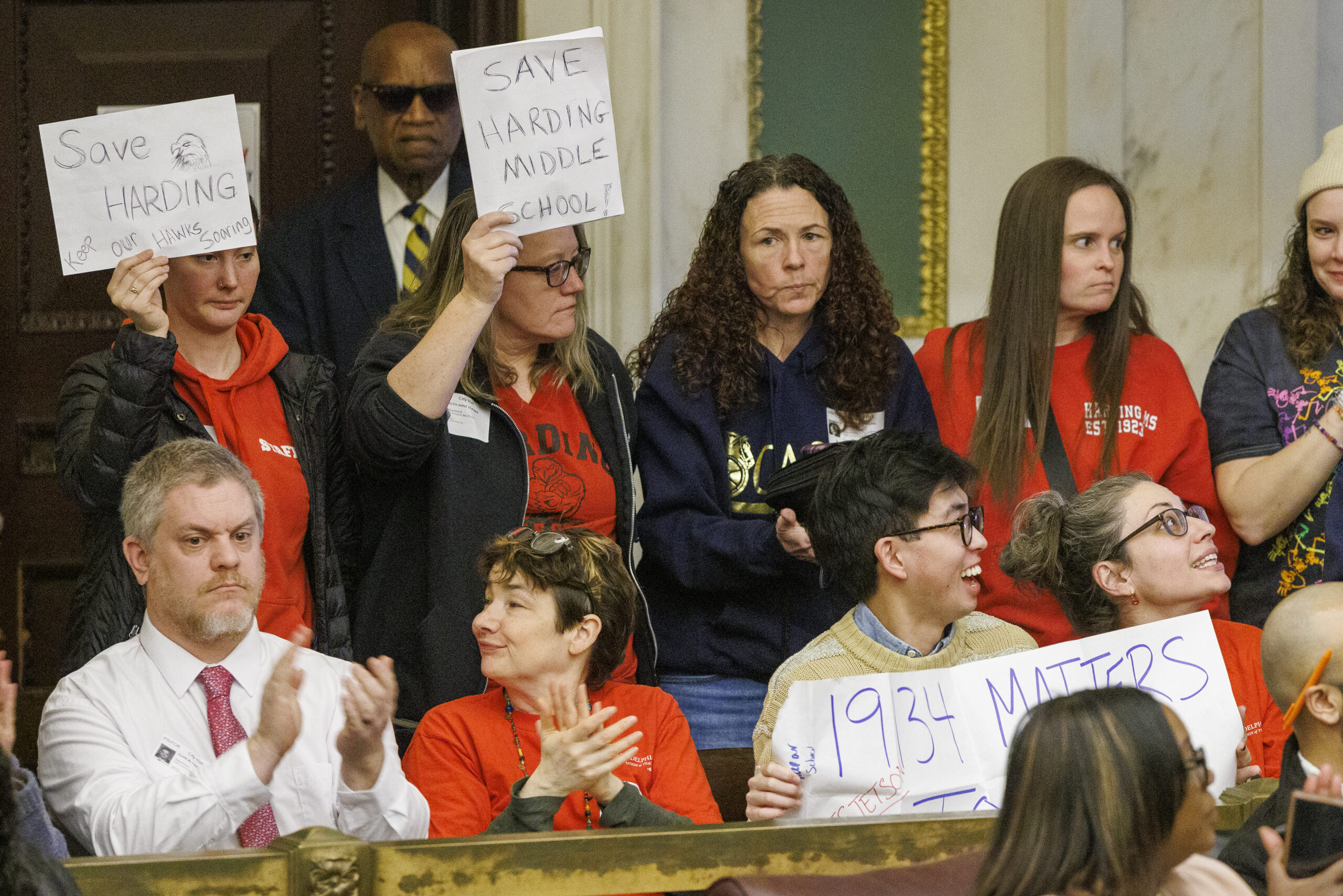
    Concerned citizens stand with signs in support of Harding Middle School before the start of a Philadelphia City Council hearing Tuesday at City Hall on the school district’s plan to close 20 schools.

    About 40% of the district’s nearly $5 billion budget comes from local revenue and city funding, which City Council and Mayor Cherelle L. Parker must approve in the annual city budget by the end of June.

    Harrity, an at-large Council member, said he was “tired that every time cuts come, they come from a certain neighborhood. You know, I live in Kensington, in the 7th District. I talk to these kids. They’re good kids. They deserve everything that other kids in other neighborhoods are getting. … You can see that this isn’t what our people want.” Watlington has proposed closing four schools in the 7th District.

    More than 100 community members holding babies and waving signs opposing the facilities plan filled Council chambers on the fourth floor of City Hall on Tuesday as Council members spent hours grilling Watlington and other district officials.

    Watlington, meanwhile, stood by his plan in testimony to Council on Tuesday, saying that 20 closings was a much smaller number than he could have settled on.

    “We could have come here and presented a plan that closed twice as many schools and been able to defend it,” Watlington said.

    A once-in-a-lifetime opportunity?

    District officials have said the facilities process is not about saving money, but about optimizing education and equity for the city’s 115,000 students.

    But it was clear Tuesday that finances played a part: The district has lost 15,000 students in the last 10 years, and over 80,000 since 1997, when charter schools were first authorized in Pennsylvania. It has 300 buildings, many of them 75 years and older and in poor repair, and some schools with more than 1,000 empty seats, while others are overcrowded.

    Tony B. Watlington Sr., superintendent of School District of Philadelphia, speaks at a City Council hearing Tuesday on his proposal to close 20 schools.

    “We’ve got to be very careful with our limited resources in a historically underfunded district,” Watlington told Council.

    Watlington and board president Reginald Streater, who also testified, pitched the plan as a way to add things the district cannot now offer — Advanced Placement courses in every high school, the opportunity for all eighth graders to take algebra, more prekindergarten, and career and technical education programs.

    “I do not believe we’ll get this opportunity again in our lifetime,” Watlington said.

    The superintendent dropped a few previously undisclosed facts about the facilities road map, indicating that his recommendations could shift slightly before he presents the plan to the school board on Feb. 26. No date has been set for the board’s final vote, which is expected later this winter.

    “It’s premature to say how the final recommendations will land,” Watlington said.

    But, the superintendent said, “if there are schools that Council wants me to take off the list, and add others on that list, we are open to you telling me what those are, but we cannot get to a place where we address our 35% non-utilization rate in buildings if no changes are made.”

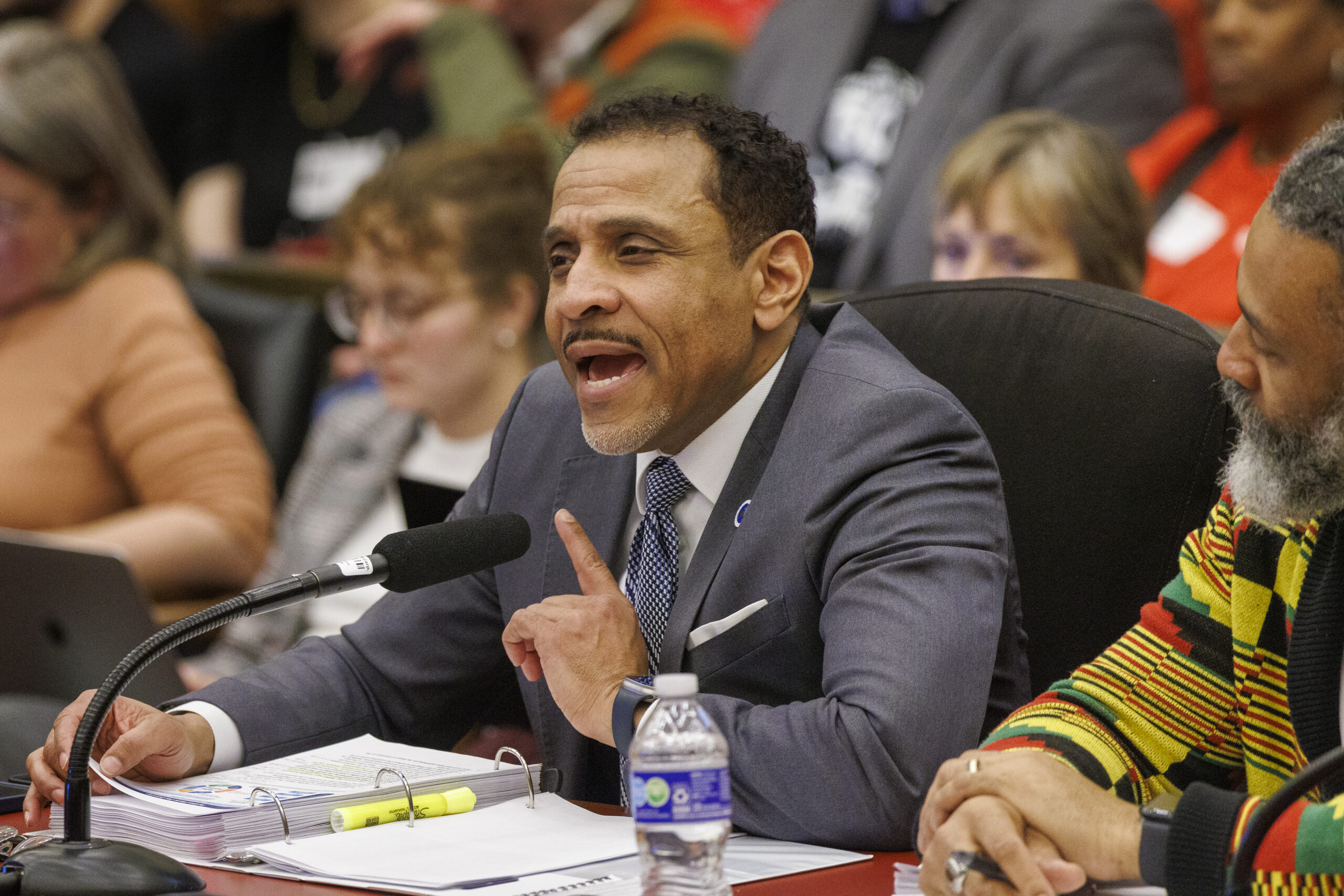
    Philadelphia City Council President Kenyatta Johnson (left) greets Dr. Tony Watlington, Superintendent of School District of Philadelphia Philadelphia City Council holds hearing with board members of School District of Philadelphia, Tuesday, Feb. 17, 2026. Reginald L. Streater, Esq., President Board of Education. (center)

    Debora Carrera, the city’s chief education officer, who spent three decades as a district teacher and administrator, told Council that Parker believes “the current district footprint is unsustainable.”

    Carrera said her own experience as principal of Kensington High School for Creative and Performing Arts shows that it is right for the district to focus resources on neighborhood high schools.

    “My high school was a small high school,” Carrera said. “I could only offer my children two AP courses, when other schools like Central — where my son went — could offer them over 20-plus AP courses.“

    ‘Breaking down of public education’

    The hearing got tense at times.

    “I feel like this is the breaking down of public education in Philadelphia,” said Councilmember Cindy Bass, who said some of the district’s own decisions had led to closures.

    Several members of Council raised questions about the plan’s price tag. Prior district and city estimates put the cost just under $8 billion, but members of Watlington’s team said they could they could actually do the work for $2.8 billion — $1 billion from district capital funds, and $1.8 from yet-unpromised state and philanthropic sources.

    In the past, the district had made public detailed facilities condition assessments for every school in the district, Councilmember Rue Landau noted.

    Residents could look up their school and see exactly what the condition of every system in the building was, and how much money would be required to fix those that needed repair.

    “We don’t have any of those details,” said Landau, who went so far as to say she believed the district should be spending more than $2.8 billion on the plan. “What is the increased investment, and why don’t we have any of those details? They are not out there in the public for us, so none of us have any understanding as to why this is happening, This should all be public so all of the public can see.”

    Jerry Roseman, the Philadelphia Federation of Teachers’ longtime environmental director, who has had a first-row seat to district facilities conditions for decades, said he believed the $2.8 billion figure was not realistic.

    “You need much more money than that,” Roseman told Council. “We need more money than this plan comes close to.”

    Some Council members pushed the district and the board on the plan’s timing.

    The city has been asking for a long-range facilities plan for years, Councilmember Quetcy Lozada pointed out.

    “It’s taken us all this time,” Lozada said. “Now, you guys have come up with a plan, and now we want to rush through it. Now all of a sudden there’s this urgency to get through this plan, which I don’t understand.”

    Streater said the board is moving forward with hearing Watlington’s plan on Feb. 26, but won’t vote until it hears more feedback.

    But ultimately, he said, the board will vote on “a plan that is dynamic, that can evolve over time. … I think that we all understand that things change, facts change, funding changes, enrollment trends change.”

    And, Streater said, there will also likely be policy changes based on redrawing some catchment areas, or boundaries that determine which neighborhood schools children attend.

    Streater, who introduced himself at the beginning of the hearing as “Reggie from Germantown,” underscoring his history as a graduate of two district schools that closed — Germantown High and Leeds Middle School — said that changes must be made.

    “I think if we continue doing the same thing, expecting a different result — which I would argue is chronic underachievement — we are doomed.”

  • Students protest U.S. Customs and Border Protection participation at campus career fairs

    Students protest U.S. Customs and Border Protection participation at campus career fairs

    Amid President Donald Trump’s crackdown on immigration and deployment of federal officers to cities across the country, students at Philadelphia-area colleges are protesting against the appearance of U.S. Customs and Border Protection at campus career fairs.

    At least four local universities — Thomas Jefferson, Villanova, Temple, and Rowan — have faced opposition to allowing recruitment in recent months.

    A petition circulated at Jefferson last week sought to keep CBP from appearing at a campus career event. CBP and ICE — both agencies that enforce immigration laws under the Department of Homeland Security — have been at the center of a national debate after two Minneapolis residents were killed by federal immigration enforcement agents in shootings now under investigation.

    “Due to the harm CBP has caused to communities across the nation, it is abhorrent for TJU to accept CBP at their institution,” said an occupational therapy student who signed the petition and asked that her name be withheld, fearing retribution. “I don’t think any institution should be encouraging students to get involved in these kinds of agencies, given the current climate.”

    But the petition has since come down, the student said, and CBP is not on the list of employers due to appear at the event, called the 2026 Career Day and Design Expo, on Thursday at the East Falls campus. Jefferson has not acknowledged that CBP was on the list initially or responded to questions on whether it was removed.

    CBP, which has offices in Philadelphia, has appeared at campus career events in the area in the past.

    An email seeking comment from CBP’s media office was not returned.

    At Rowan University in New Jersey earlier this month, the participation of CBP’s Trade Regulatory Audit Philadelphia Field Office in a career fair drew some student protest. Members of a student activist group distributed fliers speaking out against CBP during the fair, according to Rowan’s student newspaper, the Whit, and campus police and administration officials came to the scene.

    The agency also reserved a table and came to a fall event at Rowan to share information about accounting-related auditing internships, said Rowan spokesperson Joe Cardona, and has done so at the public university for the last decade.

    Rowan’s Rohrer College of Business Center for Professional Development hosts more than 200 employers each year, including local, state, and federal agencies as well as private-sector groups, he said.

    “The presence of any employer on campus does not constitute institutional endorsement of that organization’s policies or actions,” Cardona said. “Rather, it reflects our commitment to supporting student career exploration while upholding principles of open access and free expression.”

    At Villanova, CBP pulled out of a career fair it had planned to attend earlier this month, according to the Villanovan, the student newspaper. The withdrawal followed criticism on social media about the organization’s planned appearance.

    The organizer of an Instagram account that opposed the agency’s participation said they wished that Villanova had made the decision to disallow the group rather than the group withdrawing, according to the student newspaper.

    “I think a lot of students will feel a lot safer and more comfortable attending this Career Fair,” the organizer said. “But it doesn’t take away the anger that this was ever something that was gonna happen.”

    Villanova said in a statement that CBP‘s Office of Trade had participated in prior career events and that employers with prior participation were contacted “through standard outreach” about this year’s event.

    Temple’s law school last semester had planned to host a “Coffee and Careers” networking event with a DHS and Immigration and Customs Enforcement lawyer but later canceled it, according to the Temple News, the student newspaper. The event was replaced with a talk on public interest law by Philadelphia City Councilmember Rue Landau.

    DHS “chose to engage directly with students interested in DHS opportunities rather than participate in a scheduled career event,” Temple spokesperson Steve Orbanek said.

    He also noted that “career fairs are university-sponsored events, and actions that disrupt these events may violate university policy and established on-campus demonstration guidelines.”

  • What’s in Gov. Josh Shapiro’s new housing plan: Protections for Pa. renters, $1 billion for infrastructure, homebuyer support, and more

    What’s in Gov. Josh Shapiro’s new housing plan: Protections for Pa. renters, $1 billion for infrastructure, homebuyer support, and more

    Gov. Josh Shapiro unveiled a broad plan Thursday meant to grow and preserve Pennsylvania’s housing supply as the state faces a shortage of homes residents can afford.

    The plan aims to expand residents’ access to homes, connect Pennsylvanians to resources to keep them housed, make homebuilding faster and less costly, and improve coordination of housing efforts across agencies and levels of government.

    Recommendations and reforms in the state’s Housing Action Plan, which is meant to guide Pennsylvania into 2035, are embedded in the governor’s proposed budget, Shapiro said.

    “And now, the ball is in the court of the legislature to carry this forward and to get it done,” he said at a news conference in Philadelphia.

    The plan is the culmination of a process that started in September 2024, when Shapiro signed an executive order directing state officials to create it.

    In the plan, Shapiro highlights that more than a million Pennsylvania households are spending more than 30% of their income on housing. These households are “cost burdened,” according to the U.S. Department of Housing and Urban Development’s definition. Building more can lower housing costs.

    Shapiro called the plan a long-term housing strategy that “brings together all different groups who are doing this work, builds on their expertise, and tackles housing access and affordability from every single angle.”

    Here are key takeaways from Shapiro’s proposed housing action plan, the first of its kind in Pennsylvania.

    Enacting the plan

    Much of the plan relies on action from lawmakers in the state’s split legislature and other stakeholders rather than Shapiro’s administration exclusively. It does not assign dollar amounts to proposals, but calls on local governments to allow more housing and housing types, on builders to build more, and on both to work together to remove barriers to housing construction.

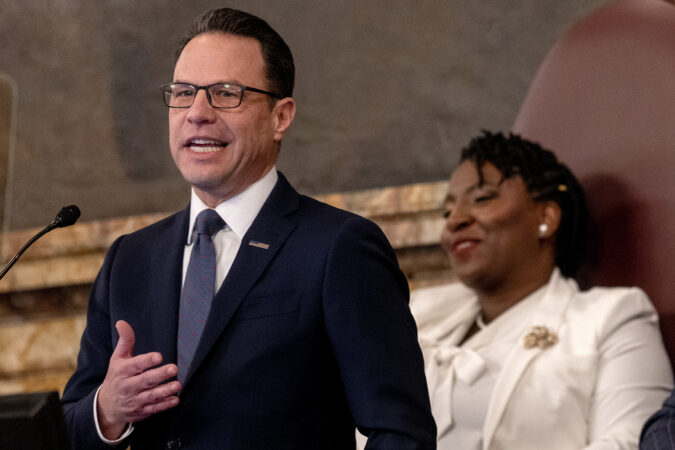
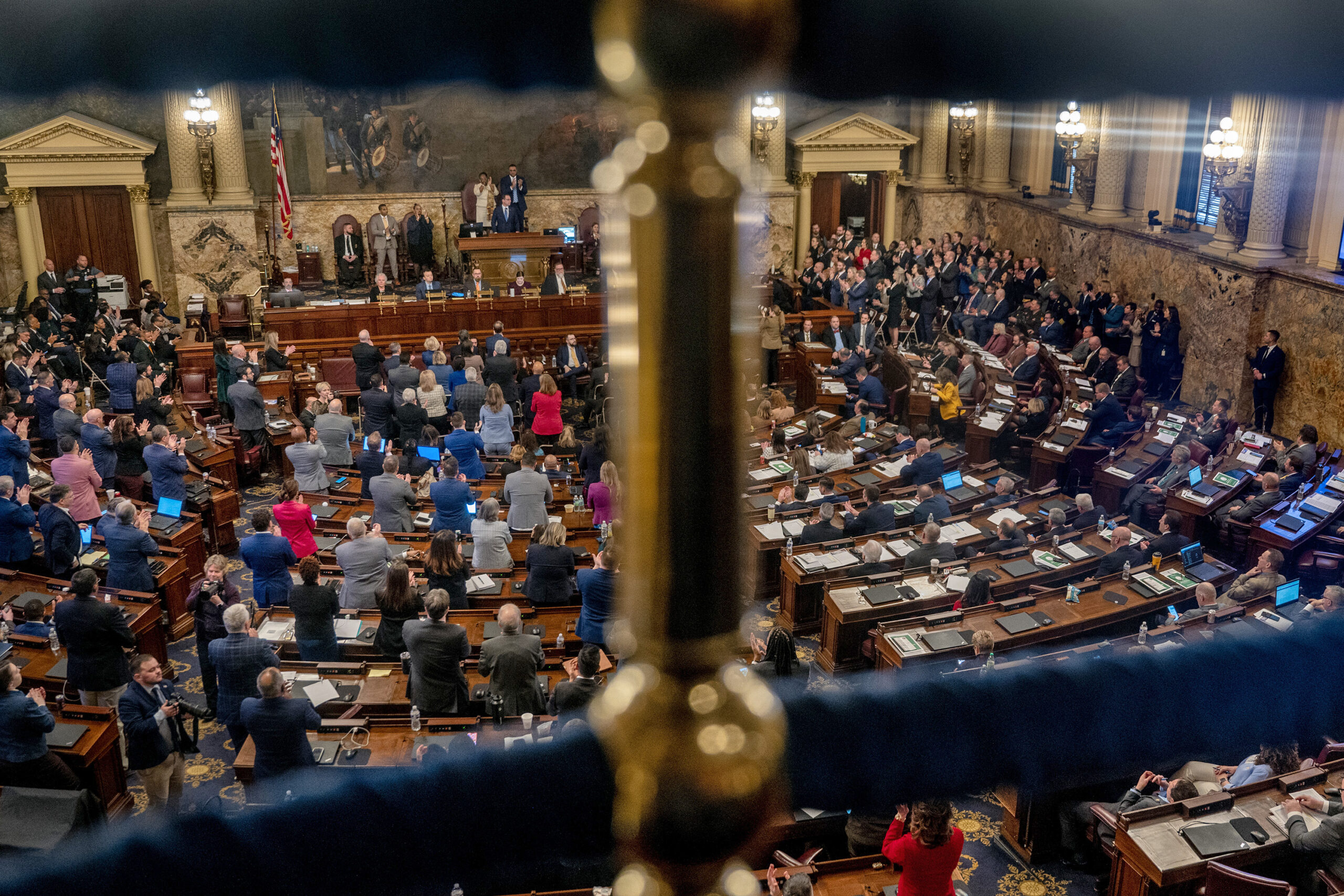
    Democrats (left) stand to applaud a tax cut proposal while Republicans (right) remain seated as Gov. Josh Shapiro delivers his third budget address to a joint session in the House chambers at the State Capitol Tuesday, Feb. 4, 2025.

    When Shapiro was asked how he intends to make sure the housing plan is implemented, he said he can take some actions through executive orders but “a lot does require the legislature to act and to work in concert with local government.”

    “I hear in rural, urban, suburban communities, districts led by Democrats and Republicans, the need for more housing,” Shapiro said. “… And I would say to any lawmaker that doesn’t like my idea, ‘What’s yours?’ Because we can no longer wait. We have got to get this done. We’ve got to build more housing.”

    $1 billion fund

    In his budget address last week, Shapiro previewed his housing priorities, calling for a $1 billion fund, supported by the issuing of bonds, to pay for infrastructure projects that include housing.

    Shapiro’s budget proposal includes no requirements on the proportion of funding that goes to each infrastructure need, leaving the possibility that the majority of funds could be spent on projects other than housing.

    While Shapiro said Thursday that divvying up the $1 billion will be subject to negotiation with lawmakers, he said he hoped “the lion’s share of it would go to housing.”

    Pennsylvania needs more housing

    If Pennsylvania takes no action to build and preserve more housing, it will be short about 185,000 homes by 2035, according to the plan. To keep up with anticipated demand, the state needs to add 450,000 homes to its supply by then.

    The housing plan has a stated goal of turning Pennsylvania into a leader in home construction.

    Construction work on a home at Bancroft and Reed Streets in South Philadelphia, Pa. on Friday, May 1, 2020.

    As it stands now, Pennsylvania is one of the states that have allowed the least new housing. It ranked 44th for the share of homes approved to be built from 2017 to 2023, the Pew Charitable Trusts said in a report released last year. Pew said Pennsylvania’s lack of housing supply is hiking prices for homeowners and renters.

    Shapiro’s housing plan recommends that Pennsylvania:

    • Expand programs to repair and preserve existing homes.
    • Create a tax credit to incentivize home building in underinvested areas.
    • Invest in small residential developers who can help boost housing production.
    • Eliminate outdated or unnecessary state development regulations.
    • Direct funding to help homebuilders pay land development costs, developers convert former commercial buildings into homes, and property owners create mixed-use developments that include housing.
    • Appoint a deputy secretary of housing and create a “housing one-stop shop” to help residents and builders access the state’s existing housing resources.

    Protection for renters

    The housing plan calls for Pennsylvania to bolster protections for households that either rent their homes or rent the land their homes sit on, including protections Shapiro called for in his budget address.

    Suggestions include:

    • More eviction protections.
    • Restrictions on how much landlords can collect as a security deposit.
    • A statewide cap on rental application fees. (Philadelphia City Council members passed their own cap on application fees last year.)
    • Explicitly banning landlords from denying housing to people because they use public assistance or any other lawful source of income. (New Jersey enacted a law last month that does this.)

    Security for manufactured-home owners

    Manufactured homes are single-family dwellings often built off-site and placed on a lot. These households own their homes, but many of them rent the land.

    Manufactured homes represent one of the most affordable forms of homeownership. But homeowners are often left vulnerable because they have no other option than to pay increased rent costs if they want to keep the homes they own. Manufactured-home communities are increasingly being bought by private equity companies and other institutional investors, and rent hikes tend to follow.

    The housing plan says Pennsylvania should:

    • Limit the rent increases that landowners can charge.
    • Make financing easier for buyers of manufactured homes.
    • Give residents of manufactured-home communities the right of first refusal when a landowner decides to sell.

    Recent laws in New Jersey limit annual rent increases for manufactured-home lots and make it easier for residents to buy their communities.

    Across Pennsylvania, 56,000 households live in manufactured-home communities, Shapiro said in his budget address last week.

    Homebuyer help

    The plan calls for Pennsylvania to pursue new ways to help residents become homeowners, including creating programs to reduce home-buying costs and allowing local governments to exempt first-time homebuyers from local realty transfer taxes.

    It also calls for the state to impose a transfer tax when corporate investors buy single-family and certain other types of homes to help households compete for properties.

    Untangling titles

    To protect Pennsylvanians’ generational wealth, the plan calls for the state to allow transfer-on-death deeds to provide a streamlined process for passing down homes. This would help prevent cases of tangled title — or unclear legal ownership of property. This mostly occurs when a homeowner dies and the deed is not transferred to a new owner.

    Tangled titles keep people from qualifying for help to repair their homes and can prevent them from being able to sell properties.

    In Philadelphia alone, tangled titles threaten more than $1 billion in generational wealth, according to a 2021 report from the Pew Charitable Trusts.

    The plan also calls for funding for legal services to help low-income Pennsylvanians resolve tangled titles. In 2022, Philadelphia officials pledged to give $7.6 million over four years to legal-aid groups that are tackling this problem.

    Rachel Gallegos, a divisional supervising attorney for the homeownership and consumer rights unit at Community Legal Services of Philadelphia, called Shapiro’s plan “ambitious.”

    “And I like that,” she said. “I think it has to be in order to keep progress moving forward.”

    The legal-aid nonprofit routinely helps low-income clients with tangled titles, and Gallegos said she was glad to see the plan call for additional support for the work.

    “We want to preserve homeownership for our clients,” she said.