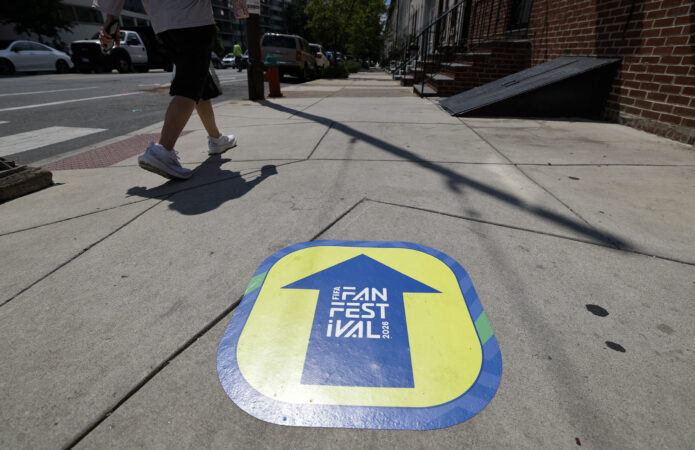
Tag: Philadelphia Parking Authority

  • Business owners near the FIFA Fan Festival prepared for crowds. Not all saw them.

    Business owners near the FIFA Fan Festival prepared for crowds. Not all saw them.

    Yolanda Welch, owner of All Day Hoagies, walked down West Girard Avenue to grab lunch. It was just a couple hours before the start of another World Cup match in Philly, but near the FIFA Fan Festival, Brewerytown’s main drag was nearly empty.

    “Normally, I’m not able to do this,” Welch said, as the lunchtime rush usually keeps her too busy to leave her post.

    She had free time on Thursday, she said, because the regular midday crowd had thinned ever since the FIFA Fan Festival arrived at Lemon Hill, about a half-mile away.

    City officials have estimated that hundreds of thousands of people have flocked to the monthlong World Cup watch party, which started in mid-June and is set to run through mid-July. But last week some Brewerytown business owners said they had yet to reap the benefits.

    In nearby Fairmount, some bar managers said they had seen a soccer-fueled boost in business. But several other neighborhood shop owners said they were only breaking even, with the slight increase in tourist traffic offset by a sharp drop in regular customers. Parking restrictions and street closures have kept many locals away, business owners said.
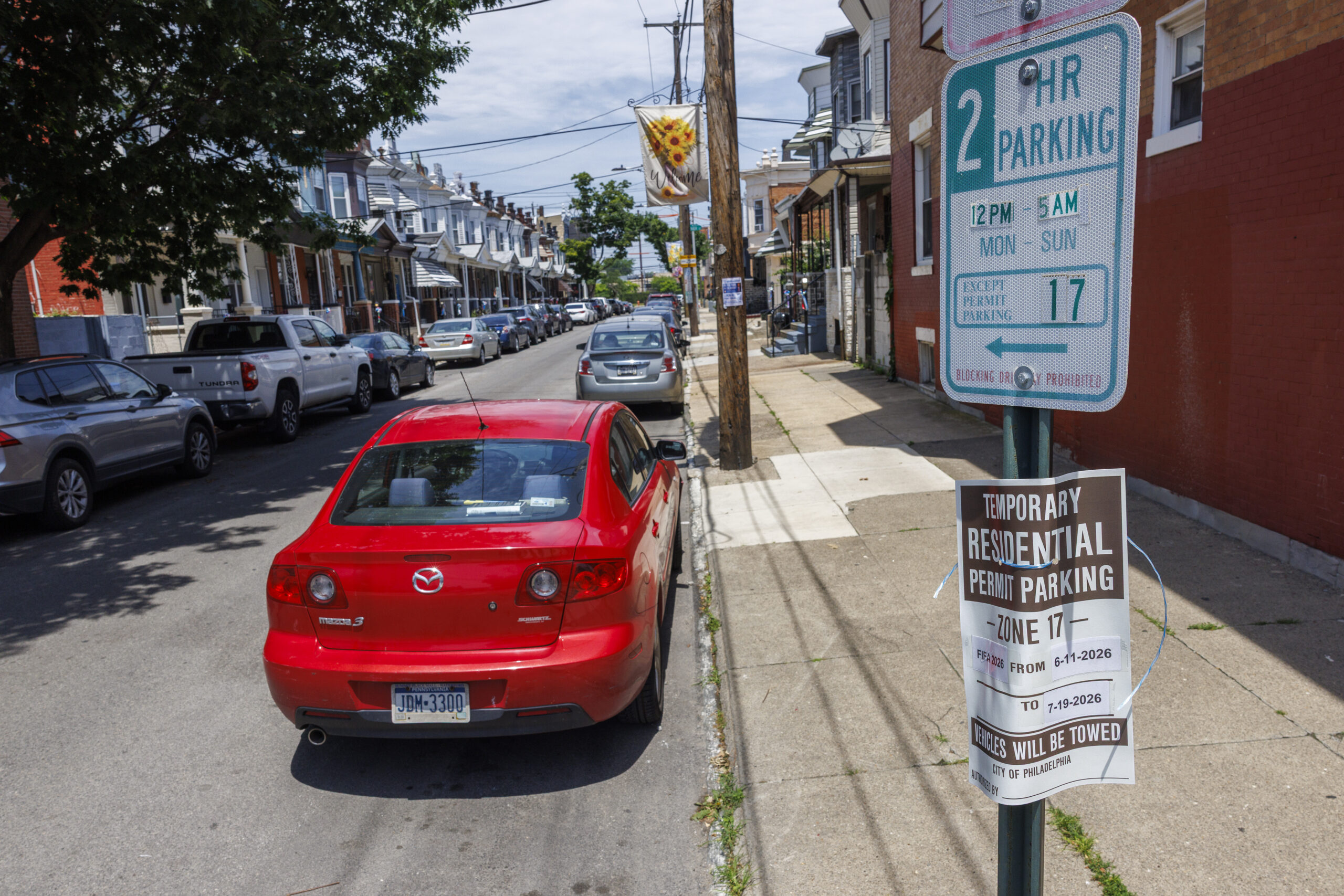
    Temporary parking restrictions near the FIFA Fan Festival are keeping some customers away, said local business owners.

    A World Cup let-down for some in Brewerytown

    Many Philadelphia business owners said they had high expectations for the World Cup: Some near the Fan Festival stocked up on inventory and even hired extra staff.

    “I ordered all kinds of soccer stuff to put in ice cream,” said Welch, who owns the hoagie shop and I Scream for Ice Cream. “I bought a whole [World Cup] banner.”

    As of Thursday, Welch said she hadn’t seen enough soccer fans to justify putting out the merchandise or unfurling the banner, which still sat in her car.

    Business is down precipitously at All Day Hoagies, which usually goes through 200 rolls a day. Since the World Cup began, the number has dropped to 125 or fewer.

    Across the street, AJ Kim, front-of-house manager at Baby’s Kusina + Market, hired two extra employees to run food ahead of the festival.

    “We were prepared for a huge crowd,” Kim said. “But it wasn’t much at all.”

    Like other business owners, Kim said the temporary parking rules have confused regular customers, and stories of residents being ticketed and towed are scaring many patrons away. According to Kim, a Baby’s chef was among those erroneously ticketed by the Philadelphia Parking Authority, despite displaying the required temporary permits.

    Every night, a handful of people cancel their Baby’s reservations, saying they are worried about parking, Kim said. Staff has tried to dispel misinformation on social media, and lends temporary parking passes to diners, but uncertainty remains.

    Some spots see steady business
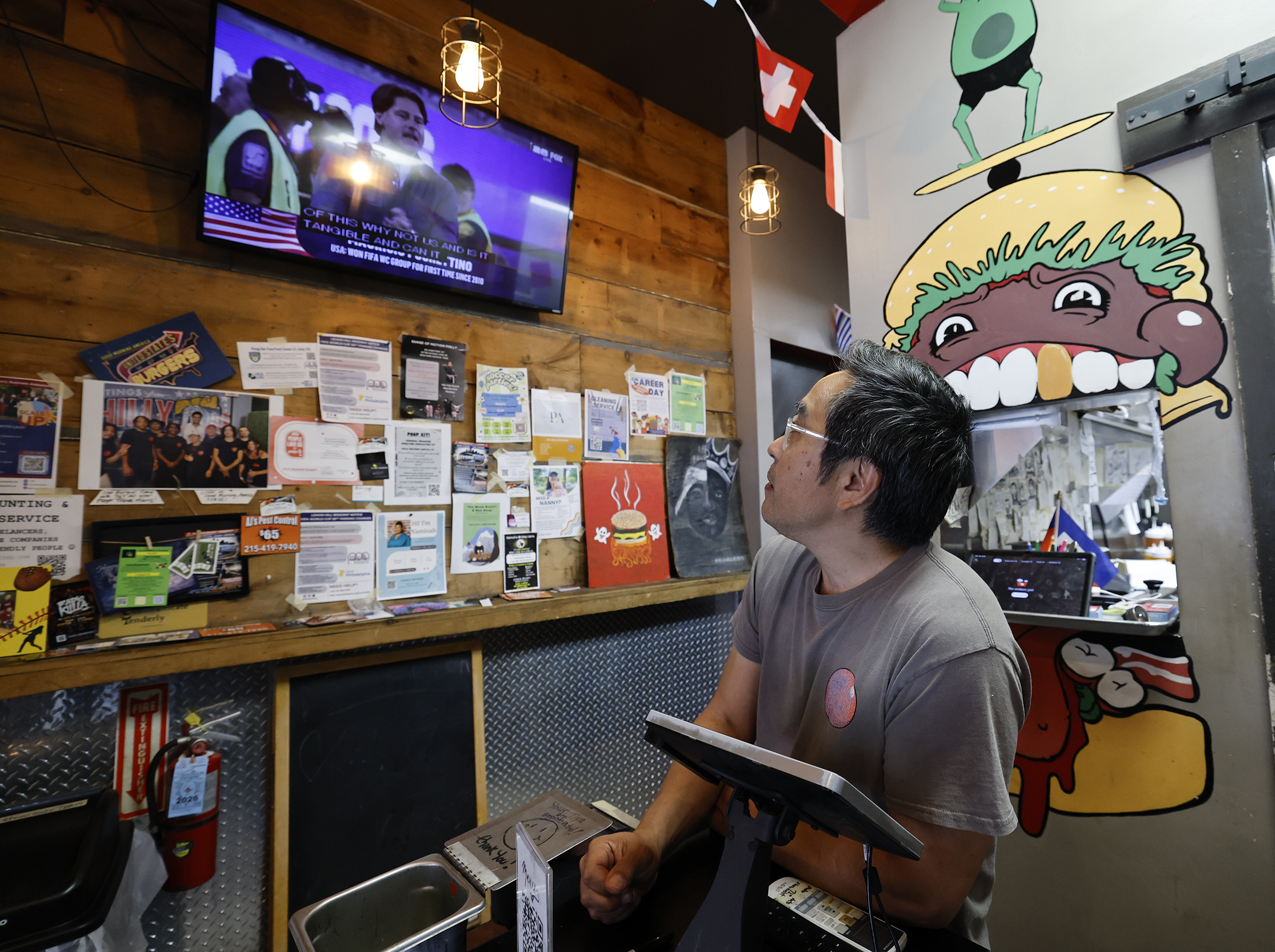
    Josh Kim, owner of Spot Gourmet Burgers, watches World Cup programming from his Brewerytown burger joint.

    Some businesses are faring better than others, even if they aren’t seeing crowds of soccer fans every day.

    Josh Kim, owner of Spot Gourmet Burgers in Brewerytown, said international tourists have made special trips to his restaurant for one thing: American cuisine.

    “When people go to Italy, they want pasta and pizza,” Josh Kim said. “When they come to America, they want burgers.”

    June 19 was a particularly busy day for him: After the Brazil-Haiti match in South Philly, Spot’s sold 200 burgers in less than an hour, he said.

    But no other recent days have been as lucrative, and Josh Kim said he worries it could take a while for regular customers to return to Girard Avenue once the World Cup games — and the restrictions — are over.
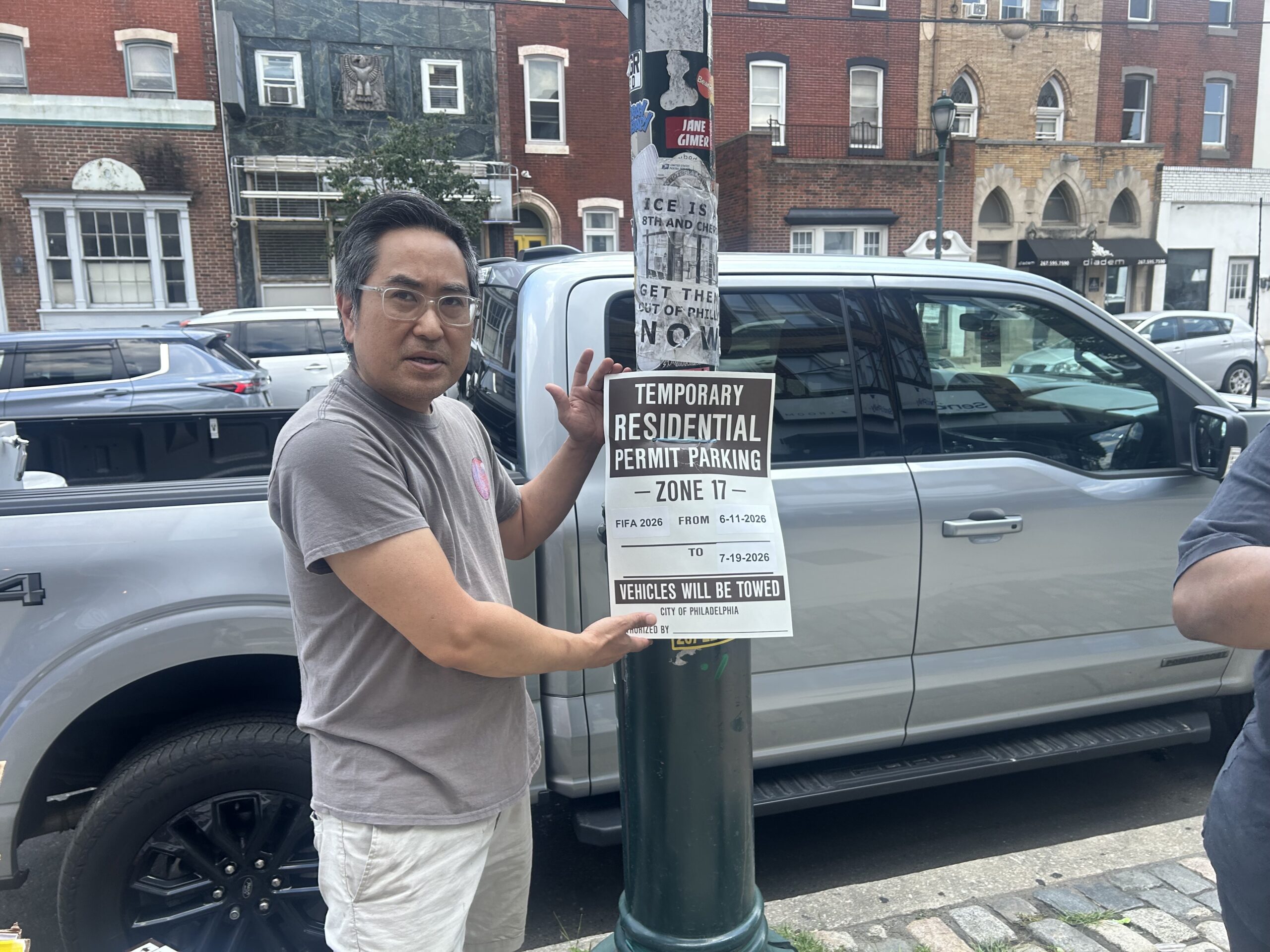
    Josh Kim, owner of Spot Gourmet Burgers, points out a temporary residential parking permit sign on Girard Avenue. He said parking confusion has hurt business in the neighborhood during the FIFA Fan Festival.

    “Consumers are habitual,” Josh Kim said. “If [they] break that habit, they no longer think about going to Girard Avenue. … They’ll go up Ridge.”

    On Boathouse Row, across the street from the Fan Festival, Cosmic Café and Ciderhouse has seen steady business, manager Sachael Sciarretta said. About 30% of the cafe’s regulars drive there, and he said he hasn’t seen them since the festival began. But business from soccer fans has made up for the loss.

    Fairmount bars and restaurants seem to have been among the biggest World Cup winners. On Thursday afternoon at the Black Taxi, an Irish pub a few blocks from the festival, almost every seat was filled — several by customers donning soccer jerseys.
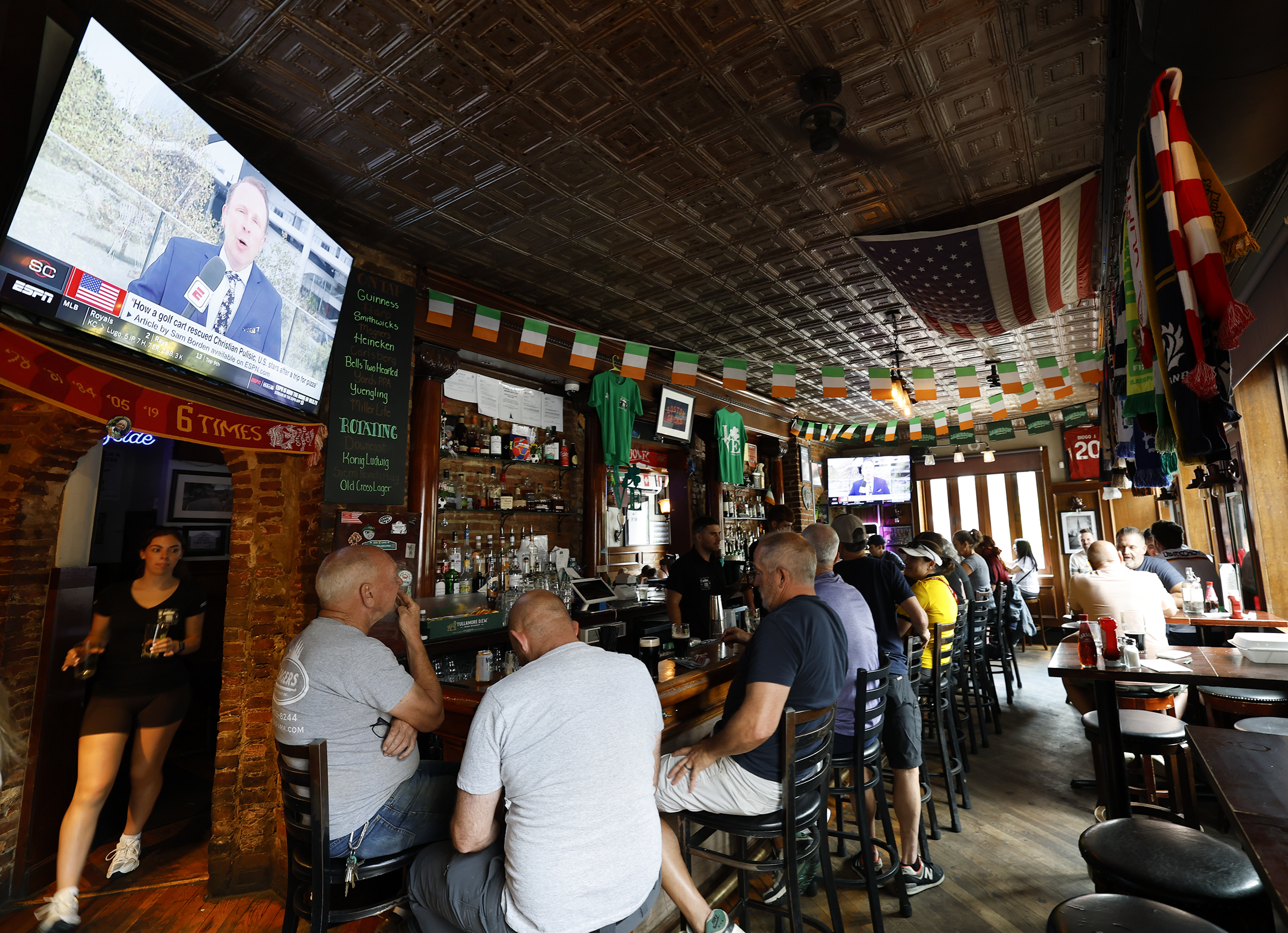
    Regulars and soccer fans eat and drink at the Black Taxi Irish Pub in Fairmount on Thursday, June 25.

    “Foot traffic has been great, and the neighborhood is buzzing,” said manager Neil McKernan, who estimated that sales are up 30%.

    In the dining room, the Trainor family enjoyed a meal before walking to the Fan Festival to watch the 4 p.m. match between Curacao and Ivory Coast.

    It was the first time that Kelly Trainor, 42, of Glenside, had been to the Fairmount watering hole, and she brought along her three young children.

    “We can’t afford tickets to the game,” Trainor said. “So this is the next best thing.”
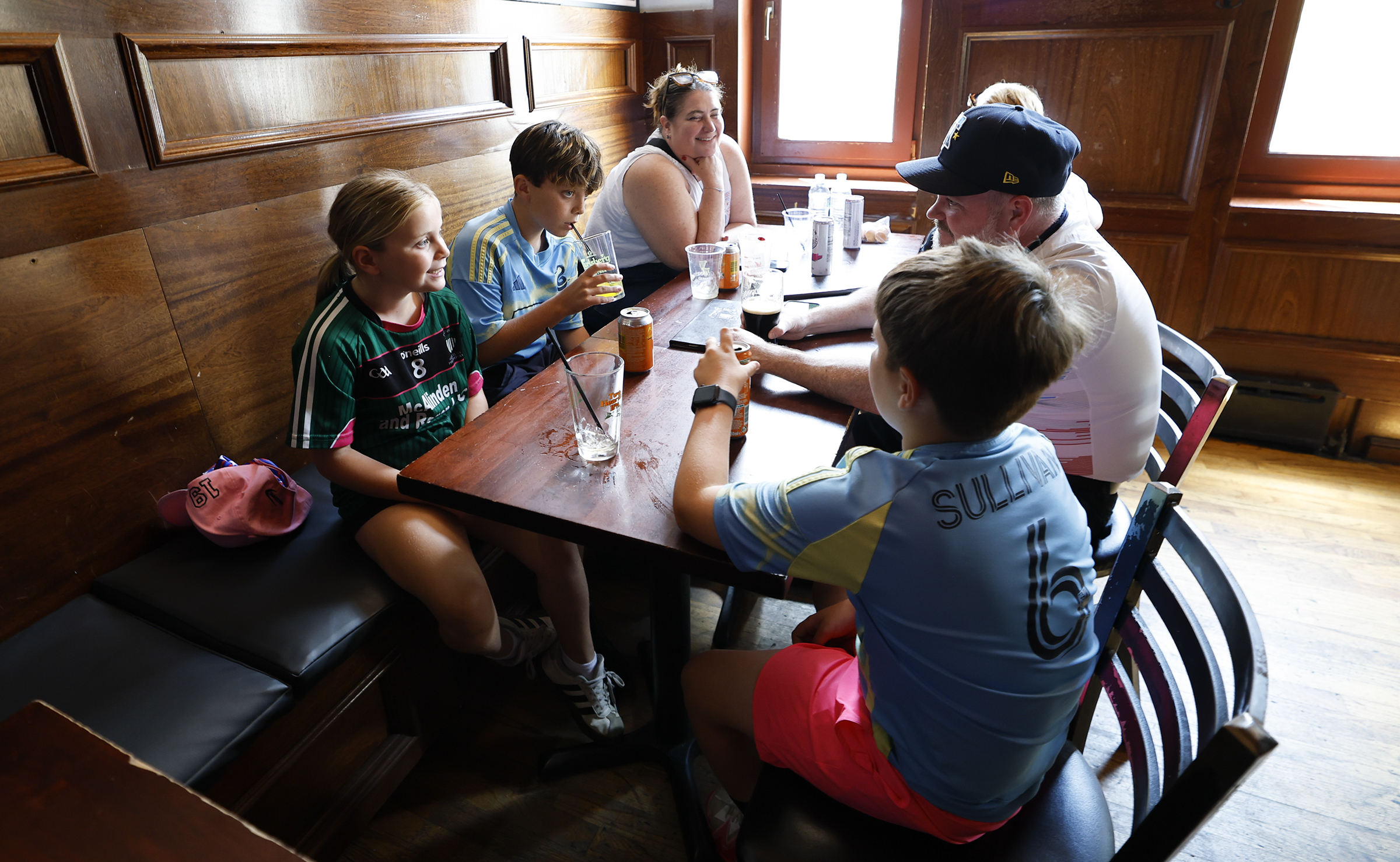
    The Trainor family, of Glenside, enjoyed refreshments at the Black Taxi before attending the FIFA Fan Festival.

    Back in Brewerytown, where the business corridor was quiet, some owners said they wished they could have been more involved in the festivities. Josh Kim, of Spot Gourmet Burgers, said perhaps organizers could have allowed local restaurateurs to sell from food trucks outside the fan entrance.

    “If we were able to activate this corridor, it would have been a lot different,” Kim said.

    “Why didn’t they work with the local businesses so we could make the money?” added Welch, of All Day Hoagies. “Because we ain’t making none.”
  • Speed cameras on Frankford Avenue will begin issuing fines

    Speed cameras on Frankford Avenue will begin issuing fines

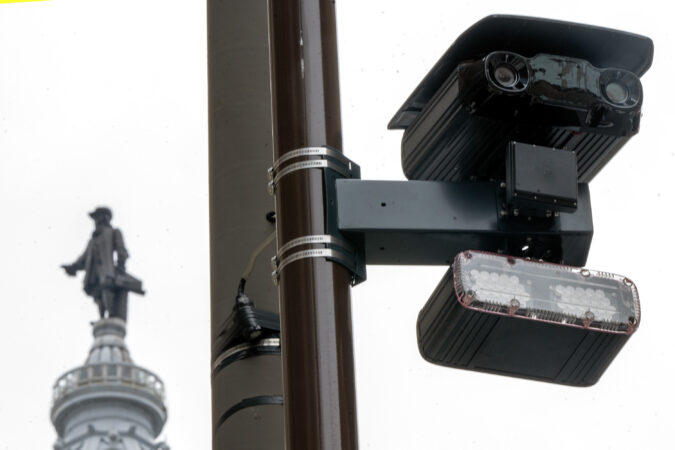
    Starting Friday, drivers traveling 36 mph or faster on Frankford Avenue in Northeast Philadelphia will face a minimum $100 fine.

    Ten new speed-enforcement cameras were activated on April 13, initiating a 60-day warning period which brought mailed warnings to violators of the road’s 25 mph speed limit.

    “Speed cameras are a tremendous tool that helps save lives,” said Gabe Roberts, acting executive director of the Philadelphia Parking Authority, in an emailed statement.

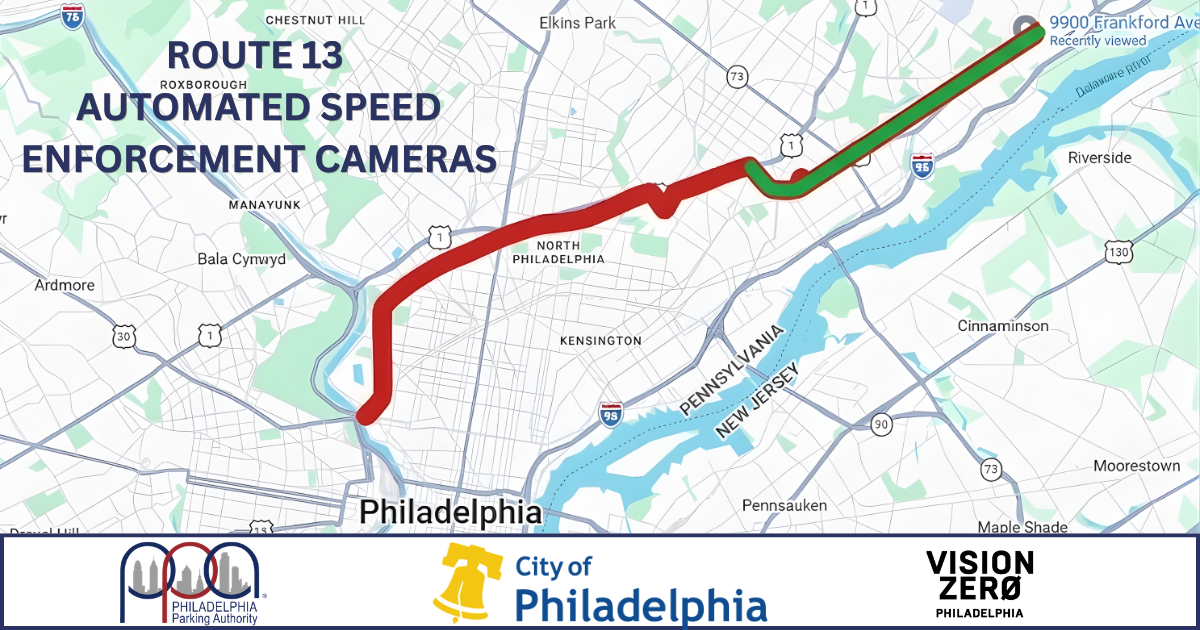
    There are three tiers of penalties for speeding on the 4.5-mile stretch of U.S. Route 13 that are now going into effect.

    Fines are $100 for traveling 11-19 mph over the speed limit; $125 for going 20-29 mph over; and $150 for speeding by 30 or more mph.

    Tickets are mailed to the registered owner of the vehicle speeding. No points — PennDOT’s method of recording driving violations — are added to the motorist’s driver’s license.

    The cameras are placed at 9900 Frankford Ave.; 8300 Frankford Ave.; 7000 Frankford Ave.; 6400 Frankford Ave.; 3100 Levick St.; and 2100 Robbins St.

    Automated speed enforcement cameras went live Monday April 13 on the portion of U.S. Route 13 shown in green. Philadelphia Parking Authority will install cameras on the rest of the corridor in July 2026.

    Speed-enforcement cameras were first piloted in Philadelphia on Roosevelt Boulevard in June 2020, with 32 automated cameras placed along the highway previously considered the most dangerous road in the city.

    According to the Philadelphia Parking Authority, speed violations have since decreased on the boulevard by more than 90%, and there has been a 50% reduction in pedestrian-involved crashes.

    There are now a total of 80 speed cameras operating throughout the city, with additional cameras installed on Broad Street and nearby five school zone locations.

  • Candidates line up to replace Rep. Dwight Evans | Shackamaxon

    This week’s column analyzes the city’s camera surge, the need for political challengers, and calls for some basic sense about security.

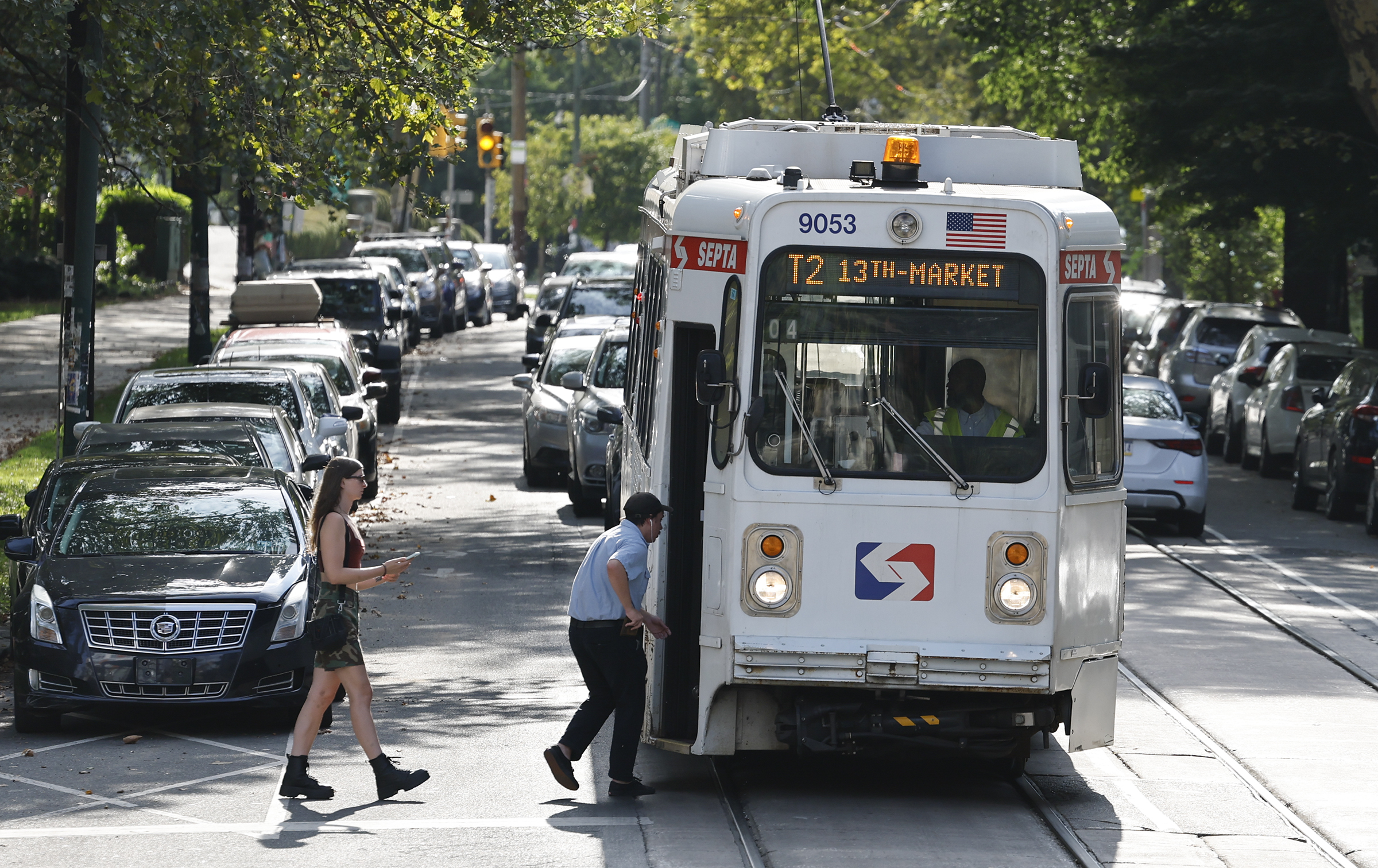
    Passengers board a SEPTA trolley along Baltimore Avenue in West Philadelphia.

    Trolley cams

    Over the last few years, Philadelphians have increasingly come under surveillance. Cameras enforce bus lane violations, issue speeding tickets, and help prevent and solve violent crime. Just this week, the Philadelphia Parking Authority announced it is now adding cameras to the city’s trolleys.

    This surge in surveillance has led to some residents bemoaning what they view as a cash grab. These worries were echoed last year by City Councilmember Jeffery “Jay” Young during a committee meeting in which he held up authorization for school zone cameras. Fortunately, these concerns are unwarranted.

    Our speed and red-light cameras are not designed to raise revenue. While camera systems in states like Illinois are used to pay for regular local government expenses, Pennsylvania’s are earmarked for traffic safety projects. Philadelphia is getting $13 million from the most recent distribution. This leaves politicians with little incentive other than to focus on safety and efficiency when choosing where and why to place the cameras. The system isn’t designed to take advantage of sudden speed traps, a problem that occurs with both automated and traditional traffic enforcement systems.

    Per a PPA spokesperson, 63% of vehicle owners who get a bus camera ticket don’t get a second one.

    In the case of the trolley cameras, it is also a question of basic fairness. If you ride the trolleys enough, you’ll eventually end up stuck. Almost always, it is because someone decided to inconvenience 20 to 40 people to avoid parallel parking or walking a short distance. While no one likes getting a ticket, motorists who opt to block trolleys should be happy with the fact that they aren’t being immediately towed.

    Candidates in the Democratic primary for Philadelphia’s 3rd Congressional District include, clockwise from upper left: State Sen. Sharif Street, State Rep. Chris Rabb, Ala Stanford, and State Rep. Morgan Cephas.

    Marquee matchup

    The race to replace U.S. Rep. Dwight Evans was always going to be close-fought. With the youthful Brendan Boyle occupying the city’s other congressional seat, this could be the best chance to represent Philadelphia in Washington, D.C., for decades. State Sen. Sharif Street (the son of former Mayor John F. Street) and State Rep. Morgan Cephas (who chairs the Philadelphia delegation in the state House) are both long-expected candidates for the job. They’ve been joined by progressive firebrand Chris Rabb, surgeon Ala Stanford, and a handful of other candidates with less funding and political support. For Southeast Pennsylvania politicos, it’ll have to do. There simply aren’t a lot of competitive races this year.

    In state Senate District 34, Towamencin Township Supervisor Kofi Osei is running against party-endorsed candidate Chris Thomas. There are also a couple of contested primaries for state House seats. That’s all, folks.

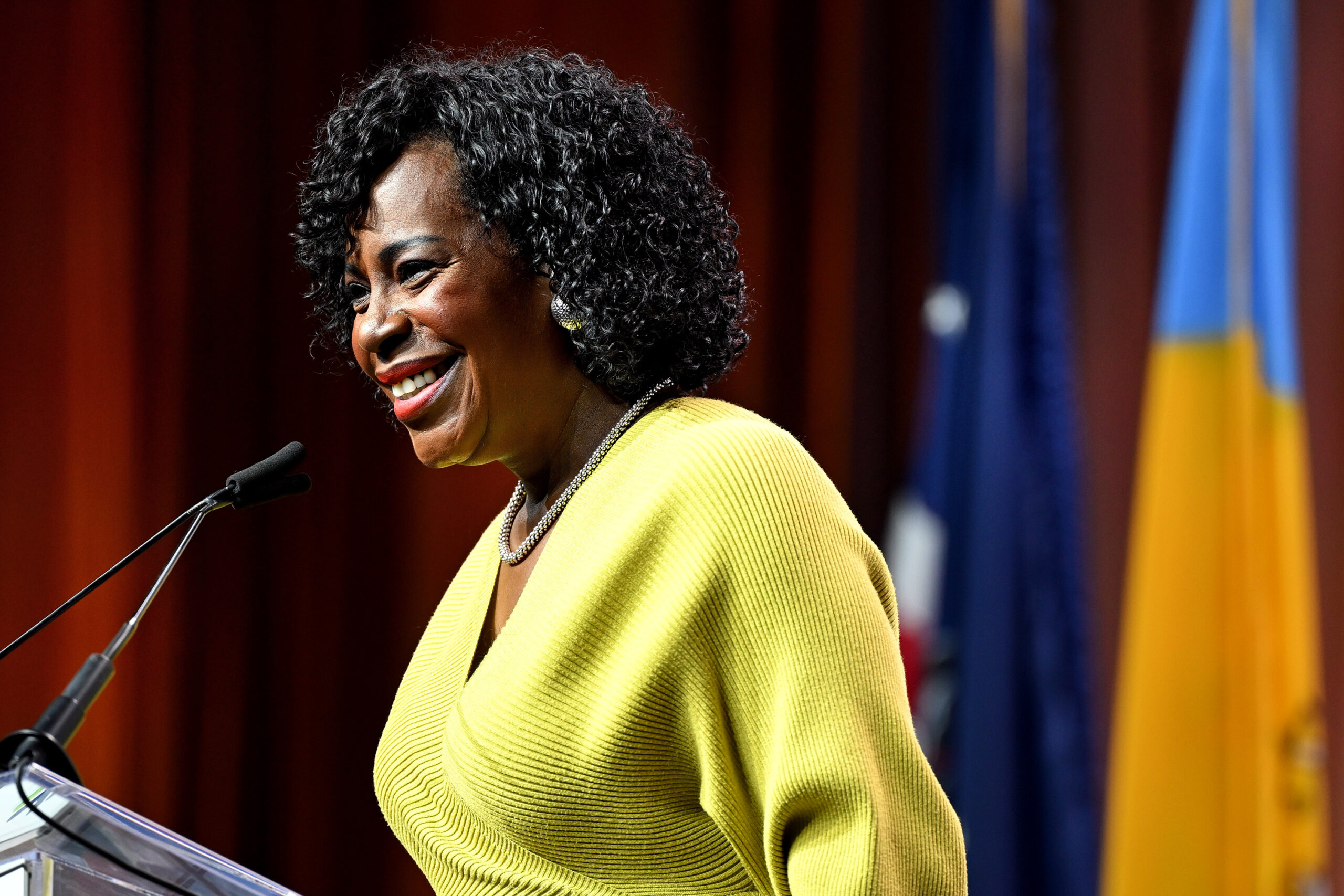
    Mayor Cherelle L. Parker delivers her keynote address at the Chamber of Commerce for Greater Philadelphia’s Annual Mayoral Luncheon, in February.

    Challengers needed

    Next year also looks fairly empty. While some progressive groups have polled residents to gauge the viability of defeating Mayor Cherelle L. Parker, few potential candidates appear eager to take her on. That’s perhaps not surprising. Only one Philadelphia mayor has failed to be reelected in the last 70 years. That includes W. Wilson Goode Sr., who bombed a city block during his first term, and Frank Rizzo, who failed a lie-detector test he himself had suggested.

    What the city really could use are more challengers for City Council seats. So far, I am aware of just one candidate, Jalon Alexander, who has put his hat in the ring. Alexander plans to challenge Young in the 5th District, citing capricious decision-making. But Young, while he may be the most egregious example, is not the only Council member who could use some competition.

    I expect the city’s progressive groups, like Reclaim Philadelphia and the Working Families Party, will eventually find candidates to challenge some of the weaker members, including Young, Cindy Bass, Nina Ahmad, and Jim Harrity. Last cycle, these groups organized around ideas, like rent control, that simply aren’t viable in Philadelphia.

    Despite being mostly frozen out by Council President Kenyatta Johnson and their colleagues, the current progressive delegation has been somewhat unwilling to challenge that body’s status quo. While Councilmember Kendra Brooks voted against a ban on safe injection sites, and Rue Landau voted against one of Young’s ill-considered moves, the city could use at least one councilmember who is willing to consistently challenge their colleagues’ bad decisions.

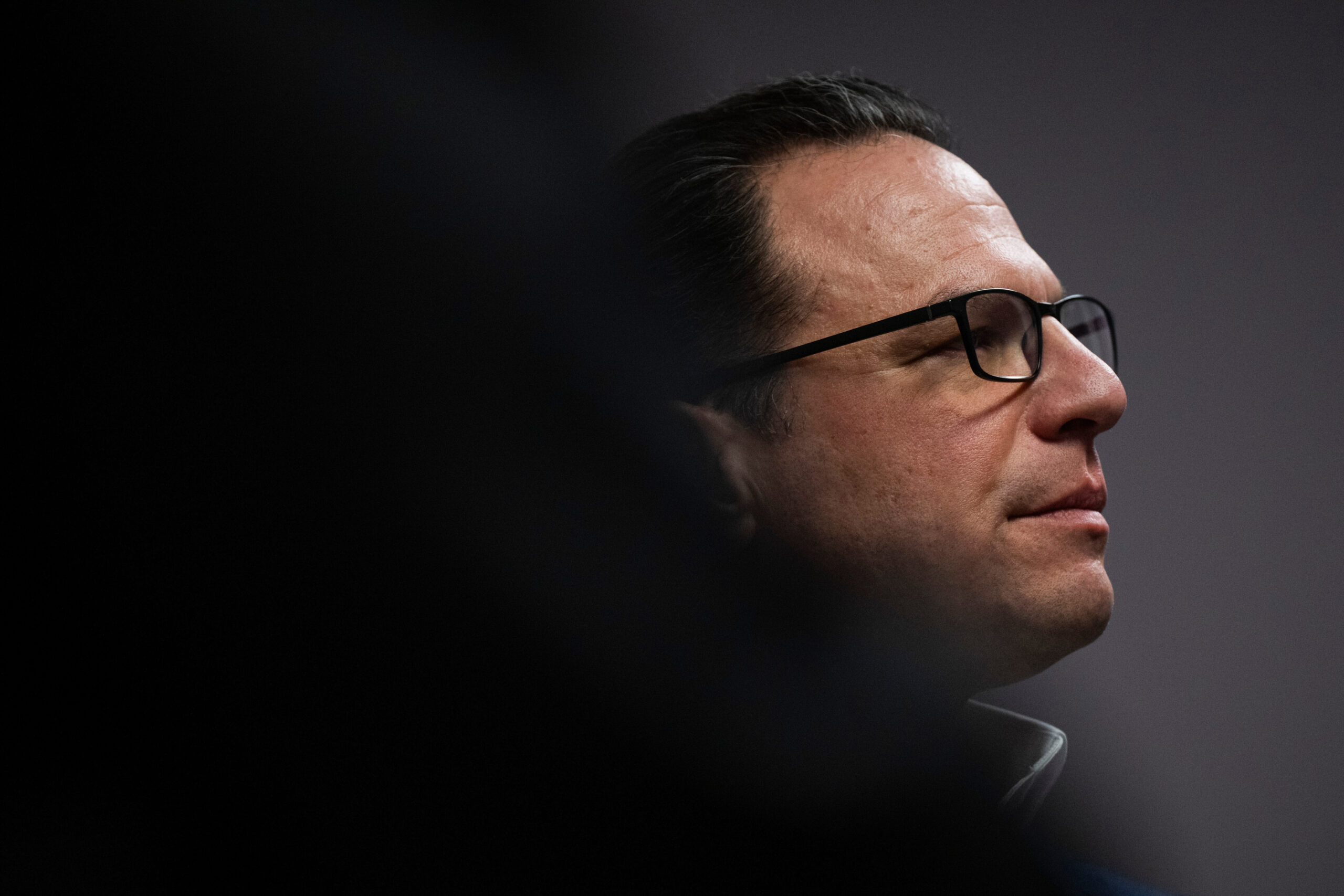
    Pennsylvania Gov. Josh Shapiro is seen after a B’nai B’rith Youth Organization International Convention on Feb. 12 in Philadelphia.

    Security snafu

    We call Gov. Josh Shapiro the Ambitious Abingtonian here for a reason. The governor is a hard-charging, elbows-up politician who has turned many friends into enemies over the years. Republicans seem to believe they have finally found a weakness in Shapiro’s political armor: the decision to spend taxpayer money to secure his home in Abington, and the seizure of a small strip of adjoining land that accompanied it. State Sen. Tracy Pennycuick, who represents western Montgomery County and eastern Berks County, even opined that Shapiro “put his family at a higher level of risk” by moving them home instead of to a bunker after the April arson attack at the governor’s mansion.

    Of course, the Shapiros just survived an attempted assassination. Let’s be human beings for one second. Shapiro’s shell-shocked children deserved to sleep in familiar settings.

    If Republicans want spending decisions to critique, they should start with Shapiro’s reliance on an opaque group called Team PA to pay for everything from travel to sporting events instead.

  • SEPTA trolleys will use AI cameras to catch drivers breaking no-parking rules in Philly

    SEPTA trolleys will use AI cameras to catch drivers breaking no-parking rules in Philly

    Beginning Monday, people who illegally park in SEPTA trolley lanes and stops could be caught in the act by automated enforcement cameras, the Philadelphia Parking Authority announced Thursday.

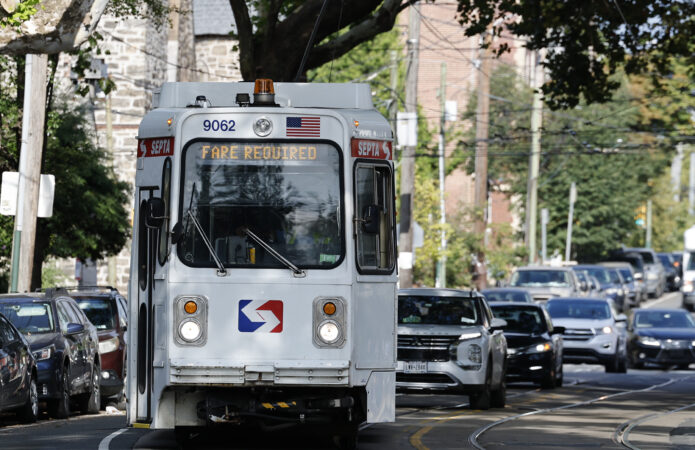
    Plans call for installing AI-camera systems on 30 trolleys across the six lines in the city to identify and ticket the owners of vehicles obstructing the streetcars or making it hard for passengers to board by blocking stops.

    Violations will carry a $51 fine as of April 1. Before then, warnings will be mailed instead of tickets.

    Parking violations are the enemies of surface transit, slowing buses and trolleys, making them less reliable and putting riders in danger.

    Already, 152 SEPTA buses have been using cameras mounted in their windshields to enforce parking rules; ticketing began last year.

    SEPTA, PPA, and the Philadelphia Office of Transportation and Infrastructure Systems are collaborating on the effort. It uses camera systems made installed and maintained by Hayden AI, a San Francisco-based tech company.

    “A single illegally parked vehicle can disrupt service for thousands of riders and create unsafe boarding conditions that force passengers into moving traffic,” PPA executive director Rich Lazer said in a statement.

    “This is more than a minor inconvenience,” he said.

    Legislation sponsored by Councilmember Mark Squilla and enacted in 2023 authorized using cameras mounted on buses and trolleys to enforce no-parking rules in Philadelphia.

    “One of the most annoying things about this city is people stopping their cars wherever they want to stop them, in bus lanes, double parking. It just screws everything up,” then-Mayor Jim Kenney said at a news conference.

    According to a 2019 study SEPTA commissioned from Econsult Solutions, Center City congestion causes 1.7 million hours of passenger delays per year, adding $15.4 million to yearly operating costs.

    And then there is the almost incalculable cost to people who depend on buses and trolleys.

    “In a city where 42% of Black residents and 50% of impoverished households do not own a car, efficient public transit is paramount to creating a strong transportation network that better provides economic opportunity for all,” said Christopher Puchalsky, director of policy and strategic initiatives for OTIS.

    In a 70-day trial in the spring of 2023, windshield-mounted video cameras recorded 36,392 instances of illegally parked vehicles blocking Center City bus-only lanes and bus stops in West Philadelphia and Upper Darby.

    In some situations, SEPTA bus operators can steer around parked cars. Trolleys, running on fixed rails, don’t have any real flexibility when they are boxed out of their lanes.

    SEPTA officials say bus speeds have improved on routes using the cameras. An average of about 14,746 violations are issued each month, according to PPA.

    The cameras use artificial intelligence to determine if a car is stopped or parked to obstruct transit lanes and stops. Then, the systems transmit the vehicle’s license plate number and precise location to the Philadelphia Parking Authority using cloud technology.

    “Keeping trolley zones clear isn’t just about enforcing parking rules — it’s about keeping Philadelphia moving,” said Marty Beard, CEO of Hayden AI. He added that Philadelphia will be the first city to deploy the cameras on trolleys.

  • Philly’s Greyhound station is one step closer to finding a permanent home

    Philly’s Greyhound station is one step closer to finding a permanent home

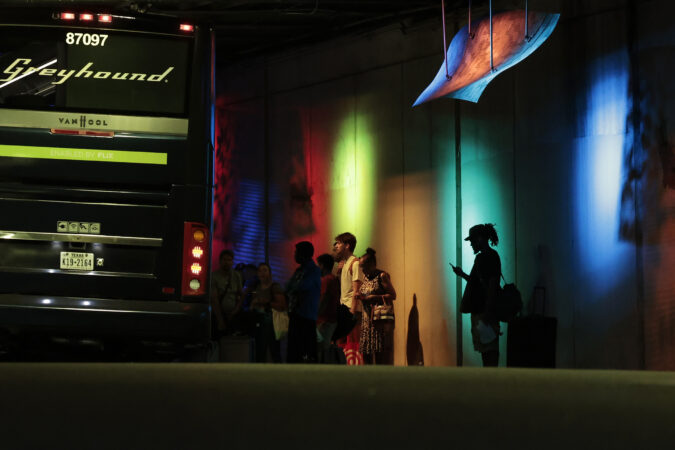
    Lights shine from a window of the abandoned Greyhound intercity bus terminal on Filbert Street as construction crews demolish fixtures and begin renovations ahead of a May reopening.

    While the old depot is ready for crowds of travelers attending high-profile special events this year, the city Department of Planning and Development has identified three possible locations for a permanent intercity bus station.

    Officials sifted through 208 possible locations over the past two years before zeroing in on the three sites:

    • Eighth and Arch Streets: A pair of parking lots on Arch Street near Eighth Street next to the African American Museum. The lots, at 701-709 and 721-737 Arch St., are owned by the city and Parkway Corp.
    • 15th and Vine Streets: The Philadelphia Gateway Garage at 1540 Vine St. along with an adjoining parking lot. They are owned by the Pennsylvania Department of Transportation and the Philadelphia Parking Authority.
    • Near 30th Street Station: A parking lot just north of 30th Street Station, at 2931 Arch St., near the Cira Centre office tower.

    On Wednesday, the city Planning Commission is holding a public open house at Independence Visitors Center from 6 to 8 p.m. People can learn about the sites, share their ideas, and ask questions about the future home of an intercity bus facility.

    There’s also an online survey collecting opinions about what the intercity bus station needs and where it should go, due March 13.

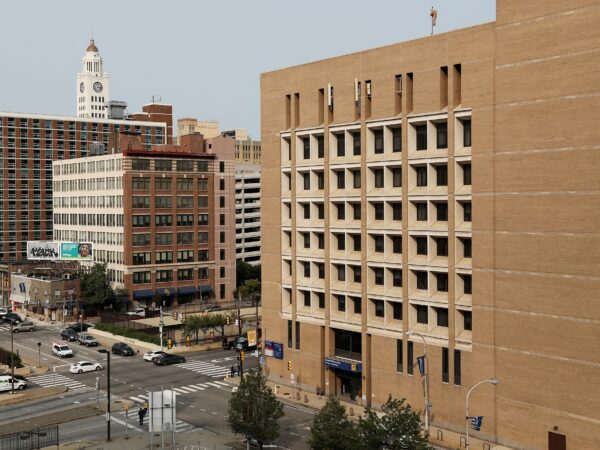
    The former Greyhound terminal at 1001 Filbert St. “is not a long-term solution for the city’s intercity bus needs,” city officials say, though it will provide a safe and comfortable indoor station for travelers, as opposed to the current, haphazard outdoor curbside loading zones along Spring Garden Street near Columbus Boulevard.

    It is scheduled to reopen in plenty of time for events celebrating America’s 250th birthday and World Cup soccer tournament matches in the summer.

    That’s why the city turned to the old station as a stopgap solution. The Philadelphia Parking Authority will operate the facility under a 10-year renewable lease with the private group of New York investors that owns it.

    The city says its goal is a modern “transportation hub” with amenities for travelers and bus operators and, ideally, some development built around the facility. It would be owned by the city.

    “Public ownership means it won’t be closed down by a landlord or private bus company,” the planning department said in a statement. In addition, the forever depot “could be designed to have housing in the floors above the station or retail spaces within the station. These uses could help support … construction and operation.”

    Why was Philly’s Greyhound terminal moved?

    Greyhound ran the terminal at 10th and Filbert for more than three decades but pulled out in June 2023, ending its lease with the owners amid the bus company’s push to cut costs by shedding real estate it owned or rented nationwide.

    Other intercity bus carriers have done the same, operating from curbsides in a number of cities.

    Greyhound may have had to leave the property anyway because the Philadelphia 76ers in 2022 proposed building a new arena on top of it and Filbert Street.

    When those plans fell through, the building was empty again, while Greyhound, its parent company FlixBus, and family-owned Peter Pan Bus Lines were operating at curbside on the 600 block of Market Street. That site, chosen by city officials, lacked benches, bathrooms, or shelter for customers.

    Traffic was a mess, and SEPTA had to reroute some of its metro bus routes for a time.

    In November 2023, Greyhound and the other carriers moved operations to a corner in Northern Liberties along Spring Garden Street with more space than the Market Street block. City officials promised it was temporary, but the “station” is still there, with attendant trash and disruptions to local business.

    Plans to move intercity bus operations elsewhere collapsed amid community opposition, notably to a proposal to use the first level of an Old City parking garage at Second and Walnut Streets as a temporary terminal.

    Consultants and city planners picked 35 potential sites for closer analysis. They were looking for places that could accommodate a multistory, mixed-used development in addition to a station and that were close to Center City or University City, transit, and highway ramps.

    They also preferred a publicly owned space not already marked for development, according to a document prepared for the public meeting.

    In the end, three places checked most boxes.

    (function() {
    var l2 = function() {
    new pym.Parent(‘GREYHOUNDMAP.html’,
    ‘https://media.inquirer.com/storage/inquirer/projects/innovation/arcgis_iframe/GREYHOUNDMAP.html’);
    };
    if (typeof(pym) === ‘undefined’) {
    var h = document.getElementsByTagName(‘head’)[0],
    s = document.createElement(‘script’);
    s.type = ‘text/javascript’;
    s.src = ‘https://pym.nprapps.org/pym.v1.min.js’;
    s.onload = l2;
    h.appendChild(s);
    } else {
    l2();
    }
    })();

    Site pros and cons

    Eighth and Arch Streets

    The Eighth and Arch site has room for 18 bus parking spots, the planning department said. It could fit a 113,000-square-foot station and an overall 640,000-square-foot development.

    Strengths: Proximity to several transit stops and to I-676 and I-95, as well as the potential to build public parking above the station and to use the African American Museum building when that entity moves to the Parkway.

    Challenges: The ownership, split between the city and a private corporation, could require coordinating with the Federal Detention Center there on the southwest corner, and buses may need to be routed through Chinatown.

    15th and Vine

    At 15th and Vine Streets, the Gateway garage could fit 16 bus slips, a 112,000-square-foot station, and a 1.37 million-square-foot development, planners say.

    Strengths: It’s next to I-676 and close to transit. Plus, it is owned by PennDot and operated by PPA.

    Challenges: The parcel is split in ways that could hinder bus circulation, and Spring Street nearby would need to be converted to one-way.

    Near 30th Street Station

    The site at 30th and Arch Streets could fit 12 bus slips as is, or the deck on which the lot sits could be expanded to fit 24 spaces.

    Strengths: The site has quick access to SEPTA and NJ Transit stops, Amtrak, and I-76. There are dining options in the area.

    Challenges: Amtrak owns the property, however, and the city would have to coordinate with the company to develop over the railroad tracks and the structural work needed to strengthen the lot and ramps for heavy bus traffic. PennDot also has said there would have to be substantial work to the entrance and exit ramps to the Schuylkill Expressway.

    What’s next?

    The city plans to consider the feedback it gets Wednesday, update the schematics, and then hold another public event later in the year. It hopes to have a final report by the end of 2026 that names the site.

    And then begins the long process of acquiring the site, designing the project, and figuring out how to pay for it.

  • Lincoln Drive and dozens of other Philly roads get $13 million from PennDot

    Philadelphia is getting $13 million to support six traffic-safety projects in Philadelphia, courtesy of speeders caught and fined by automated enforcement cameras.

    The Pennsylvania Department of Transportation announced the grants Wednesday for an array of city projects, including $2 million for traffic-calming measures on Lincoln Drive between Kelly Drive and Wayne Avenue.

    Some of that money will help pay for speed humps at 100 additional public, parochial, and private schools in the city, PennDot said.

    Since taking office in 2023, the Shapiro administration has invested $49.7 million in city traffic-safety projects, all from revenues raised by speed cameras.

    Calming speeders

    Under the automated speed-enforcement program, grants are plowed back into the communities that generated the revenue. Philadelphia is so far the only municipality in the state where speed cameras are authorized.

    Next week, the Philadelphia Parking Authority is activating speed-enforcement cameras in five school zones under an expansion of the program.

    Pennsylvania also has automated speed enforcement in highway work zones, but that revenue goes to the Pennsylvania State Police for extra patrols and more troopers, the turnpike for safety projects and speeding counter-measures, and the general treasury.

    Lincoln Drive improvements

    Fed-up West Mount Airy residents pushed state and local officials for years to reduce speeding, aggressive driving, and near-daily crashes on and near Lincoln Drive, which has hairpin curves and a posted speed limit of 25 mph, and thick commuter traffic zipping through dense neighborhoods.

    It was a high-profile instance of Philadelphians rallying around and demanding projects from the city’s Complete Streets program, a road-design approach that seeks to make roadways safer for all users, including pedestrians and cyclists, as well as drivers of motor vehicles.

    The new grant is meant to continue traffic-safety work on Lincoln Drive that began a couple of years ago.

    That includes speed humps, speed slots, new phosphorescent paint, flexible lane delineators, a smoother merge point where the road narrows, and marked left-turn lanes.

    “It’s made a huge difference,” said Josephine Winter, executive director of the West Mount Airy Neighbors civic group, which organized residents.

    “People that live along Lincoln Drive are feeling positive,” she said — though there is a split between people who are angry at what speed bumps have done to their cars’ undercarriages and those who support what they say are life-saving improvements.

    “The city was wonderful, very responsive,” Winter said. “We’re been fortunate to get something done here.” Next up: working with other Northwest residents to get improvements on side streets, Wissahickon Avenue, and others.

    Other grants

    • $1.5 million for planning work to upgrade traffic signals, better lane and crosswalk markings, and intersection modifications.
    • $5 million for design and construction of safety improvements along commercial and transit corridors. Those include curb extensions, concrete medians, bus boarding bump-outs, and new crosswalks. Locations include: Frankford Avenue (Tyson Avenue to Sheffield Avenue); 52nd Street (Arch Street to Pine Street); Hunting Park Avenue (Old York Road to 15th Street); and Germantown Avenue (Indiana Avenue to Venango Street).
  • Cameras will soon enforce speed limits in five Philly school zones

    Cameras will soon enforce speed limits in five Philly school zones

    Philadelphia drivers are about to get a new incentive to obey the flashing caution lights and 15 mph speed limit near schools.

    On Tuesday, the Philadelphia Parking Authority plans to turn on automated speed-enforcement cameras in five school zones, targeted because they have had a relatively high rate of crashes. All are on major roadways.

    Violators will get warnings until April 20, when the cameras start enforcing the law. Driving 11 miles faster than the school-zone speed limit will carry a $100 fine.

    “The goal is to protect students,” said Rich Lazer, executive director of the PPA. “Speed cameras work. They reduce dangerous behavior.”

    Roosevelt Boulevard has seen a 95% reduction in speeding violations and a 50% reduction in pedestrian-involved crashes since cameras went up in 2020.

    The high-priority school zones were selected based on an analysis of Pennsylvania Department of Transportation crash data by the Philadelphia Office of Transportation and Infrastructure Systems.

    From 2019 through 2023, the five locations recorded 10 crashes in which a person was killed or seriously injured, and 25 pedestrian crashes, as well as several speed-related vehicle-on-vehicle crashes, the PPA said. (Victims included people of all ages; it was not clear how many were students.)

    (function() {
    var l2 = function() {
    new pym.Parent(‘SKLZONECAMS’,
    ‘https://media.inquirer.com/storage/inquirer/projects/innovation/arcgis_iframe/SKLZONECAMS.html’);
    };
    if (typeof(pym) === ‘undefined’) {
    var h = document.getElementsByTagName(‘head’)[0],
    s = document.createElement(‘script’);
    s.type = ‘text/javascript’;
    s.src = ‘https://pym.nprapps.org/pym.v1.min.js’;
    s.onload = l2;
    h.appendChild(s);
    } else {
    l2();
    }
    })();

    “We have tried many traffic-calming methods to stop people from driving dangerously fast in school zones, but many drivers still speed,” said Michael A. Carroll, a deputy managing director for the city who is in charge of OTIS.

    “Speeding is the No. 1 cause of fatal crashes,” he said. The cameras will protect students walking to and from school, as well as crossing guards, “who often put their lives at risk,” Carroll said.

    Automated speed enforcement remains controversial, despite studies that show it is effective, particularly on major urban roadways like the Boulevard.

    The cameras are also popular in dense cities.

    Recently, the Trump administration’s Department of Transportation restricted cities from using federal road safety grants for cameras that enforce speed limits and other traffic laws, unless they are in work or school zones.

    The Pennsylvania legislature, historically skeptical of automated enforcement, in 2024 gave Philadelphia permission to use school-zone cameras through Dec. 31, 2029, on a trial basis.

    There was some hesitation last March when City Council considered an ordinance to authorize the cameras. Three members held up the measure in committee, expressing concerns about a “money grab by the city.” The members also said they did not have enough information about the bill.

    After they met with Councilmember Isaiah Thomas, the chief sponsor, the legislation was enacted.

    “Everybody thinks it’s a money grab, but it’s really not,” Lazer said. “Resources are stretched; police are dealing with a lot of things. … If we can use technology, and it works, why not? Don’t speed, and you won’t get a violation.”

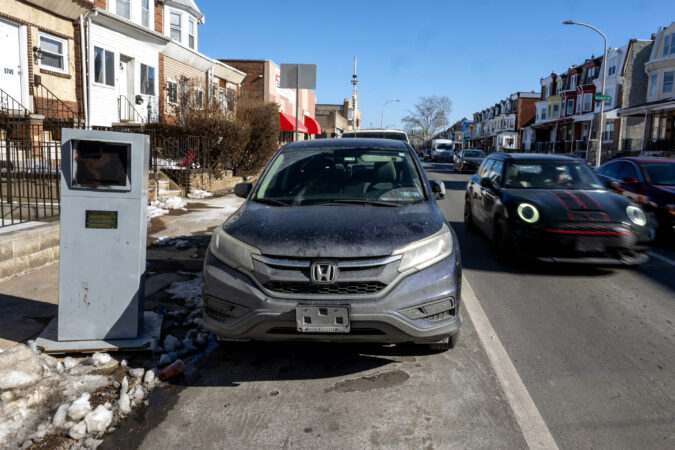
    Unlike the speed cameras on the Boulevard and those along 13 miles of Broad Street since November, the school-zone units deployed by the PPA are squat and at street level.

    Some people say they look like mailboxes or small refrigerators.

    They are meant to be portable, PPA officials said, so that cameras can be moved to other schools with problems, as long as they are operating in only five school zones at any one time.

    That limit is fixed by state law. Cameras can operate only when school zones are active, meaning weekdays when students are arriving in the morning or departing in the afternoon.

  • Philly snow cleanup: What to know about plowing, parking, schools, and more

    Philly snow cleanup: What to know about plowing, parking, schools, and more

    As Mayor Cherelle L. Parker put it earlier this week, we’re not out of the woods yet.

    The storm that hit Philadelphia Sunday brought with it 9.3 inches of snow for the city proper — the most we’ve seen at one time in a decade. And while that really sells the wintery vibe — especially when combined with the bitter cold we’re experiencing — cleanup efforts are ongoing.

    Highways and public transportation in the region are largely restored, but some city streets remain packed with snow and ice. City school buildings Wednesday were in their third day of snow-related closures. And we might even be looking at more snow to come.

    Here is what you need to know:

    Roads (mostly) cleared

    PennDot’s vehicle and speed restrictions have been lifted on all interstates and major highways across the Philadelphia region, as were those on state roads in New Jersey. But street plowing in the city remains a work in progress.

    Residents from around the city told The Inquirer many side streets and some secondary streets remained coated in several inches of snow and ice, making traveling on them difficult or impossible. Data from PlowPHL, a service that tracks plow movement, indicated Tuesday that roughly a quarter of city streets had not received any snow treatment since the storm.

    Parking enforcement resumes

    The Philadelphia Parking Authority reopened its offices Wednesday, and began on-street parking enforcement for safety violations including parking in bus zones and in front of fire hydrants. The 24-hour $5 emergency garage parking rate was also rescinded, with PPA garages returning to their usual rates, the authority said.

    Public transit resuming

    SEPTA on Monday restored all of its subway, trolley, and suburban trolley services, and as of Wednesday was running Regional Rail lines on their normal weekday schedules. Bus service, SEPTA notes online, is largely operational, though several routes remain suspended due to road conditions.

    Among the suspended buses Wednesday were routes 3, 5, 40, 41, and 115, according to the agency’s alerts page. The suspended routes, SEPTA indicated, would be restored “once it is safe to do so.”

    PATCO, meanwhile, returned to its normal weekday schedule Tuesday.

    Airport operational

    Philadelphia International Airport experienced hundreds of flight cancellations and delays due to the storm, but remained open despite the inclement weather, Parker said at a news conference this week.

    As of early Wednesday afternoon, the airport had experienced about 87 delays and 57 cancellations, according to flight data tracking website FlightAware. On Monday, the day after the storm, there were 326 delays and 290 cancelations, followed by 255 delays and 156 cancelations Tuesday, FlightAware indicated.

    Schools go virtual

    Philadelphia school buildings are slated to reopen Thursday after three straight days of being closed in the wake of the storm. A full snow day was declared Monday, followed by two days of virtual learning Tuesday and Wednesday.

    Archdiocesan high schools and city parochial schools will also go back to in-person classes Thursday.

    Students and staff who arrive late to class due to weather-related issued would not have their lateness counted against them, Superintendent Tony B. Watlington Sr. said.

    This week’s disruption to the usual school schedule had begun taking its toll on some parents. Outside the city, many suburban districts had already reopened by Wednesday.

    More snow possible

    Post-storm, the Philadelphia region faces frigid temperatures that are expected to remain well below freezing until at least Feb. 4. Highs were expected to top out around the teens, and lows consistently in the single digits — along with wind chills reaching down into the negatives.

    And then, of course, there is the potential for more snow this weekend.

    Forecasters said Wednesday that it remained unclear exactly what we should expect, but a major coastal storm is likely to appear during the weekend. Early computer models indicated that the system would remain far offshore enough to spare the Philadelphia area from major snowfall, but accumulation predictions remain in flux.

  • Developer Iron Stone transfers two Hahnemann properties to new ownership

    Developer Iron Stone transfers two Hahnemann properties to new ownership

    Philadelphia-based Iron Stone Real Estate Partners transferred control of two of their former Hahnemann University Hospital properties in the last two weeks.

    The investment group acquired a portfolio of Hahnemann properties in 2021 and began redeveloping them into laboratory and office space.

    But in recent weeks Iron Stone disposed of two of these properties.

    The company donated the New College Building at 245 N. 15th St. to Drexel University on Dec. 31.

    “It’s a charitable donation,” said Jason Friedland, director of operations and investments at Iron Stone. “We felt that that building was best served with Drexel owning it and using it for a long time, long-term, for their research.”

    When Iron Stone acquired the New College Building five years ago, Drexel occupied the property’s medical labs and was one of the few remaining tenants in the Hahnemann campus.

    Back then the university was considering moving this Center City operation to the suburbs in the short term and to University City in the long term.

    “The generous gift will provide the university with flexibility as it continues to consolidate operation of its College of Medicine on its University City campus,” Drexel spokesperson Britt Faulstick said in an email statement. “Plans for the New College Building will be determined in the future.”

    On Jan. 6, Iron Stone sold the Broad and Vine Parking Garage at 1416 Wood St. to the Philadelphia Parking Authority for $21.3 million.

    The 850-space garage had been exclusively for Hahnemann’s use. Iron Stone renovated the vacant garage after the bankruptcy and hired Metropolis Technologies — the largest parking operator in the United States — to run it.

    The acquisition is the first time the Parking Authority has purchased a garage built by someone else, said Rich Lazer, executive director of the Parking Authority.

    “Most of our garages, outside of the airport, are Center City-based, so its nice to push out onto North Broad,” Lazer said. “Our garages are lower cost than private garages, so it’ll help us maintain reasonable pricing.”

    The authority plans to retain Metropolis Technologies as the operator, Lazer said.

    Iron Stone still owns a couple former Hahnemann properties, including the 120,000-square-foot Race Street Laboratories at 1421 Race St. and the 15,000-square-foot building at 231 N. Broad St., which is fully leased by Bayada Home Health Care Inc. with a third of the space and Dynamed Clinical Research with the rest.

    Race Street Laboratories was developed to tap into the life sciences and biomedical market, which boomed during the pandemic but has slowed substantially as interest rates spiked. Currently the building has only one tenant, Sbarro Health Research Organization, with 7,500 square feet of space.

    Friedland said Iron Stone plans to move its headquarters from University City’s FMC Tower to one of Race Street Lab’s unused floors.

    As for the rest of the space, Iron Stone is exploring alternative uses as the life sciences market continues to struggle.

    “We’re seeing where the opportunities are in commercial real estate,” Friedland said. “We have a couple things we’re exploring, but we’re not really in a rush.”

    New York-based Dwight City Group has purchased most of the remainder of the former Hahnemann buildings.

    Their plans for an apartment building were complicated by a bill introduced in December by Councilmember Jeffery Young to ban housing from the former hospital site.

    But on Dec. 24, in advance of City Council action on the legislation, the developer received zoning permits for a 361-unit apartment complex at 222-248 N. Broad St. Dwight Group says they are nonetheless in negotiations with Young to secure his support.

  • Philly’s Greyhound station gets city’s OK to be resurrected

    Philly’s Greyhound station gets city’s OK to be resurrected

    City Council passed legislation Thursday to restore the abandoned Greyhound terminal on Filbert Street as Philadelphia’s new intercity bus station in time for an expected flood of tourists in 2026.

    Under the measure, the Philadelphia Parking Authority will operate the station on behalf of the city, collecting fees from bus companies to pay costs.

    A refurbished facility is scheduled to open in May 2026, which would resolve more than two years of chaos after Greyhound ended its lease, forcing the city to allow the bus companies to operate at the curbs of public streets with few amenities and no shelter for riders.

    The saga was embarrassing, and it became more untenable for city leaders with Philadelphia set to host celebrations of the 250th anniversary of the Declaration of Independence, and a round of international FIFA World Cup soccer matches.

    The plan came together over the last few months as at least three city departments collaborated and reached an agreement with the parking authority. Mayor Cherelle L. Parker’s administration sent a bill to Council.

    Councilmember Curtis Jones Jr. said in a Finance Committee hearing last week that he found the speed of “galvanized” departments working together impressive.

    “You can’t put that genie back in the bottle. I know you can cooperate now, and that’s going to be the expectation from now on,” Jones said.

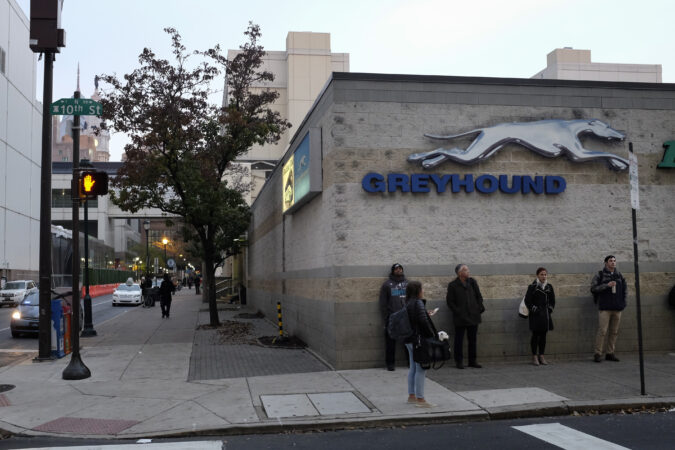
    Greyhound ran the terminal at 10th and Filbert Streets for 35 years but ended its lease in June 2023 as the bus line (and its corporate parent) began shedding real estate and leases in the U.S. to cut costs.

    First, the buses operated along the 600 block of Market Street. Since November 2023 they have loaded and unloaded passengers in the open along Spring Garden Street.

    “This is an opportunity that kind of came from the heavens,” said Mike Carroll, the city’s assistant managing director for transportation.

    PPA has a 10-year lease agreement with the property’s owner, 1001-1025 West Filbert Street LLC, with an option to extend it.

    Bus companies would pay a $40 fee for each stop in the city until the terminal is open, when it would be increased to $65. A smaller number of buses subsidized by the Pennsylvania Department of Transportation under a program to provide rural service would pay $16 a stop.

    Operating the renovated terminal will cost $4.7 million to $4.8 million annually, Carroll said.

    City officials say they plan to keep researching other possible locations for an intercity bus station but note the lease provides stability.

    PPA will provide 24-7 security, 16-hour daily custodial coverage, maintenance staff, and an on-site program manager under terms of an intergovernmental agreement with the city that is part of the legislation.

    It also will be responsible for enforcing rules, such as one that will require buses to bypass the heart of Chinatown.

    Since the parking authority regulates rideshare and taxi services, its enforcement officers will help keep traffic flowing around the station, officials said.

    Councilmember Nina Ahmad pressed city officials to plan for retail tenants and other ways to generate municipal revenue.

    “There’s an element of rush,” Ahmad said during the Dec. 3 hearing. “I understand the urgency, but I hope we don’t overlook things that we should be doing to make it really a transit-oriented development.”