Tag: Philadelphia Police Department

  • Temple pledges to boost police patrol officers by 58% over five years following staffing study

    Temple pledges to boost police patrol officers by 58% over five years following staffing study

    Temple University plans to increase its patrol officer ranks by 58% over five years after a study assessing staffing levels showed the school was below the middle tier of a framework that rates law enforcement agencies.

    The university currently has 77 sworn officers — 50 of them patrol officers — and president John Fry pledged to add 29 patrol officers, one detective, six sergeants, and one lieutenant. That would increase the overall number of sworn officers to 114.
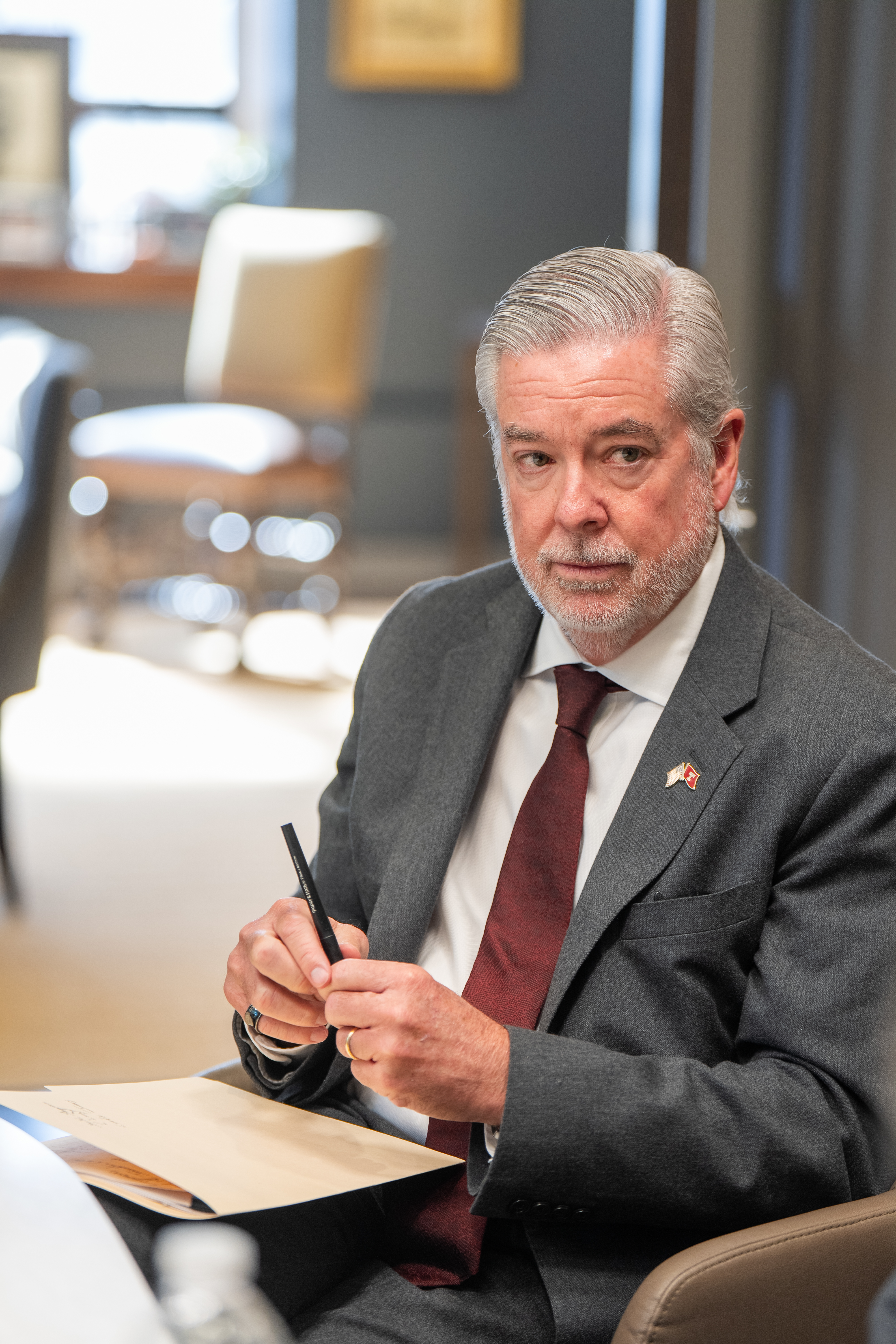
    Temple president John Fry said safety was his first priority. Now he plans to increase patrol officers by 58% over five years.

    No target has been set for how many officers will be hired per year, but those discussions are underway, said Fry, who named public safety a top priority when he started in November 2024.

    The university’s declaration comes amid a particularly difficult time for police hiring, with departments nationally — including the Philadelphia Police Department — continuing to face shortages. Temple has been working for several years to attract more officers, including increasing salaries and benefits, adding signing and retention bonuses and higher contributions to retirement accounts, and hiring an associate director to focus solely on hiring, recruitment, retention, and training. The department also moved to 12-hour shifts to give officers more days off.

    Yet, the number of sworn officers has decreased from 81 in March 2024 to the current 77, despite additional hires being made, including four new officers from the Temple University Municipal Police Academy in October.

    “We must, and we will, deploy ever more compelling and creative incentives to make Temple’s Department of Public Safety a destination employer for law enforcement in our region,” Fry said. “Our plan is to look closely at what we are doing in the areas of recruitment and retention over the next several months and see what improvements can be made.”

    Temple plans to hire former Philadelphia Police Commissioner Charles H. Ramsey’s 21CP Solutions company to assist, including with how best to recruit and retain more officers, Fry said. The university had hired Ramsey to assess safety following the shooting death of student Samuel Collington in November 2021 and has implemented almost all of the 68 recommendations from his report released in April 2023.

    The staffing study was one of the final recommendations that Temple had to complete.
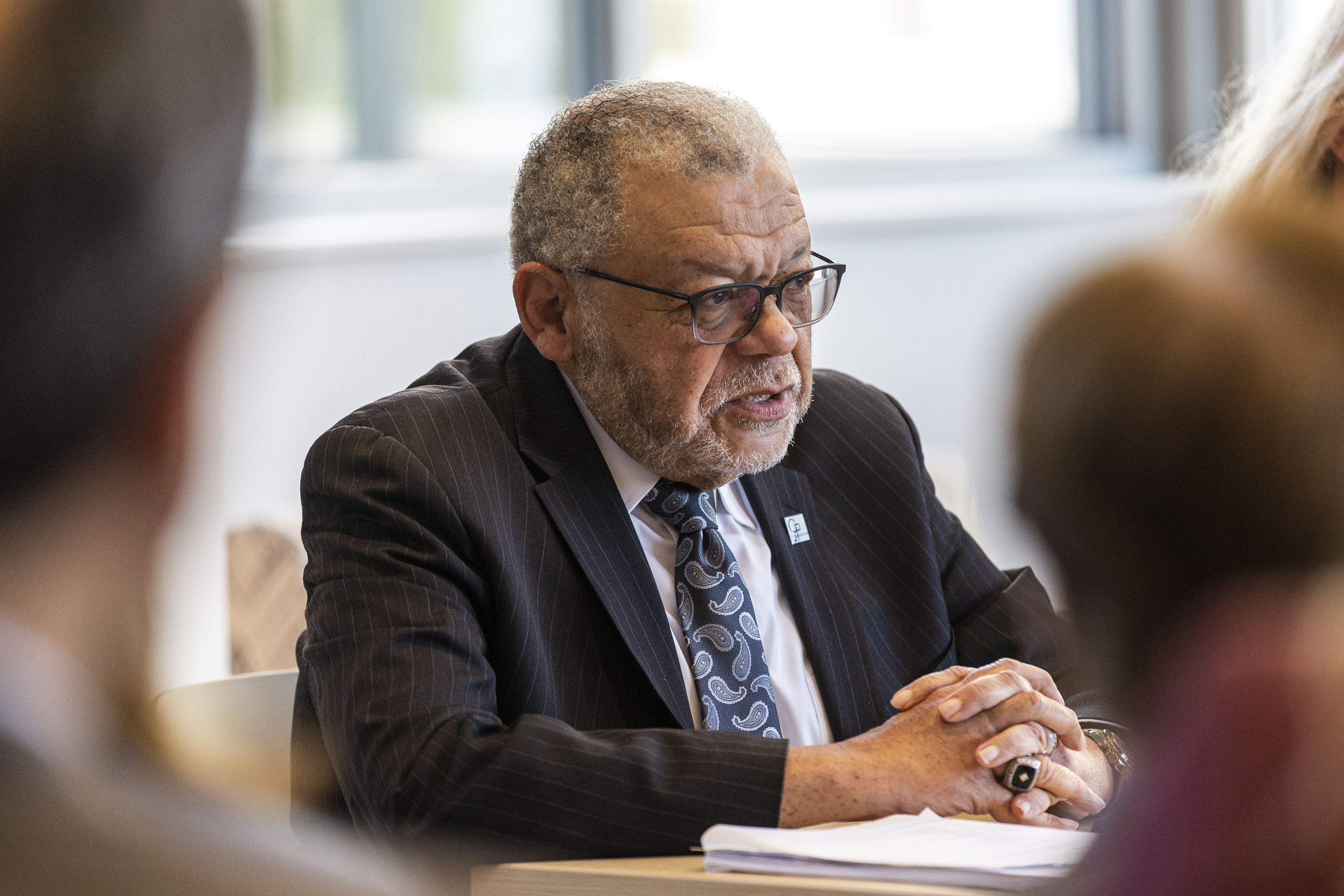
    Former Philadelphia Police Commissioner Charles Ramsey speaks at a press conference on the Temple safety audit his firm completed in April 2023.

    New bike patrol officers

    In addition, Philadelphia Police Commissioner Kevin Bethel has committed to providing six bike patrol officers and a sergeant assigned to Temple, beginning Jan. 5. That’s up from the current four officers and supervisor, who were not always the same personnel.

    “The ability to have relationships and collaborations … will be better because it’ll be a consistent group,” said Jennifer Griffin, Temple’s vice president for public safety.
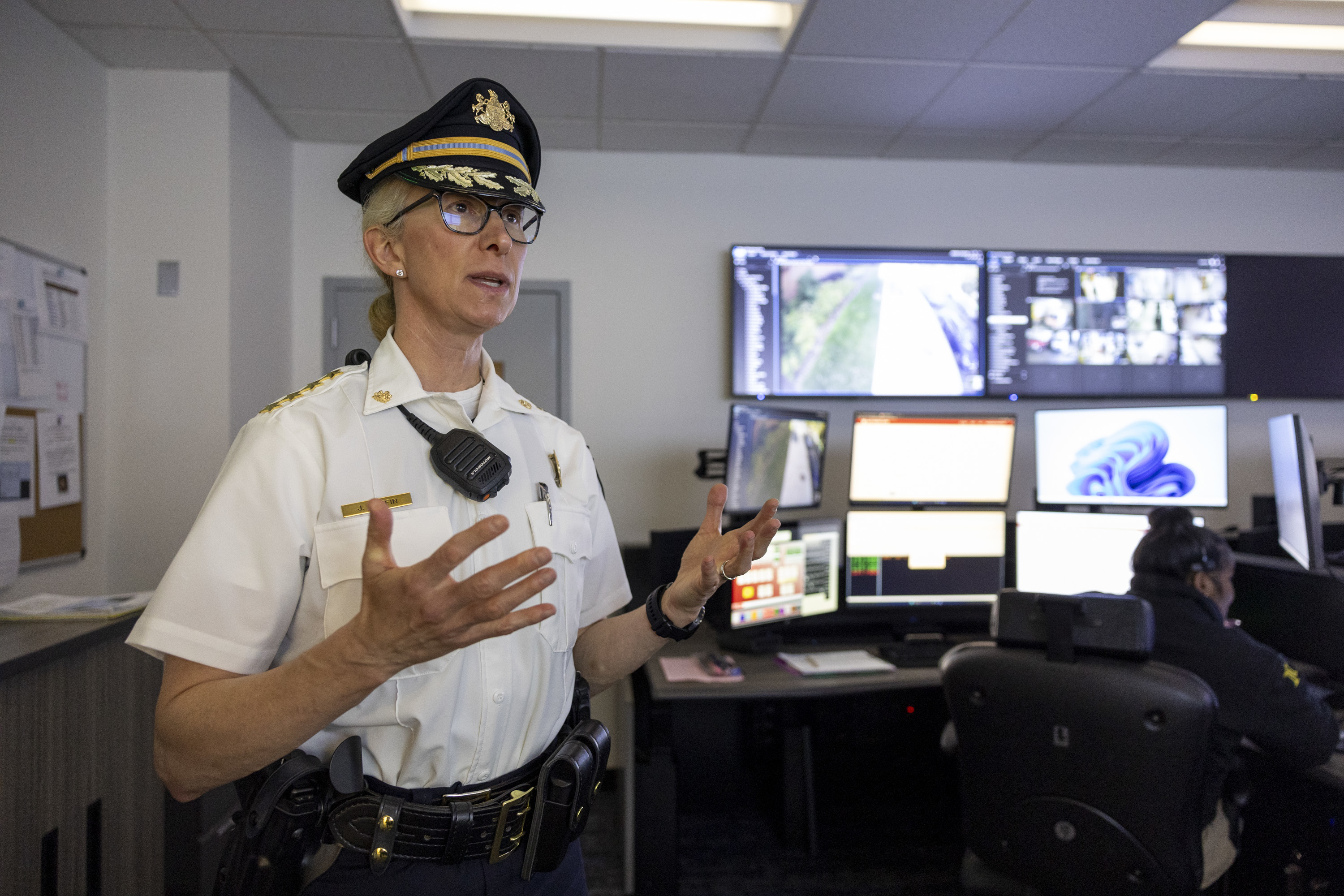
    “The ability to have relationships and collaborations … will be better because it’ll be a consistent group,” Jennifer Griffin, vice president for public safety at Temple University, said about the city’s six bike patrol officers that will be dedicated to Temple.

    Members of the Temple University Police Association, the officers union, have complained for years of inadequate staffing. In a social media post about a year ago, the union said the department had lost more than 50 officers since 2022.

    But Andrew Lanetti, president of the union, said he is pleased with the direction outlined by Fry.

    “From our talks here in the past few days, I am happy with where we’re going in the future,“ he said. ”I believe this is going to be a very positive experience and it’s going to help our community a lot.”

    University and union officials already have been discussing ways to recruit and retain more officers, and a more positive working relationship between the union and the university could help move the needle on hiring and retention.

    “We’re going to work together and our goal is all the same,” Griffin said. “We want a safer Temple and a safer community.”

    Budget woes

    The move also comes as the university attempts to close a budget deficit, made worse this fall when the school missed enrollment projections for its main campus that translated to about $10 million in lost revenue.

    “It will be a challenge,” Fry said of the new police officer hiring, “but it’s a priority, so we will meet that challenge.“

    He said money for the new staffing will be built into the university’s five-year budget plan.

    Temple last February hired safety and security consulting companies Healy+ and COSECURE, ancillary businesses of the Cozen O’Connor law firm, to conduct the staffing study. They used a tiered framework “to assess the capacity and effectiveness of law enforcement agencies,” Temple said. The university declined to release the full report, citing its proprietary information.

    “Temple is positioned below the middle tier of the framework, meaning the department is presently staffed to meet the essential public safety and emergency response needs of our community,” Fry said. “However, additional personnel would allow the department to organize and coordinate its activities to focus on additional proactive and community engagement activities that would position it higher in the consultant’s framework.”

    With the additional police officers that Temple plans to hire, the school would rise from just below the third of five tiers in the consultant’s rating system to the second tier, Fry said. The second tier, he said, connotes “higher levels of proactive enforcement, more presence, more mitigation strategies, and then more outreach, more community engagement.”

    Public safety is extremely important as the university plans to release its strategic plan and campus development plan early next year and as Fry seeks to spur economic development along the Broad Street corridor, from Temple’s new Terra Hall location in Center City to the health campus in North Philadelphia.

    “There’s going be a campus development plan, which clearly is going to put more activity on this campus, which means we’re going to have to support our police,” Fry said.

    Potential investors, he said, are watching.

    “When they’re about to commit significant investment, they want to know the area is safe,” he said.

    ‘Hold ourselves accountable’

    Former Temple president Jason Wingard pledged to increase the police force by 50% the month that Collington was killed, and those numbers never materialized. In fact, the number of officers dropped.

    Fry said what is different this time is that he has specified the exact numbers that will be added over a distinct time frame.

    “This is not something we’re just sort of speculating about,” he said. “This is based on a professional study. … We’ll be able to hold ourselves accountable.”

    The university already has made a host of changes that were recommended by Ramsey in the 2023 report. They include more foot patrols and security cameras and increased technology in the communications center.

    The university in 2024 touted a decrease in aggravated assaults, robberies, and thefts in its patrol zone. Despite improvements, Temple has continued to face safety challenges in its North Philadelphia neighborhood, including large groups of juveniles that sometimes gather on or near campus — a challenge in other areas of the city, too.

    And a student was shot and killed by another student near off-campus housing in February.

    Griffin said she stands behind the efforts to grow the department and make further improvements in training and operations.

    “I truly believe it will help position us as one of the highest-performing university police departments in the country,” Griffin said.

    Fry said once the university reaches its five-year hiring target, it will reevaluate its needs and figure out next steps.
  • A Philadelphia police officer critically injured in a motorcycle crash six years ago has died

    A Philadelphia police officer critically injured in a motorcycle crash six years ago has died

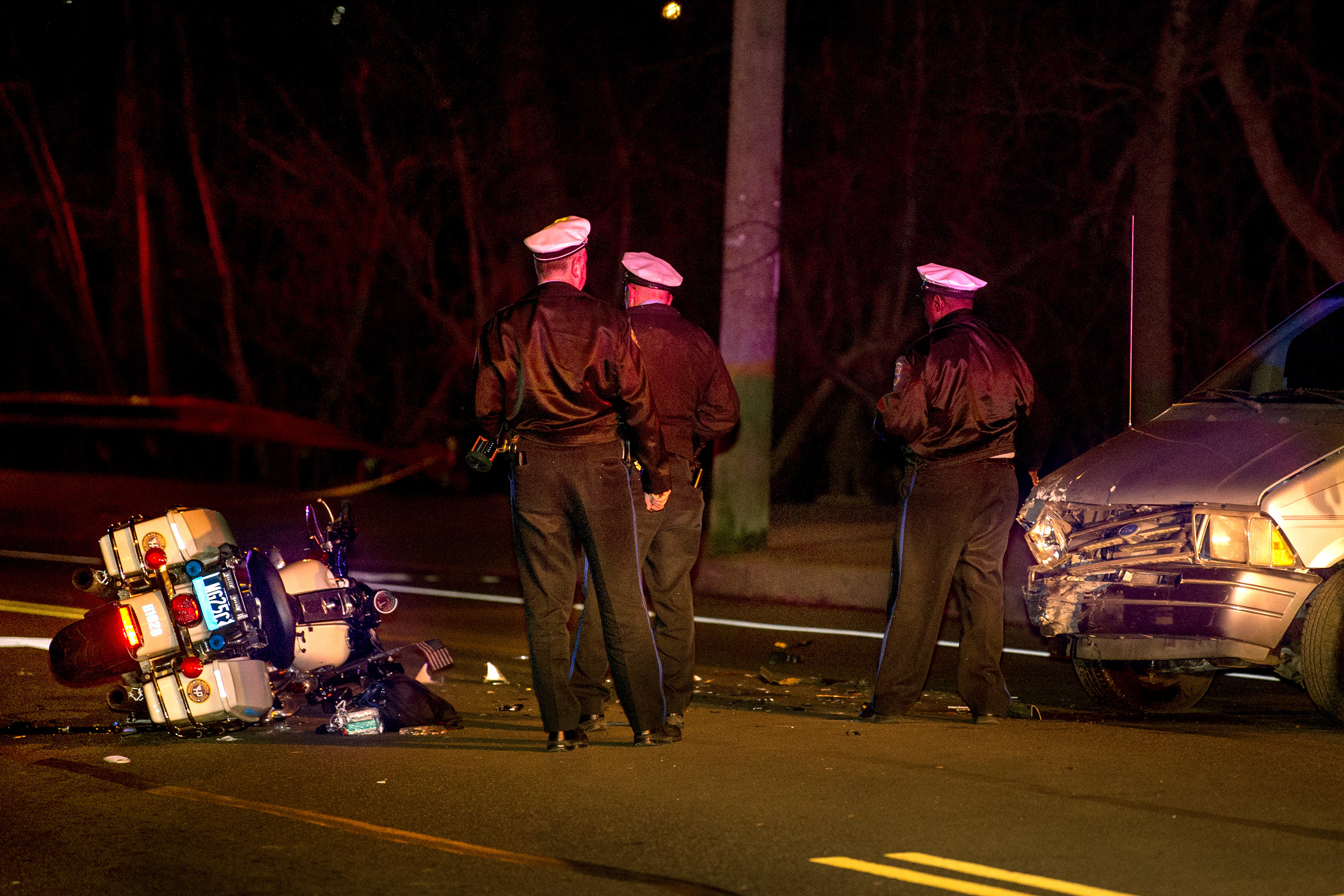
    Andy Chan, a Philadelphia Highway Patrol officer who suffered a devastating brain injury in a motorcycle crash while on his way to work six years ago, has died.

    Chan, 48, was riding through Northeast Philadelphia one evening in January 2019 when an elderly driver unintentionally struck him on the 3300 block of Rhawn Street. He was thrown about 20 feet, police said, and was critically injured.

    Chan, a 24-year veteran of the force, was in a prolonged coma and was hospitalized for weeks on a ventilator. In the years since, his injuries have required around-the-clock care, with family, friends, and colleagues in the Philadelphia Police Department regularly at his side.

    The Fraternal Order of Police Lodge 5 announced Chan’s death on Tuesday. The cause of death was not immediately clear.

    “Andy died a hero and we will always remember and honor his sacrifice,” the union wrote on Facebook.

    Andy Chan was thrown from his highway patrol motorcycle and critically injured in a crash on the 3300 block of Rhawn Street on January 3, 2019.

    Chan, a father of three, grew up in Chinatown and had always dreamed of being a highway patrolman. His family recalled how he watched with awe when the leather-clad officers approached his parents’ restaurant on their motorcycles.

    He decided, they said, that would be him one day.

    “That was the only place he strived to be in,” his wife, Teng, said years ago.

    After becoming a Philadelphia police officer in 1996, he was first assigned to the 39th District, working as a bike cop. Eight years later, he was promoted to the elite highway unit.

    He took such pride in his work that when he walked into police headquarters, instead of yelling, “Hi,” he would shout, “Highway!”

    And even when he met Teng nearly two decades ago, he introduced himself as such: “I’m Highway.”

    Chan and his partner, Kyle Cross, were among the first officers who responded to the Amtrak crash in 2015 that left eight people dead and nearly 200 injured. Cross, in an earlier interview, recalled how Chan kept his composure as he sought to rescue survivors from the wreckage.

    “What I remember from Andy was his poise — he stayed so calm, he really just led the way,” Cross recalled. “I followed his lead.”

    Police Commissioner Kevin Bethel, in an email to the department Tuesday morning, described Chan as “larger than life, not because of what he did, but because of who he was.”

    “He was the kind of officer whose reputation reached every corner of this Department and City; not because he sought attention, but because his work, his character, and his heart made him impossible to forget. Andy represented the very best of who we are and what we aspire to be: skilled, humble, kind, and unfailingly courageous,” Bethel wrote.

    “Andy,” he said, “will forever remind us of why this work matters.”

    Funeral arrangements have not been announced.

    Since Chan was injured, police and community members have gathered each December to support his family and raise money for his recovery. Supporters will continue to gather in his honor this year, on Dec. 12 at Craft Hall at 4 p.m., for the sixth annual Andy Chan Block Party.

  • Two men found guilty in 2023 shooting death of Philadelphia Police Officer Richard Mendez

    Two men found guilty in 2023 shooting death of Philadelphia Police Officer Richard Mendez

    Two Camden men were convicted of murder and related crimes Monday in the shooting death of Philadelphia Police Officer Richard Mendez at the airport in 2023.

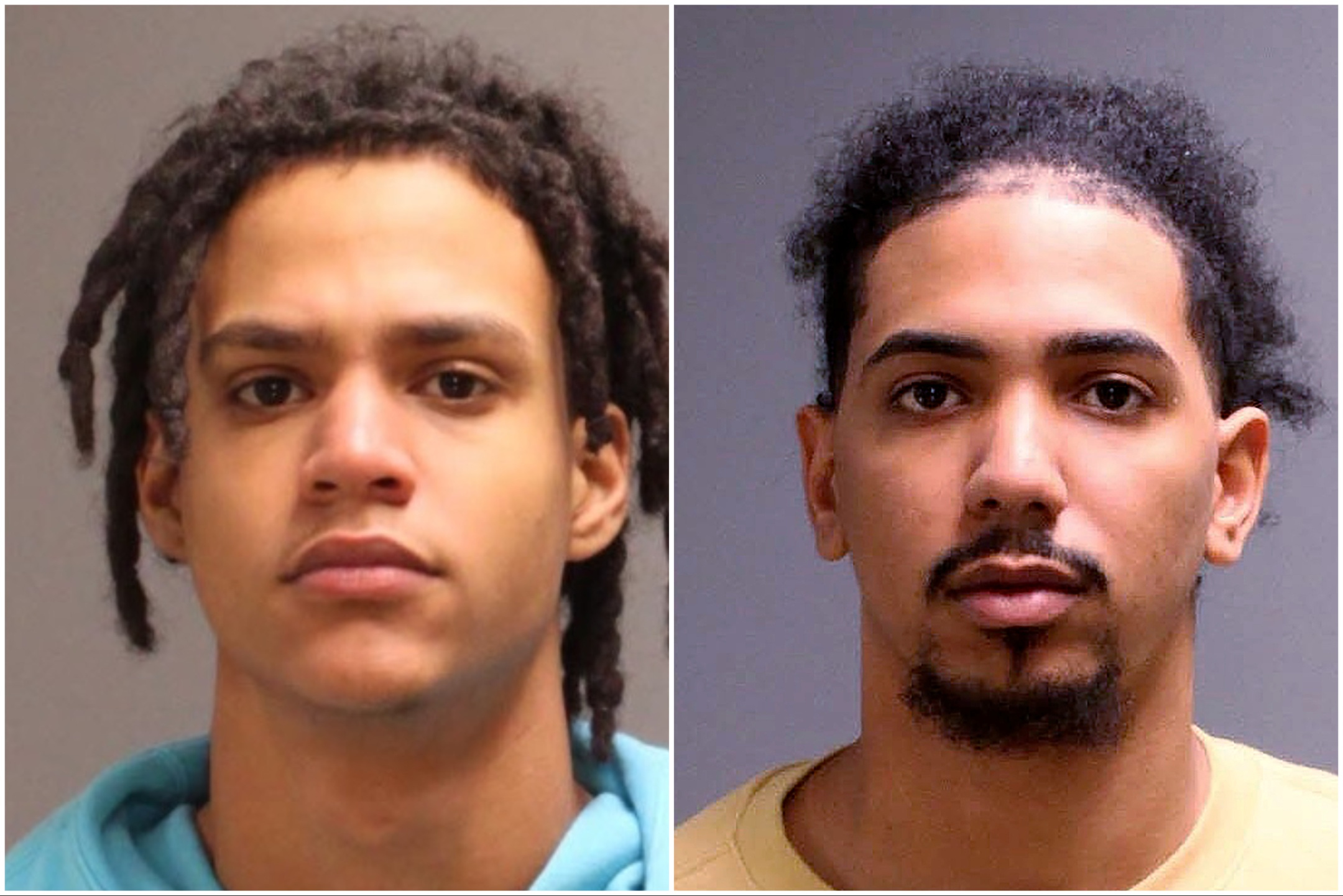
    Yobranny Martinez-Fernandez, 20, who fired the fatal shots, was found guilty of first-degree murder. Hendrick Pena-Fernandez, 23, was convicted of second-degree murder because he took part in the car theft that gave rise to the fatal shooting.

    Yobranny Martinez-Fernandez, left, 20, and Hendrick Pena-Fernandez, 23.

    About an hour after the jury returned its verdict, both men were sentenced to life in prison without parole.

    Mendez, 50, was killed after he and his partner, Raul Ortiz, tried to stop a car theft in progress in garage D at the Philadelphia International Airport. As they approached a Dodge Charger, Martinez-Fernandez opened fire as he crouched beneath the steering wheel, prosecutors said. Mendez was struck four times in the torso. Ortiz was struck once in the arm and survived his injuries.

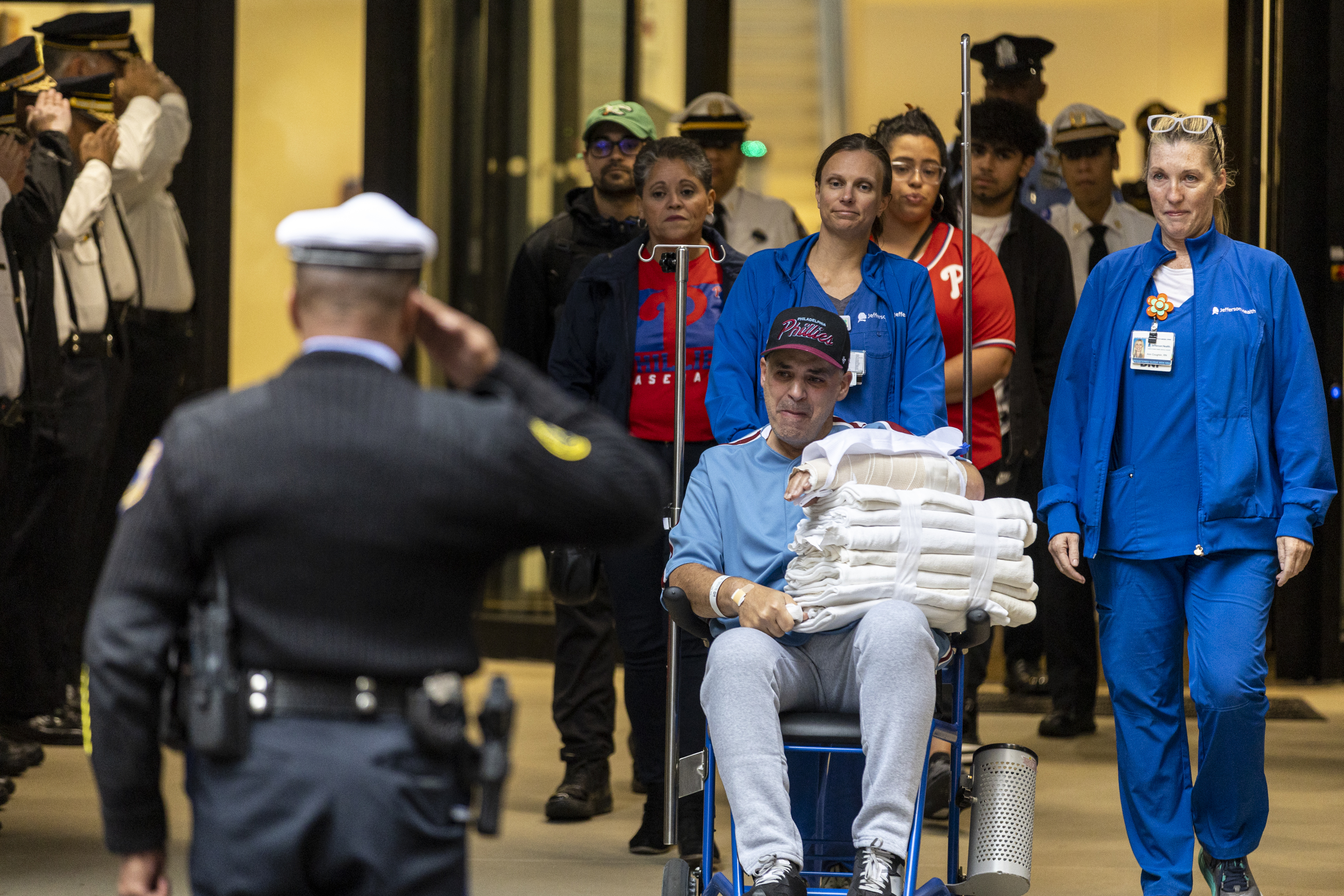
    Officer Raul Ortiz, 60, approaches the entrance as fellow Philadelphia police officers stand and salute for his release from the Thomas Jefferson University Hospital on Oct. 14, 2023.

    Prosecutors said Martinez-Fernandez also unintentionally shot one of his accomplices, Jesus Madera Duran, 18, who later died at a nearby hospital. The men dropped him there during a frantic escape that eventually led them to a central New Jersey warehouse where prosecutors said they burned their getaway vehicle.

    Martinez-Fernandez was also found guilty of killing Duran, in addition to nearly all related charges. Meanwhile, Pena-Fernandez was found not guilty for a handful of other offenses, including third-degree murder.

    Throughout nearly a week of testimony, prosecutors argued that both men were responsible for the death of Mendez, a father of two and a 22-year veteran of the police force.

    For Mendez’s widow, Alex Carrero, and the couple’s daughter, Mia, the verdict capped what they described as a two-year nightmare.

    “No 19-year-old should have to pick the color of her dad’s casket,” Mia Carrero said as she addressed the judge before her father’s killers were sentenced. She wore Mendez’s police badge pinned to her sweater.

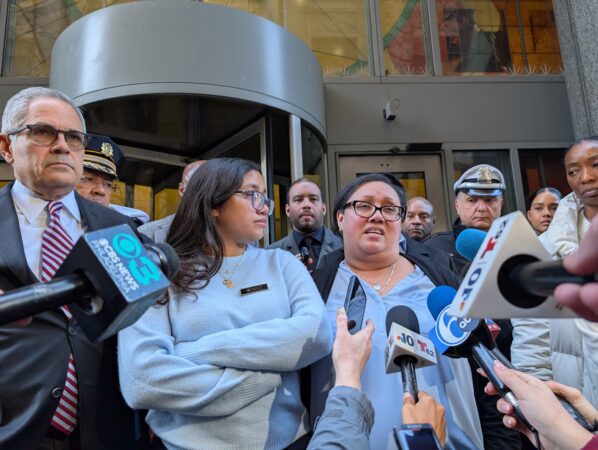
    Later, she appeared outside the courthouse with her mother alongside District Attorney Larry Krasner, Police Commissioner Kevin Bethel, and other high-ranking officials.

    “He was the love of my life, my soulmate,” Alex Carrero said, breaking into tears. “I have to live the rest of my life without him.”

    Bethel thanked prosecutors and the jury, and told Mendez’s family their pain was “just a chapter, but it may never go away.”

    “He gave his life for the safety of this city,” Bethel said of Mendez. “We will continue to carry that charge forward.”

    Krasner said the sentences reflected the gravity of “a truly horrific crime.” He commended prosecutors for weathering a prolonged jury deliberation — one that lasted four days as two jurors were dismissed; one for a medical emergency and another for reasons that were not publicly disclosed.

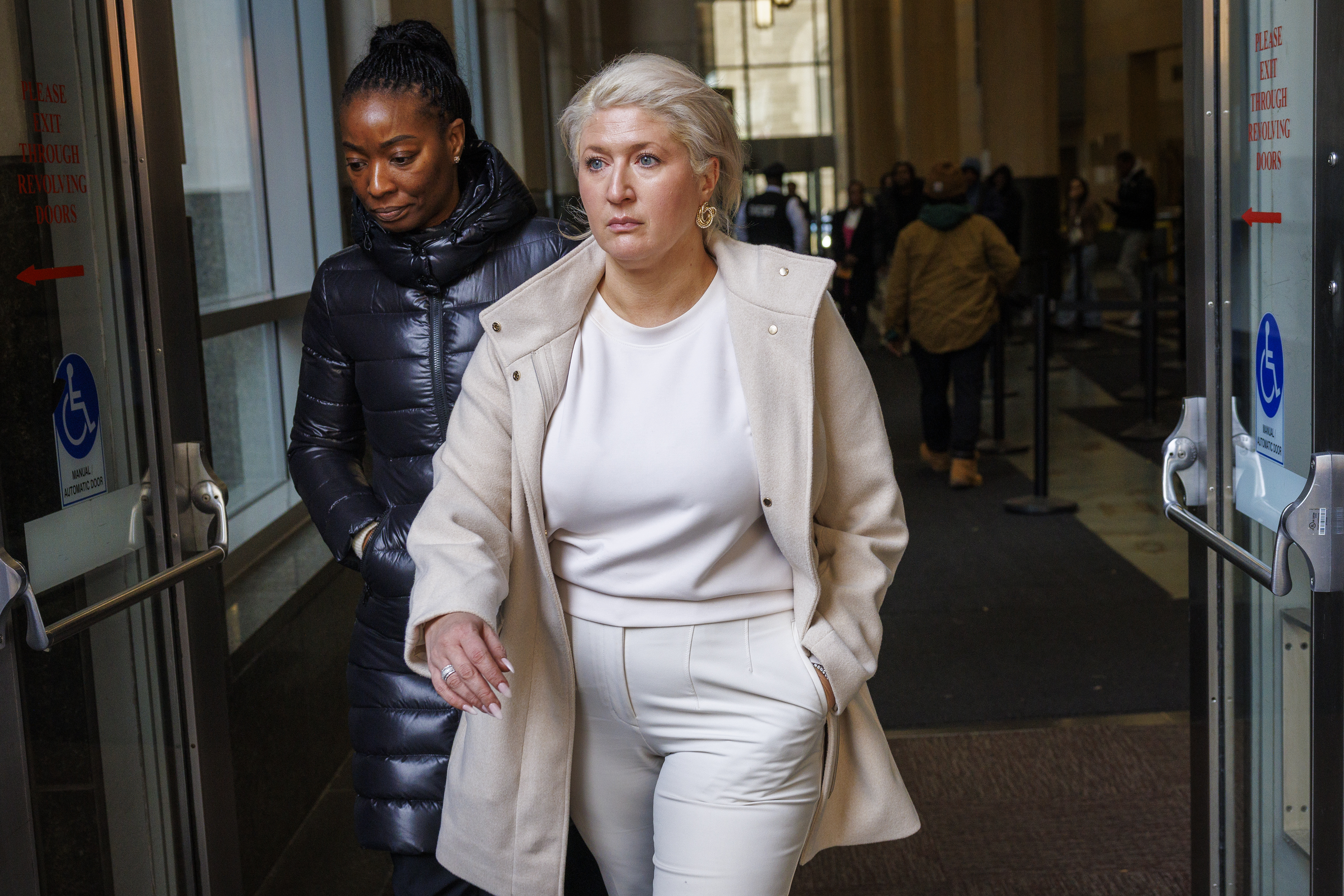
    Assistant District Attorney Cydney Pope leaves Juanita Kidd Stout Center for Criminal Justice during break in the first day of trial for defendant in shooting death of Philadelphia Police Officer Richard Mendez.

    Assistant District Attorney Cydney Pope’s case included cell tower data, surveillance footage, recovered DNA, and witnesses, including an accomplice to the crime who testified and implicated the two men. Taken together, Pope said, the evidence was compelling and linked the two men to the crime and its multistate scene.

    “This is something that truly never had to happen,” Pope said before sentencing. Instead of pulling the trigger, she said, Martinez-Fernandez could have surrendered to Mendez and faced far more lenient consequences.

    When asked if he would like to speak before the ruling, Martinez-Fernandez declined. Pena-Fernandez, barely audible, said: “I wish the best for everybody.”

    Defense attorneys maintained that Pope did not prove that their clients were at the scene of the shooting. And they told jurors they should not trust prosecutors’ star witness, a man who joined in the airport theft and who pleaded guilty to lesser charges in exchange for his testimony.

    Robert Gamburg, Pena-Fernandez’s attorney, said he planned to appeal the verdict.

    “Of course we’re disappointed with the verdict,” Gamburg told reporters. “However, there are substantial issues which will be raised eventually on appeal.”

    The trial took place amid an emotional atmosphere in the courtroom as dozens of police officers and department brass gathered to watch the proceedings, some offering comfort to the Carreros, who wept through the proceedings.

    They sat through the presentation of evidence that included life-size mannequins of Mendez, Ortiz, and the injured accomplice, Jesus Herman Madera Duran, all with markings noting where prosecutors said 9mm bullets tore through their bodies.

    Prosecutors recreated the crime scene by playing video taken by drone cameras that depicted the maze of vehicles in the concrete parking area where the shooting place. They also offered testimony from two witnesses — weary travelers who were making their way to their cars — to recount the burst of gunfire, followed by the sound of squealing tires as the men peeled out of the garage, knocking down the security gate in the process.

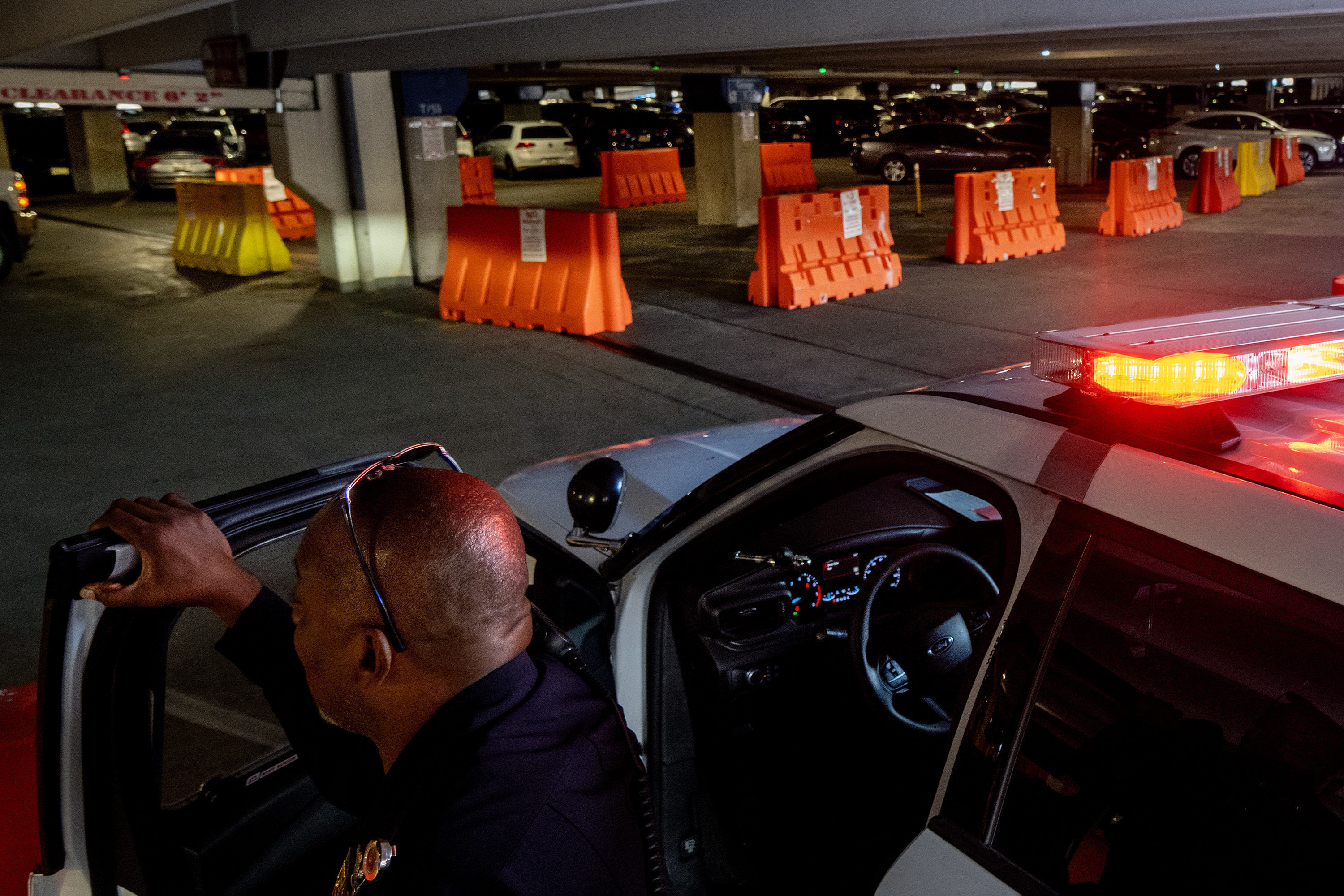
    Barriers are set up to prevent parking in a section of Philadelphia International Airport Terminal D parking garage on Nov. 9 ahead of a trial for two men charged with killing Police Officer Richard Mendez and wounding Officer Raul Ortiz during a 2023 attempted car theft.

    Prosecutors also played an audio recording of Ortiz screaming into his radio, “Officer down!” and saying that he, too, had been struck and could no longer feel his arm.

    “I’m gonna faint,” he said, “I’m losing feeling.”

    “They shot Rich,” he repeated throughout the call, his voice wavering in disbelief.

    At the time, Mendez was the third Philadelphia officer to be killed in the line of duty since 2015. A fourth, Officer Jaime Roman, was shot in the neck during a traffic stop in 2024.

    Martinez-Fernandez and Pena-Fernandez declined to testify when asked by Common Pleas Court Judge Giovanni O. Campbell whether they would like to do so. And the defense presented no witnesses of testimony.

    But on cross-examination of witnesses called by prosecutors, their attorneys, Gamburg and Earl G. Kauffman, made clear that those who testified had heard — but not seen — the crime.

    And Gamburg argued that his client was improperly charged with second-degree murder, a crime committed during the commission of another felony. In this case, he said, the attempted car theft was not a forceful or violent crime and should not have given rise to the more serious charge.

    Gamburg told the jury Pena-Fernandez did not go out that night with the intent to kill a police officer, did not fire a weapon, and had not known that Martinez-Fernandez was carrying a gun.

    The trial was also marked by jury issues that left the courtroom on edge as deliberations stretched into Monday morning.

    The panel’s work was almost immediately derailed Wednesday afternoon when a juror had a medical emergency and was carried out on a stretcher. Campbell called in an alternate juror and ordered that deliberations begin anew.

    Jurors appeared to be making progress Thursday as they repeatedly asked to review pieces of evidence. But Campbell later abruptly called jurors into court and told them they must approach the case with “courtesy and respect.”

    No resolution came Friday, either. After nearly a full day of silence from jurors, Campbell announced that a second juror had been dismissed.

    He did not explain why. And again, he ordered deliberations to start anew.

    On Monday, Pope, the prosecutor, praised the jury for its diligence.

    “This was a nuanced verdict,” she said. “They didn’t just go down the line and say ‘You’re guilty of all these charges.’ They went through and took their time, did the work.”

  • Murder trial closes for two men charged in the death of Philadelphia Police Officer Richard Mendez

    Murder trial closes for two men charged in the death of Philadelphia Police Officer Richard Mendez

    As the murder trial for two men charged in the shooting death of Philadelphia Police Officer Richard Mendez drew to a close Tuesday, prosecutors and defense attorneys offered differing interpretations of what happened on that violent October 2023 evening.

    Assistant District Attorney Cydney Pope said a group of men — including 20-year-old Yobranny Martinez-Fernandez and 23-year-old Hendrick Pena-Fernandez — went out that night with the goal of stealing cars, a business she said they carried out like a “well-oiled machine.” That, she said, included Martinez-Fernandez’s role of enforcer as he carried a 9mm handgun to protect the operation.

    Mendez, 50, and his partner, Raul Ortiz, were shot after they interrupted the group’s attempt to steal a Dodge Charger in parking lot D at Philadelphia International Airport.

    Prosecutors said Martinez-Fernandez was under the steering wheel programming a new key fob when he fired his gun, shooting Mendez multiple times through the torso and hitting Raul once in the arm. He also unintentionally shot an 18-year-old man who was one of the group’s accomplices, they said.

    Martinez-Fernandez was charged with first-degree murder, robbery, and related crimes. Pena-Fernandez, who prosecutors say assisted in the crime, faces charges of second-degree murder and related crimes.

    With both men facing life in prison without parole if convicted, defense attorneys Robert Gamburg and Earl G. Kauffman urged jurors to conclude that prosecutors had failed to make the case for their guilt.

    For one, they said jurors should question whether prosecutors had presented sufficient evidence to prove that the men had even been at the crime scene that evening.

    And they cast doubt on the account of the prosecution’s star witness — a man who was involved in the crime, and took the stand to implicate the two men after pleading guilty to lesser charges. Alexander Batista-Polanco, who the lawyers said stands to gain a lighter sentence in exchange for his cooperation with prosecutors, could not be trusted, they said.

    Pope scoffed at the suggestion Batista-Polanco had lied in exchange for favorable treatment and reminded jurors that witnesses face the risk of violence to themselves, and to their families, when speaking out. She said she believed Batista-Polanco would likely be “looking over his shoulder for the rest of his life.”

    Pope pointed to evidence including cell phone data and recovered DNA linking the men to the crime, which stretched from the South Philadelphia sports complex to the Cranbury, N.J., warehouse where she said the men torched the vehicle they used to flee the scene.

    Gamburg, who represents Pena-Fernandez, suggested that prosecutors had erred in charging him with second-degree murder, a killing during the commission of a felony like robbery, arson, or rape. In this case, he suggested, stealing a car was more like theft, and no weapon was used to obtain the vehicle.

    Pope, citing the shooting that followed and left a 22-year veteran of the force dead, disagreed.

    “You can call it whatever you want,” she said, “but what this is, is robbery.”

  • A former Philly probation officer and an ex-cop ran an illegal gambling operation together, feds say

    A former Philly probation officer and an ex-cop ran an illegal gambling operation together, feds say

    A former Philadelphia probation officer and a former city police officer have been charged with illegally connecting bettors to an overseas sports gambling website that allowed them to place hundreds of thousands of dollars in bets over nearly a decade, according to federal authorities.

    Joseph Moore and James P. DeAngelo Jr. each face one count of conducting an illegal gambling business, court records show. Moore, the former probation officer, pleaded guilty in federal court Monday.

    DeAngelo, the former police officer, is scheduled to appear in court later this week and has been charged by information, which typically indicates that a defendant intends to plead guilty.

    Prosecutors said in charging documents that Moore ran the scheme from 2017 to 2025 — operating “block pools” based on NFL or NCAA basketball games, or helping bettors place ordinary wagers on different sporting events. He would sometimes send mass emails to hundreds of bettors advertising pools he was running, the documents said, with entry fees of a few hundred dollars and payouts in the thousands for winners.

    Moore often collected 10% of the winners’ earnings as a “tip,” prosecutors said, and he sometimes allowed bettors to place wagers on credit even if they had incurred multiple losses.

    He conducted some of his business from his probation office, the documents said, and saved records from the operation on his work computer. At one point, prosecutors said, he recruited another probation officer to help collect and transfer money from bettors using peer-to-peer apps such as Venmo and Cash App.

    DeAngelo, meanwhile, helped maintain the operation’s access to the overseas gambling site, prosecutors said, and he sometimes accepted wagers from individual bettors.

    Prosecutors did not specify whether the investigation led either man to lose his job. But in charging documents, prosecutors said Moore ran the operation until February 2025, and Martin O’Rourke, a spokesperson for the First Judicial District, said Monday that Moore resigned from the probation department that month.

    A police spokesperson did not immediately respond to a request for comment Monday, and DeAngelo did not have an attorney listed in court records.

    The case was unsealed Monday, just days after federal prosecutors in New York unveiled two sweeping indictments charging several NBA figures with participating in illegal gambling schemes, one of which involved a player allegedly providing inside information to bettors about specific games.

    The fallout from that scandal has come quickly, with some commentators questioning whether sports leagues have grown too close to the betting industry, and Congress requesting a briefing from the NBA’s commissioner, Adam Silver.

  • Months before Kada Scott’s killing, Keon King was wanted for kidnapping his ex, but no one arrested him — even in court

    Months before Kada Scott’s killing, Keon King was wanted for kidnapping his ex, but no one arrested him — even in court

    A month after Keon King was charged with breaking into his ex-girlfriend’s home and attempting to strangle her, police say, his violence escalated: In January, he returned to her home with a gun, then kidnapped and assaulted her.

    A warrant for his arrest was issued days later.

    In the weeks that followed, King twice appeared in Philadelphia court and stood before a judge in the initial strangulation case. But no one in the courtroom seemed to know he was wanted for kidnapping.

    So both times, King walked out.

    In February, despite the warrant for King’s arrest, prosecutors — seemingly unaware that police said he had recently attacked their key witness — withdrew the burglary and strangulation case when the victim failed to appear in court.

    Police did not go to either hearing to take him into custody, and do not appear to have alerted the prosecutor about the new arrest warrant.

    And King was not formally charged with the kidnapping until April, when, for reasons that are unclear, he turned himself in.

    The shortcomings in those earlier cases came into focus this month after police said King abducted Kada Scott from outside her workplace Oct. 4, then killed her and buried her body in a shallow grave behind an East Germantown school. The death of Scott, 23, of Mount Airy, has unnerved a community and drawn national attention.

    Kada Scott, 23, was abducted from outside her workplace on Oct. 4, police said.

    A review of King’s previous criminal cases raises questions about whether police and prosecutors could have been more vigilant in holding him accountable for the earlier crimes they say he committed.

    City Council has since vowed to hold a hearing examining how the city’s criminal justice system handles cases of domestic violence.

    District Attorney Larry Krasner has said it was a mistake for prosecutors to withdraw the charges in the alleged kidnapping of King’s ex — and his office has since refiled them. He said the decision not to proceed with the case was made by a young assistant district attorney who was new at handling such prosecutions and who saw the victim’s absence as a fatal flaw, even though there was video evidence of the attack.

    But even before the charges were withdrawn, police and court records show, there were missteps.

    Marian Grace Braccia, a former Philadelphia prosecutor who is a law professor at Temple University, said she found it alarming that law enforcement failed to take King into custody when he twice stood before them in court while wanted for a violent felony.

    “If this is supposed to be a collaborative effort — if there is a shared mission of public safety and victim advocacy — it sounds like everyone dropped the ball,” she said.

    Detectives and prosecutors, she said, should have been aware of the arrest warrant and had officers take him into custody.

    Then, she said, prosecutors could have cited the alleged kidnapping to ask a judge to increase King’s bail and keep him behind bars.

    Instead, she said, “it passed by everybody, and he came in and walked out, and slipped through the cracks of the Philadelphia legal court system.”

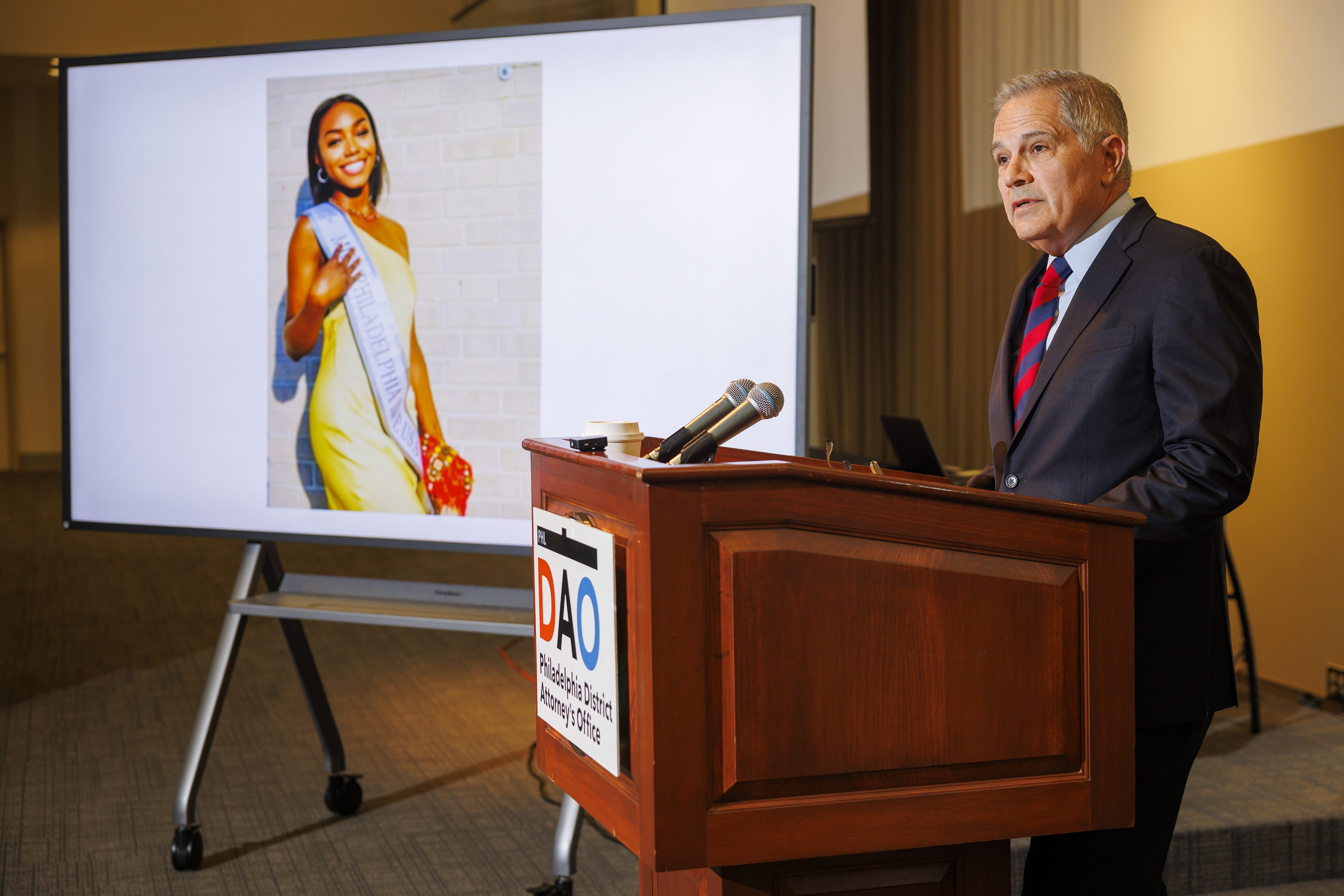
    Philadelphia District Attorney Larry Krasner discusses the killing of Kada Scott at a news conference earlier this week.

    Krasner said there is no system to automatically notify prosecutors when a defendant in one of their cases is arrested anew.

    Similarly, there is no system to let police know that suspects in new cases have outstanding criminal matters, said Philadelphia Police Department spokesperson Sgt. Eric Gripp.

    “Detectives are not automatically notified when a wanted subject is physically present in court on a different active case,” he said.

    Krasner said the issues in the case underscore a lack of communication among law enforcement agencies that happens in part because their digital information systems are decades old. He said his office and other law enforcement agencies should work to update those systems.

    “That is something that we can all improve together if we have the will and if we have the resources,” he said.

    A wanted man walks free

    Police said King first attacked his ex-girlfriend in early November of last year. He broke into her Strawberry Mansion home, then tried to strangle her, according to the affidavit of probable cause for his arrest.

    He was taken into custody in December and charged with burglary and strangulation, and bail was set at $50,000. King immediately posted the necessary 10%, $5,000, and was released.

    About a month later, police said, King returned to the woman’s home and tried to break in. When he could not gain entry, they said, he waited for her to step outside, then grabbed her by the hair and dragged her into his car. He drove for at least four miles, beating her along the way, before dropping her off in Fishtown, according to the affidavit for probable cause for his arrest.

    A judge approved the warrant for King’s arrest on charges of kidnapping, strangulation, and related crimes on Jan. 19, court records show.

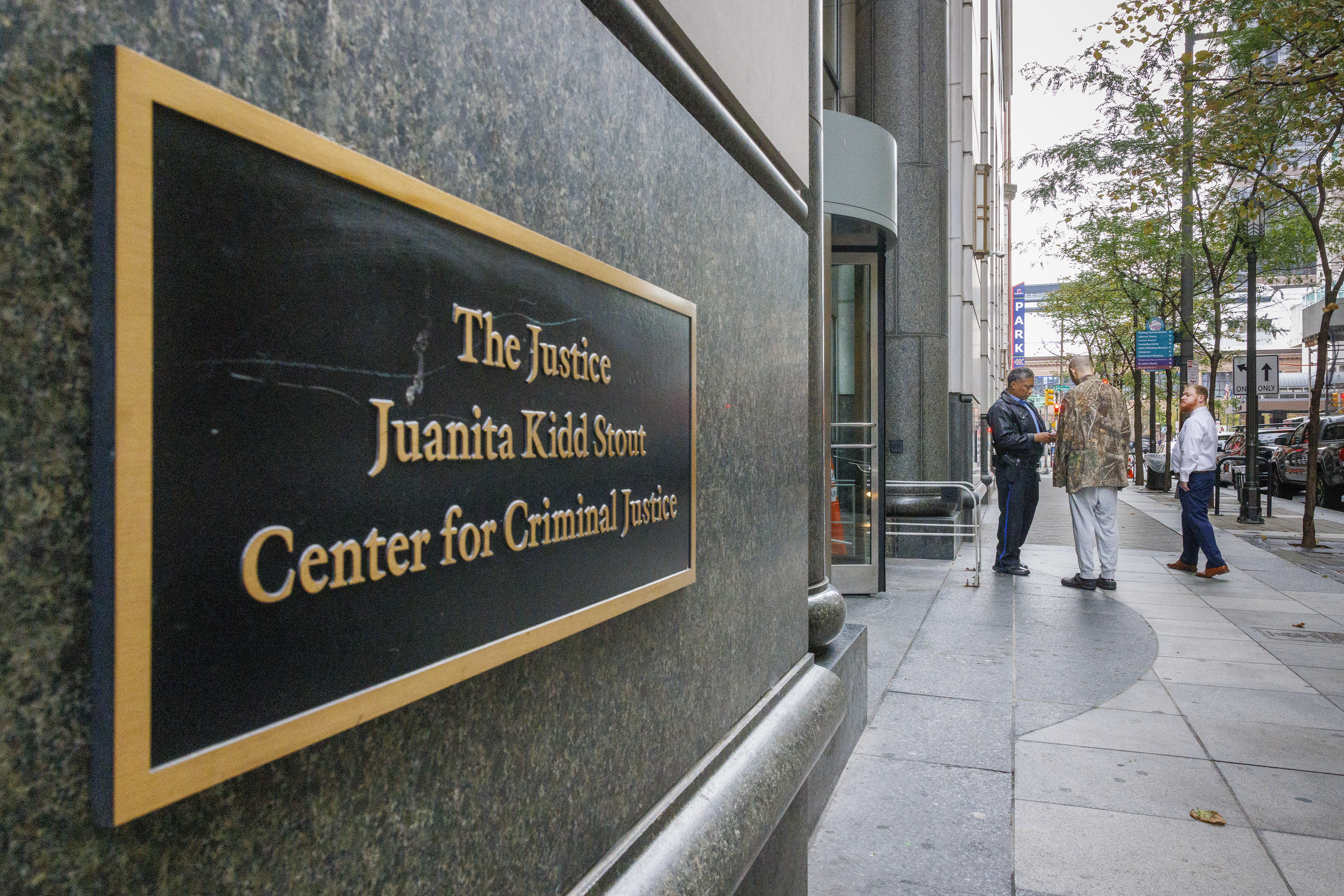
    The Justice Juanita Kidd Stout Center for Criminal Justice in Philadelphia.

    King — now wanted for a violent felony — appeared in court the following week for a preliminary hearing in the earlier burglary case, records show. But when the victim did not show up in court a second time, Municipal Court Judge Jacquelyn Frazier-Lyde ordered that the case had to proceed at the next listing. Prosecutors agreed.

    King left court.

    Meanwhile, police said, officers tried at least once to arrest him. On Feb. 11, Gripp said, police went to a home where they thought King might be, but he was not there.

    Two weeks later, King was again in court for the burglary case — but police did not go there to arrest him. Once again, the victim did not show up, and prosecutors withdrew the charges

    King walked out of court a free man.

    Braccia, the Temple law professor, said the detective assigned to the case should have been aware of the hearing. When seeking to charge King for the kidnapping, she said, the detective should have pulled up King’s arrest history and noticed the ongoing case. He then could have flagged it to the prosecutor in the first case and gone to the hearing to arrest him.

    At the same time, she said, the prosecutors who approved the kidnapping charges against King should have noticed the earlier case and told the prosecutor — particularly because it involved the same victim.

    In April, King turned himself in to police to be charged with kidnapping, strangulation, and related crimes in connection with the January attack. Prosecutors asked for bail of $999,999, but the magisterial judge, Naomi Williams, set bail at $200,000, court records show. King posted the necessary $20,000 and was released.

    The following month, after the victim again did not appear in court at two hearings, the kidnapping charges were also withdrawn.

    Since prosecutors have refiled the charges, Krasner’s office said it has been back in touch with the woman and hopes she will testify. She declined to comment about King’s alleged crimes and the previous handling of the cases by police and prosecutors.

    Six months later, King is back in custody, this time charged with murder. He is being held without bail.

  • Five things contributing to Philadelphia’s improved homicide clearance rate

    Five things contributing to Philadelphia’s improved homicide clearance rate

    Just four years ago, Philadelphia saw the most homicides in its history — and police solved them at the lowest rate on record.

    Now, those trends have flipped.

    The city is now on pace for the fewest killings in half a century, and detectives are solving murders at the highest rate in recent memory.

    The homicide clearance rate this year has hovered between 86% and 90% — the highest since 1984, when the department recorded a 95% clearance rate.

    The change is a welcome improvement from the challenges of 2015 to 2022, when the rate of solved homicides hovered around 50% or less and dropped to a historic low of 41.8% in 2021, according to police data.

    Just as there’s no single explanation for the drop in shootings, there’s no simple answer to why detectives are closing cases more quickly this year. And a higher arrest rate doesn’t account for whether a defendant is convicted at trial.

    But interviews with law enforcement officials and a review of police data and court records suggest a few likely factors: the overall decline in violence, which gives officers more time to investigate, and recent investments in technology that give detectives faster access to evidence.

    Here are five things contributing to the improved clearance rate:

    !function(){“use strict”;window.addEventListener(“message”,function(a){if(void 0!==a.data[“datawrapper-height”]){var e=document.querySelectorAll(“iframe”);for(var t in a.data[“datawrapper-height”])for(var r,i=0;r=e[i];i++)if(r.contentWindow===a.source){var d=a.data[“datawrapper-height”][t]+”px”;r.style.height=d}}})}();

    Simple math

    The clearance rate is calculated by dividing the number of homicide cases solved in a given year — regardless of when the crime occurred — by the number of homicides that occurred in that same year.

    And so the apparent improvement partly comes down to simple math: with dramatically fewer killings this year, even fewer total arrests can boost the clearance rate.

    Through August, police had solved about 60% of the killings in 2025, but because they’ve cleared nearly 50 others from previous years — and because there are a third as many homicides as three years ago — the rate goes up.

    Still, that number is notable. Only about a third of killings that occurred in 2021 and 2022 were solved that same year, according to an Inquirer analysis of court records and police data.

    !function(){“use strict”;window.addEventListener(“message”,function(a){if(void 0!==a.data[“datawrapper-height”]){var e=document.querySelectorAll(“iframe”);for(var t in a.data[“datawrapper-height”])for(var r,i=0;r=e[i];i++)if(r.contentWindow===a.source){var d=a.data[“datawrapper-height”][t]+”px”;r.style.height=d}}})}();

    Time

    The significant reduction in violence this year has given detectives the time to solve their cases, both old and new.

    During the pandemic — as the city recorded about 2,000 homicides in just four years — detectives were handling 10 to 15 cases each year, more than twice the workload recommended by the U.S. Department of Justice.

    This year, it’s half that.

    That’s making a difference. Detectives this year appear to be solving cases more quickly than years past, according to an Inquirer analysis.

    Through August, police arrested a suspect within a week in about 31% of cases — up from just 15% three years ago.

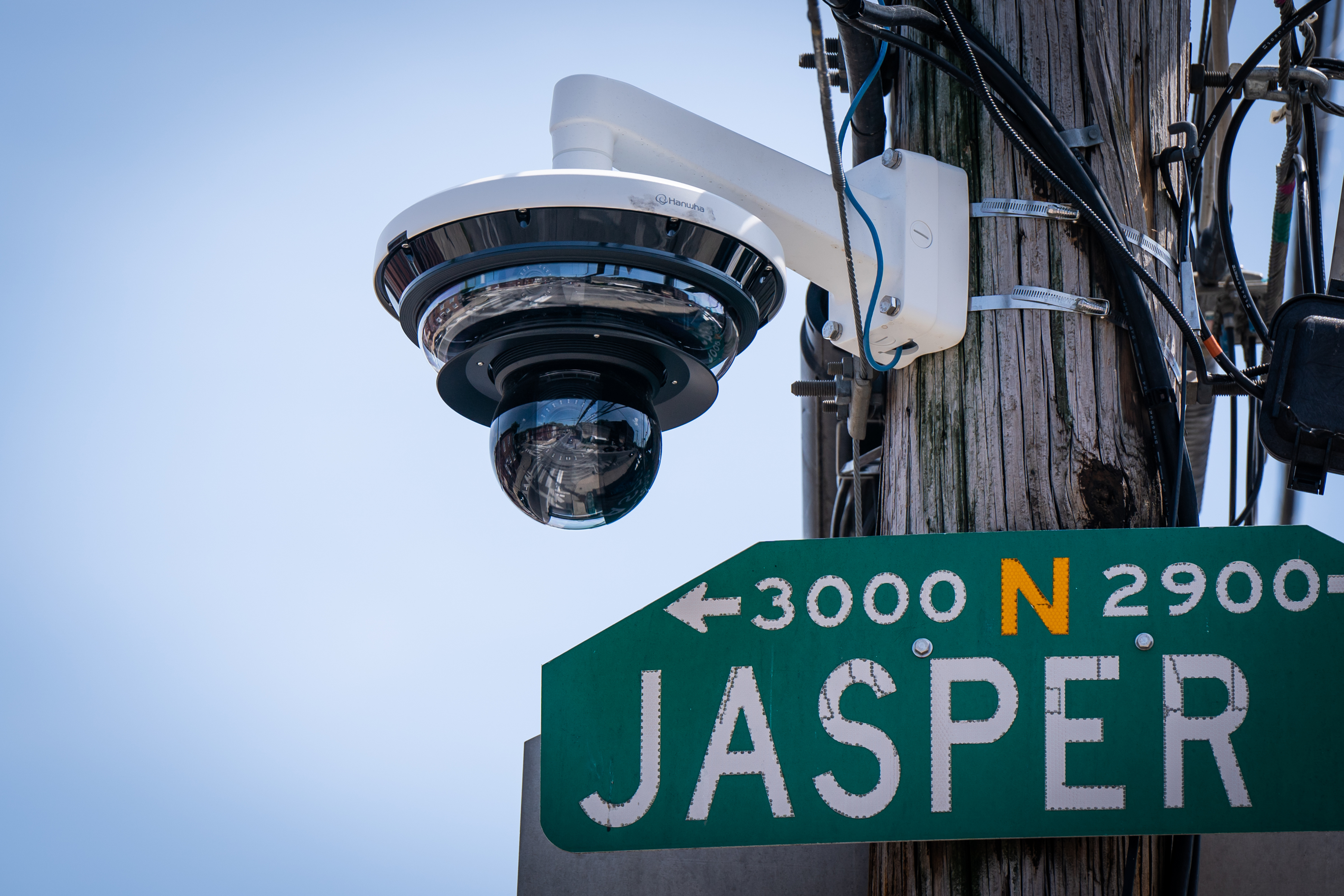
    A video camera at Jasper and Orleans Streets in Philadelphia.

    Cameras are everywhere

    Just in the last year, police have doubled the number of “real-time crime” cameras on Philadelphia’s streets. In 2024, police said there were 3,625 of the ultrahigh-resolution cameras across the city. This year, there are 7,309.

    And there are tens of thousands of other cameras through SEPTA, private businesses, and residents’ home-surveillance systems that give detectives leads on suspects.

    Police have also recently installed hundreds of license plate readers — 650 for every patrol vehicle and another 125 on poles across the city.

    The department also subscribes to a software that taps into a broader network of millions of other plate readers — on tow trucks, in parking garages, and even private businesses across the region.

    Police said the tools are helping them track shooters’ movements before and after a shooting and locate getaway cars more quickly, by searching a vehicle’s license plate or even by its make and model.

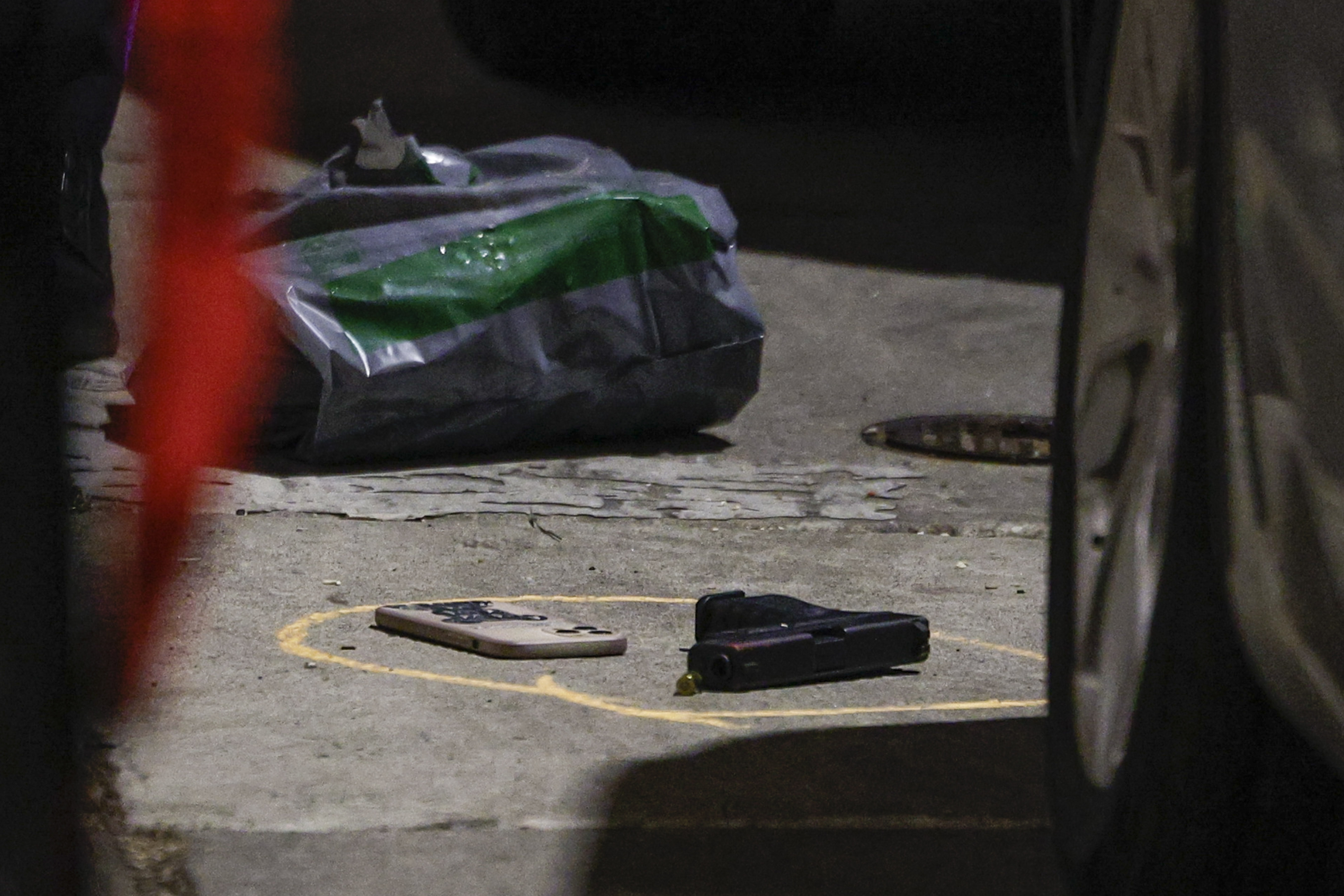
    Police locate a gun and a cell phone on the 700 block of East Willard Street, where a man in his 20s was fatally shot in December 2024.

    Phones and social media

    Philadelphia police and the district attorney’s office have greatly expanded their digital evidence tools in the past two years.

    Where cases once relied on grainy video and often-reluctant witnesses, detectives now have high-definition video footage, partial DNA processors, and cell phone location data — evidence that “never goes away” and doesn’t lie, said Deputy Police Commissioner Frank Vanore.

    Getting access to a suspect’s — and victim’s — phones and social media can often tell the story behind a crime.

    The Gun Violence Task Force, which investigates gang violence and works closely with homicide and shooting detectives, had just two cell phone extraction devices two years ago. Now, it has 14, plus a host of advanced software that helps investigators track and map gang networks.

    Between the homicide unit and the task force, nearly 2,000 phones were processed last year — often giving detectives crucial evidence and information about crimes beyond the one they were initially investigating.

    Improved morale

    Some detectives, who asked not to be identified to speak frankly about their work, said morale in the homicide unit — and across the department — has improved.

    During the pandemic, when shootings surged, tensions in the unit went unchecked, and conditions at the Roundhouse headquarters were dire. The office was overcrowded and infested with vermin, and investigators shared just 15 computers among nearly 100 detectives.

    Since moving in 2022 to new offices at 400 N. Broad St., each detective now has a desk and computer, and that has boosted productivity, they said.

    The detectives also said that patrol officers seem more empowered than during the height of the gun violence crisis to engage with their neighborhoods and gather information that ends up being important to their investigations.