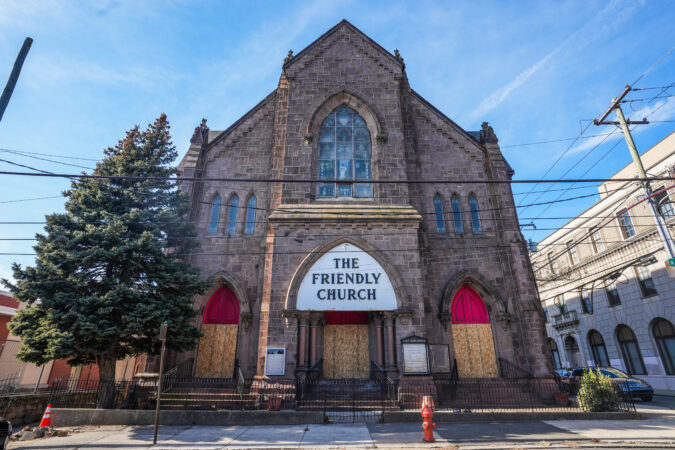
Union Trinity AME Church, one of Philadelphia’s historic Black religious institutions and known as “The Friendly Church,” was vandalized with racist graffiti over the weekend.
Pastor Tianda Smart-Heath was informed of the vandalism shortly after Sunday service, where she found racist slogans invoking the name of God and enslaved people sprayed onto the exterior walls of the more than 200-year-old church, according to the Philadelphia Police Department.
The newly merged church, Union Trinity AME in North Philadelphia, hasn’t welcomed congregants inside the historic building since 2020, and it is currently under construction, according to Fox 29. In that time, church service has been held at the Beckett Life Center next door.
Smart-Heath told local media that the church has been vandalized before, including trespassing and theft, but never with racist hate speech. Police responded to the vandalism on Sunday to photograph the scene and conduct a follow-up investigation. The case is overseen by PPD Central Detectives.
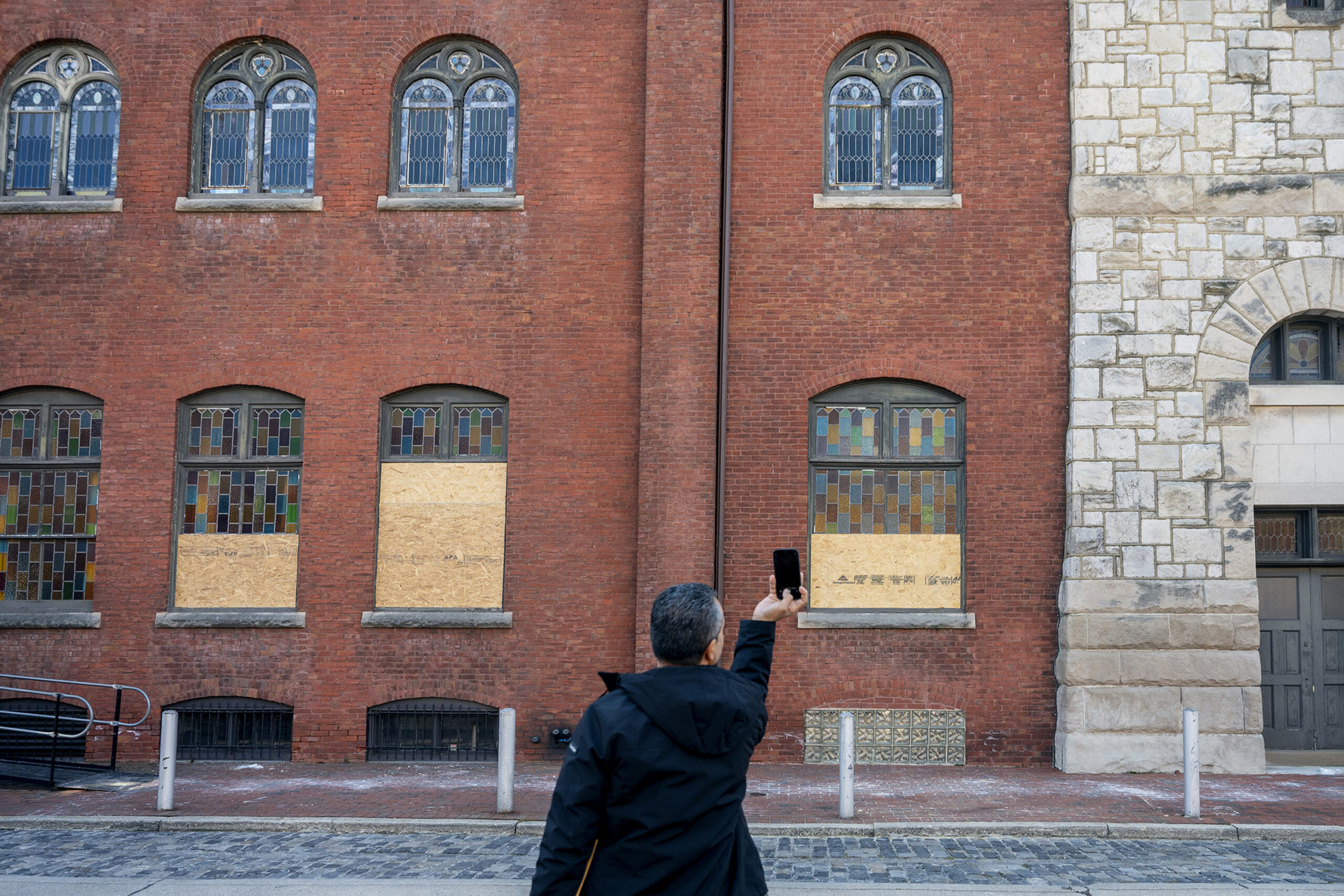
A police officer photographs damaged stained glass at Mother Bethel AME Church on Feb. 20, 2024.
African Methodist Episcopal (AME) churches are part of a vast network of independent Black Christian churches that was started in Philadelphia two centuries ago, when Richard Allen founded Mother Bethel AME in 1787.
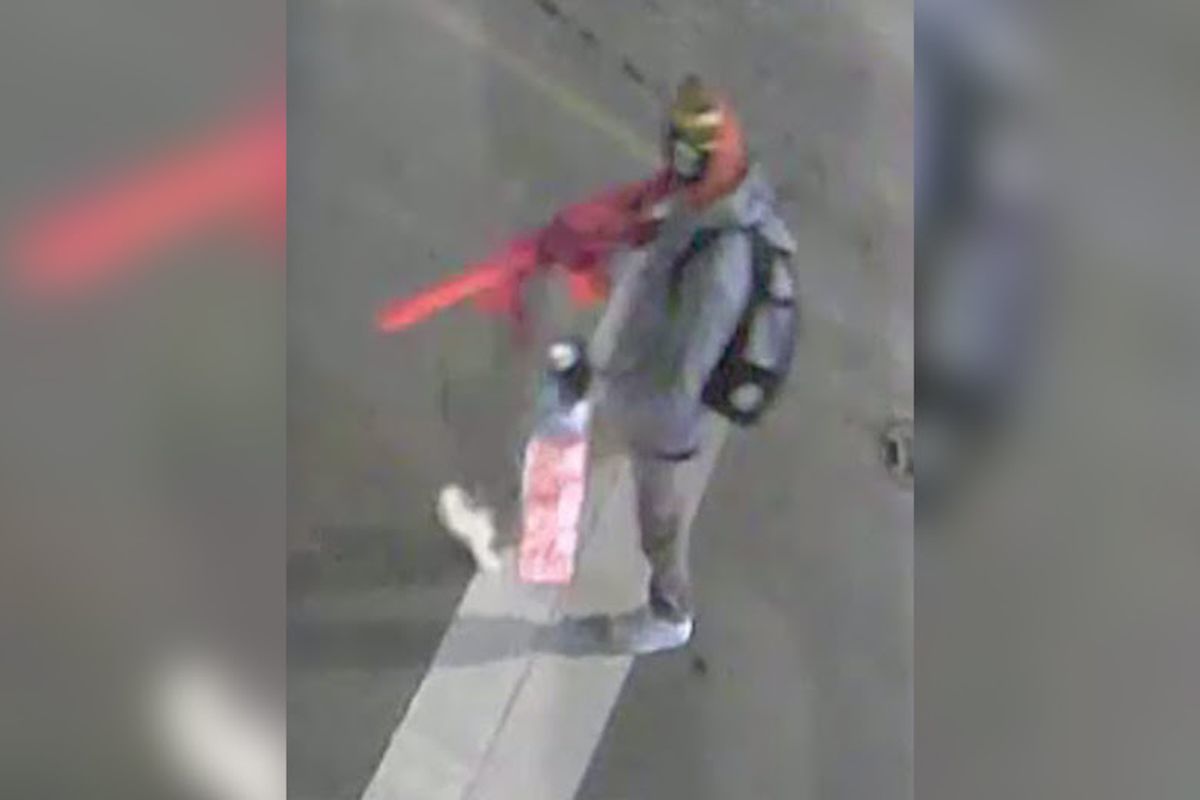
A screenshot of a surveillance video captures the suspect in a recent vandalism incident, where an unknown white male painted racist and antisemitic slogans on the exterior walls of Roxborough High School on Jan. 4, 2026. Police describe the suspect as a white male, wearing an orange scarf/wrap, green and black winter hat, gray hooded jacket, gray pants, and a gray and black backpack.
Hate crimes have more than tripled in Pennsylvania since 2020, according to the most recent “No Hate in Our State” report from the Pennsylvania Human Relations Commission (PHRC). The most prevalent form of hate crime in Pennsylvania, according to FBI reports, is anti-Black or anti-African American hate crimes, accounting for more than one out of every four hate crimes committed in the state in the last five years.
“Any attack on the Black Church as one of the historical foundations of the African American community needs to be condemned and looked at through the lens of a potential hate crime,” said PHRC executive director Chad Dion Lassiter. “We can no longer be silent in this moment of outward hatred and rage toward any institution of faith.”
For Brian Lovenduski and J. Bazzel, the week after Christmas turned into horror when a pit bull in Center City attacked their beloved dogs. Now that the canine is in custody, they can’t help but feel a bittersweet sense of solace.
“I feel relieved that the dog is not a danger to other people on the streets, but I have mixed feelings that the authorities didn’t work faster,” Lovenduski said.
Between Dec. 26 and 31, three dogs and two owners were attacked by a pit bull in Center City, leaving behind thousands in veterinary bills and GoFundMe pages asking for help.
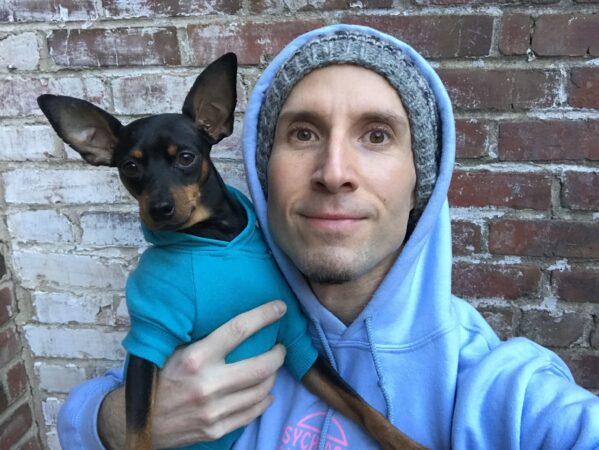
Lovenduski’s miniature pinscher, Ziggy, lost a leg after a pit bull lunged at him at 12th and Chestnut Streets. And, Stella, Bazzel’s sheltie pup, required surgery, a plate, and a skin graft to piece her crushed foreleg together, after being attacked at Juniper and Chestnut Streets.
It that intersection where police located the pit bull and her owner, whom they believed to be a homeless woman, on Jan. 6.
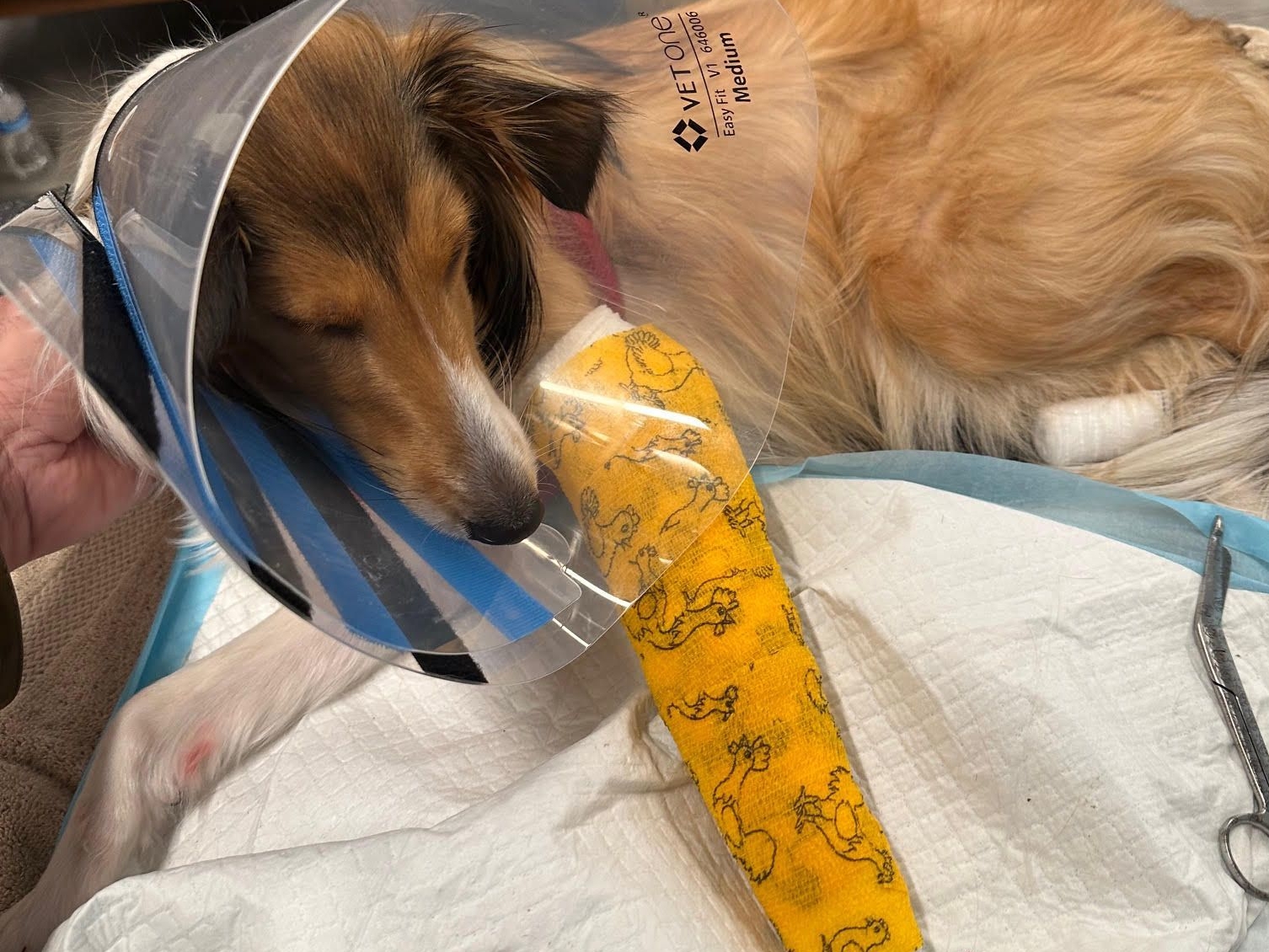
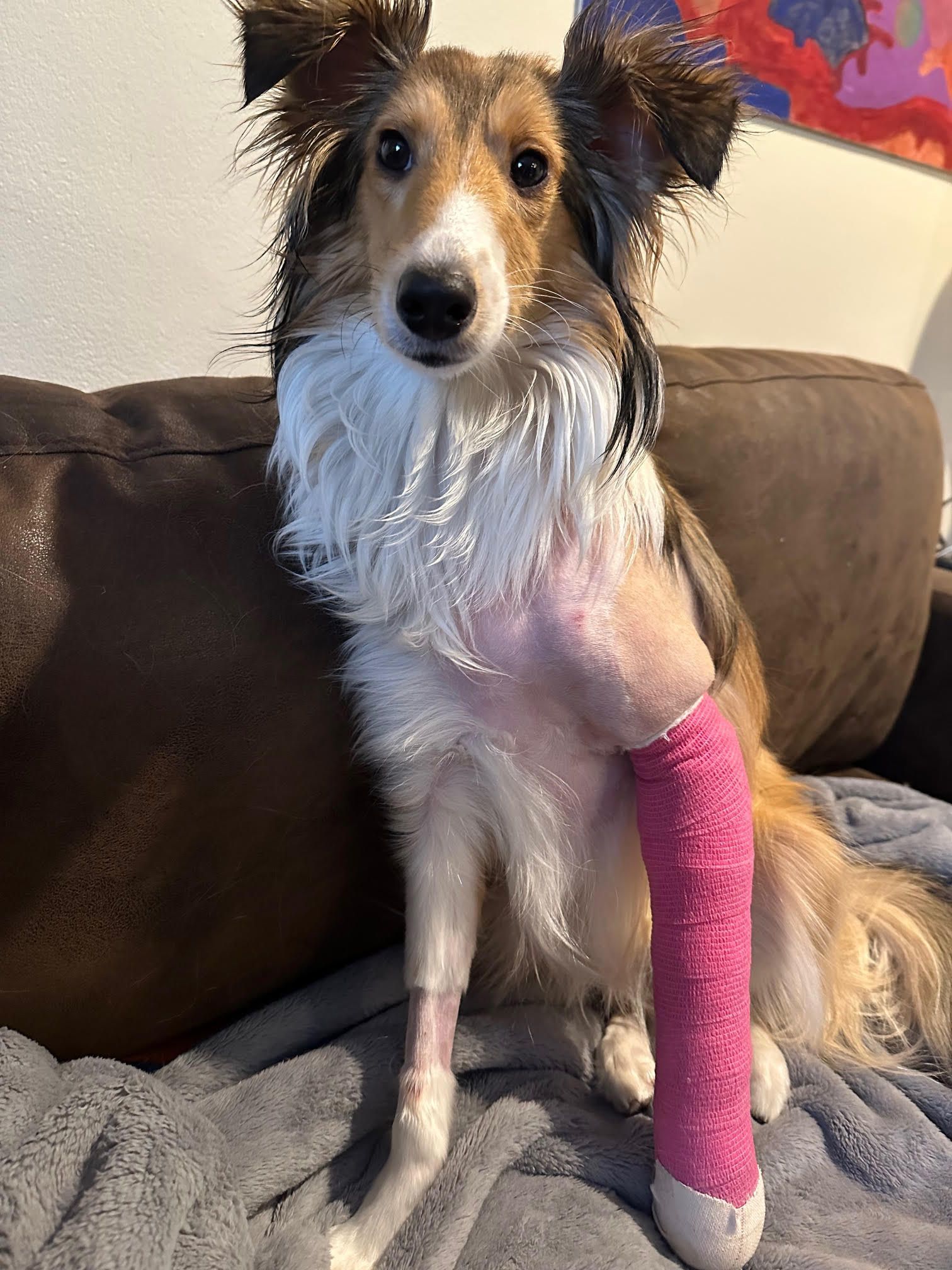
Stella, an 11-month-old sheltie, seen here recovering from surgery after she was attacked by a pitbull Dec. 26 in Center City. Police believe the pitbull is responsible for three recent attacks.
Miguel Torres, a spokesperson for the Philadelphia Police Department, said the woman was arrested for an unrelated matter he would not disclose. So far, no charges have been filed in connection with the dog attacks, Torres said.
The pit bull was transported to ACCT for evaluation. She has not been euthanized, but is not a candidate for adoption, said Sarah Barnett, ACCT Philly executive director.
All incidents remain under investigation, police said.
Both Lovenduski and Bazzel were told the pit bull responsible for their dogs’ attacks was in custody at ACCT.
“It’s bittersweet. We have a dog that is not in a great situation, which creates situations for other dogs and other people. I’m relieved, but I’m not happy it had to come to that,” Bazzel said.
Stella, an 11-month-old sheltie, seen here recovering from surgery after she was attacked by a pit bull Dec. 26 in Center City. Police believe the pit bull is responsible for three recent attacks.
Regardless, his full focus is on his 11-month-old puppy, Stella, who is working on her recovery and getting ready for her first birthday on Jan. 23.
Looking at Ziggy, Lovenduski feels like he may be heartbroken forever, but he is pulling strength from seeing his little guy trying to keep going.
“He is this innocent little creature that relies on me for his safety, and this horrible thing happened that changed his life forever,” Lovenduski said. “I never expected to be in this situation, but the kindness of people has really reminded me that even when it feels like the world is rotten, kindness wins among the lost.”
Ziggy, a miniature pinscher, was attacked by a pit bull while being walked by owner, Brian Lovenduski on Dec. 29, 2025. It was one of three known attacks by the pit bull.
In 2025, Philadelphians said goodbye to a beloved group of broadcasters, radio personalities, sports heroes, and public servants who left their mark on a city they all loved.
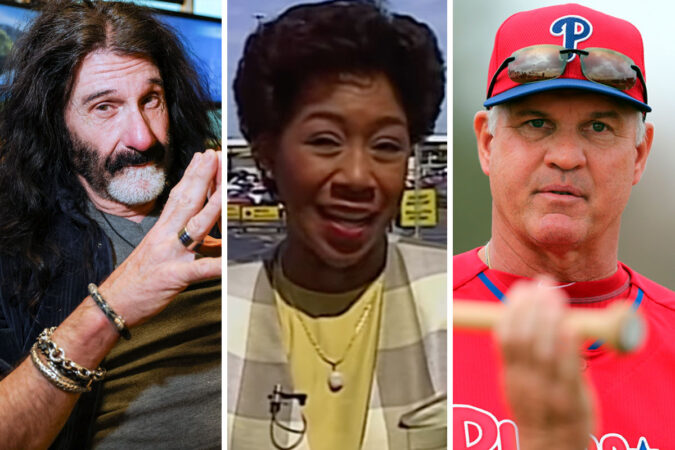
Some were Philly natives, including former Eagles general manager Jim Murray. Others, including beloved WMMR host Pierre Robert, were transplants who made Philly their adopted home. But all left their mark on the city and across the region.
Pierre Robert
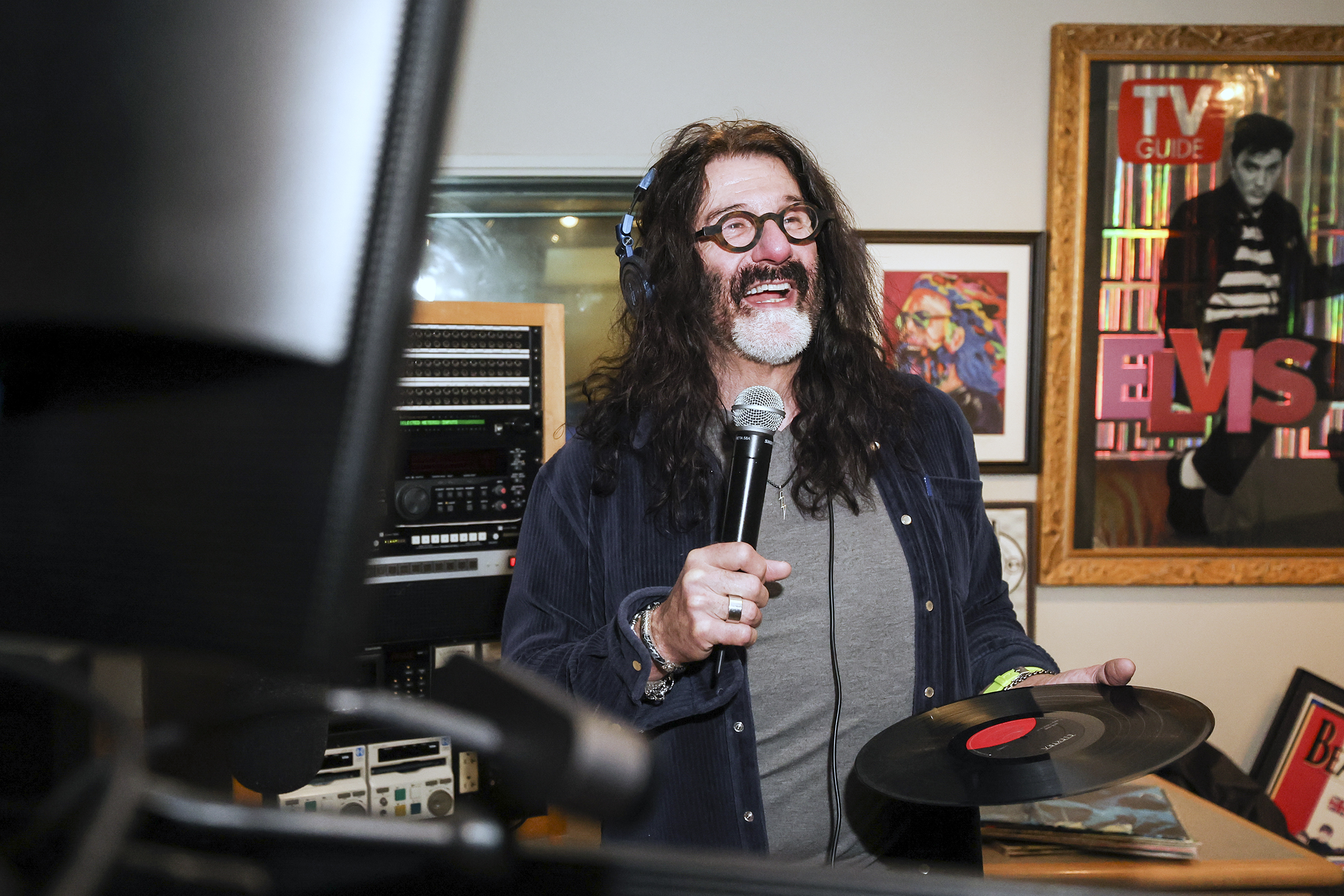
Former WMMR host Pierre Robert, seen in his studio in 2024.
A native of Northern California, Mr. Robert joined WMMR as an on-air host in 1981. He arrived in the city after his previous station, San Francisco’s KSAN, switched to an “urban cowboy” format, prompting him to make the cross-country drive to Philadelphia in a Volkswagen van.
At WMMR, Mr. Robert initially hosted on the weekends, but quickly moved to the midday slot — a position he held for more than four decades up until his death.
— Nick Vadala, Dan DeLuca
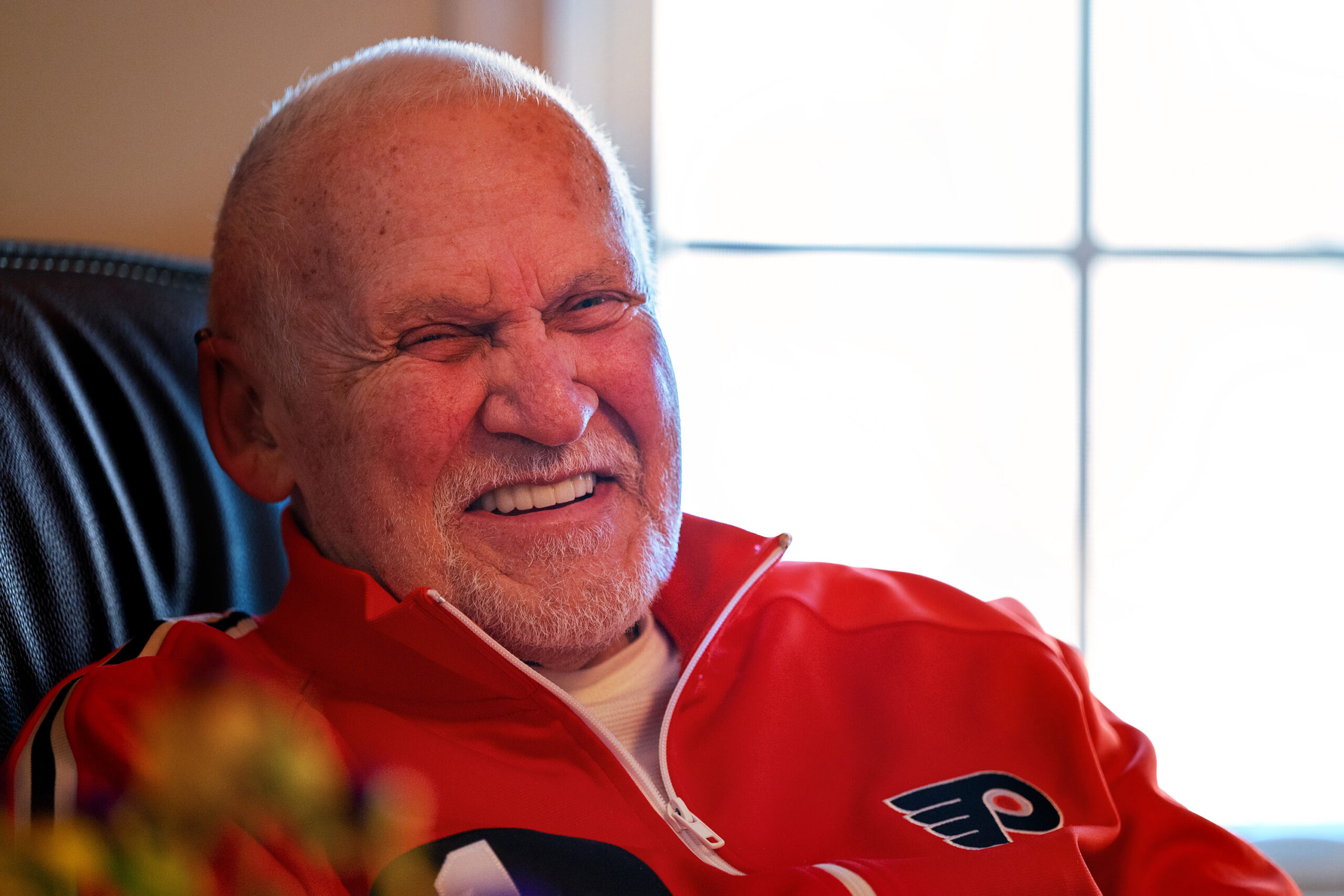
Bernie Parent
Former Flyers goaltender Bernie Parent, seen at his home in 2024.
Bernie Parent, the stone-wall Flyers goalie for the consecutive Stanley Cup championship teams for the Broad Street Bullies in the 1970s, died in September. He was 80.
A Hall of Famer, Mr. Parent clinched both championships with shutouts in the final game as he blanked the Boston Bruins, 1-0, in 1974 and the Buffalo Sabres, 2-0, in 1975. Mr. Parent played 10 of his 13 NHL seasons with the Flyers and also spent a season in the World Hockey League with the Philadelphia Blazers. He retired in 1979 at 34 years old after suffering an eye injury during a game against the New York Rangers.
He grew up in Montreal and spoke French as his first language before becoming a cultlike figure at the Spectrum as cars throughout the region had “Only the Lord Saves More Than Bernie Parent” bumper stickers.
— Matt Breen
David Lynch
David Lynch, seen here at the Governors Awards in Los Angeles in 2019.
David Lynch, the visionary director behind such movies as Blue Velvet and The Elephant Man and the twisted TV show Twin Peaks, died in January of complications from emphysema. He was 78.
Mr. Lynch was born in Missoula, Mont., but ended up in Philadelphia to enroll at the Pennsylvania Academy of the Fine Arts in 1965 at age 19. It was here he developed an interest in filmmaking as a way to see his paintings move.
He created his first short films in Philadelphia, which he described both as “a filthy city” and “his greatest influence” as an artist. Ultimately, he moved to Los Angeles to make his first feature film, Eraserhead, though he called the film “my Philadelphia Story.”
— Rob Tornoe
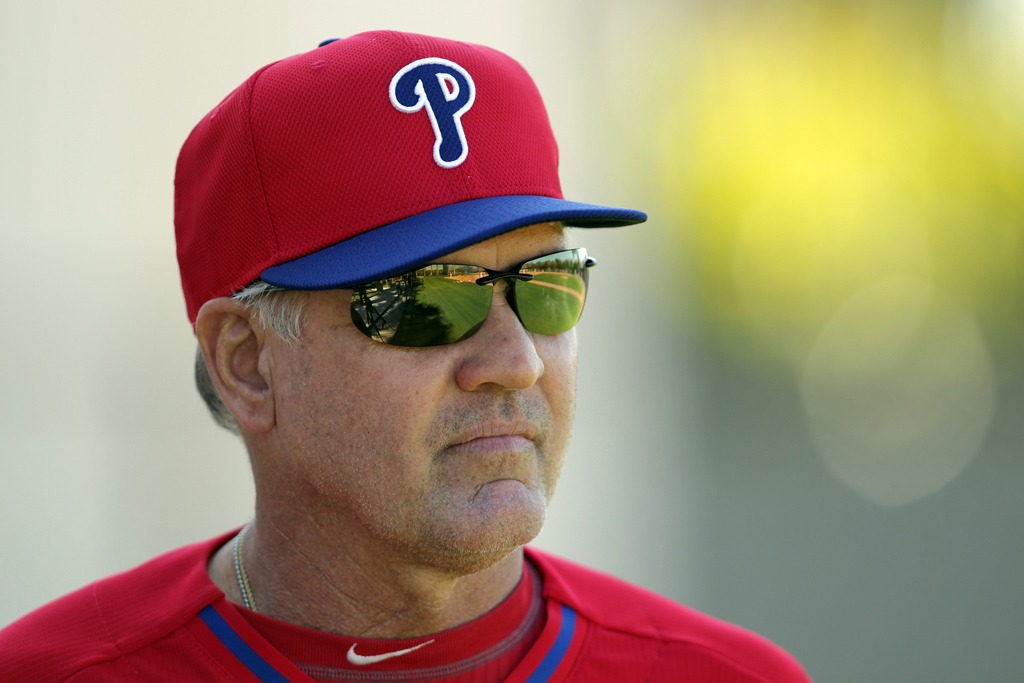
Ryne Sandberg
Former Phillies manager Ryne Sandberg, seen here at spring training in 2018.
Ryne Sandberg, the Hall of Fame second baseman who started his career with the Phillies but was traded shortly after to the Chicago Cubs in one of the city’s most regrettable trades, died in July of complications from cancer. He was 65.
Mr. Sandberg played 15 seasons in Chicago and became an icon for the Cubs, simply known as “Ryno,” after being traded there in January 1982.
He was a 10-time All-Star, won nine Gold Glove awards, and was the National League’s MVP in 1984. Mr. Sandberg was inducted into the Baseball Hall of Fame in 2005 and returned to the Phillies in 2011 as a minor-league manager and, later, the big-league manager.
— Matt Breen
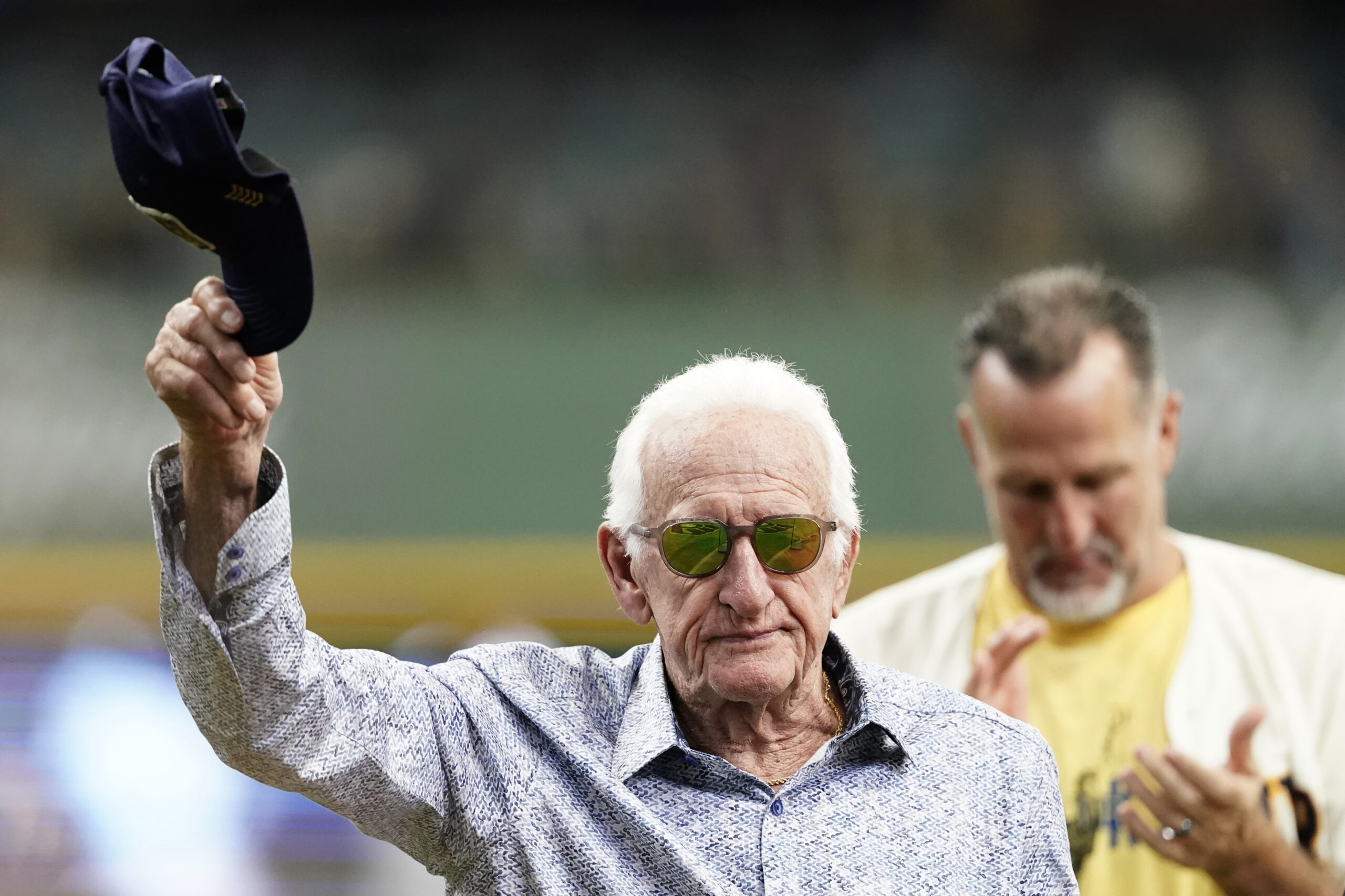
Bob Uecker
Bob Uecker, seen here before a Brewers game in 2024.
Bob Uecker, a former Phillies catcher who later became a Hall of Fame broadcaster for the Milwaukee Brewers and was dubbed “Mr. Baseball” by Johnny Carson for his acting roles in several movies and TV shows, died in January. He was 90.
Mr. Uecker spent just six seasons in the major league, two with the Phillies, but the talent that would make him a Hall of Fame broadcaster — wit, self-deprecation, and the timing of a stand-up comic — were evident.
His first broadcasting gig was in Atlanta, and he started calling Milwaukee Brewers games in 1971. Before that, he called Phillies games: Mr. Uecker used to sit in the bullpen at Connie Mack Stadium and deliver play-by-play commentary into a beer cup.
— Matt Breen and Rob Tornoe
Harry Donahue
Harry Donahue, seen here at Temple University in 2020.
Harry Donahue, 77, a longtime KYW Newsradio anchor and the play-by-play voice of Temple University men’s basketball and football for decades, died in October after a fight with cancer.
His was a voice that generations of people in Philadelphia and beyond grew up with in the mornings as they listened for announcements about snow days and, later, for a wide array of sports.
— Robert Moran
Alan Rubenstein
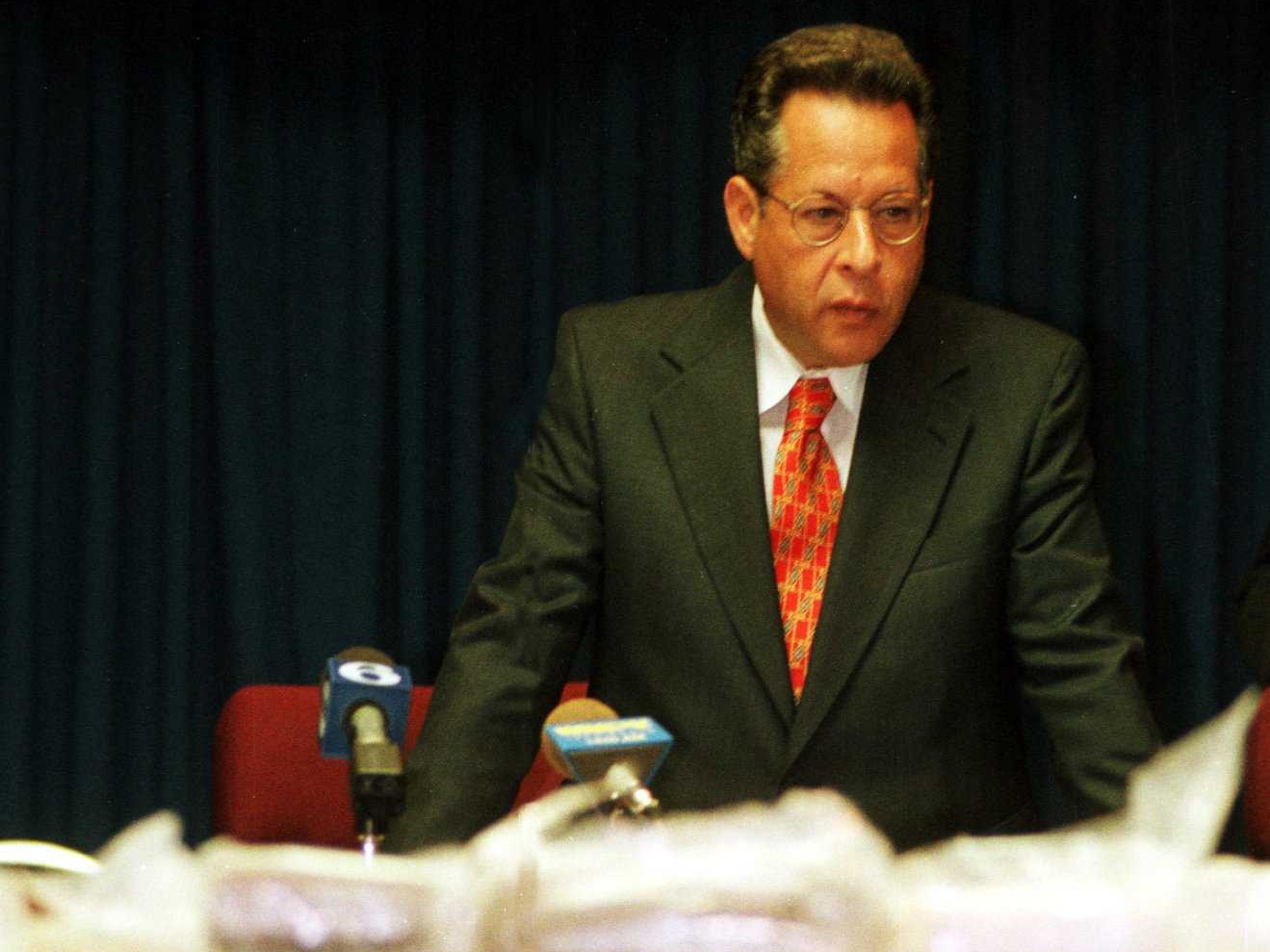
Judge Rubenstein, then Bucks County district attorney, talks to the media about a drug case in 1998.
Alan M. Rubenstein, a retired senior judge on Bucks County Common Pleas Court and the longest-serving district attorney in Bucks County history, died in August of complications from several ailments at his home in Holland, Bucks County. He was 79.
For 50 years, from his hiring as an assistant district attorney in 1972 to his retirement as senior judge a few years ago, Judge Rubenstein represented Bucks County residents at countless crime scenes and news conferences, in courtrooms, and on committees. He served 14 years, from 1986 to 1999, as district attorney in Bucks County, longer than any DA before him, and then 23 years as a judge and senior judge on Bucks County Court.
“His impact on Bucks County will be felt for generations,” outgoing Bucks County District Attorney Jennifer Schorn said in a tribute. U.S. Rep. Brian Fitzpatrick (R., Pa.) said on Facebook: “Alan Rubenstein has never been just a name. It has stood as a symbol of justice, strength, and integrity.”
— Gary Miles
Orien Reid Nix
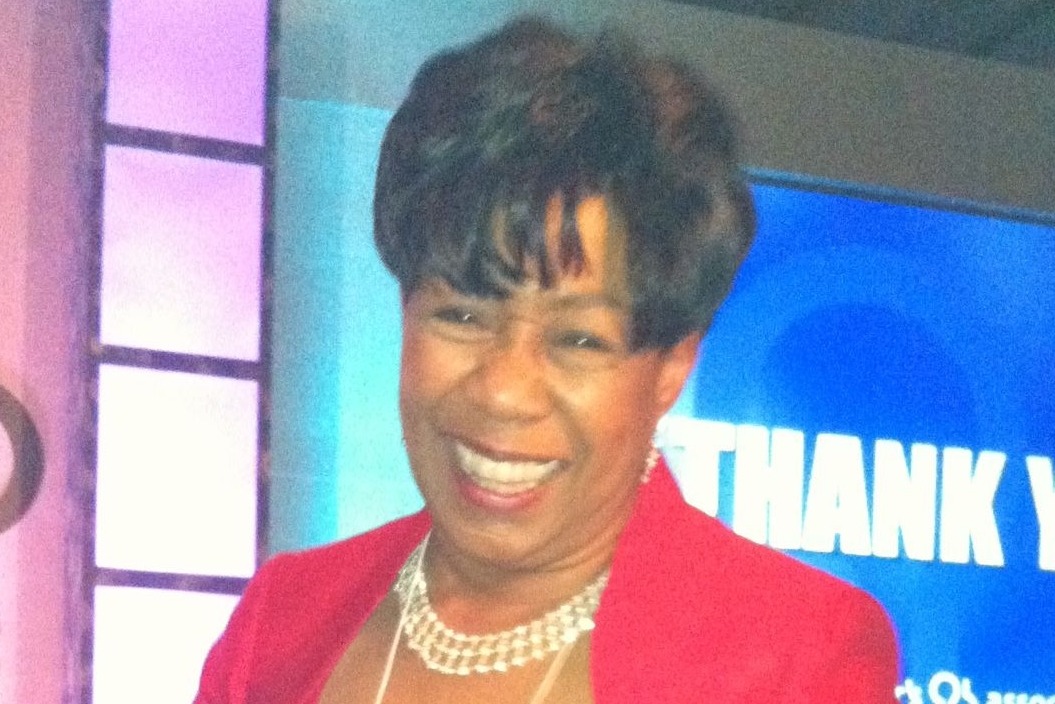
Orien Reid Nix, seen here being inducted into the Broadcast Pioneers of Philadelphia Hall of Fame in 2018
Orien Reid Nix, 79, of King of Prussia, retired Hall of Fame reporter for KYW-TV and WCAU-TV in Philadelphia, owner of Consumer Connection media consulting company, the first Black and female chair of the international board of the Alzheimer’s Association, former social worker, mentor, and volunteer, died in June of complications from Alzheimer’s disease.
Charismatic, telegenic, empathetic, and driven by a lifelong desire to serve, Mrs. Reid Nix worked as a consumer service and investigative TV reporter for Channels 3 and 10 in Philadelphia for 26 years, from 1973 to her retirement in 1998. She anchored consumer service segments, including the popular Market Basket Report, that affected viewers’ lives and aired investigations on healthcare issues, price gouging, fraud, and food safety concerns.
— Gary Miles
Dave Frankel
Dave Frankel in an undated publicity photo.
Dave Frankel, 67, a popular TV weatherman on WPVI (now 6abc) who later became a lawyer, died in February after a long battle with a neurodegenerative disease.
Mr. Frankel grew up in Monmouth County, N.J., graduated in 1979 from Dartmouth College, and was planning to attend Dickinson School of Law to become a lawyer like his father. But an internship at a local TV station in Vermont turned into a news anchor job and a broadcast career that lasted until the early 2000s.
— Robert Moran
Lee Elia
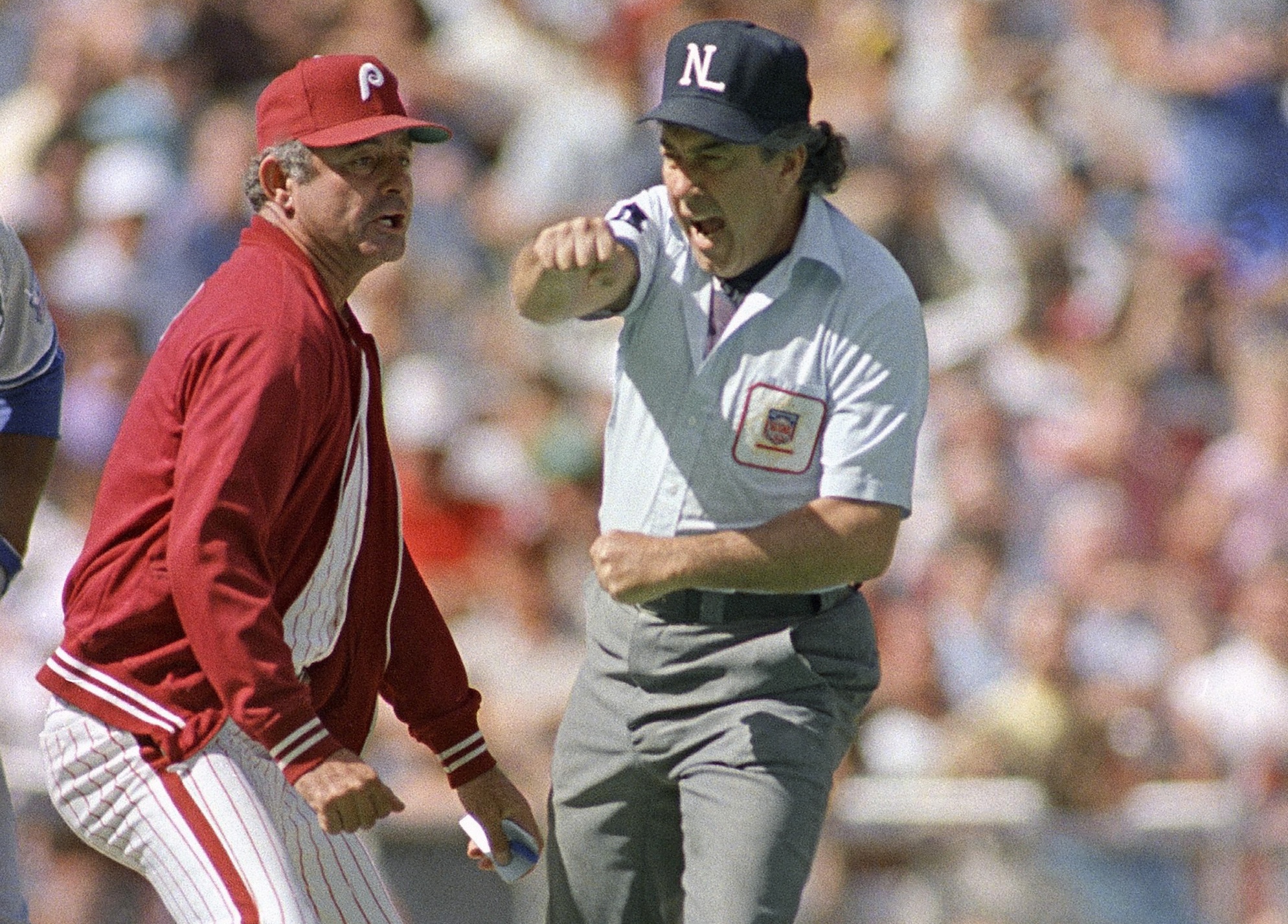
Former Phillies manager Lee Elia, seen here being ejected from a game in 1987.
Lee Elia, the Philadelphia native who managed the Phillies after coaching third base for the 1980 World Series champions and once famously ranted against the fans who sat in the bleachers of Wrigley Field, died in July. He was 87.
Mr. Elia’s baseball career spanned more than 50 seasons. He managed his hometown Phillies in 1987 and 1988 after managing the Chicago Cubs in 1982 and 1983.
After his playing career was cut shot by a knee injury, Mr. Elia joined Dallas Green’s Phillies staff before the 1980 season and was coaching third base when Manny Trillo delivered a crucial triple in the clinching game of the National League Championship Series. Mr. Elia was so excited that he bit Trillo’s arm after he slid.
— Matt Breen
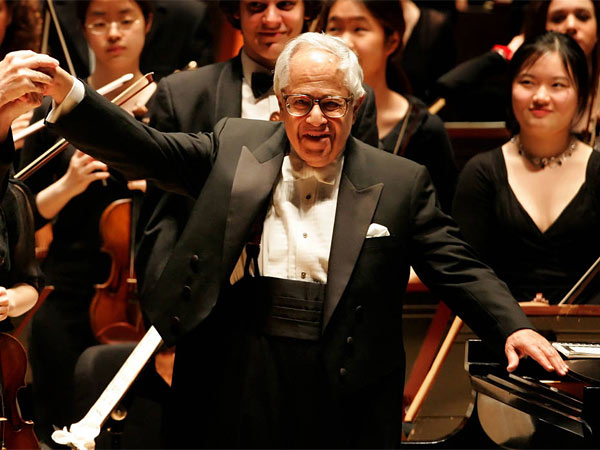
Gary Graffman
Gary Graffman, seen here playing at the Curtis Institute of Music Orchestra Concert at Verizon Hall in 2006.
Gary Graffman, a celebrated concert pianist and the former president of the Curtis Institute of Music, died in December in New York. He was 97.
The New York City-born pianist arrived at Curtis at age 7. He graduated at age 17 and played roughly 100 concerts a year between the ages of 20 and 50 before retiring from touring due to a compromised right hand. Diagnosed with focal dystonia (a neurological disorder), he went on to premiere works for the left hand by Jennifer Higdon and William Bolcom.
Mr. Graffman returned to Curtis as a teacher in 1980, became director in 1986, and was named the president of the conservatory in 1995, with a teaching studio encompassing nearly 50 students, including Yuja Wang and Lang Lang among others. He performed on numerous occasions with the Philadelphia Orchestra from 1947 to 2003.
— David Patrick Stearns
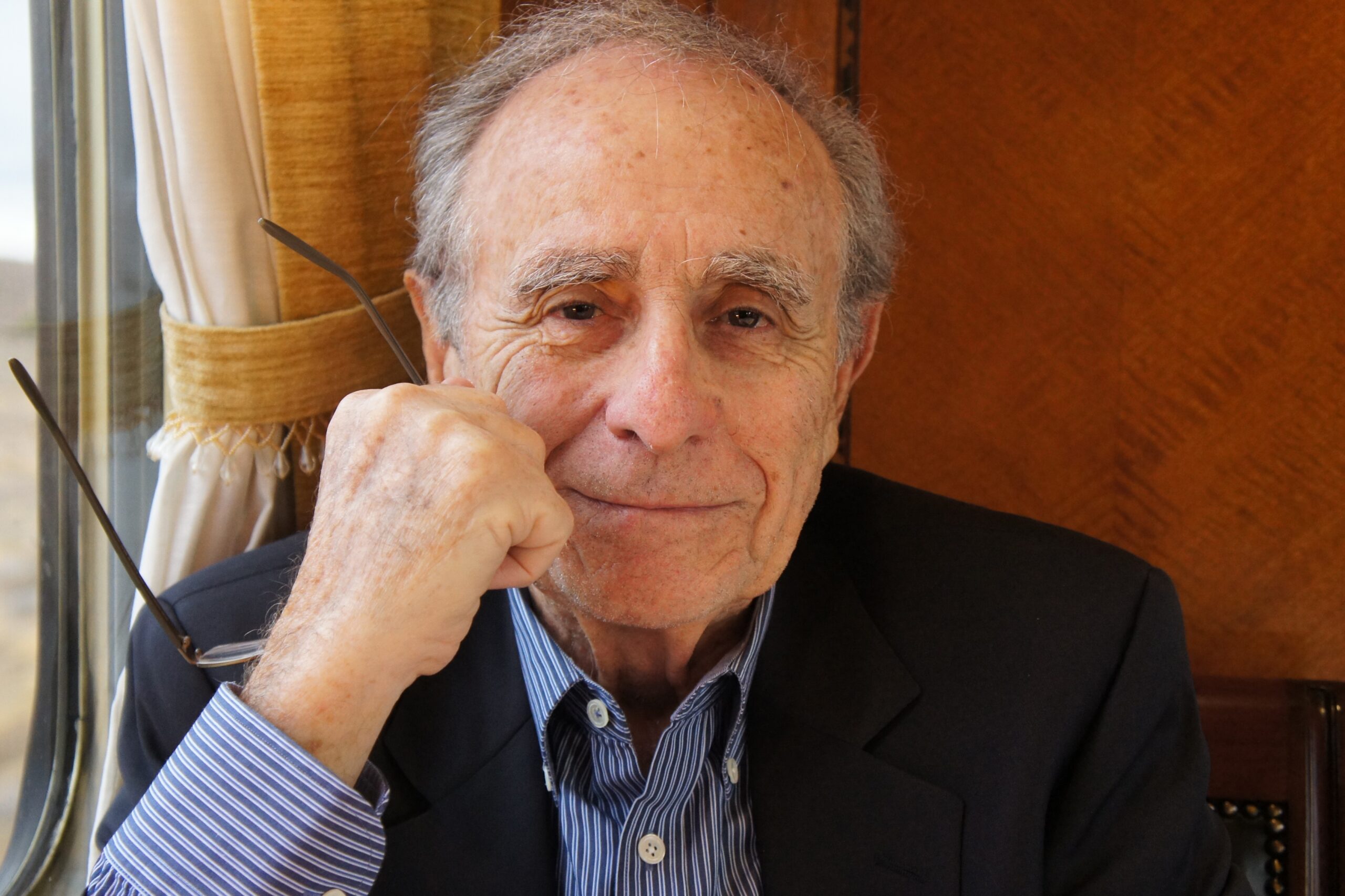
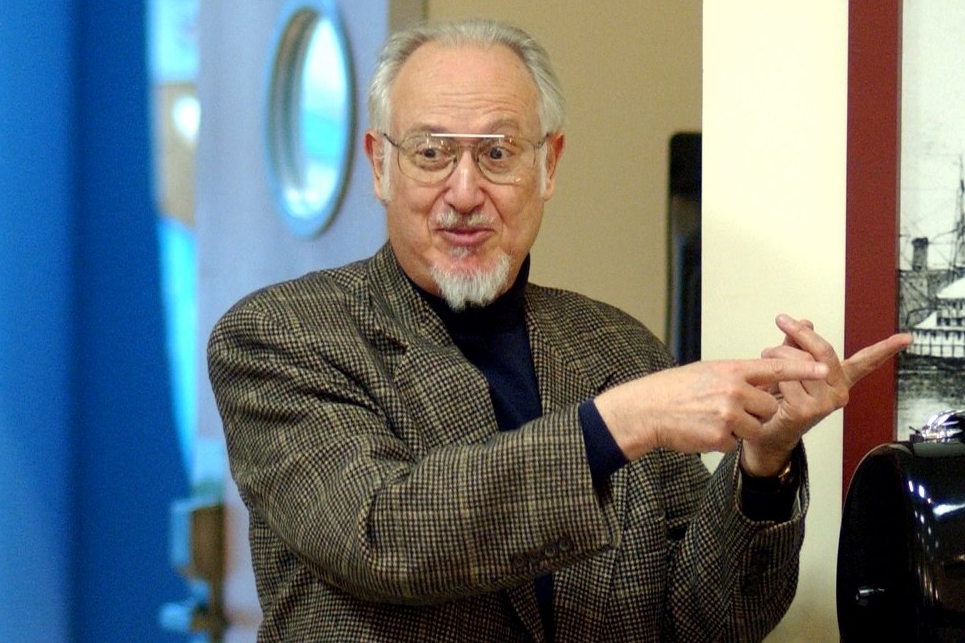
Len Stevens
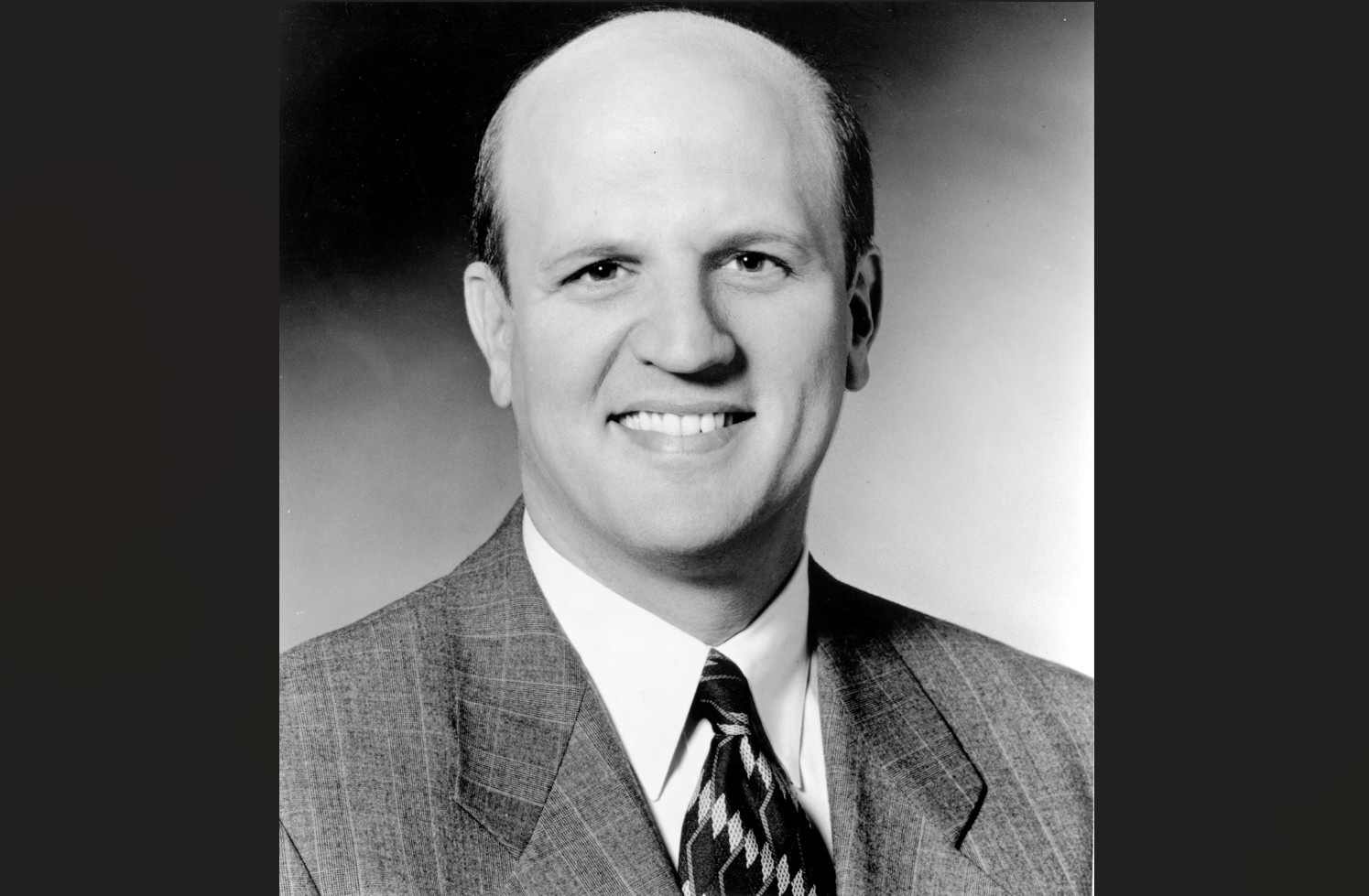
Len Stevens was the co-founder of WPHL-TV Channel 17.
Len Stevens, the cofounder of WPHL-TV (Channel 17) and a member of the Broadcast Pioneers of Philadelphia Hall of Fame, died in September of kidney failure. He was 94.
Born in Philadelphia, Mr. Stevens was a natural entrepreneur. He won an audition to be a TV announcer with Dick Clark on WFIL-TV in the 1950s, persuaded The Tonight Show and NBC to air Alpo dog food ads in the 1960s, co-owned and managed the popular Library singles club on City Avenue in the 1970s and ’80s, and later turned the nascent sale of “vertical real estate” on towers and rooftops into big business.
He and partner Aaron Katz established the Philadelphia Broadcasting Co. in 1964 and launched WPHL-TV on Sept. 17, 1965. At first, their ultrahigh frequency station, known now as PHL17, challenged the dominant very high frequency networks on a shoestring budget. But, thanks largely to Mr. Stevens’ advertising contacts and programming ideas, Channel 17 went on to air Phillies, 76ers, and Big Five college basketball games, the popular Wee Willie Webber Colorful Cartoon Club, Ultraman, and other memorable shows in the late 1960s and early ’70s.
— Gary Miles
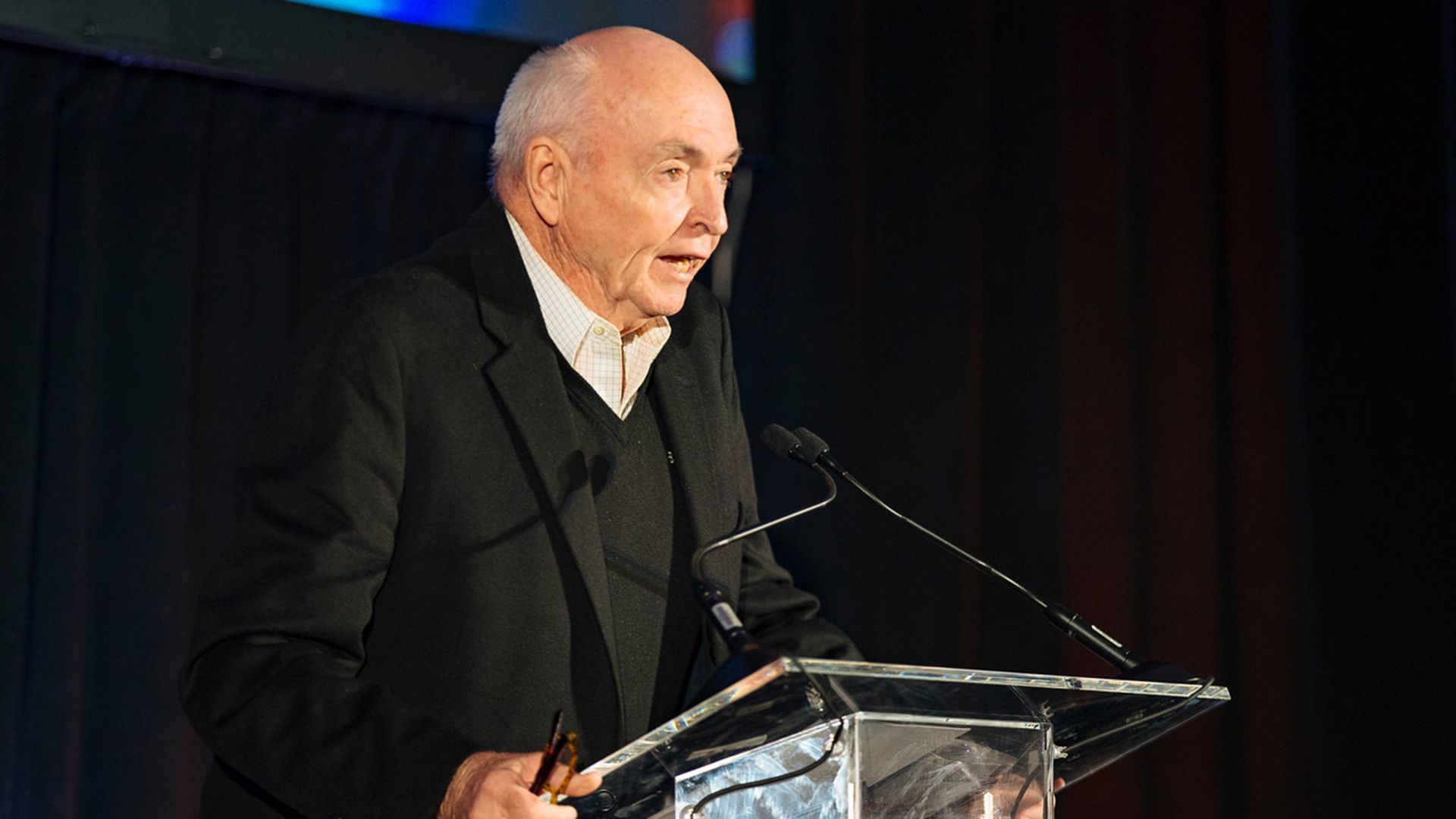
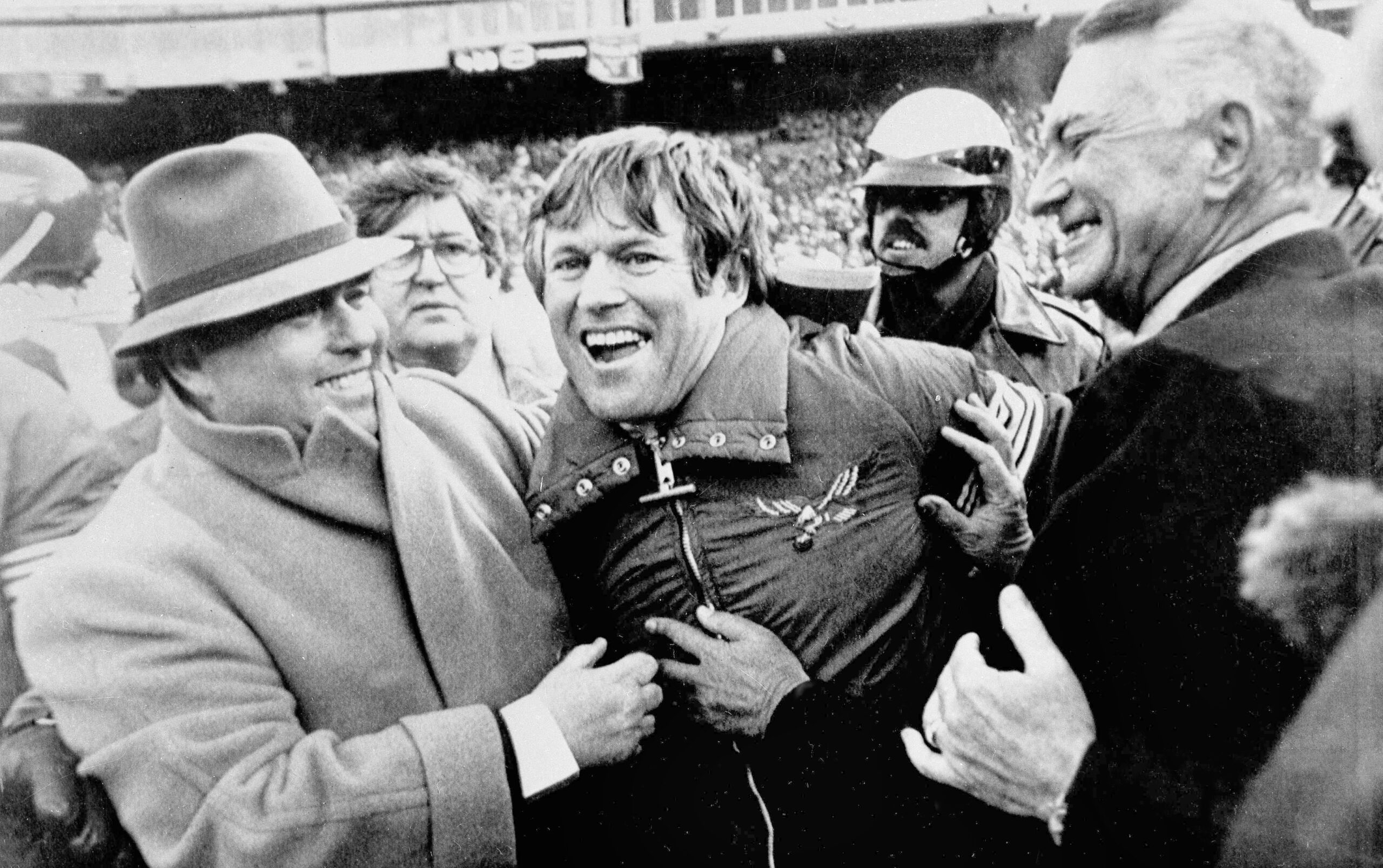
Jim Murray
Former Eagles general manager Jim Murray (left), seen here with Dick Vermeil and owner Leonard Tose following the 1980 NFC championship game in January 1981.
Jim Murray, the former Eagles general manager who hired Dick Vermeil and helped the franchise return to prominence while also opening the first Ronald McDonald House, died in August at home in Bryn Mawr surrounded by his family. He was 87.
Mr. Murray grew up in a rowhouse on Brooklyn Street in West Philadelphia and watched the Eagles at Franklin Field. The Eagles hired him in 1969 as a publicist, and Leonard Tose, then the Eagles’ owner, named him the general manager in 1974. Mr. Murray was just 36 years old and the decision was ridiculed.
But Mr. Murray — who was known for his wit and generosity — made a series of moves to bring the Eagles back to relevance, including hiring Vermeil and acquiring players like Bill Bergey and Ron Jaworski. The Eagles made the playoffs in 1978 and reached their first Super Bowl in January 1981. The Eagles, with Murray as the GM, were finally back.
— Matt Breen
Michael Days
Philadelphia Daily News Editor Michael Days celebrates with the newsroom after word of the Pulitzer win.
Michael Days, a pillar of Philadelphia journalism who championed young Black journalists and led the Daily News during its 2010 Pulitzer Prize win for investigative reporting, died in October after falling ill. He was 72.
A graduate of Roman Catholic High School in Philadelphia, Mr. Days worked at the Wall Street Journal and other newspapers before joining the Daily News as a reporter in 1986, where he ultimately became editor in 2005, the first Black person to lead the paper in its 90-year history. In 2011, Mr. Days was named managing editor of The Inquirer, where he held several management roles until he retired in October 2020.
As editor of the Daily News, Mr. Days played an essential role in the decisions that would lead to its 2010 Pulitzer Prize, including whether to move forward with a story about a Philadelphia Police Department narcotics officer that a company lawyer said stood a good chance of getting them sued.
“He said, ‘I trust my reporters, I believe in my reporters, and we’re running with it,’” recounted Inquirer senior health reporter Wendy Ruderman, who reported the piece with colleague Barbara Laker. That story revealed a deep dysfunction within the police department, Ruderman said, and led to the newspaper’s 2010 Pulitzer Prize win.
— Brett Sholtis
Tom McCarthy
Tom McCarthy, seen here in 2002.
Tom McCarthy, an award-winning theater, film, and TV actor, longtime president of the local chapter of the Screen Actors Guild, former theater company board member, mentor, and veteran, died in May of complications from Parkinson’s disease at his home in Sea Isle City. He was 88.
The Overbrook native quit his job as a bartender in 1965, sharpened his acting skills for a decade at Hedgerow Theatre Company in Rose Valley and other local venues, and, at 42, went on to earn memorable roles in major movies and TV shows.
In the 1980s, he played a police officer with John Travolta in the movie Blow Out and a gardener with Andrew McCarthy in Mannequin. In 1998, he was a witness with Denzel Washington in Fallen. In 2011, he was a small-town mayor with Lea Thompson in Mayor Cupcake. Over the course of his career, Mr. McCarthy acted with Zsa Zsa Gabor, Harrison Ford, Kristin Scott Thomas, Cloris Leachman, Robert Redford, Donald Sutherland, John Goodman, and other big stars.
— Gary Miles
Carol Saline
Carol Saline, seen here at her Philadelphia home in 2021.
Carol Saline, a longtime senior writer at Philadelphia Magazine, the best-selling author of Sisters, Mothers & Daughters, and Best Friends, and a prolific broadcaster, died in August of acute myeloid leukemia. She was 86.
On TV, she hosted a cooking show and a talk show, was a panelist on a local public affairs program, and guested on the Oprah Winfrey Show, Inside Edition, Good Morning America, and other national shows. On radio, she hosted the Carol Saline Show on WDVT-AM.
In June, she wrote to The Inquirer, saying: “I am contacting you because I am entering hospice care and will likely die in the next few weeks. … I wanted you to know me, not only my accomplishments but who I am as a person.
“I want to go out,” she ended her email, “with a glass of Champagne in one hand, a balloon in the other, singing (off key) ‘Whoopee! It’s been a great ride!’”
— Gary Miles
Richard Wernick
Richard Wernick, seen here before a concert at the 2002 Festival of Philadelphia Composers.
Richard Wernick, a Pulitzer Prize-winning composer, acclaimed conductor, and retired Irving Fine Professor of Music at the University of Pennsylvania, died in April 25 of age-associated decline at his Haverford home. He was 91.
Professor Wernick was prolific and celebrated as a composer. He wrote hundreds of scores over six decades and appeared on more than a dozen records, and his Visions of Terror and Wonder for a mezzo-soprano and orchestra won the 1977 Pulitzer Prize for music. In 1991, his String Quartet No. 4 made him the first two-time winner of the Kennedy Center’s Friedheim Award for new American music.
“Wernick’s orchestral music has power and brilliance, an emphasis on register, space, and scale,” Lesley Valdes, former Inquirer classical music critic, said in 1990.
— Gary Miles
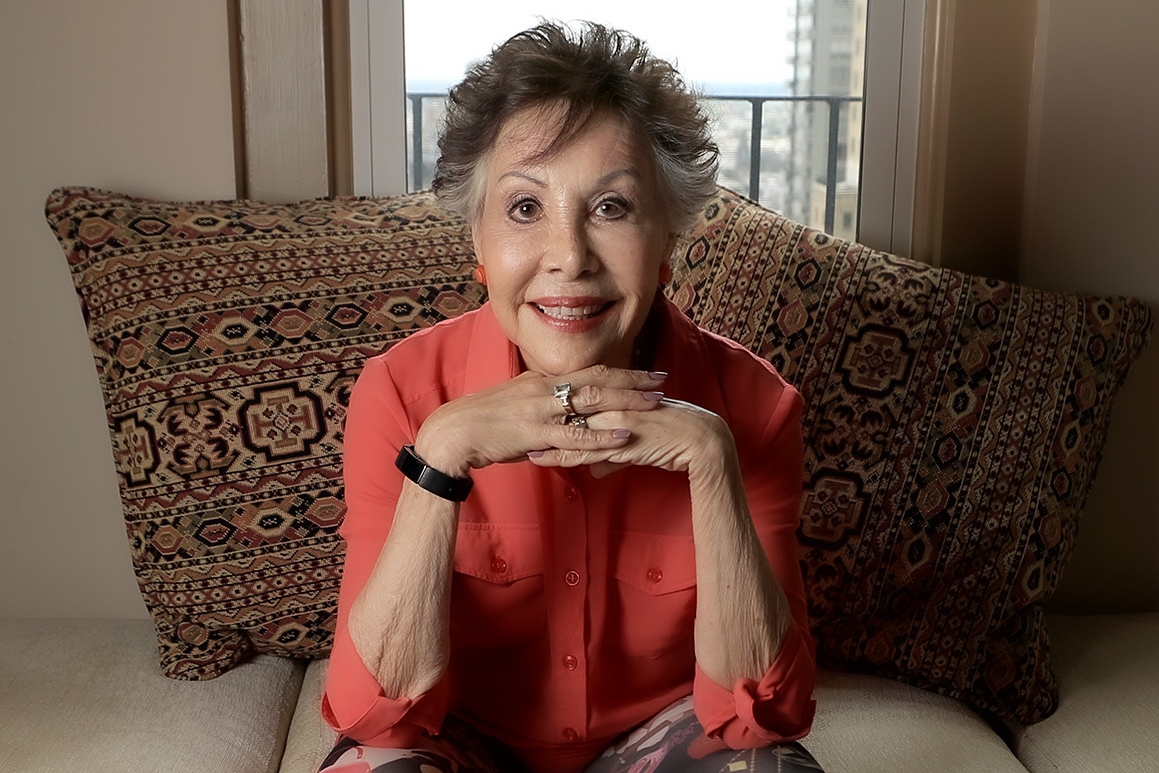
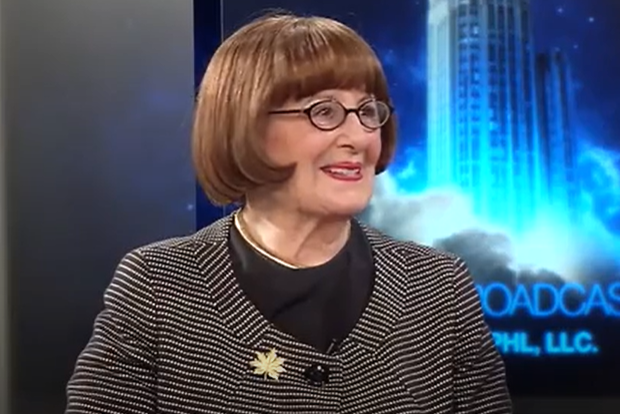
Dorie Lenz
Dorie Lenz, seen here on Channel 17 in 2015.
Dorie Lenz, a pioneering TV broadcaster and the longtime director of public affairs for WPHL-TV (Channel 17), died in January of age-associated ailments at her home in New York. She was 101.
A Philadelphia native, Ms. Lenz broke into TV as a 10-year-old in a local children’s show and spent 30 years, from 1970 to 2000, as director of public affairs and a program host at Channel 17, now PHL17. She specialized in detailed public service campaigns on hot-button social issues and earned two Emmys in 1988 for her program Caring for the Frail Elderly.
Ms. Lenz interviewed newsmakers of all kinds on the public affairs programs Delaware Valley Forum, New Jersey Forum, and Community Close Up. Viewers and TV insiders hailed her as a champion and watchdog for the community. She also talked to Phillies players before games in the 1970s on her 10-minute Dorie Lenz Show.
— Gary Miles
Jay Sigel
Jay Sigel, seen here after winning the Georgia-Pacific Grand Champions title in 2006.
Jay Sigel, one of the winningest amateur golfers of all time and an eight-time PGA senior tour champion, died in April of complications from pancreatic cancer. He was 81.
For more than 40 years, from 1961, when he won the International Jaycee Junior Golf Tournament as an 18-year-old, to 2003, when he captured the Bayer Advantage Celebrity Pro-Am title at 60, the Berwyn native was one of the winningest amateur and senior golfers in the world. Mr. Sigel won consecutive U.S. Amateur titles in 1982 and ’83 and three U.S. Mid-Amateur championships between 1983 and ’87, and remains the only golfer to win the amateur and mid-amateur titles in the same year.
He won the Pennsylvania Amateur Championship 11 times, five straight from 1972 to ’76, and the Pennsylvania Open Championship for pros and amateurs four times. He also won the 1979 British Amateur Championship and, between 1975 and 1999, played for the U.S. team in a record nine Walker Cup tournaments against Britain and Ireland.
— Gary Miles
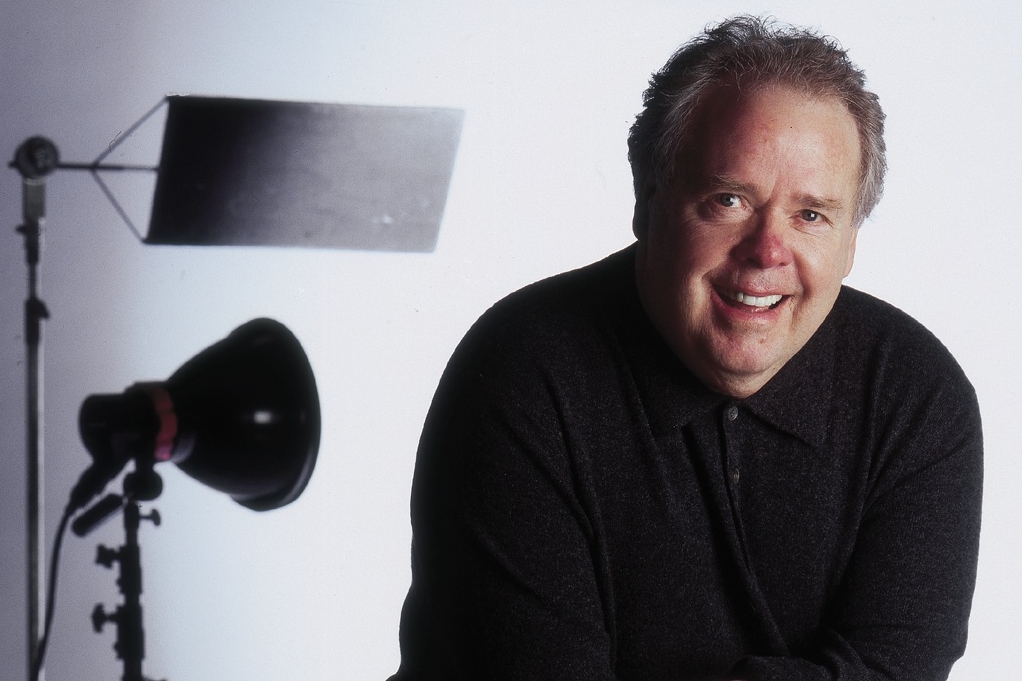
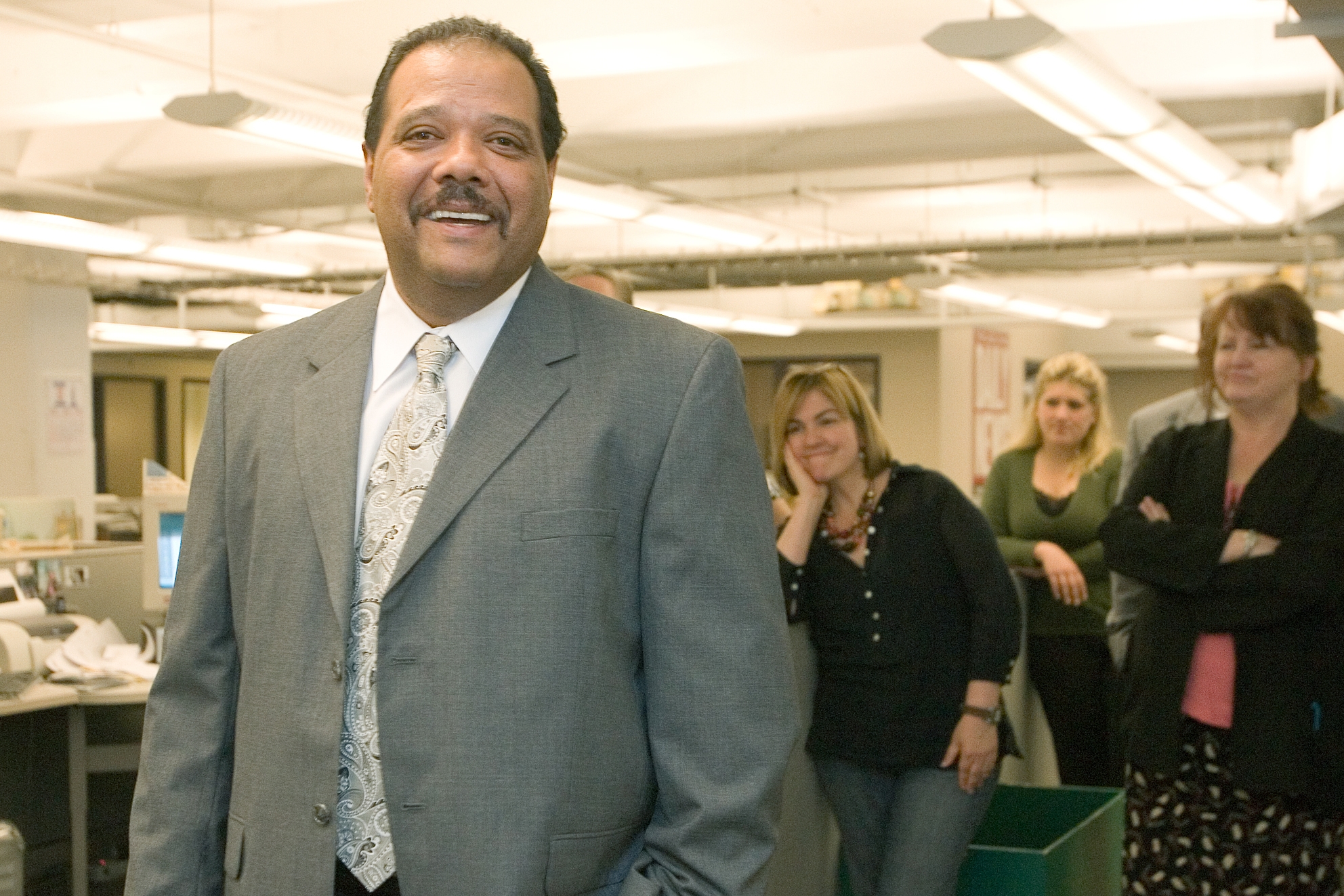
Mark Frisby
Mark Frisby, seen here in the former newsroom of the Daily News in 2007.
Mark Frisby, the former publisher of the Daily News and associate publisher of The Inquirer, died in September of takayasu arteritis, an inflammatory disease, at his home in Gloucester County. He was 64.
Mr. Frisby joined The Inquirer and Daily News in November 2006 as executive vice president of production, labor, and purchasing. He was recruited from the Courier-Post by then-publisher Brian Tierney, and he went on to serve as publisher of the Daily News from 2007 to 2016 and associate publisher for operations of The Inquirer and Daily News from 2014 to his retirement in 2016.
Mr. Frisby was one of the highest-ranking Black executives in the company’s history, and he told the Daily News in 2006 that “local ownership over here was the big attraction for me.” Michael Days, then the Daily News editor, said in 2007: “This cat is really the real deal.”
— Gary Miles
Leon Bates
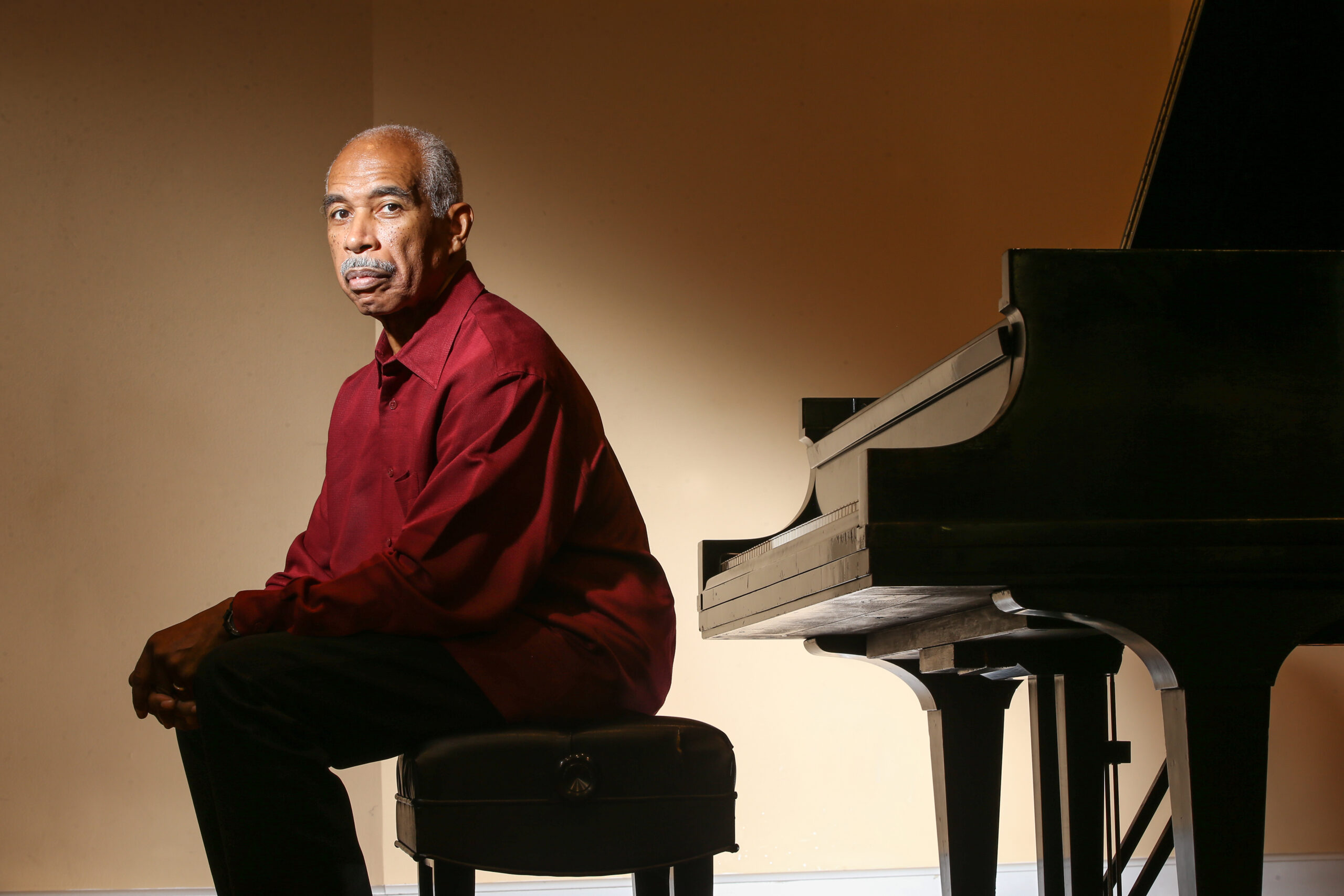
Leon Bates, seen here at the Settlement Music School in Germantown in 2018.
Leon Bates, a concert pianist whose musical authority and far-reaching versatility took him to the world’s greatest concert halls, died in November after a seven-year decline from Parkinson’s disease. He was 76.
The career of Mr. Bates, a leading figure in the generation of Black pianists who followed the early-1960s breakthrough of Andre Watts, encompassed Ravel, Gershwin, and Bartok over 10 concerts with the Philadelphia Orchestra between 1970 and 2002. He played three recitals with Philadelphia Chamber Music Society and taught master classes at Temple University, where he also gave recitals at the Temple Performing Arts Center.
In his WRTI-FM radio show, titled Notes on Philadelphia, during the 1990s, Mr. Bates was what Charles Abramovic, chair of keyboard studies at Temple University, described as “beautifully articulate and a wonderful interviewer. The warmth of personality came out. He was such a natural with that.”
— David Patrick Stearns
Lacy McCrary
Lacy McCrary in an undated photo.
Lacy McCrary, a former Inquirer reporter who won a Pulitzer Prize at the Akron Beacon Journal, died in March of Alzheimer’s disease at his home in Colorado Springs, Colo. He was 91.
Mr. McCrary, a Morrisville, Bucks County native, won the 1971 Pulitzer Prize in local general or spot news reporting as part of the Beacon Journal’s coverage of the May 4, 1970, student protest killings at Kent State University.
He joined The Inquirer in 1973 and covered the courts, politics, and news of all sorts until his retirement in 2000. He notably wrote about unhealthy conditions and fire hazards in Pennsylvania and New Jersey boardinghouses in the late 1970s and early ’80s, and those reports earned public acclaim and resulted in new regulations to correct deadly oversights.
— Gary Miles
Roberta Fallon
Roberta Fallon, seen here in an undated photo.
Roberta Fallon, 76, cofounder, editor, and longtime executive director of the online Artblog and adjunct professor at St. Joseph’s University, died in December at Thomas Jefferson University Hospital of injuries she suffered after being hit by a car. She was 76.
Described by family and friends as empathetic, energetic, and creative, Ms. Fallon and fellow artist Libby Rosof cofounded Artblog in 2003. For nearly 22 years, until the blog became inactive in June, Ms. Fallon posted commentary, stories, interviews, reviews, videos, podcasts, and other content that chronicled the eclectic art world in Philadelphia.
— Gary Miles
Benita Valente
BENI26P Gerald S. Williams 10/18/00 2011 Pine st. Philadelphia-based soprano Benita Valente has sung all over the world. At age 65, she is making her Oct. 29 performance with the Mendelssohn Club at the Academy of Music her last. 1 of 3: Benita goes over some music at the piano in her upstairs music room.
Benita Valente, a revered lyric soprano whose voice thrilled listeners with its purity and seeming effortlessness, died in October at home in Philadelphia. She was 91.
In a remarkable four-decade career, Ms. Valente appeared on the opera stage, in chamber music, and with orchestras. In the intimate genre of lieder — especially songs by Schubert and Brahms — she was considered one of America’s great recitalists.
Christina Gallo and Daniel Zehnder came to McPherson Square in the Kensington neighborhood looking for a fix, as they did almost every day.
But on this day in late April, an SUV pulled up. A woman bounded out with an offer that sounded like a miracle: an all-expenses-paid trip for free treatment at a luxury rehab center in California.
Gallo and Zehnder, both then37, hoped their lives were finally about to turn around after two decades strugglingwith addiction.
“We wanted to get clean,” Gallo said.
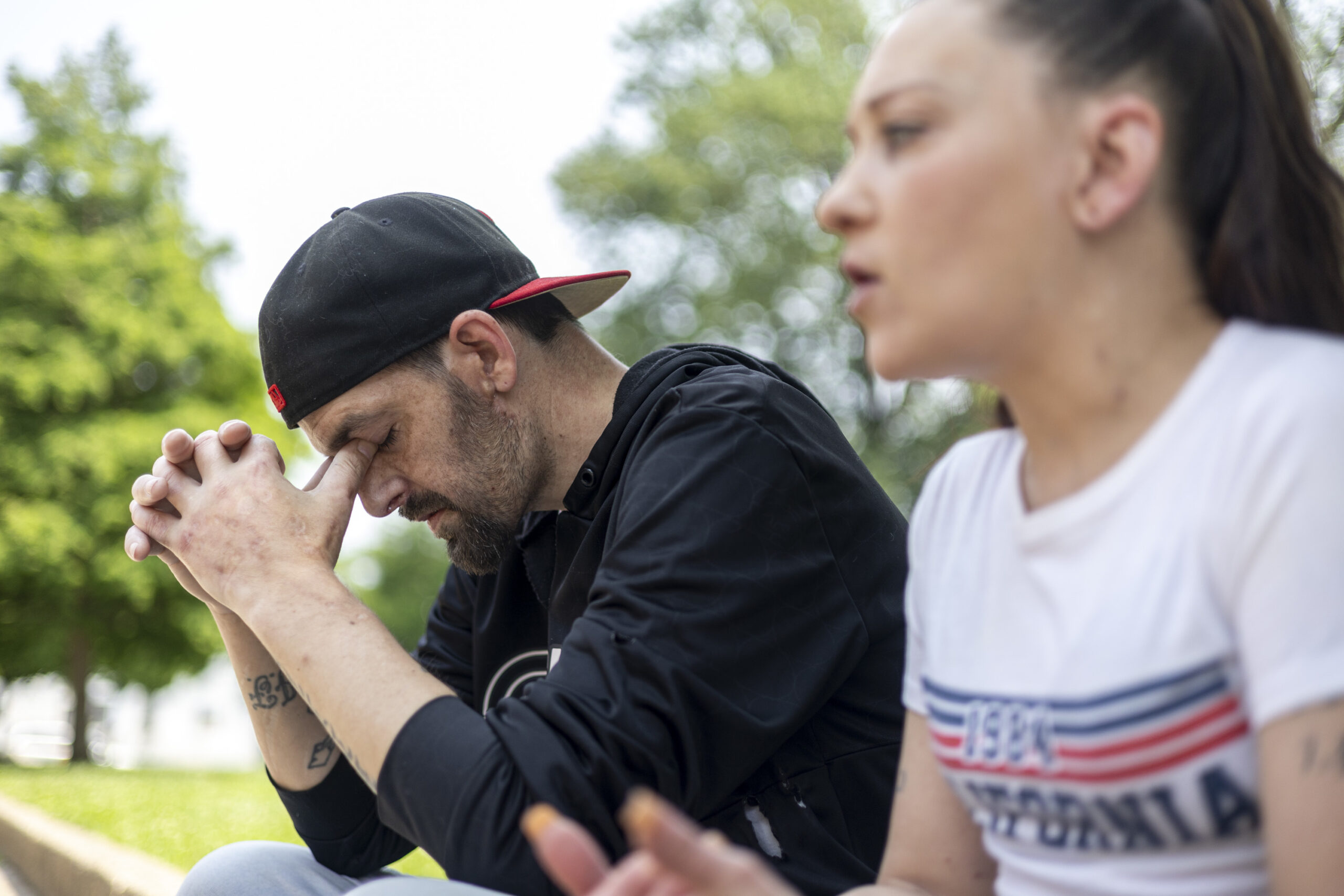
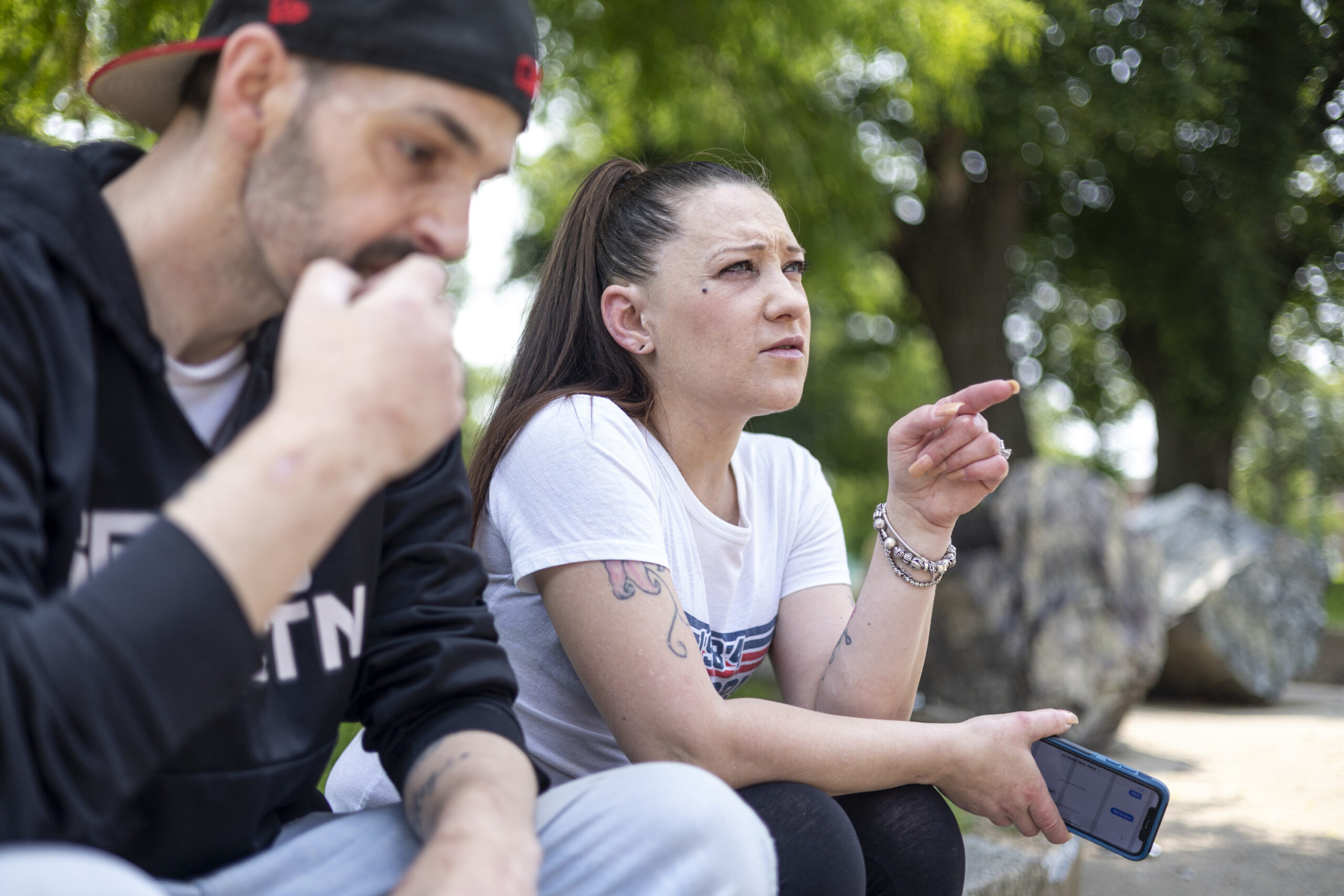
Christina Gallo and Daniel Zehnder, pictured here in Kensington’s McPherson Square in June, were recruited to what they thought would be a luxury rehab in California.
Within days, they were in a Lyft from their Bucks County trailer to the Philadelphia airport. Everything — the Lyft, the flight, the rehab — had been paid for, by whom they did not know.
They landed at a treatment facility in Los Angeles with a gleaming swimming pool, but said they did not see doctors or nurses and were offered little medical treatment to ease their agonizing withdrawal symptoms.Within a few days,the couple had left the clinic, relapsed, and the life-changing trip they envisioned ended in an ambulance rushing to a nearby hospital, where Gallo was admitted to intensive care.
Their California dreams were dashed. But the trip notchedanotherrecruitmentfor The Rehab Specialist, a year-old operation that makes money by scouting the streets for people in addiction to send to independently run rehab centers across the country.
Rehab Specialist recruiters working in Philadelphia offered free plane tickets, housing, and medical care — and at times cash, cell phones, cigarettes, and clothes — to entice people into recovery homes, Inquirer reporters found in interviews with seven people who had firsthand knowledge of the recruiting tactics.
With a single conversation in Kensington, recruiters alsogot willingpatients enrolled in private health insurance that could pay higher rates, often without the patients understanding what they had signed up for — until bills started to arrive.
Businesses like The Rehab Specialist operate as middlemen inan industry where one person’s recovery can be cashed in for hundreds of thousands of dollars in insurance payments.
Some referral and marketing services in the addiction treatment industry are legal. But the business is also notoriously rife with insurance fraud and patient brokering — a term that describes referrals to specific clinics in exchange for illegal kickbacks or bribes.
Rehab Specialist brochure, advertising a Spanish-Colonial style mansion with a pool in the backyard.
Pennsylvania is seeing a resurgence of patient brokering, according to tracking in 2023 by Highmark Health, a Pittsburgh-based Blue Cross Blue Shield affiliate. Such schemes are especially a concern in Kensington, home to one of the nation’s largest open-air drug markets.
Federal laws and a patchwork of state laws are supposed to protect vulnerable people. Prosecutors have limited resources, however, and rarely investigate low-level players.
Pennsylvania considered stronger laws after a major scandal.In 2019, federal and state prosecutors uncovered a multimillion-dollar insurance fraud scheme at Liberation Way, a Bucks County recovery home. The abuses spurred Pennsylvania lawmakers to introducelegislation that would have made it a felony to use money or services to lure patients into addiction rehabs and other healthcare facilities. The measure died without advancing to a vote.
“People get pretty brazen when nobody’s looking,” said Alan Johnson,chief assistant state attorney in Palm Beach County and a national expert on fraud in the industry.
Johnson called a description of The Rehab Specialist’s practices “classic patient brokering.”
For months, Philadelphiaadvocates for people in addictioncirculated warnings about the business and posted photos of its recruiters on Facebook. They tried to alert police, but never heard back.
Screenshot of text messages between Christina Gallo and a Rehab Specialist recruiter, saying that Gallo and Zehnder got approved for private insurance that would pay for their treatment in California.
The Philadelphia Police Department did not respond to requests for comment, and the Philadelphia District Attorney’s Office said it has not opened an investigation and declined to comment on The Rehab Specialist’s practices.The Pennsylvania Attorney General’s Office also declined comment.
On social media, The Rehab Specialist’s director and founder, Gus Tarrant, strongly disputed critics who accused his business of patient brokering.
“I have never and would never give a client money to go to rehab or encourage them to cycle in and out of programs,” Tarrant wrote in a March post to a Facebook group that monitors addiction treatment.
Tarrant, in a June interview with The Inquirer, reiterated that he and his business havedone nothing wrong.
Tarrant said that his operation has a national focus and came to Philadelphia this spring because the city has “the worst drug epidemic in the country.”
Tarrant said his recruiters send patients out of their home state to avoid triggers for relapse, a practice he strongly believes in, having gone through his own recovery from addiction about five years ago. (Though popular in some recovery circles, some research suggests that it can be less effective than getting treatment closer to home, where people have established support networks.)
“Our goal is to help as many people as we can,” Tarrant said. Now based in Myrtle Beach, S.C., Tarrant has channeled his experience into starting at least two businesses in the past five years focused on people in addiction.
He said rehab centers payhis business a flat fee to arrange for people from Kensington to receive treatment in California, but declined to share details. Two Los Angeles treatment centers told The Inquirer they had paid Tarrant and his operation a flat fee for “marketing,” but both also declined to give specific details of the arrangement.
On business cards, Tarrant’s title is listed as The Rehab Specialist’s founding partner; his LinkedIn profile says he started working there in 2024.
The Inquirer was unable to find any documentation indicating the business was formally incorporated in a search of state corporate registries where its recruiters and Tarrant have operated. The Inquirer also did not identify any lawsuits filed against The Rehab Specialist.
The Inquirer interviewed Tarrant by phone this summer. He did not return multiple calls, texts, and emails this month requesting additional comment.
Reporters interviewed five people who were approached by The Rehab Specialist’s recruiters on the street, and another two whose relatives were recruited.
All shared similar stories about how the process worked. Two said they enjoyed eating chef-made meals and benefited from group therapy and daily outings in Los Angeles.
One mother said her son ultimately decided not to board the plane to California, though he continued to receive frequent calls from Rehab Specialist recruiters urging him to travel for treatment. In another case, a woman said her brother did not get the care he needed in California and ended up in the ICU.
Gallo and Zehnder were among the three people interviewed who said the medical care they received in California did not meet their expectations for a luxury rehab facility. The couple blames The Rehab Specialist for launching them on a journey that ended with them worse off than before.
“I don’t know if they have the intention of trying to help people,” Gallo said, “but they’re going about it totally the wrong way.”
Christina Gallo and Daniel Zehnder in June, sitting in the spot where they were first approached by The Rehab Specialist recruiters in McPherson Square Park.
Lofty promises and dire warnings
The fliers that The Rehab Specialist recruiters passed out in Kensington featured photos of a Spanish Colonial-style mansion surrounded by palm trees, with a pool in the backyard. They advertised “holistic treatment” including equine therapy, medical detox, and an intensive outpatient program.
All that, in sunny California.
The pitch has particular appeal in Philadelphia, where people have struggled through long waits to access medical detox programs that allow patients to withdraw under the supervision of a doctor or nurse. These programs typically offer medications to help ease intense withdrawal symptoms like nausea, vomiting, and agitation, all of which have become more dangerous as potent animal tranquilizers and industrial chemicals contaminate the local drug supply.
Despite often lofty promises, the addiction treatment industry has long seen high-profile prosecutions over exploitative practices.
In the Philadelphia area, the Liberation Way prosecution sent the company’s CEO and medical director to federal prison. Prosecutors said the center had signed patients up for private insurance plans and paid their premiums. It then charged insurers for shoddy or unnecessary treatment that resulted in excessive insurance payouts.
California and Florida in particularhave emerged as hot spots for addiction treatment fraud. In South Florida, a 2022 federal prosecution of a$112-million scheme led to prison sentences foreight people accused of using cash bribes and free rides, flights, drugs, and alcohol toattract patients to a rehab center.The payments were distributed via anetwork of lower-level street recruiters, purportedly hired for “marketing,” according to an affidavit from the case.
But addiction treatment scams are often ignored because they involve sprawling national investigations that require significant resources. State prosecutors can’t justify the expense and federal prosecutors won’t take on low-level fraudsters, according to Johnson. Palm Beach County prosecutors stepped up enforcement after the state passed stricter laws in 2017.
“You have to prioritize cases. This is not high on their hit list, unless it’s going to make a big splash,” said Deb Herzog, a former federal prosecutor turned fraud investigator at Anthem Blue Cross.
Melissa Ruby, an activist who runs a national Facebook group to monitor patient brokering, in Philadelphia in October.
Warnings about The Rehab Specialist instead came from Melissa Ruby, 46, and other local advocates. Ruby runs a Facebook group dedicated to monitoring patient brokering nationwide, and started sharing photos on social media as soon as the recruiters showed up in Kensington. She did the same when they were reportedly spotted in Pittsburgh.
She said she also alerted aPhiladelphia police officer who runs an independent nonprofitto help people in addiction, but never heard back.
For Ruby,the issue is personal: She has a relative who was a victim of patient brokering.
“BEWARE!!” she wrote in a March post about The Rehab Specialist, punctuated with red stop sign emojis. “No good will come from any of this!!”
Tarrant, the Rehab Specialist director, was a member of Ruby’s Facebook group at the time and wrote that the vast majority of the negative information Ruby had posted about him was “completely wrong.”
“I am not paid by the client or any ‘referral fees’ based on clients sent,” Tarrant wrote.
When asked in the Facebook group why The Rehab Specialist was sending patients out of state on free flights, he declined to answer, writing that he believed the questions were in bad faith. He encouraged people to reach out to him directly so he could explain.
After a few weeks, Ruby kicked him out of the group. “Adios, Gus!” she wrote.
A sunny pitch in Kensington
One day in April, two female Rehab Specialist recruiters introduced themselves to Samuel Rosato, 47 at the time, as he got off the El near Kensington. He was immediately intrigued.
“They were just real pretty and tan,” Rosato said.
They later said all they needed were a few identifying details, and they would be able to set him up with private insurance that would pay for everything at a luxury rehab out west.
Rosato scribbled down his Social Security number and handed over his ID card. Within 10 minutes, he said, the recruiters told him they had secured him Blue Cross Blue Shield insurance. Rosato, like others interviewed by The Inquirer, did not know who was paying for his insurance or lodging.
The Rehab Specialist recruiters, whose names he shared with The Inquirer, are not licensed insurance brokers or healthcare navigators in Pennsylvania.
Allison Hoffman, a health law professor at the University of Pennsylvania, said that without more information on how patients were signed up for insurance plans, it isdifficult to say definitively whether insurance laws were violated. But, she added, “it sounds potentially illegal.”
Tarrant said his employees “don’t deal with any of the insurance.” He said they do not directly enroll clients in insurance, but rather direct recruitsto independent, licensed insurance brokers.
Patients “sign up for the insurance themselves,” he said. Hedeclinedto say more, citing patient confidentiality.
A week later, Rosato said an Uber picked himup at his mother’s home in Northeast Philadelphia for his flight to California. He said he was joined by three other people from Kensington who told him they had also been recruited by The Rehab Specialist.
“I love it out here,” Rosato said in June, several months into his recovery in California. “I’m trying to rebuild my life now, starting at the bottom.” (Rosato stopped responding to calls and texts from The Inquirer in the fall; his mother said this month that he’s back in Philadelphia, but she is not sure where.)
Jerome Hayward, 48 at the time, and his girlfriend, Megan McDonald, 39 at the time, also didn’t ask too many questions when they were recruited in front of a Kensington soup kitchen and traveled separately to California in the spring.
Told only that she had been “approved” for treatment, McDonald said she didn’t realize she had been signed up for a Blue Cross Blue Shield plan until she received paperwork at a hospital.
“How would we pay for it?” McDonald asked. “Because we’re broke. We got no money.”
Megan McDonald and Jerome Hayward at a drop-in center in Philadelphia’s Kensington neighborhood.
A rising entrepreneur
Tarrant rose in the rehab industry after getting his start vacuuming floors at a rehab company run by LaMitchell Person, a mentor who Tarrant credited for giving him “the opportunity to get sober and clean,” in an interview with a local news station in California. The two later became business partners.
They were working together at a California rehab company in 2021 when a 22-year-old named Dean Rea died of a fentanyl overdose after leaving an associated sober home.
Rea’s mother later accused Tarrant, Person, and other employees ofcontributing to the death in a lawsuit filed against the facility,Ken Seeley Communities. Neither Tarrant nor Person, then the facility’s executive director, was named as a defendant in the case.
In court records, Rea’s mother claimed Tarrant falsely told Rea that his insurance wouldn’t cover more intensive treatment elsewhere.
“Gus is, essentially, a salesman whose goal is to admit as many patients to KSC as possible,” their legal complaint said. The rehab company denied the allegations, and Rea’s suit was settled in a confidential agreement in 2023 for an undisclosed amount.
In an interview this month, Person called the lawsuit’s claims inaccurate. “Fentanyl killed her son. Not Gus, not me, and not the organization,” Person said.
By the time the suit was settled, Tarrant and Person had both left the business.
In 2022, they filed paperwork to incorporate a company called Origin Addiction Services, based in Idaho, according to state corporate records. An official address on the website is a P.O. box in a Boise strip mall.
The company’s website said it offered addiction recovery services such as interventions, sober companionship, counseling, and transportation.
The company’s website featured an ‘about’ page with professional headshots of a nine-member executive team. All but three of those headshots appearedto be drawn from stock photo services,and The Inquirer was unable to trace the individualsto authentic social media or LinkedIn accounts.
After The Inquirer contacted Personabout the photos in September, all of them– except his own — were removed overnight. Person later said in a phone interview that the stock photos and some of the employee names were “placeholders,” but insisted that the staffers were real.
The company filed paperwork to dissolve a year later; Person said it had never done business, and he and Tarrant went on to pursue separate endeavors.
Person was in Philadelphiarecruiting people at the intersection of Kensington and Allegheny Avenues in March, according to acity employee there to help people in addiction. Person handed him a business card identifying himself as a “regional director” of The Rehab Specialist, said the employee,whom The Inquirer is not naming because he was not authorized to speak to the media and feared losing his job.
Person answered the phone this summer when The Inquirer called the Rehab Specialist’s general number, but he said he did not work there.
In a follow-up interview this month, he said that Tarrant had hired him to build a call center for a California rehab, saying that was his only involvement with The Rehab Specialist.
He said he hadnot come to Kensington and was not responsible for business cards that listed him as the regional director.
“Gus wanted me to work for him, because we are friends,” Person said.
Christina Gallo and Daniel Zehnder in McPherson Square Park in June.
A dream dashed in California
Desperate to get clean, Christina Gallo and Daniel Zehnder accepted the offer to fly to California after being recruited in Kensington earlier this year. A luxury van picked the couple up when they arrived at Los Angeles International Airport on May 3, they said.
The driver took the couple to Gevs Recovery, a large gated house in a residential neighborhood in Northridge. Gevs has been licensed as a drug abuse recovery home since 2024. State records show that as of early August, no complaints about its care have beenfiled with the California Department of Public Health.
Gallo and Zehnder said the Gevs house was dark and empty when they arrived, aside from a handful of employees. Gallo began to panic as drug withdrawal left her shaking and sweating, with a bloody nose and headache pangs that felt like she had stuck her finger in an electrical outlet.
“I said, ‘What’s going on here? Where’s any of the nurses or the doctors?’” she recalled. “‘Who’s going to be taking care of us, medically?’”
“We don’t do that here,” she remembers them saying. The Gevs employees told Gallo they could send her to a hospital, or give her some Tylenol, she said.
Alarmed, Gallo and Zehnder decided to leave. On their way out, they said a woman descending the stairs told them she had just left the hospital after a month there.
“Are you guys from Philadelphia, too?” Gallo recalled the woman asking.
She and Zehnder headed to a cheap motel, but they didn’t feel they could stand the withdrawal effects and decided to buy drugs nearby. By the morning, their symptoms had grown worse, and they returned to Gevs to demand plane tickets home.
Kristine Kesh, an operations manager at Gevs, told The Inquirer the center does have medical staff on site and does offer medication treatment for withdrawal.
“These clients have been addicts for most of their lives, and they come in expecting this glorious detox,” Kesh said. “Whatever they’re expecting is not realistic. I mean, you can’t help everybody.”
At the airport, Gallo vomited on herself before collapsing to the ground in pain. Zehnder defecated and vomited on himself. An ambulance took them to the emergency room, where Gallo was placed in intensive care.
After two days in the emergency room and the intensive care unit, Gallo and Zehnder were released.Zehnder’s mother paid for their flights home.
While Zehnder was away, bills from Highmark started arriving at his mother’s house — even though he had been promised free treatment.
The bill, which misspelled his last name, said he owed a $267 premium for the month of May. He said he also received a $700 bill for the ambulance ride from the LA airport to the emergency room, which he threw away.
Six months after their disastrous trip, recovery feels as far away as when their return flight from California landed. At the Philadelphia airport, they hailed a cab and went straight to Kensington. They wanted to inject heroin, right away.
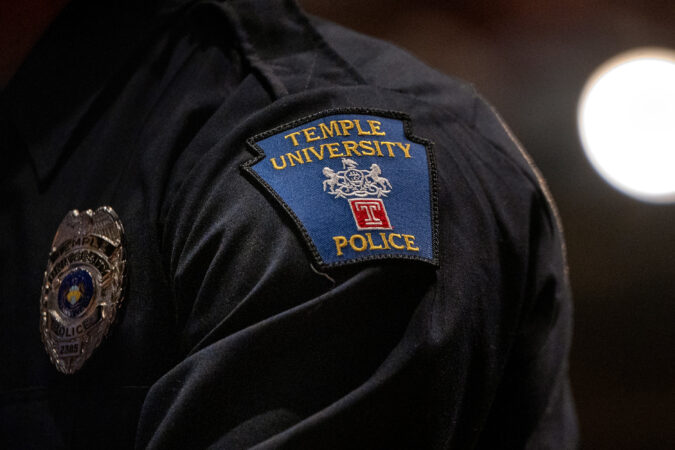
Temple University plans to increase its patrol officer ranks by 58% over five years after a study assessing staffing levels showed the school was below the middle tier of a framework that rates law enforcement agencies.
The university currently has 77 sworn officers — 50 of them patrol officers — and president John Fry pledged to add 29 patrol officers, one detective, six sergeants, and one lieutenant. That would increase the overall number of sworn officers to 114.
Temple president John Fry said safety was his first priority. Now he plans to increase patrol officers by 58% over five years.
No target has been set for how many officers will be hired per year, but those discussions are underway, said Fry, who named public safety a top priority when he started in November 2024.
The university’s declaration comes amid a particularly difficult time for police hiring, with departments nationally — including the Philadelphia Police Department — continuing to face shortages. Temple has been working for several years to attract more officers, including increasing salaries and benefits, adding signing and retention bonuses and higher contributions to retirement accounts, and hiring an associate director to focus solely on hiring, recruitment, retention, and training. The department also moved to 12-hour shifts to give officers more days off.
Yet, the number of sworn officers has decreased from 81 in March 2024 to the current 77, despite additional hires being made, including four new officers from the Temple University Municipal Police Academy in October.
“We must, and we will, deploy ever more compelling and creative incentives to make Temple’s Department of Public Safety a destination employer for law enforcement in our region,” Fry said. “Our plan is to look closely at what we are doing in the areas of recruitment and retention over the next several months and see what improvements can be made.”
Temple plans to hire former Philadelphia Police Commissioner Charles H. Ramsey’s 21CP Solutions company to assist, including with how best to recruit and retain more officers, Fry said. The university had hired Ramsey to assess safety following the shooting death of student Samuel Collington in November 2021 and has implemented almost all of the 68 recommendations from his report released in April 2023.
The staffing study was one of the final recommendations that Temple had to complete.
Former Philadelphia Police Commissioner Charles Ramsey speaks at a press conference on the Temple safety audit his firm completed in April 2023.
New bike patrol officers
In addition, Philadelphia Police Commissioner Kevin Bethel has committed to providing six bike patrol officers and a sergeant assigned to Temple, beginning Jan. 5. That’s up from the current four officers and supervisor, who were not always the same personnel.
“The ability to have relationships and collaborations … will be better because it’ll be a consistent group,” said Jennifer Griffin, Temple’s vice president for public safety.
“The ability to have relationships and collaborations … will be better because it’ll be a consistent group,” Jennifer Griffin, vice president for public safety at Temple University, said about the city’s six bike patrol officers that will be dedicated to Temple.
Members of the Temple University Police Association, the officers union, have complained for years of inadequate staffing. In a social media postabout a year ago, the union said the department had lost more than 50 officers since 2022.
But Andrew Lanetti, president of the union, said he is pleased with the direction outlined by Fry.
“From our talks here in the past few days, I am happy with where we’re going in the future,“ he said. ”I believe this is going to be a very positive experience and it’s going to help our community a lot.”
University and union officials already have been discussing ways to recruit and retain more officers, and a more positive working relationship between the union and the university could help move the needle on hiring and retention.
“We’re going to work together and our goal is all the same,” Griffin said. “We want a safer Temple and a safer community.”
Budget woes
The move also comes as the university attempts to close a budget deficit, made worse this fall when the school missed enrollment projections for its main campus that translated to about $10 million in lost revenue.
“It will be a challenge,” Fry said of the new police officer hiring, “but it’s a priority, so we will meet that challenge.“
He said money for the new staffing will be built into the university’s five-year budget plan.
Temple last February hired safety and security consulting companies Healy+ and COSECURE, ancillary businesses of the Cozen O’Connor law firm, to conduct the staffing study. They used a tiered framework “to assess the capacity and effectiveness of law enforcement agencies,” Temple said. The university declined to release the full report, citing its proprietary information.
“Temple is positioned below the middle tier of the framework, meaning the department is presently staffed to meet the essential public safety and emergency response needs of our community,” Fry said. “However, additional personnel would allow the department to organize and coordinate its activities to focus on additional proactive and community engagement activities that would position it higher in the consultant’s framework.”
With the additional police officers that Temple plans to hire, the school would rise from just below the third of five tiers in the consultant’s rating system to the second tier, Fry said. The second tier, he said, connotes “higher levels of proactive enforcement, more presence, more mitigation strategies, and then more outreach, more community engagement.”
Public safety is extremely important as the university plans to release its strategic plan and campus development plan early next year and as Fry seeks to spur economic development along the Broad Street corridor, from Temple’s new Terra Hall location in Center City to the health campus in North Philadelphia.
“There’s going be a campus development plan, which clearly is going to put more activity on this campus, which means we’re going to have to support our police,” Fry said.
Potential investors, he said, are watching.
“When they’re about to commit significant investment, they want to know the area is safe,” he said.
‘Hold ourselves accountable’
Former Temple president Jason Wingard pledged to increase the police force by 50% the month that Collington was killed, and those numbers never materialized. In fact, the number of officers dropped.
Fry said what is different this time is that he has specified the exact numbers that will be added over a distinct time frame.
“This is not something we’re just sort of speculating about,” he said. “This is based on a professional study. … We’ll be able to hold ourselves accountable.”
The university already has made a host of changes that were recommended by Ramsey in the 2023 report. They include more foot patrols and security cameras and increased technology in the communications center.
The university in 2024 touted a decrease in aggravated assaults, robberies, and thefts in its patrol zone. Despite improvements, Temple has continued to face safety challenges in its North Philadelphia neighborhood, including large groups of juveniles that sometimes gather on or near campus — a challenge in other areas of the city, too.
And a student was shot and killed by another student near off-campus housing inFebruary.
Andy Chan, a Philadelphia Highway Patrol officer who suffered a devastating brain injury in a motorcycle crash while on his way to work six years ago, has died.
Chan, 48, was riding through Northeast Philadelphia one evening in January 2019 when an elderly driver unintentionally struck him on the 3300 block of Rhawn Street. He was thrown about 20 feet, police said, and was critically injured.
Chan, a 24-year veteran of the force, was in a prolonged coma and was hospitalized for weeks on a ventilator. In the years since, his injuries have required around-the-clock care, with family, friends, and colleagues in the Philadelphia Police Department regularly at his side.
The Fraternal Order of Police Lodge 5 announced Chan’s death on Tuesday. The cause of death was not immediately clear.
“Andy died a hero and we will always remember and honor his sacrifice,” the union wrote on Facebook.
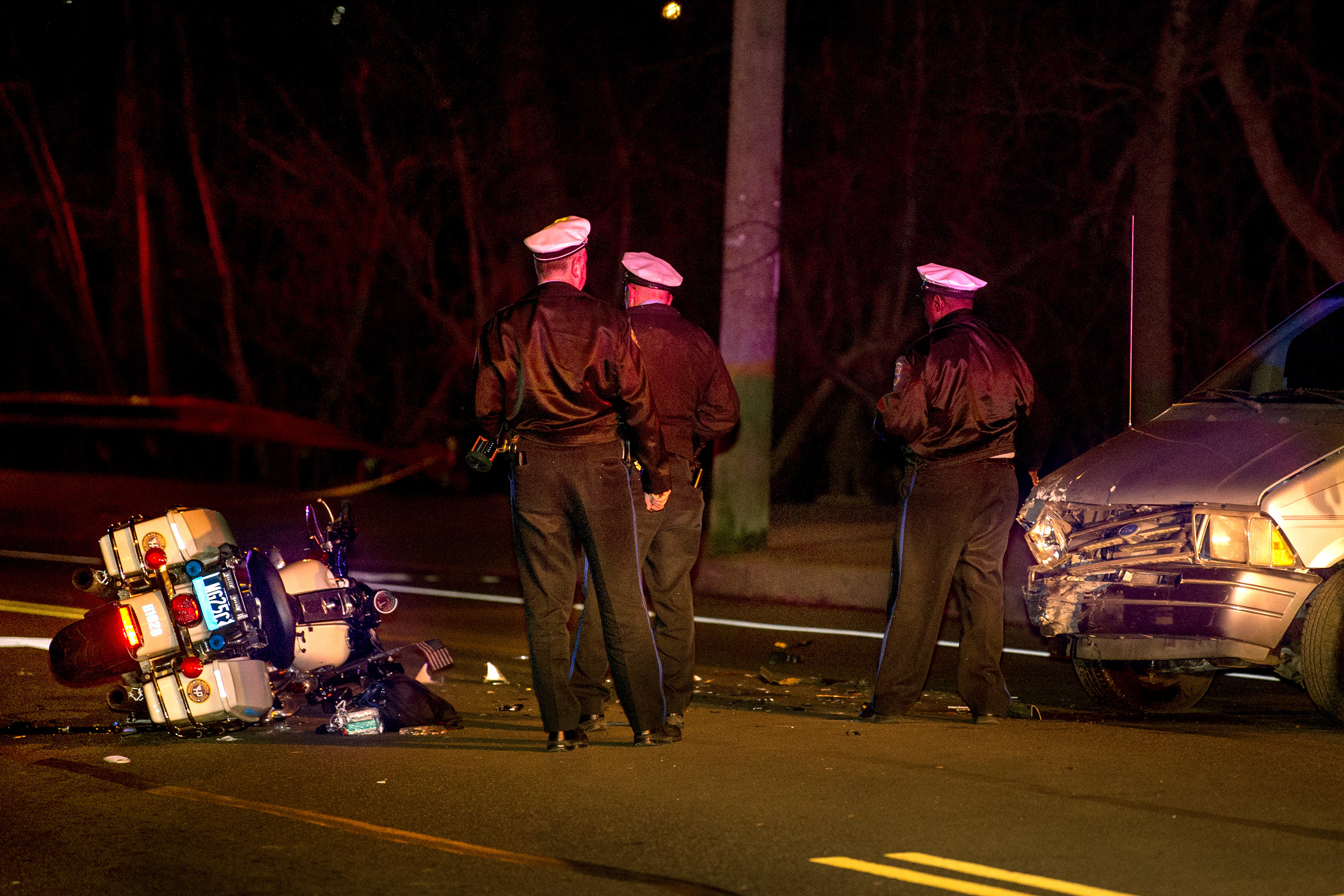
Andy Chan was thrown from his highway patrol motorcycle and critically injured in a crash on the 3300 block of Rhawn Street on January 3, 2019.
Chan, a father of three, grew up in Chinatown and had always dreamed of being a highway patrolman. His family recalled how he watched with awe when the leather-clad officers approached his parents’ restaurant on their motorcycles.
He decided, they said, that would be him one day.
“That was the only place he strived to be in,” his wife, Teng, said years ago.
After becoming a Philadelphia police officer in 1996, he was first assigned to the 39th District, working as a bike cop. Eight years later, he was promoted to the elite highway unit.
He took such pride in his work that when he walked into police headquarters, instead of yelling, “Hi,” he would shout, “Highway!”
And even when he met Teng nearly two decades ago, he introduced himself as such: “I’m Highway.”
Chan and his partner, Kyle Cross, were among the first officers who responded to the Amtrak crash in 2015 that left eight people dead and nearly 200 injured. Cross, in an earlier interview, recalled how Chan kept his composure as he sought to rescue survivors from the wreckage.
“What I remember from Andy was his poise — he stayed so calm, he really just led the way,” Cross recalled. “I followed his lead.”
Police Commissioner Kevin Bethel, in an email to the department Tuesday morning, described Chan as “larger than life, not because of what he did, but because of who he was.”
“He was the kind of officer whose reputation reached every corner of this Department and City; not because he sought attention, but because his work, his character, and his heart made him impossible to forget. Andy represented the very best of who we are and what we aspire to be: skilled, humble, kind, and unfailingly courageous,” Bethel wrote.
“Andy,” he said, “will forever remind us of why this work matters.”
Funeral arrangements have not been announced.
Since Chan was injured, police and community members have gathered each December to support his family and raise money for his recovery. Supporters will continue to gather in his honor this year, on Dec. 12 at Craft Hall at 4 p.m., for the sixth annual Andy Chan Block Party.
Two Camden men were convicted of murder and related crimes Monday in the shooting death of Philadelphia Police Officer Richard Mendez at the airport in 2023.
Yobranny Martinez-Fernandez, 20, who fired the fatal shots, was found guilty of first-degree murder. Hendrick Pena-Fernandez, 23, was convicted of second-degree murder because he took part in the car theft that gave rise to the fatal shooting.
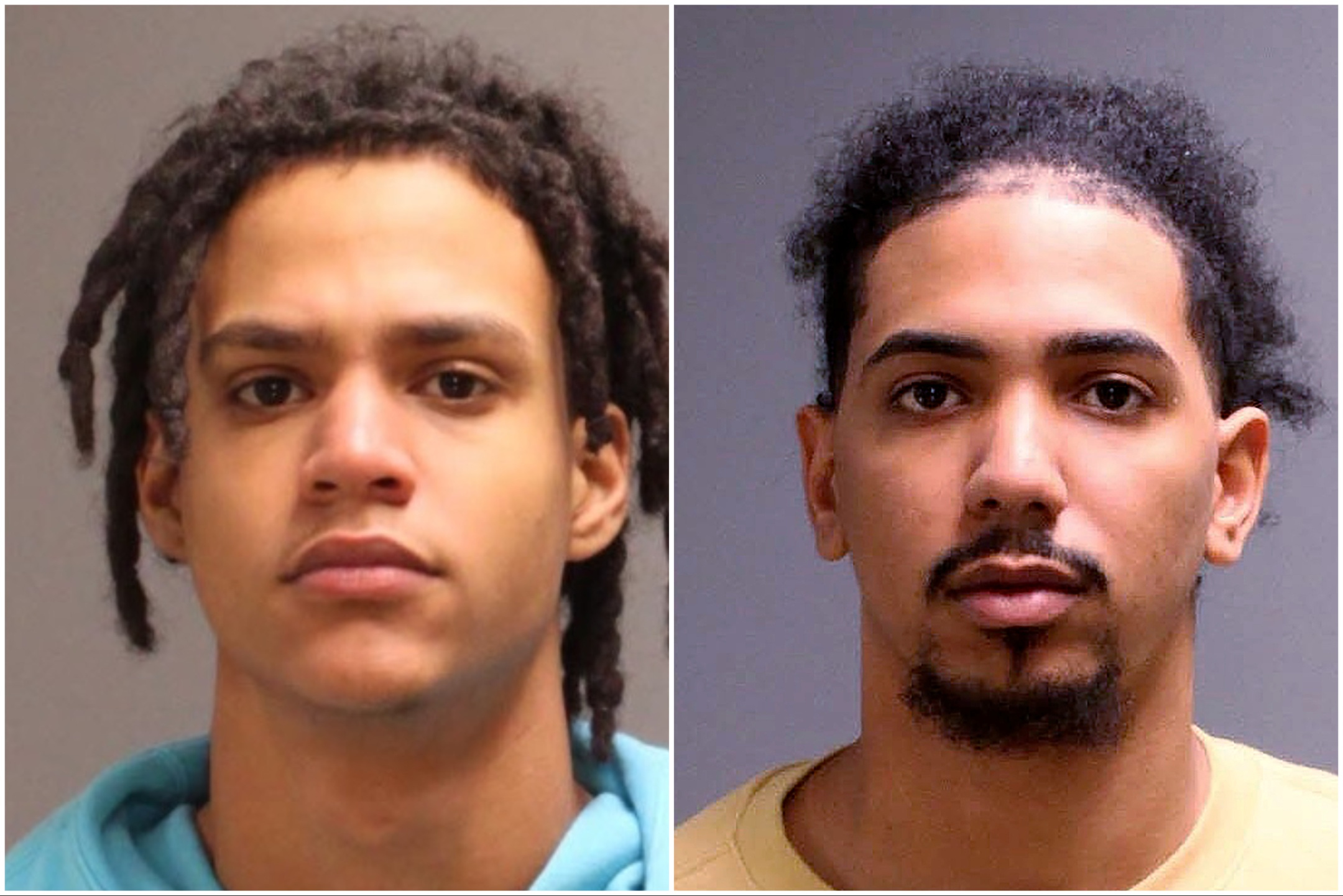
Yobranny Martinez-Fernandez, left, 20, and Hendrick Pena-Fernandez, 23.
About an hour after the jury returned its verdict, both men were sentenced to life in prison without parole.
Mendez, 50, was killed after he and his partner, Raul Ortiz, tried to stop a car theft in progress in garage D at the Philadelphia International Airport. As they approached a Dodge Charger, Martinez-Fernandez opened fire as he crouched beneath the steering wheel, prosecutors said. Mendez was struck four times in the torso. Ortiz was struck once in the arm and survived his injuries.
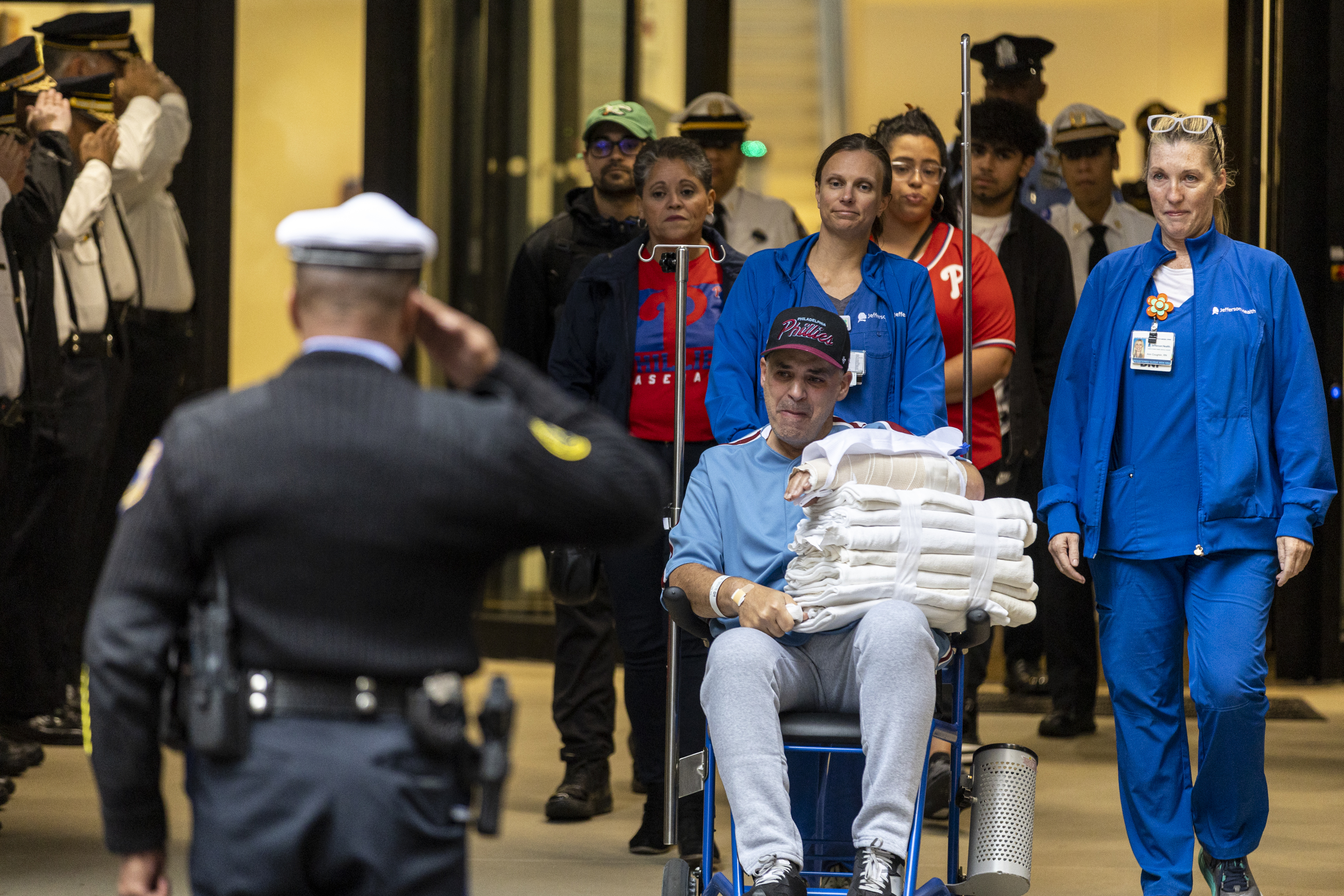
Officer Raul Ortiz, 60, approaches the entrance as fellow Philadelphia police officers stand and salute for his release from the Thomas Jefferson University Hospital on Oct. 14, 2023.
Prosecutors said Martinez-Fernandez also unintentionally shot one of his accomplices, Jesus Madera Duran, 18, who later died at a nearby hospital. The men dropped him there during a frantic escape that eventually led them to a central New Jersey warehouse where prosecutors said they burned their getaway vehicle.
Martinez-Fernandez was also found guilty of killing Duran, in addition to nearly all related charges. Meanwhile, Pena-Fernandez was found not guilty for a handful of other offenses, including third-degree murder.
Throughout nearly a week of testimony, prosecutors argued that both men were responsible for the death of Mendez, a father of two and a 22-year veteran of the police force.
For Mendez’s widow, Alex Carrero, and the couple’s daughter, Mia, the verdict capped what they described as a two-year nightmare.
“No 19-year-old should have to pick the color of her dad’s casket,” Mia Carrero said as she addressed the judge before her father’s killers were sentenced. She wore Mendez’s police badge pinned to her sweater.
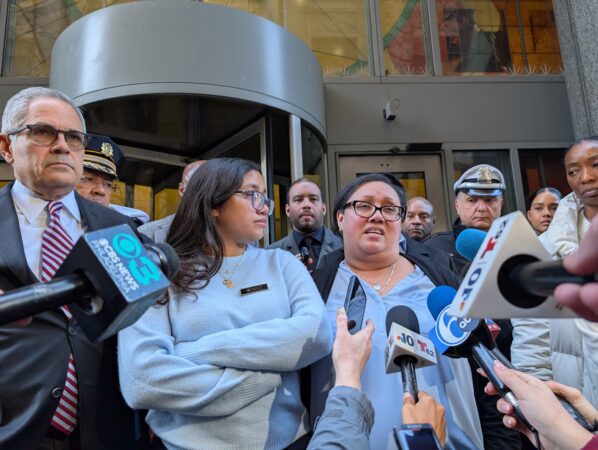
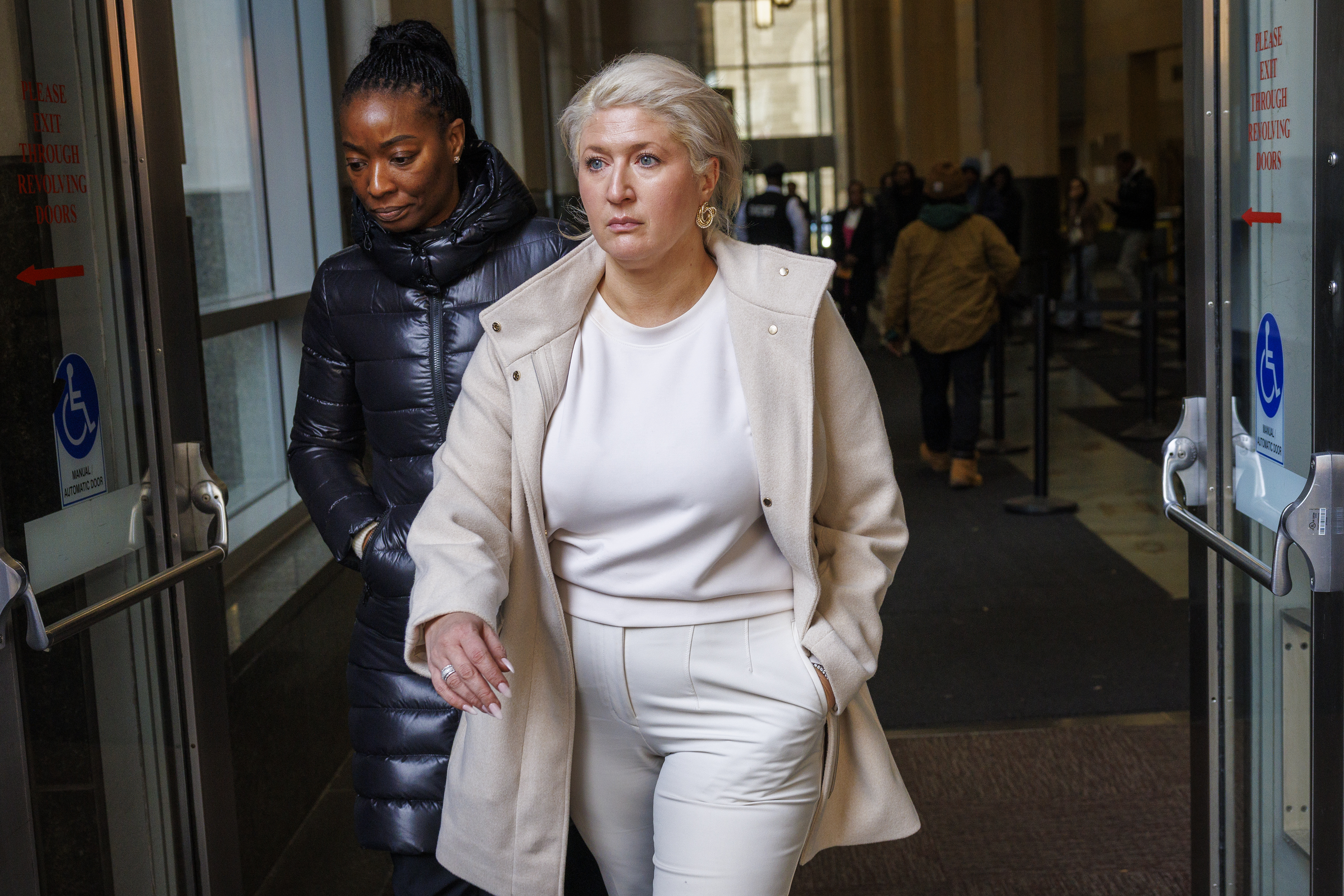
Later, she appeared outside the courthouse with her mother alongside District Attorney Larry Krasner, Police Commissioner Kevin Bethel, and other high-ranking officials.
“He was the love of my life, my soulmate,” Alex Carrero said, breaking into tears. “I have to live the rest of my life without him.”
Bethel thanked prosecutors and the jury, and told Mendez’s family their pain was “just a chapter, but it may never go away.”
“He gave his life for the safety of this city,” Bethel said of Mendez. “We will continue to carry that charge forward.”
Krasner said the sentences reflected the gravity of “a truly horrific crime.” He commended prosecutors for weathering a prolonged jury deliberation — one that lasted four days as two jurors were dismissed; one for a medical emergency and another for reasons that were not publicly disclosed.
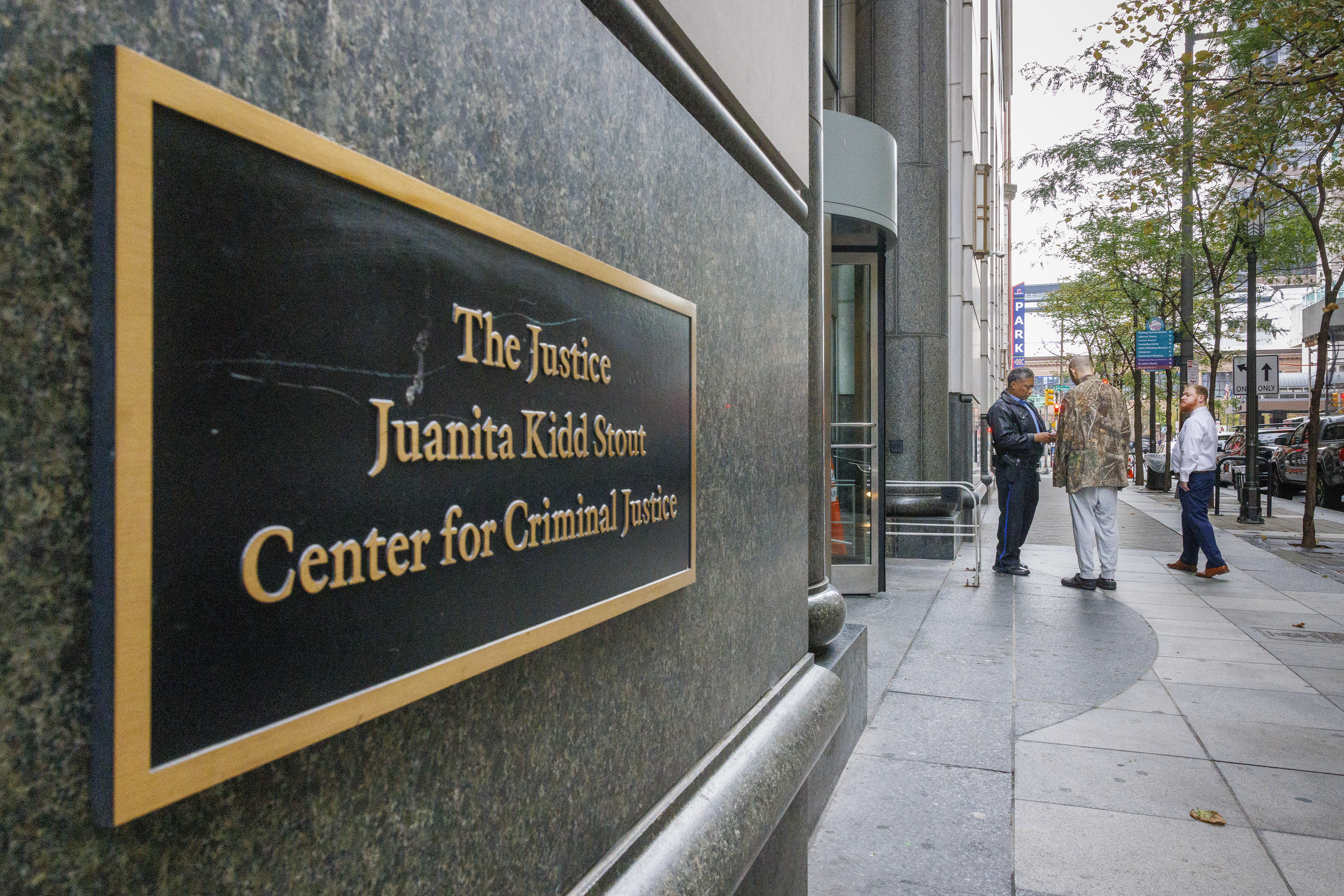
Assistant District Attorney Cydney Pope leaves Juanita Kidd Stout Center for Criminal Justice during break in the first day of trial for defendant in shooting death of Philadelphia Police Officer Richard Mendez.
Assistant District Attorney Cydney Pope’s case included cell tower data, surveillance footage, recovered DNA, and witnesses, including an accomplice to the crime who testified and implicated the two men. Taken together, Pope said, the evidence was compelling and linked the two men to the crime and its multistate scene.
“This is something that truly never had to happen,” Pope said before sentencing. Instead of pulling the trigger, she said, Martinez-Fernandez could have surrendered to Mendez and faced far more lenient consequences.
When asked if he would like to speak before the ruling, Martinez-Fernandez declined. Pena-Fernandez, barely audible, said: “I wish the best for everybody.”
Defense attorneys maintained that Pope did not prove that their clients were at the scene of the shooting. And they told jurors they should not trust prosecutors’ star witness, a man who joined in the airport theft and who pleaded guilty to lesser charges in exchange for his testimony.
Robert Gamburg, Pena-Fernandez’s attorney, said he planned to appeal the verdict.
“Of course we’re disappointed with the verdict,” Gamburg told reporters. “However, there are substantial issues which will be raised eventually on appeal.”
They sat through the presentation of evidence that included life-size mannequins of Mendez, Ortiz, and the injured accomplice, Jesus Herman Madera Duran, all with markings noting where prosecutors said 9mm bullets tore through their bodies.
Prosecutors recreated the crime scene by playing video taken by drone cameras that depicted the maze of vehicles in the concrete parking area where the shooting place. They also offered testimony from two witnesses — weary travelers who were making their way to their cars — to recount the burst of gunfire, followed by the sound of squealing tires as the men peeled out of the garage, knocking down the security gate in the process.
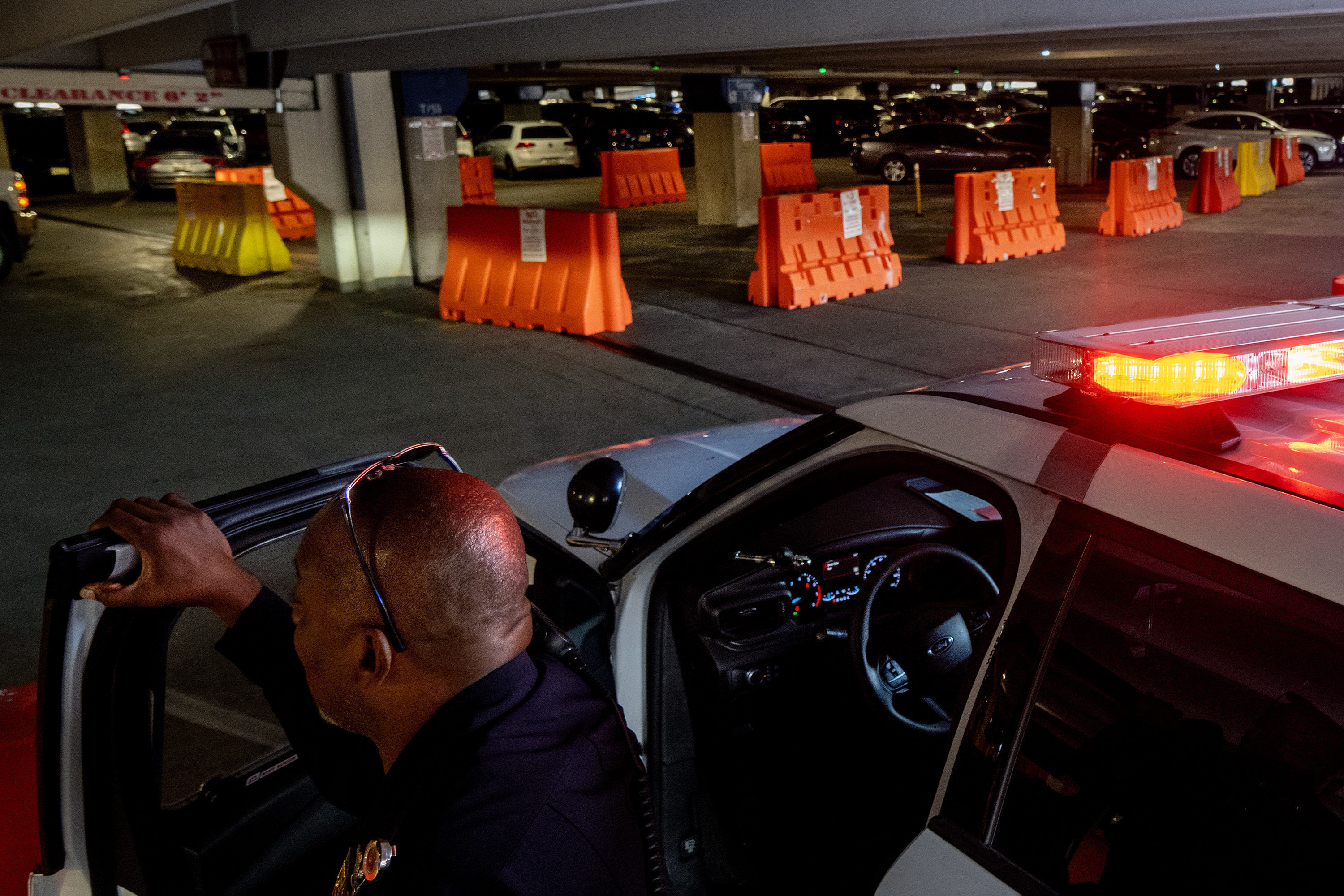
Barriers are set up to prevent parking in a section of Philadelphia International Airport Terminal D parking garage on Nov. 9 ahead of a trial for two men charged with killing Police Officer Richard Mendez and wounding Officer Raul Ortiz during a 2023 attempted car theft.
Prosecutors also played an audio recording of Ortiz screaming into his radio, “Officer down!” and saying that he, too, had been struck and could no longer feel his arm.
“I’m gonna faint,” he said, “I’m losing feeling.”
“They shot Rich,” he repeated throughout the call, his voice wavering in disbelief.
Martinez-Fernandez and Pena-Fernandez declined to testify when asked by Common Pleas Court Judge Giovanni O. Campbell whether they would like to do so. And the defense presented no witnesses of testimony.
But on cross-examination of witnesses called by prosecutors, their attorneys, Gamburg and Earl G. Kauffman, made clear that those who testified had heard — but not seen — the crime.
And Gamburg argued that his client was improperly charged with second-degree murder, a crime committed during the commission of another felony. In this case, he said, the attempted car theft was not a forceful or violent crime and should not have given rise to the more serious charge.
Gamburg told the jury Pena-Fernandez did not go out that night with the intent to kill a police officer, did not fire a weapon, and had not known that Martinez-Fernandez was carrying a gun.
The trial was also marked by jury issues that left the courtroom on edge as deliberations stretched into Monday morning.
The panel’s work was almost immediately derailed Wednesday afternoon when a juror had a medical emergency and was carried out on a stretcher. Campbell called in an alternate juror and ordered that deliberations begin anew.
Jurors appeared to be making progress Thursday as they repeatedly asked to review pieces of evidence. But Campbell later abruptly called jurors into court and told them they must approach the case with “courtesy and respect.”
No resolution came Friday, either. After nearly a full day of silence from jurors, Campbell announced that a second juror had been dismissed.
He did not explain why. And again, he ordered deliberations to start anew.
On Monday, Pope, the prosecutor, praised the jury for its diligence.
“This was a nuanced verdict,” she said. “They didn’t just go down the line and say ‘You’re guilty of all these charges.’ They went through and took their time, did the work.”
As the murder trial for two men charged in the shooting death of Philadelphia Police Officer Richard Mendez drew to a close Tuesday, prosecutors and defense attorneys offered differing interpretations of what happened on that violent October 2023 evening.
Assistant District Attorney Cydney Pope said a group of men — including 20-year-old Yobranny Martinez-Fernandez and 23-year-old Hendrick Pena-Fernandez — went out that night with the goal of stealing cars, a business she said they carried out like a “well-oiled machine.” That, she said, included Martinez-Fernandez’s role of enforcer as he carried a 9mm handgun to protect the operation.
Mendez, 50, and his partner, Raul Ortiz, were shot after they interrupted the group’s attempt to steal a Dodge Charger in parking lot D at Philadelphia International Airport.
Prosecutors said Martinez-Fernandez was under the steering wheel programming a new key fob when he fired his gun, shooting Mendez multiple times through the torso and hitting Raul once in the arm. He also unintentionally shot an 18-year-old man who was one of the group’s accomplices, they said.
Martinez-Fernandez was charged with first-degree murder, robbery, and related crimes. Pena-Fernandez, who prosecutors say assisted in the crime, faces charges of second-degree murder and related crimes.
With both men facing life in prison without parole if convicted, defense attorneys Robert Gamburg and Earl G. Kauffman urged jurors to conclude that prosecutors had failed to make the case for their guilt.
For one, they said jurors should question whether prosecutors had presented sufficient evidence to prove that the men had even been at the crime scene that evening.
And they cast doubt on the account of the prosecution’s star witness — a man who was involved in the crime, and took the stand to implicate the two men after pleading guilty to lesser charges. Alexander Batista-Polanco, who the lawyers said stands to gain a lighter sentence in exchange for his cooperation with prosecutors, could not be trusted, they said.
Pope scoffed at the suggestion Batista-Polanco had lied in exchange for favorable treatment and reminded jurors that witnesses face the risk of violence to themselves, and to their families, when speaking out. She said she believed Batista-Polanco would likely be “looking over his shoulder for the rest of his life.”
Pope pointed to evidence including cell phone data and recovered DNA linking the men to the crime, which stretched from the South Philadelphia sports complex to the Cranbury, N.J., warehouse where she said the men torched the vehicle they used to flee the scene.
Gamburg, who represents Pena-Fernandez, suggested that prosecutors had erred in charging him with second-degree murder, a killing during the commission of a felony like robbery, arson, or rape. In this case, he suggested, stealing a car was more like theft, and no weapon was used to obtain the vehicle.
Pope, citing the shooting that followed and left a 22-year veteran of the force dead, disagreed.
“You can call it whatever you want,” she said, “but what this is, is robbery.”
A former Philadelphia probation officer and a former city police officer have been charged with illegally connecting bettors to an overseas sports gambling website that allowed them to place hundreds of thousands of dollars in bets over nearly a decade, according to federal authorities.
Joseph Moore and James P. DeAngelo Jr. each face one count of conducting an illegal gambling business, court records show. Moore, the former probation officer, pleaded guilty in federal court Monday.
DeAngelo, the former police officer, is scheduled to appear in court later this week and has been charged by information, which typically indicates that a defendant intends to plead guilty.
Prosecutors said in charging documents that Moore ran the scheme from 2017 to 2025 — operating “block pools” based on NFL or NCAA basketball games, or helping bettors place ordinary wagers on different sporting events. He would sometimes send mass emails to hundreds of bettors advertising pools he was running, the documents said, with entry fees of a few hundred dollars and payouts in the thousands for winners.
Moore often collected 10% of the winners’ earnings as a “tip,” prosecutors said, and he sometimes allowed bettors to place wagers on credit even if they had incurred multiple losses.
He conducted some of his business from his probation office, the documents said, and saved records from the operation on his work computer. At one point, prosecutors said, he recruited another probation officer to help collect and transfer money from bettors using peer-to-peer apps such as Venmo and Cash App.
DeAngelo, meanwhile, helped maintain the operation’s access to the overseas gambling site, prosecutors said, and he sometimes accepted wagers from individual bettors.
Prosecutors did not specify whether the investigation led either man to lose his job. But in charging documents, prosecutors said Moore ran the operation until February 2025, and Martin O’Rourke, a spokesperson for the First Judicial District, said Monday that Moore resigned from the probation department that month.
A police spokesperson did not immediately respond to a request for comment Monday, and DeAngelo did not have an attorney listed in court records.
The case was unsealed Monday, just days after federal prosecutors in New York unveiled two sweeping indictments charging several NBA figures with participating in illegal gambling schemes, one of which involved a player allegedly providing inside information to bettors about specific games.
The fallout from that scandal has come quickly, with some commentators questioning whether sports leagues have grown too close to the betting industry, and Congress requesting a briefing from the NBA’s commissioner, Adam Silver.
A month after Keon King was charged with breaking into his ex-girlfriend’s home and attempting to strangle her, police say, his violence escalated: In January, he returned to her home with a gun, then kidnapped and assaulted her.
A warrant for his arrest was issued days later.
In the weeks that followed, King twice appeared in Philadelphia court and stood before a judge in the initial strangulation case. But no one in the courtroom seemed to know he was wanted for kidnapping.
So both times, King walked out.
In February, despite the warrant for King’s arrest, prosecutors — seemingly unaware that police said he had recently attacked their key witness — withdrew the burglary and strangulation case when the victim failed to appear in court.
Police did not go to either hearing to take him into custody, and do not appear to have alerted the prosecutor about the new arrest warrant.
And King was not formally charged with the kidnapping until April, when, for reasons that are unclear, he turned himself in.
Kada Scott, 23, was abducted from outside her workplace on Oct. 4, police said.
A review of King’sprevious criminal cases raises questions about whether police and prosecutors could have been more vigilant in holding him accountable for the earlier crimes they say he committed.
City Council has since vowed to hold a hearing examining how the city’s criminal justice system handles cases of domestic violence.
But even before the charges were withdrawn, police and court records show, there were missteps.
Marian Grace Braccia, a former Philadelphia prosecutor who is a law professor at Temple University, said she found it alarming that law enforcement failed to take King into custody when he twice stood before them in court while wanted for a violent felony.
“If this is supposed to be a collaborative effort — if there is a shared mission of public safety and victim advocacy — it sounds like everyone dropped the ball,” she said.
Detectives and prosecutors, she said, should have been aware of the arrest warrant and had officers take him into custody.
Then, she said, prosecutors could have cited the alleged kidnapping to ask a judge to increase King’s bail and keep him behind bars.
Instead, she said, “it passed by everybody, and he came in and walked out, and slipped through the cracks of the Philadelphia legal court system.”
Philadelphia District Attorney Larry Krasner discusses the killing of Kada Scott at a news conference earlier this week.
Krasner said there is no system to automatically notify prosecutors when a defendant in one of their cases is arrested anew.
Similarly, there is no system to let police know that suspects in new cases have outstanding criminal matters, said Philadelphia Police Department spokesperson Sgt. Eric Gripp.
“Detectives are not automatically notified when a wanted subject is physically present in court on a different active case,” he said.
Krasner said the issues in the case underscore a lack of communication among law enforcement agencies that happens in part because their digital information systems are decades old. He said his office and other law enforcement agencies should work to update those systems.
“That is something that we can all improve together if we have the will and if we have the resources,” he said.
A wanted man walks free
Police said King first attacked his ex-girlfriend in early November of last year. He broke into her Strawberry Mansion home, then tried to strangle her, according to the affidavit of probable cause for his arrest.
He was taken into custody in December and charged with burglary and strangulation, and bail was set at $50,000. King immediately posted the necessary 10%, $5,000, and was released.
About a month later, police said, King returned to the woman’s home and tried to break in. When he could not gain entry, they said, he waited for her to step outside, then grabbed her by the hair and dragged her into his car. He drove for at least four miles, beating her along the way, before dropping her off in Fishtown, according to the affidavit for probable cause for his arrest.
A judge approved the warrant for King’s arrest on charges of kidnapping, strangulation, and related crimes on Jan. 19, court records show.
The Justice Juanita Kidd Stout Center for Criminal Justice in Philadelphia.
King — now wanted for a violent felony — appeared in court the following week for a preliminary hearing in the earlier burglary case, records show. But when the victim did not show up in court a second time, Municipal Court Judge Jacquelyn Frazier-Lyde ordered that the case had to proceed at the next listing. Prosecutors agreed.
King left court.
Meanwhile, police said, officers tried at least once to arrest him. On Feb. 11, Gripp said, police went to a home where they thought King might be, but he was not there.
Two weeks later, King was again in court for the burglary case — but police did not go there to arrest him. Once again, the victim did not show up, and prosecutors withdrew the charges
King walked out of court a free man.
Braccia, the Temple law professor, said the detective assigned to the case should have been aware of the hearing. When seeking to charge King for the kidnapping, she said, the detective should have pulled up King’s arrest history and noticed the ongoing case. He then could have flagged it to the prosecutor in the first case and gone to the hearing to arrest him.
At the same time, she said, the prosecutors who approved the kidnapping charges against King should have noticed the earlier case and told the prosecutor — particularly because it involved the same victim.
In April, King turned himself in to police to be charged with kidnapping, strangulation, and related crimes in connection with the January attack. Prosecutors asked for bail of $999,999, but the magisterial judge, Naomi Williams, set bail at $200,000, court records show. King posted the necessary $20,000 and was released.
The following month, after the victim again did not appear in court at two hearings, the kidnapping charges were also withdrawn.
Since prosecutors have refiled the charges, Krasner’s office said it has been back in touch with the woman and hopes she will testify. She declined to comment about King’s alleged crimes and the previous handling of the cases by police and prosecutors.
Six months later, King is back in custody, this time charged with murder. He is being held without bail.