Tag: Philly First

  • Amy Gutmann, once Penn president, is teaching again. Here’s what it’s like to be her student.

    Amy Gutmann, once Penn president, is teaching again. Here’s what it’s like to be her student.

    The undergraduate class at the University of Pennsylvania vigorously discussed the use of affirmative action in college admissions, half the room charged with arguing one side and half the other.

    Their task, informed by the 2023 U.S. Supreme Court decision that ended the use of race-conscious college admissions, was to brief and advise a popular governor of a swing state who had not yet taken a position on the issue.

    “Guess who is the governor?” said their professor, Amy Gutmann. “I am the governor.”

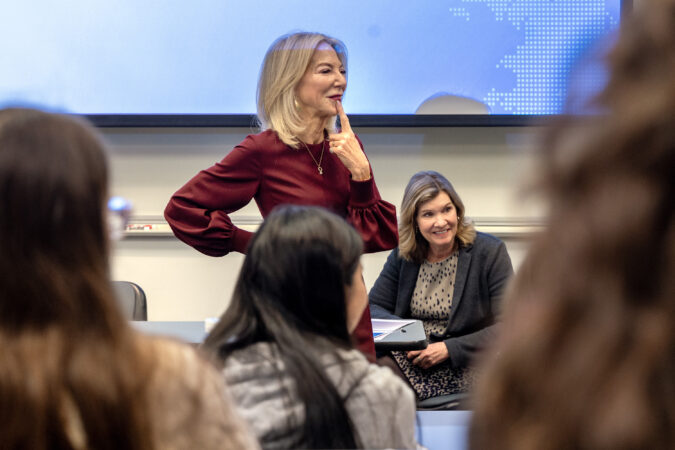
    And for 90 minutes, the entirety of the class period, Gutmann guided a lively discussion in which students talked as much as she did.

    While never a governor, Gutmann has quite the leadership portfolio. She was president of Penn for a record 18 years, leaving in 2022 to become U.S. ambassador to Germany under former President Joe Biden, a post she held until 2024. She is also a Harvard-educated political scientist who cowrote the book The Spirit of Compromise and in 2018 was called one of the world’s 50 greatest leaders by Fortune magazine.

    Now, for the first time in about 25 years — since she was a politics professor at Princeton — Gutmann is back in the classroom teaching a full course this semester in the Annenberg School for Communication. Sarah Banet-Weiser, dean of Annenberg, who initially came up with the idea for the course, is her co-teacher.

    For students, the professorial star power was hard to pass up. There was a waiting list for the class.

    “It’s kind of a power duo,” said Evan Humphrey, 21, a senior communications major from Seattle. “Got to take that class.”
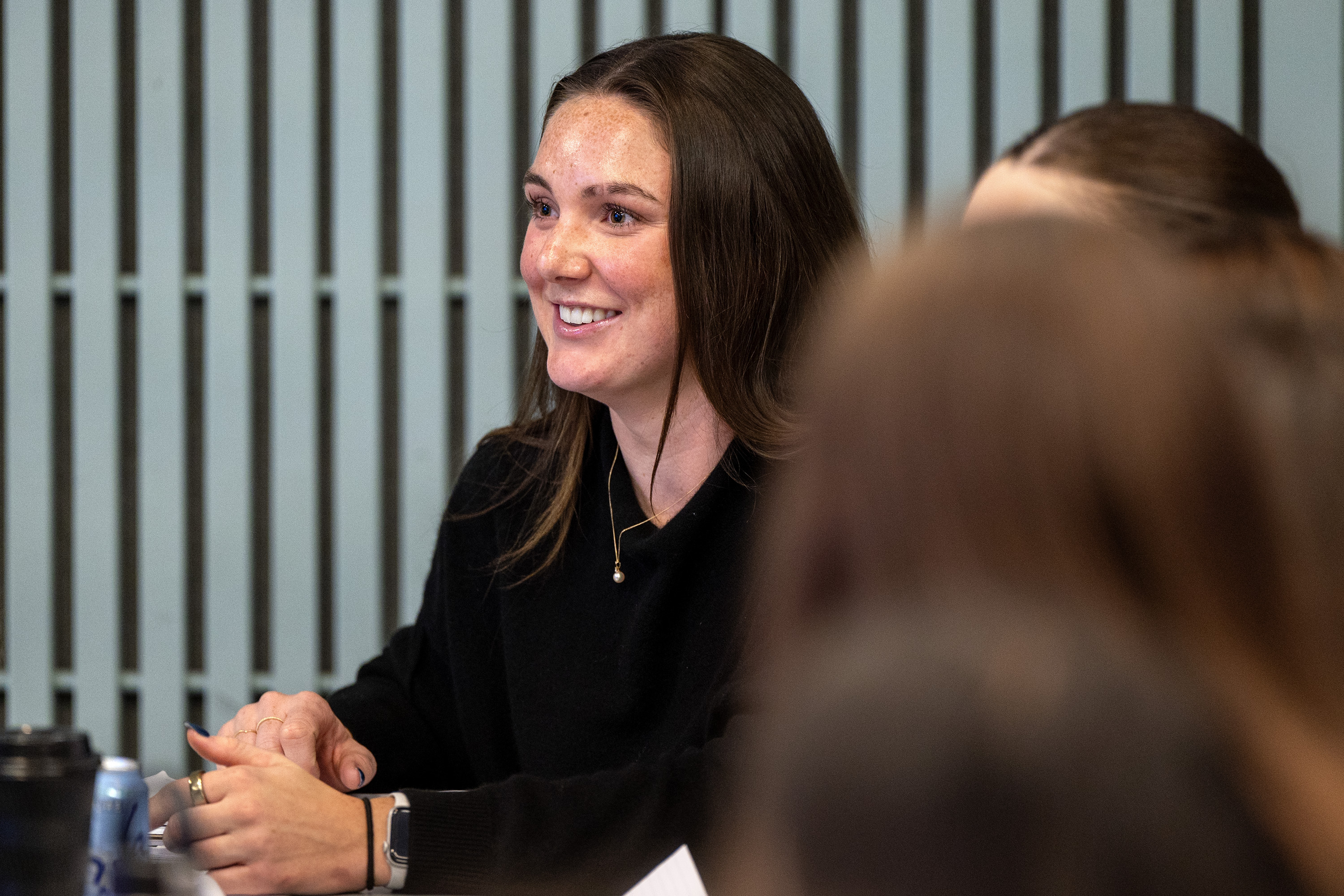
    Senior Evan Humphrey said she was drawn to enroll in the class because of the two professors and their distinguished careers.

    Focusing on teaching — the heart of a university — has been especially meaningful to Gutmann, and to Banet-Weiser, too, at a time when higher education has had its federal funding threatened and its approaches attacked.

    “It literally gives me life every week,” Banet-Weiser said.

    Gutmann, 75, who said she aspired to be a teacher since she was 5, said it has made her feel productive “in a way that goes to the heart of what a university is about.”

    “We should never lose sight of that heart of the university and how valuable it is,” she said.

    The goal of the class, called “The Art and Ethics of Communication in Times of Crisis,” is “to learn how and why to communicate with greater insight and understanding across differences,” while creating space “for free and open dialogue about controversial issues.”
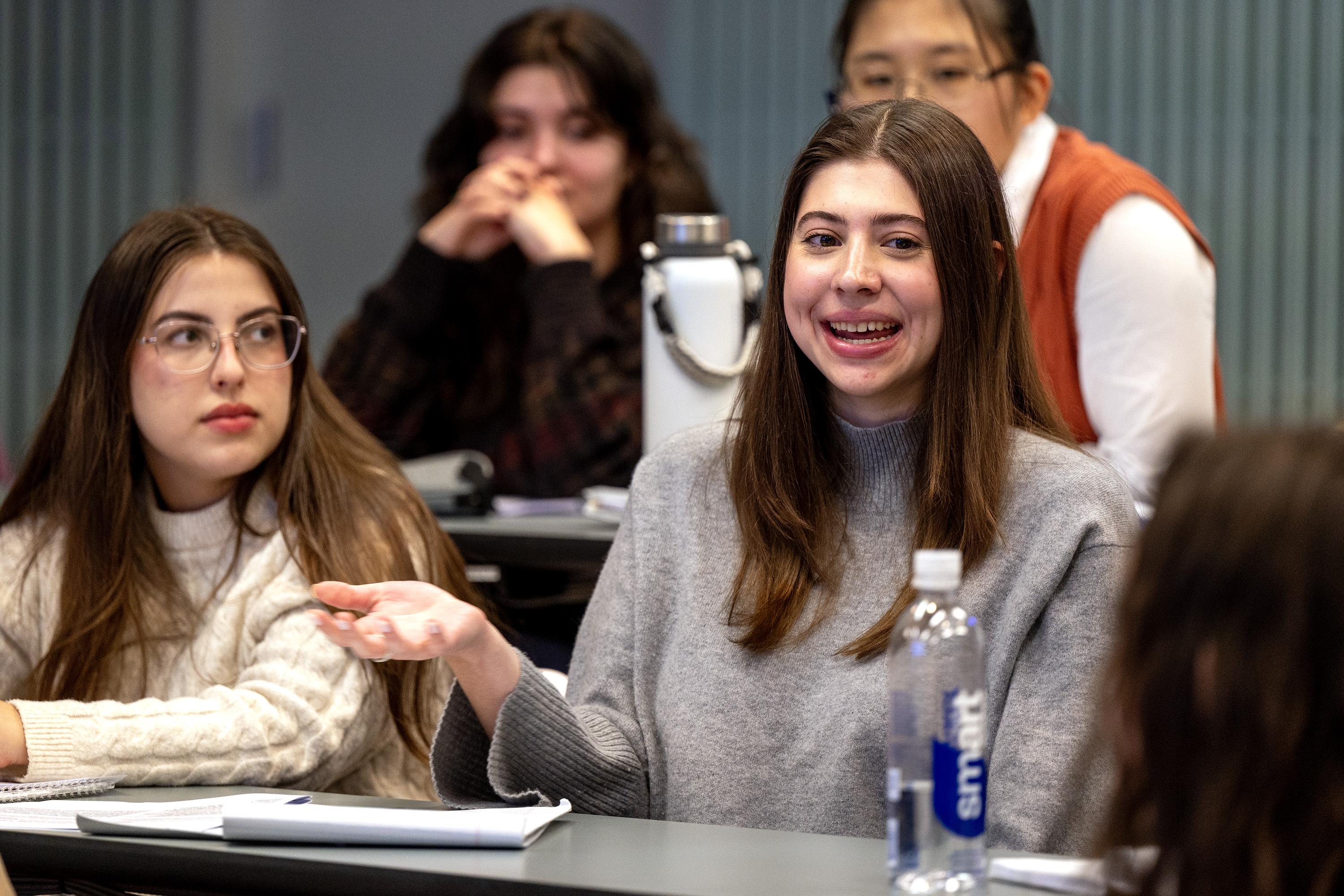
    Seniors Luiza Louback (left) and Sarah Usandivaras (right) participate in the class discussion.

    It could be a primer for the politically divided nation.

    “My pitch is that you can’t really know what you believe if you don’t know what people who disagree with you believe and what their reasons are,” Gutmann said in an interview. “I always say I don’t care what your position is. I care that you can give reasons for it and understand the strongest arguments on the other side.

    “That’s the method to search for truth, and it’s the way we serve a democracy.”

    Bringing experience to the classroom

    During class, Gutmann frequently drew on her experiences as a first-generation college student, a young professor at Princeton, a college president, and an ambassador.

    When she got her first teaching job, a male colleague congratulated her, but later she learned he told someone she got the job because she was a woman.

    “Did I take that as a compliment? Mm-mm,” Gutmann told the class.

    Humphrey said she especially likes hearing about Gutmann’s vast experiences.

    “She’s like, ‘Well, when I was the president here, this is something I dealt with,’” Humphrey said. “It’s really interesting knowing the experience she has and her background and the perspective she brings.”
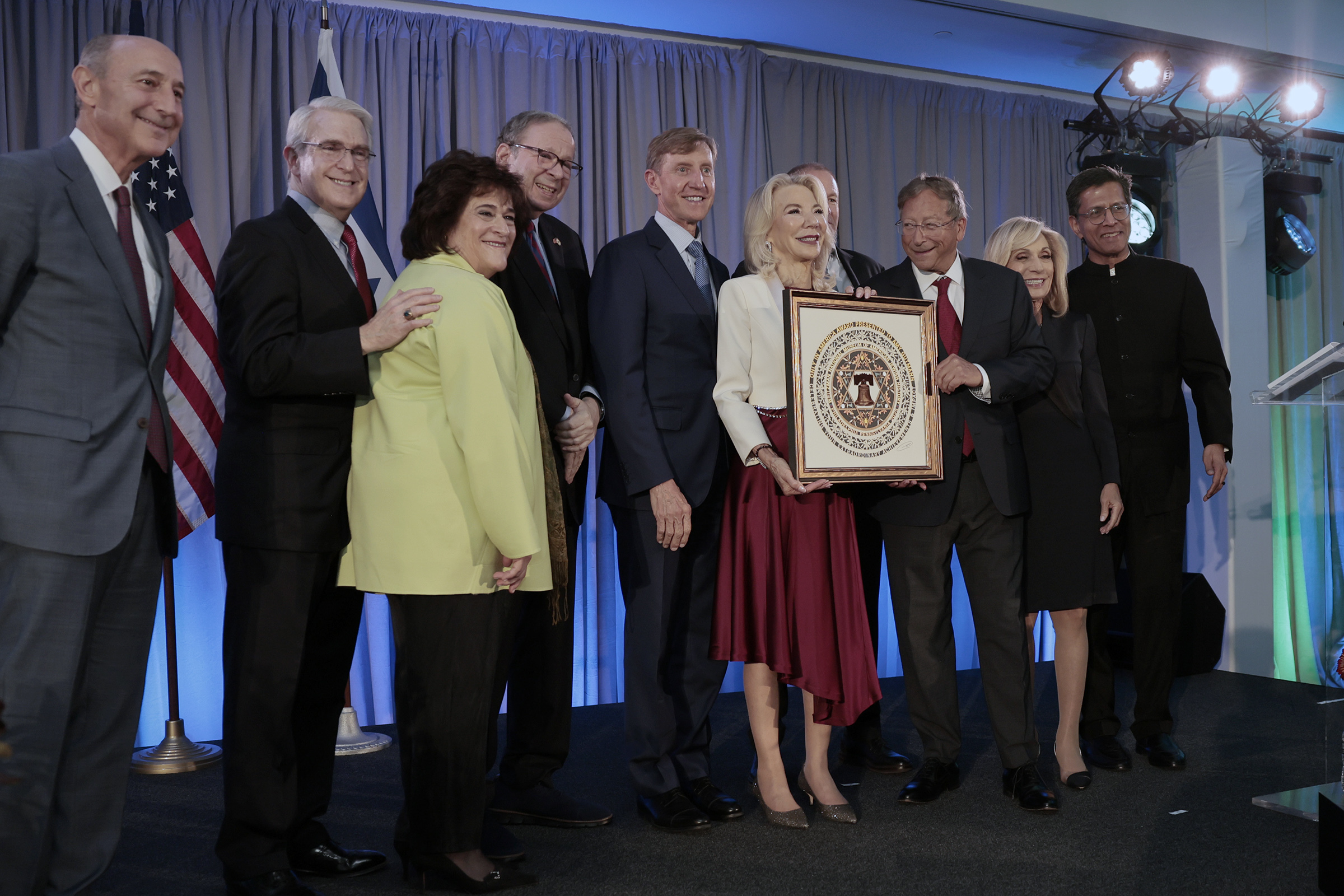
    Amy Gutmann (center), president emerita of the University of Pennsylvania and former U.S. ambassador to Germany, is presented with the Weitzman National Museum of American Jewish History’s Only in America® Award during a gala at the museum this month. The award recognizes “Jewish Americans who have made enormous contributions to our world … often despite facing antisemitism and prejudice.” Among those posing with her are Ramanan Raghavendran (far right), chair of Penn’s board of trustees, veteran journalist Andrea Mitchell (next to Raghavendran), Penn President J. Larry Jameson, (to the immediate left of Gutmann), and David Cohen, former Penn board chair, (next to Jameson.)

    Gutmann’s life outside class continues to be full, too. After class Wednesday, Gutmann, whose father fled Nazi Germany, flew to Berlin to receive the Prize for Understanding and Tolerance from the Jewish Museum Berlin.

    Having returned to Philadelphia to live after leaving Germany, Gutmann said it wasn’t hard to find her stride again in the classroom. She had given one-off lectures as Penn’s president.

    “I have a lot of muscle memory on teaching,” she said.

    Her style has changed from her early days at Princeton, where she worked from 1976 to 2004. She said reading a student’s notebook left behind and open after one of her ethics and public policy lectures was a major turning point.

    “‘That’s not what I said,’” Gutmann thought. “And I realized it’s not what you teach them, it’s what they learn. At that point, I realized I needed feedback.

    “So I changed from doing the 45-minute [lecture] thing to doing five or 10 minutes, max, and then asking them questions. Then I got them to argue with one another, and once I found that, I found what I really discovered worked for learning.”
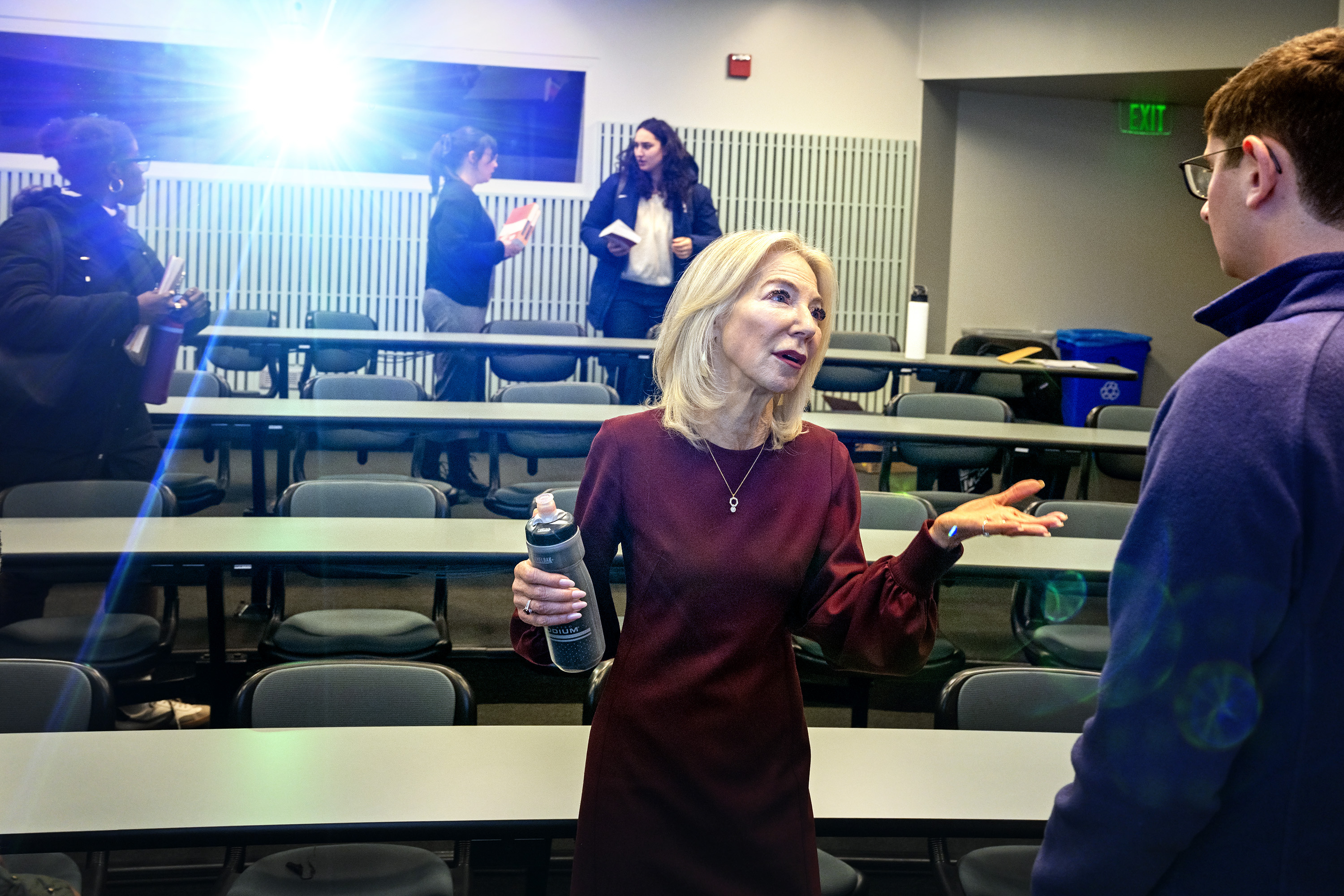
    Amy Gutmann talks with sophomore Brian Barth (right) at the end of class she co-teaches at Penn’s Annenberg School for Communication.

    Gutmann said she spends Fridays and weekends preparing for the class, which meets twice a week.

    “It’s a ton of work,” she said. “I’m really delighted to be doing it.”

    The class comes against the backdrop of fraught times for colleges. Penn earlier this year scrubbed its website of diversity initiatives after President Donald Trump’s administration threatened funding to schools employing diversity, equity, and inclusion efforts. In the summer, the school struck an agreement with the administration over the past participation of former transgender swimmer Lia Thomas, and Penn was one of nine schools originally asked to sign a compact that would have given the school preferential consideration for federal funding in exchange for complying with certain mandates affecting admissions, hiring, and other university operations. Penn declined.

    ‘One-of-a-kind’ discussions

    Gutmann and Banet-Weiser do not allow laptops, phones, or any electronic devices in class so that students completely focus on the conversation. To prepare for the affirmative action discussion, students were assigned related readings and review of the court cases.

    The two professors interacted with each other and prompted discussion among students with deep questions: Is treating people equal the same as treating them equally? Is it right to use affirmative action for only one racial group? What about other forms of affirmative action or preference, including for athletes, low-income students, and legacies whose parents attended the university?

    The approach resonated with students.

    “I wanted to take a class where I would really be encouraged to step out of my comfort zone and be able to learn not only how to understand my own beliefs and values but understand the beliefs and values of others,” said Sarah Usandivaras, 21, a senior communications and political science major who was born in New York and grew up in Paraguay.

    She found it in Gutmann and Banet-Weiser’s classroom.

    “It’s a one-of-a-kind,” she said.

    Ariana Zetlin, a doctoral student in Penn’s Graduate School of Education, is auditing the class to observe its approach.

    “The discussion and the debates are so much deeper and stronger than what I’m seeing in classrooms that don’t necessarily have these structures,” said Zetlin, 30, who is from New York.

    During class, those on both sides found common ground.
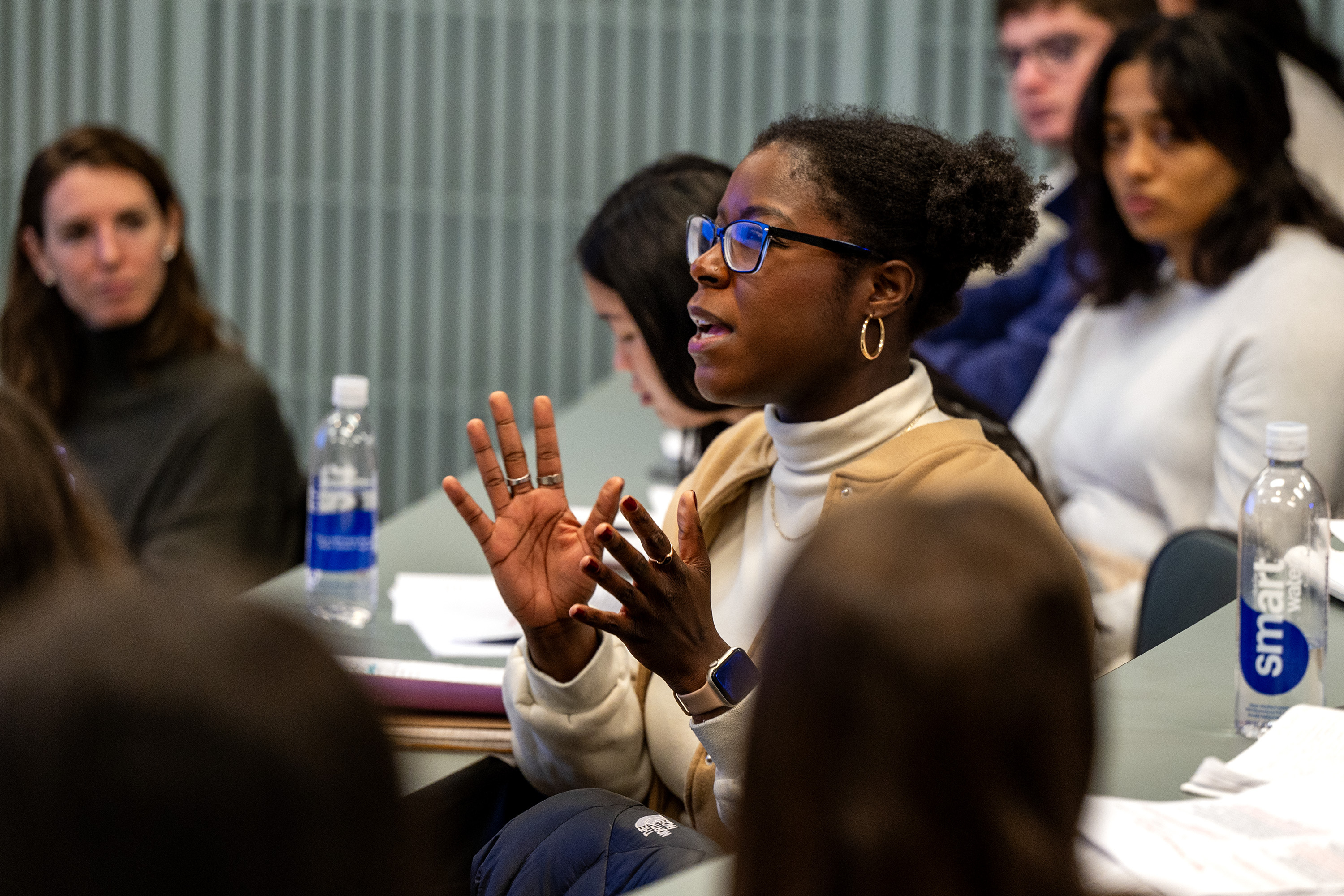
    Senior Angele Diamacoune said she was learning from the day’s lesson.

    “So I’m hearing agreement that diversity is a good thing but disagreement on how you get it,” Gutmann said.

    She asked students how many believed that having low-income and racially diverse students in class contributed to their learning. Every hand went up.

    “That to me is really striking,” Gutmann said. “There aren’t that many things that we can get unanimity on.”

    She asked students how they would advise colleges to teach the issue.

    “It would be good to teach with activities like this,” said Angele Diamacoune, 21, a senior communications major from Allentown.

    “Are you learning?” Gutmann asked her.

    “I am,” Diamacoune answered.

    “I am, too,” Gutmann said.
  • For almost 40 years, Esperanza has served ‘the least of these’ and those who ‘just need a break’ | Philly Gives

    For almost 40 years, Esperanza has served ‘the least of these’ and those who ‘just need a break’ | Philly Gives

    Talk to most nonprofit chief executives, and they’ll be able, on cue, to recite a heartwarming story about someone their organizations helped.

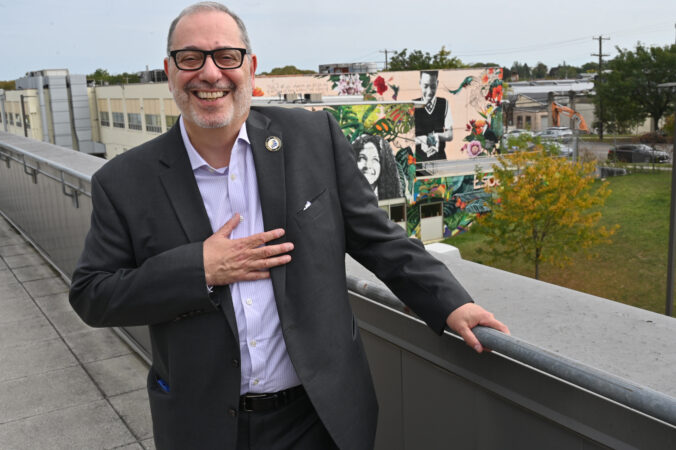
    And the Rev. Luis Cortés Jr., Esperanza’s founder and chief executive, can do it, too.

    But he’d rather talk about a sin he committed as a little boy — a sin that impacted his thinking for a lifetime and allowed him to understand how to build a $111.6 million organization with 800 employees that educates, develops, uplifts, and houses 35,000 people a year in the heart of North Philadelphia’s predominantly Hispanic Hunting Park neighborhood.

    When Cortés was 12, he stole a Snickers candy bar from the bodega his father owned in New York City’s Spanish Harlem.

    Oh, his father figured it out, and quickly, too, because he began to ask little Luis some important questions:

    Did the 12-year-old know how many Snickers bars the bodega would have to sell to break even — not only on the box of Snickers, but on the taxes and utilities for the entire store? More importantly, how many Snickers bars would be required to turn a profit — a profit that could be reinvested?

    “You need to understand finance, whether it’s a box of Snickers or a multimillion-dollar bond to build a school. Where is the money coming from, and what’s the repayment structure?” Cortés said.

    Outside, as he spoke, a crane moved materials in what will soon become a new culinary school.

    “Understanding finance is important, and understanding culture is important, and you have to understand the relationship between the two.”

    So, yes, Cortés can and did tell the story about the mother who came to Esperanza to learn English skills, who got help to get a job and a house, who sent her daughter to Esperanza’s charter school and to Esperanza’s college, and now that same daughter is getting a house thanks to Esperanza’s mortgage counseling help.

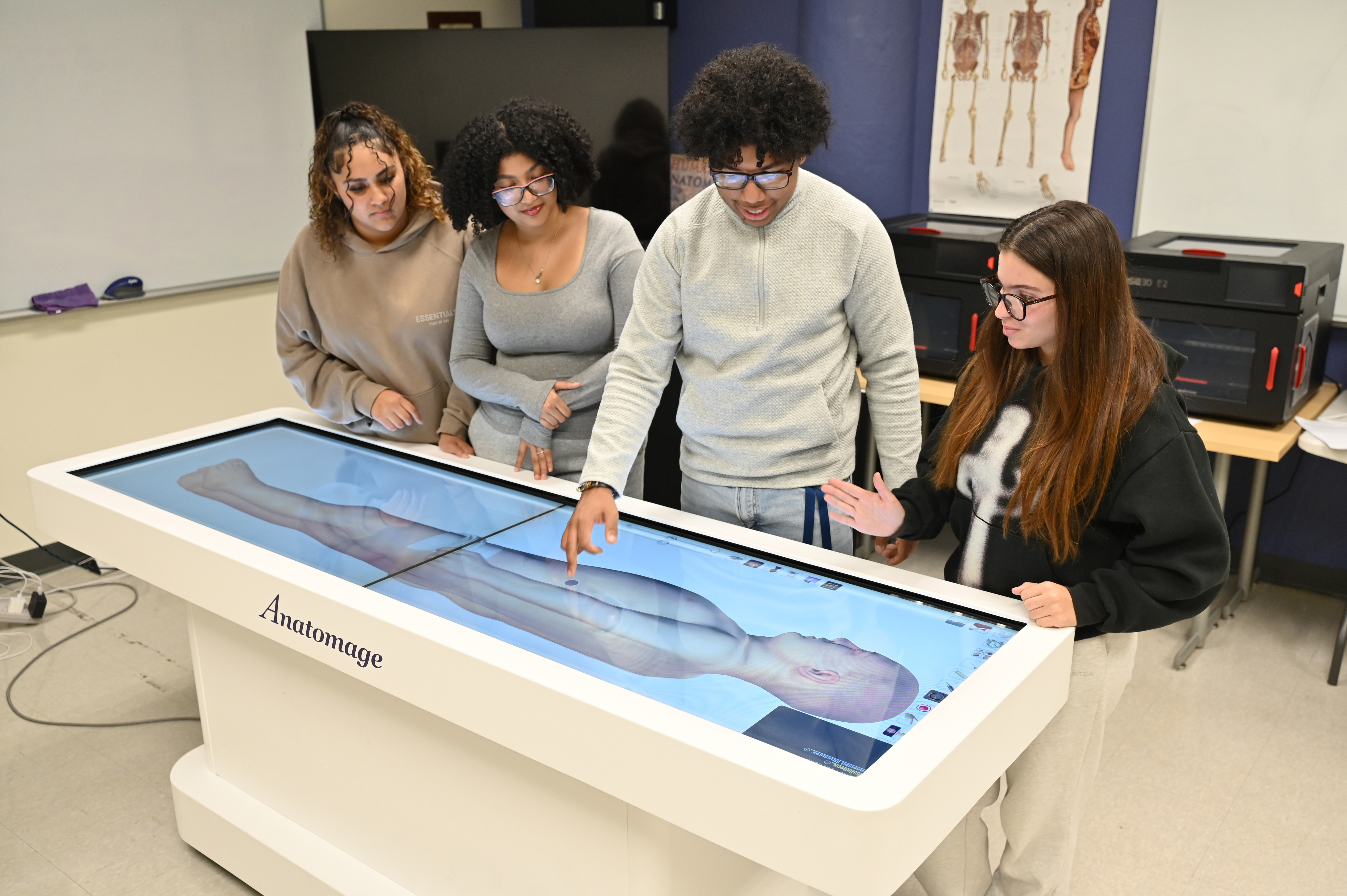
    Students Jayliani Casioano, Oryulie Andujar, Derek Medina, and Natalia Kukulski use an interactve anatomy table. The students are members of is the Health Occupations Students of America (HOSA).

    All good. But this is what Cortés really wants people to know:

    “If people trust us with their funds,” he said, “we’re putting the money into institutions, and institutions build culture.”

    That’s why Esperanza has a K-12 charter school, a cyber school, a two-year college that’s a branch campus of Eastern University, a 320-seat theater, an art gallery, computer labs, an immigration law practice, a neighborhood revitalization office, a CareerLink office for workforce development and job placement, a music program, a youth leadership institute, housing and benefit assistance, and a state-of-the-art broadcasting facility.

    Cortés even likes to brag about the basketball court. “Three inches of concrete, maple wood flooring, fiberglass backboards — NBA standards.”

    “Think about Paoli. It has a hospital, a public school, a theater. Paoli has all of that, and it’s understood that that’s the quality of life. We have to have access to those same things at a different price point,” he said. “Notice I didn’t say different quality. I said different price point.

    “We want to create an opportunity community, where people can have a good life — with arts, housing, healthcare, financial literacy, education, all those pieces — regardless of your family income,” he said.

    “What’s important here and what’s different is that in all our places, all our facilities are first class,” Cortés said.

    “I grew up in a low-income community where people were always telling you to step up, but step up to what?” he asked. “Where is the vision? What is possible to even have? How can anyone know unless they can see it?”

    So, when people from the community visit Esperanza, “you can see that you can have the best facilities with state-of-the-art equipment. As a provider of services, we have to step up,” he said, in turn always giving people the tools and resources they need to step up.

    For example, on Citizenship Day, Sept. 20, Anu Thomas, an attorney and executive director of Esperanza’s Immigration Legal Services, trained a dozen volunteer lawyers and law students on the fine points and recent pitfalls in the process of applying for citizenship.

    Soon, the room was crowded with people coming for help.

    Watching from the sidelines was Charlie Ellison, executive director of the city’s Office of Immigrant Affairs, who noted that an estimated 60,000 legal residents of Philadelphia are eligible to apply for citizenship.

    “Clinics like these are critically important to helping people who might be facing barriers,” including the cost of getting legal help. “This bridges a lot of gaps. It’s a vital mission, now more than ever,” he said.

    For Neury “Tito” Caba, a men’s fashion designer, tailor, and director of green space at Historic Fair Hill, citizenship help from Esperanza was a family affair. Through Esperanza, he, his grandmother, and his mother all became citizens.

    “Now I can vote, and that’s the most positive thing I can do,” he said. “And also, things being the way they are, it gives me some sort of protection.”

    Fashion designer Neury “Tito” Caba talks about his citizenship experience at Esperanza.

    Earlier this fall at Esperanza’s CareerLink branch, counselor Sylvia Carabillo helped Luis Rubio on the computer. He was trying to extend his unemployment benefits and looking for a job as a security guard. Agueda Mojica was being tutored in Esperanza’s most popular workforce class: Introduction to Computers.

    “I want to become more independent to be able to do anything on a computer,” she said in Spanish, speaking through a translator. “I was always working and never had time to learn.”

    Much of Esperanza’s staff is bilingual in Spanish, but to help people from the neighborhood, Esperanza also hired counselors who speak Ukrainian and Kreyòl for Haitians who live nearby.

    In Esperanza College classrooms a few weeks ago, Esperanza Academy high schoolers enrolled as college students had just finished a chemistry exam. When they graduate from high school, they’ll already have associate degrees on their résumés.

    For them, Esperanza represents a future.

    There’s Oryulie Andujar, 18, who wants to study sonography because an ultrasound technician found a cyst in her mother’s uterus. “We could have lost her. That was very impactful for me.”

    Jayliani Casiano, 17, wants to go into anesthesiology. The oldest of seven, she witnessed her mother giving birth to several younger siblings. “She was in a lot of pain. It was interesting. I want to do everything after seeing her through that process.”

    Derek Medina, 18, said the opportunity to go to college “made me rethink my whole life.” He had been getting into trouble in school, but now wants to combine a love of mathematics and a desire to help people by going into the field of biomedical engineering.

    Recently, on Nov. 14, Esperanza College hosted its Ninth Annual Minorities in Health Sciences Symposium, designed to acquaint high schoolers with medical careers.

    Construction will soon begin to convert a former warehouse space into a center to teach welding and HVAC in an apprenticeship program.

    Next month, it’ll be time for “Christmas En El Barrio” with music, food, and community in Teatro Esperanza — admission is free. In January, the Philadelphia Ballet will perform there. Tickets are $15 and free for senior citizens and students.

    “My worst seat — in Row 13 — would be $250 at the Academy of Music,” Cortés said. He wants to offer the arts at a price and a time available to a mother of three, who may not be able to afford even the cheapest seats in downtown venues, plus bus fare, “and heaven forbid the child wants a soda,” Cortés said.

    All this adds up to culture, which brings him back to the Snickers bar, and not just breaking even, but investing.

    Other groups, Cortés said, had to build their own institutions when mainstream organizations put up barriers. Howard University helped Black people, Brandeis served Jewish people, and Notre Dame provided education to the Irish.

    Building an institution is his investment goal with Esperanza, and he takes as his mentors famous Philadelphia pastors such as the Rev. Leon Sullivan, who founded Progress Plaza in North Philadelphia, and the Rev. Russell Conwell, the Baptist minister who founded Temple University.

    “Philadelphia has a tradition that its clergy don’t just do clergy things,” he said, admitting that he doesn’t have the patience for a more traditional pastor’s role. “As clergy here, it’s understood that we snoop around everything.”

    Cities sometimes brag that their poverty rates have declined, he said, when in reality, rates have declined because people with low incomes were forced to move away.

    Philadelphia, he said, has a chance to be different — to lower the poverty level both by raising people’s incomes and improving their standards of living. “There should be Esperanzas in every neighborhood,” he said.

    “How can we focus on helping the people who just need a break?” Cortés said, referencing Jesus’ admonishment to “help the least of these.”

    “This city has the opportunity to make this a win-win,” he said, “to show the rest of the country and Washington, D.C. — especially Washington, D.C. — that people who are different, and people who are `the other’ can be supported, so that they are not only part of the fabric of the city, but economic drivers of the city.”

    This article is part of a series about Philly Gives — a community fund to support nonprofits through end-of-year giving. To learn more about Philly Gives, including how to donate, visit phillygives.org.

    For more information about Philly Gives, including how to donate, visit phillygives.org.

    About Esperanza

    People Served: 35,000

    Annual Spending: $111.6 million across all divisions

    Point of Pride: Esperanza empowers clients to transform their lives and their community through a diverse array of programs, including K-14 education, job training and placement, neighborhood revitalization and greening, housing and financial counseling, immigration legal services, arts programming, and more.

    You Can Help: Esperanza welcomes volunteers for community cleanups, plantings, and other neighborhood events. Some programs also need volunteers with specific skills (lawyers, translators, etc.).

    Support: phillygives.org

    What Your Esperanza Donation Can Do

    • $25 covers the cost of one private music lesson for a young student through our Artístas y Músicos Latinoamericanos program.
    • $50 provides printing and distribution of 30 “Know Your Rights” brochures to immigrant families.
    • $100 pays for five hours of training for a new mentor fellow at the Esperanza Arts Center, preparing a young person for a career in arts production through hands-on learning.
    • $275 funds the planting of one street tree in a neighborhood that desperately needs additional tree cover to address extreme heat.
    • $350 covers tuition and books for one English as a second language student at the Esperanza English Institute.
    • $550 supports the cost of the initial work authorization for an asylum-seeker.