Tag: Philly First

  • Effecting Radical Change One Life at a Time

    Effecting Radical Change One Life at a Time

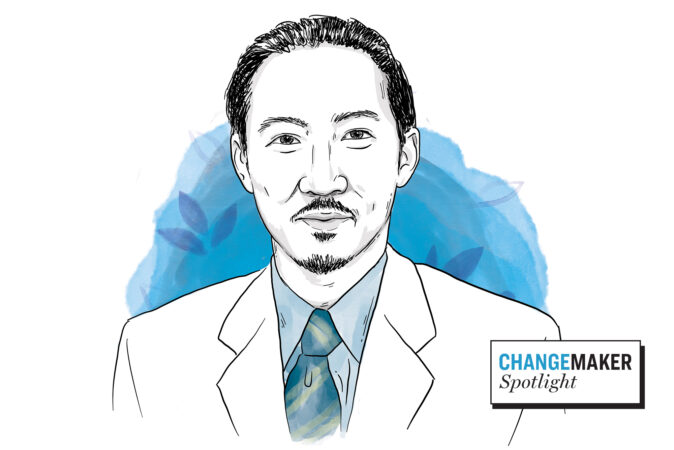
    “My path from being a 9-year-old boy, a refugee from Vietnam in a family resettled in South Philadelphia, to becoming CEO of SEAMAAC [Southeast Asian Mutual Assistance Association Coalition], just seems perfectly fitting for a story of America,” Thoai Nguyen said. “But when I think more deeply upon my life and other people who faced very similar challenges, it could have gone in many different ways.” Nguyen’s sensitivity to the potential outcomes of immigrants is informed both by his personal experiences as well as his leadership of SEAMAAC. The organization’s services, which include education, health care, and community development, are crucial in this moment: In 2023, immigrants comprised 14.3% of U.S. residents, up from 11.19% in 2000. In 2024, Philadelphia’s immigrant population reached an 80-year high. And while poverty in the city is at a 25-year low, housing remains unaffordable and more people are experiencing homelessness than ever before.

    The nonprofit is also invested in changing the cultural discourse around immigration. On Jan. 22, 2026, the organization will launch “Indivisible,” a video storytelling project in collaboration with the American Swedish Historical Museum and funded by the William Penn Foundation. “Indivisible” invites Philadelphians to share their family’s immigration experience, connecting their roots to today’s political discourse. “I want people to discover themselves as they’re telling their story,” Nguyen said. “And then in doing so, inspire others to look at their own roots.”

    Here, Nguyen shares his roots as a Vietnamese refugee in Philadelphia in the 1970s, and his unique perspective on community outreach, organizing, and where SEAMAAC is headed.

    Tell me about your family’s experience coming to the United States. How does that shape the work you do now?

    My family was resettled to South Philadelphia in 1975 after uprooting everything we’d known for generations. It really shaped my very early understanding of the world around me.

    Because my father worked for the U.S. government for many years while he was in Vietnam, we were prioritized to be airlifted out. We were the first family to land in South Philly in the Seventh Street business corridor, which, at that time, was still a thriving, vibrant business district, primarily for Jewish businesses owned by Jewish families who had survived the Holocaust and I believe that experience made them more compassionate to my family’s plight. At first we were the only Asian family in the midst of working-class Irish, Polish, and Italian immigrants. So for the first four to five years, that was what I knew.

    From the late ’70s up until 1985, more Vietnamese refugees began to be resettled there, and then Cambodian, Laotian, ethnic Hmong, ethnic Chinese followed. That caused a lot of racial tension. Being one family, we may not have been a threat, but when you have hundreds of different families speaking six or seven different languages, wearing different clothing, eating different food, practicing different customs, you’re going to push up against the nativist sense of entitlement and turf.

    It impacted my understanding of who I am in the context of everything. For the first five years as a refugee, I had a very diverse friend group. I remember playing hockey, soccer, and American football, and our team was really representative of the neighborhood. My older brother and I were the only Asian guys on the team, but we were kind of embraced by the neighborhood. I should say that (and this is not a pat on the back or anything) my dad’s family was fairly wealthy and he was very well-educated and very sophisticated. He spoke four languages — Vietnamese, English, Japanese, and French — fluently. As a result, our upbringing in Vietnam was very urbane.

    But the new refugees coming in were not coming from that same sort of social environment. A lot of them came from more agrarian areas, and they had a more difficult time adjusting to the urban neighborhood in South Philly. And while I was accepted into a group of Italian- and Irish-American kids, the reality of identity really hit me. They may not have seen me as different, but I was very much an immigrant. I felt this deep sense of connection with the new refugees, and about the same time, my dad started working for one of the refugee resettlement agencies to help the new refugees entering the neighborhood. When I was 15 or 16 years old, I would start advocating for some of the new refugees when my father was busy at work. They would knock on the door, and I would go out and help them facilitate a discussion with the landlord or the neighbor to get around some sort of cultural misunderstanding.


    How would you describe what SEAMAAC does and why it matters?

    We describe the people that we serve as economically, socially, and politically vulnerable communities. The name singles out the Southeast Asian immigrants and refugees because they were part of our original mission. And while we still serve Asian communities, today, our mission statement is really an economic, social, and political-class statement. Depending on the year, 50% of the communities we serve are Black families or families with African ancestry. There have also been a lot of Ukrainians entering Philadelphia in the past five years. So we serve economically- and historically-disenfranchised or vulnerable families of all races and ethnicities. It doesn’t matter who they are, if we have programs or services they need, then they are welcomed.

    We also do advocacy, education and organizing work, which is something that was not there before I came to SEAMAAC. I would argue that the quality of our services today is a hundred times better than 20 years ago because our work today is deeply informed by a radical analysis of poverty.

    Can you tell me more about that? How do you define radical?

    When we say “radical,” we don’t mean people running around arguing to defund the police. We mean “radical” in the sense of its Latin origin, which means “root.” To me, if you boil down the problems faced by the family or community today, the cause of the problems is usually poverty. Debilitating generational poverty. Some of our services are just a band-aid on certain issues. We’re plugging leaks here and there. But to get to the root cause of these issues, we need to get people to think and act strategically, to really think more about who they’re voting for.

    How does SEAMAAC engage in community empowerment?

    I would say that we don’t do any “empowerment” work because that creates a presumption that we have power to give to people. We really try, instead, to build an environment in which people can find their own voice and agency, then have self-determination in their future. To me that is less about traditional social services than it is about movement building and community organizing. And we’re trying to build really slowly, but steadily.

    I’ll give you an example: I sometimes guest lecture at Penn, Jefferson, or Temple. And students are generally really interested in my organizing background and what I did prior to SEAMAAC. And on the surface, that’s the sexy stuff. I was organizing against the police brutality, getting arrested for civil disobedience, and taking over buildings, taking over bridges and tunnels in New York City. But a lot of students will say, “Oh, Mr. Thoai, tell us the most radical thing that you’ve ever done.” And they think that I’m going to talk about the time that I scaled this building to drop a protest banner.

    But in reality, the most radical thing that I’ve ever done is finding livable wage jobs for 20 families at one time, where mom and dad got jobs at a hospital system in Philadelphia. And they are now getting paid better than minimum wage and receiving health care coverage for their family from a 40-hour work week. What more radical way can you change a person’s life than doing that? Mom and dad now don’t have to work two jobs, 12 hours a day. They have Saturdays and Sundays free to spend with their family. What is fundamentally better than that?

    What gives you hope about the work? What keeps you up at night?

    What keeps me up at night is the crisis that’s been building in our democracy over the last 10 months and the fact that working-class Americans are being disenfranchised through the defunding of our public benefits. I’m concerned specifically with how defunding impacts the families SEAMAAC serves. We’ve already taken an $800,000 loss over the previous nine to 12 months. And that affects the lives of the people whom we serve but also the livelihood of our team. In that period, we also lost 15 staff members. So we went from a team of 50 to now 35. Clearly we need more people because requests for service have increased, not decreased.

    Our ability to meet the demand is stable for now, but that requires the remaining 35 staffers to work extra hard. And as the CEO, I have to be really careful about them burning out, or worse, for them to say, “I’m done. I can’t do this anymore.” So it’s a real fine line for the nonprofit sector. That’s what keeps me up at night, thinking about the 12 people that I had to lay off over the last six months, I feel terrible. But you can’t sustain this work without hope. I’m sure you’re familiar with Mariame Kaba’s concept that hope is a discipline?

    Actually, I’m not.

    Her concept is that hope has to be an active verb. When you only hope for something, it does not mean that it will automatically happen, you have to take action day by day to make that hope into a reality.

    After more than 20 years leading this organization, what are you most proud of?

    I’ve been here long enough, 21 years now, that people are asking me about my legacy. Is my legacy going to be the Wyss Wellness Center that we opened up in collaboration with Jefferson Health? Or is it going to be the South Philly East Community Center that’s scheduled to open in December of 2026? I would say that it’s nothing structural like that, even though I love talking about tangibility.

    I think the legacy that I leave for SEAMAAC is the dozens of young activists and organizers that I have the honor of mentoring right now and the dozens that I’ve mentored in the past. If I can instill a sense of compassion and integrity in a quarter of the people who we’ve developed at SEAMAAC, the things that I’ve done in life will have been worth it. Over the past 40 years, I’ve mentored a lot of great people and some have started their own organizations. Some are still doing anti-prison work, anti-death penalty work. I was mentored by some great community organizers, so I am just passing on their knowledge to the next generation of organizers.


    PHILLY QUICK ROUND

    What’s your favorite Philly food splurge? The pizza steak at Lazaro’s Pizza.

    Favorite Philly small business? I always have to say Stina Pizzeria. It is not just the pizza — it’s the owner and their mission. And he named the restaurant after his wife, Christina. I mean, that’s just lovely.

    What do you wish people knew about the people who call Philly home? We are rough around the edges, but we’re for real.

    Who’s the greatest Philadelphian of all time? John Coltrane, a genius musician, an amazing civil rights leader. A jazz icon.
  • Repairing the World Through Compassionate Care

    Repairing the World Through Compassionate Care

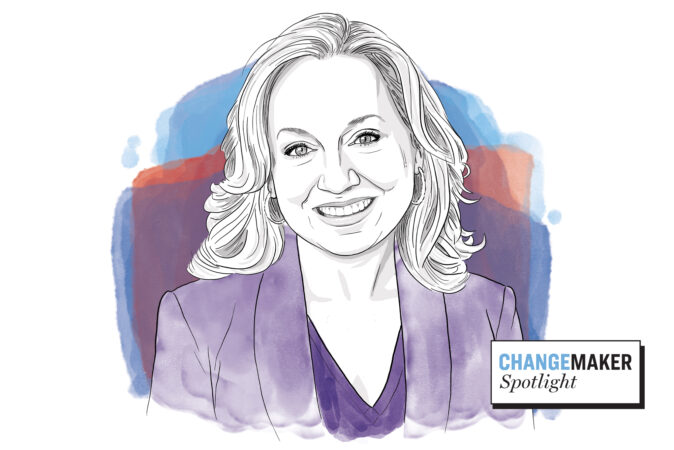
    Robin Brandies, 56, left a career in international law more than 20 years ago to find purpose and meaning in work that would impact individuals’ lives. Now, as the CEO and president of Jewish Family and Children’s Service (JFCS), she is dedicated to ensuring that vulnerable Philadelphians facing challenges get the help they need with dignity and care. “JFCS is rooted in Jewish values, especially tikkun olam, which is the idea of repairing the world,” Brandies said. “Being a Jewish organization means leading with compassion, inclusion, and service for all.”

    With decades of leadership experience in mission-driven organizations, including serving at St. Jude’s Children’s Research Hospital and guiding services at Abramson Senior Care, Brandies brings authenticity and pragmatism to her work. Under her stewardship, JFCS serves as a lifeline for individuals and families facing challenges. The organization offers counseling, care management, financial assistance, as well as food, clothing, housing, and social connectivity. JFCS is founded on Jewish values of giving and caring for others and is open to individuals of all faiths.

    Here, Brandies shares the experiences that drew her to this work, the people who inspire her daily, and the stories that reveal how JFCS transforms everyday lives.

    What experiences led you to dedicate your career to social services?

    My background is actually in international law. I spent several years in Washington working at the intersection of law, human rights, and foreign policy. I was drawn to that world because I wanted to make an impact on a large scale. I believed the political realm was where real change could happen.

    Over time, I realized that doing good in that context was often buried under layers of politics. I remember sitting in a law firm conference room surrounded by stacks of documents, representing the United Nations in a contract dispute, and thinking: This isn’t it. I wasn’t using the best parts of myself, which are my ability to connect with people, my propensity to build relationships, and to care deeply and personally.

    That realization sparked a lot of soul searching. I came to understand that meaningful change doesn’t always have to happen on a global scale. Sometimes it’s just as powerful, maybe even more so, to make a difference close to home. That’s what ultimately led me to this work.

    How did you find your way to the organization?

    Before joining JFCS, I was the President and Executive Director of Abramson Senior Care, another mission-driven nonprofit that had served low-income seniors for more than 160 years. The former CEO of JFCS and I began discussing the idea of a merger between our two organizations, something that could truly strengthen services for older adults in our community.

    I knew pursuing that merger might ultimately mean talking myself out of a job, but I believed it was the right thing to do for the people we serve. A few months into those discussions, [then JFCS’s CEO] Paula Goldstein, announced her retirement from JFCS. The organization launched a national search, and I decided to throw my hat in the ring.

    How has your own family, faith, or upbringing influenced the way you lead and serve?

    I’ve had close family members face a range of challenges, from LGBTQ+ discrimination to mental health struggles, addiction, and developmental disabilities. Watching people I love navigate such complex systems gave me a very personal understanding of what it means to feel unseen or unsupported.

    That perspective has deeply shaped how I lead. It reinforced my belief in the importance of dignity, empathy, and access — the idea that everyone deserves to be met with compassion and respect. Even back in law school, before I knew where my career would lead, I wrote my law review paper on gay adoption. Looking back, the thread of advocacy and inclusion has always been there.

    When the work feels heavy, what keeps you grounded and motivated?

    It might sound simple, but my family, meditation, and time in nature keep me centered. Being in nature helps me recharge and reminds me of the bigger picture.

    What personal values guide your decision-making as a leader?

    Authenticity is a big one for me. I’d much rather work with someone who’s direct and real than someone who’s polished but insincere. I also deeply value courage. In past leadership roles, I’ve had to make tough, often unpopular decisions that required doing what was right rather than what was easy. I admire and try to be the kind of leader who leads with both honesty and bravery.

    Who are the people who inspire you most?

    I’ve been fortunate to have mentors who encouraged me to find my own path. Early in my career, I wasn’t loving my work in international securities law, and my boss — former SEC Chairman Harvey Pitt — gave me incredible support. He allowed me to spend a couple of afternoons a week exploring other interests while keeping up with my responsibilities. That generosity and trust taught me the value of caring mentorship and the courage to explore new directions.

    Later, Carol Irvine, the former CEO at Abramson Senior Care, inspired me in a different way. After stepping away from work for several years to focus on my family, I returned to a vice president role. Carol saw my potential and supported me without judgment, valuing commitment and authenticity over my time away. Both of them modeled courage, integrity, and belief in people, values I carry into my own leadership.

    How do you define success in your role, for the organization and for yourself?

    For me, success has a few dimensions. Professionally, I hope to grow more leaders. True leaders don’t create followers; they create more leaders. I also measure success by how well the organization embraces collaboration and partnership within the community, making the most of limited resources. And finally, I define success by ensuring long-term sustainability, setting JFCS up to serve generations to come.


    What does JFCS provide for families in need that they can’t easily find elsewhere?

    JFCS serves as a gateway to a wide range of integrated services, many under one roof. We address mental health, food insecurity, housing, parenting support, school-based programs, and robust older adult services. Often, a client’s challenge isn’t just one thing — it’s interconnected. Our ability to see the full picture and coordinate care in a holistic way is what truly sets us apart. Human beings are complex, and we acknowledge that and take care of their needs in an integrated way.

    Can you share a story that captures the spirit or impact of JFCS’s work?

    A few weeks ago, I visited JFCS’ mobile basic needs program, Our Closet In Your Neighborhood. What began as a clothing distribution service has grown to offer food and social work support. At each pop-up shop, clients can select clothing in a respectful, dignified way, while a social worker is on hand to address other needs: housing, health care, or guidance. That seamless integration of care really captures what makes JFCS unique.

    How does JFCS balance honoring Jewish values with serving a diverse community?

    JFCS is rooted in Jewish values, especially tikkun olam, which is the idea of repairing the world. It serves as a call to action, encouraging individuals to address social and economic inequality, and other injustices through acts of kindness and service. But we see that as a universal human value. While we provide a safety net for vulnerable members of the Jewish community, we serve everyone, regardless of belief or background. Being a Jewish organization means leading with compassion, inclusion, and service for all.

    What are you most proud of when you look at JFCS today?

    I’m proud that JFCS is a trusted gateway organization, a safety net for people in need with a long history of service. I also admire how nimble we’ve been, adapting to changing community needs. Whether facing food insecurity, benefit disruptions, or other challenges, I’m confident this organization will continue to find solutions and support those who rely on us.

    What is the biggest challenge on your desk? What is the biggest opportunity?

    The biggest challenge is navigating strategic and financial planning in an uncertain funding environment. The biggest opportunity is the JFCS-Abramson merger. By combining our expertise, we can offer a full spectrum of health care, social services, and community support, creating something truly transformative for seniors in need.

    What do you wish people understood better about the families and children you serve?

    These families aren’t so different from anyone else. They’re just facing different challenges. No one is free of challenges at one time or another. Anyone can find themselves in a tough situation. What matters is how we respond, and the resilience and courage I see every day in the people we serve is remarkable.

    When you think about the future, what do you hope your legacy — and JFCS’s legacy — will be?

    I hope my legacy is setting JFCS up for longevity and sustainability so the organization can keep helping people for decades to come. I also want to build lasting partnerships and foster a sense that social services transcend political divides. No matter our opinions on politics or policy, almost everyone agrees we should help people in need. That belief that helping others can unite us is really important to me, and I hope it becomes a defining part of JFCS’s identity.

    What have you read recently that has been impactful in your thinking?

    I recently read David and Goliath: Underdogs, Misfits, and the Art of Battling Giants, by Malcolm Gladwell, and it really stuck with me. I loved how it highlights the strength and grit people develop when they face challenges. It reminded me that overcoming obstacles can be a source of resilience, and that underdogs often have hidden advantages. It’s a powerful reminder not to underestimate anyone based on appearances or circumstances.

    Do you have a mantra you live by?

    I’m inspired by Billy Joel’s song, “Vienna.” The idea is simple: Go for what you want, give it your all, and make the most of life’s experiences. But I also love the idea that it’s good to just be here today.

    Of course it’s good to strive, to grow, and to have goals. But also balance that with a real appreciation and enjoyment of where you are right now.


    PHILLY QUICK ROUND

    What’s your favorite Philly food splurge? Philly pizza! And Philly water ice, especially root beer and vanilla.

    Biggest misconception non-locals have about Philly? That it’s all toughness and no softness.

    What sports team shirt do you wear most often? The Phillies.

    Favorite Philly restaurant? I love the Israeli restaurant Zahav. Especially their hummus!

    Favorite Philadelphia-born artist? I am a huge Walt Whitman fan.

    When you think of the great Philadelphians in history, who is your GOAT? The signers of the Declaration of Independence.

    I feel most like a Philadelphian when… I’m at the Phillies game.


    Lucy Danziger is a journalist, an author, and the former editor-in-chief of Self Magazine, Women’s Sports & Fitness, and The Beet.

  • UPenn launches a $10 million fund for seed investments in companies founded by Penn researchers

    The University of Pennsylvania launched a fund backed by $10 million from the university to make seed investments in companies founded by Penn researchers, officials announced Monday.

    The fund, called StartUP, will invest up to $250,000 in companies founded by Penn researchers and based on innovations created at the university. Any profits will be put back into the fund, Penn said.

    “This new fund addresses the critical need for seed investment capital at the earliest stages of company formation and will further accelerate innovation across the university,” Penn’s vice provost for research, David Meaney, said in a statement. Meaney is on the faculty at Penn’s School of Engineering and Applied Science.

    The university’s Office of the Chief Innovation Officer will manage the fund. The innovation office will evaluate applicants with the help of external advisers. Factors in investment decisions include overall feasibility and commercial potential.

    The new investment fund builds on efforts already underway at the Penn Center for Innovation, the Wharton School, and Penn Medicine, which in 2018 started a fund to invest $50 million in biotech companies.

    Penn has led the nation recently in licensing revenue from faculty inventions, thanks largely to revenue from COVID-19 vaccines that were based on mRNA technology developed 20 years ago by Penn researchers Drew Weissman and Katalin Karikó.

  • Flyers Warriors program supports veterans reentering civilian life: ‘It is a life-saving type of program’

    Flyers Warriors program supports veterans reentering civilian life: ‘It is a life-saving type of program’

    After serving more than two decades in the military, William Duffy found himself with no direction.

    Duffy was coming from an environment where every day was planned for him, surrounded by people who shared his same experiences. Reentering civilian life was a shock to the system.

    When one of Duffy’s former captains called him about a veterans hockey program the Flyers were starting six years ago, Duffy, who’d grown up playing goalie, jumped at the opportunity. “No matter where I was at, I was always playing,” he said.

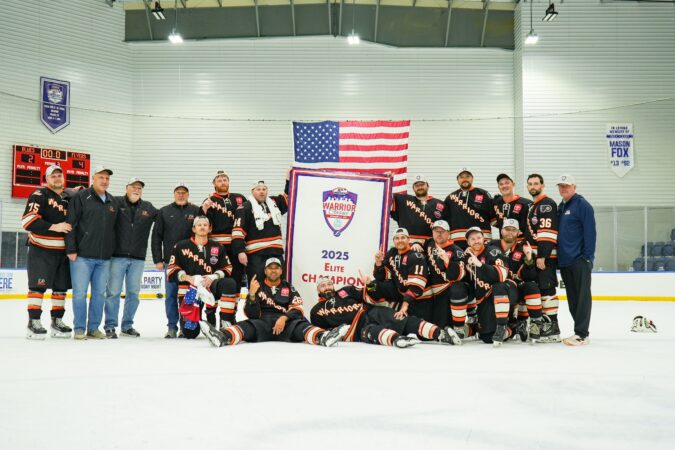
    Duffy is now the president of Flyers Warriors, a hockey program dedicated to providing a supportive community for wounded, injured, or otherwise disabled veterans and their families. The team started with a group of 33 veterans, and now spans five teams, from the elite level with former college and junior players to a learn-to-play program for those just starting out.

    “It is a life-saving type of program, because some of these guys and girls wouldn’t have anything if it wasn’t for us, to be honest with you,” Duffy said.

    Kevin Emore, the vice president of business operations for Flyers Warriors, can attest to its value.

    “When I had my first episode with PTSD after running around the world doing contracting work or being in the military and deploying for the first time, I was surrounded by people on my left and my right that I didn’t know if I could trust,” Emore said. “When I made my way back to the East Coast, the Warriors was the first time that I found it again.”

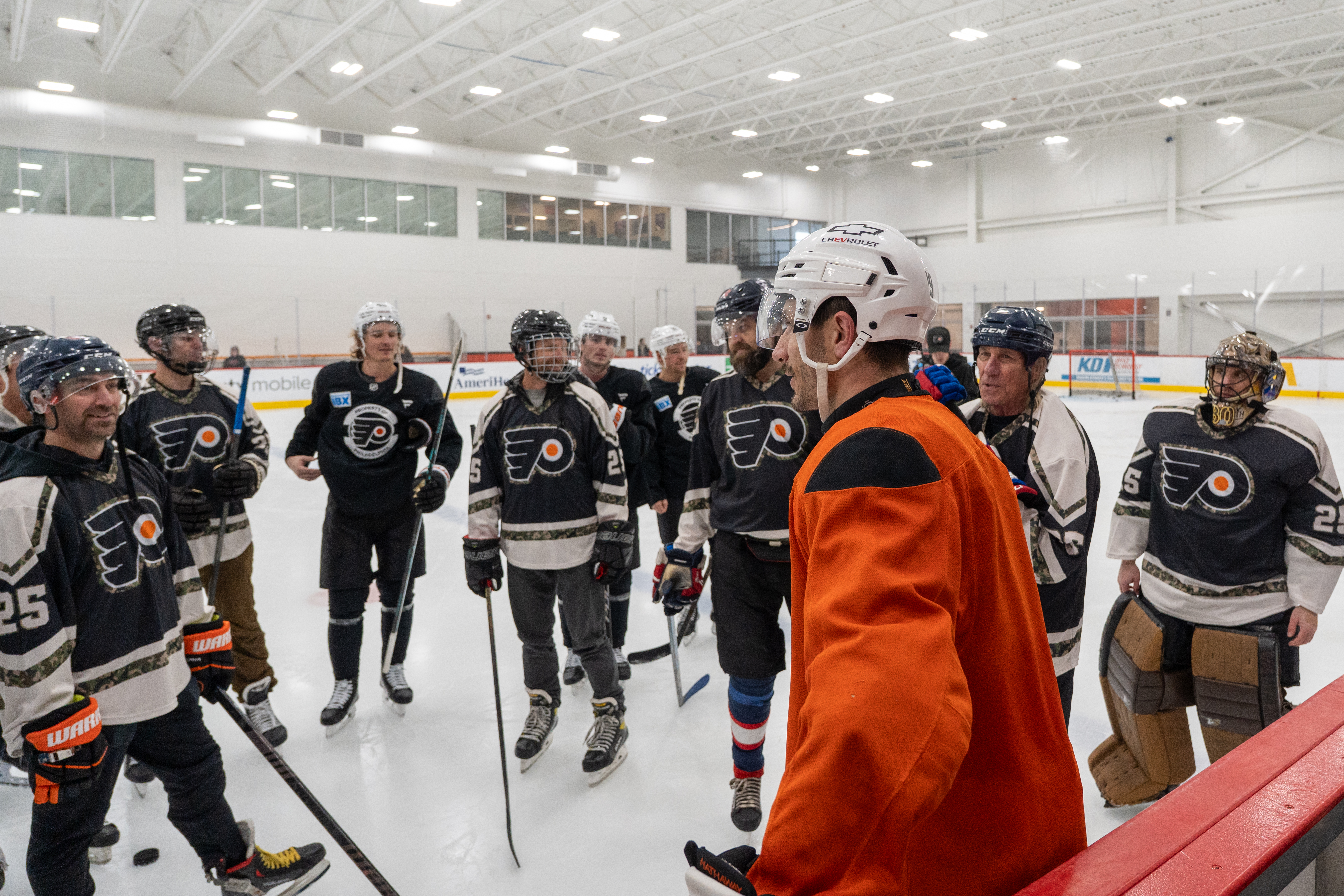
    Flyers’ Garnet Hathaway, a big supporter of military-based charities, took some time to talk with several veterans on the ice on Nov. 11.

    The higher-level teams play tournaments across the country against Warriors teams affiliated with other NHL organizations. To eliminate barriers for all players to get on the ice, they provide childcare for families, and there’s a large community of Warrior Wives.

    But the Flyers Warriors also pride themselves on the community they’ve built off the ice. That extends to social events like their group Thanksgiving dinner and participating in community service.

    “What we realized along the way was veterans are better when we’re serving others,” Duffy said. “If we can create pathways to allow veterans to get back to service, that’s where they’re going to start to feel at home again.”

    That’s where the partnership with the Flyers organization proves helpful. In addition to ice time and support, the Flyers Warriors are active in local philanthropy through various Flyers Charities initiatives. The Flyers Warriors athletes are key volunteers at events like the Gritty 5K and the Flyers Charities Carnival.

    Todd Fedoruk, a former Flyer who played in the NHL from 2000 to 2010, said he too feels like he’s found a second home with the Flyers Warriors. While there are obvious differences between being a military veteran and an NHL veteran, Fedoruk also found similarities to his life after retirement.

    After retiring from pro hockey, where his life was similarly structured with a strict schedule, Fedoruk also found himself searching for who he was aside from a hockey player.

    “There’s a common bond there,” Fedoruk said. “Working with these guys, it does become more [than just] about hockey, because with my own history with mental health and all those other issues that’ve come maybe because of hockey, maybe not because of hockey, but the dynamics of change that happen to a former athlete are very similar.”

    To help veterans make that adjustment, the Flyers Warriors connect their members with mental health services and support. Navigating the services available through the Veterans Affairs office can be a deterrent for those seeking mental healthcare, Emore said. They prioritize connecting their members with behavioral health, addiction, and recovery services.

    The space Duffy and the executive board have built on the ice through Flyers Warriors helped build the foundation of trust for veterans to seek those resources out, all based on their shared love of hockey.

    “It makes me feel proud about the game that I played,” Fedoruk said.

  • Empowering Philadelphia’s Latino Communities

    Empowering Philadelphia’s Latino Communities

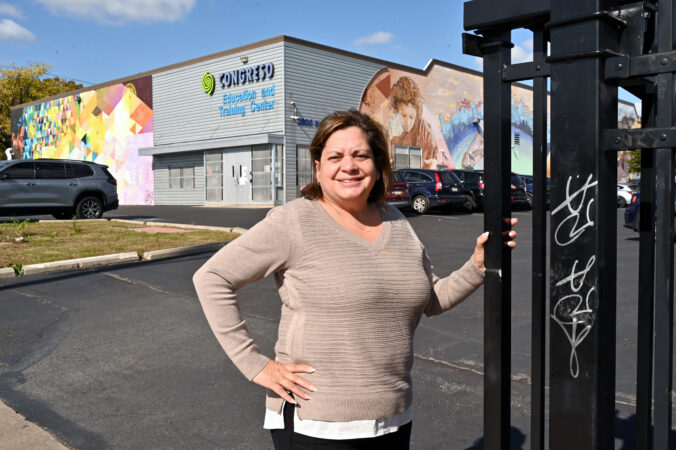
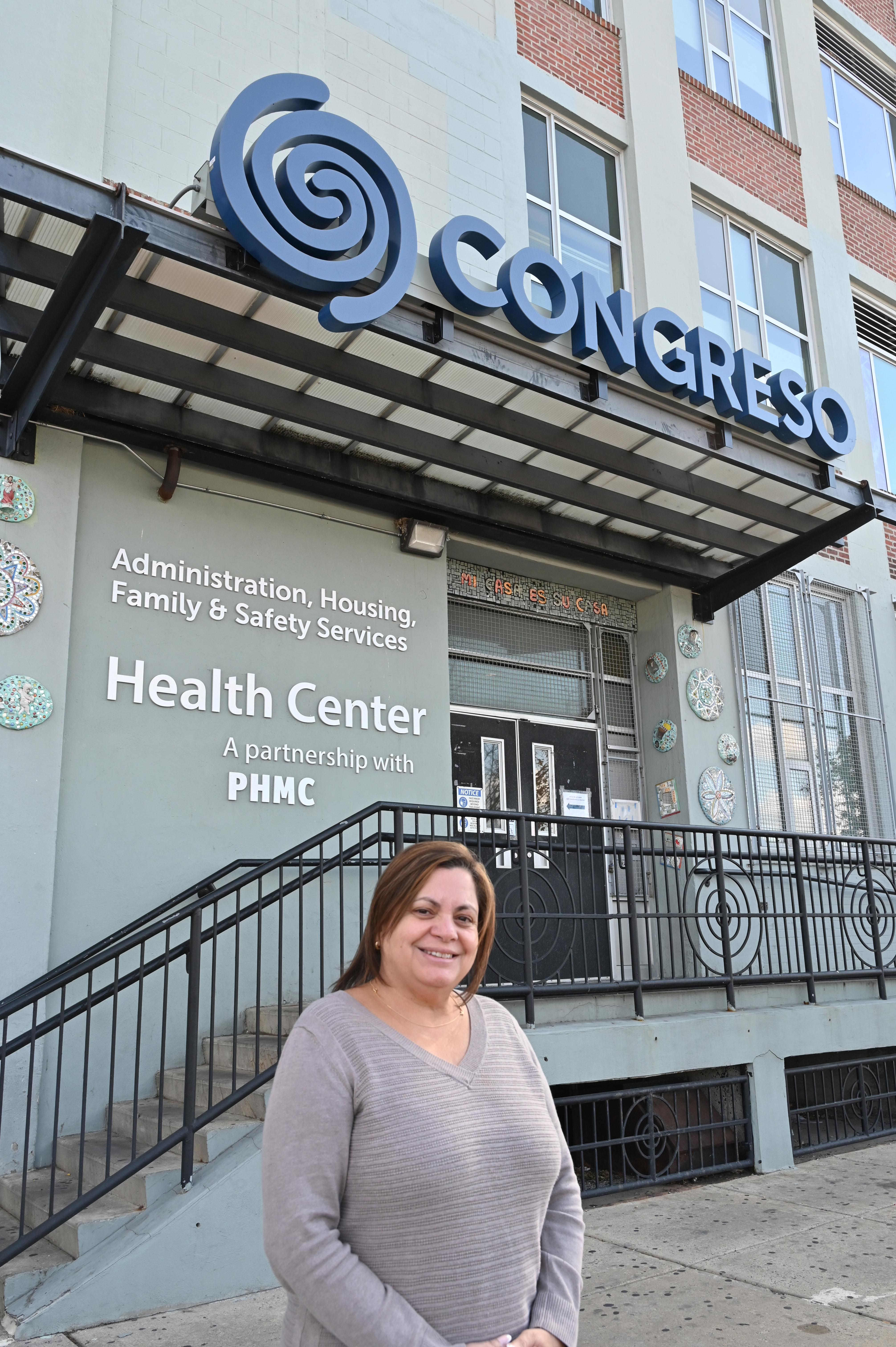
    The youngest of seven children, Jannette Diaz, 59, grew up a few blocks from Congreso de Latinos Unidos, whose mission is “to enable individuals and families in predominantly Latino neighborhoods to achieve economic self-sufficiency and well-being.” Her professional journey within Congreso spans more than a decade. Before her promotion to chief executive in March 2023, she served for two years as chief experience officer, a role created “to boost the organization’s culture.” Diaz also led the organization’s Health Promotion & Wellness division from 2015 to 2021, overseeing the Congreso Health Center, Esfuerzo HIV/AIDS Program, Latina Domestic Violence Program, East Division Crime Victims Services, and Breastfeeding Program.

    Diaz leans into the words “Mi casa es su casa” that appear on a mural near the front door of the nonprofit’s office. “We want folks who come in to feel like they’re coming home,” she said. Her forward-thinking leadership of Congreso’s 200-plus staffers is evident in the organization’s achievements. In the past year, the nonprofit has served nearly 14,000 individuals across education, health, workplace, housing, and parenting and family services. Congreso has been recognized with a Top Workplace Award for seven years running.

    Diaz recently served on Gov. Josh Shapiro’s Advisory Commission on Women, where she helped identify and advance solutions for aging with dignity across the Commonwealth. Here, Diaz discusses her upbringing and her advice for young leaders.

    What experiences led you to dedicate your career to social services?

    Growing up, I was always surrounded by family … the essence of learning what community is, the values of giving back, being compassionate — that all shaped me. I got a degree in sociology with a concentration in juvenile and criminal justice.

    I have a soft spot for youth, especially those who are challenged or are either in a dependent or delinquent stream in the court system. That sparked my work. It ties back to leading with heart and knowing I’m helping someone else along the way.

    How has your upbringing influenced the way you lead Congreso?

    I’m the youngest of seven. There was a lot of love in our home, a lot of resilience. Sometimes it was challenging for my parents, but my father was really good at budgeting and ensuring that he tapped into any available services that were in the community if we needed support.

    Education was first and foremost, for all of us. This was a requirement. We didn’t know if we could afford college. We had this saying in Spanish, “Todo se resuelve.” We resolve everything. I was able to learn about opportunities to go to school, and I ended up going to college.

    I’m still working in the very community we grew up in. Congreso has been around for 48 years. My father knew that he could tap into whatever Congreso was offering for services, but he was also really good at being a connector. In the community, [if] someone came into the grocery store [where he worked] and needed something, he would say, “Hey, there’s that program where they offer this. Hey, go down here — they’ll offer you assistance with your LIHEAP [Low Income Home Energy Assistance].” Those are some of the things I learned from him just by listening to the conversations.

    What qualities do you admire in your staffers?

    They’re caring individuals. It doesn’t matter where they sit in the organization. They want to help, whether it’s direct services [to clients] or their colleagues. I work really hard with our executive team to create spaces where they feel they have a voice of influence, that we are all leaders in our own right.

    We host resource seminars, and sometimes those are just [about] understanding ourselves and [learning about] self-care, [and] psychological safety. The work they do is really heavy. Sometimes it could be triggering. We do hire people from our community. There are folks in the community who know [the] people who are coming in to get service. So we try to be mindful and make sure that we invest in them.

    I say to new hires, “Thank you for saying yes to Congreso.”


    Are there particular areas you’re hoping to address in the coming years?

    Economic self-sufficiency [and] mobility [are] key for all of us. When we designed our services we wanted to make sure that we took a holistic approach. We have five core pillars [for] programming: education, workforce development, family parenting services, health, and housing.

    In the housing space, the team supports individuals with preventing [the] loss of homes, like foreclosures, and also supports them in [what] we call “vital living.” [For instance,] we have a tax support site, and we help bring in over a million dollars back [in refunds] into the community almost every year. [The service] is free for folks on the tax site. We also support folks who want to become first-time homebuyers. We take them through counseling and credit building, and we partner with mortgage lenders and banks. Last year, we had 100 individuals purchase a home for the first time here in Philadelphia — and it’s amazing.

    We want to make sure that we are designing and integrating services for greater impact that [will then] scale. Well-being and mental health, we need to explore that. And we don’t have to recreate the wheel; it’s [about] collaboration and partnerships. We have the partnership with PHMC [Public Health Management Corporation]. So what else can we do? We want to strengthen our relationships, and then we want to scale up those programs.

    How are you addressing health and education?

    One of the greatest assets Congreso has instituted in the past couple of years is to bring a health center on site that we operate in partnership with PHMC that serves over 3,000 patients a year in general medical care [and] preventive care. [We] do it in a way where it’s built into the community, where we’re a trusted partner, and it’s really helpful for folks to get care. We have a small panel of pediatricians, and I would like to expand that, but we’re able to provide [care for everyone] from children to adults.

    In education, we provide OST [out-of-school time] services. It’s not just, “Let’s play basketball.” There’s a bit of that, but we have STEM curriculums. We also provide their home tutoring.

    The William Penn Foundation supports our work with two schools where we are [supporting] kindergartners through the third grade with Read by 4th, a program that encourages families to read together. We’re [also] going to be [supporting] the students through a homegrown model that we call Éxito, whose goal is to reduce high school dropout rates and increase graduation rates. The data says that when a child is on track by fourth grade, the chances are better for them to succeed in school [longterm].

    Federal cuts have meant that many nonprofit organizations are losing funding. Has this affected Congreso?

    At this juncture, we are leaning into our reserves. We are heavily government-funded. So we are feeling this every day, compounded by the other [cuts] that are happening nationally with Medicaid and SNAP benefits. This is why it’s so critical to have the ability to fundraise for flexible funding that you can put in reserves and be really fiscally prudent. We did implement a hiring freeze for some roles.

    We have some funding from some of our city contracts and feel confident that as long as we are still getting paid by the city, our runway will take us through this calendar year. But we are still looking at different scenarios should this go into 2026, and I’m sure that we’re not the only nonprofit that will be making some really tough decisions at that point.

    In 2018 Congreso updated its mission, with outcomes tied to its “womb-to-work” service model. Explain the evolution of its mission since its founding 48 years ago.

    It is important that organizations remain agile, remain relevant to their community. We’re here for the community; the community is not here for us. In 2018, we took a look at our mission and a hard look at our data. At that time, we were serving over 17,000 individuals with over 30 programs, and yet only between 10-12% were accessing another service within Congreso. We went on what we now call our “Mission to Impact.” It’s focused on program design, integration, and data, because we need that data to let us know if this is truly working.

    The motivation was [someone] needing a service but having to go to five different places. That’s exhausting. We also took a look at who we were serving and how we wanted to make an impact. That’s when we started saying we need to start from [the] “womb to work” [i.e., offer a range of support to people from pre-infancy to adulthood].

    Explain Congreso’s human-centered design approach. How has it helped transform program outcomes?

    We’re working on becoming a learning institution around innovation. We brought in a consultant who taught us human-centered design [HCD] work. HCD is a problem-solving approach that prioritizes people’s needs, behaviors, and contexts. Congreso applies the technique, called “mapping,” to many of its processes, including intake. We all learned how to map problems. When there’s an issue, we start mapping.

    We’ve developed our own Congreso Human Service Design Toolkit to design our services. We use that to facilitate conversations [with] clients to ensure that what they need aligns with what we can provide. We are really, really intentional now about what we say yes to as an organization.

    For example, we have multiple workforce development programs and what we’re seeing is folks want to get a certification but sometimes what’s happening in their lives prevents them from doing that. We can have case management services support [them] … so that [they] can then focus on working to get that certification.

    What is your greatest wish for the next generation of leaders serving the Latino communities in Philly?

    There’s a lot of pressure, now more than ever. Always be rooted in your purpose, even through the most challenging times. It’s okay to adapt, but you don’t have to assimilate.


    PHILLY QUICK ROUND

    Favorite Philly restaurant? My Philly cheesesteak [place] is Steve’s and my food [place] is Tierra Colombiana.

    You don’t know Philly until you’ve… experienced a live Mummers Parade [on New Year’s Day] and had a real Philly cheesesteak.

    What do you wish people knew about the people who call Philly home? Behind our grit, we have a lot of heart and resilience, and we show up for one another.

    Favorite Philly artist, performer, musician and/or band? Boyz II Men. “A Song for Mama” was the mother-son dance at my son’s wedding.

    What’s one place in Philadelphia everyone should visit? Go up and down North Philadelphia Fifth Street on El Centro de Oro, [the] Golden Block. You will feel and hear (and if you want, taste) the richness of Puerto Rican culture.

    You grew up in the North Philadelphia area. What has changed the most and what is still the same? When I look out my window here, I’ll look to one side and see gentrification: the new buildings. When I look to the other side, I see my childhood. I see the bodegas, I hear the honking and the music. I see that richness of community.

  • Pew announces a new head of arts and culture and millions in grants for Philly

    Pew announces a new head of arts and culture and millions in grants for Philly

    When Christina Vassallo was head of the Fabric Workshop and Museum, she landed several substantial grants from the Pew Center for Arts & Heritage.

    Now she is moving to the other side of that donor-recipient relationship.

    Vassallo is the newly named executive director of the Pew Center for Arts & Heritage, starting Jan. 5, Pew announced Monday.

    “The center embodies everything I value about arts leadership — intellectual curiosity, rigorous support for artists and arts organizations, and a true commitment to public life,” said Vassallo. “So for the center, I’m drawn to its dual identity as a grantmaker and as a hub for ideas, and for the opportunity to connect the arts with civic purpose.”

    Leadership and operational changes at the Pew arts center are closely watched in Philadelphia’s arts and culture community since the center, along with the William Penn Foundation, accounts for some of the largest foundation giving in the area.

    Pew’s center, for instance, also announced on Monday that it has awarded $8.6 million to 44 Philadelphia-area groups — nearly $180,000 to the Black Pearl Chamber Orchestra for a project on Black women composers, $360,000 to Monument Lab for the creation of environmental soundworks as a “living monument to Philadelphia’s birds,” and to projects by Mural Arts Philadelphia, Philadanco, Philadelphia’s Magic Gardens, theater companies, dance troupes, and museums.

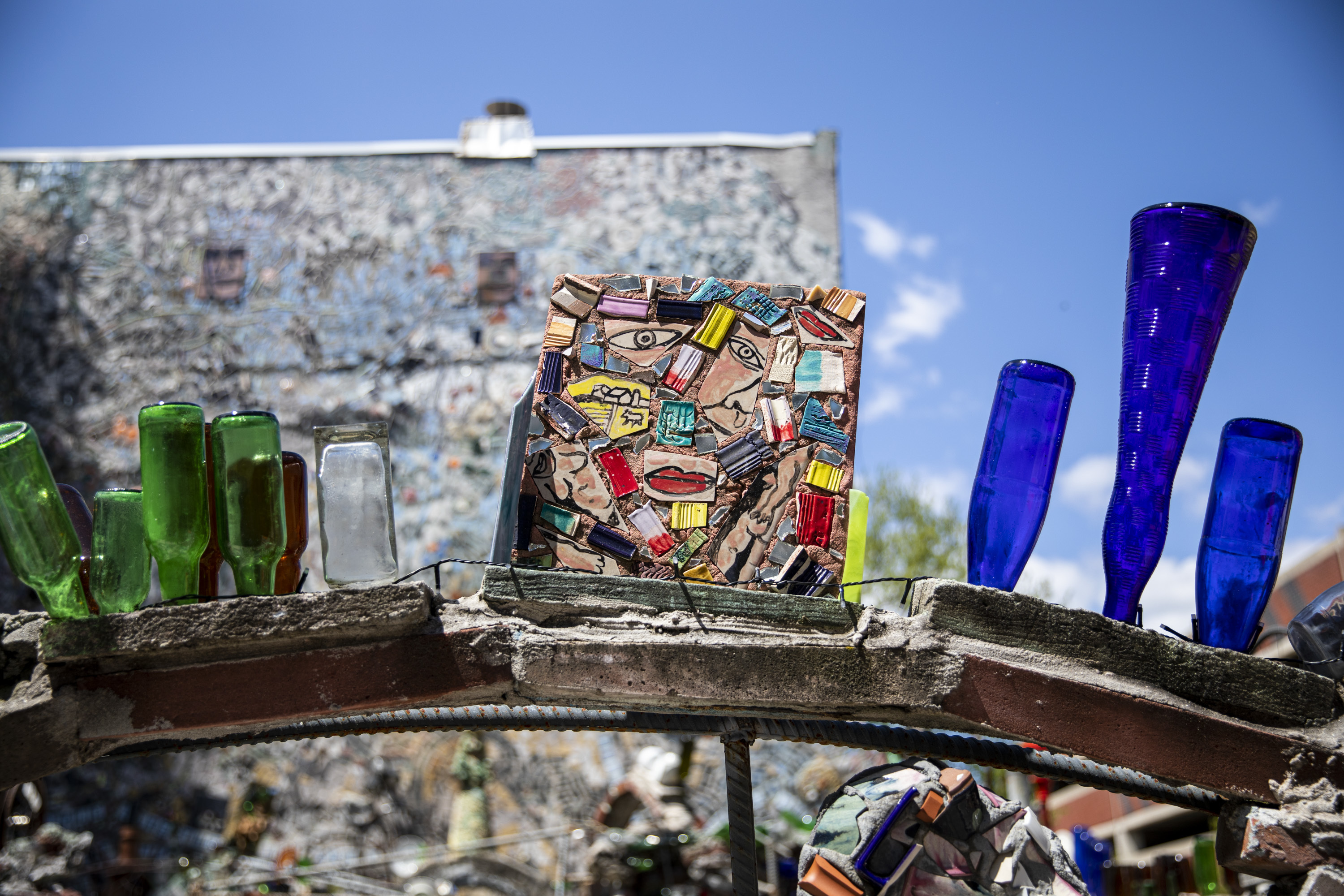
    The Magic Gardens, April 27, 2022.

    Vassallo, 45, follows Paula Marincola, who retired in October after serving as the center’s first director, since 2008.

    After leaving the Fabric Workshop in 2023, Vassallo became director of the Contemporary Arts Center in Cincinnati. Before the Fabric Workshop, she was executive and artistic director of the alternative art gallery SPACES, in Cleveland. She was born in the Bronx and grew up in New York City and northern New Jersey, and holds two degrees from New York University — a bachelor’s in art history and a master’s in nonprofit visual arts management.

    Vassallo arrives as Philadelphia’s arts scene grapples with a number of challenges. Many groups are facing the double whammy of attendance numbers that are still lower than pre-COVID levels, and cuts in federal funding under the Trump administration.

    The Pew arts center specifically has undergone a significant change with the 2024 collapse of the University of the Arts, which had been its operational partner. In June, Pew announced that the Barnes Foundation would take UArts’ place, and Vassallo suggested that the Barnes — which also had a hand in her hiring — could take on a more significant role.

    “I think there is tremendous potential there programmatically beyond their administrative role,” said Vassallo, who called the relationship between the Pew center and the Barnes an “evolving” one.

    Dancers from Philadanco, which received a grant from the Pew Center for Arts & Heritage.

    One significant change has already occurred. Vassallo will report to Barnes Foundation executive director and president Thomas Collins, whereas Marincola reported directly to Pew. The Barnes isn’t seen as getting involved with the Pew center’s grant-making process, but, rather, could work with the center on creating new programming.

    “We could imagine partnerships between the [Pew Fellowships in the Arts] fellows … being able to engage in the collection at the Barnes, for example, we can imagine the center and the Barnes partnering on community conversations,” said Elinor Haider, senior director of Pew’s Philadelphia Program.

    The Pew Center for Arts & Heritage will continue to be based in its offices on Walnut Street, Haider said.

    Vassallo called Philadelphia’s arts scene “incredibly rich and vital.” About its challenges, she said — while noting that she needs to relearn Philadelphia’s arts and culture community — that “we are having to find new ways to fund our work. I have seen this in the form of creating new business models, coming up with innovative ways to increase ticket sales and engage current and new audiences to create new revenue streams.”

    She said she has “always been a strong believer in nurturing the next generation of art enthusiasts, ensuring that kids have access to the arts across disciplines.”

    As for future funding priorities, the center has not yet determined whether it will undertake a strategic planning process, she said.

    “Not only are we assessing feedback from grantees and external parties, but we’re also understanding the state of the city, and then you have the various partners involved — you have Pew, you have the center staff, and now you have the Barnes. So I think within that there’s going to be a very special alchemy that starts to further determine the future of center funding decisions.”

    A complete list of Pew’s latest grants to art and culture groups: pewcenterarts.org/2025grants.

  • In North Philly, Congreso de Latinos Unidos has spent five decades being ‘here for you’ | Philly Gives

    In North Philly, Congreso de Latinos Unidos has spent five decades being ‘here for you’ | Philly Gives

    The litany of horrors never stopped:

    For more than an hour, one domestic violence survivor after another stepped up to the microphone with tales of pain and resilience.

    “When people get close to me, I flinch because I’m afraid they are going to abuse me,” said one woman, speaking in Spanish, her words translated into English by a staffer at Congreso de Latinos Unidos, a nonprofit social services agency in North Philadelphia that provides help with housing, education, medical needs, workforce training, and after-school activities for youngsters.

    Congreso is celebrating its 48th year in operation, and for 30 of those years, it has maintained a program to support people dealing with, and trying to escape from, domestic violence.

    “I was never allowed to go outside. He would show up at my job,” the woman continued in a room decorated with purple balloons, the color symbolizing domestic violence. Each year, Congreso honors survivors and mourns, in a few moments of poignant silence, the people who lost their lives to domestic violence. Last year, in Pennsylvania, there were 102.

    “He would bruise my face so I couldn’t see my family. I worked in a nightclub, and he would drag me out … No one wanted to get involved,” she said.

    No one, until Congreso did and helped relocate her to a new home.

    Jannette Diaz, president and CEO of Congreso, outside the group’s offices in North Philadelphia.“We’re all feeling the crunch,” she said of recent funding challenges.

    “It takes a lot of courage to come up here and share your story,” Ramona Peralta, Congreso’s director of family wellness, said as the woman finished speaking. “We’re very proud of you, and we are here for you all the way.”

    In the main room, the mood vacillated between the heavy silence of shared pain and the cheerful clamoring of babies. Later, there was music, and before, a friendly lunch of rice with pork and chicken.

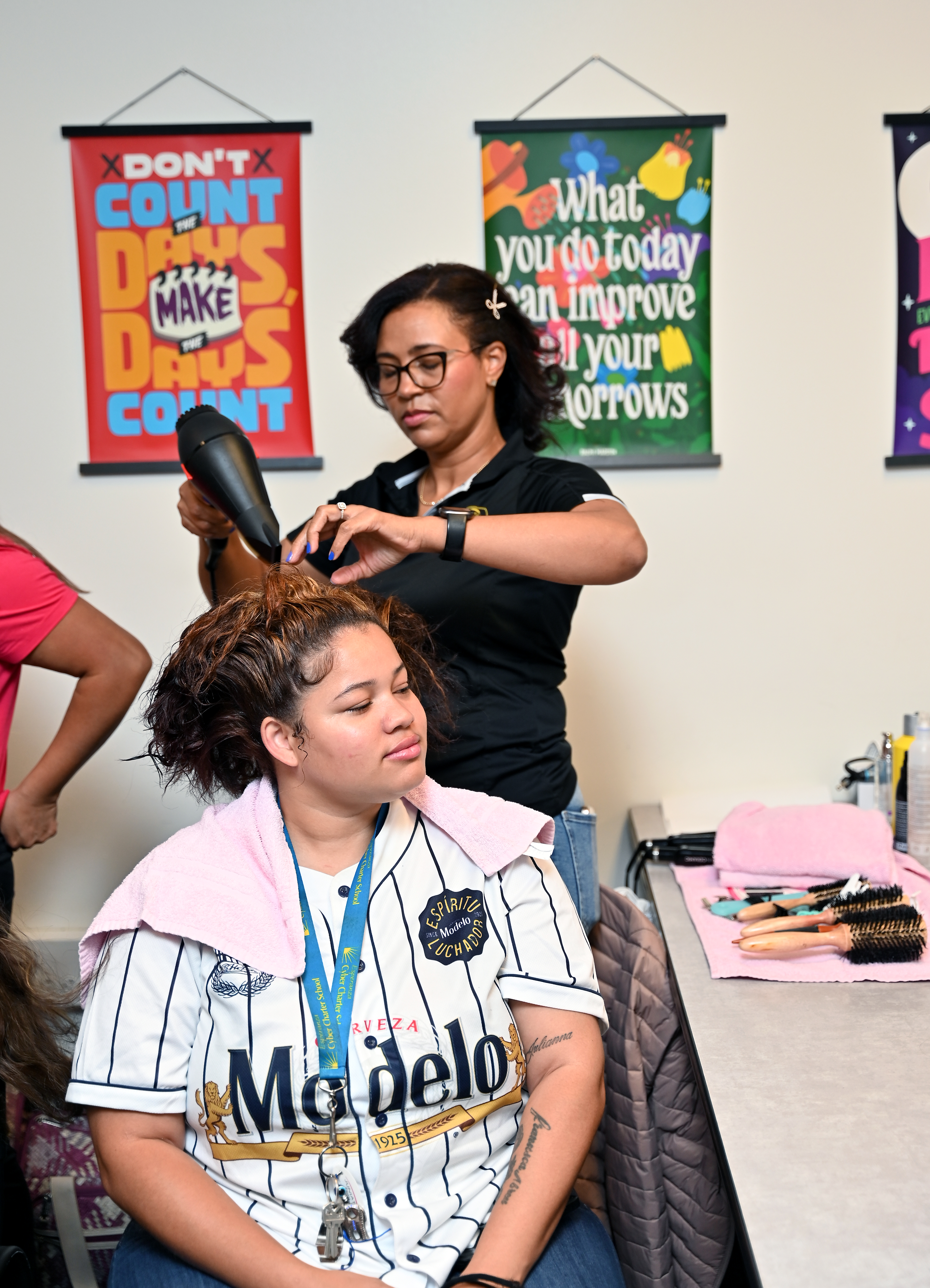
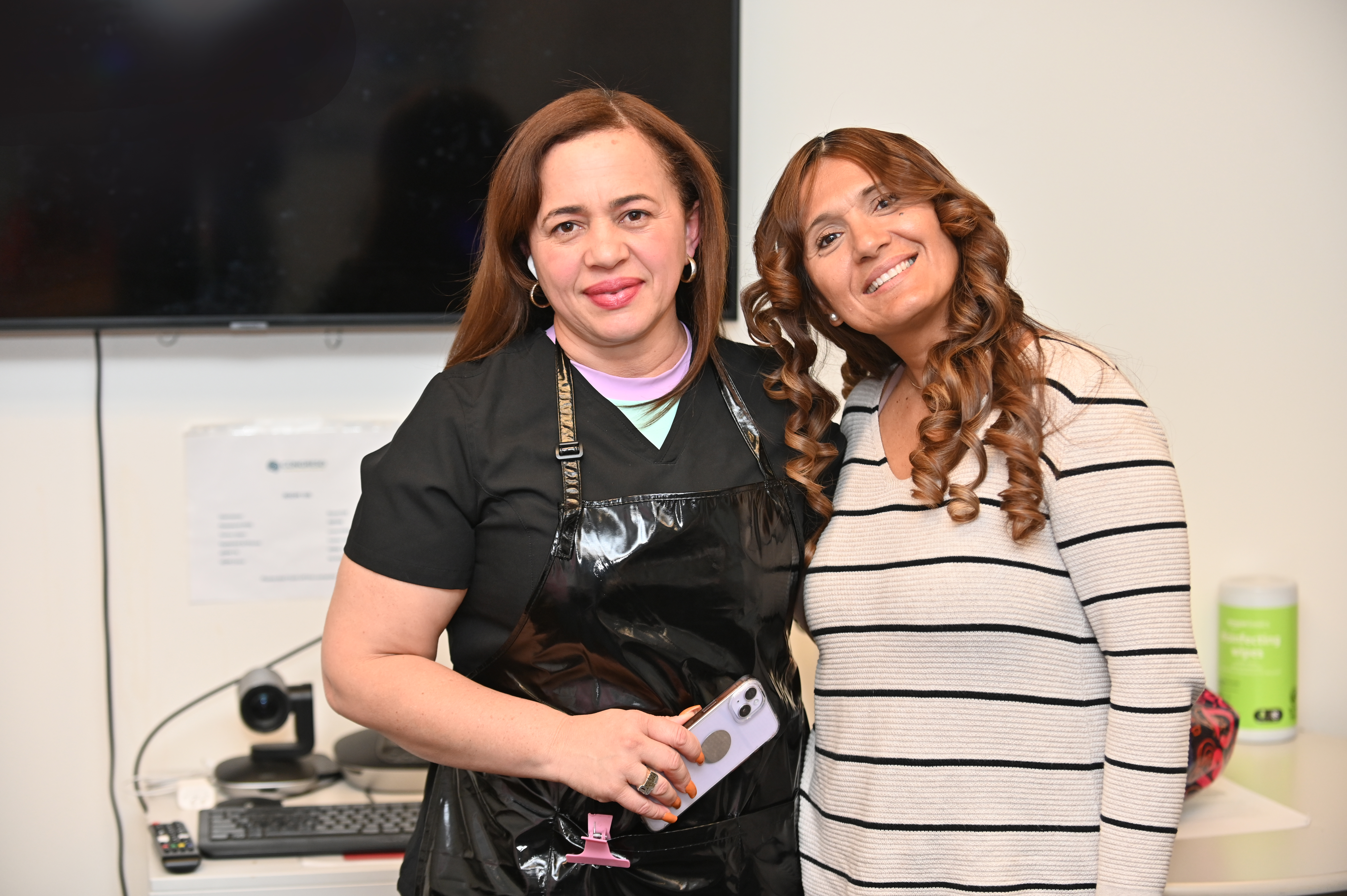
    Across the hall, members of the Asociación de Cosmetologas de Pennsylvania offered free hairstyling to the women who attended the celebration.

    Congreso, as part of its program to teach police, educators, social workers, and others to recognize signs of domestic abuse, had trained this group, as well, and because of the intimacy of their work, the stylists were uniquely positioned to do so. More than most, beauty salon operators could readily see the bruises hidden under hair and makeup. They could feel the cuts and scars on the scalp. And then there were the confidences confessed during shampoos and stylings.

    Wanda Gómez, of the Blessings of God beauty salon, styles Franyeimi Abreu’s hair at Congreso’s offices.

    Among the volunteers was Wanda Gómez, owner of the Blessings of God beauty salon in Northeast Philadelphia. “Thank God, I’m no longer in that situation,” she said, speaking through a translator. But because she survived domestic violence, she said she’s in a better position to help others. She tells them about Congreso.

    Elisa Zaro Doran, owner of Dominican Divas Beauty Salon in Olney, twisted a strand of hair around a curling iron as she styled Maria Rodriguez’s long, dark hair. Like Gómez, Doran survived domestic abuse. “The first time, when he hit me, we were having a lot of problems, so I thought it was normal,” Doran said.

    He’d even come into her beauty salon and hit her. “My clients would try to defend me,” she said. Eventually, when her son tried to protect her, she knew she had to take the necessary steps to get away and be safe — for herself and her children.

    Rodriguez was there yesterday to support her daughter, who survived domestic violence, but still lives in fear — which is the reason she would only agree to be interviewed if her name was not used. “He told me that it doesn’t matter how many years — he will come and burn down my house with me in it,” she said.

    Hairdresser Domaris Rodriguez shows her artistry on Raquel Mendez’s hair.

    Rodriguez’s daughter turned to Congreso for help after Thanksgiving a few years ago. Her oldest son told her that day that he would no longer live with her, because every night he dreamed of killing his father. He couldn’t stay and watch the beatings or watch his father, in a rage, destroy the furniture in their home.

    “I don’t know how many dining room tables I bought,” the daughter said.

    On that Thanksgiving, she told her husband he had to leave. It was the end of the relationship, but the beginning of a new nightmare. He followed her to work and even stood in the pharmacy, watching her as she managed the office.

    Counseling at Congreso helped her name her situation for what it was — abuse. “They made me see that I was in danger,” and that what she thought was normal was anything but. In group sessions, she learned a critical lesson: “I understood that I wasn’t the only one. They made me know it wasn’t my fault.”

    She’s still afraid to leave her home. “I’m going through anxiety, PTSD. It still affects me.”

    As she watched her mother get her hair styled, Rodriguez’s daughter hoped her mother would absorb a lesson from the stories she would hear. The daughter wanted her mother to understand the intergenerational legacy of abuse because she believes her mother also suffered from domestic violence.

    That abuse, Rodriguez’s daughter believes, impacted both her and her sister, whose abuser stopped hitting her only when he thought she was dead. She teaches her sister lessons learned from counseling at Congreso. Counseling includes helping women develop a safety plan.

    Rodriguez’s daughter brings her own little girl, 13, to Congreso’s counseling groups for children impacted by domestic violence. “I’m saving my sister’s life, and I’m saving my daughter’s life,” she said. As for her sons, “I’m not raising abusers,” as she reminds them to respect their girlfriends.

    Last month’s celebration in honor of the survivors of domestic abuse took center stage that day at Congreso, but Congreso’s programming benefits many more people in the community, 75% of whom are Latino, said Jannette Diaz, president and chief executive.

    Diaz grew up a few blocks from Congreso, and her father relied on the nonprofit for help with the family’s utility bills.

    These days, she spends time working on strengthening relationships with fellow nonprofit agencies and with Congreso’s friends in the donor community.

    “We’re all feeling the crunch,” Diaz said, describing a double whammy in mid-October of the state’s failure to pass a budget as the national government moved into another week of shutdown. Congreso gets much of its funding from government reimbursements for services provided.

    At Congreso, “we’re very mindful of our spending. So far, we’re continuing to provide services at 100%, but there’s only so much we can do, tapping into our reserves and our line of credit.”

    “Sometimes it’s heavy, but I’m also hopeful,” Diaz said, explaining that the twin state and federal budget crises required a sharper focus even as demand for services increases. Changes in Medicaid regulations may impact finances at Congreso’s health center, for example.

    But, she said, donors can be confident their dollars are being spent wisely.

    Why? Because as nonprofits come and go, Congreso has survived, thanks to providing trauma-informed and culturally responsive services that are informed by data to its clients, Diaz said.

    “We’ve been around for 48 years, and there’s a reason for that. And that is how we operate within our community,” she said. “We forge a trusting relationship, and we try our best to do what they need. It’s important that we make sure our programs have impact.”

    And that impact, Diaz said, goes beyond help given directly to clients. When Congreso assists a first-time home buyer in qualifying for and landing a mortgage, that homeowner becomes a Philadelphia taxpayer, benefiting the community.

    When someone like Gary DeJesus-Walker earns a CDL truck-driving license through Congreso’s workforce training program, he can go on to build a trucking business. Now he employs three people.

    “Congreso — they changed my life,” he said. “From trucking, I started two other companies.” With Congreso’s CDL program, “if you need a second chance, you can have one for the rest of your life. This is a way you can provide for and feed your family, forever.”

    The stories are an inspiration to Diaz.

    “Even in this season,” she said, “we can strategize and design services that our community needs. We’re not paralyzed by this crisis, and in terms of moving the needle forward, we’re progressing.”

    This article is part of a series about Philly Gives — a community fund to support nonprofits through end-of-year giving. To learn more about Philly Gives, including how to donate, visit phillygives.org.

    For more information about Philly Gives, including how to donate, visit phillygives.org.

    About Congreso de Latinos Unidos

    Mission: To enable individuals and families in predominantly Latino neighborhoods to achieve economic self-sufficiency and well-being.

    People served: 13,435 unique clients served in fiscal year 2025.

    Annual Spending: $30 million

    Point of Pride: Trademarked Primary Client Model that drives Congreso’s bilingual and bicultural approach to delivering services in a client-centered, data-informed, and culturally responsive way, whether a community member is receiving support in education, workforce development, housing, health, or family services.

    You can help: Become a monthly donor, a member of Congreso’s Corporate Advisory Council, or a volunteer in the Congreso Cares Program. Volunteers help with participating in program initiatives like Congreso’s free tax preparation, supporting program and agency events, and assisting with fundraising.

    Support: phillygives.org

    To get help:

    866-723-3014 (Philadelphia Domestic Violence Hotline)

    215-763-8870 (Congreso)

    What your Congreso donation can do

    • $25 can help provide food baskets to individuals living with HIV.
    • $50 can help cover past-due utility bills and prevent shutoffs for a family to stay safe in their home.
    • $100 covers an immunization visit at the Congreso Health Center for a child entering the school system.
    • $200 provides a new uniform or professional wardrobe for a community member entering the workforce.
    • $250 provides a semester of after-school programming for a high school student.
  • Lincoln University receives $25 million donation from philanthropist MacKenzie Scott

    Lincoln University receives $25 million donation from philanthropist MacKenzie Scott

    MacKenzie Scott, one of the world’s richest women through her Amazon shares, has donated $25 million to Lincoln University, the college announced Friday.

    The money — part of the billionaire philanthropist’s series of multimillion-dollar, unrestricted donations to historically Black colleges and universities — will support scholarships and initiatives, according to a news release.

    Lincoln University officials said the no-strings-attached gift “exemplifies her confidence in the university’s mission, vision, and leadership.”

    “Lincoln University was founded to break barriers and create pathways for African Americans to thrive,” president Brenda A. Allen said in a statement. “This investment honors that legacy and propels us forward, enabling us to build on 171 years of excellence and innovation.

    “It is a powerful affirmation of the enduring value of Historically Black Colleges and Universities.”

    A spokesperson for the university and the board of trustees could not immediately be reached Saturday for additional comment.

    This is Scott’s second donation to the southern Chester County university, the first degree-granting HBCU in the nation. The ex-wife of Amazon founder Jeff Bezos gave $20 million in 2020 — then the school’s largest gift from a single donor in its history. As of June 2023, the school’s endowment was $54 million.

    A number of other historically Black colleges also received money from Scott in recent weeks, including Maryland’s Bowie State and Morgan State Universities and University of Maryland Eastern Shore. Scott’s total donations to higher education institutions this year have topped $1 billion, Forbes reported.

    The windfall comes six weeks after gunfire erupted during Lincoln’s Oct. 25 homecoming celebration, killing a 25-year-old man from Wilmington and injuring six people. At least one person was arrested.

  • Lincoln Financial’s 20+ Year Investment in Philadelphia

    Lincoln Financial’s 20+ Year Investment in Philadelphia

    When Lincoln Financial moved its headquarters from Fort Wayne, Indiana, to Philadelphia in 1999, the financial services company immediately set out to become part of its new community. And nothing captures the city quite like its most beloved institution: the Eagles. Just three years after its move to 1500 Market St., Lincoln Financial inked a 20-year deal that gave the company the naming rights to the Eagles’ new stadium, a partnership that’s since been extended through the 2032 season. Lincoln Financial Field was quickly woven into the city’s fabric, amplifying the company’s brand in Philadelphia and to national audiences.

    “Everyone is happier when the Eagles are playing … the Eagles, they are Philadelphia,” John Kennedy, Lincoln Financial’s executive vice president and chief distribution and brand officer, said. “It gave us wide-spread, lasting brand recognition.” Today, with its headquarters now in Radnor, Lincoln’s partnership with the Eagles extends well beyond the stadium, and so does its investment in the greater Philadelphia region.

    Beyond the Field: Turning Partnership into Progress

    Over the past two decades, Lincoln Financial’s partnership with the Eagles has continued to deepen. The company has joined the football organization in philanthropic efforts that give back to the region that both organizations proudly call home.

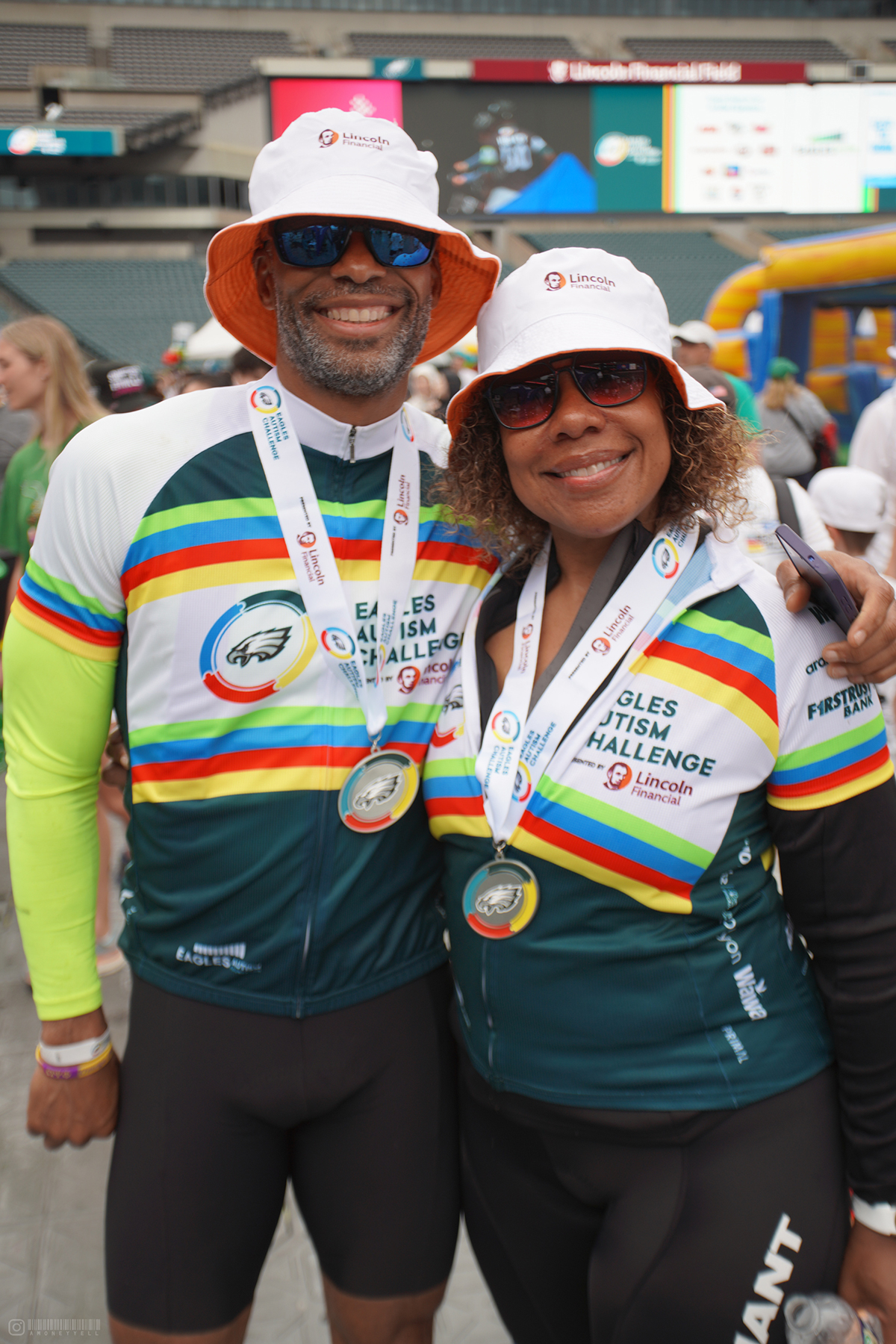
    In 2018, Lincoln Financial became the founding sponsor of the Eagles Autism Challenge, the Eagles’ signature bike ride and 5K run/walk dedicated to raising funds for innovative autism research and care programs. Championed by Eagles chairman and CEO Jeffrey Lurie, this destination event welcomes thousands of participants from around the world, with 100% of the funds raised making a transformational impact on our Eagles autism community. This past May, the Eagles Autism Challenge celebrated a record-breaking year with more than $10 million raised, bringing the total to $40 million raised since inception.


    Hundreds of Lincoln Financial employees and their families join in the Eagles Autism Challenge event each year.

    “One hundred percent of the proceeds are going into bringing greater autism awareness, and we’re all in on that effort,” Kennedy said when asked about Lincoln’s sponsorship of the event. He noted employees come from across the country to participate. “It’s become a big part of Lincoln culture. Employees from across the company are involved and willing to give back to raise money for this challenge.” Since 2018, Lincoln employees alone have raised more than $625,000 for the Eagles Autism Challenge, with hundreds of workers coming out to volunteer or participate in the event every year.

    In the past, Lincoln Financial has partnered with the Philadelphia Eagles on philanthropic initiatives like the Eagles Eye Mobile, a mobile unit that provides free vision screenings, eye exams, and prescription glasses to more than 25,000 Philadelphia students annually. And just last year, the company announced a partnership with the Jalen Hurts Foundation, which works to strengthen communities by serving, mentoring, and advancing youth.

    Lincoln Financial’s partnership with the Jalen Hurts Foundation focuses on promoting financial wellness through community engagement. Together, the two organizations helped to support a mentorship camp for 60 young men ages 11 to 13 years old, which included financial education sessions led by Lincoln team members and career development workshops.

    “It’s not just about business; it’s about community,” Kennedy said.

    A Commitment to Financial Literacy, Education, and Human Services

    Lincoln’s growing partnership with the Eagles aligns closely with the company’s core philanthropic areas of financial literacy, education, and human services. The company’s commitment to these causes extends well beyond its partnership with the football team.


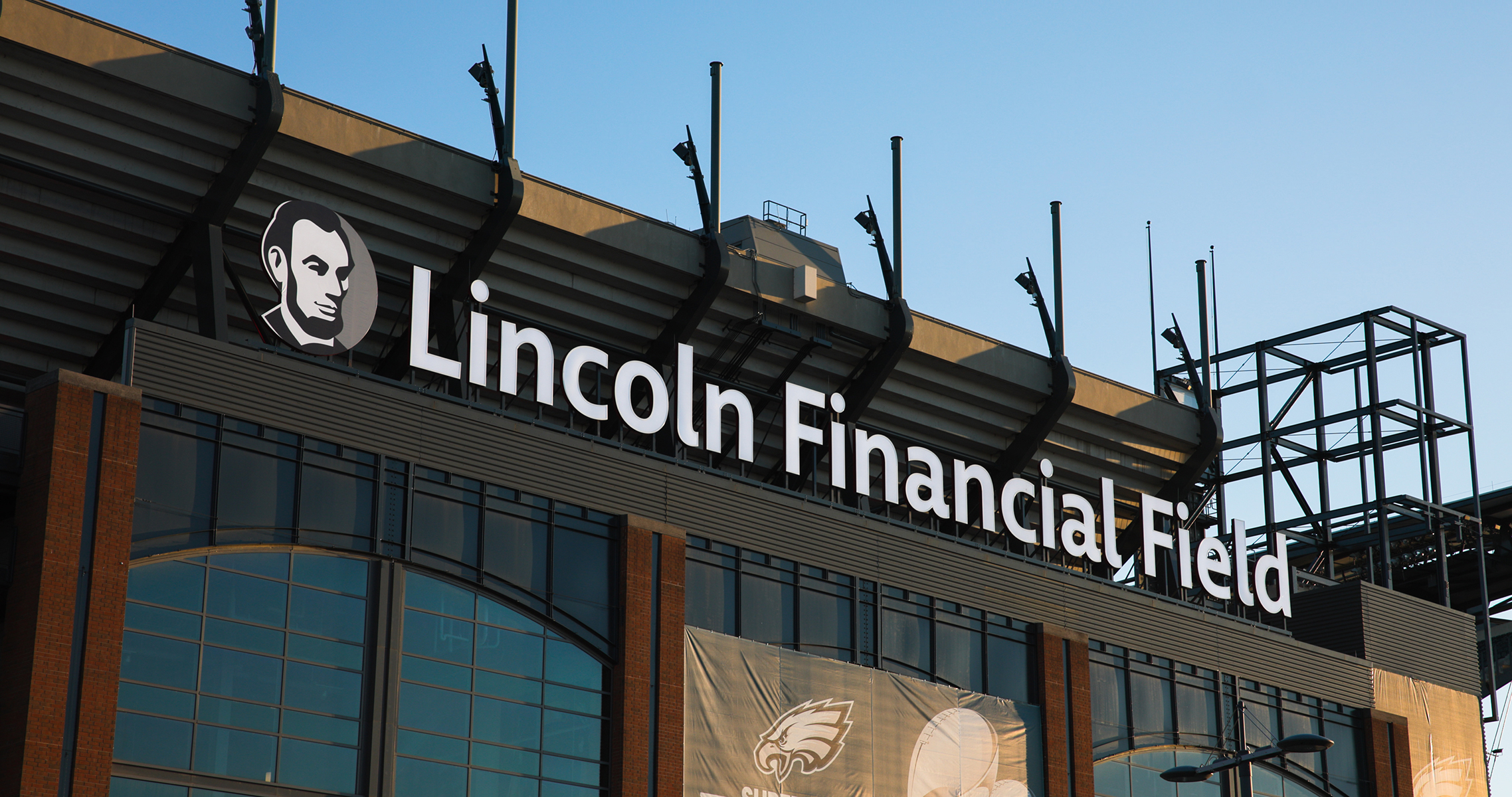
    Lincoln Financial Field’s new signage reflects the brand’s most recent refresh.

    Established in 1962, the company’s philanthropic arm, the Lincoln Financial Foundation, provides grants to hundreds of nonprofit organizations each year. According to Lincoln, the foundation’s mission is to help individuals and communities achieve financial security through impactful grantmaking and partnerships with nonprofit organizations. In 2024 alone, the foundation contributed more than $9.2 million to support more than 250 nonprofits.

    “We focus on education, human services, and financial wellness because each is essential to building long-term financial success,” Allison Green Johnson said. Johnson is the senior vice president of belonging and community impact, and the president of the Lincoln Financial Foundation. “These areas are deeply interconnected, from preparing students for academic, career, and post-secondary achievement, to ensuring access to stable housing and nutritious food, to equipping individuals with the skills needed for financial resilience,” Johnson said.

    Annually, the Lincoln Financial Foundation awards grants to more than 200 grantees across the country, including more than 50 within Philadelphia and the surrounding region. Local partners include organizations such as Hopeworks, which provides technical and workforce training programs for young adults; and the Boys & Girls Club of Philadelphia, which supports youth through programs that build literacy, leadership, and career readiness.


    “Children and teens who learn about saving, budgeting, and responsible spending are more likely to carry those habits into adulthood,” Johnson said. “Early exposure helps normalize financial planning and decision-making.”

    Other partner organizations of the Lincoln Financial Foundation include Heights Philadelphia, which helps break the cycle of generational poverty by guiding students toward college and career success with individualized advising, campus visits, and stipends. The foundation has also backed nonprofits that tackle basic needs across the region, from the Red Cross House, which offers temporary housing and recovery services for families displaced by disaster, to MANNA, which provides medically tailored meals to improve health outcomes for people with serious illnesses.

    A Sense of Pride for Employees

    While Lincoln’s board of directors and local charitable contributions committees typically recommend grantees based on mission alignment, employees also help guide how the company invests in its communities. Lincoln matches employee donations to qualified nonprofits dollar-for-dollar and fuels hands-on service with paid volunteer time.

    “Serving others is at the heart of our business purpose and core values, and our nearly 10,000 employees proudly extend that spirit into the communities where we live and work,” Ellen Cooper, the chairman, president, and CEO of Lincoln Financial, said. “Our employees rally together to create lasting change, and in the process, create a culture of integrity and care that we are very proud of.”

    In 2024, the foundation matched nearly $1 million in contributions to more than 1,000 nonprofit organizations in 47 states and in Washington, D.C. Kennedy notes that both Lincoln’s volunteer culture and the Eagles partnership elicit strong enthusiasm from employees. Both also help to foster a sense of community.

    “It’s a sense of pride for our employees that they can be part of something that’s so much bigger,” Kennedy said.

    Cobbs Creek: Lincoln’s Biggest New Initiative

    This spring, Lincoln deepened its commitment to Philadelphia with one of its most ambitious philanthropic efforts yet: becoming a founding partner of the Cobbs Creek Foundation. The investment supports the reinvention of the 350-acre Cobbs Creek Golf Course, which served the community from 1916 until 2020. The West Philadelphia green was the city’s first public course and one of the earliest in the country to welcome men and women of all races. Years of flooding and erosion combined with a 2016 fire that destroyed its clubhouse forced its closure. In 2022, the Cobbs Creek Foundation committed at least $65 million to revive the historic site, restoring the course and reimagining it as a dynamic hub for education, community, and opportunity, as well as golf.


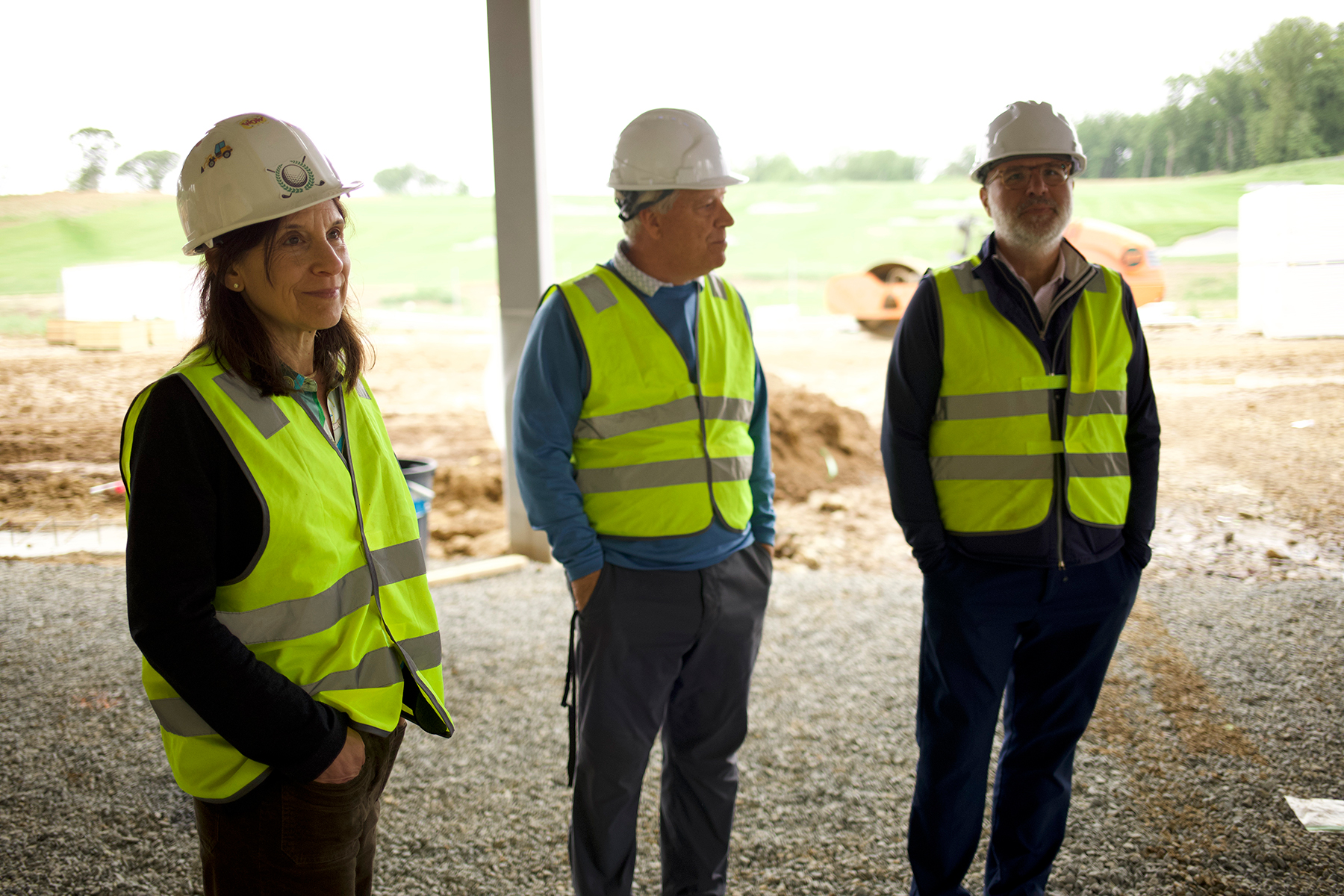
    Lincoln Financial CEO Ellen Cooper, CFO Chris Neczypor, and Cobbs Creek Foundation COO Enrique Hervada visit the Cobbs Creek Golf and Education Campus, which will continue to expand its offerings over the next two years.

    “Cobbs was a melting pot for anyone that wanted to play golf,” Kennedy said. “Now, it will go so much more beyond golf, and 20, 30, 40 years from now, I truly think this will be such a big part of the Philadelphia community.”

    The Cobbs Creek Golf and Education Campus will continue to expand its offerings over the next two years, including the 9-hole TGR Design short course. Led by golf architects Gil Hanse and Jim Wagner, a restored championship course and new nine-hole course will follow, opening in 2026 and 2027.

    “Lincoln Financial’s commitment to Cobbs Creek reflects their continued dedication to the city and people of Philadelphia. Together we are amplifying the power of true community partnership,” Jeff Shanahan, president of the Cobbs Creek Foundation, said. “For decades, Lincoln Financial has been a pillar of Philadelphia’s civic life, and together we’re building a space that honors history while creating pathways to education, recreation, and opportunity for generations to come.”

    At the center of the project’s educational initiative is the TGR Learning Lab, created through a partnership with Tiger Woods’ nonprofit TGR Foundation. The new 30,000-square-foot facility opened in September with nine classrooms and a mission to empower youth through education. It features a full-time instructional staff and offers free, year-round Science, Technology, Engineering, and Math (STEM) education as well as college-access and career-readiness programs for students in grades 1-12. The after-school, weekend, and summer programs are expected to reach more than 4,500 local children and families each year.

    Lincoln is bringing its financial expertise into that work. In collaboration with the TGR Foundation, the company is developing a hands-on financial education curriculum for use at the learning lab and across the campus. The lessons are designed to help young people build financial resilience and prepare for the future workforce. Adding further leadership support, Lincoln Financial chief financial officer Chris Neczypor has joined the Cobbs Creek Foundation’s executive committee and board of advisors to help guide strategy and ensure long-term economic stability.

    Johnson sees Lincoln’s evolving philanthropy as a continuation of the company’s foundational values.

    “Our ultimate goal is to help individuals confidently succeed by supporting strong, thriving communities,” Johnson said. “Since our founding in 1905, giving back has been core to Lincoln’s culture, in alignment with the values of our namesake, Abraham Lincoln: integrity, teamwork and responsibility.”

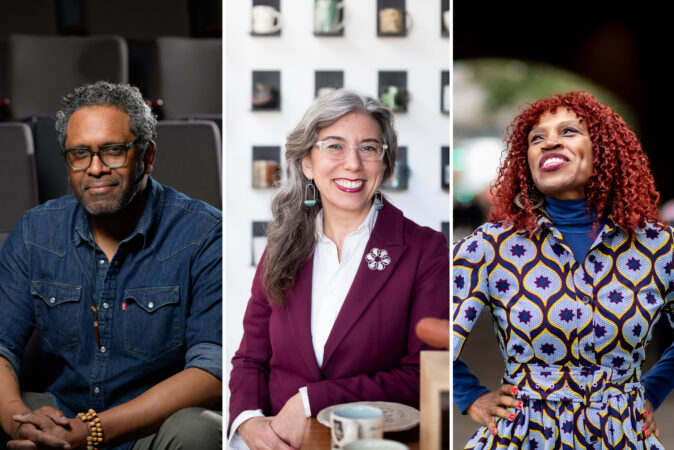
  • Philly’s Arts Scene Runs on “Temple Made” Talent

    Philly’s Arts Scene Runs on “Temple Made” Talent

    Philadelphia is home to world-class museums, a nationally recognized public art collection, a celebrated orchestra, renowned dance companies, and a thriving film and theater scene. It is a global arts destination. Many of the people who power this cultural engine share the distinction of being “Temple Made.” They are the artists, storytellers, and cultural leaders who keep the city’s creative life moving forward.

    Across generations, alumni from the Tyler School of Art & Architecture, the Boyer College of Music and Dance, and the School of Theater, Film and Media Arts (TFMA) have shaped Philadelphia’s artistic identity. Now, more than 15,000 Temple arts alumni call the region home. They lead cultural institutions, curate cutting-edge exhibitions, and produce prize-winning performances. They work at every level of the creative sector as cultural influencers, independent artists, teachers, clinicians, and community innovators. Together, they are creating new spaces that keep the arts vibrant and accessible. And by fueling the arts in Philly, these Owls are moving Philadelphia forward.

    “The way in which art builds community is critical,” Susan E. Cahan, the dean of Tyler School of Art & Architecture, said. “Art expands what we can imagine, and everything else flows from that: empathy, mutual understanding, and our ability to envision shared futures.”

    Temple’s roots in arts education stretch back more than a century. Today, Tyler, Boyer, and TFMA collectively present hundreds of exhibitions, performances, and productions each year on Temple’s Main Campus. Recently, the university announced a new partnership with the Pennsylvania Academy of Fine Arts. That collaboration, along with the acquisition of Terra Hall in Center City and the construction of the Caroline Kimmel Pavilion for Arts and Communication (scheduled to open in fall of 2027 on Broad Street on Temple’s Main Campus) positions the university as a vital anchor at multiple points along the Avenue of the Arts. Together, these developments are greatly expanding Temple’s creative influence and furthering its mission to combine artistic excellence with public purpose.

    “Philadelphia has a reputation as an arts powerhouse that we’ve had the privilege to build upon, and we take our responsibility to sustain it seriously,” Robert T. Stroker, the Joslyn G. Ewart Dean of Temple’s Center for the Performing and Cinematic Arts, said.

    Here’s how three Temple alumni are stewarding Philadelphia’s cultural infrastructure in order to keep the arts alive, evolving, and rooted in community.


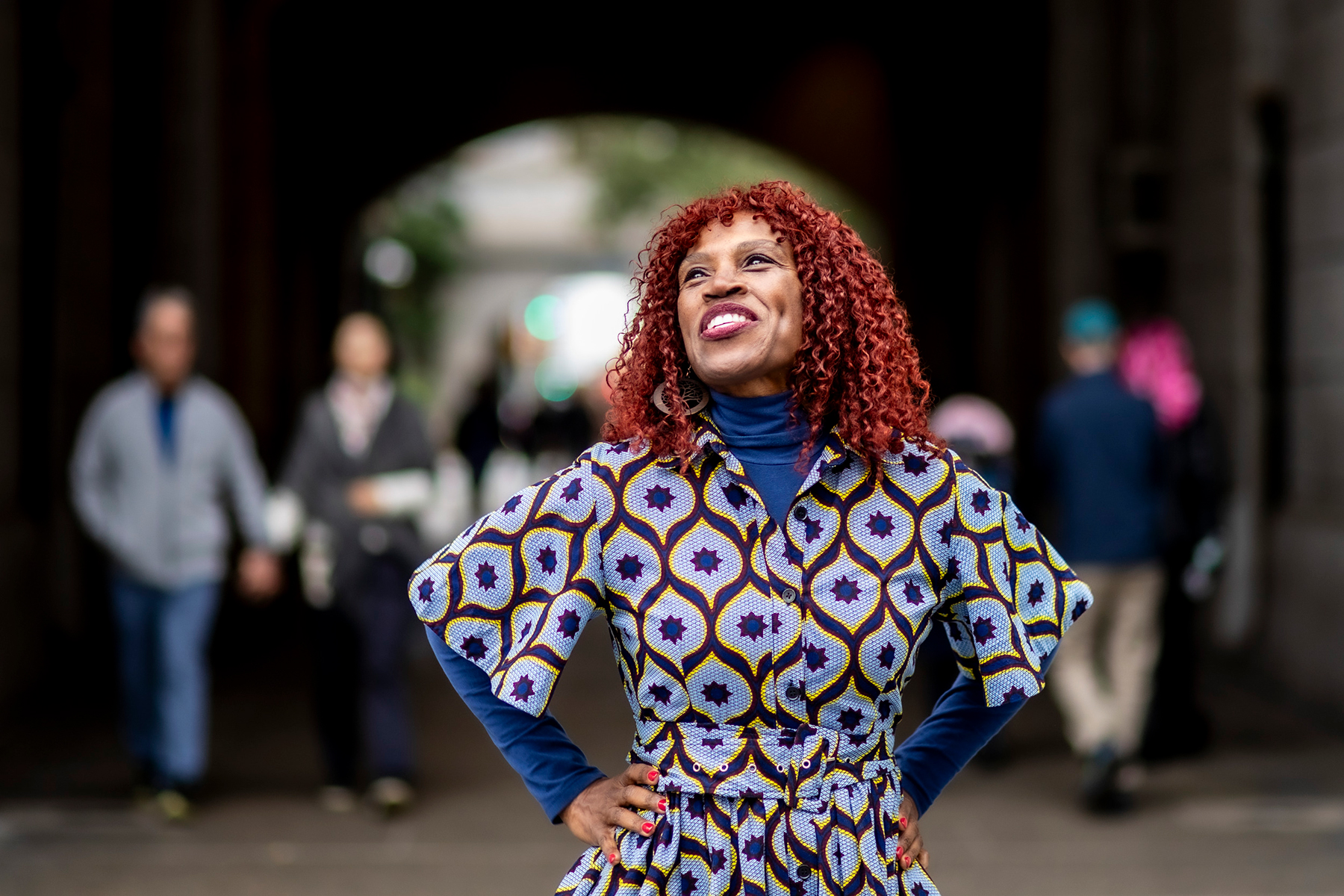
    Valerie Gay

    Chief Cultural Officer, City of Philadelphia

    Executive Director, Creative Philadelphia


    Valerie Gay, who goes by Val, oversees one of the nation’s largest and oldest public art collections, which comprises more than 1,000 works including A Quest for Parity: The Octavius V. Catto Memorial and the forthcoming Harriet Tubman monument, by Alvin Pettit at City Hall. In her role with the City of Philadelphia, she also guides citywide cultural programming; exhibitions in City Hall; and major initiatives such as Healing Verse Germantown, a poetry and public art installation; Mural Arts Philadelphia, a nonprofit that supports the creation of public murals; and the city’s first Arts & Culture Master Plan, an initiative by Creative Philadelphia to imagine the city’s cultural future.

    Gay earned her master’s in voice performance from Temple’s Boyer College of Music and Dance while working full-time. That experience shaped her disciplined, systems-based leadership style. “Temple taught me that structure brings freedom,” she said.

    For Gay, sustaining Philadelphia’s cultural landscape is both a responsibility and a joy. “Philadelphia doesn’t just power the arts,” she said. “The arts power Philadelphia.”


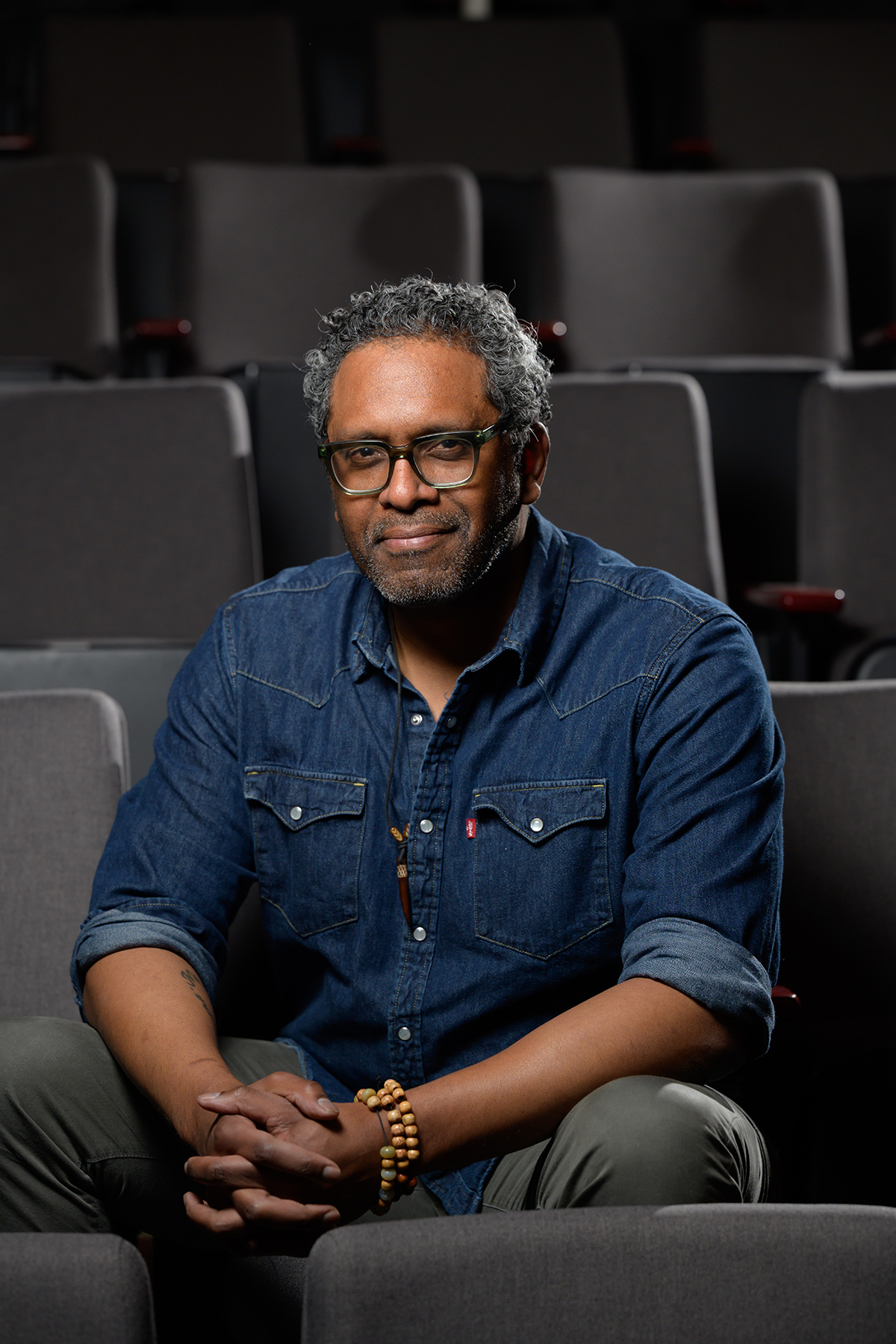
    Lindsay Smiling

    Co-Artistic Director, Wilma Theater


    For Lindsay Smiling, theater has always been a way to explore identity and connection. At the Wilma Theater, one of Philadelphia’s most influential theater companies, he leads with a vision that elevates bold storytelling while ensuring audiences feel invited into the performance.

    “Even when the work is abstract, it shouldn’t feel inaccessible,” he said. After earning his MFA at Temple, Smiling built a wide-ranging acting career before joining the Wilma’s HotHouse Company, known for its collaborative, actor-driven approach. When he later stepped into a leadership role, he was determined to keep artists at the center of the process.

    Now, as part of Temple’s faculty, he’s inspired by the students shaping the future of the field. “I learn from them every day,” he said. For Smiling, seeing Temple alumni across the city reinforces a shared foundation. “We’re coming from something special,” he said.


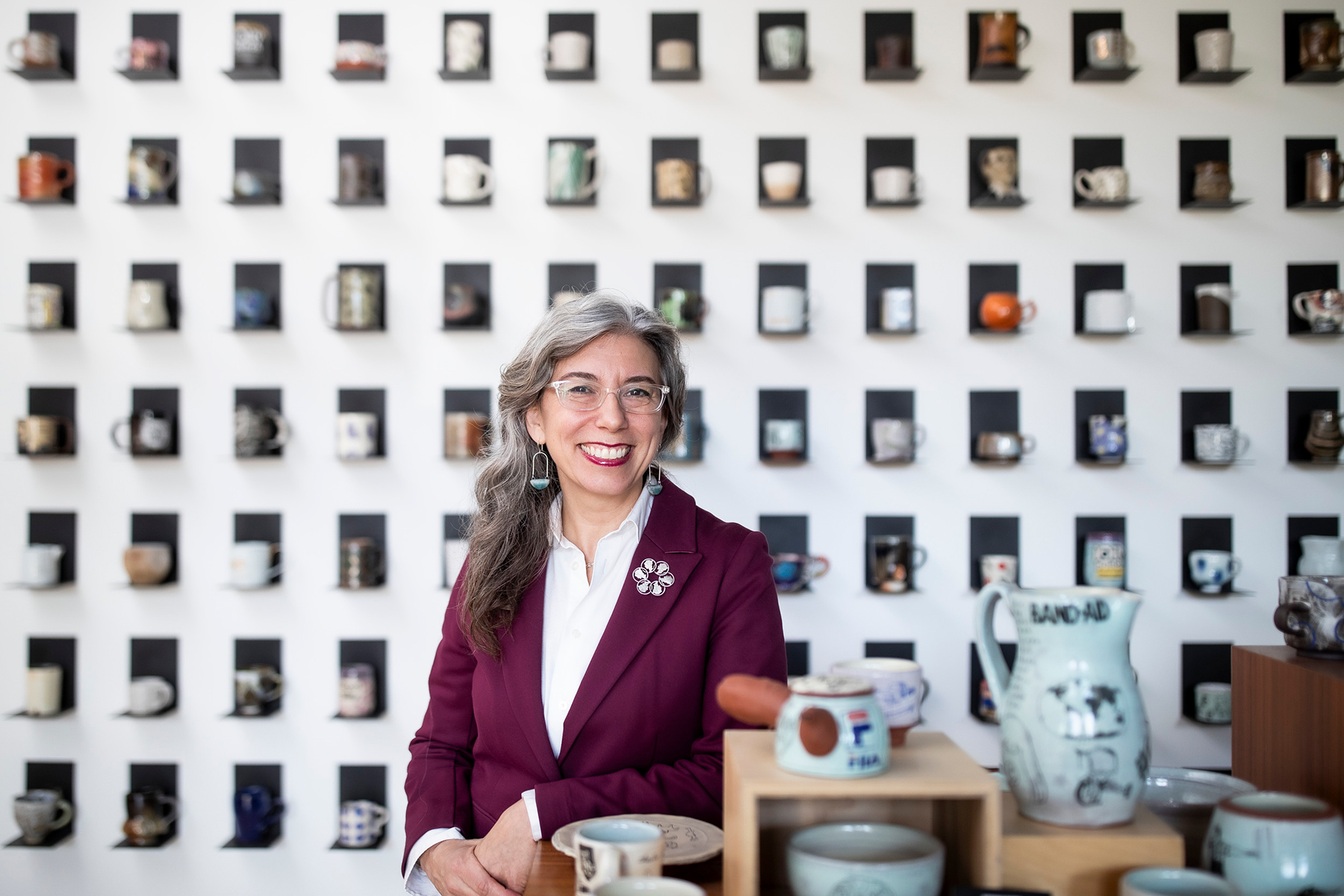
    Jennifer Zwilling

    Curator and Director of Artistic Programs, The Clay Studio


    Jennifer Zwilling’s work at The Clay Studio helped lay the foundation for Philadelphia’s rise as a national destination for contemporary ceramics. In her role, she leads exhibitions, residencies, and hands-on learning programs that welcome thousands of people, from schoolchildren to working artists, into the studio each year. She has helped to strengthen The Clay Studio’s role as a citywide resource for creativity, connection, and craft.

    A Tyler alum, Zwilling earned her master’s in art history while soaking up the school’s studio culture. Her education shaped her belief that artists and scholars should work side by side. After 14 years at the Philadelphia Museum of Art as an assistant curator of American Decorative Arts and Contemporary Craft, she joined The Clay Studio in 2014 and helped guide its 2022 relocation to a new 34,000-square-foot home in Kensington.

    “Art isn’t just something to look at,” she said. “It’s something people deserve to experience and make. That belief drives everything we do here.”


    Owls in the Arts

    Temple alumni play major roles at these Philadelphia arts organizations and more:

    • BlackStar Film Festival
    • City of Philadelphia’s Office of Arts, Culture and the Creative Economy
    • Crane Arts
    • Highmark Mann Center for the Performing Arts
    • The Clay Studio
    • The Wilma Theater

    Read more about how Temple powers the arts in Philly.