Tag: Philly First

  • The CEO Shaping the Health of Greater Philadelphia

    The CEO Shaping the Health of Greater Philadelphia

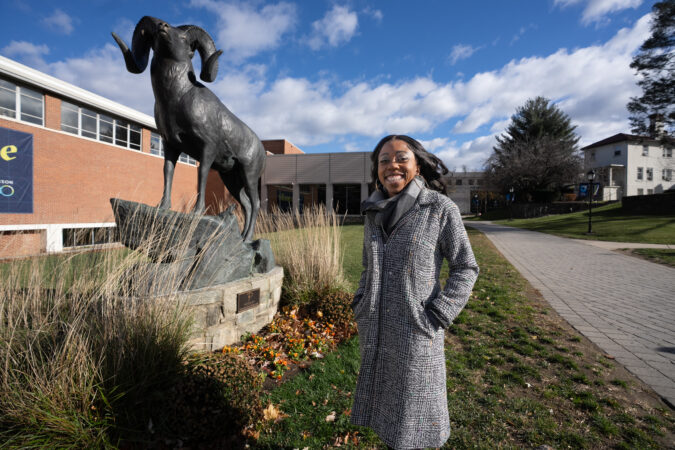
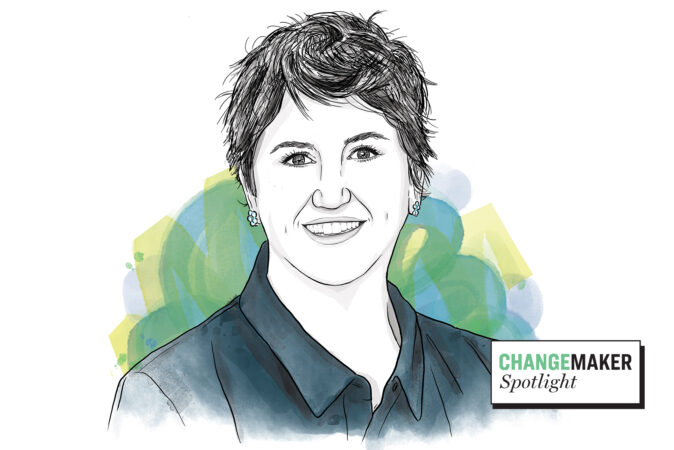
    “I grew up admiring my father,” Kelly Munson, the president and CEO of Independence Health Group, parent company of Independence Blue Cross (IBX), said. Thurman Munson was a major league baseball star and captain of the New York Yankees in the 1970s, and Munson said he taught her the importance of hard work, humility, and giving back: “What I loved most was his resilience.”

    Now, Munson is bringing those lessons to her own leadership position. This October, she became the first woman to lead Independence Health Group in its 87-year history. The organization, which has 14,000 employees and serves more than 7.1 million people across 32 states, including the District of Columbia, plays a vital role in shaping the health of communities across the region and nationally.

    Previously, Munson served as president and CEO of AmeriHealth Caritas, an Independence Health Group company that provides national leadership for vulnerable populations. She was named CEO of the parent company after an extensive national search for the position. Here, she reflects on the moments that shaped her career, her admiration for Philadelphia, and her vision for the future of the company.

    Why did you choose to dedicate your career to health care?

    When I was in college, I was studying political science and happened to take a nutrition class. That’s where I learned that the [national] school lunch program was, at one point, counting ketchup as a fruit. I remember being stunned by that. Around the same time, I read an article about the impact of inadequate nutrition on schoolchildren, the way missing something as simple as breakfast could lower test scores and hold kids back.

    It struck me deeply that through no fault of their own, children were starting the day at a disadvantage, unable to focus and thrive, simply because of what food they had access to. That realization lit a fire in me. I knew then that I wanted to dedicate my life to health care, to helping address these inequities.

    What excites you most about being part of Philadelphia and its surrounding communities?

    I’ve been here for two years now, and what’s struck me most is how misunderstood Philadelphia can be from the outside. People often see the passionate sports fans, or some of the stereotypes, and miss what the city is truly about. Once you’re here, you realize it’s one of the most soulful, passionate places you could imagine. There’s an energy and pride that runs through everything, from the sports teams to the neighborhoods to the people who call it home.

    Independence Blue Cross has been woven into that fabric for generations. It’s not just an employer; it’s part of the lifeblood of the region, serving police officers, teachers, families, and communities across the area. In fact, IBX was the city of Philadelphia’s first health insurer! To lead an organization so deeply rooted here, in a city that’s so alive, is incredibly exciting.

    Previously, you were CEO of AmeriHealth Caritas, a Medicaid health plan that is a subsidiary of Independence Health Group. When it comes to AmeriHealth Caritas, what are you the most proud of and what is your vision for the company’s future?

    Honestly, what I’m most proud of are the associates at AmeriHealth Caritas. They are extraordinary: mission-driven, compassionate, and deeply committed to serving vulnerable populations. That mission is exactly why I joined the company. At our core, what we do is care for those who need it most.

    All our teams go beyond traditional health care. They bring high-touch, community-centered support, with care management programs that truly change lives. For those at highest risk, we assign dedicated care managers who ensure people get the extra help they need. That hands-on approach translates directly into healthier outcomes.


    Is there a member story that has made a lasting impression?

    There are a few that stay with me, but one comes to mind immediately. I received an email from a man thanking us because, for the first time in 15 years, his elderly mother was able to enjoy a family barbeque with his brother, who had been living with serious mental illness, and they got through the event without a behavioral episode. It was a simple moment, but it meant the world to them as a family.

    Through our programs, we helped the man’s brother secure consistent therapy, proper medication management, safe housing, which he had not had, and even a job. Over the next two years, he was able to reconnect with his family, get engaged, and spend meaningful time with his mother. Sadly, he passed away from cancer two years later, but for the first time, he was healthier, happier, and able to be fully present with his loved ones.

    That experience reminded me that when we help a member, we’re often impacting an entire family. Health is rarely just one issue; it’s intertwined with many layers of social and medical needs. We consider the whole person and their loved ones.

    Independence Health Group has a history of community involvement, including employee volunteer work. How will you carry that forward in your role?

    Community engagement is at the heart of who we are. Across IBX and the AmeriHealth brand, employees have contributed more than 122,000 volunteer hours, with hundreds of nonprofits nationwide, not only to support the communities we serve but also to build trust and strengthen the networks that help our members.

    We help organizations with technology, infrastructure, and funding to ensure they can thrive. I’m committed to continuing this legacy and empowering our teams to make an even greater difference in the communities we serve.

    How is Independence Health Group addressing disparities in social determinants of health?

    Social and environmental factors often shape health outcomes even more than medical care itself, especially in Medicaid populations. Many of our members face multiple challenges at once: food insecurity, housing instability, utility needs, limited health literacy. Our goal is to identify those gaps early, connect members with the right resources, and measure whether those interventions truly make a difference. When social gaps are closed, members are up to 7% more likely to get preventive care, and hospitalizations can drop by a third. That’s powerful.

    I’m especially proud of our partnerships driving equity at a systemic level. Through the Regional Coalition to Eliminate Race-Based Medicine, IBX worked with 12 health systems to remove bias from clinical algorithms, resulting in more than 1,100 patients moving onto or up the kidney transplant list. By the end of 2024, 188 received kidney transplants. Our Accelerate Health Equity initiative brings hospitals, insurers, and community organizations together to tackle inequities across Philadelphia.

    Rising drug costs continue to be a concern for consumers. What strategies are effective for addressing affordability?

    It’s a serious challenge. Pharmacy costs have risen more than 230% over the past two decades, driven largely by high-priced specialty drugs. Many of these medications bring real value to patients, but the costs can be overwhelming.

    We’re focused on evidence-based strategies that maintain quality while improving affordability. That includes expanding access to biosimilar drugs, which offer the same effectiveness at a lower cost; ensuring members try proven, lower-cost options before moving to more expensive treatments; and helping members receive infusions or medications in lower-cost care settings when appropriate.

    We also work closely with providers to ensure members understand their options, like choosing between generics and brand names depending on what’s clinically appropriate. It’s about empowering people with choices that protect both their health and their wallet, without compromising quality of care.

    Who do you admire in your personal life or family?

    I grew up admiring my father, Thurman Munson. He was captain of the New York Yankees in the ’70s; what I loved most was his resilience. He came from very humble beginnings. They were so poor growing up that sometimes he had to go without shoes or resources, but he performed at the highest level anyway. In high school and college, he would have to mow seven lawns before showing up at the ball park for practice. Yet he achieved something extraordinarily rare while staying grounded, valuing family, and teaching us the importance of hard work and humility.

    And my mom was equally remarkable. When he passed [at the age of 32], she carried through those values. She picked right up with that same approach to raising us to be hard-working kids. Having both of them as role models shaped who I am, and I don’t take for granted the lessons they gave me about resilience, humility, and having an impact.

    What do you do with a few free hours?

    The number one way that I recharge is to do anything with any one of my kids, or all three and my husband, preferably. My favorite thing is to go hiking. So when I can, I get them to go hiking with me.

    Do you have a mantra? Any words you live by, or sayings that resonate with you?

    Actually I do. I was trying to make a big work decision one time, and I was struggling with it. A gentleman came by my office and he could tell that I had been struggling, and he just leaned in and shared a quote by Goethe: “Things that matter most must never be at the mercy of things that matter least.”

    These words helped me decide. It really boils down to knowing what matters most to you.


    PHILLY QUICK ROUND

    Favorite food: Jim’s Steaks. It’s absolutely fantastic.

    Which sports team’s shirt do you wear most often? The Yankees. I’m sorry, but no other baseball hat goes on my head. I’m the daughter of a former captain. It’s family.

    What do you love about Philadelphia? Well, of course it’s the fans. You come here, and everyone is passionate, and it’s so much fun.

    Who is the greatest Philadelphian of all time? Everyone who fought for freedom and human rights.

    I feel most Philadelphian when …. I’m in a sports bar watching an Eagles game.


    Lucy Danziger is a journalist, an author, and the former editor-in-chief of Self Magazine, Women’s Sports & Fitness, and The Beet.
  • An Infrastructure for Empowerment

    An Infrastructure for Empowerment

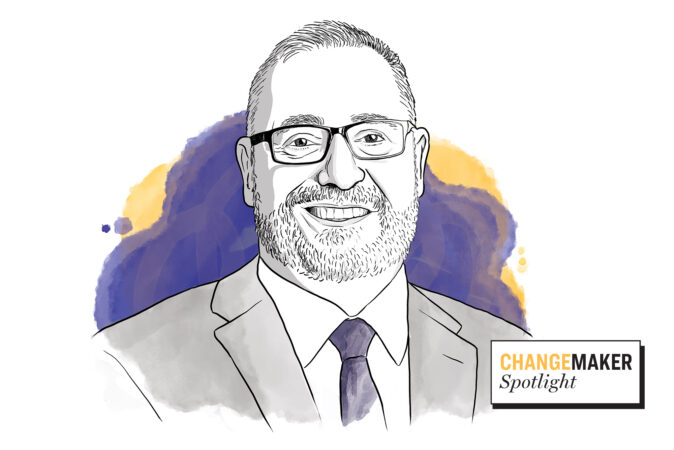
    A 2019 recipient of the Philadelphia Award, the Rev. Luis Cortés Jr., 67, has come a long way from working after school at his father’s grocery store, known as a “bodega” in East Harlem. The bodega is where he learned the impact of social connection. “I’ve never seen sociology papers written from the bodega perspective, but there can be,” Cortés said.

    Those early observations informed Cortés’ belief that perseverance and financial literacy can help close the gap for Latino communities. In 1986, Cortés founded the nonprofit Esperanza, which means “hope” in Spanish. The faith-based organization is guided by Jesus’ mandate in Matthew 25:40 to serve and advocate for “the least of these” around us.

    Known simply as “Rev” by members of the wider Philadelphia community, Cortés is proud of the breadth of services Esperanza offers. The organization improves the lives of those in North Philadelphia through education, housing stability, work training, civic empowerment, and the arts. Over the last 40 years, Esperanza has grown to serve more than 30,000 families annually. Cortés aspires to do more, still.

    How did your upbringing in New York City influence you?

    The first 10 years of my life were in Spanish Harlem, then we moved to Black Harlem and I attended New York City public schools. My father ran a grocery store, a bodega in the neighborhood, and I worked at the store. Working at the store teaches you a lot about life. You get to know the customers. You get to know their families. You get to know their hopes, aspirations, fears, and you begin to become part of the fabric of their lives. You learn about things that are happening in people’s lives that are very real and painful.

    It’s always the same things: the desire to have safety, and also long-term aspirations, [like to] be able to provide for their family.

    What experiences in your life or background led you to dedicate your career to social services and community support?

    I decided to go into the ministry because I could work on behalf of communities. I went from “I’m going to be a lawyer to help people,” to being a minister to help people. I became immersed in civil rights, both in my theological training as well as [in] my ministerial pursuit.

    I worked for a group called IFCO [Interreligious Foundation for Community Organization], based out of the Abyssinian Church under Rev. Lucius Walker. We [supported] self-determination for Puerto Rico. We [supported] civil rights in the U.S., [and] the National Anti-Klan Network. I’m willing to persevere for the greater good of the community. I realized I’m better at civil rights work and community development work.


    If someone were to ask you about entering the clergy today, what would you advise?

    I think that entering the clergy allows you to get into the most theoretical, philosophical, theological thoughts in the history of humankind. All areas of inquiry are open to you.

    Esperanza is a faith-based organization. How is faith woven into all that Esperanza does?

    The fact is, all human beings are equal and all human beings need to be loved and respected.

    That’s our theological and our epistemological premise. Every individual has something to share, both for the growth of their family and for the whole. If you start there, everything [is] about opportunity. Money should not inhibit your growth and your ability to serve others. At Esperanza the religious aspects will always be present as long as we maintain the theoretical framework that all human beings are created by God. And all human beings are equal, regardless of who they are in the present day, because that will not define who you will be tomorrow.

    Economics is a touchstone for you and for Esparanza. What’s behind your focus on financial literacy?

    I learned early that money is a tool. And no matter how much money you have, it is still a tool, and an important one. How do we learn to use and apply that tool?

    The example I use is this: When I worked at my family’s store, I would always take a Snickers bar and a Pepsi. The fact that I wasn’t thinking about it irritated my father. So one day he asks me four basic questions: How many are in a box? How many do I have to sell to break even? How long is the box there? And why is the box there?

    He wasn’t upset that I was eating a Snickers bar. He was upset that I didn’t know what [it] meant to the overall economics of the store, and that I was taking that tool [of money and economics] for granted. Money is a tool no matter how little you have. And you need to understand the tool and how you apply the tool.

    We need to find ways to educate people about money, about status, immediate gratification versus long-term gratification. You cannot just live for tomorrow, but you should not just live for today. That’s my philosophy.

    Is there a division of Esperanza that you hold a soft spot for?

    In our art gallery, Galéria Esperanza, we highlight Latino artists from Philadelphia who don’t get a shot anywhere else. There are great composers, [musicians, dancers, and other Latino artists] in history. And so Esperanza Art Center melds [the performing arts, including theater, film, music, and dance, to feature those artists]. And then [another] important [piece] is access: [kids] 18 and under and college students [can attend for] free, and senior citizens are free.

    We need to thank the philanthropic community because they made that access possible. We built and paid for our theater, the Teatro Esperanza. I convinced the performing groups, including Philadelphia Ballet, Philadanco and Opera Philadelphia, to come, but I still needed a way to help finance those groups.

    We have a library, which is now a community library. The businesses use it in the evenings. It’s reserved for our high school juniors, seniors, and college students during the day. It’s wonderful. We don’t get any government funding for that, but we need it. We hold community school meetings here at Esperanza as well.

    Can you share a recent success story?

    It is the opening of Esperanza Academy Charter School‘s elementary building in September. It took us almost 12 years to gain permission, raise the money to build, and open our elementary school. Once we finally got permission we had to raise money. It took five years to raise $40 million for the construction. We have a state-of-the-art facility. It is a physically beautiful space for our children. The parents see it and cry.

    There have been a lot of recent changes politically on the local, state, and national levels. How has Esperanza had to shift its focus?

    Civic rights, civic engagement have become a larger focus in the more recent months. We have an immigration division, so we put out training sessions to know your rights.

    We also have explained to staff what their rights are. We’ve explained to business owners [and] clergy. A lot of clergy thought that ICE cannot come into their church. The law is clear. ICE can walk into your church on a Sunday morning while you’re preaching. They cannot go into any space that’s private. So put “private” on every door.

    Learning the rules of engagement is important, even though the rules of engagement are not always followed by the government these days. But knowing them is important because they will affect your case as you move forward.

    We’re proceeding with our work. People need housing. People need food. People need education. Nothing changes. We have to continue to let people know that this political climate is abnormal. But you need to understand that while it’s abnormal, it may be legal. And if it is legal, you need to understand what your rights are. You need to understand where you must comply.

    What is the biggest challenge for Esperanza in the coming year?

    The biggest challenges include programming for senior citizens around heat mitigation, cuts to our college (a Hispanic-serving institution), and reductions in community development funding. We had to make tough decisions. The loss of funding meant we couldn’t hire a group of people, and hard-working people had to be let go.

    These are fundamental issues about being humane and they’re very important. I see a lot of inhumaneness by governmental structures these days.

    Esperanza turns 40 years old in 2026. Are there any special events in the works?

    We will be celebrating our 40th anniversary in April with a sponsored event. And then, we also are celebrating the 25th anniversary of [Esperanza Academy Charter School] and the 25th anniversary of [Esperanza College of Eastern University].

    We’ll be holding an event the day before our 40th anniversary event [that is] a musical celebration with a jazz orchestra band for the community [celebrating] 250 years of Latin music. We’ll have big-band-style performers with Pablo Batista heading it up. Pablo was this year’s Grand Marshal for the Puerto Rican parade. He’s one of the top percussionists and a global icon who’s been living in [Philadelphia] for his whole life.

    What do you want your legacy to be?

    That’s easy: to build Esperanza College into one of our major universities in Philly. And the institution will compete and become the mechanism by which people can become empowered.


    PHILLY QUICK ROUND

    What’s your favorite Philly food splurge? I have two: the Tres Leches cake from Vickie’s Sweets and the homemade ice cream from Helados Chupi Chupi.

    Favorite Philly restaurant? Tierra Colombiana. You can get the best Latin food in the city.

    Favorite Philly small business? Cafe Tinto and Amy’s Pastelillos, both in North Philly.

    Which sports teams do you root for? I was a Sixers fan before I came to Philadelphia. All the other teams I became a fan of after I moved to Philadelphia. They grow on you. The Flyers, Phillies, the Eagles are in a renaissance period right now.

    Favorite Philly artist, performer, musician and/or band? Percussionist Pablo Batista and the band Low Cut Connie.

    What elements of Philly remind you of your childhood neighborhood of East Harlem in NYC? Any time I walk into a bodega and I can talk in Spanish, it’s like a time warp.

    What’s one place in or around Philadelphia everyone should visit at least once? Teatro Esperanza.

    What do you wish people knew about the people who call Philly home? We always get up. We get knocked down, but we always get up. It’s part of that Rocky theme. There’s a lot of persistence in Philadelphia. It makes our city more dynamic.

  • Eli Lilly & Co. is opening a Lilly Gateway Labs biotech incubator in Philadelphia

    Eli Lilly & Co. is opening a Lilly Gateway Labs biotech incubator in Philadelphia

    Philadelphia is the newest destination for Lilly Gateway Labs, an incubator for early-stage biotech companies backed by pharmaceutical giant Eli Lilly & Co., the company announced Wednesday.

    The Center City incubator will be Lilly’s fifth in the United States. Biotech hotbeds Boston, South San Francisco, and San Diego already have them. (South San Francisco has two.) Companies at those locations have raised more than $3 billion from investors since the program started in 2019, Lilly said.

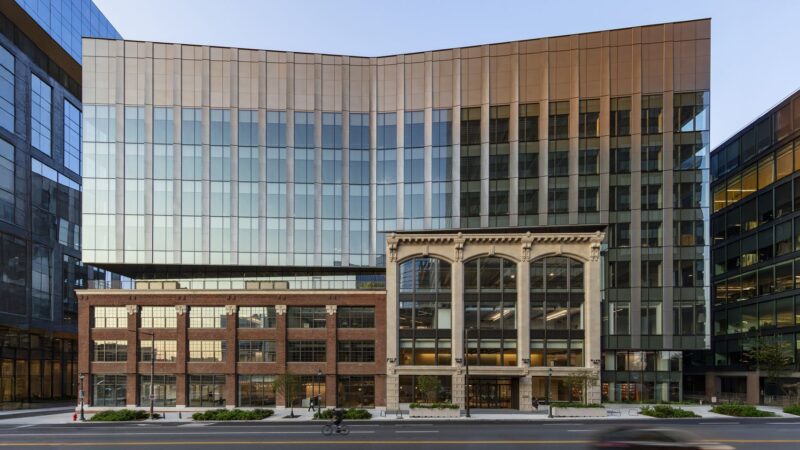
    Lilly’s Philadelphia operation will occupy 44,000 square feet on the first two levels of 2300 Market St. in Center City.

    Lilly expects to house six to eight companies there, aiming to welcome the first startups to the site in the first quarter of next year, said Julie Gilmore, global head of Lilly Gateway Labs. She did not identify prospects.

    Typically, Gateway Labs residents are at the stage of raising their first significant round of capital from investors, called Series A, and are two or three years from clinical testing, she said.

    The arrival of high-profile Lilly, which has seen resounding success with its GLP-1 drugs for diabetes and weight loss, could turn out to be a shot in the arm for a local biotech scene. Philadelphia has a growing biotech sector but has lagged places like Boston, despite the presence of world-class scientists at local research universities. Their work has fueled groundbreaking discoveries in cell and gene therapy, as well as vaccines.

    But Lilly is interested in supporting ideas that go beyond the city’s cell and gene therapy strengths, said Gilmore. Gateway labs is part of Lilly’s Catalyze360 Portfolio Management unit, which provides broad support to fledgling biotech firms, including venture capital.

    “What we like is to go after innovative science. Who are the companies trying to solve really hard problems?” Gilmore said. “And we do know that Philadelphia has had a ton of success in gene therapy and CAR-T and I hope we can find some great companies in that space, but we’re going to be open to other types of innovative science as well.”

    Expanding Philly’s life sciences footprint

    Indianapolis-based Lilly already has a small presence in Philadelphia with Avid Radiopharmaceuticals Inc., a company it acquired in 2010. Avid still operates in University City. Lilly’s chief scientific officer, Daniel Skovronsky, founded Avid in 2004 after receiving a doctorate in neuroscience and a medical degree from the University of Pennsylvania.

    Lilly is interviewing people to lead Philadelphia’s Gateway Labs location. They like to hire people who are familiar with the local universities and venture funds for those jobs, but that’s not all that matters. “We’re also looking for somebody who’s got deep drug development expertise,” Gilmore said.

    Lilly’s incubator adds to the life sciences activity at 23rd and Market Streets.

    Breakthrough Properties, a Los-Angeles-based joint venture of Tishman Speyer and Bellco Capital, announced plans for the eight-story, 225,000 square-foot building in 2022. Last week, Legend Biotech, which is headquartered in Somerset, N.J., celebrated the opening of a new cell therapy research center on the building’s third floor.

    Lilly Gateway Labs companies agree to stay for at least two years, and they can apply for up to another two years, Gilmore said.

    “The goal is, a company moves in and they can just worry about their science, worry about their team, and moving their mission forward, and we try to take care of everything else,” she said.

  • Thomas Jefferson University gets its first alma mater song 200 years later. Meet the composer.

    Thomas Jefferson University gets its first alma mater song 200 years later. Meet the composer.

    For its 201-year history, Thomas Jefferson University has been without an official alma mater song.

    Until now.

    Elizabeth Avril Barden, a customer-experience specialist at Jefferson Health Plans and recent summa cum laude graduate of the school, has written one.

    “Jefferson How We Adore Thee” will be released to the university community at its annual gala Tuesday. The university held a contest during its bicentennial last year, and Barden’s piece was selected from dozens of entries, the school said.

    Elizabeth Avril Barden, a customer-experience specialist at Jefferson Health Plans and recent summa cum laude graduate of Thomas Jefferson University, has written the school’s first alma mater song in its 201-year history. “Jefferson How We Adore Thee” will be released to the university community at a gala on Tuesday.

    “Elizabeth really captured the essence of the Jefferson community,” said Jefferson President Susan C. Aldridge “Learning, collaborating and innovating are all part of our collective DNA and I couldn’t be happier that we finally have an alma mater which captures who we are as a university as we venture into our third century.”

    Jefferson has had a handful of songs that students have written over the years and a processional theme that launched in 1974, but never an official alma mater song, said F. Michael Angelo, Jefferson archivist.

    One reason could be that at its founding in 1824, Jefferson was a medical college and over the years evolved into a university. But it was always medically focused until the school merged with the former Philadelphia University, best known for its design, engineering, and health science programs, in 2017.

    “Philadelphia University, as far as we can tell through their archives, never had an alma mater song, either,” Angelo said.

    Barden, 32, who received her bachelor’s degree in Health Services Management from Jefferson this year, said a colleague encouraged her to enter the contest. She has written about 30 songs, she said, so it wasn’t an off-the-grid venture.

    It took her just 25 minutes to write the lyrics and music for the one minute, 55-second piece, she said.

    “If you’re creative, you just flow,” she said. “You flow like water because it’s already in you, and you don’t have to overthink what’s already in you.”

    And with the help of producer Keegan Myers, who played the music while Barden sang, the chorus goes:

    It’s the Jefferson strong and true, where innovation leads us through. Together we achieve our best, as we prepare for what’s next.

    “In every step I was taking at the university, it was preparing me for the next level of life,” she said.

    Barden has been singing in front of people since age 2 and wrote her first song at 7, she said. Her parents, both Christian pastors originally from Haiti, encouraged her musical talent as she grew up in Brooklyn surrounded by gospel music, she said.

    “Me and my six siblings, we were essentially the choir,” she said.

    In high school, she won a song-writing contest and got to meet Grammy-winning R&B singer Jazmine Sullivan, who, she said, encouraged her to keep writing. She had written her high school’s alma mater song, too. And when she was a student at Delaware County Community College, she sang the national anthem at two ceremonies.

    “Any school I go to, I want to leave a piece of me there,” she said. “Music to me is connection. That’s how I connect to people.”

    For winning the Jefferson contest, she received a $200 gift card to the school bookstore, lunch with Aldridge, and a Jefferson mug.

    “But the greatest gift was my name being attached to this alma mater song,” she said.

    Barden said her aim in writing the song was to give Jefferson a gift.

    “Jefferson gave me a lot,” she said, including a scholarship. “There were moments where I needed to talk to professors because life was happening. They were always kind and patient with me.”

    Barden attended community college in New York after high school, but left when she got pregnant. When she moved to Philadelphia in 2016, she enrolled at Job Corps and then moved on to the Delaware County college. She continued on to Jefferson, while raising her four children, now ages 2 to 13.

    In 2023, she began working there, too. Her job entails focusing on the patient experience and helping patients navigate the system.

    “For the most part, I’m kind of like a clean-up person,” Barden said.

    She’s currently enrolled in a dual program at Bryn Mawr College and Jefferson to obtain her master’s degrees in social service and public health. She plans to become a licensed clinical social worker and to incorporate music therapy into her work.

    As part of her studies, she’s doing research on how music therapy can help those suffering from post-traumatic stress.

    “I do believe that the incorporation of music,” she said, “has the ability to communicate with anyone … and help them learn how to cope.”

  • Amy Gutmann, once Penn president, is teaching again. Here’s what it’s like to be her student.

    Amy Gutmann, once Penn president, is teaching again. Here’s what it’s like to be her student.

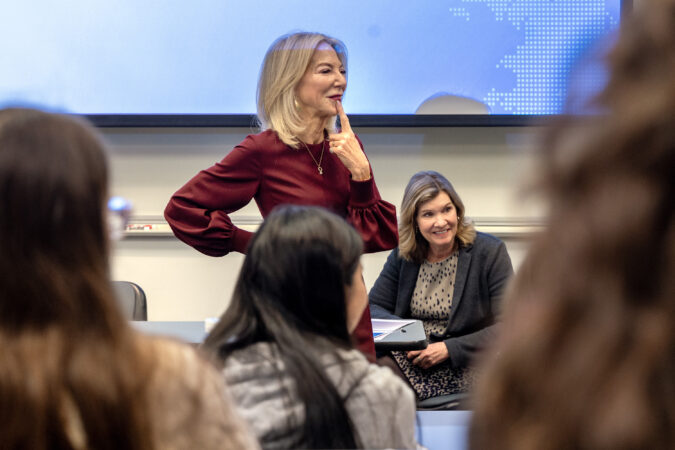
    The undergraduate class at the University of Pennsylvania vigorously discussed the use of affirmative action in college admissions, half the room charged with arguing one side and half the other.

    Their task, informed by the 2023 U.S. Supreme Court decision that ended the use of race-conscious college admissions, was to brief and advise a popular governor of a swing state who had not yet taken a position on the issue.

    “Guess who is the governor?” said their professor, Amy Gutmann. “I am the governor.”

    And for 90 minutes, the entirety of the class period, Gutmann guided a lively discussion in which students talked as much as she did.

    While never a governor, Gutmann has quite the leadership portfolio. She was president of Penn for a record 18 years, leaving in 2022 to become U.S. ambassador to Germany under former President Joe Biden, a post she held until 2024. She is also a Harvard-educated political scientist who cowrote the book The Spirit of Compromise and in 2018 was called one of the world’s 50 greatest leaders by Fortune magazine.

    Now, for the first time in about 25 years — since she was a politics professor at Princeton — Gutmann is back in the classroom teaching a full course this semester in the Annenberg School for Communication. Sarah Banet-Weiser, dean of Annenberg, who initially came up with the idea for the course, is her co-teacher.

    For students, the professorial star power was hard to pass up. There was a waiting list for the class.

    “It’s kind of a power duo,” said Evan Humphrey, 21, a senior communications major from Seattle. “Got to take that class.”

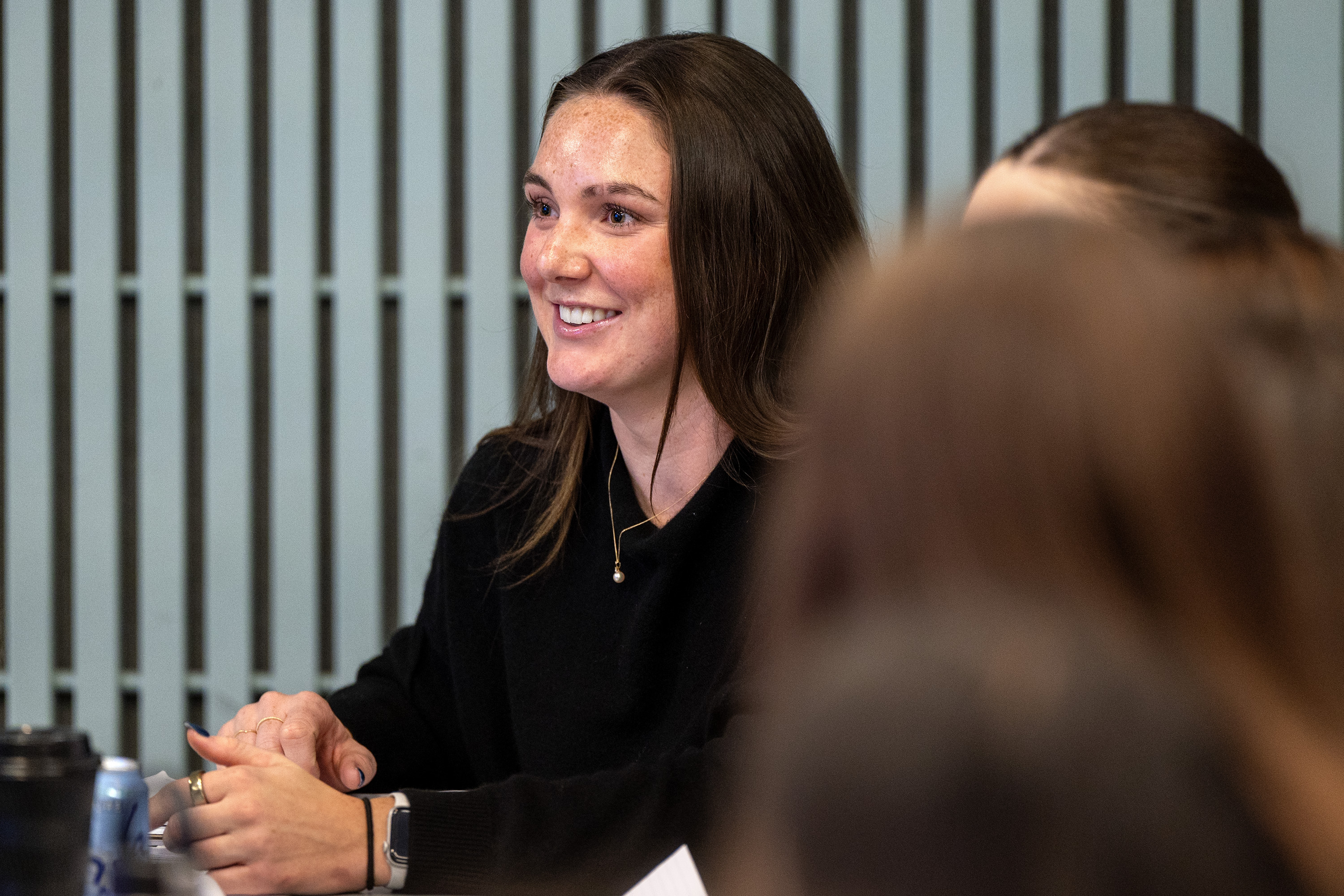
    Senior Evan Humphrey said she was drawn to enroll in the class because of the two professors and their distinguished careers.

    Focusing on teaching — the heart of a university — has been especially meaningful to Gutmann, and to Banet-Weiser, too, at a time when higher education has had its federal funding threatened and its approaches attacked.

    “It literally gives me life every week,” Banet-Weiser said.

    Gutmann, 75, who said she aspired to be a teacher since she was 5, said it has made her feel productive “in a way that goes to the heart of what a university is about.”

    “We should never lose sight of that heart of the university and how valuable it is,” she said.

    The goal of the class, called “The Art and Ethics of Communication in Times of Crisis,” is “to learn how and why to communicate with greater insight and understanding across differences,” while creating space “for free and open dialogue about controversial issues.”

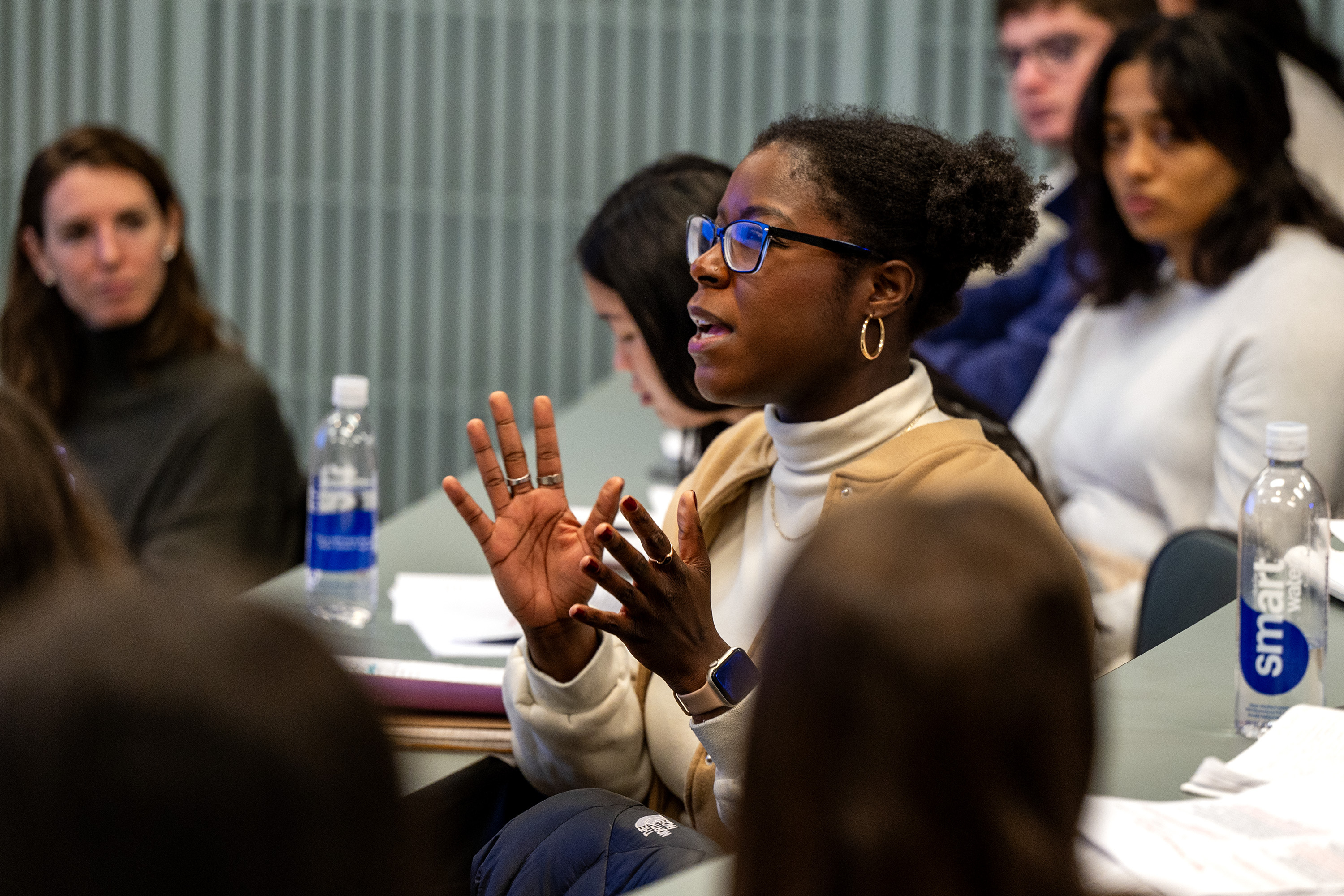
    Seniors Luiza Louback (left) and Sarah Usandivaras (right) participate in the class discussion.

    It could be a primer for the politically divided nation.

    “My pitch is that you can’t really know what you believe if you don’t know what people who disagree with you believe and what their reasons are,” Gutmann said in an interview. “I always say I don’t care what your position is. I care that you can give reasons for it and understand the strongest arguments on the other side.

    “That’s the method to search for truth, and it’s the way we serve a democracy.”

    Bringing experience to the classroom

    During class, Gutmann frequently drew on her experiences as a first-generation college student, a young professor at Princeton, a college president, and an ambassador.

    When she got her first teaching job, a male colleague congratulated her, but later she learned he told someone she got the job because she was a woman.

    “Did I take that as a compliment? Mm-mm,” Gutmann told the class.

    Humphrey said she especially likes hearing about Gutmann’s vast experiences.

    “She’s like, ‘Well, when I was the president here, this is something I dealt with,’” Humphrey said. “It’s really interesting knowing the experience she has and her background and the perspective she brings.”

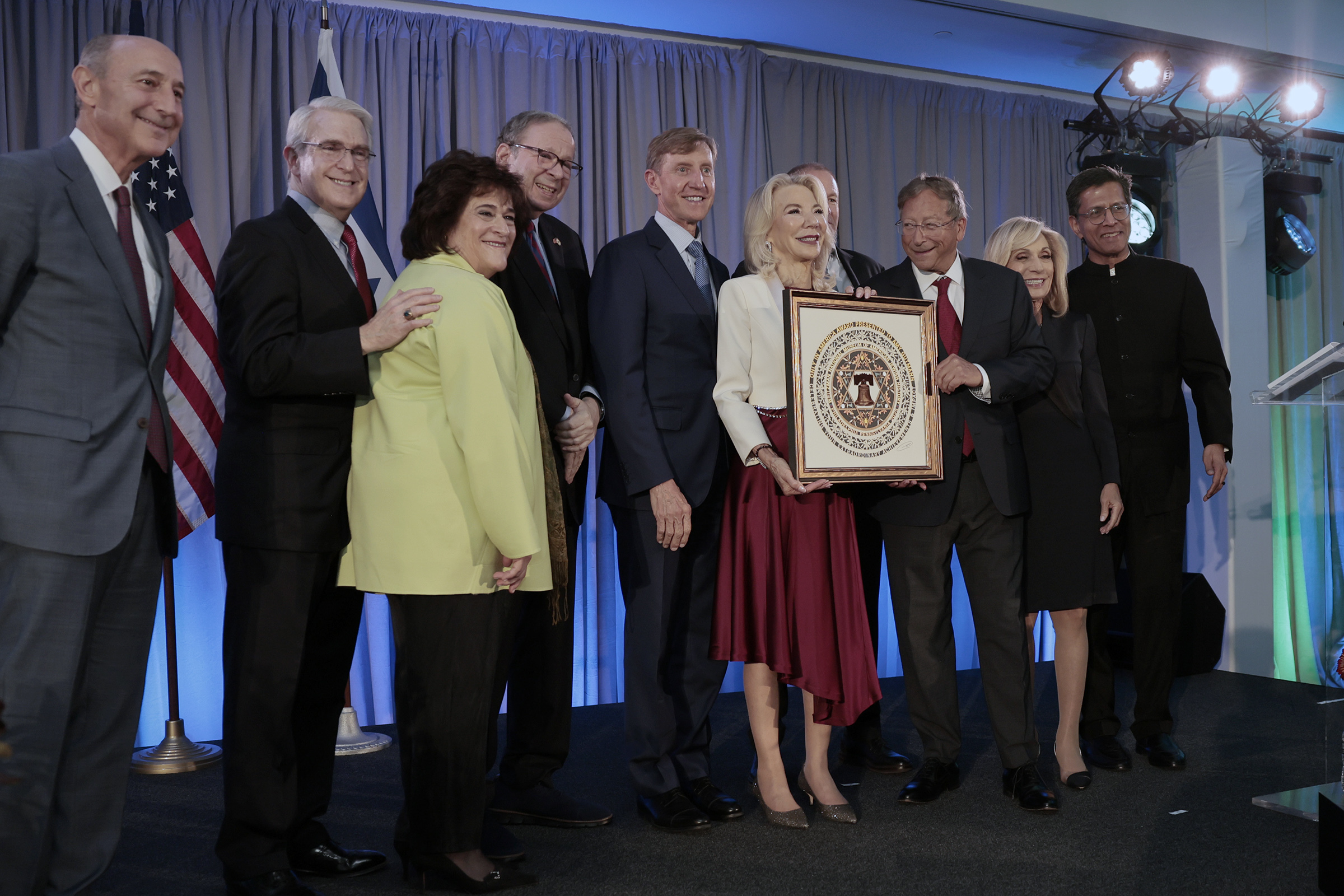
    Amy Gutmann (center), president emerita of the University of Pennsylvania and former U.S. ambassador to Germany, is presented with the Weitzman National Museum of American Jewish History’s Only in America® Award during a gala at the museum this month. The award recognizes “Jewish Americans who have made enormous contributions to our world … often despite facing antisemitism and prejudice.” Among those posing with her are Ramanan Raghavendran (far right), chair of Penn’s board of trustees, veteran journalist Andrea Mitchell (next to Raghavendran), Penn President J. Larry Jameson, (to the immediate left of Gutmann), and David Cohen, former Penn board chair, (next to Jameson.)

    Gutmann’s life outside class continues to be full, too. After class Wednesday, Gutmann, whose father fled Nazi Germany, flew to Berlin to receive the Prize for Understanding and Tolerance from the Jewish Museum Berlin.

    Having returned to Philadelphia to live after leaving Germany, Gutmann said it wasn’t hard to find her stride again in the classroom. She had given one-off lectures as Penn’s president.

    “I have a lot of muscle memory on teaching,” she said.

    Her style has changed from her early days at Princeton, where she worked from 1976 to 2004. She said reading a student’s notebook left behind and open after one of her ethics and public policy lectures was a major turning point.

    “‘That’s not what I said,’” Gutmann thought. “And I realized it’s not what you teach them, it’s what they learn. At that point, I realized I needed feedback.

    “So I changed from doing the 45-minute [lecture] thing to doing five or 10 minutes, max, and then asking them questions. Then I got them to argue with one another, and once I found that, I found what I really discovered worked for learning.”

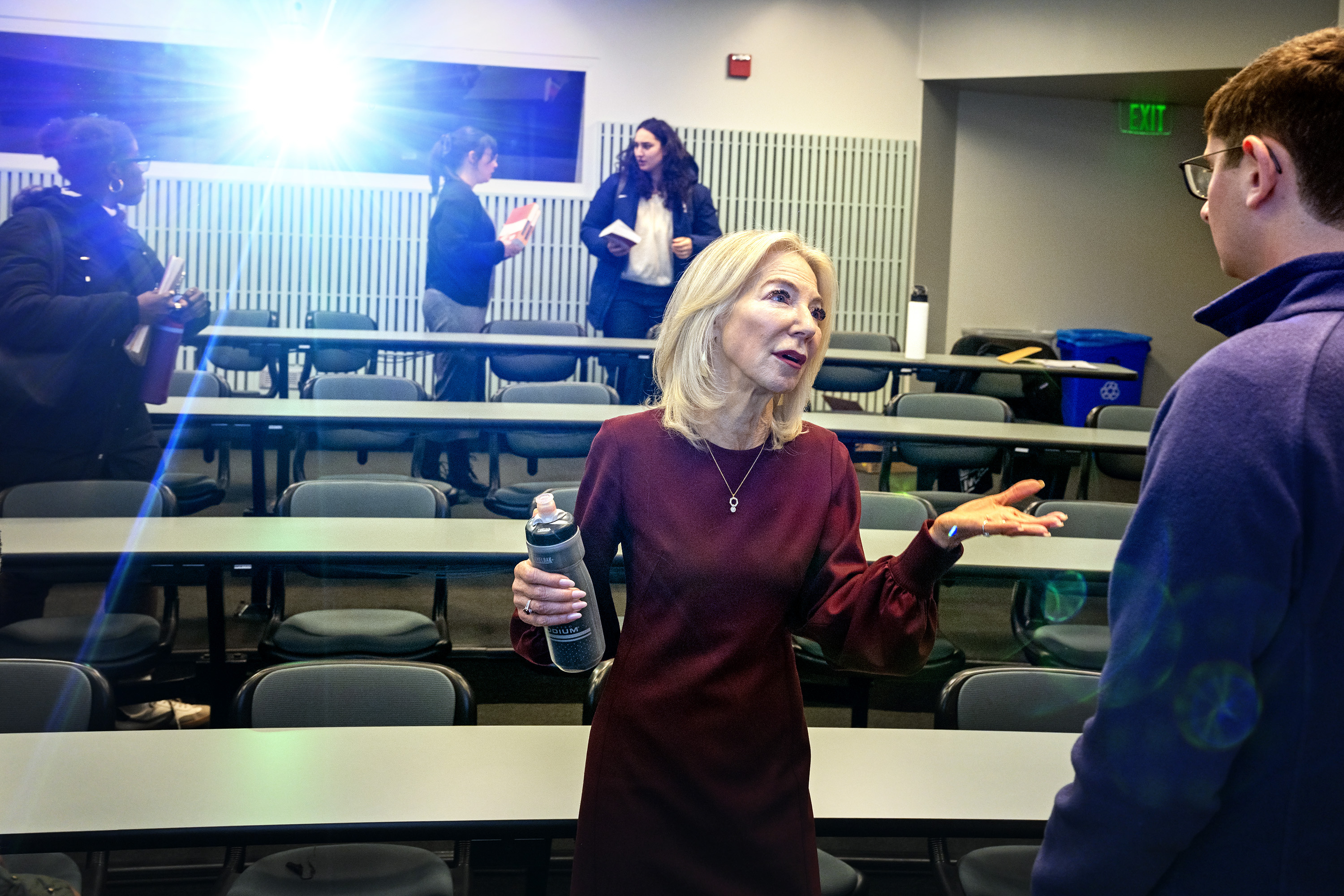
    Amy Gutmann talks with sophomore Brian Barth (right) at the end of class she co-teaches at Penn’s Annenberg School for Communication.

    Gutmann said she spends Fridays and weekends preparing for the class, which meets twice a week.

    “It’s a ton of work,” she said. “I’m really delighted to be doing it.”

    The class comes against the backdrop of fraught times for colleges. Penn earlier this year scrubbed its website of diversity initiatives after President Donald Trump’s administration threatened funding to schools employing diversity, equity, and inclusion efforts. In the summer, the school struck an agreement with the administration over the past participation of former transgender swimmer Lia Thomas, and Penn was one of nine schools originally asked to sign a compact that would have given the school preferential consideration for federal funding in exchange for complying with certain mandates affecting admissions, hiring, and other university operations. Penn declined.

    ‘One-of-a-kind’ discussions

    Gutmann and Banet-Weiser do not allow laptops, phones, or any electronic devices in class so that students completely focus on the conversation. To prepare for the affirmative action discussion, students were assigned related readings and review of the court cases.

    The two professors interacted with each other and prompted discussion among students with deep questions: Is treating people equal the same as treating them equally? Is it right to use affirmative action for only one racial group? What about other forms of affirmative action or preference, including for athletes, low-income students, and legacies whose parents attended the university?

    The approach resonated with students.

    “I wanted to take a class where I would really be encouraged to step out of my comfort zone and be able to learn not only how to understand my own beliefs and values but understand the beliefs and values of others,” said Sarah Usandivaras, 21, a senior communications and political science major who was born in New York and grew up in Paraguay.

    She found it in Gutmann and Banet-Weiser’s classroom.

    “It’s a one-of-a-kind,” she said.

    Ariana Zetlin, a doctoral student in Penn’s Graduate School of Education, is auditing the class to observe its approach.

    “The discussion and the debates are so much deeper and stronger than what I’m seeing in classrooms that don’t necessarily have these structures,” said Zetlin, 30, who is from New York.

    During class, those on both sides found common ground.

    Senior Angele Diamacoune said she was learning from the day’s lesson.

    “So I’m hearing agreement that diversity is a good thing but disagreement on how you get it,” Gutmann said.

    She asked students how many believed that having low-income and racially diverse students in class contributed to their learning. Every hand went up.

    “That to me is really striking,” Gutmann said. “There aren’t that many things that we can get unanimity on.”

    She asked students how they would advise colleges to teach the issue.

    “It would be good to teach with activities like this,” said Angele Diamacoune, 21, a senior communications major from Allentown.

    “Are you learning?” Gutmann asked her.

    “I am,” Diamacoune answered.

    “I am, too,” Gutmann said.

  • For almost 40 years, Esperanza has served ‘the least of these’ and those who ‘just need a break’ | Philly Gives

    For almost 40 years, Esperanza has served ‘the least of these’ and those who ‘just need a break’ | Philly Gives

    Talk to most nonprofit chief executives, and they’ll be able, on cue, to recite a heartwarming story about someone their organizations helped.

    And the Rev. Luis Cortés Jr., Esperanza’s founder and chief executive, can do it, too.

    But he’d rather talk about a sin he committed as a little boy — a sin that impacted his thinking for a lifetime and allowed him to understand how to build a $111.6 million organization with 800 employees that educates, develops, uplifts, and houses 35,000 people a year in the heart of North Philadelphia’s predominantly Hispanic Hunting Park neighborhood.

    When Cortés was 12, he stole a Snickers candy bar from the bodega his father owned in New York City’s Spanish Harlem.

    Oh, his father figured it out, and quickly, too, because he began to ask little Luis some important questions:

    Did the 12-year-old know how many Snickers bars the bodega would have to sell to break even — not only on the box of Snickers, but on the taxes and utilities for the entire store? More importantly, how many Snickers bars would be required to turn a profit — a profit that could be reinvested?

    “You need to understand finance, whether it’s a box of Snickers or a multimillion-dollar bond to build a school. Where is the money coming from, and what’s the repayment structure?” Cortés said.

    Outside, as he spoke, a crane moved materials in what will soon become a new culinary school.

    “Understanding finance is important, and understanding culture is important, and you have to understand the relationship between the two.”

    So, yes, Cortés can and did tell the story about the mother who came to Esperanza to learn English skills, who got help to get a job and a house, who sent her daughter to Esperanza’s charter school and to Esperanza’s college, and now that same daughter is getting a house thanks to Esperanza’s mortgage counseling help.

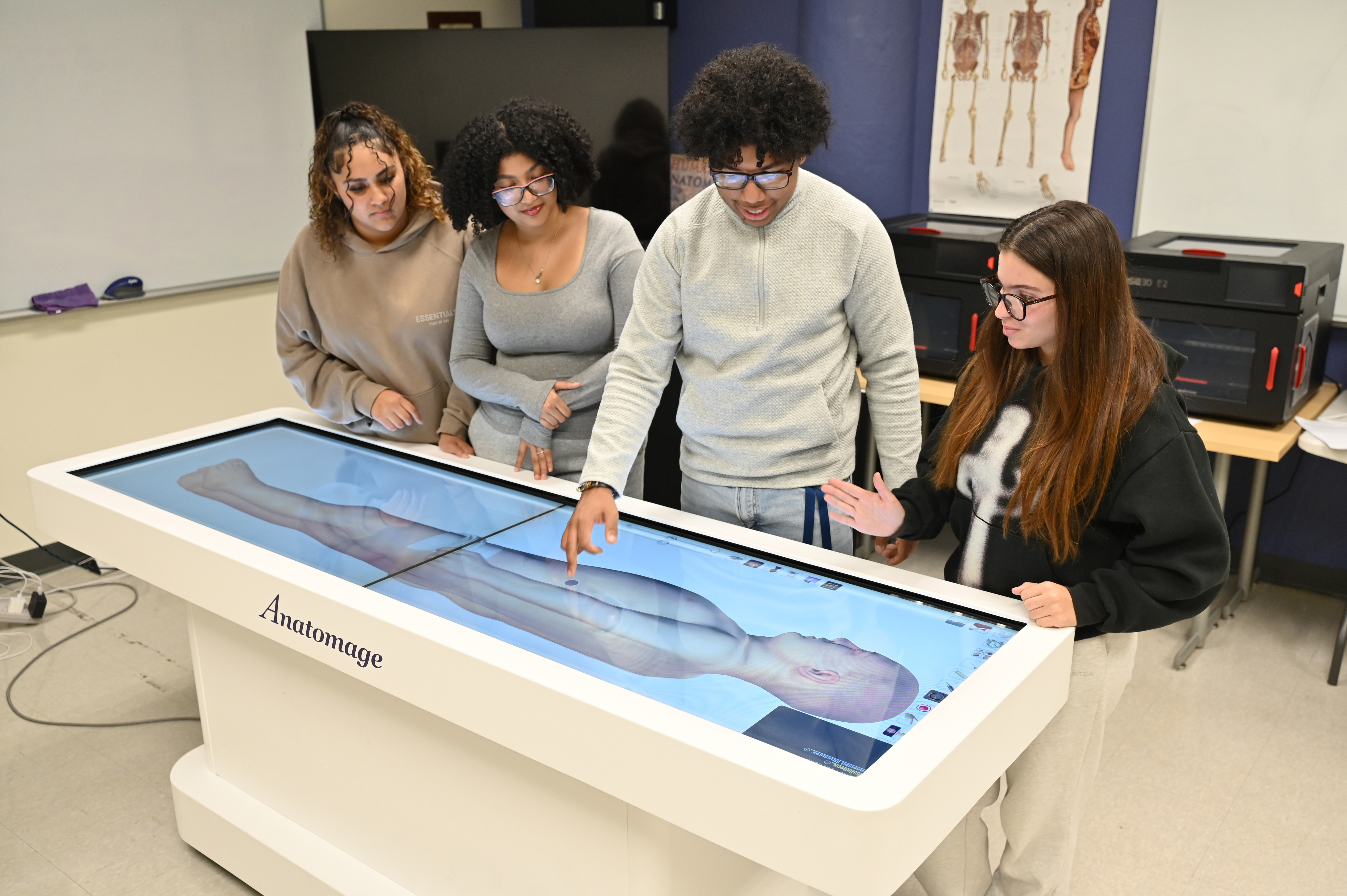
    Students Jayliani Casioano, Oryulie Andujar, Derek Medina, and Natalia Kukulski use an interactve anatomy table. The students are members of is the Health Occupations Students of America (HOSA).

    All good. But this is what Cortés really wants people to know:

    “If people trust us with their funds,” he said, “we’re putting the money into institutions, and institutions build culture.”

    That’s why Esperanza has a K-12 charter school, a cyber school, a two-year college that’s a branch campus of Eastern University, a 320-seat theater, an art gallery, computer labs, an immigration law practice, a neighborhood revitalization office, a CareerLink office for workforce development and job placement, a music program, a youth leadership institute, housing and benefit assistance, and a state-of-the-art broadcasting facility.

    Cortés even likes to brag about the basketball court. “Three inches of concrete, maple wood flooring, fiberglass backboards — NBA standards.”

    “Think about Paoli. It has a hospital, a public school, a theater. Paoli has all of that, and it’s understood that that’s the quality of life. We have to have access to those same things at a different price point,” he said. “Notice I didn’t say different quality. I said different price point.

    “We want to create an opportunity community, where people can have a good life — with arts, housing, healthcare, financial literacy, education, all those pieces — regardless of your family income,” he said.

    “What’s important here and what’s different is that in all our places, all our facilities are first class,” Cortés said.

    “I grew up in a low-income community where people were always telling you to step up, but step up to what?” he asked. “Where is the vision? What is possible to even have? How can anyone know unless they can see it?”

    So, when people from the community visit Esperanza, “you can see that you can have the best facilities with state-of-the-art equipment. As a provider of services, we have to step up,” he said, in turn always giving people the tools and resources they need to step up.

    For example, on Citizenship Day, Sept. 20, Anu Thomas, an attorney and executive director of Esperanza’s Immigration Legal Services, trained a dozen volunteer lawyers and law students on the fine points and recent pitfalls in the process of applying for citizenship.

    Soon, the room was crowded with people coming for help.

    Watching from the sidelines was Charlie Ellison, executive director of the city’s Office of Immigrant Affairs, who noted that an estimated 60,000 legal residents of Philadelphia are eligible to apply for citizenship.

    “Clinics like these are critically important to helping people who might be facing barriers,” including the cost of getting legal help. “This bridges a lot of gaps. It’s a vital mission, now more than ever,” he said.

    For Neury “Tito” Caba, a men’s fashion designer, tailor, and director of green space at Historic Fair Hill, citizenship help from Esperanza was a family affair. Through Esperanza, he, his grandmother, and his mother all became citizens.

    “Now I can vote, and that’s the most positive thing I can do,” he said. “And also, things being the way they are, it gives me some sort of protection.”

    Fashion designer Neury “Tito” Caba talks about his citizenship experience at Esperanza.

    Earlier this fall at Esperanza’s CareerLink branch, counselor Sylvia Carabillo helped Luis Rubio on the computer. He was trying to extend his unemployment benefits and looking for a job as a security guard. Agueda Mojica was being tutored in Esperanza’s most popular workforce class: Introduction to Computers.

    “I want to become more independent to be able to do anything on a computer,” she said in Spanish, speaking through a translator. “I was always working and never had time to learn.”

    Much of Esperanza’s staff is bilingual in Spanish, but to help people from the neighborhood, Esperanza also hired counselors who speak Ukrainian and Kreyòl for Haitians who live nearby.

    In Esperanza College classrooms a few weeks ago, Esperanza Academy high schoolers enrolled as college students had just finished a chemistry exam. When they graduate from high school, they’ll already have associate degrees on their résumés.

    For them, Esperanza represents a future.

    There’s Oryulie Andujar, 18, who wants to study sonography because an ultrasound technician found a cyst in her mother’s uterus. “We could have lost her. That was very impactful for me.”

    Jayliani Casiano, 17, wants to go into anesthesiology. The oldest of seven, she witnessed her mother giving birth to several younger siblings. “She was in a lot of pain. It was interesting. I want to do everything after seeing her through that process.”

    Derek Medina, 18, said the opportunity to go to college “made me rethink my whole life.” He had been getting into trouble in school, but now wants to combine a love of mathematics and a desire to help people by going into the field of biomedical engineering.

    Recently, on Nov. 14, Esperanza College hosted its Ninth Annual Minorities in Health Sciences Symposium, designed to acquaint high schoolers with medical careers.

    Construction will soon begin to convert a former warehouse space into a center to teach welding and HVAC in an apprenticeship program.

    Next month, it’ll be time for “Christmas En El Barrio” with music, food, and community in Teatro Esperanza — admission is free. In January, the Philadelphia Ballet will perform there. Tickets are $15 and free for senior citizens and students.

    “My worst seat — in Row 13 — would be $250 at the Academy of Music,” Cortés said. He wants to offer the arts at a price and a time available to a mother of three, who may not be able to afford even the cheapest seats in downtown venues, plus bus fare, “and heaven forbid the child wants a soda,” Cortés said.

    All this adds up to culture, which brings him back to the Snickers bar, and not just breaking even, but investing.

    Other groups, Cortés said, had to build their own institutions when mainstream organizations put up barriers. Howard University helped Black people, Brandeis served Jewish people, and Notre Dame provided education to the Irish.

    Building an institution is his investment goal with Esperanza, and he takes as his mentors famous Philadelphia pastors such as the Rev. Leon Sullivan, who founded Progress Plaza in North Philadelphia, and the Rev. Russell Conwell, the Baptist minister who founded Temple University.

    “Philadelphia has a tradition that its clergy don’t just do clergy things,” he said, admitting that he doesn’t have the patience for a more traditional pastor’s role. “As clergy here, it’s understood that we snoop around everything.”

    Cities sometimes brag that their poverty rates have declined, he said, when in reality, rates have declined because people with low incomes were forced to move away.

    Philadelphia, he said, has a chance to be different — to lower the poverty level both by raising people’s incomes and improving their standards of living. “There should be Esperanzas in every neighborhood,” he said.

    “How can we focus on helping the people who just need a break?” Cortés said, referencing Jesus’ admonishment to “help the least of these.”

    “This city has the opportunity to make this a win-win,” he said, “to show the rest of the country and Washington, D.C. — especially Washington, D.C. — that people who are different, and people who are `the other’ can be supported, so that they are not only part of the fabric of the city, but economic drivers of the city.”

    This article is part of a series about Philly Gives — a community fund to support nonprofits through end-of-year giving. To learn more about Philly Gives, including how to donate, visit phillygives.org.

    For more information about Philly Gives, including how to donate, visit phillygives.org.

    About Esperanza

    People Served: 35,000

    Annual Spending: $111.6 million across all divisions

    Point of Pride: Esperanza empowers clients to transform their lives and their community through a diverse array of programs, including K-14 education, job training and placement, neighborhood revitalization and greening, housing and financial counseling, immigration legal services, arts programming, and more.

    You Can Help: Esperanza welcomes volunteers for community cleanups, plantings, and other neighborhood events. Some programs also need volunteers with specific skills (lawyers, translators, etc.).

    Support: phillygives.org

    What Your Esperanza Donation Can Do

    • $25 covers the cost of one private music lesson for a young student through our Artístas y Músicos Latinoamericanos program.
    • $50 provides printing and distribution of 30 “Know Your Rights” brochures to immigrant families.
    • $100 pays for five hours of training for a new mentor fellow at the Esperanza Arts Center, preparing a young person for a career in arts production through hands-on learning.
    • $275 funds the planting of one street tree in a neighborhood that desperately needs additional tree cover to address extreme heat.
    • $350 covers tuition and books for one English as a second language student at the Esperanza English Institute.
    • $550 supports the cost of the initial work authorization for an asylum-seeker.