Tag: Philly First

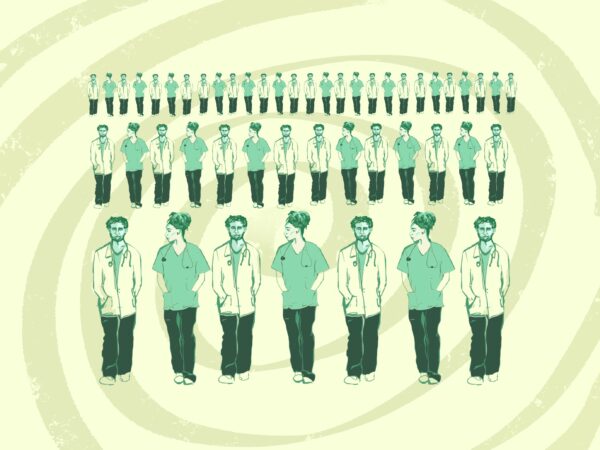
  • Philly-area medical schools are enrolling more women and attracting more students, according to the latest trends

    Philly-area medical schools are enrolling more women and attracting more students, according to the latest trends

    Competition at Philadelphia-area medical schools intensified in 2025, with programs seeing about 50 applicants for every open spot.

    That’s the highest demand since 2022, with the number of applications bouncing back after a three-year decline, recently released data from the Association of American Medical Colleges (AAMC) shows.

    The annual report offers a look at the composition of the nation’s future doctors through the demographics of the applicants and enrollees at M.D. degree-granting medical schools across the United States and Canada.

    It showed increased class sizes and strong female enrollment across the Philadelphia area’s five M.D. degree-granting schools: University of Pennsylvania, Thomas Jefferson University, Temple University, Drexel University, and Cooper Medical School of Rowan University.

    And the fraction of first-year medical students from Pennsylvania who identified as Black or African American, excluding the mixed-race student population, fell from 6.9% to 5.4% between 2023 and 2025.

    The racial demographics of entering students are seeing increased scrutiny in light of the 2023 Supreme Court decision that effectively ended affirmative action, barring race from being used in higher education admissions.

    The percentage of first-year medical students from Pennsylvania who are Black is lower this year than the national average. Pennsylvania also lags behind the national average for first-year enrollment of Hispanic or Latino medical students.

    This data reflects the results of the application cycle that concluded last spring. Next year’s prospective medical school students are currently in the thick of admissions season, awaiting interviews and offers.

    Here’s a look at the key trends we’re seeing:

    Applications back up

    Demand for spots at Philadelphia area-medical schools is back up after a three-year decline. There were nearly 5,000 more applications last cycle, a 9.3% increase, with all schools except Cooper seeing a boost.

    Jefferson’s Sidney Kimmel Medical College helped drive growth the most, with a 16% increase in applications compared to the previous year.

    window.addEventListener(“message”,function(a){if(void 0!==a.data[“datawrapper-height”]){var e=document.querySelectorAll(“iframe”);for(var t in a.data[“datawrapper-height”])for(var r,i=0;r=e[i];i++)if(r.contentWindow===a.source){var d=a.data[“datawrapper-height”][t]+”px”;r.style.height=d}}});
    More medical students being trained

    Orientation icebreakers might take a bit longer to get through at area-medical schools as first-year classes continue to get bigger.

    In 2025, Philadelphia-area schools enrolled 1,089 new medical students, compared to 991 in 2017. Drexel University College of Medicine contributed to half of that growth, adding 49 seats to its recent entering class compared to that of 2017.

    Penn’s Perelman School of Medicine was the only school that did not increase its class size in 2025.

    Medical schools around the country have committed to increasing class sizes to address projected shortages of doctors.

    window.addEventListener(“message”,function(a){if(void 0!==a.data[“datawrapper-height”]){var e=document.querySelectorAll(“iframe”);for(var t in a.data[“datawrapper-height”])for(var r,i=0;r=e[i];i++)if(r.contentWindow===a.source){var d=a.data[“datawrapper-height”][t]+”px”;r.style.height=d}}});
    Female enrollment remains strong

    More female students have entered Philly-area medical schools over the last decade.

    In 2025, 55.4% of first-year enrollees at Philly-area medical schools were female, compared to 47.7% in 2017.

    Drexel saw the biggest rise, with 181 women entering in 2025, compared to 120 in 2017.

    window.addEventListener(“message”,function(a){if(void 0!==a.data[“datawrapper-height”]){var e=document.querySelectorAll(“iframe”);for(var t in a.data[“datawrapper-height”])for(var r,i=0;r=e[i];i++)if(r.contentWindow===a.source){var d=a.data[“datawrapper-height”][t]+”px”;r.style.height=d}}});
  • Penn’s medical school received an $8 million gift to redesign the way it trains doctors

    Penn’s medical school received an $8 million gift to redesign the way it trains doctors

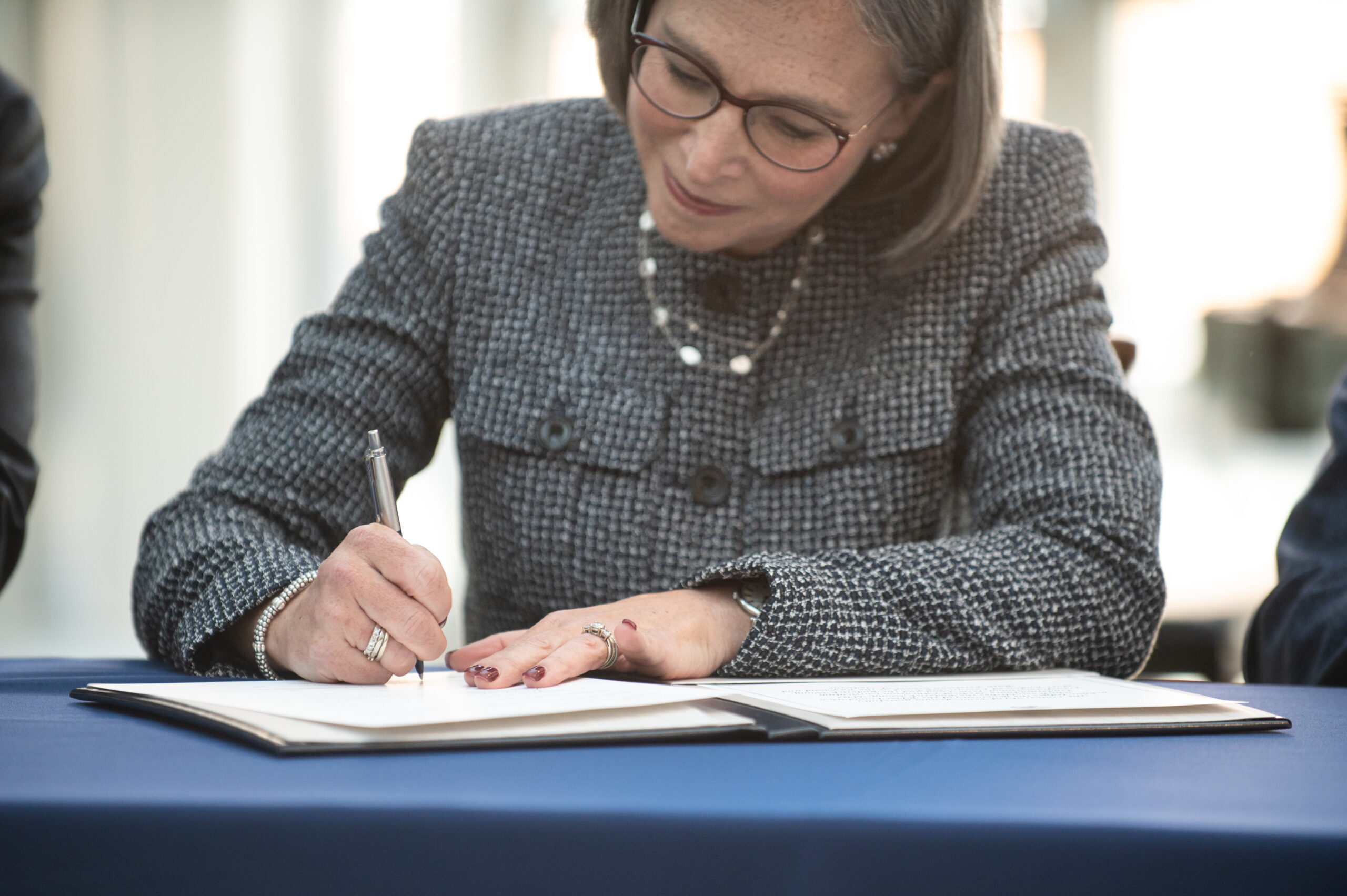
    The University of Pennsylvania has received an $8 million gift to redesign how it trains doctors at the Perelman School of Medicine, Penn officials announced Thursday.

    Incorporating technology, AI, and data to create customized learning pathways for Penn medical students is an overarching goal. The effort comes at a time when increasingly easy access to medical information and changes in care delivery are leading medical schools nationwide to revamp their curricula.

    The gift to Penn is from New York-based RTW Foundation, a philanthropy associated with the life sciences investment firm founded by Perelman School graduate and Penn Medicine board member Rod Wong. Penn said the gift from Wong, and his wife, Marti Speranza Wong, is the largest single donation to support curriculum innovation at the medical school, which dates back to 1765.

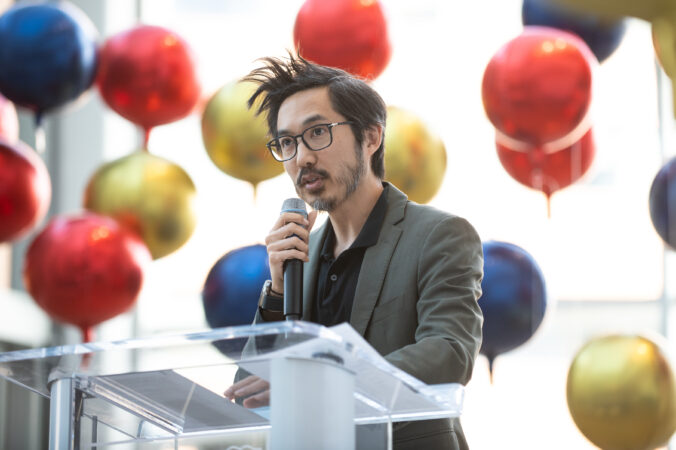
    At a news conference announcing his donation Thursday, Wong recalled his time at the medical school right after its last major overhaul of the curriculum in 1998. One update under Penn’s “Curriculum 2000” revamp was recording and making lectures available online — a relatively innovative move at the time (YouTube wouldn’t be created for another several years).

    “Technology has changed, and obviously we’re at this same inflection point because of AI and data science,” said Wong, who is managing partner and chief investment officer at RTW Investments LP.

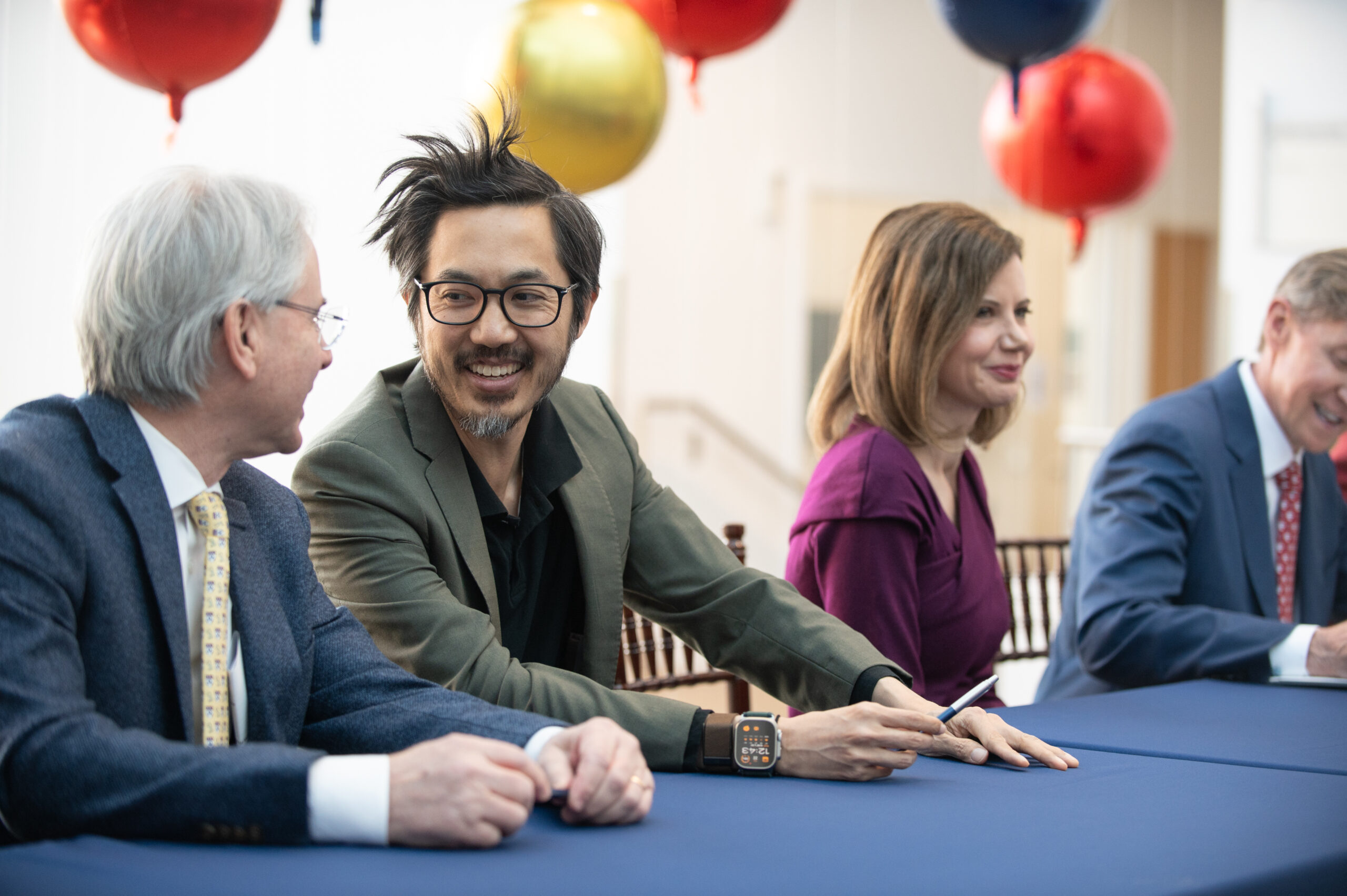
    Penn alumnus Rod Wong (center) sits with dean of Perelman School of Medicine Jonathan A. Epstein (left) after signing the gift agreement.

    The vast majority of the $8 million gift will go toward hiring data scientists and engineers, supporting faculty, and building and acquiring the platforms needed to deliver the new curriculum.

    Technology will be incorporated into new training techniques, such as by using augmented or virtual reality to assist in learning anatomy, developing knowledge needed to diagnose illnesses and develop treatment plans, and mastering clinical skills such as IV placement and suturing.

    For example, students can practice taking a person’s medical history or doing a physical exam on a virtual patient, while an AI agent is there to give feedback in real time.

    “It’s really adaptive to the individual learner, but you do it at your own pace, on your own time,” said Lisa Bellini, executive vice dean of the medical school and a leader on the project.

    The redesign will take place over the next three years as school leaders consult with stakeholders and work on building the platform.

    Some of Wong’s gift will be used to create a biannual endowed lecture in business and entrepreneurship that will bring leaders in medicine and healthcare innovation to campus. The gift will also establish the Roderick Wong Entrepreneurship Pathway, which will provide mentorship, workshops, and project-based learning to students with business interests.

    “We really need to incorporate the fundamentals of how best to use technology responsibly within the practice of medicine and create something incredibly enduring, because you’re not going to go through this exercise every three years,” Bellini said.

    The Perelman School of Medicine is embarking on its curriculum revamp at a time when medical education is evolving at many schools.

    Some medical schools have concentrated the traditional two years spent learning science into one year to give students more time to learn how to interact with patients and collaborate with other medical professionals.

    A three-year medical school option is offered at institutions such as the Pennsylvania State University College of Medicine to speed doctors into the clinic and reduce students’ debt loads.

    Jennifer Kogan, vice dean for undergraduate medical education at the Perelman School of Medicine, is a leader in the curriculum revamp.

    Faster, flexible learning

    Like most medical schools, Perelman has a standard curriculum where students take foundational science courses for a stretch of time and then transition to the hospital to gain clinical experience.

    This can lead to some students repeating courses that they already mastered in college.

    “If you were a biochemistry major as an undergrad, do you really have to take biochemistry again?” said Jennifer Kogan, vice dean of undergraduate medical education and a leader on the redesign project. “How could you better use that time to achieve whatever your career goals are?”

    Leaders at Penn want to give students the flexibility to adjust their timelines based on their skill sets and goals.

    Instead of setting a fixed time for how long a class or rotation will take, a student who masters a skill more quickly should be able to move on and devote their time to other interests, such as research or entrepreneurship.

    Many students at Penn pursue dual degrees or research fellowships that end up adding a fifth year of medical school. Penn leaders hope adding flexibility to the curriculum could enable students to instead finish in four years or “maybe even three,” Kogan said. (The possibility of a three-year path is not yet guaranteed but will be explored.)

    “It will be better set up to support students like me who have had to use significant federal loans to finance their way through medical school and might have benefited from the condensed training timeline,” said Alex Nisbet, a fourth-year medical student at Perelman who spoke at the signing event.

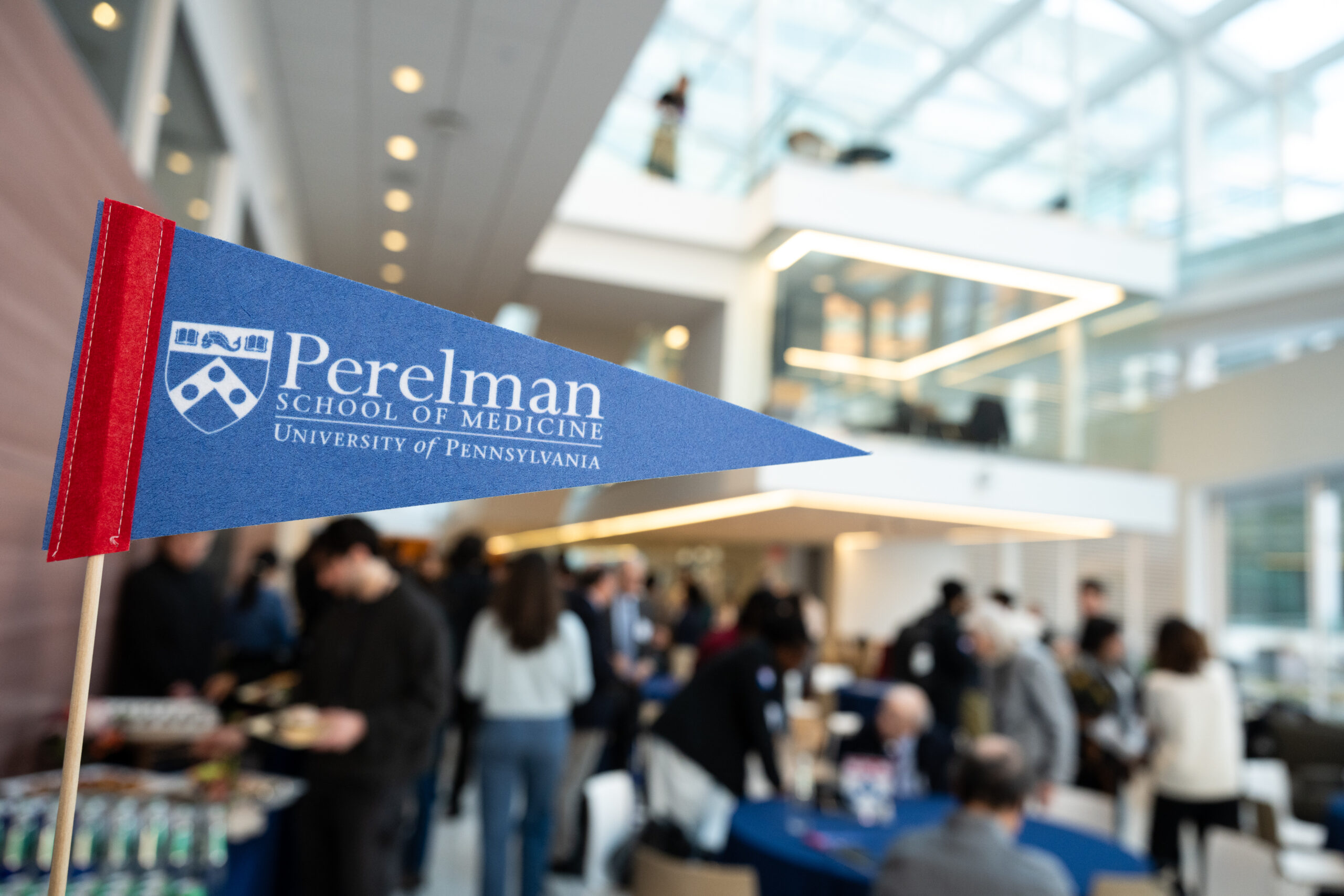
    An attendee holds a pennant flag representing the Perelman School of Medicine.

    The school will leverage data and AI to assess how individual students are progressing in what they’re calling a “precision education model.”

    Though parts of the program will be piloted over the next three years, the first class to see the full implementation of the curriculum will be in the fall of 2029.

  • How Penn helped to rescue RHD’s Family Practice health clinics after a nonprofit ownership change

    How Penn helped to rescue RHD’s Family Practice health clinics after a nonprofit ownership change

    A year ago, leaders of Family Practice & Counseling Network feared their health clinic, which has served low-income Philadelphians for more than 30 years, wouldn’t survive past June.

    The clinic was part of Resources for Human Development, a Philadelphia human services agency that a fast-growing Reading nonprofit called Inperium Inc. had acquired in late 2024.

    As a federally qualified health clinic since 1992, the clinic had received an annual federal grant, higher Medicaid rates, and other benefits.

    But federal rules prohibited the clinic from continuing to retain that status and those benefits under a parent company. That meant Family Practice & Counseling Network had two options: close or spin out into a new entity that would reapply to be a federally qualified clinic.

    “We had to figure it out,” the organization’s CEO Emily Nichols said in a recent interview.

    At the time, the organization’s three main locations had 15,000 patients. They are “very underserved, low-income people that deserve good healthcare,” she said.

    Thanks to $9.5 million in financial and operational support from the University of Pennsylvania Health System, a new legal entity took over the clinics in July. They now operate under the tweaked name, Family Practice & Counseling Services Network, and without the federal status.

    “Penn allowed us to survive,” Nichols said.

    Still in a precarious position

    The nonprofit, with its name now abbreviated as FPCSN, remains in a precarious position.

    Because of the corporate change, the $4.2 million annual grant that Family Practice had been receiving through RHD had to be opened up for other applicants under federal law. FPCSN applied but won’t find out until March the result of the competition.

    Natalie Levkovich, CEO of the Health Federation of Philadelphia, a nonprofit that supports community health centers in Southeastern Pennsylvania, expressed confidence that the clinic will regain the funding, which helps cover the cost of caring for people who don’t have insurance.

    “FPCSN is a well-run, well-regarded, well-supported health center that has an established, high-functioning practice in multiple locations,” Levkovich said. The clinic received letters of support from all the other federal clinics in the area, she said.

    In addition to the grant, other key benefits of being a federally qualified health center — the status the clinic had for 33 years — are receiving medical malpractice insurance through the federal government and enhanced Medicare and Medicaid rates.

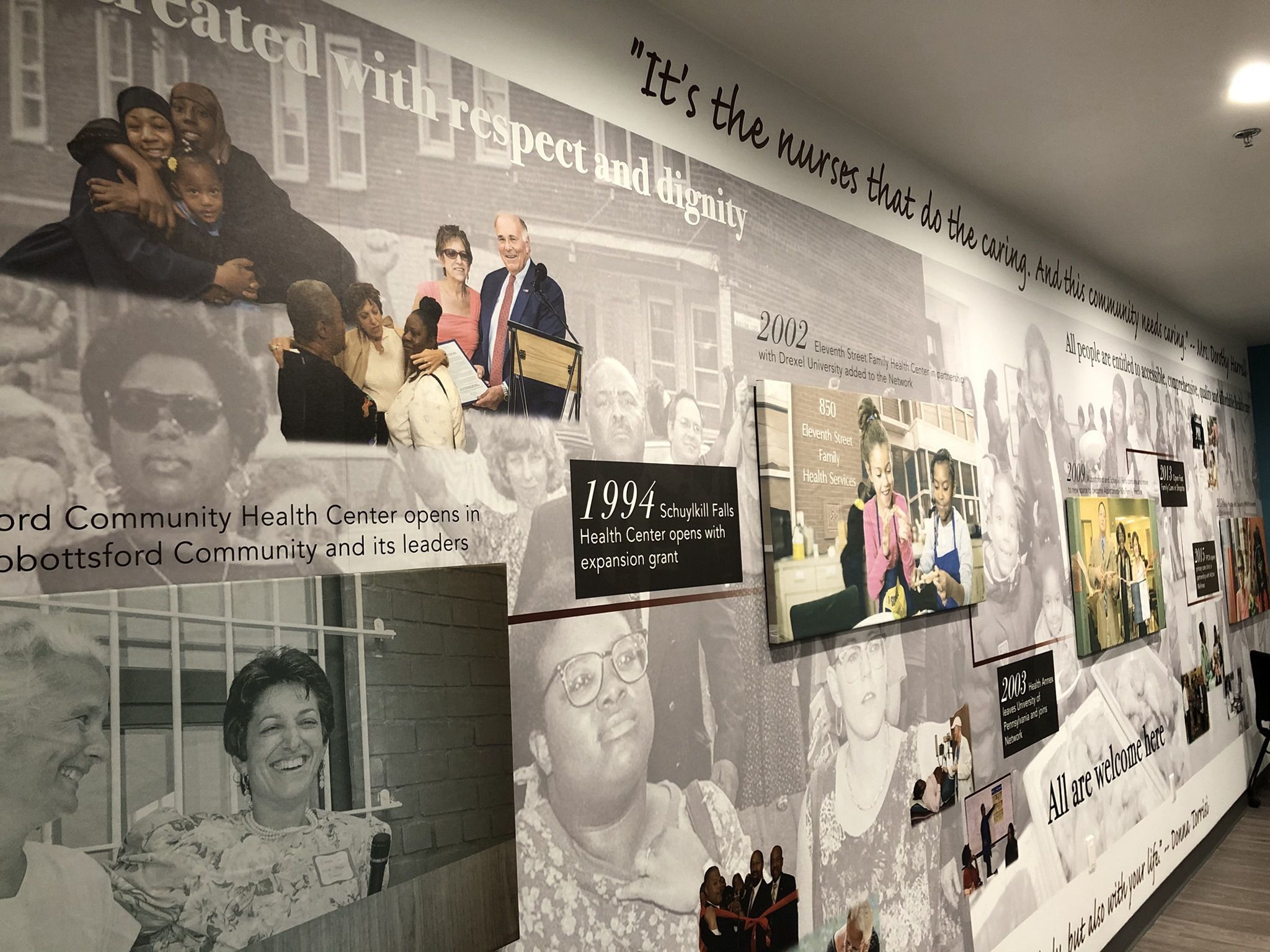
    A mural in a conference room at Family Practice & Counseling Services Network’s headquarters in Nicetown shows a timeline of the agency’s history since its founding in 1992.

    In return, federally qualified clinics have to accept all patients, including people without insurance. The insurance mix of FPCSN’s patient population is about 60% Medicaid, 20% uninsured, 10% Medicare, and 10% commercial, Nichols said.

    Also, half of a federal clinic’s board members have to be patients at the clinic. FPCSN has three main locations, in Southwest Philadelphia, on the western edge of North Philadelphia, and in the West Poplar neighborhood. Its revenue in fiscal 2025 was $31 million.

    During the past year, 55 FPCSN staff members have left, leaving 140 employees still at the organization, including 16 nurse practitioners who provide the primary care. The departures may have contributed to a decline in the number of patients seen to 13,500 last year, compared to 15,000 the year before, Nichols said.

    Why Penn helped FPCSN

    Federally qualified health centers form the core safety net in Philadelphia and across the nation, said Richard Wender, who chairs Family Medicine and Community Health at Penn, which had a longstanding relationship with RHD’s clinics.

    Under contract, Penn family practice physicians were providing prenatal care to 400 pregnant patients at the clinics that would have closed abruptly at the end of June if Penn hadn’t provided support. “We wanted them to be able to continue to take care of the patients that they were taking care of,” Wender said.

    The money from Penn helped pay startup costs for the new entity and bridged the period until FPCSN was able to secure new contracts with insurance companies.

    Penn also didn’t want the clinic’s patients showing up in its already busy emergency departments for basic care. “That adversely affects their health because it’s not a good place to get preventive care,” he said.

    But it was important to Penn that there was a pathway back to federal clinic status. “We feel as optimistic as we can,” Wender said.

    Wender and Nichols credited Kevin Mahoney, CEO of Penn’s health system, with the preservation of FPCSN’s services for low-income Philadelphians by throwing his full support behind the effort.

    “You have to have a CEO, a leader in your health system, who understands that this is the responsibility of large academic health centers,” Wender said.

  • The Avenue of the Arts to break ground on an ambitious $150 million streetscape to make Broad Street greener

    The Avenue of the Arts to break ground on an ambitious $150 million streetscape to make Broad Street greener

    Lush landscaping and public art will soon line Broad Street, impromptu performances may pop up, and vehicular traffic will be calmed with a new Avenue of the Arts south streetscape about to take shape.

    The project — estimated to take $150 million and a decade to realize — will begin modestly.

    The groundbreaking ceremony was held Wednesday morning in front of the Kimmel Center and was attended by more than 200 dignitaries, including Mayor Cherelle L. Parker, City Council President Kenyatta Johnson, and other members of City Council, state representatives, and officials from groups along the Avenue of the Arts.

    The actual construction is slated to start at the end of January on a small portion of the project: remaking the median strip between Spruce and Pine Streets. That phase is expected to be completed by June.

    In 2027, after the end of an anticipated swell in tourism and street activity during the Semiquincentennial, sidewalk beautification will begin on both the east and west sides of that block.

    Eventually, pending funding, all of the blocks between City Hall and Washington Avenue will be remade.

    Looking north toward City Hall, a rendering shows the completed first phase of a South Broad Street streetscape project slated to break ground in January 2026.

    The current streetscape of planters, pavers, and retro light fixtures was designed and installed more than three decades ago. In addition to the wear and tear of the existing scheme, the thinking around public space has evolved since then, said Carl Dranoff, board chair of Avenue of the Arts, Inc., which is overseeing the project.

    “It’s become somewhat aged and dog-eared,” said Dranoff. “In 1993 you didn’t need to have outdoor cafes. We need to activate the street, not just make it palatable. We have the opportunity to really elevate the Avenue of the Arts into one of the world’s great streets.”

    The project was announced in July 2024 at $100 million, but inflation and a more detailed cost analysis has now put the total price tag at about $150 million — $15 million per block. These numbers include not just the planters, lighting, public art, street furniture, and aesthetic elements, but also infrastructure work beneath the surface, said Dranoff.

    “A lot of it is things you don’t see. There’s a lot of underground construction,” he said. “Right now water is leaking from the median strip into the subway concourse. One of the reasons we got support from SEPTA and PennDot and [the Philadelphia] Streets [Dept.], is as we are building the median strips, we are improving deficiencies in the street in each block.”

    In addition, some utilities will have to be moved. One PECO relocation, for instance, will cost the project $250,000, he said.

    Dranoff has a vested interest in the vitality of the Avenue of the Arts. He has led several development projects on South Broad Street, including Arthaus, which is on the same block as the first phase of the new streetscape, and, one block south, Symphony House. He compares the investment in the new streetscape to the ones made in the Pennsylvania Convention Center, Philadelphia Navy Yard, Kimmel Center, and Schuylkill River Trail.

    “If we don’t make investments in the future, which are going to increase revenue and population, we are relegating ourselves to second-place status.”

    The new $15 million streetscape in the block from Spruce to Pine, which includes a $1 million endowment fund to underwrite maintenance, native-species plants, a rainwater-collection cistern, lighting, curved raised planting beds, public art, seating, way-finding devices, and artist-designed banners.

    Of the $15 million needed, $5 million has been raised so far: $3 million from the city over two budget years, $1 million from the state, and $1 million from private donors. Other funding requests are pending, which planners call “very promising.”

    A sidewalk garden on the east side of Broad Street between Pine and Spruce Streets is planned for installation in 2027 as part of a new Avenue of the Arts streetscape.

    Dranoff says that construction of the median between Spruce and Pine — which is the block occupied by the Kimmel Center and defunct University of the Arts — won’t cause “a lot of disruption. They’re only working business hours, not on weekends.” Any blocked lanes will be reopened after work is done for the day, he said.

    The next block to be redesigned hasn’t been decided, but it will likely be north of Spruce Street, Dranoff said. “Part of it will depend on funding. If we get a donor, someone whose offices are near the Academy of Music and is donating $15 million for that block to be next, we might accommodate that,” he said.

    Funding for the entire project is expected to be a mix of public money, corporate and individual donations, and foundation support, he said.

    The goal isn’t to have the mile-plus between City Hall and Washington Avenue end up with a streetscape that looks uniform, Dranoff said. Instead, design firms Gensler and OJB Landscape Architecture may come up with different ideas for different blocks.

    “You don’t need a master plan that’s set for 10 blocks. Every block is different, the institutions are different. It lends itself to block-by-block planning tied together by a common theme.”

    Dranoff said once the block from Spruce to Pine is done, it will show the potential, which he expects will spur fundraising to complete the streetscape for the entire Avenue of the Arts south.

    “The difference between now and the first block being finished is, you’re going to be driving down a tree-lined boulevard.”

    The article has been updated with details from the groundbreaking ceremony.

  • Kids get free dental care at this Philly school. Officials say it’s a model that could be replicated in schools with empty space.

    Kids get free dental care at this Philly school. Officials say it’s a model that could be replicated in schools with empty space.

    Crystal Edwards didn’t see a dentist until she had a deep cavity at age 10: growing up in a struggling Philadelphia family, the resources to access dental checkups just weren’t there.

    So she jumped at the opportunity to locate a dental clinic in the school where she is now principal, W.D. Kelley, a K-8 in North Philadelphia.

    “This dental clinic is saving lives,” said Edwards.

    Tucked into a converted science lab on the school’s third floor, the Dental Clinic at William. D. Kelley, operated by Temple University’s Maurice H. Kornberg School of Dentistry, is nearing its third year of operation. It is open to all Philadelphia children, including those who do not attend Kelley, regardless of insurance status.

    School district officials have pointed to the Kelley clinic as a model as it prepares to make facilities master plan decisions, which will result in closing, combining, and reconfiguring some school buildings. The clinic is an example, they say, of how the system could use available space in some of its schools for public good.

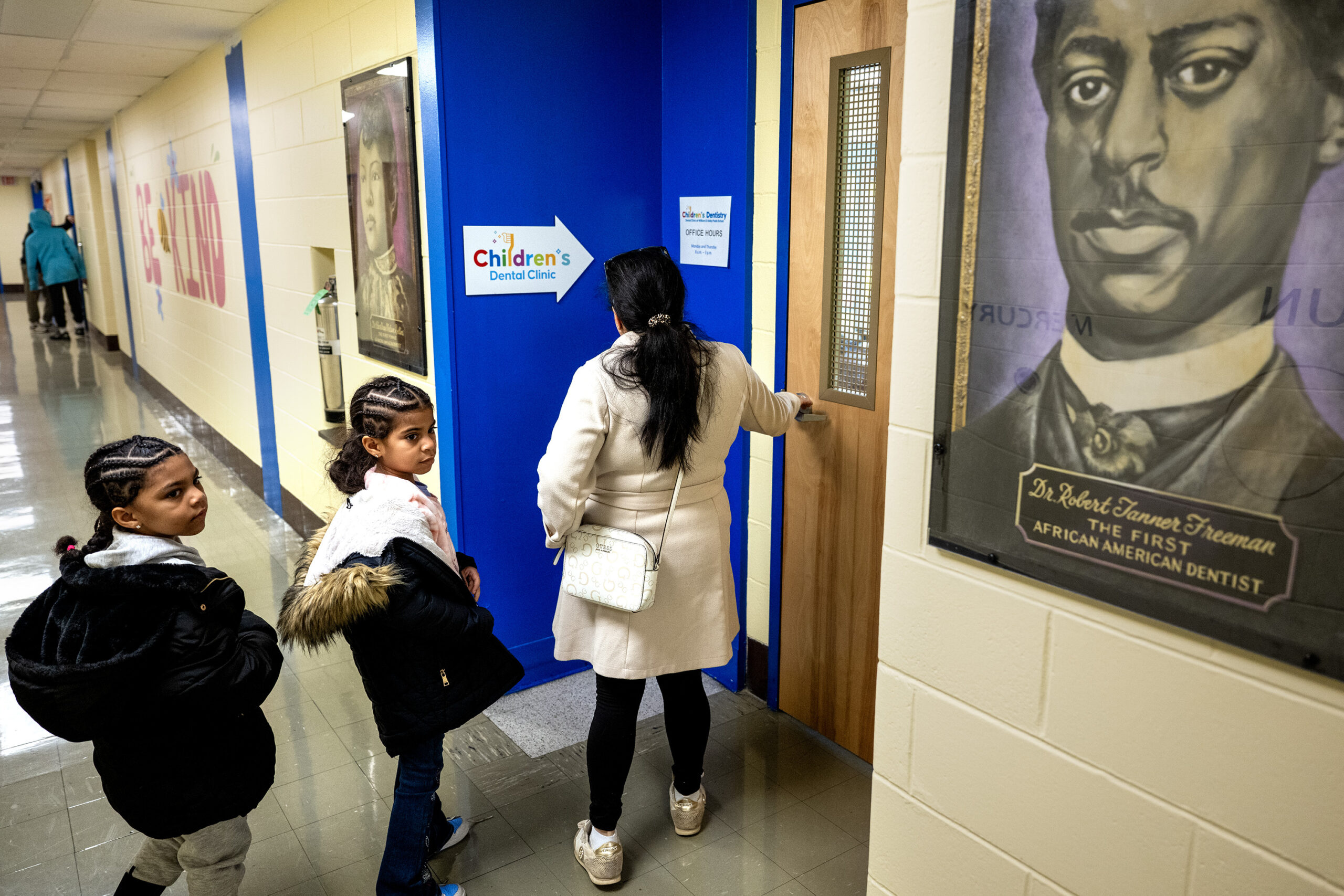
    Soribel Acosta arrives at the Dental Clinic at William D. Kelley public school on Thursday, with her children, Andrea Jimenez (left), 6. And Sayra Jimenez, 7.

    “This is certainly a great example of what can happen when a university partners with a school district to create life-changing opportunities and outcomes for young people,” Superintendent Tony B. Watlington Sr. said in a statement in 2023, when the clinic opened.

    Temple dental school officials said more clinics could follow elsewhere in the city.

    Taking care of every child

    The underlying concept is simple, said Eileen Barfuss, the Temple dental professor who leads the clinic.

    “If your tooth hurts, if you’re not feeling well, you’re not going to learn,” said Barfuss. “In the past, there have been a lot of barriers to care for dentistry that weren’t there for medicine, but preventative care is so important so it doesn’t get to the point of pain.”

    The clinic accepts all comers, including those who are uninsured or underinsured, and sometimes treats students’ parents. (Most, but not all, patients have Medicaid dental, and grants help cover treatment for those without insurance.)

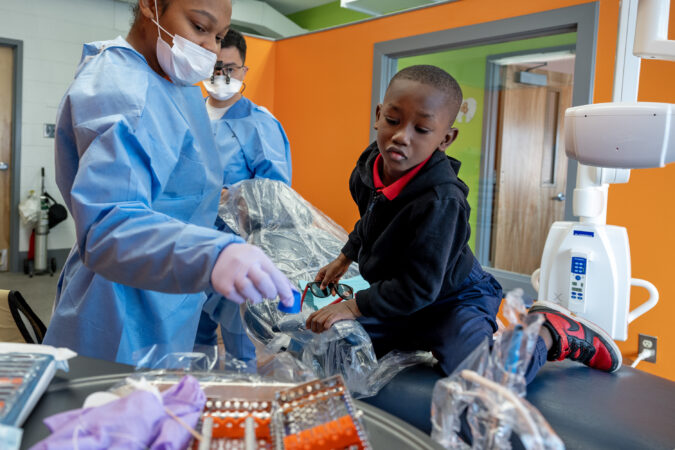
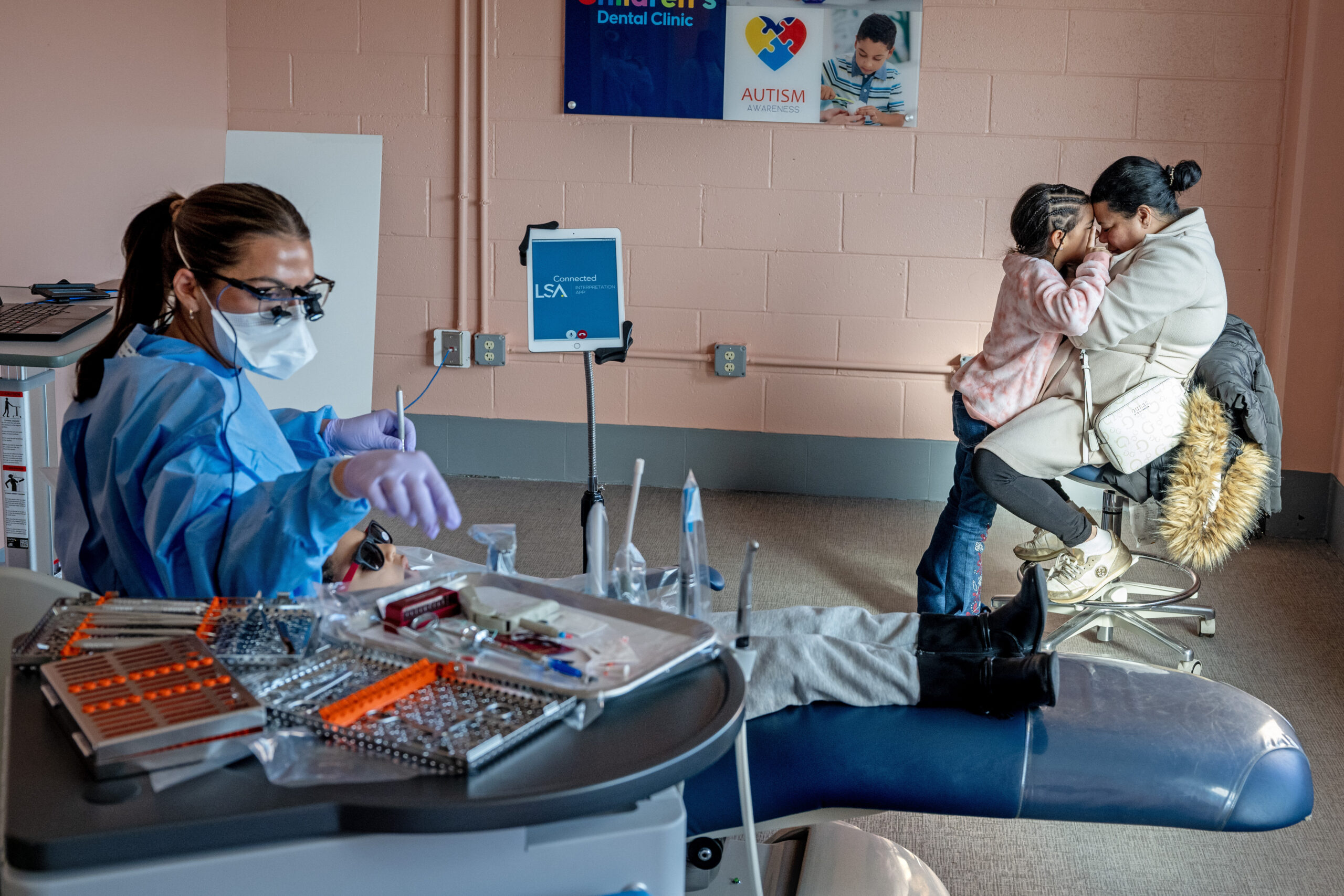
    Temple dentistry student Carly Pandit works on the teeth of Andrea Jimenez, 6, as her mother, Soribel Acosta, entertains sister Sayra Jimenez, 7, waiting her turn in the char at the dental clinic at William D. Kelley public school on Thursday.

    “We try to take care of every child in the Philadelphia School District,” said Barfuss. “There’s a place that they can come and get comprehensive care and establish a dental home.”

    To date, the clinic has seen nearly 700 patients, some of whom are repeat visitors. Patients are treated both by Barfuss and dental students she supervises.

    Students do come from other schools to the clinic; Barfuss said her team does outreach at community events and spreads the word through the district’s school nurses, who often send patients to the clinic. And staff teach lessons in Kelley classrooms on oral health and the importance of seeing a dentist twice a year.

    Being in a school helps normalize the dentist for many kids, who might poke their heads into the clinic to look around and see the friendly dental staff in their scrubs in the hallways, Barfuss said.

    ‘This is a good dentist’

    On Thursday, Fatoumata Bathily, a fourth grader with pink glasses and a bright smile, swung her legs down from a Kelley clinic dentist chair after a successful checkup.

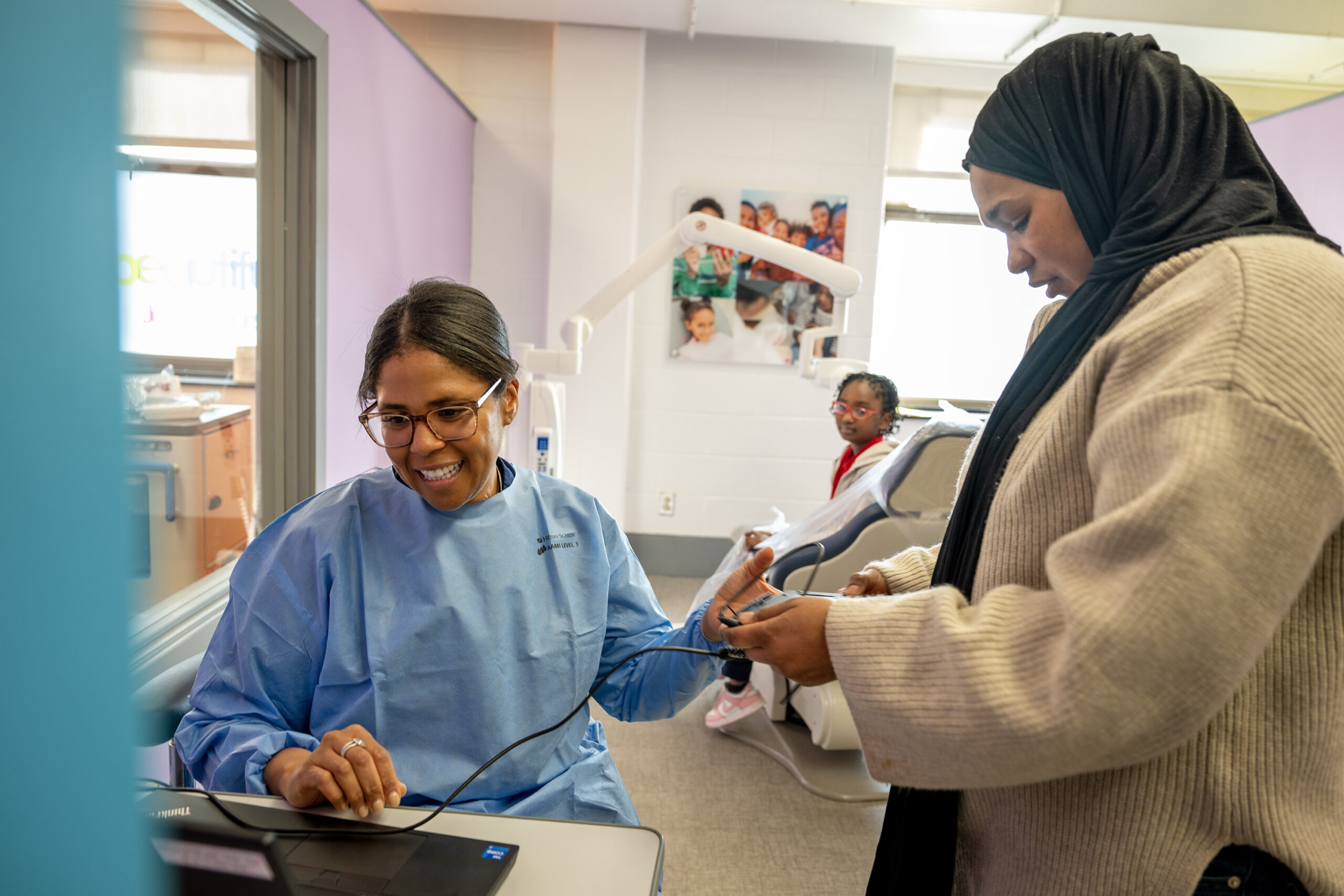
    Eileen K. Barfuss (left), a pediatric dentist and Temple dentistry instructor consults with Fily Dramera after her daughter Fatoumata Bathily (rear), 9, was seen by a Temple student dentist at the Dental Clinic at William D. Kelley public school on Thursday.

    “It’s good here,” said Fatoumata, who attends nearby Robert Morris Elementary, and came for preventive care along with her brother, Abubakr. “This is a good dentist. I like that it’s colorful, and the people are nice.”

    Amid Ismail has wanted to bring such a model to the city since he became dean of Temple’s dental school in 2008. Decades ago, some schools offered dental care via city services, but as funding dried up, those clinics went away, Ismail said.

    Ismail raised the idea of a Temple-district partnership, but it took several years to get off the ground. Edwards, an award-winning principal who takes pride in bringing the community into Kelley, got the vision intuitively, he said.

    Temple paid to transform a large science lab into the dental clinic; the district provides the space and does not charge rent. There are four chairs, including one in a space specifically designed for patients with autism who might need a quieter environment and more room. Rooms are bright and modern.

    “The message to the parents and caregivers is that this is a nice place where all treatment is provided,” Ismail said. “A lot of children do have dental problems, but here we can treat them easily — they miss one class, max, and they don’t have to stay a long time.”

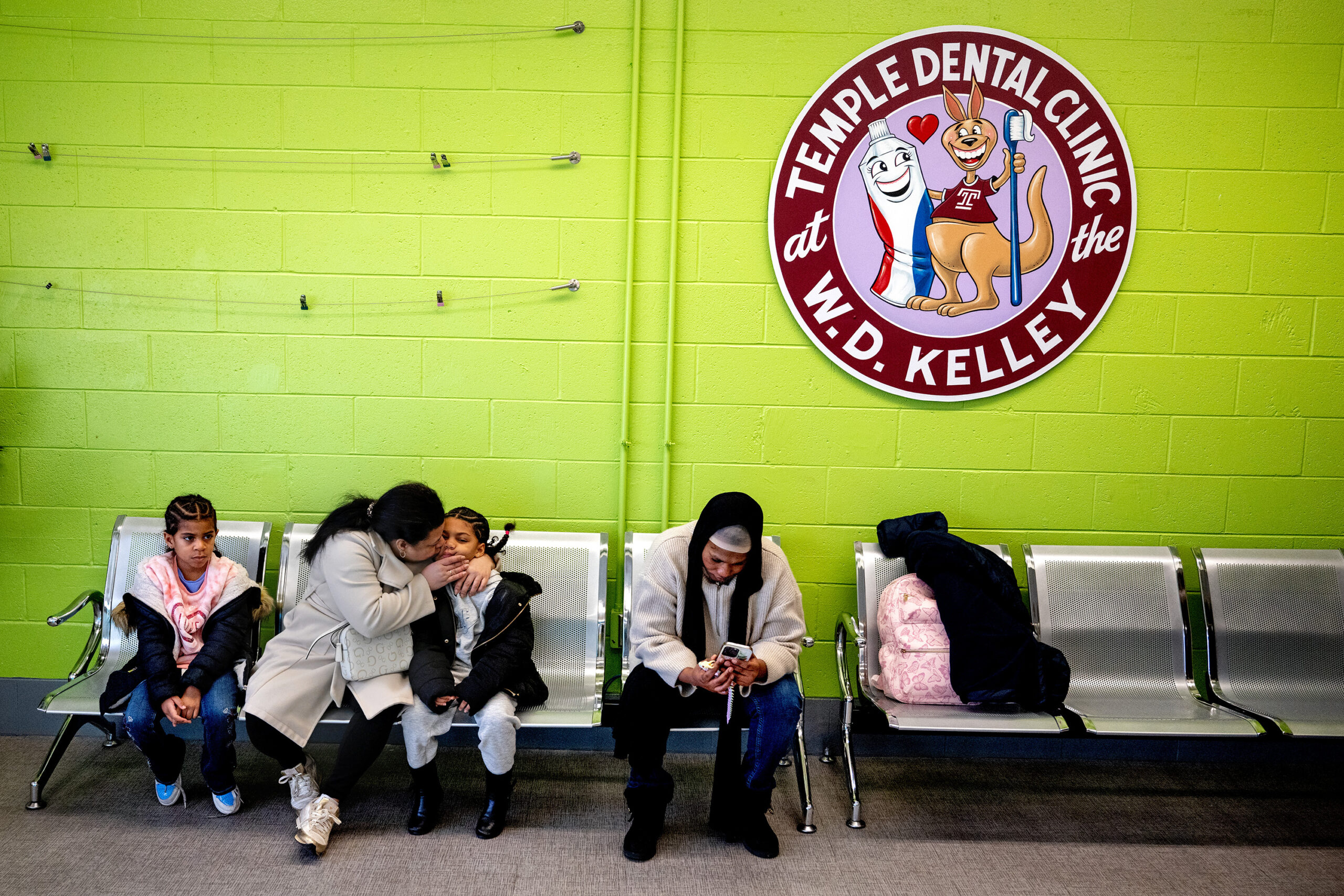
    Soribel Acosta waits for their appointment with her children, Sayra Jimenez (left), 7; and Andrea Jimenez (right), 6, at the Dental Clinic at William D. Kelley public school on Thursday.

    The clinic, which is about to celebrate its third anniversary, just expanded its schedule — it’s open four days a week, and officials eventually hope it will be open five days.

    Edwards fought for the clinic to come to Kelley, and it’s been just the boon she had hoped, she said.

    “This is a historic community that was really devastated and hard hit by the crack and drug pandemic,” said Edwards. “The dental office has really given us leverage on how to serve the community better.”

  • Art makes this Chesco 15-year-old happy. So she launched a nonprofit to teach younger kids.

    Art makes this Chesco 15-year-old happy. So she launched a nonprofit to teach younger kids.

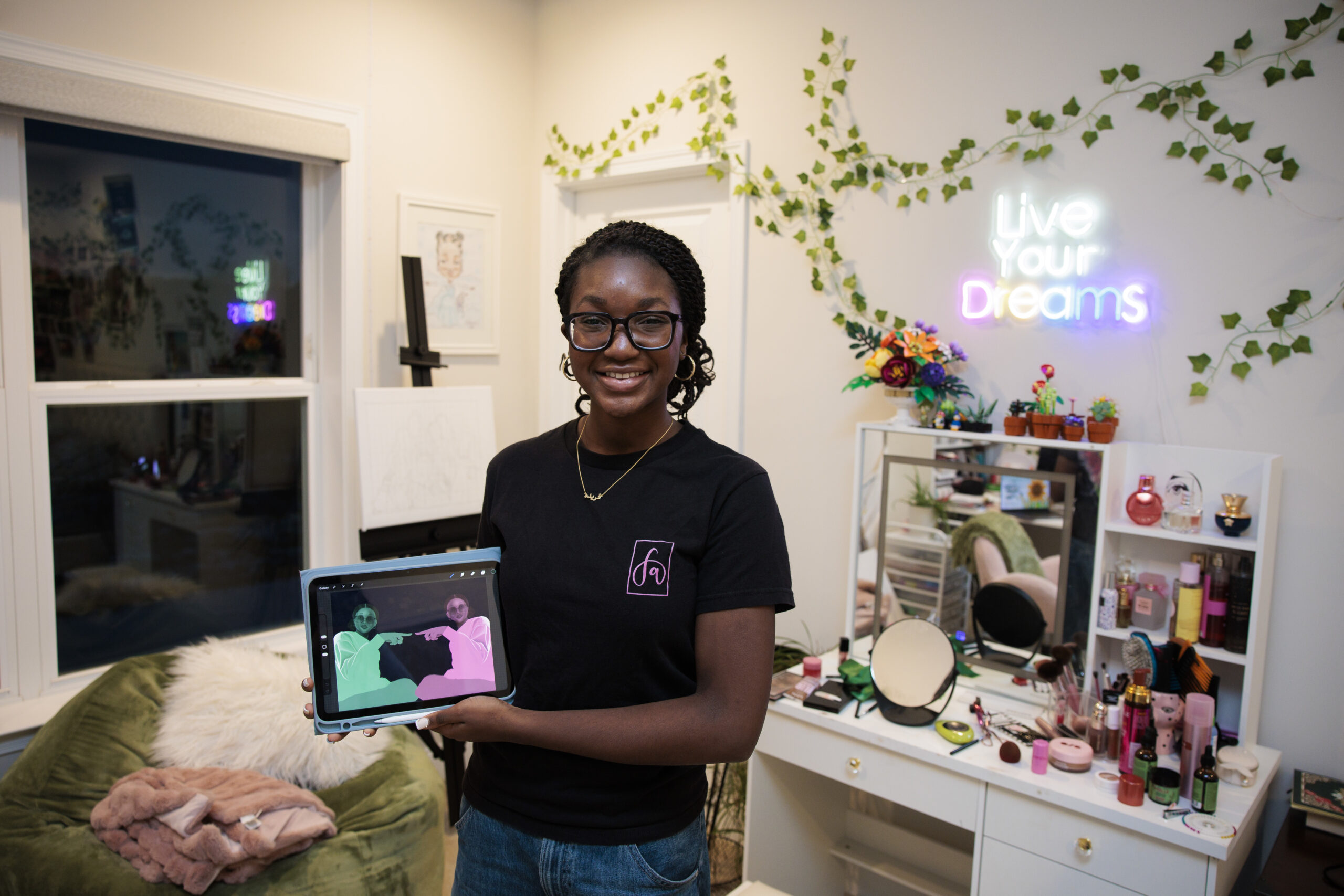
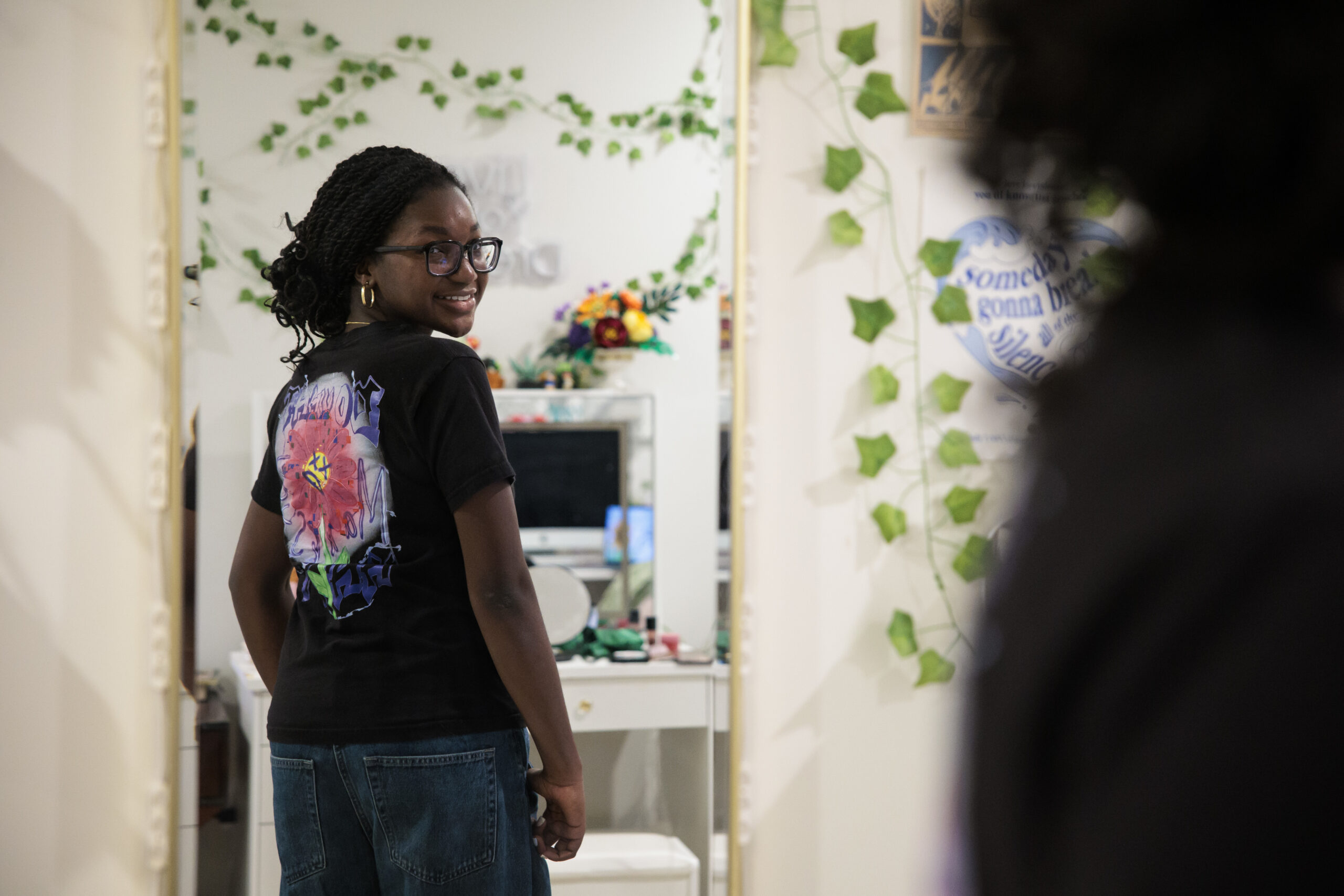
    Something about the phrase “Do what makes you happy” struck Faridah Ismaila. It became the title of, and inspiration behind, one of her art pieces. It’s printed onto the back of her T-shirt. It’s something the 15-year-old artist lives her life by.

    “When I do art, it’s because it makes me happy, and when I can give my art to other people or spread the joy of art, it’s making them happy,” she said.

    Following that guiding light of happiness, Ismaila, a digital artist and a sophomore at Great Valley High School, recently launched her nonprofit, A Paint-full of Promise, which offers free monthly art classes for kids in her school district in kindergarten through grade six.

    Working with educators in the district, Ismaila devises themed art projects and provides supplies and classroom time to teach young artists how to express themselves. The first club is slated for mid-January, with a winter wonderland theme. Children will make snowflakes and paint winter-themed coasters.

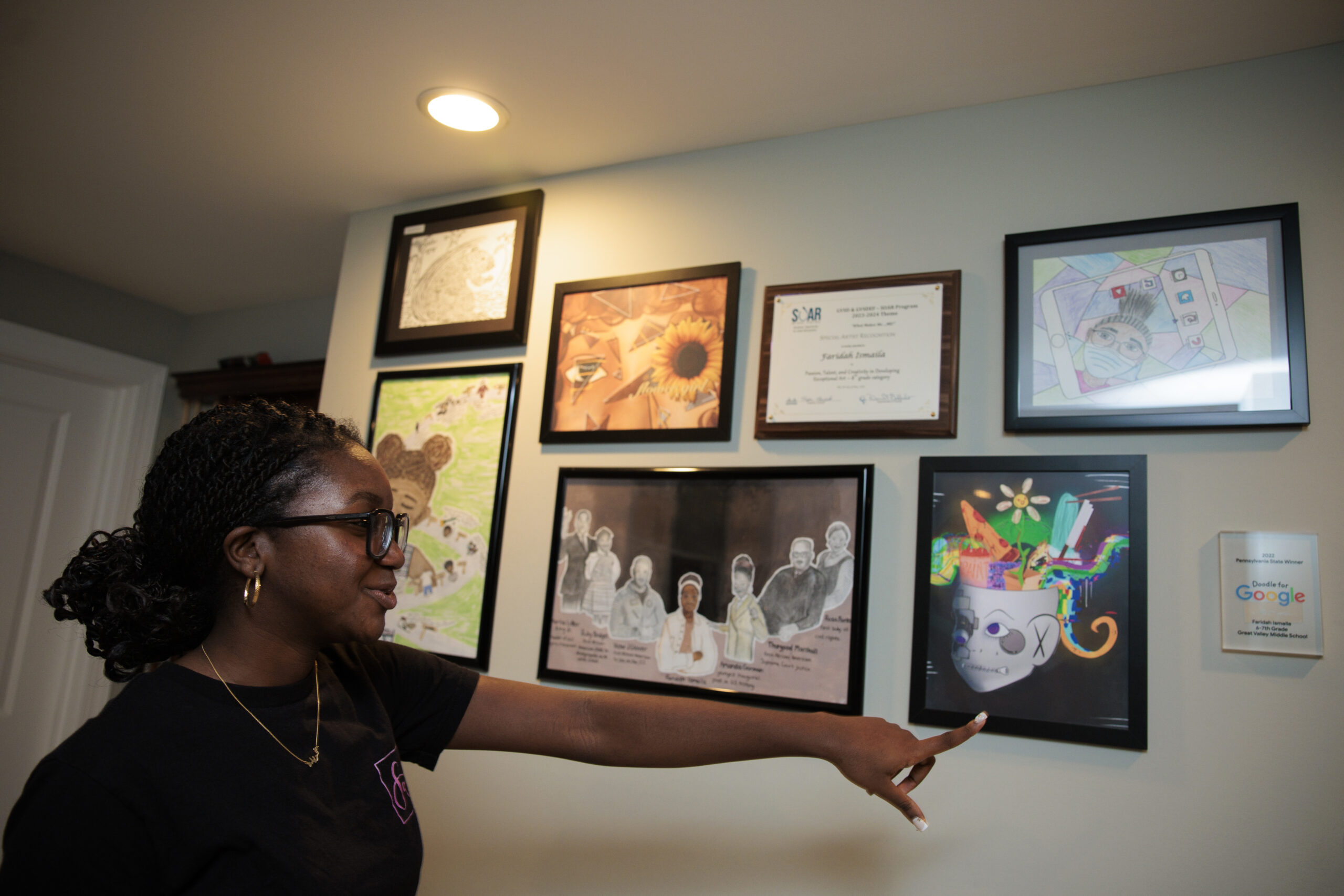
    Ismaila has been recognized for her art nationally: She was the state winner and a national finalist in the 2022 Doodle for Google competition, where young artists compete for their work to be featured as the Google homepage design. That recognition helped give her the confidence to pursue big dreams, like her nonprofit and club.

    “It makes me feel I can still do this. Because sometimes I’ll doubt myself. … I can’t be having all these big dreams,” she said. “But if people want to vote for me and I am recognized nationally, I feel on top of the world. I can do anything.”

    The first brushes of the nonprofit — which she hopes one day will grow to multiple sessions a month — started years ago, when Ismaila began making YouTube videos, teaching the fundamentals of art. She showed viewers how to make a gradient, how to depict a sunrise. She circulated the videos around her Malvern neighborhood, and she thought: Why not hold a class for younger kids?

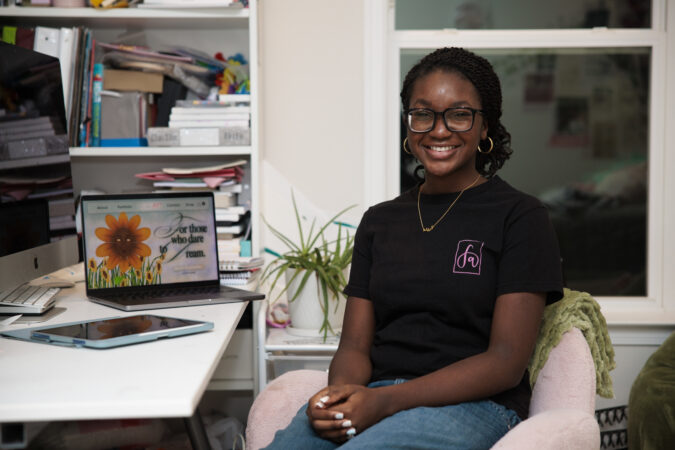
    Faridah Ismaila, 15, poses for a portrait at her home on Wednesday, Dec. 17, 2025, in Malvern. Ismaila started a kids art nonprofit called A Paint-full of Promise. She also sells her art online.

    Over a summer, in her garage, she set up two art projects — painting and colored pencils — and led about eight kids through a lesson. She called it Faridah’s Art Crafty Corner.

    Holding the class made her happy. So she did it again, but bigger, turning it into a summer camp, under the new name: A Paint-full of Promise.

    “Then I decided, why not actually make this a club, so not only my community can get this, my entire district can?” she said.

    And now, the teenager has a nonprofit under her belt. She officially launched the organization last month at an event in Malvern, where she raised money by auctioning off prints of her work and selling T-shirts with her designs.

    Anne Dale, an art teacher at Great Valley High School who is an adviser for the club, said she was impressed with Ismaila’s ability to get other high school students involved in running the club.

    “A lot of students have big ideas for clubs, but there’s not always follow-through. With her, it’s definitely different, and I knew that when she approached me with it,” Dale said.

    Giving kids the tools and opportunity to create artwork was essential to Ismaila, who gravitates to art to process her emotions.

    “It’s just the best thing ever,” she said. “Once you start doing art as a kid, it’s just a great way to get your feelings out there and express yourself, even if you can’t use words to describe it.”

    One of her pieces, Beauty Within, depicts a skeletal hand holding a white mask, a tear running down its cheek. Behind the mask, flowers bloom. It came from a feeling of constantly analyzing herself, the feeling that what you show people is not necessarily what’s on the inside.

    Another piece, made when she was “seriously sleep-deprived,” shows a face with an assortment of pixels, pizza, stick figures, and paint pouring out.

    Faridah Ismaila, 15, talks about some of her early works at her home on Wednesday, Dec. 17, 2025, in Malvern. Ismaila started a kids art nonprofit called A Paint-full of Promise. She also sells her art online.

    A piece she is working on now shows herself, in vibrant colors, pointing to her reflection. She wanted to capture the feeling of two versions of the self — one confident, the other fragile.

    Sometimes, her mother Nofisat Ismaila said, her parents feel as if they are holding her back.

    “I don’t know how I’m gonna keep keeping up with this girl, because she’s just taking us to places, keeping us busy, keeping us on our toes,” she said. “She’s turning out to be a really young, determined adult.”

    Faridah Ismaila, 15, poses for a portrait at her home on Wednesday, Dec. 17, 2025, in Malvern. Ismaila started a kids art nonprofit called A Paint-full of Promise. She also sells her art online.

    But to Faridah Ismaila, it’s about finding happiness, and giving it to others, too.

    “I really hope the kids just do what makes them happy. … It’s also just not being afraid to get out there, because when I was a kid-kid, I wasn’t afraid of anything,” she said. “I think middle school really kicks some kids in the butt, and getting up out of that — at least for me, art was a way to do that. I just want to give that to kids.”

    This suburban content is produced with support from the Leslie Miller and Richard Worley Foundation and The Lenfest Institute for Journalism. Editorial content is created independently of the project donors. Gifts to support The Inquirer’s high-impact journalism can be made at inquirer.com/donate. A list of Lenfest Institute donors can be found at lenfestinstitute.org/supporters.

  • Pancreatic cancer is among the deadliest cancers. A new drug being tested at Penn is giving patients and doctors hope.

    Pancreatic cancer is among the deadliest cancers. A new drug being tested at Penn is giving patients and doctors hope.

    Irene Blair was expected to have another six to eight months to live in June, after her pancreatic cancer rapidly advanced to stage 4 less than a year after her initial diagnosis.

    A new drug being tested in clinical trials around the world, including at Penn Medicine’s Abramson Cancer Center, was the 59-year-old grandmother from Newark, Del.’s best hope for more time.

    The drug belongs to a class of pharmaceuticals long considered the holy grail of cancer research. It is a KRAS inhibitor, capable of blocking a protein that fuels an especially deadly cancer. Only 13% of pancreatic cancer patients are still alive five years after their diagnosis, the highest mortality rate of all cancers.

    Called daraxonrasib, the drug is not considered a cure. But the results emerging from clinical trials point to the first major advancement in decades for a devastating cancer usually caught in late stages. Former Nebraska Sen. Ben Sasse last week disclosed in a blunt social media post that he was recently diagnosed with metastasized, stage-four pancreatic cancer and is “gonna die.”

    In recent months, the federal government has sped up the review timeline for the drug made by California-based company Revolution Medicines, Inc., based on early clinical trial results.

    Across 38 patients in a phase 1 trial, the drug appeared to double the survival time for at least half of patients compared to standard chemotherapy, from roughly seven months to 15.6 months.

    “In pancreatic cancer, for too long, we haven’t had effective therapies beyond just chemotherapy,” said Mark O’Hara, Blair’s oncologist who leads multiple clinical trials testing KRAS inhibitors at Penn.

    Blair started the therapy through a phase 3 trial in July. Within three weeks, her cancer-associated pain went away.

    In October, her tumors looked stable or decreasing on scans. Her most recent December scan showed her cancer had not progressed.

    Aside from occasional facial rashes, she feels normal. It’s a big improvement from how she felt previously on chemotherapy, which caused her to lose 35 pounds and become so weak she couldn’t walk.

    The question now is how long the therapy can remain effective. Blair seeks extra time to “start living life.”

    She officially retired from her job in real estate in May and wants to travel, with trips planned to see family in California and Florida.

    Holidays have been especially hard for her.

    “You just wonder, ‘Will I be here next year?’” she said.

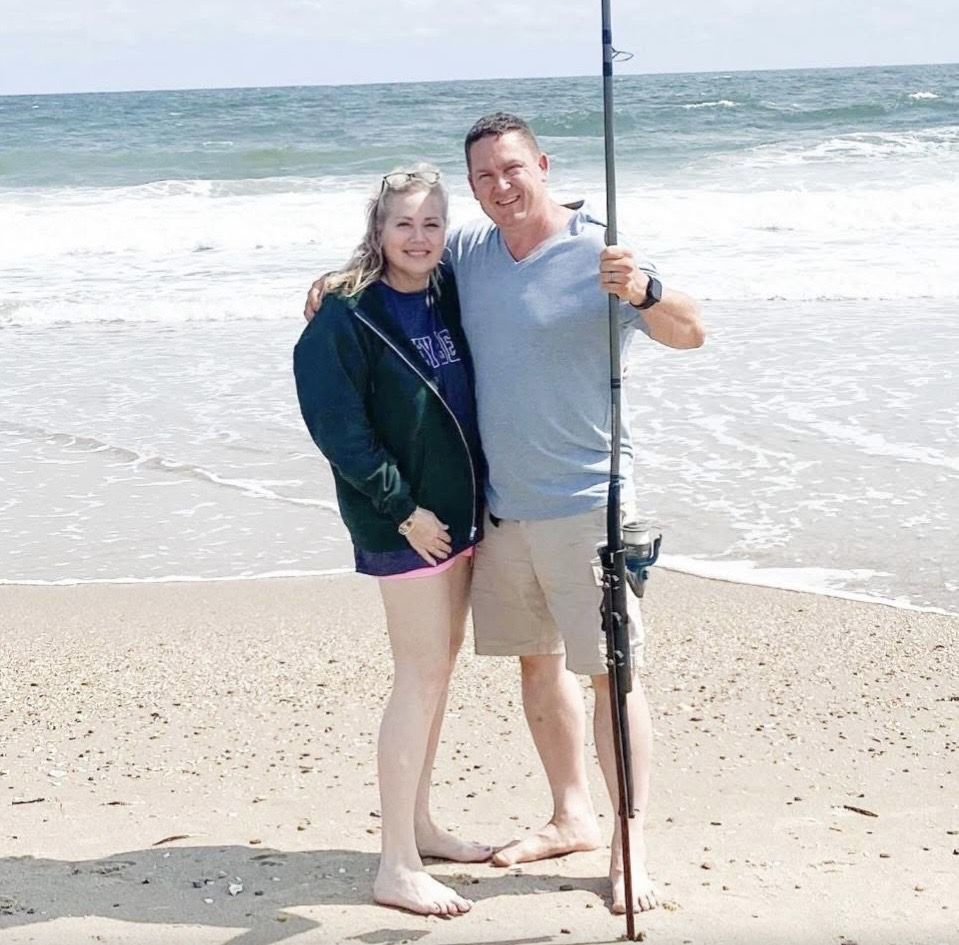
    Irene Blair and her husband, Charles, at a beach in Delaware.

    How does the therapy work?

    Cancer researchers have worked to design a drug targeting KRAS, a protein that acts like a “gas pedal” for cancer growth when mutated, since its discovery in 1982.

    The mutant protein is like a pedal stuck in the down position, driving uncontrolled proliferation — which tumors thrive on. These mutations are found in a quarter of human cancers, mostly aggressive cancers of the pancreas, lung, and colon.

    Scientists finally succeeded in 2021, when the first drugs capable of blocking KRAS were approved by the FDA for lung cancer. Dozens of KRAS inhibitors are now in various stages of development.

    Daraxonrasib is one of the first tested for pancreatic cancer, a tumor type where nearly 90% of cases have these mutations. Also called a ‘pan-RAS inhibitor,’ it not only targets KRAS, but two other related proteins that drive cancer when mutated, HRAS and NRAS.

    More than 90% of the 83 patients in a phase 1 trial saw their pancreatic cancer stall during treatment, and roughly 30% saw shrinkage.

    While taking the drug, at least half of patients gained more than eight months before the cancer started progressing again.

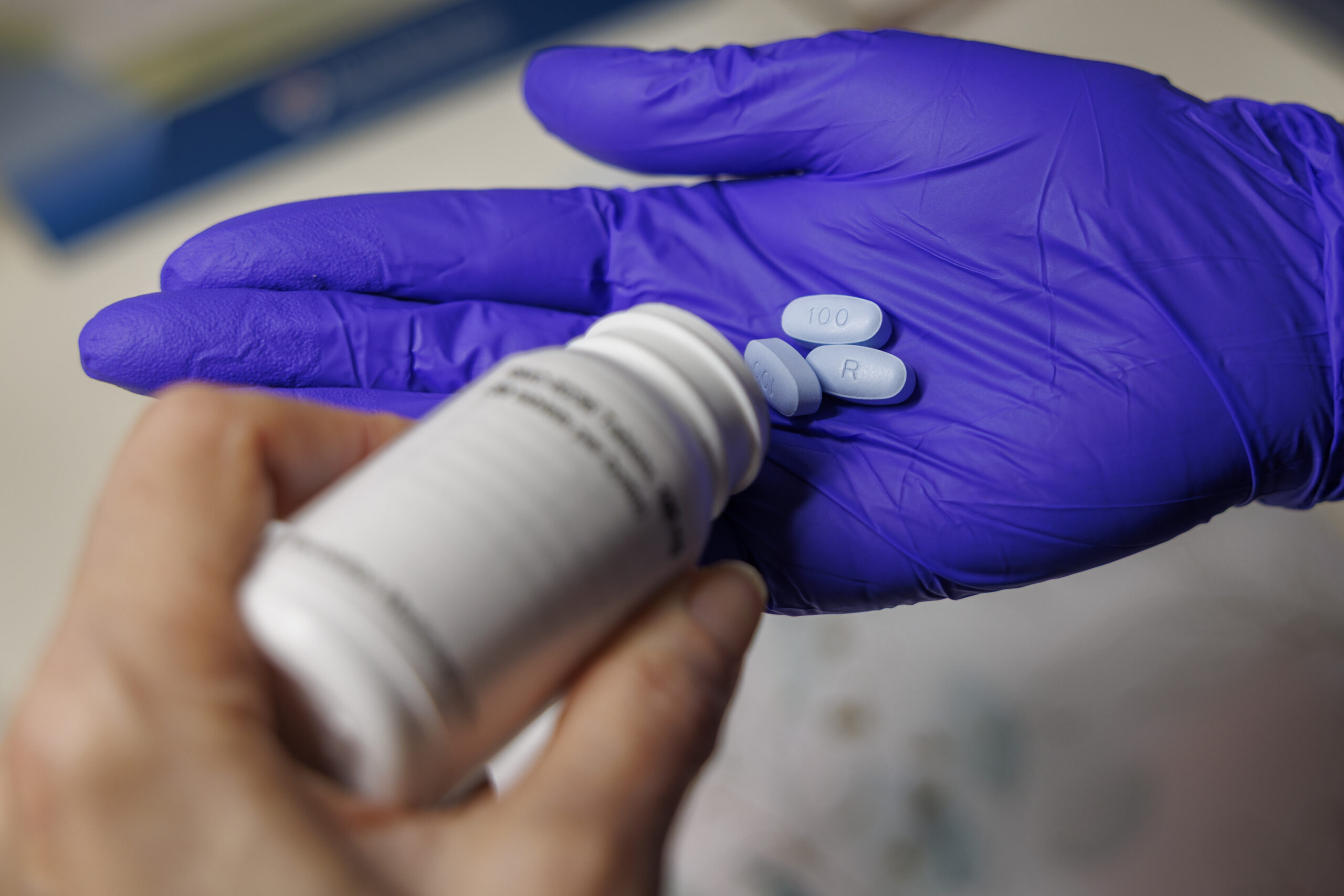
    The drug comes in pill form.

    The drug comes in the form of three pills, taken daily at home.

    The most prevalent side effect is a rash — 91% of patients in a phase 1 trial experienced this symptom, with 8% having severe cases. It often shows up on the face or scalp and is similar to acne, O’Hara said.

    Diarrhea, nausea, vomiting, and mouth sores are other common symptoms.

    O’Hara said these are manageable with medications for most patients and still allow them to have a better quality of life than chemotherapy.

    “I want to be able to give KRAS inhibitors to all my patients right now,” he said.

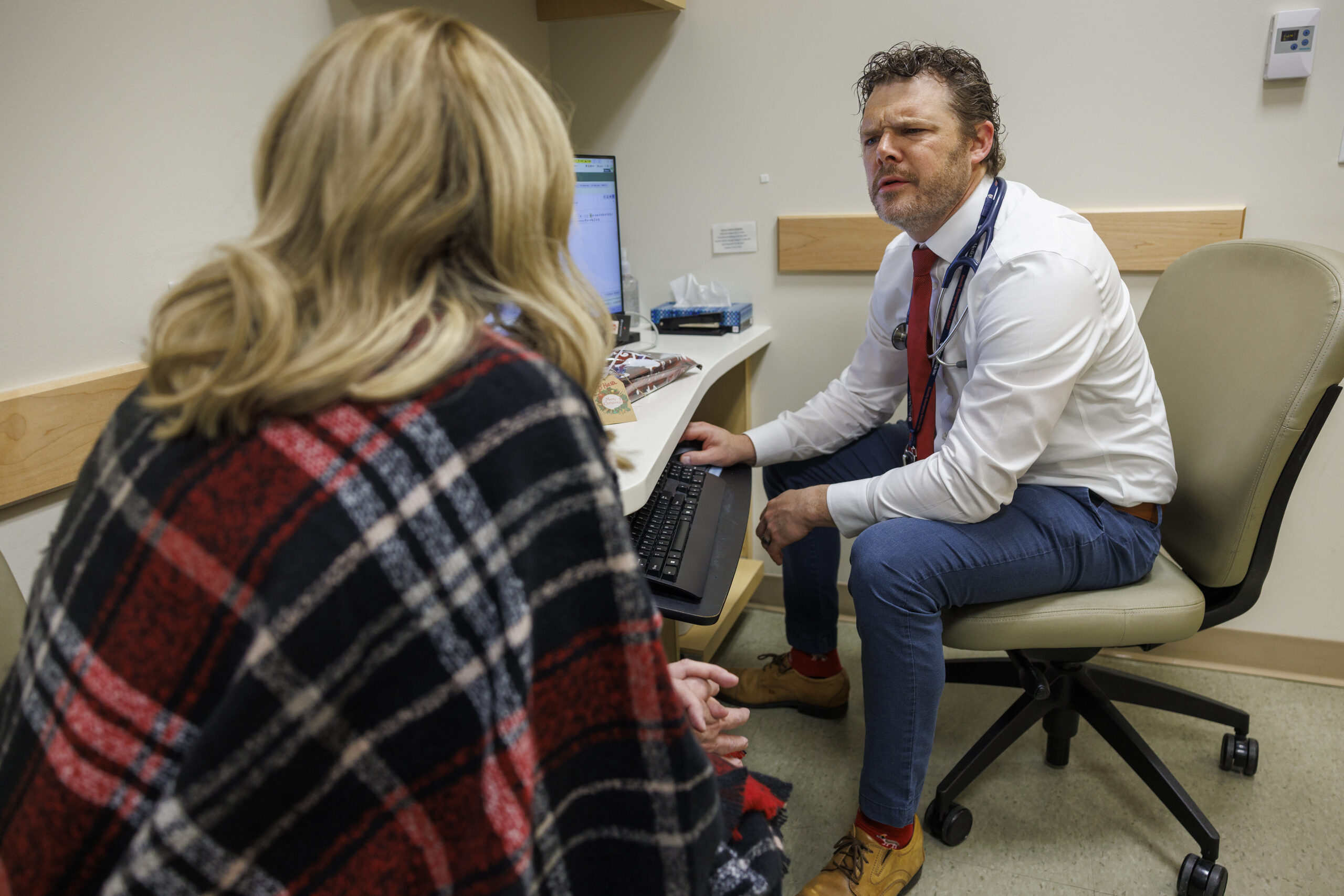
    Irene Blair of Newark, Del., meets with her doctor, Mark O’Hara, at her December appointment.

    Looking forward

    O’Hara runs multiple trials of KRAS inhibitors at Penn.

    Some of them are testing the inhibitor as a treatment for patients with metastatic cancer after other options have stopped working. Another is evaluating its use in combination with chemotherapy as an initial approach.

    “I’m looking for more tools to put in that toolbox, and I think this provides a new tool,” O’Hara said.

    Ben Stanger, a gastroenterologist and scientist at Penn, has led experiments in mice that showed combining a KRAS inhibitor with immunotherapy may be more effective than using the former alone.

    If this approach makes it into clinical trials as well, it could still take years to evaluate the safety and efficacy of the combination.

    He believes KRAS inhibitors could be “a game-changer” for pancreatic cancer if approved, particularly if paired with other anti-cancer drugs.

    “Goal number one would be to make pancreas cancer, instead of a death sentence, into a more ‘chronic’ disease that is treated over time,” he said.

    The federal government has granted the drug Breakthrough Therapy and Orphan Drug designations.

    In October, the drug was also one of the first selected for a new program that aims to accelerate review times for drugs from one year to as short as a month, potentially putting it on a faster path to approval.

    Daraxonrasib, also known as RMC-6236, earned Breakthrough Therapy and Orphan Drug designations in 2025.

    Limited options

    When Blair first started having back pain around May 2024, she thought it was a pulled muscle from kickboxing.

    She put a heating pad on the back of her chair and went on with life.

    After her father had a stroke that July, she got it checked out at the hospital where he was admitted.

    A day later, she was diagnosed with stage 2B pancreatic cancer.

    “My first thought is, ‘I’m dying,’” she said.

    Had she been diagnosed earlier, she would have retired early, instead of worrying about saving money.

    Instead, she spent her final working year undergoing surgery to remove part of her pancreas, spleen, and several lymph nodes, followed by 12 difficult sessions of chemotherapy.

    When she finished her last session in March, Blair’s scans showed no evidence of the cancer. But by late April, her back pain returned.

    Two months later, more scans showed that the cancer was now considered stage 4, as it had metastasized to her liver, forming 10 to 15 new tumors.

    Her best option was to enter a clinical trial of daraxonrasib at Penn.

    Much to her relief, she was chosen to receive the drug in July upon enrolling in a study in which half of patients are randomized to receive chemotherapy.

    “It’s enabled me to start living again,” she said, but knows eventually the therapy will likely stop working.

    In that case, doctors may try the standard chemotherapy — which usually works for three to four months — or test a different therapy based on her cancer’s genomic profile, O’Hara said.

    For now, she described herself as “living scan to scan,” seeking as much time as possible with her son, grandchildren, and husband.

    Irene Blair and her husband Charles, son Tom, daughter-in-law Kelsey, and two of her three grandchildren, Aidan and Madilynn.

    Blair’s next evaluation is in February. She hopes it shows her disease remains stable, and she can stay in the trial.

    “The alternative, honestly, is death,” she said.

  • Forty years after a brain injury changed this veteran’s life, a Jefferson program helped him rebuild

    Forty years after a brain injury changed this veteran’s life, a Jefferson program helped him rebuild

    When Scott Edgell was discharged from the military after a service-related head injury at age 20, he thought he would resume life as normal.

    But over the next four decades, the Lancaster County man was troubled by frequent migraines, memory problems, dizziness, irritability, and balance issues. Even everyday activities, like grocery shopping or eating at a restaurant, became overwhelming.

    “I didn’t understand what was happening to my body,” said Edgell, who is now 57.

    He realized the head injury he suffered while serving in the military was to blame after watching the 2015 movie Concussion, but struggled to find doctors who knew how to help him.

    Just as he started to lose hope in late 2023, he learned about a Jefferson Health program in Willow Grove for veterans and first responders with traumatic brain injuries (TBIs). The clinic provides physical and cognitive rehabilitation to participants over a three-week intensive outpatient program.

    Edgell is among the estimated one in four veterans who have had a TBI. More than half a million U.S. military members have been diagnosed with the injury since 2000, according to the Department of Defense.

    Many suffer TBIs as a result of combat-related incidents, exposure to blasts during explosions, training accidents, and vehicle crashes.

    While some patients can recover completely, up to 30% of those with mild TBIs, also commonly called concussions — which account for the vast majority of TBI cases — experience long-term symptoms.

    The lasting effects of TBIs are often overlooked among veterans because of the injury’s invisibility. Yet they can be life-altering, affecting employment, personal relationships, and overall quality of life.

    Veterans with a TBI had suicide rates 55% higher than veterans without the injury, one study found.

    Jefferson’s program, called the MossRehab Institute for Brain Health, was founded in 2022 and has treated roughly 100 patients. It runs on donations — the biggest being from the veterans’ wellness nonprofit Avalon Action Alliance, which has provided $1.25 million annually.

    Donations allow them to offer the program at no out-of-pocket cost to veterans and first responders, and cover housing, transportation, and meals during the three weeks.

    “I walked in those doors at the lowest part of my life,” said Edgell, who participated in June 2024.

    Though there’s no cure for his injury, the program has helped him rebuild his life.

    “All you can do is learn to manage your symptoms,” he said.

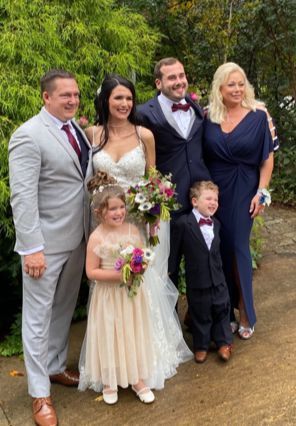
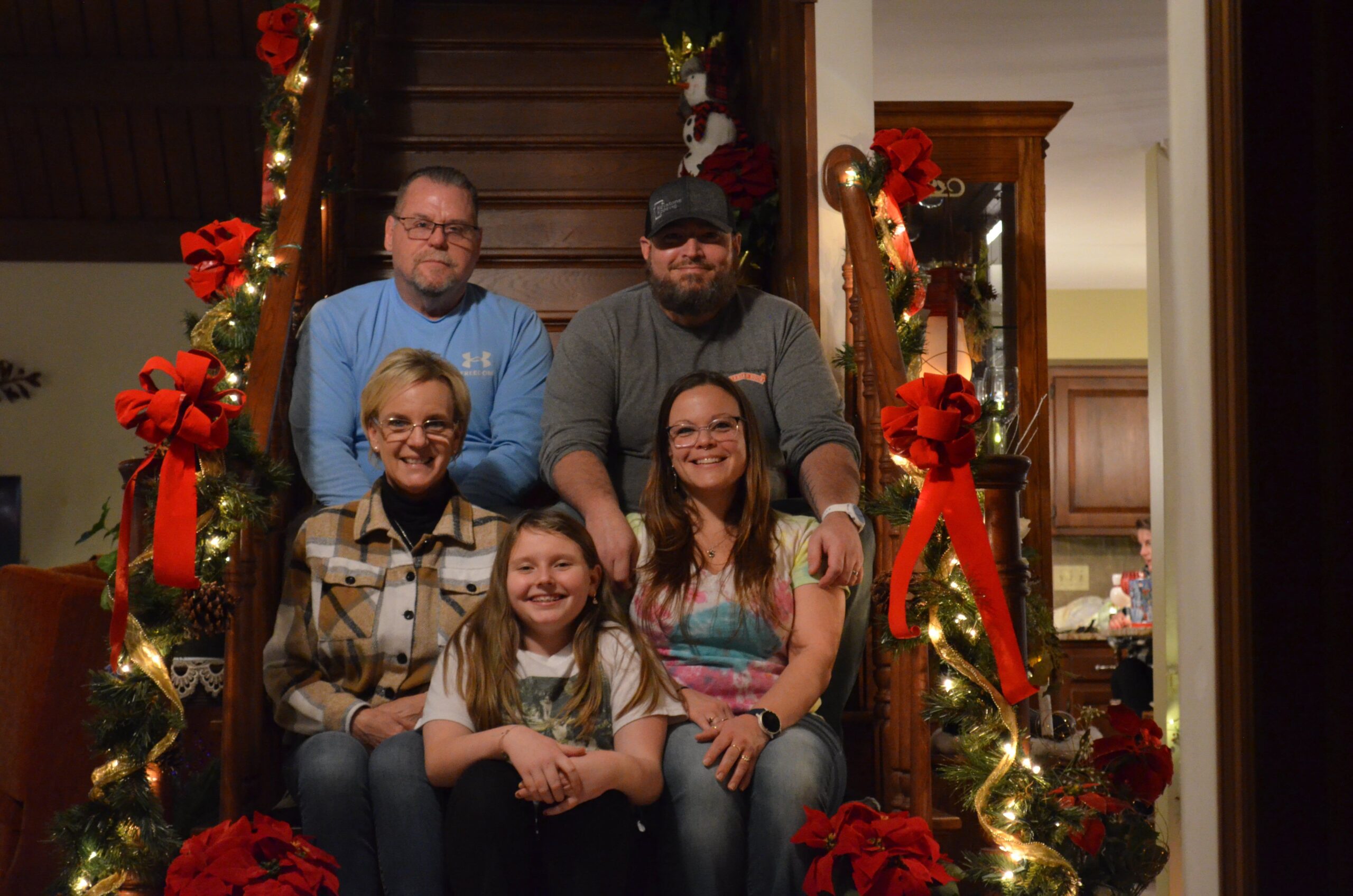
    Edgell and his family, including his wife Tami, stepdaughter Monica Bressler, son-in-law Kenny Bressler, and granddaughter Hayvin.

    The program

    Edgell entered the MossRehab program in June 2024 as part of a cohort of four.

    The first step in his rehab was learning about what was happening to his brain.

    His accident occurred back in 1989, when a steel hatch swung shut and hit him in the back of the head during a training exercise at Fort Riley, Kan.

    Doctors at the time provided memory exercises, mental health support, and physical rehabilitation to improve his gait, but nothing brought him back to baseline.

    Edgell managed to push through his memory problems in college by putting in extra effort into studying, and ultimately became an electronics engineer.

    However, it became harder to cope with the symptoms as he got older.

    Even brief outings would exhaust him to the point of needing days to recover.

    When his wife, Tami, would ask what she could do to help him, he wouldn’t know what to say.

    One therapist at the program offered him a helpful analogy: If a normal brain is like a six-burner stove, then having a brain injury is like being down to only three burners.

    “You’re trying to do everything with two or three burners that you would normally do with six, and your brain just becomes very fatigued and overwhelmed,” Edgell said.

    The program teaches participants to adapt to their brain’s new way of functioning, whether through physical rehabilitation for symptoms such as dizziness, or cognitive rehabilitation to address issues affecting attention, concentration, memory, and mood.

    “We’re basically retraining the brain to do something that it’s having difficulty doing because of an injury,” said Yevgeniya Sergeyenko, a physical medicine & rehabilitation physician and clinical director of the program.

    Since treatment for TBIs revolves around managing the symptoms — which can vary widely between patients — the program has staff across an array of specialties that patients see throughout their three-week stay.

    One provider helped Edgell, who was struggling to get more than a few hours of sleep a night, find medication to help him sleep.

    A physical therapist, meanwhile, assisted with his balance and core structure, so he could walk and move around more easily.

    Others taught Edgell exercises to improve his dexterity, speech, and memory.

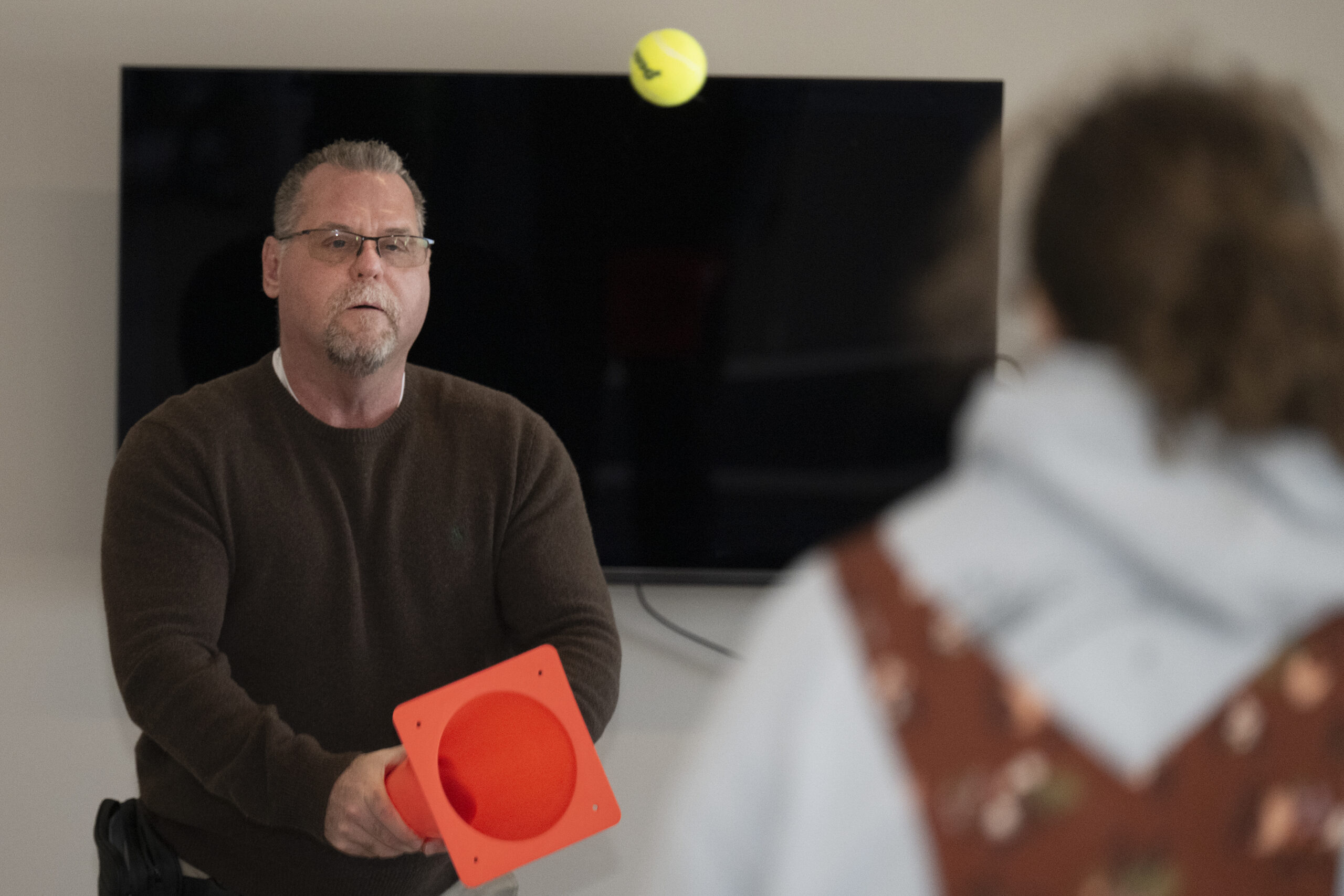
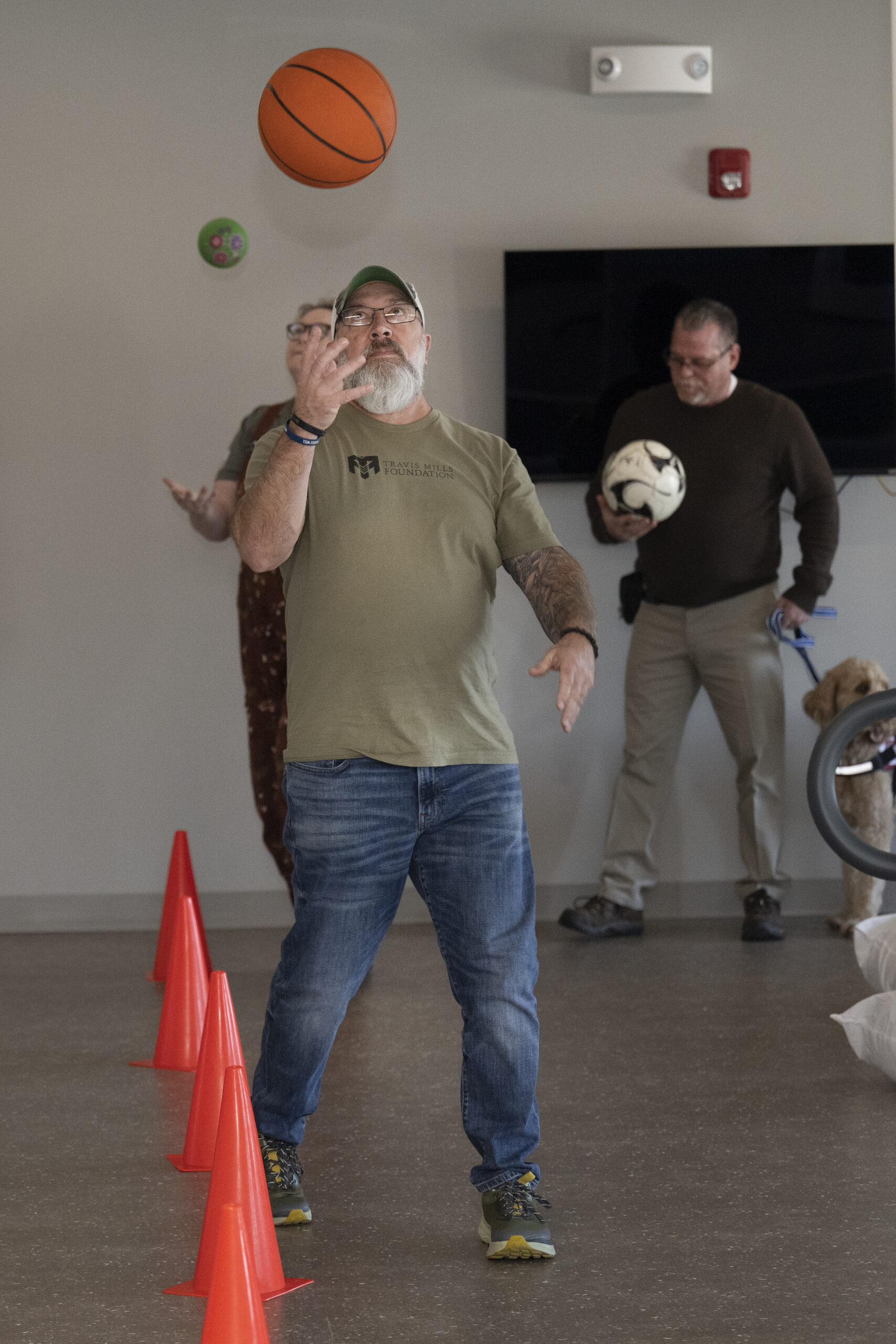
    Army veteran Scott Edgell participates in a cohort session at the MossRehab Institute for Brain Health.

    Some forms of therapy were less conventional.

    There was horticultural therapy — a therapy that involves working with plants — which Sergeyenko said has been shown to lower blood pressure and is intended to help with emotional regulation.

    Patients also did yoga and other mindfulness and movement activities intended to calm the nervous system.

    Edgell said yoga wasn’t his favorite, but he found art therapy helped him communicate more openly.

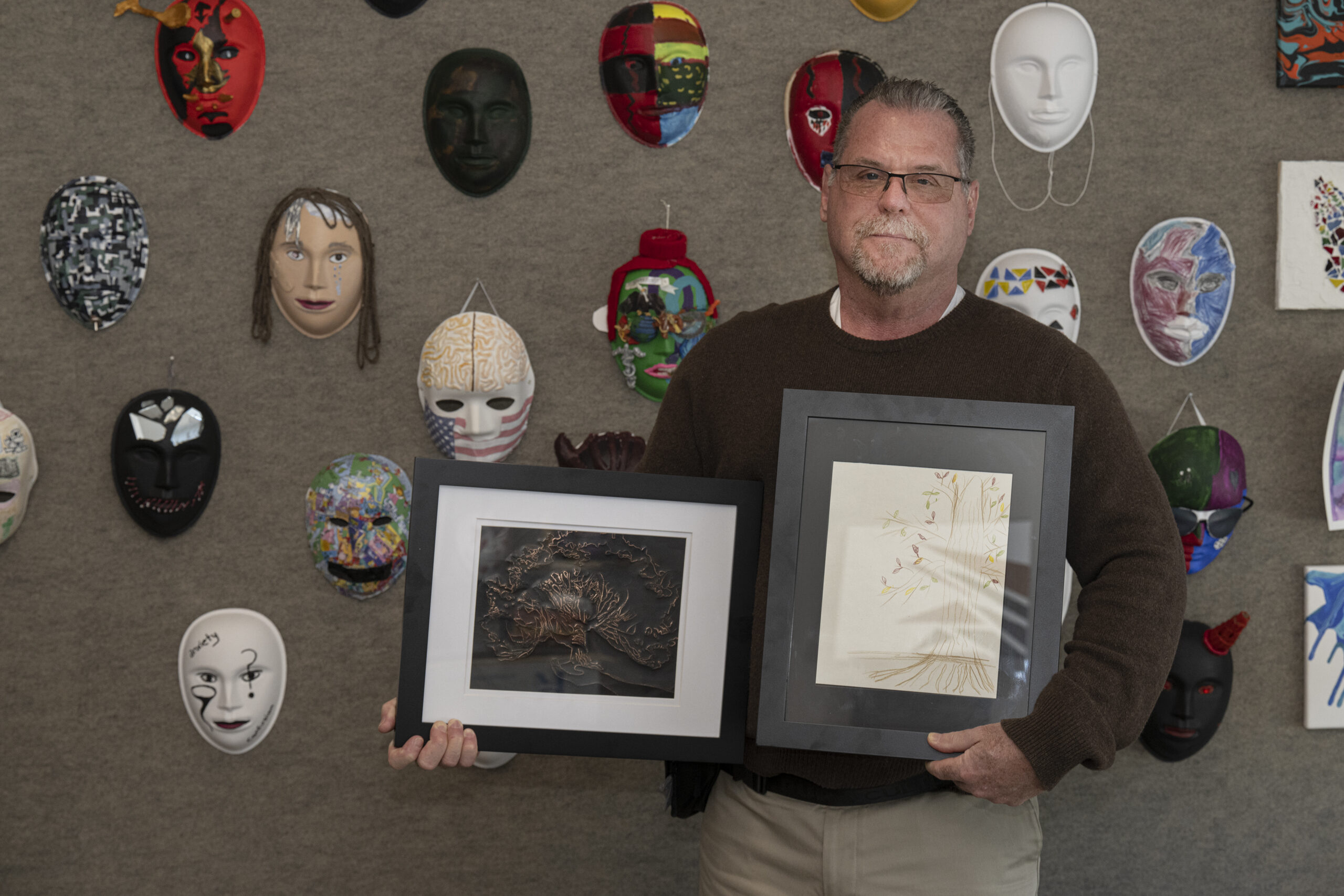
    One of the exercises at the start of the program asked him to draw a tree. He drew one that “was not doing very well,” he said.

    At the end of the three weeks, he drew a lush version full of leaves. The framed drawing now hangs in his dining room.

    “I look at that everyday to see where I came from,” he said.

    Army veteran Scott Edgell shows drawings of trees representing himself during a cohort session at the MossRehab Institute for Brain Health.

    Outcomes

    Program organizers say returning to a pre-injury baseline is not always a realistic goal.

    “There’s not a medicine that you can give that’s going to make all of your brain injury symptoms subside,” said Kate O’Rourke, the program director at the clinic.

    The program aims to improve function and quality of life.

    As of September, the last time outcome statistics were compiled, 82 patients had gone through the three-week intensive. Sixty-five percent saw significant reduction in their symptoms, as measured by their Neurobehavioral Symptom Inventory scores — which assesses a patient’s severity of neurobehavioral symptoms from 0 to 88. The average reduction was 13.26 points.

    Ninety-nine percent of patients reported that they personally felt they improved after the program.

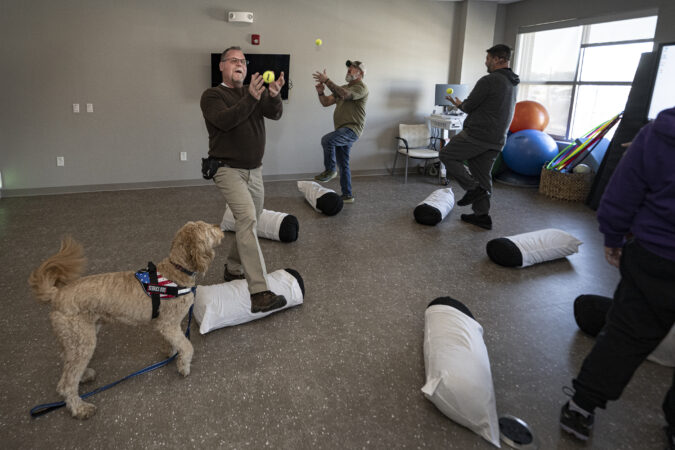
    Current patients (Jeff Todd Malloch and Jessica Mack) and Army veteran Scott Edgell participate in a cohort session with his therapy dog, Lars, at the MossRehab Institute for Brain Health.

    Edgell regularly reaches out to staff for advice, and meets with the program’s alumni in monthly conference calls.

    He still has bad days sometimes, but he’s able to manage them better.

    Before, when he would go to a grocery store or restaurant, he would become overwhelmed by the noise, lights, and commotion.

    “I couldn’t catch my triggers before I fell off the cliff,” Edgell said.

    He was only able to leave the house four to five times a month.

    Working with a service dog at MossRehab inspired him to get one of his own.

    Now, when he starts to react, a golden doodle named Lars will nudge him, giving him a moment to let his brain calm down.

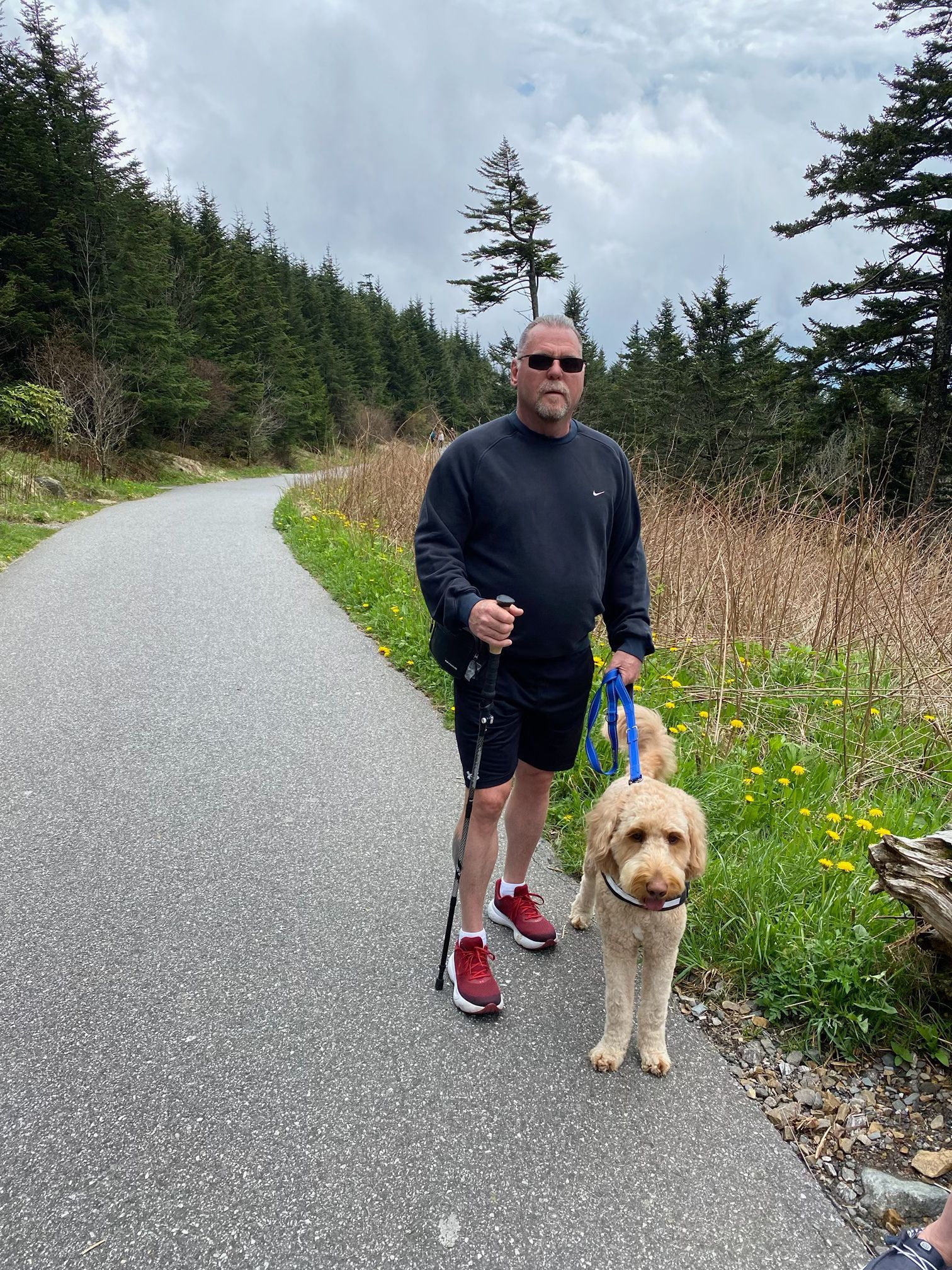
    Edgell and his service dog, a golden doodle named Lars.

    Today, he’s able to leave the house more frequently and for longer.

    He and his wife have reconnected with friends and engaged more in social activities.

    “I still get tired, I still need breaks, but my recovery time is a lot faster, and it’s not nearly as devastating,” Edgell said.

  • Catholic Charities’ Heather Huot on Building Stability Through Service

    Catholic Charities’ Heather Huot on Building Stability Through Service

    The legacy of Catholic Charities of Philadelphia originated in 1797 with the Catholic Church’s establishment of an orphanage during the yellow fever epidemic. This initial act of charity laid the foundation for a tradition of service that has persisted. Today, the nonprofit is an umbrella organization that offers a wide range of essential services to more than 300,000 people throughout the five-county region. “We’ve been here a long time,” Heather Huot, Catholic Charities’ secretary and executive vice president, said. “Over 200 years, but I don’t know that we’ve always done a really good job of talking about the good work that we do.” Its current mission includes providing family and senior services, foster care, adoption, and support for the homeless. Below, Huot discusses the charity’s values and what keeps her hopeful.

    How would you describe what Catholic Charities does and why it matters in Philadelphia?

    We provide food, housing, care for seniors, families, and individuals, and everything that we do is driven by faith in Jesus and rooted in the works of mercy to serve our neighbors with love and dignity. We really put the mission of the archdiocese into action every day. We provide vital support across not just Philadelphia County, but the surrounding counties as well.

    We divide our work into four pillars. We nourish the hungry and shelter the homeless. Just this past week, we had about 1,500 individuals experiencing homelessness come right through our parking lot here by the cathedral to get essentials for winter. And we also provide shelter and we stock pantries all across the region.

    The second thing that we do is we strengthen and support at-risk children and youth. We’re talking from the time they’re toddlers all the way up through young adulthood, really trying to touch people throughout that whole spectrum of their life. [We do] some residential care, some work with DHS [Department of Human Services], [and we’re] trying to teach trades and skills. [For our third pillar], we stabilize and enrich the lives of seniors in our communities. It’s really important to think about seniors who’ve given so much to our communities.

    Then the fourth pillar of our service is empowering individuals with intellectual and developmental disabilities. We provide residential care to about 400 individuals every day that are living with intellectual and developmental disabilities. So it’s a wide range of services across the five-county region.


    What led you to social work and how did that path bring you to Catholic Charities?

    It’s actually a little bit of a roundabout journey. I grew up with a sibling with special needs, so I always thought I was going to be a special education teacher. But in my senior year of college I did student teaching where you spend a full semester in the classroom, and I hated it. So I decided, since I wasn’t quite sure what my next step would be, rather than getting a job or going to grad school, I would take a year and dedicate it to service.

    I just happened to be placed at St. Francis Inn, a soup kitchen here in Kensington, and I spent a year living and working at the soup kitchen, where I just fell in love with working with folks who were coming in every day. At St. Francis, they really take on this notion of radical solidarity with the folks who are coming for food and compassion. And I was so moved by it. I knew I had to stay in that world. I decided to move into social services and I was very blessed to find my way to Catholic Charities at that point in my life. That was 26 years ago.

    The organization serves more than 300,000 people annually through more than 40 programs. What connects all of these programs together?

    It is really interesting because we are 40 programs but also over a hundred different [service] locations. Every program that we have, no matter where it is in the five-county region, we’re living out that call to care for our neighbors. It’s driven by love.

    Our mission is person-centered, focused on wanting the best for every person we encounter. And you’re going to find that no matter what kind of program you step into, that’s the heart of what we do. It may be handing out meals, it may be caring for someone who’s aging, but that’s the foundation.

    I think the second thing that kind of unites all of our programs together is we’re also a place where the community can engage in works of charity and service. So it’s not just about our staff and my colleagues doing this work; we are a place for people to join us in that work.

    How does your clinical training in social work inform the way you approach leadership at Catholic Charities?

    Social work is a very humbling position; it’s not a position that you go into thinking you have all the answers for everyone’s problems. It’s really about meeting people where they are and walking alongside them. It’s about attentive listening and knowing that you are not the smartest person who’s going to wave the magic wand and make things better.

    And I think I’ve really brought that into my role now as executive vice president. We need to be a collective in how we solve problems. We need to ask, how do we bring in people that believe in our mission to help us solve this problem? Because we don’t necessarily have all the resources that the community’s going to need; we’ve got to be creative and find those who want to partner with us.

    How does Catholic Charities approach long-term issues like housing? How do you build that into programs?

    At the St. Francis Inn, we would see the same people every day and their lives weren’t changing. I loved [doing the work], but I also felt very frustrated. I would always ask myself the question, “Well, how’s this going to get better for them?” So I’ve come to learn that a social service agency like ours can have programs that are meeting immediate needs, but we also need to balance that with programs that provide more long-term systemic change, like creating affordable housing. We train youth on carpentry skills, giving them a real trade so that they can go into the world in a different way than maybe their parents did.

    [And] I think when you think about stability, it’s really only possible when you have a reliable base of support and trusting relationships. So if we’re giving out food at Martha’s Choice Marketplace, it’s me also learning your name and why you are coming for food, and [asking if] there’s anything else that we can help you with or if there is anyone else I connect you with.

    We build affordable housing. That’s huge. It’s a solution in and of itself. However, there’s more to it than that, right? It’s about engaging with the residents once they’re there so they can actually maintain that stability. I was visiting Guiding Star Ministries, one of our ministries that supports expectant mothers. It’s a residence where they can live as they’re preparing for the birth of their child and then they can stay with us for up to a year once their child is born. So for someone who maybe does not have the best living situation, who becomes pregnant, it gives them a safe place to prepare and then have their child.

    I asked the staff, what’s the key to a mom doing well once they leave? And they said, [it’s] always [having] someone to call when something goes wrong later.

    I think the other part that’s really important for me in my role is that I have to focus on advocacy, too. I meet with city, state, and federal leaders to talk about what our communities need. I invite them to come and see what we’re doing to engage in our work, because that’s how they’re going to understand the impact of the dollars that they’re allocating.

    This is a tough legislative environment. What gives you hope day to day as you try to gather resources to serve the community?

    Right now that hope may be hard to see. I mean, you just see so much sadness around us, but I’ll tell you what: my colleagues [make me hopeful]. Our staff is very diverse. I know we are Catholic Charities, but that doesn’t mean that everyone we serve is Catholic. That is far from the truth. And it does not mean all of our staff is Catholic. But we are united by this mission to care for our most vulnerable sisters and brothers. And you see that in action every day with them. And that’s what keeps me coming to work every day and feeling like we can do this.

    What would you like your legacy to be when people look back at your time at Catholic Charities?

    My five-year plan is to bring a lot of our different services together, talking to each other, being more collaborative. You’re really going to see that be the focus over the next five years.

    But, [longterm,] I want people to look back at my time in this role and think that it was a time of growth. I know there’s a lot of other things going on in the world around us, but I think this is the time for Catholic Charities to be on the front lines and show that we are such a force for good in the Philadelphia region. And that I bring a spirit of collaboration and hope to my organization.

    I think one of the things that’s really important to note is it’s also an important time for the Catholic Church of Philadelphia. The archbishop is taking very bold steps to bring people back to the Catholic Church. He has a strategic plan that’s out there, and I think that we, as Catholic Charities, can be the frontline for welcoming people back. People might not be comfortable walking into church, but they might be comfortable coming and serving a meal with us. And I think that’s a really important role for us to play.


    PHILLY QUICK ROUND

    What’s your favorite Philly food splurge? Sweet Lucy’s Smokehouse. It is a little barbecue joint in Northeast Philly. I love the pulled pork and the cornbread.

    Favorite Philly small business? Mueller Chocolate Company in Reading Terminal Market. Their chocolate-covered pretzels are my favorite. I have quite the sweet tooth.

    You don’t know Philly until you’ve… taken your family to a Flyers game to kick off your Christmas celebrations. There’s Gritty Santa Claus!

    Who’s the greatest Philadelphian of all time? Saint Katharine Drexel, [both] as a Philadelphian and as a woman Catholic leader. I can’t think of a better role model for myself. She took care of people that were pushed aside and oppressed, and she was a tireless advocate for their dignity.

    What do you do for fun around Philly? Well, I do love theater and the performing arts, so I’m always looking to take in a show, whether that be at the Academy of Music or the Arden.

    What’s one place in or around Philadelphia you wish everyone would visit at least once? Boathouse Row, especially during a regatta. There is just something really special about the Schuylkill River and seeing rowing in action there.

  • As a Philly student, her high school lifted her up. Now, she’s giving back in a major way.

    As a Philly student, her high school lifted her up. Now, she’s giving back in a major way.

    Sonia Lewis endured the worst year of her life when she was a senior in high school — her mother almost died and Lewis had to step up to take care of her family.

    But the principal and teachers at her Philadelphia high school lifted her up, helped her get to college, and Lewis took care of the rest — multiple advanced degrees, a thriving career, a national profile.

    As Lewis racked up accomplishments, it was always in the back of her mind to return the favor to her school, somehow.

    “For me, who I am today is really a huge part is Bodine High School,” she said.

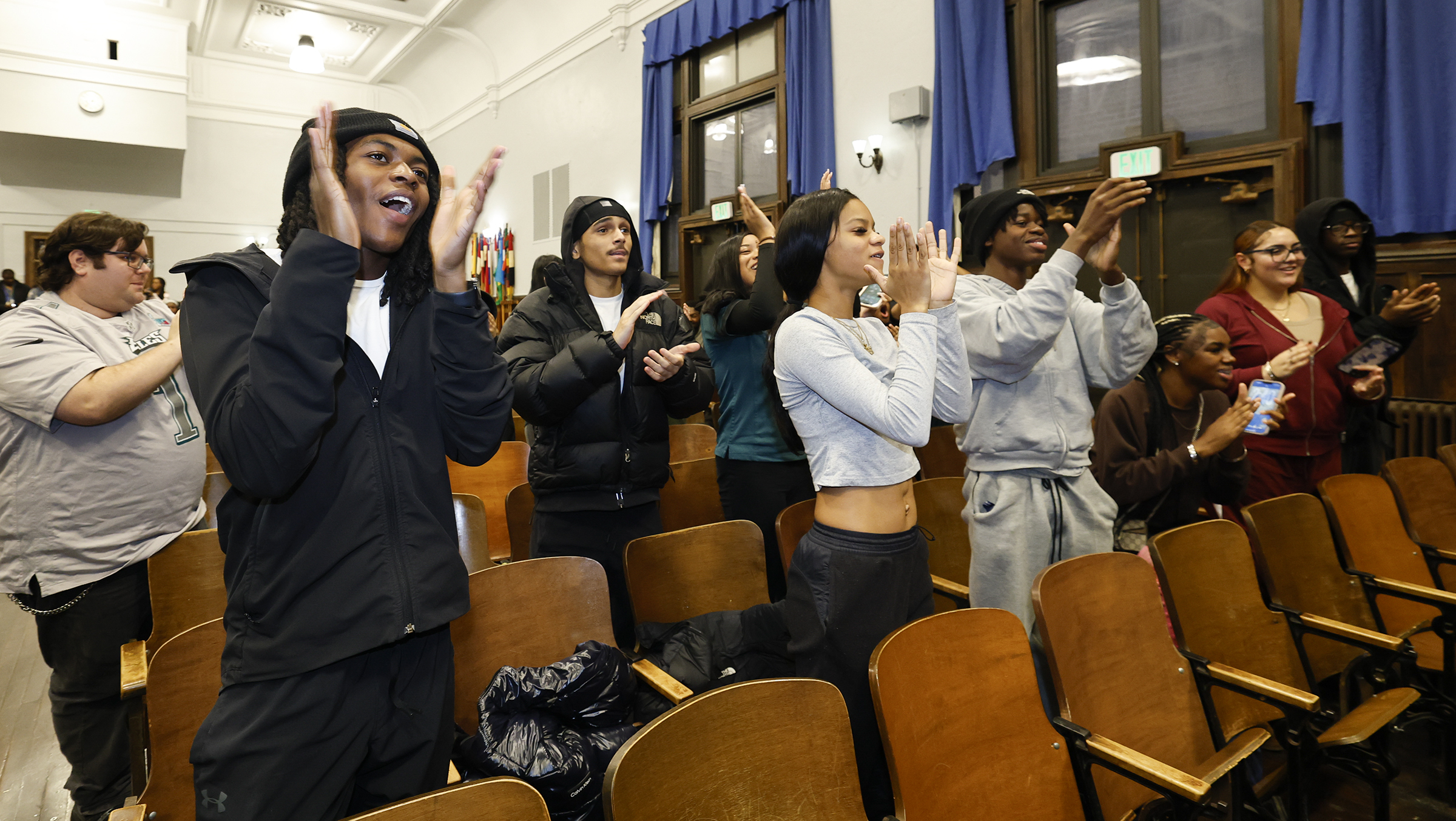
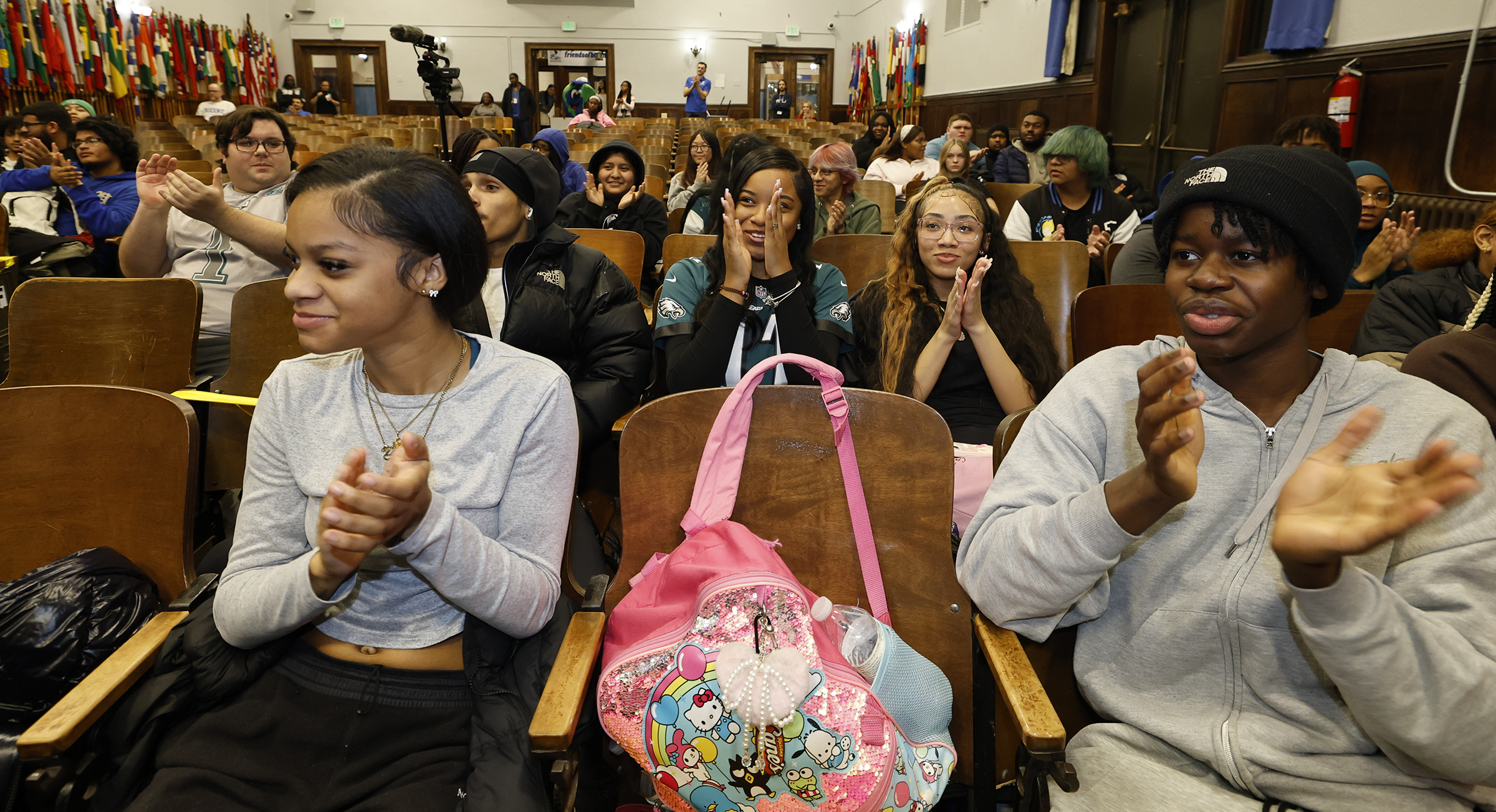
    Bodine High School for International Affairs senior students cheer after learning former student, Dr. Sonia Lewis, donated $16,200 to cover senior school fees on Friday, December 19, 2025. Dr. Lewis is giving back after the Northern Liberties high school helped her during a difficult time, while she was a student 20-yrs-ago.

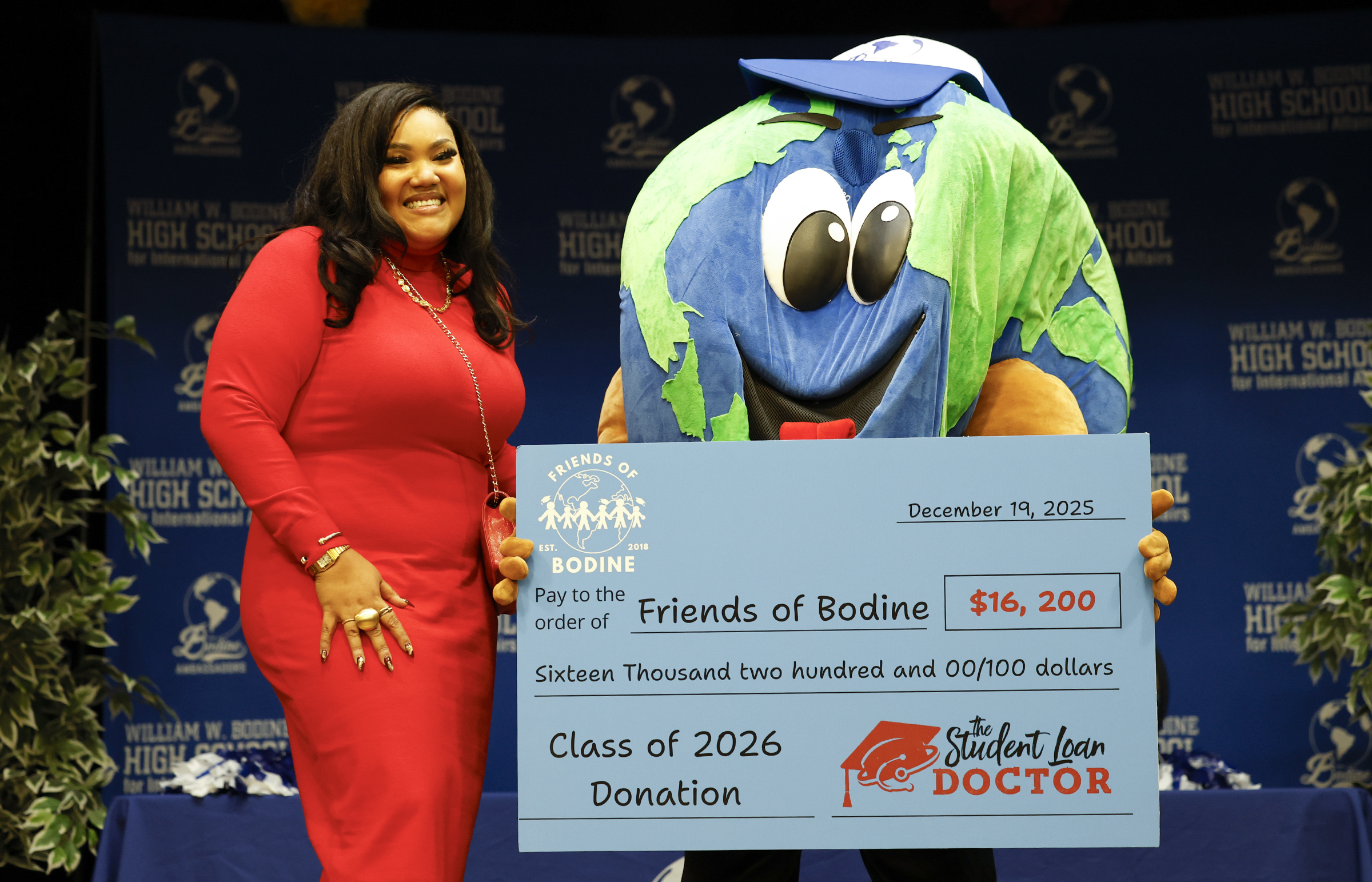
    So on a December day, Lewis walked into the auditorium of the Philadelphia School District magnet school with a surprise — the largest donation ever given to the nonprofit that supports Bodine. She gave $16,200 to cover the bulk of every senior’s class dues — funds that most students struggle to pay.

    Aaliyah Bolden, a Bodine 12th grader, was jubilant after the announcement.

    “I’m just so grateful,” Bolden said. “Coming from an underrepresented community and having financial hardships, this just makes a big difference to me.”

    ‘Can you work with me?’

    Lewis was a standout student at Bodine, an international affairs high school in Northern Liberties. She was class president, active in student government, a strong student in the Class of 2005, a leader.

    She was raised by her single mother and grandmother, both Philadelphia teachers, told from a very young age that she was college-bound.

    But when Lewis was 16, her priorities shifted, out of necessity. Her mother was gravely ill with bacterial meningitis and other complications. Her grandmother had just beaten cancer, but it fell to Lewis to advocate for her mother, to take her to appointments, to navigate the healthcare system on her behalf. She worked three jobs to help bridge financial gaps.

    School just could not be at the top of her priority list.

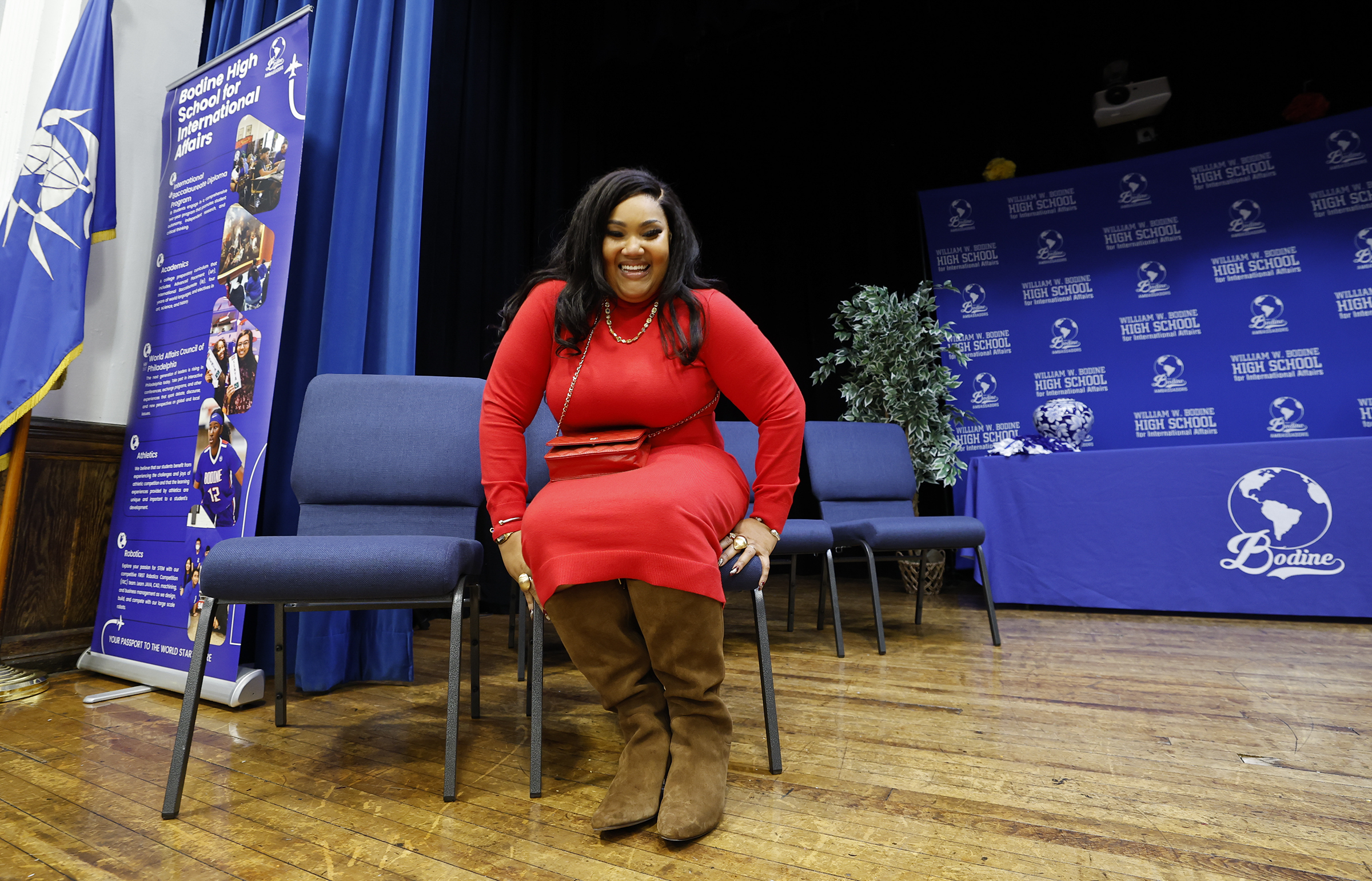
    Dr. Sonia Lewis takes a seat before speaking to Bodine High School for International Affairs senior students on Friday, December 19, 2025. Dr. Lewis gifted $16,200 for the 2026 senior class, to cover senior school fees. Dr. Lewis is giving back after the Northern Liberties high school helped her during a difficult time, while she was a student 20-yrs-ago.

    “I had to tell my high school, ‘These are my circumstances. I’m going to have to leave school to make some of these appointments,’” Lewis said. “I was just really clear with everyone at Bodine about what I needed, and I said, ‘Can you work with me?’”

    They did. But some deadlines are firm, and Lewis missed the federal student-aid loan deadline because her mother had just gotten out of a coma, had cognitive issues, and was unable to gather the necessary information or complete the form.

    “I had to become the mom,” Lewis said. “I would have to ask her, ‘Did you brush your teeth today?’ Nobody was thinking of the FAFSA.”

    As students’ college acceptances were rolling in, Bodine’s principal noticed that there were none for Lewis. The principal asked her what was happening.

    Lewis’ grandmother contemplated taking out a mortgage on her house to send her to college, but Lewis was too practical for that.

    “I told the principal, ‘We don’t have any money. We missed the deadline,’” she said. “There was no money coming in from my mom. We had my grandmother’s retirement, but that wasn’t enough.”

    Lewis figured she would work for a year, saving money and filling out the FAFSA form for the next cycle. But Karen P. Hill, the principal, just shook her head.

    A busybody for good

    The principal’s plan became evident at Bodine’s senior awards ceremony, Lewis remembers, when “they just kept calling my name” as prizes were announced.

    At the end of the evening, Lewis walked off with an envelope full of checks totaling $16,000 — enough to allow her to enroll at Bloomsburg University and pay her first year’s tuition.

    Once she got to Bloomsburg, Lewis continued to grind, working multiple jobs, earning scholarships, making connections. Then, after she earned her bachelor’s degree, Lewis moved on to working in higher education, spending time at Peirce College and elsewhere as an academic coach and in admissions.

    She earned her master’s degree, and eventually her doctorate. Now, she’s “the Student Loan Doctor”; Lewis believes her 13-employee company is the first Black woman-owned student loan repayment firm in the United States.

    Dr. Sonia Lewis stands with the Bodine High School for International Affairs mascot Amby during a a senior class assembly on Friday, December 19, 2025. Dr. Lewis gifted $16,200 for the 2026 senior class, to cover senior school fees. Dr. Lewis is giving back after the Northern Liberties high school helped her during a difficult time, while she was a student 20-yrs-ago.

    Lewis coaches clients to create plans to pay off their student loan debt — through repayment, loan consolidation and forgiveness, and more. She’s a sought-after expert, quoted in national publications, offering free weekly classes, growing her business by the year. She has 150,000 followers on Instagram.

    Lewis is allergic to sitting still. Her nickname in her sorority, Delta Sigma Theta, was “Busybody.” She has channeled that for good — the Student Loan Doctor has now served over 50,000 clients since 2016, helping get an estimated $55 million in student loans forgiven.

    The business is hard work, but a joy for Lewis, who gets to know she makes a direct impact on her clients’ lives — like the surgeon who had $997,000 in loans, including loans that were in arrears.

    “He didn’t know what to do,” Lewis said. “He got his loans forgiven. He wound up paying us like $300. We’re very affordable.”

    The hardest worker

    A few days before winter break, Lewis entered the Bodine auditorium with a massive smile on her face.

    Her gift — hatched after Lewis presented a $1,000 scholarship to a Bodine graduate in the spring, then decided to go much bigger — was a surprise for the students, who knew only that a successful alum was visiting.

    David Brown, the Bodine principal, reminded the students gathered in the auditorium that the small school was a special place.

    “Our leaders don’t just leave with diplomas,” Brown said. “They leave with a global perspective.”

    Then Marty Moyers, a Bodine teacher and president of the Friends of Bodine, a nonprofit that raises money for the school, presented Lewis: “Her journey has been a great one, and it started right here in this building,” Moyers said.

    Bodine High School for International Affairs senior students cheer after learning former student, Dr. Sonia Lewis, donated $16,200 to cover senior school fees on Friday, December 19, 2025. Dr. Lewis is giving back after the Northern Liberties high school helped her during a difficult time, while she was a student 20-yrs-ago.

    When he announced Lewis’ plan, there was stunned silence at first. Then, wild applause broke out. Students’ faces were jubilant.

    Remember this, Lewis told them: She didn’t have a 4.0 grade-point average. But she showed up in every way possible.

    “Even in my professional life as a super-successful entrepreneur, I’m not the best, but I’m a really hard worker,” Lewis said. “You guys got that. That’s the discipline and the spirit you want to have about yourselves as you’re leaving Bodine and you’re going into college, or you’re going into the workforce or entrepreneurship.”

    De’Anna Drummond, a senior, is deep into her applying-for-scholarships-and-worrying-about-paying-for-college season. Class dues were another stress to think about, but she was delighted at the news that they are mostly covered, thanks to Lewis.

    “Any donation is appreciated,” Drummond said. “It all adds up — senior trip, senior brunch, yearbook, everything.”

    Bolden, Drummond’s friend, nodded.

    “And someday,” Bolden said, “we should also give back when we can.”