Tag: Port Richmond

  • How these Philly-area consumers are spending $150 on all their holiday gifts

    How these Philly-area consumers are spending $150 on all their holiday gifts

    Kacii Hamer has no financial stress this holiday season.

    In past years, “holidays were always ‘give, give, give,’ and that’s what I always felt like I had to do,” said Hamer, a 33-year-old pre-K teacher and wedding photographer. Back then, “I couldn’t imagine thrifting gifts or DIYing gifts. You have that fear of ‘Oh my god, are these people going to judge me?’ or ‘Is this good enough?’”

    This year, however, Hamer is celebrating “Thriftmas,” a social-media trend where participants buy many of their holiday gifts secondhand.

    Between a family Pollyanna, a gift for her boyfriend, and a present for her goddaughter, she plans to spend no more than $150 total. For her goddaughter, she is sanding and repainting a $14 rocking horse that she got at the 2nd Ave. Thrift store in South Philadelphia.

    The thrift-focused holiday season will mark a fitting end to what Hamer calls her first “hardcore” low-buy year, one during which she cut out most nonessential spending.

    Hamer, who splits her time between the Philadelphia region and Scranton, was one of several low- and no-buyers whom The Inquirer talked with in April.

    The frugal challenge took off this year amid broader economic pressures, including continued inflation. Philly-area participants said they were trying to save money, pay off debt, reduce waste, and, in some cases, stop patronizing large retailers that don’t align with their values.

    Now as the holidays approach, some low- and no-buyers are making exceptions for gifts, or using some of their recent savings to fund their festivities.

    Others, however, are standing firm in their low-spending habits. They’re setting budgets, trimming their gift-recipient lists, or shopping secondhand.
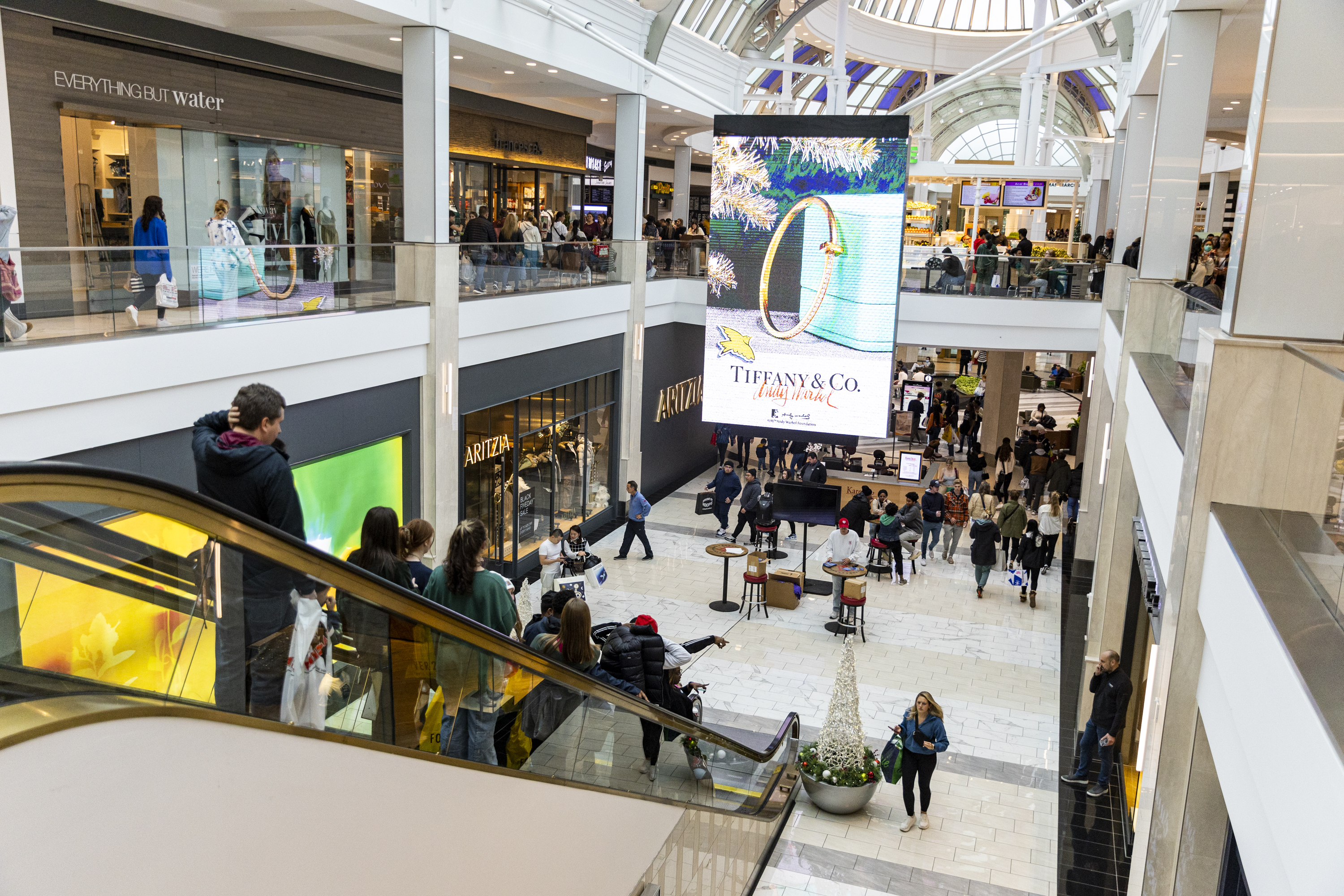
    Shoppers descend on the King of Prussia Mall on Black Friday in this 2022 file photo.

    This time of year, some local low-buyers said, it requires extra strength to resist consumerist pressures and go against the norm. Each U.S. adult is expected to spend about $628 on average on holiday gifts this year, according to the National Retail Federation, which anticipates overall holiday spending will surpass $1 trillion for the first time ever.

    At the same time, others say economic uncertainty has made for easier conversations about gifting.

    “I’m not under pressure to spend, and I think this year it’s actually easier to [cut back on gifts] than in years past,” said Mylena Sutton, 48, of Voorhees. “A lot of my friends are sensitive to what’s happening in the economy … you don’t have to explain.”

    Parents buying less for Christmas

    Some Philly-area parents have found that Santa can be thrifty, too.

    Heather Fertig, 38, of Fishtown, said about 80% of her toddler’s Christmas gifts will be secondhand. They’ll include a marble run, which she bought this week from a local thrift store, and a wooden train table, for which she remains on the hunt.

    Thanks to secondhand stores, Facebook marketplace, and neighborhood parent groups, Fertig, a stay-at-home mom, said she and her husband will likely spend about $150 in all.

    Her motivation is as much environmental as it is financial.

    After having her son, she realized, “Wow, there is so much waste,” Fertig said. “I kind of felt, previous to that, that there was a stigma around getting things secondhand.”

    But “it was never there,” she added. “It was this made-up thing that everything had to be brand-new to you.”
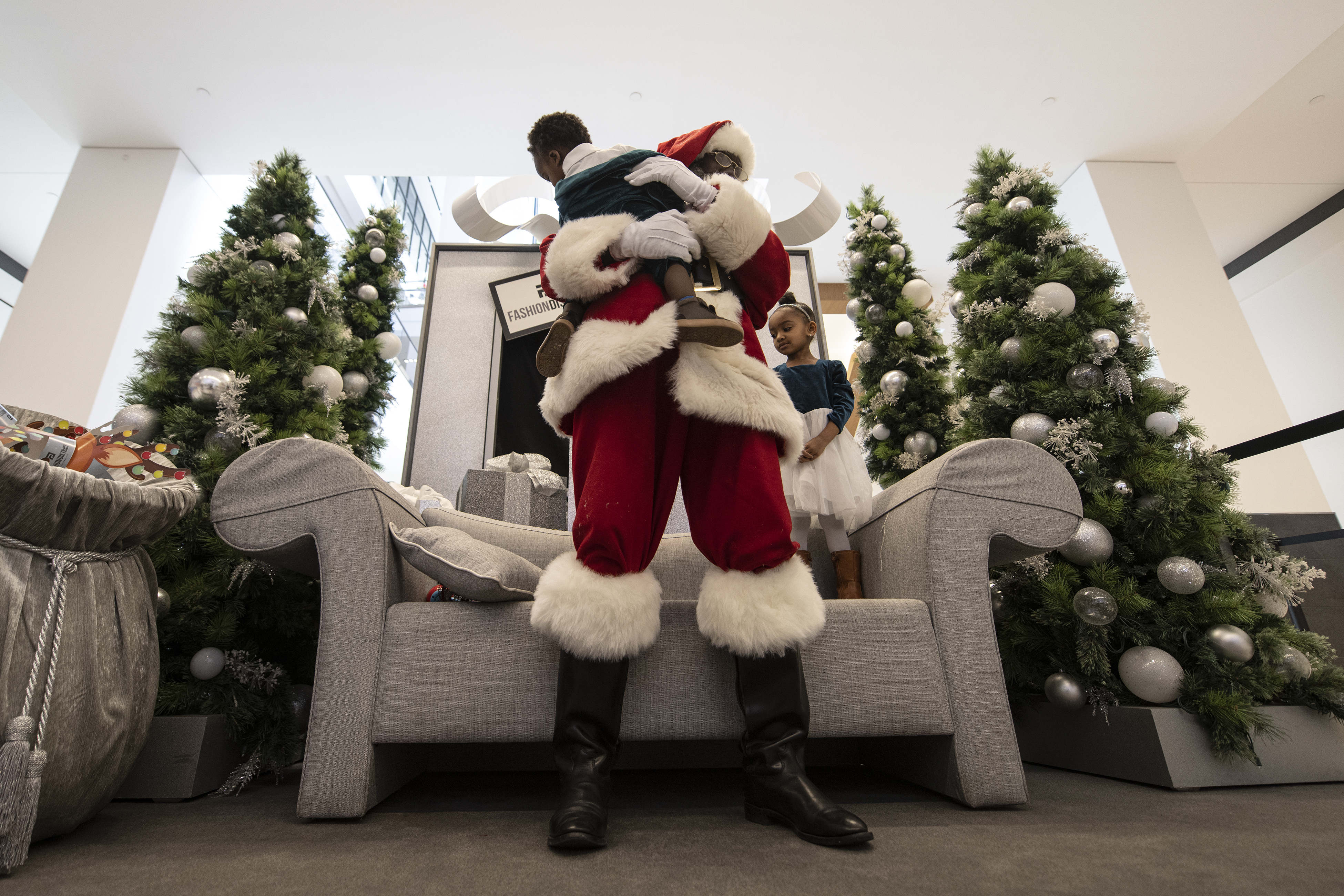
    Santa James Claus greets children at the Fashion District in this 2022 file photo. Some local parents have found Santa can cut back on spending, too.

    For young children, whose interests change so quickly, it makes even more sense to buy items secondhand, Fertig said. On Christmas morning, her 2-year-old doesn’t know the difference.

    “He’s just as happy as if I bought it straight from Walmart,” she said.

    In Montgomery County, Jenna Harris-Mosley said she takes a combo approach to gift-giving for her 5-year-old daughter, whose birthday is on New Year’s Eve.

    The 41-year-old bought some smaller, new gifts, including Shrek snow globes and Squishmallow stuffed toys, throughout the year to spread out spending.

    She plans to get other items secondhand, including one or two American Girl dolls for $20-$30 each. And she will set aside some money for experiences, such as an upcoming day trip to New York City for tea at the American Girl store — with the new-to-her doll, of course.

    Harris-Mosley said she took an especially intentional approach to spending this year after getting laid off from her job in tech sales in October. It has helped that she had already bought many of her daughter’s Christmas and birthday gifts when she found deals earlier in the year, she said.

    “I have things hidden in every corner of my house,” she said. And as for grown-ups “I don’t stress myself about holiday gifts,” figuring most adults in her life have the things they need — and can buy things they don’t.

    In Port Richmond, Rachel Dwyer is making homemade felt ornaments for the adults on her list, and getting two books for each child. The 34-year-old nanny has learned that too many toys and trinkets can be overwhelming for kids and parents.

    “It’s just a lot of clutter,” she said, “and a lot of junk.”

    People walk through the Shops at Liberty Place in this 2021 file photo.

    How to spend less on holiday gifts

    Seasoned low-buyers say it’s hard to cut back on spending. But once you get over the initial hurdle, they say, it’s freeing.

    “Push through the fear,” Hamer said. “It feels nice going into the holidays with such a positive attitude.”

    In South Jersey, Sutton has never been a big holiday gift-giver, saying she prefers to buy loved ones presents intentionally throughout the year.

    If others feel overwhelmed by their holiday gifts-to-buy list, she recommends they ask themselves: “Do you do these things because they have value for you? Or do you do these things because they are expected?”
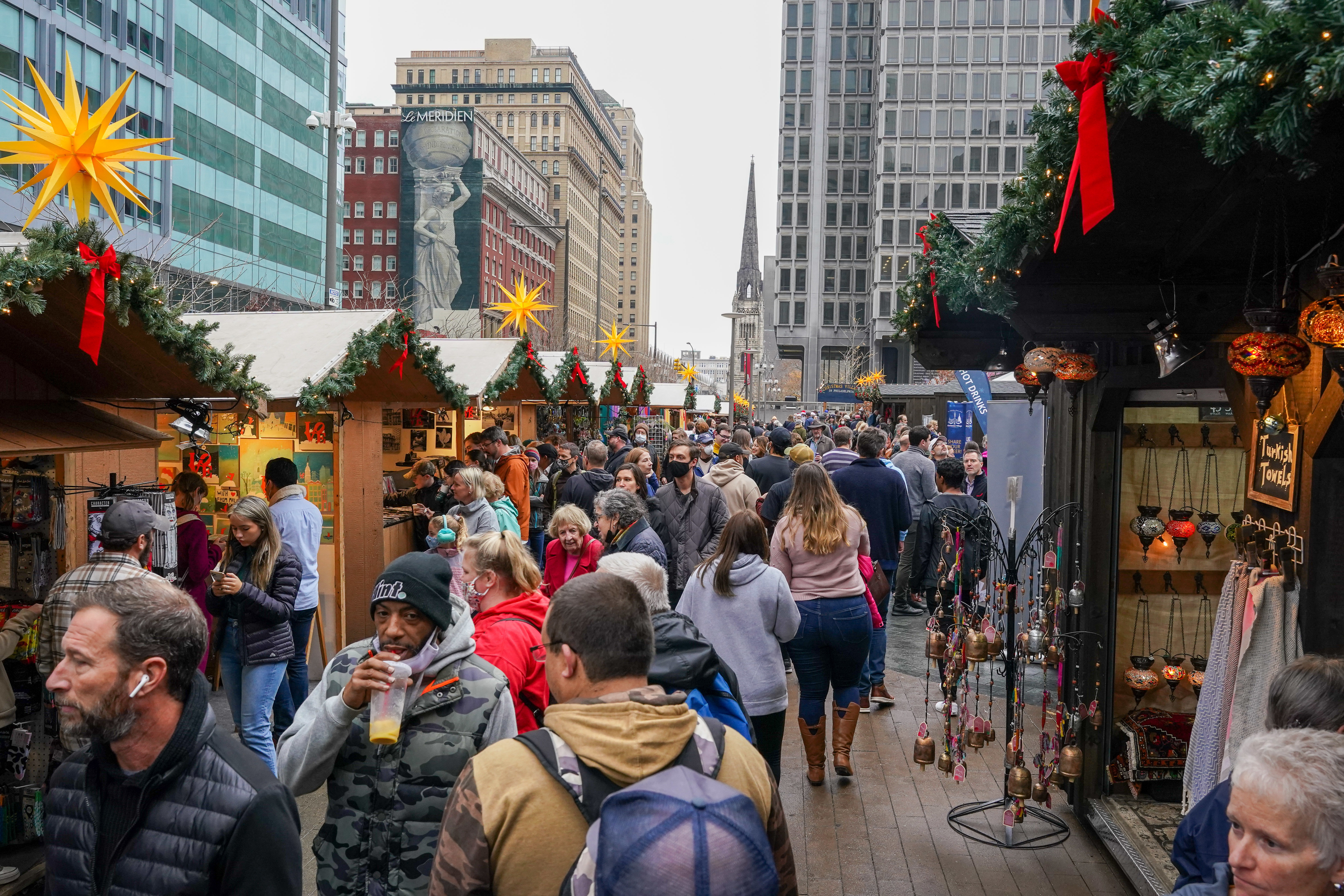
    People browse the Christmas Village at LOVE Park in this 2021 file photo.

    “Be brazen about it,” said Sutton, a consultant and leadership coach. That might mean telling people: “If you only get me a gift because you expect an exchange, don’t buy me one.”

    “People who have stayed away from thrifting should get back into it,” said Jen Benner, 34, of Conshohocken. “The thrift stores are jam-packed with very good stuff.”

    If you aren’t sure about buying secondhand, “start small. Start with a child’s gift or a truck or a train or something little,” Fertig said. “Work your way up to bigger items.”

    Benner, a real estate agent, keeps a running list on her phone of gift ideas that her loved ones mention throughout the year. This can save time and anxiety around the holidays, and reduce the urge to overspend.

    Remember, too, that the most meaningful gifts can be among the least expensive, Dwyer said. She recommends personalized, handmade gifts or framed photos, as well as gifts of time or skills, such as a babysitting session, a home-cooked meal, or a family-photo session.
  • In Port Richmond, this new homeowner found a way to buy her house without sacrificing all her savings | How I Bought This House

    In Port Richmond, this new homeowner found a way to buy her house without sacrificing all her savings | How I Bought This House

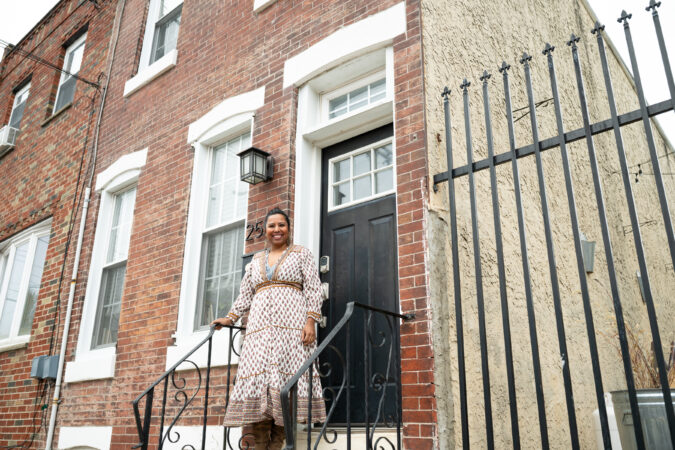
    The buyer: Sindhu Nair, 46, product manager

    The house: a 1,254-square-foot rowhouse in Port Richmond with 3 bedrooms and 2½ bathrooms, built in 1925.

    The price: listed for $315,000; purchased for $325,000

    The agent: Rachel Shaw, Philly Home Girls

    The ask: The first time Sindhu Nair tried to buy a house, the deal collapsed the day of closing. A lender told her last minute that he couldn’t approve the loan after all. The experience left such a sour taste that she stepped away from the market for years. But by 2025, she felt ready to try again, especially after seeing how much money she had sent her landlord on Cash App in the past two years. She was done giving her money to someone else, she said.

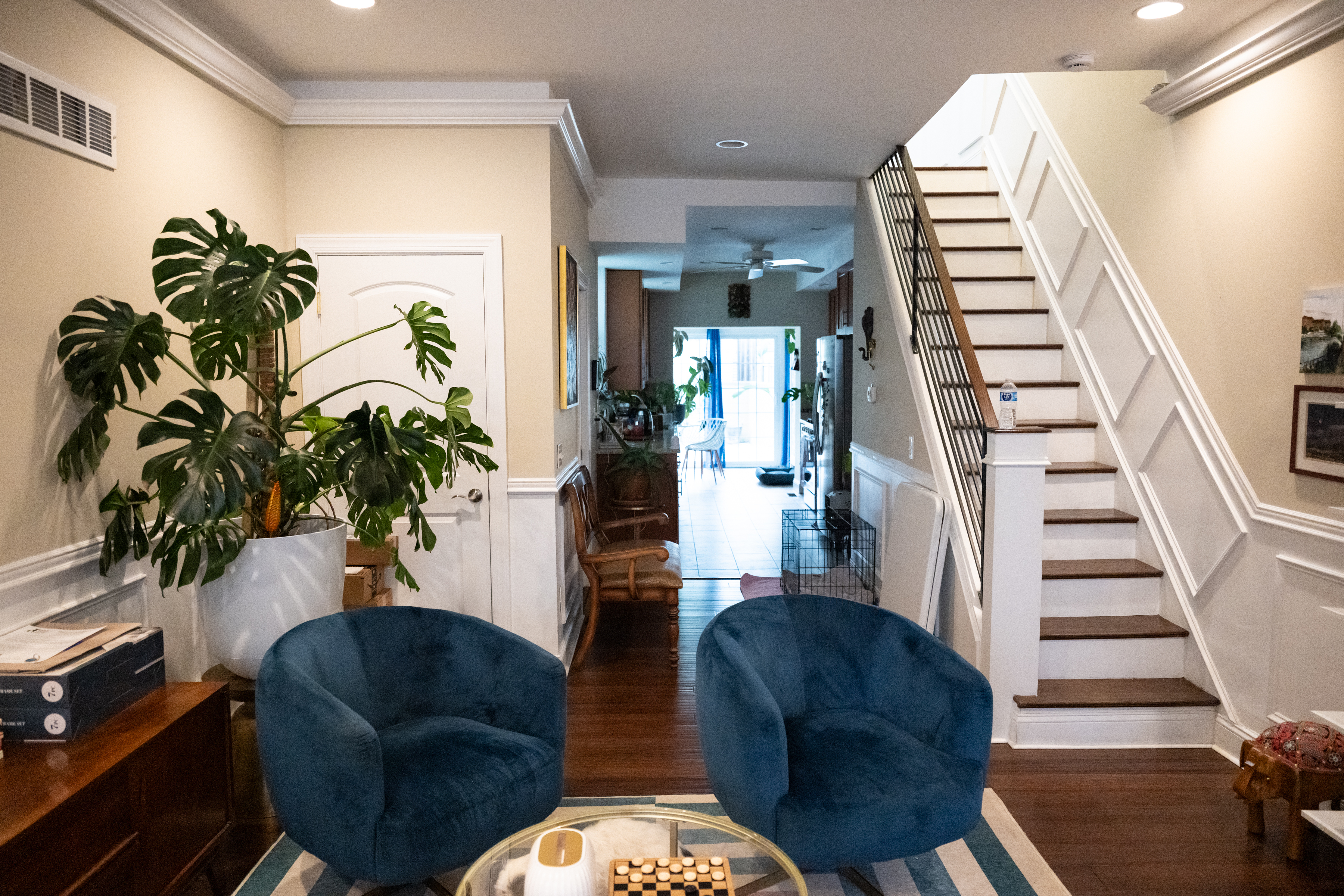
    Sindhu Nair loved the light and the “good vibes” in the house’s living room.

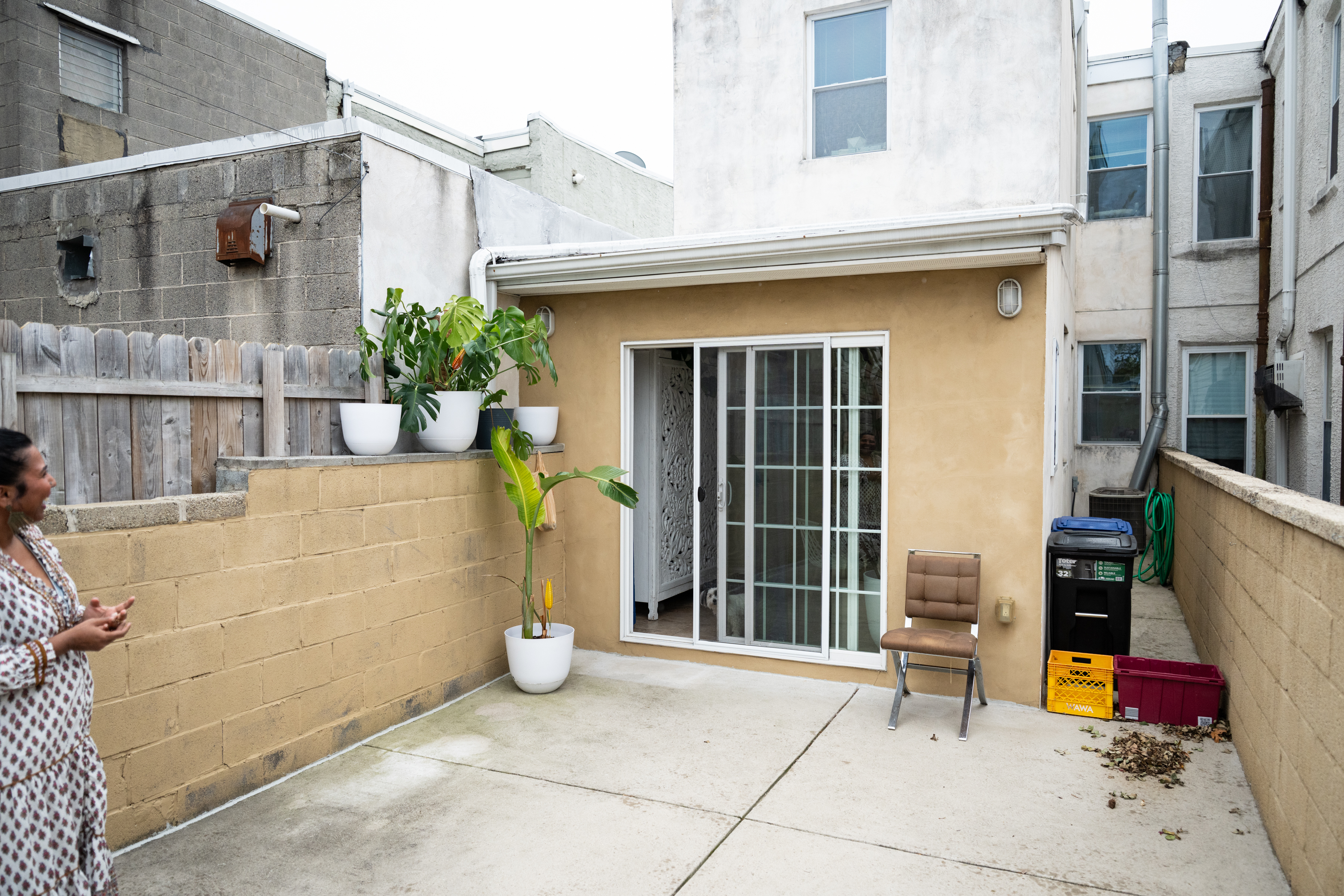
    Nair had been looking for a house for years and knew what she wanted. “I trusted my gut instincts,” she said. She needed at least two bedrooms and a bathroom on the ground floor. She also wanted a small backyard for her dog and access to easy street parking. She limited her search to the Port Richmond area. “My dog walker lives in this area,” Nair said, “so I’ve been in the neighborhood a lot, and it’s just so cute.” Her budget was $350,000.

    The search: Nair began her search in July. The first place she toured had two private parking spaces but needed a gut renovation. “I didn’t want to take on that financial burden,” she said. She visited two other open houses that afternoon. Both appealed to her, and she hoped to make an offer on the less expensive one, but it already had two bids. She would have had to offer well over the $250,000 asking price to be competitive.

    Meanwhile, the pricier home — the one she actually preferred — had no competing offers. After running the numbers and realizing the difference in cost was smaller than she expected because of the competing offers, she shifted course. “I decided just to go for the house that I wanted,” Nair said.

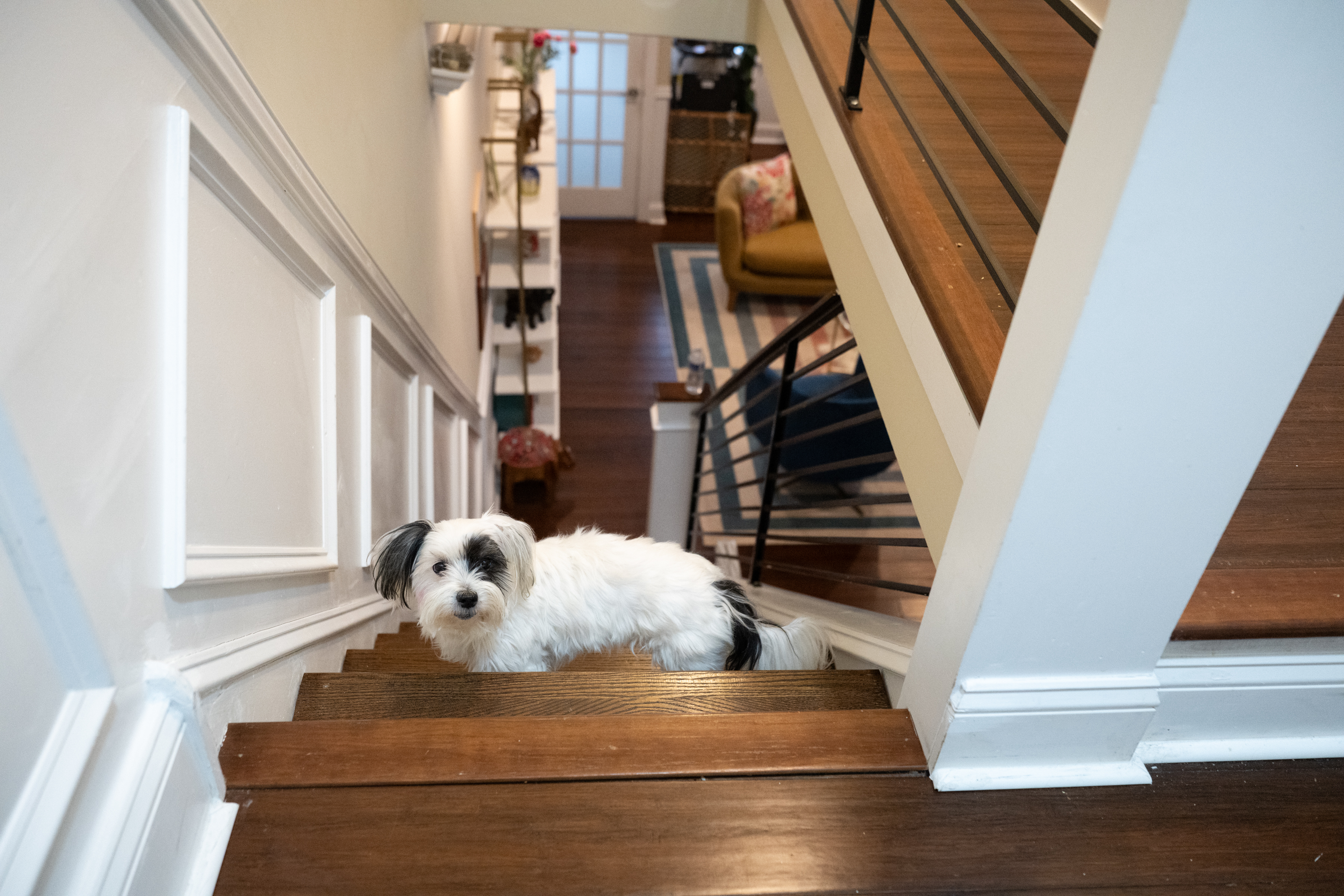
    Sindhu Nair’s dog, Scotty, approves of her purchase.

    The appeal: Nair says she knew she had found the one as soon as she stepped inside. “I think the universe was ready to provide me with this house,” Nair said. The light looked amazing, the space had a “good vibe,” and the backyard was the perfect size for her dog, Scotty. She loved that it was move-in ready. “Whoever rehabbed it did a beautiful job,” Nair said.

    The deal: The seller’s agent told Nair at the open house that the seller was motivated and willing to offer a seller’s assist, which is when the seller agrees to cover a portion of the buyer’s closing costs. Nair and her agent asked for enough to cover nearly all of Nair’s closing costs.

    In return, Nair offered $325,000 — $10,000 over the asking price — even though there weren’t any other offers. “We wanted to make sure that with the seller’s assist, she was still going to make a profit,” Nair said. She views the seller’s assist as a tool she used to keep more money in her bank account after she purchased the home. “It has nothing to do with financial stability,” Nair said. “It’s a financial tool that people should take advantage of.”

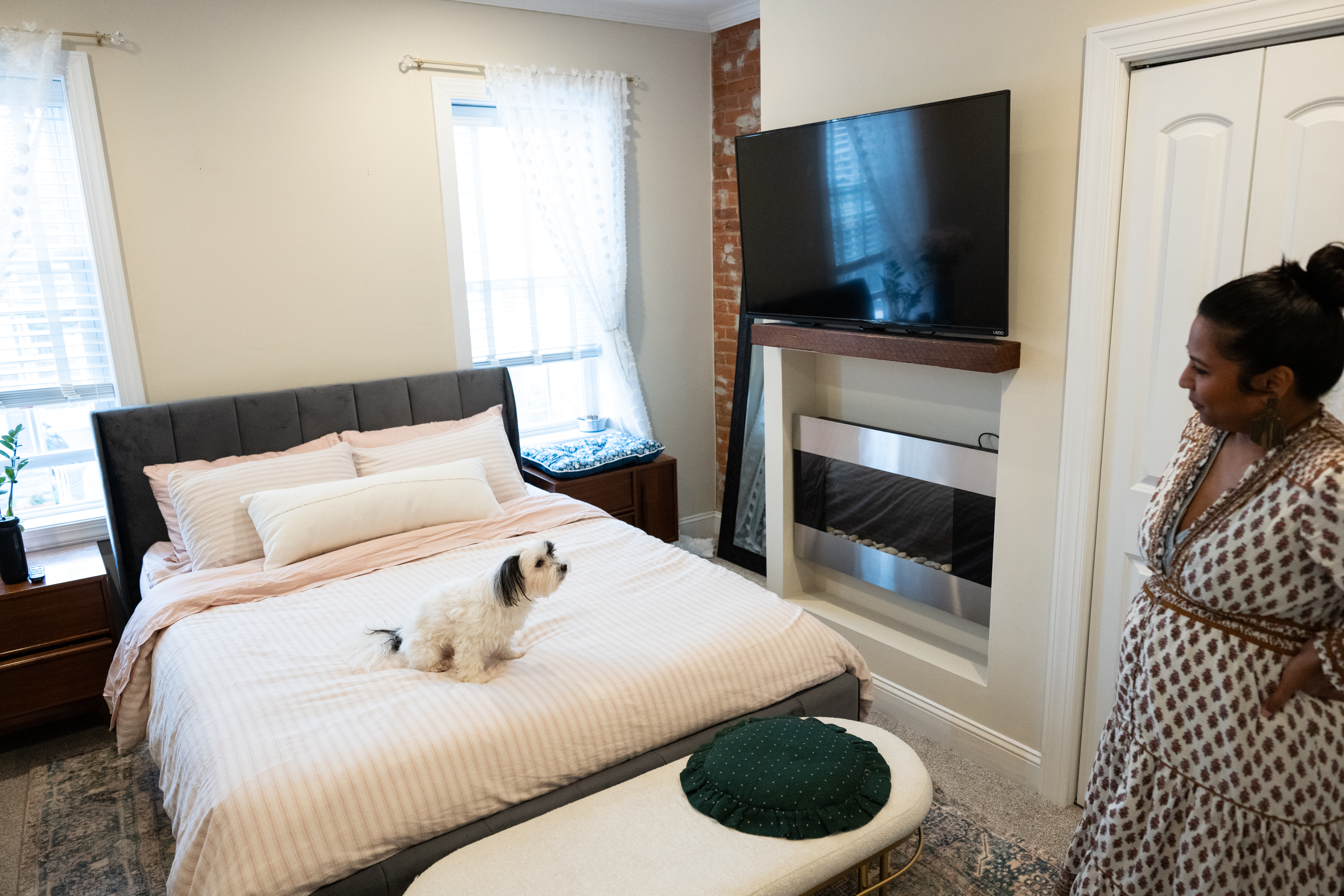
    There are three bedrooms in Nair’s home. Scotty sleeps in the bedroom with Nair. Nair’s foster cat has her own room.

    The seller accepted Nair’s offer and agreed to the amount for the seller’s assist.

    The money: Nair began the year with about $60,000 in savings, but she used roughly half to pay off her private student loans. “They’d been the bane of my existence,” she said. “I imagined being 70 or 80 years old with debt collectors still calling me.” Paying off that balance left her with about $30,000, money she had saved gradually over the years. She didn’t want to use all of it for a down payment, though. “I wanted to have a cushion for anything that came up after I bought the house,” she said.

    The back patio is the perfect size for Scotty, Nair says.

    To keep more cash on hand, she worked with her lender to take out an FHA mortgage, which requires as little as 3.5% down and allows sellers to contribute to closing costs. With a seller’s assist, her out-of-pocket contribution dropped to around $10,000. Without it, she would have paid closer to $20,000. “It’s my first home,” Nair said, “and I’m proud of the strategies I used to get it.”

    The move: Nair closed on the house on Aug. 25, a few days earlier than planned. The original closing date was Aug. 28, but she asked to move it up so she could leave her apartment before Sept. 1 and avoid paying another month of rent. She admits she was nervous while she waited for her mortgage to be approved. “I was sweating because of my first experience,” she said. “But my lender kept telling me, ‘Nope, you’re good. I would have told you if there was an issue.’”

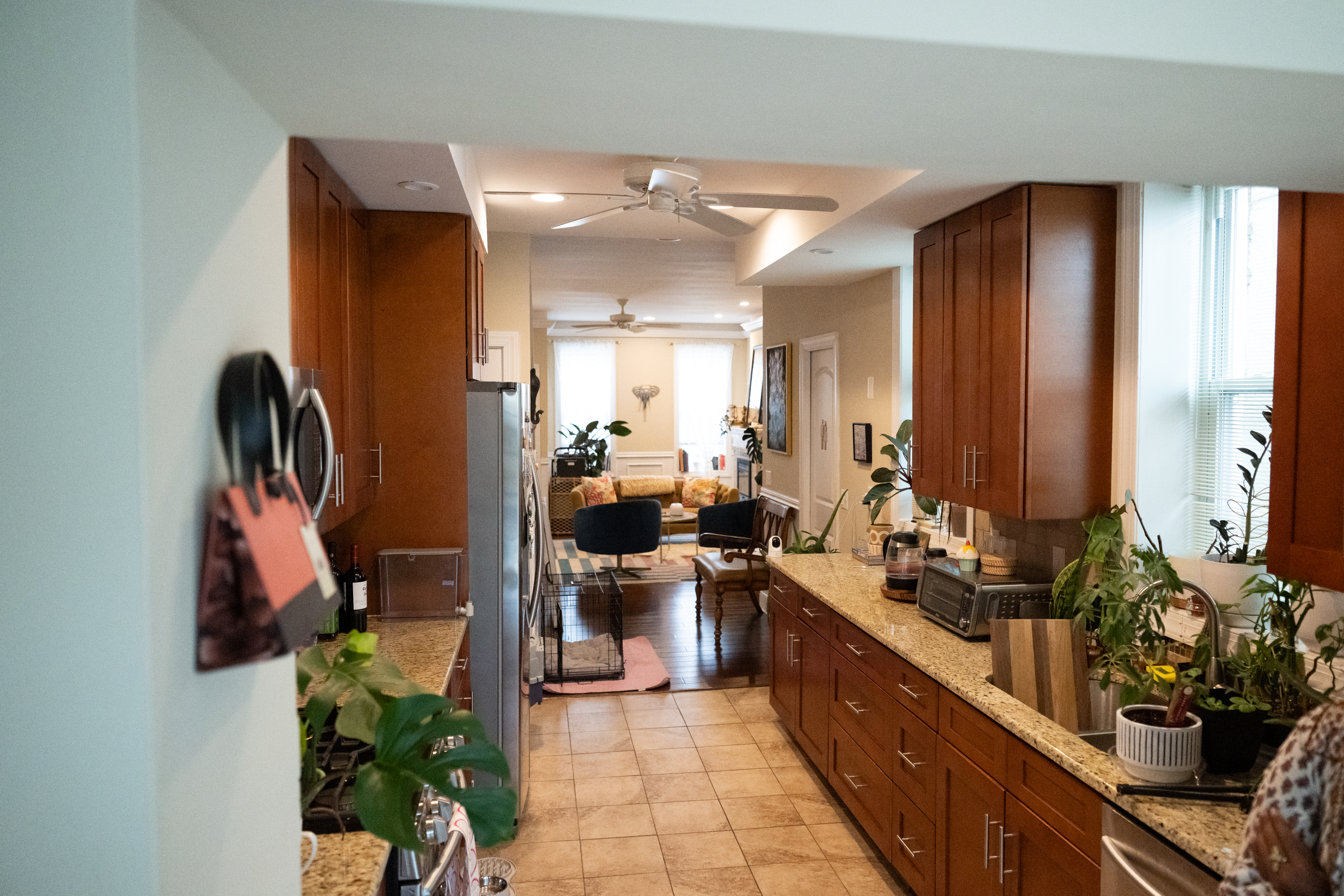
    The kitchen and living room in Sindhu Nair’s home.

    Once her approval came through, she began lining up help. She hired someone to assist with packing and brought in movers for the actual move, but the two-step arrangement proved more frustrating than she expected. “I realized I didn’t save any money, and I just gave myself a headache,” she said. Next time, she plans to hire a company that handles everything — packing, loading, unloading, and unpacking — in one coordinated sweep.

    Any reservations? Nair says she doesn’t have any regrets about the purchase. “I think I got lucky, and I feel very proud of myself for having this accomplishment,” she said. She’s thrilled to have paid off her student loans and bought a home in the same year, and she hopes her experience sends a message to others. “I want people to know, especially single women, that you can do this,” she said. “It’s not easy; it’s very hard, but it’s doable.”

    Life after close: A Halloween housewarming party forced Nair to get the main parts of her house unpacked and organized, but there is still work to be done. She just started unpacking her basement and is getting ready to set up her office in the smallest bedroom. She’s not sure what she’ll do with the other bedroom. It currently houses an animal. “I have a cat that I’m fostering,” Nair said, “and that’s her bedroom.”

    Did you recently buy a home? We want to hear about it. Email acovington@inquirer.com.

  • A bilingual credit union is opening in Philly, seeking ‘unbanked’ customers to buy homes, build family businesses

    A bilingual credit union is opening in Philly, seeking ‘unbanked’ customers to buy homes, build family businesses

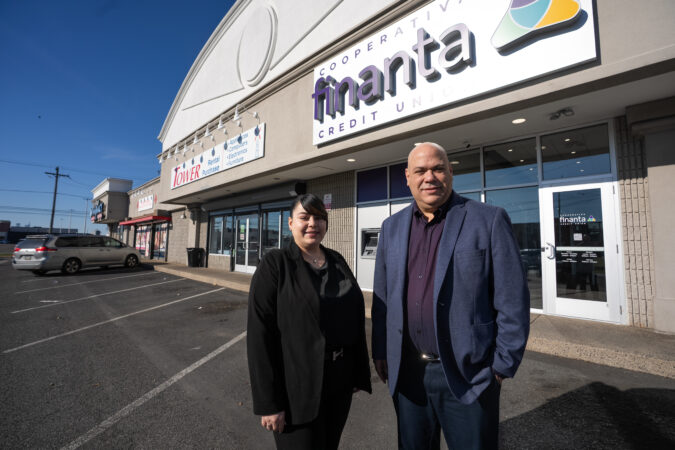
    At a former restaurant in a drive-up shopping strip on the edge of Port Richmond, a bilingual credit union has joined the neighborhood.

    The newest branch of federally-chartered Finanta credit union, which also calls itself Cooperativa Finanta, “is not just a banking place,” says Pedro A. Rivera II, Finanta’s board chair, president of Thaddeus Stevens College of Technology in Lancaster, and a graduate of Kensington High School.

    “We are focused on people that are unbanked: small business owners and workers who go to check-cashing agencies and use money orders and sometimes predatory [high-rate private] lenders,” said Daniel Betancourt, the credit union’s president and CEO.

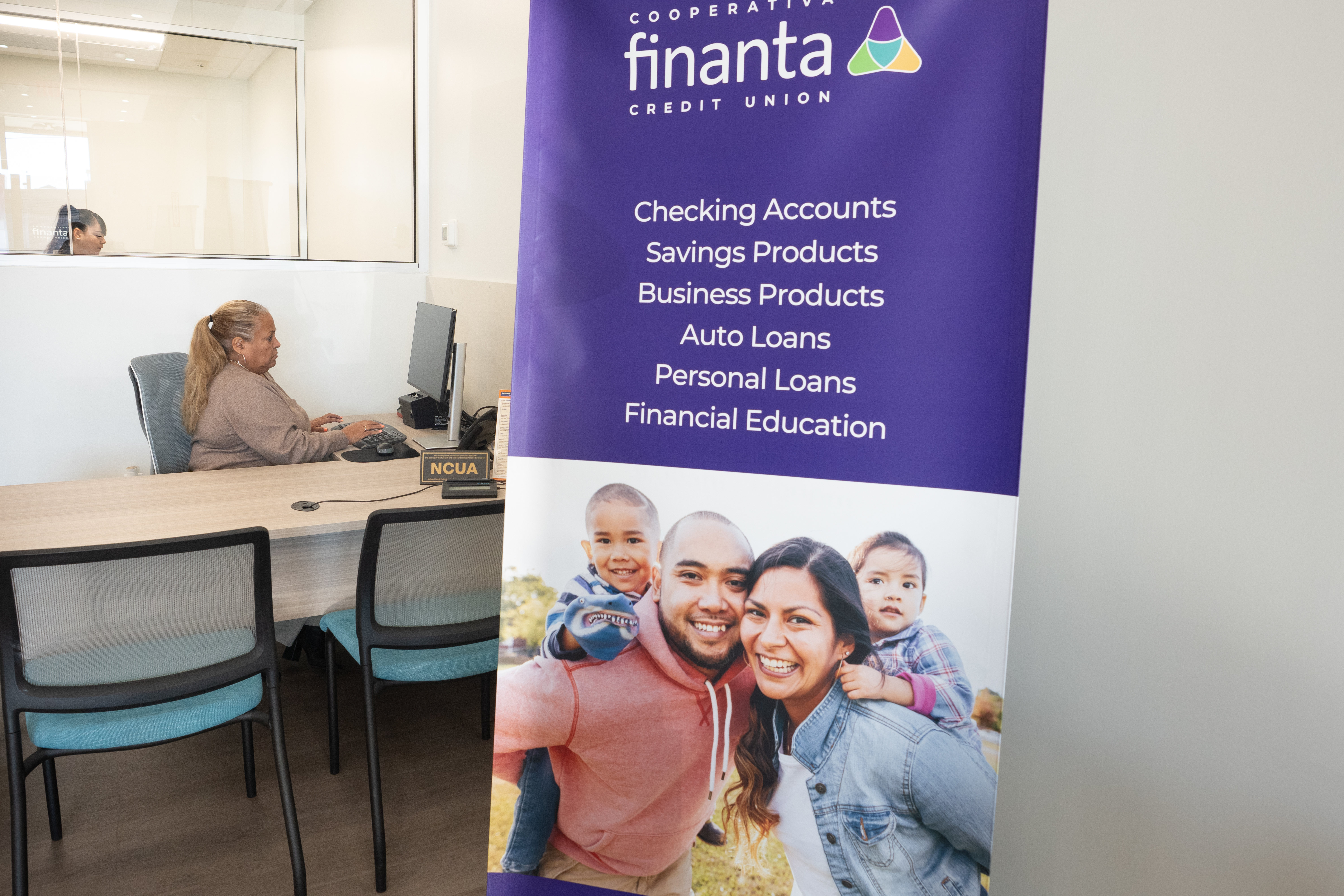
    Finanta Federal Credit Union offers mortgages, personal and small business loans, Visa debit cards, and interest on deposits. And credit union staff help customers learn to use these products — in English and Spanish.

    Branch manager Iris Santiago signed off on one of its first home mortgages to cleaning-service co-owner Libra Rivera, on Wednesday. The credit union office at 2313 E. Venango St. officially opened Friday but began accepting deposits and booking loans earlier.

    Iris Santiago, branch manager, and Bart Rivera, assistant branch manager, at Finanta Federal Credit Union, in Philadelphia.

    Rivera said the concept takes him back to his North Philly youth, when he banked both the funds of the Amigos de Roberto Clemente youth track and field association and his newly minted teacher’s pay at the former Borinquen Federal Credit Union at Front and Allegheny, which shut in 2011.

    “It was the size of a rowhouse. You’d go in and connect to the tellers in a space where you could catch up what was going through the community and ask questions about percent yield, about how to leverage dollars in a place that was trusted,” Rivera said.

    He got that same feeling when he visited Finanta’s pilot branch in Lancaster after it opened in 2023. Rivera agreed to serve as Finanta’s chairman and went to work lining up support to speed its growth.

    Now, bolstered by private foundations and a state investment, Finanta is opening what it expects to be its largest branch in Port Richmond, with others to follow in Reading, Northeast Philly, Allentown, and other communities with large English-and-Spanish-speaking populations.

    The Lancaster branch signed up 2,000 members in three years. Betancourt expects as many in Philadelphia by next fall.

    This growth is not yet organic. Mackenzie Scott’s Yield Giving foundation in 2023 pledged $2 million a year for seven years to help finance loans. Santander Bank and M&T Bank each invested $1 million as part of their community-banking mandates.

    State House Appropriations Committee chair Jordan Harris, at the recommendation of state Rep. Jose Giral and state Sen. Tina Tartaglione, all Philadelphia Democrats, granted $4 million to build the Reading and Port Richmond branches.

    The credit union made its first mortgage this summer and offers home loans up to $400,000, enough to purchase homes in many but not all Philadelphia neighborhoods.

    The credit union also has made business loans to local firms like Puerto Rican bakery and restaurant El Coqui in Kensington. El Coqui had previously borrowed from the Finanta loan fund, which Betancourt also leads.

    Founded in 1996, the fund later merged with the larger Community First Fund of Lancaster and now lends in several cities under the Finanta name.

    The fund’s Philadelphia clients include developers such as HACE, projects such as Charles Lomax’s Village Square on Haverford in West Philly, and family-owned stores such as Silvia’s Bakery and Mucho Perú.

    Alicia Placeres, member sales representative, working at Finanta Federal Credit Union.

    A new credit union, open to everyone but anchored in the Latino communities, “is very much needed,” said Pedro Rodriguez, cofounder of Café Don Pedro coffee roasters in Brewerytown.

    He’s worried about loan volume amid the Trump administration’s push to arrest and deport immigrants. “They have people scared of their shadow,” he added.

    Others call the credit union a lifeline for people under pressure.

    “Our immigrants are very brave. A lot of the people who come to us are pursuing mortgages, pursuing small business loans, they say what’s going on is not unusual for them, and they are persisting” in building lives here, said Will Gonzalez, head of Ceiba, a Philadelphia-based economic-development advocacy coalition.

    Gonzalez has noted a drop this year — from almost one a day to less than two a month — in noncitizens filing for the first time to pay their income taxes with help from his agency, but those who have already been assigned IRS numbers have returned to file again even if their own immigration status is unresolved.

    “People are paying taxes because it’s the right thing to do,” Gonzalez added. “And because they want to borrow to put their kids in college and to buy a house. To do that, they know they need to show the lenders they have paid their taxes.” It’s a sign they see their long-term future in Philadelphia.

    He said the former Borinquen credit union was badly needed but was underfunded — “a little tree in a desert.” It operated from 1974 to 2011 until it was taken over by regulators and closed after suffering losses. A manager was sentenced to 7½ years in federal prison for stealing from the institution and members from 2006 to 2009.

    The Finanta credit union board Rivera heads, which oversees Betancourt and his growing staff, includes Mennonite Church USA moderator Elizabeth Soto Albrecht, Amalgamated Bank first vice president and 2016 Democratic National Convention CFO Jason O’Malley, and other professionals based in cities with large bilingual populations.

    For all his experience overseeing institutional budgets, Rivera said he and the other directors have had to learn banking in accordance with National Credit Union Administration guidelines.

    “I take my fiduciary responsibility seriously. We are now facing the regulatory expectations and demands of the banking world,” he said. “We know what is expected of us.”

    Gonzalez said Finanta’s focus on Pennsylvania cities with large and growing Latino populations makes it a natural support network.

    ”They are helping these communities build political and economic power,” he said. “They are in the right place at the right time.”

  • Meet the people who use Pennsylvania’s rivers to create art

    Meet the people who use Pennsylvania’s rivers to create art

    MONTOURSVILLE, Pa. — The rocky shores of Loyalsock Creek looked a bit drab to the untrained eye on a blustery, overcast November afternoon.

    There were browns and grays, along with flurries of yellow and orange leaves across the turbid water when the wind whipped through the trees.

    Sierra Weir, an artist from Pittsburgh, stepped gingerly across the mud and rocks. When she got to the water’s edge, Weir saw the landscape in a completely different way.

    “It’s not as visually stunning as synthetic colors, but I would say the depth and variation within one tiny spectra is so much deeper,” she said. “I’ve gained such an appreciation for all the different ways brown can be brown.”

    Sierra Weir of Pittsburgh was an artist-in residency of the Susquehanna River Watershed.

    Weir, who has a background in biochemistry, is a pigment artist and community outreach coordinator for Three Rivers Waterkeeper, a nonprofit organization in Pittsburgh that advocates and protects the Monongahela, Allegheny, and Ohio rivers.

    In June, the Pennsylvania Environmental Council, selected Weir and two others for its new artist-in-residency program, “Reflections through Art: Inclusive Access on Water Trails in the Susquehanna Basin.”

    “It’s a new way to get people to engage with the environment,” Weir said.

    Painter Spencer Verney of Coatesville was also chosen as a resident by the PEC. He focuses on preserved lands and protected waterways in historic settings. Meg Lemieur of Port Richmond was chosen to illustrate a map for the Swatara Creek Watershed.

    “My art celebrates the diversity and amazing features of the natural world,” Lemieur told The Inquirer. “I’m definitely drawn to all the living animals, including animals of the watershed like turtles, owls, and gophers, but lately I’ve been getting more into flora and understanding plants.“

    Tali MacArthur, a senior program manager for the PEC, said the residency program was created as another way to get the public involved in watershed conservation.

    “There are people who don’t really see themselves as scientists or fishermen, but maybe they see themselves as artists, as musicians, or visual learners,” MacArthur said. “I’ve kind of been chasing this approach for some time now.”

    The residency program was funded by the National Park Service’s Chesapeake Gateways Grant Program and the Pennsylvania Department of Conservation and Natural Resources Community Conservation Partnership Program.

    When Weir was in college, in Ohio, she spent a year studying the pigments of Betta fish and contributed a sculpture based on the majesty of jeweled beetles. She’s also created various paintings made with natural pigments like goldenrod, black walnut, and pokeberry, which fade quickly.

    “It’s in opposition to synthetic pigments, which are made from petrochemicals, and I do a lot of work to reduce pollutants,” she said. “This was a natural fit.”

    Sierra Weir of Pittsburgh was an artist-in-residency of the Susquehanna River Watershed. She’s pictured along Loyalsock Creek in Montoursville.

    Weir, 28, said her goal of combining art and waterways was to help people hone their “noticing skills” and provide new ways to engage with the environment and, perhaps, repair broken connections to the natural world.

    “What I do is help people notice the relationship between water, earth, plants, and themselves and how inherently connected we are to this place,” Weir said. “We’re made of this same stuff, biologically and chemically.”

    Sierra Weir of Pittsburgh was an artist-in-residency of the Susquehanna River Watershed.