Tag: Republicans

  • Senators clash over Trump’s National Guard deployments as military leaders face questioning

    Senators clash over Trump’s National Guard deployments as military leaders face questioning

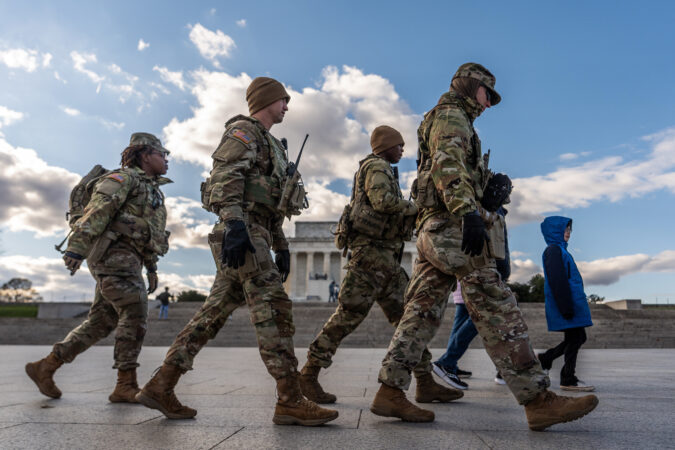
    WASHINGTON — Members of Congress clashed Thursday over President Donald Trump’s use of the National Guard in American cities, with Republicans saying the deployments were needed to fight lawlessness while Democrats called them an extraordinary abuse of military power that violated states’ rights.

    Top military officials faced questioning over the deployments for the first time at the hearing before the Senate Armed Services Committee. They were pressed by Democrats over the legality of sending in troops, which in some places were done over the objections of mayors and governors, while Trump’s Republican allies offered a robust defense of the policy.

    It was the highest level of scrutiny, outside a courtroom, of Trump’s use of the National Guard in U.S. cities since the deployments began and came a day after the president faced another legal setback over efforts to send troops to support federal law enforcement, protect federal facilities and combat crime.

    “In recent years, violent crime, rioting, drug trafficking and heinous gang activity have steadily escalated,” said Mississippi Sen. Roger Wicker, the committee chairman. The deployments, he said, are “not only appropriate, but essential.”

    Democrats argued they are illegal and contrary to historic prohibitions about military force on U.S. soil.

    Sen. Tammy Duckworth (D., Ill.) said domestic deployments traditionally have involved responding to major floods and tornadoes, not assisting immigration agents who are detaining people in aggressive raids.

    “Trump is forcing our military men and women to make a horrible choice: uphold their loyalty to the Constitution and protect peaceful protesters, or execute questionable orders from the president,” said Duckworth, a combat veteran who served in the Illinois National Guard.

    Democrats ask military officials about illegal orders

    Democrats asked military leaders about Trump’s comments about “the enemy within” America and whether service members could be asked to follow orders that violate their oath.

    Sen. Elissa Slotkin (D., Mich.) said Trump’s comments about rigged elections and his rhetoric about political opponents have created a “trust deficit” and fueled suspicions about the domestic use of the military.

    She asked Charles Young III, principal deputy general counsel at the Pentagon, whether Trump could place troops at polling places during next year’s election and whether such an order would be legal.

    The idea “sends a shiver down the spine of every American, and should whether you’re a Democrat or a Republican,” Slotkin said.

    Young said he could not answer such a question without details, calling it “a hypothetical situation.” He said the Supreme Court has ruled that the president has exclusive authority to decide whether an emergency exists that could require a National Guard response.

    Slotkin was one of six Democratic lawmakers who recorded a video calling on troops to uphold the Constitution and defy “illegal orders.” In response, Trump accused the lawmakers, all military or intelligence veterans, of sedition “punishable by DEATH.”

    Sen. Elizabeth Warren (D., Mass.) pressed Young on news reports that the administration had dismissed advice from military lawyers on deploying Guard and bombing alleged drug boats in Latin America.

    “If an attorney raises concerns about the legality of military operations, do you think the appropriate response is to tell them to shut up and get out of the way?” Warren asked Young.

    Young denied those reports, saying leadership is “very attentive” to the concerns of military lawyers.

    When asked about Trump’s statements about an “invasion within” or an “enemy within,” Air Force Gen. Gregory Guillot, commander of U.S. troops in North America, said, “I do not have any indications of an enemy within.”

    Republicans and Democrats see the deployments differently

    In one exchange, Sen. Mazie Hirono (D., Hawaii) noted how former Defense Secretary Mark Esper alleged that Trump inquired about shooting protesters during the George Floyd demonstrations. She asked whether a presidential order to shoot protesters would be lawful.

    Young said he was unaware of Trump’s previous comments and that “orders to that effect would depend on the circumstances.”

    Republicans countered that Trump was within his rights — and his duty — to send in troops.

    Republican Sen. Tim Sheehy of Montana, a former Navy SEAL officer, argued during the hearing that transnational crimes present enough of a risk to national security to justify military action, including on U.S. soil.

    Sheehy claimed there are foreign powers “actively attacking this country, using illegal immigration, using transnational crime, using drugs to do so.”

    Military leaders point to training

    During questioning, military leaders highlighted the duties that National Guard units have carried out. Troops are trained for their specific missions, they said, and are prohibited from using force unless in self-defense.

    Since the deployments began, only one civilian — in California — has been detained by National Guard personnel, Guillot said. He says the troops are trained to de-escalate tense interactions with people, but do not receive any specific training on mental health episodes.

    “They can very quickly be trained to conduct any mission that we task of them,” Guillot said.

    During the hearing, senators also offered their sympathies after two West Virginia National Guard members deployed to Washington were shot just blocks from the White House in what the city’s mayor described as a targeted attack. Spc. Sarah Beckstrom died a day after the Nov. 26 shooting, and her funeral took place Tuesday. Staff Sgt. Andrew Wolfe remains in a Washington hospital.

    Hearing follows court setback for Trump

    A federal judge in California on Wednesday ruled that the administration must stop deploying the California National Guard in Los Angeles and return control of the troops to the state. The judge put the decision on hold until Monday, and the White House said it plans to appeal.

    Trump called up more than 4,000 California National Guard troops in June following protests over immigration raids. It marked the first time in decades that a state’s National Guard was activated without a governor’s request and marked a significant escalation in the administration’s efforts to carry out its mass deportation policy.

    Trump also had announced National Guard members would be sent to Illinois, Oregon, Louisiana, and Tennessee. Other judges have blocked or limited the deployment of troops to Portland, Oregon, and Chicago, while Guard members have not yet been sent to New Orleans.

  • Senate rejects extension of healthcare subsidies as costs are set to rise for millions of Americans

    Senate rejects extension of healthcare subsidies as costs are set to rise for millions of Americans

    WASHINGTON — The Senate on Thursday rejected legislation to extend Affordable Care Act tax credits, essentially guaranteeing that millions of Americans will see a steep rise in costs at the beginning of the year.

    As Republicans and Democrats have failed to find compromise, senators voted on two partisan bills instead that they knew would fail — the Democratic bill to extend the subsidies, and a Republican alternative that would have created new health savings accounts.

    It was an unceremonious end to a monthslong effort by Democrats to prevent the COVID-19-era subsidies from expiring on Jan. 1, including a 43-day government shutdown that they forced over the issue.

    Ahead of the votes, Senate Democratic Leader Chuck Schumer of New York warned Republicans that if they did not vote to extend the tax credits, “there won’t be another chance to act,” before premiums rise for many people who buy insurance off the ACA marketplaces.

    “Let’s avert a disaster,” Schumer said. “The American people are watching.”

    Republicans and Democrats never engaged in meaningful or high-level negotiations on a solution, even after a small group of centrist Democrats struck a deal with Republicans last month to end the shutdown in exchange for a vote. Most Democratic lawmakers opposed the move as many Republicans made clear that they wanted the tax credits to expire.

    The deal raised hopes for a compromise on healthcare. But that quickly faded with a lack of any real bipartisan talks.

    “We failed,” said Alaska Sen. Lisa Murkowski, one of four Republicans who voted for the Democratic bill, after the vote. “We’ve got to do better. We can’t just say ‘happy holidays, brace for next year.’”

    A Republican alternative

    The dueling Senate votes were the latest political messaging exercise in a Congress that has operated almost entirely on partisan terms, as Republicans pushed through a massive tax and spending cuts bill this summer using budget maneuvers that eliminated the need for Democratic votes. In September, Republicans tweaked Senate rules to push past a Democratic blockade of all of Trump’s nominees.

    On healthcare, Republicans similarly negotiated among themselves, without Democrats. The health savings accounts in the GOP bill that they eventually settled on would give money directly to consumers instead of to insurance companies, an idea that has been echoed by President Donald Trump.

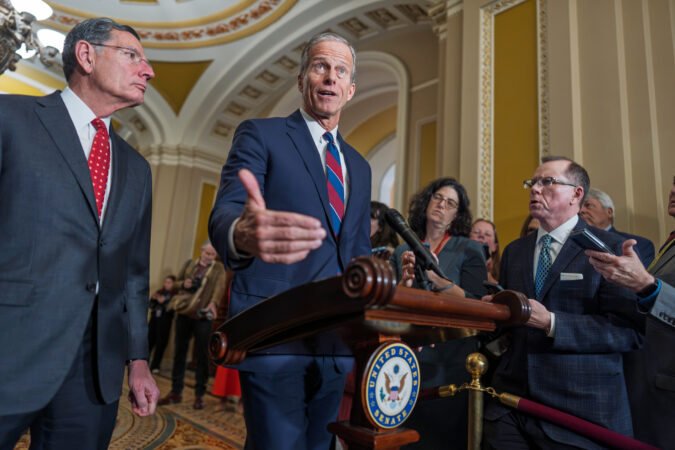
    Senate Majority Leader John Thune (R., S.D.) said ahead of the vote that the Democrats’ simple extension of the subsidies is “an attempt to disguise the real impact of Obamacare’s spiraling healthcare costs.”

    But Democrats immediately rejected the GOP plan, saying that the accounts wouldn’t be enough to cover costs for most consumers.

    The Senate voted 51-48 not to move forward on the Democratic bill, with four Republicans — Maine Sen. Susan Collins, Missouri Sen. Josh Hawley and Alaska Sens. Murkowski and Dan Sullivan — voting with Democrats. The legislation needed 60 votes to proceed, as did the Republican bill, which was also blocked on a 51-48 vote.

    An intractable issue

    The votes were the latest failed salvo in the debate over the Affordable Care Act, former President Barack Obama’s signature law that Democrats passed along party lines in 2010 to expand access to insurance coverage.

    Republicans have tried unsuccessfully since then to repeal or overhaul the law, arguing that healthcare is still too expensive. But they have struggled to find an alternative. In the meantime, Democrats have made the policy a central political issue in several elections, betting that the millions of people who buy healthcare on the government marketplaces want to keep their coverage.

    “When people’s monthly payments spike next year, they’ll know it was Republicans that made it happen,” Schumer said in November, while making clear that Democrats would not seek a compromise.

    Even if they view it as a political win, the failed votes are a loss for Democrats who demanded an extension of the benefits during the shutdown — and for the millions of people facing premium increases on Jan. 1.

    Maine Sen. Angus King, an independent who caucuses with Democrats, said the group tried to negotiate with Republicans after the shutdown ended. But, he said, the talks became unproductive when Republicans demanded language adding new limits for abortion coverage that were a “red line” for Democrats. He said Republicans were going to “own these increases.”

    House to try again

    Republicans have used the looming expiration of the subsidies to renew their longstanding criticisms of the ACA, also called Obamacare, and to try, once more, to agree on what should be done.

    In the House, Speaker Mike Johnson (R., La.) has promised a vote next week on some type of healthcare legislation. Republicans weighed different options in a conference meeting on Wednesday, with no apparent consensus.

    Murkowski and other Senate Republicans who want to extend the subsidies expressed hope that the House could find a way to do it. GOP leaders were considering bills that would not extend the tax credits, but some Republicans have launched longshot efforts to try to go around Johnson and force a vote.

    “Hopefully some ideas emerge” before the new year, said Republican Sen. Thom Tillis of North Carolina, who has been pushing his colleagues for a short-term extension.

    “Real Americans are paying the price for this body not working together in the way it should,” said Alabama Sen. Katie Britt, a Republican.

    Republican moderates in the House who could have competitive reelection bids next year are pushing Johnson to find a way to extend the subsidies. But more conservative members want to see the law overhauled.

    Rep. Kevin Kiley (R., Calif.) has also been pushing for a short extension.

    If they fail to act and healthcare costs go up, the approval rating for Congress “will get even lower,” Kiley said.

  • Why these red state Republicans are resisting Trump’s efforts to expand GOP power

    Why these red state Republicans are resisting Trump’s efforts to expand GOP power

    INDIANAPOLIS — In 44 years in Indiana’s legislature, Vaneta Becker had never before had a call with the White House.

    President Donald Trump was on the line that day in October, urging her and her GOP colleagues to redraw the state’s congressional map to help Republicans in next year’s midterm elections. She told the White House she opposed the idea, and a week or so later got a voice message from an aide asking for a follow-up conversation. Becker called back to leave a message of her own.

    “I’m not going to change my position,” Becker, 76, recalled saying. “You’re wasting your time on me, so just focus on somebody else.”

    Indiana, a state Trump won by 19 percentage points last year, is serving up an unusual amount of resistance to his plan to carve up congressional districts around the country. Since this summer, Republicans in four other states have rejiggered their maps to give their party as many as nine more seats part of a larger plan aimed at retaining power in Congress after next year’s elections.

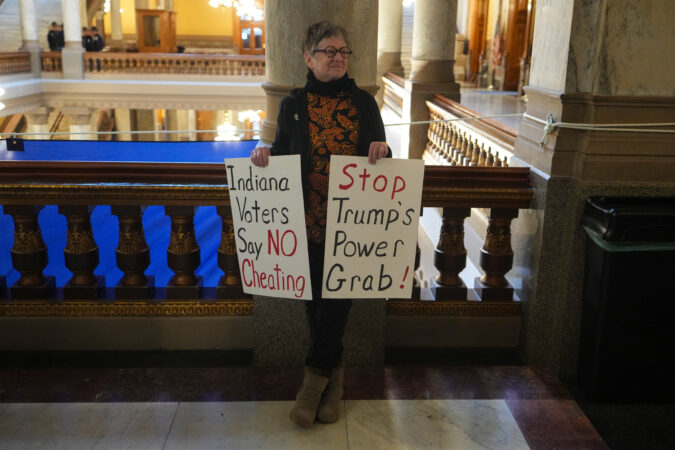
    But in Indiana, a contingent of GOP state senators has politely but persistently said no. The GOP opponents told Trump and Gov. Mike Braun (R) they weren’t on board and last month 19 of them voted with Democrats to end a legislative session without acting on redistricting. Trump and his allies kept pressing, and the state House passed a plan last week that would likely give Republicans all nine of the state’s congressional districts, two more than they have now.

    The leader of the State Senate, Rodric Bray, agreed to bring the senators back to the state capitol to take up the issue even though he was among those who had voted to end the session. They are expecting to vote Thursday.

    Opponents include longtime Republican lawmakers like Becker who got involved in politics years before the rise of Trump and his Make America Great Again movement. Hoosiers bristle at meddling from Washington, even when it comes from allies, the opponents say.

    The state senators have been increasingly on edge in recent weeks as they endured intimidation — political and physical — and a stream of hoax police reports that seemed designed to draw large law enforcement responses to their homes.

    States draw their congressional districts after the census, and lawmakers from both parties often try to maximize their advantage. Years of litigation sometimes follow, but state lawmakers typically don’t redraw their lines in the middle of the decade unless a court orders it. Trump has rejected the usual way of doing business, demanding Republican-led states make immediate changes.

    So far, Republicans have not netted as many seats as they’d hoped because Democrats have counteracted them by adopting a new map in California and are trying to do the same in Virginia and other states. Opponents of a new GOP-friendly map in Missouri submitted more than 300,000 signatures to the state to try to block it from going into effect until a referendum on it can be held.

    But the GOP resistance in Indiana stands apart, in large part because Republicans across the country have readily acquiesced to Trump’s demands and threats on a range of issues.

    Trump may yet prevail. But the rare instance of pushback here could offer warning signs to Trump that his grip on the party may be loosening amid slides in his public approval rating. A vote against a new map in Indiana would add to his woes as Republicans fret over their ability to hold onto the House next year.

    What happens in Indiana will have effects elsewhere. If Republicans reject the map here, Trump may put more pressure on officials in other states. If they go along with the plan, Democrats in Illinois and Maryland who have resisted redistricting may feel they need now to jump into the fight.

    Time is running short because election officials, candidates and voters need to know where the lines are well ahead of next year’s primaries. But the fight over maps will continue for months. Republicans in Florida are poised to draw a new map and GOP lawmakers in Utah are trying to reverse a court decision that is expected to give Democrats one of the state’s districts.

    In Indiana, lawmakers have been debating whether to redraw the lines since August, but they didn’t see the proposed map until the House unveiled it last week. The map would break Marion County, the home to Indianapolis and the state’s largest African American population, into four districts, diluting Democratic votes. It would likely doom the reelection chances of Democratic Reps. Frank J. Mrvan and André Carson, the only Black member of Indiana’s congressional delegation.

    Trump has hosted Indiana officials at the White House. He’s dispatched Vice President JD Vance to the state twice. In October, he and his aides held their conference call with Indiana state senators to talk up redistricting. At the end of the call, the senators were told to press a number on their phone to indicate whether they supported redrawing the map, even though they were yet to see how the lines would change.

    On Wednesday night, Trump lashed out at the State Senate leader on Truth Social, calling Bray “the only person in the United States of America who is against Republicans picking up extra seats” and warning that lawmakers who oppose the changes were at risk of losing their seats.

    A White House official said earlier that Trump’s team is “not arm twisting. Just outlining the stakes and reminding them western civilization stands in the balance of their decision.”

    About 800 of Becker’s constituents in southwestern Indiana have told her they are against the plan and about 100 have told her they’re for it, she said. Sitting in her wood-paneled cubicle Tuesday in the state capitol, she slid a constituent’s letter out of its envelope.

    “Mid-decade redistricting at the request of President Trump will unnecessarily intensify the already deep partisan divisions in our country,” the man wrote. “Even bringing this topic up in the Indiana legislature will ratchet up the antagonism.”

    Voters know the push is coming from Trump, and many are not afraid to criticize him for it, even if they otherwise support the president, she said. Becker declined to say whether she’d voted for Trump but said she’s “not crazy about him,” especially after the Jan. 6, 2021, attack on the U.S. Capitol.

    Trump is not letting up on his push. Last month the president called out State Sen. Greg Goode (R) in a post on Truth Social, saying he was “very disappointed” that he opposed redistricting even though Goode had not taken a position. Later that day, Goode said, someone falsely told police he had murdered his wife and barricaded himself in his house. Police kicked in the door just after Goode got out of the shower, while his wife and son were getting Christmas decorations in the basement, and officers pointed their guns at Goode’s chest, he said.

    Goode, who serves as the state director for U.S. Sen. Todd Young (R., Ind.), said he didn’t blame Trump for the incident. He got a call from Trump the next day, which he described as polite. Trump called Goode again on Monday, as the state senator was listening to the redistricting debate in committee.

    “It was not a pressured call at all,” Goode said. “The overarching message really from day one is the importance for the Republican Party to maintain control of the United States House of Representatives.”

    Goode said he won’t decide how he’s voting until he hears the final debate among the senators. He’s voted for Trump three times and takes his opinion seriously, but also is listening closely to his constituents, who have overwhelmingly told him they oppose redistricting, he said.

    On Friday, hours after the State House passed the map, Trump named Goode and eight other state senators in a social media post as needing “encouragement to make the right decision.” The conservative group Turning Point Action has claimed it will team up with other Trump-aligned organizations to spend $10 million or more on primaries in 2026 and 2028 against GOP state senators in Indiana who vote against the map. Several Republicans, including Becker, said they’re skeptical the groups would spend so much against members of their own party.

    State Sen. Travis Holdman (R) got a call from the White House a couple of weeks ago asking if he would come to Washington to talk about redistricting, but he declined because he couldn’t miss work as a banking consultant. Adopting a new map now would be unfair, he said, and he doesn’t think the president’s team could change his mind.

    “I voted for Donald Trump in every election,” he said. “I really agree with his policies. We just disagree on this issue.”

    Republicans control the State Senate 40-10, and at least 16 of them would need to vote with Democrats to sideline the map.

    Supporters of the altered map said they want to ensure Republicans hold onto Congress and are responding to districts Democrats drew favoring their party years ago in states they control. Indiana State Sen. R. Michael Young told his colleagues on Monday that the Supreme Court had blessed letting states draw districts for partisan advantage, holding up a recent decision that upheld a new map in Texas.

    “For all those people who think they’re lawyers in Indiana, who think it’s against the law or wrong, the Supreme Court of the United States says different,” he said.

    Others have made their opposition clear, with some saying they’re pushing back on what they call bullying. State Sen. Mike Bohacek (R) grew incensed last month when Trump called Minnesota Gov. Tim Walz (D) “seriously retarded” in a social media post. Bohacek, who has a daughter with Down syndrome, said in a social media post that Trump’s “choice of words have consequences.”

    “I will be voting NO on redistricting, perhaps he can use the next 10 months to convince voters that his policies and behavior deserve a congressional majority,” Bohacek wrote in his post.

    In the State House, Rep. Ed Clere was among 12 Republicans to vote against the map. He believes Trump’s MAGA movement is starting to crack, but doesn’t think that’s what’s behind the GOP resistance to redistricting in Indiana. It stems from a sense of independence that is, he said, “part of Indiana’s DNA.”

    Becker agrees.

    “Hoosiers are very independent,” she said. “And they’re not used to Washington trying to tell us what to do.”

    GRAPHIC

  • Would Pa. coal miners really turn down a ‘beautiful, magnificent’ Manhattan penthouse, as Trump claims? We asked them.

    Would Pa. coal miners really turn down a ‘beautiful, magnificent’ Manhattan penthouse, as Trump claims? We asked them.

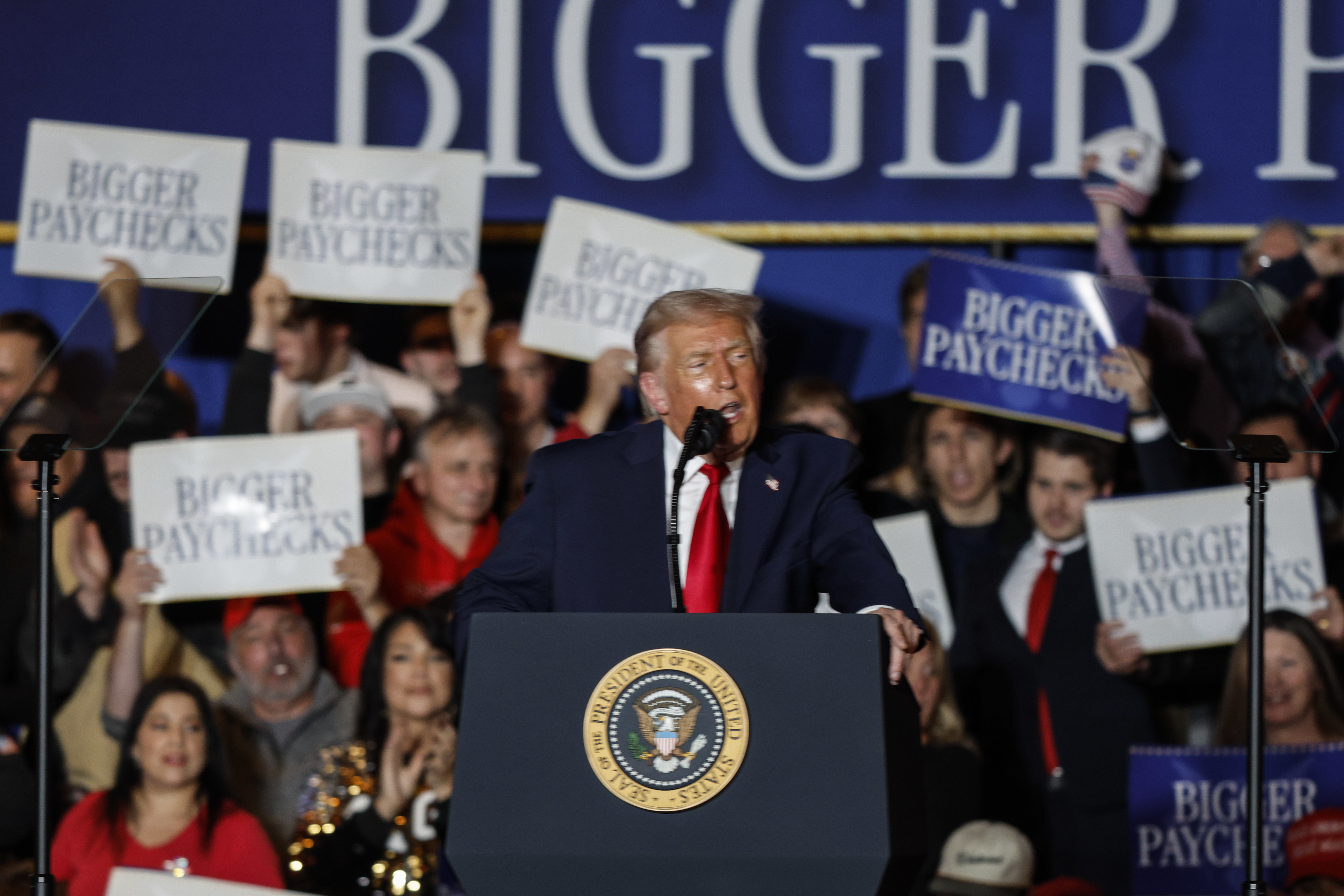
    President Donald Trump professed his admiration of miners Tuesday night at his Poconos rally, contending the brave workers are so enamored of their profession that Trump wouldn’t be able to convince them to swap jobs with anyone — including himself.

    “I love miners. … They wouldn’t trade jobs with me if I gave them a beautiful, magnificent penthouse in the middle of Manhattan, where I used to live — if I gave them the most beautiful penthouse — they wouldn’t take it,” Trump told the crowd at the Mount Airy Casino Resort in Mount Pocono.

    “They’d rather go 10,000 feet underground and dig. That’s what they want.”

    Can that be true?

    Trump has long extolled the virtues of “beautiful, clean coal,” as he calls it, during nearly a decade of campaigning in the Keystone State.

    President Donald Trump makes his first stop on an “economic tour,” in Mt. Pocono Pa., Tuesday, December 9, 2025 .

    But would miners really prefer to toil in the damp darkness, somewhere between the buried dead and the devil, rather than run the free world in a clean blue suit, with access to a lavish high-rise in the gorgeous sunshine they forsake eight hours a day?

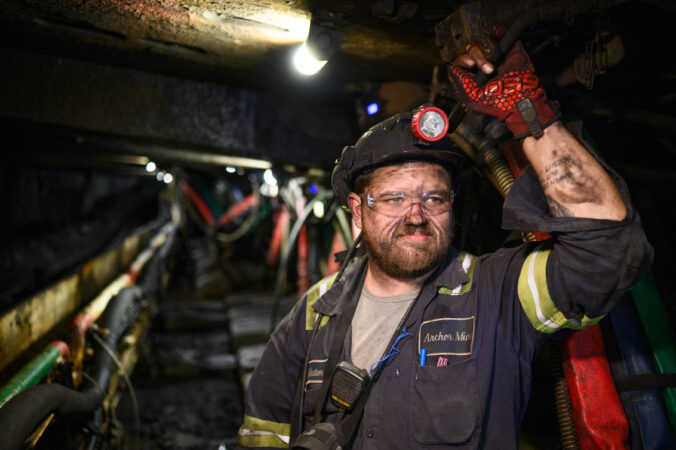
    “Yes, of course,” said Edmund Neidlinger, 75, a fourth-generation coal miner who dug black Pennsylvania anthracite in Schuylkill County and its environs for 40 years. He now works as mine foreman at the Lackawanna Coal Mine Tour, a Scranton tourist attraction.

    “If I was offered any other job when I was mining, I would have turned it down,” he said. “And I wouldn’t have traded the life I led for a penthouse. No way.”

    There is, Neidlinger believes, a passion just a few special people hold toward working with a band of headlamped brothers, risking entrapment, methane explosions, black lung from dust, and cave-echoing machine noise down in an inky coal seam to perform the ninth-most-dangerous job in the world (logging is the riskiest), as the Occupational Safety and Health Administration tells it.

    “You fall in love with this job,” Neidlinger said. “Very few people can do it. Most miners feel like it’s in their blood.”

    While it’s not in his veins, Trump has made coal mining a big part of his energy policy. The industry is declining, experts say, but he has signed executive orders to expand it, and has opened up new land for mining while directing agencies to scotch regulations that “discriminate against coal production or coal-fired electricity generation,” as one presidential order reads.

    Not everyone agrees that tempting miners to abandon their coal mines would be all that difficult.

    “I’m sure the average miner would turn down a jet plane, private island, and gold-plated toilet, too!” said a sarcastic Mark Ferguson, cofounder of Woodshed: An Appalachian Joint, an online magazine dedicated to the culture of the region responsible for an immensity of U.S. coal mined over the centuries.

    Cautioning people not to romanticize the lore and lure of mining, Ferguson pointed out that “folks here literally had to go war with mining companies to be paid in real U.S. currency, not scrip that could only be used at the company store.

    “They know the value of a dollar, and sure as hell wouldn’t turn a penthouse down.”

    The thing about mining you have to understand is, for most people, it starts out as a job you have to do, said Bob Black, 68, who dug coal for half a century in Allegheny County.

    As a young man, Black wanted to be a teacher, but after his father died, Black set the dream aside and descended into the earth to work at the higher-paying job to support the family.

    “You go into the mine, blink your eyes, and you’ve been doing it for 30 years,” Black said. “By then, you can’t imagine doing anything else.”

    There were “days you hate, and days you love,” said Black, who ultimately became a mine manager. “Every ex-miner would tell you they miss fighting Mother Nature — like when the roof falls in, or when you’re dealing with water coming in,” he said. “You can’t run to Ace Hardware for help. You find solutions.”

    What you remember most, though, is the company of soot-faced guys, he said.

    “It’s like a city down there, with 250 men working, spread out over 15 miles,” Black said.

    “The camaraderie. That’s what I miss most.”

    So does Black think Trump was right? Would he have refused to trade 50 years of fellowship and labor in perpetual midnight for anything in the world?

    “Oh, no,” Black said. “I’d have taken the penthouse. For sure.”

    Staff writer Julia Terruso contributed to this article.

  • How a U.S. admiral decided to kill two boat strike survivors

    How a U.S. admiral decided to kill two boat strike survivors

    In the minutes after U.S. forces attacked a suspected drug smuggling boat near Trinidad, Adm. Frank M. Bradley, the commander overseeing the operation, faced a choice.

    A laser-guided bomb had killed nine of the 11 people on board, sunk the boat’s motor and capsized the vessel’s front end, according to people who have viewed or been briefed on a classified video of the operation. As smoke from the blast cleared, a live surveillance feed provided by a U.S. aircraft high overhead showed two men had survived and were attempting to flip the wreckage.

    Ahead of the Sept. 2 mission, Defense Secretary Pete Hegseth had given an order to U.S. forces to kill the passengers, sink the boat and destroy the drugs, three people familiar with the operation said. It appeared to Bradley that none of those objectives had been achieved, the admiral would later recount for lawmakers.

    The video feed showed that the two men were struggling to stay atop the flotsam, which people who’ve seen the footage described as roughly the size of a dining room table. Bradley turned to the military lawyer advising him and requested input, according to members of Congress who spoke with him privately last week and people later briefed on those conversations. Under the law of armed conflict, were the men now “shipwrecked” and therefore out of the fight, rendering them unlawful targets?

    The admiral decided that definition did not apply, these people said. Instead, what Bradley explained to lawmakers left some with the impression that there was a prevailing lack of certainty — about the existence of any drugs beneath the wreckage and whether the survivors had a means to call for help or intended to surrender — when he concluded that further action was warranted.

    He ordered a second strike, killing both men. Moments earlier, the video feed had shown them waving their arms and looking skyward, people who saw the footage said. It was unclear, they added, why they were doing so.

    The 30-plus minutes that elapsed between the first strike and the second has become the most consequential moment in Bradley’s three-decade military career — one that includes direct involvement in more than 1,000 lethal strikes governed by the law of armed conflict central to understanding the events of Sept. 2 and whether the strike survivors were lawful targets. The episode has put the admiral and his advisers under a spotlight alongside Hegseth, who has expressed support for Bradley while attempting to distance himself from the fallout.

    Bradley defended his actions when summoned to Capitol Hill last week, telling lawmakers he weighed the fate of the survivors with the understanding that the Trump administration has argued illicit drugs are weapons responsible for killing Americans, and that those who traffic them are not criminals but enemy combatants. U.S. intelligence, he said, showed that everyone on the boat was a “narco-terrorist,” consistent with the administration’s definition, which allowed for deadly force. His testimony provided lawmakers with the fullest account of the operation since the publication of a Washington Post report on Nov. 28 revealing Hegseth’s authorization ahead of the first attack to kill the entire crew and Bradley’s order of a second strike that killed the two survivors.

    Law of war experts and some lawmakers have challenged the admiral’s reasoning and cast doubt on the lawfulness of using the military to kill alleged criminals.

    The military lawyer who advised the admiral, whom The Post is not identifying because they serve in a secretive unit, explained to Bradley how the law of armed conflict defines “shipwrecked,” these people said. International law defines “shipwrecked” persons as those who “are in peril at sea” as a result of a mishap affecting their vessel “and who refrain from any act of hostility.” Combatants who are shipwrecked receive special protection because, unlike troops on land, they cannot take refuge, experts note.

    Bradley spent about eight hours meeting with more than a dozen lawmakers Dec. 4. Four people familiar with those sessions said that he affirmed having sought real-time legal advice, but that he did not say whether his military lawyer considered the survivors shipwrecked and out of the fight.

    There was dissent in the operations room over whether the survivors were viable targets after the first strike, according to two people. What the lawyer advised, though, and whether they rendered a definitive opinion remains unclear.

    A spokesperson for U.S. Special Operations Command, where Bradley is the top commander, declined to comment. The military attorney did not respond to requests for comment.

    Former military lawyers said that in such situations a commander’s top legal adviser would be expected to offer an assessment, but their role is only to advise, not to approve a strike.

    This report is based on the accounts of 10 people who either spoke directly with Bradley on Capitol Hill last week, were briefed on his conversations afterward or are otherwise familiar with the operation. Most spoke on the condition of anonymity because the matter is highly sensitive and Bradley’s communication with lawmakers occurred in classified settings.

    The chain of command

    Two Republican-led committees in Congress have opened inquiries into the Sept. 2 operation, though on Tuesday, Rep. Mike Rogers (R., Ala.), who heads the House Armed Services Committee, said that he was satisfied with the information he had received and planned to end his probe once other members of the panel are given an opportunity to see unedited video of the operation, as he has. A separate Senate inquiry continues.

    President Donald Trump appeared to support releasing video footage of the operation before abruptly backtracking this week and deferring to Hegseth on whether to do so. Hegseth has been noncommittal, saying the Pentagon is “reviewing” the footage to ensure it would not expose military secrets.

    Democrats have demanded fuller investigations and called on the administration to share more evidence with lawmakers. Sen. Mark Warner (D., Va.), the Senate Intelligence Committee’s senior Democrat, said after meeting with Hegseth and other officials Tuesday that he was seeking written documentation of the opinion rendered by Bradley’s military lawyer.

    The first strike Sept. 2 was carried out with a laser-guided GBU-69, according to people familiar with Bradley’s briefings. The munition exploded just above the crew, a setting designed to maximize the blast and the spread of shrapnel fragments. The follow-on strike was taken with a smaller AGM-176 Griffin missile, which killed the two men on impact, people familiar with the video footage said. U.S. forces then fired two additional Griffins at the wreckage to sink it.

    While Bradley made the decision to conduct the follow-on strike that killed the two survivors, Hegseth was the operation’s target engagement authority, meaning he authorized the use of force and ultimately was responsible for the strikes ordered, people familiar with the matter said.

    Hegseth has said that he watched live video of the initial attack but left for other meetings minutes later and was unaware initially that the first strike had left two men alive. It was a couple of hours, Hegseth has said, before he learned that Bradley ordered the second strike.

    Sean Parnell, a spokesman for Hegseth, said in a statement, “We are not going to second-guess a commander who did the right thing and was operating well within his legal authority.”

    Gen. Dan Caine, who as chairman of the Joint Chiefs of Staff is the military’s top officer, saw the full video of the Sept. 2 strike for the first time Dec. 4, when he joined Bradley’s meetings with lawmakers, two U.S. officials said. In a statement for this report, a spokesman for Caine said the chairman has “trust and confidence” in Bradley and military commanders “at every echelon.”

    The admiral’s defense

    The Sept. 2 operation was the first in what has become an extended campaign to target suspected drug runners in the waters around Latin America. In strikes on more than 20 boats, U.S. forces have killed nearly 90 people to date, according to public notices from the Trump administration.

    At the core of Bradley’s defense of the second strike, according to several people familiar with his conversations on Capitol Hill, was his assertion that the attack was not directed at the two survivors but at the boat wreckage and any cocaine it may have sheltered.

    The laws of war stipulate that military commanders must consider the collateral damage of a strike only if the action could pose a threat to civilians, said Geoffrey Corn, a retired Army lawyer. By labeling suspected drug smugglers as combatants in an armed conflict against Americans, as the Trump administration has done, the Defense Department can argue that the military did not need to consider the harm to survivors when striking again, Corn said.

    But many experts, Corn among them, dispute that the U.S. is in an “armed conflict” with cartel groups. Corn also noted that even if they are combatants, once shipwrecked, feasible measures must be taken to try to rescue them before attacking the target again, he said. “That to me is the most troubling aspect of the attack,” he said.

    Bradley’s contention that he was targeting the boat rather than the people, Corn said, fails to explain why the admiral deemed it necessary to launch the second strike rather than first trying to rescue the survivors.

    The admiral told lawmakers that intelligence gathered ahead of the operation indicated the boat being targeted was expected to transfer its cargo to another vessel while both were at sea. After the first strike, Bradley explained, he and his team were unable to rule out whether the men, who were shirtless, had a communications device either on their person or somewhere under the vessel’s wreckage that could have been used to call for help.

    U.S. forces did not intercept any communications from the two survivors after the first strike, Bradley told lawmakers.

    The admiral also theorized, multiple people said, that the two survivors could have drifted to shore or found a way to sail the wreckage to their intended rendezvous point. When the U.S. aircraft providing the live video feed scanned the surrounding area, it did not find another vessel coming to the boat’s aid. And the admiral conceded to some lawmakers that the survivors probably would not have been able to flip the wreckage, said one lawmaker and a U.S. official familiar with Bradley’s conversations.

    The doubts that have emerged

    Todd Huntley, a former director of the Navy’s international law office, which handles law of the sea matters, said in an interview with The Post that the legal definition for being shipwrecked does not require that people are drowning or wounded.

    “They just have to be in distress in water,” said Huntley, a former military lawyer who advised Special Operations forces.

    Huntley also said that the potential presence of a communications device should have been irrelevant. “You can’t kill somebody in the water merely because they have a radio,” he said. The prospect of a rendezvous with another vessel does not indicate an intent to engage in hostilities or prove the survivors posed a threat, he added. “That is such a far-out theory,” Huntley said.

    Trump and other Republicans have framed the administration’s counternarcotics campaign as a necessary measure to defend Americans from fentanyl, the leading cause of drug overdoses in the United States. But the Sept. 2 strike — and most of those that have followed — targeted a boat believed to be ferrying cocaine. Fentanyl smuggled into the U.S. mostly comes through border crossings.

    People familiar with Bradley’s account to lawmakers said that the cargo in this case was heading next to Suriname, a small country east of Venezuela, not the United States. As The Post and others have reported, most of the narcotics that move through the Caribbean are headed toward Europe and Western Africa rather than the U.S.

    “That further underscores that this boat was not a threat to the United States and not a lawful target,” Huntley said.

    While speaking with lawmakers, Bradley said he looked for signs the men were surrendering, such as waving a cloth or holding up their arms. The admiral noted that he saw no such gesture, and did not interpret their wave as a surrender, people familiar with his interviews said.

    To legal experts, Bradley’s assertion that he scanned for a sign of surrender reflected a foundational flaw with the Trump administration’s lethal force campaign: The laws of war weren’t written to address the behavior of criminal drug traffickers, they said.

    On Sept. 2, the 11 passengers on board the targeted boat were almost certainly unaware the Trump administration had declared “war” on them, people familiar with the operation said. It’s unclear whether the strike survivors even realized a U.S. military aircraft was responsible for the explosion that had occurred, these people familiar said, or whether they knew how to indicate surrender — or that surrender was even an option.

    In the weeks leading up to the attack, the Defense Department ran simulations that showed there was the potential for people to survive a first strike, three people familiar with the matter said. That did not appear to affect military planning for this operation. On the day of the attack, the U.S. military had no personnel or equipment on hand to rescue anyone.
  • MyPillow founder and Trump supporter Mike Lindell says he’s running for Minnesota governor in 2026

    MyPillow founder and Trump supporter Mike Lindell says he’s running for Minnesota governor in 2026

    SHAKOPEE, Minn. — Mike Lindell, the fervent supporter of President Donald Trump known to TV viewers as the “MyPillow Guy,” officially entered the race for Minnesota governor Thursday in hopes of winning the Republican nomination to challenge Democratic Gov. Tim Walz.

    “I’ll leave no town unturned in Minnesota,” Lindell told The Associated Press in an interview ahead of a news conference set for Thursday.

    He said he has a record of solving problems and personal experiences that will help businesses and fight addiction and homelessness as well as fraud in government programs. The fraud issue has particularly dogged Walz, who announced in September that he’s seeking a third term in the 2026 election.

    A TV pitchman and election denier

    Lindell, 64, founded his pillow company in Minnesota in 2009 and became its public face through infomercials that became ubiquitous on late-night television. But he and his company faced a string of legal and financial setbacks after he became a leading amplifier of Trump’s false claims that the 2020 election was stolen. He said he has overcome them.

    “Not only have I built businesses, you look at problem solution,” Lindell said in his trademark rapid-fire style. “I was able to make it through the biggest attack on a company, and a person, probably other than Donald Trump, in the history of our media … lawfare and everything.”

    While no Republican has won statewide office in Minnesota since 2006, the state’s voters have a history of making unconventional choices. They shocked the world by electing former professional wrestler Jesse Ventura as governor in 1998. And they picked a veteran TV pitchman in 1978 when they elected home improvement company owner Rudy Boschwitz as a U.S. senator.

    Lindell has frequently talked about how he overcame a crack cocaine addiction with a religious conversion in 2009 as MyPillow was getting going. His life took another turn in 2016 when he met the future president during Trump’s first campaign. He served as a warm-up speaker at dozens of Trump rallies and co-chaired Trump’s campaign in Minnesota.

    Trump’s endorsement could be the key to which of several candidates wins the GOP nomination to challenge Walz. But Lindell said he doesn’t know what Trump will do, even though they’re friends, and said his campaign isn’t contingent on the president’s support.

    His Lindell TV streaming platform was in the news in November when it became one of several conservative news outlets that became credentialed to cover the Pentagon after agreeing to a restrictive new press policy rejected by virtually all legacy media organizations.

    Lindell has weathered a series of storms

    Lindell’s outspoken support for Trump’s false claims that the 2020 election was stolen triggered a backlash as major retailers discontinued MyPillow products. By his own admission, revenue slumped and lines of credit dried up, costing him millions. Several vendors sued MyPillow over billing disputes. Fox News stopped running his commercials. Lawyers quit on him.

    Lindell has been sued twice for defamation over his claims that voting machines were manipulated to deprive Trump of a victory.

    A federal judge in Minnesota ruled in September that Lindell defamed Smartmatic with 51 false statements. But the judge deferred the question of whether Lindell acted with the “actual malice” that Smartmatic must prove to collect. Smartmatic says it’s seeking “nine-figure damages.”

    A Colorado jury in June found that Lindell defamed a former Dominion Voting Systems executive by calling him a traitor, and awarded $2.3 million in damages.

    But Lindell won a victory in July when a federal appeals court overturned a judge’s decision that affirmed a $5 million arbitration award to a software engineer who disputed data that Lindell claimed proved Chinese interference in the 2020 election. The engineer had accepted Lindell’s “Prove Mike Wrong Challenge,” which he launched as part of his 2021 “Cyber Symposium” in South Dakota, where he promised to expose election fraud.

    The campaign ahead

    Lindell said his crusade against electronic voting machines will just be part of his platform. While Minnesota uses paper ballots, it also uses electronic tabulators to count them. Lindell wants them hand-counted, even though many election officials say machine counting is more accurate.

    Some Republicans in the race include Minnesota House Speaker Lisa Demuth, of Cold Spring; Dr. Scott Jensen, a former state senator from Chaska who was the party’s 2022 candidate; State Rep. Kristin Robbins, of Maple Grove; defense lawyer and former federal prosecutor Chris Madel; and former executive Kendall Qualls.

    “These guys haven’t lived what I live,” Lindell said.

    Lindell wouldn’t commit to abiding by the Minnesota GOP endorsement and forgoing the primary if he loses it, expressing confidence that he’ll win. He also said he’ll rely on his supporters to finance his campaign because his own finances are drained. “I don’t have the money,” he acknowledged.

    But he added that ever since word got out last week that he had filed the paperwork to run, “I’ve had thousands upon thousands of people text and call, saying from all around the country … ‘Hey, I’ll donate.’”

  • First of 30 oil lease sales planned for Gulf of Mexico draws $279 million

    First of 30 oil lease sales planned for Gulf of Mexico draws $279 million

    WASHINGTON — Oil companies offered $279 million for drilling rights in the Gulf of Mexico on Wednesday in the first of 30 sales planned for the region under Republican efforts to ramp up U.S. fossil fuel production.

    The sale came after President Donald Trump’s administration recently announced plans to allow new drilling off Florida and California for the first time in decades. That’s drawn pushback including from Republicans worried about impacts to tourism.

    Wednesday’s sale was mandated by the sweeping tax-and-spending bill approved by Republicans over the summer. Under that legislation, companies will pay a 12.5% royalty on oil produced from the leases. That’s the lowest royalty level for deep-water drilling since 2007.

    Thirty companies submitted bids, including industry giants Chevron, Shell and BP, federal officials said. The total amount of high bids was down by more than $100 million from the previous lease sale in the Gulf of Mexico, under former Democratic President Joe Biden, in December 2023.

    “This sale reflects a significant step in the federal government’s efforts to restore U.S. energy dominance and advance responsible offshore energy development,” said Laura Robbins, acting director of the Gulf region for the Bureau of Ocean Energy Management, which is part of the Interior Department.

    The administration’s promotion of fossil fuels contrasts sharply with its hostility to renewable energy, particularly offshore wind. A judge on Monday struck down an executive order from Trump blocking wind energy projects, saying it violated U.S. law.

    Environmentalists said the fossil fuel sales would put wildlife in the Gulf at an higher risk of dying in oil spills. Spills occur regularly in the region and have included the 2010 Deepwater Horizon tragedy that killed 11 workers in an oil rig explosion and unleashed a massive spill.

    “The Gulf is already overwhelmed with thousands of oil rigs and pipelines, and oil companies are doing a terrible job of cleaning up after themselves,” said Rachel Matthews with the Center for Biological Diversity.

    Erik Milito with the National Ocean Industries Association, an industry group, said the takeaway from Wednesday’s sale was that the Gulf “is open.”

    While results of individual lease sales may fluctuate, Milito added, “the real success is the resumption of a regular leasing cadence.”

    “Knowing that (another lease sale) is coming in March 2026 allows companies to plan, study, and refine their bids, rather than being forced to respond to the uncertainty of a politically-driven multiyear pause,” he said.

    At least two lease sales annually are mandated through 2039 and one in 2040.

    The sales support an executive order by Trump that directs federal agencies to accelerate offshore oil and gas development, Interior Secretary Doug Burgum said in a statement. He said it would unlock investment, strengthen U.S. energy security and create jobs.

    But Earthjustice attorney George Torgun said the Trump administration conducted the sale without analyzing how it would expose the entire Gulf region to oil spills, how communities could be harmed by pollution and how it could devastate vulnerable marine life such as the endangered Rice’s whale, which numbers only in the dozens and lives in the Gulf of Mexico.

    The environmental group has asked a federal judge to ensure that the lease sale and future oil sales better protect Gulf communities.

    Only a small portion of parcels offered for sale typically receive bids, in areas where companies want to expand their existing drilling activities or where they foresee future development potential. It can be years before drilling occurs.

    The drilling leases sold in December 2023 and during another sale in March 2023 are held up by litigation, according to Robbins. A federal court ruled this spring that Interior officials did not adequately account for impacts to planet-warming greenhouse gas emissions and the Rice’s whale.

  • Pennsylvania Democrats are beginning their efforts to flip the state Senate in 2026 with this suburban Philly seat

    Pennsylvania Democrats are beginning their efforts to flip the state Senate in 2026 with this suburban Philly seat

    A Montgomery County Democratic Committee leader has set his sights on unseating a Republican state senator in the suburbs — part of a larger effort by Pennsylvania Democrats to flip the state Senate for the first time in 31 years.

    Chris Thomas, the former executive director of the Montgomery County Democratic Committee, who left his role at the end of November to run for Senate, launched his bid on Wednesday to challenge State Sen. Tracy Pennycuick, a first-term senator representing parts of Montgomery and Berks Counties.

    Thomas, 29, is also an Upper Frederick Township volunteer firefighter and taught in a Philadelphia public school for a year prior to his jump into politics. His campaign is focused on increasing public school funding, finding a new funding stream for mass transit, and making Pennsylvania more affordable for working people.

    Pa. state Rep. Tracy Pennycuick (R., Montgomery County). (Photo: Pa. House of Representatives)

    Thomas announced his campaign with dozens of endorsements from state and local elected officials, including five sitting senators from the Philadelphia suburbs. He also secured the endorsement of House Majority Leader Matt Bradford (D., Montgomery), another driving force behind the Democratic efforts to flip the state Senate in the 2026 midterm election in attempts to control all three branches of Pennsylvania’s government.

    Pennsylvania is one of few divided legislatures in the country, where Democrats hold a narrow majority in the state House, 102-101, and Republicans control the Senate, 27-23.

    Gov. Josh Shapiro, a Democrat, and House Democrats frequently butt heads with GOP Senate leaders. By flipping two seats next November, Democrats would tie the chamber 25-25 and Democratic Lt. Gov. Austin Davis would act as a tiebreaker. But Democrats are targeting four GOP-held seats, three of which are in the Philadelphia suburbs, in hopes of gaining control in the upper chamber for the first time in 31 years.

    The GOP-controlled state Senate has been a thorn in the side of Shapiro and House Democrats, as the more conservative members of the GOP Senate caucus have objected to most spending increases and rejected top Democratic priorities, like a long-term revenue source for mass transit. The state budget, passed in November, was 135 days late, requiring school districts, counties, and social service providers to take out loans or lay off staff to continue operating during the monthslong standoff.

    Mirroring national efforts to win control of congressional seats, Pennsylvania Democrats are targeting GOP-held districts that President Donald Trump won in 2024 but Shapiro carried in 2022. With Pennsylvania’s popular first-term governor and potential 2028 contender back at the top of the ticket — and a methodical, behind-the-scenes effort by Shapiro to orchestrate a decisive year for Democrats in 2026 — Democrats see it as possible this time around.

    Thomas’ first order of business if he is elected to Harrisburg and Democrats flip the chamber: electing Democratic floor leaders in the chamber.

    “No meaningful legislation moves in Harrisburg unless we fix who’s in charge, and right now Sen. Pennycuick is supporting a Senate leadership that’s failed working people,” Thomas said.

    Pennycuick said she “welcomes this campaign as an opportunity” to talk about the successes she has achieved while serving in the state Senate, such as her support for public education funding, reducing overreaching regulations, and her bipartisan proposal to create safeguards around artificial intelligence.

    Kofi Osei, a Towamencin Township supervisor and Democrat, has also announced his bid for Senate District 24, which stretches along the northwestern parts of Montgomery County and into parts of Berks County.

    The state Senate Democratic Campaign Committee does not endorse candidates in a primary election, and will support whoever wins the Democratic nomination in Pennsylvania’s May 19 primary. However, State Sen. Vincent Hughes (D., Philadelphia), who chairs the SDCC, said Thomas’ candidacy is “the right time and the right moment.”

    “I’m really excited about having a young person in there, generating young people and getting young people motivated,” Hughes added.

    The state Senate Republican Campaign Committee, meanwhile, is fundraising off Democrats’ efforts to flip the state’s upper chamber, warning voters that Democratic special interest group dollars are already pouring in.

    “State Democrats have made it clear their goal is to have a blue trifecta in Pennsylvania in 2026,” the SRCC wrote in a fundraising email Tuesday. “They know Senate Republicans are the last line of defense against Josh Shapiro and PA House Democrats far-left agenda.”

    Thomas was a public school teacher for one year at the Northeast Community Propel Academy, teaching seventh-grade math and science. He comes from a family of educators, he said, but quickly realized he needed to get more involved to improve the education system and government services to better serve these students. He made the jump to politics to try to make change.

    “I was sitting there, trying to feed my kids in the morning to make sure they had full stomachs to learn, having supplies to make sure they’re fully equipped for the day,” Thomas added. “I saw a system that wasn’t working for our students.”

    If elected, Thomas would be Pennsylvania’s youngest sitting state senator, and would join State Sen. Joe Picozzi (R., Philadelphia), 30, as part of a new generation of leaders hoping to shape the state’s future.

    “Our generation has grown up during economic crashes, school shootings, endless wars, and now we’re watching our parents and grandparents struggle to retire with dignity,” Thomas said.

  • WTF? Embracing profanity is one thing both political parties seem to agree on

    WTF? Embracing profanity is one thing both political parties seem to agree on

    WASHINGTON — As he shook President Barack Obama’s hand and pulled him in for what he thought was a private aside, Vice President Joe Biden delivered an explicit message: “This is a big f— deal.” The remark, overheard on live microphones at a 2010 ceremony for the Affordable Care Act, caused a sensation because open profanity from a national leader was unusual at the time.

    More than 15 years later, vulgarity is now in vogue.

    During a political rally Tuesday night in Pennsylvania that was intended to focus on tackling inflation, President Donald Trump used profanity at least four times. At one point, he even admitted to disparaging Haiti and African nations as “shithole countries” during a private 2018 meeting, a comment he denied at the time. And before a bank of cameras during a lengthy cabinet meeting last week, the Republican president referred to alleged drug smugglers as “sons of bitches.”

    While the Biden incident was accidental, the frequency, sharpness, and public nature of Trump’s comments are intentional. They build on his project to combat what he sees as pervasive political correctness. Leaders in both parties are seemingly in a race now to the verbal gutter.

    Vice President JD Vance called a podcast host a “dips—” in September. In Thanksgiving remarks before troops, Vance joked that anyone who said they liked turkey was “full of s—.” After one National Guard member was killed in a shooting in Washington last month and a second was critically injured, top Trump aide Steven Cheung told a reporter on social media to “shut the f— up” when she wrote that the deployment of troops in the nation’s capital was “for political show.”

    Among Democrats, former Vice President Kamala Harris earned a roar of approval from her audience in September when she condemned the Trump administration by saying “these motherf— are crazy.” After Trump called for the execution of several Democratic members of Congress last month, Sen. Chris Murphy (D., Conn.) said it was time for people with influence to “pick a f— side.” Senate Democratic leader Chuck Schumer of New York said the administration cannot “f— around” with the release of the Jeffrey Epstein files. Democratic Rep. Jasmine Crockett, who on Monday announced her Senate campaign in Texas, did not hold back earlier this year when asked what she would tell Elon Musk if given the chance: “F— off.”

    The volley of vulgarities underscore an ever-coarsening political environment that often plays out on social media or other digital platforms where the posts or video clips that evoke the strongest emotions are rewarded with the most engagement.

    “If you want to be angry at someone, be angry at the social media companies,” Utah Gov. Spencer Cox, a Republican, said Tuesday night at Washington National Cathedral, where he spoke at an event focused on political civility. “It’s not a fair fight. They’ve hijacked our brains. They understand these dopamine hits. Outrage sells.”

    Cox, whose national profile rose after calling for civility in the wake of conservative activist Charlie Kirk’s assassination in his state, approved an overhaul of social media laws meant to protect children. A federal judge has temporarily blocked the state law.

    Tough political talk is nothing new

    Tough talk is nothing new in politics, but leaders long avoided flaunting it.

    Recordings from Democrat Lyndon B. Johnson’s administration, for instance, revealed a crude, profane side of his personality that was largely kept private. Republican Richard Nixon bemoaned the fact that the foul language he used in the Oval Office was captured on tape. “Since neither I nor most other Presidents had ever used profanity in public, millions were shocked,” Nixon wrote in his book In the Arena.

    “Politicians have always sworn, just behind closed doors,” said Benjamin Bergen, a professor at the University of California-San Diego’s Department of Cognitive Science and the author of What the F: What swearing reveals about our language, our brains, and ourselves. “The big change is in the past 10 years or so, it’s been much more public.”

    As both parties prepare for the 2026 midterm elections and the 2028 presidential campaign, the question is whether this language will become increasingly mainstream. Republicans who simply try to imitate Trump’s brash style do not always succeed with voters. Democrats who turn to vulgarities risk appearing inauthentic if their words feel forced.

    For some, it is just a distraction.

    “It’s not necessary,” said GOP Rep. Don Bacon of Nebraska, who is retiring next year after winning five elections in one of the most competitive House districts. “If that’s what it takes to get your point across, you’re not a good communicator.”

    There are risks of overusing profanity

    There also is a risk that if such language becomes overused, its utility as a way to shock and connect with audiences could be dulled. Comedian Jerry Seinfeld has talked about this problem, noting that he used swear words in his early routines but dropped them as his career progressed because he felt profanity yielded only cheap laughs.

    “I felt like well I just got a laugh because I said f— in there,” he said in a 2020 interview on the WTF podcast with fellow comedian Marc Maron. “You didn’t find the gold.”

    White House spokesperson Liz Huston said Trump “doesn’t care about being politically correct, he cares about making America great again. The American people love how authentic, transparent, and effective the President is.”

    But for Trump, the words that have generated the most controversy are often less centered in traditional profanity than slurs that can be interpreted as hurtful. The final weeks of his 2016 campaign were rocked when a tape emerged of him discussing grabbing women by their genitals, language he minimized as “locker room talk.” His “shithole” remark in 2018 was widely condemned as racist.

    More recently, Trump called Bloomberg reporter Catherine Lucey “piggy,” comments that his press secretary, Karoline Leavitt, defended as evidence of a president who is “very frank and honest.” Trump’s use of a slur about disabled people prompted an Indiana Republican whose child has Down syndrome to come out in opposition to the president’s push to redraw the state’s congressional districts.

    On rare occasions, politicians express contrition for their choice of words. In an interview with The Atlantic published last week, Pennsylvania Gov. Josh Shapiro, a Democrat, dismissed Harris’ depiction of him in her book about last year’s presidential campaign by saying she was “trying to sell books and cover her a—.”

    He seemed to catch himself quickly.

    “I shouldn’t say ‘cover her a—,” he said. “I think that’s not appropriate.”

  • The White House says the midterms are all about Trump. Democrats aren’t so sure

    The White House says the midterms are all about Trump. Democrats aren’t so sure

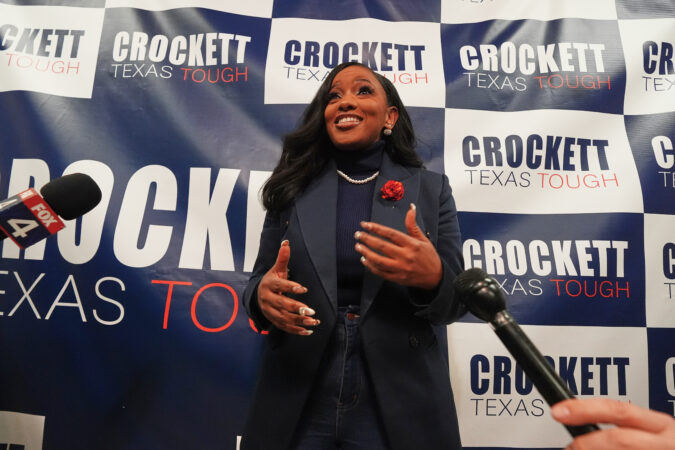
    WASHINGTON — A Dallas congresswoman opened her Senate campaign by telling voters that she “has gone toe to toe with Donald Trump.” Her Democratic primary opponent insisted that Americans are tired of “politics as a blood sport.”

    The divergent approach highlights how U.S. Rep. Jasmine Crockett and State Rep. James Talarico are navigating a race where Democrats hope to break a three-decade losing streak in Texas. It also reflects a broader divide within the party, with some candidates continuing to focus on Trump while others barely mention his name.

    Figuring out the best approach will be critical for Democrats who are grasping for a path back to power in the 2026 midterm elections that will determine control of Congress and are already maneuvering for the 2028 presidential race.

    Republicans, by contrast, have been crystal clear.

    Susie Wiles, the White House chief of staff, said in a recent podcast interview that the Republican president will campaign aggressively next year and the party will “put him on the ballot.”

    “He is the greatest vote energizer in the history of politics,” said Neil Newhouse, a veteran Republican pollster. “But the challenge is that he does it as much for Democrats as he does for Republicans.”

    Crockett takes on Trump

    In her campaign launch video, Crockett was silent as audio of Trump’s insults played, including multiple times that he has called her a “very low-IQ person.” At the end of the video, she breaks out into a smile.

    On Monday, she addressed the president more directly.

    “Trump, I know you’re watching, so let me tell you directly,” Crockett said. “You’re not entitled to a damn thing in Texas. You better get to work because I’m coming for you.”

    Trump responded the next day, telling reporters aboard Air Force One that her candidacy is “a gift to Republicans” and “I can’t even believe she’s a politician, actually.”

    For nearly a decade, Democrats have used their criticism of Trump to draw attention and fuel fundraising. Governors who are considered potential 2028 presidential contenders, including California’s Gavin Newsom and Illinois’ JB Pritzker, saw their profiles rise as they positioned themselves as staunch Trump opponents.

    U.S. Sen. Mark Kelly (D., Ariz.) recently participated in a video telling service members that they should not follow “illegal orders.” Trump responded by accusing him of “seditious behavior” that’s “punishable by death.”

    Kelly started a national media tour and sent out a flurry of fundraising emails, both for himself and other Democrats. He said Trump has bullied everyone in his career, “but not now, because I won’t let it happen.”

    When it comes to running for office, “Trump is the red meat that drives donors,” said John Anzalone, a longtime Democratic pollster.

    “There are clearly some candidates that are playing towards the donor world that don’t actually make a great argument for winning races. But it’s great for clicks and making money. And money is the first primary that you need to win.”

    Talarico charts a different course

    Talarico has built a following with a less combative style. The former schoolteacher who is working toward a master’s degree in divinity at Austin Presbyterian Theological Seminary gained attention by posting viral social media content challenging Republicans’ claims to Christian values. He has focused less on Trump or other politicians.

    “The biggest divide in our country is not left versus right. It’s top versus bottom,” Talarico said in the video launching his campaign.

    There are echoes of other Democratic successes this year, such as when candidates for governor won in New Jersey and Virginia by focusing on affordability concerns.

    Voters in those states were much likelier to say they were voting to oppose Trump than to support him, according to the AP Voter Poll. For example, 71% of voters for Democrat Mikie Sherrill in New Jersey said their decision in the governor’s race was motivated at least partially by opposition to Trump.

    But Sherrill recently said that it is not enough for Democrats to rely solely on anti-Trump fervor.

    “Trump makes a difference. He’s a forcing mechanism to coalesce the party,” Sherrill said. “But to really turn out the vote in a really strong manner, you have got to run a really sharp campaign.”

    When Democrats talk about Trump, they have to connect his actions to voters’ everyday lives, she said.

    “You can’t just say, oh, I’m so upset that Trump demolished the East Wing of the White House,” she said. “You have to say, look, there’s a tariff regime that is being run that is enriching the president to the tune of $3 billion, and you’re paying more for everything from your cup of coffee in the morning to the groceries that you’re buying to cook your family dinner at night.”

    It is an approach that could have more staying power in the coming years.

    “In the not-too-distant future, Trump will not be on the ballot and that will be a challenge for both parties,” said Austin Cook, a senior aide for Democrat Elissa Slotkin’s successful U.S. Senate campaign in Michigan last year. “He is a starting gun for Democratic enthusiasm. But soon we won’t have him as a foil.”

    Republicans need Trump to turn out voters

    Republicans have little choice but to enlist Trump’s help, considering his enduring support among voters who are less likely to turn out during the midterms.

    “They need to energize Republican voters and the only real way to energize Republican voters and get them out to vote is by enlisting Trump in the campaign,” said Newhouse, who is advising some of the party’s U.S. Senate candidates.

    He warned that Trump’s popularity does not necessarily transfer to candidates he supports, “but there isn’t an alternative.”

    “What they are trying to do here is basically wrap themselves up in him, hope that his approval and the economic numbers improve and get their voters out to the polls to match the Democrats’ intensity,” Newhouse said.

    The White House has said that Trump will be on the road more in the coming months. He hosted his first rally in a while in Pennsylvania on Tuesday evening, where he blamed Democrats for inflation.

    “They gave you high prices,” he said, adding that “we’re bringing those prices down rapidly.”