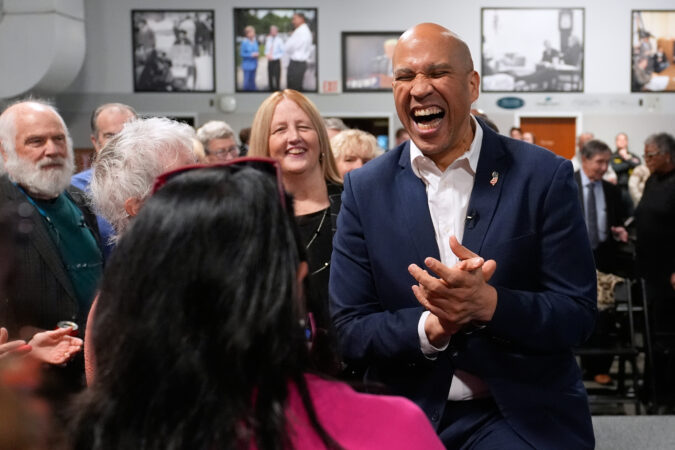
U.S. Sen. Cory Booker has raised more than $30 million for his reelection campaign, outdoing the vast majority of candidates running for either chamber ofCongress in 2026.
The New Jersey Democrat has raised the second-largest amount of money for the 2026 elections for U.S. House and Senateas of the end of last year, behind only Sen. Jon Ossoff (D., Ga.),according to Federal Election Commission reports.
Booker is widely considered a potential presidential contender for 2028, after unsuccessfully seeking the office in 2020.
The lawmaker has no serious challengers at this point for his Senate seat, and he could leave this cycle with extra money he could use for a presidential run.
His campaign has nearly $22 million cash on hand and no debt. He has been adding to his coffers since he began his most recent term in 2021.
More than 200,000 people donated to Booker in 2025, and roughly 80% of the donations were $25 or less, according to Booker’s campaign.
“Cory is backed by a grassroots movement that recognizes the importance of strong, principled leadership that stands up in this moment,“ his campaign manager, Adam Silverstein, said in a statement. ”We are grateful for this incredible outpouring of support and will keep building the infrastructure we need to win in 2026 and elect Democrats at every level.”
The New Jersey Democrat saw a fundraising spike when he delivered a record-breaking 25-hour speech on the Senate floor last year. He raised nearly $9.7 million in the second quarter of 2025, the period that included his speech, far more than any other quarter last year.
Booker criticized President Donald Trump on a host of issues in the speech and held up a pocket Constitution. He also acknowledged his own party’s failure to prevent Trump’s return to office.
“I confess that the Democratic Party has made terrible mistakes that gave a lane to this demagogue,” he said in his speech. “I confess we all must look in the mirror and say, ‘We will do better.’”
Laura Matos, a New Jersey Democratic operative, said Booker was already a “known entity,” and his speech came at a time when Democrats across the country were looking for someone to stand up to Trump.
“For 25 hours, his people could constantly churn out, like every hour, ‘He’s still on the Senate floor, show him you support him,’” said Matos, a partner at lobbying and public affairs firm MAD Global Strategy Group. “The way that fundraising works, you can really build upon things like that. He was prolific before that, and then that just kind of skyrocketed it.”
Ossoff, the 2026 federal candidate who reported more than Booker, has raised nearly $64 million and faces a more competitive race in a key swing state.
He began serving as mayor of Newark in 2006 untilhe was elected to the U.S. Senate in a 2013 special election.
Booker is also heading into a national tour to promote Stand, his new book, set to publish next month.
The book combines Booker’s personal reflections with stories of American leaders from President George Washington to Supreme Court Justice Ketanji Brown Jackson, and “offers a hopeful and practical path forward,” according to his publisher, Macmillan.
Most of Booker’s money comes from outside New Jersey.
According to FEC data, from January through September 2025, he received the most money from California, followed by New York.
While Booker is raking in money, he’s also spending it. He spent the fourthmost out of all 2026 Senate candidates, reporting $14 million in spending since 2021.
One of his biggest expenses was in April, when his campaign spent $1.2 million on an email list acquisition.
The only other candidate who has reporting fundraising for the New Jersey Senate race so far is Justin Murphy, a Republican from the Pinelands, who reported a little over $3,500.
Several other Republicans have expressed interest in running in the primary, and county parties will hold conventions in the coming weeks to endorse candidates.
Luke Ferrante, the executive director of New Jersey GOP, said the party is planning “a robust effort statewide” to unseat Booker.
“New Jerseyans across the state are eager to elect a statewide representative that is focused on delivering for its residents, not their greater Washington ambitions,” Ferrante said.
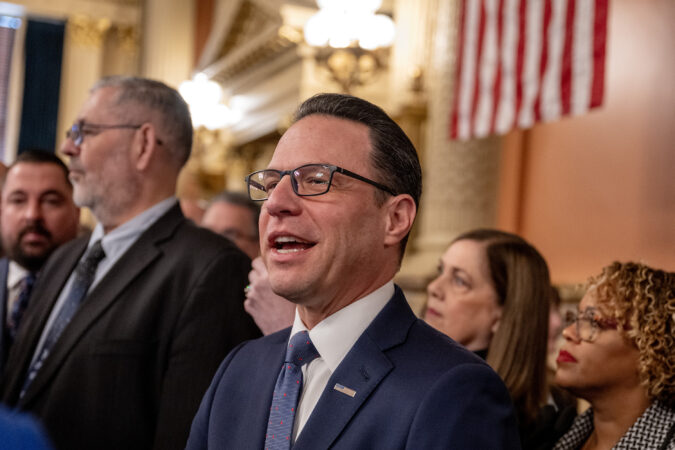
HARRISBURG — Gov. Josh Shapiro on Tuesday unveiled a $53.2 billion state budget that focuses on making Pennsylvania a more affordable place to live — while proposing a 6.2% spending increase over last year and renewing his pitches to create new revenue streams to fill a significant budget deficit as he runs for reelection.
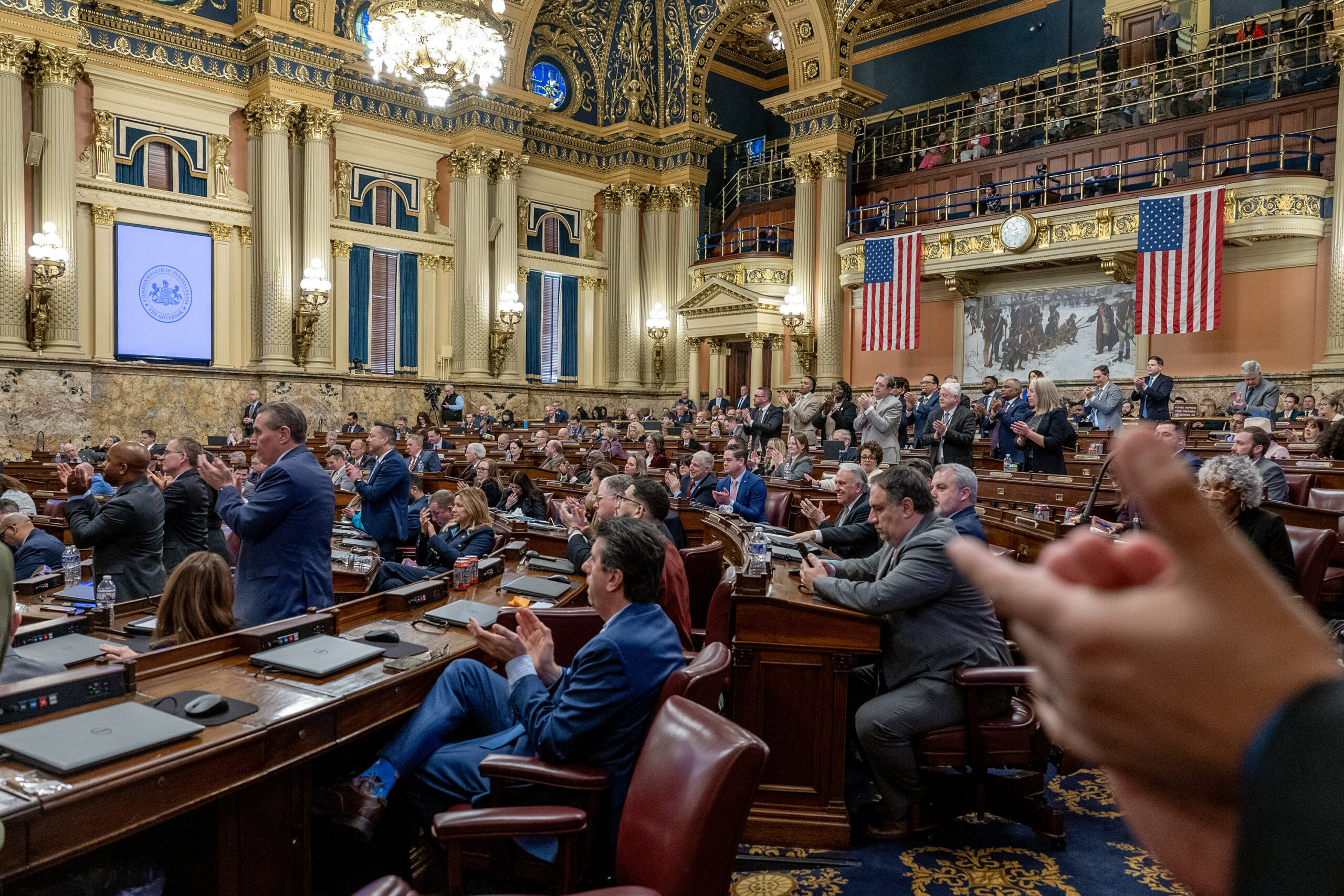
Shapiro’s fourth budget address attracted several standing ovations from Democrats as he stood before a joint session of the state House and Senate to pitch some of Democrats’ shared priorities, such as increasing the minimum wage to $15 an hour.
Afterward, Republicans decried the budget proposal as unaffordable, arguing such a steep increase in spending is unrealistic when the state is already poised to spend more than it brings in during the current fiscal year and in the future. Shapiro’s proposal would spend $4.6 billion more than the state is projected to bring in in the 2026-27 fiscal year, requiring officials to pull most new spending from Pennsylvania’s $7.7 billion Rainy Day Fund, or find funding from new revenue streams like the taxation of recreational marijuana that do not yet exist.
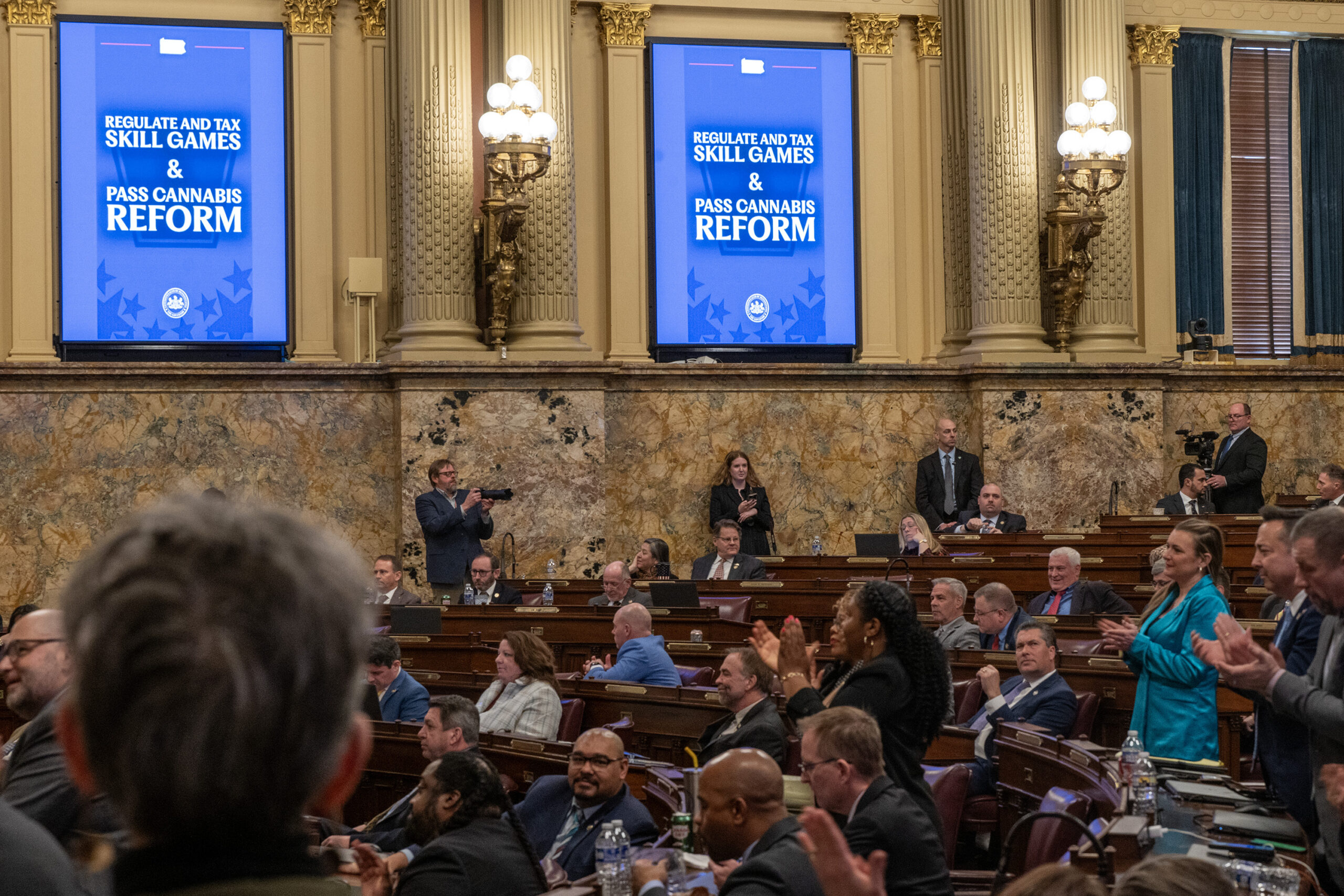
Screen shows skill games and cannabis regulation and reform as Gov. Josh Shapiro makes his annual budget proposal in the state House chamber in Harrisburg Tuesday, Feb. 3, 2026.
Shapiro’s proposed spending hike equates to a $2.7 billion total increase over the 2025-26 budget. Approximately $1 billion of that would fulfill increased federal Medicaid obligations, another $1 billion would be for new initiatives proposed by the governor, and $700 million would go to other funding increases, according to a Shapiro administration official.
The proposal does not include any broad tax increase on state residents. Instead, Shapiro’s budget pitch includes proposals to generate nearly $2 billion in new revenue, largely from the taxation and legalization of recreational marijuana and regulation of so-called skill games — suggestions that he put forward last year but that failed to gain traction within the legislature. He proposed taxing adult-use cannabis at 20% to generate $729.4 million. He is also seeking a 52% tax on skill games, the unregulated and untaxed slot-machine look-alikes that have proliferated around the state in corner stores, bars, and fraternal organizations, to generate an estimated $765.9 million in its first year.
“Everyone knows we need to get this done. So let’s come together and finally get it over the finish line,” he added.
Shapiro proposed the legalization and taxation of recreational marijuana in each of his prior three budget proposals. Last year, he pitched a 20% tax on the sale of legal marijuana that he estimated would bring in $535.6 million in its first year. This year’s projection of $729.4 million in that time frame would be a 36% increase without changing the proposed tax rate. A Shapiro administration official said Tuesday that the projected increase is due to more interest from marijuana companies that want to do business in Pennsylvania.
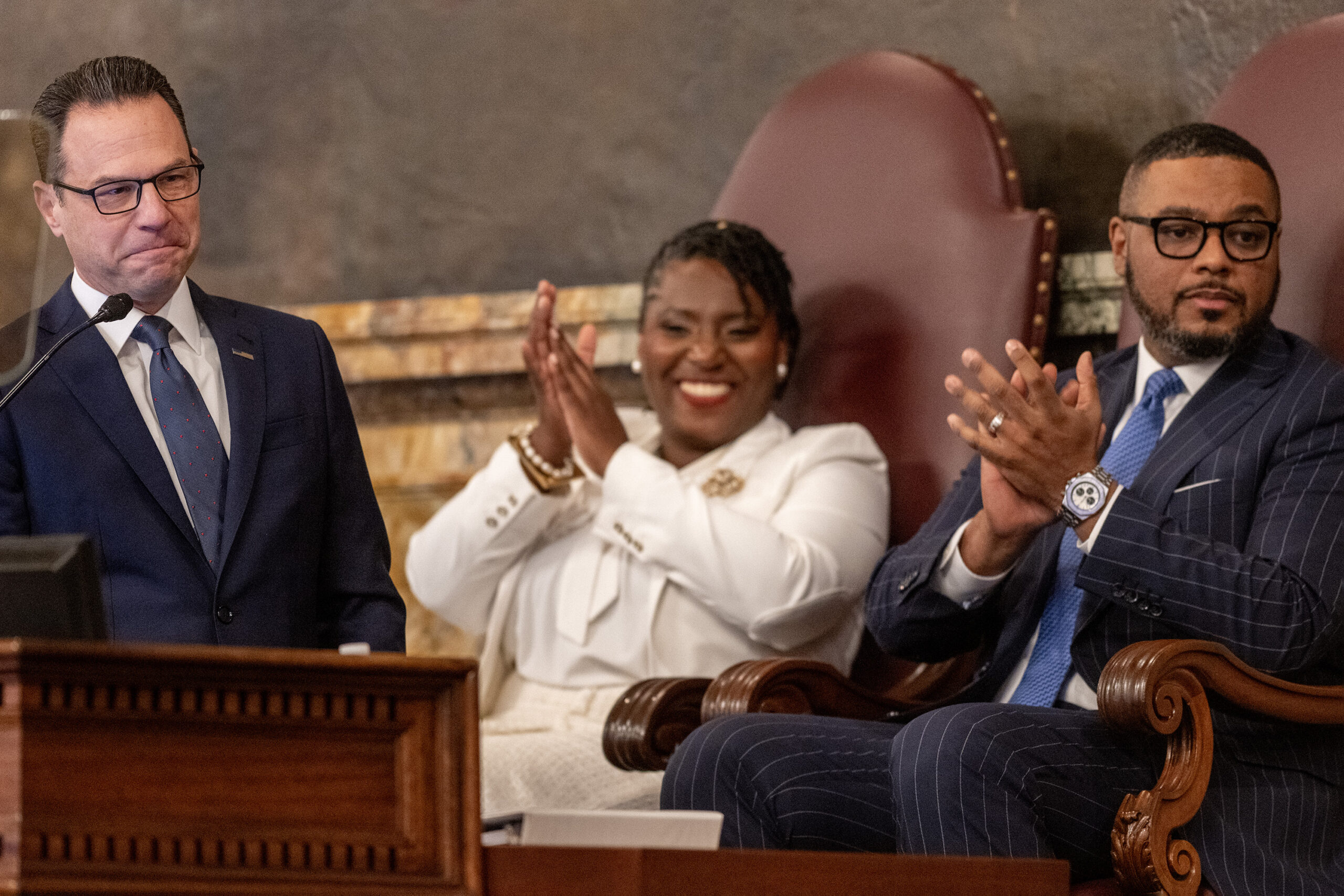
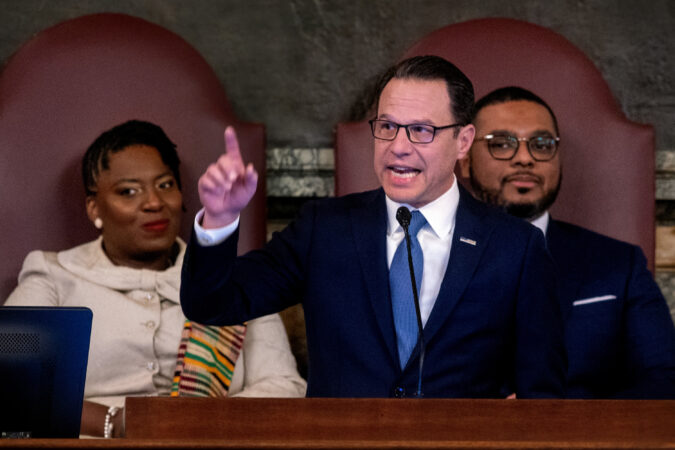
Gov. Josh Shapiro make his annual budget proposal in the state House chamber in Harrisburg Tuesday, Feb. 3, 2026. Pa. House Speaker Joanna McClinton (left) and Lt. Gov. Austin Davis (right) are seated behind him.
Shapiro’s budget also called for an additional $565 million for public schools toward the state’s new adequacy funding and tax equity formulas, in the latest installment of a nine-year plan to ensure students get an equitable education no matter their zip code. He requested $30 million in additional funding toward three of Pennsylvania’s state-related universities — the University of Pittsburgh, Pennsylvania State University, and Temple University — to be awarded based on a new performance-based funding mechanism.
The governor also pitched creating a “Federal Response Fund” in Pennsylvania, seeking to set aside a $100 million reserve to offset any impact from President Donald Trump’s administration, in the event the federal government moves to cut funding to social services programs and grants to state and local governments, as it has done several times over the last year.
A focus on affordability
As his reelection campaign ramps up ahead of November, Shapiro made a broad pitch for policies aimed at making Pennsylvania more affordable.
Shapiro said he was working with utility companies to rein in energy costs and called for the construction of new homes and a bevy of renter protections in a plan to expand the availability and affordability of housing across the state.
He proposed a $1 billion fund, supported by the issuing of bonds, to pay for a range of infrastructure projects relating to energy, housing, local governments, and schools. But he billed it largely as “a major investment in building new housing.”
“We need hundreds of thousands of new homes,” Shapiro said. “This is how we build them.”
Shapiro also called for the state to create a catalog of local zoning rules and to help local governments revamp ordinances to allow for more housing.
The governor again proposed raising Pennsylvania’s minimum wage to $15 an hour, billing it as a cost savings of $300 million to the state on entitlement programs such as Medicaid.
In a news conference hosted by Senate and House Republicans following Shapiro’s budget address, top legislative leaders contended that Shapiro’s affordability vision for the state is unnecessary.
“What we need to do is stand back and watch the private sector work, and watch the private sector grow the jobs that will support this economy,” said House Minority Leader Jesse Topper (R., Bedford). “What we need to do as a government is far less. We need to get our footprint down. That is what we believe will make things more affordable for Pennsylvanians.”
He announced a new plan he said would protect consumers against rising energy costs associated with data centers, while also easing a path for tech companies to build the centers.
The Governor’s Responsible Infrastructure Development (GRID) plan would make data center developers either bring their own power generation or pay for any new generation they will need, he said, “not saddling homeowners with added costs because of their development.”
Shapiro said that too many data center proposals have been “shrouded in secrecy” but that they are crucial for the country.
“The United States is locked in a battle for AI supremacy against China,” Shapiro said. “Look, I don’t know about you, but I’d much rather the future be controlled by the United States of America and not Communist China.”
Shapiro said Tuesday he wants to avoid another lengthy stalled budget, which forced schools, counties, and nonprofits to take out billions in loans to stay afloat during the four-month impasse.
He invited leaders of all four caucuses — Senate Democrats, Senate Republicans, House Democrats, and House Republicans — to meet on Wednesday to start budget talks much sooner than in past years. They all agreed to attend, he added.
“We all recognize it took too long last year and that had real impacts on Pennsylvanians, but we learned some valuable lessons through that process,” Shapiro said in his address, which lasted an hour and 24 minutes. “We learned that we all need to be at the table, and that we all need to be at the table sooner.”
The state House chamber as Gov. Josh Shapiro makes his annual budget proposal in Harrisburg Tuesday, Feb. 3, 2026.
Budget negotiations will begin Wednesday, Shapiro said, before legislative committees begin meeting about the proposal later this month. The budget will be negotiated in closed-door meetings between top leaders and is due by the start of the new fiscal year, which begins July 1.
One contentious issue is off the negotiating table for the forthcoming fiscal year: funding mass transit. Shapiro again pitched the state to increase the share of the sales and use tax that goes to mass transit, including SEPTA, as the transit agencies desperately need a new recurring revenue source. Shapiro does not want that to begin until July 1, 2027, when his latest short-term transit funding fix is scheduled to run out.
Shapiro and most lawmakers in the General Assembly are up for reelection this year. In previous midterm election years, the electoral pressure has sped up negotiations, as legislators want to bring home results to their constituents before they return to the campaign trail in a year when the governor’s mansion and control of the state House and Senate are on the line. (Shapiro’s likely opponent, Republican State Treasurer Stacy Garrity, immediately criticized his budget proposal, saying the pitch “didn’t come nearly close enough” to bridging the state’s spending deficit.)
But even if lawmakers move with haste, this year’s budget negotiations may be tense as leaders try to reset spending to better align with how much the state generates in revenue.
“We’re going to do everything we can to protect the taxpayer and make sure that the dollars that are allocated are wisely used,” Senate Majority Leader Joe Pittman (R., Indiana) said. “We have to make sure we’re, again, stretching every taxpayer dollar we can and bringing the cost of government down as much as possible.”
But with the high-stakes election just months away, House Majority Leader Matt Bradford (D., Montgomery) cautioned Republicans against coming down hard on Shapiro, who has boasted consistently high approval ratings.
“I would argue the polls indicate that we have a very popular governor. They tried to obstruct him and his numbers only got more popular,” Bradford said. “My suggestion is it would be the political imperative, regardless of the policy implications, that they start working with this governor to pass things.”
Staff writers Thomas Fitzgerald, Maddie Hanna, Ariana Perez-Castells, and Susan Snyder contributed to this article.
HARRISBURG — Gov. Josh Shapiro on Tuesday is expected to propose a $53.2 billion state budget for the 2026-27 fiscal year, just three months after settling a bitter, 135-daybudget impasse that forced schools, counties, and nonprofits to take out loans to stay afloat.
Shapiro, a first-term Democrat running for reelection this year and potentially poised for higher office, will deliver his fourth annual budget address before a joint session of the Pennsylvania General Assembly, where he plans to pitch an expansive $1 billion housing and infrastructure plan to incentivize new housing development with an overall focus on affordability in the state.
And as in years past, Shapiro is expected to again propose new revenue streams to fill a more than $5 billion deficit, such as the legalization and taxation of adult-use cannabis, as Pennsylvania is again expected to spend more than it brings in tax revenues.
Here are three things to watch for in Shapiro’s budget proposal.
Affordability, affordability, affordability
Affordability has become somewhat of a top Democratic catchphrase heading into the midterm elections, as housing, energy and healthcare costs continue to rise.
It’s an issue Shapiro has repeated as one that is top of mind for him, and he is now applying it to a basic need for many Pennsylvanians: housing.
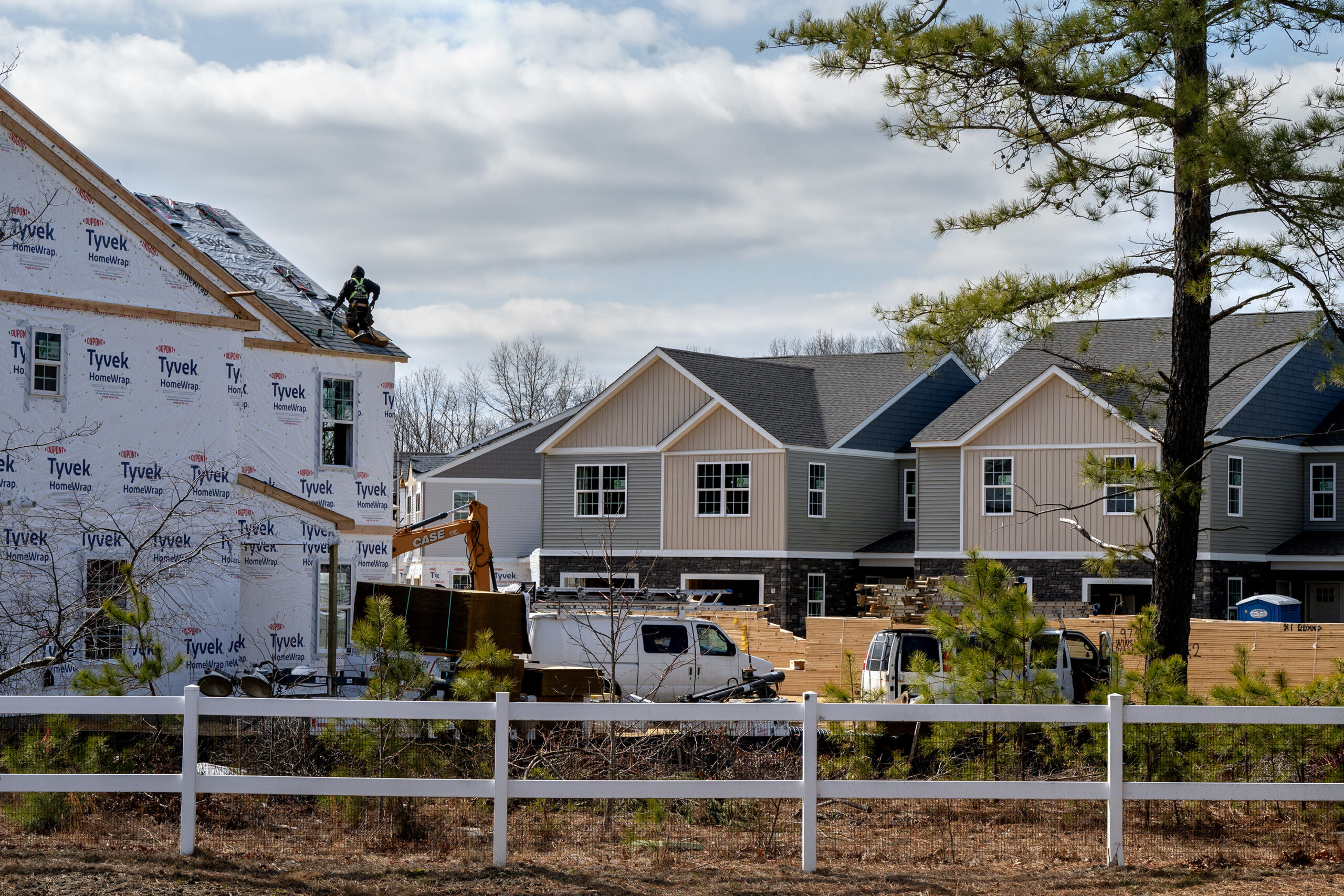
Construction is underway on three bedroom units with garages at Winslow Cross Creek Family Apartments Thursday, Mar. 6, 2025. Hans Lampart, founder, president, and CEO of Eastern Pacific Development and Brookfield Construction specializes in build-to-rent affordable housing.
The average rental price in Pennsylvania is $1,525 per month, with 25,000 rentals available across the state, according to the real estate website Zillow.
The governor on Tuesday is also expected to reintroduce his “Lightning Plan” that includes incentives to increase renewable energy production and a new Pennsylvania-specific cap-and-trade carbon program.
The plan would replace the Regional Greenhouse Gas Initiative that Shapiro and House Democrats agreed to ditch as part of an overall $50.5 billion budget deal in November, following years of urging from Republicans who argued that it stifled economic growth in the state. A similar cap-and-trade program would be unlikely to pass the Republican-controlled state Senate.
New revenue streams, again
Shapiro will again try to fill the state’s projected $4.3 billion budget gap with new revenue streams — although none of them would be likely to be up and running in time for the start of the new fiscal year on July 1.
Last year was the first time Pennsylvania’s state budget ever topped $50 billion. Its revenue still has yet to hit that milestone, and is unlikely to do so this fiscal year. The Independent Fiscal Office estimates the state will bring in nearly $49 billion, a 1.3% increase in revenue over the last fiscal year.
The budget gap is among the biggest challenges for Shapiro in upcoming negotiations with top legislative leaders, as Senate Republicans say it’s their top priority to spend within the state’s means.
Shapiro last year proposed tapping into the state’s Rainy Day Fund — approximately $7 billion set aside for emergencies — that the state has been stockpiling in the years since the COVID-19 pandemic. It’s unclear whether he will pitch using some of the fund again for the 2026-27 fiscal year.
Last year, Shapiro proposed a 20% tax on adult-use cannabis that he predicted would bring in $535.6 million in its first year, largely from licensing fees. He projected it could bring in $1.3 billion in the first five years, noting that only one of Pennsylvania’s neighboring states, West Virginia, hasn’t legalized recreational marijuana, essentially allowing Pennsylvania to lose out on tax revenue as residents cross state lines to buy it.
A legal marijuana purchase in Deptford, N.J. on April 21, 2022.
Shapiro has proposed regulating skill games in his last two budgets, asking last year that the unregulated gaming machines be taxed at 52%, which is the same tax rate as slot machines in casinos or gas stations. He estimated then that skill games would bring in nearly $369 million in its first year.
(The skill games industry has continuously rejected a high tax rate, arguing that it would hurt the industry and small business owners that carry the machines, like bars and corner stores.)
A possibly quicker resolution
There is one bright spot for the schools, counties, and nonprofits that rely on state funding and which last year had to wait more than four months for that money when lawmakers couldn’t agree: It’s an election year.
Election years often result in quicker budget resolutions, as lawmakers and officials want to secure money for their districts before they go home to campaign for reelection.
Sign posted by the PA Senate at the Pennsylvania State Capitol in Harrisburg Aug. 26, 2025, reminds visitors of the state’s “multi-billion dollar structural deficit.”
In 2018, when former Democratic Gov. Tom Wolf was up for reelection, he signed the state budget on June 23 — a week ahead of the July 1 deadline.
This year, Shapiro is up for reelection, likely to face a November challenge from State Treasurer Stacy Garrity, the state Republican Party-endorsed candidate. And many other state lawmakers are in the same boat.
All 203 seats in the state House and half the 50 seats in the state Senate are on the ballotin November. Several lawmakers have announced that they will not seek reelection, allowing for competitive elections to fill the vacancies.
WASHINGTON — President Donald Trump signed a roughly $1.2 trillion government funding bill Tuesday that ends the partial federal shutdown that began over the weekend and sets the stage for an intense debate in Congress over Homeland Security funding.
The president moved quickly to sign the bill after the House approved it with a 217-214 vote.
“This bill is a great victory for the American people,” Trump said.
The vote Tuesday wrapped up congressional work on 11 annual appropriations bills that fund government agencies and programs through Sept. 30.
Passage of the legislation marked the end point for one funding fight, but the start of another. That’s because the package only funds the Department of Homeland Security for two weeks, through Feb 13, at the behest of Democrats who are demanding more restrictions on immigration enforcement after the shooting deaths of Alex Pretti and Renee Good by federal officers in Minneapolis.
House Democratic Leader Hakeem Jeffries quickly warned Democrats would not support any further temporary funding for Homeland Security without substantial changes to its immigration operations., raising the potential of another shutdown for the department and its agencies.
“We need dramatic change in order to make sure that ICE and other agencies within the department of Homeland Security are conducting themselves like every other law enforcement organization in the country,” Jeffries said.
Speaker Mike Johnson said he expects the two sides will be able to reach an agreement by the deadline.
“This is no time to play games with that funding. We hope that they will operate in good faith over the next 10 days as we negotiate this,” said Johnson. “The president, again, has reached out.”
But Johnson’s counterpart across the Capitol, Senate Majority Leader John Thune, (R., S.D.), sounded less optimistic of a deal. “There’s always miracles, right?” Thune told reporters.
Voting with no margin for error
The funding bill that cleared Congress Tuesday had provisions that appealed to both parties.
Republicans avoided a massive, catchall funding bill known as an omnibus as part of this year’s appropriations process. Such bills, often taken up before the holiday season with lawmakers anxious to return home, have contributed to greater federal spending, they say.
Democrats were able to fend off some of Trump’s most draconian proposed cuts while adding language that helps ensure funds are spent as stipulated by Congress.
Still, Johnson needed near-unanimous support from his Republican conference to proceed to a final vote on the bill. He narrowly got it during a roll call that was held open for nearly an hour as leaders worked to gain support from a handful of GOP lawmakers who were trying to advance other priorities unrelated to the funding measure.
The final vote wasn’t much easier for GOP leaders. In the end, 21 Republicans sided with the vast majority of Democrats in voting against the funding bill, while that exact same number of Democrats sided with the vast majority of Republicans in voting yes.
Trump had weighed in Monday in a social media post, calling on Republicans to stay united and telling holdouts, “There can be NO CHANGES at this time.”
Key differences from the last shutdown
The current partial shutdown that is coming to a close differed in many ways from the fall impasse, which affected more agencies and lasted a record 43 days.
Then, the debate was over extending temporary coronavirus pandemic-era subsidies for those who get health coverage through the Affordable Care Act. Democrats were unsuccessful in getting those subsidies included as part of a package to end the shutdown.
Congress made important progress since then. Some of the six appropriations bills it passed prior to Tuesday ensured the current shutdown had less sting. For example, important programs such as nutrition assistance and fully operating national parks and historic sites were already funded through Sept. 30.
The remaining bills passed Tuesday mean that the vast majority of the federal government has been funded.
“You might say that now that 96% of the government is funded, it’s just 4% what’s out there?” Johnson said. ”But it’s a very important 4%”
President Donald Trump said Monday that Republican lawmakers should nationalize voting — claiming a power explicitly granted to states in the U.S. Constitution.
Speaking to right-wing podcaster Dan Bongino, who recently stepped down from his role as the FBI’s deputy director, Trump again falsely alleged that the 2020 election was stolen from him, and he urged Republicans to “take over” elections and nationalize the process.
“We should take over the voting, the voting, in at least 15 places,” Trump told Bongino. “The Republicans ought to nationalize the voting.”
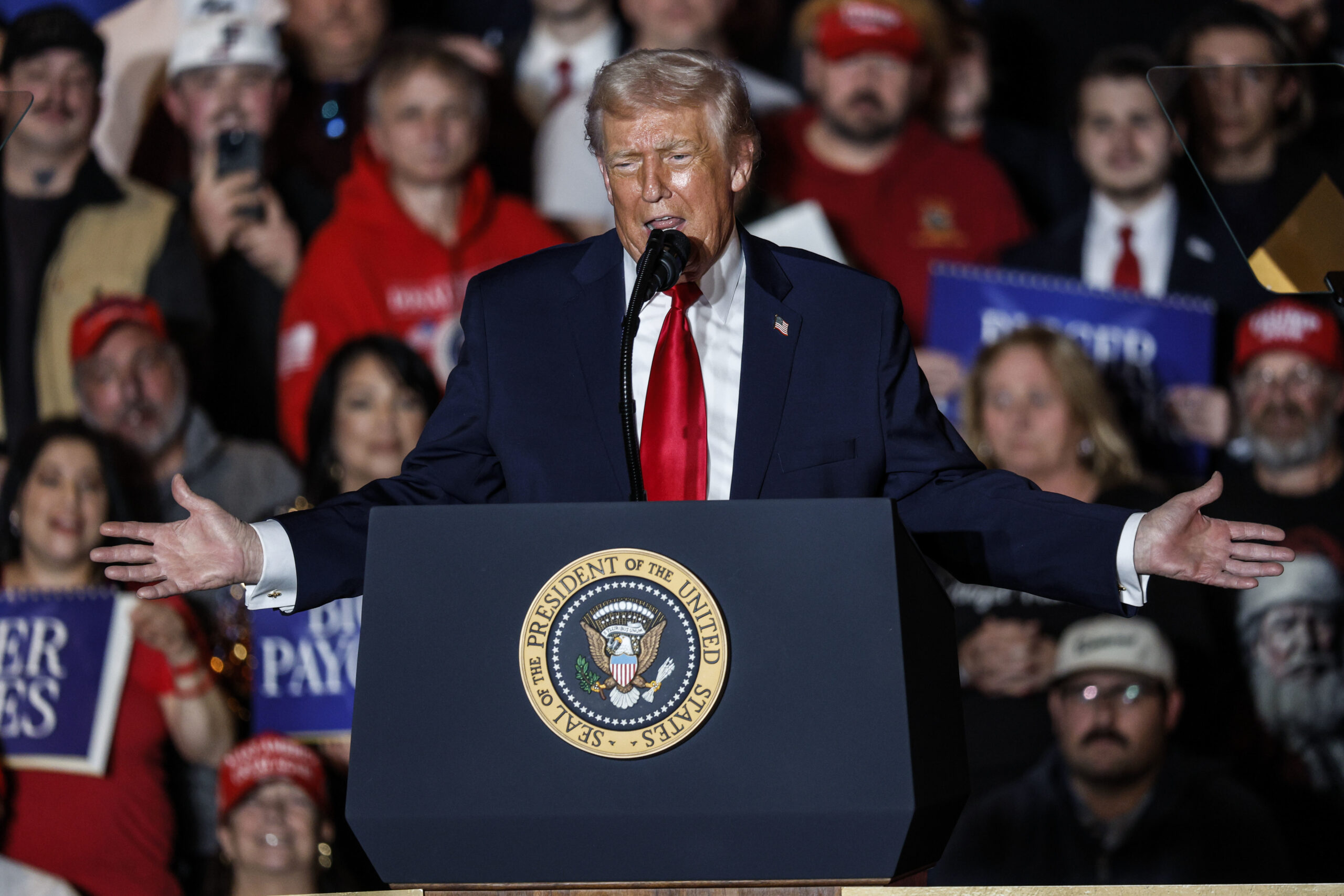
President Donald Trump speaks in Mt. Pocono, Pa., on Tuesday, Dec. 9, 2025.
Under the Constitution, the “Times, Places and Manner” of holding elections are determined by each state, not the federal government. Congress has the power to set election rules, but the Constitution does not give the president any role on that subject. Republicans in recent decades have often argued in favor of states’ rights and against a powerful federal government.
Trump’s demand comes less than a week after the FBI executed a search warrant at a warehouse in Fulton County, Georgia, which is at the heart of right-wing conspiracy theories about the 2020 election. The unusual warrant authorized agents to seize all physical ballots from the 2020 election, voting machine tabulator tapes, images produced during the ballot count and voter rolls from that year. Days before the search, Trump claimed in a speech at the Davos World Economic Forum that the 2020 election was rigged.
On Monday, while speaking to Bongino, Trump said without offering evidence that there are “states that are so crooked” and that there are “states that I won that show I didn’t win.” He also baselessly claimed that undocumented immigrants were allowed to vote illegally in 2020.
He then teased that there will be “some interesting things come out” of Georgia, but did not discuss the FBI warrant or its findings.
While Trump has repeatedly and baselessly accused states such as Georgia of running fraudulent elections, U.S. national security officials have said they found no evidence of widespread fraud in the 2020 election, and numerous courts rejected claims of election irregularities as unfounded.
This is not the first time Trump has tried to minimize states’ roles in the running of elections. In August, while complaining in a Truth Social post about mail-in voting, Trump said he would sign an executive order that would “help bring HONESTY” to this year’s midterm elections, arguing that states are meant to follow federal instructions when it comes to voting.
“Remember, the states are merely an ‘agent’ for the Federal Government in counting and tabulating the votes,” Trump wrote then. “They must do what the Federal Government, as represented by the President of the United States, tells them, FOR THE GOOD OF OUR COUNTRY, to do.”
It is not clear what Republicans in Congress could do if they were to “take over” elections, as Trump suggested. While Congress has exercised its power on elections rules throughout history by, for example, creating a national Election Day, or by requiring states to ensure that their voter rolls are accurate, lawmakers have historically allowed states to run elections under their own laws and procedures.
Democrat Janelle Stelson outraised U.S. Rep. Scott Perry for the second quarter in a row in her bid to flip the Central Pennsylvania district, which could determine control of the House in November.
Stelson, who lost by a little more than 1 percentage point to Perry in 2024, has raised more than $2.2 million since launching her rematch campaign in July. She has outraised Perry in both quarters since her kickoff and has more cash on hand than the incumbent Republican when taking his campaign debt into consideration.
Perry, a close ally of President Donald Trump, appears to be in the toughest fight of his political career. The seven-term lawmaker continues to be a Trump loyalist even as other swing-district Republicans in the state increasingly look to distance themselves from the president.
“I think the story of Scott Perry just keeps getting worse,” Stelson, 65, said in an interview. “He’s somebody who I covered for years on the news, and people have just really had enough. After more than a decade in Washington, he’s caused a lot of problems.”
Perry, 63, a member of the conservative House Freedom Caucus, voted last month against a Democratic-led bill to restore recently expired healthcare subsidies amid a national spike in insurancepremiums, a vote Stelson has seized upon. Three other Pennsylvania Republicans who represent swing districts — U.S. Reps. Brian Fitzpatrick, Rob Bresnahan, and Ryan Mackenzie — voted for the measure.
Stelson would need to win the Democratic primaryin May to set up the November rematch. She is facingDauphin County Commissioner Justin Douglas, a progressive pastor,who has raised under $85,000 this year. Perry also has his first primary challenge, from Karen Dalton, a retired attorney for Harrisburg Republicans, who reported raising a little more than $11,000 since launching her campaign.
Perry raised more than $2.9 million in 2025, and Stelson has raised $2.2 million since she launched her campaign in July. Stelson raised more than $946,000 from October through December,beating Perry’s haul for the quarter of $780,031.
Stelson ended the year with $1.52 million cash on hand, while Perry had $1.66 million. But Perry’s campaign also has nearly $280,000 in debt, which would put Stelson ahead when factored into the totals.
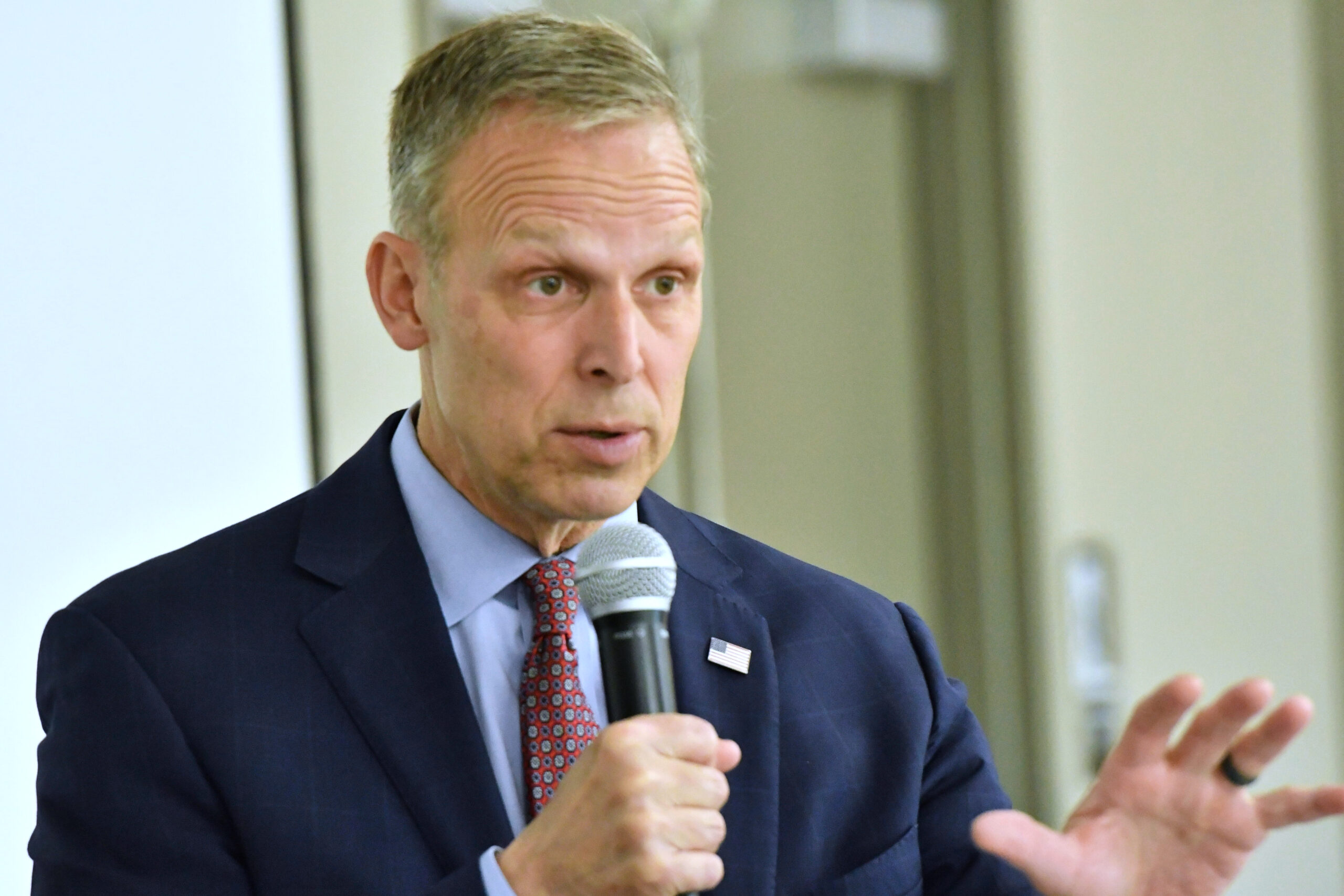
FILE – U.S. Rep. Scott Perry, R-Pa., speaks during a campaign event in front of employees at an insurance marketing firm, Oct. 17, 2024, in Harrisburg, Pa.
The nonpartisan Cook Political Report rated the district as a toss-up alongside Mackenzie’s Lehigh Valley district, marking them as among the most competitive races in the country.
Perry campaign spokesperson Matt Beynon said Perry’s fundraising last quarter was “incredibly strong” and pointed to how he outraised fellow swing district Republicans Bresnahan and Mackenzie during that stretch.
Beynon said Perry is in a better position to ward off a Democratic challenge this year because his district has emerged as a priority for national Republicans, landing on the National Republican Congressional Committee’s Patriots Program — a list of priority races that he was not on in 2024.
“Seeing the results last go-around, and seeing how hard we fought to make sure that the congressman was reelected, I think did open some eyes, and the congressman has been able to make the case that he needs support, too,” Beynon said in an interview.
He said it has been “a learning experience for folks to understand” that the district has become increasingly blue in recent years. The 10th Congressional Districtincludes Dauphin County and parts of York and Cumberland Counties, and is home to Harrisburg and Hershey.
Perry declined to be interviewed for this article.
Stelson said Republican voters in the district who have historically voted along party lines are “really waking up” and are beginning to view Perry as more of an “extremist” than a Republican.
She criticized Perry for urging his colleagues to throw out Pennsylvania’s votes hours after the Jan. 6, 2021, attack on the Capitol. She also pointed to his vote against awarding the Congressional Gold Medal to Capitol Policeofficers, as well as his support for Trump’s One Big Beautiful Bill Act, which made cuts to Medicaid and SNAP in order to help fund Trump’s tax cuts and immigration crackdown.
“He’s always putting his far-right politics ahead of the needs of people in this area,” Stelson said. “They can’t pay their bills. … His defeat actually would be a defeat for extremism in our politics.”
Democrats are optimistic that having Gov. Josh Shapiro, who won the district in 2022, at the top of the ticket will boost Stelson’s chances and build on last year’s momentum in local races.
Perry’s campaign has called Stelson a “carpetbagger,” since she lived outside district lines in nearby Lancaster last time she ran. Stelson has argued that she knows the district well because of her decades-long career as a local journalist, and that she used to live in it.
Stelson campaign spokesperson Alma Baker confirmed Stelson now rents a home in the district in Camp Hill while still owning her Lancaster residence, noting she lives in the district full-time.
Stelson pointed to what she described as “national problems” when asked about unique issues in the district, such as the economy. Her campaign soon after unveiled an agenda aimed at supporting farmers and other rural residents.
Beynon said that Perry will speak about his support for provisions in Trump’s One Big Beautiful Bill Act like ending tax on tips and extending tax benefits for overtime. He will also point to his long-held position sponsoring a bill to ban stock trading in Congress, on which he has collaborated with Democrats.
Both candidates plan to talk about affordability, which has emerged as a successful message for both sides of the aisle.
“It’s just getting worse when you have to worry about whether you’re going to put groceries on the table or pay your skyrocketing utility premiums, that’s a real problem,” Stelson said. “You can’t send kids to school without something in their tummies, otherwise they’re going to be thinking about that all day instead of learning.”
As a broadcast journalist for decades, the second-time candidate said, she listened to and highlighted concerns from people in the district.
“And I feel like now they can teach me what I need to be doing in Congress when I carry their voices there,” she added.
Philadelphia’s bombastic district attorney, Larry Krasner, is no stranger to opposition from within his own party, but the anger directed at him last week after he said ICE agents are “wannabe Nazis” was more pronounced than usual.
After making the comparison, Krasner faced a wave of criticism, including from Pennsylvania Gov. Josh Shapiro, a Democrat, who called the comments “abhorrent” and said the rhetoric doesn’t help “bring down the temperature.”
But the progressive district attorney said Monday that he would not back down, saying “these are people who have taken their moves from a Nazi playbook and a fascist playbook.”
“Governor Shapiro is not meeting the moment,” Krasner said in an interview. “The moment requires that we call a subgroup of people within federal law enforcement — who are killing innocent people, physically assaulting innocent people, threatening and punishing the use of video — what they are. … Just say it. Don’t be a wimp.”
Krasner pointed to a speech by Rabbi Joachim Prinz at the March on Washington in 1963: “Bigotry and hatred are not the most urgent problem. The most urgent, the most disgraceful, the most shameful, and the most tragic problem is silence.”
In invoking that speech, Krasner said: “A reminder, Mr. Governor: Silence equals death.”
Krasner’s defense came after days of criticism from across the political spectrum, ranging from the White House press secretary to Democratic members of Congress. And it punctuated a yearslong history of conflict with Shapiro.
The governor and Philadelphia’s top law enforcement official have feuded politically,sparred in court, and disagreed on policy. In 2019 — when lawyers from Krasner’s office decamped to work for then-Attorney General Shapiro — DA’s office staffers referred to Shapiro’s office as “Paraguay,” a reference to the country where Nazis took refuge after the war.
Last week, during a news conference about proposed restrictions on immigration enforcement in Philadelphia, the district attorney said he would “hunt down” and prosecute U.S. Immigration and Customs Enforcement agents who commit crimes in the city.
“There will be accountability now. There will be accountability in the future. There will be accountability after [Trump] is out of office,” Krasner said. “If we have to hunt you down the way they hunted down Nazis for decades, we will find your identities.”
During an interview Thursday on Fox News’ Special Report with Bret Baier, Shapiro was asked about Krasner’s comparison of ICE agents to Nazis and called the comments “unacceptable.”
“It is abhorrent and it is wrong, period, hard stop, end of sentence,” Shapiro said.
Several other Democrats in political and media circles weighed in. U.S. Sen. John Fetterman, a Pennsylvania Democrat who has at times sided with Trump on immigration matters, appeared on Fox News and said he “strongly” condemned Krasner’s language.
He said that “members of ICE are not Nazis.”
“That’s gross,” Fetterman said. “Do not compare anyone to Nazis. Don’t use that kind of rhetoric. That can incite violence.”
U.S. Rep. Chris Deluzio, a Democrat who represents parts of Western Pennsylvania, in an interview with the Washington Examiner contrasted his own approach with Krasner’s, saying: “I reserve throwing the phrase Nazis at actual Nazis. I don’t just throw that around.”
And State Rep. Manuel Guzman Jr., a Democrat who represents a significant Latino population in Berks County, wrote on social media Friday: “I really, really want Krasner to chill tf out.”
“I get it. We want to protect our immigrant community,” Guzman wrote, “but I question if constantly poking the bear is the right strategy. At the end of the day it’s my community that is under siege.”
And U.S. Rep. Dan Meuser, a Republican who represents parts of Northeast Pennsylvania, appeared on Newsmax and called Krasner a “psychopath with a badge.”
Meuser — who considered challenging Shapiro for governor with Trump’s backing but ultimately decided not to run — also on social media decried “the Left’s silence and, in many cases, encouragement of this rhetoric.”
Krasner doubled down. In an interview on CNN on Thursday, he criticized Fetterman as “not a real Democrat” and also said, “There are some people who are all in on the fascist takeover of this country who do not like the comparison to Nazi Germany.”
He said that when he promised to “hunt down” federal agents who kill someone in his jurisdiction, he was attempting to make a point that there is no statute of limitations on homicide.
The interviewer, Kaitlan Collins, asked Krasner whether he could have made that point without comparing agents to Nazis.
“Why would I do that?” Krasner responded. “They’re taking almost everything they do out of the Nazi playbook.”
WASHINGTON — The Senate voted Friday to fund most of the government through the end of September while carving out a temporary extension for Homeland Security funding, giving Congress two weeks to debate new restrictions on federal immigration raids across the country.
With a weekend shutdown looming, President Donald Trump struck the spending deal with Senate Democrats on Thursday in the wake of the deaths of two protesters at the hands of federal agents in Minneapolis. Democrats said they would not vote for the larger spending bill unless Congress considers legislation to unmask agents, require more warrants and allow local authorities to help investigate any incidents.
“The nation is reaching a breaking point,” Senate Democratic leader Chuck Schumer said after the vote. ”The American people are demanding that Congress step up and force change.”
As lawmakers in both parties called for investigations into the fatal shootings, Trump said he didn’t want a shutdown and negotiated the rare deal with Schumer, his frequent adversary. Trump then encouraged members of both parties to cast a “much needed Bipartisan ‘YES’ vote.”
The bill passed 71-29 and will now head to the House, which is not due back until Monday. That means the government could be in a partial shutdown temporarily over the weekend until they pass it.
Speaker Mike Johnson, who held a conference call Friday with GOP lawmakers, said he expects the House to vote Monday evening. But what is uncertain is how much support there will be for the package.
Johnson’s right flank has signaled opposition to limits on Homeland Security funds, leaving him reliant on Democrats who have their own objections to funding U.S. Immigration and Customs Enforcement without immediate restraints.
Two-week debate over ICE
It was unclear how involved Trump will be in the negotiations over new restrictions on immigration arrests — or if Republicans and Democrats could find any points of compromise.
Senate Democrats will not support an extension of Homeland Security funding in two weeks “unless it reins in ICE and ends violence,” Schumer said. “If our colleagues are not willing to enact real change, they should not expect Democratic votes.”
Similarly, House Democratic Leader Hakeem Jeffries told reporters that any change in the homeland bill needs to be “meaningful and it needs to be transformative.”
Absent “dramatic change,” Jeffries said, “Republicans will get another shutdown.”
Senate Majority Leader John Thune, R-S.D., said the two sides will “sit down in good faith,” but it will be “really, really hard to get anything done,” especially in such a short amount of time.
“We’ll stay hopeful, but there are some pretty significant differences of opinion,” Thune said.
Democrats demand change
Irate Democrats have asked the White House to “end roving patrols” in cities and coordinate with local law enforcement on immigration arrests, including requiring tighter rules for warrants.
They also want an enforceable code of conduct so agents are held accountable when they violate rules. Schumer said agents should be required to have “masks off, body cameras on” and carry proper identification, as is common practice in most law enforcement agencies.
The president’s concessions to Democrats prompted pushback from some Senate Republicans, delaying the final votes and providing a preview of the coming debate over the next two weeks. In a fiery floor speech, Trump ally Sen. Lindsey Graham of South Carolina warned that Republicans should not give away too much.
“To the Republican party, where have you been?” Graham said, adding that ICE agents and Border Patrol agents have been “slandered and smeared.”
Several Republicans have said that if Democrats are going to push for restrictions on ICE, they will push for restrictions on so-called “sanctuary cities” that they say do not do enough to enforce illegal immigration.
“There no way in hell we’re going to let Democrats knee cap law enforcement and stop deportations in exchange for funding DHS,” said Missouri Sen. Eric Schmitt, R-Mo., ahead of the vote.
Still, some Republicans said they believe that changes to ICE’s operations were necessary, even as they were unlikely to agree to all of the Democrats’ requests.
“I think the last couple of days have been an improvement,” said Kentucky Sen. Rand Paul. “I think the rhetoric has been dialed down a little bit, in Minnesota.”
Last-minute promises
After Trump announced the deal with Democrats, Graham held the spending bills up for almost a day until Thune agreed to give him a vote on his sanctuary cities bill at a later date.
Separately, Graham was also protesting a repeal of a new law giving senators the ability to sue the government for millions of dollars if their personal or office data is accessed without their knowledge — as happened to him and other senators as part of the so-called Arctic Frost investigation into the Jan. 6, 2021, attack by Trump supporters at the Capitol.
The spending bill, which was passed by the House last week, would repeal that law. But Graham said Thune had agreed to consider a separate bill that would allow “groups and private citizens” who were caught up in Jack Smith’s probe to sue.
New year, same you googling repeatedly, “Is a government shutdown happening?” We see you. We get it. And the answer is: “Maybe.”
The likelihood of a partial government shutdown this weekend has ramped up following a surge in immigration enforcement and related backlash in Minnesota.
The highly publicized presence of Immigration and Customs Enforcement and the Department of Homeland Security in Minneapolis, alongside the death of Alex Pretti, the second person federal agents havefatally shot in the state, has reinvigorated efforts among Democrats to reject a bill to fund DHS.
“The appalling murders of Renee Good and Alex Pretti on the streets of Minneapolis must lead Republicans to join Democrats in overhauling ICE and CBP [Customs and Border Protection] to protect the public,” Senate Minority Leader Chuck Schumer said in a statement Sunday. “People should be safe from abuse by their own government.”
Schumer (D., N.Y.) said Democrats would not support keeping the government fully open if it means funding the Department of Homeland Security. Other Democratic senators have joined in calling for Senate Republicans to collaborate on advancing five other pending bills, aside from the DHS bill, and separately retooling the DHS measure.
In case you need a refresher, here is what you need to know about deadlines, what a partial government shutdown looks like, and more.
What’s a government shutdown vs. a partial government shutdown?
A full government shutdown happens when all (or most) federal agencies have not secured funding. It usually means widespread furloughs, sometimes layoffs, and any nonessential government services are put on pause.
Meanwhile, a partial government shutdown happens when Congress has funded only certain federal agencies, leaving others in limbo. In turn, some parts of the government would close while others keep operating.
When a partial shutdown happens, some federal agencies and operations, like Social Security and air traffic control, keep running as usual. But other federal employees are furloughed.
In this instance, agencies at risk of expiring funding include the Departments of Defense, Health and Human Services, Labor, Education, Transportation, Housing and Urban Development, Treasury, and State; the Securities and Exchange Commission; and the federal court system, according to Reuters.
Democrats are pushing Republicans to decouple the spending bill so disagreements over DHS don’t fuel disruptions to the other agencies. But Republicans so far say they will not break up the spending bill.
When does government funding expire?
Federal funding is set to expire at 12:01 a.m. Saturday. A partial shutdown would occur if Congress and President Donald Trump’s administration do not reach an agreement by then.
Where does the DHS funding bill stand?
The House has done its part and is in recess until February. But Senate Democrats are pushing back on approvals, citing the Trump administration’s treatment of immigrants. That leaves the Senate with only a few options to avoid a shutdown if it cannot pass the current measures.
Most legislation in the Senate needs 60 votes to move forward. Republicans hold 53 seats, meaning they need bipartisan support to pass the existing measure, which covers about $1.3 trillion in annual government spending, including military and social service funding.
But Democrats want new guardrails on immigration enforcement and added oversight on DHS. Some demands include requiring judicial warrants for immigration arrests, and agents to wear visible identification, Time reported.
Several Democratic senators who broke with their party last year to keep the government open say the killings of Pretti and Good at separate protests have changed their stance.
Sen. John Fetterman (D., Pa.), who has historically broken with the Democratic Party to avoid government shutdowns, released a lengthy statement Monday saying that he wanted to see the DHS operation in Minneapolis end but would not support a government shutdown. But on Thursday, in a surprising break, Fetterman voted against advancing the six-bill package.
His vote, along with 54 other senators who voted “no,” meant the financial package could not move forward.
It is also worth noting that DHS would continue to operate and receive funding under a government shutdown. That is because DHS agencies received major funding through Trump’s One Big Beautiful Bill Act last year. In turn, ICE and other parts of the agency would continue operating under a shutdown.
Who is affected by a government shutdown?
Hundreds of thousands of federal employees are affected, since many would be expected to work but would not receive pay until after the shutdown is lifted. Employees are typically guaranteed back pay.
Many employees are also at risk of being furloughed and would not be allowed to work (but would also receive back pay thanks to legislation passed in 2019).
Some of the main groups of employees that a shutdown could affect include (but are not limited to) active members of the military, federal law enforcement, federal transportation workers (like air traffic controllers and Transportation Security Administration agents, but not SEPTA workers), scientific researchers, and the IRS.
The federal court system said it would not be able to continue full operations past Feb. 4, which could disrupt hearings and other activities, Reuters reported. Data and research activity from the Bureau of Labor Statistics and the National Institutes of Health could also go dark.
What about tax season?
This potential partial shutdown comes during tax season.
If a shutdown happens, funding for the IRS could lapse, which would in turn mean tax processing — and refunds — could be disrupted.
During last year’s shutdown in October, the IRS approved a contingency plan that let the agency continue some activities under a shutdown. But, the agency said, refunds would be delayed aside from some direct electronic returns that could be automatically processed and direct-deposited. Taxpayers were still expected to file and pay their taxes on time.
The IRS has not yet commented on a potential shutdown. Trump previously touted larger refunds this year because of the One Big Beautiful Bill Act. Some experts say that emphasis could play a role in the agency remaining partially open.
When would the government shut down?
Congress and the Trump administration need to reach an agreement by midnight Friday. If they don’t, a shutdown would go into effect at 12:01 a.m. Saturday.
What was the longest government shutdown?
The longest government shutdown was the most recent one, which began on Oct. 1, 2025, and lasted 43 days. It broke the record for the longest shutdown on the 36th day.
What could a government shutdown mean for Philly?
In Philadelphia, the October shutdown led to the closing of Independence Hall and the Liberty Bell Center, to the chagrin of tourists. But that would not happen this time, because the national parks are funded by the Department of the Interior, which secured its funding through an already passed appropriations bill for the year.
SNAP benefits would also notbe affected this time.
The Department of Transportation would close during this shutdown, but air traffic controllers would be required to work without pay. Similar to the last shutdown, this could lead to flight delays and cancellations.
Other impacts could be in store as the shutdown’s implications become more clear.
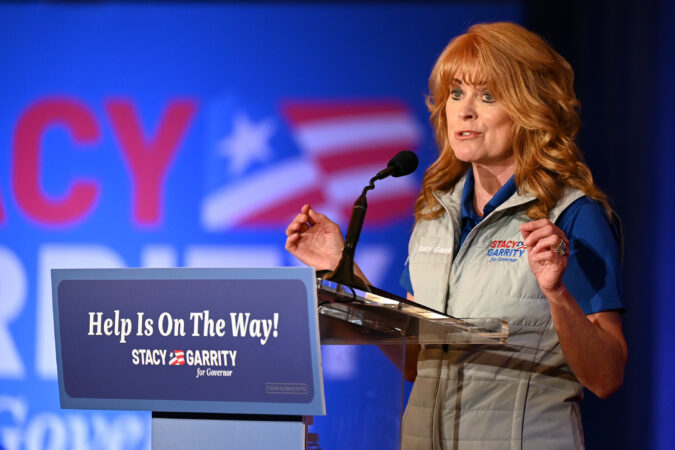
Pennsylvania Treasurer Stacy Garrity on Thursday announced her pick for a running mate in the governor’s race, as state Republicans mount their campaign to more seriously challenge Democratic Gov. Josh Shapiro in November’s election.
Jason Richey, a longtime Pittsburgh attorney and chair of the Allegheny County GOP, announced his campaign for lieutenant governor on Thursday morning. Garrity, the state party-endorsed candidate for governor, quickly endorsed him afterward.
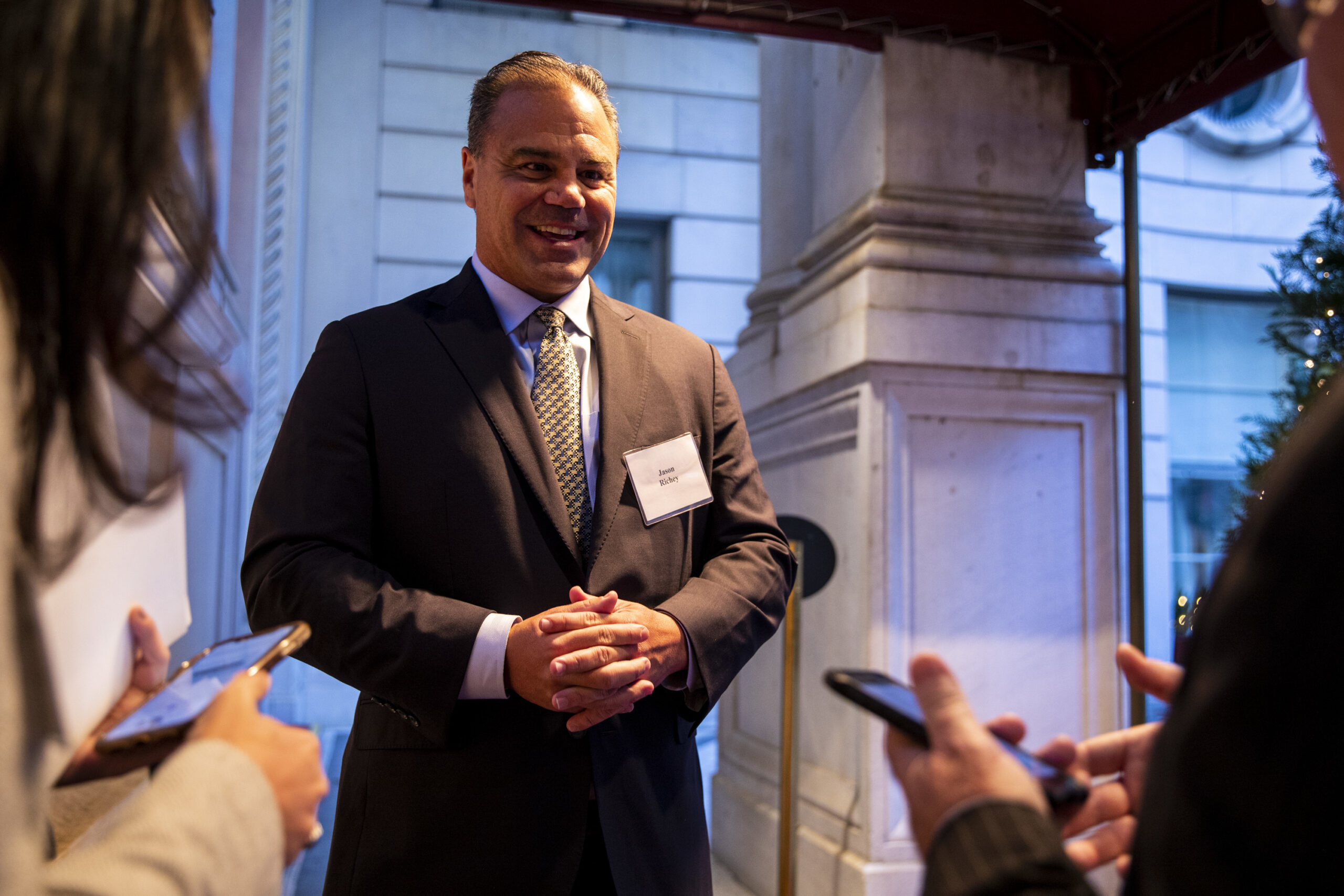
Jason Richey, Aliquippa, Pa., Republican Candidate for Governor speaks with Inquirer Reporters at the Pennsylvania Manufacturers Association held at The Metropolitan Club in New York, N.Y., on Saturday, Dec., 4 2021.
Garrity said Richey “rose to the top” as the best candidate to be her running mate to challenge Shapiro.
“Jason understands the potential Pennsylvania has, but only if our Commonwealth has the right leadership,” she said in a news release, noting that he shares her concerns with Shapiro’s tenure as governor. “Jason Richey will not just be an incredible running mate on the campaign trail, but a terrific partner in governing for all the people of Pennsylvania.”
Until Richey’s announcement, few moderate candidates had emerged to run alongside Garrity. Meanwhile, other potential candidates declined to run with her in the uphill battle election against Shapiro, a popular incumbent with a $30 million war chest and a growing national profile. Garrity announced earlier this month she had raised nearly $1.5 million in the first few months of her campaign, from August to December.
Richey is running to be Garrity’s No. 2 among a field of several other potential lieutenant governor candidates, including State Sen. Cris Dush (R., Jefferson) and Bucks County businessman and political newcomer Brian Thomas. Other candidates who have considered a run for lieutenant governor but have yet to announce include former gubernatorial nominee State Sen. Doug Mastriano (R., Franklin) and former State Rep. Rick Saccone (R., Allegheny).
In Pennsylvania, candidates for lieutenant governor and governor run in the primary election separately. Whoever wins the primary nomination joins on one ticket for the general election. For example, Mastriano won the primary nomination but his endorsed lieutenant governor candidate did not, leading him to run with another running mate in November. At least one of the lieutenant governor candidates — Dush — said he would run for the office in the primary election even without the party’s support.
Shapiro is expected to again run unopposed in the Democratic primary, alongside Lt. Gov. Austin Davis, the first Black person elected to Pennsylvania’s executive branch.
“We must turn Pennsylvania around now and I believe that Stacy Garrity is the person who can fix Pennsylvania,” Richey said in a release Thursday. “I’m excited to join Stacy on the ticket that’s going to save Pennsylvania. Stacy has demonstrated leadership, fiscal discipline, a deep commitment to serving Pennsylvanians and the ability to win statewide.”
In an interview weeks before he decided to enter the race, Richey said he believed Garrity should pick a lieutenant governor candidate who is politically moderate and comes from Pittsburgh or Philadelphia, the state’s population centers.
Earlier this month, Richey said a running mate who has “a little more urban understanding,” since Garrity hails from a rural part of the state, “would make a lot of sense” on the Republican ticket.
Garrity secured the state party endorsement for governor last fall, as Republicans sought to coalesce around a gubernatorial candidate after their failures to do so in 2022 led to Mastriano’s nomination to oppose Shapiro. Mastriano went on to lose to Shapiro by nearly 15 percentage points, or 800,000 votes.
Richey ran in 2022 for governor as part of the crowded GOP primary, but withdrew and did not appear on the ballot with the other nine candidates in the running.
Garrity, of rural Bradford County, captured President Donald Trump’s endorsement earlier this week, in which Trump called her a “true America First Patriot, who has been with me from the beginning.” Garrity will appear in Philadelphia at the National Constitution Center on Thursday for a live taping of the political podcast RUTHLESS, alongside Fox News analyst Guy Benson.
In addition to his duties as chair of the Allegheny County GOP, Richey is a partner at K&L Gates law firm in Pittsburgh with a focus on energy law.
Richey, 54, lives in a suburb of Pittsburgh with his wife and has three sons.
Staff writer Katie Bernard contributed to this article.