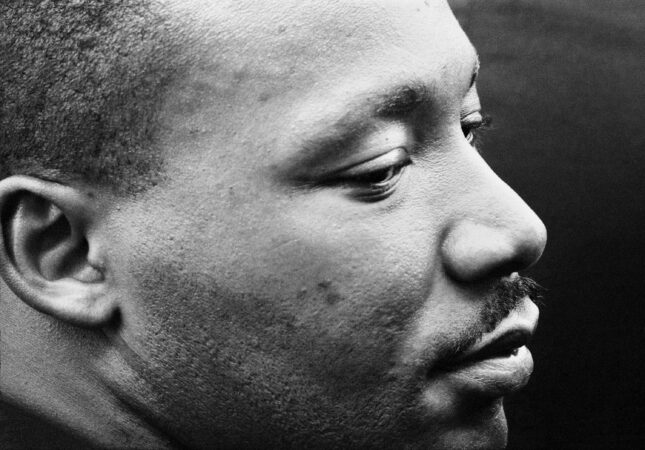
As our nation marks Martin Luther King Jr. Day, we return to the teachings of a leader who understood that justice demands more than good intentions. The Rev. Dr. Martin Luther King Jr. once said,“I think of love as something strong, and that organizes itself into powerful, direct action.”
Today, when hatred and division feel increasingly emboldened, that call to organize love is not just inspiring. It is instructive.
In recent years, many have embraced what is often called “allyship.” Too often, however, it stops there. Statements replace substance. Solidarity appears online, but disappears when issues become uncomfortable or complex.
Even the language of allyship is revealing. An ally is, by definition, part of a temporary alliance, formed for a specific battle and dissolved when circumstances change. That framework was never meant to sustain lasting relationships.
If we want to change culture, not just react to crises, we must move beyond allyship to something deeper and more enduring: genuine friendship.
Friendship lasts beyond the news cycle. It holds through disagreement and discomfort. It requires showing up not only when harm is visible, but when the spotlight is gone. It is the only foundation strong enough to support a multiracial, multifaith movement capable of confronting hatred in all its forms.
That belief is why we founded the New Golden Age Coalition: to revive and strengthen the historic connection between Black and Jewish communities in Greater Philadelphia. That connection is rooted in shared experiences, from collaboration during the civil rights movement to everyday moments of partnership in neighborhoods, houses of worship, and civic life.
History does more than inspire us; it reminds us of what is possible when communities refuse to stand apart.
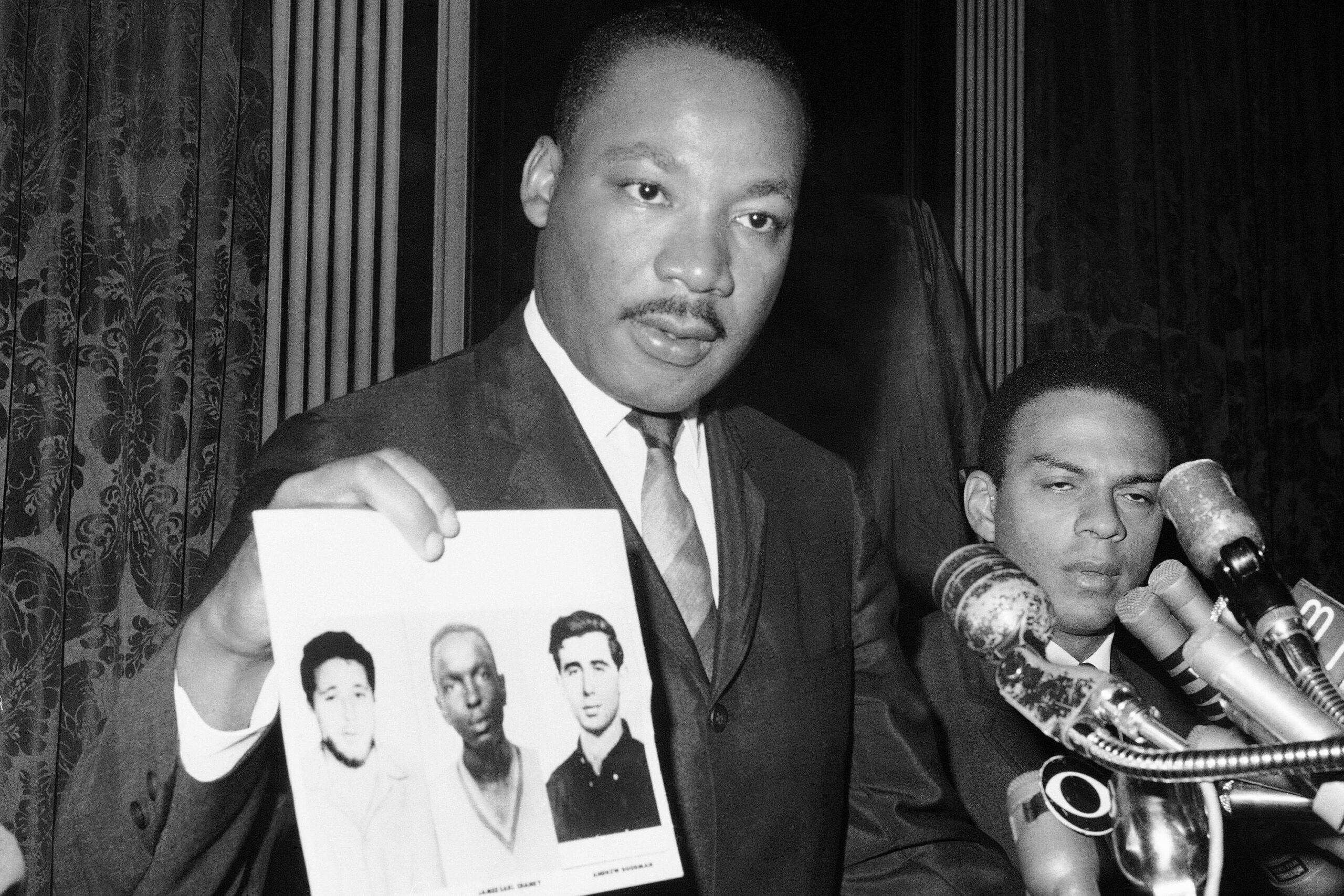
The Rev. Dr. Martin Luther King Jr. displays pictures of three civil rights workers murdered in Mississippi in 1964.
But history alone is not enough. Partnership cannot survive on nostalgia. It must be renewed through action, guided by the kind of love King described: love that acts, love that protects, love that builds.
Today’s world can feel overwhelmingly dark. Antisemitism is surging. Anti-Black racism remains deeply entrenched. In a moment like this, our response must be grounded in love strong enough to confront hatred, and courageous enough to be expressed publicly, consistently, and collaboratively.
The New Golden Age Coalition organizes that love through three core pillars:
Rebuilding the bridge to beat bigotry
We are cultivating genuine relationships between Black and Jewish Philadelphians — relationships that allow us to confront antisemitism, racism, and all forms of hate.
Enhancing security and violence prevention
Our communities face growing threats from extremism, gun violence, and systemic neglect. We are working together to create safer neighborhoods and protect our most vulnerable.
Amplifying the social safety net in Greater Philadelphia
We recognize that poverty, hunger, and instability weaken families and fuel despair. Our coalition is committed to supporting and expanding the institutions that give people hope, dignity, and opportunity.
On this MLK Day, we choose not to offer feel-good slogans. Instead, we recommit ourselves to the labor of love that King demanded: strong, organized, and directed toward justice.
This means spending time in one another’s neighborhoods, houses of worship, schools, and community spaces. It requires listening before reacting, staying present when conversations are difficult, and approaching one another with love and compassion. It also means standing up for one another’s causes — not because they are convenient or popular, but because injustice anywhere threatens the dignity of us all.
This MLK Day, we invite Philadelphians to move closer rather than retreat — to share meals, attend one another’s gatherings, stand together in moments of joy and pain, and build relationships that last beyond crisis. This is love in action. Together, it is how we build a new golden age.
Philadelphia deserves nothing less.
Jason Holtzman is the chief of the Jewish Community Relations Council of the Jewish Federation of Greater Philadelphia. Pastor Carl Day is the founder of Culture Changing Christians. Together, they are cofounders of the New Golden Age Coalition.
When Cherelle L. Parker was a City Council member, she championed a strict residency rule that required city employees to live in Philadelphia for at least a year before being hired.
Amid protest movements for criminal justice reform in 2020, Parker said stricter residency requirements would diversify a police force that has long been whiter than the makeup of the city, and ensure that officers contribute to the tax base.
“It makes good common sense and good economic sense for the police policing Philadelphia to be Philadelphians,” she said then.
But today, under now-Mayor Parker, more police live outside Philadelphia than ever before.
About one-third of the police department’s 6,363 full-time staffers live elsewhere. That share — more than 2,000 employees — has roughly doubled since 2017, the last time The Inquirer conducted a similar analysis.
(function() {
var l2 = function() {
new pym.Parent(‘ppd_zips’,
‘https://media.inquirer.com/storage/inquirer/projects/innovation/arcgis_iframe/ppd_zips.html’);
};
if (typeof(pym) === ‘undefined’) {
var h = document.getElementsByTagName(‘head’)[0],
s = document.createElement(‘script’);
s.type = ‘text/javascript’;
s.src = ‘https://pym.nprapps.org/pym.v1.min.js’;
s.onload = l2;
h.appendChild(s);
} else {
l2();
}
})();
Today, the percentage of nonresidents is even higher among the top brass: Nearly half of all captains, lieutenants, and inspectors live outside the city, according to a review of the most recent available city payroll data.
Even Commissioner Kevin Bethel keeps a home in Montgomery County, despite officially residing in a smaller Northwest Philadelphia house that he owns with his daughter.
Most municipal employees are still required to live within city limits. Across the city’s 28,000-strong workforce, nearly 3,200 full-time employees listed home addresses elsewhere as of last fall. Most of them — more than 2,500 — are members of the police or fire departments, whose unions secured relaxed residency rules for their workers in contract negotiations. About a quarter of the fire department now lives outside the city.
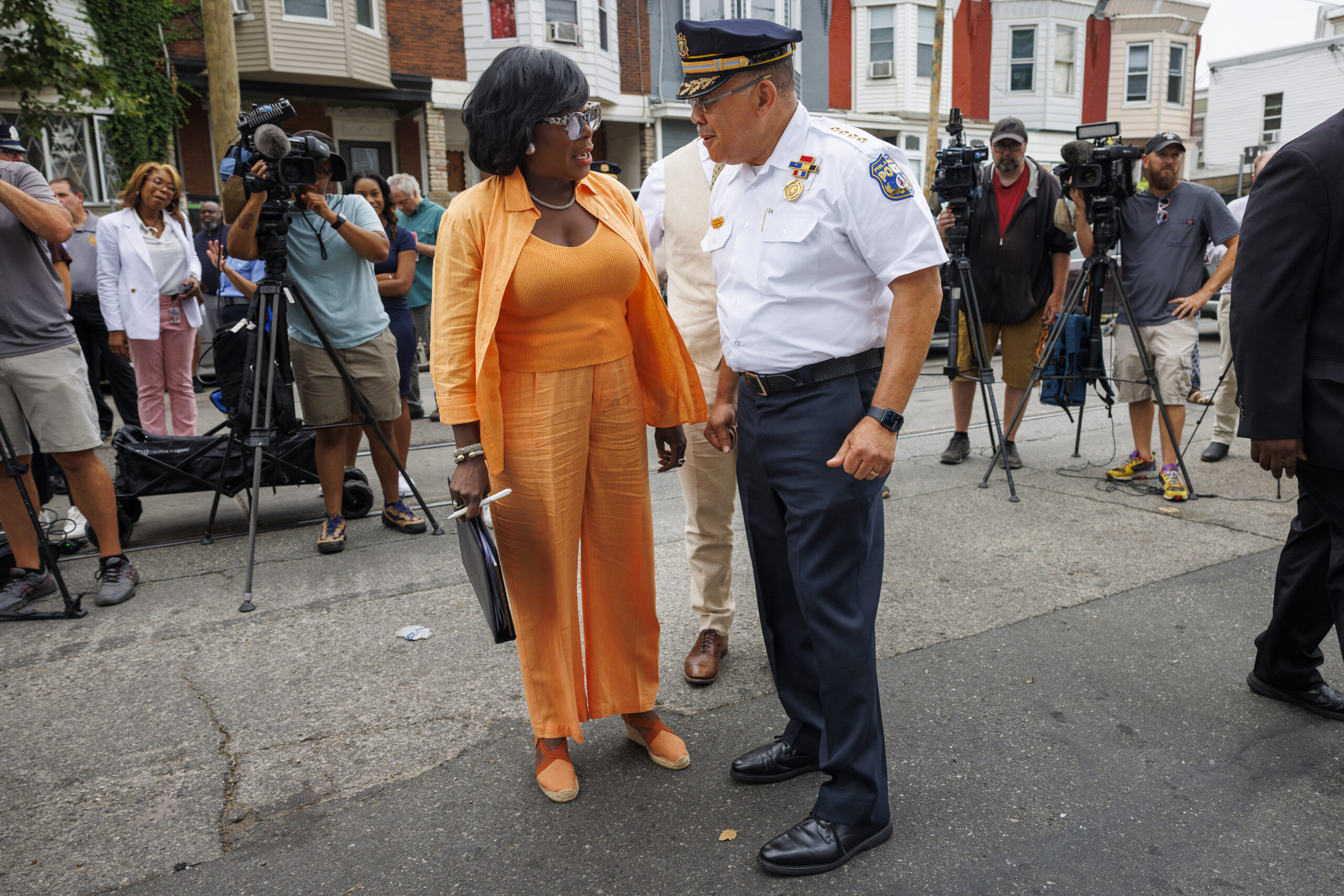
Philadelphia Mayor Cherelle L. Parker and Police Commissioner Kevin Bethel speak before the start of a news conference.
Proponents of residency rules in City Hall have long argued they improve rapport between law enforcement and the communities they serve, because officers who have a stake in the city may engage in more respectful policing.
But experts who study public safety say there is little evidence that residency requirements improve policing or trust. Some say the rules can backfire, resulting in lesser quality recruits because the department must hire from a smaller applicant pool.
A survey of 800 municipalities last year found that residency requirements only modestly improved diversity and had no measurable effect on police performance or crime rates.
“It’s a simple solution thrown at a complex problem,” said Fritz Umbach, an associate professor at John Jay College of Criminal Justice. “It doesn’t have the impact people think it will.”
Parker, a Philadelphia native who lives in the East Mount Airy neighborhood, says she would still prefer all municipal employees live in the city.
“When I grew up in Philadelphia, it was a badge of honor to have police officers and firefighters and paramedics who were from our neighborhood,” she said in a statement. “They were part of the fabric of our community. I don’t apologize for wanting that to be the standard for our city.”
‘Where they lay their heads at night’
What qualifies as “residency” can be a little pliable.
Along with his wife, Bethel purchased a 3,600-square-foot home in Montgomery County in 2017 for over a half-million dollars. Although he initially satisfied the residency rule by leasing a downtown apartment after being named commissioner by Parker in late 2023, he would not have met the pre-residency requirement the mayor championed for other city employees while she was on Council.
Today, voter registration and payroll data shows that Bethel resides in a modest, 1,800-square-foot rowhouse in Northwest Philadelphia, which he purchased with his daughter last year. While police sources said it was common for Bethel to sleep in the city given his long work hours, his wife is still listed as a voter in Montgomery County.
Police Commissioner Kevin Bethel speaks during the 22nd District community meeting at the Honickman Learning Center on Dec. 2, 2025.
Sgt. Eric Gripp, a spokesperson for the department, said in a statement that Bethel is a full-time resident of Philadelphia, and that while he owns a property outside the city, his “main residence” is the home in Northwest Philly.
Although sources say it was not unheard of for rank-and-file officers to use leased apartments to satisfy the requirement on paper, Gripp said “only a small number” of residency violations had required formal disciplinary action following an investigation by the department’s Internal Affairs Division.
That likely owes to officers’ increasing ability to reside elsewhere legally. The Fraternal Order of Police Lodge 5, which represents thousands of active and retired Philadelphia Police officers, won a contract provision in 2009 allowing officers to live outside the city after serving on the force for at least five years.
The union didn’t respond to a request for comment.
Few of the cops who left the city went very far.
While Northeast Philly and Roxborough remain the choice neighborhoods for city police, the top destinations for recent transplants were three zip codes covering Southampton, and Bensalem and Warminster Townships, according to city payroll data.
A few officers went much farther than the collar counties.
Robert McDonnell Jr., a police officer in West Philadelphia’s 19th district with 33 years on the force, has an official address at a home in rural Osceola Mills, Pa., about 45 minutes north of Altoona in Centre County.
A person who answered a phone number associated with McDonnell — who earned $124,000 last year between his salary, overtime, and bonus pay — declined to speak to a reporter.
Asked about the seven-hour round-trip commute McDonnell’s nominal residence could entail, Gripp said the department doesn’t regulate the manner in which employees travel to and from work.
“Our members serve this city with dedication every day,” he said, “regardless of where they lay their heads at night.”
A long and winding history
Versions of residency rules can be found as far back as the 19th century, when police recruits were required to live in the districts they sought to work in.
But when Mayor Joseph S. Clark pushed to reform the city charter in the 1950s, he sought to abolish the rules as an impediment to hiring, saying “there should be no tariff on brains or ability.”
Instead, City Council successfully fought to expand the restrictions. And, for more than five decades, the city required most of its potential employees to have lived in Philadelphia for a year — or obtain special waivers that, in practice, were reserved for the most highly specialized city jobs, like medical staff.
Many other big cities enacted similar measures either to curb middle-class flight following World War II or to prioritize the hiring of local residents. But the restrictions were frequently blamed for causing chronic staff shortages of certain hard-to-fill city jobs.
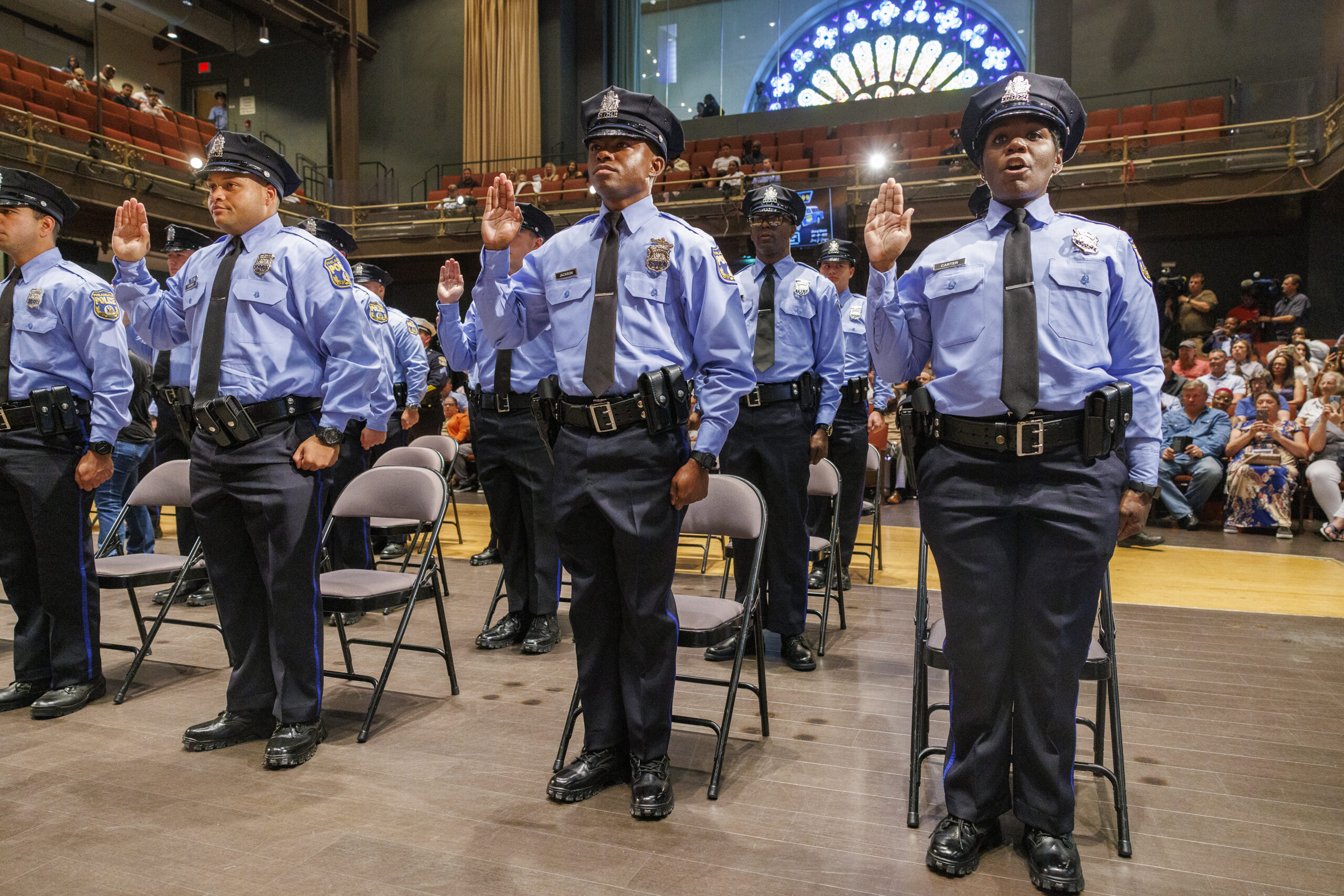
Officers Azieme Lindsey (from left), Charles T. Jackson, and Dalisa M. Carter taking their oaths in 2023.
Citing a police recruit shortage in 2008, former Mayor Michael A. Nutter successfully stripped out the prehiring residency requirement for cadets. Recruits were required only to move into the city once they joined the force.
A year later, the police union attempted to have the residency requirement struck from its contract entirely.
Nutter’s administration objected. But an arbitration panel approved a compromise policy to allow officers to live elsewhere in Pennsylvania after five years on the job. By 2016, firefighters and sheriff’s deputies secured similar concessions.
But experts say there’s little research showing that to be true.
“I am unsure if requiring officers to reside in the city is a requirement supported by evidence,” said Anjelica Hendricks, an assistant law professor at the University of Pennsylvania who worked for the city’s Police Advisory Commission. “Especially if that rule requires a city to sacrifice something else during contract negotiations.”
FOP leaders have long opposed the rule and said it was partly to blame for the department’s unprecedented recruitment crisis and a yearslong short-staffing problem that peaked in the aftermath of the COVID-19 pandemic.
In 2022, facing nearly 1,500 unfilled police jobs, former Mayor Jim Kenney loosened the prehire residency rule for the police department again, allowing the force to take on cadets who lived outside the city, so long as they moved into Philadelphia within a year-and-a-half of being hired.
Since then, recruiting has rebounded somewhat, which police officials attribute to a variety of tactics, including both the eased residency rules and hiring bonuses. The force is still short 20% of its budgeted staffing and operating with 1,200 fewer officers than it did 10 years ago.
Umbach, the John Jay professor, said the impact on recruiting is obvious: Requiring officers to live in a city where the cost of living may be higher than elsewhere amounts to a pay cut, which shrinks candidate pools.
“Whenever you lower the standards or lower the appeal of the job, you’re going to end up with people who cause you problems down the road,” he said. “A pay cut is just that.”
For Jennifer Rodier, it was “a wonderful place to grow up.”
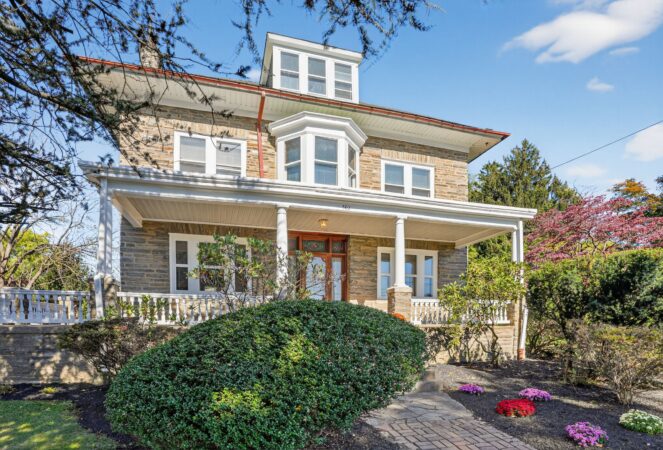
The six-bedroom, 2½-bathroom stone house is on a wide Upper Roxborough street, perched high above a valley.
Her father, Walter D’Alessio, bought the house in 1969, and “he never wanted to let go of it,” Rodier said.
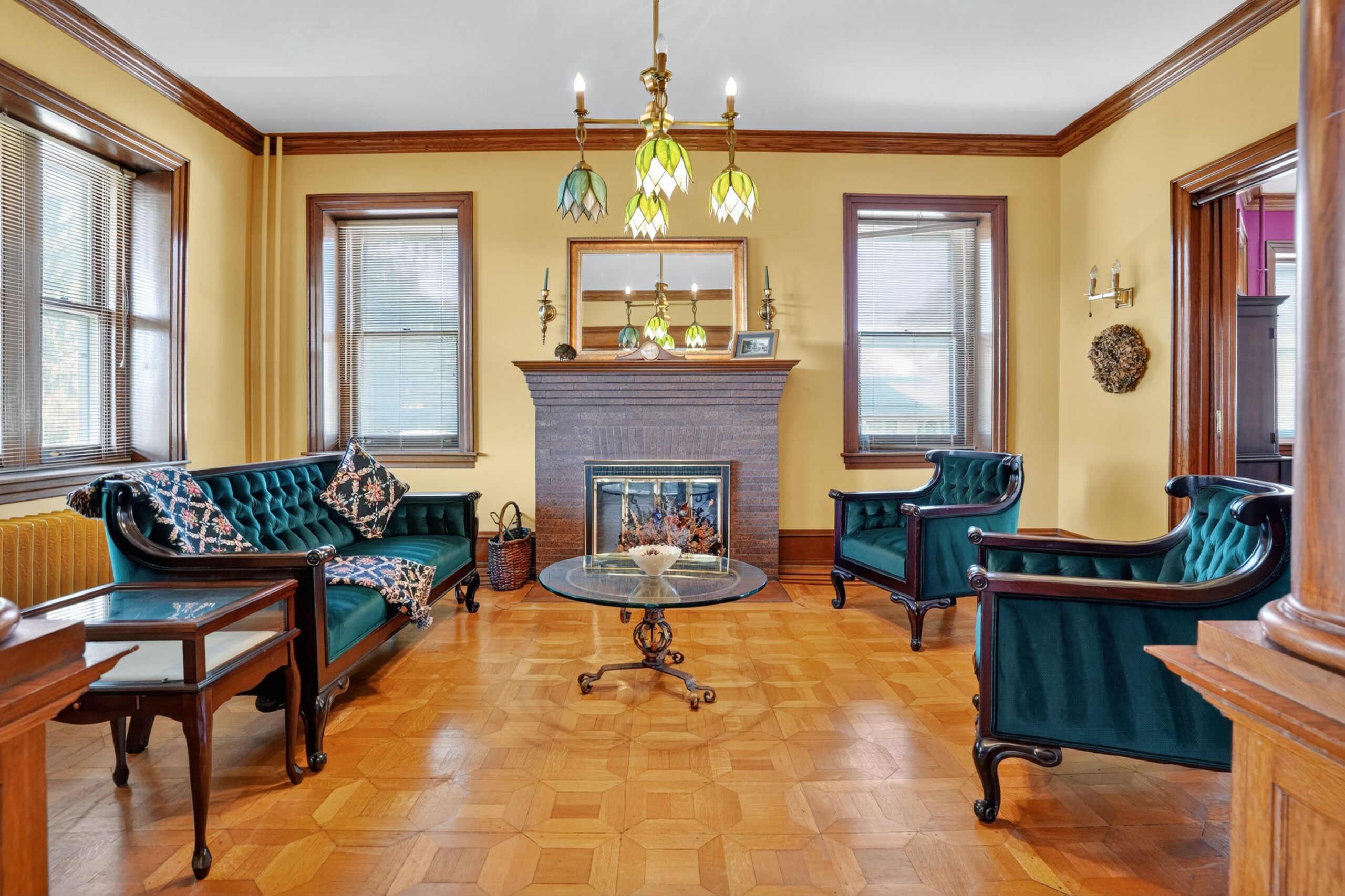
The formal living room has a working wood-burning fireplace.
D’Alessio headed the Philadelphia Redevelopment Authority and Philadelphia Industrial Development Corp. and served under five Philadelphia mayors. He died in 2024.
Rodier, a nonprofit executive who lives in Lafayette Hill, is selling the place where she and her friends played hide-and-seek or cavorted in the large yard.
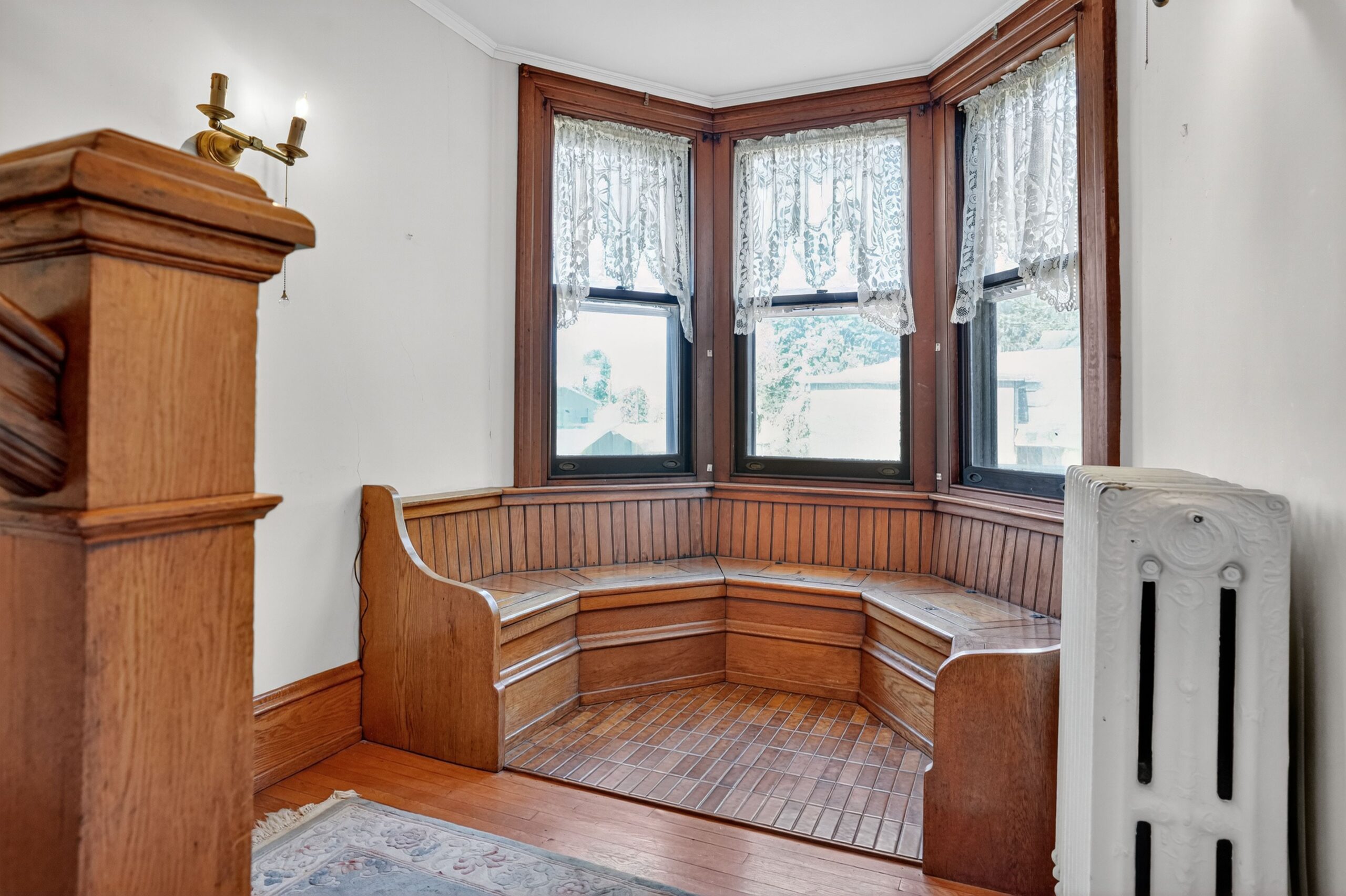
Window seat off the grand staircase.
She said the D’Alessios did extensive renovations on the house in their time there.
It is 4,406 square feet, and Rodier says it was built around 1910, with her parents only the second owners.
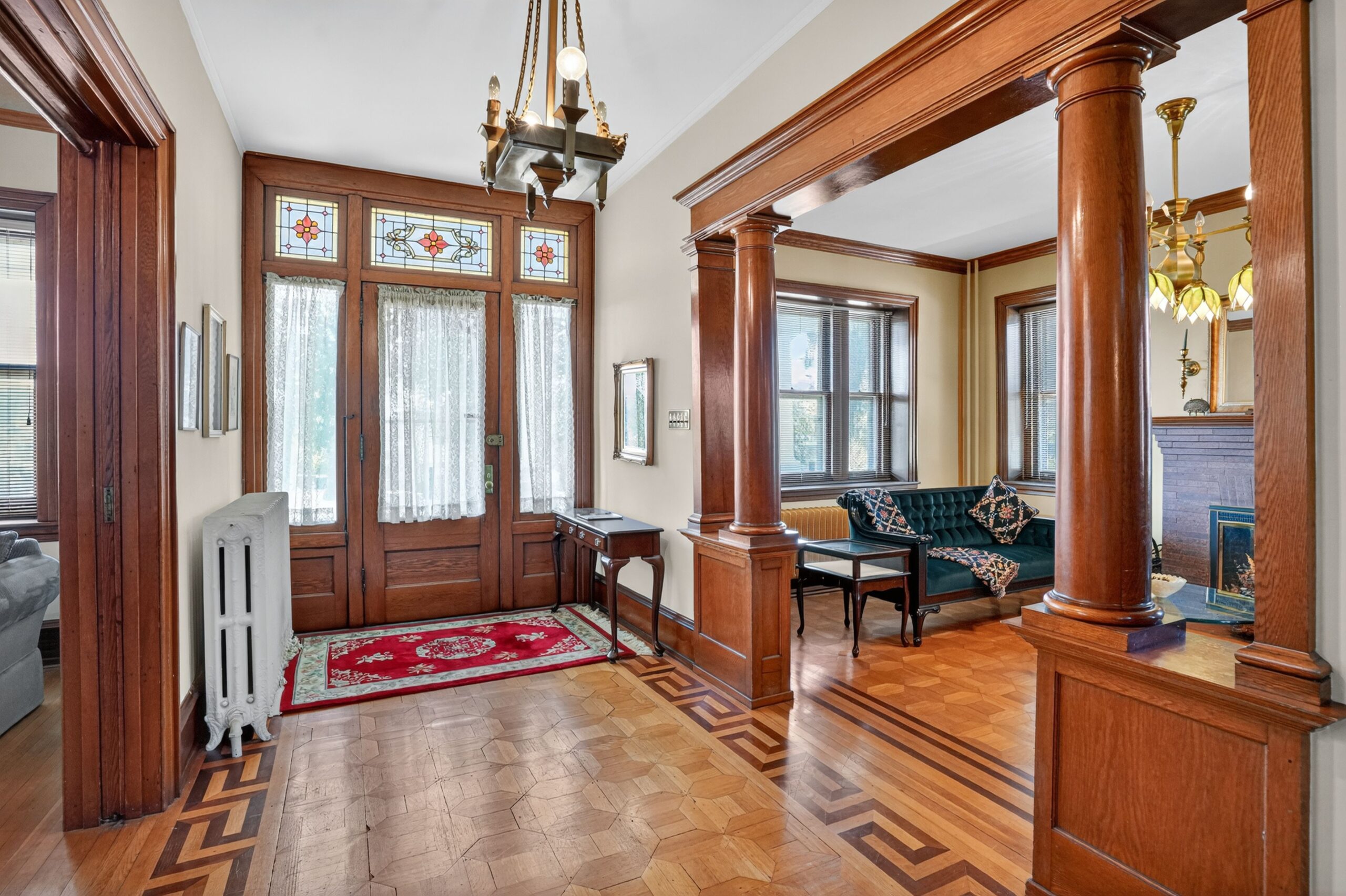
The house has a center-hall Colonial foyer, its original wide entry door with a leaded glass transom, original exposed ribboned hardwood floors, a grand staircase with a window seat, original wall light sconces and pocket doors, and a wraparound front porch.
The foyer’s original wide entry door has a leaded glass transom.
The formal living room has a working wood-burning fireplace, and the first floor includes the kitchen, breakfast room, powder room, and pantry.
The second floor has four bedrooms with large closets and a hall bath.
The third floor has the other bedrooms, including a large front bedroom that could be used for a primary suite, and bath with a claw-foot tub.
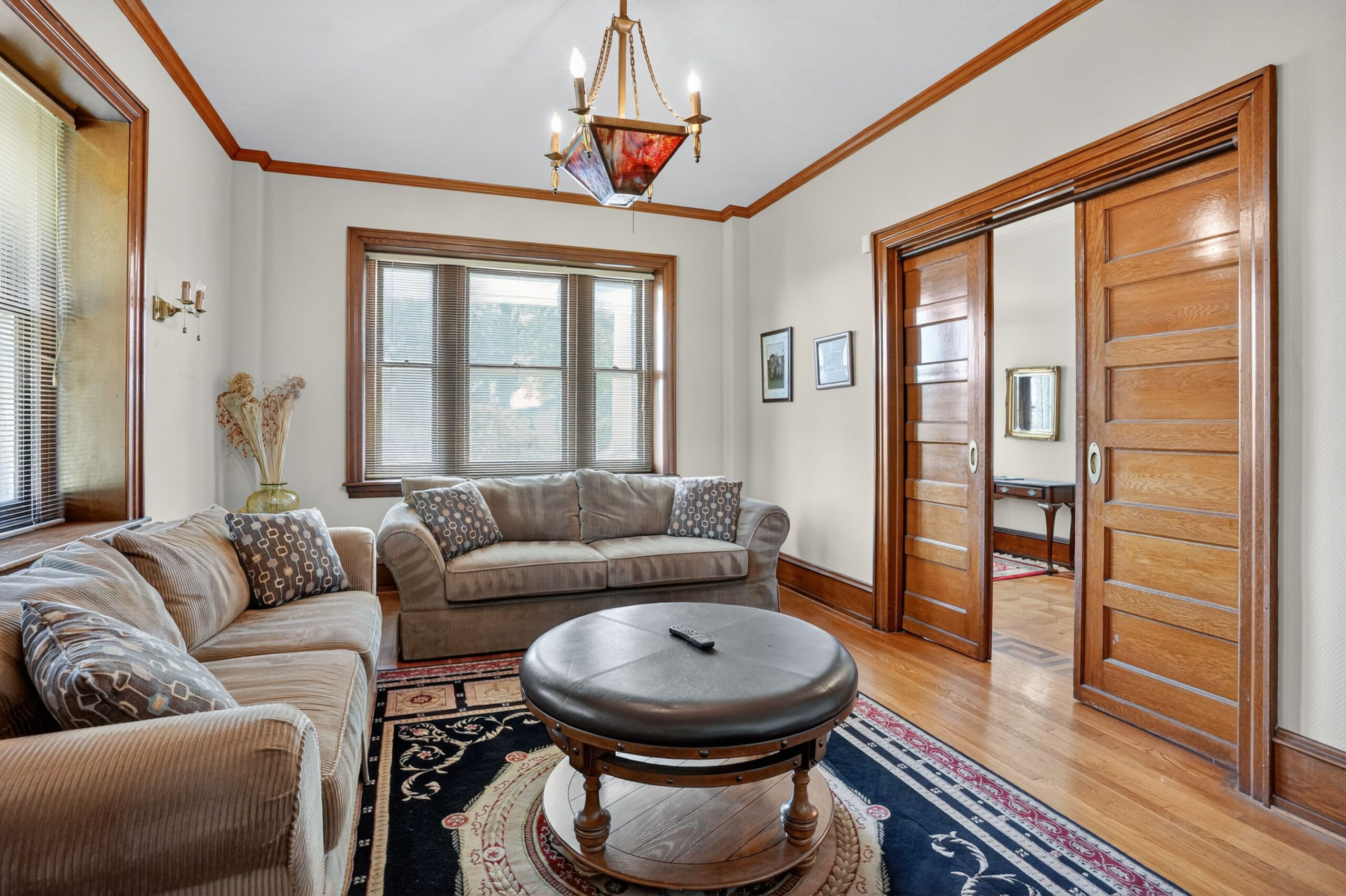
Reading nook with pocket doors.
The house has a full basement with a workshop and a storm door to the rear yard.
The sale could include some of the original furnishings, Rodier said.
The house is minutes from the Ivy Ridge Regional Rail station, Route 309, and the Schuylkill Expressway.
It is listed by Dennis McGuinn of Realty Broker Direct for $725,000.
One of the family leaders of the Santucci’s Original Square Pizza empire was sentenced Monday to one day in jail and 18 months of supervised release for significantly understating the business’ earnings over the course of several years, causing him and other company officials to underpay taxes by nearly $1.4 million.
Frank Santucci Sr., 67, who had taken over the family business from his parents nearly 50 years ago, said he was “embarrassed” and “deeply sorry” for his actions, which federal prosecutors described as a long-running cash skimming operation. He pleaded guilty last year to charges of tax evasion and filing false tax returns.
“I spent my life trying to be an honest man,” Santucci said Monday during his sentencing hearing in federal court, “and knowing I fell short of those values is something I deeply regret.”
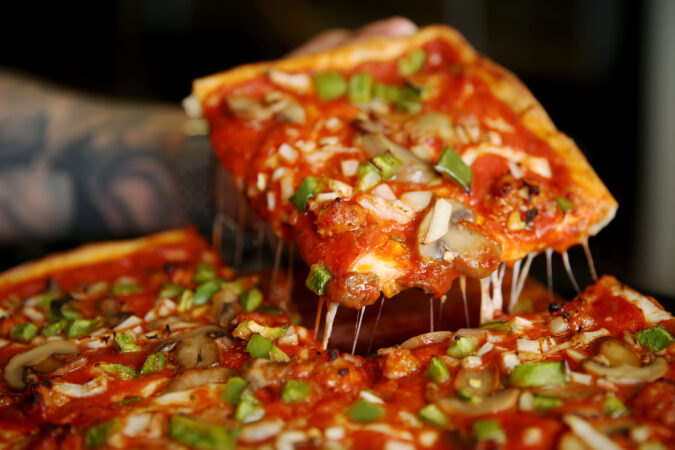
Prosecutors said in court documents that Santucci was a company patriarch who had “informal bookkeeping responsibilities” at the family’s pizza shops in South Philadelphia, Roxborough, and on North Broad Street. The restaurants are well-known for offering square, thick-crust pies with layers of sauce and toppings piled on top of cheese.
Although the business had for years employed a cash-only policy, prosecutors said, Santucci began keeping two sets of books as the company began using an electronic point-of-sale system in 2017. One of the sets of records included details for issues like payroll and expenses, which Santucci showed to his tax accountants, prosecutors said, and the other — which Santucci concealed from his accountants — is where he deposited some of the restaurants’ cash earnings.
As a result, prosecutors said, Santucci understated the shops’ earnings by about $5 million between 2015 and 2018. And that caused him to underpay his personal taxes by nearly $400,000, they said, while his co-owners underpaid theirs by about $700,000, and the business underpaid employment taxes by about $300,000.
Santucci — who was the only person charged in the case — has already repaid his personal tax bill, said his attorney, Richard J. Fuschino Jr. And Fuschino said Santucci was a man whose life had otherwise been defined by his hard work at his namesake shops, and an unerring dedication to his family and community.
“Mr Santucci is, on the whole of it, as good as [people] get,” Fuschino said.
Assistant U.S. Attorney Patrick Murray did not disagree that Santucci supported his family, and said it was notable that he had accepted responsibility for his crimes. But he said Santucci nonetheless engaged in a long-running scheme that deprived the IRS of revenue and, by extension, allowed Santucci’s business and relatives to keep more money than they were entitled to.
U.S. District Judge Karen S. Marston did not discount the seriousness of the crimes, but said Santucci’s age, health concerns — he suffered two strokes in recent years — and his role as a grandfather who is actively involved in caring for his young grandchildren all factored into her sentencing decision. She said his day in custody would be Monday and also ordered him to perform 300 hours of community service.
“I do believe that Mr. Santucci has shown the remorse that’s necessary in this particular case,” she said.
The Santucci’s pizzerias and their many franchise locations remain in operation and were not impacted by the case, Fuschino said.
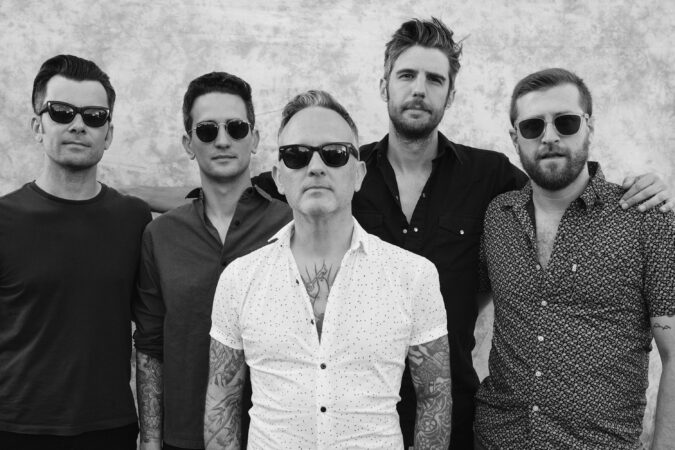
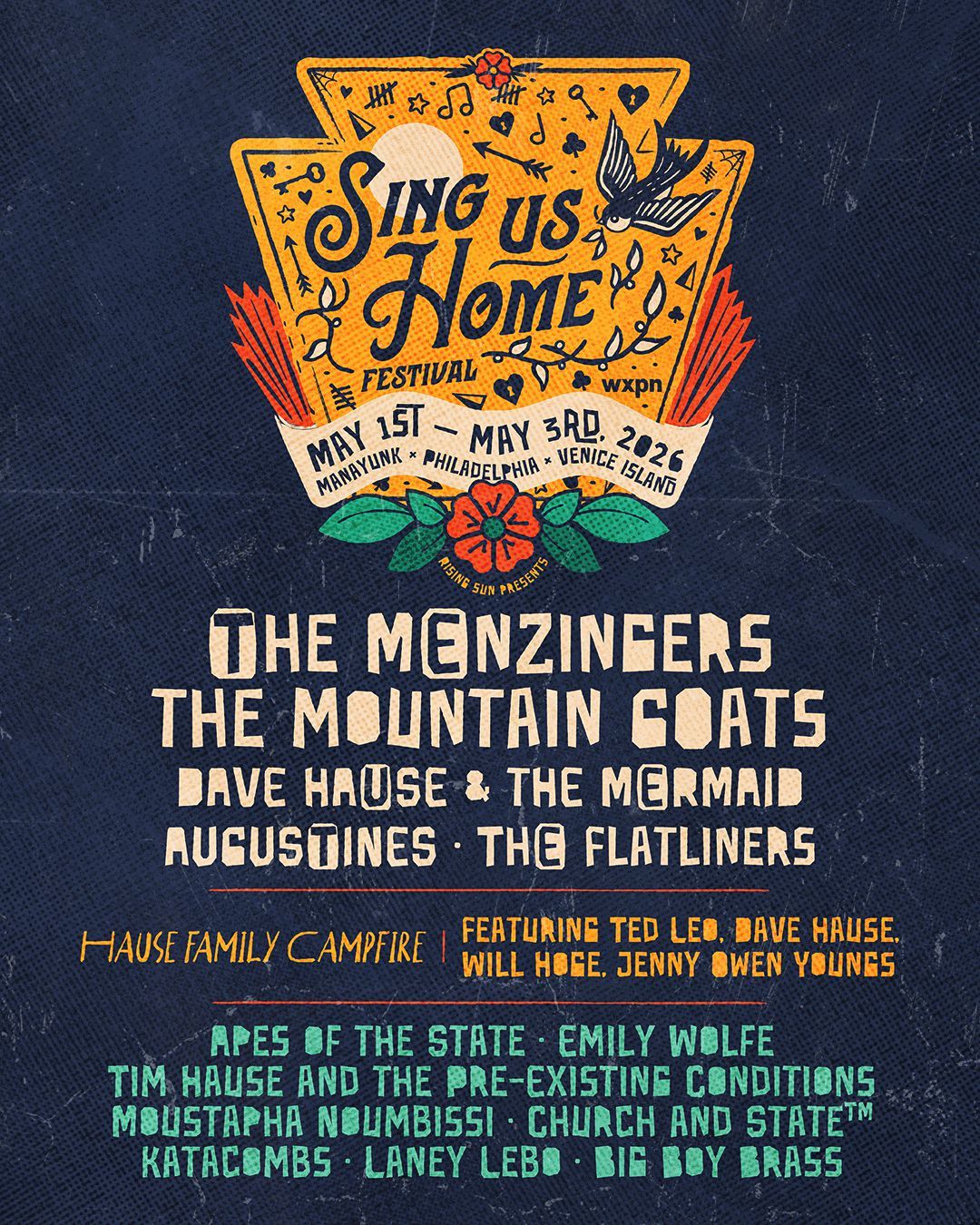
This year’s Sing Us Home festival will feature founders Dave and Tim Hause, Scranton pop-punk band the Menzingers, prolific indie rockers the Mountain Goats, punk veteran Ted Leo, and a certain late night TV comedian and political commentator playing drums.
In its fourth year, Sing Us Home will be staged on Venice Island in Manayunk from May 1-3. It will again take its place as the opening event of Philadelphia’s outdoor music festival season.
Produced by Ardmore-based music promoters Rising Sun Presents, the fest will kick of on a Friday night with its traditional opening set billed as the Hause Family Campfire. That includes Roxborough-raised Dave Hause joined by Leo, Will Hoge, and Jenny Owen Youngs, with all four songwriters on stage at once, sharing songs and stories.
Along with the aforementioned headliners and Dave Hause & the Mermaid, the three-day fest also includes Tim Hause & the Pre-Existing Conditions, fronted by Hause’s younger brother and festival cofounder.
The lineup for the 2026 Sing Us Home Festival.
The lineup also features blues guitarist Emily Wolfe, Canadian punks the Flatliners, New York indie rockers Augustines, New Jersey band Church and State™, Philly singer Moustapha Noumbissi, Lancaster folk-punk band Apes of the State, singer-songwriters Katacombs and Laney Lebo, and horn happy outfit Big Boy Brass, who will parade the grounds.
The political pundit funnyman playing the drums will be Jon Stewart, who sits on the throne behind his kit with Church and State™, the new band with whom he has played only a handful of gigs.
Last month, he told the audience on the Daily Show that he picked up the stick after failing to master the guitar or piano, and that playing in his first band at age 63 was extremely fun.
Philadelphia police seek to identify the suspect responsible for recent vandalism at Roxborough High School.
A person painted racist and antisemitic slogans across the exterior walls of the school building Sunday, which included a swastika and racial epithets.
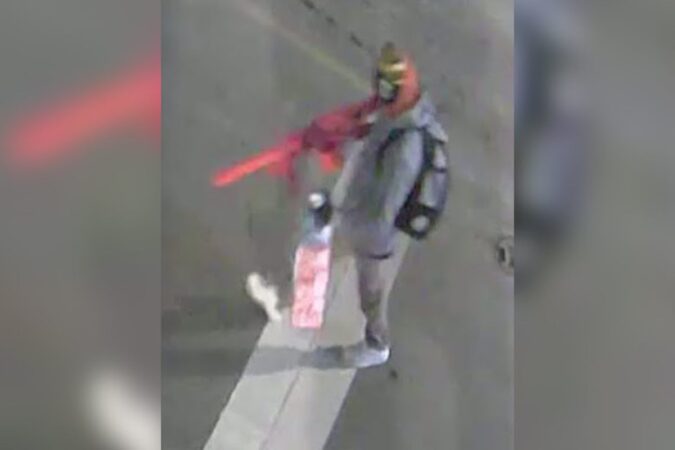
Surveillance video caught the suspect vandalizing the walls around 5:25 a.m. Police describe the suspect as a white male, wearing an orange scarf, a green and black winter hat, a gray hooded jacket, gray pants, and a gray and black backpack.
Cameras captured the person on Jan. 4 approaching the school on foot, coming eastbound from Fountain Street toward Pechin Street. The suspect was last seen heading toward Ridge Avenue
Police asked people to call 911 if the suspect is seen. Information about this crime or suspect can also be shared with Northwest Detective Division by calling 215-686-3353
The public can also submit tips by calling 215-686-8477 or using the online form. All tips remain confidential.
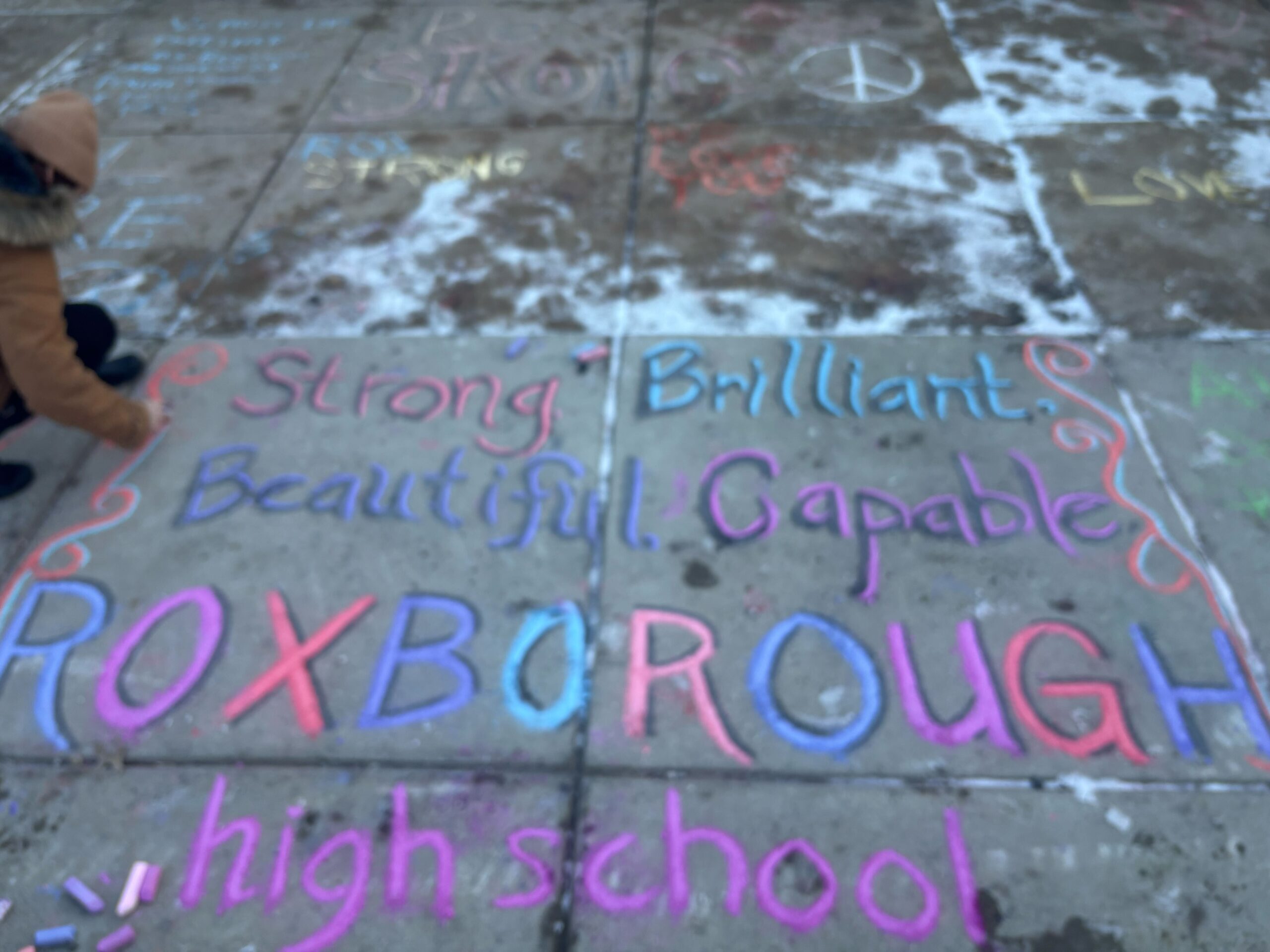
Members of the Roxborough High community chalked positive messages outside the school on Ridge Avenue after racist and antisemitic graffiti was scrawled at the school.
After officials painted over the vandalism over the weekend, Roxborough High School countered the hateful messaging with peaceful messages of their own, written in chalk.
Principal Kristin Williams Smalley said the act of hate didn’t represent the school body.
“We are deeply disappointed by these actions,” Williams Smalley wrote in a letter to the community. “We wish to remind everyone that we have a zero-tolerance policy for harassment or hate speech of any kind, and we will investigate all matters involving racist remarks and other hate speech.”
On Wednesday, the Pennsylvania Human Relations Commission condemned the “acts of hate and discrimination” and praised Roxborough’s respons as a testament to the community’s dignity, respect, and shared values.
“Racism and antisemitism are not isolated acts. These acts harm entire communities,” commission executive director Chad Dion Lassiter said. “The response at Roxborough High School shows what is possible when people refuse to be divided and instead stand together to affirm humanity, belonging, and respect. That solidarity is a powerful counter to hate.”
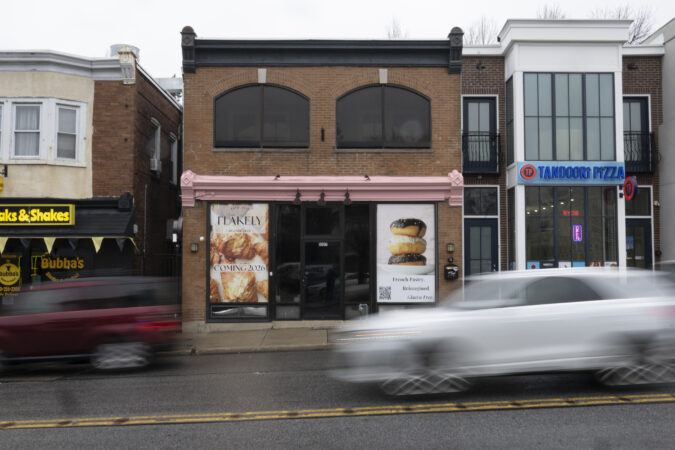
A popular gluten-free bakery is coming to the Main Line.
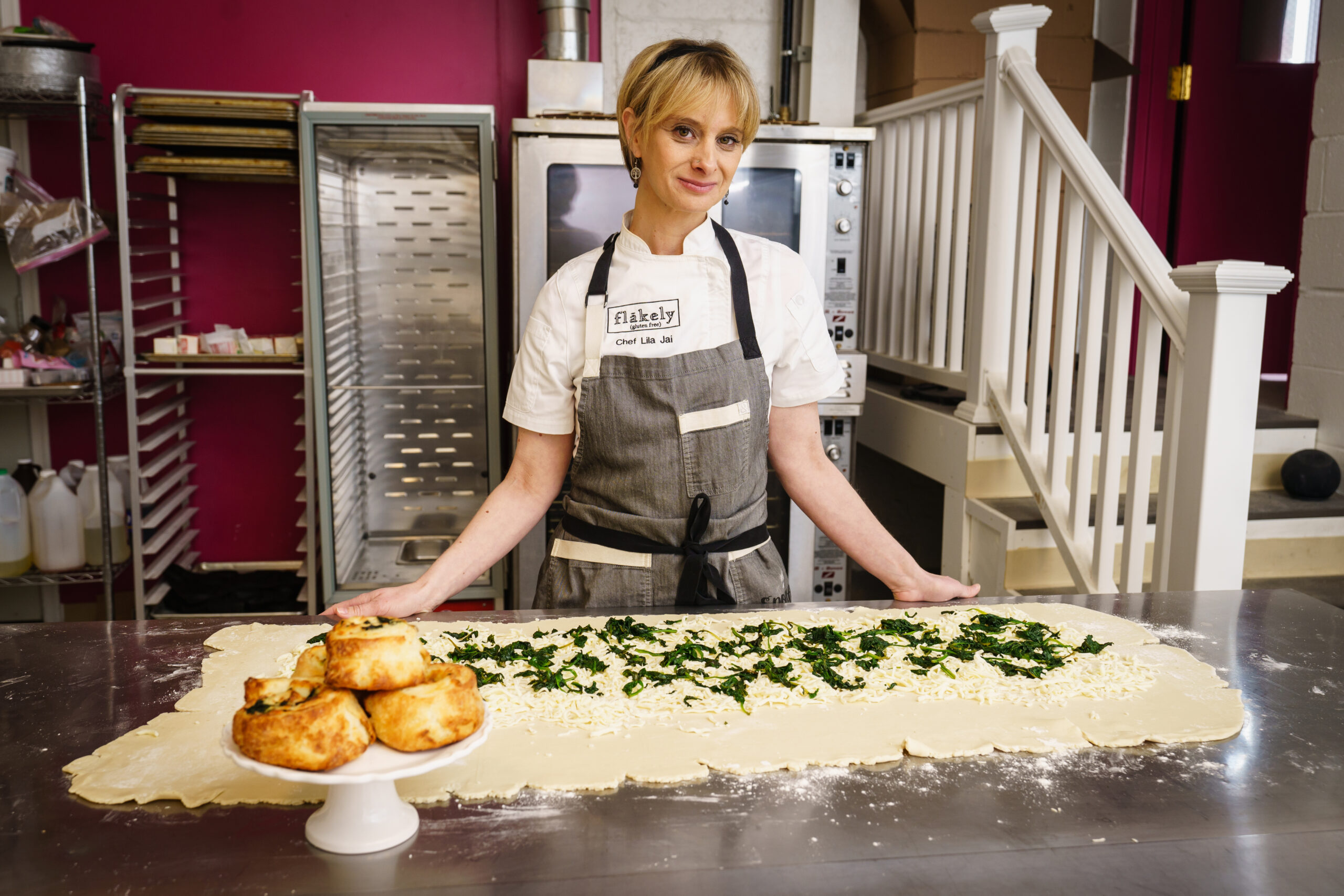
Flakely is moving from behind the bright pink door at 220 Krams Ave. in Manayunk to a Bryn Mawr storefront in early February, said owner Lila Colello. The new takeout-only bakery will replace a hookah lounge at 1007 W. Lancaster Ave.
“We’ve really outgrown our space,” Colello told The Inquirer. Manayunk “wasn’t ever meant to be for retail.”
A trained pastry chef who worked for the Ritz Carlton and Wolfgang Puck Catering, Colello was afraid she’d have to give up the best things in life — bread and her career — when she was diagnosed in 2010 with celiac disease, an inflammatory autoimmune and intestinal disorder triggered by eating gluten.
Instead, Colello spent the next seven years finding ways to get around gluten, a protein found in grains like wheat, rye, and barley (and thus most breads, bagels, and pastries). She perfected kettle-boiled bagels and pastry lamination before starting Flakely in 2017 as a wholesaler.
Colello moved into the commercial kitchen at Krams Avenue in 2021, where customers have spent the last four years picking up buttery chocolate croissants, brown sugar morning buns, and crusty-yet-chewy bagels from a takeout window in an industrial parking lot. Inquirer restaurant critic Craig LaBan has called Colello’s bagels “the best he’s tasted outside of New York,” and in 2024, Flakely was voted one of the best gluten-free bakeries in the United States by USA Today.
Lila Colello, owner and head baker at Flakely, helped patent a way to laminate gluten free dough for croissants.
Flakely’s industrial Manayunk location has required some concessions, Colello said: The majority of their goodies are par-baked and frozen by Colello and three full-time employees for customers to take and bake at home. Otherwise, Colello explained, the lack of steady foot traffic would lead to lots of wasted product.
In Bryn Mawr, Flakely will be a fully functional takeout bakery with a pastry case full of fresh-baked goods, from full-sized baguettes and browned butter chocolate chip cookies to danishes and Colello’s signature sweet-and-savory croissants. A freezer will also include packs of Flakely’s take-and-bake doughs, bagels, and eventually, custom cake orders.
Once she’s settled in, Colello said, she hopes to run gluten-free baking classes and pop-up dinners out of the storefront — offerings (besides the ingredients) that she hopes will differentiate her from other bakeries in the area.
“My vision is for this to be a magical space where people can come in and leave with a fresh croissant, which people can’t really do” when they’re gluten-free, said Colello, who lives in Havertown. “We offer our customers things they miss. That’s kind of our thing.”
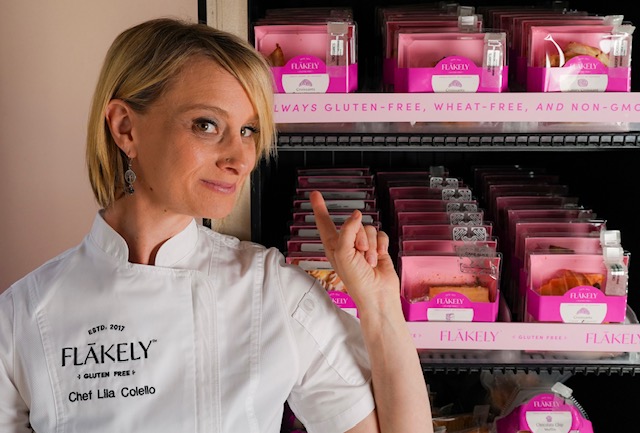
Flakely owner Lila Colello poses in front of one of Flakely’s pink gluten free pastry ATMs, which vend take-and-bake goods at four locations in the Philly area.
What about the pastry ATMs?
The permanent storefront does not mean Flakely’s signature pink pastry ATMs will disappear, said Colello. But they will move.
Colello installed Flakely’s first pastry vending machine inside South Philly’s now-shuttered Salt & Vinegar. With the tap or swipe of a credit card, the smart freezer would open to let customers choose their own take-and-bake pack of croissants, pop-tarts, muffins, or danishes. Using it felt like a sweet glimpse into the future.
Flakely currently operates pastry ATMs inside Collingswood grocer Haddon Culinary, the Weaver’s Way Co-op in Ambler, Ardmore smoke shop Free Will Collective, and Irv’s Ice Cream in South Philly, where enterprising customers top their pastries with scoops fresh out the freezer.
Irv’s ATM will make the move to Reap Wellness in Fishtown on Jan. 5 when the ice cream shop closes for the season, Colello said. And come February, the smoke shop’s ATM will transition to Lucky’s Trading Co., a food hall at 5154 Ridge Ave. in Roxborough. The hope, Colello said, is to space the locations out enough so she’s not competing with herself.
“We’re finally in the middle of where everything is,” Colello said. “And that’s kind of the goal.”
Flakely, 1007 W. Lancaster Ave., Bryn Mawr, 484-450-6576. Hours: 9 a.m. to 4 p.m. Tuesday to Saturday.
Part of Wonder’s sales pitch is that it offers something for everyone, from pizza and cheesesteaks to Mediterranean and steak.
That flexibility, with parents of finicky kids in mind, is part of what drew Eddie Jefferson to Wonder.
“The picky eater thing kind of sits with me,” said Jefferson, senior operations leader for Wonder’s Media location. “I have children who never really could settle on the same food. So it was like, ‘Oh, this makes sense.’”
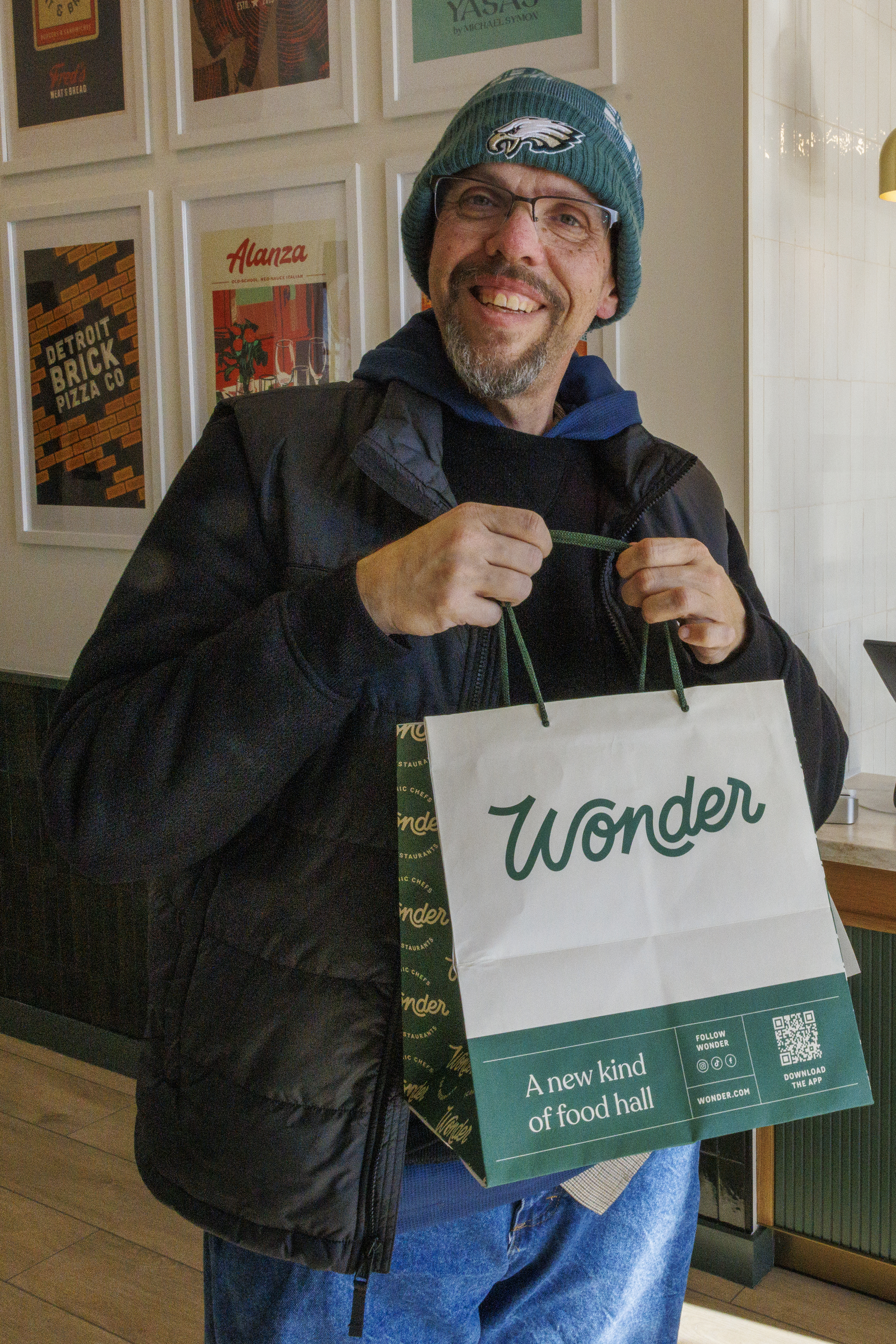
Steve Skalis, of Springfield, picks up an oder of drunken noodles during Wonder’s soft opening in Media on Tuesday, December 16, 2025.
Jefferson said he wants Wonder to be more than just a chain takeout restaurant.
“I want to make sure we’re a staple of the community,” Jefferson said. “I do want to be here for a very long time.”
Wonder is donating $1 to Philabundance for every order at the Media location this week. Jefferson said he hopes that’s just the first local partnership and he will be able to be active in the community.
“Once we settle in to this community I’ll be able to be outside shaking hands and kissing babies.”
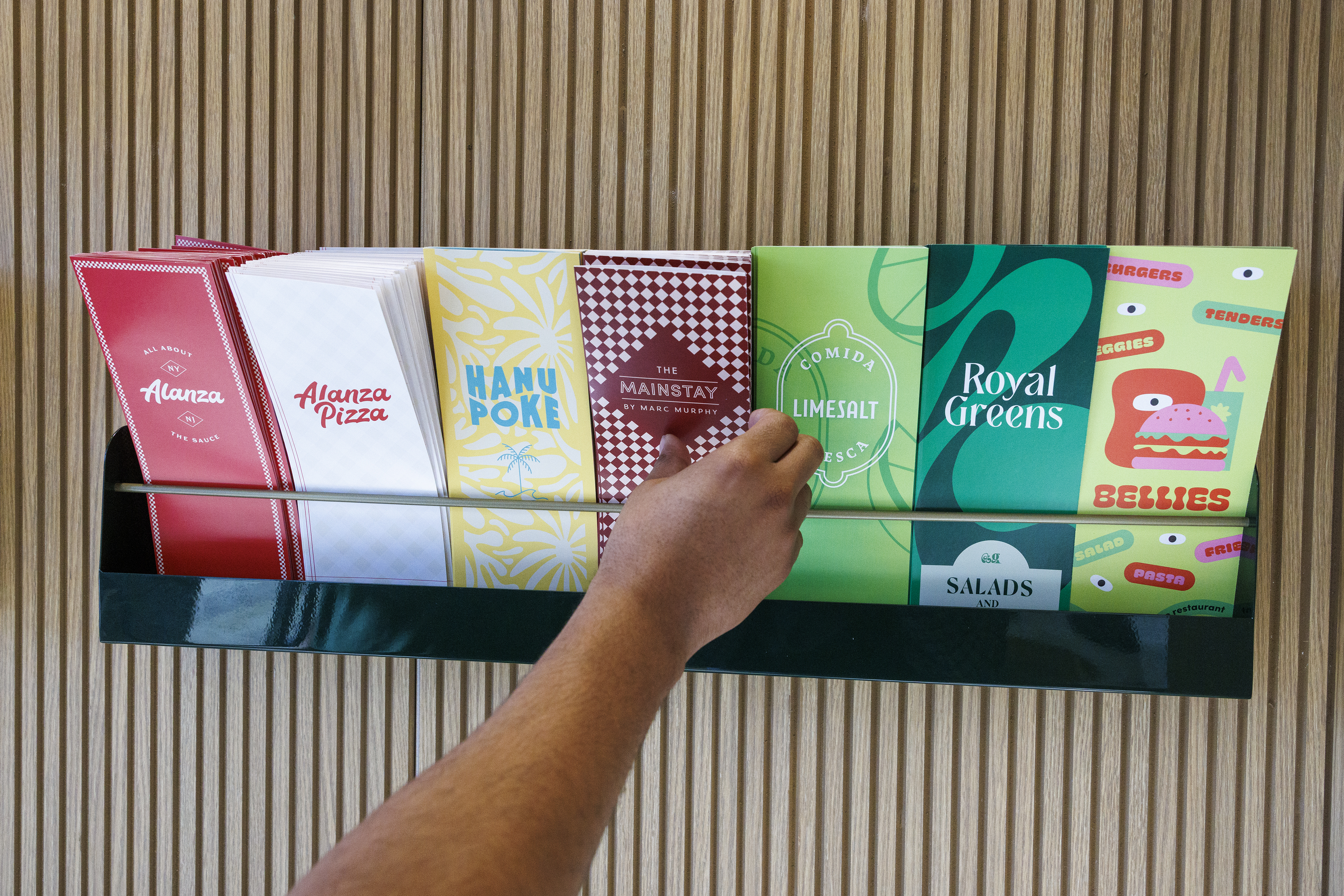
Restaurants available at the Media Wonder include:
Alanza
Alanza Pizza
Bobby Flay Steak
Burger Baby
Detroit Brick Pizza Co.
Di Fara Pizza
Fred’s Meat & Bread
Hanu Poke
Kin House
Limesalt
Maydan
Royal Greens
SirPraPhai
Streetbird by Marcus Samuelsson
Tejas Barbecue
Yasas by Michael Symon
Bellies
Room for Dessert
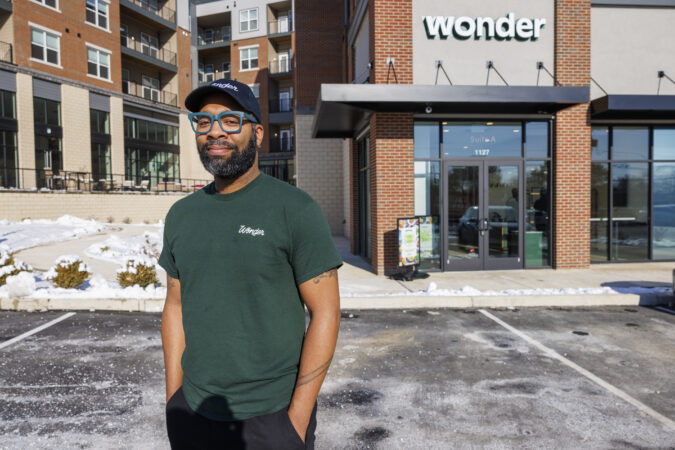
Wonder’s Media location brings the total to 91 sites across the Northeast, from Rhode Island to Virginia. The plan for 2026 is to more than double that, according to Jason Rusk, head of restaurant operations.
“Our plan is to grow 110 locations, so we’ll go from 91 locations to just over 200 locations by the end of next year,” Rusk said.
Eddie Jefferson, senior operations leader at Wonder in Media, reaches for one of many menus Tuesday, December 16, 2025.
Wonder plans to open locations in Drexel Hill and Roxborough in early 2026, a representative said. It is also planning a foray into Allentown and the rest of the Lehigh Valley.
Rusk said sales have been good across the Philly area’s 20-plus stores, with Cherry Hill one of the strongest openings.
“There is no sign of stopping,” Rusk said. ”I have no doubt in my mind that we will fully have a Wonder that services nearly every part of the broader Philly [area].”
This suburban content is produced with support from the Leslie Miller and Richard Worley Foundation and The Lenfest Institute for Journalism. Editorial content is created independently of the project donors. Gifts to support The Inquirer’s high-impact journalism can be made at inquirer.com/donate. A list of Lenfest Institute donors can be found at lenfestinstitute.org/supporters.
Philly is getting ready to dress itself up — with Liberty Bells. Lots of Liberty Bells.
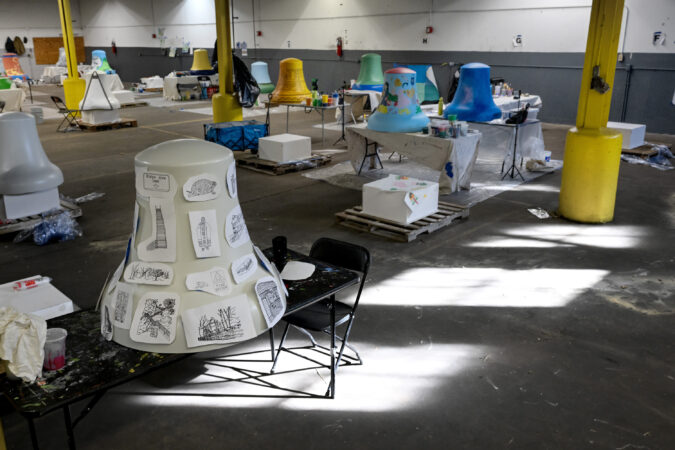
Organizers of Philadelphia’s yearlong celebrations for America’s 250th anniversary in 2026 gathered in a frigid Philadelphia School District warehouse in Logan on Tuesday, offering a special preview of the 20 large replica Liberty Bells that will decorate Philly neighborhoods for the national milestone.
Designed by 16 local artists selected through Mural Arts Philadelphia — and planned for commercial corridors and public parks everywhere from Chinatown and South Philly to West Philly and Wynnefield — the painted bells depict the histories, heroes, cultures, and traditions of Philly neighborhoods.
As part of the state nonprofit America250PA’s “Bells Across PA” program, more than 100 painted bells will be installed across Pennsylvania throughout the national milestone, also known as the Semiquincentennial. Local planners and Mural Arts Philadelphia helped coordinate the Philly bells.
“As Philadelphia’s own Liberty Bell served as inspiration for this statewide program, it makes sense that Philly would take it to the next level and bring these bells to as many neighborhoods as possible,” Mayor Cherelle L. Parker said in a statement. “We are a proud, diverse city of neighborhoods with many stories to tell.”
Kathryn Ott Lovell, president and CEO of Philadelphia250, the city’s planning partner for the Semiquincentennial, said the bells are a key part of the local planners’ efforts to bring the party to every Philly neighborhood.
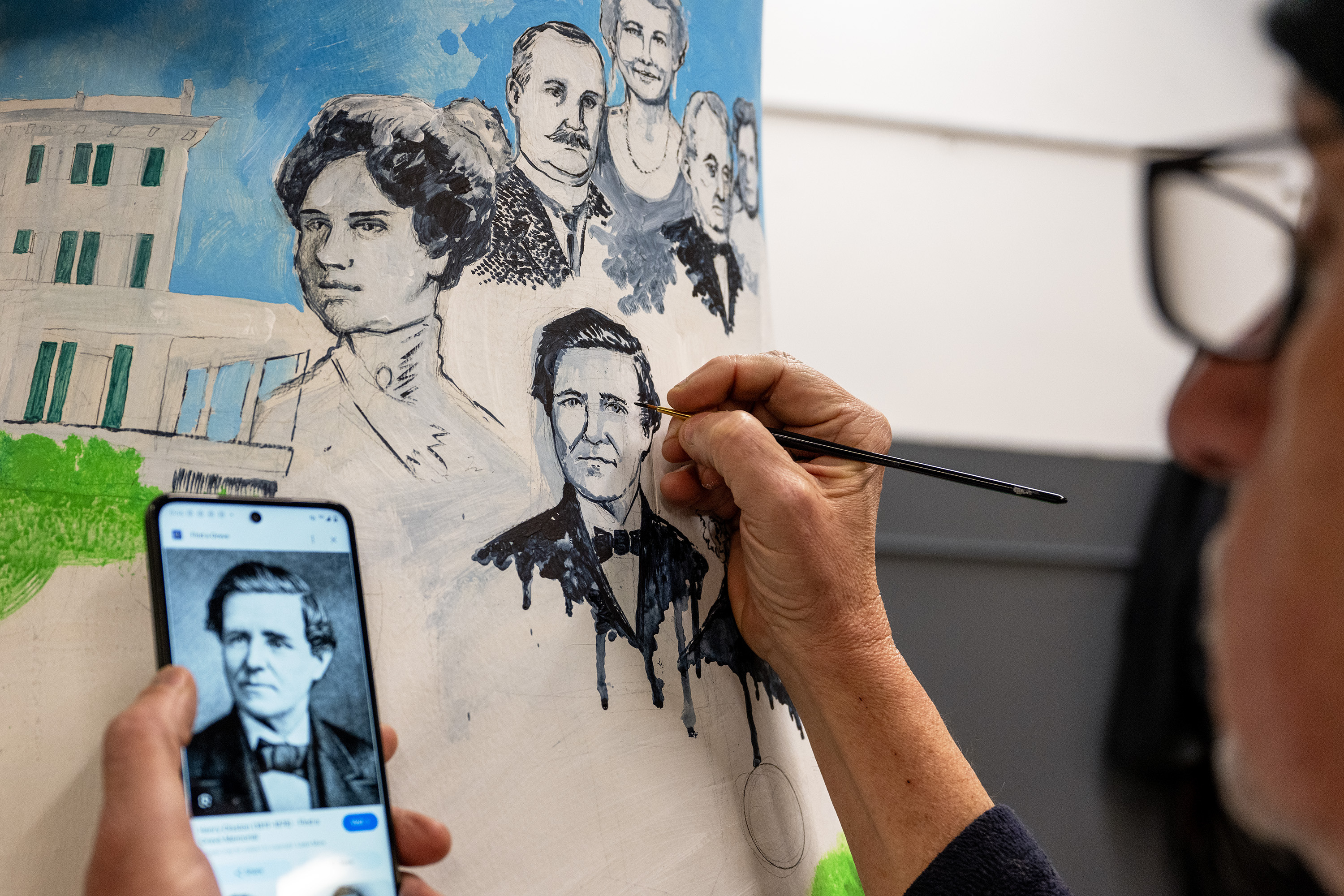
Local artist Bob Dix paints a portrait of industrialist Henry Disston on his bell.
“The personalities of the neighborhoods are coming out in the bells,” she said, adding that the completed bells will be dedicated in January, then installed in early spring, in time for Philly’s big-ticket events next summer, including six FIFA World Cup matches, the MLB All-Star Game, and a pumped-up Fourth of July concert.
Planners released a full list of neighborhoods where the bells will be placed, but said exact locations will be announced in January. Each of the nearly 3-foot bells — which will be perched on heavy black pedestals — was designed in collaboration with community members, Ott Lovell said.
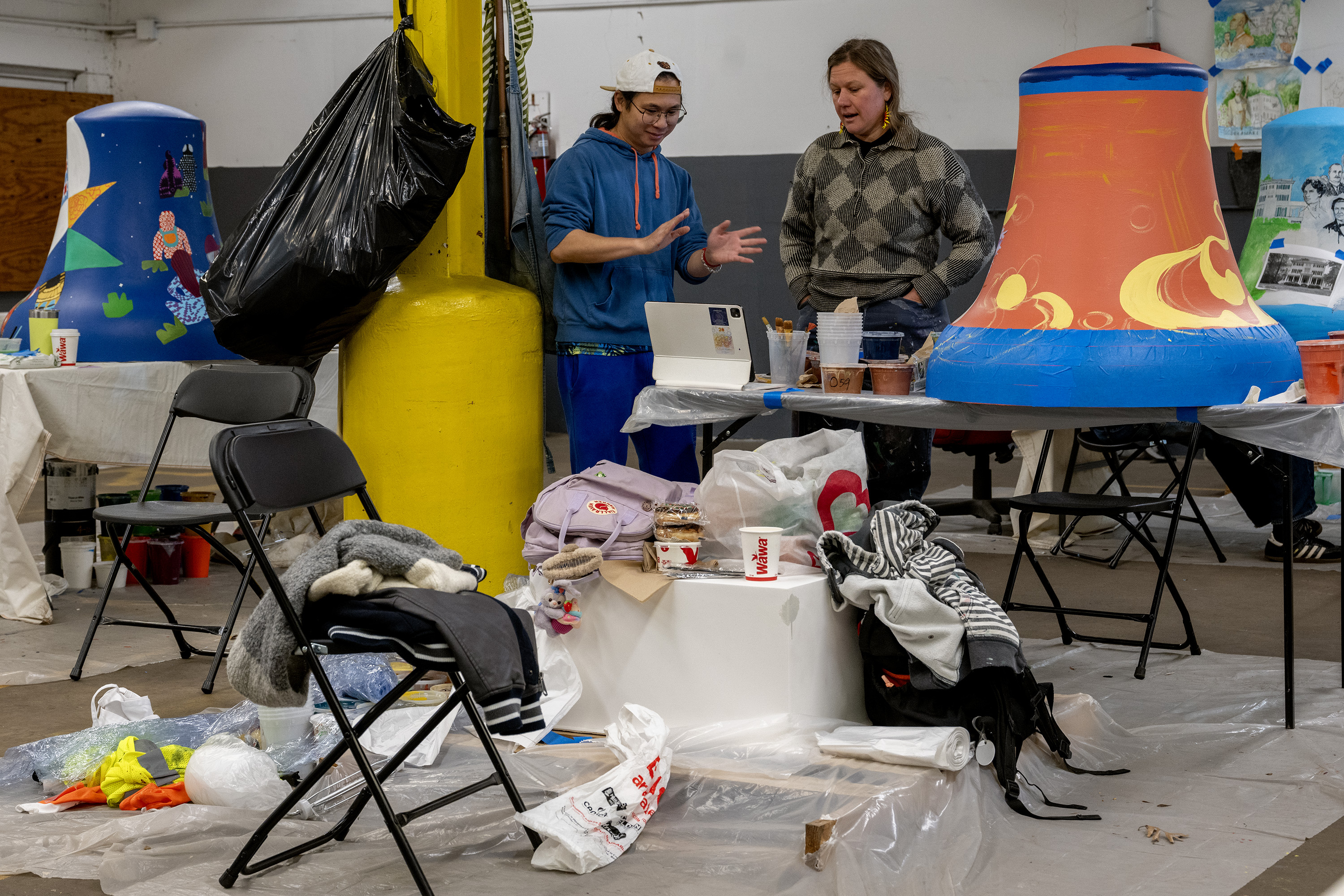
Inside the massive, makeshift studio behind the Widener Memorial School on Tuesday, artists worked in the chill on their bells. Each bell told a different story of neighborhood pride.
Chenlin Cai (left) talks with fellow artist Emily Busch (right) about his bell, showing her concepts on his tablet.
Cindy Lozito, 33, a muralist and illustrator who lives in Bella Vista, didn’t have to look for inspiration for her bell on the Italian Market. She lives just a block away from Ninth Street and is a market regular.
After talking with merchants, she strove to capture the market’s iconic sites, history, and diversity. Titled Always Open, her bell includes painted scenes of the market’s bustling produce stands and flickering fire barrels, the smiling faces of old-school merchants and newer immigrant vendors, and the joy of the street’s annual Procession of Saints and Day of the Dead festivities. Also, of course, the greased pole.
“It’s a place where I can walk outside my house and get everything that I need, and also a place where people know your name and care about you,” she said, painting her bell.
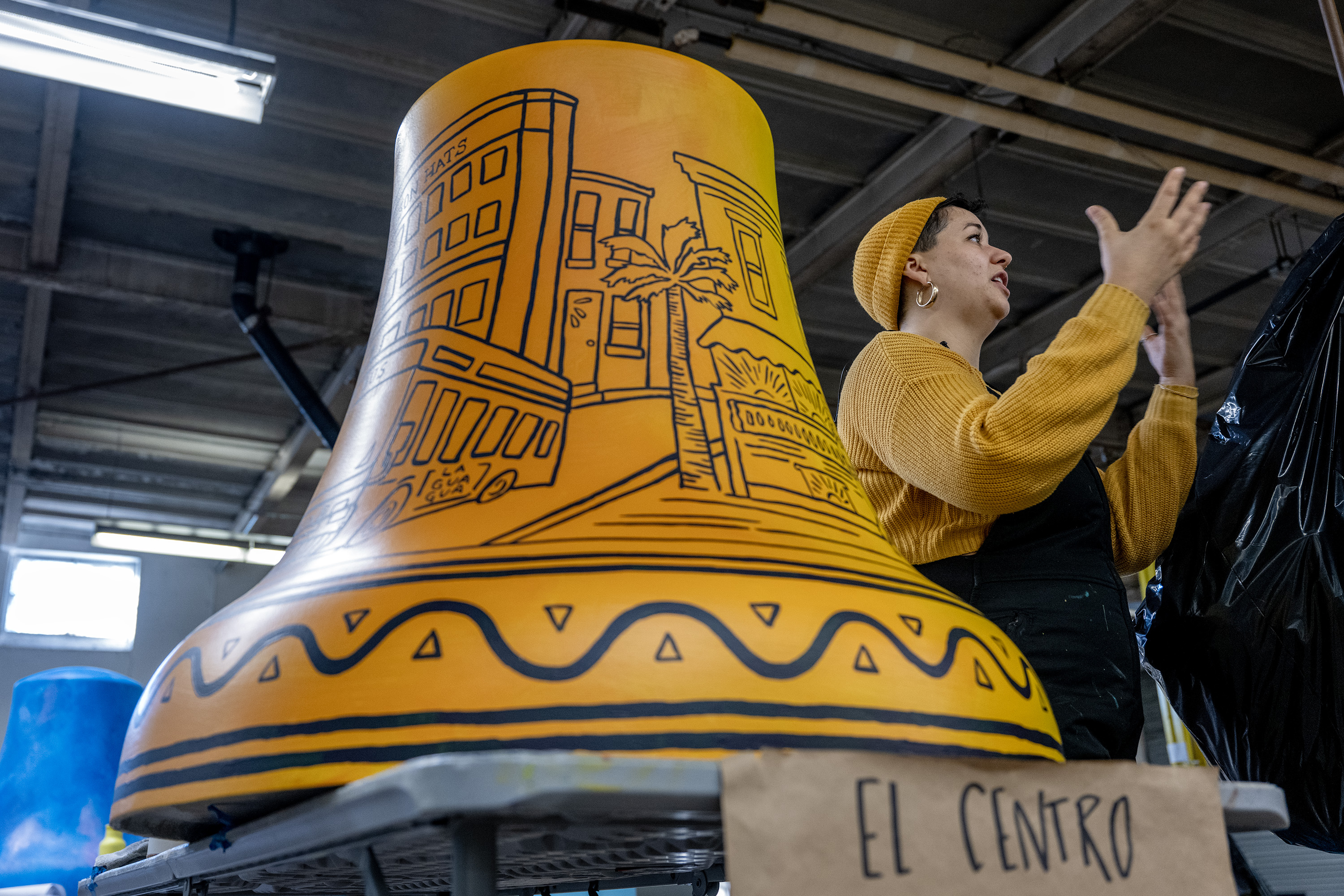
For her bell on El Centro de Oro, artist and educator Symone Salib, 32, met twice with 30 community members from North Fifth Street and Lehigh Avenue, asking them for ideas.
“From there, I had a very long list,” she said. “People really liked telling me what they wanted to see and what they did not.”
Local artist Symone Salib talks with a visitor as she works on her bell.
Titled The Golden Block, the striking yellow-and-black bell depicts the neighborhood’s historic Stetson Hats factory, the long-standing Latin music shop Centro Musical, and popular iron palm tree sculptures.
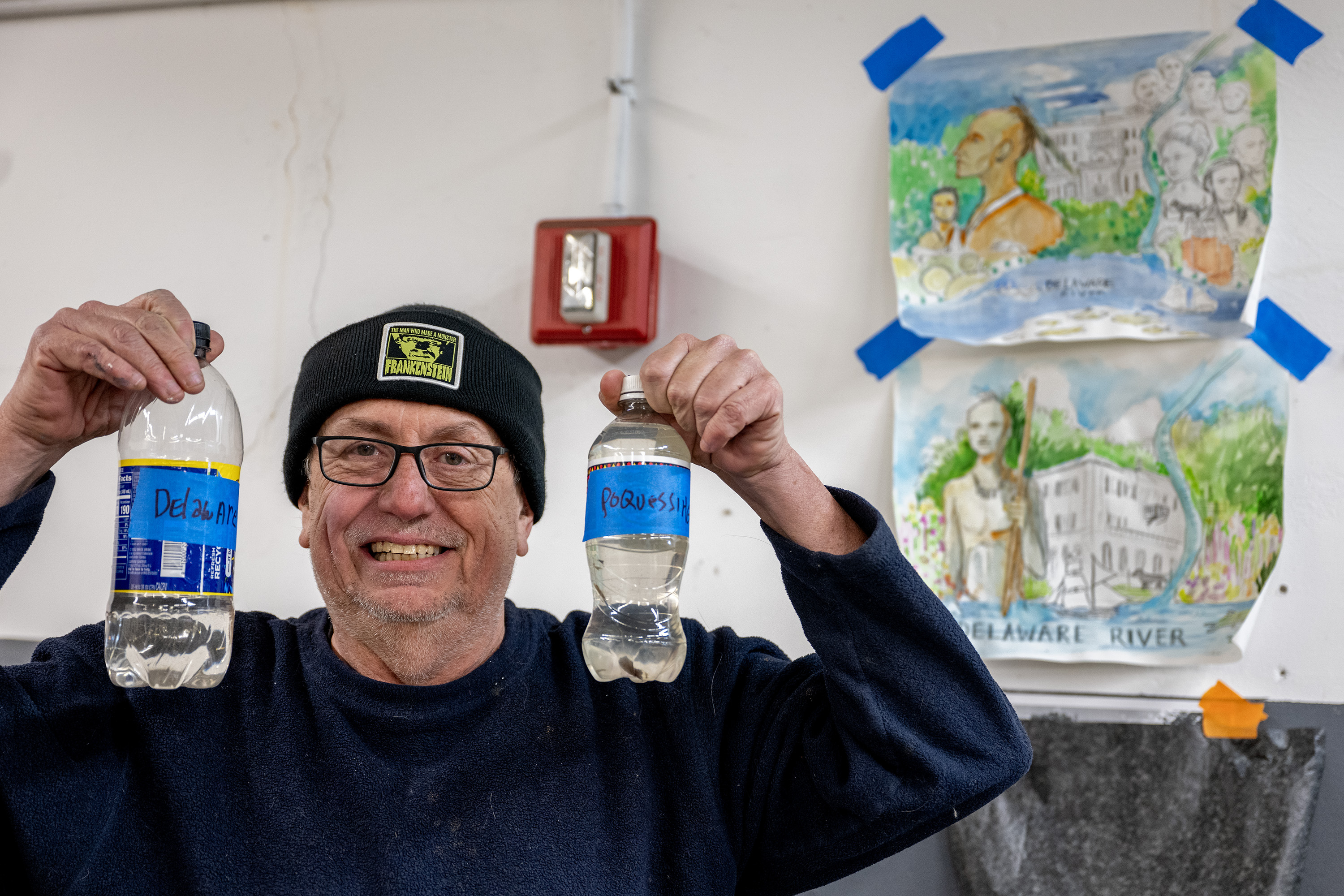
To add that extra bit of authenticity to his bell depicting Glen Foerd, artist Bob Dix, 62, mixed his paints with water bottled from the Delaware River, near where the historic mansion and estate sits perched in Torresdale, overlooking the mouth of Poquessing Creek.
“I like to incorporate the spirit of the area,” he said, dabbing his brush in the river water. “I think it’s important to bring in the natural materials.”
Local artist Bob Dix displays waters he collected from the Delaware River and Poquessing Creek to use in his painting of one of 20 replica Liberty Bells representing different neighborhoods Tuesday, Dec. 9, 2025.
Planners say they expect the bells to draw interest and curiosity similar to the painted donkeys that dotted Philadelphia neighborhoods during the 2016 Democratic National Convention.
Ott Lovell said organizers will install the bells around March to protect them from the worst of the winter weather.
“I don’t want any weather on them,” she said with a smile. “I want them looking perfect for 2026.”
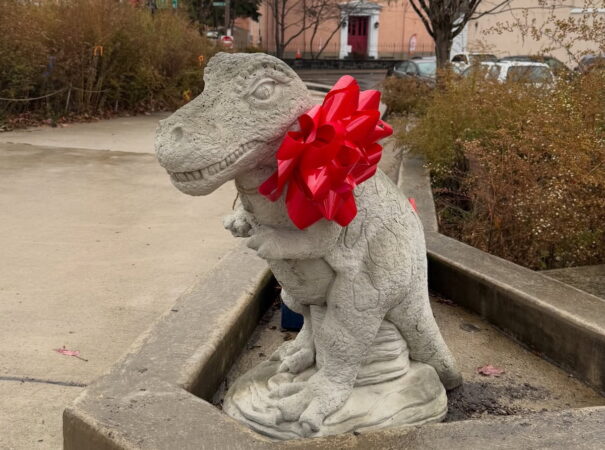
Bridget the Dino was a symbol for the neighborhood’s green spaces and neighborly affection, who oversaw the Manayunk Bridge Trail gardens.
When all hope was lost, the original owners of Bridget, and other neighborhood dinosaurs that have become a staple to Roxborough and Manayunk, saved the day.
Holod’s, the Lafayette Hill home and garden store, donated a brand new stone dinosaur to the Manayunk gardens at Dupont and High Streets, taking over Bridget’s yearslong watch as the garden guardian.
“After the heartbreak of seeing Bridget damaged, this unexpected act of kindness means more than words can say. The neighborhood love is real, and this Dino is already feeling it,” park organizers announced on Tuesday.
Now that the difficult task of placing a new 300-pound stone garden dinosaur is complete, the fun part comes: choosing a name for the new dino. When park organizers learned they would be getting a brand new dino, they decided they couldn’t just name the new statue Bridget, as she is “irreplaceable,” said park volunteer and Roxborough resident Juliane Holz.
“The community is so much a part of this that they can help us name this new one,” Holz said. “I like Manny. But we also have to decide whether she is a girl or a boy dino. I do like ‘Holly’ for Holod’s.”
Park organizers have already posted a list of suggested names for the new statue. This reporter is partial to “Yunker.”
Potential dinosaur names:
Manny (for Manayunk)
Archie (for the arch of the bridge)
Roxie (for the Roxborough side)
Schuylie (for the Schuylkill)
Ivy (garden vibes)
Rocky (Philly and Roxborough)
Ledger (bridge and connection vibes)
Petra (means “rock”)
Yunker (play on Manayunk)
Residents from Manayunk, Roxborough, and beyond can drop a comment below the park’s latest Instagram post to vote on one of the above names or suggest a new one.
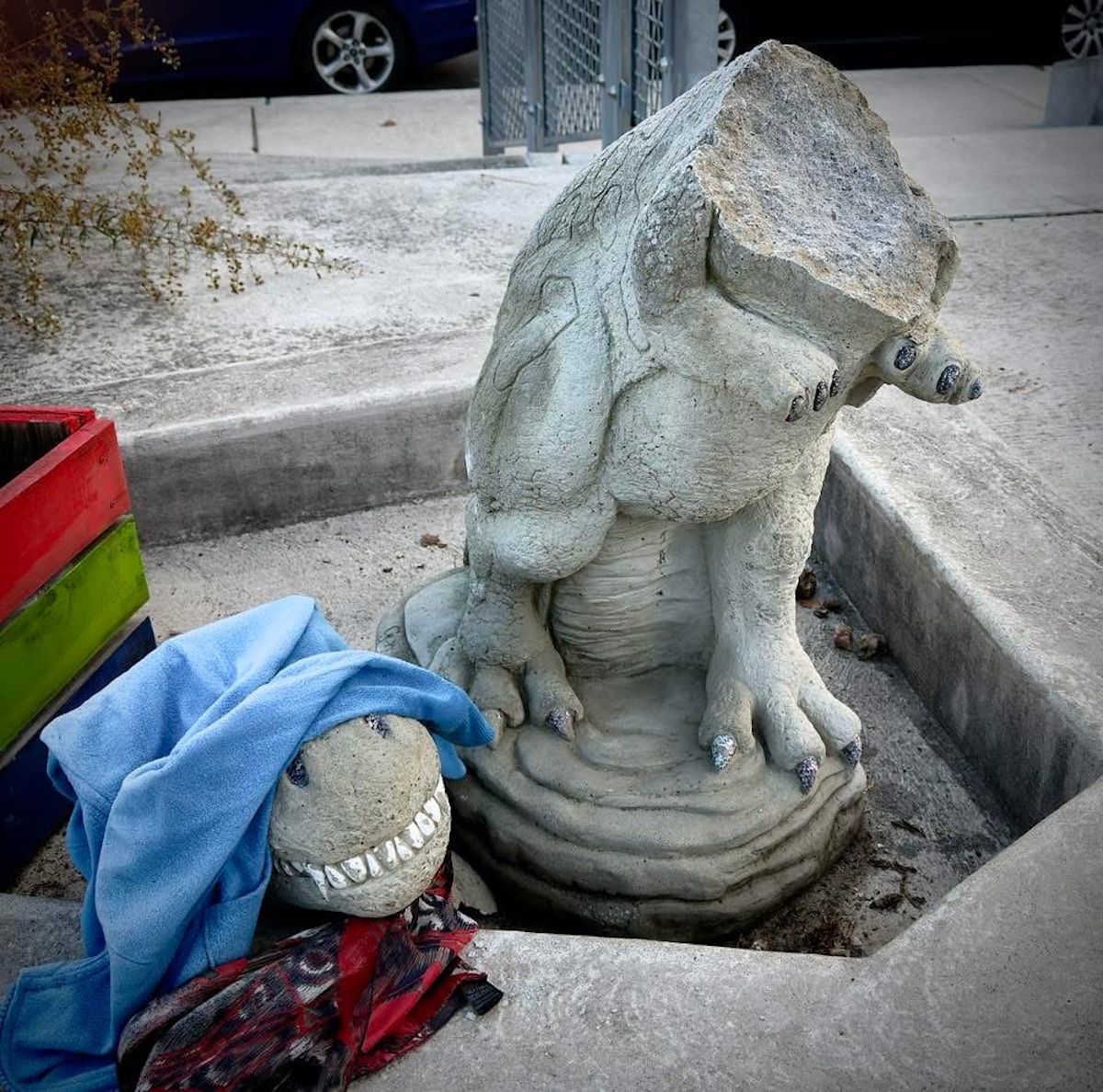
Last Sunday, a neighbor found Bridget’s head lying at the feet of her stone body after it was smashed between late Saturday evening and early Sunday morning. The vandalism came as a shock to the community that welcomed Bridget with open arms, as she grew into a beacon for the ever-growing green spaces that the families of Manayunk and Roxborough have come to revitalize.
Bridget the Dino, a beloved stone garden statue at the Manayunk Bridge Garden, had its head smashed off between late Saturday night, Nov. 22, and early Sunday morning, Nov. 23, 2025. The 300-pound stone statue would be hard to move, neighbors say, leading some to believe an adult purposefully broke the statue.
“It seems like something silly to be upset about, but someone put a lot of effort and money — these statues and improvements are not cheap — into making that bridge garden a really nice place,” Manayunk resident Annie Schuster said. “I hate the fact that somebody did that.”
Neighbors believe the cowardly act to have been perpetrated by an adult who intended to destroy the iconic statue. Holz believed the statue proved too heavy for someone to mistakenly bump into it. Police reached out to Holz and park organizers to let them know they will investigate the crime, Holz said.
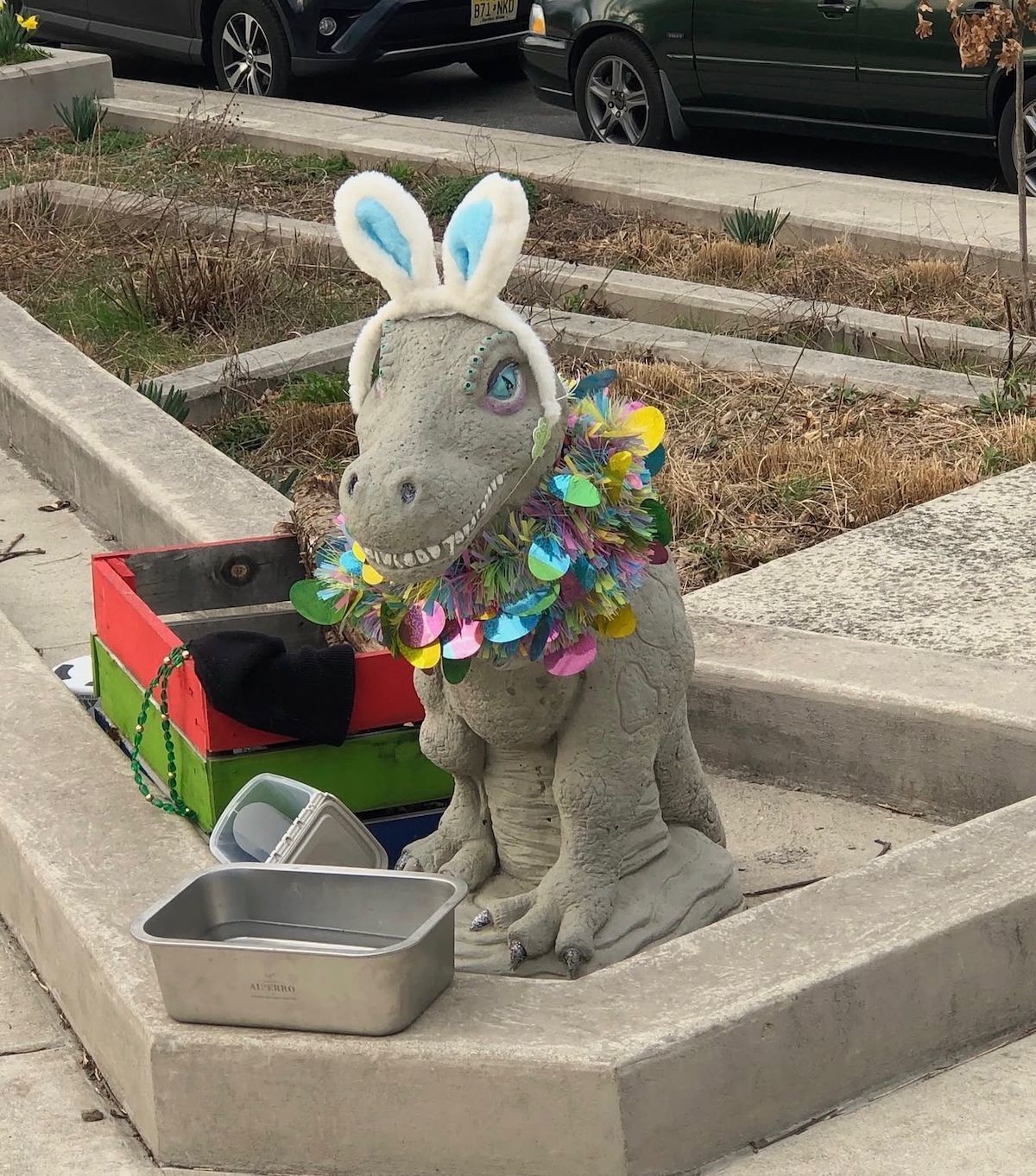
Bridget the Dino, a beloved stone garden statue at the Manayunk Bridge Garden, pictured in an Easter Bunny costume for Easter. The community often dresses up Bridget during different holidays and themed events. In November 2026, her head was smashed off her body.
Meanwhile, they’ll repurpose Bridget elsewhere among the garden beds and usher a new dinosaur dynasty with Holod’s latest statue. Holz said perhaps Bridget’s new iteration will be as a bird bath installation or an addition in a new sensory garden.
The Manayunk Bridge Garden is one of the many public spaces being transformed into neighborhood gardens and pedestrian thoroughfares. Since COVID-19 lockdowns, residents have donated their time, alongside the Roxborough Manayunk Conservancy, to making this place special for local families. Bridget and her new friend encapsulate all of that passion.
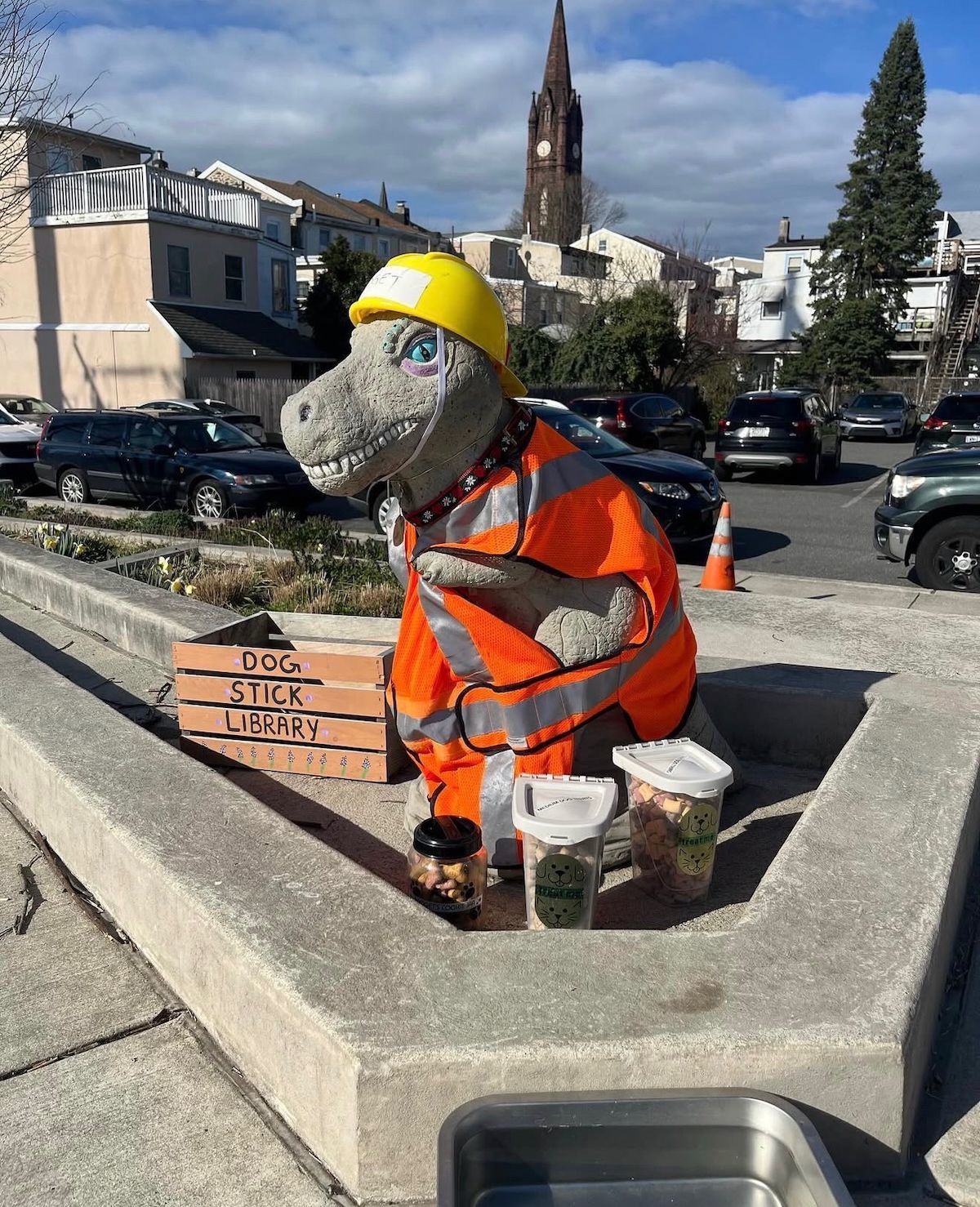
Bridget the Dino, a beloved stone garden statue at the Manayunk Bridge Garden, pictured in a construction worker’s uniform. The community often dresses up Bridget during different holidays and themed events. In November 2026, her head was smashed off her body.
“We are focused on improving the park’s ecology and creating opportunities for the community to enjoy and use the space. The gardens are stunning in autumn with their masses of purple asters and yellow goldenrod,” said Avigail Milder of the Roxborough Manayunk Conservancy.
Along with the welcoming stone dinosaur, volunteers have been planting native shrubs and herbaceous plants that bloom through spring and summer. A new sugar maple tree was planted for much-needed shade. And most recently, Opus Piano donated a mini grand piano to be enjoyed and played by all parkgoers.