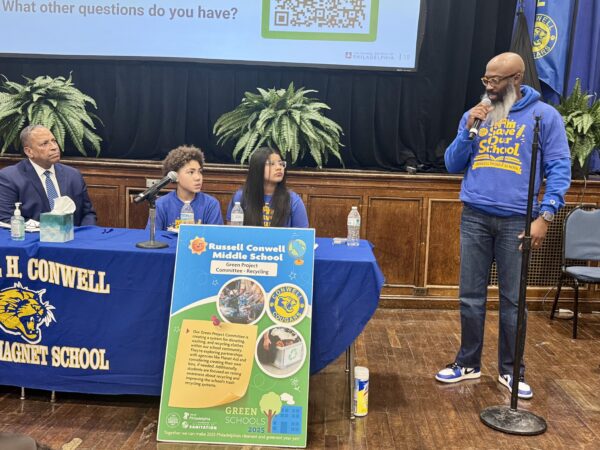
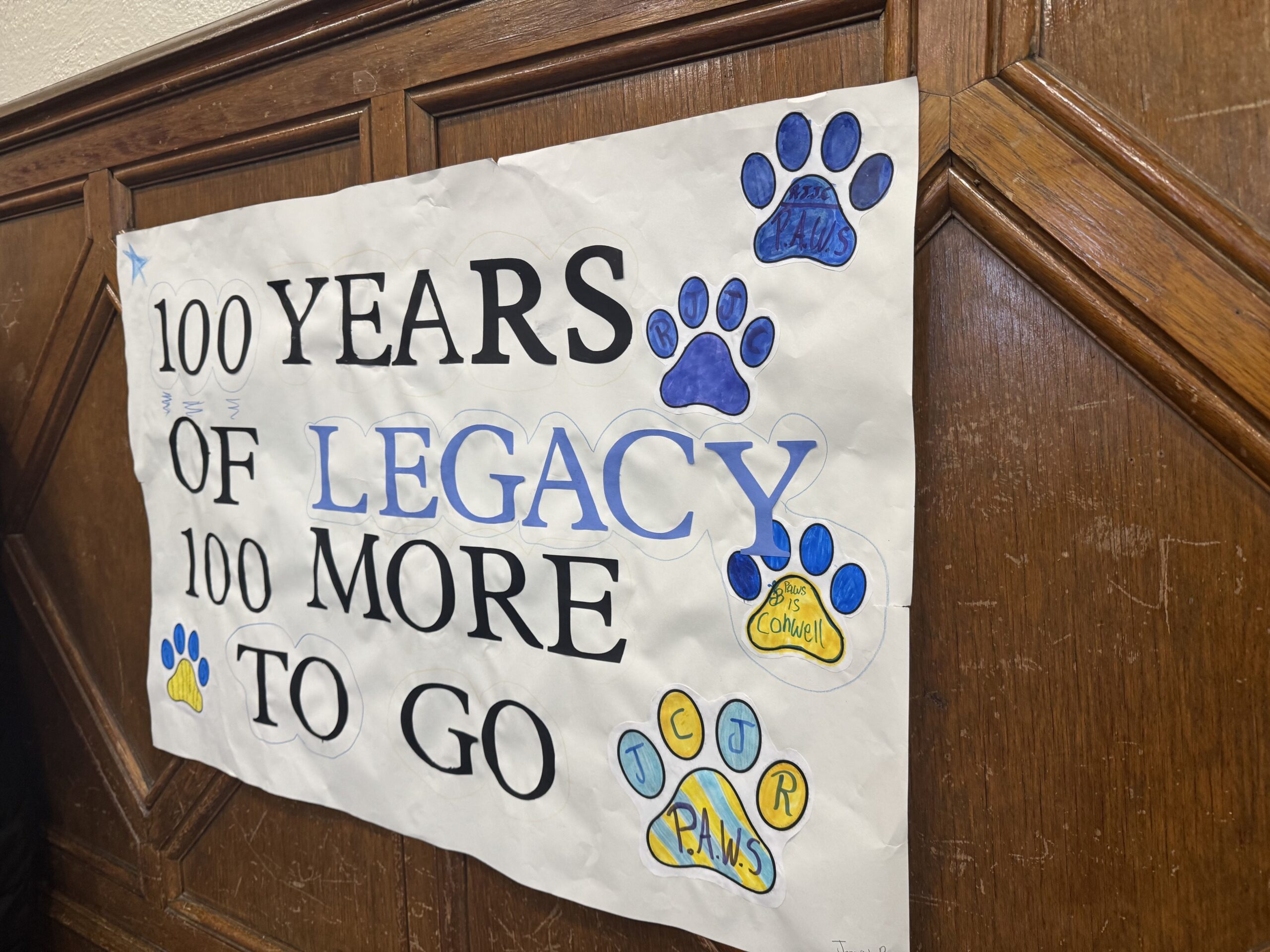
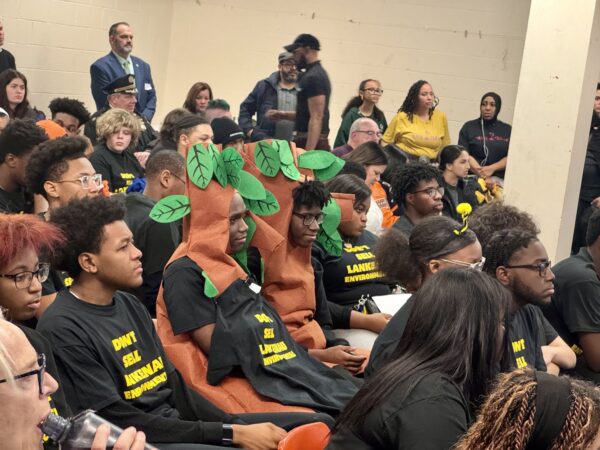
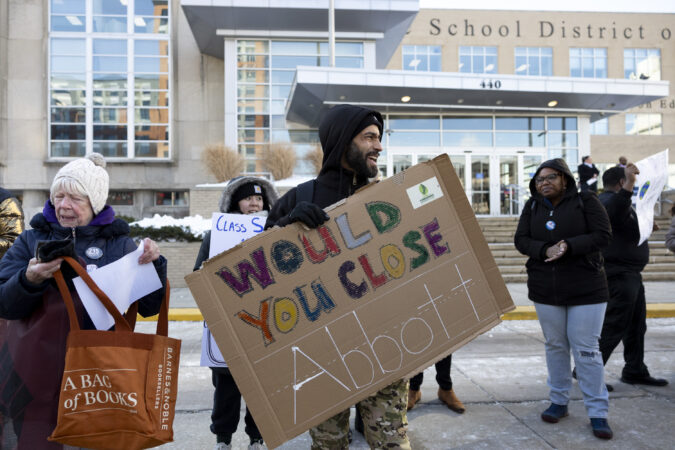
A student-made sign hangs in the Conwell Middle School auditorium. The Philadelphia School District is attempting to close Conwell, a magnet 5-8 school in Kensington, and 19 other schools. The community is fighting the closure.
Conwell, in Kensington, is a very small school by any standard. This year, just 109 students are enrolled in a building that holds 500. That’s down from 490 students in the 2015-16 school year and 806 in 2009-10. The school used to occupy two buildings; it has since shrunk to one.
But it is also a rarity — a standalone magnet middle school. Community members and local officials are mounting a fight against closing the school, which they say has committed teachers and staff members who help students excel against the odds.
The district’s plan, which the school board is expected to vote on this winter, calls for Conwell students to move to AMY at James Martin, another citywide admissions magnet in Port Richmond, which just opened in a new building with only 200 students. Meanwhile, the district has proposed closing its only other free-standing magnet middle school, AMY Northwest. No changes have been proposed for Philadelphia’s four other magnet middle schools, all of which are attached to high schools.
Neighborhood issues, enrollment declines
Conwell’s enrollment issues are tied closely to its setting.
The building sits on Clearfield Street in the heart of Kensington. Fewer and fewer parents have been choosing to send their kids into ground zero of the city’s opioid epidemic, despite Conwell’s myriad partnerships, the outside investments it has attracted into its facility in recent years, and the school’s long history of excellence.
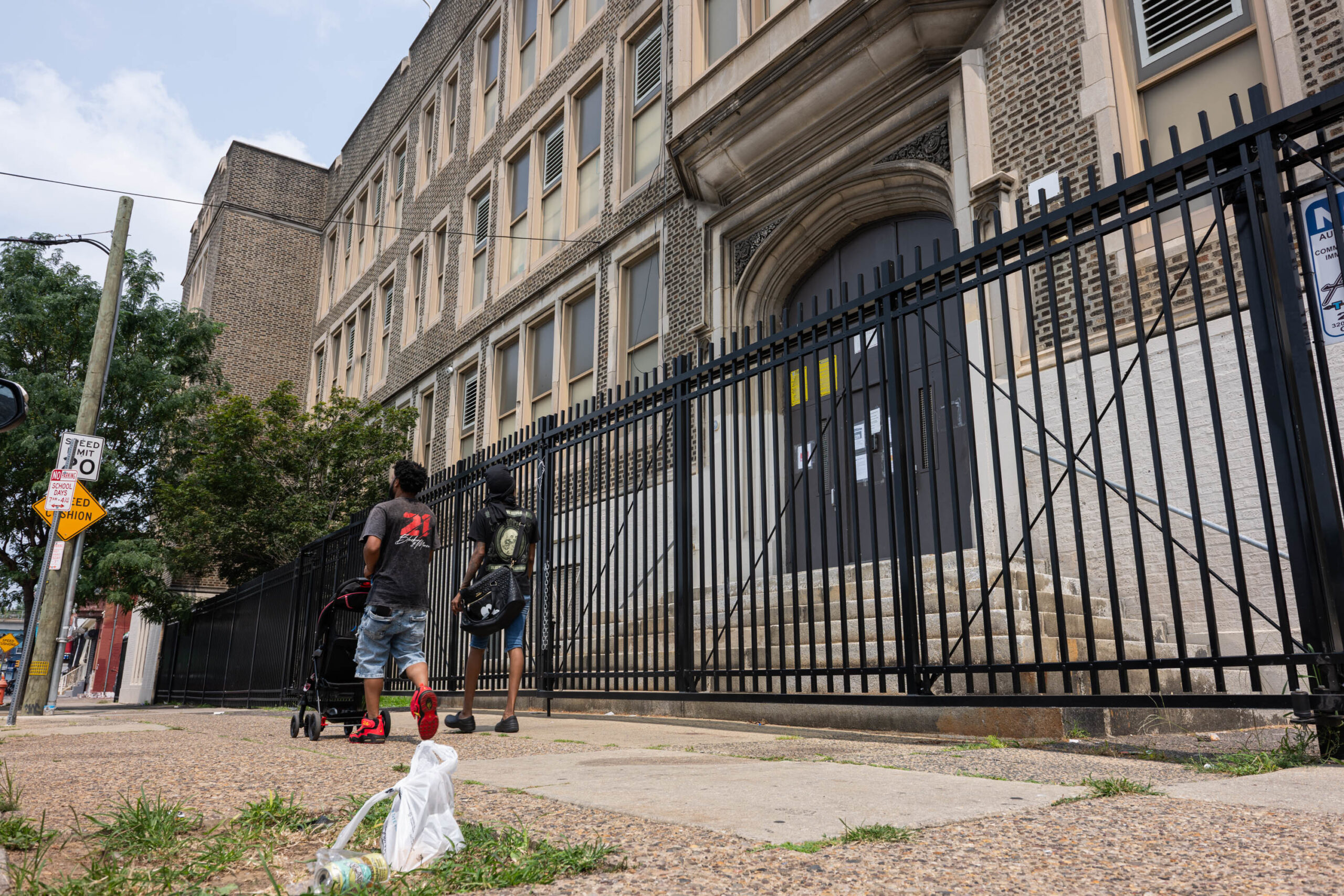
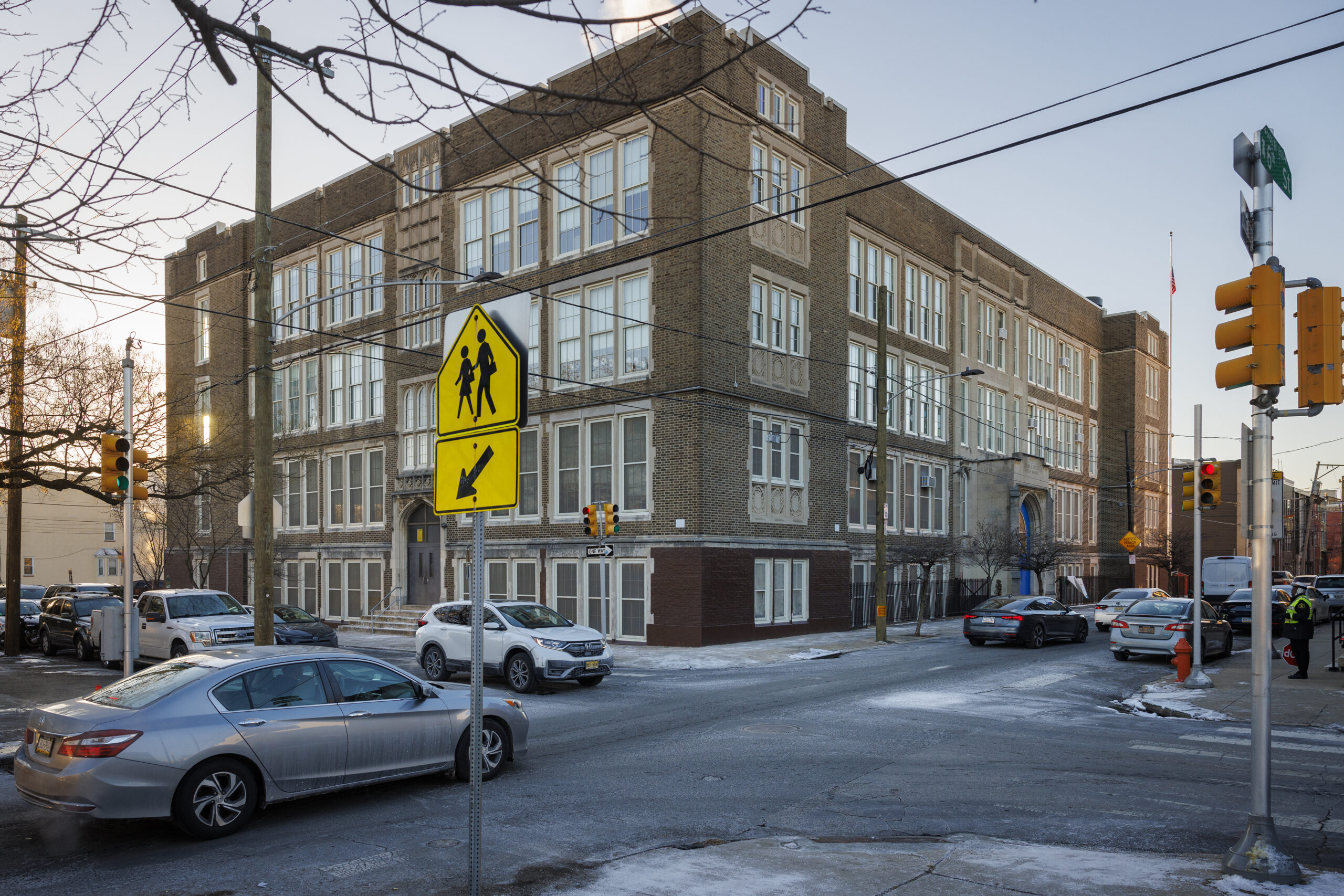
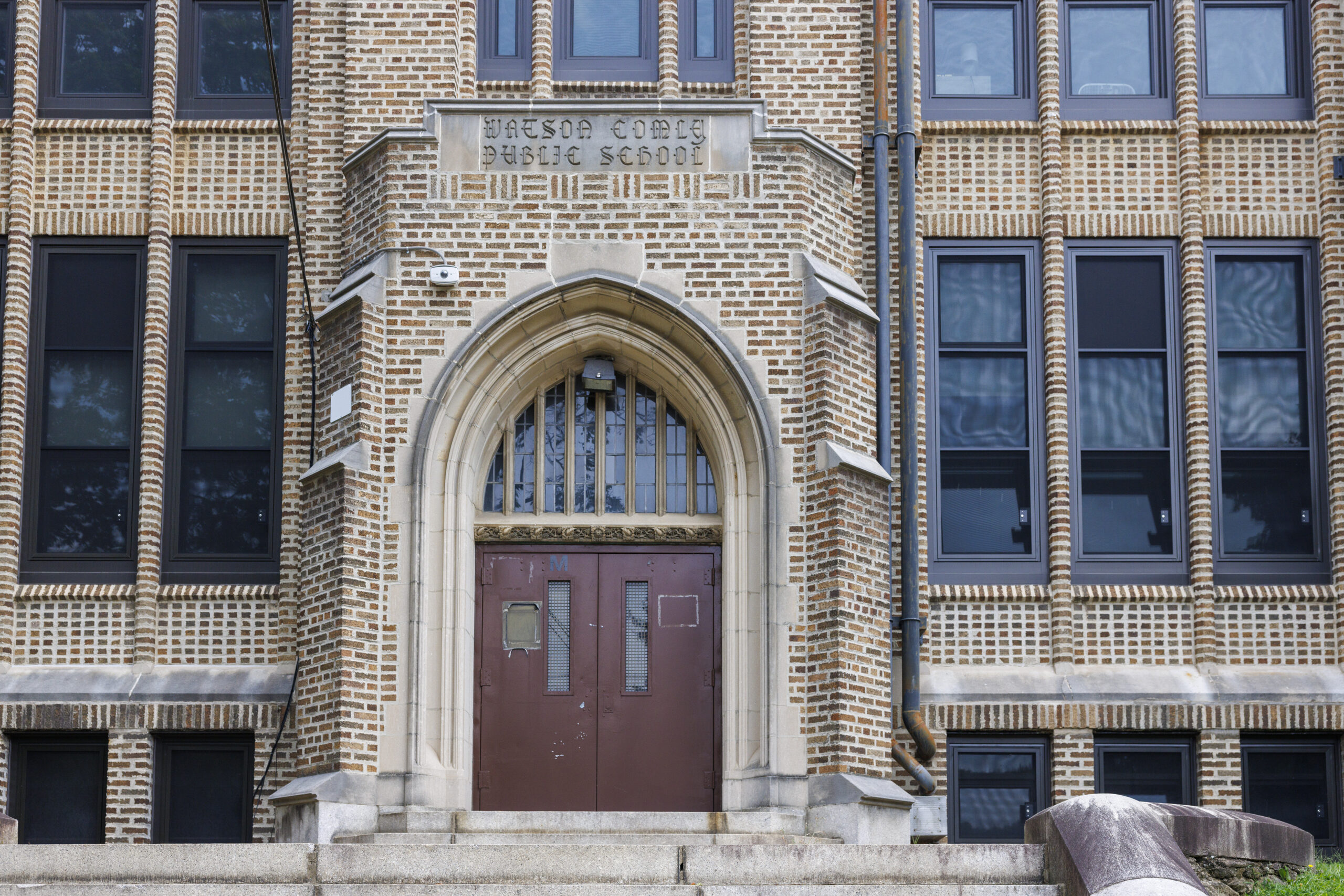
The exterior of Conwell Middle School in Kensington, photographed in August.
Parents, neighbors, students, and politicians, however, are furious that the district is choosing to abandon Conwell and the neighborhood.
“If this school closes, it won’t just be students who feel the loss,” Conwell student Nicolas Zeno told officials at a district meeting Thursday. “It’ll be the community. If the concern is safety, then invest. If the concern is environment, then repair.”
Community member Vaughn Tinsley, who runs Founding Fatherz, a nonprofit mentoring group, suggested closing Conwell would harm its students.
“These students have been victims,” Tinsley said. “These students have seen and witnessed things they shouldn’t have witnessed. Most adults haven’t seen some of the things that these kids have seen, and yet still they come here, yet they’re still committed to excellence, yet they still stand up and still do what they’re supposed to do in the classroom. How dare we take that away from them?”
Watlington has proposed using Conwell as “swing space” — district property that other schools can move into temporarily if their buildings require repairs.
Tosin Efunnuga, Conwell’s nurse, wiped tears from her eyes as she beseeched district officials to keep the school open.
“To have those doors close would be such a disservice,” Efunnuga said. “We need 100 years more.”
Councilmember Quetcy Lozada, whose district includes Conwell, said she was “angry” and “frustrated” by the recommendation to close the school.
“It’s underutilized because of what’s happening on the outside,” Lozada said at the Conwell meeting. “There’s nothing wrong with what is happening on the inside other than successful academic learning, support for families. We are saying to these families, we are punishing them because as a city, we can’t respond to the public safety issues that we have on the outside, and that is just not fair.”
‘What are y’all doing?’
Emotions ran high inside the Conwell auditoriumlast week.
Even before Deputy Superintendent Oz Hill finished his presentation about the rationale for the closures and the specific plan for Conwell, parents burst out with concerns.
“What are y’all doing? Y’all making a mess,” one parent shouted. “You say the building is old. So what? It’s clean in here.”
Another said her child would not be going to AMY at James Martin, formerly known as AMY5.
“I don’t think you understand how much of a battle there is between Conwell and AMY5,” the parent said. “You don’t know the battles these kids have with each other.”
Conwell has a strong alumni network — a rarity for a middle school — that has turned out in force to support the school since the proposed closure was announced.
Alexa Sanchez, Class of 2017, grew up in Kensington and came to Conwell as a bright but unruly student — sheacknowledges that she got in fights, egged the school, and disrespected teachers. But Conwell is rooted in its neighborhood, Sanchez said, with dedicated staff who helped her rise to earn a college degree and a good job in business.
“They didn’t give up on students like me,” Sanchez said. “My future didn’t look promising at first, but in the long run, it did. You shouldn’t really close the school on a community that doesn’t look promising if you’re not from here.”
Other alumni, including Robin Cooper, president of the district’s principals union, and Councilmember Isaiah Thomas, chair of Council’s Education Committee, have spoken out for Conwell.
Conwell “shows up” for Kensington and the city, running a food pantry, hosting Police Commissioner Kevin Bethel’s swearing-in ceremony and an event marking Cherelle L. Parker’s 100th day as mayor, noted Erica Green, the school’s award-winning principal. Staff and students participate in neighborhood cleanups and advocate for help amid the opioid crisis.
“We are what the city needs,” Green told the school board recently. During Green’s tenure, she has helped win money for a new schoolyard, a new science, technology, engineering, and math lab, and more.
“These investments were made for Kensington students,” Green said. “We owe it to them, to their neighborhood. Do not push them out once the neighborhood changes and thrives. Conwell’s success is rooted in its people, its history, and its impact.”
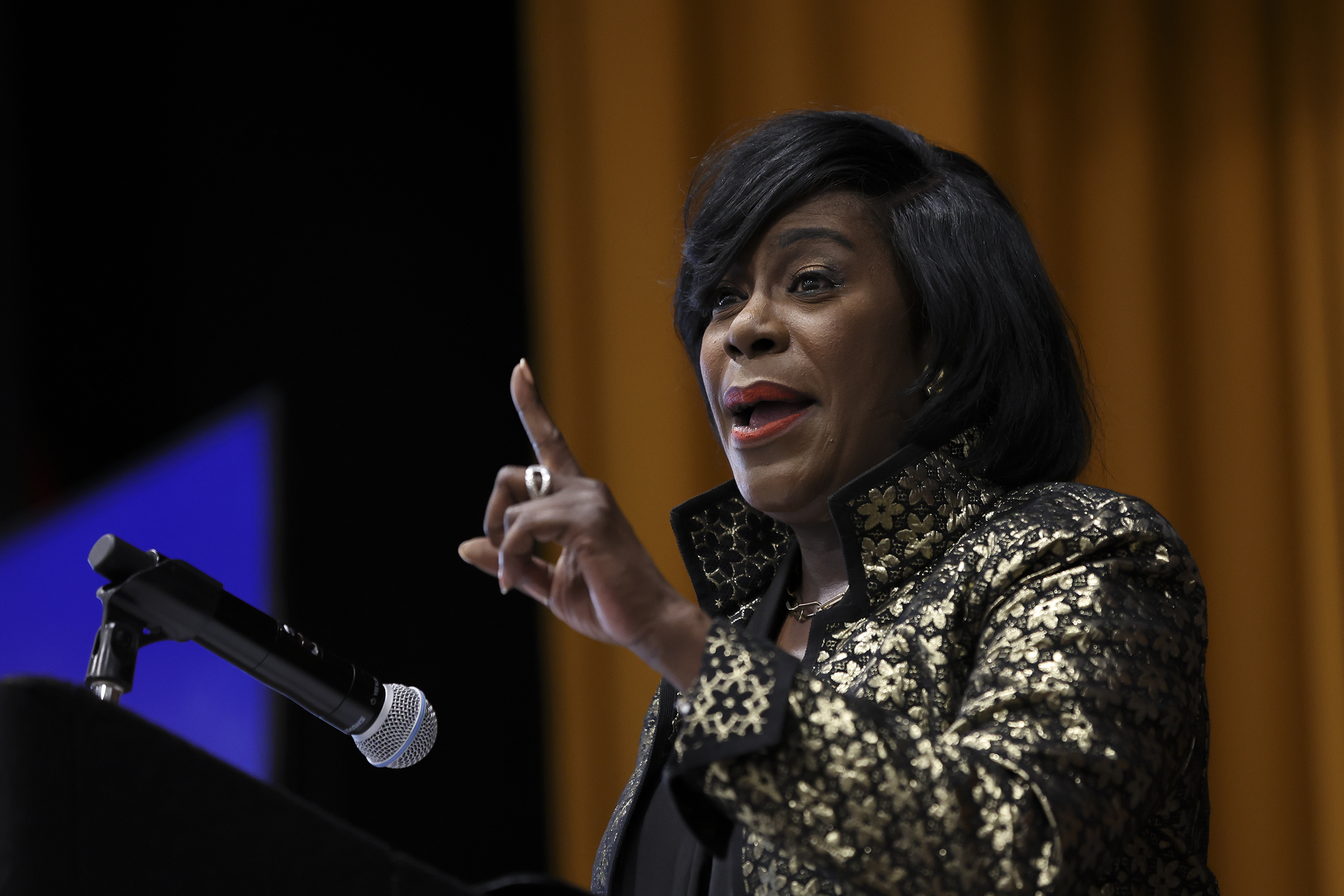
Mayor Cherelle L. Parker speaks during an event to mark her 100th day in office at Conwell Middle School in Kensington in April 2024.
Lankenau High’s 11th-grade class is tiny — just 25 students.
That’s one of the reasons why closing the school is for the best, Philadelphia School District Associate Superintendent Tomás Hanna said at a community meeting last week.
At small schools, Hanna said, programming options are limited and “what’s left behind is very difficult environment for young people.”
The district proposes merging Lankenau into Roxborough High as an honors program — a move that officials say will maximize opportunities for students at both schools. That proposal has been met with fierce opposition from the Lankenau community, whose members say stripping the school of its identity and removing it from its unique location on 400 wooded acres is unjustifiable.
When the school system dramatically revamped its special-admissions process in 2021, moving to a centralized lottery from a system where principals had discretion over who got into the district’s 37 criteria-based schools, enrollment dropped at some magnets.
For the 2022-23 school admissions cycle, Lankenau, Motivation, Parkway West, and Parkway Northwest — four of the 20 schools tagged to close — had dozens of unfilled seats in their ninth-grade classes.
window.addEventListener(“message”,function(a){if(void 0!==a.data[“datawrapper-height”]){var e=document.querySelectorAll(“iframe”);for(var t in a.data[“datawrapper-height”])for(var r,i=0;r=e[i];i++)if(r.contentWindow===a.source){var d=a.data[“datawrapper-height”][t]+”px”;r.style.height=d}}});
The district setacademic standards for admission to those schools, and stopped allowing schools to admit students who were close to meeting academic requirements and who demonstrated they would be a good fit for the individual schools, as had been done in the past. (Officials said they wanted to centralize admissions to avoid demographic imbalances at schools; those four magnets did not have a history of them.)
The district’s using Lankenau’s tiny now-junior class to justify closings infuriated many, including Matthew VanKouwenberg, a science teacher at the school.
Lankenau’s size “is a district-designed and district-created problem,” VanKouwenberg said. Though the lottery was begun for equity reasons, “the result is disastrous.”
But Tonya Wolford, the district’s chief of evaluation, research, and accountability, said Lankenau, Motivation, Parkway West, and Parkway Northwest had declining numbers of students applying prior to the lottery changes.
And for years, those schools accepted large numbers of students who didn’t meet the district’s criteria, Wolford said.
Dramatic enrollment drops after district orders
The data are clear: After the district pushed changes to the admissions process, the four schools all saw dramatic drops in enrollment — and some of them never recovered.
Motivation, in West Philadelphia, had a freshman class of 83 students and a total enrollment of 336 in 2022-23. It saw a 77% drop in its ninth- grade class — just 19 freshman in 2023-24. The school now has 151 students, and the district wants to close it and make it an honors program inside Sayre High School. It is operating at only 15% of its full capacity.
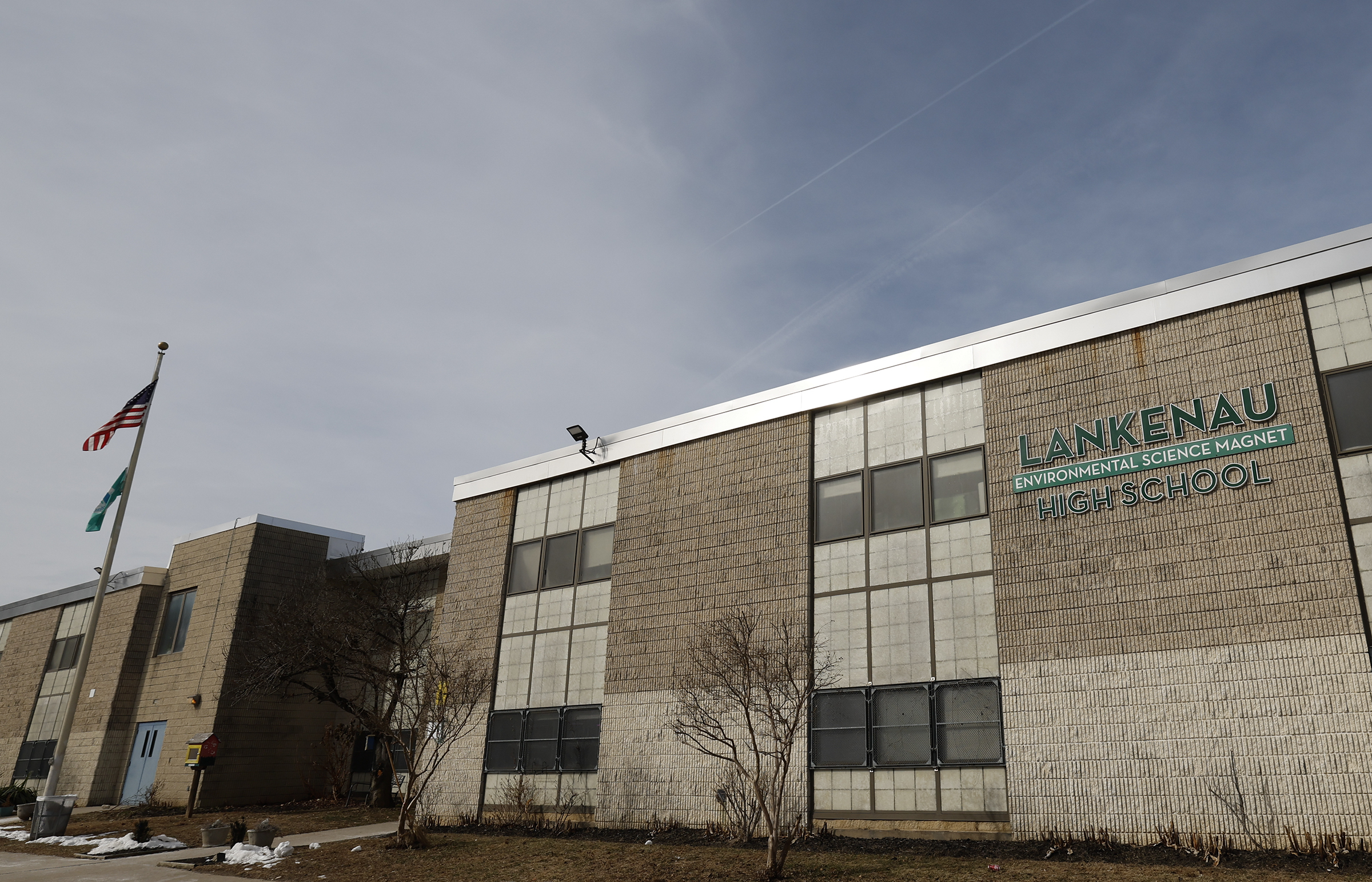
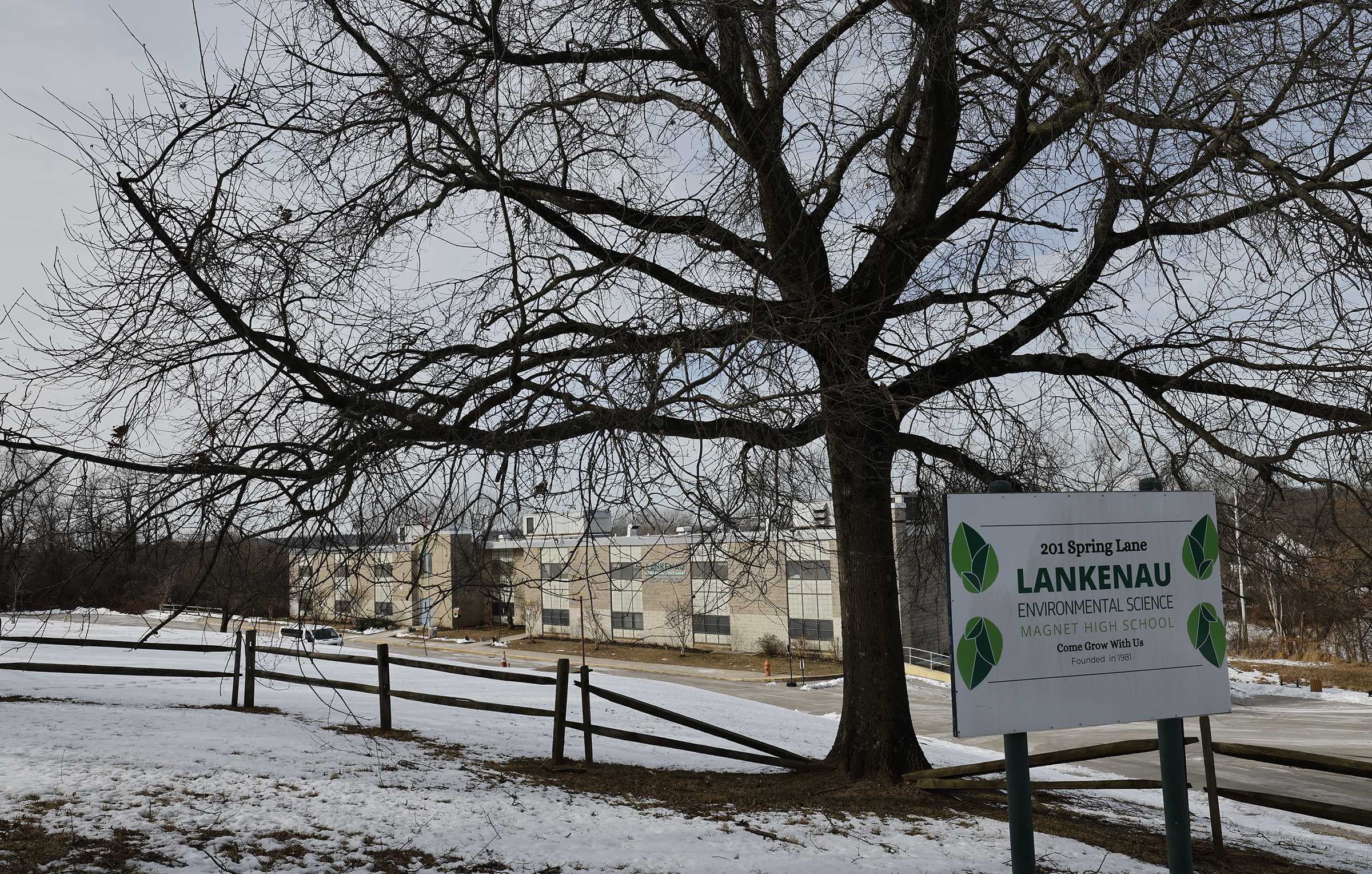
The Lankenau Environmental Science Magnet High School in Roxborough.
Lankenau, in Upper Roxborough, had 91 freshman in 2022-23, then 31 in 2023-24, a 66% decline. It now enrolls 225 students. The school is using 49% of its capacity.
Parkway Northwest had 77 ninth graders in 2022-23, then dropped to 30 in 2023-24, a 61% decrease, and is 60% full. It’s got 248 students this year, and the district wants to close it and make it an honors program of Martin Luther King High.
And Parkway West had 54 freshman in 2022-23, then 19 the following year, a 65% decrease. It now has just 140 students, and is using 40% of available seats. It’s proposed to close and become part of Science Leadership Academy at Beeber.
A staffer who worked at Parkway West as the special-admissions process changes rolled out said they were devastating to the school, which typically filled three-quarters of its slots for incoming ninth graders with students who qualified on every measure, and a quarter by feel.
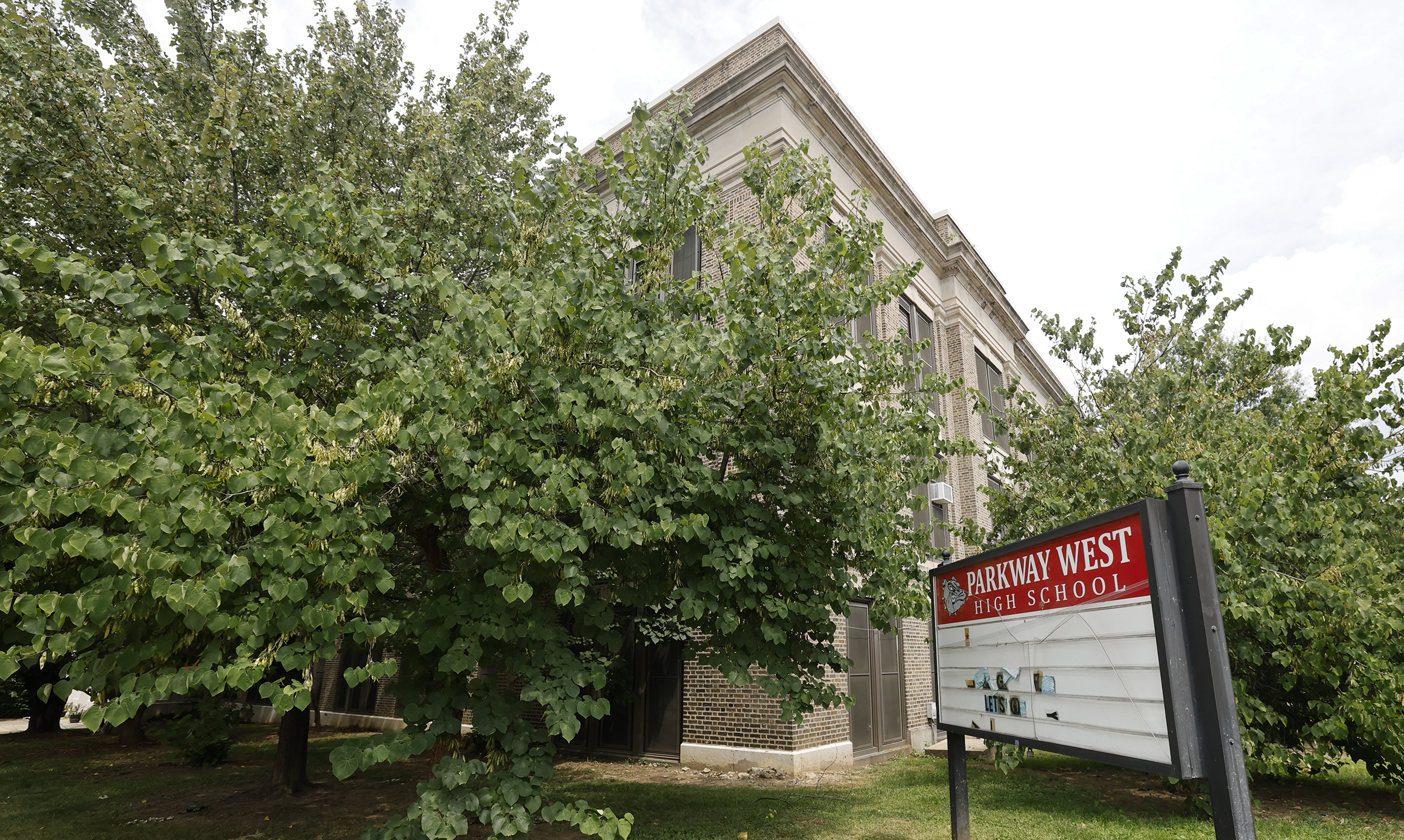
Parkway West High School, in West Philadelphia, is proposed to close under a Philadelphia School District facilities proposal.
“We found kids who maybe missed one criteria, but they were good kids, and had strong recommendations,” said the staffer, who asked not to be identified because they were not authorized to speak to a reporter.
When Parkway West lost that ability, its enrollment tumbled, and never recovered.
Lankenau community members say interest in their unique school has never waned, but the size of their incoming classes continues to be limited by the district — even beyond the admissions changes.
For the applicant class set to start high school in the fall, 107 students listed Lankenau as their first choice, staff said, and 95 have accepted Lankenau’s school board offer.
But since 2022-23, district officials have limited Lankenau to two sections of ninth graders, and with class sizes capped at 33. So despite having interest and students enough for 99 freshmen, it won’t have staff for more than 66.
In the last few years, staffers said, more than 66 students show up at the start of the school year. But with only enough teachers for 66, classes are overcrowded and some students end up transferring out.
“That is the only reason we lose enrollment,” said Erica Stefanovich, a Lankenau teacher. “We wouldn’t be in this situation if they hadn’t put us in it. This is an artificial problem.”
But, Wolford said the trend lines were clear for Lankenau and other schools.
In 2019-20, for instance, the prior to the district’s admissions changes just 34 students met Lankenau’s criteria, but 81 students accepted offers for the ninth-grade class, Wolford said. That same year, eight students qualified for Parkway Northwest on paper, but 34 were admitted, according to district data.
Schools like Lankenau and Parkway Northwest “were existing without following the criteria,” said Wolford.
Trees, bees, and a Lorax
Lankenau is putting up a spirited battle to stay open.
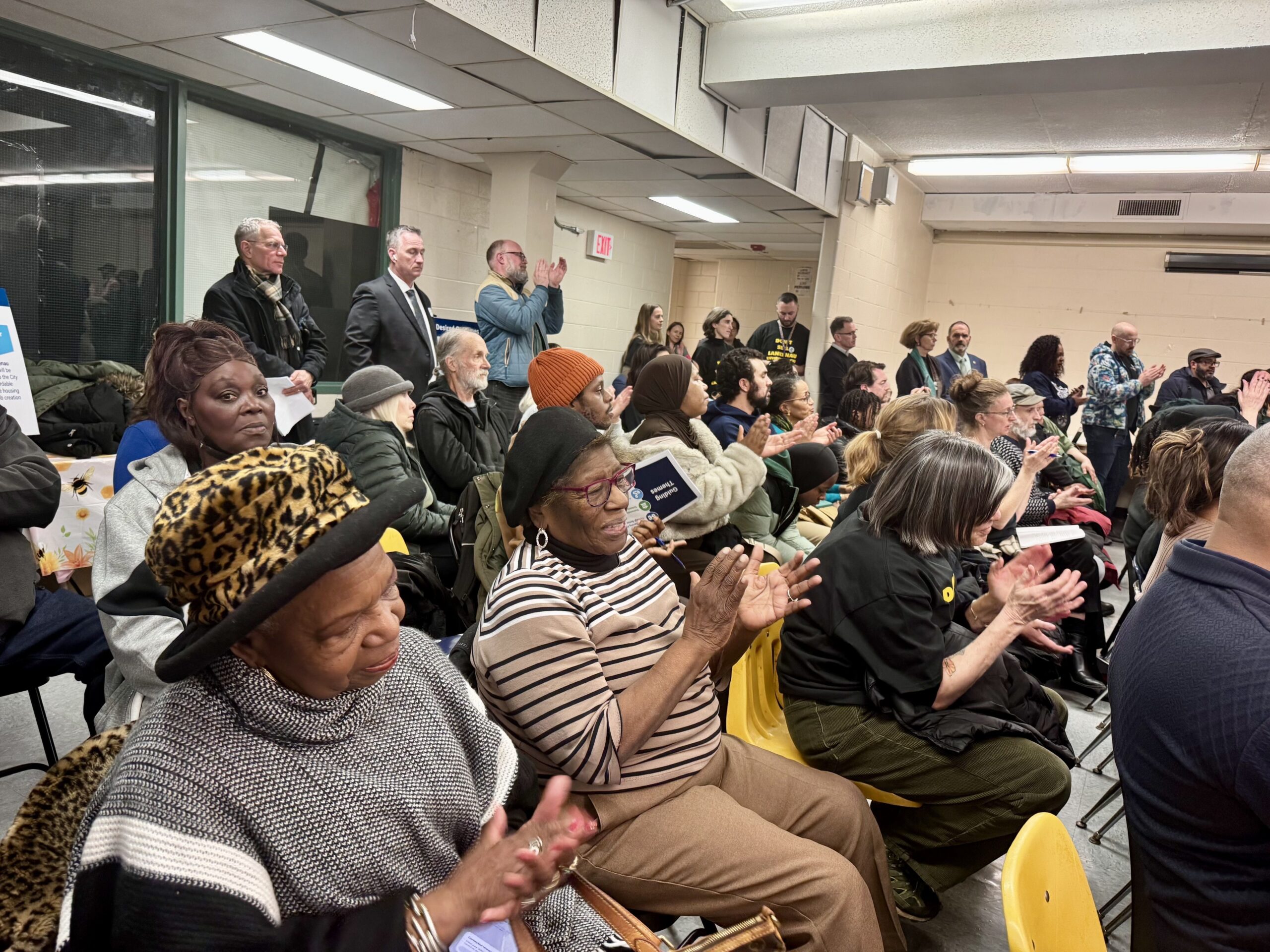
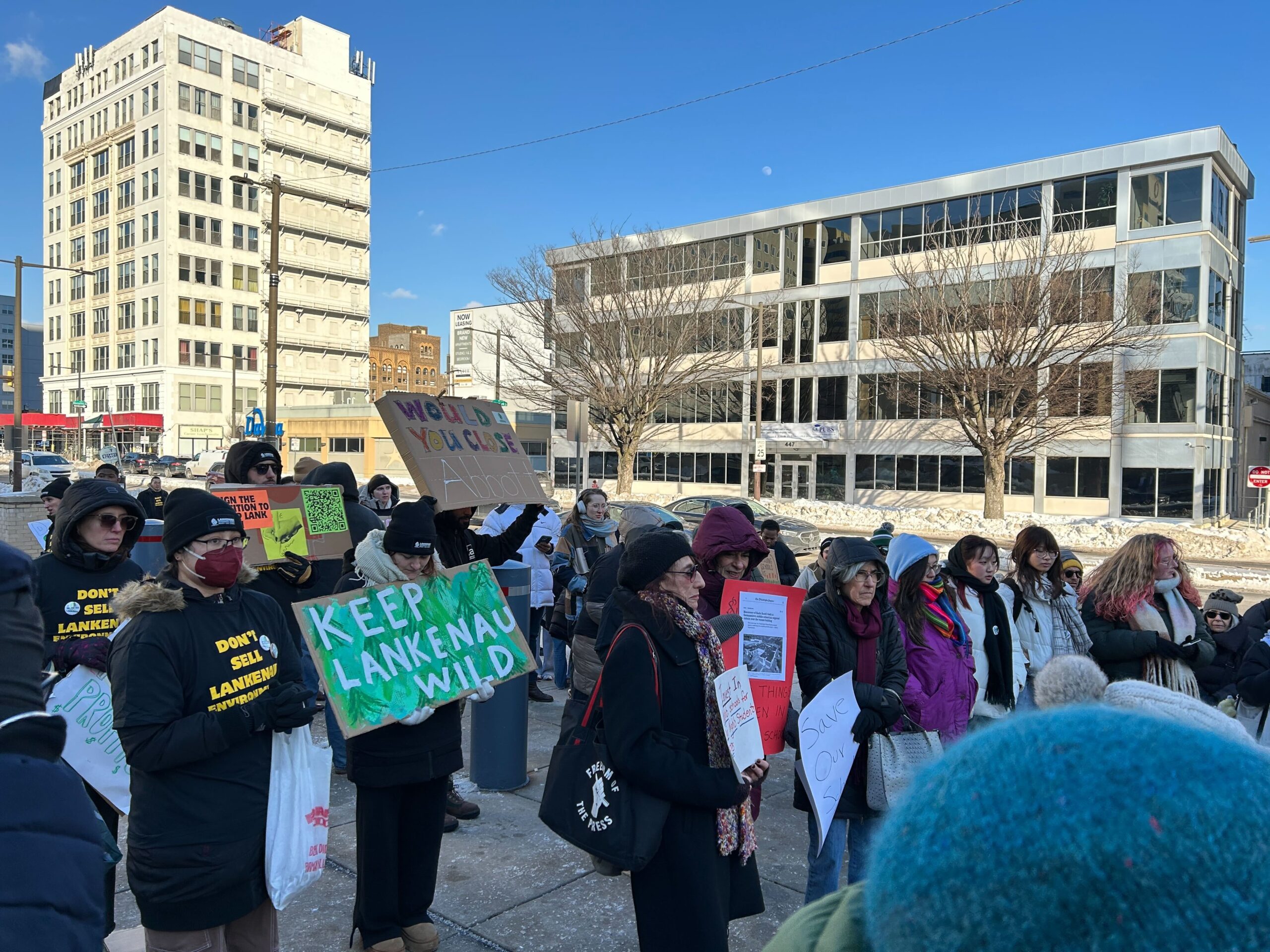
Last week, an overflow crowd — more than 100 students, staff, parents, representatives from Lankenau’s many partner organizations, and community members — packed the school for a student showcase and district-led meeting about the closure. Some students dressed as trees, bees, and a Lorax, the Dr. Seuss character who “speaks for trees” — to emphasize the importance of their school’s setting amid 400 acres of woods.
Community members at Lankenau High School applaud a student telling district officials why the school should not close. Lankenau is one of 20 Philadelphia School District schools proposed for closure.
First, Lankenau students wowed visitors with presentations — about their study of natural resources, about the experience of foraging for ingredients to brew their own artisan teas — and then, it was down to business. Lankenau is too small, officials said, and the district must find ways to offer a more equitable experience for all students.
“I don’t discount that there is magic inside of these walls,” Deputy Superintendent Oz Hill said. “What I’m sharing with you is if we can take that magic and enhance it with more extracurricular activities, more expanded academic programming, the sky’s the limit.”
The parents, students, and staff in the audience weren’t having it.
Lankenau was just certified to become the state’s only three-year agriculture, food, and natural resources career and technical education program — a designation that took years to achieve, and cannot transfer to a new building.
Officials are proposing closing Lankenau a year and a half from now; that’s not enough time for the district to reapply for the designation for a new Lankenau-inside-Roxborough CTE program.
District officials said at the meeting that they believe their “close relationship” with the state education department will give them enough time to get a new Roxborough program certified in time for the Lankenau closing.
Multiple parents told district leaders they would not send their children to Roxborough High.
And Akiraa Phillips, a Lankenau ninth grader, said she couldn’t imagine attending school in another setting.
In Lankenau’s current setting, “learning doesn’t stop at the desk. Our campus is the classroom,” Akiraa said. “We learn science by being in it. Here, we don’t just talk about ecosystems, climate, and sustainability, we walk through it. That kind of learning sticks with you. You can’t stick this into any random building and expect it to work.”
The community turned out in full force, but politicians and other decision-makers were in the room, too. Three school board members, including president Reginald Streater, attended the meeting.
State Sen. Sharif Street (D., Philadelphia), the front-runner to replace U.S. Rep. Dwight Evans in Congress, said he “was against closing the school,” but noted that the decision didn’t rest with him, and said the state needed to better fund schools “because we have not met our obligation to fully fund the program.”
And Councilmember Cindy Bass said she was particularly incredulous that the district was attempting to close a successful magnet — Lankenau has a 100% graduation rate.
“If it works, why are you breaking it?” Bass said. “I do not understand what the logic and the rationale is that we are making these kinds of decisions. We’re not just closing a school, we’re disrupting the lives of young people.”
Building woes triggered by a sustained blast of cold weather continue at some Philadelphia schools.
Staff at Strawberry Mansion High reported that about half the building was without heat Monday, with some classrooms in the 40s and hallways not much warmer.
And staff and students at Greenberg Elementary in the Northeast had to relocate to the old Meehan Middle School after nearly a week of virtual school because of heating problems.
“Due to insufficient heat throughout the building, Greenberg is not able to safely support in-person learning at this time,” district officials wrote to parents this weekend. “Our facilities team is actively working to resolve the heating issue as quickly as possible. At this time, the repair timeline is still being assessed, but we will continue to provide updates as more information becomes available.”
Meehan is one of the district’s “swing spaces” — it no longer operates as a school, but is used as an alternate location for schools that need it. It recently housed Thomas Holme Elementary while a new building was constructed for that school. It’s unclear how long Greenberg students will need to stay at Meehan.
The move rankled some Greenberg parents, who had logistical and safety concerns about sending their children to a different location.
Katy Foley-Gallagher, mom of a Greenberg kindergartener and third grader, said virtual learning was a challenge — on days she had to work, her husband had to take off from his job to manage their daughter and son.
But moving to Meehan isn’t ideal either, Foley-Gallagher said.
“Everybody’s getting anxious — this is disrupting their learning,” said Foley-Gallagher. “They district is not taking care of their building, and they don’t keep up with the infrastructure at all.”
It’s not yet clear whether Greenberg would receive upgrades as part of that process. And that plan, which the school board is expected to vote on this winter, would take years to implement.
Greenberg, like other district schools in the Northeast, is overcrowded, with over 1,000 students in a building whose capacity is 800. Students can no longer leave their classrooms for art or music; those rooms have been repurposed to accommodate extra classes.
“They’re going to put them back in these crowded rooms,” said Foley-Gallagher. “Greenberg is such a good school, but I worry that this is going to drive people out of the school, out of the city.”
District officials said they were taking steps to ensure “a smooth transition for students and families” as Greenberg relocates to Meehan.
The district is providing shuttle service for students who normally walk to Greenberg, though the shuttle leaves at 8 a.m., a half hour after classes begin.
“We understand that unexpected changes can be challenging for families, and we appreciate your patience and partnership as we work to restore normal building operations,” district chief operating officer Teresa Fleming wrote in an email to parents. “The safety and well-being of our school community remain our highest priority.”
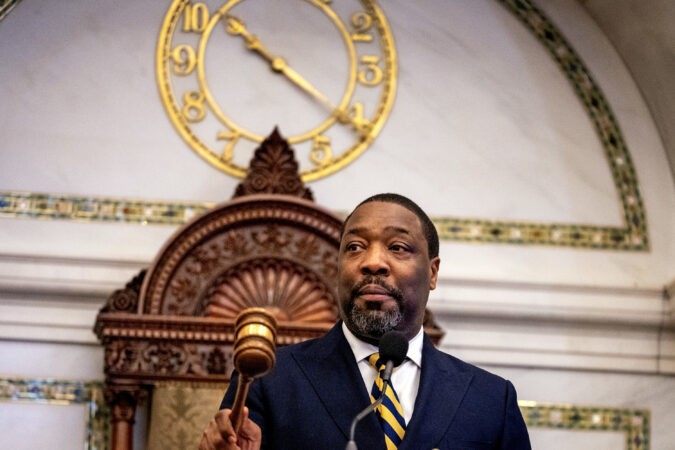
Philadelphia’s top lawmaker said he’s willing to hold up city funding to the Philadelphia School District over concerns about the recently released closure and consolidation plan, a warning that signals City Council intends to leverage its biggest bargaining chip as members fight to keep schools in their neighborhoods open.
City Council President Kenyatta Johnson said in an interview Friday that multiple members oppose proposed closures in their districts, and some want more robust investments in schools slated for consolidation in exchange for their support.
Johnson’s primary concern, he said, is “making sure that the issues and concerns that we would like to see addressed with the facilities plan are reflected in the final recommendations.”
Asked if he’d be willing to hold up the city’s contribution to the school district if their concerns are not met, Johnson said: “If need be.”
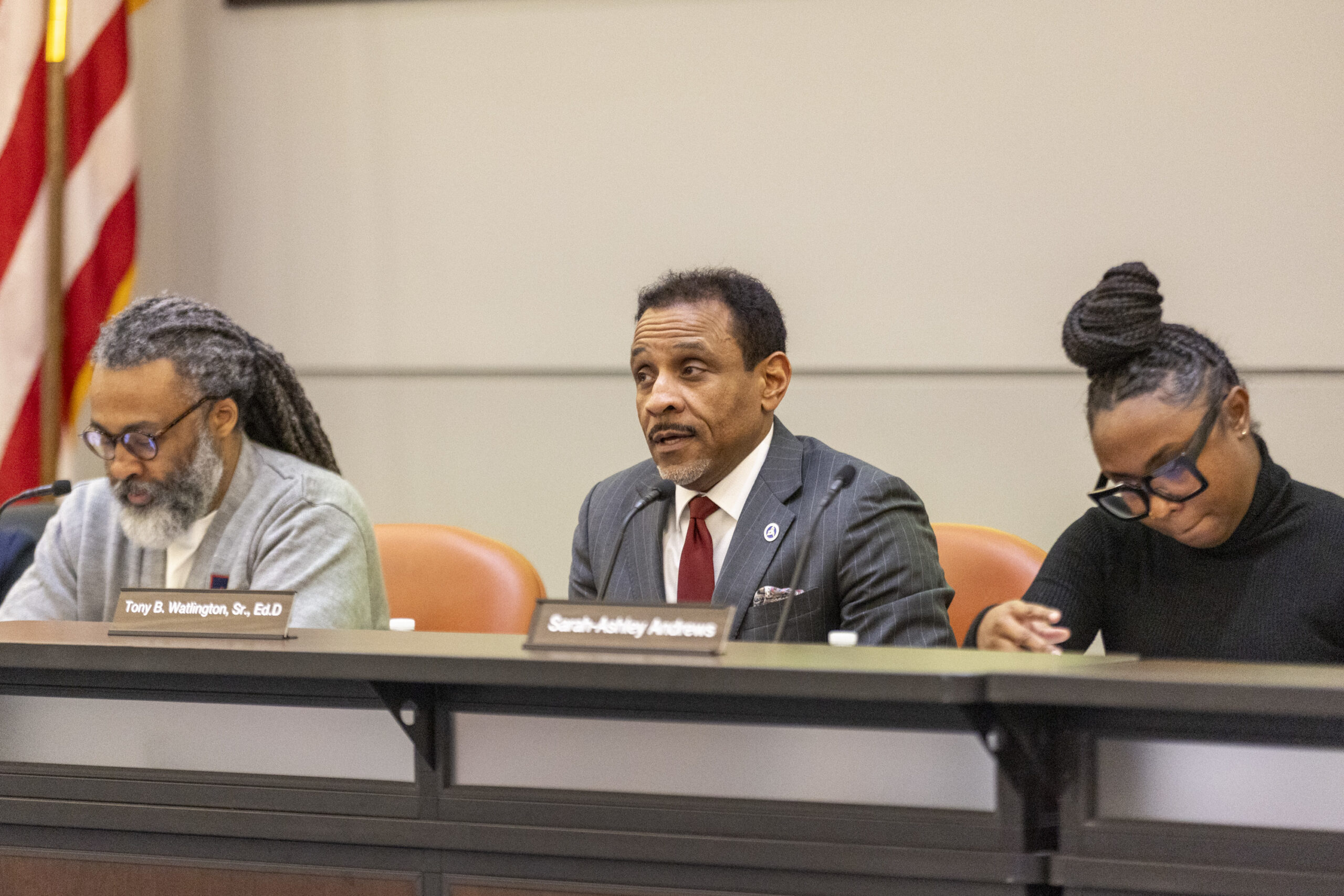
Schools Superintendent Tony B. Watlington Sr. has proposed sweeping changes to schools across the city, including closing 20 schools, ordering six others to share buildings, and modernizing 159 buildings. His plan is subject to approval by the school board, which will likely vote sometime this winter.
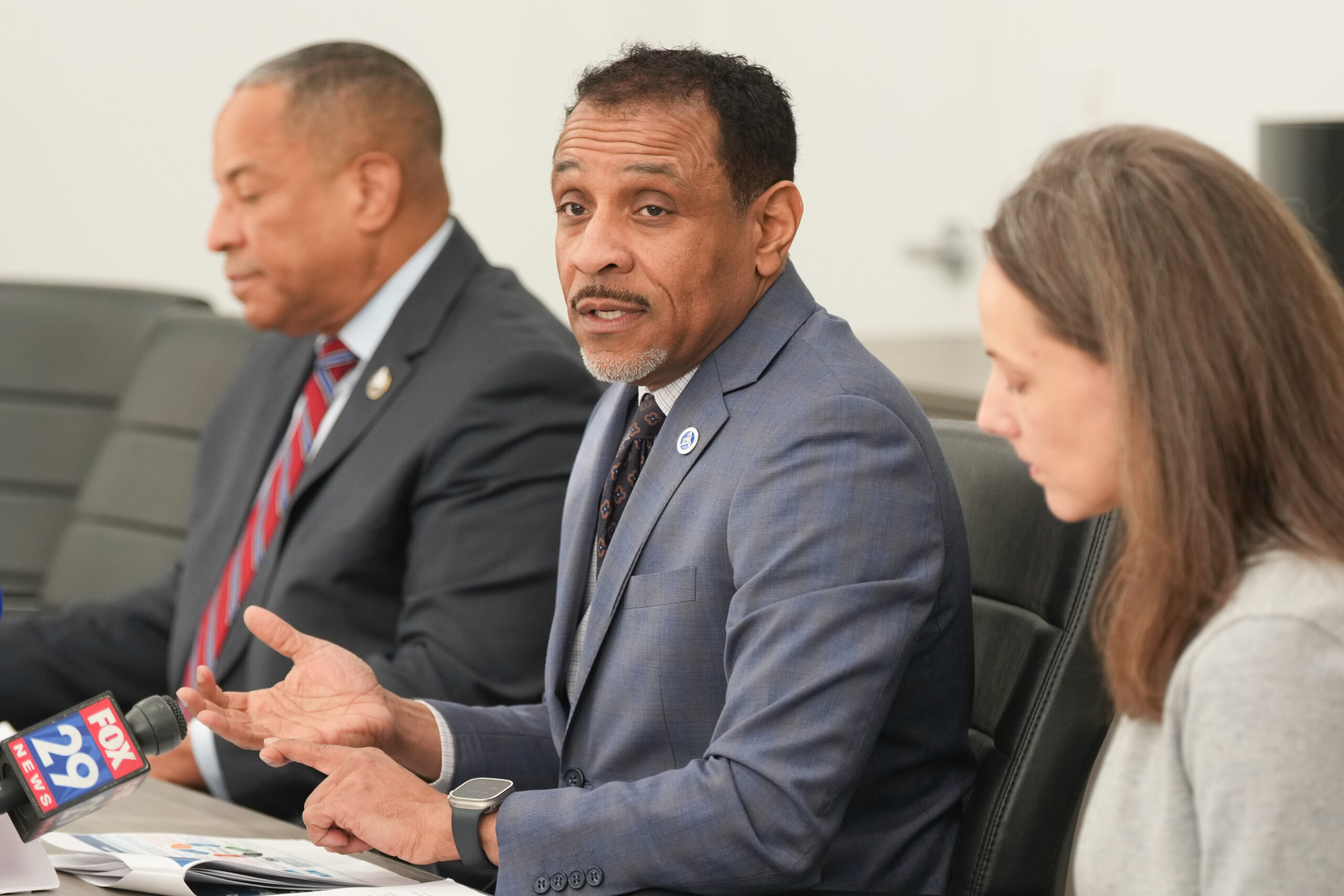
Oz Hill (left), Superintendent Tony B. Watlington Sr. (center), and Claire Landau at a news conference to announce plans for the first draft of the Philadelphia facilities master plan during a news conference at the Philadelphia School District Headquarters in Philadelphia on Jan. 20.
Johnson’s public insistence that Council members exercise veto power over parts of the district’s long-awaited facilities master plan is notable, and it raises the stakes ahead of a Feb. 17 hearing, during which every Council member will have the opportunity to question district officials about the proposal.
The Council president — a Democrat who is typically even-keeled and does not often speak publicly about legislative strategies — wields significant control over the fate of the city budget, which members must pass by the end of June. Mayor Cherelle L. Parker will unveil her proposed budget in March.
Local revenue and city funding made up about 40% of the district’s budget this year, or nearly $2 billion. Most of that is the district’s share of city property taxes which, unlike other school systems in Pennsylvania, are levied by the city and then distributed to the district.
In addition, the city makes a separate, direct contribution to the district, which this year was nearly $285 million.
Johnson’s opposition to elements of the plan could also position lawmakers somewhat at odds with Parker and Watlington. The pair have operated in lockstep since Watlington last month unveiled his proposal.
The plan did not appear to go over well in Council, with several members expressing immediate concerns. The day the plan was released publicly, Johnson endorsed another member’s legislation to amend the city’s governing document and grant Council power to remove members of the school board at will.
Councilmember Cindy Bass at City Council’s first session of the year on Jan. 23, 2025, in City Hall.
Some Council members said they plan to fight proposed closures and advocate for more investment in struggling schools.
Speaking at a meeting at Lankenau High School in Upper Roxborough last week, Councilmember Cindy Bass pushed back against the notion of closing Lankenau, a well-regarded magnet outside of her district, and other strong schools, including Fitler Academics Plus and Parkway Northwest in her district.
“When budget time comes up, I’ll be asking about these decisions that the school district is making,” Bass, a Democrat who represents parts of North and Northwest Philadelphia, told an emotional crowd of more than 100. “We don’t support them and we don’t understand them. They have not been rationalized.”
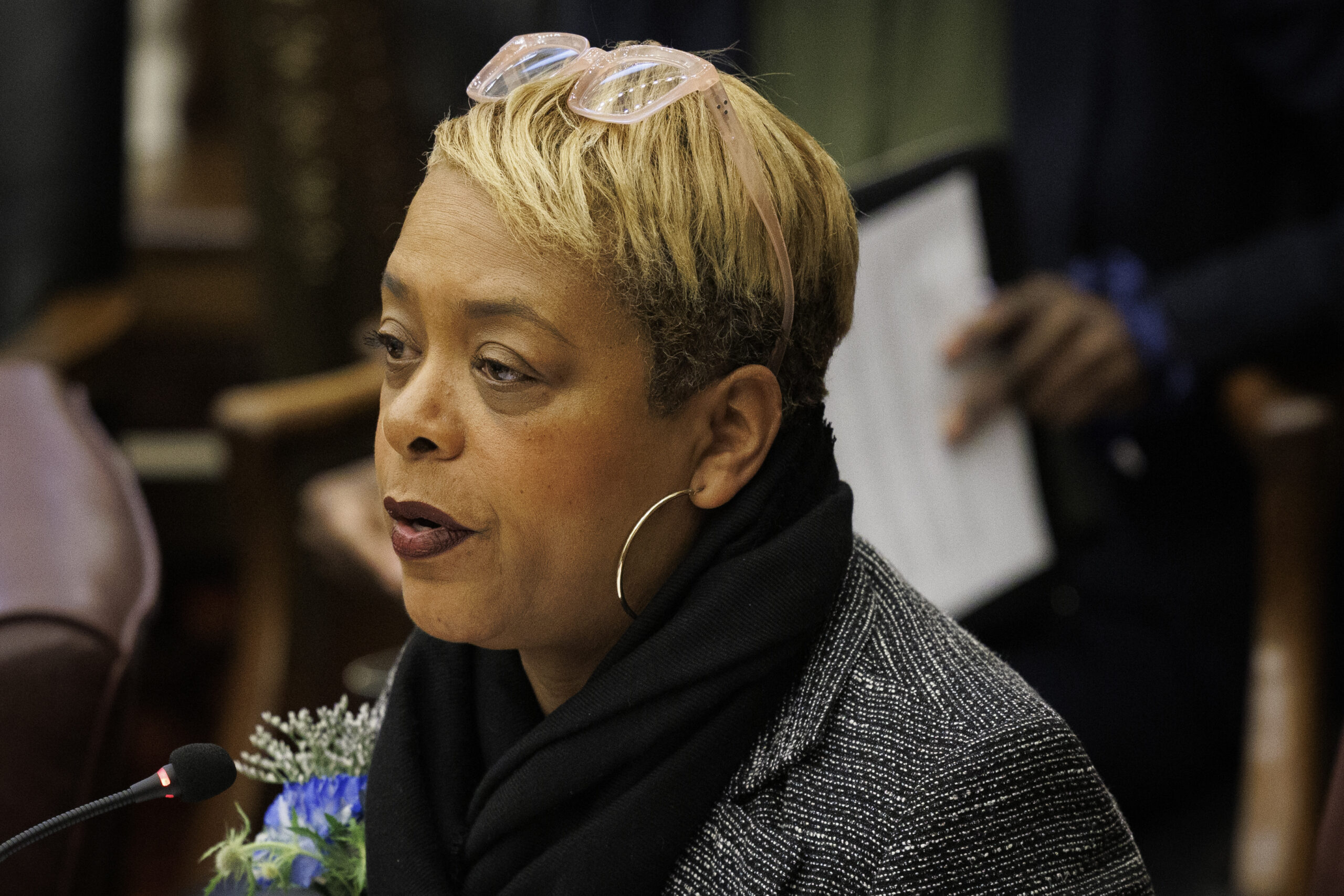
At Conwell Middle School in Kensington, Councilmember Quetcy Lozada, a Democrat who represents the neighborhood, said she was “having a really hard time understanding how the decisions were made.”
Closing Conwell, a magnet school whose enrollment has fallen to just over 100 because of parent concerns over neighborhood safety, was particularly galling, Lozada said.
“We are saying to these families, ‘We are punishing them because, as a city, we can’t respond to the public safety issues that we have on the outside,’” Lozada said. “And that is just not fair.”
Johnson said he wanted to see a clear safety plan for students being asked to travel to schools in new neighborhoods.
He also floated rebuilding consolidated schools as “all-in-one” campuses that are co-located with parks, recreation centers, and other city services.
“It would be in the best interest of the school district and the school board to think outside the box in terms of how they move forward, besides just saying, ‘We’re going to be closing down schools,’” Johnson said. “And those are conversations that we’re having right now.”
In the early 2010s, school closures were presented as unavoidable and data-driven. Families were promised efficiency and reinvestment. What many communities experienced instead was lasting harm that never fully healed. That history matters now as the Philadelphia School District advances a new Facilities Master Plan that again relies on closures as a primary tool.
The district argues that consolidating magnet programs into neighborhood high schools will expand access and strengthen those schools as community anchors. That logic assumes program quality can be preserved through reorganization alone. Experience suggests otherwise.
A mission-driven school culture depends on sustained focus and institutional priority. Once reduced to a single track, that culture becomes fragile. Through Lankenau, students are participating in an Environmental Rights Amendment curriculum led by the Pennsylvania Bipartisan Climate Initiative, one rooted in civic engagement as much as environmental literacy. That depth of engagement would be hard to replicate in other schools without a dedicated institutional focus on this work.
Environmental education is especially vulnerable to this kind of dilution. Partnerships with universities and community organizations take years to build. Internship pipelines depend on consistent coordination. Hands-on programs require both space and continuity. When these elements are separated, the whole weakens.
The Board of Education has recommended closing or merging as many as 20 schools, including Lankenau in Roxborough.
Equity concerns also deserve closer attention. Lankenau serves students from across North and Northwest Philadelphia who rely on district-provided transportation. For many families, this school represents access to a learning environment aligned with their interests and ambitions. Closing it narrows those options rather than expanding them.
The Facilities Master Plan emphasizes data analysis, community engagement, and fiscal responsibility. Those factors matter. But they do not capture everything. Some schools provide value that cannot be reduced to enrollment figures or building utilization rates. When a public school consistently prepares students to engage with one of the defining challenges of this century, dismantling it should not be taken lightly.
Climate literacy is not optional. It shapes workforce readiness and civic decision-making. Philadelphia should be strengthening pathways that cultivate this knowledge early and deeply. Offering environmental science only as an honors option signals a retreat from that responsibility.
This proposal is not final. The Board of Education still has time to reconsider. Protecting schools like Lankenau would not undermine the broader goals of modernization or equity. It would reinforce them and affirm that preparing young people for a changing world requires more than consolidation.
Ashlei Tracy is a nonprofit leader with a background in environmental policy and biology. Her work centers around increasing civic engagement, policy literacy, and care for our shared planet.
A federal appeals court revived a lawsuit challenging the legality of Philadelphia School District’s special-admissions process Monday, ruling the policy could be seen as “blatantly unconstitutional” and ”race-based.”
The ruling could have long-term implications for the admission process for citywide magnet and special-admissions schools, which has been controversial since its inception.
While it will have no immediate impact on the school district’s process, the ruling means the case could now proceed to trial.
The district changed the way it admits students to criteria-based schools in 2021, moving from a system where principals had discretion over who got into the district’s 37 special-admissions schools to a centralized, computer-based lottery for any student who met academic criteria.
For the city’s five top magnets, all students who met the standards and lived in certain underrepresented zip codes gained automatic admission.
Officials at the time said they were changing the policy as they “made a commitment to being an antiracist organization” after an “equity lens review” of admissions practices.
The demographics of some selective public schools do not match the city’s demographics. Masterman, for instance, has much higher concentrations of white and Asian students than the district does as a whole.
Although the school district has defended its policy change, a panel of federal judges on Monday ruled that it could be viewed as discriminatory.
“School District officials made public and private statements — both before and after the enactment of the Admissions Policy — that could support a finding that the Policy was intended to alter (and did alter) the racial makeup of the schools,” Judge Thomas Michael Hardiman wrote for the three-member panel.
“So a reasonable fact finder could conclude that the School District acted with a discriminatory purpose,” the panel wrote. The panel included Hardiman, a George W. Bush appointee; Cheryl Ann Krause, a Barack Obama appointee; and Arianna Julia Freeman, a Joe Biden appointee.
A district spokesperson said Monday that the school system does not comment on ongoing litigation.
The legal team representing parents Sherice Sargent, Fallon Girini, and Michele Sheridan — including lawyers from America First, an organization formed by Stephen Miller, a top aide to President Donald Trump called the action “a major victory.”
“School officials don’t get to rig admissions systems to satisfy ideological goals,” said Gene Hamilton, America First Legal’s president, and a former Trump deputy counsel. “This ruling affirms a basic constitutional principle: government cannot discriminate by race, whether openly or by proxy. AFL will continue fighting to secure accountability and restore equal protection.”
What did the initial lawsuit argue?
Sargent, Girini, and Sheridan sued in 2022to end the policy, to stop the district from using “racially discriminatory criteria” for magnet school admissions, and to award damages to those who might have been damaged by the “gerrymandered lottery” policy.
A federal judge ruled in favor of the school district in 2024 without a trial, writing that “no fair-minded jury could find that the changes to the admissions process were implemented with racially discriminatory intent or purpose.”
The district has defended its position, saying it was geography, not race, that gave certain students preferential admission to magnets like Masterman, Central, the Academy at Palumbo, and George Washington Carver High School of Engineering and Science.
Five admissions cycles have happened since the overhaul.
Adjustments have been made since the initial rollout — including dropping a controversial, computer-graded essay, adding ranked choice, adding sibling preference, and giving automatic admission to students who attend middle schools with attached high schools and meet academic standards — but the underpinnings remain, as does the preference for qualified students from underrepresented zip codes at selected schools.
Sargent’s daughter, who is Black, qualified academically for the George Washington Carver High School of Engineering and Science; Girini’s son, who is white, qualified for Academy at Palumbo; Sheridan’s child, who is biracial, met standards for Palumbo. All were denied admission to their top-choice schools, though they gained admission to other district magnets.
As a result of the shift to the lottery — and changes to admissions criteria — admissions offers to Black and Hispanic students increased significantly at most of the highest-profile schools, and offers to white and Asian students decreased at most.
What did Monday’s ruling say about the admissions policy?
District lawyers havesaid the admissions overhaul “was race-neutral and motivated by legitimate goals, such as increasing objectivity and improving access for qualified students from underrepresented geographic areas.”
But the appeals panel found that the federal judge who dismissed the case “did not adequately consider the evidence of why the School District implemented the Policy in the first place, including the School District’s stated goals, the historical context behind the ‘equity’ aims, and statements made by School District officials.”
Before the admissions changes took effect, then-Superintendent William R. Hite Jr. issued an anti-racism declaration in 2020 following the killing of George Floyd by Minneapolis police and the resulting racial justice movement.
Hite said it was “imperative that we take a laser focus on acknowledging and dismantling systems of racial inequity. For us, this goes deeper and far beyond focusing on individual acts of prejudice and discrimination, but refers to uprooting policies, deconstructing processes, and eradicating practices that create systems of privilege and power for one racial group over another.”
“These statements and actions, taken together in context, could support a finding that the School District adopted the Admissions Policy to achieve racial proportionality,” the appeals panel wrote.
What comes next?
Monday’s ruling has no impact on the existing admissions process, which is already underway for the 2026-27 school year.
And it is not yet clear what will come of the case after it returns to a lower federal court, but it could potentially now proceed to trial.
It was so cold Monday at Farrell Elementary, a Philadelphia public school in Northeast Philadelphia, that middle schoolers — a group seemingly constitutionally averse to bundling up — were wearing coats indoors.
That was just one example of trouble for the Philadelphia School District amid the prolonged frigid spell bearing down on the region, with a number of schools plagued by burst pipes, broken heaters, and other issues.
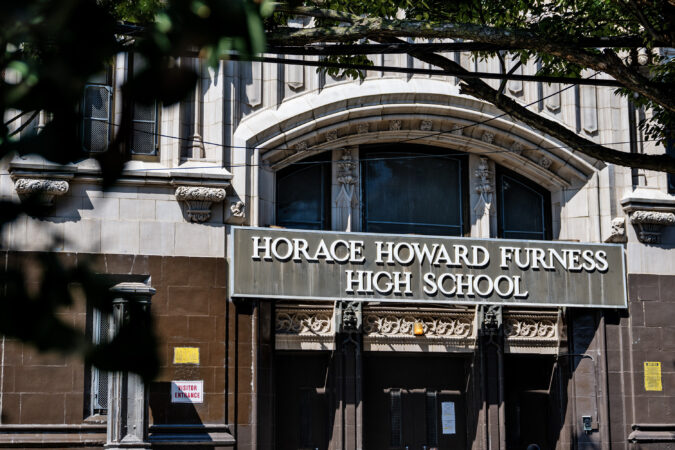
Furness High, in South Philadelphia, moved to virtual instruction Monday “due to ongoing heating challenges.”
“The safety and comfort of our staff remains our top priority,” wrote Teresa Fleming, the district’s chief operating officer. “Moving to virtual instruction for the day allows necessary work to continue while allowing minimal disruption to learning.”
Though Farrell’s heat was on the fritz for the third school day in a row, the district did not pivot to virtual learning there. Instead, it was one of four schools that dismissed early due to heating issues. For much of the day until classes ended, Farrell students and staff were forced to either bundle up or find space to relocate in more-adequately heated spots in the overcrowded school, according to staffers who asked not be named because they are not authorized to speak to the media.
Six Farrell classes camped out in the auditorium, including one class of 38 eighth graders. But the auditorium had to do double duty because the unplowed state of the yard where students typically play meant that students who’d typically be in the yard before or after eating lunch had to be in the auditorium also, Farrell employees said.
Meaningful learning was “absolutely not” going on in the auditorium, one staffer said. “It’s almost impossible.” Students were instructed to complete work on Google Classroom, and teachers were balancing crowd control and working with students individually.
In other cases, teachers and students just stayed in cold rooms, bundled up. Small-group instruction had to happen in hallways because of the population overflow; the hallways were also freezing.
“It’s just ridiculous,” said the Farrell staffer, of the school conditions.
They and others were frustrated that though district officials knew Farrell was plagued by heating issues, students and staff were required to be in the building, especially while other schools were permitted to go virtual.
District students had a snow day last Monday, learned virtually on Tuesday and Wednesday, then went back for in-person instruction on Thursday, though conditions were tough in many schools. In some places, heating issues have resolved.
“The safety and well-being of our students and staff remain our highest priorities,” district spokesperson Monique Braxton said. “Due to sustained frigid temperatures following the recent snowstorm, combined with the age of some School District of Philadelphia facilities, several schools are experiencing heating-related challenges.”
In addition to Farrell, Greenberg Elementary, another school in the Northeast, dismissed early because of heating issues, Braxton said. So did the U School and Parkway Center City Middle College, two district high schools.
District workers and independent contractors are “actively addressing both ongoing and newly identified facilities issues to ensure that all students can safely return to a full day of in-person instruction as soon as possible,” Braxton said.
At Farrell, one teacher brought in their own heater to try to keep warm, a staffer said, and one teacher known for wearing shorts every day finally broke down and wore pants.
And then there were the middle schoolers.
“Even the older ones have on coats,” the staffer said. “It’s so cold that they wore coats.”
Younger students, the staffer said, are more curious.
“They say, ‘Why is it so cold in my classroom?’“ said the Farrell staffer.
By lunchtime, word started to spread that both Farrell and Greenberg were dismissing early, staff there said.
But that late call came with its own set of headaches — while some parents would be able to react to the news quickly and pick up their children early, others may be stuck at work and unable to get to school at dismissal.
Arthur Steinberg, Philadelphia Federation of Teachers president, remained frustrated and angry by the district’s call. Steinberg said last week that the district’s return to buildings was “dangerous” given conditions in some places.
“They shouldn’t have brought people in if they knew the buildings were going to be this cold,” Steinberg said.
As to why one school was permitted to be virtual while others were brought in with inadequate heat, Steinberg was stumped.
Meeting for the first time since Superintendent Tony B. Watlington presented his sweeping facilities plan, Philadelphia’s school board heard an outpouring of angst Thursday night from community members upset over 20 proposed school closures.
“Closing schools ruins families and neighborhoods, especially Black, brown, immigrant and working-class communities,” said Caren Bennicoff, a veteran teacher at Ludlow Elementary in North Philadelphia, one of the schools targeted for closure. “A facilities dashboard can’t measure what a school means to children.”
Watlington said the plan represented a “once in a lifetime, significant opportunity” for the city to modernize schools.
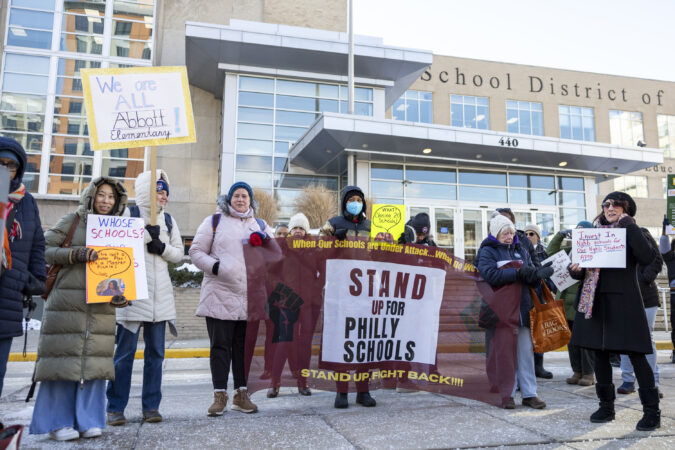
Prior to the meeting, more than 50 people gathered in the bitter cold outside Philadelphia School District headquarters, waving signs and shouting into bullhorns to show their displeasure with Watlington’s proposal.
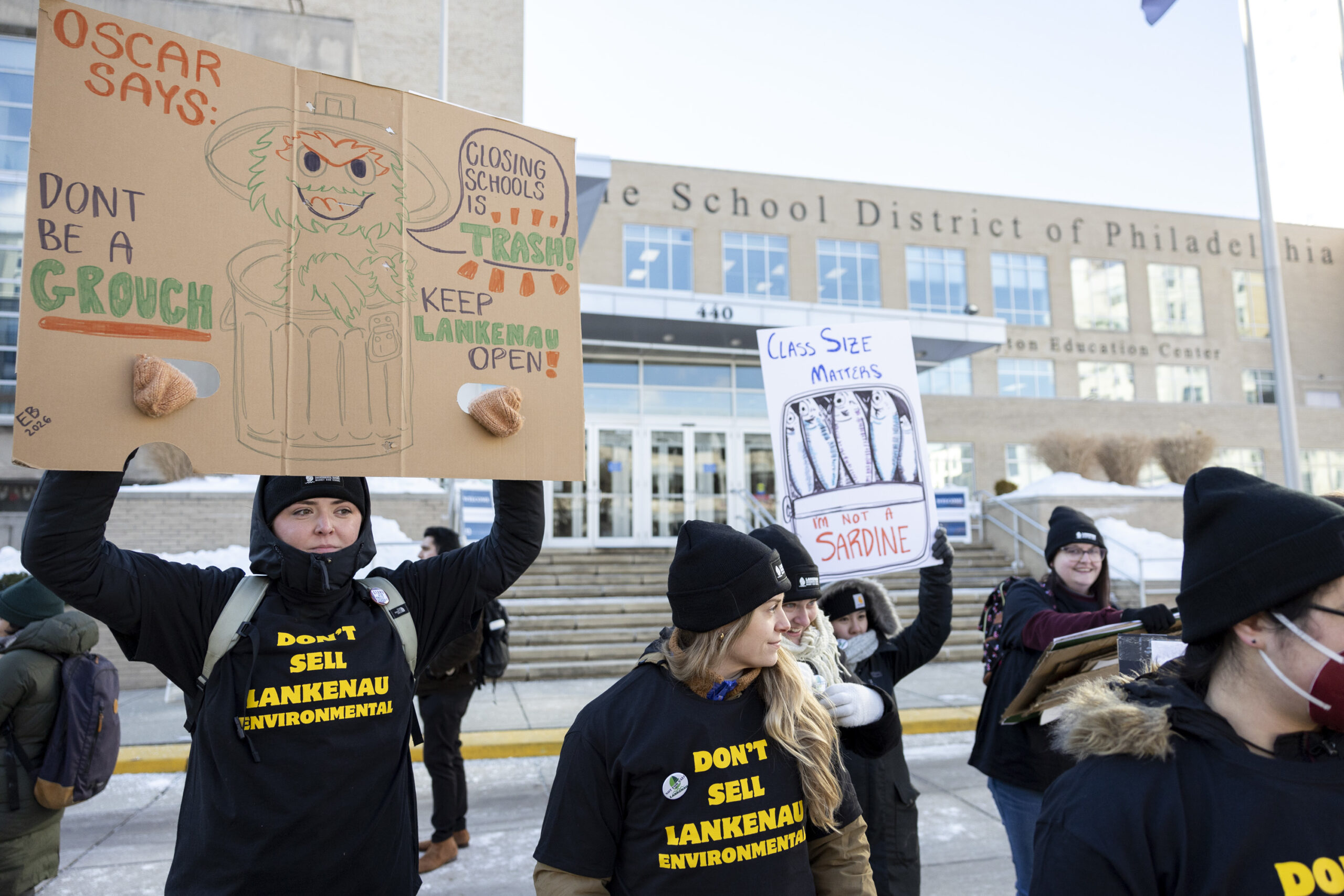
Emily Brouder, 23, of West Philadelphia, Penn student and intern at Lankenau High School, holds a sign that says “Closing Schools Is Trash.”
Some of the demonstrators warned that removing children from their neighborhood schools would be traumatizing to already vulnerable kids.
“These schools are another home for these families,” said Margarita Davis-Boyer, president of the Lankenau High School Home & School Association. She said schools are a place where kids can get a meal, see a friendly face, and feel safe, especially when home may not offer the same reprieve.
“It’s just an injustice,” she said. Lankenau, the city’s environmental magnet school, would close under the plan, becoming an honors program inside Roxborough High School.
A strong Lankenau contingent packed both the rally and the board meeting, which happened immediately afterward.
LeeShaun Lucas, a Lankenau senior, is upset the school might close.
“To me, closing Lankenau doesn’t make sense,” Lucas said.
Lankenau’s campus is unique in the city — set against a wildlife preserve and a farm, a stream, and a forest.
Lucas has studied how to make the Schuylkill healthier by studying mussels, he said. He’s taking a dual enrollment GIS class — the only such high school in the city to offer such an opportunity, school officials believe.
That exposure has shaped Lucas, he said.
“I truly believe that voting to close Lankenau Environmental would be a mistake,” Lucas said. “Please vote to save Lank so that others may benefit from the type of learning that is only possible at Lankenau Environmental.”
Superintendent Tony B. Watlington (center), Board President Reginald L. Streater, and Board member Sarah-Ashley Andrews at the School board meeting Jan. 29.
Disparate impact
Ryan Pfleger, an education researcher, said if underutilization and facility condition truly shaped Watlington’s recommendation, the burden of closure would fall roughly evenly across racial groups.
But that’s not the case with Watlington’s plan.
“Black students are overrepresented, roughly 1.6 times more likely to be enrolled in schools slated for closure,” Pfleger said. “Fifteen of 20 schools proposed for closure are majority Black. White students are underrepresented, about four times less exposed than expected. The schools slated for closure are also disproportionately low income.”
Pfleger’s conclusions match an Inquirer analysis of the closure data.
The plan, Pfleger concluded, “does not rectify educational injustice.”
Conwell shows up
A strong contingent of Conwell supporters also told the board they were unhappy with the plan to close their school, a magnet middle school in Kensington.
Conwell has just over 100 students in a building that can hold 500. But Erica Green, the school’s principal, said it’s worth saving.
“Conwell for many years has been the cornerstone in the Kensington community, a place where students flourish, where leaders are born; alumni included leaders in government, education, law, media, public safety, and professional sports: Living proof that diamonds truly are in our backyard,” Green said. “Times have changed, but excellence at Conwell has remained the same.”
Conwell is celebrating its 100th anniversary and has been the recipient of public and private donations to advance its building conditions and program offerings.
“Do not let the almighty dollar drive a choice to remove a beautifully designated historic school and beautifully gifted young people,” an impassioned Green said. “The essence, prestige and impact of Conwell Magnet Middle School cannot be duplicated.”
Priscilla Rodriguez, whose two sons attended Conwell, worries about the implications for families that rely on it for stability.
“When a school closes, families don’t just adjust. They struggle,” Rodriguez said. Conwell families “are already dealing with a lot. You won’t make it any better by closing Conwell.”
An incomplete plan?
Katy Egan came to the board with a long list of questions, none of which were addressed in Watlington’s plan: Which schools will be modernized? When? How? How will displaced students get to their new schools? What’s happening to students with special education plans forced to leave their schools? How do you plan to keep kids safe while merging schools?
Egan, a member of Stand Up for Philly Schools, called the blueprint “a 25% plan.”
But, she said, “we deserve more than 25%, and our students deserve everything.”
Community members can weigh in on the plan in the coming weeks at meetings around the city, and Watlington is scheduled to formally present it to the board on Feb. 26.
No vote will happen in February though, said board president Reginald Streater, who declined to weigh in on the merits of the plan until it’s handed over to the board.
In other board news
In other board matters, Watlington said he would soon ask to eliminate half days from the district’s calendar entirely.
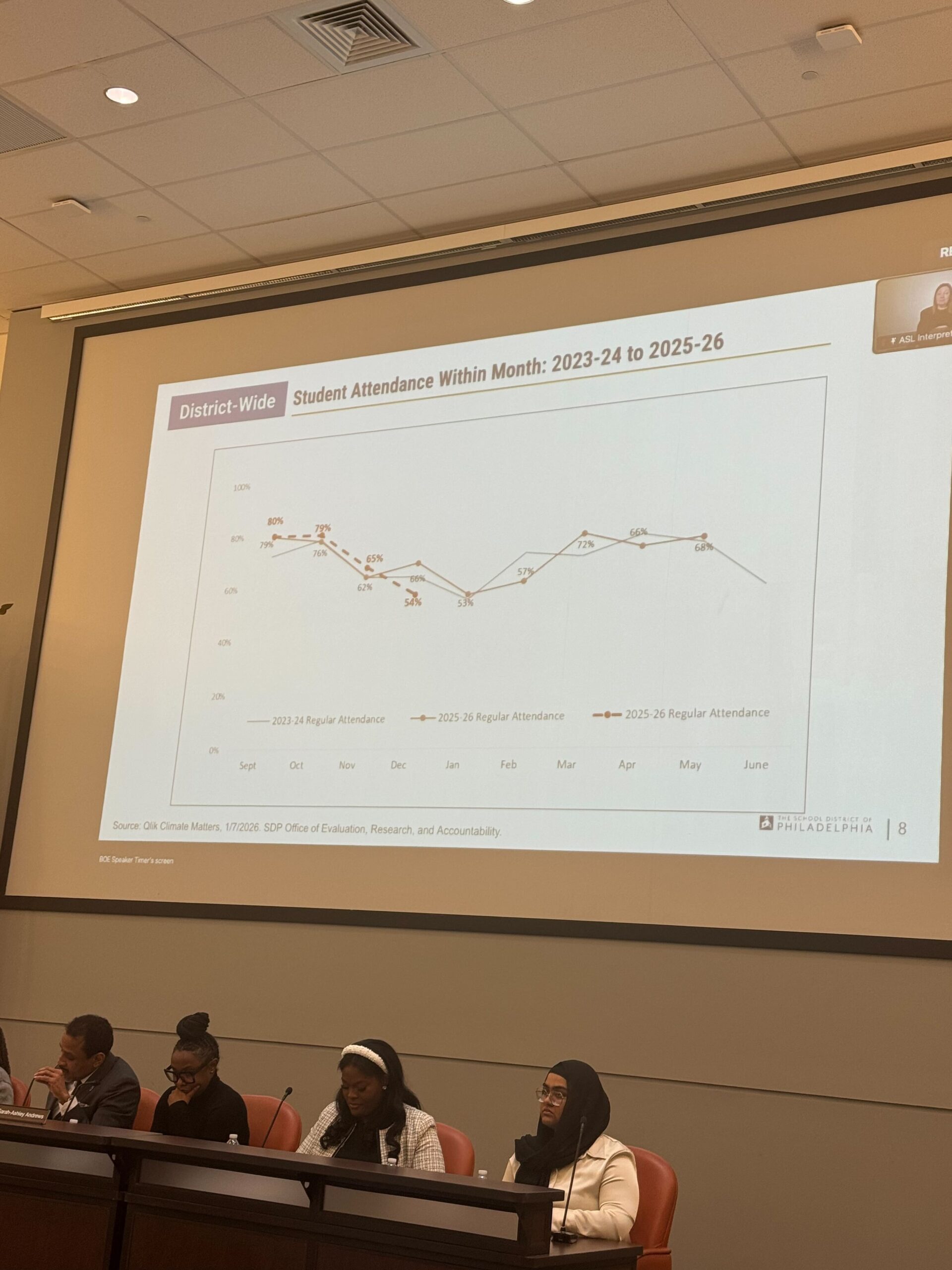
The news came as he detailed a slip in year-over-year student attendance: in December, 54% of students attended school 90% of the time, compared to 66% in December 2024. That’s the largest drop in Watlington’s superintendency, he said.
He attributed the challenges to a two-hour delay for snow, light attendance prior to winter break — and light attendance during a half day called for professional development.
Watlington said at next month’s board meeting, he’ll propose amending the 2026-27 schedule to remove half days entirely.
“Half days in the calendar do not serve us well,” he said.
The board also installed three new student board representatives.
The non-voting members are: Brianni Carter, from the Philadelphia High School for Girls; Ramisha Karim, from Northeast High; and Semira Reyes, from the Philadelphia High School for Creative and Performing Arts.
Superintendent Tony B. Watlington Sr. will not formally present the plan to the board until Feb. 26, but the topic took center stage at Thursday’s meeting as parents, educators, and other community members shared their concerns.
Here are a few takeaways:
Many people spoke out in support of Lankenau High, an environmental sciences magnet school slated to close under the plan. One parent said the closure would be a “death sentence.”
Many also spoke in support of Conwell Middle School, including its principal, who said closing it would “erase a legacy that still matters.”
Roxborough High school psychologist says the facilities proposal ‘appears to be a workaround’
Paul Brown, a school psychologist at Roxborough High School and member of Stand Up For Philly Schools, shares his thoughts about the facilities proposal.
On paper, he said, Roxborough will benefit from the plan because it will take in Lankenau High, a high-performing magnet.
“Lankenau would have to phase out their environmental science program” if it merges into Roxborough, Brown said.
“This proposal appears to be a workaround to push our students out of public education, rather than give them what they need,” Brown said.
Retired district teachers share concerns about the facilities plan, with one calling it ‘a moral failure’
Lisa Haver, a retired district teacher and founder of the Alliance for Philadelphia Public schools, calls the plan “a moral failure.”
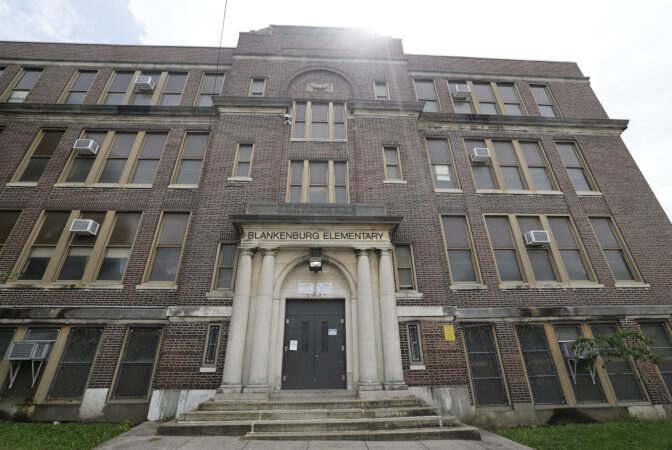
Blankenburg Elementary, in West Philadelphia, would be closed under the plan; it sits across the street from a large charter school in a new building. This plan does not represent the public’s will, Haver said.
“None of these schools has to be closed. It’s not a budget issue,” Haver said. She taught at Harding Middle School, which is also on the closure list. “It hurts my heart.”
Barbara Dowdall, also a retired Philadelphia teacher, said: “Let us not mimic the crowbar removal of buildings, or history.”
Retired teacher says the community input process for the facilities plan was performative
Retired teacher Diane Payne says she can’t believe what the district says because she sees what it does. Community input on the facilities plan was performative, she said, and the blueprint feels top-down.
“We the people do not have buy-in with your top-down plan,” Payne said. “We do not want our public schools sold out from under us.”
Payne calls the plan “extremely flawed and disruptive.”
District parent asks board to consider what brought them to this moment
Colin Hennessy Elliott, a district parent, is speaking about the facilities plan broadly. The board must consider what brought the district to this moment, he said.
Closing Lankenau ‘would be like a death sentence,’ parent and district teacher says
Dana Williams, a Lankenau High parent and district teacher, said her son, who has autism, is thriving.
“Closing Lankenau High school would be like a death sentence to so many students’ social, emotional, and academic” lives, Williams said.
“This is the highest form of inequity,” Williams said of Lankenau’s closure. “I do not need my child going to a neighborhood high school. That was never an option.”
Williams’ son had choices of other magnet schools, she said, but he chose Lankenau. She said the closure would be a “bait and switch.”
Former student board member and Conwell graduate says Conwell is ‘one of the best pathways for student success’
Mwanasha VanWright, a 1997 Conwell graduate and former student board member, calls Conwell “one of the best pathways for student success our city has to offer.”
Conwell was key to her success, VanWright said. “I hope you reconsider closing Conwell,” VanWright said. If you do close the building, make Conwell the official middle school of Bodine, she urged the board.
VanWright is raising three fourth-generation Philadelphians. She wants them to have “strong options like Conwell,” she said.
Retired teacher questions the district’s plan to give some buildings to the city
Retired Philadelphia teacher Deborah Grill said the current facilities plan is “even worse” than the 2012 closures.
“At least those schools were given time to react and fight for their schools” before the School Reform Commission made its closure decisions, she said.
Grill asks: Why isn’t the district considering closing charter schools with empty seats?
Grill also questions the district’s plan to give some buildings to the city rather than using or selling them. “It really has nothing to do with the welfare of your students,” Grill said.
Vare-Washington Elementary principal expresses gratitude for board’s consideration of playground project
Alison Barnes, principal of Vare-Washington Elementary, said the community is thrilled the board will consider approving a playground project for Vare-Washington Thursday night. It’s nine years in the making, Barnes said.
Conwell parent asks the board to reconsider closing any middle schools
Tasha Smith, a parent of two Conwell students, opposes the closure of the school.
“I am asking for this board to require the district to reconsider closing Conwell, and to reconsider closing all middle schools. There has to be other ways to succeed,” Smith said.
Smith said that the district asking, “Do you want unnecessary transition?” in the facilities planning survey was a misleading question. It should have asked, “Do you want us to close middle schools?” because that what it’s doing. Kids need middle schools, she said.
Parent of two Conwell alums says the school is ‘a cornerstone of our community’
Priscilla Rodriguez, whose two sons attended Conwell, said the school is “a cornerstone of our community.”
It’s more than a school, she said. It offers meals and after-school support. “When a school closes, families don’t just adjust. They struggle,” Rodriguez said.
Conwell families “are already dealing with a lot,” said Rodriguez said. “You won’t make it any better by closing Conwell.”
Kensington ‘deserves investment, not abandonment,’ says former Conwell climate manager
James Washington, a former Conwell climate manager and husband of a Conwell graduate, noted the school’s 100th anniversary. “Closing Conwell is a profound loss to a community that has already endured too many disappointments,” Washington said.
Instead of celebrating the anniversary, “we are preparing to erase the legacy.”
“The Kensington community deserves investment, not abandonment,” Washington said, urging the board to “look beyond spreadsheets” and save Conwell.
Head of Philadelphia Charters for Excellence asks the board to consider charters an equal partner
Cassandra St. Vil, head of Philadelphia Charters for Excellence, raised issues, including what she said was the coercion of some schools into signing their charters.
She said charters deserve more funding to address facilities needs, and urged the school district to consider charters an equal partner.
Organizer tells the board this is only a ‘25% plan’
Katy Egan, a community member with Stand Up for Philly Schools, the coalition that organized the rally before the meeting, said this is a “25% plan” with a serious lack of information. Which schools are being modernized? When? How? How will displaced students get to new schools? What about special education students? How do you plan to keep students and staff members safe?
“It’s not a plan. We deserve more than 25%, and our students deserve everything,” Egan said.
Parent asks: If the district doesn’t get the full $2.8 billion, which schools won’t get modernized?
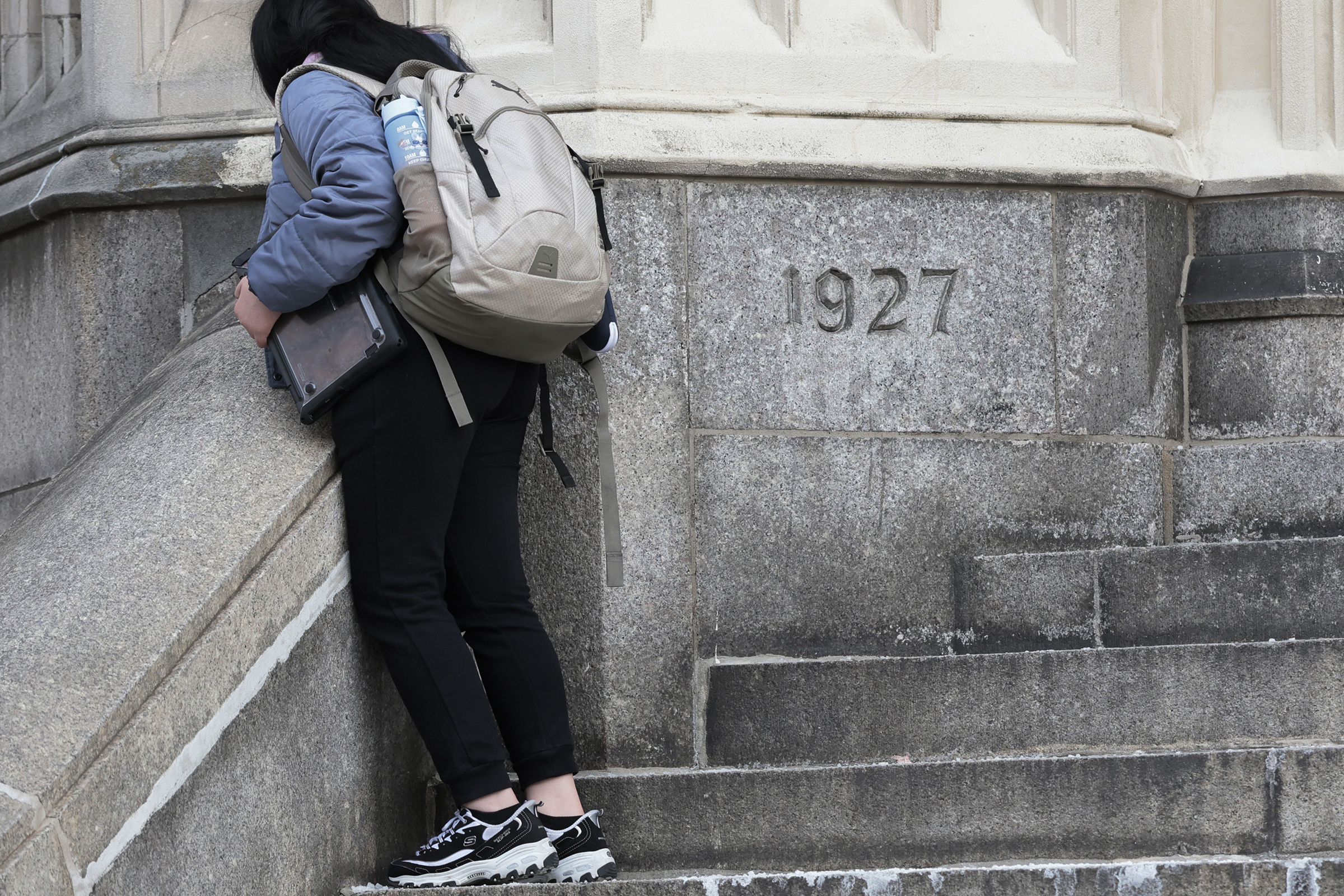
Afternoon dismissal at Penn Treaty Middle School on Jan. 22. The school building was built in 1927.
Lizzie Rothwell, a parent of two district students and spouse of a teacher at Penn Treaty — a school slated to be closed — is speaking against the facilities plan.
If the district doesn’t get the full $2.8 billion, 40 schools wouldn’t be modernized, Rothwell said. What are the 40 schools? (The district has not released those lists.)
“The city of Philadelphia and the state of Pennsylvania owe the district $8 billion in deferred maintenance,” Rothwell said.
‘Closing schools ruins families and neighborhoods,’ says Ludlow Elementary teacher
Ludlow Elementary.
Carin Bennicoff, a teacher at Ludlow Elementary, is speaking out against the school’s closure. She’s worked at Ludlow for 30 years.
“Closing schools ruins families and neighborhoods,” Bennicoff said. “A facilities dashboard can’t measure what a school means to a community.”
Generations of students attend Ludlow, Bennicoff. “Instead of closures, we need you to invest in creating safe and healthy schools” by giving us smaller classes and more resources.
“Our children deserve real, stable neighborhood schools,” Bennicoff said.
Conwell principal urges the board to save her school from closure
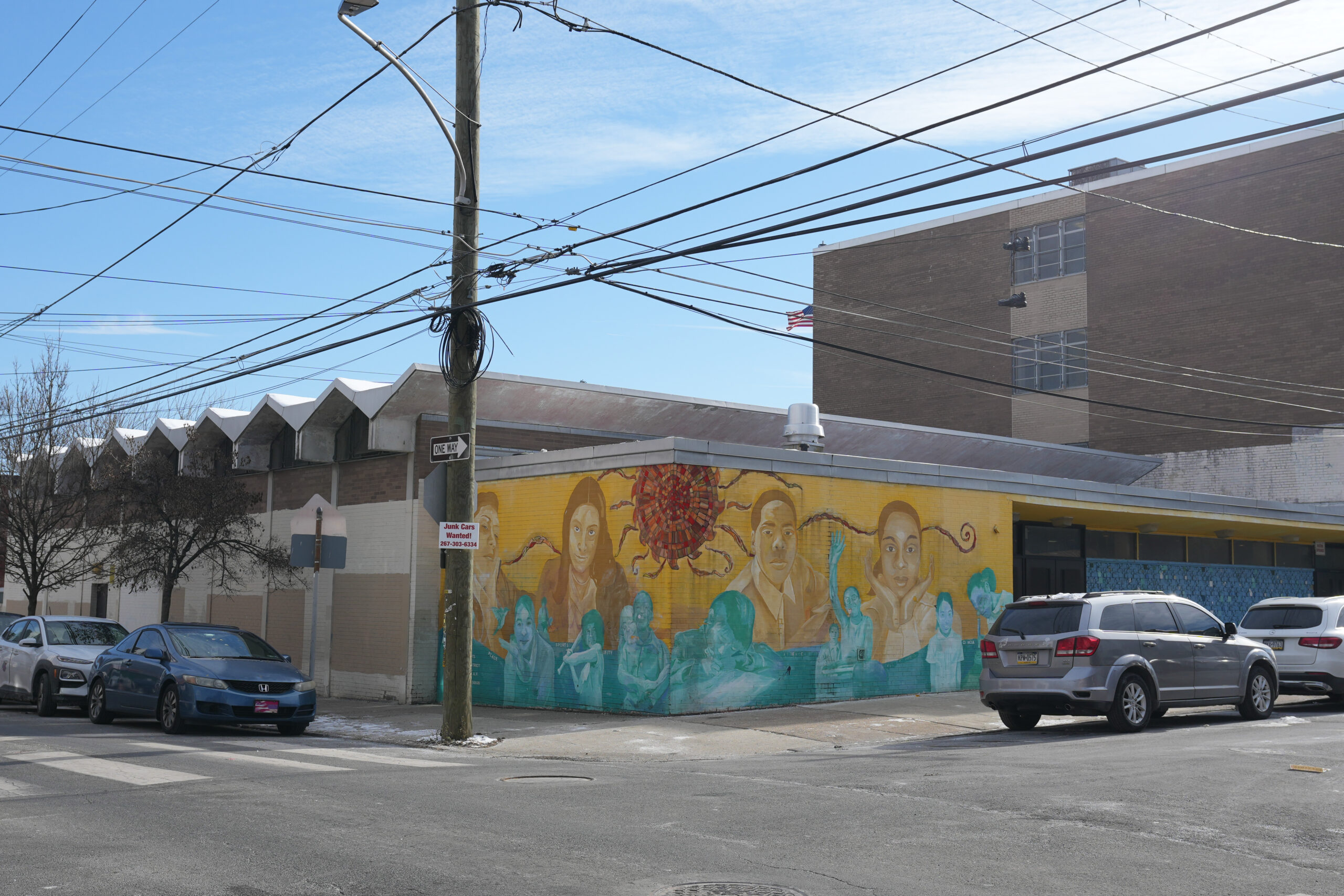
Conwell Middle School.
Erica Green, principal of Conwell, a school tagged for closure, is speaking now.
“Closing it would erase a legacy that still matters,” Green said. “Conwell is a cornerstone in the Kensington community.”
Philadelphia’s police commissioner was sworn in at Conwell, Green points out. “We are what the city needs,” she said. “Our building is celebrating 100 years. Bright and shiny does not mean better. Philadelphia is a city that celebrates history.”
“Do not let the almighty dollar” drive Conwell’s closure, an impassioned Green said. “Preserve the building, preserve the culture, preserve the legacy. History matters. Conwell matters.”
Proposed closures would disproportionately harm Black and low-income students, researcher says
Ryan Pfleger, a researcher, said the district’s proposed closures are disproportionately hurting Black and low-income communities.
“The burden of closure would fall roughly evenly across racial groups. This is not what the data shows.”
Black students are 1.6 times more likely to be in closing schools, he said. Fifteen of 20 schools tapped for closure are majority-Black. “This is disparate racial impact,” Pfleger said.
Perhaps it was unintentional, but Black and poor kids are more likely to be affected under this plan, he said.
“Build schools up. Don’t shut them down,” Pfleger said.
Mastery parents speak out in support of their schools
Gloria Carroll, a Mastery parent, said Mastery Clymer Elementary is an excellent school. “I love Clymer,” she said.
Ashtin Richard, a Mastery Gratz parent, loves the school and said it has helped his son have a smooth transition from a school in the Midwest.
// Timestamp 01/29/26 5:55pm
‘Take our time, be logical, be strategic,’ high school football coach urges the board
“Sending a kid from school to school can be very damaging,” said Jordan Holbert, the football coach at Vaux Big Picture High School and a North Philadelphia resident. “It’s not what’s best for the student long-term. As we’re making these difficult decisions about what to do next, I urge and beg and plead and frankly demand that we think about the kids and the long-term closure. We did this before … and we still haven’t recovered from that. Making the same type of decision is misguided and risky.”
Holbert urges the board to “take our time, be logical, be strategic,” and think about long-term effects.
District has ‘100% support’ from Philly delegation to get the funds it needs, State Rep. Tarik Khan says
State Rep. Tarik Khan speaks during the Peoples March in Philadelphia on Jan. 18, 2025.
State Rep. Tarik Khan is now addressing the school board. The district has “100% support” from the Philadelphia delegation to get the funds it needs, Khan said.
“I understand that there are difficult decisions to be made,” Khan said, and Lankenau is not the only school in his district to be planned for closure. But, he said, “there’s something special about Lankenau.”
Lankenau has 100% graduation rate. It is set in the woods. “They have unrivaled partnerships,” Khan said. “Please keep Lankenau open.”
Streater reiterates: Watlington will present the facilities master plan to the board on Feb. 26, but they will not vote that night
Board president Streater said it would not be appropriate for him to opine on Watlington’s facilities plan until it’s firmly in the board’s hand. He urges people to attend community meetings.
“Feb. 26 is just you presenting the proposal, it’s not the day of a vote, just putting that out there for the record,” Streater said.
The new student board representatives say one of the three of them will try to be at every forthcoming facilities planning meeting.
The superintendent said it’s a “once in a lifetime, significant opportunity for Philadelphia” to modernize schools, increase access to arts, music, pre-K, algebra in eighth grade, add a year-round K-8 and high school, add a new comprehensive high school in the Northeast, and a year-round indoor pool at one Philadelphia school.
School selection deadline has been extended to Friday at 5 p.m.
Watlington reiterates that the school selection deadline was extended to Friday at 5 p.m. Initial waitlist offers will be made on Feb. 1 at 5 p.m., and the deadline to accept a waitlist offer is Feb. 4 at 5 p.m.
More than 4,000 additional students completed applications for the school selection process, Watlington said.
Student attendance drops year-over-year for December, ‘the largest drop I believe I’ve seen during my tenure here,’ Watlington says
Student attendance dropped year over year for the month of December, Superintendent Tony B. Watlington shared with the school board.
Student attendance dropped year-over-year for the month of December, Watlington said.
It was 66% in 2024, and 54% in 2025, “the largest drop I believe I’ve seen during my tenure here,” Watlington said. He believes the change was due to a half day for professional development, a two-hour delay for snow, and lightly attended days prior to the winter break.
Philly builds one snow day into the calendar, and any other inclement weather days will be virtual, Watlington says
Watlington is making his monthly presentation now. He welcomes the new student board members, then pivots to the district’s inclement weather process. While in-person learning is preferred, the “absolute number one, without question” priority is safety, the superintendent said.
Philadelphia builds one snow day into its calendar; any subsequent inclement weather days will shift to virtual instruction, Watlington said.
The student said she and others are scared to lock up their phones. Hers was stolen once, and her family cannot afford to replace another phone, she said.
“Let’s not strip away the only safety tool” that some children have.
Superintendent Watlington directed one of his assistant superintendents to speak to the Frankford student.
‘To me, closing Lankenau doesn’t make sense,’ high school senior tells the board
LeeShaun Lucas, a senior at Lankenau High School, is upset the school might close. “To me, closing Lankenau doesn’t make sense,” Lucas said.
Lankenau’s campus is unique in the city — set against a wildlife preserve and a farm, a stream, and a forest.
Lucas has studied how to make the Schuylkill healthier by studying mussels, he said. He’s had the opportunity to study in a GIS class, the city’s only such high school opportunity. That shaped Lucas, he said.
“I truly believe that voting to close Lankenau Environmental would be a mistake,” Lucas said. “Please vote to save Lank so that others may benefit from the type of learning that is only possible at Lankenau Environmental.”
Cecelia Henderson, a junior at Lankenau, is also speaking against the proposed closure of her school.
“My overall experience at the school has been overwhelmingly positive,” Henderson said. “Lankenau teachers build very strong personal relationships with students. These are the things I don’t hear from my friends who attend other inner-city Philadelphia high schools.”
Lankenau gave her “structure, support and the privilege of a beautiful campus” that helped her deal with personal issues, Henderson said.
Henderson takes dual enrollment biology and GIS classes. “I strongly believe that this cannot be replicated elsewhere,” Henderson said. “Why close a school that gives real-world education and credentials to students? Why not give that school aid and support it so we can grow bigger and better?”
Conwell students urge the board not to close Conwell Middle School
Julia Spencer, an eighth grader at Conwell Middle School, is speaking now.
“When I got to Conwell, I found my fit,” Julia said. She’s involved in track and field, ballet, student government, and more.
The district has proposed closing Conwell, and that makes Julia worry about kids who won’t get the chance to attend the magnet middle school.
“They should be able to carry the Conwell name like I will, and so many other generations,” Julia said. “Keep Conwell open.”
Jebaz Spencer, another Conwell student, said: “Conwell has programs and opportunities that other schools don’t have. … My peers and I deserve Conwell.”
Conwell students have to score high on state tests. Kids deserve “to have the legendary Conwell name on our school records,” Jebaz said. “I’ve become a better person at Conwell, and an example for other students.”
“Conwell matters,” Jebaz said. “We matter.”
Under the proposed facilities plan, Conwell would close, and the building would be repurposed as a district swing space. Students would attend AMY at James Martin as a 5-8 program with a preference for Bodine High School.
The school board will hear from student speakers now, including multiple students scheduled to testify about proposed school closings.
Up first is Shereeta Jones, a student at Mastery Simon Gratz. Shereeta loves her school, and the staff who “just want to see me succeed at school and in life.”
Up now is the installation of the student representatives of the school board.
Board members Sarah-Ashley Andrews and Cheryl Harper work closest with the student reps. This year’s reps are: Brianni Carter, from Philadelphia High School for Girls; Ramisha Karim, from Northeast High; and Semira Reyes, from the Philadelphia High School for Creative and Performing Arts.
Six board members are in attendance at tonight’s meeting
The board has a quorum at tonight’s meeting, but not all members are in attendance.
President Reginald Streater and vice president Sarah-Ashley Andrews are attending in person. Crystal Cubbage, ChauWing Lam, Joyce Wilkerson, and Cheryl Harper are present virtually.
Whitney Jones, Wanda Novales, and Joan Stern are absent.
District plans to host upcoming community meetings centered on the proposed facilities plan
School board president Reginald Streater acknowledges Superintendent Tony B. Watlington Sr.’s long-awaited facilities plan, which was made public last week. It won’t be presented to the board until next month.
Streater urges attendance at upcoming community meetings, starting next week. The meetings will center on closing schools.
“Once he [Watlington] has formally presented his recommendations to the board, we will announce additional information on how we will proceed,” Streater said.
In other words, there will be no immediate vote after the Feb. 26 Watlington presentation, and more community engagement opportunities to come.
Board honors general counsel for the district, and its senior and teacher of the month
The board is honoring Shahirah Brown, assistant general counsel for the district, who has won multiple recognitions by community and legal organizations for her work.
First school board action meeting of 2026, here we go!
Most board members are not present in person tonight — just board president Reginald Streater and vice president Sarah-Ashley Andrews are at Philadelphia School District headquarters today.
Rally begins to break up as organizers head inside for school board meeting
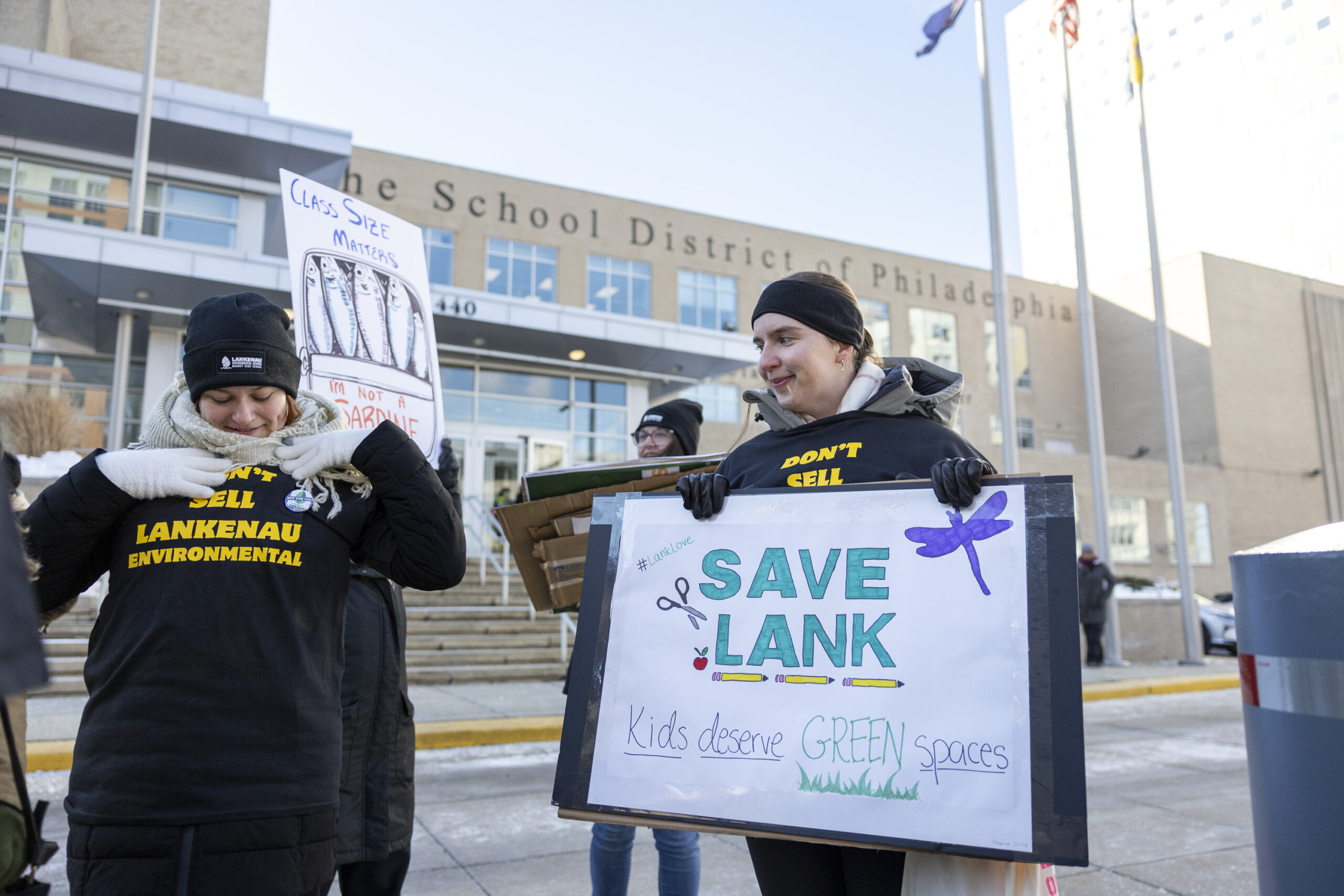
Grace Keiser, 27, a math teacher at Lankenau High School, holds a “Save Lank” sign during the rally on Thursday.
At the close of the rally, Krys Fannis, a 10th grader at Lankenau, spoke on the megaphone.
“I feel scared,” he said about the district’s plan, which would close the school. Fannis would have to transfer to a new school for his senior year. He said that Lankenau is more than just a building filled with classrooms. It is a community, and its focus on environmental education is essential for students like him, he said.
To those in the school district who argue his school must go?
‘It’s just an injustice,’ says president of Lankenau Home & School Association
Demonstrators rallied against school closures outside the School District of Philadelphia headquarters on Thursday.
Some of the demonstrators warned that removing children from their neighborhood schools would be traumatizing to already vulnerable kids.
“These schools are another home for these families,” said Margarita Davis-Boyer, president of the Lankenau High School Home & School Association. She said schools are a place where kids can get a meal, see a friendly face, and feel safe, especially when home may not offer the same reprieve.
“It’s just an injustice,” she said.
Annie Moss, from the Olde Kensington Neighborhood Association, said the school district’s plan threatens the future of Philadelphia.
“You cannot build a strong city… by traumatizing them,” she said.
North Philly community member protests proposed closure of Ludlow Elementary
Annie Moss, who runs after-school programs at Ludlow Elementary, rallied outside the School District of Philadelphia before their school board meeting on Thursday.
Annie Moss, a member of the Olde Kensington Neighborhood Association, braved the bitter temperatures to protest the planned closure of Ludlow Elementary in North Philadelphia. Ludlow, and the neighborhood, have finally gotten some investments.
“And now they’re talking about closing,” Moss said.
Moss said students would lose if Ludlow is closed.
“Why take them out of something that is good, and been built for them, and destroy it?” said Moss.
Hannah Loo, who works for advocacy organization 12 Plus, rallied outside the Philadelphia school district headquarters against school closures on Thursday.
Around 60 people are gathered in front of the school district headquarters, surprising organizers with their turnout given the frigid weather.
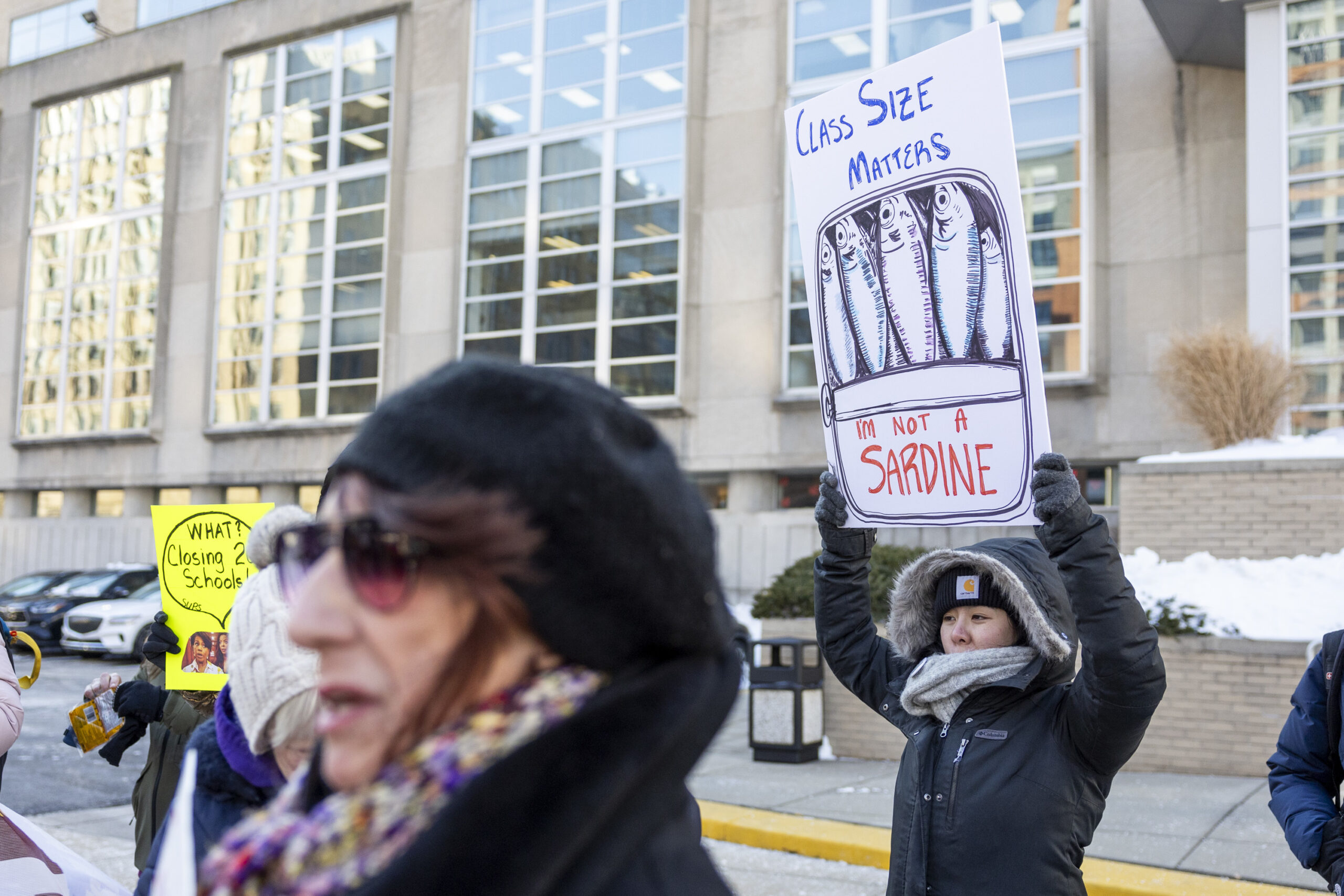
Hannah Loo, 30, braved the wintry day holding a sign that warns of crammed classrooms if the proposed schools close.
“Class Size Matters: I’m not a Sardine,” the sign read.
Loo, who works for advocacy organization 12 Plus, said that she was fighting against school closures because schools are essential parts of the neighborhoods and communities where they’re located. She believes the district’s plan will ultimately hurt graduation rates and attendance, and said she hopes the district listens to organizers doing grassroots work to advocate for schools.
Organizers set to rally against school closures outside school district headquarters
// Timestamp 01/29/26 2:45pm
Stand Up for Philly Schools, a coalition of neighborhood, parent, and educator groups, plans to rally outside the School District of Philadelphia headquarters starting at 3 p.m. Thursday, one hour before the school board’s first meeting of 2026.
The facilities plan is not on the agenda of Thursday’s meeting, but it will be the public’s first opportunity to share question and concerns with the board.
An Inquirer analysis of the decisions and the data behind them shows the proposed closures would disproportionately affect Black students. And despite efforts to minimize the impact, schools in the most vulnerable sections of Philadelphia would also be disrupted.
The closures would mostly address buildings with hundreds of unused seats, though some largely empty buildings were spared. And eight of the closures would affect schools given the district’s worst building condition rating — though 30 more buildings in that category would stay open and receive upgrades of some kind.
Monique Braxton, district spokesperson, said the facilities plan was “designed to provide access to high-quality academic and extracurricular programs across every neighborhood regardless of zip code.”
Most affected students — 90% — would be reassigned to schools with similar or better academic outcomes, and all would be reassigned to schools with either similar or better academics or comparable or better building conditions. Receiving schools will get additional supports, Braxton said.
Overall, the proposal would shake up at least 75 schools, with 20 closing entirely, four leaving their current buildings to colocate within other schools’ buildings, and three moving to new buildings. It would create new schools and, in one case, result in a new building. Nearly50 other district schools would take in displaced students from the closing schools, with some adding grades and others modernizing to fit new programming needs.
Collectively, about 32,000 district students learn in the 75 affectedschools — more than a quarter of the district’s total enrollment — not counting children in pre-K programs.
And those are just the changes Watlington introduced this month. Other shifts, some of them major, district officials said, are expected to be announced by the time he presentsthe planto the school board next month. A final vote is planned for later this winter.
Superintendent Tony B. Watlington (center) speaks about his proposal this month for the Philadelphia school facilities master plan.
The racial impact
The 20 schools that could close have twice as many empty seats as the district’s other schools. But The Inquirer’s analysis found that the closures will hit Black students disproportionately.
Among the closing schools, about 68% of the student population is Black, compared with 40% for the rest of the district’s schools — not including disciplinary or other specialized schools.
window.addEventListener(“message”,function(a){if(void 0!==a.data[“datawrapper-height”]){var e=document.querySelectorAll(“iframe”);for(var t in a.data[“datawrapper-height”])for(var r,i=0;r=e[i];i++)if(r.contentWindow===a.source){var d=a.data[“datawrapper-height”][t]+”px”;r.style.height=d}}});
Of the district’s schools where at least 90% of the students are Black, more than half are scheduled to close or take in more students from the closures.
Overall, amajority of students in the 75 schools that could close, take in students, or change in some way are Black, at about 54% of enrollment.
Some majority-Black schools, however, are earmarked for upgrades. Bartram High would get a modern athletics facility after nearby Tilden Middle School in Southwest Philadelphia is closed and upgraded for that purpose.
Nysheera Roberts is the parent of multiple children who attend Waring Elementary, in Spring Garden, which landed on the closure list. Waring now educates under 200 students; its pupils would be sent to Bache-Martin.
Roberts is stunned that her school — which educates mostly Black students like her kids — could close.
She worries about the logistics of getting her kids to school safely further away, then getting to her job in home care in Frankford on time. She worries what will happen to her children, including the niece and nephew she now raises who have lived through significant trauma and have behavioral and learning needs, if they have to adjust to a new and larger school.
“It’s not fair,” Roberts said. “They’re hurting Black kids more.”
Paying attention to vulnerable neighborhoods
In deciding which schools to close or expand, the district considered the vulnerability of the surrounding neighborhood.
Two dozen neighborhood elementary schools were labeled “very high risk,” meaning they have likely dealt with a previous school closure, or the community is otherwise vulnerable to high poverty, housing concerns, or other factors.
(function() {
var l2 = function() {
new pym.Parent(‘school_closing1’,
‘https://media.inquirer.com/storage/inquirer/projects/innovation/arcgis_iframe/school_closing1.html’);
};
if (typeof(pym) === ‘undefined’) {
var h = document.getElementsByTagName(‘head’)[0],
s = document.createElement(‘script’);
s.type = ‘text/javascript’;
s.src = ‘https://pym.nprapps.org/pym.v1.min.js’;
s.onload = l2;
h.appendChild(s);
} else {
l2();
}
})();
Welsh, in North Philadelphia, was the only school building in a neighborhood labeled “very high risk” to land on the closing list.
Bethune in North Philadelphia and Martha Washington in West Philadelphia will colocate with other schools.
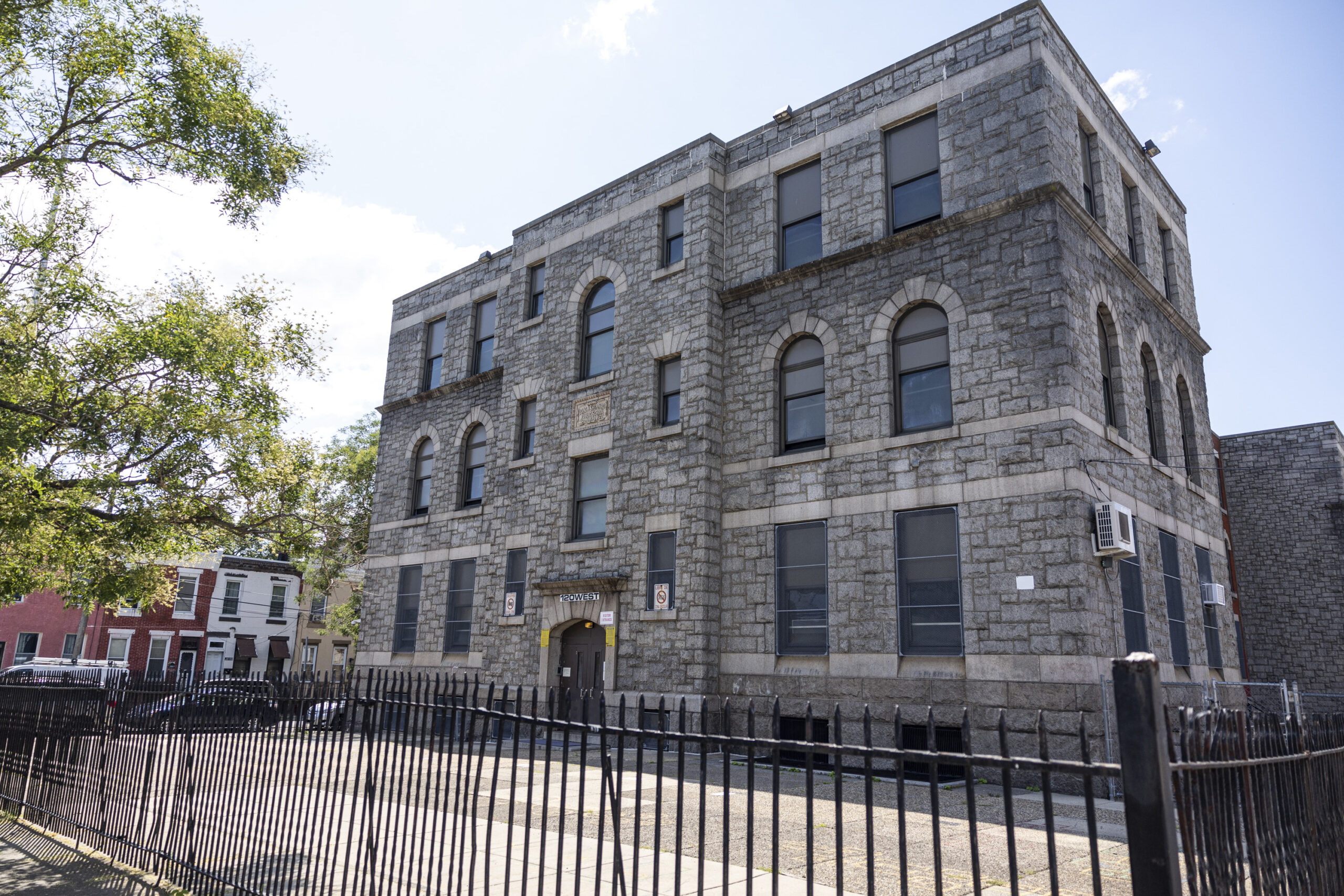
But three schools with building conditions considered unsatisfactory, poor programming options, and “very high risk” neighborhood ratings were left off the closure list. Those schools are Philadelphia Military Academy in North Philadelphia, Sheppard in West Kensington — which has successfully fought off closure in the past — and Francis Scott Key in South Philadelphia, the district’s oldest building, constructed in 1889. Sheppard and Francis Scott Key are both majority-Hispanic schools.
Sheppard Elementary School in West Kensington has faced the threat of closure in the past but was spared in the latest proposal.
The district plan calls for closing five schools in neighborhoods it deemed to have a “high risk” of vulnerability, the level below “very high”: Blankenburg, Harding, Stetson, Tilden, and Wagner.
Watlington has made it clear that the district is phasing out middle schools when possible, in favor of the K-8 model — and of that list, four are middle schools. Only Blankenburg, in West Philadelphia, is an elementary. Also, of those schools in vulnerable neighborhoods, four of the five are rated as having “unsatisfactory” buildings, the district found.
Perhaps no section of the city faces as much disruption from the recommendations as the lower part of North Philadelphia.
Fourteen schools with a combined enrollment of 5,400 students could be affected, including the closures of Ludlow, Morris, Penn Treaty, and Waring.
“If you are closing schools during a literacy crisis, then you should be held directly accountable to the people you serve,” Young said last week.
Right sizing mostly empty buildings
Underused space was a factor in the district’s decision-making, an Inquirer analysis found.
Data released by the district last year identified about 60 schools that were more than half empty. The recommendations attempt to realign some of these schools by taking significant action on 31 of the 60 half-empty schools.
Of the 20 schools the district wants to close, 14 are currently at less than half capacity.
window.addEventListener(“message”,function(a){if(void 0!==a.data[“datawrapper-height”]){var e=document.querySelectorAll(“iframe”);for(var t in a.data[“datawrapper-height”])for(var r,i=0;r=e[i];i++)if(r.contentWindow===a.source){var d=a.data[“datawrapper-height”][t]+”px”;r.style.height=d}}});
AMY Northwest, Conwell, Robert Morris, Motivation, Tilden, and Welsh are all recommended for closure, with each educating fewer than a quarter of the students they have room for.
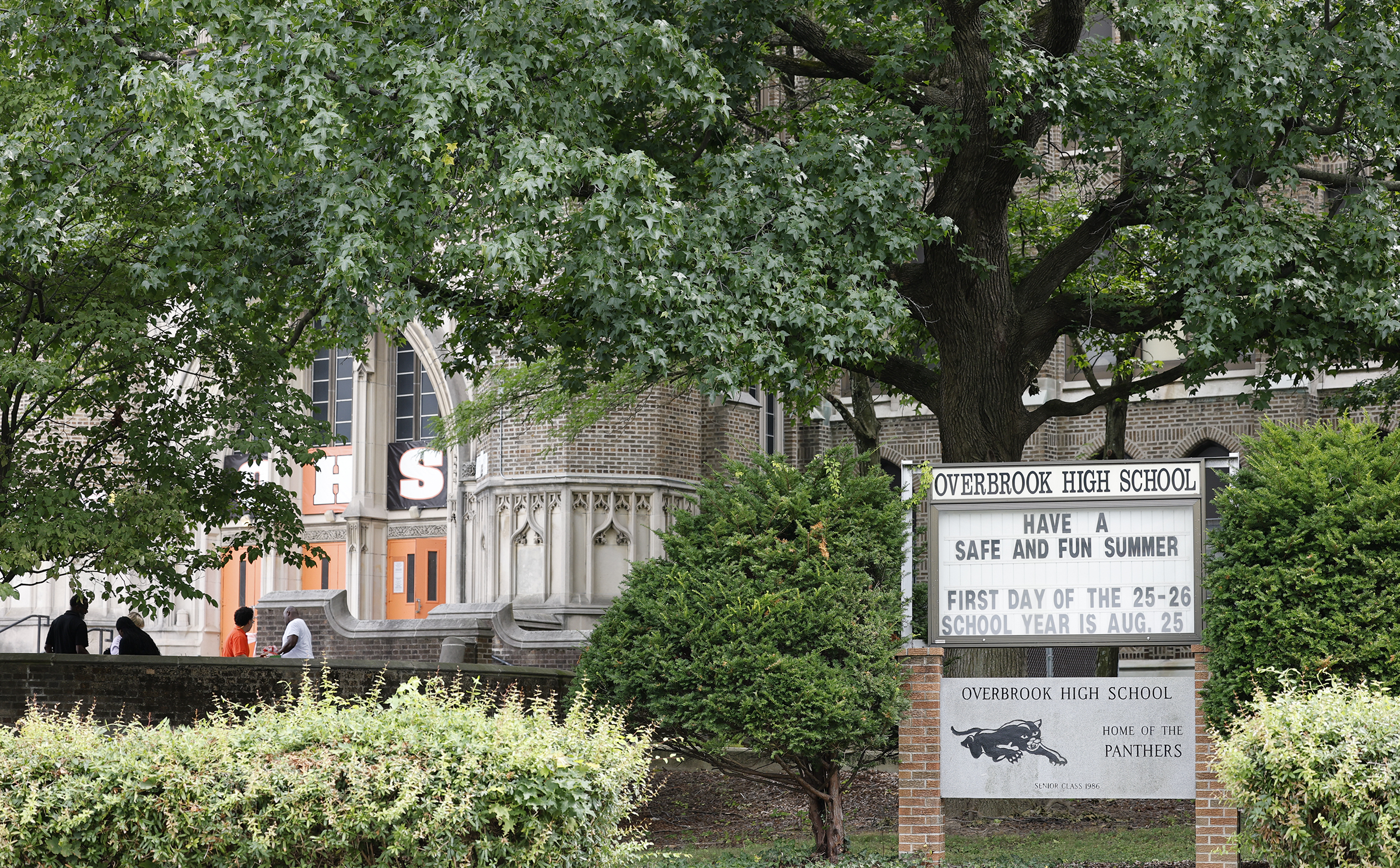
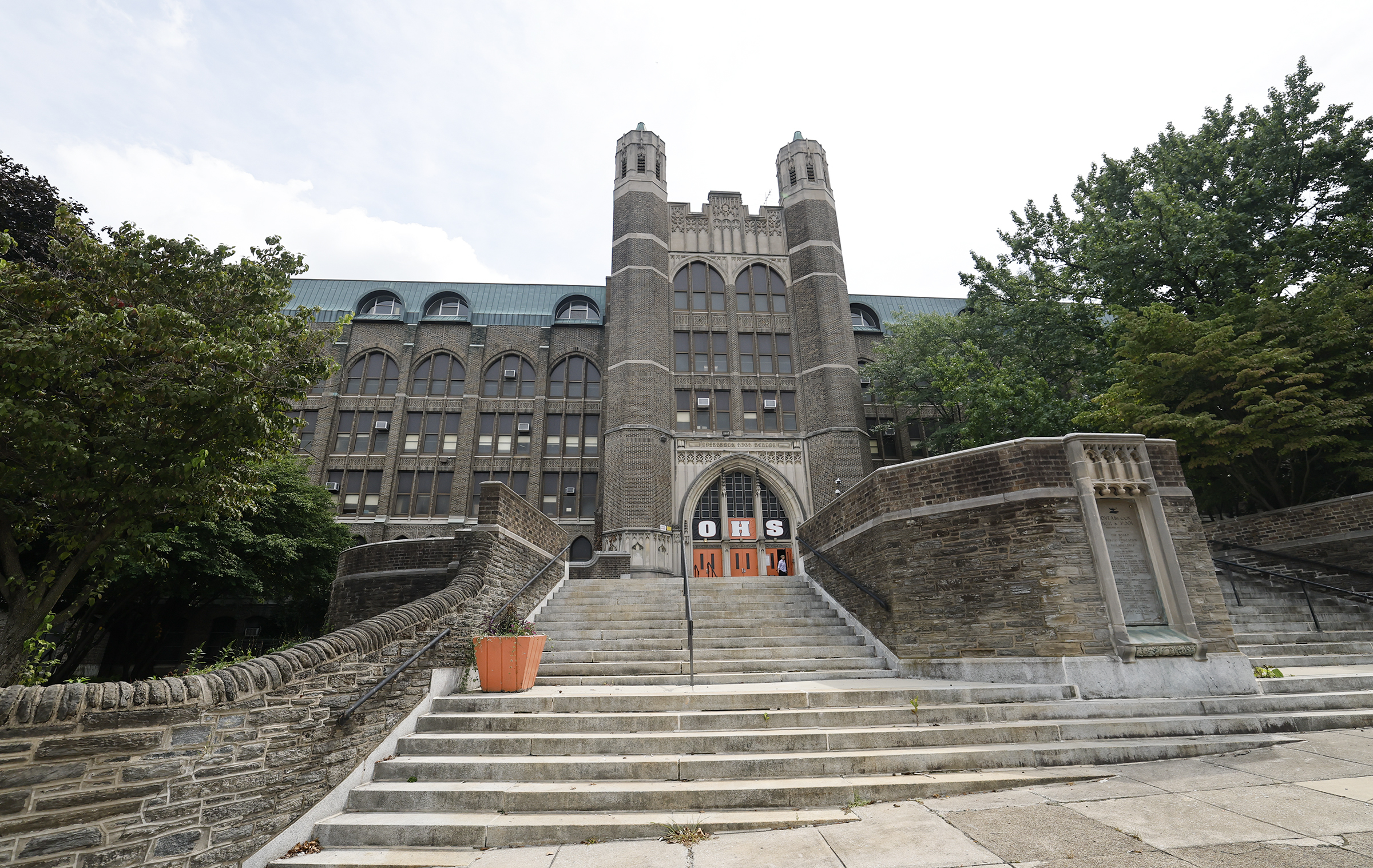
Overbrook High in West Philadelphia — a 100-year-old school with roughly one in four seats filled — would remain open but begin sharing space with the Workshop School, a small, project-based high school located nearby.
Overbrook has received millions in funding from the state for remediation and a new roof. It also has a strong alumni association.
Overbrook High School in West Philadelphia has thousands of empty seats but was not tapped for closure. Instead, The Workshop School, a small, project-based high school now located in another West Philadelphia building, will colocate with Overbrook.
Having a more robust enrollment, however, did not save some schools from landing on the closure list. Harding, Parkway Northwest, Pennypacker, Robeson, and Stetson operate at 50% to 74% of capacity but would still close.
Besides shutting down underused schools, the plan would alter an additional 17 half-empty schools by moving them into colocations, adding grades, or otherwise expanding their use by taking in students from the closing schools.
To make it work, the district’s recommendations often involve a series of logistical steps. A pair of North Philadelphia neighborhood schools built in the 1960s are one example.
Hartranft, a K-8 school in North Philadelphia with a building rated in “good” condition but only 37% occupied, would take in students from Welsh, a school marked for closure. Welsh teaches the same grades but in a building rated “poor” about a half a mile away. The district would then convert the Welsh building into a new year-round high school.
John Welsh Elementary school is on the list of 20 schools proposed to close by the 2027-28 school year.
Getting students out of (some) fatigued buildings
By one city estimate, district schools need about $8 billion in repair costs for 300-plus buildings that are about 75 years old on average. Watlington’s plan calculates the district could do it for $2.8 billion.
Even with some investments over the last decade, many schools still have asbestos, lead, or mold issues. And many schools that don’t have bad building quality ratings still need improvements.
Eight schools recommended for closure are in buildings rated “unsatisfactory” by the district, its lowest score.
An additional 30 schools also rated “unsatisfactory” would remain open under the plan, including some expected to see an increase of students.
window.addEventListener(“message”,function(a){if(void 0!==a.data[“datawrapper-height”]){var e=document.querySelectorAll(“iframe”);for(var t in a.data[“datawrapper-height”])for(var r,i=0;r=e[i];i++)if(r.contentWindow===a.source){var d=a.data[“datawrapper-height”][t]+”px”;r.style.height=d}}});
Watlington wants the district to pay for $1 billion of the plan’s price tag with its own capital funds over the next decade. That would leave $1.8 billion unfunded, and he wants the state and philanthropic funders to cover the rest.
If the full $2.8 billion plan is funded, Watlington said, the district could improve every building labeled “poor” or “unsatisfactory.”
To achieve this, some buildings could get the same kind of treatment Frankford High received — a $30 million major renovation project to remedy significant asbestos damage. Students had to relocate into an annex and another building for two years while the work was done.
The district plan calls for some of the buildings in the worst shape to receive more students. Bache-Martin, Catharine, Howe, John Marshall, and Middle Years Alternative are in buildings that need significant upgrades, according to the district’s analysis, but all would take on more pupils.
In the case of Howe, the district wants to add grades to keep students who would have attended Wagner, a middle school that is proposed to close.
The district has said Bache-Martin would receive upgrades if the plan is adopted. For other schools, neither the timeline nor the fixes they would receive are clear.
The recommendations so far only mention a handful of schools set to modernize.
Among them is Comly, a K-5 in the Somerton neighborhood.
Comly now has 660 students enrolled, putting it at 107% of its capacity. But the district recommends modernizing the school and accepting middle grades students from the Comly and Loesche catchments. Students who now attend Loesche, another K-5, go to Baldi Middle School, which is also overcrowded.
Watson T. Comly Elementary School in Somerton. It’s slated to be modernized and accept more grade levels under the district’s proposed plan.
What appears to set schools like Bache-Martin apart from some of the closures is higher occupancy. Together, about two dozen schools that are more than half occupied would remain open, even though the buildings are “unsatisfactory.”
Schools on this list — like Barton Elementary, which runs at about 80% of its capacity — are harder to shutter or colocate if no nearby school has low attendance. That makes building upgrades a more logical solution.
But those two dozen schools are not the only ones in need of significant building upgrades.
An additional 45 schools currently operate in buildings rated slightly better at “poor,” the category just above “unsatisfactory.” The district recommends closing seven of them and colocating two.
And beyond that large number of fatigued schools, many others in poorly rated buildings will remain unchanged for now, with about 10 even taking in more students.
Watlington has said that in total, 159 schools would modernize over a decade if the plan is approved and fully funded, but absent extra state and private money, that number could drop.