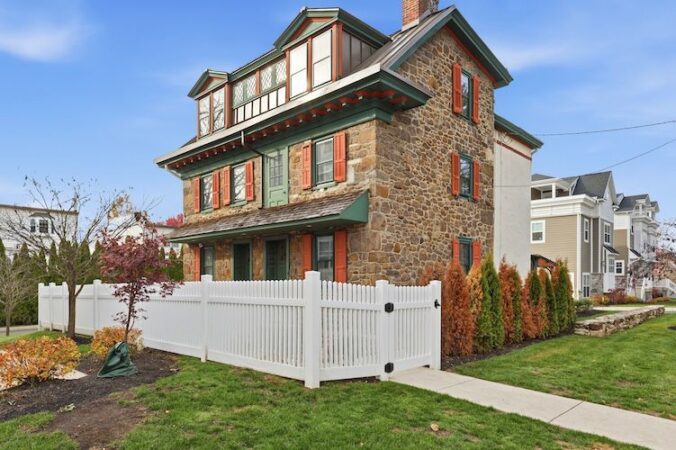
Kai Lu and Edward Mendez had expected to spend many years in the spacious Media home, enjoying the easy access to Center City by SEPTA Regional Rail, the good schools for their two-year-old son and the second on the way, and its aura of history.
But in the words of Lu, who is in data analytics for a major communications company, “life intervened.”
Mendez landed his dream job as a data analyst for the Miami Marlins baseball team, and the couple are headed to Florida after two years in the house.
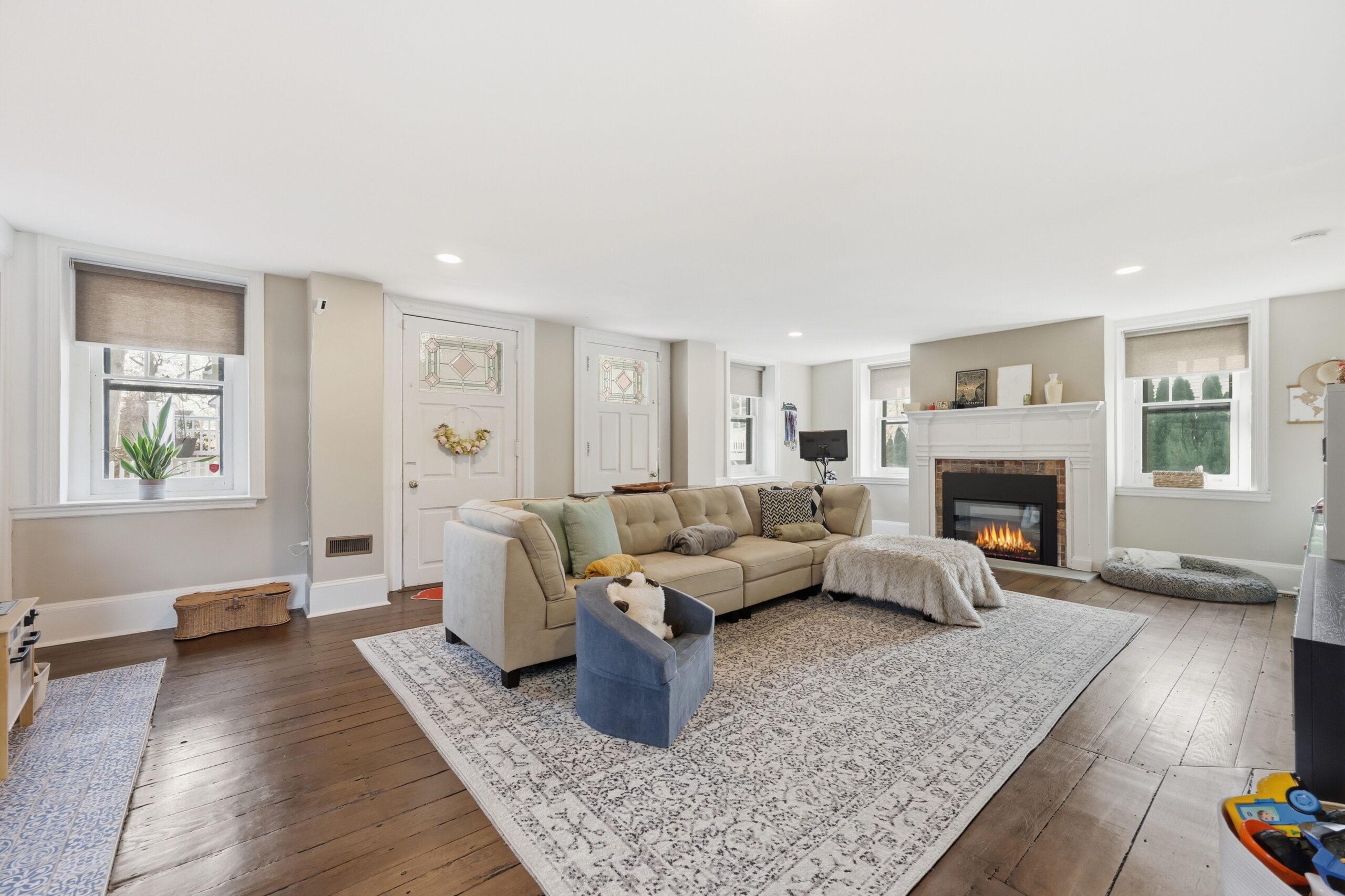
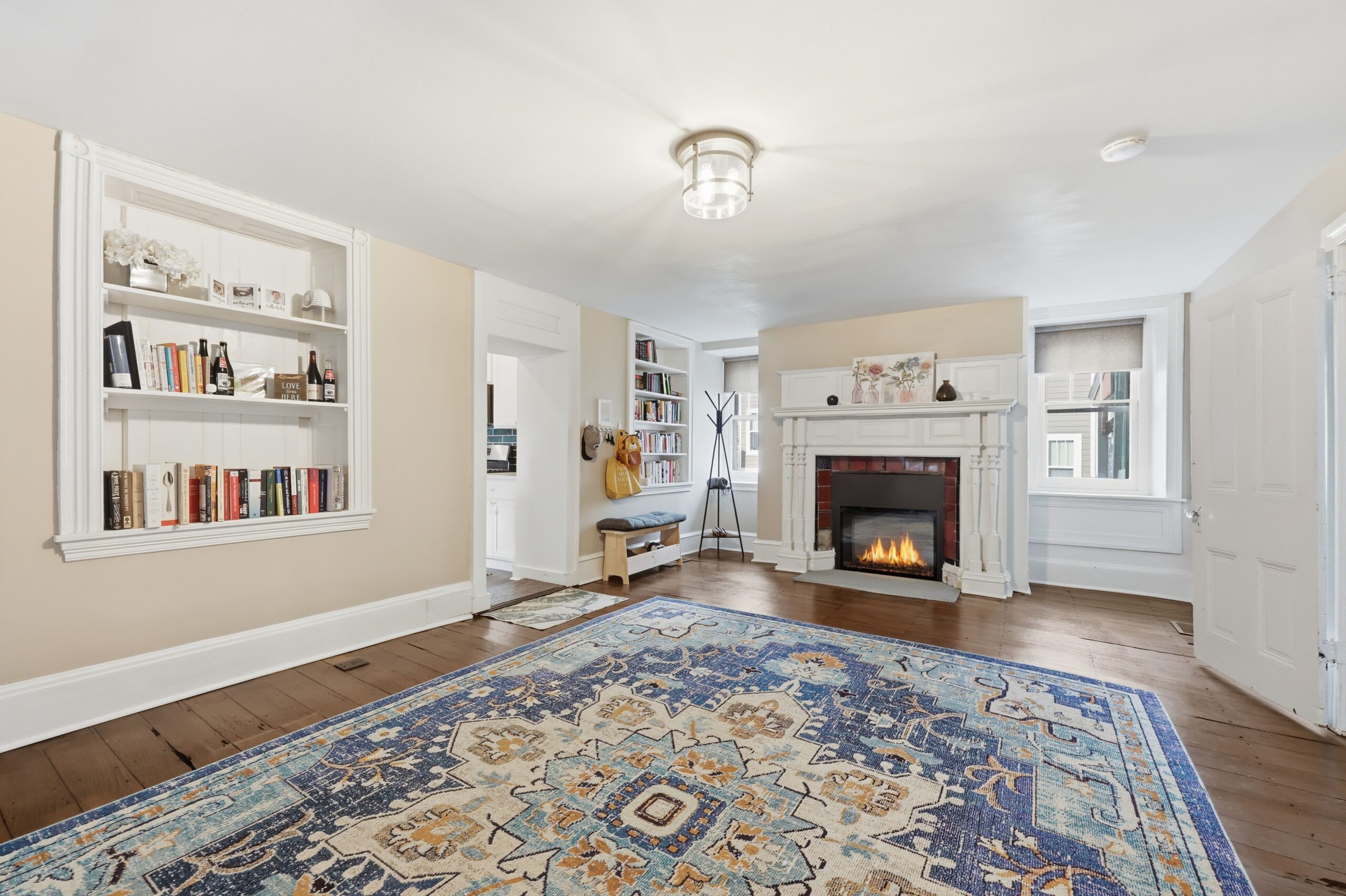
The living room. The home has four working fireplaces.
The five-bedroom, 4½-bathroom home was once the general store of Providence Village, and Lu says she doesn’t know when the changeover came.
The earliest part of the house dates to the 18th century, with some 19th-century additions.
The 4,334-square-foot house has three floors of living space plus an unfinished basement, and four working fireplaces powered by electric inserts.
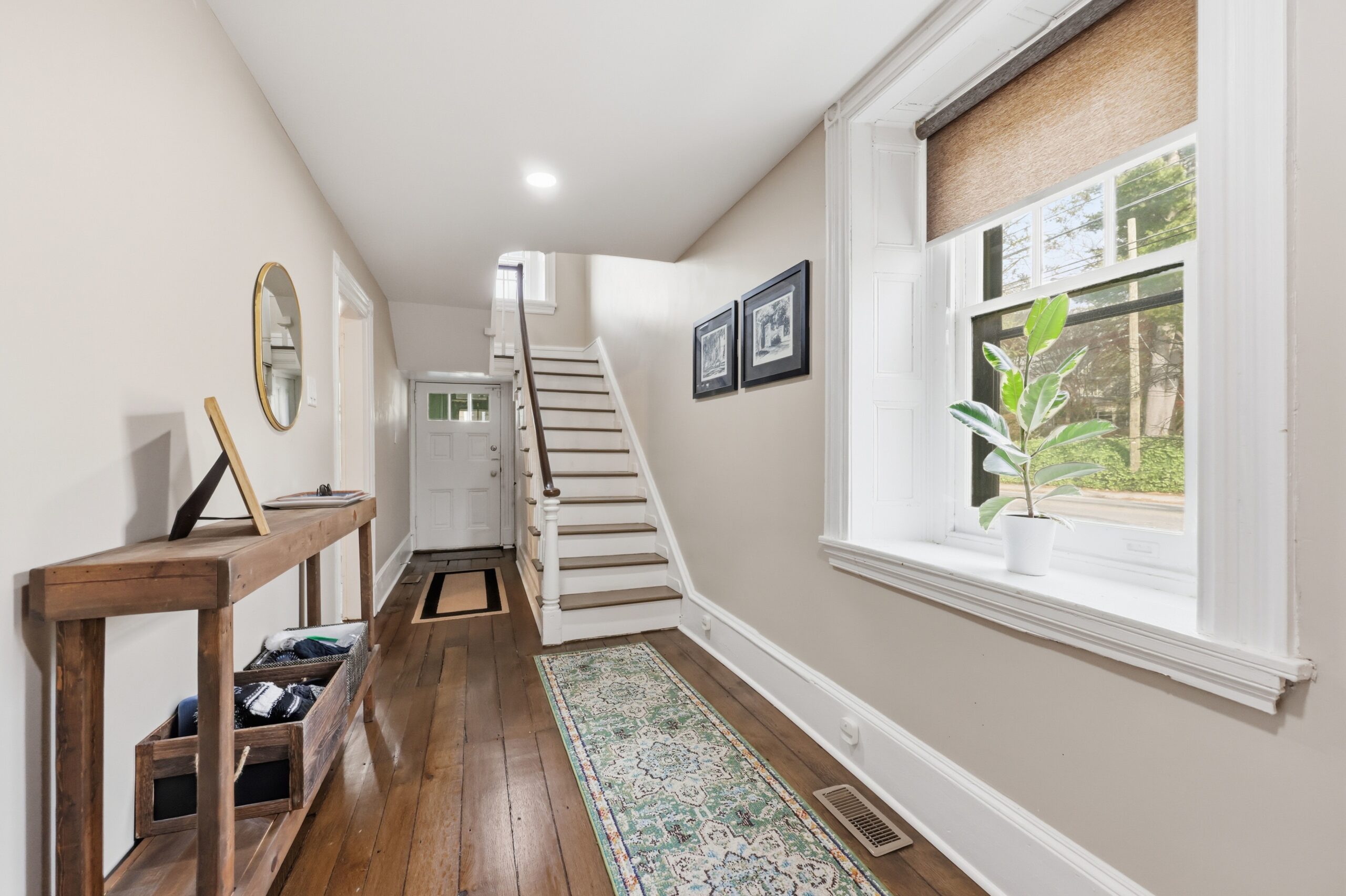
Front hall
The home has its original hardwood floors and a two-zone thermostat system with central air and forced heat.
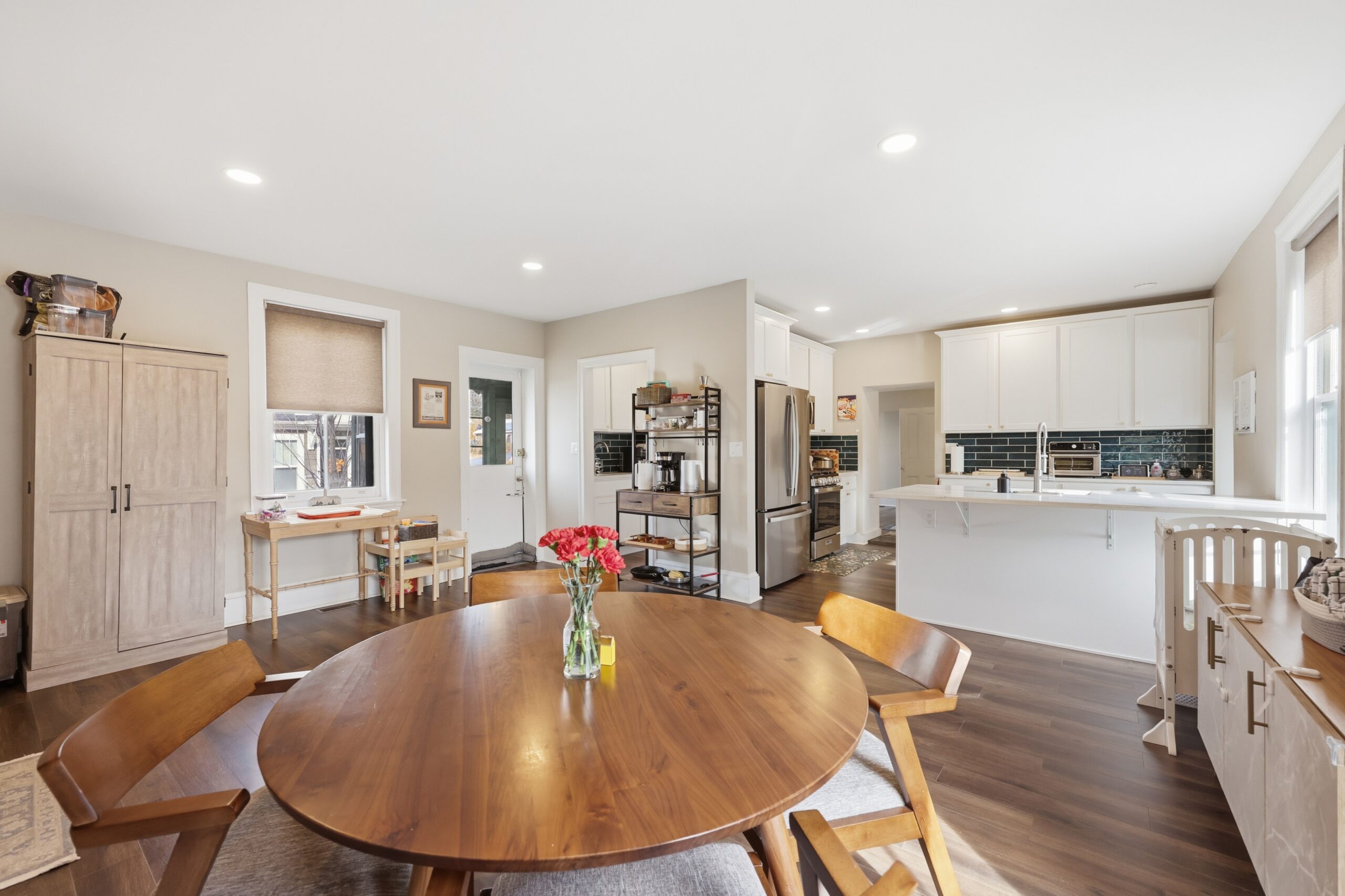
The newly renovated kitchen has quartz countertops, stainless steel appliances, gas cooking, a separate coffee bar and pantry area, and an adjacent sunroom.
The formal dining room has built-in shelves and a fireplace.
The kitchen, which includes a dining area.
The primary bedroom and another bedroom are on the second floor, along with a laundry room.
The third floor has three additional bedrooms — one of which serves as an office — two full bathrooms, and a full-sized cedar closet.
The formal dining room has built-in shelves.
Updates by the current owners include partial roof replacement, resurfacing and staining the hardwood floors, new flooring in the kitchen, exterior stone repointing, custom window treatments, and a new sewer line.
The house is in the Rose Tree Media School District.
It is listed by Amanda Terranova and Adam Baldwin of Compass Realty for $785,000.
As Train 9710 pulled out of the Trenton Transit Center at 7:25 a.m. Monday, something looked out of place.
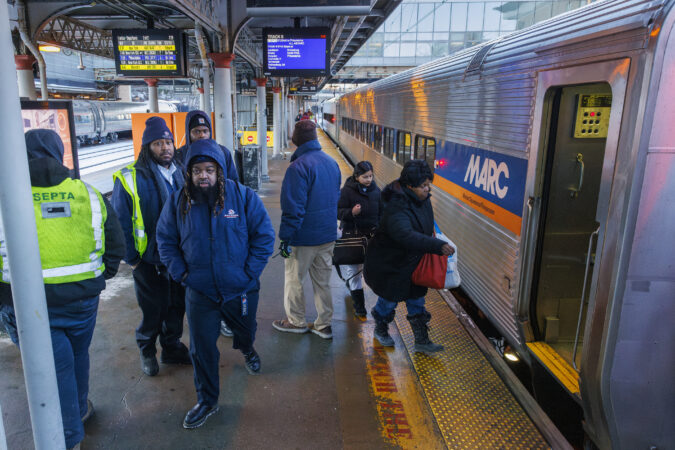
Five passenger coaches in the Philadelphia-bound Regional Rail train bore foreign “MARC” logos and orange-and-blue markings, all pulled by a properly labeled SEPTA electric locomotive.
The substitute cars initially will be running on the Trenton and West Trenton lines, where riders for months have endured packed trains due to a shortage of available 50-year-old Silverliner IVs.
The transit agency is paying $2.6 million to lease the new coaches for a year.
SEPTA’s records show it canceled at least 2,544 Regional Rail trips in the last three months of 2025. Delays and skipped stops also have plagued commuters for months.
SEPTA is using its ACS-64 electric locomotives, which it bought in 2019, to pull the MARC coaches and its own fleet of 45 coaches.
Silverliner cars do double duty; they carry passengers and have motors that provide their own locomotion through electricity drawn from overhead wires.
SEPTA said in a statement that the schedules will add trips on the Wilmington, Trenton, and Chestnut Hill East lines and increase the frequency of service from Wayne Junction directly to the Philadelphia International Airport on the Airport line.
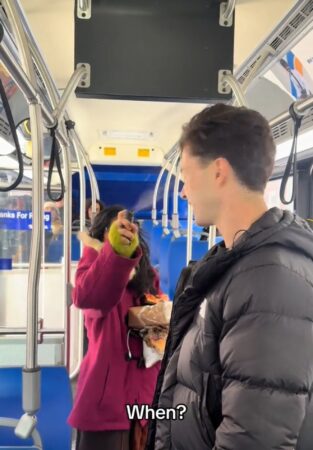
Video of the Jan. 19 incident between 22-year-old Paulina Reyes and 22-year-old Francis Scales quickly went viral on social media, garnering millions of views and spurring reactions from right-leaning influencers and Elon Musk.
During the confrontation, Reyes — whose internship with WHYY had ended before the incident — accused Scales of being a “fascist” and a “racist” for posting content online she viewed as insulting to Muslims and people of color.
Attorney General Dave Sunday, in announcing Thursday that his office’s mass transit prosecutor would oversee the case, said “violence will not be tolerated as a means to conduct political debate, protest, or exhibit differences.
“This type of violence is senseless, as we have an individual facing criminal charges over political disagreement,” the attorney general said in a statement.
In addition to simple assault, Reyes is charged with possessing an instrument of a crime, a misdemeanor. She also faces charges of harassment and disorderly conduct, which are summary offenses.
Reyes was arraigned Thursday morning and released without having to to post bail.
The mass transit prosecutor for Philadelphia, Michael Untermeyer, worked with SEPTA police to bringthe charges, according to Sunday.
It has drawn criticism from District Attorney Larry Krasner, who last year challenged the law that created the post, saying it was unconstitutional, unfairly singled out Philadelphia, and stripped his office of authority.
A spokesperson for Krasner did not immediately return a request for comment on the special prosecutor’s decision.
Footage of the South Philadelphia incident ricocheted across conservative media, and some influencers had accused Reyes of being an “Antifa agitator” and called for her arrest. Musk’s comments on X, suggesting Reyes had “violence issues,” generated hundreds of thousands of views alone.
Reyes told The Inquirer in an earlier interview that she had been defending herself against Scales, who was filming her,and that resorting to pepper spray was “not something I wanted to do.”
She said she has since received death and rape threats for her role in the confrontation. She did not return a request for comment Thursday.
Reyes and Scales knew each other from attending the Community College of Philadelphia, where Reyes is still a student.
Videos on Scales’ social media page, Surge Philly, show the commentator interviewing attendees at protests, asking them questions about charged topics such as immigration enforcement. He has also been a vocal critic of Krasner.
Scales said Reyes’ pepper spray got in his face and eyes, and Sunday, the attorney general, said Reyes also punched the man. A friend who was with Scales filmed the incident. Scales, too, filmed Reyes, saying he did so for his own safety.
Scales said in a statement that he was grateful for the attorney general’s decision to bring charges, and that he hoped that would deter others from similar actions.
“No one has the right to physically attack another person because of different opinions,” Scales said.
Conditions were rough when staff and students arrived at Penrose Elementary in Southwest Philadelphia — some paths they needed to access to get inside the school were untouched by shovels or plows.
Some buses could not open their doors to let students out at their usual spot because snow banks were so high, according to multiple people who work at the school and teachers union officials. A ramp that students with disabilities use to get into the school was blocked.
And the heat was on the fritz for part of the day as outside temperatures were barely in the double digits.
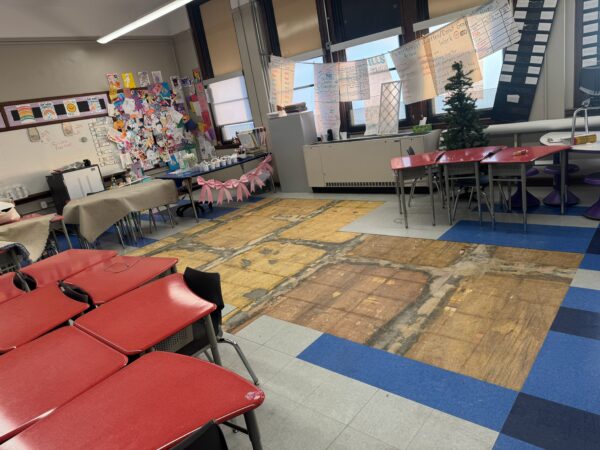
“It’s about 45 degrees inside this classroom,” one Penrose staffer said Thursday morning. The staffer was not authorized to speak to the media and asked not to be identified. “We’re all in jackets and hats.”
After Monday’s snow day and virtual learning Tuesday and Wednesday, Philadelphia schools reopened Thursday, but for many students, it was anything but an inviting return. The combination of accumulated snow, days of subfreezing temperatures, and a clutch of old buildings — many of which have maintenance issues — made in-person learning challenging across the district.
The rocky return came just hours before a planned rally to protest the district’s proposed $2.8 billion school facilities master plan, which is necessary, officials say, because of poor building conditions and other disparities.
Around some schools, crosswalks were covered by giant piles of snow, forcing children to walk in streets. Elsewhere, there was no place for staff to park.
At Vare-Washington Elementary, in South Philadelphia, pipes burst, rendering six classrooms, the cafeteria, the gym, and the entire basement unusable, according to the Philadelphia Federation of Teachers. There was a strong chemical odor throughout the building.
At Mitchell, another Southwest Philadelphia elementary, “it’s a mess,” said a staffer who asked not to be identified for fear of retribution.
A pipe broke at the school, and Mitchell had no running water for most of the day, with just one brief window where students could use the bathroom. And Mitchell’s student lunches were never delivered, so kids were fed cereal for lunch.
“A lot of our kids rely on those lunches to sustain them throughout the day,” the staffer said.
In addition, Mitchell’s back doors and fire tower exits were blocked by snow, so if there had been a fire or emergency, the only available exits would have been the front doors.
Taylor, also in North Philadelphia, also had burst pipes, with four rooms unusable and most of the school cold. School officials asked for permission to hold classes virtually Friday, but had received no response as of Thursday afternoon.
The Philadelphia Federation of Teachers has called on the district to return to remote learning on Friday in light of “treacherous commutes and dangerous building conditions,” Arthur Steinberg, PFT president, said in a statement issued Thursday afternoon.
Steinberg said in an interview that his office was inundated with reports of heating issues or a lack of snow removal or other problems at schools including School of the Future in Parkside; Farrell, Swenson, Mayfair, and Fox Chase in the Northeast; and others.
“The District must also show respect to students, families, and our members by rectifying the broken heaters, burst pipes, icy sidewalks, and piles of snow in parking lots as soon as possible, so that students and staff can safely resume in-person instruction on Monday,” he said in the statement.
Monique Braxton, a district spokesperson, said “the safety and well-being of our students, staff, and families remains our top priority.”
Staff worked long hours inspecting boilers and buildings, restarting heating systems, clearing snow and ice, and more, Braxton said.
“Across the district, teams are responding in real time to heating concerns, snow and ice conditions, and other weather-related issues as they arise. When conditions do not meet District standards, we work closely with school leaders to take appropriate action and communicate directly with our families,” she said in a statement. “We will continue to closely monitor building conditions throughout this bitter cold period and make adjustments as needed, while temperatures remain below freezing.”
Both Thursday and Friday had long been scheduled as half days for students, with parent-teacher conferences planned. Those would be held virtually.
John Bynum, a former building engineer who is now an official with 32BJ SEIU Local 1201, the union representing 2,000 Philadelphia school building engineers, maintenance workers, and bus drivers, said the going was rough for many schools in terms of building condition.
“Most of these buildings are operating with the original boilers,” Bynum said. “We know with antiquated equipment, there’s going to be problems.”
In some cases, snowblowers that school staff were using to attempt to clear parking lots and sidewalks failed, Bynum said.
And like other school staff, his members often coped with trouble getting to work themselves, he said.
“There were challenges regarding SEPTA not running at a full schedule and the anxiety of getting to work without a robust transportation system,” Bynum said. “Street conditions weren’t the greatest. However, they made the best of it, and they showed up.”
Conditions like Thursday’s, Bynum said, highlight why the district needs more resources to address its buildings — and students’ learning conditions.
A 19-year-old man was arrested and will be charged with homicide in the fatal shooting of another man in Southwest Philadelphia on Wednesday night, according to police.
The shooting occurred at 66th Street and Dicks Avenue just after 10 p.m.
The suspect, whom police did not immediately identify, had just stolen a bicycle from a SEPTA bus at a nearby intersection, police said, when he encountered the man he later shot, also a 19-year-old whom police did not identify.
Police responded to the scene to find the victim unresponsive with a gunshot wound to the throat. He was taken to Penn Presbyterian Medical Center and pronounced dead around 10:20 p.m.
The shooter fled after robbing a second person of an electric bicycle, police said.
Investigators tracked the shooter to 84th Street and Bartram Avenue, where they took him into custody and recovered a firearm, police said.
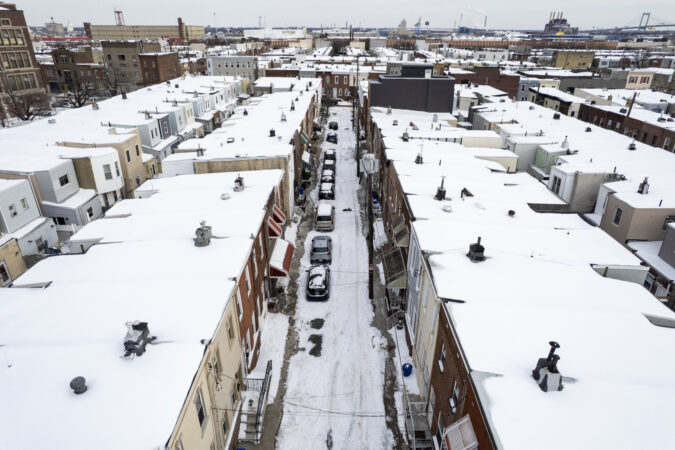
With more than 60 hours since the last bit of snow descended upon Philadelphia, the widespread complaints about the conditions of secondary and tertiary streets have reached a fever pitch.
The Philadelphia Streets Department has tried to quell the public’s concerns with daily videos of excavators diligently filling dumpsters with snow. Yet evidence of icy streets and snow banks blocking lanes dominate social media, with city data showing the street conditions vary block by block.
Between 3 p.m. Tuesday and 3 p.m. Wednesday, the city’s GPS data show, about 30% of city streets had been visited by plows. Some areas, like Center City and South Philadelphia west of Broad Street, saw most numbered streets and cross streets hit by plows during that time. Meanwhile, South Philly and Center City neighborhoods east of Broad Street saw little to no reported activity.
The same was true for large swaths of North and West Philadelphia. And neighborhoods like Overbrook, Wynnefield, and Nicetown, which have seen the fewest reported visits from city plow trucks since the storm began, saw only a handful of streets plowed between Tuesday and Wednesday afternoon, according to city data.
On the neighborhood line of Grays Ferry and Devil’s Pocket, Dani Hildebrand was one resident who felt forgotten as the streets around him were plowed and garbage picked up. Hildebrand’s block was supposed to have trash collection come through Tuesday with the one-daydelay announced by the city. But on Wednesday, bags of garbage lined his block.
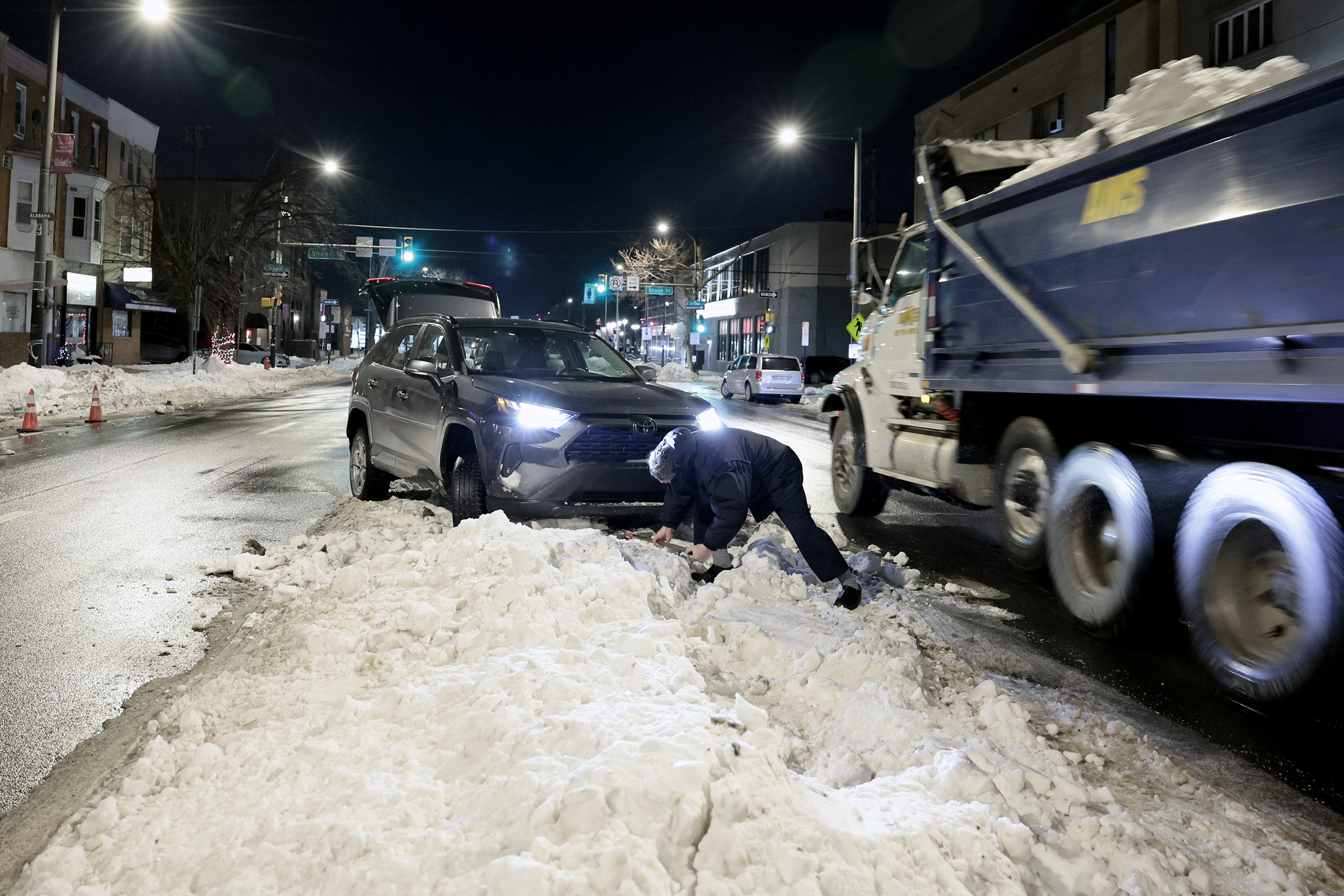
An unidentified man shovels snow from underneath his car after it became hung up when he was trying to park in the middle of South Broad Street in Philadelphia in the early morning hours of Wednesday, Jan. 28, 2026. Dump trucks filled with snow from the city’s snow removal operations were zooming by as he worked to get his car free.
The 41-year-old father of three said his school-age children yearn to leave the house, even if for an errand, but it’s not in the cards.
“Between piles of snow, trash, and dog pee and poop, it’s not ideal,” he said. “We’ve been stuck in since Sunday, and while I’m close to a market, it’s not safe to walk there with my three kids and I can’t get my car out.”
The city, for its part, has said the snow clearing would take as long as it needs to and the work would continue until all roads are dug out. Residents should expect trash-collection delays as crews navigate the snow and ice. At the same time, officials have consistently asked for patience, noting that the frigid temperatures were not aiding snow-removal efforts.
They have pointed to the 14 teams with more than 200 vehicles and excavators that are trying to move the snow and ice into storage facilities using dumpsters. Future Track trainees with the Philadelphia Streets Department have also taken up shovels to help clear crosswalks in the city.
But, the city notes, this is time-consuming work.
Wanted: Private plowers
Chris DiPiazza, owner of the Passyunk Square bakery Mighty Bread, could not afford to wait for city plows and paid for a private service to clear his street Tuesday afternoon.
After the storm, the bakery was unable to make or receive deliveries because the city had not plowed Gerritt Street, the narrow road it’s on. Adding to frustrations, DiPiazza said, snowplows that had come through the adjacent 12th and 13th Streets had left giant snow piles on both ends of the block.
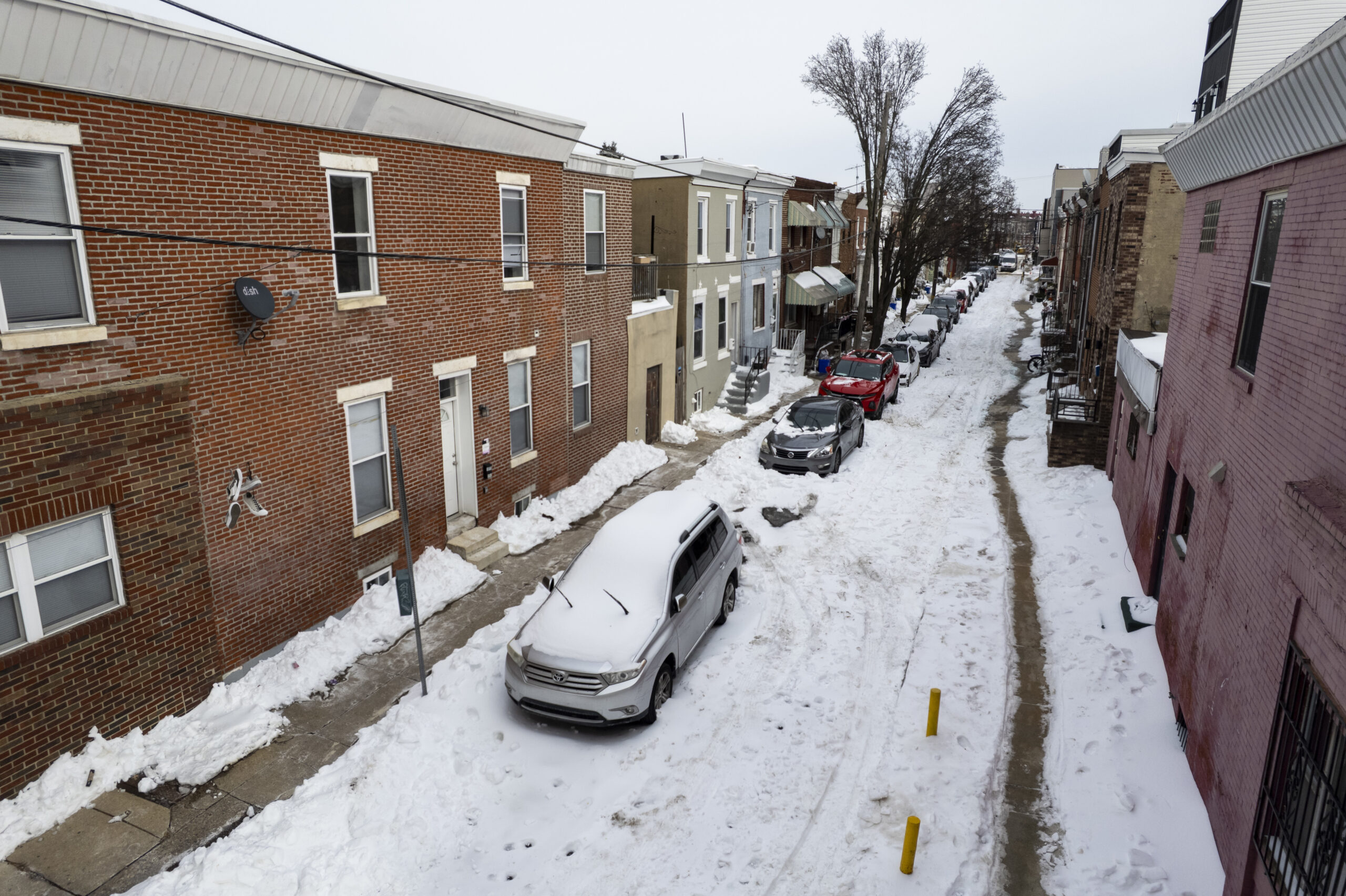
The 700 block of Hoffman is still covered in snow on Wednesday, Jan. 28, 2026 in South Philadelphia.
A 311 operator said it could take upward of three days for plowing to occur, DiPiazza said.
That news was especially frustrating when residents are expected to do their part by shoveling sidewalks in front of their homes within six hours of snowfall stopping, but the city is not fulfilling its own end of that promise, DiPiazza said.
“The city’s responsibility is to make the streets safe for people to drive, and they didn’t do that,” he said.
SEPTA vs. ice
For SEPTA’s size and reach, the organization is not so different from the average Philadelphian living without a plowed street.
The snow-covered roads were especially difficult for bus routes through secondary and tertiary streets after the storm, SEPTA spokesperson John Golden said.
“Those streets are hard to navigate on a good day,” he said.
The lagging plow service made SEPTA pause service for many bus routes.
“Some of our buses just aren’t able to navigate the streets because of lack of plowing,” Golden said.
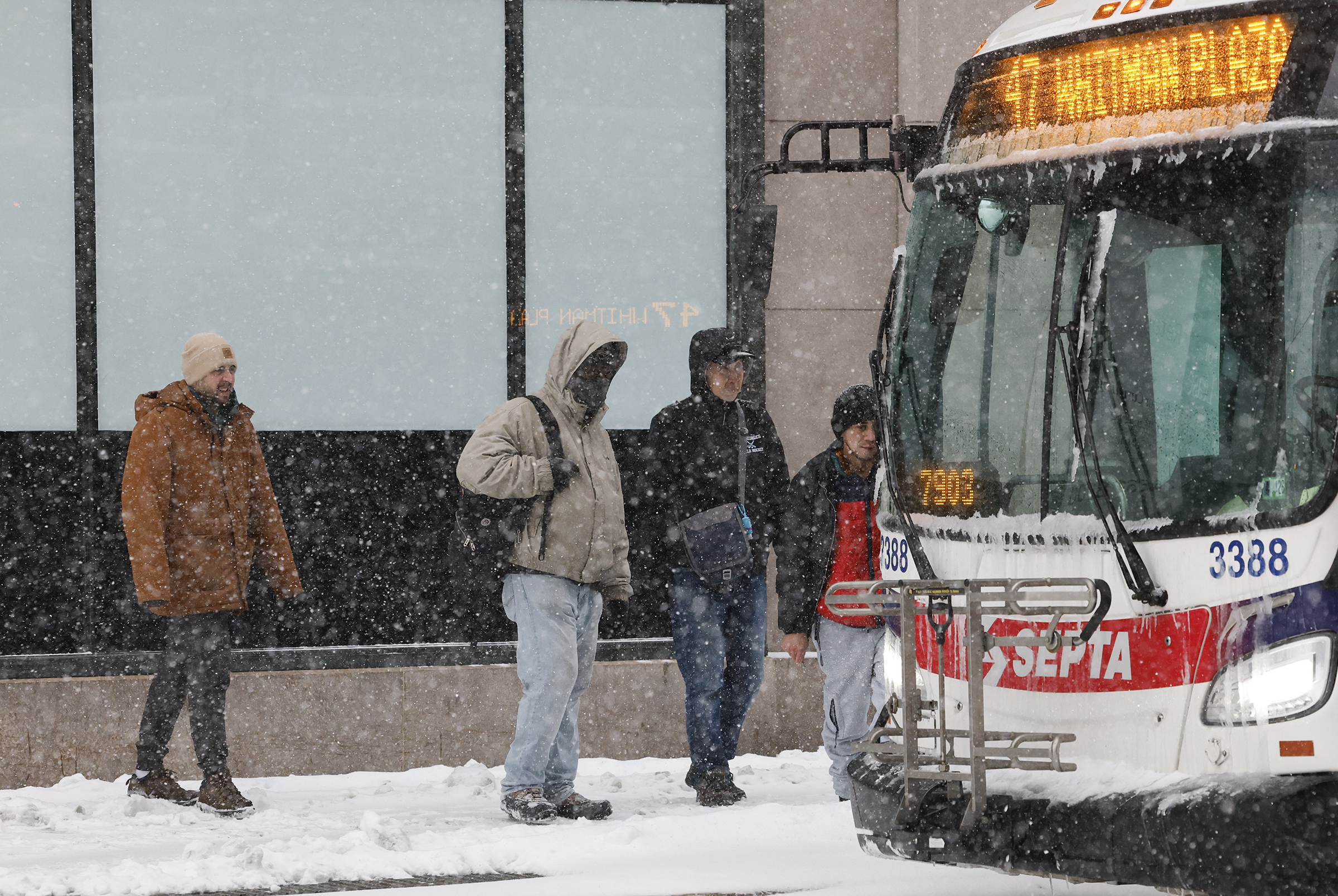
SEPTA riders board the 47 bus at 8th and Market Streets with the snow falling on Sunday, January 25, 2026.
But service had returned to all but a handful of routes by Wednesday afternoon. The weekend storm was not particularly onerous for SEPTA compared with other large storms in years past, Golden said,but he noted the frigid temperatures in the days following have made things difficult. Ice is not melting as quickly as it usually does, leaving the roads treacherous.
Golden said that while SEPTA officials have been in frequent contact with the streets department about problem spots, they don’t have any special recourse besides waiting for the city to clear the streets.
How does 2026 compare with 2016?
When the city was smacked with 22.5 inches of snow in January 2016, it was the fourth-largest snowfall in Philly history, and newly sworn-in Mayor Jim Kenney’s first major test in office.
At the time, many side street residents issued the same complaints heard with this most recent storm — they were the last to be dug out, and entire blocks were locked in.
But by the fourth day of storm cleanup, a Kenney spokesperson claimed 92% of all residential streets “were plowed and passable” and the administration was taking in kudos for what many — though not all — said was a job well done.
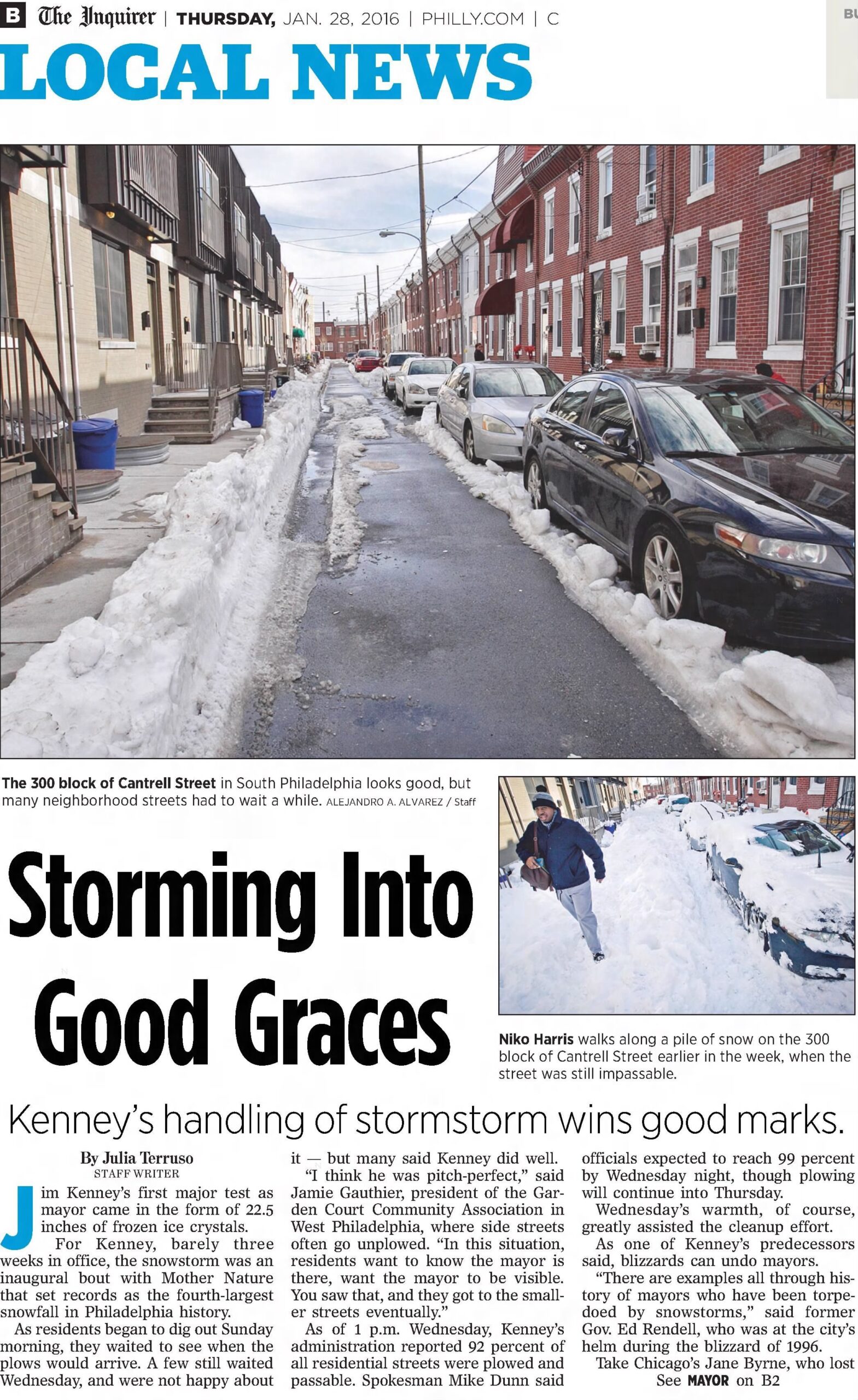
The front page of The Philadelphia Inquirer’s B section in January 2016, following a major snowstorm that was similar to the January 2026 storm. The article reported some complaints of snow plow delays, but residents were largely complimentary of then new Mayor Jim Kenney’s handling of the storm.
Though 9.3 inches fell this time around, city officials have said the conditions were very different. The temperature drop has been the largest hurdle so far, providing no help in melting the ice. The city still urges patience and says teams are working nonstop.
For parents whose children took part in virtual learning Wednesday and residents who were sick of parking wars and icy crosswalks with another potential snowfall on the way, patience was almost gone.
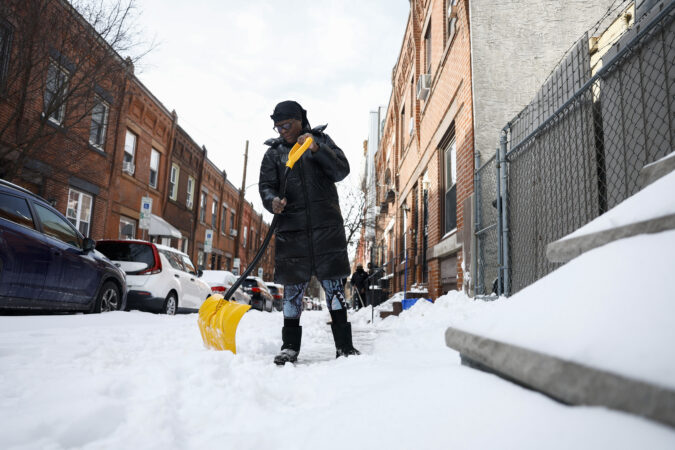
Residents in North and West Philly shared frustrations on social media of parking shortages because mounds of ice left people nowhere to go; some were even parking at an angle in parallel spots, to the chagrin of others. Bus stops were piles of dirty, frozen ice, and crosswalks remained icy.
For Hildebrand, it was all very discouraging.
“A plan could have been made and implemented, since the city knew about this a week before it happened, but it truly seems like bare minimum effort,” he said.
The storm that hit Philadelphia Sunday brought with it 9.3 inches of snow for the city proper — the most we’ve seen at one time in a decade. And while that really sells the wintery vibe — especially when combined with the bitter cold we’re experiencing — cleanup efforts are ongoing.
Highways and public transportation in the region are largely restored, but some city streets remain packed with snow and ice. City school buildings Wednesday were in their third day of snow-related closures. And we might even be looking at more snow to come.
Here is what you need to know:
Roads (mostly) cleared
PennDot’s vehicle and speed restrictions have been lifted on all interstates and major highways across the Philadelphia region, as were those on state roads in New Jersey. But street plowing in the city remains a work in progress.
Residents from around the city told The Inquirer many side streets and some secondary streets remained coated in several inches of snow and ice, making traveling on them difficult or impossible. Data from PlowPHL, a service that tracks plow movement, indicated Tuesday that roughly a quarter of city streets had not received any snow treatment since the storm.
Parking enforcement resumes
The Philadelphia Parking Authority reopened its offices Wednesday, and began on-street parking enforcement for safety violations including parking in bus zones and in front of fire hydrants. The 24-hour $5 emergency garage parking rate was also rescinded, with PPA garages returning to their usual rates, the authority said.
Public transit resuming
SEPTA on Monday restored all of its subway, trolley, and suburban trolley services, and as of Wednesday was running Regional Rail lines on their normal weekday schedules. Bus service, SEPTA notes online, is largely operational, though several routes remain suspended due to road conditions.
Among the suspended buses Wednesday were routes 3, 5, 40, 41, and 115, according to the agency’s alerts page. The suspended routes, SEPTA indicated, would be restored “once it is safe to do so.”
PATCO, meanwhile, returned to its normal weekday schedule Tuesday.
Airport operational
Philadelphia International Airport experienced hundreds of flight cancellations and delays due to the storm, but remained open despite the inclement weather, Parker said at a news conference this week.
As of early Wednesday afternoon, the airport had experienced about 87 delays and 57 cancellations, according to flight data tracking website FlightAware. On Monday, the day after the storm, there were 326 delays and 290 cancelations, followed by 255 delays and 156 cancelations Tuesday, FlightAware indicated.
Archdiocesan high schools and city parochial schools will also go back to in-person classes Thursday.
Students and staff who arrive late to class due to weather-related issued would not have their lateness counted against them, Superintendent Tony B. Watlington Sr. said.
This week’s disruption to the usual school schedule had begun taking its toll on some parents. Outside the city, many suburban districts had already reopened by Wednesday.
More snow possible
Post-storm, the Philadelphia region faces frigid temperatures that are expected to remain well below freezing until at least Feb. 4. Highs were expected to top out around the teens, and lows consistently in the single digits — along with wind chills reaching down into the negatives.
And then, of course, there is the potential for more snow this weekend.
Forecasters said Wednesday that it remained unclear exactly what we should expect, but a major coastal storm is likely to appear during the weekend. Early computer models indicated that the system would remain far offshore enough to spare the Philadelphia area from major snowfall, but accumulation predictions remain in flux.
On the second day her kindergartener was off from his Philadelphia public school because of snow, Karen Robinson shut herself away in her Fairmount home, hoping to take a 15-minute meeting for an important work project.
Her husband had put up a baby gate to signal to 5-year-old Sam that mom was briefly off limits.
Naturally, “my son crawled under the baby gate to come find me,” said Robinson, whose son attends Bache-Martin Elementary. “If I’m working, he wants to be right next to me.”
Superintendent Tony B. Watlington Sr. gave beleaguered parents a reprieve Wednesday afternoon, saying schools would re-open for in-person learning Thursday. But the week was tough for many to navigate.
For parents who rely on hourly work, or jobs that have no remote flexibility, the inclement weather-forced school changes have meant either foregoing pay or figuring out childcare arrangements that are often costly, complicated, or both.
North Philadelphia mom Asjha Simmons’ son attends a charter school that’s been closed — no virtual learning — since Monday.
Simmons runs her own business, so is able to be flexible with her schedule and stay home with her son. But she’s getting antsy.
“I feel forced to be in the house and it’s killing me,” Simmons said. “I would rather be in the gym than in the house. And I don’t even go to the gym.”
Simmons’ son, who’s 12, relishes the down time since “he has every screen known to man on,” she said. She keeps the snacks coming, and it’s all good. (He was less than thrilled when Simmons made him shovel snow, she said.)
Leigh Goldenberg said she was having uncomfortable flashbacks to the pandemic, when her daughter completed virtual kindergarten.
“For me, it’s an emotional regression to that terrible time,” said Goldenberg. “And I feel for the people that didn’t build up that muscle before.”
Virtual school with a fifth grader is much easier than virtual school with a kindergartener, said Goldenberg, whose daughter attends Kirkbride Elementary in South Philadelphia. Her daughter spent 30 minutes on Tuesday completing schoolwork, and managed to keep herself busy socializing with friends online and outside, a short walk away in their neighborhood.
Goldenberg is trying to keep things in perspective — this is not forever, this is not the pandemic.
But, she’s still frustrated.
“All the suburban schools around us went back already, but here in the city, we’re stuck with a giant pile of snow at the end of our street, and it feels pretty unfair,” she said.
Coral Edwards was prepared for Monday’s snow day, but when the district announced a virtual day Tuesday, she began to panic.
“I was like, oh my gosh, there’s a real possibility the entire rest of the week will be virtual,” said Edwards, who lives in Graduate Hospital and has a seven-year-old son who attends Nebinger Elementary and a four-year-old daughter in a private prekindergarten program.
Her daughter’s pre-K is reopened Wednesday with a two-hour delay. And that means dropoff time came when Edwards would haveneeded to be helping her first grader with virtual learning. So instead, she paid to send both children to Kids on 12th, a Center City school open the full day, so she can get her work done as a marketing consultant and leadership coach.
The scramble has also summoned up emotions and frustrations she last experienced during the pandemic, when her son was 1 and his daycare shut down. While she acknowledged that she is “incredibly privileged,” she said the fact thatparents like herself are in such a bind speaks to a larger systemicproblem with childcare, Edwards said.
“There’s literally no one to help us,” she said. “There’s just no systemic support whatsoever.”
Streets are being plowed, SEPTA is running, and trash is getting picked up, “but there’s nothing in press conferences about how we’re supporting parents and students,” Edwards said. “The schools are like, ‘we have this virtual learning environment’ — are we just supposed to pull another parent out of our butts?” she said.
Edwards’ husband works in-person as a research physician running a lab, and the burden of childcare logistics falls to her.
“There’s a lot of rhetoric about supporting parents, and raising women up, … but when push comes to shove, something about our kids’ childcare is changed or tightened, it falls on those people,” she said.
Hannah Sassaman, a West Philadelphia parent of a district fourth grader and ninth grader, is making it through.
“We had another fourth grader live here for 24 hours randomly. I think they went to school? My ninth grader seems to be going to school. We’re just lucky we don’t have little kids,” said Sassaman.
“The questions that I have knowing that the storm was coming for over a week,” Sassaman said, “is what could the administration have done to help resource our sanitation workers and the rest of our incredible city servants to really focus on what it would take to get our kids back in schools, our teachers and the other staff back in their buildings safety to support not just the economy, but also all of the important supports and services kids access at schools every day?”
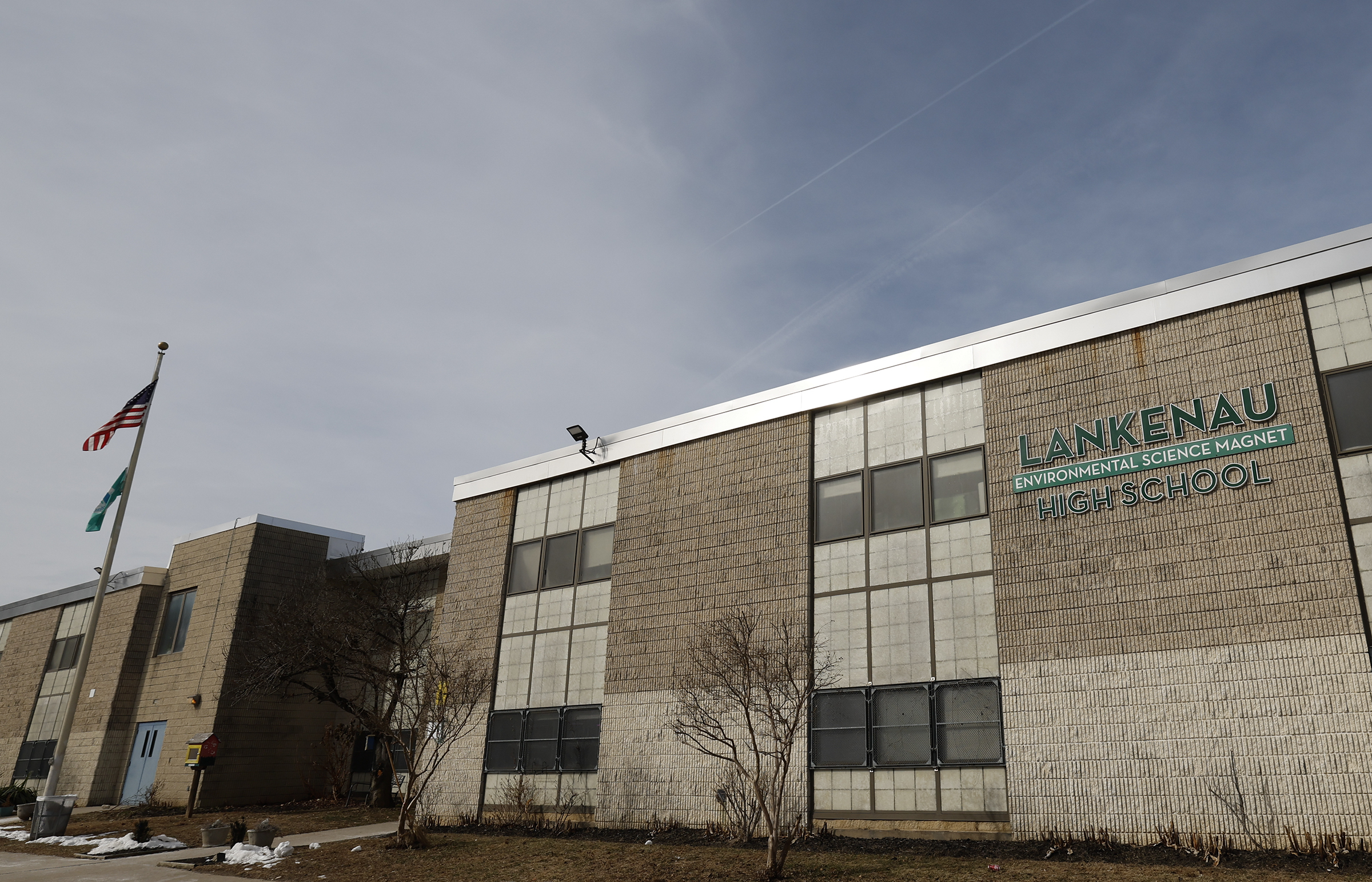
It is the city’s environmental sciences magnet school and the state’s only three-year agriculture, food, and natural resources career and technical education program. It’s set amid 400 acres of woods, with neighbors including a vast environmental center and farm that are active partners with the school. Lankenau’s students have access to dual enrollment and an impressive array of internships.
The Lankenau community is already gearing up for a fight ahead of a school board vote on the proposal, expected this winter. Community members say the school must be saved because it is one of a kind, offering immersive education in agriculture and sciences and boasting a 100% graduation rate that’s rare in Philadelphia.
Shutting “the Lank” would be a disastrous move, said Jamir Lowe-Smith, a junior at the school. The district’s proposal would merge Lankenau into Roxborough High as an honors program, but you cannot replicate what his school has built anywhere else, Lowe-Smith said.
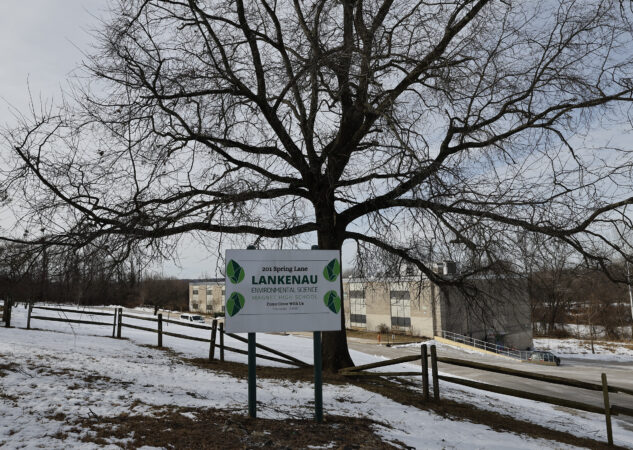
The Lankenau Environmental Science Magnet High School in Roxborough. The district’s proposal would merge Lankenau into Roxborough High as an honors program.
“Lankenau takes education to the next level,” said Lowe-Smith, president of the school’s chapter of Junior MANNRS — Minorities in Agriculture, Natural Resources, and Related Sciences — which preps students for jobs in the growing green sciences industry.
“The environment is beautiful, the woods are — that’s another classroom,“ Lowe-Smith said. ”Nature is like therapy for a lot of people — it changed my life.”
Being tucked into the woods allows for a Friday advisory bird-watching club at Lankenau and research in a stream that leads directly to the Schuylkill. It lends itself to tick drags — studies of tick species — pesticide classes that will allow students to graduate as certified pesticide applicators, and work with school beehives. Its students engage in innovative project-based learning every day.
Lankenau students all receive yellow school bus transportation because the campus is not close to any SEPTA routes — adding to the district’s expense to keep it open.
The school is small — its building, on Spring Lane in Upper Roxborough, is about half full, enrolling about 250 in a building that can accommodate 461. But the recommendations for closing need to be about more than numbers, said StateRep. Tarik Khan, a Democrat whose district includes that area.
“Respectfully, the recommendation to close Lankenau is one of those things that doesn’t make sense when you look at the full picture,” Khan said. “Right now, it’s a recommendation. Early on, it’s important just to say: This is the wrong decision. I will elevate my voice throughout this process, and I’m not alone.”
Monique Braxton, a district spokesperson, said the Lankenau recommendation “reflects the district’s commitment to reinvesting in neighborhood high schools as community anchors — a guiding theme of the Facilities Master Plan that received overwhelming support in the recent community survey. This approach expands access to high-quality academic programming and resources across neighborhoods, creating greater opportunity for more students and supporting stronger academic outcomes and postsecondary readiness.”
Firing on all cylinders
Lankenau, Khan said, is “firing on all cylinders. The school has so many opportunities for students, so many connections. To take this school out of its environment will break a lot of those connections, will break the cohesiveness.”
The school lacks a gym. But its students play flag football, hike in the woods, and practice archery. It has a 100% graduation rate, officials say, educating a student body that is primarily Black and brown, with 25% of students requiring special education services.
Jessica McAtamney, Lankenau’s principal for the last five years, stressed that the school is “doing urban agriculture in a very unique campus setting that is anchored in the space. Agriculture is Pennsylvania’s No. 1 industry. Lankenau is preparing kids to do that. This campus is what allows us to do that.”
Roxborough High School, by contrast, is in a dense, residential area. Its building, which can hold almost 2,000 students, is about three-quarters empty.
Like many in the Lankenau community, Erica Stefanovich — who teaches the only Intro to Geographic Information Systems high school course in the city, she believes — was blindsided by word that the school was earmarked for closure.
“They can say that our building condition is an issue, but how is our building a problem when we have air-conditioning, zero asbestos, and they put a brand-new roof on our school two years ago?” Stefanovich said.
In 2006, the district actually made plans to expand the Lankenau building, going so far as to contract with an architectural firm to make a model. But those plans went by the wayside as the school system hit rocky financial waters in the early 2010s.
No slight against Roxborough, Stefanovich said. It does have a park close by, but “we can’t do mussel experiments in that park. We can’t do our internships that our students love. How do we have beehives when there isn’t enough pollinator space around Roxborough High School to have beehives? Our seniors are out of the building 40% of the time; they are off doing things. If we move, we don’t have that.”
District changes yielded fewer incoming students
Lankenau used to educate more students.
Before the district changed its school selection process, in 2021, instituting a centralized lottery in the name of equity, the school had bigger incoming classes. It’s a magnet, meaning students have to have certain grades and test scores to qualify, but in the past, administrators had some leeway to let in students who were close to qualifying if they werea good fit.
And though district officials said changes to the admissions procedure were necessary to ensure that schools’ demographics mirrored the city’s, Lankenau did not have a diversity problem prior to the changes.
Lankenau had 106 ninth graders in 2020-21, before the lottery. It dipped to just 28 freshmen in 2023-24, but after a number of parents and administrators raised concerns about the process, some course corrections were made.
Its numbers are now rising again. Seventy-eight ninth graders entered this school year, and 107 students listed Lankenau as their top choice for the 2026-27 freshman class.
Even if the proposed school-closing changes go through, Wyntir Alford, a Lankenau 11th grader from West Oak Lane, will be able to graduate from the school as-is — the change is not planned to take effect until the 2027-28 school year.
But her family was clear: If the closing were happening next year, Alford would have had to transfer.
“My mom told me her first thought was, ‘There’s no way she’s going to Roxborough.’ She said, ‘The reason we put you in Lankenau is because of all the opportunities and all the nature around.’ I’m not surrounded by any nature at home. So to be able to go to a school like this is a big deal.”
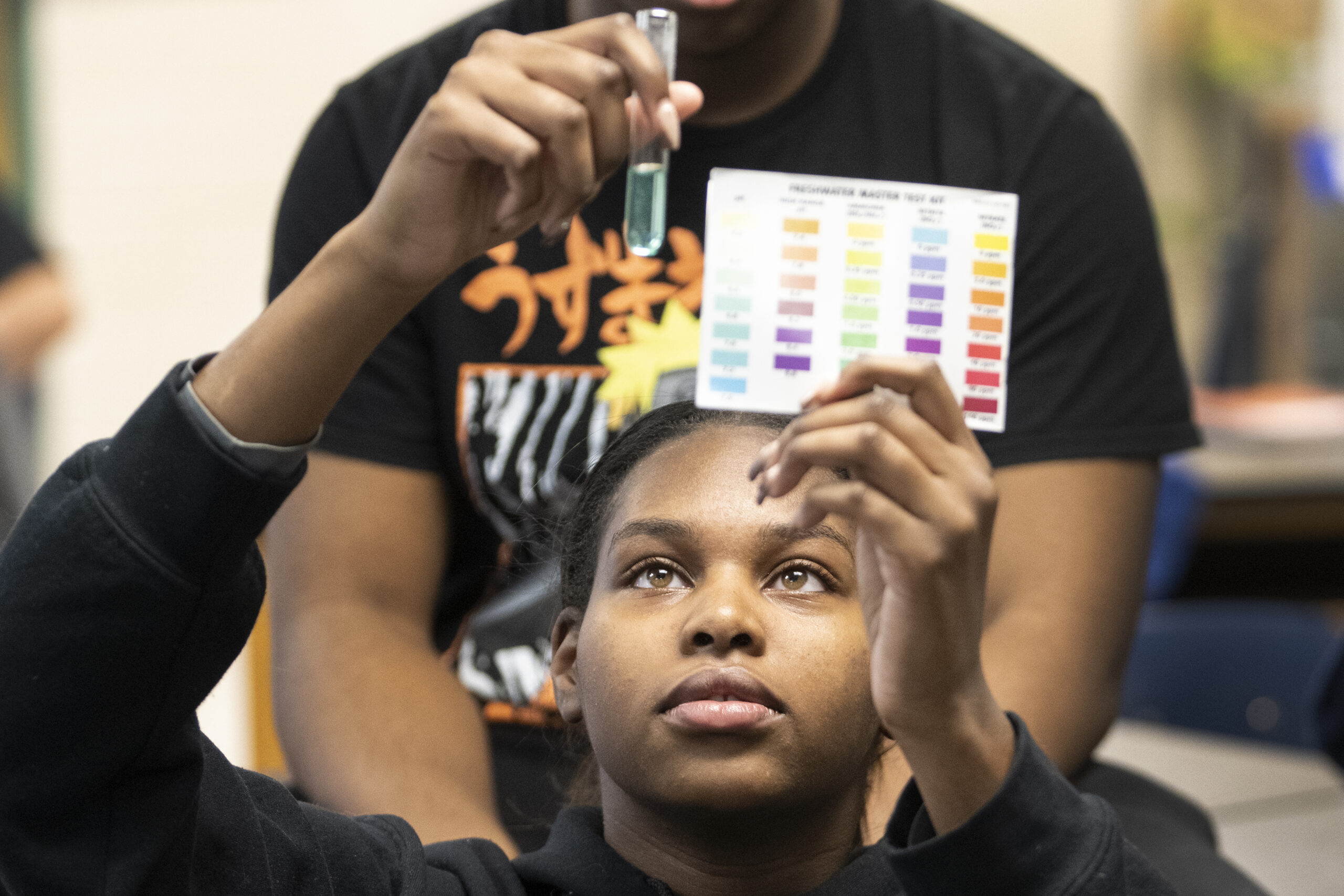
A student tests a water sample in a Lankenau High school science class in this 2023 file photo.
Juniper Sok Sarom, a current Lankenau ninth grader, is not sure whether she will transfer to Roxborough if the school board approves the closure recommendation. But she knows she’s happy at a school that gives her plenty of hands-on experience.
“Our campus — it’s a special learning environment, which you wouldn’t get at any other school, not even Central or Palumbo or SLA,” Sarom said, referring to Science Leadership Academy.
She and others are gearing up to fight the changes, they said.
Charde Earley, a Lankenau paraprofessional, dealt with her own sadness the day students found out about the proposed closure, working through tears. And then she marveled at how students pivoted to problem-solving, resolving to write letters and speak at meetings.
“My motto is, respectfully, ‘Hell, no, we won’t go,’” Earley said. “We’re secluded and we’re safe. You never know what hardship our kids are going through. Imagine what this is doing to our kids.”
Most people hear the phrase “juvenile probation” and think of second chances. They imagine a young person avoiding detention and getting the support they need to stay on track. It sounds compassionate, reasonable, and like progress. But for thousands of young people in Philadelphia and hundreds of thousands across the country, juvenile probation is not freedom; it’s a trap.
For many youths, probation is not an opportunity to grow, but feels like walking through life with a countdown clock. Every interaction carries risk. Every mistake, no matter how small, can be interpreted as defiance or as a violation of probation. Instead of stabilizing young people, probation often destabilizes them, pulling them deeper into systems that punish rather than support.
What is described as a “community-based alternative” becomes a constant reminder that freedom is conditional and fragile.
Juvenile probation places youth under a long list of conditions that most adults couldn’t realistically follow. There are weekly check-ins, strict curfews, school mandates, drug tests, random home visits, and the constant threat of detention if they mess up.
Missing an appointment, being late, skipping school during a crisis, or being around a family member who is also under supervision can all be labeled “technical violations.” These violations, while not new crimes, can send a young person straight to juvenile detention or state secure placement.
The public rarely sees this reality, but young people and their families do.
We both work at YEAH Philly (Youth Empowerment for Advancement Hangout), which has worked with more than 300 Philadelphia youth involved in the legal system, and we see the harm every single day.
Probation doesn’t work the way people think
A common narrative around juvenile probation is that it was designed to divert youth from incarceration and connect them to guidance and resources. The reality is different.
Instead of being a short-term intervention, probation has become a default response applied broadly, regardless of a young person’s actual risk or needs. What was meant to be rehabilitative has become expansive, punitive, and deeply entangled with punishment.
Across the country, more than 150,000 kids are on juvenile probation, many for minor or “status” offenses like skipping school or missing curfew, not violence. Black youth are disproportionately targeted, placed on probation more often, kept on longer, and violated more quickly.
In a large study of over 18,000 youth placed on probation for the first time, about 15% broke a probation rule without committing a new crime. Black youth, who made up just over half of the group, were written up sooner than white youth and were more likely to be violated at any point during supervision.
The system claims to be rehabilitative, but the numbers tell a different story. In many states, more young people are punished for technical violations than for new offenses.
Youth on probation often remember only a fraction of the rules they are expected to follow, yet remain under court supervision for months or years after any public safety benefit exists.
A Pew Charitable Trusts study found that in one state, after the first 10 months of probation supervision, there were more arrests for technical violations than for new offenses, and Black youth were more likely to be placed on probation rather than diverted to non-court services, even when offense severity was comparable.
This is what researchers describe as “net-widening,” where more youth are pulled into the system, more rules are imposed, more pipelines to jail and prison, and more opportunities for failure without improved outcomes.
What we see at YEAH Philly
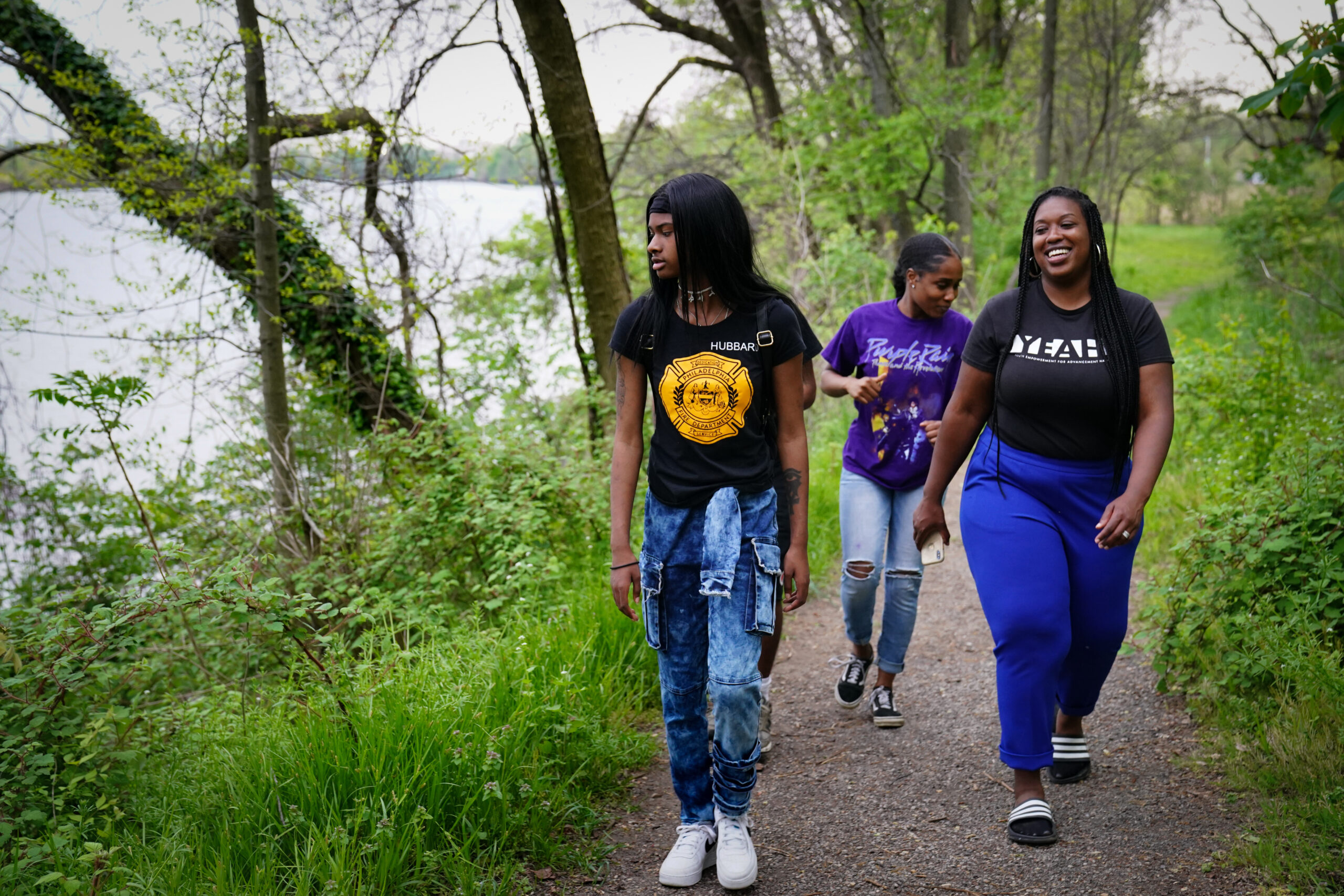
(From left) Tayanna Hubbard, Jasmine Brown, and Kendra Van de Water walk during a YEAH Philly nature walk at Bartram’s Garden in Philadelphia in April 2021.
Every week, young people come to us terrified of making a mistake. They are trying to navigate a system built on compliance while also surviving poverty, school instability, community violence, and unmet mental health needs.
We work with teenagers who miss appointments because SEPTA was delayed, or because they have no reliable way to travel across the city. We see youth violated for missing school when the real issue was a lack of clean clothes, food insecurity, or an unsafe home environment.
We support young people placed on probation not because they caused harm, but because they needed help; help that juvenile probation was never designed to provide.
These are not failures of individual responsibility; they are failures of a system that confuses surveillance with support and punishment with accountability. Juvenile probation wears the mask of care, but it operates through control and coercion.
Why probation can’t be ‘reformed’
Cities have tried for decades to tweak juvenile probation with fewer conditions, shorter terms, or trauma-informed training. While these reforms may reduce some harm, they do not change the core structure of probation itself.
Juvenile probation still polices adolescence instead of supporting it. It punishes normal teenage behavior, responds to trauma with surveillance, and relies on the constant threat of incarceration to enforce compliance.
A system built on control cannot be transformed into one rooted in care through policy tweaks alone. There must be a complete overhaul to create something better.
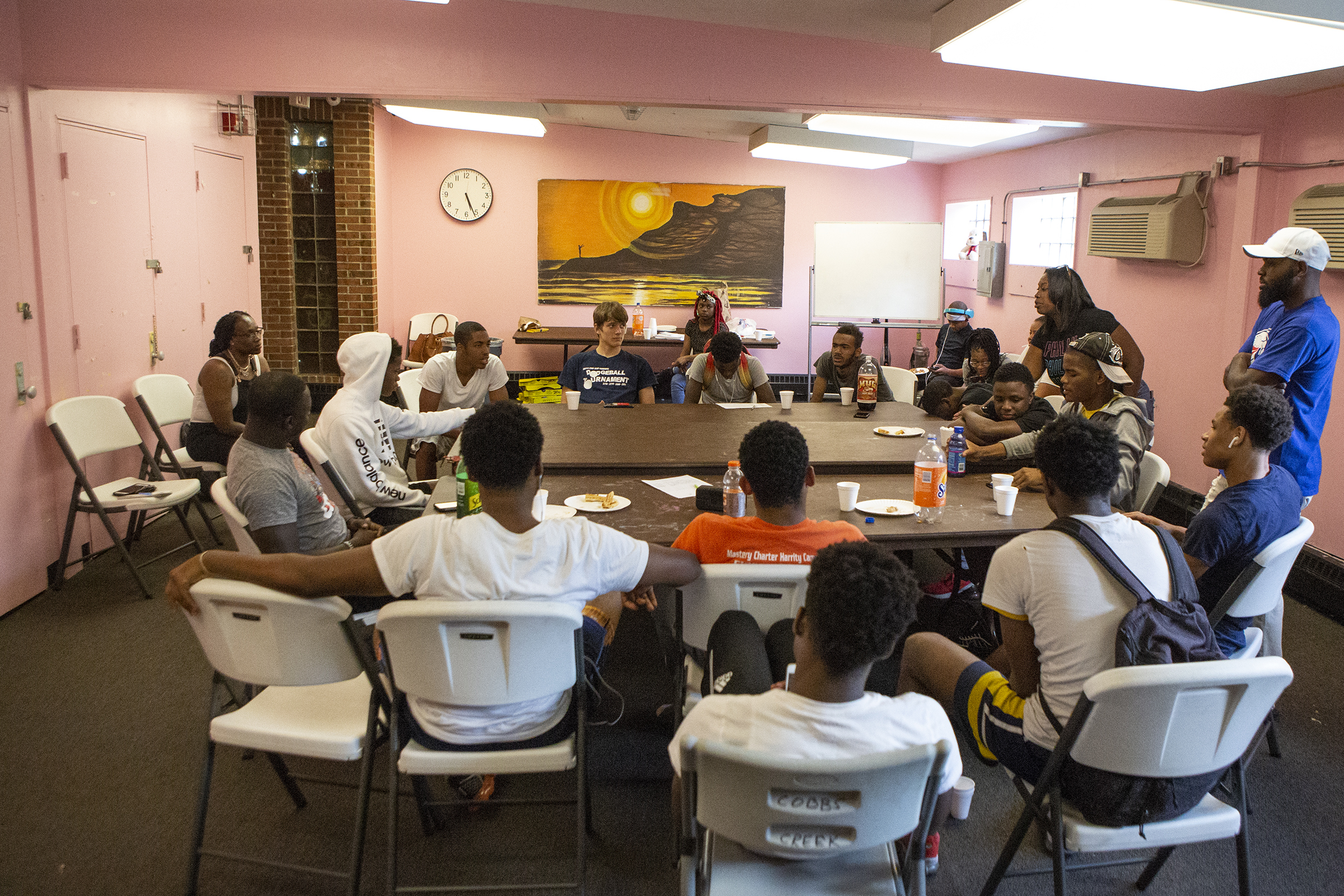
A group of teens and two police officers meet during the final session of a YEAH Philly pilot program at the Cobbs Creek Recreation Center in June 2019.
YEAH Philly’s approach through our Violent Crime Initiative and healing-centered youth support model shows what is possible when young people are surrounded by genuine care rather than constant monitoring.
When youth have trusted adults, access to transportation, meals, basic needs, job opportunities, therapy, mediation, and a safe place to go every day, they grow. They build accountability because they feel connected, not controlled.
Community-based models across the country show the same results, where healing and restorative approaches reduce reoffending more effectively than supervision ever has.
People hear “end juvenile probation” and fear it means“end safety.” But abolition does not mean abandoning young people. It means abandoning systems that have consistently failed them.
Abolition means replacing surveillance with support, punishment with opportunity, control with care, and isolation with belonging.
Crafting a new vision
In the coming months, YEAH Philly and the Gault Center, alongside youth, families, and researchers, will launch the Juvenile Probation Accountability Coalition.
The coalition will expose the harms of juvenile probation through youth-led research, hold systems accountable for the trauma they create, elevate community-based accountability models, and push for policies and models that move us beyond probation.
Our goal is a national blueprint for real public safety rooted in dignity and care.
Philadelphia has an opportunity to lead the nation in redefining accountability and safety for young people. We can build systems that help youth grow instead of continuing to invest in systems that wait for them to fail.
Ending juvenile probation is not a radical idea. It is an overdue commitment to young people’s futures.
It is time to move from supervision to support, and from punishment to possibility.
The Juvenile Probation Accountability Coalition is coming — and this is just the beginning.
Kendra Van de Water is the cofounder and co-CEO and Mona Baishya is the Violent Crime Initiative research director at YEAH Philly. For more information about the Juvenile Probation Accountability Coalition and the forthcoming work, please contact Van de Water (kvandewater@yeahphilly.org) or HyeJi Kim (hkim@defendyouthrights.org).