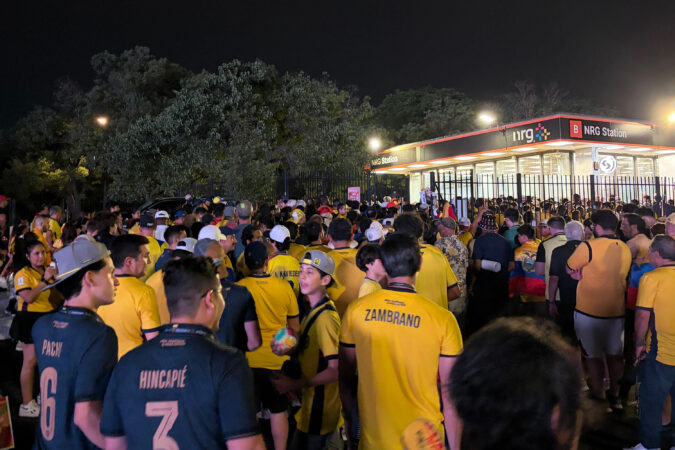
After Brazil beat Haiti in a World Cup match last month, 29,162 fans swarmed NRG Station to catch the subway.It was SEPTA’s second-highest reported crowd for a single stadium-complex event.
And the largest? The 31,087 people rode the B line after the Eagles won the NFC Championship in January 2025.
For three summer weeks, Philadelphia visitors leaned on transit — 155,333 passengers rode the subway also known as the Broad Street Line alone, SEPTA said.
From June 14 through July 4, the city hosted six World Cup matches, FIFA’s Fan Fest, and celebrations of the 250th anniversary of Independence Day.
“This was a unique opportunity for SEPTA — possibly one we will not get again for many years,“ spokesperson Andrew Busch said. ”We think there is a lot we can learn that will help improve special event service and everyday operations.”
Regional Rail also saw bumps in ridership, as did transit, primarily bus routes, serving the Fan Fest at Lemon Hill in Fairmount Park, SEPTA said. Bus routes 32 and 48 provided direct service, while Routes 7 and 49 had stops within walking distance of the festival entrance.
It helped that Brazil and Haiti’s June 19 game fell on the federal holiday of Juneteenth … and that sponsor Airbnb paid SEPTA to provide free rides home for people using the Broad Street Line on match days between halftime and the final whistle.
On July 4, when Paraguay and France met in an elimination round game and people were coming to Independence Day events, ridership on the overall system was up 15% compared to the previous year. Broad Street Line ridership was 62%; Regional Rail was up 48% and the lines serving FanFest were up 21%.
Transit agency analysts focused on post-match boardings on northbound trains at NRG Station because it was the most straightforward way to identify fans who attended the game and traveled on SEPTA, officials said.
Some riders headed to the stadium area were going to Stateside Live or checking out pregame festivities.
Customer service lessons learned, according to SEPTA:
Using megaphones to communicate with riders in crowded stations broke through the noise, helping people unfamiliar with SEPTA navigate.
Bringing a DJ to NRG Station soothed post-match crowds waiting for outbound trains. “More than a couple of dance parties broke out, and we think it helped keep the atmosphere festive,” Busch said.
SEPTA moved its start and end point for the B Line for the Sports Express trips from Fern Rock to Girard, easing crowds in Center City and shortening turnaround time.
Ridership on the Airport Regional Rail line typically increased 20% or more on the day before and day after a match.
Regional Rail’s Trenton line on the Northeast Corridor also carried more passengers than usual, as people took NJ Transit from New York City and northern New Jersey and connected to SEPTA.
While there were complaints about crowding, few major incidents were reported.
SEPTA gets another test next week with the MLB All-Star Game July 14 and related events, though they are expected to have a smaller impact.
SEPTA is trading Glenside Regional Rail riders three daytime trains for new off-peak options, more train cars, and new schedules aimed at reducing congestion between Glenside and Wayne Junction.
The Warminster Line, which runs through southeastern Montgomery County, is the only Regional Rail line losing multiple trains under systemwide changes that began on July 5 to make trains more consistent and prevent delays.
The new schedule cuts two weekday trains that left Glenside at 8:40 a.m. and 2:47 p.m. for Center City, and one weekday train that left Suburban Station at 4:53 p.m. toward Warminster.
The morning train cut leaves a 27-minute gap in service to Center City from Glenside, while the afternoon cuts each add five minutes or less to the wait for the next train.
SEPTA also added a train to the Warminster Line that leaves Suburban Station at 11:35 p.m. on weekdays, and a train on the West Trenton Line that leaves Suburban Station at 5:28 a.m.
The late-night train will serve airport workers, and the dawn departure is convenient for people who commute into the suburbs, SEPTA spokesperson Kelly Greene said.
The changes SEPTA made across the commuter rail system this week are aimed at improving consistency and reliability, the agency said.
“As SEPTA continues to increase the number of train cars available for service, trains will be longer and provide more space for riders,” officials wrote in a statement.
Between Wayne Junction and Glenside, SEPTA said, it hopes the new schedule will help “prevent trains from bunching together, which can cause delays.”
The 8:40 a.m. train from Glenside was cut to reduce congestion, Greene said, and had the lowest ridership of the trains running around that time.
Other changes affecting the Abington area include new departure times for some trains on the Lansdale/Doylestown, Warminster, and West Trenton Lines.
SEPTA put out a full list last month of what is changing on each line, along with updated train schedules.
This suburban content is produced with support from the Leslie Miller and Richard Worley Foundation and The Lenfest Institute for Journalism. Editorial content is created independently of the project donors. Gifts to support The Inquirer’s high-impact journalism can be made at inquirer.com/donate. A list of Lenfest Institute donors can be found at lenfestinstitute.org/supporters.
What are the defining characteristics of Media, and how should the borough plan for the next decade?
Those are the questions at the core of “Media 2035,” the comprehensive plan adoptedby Media’s borough council last month designed to shape the next chapter of land use, housing, economic development, traffic planning, and environmental decision making in the 5,900-residentDelaware County community.
“A comp plan is a long-term vision of how a community can look in the future,” Brittany Forman, Media’s borough manager, said.
The 166-page plan, built on feedback from around 500 residents, is centered around four guiding principles: Preserving Media’s character, fostering inclusivity through housing diversity, preserving the environment, and becoming a more connected and less car-dependent borough.
Media’s leaders have been tasked with stewarding a borough that has seen immense economic growth in recent decades, transforming it from a sleepy town wrought by financial disinvestment and crime to a cultural hub and destination for families settling in the suburbs. While Media’s metamorphosis has brought new residents and investment into the borough, it has also pushed the community’s limits around housing affordability, traffic, and growth.
“We’re a victim of our success, and it’s a good thing to be a victim of your own success,” said borough Council President Mark Paikoff. “But careful planning really is helpful.”
Here are fourkey takeaways from Media’s comprehensive plan.
Media’s charm has made it a desirable, and increasingly unaffordable, place to live
Surveyed residents said Media’s “small-town feel,” including its historic architecture, walkability, and diverse local businesses, is the borough’s most important asset. Yet the traits that make Media a great place to live have also made it a harder place to afford tostay.
“For generations, Media has prided itself on being ‘Everybody’s Hometown,’ a motto that reflected a genuine reality: a community where wealthy professionals, hourly service workers, young families, and retirees lived side-by-side,” the comprehensive plan states, adding that economic diversity was made possible by a “varied housing stock that offered entry points for people at every stage of life.”
As demand for walkable, transit-accessible living has surged in the Philly region, rising real estate costs are chipping away at this accessibility, creating a “severe burden” for a large segment of Media, notably seniors, teachers, nurses, and first responders, the plan states.
Recommendations outlined in the plan include deepening partnerships with affordable housing agencies, updating the borough’s zoning code to spur housing development in key areas, and promoting non-traditional housing options like in-law suites. Officials said there’s a significant opportunity in converting underutilized office spaces into housing, as many of Media’s vacant offices are already located in former residential properties.
Paikoff said the borough has had informal conversations with developers who are interested in both renovating older units and building new housing, though he stressed that bringing additional housing to the borough “will take some time.”
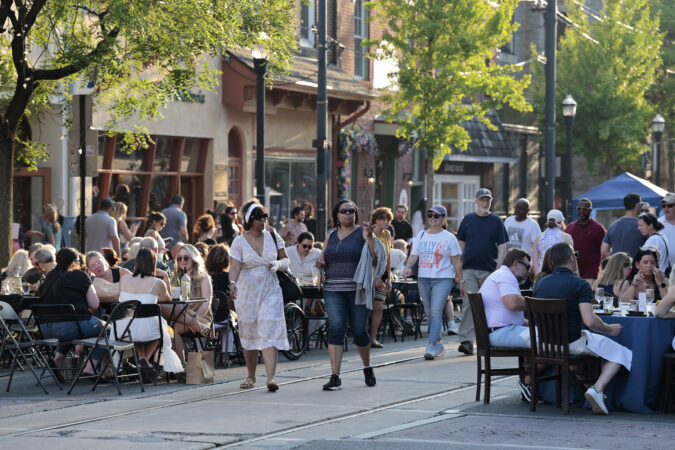
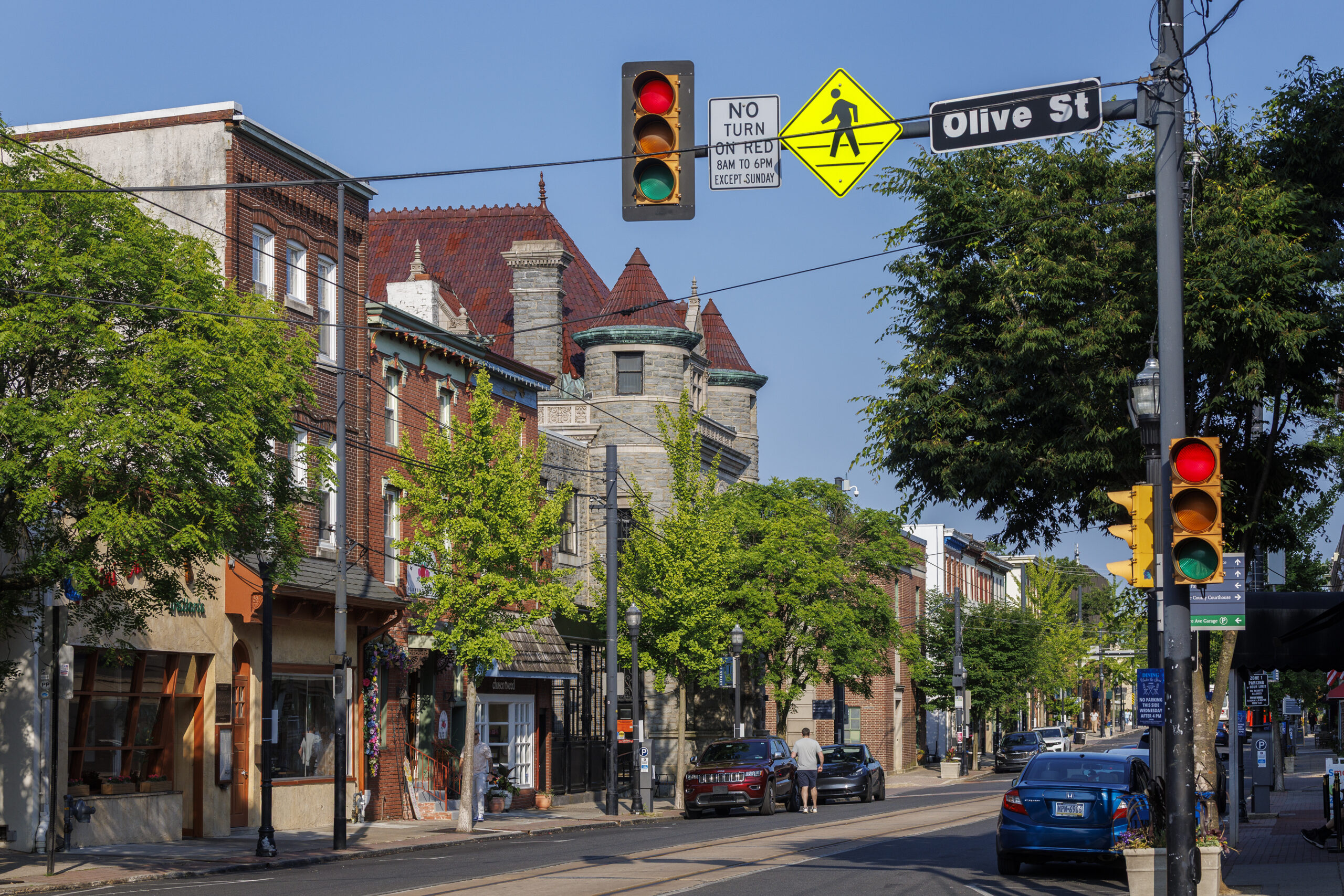
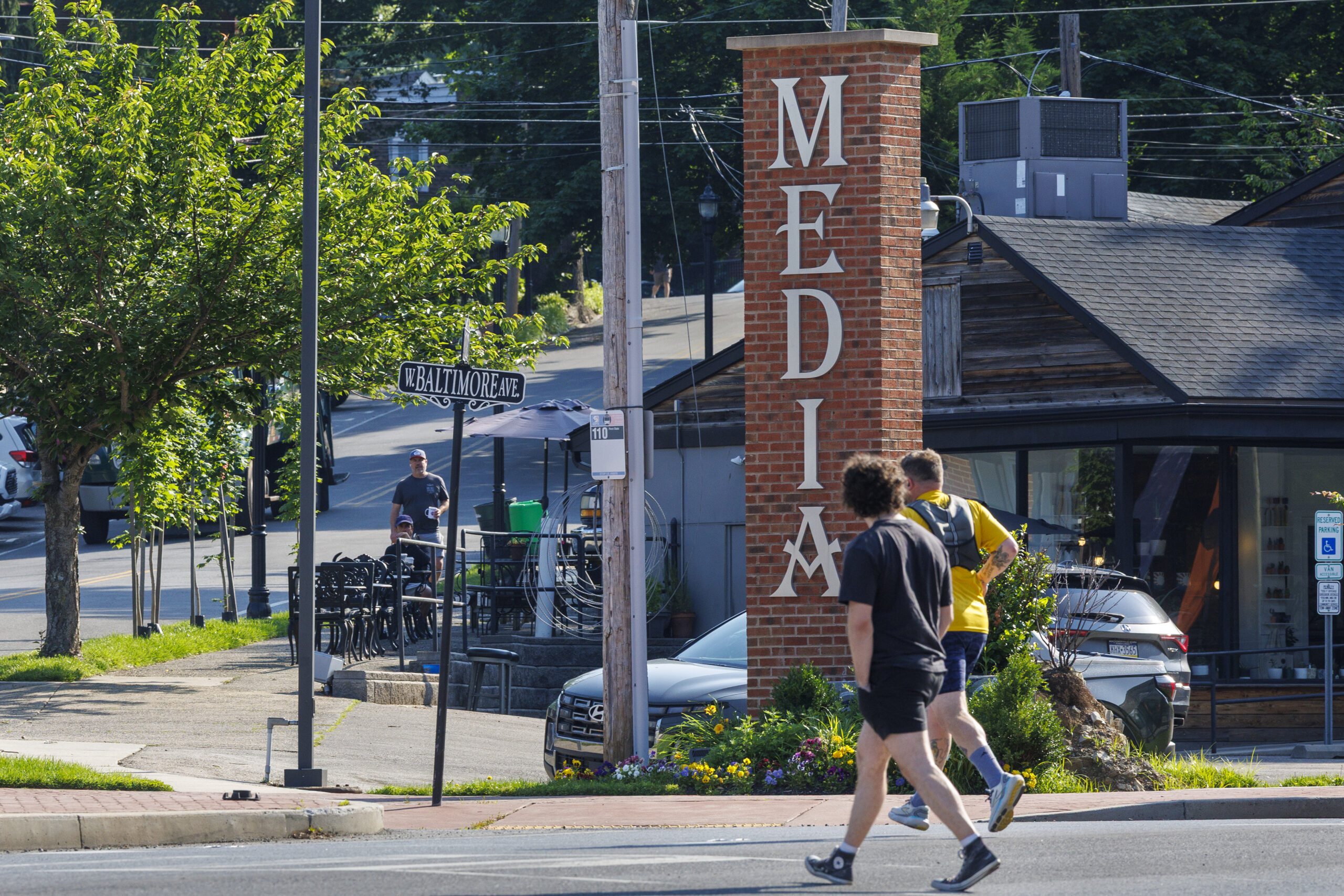
Downtown Media on a June day.
Media has strong transit access but ample traffic safety challenges
Media is defined by its density. The borough’s footprint is under one square mile, and it’s a place where pedestrians, cyclists, cars, buses, and SEPTA trolleys regularly interact.
“For a small town, I’d say we’re very sophisticated in terms of multimodal transportation,” said Forman.
Yet Media’s density and busy streets have also created the conditions for traffic safety issues. The borough recorded eight vehicle crashes resulting in serious injury and two resulting in death between 2013 and 2024. A 2020 traffic study conducted by the borough found that drivers regularly speed, especially along Baltimore Avenue, and roll through stop signs. Media’s only bicycle infrastructure comes in the form of painted road markings. Residents expressed a desire for more crosswalks, less disruptive downtown traffic patterns, and protected bike lanes.
Parking, too, remains a “source of friction.” The Baltimore Avenue parking garage is the anchor of the borough’s parking system, but it’s aging and requiring increased maintenance. At the same time, a surge in food delivery services has led to frequent double-parking outside of restaurants and blocking travel lanes. Media’s current parking and loading setup, the plan states, is “largely organized for a world that no longer exists.”
The vast majority of Media’s workforce lives outside the borough
Nearly all workers employed in Media commute from outside the borough. Of the approximately 9,800 primary jobs in Media, only 2.5% are held by residents. While Media’s accommodation, food service, healthcare, and arts and entertainment sectors have grown, its office administration, public administration, and wholesale trade sectors have shrunk. Overall tax revenues have increased in the past decade, led primarily by a growth in earned income tax revenues.
The post-pandemic shift to hybrid and remote work has also “fundamentally altered” travel behavior in the borough, according to the plan. Twenty percent of Media residents worked from home in 2023, up from 3% in 2014, according to estimates from the U.S. Census Bureau. With fewer residents and workers commuting on a daily basis, traditional 9-to-5 traffic on SEPTA’s Regional Rail and trolley lines has shifted, following regional and national trends. Local neighborhood activity, on the other hand, has increased during the workday.
Elizabeth Romaine, borough council vice president, said local businesses are already shifting to meet new consumer patterns, extending their hours or opening on weekdays when they would have previously been closed.
The intersection of W. State Street and Baltimore Pike in Media.
Residents love Media’s dining scene, but want more retail options
Nearly 80% of surveyed residents reported satisfaction with Media’s vibrant restaurant scene, which draws diners from across the region. Media’s downtown is viewed as the borough’s “defining economic and social heart,” according to the plan.
At the same time, residents expressed desire for a greater variety of retail, dining, and entertainment options. Non-food destinations and stores that fulfill everyday needs, specifically bakeries, clothing and home goods stores, and fitness centers, are outlined as particular areas of need.
The plan recommends increasing funding for the Media Business Authority, conducting a business-focused parking study and crosswalk inventory, and working to court new retailers. Recommendations also include enhancing programming at the Media Theatre to generate more foot traffic, deepen Media’s identity as a cultural destination, and “further solidify Media’s draw for visitors from across the region.”
This suburban content is produced with support from the Leslie Miller and Richard Worley Foundation and The Lenfest Institute for Journalism. Editorial content is created independently of the project donors. Gifts to support The Inquirer’s high-impact journalism can be made at inquirer.com/donate. A list of Lenfest Institute donors can be found at lenfestinstitute.org/supporters.
Fairmount residents are accustomed to annual July Fourth fireworks; it comes with the territory of living near Benjamin Franklin Parkway, where the city stages its major celebrations. With the United States’ 250th birthday, this July Fourth is no different — except that the fireworks will start closer to midnight.
“We have the whole family coming to our home, all on their way right now,” said Fairmount resident Margo DelliCarpini. “But 11:30, midnight is just too late for some families with children. I understand that it’s the Fourth of July, but the late start for fireworks is decidedly not a family-friendly decision.”
DelliCarpini will have her children and grandchildren visit to experience the Semiquincentennial in the city where the country began. But with young children in tow, parents along for the trip were hoping to have them in bed by midnight, she said. Instead, the large group is looking to catch one of the fireworks shows at Valley Forge or across Montgomery County, which start around 9 p.m.
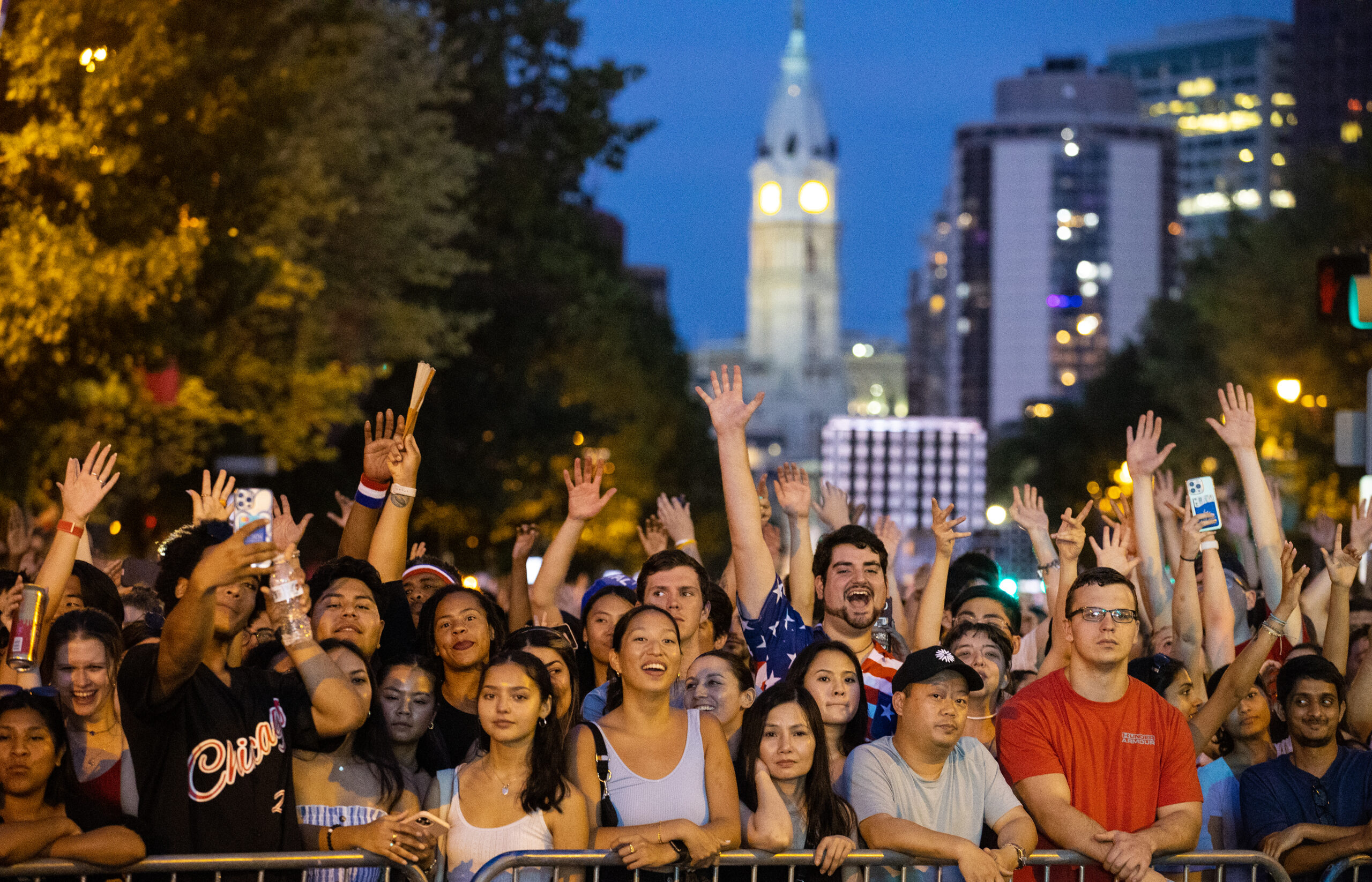
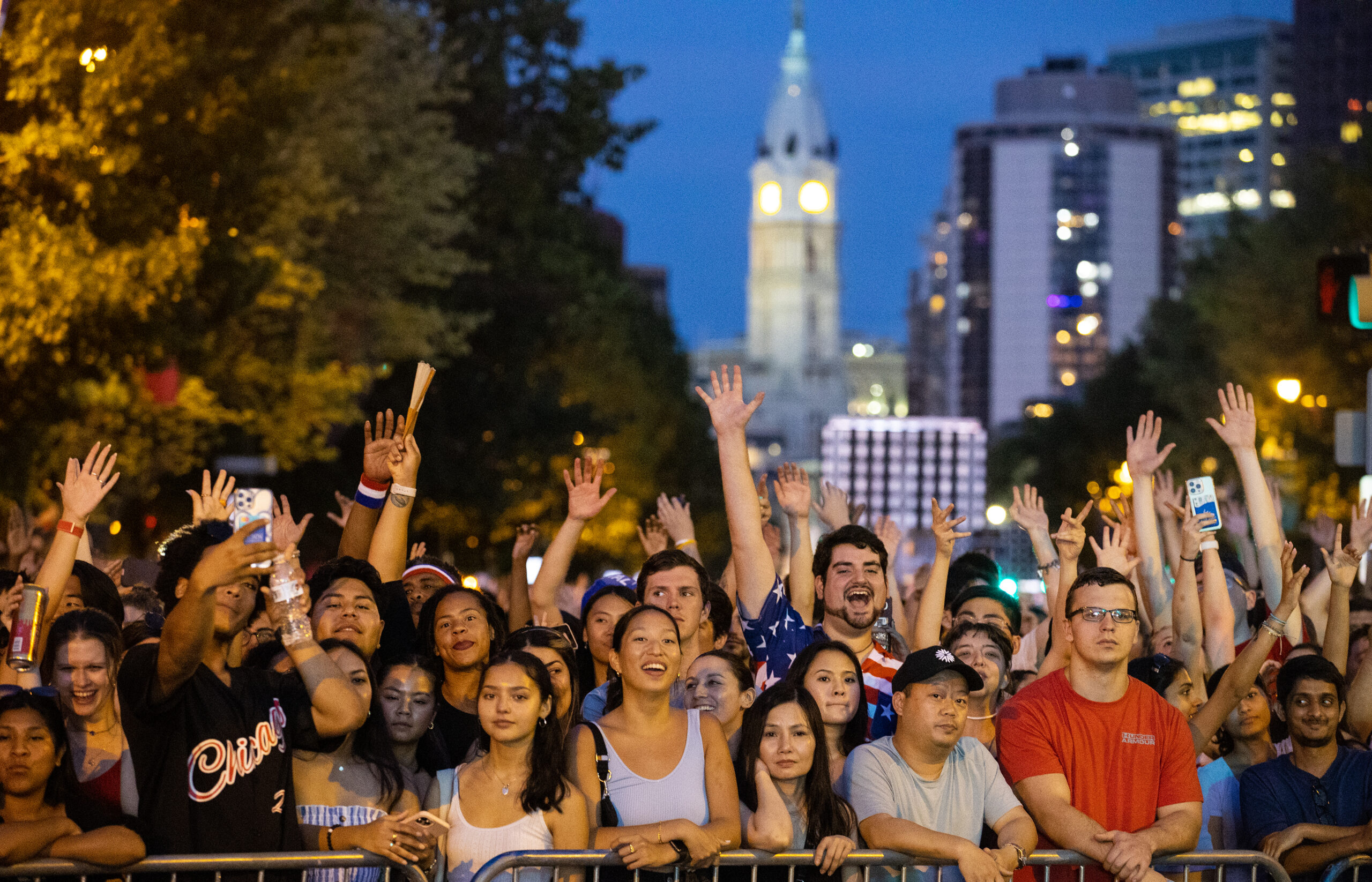
Fans react to the music as the Wawa Welcome America Festival concluded July 4, 2023, with a free concert on Benjamin Franklin Parkway.
Philadelphia’s July Fourth concert and fireworks show, the One City: Unity Concert for America, is expanding its lineup from two to three acts like in years past, to 10 artists, including Christina Aguilera, Will Smith, Meek Mill, and Seal. The show will also start earlier and end later, spanning into July 5 by the time people head home.
The city did not respond to request for comment.
Other cities, like New York, Boston, and Los Angeles, are keeping their 9-9:30 p.m. start times, while Washington, D.C. is among the cities pushing back its fireworks show to 10:30 p.m. or even 11 p.m. to allow for its expanded America 250 showcase.
Mykola Kosyk, 36, a lifelong Fairmount resident, has been witnessing the Parkway fireworks for years. Usually he’ll catch some of the concert with his wife, head back home, have time to set off some fireworks of his own with family, and then all head back to the Parkway for the city’s grand finale. Kosyk said he’ll still likely watch the midnight fireworks on Saturday, but feels disappointed that younger Philadelphians may not get to experience itas children during 1976’s Bicentennial, Kosyk’s father recalled.
“It is the 250th, so if there is a time to do something big, I’m open to the idea,” Kosyk said of the later show. “But I also feel bad for the youngsters coming out, because 9 p.m. is usually a pretty good time for kids to watch the show. Midnight is pushing it a little for kids.”
For residents like Kosyk and DelliCarpini, the nuisance is less with the noise of fireworks which most Fairmount residents are used to by now, but how late the show will run, limiting access to younger kids and delaying vehicle and pedestrian traffic later into the morning.
The Inquirer reported that this year’s event will cost more to operate after Mayor Cherelle L. Parker decided to change the management of the festival from its previous nonprofit partner to a for-profit production company. Parker defended that decision at a news conference Wednesday: Philadelphia needed to meet the moment and host a celebration that is “fitting to and for our historical significance and prominence.”
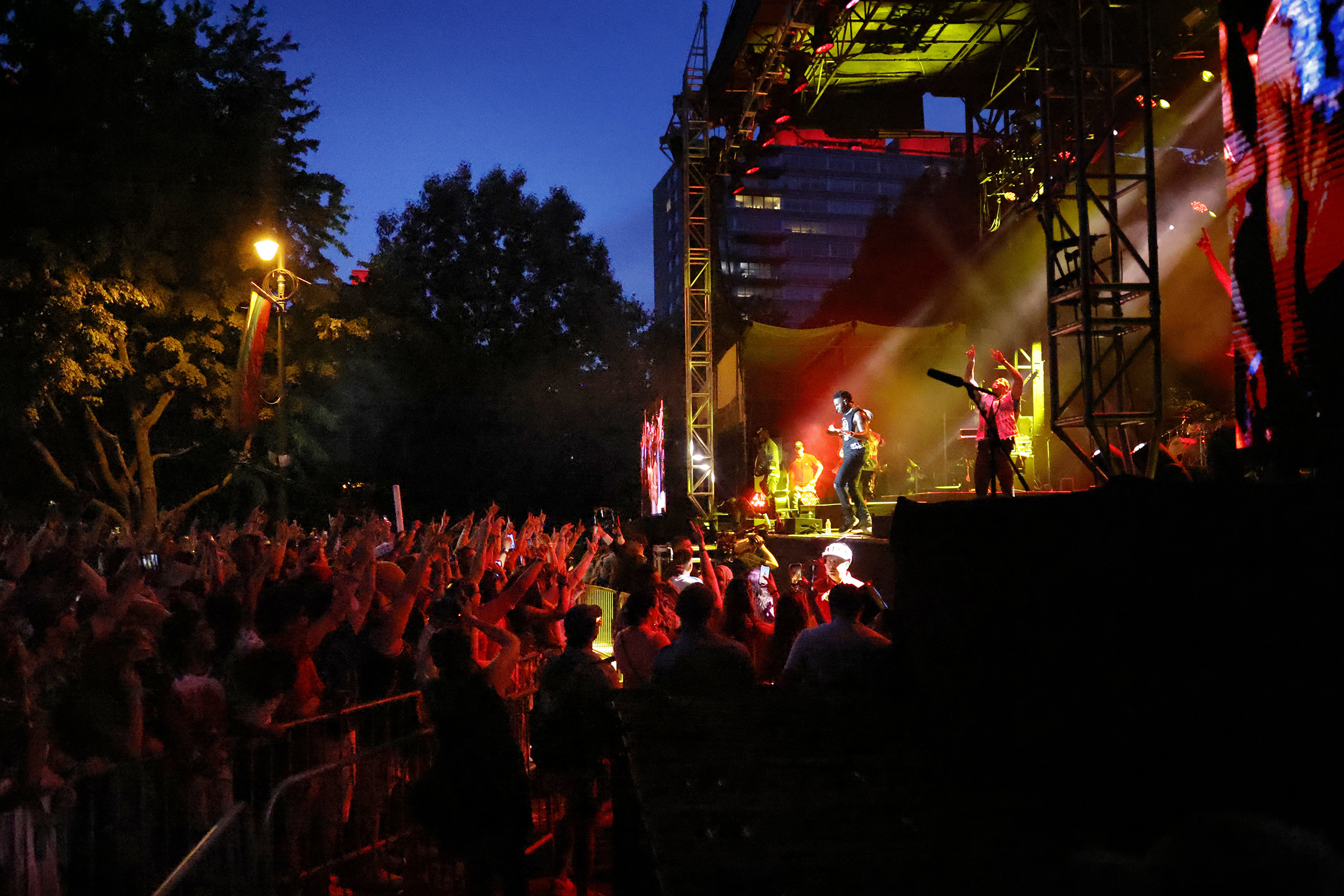
Jason Derulo performs during the Wawa Welcome America July 4th Concert on the Parkway in 2022.
Moving an expected 300,000 attendees and their vehicles
Besides the hurdles for parents with younger children, there’s also the headache of moving an expected 300,000 people from the Parkway back home after the show.
SEPTA has covered most of its bases for getting people home. Regional Rail lines will have extended service on all lines, but the Landsale/Doylestown, Paoli/Thorndale, Manayunk/Norristown, Trenton, and West Trenton lines are the only lines that will run their last train between 1 a.m. and 1:10 a.m. All other Regional Rail lines stop running before 1 a.m., and in some cases before midnight, so people traveling in from the suburbs should plan accordingly.
Subways and trolleys will run overnight for those heading back home within the city, and bus service will run on a Sunday schedule, which usually stops operating around 2 a.m. for some routes.
But vehicle and pedestrian traffic could use some city intervention, said Dustin Dove, president of the Fairmount Civic Association, as there is concern among local civic leaders and some residents about how the city is handling traffic leaving the Parkway.
“It’s usually a bit of a mess near the Parkway after the fireworks and can lead to some reckless driving nearby as people are stuck,” Dove said. “Historically, after the fireworks, there are thousands of pedestrians and cars that come into the neighborhood.”
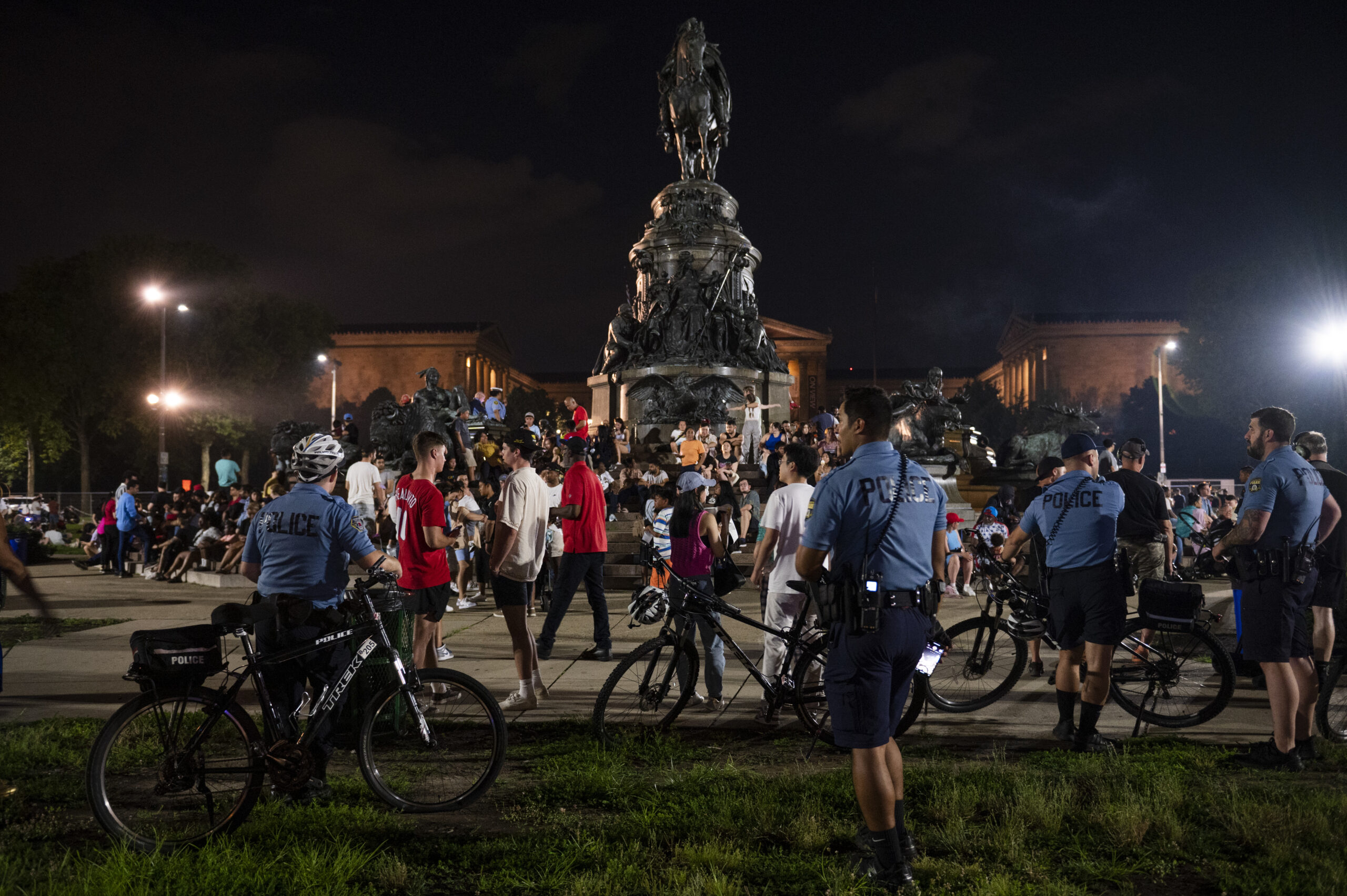
A police presence is seen in Eakin’s Oval as people wait for the fireworks to start at the Wawa Welcome America Festival on Tuesday, July 4, 2023.
Dove and others are hoping to see an increased police presence and traffic direction, as the event will be much later with more people this year, Dove said.
Additionally, residents hope police manage safety accordingly on Saturday.
“There’s going to be problems when you live in a city; it’s not like it’s the middle of nowhere with no neighbors, but this week … you’re now having people walk back home at midnight, 12:30 a.m.,” DelliCarpini said. “There needs to be a safe environment after the show.”
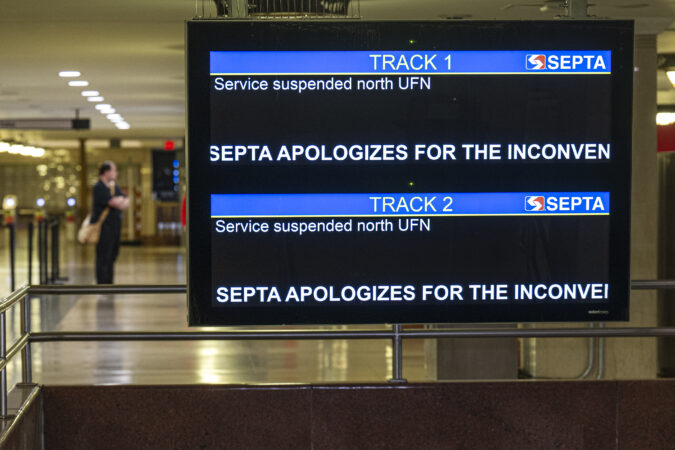
SEPTA restored Regional Rail service at 3 p.m. Wednesday after major disruptions caused by the midnight derailment of a Manayunk/Norristown train in North Philadelphia.
Residual delays were expected as the system recovered.
No injuries were reported when the outbound train went off the rails at the 16th Street Interlocking shortly after midnight, according to SEPTA.
The incident is under investigation. Crews repaired track damaged in the incident, transit agency spokesperson Andrew Busch said.
Three suspended lines reopened: Manayunk/Norristown, with 7,779 average daily riders; Fox Chase (2,473 riders) and Chestnut Hill East (3,042 riders).
On other lines where service was reduced, trains resumed serving all stations, Busch said.
The accident
The four-car train was traveling less than 15 mph and carrying 47 passengers and three crew members when the rear axle of the third car derailedjust after midnight. Busch said the people aboard declined medical treatment.
A nearby train brought the passengers to Wayne Junction Station. A shuttle bus pulled out shortly after 1 a.m. and completed the rest of the stops along the Manayunk/Norristown line, Busch said.
SEPTA crews got the train back on the track and moved around 7 a.m.
Rail workers also were checking the components of the interlocking, a linked system of signals and switches that allows trains to move from one set of rails to another at a junction.
Given that the derailment happened in the overnight hours, officials so far do not think that heat was a factor, Busch said. Extreme heat can warp railroad tracks.
Philadelphia’s celebration of America’s 250th birthday culminates July 4 with a free concert and fireworks on the Benjamin Franklin Parkway.
The One Philly: Unity Concert for America begins at 5 p.m. in front of the Philadelphia Museum of Art, featuring Christina Aguilera, Jill Scott, Meek Mill, Will Smith, The Roots, DJ Jazzy Jeff, Jordan Davis, Seal, State Property, Kathy Sledge, and more.
This year’s event is no longer part of the longtime Wawa Welcome America festival. Mayor Cherelle L. Parker’s administration took over production of the annual July Fourth concert, renamed it the One Philly: Unity Concert for America, and hired ESM Productions to produce the show.
Wanda Sykes will emcee the concert, which concludes with the city’s official fireworks display over the Parkway.
Here’s everything you need to know before you go.
Fans react to the music as the Wawa Welcome America Festival concluded on July 4, 2023, with a free concert featuring Ludacris on the Benjamin Franklin Parkway.
Schedule and entry
Guests must enter through a secure checkpoint at 20th Street and Logan Circle, where security may search attendees and their bags. Gates open at 3p.m.
The concert will start around 5p.m., followed by the fireworks around 11:30 p.m., according to city officials.
Who is performing at Philadelphia’s Fourth of July Concert?
Headliners include Christina Aguilera, Jill Scott, Meek Mill, Will Smith, The Roots, and DJ Jazzy Jeff.
Other performers include Jordan Davis, Kathy Sledge, State Property, Seal, and several others.
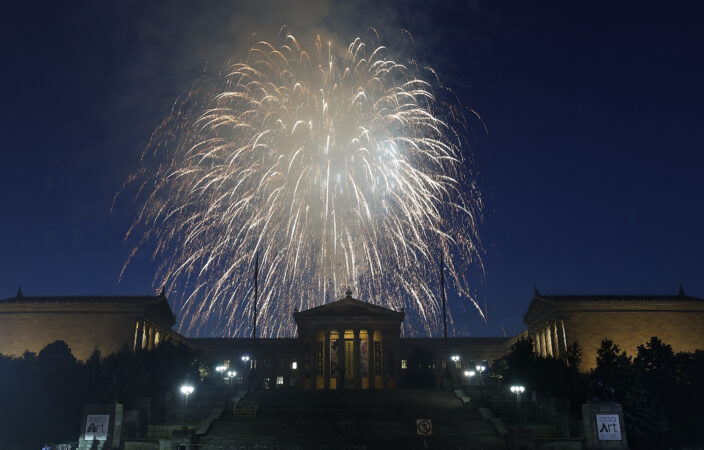
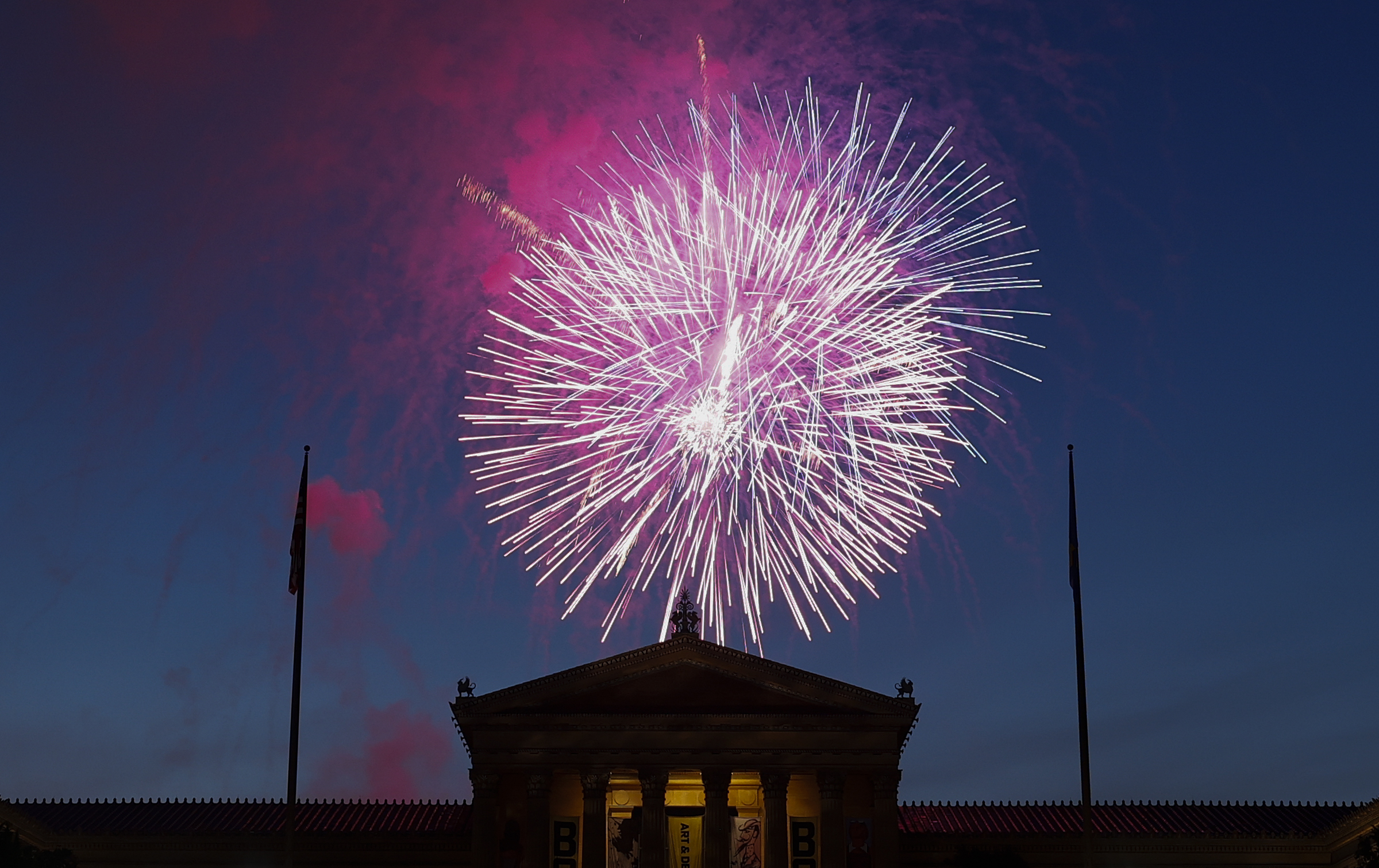
Fireworks over the Philadelphia Museum of Art along the Benjamin Franklin Parkway on Friday, July 4, 2025.
Fireworks
Following the concert, the city’s official July Fourth fireworks display will begin at about 11:30 p.m. The show will be visible from throughout the Parkway and surrounding neighborhoods.
The concert and fireworks will also air live on NBC10 and Telemundo62.
Road closures
Unless otherwise noted, the following closures will be in effect from approximately 6 a.m. Friday through 6 a.m. Monday:
1900 Race Street
1800-1900 Vine Street
I-676 off-ramp at 22nd Street
I-676 on-ramp at 22nd Street
I-76 eastbound off-ramp at Spring Garden Street
Spring Garden Tunnel
Park Towne Place between 22nd and 24th Streets
20th Street between Arch Street and Pennsylvania Avenue
19th Street between Callowhill and Cherry Streets
Benjamin Franklin Parkway from 17th Street to Eakins Oval
Eakins Oval
Kelly Drive between Eakins Oval and Fairmount Avenue (inbound traffic closes at Fountain Green Drive beginning about 5 p.m.)
2000-2100 Winter Street
Spring Garden Street between Pennsylvania Avenue and 31st Street
23rd Street between Pennsylvania Avenue and Eakins Oval
22nd Street between Winter Street and Pennsylvania Avenue
21st Street between Winter Street and Pennsylvania Avenue
All roads from Arch Street to Spring Garden Street between 18th and 22nd Streets (local access maintained for residents)
All roads from Arch Street to Fairmount Avenue between 22nd and Corinthian Streets (local access maintained for residents)
16th and 17th Streets between Arch Street and Spring Garden Street will close only if conditions warrant.
1600-1700 Benjamin Franklin Parkway will close only if conditions warrant.
Beginning at 4 a.m. Saturday, the following roads also will close:
Anne d’Harnoncourt Drive behind the Philadelphia Museum of Art
Martin Luther King Jr. Drive from Falls Bridge to Eakins Oval
From 8 p.m. Saturday until approximately 1 a.m. Sunday, Kelly Drive between Fairmount Avenue and Fountain Green Drive and Waterworks Drive also will be closed because of the fireworks display.
Parking
Temporary no-parking signs will be posted along streets affected by closures. Vehicles left in those areas will be courtesy towed to another nearby location.
Most Regional Rail lines will offer additional inbound and outbound service before the fireworks. All Regional Rail lines except the Airport and Cynwyd lines will provide late-night outbound service from Jefferson Station, Suburban Station, and William H. Gray III 30th Street Station after the fireworks.
Other SEPTA service will operate on a Sunday schedule. Routes without Sunday service will not operate.
Routes 7, 32, 33, 38, 43, 48, and 49 will be detoured beginning at 5 a.m. Thursday through 5 p.m. Sunday because of road closures.
SEPTA ambassadors will be stationed at major transit hubs to help direct passengers after the July 4 FIFA World Cup match and the One Philly concert and fireworks.
PATCO will operate on a holiday schedule July 4, with trains running every 10 minutes throughout the day. More information is available at ridepatco.org.
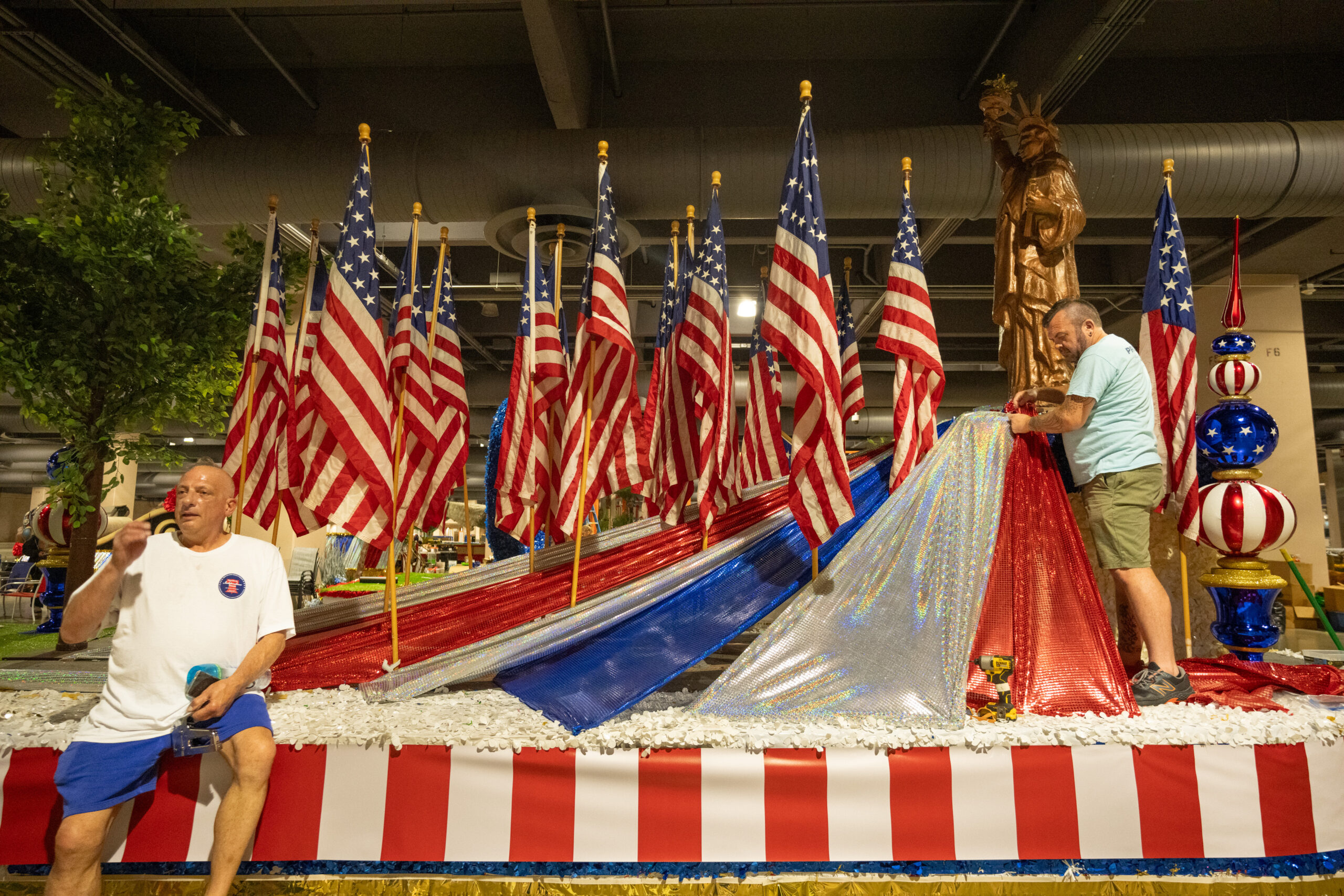
Todd Marcocci (left) and Jeremy Williams work on a float on Monday for this year’s big Fourth of July parade, in Philadelphia.
Fourth of July celebrations happening elsewhere in the area
Fourth of July Freedom Festival at Pleasant Hill Park: 💵 Free, 🕒 July4, 5 to 9:30 p.m., 📍Linden Ave., Philadelphia, Pa 19136
A 39-year-old man was stabbed during a fight on a SETPA bus in West Philadelphia early Monday, authorities said.
The incident began around 2:44 a.m. when two men got on theL1 Owl bus at 15th and Market Streets and began fighting, police said.
The bus driver flagged down a nearby Philadelphia police officer for assistance.
After an unsuccessful attempt to separate the men, the officer deployed a Taser on the 39-year-old man, whom police did not identify.
While taking him into custody, the officer saw that the man had been stabbed. He was taken to Jefferson Hospital, where he remained in stable condition late Monday morning.
Investigators are looking for a the second person they said was involved in the fight and fled the scene.
Officers recovered a knife. Police gave no motive for the stabbing which remains under investigation.
More funding for SEPTA and dozens of financially strained mass transit systems across Pennsylvania has beenon the back burner in this year’s budget debate, but it may get some more attention now.
“By dedicating a portion of skill game revenue to transportation, we can protect and strengthen transit services without placing additional burdens on taxpayers, while ensuring our transit agencies have the resources they need,” Republican State Sen. Frank Farry of Bucks County said Friday in a statement.
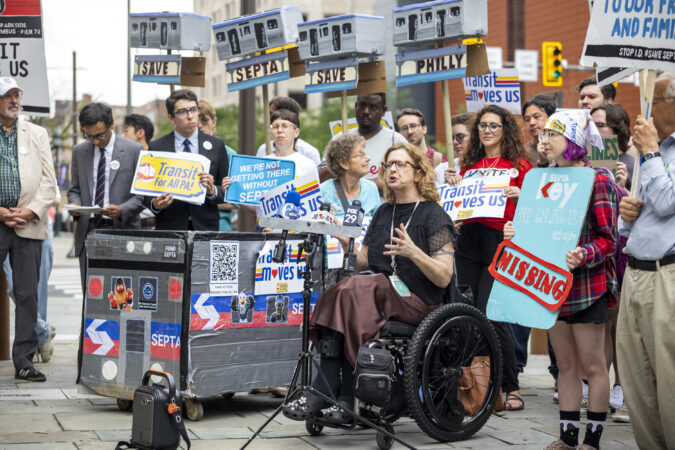
Transit advocates renewed what has become an annual public push for more money for SEPTA and fellow transit agencies at a news conference in front of the Fifth Street/Independence Hall Station — prompted in part by the court decision.
Farry issued the statement in support of that effort.
“I have the freedom to be able to come here, thanks to this elevator behind us, which was recently renovated,“ said Julie Rea, an organizing fellow for Transit Forward Philadelphia who uses a wheelchair and depends on the Market-Frankford El (now called the L).
“Without the long-term funding that SEPTA really needs, we’re not going to be able to keep the system accessible for all,” she said.
Last year, lawmakers and Gov. Josh Shapiro failed for a third time to reach agreement on his proposal to dedicate an increased portion of general sales tax revenue to consistently fund transit agency operations for five years.
Republicans, who control the Senate, did not want to take more sales tax revenue for transit, and the Democrats in charge of the House did not want to take up the GOP leadership’s counterproposal to use state money for infrastructure projects for operations instead.
Farry offered legislation in 2024 to regulate and tax skill games and dedicate 50% of the revenue to create a stable source of funding for public transit. The most optimistic assessments are that taxes on the games at or near the rate casinos must pay for their slots could generate up to $1 billion a year.
Taxing skill games has been discussed in budget deliberations for several years, though it never came together, in part because of differences of opinion in the GOP Senate caucus.
“Maybe the court decision will spur people to get their act together,” Farry, who is up for reelection in the fall, said in an interview. “We have a pathway.”
Meanwhile, this year, paratransit and shared-ride services are in trouble throughout the state and transit systems in Lancaster, Westmoreland County, and the Lehigh Valley are considering service cuts.
“We know that the rural-urban divide is manufactured, and that a public good, like transit, touches us all,” said Connor Descheemaker, statewide campaign manager for Transit for All PA.
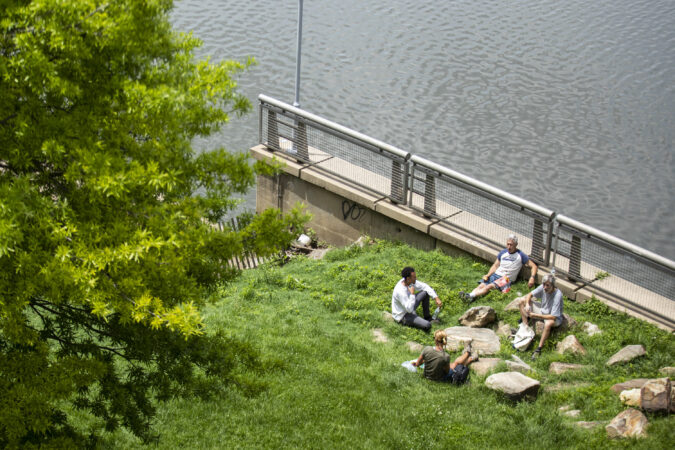
Philadelphia and its surrounding counties are set for what could be a record-breaking $322 million in federal and state funding to go toward building new trails segments, say trail advocates.
The money is part of a larger $8.2 billion pool of transportation funding updated through the federal Transportation Improvement Program (TIP) for 2027 and spread over four years.
“We consider this to be potentially record breaking,” said Patrick Monahan, vice chair of the Circuit Trails Coalition in Pennsylvania. “It’s proof that the trails are being treated as essential infrastructure, making it safer and easier to walk and bike in the region.”
Pennsylvania gets its TIP plan updated every two years and the majorityof money goes to highways, bus and rail systems, trolleys, and ferries. It is part of an agreed-upon list of priority transportation projects. That list includes 344 projects.
In all, this year’s proposed $322 million in funding for trails would advance 27 bike and pedestrian projects across Philadelphia, Bucks, Chester, Delaware, and Montgomery Counties.
The Delaware Valley Regional Planning Commission (DVRPC) is set to vote on approving the allocations in July.
The trails, either begun or being planned, are part of the Circuit Trails, a network of hundreds of miles of multiuse trails throughout the Philadelphia region including southern New Jersey, which updates its TIP funding in alternate years.
$11 millionfor the second phase to extend the Schuylkill Banks trail in Philadelphia south from near 61st Street to Passyunk Avenue that would include a new park at the base of the Passyunk Avenue Bridge.
$58.5 million for Philadelphia’s Spring Garden Connector project that would link trail systems along the Delaware and Schuylkill rivers and make Spring Garden Street safer for cyclists and pedestrians.
$50 million to improve safety for roadway users, including pedestrians and cyclists, on PA 291 from Irving Street to Ridley Creek. The project includes building a multiuse side path that will be designated as part of the East Coast Greenway, a trail system linking Maine to Florida.
$8.5 million for the Chester Valley Trail, a multiuse trail along the alignment of the former Philadelphia and Thorndale Branch, a former freight train route, including renovation of the Whitford Bridge and Downingtown TrestleBridge for bicycle and pedestrian use.
$10 million to develop a segment in Whitemarsh Township, Montgomery County, that would run from the existing Wissahickon Trail in Fort Washington State Park to the existing Cross County Trail near SEPTA’s Fort Washington Station.
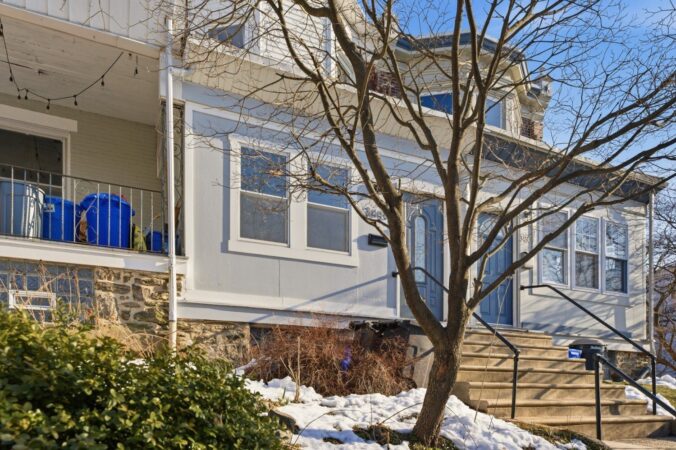
For Sarina Sims, the four years spent in the East Falls rowhouse and the surrounding neighborhood was “like a warm hug.”
For her wife, Phoebe Sims, leaving will be “kind of bittersweet.”
But their well-planned stay in Philadelphia is ending as they return to their native North Jersey. They had wanted to try something different for a few years and “Philly seemed like a great option,” Phoebe said.
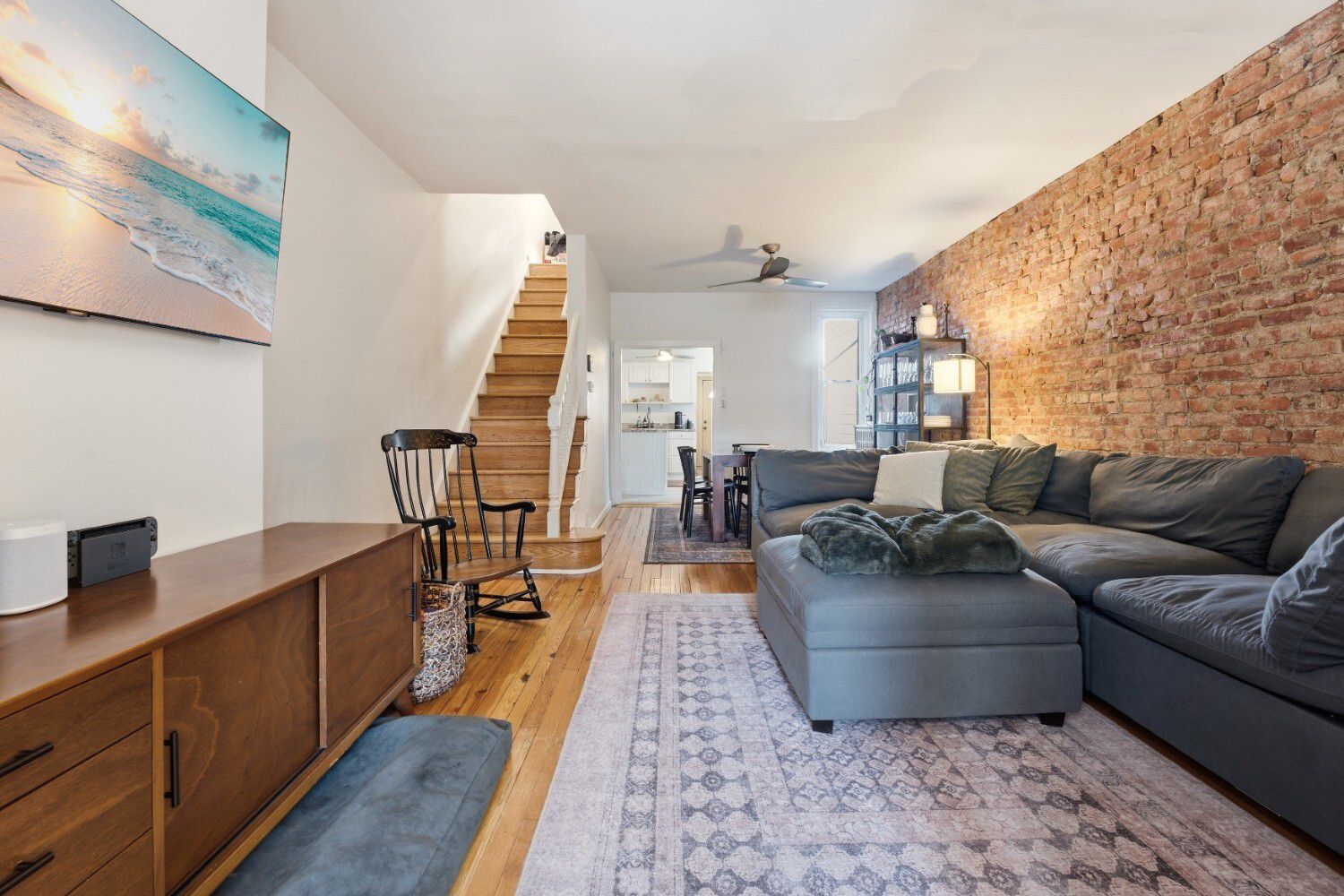
The living room has hardwood floors and an exposed brick wall.
Sarina is a producer of music festivals and other live events, and Phoebe is in learning and development for a restaurant chain.
They had never heard of East Falls, but while walking in Manayunk they met a man who recommended it. Reasons included easier parking, less noise, and room for their two dogs to roam.
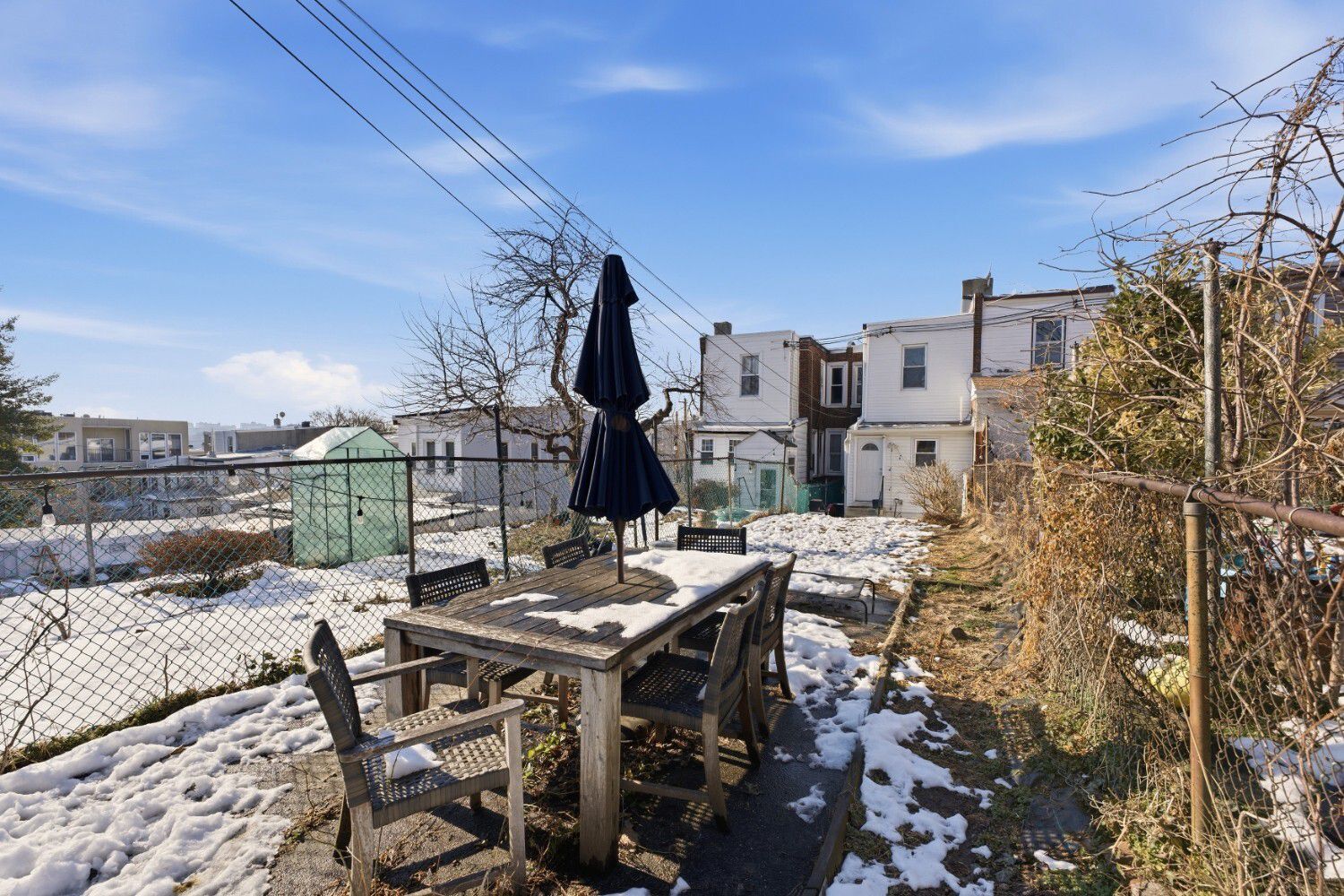
The backyard, which has a brick patio and outdoor fireplace.
The three bedroom, two-bathroom house, built in 1939, has 1,183 square feet of living space.
The tiled entryway leads to the living room with hardwood floors, and an exposed brick wall. A “bonus room” connected to the living area could serve as a home office.
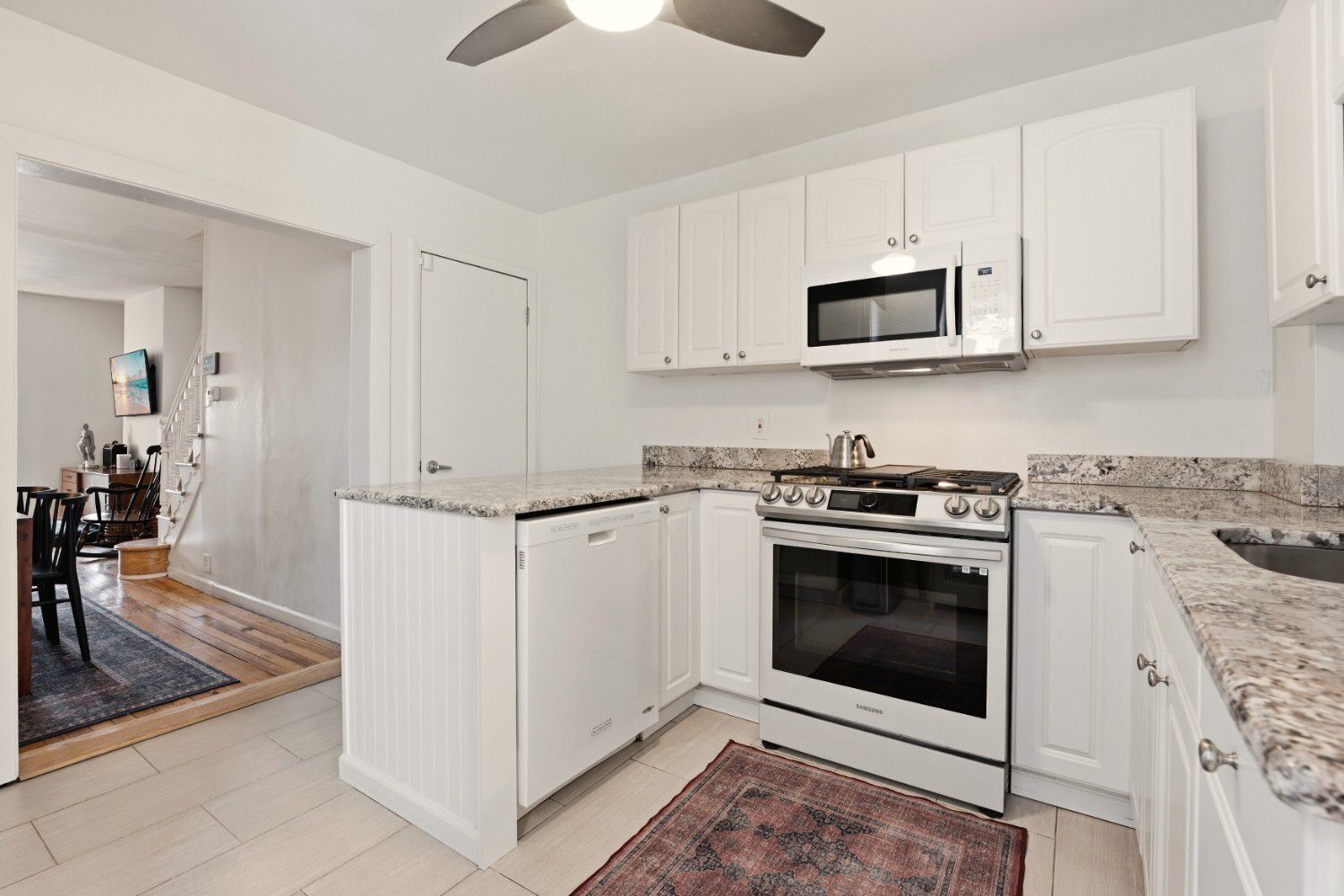
The dining room can accommodate a large table, and the kitchen has granite counter tops, tile flooring, and updated appliances including a Samsung four-door refrigerator, a five-burner gas range, and chrome hardware.
The kitchen has granite counter tops, tile flooring, and updated appliances.
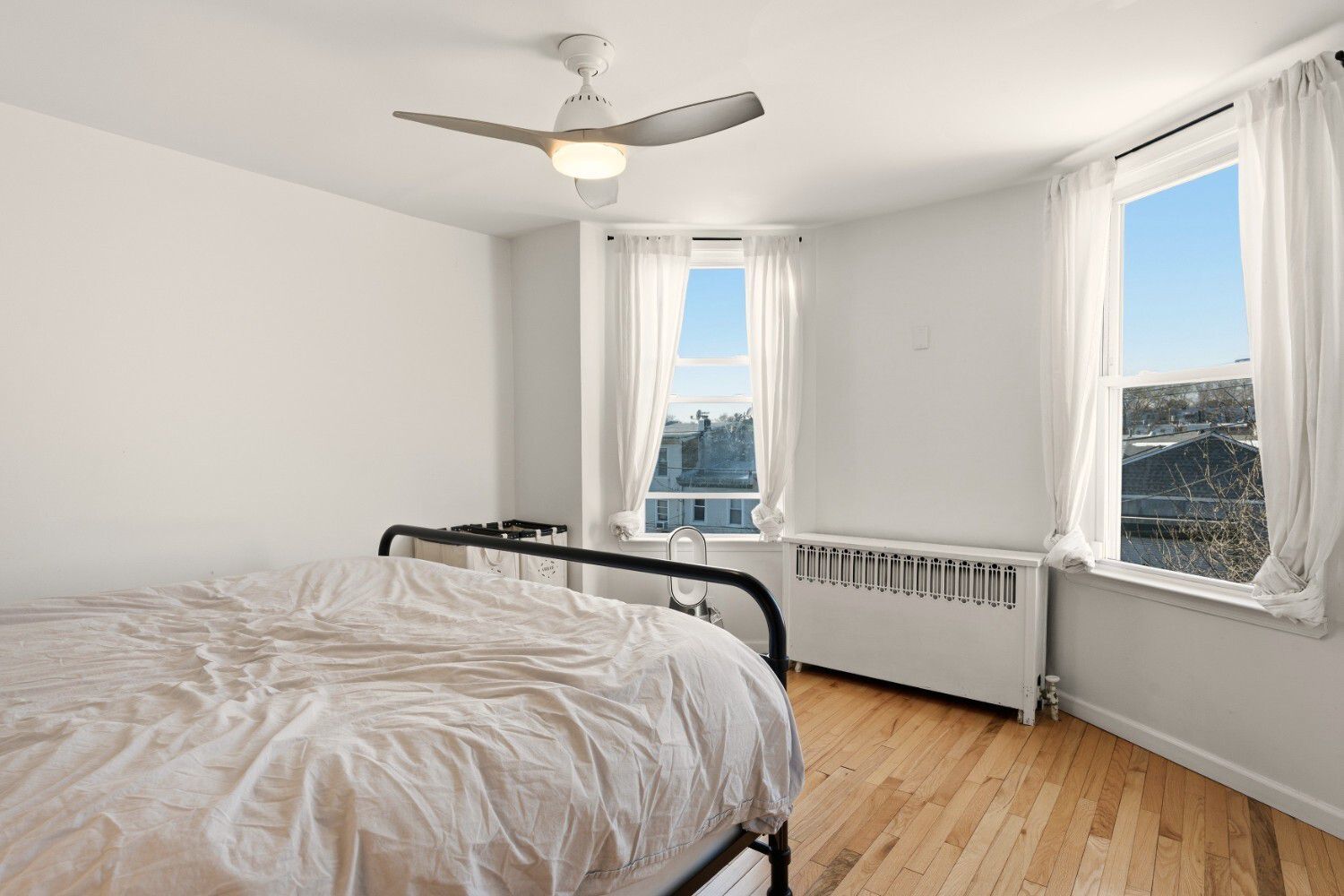
The bedrooms are on the second floor. The primary has bay windows and two closets.
The backyard has a brick patio and outdoor fireplace.
The primary bedroom has bay windows and two closets.
The house is a short ride to Main Street Manayunk and Thomas Jefferson University. The East Falls SEPTA Regional Rail station is walkable.
It is listed by Evan Frisina of Compass Realty for $415,000.