Tag: SEPTA

  • ‘Unattainable’: POWER Interfaith calls on City Hall to address affordability crisis. But Philly doesn’t have many good options.

    ‘Unattainable’: POWER Interfaith calls on City Hall to address affordability crisis. But Philly doesn’t have many good options.

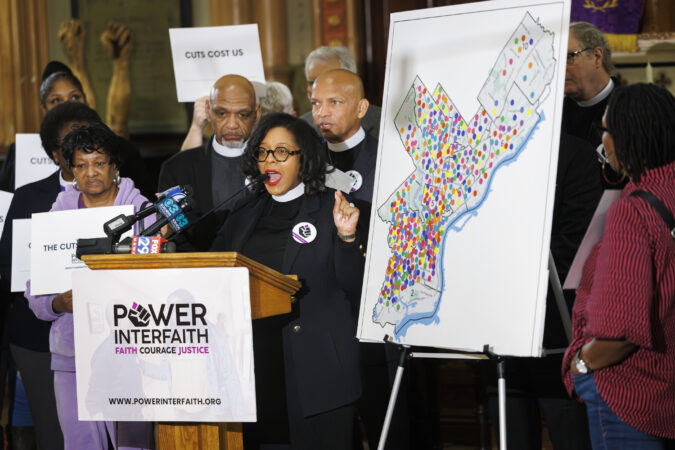
    Philadelphians are facing a growing affordability crisis, and City Hall needs to act quickly to counter the impact of funding reductions from the federal and state governments, leaders of the progressive group POWER Interfaith said Monday.

    “Living comfortably in our city is becoming unattainable,” the Rev. Cean R. James, senior pastor of the Salt + Light Church, said at the gathering at Arch Street United Methodist Church. “The mayor’s recent budget does focus on economic mobility, and that is noble. But it does not go far enough. It’s not sustainable.”

    POWER, an influential coalition that includes more than 50 congregations in the city, on Monday released a report based on interviews with 750 city residents at church meetings, neighborhood gatherings, and other events. The informal survey found:

    • About two-thirds of respondents had to forego another bill to pay mortgage or rent, and 80% struggled to afford property taxes.
    • A majority of congregations surveyed have seen the number of unhoused members in their congregations increase.
    • Ninety percent of respondents said the city hasn’t done enough to “invest in their community’s needs.”

    POWER leaders on Monday called on City Council to hold a hearing on affordability. But the report did not include policy prescriptions for addressing the crisis it described, and it’s far from clear what city lawmakers or Mayor Cherelle L. Parker can do to make it easier to get by in the city.

    Philadelphia already has a relatively small property tax burden, and the city has some of the strongest protections in the nation for people struggling to stay in their homes.
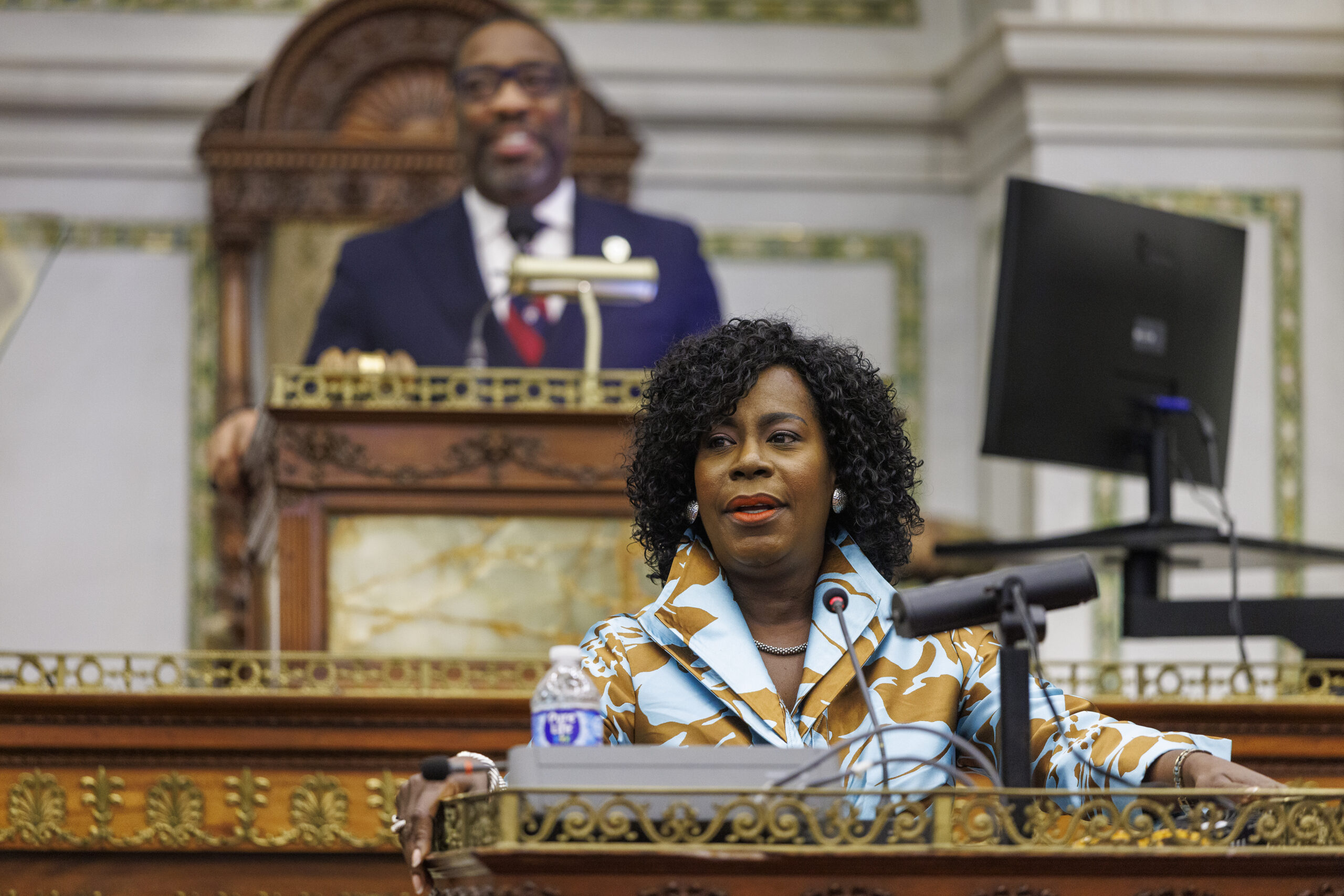
    Philadelphia Mayor Cherelle L. Parker speaks to City Council, guests, and dignitaries at start of her budget presentation in Council Chambers last Thursday.

    Parker last year unveiled her Housing Opportunities Made Easy, or H.O.M.E., initiative, which involves selling $800 million in city bonds to fund programs aimed at making housing more accessible and affordable. Last week, she unveiled a $7 billion proposal for the next city budget with a focus on economic mobility, including investments in workforce development training, internship opportunities, and financial counseling.

    But with little ability to affect the cost of goods and state-imposed restrictions on how it can collect taxes — preventing the city from imposing higher rates on wealthier residents — Philadelphia officials have limited options when it comes to addressing affordability.

    window.addEventListener(“message”,function(a){if(void 0!==a.data[“datawrapper-height”]){var e=document.querySelectorAll(“iframe”);for(var t in a.data[“datawrapper-height”])for(var r,i=0;r=e[i];i++)if(r.contentWindow===a.source){var d=a.data[“datawrapper-height”][t]+”px”;r.style.height=d}}});

    The POWER report acknowledged the predicament.

    “To be very clear: There are no easy answers to these challenges,” the report said. “We must prepare serious and sober projections about the impacts of the impending revenue losses we face, and then we must develop a menu of policy options to soften those impacts and mitigate harm to residents. And we must ensure that any actions we take do not make the current cost-of-living crisis even worse.”

    The city’s limited options on addressing affordability won’t stop it from being a major topic during this spring’s budget negotiations. Affordability has recently become a political buzzword, and Democrats are hoping to win back Congress in November in part by blaming rising costs on President Donald Trump’s administration.

    This year, thousands of Pennsylvanians are abandoning the state’s Affordable Care Act insurance exchange after congressional Republicans declined to renew expanded healthcare subsidies. Trump’s efforts to increase tariffs and the war with Iran threaten to increase inflation nationwide. SEPTA last year increased fares and is still facing a fiscal crisis due, in part, to objections by GOP lawmakers in Harrisburg.

    It’s unlikely the city could meaningfully address any of those losses without significantly increasing taxes, which would in turn make Philadelphia less affordable. And hiking any of the city’s three major sources of local revenue — the wage, property, and business taxes — all come with significant downsides or political roadblocks.

    Increasing the wage levy alone would make the city’s tax structure more regressive, meaning a greater share of the overall tax burden would be paid by poorer workers.

    Increasing the real estate tax rate could make the tax structure more progressive, because property owners tend to be wealthier than the average resident. But POWER and other left-leaning groups generally oppose that option due to concerns about displacing low-income homeowners.

    And when it comes to the business income and receipts tax, or BIRT, City Hall has recently been moving in the opposite direction of POWER’s goals. Council last year approved a proposal championed by Parker and Council President Kenyatta Johnson that will provide annual cuts to the BIRT rate over the next 12 years.
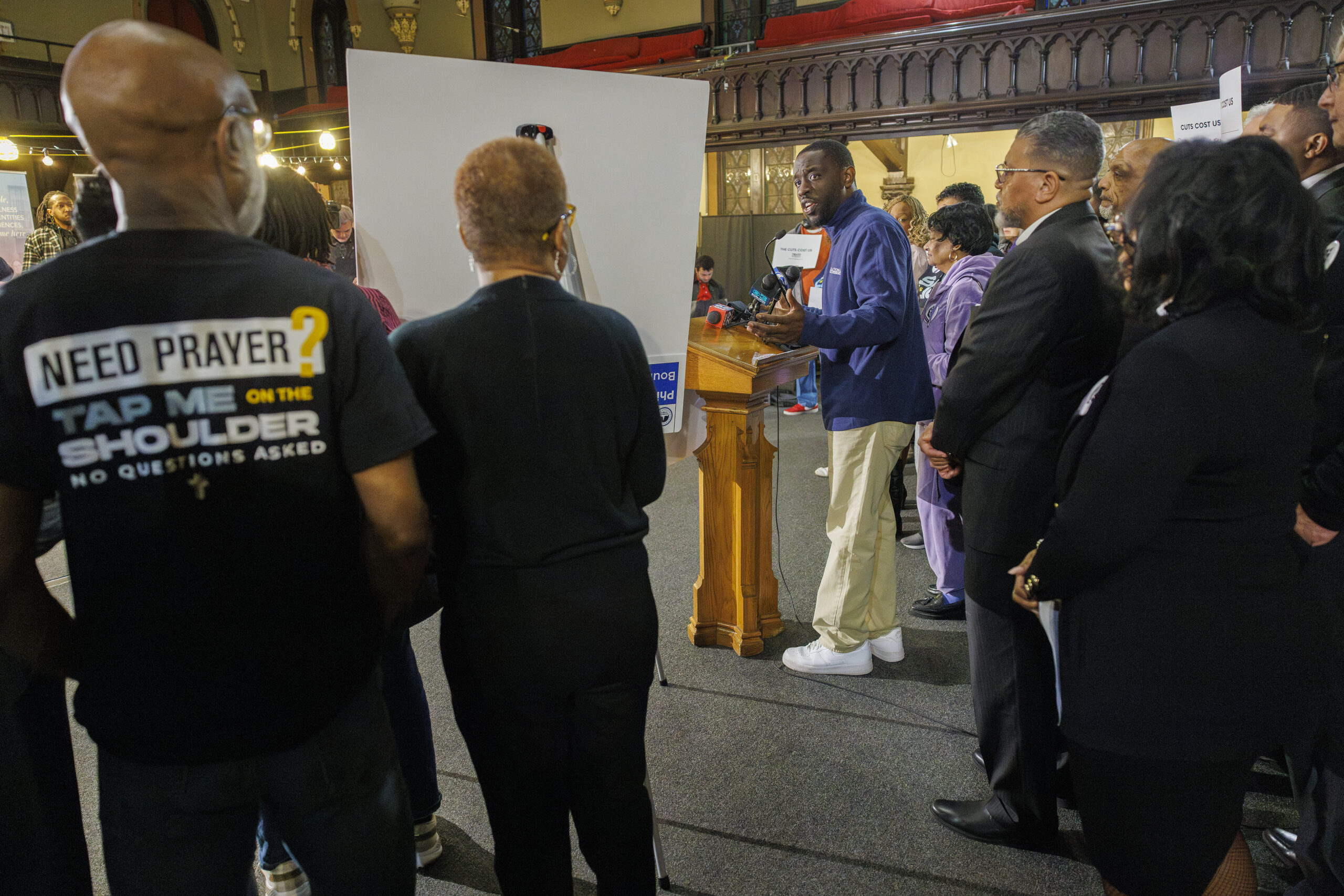
    Philadelphia City Councilmember Isaiah Thomas addresses members of POWER Interfaith during a news conference on affordability at Arch Street United Methodist Church. at Broad and Arch Streets, on Monday.

    POWER leaders have called on lawmakers to pause those reductions or even increase the tax. But the political headwinds they face in City Hall were evident at Monday’s news conference. Two of three Council members in attendance voted for the business tax cuts last year: Democrats Jamie Gauthier of West Philadelphia, and Isaiah Thomas, who represents the city at-large.

    “It’s very difficult, as we discussed in the past, for local government to be able to step up and address some of these concerns,” Thomas said at the event. “There’s not much we can do as it relates to the catastrophe that we’re seeing around healthcare. There’s not much we can do as it relates to all the tariffs and the cost of living that’s going up significantly. But there are things that we can do, that we control.”

    He pointed to efforts by Councilmember Nicolas O’Rourke to preserve a program that provides free SEPTA fares for low-income Philadelphians and to Gauthier’s advocacy to direct more housing money to the city’s poorest residents.

    The Rev. Carolyn C. Cavaness, pastor of Mother Bethel AME, said she understands that lawmakers have to deal with complicated political dynamics. But she said she hopes that POWER’s focus on the affordability crisis will reset the conversation.

    “I always think about context. … Sometimes we’re in tight spaces,” Cavaness said at the POWER event. “I think also conditions then were much different than what they are now. … We’re really back to ground zero.”

  • City funding is unclear for Zero Fare program giving SEPTA passes to low-income Philadelphians

    City funding is unclear for Zero Fare program giving SEPTA passes to low-income Philadelphians

    Just days before the release of Mayor Cherelle L. Parker’s city budget, it is unclear whether it will include money to continue Zero Fare, a program that gives free transit passes to low-income Philadelphians.

    Transit advocates and political leaders say they have not heard from the administration on the issue and are concerned it may be cut or have its funding reduced.

    A rally is scheduled for 10 a.m. Friday on the north apron of City Hall to push for Zero Fare’s survival — and for city government to continue participating in SEPTA’s Key Advantage, which provides free transit passes for municipal workers.

    Parker is scheduled to deliver her annual budget address next Thursday to a session of City Council.

    A spokesperson for the administration declined to comment.

    “We don’t care who gets the credit,” said Stephen Bronskill, coalition manager for Transit Forward Philadelphia, a nonprofit that advocates for public transportation that is organizing the event. “We want to see that this program gets funded … so people can get where they need to go.”

    City Council members, state lawmakers, activists for transit funding and service, and users of the Zero Fare passes are expected to speak Friday.

    Zero Fare, which serves about 60,000 eligible people with incomes at or below 150% of the federal poverty standard, would end June 30 unless the fiscal 2026-27 budget funds it.

    Officials also must decide whether to fund Key Advantage benefits for city workers, though SEPTA’s program provides subsidized passes free to the employees of nonprofit organizations and private businesses.

    Deja vu?

    Both programs have faced city budget uncertainty in the past.

    Last year, Parker’s budget would have eliminated funding for Zero Fare, launched in 2023 as a two-year pilot program. Money was included after public backlash, including a rare commentary from former Mayor Jim Kenney, as City Council was considering the budget.

    City officials said they had begun meeting with SEPTA to find a funding solution to continue both programs before the uproar. The administration also continued Key Advantage last year.

    “From our standpoint, they’ve both worked well, and we’d like to see them continue,” SEPTA spokesperson Andrew Busch said Thursday.

    A path forward

    Zero Fare began as a pilot, started by Kenney using $30 million of federal COVID relief money to get it off the ground. The program was nationally recognized because it proactively sent transit fare cards to Philadelphians eligible for the benefit.

    Automatic enrollment eliminated the red tape “time tax” for people who wanted to use the benefit, making it unusual on the local level, according to public policy analysts.

    .

    Councilmember Nicolas O’Rourke, who helped lead the effort to restore Zero Fare funding last year, has said he plans to push his proposed City Charter amendment to mandate 0.5% of the city budget each year be dedicated to the initiative.

    The amendment would generate about $34 million in the 2026-27 budget for Zero Fare, O’Rourke estimated last year. Enshrining it in the charter, which functions as a kind of municipal constitution, would put the program on solid ground, he said.

    “It can’t be yanked away at a moment’s notice when somebody wants to shift something around in the budget,” O’Rourke said last November at a community meeting on the proposal.

    This story has been updated to remove an outdated figure for the number of participants in Zero Fare.

  • Lawmakers honor Philly-born Palestinian American killed by Israeli settlers | City Council roundup

    Lawmakers honor Philly-born Palestinian American killed by Israeli settlers | City Council roundup

    City Council on Thursday formally honored a Philadelphia-born Palestinian American who was killed last month by Israeli settlers in the occupied West Bank.

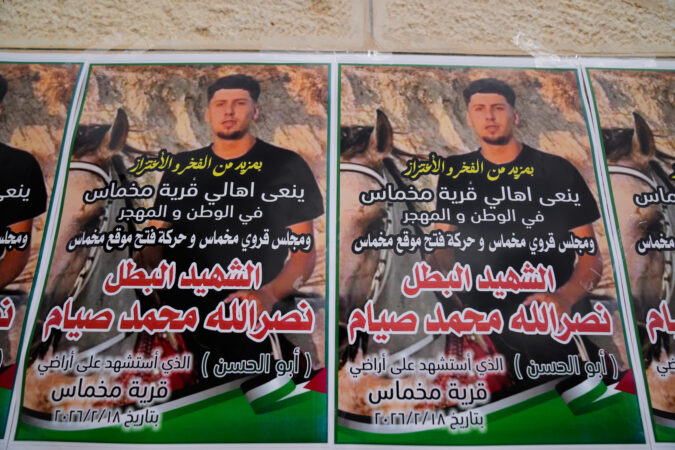
    In a unanimous voice vote, Philadelphia lawmakers passed a resolution to celebrate the life of 19-year-old Nasrallah Abu Siyam, who was fatally shot during a violent clash in a village on Feb. 18, the beginning of the Muslim holy month of Ramadan.

    Members of Abu Siyam’s family appeared in Council chambers Thursday alongside representatives from the Council on American-Islamic Relations, who called for an independent U.S.-led investigation into the killing.

    “You don’t know what it means to live under occupation. You don’t know what these settlers are doing,” said Abdelhamid Siyam, Nasrallah Abu Siyam’s uncle. “When justice is attacked, silence is treason. … We should stand together and pressure all those elected officials to stand with justice.”

    City Councilmember Rue Landau, a Democrat who authored the honorary resolution in partnership with Councilmember Nicolas O’Rourke, said Thursday that other members of Abu Siyam’s family are trapped in the Middle East after flying there after his death.

    They are unable to travel home, she said, due to the ongoing war in Iran and restrictions on airspace.

    Landau also called on the U.S. State Department and the Department of Justice to “conduct a full investigation and pursue justice for Nasrallah.”

    “We demand accountability so that no other family here or abroad has to stand where this family stands now,” she said during a later event alongside Abu Siyam’s family.

    Thirty U.S. senators signed a letter to President Donald Trump’s administration Thursday calling for an independent investigation into Abu Siyam’s killing. Pennsylvania’s two senators, Republican Dave McCormick and Democrat John Fetterman, did not sign it.

    Here’s what else happened in Council on Thursday.

    What was the highlight?

    Prioritizing transit-oriented development: Mayor Cherelle L. Parker’s administration is pushing Council to approve a package of legislation that makes it easier to build apartment buildings near SEPTA stations, measures that proponents see as a way to boost ridership and increase the city’s housing stock.

    Parker transmitted a package of zoning bills to Council on Thursday, but no member formally introduced it. Members said they saw the legislation for the first time on Wednesday and want more time to review it before introduction.

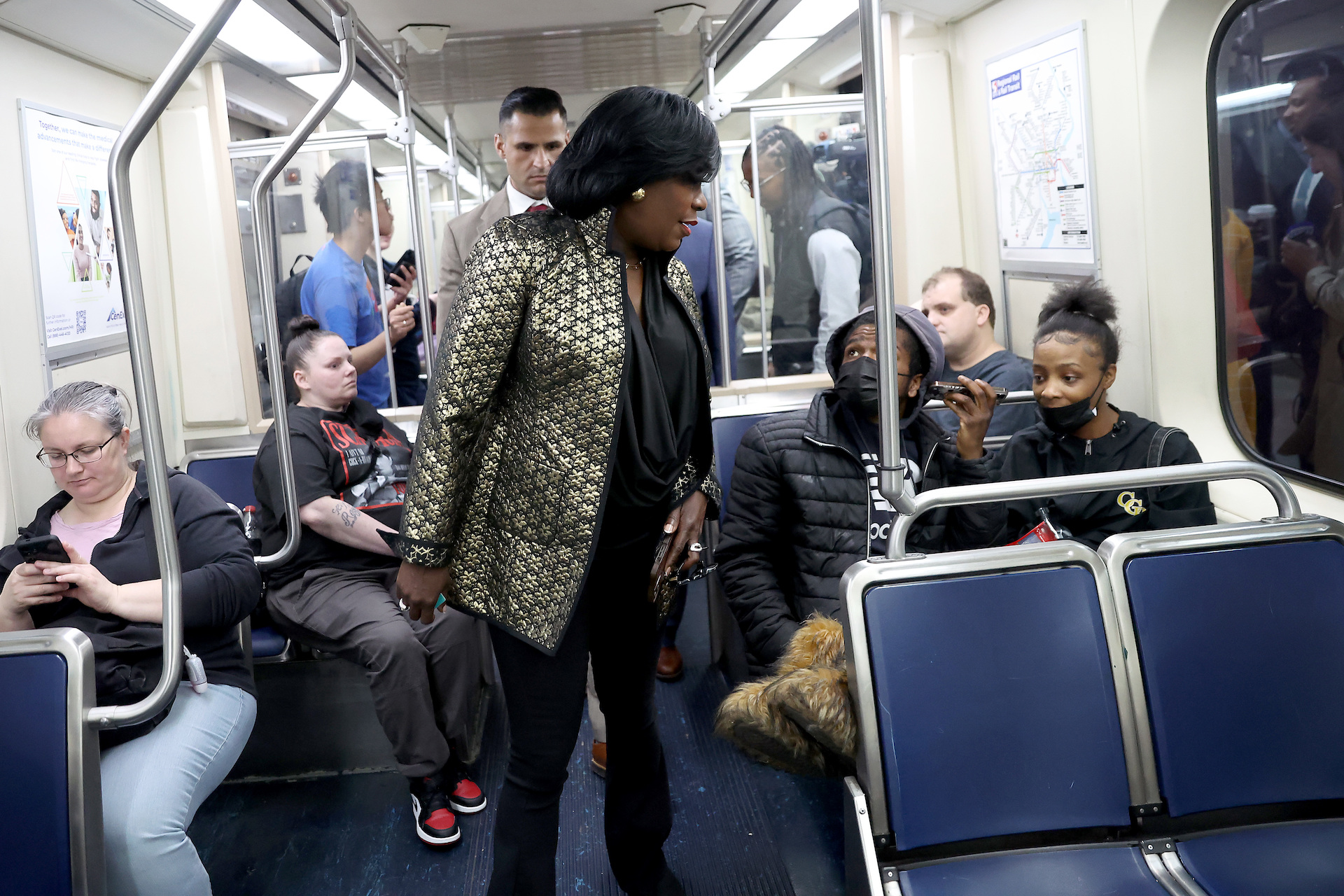
    Mayor Cherelle Parker (center) rides the SEPTA Market-Frankford Line to an event in the Kensington section of Philadelphia, Pa. on Thursday, April 11, 2024.

    The bills are aimed at advancing Parker’s goal to build, preserve, and repair 30,000 housing units.

    Most crucially, one bill expands an existing law that says properties within 500 feet of a Council-designated SEPTA station can receive benefits allowing developers to build more homes. Parker’s legislation increases the radius to 1,320 feet, or a quarter of a mile.

    What else happened?

    Smoke-filled doom: Lawmakers continued their crusade against smoke shops and so-called nuisance businesses Thursday, with Councilmember Katherine Gilmore Richardson bringing legislation to hold commercial landlords accountable for renting to illegal smoke shops.

    The bill is a follow-up to a package of legislation lawmakers passed last year that makes it easier for the city to shut down stores that sell cannabis and tobacco products without permits.

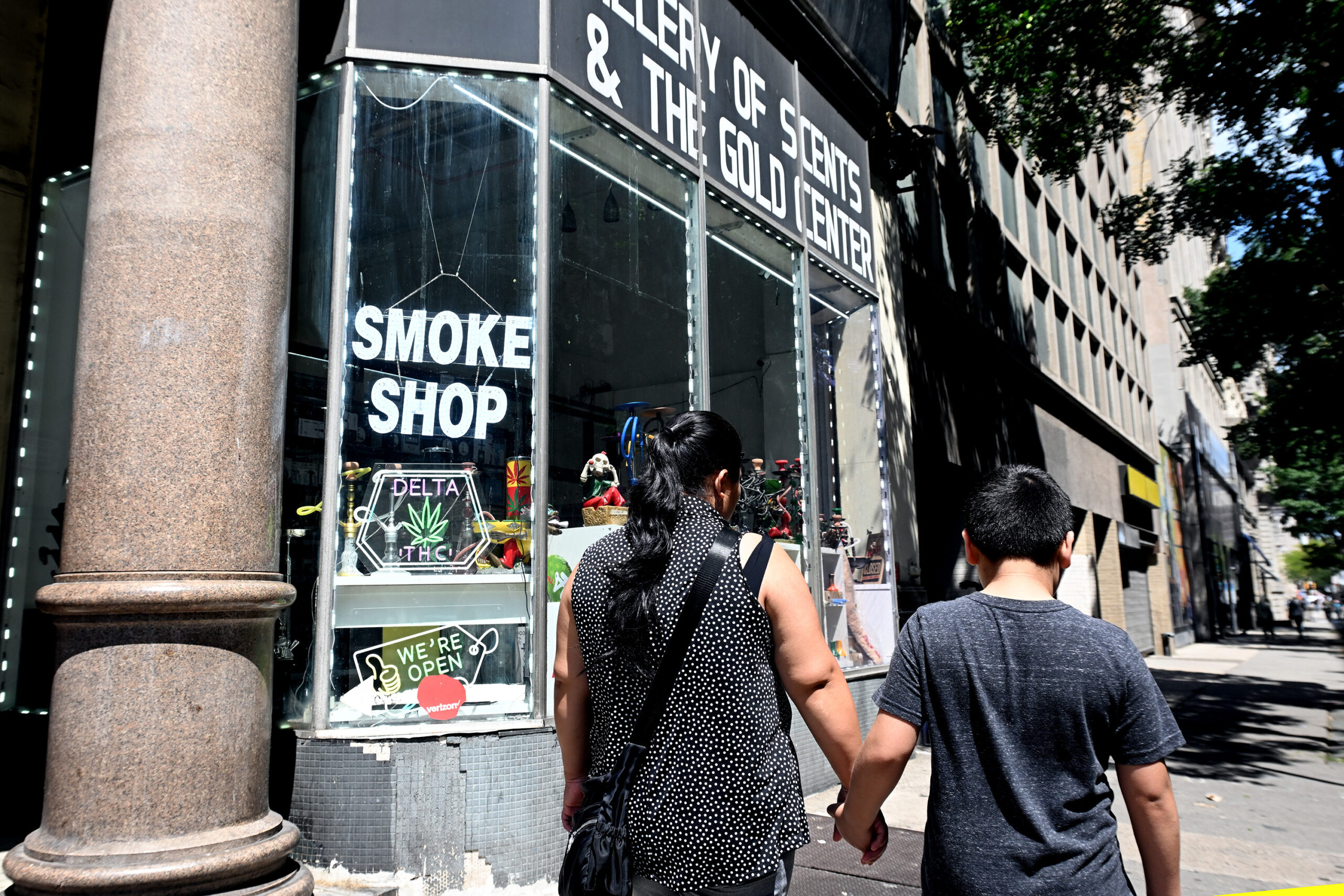
    This file photo shows a city smoke shop exterior on the 1000 block of Chestnut Street in July. City Council has advanced several pieces of legislation aimed at curbing smoke shops.

    Gilmore Richardson introduced a second bill to establish a new license requirement for stores selling products like hemp-based THC and kratom. The ordinance would define the products as “intoxicating substances” and establish a 21-plus age minimum.

    What’s next?

    Block off your calendar: Next week will be a busy one. Parker is scheduled to deliver her annual budget address to Council on Thursday, when she will outline her vision for the coming year.

    The speech will kick off weeks of hearings before Council, when members will have the opportunity to question administration officials from every major department, as well as the leaders of other agencies that receive city dollars, including the city courts, the district attorney, and the Philadelphia School District.

    Quote of the week

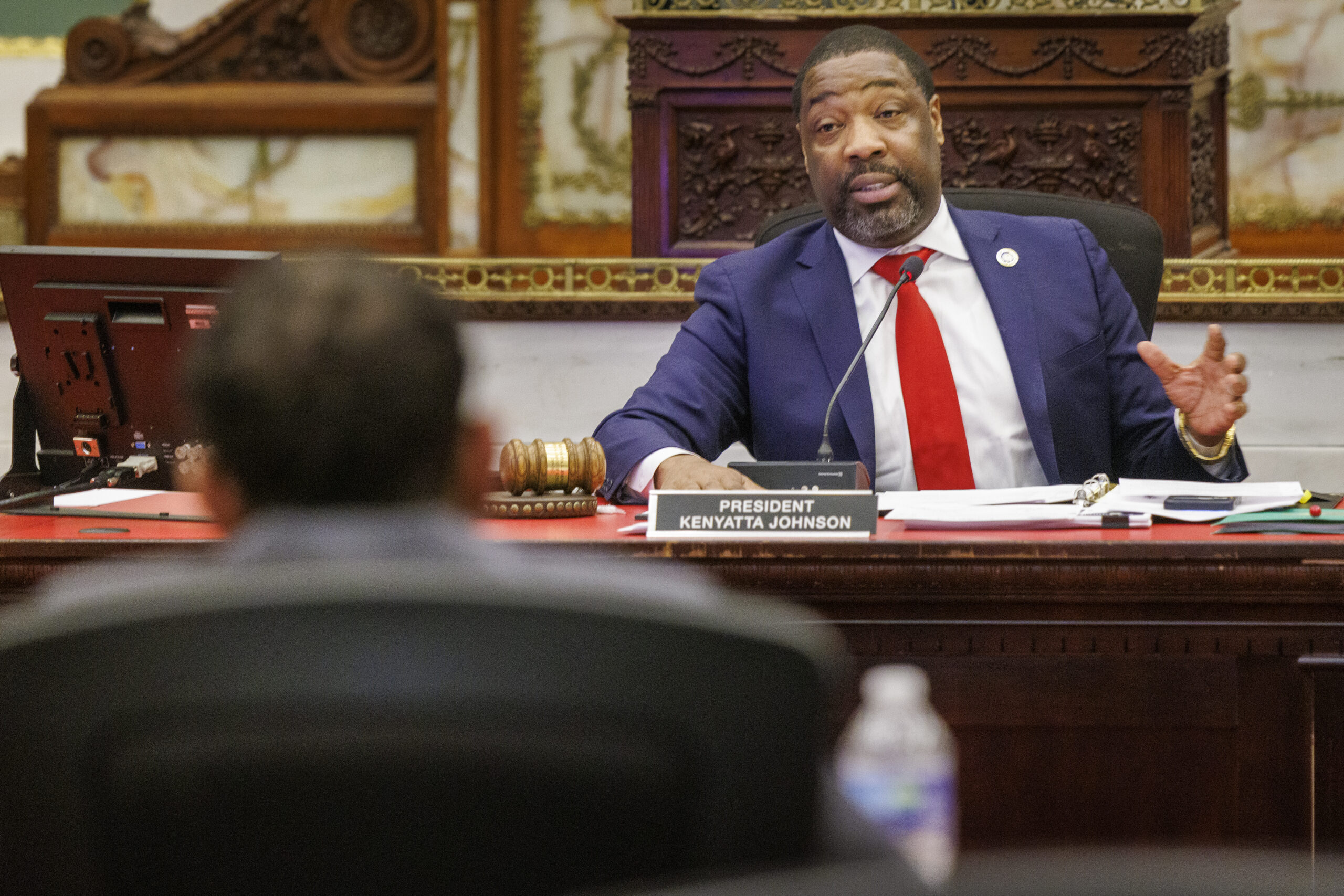
    Philadelphia City Council President Kenyatta Johnson questioning Dr. Tony Watlington, Superintendent of School District of Philadelphia, during a hearing with board members of School District of Philadelphia, Tuesday, Feb. 17, 2026.

    A little school district shade: That was Council President Kenyatta Johnson chiming in on an effort to rename a North Philadelphia street after the late Constance E. Clayton, Philadelphia’s first Black and female schools superintendent.

    Johnson slyly brought up his opposition to parts of the school district’s proposal to close 20 schools as part of its facilities master plan, prompting a wave of “oohs” in the chamber.

    Staff writers Jake Blumgart and Max Marin contributed to this article.

  • Mayor Parker backs legislation to boost housing development around SEPTA stations

    Mayor Parker backs legislation to boost housing development around SEPTA stations

    Mayor Cherelle L. Parker’s administration sent City Council a bill on Thursday to encourage more apartment construction around SEPTA stations, in hopes of boosting ridership.

    The proposal expands an existing law. Currently, if a SEPTA station is made a “transit-oriented development” district — a designation City Council must adopt — then most properties within a 500-foot radius receive a variety of benefits that allows developers to build more housing with less parking than otherwise allowed.

    The legislation sent to Council by the Parker administration would expand that radius to 1,320 feet, or a quarter of a mile.

    The bill is part of a package of zoning legislation meant to boost Parker’s effort to build or repair 30,000 homes in the coming years.

    “Zoning is how we turn housing ambition into housing reality,” said Angela D. Brooks, chief housing and urban development officer. “These bills help us put more homes where our infrastructure can support them, near transit, near jobs, and near opportunity, while respecting the character of the neighborhoods Philadelphians already love.”

    The hope is that SEPTA will benefit from a ridership boost if more housing is built close to transit, and more people will be able to afford to live near public transportation — which, in some areas, is in more expensive and sought-after neighborhoods.

    The zoning overlay grants different types of development benefits depending on the existing zoning around transit stations.

    In a bid to avoid controversies that have undermined similar laws in other cities, land zoned for single-family housing would not be given any development advantage under the law.

    But properties already zoned for dense housing would be allowed to build many more units, with additional benefits given if they provide affordable housing or environmentally friendly design.

    “This package will also increase ridership, reduce costly trips to the [zoning board], and allow more investment in transit stations,” Brooks said. “Zoning may sound technical to some, but investments in transit are something residents can see, touch, and feel every day.”

    Projects that have benefited from the existing transit-oriented development overlay include The Noble, with 360 units, near the Spring Garden stop on the Market-Frankford Line, and a proposal for a 134-unit mixed-income development at the Frankford Transportation Center.

    Land zoned for more modest density would be allowed to build 50% more units. That means if developers could build four units under normal conditions, in a transit-oriented development district, they could build six.

    The overlay requires that the ground floor of commercially zoned buildings have active uses. Curb cuts, parking garages, and one-story buildings are not allowed.

    Parker’s bill further eases some parking requirements, although the requirement for developers building in such areas is already less than under normal zoning rules.

    The bill was circulated to City Council on Wednesday. Members wanted more time to review it before it was formally introduced.

    “In general, I’ve been a proponent of the basic concept of increasing density around our transit stops,” said Councilmember Jamie Gauthier, who chairs City Council’s housing committee.

    “It makes our neighborhoods more lively, more livable,” Gauthier said. “We have a great transit system, and we should be trying to help it be as successful as possible.”

    Because City Council must pass legislation to include transit stations in the zoning overlay, district Council members are given effective control over how many stations will be included in the law’s benefits.

    Both the Broad Street and Market-Frankford Lines run between Council districts, which means half of many stations are under one Council member’s purview while the other half are in another’s control.

    Transit advocates have long hoped for legislation that would automatically apply to all major transit stations, but that idea could prove difficult to get through City Council.

    Gauthier is one of the few Council members who have embraced transit-oriented development. All of the Market-Frankford Line stations in her district are covered by the overlay.

    No stations on the Broad Street Line are included so far.

    “I don’t want to speak about areas of the city that are not mine,” Gauthier said. But in her transit-rich West Philadelphia district, “I do think we can consider expanding that radius more. We know that less people are driving nowadays.”

    City Councilmember Jamie Gauthier is one of the most enthusiastic proponents of transit-oriented development on City Council.

    The urbanist advocacy group 5th Square says that Parker’s bill should be broader.

    The group called for the elimination of parking minimums near transit, an even larger coverage radius, and for multifamily housing to be allowed on land zoned for single-family homes near stations.

    “These bills are a welcome step toward more housing near transit, but their scope doesn’t quite address our massive housing shortage,” said Fae Ehsan, board member with 5th Square Advocacy.

    The other housing-related bill Parker sent to Council includes legislation that would make it easier to build more apartments above commercial buildings on the ends of some rowhouse blocks, which are currently allowed to have only one unit above ground-floor retail.

    The bill would allow owners to convert the ground floor to residential uses if they cannot fill the storefront. The administration believes 7,000 to 12,000 more housing units could be allowed under the change.

  • SEPTA gets $5.5 million in federal funds to add extra service during World Cup

    SEPTA gets $5.5 million in federal funds to add extra service during World Cup

    SEPTA expects to receive about $5.5 million from a federal appropriation to offset the cost of providing transit service in Philadelphia during the FIFA World Cup.

    The regional transportation authority projects it will spend $21.5 million for additional transit runs and extended service hours during the World Cup as well as a the celebration of the nation’s 250th birthday, officials said.

    On Tuesday, the U.S. Department of Transportation announced about $100 million in funding to 11 cities and regions hosting FIFA championship matches, apportioned by formula.

    “We are going to pull out all the stops to serve those big events — while also not missing a beat for our riders who rely on SEPTA every day,“ General Manager Scott Sauer said in a statement. He thanked the region’s congressional delegation and U.S. DOT for the ”much-needed investment to support this historic year.“

    The Philadelphia region’s total grant was $8.47 million, with the remainder of the money going to government entities in New Jersey and Delaware.

    SEPTA said it would spend $18 million for overtime for transit operators and Transit Police, cleaning expenses, longer customer service hours and ambassadors to help people navigate the system.

    Other extra operating costs for the events:

    • $1 million on safety and security, for portable surveillance equipment and a communications system to send police where they’re needed most.
    • $825,000 for signage, including World Cup branded signage, website and app upgrades to help visitors get around, as well as translation services.
    • Another $1.3 million will be spent on support services, SEPTA said.

    Congress earmarked the money to help World Cup host cities and regions in this year’s federal budget, but improvements are required to benefit the general public, not just soccer fans.

    “With the world coming to Philadelphia in 2026, we have a responsibility to be ready,” U.S. Rep. Brendan Boyle (D., Pa) said.

    The federal largesse will “strengthen our transit system so it can handle the surge in ridership during the World Cup,” Boyle said. “Just as importantly, these improvements will benefit Philadelphians long after the tournament.”

    In addition to the extra spending on operations, SEPTA said it is investing about $30 million for infrastructure upgrades in advance of 2026 events, including improvements at Broad Street Line and Market-Frankford Line rail stations expected to be primary hubs for event goers.

    The projects include:

    • Roof replacement and platform resurfacing at NRG Station on the Broad Street Line, which serves Lincoln Financial Field and Citizens Bank Ballpark, where the Major League All-Star game will be held this summer.
    • Upgrades to the Second Street Station headhouse on the Market-Frankford Line.
    • Fern Rock Transportation Center lighting and painting.
    • Realignment of the fare line at City Hall Station on the BSL, as well as platform resurfacing and new LED lighting.
  • Inside Philly’s high-stakes charm campaign to lure the 2028 Democratic National Convention

    Inside Philly’s high-stakes charm campaign to lure the 2028 Democratic National Convention

    It was at the end of last year in the hazy stretch between Christmas and New Year’s when time doesn’t feel real, and some of Philly’s top Democrats were huddled around a secret proposal, racing to meet a deadline.

    The group — convened by Mayor Cherelle L. Parker, her aides, and some key Philadelphia boosters — was preparing a lengthy bid to bring the Democratic National Convention back to the city in either 2028 or 2032, a potential economic boon and a chance to show off in front of lawmakers, celebrities, and international media.

    The confidential proposal to the Democratic National Committee included everything from the city’s hotel space to police outfitting to nitty-gritty details about the electrical grid and voltage capacity at Xfinity Mobile Arena. SEPTA officials drafted a section about the public transportation Philadelphia could offer visitors, and tourism agencies chipped in with insights on hotels and restaurants.

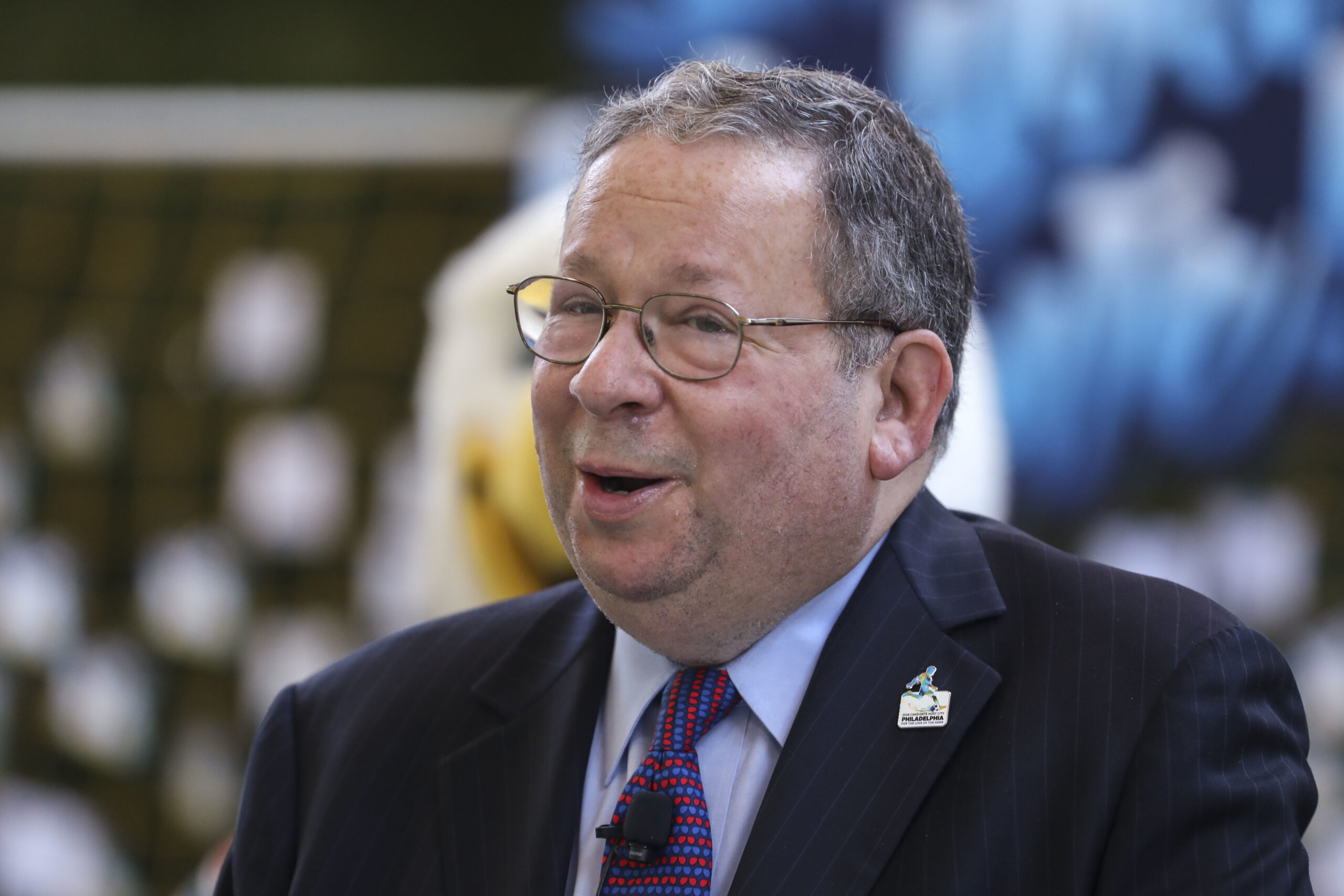
    David L. Cohen, a longtime Democratic fundraiser and the president of the recently formed nonprofit host committee called Pick Pennsylvania, said that while the mayor led the effort, the bid also emphasized the “unity of the region and the commonwealth.”

    “She wanted it to be really clear this is more than a Philadelphia bid,” he said. “This is a unified Pennsylvania bid.”

    It appears the Democratic National Committee was impressed. On Monday, the DNC announced that it is considering five cities, including Philadelphia, to host the 2028 convention, where a Democratic presidential nominee will be coronated. The party is also looking closely at Atlanta, Denver, Chicago, and Boston to hold the early August event.

    What comes next is a campaign to lure the convention to Philly, complete with a carefully coordinated public relations effort and a significant fundraising push. Philadelphia’s host committee for 2016, the last time the city held a presidential nominating convention, raised more than $85 million.

    The DNC has asked host cities to raise $5 million before being selected. Philly’s fundraising, Cohen said, “will be substantially higher than that number.”

    In this 2021 file photo, David L. Cohen speaks as Philadelphia Soccer 2026, the city’s World Cup 2026 bid committee, launched an interactive exhibit at the Independence Visitors Center in Philadelphia. He is now heading an effort to bring the Democratic National Convention to Philadelphia.

    Cohen, a former Comcast executive and erstwhile chief of staff to former mayor Ed Rendell, is leading the effort alongside Daniel J. Hilferty, now the CEO of Comcast Spectacor.

    Hilferty and Cohen have worked together repeatedly over the last two decades to bring major events to Philadelphia, including a successful bid to become one of a handful of North American cities to host World Cup games this year.

    Also involved in coordinating the DNC proposal was Erin Wilson, a Philadelphia native who was a top aide to former Vice President Kamala Harris. She was the national political director for former President Joe Biden’s campaign and planned his 2021 inauguration.

    When the DNC comes to town

    DNC officials are expected to make a final decision on the 2028 site later this year. That call will likely be made by chair Ken Martin in consultation with top advisers and the committee’s Technical Advisory Group, which assesses logistics and operational matters.

    Philadelphia could also have an advocate in State Rep. Malcolm Kenyatta, who represents parts of North Philadelphia and is a DNC vice chair. He is known to have a close relationship with Martin.

    Committee officials and the advisory group will tour each of the five finalist cities for a yet-to-be-scheduled site visit this spring.

    If history is any indication, the city will roll out the red carpet. In 2014, when 18 members of the DNC came to Philly to check out the city ahead of the 2016 convention, the host committee spent six figures to charm them.

    The trip included a tour of Philly’s most popular sites, like Reading Terminal Market and the Philadelphia Museum of Art, as well as a swanky rooftop party and a breakfast at the Comcast Center. Predictably, cheesesteaks were also involved.

    “The site visits are as much about feel as they are about technical details,” Cohen said. “After site visits, the teams who are making choices leave here and they have their socks knocked off. They can’t believe how vibrant the city is.”

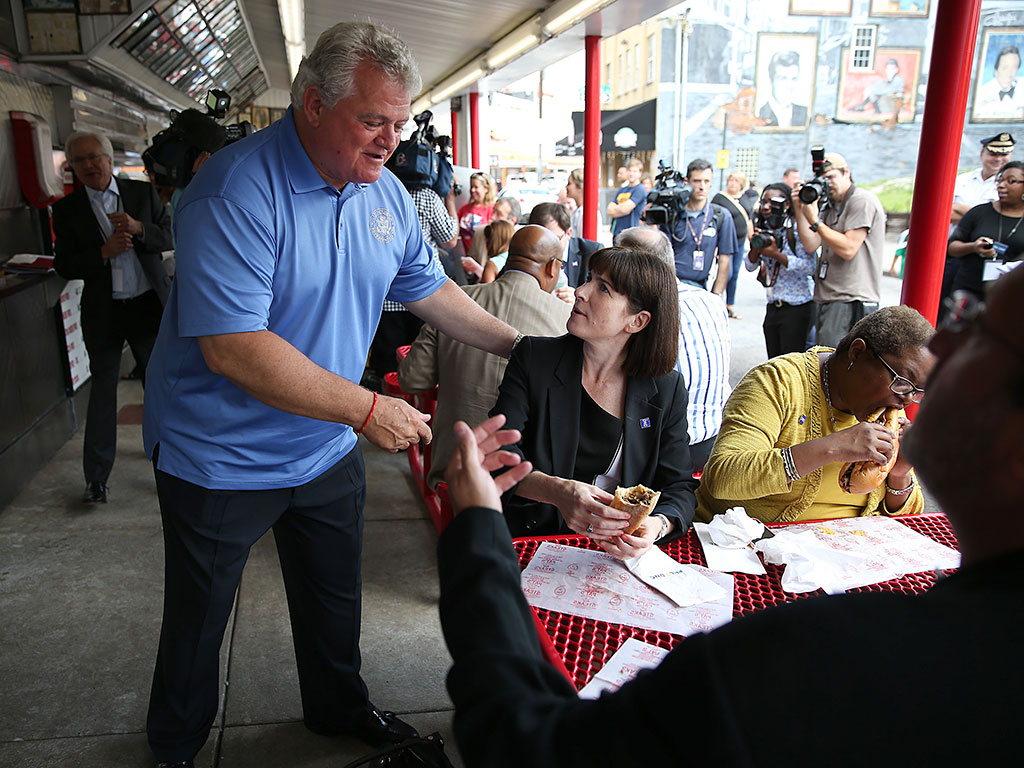
    In this 2014 file photo, Congressman Bob Brady, left, talks with DNC CEO Amy Dacey, center, as they have lunch at Pat’s Steaks in South Philadelphia.

    Ryan Boyer, the head of the Philadelphia Building and Construction Trades Council and a close Parker ally, said one of Philadelphia’s best assets might be its mayor. Parker is an unabashed cheerleader for the city and is leading preparations for several major events this year, including World Cup games, the MLB All-Star Game, and the commemoration of America’s 250th anniversary.

    “She’s the most effective advocate for bringing people together,” Boyer said, “with just her level of passion, her love of the city, and her love of the job.”

    Cohen said he spoke to Parker last year about the potential to bid for the convention, and when she asked him to lead the host committee, he said yes because the city has “a serious chance.”

    “As a friend and longtime supporter of hers, if I didn’t think we had a legitimate shot, I would try to talk her out of it,” Cohen said. “If anything, I have poured gasoline on her flames of enthusiasm and said, ‘We should be all in for this.’

    ”I said, ‘Do what you do best,’” he added. “Get everyone excited about this.’”

    Gov. Josh Shapiro could also play a role in wooing the party. He is one of the most well-known Democratic governors in the country, and is seen by many as a contender for the 2028 Democratic nomination for president.

    That means there is a chance that Shapiro, who was raised in Montgomery County and whose family still lives there, could be nominated in what is essentially his hometown.

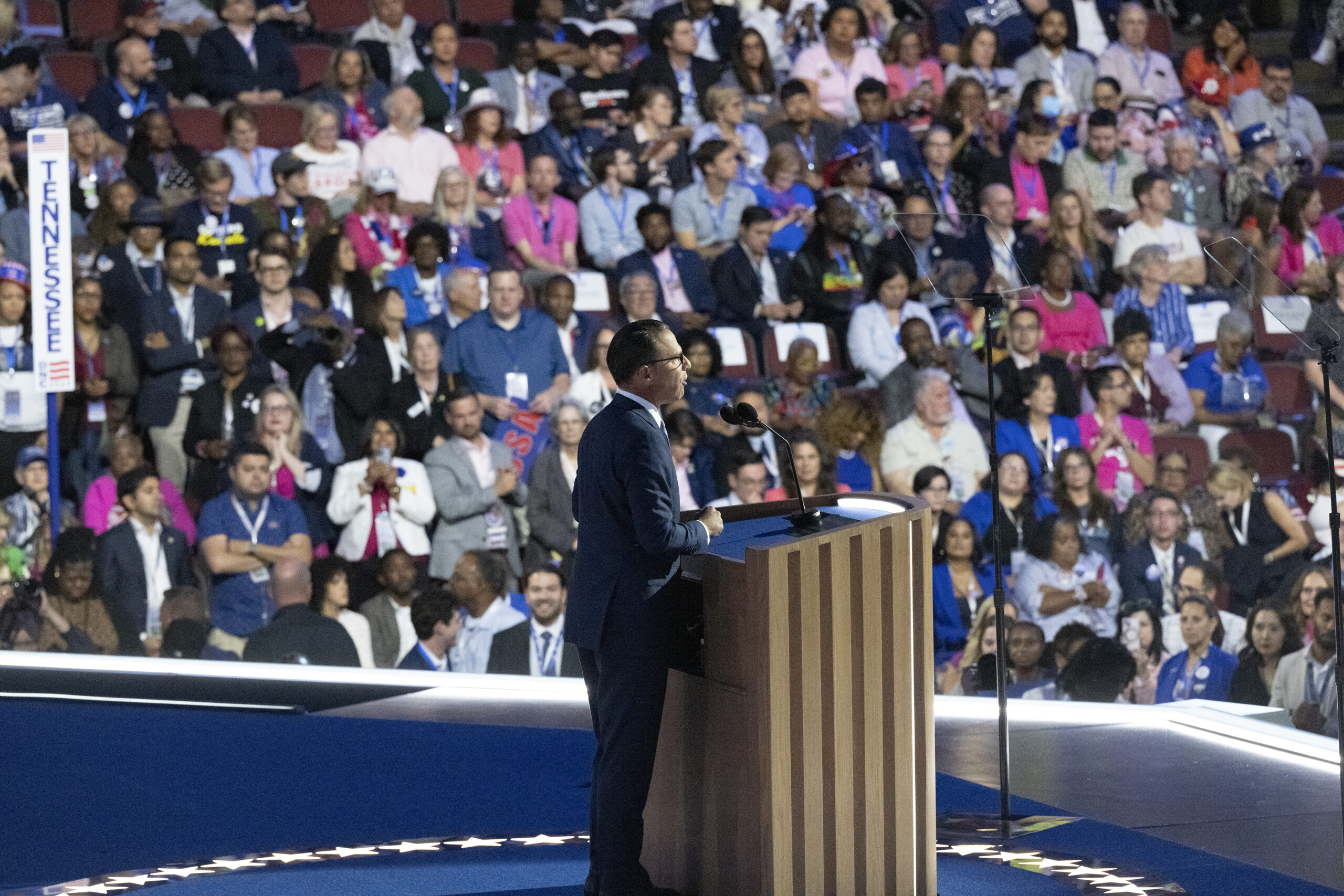
    Pennsylvania Gov. Josh Shapiro speaks during the Democratic National Convention Aug. 21, 2024, in Chicago.

    In a letter to Martin, Shapiro wrote that Philadelphia “would see substantial economic benefits” from hosting the convention and vowed that the state would be “prepared to ensure our infrastructure, public safety agencies, workforce, and business community are equipped to host thousands of delegates and attendees.”

    What’s next: a close look at security and logistics

    Behind the pomp of the DNC’s spring site visit will be a serious evaluation of security, transportation, hotels, and arena logistics.

    The DNC said in a statement Monday that it will value “new and innovative approaches” to hosting a large-scale event that is likely to bring thousands of tourists. In 2016, the convention drew more than 5,000 attendees and an additional 29,000 visitors — nearly 20,000 of whom were media members.

    Nominating conventions are typically designated as National Special Security Events, meaning the federal government leads security because the event is deemed at high risk for terrorism or other criminal activity. That means planners need to know specifics about law enforcement staffing, gear, and other capabilities.

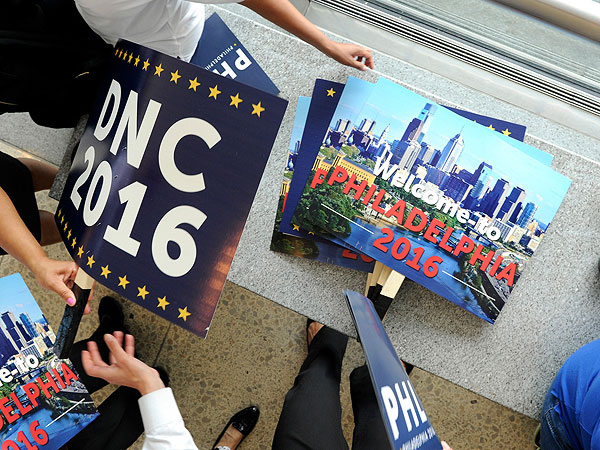
    Placards promoting Philadelphia as the host city of the Democratic National Convention in 2016, while the Democratic National Committee was touring the city in August.

    Support will also have to come from outside the city. During past conventions, federal law enforcement teamed up with Philadelphia police to secure the venue, and they were joined by officers from across the region.

    The DNC also said in its announcement Monday that the committee would prioritize “the importance of forging a strong partnership between the DNC and the host city, including its community, political, and business leaders.”

    To that end, the host committee and Parker asked elected officials and civic leaders from across the state to write letters of support that accompanied the city’s bid.

    Authors ranged from City Council President Kenyatta Johnson, whose district includes the South Philadelphia stadium complex, to labor leaders to Democrats from the Philadelphia collar counties.

    Montgomery County Commissioner Neil Makhija, who wrote a letter to the DNC boosting the bid, said it is important for the committee to see that local governments and law enforcement agencies outside the city are willing to offer support, because “pulling something like this off requires a lot of cooperation on many different fronts.”

    “A real concern now when you’re thinking about hosting a political convention is ‘How are we going to manage public safety and a threat environment?’” he said. “There are a number of reasons to point to our region and see a level of collaboration that inspires confidence.”

  • SEPTA chief gets a three-year contract at $395,000 a year

    SEPTA chief gets a three-year contract at $395,000 a year

    SEPTA general manager Scott A. Sauer on Thursday was given a three-year contract with an annual salary of $395,000 as chief executive of the regional transit agency where he has worked for more than 35 years.

    Board members approved the deal for Sauer, 54, who became interim general manager in late 2024 and then helped guide SEPTA through one of its toughest years, packed with crises over the budget, service cuts, and emergency repairs to Regional Rail cars after several caught fire.

    Sauer was named permanent general manager June 2, 2025, and the contract approved Thursday was made effective on that day. When it expires in 2028, the contract automatically renews for two one-year extensions unless either party declines.

    “I’d like to take a moment to thank this board for their continued confidence in me,” Sauer said. “I appreciate it.” He said members’ support and advice would be “the envy of any chief executive.”

    Sauer would be eligible for cost-of-living pay increases under the contract, dependent on whether there are annual raises for all of SEPTA’s supervisory, administrative, and management employees.

    Sauer had been making $300,879.

    Sauer began as a trolley operator in 1990, following in the footsteps of his late father, Robert, who worked for the former Philadelphia Transportation Co. and SEPTA, its successor, for over three decades.

    At SEPTA, the younger Sauer later became a transportation manager and safety officer. In 2013, he was promoted to assistant general manager of system safety.

    Four years later, he was the assistant general manager for operations, including vehicle maintenance and station upkeep.

    In 2022, Sauer was named SEPTA’s chief operating officer, with infrastructure maintenance, the Transit Police, engineering, and capital projects added to his portfolio.

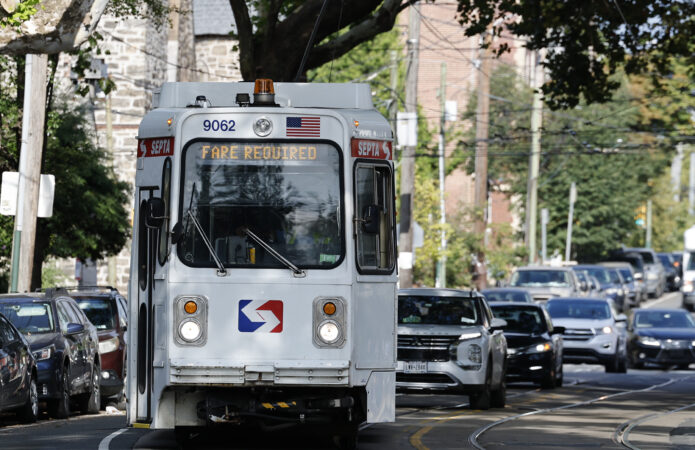
  • SEPTA trolleys will use AI cameras to catch drivers breaking no-parking rules in Philly

    SEPTA trolleys will use AI cameras to catch drivers breaking no-parking rules in Philly

    Beginning Monday, people who illegally park in SEPTA trolley lanes and stops could be caught in the act by automated enforcement cameras, the Philadelphia Parking Authority announced Thursday.

    Plans call for installing AI-camera systems on 30 trolleys across the six lines in the city to identify and ticket the owners of vehicles obstructing the streetcars or making it hard for passengers to board by blocking stops.

    Violations will carry a $51 fine as of April 1. Before then, warnings will be mailed instead of tickets.

    Parking violations are the enemies of surface transit, slowing buses and trolleys, making them less reliable and putting riders in danger.

    Already, 152 SEPTA buses have been using cameras mounted in their windshields to enforce parking rules; ticketing began last year.

    SEPTA, PPA, and the Philadelphia Office of Transportation and Infrastructure Systems are collaborating on the effort. It uses camera systems made installed and maintained by Hayden AI, a San Francisco-based tech company.

    “A single illegally parked vehicle can disrupt service for thousands of riders and create unsafe boarding conditions that force passengers into moving traffic,” PPA executive director Rich Lazer said in a statement.

    “This is more than a minor inconvenience,” he said.

    Legislation sponsored by Councilmember Mark Squilla and enacted in 2023 authorized using cameras mounted on buses and trolleys to enforce no-parking rules in Philadelphia.

    “One of the most annoying things about this city is people stopping their cars wherever they want to stop them, in bus lanes, double parking. It just screws everything up,” then-Mayor Jim Kenney said at a news conference.

    According to a 2019 study SEPTA commissioned from Econsult Solutions, Center City congestion causes 1.7 million hours of passenger delays per year, adding $15.4 million to yearly operating costs.

    And then there is the almost incalculable cost to people who depend on buses and trolleys.

    “In a city where 42% of Black residents and 50% of impoverished households do not own a car, efficient public transit is paramount to creating a strong transportation network that better provides economic opportunity for all,” said Christopher Puchalsky, director of policy and strategic initiatives for OTIS.

    In a 70-day trial in the spring of 2023, windshield-mounted video cameras recorded 36,392 instances of illegally parked vehicles blocking Center City bus-only lanes and bus stops in West Philadelphia and Upper Darby.

    In some situations, SEPTA bus operators can steer around parked cars. Trolleys, running on fixed rails, don’t have any real flexibility when they are boxed out of their lanes.

    SEPTA officials say bus speeds have improved on routes using the cameras. An average of about 14,746 violations are issued each month, according to PPA.

    The cameras use artificial intelligence to determine if a car is stopped or parked to obstruct transit lanes and stops. Then, the systems transmit the vehicle’s license plate number and precise location to the Philadelphia Parking Authority using cloud technology.

    “Keeping trolley zones clear isn’t just about enforcing parking rules — it’s about keeping Philadelphia moving,” said Marty Beard, CEO of Hayden AI. He added that Philadelphia will be the first city to deploy the cameras on trolleys.

  • This Philly-founded company is selling empanadas out of vending machines. Here’s where to find them.

    This Philly-founded company is selling empanadas out of vending machines. Here’s where to find them.

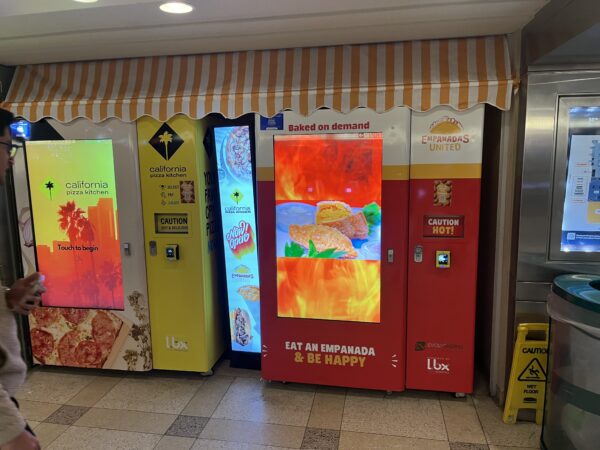
    The fire-engine-red Empanadas United machine arrived in Philadelphia last fall. It appeared in the lobby under the SEPTA Regional Rail tracks at 30th Street Station, where yearslong renovations have shut restaurants, leaving a gap for automation to fill.

    The empanada machine works like this: Tap your card. Choose one of four fillings. Whirr, beep, the ovens ignite, the rich smell rises. A minute passes. A pair of mottled, tan, crusted, half-moon-shaped empanadas, each bigger than a man’s hand, drop into a topless personal-pizza-sized box. The little plastic door opens, and your account is $8 lighter.

    That’s a premium price compared to what you pay in Philly’s corner stores; but it costs extra to eat in a transit hub. The empanada machine is one of several rival meal-vending machines at the station, such as the California Pizza Kitchen machine that charges $12 for a plain, 7-inch pizza.

    These turnovers were formed — from flour and fat, chicken or beef, sazon and cebolla — last night or yesterday, at Empanadas United. The Philadelphia-based empanada bakery serves restaurants across the region, from its base 15 blocks north of the train station.

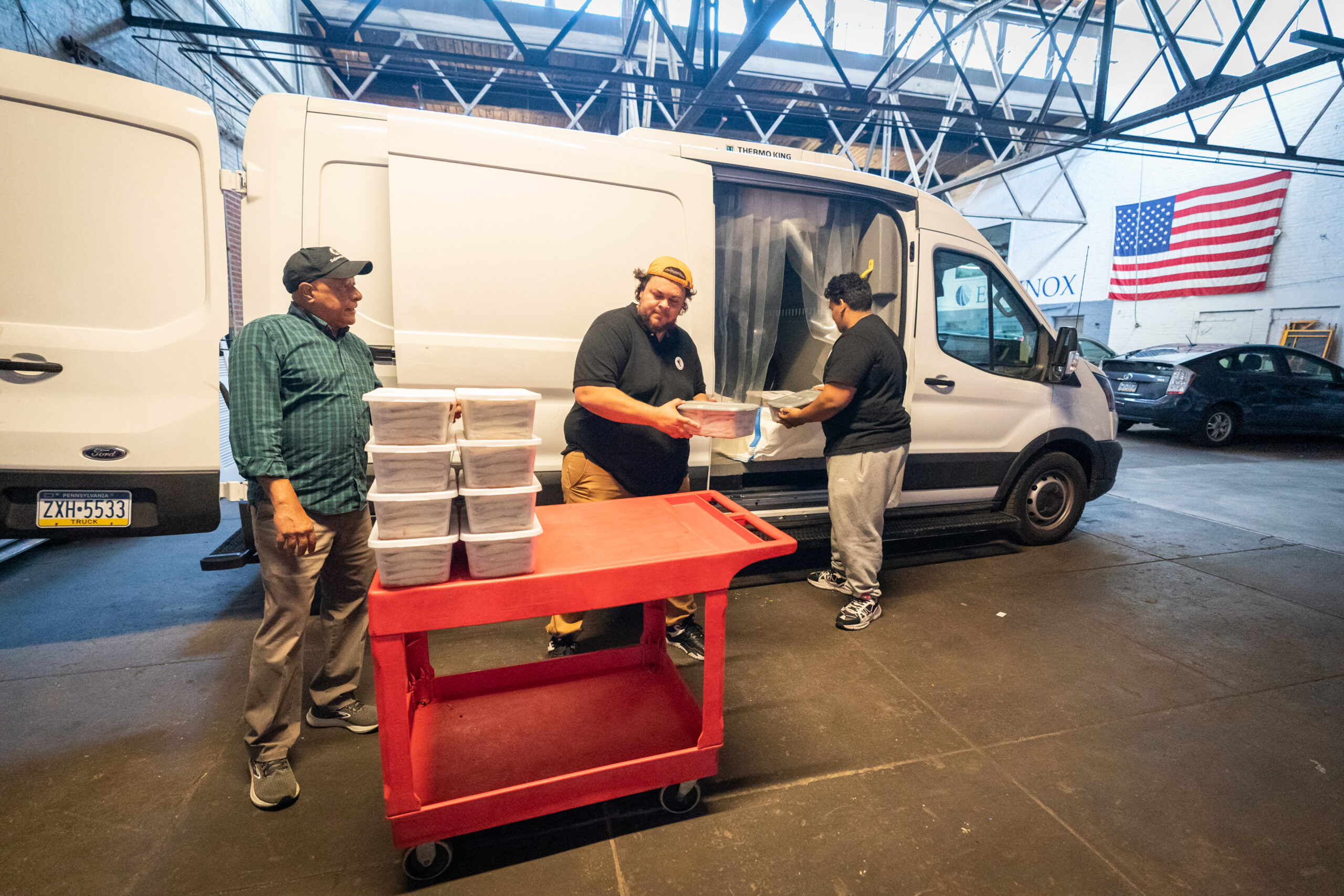
    Pedro Rodriguez (left) with Pedro Rodriguez (center) and his son, Yorby Rodriguez, load empanadas for delivery at Empanadas United in Philadelphia in 2024.

    The vending machine, assembled by LBX Food Robotics of Sunnyvale, Calif., used two ovens to finish the turnovers — convection for the crust, infrared for the fillings. It is also furnished with a microwave oven, for use with prepared foods, but the empanadas don’t need that. The machine sees steady use, say SEPTA staff who watch the busy lobby below the train platforms.

    The machine is profitable, says Victor Tejada, the former Comcast designer who started Empanadas United in 2023. The bakery, using order software including Tejada’s Dominican Food App, was supplying empanadas to takeout customers at 160 stores, Tejada says, when he and his partners sold it last year to Virtual Dining Concepts (VDC). The acquirer says it has taken the brand national and expanded service to more than 500 locations — plus a handful of vending machines, starting with the one at 30th Street Station. Tejada stayed on to run the brand.

    The Philadelphia empanada factory makes a fraction of the empanadas now sold under its name. In other cities they are made by local bakeries to Empanadas United specifications, according to Adam Robin, VDC’s chief operating officer.

    Taking brands national

    Florida-based VDC focuses on taking local and celebrity food brands national, contracting chain restaurants, food delivery services, and other food retailers. They aim to set standards so the products can be reproduced in local plants anywhere and mass-marketed fresh. Its other brands include Barstool Sports’ Pardon My Cheesesteak, MrBeast Burger, and MLB Ballpark Bites.

    VDC last year hired Evolvending, founded by former VDC executive Valentina Ellison, to deploy the Philly empanadas in machines at transit centers, as colorful working billboards for the brand.

    “Empanadas United has a really excellent concept, Victor Tejada has an entrepreneurial spirit that we love working with, and we are growing the brand all over the country,” said VDC’s Robin. He learned the restaurant business as a teenager, rising from busboy to chef, and joined VDC as chief operating officer in 2021.

    “We are a virtual dining company. We targeted this brand for acquisition, we bought it last year, we manage the online storefronts,” Robin added. The company has sold more than 2 million empanadas since the deal, and plans to sell six million this year, he said.

    The machines, a small part of total Empanadas United distribution, each have 60 slots, each of which holds two empanadas, filled on a two-day cycle, according to Robin. If they sell out, that’s more than 20,000 empanadas and $80,000 per machine per year.

    “They cover their costs. We are thinking of expanding them,” Robin says.

    Evolvending has also put Empanadas United machines at Boston Logan Airport and Hartsfield-Jackson Atlanta International Airport. But it’s not yet at Philadelphia International Airport.

    The company also hasn’t set up Empanadas United machines in its hometown of Miami yet, while it considers what flavors to offer in that large and diverse market, Robin said. Among empanada fans, “Some love Venezuelan, some Cuban, some Mexican, and some like fun flavors like apple pie.”

  • Philly’s Greyhound station is one step closer to finding a permanent home

    Philly’s Greyhound station is one step closer to finding a permanent home

    Lights shine from a window of the abandoned Greyhound intercity bus terminal on Filbert Street as construction crews demolish fixtures and begin renovations ahead of a May reopening.

    While the old depot is ready for crowds of travelers attending high-profile special events this year, the city Department of Planning and Development has identified three possible locations for a permanent intercity bus station.

    Officials sifted through 208 possible locations over the past two years before zeroing in on the three sites:

    • Eighth and Arch Streets: A pair of parking lots on Arch Street near Eighth Street next to the African American Museum. The lots, at 701-709 and 721-737 Arch St., are owned by the city and Parkway Corp.
    • 15th and Vine Streets: The Philadelphia Gateway Garage at 1540 Vine St. along with an adjoining parking lot. They are owned by the Pennsylvania Department of Transportation and the Philadelphia Parking Authority.
    • Near 30th Street Station: A parking lot just north of 30th Street Station, at 2931 Arch St., near the Cira Centre office tower.

    On Wednesday, the city Planning Commission is holding a public open house at Independence Visitors Center from 6 to 8 p.m. People can learn about the sites, share their ideas, and ask questions about the future home of an intercity bus facility.

    There’s also an online survey collecting opinions about what the intercity bus station needs and where it should go, due March 13.

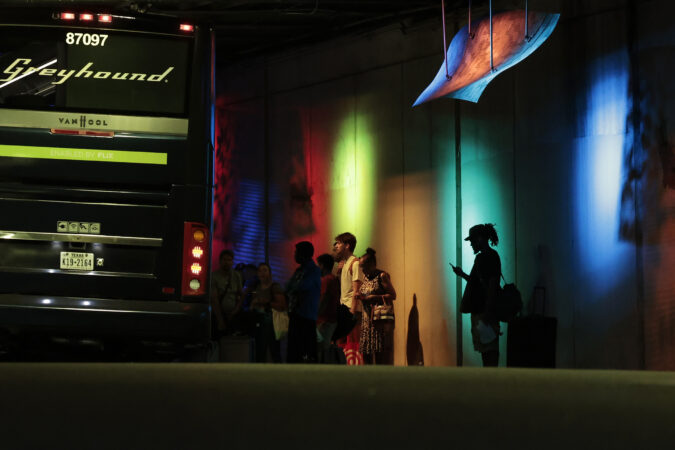
    The former Greyhound terminal at 1001 Filbert St. “is not a long-term solution for the city’s intercity bus needs,” city officials say, though it will provide a safe and comfortable indoor station for travelers, as opposed to the current, haphazard outdoor curbside loading zones along Spring Garden Street near Columbus Boulevard.

    It is scheduled to reopen in plenty of time for events celebrating America’s 250th birthday and World Cup soccer tournament matches in the summer.

    That’s why the city turned to the old station as a stopgap solution. The Philadelphia Parking Authority will operate the facility under a 10-year renewable lease with the private group of New York investors that owns it.

    The city says its goal is a modern “transportation hub” with amenities for travelers and bus operators and, ideally, some development built around the facility. It would be owned by the city.

    “Public ownership means it won’t be closed down by a landlord or private bus company,” the planning department said in a statement. In addition, the forever depot “could be designed to have housing in the floors above the station or retail spaces within the station. These uses could help support … construction and operation.”

    Why was Philly’s Greyhound terminal moved?

    Greyhound ran the terminal at 10th and Filbert for more than three decades but pulled out in June 2023, ending its lease with the owners amid the bus company’s push to cut costs by shedding real estate it owned or rented nationwide.

    Other intercity bus carriers have done the same, operating from curbsides in a number of cities.

    Greyhound may have had to leave the property anyway because the Philadelphia 76ers in 2022 proposed building a new arena on top of it and Filbert Street.

    When those plans fell through, the building was empty again, while Greyhound, its parent company FlixBus, and family-owned Peter Pan Bus Lines were operating at curbside on the 600 block of Market Street. That site, chosen by city officials, lacked benches, bathrooms, or shelter for customers.

    Traffic was a mess, and SEPTA had to reroute some of its metro bus routes for a time.

    In November 2023, Greyhound and the other carriers moved operations to a corner in Northern Liberties along Spring Garden Street with more space than the Market Street block. City officials promised it was temporary, but the “station” is still there, with attendant trash and disruptions to local business.

    Plans to move intercity bus operations elsewhere collapsed amid community opposition, notably to a proposal to use the first level of an Old City parking garage at Second and Walnut Streets as a temporary terminal.

    Consultants and city planners picked 35 potential sites for closer analysis. They were looking for places that could accommodate a multistory, mixed-used development in addition to a station and that were close to Center City or University City, transit, and highway ramps.

    They also preferred a publicly owned space not already marked for development, according to a document prepared for the public meeting.

    In the end, three places checked most boxes.

    (function() {
    var l2 = function() {
    new pym.Parent(‘GREYHOUNDMAP.html’,
    ‘https://media.inquirer.com/storage/inquirer/projects/innovation/arcgis_iframe/GREYHOUNDMAP.html’);
    };
    if (typeof(pym) === ‘undefined’) {
    var h = document.getElementsByTagName(‘head’)[0],
    s = document.createElement(‘script’);
    s.type = ‘text/javascript’;
    s.src = ‘https://pym.nprapps.org/pym.v1.min.js’;
    s.onload = l2;
    h.appendChild(s);
    } else {
    l2();
    }
    })();

    Site pros and cons

    Eighth and Arch Streets

    The Eighth and Arch site has room for 18 bus parking spots, the planning department said. It could fit a 113,000-square-foot station and an overall 640,000-square-foot development.

    Strengths: Proximity to several transit stops and to I-676 and I-95, as well as the potential to build public parking above the station and to use the African American Museum building when that entity moves to the Parkway.

    Challenges: The ownership, split between the city and a private corporation, could require coordinating with the Federal Detention Center there on the southwest corner, and buses may need to be routed through Chinatown.

    15th and Vine

    At 15th and Vine Streets, the Gateway garage could fit 16 bus slips, a 112,000-square-foot station, and a 1.37 million-square-foot development, planners say.

    Strengths: It’s next to I-676 and close to transit. Plus, it is owned by PennDot and operated by PPA.

    Challenges: The parcel is split in ways that could hinder bus circulation, and Spring Street nearby would need to be converted to one-way.

    Near 30th Street Station

    The site at 30th and Arch Streets could fit 12 bus slips as is, or the deck on which the lot sits could be expanded to fit 24 spaces.

    Strengths: The site has quick access to SEPTA and NJ Transit stops, Amtrak, and I-76. There are dining options in the area.

    Challenges: Amtrak owns the property, however, and the city would have to coordinate with the company to develop over the railroad tracks and the structural work needed to strengthen the lot and ramps for heavy bus traffic. PennDot also has said there would have to be substantial work to the entrance and exit ramps to the Schuylkill Expressway.

    What’s next?

    The city plans to consider the feedback it gets Wednesday, update the schematics, and then hold another public event later in the year. It hopes to have a final report by the end of 2026 that names the site.

    And then begins the long process of acquiring the site, designing the project, and figuring out how to pay for it.