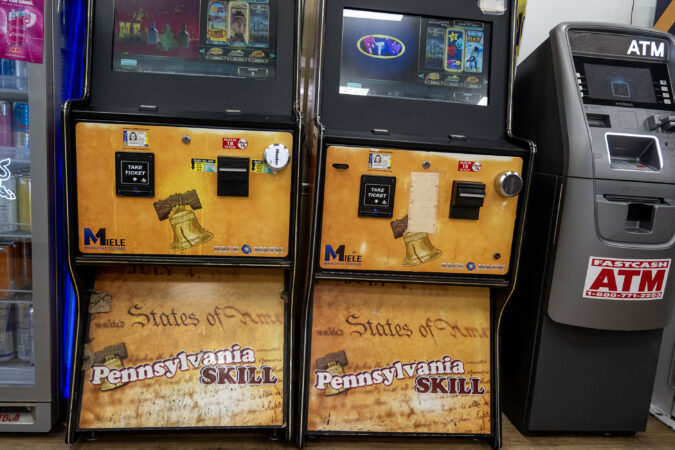
Amid rising inflation and business costs, many Philadelphia corner stores, bars, laundromats, and smoke shops have turned to skill games, the slot machine look-alikes, to help keep their slim margins afloat.
The machines, which shop owners say also encourage their customers to linger in stores and make additional purchases, are particularly profitable because theyare not taxed or regulated like slot machines — and they have been operating without state oversight in a legal gray area for more than a decade. But a recent state Supreme Court ruling may force that tochange.
Last week, Pennsylvania’s highest court handed down a decision deeming skill games the same as slot machines. That means the skill game terminals proliferating around the state will soon be illegal if not operated and taxed at 52%, and housed in a highly regulated casino or truck stop with a license to carry slot machines. Those terms will take effect in less than four months unless the state legislature intervenes.
Owners and clerks at several corner stores throughout Philadelphia that offer the games say they do not contribute a lot of revenue to their establishments directly, but they foster more of a lounge atmosphere in the shops that leads patrons tostay longer and purchase more snacks, drinks, lottery tickets, and other goods. Many of the business owners said they are willing to stomach a tax on skill games, but additional regulations would make them rethink keeping the machines.
José Pérez, who runs a corner store on Opal Street in South Philadelphia, said his store runs on incremental profits. And, he said, when people play the skill game machines and start feeling lucky, they often are inclined to make other purchases there.
“This business is about getting a little bit of money from every product, and the machines are a tiny source of income that adds up to that,” he said in Spanish between transactions at the store’s register. “While people play, they buy other stuff in the store. And if they win, they buy lottery tickets. Because when someone has one vice, they probably have two.”
Tax proposals from Harrisburg
Lawmakers in Harrisburg have for years failed to reach an agreement on how to tax and regulate the so-called skill games
The issue has proved to be tricky in Pennsylvania’s split legislature, where Democrats narrowly control the House and Republicans control the Senate. The skill games industry leader, Georgia-based Pace-O-Matic, long maintained a friendly relationship with the Senate GOP, and the Republican lawmakers appeared willing to support policies that benefited them. But last year, the goodwill began to sour after the company backed political campaigns against incumbent Republican state lawmakers who did not support its requested low tax rate on the machines.
State Rep. Danilo Burgos (D., Philadelphia) and State Sen. Anthony H. Williams (D., Philadelphia) have introduced a bipartisan bill in their chambers to impose a $500-per-month fee on each skill game machine operated in Pennsylvania, with a 50,000-machine cap across the state. There are currently an estimated 70,000 skill game machines in Pennsylvania, according to the state attorney general’s office.
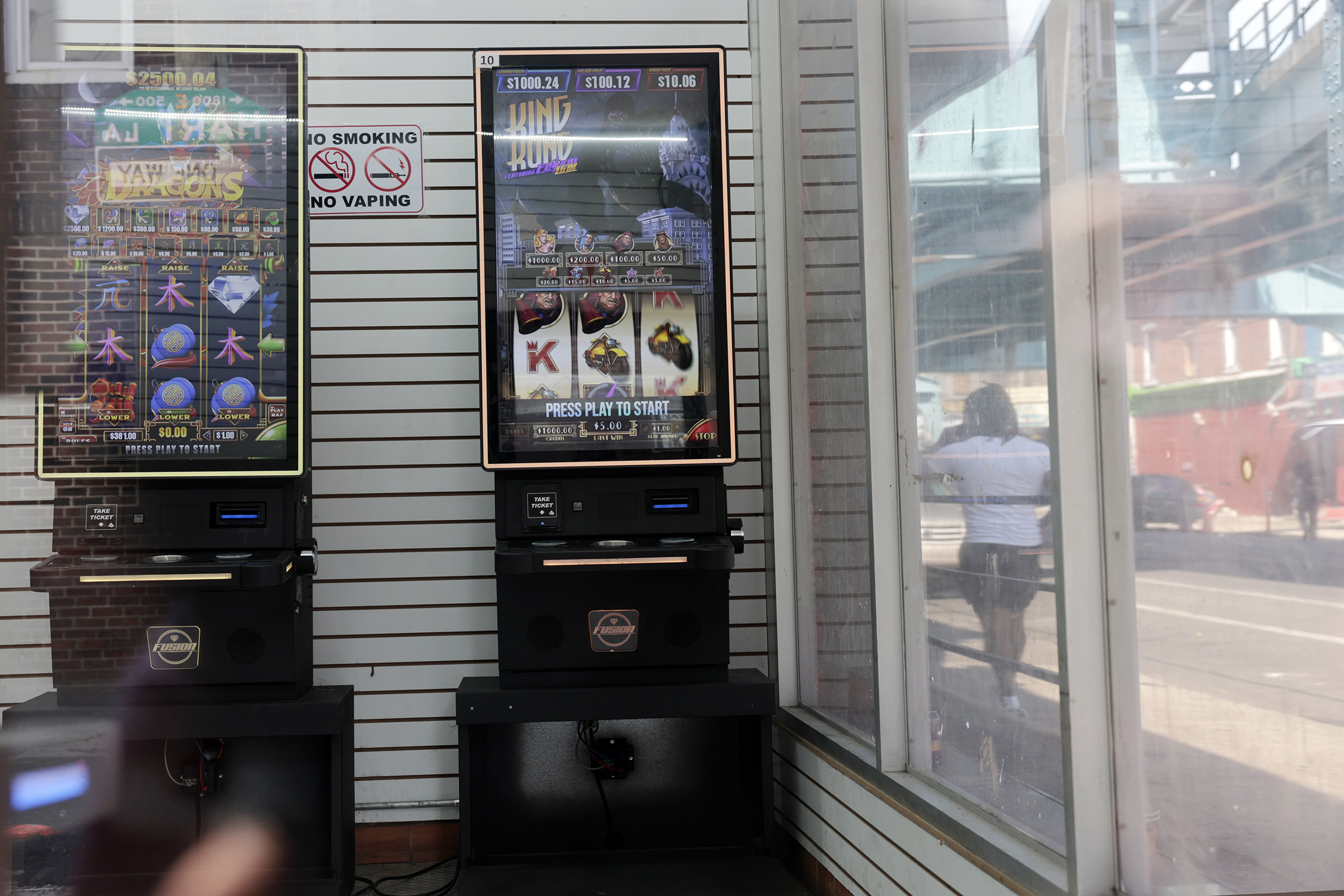
Skill games can be seen through the door of a mini mart on Kensington Avenue in the Kensington section of Philadelphia on Wednesday, July 30, 2025.
The proposed legislation would split revenues among transit and infrastructure, local governments, and state police for enforcing the cap and fee. The bills also prohibit small businesses whose “primary source of net revenue” is from skill games, in an effort to prevent mini casinos in stop-and-go corner stores around the city. Burgos estimates the regulations would bring in $300 million in new revenue to the state in their first year.
The bill includes additional protections for Philadelphia, where City Council voted in 2024 to ban the machines. The ban never went into effect, after a lawsuit was filed seeking to block it. In the legislation before the General Assembly, Philadelphia has specific carve-outs that would allow city officials to block stop-and-go businesses or “chronic nuisance” businesses from getting a license to carry the games.
Surrounded by hundreds of skill games supporters at a news conference Wednesday on the Capitol steps in Harrisburg, Williams said rank-and-file lawmakers would hold up passing the state budget, due June 30, if there is not a deal to protect small businesses from losing their skill games altogether.
“In this time when everybody talks about affordability, I can’t afford a 52% tax,” Williams said.
The fee-per-machine option offered in the Democratic-sponsored bills is backed by Pace-O-Matic, which has spent millions of dollars on political campaigns and lobbying in the state, in addition to millions more spent by other parts of Pennsylvania’s booming gambling industry.
Meanwhile, a separate proposal backed by the Senate GOP and penned last year would set the tax at 35% on gross terminal revenue, in addition to annual license fees. A small portion of those fees would go toward the state’s resources for problem gambling.
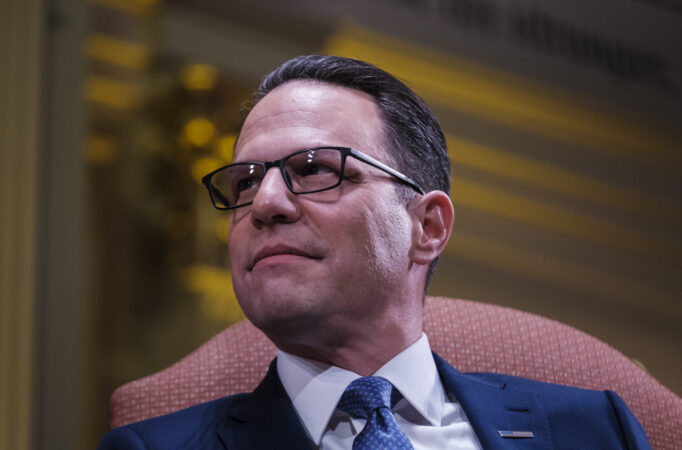
Gov. Josh Shapiro, a first-term Democrat, has proposed taxing the machines at the same rate as slot machines — a hefty 52% levy on each machine’s net revenue — in his last two budget proposals. As the machines have continued to proliferate around the state, Shapiro’s office estimated the newly regulated industry could bring in nearly $800 million in revenue in its first year.
Uncertain future with uncertain revenue
Philly store owners were divided on whether it would be worth keeping the machines if they needed to pay a lofty tax on either housing the devices or the profits they made on them.
Andrew Karki, who operates a laundromat near Pérez‘s store in South Philadelphia, said the machines occupy the customers while they wait for their laundry to finish and, as at Pérez‘s store, lead to purchases of candy and soda from the small bodega he runs inside the laundromat.
He estimated the machines make up 15% to 20% of his monthly revenue, and he said he would likely be willing to take on a tax on the games, even a rather large one, to keep them around.
“It’s hard, but we got to pay it. We got to pay it,” Karki said.
For others, like Diego Reyes, who runs a secondhand shop on Kensington Avenue with about a dozen skill machines inside, taxing the small businesses for the machines does not seem fair. The terminals are often owned by small amusement companies, and are largely operated by Pace-O-Matic. The business owners get a cut from the machine’s revenue for allowing the terminal in their building.
“They should tax the owner,” Reyes said in Spanish, wearing a Phillies cap and T-shirt with a size-medium sticker still stuck on the back, as three people played the machines.
Pérez agreed that any tax should be on skill games companies and not on the businesses that carry them.
It is frustrating to think another tax may be coming down the line,he said,when small-business owners already pay so many of them and see little return on the investment in the community.
“Look outside, that pothole has been there for six months. We have no safety,” Pérez said. “What do you want me to pay more taxes for if you are not doing anything to better the conditions with it?”
Staff writer Isabel Maney contributed to this article.
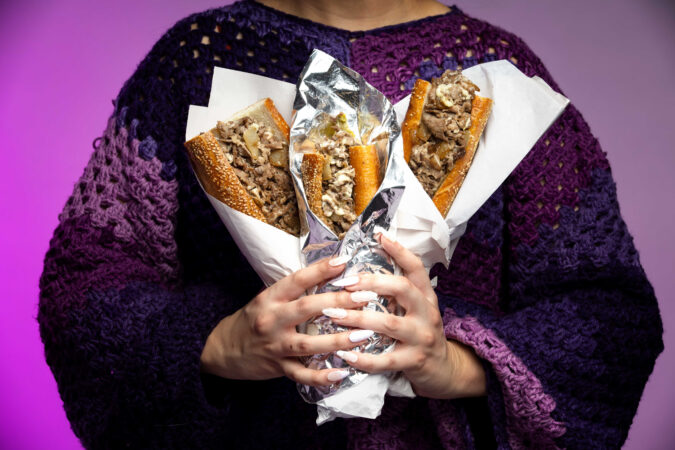
What are the foods that tourists should try on their trip to North America for the World Cup? Apparently, the Philly cheesesteak is way up there, even higher than tacos in Los Angeles or Cuban sandwiches in Miami.
With the 2026 World Cup spanning 16 host cities across three countries, writer Amy Harris found a tour of 16 “completely different food cultures” for this guide. Canada Sports Betting scored the “hero” dish of every host city based on source frequency, local support, tourist recognition, city-specificity, and cultural significance. The result: a ranking of the most unique city-specific dishes.
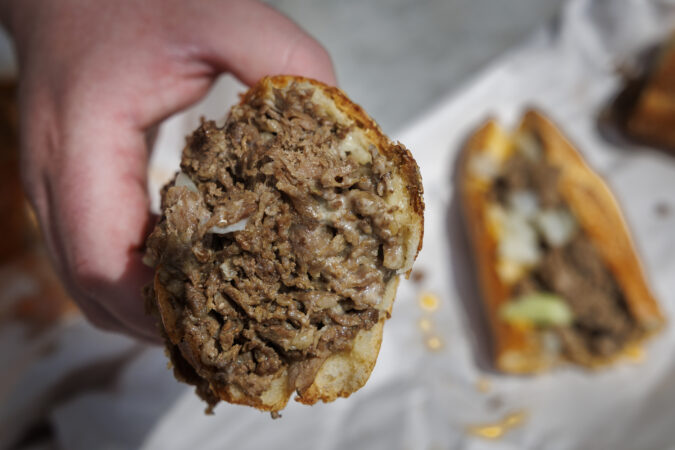
In Philadelphia, “the cheesesteak … defines the city’s entire culinary reputation internationally,” Harris wrote. The iconic sandwich with “shaved rib eye on a hoagie roll with Whiz, provolone, or American was invented by Pat Olivieri in South Philadelphia in 1930,” she continued. “Locals will tell you DiNic’s roast pork at Reading Terminal Market is actually the city’s best sandwich. That internal argument is part of what makes Philadelphia interesting.“
The cheesesteak is, for better or worse, depending on your point of view, No. 3 on The Inquirer’s 76 iconic Philly foods, with only one other sandwich — the hoagie — surpassing it. (Water ice was also rated above cheesesteaks on The Inquirer list.)
“The cheesesteak, much like the city in which it was invented, is a working-class sandwich,“ wrote Inquirer reporter Tommy Rowan. “Its rugged beauty is in its simplicity.“
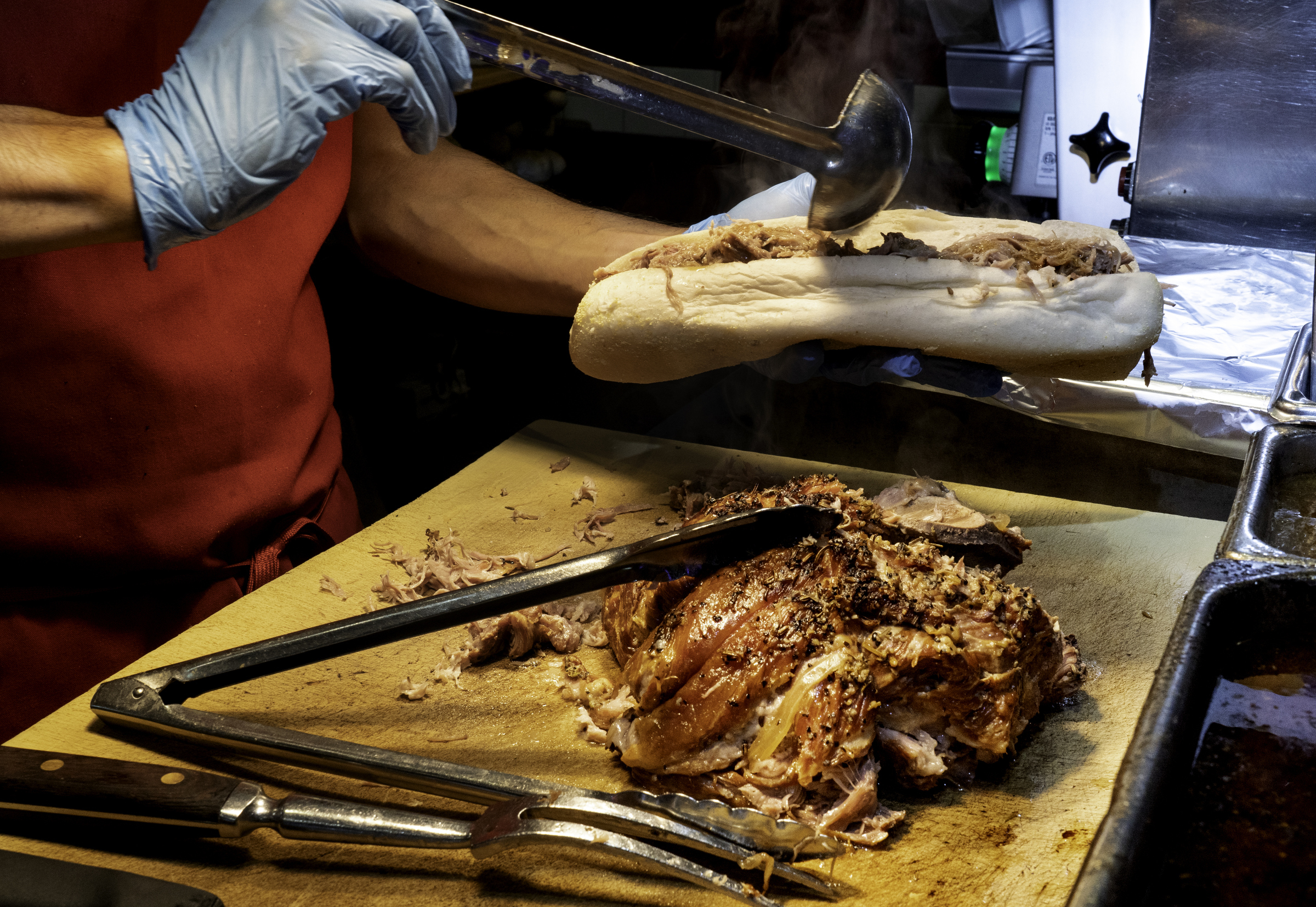
The pulled pork at DiNic’s Roast Pork, Reading Terminal Market, Tuesday, September 26, 2018, in Philadelphia. JESSICA GRIFFIN / Staff Photographer
Guadalajara’s torta ahogada landed in first place, followed by the Viet-Cajun crawfish in Houston. Cabrito al pastor — young goat roasted over live coals — from Monterrey came in third; and the burnt ends — charred tips of a smoked brisket point — from Kansas was fourth.
And all the way in 15th place: New York pizza.
“New York ranks 15th not because its food is unremarkable, but because its most iconic dish has become the world’s most replicated food,” Harris wrote. “New York pizza is made everywhere from Tokyo to Nairobi. That is a consequence of the city’s cultural influence, not a failure of its food.”
But a great cheesesteak? Sorry, you have to come to Philly for that.
A South Philadelphia woman shot and killed her sister and granddaughter before turning the gun on herself Monday in what police described as a double murder and suicide.
The women, identified Tuesday as Janice Picano, 67, Denise Grottini, 55, and Angelina Picano, 18, were found dead inside a home on the 2800 block of South 10th Street, according to police.
Police responded to the residence around 5:30 p.m. and found the women with single gunshot wounds to their heads.
They were pronounced dead at the scene by medics at 5:38 p.m., police said.
Janice Picano, who investigators say fired the fatal shots, was Grottini’s sister and Angelina Picano’s grandmother, according to a law enforcement source.
A gun was found at the home and was taken into evidence.
Philadelphia’s ports ranked as the fastest in North America for the third year in a row, according to the latest annual Container Port Performance Index, sponsored by the World Bank and Standard & Poor’s as a way to encourage improvements to terminals that handle global trade and pack goods moving from the ocean to road and rail for delivery.
The survey gave Philadelphia the highest ranking of more than 50 ports in the United States, Canada, and Central America.
Boston and Jacksonville, Fla., ranked second and third. Philadelphia’s nearest neighbors — the New York area and Baltimore ports — ranked far behind. The list measures the time ships spend at port berths, the time from a ship docks until it is unloaded, crane availability, ship size, and other measures.
No North America port ranked among the 20 fastest of more than 200 surveyed worldwide. That list was dominated by ports in China and other parts of East Asia, in Arab and North African countries, plus Algeciras, Spain, and Posorja, Ecuador.
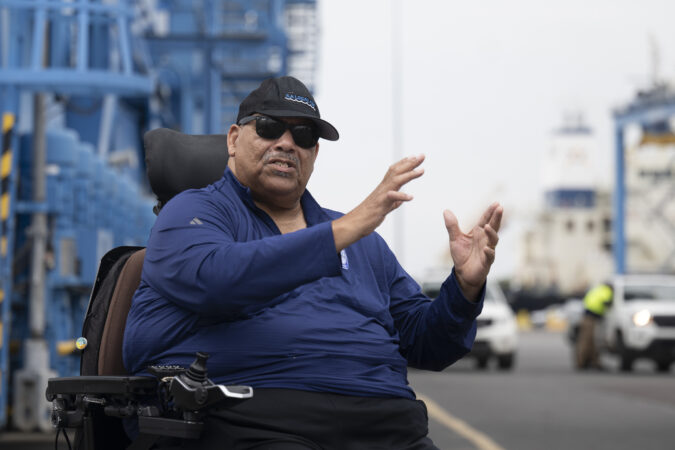
“This sometimes looks like chaos, but it’s organized chaos. It’s about teamwork,” said Boise Butler, president of Local 1291 of the International Longshoreman’s Association.
ILA is the main East Coast port labor union group, claiming more than 1,400 members on the Philadelphia docks, plus more in New Jersey and Delaware.
Butler said Philadelphia had long ago expanded its hours to attract shippers who were concerned that the terminals far up the Delaware estuary were more vulnerable to any delays.
Lazer credited “our very skilled labor” for handling large loads efficiently with minimum damage reports, according to commodity and container shippers.
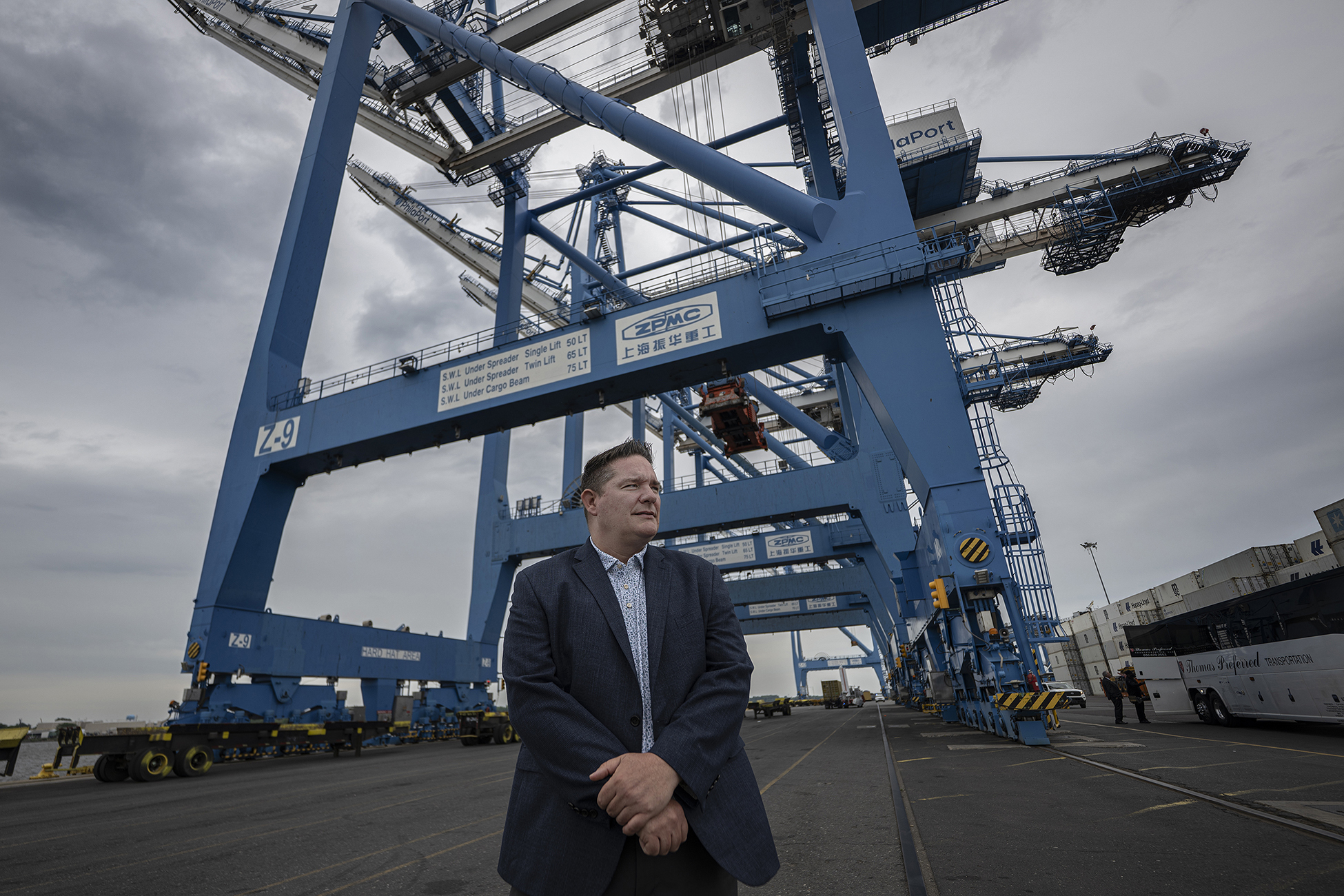
Richard Lazer, CEO of PhilaPort, near cargo cranes at the PhilaPort terminals. Lazer credits “our very skilled labor” for handling large loads efficiently with minimum damage reports.
It is premium work. The Longshoremen’s contract currently pays experienced workers $50 an hour, rising to $54 in October, with overtime pay after five hours, Butler said. “If they’re not making $200,000 after five or six years, something’s wrong.”
But the ranking is “not just about labor,” Butler said. “It starts with the Commonwealth of Pennsylvania, what they have built, and their vision for this port.”
Leo Holt, whose family-owned shipping company operates on the Packer Avenue docks and at its own Gloucester City port terminals, said the latest high score is “credit to all parties.”
“It’s a partnership between labor and management that has taken a long time to refine,” Holt said, referring to last year’s report, which also put Philly at the top of North American ports. “We work hard at it.”
Butler said the port needs to expand beyond the recent record hauls of nearly 1 million containers a year if it is to challenge ports like Savannah, Ga., which he said shipped five times as many containers.
“We need more warehouses,” Butler said.
The state built or helped finance many of the port’s improvements and has pledged to lead expansion into part of the former Philadelphia Naval Base and the Norfolk Southern freight yard in South Philadelphia. Four cranes larger than any currently on the area dock and two new 1,000-foot berths are planned, Lazer said.
Philadelphia cargoes through the Tioga Marine Terminal near the Betsy Ross Bridge include wood pulp and cocoa beans moved and, recently, ship propellers and sheet and structural steel imported by Korean industrial giant Hanwha for transfer by barge back down the Delaware to Hanwha Philly Shipyard.
Besides containers, the South Philadelphia port that once handled iron and coal now ships fertilizer and cement. Korean cars from Hyundai and Kia also land in the port.
South American fruit, which once formed a significant part of the Philadelphia and Wilmington port totals, now goes mostly to ports in New Jersey, Butler said.
Angelo’s Pizzeria owner Danny DiGiampietro has been pursuing two ambitious goals: reviving a landmark Montgomery County bakery and opening a branch of his Michelin-recommended pizza-and-sandwich operation in South Jersey, where it all began.
Both projects now appear to be gaining momentum. While Angelo’s vaunted rolls are being baked at the former Conshohocken Italian Bakery property, which DiGiampietro purchased last year, the long-held plans to reopen the bakery’s counter to retail customers remain on hold. DiGiampietro said the building requires additional work, which he declined to specify. “Every time we fix one thing, something else comes up,” he said.
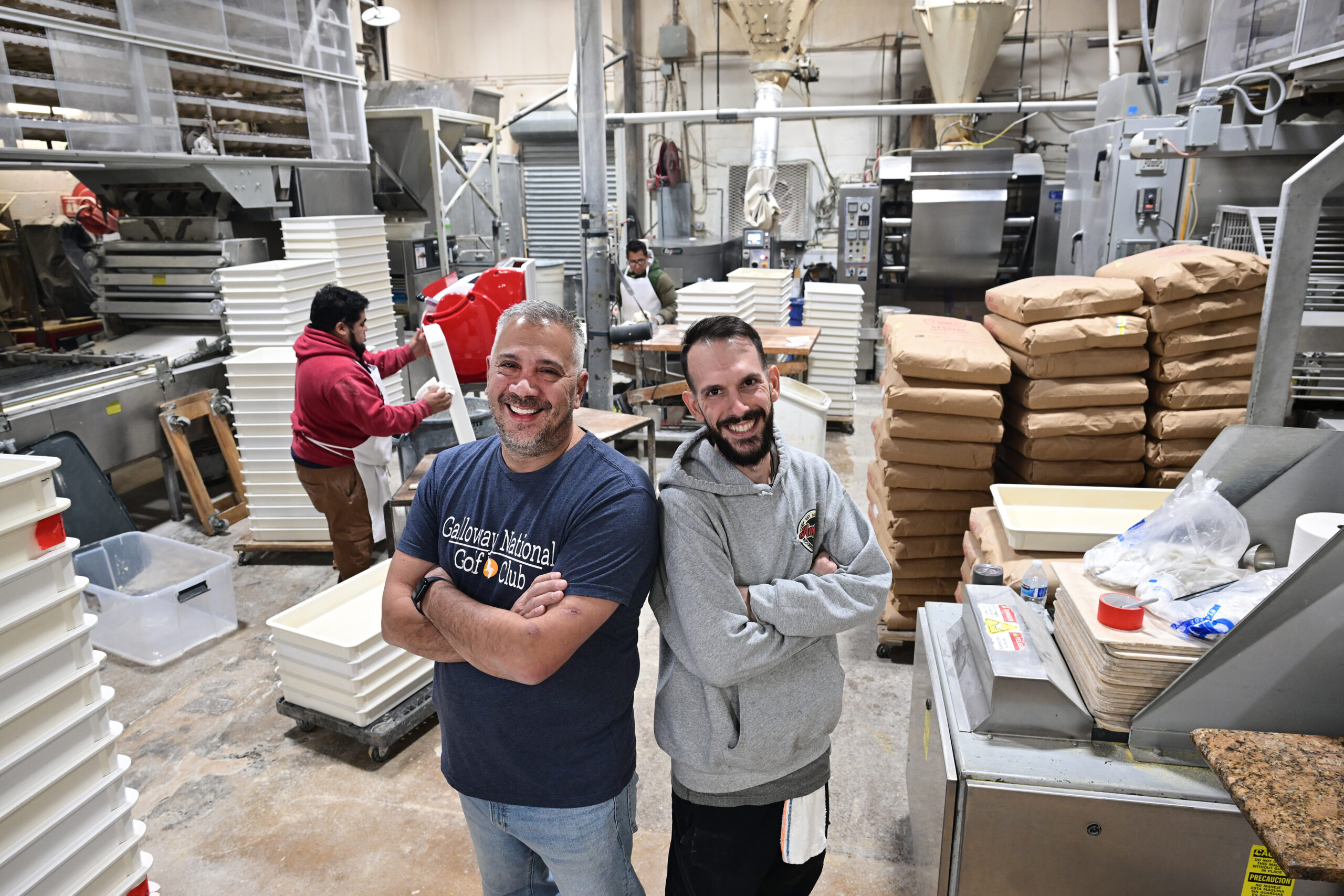
Danny DiGiampietro (left), owner of Angelo’s Pizzeria, with partner Jared Braunstein at the bakery in Conshohocken in December 2024.
But Angelo’s is moving into wholesale bread production, the backbone of Conshohocken Italian Bakery’s business under the Gambone family for more than a half-century before its 2024 closing.
A key piece of the puzzle is on the way: a massive Polin oven imported from Italy to give his bakers more flexibility, DiGiampietro said.
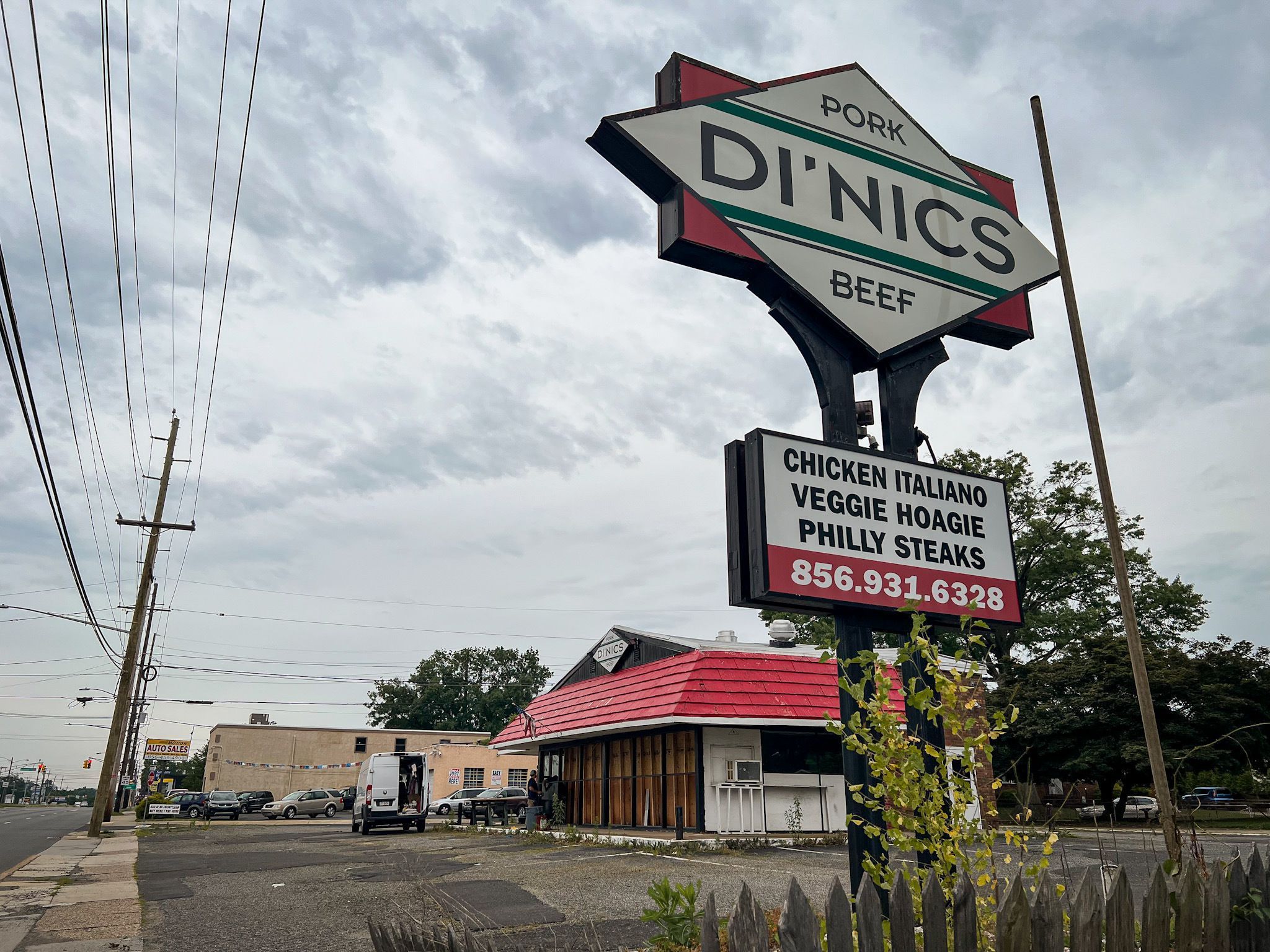
The future location of Angelo’s Pizzeria in West Collingswood Heights, previously Di’Nics, on June 18, 2026.
At “Conshy,” as the Jones Street bakery was known, the Gambone family supplied rolls and bread to hundreds of restaurants and sandwich shops throughout the region. Its closing created a frenzy among customers and competitors.
DiGiampietro said the new oven will allow bakers to create a line of kaiser rolls, potato rolls, steak rolls, and hoagie rolls. Although he will in effect be selling to his sandwich shop competitors, he likens it to giving shops “the canvas to make their art,” DiGiampietro said. “Everyone’s different.”
A return to wholesaling was not in the initial plans for DiGiampietro, who owned a bread bakery in South Philadelphia about 20 years ago. “I went bankrupt the first time. So hopefully I don’t go bankrupt again.”
Meanwhile, demolition and rebuilding are underway at the future Angelo’s Pizzeria location at 310 Black Horse Pike in the West Collingswood Heights neighborhood of Haddon Township, Camden County. The stand-alone building was formerly Di’Nics.
Crews recently gutted the building, which DiGiampietro hopes to transform into a full-service Angelo’s within the next several months.
The project will mark his return to New Jersey. DiGiampietro opened his first Angelo’s in Haddonfield in 2013 before closing it in 2018 to focus on the Ninth Street location in South Philadelphia, which opened in 2019 and helped turn Angelo’s into one of the region’s most sought-after pizzeria and cheesesteak shops.
The Angelo’s in West Collingswood Heights, about 10 minutes from the Walt Whitman Bridge, will include table seating as well as a counter overlooking the kitchen. Initially, DiGiampietro wanted more seating. Then he began talking about a takeout-only operation.
“But people love the show,” he said. “They like to see everything happening.”
The build-out still requires installation of a pizza oven, walk-in refrigeration, and other equipment. Even so, DiGiampietro believes the compact space can work.
“We think we can keep a dining room and still fit everything we need in there,” he said. “It’ll be tight, but we work on Ninth Street in basically a submarine, so how much tighter can it get?”
At noon on a bright June Tuesday, the scene at Skinny Joey’s Cheesesteaks & Pizza on the Wildwood boardwalk felt more like a South Philly block party than a soft opening.
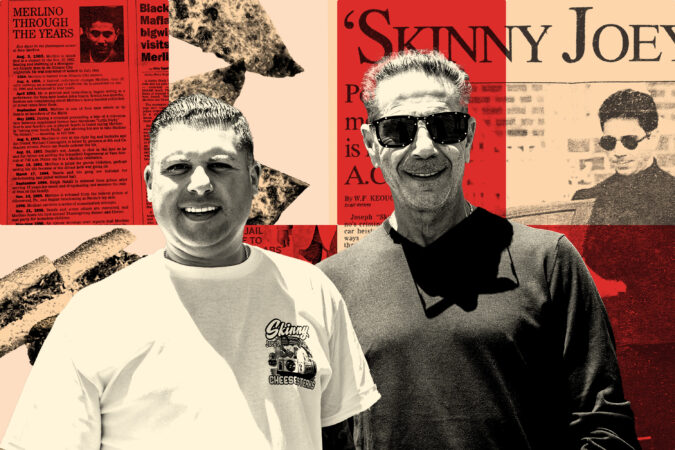
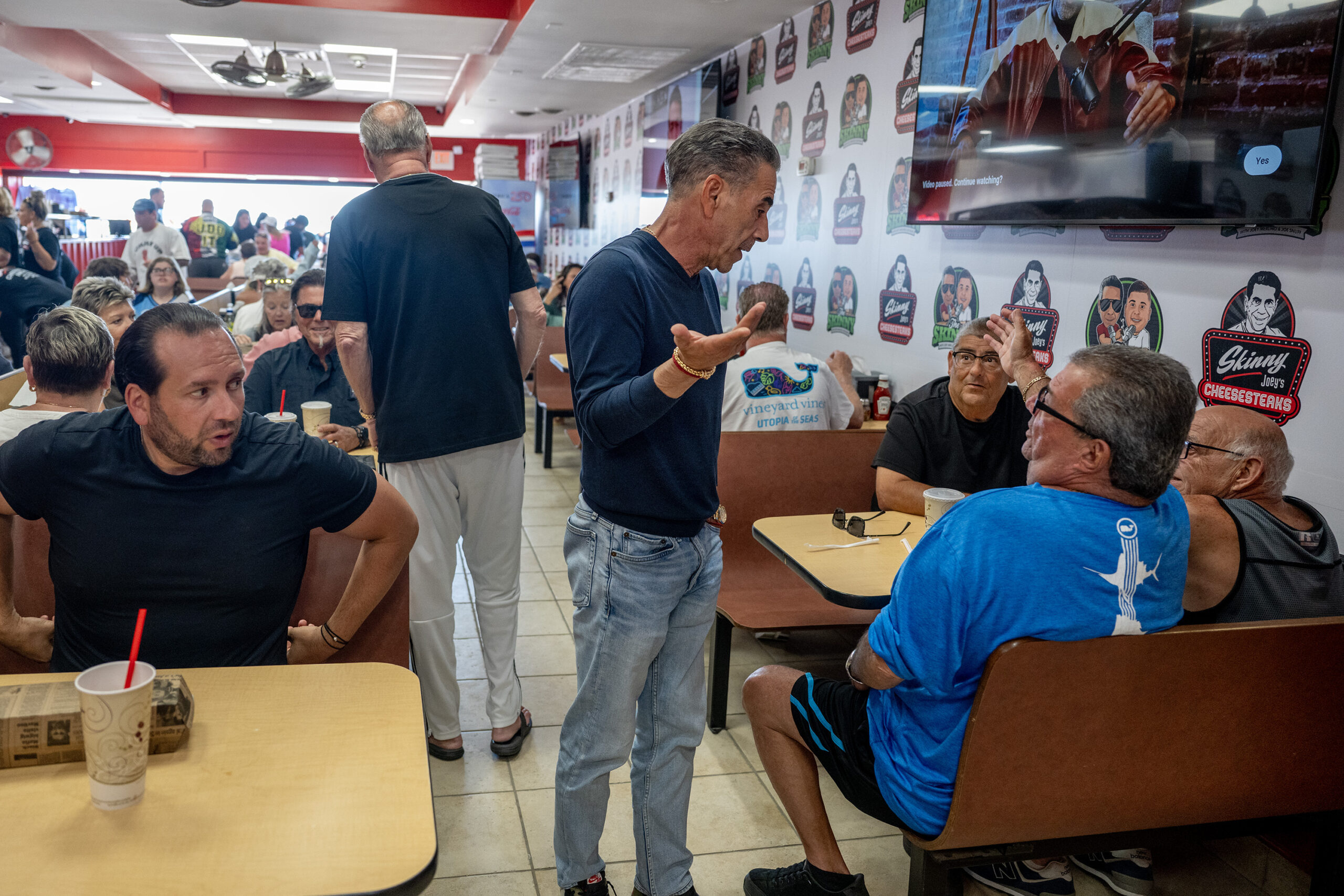
Joseph “Skinny Joey” Merlino worked the crowd at his new shop — hugging, shaking hands, posing for photos — moving easily among his friends and admirers. At 64, five years removed from the criminal justice system, the onetime alleged head of Philadelphia’s underworld is enjoying a second act that few could have predicted: cheesesteak entrepreneur, podcaster, and social-media personality.
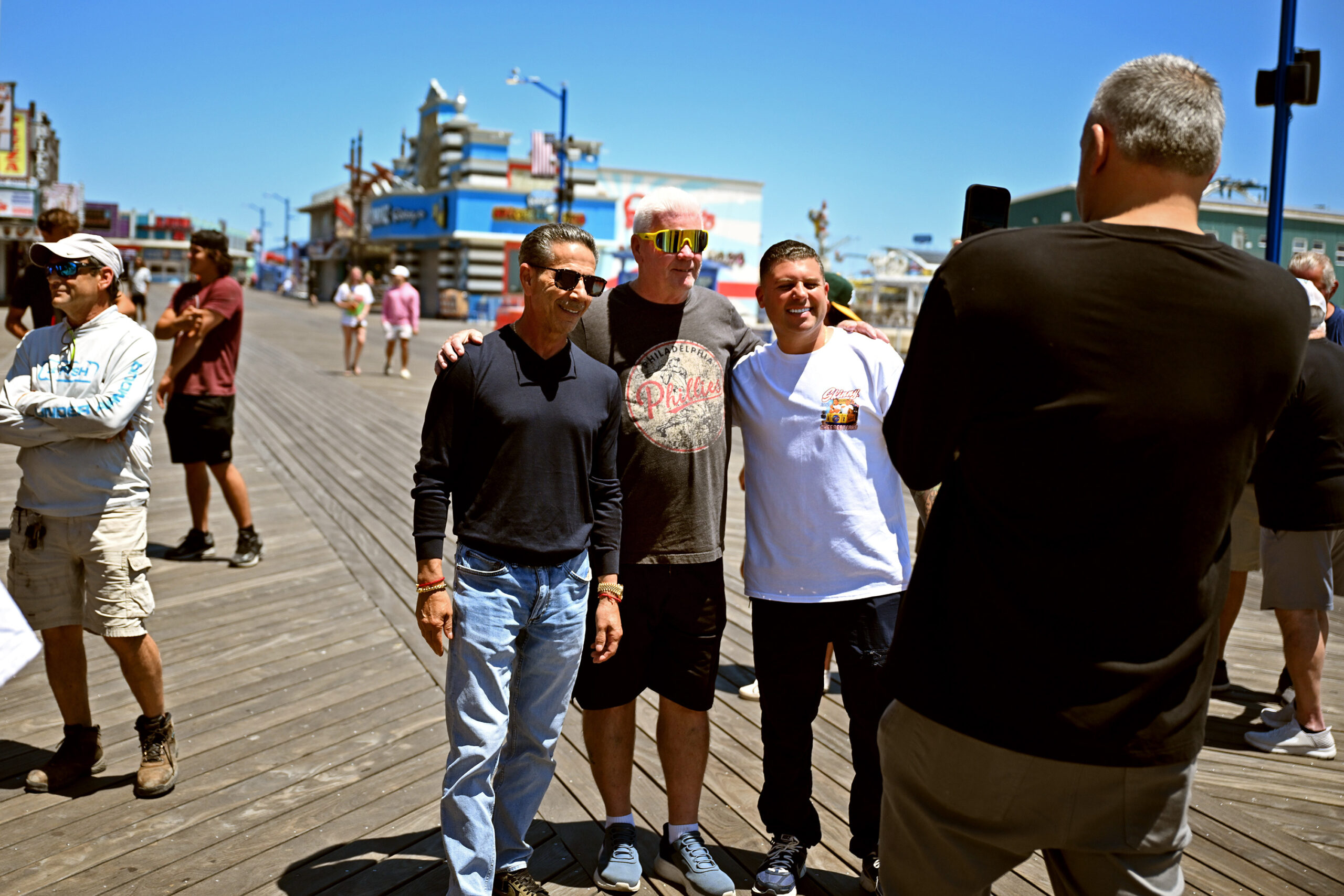
Joseph “Skinny Joey” Merlino (left) and Joe “Lil Snuff” Perri Jr. (right) posing with a customer outside the Skinny Joey’s Cheesesteaks & Pizza shop in Wildwood.
Orbiting him with a phone and a grin was Joe “Lil Snuff” Perri Jr. — 30 years his junior — Skinny Joey’s collaborator and the man who helped set him up with a new career. While customers lined up out front for steaks, slices, photos, $35 hats, and $25 T-shirts, Perri was shooting clips for social media.
Their partnership has transformed Merlino from a flashy, polarizing tabloid fixture into a flashy, polarizing Instagram-age brand. Merlino provides the mythology, while Perri supplies the algorithm.
Symbiotically, they are building an unlikely enterprise. Merlino gives Perri access, credibility, and a bigger stage. Perri gives Merlino comic relief, social-media fluency, and a way to be seen as entrepreneurial rather than simply infamous as a reputed former mob boss.
“Without me, there’s no him,” Perri said. “Without him, there’s no me. It’s just a good mix.”
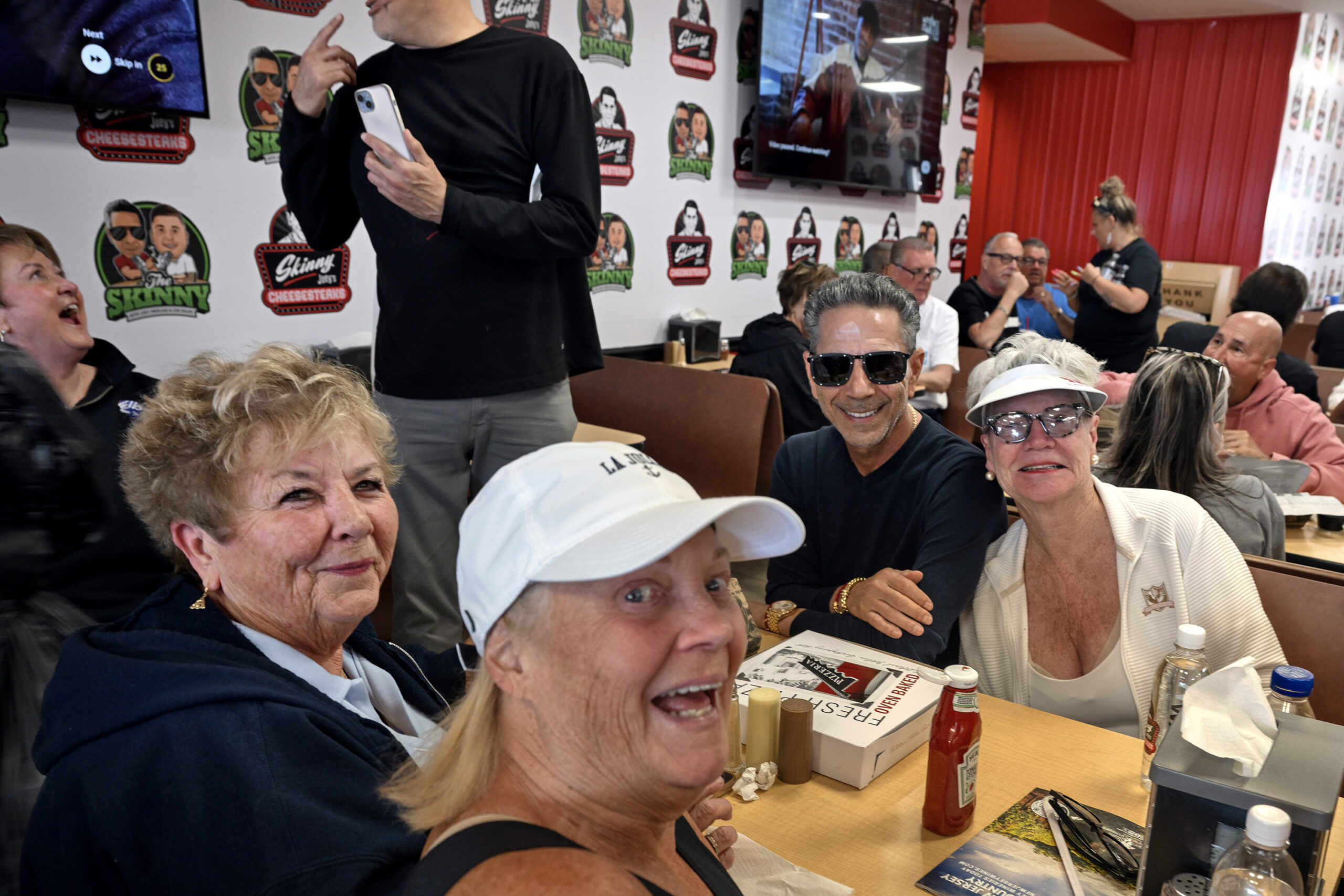
Joseph “Skinny Joey” Merlino joining customers at Skinny Joey’s in Wildwood during its soft opening on June 2. They call themselves “the Schuylkill Girls” (from left): Julie Shelton, Cindy McCullough, and Terry Landy, all of whom now live in Wildwood.
A ‘mob media’ moment
George Anastasia, who covered organized crime for more than 30 years at The Inquirer and now teaches an organized-crime course at Rowan University, said Merlino’s new career fits a broader moment in mob media.
Former wiseguys, associates, historians, and fans now gather in a true-crime subculture known online as “MobTube,” where the lore is packaged into YouTube shows, Patreon feeds, podcasts, clips, and merch.
Merlino has lived the story that fuels the genre. One of Philadelphia’s most recognizable organized-crime figures, Merlino was convicted in 1990 for his role in a $352,000 armored truck robbery in 1987.
In 2001, he and six co-defendants were tried on federal racketeering charges, including three counts of murder and two of attempted murder. Merlino was acquitted on those counts, but served about 12 years on other charges, including gambling and extortion. A supervised-release violation briefly returned him to prison in 2014, and a second major racketeering case ended in 2018 with a guilty plea to a single illegal-gambling charge after a mistrial. In a separate trial in 2004, he was acquitted of the 1996 killing of Joseph Sodano, an underling in North Jersey. Merlino completed federal supervision in 2021, but he’s been banned from New Jersey casinos since 1988 and from Pennsylvania casinos since a 2016 incident at the former SugarHouse Casino.
And Merlino has made it no secret that he is different from many of the former figures who populate the MobTube genre. Unlike Sammy “The Bull” Gravano, John Alito, and Jimmy Calandra, Merlino never cooperated with prosecutors.
“He saw guys who cooperated come back and become media sensations,” Anastasia said. “And I think he got [annoyed] that these are all guys who, in his view, violated the code, and now they’re making money on that old life. He did his time as a stand-up guy. ‘So [to heck with that] — I’m going to make money, too.’ And he created this brand.”
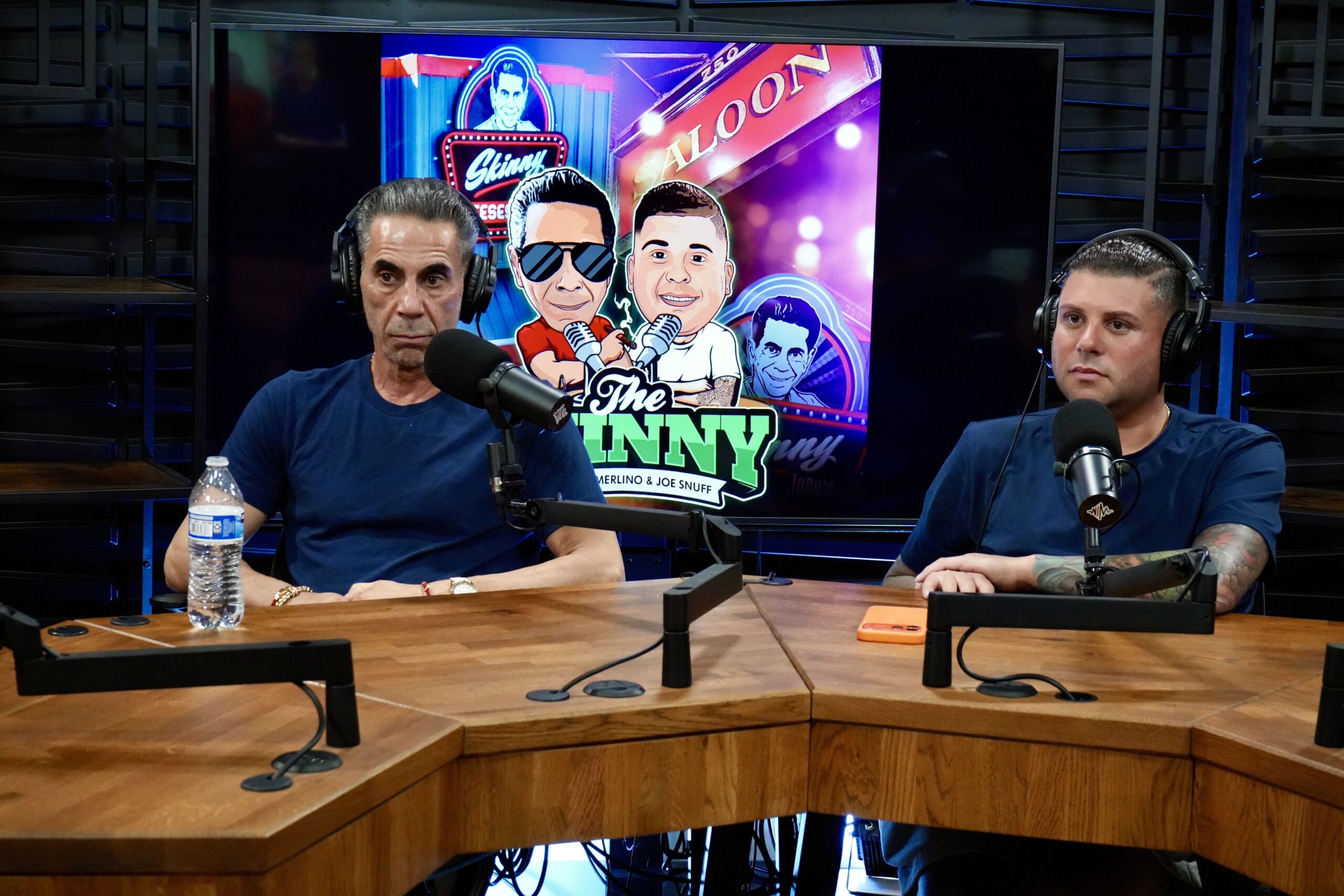
Joseph “Skinny Joey” Merlino (left) and Joe Perri Jr. on the set of “The Skinny” podcast.
Perri helped make that legible to a younger audience.
“Lil Snuff is part sycophant and part guide,” Anastasia said. “He’s the one who, in a lot of ways, sets the flow. Joey is going to be Joey, but somebody has to keep bringing him back to the point.”
The rise of Lil Snuff
Before he was Merlino’s co-host, Perri was Lil Snuff.
The nickname came from his father: As a 10-year-old, Joe Sr. turned around when a cousin was calling for a dog named Snuffy. Boom. He was Snuff. When his son was born at Methodist Hospital in 1992, Snuff became Big Snuff.
As a teenager, Lil Snuffbussedtables at Stogie Joe’s, the Saloon, and Fitzwater Cafe. At 18, he joined the stagehands union. At 21, he got a job at Mall Chevrolet in Cherry Hill. The older salesmen had relationships and repeat customers. Perri’s mentor told him that he needed a lane.
It was 2013, and social media was beginning to reshape promotion. Perri started making his own brassy, unscripted commercials. “Selling Chevys for less” became his tagline.
He also made videos about gambling and food, his two passions. He was not famous, but he was visible in the South Philly-to-South Jersey social media corridor where restaurants, sports, betting, family, and neighborhood identity blur into one feed.
At the same time, Perri said, he was abusing pills. In 2014, at 22, his parents found him a rehab center in South Florida. To make sure he got there safely, they called a family friend whose Italian restaurant in Boca Raton had recently opened:
Joey Merlino.
“My father grew up with his grandfather,” Merlino said, explaining the bond. “I grew up with his father. I’ve known him since he was born.”
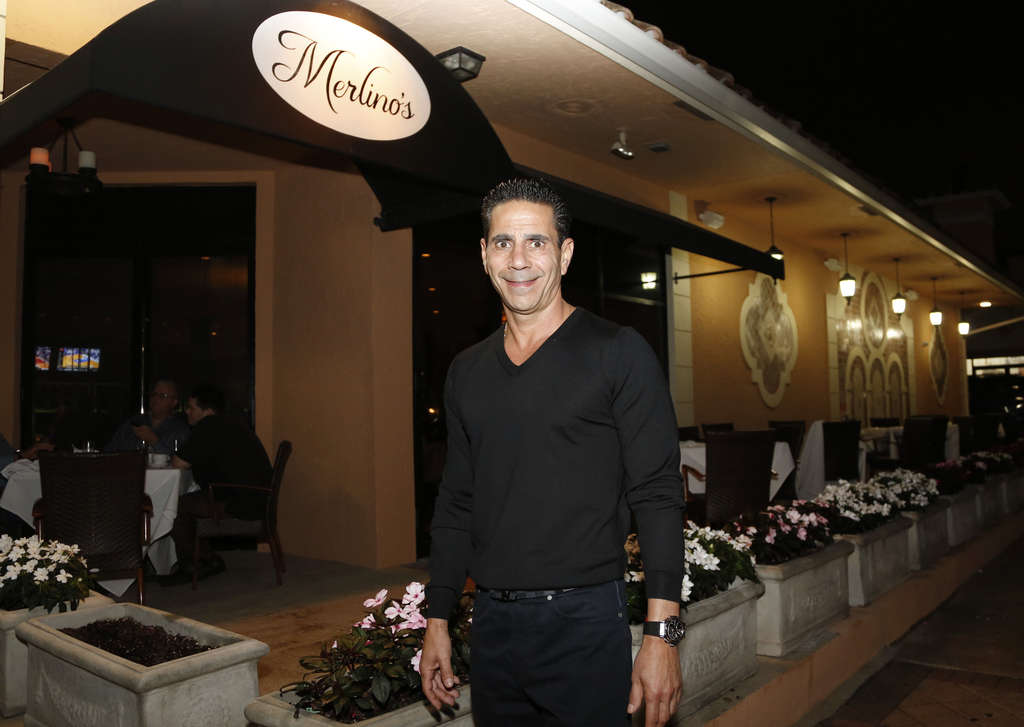
Joseph “Skinny Joey” Merlino in 2014 at the Boca Raton restaurant bearing his name.
Perri said it took several attempts before recovery stuck. He has been sober since Sept. 11, 2016. “I’m big with recovery,” he said. “That’s the main thing in my life. I put sobriety first and then everything after that.”
Merlino’s — where Merlino was maitre d’ because his legal situation then precluded ownership — closed in 2016, just before the feds arrested Merlino at his home in Boca in the lead-up to his second racketeering case. “If I didn’t have this trouble, it would still be open,” Merlino said earlier this month.
After Merlino attained freedom in July 2021, producers called with movie, television, and book deals. Merlino turned them all down. “Nothing seemed right,” Merlino said. Someone brought up the idea of a podcast.
“I didn’t even know what that was,” Merlino said.
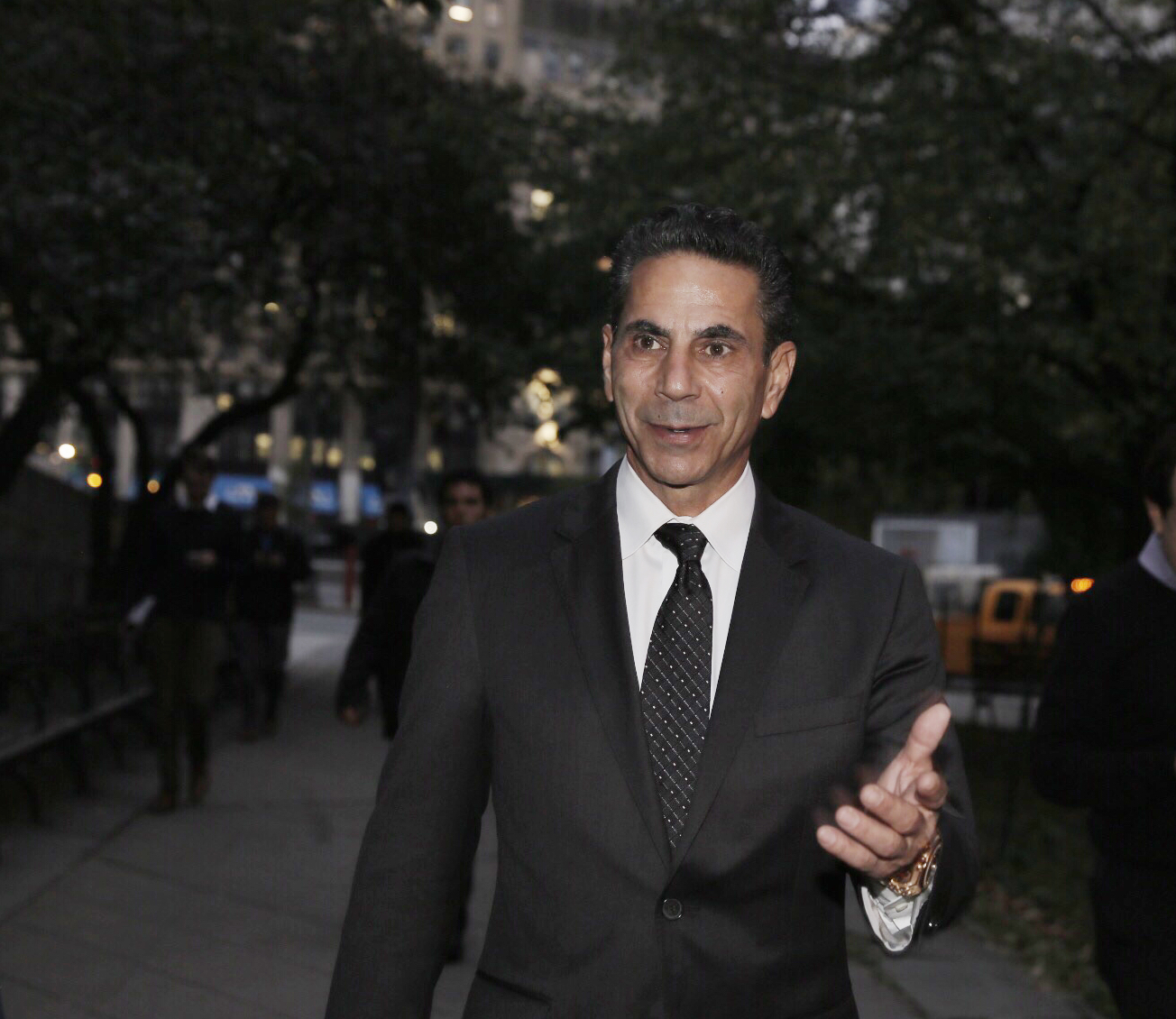
Joseph “Skinny Joey” Merlino leaving the federal courthouse in Manhattan after being sentenced on Oct. 17, 2018.
His friend Raymond “Wags” Wagner explained the concept and suggested a loose format built around food and sports betting. Actor Kevin Connolly of Entourage fame, who was involved early as a producer, told Merlino that he needed a co-host.
“They said, ‘Who would you want?’” Perri said. “They were sending him people, and he was like, ‘I’m not doing nothing with these people.’”
Then Ray Wags suggested Perri.
“Joey was like, ‘100 percent. Get him on the phone,’” Perri said. “Kevin Connolly said, ‘Send me your videos.’ I sent him my videos, and he said, ‘You’re the guy.’ The rest was history.”
The world of ‘MobTube’
Merlino and Perri launched the video podcast in 2023. Viewers are not just watching Merlino talk about the old life. They see him bust Perri’s chops about eating too much and mock his parlays. They get gambling tips, watch them interview athletes and celebrities — all part of a South Philly generational comedy.
Perri describes it in family terms. “My dad’s my dad, but he’s also my best friend, too,” Perri said. “We gamble together. We go out together. We have fun together. So they see me and Joey as that, and they can’t figure out how we mix so good.”
“He’s good,” Merlino said. “I’m old, he’s young. He talks good, he’s funny. He’s a pain in the balls, but it’s a good fit.”
They began The Skinny podcast on YouTube, but now focus more on Patreon, where the content is unfiltered. And better monetized. Perri says TheSkinny has 1,600 Patreon subscribers paying $15.95 a month. He said their social-media pages combined average 30 million views a month.
Perri’s wife, Danielle, handles bookings and schedules. “I produce,” Perri said. “I cut the clips. I do everything. It’s me and Joey. Two-man show.”
A wider audience
When they started, Perri was still selling cars at Mall Chevrolet. But the now-shuttered dealership got tired of people showing up hoping to see Merlino instead of test-driving a Suburban.
Perri quit. The show grew.Merlino’s reinvention has coincided with a broader shift in the gambling world. Legal sportsbooks, now ubiquitous on television and online, have largely supplanted the corner bookmaker, turning an activity once associated with organized crime into a mainstream consumer business. Guests span sports, hip-hop, gambling, and entertainment, including Wallo267, Fat Joe, Ric Flair, and Bernard Hopkins.
Each booking widened his audience, and Merlino was being absorbed into a broader celebrity ecosystem.
Last October, Netflix released Mob War: Philadelphia vs. The Mafia, a docuseries revisiting the violent 1990s power struggle between John Stanfa and Merlino’s younger faction. It steered even more viewers to Merlino and Perri’s world.
‘Skinny Joey,’ wit’
Then came the cheesesteaks.
One night, Perri, Merlino, and friends were playing poker. Merlino wanted cheesesteaks. Perri said he’d make them.
“He’s like, ‘You can’t make cheesesteaks,’” Perri said. “I said, ‘Are you nuts? I’ve been making them my whole life.’”
Perri cooked some. “He was like, ‘This is the best f— cheesesteak ever,’” Perri said. “He said, ‘Let’s open up a cheesesteak place.’ I said, ‘All right. Call it Skinny Joey’s Cheesesteaks.’ And that was it.”
The first shop opened in March 2025 at 3020 S. Broad St., near the sports complex. From the start, Skinny Joey’s was more than a sandwich shop. It was a set. The shop leaned into Merlino’s notoriety; the sandwiches are wrapped in a collage of newspaper articles about his past.
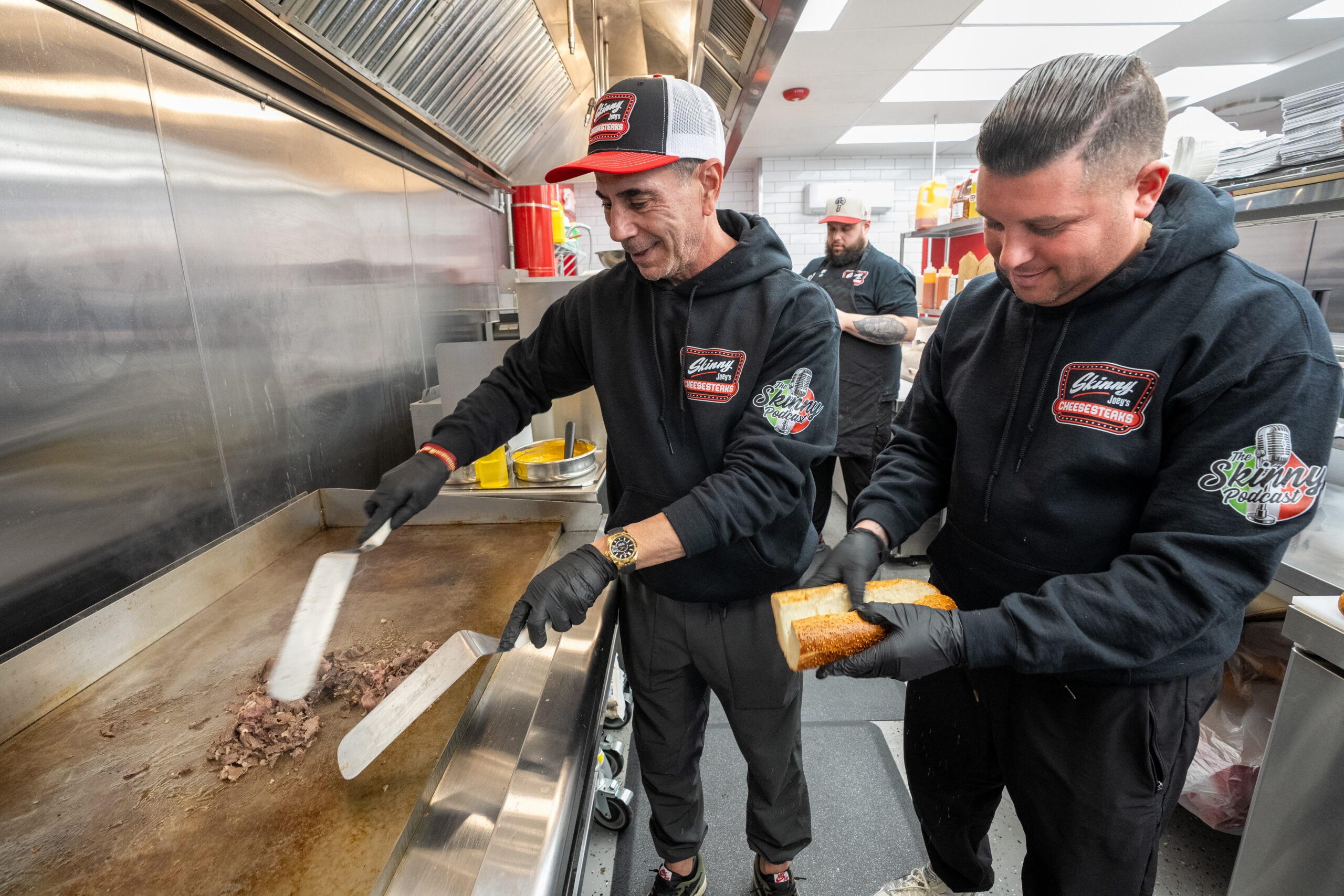
Joseph “Skinny Joey” Merlino (left) working the grill beside Joe “Lil Snuff” Perri Jr. at the Skinny Joey’s Cheesesteaks in Philadelphia at its opening in March 2025.
Celebrities showed up: Jason Kelce, Landon Dickerson, Mack Wilson. A customer eating a cheesesteak was good content. A recognizable person eating one on camera was better.
The restaurant also became a magnet for the kind of drama that fuels digital engagement: online beef. Podcaster Gene Borrello, a former Bonnano crime family associate and Merlino antagonist, weighed in last year on an apparent feud between Skinny Joey’s camp and Frank Olivieri of Pat’s King of Steaks. Merlino and Perri had taken issue with a video posted by Olivieri — whose great-uncle invented the steak sandwich — in which he chided shops that chop the meat on the grill. Like most online food feuds, this seems to have subsided.
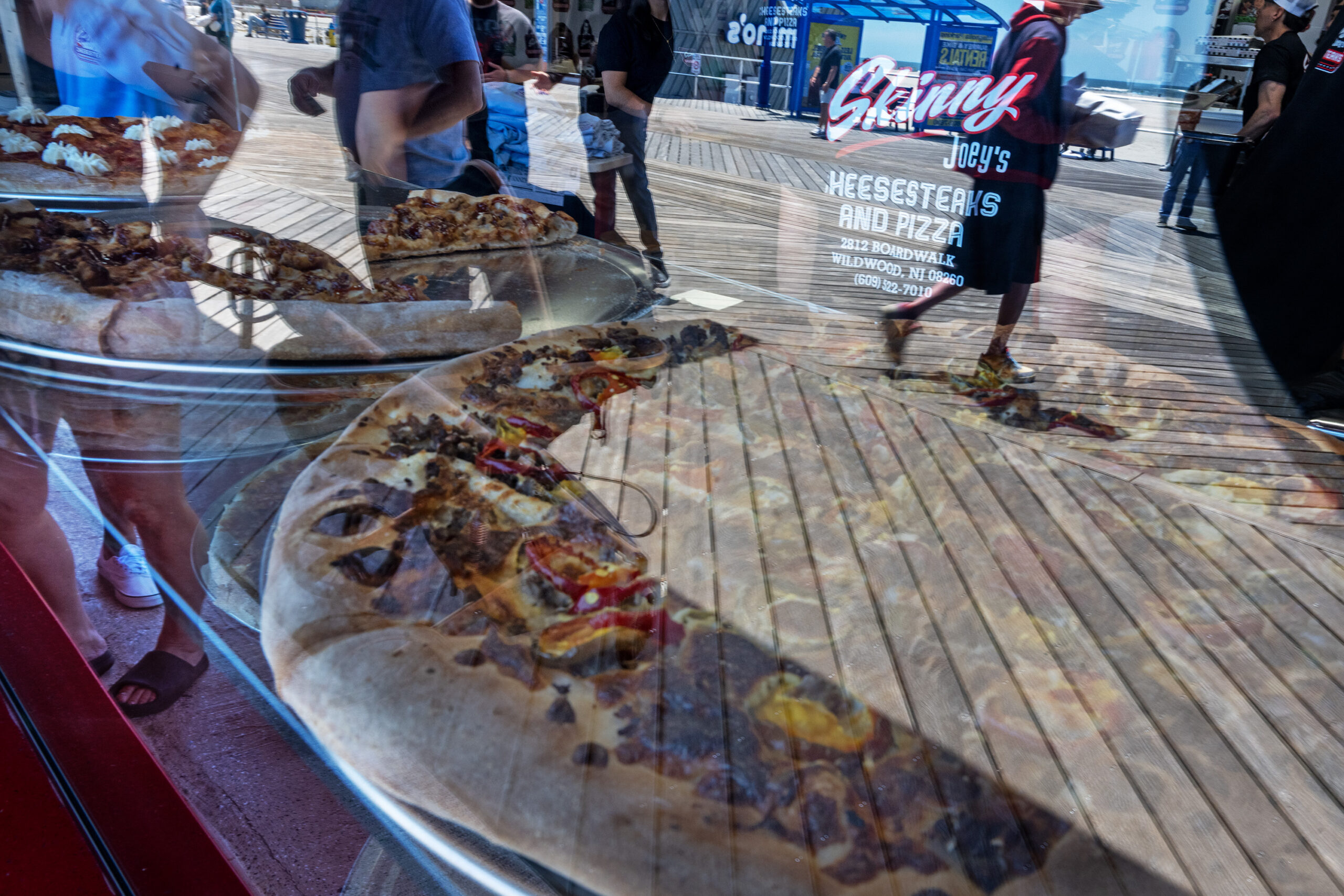
Then came the deal for Wildwood, where Skinny Joey’s replaced Joe’s Pizzeria, which had been on the boardwalk at Magnolia Avenue for 15 years. There, Skinny Joey’s added pizza and stromboli, which are not sold at the South Philadelphia location.
Reflections in the pizza display case on the boardwalk at Skinny Joey’s Cheesesteaks & Pizza in Wildwood.
The pizza recipe comes from Vito’s on Haddonfield Berlin Road in Cherry Hill, and the stromboli from Pizza Shack at 15th and Oregon in South Philadelphia, both owned by Skinny Joey’s business partners Stephen Casasanto and John Fioravanti, whom Merlino also described as longtime friends.
More locations are planned. Perri said a Boothwyn shop is expected around Sept. 1, and several others are in the pipeline.
Bypassing the gatekeepers
Merlino is an extreme case of a recent phenomenon. People with complicated histories — criminal, scandalous, controversial, or simply overexposed — no longer need traditional gatekeepers to reintroduce themselves. They can speak directly to followers and monetize the attention.
Perri is not a journalist, of course, or a publicist, exactly. He is not merely a manager, producer, or sidekick. He is something in between — a new kind of local media operator.
He knows the scene, and how to make content feel unscripted even when the business behind it is deliberate. He is close enough to Merlino to bust his chops and deferential enough to preserve the hierarchy. He can translate Merlino to younger audiences without making him seem managed.
Perri softens Merlino without sanding him down. Merlino still curses, rants, and mocks rivals. Anyone they disagree with is a “bedbug.”
Joseph “Skinny Joey” Merlino greets a table of customers at Skinny Joey’s Cheesesteaks & Pizza in Wildwood.
“At the end of the day, Joey isn’t going to change who he is for anybody,” Perri said. “If he can’t talk the way he wants to talk, what’s the point?”
That is part of the appeal and part of the discomfort. The audience knows Merlino’s history. They may see him as funny, defiant, loyal, misunderstood, or simply entertaining.
“There’s a segment of the American population that has always been fascinated with the outlaw: Billy the Kid, Jesse James, Don Corleone, Al Capone,” Anastasia said. “What the internet has provided is: Here are these guys in their own words. Are they being genuine? I don’t know. You can say that about any personality. But here’s a look at them without any filter.”
The filter used to be people like Anastasia.
“I was, in a lot of ways, the middleman between the people who were interested in this and the guys who were doing it,” he said. “And people who are interested in this don’t need the middleman anymore. They just go online and listen to whoever they want to listen to.”
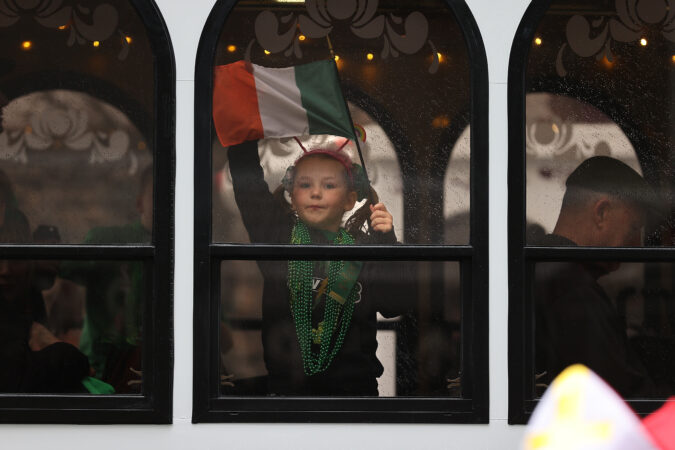
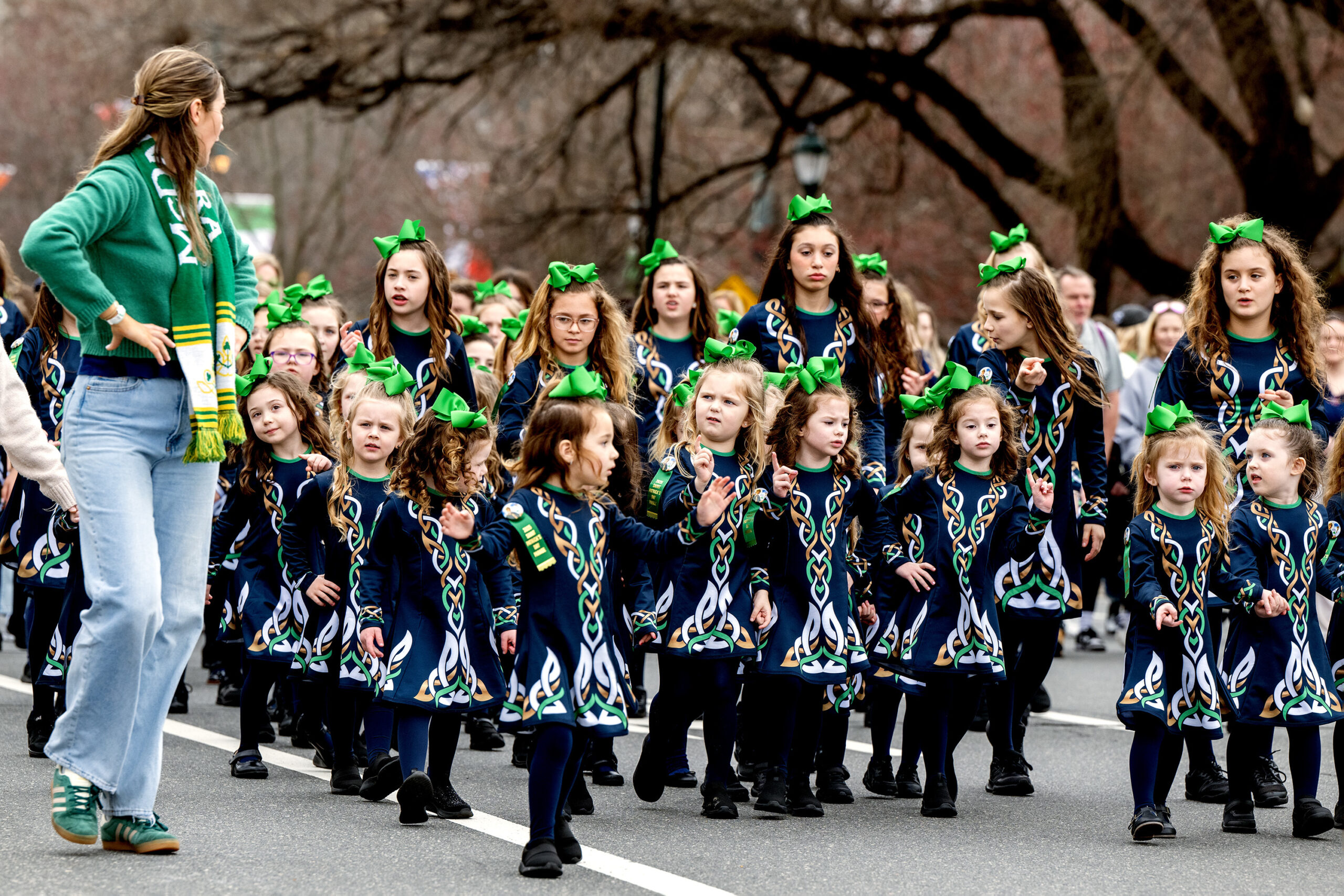
Every year, St. Patrick’s Day turns Philadelphia green.
Crowds gather along the Parkway. Families celebrate in neighborhoods shaped by generations of Irish Americans. We honor a heritage that is now inseparable from the city’s identity — a story of resilience, faith, and hard work that helped build Philadelphia into what it is today.
For me, that story is personal.
My parents were Irish immigrants who settled in Philadelphia in search of opportunity and stability. By the time they arrived, earlier waves of Irish families had established strong neighborhoods, parishes, and institutions. My parents found jobs, community, and a sense of belonging. They raised their children here and became part of the fabric of the city.
But the welcome Irish immigrants eventually experienced was not always guaranteed.
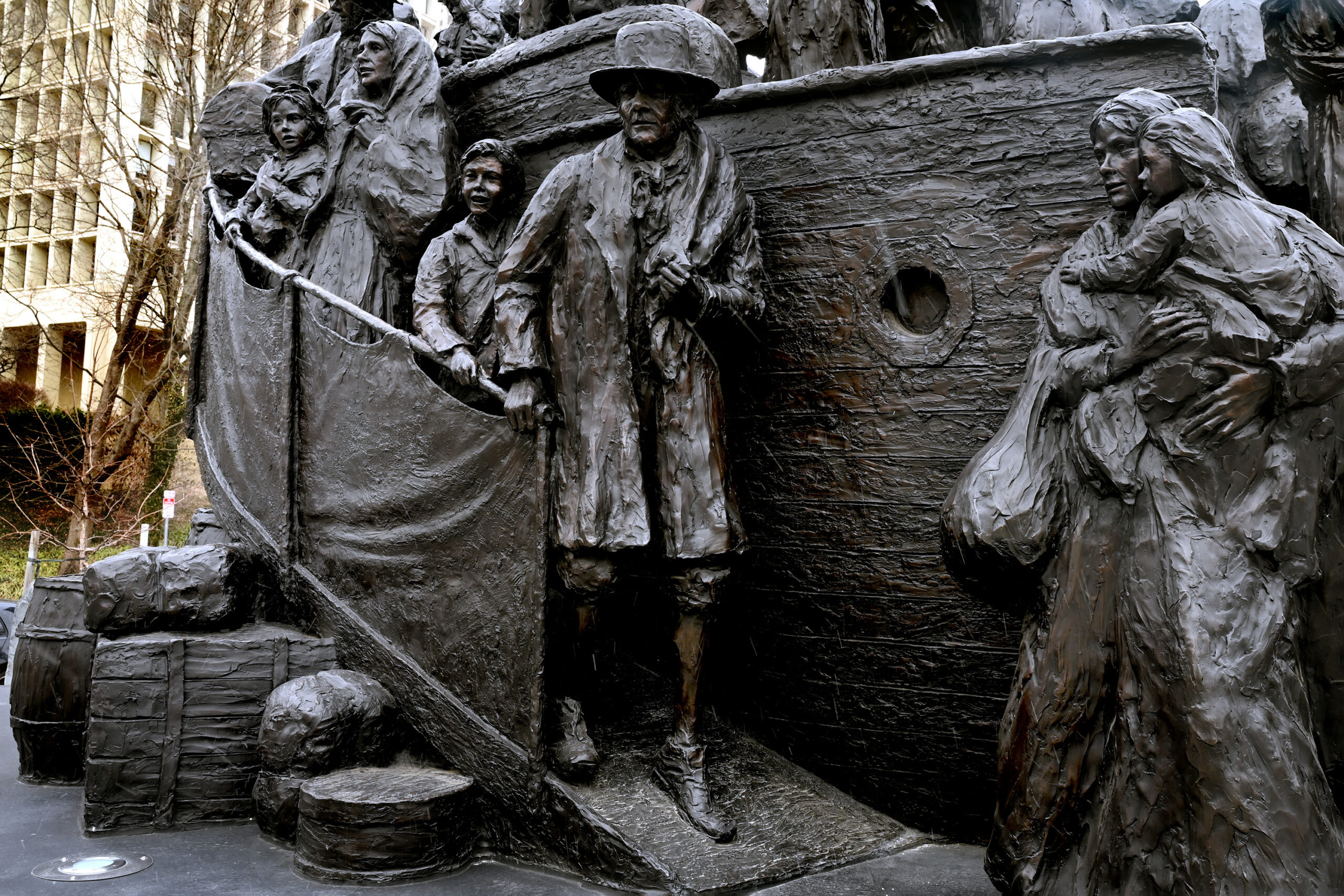
A detail of the “Irish Memorial An Gorta Mor (The Great Hunger)” in Foglietta Park. The aspirations of immigrants today are not so different from those of the Irish families who once arrived at the port of Philadelphia with little more than determination and hope, writes Anna Gallagher.
In the 19th and early 20th centuries, Irish newcomers often faced suspicion and discrimination. They were portrayed as outsiders and told they did not belong. Over time, through perseverance and the support of local communities, they became integral to Philadelphia’s civic and economic life. Today, their story is celebrated as part of the American immigrant narrative.
That history is worth remembering, especially now.
Across the country and here in Pennsylvania, immigrant families are navigating an increasingly complex and uncertain landscape. Many are longtime residents who work, pay taxes, and contribute to their communities. Others are seeking refuge from violence or instability abroad. All are striving for the same things previous generations sought: safety, opportunity, and the chance to build a future for their children.
The Irish immigrant experience is often remembered as a story of eventual success. But that success was not inevitable, writes Anna Gallagher.
Yet many face significant barriers. Access to legal representation remains limited. Immigration policies shift quickly, creating confusion and instability. Families live with the fear that a routine encounter could separate parents from children. Employers struggle to retain valued workers. Entire neighborhoods feel the ripple effects of uncertainty.
As executive director of the Catholic Legal Immigration Network Inc., the nation’s largest network of nonprofit immigration legal services providers, I see both the challenges and the promise every day. I see mothers seeking asylum, fathers working multiple jobs to support their families, and young people who have grown up in this country hoping to fully belong. I also see the extraordinary contributions immigrants continue to make to cities like Philadelphia.
Immigrants start businesses, work in hospitals and construction sites, care for the elderly, and teach in classrooms. They strengthen the local economy and revitalize neighborhoods. Their aspirations are not so different from those of the Irish families who once arrived at the port of Philadelphia with little more than determination and hope.
St. Patrick’s Day offers a moment to reflect on that continuity.
The Irish immigrant experience is often remembered as a story of eventual success. But that success was not inevitable. It was made possible by communities willing to open doors, institutions willing to offer support, and policies that allowed families to put down roots.
Philadelphia has long been renewed by newcomers. From South Philadelphia to Northeast neighborhoods and beyond, immigrants have shaped the city’s culture, economy, and civic life. That pattern continues today, if we choose to sustain it.
This is not simply about honoring heritage. It is about shared prosperity. Cities thrive when families feel secure enough to invest in their neighborhoods, pursue education, and contribute fully to community life. They thrive when longtime residents and newcomers alike see themselves as part of a shared story.
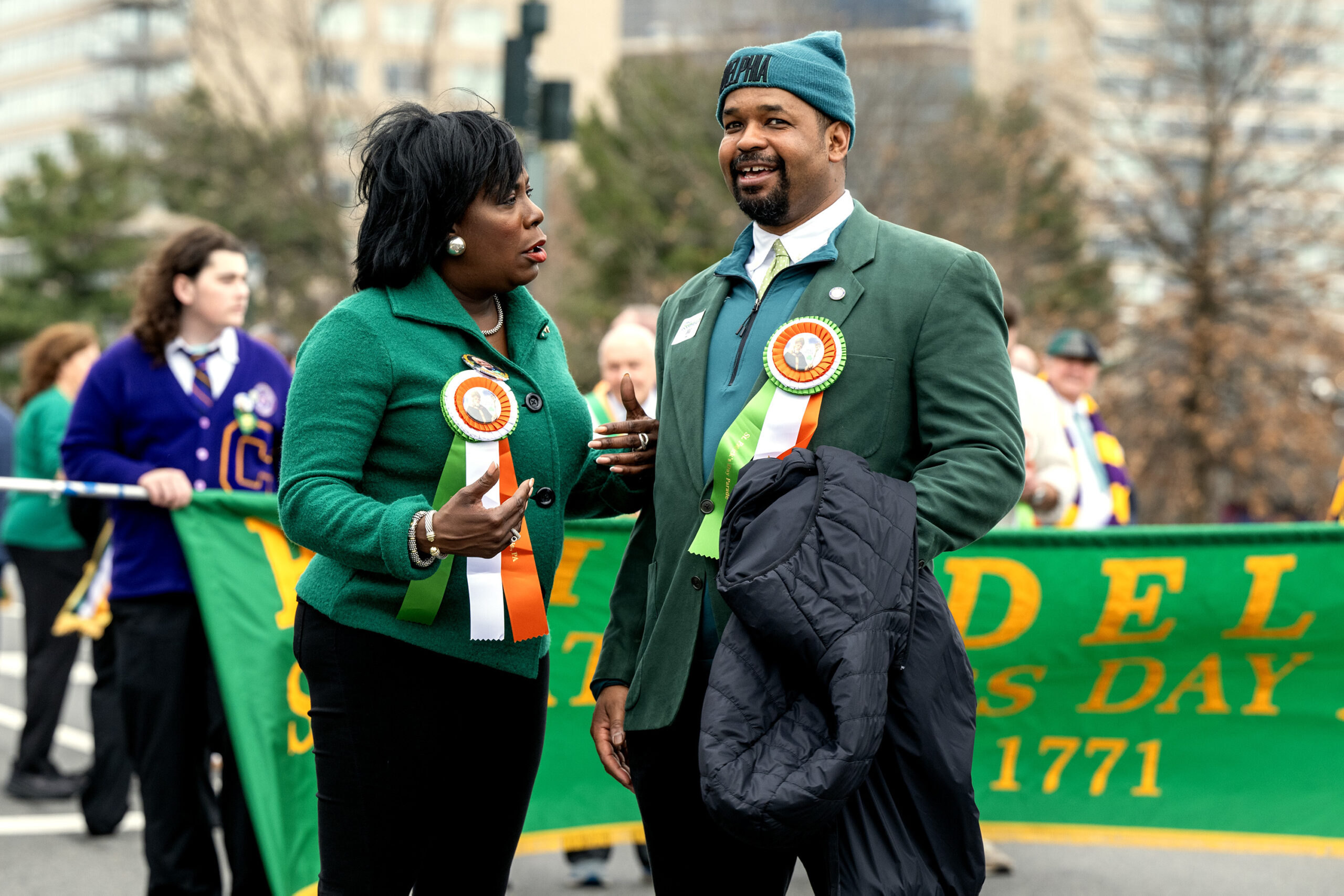
Green-wearing Mayor Cherelle L. Parker is with State Sen. Sharif Street (right) during the annual Philadelphia St. Patrick’s Day Parade in 2025.
As we celebrate St. Patrick’s Day, Philadelphia has an opportunity to honor its immigrant roots in a meaningful way. That means supporting policies that keep families together and create fair, orderly pathways through our immigration system. It means expanding access to legal representation so individuals can navigate that system effectively. And it means fostering a civic culture that recognizes immigrants not as outsiders, but as neighbors and fellow Philadelphians.
My parents’ journey from Ireland to Philadelphia is one story among many. It is a story of welcome, hard work, and belonging. The question before us now is whether we will help ensure that today’s immigrant families have the same chance to contribute, to build, and to call this city home.
Immigration is not just part of Philadelphia’s past. It is central to its present, and vital to its future.
Anna Gallagher is executive director of the Catholic Legal Immigration Network Inc. (CLINIC). Born in Philadelphia to Irish immigrant parents, she is a nationally recognized expert on immigration and refugee policy and a longtime advocate for the rights and dignity of migrants.
Grocery Outlet bargain market is closing dozens of stores nationwide, including eight in the Philadelphia area.
The closures were first referenced earlier this week in the company’s earnings report. The California-based grocer recorded an operating loss of $221.7 million last year, much of which it attributed to “certain underperforming stores” that will now close.
These include five Grocery Outlets in South Jersey, two in Philadelphia, and one in Kennett Square, according to real estate marketing released Thursday.
A company spokesperson did not return a request for comment about when the stores would close.
The impacted Philly-area stores are located at:
4004 U.S. Route 130, Delran
401 Harmony Rd., Gibbstown
345 Scarlet Rd., Kennett Square
190 Hamilton Commons Dr., Mays Landing
2017 W. Oregon Ave., Philadelphia
2524 Welsh Rd., Philadelphia
3174 U.S. Route 9 S., Suite 5, Rio Grande
677 Berlin-Cross Keys Rd., Sicklerville
People shop at a Grocery Outlet in Philadelphia in 2022.
After the closures, the chain will still have several locations in the city, collar counties, and South Jersey.
Grocery Outlet calls itself an “extreme value retailer.” It was founded in 1946, and has expanded from 128 stores to 570 stores over the past two decades. Many locations are operated by entrepreneurs who live nearby.
“Consumer pressure intensified, federally funded benefits were delayed, and competition grew more promotional in the fourth quarter,” Potter said in a statement. “In response, we have begun to sharpen our focus on what matters most: delivering clearer value and a better in-store experience.”
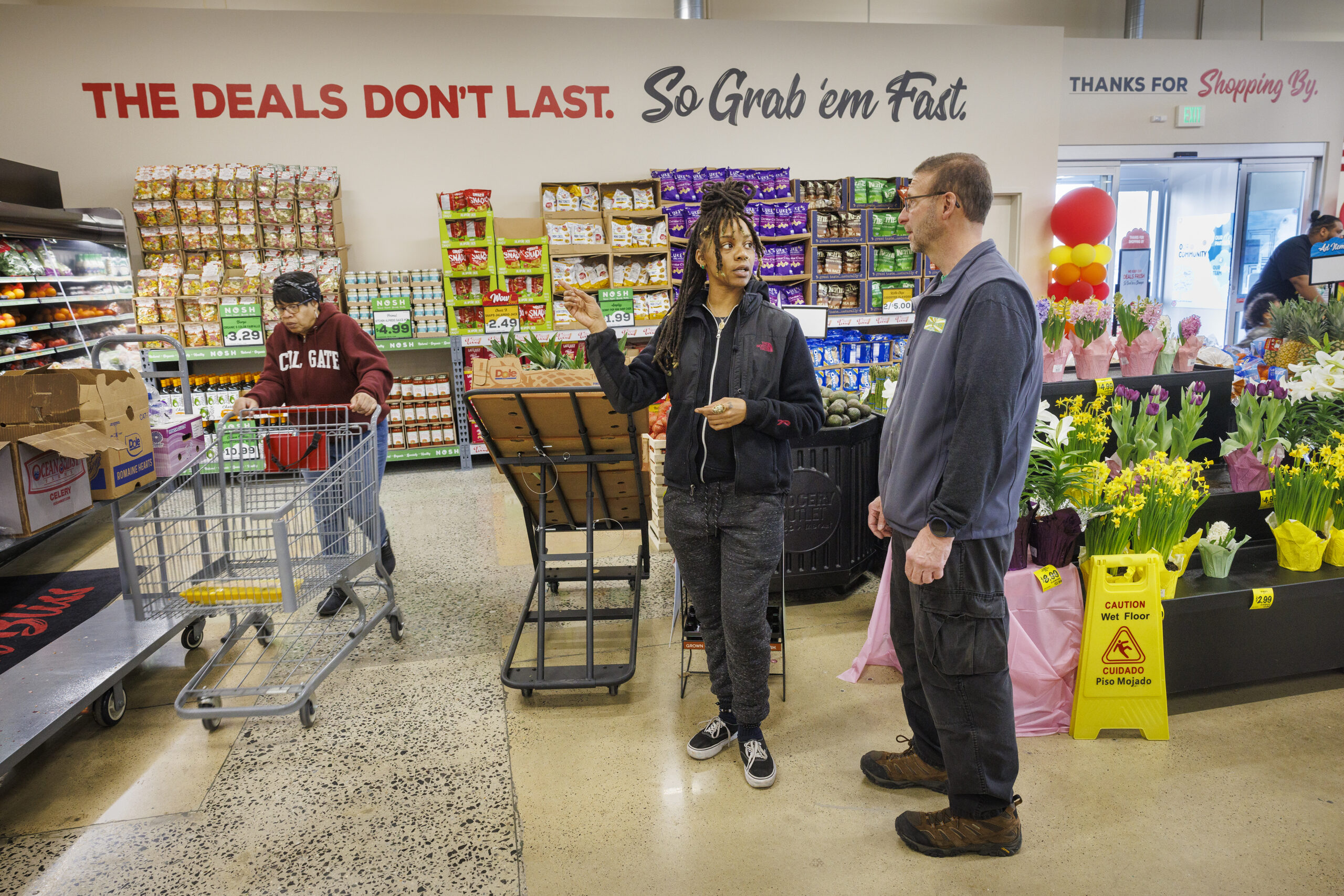
Customers and employees inside a Grocery Outlet in Philadelphia in 2023.
A Wakefern spokesperson said the company planned to refocus on its flagship stores in South Philadelphia and Rittenhouse, as well as its growing online business. The move, spokesperson Maureen Gillespie said, would be “a positive reset that allows us to preserve and elevate the in‑store tradition while growing the brand’s reach in meaningful new ways.”
At some Philadelphia Parks and Recreation centers, a grim tradition has developed over the years amid the winter scramble to secure some sort of summer programming for kids: Parents wait in line hours before enrollment even begins to snag a first-come, first-served camp spot.
This year, the city hopes to remedy that with the introduction of a lottery system at a handful of the most in-demand camps.
“We’re just learning from past years, trying to be flexible and give parents more time to come in,” said Rob Jackson, the department’s deputy commissioner of programs.
Yet some parents bemoaned what they described as a poorly communicated change, hearing about it a week before enrollment began with no explanation as to why, becoming just one more logistical quirk to navigate in the summer camp enrollment chaos.
That’s because, as with daycare, snagging a spot in any daylong summer program can feel like building a plane midflight. Applying to multiple summer camps is a must, setting aside a pool of money for application fees is necessary, and, oh, you’ll likely have to make a quick decision on whether to accept a spot despite not having heard back from everyone.
Even applying to the Philadelphia Parks and Recreation-run summer camps, one of the most affordable options in the city for kids ages 6 to 12, has its quirks. Because weekly rates start at $90, compared with the hundreds some other camps charge, spots in the department-run programs are some of the most coveted in the city.
Some rec centers are so popular that parents have resorted to waiting in line for hours on enrollment day to secure a spot. It’s a system that the city has heard feels unfair to families that cannot afford to take a morning off from work to do that.
In an attempt to make the registration process more equitable, the city rolled out a lottery system this week for potential first-time campers at some of the hardest-to-get-in sites: Fishtown, Northern Liberties, Shissler, Hancock, and Towey Recreation Centers. These sites are in the Fishtown, Northern Liberties, and South Kensington sections of the city.
Jackson said the change was inspired by staff, who described coming into work with long lines of parents already formed. If a parent could not make it on that day, it was one less summer camp option. And because younger siblings were given priority in an attempt to keep siblings together, one family could take up multiple camp spots in one go. Withthe lottery system, younger siblings have the same odds as other new registrants. Jackson recognized that might mean multiple camp drop-offs for some families, but he said the change was to “accommodate as many families in the community as possible.”
The lottery system has allowed sites like Hancock and Shissler to extend registration for new campers over the course of four days, giving all kids the same chance of snagging whatever few spots are available within the program as children age out or choose to go elsewhere.
One Fishtown parent this week, who asked to remain anonymous so as not to hamper their kid’s chances of snagging a spot, described the change as poorly communicated. The parent was left deflated by submitting applications at various locations, paying $50 per application, unsure what the odds were for getting into any of these camps.
Asked if the city has ever considered moving the applications online, Jackson said the city has not gotten to that point. So for now, the in-person site-by-site registration is the best the department can do for the more than 7,000 kids who attend camps across 120 to 130 host recreation centers.
The city could not say just how many camp spots would be freeing up this year, as it depends on how many children from what are considered “returning families” claim spots.
The summer childcare scramble
Even if a child can secure a spot in a city-run summer camp, it does not fully solve summer childcare needs for families.
The camps run for six weeks and have age restrictions. Parents often have to shell out hundreds more to fill in gaps in care.
Other summer camp operators have issues of their own. This year, the Academy of Natural Sciences of Drexel University and the Penn Museum announced they will not host their popular summer camps, citing budget constraints.
Dena Ferrara Driscoll, a mother of two who lives in South Philadelphia, has been a public advocate for more investment in summer camps and after-care programs. Her children attended city-run camps and now her son works at one in the summer.
Driscoll was not surprised by the continued demand for camp spots. The programs are “affordable, safe, and deeply loved,” she said.
“A lottery might change who gets a spot, but it doesn’t address the real issue: Families need more affordable camp options provided by the city, not just a new system to distribute the ones we already have,” she said.
A Florida developer who is building data centers in Pennsylvania. A Chicago crypto trader whose company was sued by the Biden administration. And a Southwestern Pennsylvania coal magnate whose firm received a permit from state regulators last year to expand operations — and is now seeking approval to open a new mine.
Shapiro’s gubernatorial campaign raised at least $8.5 million last year from nearly 240 CEOs, founders, business owners, and other top executives, according to an Inquirer analysis of campaign-finance records that were made public last month.
That includes the single biggest donation to the campaign: $2.5 million from billionaire and former New York City Mayor Michael Bloomberg. Shapiro’s haul from top executives represents 50.8% of the $16.8 million he raised from donors who listed their occupation in campaign finance filings.
window.addEventListener(“message”,function(a){if(void 0!==a.data[“datawrapper-height”]){var e=document.querySelectorAll(“iframe”);for(var t in a.data[“datawrapper-height”])for(var r,i=0;r=e[i];i++)if(r.contentWindow===a.source){var d=a.data[“datawrapper-height”][t]+”px”;r.style.height=d}}});
During his first three years in office, Shapiro, 52, has sought to build a profile as a pragmatic, business-friendly governor, focusing on speeding the permitting process and promoting economic development through government grants and tax breaks.
At the same time, the governor has proven adept at raising campaign cash from people who have business interests before state government in Harrisburg. Those include a skill game developer who staved off a major policy defeat this year and a waste coal power plant owner who gave $100,000 to Shapiro two days before the governor pulled out of a multistate program that requires such facilities to pay for their greenhouse gas emissions.
It’s a contrast with the rising populism on both the left and right, marked by a “Fighting Oligarchy” tour by progressive leaders and the MAGA movement’s deep suspicion of elites.
It’s not unusual for corporate executives to make contributions to candidates from both parties. But the practice could invite scrutiny for Shapiro in a White House run — particularly among voters and activists who are dismayed by the role of money in politics.
“We are concerned about any elected leaders taking monetary donations from corporate interests, regardless of who they are,” said Ashley Funk, executive director of the Mountain Watershed Association, a nonprofit that opposes a Shapiro donor’s coal mining expansion.
“I think that it influences decision-making,” she said.
‘The speed of business’
For now, Shapiro’s pledge to make Pennsylvania’s government run “at the speed of business” appears to have won over many executives, helping him build a massive fundraising advantage in his reelection bid. Shapiro raised $23.2 million overall in 2025, compared with the $1.5 million reported by his likely Republican opponent, State Treasurer Stacy Garrity.
“I’ve long admired the way the commonwealth approaches economic development and innovation, and I have deep respect for Gov. Shapiro’s leadership,” said Bob Clark, executive chairman and founder of Clayco, a Chicago-based real estate and construction firm that is redeveloping a site at the industrial hub known as the Bellwether District in South Philadelphia.
Clark gave Shapiro’s campaign $100,000 last year. “I consider him both a trusted colleague and an effective leader,” he said.
In recent weeks, the governor has celebrated pledges by pharmaceutical companies to invest billions of dollars in new facilities in Montgomery County and the Lehigh Valley, secured with tens of millions of dollars in state incentives. And last year, Amazon said it would spend $20 billion in Pennsylvania to build two new artificial intelligence data centers, in what officials called the single largest private investment in state history.
Shapiro’s allies say he stands up to big business, too, highlighting how he successfully prodded PJM Interconnection LLC — the Valley Forge-based regional electric grid operator whose voting members largely consist of companies in the electricity industry — to impose and extend a price cap. He has also received support from organized labor.
Shapiro argues that the way to restore faith in institutions is not by railing against billionaires but by showing that the government can fix real problems — “get s— done,” in his parlance.
Garrity, the Republican state treasurer, says Shapiro’s actions don’t live up to the hype.
“Liberal national donors may be investing in Josh Shapiro’s political vanity project, but hardworking Pennsylvanians are seeing nothing in return,” she said in a statement.
Garrity received nearly $380,000 from more than 60 CEOs and other top business executives. That figure represents about 41% of her contributions from donors who listed their occupation in campaign-finance filings.
Shapiro’s campaign said his coalition is “reflective of a governor who is delivering for all Pennsylvanians — and of a campaign that is fighting to win up and down the ballot.”
window.addEventListener(“message”,function(a){if(void 0!==a.data[“datawrapper-height”]){var e=document.querySelectorAll(“iframe”);for(var t in a.data[“datawrapper-height”])for(var r,i=0;r=e[i];i++)if(r.contentWindow===a.source){var d=a.data[“datawrapper-height”][t]+”px”;r.style.height=d}}});
The governor has “focused on growing our economy and creating jobs, and he has delivered — creating tens of thousands of jobs, winning major deals, and building the only growing economy in the Northeast,” campaign spokesperson Manuel Bonder said in a statement.
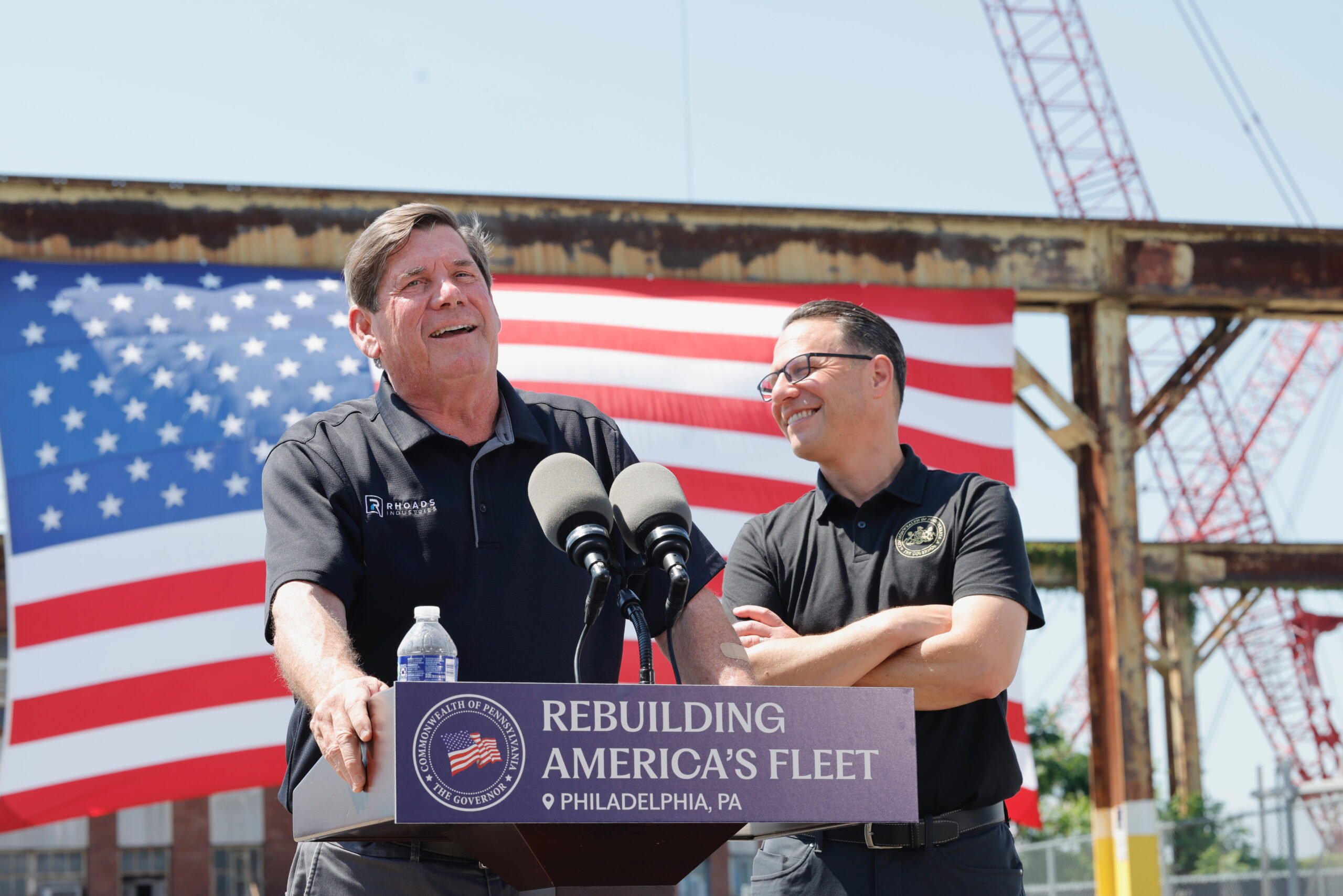
Shapiro highlighted one such deal in July, when he appeared alongside executives at defense contractor Rhoads Industries at the Navy Yard in South Philly to announce the firm’s $100 million plan to build a new manufacturing facility, create 450 jobs, and boost production of submarine parts.
“One of the things that Rhoads is known to do is get things done. … We want to turn out product; we want to turn it around; we want to get it done,” president Mike Rhoads said.
Looking toward Shapiro, he said, “Somebody standing to my left has the kind of same attitude.”
Gov. Josh Shapiro (right) with Rhoads Industries CEO Dan Rhoads in July 2025 at the Navy Yard.
Taking his turn at a lectern that read “Rebuilding America’s Fleet,” Shapiro said Rhoads’ investment — with help from the state — would “ensure the future of submarine manufacturing, shipbuilding, and all things important to securing our freedom is going to run right through the Philadelphia Shipyard.”
Three months later, in October, CEO Dan Rhoads contributed $10,000 to Shapiro’s campaign — the single largest donation he made to a candidate for state office in the last decade, records show. Rhoads did not respond to requests for comment.
Data centers and ‘skill games’
Shapiro donors’ business interests include everything from data center construction to state regulation of slot machine-style games and approvals for a nuclear reactor.
Dan Hilferty, CEO of Philadelphia-based Comcast Spectacor — which owns the Flyers and the Xfinity Mobile Arena in South Philly — gave $40,000. A political action committee affiliated with parent company Comcast also gave $50,000. Comcast Spectacor and the 76ers are building a new arena at the South Philadelphia sports complex, and Shapiro last year did not rule out offering state incentives. Hilferty, a former CEO of Independence Blue Cross, previously gave Shapiro’s campaigns $27,500 over the last decade. Other Comcast Spectacor executives contributed about $95,000 during that period.
Top executives at Pace-O-Matic, the Georgia-based developer of so-called skill games that have proliferated across convenience stores and bars, gave $50,000. Operators for Skill, a PAC affiliated with the firm, contributed $10,000. The company successfully fended off a push in 2025 by Shapiro and lawmakers to tax the games at a level the industry considered too high. The governor has renewed a push to regulate the games, which some Philadelphia lawmakers say they would prefer to see banned. Pace-O-Matic contributes to both parties and remains “committed to fighting for fair regulation and taxation of Pennsylvania skill games,” said Mike Barley, chief public affairs officer for Pace-O-Matic.
Joseph Dominguez, president of Baltimore-based Constellation Energy, gave $25,000. The company is seeking to restart a nuclear reactor at Three Mile Island, just outside Harrisburg, and needs state and federal approvals. The plant would supply power to Microsoft to support the tech company’s data centers. “Constellation executives contribute to policymakers on both sides of the aisle who, like Gov. Shapiro, prioritize results and pragmatic solutions over politics,” a company spokesperson said.
Brian Patten, CEO of Next Generation Land Co. LLC, gave $10,000. He is a Florida data center developer who says he is pursuing projects in Pennsylvania. Data centers that power companies’ cloud storage and computing needs have drawn backlash across the U.S. over fears of rising electricity rates. In his February budget address, Shapiro said he wants data centers to supply their own energy and pay for any new generation they need. He has also said the U.S. needs to win the AI race against China.
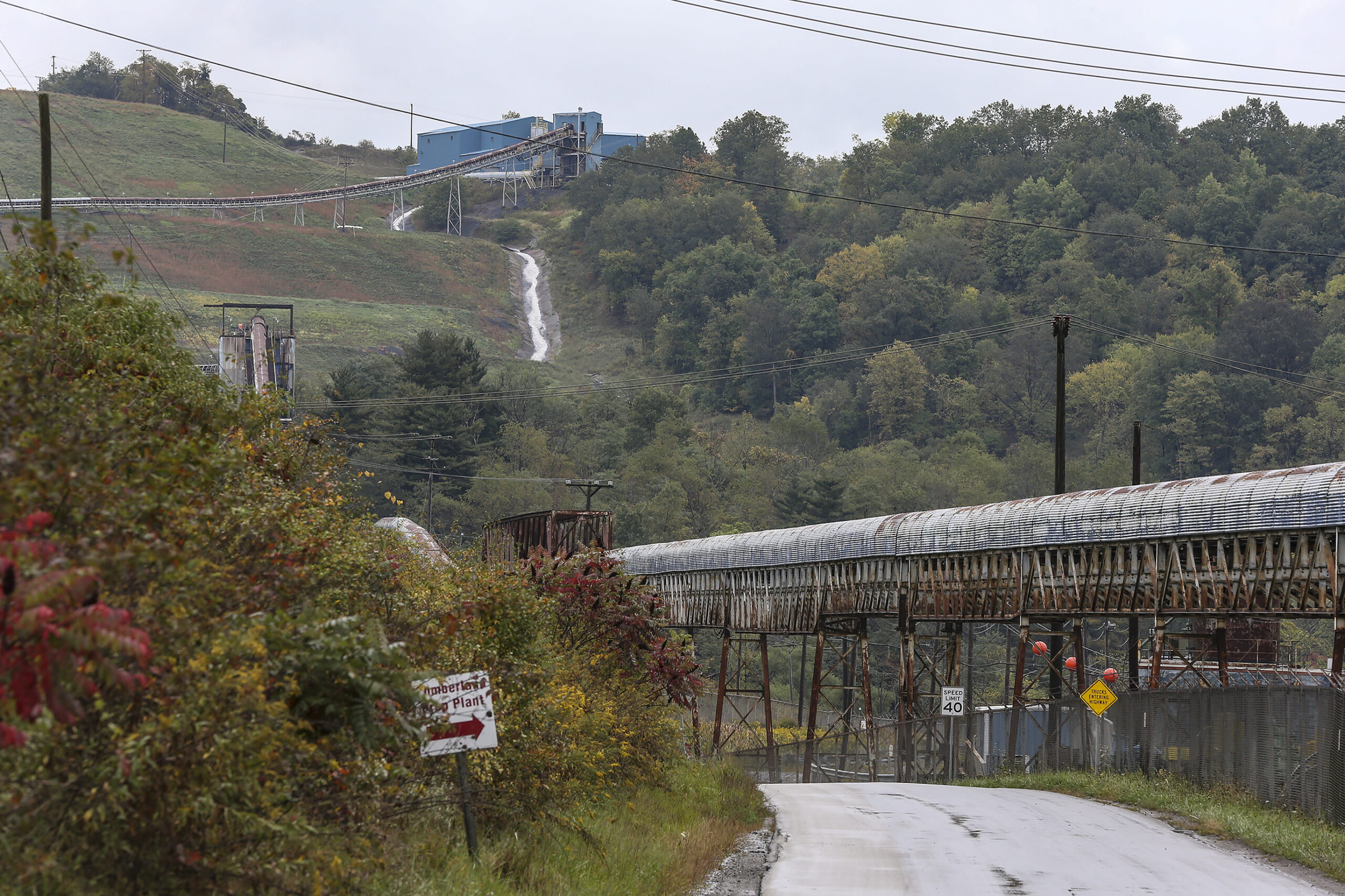
Justin Thompson, CEO of Iron Senergy, a coal operator, gave $10,000. His firm owns the Cumberland Mine in Greene County. When Pennsylvania applied to the U.S. Environmental Protection Agency for a $400 million grant, it mentioned several firms — including Iron Senergy — that could use the money for decarbonization projects, the Pittsburgh Post-Gazette reported in 2024. The EPA awarded the grant, and the Pennsylvania Department of Environmental Protection is tasked with administering it. The state is now reviewing applications, which it says are confidential.
The Cumberland Coal Mine in Greene County seen in 2020.
Local and national donors
Shapiro drew on a mix of executives from local and national firms. In Pennsylvania, he raised money from health system CEOs (Joseph Cacchione of Thomas Jefferson University, $10,000), bankers (Richard J. Green of Philly-based Firstrust Bank, $125,000), and a home remodeler (Asher Raphael of Power Home Remodeling in Chester, $100,000). Josh Kopelman — founder of First Round Capital and chairman emeritus of The Inquirer’s board of directors — and his wife, Rena, each gave $50,000.
There were private equity investors (San Francisco billionaire John Pritzker, cousin of Illinois Gov. JB Pritzker, $50,000), Hollywood producers (Jimmy Miller of talent management and production firm Mosaic, $75,000), professional sports team owners (telecom billionaire Robert Hale, minority owner of the Boston Celtics, $50,000), and a Massachusetts sports betting executive (Jason Robins of DraftKings, $10,000).
For his part, Bloomberg is “a big fan of Gov. Shapiro and a big believer in his leadership, and thinks he’s done a great job for Pennsylvania,” adviser Howard Wolfson told Axios.
At least one donor had ties to President Donald Trump, whom Shapiro often criticizes.
Don Wilson Jr., CEO of Chicago-based trading firm DRW Holdings LLC, gave $10,000 to Shapiro in September.
The Securities and Exchange Commission filed civil charges against a unit of Wilson’s firm while President Joe Biden, a Democrat, was in office. The SEC accused it of operating as an unregistered cryptocurrency dealer.
Biden-era regulators said that firms were dodging that rule by claiming crypto was a commodity, not a security. The enforcers argued this exposed investors to extra risks associated with digital currencies.
Then last March, a couple of months after Trump took office, the new administration dropped the charges against Wilson’s firm. Nine weeks later, Wilson invested $100 million into a Trump bitcoin project, the Financial Times reported.
The company told the newspaper it engages in a “variety of strategies in the crypto ecosystem” and saw value in holding bitcoin. “This transaction was viewed purely through that lens,” it said.
Trump denies having conflicts of interest.
That didn’t stop the Democratic National Committee from flagging the news on its “CORRUPTION WATCH” page.
The Trump administration, the Democrats’ post said, “now appears to be engaged in blatant pay-to-play politics.”
Power plants and coal mines
Among corporate executives, two of the eight biggest donors to Shapiro’s campaign last year were the father-and-son owners of privately held Robindale Energy Services, which owns about 20 companies involved in waste coal reclamation, power generation, mining, and logistics. Robindale’s assets include multiple power plants fueled by waste products from abandoned coal mines.
CEO Scott Kroh and his son Judson, the Latrobe-based company’s president, gave a total of $271,000.
That included a $100,000 contribution from Scott Kroh two days before Shapiro signed the annual budget, which came after a monthslong stalemate. The deal with Senate Republicans included language pulling the state out of the Regional Greenhouse Gas Initiative, a multistate effort to generate cleaner power that Robindale had vocally opposed.
Robindale’s executives did not respond to requests for comment.
In June 2023, Judson Kroh spoke out against RGGI at a public hearing, telling Pennsylvania lawmakers that Robindale’s power plants have enough capacity to power 500,000 homes. “Our main concern is you’ll see a significant decrease in power exports out of the state due to RGGI, as well as a significant decrease in coal production,” Kroh said.
Other energy industry firms, Republican lawmakers, and building trades unions have also long opposed the initiative, which requires power plants to buy allowances to cover their carbon emissions. They call it a job killer and an electricity tax. Environmental groups say it has reduced pollution and led to investments in clean energy in other states.
Shapiro had for years expressed concerns about the greenhouse gas initiative, which Pennsylvania joined under his predecessor but never implemented due to litigation. Shapiro said in 2021 during his first run for governor that “it’s not clear to me” that the program protected jobs, addressed climate change, or ensured energy reliability.
The Kroh family donated a total of $55,000 to his 2022 campaign and $21,000 the following year. Judson Kroh was among the more than 300 people who served on Shapiro’s transition team.
Many of Robindale’s operations are regulated by the state, and the company spent $150,000 lobbying state government officials last year, records show. Company executives in recent years have largely donated to Republicans in Harrisburg, though they have also supported some Democrats, including Shapiro.
window.addEventListener(“message”,function(a){if(void 0!==a.data[“datawrapper-height”]){var e=document.querySelectorAll(“iframe”);for(var t in a.data[“datawrapper-height”])for(var r,i=0;r=e[i];i++)if(r.contentWindow===a.source){var d=a.data[“datawrapper-height”][t]+”px”;r.style.height=d}}});
In addition to its power generation business, Robindale owns coal mines that are subject to state inspections and oversight. When two people died in a Somerset County mine operated by subsidiary LCT Energy, DEP required the company to update its safety protocols. The deaths in 2022 and 2023 came during a time in which there were 20 coal mining fatalities nationwide, according to federal data.
Johnstown-based LCT is currently expanding.
About 30 miles west of Maple Springs, LCT opened another mine in 2018 in Westmoreland County called Rustic Ridge 1, which produces 600,000 tons of coal a year.
The state renewed the permit for the 2,800-acre underground mine in January last year, and from that month through March, the Kroh family donated $70,000 to Shapiro’s campaign.
In April, after a yearslong review, the Pennsylvania Department of Environmental Protection approved a permit authorizing LCT to expand its operations there, adding 1,400 acres under the Pennsylvania Turnpike — the equivalent of 93 Lincoln Financial Fields. The permit allows LCT to mine coal up to 600 feet underground. The company sells the coal for production of steel.
The nonprofit Mountain Watershed Association is appealing the DEP’s approval to the Pennsylvania Environmental Hearing Board — whose judges are appointed by the governor, subject to confirmation by the state Senate — arguing that the expansion could harm groundwater and streams.
Others say the mine supports jobs and helps the local economy. Before opening, the company said in 2014 that it would invest $50 million to develop the mine, according to local news reports.
The state budget Shapiro signed in November expanded a program for expedited permitting involving approvals from the DEP, which reviews 40,000 permits a year. Introduced in 2024, the program is currently available for eligible permits such as air quality, dam safety, and oil and gas erosion and sediment control.
The budget legislation — cheered by Shapiro and GOP lawmakers — added more permit types, including one for mining, “which DEP is in the process of adding to the program,” a department spokesperson said.
Funk — the executive director of the watershed association, which has spent millions of dollars over the last 30 years repairing the environmental damage of legacy coal mining — said she is concerned the Krohs’ political giving “might be having an influence over Shapiro and his administration as we work to permit some of Robindale’s projects such as LCT Energy.”
Shapiro says permitting reform reflects his governing ethos.
“When you think about getting stuff done … it requires focus and speed,” he said in December at a National Governors Association event. “We’ve gotta be speedier as a country.”