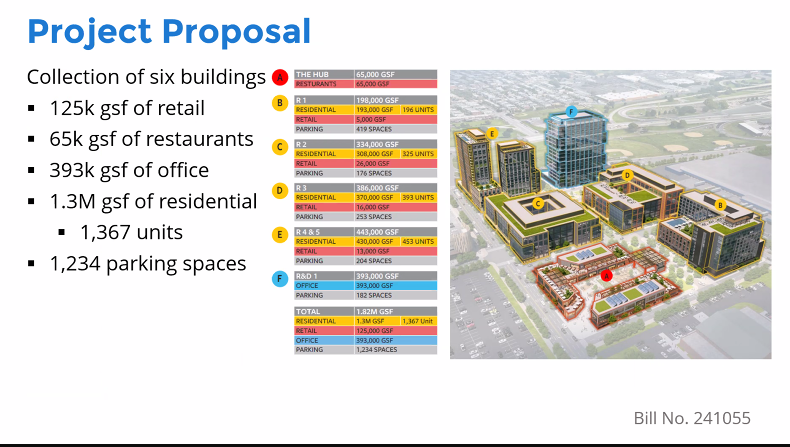
The project was revealed in 2024 and would have been a collaboration between Hines, an international development company, and the King of Prussia-basedPhiladelphia Suburban Development Corp. (PSDC), which owns the land.
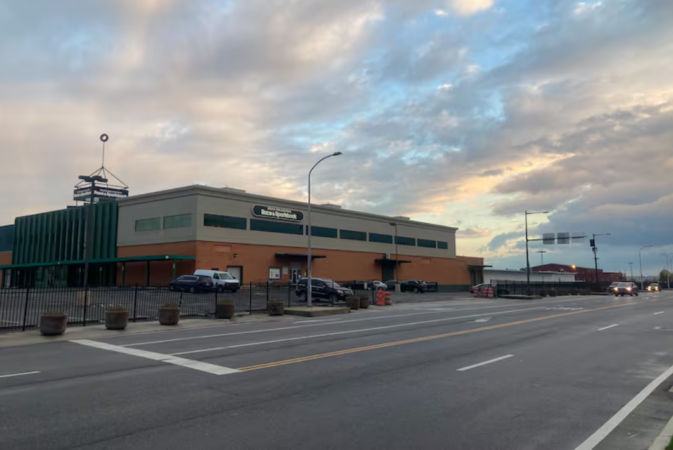
It would have constructed six buildings, including an office tower and entertainment complex, to the east of the Live! Casino & Hotel where Parx Casino’s South Philadelphia Race & Sportsbook and Packer Avenue Foods once stood.
Council President Kenyatta Johnson, who represents the area, has movedto repeal several zoning ordinances that he had passed to enable the project, despite protests from PSDC president Mark Nicoletti, who says the move will kill the project.
“Hines withdrew from the project last summer,” Johnson said in a statement. “Since the plans that were presented to me at the outset of the partnership with Hines and PSDC have significantly changed, I feel it is in the best long-term interest of the residents … to introduce new legislation this year that repeals the original 2024 zoning legislation.”
Johnson advanced his repeal legislation at an early February hearing of City Council’s Rules committee. A finalvote could come as soon as next week.
Nicoletti says PSDC could have developed the project without Hines, but only if the zoning legislation had remained in place.
“I’m honestly scratching my head. This makes no sense,” Nicoletti said Tuesday after the City Council hearing. “What happened today was random and inexplicable and unfortunately killed thousands of jobs and a very important economic development project.”
The project proved controversial early on, with representatives of the Phillies, Eagles, and Comcast Spectacor — which owns the Flyers — expressing concerns at a 2024 City Council hearing.
Earlier in 2024 those three organizations shared plans of their own for a mixed-use development of their own at the sports complex.
The release occurred as debate raged around a plan from the 76ers to leave the sports complex and build an arena in Center City — an effort the team ultimately aborted.
But Nicoletti says his company met with local community organizations and the major sports teams about the proposal.
“We presented comprehensive plans from a top architectural firm at a dozen meetings with community groups and the teams,” Nicoletti said. “We worked through any concerns the Planning Commission had to win their support.”
But Nicoletti says the two developers went separate ways last summer because Hines did not exercise an option to buy all or part of the property from the PSDC.
Hines declined to comment.
An overview of what Hines and PSDC are planning for the stadium district.
Johnson’s legislation contained a sunset clause for the zoning overlay he created to aid the project, which would have repealed itself later this year. But he decided to act sooner.
Johnson also repealed a change in the underlying zoning from industrial to land use rules that allow mixed commercial and residential use.
If he had left that mixed-use zoning in place, the land value would have increased even without the project moving forward.
“I look forward to hearing new proposals from anyone, including PSDC, concerning new development plans for the former South Philadelphia Race & Sportsbook location at 700 Packer Ave.,” Johnson’s statement read.
Johnson emphasized that any new proposal would need to be presented to neighborhood groups and get their support before he introduces any new zoning legislation.
The Hines and PSDC collaboration promised to create thousands of construction jobs, but the exit of the international developer is seen by union leadership as the catalyst for the project’s death.
“Hines stepped away from the project, and that caused the Council president to look at it with a new set of eyes,” said Ryan Boyer, who leads the Philadelphia Building and Construction Trades Council and the Laborers District Council.
“The Council president has approved correct development, but he wants the community to have a say — as is his right,” Boyer said. “But I also think that [Johnson] and Mark [Nicoletti] are both reasonable people and reasonable men will come to a resolution for both of them, and for the building trades.”
Federal and private grants totaling nearly $29 million were announced Wednesday for conservation projects within the Delaware River Watershed, including a South Philadelphia wetlands park, a water trail in Camden County, and support of the Lights Out Philly program to keep birds from crashing into buildings.
The money comes from nearly $12.5 million in grants to the Delaware Watershed Conservation Fund from the National Fish and Wildlife Foundation (NFWF) and the U.S. Fish and Wildlife Service. An additional $17 million comes in matching funds from nonprofits such as thePhiladelphia-based William Penn Foundation.
The total is about $9 million less than last year’s grant awards of $38 million. A representative for the two federal agencies did not state a reason for the decline.
However, the reduction comes as many federal grants have been cut or reduced by President DonaldTrump’s administration.
What’s being funded?
In all, the new funds will flow to 30 conservation projects, including local trail creations, stream restorations, shoreline enhancements, and wildlife habitat improvements. The money will go toward planning, hiring for, and construction of projects in Pennsylvania, New Jersey, Delaware, and New York.
Jeff Trandahl, executive director and CEO of NFWF, said the projects “demonstrate the impact that public-private partnerships can have at a landscape scale and will help ensure a healthier and cleaner future for the Delaware River watershed and the communities and species that depend on it.”
The watershed is within a densely populated corridor but remains 50% forested. Four hundred miles of it is classified as a National Wild and Scenic River, largely undeveloped but accessible for recreation.
The grants cover a wide range of projects.
For example, $498,800 will go toward reducing migratory bird collisions into buildings throughout the Delaware Watershed, which includes Philadelphia and New Jersey. The project of the Wildlife Management Institute, along with Bird Safe Philly, will identify and retrofit buildings to be bird-friendly, inform the public about built-environment hazards, and how to mitigate them.
Leigh Altadonna, coordinator for Bird Safe Philly, a collaborative of five organizations, welcomed the grant.
“These funds will reinforce Bird Safe Philly’s continuing work with nature centers, libraries, arboretums and other buildings as part of our mission to mitigate bird collisions with glass,” Altadonna said.
She said money would go toward educating the public about howto make their homes and communities bird-friendly.
Bird Safe Philly coordinates with owners of the city’s skyscrapers to turn off or dim lights, which can attract birds during the spring and fall migration seasons.
A sample of grants with total federal and private funding
Pennsylvania
$650,000 for South Philadelphia Wetlands Park II, a project of the Delaware River Waterfront Corp. The money will go toward completing needed documentation for the park located just south of the base of Tasker Street through Pier 70. The goal is to restore wetland habitat and increase public access to piers and berths, add a kayak launch and a natural pier park, and restore two acres of forested upland, meadow and wetlands.
$2 million for stream channel restoration in the south branch of French Creek, a project of the French and Pickering Creeks Conservation Trust. The stream channel and surrounding wetland will be improved as a habitat for brook trout and bog turtle, restore 6.7 acres of riparian buffer, and more than 13 acres of surrounding wetland and flood plain.
$900,400 to reintroduce wild brook trout in restored agricultural watersheds in Chester County, a project of the Stroud Water Research Center, which will monitor the re-establishment effort and implement agricultural best management practices to give trout the best chance of recovery.
New Jersey
$3.5 million for horseshoe crab and shorebird habitat at the Kimbles Beach and Bay Cove area in Cape May Court House, a project of the American Littoral Society. The money will go toward restoring one mile of critical habitat along the Delaware Bay, by placing 49,000 tons of sand to stabilize the beach, reverse coastal erosion, and protect the shoreline.
$1.2 million for restoration and recreational projects on the Cooper River Water Trail, which is spearheaded by the Upstream Alliance. The money will go toward engaging 3,000 community members through hands-on recreational programming, hiring local youth, and promoting public access on the new trail in Camden County. It will include paddling and fishing programs for the community and create a Friends of the Cooper River Water Trail group.
$487,400 for ecological restoration and wildlife habitat improvements at Swede Run Fields in Moorestown, Burlington County, for a project by the township to eradicate invasive species and establish native plant communities within the wetlands, riparian forest, and upland meadow buffers.
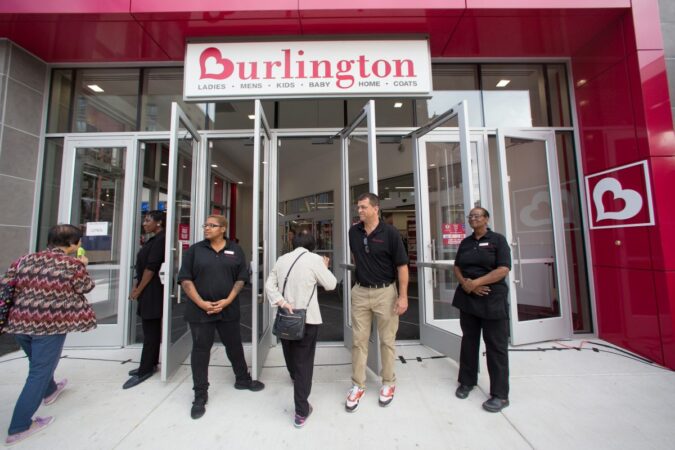
A new Burlington Stores location is coming to South Philadelphia.
The New Jersey-based discount retailer on Monday announced plans to open a store this spring in a shopping center on South 24th Street, with discount retailers Five Below and Ross Dress for Less nearby.
Burlington got its start in 1972, opening its first store on Route 130 in Burlington Township under the name Burlington Coat Factory. Since then, it has grown to over 1,000 locations and has shed “coat factory” from its name, reflecting the larger product line it carries including apparel, shoes, and home decor.
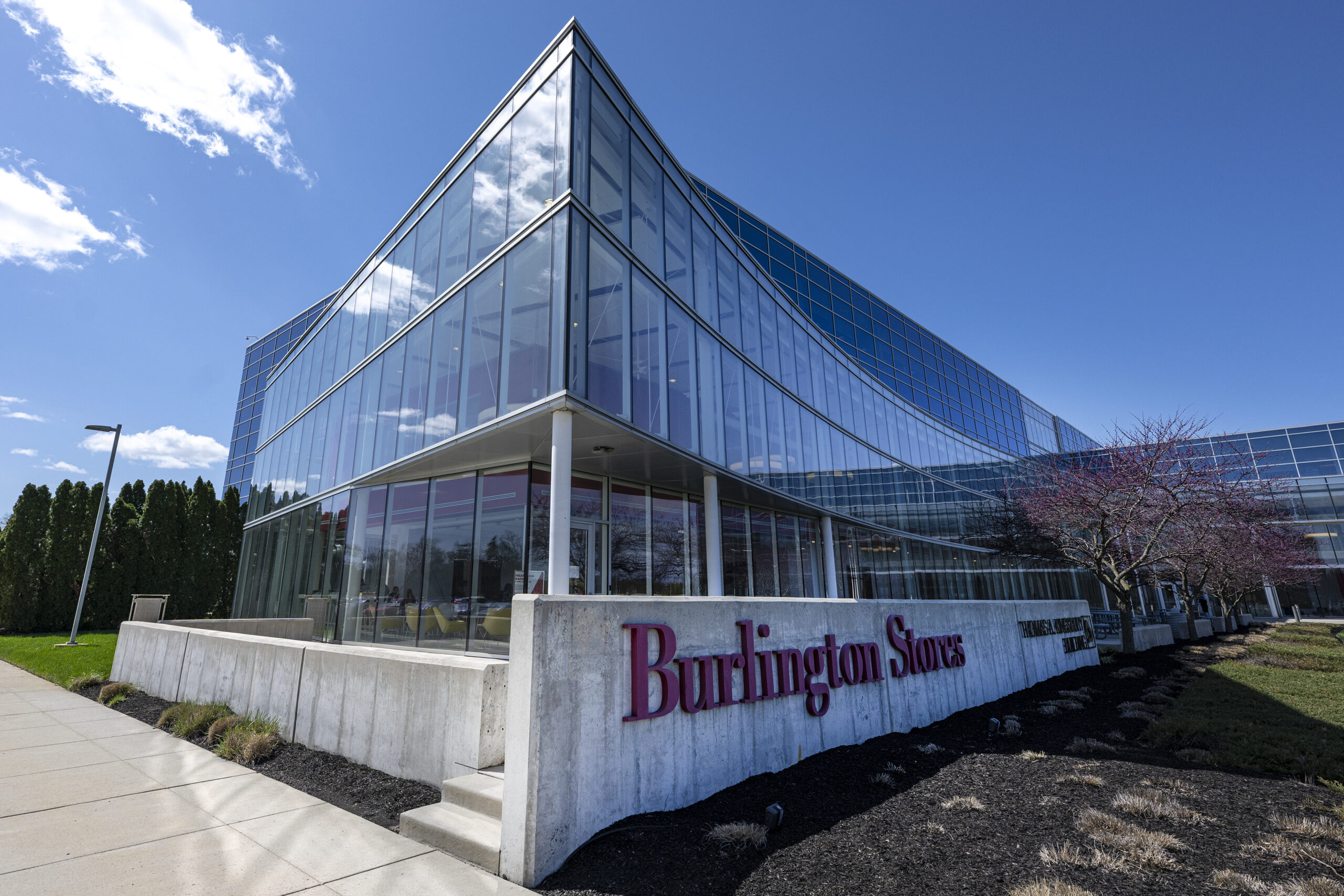
Burlington headquarters is shown last year in
Burlington City.
Burlington started implementing a smaller store model in 2017. About a decade ago its stores were roughly three times larger than the 20,000-square-foot new ones.
New stores feature a “refreshed format, including wider, more organized aisles and bold signage,” according to a company news release this week. Many existing stores have been remodeled to fit this format, and all sites are expected to have transitioned by the end of the year.
The discount retailer has over 40 stores in Pennsylvania, including seven stores in Philadelphia and several more in the surrounding counties. Another South Philly Burlington is located at Whitman Plaza on Oregon Avenue, roughly two miles from where the new site will open.
Sixth and Bainbridge’s French scene is coming back with the new Side Eye, an all-day bar opening Saturday in the mid-19th-century building that housed the late, great Bistrot La Minette.
Owner Hank Allingham has shifted away from La Minette’s tightly focused French bistro style in favor of what he calls “French-ish” food alongside beer, $13 cocktails, and European wines.
Side Eye owner Hank Allingham (left) with lead bartender Ryan Foster inside the bistro.
Side Eye is meant to be flexible — “the kind of neighborhood spot you can use for most situations,” Allingham said. “You can come for a date-night dinner, eat alone at the bar, or watch a game.”
This is the ownership debut of Allingham, who grew up locally and spent his previous career working in restaurant finance and operations for companies such as Sally’s Apizza in New Haven, Conn., and P.J. Clarke’s in New York and Philadelphia.
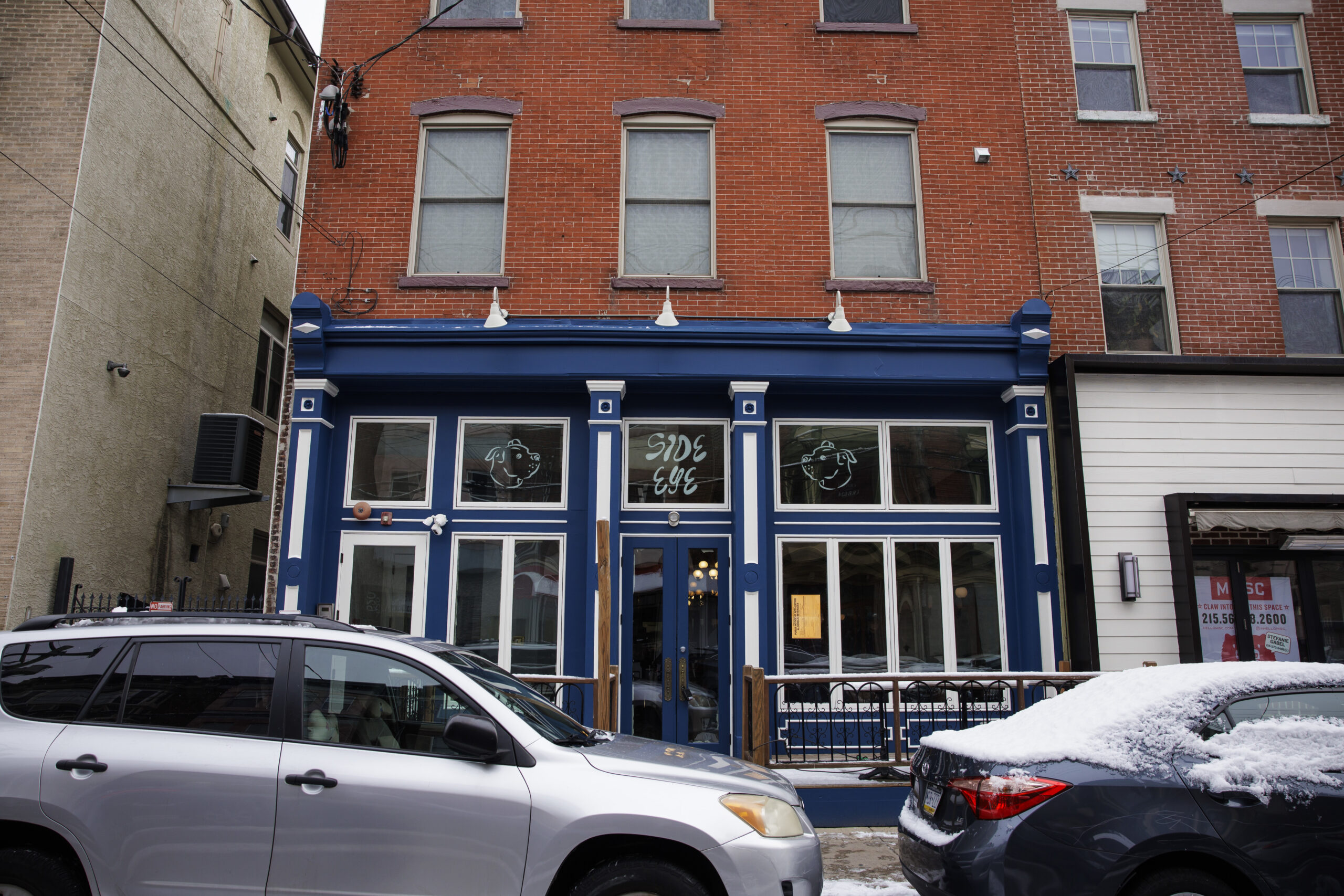
The exterior of Side Eye, 623 S. Sixth St.
When it came time to open his own place, he and his wife, Kat, wanted to be in South Philadelphia and searched broadly between South Street and Snyder Avenue.
“I know this isn’t technically ‘South Philly,’ but Queen Village is beautiful and incredibly historic,” he said. “A lot of the facades — including this one — are really special, and from a curb-appeal standpoint, it’s hard to complain.”
A bourbon old fashioned, hot penicillin, and vieux pommier at Side Eye.
The location at 623 S. Sixth St. was, in fact, a dream home for the Allinghams’ restaurant. Shortly after moving back to Philadelphia, the couple dined at Bistrot La Minette before its closing in mid-2024. “We remember saying to each other, ‘If only this space ever became available,’” Allingham said. “Then it did.”
The opening, initially targeted to December, has been a case of hurry up and wait. “The holidays just sort of slowed the world down, frankly. When we got approval on Dec. 17, I was fairly certain we were going to be waiting awhile just because of the timing.”
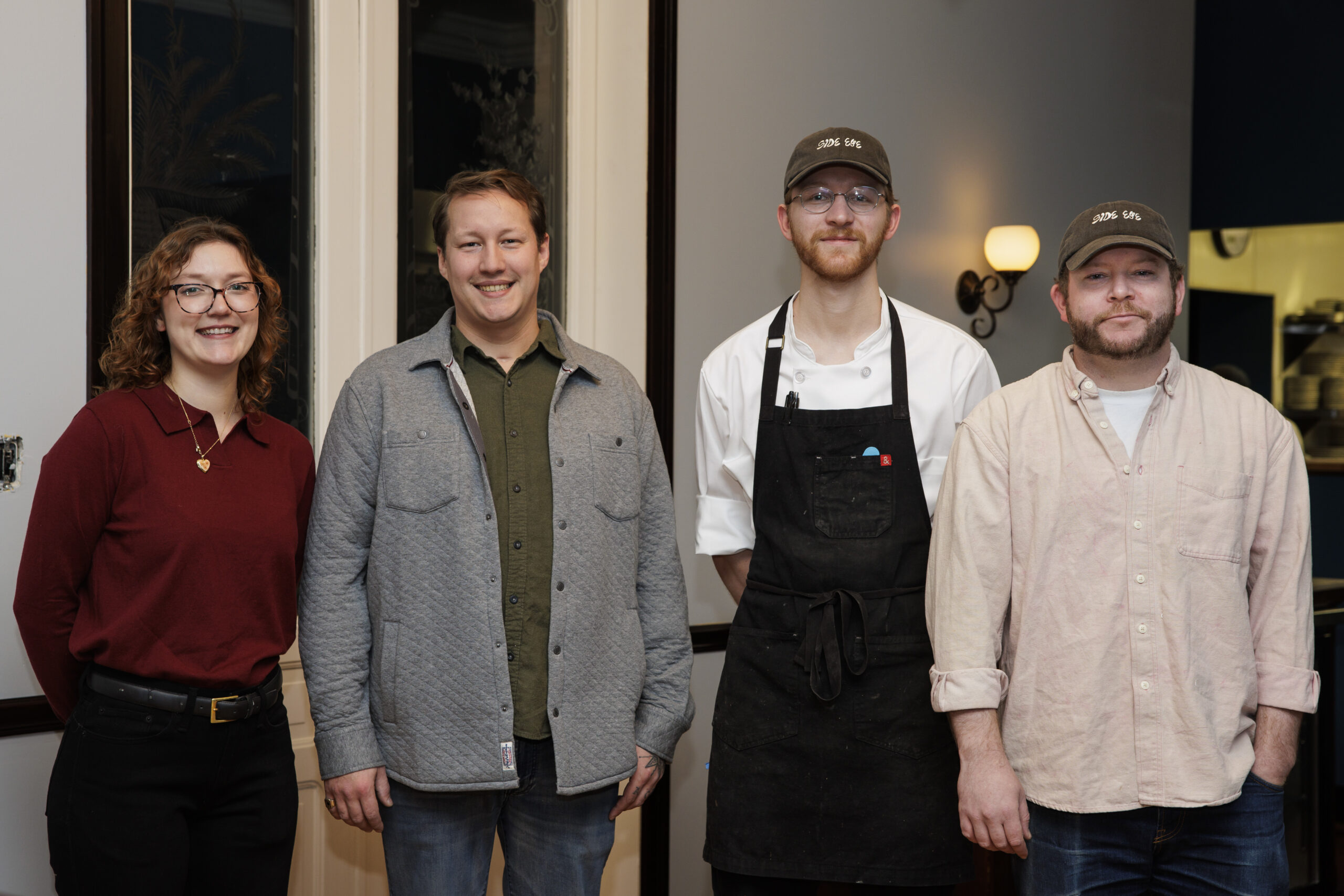
The Side Eye team (from left): Abbey Smith, front of house manager, Ryan Foster, lead bartender, Finn Connors, chef, and Hank Allingham, owner.
Side Eye is named in memory of the couple’s dog Sheba, who would at first give the side eye to anyone she didn’t know. She died in 2021.
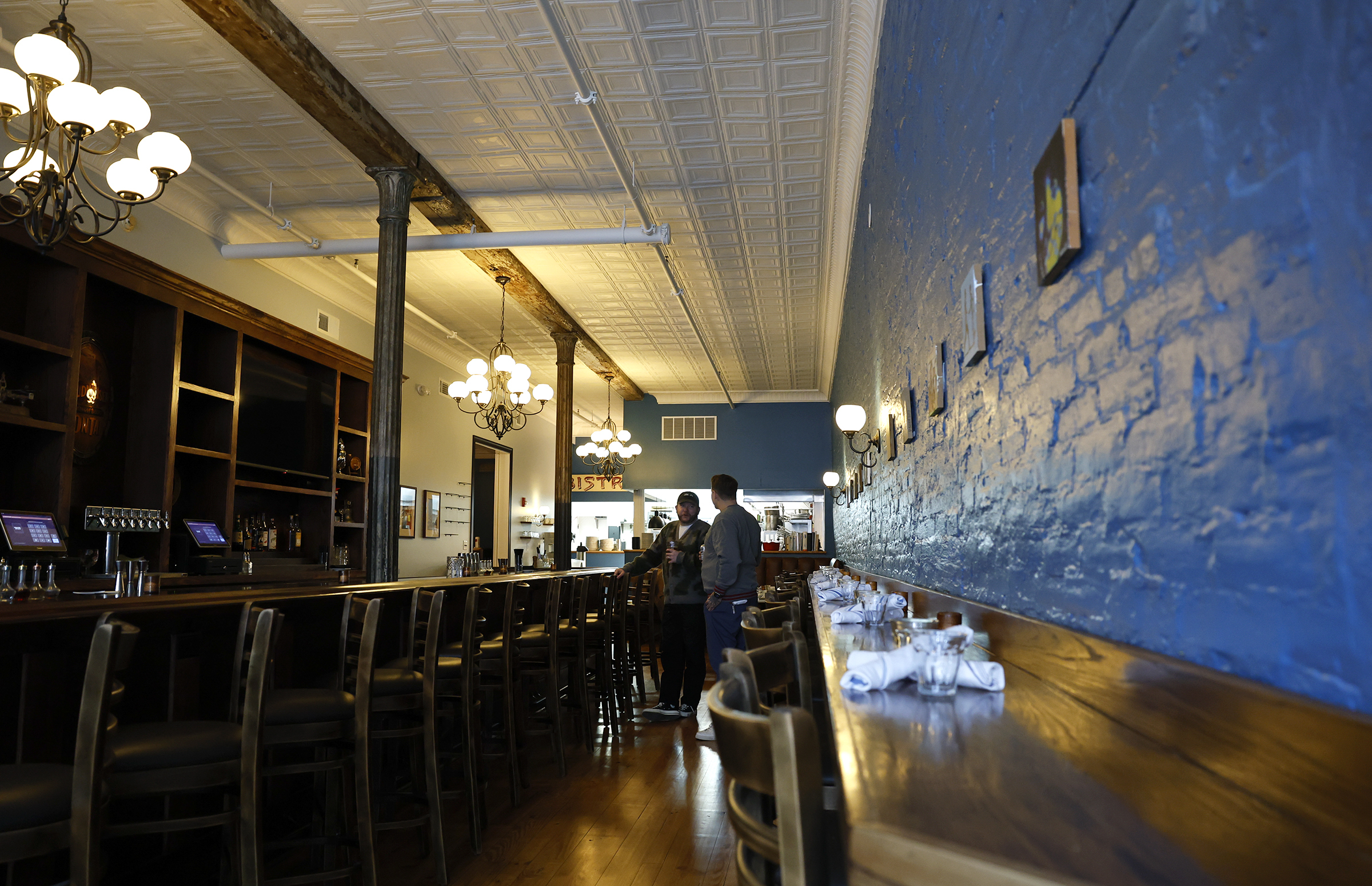
The cozy room includes a 20-seat bar (relocated to the opposite wall), with an additional 12 seats along a rail. There are 40 seats in the dining room, a rear dining room with 16 additional seats, and a seasonal patio.
In the kitchen is executive chef Finn Connors, most recently at Sally in Fitler Square, with earlier experience at Wilder and Osteria. Connors makes nearly everything in house, including breads, pastries, pastas, and desserts.
Tagliolini at Side Eye.
Dishes include tagliolini tossed with café de Paris butter; peppercorn burger finished with jus and Fromager d’Affinois on a seeded bun; French onion soup with 12-month Comté; triple-cooked frites; moules marinières with baguette, crab fat, nori, witbier, and crème fraîche; and stuffed cabbage filled with braised short rib, mushroom duxelles, and tomato Bordelaise. Desserts include a classic crème caramel, served warm and finished with salt.
Menus will shift throughout the day from lunch into dinner. Ninety minutes before closing, the kitchen will pare things back and add a late-night menu with snacks such as a raw bar with oysters on the half shell and shrimp cocktail.
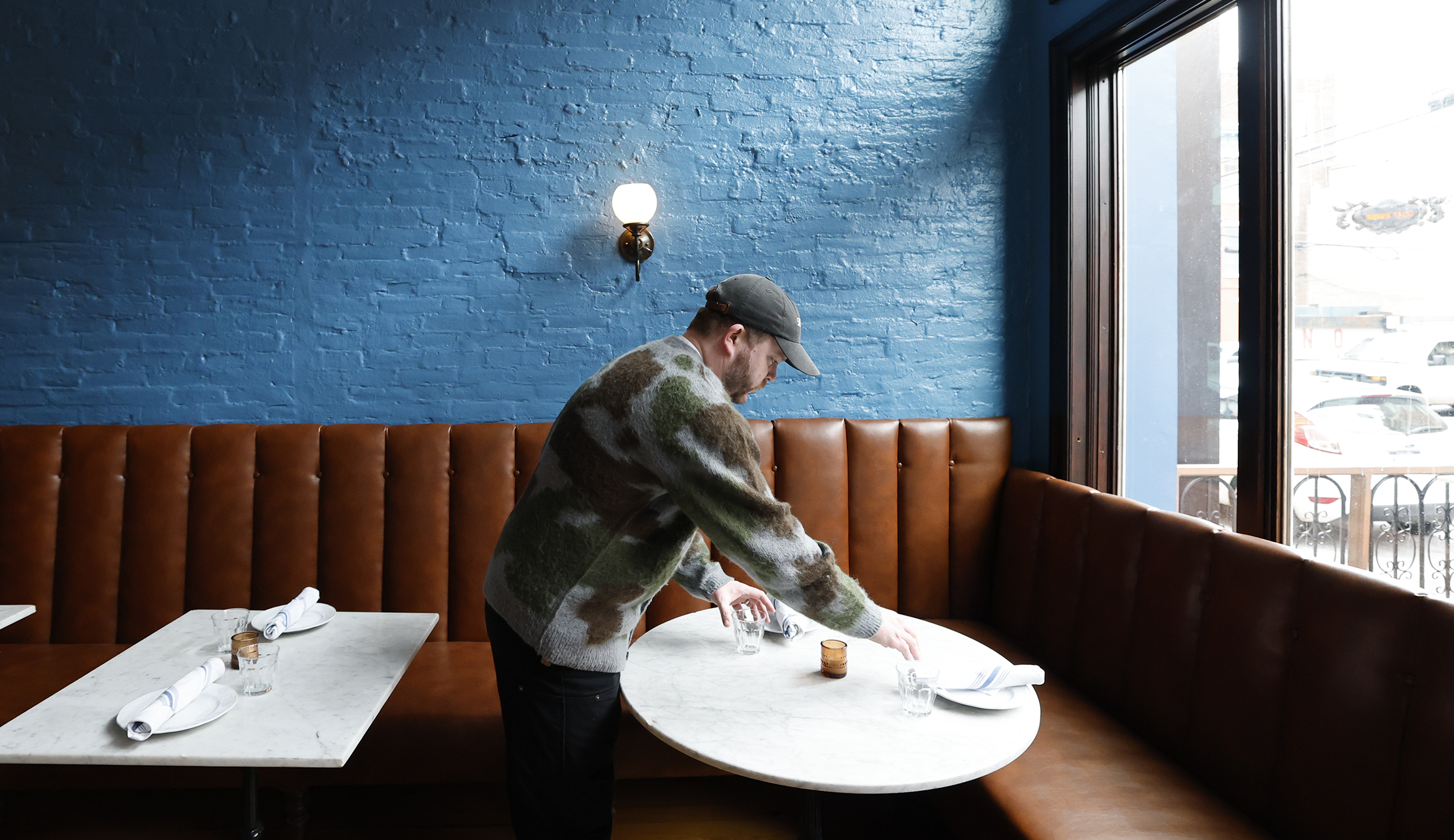
Side Eye owner Hank Allingham prepping tables inside the bistro.
The beverage program, overseen by Messina Social Club alumnus Ryan Foster, includes eight cocktails priced at $13, eight draft beers, and a French-leaning wine list highlighting small producers.
Side Eye eventually will be selling wine to go, with bottles displayed along the outer portions of the back bar, in a retail-style presentation similar to the one at South Philadelphia favorite Fountain Porter. The to-go selection, largely separate from the by-the-glass list, will rotate regularly, beginning with six reds, six whites, a few sparklings, skin-contact wines, and a rosé.
Among the beers will be Budweiser served in frozen mugs.
Budweiser?
“Because we like it,” Allingham said.
Side Eye, 623 S. Sixth St. Hours on opening weekend: 5 p.m. to 1 a.m. Saturday and 5 to 11 p.m. Sunday. Hours starting Feb. 9: noon to midnight Monday through Thursday, noon to 1 a.m. Friday, 11 a.m. to 1 a.m. Saturday, and 11 a.m. to 11 p.m. Sunday. Fifty percent of Feb. 7’s proceeds will be donated to People’s Kitchen.
State Sen. Sharif Street maintained his financial advantage. Physicians Ala Stanford and David Oxman have turned to self-funding their campaigns. And State Reps. Chris Rabb and Morgan Cephas are low on cash — but one might be getting help soon.
The crowded Democratic primary for Pennsylvania’s 3rd Congressional District is beginning to come into focus after the candidates this weekend filed new campaign finance reports. The filings cover the last three months of 2025, providing insights into the candidates’ resources as the campaign heats up.
window.addEventListener(“message”,function(a){if(void 0!==a.data[“datawrapper-height”]){var e=document.querySelectorAll(“iframe”);for(var t in a.data[“datawrapper-height”])for(var r,i=0;r=e[i];i++)if(r.contentWindow===a.source){var d=a.data[“datawrapper-height”][t]+”px”;r.style.height=d}}});
Fundraising will not be the only factor that determines the outcome of the May primary election, which will ultimately be decided by voters. But the 3rd District candidates need money to pay staff and buy advertisements to spread their message, and the beginning of an election year is often a pivotal time for campaigns to prove their viability.
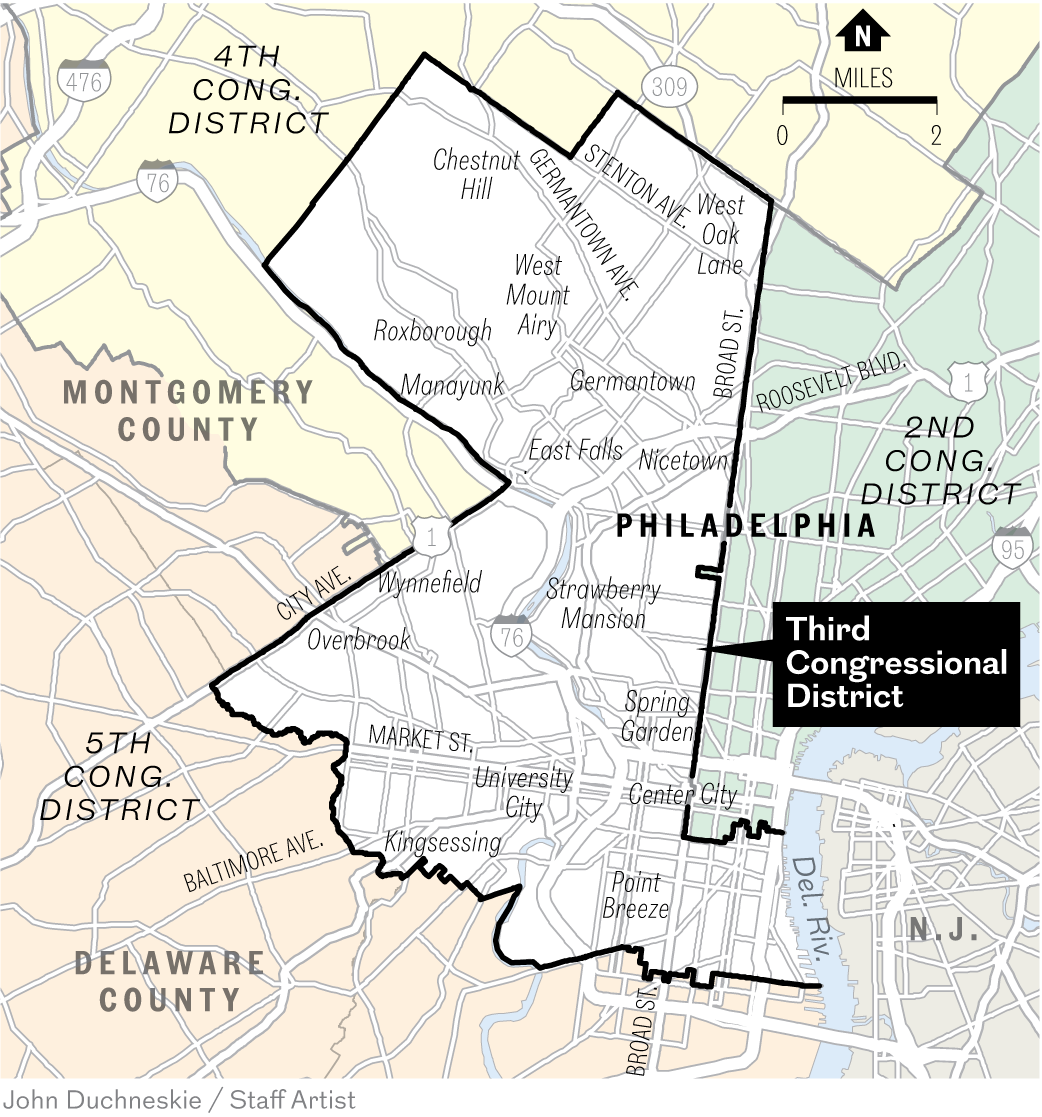
Map of Pennsylvania’s 3rd Congressional District.
After U.S. Rep. Dwight Evans (D., Philadelphia) last year announced he would not seek reelection to the nation’s bluest district, more than a dozen candidates tossed their hats in the ring. It’s likely some will not stay in the race long enough to appear on the May 19 primary ballot.
The 3rd District includes all of Northwest and West Philadelphia, as well as parts of Center City and North, South, and Southwest Philadelphia.
Street led the field by raising about $347,000 from Oct. 1 to Dec. 31 of last year, according to his report. His campaign spent $193,000 during that period, and he had $527,000 in cash on hand at the start of 2026.
window.addEventListener(“message”,function(a){if(void 0!==a.data[“datawrapper-height”]){var e=document.querySelectorAll(“iframe”);for(var t in a.data[“datawrapper-height”])for(var r,i=0;r=e[i];i++)if(r.contentWindow===a.source){var d=a.data[“datawrapper-height”][t]+”px”;r.style.height=d}}});
Campaign manager Josh Uretsky said Street’s fundraising totals “demonstrate that our strong track record of progressive leadership — from lowering health care costs to leading the fight to legalize recreational cannabis and reform our justice system — is resonating in every corner of the district.”
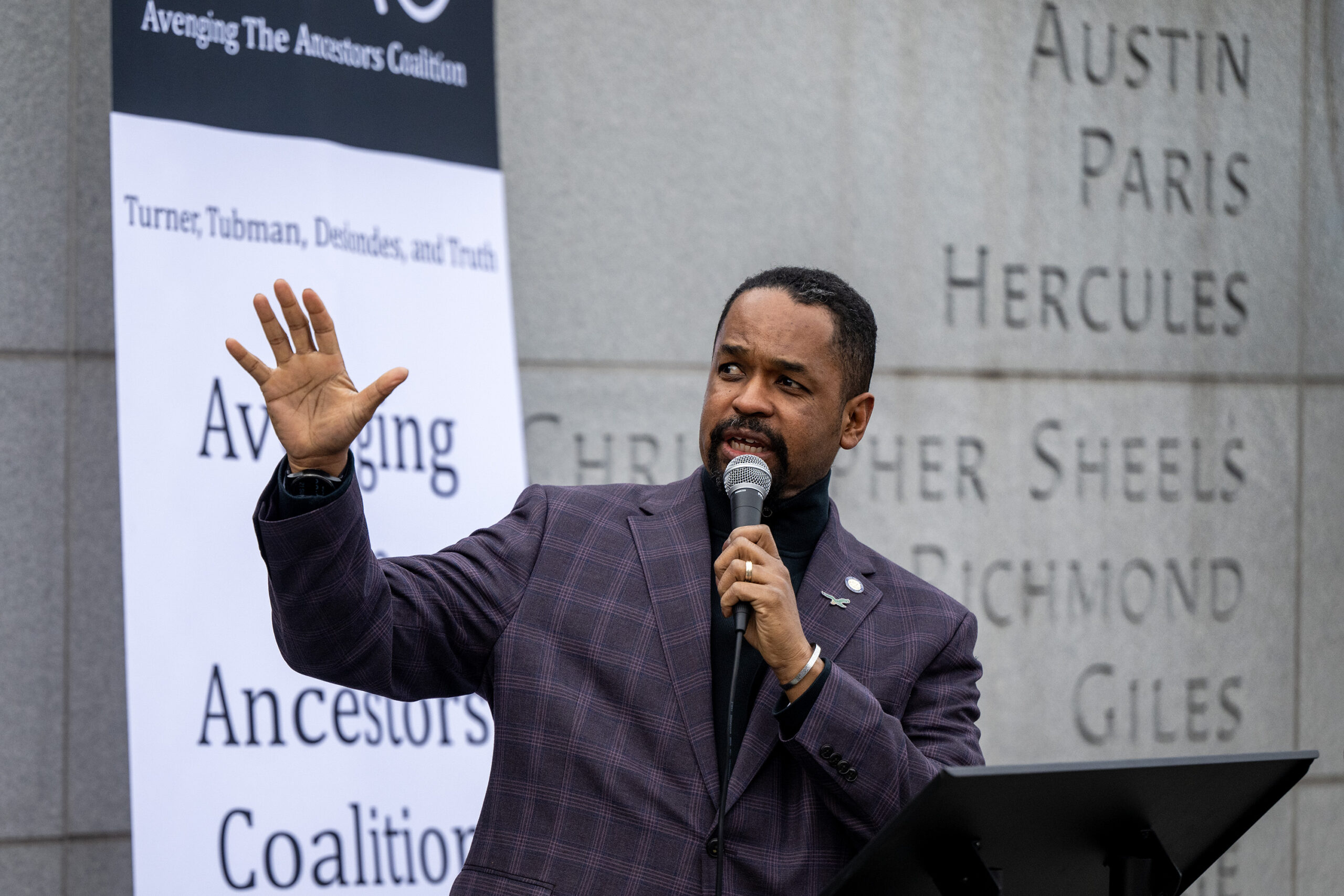
State Sen. Sharif Street speaks in front ofthe engraved names of nine enslaved people who lived and worked at President George Washington’s home, as the 15th anniversary of the President’s House exhibit in Independence National Historical Park is celebrated Sunday, Dec. 21, 2025.
Street has benefited from contributions from the deep-pocketed building trades unions, which endorsed him last fall. In the past, those unions have also funded outside spending committees, or super PACs, to support their preferred candidates, and it’s likely they’ll do the same for Street this spring.
Street collected more than $40,000 from labor groups in the most recent reporting period.
First-time candidates Ala Stanford and David Oxman turn to self-funding
Last month, it appeared that Stanford,a pediatric surgeon, was raking in cash when her campaign released a statement saying she had raised more than $467,000, a significant haul for a first-time candidate. The campaign said at the time that her fundraising prowess “solidifies [her] leading role” in the race.
But it turns out that more than half of the money the campaign brought in came from Stanford herself. The new report showed that Stanford lent her campaign $250,000 on Dec. 31, the last day of the reporting period, bringing her total cash on hand to about $392,000 at the end of the year.
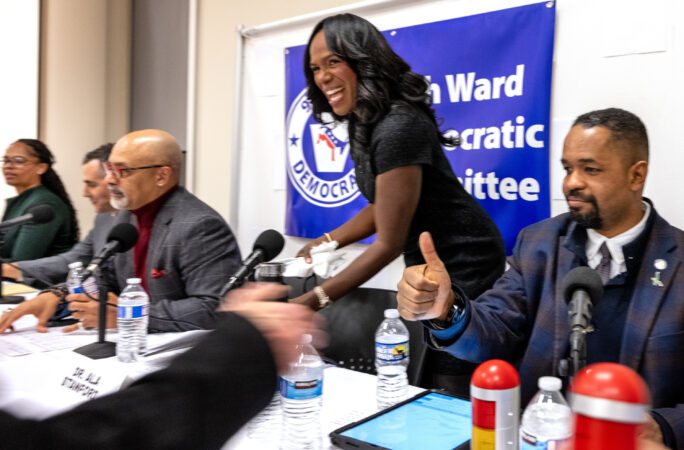
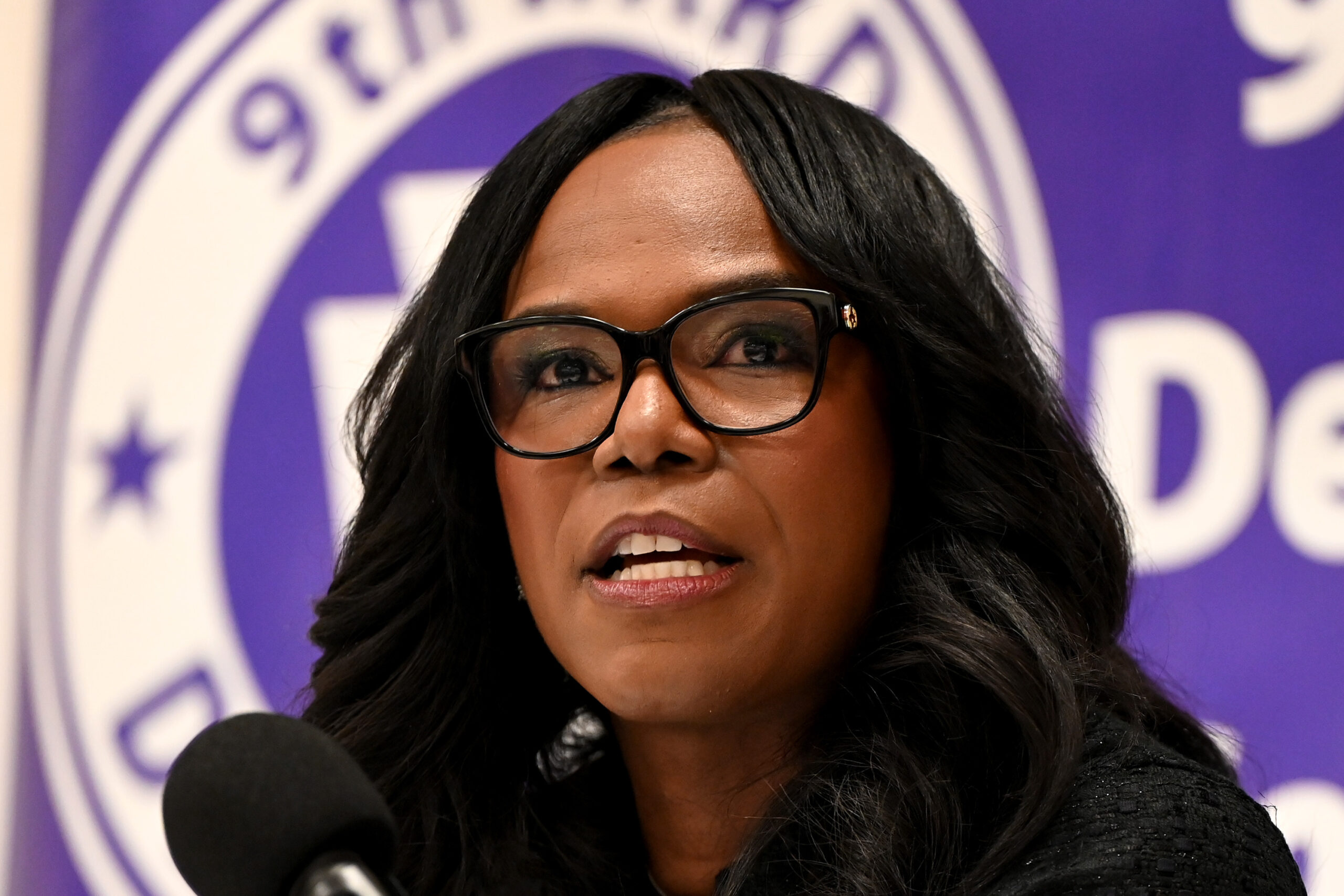
Physician Ala Stanford at a forum hosted by the 9th Ward Democratic Committee Dec. 4, 2025.
In a statement Monday, Stanford emphasized her humble upbringing in North Philadelphia public housing, saying she “never imagined being in this position, but this city has given me so much.”
Her campaign noted that she also invested her own money in her nonprofit organization, the Black Doctors Consortium, to bolster the city’s COVID-19 testing and vaccination programs during the height of the pandemic.
“I’ve stood up and led during a crisis before — and spent my own money to do it — so I’m going do whatever it takes to fight for our city,” Stanford said. “I’m incredibly grateful that in just the first few months of our campaign, that commitment has been matched with amazing grassroots financial support, too, and we’re just getting started.”
Stanford is not the only doctor self-funding their congressional campaign. Oxman, another political outsider and physician, brought in just over $107,000 between October and December — including $75,000 that he lent to his own campaign.
Oxman, an intensive-care physician and professor at Thomas Jefferson University, has lent his campaign $175,000. At the end of the year, he had $357,000 in the bank.
Physician David Oxman at a forum hosted by the 9th Ward Democratic Committee Dec. 4, 2025.
In a press release Sunday, Oxman emphasized that he was not accepting corporate PAC donations.
“You cannot fight for the health of the people of the 3rd district while you are taking money from nursing home companies and health insurance PACs,” Oxman said. “The corporatization of medicine is just a piece of a larger corporatization of American life that is hollowing out our economy as well as our democracy.”
Chris Rabb and Morgan Cephas enter 2026 low on cash
Both Cephas and Rabb raised less money in the fourth quarter of 2025 than in the opening months of their campaigns, and they both closed the year with roughly $100,000 in cash on hand.
Cephas, who represents a West Philadelphia district and chairs the city’s delegation to the Pennsylvania House, entered the year with about $109,000 in cash on hand.
State Rep. Morgan Cephas at a news conference Sept. 3, 2025.
“The residents of the 3rd Congressional District are more concerned with the skyrocketing cost of living, fewer health care options, and making sure their communities are safe than who raised the most money,” Cephas campaign manager Salvatore Colleluori said. “Rep. Cephas has only one priority in this race, the residents of Philadelphia’s 3rd Congressional District.”
“I’m incredibly proud of the thousands of people in Philly and across the country fueled by a movement so much bigger than electoral politics,” Rabb said. “Our momentum is undeniable. We always knew we wouldn’t outraise the corporate-backed and self-funded campaigns — and we don’t need to.”
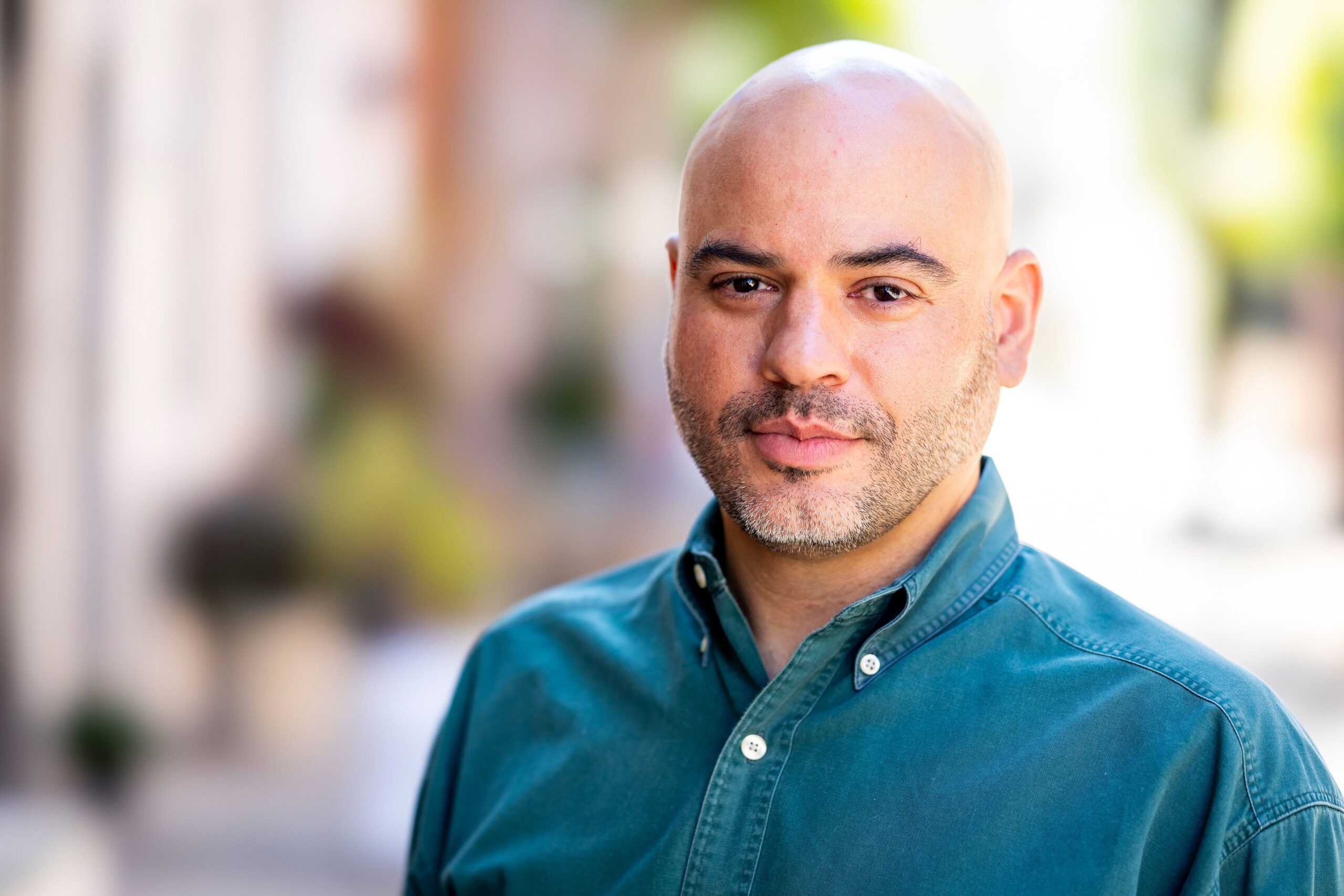
Pablo McConnie-Saad, a 39-year-old South Philly resident who worked in Biden’s administration, entered the race to represent Pennsylvania’s 3rd Congressional District.
Meanwhile, Pablo Iván McConnie-Saad — a Bella Vista resident who worked in Delaware politics before serving in the Treasury Department under former President Joe Biden — brought in a fundraising haul similar to the sitting state representatives last quarter despite his campaign largely flying under the radar.
McConnie-Saad collected $119,000 in contributions last quarter, and he had $69,000 on hand at the start of the year.
In a statement, campaign field director Matt Cárdenas said McConnie-Saad offered voters a “different choice.”
“This campaign is entirely people-powered,” he said. “No corporate PAC money, no AIPAC, just everyday people investing in a different kind of politics. We’re proud of what we’ve built so far. Politicians have failed us, and Washington won’t change unless we challenge it.”
The Democratic Socialists of America’s Philadelphia chapter recently endorsed him, as did two liberal wards in South Philadelphia. And Reclaim Philadelphia leaders are recommending that its members back Rabb in the progressive group’s internal endorsement process.
The Working Families Party of Pennsylvania, which often funds super PACs to back left-leaning candidates, has not yet weighed in.
Candidates (from left) State Reps. Morgan Cephas, and Chris Rabb; and physician David Oxman appear at a forum hosted by the 9th Ward Democratic Committee in Mt. Airy Thursday, Dec. 4, 2025.
“We’re still going through an active endorsement process, but we’re confident that we will land on a progressive who will fight for working people, not billionaire donors, big corporations, or special interests,” said Nick Gavio, a spokesperson for the party.
Additionally, the Justice Democrats, a national group founded by operatives from Bernie Sanders’ presidential campaign, may also get involved. In the past, the PAC has backed candidates with similar platforms to Rabb’s.
Justice Democrats “will likely come to a decision with news to share in the very near future in support of a candidate we can be confident will represent the values of the everyday people in this district,” spokesperson Usamah Andrabi said.
Data reporter Joe Yerardi contributed to this article.
Parking restrictions along a 1½-mile stretch of South Broad Street will take effect at 7 a.m. Tuesday so the Streets Department can begin removing piles of curbside snow, the city said.
Snow removal has gone slowly since the storm more than a week ago because of the ongoing deep freeze across the region.
Parked vehicles must be moved from Broad between Washington and Oregon Avenues ahead of 7 a.m. to clear the way for a Streets Department “lifting operation” that will remove the snow, the city said.
Free off-street parking will be available at lot U near Citizens Bank Park between 7 a.m. and 6 p.m. Tuesday, the city said. All vehicles must be moved from the parking lot by 6 p.m.
The operation, which will involve excavators and loaders, may temporarily disrupt traffic, the city said.
“The Streets Department urges everyone traveling near this lifting operation, and others taking place across Philadelphia, to plan extra travel time, slow down, and help keep our crews safe by giving them plenty of space to do their work,” the department said.
It was so cold Monday at Farrell Elementary, a Philadelphia public school in Northeast Philadelphia, that middle schoolers — a group seemingly constitutionally averse to bundling up — were wearing coats indoors.
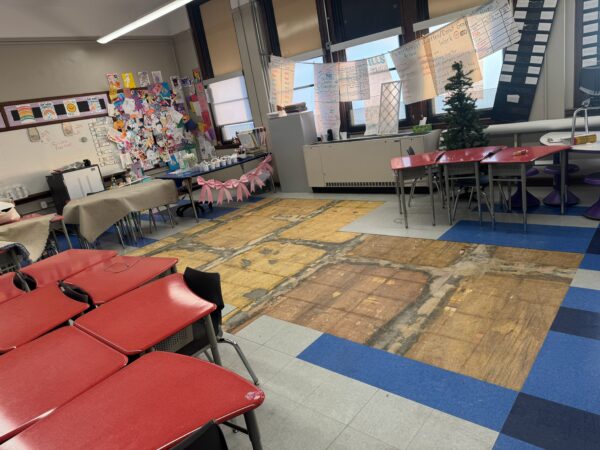
That was just one example of trouble for the Philadelphia School District amid the prolonged frigid spell bearing down on the region, with a number of schools plagued by burst pipes, broken heaters, and other issues.
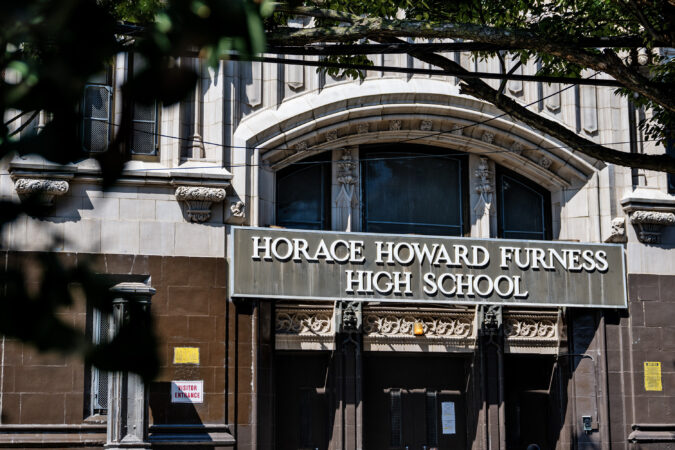
Furness High, in South Philadelphia, moved to virtual instruction Monday “due to ongoing heating challenges.”
“The safety and comfort of our staff remains our top priority,” wrote Teresa Fleming, the district’s chief operating officer. “Moving to virtual instruction for the day allows necessary work to continue while allowing minimal disruption to learning.”
Though Farrell’s heat was on the fritz for the third school day in a row, the district did not pivot to virtual learning there. Instead, it was one of four schools that dismissed early due to heating issues. For much of the day until classes ended, Farrell students and staff were forced to either bundle up or find space to relocate in more-adequately heated spots in the overcrowded school, according to staffers who asked not be named because they are not authorized to speak to the media.
Six Farrell classes camped out in the auditorium, including one class of 38 eighth graders. But the auditorium had to do double duty because the unplowed state of the yard where students typically play meant that students who’d typically be in the yard before or after eating lunch had to be in the auditorium also, Farrell employees said.
Meaningful learning was “absolutely not” going on in the auditorium, one staffer said. “It’s almost impossible.” Students were instructed to complete work on Google Classroom, and teachers were balancing crowd control and working with students individually.
In other cases, teachers and students just stayed in cold rooms, bundled up. Small-group instruction had to happen in hallways because of the population overflow; the hallways were also freezing.
“It’s just ridiculous,” said the Farrell staffer, of the school conditions.
They and others were frustrated that though district officials knew Farrell was plagued by heating issues, students and staff were required to be in the building, especially while other schools were permitted to go virtual.
District students had a snow day last Monday, learned virtually on Tuesday and Wednesday, then went back for in-person instruction on Thursday, though conditions were tough in many schools. In some places, heating issues have resolved.
“The safety and well-being of our students and staff remain our highest priorities,” district spokesperson Monique Braxton said. “Due to sustained frigid temperatures following the recent snowstorm, combined with the age of some School District of Philadelphia facilities, several schools are experiencing heating-related challenges.”
In addition to Farrell, Greenberg Elementary, another school in the Northeast, dismissed early because of heating issues, Braxton said. So did the U School and Parkway Center City Middle College, two district high schools.
District workers and independent contractors are “actively addressing both ongoing and newly identified facilities issues to ensure that all students can safely return to a full day of in-person instruction as soon as possible,” Braxton said.
At Farrell, one teacher brought in their own heater to try to keep warm, a staffer said, and one teacher known for wearing shorts every day finally broke down and wore pants.
And then there were the middle schoolers.
“Even the older ones have on coats,” the staffer said. “It’s so cold that they wore coats.”
Younger students, the staffer said, are more curious.
“They say, ‘Why is it so cold in my classroom?’“ said the Farrell staffer.
By lunchtime, word started to spread that both Farrell and Greenberg were dismissing early, staff there said.
But that late call came with its own set of headaches — while some parents would be able to react to the news quickly and pick up their children early, others may be stuck at work and unable to get to school at dismissal.
Arthur Steinberg, Philadelphia Federation of Teachers president, remained frustrated and angry by the district’s call. Steinberg said last week that the district’s return to buildings was “dangerous” given conditions in some places.
“They shouldn’t have brought people in if they knew the buildings were going to be this cold,” Steinberg said.
As to why one school was permitted to be virtual while others were brought in with inadequate heat, Steinberg was stumped.
No teaching happened inside some Central High classrooms Friday: temperatures were just too low.
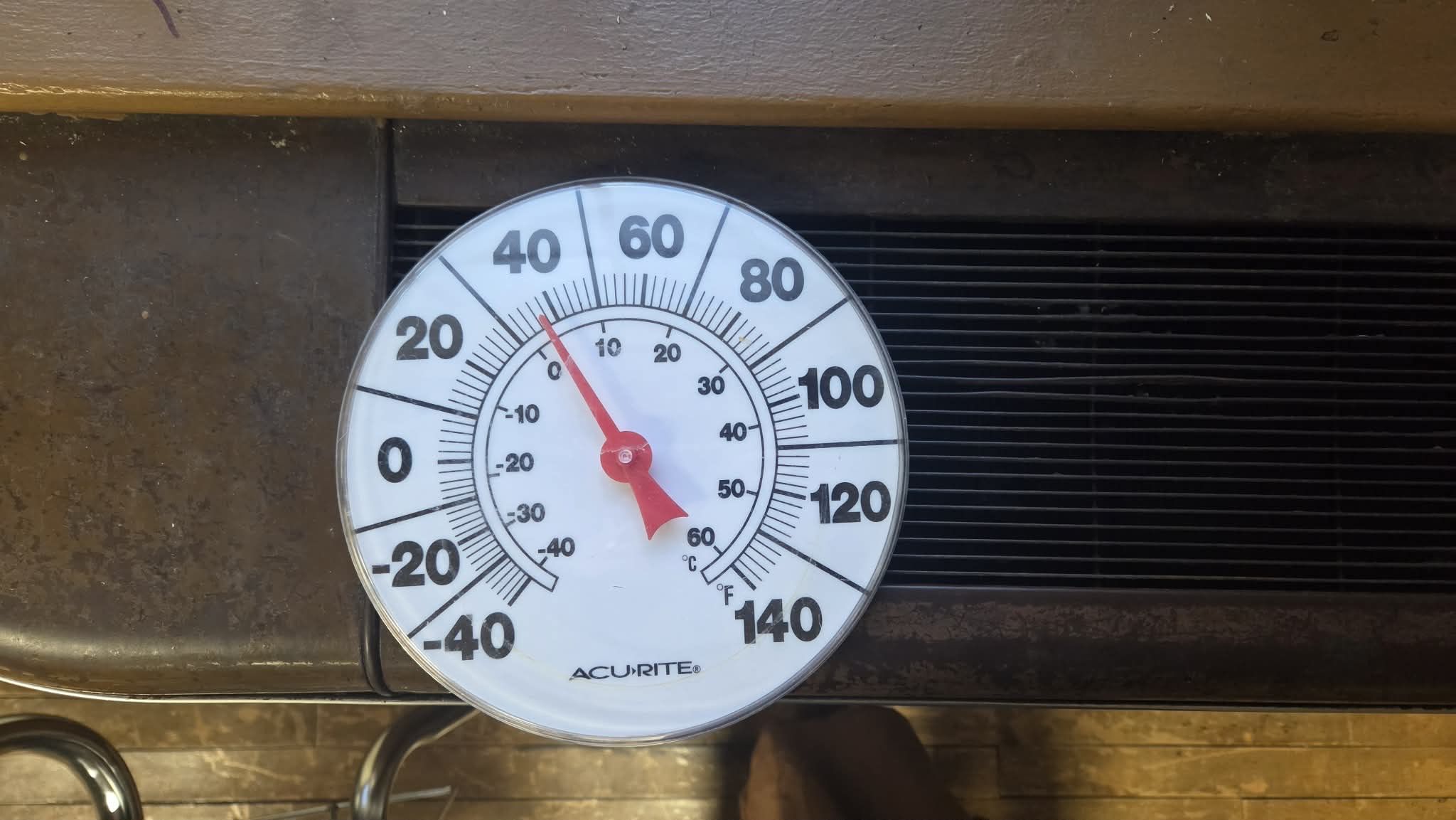
Inside Kristen Peeples’ room, a thermometer read below 40 degrees. Multiple classrooms inside the storied Philadelphia magnet were so cold that classes had to relocate for safety, staff there said.
Normally, Peeples relishes engaging classroom instruction and discussion. On Friday, it was all about survival; conditions were “untenable,” she said. While some rooms were comfortable, many were freezing. Some were overly hot.
Classes that were supposed to be in rooms too cold for occupancy just moved around the school — which enrolls over 2,300.
“One class, I shared an empty space with another teacher,” said Peeples, who “couldn’t teach given the volume of people in the room, but at least we were able to be somewhere warm. Another period, we sat in the library while students worked independently, but again, not tenable for direct instruction.”
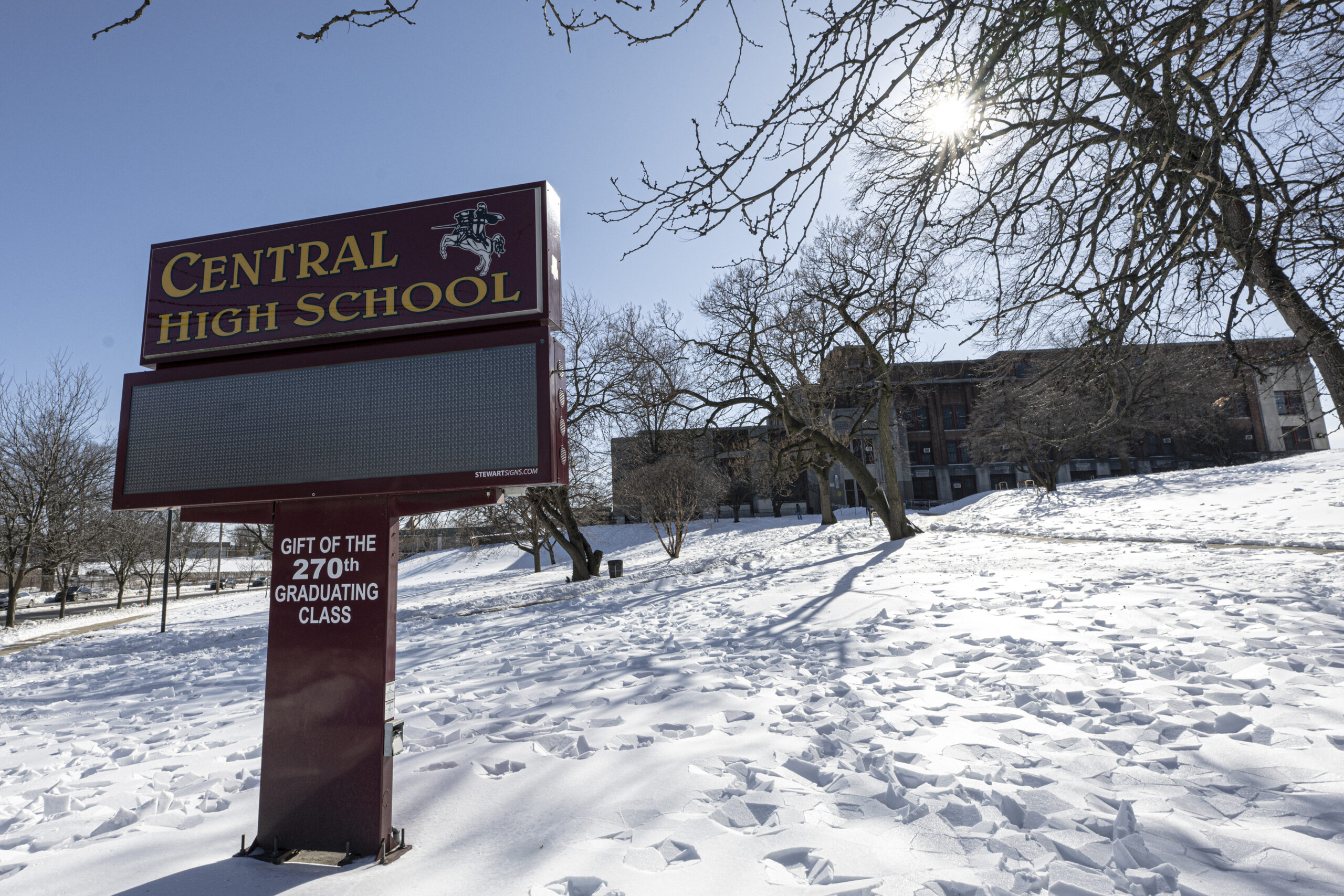
Central High School is shown in the freezing temperature on Friday, January 30, 2026.
With bitter cold still bearing down on the region, some Philadelphia schools continued to cope with difficult conditions for the second day in a row on Friday — old heating systems struggling to keep up with subfreezing temperatures, giant piles of snow surrounding schools that made getting in and out difficult for students and staff.
All Philadelphia School District schools and offices were closed Monday for a full snow day; Tuesday and Wednesday were virtual learning days as city plows cleared streets.. Superintendent Tony B. Watlington Sr. has said that safety was his first priority in making the decision whether in-person instruction could resume, and made the call to do so Thursday.
But staff at some schools said they thought that was the wrong decision, given conditions in some district buildings Thursday and Friday.
In North Philadelphia’s Taylor Elementary, for instance, two burst pipes rendered five classrooms unusable, according to a staffer who asked to remain anonymous because they were not authorized to speak to a reporter.
Classes had to be combined to account for the out-of-commission rooms. And some rooms were chilly, in the 50s.
“This heating system is just very old and struggling,” said the staffer.
Taylor officials asked the district to pivot to virtual instruction Friday, but their request was denied.
Arthur Steinberg, Philadelphia Federation of Teachers president, said the district’s decision to reopen all schools was “reckless, and a contradiction of their claim of exercising ‘an abundance of caution’ when making such decisions. Forcing students, families, and staff to navigate still-treacherous commutes after a historic snowfall and freezing temperatures was careless.”
Monique Braxton, a district spokesperson, said safety remains paramount and that district and city officials worked round-the-clock to ready buildings as best as they could.
“Across the district, teams are responding in real time to heating concerns, snow and ice conditions, and other weather-related issues as they arise,” Braxton said in a statement. “When conditions do not meet district standards, we work closely with school leaders to take appropriate action and communicate directly with our families.
We will continue to closely monitor building conditions throughout this bitter cold period and make adjustments as needed as, while temperatures remain below freezing.”
At Central High, several classrooms were so cold they were unusable. This was the reading inside a classroom on Friday.
Shivering, and slipping
On Thursday, Penrose Elementary, in Southwest Philadelphia had heating problems some entrances were/ tough to access because of unplowed snow, and a ramp that students with disabilities use to get into the school was blocked. Burst pipes at Vare-Washington Elementary, in South Philadelphia, made six classrooms, the cafeteria, the gym and the entire basement unusable Thursday.
Those schools were in much better shape Friday. But children and adults were still shivering, and slipping, at other schools.
By the end of the short school day — the district had long planned half days for Thursday and Friday, with parent conferences scheduled — the temperature in Peeples’ classroom at Central had dropped even lower.
Teachers and students were in a tough spot, Peeples said, but administrators and building engineers were also put in “an impossible situation” through no fault of their own. They have been working diligently to move students and teachers to warm learning spaces, Peeples said, plowing, shoveling, salting sidewalks and parking lots, and tending to fussy heating systems.
At Taylor in North Philadelphia, staff were told by the district that three of the five unusable classrooms will be fixed and ready for learning on Monday — hopefully.
Watlington recently proposed a facilities plan that would close 20 district schools and modernize 159 over the next 10 years, but the list of schools to receive upgrades has not been divulged.
The $2.8 billion plan also banks on $1.8 billion from the state and philanthropic sources, money that is far from assured.
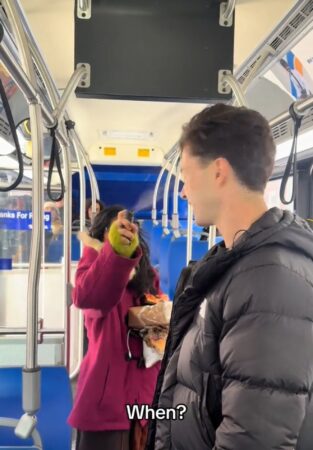
Video of the Jan. 19 incident between 22-year-old Paulina Reyes and 22-year-old Francis Scales quickly went viral on social media, garnering millions of views and spurring reactions from right-leaning influencers and Elon Musk.
During the confrontation, Reyes — whose internship with WHYY had ended before the incident — accused Scales of being a “fascist” and a “racist” for posting content online she viewed as insulting to Muslims and people of color.
Attorney General Dave Sunday, in announcing Thursday that his office’s mass transit prosecutor would oversee the case, said “violence will not be tolerated as a means to conduct political debate, protest, or exhibit differences.
“This type of violence is senseless, as we have an individual facing criminal charges over political disagreement,” the attorney general said in a statement.
In addition to simple assault, Reyes is charged with possessing an instrument of a crime, a misdemeanor. She also faces charges of harassment and disorderly conduct, which are summary offenses.
Reyes was arraigned Thursday morning and released without having to to post bail.
The mass transit prosecutor for Philadelphia, Michael Untermeyer, worked with SEPTA police to bringthe charges, according to Sunday.
It has drawn criticism from District Attorney Larry Krasner, who last year challenged the law that created the post, saying it was unconstitutional, unfairly singled out Philadelphia, and stripped his office of authority.
A spokesperson for Krasner did not immediately return a request for comment on the special prosecutor’s decision.
Footage of the South Philadelphia incident ricocheted across conservative media, and some influencers had accused Reyes of being an “Antifa agitator” and called for her arrest. Musk’s comments on X, suggesting Reyes had “violence issues,” generated hundreds of thousands of views alone.
Reyes told The Inquirer in an earlier interview that she had been defending herself against Scales, who was filming her,and that resorting to pepper spray was “not something I wanted to do.”
She said she has since received death and rape threats for her role in the confrontation. She did not return a request for comment Thursday.
Reyes and Scales knew each other from attending the Community College of Philadelphia, where Reyes is still a student.
Videos on Scales’ social media page, Surge Philly, show the commentator interviewing attendees at protests, asking them questions about charged topics such as immigration enforcement. He has also been a vocal critic of Krasner.
Scales said Reyes’ pepper spray got in his face and eyes, and Sunday, the attorney general, said Reyes also punched the man. A friend who was with Scales filmed the incident. Scales, too, filmed Reyes, saying he did so for his own safety.
Scales said in a statement that he was grateful for the attorney general’s decision to bring charges, and that he hoped that would deter others from similar actions.
“No one has the right to physically attack another person because of different opinions,” Scales said.
Conditions were rough when staff and students arrived at Penrose Elementary in Southwest Philadelphia — some paths they needed to access to get inside the school were untouched by shovels or plows.
Some buses could not open their doors to let students out at their usual spot because snow banks were so high, according to multiple people who work at the school and teachers union officials. A ramp that students with disabilities use to get into the school was blocked.
And the heat was on the fritz for part of the day as outside temperatures were barely in the double digits.
“It’s about 45 degrees inside this classroom,” one Penrose staffer said Thursday morning. The staffer was not authorized to speak to the media and asked not to be identified. “We’re all in jackets and hats.”
After Monday’s snow day and virtual learning Tuesday and Wednesday, Philadelphia schools reopened Thursday, but for many students, it was anything but an inviting return. The combination of accumulated snow, days of subfreezing temperatures, and a clutch of old buildings — many of which have maintenance issues — made in-person learning challenging across the district.
The rocky return came just hours before a planned rally to protest the district’s proposed $2.8 billion school facilities master plan, which is necessary, officials say, because of poor building conditions and other disparities.
Around some schools, crosswalks were covered by giant piles of snow, forcing children to walk in streets. Elsewhere, there was no place for staff to park.
At Vare-Washington Elementary, in South Philadelphia, pipes burst, rendering six classrooms, the cafeteria, the gym, and the entire basement unusable, according to the Philadelphia Federation of Teachers. There was a strong chemical odor throughout the building.
At Mitchell, another Southwest Philadelphia elementary, “it’s a mess,” said a staffer who asked not to be identified for fear of retribution.
A pipe broke at the school, and Mitchell had no running water for most of the day, with just one brief window where students could use the bathroom. And Mitchell’s student lunches were never delivered, so kids were fed cereal for lunch.
“A lot of our kids rely on those lunches to sustain them throughout the day,” the staffer said.
In addition, Mitchell’s back doors and fire tower exits were blocked by snow, so if there had been a fire or emergency, the only available exits would have been the front doors.
Taylor, also in North Philadelphia, also had burst pipes, with four rooms unusable and most of the school cold. School officials asked for permission to hold classes virtually Friday, but had received no response as of Thursday afternoon.
The Philadelphia Federation of Teachers has called on the district to return to remote learning on Friday in light of “treacherous commutes and dangerous building conditions,” Arthur Steinberg, PFT president, said in a statement issued Thursday afternoon.
Steinberg said in an interview that his office was inundated with reports of heating issues or a lack of snow removal or other problems at schools including School of the Future in Parkside; Farrell, Swenson, Mayfair, and Fox Chase in the Northeast; and others.
“The District must also show respect to students, families, and our members by rectifying the broken heaters, burst pipes, icy sidewalks, and piles of snow in parking lots as soon as possible, so that students and staff can safely resume in-person instruction on Monday,” he said in the statement.
Monique Braxton, a district spokesperson, said “the safety and well-being of our students, staff, and families remains our top priority.”
Staff worked long hours inspecting boilers and buildings, restarting heating systems, clearing snow and ice, and more, Braxton said.
“Across the district, teams are responding in real time to heating concerns, snow and ice conditions, and other weather-related issues as they arise. When conditions do not meet District standards, we work closely with school leaders to take appropriate action and communicate directly with our families,” she said in a statement. “We will continue to closely monitor building conditions throughout this bitter cold period and make adjustments as needed, while temperatures remain below freezing.”
Both Thursday and Friday had long been scheduled as half days for students, with parent-teacher conferences planned. Those would be held virtually.
John Bynum, a former building engineer who is now an official with 32BJ SEIU Local 1201, the union representing 2,000 Philadelphia school building engineers, maintenance workers, and bus drivers, said the going was rough for many schools in terms of building condition.
“Most of these buildings are operating with the original boilers,” Bynum said. “We know with antiquated equipment, there’s going to be problems.”
In some cases, snowblowers that school staff were using to attempt to clear parking lots and sidewalks failed, Bynum said.
And like other school staff, his members often coped with trouble getting to work themselves, he said.
“There were challenges regarding SEPTA not running at a full schedule and the anxiety of getting to work without a robust transportation system,” Bynum said. “Street conditions weren’t the greatest. However, they made the best of it, and they showed up.”
Conditions like Thursday’s, Bynum said, highlight why the district needs more resources to address its buildings — and students’ learning conditions.