A 2-year-old girl was beaten to death in South Philadelphia last week, authorities say, and three people have been charged in connection with the crime.
The girl, Key’Monnie Bean, may have been subjected to abuse before the fatal beating on Dec. 8, Assistant District Attorney Ashley Toczylowski said at a news conference Thursday.
“There are indications this was an ongoing situation this little girl had to endure,” she said.
That night, police were called to a home in the 2100 block of South Beechwood Street for a report of an unresponsive child. When officers arrived, they found the girl lying on the floor of the basement, police said. She was not breathing, and bruises covered her body, Toczylowski said.
Efforts to revive the child were unsuccessful, said Deputy Commissioner Frank Vanore. She was pronounced dead shortly before 10 p.m. at Children’s Hospital of Philadelphia.
Prosecutors are still awaiting a medical examiner’s report, Toczylowski said, but preliminary evidence suggests the child may have been beaten with objects and her airway restricted, causing suffocation. Her death has been ruled a homicide.
Sean Hernandez, also known as Raafi Gorham, the boyfriend of the toddler’s mother, was arrested Wednesday and charged with murder, police said. Gorham, 21, lives at the house where the girl was found, Toczylowski said.
Gorham’s cousin, Anthony Lowrie, 21, and Alycia McNeill, 20, were also arrested Wednesday and charged with obstruction and lying to police, Toczylowski said. Lowrie is additionally charged with giving police a fake identification. Toczylowski said the two provided conflicting and false accounts of what occurred that evening. Both live in West Passyunk.
“Everyone in that house was very reluctant” to speak with police, she said, though someone in the house had called 911.
Key’Monnie’s mother was home at the time of the alleged beating, Toczylowski said, but has not been charged in the incident.
The girl’s father, TaShaun Walls, declined to comment Thursday, citing his grief.
In a public Facebook post, Walls wrote: “I love you so much [and] miss you so much already just wish I would has been there faster but I’ll never forget you.”
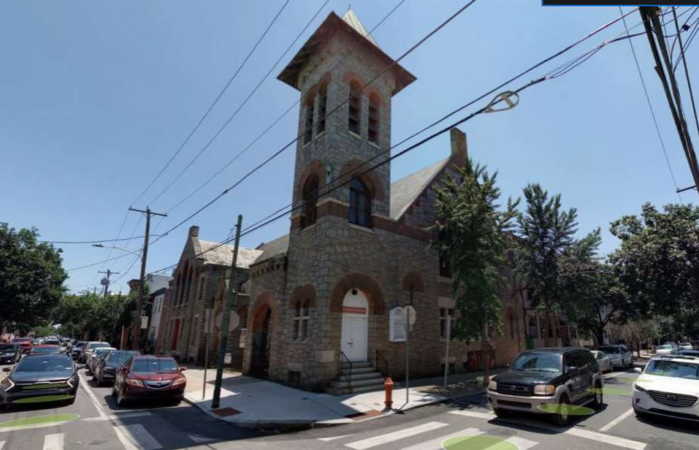
Another former religious building is being redeveloped into apartments, with an assist from a law City Council passed in 2019 to preserve large, neighborhood-scale historic buildings like churches.
The former St. John’s Baptist Church at 13th and Tasker Streets is slated to house 26 rental units. The church dates to 1892 and is currently vacant.
The developer is Annex Investments II, owned by Drew Palmer, and the design of the remodel is by Philadelphia-based Toner Architects.
The church, which sits at the northeastern corner of the Miracle on 13th Street block, is zoned for single-family residential.
But the 2019 law passed by district Councilmember Mark Squilla makes it easier to convert “special use properties” — such as churches or theaters — to new uses no matter their underlying zoning, if the building is historically protected.
St. John’s Baptist Church was added to the local Register of Historic Places in 2020 after the advocacy group Preservation Alliance of Greater Philadelphia nominated it.
The bill was passed following the St. Laurentius debacle in Fishtown, where a handful of neighbors managed to delay a redevelopment project with lawsuits until the building was in poor enough shape that it had to be razed.
The 2019 law makes such legal warfare more difficult to wage.
These new zoning laws are “facilitating an increasing number of adaptive reuse projects of historically designated properties, preserving them while returning them to productive, taxpaying use and strengthening their surrounding neighborhoods,” said Paul Steinke, who leads the Preservation Alliance.
On Tuesday the project was given a preliminary review by the Architectural Committee, which advises the Historical Commission.
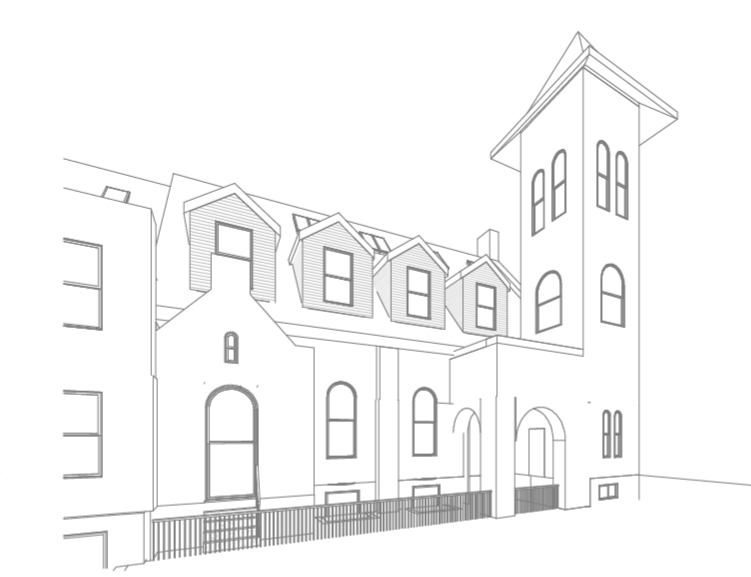
As part of the conversion, the developer wants to insert additional floors to the church building, which is beyond the Historical Commission’s jurisdiction. The plan also includes adding large dormers to the roof to allow more light into the future residences and replacing the dilapidated slate roof with asphalt.
The proposed new dormers can be seen in this rendering, lining the church’s roof.
The Architectural Committee objected to both of those exterior changes.
“The dormers are pretty significant on this, and we’re looking to find a way to make those more subtle,” said Nan Gutterman, who sits on the committee.
Sara Shonk Pochedly of Toner Architects noted the dormers are the same size as those added to other redeveloped churches reviewed by the Architectural Committee, but this building is smaller in size so the new additions look larger.
Because this was a preliminary review meeting, the committee did not indicate how it would vote to advise the larger commission.
“We always appreciate when a church is given another life,” said Justin Detwiler, who sits on the Architectural Committee. “Thank you and your applicant for doing that and being sensitive. These are not easy projects.”
Palmer did not attend the committee meeting and did not immediately respond to a request for comment. Ian Toner of Toner Architects declined an interview request at this early stage in the development process.
Philadelphia lawmakers on Thursday approved two changes to city law that are aimed at boosting business for restaurants and the hospitality sector ahead of an expected influx of tourists visiting the city next year.
Legislators also voted to ban so-called reservation scalpers, which are third-party businesses that allow people to secure tables and then resell them without authorization from the restaurant.
Both measures passed Council unanimously and were championed by advocates for the restaurant industry, who lobbied lawmakers to ease burdens on the tourism and hospitality industry ahead of several large-scale events in the city next year, including celebrations for America’s Semiquincentennial, when Philadelphia is expected to host a flurry of visitors.
They both now head to the desk of Mayor Cherelle L. Parker, who has never issued a veto.
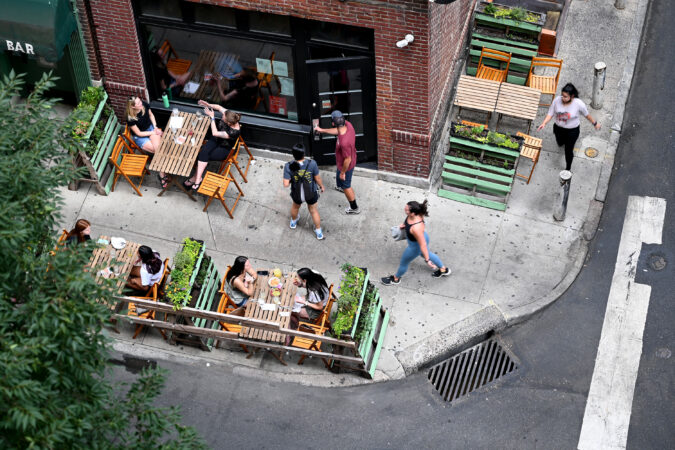
The outdoor dining legislation, authored by Councilmember Rue Landau, a Democrat who represents the city at-large, expands the number of so-called by-right zones, where businesses can have sidewalk cafes without having to obtain a special zoning ordinance.
Currently, by-right areas are only in Center City and a few commercial corridors in other neighborhoods. Restaurants outside those areas must undertake a sometimes lengthy process to get permission to place tables and chairs outside.
The expanded zones, which were chosen by individual Council members who represent the city’s 10 geographic districts, include corridors in Manayunk and on parts of Washington Avenue, Passyunk Avenue, and Point Breeze Avenue in South Philadelphia.
The legislation also includes all of the West Philadelphia-based Third District, which is represented by Jamie Gauthier, the only Council member who chose to include her entire district in the expansion.
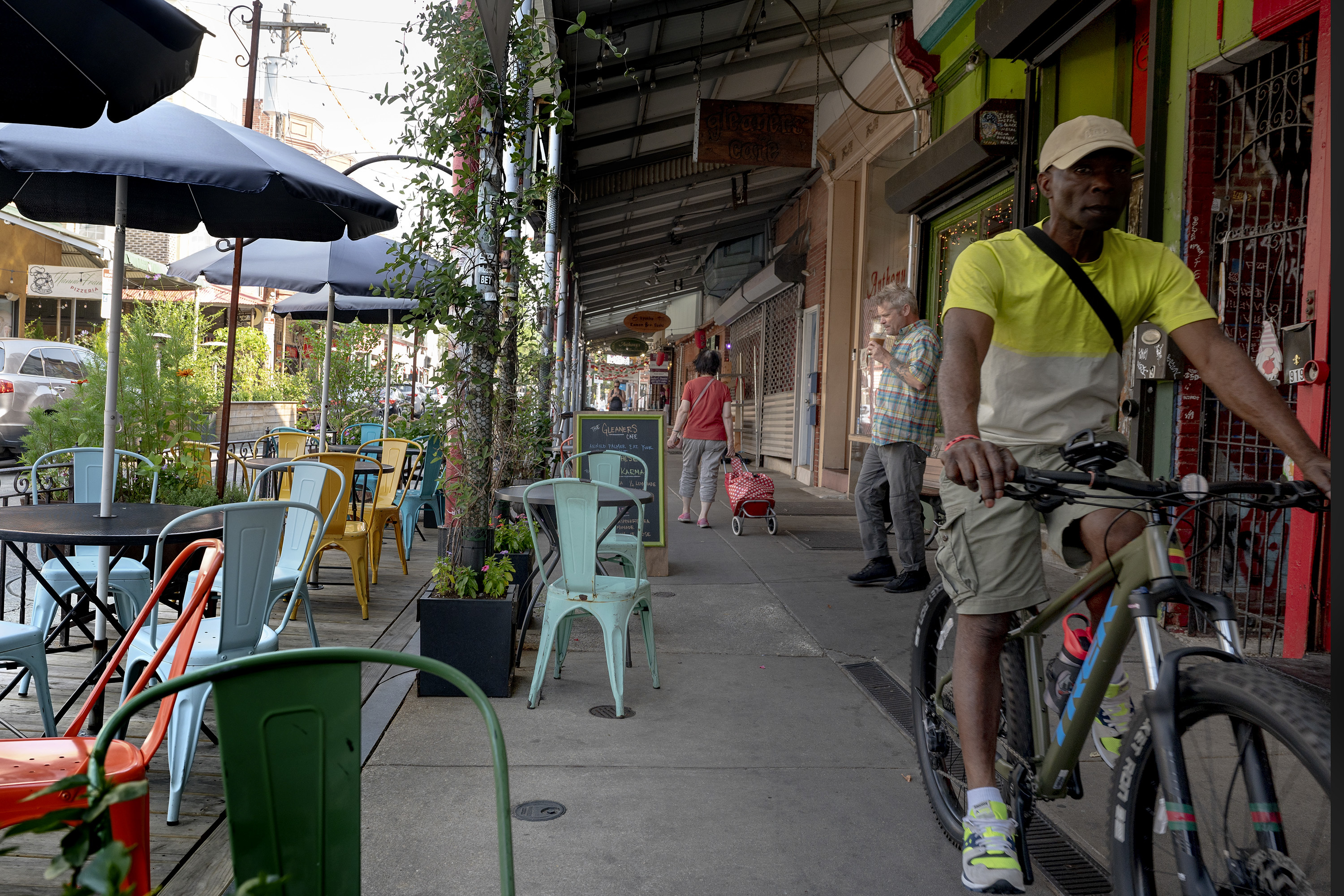
The cafe area on the sidewalk outside of Gleaner’s Cafe in the 9th Street Market on Thursday, July 27, 2023.
Nicholas Ducos, who owns Mural City Cellars in Fishtown, said he has been working for more than a year to get permission to place four picnic tables outside his winery. He said he has had to jump through hoops including working with multiple agencies, spending $1,500 to hire an architect, and even having to provide paperwork to the city on a CD-ROM.
“There are a lot of difficult things about running a business in Philadelphia,” Ducos said. “This should not be one.”
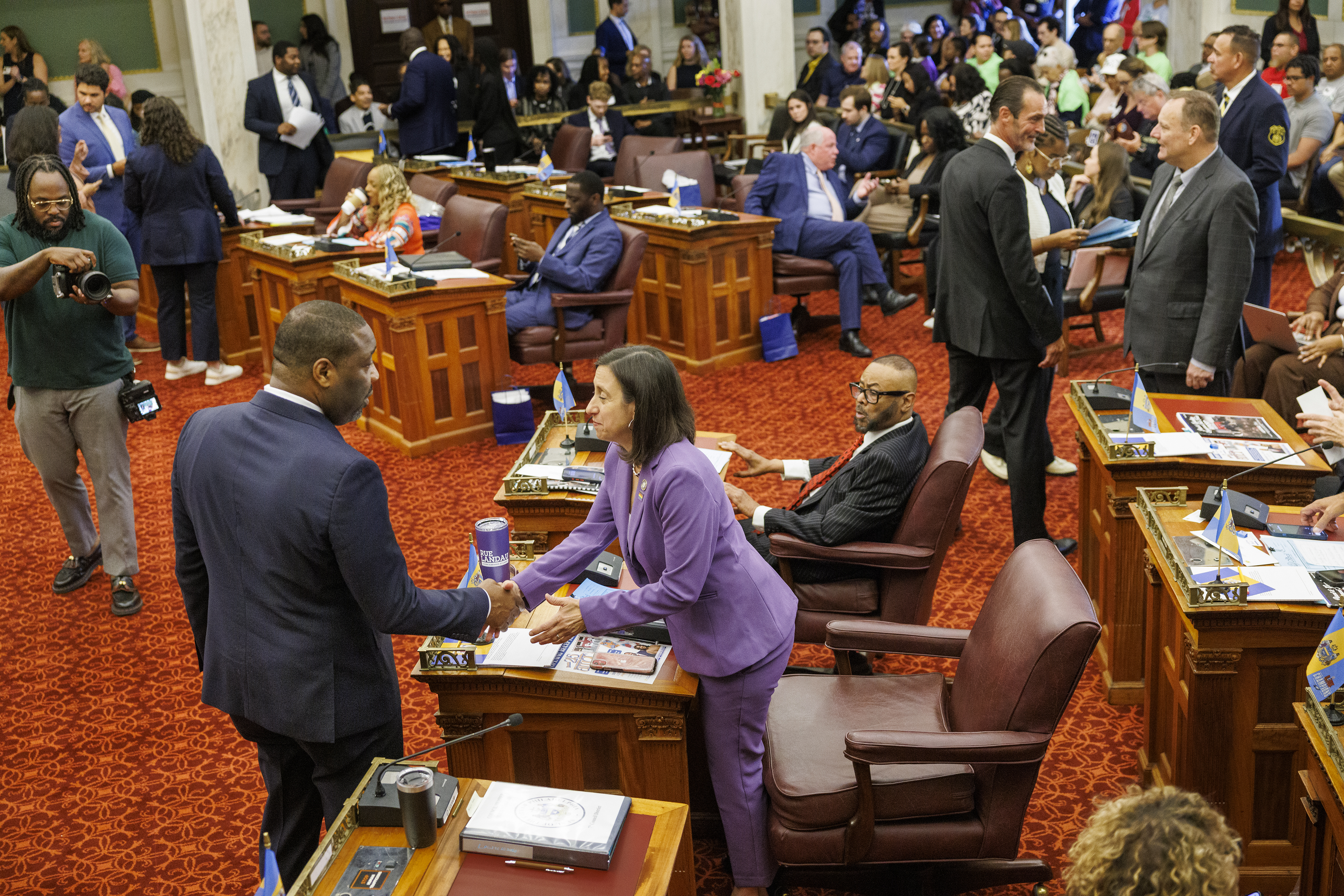
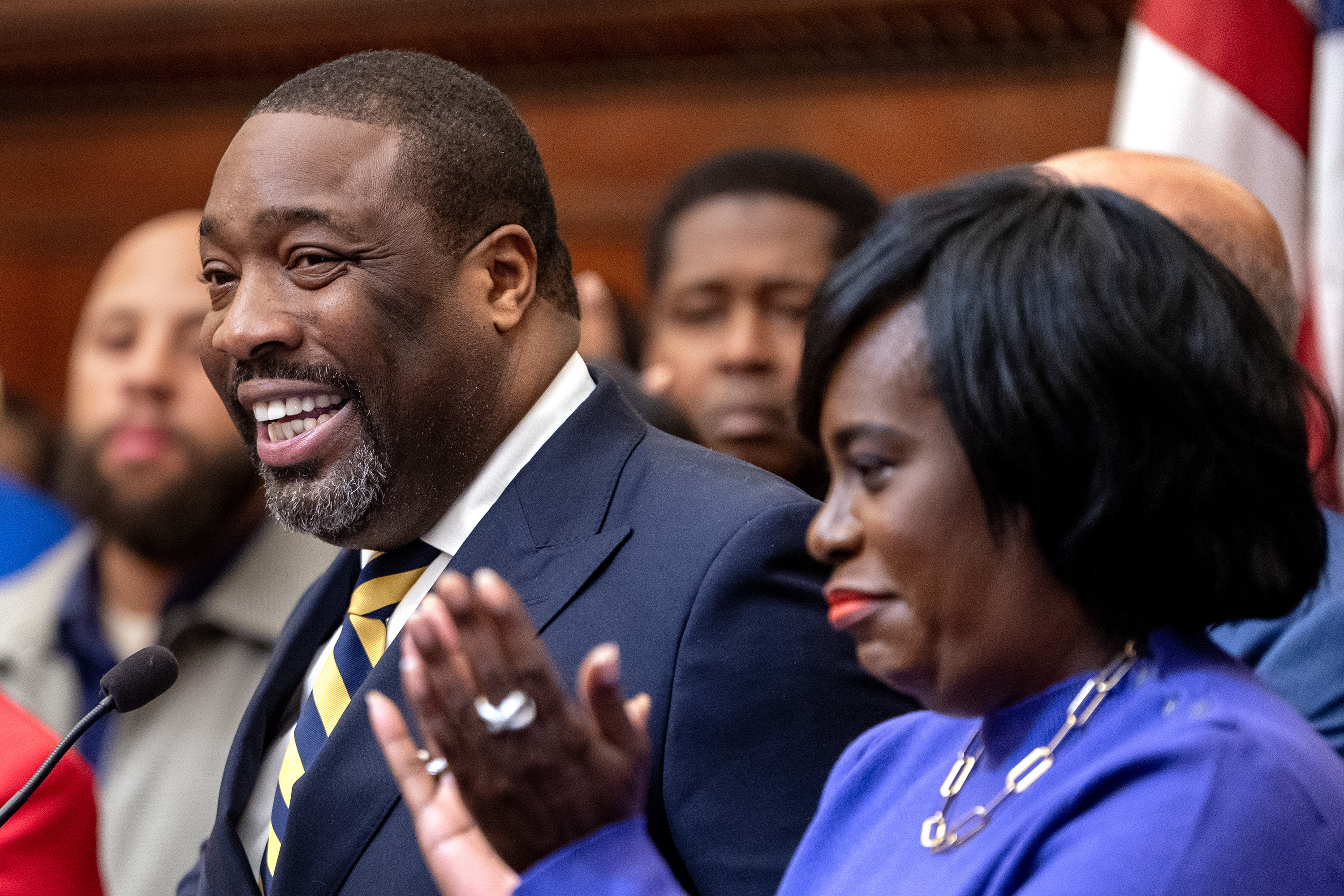
At left is Philadelphia Council President Kenyatta Johnson greeting Rue Landau and other returning members of council on their first day of fall session, City Hall, Thursday, September 11, 2025.
Council members also approved the reservation scalping legislation authored by Councilmember Isaiah Thomas, a Democrat who represents the city at-large. He has said the bill is modeled after a similar law in New York and is not aimed at popular apps and websites like OpenTable, Resy, and Tock that partner directly with restaurants.
Instead, it is a crackdown on websites that don’t work with restaurants, such as AppointmentTrader.com, which provides a platform for people to sell reservations and tickets to events.
Jonas Frey, the founder of AppointmentTrader.com, previously said the legislation needlessly targets his platform. He said his company put safeguards in place to prevent scalping, including shutting down accounts if more than half of their reservations go unsold.
But Thomas has cast the website and similar platforms as “predatory” because restaurants can end up saddled with empty tables if the reservations do not resell.
Zak Pyzik, senior director of public affairs at the Pennsylvania Restaurant and Lodging Association, said the legislation is an important safeguard for restaurants.
“This bill provides clear, sensible protections that will keep restaurants in the driver’s seat,” he said, “and in control of their business and their technology services.”
After a nearly six-year legal battle between artists, preservationists, and neighbors, the Old City building and its celebrated mosaic were demolished.
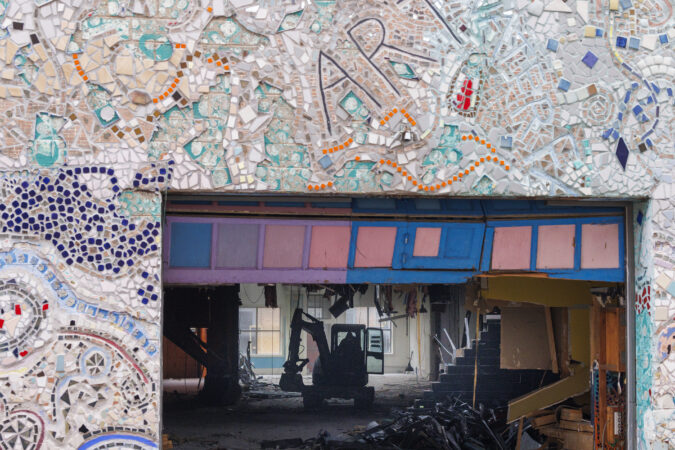
The former Painted Bride Art Center building, once home to world-renowned artist Isaiah Zagar’s 7,000-square-foot mirror-and-tile mosaic, has started to come down.
The demolition equipment and growing dust at 230 Vine St. closes the book on a yearslong saga over the distinctive Old City building’s future.
Founded in 1969 as a gallery on South Street, the Painted Bride helped transform Old City into an artists’ corner of Philadelphia when it moved to the neighborhood in the ‘80s.
story continues after advertisement
Decades later, Zagar’s mosaic, titled Skin of the Bride and wrapped around the exterior of the building, became a point of contention when the organization tried to sell the building in 2017. The debate led to a nearly six-year legal battle involving artists, real estate developers, city government officials, and neighbors.
As demolition of the celebrated building begins, take a look back at the complicated legal battles that led to its razing.
Using grants and donations for a down payment, the Painted Bride moved to 230 Vine St. from its initial digs in South Philadelphia. The former elevator factory in Old City spanned 15,000 square feet and sold for $300,000.
Alley Friends Architects, a local firm, drew up plans for the space, which included a 225-seat performance venue and galleries.
Artist Ruth McCann arrives with her paintings at the new Painted Bride at 230 Vine St. on December 2, 1982..James L. McGarrity / Staff Photographer
"There's never been an Academy of Music for people who weren't famous, and now Philadelphia has one. We've deserved this for many years. New York has a dozen such spaces,” said Keith Mason, the Bride’s program director at the time.
1991
Isaiah Zagar begins installing his mosaics
Zagar worked on the Bride’s distinctive mural for nine years.
“Isaiah woke up at 5 a.m. each morning and drove down to 230 Vine St.,” recalled his wife, Julia Zagar. “He dreamed of it as being his masterpiece and worked 10-12 hours a day until he collapsed with exhaustion.”
Artist Isaiah Zagar working on his giant mosaic at the Painted Bride Art Center on Vine Street in the 1990s.Courtesy of Philadelphia Magic Gardens
story continues after advertisement
November 2017
Vine Street property goes on the market
After 35 years on Vine Street, the Painted Bride announced the building would be sold. Executive director Laurel Raczka said the organization was not in financial distress but chose to ditch the building so the Bride could explore new ways to present the arts.
The following month, Raczka also noted the changing vibes of Old City: "We don't feel like we belong here anymore,” she told The Inquirer.
The entrance to the Painted Bride Art Center, covered in Zagar’s mosaics.Tom Gralish / Staff Photographer
Many in the arts community were perplexed. Performance artist Tim Miller, a founder of artistic spaces in New York City and Santa Monica, Calif., said, "Once [the Painted Bride] is gone, it will never be replaced. To discard it, to me, it feels reckless, unless it's the only way to survive."
March 2018
Painted Bride building is nominated for historic preservation
"The Painted Bride is one of his masterpieces," Smith said. "The building itself is a treasure."
Zagar, photographed for The Inquirer in the fall of 2017.Margo Reed / For The Inquirer
April 2018
Arts leaders beg the Bride to suspend sale plans
More than 30 of the city's most prominent artists, performers, and arts officials cosigned a three-page public letter calling for "a reexamination" of the Bride's situation and community-wide discussion about the organization's future.
Signers included: Joan Myers Brown, founder and executive artistic director of Philadanco; hip-hop dance sensation Rennie Harris; architect Cecil Baker; and Wilma Theater cofounder and director Blanka Zizka. The city’s chief cultural officer offered to facilitate a community conversation between the Bride’s leadership and local artists and art patrons.
The Bride’s leaders rebuffed the offer and said that they would continue to pursue "a sustainable business model."
June 2018
Historical designation passes the first hurdle
A committee of the Philadelphia Historical Commission unanimously agreed the Painted Bride building should be protected.
September 2018
Historical designation is denied
After a three-hour, public debate, Philadelphia’s Historical Commission voted 5-4 to reject designation, a move that opened the door for developers to acquire and demolish the building.
A few days earlier, Lantern Theater Company made a bid of over $2 million for the building, which would have preserved it as an arts space. The offer was rejected.
Lawyers for the Bride said that the law did not require approvals from the court but that the Painted Bride sought them nonetheless.
Architect and developer Shimi Zakin of Atrium Design Group poses with a sign on an interior mosaic in the Painted Bride Art Center building before closing on the sale.Courtesy of Shimi Zakin
The Bride’s petition stated that “given the history” of the building, the Bride “wishes to obtain approval of the sale from both the Pennsylvania Office of the Attorney General and the Philadelphia Orphans’ Court.”
August 2019
City allows townhouses
Philadelphia’s Department of Licenses and Inspections issued a zoning permit to allow Atrium Design Group to build 16 townhouses at the site.
September 2019
Court blocks the sale, citing ‘priceless’ mosaic facade
Philadelphia Orphans’ Court blocked the sale, citing the likely destruction of the Bride’s “priceless” mosaic facade. Judge Matthew D. Carrafiello said the sale would "all but ensure the destruction of what many individuals consider to be a true treasure.”
“It is the sale of its property, including the mosaic, that will result in the liquidity necessary for Painted Bride to continue to fulfill its charitable purpose,” wrote Judge J. Andrew Crompton.
January 2021
Neighborhood group opposes proposal that would save the mosaics
The Zoning Board of Adjustments approved Zakin’s proposal, paving the way for him to move forward with the apartment building.
Shortly after, neighborhood groups appealed the decision.
March 2022
Building officially sold for $3.85 million
Despite the looming appeals hearing, many involved with the Bride and supporters of preserving Zagar’s artwork believed the mural had been saved when the building was sold to Zakin.
A Philadelphia Common Pleas Court judge agreed with some neighbors that the mosaic in Old City could be preserved without allowing the developer to build taller and more densely than local zoning rules allow.
This rendering shows a potential design of the building proposed to replace the Painted Bride Art Center in Old City.Courtesy of Atrium Design Group
Emily Smith, executive director of Philadelphia’s Magic Gardens, which preserves and provides access to Zagar mosaics, said the planned destruction of the Painted Bride mosaic was a case of “NIMBY-ism at its most tragic.”
Over several weeks, the Magic Gardens Preservation Team used chisels, hammers, and small power tools to remove as much as they could from the facade. The mosaic was well-adhered to the brick, and this was a difficult process physically and emotionally. The crew was able to remove approximately 30% of the tiles for reuse in new mosaics.
Magic Gardens’ representatives attempt to save pieces of the iconic Zagar mosaic on all the exterior walls of the former Painted Bride before the building is demolished.Tom Gralish / Staff Photographer
September 2025
Demolition permit granted
Zakin received a demolition permit from the city and told The Inquirer that he plans to start demolition in late October. He said he anticipates that his building will be completed in about 2½ years.
Late November/Early December 2025
Demolition begins
Workers began to take down the interior of the building.
A digger works to demolish the inside of the former Painted Bride building on Dec. 8, 2025.Alejandro A. Alvarez / Staff Photographer
Philly is getting ready to dress itself up — with Liberty Bells. Lots of Liberty Bells.
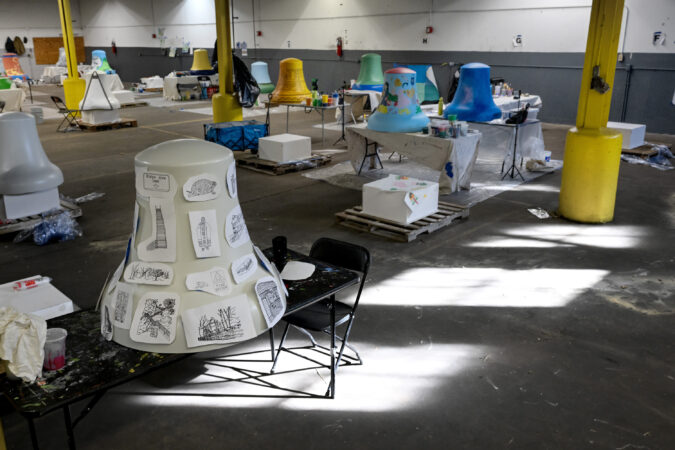
Organizers of Philadelphia’s yearlong celebrations for America’s 250th anniversary in 2026 gathered in a frigid Philadelphia School District warehouse in Logan on Tuesday, offering a special preview of the 20 large replica Liberty Bells that will decorate Philly neighborhoods for the national milestone.
Designed by 16 local artists selected through Mural Arts Philadelphia — and planned for commercial corridors and public parks everywhere from Chinatown and South Philly to West Philly and Wynnefield — the painted bells depict the histories, heroes, cultures, and traditions of Philly neighborhoods.
As part of the state nonprofit America250PA’s “Bells Across PA” program, more than 100 painted bells will be installed across Pennsylvania throughout the national milestone, also known as the Semiquincentennial. Local planners and Mural Arts Philadelphia helped coordinate the Philly bells.
“As Philadelphia’s own Liberty Bell served as inspiration for this statewide program, it makes sense that Philly would take it to the next level and bring these bells to as many neighborhoods as possible,” Mayor Cherelle L. Parker said in a statement. “We are a proud, diverse city of neighborhoods with many stories to tell.”
Kathryn Ott Lovell, president and CEO of Philadelphia250, the city’s planning partner for the Semiquincentennial, said the bells are a key part of the local planners’ efforts to bring the party to every Philly neighborhood.
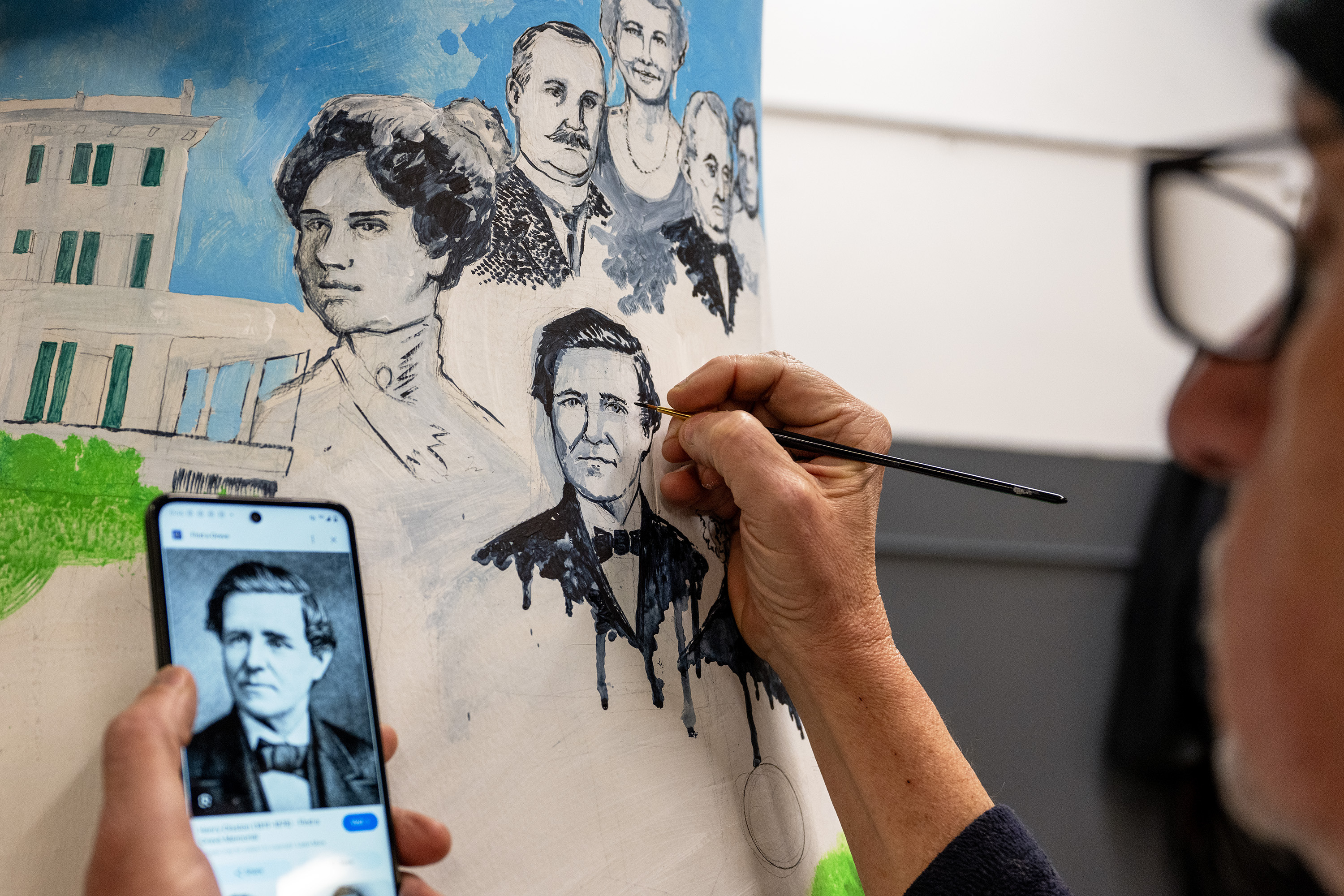
Local artist Bob Dix paints a portrait of industrialist Henry Disston on his bell.
“The personalities of the neighborhoods are coming out in the bells,” she said, adding that the completed bells will be dedicated in January, then installed in early spring, in time for Philly’s big-ticket events next summer, including six FIFA World Cup matches, the MLB All-Star Game, and a pumped-up Fourth of July concert.
Planners released a full list of neighborhoods where the bells will be placed, but said exact locations will be announced in January. Each of the nearly 3-foot bells — which will be perched on heavy black pedestals — was designed in collaboration with community members, Ott Lovell said.
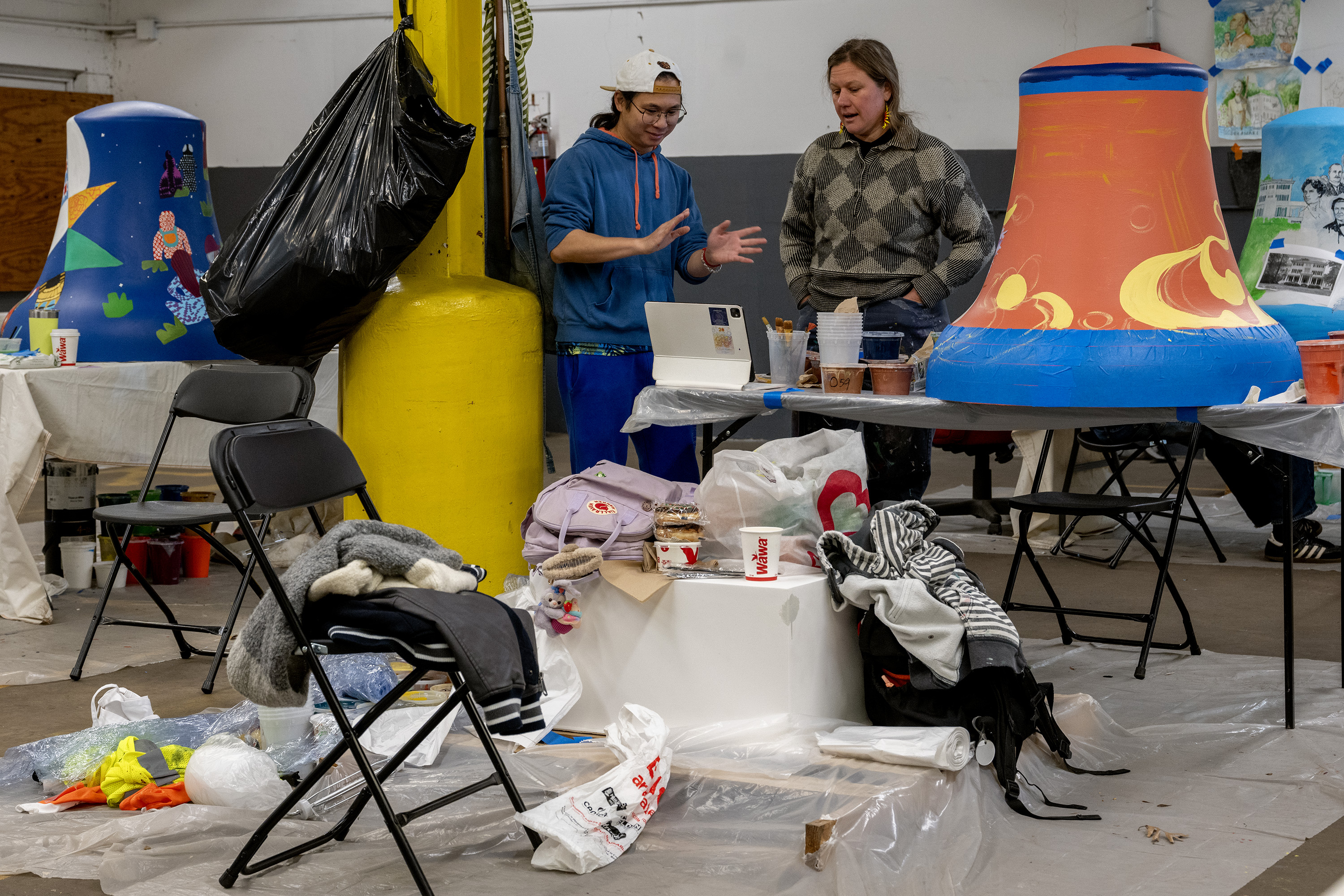
Inside the massive, makeshift studio behind the Widener Memorial School on Tuesday, artists worked in the chill on their bells. Each bell told a different story of neighborhood pride.
Chenlin Cai (left) talks with fellow artist Emily Busch (right) about his bell, showing her concepts on his tablet.
Cindy Lozito, 33, a muralist and illustrator who lives in Bella Vista, didn’t have to look for inspiration for her bell on the Italian Market. She lives just a block away from Ninth Street and is a market regular.
After talking with merchants, she strove to capture the market’s iconic sites, history, and diversity. Titled Always Open, her bell includes painted scenes of the market’s bustling produce stands and flickering fire barrels, the smiling faces of old-school merchants and newer immigrant vendors, and the joy of the street’s annual Procession of Saints and Day of the Dead festivities. Also, of course, the greased pole.
“It’s a place where I can walk outside my house and get everything that I need, and also a place where people know your name and care about you,” she said, painting her bell.
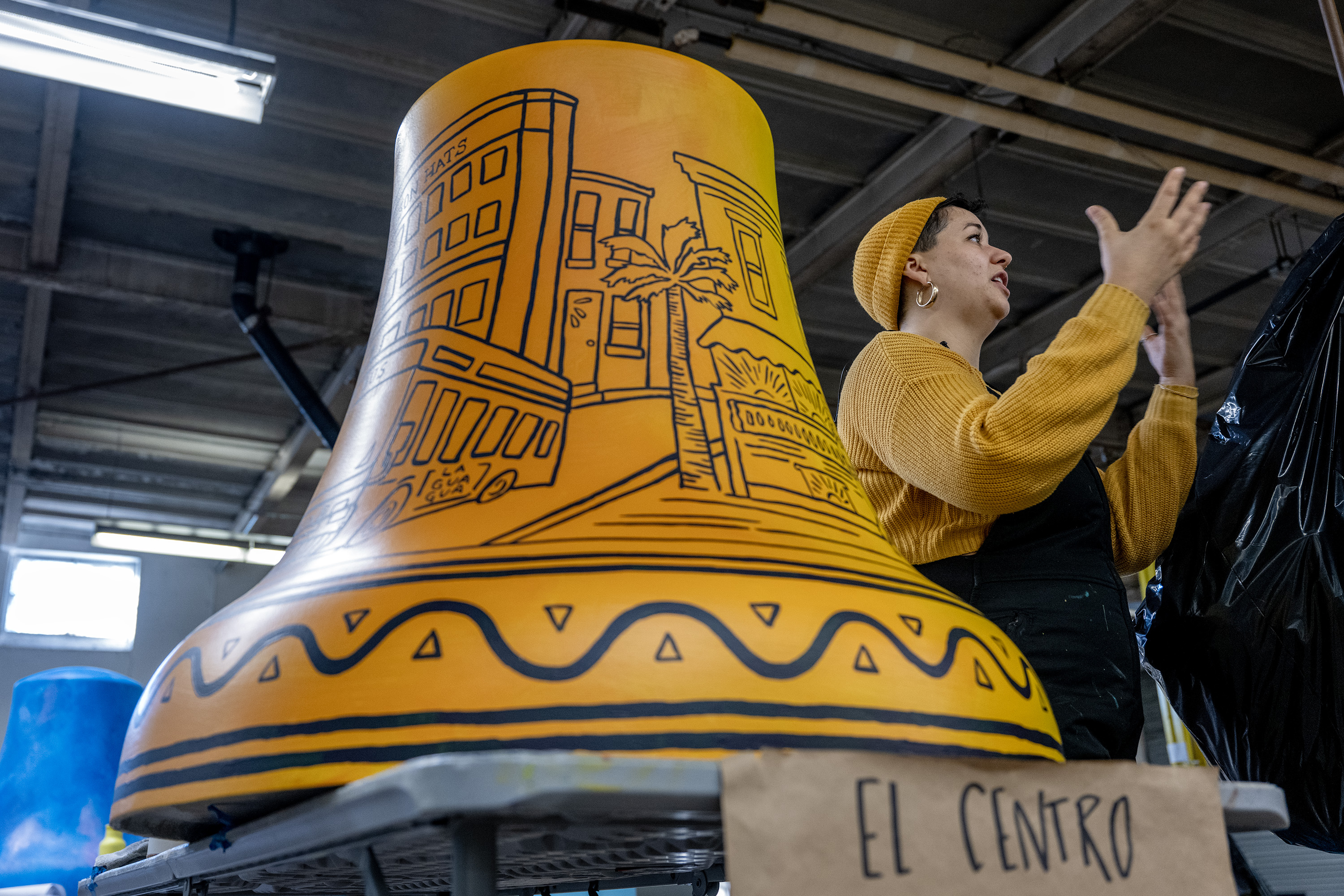
For her bell on El Centro de Oro, artist and educator Symone Salib, 32, met twice with 30 community members from North Fifth Street and Lehigh Avenue, asking them for ideas.
“From there, I had a very long list,” she said. “People really liked telling me what they wanted to see and what they did not.”
Local artist Symone Salib talks with a visitor as she works on her bell.
Titled The Golden Block, the striking yellow-and-black bell depicts the neighborhood’s historic Stetson Hats factory, the long-standing Latin music shop Centro Musical, and popular iron palm tree sculptures.
To add that extra bit of authenticity to his bell depicting Glen Foerd, artist Bob Dix, 62, mixed his paints with water bottled from the Delaware River, near where the historic mansion and estate sits perched in Torresdale, overlooking the mouth of Poquessing Creek.
“I like to incorporate the spirit of the area,” he said, dabbing his brush in the river water. “I think it’s important to bring in the natural materials.”
Local artist Bob Dix displays waters he collected from the Delaware River and Poquessing Creek to use in his painting of one of 20 replica Liberty Bells representing different neighborhoods Tuesday, Dec. 9, 2025.
Planners say they expect the bells to draw interest and curiosity similar to the painted donkeys that dotted Philadelphia neighborhoods during the 2016 Democratic National Convention.
Ott Lovell said organizers will install the bells around March to protect them from the worst of the winter weather.
“I don’t want any weather on them,” she said with a smile. “I want them looking perfect for 2026.”
The massive construction project rose outside Room 221, where 22 curious second graders peered outside their classroom daily, noting daily progress with great interest.
Sometimes, the kids at Fanny Jackson Coppin School, on South 12th Street in South Philadelphia, cheered for the workers, spurring them on as the summer heat gave way to chillier temperatures.
But they had so many questions: “What colors are for the building, and how many colors are you going to use? Red or pink?” and “How does the building not fall down?” and “When will you stop making it taller and taller?”
Teacher Kate Atkins collected the 7- and 8-year-olds’ queries, compiling them in a letter she left at the job site with her phone number. “We think you should come and tell us about construction because it is getting better and better,” the kids wrote.
Jack Delaney, the project manager on the job site, found the letter. He was charmed; he reached out to Atkins.
Zach Winters, cofounder and partner at 3rd Story Philly, second grade teacher Kate Atkins, center, and Jack Delaney, right, Project Manager at 3rd Story Philly, talk with students at Fanny Jackson Coppin School, in Philadelphia, December 05, 2025.
And on a frigid Friday, Delaney and Zach Winters, construction manager and a cofounder of 3rd Story Philly, the development and construction company working on the house project, walked into Room 221 with tools to show and energy appropriate for a roomful of enthusiastic second graders.
For 50 minutes — a long time for second-grade attention spans — the students talked about tools and examined pictures of the project in progress. They donned their own hard hats. But mostly, they gleaned information.
Zach Winters, cofounder and partner at 3rd Story Philly, left, and Jack Delaney, Project Manager at 3rd Story Philly, right, talk with students at Fanny Jackson Coppin School, in Philadelphia, December 05, 2025.
Here are some of Room 221’s greatest hits:
Question: Why did you decide to make the house bigger by making it taller instead of making it wider?
Answer: “We build additions on top of existing homes or sometimes behind existing homes, because there’s not a lot of space in the city,” Winters said. “We make the house bigger by going up.”
Q: Do you ever worry that you’re going to fall off the building?
A: “Yes, I do,” Winters said. “You should always be worried that you’re going to fall off something high. We try to be very careful. We try to stay away from the edge of the building. If we’re close to the edge of the building, we put on safety harnesses, so if we were to fall, that could catch us. But, yes, I’m worried, and my wife worries, and my mother worries.”
Students Landon Watkins, center, and Leo Horn, right, try on hard hats at Fanny Jackson Coppin School, in Philadelphia, December 05, 2025.
Q: How much will the house cost to build?
A: The project is a full remodel, with third- and fourth-story additions, basement excavation, and two roof decks.
“Often today, we are building a new construction at around $200 to $250 a square foot,” Winters said. “And it depends on how fancy the building is. A project like this is close to a half-million dollars. That’s a lot of money — but it’s a lot of house.”
Q: How long will it take to finish the house?
A: “Eight months to a year,” Delaney said.
“That depends on how many problems we have. Sometimes, it rains for a week, and we have to get the roof done,” Winters said. “Sometimes, it gets really cold, and the masons can’t work.”
The Coppin kids did not let Delaney and Winters off easy.
“Will it be done by Christmas?” one student said. No, Delaney and Winters said. The job started in March. It won’t finish until next year.
“Maybe you should try to finish it by Hanukkah,” another student said.
Q: (To Delaney) Do you do any drywall?
A: “I don’t, but the drywallers do,” Delaney said. “They are very strong. They hold up giant sheets of drywall.”
Winters interjected: Delaney knows how to drywall, but that’s not his job right now.
Delaney smiled.
“I get to say, ‘Hey, you go do the drywall,’ and then I run away,” he said.
The kids loved the level Delaney showed them. They had excellent guesses about how many bricks were used on the project.
“Four thousand million,” one girl shouted.
(Close — it’s 17,500.)
At the end of the visit, Atkins had a question for the kids.
“Who might want to work in construction someday?” she asked.
Nearly every hand shot up.
Delaney and Winters looked triumphant.
“We’ve got a labor shortage now,” Winters said. “Let’s go!”
Zach Winters, cofounder and partner at 3rd Story Philly, talks with students at Fanny Jackson Coppin School, in Philadelphia, December 05, 2025.
Kacii Hamer has no financial stress this holiday season.
In past years, “holidays were always ‘give, give, give,’ and that’s what I always felt like I had to do,” said Hamer, a 33-year-old pre-K teacher and wedding photographer. Back then, “I couldn’t imagine thrifting gifts or DIYing gifts. You have that fear of ‘Oh my god, are these people going to judge me?’ or ‘Is this good enough?’”
This year, however, Hamer is celebrating “Thriftmas,” a social-media trend where participants buy many of their holiday gifts secondhand.
Between a family Pollyanna, a gift for her boyfriend, and a present for her goddaughter, she plans to spend no more than $150 total. For her goddaughter, she is sanding and repainting a $14 rocking horse that she got at the 2nd Ave. Thrift store in South Philadelphia.
The thrift-focused holiday season will mark a fitting end to what Hamer calls her first “hardcore” low-buy year, one during which she cut out most nonessential spending.
Hamer, who splits her time between the Philadelphia region and Scranton, was one of several low- and no-buyers whom The Inquirer talked with in April.
The frugal challenge took off this year amid broader economic pressures, including continued inflation. Philly-area participants said they were trying to save money, pay off debt, reduce waste, and, in some cases, stop patronizing large retailers that don’t align with their values.
Now as the holidays approach, some low- and no-buyers are making exceptions for gifts, or using some of their recent savings to fund their festivities.
Others, however, are standing firm in their low-spending habits. They’re setting budgets, trimming their gift-recipient lists, or shopping secondhand.
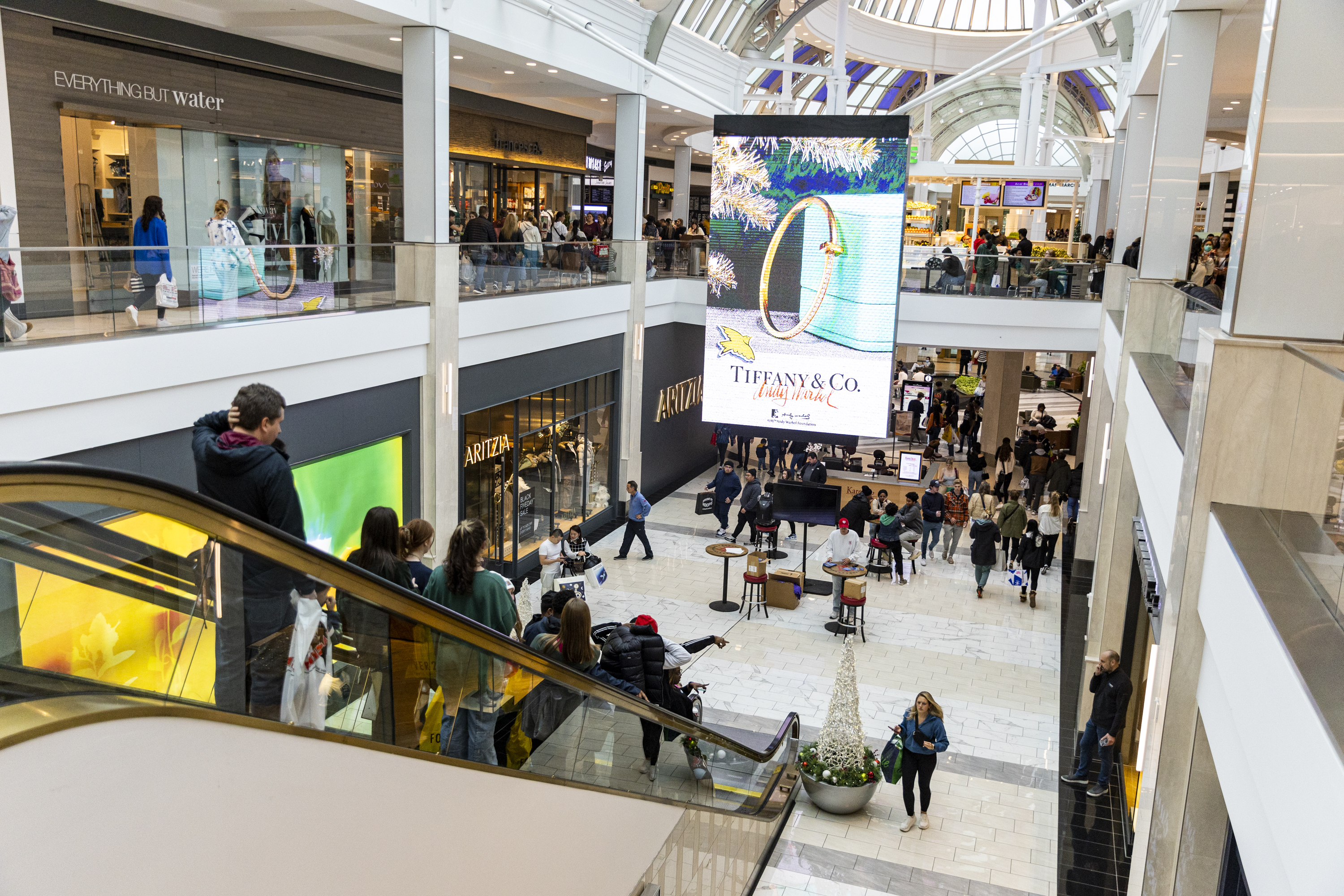
Shoppers descend on the King of Prussia Mall on Black Friday in this 2022 file photo.
This time of year, some local low-buyers said, it requires extra strength to resist consumerist pressures and go against the norm. Each U.S. adult is expected to spend about $628 on average on holiday gifts this year, according to the National Retail Federation, which anticipates overall holiday spending will surpass $1 trillion for the first time ever.
At the same time, others say economic uncertainty has made for easier conversations about gifting.
“I’m not under pressure to spend, and I think this year it’s actually easier to [cut back on gifts]than in years past,” said Mylena Sutton, 48, of Voorhees. “A lot of my friends are sensitive to what’s happening in the economy … you don’t have to explain.”
Parents buying less for Christmas
Some Philly-area parents have found that Santa can be thrifty, too.
Heather Fertig, 38, of Fishtown, said about 80% of her toddler’s Christmas gifts will be secondhand. They’ll include a marble run, which she bought this week from a local thrift store, and a wooden train table, for which she remains on the hunt.
Thanks to secondhand stores, Facebook marketplace, and neighborhood parent groups, Fertig, a stay-at-home mom, said she and her husband will likely spend about $150 in all.
Her motivation is as much environmental as it is financial.
After having her son, she realized, “Wow, there is so much waste,” Fertig said. “I kind of felt, previous to that, that there was a stigma around getting things secondhand.”
But “it was never there,” she added. “It was this made-up thing that everything had to be brand-new to you.”
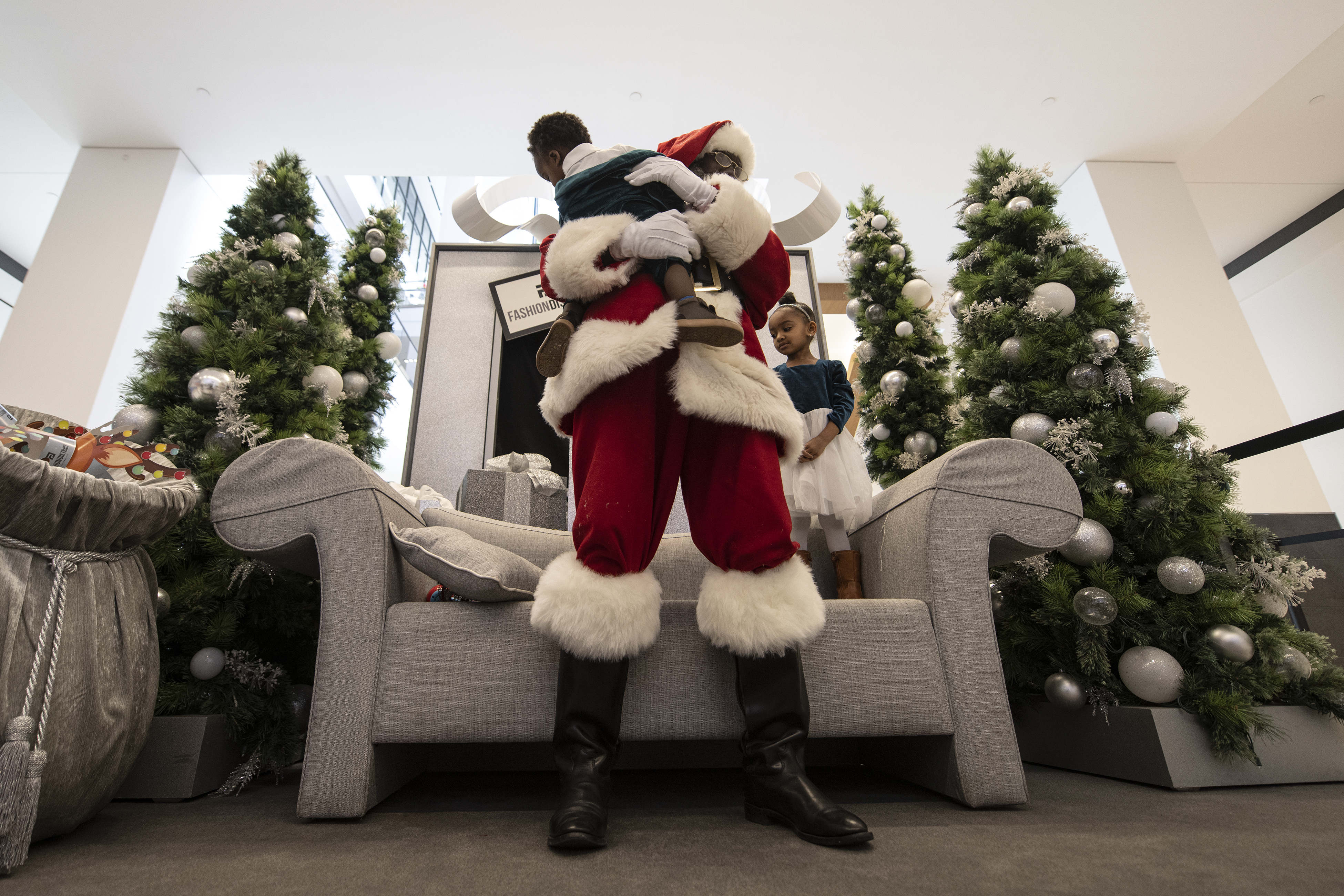
Santa James Claus greets children at the Fashion District in this 2022 file photo. Some local parents have found Santa can cut back on spending, too.
For young children, whose interests change so quickly, it makes even more sense to buy items secondhand, Fertig said. On Christmas morning, her 2-year-old doesn’t know the difference.
“He’s just as happy as if I bought it straight from Walmart,” she said.
In Montgomery County, Jenna Harris-Mosley said she takes a combo approach to gift-giving for her 5-year-old daughter, whose birthday is on New Year’s Eve.
The 41-year-old bought some smaller, new gifts, including Shrek snow globes and Squishmallow stuffed toys, throughout the year to spread out spending.
She plans to get other items secondhand, including one or two American Girl dolls for $20-$30 each. And she will set aside some money for experiences, such as an upcoming day trip to New York City for tea at the American Girl store — with the new-to-her doll, of course.
Harris-Mosley said she took an especially intentional approach to spending this year after getting laid off from her job in tech sales in October. It has helped that she had already bought many of her daughter’s Christmas and birthday gifts when she found deals earlier in the year, she said.
“I have things hidden in every corner of my house,” she said. And as for grown-ups “I don’t stress myself about holiday gifts,” figuring most adults in her life have the things they need — and can buy things they don’t.
In Port Richmond, Rachel Dwyer is making homemade felt ornaments for the adults on her list, and getting two books for each child. The 34-year-old nanny has learned that too many toys and trinkets can be overwhelming for kids and parents.
“It’s just a lot of clutter,” she said, “and a lot of junk.”
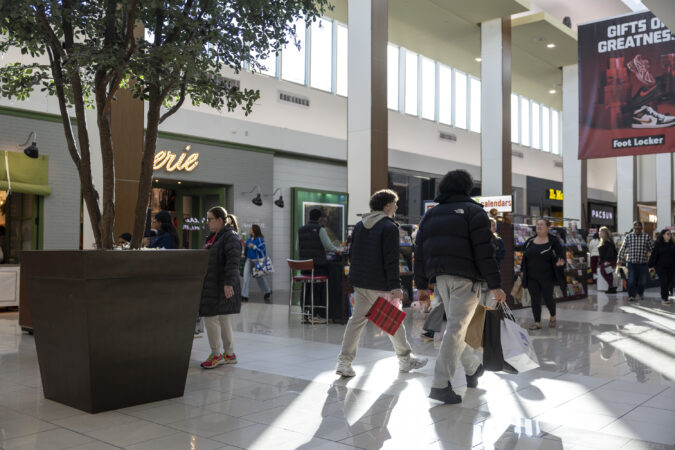
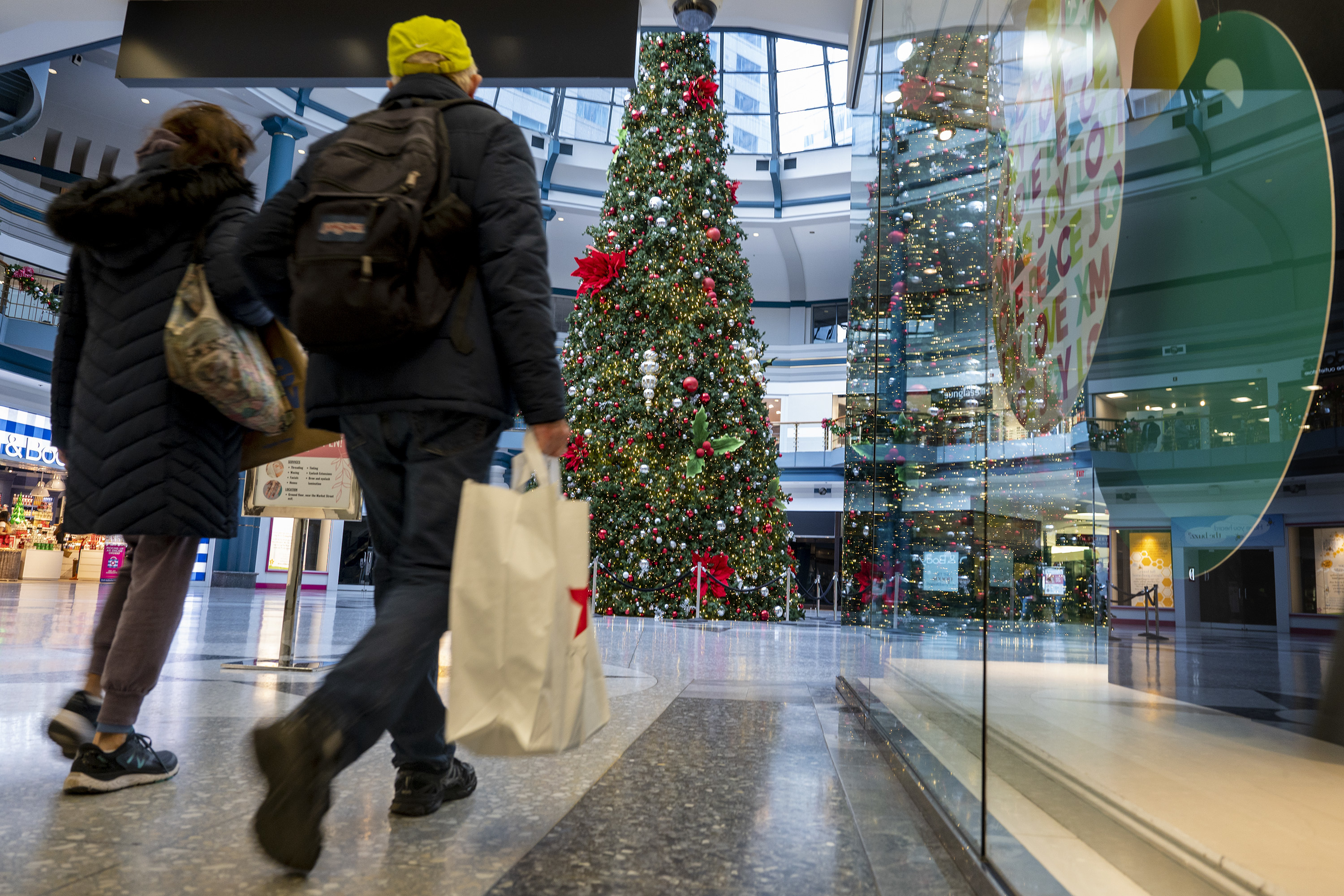
People walk through the Shops at Liberty Place in this 2021 file photo.
How to spend less on holiday gifts
Seasoned low-buyers say it’s hard to cut back on spending. But once you get over the initial hurdle, they say, it’s freeing.
“Push through the fear,” Hamer said. “It feels nice going into the holidays with such a positive attitude.”
In South Jersey, Sutton has never been a big holiday gift-giver, saying she prefers to buy loved ones presents intentionally throughout the year.
If others feel overwhelmed by their holiday gifts-to-buy list, she recommends they ask themselves: “Do you do these things because they have value for you? Or do you do these things because they are expected?”
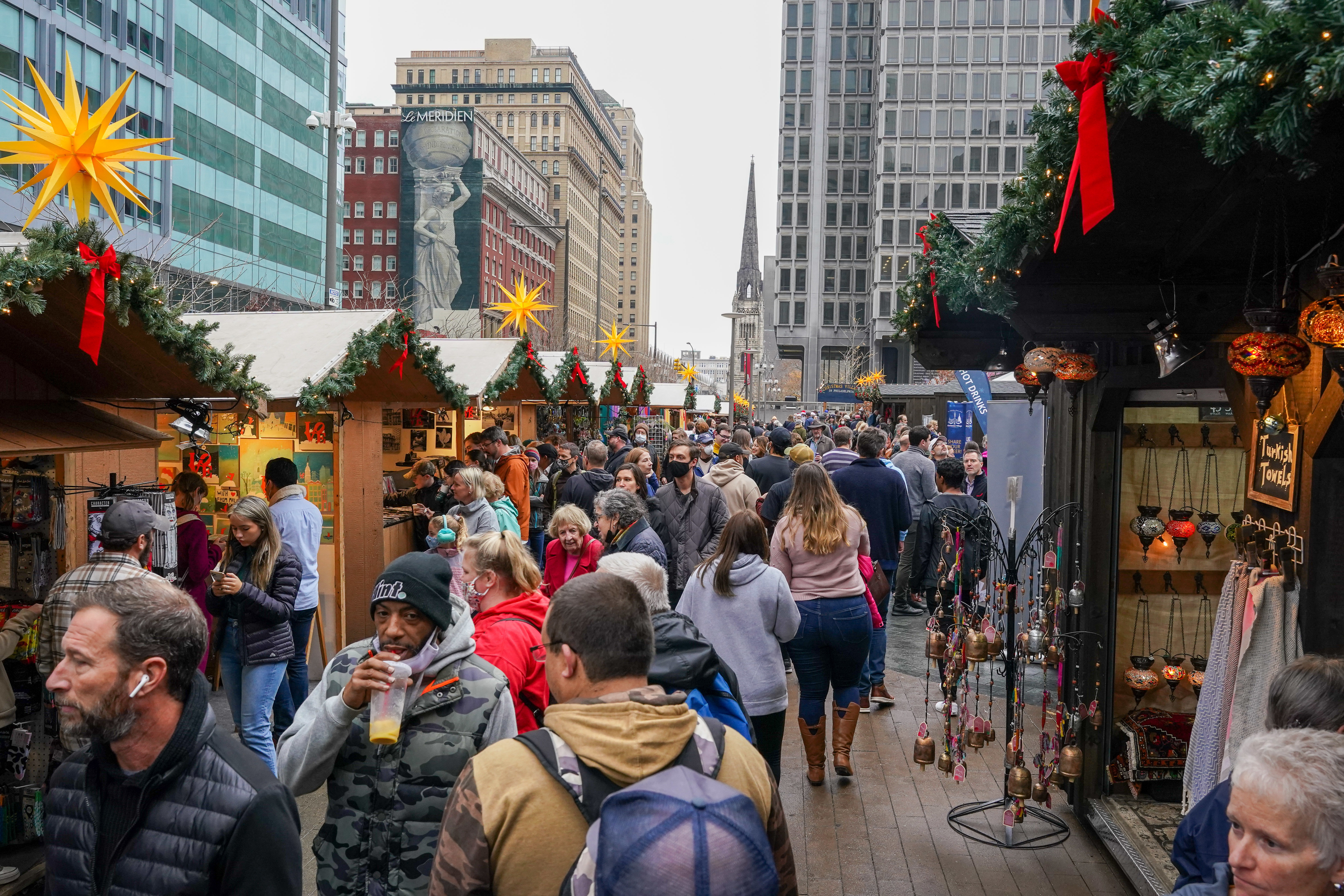
People browse the Christmas Village at LOVE Park in this 2021 file photo.
“Be brazen about it,” said Sutton, a consultant and leadership coach. That might mean telling people: “If you only get me a gift because you expect an exchange, don’t buy me one.”
“People who have stayed away from thrifting should get back into it,” said Jen Benner, 34, of Conshohocken. “The thrift stores are jam-packed with very good stuff.”
If you aren’t sure about buying secondhand, “start small. Start with a child’s gift or a truck or a train or something little,” Fertig said. “Work your way up to bigger items.”
Benner, a real estate agent, keeps a running list on her phone of gift ideas that her loved ones mention throughout the year. This can save time and anxiety around the holidays, and reduce the urge to overspend.
Remember, too, that the most meaningful gifts can be among the least expensive, Dwyer said. She recommends personalized, handmade gifts or framed photos, as well as gifts of time or skills, such as a babysitting session, a home-cooked meal, or a family-photo session.
The fix was needed because Council earlier this week amended a separate but related piece of legislation — called the H.O.M.E. budget resolution — that sets the first-year spending levels for the housing programs funded or created by the initiative.
Council’s changes, which Parker largely opposed, were significant enough that the budget resolution no longer aligns with the bond authorization bill Council approved in June, meaning the administration cannot rely on the original legislation as its legal basis for taking out city debt.
The new bond bill introduced Thursday reflects Council’s changes, which include increasing the first-year H.O.M.E. budget from $194.6 million to $277.2 million and changing eligibility requirements for some programs to make sure the lowest-income Philadelphia households were prioritized.
“We want to make sure that this is a H.O.M.E. plan that supports everyone, but obviously members of Council had an issue and concern about making sure those most in need are supported throughout this process,” Johnson said.
The bill now heads to committee, and Johnson said negotiations could lead to further changes. Next week is Council’s final meeting of the year, and Johnson on Thursday ruled out adding an extra session, meaning the bill likely will not pass until January at the earliest.
“Working with Council President Johnson and the Members of City Council, we are laser-focused on building, repairing and restoring 30,000 units of housing and making H.O.M.E. a reality for the people of Philadelphia,” Parker said in a statement Thursday.
‘That’s my sister’: Johnson says relationship with Parker still strong
Parker-Johnson pact intact: The Council president on Thursday downplayed his spat with Parker that saw both issue pointed statements Tuesday night blaming the other for delays in issuing the bonds.
But Johnson said Thursday their relationship remains the same and has always involved disagreements — just not ones that have spilled out into public view.
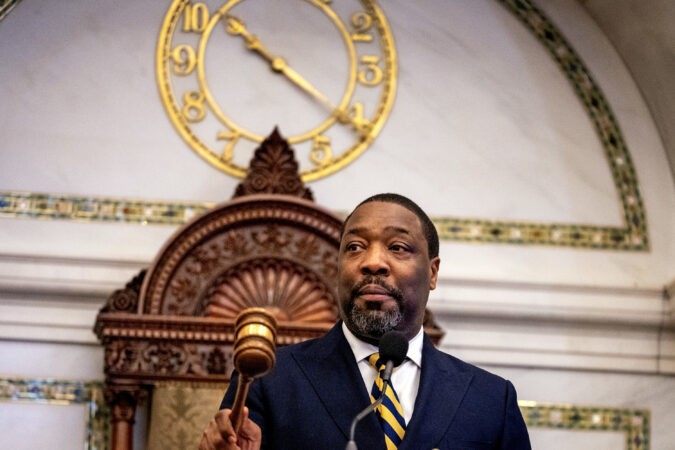
City Council President Kenyatta Johnson and Mayor Cherelle L. Parker have maintained a close working relationship.
“That’s my sister,” Johnson said. “Most of the time, when we do have disagreements, y’all just don’t see it. We meet every week, so you don’t get a chance to see the back-and-forth. But at the end of the day, the mission is to move the city of Philadelphia forward together.”
Council makes it harder to open convenience stores and pharmacies in Kensington
The bill, authored by Councilmember Quetcy Lozada, forces any new “sundries, pharmaceuticals, and convenience sales” businesses in her 7th District — which covers much of Kensington and parts of North and Northeast Philadelphia — to get approval from the Philadelphia Zoning Board of Adjustment. That process is notoriously long and can be expensive for applicants.
Lozada has said that the bill is targeted at corner stores and smoke shops, not chain businesses like CVS and 7-Eleven.
The legislation is part of the body’s broader war on so-called nuisance businesses, which lawmakers say attract crime and disrupt neighborhoods. And it comes in addition to a controversial 11 p.m. business curfew in Lozada’s district that took effect earlier this year.
City Councilmember Quetcy Lozada represents Kensington.
It’s one of several legislative remedies lawmakers have undertaken to curb small businesses like smoke shops and convenience stores that have unregulated slot machine-like “skill games,” sell marijuana-like products, and peddle drug paraphernalia without a license to do so.
Seriously … no nuisances, please: Lozada was not the only lawmaker taking aim at “nuisance” businesses Thursday, when Council approved two bills by Majority Leader Katherine Gilmore Richardson on the same topic.
One measure makes it easier for the Philadelphia Department of Licenses and Inspections to issue stop-work and cease-operations orders to businesses violating city regulations. The other is aimed at closing loopholes that “let nuisance business owners avoid enforcement by changing their name or ownership, ensuring those with similar ownership or operations remain accountable for past violations,” Gilmore Richardson’s office said.
The measures, which were both approved 16-0, were aimed at stopping “the spread of dangerous and destructive businesses and the need for further action to address their impact on our communities,” Gilmore Richardson said.
“While I am encouraged by the steps we are taking today, I am also working on additional legislation to more aggressively crack down on these businesses and the bad actors behind them,” she said.
“Anybody that knew Paul will tell you he really was that guy, that guy who would give you the shirt off his back,” Harrity said. “He’s the only person I truly knew never lost faith in me, even when I was at my lowest 10 years deep in my addiction.”
Councilmember Curtis Jones Jr. thanked Harrity, who often gives impassioned speeches, for his heartfelt tribute to Staico.
“I want to shout out Jimmy Harrity for making crying in Council cool,” Jones said. “Nobody does it better, brother.”
Staff writer Jake Blumgart contributed to this article.
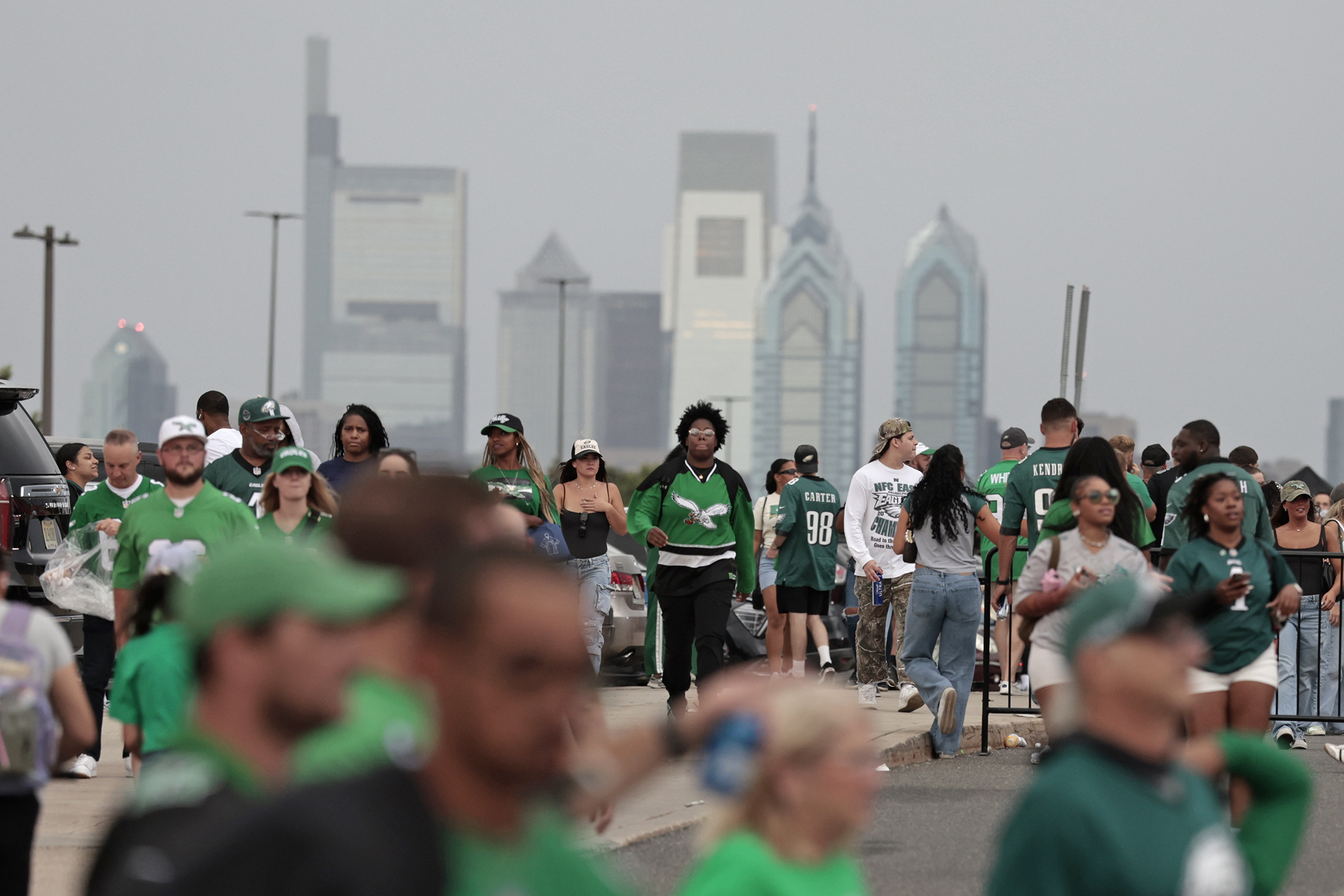
Teeth-chattering winds and plunging temperatures awaited Eagles fans who made a pilgrimage Friday to Lincoln Financial Field for a late afternoon matchup against the Chicago Bears.
For those who drove to South Philadelphia, the city had a post-game surprise: a new traffic management plan that might minimize stadium complex gridlock.
In an email to The Inquirer, the city wrote that the test pattern is designed to provide drivers with an expedited route from Pattison Avenue to the Walt Whitman Bridge and I-76 East, along Darien Street.
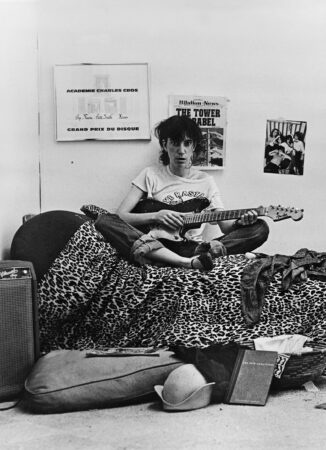
Patti Smith has been associated with New York for her entire public life.
In 1971, her first poetry and music performance was at St. Mark’s Church in-the-Bowery with Lenny Kaye on the guitar. Along with the Ramones, Talking Heads, Television, and Blondie, she was a vital force in the mid-1970s CBGB music scene.
And in 1975, she recorded Horses at Electric Lady Studios. That galvanic debut album made her an instant punk rock and feminist hero. On Saturday, she’ll celebrate its 50th anniversary at the Met Philly, with a band that includes Kaye, drummer Jay Dee Daugherty, bassist Tony Shanahan, and her son Jackson Smith on guitar.
“People think of me as a New Yorker,” Smith said, in an interview with The Inquirer from her home in New York.
“Well, I’ve lived in New York. But I was pretty much formed by the time I got to New York. The places that helped form me were Philadelphia and rural South Jersey.”
At the Met, Smith and her band will perform Horses in its entirety, starting with the take on Van Morrison’s “Gloria” that introduced her as a brash, provocative artist with one of the most memorable opening lines in rock and roll history: “Jesus died for somebody’s sins … but not mine.”
“It’s going to be a special night, because I hardly ever get to play with my son and daughter,” said Smith, who turns 79 on Dec. 30. “So I’m really, really happy about that, bringing my kids to Philadelphia.”
Bread of Angels, unlike her 2010 National Book Award-winning Just Kids, doesn’t zero in on a particular episode in the storied career of the enduring punk icon.
“Bread of Angels: A Memoir” by Patti Smith. MUST CREDIT: Random House
Instead, Bread takes the full measure of her life. It begins in Chicago where she was born before her parents moved back to Philadelphia while she was a toddler, and turns on a late-in-life DNA revelation that shakes up her conception of her own identity.
“I didn’t plan to do this book,“ Smith said. “Truthfully, it came to me in a dream.”
In her dream, she had written a book telling the story of her life in four sections. She wore a white dress, just as she does on the cover of Bread of Angels, in a 1979 photo taken by Robert Mapplethorpe.
“It was so specific, this dream, that it sort of haunted me. And I felt like it was a sign that perhaps it was a book I should write. …. It took quite a while.”
Bread of Angels is “a love letter to certain places.”
“Philadelphia when I was young,” she said. “I love Philly. And then down in rural South Jersey, and the places in Michigan I lived with my husband.”
Summaries of Smith’s life typically cite that she lived in Germantown before moving first to Pitman and then Deptford Heights in South Jersey, before moving to New York in 1967.
But Smith’s childhood was actually much more peripatetic.
“I think we moved nine times while we were in Philly,” she recalled, including stops in Upper Darby and South Philadelphia.
“My mother had three of us in rapid succession,” said Smith. It was after the war, and a lot of the rooming houses we stayed in absolutely didn’t allow infants, so my mother was always hiding the pregnancy or hiding the baby. And then we’d get found out and have to move again.”
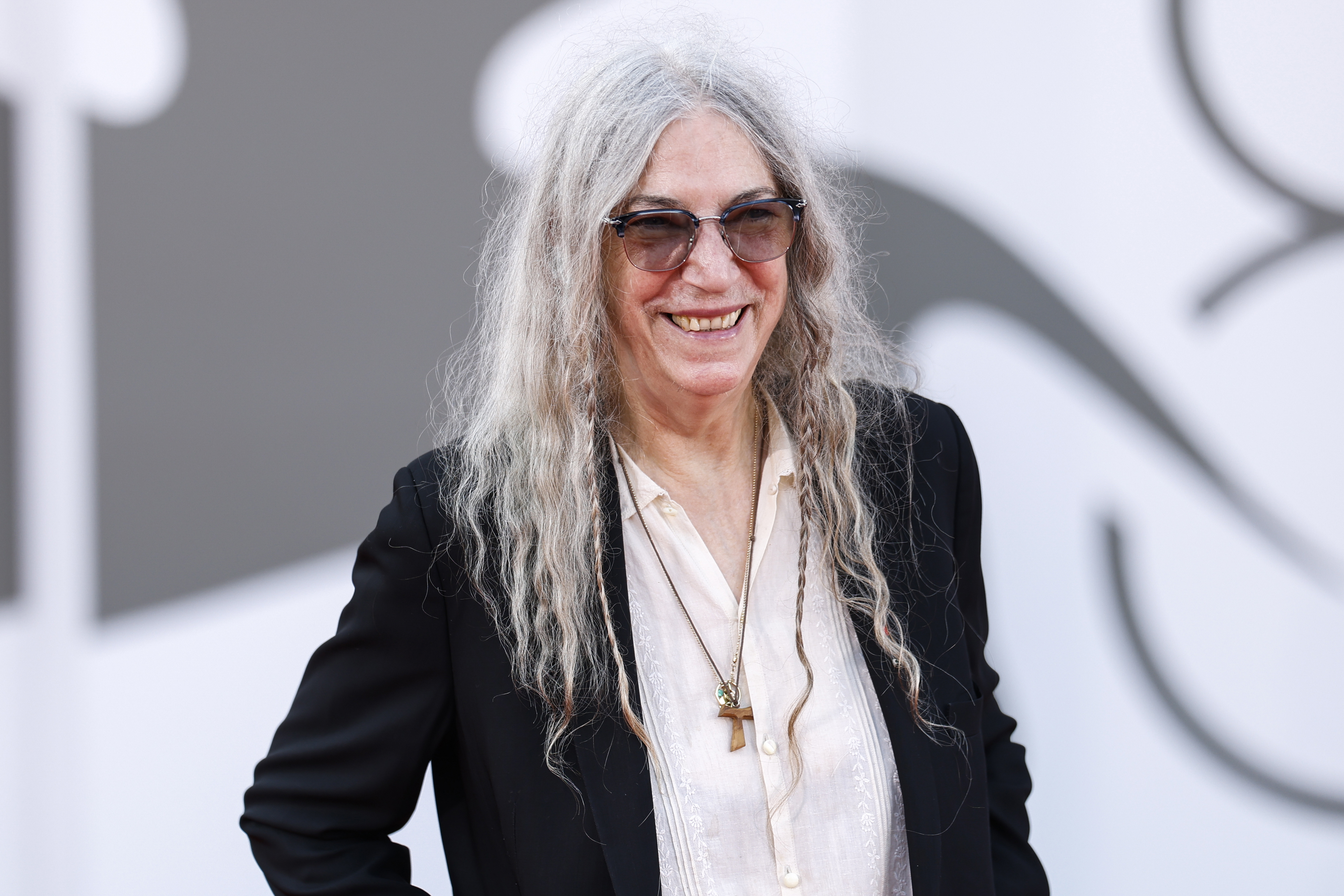
Patti Smith at the Venice Film Festival in Venice, Italy in 2024.
Her coming of age Philadelphia stories in the book evoke a happy, lower middle class childhood.
Living in a converted soldier’s barracks in Germantown she calls “the Patch,” she once beat all the boys and girls in a running race, but tripped and landed on a piece of glass, leaving blood rushing down her face. She was treated at Children’s Hospital, and rode a bicycle for the first time the following week.
“I left the perimeter of the Patch, pedaled up toward Wayne Avenue,” she writes. “I was six and half years old with seven stitches, and for that one hour, on that two-wheeler, I was a champion.”
On her seventh birthday, her mother, who then worked at the Strawbridge & Clothier department store at Eighth and Market, took her to Leary’s, the Center City bookshop that closed in 1968.
“Oh my gosh it was a wonderful bookshop,” she said. “On your birthday, you had to show your birth certificate and pay $1, and you could fill your shopping bag.”
Her bag, she said, was filled “with some very good books that I still own.”
A copy each of Pinocchio, The Little Lame Prince, an Uncle Wiggily book.
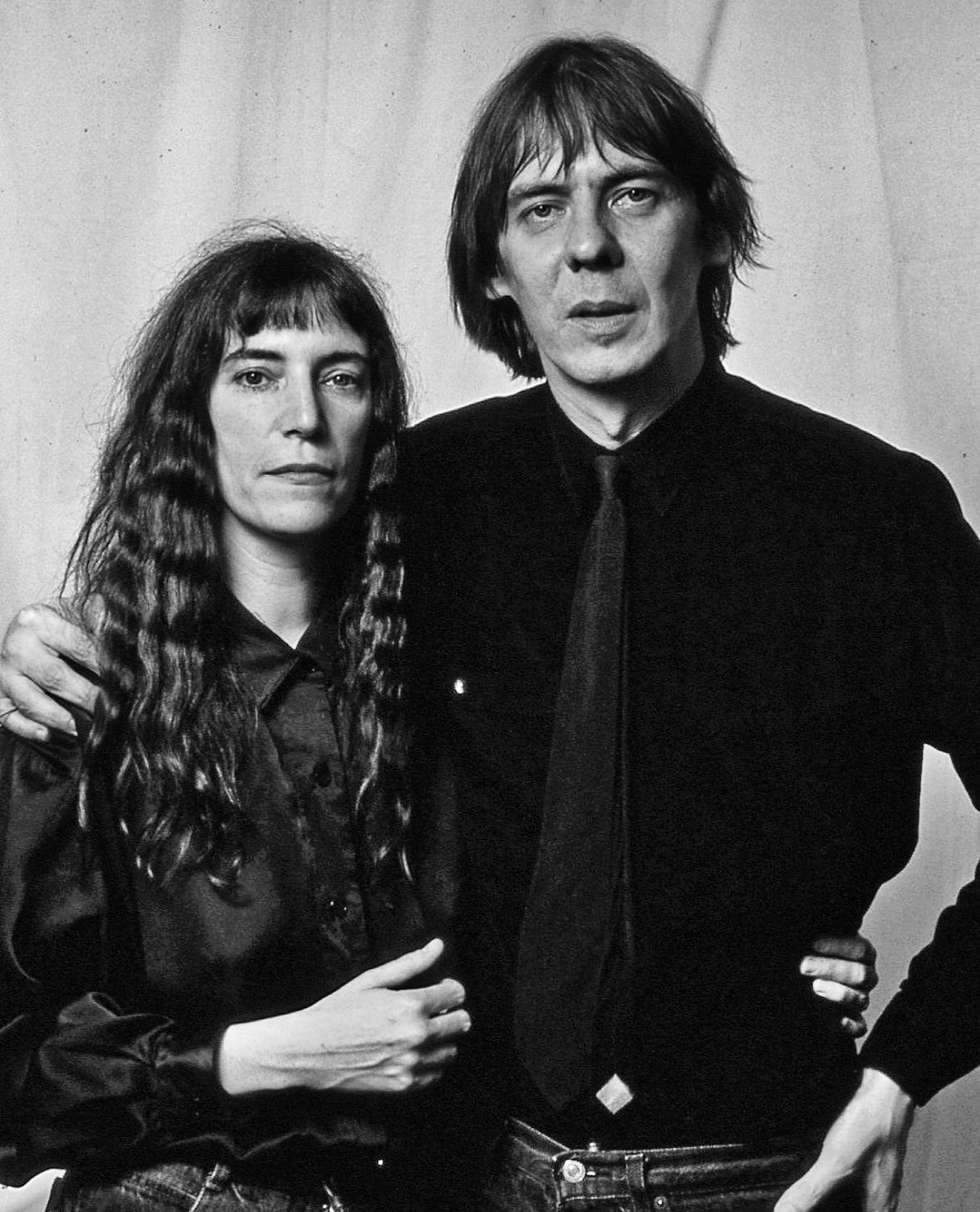
Patti Smith and her late husband Fred “Sonic” Smith, as pictured in “Bread of Angels,” her new memoir. Smith and her band will play the Met Philly on Nov. 29 on the final date of their tour celebrating the 50th anniversary of her 1975 debut album “Horses.” She will also appear on Dec. 1 at Marian Anderson Hall at the Kimmel Center in a Songs & Stories event on her Bread of Angels book tour.
As a Jersey teenager in the early 1960s, she had a crush on a South Philly boy named Butchy Magic. She once got stung by a hornet outside a dance, she writes in the book, and he looked deep into her eyes and pulled the stinger out from her neck.
“This is what the writer craves,” she writes. “A sudden shaft of brightness containing the vibration of a particular moment … Butchy Magic’s fingers extracting the stinger. The unsullied memory of unpremeditated gestures of kindness. These are the bread of angels.”
As in the book, Philadelphia loomed large over Smith’s childhood, well after the family moved to Gloucester County.
“It was our big city. It was where I discovered rock and roll,” she said.
She discovered art when her father Grant and mother Beverly took her and her younger siblings Linda, Kimberly, and Todd to the Philadelphia Museum of Art (now Philadelphia Art Museum). There, she fell for Pablo Picasso, John Singer Sargent, and Amedeo Modigliani.
“Culturally, it was the city that helped form me,” she said.
“It amazes me that half a century has gone by and people are still greatly interested in the material,” she said. “It’s a culmination of a period in my life.”
In 2012, when Smith and her sister Linda took DNA tests, Smith had already begun writing Bread of Angels. The result of the test was a shock: Grant Smith was not her biological father.
Her birth was actually the result of a relationship between Beverly Smith and a handsome Jewish pilot named Sidney who had returned to Philadelphia from World War II.
Bob Dylan and Patti Smith at the Electric Factory in Philadelphia in 1995.
“It was completely unexpected,” Smith said. “My mother was a great oral storyteller, but none of her stories gave any indication that I was fathered by a different man. … She certainly kept that a secret from everyone.”
Of the emotions Smith felt, one was “some sorrow,” she said. “Because I loved and admired my father. I felt sad because I didn’t have his blood. But I modeled myself after him so much. All of those things remain.”
She stopped work on Bread of Angels for two years.
“I didn’t know how to deal with it. Is this book false? Do I have to rewrite everything? And then I realized I didn’t have to rewrite anything. My father is still my father. But you can also show gratitude to the man who conceived with my mother. Who gave me life. So I figured it out. I have two fathers.”
Her mother, father, and biological father had all died by the time she learned the news of her parentage.
Some of Smith’s self-confidence — evident in the way she spells out “G-L-O-R-I-A!” — “might have come from the biological father I never knew,” she said. “He was a pilot. When he was young, he had this tough job. I’ve met a few people who knew him. They said he was very kind and good-hearted. He loved art, he loved to travel. He had not a conceited, but a self-confident air.
“I’ve always had that, and wondered where it came from,” she said. “I’ve always possessed that kind of self-confidence. I’ve never had trouble going on stage. So I think I have to salute my blood father, right?”
In Bread of Angels, Smith recalls her early life in Philly, and writes: “I did not want to grow up. I wanted to be free to roam, to construct room by room the architecture of my own world.”
Seven decades later, she’s still doing that, as she continues to create and perform for adoring audiences around the world.
“I have stayed in contact with my 10-year-old self, always,” she said. “I still carry around the girl that had her dog, and slept in the forest, and read [her] books, and got in trouble, and didn’t want to grow up.”
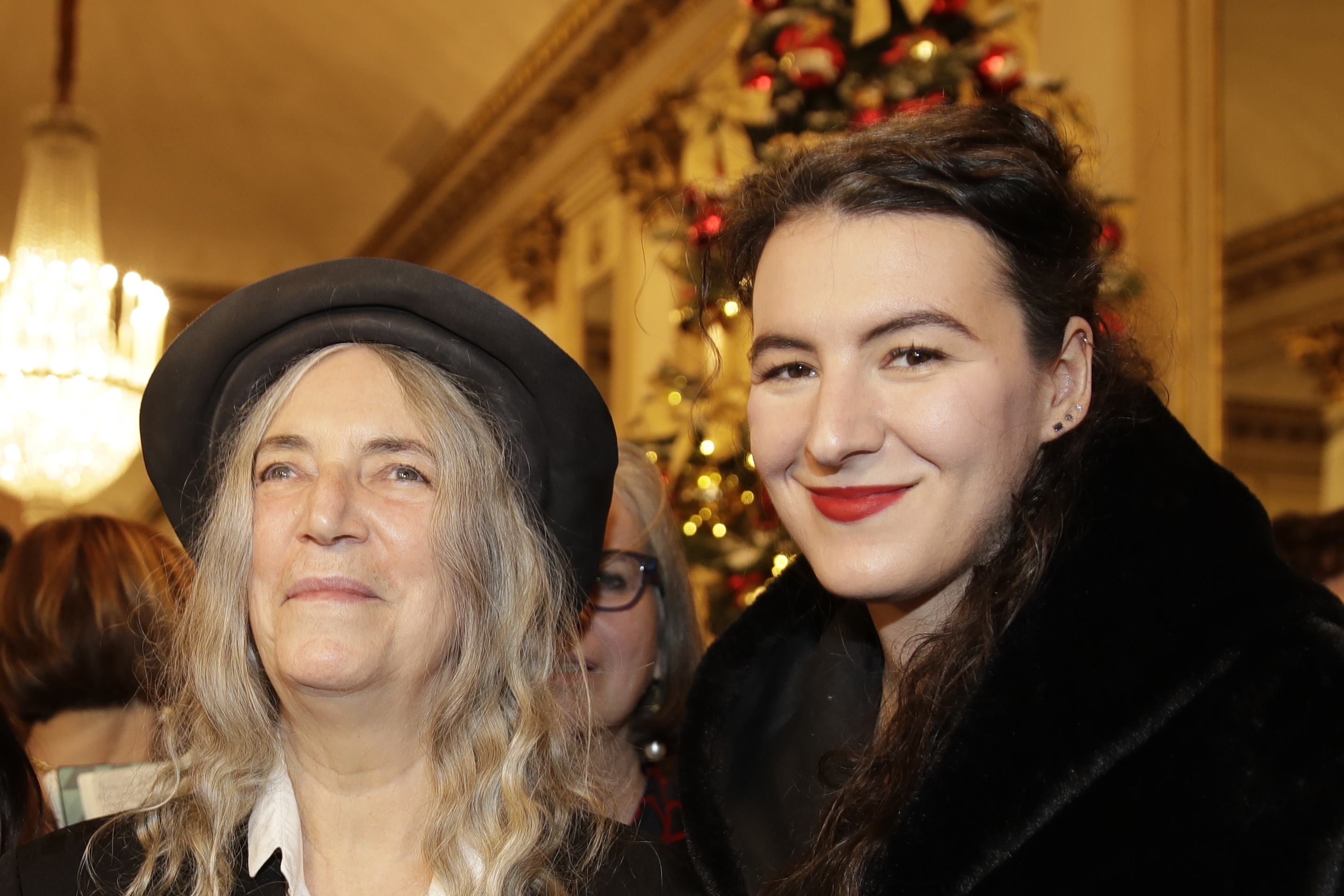
Patti Smith and daughter Jesse Paris Smith in Milan, Italy, in 2019.
She turns 80 next year.
“My hair is gray to platinum. I understand my age. I’ve had my children, and have gone through a lot of different things. But I still know where my 10-year-old self is. I still know how to find her.”
Patti Smith and Her Band perform “Horses” on its 50th anniversary at the Met Philly, 858 N. Broad St. at 8 p.m. Saturday, themetphilly.com.
“Patti Smith: Songs & Stories” at Marian Anderson Hall, 300 S. Broad St., at 7 p.m. Monday, ensembleartsphilly.org