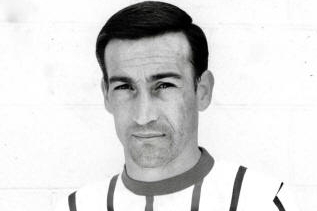
John Borodiak, 89, of Philadelphia, Hall of Fame Argentine American professional soccer player, popular coach and sports center volunteer, and longtime Center City dental lab owner, died Saturday, Sept. 13, of complications from Alzheimer’s and Parkinson’s diseases at Graduate Post Acute nursing facility.
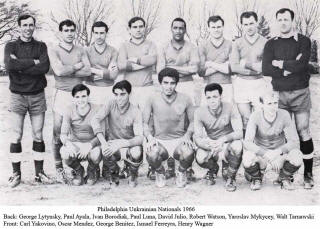
Born and reared in Buenos Aires, Argentina, of Ukrainian descent, a young Mr. Borodiak was such a star that, in 1960, at 24, he was invited to leave South America and play soccer in the United States for the Ukrainian Nationals in Philadelphia. So, for seven seasons, through 1966, he played fullback for the Ukrainian Nationals and won four American Soccer League championships and four U.S. Open Cup titles.
As a 5-foot-8, 160-pound defensive whiz, Mr. Borodiak didn’t score many goals or race down the field on breakaways. But, said his son, Ivan, also a former pro soccer player: “He was smooth, quick, and good up in the air.”
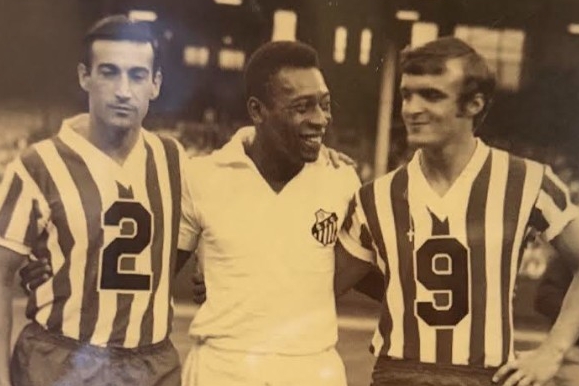
He played on the 1964 U.S. national team and was inducted into the Horsham-based Ukrainian Sports Museum and Hall of Fame in 2017. Over the years, he played against Brazilian superstar Pele and other international stars, and former colleagues called him “a living legend.”
Mr. Borodiak (left) played against Pele (center) and other international stars.
He also played with the Philadelphia Spartans in the National Professional Soccer League and the ASL’s Newark Ukrainian Sitch in 1966 and ’67. He spent the 1968 season with the Cleveland Stokers and 1969 with the Baltimore Bays in the North American Soccer League. He retired after playing a final season with the Spartans in 1970.
He made headlines after a game in 1967 when he blocked the game-tying goal after his goalie was caught out of position. “After I saw [the goaltender) go out, I expected something to happen in that corner,” he told the Daily News. “I moved up there, and the shot bounced off my chest.”
Affable and engaging off the field, Mr Borodiak became a favorite of teammates, fans, and sportswriters. He hosted instructional clinics for young players and, after learning English himself, served as a translator for other players and the media. He spoke Ukrainian, English, Spanish, and Italian.
In 1967, Daily News sports writer Dick Metzgar published his Christmas wish list and asked for “more hustling performers like little fullback John Borodiak.”
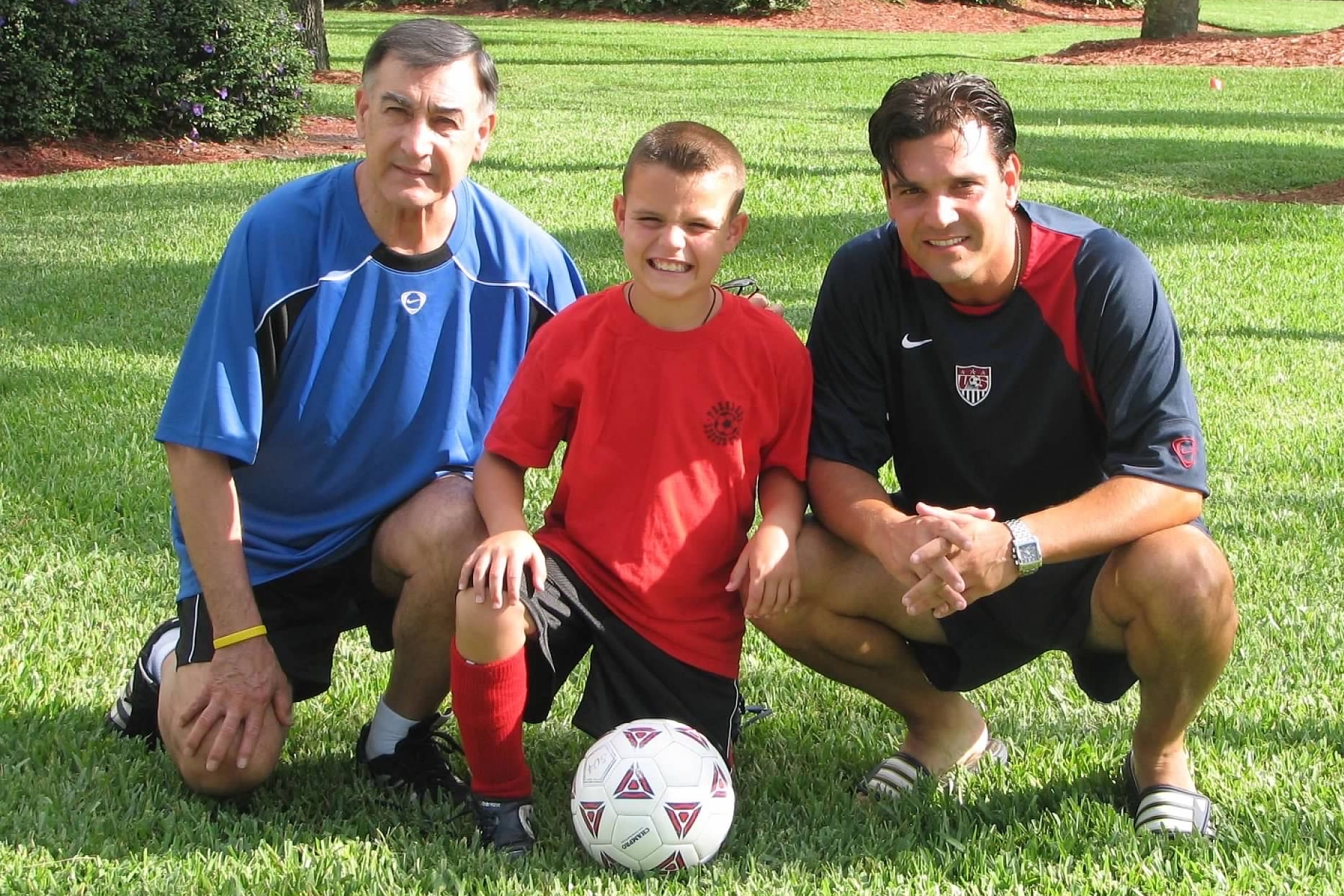
Mr. Borodiak (left) passed his athleticism on to his son and grandson.
He helped anchor a Spartans defense in 1967 that Metzgar called “impenetrable” and was known for his aggressiveness. He was ejected for fighting in a game against Baltimore that season, and he told the Delaware County Daily Times that his opponent hit him in the back. “Naturally,” he said, “I hit back.”
He was a team cocaptain in Cleveland and named a NASL all-star in 1968, and his Stokers lost a heartbreaking playoff game to Atlanta in overtime that season. After the game, a disappointed Mr. Borodiak told the Cleveland Plain Dealer: “I’m sorry.”
He rejoined the Spartans in 1970 when they entered the American Soccer League, and The Inquirer covered their big win over the Syracuse Scorpions. “A strong defensive cog, John Borodiak, was added to the Spartans lineup,” The Inquirer said, “and he played fullback in impressive style.”
In a 1969 story after the Bays tied the Dallas Tornado, the Baltimore Sun said: “Borodiak made one of the best saves of the day when he blocked a shot after [the goalie] had been pulled out of the net.” In 1966, he played briefly for Roma in the Eastern Canada Pro Soccer League, and a teammate told the Toronto Star: “Borodiak is a fine fullback and fits in well with our style of play.”
Mr. Borodiak (rear, third from left) and teammates on the Philadelphia Ukrainian Nationals pose during the 1966 season.
He coached soccer teams after he retired, played with amateur teams into his 40s, and was active for years at the Ukrainian American Sports Center in North Wales.
He earned certification at Temple University in dental cosmetics in the 1960s and owned a lab in the Medical Arts Building in Center City until he retired in 2018. At 50 years, Mr. Borodiak was the longest-tenured tenant ever in that building, his son, Ivan, said.
“He was a wonderful person,” his family said in a tribute, “He was a best friend, a champion, and a legend of his sport and in life.”
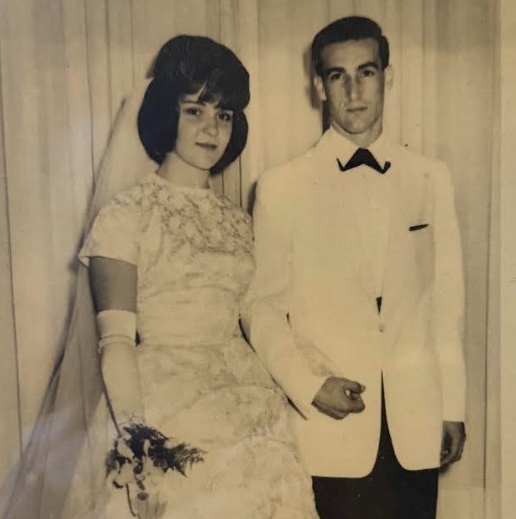
Born July, 13, 1936, Ivan Gregorio Borodiak changed his name to John when he came to the United States. He met Betty Pilari in Argentina, and they married in 1962, and lived in Bensalem and Queen Village.
Mr. Borodiak and his wife, Betty, married in 1962.
Mr. Borodiak was generous and gentle, his son said. He enjoyed fishing and car shows, and he built his own Mercedes-Benz from the tires up.
Friends noted his “kindness, gratitude, and warmth” in online tributes. One said: ”He was always a people person, and his smile could light up the darkest room.”
His son said: “He was a great man. He never had an enemy, and he overcame every adversity.”
In addition to his wife and son, Mr. Borodiak is survived by four grandchildren, a great-granddaughter, and other relatives. A sister died earlier.
Mr. Borodiak (left) doted on his grandchildren.
Private services were held earlier.
Donations in his name may be made to the Alzheimer’s Association, 225 N. Michigan Ave. Floor 17, Chicago, Ill. 60601.
Temple University Health System‘s medical malpractice expenses have surged in the two years that ended June 30 as part of a campaign to reduce financial risk by settling old cases.
The hope is that “aggressively” settling cases will pay off over the next few years by reducing medical malpractice expenses, Michael DiFranco, the health system’s chief accounting officer, told investors during a conference call last week on the health system’s fiscal 2025 financial results.
Temple’s annual medical malpractice expenses increased nearly fourfold, to $117.8 million in fiscal 2025 from $31.6 million two years ago. Over the same period, it cut its reserves for future expenses by $88 million, or 22%. Temple’s reserves peaked at $402.9 million in 2023.
Rising medical malpractice costs are reverberating throughout healthcare. Tower Health recently boosted its reserves after its auditor decided they should be higher to deal with anticipated claims. Lifecycle Wellness, a birth center in Bryn Mawr, blamed its decision to stop delivering babies in February in part on rising medical malpractice costs.
The average number of medical malpractice lawsuits filed in Philadelphia every month has risen from 34 and 35 in the two years before the pandemic to 51 last year and 52 so far this year, according to the Philadelphia Court of Common Pleas.In additional to lawsuits against hospitals, the tally includes litigation against physicians, nursing homes, and other healthcare providers.
Contributing to the increase was a rule change at the beginning of 2023 that allowed more cases to be filed in Philadelphia rather than the county where an injury occurred. Malpractice lawyers say they like to file in Philadelphia because the system for trying cases is efficient. Health systems often note that Philadelphia juries sometimes award large verdicts.
A ‘wake-up call’ at Temple
Temple Health started rethinking its medical malpractice strategy after John Ryan started as general counsel in January 2022. A month before he started, The Inquirer published an article about three suicides at Temple Episcopal Hospital in 2020. At least two of the families sued Temple.
“That was a wake-up call,” Ryan said in a recent interview on his approach to handling malpractice cases.
Then in May 2023, a Philadelphia jury hit Temple with a $25.9 million verdict in a case involving a delayed diagnosis of a leg injury leading to an amputation.
After that loss, Temple changed the kinds ofoutside lawyers it hiresto defend it in malpractice cases, Ryan said, swapping medical malpractice specialists for commercial litigators from firms like Blank Rome, Cozen O’Connor, and Duane Morris. Such lawyers cost more, but it’s paying off, he said.
“The settlements we’re getting from the plaintiff lawyers, because they can see that we’re serious, are much better,” Ryan said. The two Episcopal cases were settled this year for undisclosed amounts, according to court records. A birth-injury lawsuit against Temple University Hospital in federal court settled for $8 million this month.
In 2024, a jury awarded $45 million to a teen who was shot in the neck and suffered brain damage from aspirating food soon after his release from Temple. Temple appealed and the judge who oversaw the original trial ordered a new one. That case then settled at the end of October for an undisclosed amount.
The new approach has helped Temple reduce the number of outstanding cases at any one time to 65 or so now compared to 110 three years ago, according to Ryan.
Temple is using the money it is saving on malpractice costs to invest in better and safer care, Ryan said. “That’s not a byproduct of all we’re trying to do as the lawyers. It’s the goal,” he said.
Inquirer staff reporter Abraham Gutman contributed to this article.
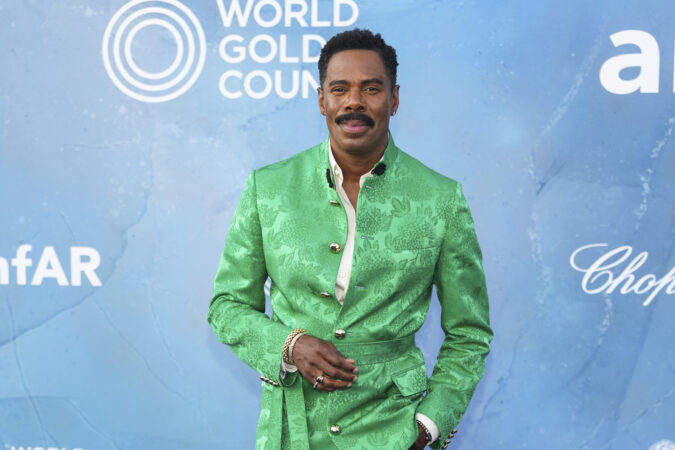
Domingo, a native of West Philadelphia, will also receive an honorary degree during the ceremony that will be held at the school’s Liacouras Center on May 6, 2026. Domingo went to Overbrook High School before coming to Temple University in the late 1980s to study journalism.
It was at Temple that Domingo developed a love for theater after a teacher told him he had a special gift. In 1991, with only 50 credits to go, he dropped out and moved to California to pursue a career in acting.
Domingo said returning to Temple for the university’s commencement ceremony will be a full circle moment for him.
“I am beyond grateful and humbled to receive an honorary doctorate from Temple University,” he said in a statement. “As a journalism student who struggled with the balance of working two jobs … this degree is very meaningful to me.”
Rape crisis centers in the Philadelphia region are sounding the alarm that the slight increase in funding in the recently passed state budget won’t be enough to sustain or improve crucial services for survivors of sexual assault.
The Pennsylvania Coalition to Advance Respect (PCAR), which funds rape crisis centers via the state allocation, estimates centers will only see an average increase of $5,300 from the state to support their work assisting victims of sexual violence.
The Philadelphia Center Against Sexual Violence had to lay off most of its staff and reduce services due to the nearly five-month state budget impasse. And while leaders in the region appreciate the funding — the first increase for rape crisis centers in years — it’s only a fraction of what Philly’s only rape crisis center says it needs to survive.
“Even with the budget now passed, the funding increase is minimal compared to the overwhelming need,” said LaQuisha Anthony, senior manager of advocacy at the center, in a news release last week. The center is known as WOAR, the initials of its former name, Women Organized Against Rape.
Now advocates in Philadelphia and the suburbs are turning their focus to next year’s budget, pushing for an $8 million increase in state funding to rape crisis centers, which, among other services, offer victim advocacy, legal services, and crisis hotlines. A surge in funding will help provide stability for survivors and adequately compensate staff who dedicate their lives to this work.
“An $8 million increase would help ensure that every survivor across the Commonwealth, urban, suburban, and rural, has access to care, advocacy, and prevention,” said Joyce Lukima, coalition director and chief operating officer at PCAR, in a statement.
More than $12 million of a $50.1 billion state budget was allocated to rape crisis this year, a $250,000 increase from last year. Lukima said this $250,000 will be split among 47 rape crisis centers in the state.
In a statement, a spokesperson for the Pennsylvania Department of Human Services, which oversees rape crisis center funding, highlighted Gov. Josh Shapiro’s history of support for survivors of sexual violence.
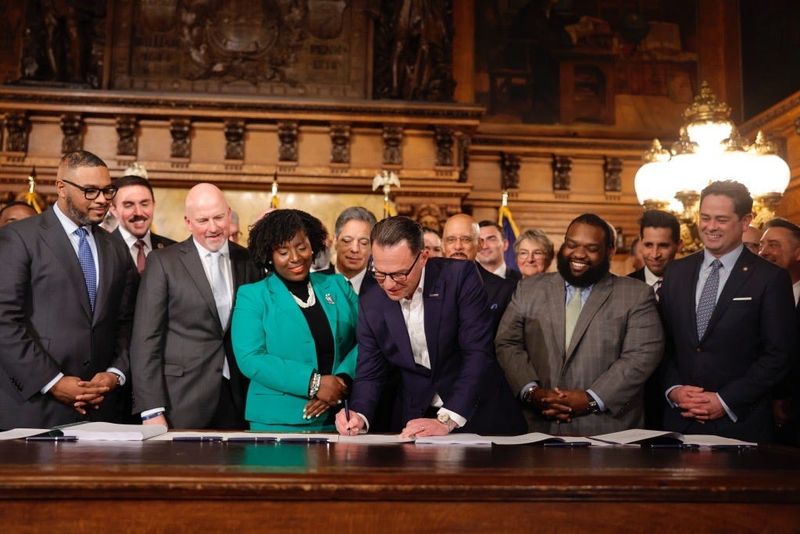
Gov. Josh Shapiro signs the fiscal year 2025-26 budget surrounded by General Assembly members on Nov. 12 at the Capitol in Harrisburg. The state budget had been due June 30, and Pennsylvania is the final state in the country to approve a funding deal.
“The final budget reflects the realities of working with one of the only divided legislatures in the entire country – but Gov. Shapiro will continue to fight for survivors and the Commonwealth’s rape crisis centers,” said Ali Fogarty, the DHS spokesperson.
Victim services centers in the suburbs, which also offer rape crisis services, are echoing WOAR and PCAR’s message, highlighting the urgent need for greater funding. These suburban centers receive funding from additional sources because they support victims of other crimes.
“For now, we’re doing OK, but another year of no increase in funding while the cost of living is going up has a significant impact on our staff as well as our organization,” said Penelope Ettinger, executive director of Network of Victim Assistance – Bucks County.
Trying to stay afloat
While Pennsylvania lawmakers were failing to come to an agreement on a far overdue state budget last month, rape crisis centers in Philadelphia and the suburbs were trying to make ends meet and provide services to survivors of sexual violence.
For instance, the Victim Services Center of Montgomery County had to use a line of credit, delay bill payments, institute a hiring freeze, increase the number of interns, and commit to “triaging services,” said Mary Onama, executive director.
“If they hadn’t passed the budget the time that they did, by December or January, we would have had to close, because we couldn’t go much longer,” Onama added.
At the Crime Victims’ Center of Chester County, it “added a layer of stress to an already very stressful job,” though the center did not have to reduce services, said Christine Zaccarelli, the organization’s CEO.
WOAR’s release last week said the closure of therapy and counseling services left “106 individuals wait-listed, 33 group clients waiting for services to resume, and eight child clients referred elsewhere for care.”
The center has been serving Philadelphia since 1971 and was one of the first rape crisis centers in the United States, according to the organization. Between January and October, the center said it responded to 3,820 calls on its crisis hotline.
The dysfunctional approval of the state budget, though, will have lingering effects on WOAR, warning in the news release that without a “long-term, sustainable investment,” the center won’t be able to meet a rising demand for resources.
The Bridge Loan, from the Pa. Treasury Department, provided WOAR funding owed for July through September, but it still wasn’t enough to return WOAR to full capacity, said Demetrius Archer, PCAR’s communications director. The center also brought back two employees this month, but it’s still in need of community support and is hoping to bring back more staff when possible.
“When services are underfunded, survivors and entire communities feel the impact,” said Fontan in the news release. “In a city as large and diverse as Philadelphia, every minute counts when someone is in crisis. Survivors deserve to know that when they reach out for help, someone will be there to answer.”
All eyes on Harrisburg
At Temple University’s campus Tuesday, student advocates bundled up in their coats, hats, and scarves and gathered at the Bell Tower to discuss an anti-sexual violence state bill they helped develop.
The Every Voice Bill, which primarily focuses on sexual violence prevention resources on college campuses, is even more important now that survivor services from WOAR are “unstable,” said Bella Kwok, a senior criminal justice major and president of Temple’s Student Activists Against Sexual Assault, in an interview prior to Tuesday’s event
“This bill would ensure that stability at least on an institutional level,” Kwok said.
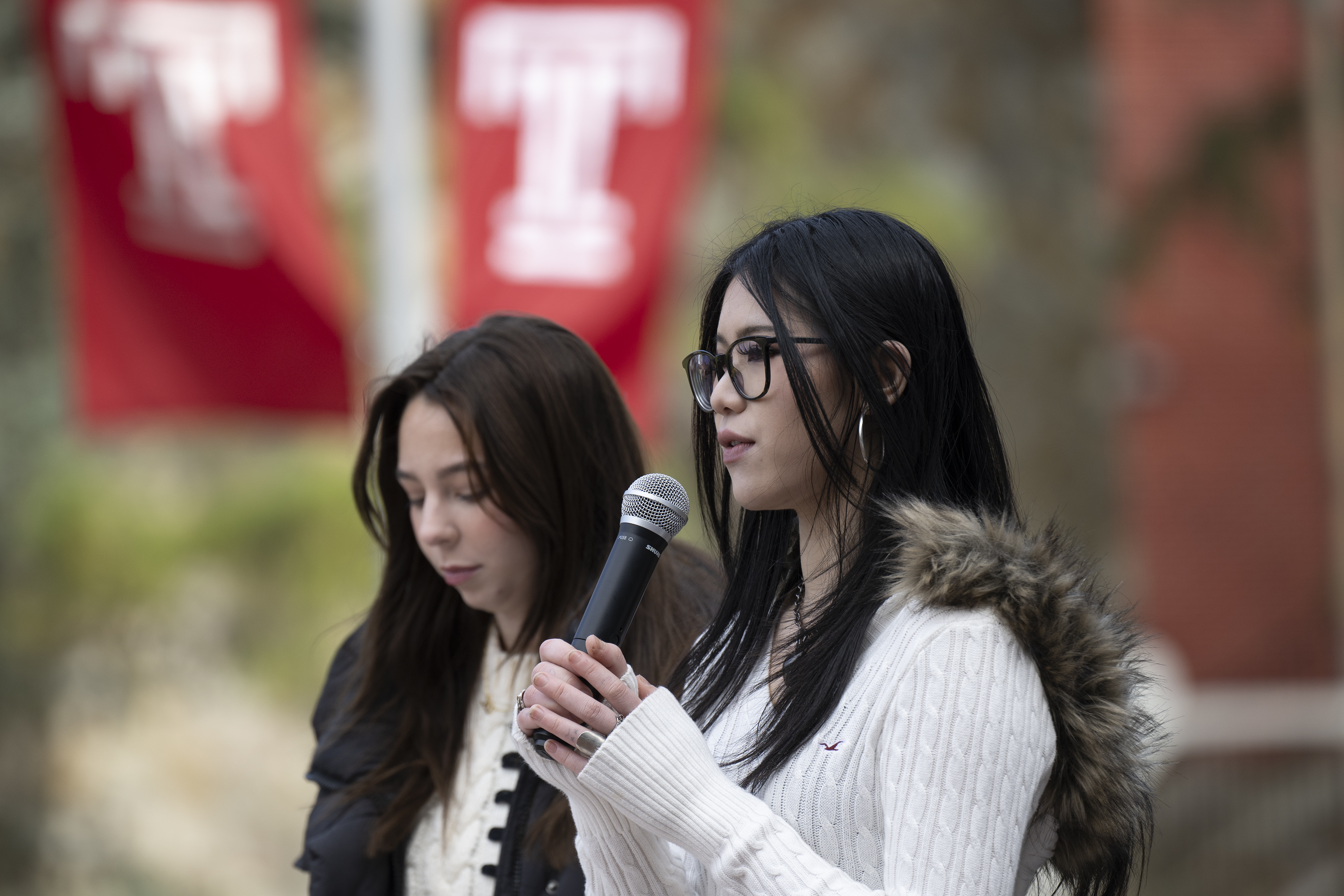
Temple University students Emma Wentzel, left, and Bella Kwok speak at a podium on Polett Walk on Tuesday, Nov. 18, 2025, about campus sexual assault and a state bill they helped craft to strengthen protections against sexual violence at colleges.
Kwok is not the only one who is turning their attention to Harrisburg. PCAR and other rape crisis centers are continuing their push for next year’s budget to include an $8 million increase in the Pa. DHS line item for rape crisis.
As the first increase for rape crisis centers in a few years, the new budget’s funding gives advocates “hope,” even if the amount is “disappointing,” said Zaccarelli, of the Crime Victims’ Center of Chester County.
“Maybe our advocacy is making a little bit of a difference and shining a light on survivors and their needs and how important our centers are in the community,” Zaccarelli said.
Ettinger said that Bucks County’s state lawmakers have been supportive of NOVA Bucks, which had to place a hiring freeze on some positions and issue “significant” restrictions on spending due to the impasse, but that a lack of increased funding from the state is “very telling.”
“I believe that the fact that the state did not allocate a significant increase is very telling to what they believe, where they put it on the priority list,” Ettinger said.
For his part, Shapiro signed Act 122 in October 2024, which aimed to increase transparency by requiring a statewide electronic system to track evidence kits for sexual assaults, Fogarty, the DHS spokesperson said. And in December 2023, he signed Act 59, which aims to improve access to treatment for survivors of sexual assault.
It’s a “societal” problem, not a government problem, said Vincent Davalos, interim executive director of the Delaware County Victim Assistance Center.
“When we talk about sexual violence, the first thought is, of most people, is to say ‘Maybe this didn’t happen,” Davalos said. “And even if they do believe it happens… it’s just a really difficult topic for people to engage and talk about it plainly.”
This week, victim services leaders across Pennsylvania will gather in Harrisburg for an annual conference to address funding challenges among other concerns, Davalos said, noting that with more funding, his center could improve staff retention.
But this year, the newly passed state budget is likely to be top of mind.
“I think money is going to be a big topic,” Davalos said.
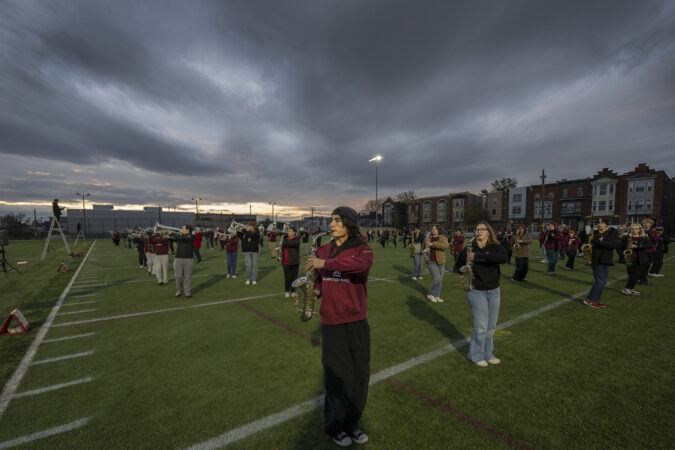
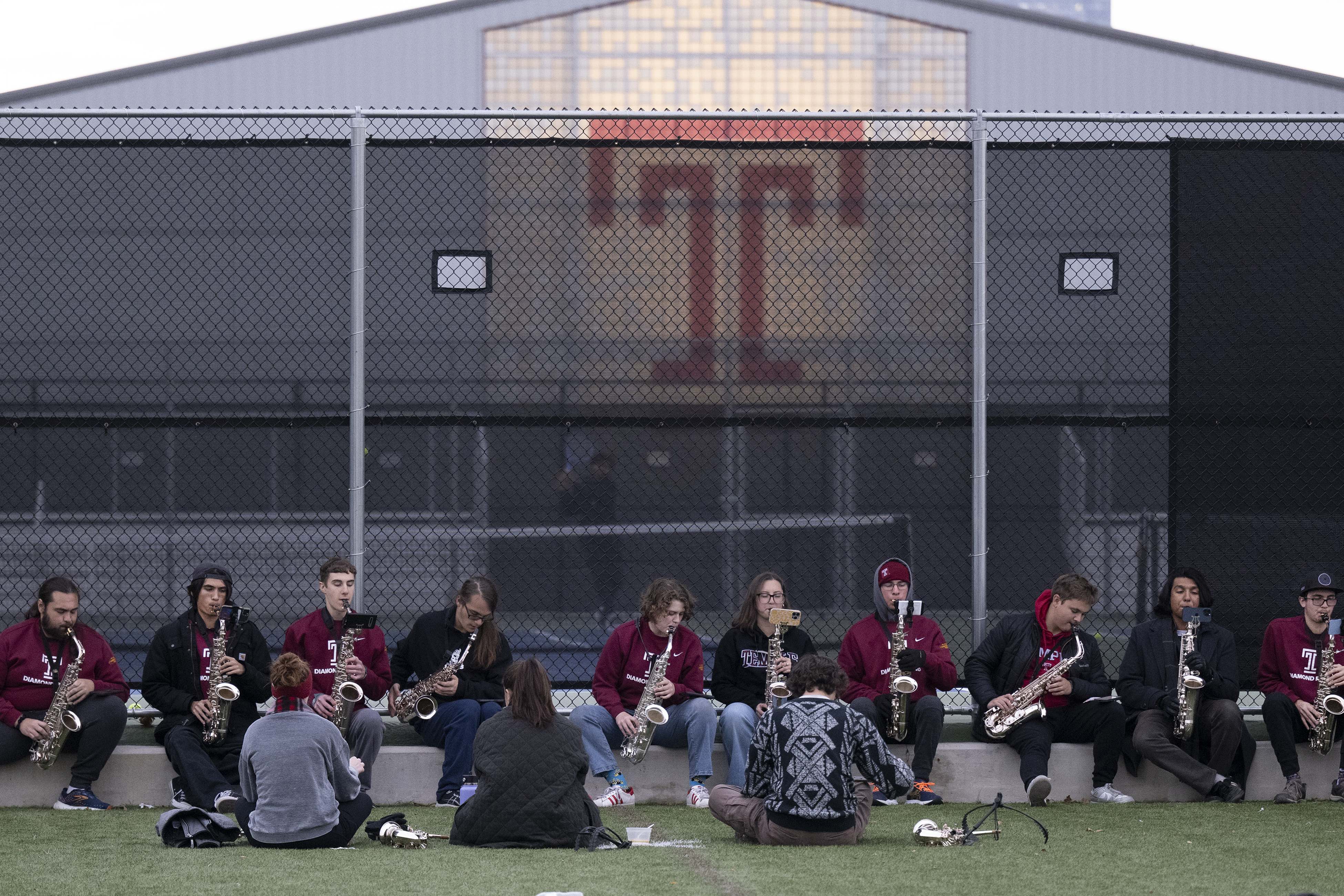
As the pink of twilight peeked through the November clouds, Temple University’s Diamond Marching Band, instruments and flags in tote, practiced on the campus’ Geasey Field.
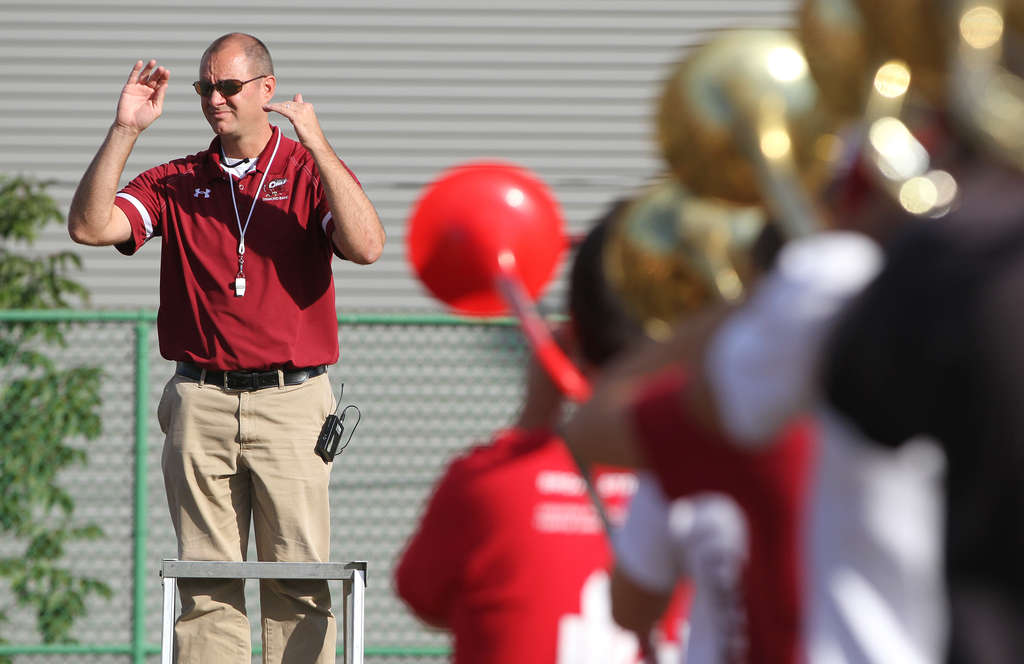
They ran through selections by Taylor Swift and from the movie KPop Demon Hunters while athletic bands director Matthew Brunner studied their sound and formation from a scissor lift 25 feet in the air.
“Notes should be long,” Brunner called out over a microphone after one selection. “Don’t try to play them too short.”
There were few spectators that afternoon. But that’s about to change in a big way.
The 200-member band is one of only 11 that have been selected to participate in the Macy’s Thanksgiving Day Parade in New York City. It’s a first for Temple, which will be the only band from Pennsylvania or New Jersey in this year’s parade. More than 30 million people likely will be watching from home and 3.5 million in person, if prior numbers are any indication.
Members of the Temple University Marching Band prepare to practice. The band will perform in the Macy’s Thanksgiving Day Parade this year.
That’s a lot of exposure for the Cherry and White, which could be a boost for recruitment and fundraising.
“I can scarcely think of a better way to bring visibility to Temple,” said John Fry, Temple’s president.
And that visibility could lead to more people visiting Temple’s website and seeing what the university has to offer, he said.
“It’s going to be incredible for the university,” said Brunner, who initially announced Temple’s band had been selected for the parade in August 2024. “There’s no television event, other than the Super Bowl, that is bigger.”
The excitement is palpable among students, some of whose families plan to attend the parade.
“It’s a once-in-a-lifetime opportunity,” said Erin Flanagan, 21, who grew up watching the parade with her family and notes she wanted to march in it since she was 6. “I mean, the Macy’s parade is iconic.”
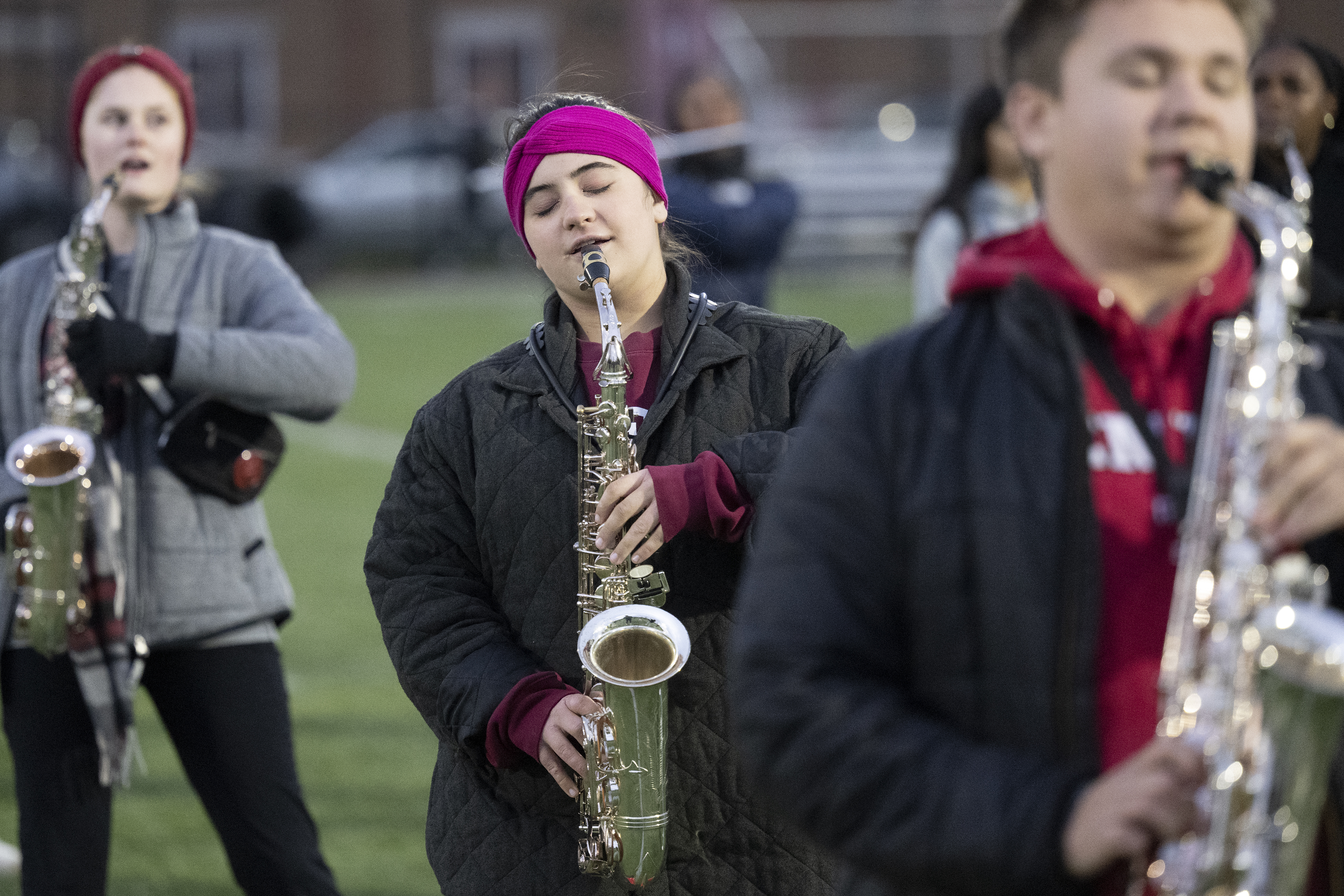
Temple University alto saxophone player Erin Flanagan rehearses with the marching band.
The music education major from Manasquan, N.J., who is a senior, said it likely will be her last performance with the band, and she could not have scripted it better.
“I get to go to this awesome performance and just show everybody what Temple stands for,” said Flanagan, an alto saxophone section leader.
It’s the 99th anniversary of the 2.5-mile parade, which kicks off about 8:30 a.m. on Thanksgiving Day on NBC and Peacock, hosted by Savannah Guthrie, Hoda Kotb, and Al Roker.
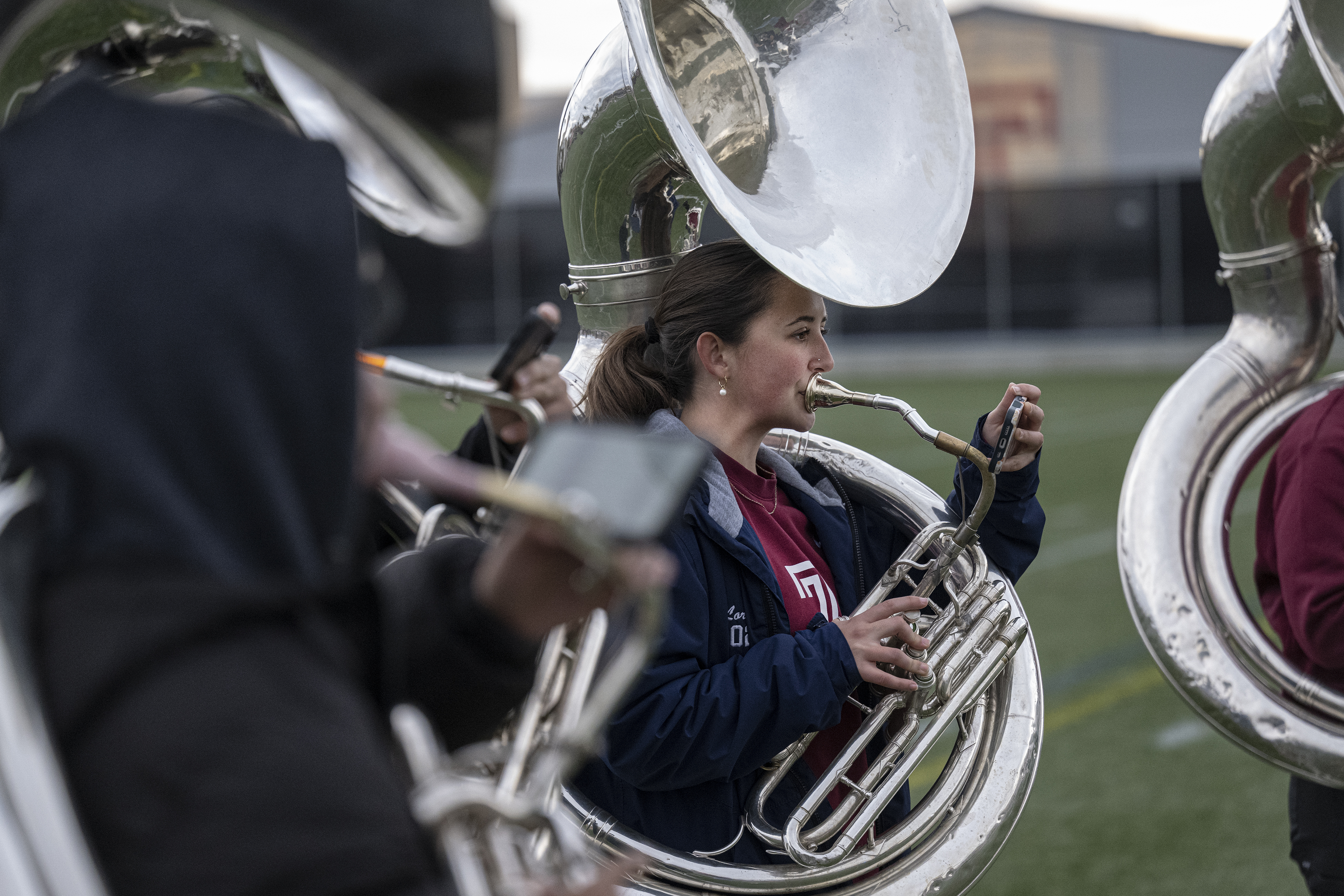
Temple University tuba player Lorali Minde plays the tuba in the marching band.
Lorali Minde, 18, a freshman from Levittown, will be marching while playing the tuba, a 36-pound instrument.
“You kind of get used to it,” she said. “It’s like carrying a really heavy purse.”
Brunner, who has led the marching band for 18 years, said he had applied to be in the parade several times before. It’s a competitive process, with more than 100 applicants vying for a spot. He had to submit video of a performance — he sent the 10-minute show the band did off the Barbie movie soundtrack — pictures of the band in uniform, reasons that Temple deserved a shot, and the band’s resume and biography.
Matthew Brunner, athletic bands director, leads a practice in 2018.
When his wife saw the Barbie show, Brunner said, she texted him: “That’s the show you need to send to Macy’s.”
It proved a winner.
“They loved the fact that the music we play is current,” he said.
The honor comes at a special time for the band, which is celebrating its 100th anniversary. Brunner played that fact up in the application, too.
Under Brunner, the band has grown and has been hitting high marks. Over the years, the school has been recognized as one of the top collegiate marching bands in the nation by USA Today and Rolling Stone, appeared on Good Morning America, The Tonight Show Starring Jimmy Fallon, and an episode of Madam Secretary, and was featured in two Hollywood movies, The Wolf of Wall Street, starring Leonardo DiCaprio, and the remake of Annie. Some of its performances have received millions of views on YouTube, including a 2018 performance of “Idol” by the K-pop group BTS, which currently has more than five million views on Ricky Swalm’s YouTube channel.
The band includes a color guard, a baton twirler, brass and woodwind instruments, a drum line, and a dance team. The group typically practices three times a week for two hours at a time.
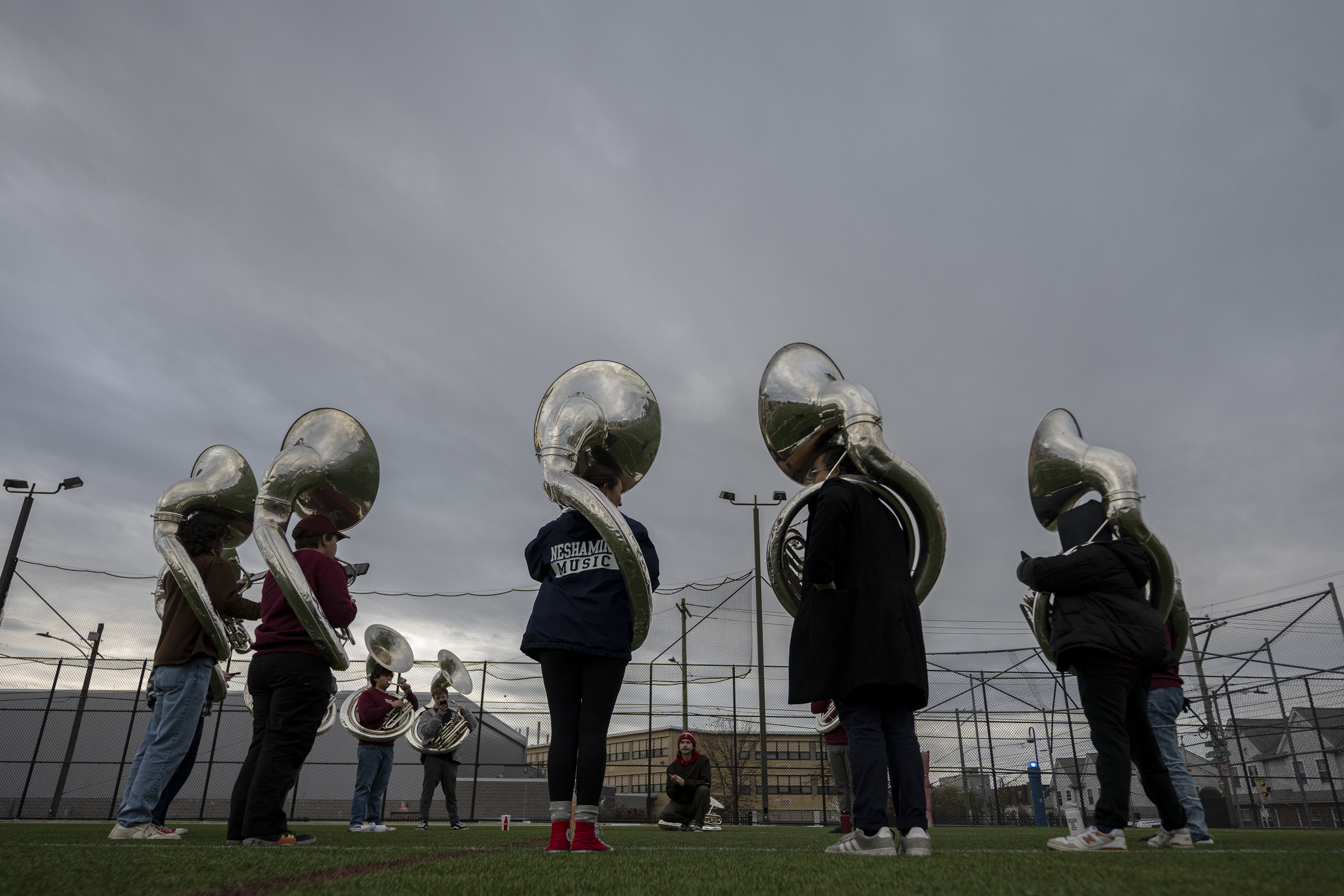
Temple University Marching Band tuba players practice.
“The band is infectious,” Brunner said. “When you see them perform, you can’t help but smile.”
Students have been eying the parade opportunity for a while.
When Flanagan was a sophomore, she asked Brunner point-blank: “When are we doing the Macy’s parade?”
Recently, she and her roommates, also band members, have been counting down the days on a whiteboard.
Brunner declined to say exactly what the band will perform on Thanksgiving, but promised a mix of holiday, audience participation, and Temple songs.
“We’re hoping for no wind,” he said.
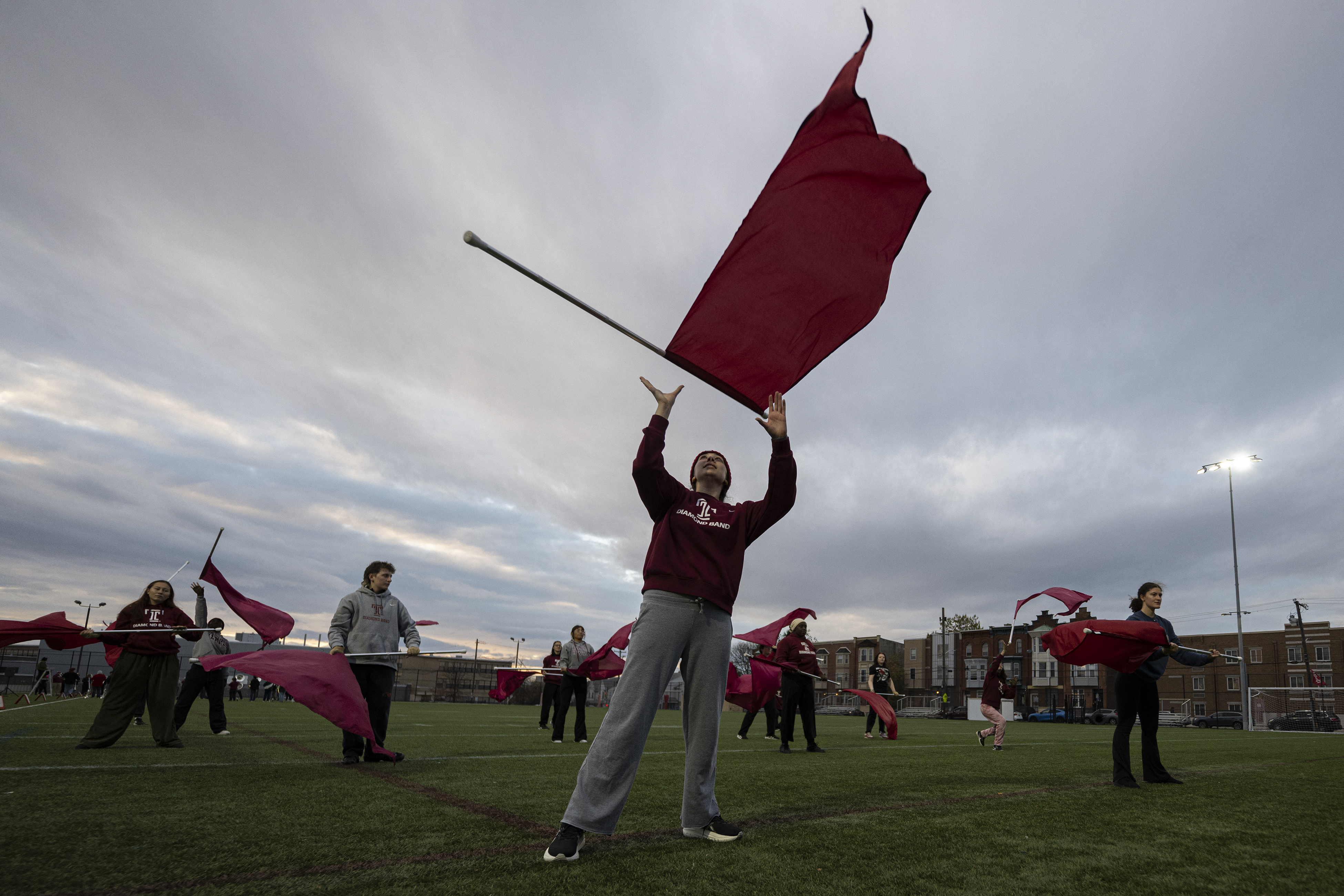
Temple University Marching Band Color Guard Captain Abigail Rosen practices with her flag.
Abigail Rosen, color guard captain, and her cocaptain are planning an “epic toss” of their flags over other band members, and wind could hinder it, he explained.
“It’s an exchange toss,” said Rosen, 20, a junior advertising major from Abington. “So I toss my flag to Dana [Samuelson] and she tosses her flag to me, and we catch each other’s flags.”
Bands selected received $10,000 from the retailer, which Temple officials said helped them get started on fundraising to pay for the trip.
The band will be heading to New York on Tuesday for an alumni event, then a performance on the Today show Wednesday. Band members will be up in the wee hours of the morning Thursday for a rehearsal, and after the parade, they will be treated by the school to a Thanksgiving dinner cruise along the Hudson River.
Andrew Malick, 20, a music education major from Carlisle, Pa., who plays the tuba, can’t wait.
“It will be cool to say you’ve done it for the rest of your life,” he said.
Jeremiah Murrell, a freshman trumpet player from Savannah, GA, rehearses with the Temple University Marching Band Thursday, Nov. 13, 2025.
Temple University Hospital’s Episcopal campus was cited by the Pennsylvania Department of Health for failing to maintain cleaning logs for the crisis center in May.
The incident was among more than a dozen times inspectors visited Temple’s main campus, Jeanes campus, or Episcopal campus to investigate potential safety problems between September 2024 and August. The three campuses operate under a shared license, and inspection reports do not always distinguish which campus inspectors visited.
Here’s a look at the publicly available details:
Sept. 27, 2024: Inspectors came to investigate a complaint but found the hospital was in compliance. Complaint details are not made public when inspectors determine it was unfounded.
Oct. 1: Inspectors followed up on a January 2024 citation and found the hospital was in compliance. The Episcopal campus had been cited for failing to properly update and document mental health patients’ records and treatment plans every 30 days.
Jan. 6, 2025: The Joint Commission, a nonprofit hospital accreditation agency, renewed the hospital’s accreditation, effective May 2024, for 36 months.
Jan. 11: Inspectors came to investigate three separate complaints but found the hospital was in compliance.
Jan. 16: Inspectors came to investigate a complaint but found the hospital was in compliance.
Jan. 21: Inspectors came to investigate a complaint but found the hospital was in compliance.
Jan. 29: Inspectors came to investigate a complaint but found the hospital was in compliance.
Feb. 5: Inspectors came to investigate a complaint but found the hospital was in compliance.
Feb. 11: Inspectors came to investigate a complaint but found the hospital was in compliance.
Feb. 21: Inspectors came to investigate a complaint but found the hospital was in compliance.
March 4: Inspectors came to investigate a complaint but found the hospital was in compliance.
March 10: Inspectors came to investigate a complaint but found the hospital was in compliance.
March 12: Inspectors visited for a monitoring survey and found the hospital had violated rules related to patients’ rights to care by competent personnel. Details of the problem were not made public because the issue was fixed before inspectors arrived. The hospital’s correction plan included educating staff about how to protect vulnerable patients from leaving the hospital against medical advice. Administrators also established a system to review patients at risk and an environmental safety checklist.
March 31: Inspectors came to investigate a complaint but found the hospital was in compliance.
April 4: Inspectors came to investigate a complaint but found the hospital was in compliance.
May 6: Inspectors cited Temple’s Episcopal campus for not having sanitation documentation and cleaning logs for the crisis response center. Administrators retrained staff on the hospital’s sanitation policies and record-keeping requirements.
May 8: Inspectors came to investigate a complaint but found the hospital was in compliance.
June 10: Inspectors came to investigate a complaint but found the hospital was in compliance.
July 14: Inspectors came to investigate a complaint at the Jeanes campus but found the hospital was in compliance.
Temple University’s vice president for enrollment and student success resigned abruptlythis week after only 2½ years in the post.
Jose Aviles’ resignation is effective Dec. 2, the university said in a message to the campus Wednesday.
“It is very difficult to leave, but I have a life-changing opportunity that awaits me,” Aviles said, adding that he would share details when able. “Serving the Temple University community has been an extreme honor, as I am deeply grateful to have had the chance to fulfill the mission of Russell Conwell and expand access and opportunity to this world-class institution.”
Temple did not respond to questions on why Aviles is leaving midyear, with the university in the midst of another application cycle.
“Jose has reimagined enrollment management at the university over the last couple of years, helping move us to a modern, technology- and data-driven approach that has delivered results,” Temple president John Fry and interim provost David Boardman said to the campus community.
They noted the university achieved growth in first-year enrollment the last two years, with this year’s group reaching a record high of 5,379.
The university also under his tenure started the Temple Promise program, which makes tuition and fees free for first-time, full-time college students from low-income families who live in Philadelphia, and the Temple Future Scholars program, a mentoring and college-readiness program.
Aviles, who came to Temple from Louisiana State University, where he had served as vice president for enrollment management and student success since 2017, was recently promoted from a vice provost to a vice president.
He said in his statement that he “received great support from this university and its leaders” and would “continue to cheer on Temple from the sidelines.”
While Temple’s first-year class was strong, the school fell short of its initial overall enrollment projection by about 700 students, which translates to about $10 million in lost revenue.
The university had been estimating it would enroll a total of 30,100 to 30,300 students, which would have been its first enrollment increase since 2017.
Instead, enrollment came in at 29,503, down about 500 from last year and further declining from its high of more than 40,000 eight years ago. (That does not include enrollment on its Japan and Rome campuses, which increased. Including those campuses, Temple’s overall enrollment was over 33,000, a slight increase from last year.)
There have also been concerns about sophomore retention and a higher percentage of third- and fourth-year students not returning.
And in September, the Temple News, the student newspaper, reported that more than 25 admissions counselors, directors, and staff left the department or were laid off over the two years that Aviles led enrollment. Students experienced delays in receiving their admissions decisions, problems with credit transfers, and difficulty with advising and financial aid packages, the Temple News reported.
“I’m proud of the work that we’ve done,” Aviles told the Temple News at the time. “We definitely walked into a challenging time for admissions but when you look at what’s really happened in the last two years, I think I’m most proud of the foundation that we’ve set.”
Angelica Javier was sitting at home on a Saturday evening last month when her son’s uncle called in a panic.
Xzavier, her 16-year-old, had been shot, he said — one of the teen’s friends had called and told him, but he knew nothing else.
Javier, 32, frantically checked a news website and saw a brief story mentioning that a man was shot and killed in Northeast Philadelphia.
That could not be her son, she told herself. Xzavier was only a boy, she said — tall but lanky, with the splotchy beginnings of a mustache just appearing on his upper lip.
She called around to hospitals without success. Xzavier’s father, Cesar Gregory, drove to Jefferson Torresdale Hospital, desperate for information.
Then, just before 10 p.m., she said, a homicide detective called to say their eldest child, their only son, had been shot and killed that afternoon near Teesdale and Frontenac Streets.
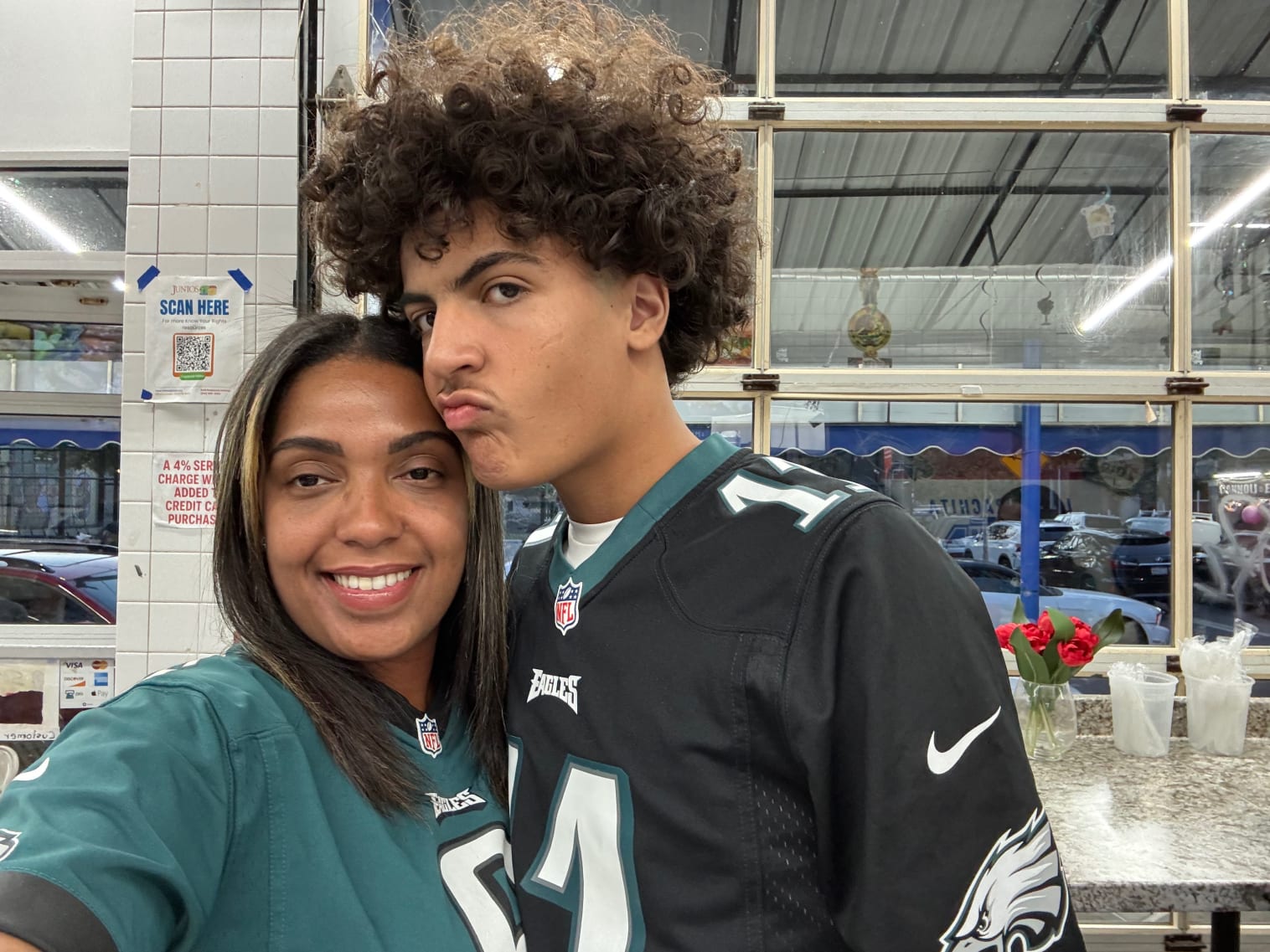
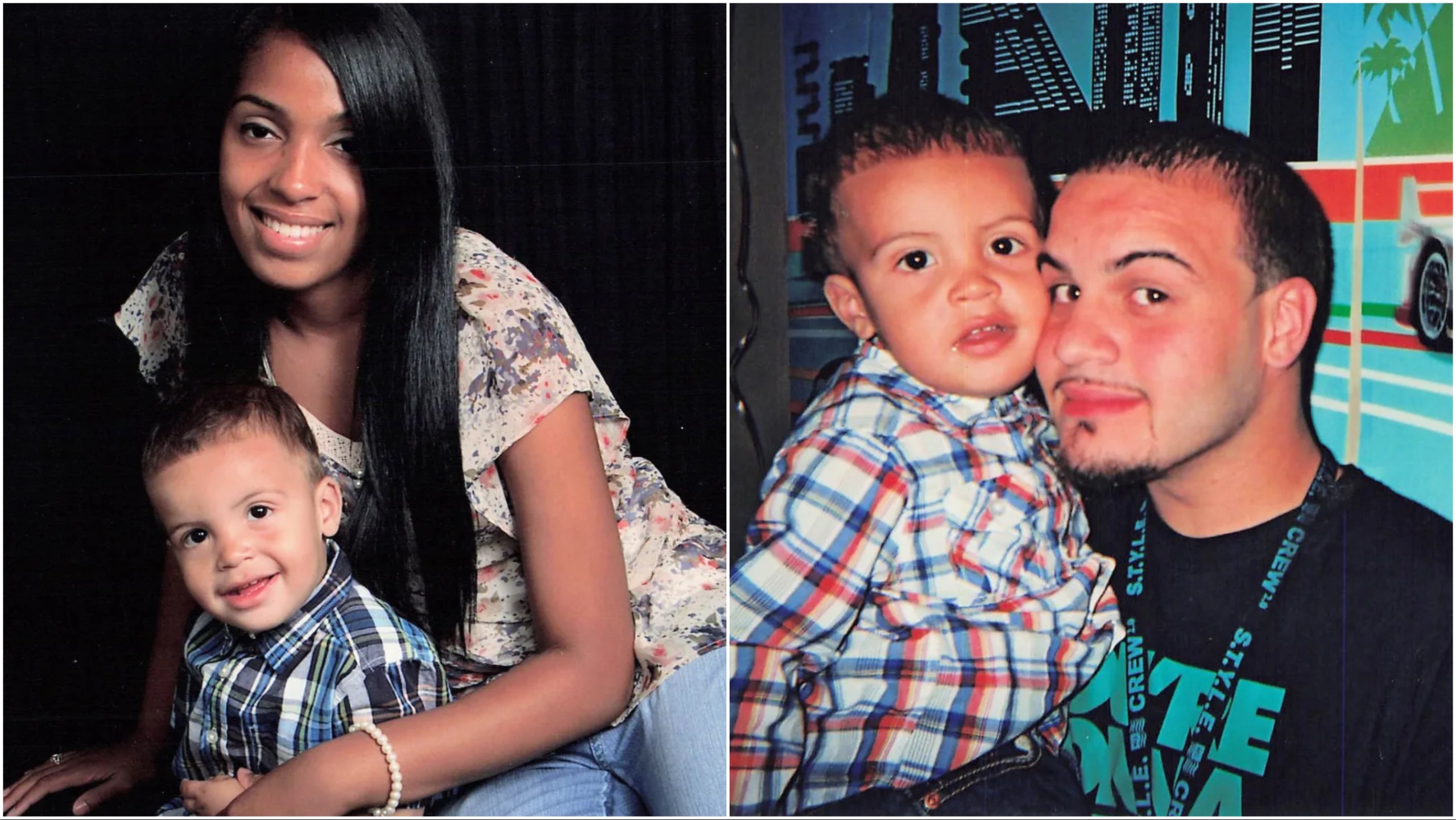
Angelica Javier (left) and her 16-year-old son, Xzavier Gregory, getting tacos after watching the Eagles beat the Los Angeles Rams earlier this year.
The shooting, police said, stemmed from a dispute among teens at the Jardel Recreation Center, just blocks away, earlier in the week. Xzavier’s parents said the detective told them that one of their son’s friends may have slapped a young woman that day.
On Oct. 11, they said, police told them that Xzavier and his friends stopped by the young woman’s house shortly before 4 p.m. to talk with her, apologize, and resolve the conflict. They shook hands, the parents said, and started to walk away.
Then, police said, the girl’s 17-year-old boyfriend, Sahhir Mouzon, suddenly came out of the house with a gun and started shooting down the block at them. Someone shot back, police said, but it was not Xzavier. In total, 45 bullets were fired.
An 18-year-old woman walking by the teens was wounded in the leg.
Xzavier was struck in the chest and died within minutes.
Mouzon has been charged with murder and related crimes.
Javier and Gregory have been left to navigate life without their “Zay” and to reckon with a loss that comes even as gun violence in the city reaches new lows — but which still persists among young people and brings pain to each family it touches.
They don’t understand how a 17-year-old had a gun, they said, or why a seemingly minor — and potentially resolved — conflict had to escalate.
But mostly, they said, they want Philadelphia to know and remember their child: a goofy junior at Northeast High. An avid Eagles fan. A lover of Marvel movies and spicy foods.
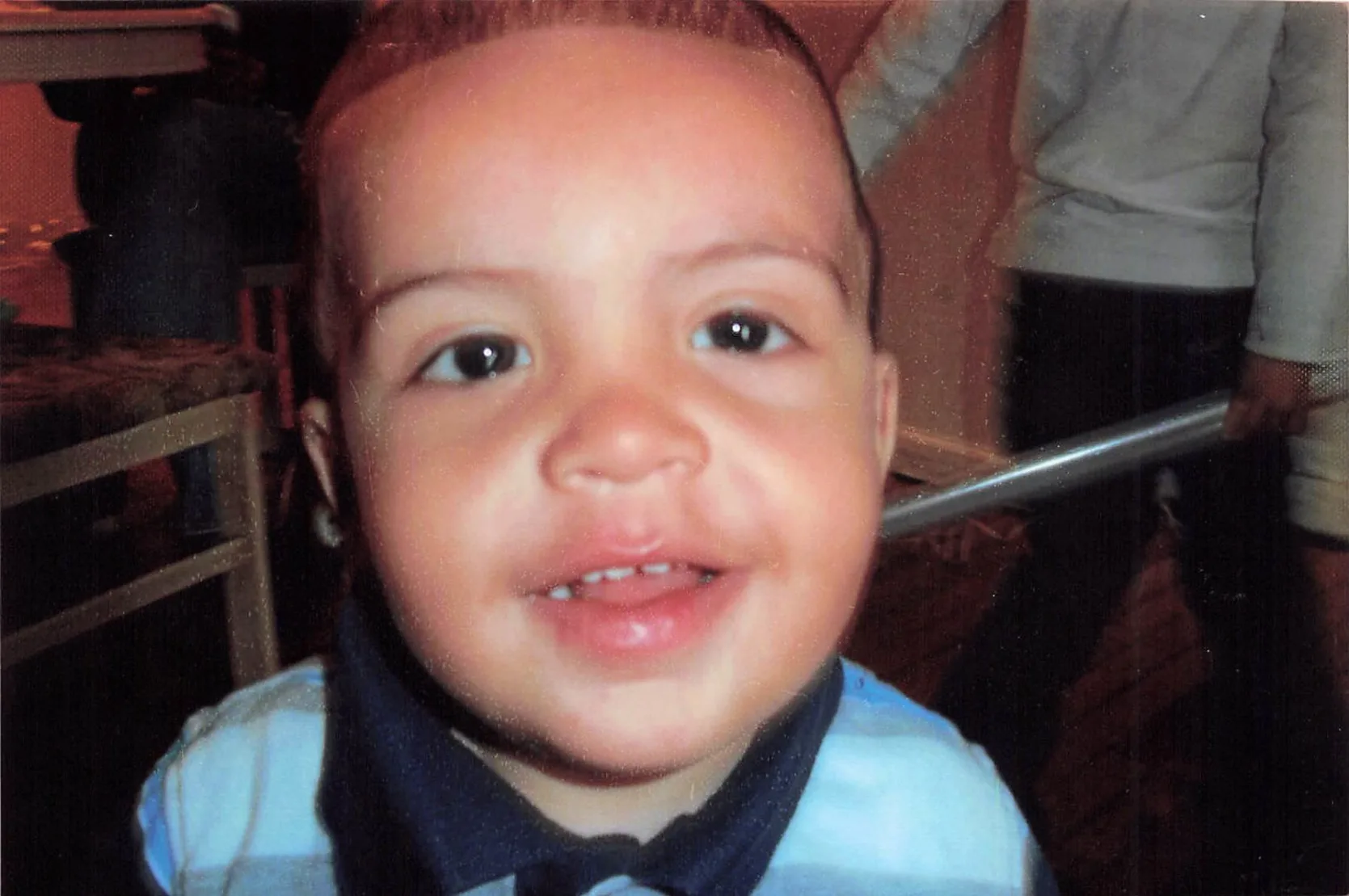
Xzavier Gregory was born in Philadelphia. His parents loved his chubby cheeks.Xzavier Gregory was born Sept. 20, 2009, to Angelica Javier and Cesar Gregory.
Xzavier Giovanni Gregory was born Sept. 20, 2009, at Temple University Hospital in North Philadelphia. His parents, just teens at the time, were immediately taken by his chubby cheeks, which he kept until his teenaged years.
He lived in Kensington until he was about 10 years old, his mother said, when they moved to the Northeast. He attended Louis H. Farrell School, then spent his freshman year at Father Judge High before moving to Northeast High.
He loved traveling, and often visited family in Florida and the Dominican Republic, attended football camps in Georgia and Maryland, and tagged along on weekends to New York with his mother as part of her job managing federal after-school programs.
He played football for the Rhawnhurst Raiders, typically as an offensive or defensive lineman, and had a natural skill for boxing, his parents said.
Philadelphia sports were in his blood — particularly the Eagles. DeVonta Smith and A.J. Brown, his father said, were his favorite players. (Before his death, he agreed that Brown should be included in more plays this year, Gregory said.)
Some of Gregory’s favorite memories with his son revolve around the Eagles. Sitting front row at the Linc on his 13th birthday. Erupting in cheers as the team won its first Super Bowl in 2018. Embracing in tears when they won a second this year.
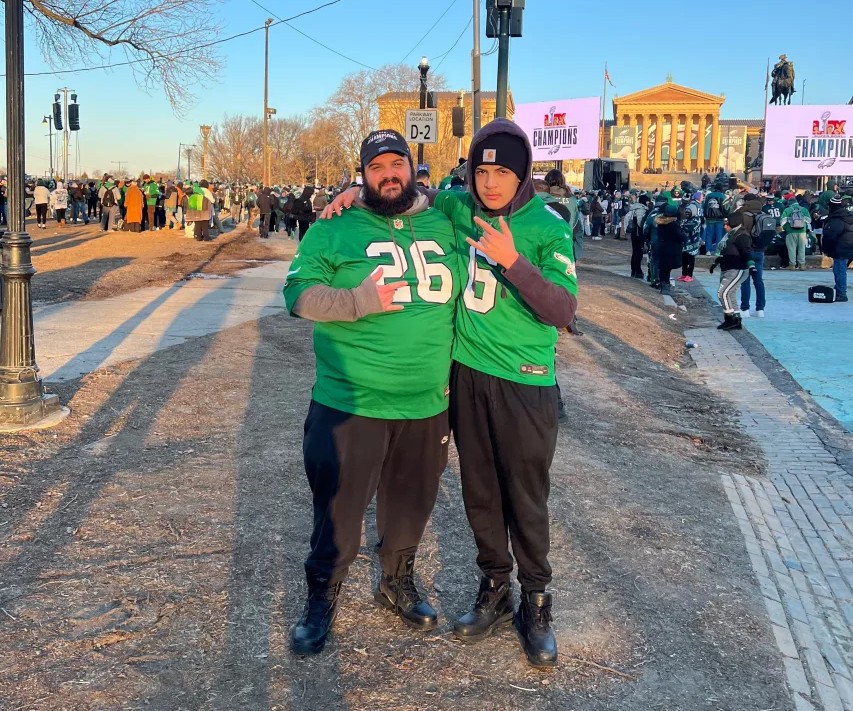
Cesar Gregory (left) and son Xzavier at the Eagles Super Bowl parade near the Art Museum in February. It is a day with his son that the father said he will never forget.
Xzavier was the oldest of three children. His sisters are still too young too fully understand what happened, the parents said.
“He went to heaven,” Javier told 7-year-old Kennedy.
The number of kids shot peaked in 2021 and 2022, when violence citywide reached record highs and guns became the leading cause of death among American children. So far this year, 105 kids under 18 have been shot — a sharp drop from three years ago, but still higher than pre-pandemic levels, according to city data.
Xzavier is one of at least 11 children killed by gunfire this year.
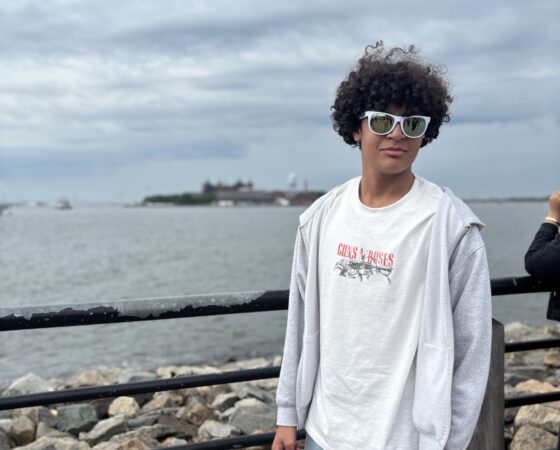
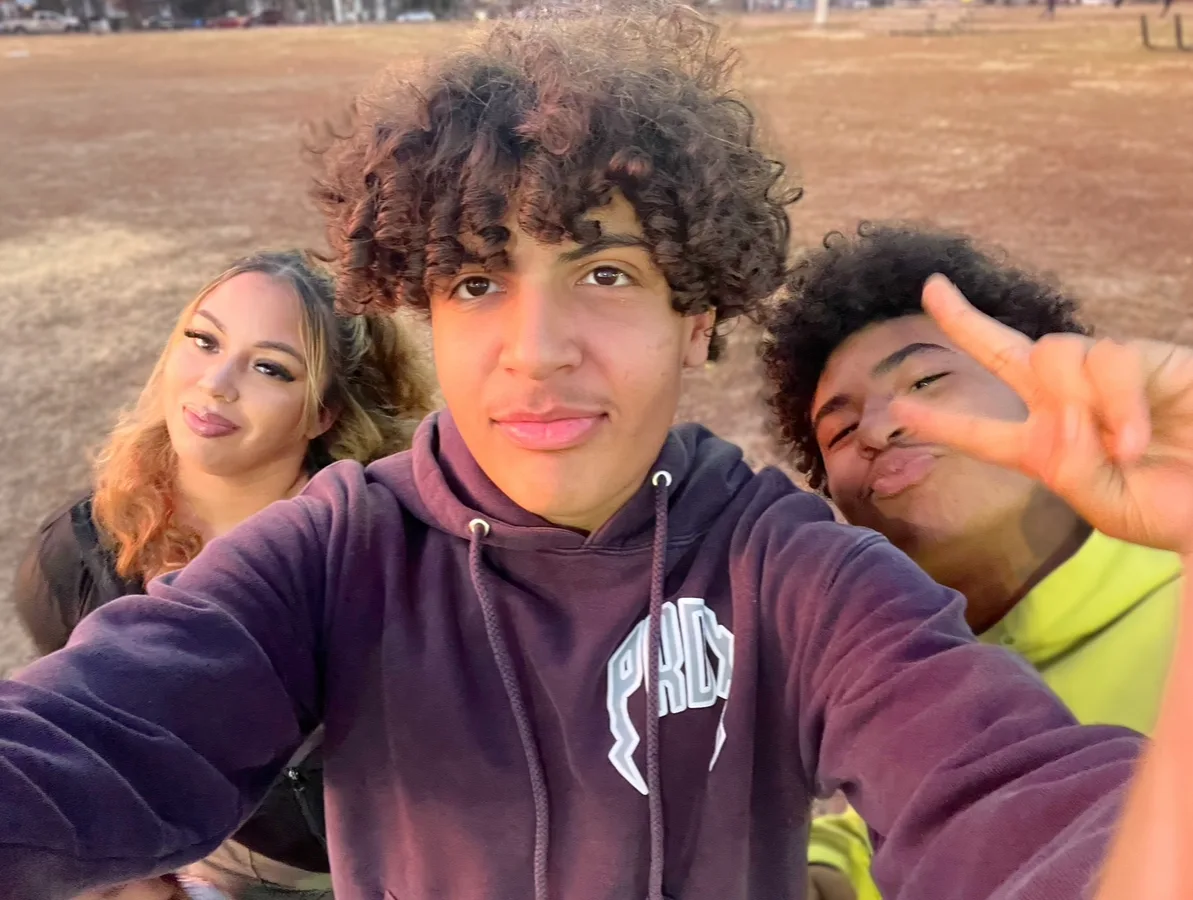
Xzavier Gregory (center) was a goofy teen who attended Northeast High School, his parents said.
Javier and Gregory said some relatives are considering leaving Philadelphia, shaken by Xzavier’s killing and a feeling that teens don’t fear consequences.
But the parents said they will stay. They want to be near Magnolia Cemetery, where Xzavier is buried, and to feel closer to the memories that briefly unite them with him.
On harder days, they said, they go into his bedroom, which is just as he left it, a relic of a teenage boy.
His PlayStation controller sits in the middle of his bed, and a photo of him and his mother hangs on the wall above it. His Nike sneakers are scattered. His black backpack rests on the floor, and a Spider-Man mask sits on the corner of his bedframe.
On Thursday, his parents stood in the room they used to complain was too messy, that smelled like dirty laundry.
“Now, I come in just to smell it,” Javier said.
She took a deep breath.
Staff writer Dylan Purcell contributed to this article.
Talk to most nonprofit chief executives, and they’ll be able, on cue, to recite a heartwarming story about someone their organizations helped.
And the Rev. Luis Cortés Jr., Esperanza’s founder and chief executive, can do it, too.
But he’d rather talk about a sin he committed as a little boy — a sin that impacted his thinking for a lifetime and allowed him to understand how to build a $111.6 million organization with 800 employees that educates, develops, uplifts, and houses 35,000 people a year in the heart of North Philadelphia’s predominantly Hispanic Hunting Park neighborhood.
When Cortés was 12, he stole a Snickers candy bar from the bodega his father owned in New York City’s Spanish Harlem.
Oh, his father figured it out, and quickly, too, because he began to ask little Luis some important questions:
Did the 12-year-old know how many Snickers bars the bodega would have to sell to break even — not only on the box of Snickers, but on the taxes and utilities for the entire store? More importantly, how many Snickers bars would be required to turn a profit — a profit that could be reinvested?
“You need to understand finance, whether it’s a box of Snickers or a multimillion-dollar bond to build a school. Where is the money coming from, and what’s the repayment structure?” Cortés said.
Outside, as he spoke, a crane moved materials in what will soon become a new culinary school.
“Understanding finance is important, and understanding culture is important, and you have to understand the relationship between the two.”
So, yes, Cortés can and did tell the story about the mother who came to Esperanza to learn English skills, who got help to get a job and a house, who sent her daughter to Esperanza’s charter school and to Esperanza’s college, and now that same daughter is getting a house thanks to Esperanza’s mortgage counseling help.
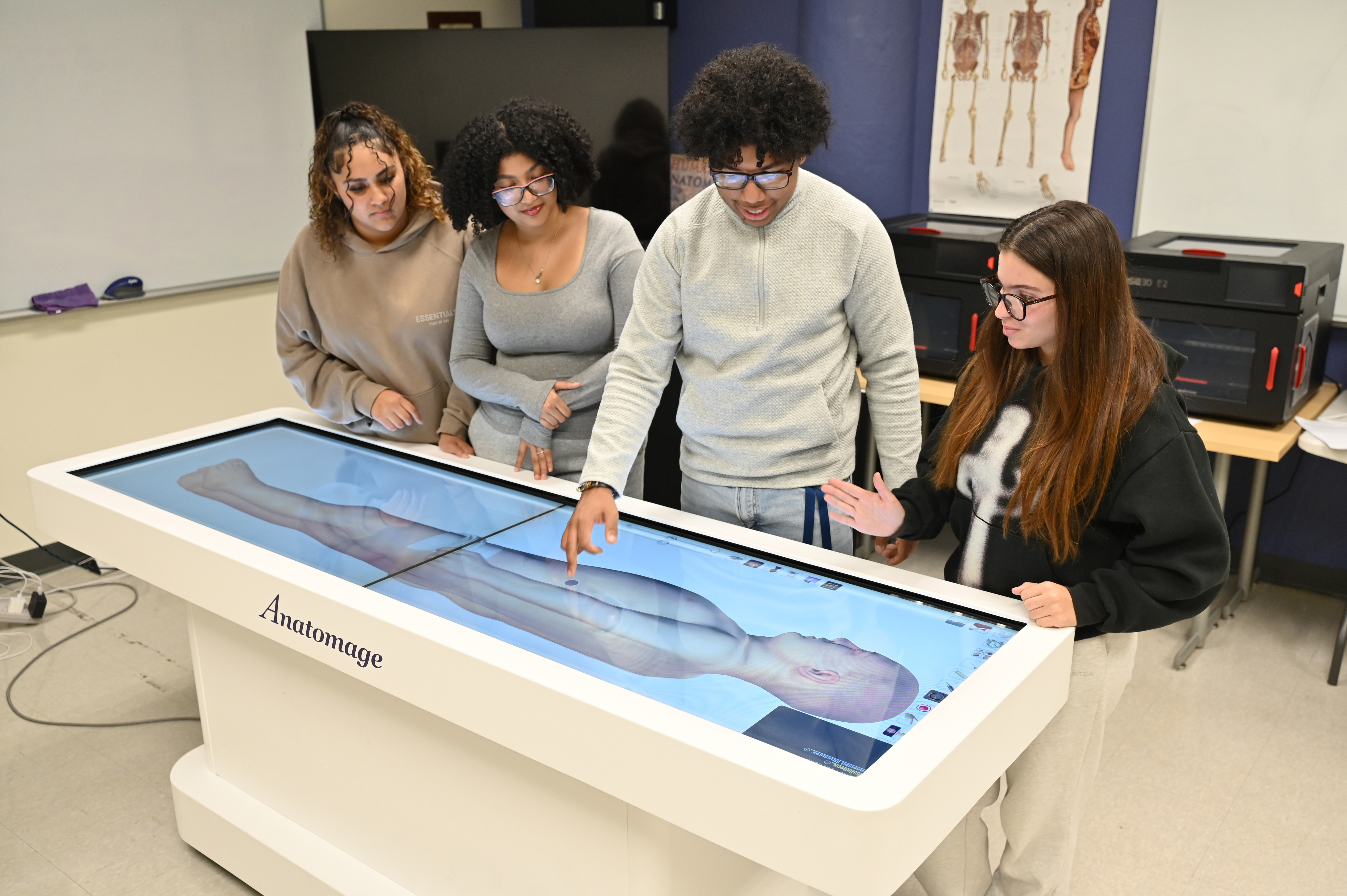
Students Jayliani Casioano, Oryulie Andujar, Derek Medina, and Natalia Kukulski use an interactve anatomy table. The students are members of is the Health Occupations Students of America (HOSA).
All good. But this is what Cortés really wants people to know:
“If people trust us with their funds,” he said, “we’re putting the money into institutions, and institutions build culture.”
That’s why Esperanza has a K-12 charter school, a cyber school, a two-year college that’s a branch campus of Eastern University, a 320-seat theater, an art gallery, computer labs, an immigration law practice, a neighborhood revitalization office, a CareerLink office for workforce development and job placement, a music program, a youth leadership institute, housing and benefit assistance, and a state-of-the-art broadcasting facility.
Cortés even likes to brag about the basketball court. “Three inches of concrete, maple wood flooring, fiberglass backboards — NBA standards.”
“Think about Paoli. It has a hospital, a public school, a theater. Paoli has all of that, and it’s understood that that’s the quality of life. We have to have access to those same things at a different price point,” he said. “Notice I didn’t say different quality. I said different price point.
“We want to create an opportunity community, where people can have a good life — with arts, housing, healthcare, financial literacy, education, all those pieces — regardless of your family income,” he said.
“What’s important here and what’s different is that in all our places, all our facilities are first class,” Cortés said.
“I grew up in a low-income community where people were always telling you to step up, but step up to what?” he asked. “Where is the vision? What is possible to even have? How can anyone know unless they can see it?”
So, when people from the community visit Esperanza, “you can see that you can have the best facilities with state-of-the-art equipment. As a provider of services, we have to step up,” he said, in turn always giving people the tools and resources they need to step up.
For example, on Citizenship Day, Sept. 20, Anu Thomas, an attorney and executive director of Esperanza’s Immigration Legal Services, trained a dozen volunteer lawyers and law students on the fine points and recent pitfalls in the process of applying for citizenship.
Soon, the room was crowded with people coming for help.
Watching from the sidelines was Charlie Ellison, executive director of the city’s Office of Immigrant Affairs, who noted that an estimated 60,000 legal residents of Philadelphia are eligible to apply for citizenship.
“Clinics like these are critically important to helping people who might be facing barriers,” including the cost of getting legal help. “This bridges a lot of gaps. It’s a vital mission, now more than ever,” he said.
For Neury “Tito” Caba, a men’s fashion designer, tailor, and director of green space at Historic Fair Hill, citizenship help from Esperanza was a family affair. Through Esperanza, he, his grandmother, and his mother all became citizens.
“Now I can vote, and that’s the most positive thing I can do,” he said. “And also, things being the way they are, it gives me some sort of protection.”
Fashion designer Neury “Tito” Caba talks about his citizenship experience at Esperanza.
Earlier this fall at Esperanza’s CareerLink branch, counselor Sylvia Carabillo helped Luis Rubio on the computer. He was trying to extend his unemployment benefits and looking for a job as a security guard. Agueda Mojica was being tutored in Esperanza’s most popular workforce class: Introduction to Computers.
“I want to become more independent to be able to do anything on a computer,” she said in Spanish, speaking through a translator. “I was always working and never had time to learn.”
Much of Esperanza’s staff is bilingual in Spanish, but to help people from the neighborhood, Esperanza also hired counselors who speak Ukrainian and Kreyòl for Haitians who live nearby.
In Esperanza College classrooms a few weeks ago, Esperanza Academy high schoolers enrolled as college students had just finished a chemistry exam. When they graduate from high school, they’ll already have associate degrees on their résumés.
For them, Esperanza represents a future.
There’s Oryulie Andujar, 18, who wants to study sonography because an ultrasound technician found a cyst in her mother’s uterus. “We could have lost her. That was very impactful for me.”
Jayliani Casiano, 17, wants to go into anesthesiology. The oldest of seven, she witnessed her mother giving birth to several younger siblings. “She was in a lot of pain. It was interesting. I want to do everything after seeing her through that process.”
Derek Medina, 18, said the opportunity to go to college “made me rethink my whole life.” He had been getting into trouble in school, but now wants to combine a love of mathematics and a desire to help people by going into the field of biomedical engineering.
Recently, on Nov. 14, Esperanza College hosted its Ninth Annual Minorities in Health Sciences Symposium, designed to acquaint high schoolers with medical careers.
Construction will soon begin to convert a former warehouse space into a center to teach welding and HVAC in an apprenticeship program.
Next month, it’ll be time for “Christmas En El Barrio” with music, food, and community in Teatro Esperanza — admission is free. In January, the Philadelphia Ballet will perform there. Tickets are $15 and free for senior citizens and students.
“My worst seat — in Row 13 — would be $250 at the Academy of Music,” Cortés said. He wants to offer the arts at a price and a time available to a mother of three, who may not be able to afford even the cheapest seats in downtown venues, plus bus fare, “and heaven forbid the child wants a soda,” Cortés said.
All this adds up to culture, which brings him back to the Snickers bar, and not just breaking even, but investing.
Other groups, Cortés said, had to build their own institutions when mainstream organizations put up barriers. Howard University helped Black people, Brandeis served Jewish people, and Notre Dame provided education to the Irish.
Building an institution is his investment goal with Esperanza, and he takes as his mentors famous Philadelphia pastors such as the Rev. Leon Sullivan, who founded Progress Plaza in North Philadelphia, and the Rev. Russell Conwell, the Baptist minister who founded Temple University.
“Philadelphia has a tradition that its clergy don’t just do clergy things,” he said, admitting that he doesn’t have the patience for a more traditional pastor’s role. “As clergy here, it’s understood that we snoop around everything.”
Cities sometimes brag that their poverty rates have declined, he said, when in reality, rates have declined because people with low incomes were forced to move away.
Philadelphia, he said, has a chance to be different — to lower the poverty level both by raising people’s incomes and improving their standards of living. “There should be Esperanzas in every neighborhood,” he said.
“How can we focus on helping the people who just need a break?” Cortés said, referencing Jesus’ admonishment to “help the least of these.”
“This city has the opportunity to make this a win-win,” he said, “to show the rest of the country and Washington, D.C. — especially Washington, D.C. — that people who are different, and people who are `the other’ can be supported, so that they are not only part of the fabric of the city, but economic drivers of the city.”
This article is part of a series about Philly Gives — a community fund to support nonprofits through end-of-year giving. To learn more about Philly Gives, including how to donate, visit phillygives.org.
For more information about Philly Gives, including how to donate, visit phillygives.org.
AboutEsperanza
People Served: 35,000
Annual Spending: $111.6 million across all divisions
Point of Pride: Esperanza empowers clients to transform their lives and their community through a diverse array of programs, including K-14 education, job training and placement, neighborhood revitalization and greening, housing and financial counseling, immigration legal services, arts programming, and more.
You Can Help: Esperanza welcomes volunteers for community cleanups, plantings, and other neighborhood events. Some programs also need volunteers with specific skills (lawyers, translators, etc.).
$25 covers the cost of one private music lesson for a young student through our Artístas y Músicos Latinoamericanos program.
$50 provides printing and distribution of 30 “Know Your Rights” brochures to immigrant families.
$100 pays for five hours of training for a new mentor fellow at the Esperanza Arts Center, preparing a young person for a career in arts production through hands-on learning.
$275 funds the planting of one street tree in a neighborhood that desperately needs additional tree cover to address extreme heat.
$350 covers tuition and books for one English as a second language student at the Esperanza English Institute.
$550 supports the cost of the initial work authorization for an asylum-seeker.
The worst of the coronavirus pandemic that started nearly six years ago is well in the past, but Philadelphia’s biggest nonprofit health systems are still contending with the financial disruption unleashed by the virus that led to thousands of deaths in the area.
Operating conditions for hospitals started improving in 2023, but “the slope of the recovery is a bit more shallow than a lot of health systems had planned for,” said Mark Pascaris, a senior director at Fitch Ratings, one of three major credit ratings agencies.
Patients have returned, but the pandemic led to a resetting of expensesfor labor and supplies at a higher level, Pascaris said. “That’s been the challenge over the last two or three or four years now, trying to manage through a very challenging expense situation,” he said.
To show how the financial landscape has changed, The Inquirer compiled financial data for the region’s six biggest health systems that have fiscal years ending June 30 each year. The analysis compared average operating profits in three years before the pandemic (fiscal years 2017-19) to the results in most recent three years (fiscal years 2023-25).
All six systems showed a substantial drop in a measure of earnings that excludes certain accounting expenses and interest costs. This slice of financial results is known as earnings before interest, depreciation, and amortization. Abbreviated as EBIDA, it’s a primary indicator watched by influential credit ratings agencies.
window.addEventListener(“message”,function(a){if(void 0!==a.data[“datawrapper-height”]){var e=document.querySelectorAll(“iframe”);for(var t in a.data[“datawrapper-height”])for(var r,i=0;r=e[i];i++)if(r.contentWindow===a.source){var d=a.data[“datawrapper-height”][t]+”px”;r.style.height=d}}});
The experience of Children’s Hospital of Philadelphia clearly illustrates what has happened: The organization’s aggregate revenue in the most recent three fiscal years was 58% higher than it was in the three years that ended June 30, 2019, but its EBIDA climbed only by half a percentage point.
“Hospitals and healthcare systems across the country continue to face significant headwinds, driven by reimbursement challenges, increased supply and labor costs, uncertain governmental pressures, and the continued ripple effect of the pandemic,” CHOP said in a statement.
Officials at ChristianaCare, Main Line Health, and Temple University Health System echoed CHOP’s remark.
“Margins were far better prior to the pandemic, largely due to lower supply and labor costs,” Main Line’s chief financial officer Leigh Ehrlich said. “Those costs rose sharply during the pandemic and continue to rise.”
ChristianaCare’s CFO Rob McMurray noted: Not only have Medicare and Medicaid rates not kept up with inflation, but more people have those government forms of insurance for people 65 and older and for low-income people.
The nonprofit is expanding from its base in northern Delaware to Southeastern Pennsylvania and is expanding alternative formats, such as hospital-care-at-home and micro hospitals, to reduce costs, McMurray said.
A significant worry for Temple University Health System is the impact of the 2025 budget reconciliation bill, sometimes called the One Big Beautiful Bill Act. The North Philadelphia nonprofit estimates that Medicaid cuts in that law will cost it $519 million over the next 10 years, said Jerry Oetzel, the system’s CFO.