The Bucks County district attorney is investigating the Quakertown Borough Police Department’s response to a high school student protest against federal immigration enforcement.
On Friday, a Quakertown High School student walkout protesting Immigration and Customs Enforcement (ICE) escalated into a confrontation with adults that left at least one teenager bloodied and in handcuffs.
“Our office is conducting an independent investigation into the police response during this incident,” said Bucks County District Attorney spokesperson Manuel Gamiz, Jr. “To ensure a thorough and transparent review, we are seeking the community’s assistance and encourage anyone with information, including video footage or photos, to contact the Bucks County Detectives at 215-348-6354.”
Bystander video footage showed police, adults, and what appear to be teenagers, at times fighting, on a sidewalk along Front Street. In a widely shared video, teens were seen scuffling with a man who put a girl in a chokehold. Several news organizations have reported that the man, who is not wearing a police uniform, is Quakertown Police Chief Scott McElree. Quakertown Police and McElree didn’t respond to requests for comment Saturday morning.
Quakertown Borough Police said Friday that five or six minors and one adult were taken into custody. Police have not provided details on who was arrested, and said that the students had been acting violently.
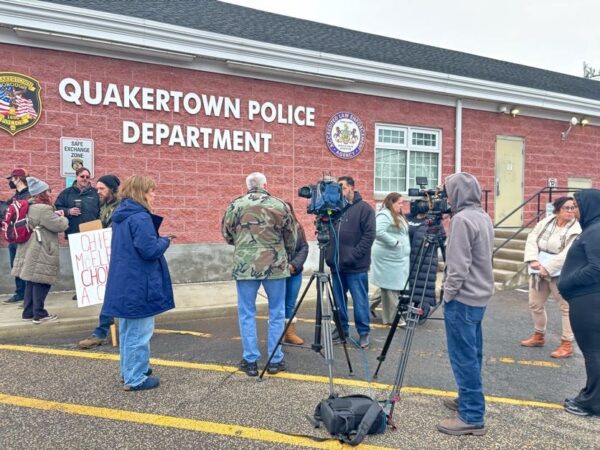
Standing outside the Quakertown Borough Police Station Saturday morning, parents and leaders from local civil rights groups called on police to provide answers.
Adrienne King, president of the Bucks County NAACP, said that when young people are involved in a police encounter, “the standard for care, restraint and adherence to policy are high and must be adhered to.”
“Video circulating publicly has raised serious questions in our community,” King said. “Those questions deserve answers, and we are here to ask for those answers today. Transparency is not optional in situations like this.”
Family members of one of the girls in police custody provided a written statement Saturday.
“We are looking for answers and accountability from the Quakertown police department and school district as well as justice for our daughter and the other children. We offer solidarity with the other families affected and hope to have our children home immediately.”
This is a developing story. Check back for more details.
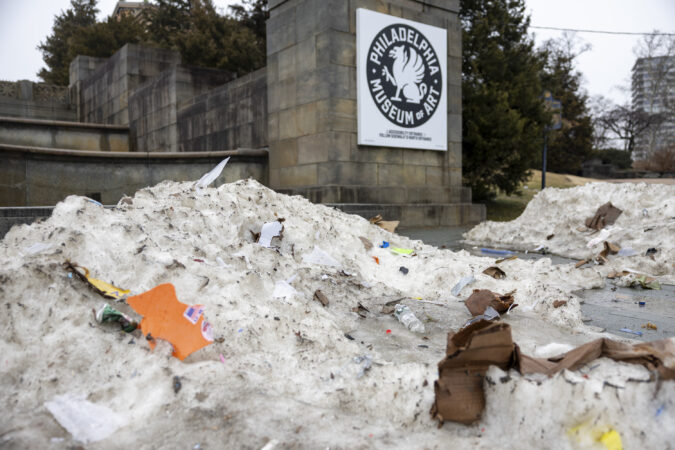
A winter storm warning is in effect for Sunday — a blizzard warning for the Jersey Shore — and Sunday into Monday Philly’s snow has a shot at doubling the amount that fell on Jan. 25, the National Weather Service says.
“At this point, that’s certainly possible,” Zachary Cooper, meteorologist with the National Weather Service said Saturday. The official forecast is calling for just over a foot in the city, with the potential for the total reaching 18 inches.
Blizzard warnings up for the Shore, where onshore winds are forecast to howl past 35 mph, with moderate to major flooding possible.
While it wasn’t in the official language, the weather service on a Saturday morning might well have included a supermarket stampede warning.
The actual winter storm warning is in effect from 7 a.m. Sunday until 6 p.m. Monday.
Witha surprising level of agreement computer models and their interpreters Saturday were seeing the storm as being inevitable. It was forecast to affect the I-95 corridor from Washington to Boston — a rarity in recent winters.
The weather service listed a 25% chance that totals could approach two feet in the city.
“It’s going to be a long-duration event,” said Cody Snell, meteorologist with NOAA’s Weather Prediction Center in College Park, Md.
On the plus side, this will not have the staying power of the 9.3 punitive inches that accumulated on Jan. 25 and spent a three-week vacation in the region. No ice is in the forecast, and daytime temperatures above freezing and the February sun likely will erase most it by the end of the workweek.
(function () {window.addEventListener(‘message’, function (e) { var message = e.data; var els = document.querySelectorAll(‘iframe[src*=”‘ + message.id + ‘”]’); els.forEach(function(el) { el.style.height = message.height + ‘px’; }); }, false); })();
What time would the snow begin in Philly?
Precipitation is expected to begin Sunday morning, said Snell, possibly as a mix of snow and rain that becomes all snow.
Snow may have a hard time sticking during the day, said Tom Kines, senior meteorologist with AccuWeather Inc., since temperatures will be near or slightly above freezing and the late-winter sun will be a factor, even it’s just a rumor in the sky.
Plus the ground won’t be especially cold after a Saturday in which the temperature may approach 50 degrees.
However, the upper air is going to be quite cold, Snell said, and when the snow is falling heavily, as it is expected to do Sunday night, “it will cool the column.”
He said areas that get caught in heavy snow “bands” would see the highest amounts.
What would be so different about this storm?
The storm is forecast to mature into a classic nor’easter, so named for the strong winds generated from the Northeast.
Nor’easters are the primary source of heavy snows along I-95, but the ones that produce heavy snow from Washington to Boston have been scarce lately.
“Over the past several years, they’ve been few and far between,” Kines.
The Jan. 25 storm was not a nor’easter per se, said Snell, but more of a case of the “overrunning” of warm air over cold air producing the snow and sleet.
John Gyakum, an atmospheric scientist at McGill University in Montreal and a winter storm specialist, said he anecdotally has seen a trend of coastal storms intensifying too far north to have much of an impact on the Philly region.
If that were the case, it could be a symptom of global warming, said Steve Decker, meteorology professor at Rutgers University. Storms form where cold and warm meet, and that may have been happening farther north lately.
In any event that evidently won’t be the case Sunday.
What could go wrong with the forecasts?
Are you new around here?
The storm consists of multiple moving parts, and as it bounds off the Southeast coast, it is due to intensify rapidly over the warm Atlantic waters.
Meteorologists advised it was still unclear precisely how intense it would become and what path it would take.
Forecast busts have been known to happen, including a famous one 25 years ago. On a Friday, the weather service warned of a storm of “historic” proportions to begin that Sunday.
What Philly got was about an inch of snow that fell over three uneventful hours.
In 2015, the head of the Mount Holly weather service office publicly apologized for a busted forecast.
However, in recent years, the region hasn’t had all that many serious snow scares.
In this case, expect details to jump around even as the precipitation is falling, but Snell said “confidence is growing” that substantial snow is going to happen.
Inquirer staff writer Stephen Stirling contributed to this article.
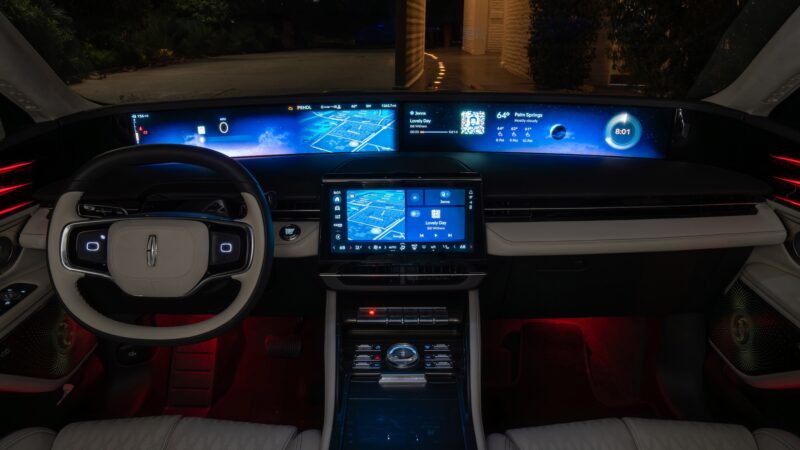
Through a constant series of beeps, flashes, and messages, it badgers me in a manner that’s a cross between an unrepentant mansplainer and passive-aggressive nanny.
It comes with all sorts of ways to protect me from being, well, an idiot. It has a “lane sway warning” in case I’m dozing off. It blocks searching for a new Sirius radio station while driving — presumably to prevent distracted driving. (All while displaying postage stamp-sized album cover images of the music being played.)
“Lane departure!” it warns if I swerve six inches over the center line of a country road to avoid hitting a bicyclist.
When the salesman started to explain how to work the headlights, he stopped midsentence to pronounce: “Just don’t touch it. The car already knows what to do.”
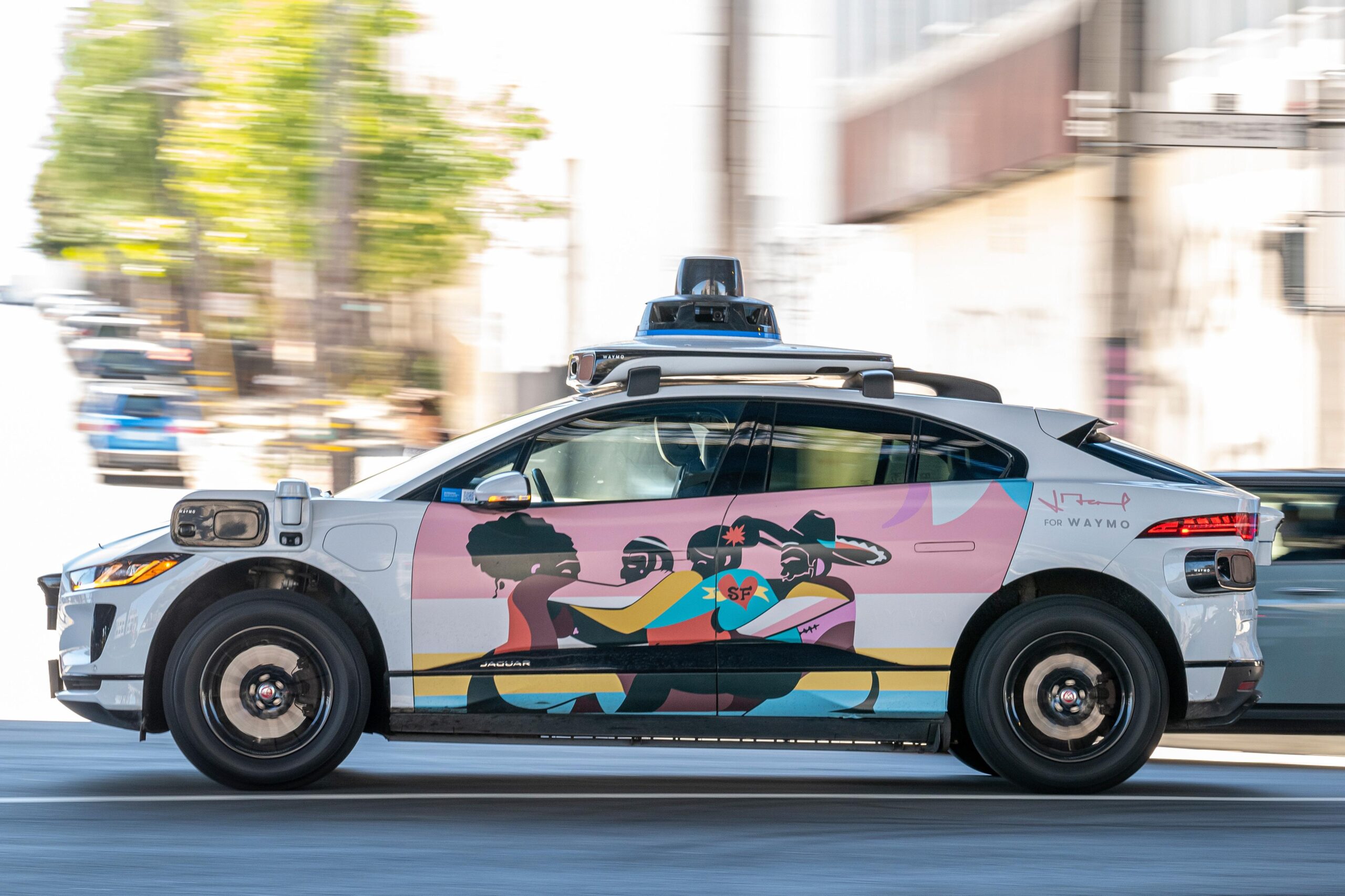
In short, my new car yearns to be a driverless car, kind of like those Waymo taxis, which will soon be rolled out in Philly. It deigns to have me as its owner; tolerates — nay, suffers — my ownership of it. I’m surprised the dealer didn’t require my SAT scores in order to buy it.
Take the day I tossed my yoga mat in the back seat after class, drove home, then spotted this yellow dashboard warning upon alighting: “Reminder, look in rear seat.”
This was puzzling, until I realized it was a safety feature designed to prevent drivers from absentmindedly leaving their baby (or pet) behind during a heat wave.
A Waymo autonomous taxi in San Francisco, in August 2023.
Well-intentioned, to be sure — yet an ineffectual mixture of condescending and vague. It merely hints at the problem, as if it is too polite to accuse someone of literal child endangerment. Better it should just come out and say, “Hey, don’t forget the baby, ya moron!”
Or better yet: “I got you here safely. Do you need me to parent for you, too?”
Whenever the warning flashes, I find myself muttering, “Calm down — it’s a yoga mat.”
My friend’s Mercedes claims it can detect if she’s “fatigued,” barking a suggestion to take a break, and even flashing an image of a coffee cup. (Is Mercedes in cahoots with Big Coffee?)
When the outdoor temperature hits 37 degrees, the dashboard flashes a little orange icon that looks like the Imperial fighter plane from Star Wars. It’s to warn me about possible ice — and functions even in bone-dry weather.
This safety system — which I alternately sense as being either male or female — doesn’t seem to grasp that I just want to run errands, not pilot the Starship Enterprise.
Fed up with its bewildering collection of multicolored dashboard symbols, I finally decided to read the instruction manual.
Correction: Manuals. This car comes with three, and like the Harry Potter novels, each one is longer than the last.
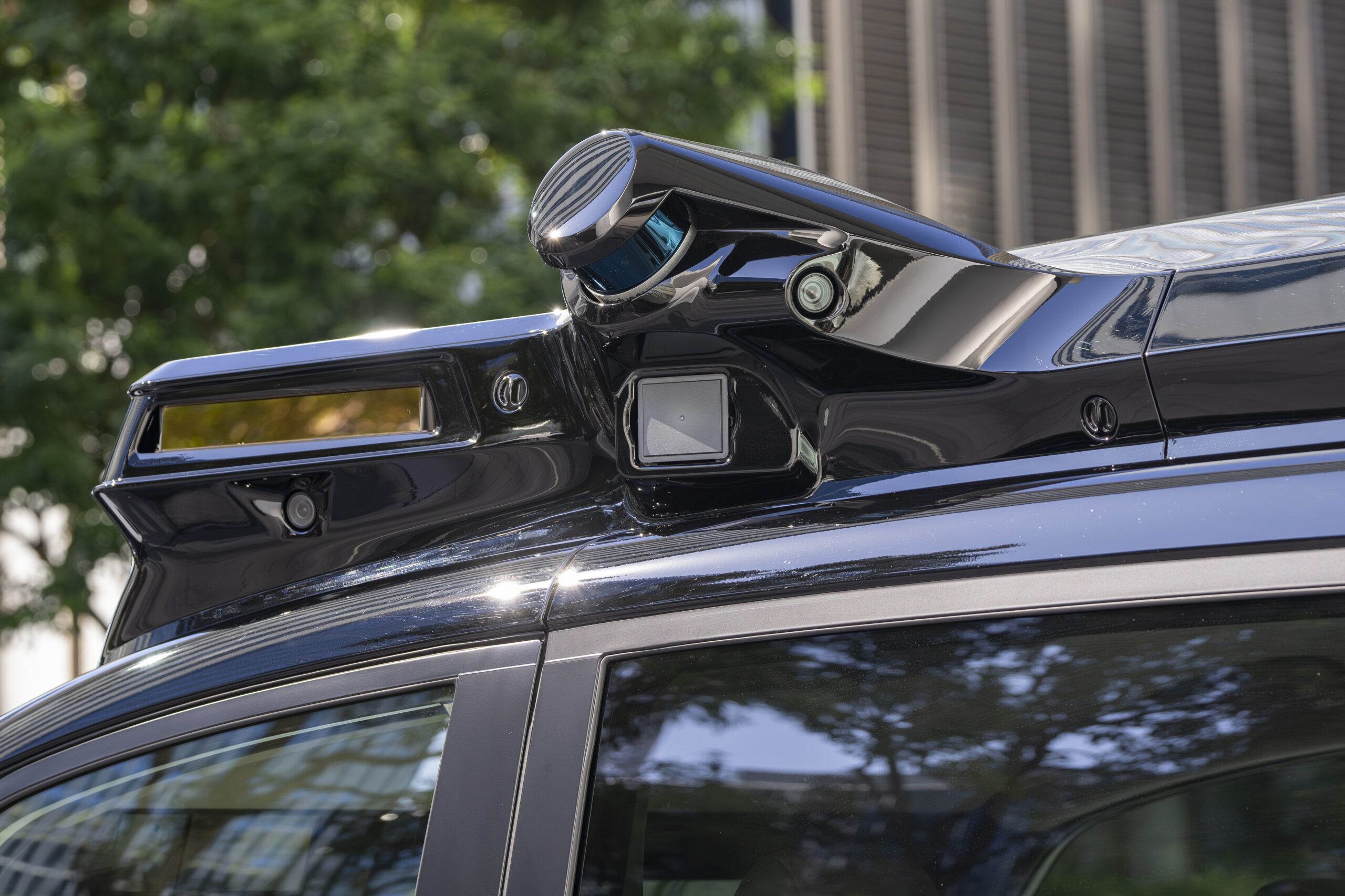
This photo released by Nissan Motor Corp. shows sensors attached to the top of its car, which assist the Japanese automaker’s self-driving technology with computer functions, radars, and cameras.
Here I learned the trademarked “Eyesight” driver assistance technology will detect pedestrians … unless they’re carrying an umbrella. Its disclaimer says it can also get confused by: ditches, fog, dirt, dust, strong sunlight, motorcycles, bicycles, animals, rain, and windshield washer fluid.
The car has automatic braking, should you fail to notice that the car ahead of you has stopped. That feature, along with the rear-seat warning, has triggered the ire of Senate Republicans, who announced hearings on whether such safety features are worth the added cost.
It also has keyless entry, using just a fob, whose presence the car can sense even when it’s in my purse or pocket.
Last November, I was a volunteer poll worker on Election Day, which required that I depart in darkness to arrive at my polling place by 5 a.m. When I gathered my belongings to go inside, I couldn’t find my keys. I figured they had to be in the car, because otherwise the car wouldn’t run, right?
I spent the morning searching my purse and backpack. No keys. I spent my lunch break rummaging around in the car to see if they’d fallen between or under the seats. Nope.
I tried to start the car, on the premise that if the keys were somewhere in the car, it would start. It didn’t.
I panicked. Since I was the poll worker assigned to bring the all-important USB stick containing our district’s voting tallies to the town clerk, it was vital that I depart as soon as possible once the polls closed. I shuddered at the prospect of going viral, with CNN announcing, “New Jersey’s machine vote tally is now final — with the exception of a single missing district.”
Luckily, my husband brought over my spare keys. When the polls closed, I dropped off the voting equipment, then went to a music rehearsal. At its conclusion, as I leaned down to load my music bag into the back seat, I spotted something on the vehicle’s roof: my keys, nestled snugly against the luggage rack.
Yes, I had driven over five miles, up proverbial hill and dale, with the key fob atop my car.
And this know-it-all car, which can sense I’ve veered a centimeter across a lane line and barely tolerates my presence, never realized it.
Hey, Mr./Ms. Smarty-Pants: Who’s the idiot now?
Kathleen O’Brien is a retired newspaper columnist who lives with her know-it-all car in northwest New Jersey.
There is a particular kind of ugliness that does not merely offend but instructs. It tells us something about who we have been, who we are becoming, and what social permissions are quietly being expanded. Donald Trump’s circulation of an image portraying Barack and Michelle Obama as apes belongs squarely in that category. It is not a one-off lapse. It is a signal flare.
This was not just racist imagery; it was historically literate racism. The ape trope is among the oldest tools in the dehumanization kit, refined over centuries and deployed whenever Black Americans have come too close to full belonging. One does not stumble into it by accident.
To understand why this matters — and why it is likely to get worse — we have to situate Trump not just as a provocateur, but as a product of moral inheritance, cultural permission, and a long American tradition of racial degradation repackaged as “joking” or “provocation.”
Trump has always been less an ideologue than an accelerant. He doesn’t invent resentments; he senses which ones are newly safe to express. His strategy, if we must call it that, is social intuition — an ability to intuit when cruelty will be rewarded rather than punished.
That worldview maps neatly onto racial hierarchy. When Trump rose to political prominence by falsely claiming Barack Obama was not really American, he was not engaging in policy disagreement. He was policing the boundaries of belonging. The ape image is simply that instinct stripped of euphemism.
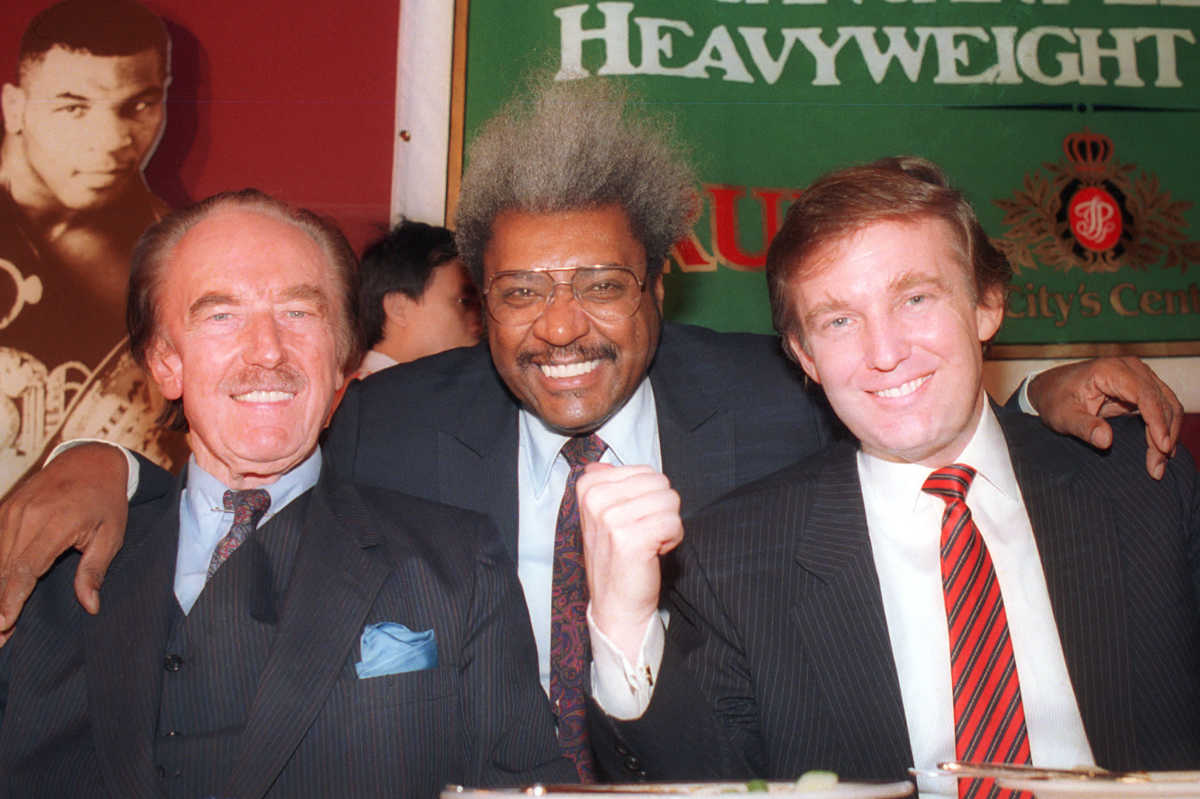
From left, Fred Trump, boxing promoter Don King, and Donald Trump participate in a 1987 news conference in Atlantic City.
It is also not untethered from history. Trump’s defenders bristle at any mention of white supremacist lineage, but history is stubborn. His father, Fred Trump, was arrested at a 1927 Ku Klux Klan rally in Queens — an event Trump has long dismissed without serious reckoning.
Whether Fred Trump was a member or merely present is ultimately less important than what this moment symbolizes: Trumpism did not emerge in a vacuum. It grew in soil long fertilized by segregationist politics, racial grievance, and coded contempt that later became uncoded.
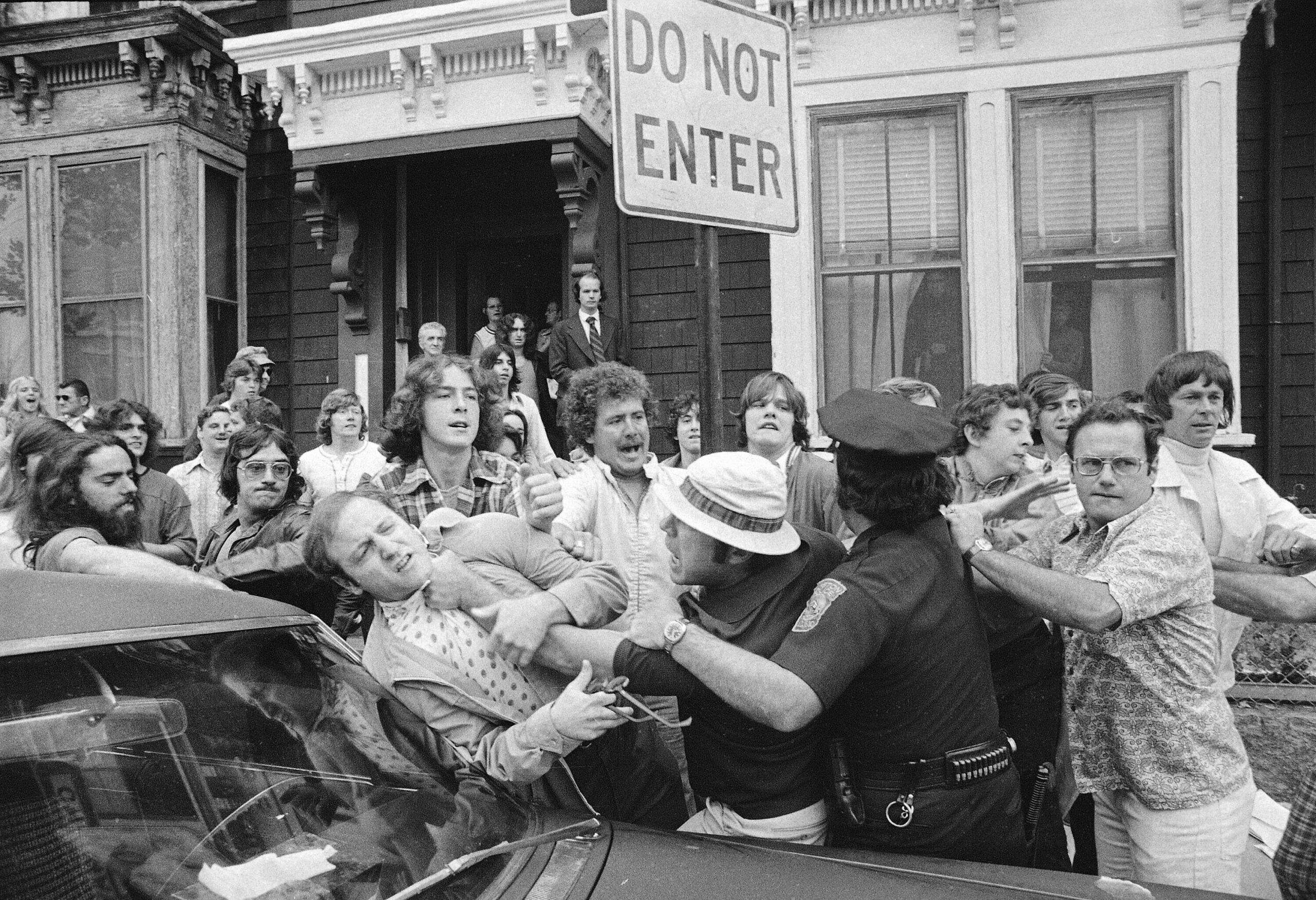
Police officers break up a scuffle amid demonstrators outside South Boston High School on the first day of a court-ordered busing program to integrate Boston public schools in September 1974.
Cultural historians like Henry Louis Gates Jr. have shown how the ape trope was central to 19th and early 20th-century pseudoscience, minstrel culture, and colonial propaganda. To depict Black people as simian was to deny them reason, morality, and ultimately rights. It was a way of making cruelty feel natural.
Scholars from Frantz Fanon to Saidiya Hartman have traced how this imagery did not vanish with Jim Crow; it merely went underground, resurfacing whenever racial hierarchy felt threatened.
The Obama presidency was precisely such a moment. For some Americans, it symbolized not progress but displacement. Trump rose by giving voice to that panic, laundering it through grievance and mockery. The ape image is not regression; it is escalation.
Why will it get worse? Because norms erode asymmetrically. Once a president can circulate imagery that would once have ended a public career — and suffer no meaningful consequence — the floor drops out. What was once unsayable becomes debatable. What was once debatable becomes funny. And what was once funny becomes policy.
What made this episode briefly arresting — before it slid into the familiar churn of outrage — was that condemnation came, at least initially, from both sides of the political aisle. Democrats responded with predictable fury, naming the image for what it was: racist, dehumanizing, indecent. But some Republicans, too, recoiled. A handful of conservative commentators, former officials, and religious leaders expressed a kind of moral embarrassment, as if they had suddenly overheard a family secret spoken aloud at the dinner table.
That bipartisan outrage matters, but not in the way we might hope. It did not signal a renewed moral consensus so much as a fleeting recognition of how far the ground has shifted.
Many of the Republican critics framed their objections narrowly — not that the image was wrong in itself, but that it was “unhelpful,” “distracting,” or “beneath the dignity of the office.” This is the language of procedural discomfort, not moral revulsion. It suggests that the line being defended is not the humanity of the Obamas but the decorum of politics.
On the Democratic side, the outrage was morally clearer but strategically fatigued. There was anger, yes — but also weariness. A sense that we have seen this movie before, named its villain, issued our statements, and then moved on. Moral clarity without moral consequence eventually becomes ritual. It reassures the speaker more than it restrains the offender.
This asymmetry reveals something crucial. Outrage alone does not halt degradation; it can even normalize it by making it routine. When every transgression is met with the same crescendo of denunciation and the same absence of consequence, the culture learns a quiet lesson: that cruelty is survivable, that it carries no lasting cost. Trump understands this intuitively. He relies on the fact that outrage is loud but short-lived, while the permissions he expands are durable.
What we witnessed, then, was not a national reckoning, but a brief moral spasm — a reminder that many Americans still know, at least intellectually, that some lines should not be crossed. The tragedy is that knowing is no longer the same as enforcing. In a healthier moral ecosystem, bipartisan outrage would be a stopping force. In ours, it is often just a speed bump.
Trump’s political project has never been about persuasion in the classical sense. It is about habituation. Repetition dulls outrage. Shock exhausts resistance. Eventually, people stop asking whether something is wrong and start asking whether it “works.”
This is how democracies corrode — not in grand coups, but in the slow reeducation of moral reflexes. The danger is not only Trump’s blatant racism and cruelty, but the lesson it teaches: that dignity is conditional, and that some people may always be safely reduced.
If history teaches us anything, it is that dehumanization does not stop where it starts. Once a society relearns how to sneer, it rarely remembers where to stop.
And that is why this moment deserves more than disgust. It deserves memory.
Jack Hill is a diversity consultant, child advocate, journalist, and writer.
CLEARWATER, Fla. — From his third-floor office overlooking the Phillies’ spring-training ballpark, John Middleton can see clear sky for miles.
Never mind the creeping storm clouds.
“We’re way too far away from it,” Middleton said Friday. “I don’t know when in the next nine months, or whenever the heck it is, we’ll have a clearer sense of the landscape. But we sure as heck don’t have it now.”
So, why worry? Yes, baseball is barreling toward a labor battle that is expected to get nasty. The particulars: Many owners want a salary cap, similar to the NFL, NBA, and NHL; players have historically opposed all limits on wages. The collective bargaining agreement will expire Dec. 1, and a lockout seems inevitable, with the possibility that it could eat into next season.
But that’s 283 days away. There are 162 regular-season games from here to there, with an All-Star Game to host in July. And it will be another expensive season for Middleton and his ownership partners.
Last year, the Phillies’ luxury-tax payroll totaled $314.3 million, fourth-highest in the sport after the Dodgers, Mets, and Yankees. The Phillies paid a club-record $56.1 million in taxes and are bracing for a similar bill at the end of this year.
“Higher,” Middleton said.
Indeed, the projected payroll is $317 million. It will be the fifth consecutive season that the Phillies have gone into luxury-tax territory and the second year in a row they cleared the highest threshold ($304 million for 2026), which carries a 110% tax rate. Middleton said they’ve also budgeted $80 million in local revenue (tickets, concessions, media deals, etc.) for revenue sharing.
John Middleton and the Phillies missed out on signing Bo Bichette this offseason.
“Do the math,” he said. “You’re pushing $140 million in spending essentially [for] being taxed. If I had $140 million back, could I have a higher payroll? Yes. But that’s not happening, so I don’t think about that fantasy. But it’s a lot of money. It really is.”
It’s also life among the big spenders in baseball’s current economic system. Middleton doesn’t sit on the owners’ labor policy committee, which is headed by the Rockies’ Dick Monfort and includes the Yankees’ Hal Steinbrenner, and said he’s restricted by the National Labor Relations Act from speaking publicly about negotiations with the players’ union that are set to begin in late March.
But in a wide-ranging conversation with The Inquirer, Middleton said the Phillies’ offseason spending wasn’t impacted by the looming labor uncertainty. If anything, it was business as usual.
They re-signed Kyle Schwarber and J.T. Realmuto and added reliever Brad Keller and right fielder Adolis García. They were ready to make a seven-year, $200 million offer to free-agent infielder Bo Bichette, who signed a short-term (three years), higher-annual-salary ($42 million per year) deal with the Mets.
In all, the Phillies spent $227 million on free agents, then paid $19.2 million for Nick Castellanos to play elsewhere.
“Any time you get to the end of a collective bargaining agreement, you just never know what the next one’s going to look like,” Middleton said. “And the rules have changed [over the years]. So, you could make decisions in the year or two preceding a new CBA that you look back and you say, ‘Hmm, had I known this was going to be the new CBA with this new rule, I maybe would’ve done something different.’
“I just think the problem, if you give that too much weight, you don’t do things that you should be doing in today’s world with today’s sets of rules to win today. So, I would say we were aware of it, we talked about it, but it didn’t change any of the decisions that we made.”
Because Middleton is chasing that (dang) World Series trophy. It’s been 18 years since the Phillies won it. They went on an unexpected ride to Game 6 of the World Series in 2022 but haven’t won a postseason series since ‘23. They’re 2-8 in their last 10 postseason games.
Owner John Middleton wasn’t angry about the Phillies’ exit in the NLDS last season against the Dodgers.
Middleton, 70, has the sensibilities of a lifelong fan who grew up watching Dick Allen in the 1960s and the competitiveness of a former collegiate wrestler. He was disappointed after last year’s exit in the divisional round. But unlike the previous October, he wasn’t angry.
The Phillies went toe-to-toe with the vaunted Dodgers, holding them to 13 runs and a .199 batting average in four games. Their three losses came by a total of four runs. And don’t even get Middleton started on umpire Mark Wegner’s missed strike call on a 2-2 pitch to the Dodgers’ Alex Call with one out in the seventh inning of Game 4. Call walked on the next pitch and scored the tying run. Wegner later admitted that he got it wrong.
“Assuming he made the correct call, all of a sudden that’s a strike, [Call is] out, [the run] never scores, we win the game, we go to Game 5 two days later in Philadelphia,” Middleton said. “I’m not telling you we would have beaten the Dodgers because they beat us twice at home. But the Dodgers didn’t want to play us in Game 5 in Philadelphia. There’s not a chance in the world that they were looking forward to that prospect.”
Middleton acknowledges that the Dodgers, owned by Guggenheim Partners, have inherent financial advantages that only Steve Cohen, the billionaire hedge-fund manager who owns the Mets, can match.
The Phillies have won more regular-season games in each of the last four seasons. Attendance to Citizens Bank Park has risen from 2.23 million fans in 2022 to 3 million in 2023, 3.36 million in ‘24, and 3.37 million last season.
But in 2024, Middleton also added three new investors to the Phillies’ ownership group. At the time, he said it would “allow us to pursue our strategic growth opportunities and long-term goals.”
“Look, when Hal Steinbrenner publicly says the Yankees can’t do what the Dodgers are doing — and the Yankees for decades have been the team that can do pretty much whatever it wants — that’s telling,“ Middleton said. ”[The Dodgers] are smart, competent people, which makes them fierce competitors. And the fact that they’ve got some financial clout, particularly clout that other teams can’t match, it makes them even tougher competitors.
“But the division series that we lost was the first time in three years, I think, that we lost a series to them. We were 5-1 against the Dodgers in series prior to that. So, it’s not like we haven’t beaten the Dodgers consistently.”
Middleton touched on other subjects, with answers lightly edited for brevity and clarity:
Phillies owner John Middleton (right) says president of baseball operations Dave Dombrowski (left) and Bryce Harper hashed out their differences recently.
Q: What was your perspective on Dave Dombrowski’s comments about whether Bryce Harper is still elite and the baseless rumors that followed about possibly trading him?
A: I just kind of chuckled to myself like, ‘Well, I guess they know something that I don’t know.’ The good news is Dave and Rob [Thomson] and Bryce talked it through after the last set of comments that Bryce made down here, and they’ve agreed that everything’s fine. I’m happy that they’ve reached that point, and I’m comfortable, confident that everything’s behind us now.
Q: You have a close relationship with Bryce. Did you personally call him to make sure everything was OK?
A: Nah. I’ve talked to Bryce over the years about other issues. But in Dave, you’re talking about one of the truly historically great GMs in the history of baseball. People in my position should not undermine their GMs and their head coaches, their managers. And when you have the background and the track record that Dave does, it’s particularly important that you understand your limitations [as an owner].
There have been times when Dave and I are talking about something, and he’ll look at me and say, ‘I’d like you to talk to the player.’ If he thought I needed to talk to Bryce, he would have been the first person to raise his hand and say, ‘John, it would be helpful if you talked to Bryce.’ He didn’t do it. Because Dave asked me to do it, I spent most of a day in Kyle Schwarber’s living room, at his kitchen table, because Dave said it would be helpful. And I talked to J.T. I’ll do whatever I need to do to be helpful, but I’m not going to force myself into a situation where I’m not needed.
Q: What’s your reaction to the narrative that the Phillies are “running it back” again with the same core that keeps falling short in October?
A: I understand the frustration. I will also tell you I do talk to a lot of fans, and there are clearly fans who voice the issue that you did. But I would tell you most of the fans understand. They look at it and they say, ‘OK, I get it. You were a missed call away from probably winning Game 4 and going on to Game 5.’ Not everybody’s going to acknowledge that. But it’s also not like we didn’t try. First of all, we re-signed Kyle. We could have let him go like the Mets, let [Edwin] Díaz go or [Pete] Alonso go. We re-signed J.T. We tried to sign Bichette. We actually thought we had a deal. At 11 o’clock that night, we had a deal, in our opinion. Not finalized. And the Mets did nothing that we wouldn’t have done and haven’t done, so I don’t blame the Mets. But you went to bed at 11 o’clock thinking we had a deal, and I woke up at 8 o’clock worried we didn’t have a deal, and two hours later, I knew we didn’t have a deal. So, it’s not like we didn’t try. We did try to tweak the team.
But go back to that [Phillies] team in ’76, ’77, ’78, they missed the World Series three years running. They go out and sign Pete Rose after the ’78 season. They promptly finish fourth in ’79 with theoretically a better team, and they ran it back in ’80. Now, that doesn’t mean we’re going to win the World Series in ’26 because the ’80 Phillies won the World Series after four tries. But you certainly don’t blow up teams. And it’s hard with a team that was good as that team was and our job is to improve it. You can look at certain places and say, ‘Well, you can improve it here or you can improve it there,’ but that means you have to go out and find the better player and bring that player in. Look, we tried to do that with Bichette. So, I get the frustration. I’m frustrated. I mean, Dave’s frustrated. Rob’s frustrated. A lot of the players are frustrated.
Going back to the Dodgers series, our players executed. You look at ’23 and ’24, even ’22 frankly a little bit, I think there were execution problems in those three years. I don’t feel that way about ’25.
Q: The Phillies have had a top-five payroll now for five years. Could you have ever envisioned a $317 million payroll?
A: So, the answer is yes. And I’d say yes because I think we have such a spectacular fan base. I trust the fan base. I have confidence in the fan base that, if we put the right team on the field, they’ll respond. And that doesn’t always happen. There’s plenty of examples in not just baseball, but other professional sports where there’s a team that’s really, really good and the fans yawn. And I knew that was never going to happen in Philadelphia. New York’s clearly a bigger market than Philadelphia, and they have higher prices than Philadelphia, so their seats sell for more, their hot dogs sell for more, their suites sell for more. But I always thought we could get reasonably close to them from a revenue standpoint, and then hopefully outcompete them. And look, I still feel that way.
Q: What has the ramp-up for the All-Star Game been like? How hectic are the next few months going to be?
A: I think we and MLB are better organized that I wouldn’t say it’s hectic. But there are a lot of details you have to get from the planning stage and the early conversation stage to a final decision and getting that decision implemented. And we’re kind of down that path so that we’ve kind of made final decisions on most everything. But now we’ve got to implement them, and that’s a whole other set of challenges. So, yeah, it’s nerve-wracking. I’m excited. I’m looking forward to it. I think of it like my daughter’s wedding. I’m excited, I’m looking forward to it, and I know I’ll be really happy the day after when I wake up and it’s done.
For R. Scott Stephenson, the ghosts of the Revolution are easily conjured. They are found on every block and every corner of his daily walk from his 18th-century home in Queen Village to the Museum of the American Revolution in Old City, where Stephenson has served as president and CEO since 2018.
“If you close your eyes, you can feel it,” Stephenson wrote about “The Declaration’s Journey,” the museum’s ongoing grand exhibit celebrating America’s 250th anniversary. “Over there, irascible John Adams and taciturn George Washington stroll to their first meeting. Down the street, brooding Thomas Jefferson takes a break from drafting a declaration to stretch his legs and find a nice pint of cider.”
R. Scott Stephenson has been president and CEO of the Museum of the American Revolution since 2018. This year, as the nation turns 250, the museum takes center stage.
As Philadelphia takes center stage in 2026 for the national milestone, also known as the Semiquincentennial, Stephenson will no doubt have a little less time to stretch his legs. This year, it falls to him to conjure the spirits of those fiery days of rebellion for the more than 1.5 million visitors Philadelphia is expecting in 2026.
It is a moment of celebration and introspection the museum has been planning for since before it opened in 2017. With the lauded exhibit exploring the history and global impact of the declaration, and their most robust slate of programming and exhibitions ever, the museum and its staff of about 100 historians and researchers, is ready, said Stephenson.
“It’s akin to a playwright,” he said. “You’ve written the play, you’ve cast all the characters, you’ve made all the costumes, you built the stage and been through endless rehearsals. We feel so supremely confident to meet the visitors that are coming.”
A Pittsburgh native, who earned a PhD in American History at the University of Virginia, Stephenson and his wife, a physician, and two adult children, have lived in the Philly area for 25 years. His perfect Philly day would include coffee before dawn, Italian Market shopping and exploring with his daughter, oysters and bookstores, Philly’s only Colonial-era tavern, and a home-cooked meal with the family. And all, with those ghosts trailing close behind.
Stephenson, 60, a Pittsburgh native, lives in Queen Village with his wife and daughter.
This interview has been condensed and edited for length.
5:30 a.m.
Our beloved adopted Philadelphian, Benjamin Franklin, said, “Early to bed, early to rise makes a man healthy, wealthy and wise.” So far, I’m just healthy, the other two may have not necessarily come (laughter). But I think maybe with the thousands of years of farmers in my past, my circadian clock has never changed. I am up without an alarm between 4:30 a.m. and 5:30 a.m. I start my day with a pot of really strong black coffee. Those first couple of hours before anyone is up is golden time for me. I read my periodicals, my newspapers. I still like the sound of paper wrinkling.
7:30 a.m.
We are a cooking family. On weekends, we are all about ending the day with a big meal that we make together. So a perfect day is my daughter and I walking to the Italian Market to browse around at the various shops, figuring out what protein we’re going to build dinner around. And nosing around the produce stands and cheese stops. At Fante’s Kitchen Shop are great reproductions of 18th-century German cookie molds for making gingerbreads.
I do not have one path to get from Point A to Point B anywhere in Philadelphia, so I’m usually going to want to zigzag around a bit. We like to do a little exploration as we bring the groceries back to the house.
11:30 a.m.
My wife and I love to walk over to Rittenhouse. Lunch at the Oyster House. I love that block of Sansom. It’s a street that feels like a previous era. There’s an original oyster house in Pittsburgh. That was a place both of my grandfathers ate lunch often. My father would go there. I was taken there as a kid. Although ironically, I have a great grandfather who died from eating, what was called on his death certificate, a “poisoned oyster.” He ate a bad one and died in 1905 when he ate a bad one that was a little too far from the Jersey Shore when it was consumed.
1 p.m.
I’d definitely pop into Sherman Brothers Shoes right next door. Incredible shoe store. I am sort of obsessed with Alden shoes, these great, super sturdy, American made, old school leather shoes. So I am at least going to go drool a little bit, and think, “Oh, when I wear this pair out, what’s my next pair of Alden’s going to be?”
2 p.m.
On a perfect day, I’m popping into the museum, and trying to remain anonymous. Just for an hour, and go wander around the galleries or sit through a showing of “Washington’s Tent” — and just talk to guests. A lot of my job is storytelling. Being able to talk about the impact we have on people — the best way to do that is to actually tell a story that happened to me.
3 p.m.
Our other routine would be to go to Plough & the Stars in Old City. We absolutely love Plough & the Stars, particularly in the winter, to be able to sit in front of the fire there. Have a shephard’s pie or fish and chips and a Guinness.
4:30 p.m.
I’m gonna spend some time up at the Book Trader on Second Street. I’m not actually allowed to buy any more books. My library is mostly in storage right now. We just don’t have the room. But I do love a bookstore, particularly a used one.
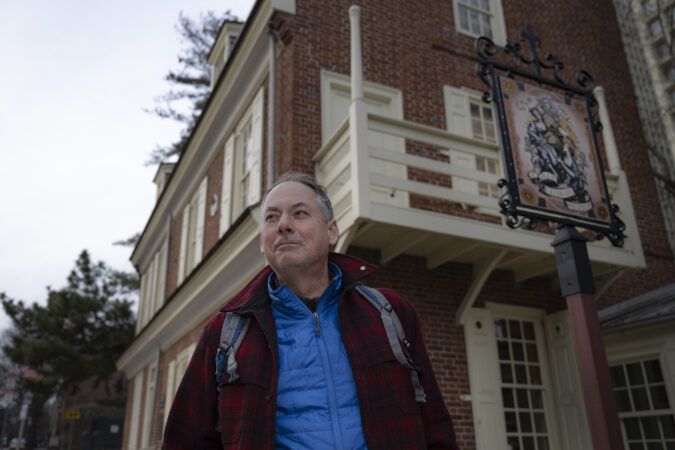
Stephenson said of Man Full of Trouble tavern and museum: “That’s the only surviving tavern in Philadelphia from the 18th century, where you can literally sit in a room where rum punch and revolution was the game.”
5:30 p.m.
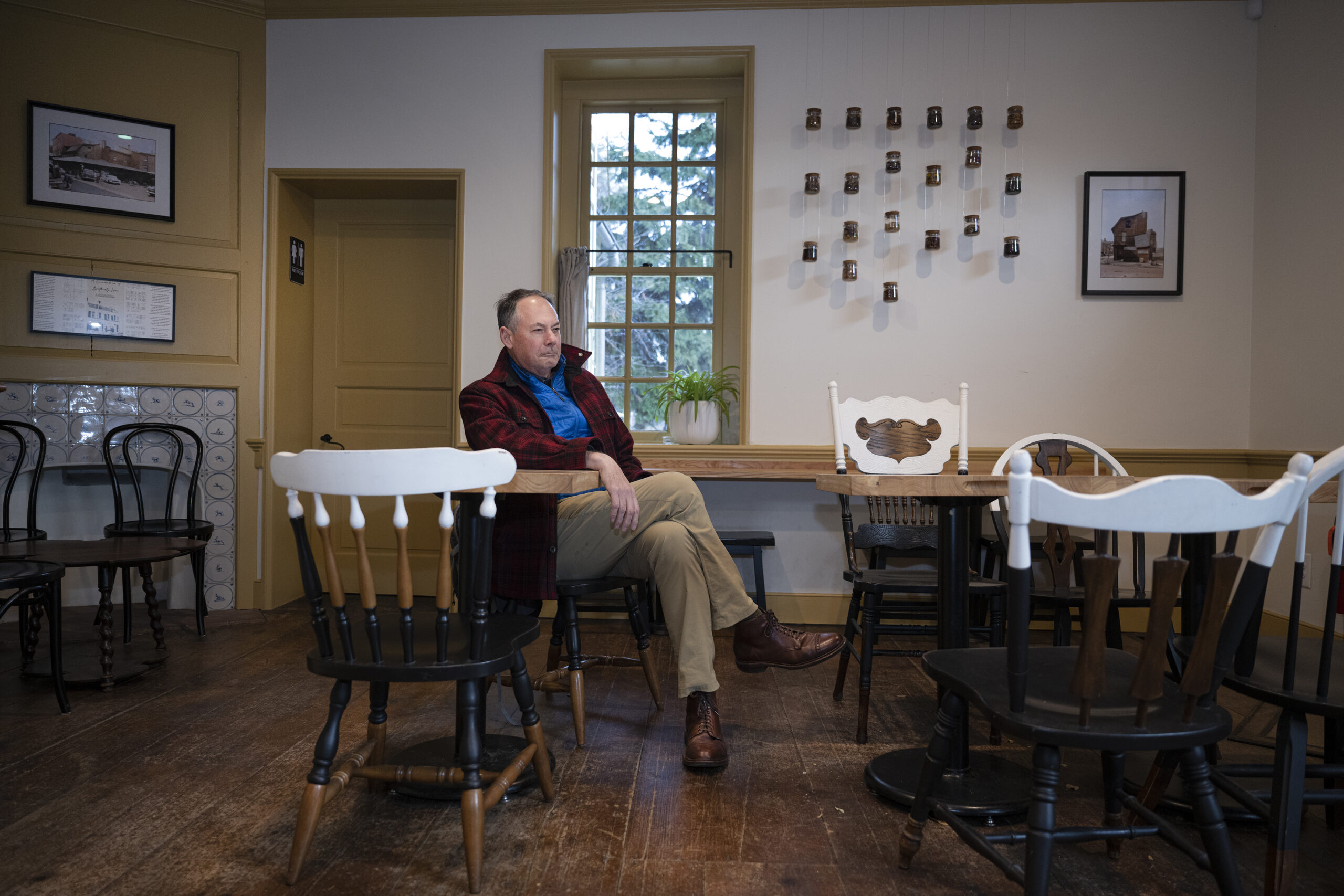
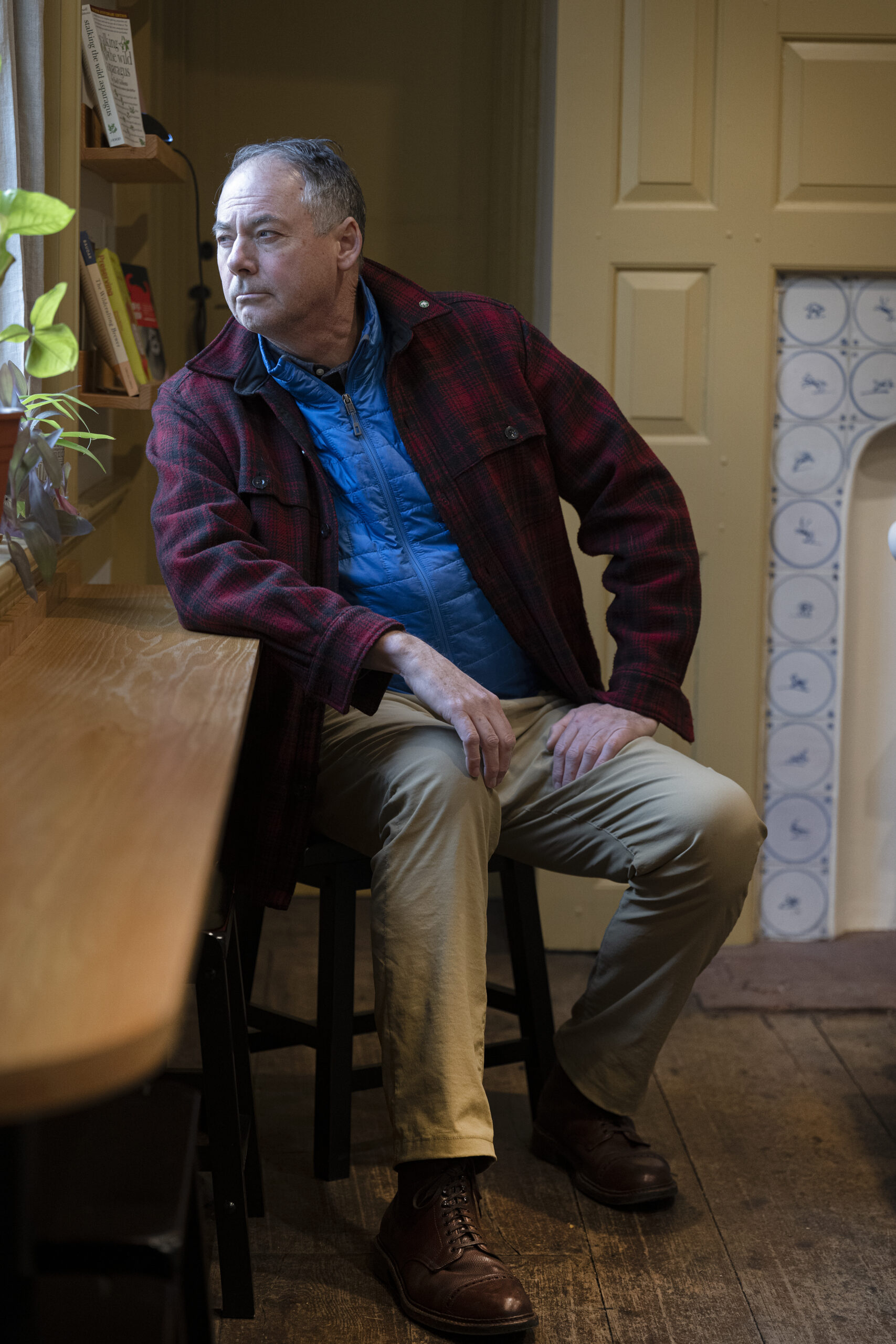
Walking home, and frankly whether or not I have been to Center City or Old City, I am almost certainly going to stop, and this a new addition since it just reopened, but at the Man Full of Trouble tavern and history museum. That’s the only surviving tavern in Philadelphia from the 18th century, where you can literally sit in a room where rum punch and revolution was the game. To me, it’s just another reason why this is the greatest city in the nation. Being a few blocks from the Man Full of Trouble, creates a lot of trouble (laughter).
6:30 p.m.
It’s probably time to start dealing with those groceries at this point (laughter). At least one weekend day every weekend is family dinner day, where we’re all going to be cooking. So my son and his girlfriend will be in — my daughter’s there, my wife’s there, and we’ll have figured out what’s on the menu. We have a long table. We love to have candles and a candlestick on the table, and turn the lights down. A no device moment, where we really are in each other’s presence.
8 p.m.
We are probably going to be playing Wingspan, it’s a board game. There’s a new one called Finspan, which is all about fish in the ocean. We are almost exactly a two minute walk from Queen & Rook Game Cafe. So we’re kind of in a board game neighborhood. We’ll be right at our dining room table and we’ll be playing for a while and drinking a little wine.
9 p.m.
Going back to Franklin for a minute, and you remember his aphorism was “Early to bed, early to rise.” I am not the life of a party. Most nights by 9 p.m., my eyes are closed and I am sawing wood (laughter).
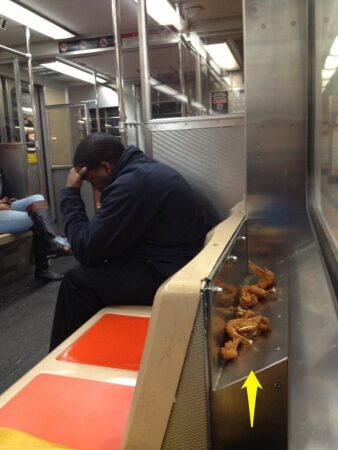
There are two architects of Philadelphia’s chicken-bone temple. One has whiskers. The other has hands.
Curious Philly asked why there were so many chicken bones on the streets of our city. Turns out it’s a whole circle of life testament to gross urban living. Rats rip into trash bags, raccoons drag leftovers into the street, and yes, sometimes humans just … drop them.
Somewhere in Philly, a squirrel is dragging a drumstick across a crosswalk like it just led the Mummers Parade down Broad. A raccoon is performing minor surgery on a Hefty bag. And a rat is simply responding to the opportunity. Philadelphia is the eighth-rattiest city in America (which feels relevant here), and twice-weekly trash pickup means an extra day of opportunity. A ripped bag on the curb is an open invitation.
Meanwhile, dog owners are performing full-contact tug-of-war in the middle of the Gayborhood because their shih tzu refuses to give up a chicken bone that is just as likely to choke them to death.
So please, put a tight lid on the trash cans. Until then, the sidewalk wing night continues.
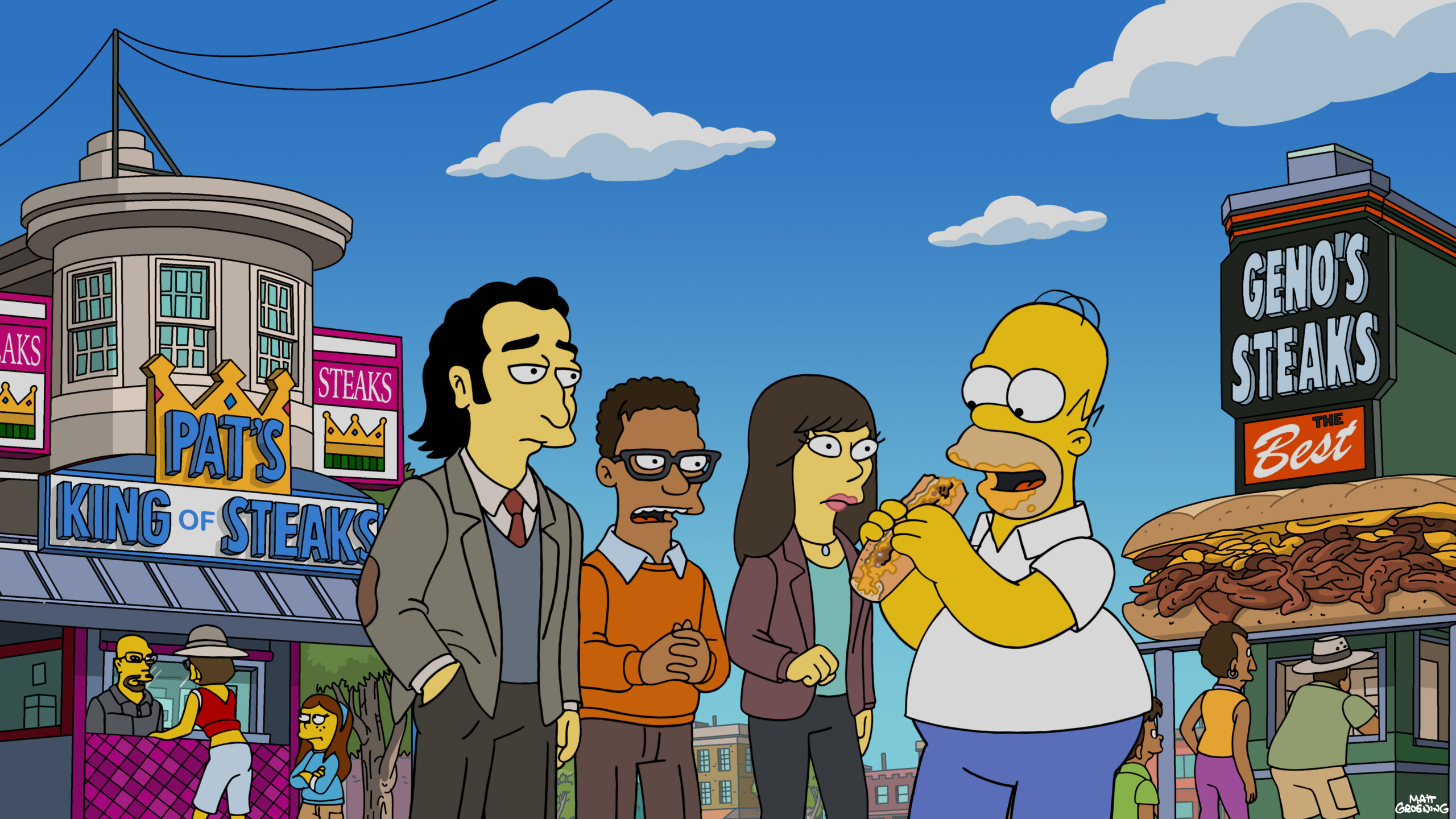
Homer (Dan Castellaneta) eats a cheesesteak in South Philly in an upcoming episode of ‘The Simpsons.’
They covered the obvious beats. Rocky, Wawa, cheesesteaks, the whole “wooder” universe. That’s low-hanging fruit.
But tucked into the background of the episode was a joke that wasn’t obvious, wasn’t tourist-friendly, and absolutely wasn’t generic: a fictional dog park called Michael Vick Reparation Park, “the best dog park in the world.” That’s a deep-cut, morally messy, and very-Philly sports memory.
Vick arrived here after serving prison time for running a dogfighting ring. His signing split the fan base and forced years of uncomfortable conversations about redemption, talent, and how much winning smooths things over. He rebuilt his career in Eagles green. Some fans forgave, while others never did. The tension is the punchline.
It works because it’s The Simpsons. And it lands because this episode wasn’t written by someone skimming Wikipedia. It was written by Christine Nangle, Oxford Circle-raised, Penn-educated, and still passionately Philly. You don’t make that joke unless you remember how complicated that era was.
The episode even found space to include a nod to the late Dan McQuade in the Roots concert scene. Blink and you’d miss it, but it’s a tribute that meant something if you knew.
So the moral of the story is anyone can animate the Liberty Bell. It takes a local to slip in a joke that sharp and trust the audience to understand it.
Bruce Springsteen and Max Weinberg performing during the Bruce Springsteen and the E Street Band 2024 World Tour at Citizens Bank Park in Philadelphia on Wednesday, August 21, 2024.
As in, windows-open, water-ice-in-hand, skyline-glowing, baseball-season May.
And instead of Citizens Bank Park, where he played two summers ago under actual sky, the “Land of Hope and Dreams” tour is landing at Xfinity Mobile Arena.
Indoors.
This is not anti-arena slander, but May in Philadelphia is outdoor concert weather. It’s built for a ballpark.
The tour includes 19 arena dates and one baseball stadium finale in Washington. Which makes it feel even more criminal that Philly — a city that will scream every word to “Born to Run” — is getting the indoor version.
(We’ll still go, obviously.)
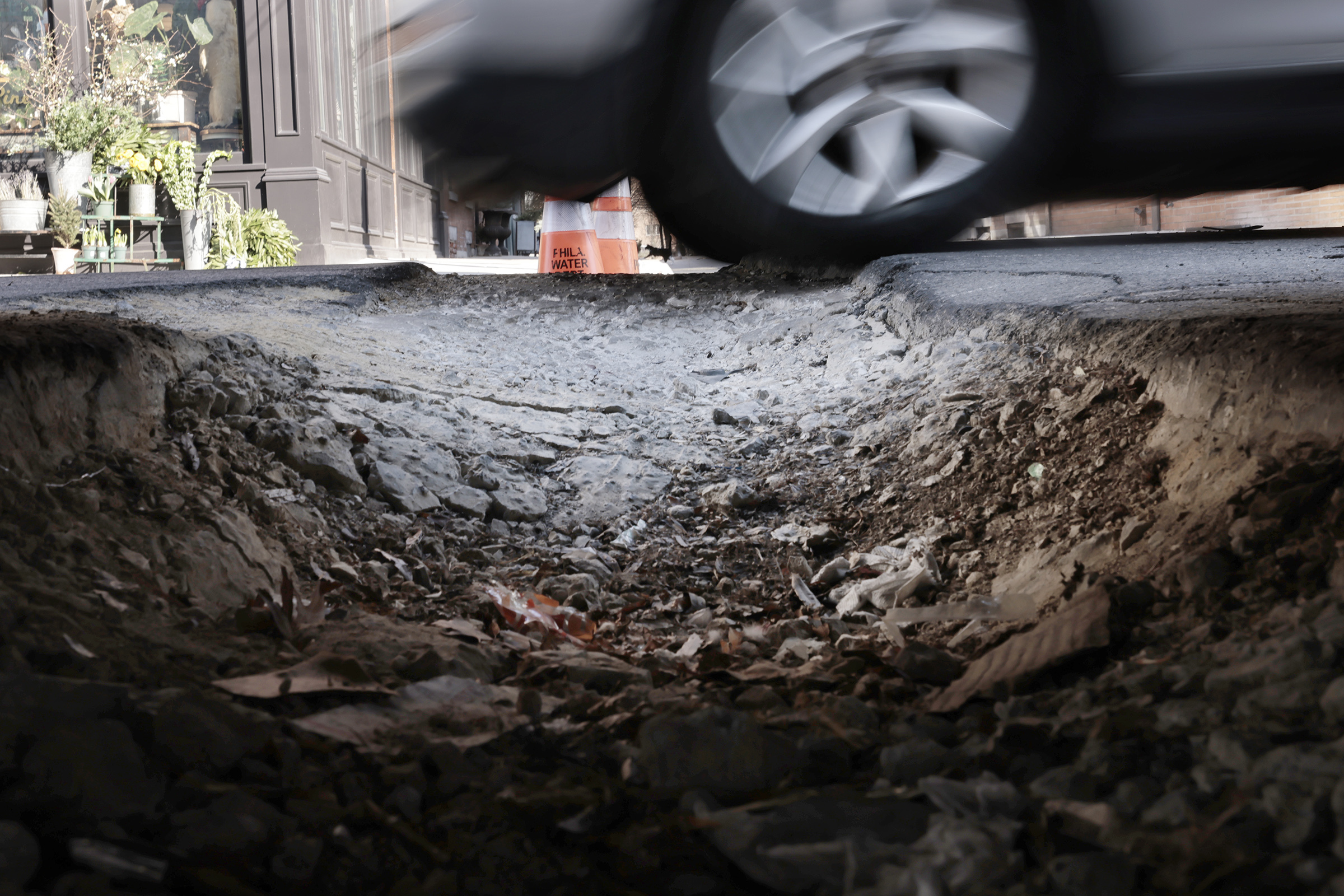
A car slams into the edge of a large pothole on the 700 block of South 4th Street in Philadelphia on Wednesday, March 12, 2025.
Pothole season officially begins: F
The snow is melting, which means two things in Philadelphia. People are wearing shorts in 42 degrees and the roads are about to betray us.
As the ice pulls back, the damage reveals itself. Broad Street suddenly looks like it survived a minor asteroid shower. A harmless bump from January is now a cavity. That thin crack you ignored all winter? Now you slow down for it instinctively.
You can tell the season has arrived by the driving alone. Traffic doesn’t flow in straight lines anymore, it zigzags. Group texts start circulating with hyper-specific intersection warnings. A single traffic cone materializes in the middle of the street and quietly becomes semi-permanent infrastructure.
Some craters get patched fast. Others linger long enough to earn neighborhood lore. “Turn left at the one that swallowed the Camry.”
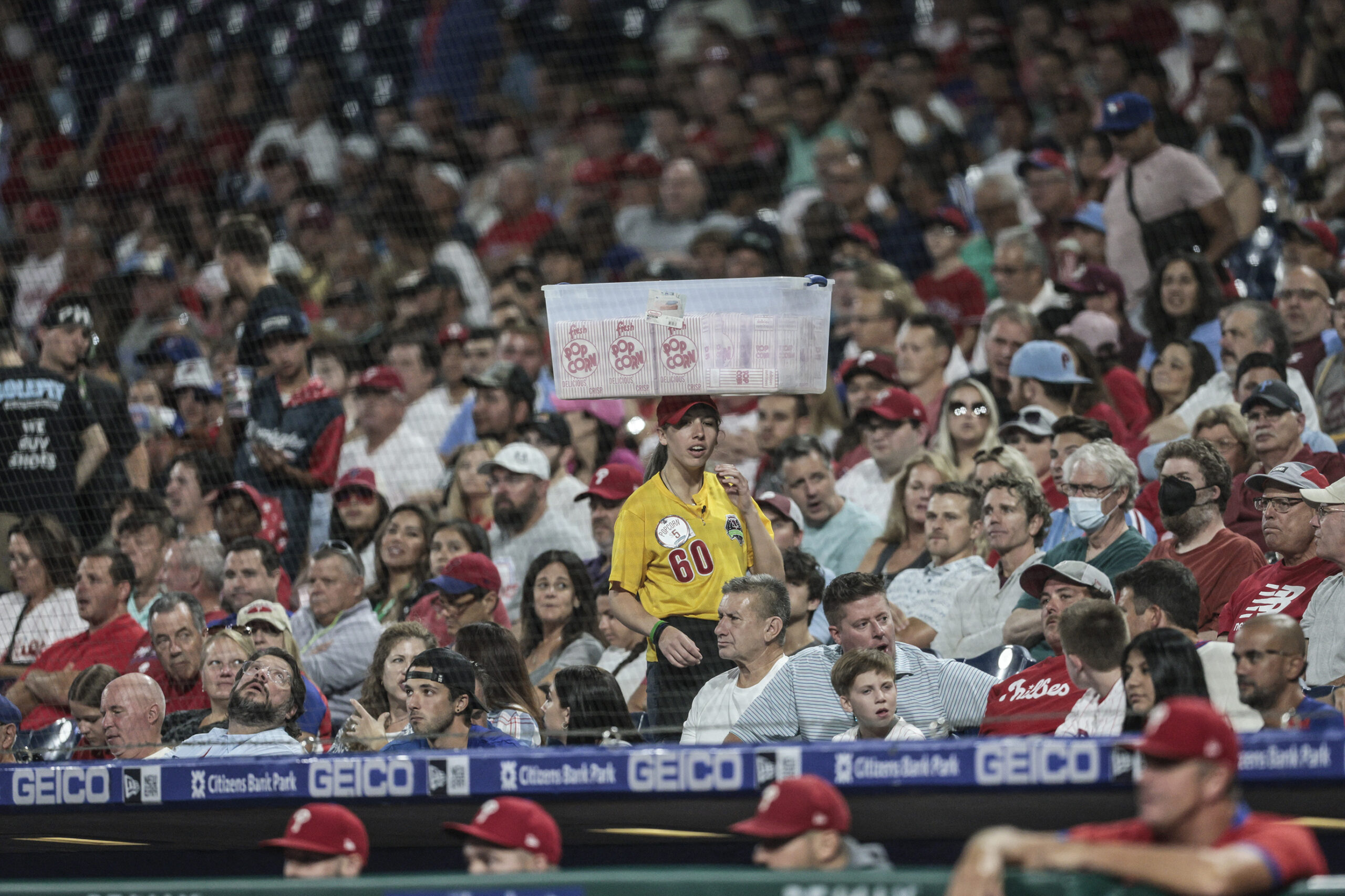
Samantha DiMarco, a popcorn vendor at Citizen Bank Park sells popcorn by balancing the box on her Tuesday, September 20, 2022
Citizens Bank Park without Sam the Popcorn Girl: F
The Phillies will still play. The popcorn will still be sold.
But one of the ballpark’s most recognizable faces won’t be in the aisles for most of the season.
Sam the Popcorn Girl is a minor celebrity at Citizen’s Bank Park, balancing popcorn on her head, popping up on Phanavision, and playfully sparring with Mets fans.
Over the last decade, she’s become an essential part of the atmosphere at the ballpark. Sure, she’s not on the roster, but she was part of the team. And this summer, she’ll be working on a Carnival cruise ship instead.
It’s temporary, and she promises she’ll be back. But this is Philadelphia. We’ve seen how this goes. First it’s a cruise contract. Next thing you know, the bullpen collapses in June.
Remove one of the ballpark’s regulars and suddenly everything feels off, and it’s way too early to be testing the baseball gods.
Booking the Shore before the snow melts: A-
There are still snowbanks clinging to street corners in Philadelphia.
And yet Margate agents are fielding multiple rental calls before lunchtime.
Last year, people waited, booking shorter stays and trying to read the market. This year, they’re locking in weeks while there’s still salt on the sidewalk.
The Shore has always been a seasonal reset button. But booking it in February (before anyone has even vacuumed the sand out of last year’s trunk) feels like a quiet shift.
After a few summers of sticker shock, people are now less afraid of being priced out then they are of being too late.
Soon we’ll be arguing over beach tags and debating Avalon vs. Sea Isle. Soon someone will be panic-buying Wawa hoagies on the Parkway.
We thought it was still winter. But summer, apparently, starts when the snow is still melting.
This week’s question is… Has Wawa’s food changed too much?
Stephanie Farr, Features Columnist
In my 19 years here I’ve found Wawa has remained a consistent standard in my life, both in terms of quality and in terms of how often I eat it. I don’t think anyone would argue it’s the best food in a very foodie town but it’s never let me down.
Tommy Rowan, Programming Editor
Wawa lost something when they took out the meat slicers and stopped having bread delivered. In the early 2000s, at least to me, the sandwiches tasted fresher. It still had the spirit of a deli. Now it’s just like Subway. Which, hey, fine in a pinch. But I’m not going out of my way to stop anymore.
Jenn Ladd, Deputy Food Editor
As a Montco native, Wawa was a big part of my teenage years. Like most kids in this area, I thought of it as sort of a third space in high school — have many fond memories of sitting in or around my car or a friend’s car in Wawa parking lots in Flourtown, Wynnewood, Ocean City, etc. — and then when I went to college in Baltimore, that tether remained. I’d drive 25 minutes each way from the northern edge of Baltimore City to a Wawa in like Parkville, Maryland or something. I’d get gas, coffee, and a breaded chicken sandwich or the protein snack pack (grapes, cheese, crackers). Often, I’d round up the other Philly-area kids and we’d all go together at like 11 p.m. on a weeknight. It was a ritual.
All of that is to say, I once held deep-seated affection for Wawa.
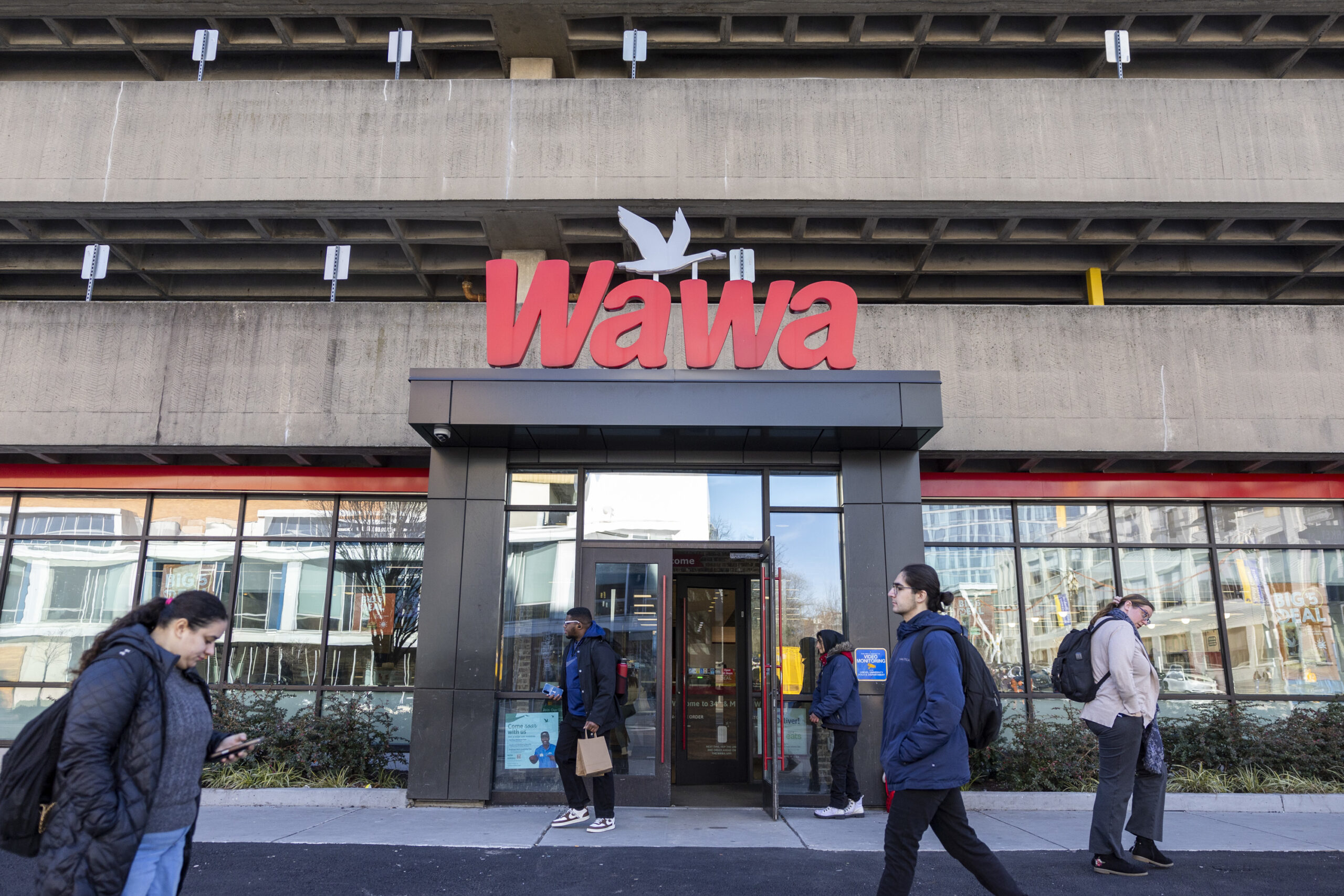
The Wawa at the corner of 34th and Market Street near Drexel University will be closing in Philadelphia, on Tuesday, Jan. 13, 2026.
But it has lost that spot in the past three or four years.
I used to commence each long-distance road trip with a Wawa breakfast hoagie — the scrambled eggs used to be so rich, you really didn’t need cheese because they were that good and plentiful; the sausage was really flavorful; the portion so abundant, you could drive for hours without feeling the need for a snack. The last time I got a breakfast sandwich from Wawa, I gotta tell you, it was sad.
I was sad.
Stephanie Farr
A road trip still doesn’t start for me until I get a Wawa Sizzli — croissant, egg, turkey sausage, and cheese — and I’ve never been disappointed. That being said, I recently got a breakfast sandwich at the flagship Wawa at 6th and Market and that one came with scrambled eggs and it was a mess! I much prefer the egg mold.
What has gone downhill for you guys?
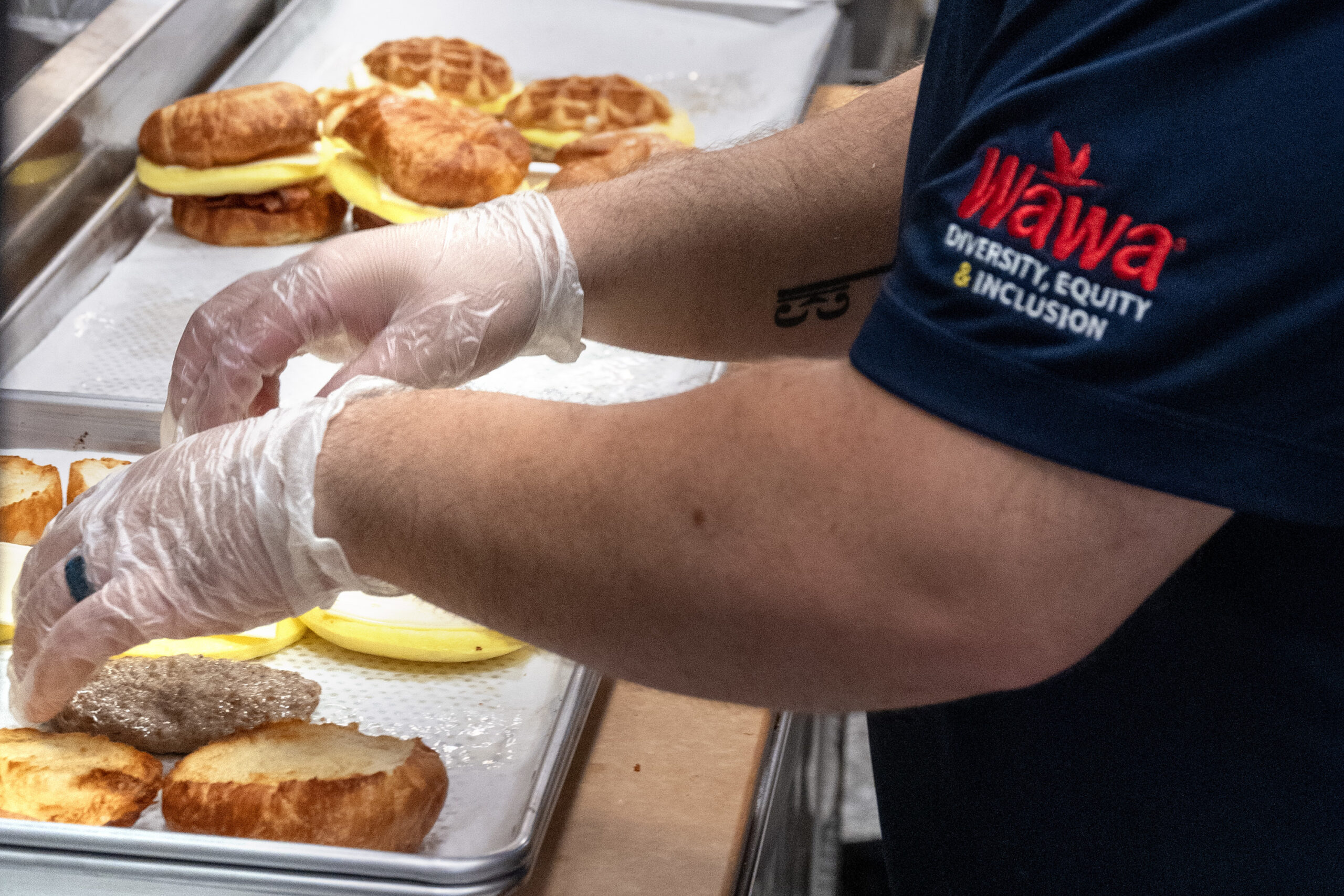
Workers assemble breakfast Sizzlis during the grand opening Thursday, Sept. 19, 2024 of the very first Wawa in Central Pennsylvania – solid Sheetz territory – in the Dauphin County borough of Middletown.
Jenn Ladd
I’ve noticed the portions have gotten kinda puny for the custom-ordered stuff, which was my jam for years. And now I think you’re better off with the grab-and-go things — the Sizzlis.
I think Wawa putting so much focus on the “Super Wawa” format and then constantly “innovating” with the food menu has really been its downfall. Like, just keep it simple.
Tommy Rowan
I still think about the old Buffalo Blue Breaded Chicken Sandwich. It was a robust and crispy chicken patty. And it was slathered in that bright orange buffalo-blue cheese sauce that brought the heat AND the tang. It was unmistakable and worth the price of admission. And it came on a fresh kaiser roll, to boot.
They have introduced new lines of chicken sandwiches in recent years, but they’re not the same.
Jenn Ladd
God I used to love those chicken sandwiches. They had my heart over a hoagie almost every time.
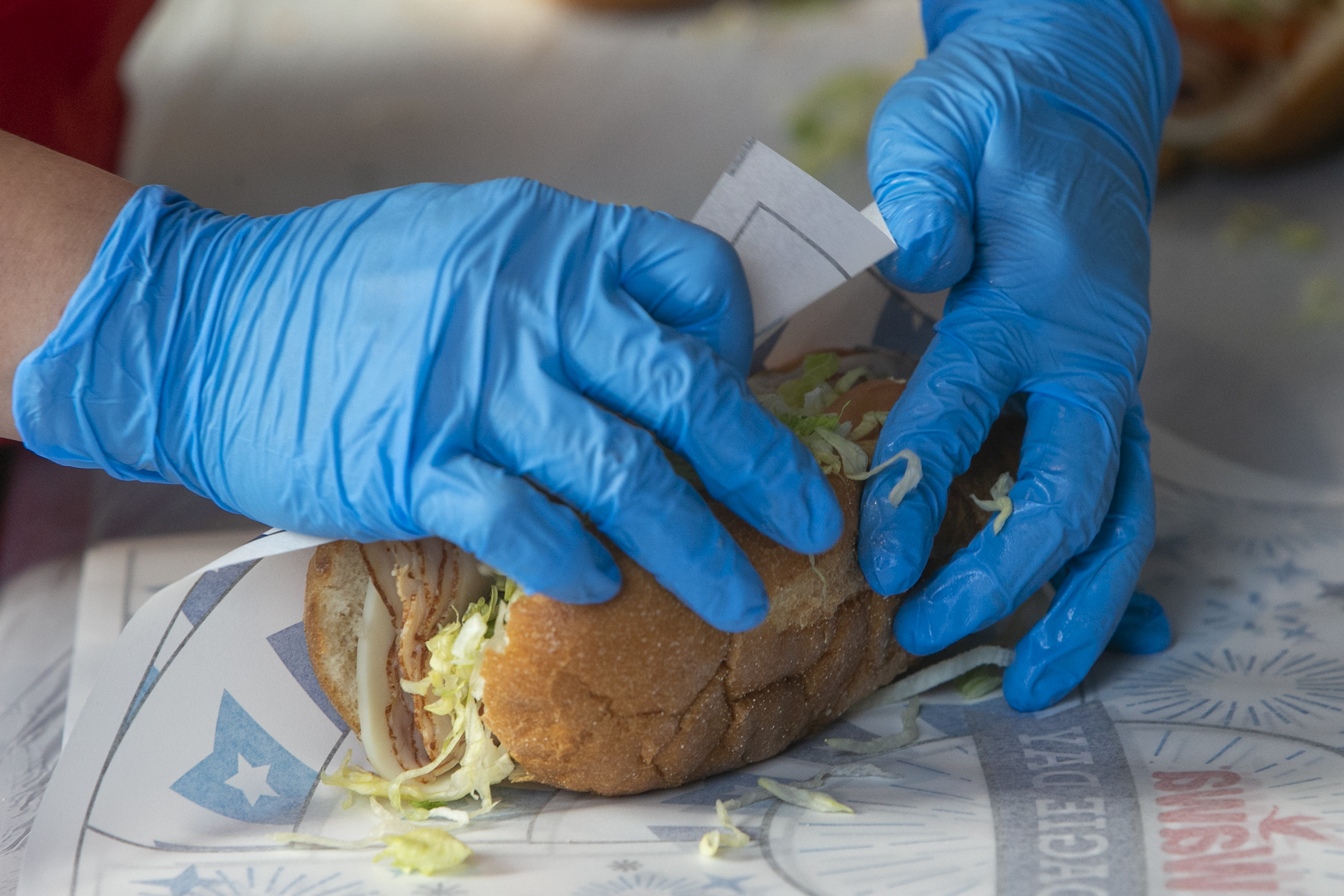
Sherly D’Alfonso (correct spelling) wraps a Turkey, Provolone, Tomato and Lettuce Hoagie. She and two others are assembling 300 hoagies during their time making hoagies. Wawa Welcome America Hoagie Day on Wednesday, July 1, 2020. Photograph taken at the Wawa at Chestnut St. at 6th in Center City Philadelphia.
Stephanie Farr
I’ve actually never tried one of their chicken sandwiches, but I am mad they took the spicy cherry pepper relish off the menu. That is a GOAT hoagie topping.
Personally, I like Wawa’s soups, particularly the chicken noodle and tomato bisque. I’m sure they come out of a bag, but they taste pretty good and it’s not something you find at similar places, like Sheetz.
Jenn Ladd
[shudder at the thought of bagged soup]
Stephanie Farr
As I assumed you would, foodie. lol. It doesn’t bother me, but my standards are pretty low.
Evan Weiss, Deputy Features Editor
If you all could tell Wawa to change two things back, what would they be?
Stephanie Farr
Just give me back my spicy cherry pepper relish for the love of all that is holy please! Also, they better never get rid of the garlic aioli. Get that on a hoagie and bring it into a public place and everyone will ask you what smells so good (it’s happened to me in the newsroom!).
Tommy Rowan
Bring back the slicers and the fresh bread. It would make a huge difference.
Jenn Ladd
I’d have them remember their roots as opposed to coming up with novelties and/or trying to compete with other convenience store chains on selection (see Wawa pizza, a repeated failure). They used to have great sandwiches and snacks. I’ll forever cherish the memory of a boss in Baltimore putting a Wawa pretzel on my desk because she had been in the Philly area earlier in the day. It was like a little love note from home. They’ve gotten too corporate, so I basically just treat it like a gas station now.
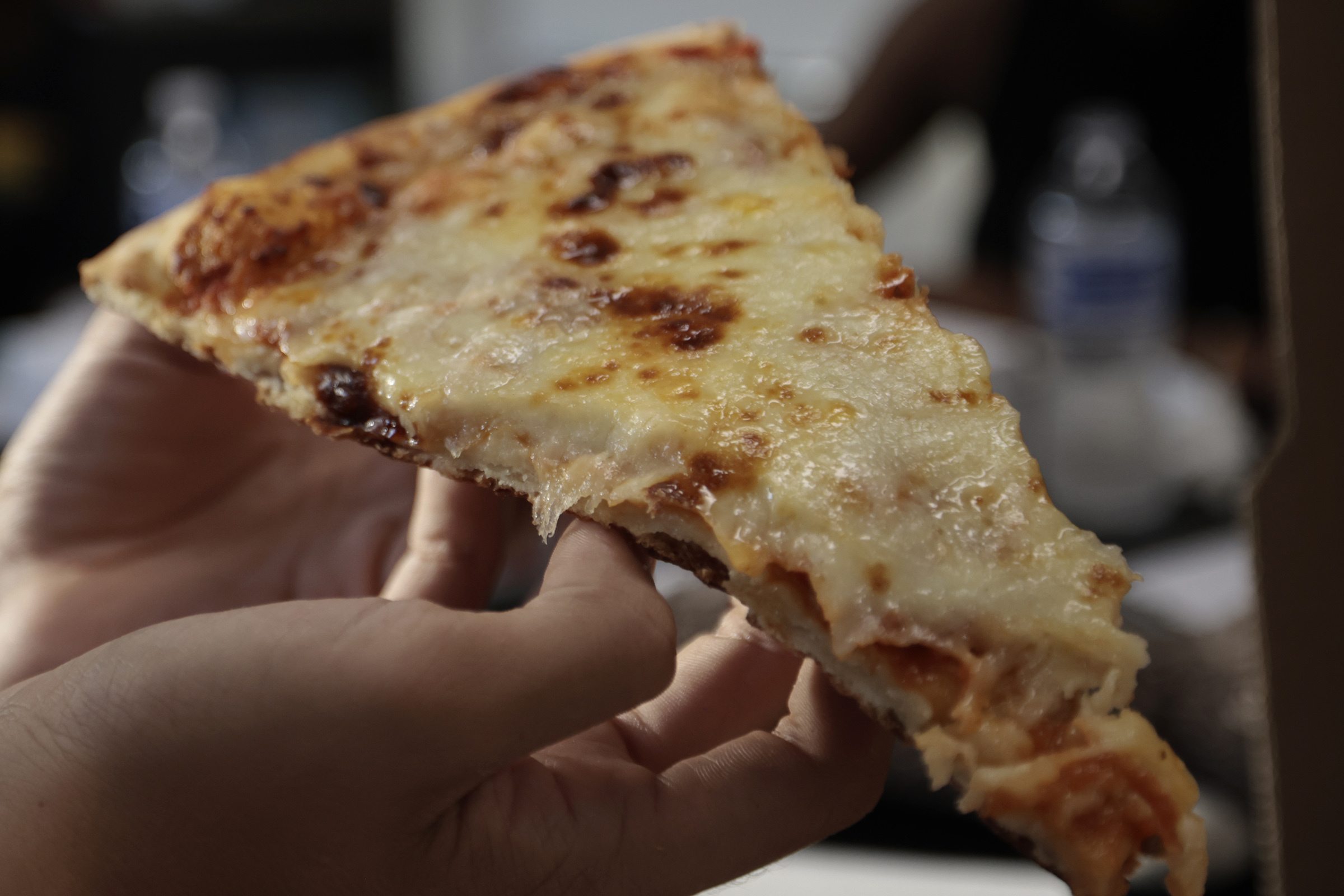
Science Leadership Academy eleventh grader Marcos Rufino gets another piece of Wawa cheese pizza at the school in Philadelphia on Thursday, Oct. 19, 2023.
Stephanie Farr
I was talking to someone about Wawa last week, after covering the first Sheetz opening in Montco, and they said while Sheetz may have more food offerings, Wawa will still remain supreme in the Philly region because: “We’re loyal and it has nothing to do with quality.”
Honestly, I think that’s one of the reasons I love Philly so much. Tommy and Jenn, are you bucking that trend, have you forsaken your Wawa loyalty?
Jenn Ladd
I don’t believe in blind allegiance.
But also, I don’t think we should just keep giving money to an entity that doesn’t seem to be minding the quality of what it’s putting out to customers.
Just because we are fond of it.
Stephanie Farr
So I take it you’re not a Phillies or Flyers fan either?
Jenn Ladd
Ahahaha well I’m not giving them any money, that’s true.
Tommy Rowan
Hahaha I will always have a special place in my heart for Wawa. And I hope it comes back around. I’m going to be thinking of that chicken sandwich for the rest of the week now.
Jenn Ladd
I won’t even get into how Wawa has betrayed Philadelphia proper, but that’s another reason I’m loathe to be blindly loyal to them.
I’d love for Wawa to make a quality comeback too, truth be told, but I don’t know that I’d realize that without this conversation.
Have a question of your own? Or an opinion? Email us.
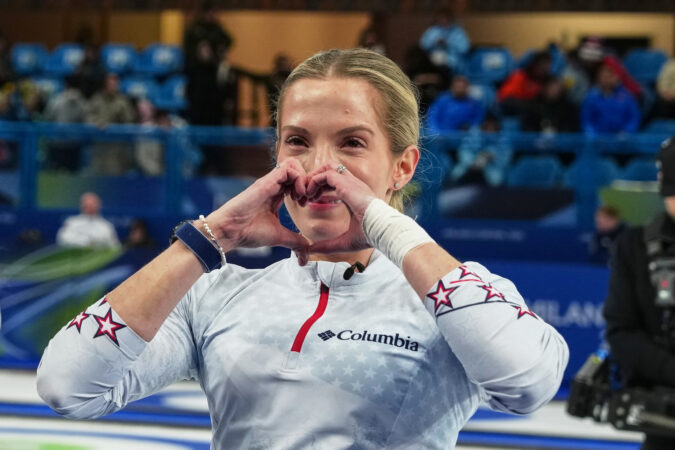
There haven’t been any giant “DELCO” flags in the stands at the Olympics, at least as far as we’ve been able to tell from home. But there is a Broomall native, Taylor Anderson-Heide, going for a bronze medal in women’s curling for the United States on Saturday.
The U.S. lost to Switzerland in the semifinals on Friday, in a match that was tightly contested throughout. You have to tip your broom to the outstanding shot by Swiss veteran Alina Pätz, a six-time world champion, that clinched the win.
So the Americans are playing Canada for bronze, adding another chapter to their long rivalry. Unfortunately, most of it is live just on Peacock, but USA Network will pick up coverage at 9:30 a.m.
Saturday is the last full day of Olympics action, but some other major Americans will be going for gold. We start in women’s bobsled, where the two-woman event has its last two runs.
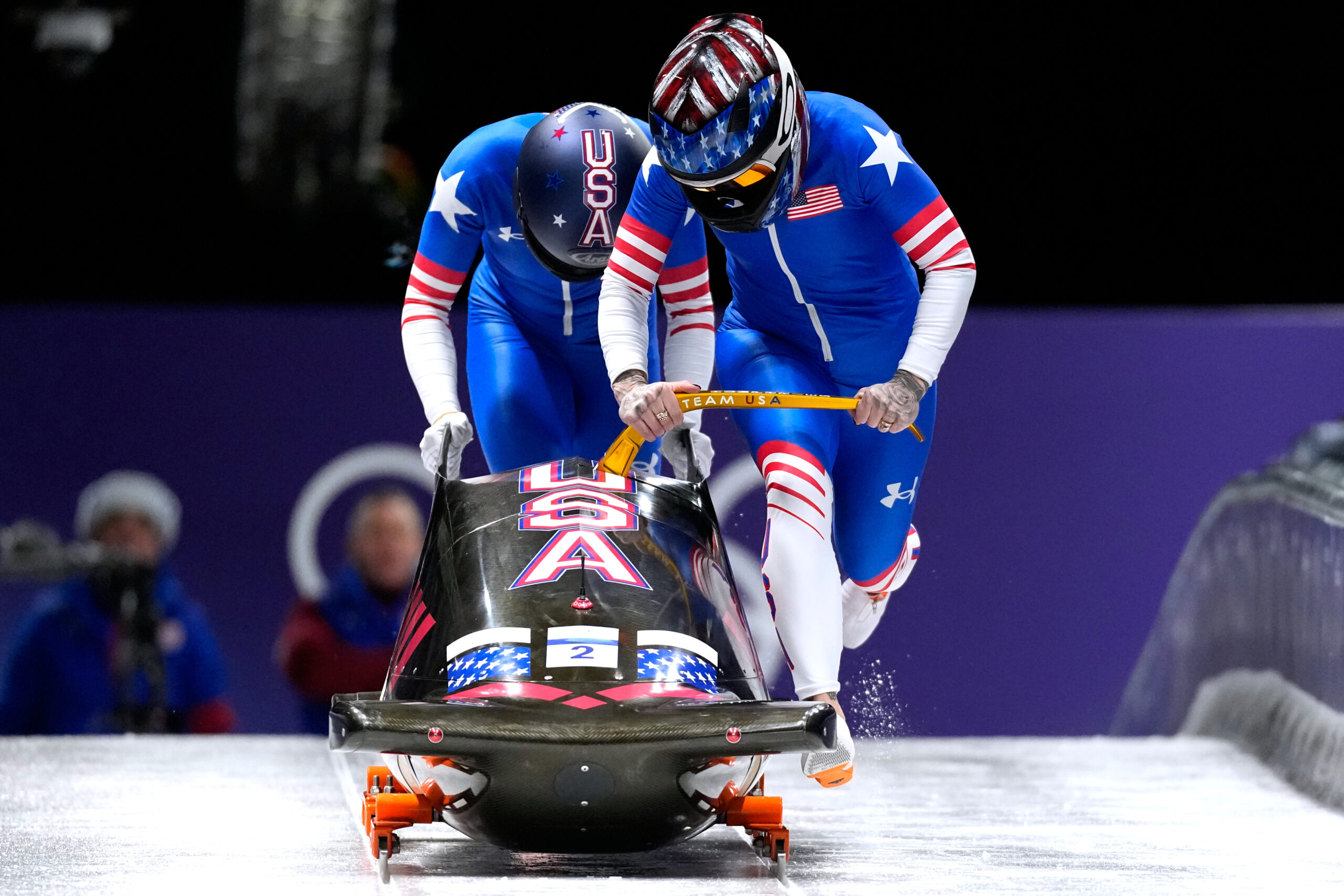
Americans Kaillie Humphries and Jasmine Jones were in third after Friday’s first two runs. Kaysha Love and Azaria Hill were in fifth, while monobob champion Elana Meyers Taylor and Jadin O’Brien were in 12th.
NBC has the first run live at 1 p.m. and the second run live at 3:05 p.m.
Kaillie Humphries and Jasmine Jones starting one of their bobsled runs in the first rounds on Friday.
Then there’s speedskating’s mass start, with Jordan Stolz in the men’s event going for his fourth medal in Milan. It’s an unusual 6,400-meter distance, 16 laps of the oval, and Stolz has admitted it’s “more like a bonus” for him. But it’s certainly a show, because as the name implies, it gets very crowded.
Instead of the usual two skaters on the track, the mass start has a lot of them all at once. The top eight finishers in each semifinal advance to the final. Coverage of the finals starts at 9 a.m. on USA Network, then moves to NBC at 10 a.m. when the network comes on air for the day.
As a general rule, our schedules include all live broadcasts on TV, but not tape-delayed broadcasts on cable channels. We’ll let you know what’s on NBC’s broadcasts, whether live or not.
NBC
10 a.m.: Speedskating — Men’s and women’s mass start finals
1:30 p.m.: Freestyle skiing — Women’s halfpipe final
2:55 p.m.: Figure skating — Gala
3:15 p.m.: Bobsled — Two-woman final run
3:50 p.m.: Back to the figure skating gala
4:30 p.m.: Freestyle skiing — Mixed team aerials (delayed)
5:15 p.m.: Bobsled — Four-man first and second runs (delayed)
8 p.m.: Prime time highlights including bobsled, freestyle skiing, speed skating, and figure skating
11:30 p.m.: Late night highlights including bobsled, speed skating, and freestyle skiing
USA Network
4 a.m.: Bobsled — Four-man, first run
4:45 a.m.: Freestyle skiing — Mixed team aerials final
6:10 a.m.: Cross-country skiing — Men’s 50km
7:30 a.m.: Ski mountaineering — Mixed relay final
8:15 a.m.: Biathlon — Women’s 12.5km mass start
9 a.m.: Speedskating — Men’s and women’s mass start finals
9:30 a.m.: Curling — United States vs. Canada women’s bronze medal game (joined in progress)
2:40 p.m.: Ice hockey — Finland vs. Slovakia men’s bronze medal game
CNBC
1:05 p.m.: Curling — Switzerland vs. Norway bronze medal game
How to watch the Olympics on TV and stream online
NBC’s TV coverage will have live events from noon to 5 p.m. Philadelphia time on weekdays and starting in the mornings on the weekends. There’s a six-hour time difference between Italy and here. The traditional prime-time coverage will have highlights of the day and storytelling features.
As far as the TV channels, the Olympics are airing on NBC, USA, CNBC, and NBCSN. Spanish coverage can be found on Telemundo and Universo.
NBCSN is carrying the Gold Zone whip-around show that was so popular during the Summer Olympics in 2024, with hosts including Scott Hanson of NFL RedZone. It used to be just on Peacock, NBC’s online streaming service, but now is on TV, too.
Every event is available to stream live on NBCOlympics.com and the NBC Sports app. You’ll have to log in with your pay-TV provider, whether cable, satellite, or streaming platforms including YouTube TV, FuboTV, and Sling TV.
On Peacock, the events are on the platform’s premium subscription tier, which starts at $10.99 per month or $109.99 per year.
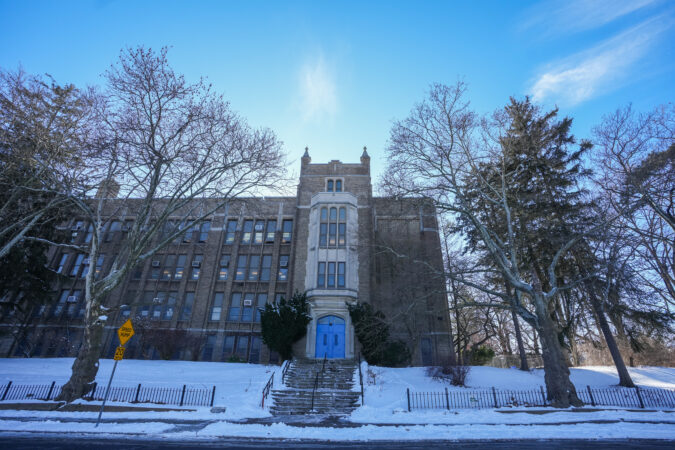
For nearly a century, the Samuel Pennypacker School has survived — a three-story brick anchor of the West Oak Lane neighborhood in Northwest Philadelphia.
Now it faces the threat of extinction.
ThePhiladelphia School District says the school’s building score is “unsatisfactory” and modernizing it would cost more than $30 million. District officials are calling for shutteringPennypacker following the 2026-27 school year, funnelingits students to nearby Franklin S. Edmonds or Anna B. Day schools— part of a citywide proposal to close20 district schools.
The recommendation, district officials say, is no reflection of the “incredible teachers, community, [and] students” at Pennypacker. Rather, it is an attempt by the district to optimize resources and equity for students.
Like many district schools, Pennypacker, which serves students in kindergarten through eighth grade, is aging and outdated, having opened in 1930. At just over 300 students, it is among the city’s smaller schools — and operating at about64% of building capacity.
Yet, it is those same qualities — its size and longevity — that represent some of its greatest strengths, say those in the school community who are not happy about the proposed closure.
It’s a school, they say, that is more than the sum of its aging parts.
On the school’s walls are pocks of chipped paint, yes, but also the colorful detritus of a small but vibrant student population: a poster composed of tiny handprints in honor of Black History Month; a “Blizzard of Positivity” — handwritten messages reading “Smile” and “Hugs” and “Help your friends when they fall.”
It’s where Wonika Archer’s children enrolled soon after the family emigrated from Guyana — the first school they had ever known.
“A lot of firsts,” Archer said. “Their first friends, their first teachers outside of their parents.”
It’s where, since 1992, Andreas Roberts’ youth drill team has been allowed to practice. The team, which includessome Pennypacker students, recently participated in its first competition andwon first place.
“Pennypacker has been very, very useful to us,” he said. “We have nowhere else to practice for the kids.”
It’s where Christine Thorne put her kids through school, her son and her daughter, and where her grandchildren now go. Around the school, they call her “Grandmama.”
“I feel as if my household is being destroyed,” she said recently.
For students, news of the imminent closure has been no less jarring.
When Janelle Pearson’s fourth-grade students learned recently that their school was poised to be shuttered under the district’s plan, they took it as a grim reflection on themselves.
“It makes them feel like, ‘What did we do wrong that they want to close our school?’” said Pearson, who has taught at Pennypacker for abouta decade. “That’s the part that tugs at your heart.”
Unwilling to go down without a fight, the fourth graders resolved to do what they could. Soon, a poster took shape, in marker and crayon, a series of pleas addressed to Philadelphia Superintendent Tony B. Watlington Sr.
“Pennypacker is our home.”
“Don’t uproot our education.”
“Our neighborhood depends on this school!”
The poster was presented to district officials earlier this month at a community meeting held in the school’s wood-seated auditorium.
At that meeting, representatives from the district did their best to explain the reasoning for the proposed closures. They presented a tidy PowerPoint and talked of student retention and program alignment, of building capacity and neighborhood vulnerability scores.
It stood in stark contrast to the parents and teachers and staffers who, one by one, held a microphone and spoke of love and family and community, of teachers and staffers who routinely went above and beyond to make their children feel safe. To make them feel special.
“It’s not just about a building,” said Richard Levy, a onetime Pennypacker teacher who now works at St. Joseph’s University. “The challenges here aren’t reasons to close the school — they’re reasons to strengthen it.”
Whether their appeals might affect the district’s decision remains to be seen. Other schools in the district slated for closure have mounted efforts of their own, and, despite a recent grilling by City Council members, it seems all but certain that several schools will ultimately shutter.