Tag: topic-link-auto

  • Like the 2025 Eagles’ offense, Philly’s 2026 snow response has been underwhelming | Shackamaxon

    Like the 2025 Eagles’ offense, Philly’s 2026 snow response has been underwhelming | Shackamaxon

    This week’s Shackamaxon covers slow snow removal, political incentives, and whether politicians should be able to hedge their electoral bets.

    Snow-go zones

    When the news came through that Philadelphia schools would finally be open on Thursday, the Pearson household cheered. Between some brutal stomach bugs, the Christmas holiday break, in-service days, and the snow, it had felt like my older two children had barely spent any time in class since Thanksgiving. While I’m a strong advocate for snow days, I’m less enthusiastic about snow weeks. For many, the failure to open schools for three days crystallized their frustrations with the way the city handled the weekend onslaught of snow, sleet, and ice.

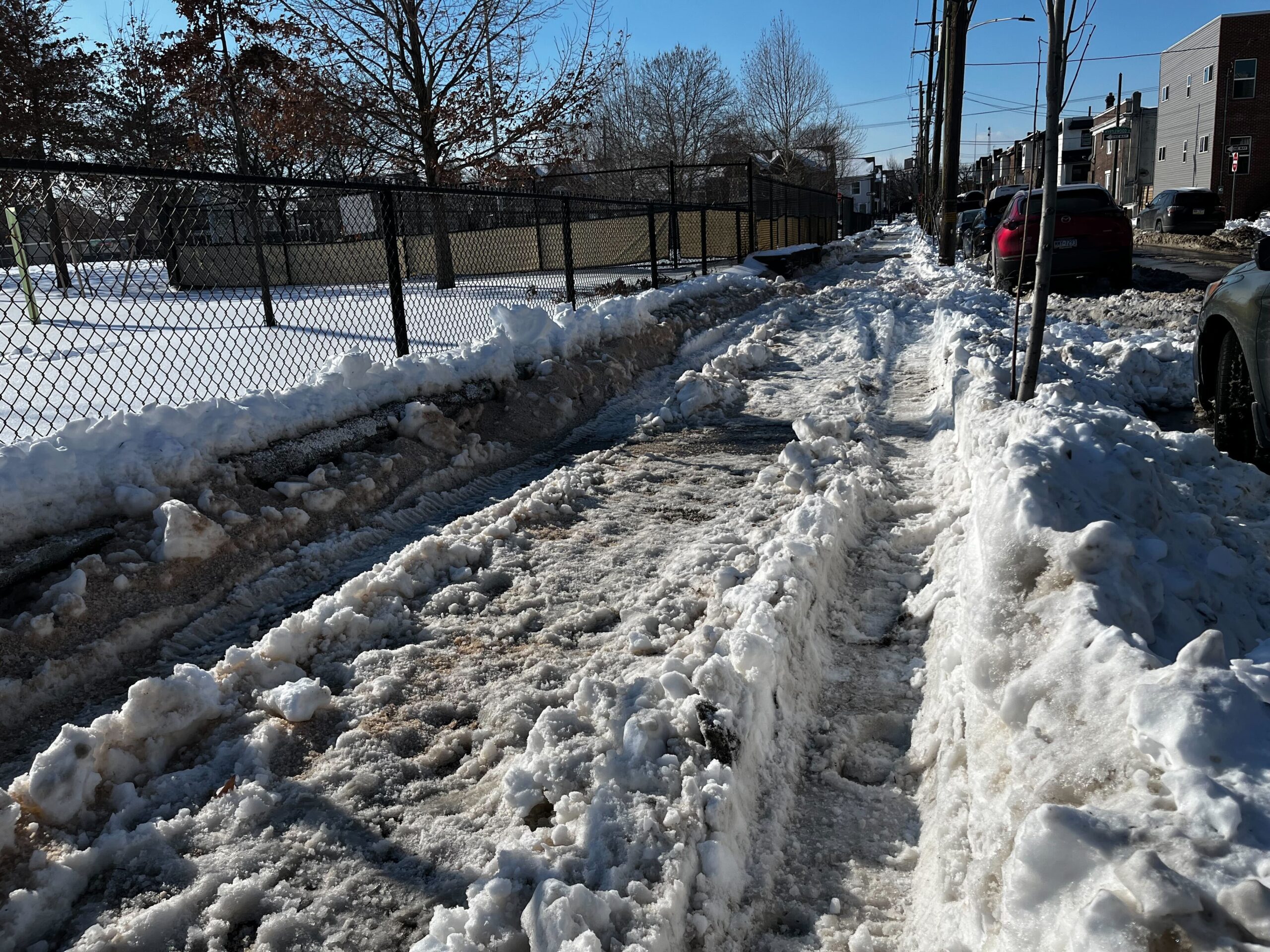
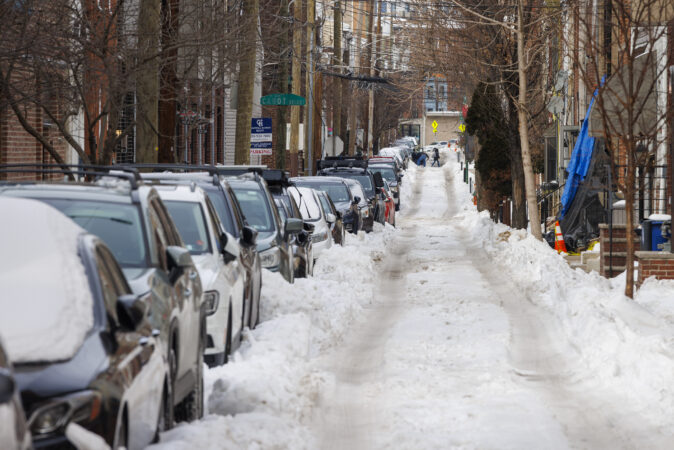
    TV news and social media are filled with angry residents. Many small streets remain wholly unplowed. Getting on the bus often requires climbing over ice piles. Many feel Mayor Cherelle L. Parker and her team did not adequately prepare for a weather event that everyone knew was coming. One reader even asked me if Carlton Williams, the city’s director of Clean and Green Initiatives and the point person for plowing, was Parker’s version of overmatched Eagles offensive coordinator Kevin Patullo.

    According to contemporary Inquirer reporting, more than 90% of city streets were plowed and passable after a large ice storm in 2016. It is hard to make a direct comparison, but I would be surprised if we were anywhere close. I asked Joe Grace, the mayor’s head of communications, if the city had anyone available to explain any unique challenges this year, but he did not respond.

    Of course, Philadelphia is hardly the only city to struggle with this storm. Washington residents are furious with their city’s snow response, schools across the state of Maryland are still closed, and cities in New Jersey are also struggling to remove the snow and ice. The freezing cold temperatures mean the snow piles are sticking around, rather than melting, and the accumulation is both heavy and frozen solid, making shoveling a difficult process.
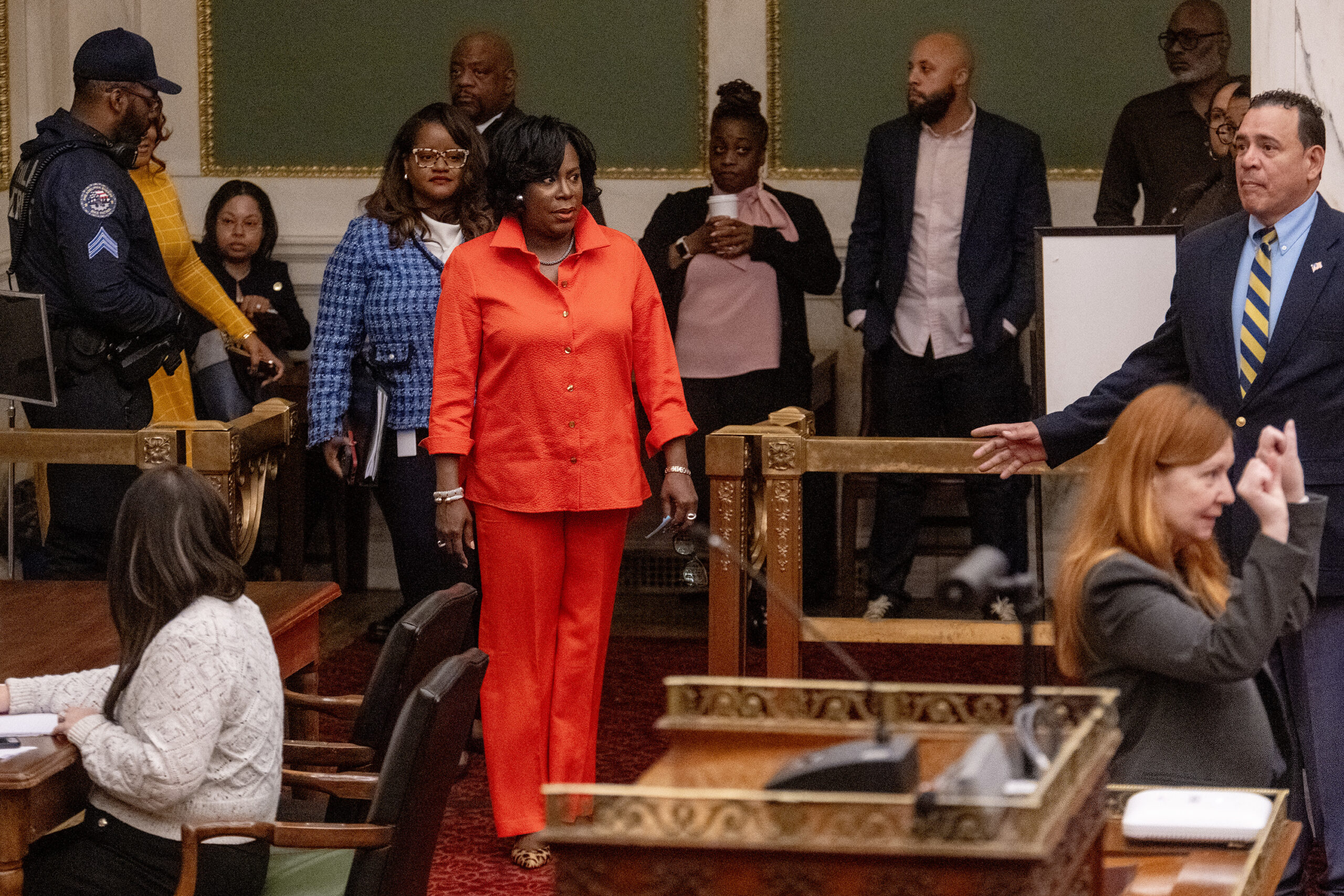
    Mayor Cherelle L. Parker arrives in Council chambers in March.

    A matter of incentives

    The snowfall, and the attendant consternation, is a good way to explain one of my key beliefs about city government: When the mayor disagrees with City Council, the mayor is often right. This isn’t a statement about any particular mayor or councilmember, but rather the different incentives for each office.

    When things go bad in a way that affects everyone, it’s the mayor who gets the blame. While many residents may vent to their district councilmember about the cleanup effort, most understand legislators aren’t in charge of plowing. In the private sector, employers will often talk about “key performance indicators.” For cities, that means things like crime reduction, trash collection, snow removal, and effective schools — which are all under mayoral control.

    With a two-term limit and competitive elections for each vacancy, mayors also have more direct accountability. People know who the mayor is, even if they don’t typically vote in local elections. If you are reading this column, you probably know who your district councilmember is, but around half of your neighbors likely don’t.

    Meanwhile, the things Council gets blamed for, and thus focuses on, tend to be more picayune. Sometimes, the body makes sweeping policy changes based on the testimony of just a few outspoken residents, who themselves often represent a hard-line and unrepresentative “not in my backyard” attitude. This approach leads to a concentration of benefits and the diffusion of costs.

    One former staffer told me councilmembers tend to see themselves as their constituents’ lawyer, rather than agents of systemic change. With challenges rare and vacancies even rarer, members have little incentive to take on new perspectives or alter their approach. Instead, they tend to dance with the ones who brung ‘em. This is particularly acute for members who represent districts, who are a majority of Council.

    The one move that tends to refocus a councilmember’s attention is becoming mayor.

    Parker herself is a great example of this phenomenon. As a district councilmember, she was tough on new development. As mayor, Parker has become a cheerleader for it. That’s because while individual projects may lead to a surge in complaints, they also help the city pay its bills, employ skilled workers, and house residents. The city’s chief executive, no matter who they are, is always likely to side with policy choices that have widespread public benefit because it is in their interest.
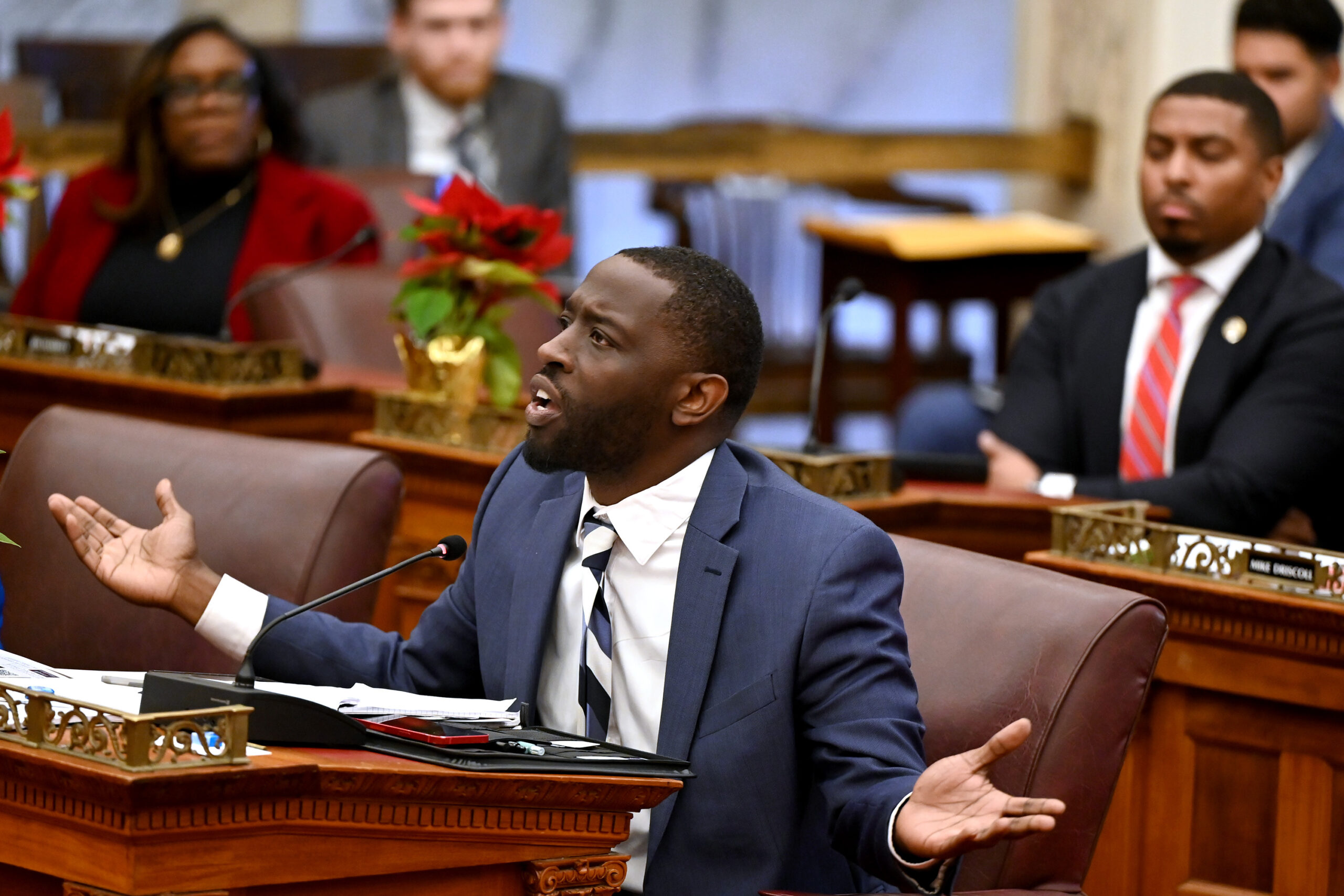
    Councilmember Isaiah Thomas in chambers as City Council meets in December.

    Resign to run reforms

    Perhaps lost in the ice removal and “Remove ICE” controversies is an effort from At-Large City Councilmember Isaiah Thomas to reform Philadelphia’s “resign to run” provision. This rule prevents city employees from running for political office without first quitting their day job, including elected officials. Thomas told me he’d like to see the proposed charter change put to the voters this year, perhaps as early as the May primary.

    In the past, efforts to change or eliminate the provision have failed, in part because of an understandable resentment of politicians getting to run for higher office on the public dime. Still, just like debates between mayors and councilmembers, it is worth looking at what kind of behavior this rule incentivizes.

    While the current crop of councilmembers is quite new, that hasn’t always been the case. Growing up, the joke was that people only left Council for three reasons: they retired, they went to jail, or they ran for mayor. The last member of Council to earn a political promotion outside of City Hall was Lucien Blackwell, who won a special election to replace Bill Gray in Congress all the way back in 1991.

    Both of Philadelphia’s current U.S. representatives benefited from holding elected office in Harrisburg, where this provision doesn’t exist. Could Brendan Boyle, famously the son of a janitor, have run for Congress if he had to resign his seat in the state House to run? Probably not.

  • Some restaurateurs are coping with rising food prices by charging you less. Here’s how that works.

    Some restaurateurs are coping with rising food prices by charging you less. Here’s how that works.

    Restaurant diners are eating less, ordering fewer drinks, skipping dessert, and, in many cases, dining out less often altogether.

    For restaurants, however, the cost of doing business has not come down. Labor prices are up. So are food prices, particularly beef. Rents continue to climb. But the old solution — raising menu prices — has become increasingly risky as owners worry about alienating customers who are already cutting back.

    Korean tacos at Harvest Seasonal Grill are made with the trimmings of New York strip steak.

    This was happening at Harvest Seasonal Grill, a farm-to-table bar-restaurant with eight locations between Lancaster and Moorestown. “Every time check averages went up, guest counts went down,” said founder Dave Magrogan. “Revenue stayed flat, but we were serving fewer people.”

    Rather than raising prices further or shrinking portions, Harvest moved in the opposite direction last summer. First, the restaurants added a lower-priced, three-course supplemental menu, which Magrogan said caught customers’ attention.

    A New York strip steak with roasted potato, haricot verts, and cabernet reduction at Harvest Seasonal Grill.

    Then last fall, Harvest cut prices across the board while tweaking dishes to eliminate frippery like microgreens and most garnishes, which Magrogan said customers pushed to the side of the plate anyway.

    The seared scallops had to go. As recently as a few years ago, Harvest offered four New Bedford scallops — the picture-perfect, 10-to-a-pound “U-10” beauties — atop a pool of risotto for $34. When the wholesale price began creeping up, Harvest bumped it to $38. When another price increase took it to $43, Magrogan said, “guests complained: ‘Four scallops for $43? I don’t see the value.’”

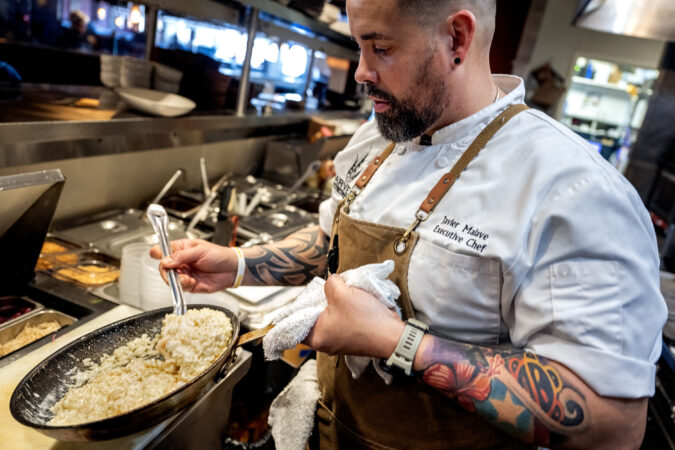
    Harvest chief operating officer Adam Gottlieb said the company went back to its seafood supplier, who offered scallop pieces — the same scallops, though broken during harvesting — for about half the price. “Instead of putting these seared scallops on top of the dish, we sear the pieces, fold them into the risotto, and make a shrimp and scallop risotto that we can offer for $34 instead of $42,” Gottlieb said. “Guests like it more, and it sells for less.”

    Harvest also changed its prime steak. “For a while, we were buying individually cut steaks from a big farm operation with a great story behind it [Niman Ranch],” Gottlieb said. “But the prices kept climbing. We found a purveyor that sources all-Pennsylvania prime beef, and now we’re bringing in New York strip loins instead of individually cut steaks. By buying whole loins by the case, we’re able to lower the cost of the dish and use the byproduct for other menu items.”

    Harvest’s across-the-board price drop was scary at first, Magrogan said. Check averages dropped from $44 to $36 while guest counts remained flat.

    But then, word spread of the lower prices. Traffic is up 10% to 14% year over year while check averages have crept back up into the high-$30s, Magrogan said. “Revenue is up. Profitability is up. And we didn’t sacrifice quality.”

    Restaurateur Daniel McLaughlin (left) watches sous chef Silvestre Rincon break down beef for tacos and other dishes at Mission Taqueria.

    At Mission Taqueria, a second-floor cantina above Oyster House near Rittenhouse Square, owner Daniel McLaughlin has done his own version of what he calls “menu math,” weighing customer psychology against volatile ingredient costs. Like every owner of a Mexican restaurant, he accepts the yo-yo of avocado prices: When they’re reasonable, he’s doing well; when they’re high, he must absorb a loss.

    Tacos, the menu mainstay, he said, are especially tricky. Diners have firm price expectations, regardless of what the ingredients actually cost — even as beef prices are up by double digits in the last year.

    Restaurateur Daniel McLaughlin talking to customers at Mission Taqueria.

    At its opening a decade ago, Mission charged $14 for two carne asada tacos. They’re now $18 — a 29% rise, but below the estimated 47% inflation over that time.

    “Carne asada was our top-selling taco last year, but you can only charge so much for a taco,” McLaughlin said. “

    Each taco has 3 ounces of beef. “The same portion of protein somewhere else, like in a steakhouse served as an entrée, would be totally justifiable at $28 or $32,” he said. “But because it’s in a tortilla, people flinch.”

    To keep costs in check, McLaughlin and his chefs rethought the beef. Mission previously used sirloin for its carne asada but last year switched to chuck roll, a cut from the shoulder. “It actually eats better as a taco,” he said.

    The kitchen still serves seared steak as an add-on for salads, but now economizes by buying whole sides and breaking them down. Aside from the chuck roll, other cuts are used for slow-cooked dishes like barbacoa and birria.

    Korean tacos get a shake of seasoning at Harvest Seasonal Grill.

    The upshot: Mission is charging less for carne asada tacos, relatively speaking, but is making a bit more money. And traffic counts are similar.

    The menu engineering around beef trimmings has factored into Harvest’s moves, as well. Some finds its way atop the chain’s flatbreads, and even becomes the centerpiece of a new dish, Korean-style tacos. “It looks impressive, and it’s become one of our most popular items,” Gottlieb said.

    “The labor part isn’t as complicated as it sounds,” Gottlieb said. “Kitchen work has always been about minimizing waste and being smart with product.”

    A big part of the changes was to make Harvest feel accessible again, Gottlieb said. “I said to Dave, ‘I’m a middle-class guy, and I can’t afford to eat at Harvest as much as I’d like right now. It’s $100 for two people, and I can’t do that on a regular basis.’ Before the price increases, you could get in and out for about $67. The goal was to get back to that — to stop being a special-occasion restaurant and become a place people could think about for regular dining.”

    Magrogan said: “The goal is to serve more people, not fewer. You can’t price yourself out of relevance. If guests feel taken care of, they come back — and that matters more than squeezing every last dollar out of a single check.”

  • One year of inspections at Thomas Jefferson University Hospital: November 2024 – October 2025

    One year of inspections at Thomas Jefferson University Hospital: November 2024 – October 2025

    Thomas Jefferson University Hospital was cited by the Pennsylvania Department of Health in the last year for failing to keep a patient from setting fire in their hospital bed, turning away a person who came to the emergency department, and neglecting to monitor a patient’s vital signs.

    The incidents were among nearly three dozen times health department inspectors visited Jefferson Health’s flagship hospital in Center City to investigate potential safety violations between November 2024 and October 2025.

    Here’s a look at the publicly available details:

    • Dec. 3, 2024: Inspectors visited for a monitoring survey and found the hospital was in compliance.
    • Dec. 3: Inspectors followed up on a citation from August 2024 and found the hospital was in compliance. The hospital had been cited for failing to properly document details from cardiac monitoring for a patient with septic shock.
    • Jan. 24, 2025: The hospital was cited with immediate jeopardy, one of the state’s most serious warnings and a sign of potentially life-threatening safety problems, after a patient suffered first- and second-degree burns in their room. Inspectors found that the patient had attempted to light a cigarette while receiving treatment that involved supplemental oxygen, which can cause materials near it to catch fire. Inspectors found that Jefferson staff had failed to check the patient for smoking paraphernalia and educate them about no-smoking rules, as required by hospital protocol. The hospital posted more “No Smoking” signs, retrained staff, and updated its policies requiring smoking screening for all patients.
    • Jan. 30: Inspectors came to investigate a complaint but found the hospital was in compliance. Complaint details are not made public when inspectors determine it was unfounded.
    • Feb. 3: Inspectors came to investigate a complaint but found the hospital was in compliance.
    • Feb. 6: Inspectors came to investigate a complaint but found the hospital was in compliance.
    • Feb. 11: Inspectors came to investigate four complaints but found the hospital was in compliance.
    • Feb. 11: The Joint Commission, a nonprofit hospital accreditation agency, renewed the hospital’s accreditation, effective November 2024, for 36 months.
    • Feb. 12: Inspectors came to investigate a complaint but found the hospital was in compliance.
    • Feb. 14: Inspectors came to investigate two complaints but found the hospital was in compliance.
    • March 11: The hospital was cited for violating rules that require emergency departments to evaluate all patients who arrive seeking care. Inspectors found that a person walked into the emergency department saying they needed to use the restroom, and was asked to leave because the hospital does not have a public restroom. The patient said they were having an emergency and planned to check into the emergency department, but were still told to leave. Inspectors found that the dismissal violated Jefferson’s emergency department policies designed to comply with the federal Emergency Medical Treatment and Labor Act (EMTALA) — anti-patient dumping laws that require hospitals to evaluate and stabilize any patient who seeks emergency treatment. Administrators retrained staff on EMTALA protocol and updated their system for recording security incidents to better document when a provider is called by security to assess a patient who has a non-medical request, such as needing to use the restroom.
    • April 15: Inspectors followed up on the immediate jeopardy citation from January and found the hospital was in compliance.
    • April 29: Inspectors came to investigate a complaint but found the hospital was in compliance.
    • May 5: The hospital was cited for failing to follow protocol designed to prevent patient falls. In December 2024, an 80-year-old patient with impaired vision was admitted to the emergency department and given a drug known to cause patients to need to urinate more often. Inspectors found that the patient was initially evaluated to have a low risk of falling, but was not re-evaluated after being prescribed the medication that could increase how often they needed to get up to use the bathroom and their risk of falling. In response to the complaint, which was reported in December 2024 and finalized in May 2025, hospital administrators retrained staff on fall risk protocols and said they would monitor patient charts.
    • May 28: Inspectors came to investigate a complaint but found the hospital was in compliance.
    • May 30: Inspectors came to investigate a complaint but found the hospital was in compliance.
    • Aug. 14: Inspectors came to investigate a complaint but found the hospital was in compliance.
    • Aug. 19: Inspectors came to investigate a complaint but found the hospital was in compliance.
    • Aug. 19: The hospital was cited for failing to properly monitor a patient’s vital signs. Inspectors found that a provider had ordered continuous pulse oximeter monitoring for a patient, and instructions to report when the blood oxygen levels dropped below 90%. A staff member assigned to the patient could not find a pulse oximeter machine for the patient and told inspectors that they reported the issue to another provider, “but she never got back to me.” Hospital administrators acquired more pulse oximeters, retrained staff on medical supplies protocol, and said they would monitor patient hand-offs between nursing shifts.
    • Oct. 3: Inspectors came to investigate a complaint but found the hospital was in compliance.
  • Letters to the Editor | Jan. 30, 2026

    Letters to the Editor | Jan. 30, 2026

    ICE Out

    Mayor Cherelle L. Parker and everyone on City Council must urgently support the “ICE Out” legislative package introduced by Councilmembers Kendra Brooks and Rue Landau, which would restrict local cooperation with federal agents. We’ve all watched the horrific scenes playing out in Minneapolis, and while Mayor Parker has made it clear that she wants to avoid antagonizing the White House, the fact is that laying low has never been the right response to fascism. We know how spectacle-focused Donald Trump is, so with the nation’s 250th anniversary celebrations coming to Philadelphia this year, it’s only a matter of time before the president turns his gaze on our city and tries to make an example of our community. Let’s prepare now to protect our neighbors in whatever ways we can — including by passing the “ICE Out” bills.

    Melina Blees, Philadelphia

    Getting the job done

    The critical role of immigrant workers in healthcare is underscored by your recent article about the death of nurse Muthoni Nduthu, the nurse who perished with two others in an explosion at Silver Lake Nursing Home in Bucks County.

    Ms. Nduthu and her family emigrated from Kenya to Philadelphia two decades ago. Like many immigrants — some, yes, undocumented — she worked long hours and put herself through school to become part of the huge share of foreign-born workers in the healthcare sector — 28% of the overall direct care workforce for long-term care, and 32% of workers in home care settings, according to a 2025 analysis by KFF.

    What would the steadily growing U.S. aging population do without these men and women?

    As a nurse myself, and recently having family members in other rehabilitation centers, I can attest to the important roles of immigrants and people of color in providing care. It is tough work, with a median annual wage of $16,800, according to a brief prepared for the SCAN Foundation. Consequently, there isn’t a clamor for these jobs by native-born Americans.

    The Trump administration’s immigration policies and U.S. Immigration and Customs Enforcement deployments are having a chilling effect on immigrants seeking employment in healthcare — something we absolutely don’t need as our aging population demands more care.

    We need more people committed to helping others like Nduthu. Let’s honor her memory by welcoming newcomers to our country, thoughtfully reforming immigration laws, and realizing that adequate healthcare can’t be achieved without immigrants.

    Pat Ford-Roegner, Glen Mills

    Blaming the victim?

    I’ve been increasingly frustrated with Jonathan Zimmerman’s columns, which strike me as not meeting the moment we live in. His most recent, “On guns, everyone’s a hypocrite,” is a prime example of what I would describe as utopian thinking. I agree that “Guns are a scourge on America.” But I would urge him to consider: What exactly does it accomplish to publicly state that Alex Pretti “carrying a gun certainly made it more likely that he would [die]”? Doing so reinforces the statements of the Trump administration, aiding in providing cover to murderers. Far better to highlight the hypocrisy of the administration abandoning its Second Amendment principles out of convenience. And we need not look far for a counterexample, Renee Good, who was unarmed and yet was still murdered.

    I would love to live in a world in which simply repeating over and over the data and history of the gun debate brought an end to gun violence. But we’ve been doing that for decades now. We don’t live in the same world we did before Donald Trump took office. In my opinion, the moment calls for realpolitik, not idealism. To appropriate the National Rifle Association’s oft-repeated oversimplification: Guns didn’t kill Alex Pretti. ICE agents did.

    Michael Fox, Philadelphia

    . . .

    The both-sides-ing on display in Jonathan Zimmerman’s column, “On guns, everyone’s a hypocrite,” is pathetic and counterproductive.

    Not every issue needs to be seen from both sides. When one “side” shows up to a protest and murders someone with a gun, and the other “side” shows up to a protest and gets murdered while armed.

    Zimmerman is missing the point that the left’s defense of gun ownership is in response to our government lying to us and saying Alex Pretti posed a threat as a retroactive excuse for the actions of their fascist goon squads, while video evidence proved otherwise. Maybe he wants to write an article about gun control, but this framing is completely missing the point; it is victim-blaming garbage.

    Timothy Burgess, Philadelphia

    Somalis targeted

    I was a U.S. Peace Corps volunteer in Somalia and had the opportunity to experience the rich Somali culture. I am appalled and ashamed to have Donald Trump treat the Somali population of the United States with disdain and disrespect.

    Unfortunately, this attitude has spread to U.S. Immigration and Customs Enforcement members in Minnesota. It is reported that ICE is stopping people and asking, “Are you Somali?” as if that were a crime. In that climate, it’s no wonder Somali American U.S. Rep. Ilhan Omar found herself being attacked during a recent town hall she was hosting there.

    Seventy-three percent of Somali immigrants are naturalized citizens. In Minnesota, this figure is even higher, with about 95% of the state’s Somali population holding U.S. citizenship.

    No people deserve to be called “garbage.” I do not believe this reflects the character or convictions of most Americans. Most of us are descended from immigrants.

    Our country is founded on the belief that all people have the right to due process and to be treated with respect.

    We need to depend on our government of laws and judicial review to protect our rights, including those of the Somali Americans among us. Raise your voices in protest. Write the president and your members of Congress. Do something to help keep our democracy alive.

    Lally Turner, Philadelphia

    History, past and present

    George Santayana is quoted as saying, “Those who cannot remember the past are condemned to repeat it.” I think for our times, we need a slight variant of this saying. This seems especially true in light of the Trump administration’s decision to remove the exhibit at the President’s House Site about the nine enslaved people who were held captive by George Washington. Please ask yourself, “Why does this administration not want us to remember them?” I now believe the Santayana saying should read, “Those who seek to erase the past intend to repeat it.”

    Beware, my fellow citizens: If these nine — Austin, Christopher Sheels, Giles, Hercules, Joe Richardson, Moll, Oney Judge, Paris, and Richmond — can be erased, who is next?

    Deborah Zubow, Philadelphia

    Man in the mirror

    I read the recent article about Donald Trump supporters in Northeast Pennsylvania having “voter’s remorse” after casting ballots for Trump. Sorry, boys and girls, you get no sympathy from me. Trump is exactly who he has always been, and your failure to see that in the 2024 election is nothing more than an indictment of you. One woman interviewed made the incredible statement that Trump was “honest.” Give me a break. I have always maintained that Trump himself is only part of the equation, the “frontman,” if you will. The real problem is represented by the people who believe, support, and back him up. They say they don’t particularly like him, but they like his “policies.” What policies might they be? Attempting to steal Greenland? Already having stolen Venezuela’s oil? Insulting allies? Threatening NATO and its members? Attempting to rewrite the parts of our history he doesn’t like? Failing to reduce inflation as he promised? Failing to end the Ukraine war as he promised? Killing American citizens while his ICE squad rounds up immigrants? The list goes on and on.

    I am anything but a liberal, having never voted for a Democrat for any office. I’d go so far as to say I support some of Trump’s policies, but he simply can’t get anything right, let alone keep his mouth shut or control his “Twitter finger.” If Trump doesn’t like it, everyone else be damned. A decent parent wouldn’t accept this kind of behavior from a 6-year-old.

    Enough already. Trump is what he has always been: a pompous, egotistical, selfish, childish buffoon — the same guy voted into office by those people interviewed for your article. If their standards revolve around the likes of Trump, they need to do the country a favor. Stay home in November and then again in 2028. Let the rest of us try to fix the problem you helped to create.

    Peter Moore, Jeffersonville

    Join the conversation: Send letters to letters@inquirer.com. Limit length to 150 words and include home address and day and evening phone number. Letters run in The Inquirer six days a week on the editorial pages and online.

  • Horoscopes: Friday, Jan. 30, 2026

    ARIES (March 21-April 19). You’ve fantasized about your future, and now that wishful thinking is in the realm of possibility. Go forward. The next steps still take a bit of courage, just because they are new. But they aren’t nearly as risky as you once imagined.

    TAURUS (April 20-May 20). A relationship may still be undefined, but there’s freedom in the lack of definition, and furthermore, the ambiguity leaves room for imagination. Consider letting this one define itself.

    GEMINI (May 21-June 21). Don’t assume that people think and behave like you do. Lean into differences. Get curious. You’ll be around people with talents different from yours, but you have to ask to know it’s true, and ask more to find a way to work together.

    CANCER (June 22-July 22). You’ve hung your heart on a distant star, and that’s more than OK because you also have the dedication to do what it takes and the resilience to keep coming back to it in a new way until you’ve figured it out.

    LEO (July 23-Aug. 22). Your eyes are doing a lot of work today, not only taking life in but telegraphing it out, sending signals as they complete your smile or perhaps smile on their own without any help from the rest of you. Your eyes may reveal a little more than intended.

    VIRGO (Aug. 23-Sept. 22). Identity isn’t a single rigid structure; it’s layered. Some layers can shift without the core being disturbed. You can reinvent, make-over or glow-up without erasing your former self. You’ll release a role and still remain fully yourself.

    LIBRA (Sept. 23-Oct. 23). You often seem to know just the thing to say to make someone feel better or act better. Today, you can do the same thing without words. Your silent presence has a vibe, and that tells it all. Some moments just require you to hold the space.

    SCORPIO (Oct. 24-Nov. 21). You’ve learned to keep things interesting for everyone, especially yourself, because bored people tend to misbehave. It’s time to change it up again. One new location will do the trick.

    SAGITTARIUS (Nov. 22-Dec. 21). A group is becoming increasingly important to you. As you participate, you’ll learn more about its members and develop an even deeper connection. Much can be accomplished here.

    CAPRICORN (Dec. 22-Jan. 19). Your life is yours to build, but you are also aware that you’re working inside systems and structures that entrap you. Both things can be true. For now, stick with anything that adds to your fulfillment, and life will get easier.

    AQUARIUS (Jan. 20-Feb. 18). The influences you choose will be people who move in the spirit of positivity. There’s someone you know who seems doubly grateful for half the blessings. Though their accounting is unusual, it’s a beneficial math.

    PISCES (Feb. 19-March 20). Emotional truth and factual truth are different kinds of honesty that don’t always show up together. Someone might express genuine pain even if their interpretation of events isn’t precise. Understanding often requires listening for both kinds of truth.

    TODAY’S BIRTHDAY (Jan. 30). Welcome to your Year of the Living Yes. You do what lights you up. Experiences stack beautifully. You’ll receive invitations to meals, music, travel and conversations that remind you how good life feels when shared. More highlights: A move, renovation or change of scenery lifts and sharpens you. Steady financial growth helps, too. A tender relationship favorably affects your confidence and daily life. Capricorn and Gemini adore you. Your lucky numbers are: 10, 16, 35, 2 and 44.

  • Dear Abby | Relatives enter woman’s life after ignoring her for years

    DEAR ABBY: I am a 38-year-old woman with a 21-year-old daughter, “Penny.” I got pregnant at 16 and was very much alone, with little help from those around me. For a variety of reasons, I decided not to involve the father or his family. They knew I was pregnant but chose to remain uninvolved and haven’t helped in any way. I worked hard to build a life for Penny and myself, and I have remained single all this time. Her father has since passed away, but he had several other children, and his parents still live in our same small town.

    I thought my secret (and right to privacy) had been respected, but I recently found out that someone told Penny about her “other family” several years ago. On my daughter’s 21st birthday, her paternal grandma called her and told her she had a birthday gift for her. This “birthday gift” was a paternity test. Come to find out, Grandma is in poor health, and her other granddaughter was her primary caregiver, but the young woman has now moved across the country. I suspect Grandma wants Penny to assume this role.

    Penny is angry with me for not being honest about her history and angry that her grandmother, who has known about her for many years, is choosing to acknowledge a relationship only now. I am furious that they are putting my daughter in this situation. Am I wrong? How can I smooth this over?

    — SECRET’S OUT IN COLORADO

    DEAR SECRET’S OUT: Apologize to Penny for keeping the information about her father from her. Explain that you did it because the story is ugly and you hoped to spare her the pain you experienced as a teenager. Because you live in a small town, it was unrealistic to think that this kind of secret would not come to light one day. That Penny’s grandmother would introduce herself in this way was selfish and cruel, and I hope your daughter will not allow herself to become ensnared.

    ** ** **

    DEAR ABBY: I am in multiple online groups (such as academia, work, etc.) that insist on using my full first name. They require my full first name for legal reasons and do not offer an area to input the name I actually use. I know many people have far worse problems, but it gets on my nerves that everyone I interact with calls me by a formal name I have never used.

    Even when I sign my emails and texts with the correct name (which is simply cutting six letters off the end of the formal name), people still call me by my whole name. I have tried emailing, “You can just call me XXX,” but it is often ignored. It really gets under my skin.

    Is there a polite way to correct them, or must I try harder not to care? I have considered changing my name legally, but it is far more trouble than it’s worth.

    — MISNOMER IN CALIFORNIA

    DEAR MISNOMER: Because being called by a name you don’t like bothers you to the extent that you would write about it to me, my advice is to stop grinning and bearing it and MAKE the time to have your name legally changed.

  • Flyers fall 6-3 to Bruins in a game that felt doomed from the start

    Flyers fall 6-3 to Bruins in a game that felt doomed from the start

    BOSTON ― Across an arduous 82-game NHL schedule, some games are bound to be uphill battles, particularly back-to-back games on the road.

    Thursday night’s matchup against the Bruins was always going to be one of those games, even before the Flyers sat on the tarmac in Columbus due to mechanical issues — after Wednesday’s 5-3 loss to the Blue Jackets ― and were delayed arriving into Boston until past 3 a.m. It proved to be just that as the weary Flyers struggled to find their legs early, dug themselves too big a hole, and were blown out 6-3 at TD Garden.

    The opening seconds of the contest would foreshadow what would prove to be a long night, as just 14 seconds in, Boston winger Marat Khusnutdinov walked Noah Juulsen and forced Sam Ersson into a big save from in tight. Ersson would make three more athletic stops on Mark Kastelic and Sean Kuraly (x2) in the opening minutes, but the Bruins soon found a way through the Swedish netminder via his countryman, Viktor Arvidsson.

    While the Flyers were running around a bit in their own zone in the lead-up to the goal, the shot was one Ersson should have stopped, as Arvidsson didn’t get all of his one-timer from the right faceoff circle following a Casey Mittelstadt feed. But the shot still managed to trickle through the Flyers netminder’s legs to give the Bruins the lead at 9 minutes, 49 seconds of the first period.

    Before the Flyers could regroup it was 2-0 Boston, as Pavel Zacha snuck behind the Philadelphia defense to score the Bruins’ second just 41 seconds after their first. The route looked to be officially on, although Ersson made a few big saves to keep things at 2-0.

    The Flyers looked to get back into the game midway through the opening period as Nikita Grebenkin, a rare bright spot on the night, barreled into the Boston zone with speed. His initial shot was stopped by Jeremy Swayman but Christian Dvorak was there to fire home the rebound and split the deficit … at least momentarily.

    The goal would quickly be taken off the board as Boston successfully challenged for goaltender interference, with the situation room in Toronto ruling that Grebenkin’s stick, which was caught in Swayman’s equipment, impeded the goaltender from resetting and making the save. The teams would go to their respective dressing room’s with the score at 2-0.

    Flyers goaltender Samuel Ersson held off the Bruins as long as he could in a 6-3 loss.

    After a more energetic start to Period 2 from the Flyers, Boston made it 3-0 just over two minutes into the frame. Fraser Minten glided down the left wing and beat Ersson five-hole with a shot on the ice. after the Bruins had turned a Bobby Brink turnover into a transition three-on-two. The goal was another that Ersson will feel he should have stopped, especially after he had made a couple more difficult saves just prior.

    Travis Konecny, who had a hat trick Wednesday in Columbus but was a game-time decision after taking a puck off the foot, got the Flyers on the board less than a minute later, thanks to great hustle from Grebenkin and Dvorak, which forced a Bruins turnover in their own end. Konecny corralled the loose puck alone in the slot and beat Swayman clean for his 21st of the season.

    The Flyers then earned a power play and made a bit of a push, only for Boston to increase its lead back to three goals through Mittelstadt. The former Buffalo Sabre flipped a backhander over a sprawling and helpless Ersson, who had just robbed Andrew Peeke on the initial shot, and just under the bar. Tanner Jeannot then would make it 5-2 Boston with a tip on a Peeke point shot at 18:40 of the second. Ersson, who allowed five goals on 20 shots, suffered a lower-body injury at the end of the second period and would be replaced by Dan Vladař for the third.

    Grebenkin would finally get a well-deserved goal to wrap up the scoring in the second, hustling in to bury a rebound after Konecny had a breakaway and follow-up attempt stopped by Swayman. The Russian winger, who was the Flyers’ best forward of the night, seemed to be at the center of most of the good things the Flyers did offensively and was praised afterward by his teammates for his energy.

    With Boston well in front, the Flyers controlled most of the third period, outshooting Boston 15-7 in the frame and 36-27 for the game, but it would be for naught. The Bruins would stretch their lead to 6-2 with 3:30 remaining in the third, as Khusnutdinov found the empty net after Tocchet had thrown caution to the wind and pulled Vladař.

    Matvei Michkov would pull one back on the power play with under two minutes remaining to improve the optics on the scoreboard. Denver Barkey dug the puck loose with some good work in front and a few whacks and, after kicking the puck to his stick, found the Russian at the back post for a tap-in. The goal was Michkov’s 13th of the year, while Barkey notched his ninth NHL point in 19 games since being recalled on Dec. 19.

    But it was too little, too late for the Flyers, who dropped their third straight and fell eight points below the playoff line in the Metro and 10 behind Boston in the wildcard.

    Breakaways

    Rasmus Ristolainen, who was a game-time decision and did not take line rushes during warmups, suited up and played just under 22 minutes. He said he felt good afterward and was frustrated that he left Wednesday’s game after landing awkwardly on a puck. … The Flyers went 1-for-3 on the power play and killed off the lone Boston opportunity with the man advantage. … The Flyers have Friday off and will return to action Saturday at 12:30 p.m against the Los Angeles Kings at Xfinity Mobile Arena (NBCSP).

  • Sean Mannion needs to be a Jalen Hurts whisperer. Play-calling is only part of that.

    Sean Mannion needs to be a Jalen Hurts whisperer. Play-calling is only part of that.

    It almost surely did not escape Jeffrey Lurie’s notice that his offense turned out OK the last time he hired a Packers quarterbacks coach.

    It shouldn’t escape ours, either.

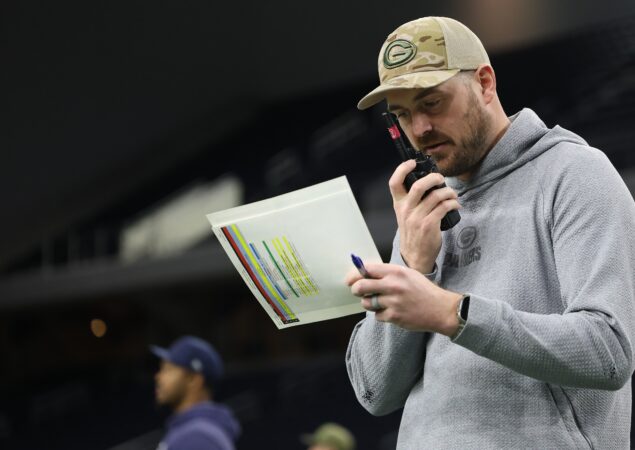
    Sean Mannion may not be the next Andy Reid. The Eagles didn’t hire the 33-year-old Green Bay assistant with the thought that he would become Reid. But Reid was Mannion at one point in time: an under-the-radar position coach without play-calling experience who was hired for a big boy job well ahead of schedule. This was back when Mannion was six years old, of course.

    Has it really been 27 years?

    It has. Mannion and Reid don’t have much of a connection apart from having both sat at the same desk (figuratively … although, knowing Lambeau Field, maybe literally, too). Matt LaFleur is not Mike Holmgren. Sean McVay is not Bill Walsh. The lineage of Packers quarterbacks coaches who became offensive coordinators includes one Ben McAdoo. Having occupied the position is a trait neither prescriptive nor predictive. It is descriptive in one sense, though. A lack of play-calling experience should not be a deal-breaker for a team that is looking to overhaul its offensive identity.

    In fact, play-calling isn’t the thing that will determine Mannion’s success or failure as Eagles offensive coordinator. It is the thing that we will focus on, no doubt. For a variety of reasons. First, because play-calling is the only part of the job that we actually get to see. Second, because guys like Walsh and Reid and McVay (and Mike Martz, Kyle Shanahan, etc.) have led us all to believe that football games are won the same way Jimmy Woods won video games in The Wizard. Which is silly, when you stop and examine the time card. Even at 70 plays per game and a full 40 seconds between plays, an offensive coordinator spends less than an hour of his work week calling the plays. The bulk of the job is the 79 hours that precede it.

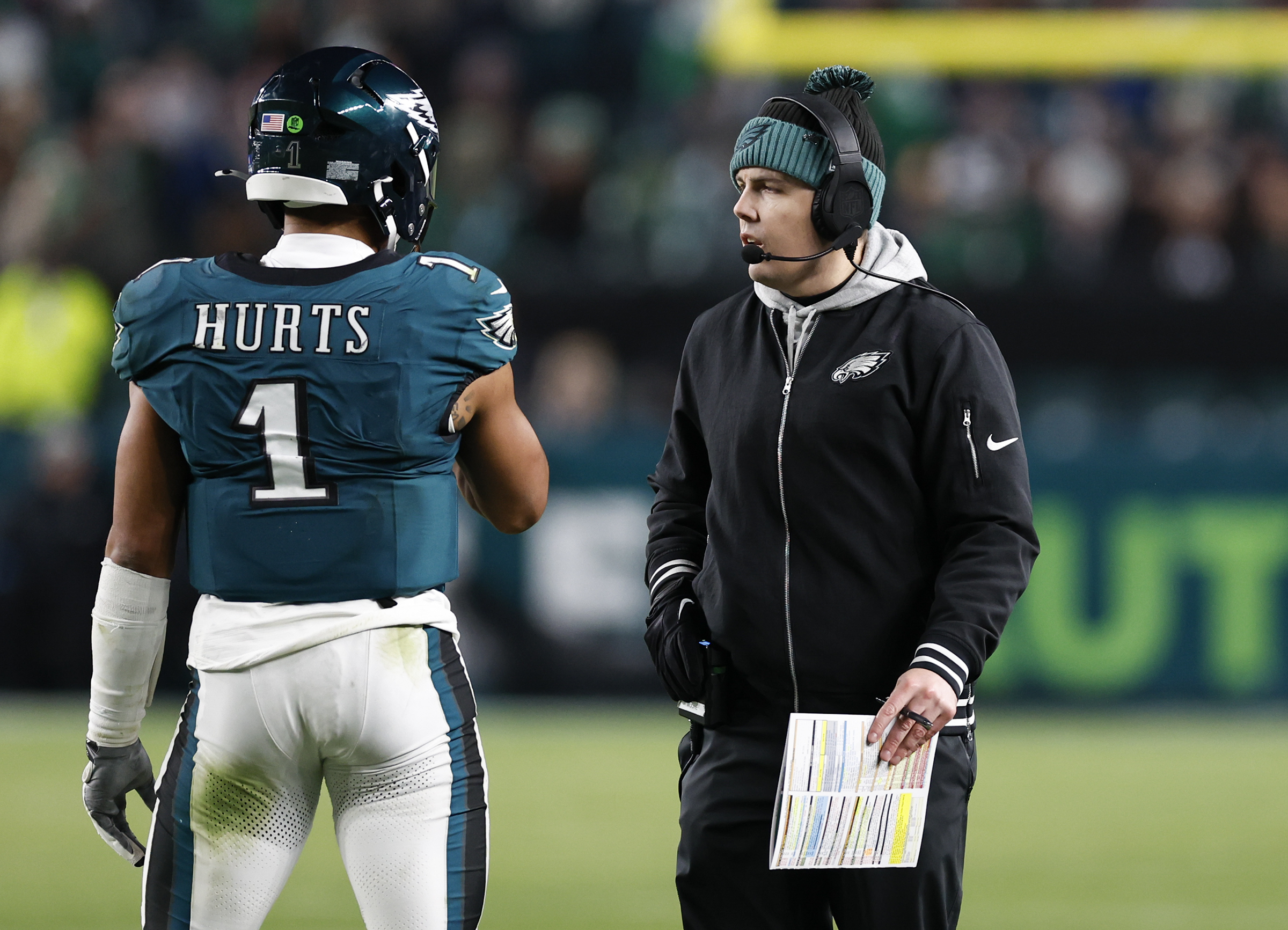
    Can Sean Mannion have the same strong working relationship with Jalen Hurts that Kellen Moore (right) experienced?

    The Eagles need Mannion to be a good coach. Jalen Hurts needs Mannion to be a good coach. Those two things are one and the same. Because Jalen Hurts is the Eagles. Where they go from here as an offense depends almost entirely on who he is as a quarterback. Rather, it depends on who Hurts can be. Who he is? That isn’t good enough. All of us saw that this season. Not all of us understood what we saw. But we saw it. Plain as unflavored yogurt.

    That’s not to say the Eagles’ disappointing 2025 campaign was all on Hurts’ shoulders. Seven months isn’t nearly long enough to transform from a player capable of winning a Super Bowl MVP to a player who simply isn’t good enough. His advocates are correct in that. Hurts would have been equally capable of winning the honor this season as he was in 2024, assuming the rest of the offense was also as capable as it had been. Therein lies the disconnect. You’ll make a you-know-what out of yourself if you’re assuming Hurts’ supporting cast will ever be as good again.

    It’s funny. Nick Sirianni’s detractors constantly portray him as the unwitting beneficiary of a world-class roster. He is the dim-witted only son bequeathed an empire, a head coach who happened to stay at a Holiday Inn Express last night. He showed up in board shorts at his interview and then rode the wave of Howie Roseman’s roster. But a roster that good doesn’t stay it for long.

    Rarely is the same rubric applied to the quarterback. No, A.J. Brown wasn’t the same singularly dominant receiver he has been, which compounded his general malaise. No, the offensive line didn’t manhandle opponents the way it had in previous seasons. Yes, Saquon Barkley was a little less dynamic than he was when he was jumping backward over erect defenders. Each of those claims is perfectly valid. As is the rebuttal: welcome to life as most NFL quarterbacks live it.

    Hurts can’t be the same as he was. He needs to be better. That’s going to take some very good coaching, provided he is no longer willing and/or capable of being the freewheeling scrambler he was in 2022. Being that player afforded Hurts the luxury of not needing to do the things that most other championship quarterbacks must do. He didn’t need to parallel process his pocket navigation, feeling pressure subconsciously while focusing downfield. He didn’t need to recognize that the deep crosser would clear before settling for the hitch in his foreground. He didn’t need to wait for a defense to man-up Brown on a vertical route to generate an explosive play.

    It’s probably time to acknowledge that Jalen Hurts’ supporting cast isn’t going to suddenly revert to its 2024 form.

    Hurts needs to do those things now. That’s the problem. Those things aren’t sustainable. Lane Johnson isn’t going to play forever. Even if he does, he won’t always be the same player. And the four guys alongside him won’t all remain healthy as consistently as he has.

    Same goes for the pass-catchers. Here’s a quick a thought exercise. In the four years since the Eagles traded a first-round pick for Brown on draft day, has any other team managed to swing a move at the position that was even 75% as impactful? The Chiefs have spent five off-seasons trying to replace Tyreek Hill. The Patriots haven’t had a receiver of that caliber since Randy Moss. A great quarterback makes the most of what he has.

    Just to reiterate: Hurts doesn’t need to be Tom Brady. He needs to be better than he was in 2025 in order to win with the supporting cast most quarterbacks have, which is the supporting cast he is likely to have moving forward. Mannion will play a significant role. His profile is intriguing.

    Nobody can understand a quarterback like somebody who has played the position. Kellen Moore was a quarterback. His quarterbacks coach was a quarterback (former NFL backup Doug Nussmeier). Shane Steichen was a quarterback. None of them were as good as Hurts. But they understood what quarterbacks see, how they process, what they need. Sirianni and Kevin Patullo were wide receivers. So were McVay and Shanahan. Again, neither prescriptive nor predictive. But we are talking about Mannion.

    Mannion is a quarterback, and he has played the position in lots of different settings, under lots of different coaches, including McVay and Kevin O’Connell, as well as Klint Kubiak and Kevin Stefanski. He has coached under LaFleur, who has won a lot of games with a quarterback (Jordan Love) who lacks a lot of what Hurts brings to the table. Mannion’s coaching profile is about as ideal as you can draw up for a guy who has only been a coach for two seasons.

    Sean Mannion understands quarterbacks because he was one… very recently, in fact.

    It is also a vote of confidence in Sirianni. The Eagles could easily have opted for a coach who possessed the play-calling experience that Patullo lacked. Jim Bob Cooter, Matt Nagy, Bobby Slowik — any would have made a fine interim-head-coach-in-waiting. Instead, they went with a coach who lacks anything close to the political capital that Moore brought to the table when they hired him to replace Brian Johnson after 2023.

    Will it work? Who knows. It is the only honest answer. All we can say: it is a sensible move. In the end, it all depends on the quarterback.

  • Philly’s school board heard pleas to halt school closings and reconsider Watlington’s facilities plan

    Philly’s school board heard pleas to halt school closings and reconsider Watlington’s facilities plan

    Meeting for the first time since Superintendent Tony B. Watlington presented his sweeping facilities plan, Philadelphia’s school board heard an outpouring of angst Thursday night from community members upset over 20 proposed school closures.

    “Closing schools ruins families and neighborhoods, especially Black, brown, immigrant and working-class communities,” said Caren Bennicoff, a veteran teacher at Ludlow Elementary in North Philadelphia, one of the schools targeted for closure. “A facilities dashboard can’t measure what a school means to children.”

    Watlington said the plan represented a “once in a lifetime, significant opportunity” for the city to modernize schools.

    Prior to the meeting, more than 50 people gathered in the bitter cold outside Philadelphia School District headquarters, waving signs and shouting into bullhorns to show their displeasure with Watlington’s proposal.

    Emily Brouder, 23, of West Philadelphia, Penn student and intern at Lankenau High School, holds a sign that says “Closing Schools Is Trash.”

    Some of the demonstrators warned that removing children from their neighborhood schools would be traumatizing to already vulnerable kids.

    “These schools are another home for these families,” said Margarita Davis-Boyer, president of the Lankenau High School Home & School Association. She said schools are a place where kids can get a meal, see a friendly face, and feel safe, especially when home may not offer the same reprieve.

    “It’s just an injustice,” she said. Lankenau, the city’s environmental magnet school, would close under the plan, becoming an honors program inside Roxborough High School.

    A strong Lankenau contingent packed both the rally and the board meeting, which happened immediately afterward.

    LeeShaun Lucas, a Lankenau senior, is upset the school might close.

    “To me, closing Lankenau doesn’t make sense,” Lucas said.

    Lankenau’s campus is unique in the city — set against a wildlife preserve and a farm, a stream, and a forest.

    Lucas has studied how to make the Schuylkill healthier by studying mussels, he said. He’s taking a dual enrollment GIS class — the only such high school in the city to offer such an opportunity, school officials believe.

    That exposure has shaped Lucas, he said.

    “I truly believe that voting to close Lankenau Environmental would be a mistake,” Lucas said. “Please vote to save Lank so that others may benefit from the type of learning that is only possible at Lankenau Environmental.”

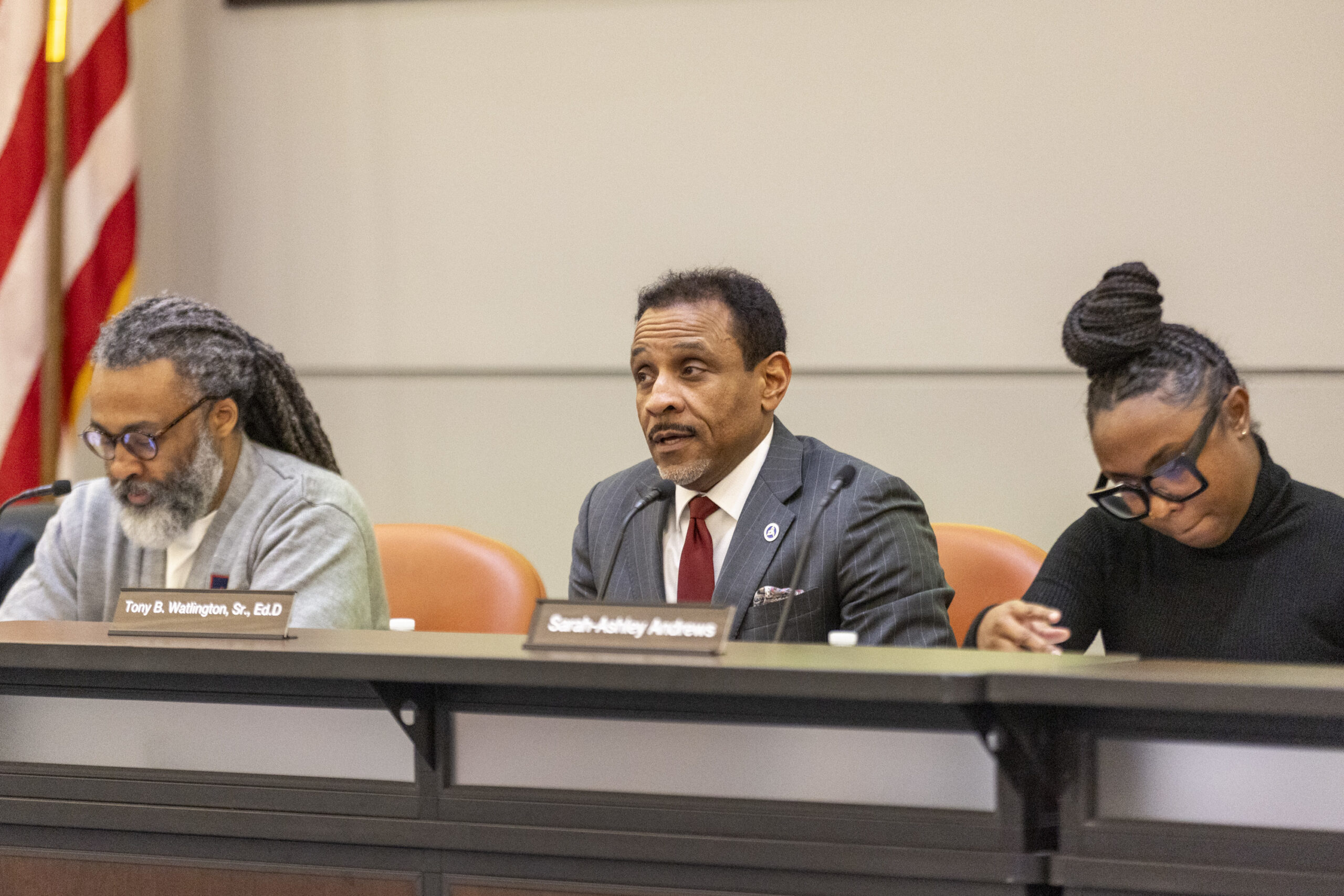
    Superintendent Tony B. Watlington (center), Board President Reginald L. Streater, and Board member Sarah-Ashley Andrews at the School board meeting Jan. 29.

    Disparate impact

    Ryan Pfleger, an education researcher, said if underutilization and facility condition truly shaped Watlington’s recommendation, the burden of closure would fall roughly evenly across racial groups.

    But that’s not the case with Watlington’s plan.

    “Black students are overrepresented, roughly 1.6 times more likely to be enrolled in schools slated for closure,” Pfleger said. “Fifteen of 20 schools proposed for closure are majority Black. White students are underrepresented, about four times less exposed than expected. The schools slated for closure are also disproportionately low income.”

    Pfleger’s conclusions match an Inquirer analysis of the closure data.

    The plan, Pfleger concluded, “does not rectify educational injustice.”

    Conwell shows up

    A strong contingent of Conwell supporters also told the board they were unhappy with the plan to close their school, a magnet middle school in Kensington.

    Conwell has just over 100 students in a building that can hold 500. But Erica Green, the school’s principal, said it’s worth saving.

    “Conwell for many years has been the cornerstone in the Kensington community, a place where students flourish, where leaders are born; alumni included leaders in government, education, law, media, public safety, and professional sports: Living proof that diamonds truly are in our backyard,” Green said. “Times have changed, but excellence at Conwell has remained the same.”

    Conwell is celebrating its 100th anniversary and has been the recipient of public and private donations to advance its building conditions and program offerings.

    “Do not let the almighty dollar drive a choice to remove a beautifully designated historic school and beautifully gifted young people,” an impassioned Green said. “The essence, prestige and impact of Conwell Magnet Middle School cannot be duplicated.”

    Priscilla Rodriguez, whose two sons attended Conwell, worries about the implications for families that rely on it for stability.

    “When a school closes, families don’t just adjust. They struggle,” Rodriguez said. Conwell families “are already dealing with a lot. You won’t make it any better by closing Conwell.”

    An incomplete plan?

    Katy Egan came to the board with a long list of questions, none of which were addressed in Watlington’s plan: Which schools will be modernized? When? How? How will displaced students get to their new schools? What’s happening to students with special education plans forced to leave their schools? How do you plan to keep kids safe while merging schools?

    Egan, a member of Stand Up for Philly Schools, called the blueprint “a 25% plan.”

    But, she said, “we deserve more than 25%, and our students deserve everything.”

    Community members can weigh in on the plan in the coming weeks at meetings around the city, and Watlington is scheduled to formally present it to the board on Feb. 26.

    No vote will happen in February though, said board president Reginald Streater, who declined to weigh in on the merits of the plan until it’s handed over to the board.

    In other board news

    In other board matters, Watlington said he would soon ask to eliminate half days from the district’s calendar entirely.

    The news came as he detailed a slip in year-over-year student attendance: in December, 54% of students attended school 90% of the time, compared to 66% in December 2024. That’s the largest drop in Watlington’s superintendency, he said.

    He attributed the challenges to a two-hour delay for snow, light attendance prior to winter break — and light attendance during a half day called for professional development.

    Watlington said at next month’s board meeting, he’ll propose amending the 2026-27 schedule to remove half days entirely.

    “Half days in the calendar do not serve us well,” he said.

    The board also installed three new student board representatives.

    The non-voting members are: Brianni Carter, from the Philadelphia High School for Girls; Ramisha Karim, from Northeast High; and Semira Reyes, from the Philadelphia High School for Creative and Performing Arts.

  • Philly threatened shoveling fines. Then it left its own parks and properties snowy and icy.

    Philly threatened shoveling fines. Then it left its own parks and properties snowy and icy.

    Before 9.3 inches of snow and sleet blanketed Philadelphia, in the biggest snowfall the city has seen in a decade, officials were adamant: Shovel or face a fine.

    In a news conference last week, Director of Clean and Green Initiatives Carlton Williams said residents would have six hours to shovel after the last bit of snow fell. Failure to do so could result in a $300 fine.

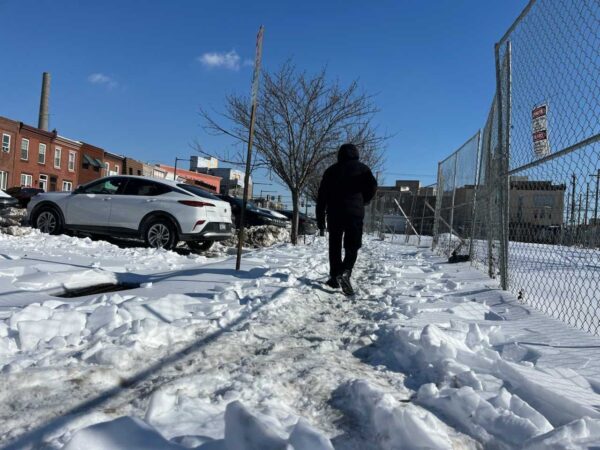
    But four days after the last icy flake fell, residents across Philadelphia say the city has set a bad example on the shoveling front, noting various city-owned properties, many of them parks, remain inaccessible for people with strollers, wheelchairs, and those who have limited mobility, and a frigid obstacle for even the most nimble.

    “It feels emblematic of the city’s attitude towards its residents, where it’s like they have rules and laws for everybody, but if they can’t manage to do something, it’s like, ‘We don’t have the resources. People need to be patient. We’re trying,’” said Coryn Wolk of Cedar Park.

    The 36-year-old said she does have some sympathy for the city, as do many others, because it is responsible for so many sidewalks and buildings, and the icy weather isn’t helping cleanup efforts. But as she walked through Malcolm X Park Thursday, frustration set in as she trudged through a sidewalk of tightly packed, icy snow.

    The city did not respond to a request for comment regarding shoveling issues but its rules say paths on sidewalks must be three feet wide. Those on streets with sidewalks less than three feet wide can carve out paths that are one foot wide.

    A sidewalk of Malcom X Park in West Philadelphia on Thursday, Jan. 29, 2026.

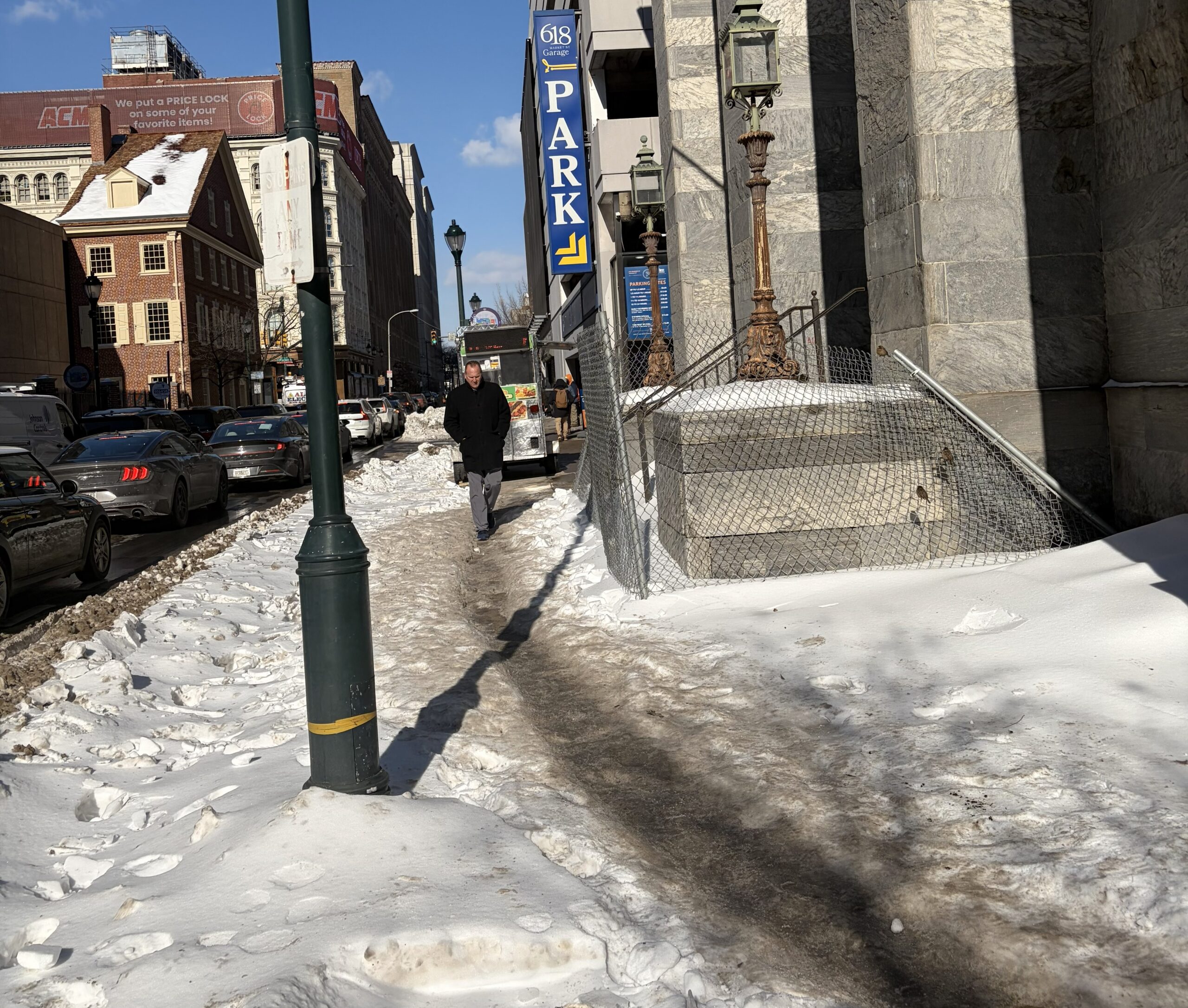
    Still, Greys Ferry’s Lanier Park, Ridgeway Park in the Hawthorne section of the city, and Cobbs Creek Park also had sidewalks covered by a trampled layer of gray and yellow snow Thursday. In Center City, outside the former Philadelphia History Museum, another city-owned property, passersby had molded a narrow path that should have been shoveled.

    A sidewalk along Lanier Park in Grays Ferry on Thursday, Jan. 29, 2026.

    Residents say the problem extends to trolley and bus stops that line streets, describing large mounds of snow they need to climb like athletes to reach their modes of transportation.

    Chase Howell, 29, described a herculean snow trudge through Center City with the child she nannies Wednesday. In one instance, she tried to catch the Route 4 bus along Broad and Spruce Streets only to find there was “no way to access the bus lane” because of snow pileups. To her disappointment, the next bus shelter north “was halfheartedly shoveled a foot wide but incredibly slippery.”

    In the process of lifting and pushing the stroller, Howell hurt her back, but she said that’s secondary in her whole ordeal.

    The city owes residents who use wheelchairs more than this, she said. “City curbs should be shoveled three feet wide just as the requirement is for residences and businesses.”

    Those stops and bus shelters are not under SEPTA’s purview. The responsibility of cleanup falls to the city and others who own property next to the stops, according to the agency’s spokesperson Andrew Busch. SEPTA, however, is responsible for the bus stops at the major transit hubs and clearing platforms, entrances, lots, and other areas at train stations.

    Walking around West Philadelphia, Razan Idris has seen plenty of businesses and properties that have also neglected to clear their sidewalks. But she thinks the cleanup is part of a larger issue that can be applied to property owners who don’t pick up trash or who let their buildings rot.

    “I see it as kind of the same thing, like there is little to no accountability for whoever is owning a building or an area or a lot,” said the 30-year-old.

    But ultimately, the buck stops with the city, said Idris.

    The former Philadelphia History Museum, which is city-owned, on Thursday, Jan. 29, 2026.

    By failing to care for public sidewalks surrounding parks and municipal properties, other residents feel the city is sending a message that the rules on shoveling aren’t being enforced.

    In South Philly, pedestrians trudged through crusty snow on the sidewalk along West Passyunk Avenue next to the former Melrose Diner. The sidewalk looked like it hadn’t been shoveled since the storm hit last week.

    The property is owned by M R Realty Limited Partnership, state records show. Business owner Michael Petrogiannis did not respond to a request for comment.

    A passerby, who only identified himself as Derek, complained about how some property owners leave their neighbors with the responsibility of making the sidewalks safe for use.

    “They don’t come out and shovel,” he said. “So I’m the one shoveling for them.”

    Staff writers Henry Savage and Max Marin contributed to this article.