Tag: topic-link-auto

  • Before Alexis Eberz begins her journey at Villanova, she has unfinished business with Archbishop Carroll

    Before Alexis Eberz begins her journey at Villanova, she has unfinished business with Archbishop Carroll

    Alexis Eberz knew she wanted play in the Big East. So when it came down to deciding between Maruqette or Villanova, the Archbishop Carroll senior guard did what most high schoolers do: she asked for her mother’s advice.

    “I just told her to pray on it,” said Michelle Eberz, Alexis’ mother.

    Her advice came at the perfect time. It was the end of Eberz’s junior year, and she was about to embark on a religious retreat called “Kairos,” which was hosted by Carroll. It was a four-day, three-night retreat at the Malvern Retreat House with no cell phones. It was the perfect opportunity for Eberz to reflect on where she wanted to play college basketball.

    “I said, ‘Alexis, listen to me. Go to Kairos and pray on it. You will find your answer,’” Michele said. “And, honestly, it was almost like the pressure melted off her.”

    Eberz decided on Villanova and signed with the team in November. Besides getting to play in the Big East, Villanova has always felt like home, which stems for her parents. Michele and her husband, Eric, played basketball on the Main Line and exposed their daughter to the school at a young age.

    However, Alexis has forged her own connection to the program and is ready to take her game to the next level. But first, the senior has some unfinished business to take care of at Carroll.

    This season, Eberz is averaging 17.5 points and was named Catholic League MVP. The Patriots will face Cardinal O’Hara on Sunday at the Palestra in the Catholic League final, marking their third consecutive appearance. The last time Carroll won a PCL title was in 2019.

    No stranger to ’Nova

    Long before she picked up a basketball, Villanova has been part of Eberz’s life.

    “It’s a parent’s dream that she’s actually not only at [our] alma mater, but so close to home,” Michele said. “So many people know her already before she even steps on campus.”

    Alexis Eberz added: “I’m really close with Maddy Siegrist. I would shoot with her and do workouts with her [and former coach] Harry Perretta.”

    Learning from Siegrist, Villanova’s all-time leading scorer for men and women, contributed to Eberz wanting to play for Villanova. But it wasn’t the only factor.

    “I was around Villanova at such a young age,” Eberz said. “And then I never really went away from it. You’re never going to get that tight-knit community anywhere else. It’s awesome. The players, the coaching staff, everyone’s so nice. That really stuck out to me.”

    Plus, Villanova coach Denise Dillon viewed Eberz as an elite addition to the roster.

    “I think [what stood out to us] was a combination of the tangibles and intangibles,” Dillon said. “The tangibles being her ability to make shots. She’s a great shooter, great passer, moves well without the ball. The intangibles [being] her toughness. I just think she is a competitor. She doesn’t care who it is: post player, perimeter player, she’s going to battle.”

    It also doesn’t hurt that Dillon has been longtime friends and former teammates with Michele.

    Their time also overlapped at Villanova from 1993 to 1995. During Michele’s senior season, the Wildcats went 19-9 overall and 13-5 in the Big East.

    “The years I played with Denise, we really grew as a team and friends,” Michele said.
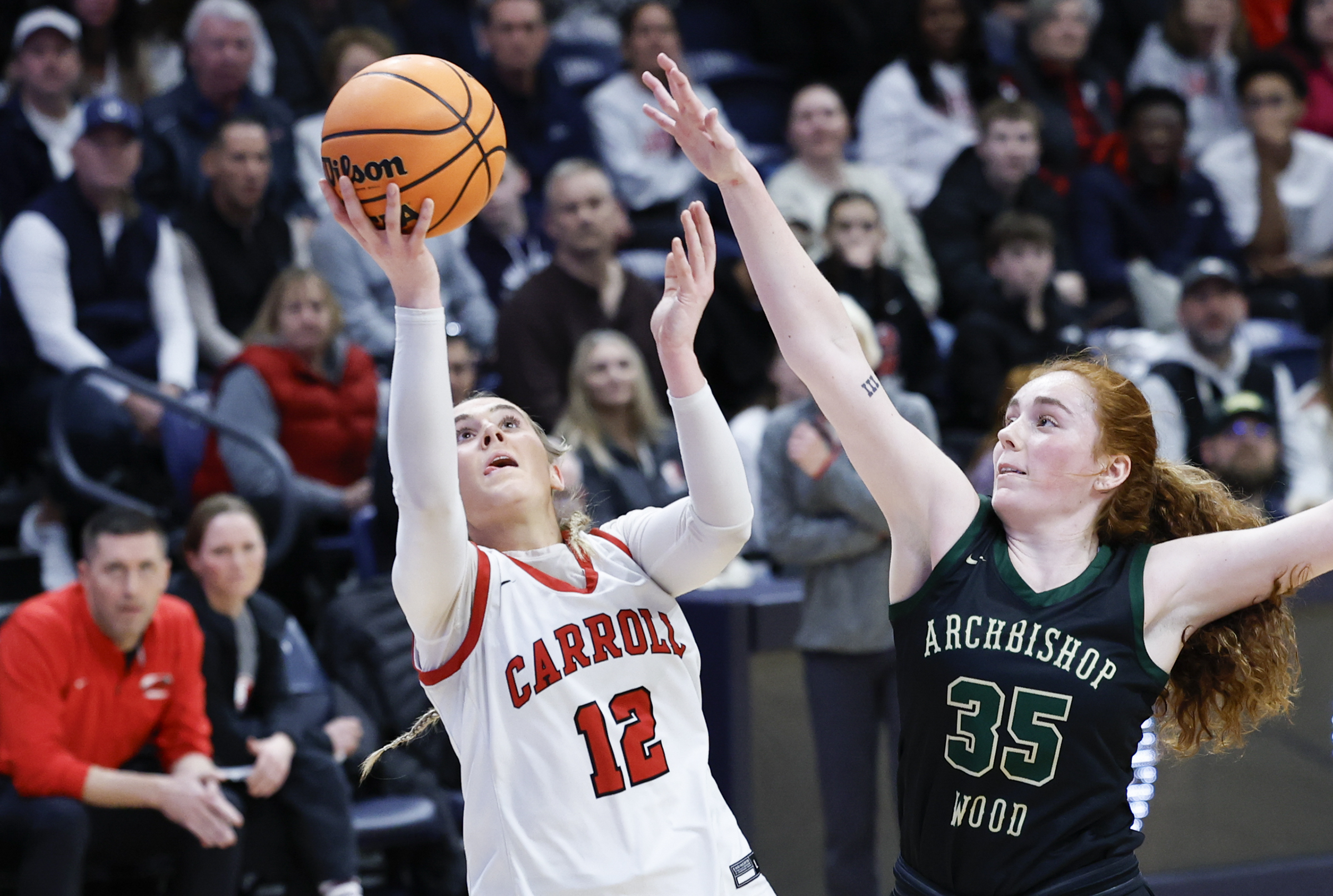
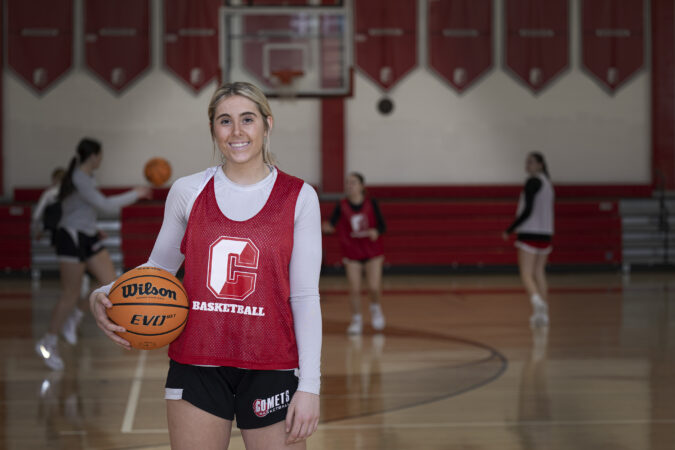
    Alexis Eberz was named Catholic League MVP this season.

    The two even are in a group chat with old teammates.

    But Michele and Eric were careful to stay out of their daughter’s recruiting process. They wanted their daughter to make the decision for herself, even if they were rooting for her to be a Wildcat.

    “A coach is going to be hard on you on the basketball court, but [Villanova] also cares a lot about developing players into a young woman or becoming successful in school,” said Eric, who played at Villanova from 1992 to 1996. “You know that your coach’s job is to help kids find their path in life, too, and I think Denise does a great job at that.”

    ‘A really good teammate’

    Alexis Eberz has had quite an accomplished career with the Patriots.

    During her junior year, she averaged 17.6 points and earned first-team All-State honors. She also was named first-team All-Philadelphia Catholic League, first-team All-Delaware County, and scored her 1,000th career point.

    “When [Alexis] was a freshman, she was a very good shooter and had a great IQ for the game,” Archbishop Carroll coach Renie Shields said. “What she’s progressed into was a really good teammate [who] understands more about the game, and that’s just what her continual growth has been: increasing her skill set, shooting, ballhandling, and then now it’s movement without the ball and how to find openings for herself and her teammates.”

    She’s one of the senior leaders this season, alongside Ursinus pledge Bridget Grant, who happens to be Dillon’s niece and Eberz’s best friend. Also on the roster are Eberz’s younger twin sisters, Kelsey and Kayla, who are sophomores.

    “It’s awesome,” Eberz said. “It’s been surreal. It’s so special getting the chance to play with my sisters. I’m also really blessed, because some people don’t get a chance to play with their younger sisters, so I’ve been really grateful to have that chance.”

    With Grant and her sisters, Eberz is leading Carroll to a memorable season, as the team is 19-5 entering Sunday’s matchup. While the Palestra is an arena filled with history and tradition, for Eberz, it represents redemption.
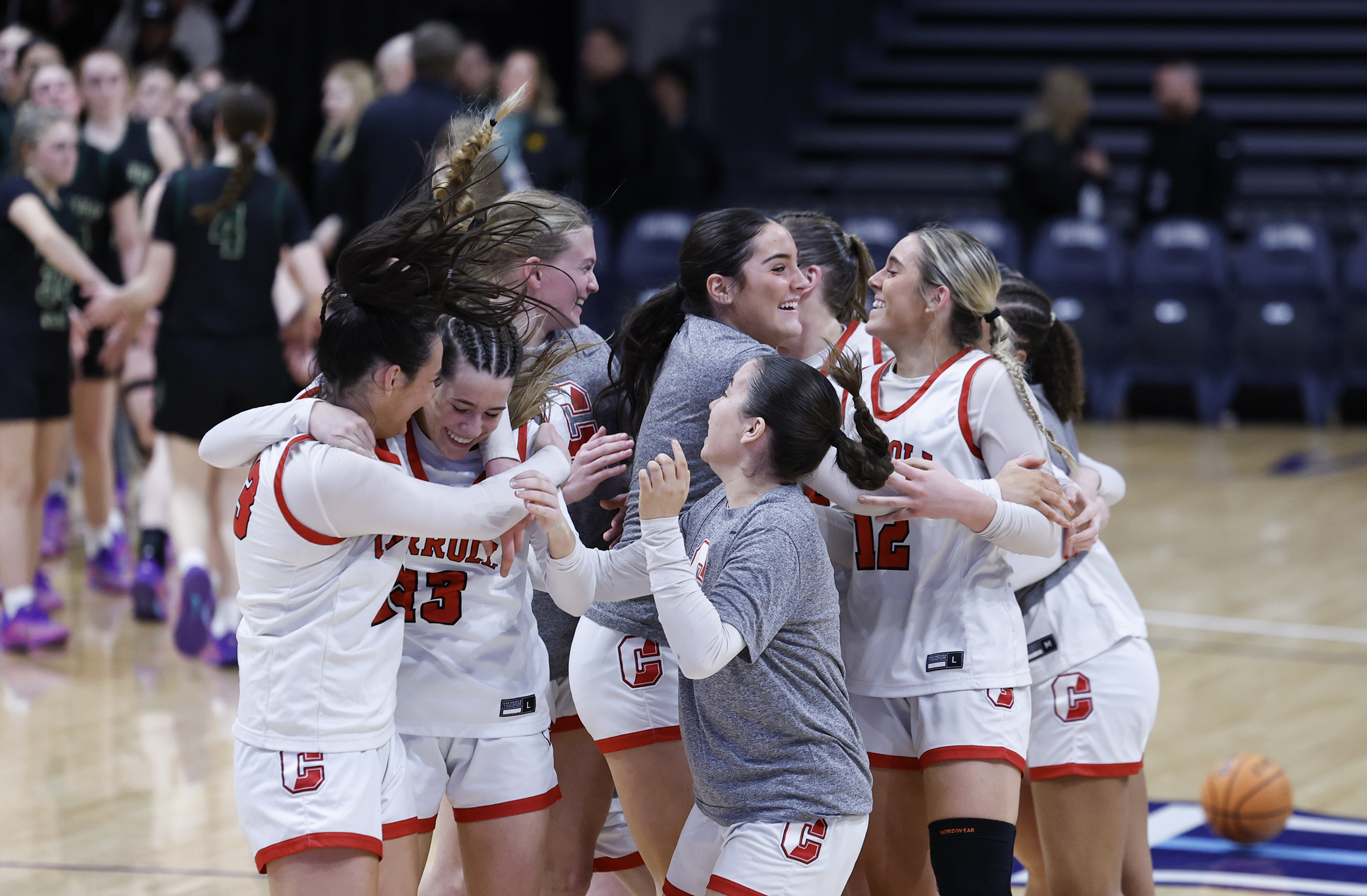
    Archbishop Carroll will face Cardinal O’Hara in the Catholic League girls’ basketball final on Sunday.

    The Patriots have been to the PCL final the past two seasons, but lost both years.

    “There’s no other option,” Eberz said. “I have to win.”

    With one final shot at a PCL title, Eberz is looking to rewrite her team’s story.

    “Obviously we have a target on our back, being undefeated. … but I think that also gives us more of a reason to want it more,” she said. “It’s just the fact that we played so hard all season, and we beat all the teams so that we can get to this point. I think it just makes us want it more.”

  • Another weekend snow threat is in the outlook for the Philly region

    Another weekend snow threat is in the outlook for the Philly region

    You may have read this somewhere before: Computer models are seeing the potential for a significant winter storm to affect the Philly region on yet another weekend.

    Those ingenious machines continue to predict that a storm will intensify off the Southeast coast Sunday into Monday. But “a large amount of uncertainty” remains about whether it will generate accumulating snow in the Philadelphia region, the National Weather Service said in its morning discussion Thursday. In the early going, areas south and east of Philly were the likeliest targets.

    Based on past experience, not to mention the nonlinear chaos of the atmosphere, about the only thing certain was that they would be changing their stories multiple times in the next few days, as would their virtual peers.

    In the short term, it is highly likely that, along with a certain dreariness, the region will be getting something that has been mighty scarce lately — rain. Philly’s rain total this month is under 15% of normal. Over the last 60 days throughout the region, it has been 40% to 50% below normal.

    The forecast for the rest of the workweek in Philly

    The freshness date on the snowpack has about expired and about now looks like it could use a good scrubbing, along with the air.

    Atop the remnants, generally light winds have been aiding and abetting a rather stagnant air mass. A “code orange” air quality alert was in effect for South Jersey Thursday, and health officials advised those with respiratory conditions to limit outdoor exposure.

    The primary irritants were tiny particulates, about 30 times smaller in diameter than a human hair.

    Rain is likely to be in the air Thursday night into Friday, and it could be a substantial amount, on the order of a half-inch or more. So far this month, officially 0.25 inches have been measured at Philadelphia International Airport.

    The moist air and the rain should erase more of the snowpack, “but we don’t want the snow and ice to melt too quickly,” said Ray Martin, a lead meteorologist at the National Weather Service Office in Mount Holly. No significant flooding is expected, just some potential damage to footwear.

    Temperatures are expected to top out in the 40s Thursday and Friday.

    About the weekend storm potential

    It may hit 50 degrees on Saturday with an appearance of the sun. So much for the easy part.

    Come Sunday, “there could be some rain or snow,” said Matt Benz, senior meteorologist with AccuWeather Inc.

    A storm is due to slide across the South and eventually regroup off the Atlantic coast on Sunday.

    But Benz pointed out that a key feature of the potential storm still was over the Pacific and not due to make landfall until sometime later Thursday, when it would be captured by land-based observation and give the machines a clearer idea of its intentions.

    And it is not at all clear how much cold air would be available for snow, Benz said, but if the storm intensifies sufficiently, “it can manufacture its own cold.” Another factor is just where off the coast the storm would be when it matured.

    In case you’re wondering why the atmosphere seems to pick on Sundays, having storms show up in seven-day cycles is a common phenomenon.

    They often migrate in 3½-day cycles, which has to do with the rhythms of storm movements as they travel across the country, and it so happens that the more significant one has been arriving on the seventh day.

    It keeps happening until it doesn’t, and it’s still very possible that it doesn’t this time around.

    Said Benz: “We have a long way to go to Sunday.”

  • What did Villanova learn in its loss to No. 1 UConn? The game truly is ‘four quarters.’

    What did Villanova learn in its loss to No. 1 UConn? The game truly is ‘four quarters.’

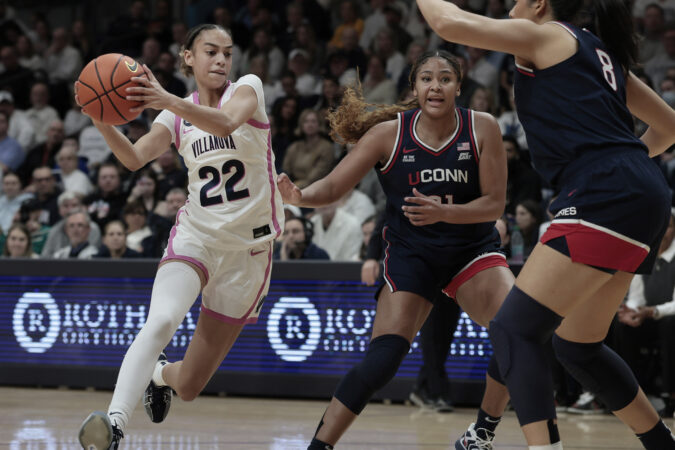
    It would be unfair to call Wednesday night’s Big East clash between Villanova and No. 1 Connecticut anything other than what it ultimately was: a litmus test for the Wildcats.

    Villanova may sit in second place in a demanding Big East, but in Wednesday’s game against UConn, the Wildcats once were again looking up at a Geno Auriemma-coached Huskies program, which entered Finneran Pavilion undefeated with 27 wins.

    Technically, make that 43 regular-season games, if you consider the Huskies haven’t lost since last February when, as the No. 1 team in the land, they suffered a four-point upset against then-No. 19 Tennessee.

    A perennial power team in a power conference, Villanova wasn’t just playing the women wearing the Huskies’ deep blue on the other side of the floor; it was playing to prove itself against UConn’s stature, its reputation.

    And, if we’re being honest, the result of UConn’s tens of millions in NIL funding, ready for distribution.

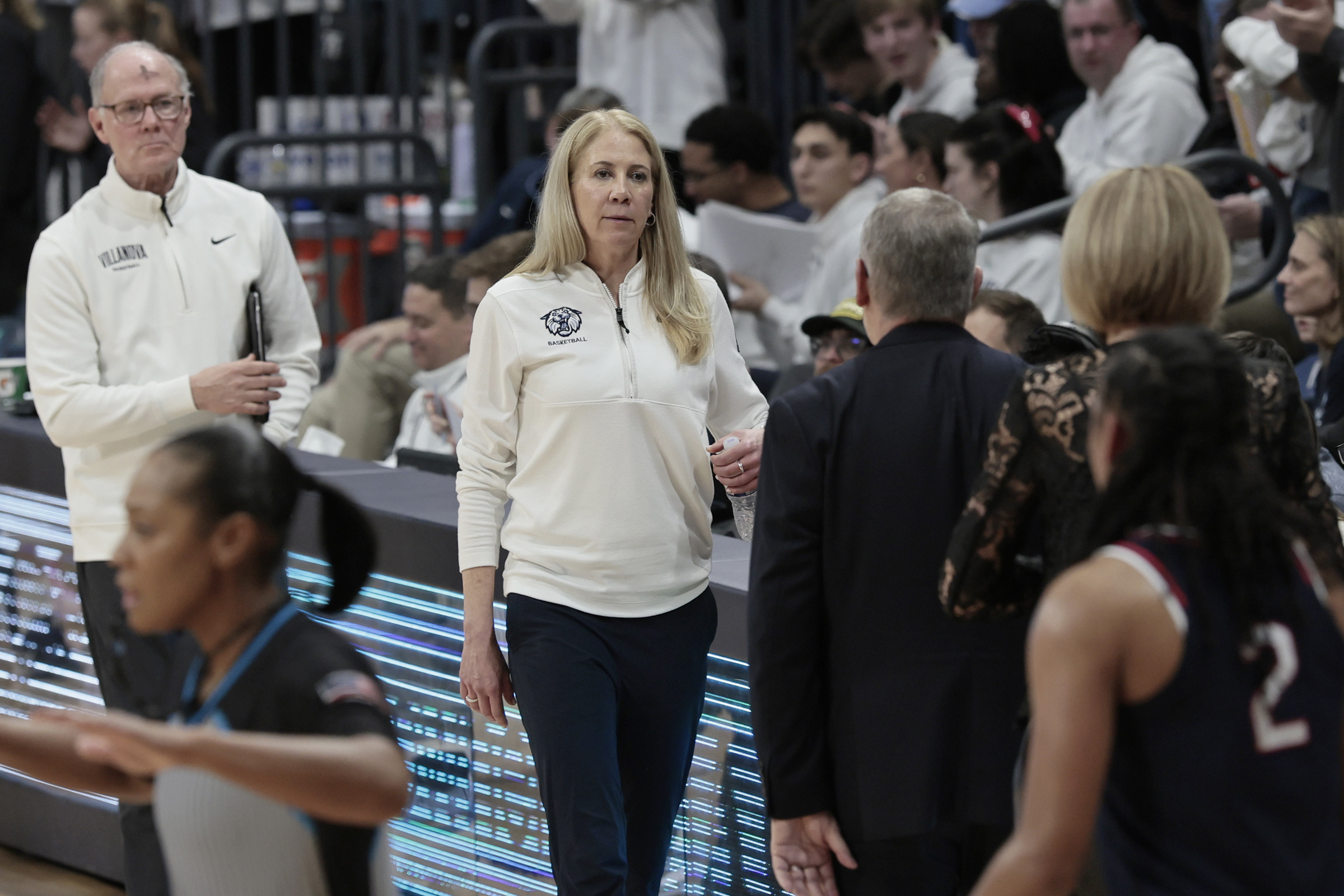
    Villanova coach Denise Dillon approaches UConn coach Geno Auriemma following Wednesday’s game between the two at Finneran Pavilion.

    In her six years as head coach, Denise Dillon has never made concessions for her team after it came up short against UConn, time and time again.

    But if she wants this year’s Wildcats to dance far into March, their performance has to match what was on display in the first half on Wednesday night. And look a heck of a lot better than a second-half fallout that resulted in an 83-69 loss.

    “Honestly, give them credit. [UConn] stuck to their game plan,” Dillon said. “I think we let up on what we needed to do … miss a possession here or there, they’re going to take advantage.

    “And that’s what happened.”

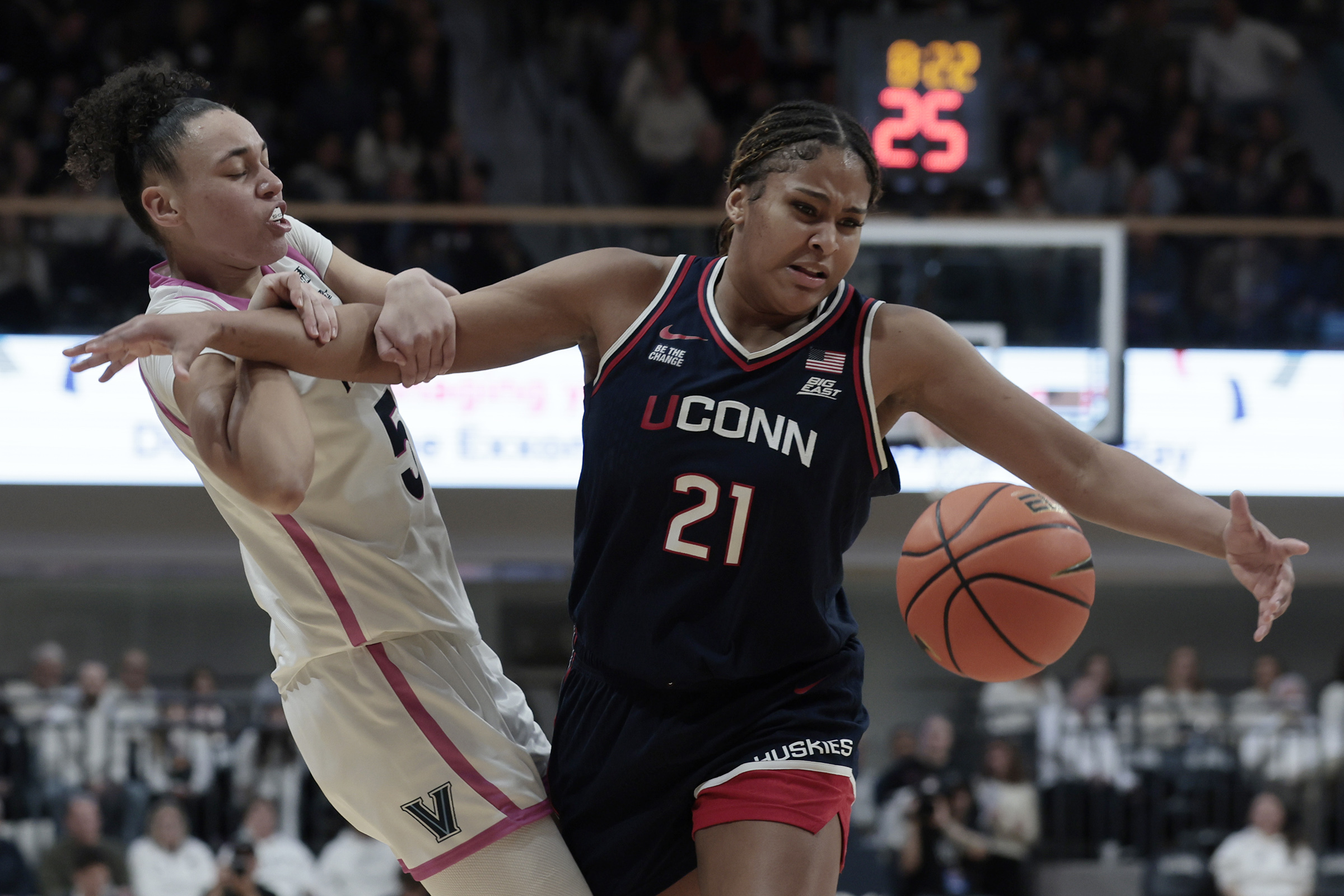
    Villanova’s Ryanne Allen (left) is held back by UConn’s Sarah Strong during their game on Wednesday. Strong finished with 21 points and 12 rebounds.

    Don’t sleep on the Wildcats

    Villanova (21-6, 14-4 Big East) looked like a true contender in the first eight minutes. The Wildcats held a one-point lead at the first television timeout with 4 minutes, 38 seconds remaining and went into halftime up three.

    It marked the only time UConn (28-0, 17-0) has trailed at halftime this season and one of its longest deficits, with the Wildcats ahead for 16:10 of the first half, compared to just 2:09 for the Huskies.

    “How we started the game was unacceptable,” said UConn guard Azzi Fudd, who finished with a team-high 25 points. “We need to be able to start the game strong, play the full 40, and not take the game or a team for granted. I think they proved we cannot overlook anyone.”

    One player UConn certainly couldn’t overlook was Jasmine Bascoe, who had a game-high 26 points and was a rebound shy of a double-double. She got help from Denae Carter (21 points) and freshman Kennedy Henry, who finished with nine, but played one of her best games of the season.

    “If it weren’t for my two girls [Fudd and forward Sarah Strong], she’d be the best player in the Big East, hands down,” said Auriemma, who lauded Bascoe’s performance. “Just an amazing talent, and she made it really tough for us tonight.”

    Villanova’s Jasmine Bascoe signals one of her four made three-pointers in Wednesday’s game against UConn.

    Lessons learned

    The reason UConn is No. 1 — besides having one of the most dominant players in women’s college basketball in Strong — is an ability to grind out wins.

    Speaking of Strong, while she finished with 21 points and 12 rebounds, the Wildcats frustrated the sophomore enough that by the third quarter, she was in danger of fouling out. She kept her composure and aided the Huskies in outscoring Villanova, 46-29, in the second half.

    Strong and Fudd did what they do, but in the end, turnovers were the Wildcats’ undoing; UConn scored 28 points off 26 Villanova turnovers.

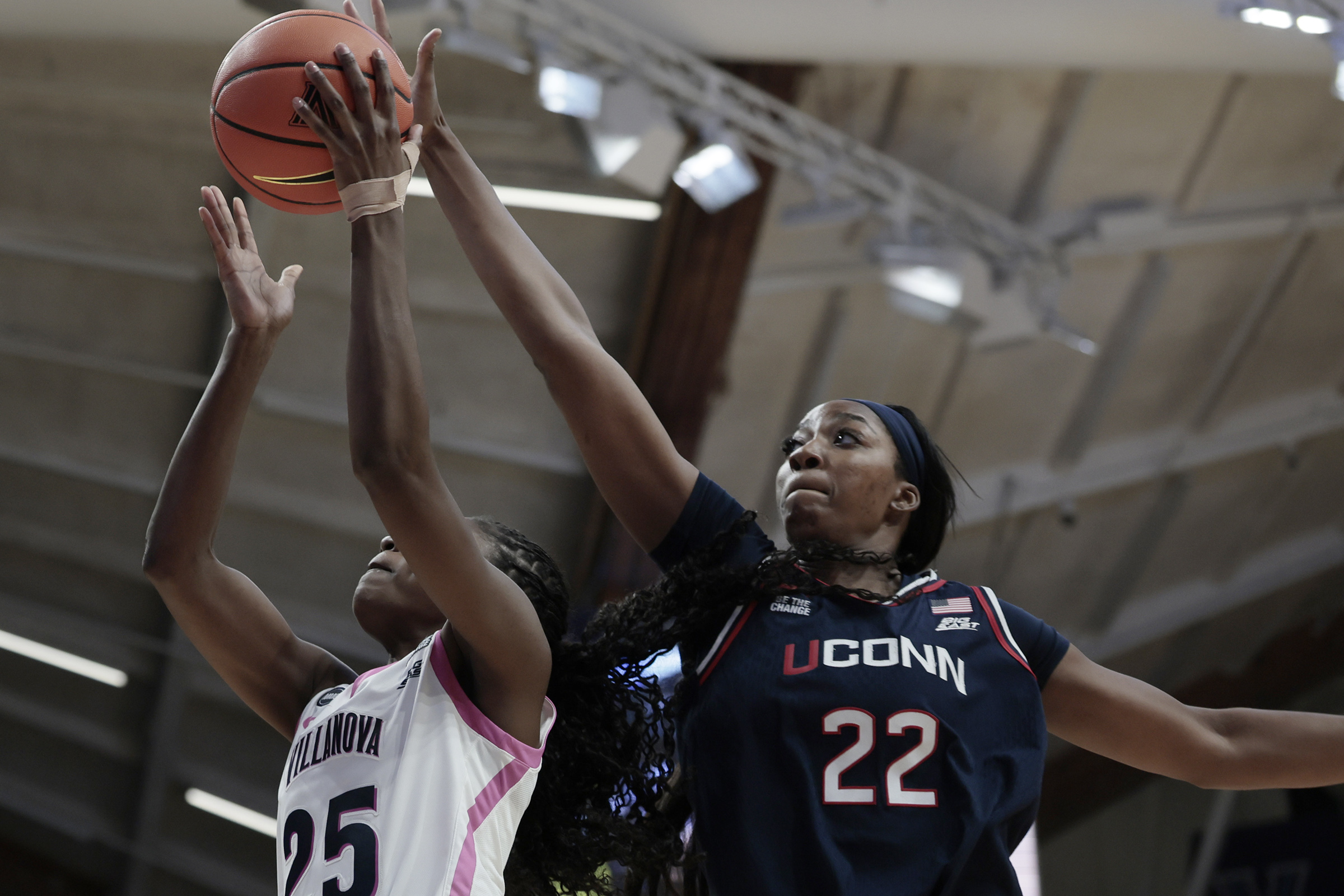
    Villanova’s Denae Carter has her shot blocked from behind by UConn’s Serah Williams.

    “We talked about it, even at the end of the first quarter,” Dillon said. “I said, ‘Imagine if we’d got 8-10 more shots off in that period, what a difference it could make.’ We just have to focus our attention on taking care of the basketball.”

    Before the game, ESPN bracketologists had Villanova as a bubble team, projected as the No. 9 seed in the NCAA Tournament. Judging by last night’s performance, it feels like a pretty fair assessment.

    “The goal is to get to the [Big East] championship game and [get into] March Madness,” Dillon said. “We’re preparing for that every day. We talk to our players about our practice plan, which is to prepare to face a UConn; and if they train that way, you’re going to have a lot of success along the way.”

    On Wednesday night, the Wildcats came close to the type of success that could have landed them in Top 25 polls this time next week.

    That didn’t happen.

    But the consolation? They did more than enough to impress a storied coach who has firsthand experience of what success looks like.

    “They’re a team that will be in the tournament, I think,” Auriemma said. “They’re really well coached. Denise [Dillon] does a tremendous job. You know, this felt like one of those old-school Big East games tonight where you have to grind it out, and that’s usually what it’s like when you play here.”

    Up next

    Villanova will remain in town in preparation for Marquette at the Finn on Sunday (3:30 p.m., Peacock). The Golden Eagles (16-10, 10-7) are coming off a 71-56 Valentine’s Day loss to UConn and will look to snap a three-game losing streak.

    It’s Huskies week in Philly

    On Saturday, Villanova’s men host No. 5 UConn (24-3, 14-2) at Xfinity Mobile Arena (5:30 p.m., TNT). The Wildcats (21-5, 12-3 Big East) are on a six-game winning streak and are looking to avenge a 75-67 overtime loss against then-No. 2 UConn on Jan. 24.

  • A style of chardonnay that’s bone-dry and tart

    A style of chardonnay that’s bone-dry and tart

    Chablis is a French white wine made with 100% chardonnay grapes, but its flavor profile is nothing like the chardonnay American wine drinkers are accustomed to. Where most Chardonnays are fuller-bodied and richer in texture than other whites, Chablis is lightweight and sheer on the palate. Where the majority of Chardonnays feature some overt apple-pear fruitiness and the distinctive pumpkin spice flavors of new oak, almost all Chablis wines are bone-dry, unoaked, and a little anemic in the fruit department. Most importantly, where most Chardonnays are on the softer end of the white wine acidity scale, Chablis is famously tart — so much so that it can taste unpleasant alone, needing to be partnered with salty foods in order to taste balanced.

    All of these qualities give Chablis an austerity whose appeal is a challenge to describe in positive terms, as with the ferocious bitterness of Campari or the beach-fire funk of an Islay single-malt scotch. Like these other drinks, Chablis tends to be an acquired taste that rarely appeals to the wine novice, but nonetheless retains its prestige from generation to generation as new converts discover its charms.

    What makes Chablis so distinctive is that it is grown in considerably colder conditions than is normal for the chardonnay grape — in a zone of northern France whose climate is a closer match to that of Nova Scotia than it is to California’s. Low ripeness in the fruit grown in Chablis amplifies acidity and minerality, while suppressing fruitiness and alcohol. While most Chablis is quite pricey, petit Chablis — or small Chablis — is the name used there for modest, entry-level wines like this one. It may not have the complexity or the long finish of a superior Chablis, but makes a solid introduction to this style that is a chardonnay for chardonnay haters. Brisk, cleansing, and as dry as the desert, with flavors of crabapples and goat cheese, it makes a marvelous match for any food you might squeeze some lemon on.

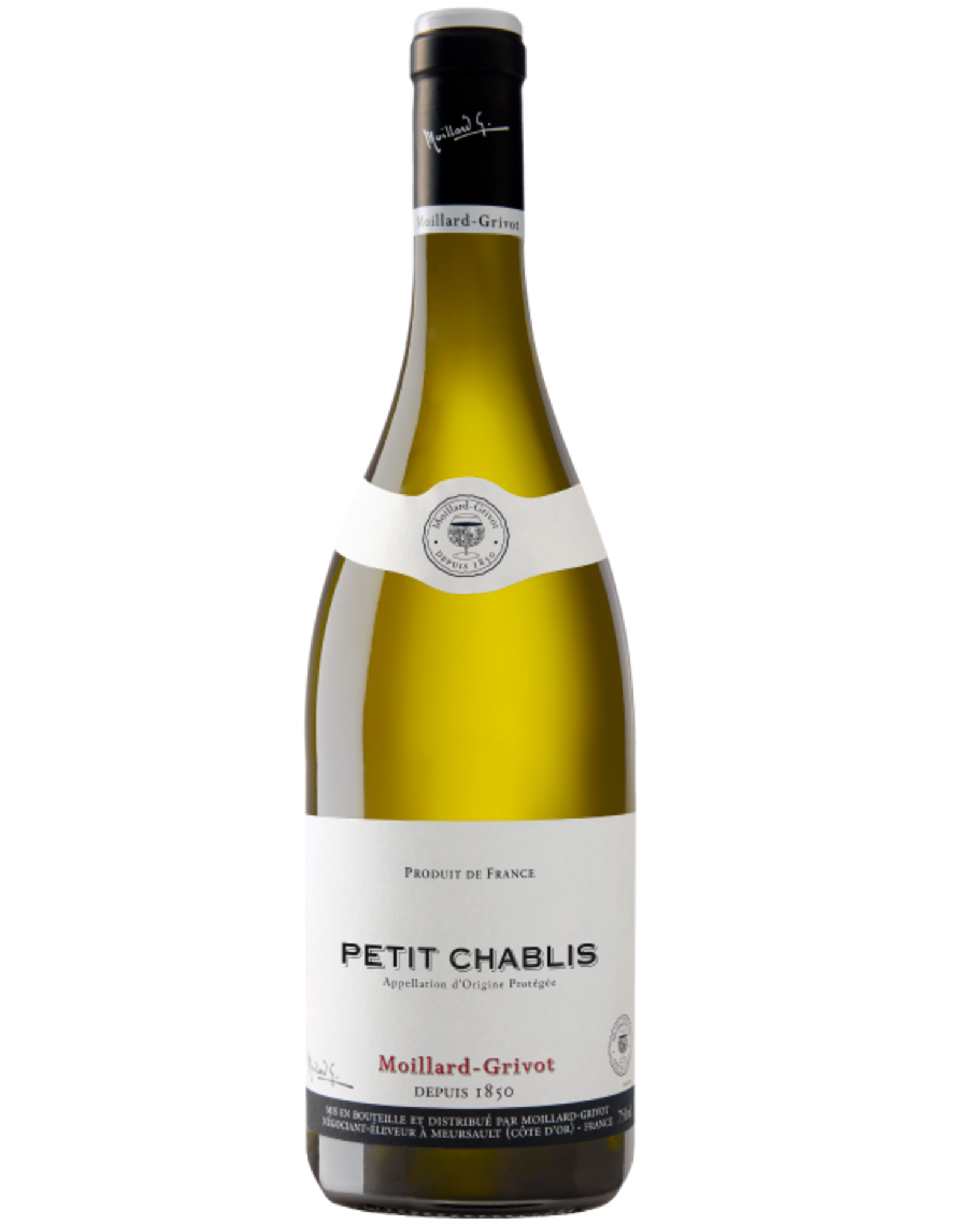
    Moillard-Grivot petit Chablis

    Moillard-Grivot petit Chablis

    Burgundy, France; 12.5% ABV

    PLCB Item #100048775 – on sale for $17.99 through March 1 (regularly $19.99)

    No alternate retail locations within 50 miles of Philadelphia according to Wine-Searcher.com

  • Father Judge overcomes early deficit to beat Archbishop Wood, earns spot in boys’ Catholic League final

    Father Judge overcomes early deficit to beat Archbishop Wood, earns spot in boys’ Catholic League final

    The reigning Catholic League champion has earned another shot at the title.

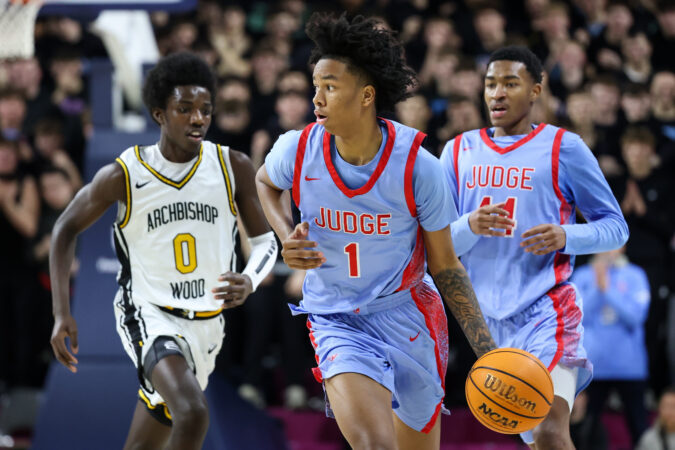
    On Wednesday, the Archbishop Wood boys’ basketball team took on Father Judge in the Catholic League semifinals at the Palestra. After trailing 19-3, Judge mounted a comeback for the ages. Led by Temple recruit Derrick Morton-Rivera’s 27 points, Judge won, 52-46.

    The Crusaders will face Neumann Goretti in the Catholic League final on Sunday at the Palestra. NG beat Bonner-Prendergast, 64-60, in the second PCL semifinal.

    “Being confident in myself,” Morton-Rivera said. “Even if I miss shots or don’t get the shots that I want, I just keep believing in myself and keep trying to get shots or trying to make plays and look for my teammates.”

    Morton-Rivera, the program’s all-time leading scorer and son of former Neumann Goretti star D.J. Rivera, is happy to leave his own mark on the PCL.

    “It means a lot being able to leave a legacy, make a name for myself,” Morton-Rivera said. “A lot of people know me from being D.J.’s son — he went to Neumann Goretti and he was great. I’m glad I can make a name for myself at Judge.”

    Father Judge coach Chris Roantree spent eight years as an assistant at Wood under opposing coach John Mosco before rejoining his alma mater five years ago.

    “First for me and John,” Roantree said. “We have a great relationship, my best friend, coaching with them for nine years, but more importantly, he’s a friend. We went through a lot together, and somebody’s got to lose. That’s the hardest thing about it.”

    Last year, Roantree and Father Judge earned the program’s first PCL title in 27 years. Now they have a chance to go back-to-back for the first time in program history.

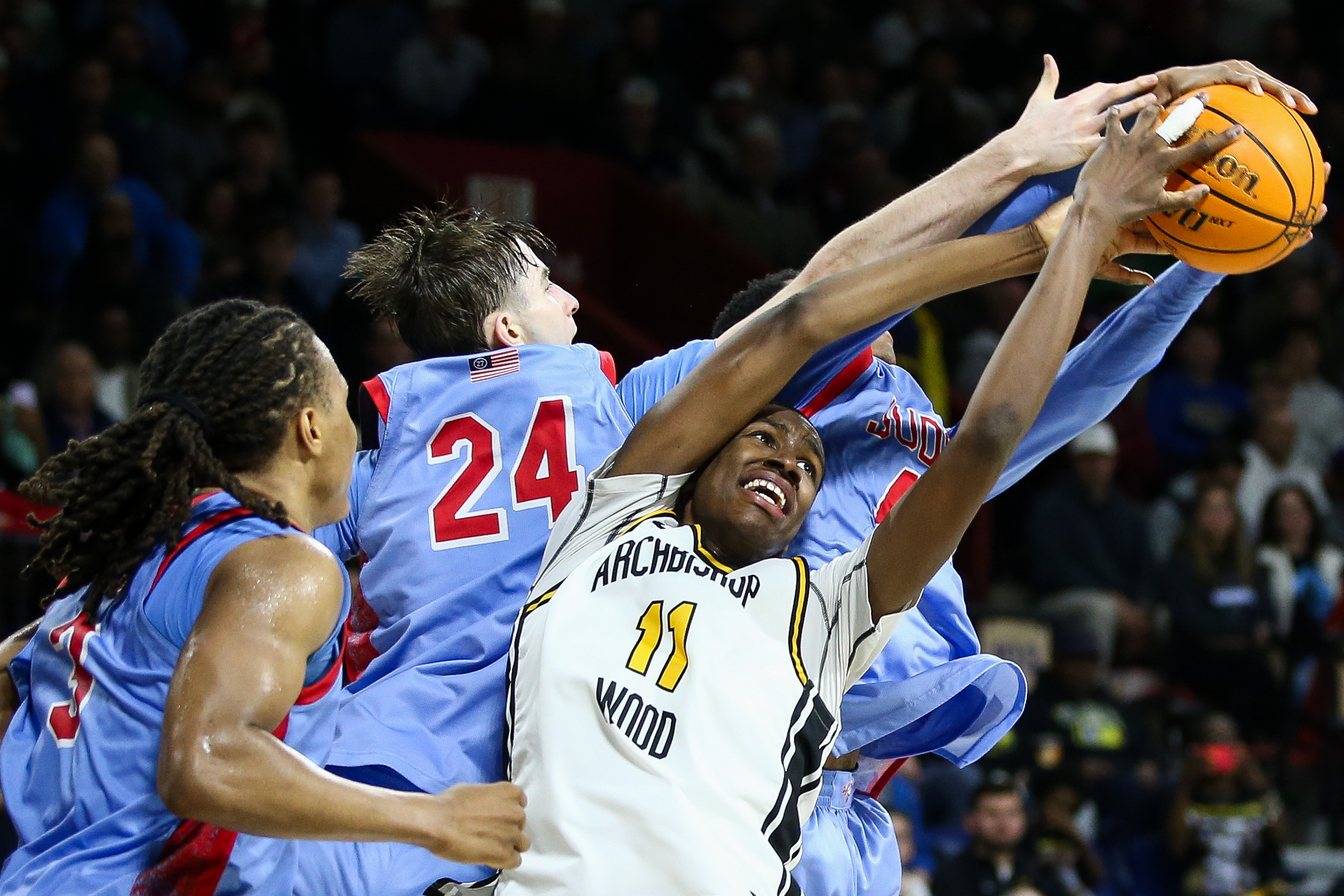
    Archbishop Wood’s Jaydn Jenkins (11) reaches for a rebound against several Father Judge players.

    “It would mean a lot because that’s what we talked about all season,” Morton-Rivera said. “Being the first class to come out of here with two championships. Nobody has ever done that before. That’s something that we definitely want to get.”

    Wood dominated the regular season with its 1-2 punch of Caleb Lundy and Brady MacAdams, who are first and second on the team in scoring, while 6-foot-11 Jaydn Jenkins roamed the paint on defense.

    Jenkins blocked Morton-Rivera’s first two shots, helping to stifle Judge in the first quarter. MacAdams hit a corner three and contested a layup on back-to-back possessions to push Wood’s lead to 16-3 after the first quarter.

    “We’ve been here for the past two years,” Father Judge point guard Rocco Westfield said. “It’s not easy to come down here and play in this environment in front of 10,000 people. So we just really stuck together and really kept our mindset straight.”

    Morton-Rivera scored 12 of Judge’s next 22 points to tie the score at 25 at the half.

    In the third quarter, Judge forced the Vikings into taking outside shots, stopping Lundy’s dribble penetration and Wood’s offense while Morton-Rivera scored eight of the Crusaders’ first 10 points to open the half.

    MacAdams did his best to keep Wood close, but the Crusaders kept the lead for the majority of the second half.

  • Savú, a two-level restaurant-bar in Washington Square West, aims for dining and nightlife under one roof

    Savú, a two-level restaurant-bar in Washington Square West, aims for dining and nightlife under one roof

    Savú opened earlier this month in Washington Square West with a clear pitch: dinner and nightlife under one roof — and a retractable one, at that.

    “The concept is really about bringing a little bit of Miami and New York to Philadelphia,” said owner Kevin Dolce, the restaurant’s managing partner and founder of Hi-Def Hospitality. “There are places that do dinner and places that do nightlife. We want both in the same space, consistently.”

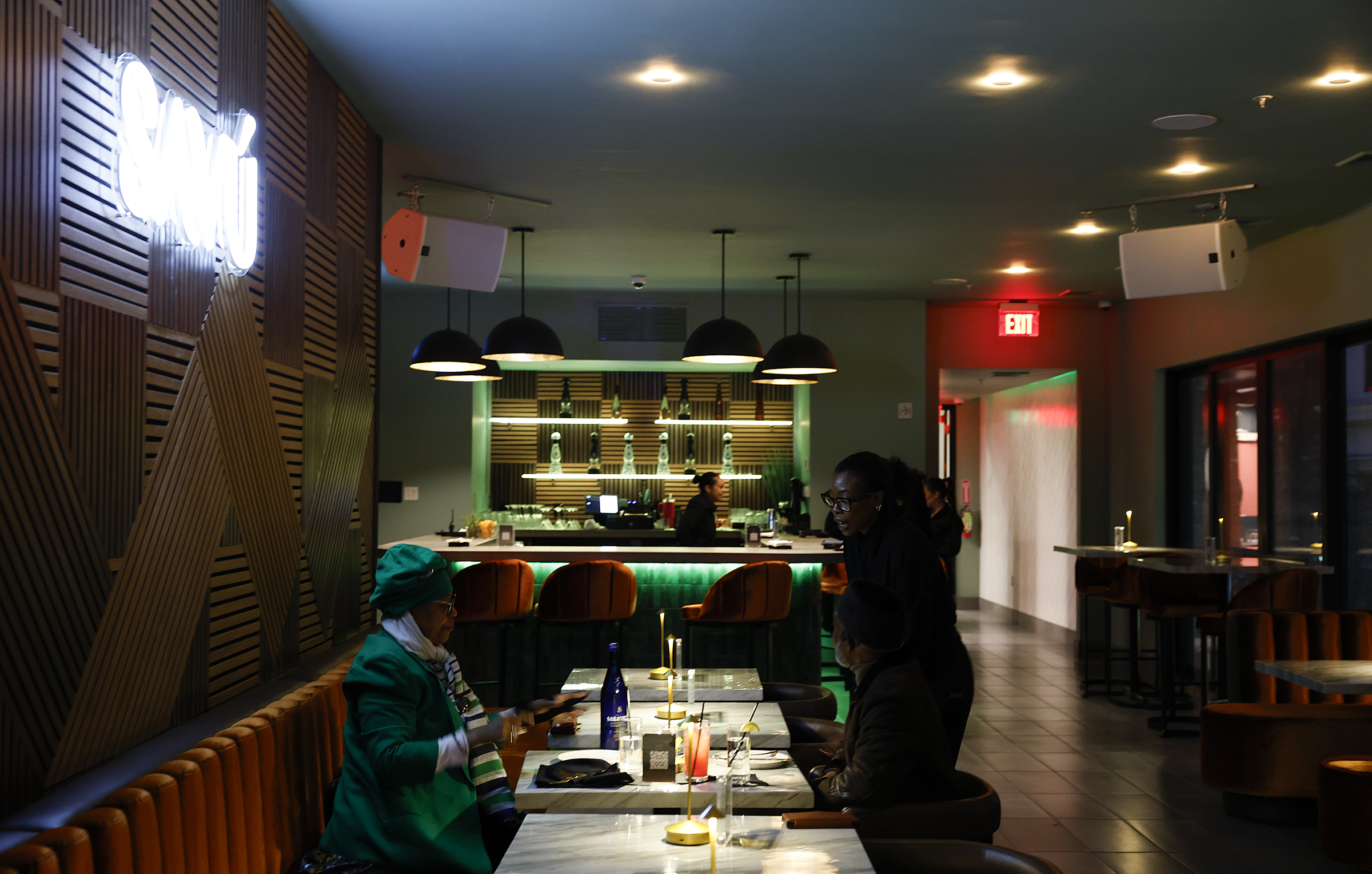
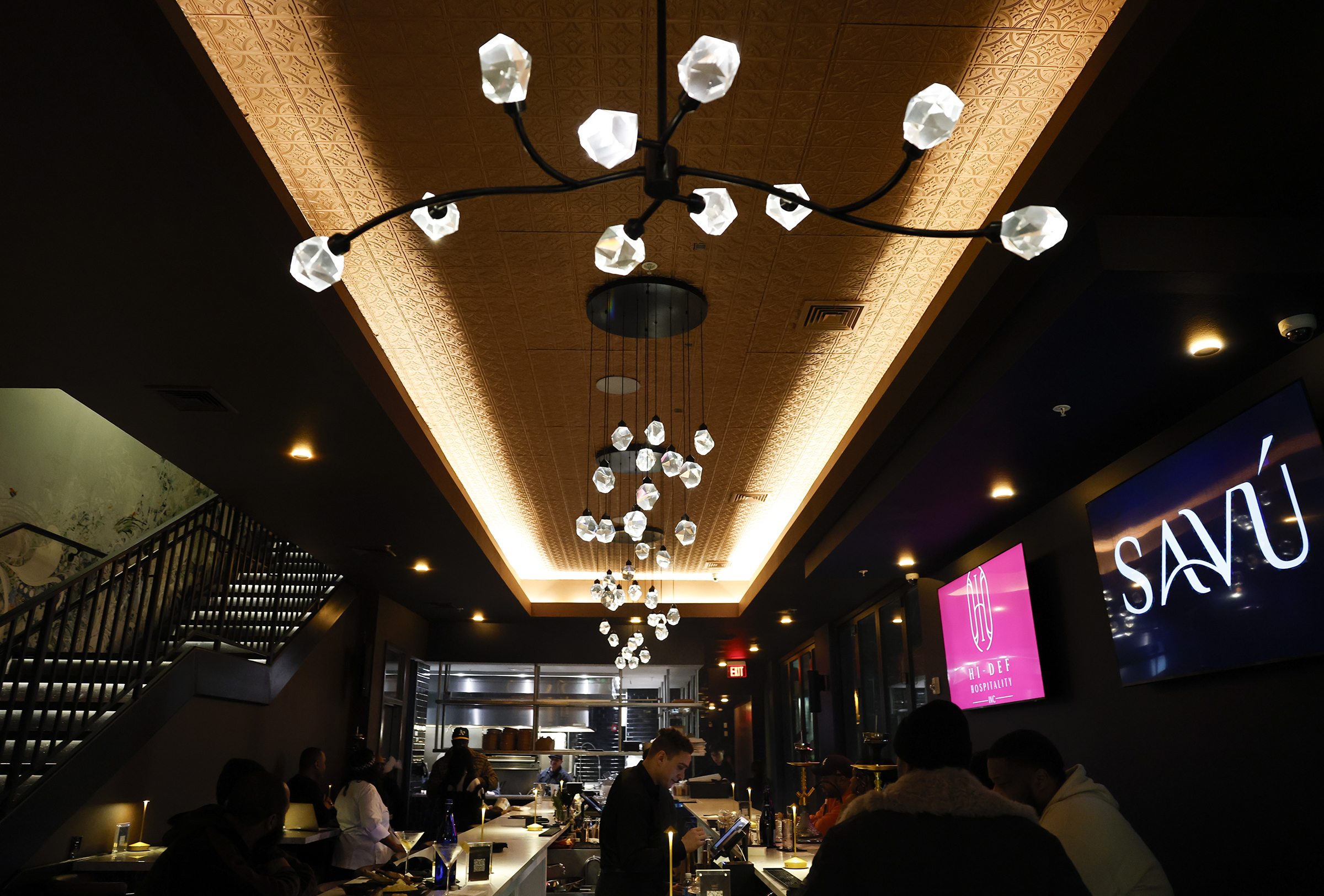
    The second-level dining room, and the rear bar, at Savú.

    Savú occupies the two-level space that last housed Cockatoo, an LGBTQ-friendly bar-restaurant. Dolce said Savú is aimed at everyone. The first floor is anchored by an enormous rectangular bar for walk-ins at the center of the room, with seating wrapped around it. Lounge seating lines the fling-open front windows at 13th and Chancellor Streets, where DJs spin Thursday through Sunday from 9 p.m. to 2 a.m., shifting the mood from dinner to late-night. Cocktails stick to standards — espresso martinis, French 75s — alongside Champagne and bottle service.

    Upstairs, two additional bars designated for customers with reservations serve a dining room outfitted with banquettes and low lighting. When weather allows, the retractable roof will open, creating an indoor-outdoor feel rare among Center City restaurants.

    The ground-floor bar at Savú, in Washington Square West.

    Savú’s address — along the restaurant row that includes Barbuzzo, Double Knot, and El Vez — has turned over in recent decades. A midcentury diner called Dewey’s once stood there, followed later by Letto Deli. The building was razed in the mid-2010s and replaced with a modern structure that reopened in 2017 as Maison 208. That concept gave way in late 2020 to Cockatoo.

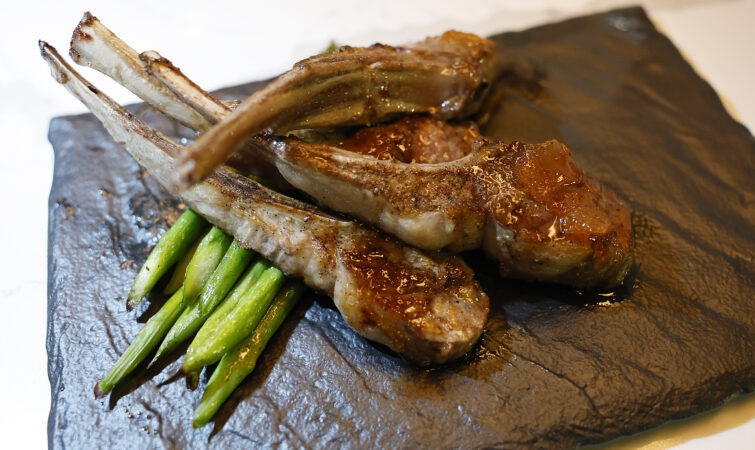
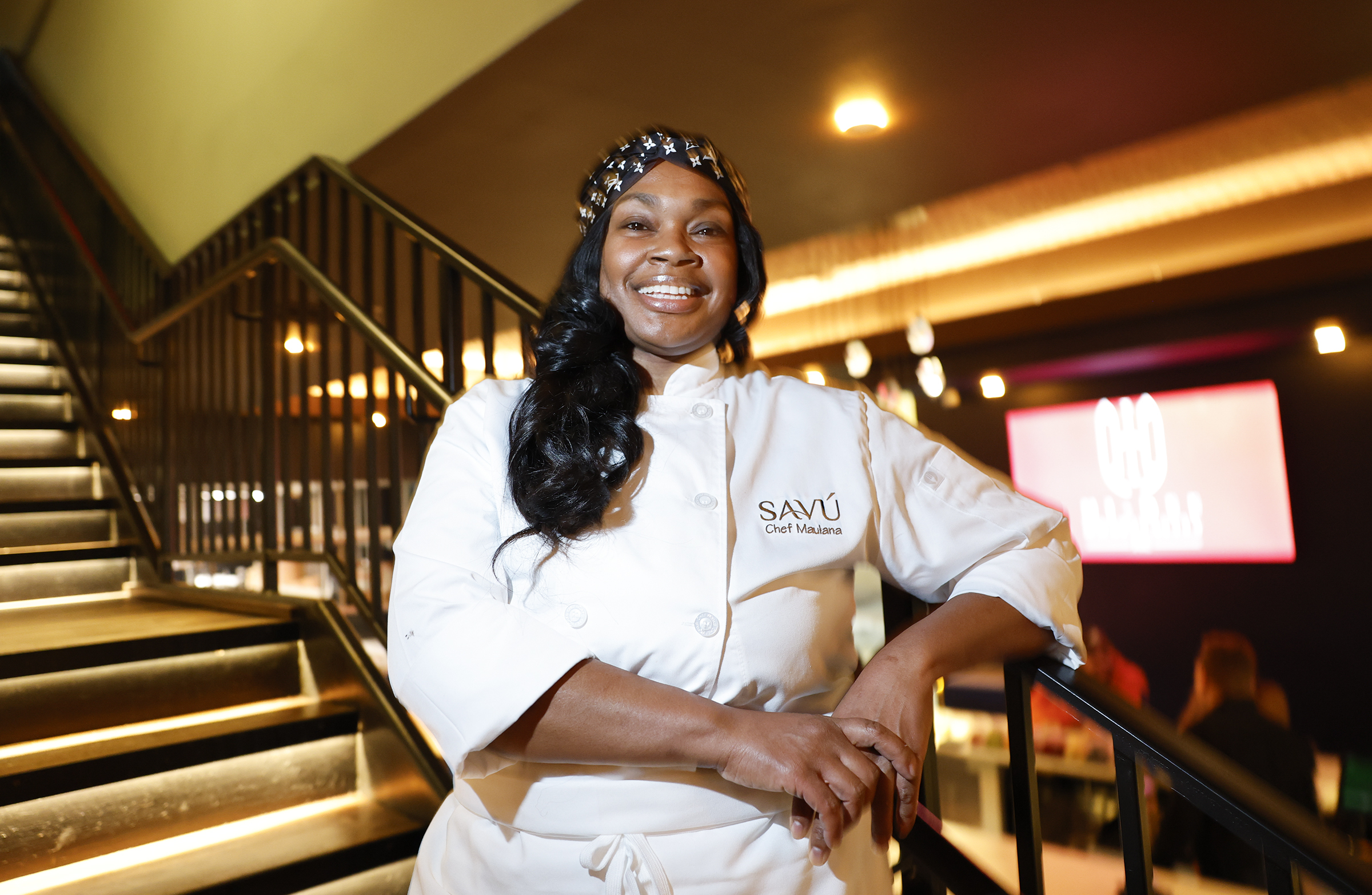
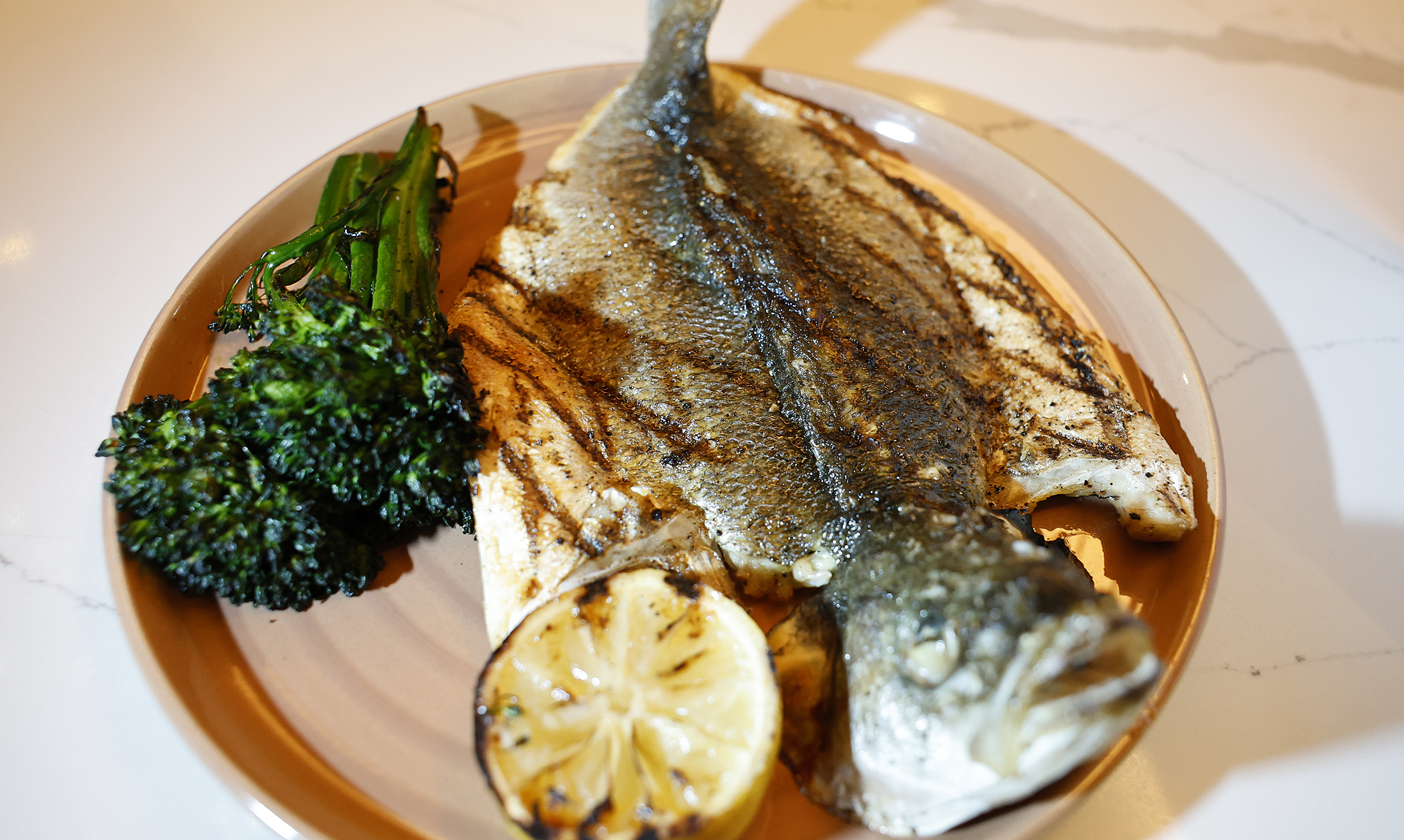
    Chef Maulana Muhammad’s dinner menu signals a push toward a higher-end night out: caviar bumps paired with fries and champagne, lamb chops, grilled branzino, lobster pasta, and ribeyes.

    Chef Maulana Muhammad at Savú.

    Muhammad, a graduate of the Restaurant School, has been around the block. She interned at the old Striped Bass and spent 12 years at the Four Seasons on Logan Square under chef Jean-Marie Lacroix and his team. Through the 2010s, she ran her own restaurant, Maulana’s Café, in the Philadelphia Design & Distribution Center in Wissahickon, and then worked for Constellation Catering just before the pandemic.

    After handling production that had her and colleagues cranking out 50,000 meals a day, she stepped away from the kitchen to help operate her family’s home healthcare agency.

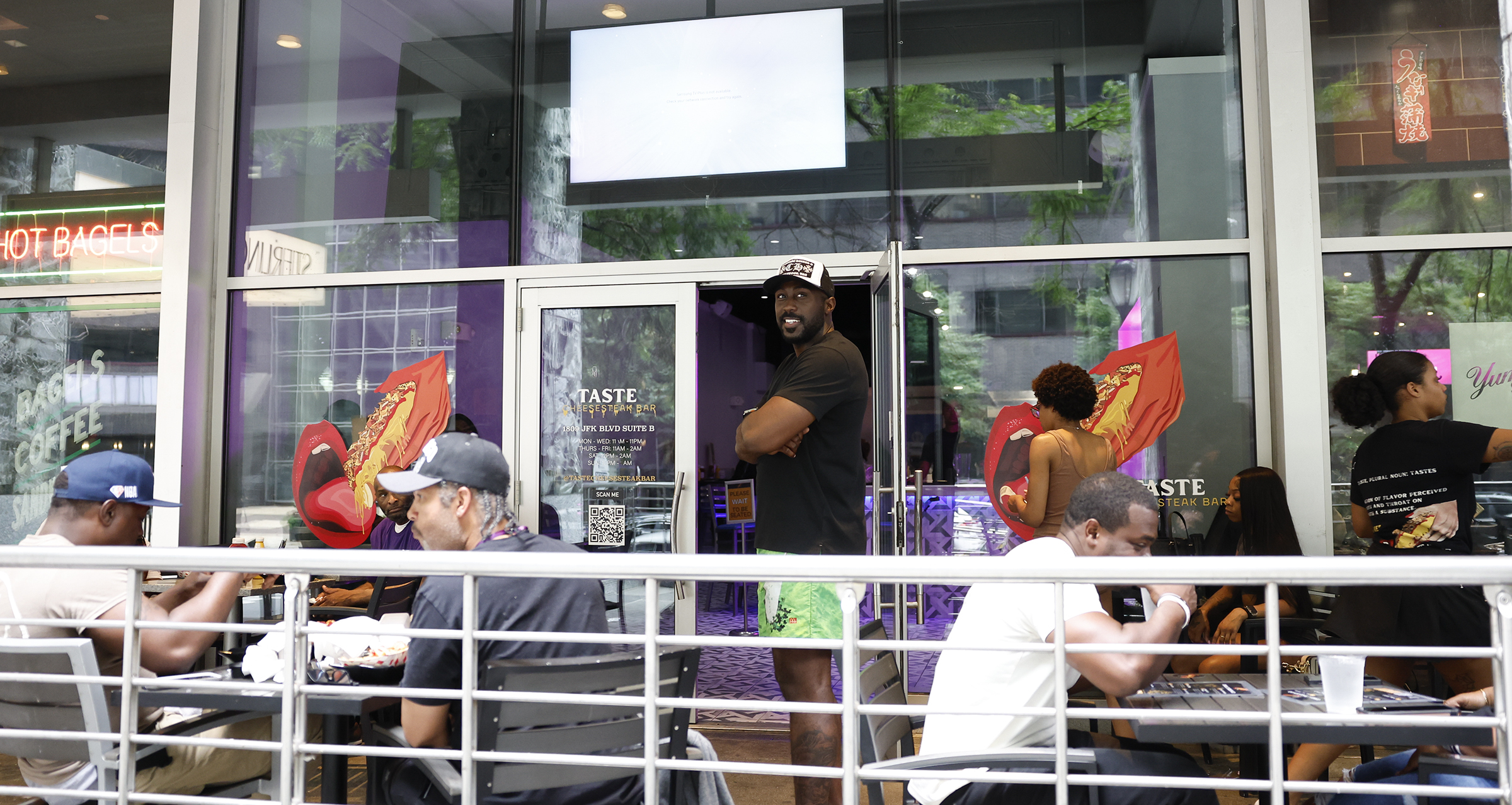
    Kevin Dolce with customers at Taste Cheesesteak Bar in 2024.

    Muhammad joined Savú a year ago to build the menu, after her brother, who knows Dolce, mentioned plans for the restaurant. “I like simple, good food,” Muhammad said. “I love creativity, but I want people to feel full and satisfied. I don’t want them leaving and stopping somewhere else to eat.”

    Dolce has brought in chef Dominique Shields, founder and former owner of North Philly’s Pretty Girls Cook, to oversee weekend brunch, which starts Feb. 28 with such offerings as seafood grits with fried flounder and shrimp, pancakes with fried chicken wings and honey butter, and oxtail hash along with made-to-order omelets and classic egg plates with beef or turkey bacon. In addition to the 11 a.m.-to-3 p.m. brunches, there will be a Sunday Champagne brunch from 4 to 8 p.m. that will be a ticketed, entertainment-focused event upstairs. General admission will include a drink and booths will be reservable.

    Branzino served at Savú.

    Dolce, whose background is in financial consulting, got a taste for nightlife in September 2023 when he opened Taste Cheesesteak Bar on the ground floor of the Sterling, an apartment building at 1809 JFK Blvd. It was, and still is, one of the city’s few cheesesteak shops offering DJs and a full bar.

    Dolce has been on a tear of lease-signing. In 2024, he announced plans for Enigma Sky, a three-story Thai-fusion restaurant and lounge in the former Golf & Social at 1080 N. Delaware Ave., as well as Taste Taco Bar, under the Larry Fine mural at Third and South Streets, at the former Jon’s Bar & Grille. Last year, Dolce said he was also converting the former 7-Eleven store at 1084 N. Delaware Ave., next to Enigma Sky, into Finish Your Champagne, a brunch-driven concept. Citing delays with permitting and approvals, Dolce said Taste Taco Bar is expected to open for Cinco de Mayo, with Enigma Sky and Finish Your Champagne opening by the end of the year.

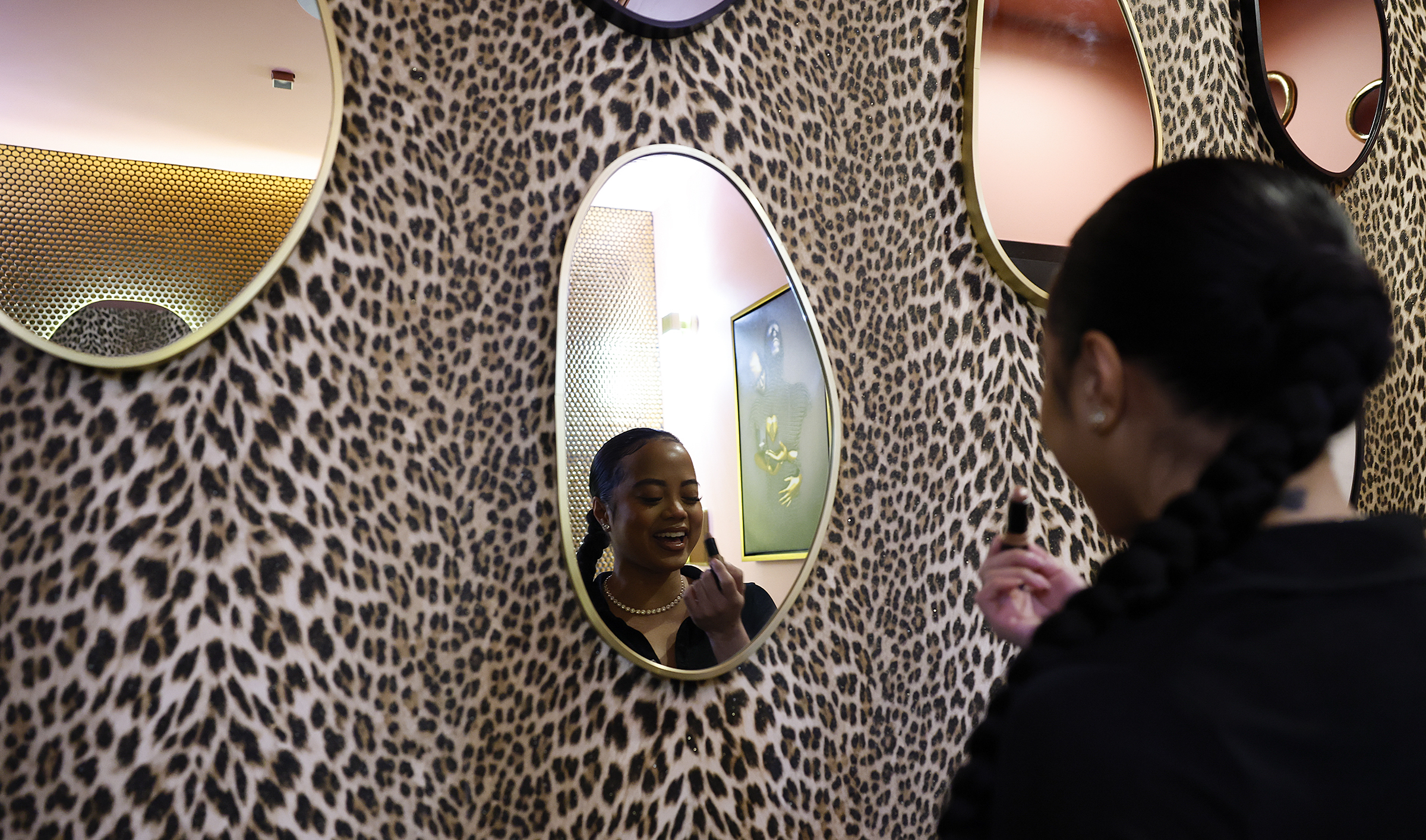
    Savú waitress Dominique Antes fixes her lipstick in a restroom at the restaurant.

    “Philadelphia is about to have a huge few years: the World Cup, the city’s 250th anniversary, the MLB All-Star Game, NCAA tournaments, PGA events,” Dolce said. “Millions of people are coming, and we want to grow alongside the city and be part of that story.”

    Savú, 208 S. 13th St., 445-223-4865, savuphl.com. Initial dinner hours: 4 p.m. to 2 a.m. Thursday to Saturday. Brunch (starting Feb. 28): 11 a.m. to 3 p.m. Saturday and Sunday. Champagne brunch: 4 to 8 p.m. Sunday.

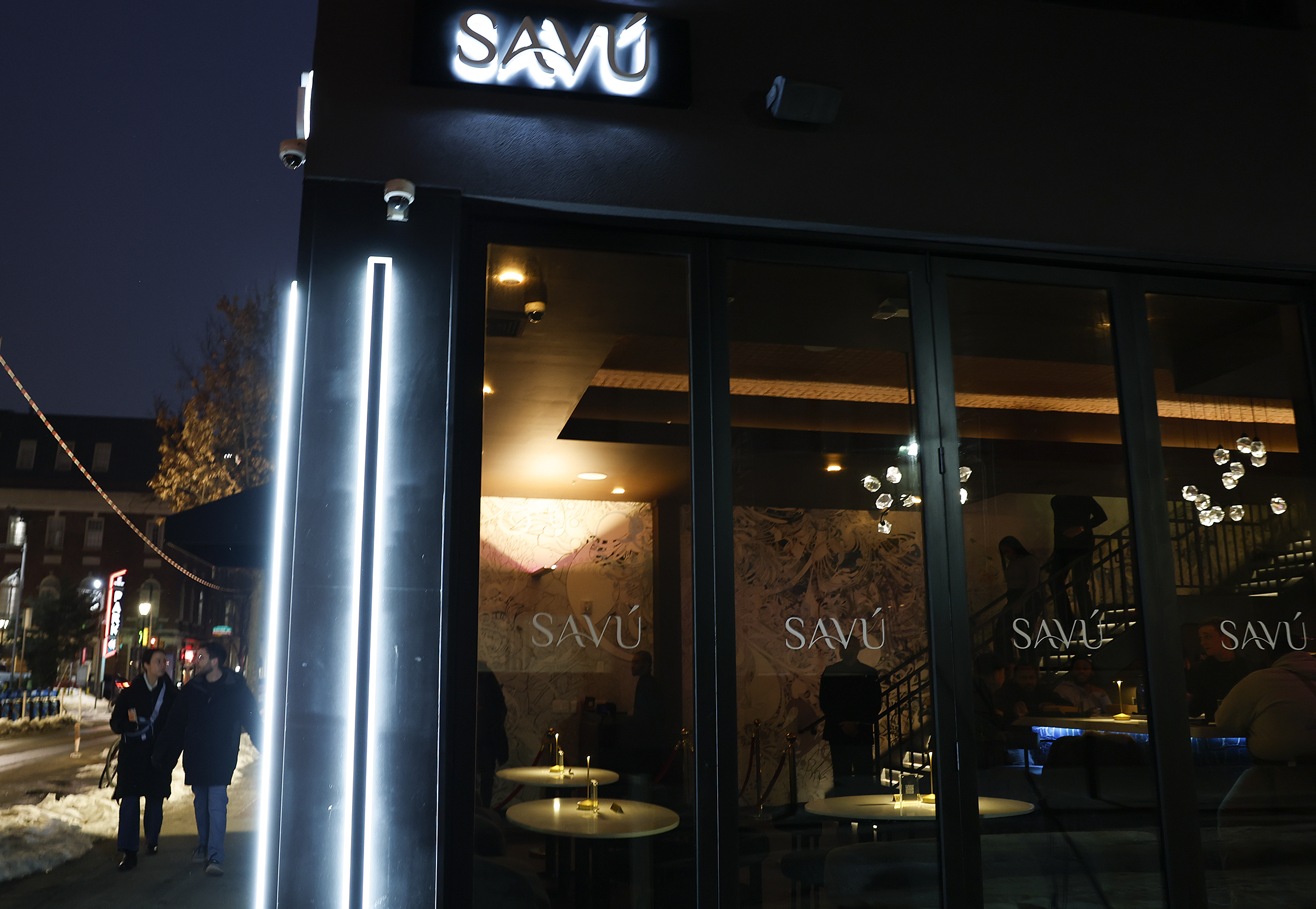
    Savú at 13th and Chancellor Streets.
  • Philly’s economy is among the nation’s strongest for the first time in generations | Expert Opinion

    Philly’s economy is among the nation’s strongest for the first time in generations | Expert Opinion

    Philadelphia is a happening place. No, I’m not referring to the winning sports teams or the great restaurants. I’m talking about the economy. For the first time in generations, Philadelphia’s economy is among the nation’s strongest.

    Among the 25 largest metropolitan areas in the country with populations of more than 3 million, Philly enjoyed the strongest job growth last year. Soak that in for a second. Our hometown’s economy grew faster than those of high-flying cities such as Atlanta, Dallas, Denver, and Phoenix.

    This economic success is also evident in the major development projects underway across the region, including the redevelopment of the old oil refinery in Southwest Philly, the planned transformation of the area around the stadiums, and all the action at Penn’s Landing, in Center City, and the Science Center.

    To be transparent, Philadelphia’s economy looks good, in part, because the nation’s economy is struggling to create jobs. Since so-called Liberation Day in April, when President Donald Trump announced massive tariffs on all our trading partners, many nervous businesses stopped hiring, and job growth has come to a standstill.

    Some industries are actually suffering serious job losses, especially those on the front lines of the global trade war, including manufacturing, agriculture, transportation, and distribution. These are big industries in many parts of the South and Midwest, but not in Philadelphia.

    Federal government jobs have also been hit hard by the Trump administration’s workforce cuts, which began soon after he took office a year ago. Of course, the broader Washington, D.C., area has struggled with these job losses. These positions were also important to many communities across the country, but less so in Philadelphia.

    window.addEventListener(“message”,function(a){if(void 0!==a.data[“datawrapper-height”]){var e=document.querySelectorAll(“iframe”);for(var t in a.data[“datawrapper-height”])for(var r,i=0;r=e[i];i++)if(r.contentWindow===a.source){var d=a.data[“datawrapper-height”][t]+”px”;r.style.height=d}}});

    Eds and meds

    In fact, Philadelphia’s economy is fortunate to be powered by education and healthcare — eds and meds — the only industries consistently adding to payrolls nationwide. The largest employers in the region are world-class institutions of higher education and healthcare providers, including the University of Pennsylvania, Thomas Jefferson University, the Children’s Hospital of Philadelphia, and Temple University.

    Employers in eds and meds are especially attractive, as demand for the services they provide is fueled by the insatiable need for highly educated workers in the age of artificial intelligence, and the inexorable aging of the population. Baby boomers have aged into their 60s and 70s and will require high-quality healthcare for years to come. And since healthcare is largely delivered in person, it is less vulnerable to losing jobs to AI.

    These large institutions employ workers of all skill levels. There are highly trained physicians, nurses, and researchers, as well as middle-skilled technicians and administrators, and lesser-skilled maintenance workers. An entire economy can be built on eds and meds, and that’s Philadelphia.

    The Philadelphia region also has the good fortune of being home to successful companies across a diverse range of industries. Examples include the media giant Comcast, the financial services powerhouse Vanguard, the global software company SAP, and the technology giant Siemens.

    Cost of living

    It isn’t cheap to live and work in Philadelphia, but it is highly affordable when compared to neighboring New York and D.C. For example, the typical-priced home in Philadelphia costs about $400,000, which is almost four times the typical household income. In D.C., houses typically cost close to $600,000, or 5.5 times income, and New York house prices exceed $1 million, or 10 times income.

    I could go on, but I’m beginning to sound like a Chamber of Commerce, and Philadelphia certainly has big challenges. The nation’s universities and research centers are facing large budget cuts and heightened federal scrutiny. This is a huge shift from the financial largess from D.C. they’ve come to rely on.

    Challenges and what’s ahead

    Poverty and all the attendant social ills, like crime and drug use, are also long-standing problems in the city. Although the poverty rate has dipped a bit recently, close to one-fifth of the city’s residents live below the poverty line, a disturbing stat. Of the nation’s big cities, only Houston has a higher rate.

    The high poverty rate is the result of a complicated brew of factors, but the severe shortage of rental housing for lower- and middle-income residents is one of them. Putting up more homes is a priority for the city’s mayor, and with good reason.

    The city’s high wage tax remains a barrier to even stronger growth. It is encouraging that it has declined since peaking more than 40 years ago, but it remains prohibitively high, hindering the city’s efforts to attract workers back into its office towers. The lower-taxed suburban Pennsylvania counties are the key beneficiaries.

    It won’t be easy for Philadelphia to consistently remain among the nation’s best-performing economies. We need to support our institutions of higher education and healthcare, work to address poverty, and make it more affordable to live and work here. If we do, we have a good chance of always being in the mix. Kind of like our Eagles.

  • 1,100 dead or sick geese in N.J. spark bird flu warning, prompt lake’s closure

    1,100 dead or sick geese in N.J. spark bird flu warning, prompt lake’s closure

    At least 1,100 dead or sick birds, mostly Canada geese, have been reported across New Jersey in an outbreak that started on Valentine’s Day, according to state officials.

    At least 50 geese have died at Alcyon Lake in Pitman, Gloucester County. Officials have closed the lake and the adjoining Betty Park out of precaution.

    The fish and wildlife division within the New Jersey Department of Environmental Protection (DEP) and the U.S. Department of Agriculture are tracking them as suspected cases of highly pathogenic avian influenza (H5N1), or bird flu.

    Bird flu is not new. But it began to spread in the U.S. in January 2022 and has infected wild and domestic birds in every state.

    While bird flu can infect humans, the U.S. Centers for Disease Control and Prevention has said it is primarily a threat to animals and poses little risk to the public.

    State officials say large numbers of dead geese may be concentrated in areas where birds gather to look for open water as ice melts. They said that the 1,100 dead or sick wild birds were reported between Saturday and Monday.

    Where have dead geese been found?

    The DEP says it has received reports of dead Canada geese in South Jersey, including in Hainesport, Burlington County; Sicklerville, Camden County; and Pitman.

    Annmarie Ruiz, Gloucester County’s health officer, said the dead geese were noticed in Pitman on Tuesday. She said that there were probably more than 50 at Alcyon Lake, but that there were reports of dead geese elsewhere in the municipality.

    “Right now, we have to presume that it is bird flu based on the signs the birds were exhibiting,” Ruiz said.

    The New Jersey Department of Agriculture took some of the birds for testing. The results could take weeks, she said.

    “Right now, we’re just erring on the side of caution,” Ruiz said.

    Ruiz said workers use face shields and gloves when handling the birds, which are triple-bagged before being disposed.

    She said people can report sick or dead wild birds to Gloucester County animal control at 856-881-2828 or the DEP at 877-927-6337.

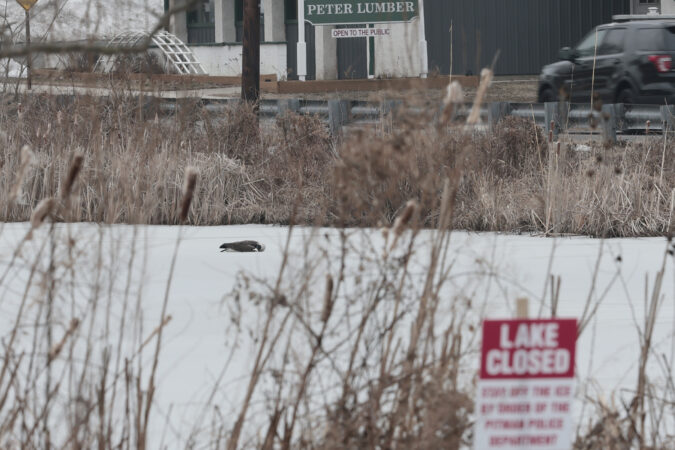
    A lifeless bird lays on the ice at Alcyon Lake in Pitman, N.J. on Wednesday, Feb. 18, 2026. Two adjacent parks, Betty Park (in background) and Alcyon Park (not in photo) are closed as a result of the mysterious birds deaths.

    Caryelle Lasher, Camden County’s health officer, said there have been only a small number of reports of dead birds in the county.

    Those were concentrated in the lake off Mullen Drive in the Sicklerville section of Gloucester Township, she said.

    Overall, however, the county has not seen a spike in reports, she said.

    Ruiz and Lasher — as well as state officials — stress that people should not touch sick or dead wildlife of any kind. And they should keep pets away.

    Even though the risk is low, the potential for human infection exists.

    The DEP also has an online form to report sick or dead birds.

    H5N1 is a respiratory bird disease caused by influenza A viruses. Wild birds, such as ducks, gulls, and shorebirds, can carry and spread these viruses but may show no signs of illness, according to the DEP.

    The disease can kill domestic poultry such as chickens. Typical symptoms include diarrhea, nasal discharge, coughing, sneezing, and incoordination.

    It continues to infect not only birds, but also mammals.

    Tips to prevent infection:

    • Do not touch sick or dying animals, or bring them into your home.
    • Keep pets away from them, as well as away from droppings.
    • Wash hands frequently if you are near wildlife.
    • Do not eat undercooked eggs, poultry, or beef.
    • Prevent cross-contamination between cooked and raw food.
    • Avoid unpasteurized milk or cheese.
  • 2026 Toyota GR86: Plenty of fun, if you toss your EZPass

    2026 Toyota GR86: Plenty of fun, if you toss your EZPass

    2026 Toyota GR86 Premium: As fun as it looks?

    Price: $38,809 as tested. Black dual exhaust added $1,700; Performance Package, $1,500; fancy paint, $475; floor mats, $299.

    What others are saying: “Highs: Genuinely rewarding to drive, one of the last manuals available, remarkably affordable. Lows: Noisy cabin on the interstate, we dare you to sit in the back, unexciting exhaust note,” says Car and Driver.

    What Toyota is saying: “Level up your drive.”

    Reality: Even funner, ‘til you get on the highway.

    What’s new: The GR86 gets a new Yuzu Edition for 2026, with yellow paint and black seats. Otherwise it’s pretty much as before, since its redesign in 2022.

    It’s a twin to the Subaru BRZ.

    Competition: In addition to the Subaru, there are the BMW 2 Series, Honda Civic Si, Mazda Miata, Mini Cooper, and Volkswagen GTI.

    Up to speed: The 2.4-liter four-cylinder engine makes 228 horsepower and gets the little sports car to 60 mph in 5.4 seconds, says Car and Driver, and I believe it. I’d think it’s a little faster, but we’ll stick with the facts.

    It’s truly a sporty car to drive. It’s fine for passing on Interstate highways and such but it’s really at home on the back roads, racing up hills and back down again.

    Shifty: You can get a GR86 with a stick, but Mr. Driver’s Seat didn’t. The six-speed automatic transmission is a nice facsimile, with Park up in the right corner so it looks like it COULD be a stick. I actually spent a couple seconds looking for a clutch until I realized there wasn’t one.

    The shifter then snakes through Reverse and Neutral to get to Drive, another bit of stick-shift cosplay.

    The manual setting works nicely, and really makes the little car even that much more fun. Use the lever to augment the engine’s power for any country road antics and you’ll feel nicely rewarded.

    On the road: Did someone say fun? The rear-drive GR86 has plenty of it, snaking through turns and sliding around corners even at fairly low speeds, so you can feel like it’s a blast even when not going much beyond 40 or 45 mph — although faster is funner.

    Less fun is the time spent on the highway; I found myself getting a bit of a headache during half-hour trips on Route 202 between King of Prussia and West Chester.

    Off the road, the GR86 is great companion for tight parking lots, thanks to a turning radius of 35 feet and change.

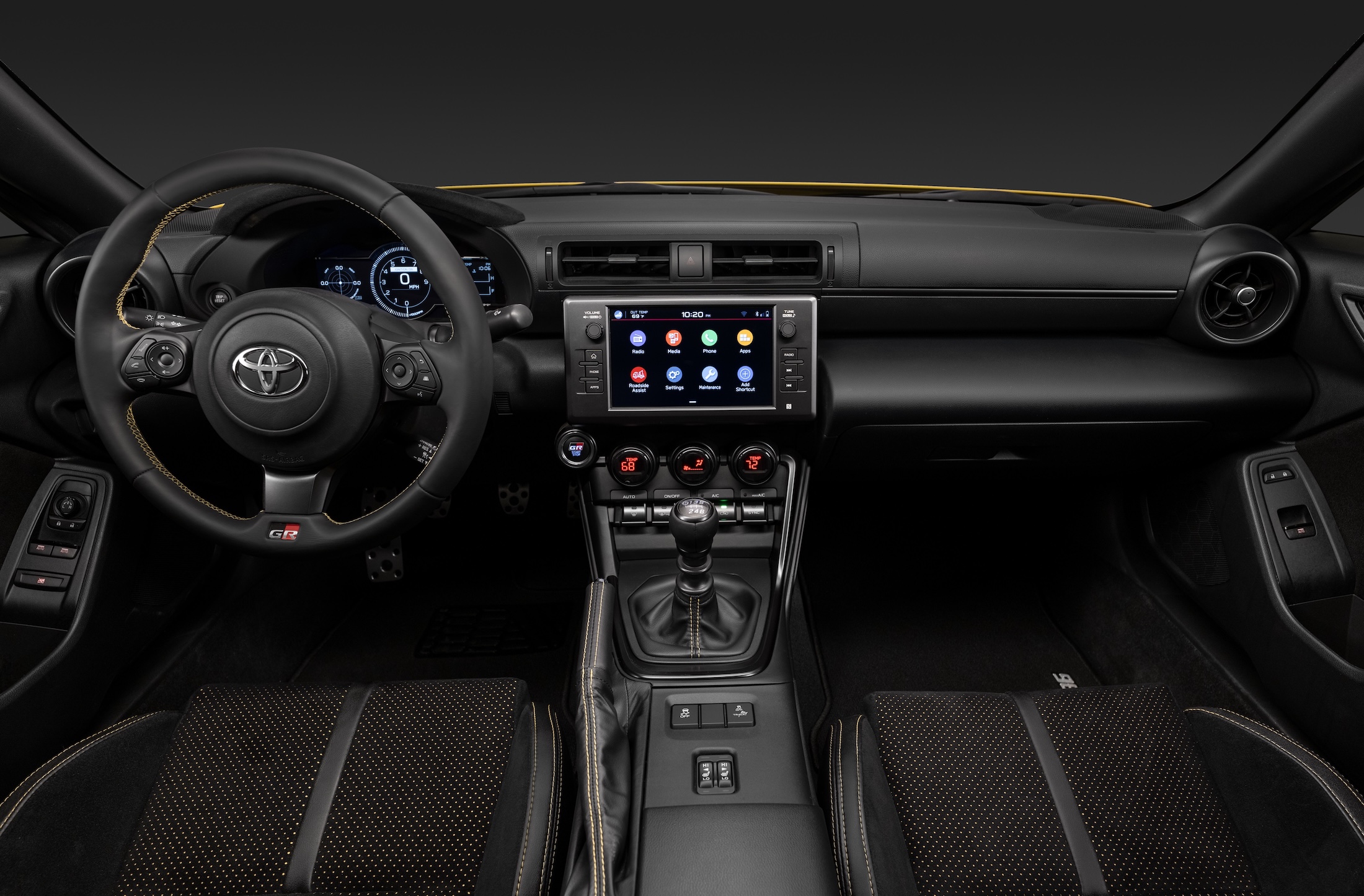
    The interior of the Toyota GR86 is snug and retro fun, unless you’re sat in the back. Then it’s snug, retro, and not at all fun.

    Driver’s seat: The cloth seats offer great support and are comfortable enough. They feel firm and a little crowded, so some people might not appreciate the big wings. The Lovely Mrs. Passenger Seat found them as nice as I did.

    The manual controls adjust height, fore-aft, and backrest simply.

    The gauges and steering wheel controls are old-fashioned, looking like last-gen Lexus dials, but I call old-fashioned a good thing these days.

    Friends and stuff: There’s a rear seat but it’s pretty cruel. Guests would have been harmed in the making of this review.

    I finally build up the nerve to try it out on Day 6. The ceiling is so low that I had to cant my head to the side. Foot room and legroom look impossible, but I could actually get my legs in there by setting the front seat a few notches up from normal. But when I did that and tried out the front, my legs were more cramped than on a Frontier flight.

    I would say only put kids in the back. Or maybe kid, singular.

    Cargo space is 6.26 cubic feet. (I didn’t round it because you’ll need every .01 cube.) The seat folds (all in one complicated-to-open piece) to create more luggage space.

    In and out: In and ouch. It’s way down there and requires a bit of undignified squatting, twisting, ducking, and scooching.

    Play some tunes: Sad. Tinny. Sound gets a C grade, probably one of the lowest I’ve ever assigned.

    Last-gen controls. You definitely won’t be distracted playing around with the touchscreen, though there is one, because it’s 2026 and I think it’s law now or something.

    Keeping warm and cool: The heater controls feature dials for temperature and fan speed and buttons inside the dials for blower choice. It’s such a small car that it runs hot; the seat heaters offer nice support when it’s not too cold out, but the switches are awkwardly built into the armrest.

    Fuel economy: I averaged about 26 mpg in spirited drives around Chester County’s old country roads every chance I could get. I would actually park and wait for certain roads to clear and then go make the most of the exhaust note. I guess the dual exhausts are worth $1,700.

    Where it’s built: Ota, Gunma, Japan

    How it’s built: Consumer Reports predicts the GR86 reliability is a 4 out of 5.

    In the end: Definitely lots of joy to be had here, and I could get behind buying a GR86. But with the Mini Cooper and Volkswagen GTI, you get fun and some practicality as well, plus the delight doesn’t diminish at highway speeds.

  • The Phillies’ Trea Turner was still the fastest man in the league at 32. And it’s not due just to ‘genetics.’

    The Phillies’ Trea Turner was still the fastest man in the league at 32. And it’s not due just to ‘genetics.’

    CLEARWATER, Fla. — The fastest man in the National League in 2015 still wears the crown, which seems impossible until Trea Turner shares his secret.

    “I pay attention to a lot of little things,” the Phillies‘ star shortstop said Wednesday, “that maybe other guys don’t.”

    OK, such as?

    “Things that happen to all of us all the time,” Turner said. “I walk down my stairs and I’m like, ‘Oh, my knee’s kind of feeling weird today,’ or I wake up and sleep wrong. Then, I’ll get to the field and ask questions in the training room.

    “Sometimes it might be annoying, where I just keep asking questions. But when something bothers me, I try to find out why so that, if it does happen again, I get rid of it real quick.

    “Like I said, I pay attention more than probably other guys.”

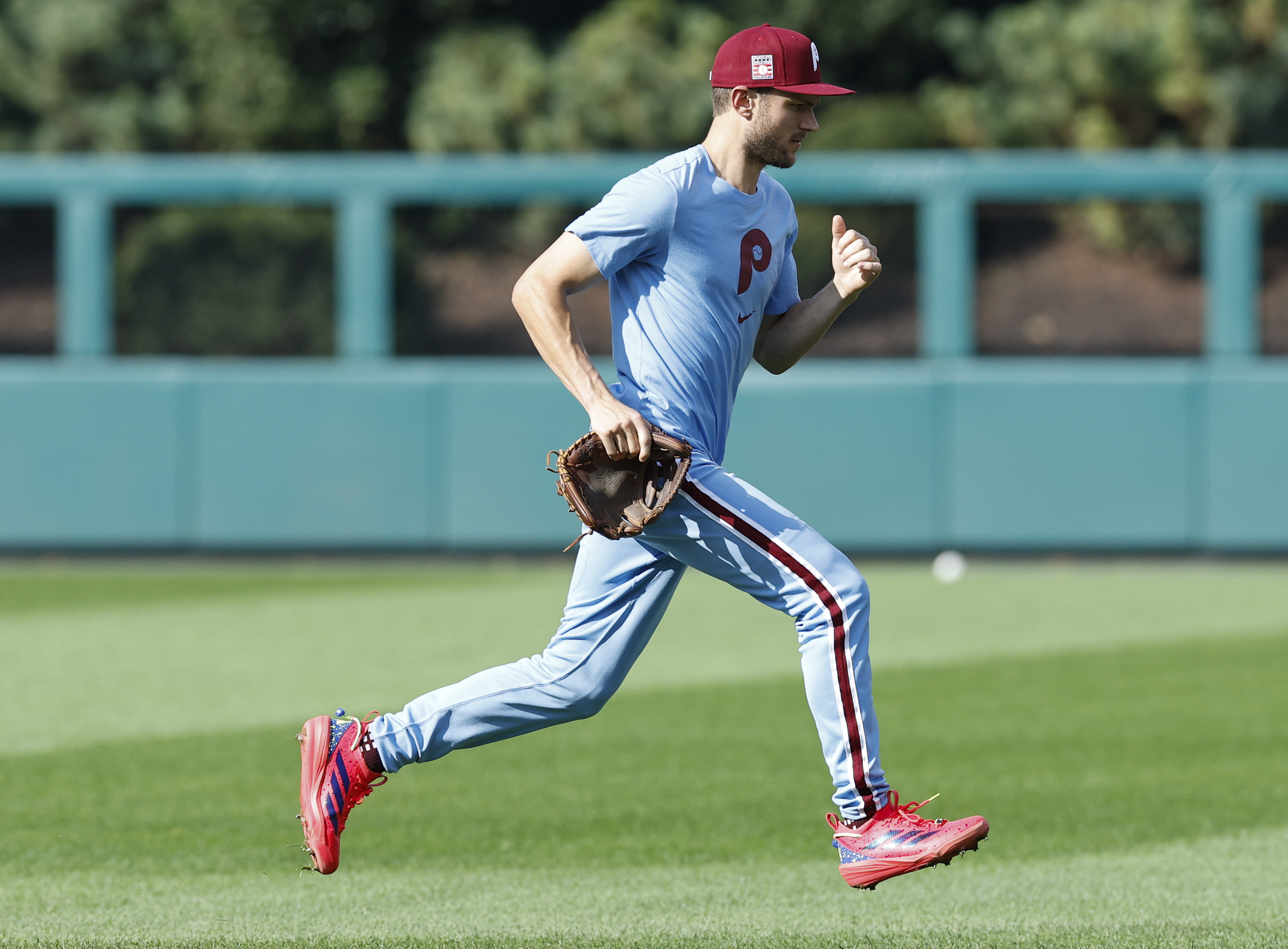
    And that, Turner said, explains how he hasn’t lost a step 10 years into his major league career. If anything, he may be a tick faster. As a 23-year-old rookie with the Nationals in 2016, he averaged 30 feet per second, according to Statcast. Last season, at age 32, he averaged 30.3.

    Turner also led the majors last year with 117 bolts, defined by Statcast as any run above 30 feet per second. The only other player with more than 100 bolts: Royals 25-year-old star shortstop Bobby Witt Jr.

    It’s as uncommon as it sounds. Of the 28 fastest players in baseball last season based on sprint speed, only three — Turner, Twins center fielder Byron Buxton, and Braves utility man Eli White — were in their 30s.

    “I still feel young,” said Turner, who will turn 33 on June 30. “I don’t feel as old as I am, which, I don’t think I’m old. But I don’t feel as old as I am. Hopefully I can continue that for a while.”

    As always, it will hinge on health. Turner did miss time in each of the last two seasons with hamstring strains. Ever curious, he sought the root of each injury. He believes last year’s injury, a mild strain of his right hamstring while running to first base Sept. 7 in Miami, was caused by dehydration.

    Through the years, Turner has changed his nutritional habits. He cut out soda several years ago. He eats more carefully now, taking cues from Bryce Harper, Aaron Nola, and other teammates.

    “Genetics, I’d say, is a big part of it,” said Brett Austin, Turner’s college teammate and close friend. “But I think his offseason program really allows him to optimize and maintain his speed.”

    Indeed, the biggest reason Turner has remained in the fast lane is a training routine that he has followed since he was a teenager.

    In high school, he met Ed Smith, a physical therapist and strength coach who worked with major leaguers at a facility in Wellington, Fla., near Turner’s hometown. Back then, Turner was 5-foot-4 and bony. He was taller but still skinny when he arrived on campus at North Carolina State, where coach Elliot Avent nicknamed him “Seabiscuit” after the famously undersized champion racehorse.

    A training routine he has followed since he was a teenager has allowed Trea Turner to remain one of the game’s fastest players at age 32.

    As a freshman, Turner led the nation with 57 stolen bases. But when he went home after the season, he asked Smith to help improve his running form.

    “He hated the weight room. Hated it,” Austin said. “I’d go, ‘Dude, you need to get big. You need to get strong.’ He was like, ‘I don’t want to lose my speed.’ And he would go see Ed and do his explosion drills, his speed and agility, his laterals.

    “They still work together every offseason. If I had to guess, that’s just allowed him to have the longevity and maintain his speed.”

    Turner works out with Smith multiple times per week in the winter. During the season, he speaks by phone with Smith at least monthly and texts him more often with questions. He takes feedback from Smith and shares it with the Phillies’ staff, notably athletic trainer Paul Buchheit and strength coaches Morgan Gregory and Furey Leva.

    Because as much pride as Turner takes in still being faster than most players, he focuses more on maintaining that speed. Since making his major-league debut, his average sprint speed has ranged from 30.6 feet per second in 2015 and 2021 to 29.6 in 2024. Only once has he not finished among the six fastest players in baseball.

    “Some guys are fast for a year or two years, and then an injury pops up and they might not be the same again,” Turner said. “I don’t want that to happen. I’ve tried to become a complete player, so if I ever lose my speed, I want to be able to contribute. But it also would change who I am.

    “If I lose a step, I lose a step. That’s OK. But if I’m running at 29 feet per second instead of 30, I can still impact the game. That’s still moving. But you’ve got to run correctly to do that.”

    Shortstop Trea Turner, who will be 33 in June, enters his fourth season with the Phillies.

    Turner will be challenged to remain in the pole position for the Phillies. Rookie center fielder Justin Crawford, 22, is a burner, with a top recorded speed of 31.1 feet per second in triple A last season. Johan Rojas, a candidate to make the team as a reserve outfielder, averaged 30.1 feet per second over the last two seasons.

    But the fastest man in the league in 2015 was still at the top of the leader board in 2025, with no sign of slowing down.

    “I’ve seen the numbers, and I’m proud of them,” Turner said. “Because when you look at those charts, you don’t see many 30-year-olds. And even if you do, it’s really low volume. I think it’s pretty cool. I take pride in it, and I think it’s cool for the people around me that help me do it. It’s something they should be proud of, too.”