Tag: topic-link-auto

  • Believe it or not, Aidan Miller and the Dodgers are more connected than one might think

    Believe it or not, Aidan Miller and the Dodgers are more connected than one might think

    The fun part of the baseball offseason is the illusion of control.

    Unless you are Dave Dombrowski.

    In which case, you’re a sitting duck. Or, even worse, you’re a floating duck, whose legs are tied, except they are tied beneath the surface, and so everybody thinks you’re a dumb little ducky because you don’t know how to swim.

    The Phillies president has earned some of the criticism being lobbed his way. As ridiculous as it may seem for the Mets to pay Bo Bichette $42 million in annual average value, is it any more ridiculous than paying Taijuan Walker and Nick Castellanos a combined $38 million in AAV?

    The substitution costs are always what get you. Thirty-eight million dollars would have been enough to have Jeff Hoffman and Carlos Estévez in your bullpen last season. It would have been enough to have Edwin Díaz in your bullpen this season. General managing is all about the tradeoffs you make.

    The irony is that the Castellanos and Walker contracts are easy ones to stumble into for the same reason that everyone thinks Dombrowski has done a lousy job this offseason. If you happened to be someone who pointed out the overinflated and potentially ill-advised nature of those deals at the time they were signed, you were met with a shrug of the shoulders.

    Phillies president David Dombrowski has been the brunt of a few jokes this offseason as the team looks to retool for this upcoming year.

    Who cares? It’s not our money.

    Well, it’s nobody’s money now.

    But let’s get back to our original point. Whatever nickel-and-diming we do in hindsight, it wouldn’t erase the only conclusion we can draw from this offseason. No amount of fiscal prudence would have given the Phillies the means to catch up to, let alone keep pace with, the Dodgers. Over the last three offseasons, they have signed Shohei Ohtani, Blake Snell, Tyler Glasnow, Yoshinobu Yamamoto, and now Kyle Tucker and Díaz to contracts ranging from $22 million to $57 million in average annual value.

    John Middleton might be a billionaire, but the Dodgers’ annual payroll is pushing half a billion once you factor in the luxury tax. How many billions? That’s the question you need to answer to compete at this level of spending.

    The Phillies know this. Could Middleton and his minority owners rub their pennies together a little harder? Sure. Their attempt to sign Bichette was a sign that they aren’t operating by any hard spending limits. What they lack — what everybody lacks, except for the Dodgers and Mets — is the ability to sign such contracts with the knowledge that they can outspend any mistakes. The Dodgers have plenty of seemingly dead money on their books after last year’s bullpen spending spree. But it doesn’t seem to matter.

    Chasing Bo Bichette, who signed with the Mets, was admirable of the Phillies. But what would the cost have been if they landed him?

    The ability to sign Bichette for what would have been a reasonable seven-year, $200 million deal is a lot different from the ability to spend that money on whoever happens to be available. That’s how you end up hamstringing yourself by overpaying for players like Walker and Castellanos.

    Those contracts only make sense if you can outspend the mistakes. The Phillies aren’t there, nor have they ever pretended to be. It’s plenty fair to criticize Dombrowski and Middleton for offering those deals to begin with. But you can’t fault them for their inability and/or unwillingness to offer another batch of them.

    Which brings us to the illusory aspect of the baseball offseason. Regardless of how the last few months would have played out, the Phillies were always going to enter spring training needing to look inward in order to catch up to the Dodgers. In more ways than one. They are going to need to get some sort of impact from their minor league system. And they are going to need to get the intestinal fortitude to create opportunities for it to happen.

    The best news of the offseason might have come over the last week, when all of the national outlets released their Top 100 prospects lists. Aidan Miller showed up in the Top 10 of two of those lists: No. 6 on The Athletic’s and No. 10 on ESPN’s.

    News? Perhaps not. But confirmation that the national scouting industry agrees with what all of us local yokels have seen with our own two eyes for the last two years. Miller is the kind of prospect who can alter a team’s long-term trajectory while massively boosting its present-day World Series odds.

    Many believe Phillies minor league infielder Aidan Miller is the kind of prospect who can alter a team’s long-term trajectory.

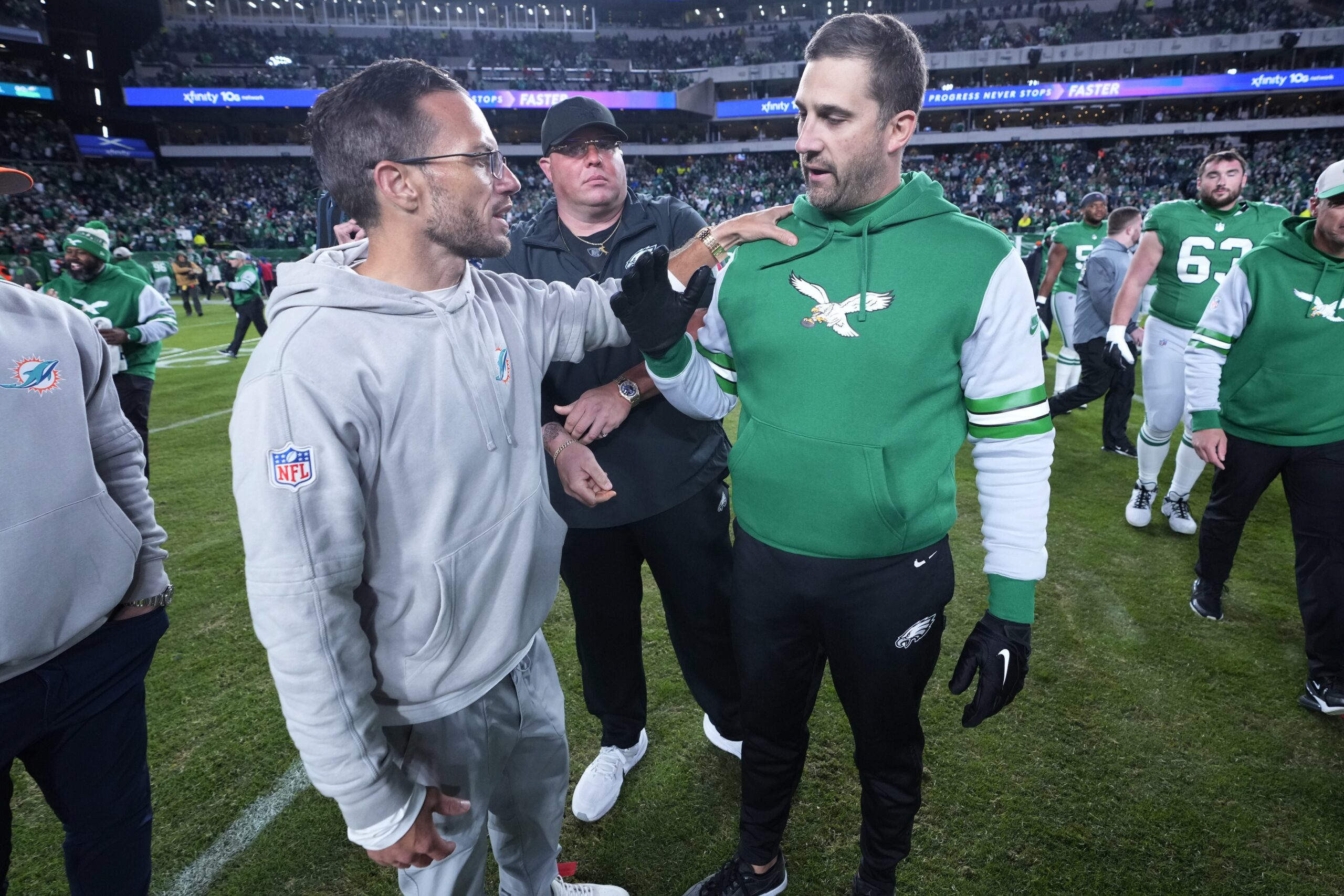
    Years ago, the Dodgers had one of those prospects in Corey Seager. He broke into the big leagues at 21 on a team managed by Don Mattingly. Mattingly happens to be the new Phillies bench coach and the father of the team’s general manager. The Dodgers went to the NLCS the following season, when Seager was 22, and the World Series the year after, when he was 23. Miller will be 22 in June.

    Prospects are largely responsible for writing their own future. Miller needs to start the season the way he ended the last one. If he does, the Phillies need to do their part and find him a spot in the lineup. It could involve difficult conversations, but they will be necessary ones.

    Same goes elsewhere. With Andrew Painter. With Gage Wood. With lesser-heralded prospects like Gabriel Rincones and Jean Cabrera. The Phillies need to be willing and flexible to bring guys up and find out what they have.

    The Dodgers have set the bar high. The Phillies have no choice but to reach for it.

  • Delaware County, N.Y., can’t take Delco away from Delco

    Delaware County, N.Y., can’t take Delco away from Delco

    I’ve long been aware that there are other Philadelphias in the world. There’s one in Mississippi, one in South Africa, and one right here in Pennsylvania — New Philadelphia, a rural Schuylkill County borough with a bustling population of 1,008.

    Philadelphia is a cool name and it comes with an inherent nickname that’s equally as cool. Who wouldn’t want that for their town? I get it and I’m not even salty about it because when you say Philly, folks know what city you’re referring to, just like when you say “Go Birds,” everybody knows you aren’t talking about the Seahawks.

    I always assumed there were places that shared our suburban counties’ names as well, but never in a million Wawa Hoagiefests did I expect there to be another Delco, especially not one that also has its own merch. That’s our weird thing.

    But after following up on a tip from my editor — who saw a reference to “Delco, N.Y.” — I found a website for DELCO, “a lifestyle brand celebrating rural culture through fashion, design & authentic content in Upstate NY.”

    The company sells shirts and hoodies that read “DELCO NEW YORK,” flags in “John Deer Green” that read the same, and a trucker hat with Calvin (the comic strip character) urinating on the word DELCO.

    It’s not clear how this lifestyle brand can produce “authentic content” while soaking in a hot tub full of boiling lies, for there is only one true Delco and it’s here, in Southeastern Pa.

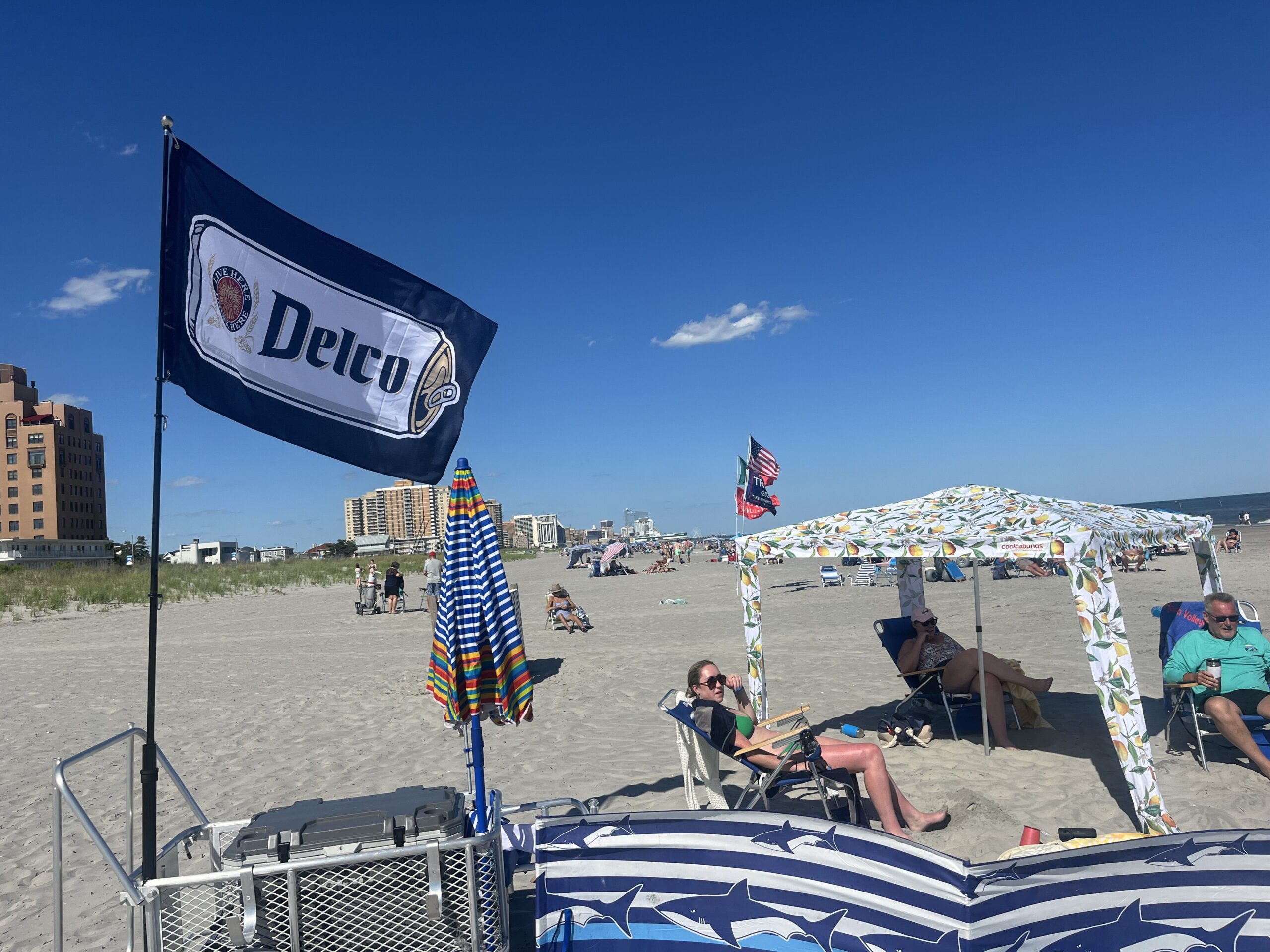
    Delco residents haven’t spent years putting the word Delco on everything, receiving national attention for some of the most bizarre crimes imaginable, and staking their giant Delco flags at the Jersey Shore like it was the moon to have some ersatz “Delco” capitalize off their questionably good name.

    The Hurley family of Springfield, Pa., flies their Delco flag on the beach in Ventnor in 2024.

    “We’ve defined what it means to be Delco,” Rob MacPherson, executive vice president and chief marketing officer for Visit Delco, told me.

    Fran McElwee, marketing strategist for the county tourism agency, agreed.

    “We are who we are and we know it,” she said. “We’re the OG.”

    Requests for interviews with a representative of DELCO, the New York lifestyle brand, and with the president of the board of supervisors for Delaware County, N.Y., were not returned. Isn’t that interesting.

    Rural vs. suburban

    There are at least six Delaware Counties in the United States, one each in Indiana, Iowa, New York, Ohio, Oklahoma, and Pennsylvania. But ours was the first, having been established in 1789.

    While many of those counties also use some form of Delco (DelCo, Del-Co, etc.) for municipal government website URLs or public utilities names, Delaware County, N.Y., appears to be the only one trying to co-opt Delco as a culture.

    Our Delco and the one in New York were both named after the Delaware River, which forms the border between the Empire State’s Delaware County in its southern tier and Pennsylvania’s Wayne County, in the far northeast.

    Both counties also have municipalities named Middletown, we don’t like New York City folks coming in and mucking stuff up, and we have an affinity for mullets, as evidenced by the models on the DELCO lifestyle brand’s website. But that’s where the similarities end.

    Delaware County, N.Y., is rural (which, if you’re from real Delco, would be pronounced so it rhymes with “gurrrl” for emphasis). It’s 1,467 square miles with 29 municipalities and 44,191 residents, so it’s safe to assume there are more deer there than people.

    According to the county website, top activities include fishing, snowmobiling, and hiking. Historically, the region was known for its sawmills, dairy farms, and the Western Catskills.

    Delco, Pa., on the other hand, is more suburban than a Chevy or a cul-de-sac. It shoves 49 municipalities and 584,882 people into 184 square miles. This county is like a damn clown car. We don’t even know how we all fit in here, we’re just along for the ride.

    Eagles fans wave team flags from the top of their van while tailgating near Lincoln Financial Field.

    Our top Delco activities include tailgating, Wawa runs, and creative shenanigans. Historically, we were the first landing site of William Penn in Pennsylvania, the county where Martin Luther King Jr. attended seminary school, and the birthplace of the Slinky and stromboli.

    But our greatest asset, what makes us the real Delco, is our culture.

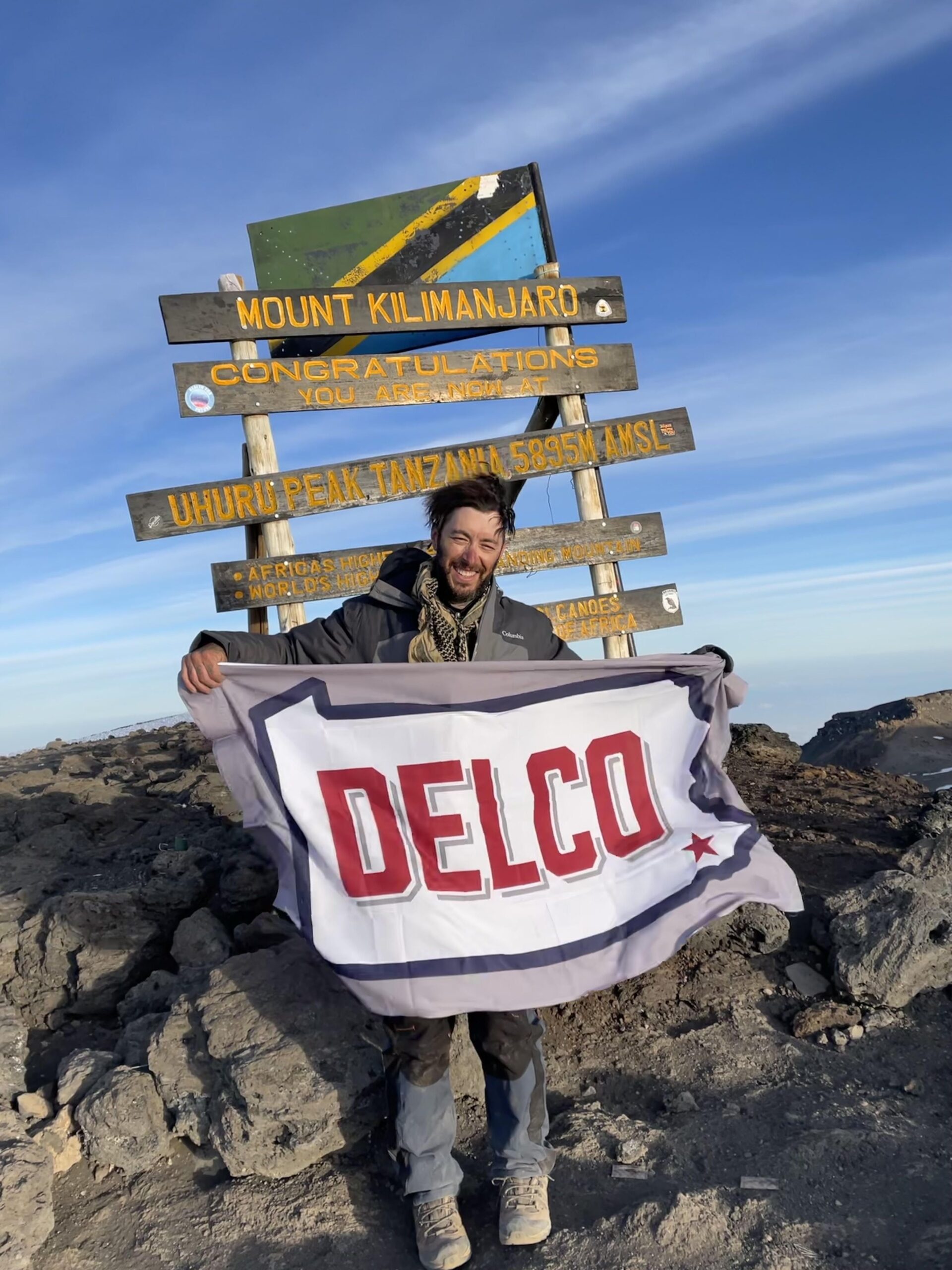
    People here are so passionate they’ve made a Delco movie, Delco beer, and Delco-set TV shows. Residents get Delco tattoos, there’s a state-recognized Delco Day, and I once interviewed a guy who climbed Mount Kilimanjaro with the sole purpose of waving a Delco flag at the top.

    Roddie Cooper’s driving force to climb Mount Kilimanjaro was to get this photograph of the Delco flag at the top.

    So whenever “Delco,” N.Y. wants to wave one of its flags in truce, we’ll gladly come take it.

    ‘A way of life’

    “Delco is different, it’s a personality, it’s a way of life, there’s an authenticity about Delco you don’t find in other counties,” McElwee told me.

    Zac Beaver, programming and libraries manager for the Delaware County Historical Society, said Delco’s hyperlocal culture sets it apart. It has its own accent, history, and even its own love language.

    “A hoagie tray is a meaningful unit of generosity,” Beaver said.

    Dave Avicolli (left) and Steve Yancey, co-owners of Ro-Lynn Deli in Brookhaven hold a “meaningful unit of generosity,” a Delco hoagie tray.

    There are even unspoken rules for Delco neighborhood bars.

    “They don’t have a website, only a Facebook page at most,” MacPherson said. “And no more than two IPAs on tap.”

    He theorized that part of the county’s strong identity comes from the fact that there are so many municipalities and many folks attended Catholic schools or school districts like Interboro, which cover several townships.

    “So your commonality was your county and not your hometown,” MacPherson said. “I think that’s led to the notion of Delco.”

    Delco residents “don’t have very lofty ideas about what it means to be from Delco, like [they would] if they were from New York City or California,” Beaver told me, and they may come across to some as brusque, but that’s just because they’re engaged and “as likely to say something negative as positive to you, whereas in the rest of the country they just won’t talk to you,” Beaver said.

    Such hyperlocal culture isn’t true of everywhere, Beaver posited.

    Actor Brian Anthony Wilson during the red carpet premiere of “Delco: The Movie” at the Media Theatre last year. Yes, “premier” is spelled wrong on the marquee. Yes, that is very Delco.

    “If you live in suburban Iowa you might as well live in suburban Nebraska,” he said. “I think it has to do with the flattening of the American experience. I think everyone else has changed more than we have.”

    Philly’s other burbs also have their own culture but don’t exhibit the level of outward pride I see in Delco. I asked Beaver if he had any theories.

    “Because they’re rich,” he said. “They’ve been desirable places for a long time. Delco was looked down on for a long time … and that makes people proud of it.”

    MacPherson agreed.

    “The pride comes from having a little bit of a chip on the shoulder,” he said.

    ‘By sheer force’

    It’s unclear when Delco was first used as a nickname for Delaware County, Pa., but embarrassingly, the first Delco reference I can find in The Inquirer’s archives was for a guest from Delco, N.Y. who checked into a Philadelphia hotel in 1860. (I don’t know why newspapers used to print hotel registries, aside from the act we’ve always been nosy little buggers.)

    In 1861, The Inquirer referenced a Del.co that appears to be the one in Pennsylvania, and I found subsequent Del.co references in our archives throughout the late 1800s. It’s only shortly after the turn of the 20th century that Delco seems to have come into regular use when referring to things and people from the suburban county.

    “There is the Delco Baseball League founded in 1908 and they still exist,” Beaver said.

    Delco is also a brand name. There’s ACDelco automotive parts (a remnant of Delco Electronics), Delco flatware, and Delco Foods, an Italian food distributor in Indiana. So there’s a minute possibility “Delco,” N.Y., could have been inspired to take its name from one of them.

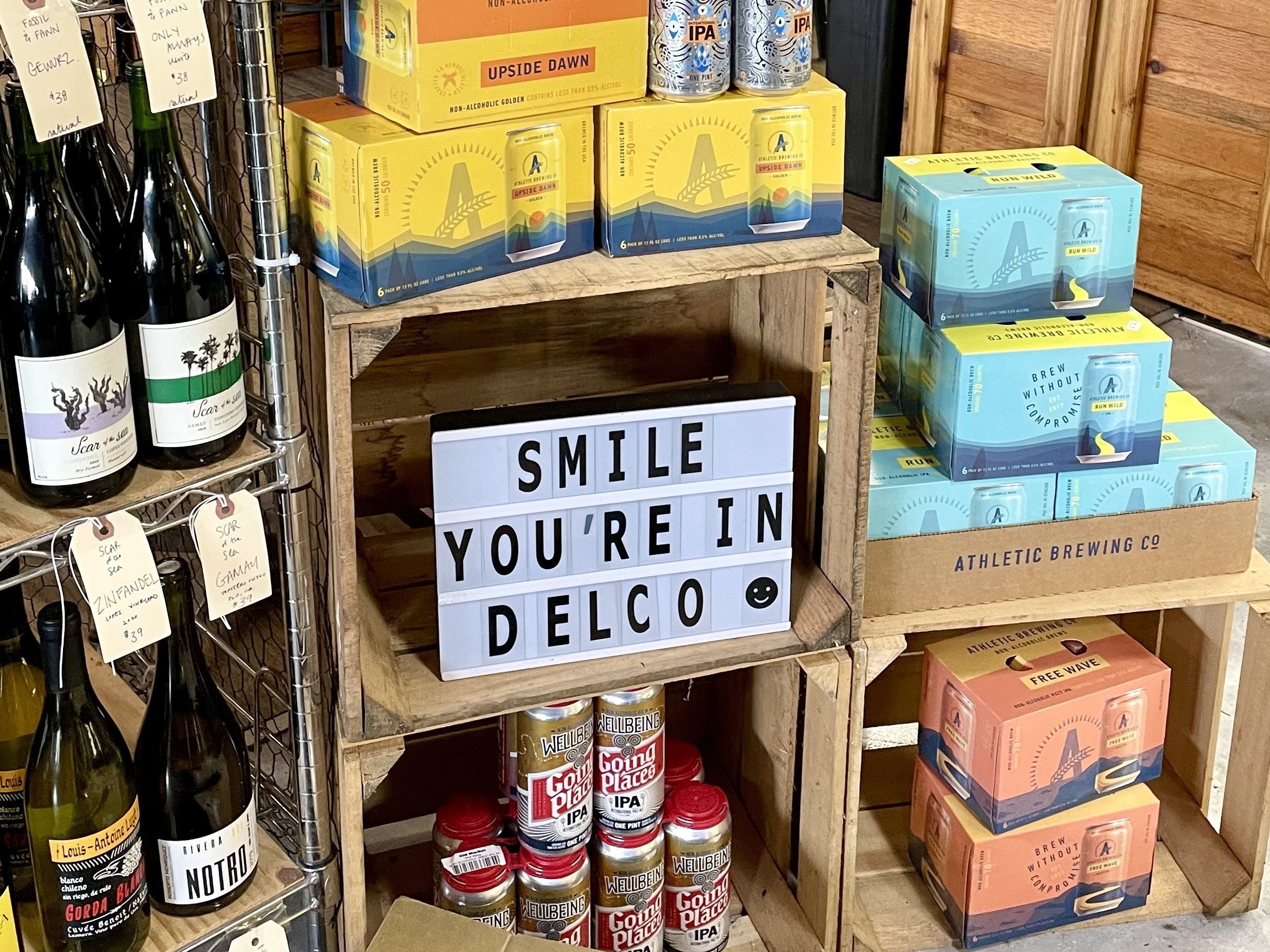
    A “Smile You’re in Delco” sign greets the thirsty shoppers at 320 Market Cafe in Swarthmore.

    I even found an 1879 reference to a man named Delco in a crime blurb in The Inquirer:

    “ … In Cincinnati yesterday two men Jim Dermont, the cook, and Isadore Delco, a server in a Sixth Street restaurant, quarreled over the dignity of their respective positions, and Delco was badly stabbed.”

    I didn’t find a follow-up story but I have no doubt Delco survived the fight, because it always does — at least in Southeastern Pennsylvania.

    So to this phony flimflam “Delco” — bring it on. We’ve been around longer and we have more people, more pride, and more culture. Plus, as Philly sports fans and Delco residents, we have a chip on our shoulder bigger than a family bag of Herr’s.

    “Just by sheer force, we’re winning,” McElwee said.

  • Will Villanova end its NCAA Tournament drought? Here’s what the numbers — and Joe Lunardi — say.

    Will Villanova end its NCAA Tournament drought? Here’s what the numbers — and Joe Lunardi — say.

    Sunday is the first day of February, which means March is right around the corner, which means it is officially no longer too early to think about the NCAA Tournament.

    Villanova is 20 games through its 31-game schedule, and nine games through its 20-game Big East slate. The Wildcats, who host Providence on campus Friday night, are 15-5 overall and 6-3 in their conference matchups in the first season of the Kevin Willard era.

    School administration moved on from Kyle Neptune last March after a third consecutive season ended without an invitation to the NCAA Tournament. Villanova officials believe the school should field a basketball team that perennially is in the at-large bid conversation, and three consecutive seasons without meaningful basketball was not acceptable.

    Right now, it’s hard to believe the drought could stretch to four.

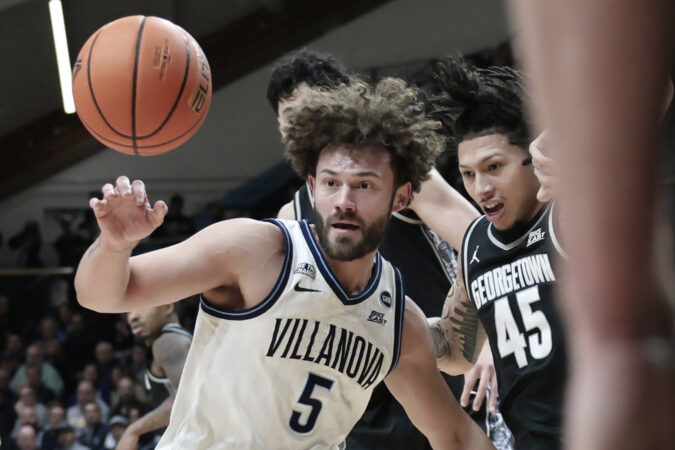
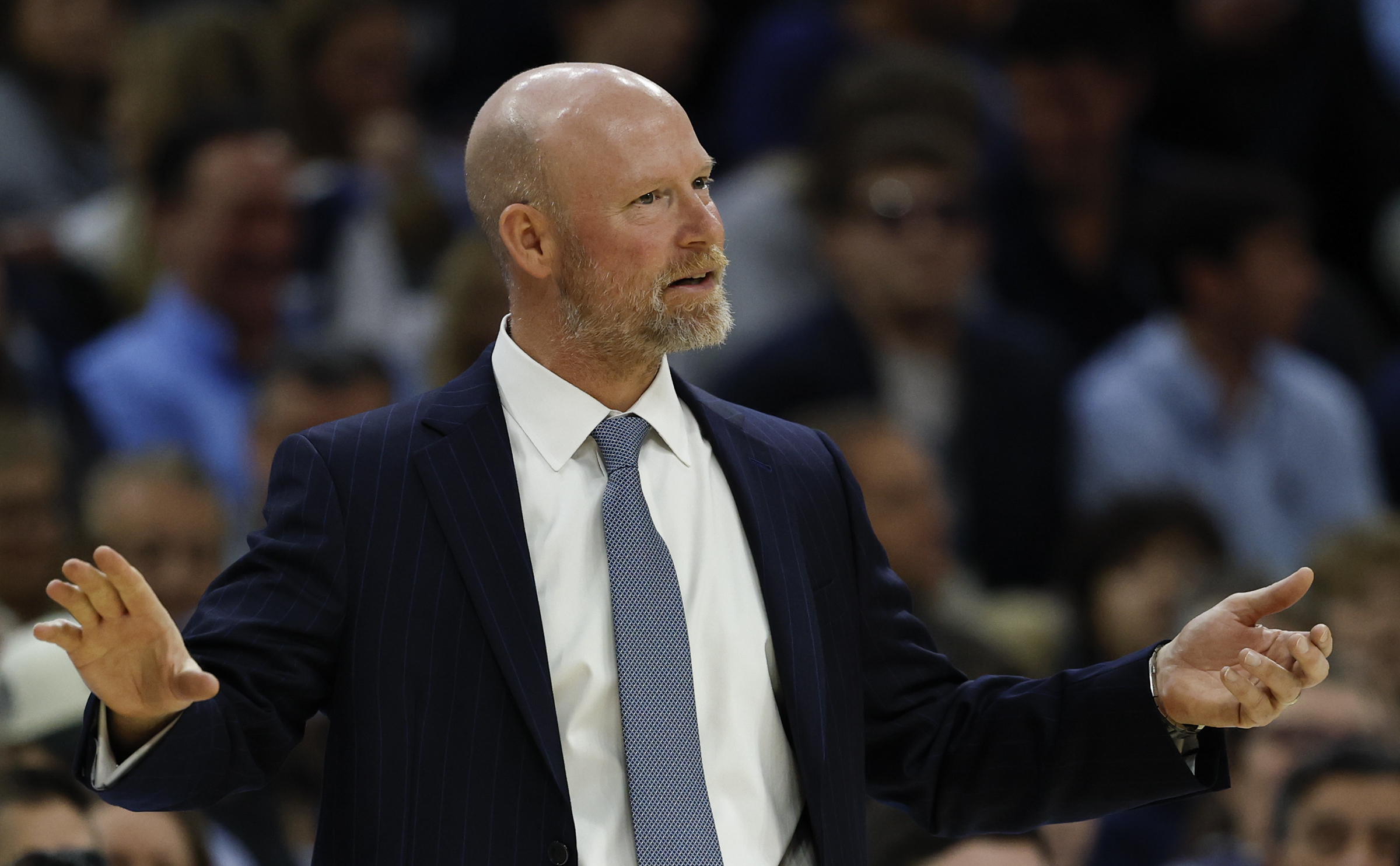
    Villanova coach Kevin Willard is on pace to get the Wildcats back to the tourney.

    The Wildcats aren’t yet a lock, but it’s looking pretty safe for their fans to preemptively look into taking a PTO day or two for the third week of March.

    What are the numbers saying? We went to ESPN’s bracket guru himself, Joe Lunardi, for some help.

    ‘A very long leash’

    Saturday’s loss to No. 2 UConn in Hartford, Conn., was an “insurance policy” kind of game, Lunardi said. Villanova declined coverage. The Wildcats let an upset opportunity slip away in an overtime loss, but the result, Lunardi said, was a “wash.” Villanova was a double-digit underdog and lost by eight.

    “It didn’t hurt, and it didn’t help,” said Lunardi, who had the Wildcats as a No. 7 seed in his latest bracket projection released Tuesday morning.

    The metrics support that notion. Villanova barely budged in the NCAA’s NET rankings, where it was ranked 34th as of Wednesday afternoon, and at KenPom (27).

    What has to happen to stay on the right path?

    “All they really need to do is win games they’re favored, and they can even afford to lose [a few] of those,” Lunardi said. “If they go 6-5, they’re going to make it.”

    That’s some leeway.

    “That’s a very long leash given the fact that, frankly, the league is good but not great,” Lunardi said.

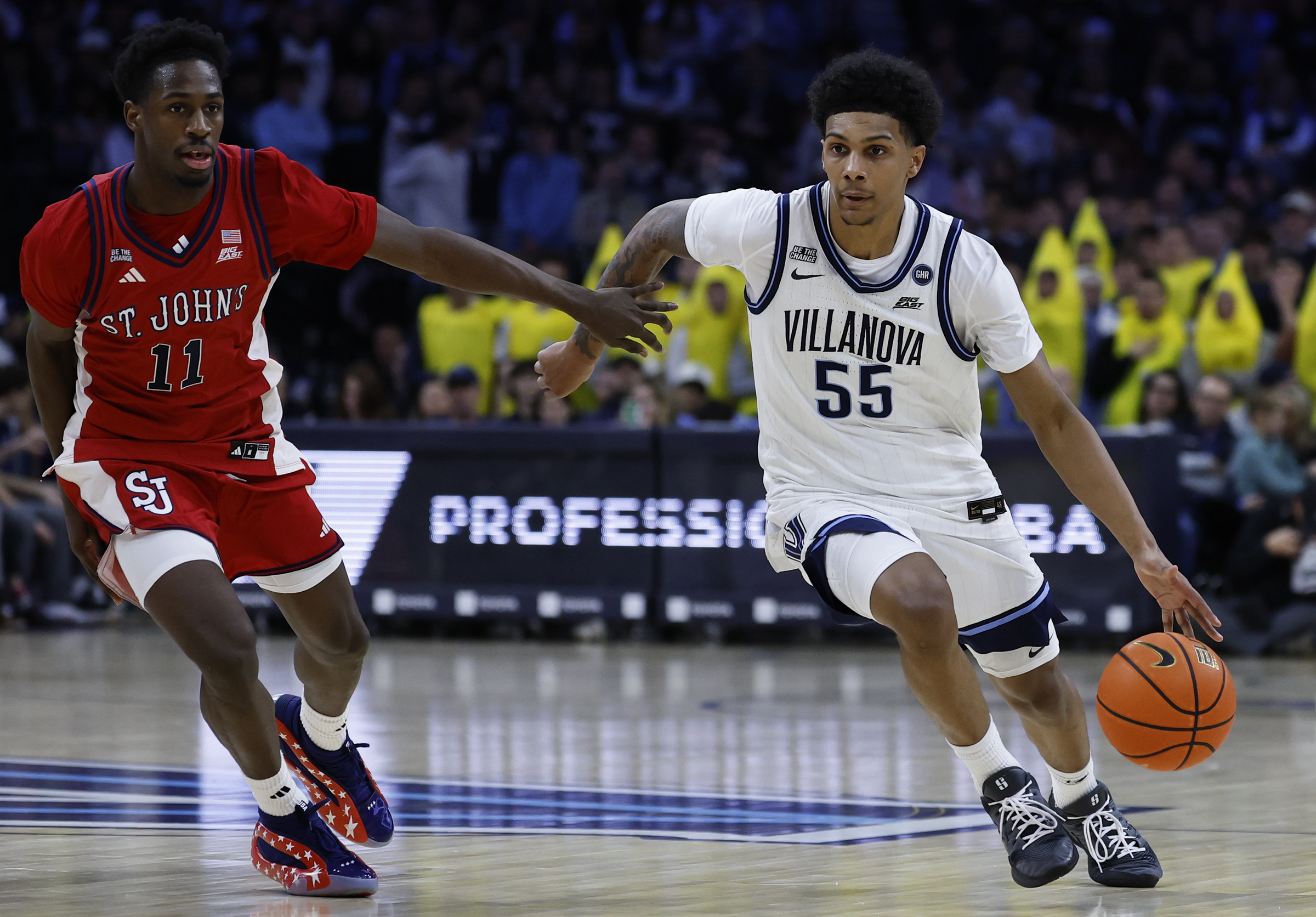
    Guard Acaden Lewis is among those who could land the Wildcats back in the dance.

    As things stand right now, Villanova likely would be favored in at least eight of its final 11 contests. Take care of six or seven of those, and there’s no need for a marquee win over UConn or St. John’s.

    While 6-5 the rest of the way probably would be a disappointment, Lunardi projects that a final record of 21-10 gets Villanova “at worst” a No. 10 seed. The Wildcats’ ceiling, meanwhile, is “probably a five,” Lunardi said.

    So, don’t count on the NCAA rewarding the Wildcats with a “home” game at Xfinity Mobile Arena to start the tournament.

    No signature win, no problem?

    Asked to put the resumé in perspective, Lunardi said: “I would describe it as a resumé of a regular good Jay Wright team, meaning a mid-single-digit seed, not a Final Four team. Everything has to go right to make the second weekend.”

    That’s probably a result any rational person in ’Nova Nation would have signed up for nine months ago.

    It also seems pretty accurate. Villanova is 15-5 because it mostly has taken care of business against teams it is supposed to beat. The nonconference schedule started with a loss to nationally ranked BYU, but then came seven consecutive games against teams well outside the KenPom top 100, including three dominant Big 5 wins.

    The Wildcats were then blown out by Michigan before traveling to Wisconsin to beat the Badgers in overtime, which was followed up with a road victory over Seton Hall to begin conference play. At the time, those were pretty good wins. Only the Wisconsin game has aged well.

    As of Tuesday morning, Seton Hall was Lunardi’s first team outside the field of 68 after a four-game losing streak.

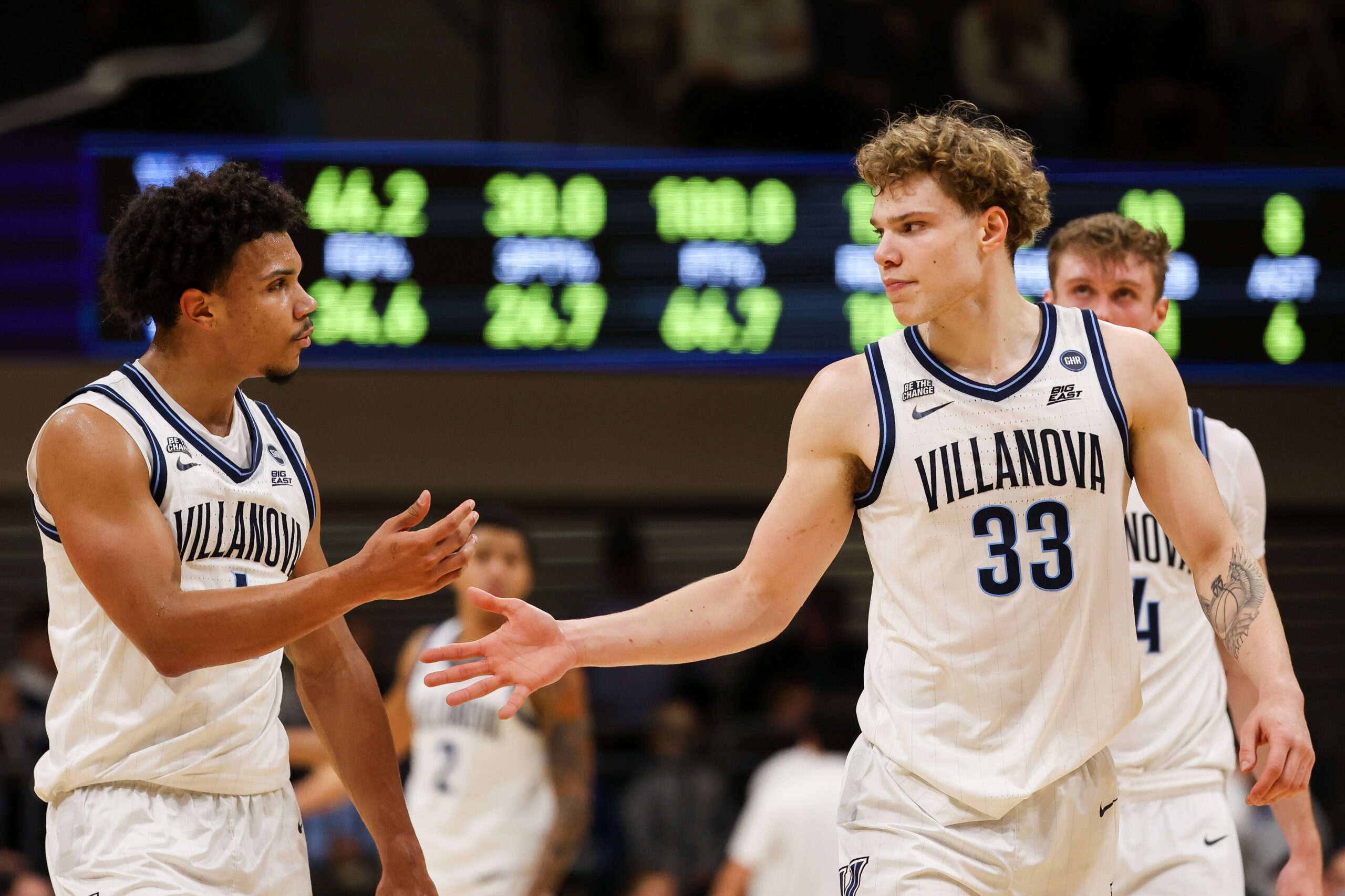
    Forward Matt Hodge and guard Tyler Perkins have Villanova in good shape despite a near-miss against UConn on Saturday.

    It is a Villanova resumé without a signature win, and it might not need one. Why?

    “They don’t have the dreaded bad loss,” Lunardi said.

    Last year’s resumé had losses to Columbia, St. Joseph’s, and a down Virginia team. The year before featured losses to St. Joe’s, Penn, and Drexel. This year’s biggest blip currently is against a Creighton team that still is on the NCAA Tournament bubble.

    Show me the math

    Lunardi says his projections are pretty conservative and include some emphasis on past similar resumés. Right now, Villanova has more than an 80% chance of making the NCAA Tournament, according to Lunardi’s projections.

    On the more extreme side, the TourneyCast projections at Bart Torvik’s analytics site have Villanova at 96% to make the dance. Torvik’s numbers are based on thousands of simulations playing out the rest of the season.

    “It’s too early to make anybody a lock,” Lunardi said.

    But it’s getting closer to that time.

    If there was anything to worry about right now for Villanova fans, it should be health. The Wildcats are a key injury or two — even minor ailments — from scrambling a bit. They don’t have a reliable backup center, for example. Their depth has taken a hit elsewhere, too.

    But those worries are hypothetical. Then again, all of this is.

    What about the rest of the Big 5?

    Villanova is the only one of the six Big 5 schools with an at-large path to the men’s NCAA Tournament. The others would need to win their respective conference tournaments. Of the bunch, only Temple (5-2) and St. Joe’s (5-3) entered Wednesday with a winning conference record.

    Villanova celebrates after a win over Xavier on Jan. 8.

    On the women’s side

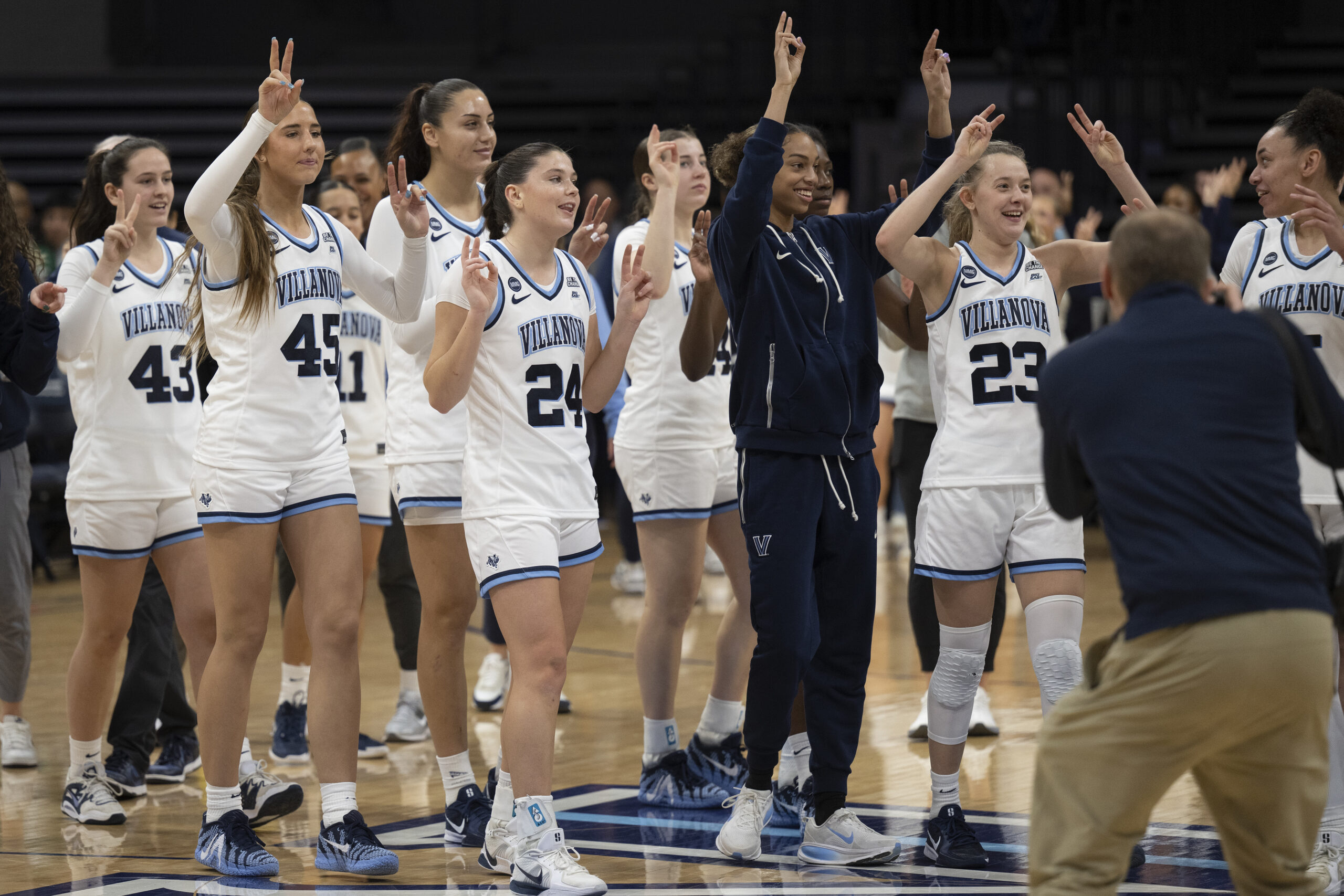
    Similar story. Villanova (16-5, 9-3) was projected as a No. 10 seed on the right side of the NCAA Tournament bubble with an at-large bid in the latest ESPN women’s bracketology. No other team has an at-large path, and only Drexel (4-3) had a winning conference record entering Wednesday.

  • The NFL is primed to open up passing offenses again. The Eagles’ new coordinator had better be ready.

    The NFL is primed to open up passing offenses again. The Eagles’ new coordinator had better be ready.

    There’s a lot of anxiety in the ether these days about the Eagles, particularly about the fact that they haven’t hired an offensive coordinator yet to replace Kevin Patullo.

    Just look at some of the candidates who have been scooped up elsewhere or who decided to stay where they were: Mike McDaniel, Brian Daboll, Joe Brady, Mike Kafka, and Charlie Weis Jr.

    We can call this group the “Guys We’ve Heard Of” group, and they’re the biggest drivers of this collective worry that the Eagles will end up hiring some nincompoop who can’t call plays or, worse, calls the same kinds of plays Patullo did. I don’t know much about McDaniel other than he digs capri pants and tinted sunglasses. But I recognize his name, which means he must be smart, and the Eagles must be stupid for not hiring him.

    Mike McDaniel (left) was a player high on the list of potential replacements for Kevin Patullo as offensive coordinator. Until he accepted the role with the Chargers.

    Then there’s the “Guys I’m Googling” group. They’re the up-and-coming coordinators and quarterback coaches who aren’t as well known to the casual NFL follower but who aspire to become branches on the Sean McVay tree or the Kyle Shanahan tree or whatever metaphorical foliage the Eagles happen to prefer. The way the Eagles’ search is shaping up — the time they’re taking, the three still-vacant head coaching jobs around the league — they’re likely to settle on someone from this group.

    Hiring such a candidate, one with relatively little experience and no discernible track record, could turn out to be a problem for the Eagles, who might end up with another play-caller who isn’t quite ready for the role. But it would be a boon for the team’s fans and media, who could start second-guessing and complaining about the guy as early as Week 1.

    No matter who the Eagles bring on board, they would do well to take a big-picture factor into consideration when they make their choice. In the short term, sure, the new coordinator’s primary concerns will be centered on improving an offense that may or may not have A.J. Brown, may or may not have Lane Johnson, may or may not have a decent tight end or two, and could use a bounce-back season from Jalen Hurts. But in the longer term, they should be mindful that they’ve been part of a strategic shift across the NFL, and they should be prepared in case Roger Goodell and the league’s owners try to shift things back.

    Here’s what I mean: During this regular season, the average NFL team passed for 209.7 yards a game. That figure represents the lowest such average since 2006. It has been two decades, in other words, since NFL passing offenses were as anemic (or as conservative, depending on how you want to look at it) as they were this season.

    Eagles quarterback Jalen Hurts was among an NFL passing collective that accounted for an average of just 209.7 yards per game, the lowest since 2006.

    Why? You don’t have to be Bill Walsh to figure it out. After years of franchises chasing franchise quarterbacks and brilliant scheme designers and elite wide receivers — and tight ends who could catch and run like wideouts — a funny thing started happening: Certain teams geared up to counteract their opponents’ dynamic passing games and to exploit smaller, faster defenses. That is, certain teams won championships because of their defenses and/or their run games.

    The 2023 Kansas City Chiefs had Patrick Mahomes, yes, but they ranked 15th in scoring offense and second in scoring defense. The story of the 2024 Eagles is practically gospel around here: the dominance of Saquon Barkley and the offensive line, a stout defense overseen by Vic Fangio and built from the secondary in, the reality that the team didn’t want to and didn’t have to rely on Hurts’ arm to win.

    Now we have the New England Patriots and Seattle Seahawks in Super Bowl LX. Drake Maye had a great second season, and Sam Darnold is a great story. But both the Patriots’ and Seahawks’ defenses finished among the league’s top four in fewest points allowed and among the top eight in fewest yards allowed.

    Simply put, the passing game — the aspect of football that leads to high scores, general excitement, and the rise of the sport’s biggest celebrities and product-movers (i.e., star quarterbacks) — ain’t what it used to be. Hell, we were three points away from having a Super Bowl with Darnold and Jarrett Stidham as the starting QBs … not exactly an electrifying matchup of two all-time greats/household names.

    Broncos backup quarterback Jarrett Stidham leaves the field after the team’s loss in the AFC championship against the New England Patriots.

    For all the moaning that Sunday’s Patriots-Broncos game was boring and unwatchable because of the snow at Empower Stadium, for all the silly calls for holding conference-title games in domes from now on, the weather wasn’t what made it dull. What made it dull was that Maye played as if he was trying not to lose the game (sound familiar, Eagles fans?), and Stidham wasn’t capable of winning it.

    The last time the NFL went through a stretch similar to this one was a quarter-century ago, when four consecutive Super Bowls were won by teams primarily defense-oriented: the 2000 Baltimore Ravens, the 2001 and 2003 Patriots, and the 2002 Tampa Bay Buccaneers. Consider some of the quarterbacks, too, who were reaching those Super Bowls back then: Trent Dilfer, Kerry Collins, Brad Johnson, Rich Gannon, Jake Delhomme, and a rookie named Tom Brady.

    Former Patriots coach Bill Belichick might have had Tom Brady for the Super Bowls he racked up, but he also boasted some good defenses as well.

    In the aftermath of that ’03 Patriots run — Bill Belichick’s defensive backs manhandled the Indianapolis Colts’ receivers in the AFC title game — the NFL decided to crack down on illegal contact, defensive holding, and pass interference infractions. In 2003, NFL teams averaged 200.4 passing yards. In 2004, that average jumped by more than 10 yards, to 210.5, and it kept rising for years thereafter.

    That surge has stopped. The game has slowed down, and it’s a safe bet that the NFL won’t allow it to stay this way for too much longer. The Eagles were among those applying the brakes, but the sport is poised to open up again, and they and their new man at the wheel, whoever he might be, need to be ready.

  • Upper half of West Market Street office building will be converted into 273 apartments

    Upper half of West Market Street office building will be converted into 273 apartments

    Ten floors of the 27-story Ten Penn Center at 1801 Market St. will be converted from office space to 273 apartments, according to a zoning permit issued Tuesday.

    The building was purchased by PMC Property Group last summer for $30 million, less than half the price it was the last time it changed hands in 2006. At that time, it sold for $75 million, or roughly $144 million in today’s dollars, according to the Bureau of Labor Standards’ inflation calculator.

    The recent transaction is part of a trend of deeply discounted office building sales since the COVID-19 pandemic and the rise of hybrid work.

    PMC is one of Philadelphia’s largest apartment developers and has distinguished itself in the post-pandemic push to convert underused office space into apartments. PMC previously converted half of the 20-story Three Parkway building at 1601 Cherry St. In that case, the lower levels were turned into 143 apartments.

    According to Ten Penn Center’s sales listing last summer, 65% of the offices in the building were occupied with much of the vacancy being concentrated in the upper levels. The building is effectively divided in half by the 16th floor, which is largely mechanical.

    The downtown residential market has remained robust during the societal and economic turmoil over the last six years, with 3,500 new apartments opening between Pine and Vine Streets and the rivers since 2023 alone, according to Center City District.

    “The apartment market remains really healthy, across the entire city, but in Center City specifically,” said Clint Randall, vice president of economic development at Center City District.

    Despite fears of an apartment glut, especially along the Delaware River and in Northern Liberties, demand for multifamily living has remained resilient in much of Philadelphia. (Occupancy rates in Center City are at 92%.)

    The pipeline of office-to-residential conversions has been relatively robust as well, despite the fact that so many of Philadelphia’s older industrial and commercial buildings had already been turned to multifamily use pre-pandemic.

    In Center City, 673 apartments have been created in former office space since the COVID-19 pandemic, according to the Center City District.

    “There was an assumption that it would take longer to to eat up all of the supply, but it’s not taking as long as anybody thought,” Randall said. “Because of that, you’re able to move forward and get financing for new deals because you can prove that when there are good products available, it leases.”

    PMC Property Group did not respond to a request for comment.

  • Diane Richardson is an advocate for the WNBA. She says Unrivaled will get Philly ready for its franchise.

    Diane Richardson is an advocate for the WNBA. She says Unrivaled will get Philly ready for its franchise.

    Temple coach Diane Richardson is not from Philadelphia. She spent much of her life in the Maryland and Washington region, which included several coaching stints in the area.

    When Richardson was hired at Temple in 2022, she got a taste of what the Big 5 — and sports in general — mean to the city. But seeing how Philly responded to the women’s side of the Big 5 intrigued Richardson. It made her want to grow women’s basketball even more.

    Richardson has become an advocate for professional women’s basketball and hopes to bring more eyes to the game, with a WNBA franchise set to come to Philadelphia in 2030. In the meantime, Unrivaled will make its first trip out of the Miami area and play at Xfinity Mobile Arena on Friday.

    ​“It really sets the tone for what Philly has to come,” Richardson said. “The WNBA is coming here in a few years and to have Unrivaled come here, the first place that they have come to, it really shows the support that’s here for women’s basketball and how Philly’s grabbing ahold of it. So I’m excited about it. I’m really excited about the representation. I’m excited for the young girls in Philly to be able to see that up close and personal.”

    Basketball was not always Richardson’s calling card. She was named one of the top female executives in the country in 1995, but she left her post as founder and chief operating officer of American Security Corporation to pursue a different passion, mentoring young girls through basketball.

    Part of Richardson’s inspiration to make that change came from former college basketball coach and current color commentator Carolyn Peck. Richardson crossed paths with Peck during a recruiting visit with a player while Peck was at the University of Florida and Richardson was coaching at Riverdale Baptist School in Upper Marlboro, Md. She was enamored by Peck’s drive to help young athletes.

    “I saw the care she had with her student-athletes and how she wanted to project women’s sports,” Richardson said. “I was just amazed and inspired that when you can be in a position like that, you can actually inspire other people. I left corporate America to coach because I saw her example. And I love what I’m doing now.”

    Richardson arrived on North Broad before the 2022 season and quickly got to work, not just with her new program, but with women’s basketball overall.

    Richardson bought into the Big 5 Classic, and when the format changed before the 2024-25 season, she was all for it. The the tripleheader has been held at Villanova’s Finneran Pavilion the first two seasons. While Richardson believes the first two iterations have been successful, there is more to be done.

    “I think we could use some more exposure,” Richardson said. “We’re playing at Villanova and the guys are playing downtown [at Xfinity Mobile Arena]. And I think if we put enough money into it, enough marketing into it, and we can market it locally and get a lot of people there.”

    Richardson also has her team engage with the community in women’s basketball events. The Owls held a camp with Skilladelphia, a basketball clinic for young girls, and attended a WNBA watch party with Watch Party PHL to see a game that featured Jonquel Jones, Natasha Cloud, and Kahleah Copper.

    Temple attended a WNBA watch party in July at Libertee Grounds.

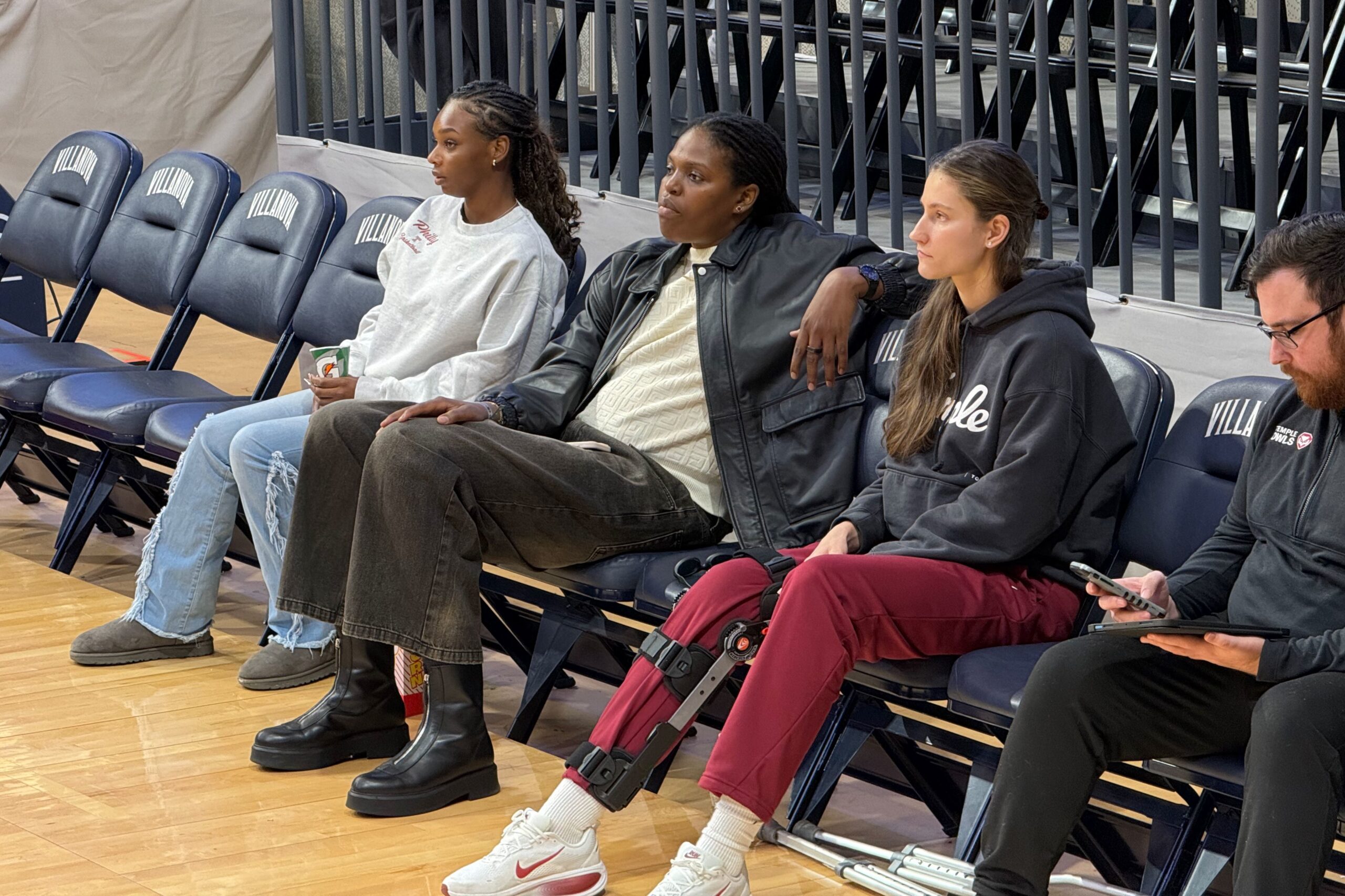
    A key part of Richardson’s involvement over her four years at Temple has been the involvement of Jones and Copper. Jones, who plays for the New York Liberty, is Richardson’s adopted daughter and makes the trip to Philly whenever she can.

    She acted as a tour guide when the Owls went to the Bahamas in November. Copper, who plays for the Phoenix Mercury, is from North Philly and has been a great friend of the program. She attended many practices during Richardson’s first two seasons.

    New York Liberty star Jonquel Jones (second from left), the adopted daughter of Temple women’s college basketball coach Diane Richardson, was courtside to watch the Owls play the Drexel on Dec. 7.

    Having professionals involved with the program has been beneficial for the team. It’s an opportunity to see what basketball can do for them.

    “Coach Rich is really great at networking,” said junior guard Kaylah Turner. “We’ll have little meetings here and there to meet this person and that person she wants us to talk to. She knows that every person has one thing that we can take away from, as far as lessons. We meet a lot of different people, and just watching her, she knows everybody.”

    Richardson brought her whole team to the Unrivaled announcement event on Oct. 2, when the pro three-on-three league announced it would visit the city on Jan. 30. Unrivaled is the next step to growing women’s basketball in the area.

    Richardson hopes a lot comes from Unrivaled, including gaining more women’s basketball fans.

    “I hope that the people who talk bad about women’s sports and the WNBA will see that this is true basketball,” Richardson said. “It’s not just some stuff on the corners. It’s not just AAU or church league. This is real professional basketball, and it should be respected as such.”

    After Unrivaled, the city will have four years to prepare to welcome its WNBA team. The support that has come from Unrivaled is encouraging, and Richardson believes that with continued marketing, Philly will be more than ready for a pro team.

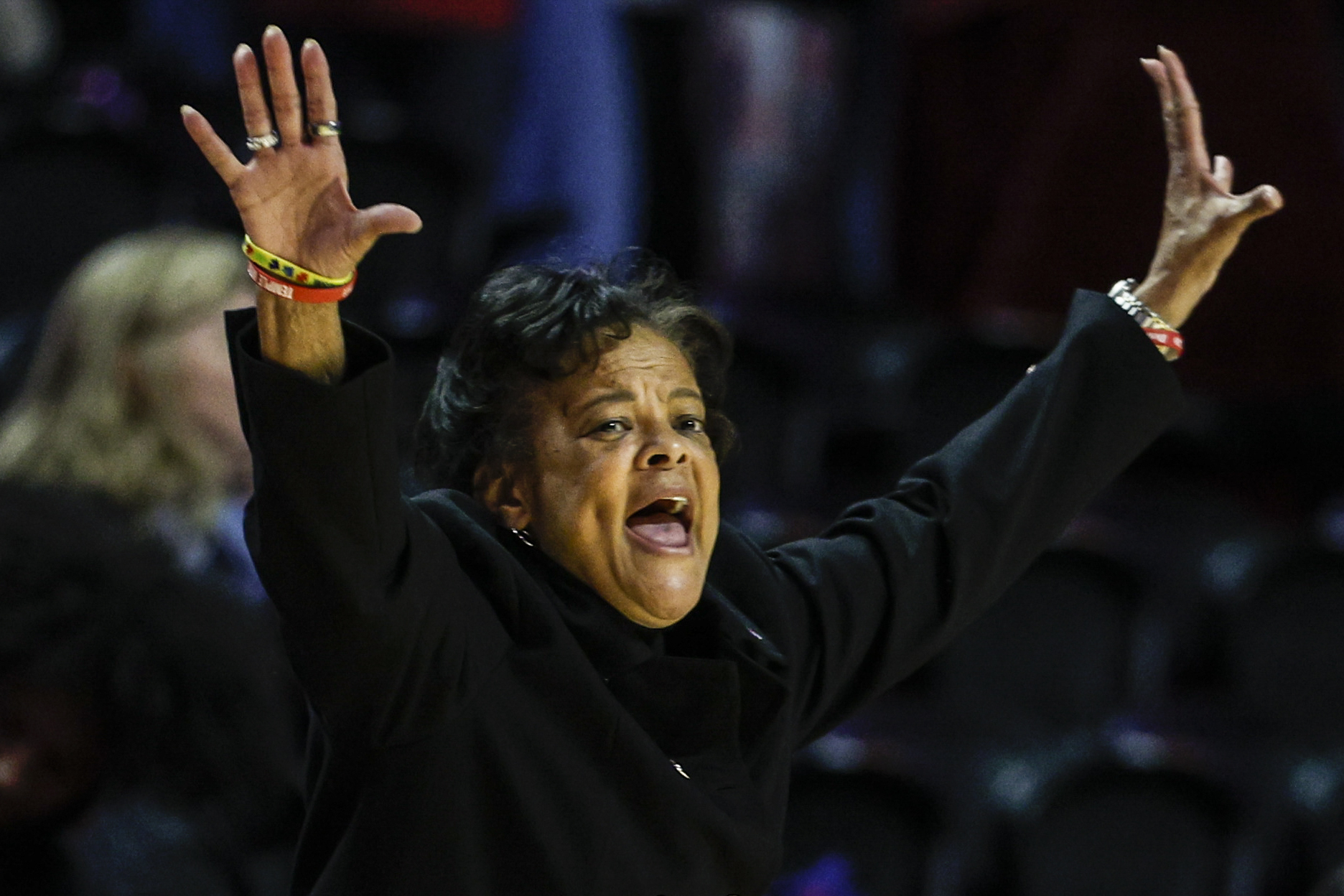
    Temple coach Diane Richardson calls plays against Charlotte on Saturday.

    “With the WNBA coming here … we’re going to be exploding,” Richardson said. “To get Unrivaled sold out in a matter of days, that tells you we are ready for the WNBA. I think if we continue to have programs and events like that, it’ll get there, and I think we’ll have sold-out stadiums when the WNBA gets here.”

    In her short time in the city, Richardson has been at the forefront of the push to grow women’s basketball here. She hopes others will see the beauty in the sport, too.

    “If they are a true sports fan, they will love women’s basketball,” Richardson said. “And it’s not just to say that it’s women’s basketball, but if you love sports, you’ll love women’s basketball, because it’s basketball.”

  • Her adult autistic son was kicked off a cruise ship. Now this South Jersey mother is on a mission to better awareness.

    Her adult autistic son was kicked off a cruise ship. Now this South Jersey mother is on a mission to better awareness.

    While preparing her four sons to take a dream family vacation in the Caribbean last month, Carolyn Piro carefully reviewed every detail to get them ready.

    She also contacted the Royal Caribbean cruise line about accommodations for her children, because her oldest, Sean Curran, has autism, and two other sons also have developmental disabilities.

    The trip ended abruptly when Curran, 31, was kicked off the Celebrity Cruise ship in Cozumel on Christmas Eve after an incident that his family says was mishandled by cruise officials who lacked understanding of his disability.

    “Worst Christmas ever. Horrible,” Curran said. “I’m never going on a cruise again.”

    Piro, a trauma therapist, is now on a mission to increase awareness and acceptance for people with autism. About 1 in 31 children in the United States are diagnosed with autism, according to the Centers for Disease Control and Prevention, and that number is 1 in 29 in New Jersey, according to the group Autism New Jersey.

    “They have a place in our society. They have a place in our community,” Piro said.

    Royal Caribbean, which advertises an “autism friendly” environment, said it had reviewed the incident and “concluded we could have been more sensitive to their needs during the debarkation process.” The company, which owns Celebrity Cruises, will provide additional training for employees, a spokesperson said.

    ‘Just trying to be nice’

    Curran lives as independently as possible at home, Piro said. He participates in job training at Ability Solutions in Westville, has a girlfriend, sings with the Pine Barons Chorus, volunteers at an animal hospital, and enjoys dancing.

    The Cherry Hill family was having a great time on a seven-day Caribbean cruise in December to celebrate Piro’s 60th birthday. It was Curran’s fourth cruise, and he knew the ropes and was allowed to roam unaccompanied.

    Four days into the cruise, Curran was in a pool lounge when, he said, a teenage girl asked him to purchase her a Long Island iced tea. He said he bought the drink, unaware that it contained alcohol. His mother and brothers were not with him at the time.

    According to Curran, the girl touched his chest and stomach, used profanity, and followed him to a hot tub, where he lifted her like Shrek did when he rescued Princess Fiona from a dragon in one of his favorite movies. (Piro said Curran enjoys swimming and playing in the water.)

    The girl’s parents arrived and her mother began screaming, Curran said. Ship personnel escorted Curran to a security office, where he was asked to give a statement, he said.

    “I have autism and I was just trying to be nice,” he wrote in the statement, given to ship personnel and provided to The Inquirer. The statement was only a few sentences of explanation Curran wrote about what happened.

    Piro arrived during the questioning and said Curran offered an apology to the girl’s parents. Curran said he asked for patience and repeated what his mother taught him to say about having autism when he encountered difficulty explaining.

    Curran was given 90 minutes to pack and leave the ship, his mother said. She accompanied him, along with another son. Other passengers gawked and pointed as security escorted them off the ship, she recalled, saying, “Look at them: They’re getting kicked off the ship.”

    “It was just so shameful,” Piro said.

    Piro said she believes ship officials had other options, such as restricting Curran to his room, rescinding his room card that allowed him to buy drinks, or allowing him to disembark at their next port of call, she said.

    “With all of the information about autism, there was no compassion. They treated him as a fully functioning adult,” the mother said.

    Piro said the family was given only a security incident report and told that the FBI and Homeland Security would be notified. She was not allowed to speak with the girl’s family, whose full name she does not know. She said no charges were filed.

    Sean Curran, 31, of Cherry Hill, boarding a Celebrity cruise ship in December for a family vacation. He has autism and was evicted from the ship after a misunderstanding.

    Piro, Curran, and another of her sons who left the cruise were reunited with two other family members several days later when the ship docked in Florida.

    Piro said she accepted an apology from Royal Caribbean after returning home, complaining about the incident, and sharing her story publicly. She also said she had asked to be reimbursed for the $20,000 she spent on the cruise and expenses. Royal Caribbean declined to comment on the request.

    A spokesperson said Royal Caribbean’s additional training for its staff will “ensure this experience doesn’t happen again.” She declined to comment further.

    Stacie Sherman, a spokesperson for Autism New Jersey, declined to comment about the specific incident but agreed there is a need for more awareness. She has had similar experiences as the mother of two on the autism spectrum.

    “Education and awareness is key,” Sherman said.

    Sherman said acceptance is slowly growing. Her daughter used to get nasty looks and comments for making loud noises or having a tantrum in public places, she recalled.

    “I get way more smiles and nods, even praise and offers of help. It gives me hope,” Sherman said.

    Sean Curran, 31, of Cherry Hill, plays with a dolphin during a cruise excursion in Cozumel, Mexico in December.

    Seeking change to the system

    When the family arrived home, Piro said, she reprimanded Curran and limited his activities for a month. Piro said she acknowledges that he did something wrong but said his intent was not malicious.

    Piro said she had selected Royal Caribbean for her first family vacation in a decade because it offered initiatives for families with children who have special needs.

    She said she contacted the cruise line a month before their vacation about her children’s special needs. In addition to Curran, two younger sons have mosaic Down syndrome and fragile X syndrome.

    Piro said she requested special seating, for example, to isolate the family in the dining area from noise and large groups. During an excursion, she rented a cabana away from other guests, she said.

    “We don’t go anywhere where people don’t stare, giggle, or make a comment,” Piro said.

    Piro said she plans to monitor whether Royal Caribbean implements the additional training that it has promised. She wants changes “in the system so that this doesn’t happen again.”

    Carolyn Piro, of Cherry Hill, poses for a portrait with her son Sean, who has autism, in their home this month.

    Curran said telling his story was “making me feel better.” He wants to better advocate for himself and others with autism.

    “I want people to treat other people with dignity and respect, compassion, and kindness,” he said.

  • How Philly helicopter makers cope with uncertainty at today’s Pentagon

    How Philly helicopter makers cope with uncertainty at today’s Pentagon

    Helicopter manufacturer Leonardo has nearly doubled employment at its Northeast Philadelphia factory since the Rome-based multinational aerospace company began winning U.S. military orders for that factory in the late 2010s.

    But the company, whose owners include the Italian government and U.S. investment funds such as BlackRock and Vanguard, has learned what dominant U.S. defense contractors like Boeing have long known: Military planners, policy, and political shifts can stop, delay, or revive long-term contracts, leaving managers scrambling to keep workers and factories busy.

    Given the complexity of parts supply, skilled labor, and other aspects of helicopter production, “it is destabilizing and difficult if you don’t know if you are going to build two or 16 aircraft for a given program year after year,” said Andrew Gappy, vice president of Leonardo Helicopters USA Inc., a retired Marine whose duties included flying Presidents Bill Clinton and George W. Bush on Marine One helicopters.

    In 2018, Leonardo and Boeing celebrated a signal victory. The Air Force ordered 84 MH-139A Grey Wolf helicopters, worth an expected $2.4 billion.

    Grey Wolf is based on Leonardo’s civilian, two-engine AW139, part of a movement by military planners to speed production and streamline costs by basing more big-ticket military machines on large-production civilian products and private-sector construction managers. It’s a model that Korea-based Hanwha hopes to use in winning Navy contracts for its shipyard in Philadelphia.

    More than half the Grey Wolfs would defend nuclear weapons bases in several western U.S. states. Most of the rest would be used to ferry political leaders around Washington in case of an attack on the nation’s capital, replacing aging UH-1N Huey helicopters on duty since the 1970s.

    So far, 19 of those helicopters have been paid for and delivered. Another 12 are funded and nearing completion. But funding for future construction hit unexpected snags.

    After Air Force design changes and a challenge by Lockheed Martin’s Sikorsky unit, which had proposed rival helicopters of its own, Leonardo and Boeing said they started production on the first Grey Wolfs in 2023.

    They planned to keep building a dozen a year for seven years — about a quarter of the Leonardo plant’s annual output. They hoped to win more contracts along the way.

    Last year, the partners had expected to fund future production with $173 million in appropriations as laid out in President Donald Trump’s 2025 budget, plus $210 million in his Big Beautiful Bill, backed by the two Republican senators from North Dakota, home to Minot Air Force Base.

    But those payments didn’t materialize on schedule. The Big Beautiful Bill payments were held up, frustrating the Grey Wolf partners.

    And then in November, Congress’ new National Defense Authorization Act listed more than $100 million retrofitting previously-delivered Lockheed-built helicopters to transport VIPs but just $10 million for the Grey Wolf program — not enough to build a single helicopter.

    The Air Force had justified upgrades of unused aircraft in a budget proposal earlier last year as a cheaper way to acquire helicopters. Grey Wolf defenders objected that the Air Force studies had already verified the new helicopter would be much less expensive to operate.

    The cuts would “starve” the Grey Wolf program, Mike Cooper, Leonardo’s government relations chief, said in December. “It’s hard for businesses to plan, when competitively bid procurements can be abruptly and unilaterally changed.”

    Last fall, a bipartisan group of five Congress members, headed by Rep. Donald Norcross (D., N.J.), whose South Jersey constituents include workers at Boeing and Leonardo, sent Air Force Secretary Troy Meink a letter that they were “troubled” to hear reports that the Air Force was now planning to update old helicopters for VIP transport and evacuation missions, instead of funding the new ones.

    They noted that the Air Force already had selected the Boeing-Leonardo aircraft over two proposals from Lockheed Martin.

    They called the switch an “unprecedented change in procurement,” which “undermines the integrity of the acquisition process, calls into question the criteria” for the original selection, “and raises concern about why an otherwise performing program would be truncated without clear explanation to Congress” or the companies that agreed to the contract.

    They asked the Air Force for any studies it had made to justify the more expensive Jolly Green program, which they said would cost far more to buy and operate. They also noted the impact on workers, suppliers, and finances at Boeing in Ridley Park, Leonardo in Northeast Philly, Leonardo’s Florida testing site, and contractors who had already invested in the program the Air Force has now failed to fund.

    Congress members who represented districts that include additional Boeing or Leonardo facilities support Norcross’ effort. They are Reps. Carlos Gimenez (R., Fla.), Salud Carbajal (D., Calif.), Robert J. Pittman (R., Va.), and John J. McGuire III (R., Va.).

    Lockheed Martin officials said they hadn’t taken business from Leonardo. The military planned to convert older helicopters to VIP carriers by adding new seating at Air Force bases, not at the company’s Sikorsky military helicopter factories in Connecticut or New York.

    Sikorsky’s civilian helicopter plant in Coatesville, Pa., closed in 2022. It was taken over in 2024 by Piasecki Aviation, a Delaware County-based company that has had its own federal contracting and hiring hopes deferred by government and private-sector contracting delays, according to industry sources. Piasecki didn’t respond to inquiries.

    “The MH-139 Grey Wolf is vital to our national defense and supports American jobs,” Norcross said in a statement Jan. 15. “Congress funded the MH-139 because it offers major improvements in speed, range, and survivability.”

    He said the Air Force had not directly responded, “but I will continue pressing the administration.”

    The same week, a key Air Force commander confirmed in an Air Force publication that the first Grey Wolfs had completed their first Minuteman III convoy operation between two Western air bases, noting they are significantly faster, fly farther, and lift more than the helicopters they replace.

    Two sources familiar with the program said the first payments from Congress’ $210 million have been received since that test.

    And on Jan. 20, a new federal appropriations proposal added $60 million to the Grey Wolf program — not the whole $173 million, but more than the $10 million in the earlier law.

  • They helped design the President’s House. Now part of the site’s ‘heart has been ripped out’ after orders from Trump administration.

    They helped design the President’s House. Now part of the site’s ‘heart has been ripped out’ after orders from Trump administration.

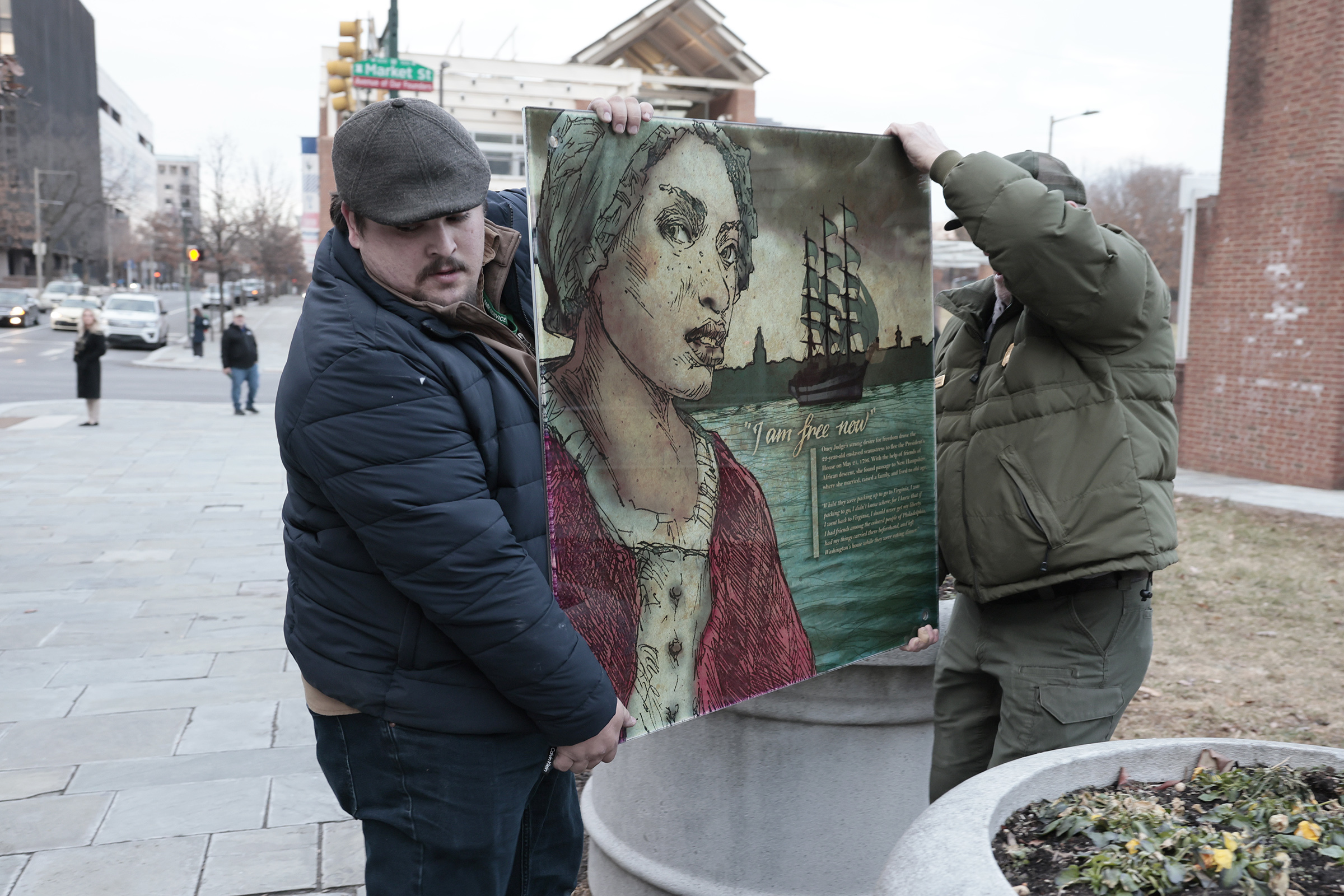
    When the National Park Service dismantled educational exhibits about slavery at the President’s House Site last week, it required wrenches, crowbars, and the drudgery of four men.

    In the span of a roughly an hour and a half, years of hard work from a group of artists, architects, historians, attorneys, and writers who helped create the President’s House in the early 2000s were ripped off the walls and hauled into the back of a pickup truck to be dropped off who-knows-where.

    This brazen demise of the exhibits, which memorialized the nine people George Washington enslaved at the site, was never supposed to happen, said Troy C. Leonard, partner and principal at the Philadelphia-based Kelly Maiello Architects, who helped design the President’s House almost two decades ago.

    During the project, the firm, which describes itself as minority-owned, was led by the esteemed Emanuel Kelly, who died in 2024.

    “Because the panels were not meant to be removed, they were very violently taken down, you know, ripped from their backgrounds,” Leonard said in an interview Monday.

    “I would suspect that they did a lot of damage, physical damage, to the site in taking those panels down,” he added.

    Workers remove the displays at the President’s House site in Independence National Historical Park Thursday, Jan. 22, 2026.

    Leonard is one of many stakeholders who helped create the President’s House and are now grappling with its sudden removal last week after a monthslong review by President Donald Trump’s administration.

    In the early 2000s, the site was developed at Independence National Historical Park as a memorial intended to highlight the horrors of slavery that took place during the founding of a nation based on liberty. It featured numerous educational exhibits. Everything at the site was historically accurate.

    “Just sort of slithering onto the site was a very cowardly way of doing it without any mention that it was going to happen, notifying anyone, just coming in and starting to take the panels down,” Leonard said.

    The Trump administration also ordered the takedown of exhibits from other national parks. Signs about the mistreatment of Native Americans and climate change were removed from parks including the Grand Canyon and Glacier National Park, according to the Washington Post.

    It’s all in connection with orders from Trump and Interior Secretary Doug Burgum, who called for the review and potential removal of content at national parks that could “inappropriately disparage Americans past or living.”

    Independence Park employees were also given talking points that evade visitors’ questions about the site.

    At Independence Park, Leonard said he is concerned about the future of the site. After last week’s takedown, the open-air exhibit is now a bunch of blank, faded brick walls. All that is left of the memorial is the site’s original archaeological dig from the 2000s and a wall with the engravings of the names of the nine people Washington enslaved.

    The City of Philadelphia has sued Burgum, acting National Park Service Director Jessica Bowron, and their respective agencies to restore the panels. Gov. Josh Shapiro’s office filed an amicus brief in support of the city’s suit Tuesday.

    “To leave it the way that it is, I mean, to me, it’s sort of now a memorial to the death of democracy and truth,” Leonard said. “That’s what it is now. It’s sort of just these blank walls that are just sitting there. It’s sort of a ruin, but it’s a pathetic ruin because part of its heart has been ripped out.”

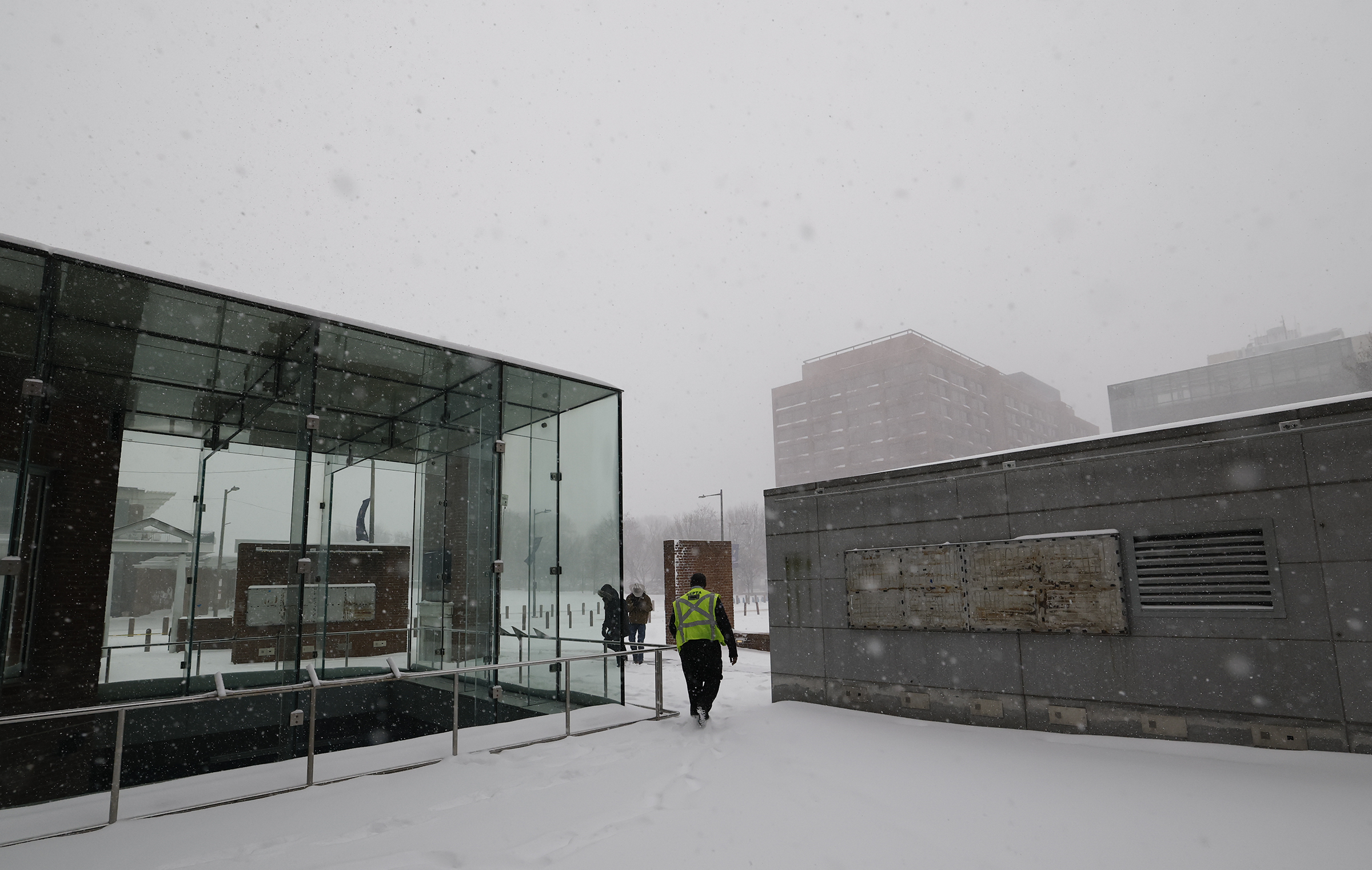
    Snow falls at the Presidents House on Sunday, January 25, 2026, after the National Park Service took down slavery exhibits several days earlier.

    History is ‘lost and found’

    Around two decades ago, more than 1,000 miles away from the Sixth and Market home of the President’s House, a Kansas City-based exhibit design firm crafted the illustrations and graphics seen throughout the site.

    All of which were torn down last week.

    Gerard Eisterhold, president of the firm, Eisterhold Associates Inc., said in an interview that he got a slew of texts and emails when the exhibits were taken down. He said this incident proves a “thesis” that designers were trying to portray to the public through the President’s House — that history goes through cycles of being lost and then found.

    His firm has worked on historical exhibits throughout the country, including at the African American Museum in Philadelphia, the International Civil Rights Center and Museum in North Carolina at the site of the Greensboro sit-ins, and the National Civil Rights Museum in Memphis.

    “There were the history of the enslaved that was sort of forgotten for a long, long, long, long time, and that’s a conscious thing that people do. … There’s a heck of a lot more people that are aware of the history of President’s House this week than there was last week,” Eisterhold said.

    In fact, there was a sign at the President’s House called “History Lost + Found,” which outlined the juxtaposition of liberty and slavery during the early days of the United States.

    Washington would rotate out people he enslaved at his Philadelphia residence to evade Pennsylvania’s 1780 emancipation law, according to the website for Mount Vernon, Washington’s estate in Virginia.

    “History is not neat,” the History Lost + Found panel at Independence Park read. “It is complicated and messy.”

    This panel was one of dozens that were taken down last Thursday. Others were titled “Life Under Slavery” and “The Dirty Business of Slavery.” And there were illustrations of important figures, like Oney Judge, who was enslaved as Martha Washington’s personal maid before she escaped. Hercules Posey, who was enslaved as a cook, also later self-emancipated.

    “But here we are. Because how dare we write their names, the nine enslaved Africans at the first American presidential residence. … How dare we encode instructions to the future by writing about the two who escaped?” author Lorene Cary, who helped with storytelling at the President’s House along with documentary filmmaker Louis Massiah, wrote on her Substack last week. “The names are still there, carved into stone.”

    National Park Service workers remove the displays at the President’s House site in Independence National Historical Park in Philadelphia on Thursday, Jan. 22, 2026.

    The creation and display of these panels were the product of collaboration across disciplines, Cary wrote.

    “So many people — scholars and passionate non-scholars — worked, argued, met, studied, wrote, agitated, and created art for this unique and necessary American project.”

    Leonard said his firm has been working with Michael Coard, attorney and leader of the Avenging the Ancestors Coalition, which has been helping lead efforts to defend the President’s House from the Trump administration. The coalition, through its advocacy, helped shape the President’s House roughly 20 years ago.

    If the city wins its lawsuit and the panels are restored, the site will likely need a refurbishment and stakeholders will need to ensure that the panels are still in good condition.

    Ted Zellers (right) wears a sandwich board with a replica of one of the removed slavery panels as people visit and protest at the President’s House site in Independence National Historical Park Saturday, Jan. 24, 2026.

    Some Philadelphians have floated the idea of moving the displaced panels to another location if the site faced the ire of the Trump administration. But for Leonard, Sixth and Market is the rightful, historically important home for the exhibits.

    “The place is equally important,” Leonard said. “It is not complete without being located at that site. So it’s important to the fight to make sure that that memorial is restored at that location. It cannot be relocated.”

  • Bucks County parents of deaf and blind infants are worried about losing a ‘lifeline’ as early intervention contract ends

    Bucks County parents of deaf and blind infants are worried about losing a ‘lifeline’ as early intervention contract ends

    Julia Hess was on the precipice of discovering the extent of the hearing loss in her 9-month-old daughter Jasmine’s right ear, when she learned that crucial support services for her baby and other visually or hearing impaired children in Bucks County would be cut off next week.

    Jasmine, affectionately known as Jazzy, is a smiley infant who has maintained a “sweet and sassy” personality even as she’s been diagnosed with Smith-Lemli-Opitz syndrome, a developmental disorder, and undergone three surgeries.

    “We can see it in her face in the way that she continues to try even when her body is exhausted and her muscles won’t move anymore,” said Hess, 29, a mental health therapist.

    Jazzy has been receiving early intervention services since she was 2 months old from the Bucks County Intermediate Unit, a county-level education agency, including hearing and communication services due to hearing loss in both ears and other developmental delays. Once a week, an instructor travels to Hess’ home and teaches Jazzy how to communicate with the world around her.

    The 9-month-old has made significant progress, but could face setbacks starting this Saturday when the Bucks County IU will cease services for hearing and visually impaired babies and toddlers ages 0-2, citing funding and staffing challenges. And it’s unclear where parents will find services next.

    “It’s really scary to feel like we are kind of just wandering in the dark,” Hess said.

    In Pennsylvania, children with developmental delays and disabilities are eligible to receive services through a state-backed early intervention system — a right grounded in federal special education law.

    But officials with the Bucks IU say they’ve been losing money on the program for hearing and visually impaired infants and toddlers, which currently serves 49 kids. While the state reimburses the county for early intervention services, it doesn’t cover “indirect” service time, officials said. That means the IU can’t bill for the time incurred by therapists driving between appointments, documenting services, and preparing a child’s program.

    Last year, the gap between what the state reimbursed and what the IU paid to deliver the services was $200,000, officials said.

    At the same time, the demand for services for older children also served by the intermediate unit — both preschool and school-age — has been growing, officials said. And with shortages of special education teachers plaguing school districts statewide, ending services for babies and infants allows the unit to redirect its limited supply of teachers for the deaf and visually impaired to serving older children — a group the IU has primary responsibility for serving.

    “I think what we’re experiencing is what happens when you have a severe shortage, a growing number of kids that need the support, and antiquated models of funding that haven’t kept up,” the intermediate unit’s executive director, Mark Hoffman, said Jan. 20 at a meeting of the unit’s board, which is made up of school board members from districts across Bucks County.

    A Pennsylvania Department of Human Services spokesperson said Monday that provider rates would soon be increased as the result of a $10 million boost in this year’s state budget.

    Revised rates “are still being finalized based on this increase and are expected in the coming weeks,” and will be retroactive to July, said the spokesperson, Brandon Cwalina, who said the change would also allow the state to access more federal money.

    It was unclear whether the increase would change the situation in Bucks County. Officials with the IU said Tuesday they hadn’t been informed of any funding increases.

    Families dependent on services from the intermediate unit are unsure what will happen once the contract expires Saturday.

    “They’ve been a lifeline to us … We haven’t had anybody in our family with this,” said Ali Tirendi, 32, of Warrington, noting that service providers not only help kids, but also educate parents, too.

    Nine-month-old Jasmine receives early intervention services, that are set to be disrupted, from the Bucks County IU.

    Grappling with staffing and funding shortages

    Just 24 days before these crucial services were set to be disrupted, families received correspondence from the Bucks County Department of Behavioral Health/Developmental Programs notifying them that “your current hearing/vision support provider may no longer be available,” according to a Jan. 7 letter from Patricia Erario, county early intervention director, reviewed by The Inquirer.

    One of those providers is BARC Developmental Services, a nonprofit agency that provides services to individuals with intellectual disabilities and autism, and uses teachers from the Bucks intermediate unit to carry out its services.

    Mary Sautter, executive director of BARC, said the Bucks IU informed BARC on Dec. 8 that they would be terminating their contract with the developmental services agency, ending a partnership that’s existed for decades. She said stakeholders are planning to have a meeting this week to discuss next steps.

    “Our hope is that we can find a resolution that minimizes disruption to these vital services so that children can continue to thrive,” said Sautter, adding that BARC is also dealing with staff shortages making it difficult to use their own personnel as providers.

    They have one contractor that services 14 kids, but Sautter said they’re looking to expand the contractor’s caseload.

    “It’s a very unfortunate situation,” Sautter said.

    Erario said that the department would work with agencies to find solutions for families, including virtual options, changing the date or time, or finding an alternative provider if necessary.

    Bucks County spokesperson Jim O’Malley said the county “will be working with our partners in the community to restore access to those affected.”

    Given staffing shortages, Jill Waldbieser, a Neshaminy school board member who serves on the intermediate unit’s board, said she was extremely skeptical the county would find replacement teachers.

    “There’s absolutely no way they’re going to find providers,” said Waldbieser, whose 11-year-old son is deaf.

    Waldbieser’s son went without an interpreter for a year in violation of his individualized education plan.

    “Even if it’s a day or week” that children go without services, “you can never get that time back,” said Waldbieser, who has been pressing officials for a solution.

    Early intervention is valuable for families, and a gap in services could be detrimental, said Casey James, 35, of Warminster, whose 19-month-old has a hearing impairment.

    “What families like mine are concerned about are service gaps, delays, being forced into a fragmented system with multiple providers,” James said.

    Ashley Dats said it “took us as a shock” to learn services for her 21-month-old daughter, who has severe hearing loss, would soon be interrupted.

    “We’re worried,” said Dats, who lives in Doylestown. Her daughter gets a weekly hourlong session with a teacher of the deaf, who works to help her understand spoken language — narrating actions during play, and encouraging her to mimic words — and catch up to her normal-hearing peers.

    Even if a new provider is identified, Dats doesn’t know when that will be, or how her daughter will fare with the change. It took two months for her daughter to reengage after a previous switch in teachers, she said.

    “There are milestones we’re looking to hit, to show us her brain is processing and understanding” words, said Dats, who worried about losing momentum as a result of the service interruption.

    “We don’t want them to get left behind because of funding issues.”