Tag: topic-link-auto

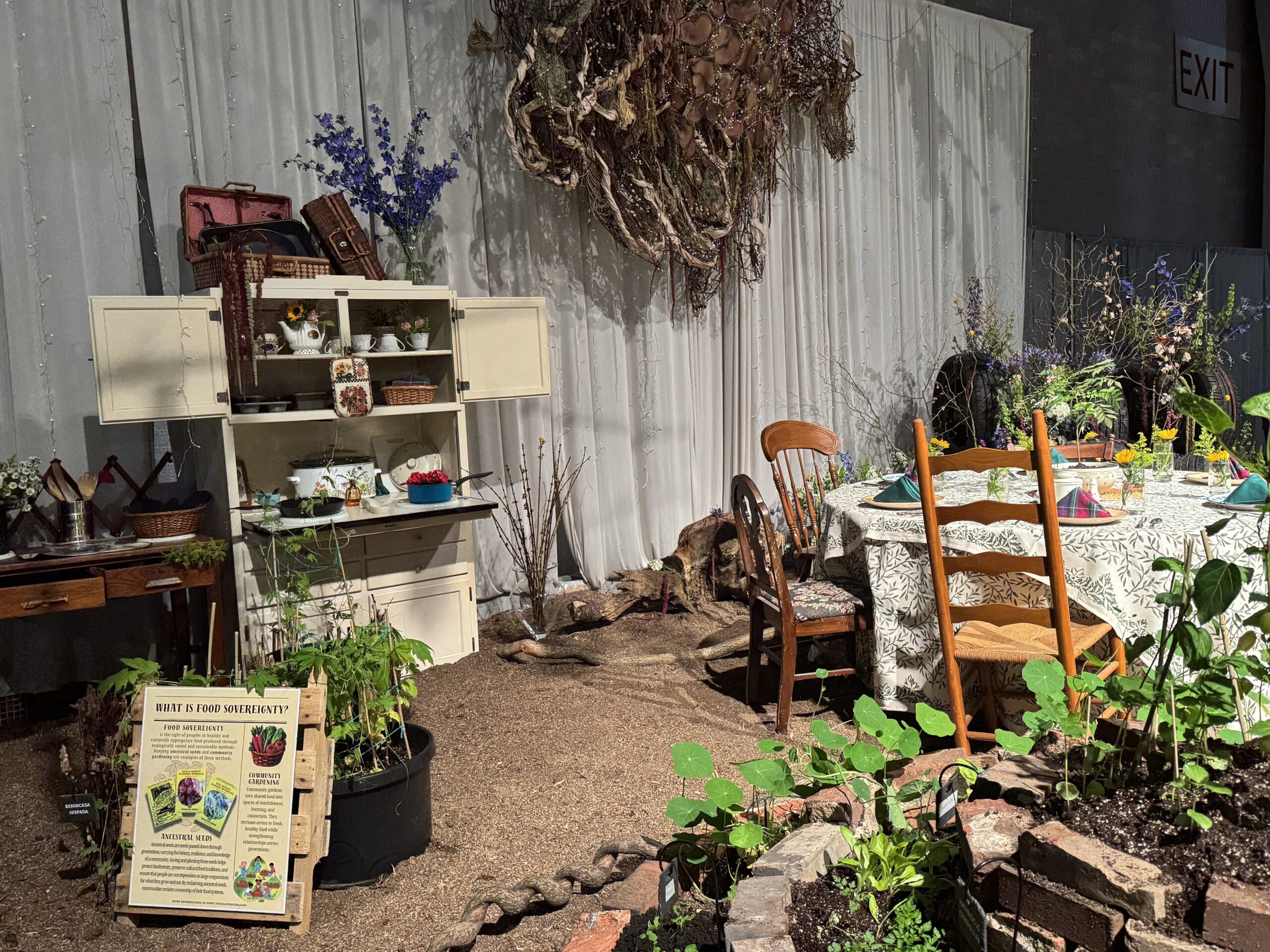
  • Do you buy a poinsettia to celebrate the holiday season? There is a very Philly history to that.

    Do you buy a poinsettia to celebrate the holiday season? There is a very Philly history to that.

    On Nov. 24, 1827, a group of gentleman who wanted to carry on the tradition of 18th-century area botanists John Bartram and James Logan held the first meeting of the Pennsylvania Horticultural Society.

    Like Bartram and Logan, these men were eager to showcase Philadelphia’s fertile ground for native plants and exotic imports. So, they would often bring along plants to their meetings.

    And it wasn’t just the men at these meetings. According to a history of the Pennsylvania Horticultural Society, published in 1927, members brought “more than 40 specimens of plants and flowers, 15 varieties of pears and apples, American grape wine, cauliflower, and broccoli,” to a Nov. 3, 1828, meeting.

    Less than a year later, the inaugural Horticultural Society members decided to take their admiration of plants and flowers to the city at large.

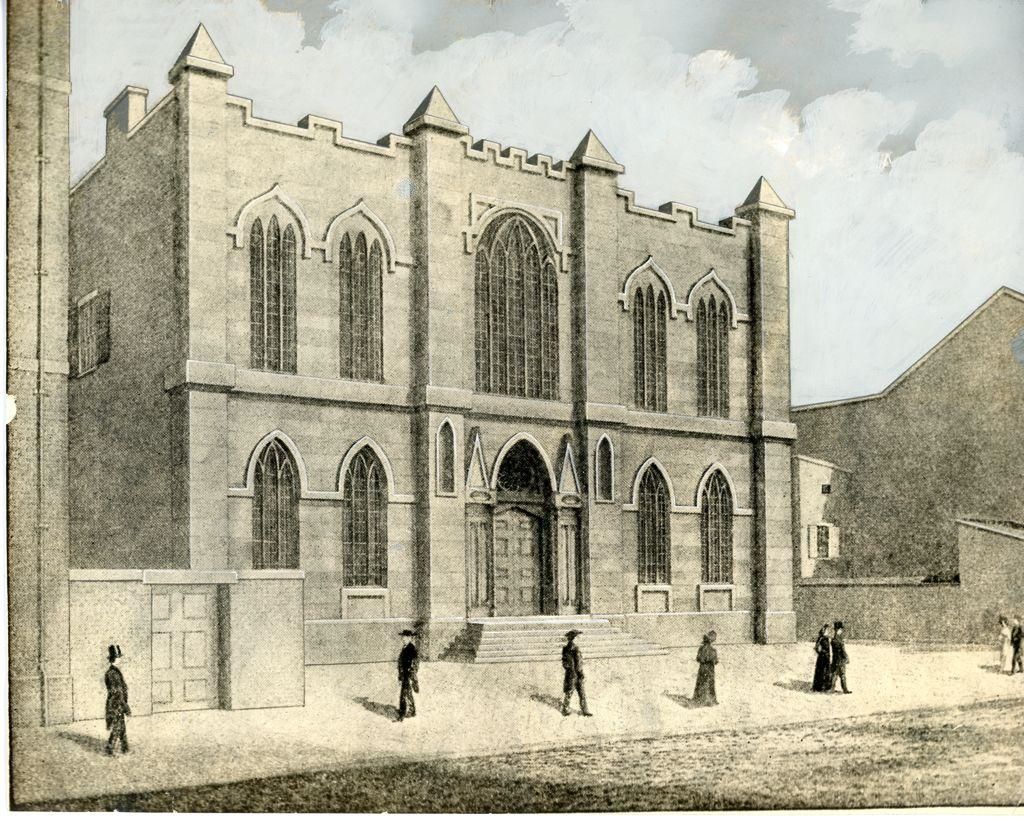
    The first Philadelphia Flower Show was held on June 6, 1829, at the Masonic Hall on Chestnut Street between Seventh and Eighth Streets.

    On June 6, 1829, the Horticultural Society held its first semiannual exhibition of fruits, flowers, and plants at the Masonic Hall on the 700 block of Chestnut Street. That was America’s first public flower show.

    The first flower show will be marked Saturday at the Philadelphia Downtown Marriott, just steps from the Pennsylvania Convention Center where the 197th Philadelphia Flower Show’s final weekend will be underway.

    The celebration is one of this year’s weekly Firstivals. Each Saturday in 2026, the Philadelphia Historic District is throwing a day party marking events that happened in Philadelphia before anywhere else in America and often the world as part of America’s 250th birthday.

    Philadelphia’s first Flower Show, said Janet Evans, librarian for the Pennsylvania Horticultural Society, was a one-day affair.

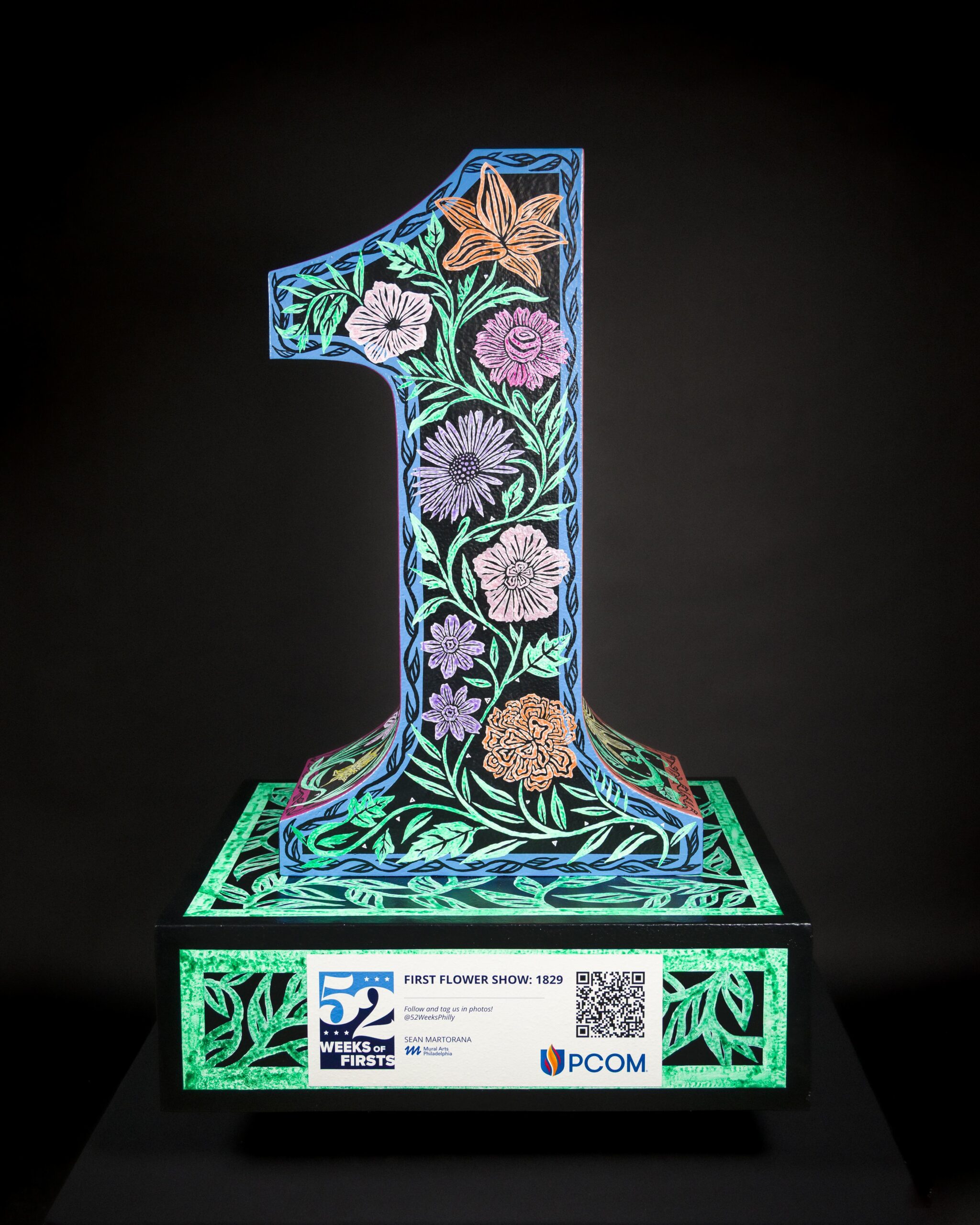
    Sean Martorana’s No. 1 honors the role of art and nature in bringing communities together.

    On display were the bigleaf Magnolia, geraniums, carnations, lilies, and pomegranate, Evans said. It was also the first time the poinsettia — now a symbol of the holiday season — was exhibited in North America.

    “So many plants we take for granted in our gardens today were introduced to the Philadelphia public at the Flower Show,” she said, adding that at later exhibitions, more exotic plants from birds of paradise to dahlias made appearances.

    The show was held in June until the 1830s when it was moved to September to mark the fall harvest. The present-day multiday spring flower shows started in the mid-1920s, to debut Easter blooms.

    The Flower Show was held in venues in West Philly before making the Convention Center its permanent home in 1996. (Although it was held in FDR Park in 2021 and 2022 during the pandemic.)

    There were no shows during World War I (1917-1918) and World War II (1943-1946) because resources were being diverted to war efforts. During those years, Evans said, the Horticultural Society organized Victory Garden Harvest Shows, set up to encourage people to grow vegetable gardens at home and their communities to compensate for wartime shortages.

    There were similar shows during the Great Depression, Evans said. “People flocked to those shows,” she added.

    Laura Blanchard, member and volunteer with the Philadelphia Flower Show, poses for a photo by a flower display at a news conference for a first-look unveiling of the 2026 Philadelphia Flower Show, “Rooted: Origins of American Gardening,” at Union Trust on Wednesday, Jan. 14, 2026.

    Today the Philadelphia Flower Show is a major city attraction. Last year, more than 235,000 people attended, said Lauren Scully, public relations and communications manager for the Pennsylvania Horticultural Society.

    This year’s Flower Show, “Rooted: Origins of American Gardening‚” celebrates America’s 250th birthday, honoring the people, places, and traditions that have shaped gardening.

    “It all started from men whose whole idea was to get together, admire, and share their love of plants,” Evans said.

    This week’s Firstival is Saturday, March 7, 11 a.m.-1 p.m., Philadelphia Marriott Downtown, 1201 Market St. The Inquirer will highlight a “first” from the Philadelphia Historic District’s 52 Weeks of Firsts program every week. A “52 Weeks of Firsts” podcast, produced by All That’s Good Productions, drops every Tuesday.

  • In Philly homes, wallpapering is back and the rules have changed

    In Philly homes, wallpapering is back and the rules have changed

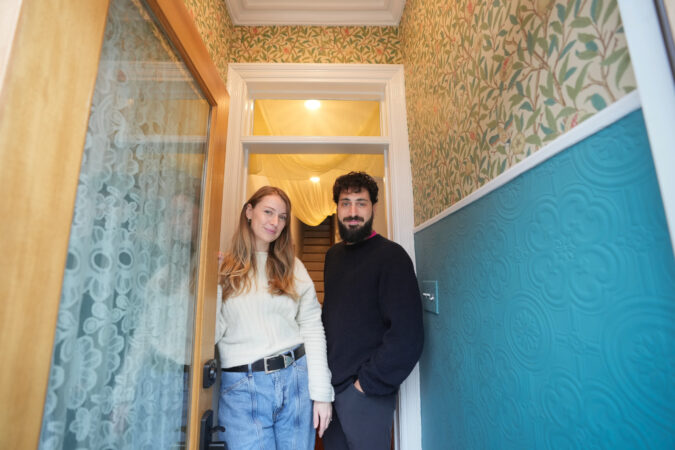
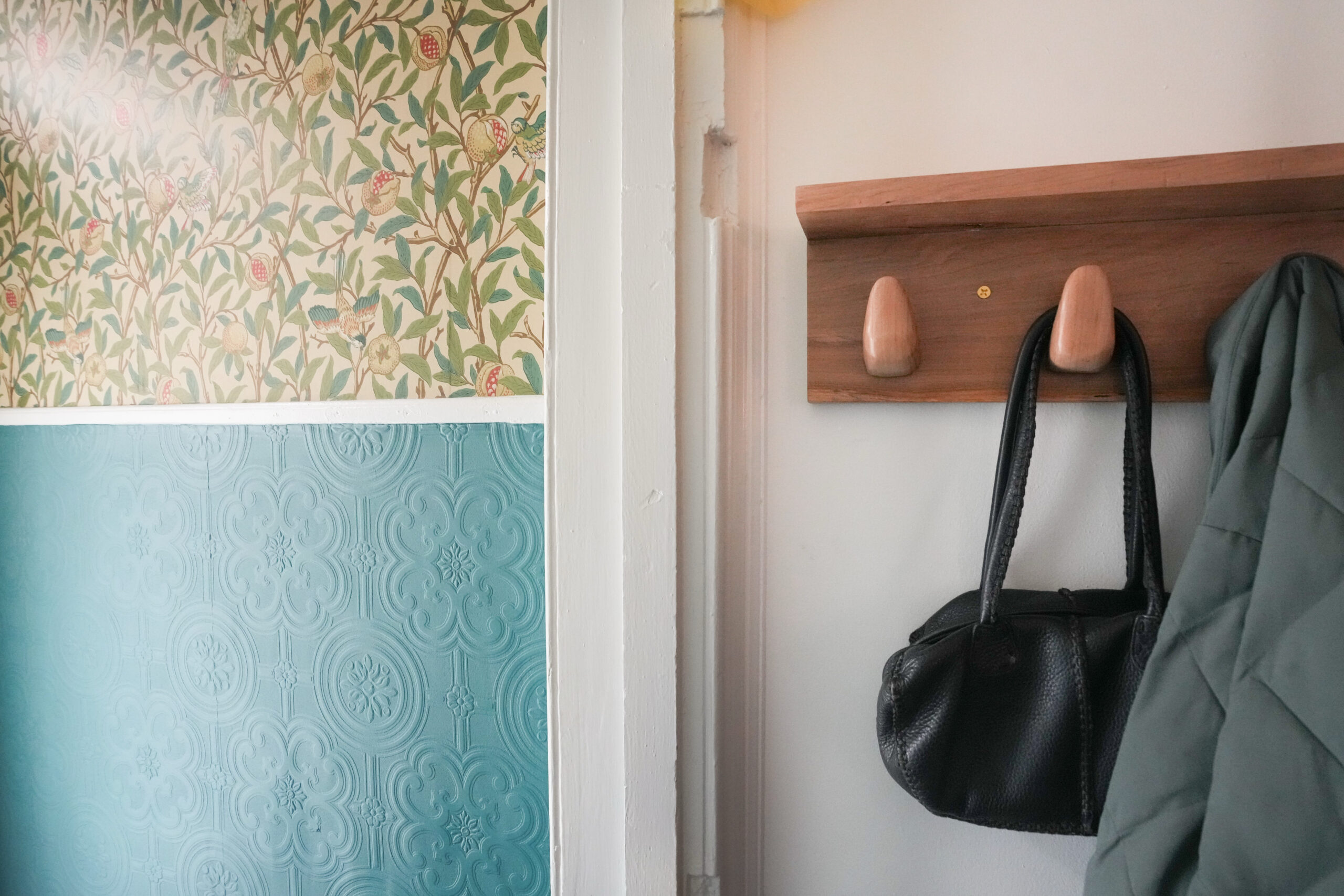
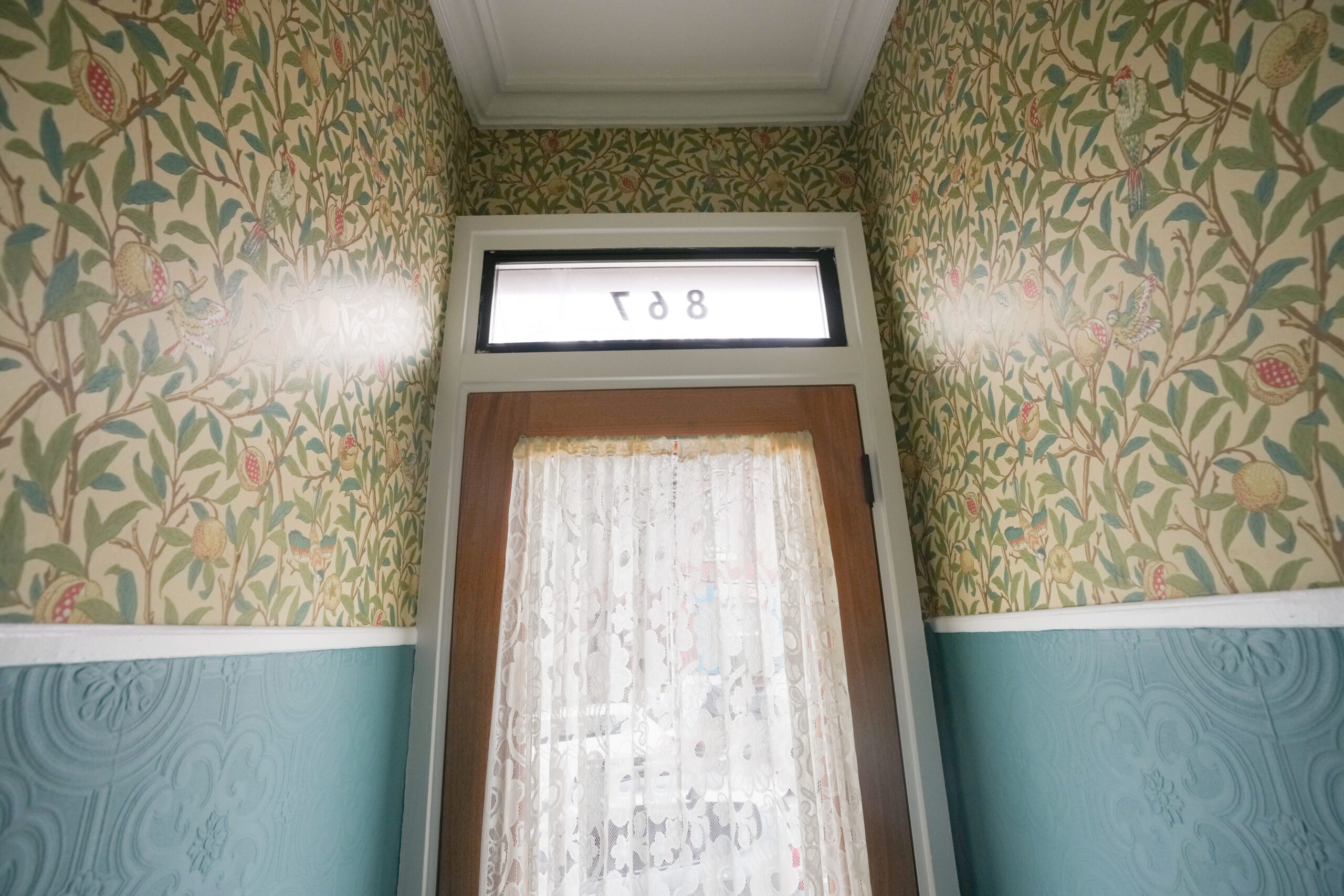
    When decorating their circa-1920 townhouse, Eli Steiker-Ginzberg and Sarah Schrading wanted their vestibule to represent the home’s history. They chose a classic William Morris wallpaper called Bird and Pomegranate for above the chair rail and a textured Anaglypta paper painted in Benjamin Moore Baltic Sea below.

    “Colonial Wallcoverings had so many options it was overwhelming,” recalled Steiker-Ginzberg, who lives in the Fairmount area. “The leaves and birds and colors of this one really jumped out.”

    The William Morris paper was a splurge, so to stay on budget, they matched it with a less expensive paintable wallpaper. In total they spent about $2,000 on the materials and installation “for the smallest room in my house,” he joked.

    Wallpaper is showing up in unique ways and in new places. Bold patterns on the ceiling, colorful oversized florals on an accent wall, custom murals in the living room, and funky patterns in the closet and mudroom that add pizzazz and make a statement.

    The wallpapered vestibule in Eli Steiker-Ginzberg and Sarah Schrading’s home leads to a painted wall on the home’s first floor.

    More homeowners are embracing bold wall coverings, according to the 2026 U.S. Houzz Fall Design Trends Report. The shift reflects a move toward deeply personal designs, with homeowners opting for vivid, expressive details that make their spaces feel unique and emotionally resonant, the report found.

    “Wallpaper has character and brings out the life and beauty of a room,” said Paul Sperling, owner of Colonial Wallcoverings in Queen Village. “It shows off your personality.”

    Modern wallpapers are also easier to hang and strip than older versions, with paste-the-wall and self-adhesive DIY options.

    “A lot of people are afraid of wallpaper because it used to be a nightmare to take off,” Sperling said. “But most wallpapers now are easier to remove because of changes in how the papers are printed.”

    Making a statement

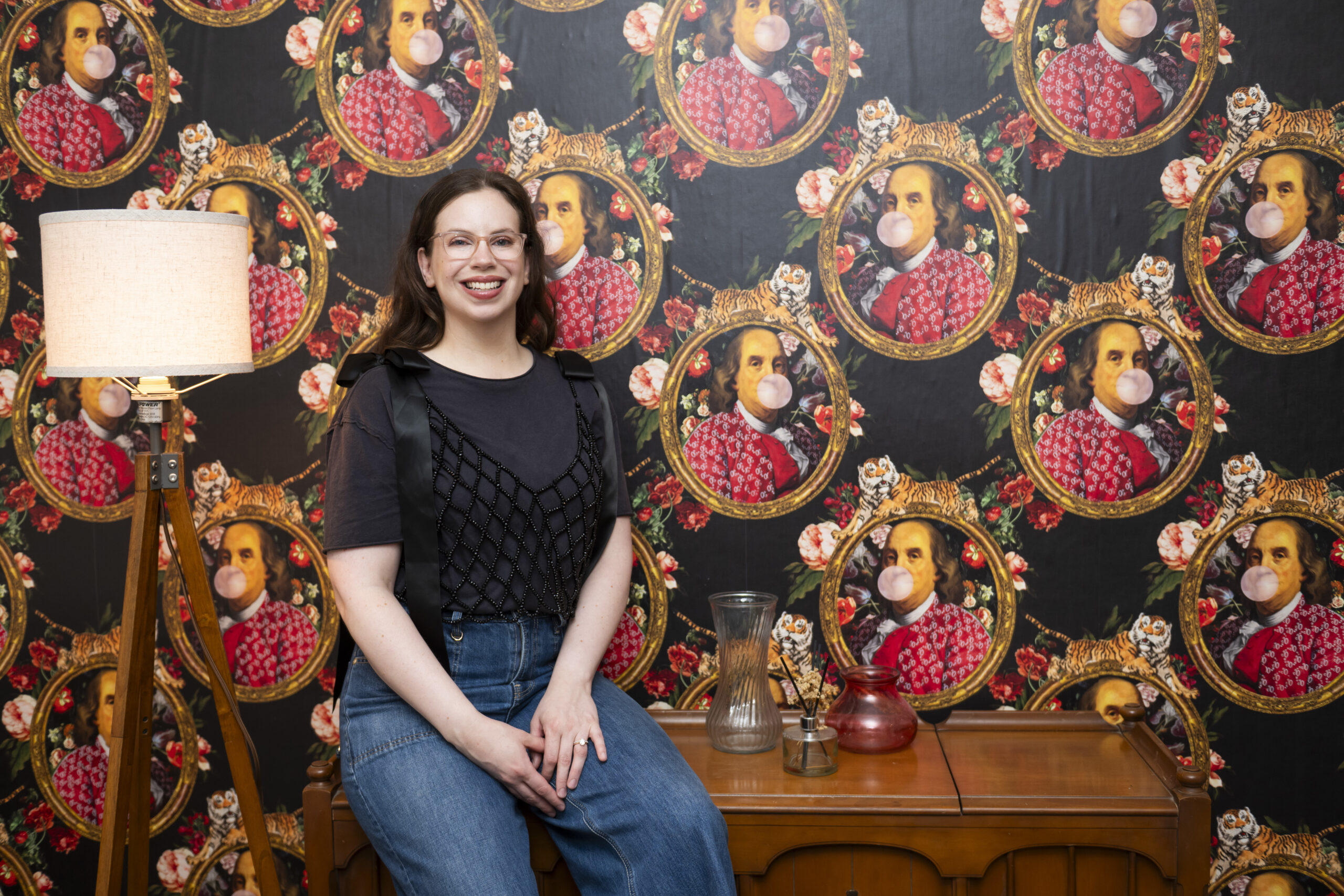
    When Jessica Maiuro moved into her Rittenhouse apartment in 2024, she wanted a wow factor as soon as she came through the front door. After a couple months of searching, she discovered a bold patterned wallpaper featuring Ben Franklin within a gilded picture frame blowing a bubble gum bubble, surrounded by a tiger and flowers.

    “I wanted something that would really make a bold statement and be a conversation starter when I hosted,” she recalled. “I had never seen any design like this, and I was instantly sold and in love. What could be more Philly?”

    Jessica Maiuro was delighted to find this Benjamin Franklin wallpaper for her home in Center City.

    Maiuro spent about $500 on the peel-and-stick wallpaper from the online seller Spoonflower and corralled her husband, John Jeong, and a friend to help her hang it. Her apartment is a rental, but she tested the paper and knows it will easily strip off when it’s time to take it down.

    When investing in wallpaper, consider where and how it will make the most impact. Wallpapers with small, repeating patterns work best in a smaller space, such as a powder room or vestibule.

    For larger spaces, wallpaper murals can serve as a focal point on the wall behind the bed or sofa, or continuing across several walls. They often feature grand designs or landscapes, including big, bold flowers and jungle scenes. Murals are more popular than ever, said Sperling, with brands like Rebel Walls and Glamora that specialize in custom sizes.

    For a more personal design, Rich Art Graphics in Center City will take your artwork and create a custom wallpaper to fit your dimensions.

    “Most of the time, a designer or artist will come to us with a fine art interpretation to be printed and installed in homes,” said Michael Antner, the print shop’s owner. “It’s something personal that they are very passionate about.”

    For example, a client may have a favorite painting or photograph they want to reimagine on an entire wall. Cityscapes and naturescapes are especially popular. Rich Art will create a digital file with the picture and manipulate it to the exact size of the wall.

    They offer traditional wallpaper adhered with paste or peel-and-stick adhesive. The average cost is $8 per square foot to create the paper, plus installation.

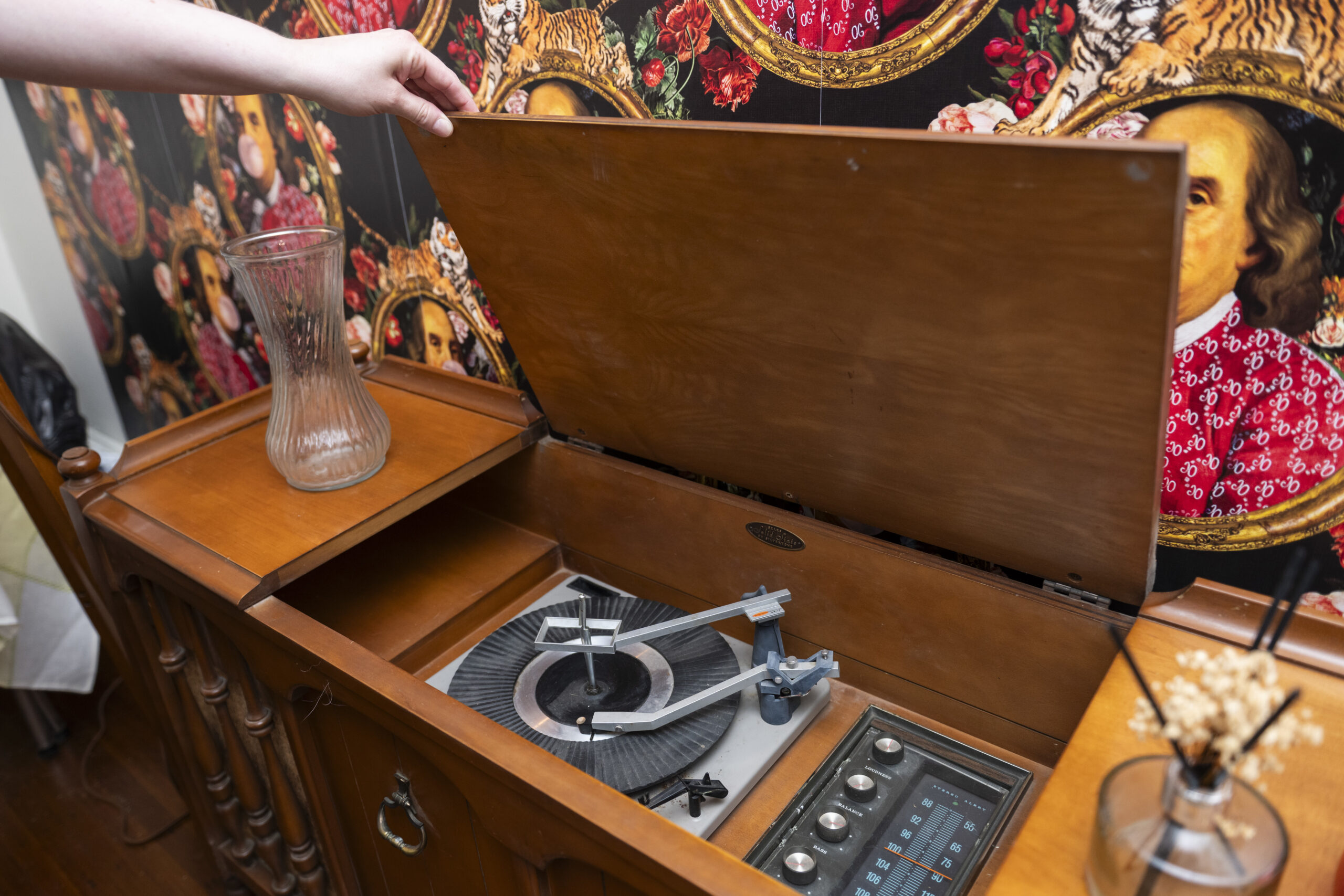
    A record player dating to the 1960s sits in Maiuro’s home under the gaze of bubble-gum-chewing Ben Franklin.

    The fifth wall

    The ceiling has become the fifth wall of the room, where wallpaper can make a bold statement and add a new dimension. Options include very intricate designs where viewers can spot new details to simpler patterns like clouds or green tree canopies.

    “It’s much more dramatic and brings more attention to the room,” Sperling said. “It takes vision.”

    Parents are even wallpapering nursery ceilings as a stimulating focal point for their babies.

    “Wallpapered ceilings have been a design staple for centuries in Europe, especially in homes where pattern and ornamentation played an important role in creating atmosphere and storytelling,” said Krystal Reinhard, founder and principal designer at Old Soul Design Studio in downtown West Chester.

    She’s seen a noticeable uptick in the past five years as homeowners look for more expressive, layered interiors. Papered ceilings work in smaller, contained spaces like powder rooms, nurseries, and offices. But they can also make sense on larger ceilings in bedrooms, dining rooms, and kitchens.

    When papering the ceiling, it’s important to consider the scale of the pattern — motifs or tonal textures often work beautifully overhead, Reinhard said. It’s best to hire an experienced installer because ceilings require precision and strong adhesive knowledge. Before committing to a pattern, one should test how it interacts with overhead lighting — fixtures can cast shadows that change the effect.

    “A wallpapered ceiling is one of the most effective ways to give a room soul,” Reinhard said. “It’s a detail that feels thoughtful and intentional.”

    Especially in the Philadelphia region, where so many homes have architectural character worth celebrating, treating the ceiling as a design opportunity can elevate the entire space, she said.

    It’s a way to honor historic craftsmanship while embracing a very current, expressive design moment.

    Steiker-Ginzberg and Schrading chose the wallpaper in their vestibule to represent the home’s history.

    How much does wallpapering cost?

    Wallpaper costs vary widely, starting at about $40 per 50-square-foot roll for peel-and-stick options from online sellers such as Wayfair. Textured materials from brands like Arte or historical luxury design houses like de Gourney or Zuber can reach several hundred dollars per individual square foot, Sperling said.

    Many companies provide a measuring calculator to determine exactly how much is needed for your project. It’s essential to take pattern repeat into account and add an extra 10% for mistakes and future repairs.

    Most companies sell samples. It’s helpful to hang those in various spots and observe over a few days to see how the pattern looks in the light at different times of day and night.

    For Steiker-Ginzberg, the wallpaper investment was worthwhile.

    “There’s something important and meaningful about the portal into your house and there being an intentional transition,” he said. “It makes a difference in the impression people get.”

  • A statue of a founding father who enslaved people was taken down in Wilmington. It’s moving to D.C.’s Freedom Plaza.

    A statue of a founding father who enslaved people was taken down in Wilmington. It’s moving to D.C.’s Freedom Plaza.

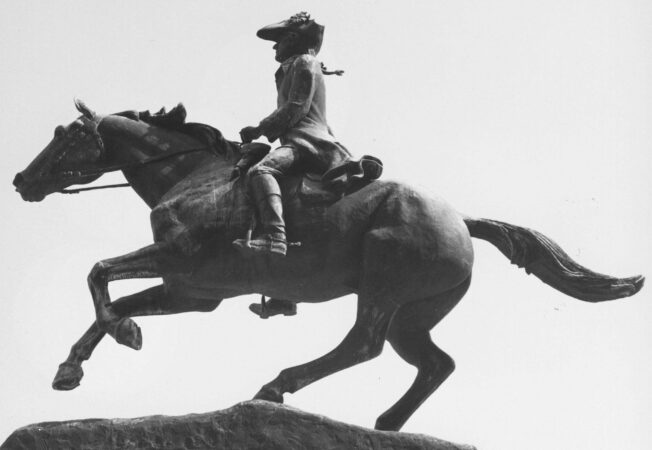
    The statue of a founding father who enslaved Black people in Delaware is moving from a New Castle storage facility to a venerated spot in Washington’s Freedom Plaza as part of President Donald Trump’s celebration of America’s 250th birthday.

    Wilmington officials took down the statue of Caesar Rodney in 2020 amid Black Lives Matter protests and a national reckoning over racism in America, taking it out of public view at the same time as the city removed a statue of Christopher Columbus for similar reasons.

    It wasn’t clear when the bronze monument of Rodney on a horse will be put on temporary display in the plaza on Pennsylvania Avenue, near the White House, according to the New York Times, which learned of the story from a Feb. 3 National Park Service memo.

    The statue had stood in Wilmington’s Rodney Square for around 100 years.

    Rodney’s legend includes a partially disputed story about riding two horses 82 miles from Dover to Independence Hall to sign the Declaration of Independence — a trip five times longer than Paul Revere’s more famous ride a year earlier.

    Rodney arrived spent and mud-spattered on July 2, 1776, to sign the Declaration before its formal adoption on July 4, breaking the tie between two other Delaware delegates, one of whom wouldn’t sign, said Dick Carter, chairman of the Delaware Heritage Commission. The near last-minute inscribing is true, Carter and others say, but it’s possible that Rodney, who suffered from facial cancer and was quite ill, may have covered some of the mileage in a carriage.

    Giving his life to public service, Rodney was a brigadier general in the Continental Army, a sheriff, a justice on the Delaware Supreme Court, and a delegate from Delaware to the Continental Congress.

    Rodney was also among the 41 out of 56 Declaration signers who enslaved people. He was a complex and contradictory figure, especially when viewed through a 21st-century lens, Carter said, adding that it is not fair to “judge historical figures by the norms and mores of the present day.”

    Rodney enslaved anywhere from 20 to 200 people on his estate near Dover. But his legacy also includes a bill he introduced in the state legislature to end the practice of importing enslaved people into Delaware. And upon his death, he freed the 18 people he’d enslaved at the time.

    Trump, during his first term in 2020, praised Rodney in a proclamation issued on the founding father’s birthday.

    In the proclamation, Trump condemned the removal of Rodney’s statue “as part of an ongoing, radical purge of America’s founding generation.”

    Trump said it was a “re-education attempt” and the “end result of an extreme anti-American historical revisionism,” generated by “critical race theorists … [and] mobs on city streets” who say that America is not an exceptional country “but an evil one.”

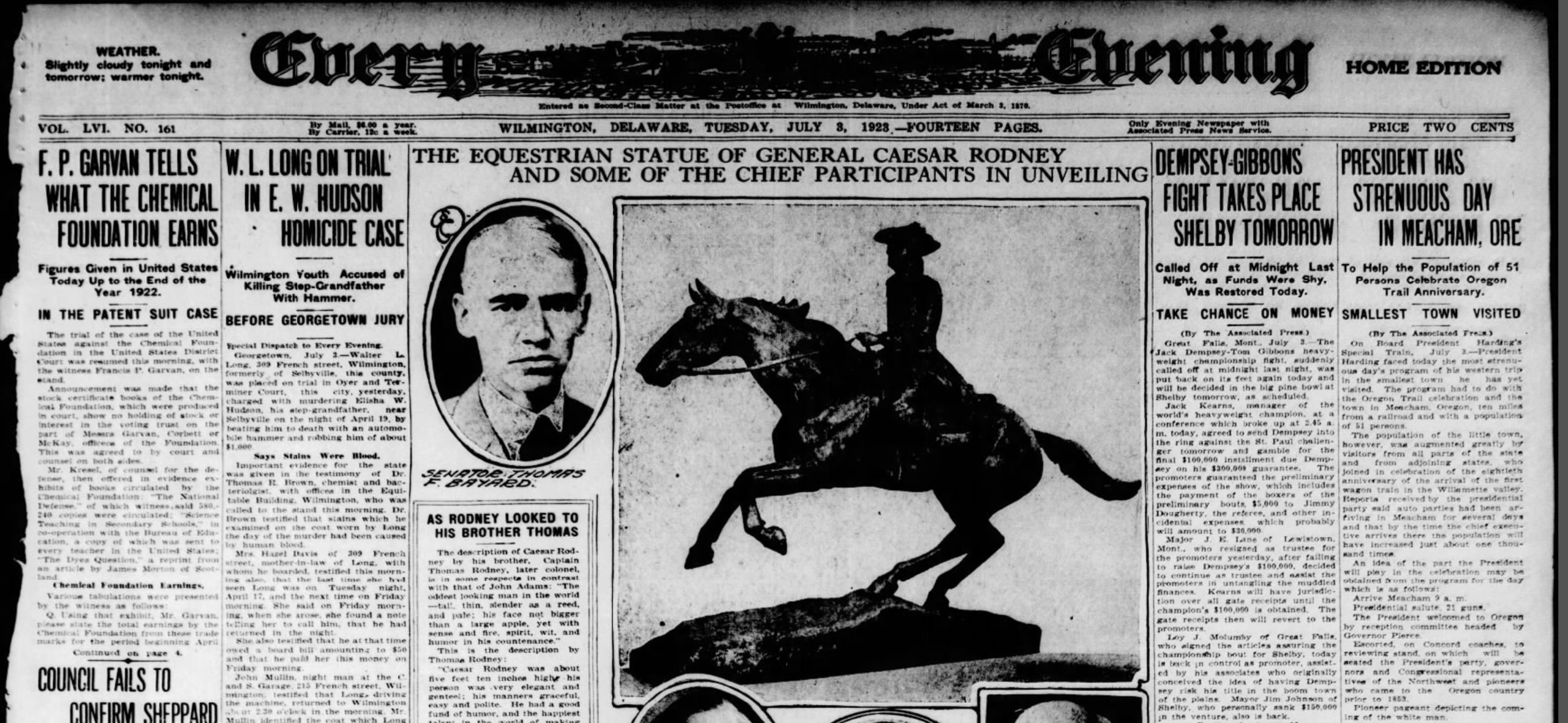
    An image of the front page of the July 3, 1923, edition of the News Journal of Wilmington, Del., which makes note of the dedication of the Caesar Rodney statue on the following day.

    Trump has expressed similar views during his second term and taken steps to change the way Americans are educated about the nation’s history.

    In January, the administration ordered the removal of exhibits depicting slavery at the President’s House in Independence National Historical Park. The U.S. Department of Interior said that the slavery-related materials were being reviewed “to ensure accuracy, honesty, and alignment with shared national values.” Last month, a federal judge ordered the exhibit’s restoration, though the administration is still pursuing the matter.

    In the summer of 2025, the administration restored two statues in the D.C. area that commemorated the Confederacy. One was a statue of Confederate Gen. Albert Pike, the only outdoor statue of a Confederate military leader in the nation’s capital.

    “We see a pattern of celebrating enslavers while reducing teaching about slavery in the United States and limiting diversity, equity, and inclusion,” said Timothy Wellbeck, director of the Center for Anti-Racism at Temple University. “Caesar Rodney has components of character not worth celebrating despite his contributions to America’s founding.”

    Shané Darby, a councilwoman from Wilmington, told the Times that glorifying Rodney was “a slap in the face of Black and brown people of this city… . You can have him, D.C.”

    That’s a view shared by other people in the Black community, said Syl Woolford, a member of the Delaware Heritage Commission. “Some folks in Wilmington are saying, ‘Get that white boy out of here,’” Woolford said. “They tell you there’s no place here for the statue of a slave owner.”

    But, he and other historians say, Rodney’s place in history shouldn’t be completely ignored. Even with the statue gone, elements of Rodney remain. He still appears on the quarter that honors Delaware. And his square continues to bear his name, although there’s discussion it’ll be renamed after President Joe Biden, whose ties to Delaware run deep, Carter said.

    The Department of Interior didn’t answer a request from The Inquirer to comment on criticism from Wellbeck and others that the Trump administration is exalting an enslaver. Instead, a spokesperson said, “Rodney’s journey itself reflected extraordinary courage.”

    “By telling the full story … we strengthen our shared understanding and ensure that future generations inherit not just the land we love, but the truth of the journey that brought us here,” the spokesperson added.

    To avoid further consternation in Wilmington, there’s a plan to send Rodney’s statue to Dover, not Wilmington, after the 250th celebration is over, said Republican State Sen. Eric Buckson.

    “Dover is Rodney’s birth and resting place,” Buckson said.

    He added, however, that “in this climate, folks are rightfully concerned about having monuments minimizing slavery.”

    So, whenever Rodney comes back, his statue will be amended, Buckson said.

    “It’ll include a plaque,” he added, “and that will have the story that, along with everything else, Caesar Rodney was a slave holder.”

  • In a Philly apartment, a monochrome design brings splash without color

    In a Philly apartment, a monochrome design brings splash without color

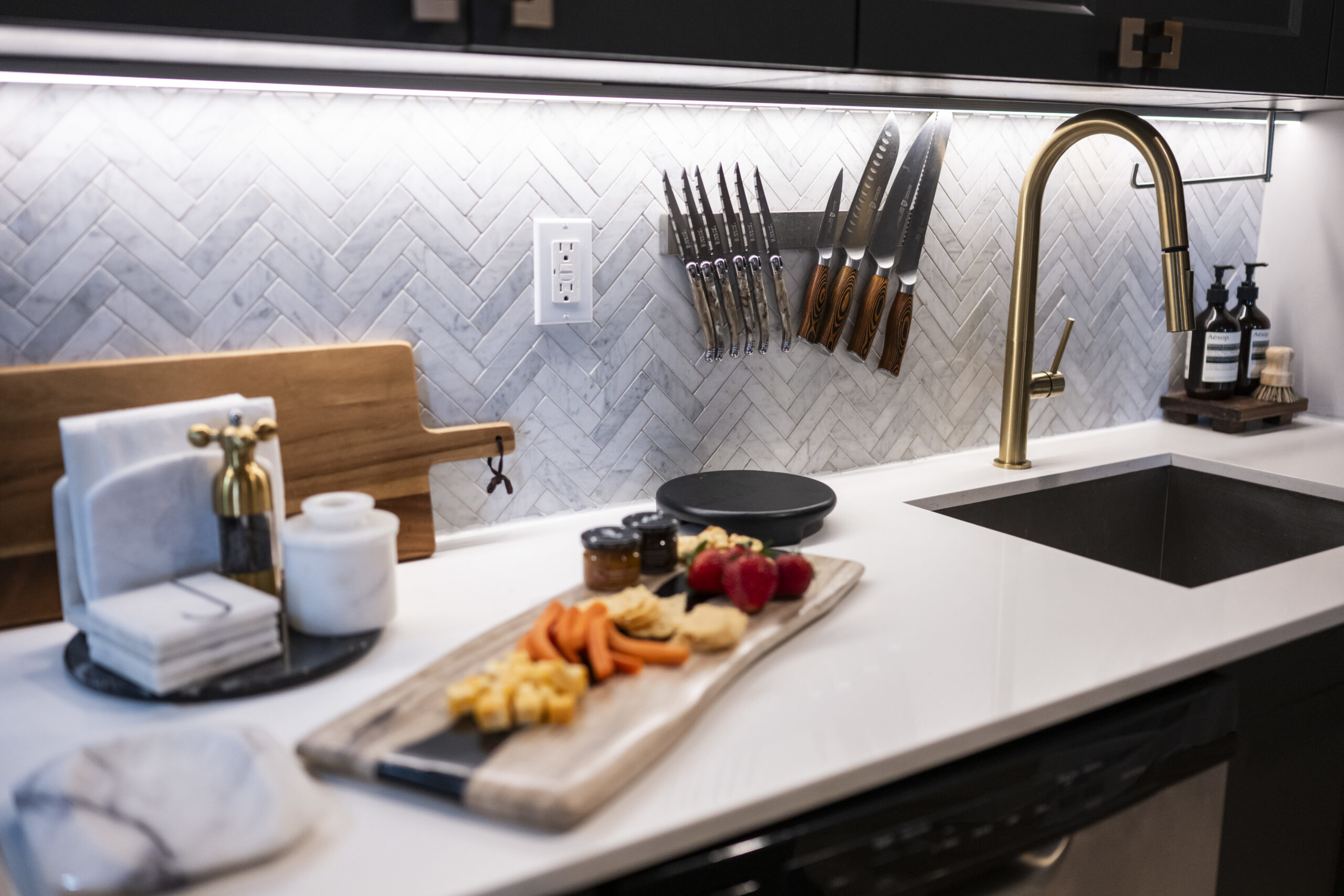
    Bright red strawberries and orange carrot sticks on the kitchen cutting board and greenery in white sculptural vases on the white counter and black dining table add rare splashes of color to Jasmine Williams’ one-bedroom apartment.

    Williams has lived in her mostly two-toned residence in Garden Court Towers, in the Garden Court neighborhood in West Philadelphia, for four years. She loves the “clean and classic” white of the apartment’s walls, chairs, rugs, ottomans, throw pillows, and other accessories.

    Contrasting black furnishings include leather chairs in the entry hall, a round table, the bench and chairs in the dining area, and black cabinets in the bedroom, which flank a radiator whose cover she painted black. She also painted the wall dividing the entry hall and the living area black.

    Recently, Williams’ niece, Aubrey Harris, painted the folding doors to the laundry black. The rest of the doors in the apartment are white.

    Williams already had the essentials when she chose her dramatic decor. Her 1,000-square-foot apartment’s renovated kitchen had black cabinets with white countertops. There were white fixtures in the bathroom and powder room. The laminate floors resembled white oak.

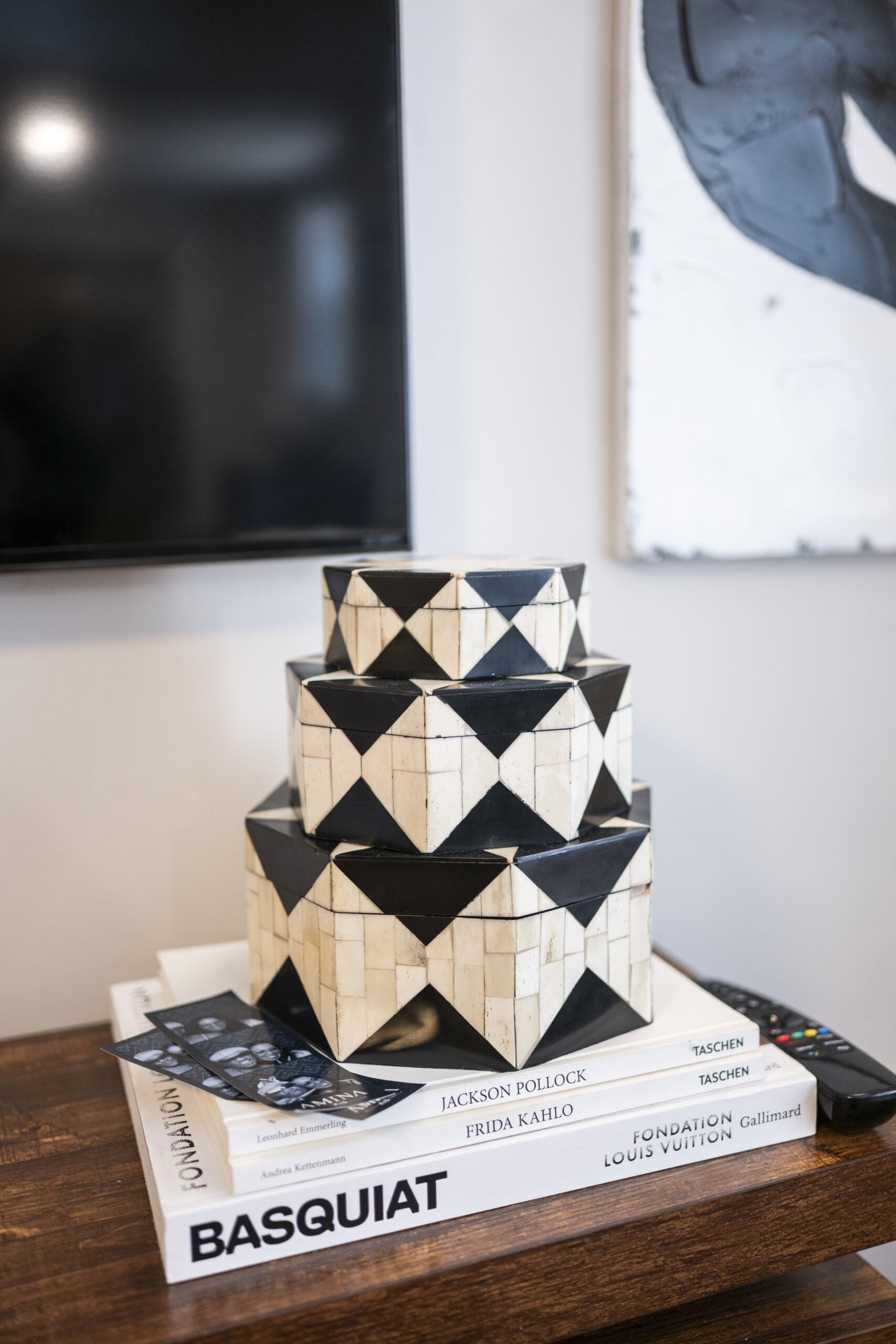
    Decorative boxes and books are stacked on a media console in the living room.
    Decor on the nightstand next to Williams’ bed.

    Williams, 36, spent the first decade of her life in a home on Larchwood Avenue, just blocks from Garden Court Towers. Her family then moved to Berlin, N.J. She graduated from Eastern Regional High School in Voorhees.

    During the early days of the COVID-19 pandemic, she lived with her grandmother, Dolores Cook, in Northeast Philadelphia and redecorated Cook’s home.

    “From the time she was a little girl Jasmine always liked art and design,” her mother, Yvette Baker, boasted during a visit with her daughter.

    Williams was a project manager for nonprofits before becoming an interior design consultant. She is also a disaster relief volunteer for the American Red Cross in Philadelphia.

    After her grandmother’s death in December 2020, “the housing market was awful,” Williams said, so she looked for a place to rent. She visited Garden Court Towers and admired the 1929 Art Deco lobby with its canopied entrance, carved wood paneled foyer, tile walls and floor, and original brass U.S. Mail box.

    The lobby of the Garden Towers apartment building in West Philadelphia.

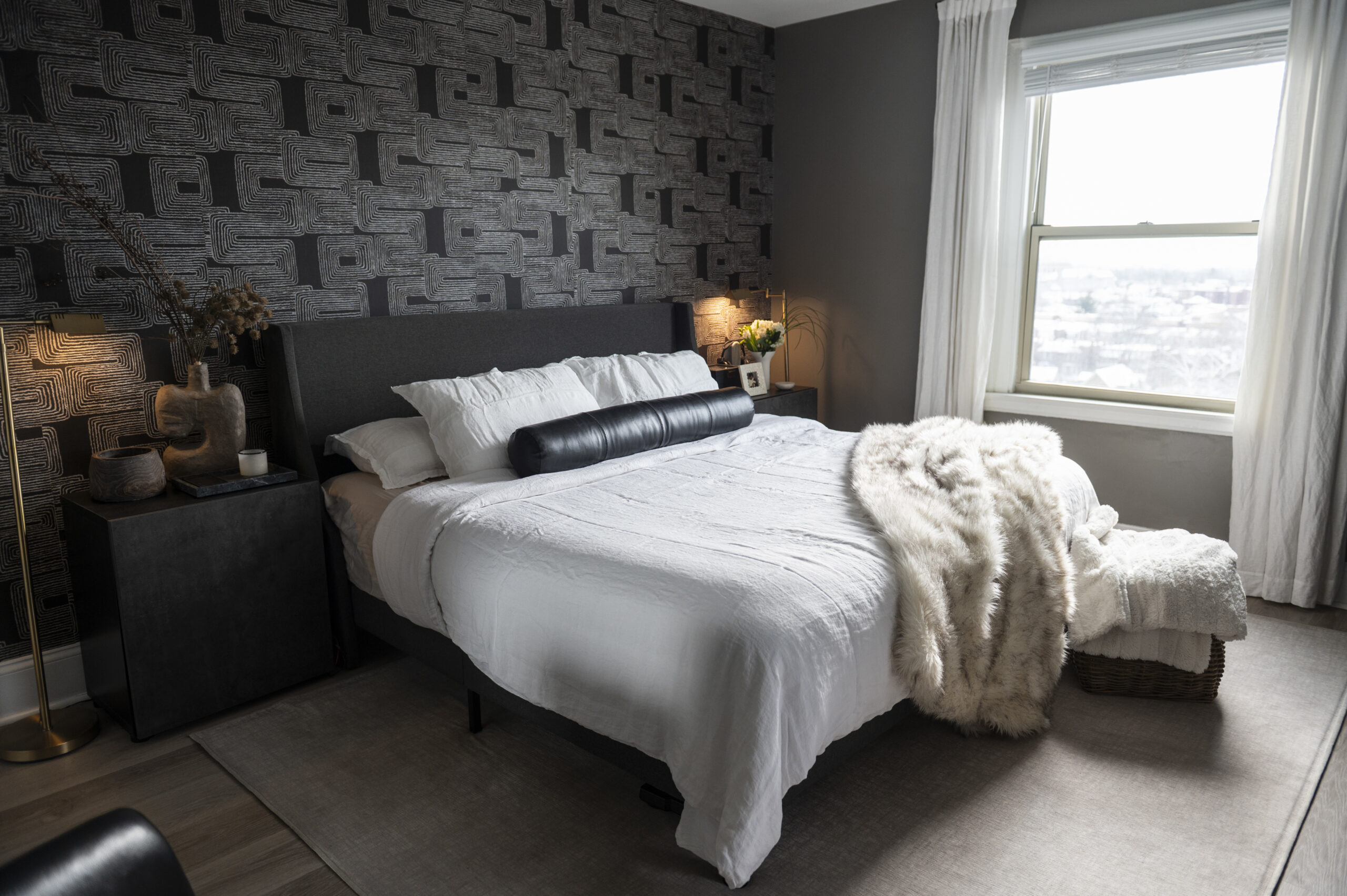
    The Art Deco geometric design of the hallway carpeting is similar to the gray-and-white pattern of the wallpaper Jasmine chose to hang behind her bed, which has a gray headboard. She hung gray wallpaper as an accent on two other walls.

    The living room couch is gray, as is the herringbone-patterned kitchen backsplash.

    Gray softens the bold black-and-white surroundings, as does the wood-toned Parsons table under the TV in the living room. Brass lamps in the bedroom and a gilt mirror in the dining area add sparkle.

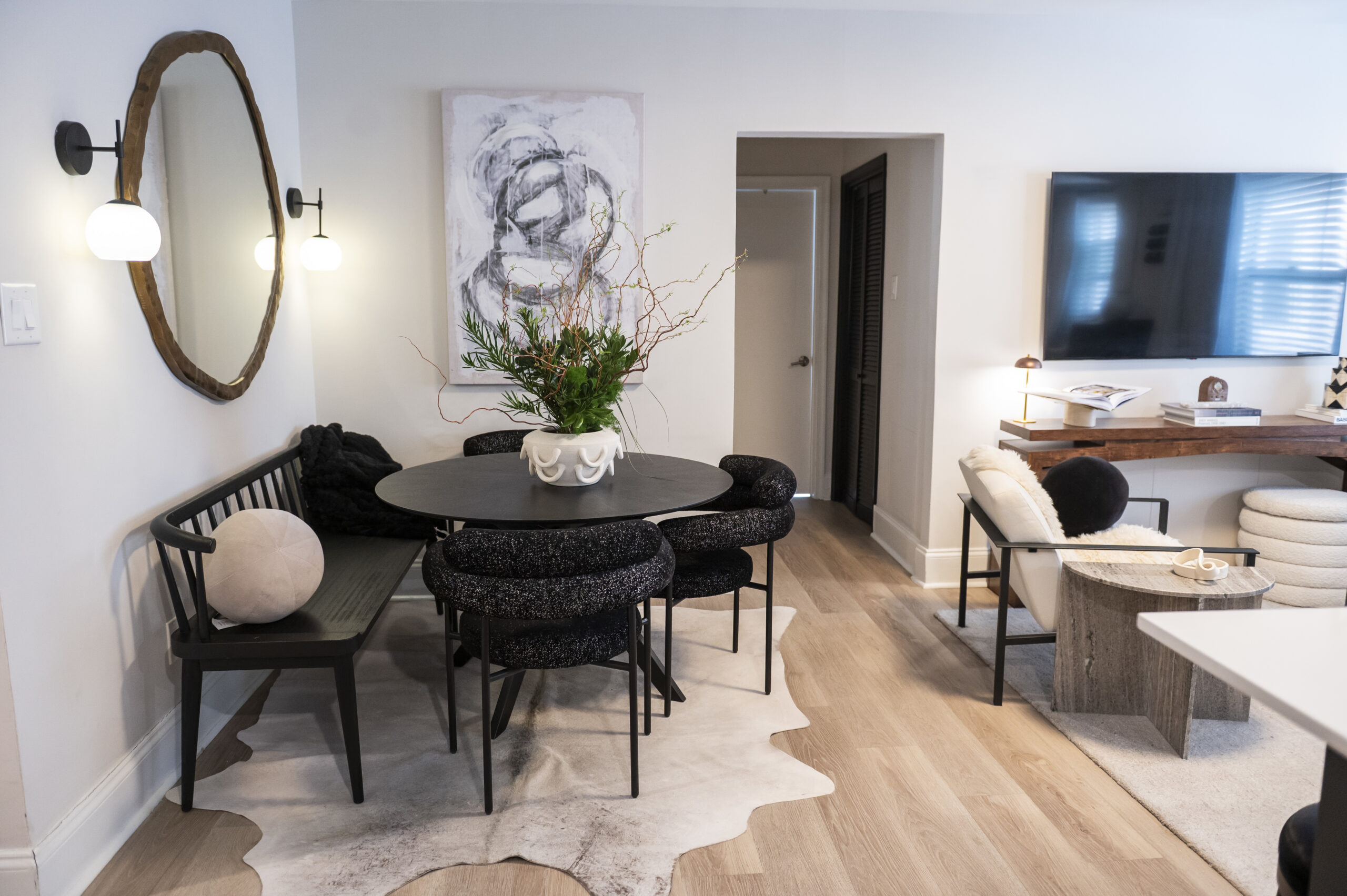
    The dining area, with a variety of monochrome shapes and textures, connects to the living area.

    The miniature antique radio on the Parsons table is actually a holder for wood coasters. Williams inherited the radio from her grandmother.

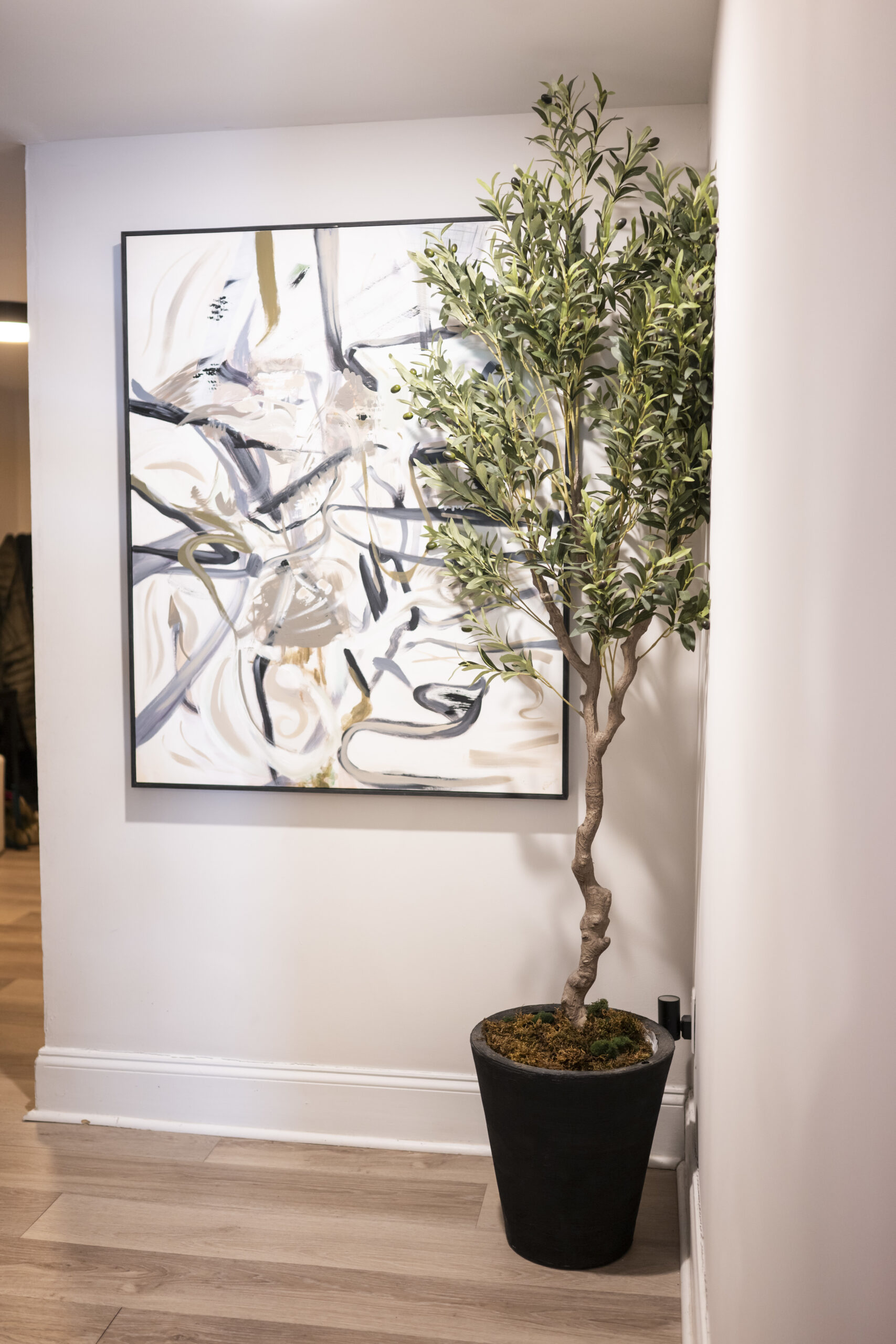
    Abstract art in the apartment include two striking oil paintings from Amazon in the entry hall, depicting black figures on a white background.

    Nearby hangs a painting of gray, beige, and black stripes and swirls on a white background. The work was more colorful when Williams purchased it from CB2, but she and her sister Melyssa Pollard brushed over the vibrant shades to produce a more muted palette.

    Williams’ brother in law, Jay Pollard, and her father, Edward Williams, installed light fixtures and hung paintings in the apartment.

    Her favorite shopping destinations are CB2 and Crate & Barrel, but she has also purchased items from Amazon, Pottery Barn, Wayfair, and other vendors. The cowhide rug under the dining table came from Burke Decor.

    Patterned wallpaper and simple white bedding contrast in the bedroom, where brass lamps add some shine.
    In the kitchen, an arrangement of brightly colored produce stands out from the black, white, and gray.

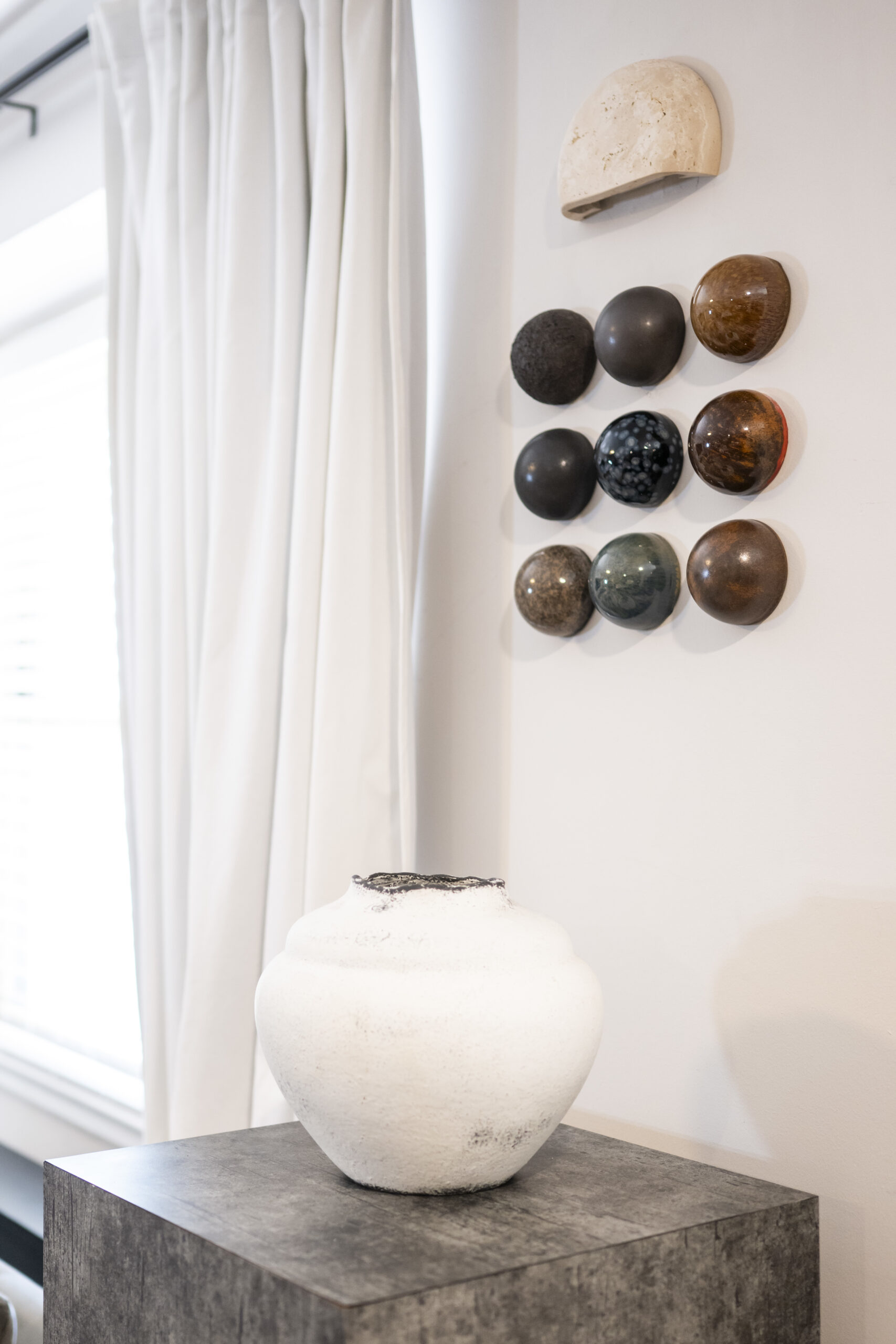
    In the living room, a unique art installation of nine small domes in shades of black, brown, and gray are arranged on the white wall above a white clay bowl on a black pedestal. The glazed clay domes are the work of New Zealand ceramicist Sam Mayell.

    Large windows fill the tenth-floor apartment with light.

    An abstract painting and large olive plant decorate the hallway.
    Ceramics and wall art bring texture to the apartment’s interior design.

    In the bedroom, with its white and black furnishings, a window frames a view of Garden Court homes below with their snow-covered lawns and rooftops.

    The winter-white scene was “keeping my theme going,” quipped Williams.

    Is your house a Haven? Nominate your home by email (and send some digital photographs) at properties@inquirer.com.

  • One of Chinatown’s most promising Thai restaurants has closed

    One of Chinatown’s most promising Thai restaurants has closed

    Chon Tong Thai Kitchen, the family-run restaurant that brought a joyful, brightly colored space to an unlikely corner of Vine Street, abruptly closed late last month after its owner returned to Thailand. The Central Thai specialist, which opened in 2022, was a favorite of Thai expats in Philly.

    Owner Thidarat “Grace” Teekabud, whose great-great-grandmother had been a chef for the fifth King of Siam in the late 1800s, came to Philadelphia in 2019 to learn English. She noticed a void in Philly’s food scene and missed the desserts and snacks she grew up with. Opening the restaurant was her solution. (“Chon Tong” means “golden spoon” in Thai.)

    Teekabud did not respond to requests for comment.

    The real estate broker for the space at 1439 Vine St. told The Inquirer that the owners had already moved back to Thailand after a quick sale of the business and transfer of the turnkey space.

    Chon Tong was a close contender for The Inquirer’s 2025 edition of The 76, making the list of restaurants that writers (unsuccessfully) championed for inclusion.

    Hoi Tod is a mussel pancake served over gently stir-fried bean sprouts at Chon Tong.

    Though the concept initially focused on desserts, Chon Tong became better known among the area’s Thai student community for its boat noodles, fried items like the mussel-studded hoi tod pancake, tum tod (an inventive fried sweet-and-sour papaya salad), and jay tod (speckled with juicy-sweet corn kernels and crunchy tofu), as well as its crispy pork belly (moo tod nam pla).

    The property’s broker said that a Chinese-Japanese fusion restaurant will take Chon Tong’s place.

  • Letters to the Editor | March 5, 2026

    Letters to the Editor | March 5, 2026

    A study in contradictions

    You can’t have it both ways. In June: I completely obliterated Iran’s nuclear capabilities. Last week: We need to go to war with Iran because its nuclear capabilities are a threat to us. Not to mention an alternative reason — an Epstein diversion that has already taken the lives of U.S. troops and the deaths of innocent Iranian citizens, schoolgirls among them.

    Carol Otis, Drexel Hill

    Addressing healthcare disparities

    As a physician with more than 50 years of experience, I read with great interest a recent op-ed noting that doctors are paid less by insurance companies for treating Black and Latino patients than white ones.

    Inequality in healthcare delivery affects many American households, either directly or indirectly. But the causes described by the authors of the op-ed are multifactorial in origin and may not be the result of discrimination. Most doctors do not reject patients based on their insurance plans, but rather see anyone who’s scheduled.

    One way to address the disparity cited by the authors might be by increasing the use of physician associates. I estimate that a third of the patients I saw over the course of my career could have been treated by a well-trained clinician without a medical degree. They are often called “physician extenders,” and they have considerable training — and often direct care experience — before being licensed to practice in a state. They work in conjunction with a medical professional for backup and oversight to protect the people we serve.

    There are many benefits to using physician associates: They allow patients into the system of providers that would not occur because of overwhelmed schedules, they are able to operate without the prolonged and costly medical training and education that doctors endure, and they are reimbursed at a lower level consistent with the lesser illness risk that patients have during visits.

    When the Affordable Care Act was passed in 2010, millions were allowed access to our healthcare system, which overwhelmed existing medical providers. Funding for physician extenders was part of that bill. It was a start, but not nearly enough. We must increase funds for physician associates to address our nation’s growing need for more healthcare providers.

    Donald Petroski, Medford

    Where’s the money?

    Superintendent Tony B. Watlington Sr. is trying to come up with new money and new ways to create a positive and powerful way to teach our students. He seems to plan on closing, moving, and combining schools. I wish him luck — and he is going to need it to make this plan work. The parents rightly ask, “Where is the money?” My long and winding journey with the Philadelphia School District began with me in kindergarten in 1951 and ended when I retired from teaching first grade in 2003. After all those years with the district, I think I can answer the question from those who ask, “Where is the money?” There isn’t any money. There never was any money, and there probably will not be any money. Why? Ask the legislature in Harrisburg.

    Sheryl Kalick, Philadelphia

    Join the conversation: Send letters to letters@inquirer.com. Limit length to 150 words and include home address and day and evening phone number. Letters run in The Inquirer six days a week on the editorial pages and online.

  • Horoscopes: Thursday, March 5, 2026

    ARIES (March 21-April 19). Review your financial strategy. One timely adjustment this solar season can make a considerable difference. The work and research you do in the next few days will inform the move.

    TAURUS (April 20-May 20). You’re not trying to do too much, really. Sure, you have long term goals and maybe even a dream for the future. But for the next 24 hours, there’s a lot of good that comes from your simple desire to make other people smile.

    GEMINI (May 21-June 21). If you only feel like you’re doing a good job when you’re meeting a certain person’s needs, and said person isn’t (SET ITAL)you(END ITAL), this isn’t the job for you. Get out of it. Because inside of it, you can’t step back to look at the big picture.

    CANCER (June 22-July 22). Today sees you absorbing beauty. You may learn from a book in order to act, study an art form to make your own, or listen deeply to another person. You receive first, and later you’ll act and create with what you’ve taken in.

    LEO (July 23-Aug. 22). Name what you want out loud. It will feel risky. As soon as the words leave your lips, the world changes. You’ll start to know what was in your head and what is actually possible as imagined outcomes are replaced with real ones.

    VIRGO (Aug. 23-Sept. 22). It’s pretty much how those you admire did it — more the norm than the exception — so take heart. Most people don’t feel completely ready for what’s coming. Trust that you’ll acquire what you need along the way.

    LIBRA (Sept. 23-Oct. 23). You’ll get a do-over pass — then another, then another. With the constant supply of do-over passes, you may as well go ahead and try your hand at a game you’re bad at. Then try again and again until you’re good at it, or bored of it.

    SCORPIO (Oct. 24-Nov. 21). You’ll pull together interesting work. You haven’t figured everything out yet, but you don’t need to; leaving some things to be resolved in the moment brings freshness, even genius, to your work.

    SAGITTARIUS (Nov. 22-Dec. 21). You’re so good at your role, mostly because you pay attention. Others may go through the motions without noticing what’s changed and needed — without imagining what could be. Not you. You notice what needs doing before it’s asked for.

    CAPRICORN (Dec. 22-Jan. 19). Last season you made a choice that simplified your life. It didn’t look dramatic at the time, but it removed some of the obstacles to the ideal you keep imagining. You’re moving into a new state of ease, closer every day, habits constantly improving.

    AQUARIUS (Jan. 20-Feb. 18). People appreciate your work because it considers them. You think about how something will be received, how it will be used and what it might make easier. The extra thought makes your contributions fit better.

    PISCES (Feb. 19-March 20). You’re so creative and prolific today, turning your inner impulses into a shared reality. As you make things, your skills get sharper, confidence swells and you get to enjoy the products of your self-expression — empowering all around.

    TODAY’S BIRTHDAY (March 5). It’s your Year of Vibrant Daring. Never were you more aware of life’s constant movement, and you are often steering the journey to where your curiosity and talents will be a good fit for the scene. You’ll make an impact with people you enjoy, joining strengths for a common good. More highlights: lucrative work, a soul-fortifying commitment, an investment will pay off and float your dream. Cancer and Pisces adore you. Your lucky numbers are: 10, 3, 8, 32 and 16.

  • Dear Abby | Son confides to mom about grandmother’s abusive behavior

    DEAR ABBY: I am reaching out as a single mother grappling with a serious heart-lung condition. My son’s father abandoned us when I was pregnant, and I haven’t heard from him in more than a decade. Thankfully, my parents have been supportive coparents during the years when my health made things incredibly challenging.

    I have always encouraged my son to express his feelings and have assured him that his emotions are valid. We share a strong bond, and he feels comfortable discussing anything with me. Recently, he confided that he feels unsafe at his grandparents’ house, where he spends two nights a week. He revealed that his grandmother is verbally abusive and critical — laughing at him when he makes mistakes, calling him a “loser,” making sneering comments and speaking poorly of me when they are alone, even though she’s pleasant to my face.

    My mother’s behavior is deeply troubling. My son is scared to have me confront her because he’s worried he will be punished for sharing his experiences. In any other scenario, I would tell my mother that until she chooses to not abuse, he won’t be staying over. However, we have a mediated agreement that allows for those two overnights a week. I fear my mother could manipulate the situation and lie to the courts to maintain this arrangement. What should I do?

    — HOPELESS AND OVERWHELMED IN OREGON

    DEAR HOPELESS: Something has gone wrong with the arrangement you have with your mother. Any extreme change in behavior is troubling, and if her change of behavior is recent, she may need to be medically evaluated. What you need to do now is discuss this sorry situation with an attorney who may be able to challenge the custody agreement and protect your son from your mother’s abuse.

    ** ** **

    DEAR ABBY: My son “Scot” recently remarried. I wasn’t involved in any of the preparations. I was also not acknowledged at the wedding and felt like just another guest. My son decided to change his last name without informing me about it. When I asked why, he said he had no claim to the name even though he has a brother and children with that last name. Am I wrong for feeling I’ve been punched in the heart for not being involved in this decision? The hurt is real.

    — MOM WHO DOESN’T MATTER

    DEAR MOM: With this new marriage, Scot is starting over, and the name change may be his way of creating a new beginning. Obviously, you and your son are not close enough that he confides in you, or he might have spoken to you about his decision and explained it beyond feeling he had “no claim” to the name he, his brother and his children were raised with. Scot’s decision was a personal one. Whatever his reason, it has nothing to do with you, and it should not be regarded as a “punch in the heart.” (A flip of the stomach, perhaps, but in no way related to you.)

  • SUV passenger killed in crash with SEPTA bus in Southwest Philly

    SUV passenger killed in crash with SEPTA bus in Southwest Philly

    A passenger in an SUV was killed and the driver was critically injured when the vehicle struck a SEPTA bus late Wednesday afternoon in Southwest Philadelphia, police said.

    Just before 4:20 p.m., a 2019 Honda HR-V heading north on Island Avenue in the area of Buist Avenue hit the rear of a SEPTA bus also traveling north on Island, police said. A third vehicle then hit the rear of the Honda.

    Medics transported the two people from the Honda to Penn Presbyterian Medical Center. The passenger, who was not identified, was pronounced dead at 5:20 p.m. The driver was listed in critical condition.

    No other injuries were reported.

    The cause of the crash was under police investigation.

  • Ally Sentnor’s goal is enough for the USWNT to edge Canada, 1-0, in the SheBelieves Cup

    Ally Sentnor’s goal is enough for the USWNT to edge Canada, 1-0, in the SheBelieves Cup

    COLUMBUS, Ohio — Ally Sentnor scored in the 55th minute and the United States beat Canada 1-0 on Wednesday in the SheBelieves Cup tournament, the Americans’ seventh straight shutout.

    Sentnor scored her seventh international goal off a corner from Rose Lavelle, gathering the ball on a bounce before punching it past two defenders and Canada goalkeeper Kailen Sheridan.

    The U.S. hasn’t allowed a goal since a 3-1 win over Portugal last October, a stretch of 714 minutes.

    “Honestly, our goal was just to win the game,” Sentnor said. “I think going into a rivalry game, we knew what was going to happen. It was going to be on the line and Canada gave us an incredible performance, and we really had to work for this win.”

    United States midfielder Sam Coffey (left) celebrates a goal by teammate Ally Senator in the second half of a SheBelieves Cup soccer match against Canada on Wednesday.

    The United States sat atop the SheBelieves table with two wins, ahead of Canada and Colombia with one each. The Colombians defeated Argentina 1-0 in the early match Wednesday at ScottsMiracle-Gro Stadium.

    The United States is 55-4-9 against Canada since their first meeting in 1986. The U.S. won the last meeting, 3-0, in July.

    The Canadians’ last win in the series came at the Tokyo Olympics in 2021. Jessie Fleming converted a penalty in a 1-0 semifinal victory. Canada went on to win the gold medal.

    U.S. coach Emma Hayes included Trinity Rodman in the starting lineup despite Rodman taking a hit in the back late in Sunday’s 2-0 SheBelieves victory over Argentina in Nashville. Rodman struggled with a nagging back injury last year.

    Canada, which defeated Colombia 4-1 in the tournament opener, was without captain Fleming because of an illness.

    The game was scoreless after the first half despite the United States dominating possession by nearly 70%.

    Sentnor, who plays professionally for the Kansas City Current, broke the stalemate with her third goal of the year. The 22-year-old was named U.S. Soccer’s young player of the year in 2024.

    Canada coach Casey Stoney felt her team showed “huge progress” from the last time the Canadians faced the United States, but was disappointed about conceding on a set piece.

    “I think we were competitive throughout the game. I think we kept our distances better, we had good discipline,” Stoney said. “I think we had moments in their box where we can have a little bit more composure.”

    Colombia will play the United States on Saturday in the tournament finale in Harrison, New Jersey. Canada plays Argentina in the early game.

    It is the 11th annual SheBelieves Cup hosted by the United States. Canada was making its fourth appearance in the tournament.