Tag: topic-link-auto

  • Media, the nation’s first Fair Trade Town, marks 20 years supporting farmers in the developing world

    Media, the nation’s first Fair Trade Town, marks 20 years supporting farmers in the developing world

    Elizabeth Killough remembers the beginning of Media’s Fair Trade history as follows: She was sitting at her desk at UnTours, an unconventional Media-based travel company, next to her boss and UnTours founder Hal Taussig.

    Taussig, sitting in his beloved rickety desk chair, began to share a vision with Killough: What if his hometown of Media could become a hub for Fair Trade, a global trading system that prioritizes quality products and fair wages for farmers in the developing world? What if Media’s shops and restaurants could stock products made and sold with equity and respect?

    “I couldn’t even begin to imagine what that would be [like],” Killough remembers.

    To humor Taussig, she googled “Fair Trade towns” (the internet was remarkably slow in the mid-2000s, so it took a few minutes to populate the results, she said). An email for Bruce Crowther, the father of Fair Trade in Garstang, England, popped up. Killough sent him a note. Despite the fact that it was 10 p.m. in England, Crowther wrote right back. He wanted to help make Taussig’s dream a reality.

    In the months that followed, Taussig and Killough would help spearhead an effort to make Media the first Fair Trade town in the United States, a push that took the cooperation of local business owners, civic leaders, and borough council members. As Media marks 20 years of its Fair Trade Town status, Fair Trade products, and Taussig’s formidable footprint, can be found all over the Delaware County community.
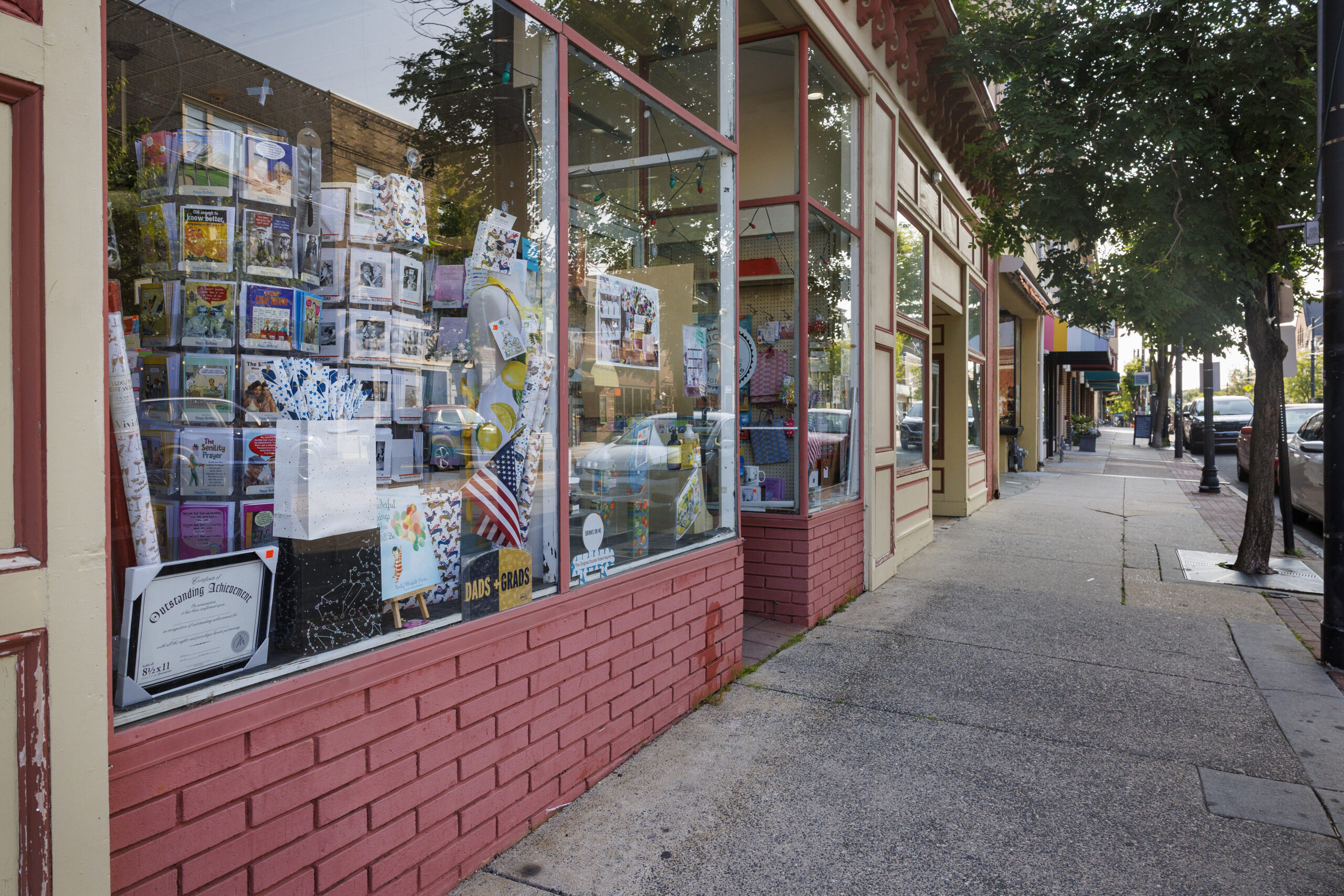
    State Street, near Olive Street, on Wednesday, June 4, 2025, in Media, Pa. Businesses that sell Fair Trade products dot Media’s main commercial artery, a sign of the enduring legacy of Hal Taussig and Media’s Fair Trade advocates.

    What is Fair Trade?

    Fair Trade is a global trading arrangement under which farmers are paid higher wages in exchange for assurances that they will use eco-friendly practices, ensure safe working conditions, and invest in their communities. The trading practice seeks to uplift producers in the developing world, where environmental exploitation and forced labor can be common in the agriculture business. Common Fair Trade products include coffee, chocolate, and bananas.

    Fair Trade guarantees farmers can charge minimum prices for goods, acting as a safety net against market instability. Some Fair Trade suppliers receive a “premium fund,” or an additional sum of money put aside to invest in education, healthcare, infrastructure, or business improvement products in their communities. In exchange for economic security, Fair Trade producers must provide workers with reasonable work hours, safe working conditions, and maternity leave, and are barred from using child and forced labor.

    Fair Trade products are certified through a collection of governing bodies, including Fairtrade International and Fair Trade USA.

    How did Media become a Fair Trade town?

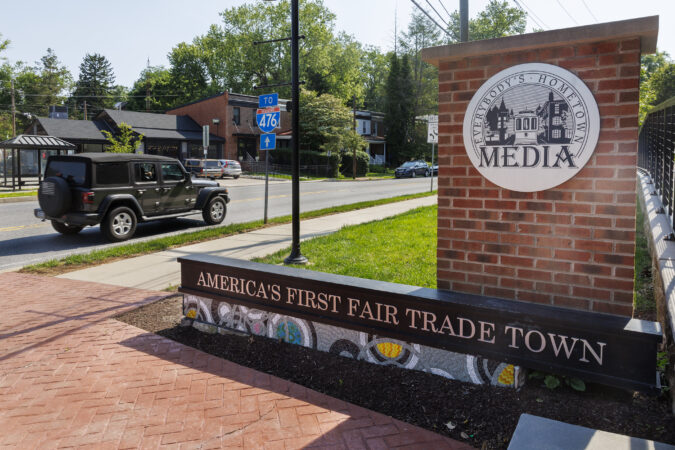
    Killough’s email to Crowther set off a monthslong campaign to make Media the United States’s first Fair Trade Town, a moniker now proudly displayed on “Welcome to Media” signs on the borough’s outskirts.

    Taussig had been thinking about sustainability in the global economy for decades before Media’s formal designation. In 1992, Taussig and his wife, Norma, founded UnTours, an unconventional “slow travel company” that helped people connect to faraway lands through community engagement and sustainable tourism practices. Friends described Taussig as unique and empathetic. He was famously averse to making a profit, sharing UnTours’ returns with customers, staff, and, later, the UnTours Foundation, which invests in sustainable business ventures.

    Taussig, who died in 2016, was “a really sweet man that cared about the world a lot,” said Ira Josephs, the executive director of the Media Fair Trade Committee.

    Taussig and Killough began meeting with a group of stakeholders who shared the goal of bringing Fair Trade to Media. At the time, there was no organization overseeing Fair Trade communities in the U.S., so the Media group decided to “self-declare” under the criteria used by Garstang, the first Fair Trade Town in the world. They needed to persuade a certain number of Media retailers to sell Fair Trade-certified items and ask local schools and businesses to use Fair Trade goods. The guidelines also required Media to establish a Fair Trade committee; have an elected body pass a resolution supporting Fair Trade; and promote media coverage and education around Fair Trade.

    A number of stores in Media already carried Fair Trade products, and many of its churches and Quaker meetinghouses used Fair Trade coffee and sugar. The working group made a website and brought on board Monica Simpson, a borough council member who helped convince the governing body to pass a Fair Trade resolution. The borough council saw it as a way for “this local community to make an international connection,” Killough said.

    Once all of the criteria were met, “we just self-declared that we were the first Fair Trade town,” Josephs said.

    At the time, New York City and Los Angeles were working on their own Fair Trade proposals. Yet Media, a 5,000-resident borough in the heart of Delco, beat them to the punch.

    “It was rebellious,” Josephs said.

    On July 12, 2006, Media held a public ceremony unveiling its status as a Fair Trade town.

    Many of Media’s businesses got on board.

    When Tara and Brent Endicott, the owners of downtown Media’s Burlap & Bean, first got into the coffee business, they knew they wanted “to feel like we were making a difference,” Tara Endicott said.

    All of the coffee sold at Burlap & Bean is Fair Trade-certified and organic, a decision the Endicotts made in 2006 when they opened their first location in nearby Newtown Square, inspired in part by Media’s Fair Trade push.

    Though their coffee-industry friends told them they were crazy for stocking only Fair Trade products, which are more expensive and harder to source, the Fair Trade beans won over the coffee purveyors and their Media-area customers.
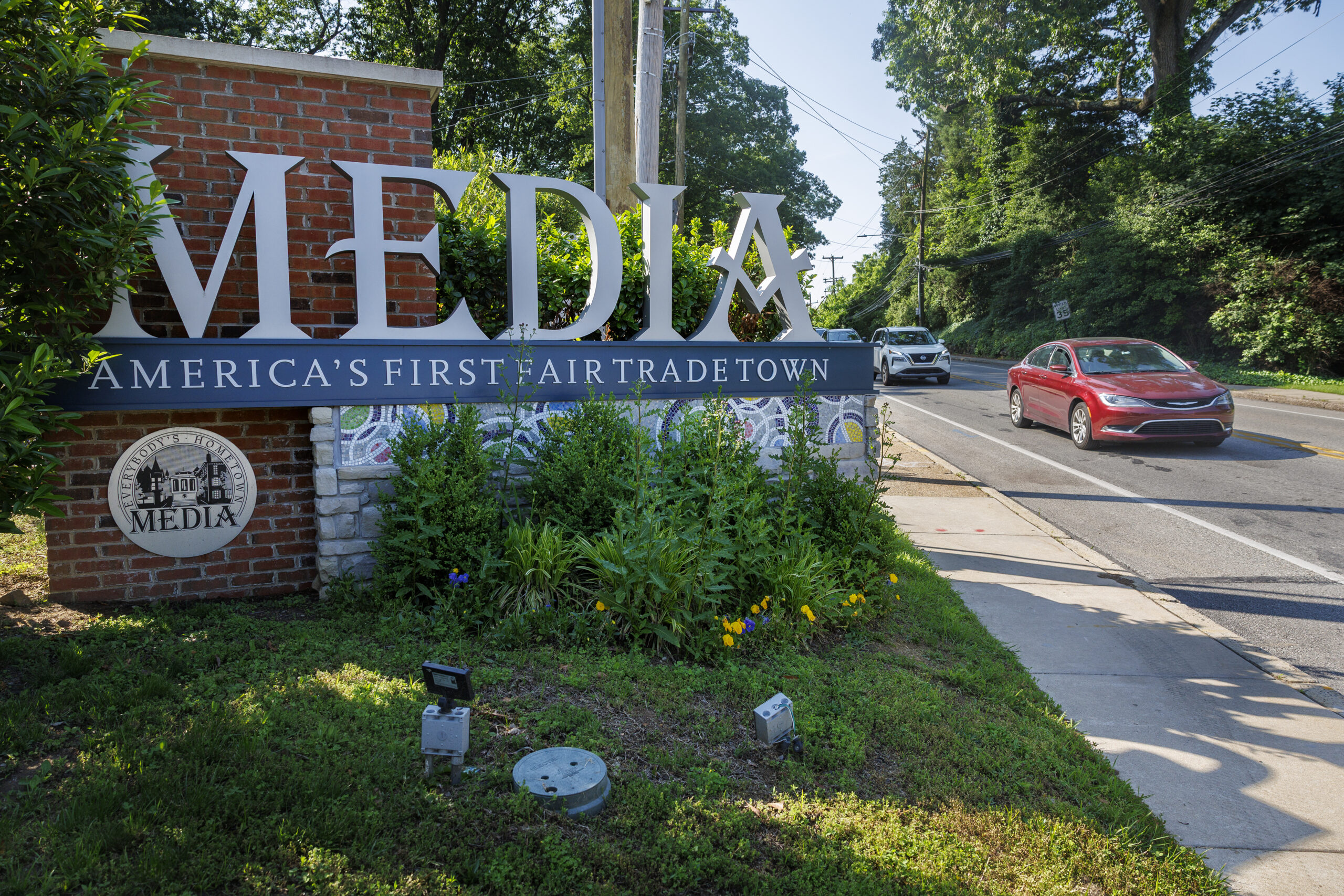
    Signage that reads, America’s First Free Trade Town, Media, PA., Wednesday, June 4, 2025. This sign is at N. Providence Road where it crosses N. Monroe Street.

    Fair Trade in Media, two decades later

    Fair Trade lives on in the stores, restaurants, and coffee shops that dot Media’s bustling downtown.

    All of the international products at Earth & State, a pottery and craft shop, are from Fair Trade groups. Bittersweet Kitchen, a pizza and brunch spot, serves Fair Trade hot chocolate and coffee. Mom-and-daughter-owned yarn shop Homesewn sells yarn from Fair Trade Federation members and other companies that follow Fair Trade principles. Even Trader Joe’s, located in Media’s old armory building, stocks Fair Trade coffee.

    On Valentine’s Day, the Media Fair Trade Committee hosted its annual Fair Trade chocolate tasting. The committee also hosts an annual juggling contest with Fair Trade soccer balls at Dining Under the Stars.

    Fair Trade’s future is not entirely certain.

    Fair Trade groups have come under scrutiny in recent years for corporatizing a once mission-driven practice. It has been hard at times to get businesses to splurge on Fair Trade goods, first during the 2008 recession and then again during the pandemic, Killough said. As rents rise in Media, there is a “constant turnover of store owners and restaurateurs,” Killough added, making it an ongoing effort to keep Fair Trade practices alive.

    “It’s going to continue to require a lot of work, a lot of commitment, and a lot of education,” she said.

    Last year was “the worst year financially that we’ve ever had,” Tara Endicott of Burlap & Bean said. Despite having the highest customer counts in Burlap & Bean’s history, high coffee prices and tariffs left the Endicotts taking home meager profits at the end of the day. They have thought about opening up their business to non-Fair Trade coffee but have not yet, relying on the hope that economic conditions will improve.

    Ultimately, Brent Endicott said, he and his wife are proud to be in Media and to be serving Fair Trade beans.

    “We’re thrilled to be able to do our part to help Media stay a certified Fair Trade town,” he said.

    This suburban content is produced with support from the Leslie Miller and Richard Worley Foundation and The Lenfest Institute for Journalism. Editorial content is created independently of the project donors. Gifts to support The Inquirer’s high-impact journalism can be made at inquirer.com/donate. A list of Lenfest Institute donors can be found at lenfestinstitute.org/supporters.


  • Outlook hazy | Editorial Cartoon

    John Cole spent 18 years as editorial cartoonist for The (Scranton) Times-Tribune, and now draws for various statesnewsroom.com sites.

  • The Gaudreau family’s journey to Milan for Team USA’s men’s hockey gold medal started in Philly

    The Gaudreau family’s journey to Milan for Team USA’s men’s hockey gold medal started in Philly

    As the U.S. men’s hockey team skated around with Johnny Gaudreau’s Team USA jersey after its 2-1 overtime win over Canada in the gold-medal game of the Milan Cortina Olympics, Meredith Gaudreau looked on from the stands.

    Meredith knew her late husband’s jersey had a place in the USA Hockey locker room in Milan, Italy, just as it had at the 4 Nations Face-Off in 2025. But she didn’t expect the team to bring the jersey to the ice as it celebrated USA Hockey’s first men’s Olympic gold since 1980.

    As the team celebrated on the ice, Meredith’s phone rang. It was Matthew Tkachuk, asking if the team could get Meredith and Johnny’s two oldest children, Noa and Johnny Jr., onto the ice for a picture.

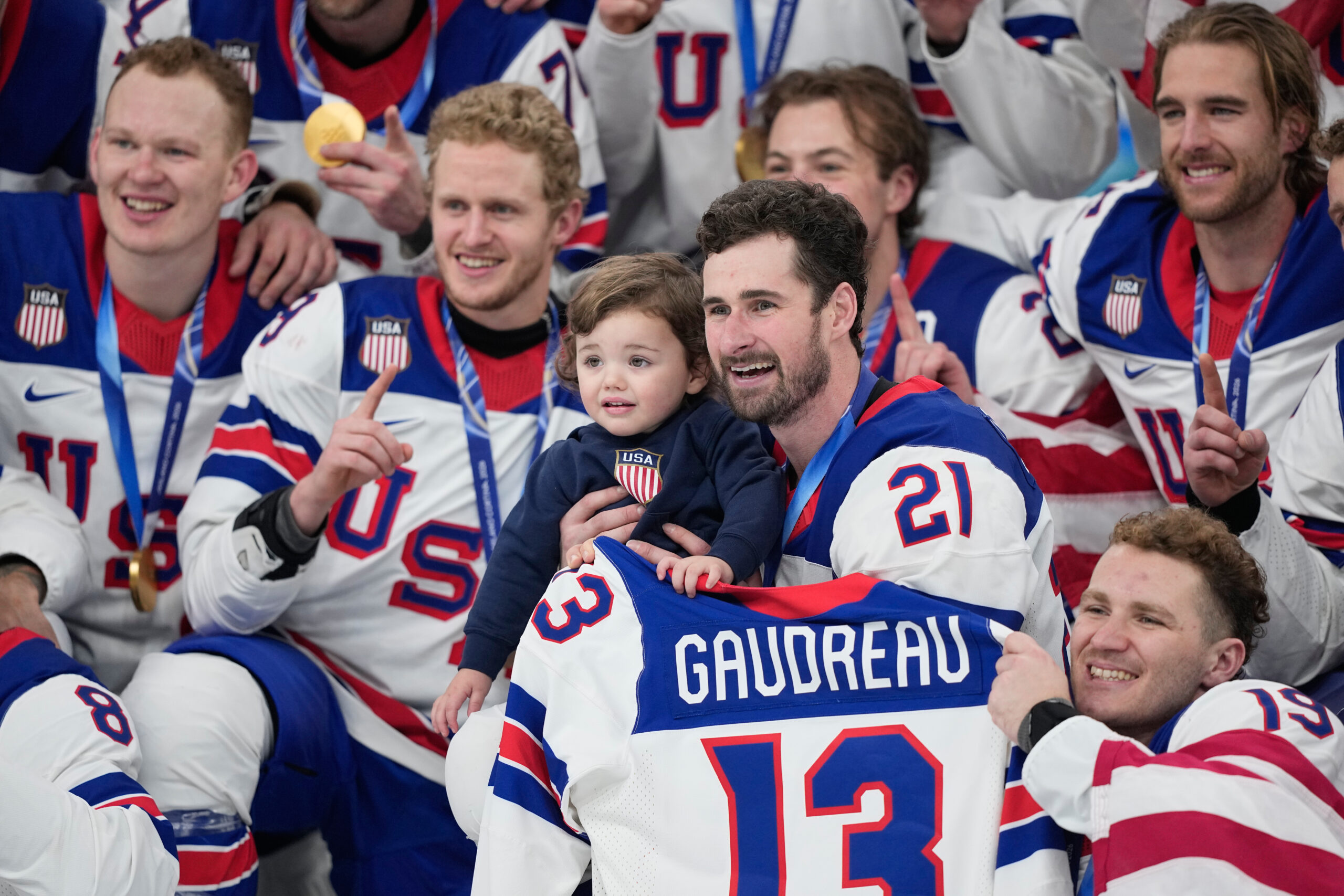
    Johnny Gaudreau’s former Calgary Flames teammate, Matthew Tkachuk, skates with Gaudreau’s daughter, Noa, after the United States won Olympic gold on Sunday in Milan.

    “I just was blown away that they wanted to do all that,” Meredith said. “They were really thinking of John. I was just very blown away by John’s impact, the way they want to honor him and have a lot of respect for him as a hockey player, a friend, an American hockey player. I was very, very proud of him for that.”

    Johnny Gaudreau, who spent 11 seasons in the NHL and likely would have been on the team’s Olympic roster, and his younger brother, Matthew, died after being hit by an alleged drunk driver while riding bicycles near their South Jersey hometown on the eve of their sister Katie’s scheduled wedding in August 2024. Johnny was 31, and Matthew was 29.

    From Philly to Milan

    Team USA honoring Johnny Gaudreau and his family was one of the most impactful moments of the Winter Olympics.

    But the Gaudreau family might not have made it to Milan without the efforts of Brian Roberts, the chairman and CEO of Comcast.

    Before the Olympics, Roberts read that the U.S. hockey team was planning to honor Gaudreau at the Games the same way it had during the 4 Nations Face-Off, by including a No. 13 Gaudreau jersey in the team’s locker room. Once the U.S. won its group, Roberts thought the Gaudreau family should have the opportunity to be at the Games in Milan.

    Roberts first called Keith Jones, the president of hockey operations for the Flyers, to see if he knew how to get in contact with the Gaudreau family. Jones recommended that Roberts call Gary Zenkel, the president of NBC Olympics, and coordinate the Gaudreau family’s travel with USA Hockey.

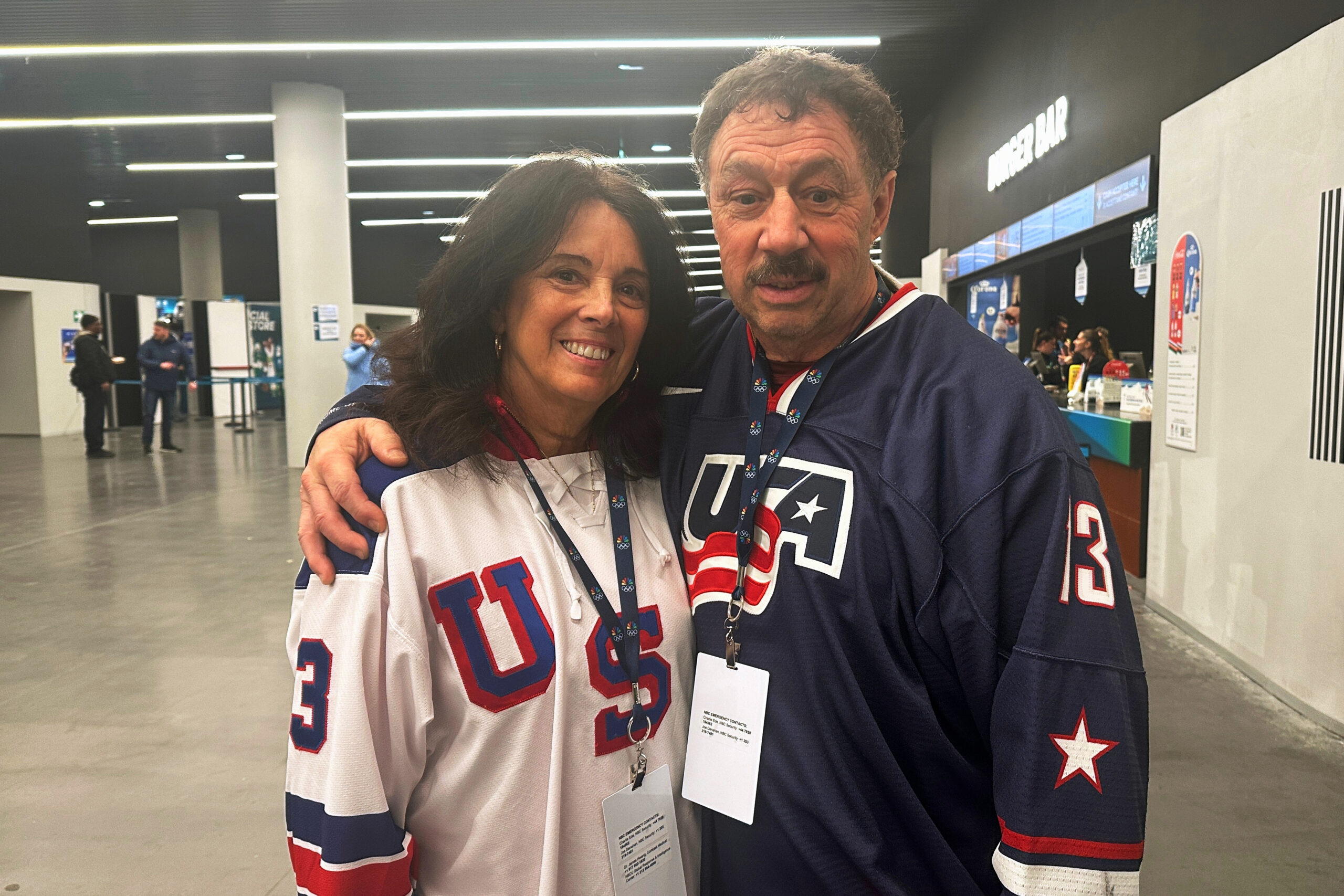
    After some hesitation, Jane and Guy Gaudreau made the trip to Italy to honor their son and root on his former U.S. teammates.

    ”In the wake of an unthinkable loss, witnessing the Gaudreau family find a moment of pure joy at the men’s hockey final was a profound honor — that’s the magic of the Olympics,” Roberts said in a statement to The Inquirer.

    Meredith said she got a call from her in-laws, Jane and Guy Gaudreau, on Feb. 17. They told her that USA Hockey had offered to take them to Milan. Johnny’s parents were hesitant, but Meredith knew immediately that she had to go.

    “I have, kind of, two roles right now I want to focus on,” Meredith said. “That’s giving my kids a special life and honoring my husband. When those two things can overlap, it’s more than I can ask for right now. It just means everything to me.”

    Meredith’s in-laws changed their minds, canceled a trip to Las Vegas with friends, and boarded a plane to Milan on Feb. 19. The family arrived in time to see the U.S. beat Slovakia, 6-2, in the semifinals the following day.

    As the gold-medal game against Canada approached, Meredith couldn’t help but feel the U.S. was destined to win gold. The game was on Feb. 22, which happened to be Johnny Jr.’s second birthday.

    “I just was like, ‘This is going to happen,’” Meredith said. “I just was reflecting on everything, and it was just the ultimate gift from John, the ultimate birthday present he gave to us for Johnny.”

    ‘We were really hoping for this together’

    Johnny and Matthew Gaudreau grew up in Carneys Point Township in Salem County and played youth hockey for the Little Flyers and Team Comcast.

    Meredith also is a Philly-area native and grew up with five siblings in Malvern. She and her sisters went to the Academy of Notre Dame de Namur in Villanova, while her brothers went to St. Joseph’s Prep in North Philly.

    Meredith was a nurse in the neonatal intensive care unit at the Children’s Hospital of Philadelphia when she met Johnny in 2018 at her sister’s birthday party in Avalon, N.J. The pair got married in September 2021.

    Johnny, a forward, played nine seasons with the Calgary Flames and two with the Columbus Blue Jackets and was hoping for a spot on Team USA’s Olympic roster.

    “We weren’t getting too ahead of ourselves, but we were talking about planning our pregnancies around it,” Meredith said. “I was like, ‘It’d be hard to be out there with a newborn; it would be kind of hard to be out there pregnant, at the end of a pregnancy.’ … All those memories flushed into my mind thinking, ‘We were really hoping for this together.’”

    Photographic memories

    While the trip to Milan was a bittersweet moment for the Gaudreaus, Meredith said she’s glad that her children have the photos on the ice with Team USA to look back on.

    Meredith’s 11-month-old, Carter, did not make the trip to Milan, but 3-year-old Noa and Johnny Jr. got a chance to celebrate with “the team that is all of Daddy’s friends,” which is how Meredith described Team USA to her children.

    “I said, ‘They want to take a picture with you. It’s for Daddy,” Meredith said. “[Noa] was smiling really hard, and I was really proud of her for that because I think she’s at a stage right now where she’s starting to piece things together, and she’s very, very proud of her father.

    “We look at pictures every single day, and she’s still super young and wasn’t even 2 when he passed. I try to tell her stories with the photos that she sees. I think she remembers pictures more than the actual memories.”

    Dylan Larkin (21) holds Johnny, the son of the late Johnny Gaudreau after Team USA beat Canada in the gold-medal game in Milan.

    Meredith hopes the pictures that came after the team’s win will be something Noa, Johnny Jr., and Carter can look back on as they grow up to help them remember and connect with their father.

    “I was thinking into the future, too,” Meredith said. “That they’re going to look back on this and hopefully be blown away.”

  • A dirty business: Philly’s privy pirates vs. the archaeologists

    A dirty business: Philly’s privy pirates vs. the archaeologists

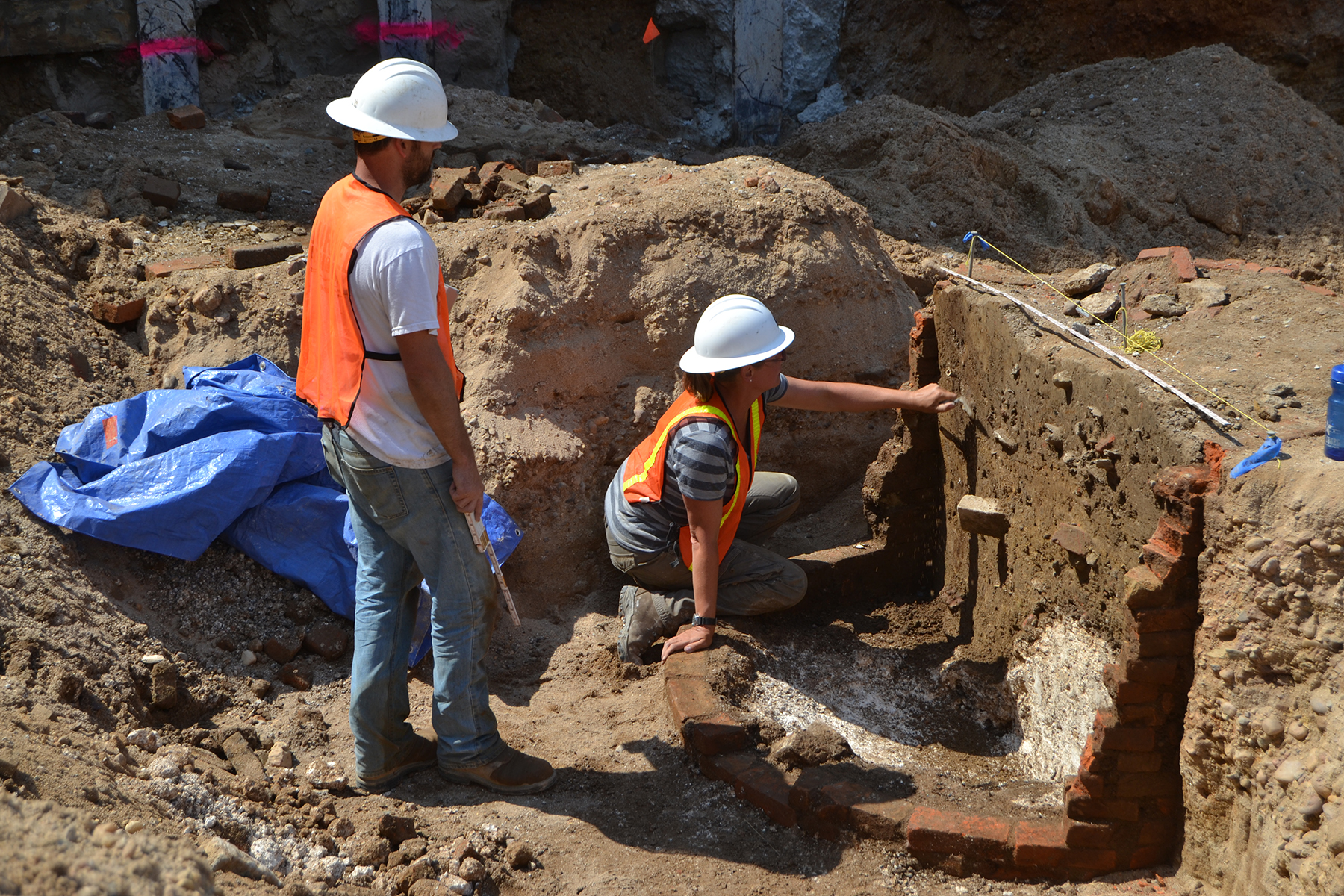
    To be a privy digger in Philadelphia is to be part excavator, part flea market authority, and part pirate. First, you must be able to dig — sometimes 30-plus feet in rocky soil — to get to the bottom of a centuries-old outhouse. Whatever you find buried in the organic waste there, you must research. And much of this digging and discovery takes place in secret in the middle of the night, on open construction sites across the city where you’re not exactly supposed to be.

    “Obviously, it’s sketchy. We would have the police come,” said Matt Waholek, 39, a longtime Philadelphia privy digger who now lives on Long Island. “They would be like, ‘Alright, you’re not burying bodies, right?’”

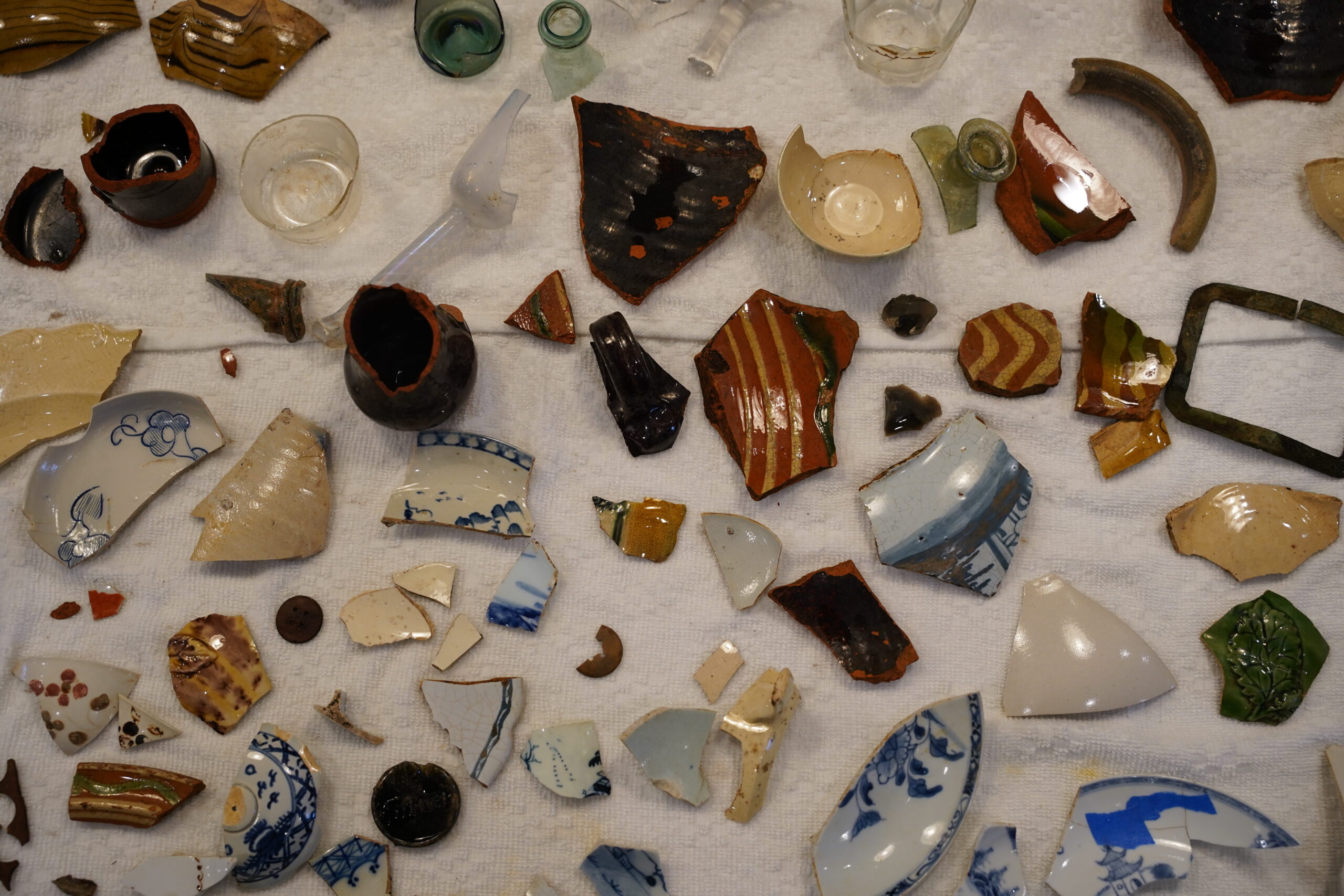
    Privy diggers are not burying bodies. Instead, Waholek and his fellow diggers are hobbyists probing for a certain kind of treasure — ceramic cups and bowls, clay pipes, glass bottles — that long-ago Philadelphians threw into their outhouses before the existence of citywide trash collection.

    Most of the diggers are only interested in land that was developed before 1880, when the rise of factory production led to fewer handmade objects. One digger described finding half a dozen handblown glass devices from the mid-19th century that turned out to be early breast pumps.

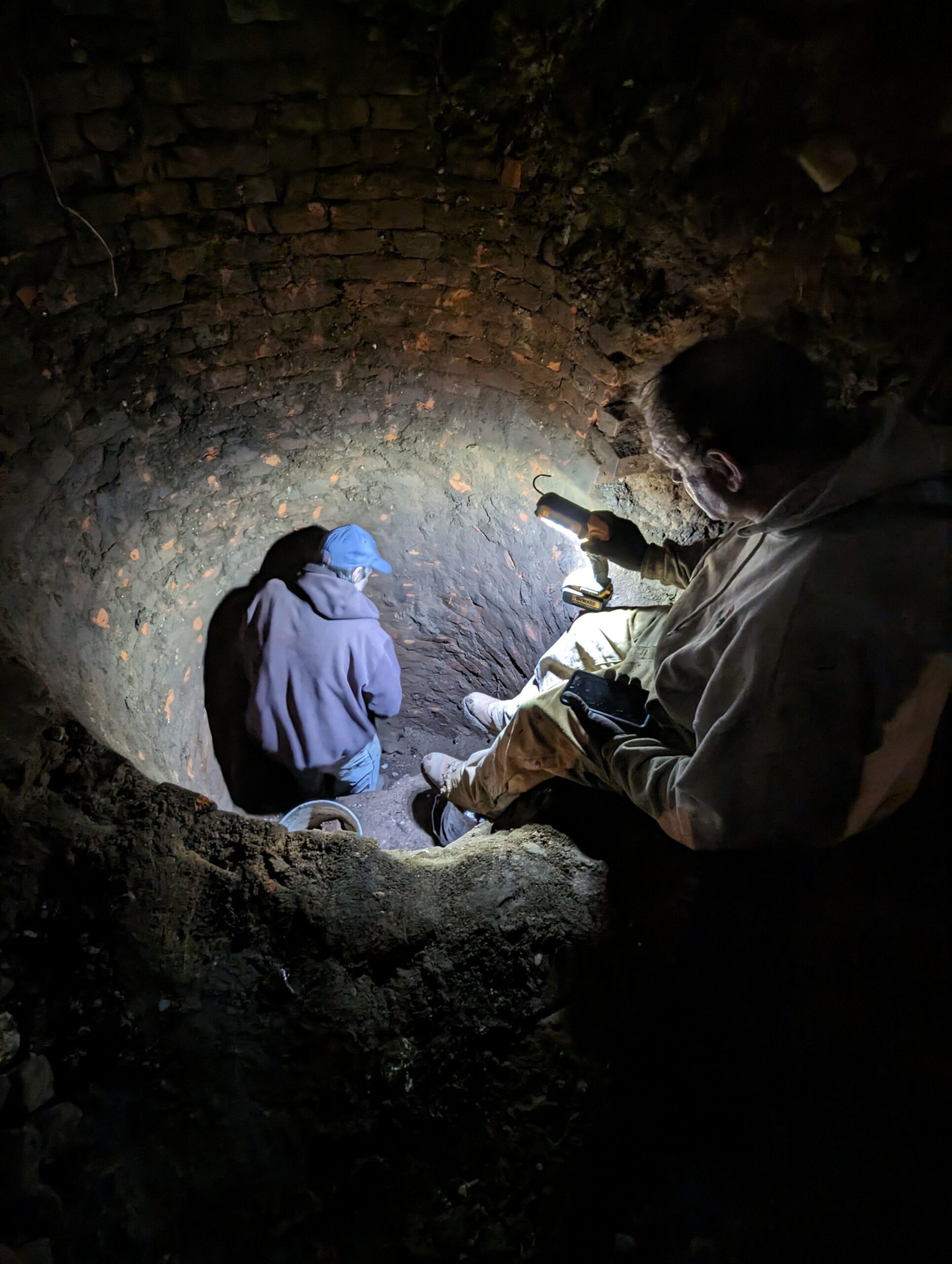
    Privy digging is often done at night, when construction workers are not on-site, and diggers often work in pairs or teams because the digging itself can be dangerous. This photo was taken during a dig in Old City in November 2023.

    It’s a largely male, macho subculture, rife with big characters and rumors of those who are not to be trusted because they absconded with their fellow diggers’ treasure.

    “One guy was checking his car for pipe bombs ‘cause he thought I was gonna blow his car up,” said George Mathes, owner of the thrift store Thunderbird Salvage in Kensington, who has dug about 1,000 privies over the years. (He said he did not blow up anyone’s car.) He estimated there are about 15 privy diggers excavating today in the city.

    As America’s 250th birthday approaches, Philadelphia is in the national spotlight, being counted on to reflect the country’s history back to itself. The question of how to preserve and tell that history has become more pressing than ever.

    With its 300-year-old neighborhoods and relatively lax oversight, Philly is also a center of clandestine digging. People are legally allowed to keep almost anything they find under the ground on their own properties; privy diggers describe legally digging on someone else’s property as being “on a permission.”

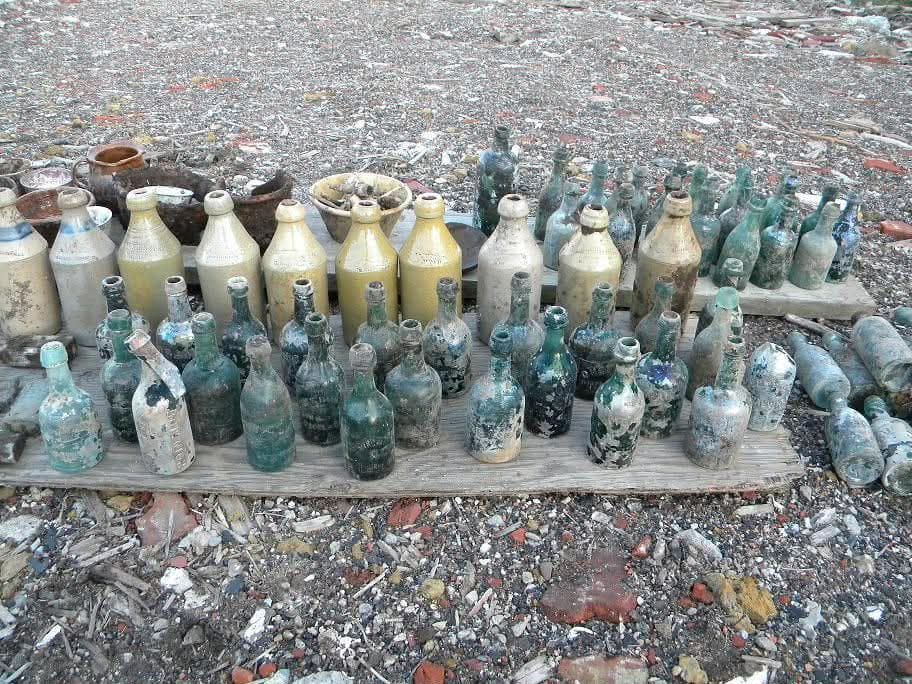
    A collection of bottles from the 1850s, dug out by Matt Waholek and other diggers from a privy in Queen Village in 2015. The collection includes pontil soda and beer bottles, as well as stoneware beer bottles. The clay used to make the bottles was sourced in Philadelphia, and most of the glass was probably produced here.

    But there’s also a fair amount of trespassing, and some of the privy diggers sell what they find. (Prosecution is rare, though Mathes was arrested and sentenced to 24 hours community service for digging on someone else’s property in Old City in 2010, he said.)

    All of this has frustrated professional archaeologists, whose job is not just to remove particularly interesting relics from the earth, but to document exactly where they were found and what relation they had to one another, in an attempt to tell a whole, contextualized story about the past.

    They say Philadelphia has done little to protect its buried history. Unlike other historic cities, such as Boston or Alexandria, Va., Philadelphia does not have a city archaeologist, who would be responsible for guiding the city’s historical commission and offering insight to residents.

    Into that breach, some see the amateurs — “whether you want to call them looters or private collectors,” as Doug Mooney, president of the nonprofit Philadelphia Archaeological Forum, put it — as taking and selling collective artifacts while recklessly destroying historical sites in the process.

    Much of what professional archaeologists are interested in is not glamorous, said Jed Levin, an archaeologist for more than 50 years and the vice president of the forum. They are just as compelled by the preserved remains of human intestinal parasites and hundreds-year-old pollen grains as they are by whole glass bottles. Such microscopic information can reveal what Philadelphians were eating and growing hundreds of years ago.

    Yet that kind of detail is lost to amateur diggers, who are far more interested in removing intact artifacts, some of which might net them hundreds or thousands of dollars.

    “They dig indiscriminately through soil layers,” said Levin. “Once you dig through a site, you’ve destroyed it. It’s gone.”

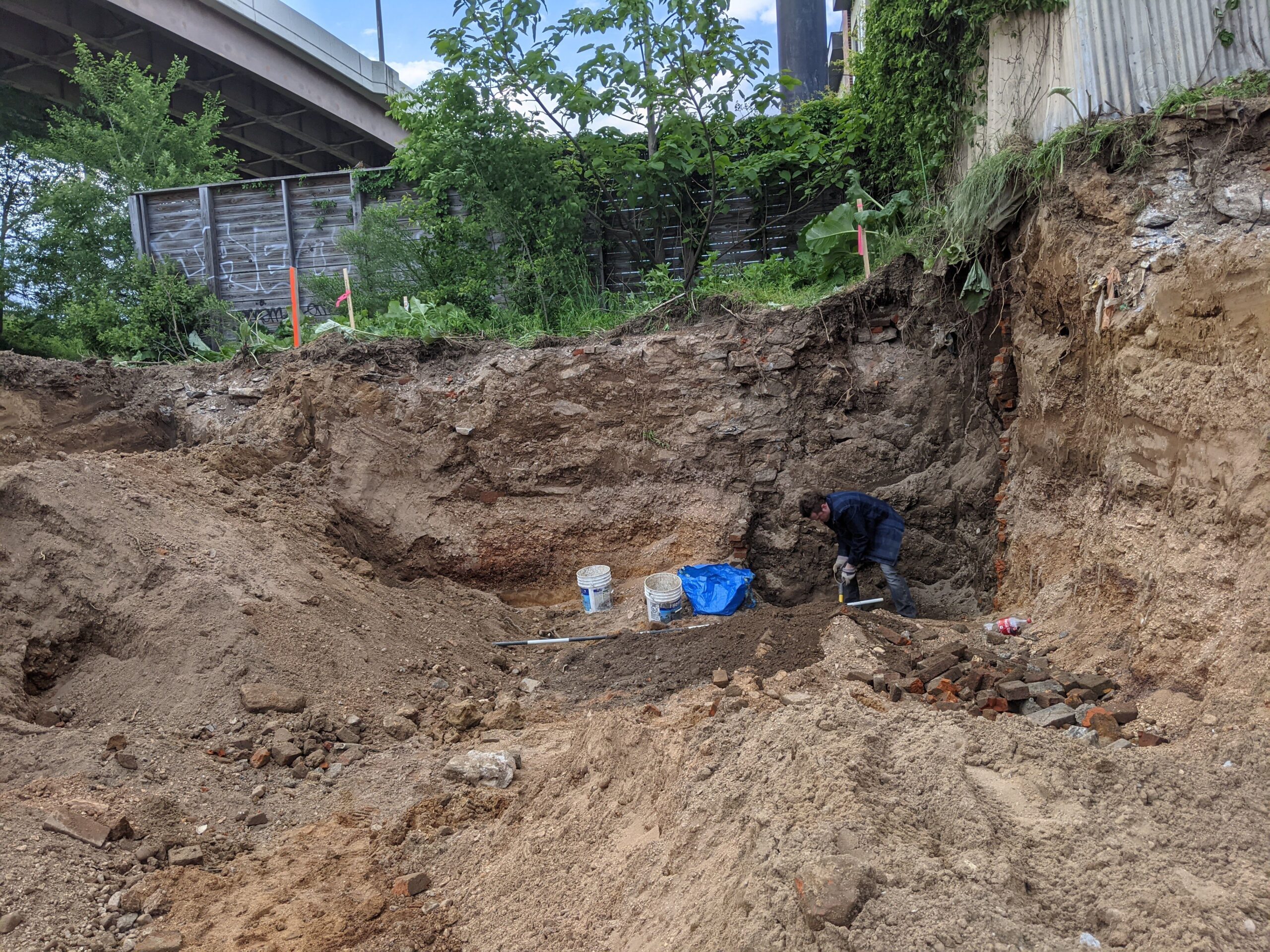
    Matt Dunphy digs a privy pit near his home in Old City in May 2021. The dark column of soil in the right corner is indicative of the nitrogen-rich soil (also called “night soil”) found in a privy pit. This particular pit was 7 feet wide and 20 feet deep, likely dating to the 1740s.

    The code of the privy pirates

    Privy digging as a hobby surged in Philadelphia in the late 1960s, when the construction of Interstate 95 uprooted miles of soil across the city.

    Over the decades, it became a passionate pursuit and then an underground industry. It’s driven largely by obsession: Diggers might find treasure, but they also might find nothing at all. Some end up with hundreds or thousands of broken pottery pieces. When I asked Waholek what he did with all the things he found over two decades, he replied, “Do you want some of it?”

    Both the city’s amateur diggers and the professional archaeologists contend that they’re the ones working in the public interest, aiming to make their findings available to the most people.

    “I don’t like the word ‘amateur.’ I probably know a lot more than some archaeologists. They focus mainly on one topic,” said Waholek, who calls himself an “avocational archaeologist.”

    Some privy diggers say they are particularly moved to preserve objects that otherwise might be forgotten. Mathes, of Thunderbird Salvage, said he had found spearheads and Native American artifacts in his digs, objects which he does not sell. (Repatriation laws don’t apply to private property owners).

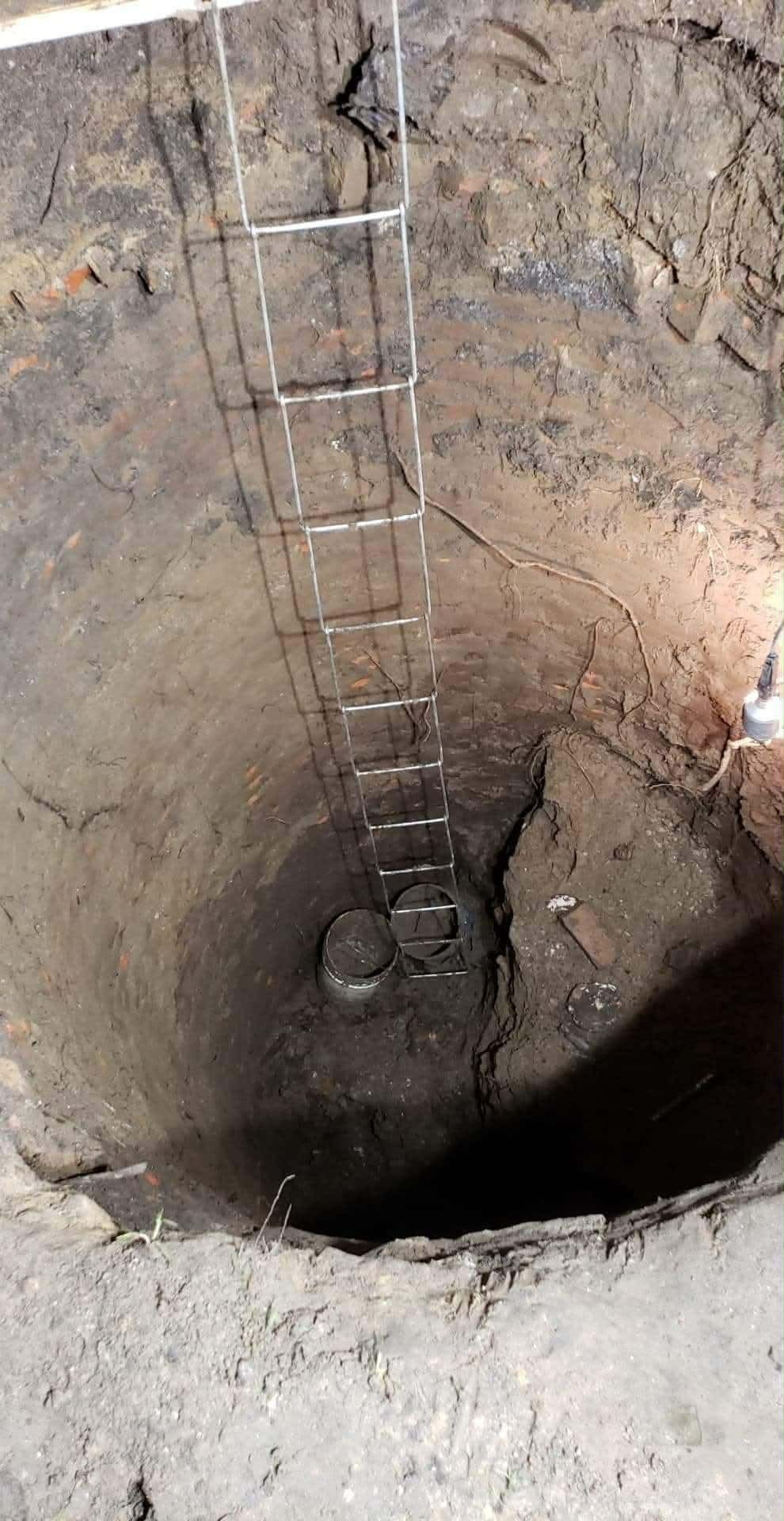
    A brick-lined privy in North Philadelphia, pictured here in 2015. The ladder is an antique fire escape salvaged from a demolition on Frankford Avenue.

    “To me, they’re more spiritual. I display those with the greatest of respect. I show them off to people, I like to hold them,” he said. “To donate them to a museum, most of the time they’re going to get put in a drawer and not displayed because there’s limited space.”

    Over the years, some diggers have formed relationships with construction workers and police. One local developer described learning about the hobby when he encountered a group of men trespassing on his construction site carrying what he believed to be spears. (They were actually handmade metal probes, which the diggers use alongside shovels, clam rakes, pickaxes, and tripods and pulleys.) The developer was disturbed until he, too, became fascinated.

    As with any subculture, there are rules about how to dig with integrity, said Michael Frechette, 60, an artist and veteran privy digger who lives in Kensington. Among them: Always ask permission; never dig on federal land where archaeologists are already working; fill in the hole you make; respect other diggers’ claims; and maintain honor within your own group — equal work should lead to equal bounty.

    But, of course, as Mathes put it: “There’s pirates that work with you and there’s pirates that’ll work against you.”

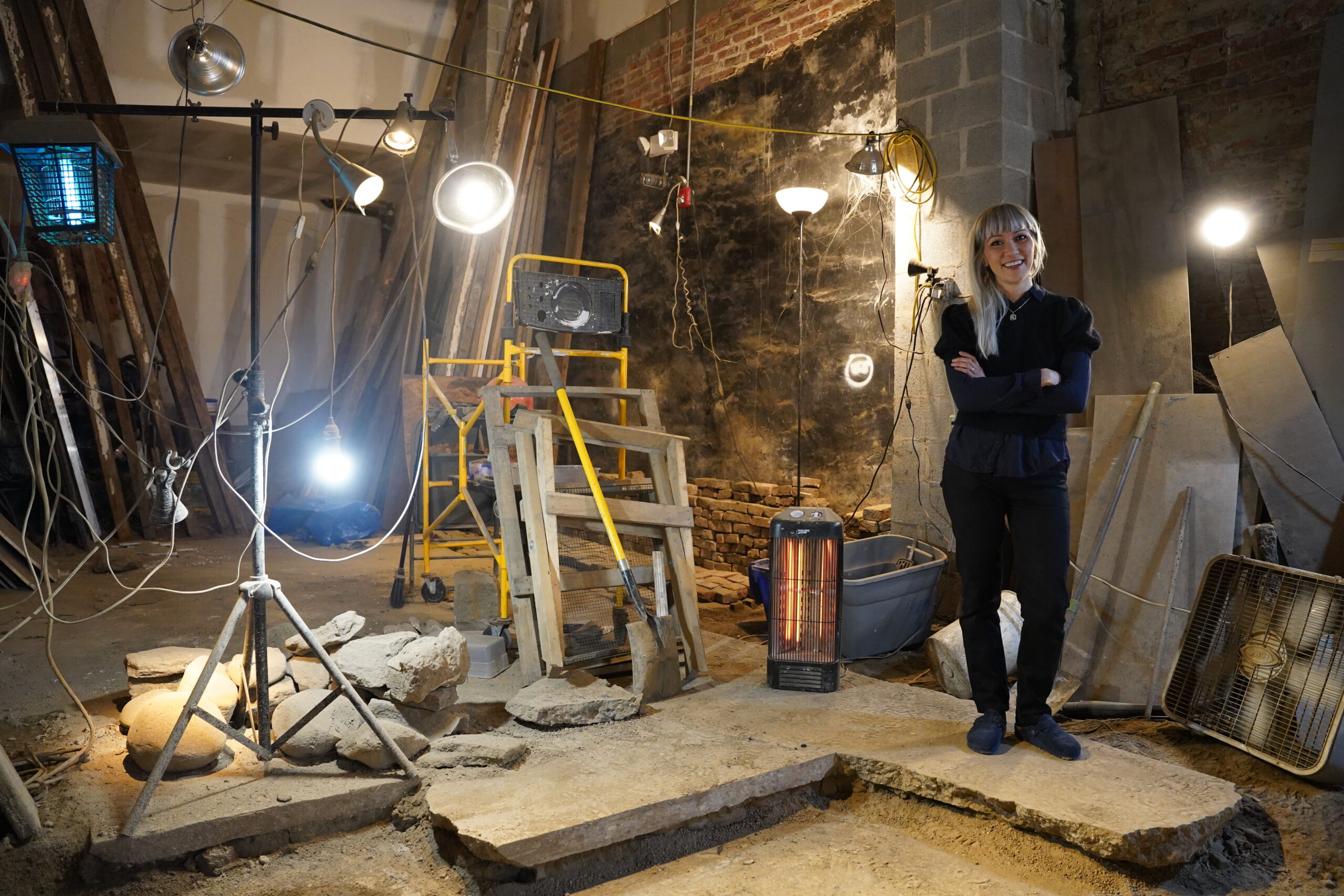
    Melissa Dunphy, pictured here in 2022, stands in the ground level of her Old City property. It was here that Dunphy and her husband, Matt, discovered two privies filled with 18th century artifacts.

    Who gets to call themselves an archaeologist

    The non-sketchy, wholesome representatives of the privy digging community in Philadelphia are Melissa and Matt Dunphy, who call themselves “citizen archaeologists.” She’s a composer with a doctorate in music; he’s an e-commerce engineer.

    They fell down the rabbit hole of privy digging about a decade ago after they bought a shuttered magic theater in Old City with a deed dating back to 1745 and began to renovate.

    The construction workers uncovered two privies on their property, one of which the Dunphys excavated right away. Since then, they’ve dug six more privies in the vicinity and launched a podcast, The Boghouse, about their discoveries.

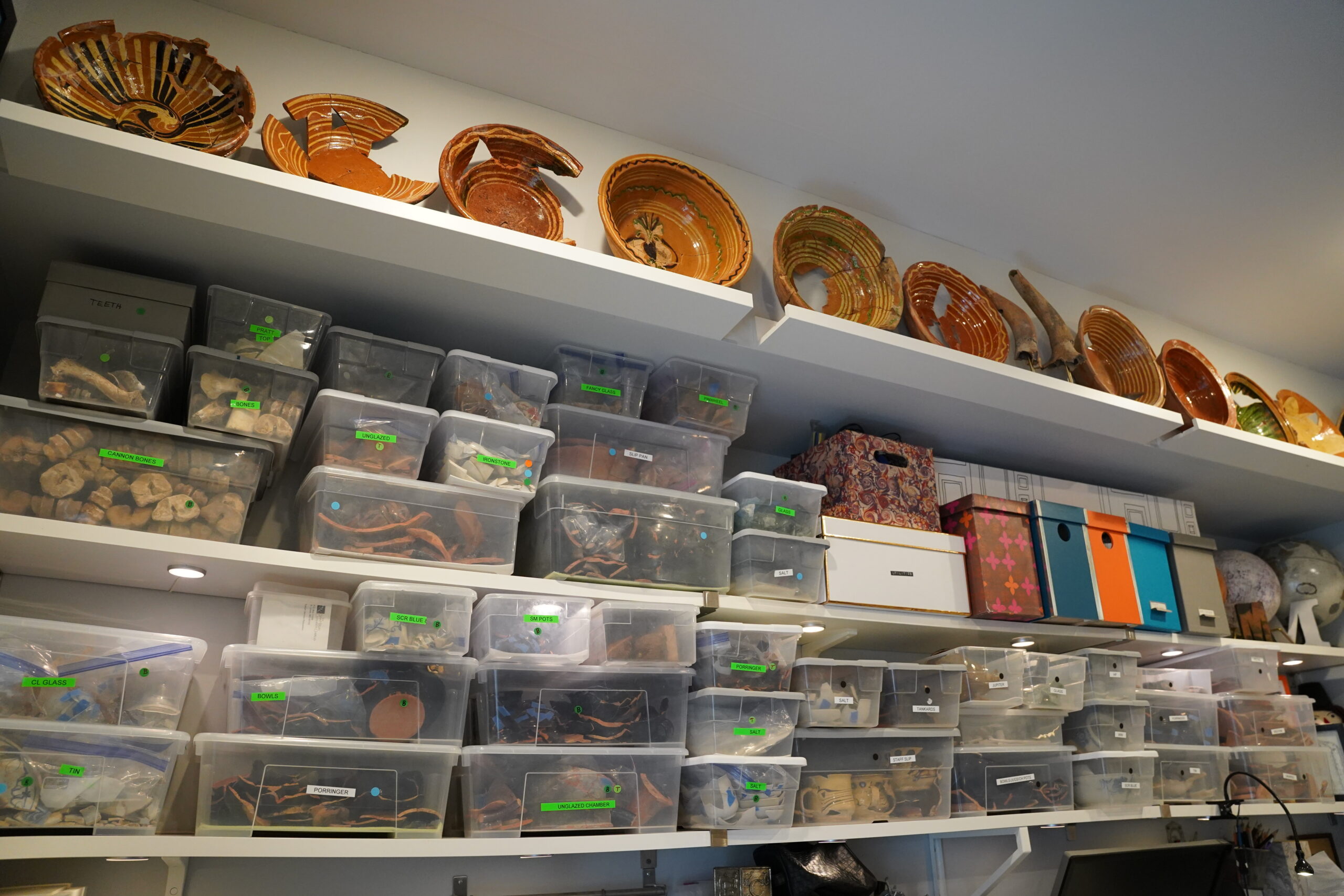
    Every inch of the Dunphys’ walls are taken up by artifacts they’ve dug up in privies near their home in Old City.

    The two have become “obsessed at the level that now we give talks at Colonial Williamsburg,” Matt Dunphy said.

    Their apartment, on the third floor of the former magic theater, is packed floor to ceiling with thousands upon thousands of shards of pottery and other artifacts. The bathroom has relics displayed on every wall, and the glass cabinets in the kitchen are filled not with matching plates but with broken teapots, chamber pots, punch bowls, and cups, each with their own carefully researched backstory.

    The Dunphys are amateurs who have not formally studied archaeology, but they are brimming with intellectual curiosity and knowledge about what they’ve found.

    They mostly don’t sell their discoveries (Melissa Dunphy has sold some found teeth) and are instead working to build a museum on the ground floor of the theater, which they hope to open by July. They want to call it “The Necessary Museum,” because privies were often called necessaries.

    “These objects — even something as simple as a bowl — tell you something about the people who used them, the people who made them, the journey that that object took,” Melissa Dunphy said. “This is like a passing of stewardship of this little postage stamp-sized corner of the world.”

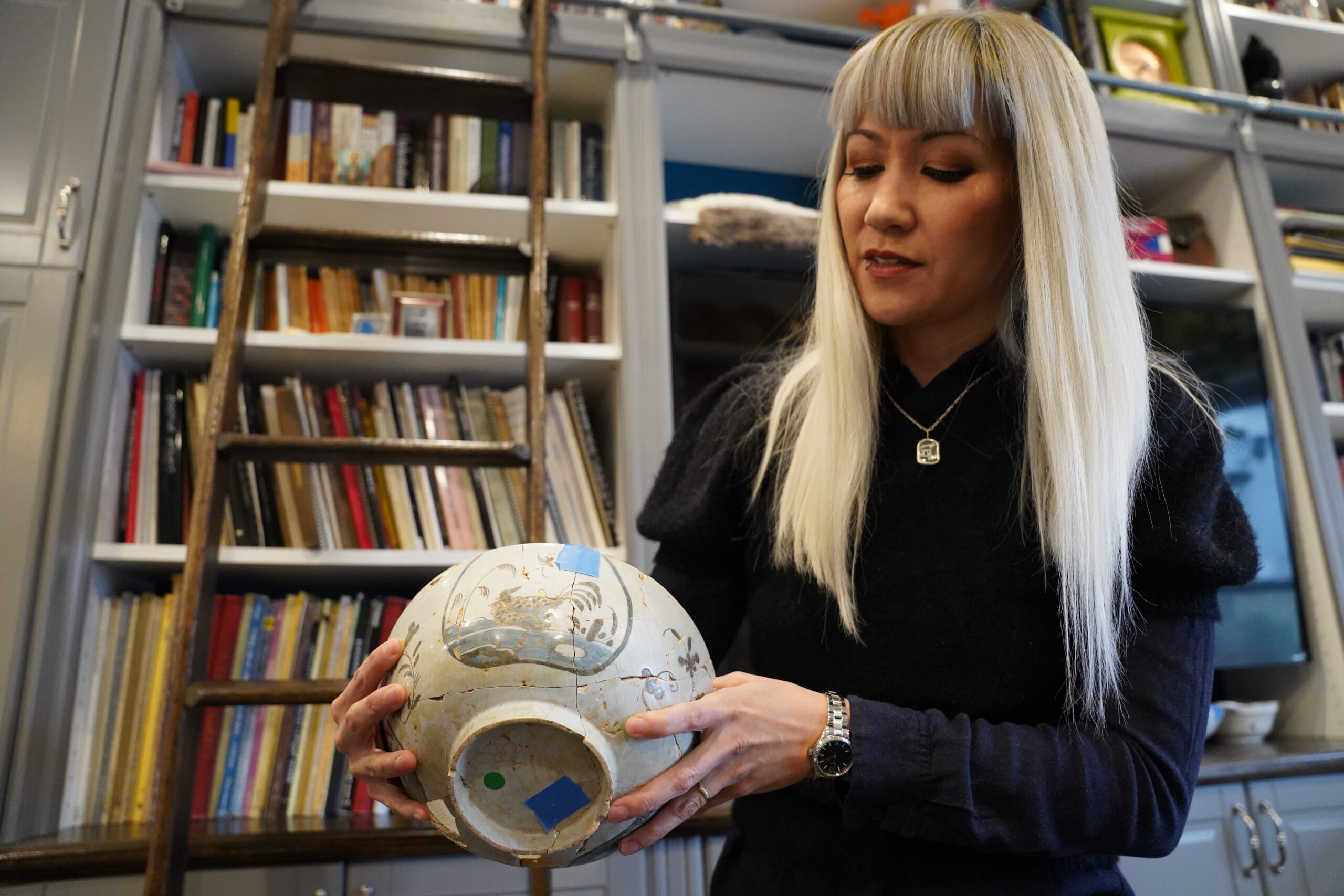
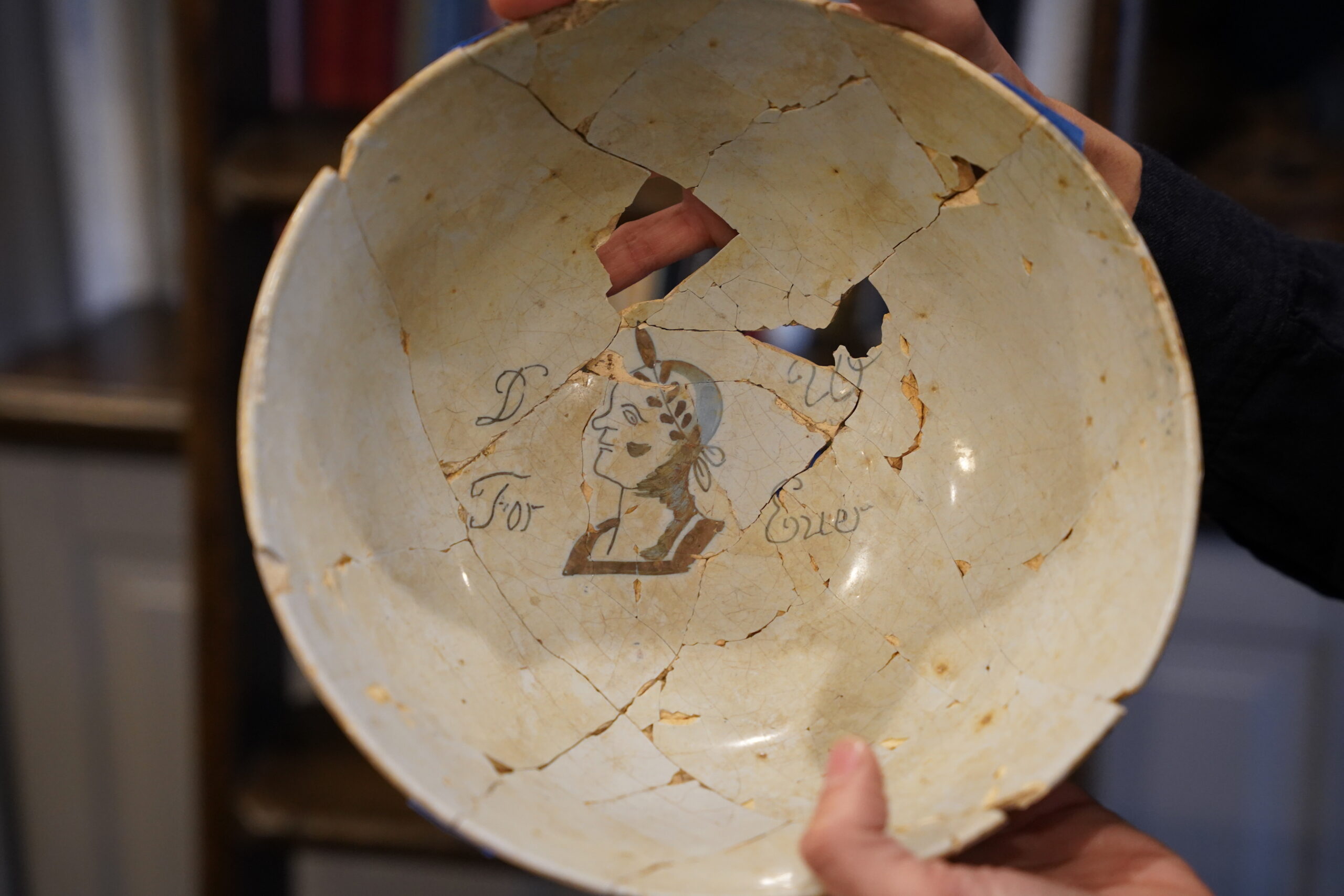
    Melissa Dunphy, pictured here in 2022, holds a delft punch bowl which she pieced together from pieces found in the privies below her house. The bowl commemorates Britain’s victory over the Scottish Jacobite Army at The Battle of Culloden in 1746.

    “What an anti-Jacobite bowl is doing in my privy is such an exciting question to me,” Dunphy said.

    Melissa Dunphy, pictured here in 2022, holds a bowl at the Dunphy’s home.

    Unlike those who work in secret, the Dunphys are in close touch with archaeologists at the National Park Service and local museums, speak at archaeology conferences, and regularly text with the editor of the academic journal Ceramics in America, whom they consider a mentor.

    When they first found glass bottles in the privy in their backyard back in 2016, they tried reaching out to various archaeologists and museums in the city asking how they should proceed, they said. But no one was particularly helpful, and they only had a week before the hole would be filled in.

    So they set about trying to “rescue” as much as they could themselves.

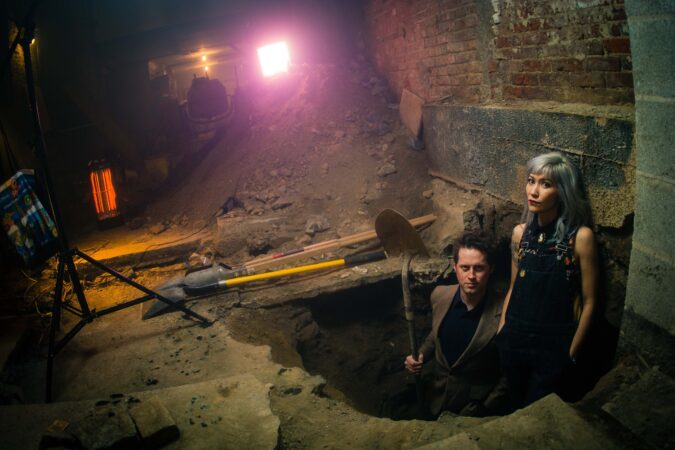
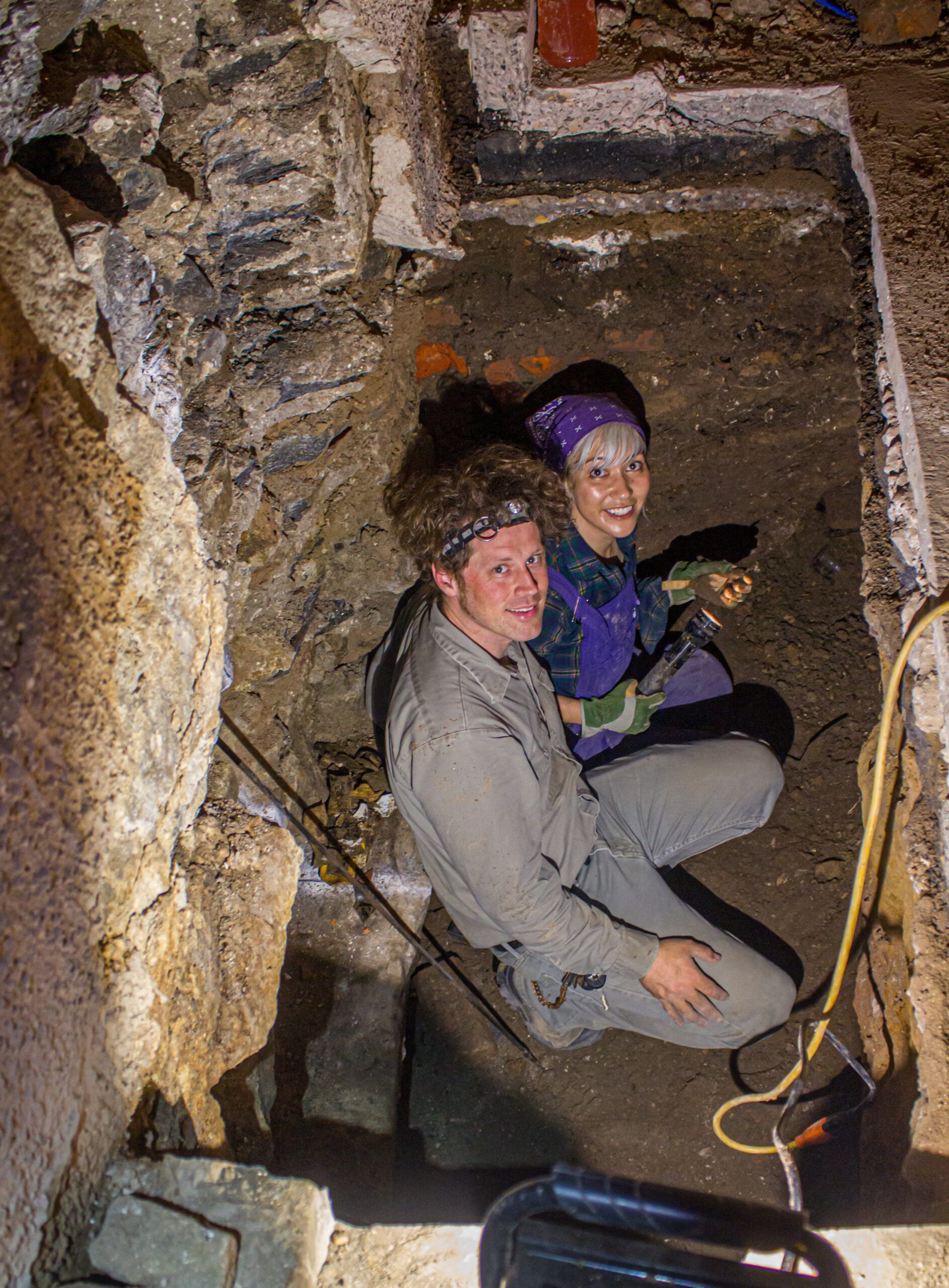
    Matt and Melissa Dunphy pose in their first privy dig, in this photo from July 2016. While foundation work was being done on the shuttered magic theater they had just bought, workers unearthed two colonial-era privy pits. The Dunphys excavated them, fueling a decade-long obsession.

    “My assumption then was that this archaeology is probably everywhere in Philly, and it’s probably not that important. So I don’t have to feel academically guilty about doing it myself, without any real expertise,” Melissa Dunphy said. She descended the privy hole in a cobbled-together archaeological outfit: Duluth Trading Co. coveralls, a “Rosie the Riveter” scarf, a camping headlamp.

    The couple fashioned screens from chicken wire they bought at Home Depot to sift pottery from dirt, and Matt Dunphy photoshopped a picture of a ruler he saw at the Museum of the American Revolution to measure the objects they uncovered.

    Scott Stephenson, president of that museum, who in the years since has gotten to know the Dunphys well, said he supports people doing “citizen archaeology” alongside professionals.

    Museum of the American Revolution head Scott Stephenson, pictured here at Philly’s Revolutionary-era tavern, A Man Full of Trouble, likens each archeological site to a diary that can only be read once.

    But he likens each archaeological site to a diary that you can only read once, because the story is as much about the objects that are buried as it is about the relationship between them. When amateurs “read the diary,” it’s like they’re “only recording three words off of an entire page,” he said.

    Before the Museum of the American Revolution opened, it conducted a massive archaeological dig on its site that included multiple privies. The recovered artifacts are part of a display at the museum called “Trash Tells the Truth.”

    Before opening, the Museum of the American Revolution conducted its own privy dig with professional archeologists.

    The Dunphys acknowledge that they don’t document the stratigraphy, or the exact chronological layering, of the privies they have dug. But they also see themselves as democratizing an important effort, saving bits of the past that would otherwise be wholly lost. It’s not as if the city’s professional archaeologists have the time or ability to carefully dig every backyard under construction across Philadelphia.

    “We have watched with our own eyes archaeological features being crushed up and destroyed during construction in our neighborhood,” Melissa Dunphy said.

    Some archaeologists are frustrated by the very notion of “citizen archaeology.”

    “Would we talk about an ‘amateur doctor?’ No. Medicine takes training and following a set of techniques and ethics. Archaeology, the same thing,” said Levin of the Archaeological Forum. Of privy diggers, he said, “They are not amateur archaeologists. They are no stripe of archaeologist.”

    Pieces of artifacts at the Dunphys’ home, pictured here in 2022.

    Piecing the past back together

    On a recent afternoon, Matt Dunphy donned black rubber gloves, filled an Ikea strainer with sudsy water in the sink, and began to scrub pottery shards with a small denture brush. Centuries-old dirt trickled down the drain.

    Next to him, pieces of clean pottery lay on a towel to dry. Many privy diggers don’t take the time to piece together the hundreds of broken pieces they find, because it can seem like a nearly impossible task. But Melissa Dunphy sees it as puzzle-making “boss level.” To repair a single ceramic bowl might take a week of 16-hour days, she said.

    She uses painters tape to keep related pieces together, and when they seem to fit, she uses archival-grade museum glue diluted with a syringe full of acetone to seal them back together.

    The thrill of bringing something back to life — it’s like nothing else.

    “This is the first time that someone has seen this bowl,” she said, “the way that it’s supposed to be, in hundreds of years.”

  • More Philly-area students are majoring in neuroscience, with some wanting to find cures for Alzheimer’s and Parkinson’s

    More Philly-area students are majoring in neuroscience, with some wanting to find cures for Alzheimer’s and Parkinson’s

    When she was as young as 7, Alina Schechtman-Taylor wanted to know how the brain worked.

    “I remember telling my dad, ‘I don’t understand why people act this way. I need to figure it out,’” she recalled.

    For her, studying neuroscience at Haverford College, was a logical choice.

    “Why would you not want to study the thing that lets you study,” said Schechtman-Taylor, a senior from New York City. “The brain, that’s our entire world.”

    Neuroscience has become the most popular major on the highly selective liberal arts campus on Philadelphia’s Main Line, counting nearby Bryn Mawr College students who also take classes at Haverford. And it’s only been around since 2021 when the two colleges — which have had a minor in the discipline since 2013 — decided to administer the joint major.

    At Haverford, there were 24 majors the year it started; now there are 60. Bryn Mawr saw similar growth and currently has 49. Enrollment in Haverford’s neuroscience classes including both Bryn Mawr and Haverford students grew from 154 in 2014 to nearly 800 last fall.

    “We knew that neuroscience was going to be popular, but we did not anticipate this growth,” said Helen White, Haverford’s provost, who noted the school recently hired another neuroscience professor to accommodate more students.

    The major’s popularity is also growing at schools around the Philadelphia region — and across the country. Students and professors say neuroscience is popular because it’s interdisciplinary, involving psychology, biology, and chemistry, and can lead to a variety of careers. It can also be personal, because it involves studying diseases like Alzheimer’s and Parkinson’s, which have no cures, and the treatment of strokes and traumatic brain injuries.

    “I would say about 90% of my students are coming into my lab because they have someone in their family with one of these diseases,” said Rob Fairman, a Haverford biology professor whose research focuses on neuroscience.

    Haverford senior Alina Schechtman-Taylor, 21, of New York City, works as a teacher assistant in professor Laura Been’s lab.

    A growing major

    In 2008, 110 colleges nationally offered neuroscience majors; now, it’s about 330, said Raddy Ramos, associate professor in the Department of Biomedical Sciences at the New York Institute of Technology. Ramos, who coauthored studies on the topic, said there were more than 2,000 neuroscience graduates in 2008; in 2019, that number had grown to more than 7,200.

    window.addEventListener(“message”,function(a){if(void 0!==a.data[“datawrapper-height”]){var e=document.querySelectorAll(“iframe”);for(var t in a.data[“datawrapper-height”])for(var r,i=0;r=e[i];i++)if(r.contentWindow===a.source){var d=a.data[“datawrapper-height”][t]+”px”;r.style.height=d}}});

    Pennsylvania is a hot spot, with 36 colleges having programs in 2022-23, Ramos said — more than than any other state.

    Drexel University, which has had a minor since 2015, launched its undergraduate major in neuroscience in 2024.

    “We have seen a 45% increase in applications over the last two years,” a university spokesperson said.

    Pennsylvania State University in November announced it was launching two new undergraduate majors in neuroscience, one offered by the biology department and the other by the biobehavioral health department.

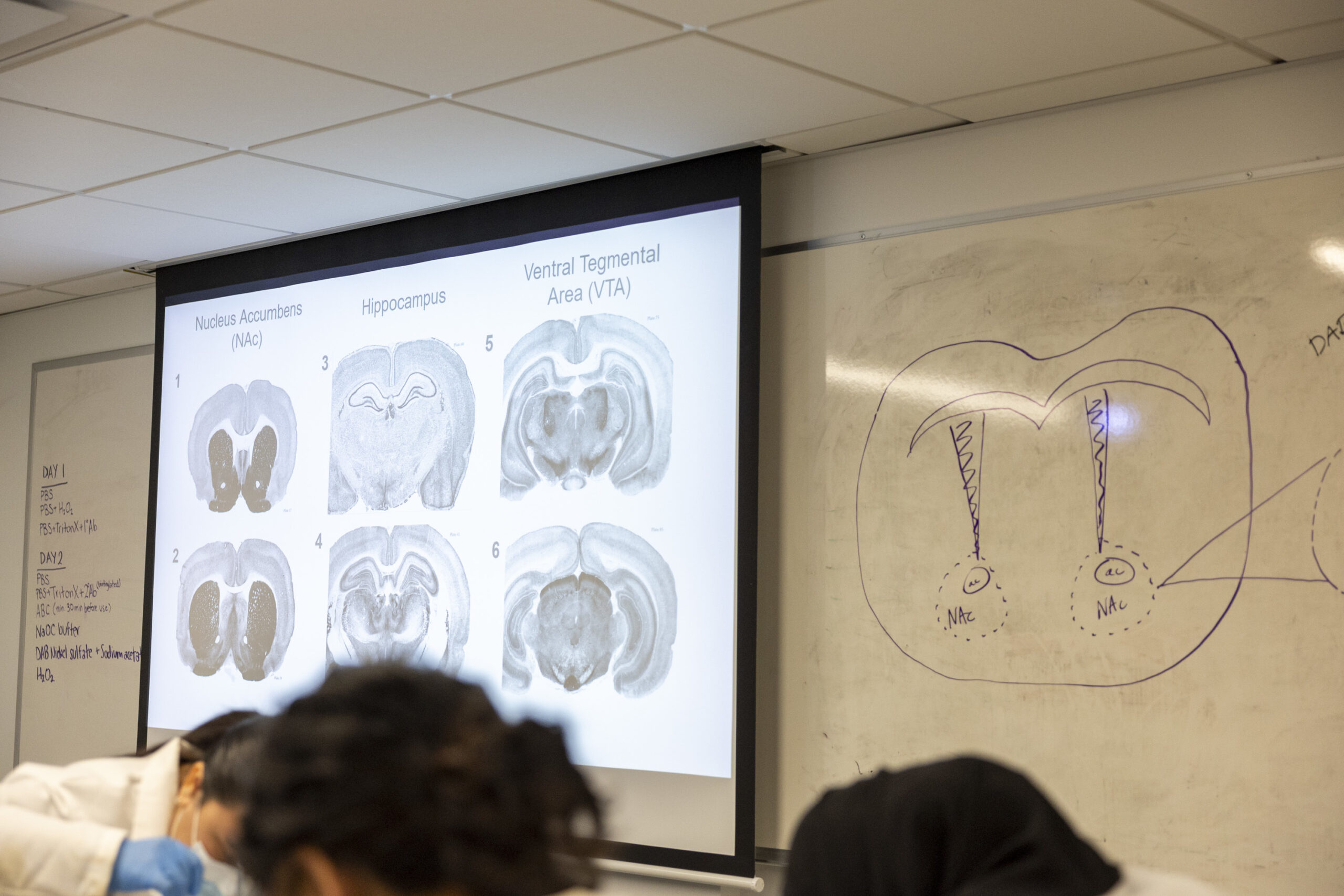
    Students look for sections of rat brains that match the sections projected on the screen in a Haverford College lab.

    Neuroscience has become especially popular among pre-med majors, school officials say. Other potential career paths include biotechnology, pharmacology, psychology, and neuroengineering, while some students go on to law school, business, or public policy.

    “There’s a lot more awareness that mental health conditions are due to changes in the brain, and people want to understand that,” said Lisa Briand, associate professor and program director for Temple University’s neuroscience program.

    At Temple, neuroscience has become the fourth largest of 30 majors in liberal arts, Briand said. The psychology department a few years ago changed its name to psychology and neuroscience, she said.

    At the University of Pennsylvania a decade ago, 100 to 120 neuroscience majors graduated annually, said Lori Flanagan-Cato, associate professor of psychology and codirector of the undergraduate neuroscience program.

    “Twice in the past 3 years we have had over 150,” she said.

    Swarthmore College, a highly selective small liberal arts college, graduated 10 to 12 neuroscience majors a year about a decade ago, said Frank Durgin, professor of psychology who oversees the program.

    “This year, we anticipate graduating 24 majors,” he said. “Next year, it’s 30.”

    The college has added two professors in the last two years to accommodate growth, he said.

    Why students study neuroscience

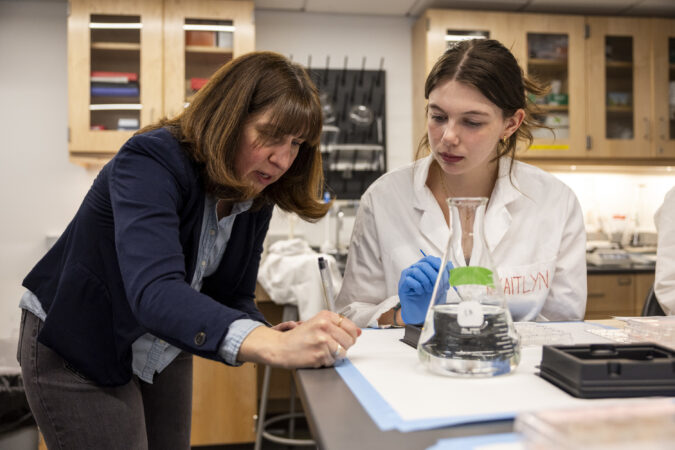
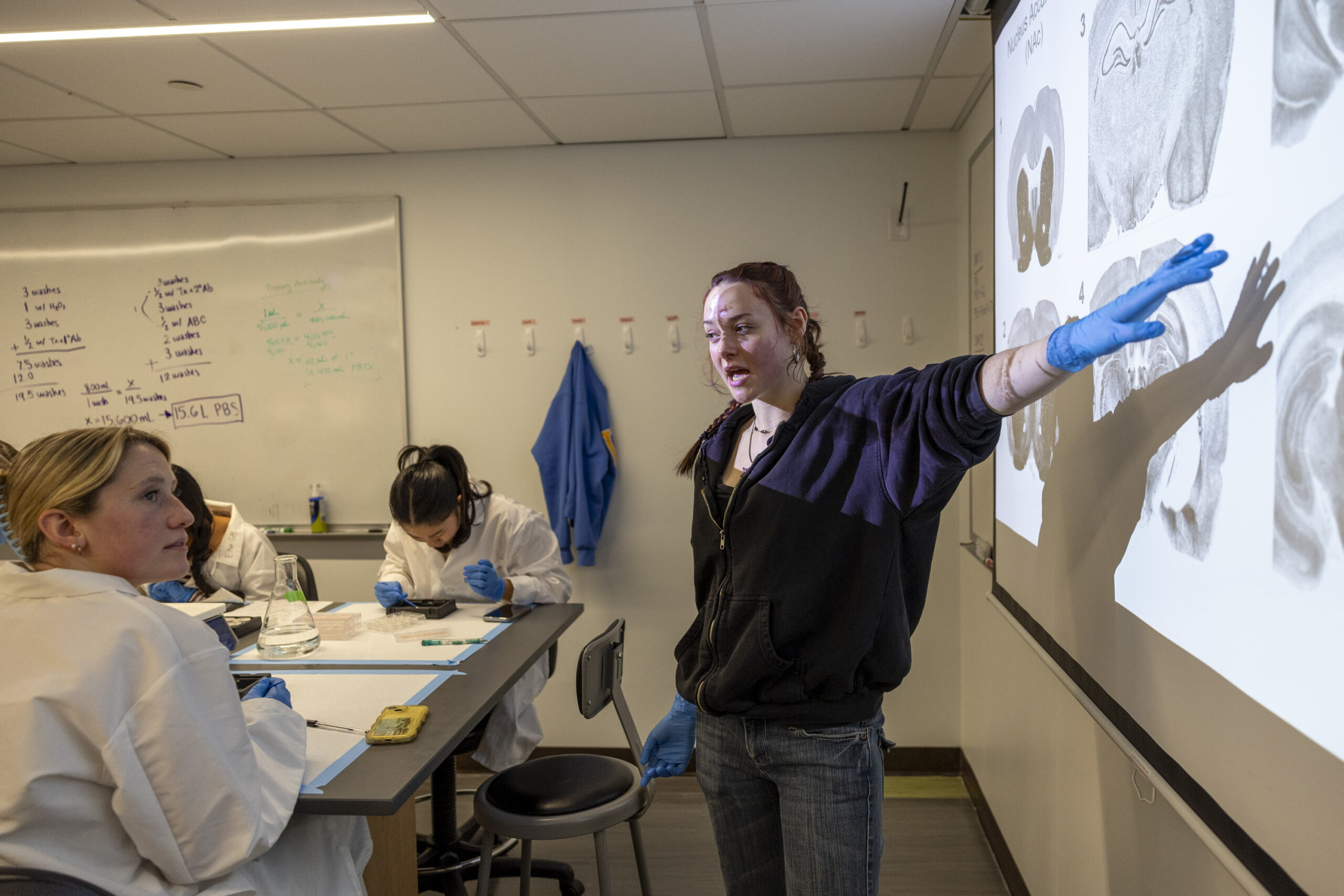
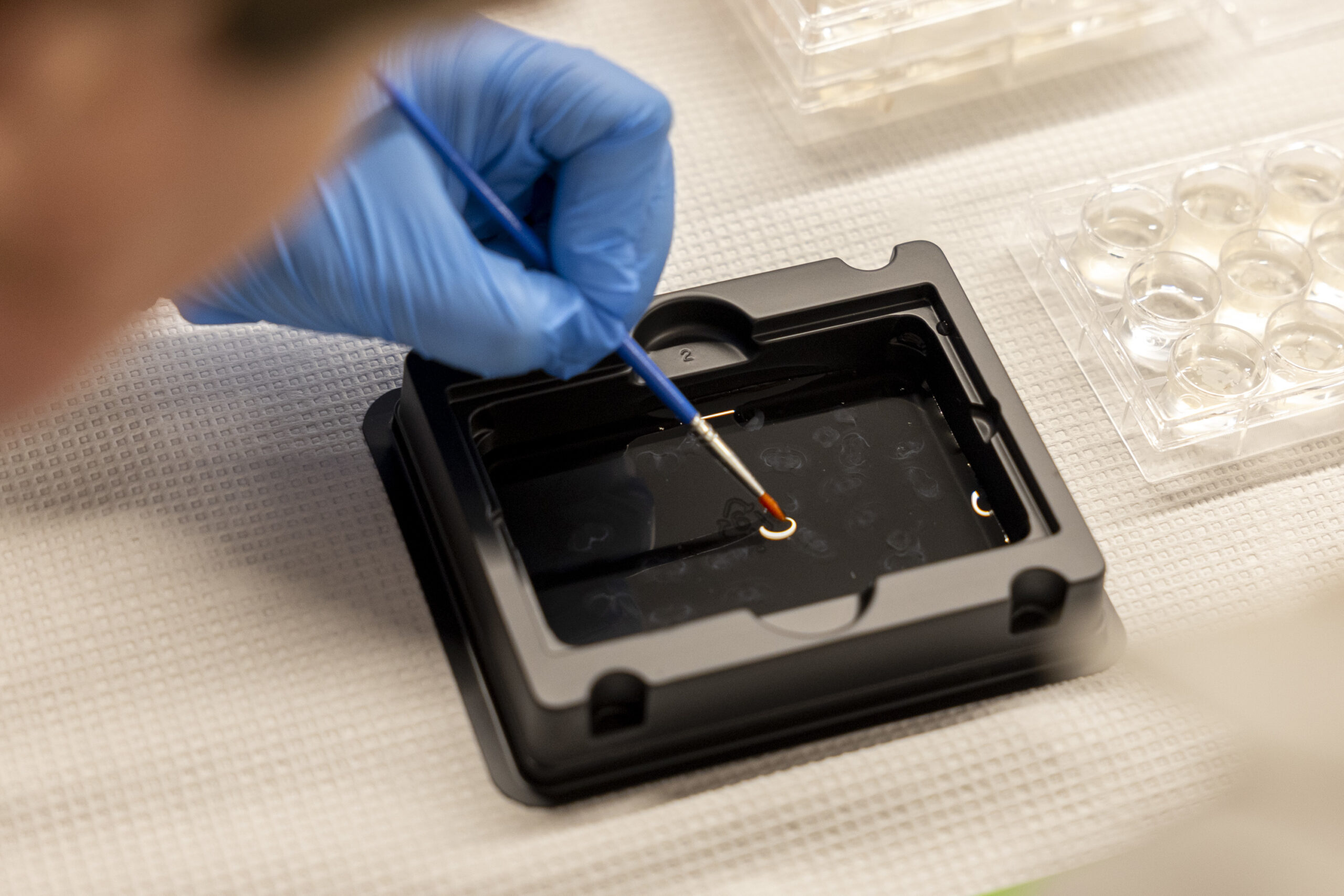
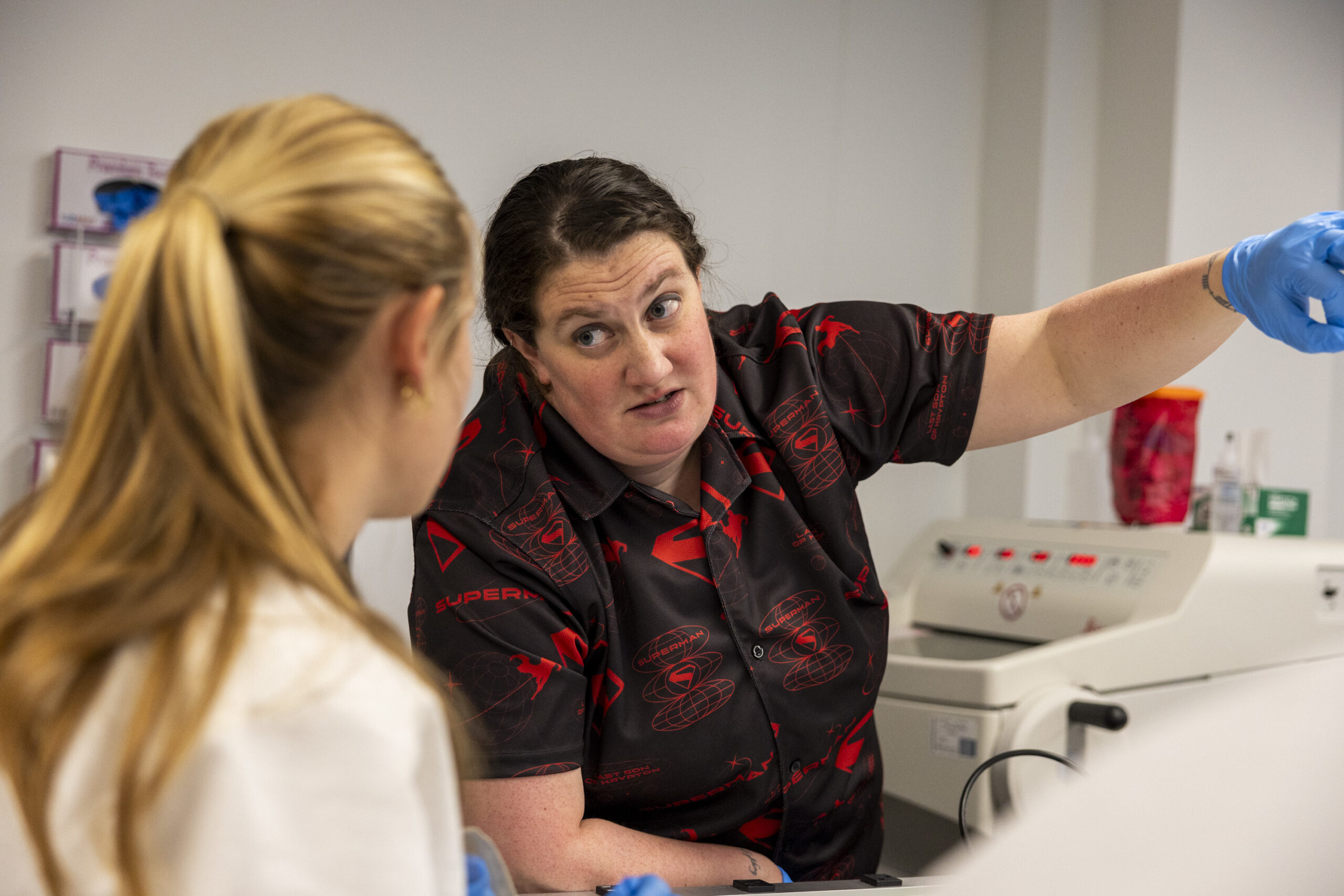
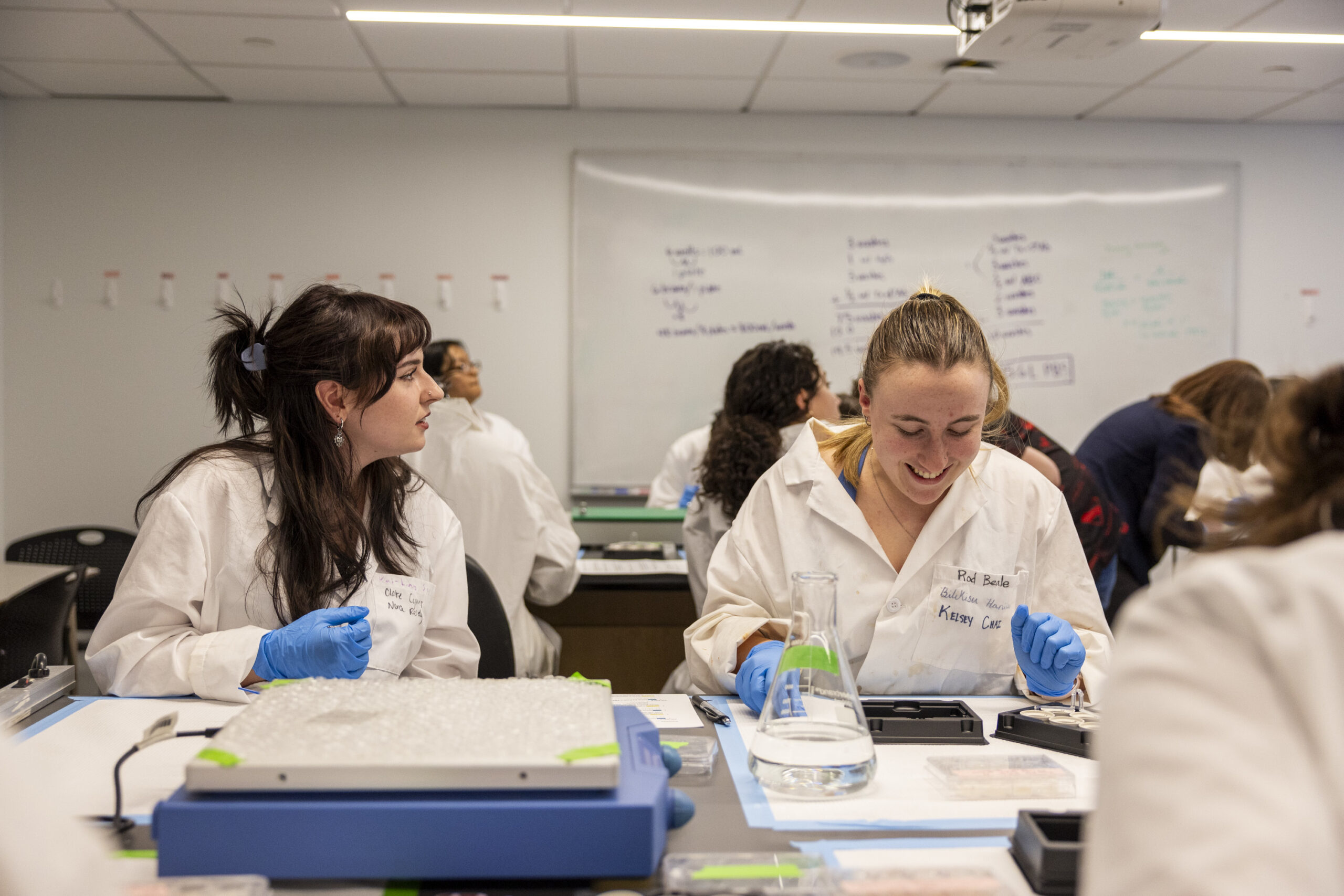
    In a lab at Haverford one afternoon last month, 16 students in white lab coats poked with paintbrush tips at thin slices of rat brain in preservative fluid, preparing to stain them to look for which neurons were activated. Some of the rats received the drug Ritalin, commonly used for attention deficit disorder, while others did not. Students were trying to discern differences in their brains when they performed certain tasks, said Laura Been, associate professor of psychology and director of the bi-college neuroscience program.

    A neuroscience student works with sections of rats’ brains in a lab at Haverford College.

    “We can … try to learn something more about how this sort of drug treatment impacts the brain,” said Been, whose area of interest is behavioral neuroendocrinology, which looks at the relationship between hormones, the brain, and behavior.

    Students in Been’s class had varied reasons for studying neuroscience.

    Emily Black, visiting assistant professor of neuroscience at Haverford College, helps Savannah Shaw, 22, of Downingtown, during neuroscience lab work. “I really like the variety of the classes we can take in the major,” said Shaw, a senior who plans to go to medical school, possibly to become a neurologist. “You can go more the psychology route or go more biology.”

    Sophia Lipari, 21, a junior from Jacksonville, Fla., whose father is a reproductive endocrinologist, is interested in hormones and the field of fertility.

    Riley Fass, 20, a junior from Claremont, Calif., wants to be a special-education teacher. She already sees the connection between neuroscience and her job as a teacher’s assistant at a school where children have traumatic brain injuries and cerebral palsy.

    “The topics we discuss — an injury here will result in this — I can actually see it in my students,” she said.

    Iris Goxhaj (left), 21, of Northeast Philadelphia, and Riley Fass, 20, of Claremont, Calif., work with sections of rats’ brains in a lab at Haverford College.

    Deeya Abrol’s interest was stoked when she worked with a child on the autism spectrum as a swim instructor. Abrol, 22, a senior from Los Gatos, Calif., plans to go to medical school.

    Schechtman-Taylor meanwhile wants to pursue biomedical engineering and specifically developing medicines for the treatment of neurodegenerative disorders.

    “I want to work on the treatment side,” she said.

    Fairman, the Haverford biology professor, said a recent graduate’s mother had died of Huntington’s disease, meaning she has a 50% chance of getting it, he said. She worked in his lab and wanted to be involved in his research on protein clumping in the brain and its effect on diseases such as Parkinson’s and Alzheimer’s.

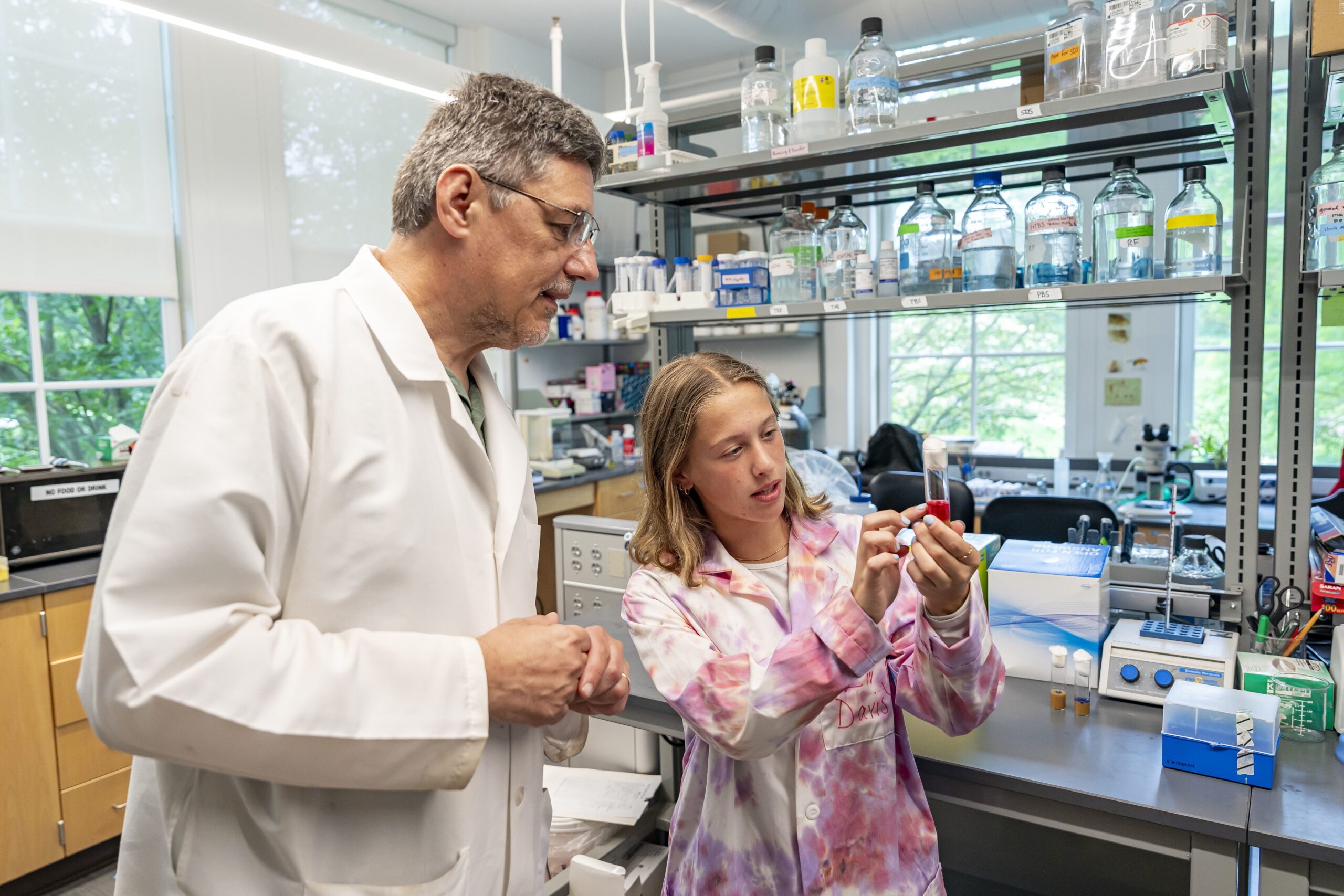
    Rob Fairman, a professor of biology at Haverford College, and student Liv Davis are testing the effects of natural products on animal models with neurodegenerative diseases.

    Junior Liv Davis, 21, wanted to help find a cure for Parkinson’s, which struck her grandmother in 2020.

    “She’s had two falls in the last year and a half because it’s progressed pretty quickly,” said Davis, of Lanoka Harbor, N.J. “It’s hard to see someone you love so much live with it, but it makes it all the more rewarding to work toward fixing it.”

    Davis, who has worked in Fairman’s lab since her freshman year, tried to get into an introduction to neuroscience class early on. But there wasn’t room. She ended up majoring in biology, which she thinks probably would have happened anyway.

    About half the students working in Fairman’s lab are neuroscience majors, he said.

    Davis is currently studying the effect of a chemical on sleeping fruit flies that have been genetically modified to carry the protein associated with Parkinson’s.

    Last summer, she received an inaugural research fellowship funded by Shamir Khan, a Haverford alumnus and psychologist who was diagnosed with early-onset Parkinson’s.

    Her grandmother was glad she could continue the research, said Davis, who plans to become a doctor.

    “She always jokes with me,” Davis said. “‘Give me a spoonful of that chemical, whatever it is. If you need a test subject, you let me know.’”

  • Forget State of the Union sideshow, MAGA’s real chilling message was delivered by Marco Rubio in Munich

    Forget State of the Union sideshow, MAGA’s real chilling message was delivered by Marco Rubio in Munich

    As a matter of journalistic duty, I forced myself to watch the endless State of the Union reality show.

    Punting on all serious issues, President Donald Trump stoked the applause meter by delivering awards to a 100-year-old vet and a brave U.S. pilot, and inviting the entire U.S. men’s Olympic hockey team to celebrate their gold medal win.

    Trump was relentlessly racist (with disgusting slurs against all Somali Americans in Minnesota). His lies were dangerously predictive about the 2026 elections, never tiring of the Big Whopper about winning in 2020 and claiming Democrats must be stopped because they “only win if they cheat.”

    In short, the union is in a dangerous state under an amoral, unprincipled, delusional commander in chief.

    What disturbed me most as I watched Trump rant on is how a president could be so wholly indifferent to the liberal democratic values that underlie the existence of our nation. Although often honored in the breach, they are what have made this country unique. Yet, the sycophants in his administration, along with most GOP legislators, have chosen to abandon those values, or never believed in them from the start.

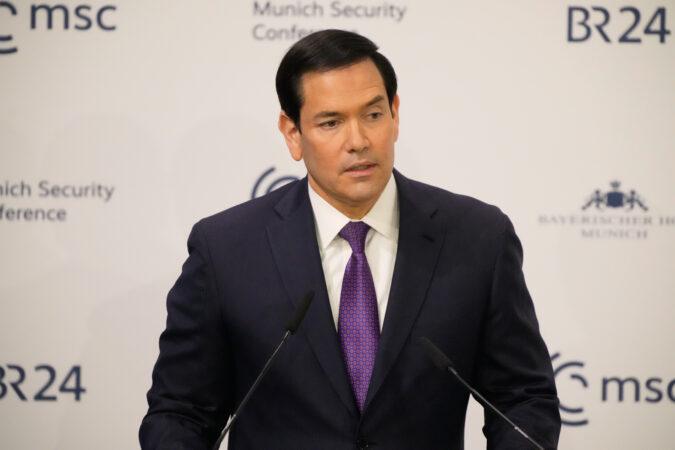
    For that reason, I’d rank Secretary of State Marco Rubio’s speech at the recent Munich Security Conference as far more important than Trump’s sad State of the Union guff.

    That’s because Rubio laid out an alternative set of U.S. values promoted abroad and at home by the political theologians of the Trump regime. Precepts that would make the Founding Fathers revolt anew.

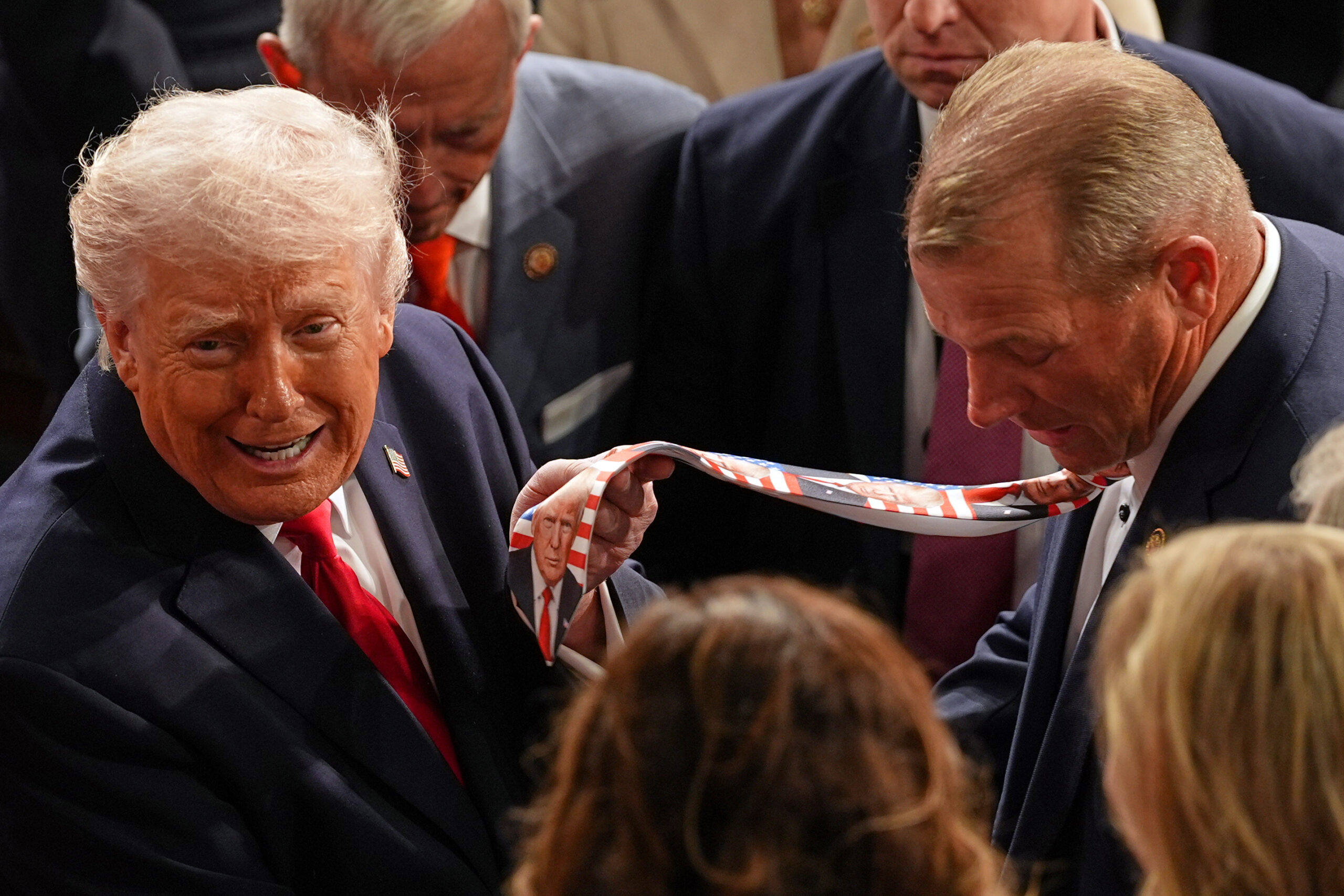
    President Donald Trump holds up U.S. Rep. Troy Nehls’ (R., Texas) tie with his face on it as he departs after delivering the State of the Union address to a joint session of Congress in the House chamber at the U.S. Capitol in Washington, Tuesday.

    The new theology revolves around the theme of saving “thousands of years of Western civilization” from the depredations of “woke” liberal democracy. It is an extension of language long used by white nationalists, and which came back to prominence during the rise of Islamist terrorism in the Mideast, which led to an influx of Syrian and Afghan immigrants into Europe fleeing civil wars at home. It became even more useful to Trumper populists when fanning fears of immigrants at home.

    Former Trump adviser Steve Bannon and current Deputy White House Chief of Staff Stephen Miller latched onto the “saving Western civilization trope” a decade ago, and have embraced its transition into saving Western “Christian civilization.” Somehow, the term, which had been commonly used to describe shared Western religious and cultural identity for decades — Judeo-Christian civilization — has conveniently been shortened.

    Never mind the historical inaccuracy of a term that tries to combine thousands of years of shifting, melding populations, ideas, and religions into one neat sum.

    Yes, there are obvious philosophical threads from Athens to Rome to the Magna Carta, and ultimately to the values of the Enlightenment. But there are centuries of religious, ethnic, and philosophical wars, as well.

    When Vice President JD Vance tried to promote the concept at the Munich Security Conference last year — and to promote white Christian populist parties in Europe as the saviors of “Western civilization” — the audience of European leaders, officials, and think tankers reacted with shock. More so when he berated German leaders for not inviting the neofascist Alternative für Deutschland (AfD) party into the government, even though its leaders have downplayed Adolf Hitler’s crimes. To add insult to injury, he pointedly paid a visit to the AfD’s political leader.

    Vice President JD Vance addresses the audience during the 2025 Munich Security Conference at the Bayerischer Hof Hotel in Munich.

    But Rubio was supposed to be different: the realistic, savvy foreign policy adviser who tried to save Trump from his worst instincts. When the secretary of state delivered remarks that praised U.S.-European ties, the eager audience was at first won over — until reality sank in, and many participants read the text of his speech.

    Indeed, Rubio was warmed-over Vance, blaming liberal democracy (which, in the Enlightenment sense, means individual freedoms, human rights and rule of law, and observance of science) for all the West’s ills, and urging Europeans to junk “the global rules-based order.”

    It got tiresome hearing Rubio tout the dangers of Western “civilizational erasure.” As Hillary Clinton noted — on a panel titled “The West-West Divide” — “When Rubio talks about Western ‘civilization,’ I never knew he was so supportive of Native Americans.” Then she added, “He is wrong historically.”

    Indeed. “Western civilization” has become the MAGA dog whistle that stands for bashing all immigration and playing to racial fears.

    No surprise, Rubio had not a word of criticism for the Russian invasion of Ukraine as an attack on “Western civilization,” although Vladimir Putin’s war crimes have upended the relatively peaceful, post-World War II order. And not a word of apology for Trump’s threat to seize Greenland from a NATO ally, which also threatened that order.

    Nor any word of recognition that a dog-eat-dog world of unrestrained big power dominance resulting from an end to global “rules” will lead back to the violent era preceding World War II.

    Instead, Rubio urged the Europeans not to be “shackled by guilt and shame,” which is a key buzz phrase for the AfD, which urges its members to stop apologizing for Nazi crimes.

    Secretary of State Marco Rubio (left) and Hungarian Prime Minister Viktor Orbán shake hands after a news conference in Budapest, Hungary, on Feb. 16.

    And right after his speech, the secretary rushed off to Hungary to praise the pro-Putin Prime Minister Viktor Orbán, a Trump ally who has done his best to destroy Hungarian democracy, including press and judicial freedom — and is trying to block European Union aid to Ukraine.

    Yet, Orbán’s corruption and Hungary’s economic decline have become so overwhelming that he may be defeated in an April election. But Trump sent Rubio to bolster this antisemitic autocrat who repeats the “saving white Christian civilization” line.

    It is no wonder the Munich scene erupted into debate about the West-West division over democratic values. As Germany’s Green Party coleader and Bundestag member, Franziska Brantner, stated: “Our values are rooted in the Enlightenment, in reason, science, freedom of religion, equal rights. The Enlightenment is a project, not a period in history. It is about very concrete individual freedoms, about free elections dependent on the will of the people, not run by oligarchs.”

    “I don’t want to go back in history,” Brantner said flatly.

    Norwegian Finance Minister Jens Stoltenberg added, in a restrained poke at Trump, “For all those who believe in liberal values and protection of the truth, it is difficult when we see that not all of our allies agree on these values.”

    In Europe, at least, there is an active debate about the consequences of the junking of rules and history by the world’s most powerful democracy. The dangers to democracy are more immediately apparent to those who live closer to Russia and Ukraine.

    Watching Trump’s performance and Rubio’s subservience, those dangers may seem obvious to many Americans. But they must find a way to get that message across more clearly to those who still doubt the danger here.

  • Villanova suffers worst loss in 29 years in drubbing to St. John’s: ‘We’re going to move on’

    Villanova suffers worst loss in 29 years in drubbing to St. John’s: ‘We’re going to move on’

    NEW YORK — Kevin Willard spent his formative years in coaching working under Rick Pitino, first with the Boston Celtics and then later in the college ranks at the University of Louisville.

    So the Villanova coach didn’t have to imagine what practice was like for Pitino’s No. 15 St. John’s team this week after it was blown out and embarrassed by No. 6 UConn Wednesday night.

    He lived it.

    “I don’t have hair because of him,” Willard said after Villanova was throttled in an 89-57 loss — the worst defeat for the program in 29 years — that was all but over before halftime. “I had a full set of hair when I started working for him. It’s the most miserable experience in life. You fear for your life every day. Everyone laughs when I say that, but no, you think you’re going to get fired, and it’s miserable.”

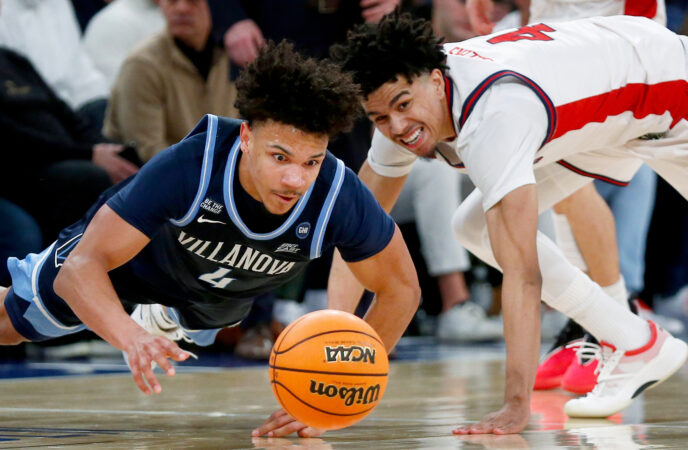
    The game was already going to be hard to begin with. Villanova (22-7, 13-5) is on its way to the NCAA Tournament, but it has failed to show it can compete with the two teams at the top of a Big East conference that will send just three teams to the dance, barring a miracle run at Madison Square Garden in two weeks. Add to the equation that St. John’s was coming off a 32-point drubbing, the Garden was sold out, and those rough and rowdy Red Storm practices this week, and you get a recipe for disaster.

    St. John’s coach Rick Pitino walks by the bench against Villanova on Saturday.

    Pitino told reporters ahead of Saturday that the game against UConn was the biggest since he arrived on campus in 2023. It is the hyperbole you resort to after you lose a game by 32. St. John’s held a White Out and gave out white t-shirts for lower-level ticket holders, and Pitino emerged from the tunnel onto the floor before the game wearing a white suit. The crowd loved it, and Pitino’s players made sure they continued having things to cheer about.

    It was 11-2 after three quick Villanova turnovers. Later, two more consecutive turnovers led to easy dunks and a 28-14 deficit. Willard used multiple timeouts during the first half, but Villanova had no answers for the defensive pressure and intensity from St. John’s. It was 48-23 by the time the first-half buzzer mercifully sounded, and the first-half stats told the story.

    St. John’s held an 18-0 advantage in points off turnovers. Villanova had more turnovers (eight) than it did made baskets (seven). The Wildcats shot 25.9%. Tyler Perkins, Villanova’s leading scorer, was minus-32 in 17 first-half minutes.

    “I think the biggest difference is that they’re a veteran team,” Willard said. “You knew Zuby [Ejiofor] wasn’t going to come out and lay an egg, and he didn’t.”

    The St. John’s center became the fourth known Red Storm player to record a triple-double. He had 16 points, 12 rebounds, and 10 assists. The superlatives didn’t stop with him. The 32-point victory was the largest St. John’s has ever recorded vs. Villanova in what was the 135th matchup between the two teams.

    Further, it was the worst Villanova loss since the Wildcats lost by 37 in a February 1997 game vs. Kentucky.

    Who coached that Kentucky team? Pitino.

    Villanova guard Tyler Perkins defends St. John’s forward Zuby Ejiofor on Saturday.

    Back to the present day, Willard’s Wildcats on consecutive Saturdays received a dose of reality vs. the conference’s elite, but they also survived a rough stretch during Wednesday’s win over Butler.

    “We still won seven out of nine games,” Willard said when asked if he was concerned about the timing of it all. “We lost to UConn and St. John’s. Unfortunately, I caught UConn after they played their worst game of the year and it seems like God is punishing me for my sins.

    “We’re going to move on. We have two more games left. Life happens, man. You get your [butt] kicked every once in a while.”

    Willard had a similar thing to say last week after a 10-point loss to UConn that wasn’t as close as the final score indicated. Villanova bused home late Saturday night and is back on the road for a Wednesday night game at DePaul. The regular season finishes Saturday with a home game vs. Xavier before the Big East tournament begins.

    How will Villanova respond to its worst loss of the season?

    Perhaps Willard can channel Pitino at Monday’s practice.

    No update on Matt Hodge’s injury

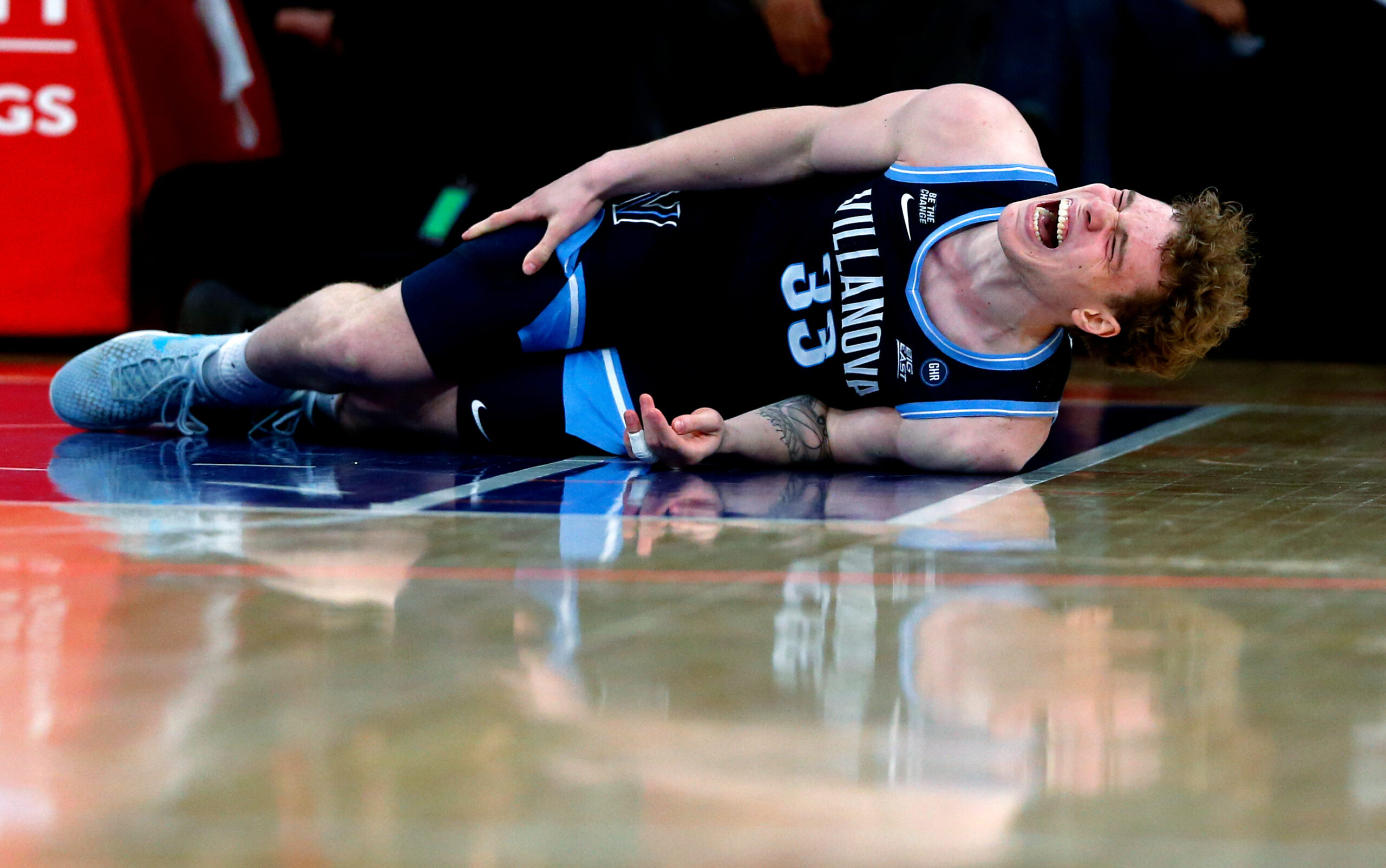
    Villanova redshirt-freshman forward Matt Hodge went down with what appeared to be a right leg injury early in the second half. Hodge was on the floor in pain for a few moments and then struggled to put any weight on his right foot as he was helped off the floor and into the locker room.

    Willard did not have an update on Hodge’s status after the game.

    Villanova forward Matt Hodge goes to the floor with an apparent injury during the second half against St. John’s on Saturday.

    Wildcats locked into Big East seed

    The loss Saturday means Villanova can’t possibly climb higher than third in the Big East conference. For reference, the Wildcats were picked seventh in the preseason poll. But there appears to be a steep drop off from UConn and St. John’s at the top.

    The No. 3 seed means the Wildcats will open the Big East tournament with a 9:30 p.m. quarterfinal game vs. the winner of the game between No. 6 and No. 11.

  • Penn’s men are going back to the Ivy League tournament, but they took the long way to get there

    Penn’s men are going back to the Ivy League tournament, but they took the long way to get there

    March was six hours away when the ball was tipped at the Palestra on Saturday, and it had been a while since that mattered for Penn’s men.

    Fran McCaffery’s squad has clearly improved over the course of this season, but just how much has been hard to tell at times. A senior night showdown with tied-for-first Harvard offered a proper test, and a win would clinch the Quakers’ first Ivy League tournament berth in three years.

    Which Penn team would show up?

    The one that fell behind Dartmouth by 12 points a night before, or the one that rallied to win? The one that nearly threw away a late lead to Princeton at the start of the month, or the one that finally ended a 14-game, eight-year losing streak to its historic rival?

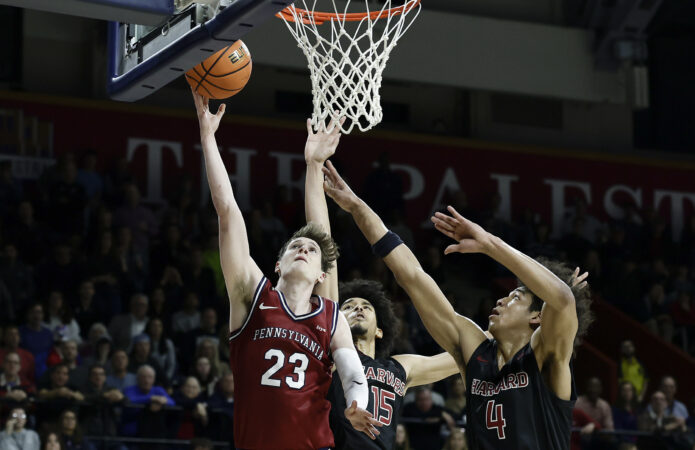
    All of them, it turned out. Penn trailed 31-21 at halftime, then charged back to lead 56-50 with 5 minutes, 37 seconds to play. But the Quakers almost gave it up before holding on to win, 64-61.

    There was plenty of noise from the 2,877 fans on hand at the buzzer, a reminder that even a paltry crowd can make a great atmosphere at the 99-year-old shrine. It might have been as much out of relief as anything else, but it was still a release.

    “I think that’s what makes it emotional, is we’ve been so close,” senior forward Ethan Roberts said after his Palestra finale. “So to see these wins and the season transpire the way it did, we’re in a great spot, and we just learned from it. We kept fighting, and it was ugly at times, but it just makes it all worth it.”

    The team’s ‘north star’

    It’s easy to say that this Penn team goes as far as TJ Power takes it. He took it to an extreme on Friday, scoring 38 of his team’s 80 points against the Big Green. But Roberts matters too, and this was his best game in weeks: 21 points, three assists, and four rebounds, including the game-sealer in the closing seconds.

    “I kind of blacked out after the buzzer hit,” Roberts said. “Our team, our entire year since last summer when we had the coaching change [and] we see coach McCaffery is coming here, it’s like, ‘All right, we’re winning.’ And to see we’re in this position today … this is literally all we’ve worked for. This has been our north star.”

    Penn’s AJ Levine (left) and forward Ethan Roberts celebrate after the final buzzer.

    AJ Levine, the sophomore starting point guard, is another big factor — and not always in a good way. He’s a tenacious defender, and is capable of great passes and shots. But he’s also capable of driving into any lane in front of him, even if it’s a trap.

    It’s not a coincidence that he played much more within himself in the second half of conference play, and that Penn went 6-1 in those seven games.

    “He’s always going to have an aggressive mindset, and you don’t ever want to take that away from him,” McCaffery said, with a towel draped over his shoulders after a postgame water-dousing in the locker room. “He gets emotional, and you don’t want to take that away from him either, but you can’t let it get you to where you’re focused on, ‘I got a bad call,’ or ‘He [a teammate] should have cut backdoor.’ When he’s under control and he’s locked in like he was in the second half, he’s really good.”

    What to know about the Ivy League tournament

    Now, after the regular-season finale at Brown on Friday, it will be off to Cornell’s arena for a rematch with the Crimson in the Ivy tournament semifinals. All four seeds are set with a game to spare.

    AJ Levine drives for a layup during the second half.

    “It’s great feeling as a coach when you know you have a group of guys that have bought in from day one since I got here, and want to experience success,” McCaffery said. “And then to see them celebrate in the locker room — the thing we have to do now, and they both [Roberts and Levine] said it, which is good, is we have to stay locked in. We earned an opportunity. We have to play well next week, and then get ready to play well against two really good teams.”

    (If you’re wondering, there’s no word when the event will next be at the Palestra. All that’s known is the 2027 edition will be at Dartmouth, and Hanover, N.H., is as glamorous as central New York is in mid-March.)

    No. 1 Yale will be the favorite on paper, No. 66 in the NCAA’s NET rating while the other three teams are all in the 150s. But the top seed has only won the tournament twice in its seven editions, as the five-time finalist Bulldogs know well.

    This time, they’ll have to beat the hosts in the semis. Yale won its home game vs. Cornell in a 102-68 blowout, then the Big Red won the regular-season round in Ithaca on Friday on a last-second three.

    Penn and Harvard also split their games, with the Crimson winning by 64-63 in Boston on Jan. 19.

    “There’s the frustrating losses, there’s the hard-fought wins like today,” Levine said. “When that buzzer went off and I realized what we’ve done — and how it’s just the start, really, because we’re going to go compete there — I mean, it felt amazing to just see that hard work pay off a little bit. But it will really pay off when we go up there and we do what we do.”

    Those words might have been a little too accurate for their own good. Still, they have a chance, and that’s more than Penn could say the last two seasons.

  • New Philadelphia-area cardiovascular surgery centers are pulling profitable procedures from hospitals and charging less

    New Philadelphia-area cardiovascular surgery centers are pulling profitable procedures from hospitals and charging less

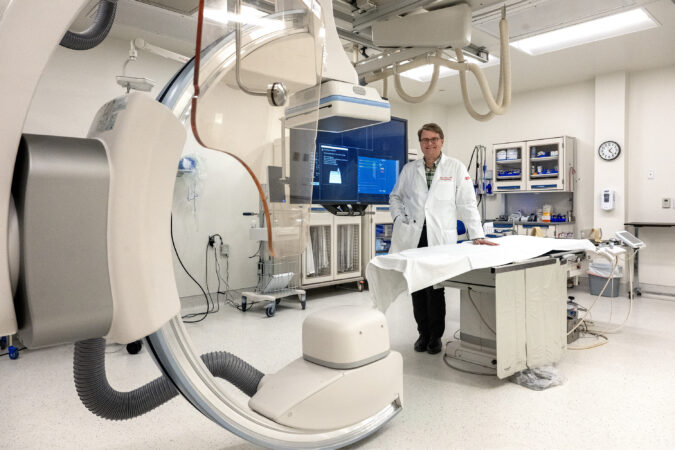
    At AMS Surgery Center in suburban Montgomery County, patients can park right in front of the entrance, walk through just a few doors, and undergo cardiac procedures in a sterile operating room with equipment as high-tech as in any hospital procedure room.

    In the year and a half since its first patient underwent a cardiac catheterization, the center has performed more than 1,000 cardiac procedures that previously required patients to go to full-service hospitals.

    The Horsham center showcases a new front as sophisticated healthcare procedures move to freestanding outpatient medical facilities, promising to save patients money. The shift also adds to the financial pressures facing the region’s hospital-centered health systems.

    Four centers have opened or are in the final stages of approvals in Southeastern Pennsylvania. Their arrival comes after state lawmakers in 2022 broadly expanded the types of procedures allowed outside hospitals to include cardiac catheterizations, pacemaker implants, and other treatments that until then had to be done in a hospital.

    Pennsylvania is the first Northeastern state to allow the minimally invasive procedures in freestanding surgery centers, but Southern states like Florida, Louisiana, and Texas have permitted the practice for decades, experts said. Research has found surgery centers generally are as safe as outpatient departments in hospitals.

    An independent physicians group, Bryn Mawr Medical Specialists Association, opened Heart & Vascular Center of the Main Line — the Philadelphia region’s first such center — in late 2022. in Bryn Mawr. AMS Surgery Center in Horsham performed its first procedure in the fall of 2024, initially treating only Medicare patients. It added patients with private insurance last summer.

    The market has continued to rapidly expand: ReVaMP Heart & Vascular Surgery Center in Center City started treating Medicare patients last fall. The Ambulatory Cardiovascular Center of Pennsylvania, near King of Prussia, expects to perform its first procedures on patients next month.

    Medicare pays the centers about a third less than hospital outpatient departments for the same procedures, but the centers have significantly lower costs, allowing them to be profitable. Medicare pays physicians the same wherever procedures are done.

    Independent cardiology groups traditionally have performed interventional procedures, such as implanting stents and pacemakers, in hospitals. Some are jumping at the opportunity to expand through the surgery centers, where they can have a financial stake in the entire operation.

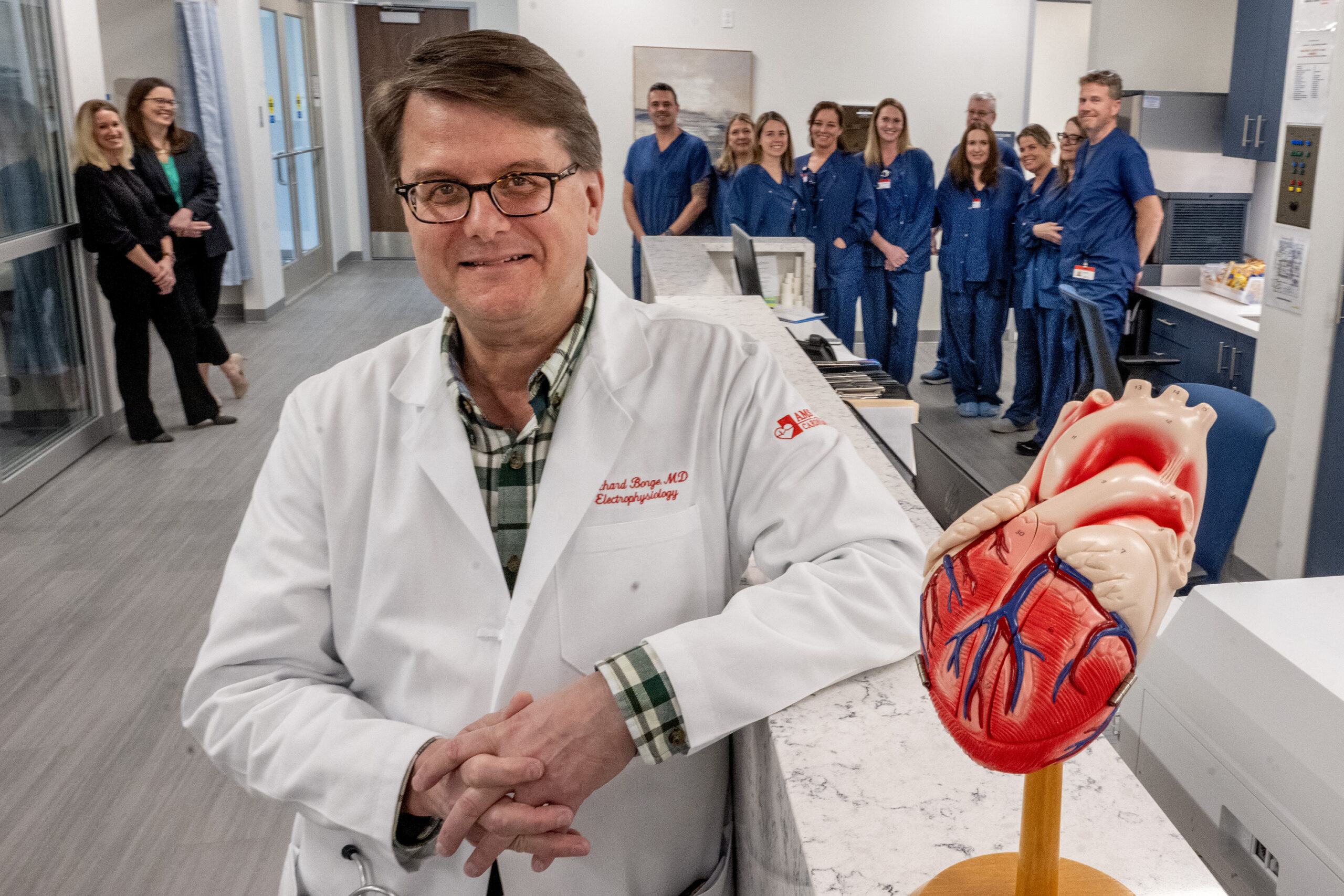
    “We’ve always been very fiercely independent, fiercely entrepreneurial, and patient-centered,” said Richard Borge, an AMS interventional cardiologist who is medical director for the group’s surgery center.

    How much cardiac care — among the most profitable business lines for hospitals — will move out of hospital outpatient departments remains unknown. But cardiac surgical clinics will not take over heart care to the extent seen when outpatient orthopedic centers began offering hip and joint replacements, predicted Lauren Clementi, a senior vice president at Kaufman Hall, a Chicago consulting firm.

    “This one’s a little trickier because the acuity of patients,” she said.

    Cardiologists will continue treating many patients with complex medical needs in hospitals, which remain the only option for riskier procedures such as open-heart surgeries.

    Gregory Schmitt went to AMS Surgery Center to undergo procedures for a heart stent and stents in both legs. The retired machine-shop owner, who lives in Ivyland, called such centers great for patients.

    “I highly recommend it. It’s much easier than trying to navigate a hospital,” Schmitt said.

    How we got here

    Healthcare has been shifting away from requiring overnight hospital stays, even for common procedures like cataract surgery. The trend started decades ago with same-day procedures in hospitals, followed by the rise of freestanding surgery centers.

    In cardiology, people now commonly receive stents and pacemakers as outpatient care. But until recently, doctors had to implant the devices in a hospital.

    “Once upon a time, every patient we cathed had to spend the night in the hospital,” said veteran cardiologist Mark Victor, referring to cardiac catheterization.

    With the rise of outpatient procedures, Victor said, the question for many clinicians became: “If they’re hospital ambulatory, why do they have to be in the hospital at all?”

    Victor has long advocated for the adoption of outpatient cardiology procedures as the CEO of Cardiology Consultants of Philadelphia. The large cardiology practice joined last year a national private-equity backed group, Cardiovascular Logistics, and will soon start performing surgical procedures at the center opening near King of Prussia.

    In 2020, Medicare started paying for outpatient cardiac catheterizations — which entail running a catheter through a blood vessel in the thigh or wrist to examine the heart and install devices like stents.

    Richard Borge is medical director of AMS Cardiology Surgery Center in Horsham, whose arrival is moving advanced cardiac care from hospitals to outpatient clinics.

    Even then, Pennsylvania rules required cardiac catheterizations to occur in an acute-care hospital, according to Stephen Abresch, director of government affairs for the Ambulatory Surgery Center Association, a national trade group in Alexandria, Va.

    Pennsylvania lawmakers cleared the way for expansion by eliminating that restriction in 2022 as part of a broad expansion of what the state’s surgery centers were allowed to do. “It had been a quarter century since the state had gone in and reviewed that,” he said.

    Beginning this year, Medicare started paying surgery centers to perform treatments for irregular heartbeats, known as cardiac ablations.

    The Heart & Vascular Center of the Main Line has scheduled its first cardiac ablations this week. Horsham’s AMS aims to start offering those procedures in June. Victor’s King of Prussia group expects to add ablations in the future as well.

    Impact on hospitals

    It is too soon to know how the new surgery centers will impact the region’s existing health systems. In some cases, independent cardiologists generate significant patient numbers for hospitals’ cath labs.

    After Bryn Mawr Medical Specialists opened its cardiovascular surgery center near Main Line Health’s Bryn Mawr Hospital, the private group performed fewer procedures on low-risk patients at the hospital.

    To sustain patient volumes, Main Line has increased collaboration with other physician practices, while continuing to treat an “older patient population, whose more complex health conditions require the advanced expertise and emergency support only a hospital setting can provide,” officials said in a statement.

    In Horsham, most of the patients coming to AMS would have gone to Jefferson Abington Hospital before the surgery center opened in partnership with Atria Health, a private-equity backed group, Borge said.

    Jefferson declined to comment.

    King of Prussia’s Ambulatory Cardiovascular Center of Pennsylvania is opening through an unusual four-way partnership involving Cardiology Consultants of Philadelphia, Cardiovascular Logistics, SCA (a unit of UnitedHealth’s Optum), and the University of Pennsylvania Health System.

    “Ours is not going to seriously impact any one hospital system, which they’re all relieved about,” said Victor, who is also president of the Mid-Atlantic region for Cardiovascular Logistics. He said other health systems were invited to invest in the surgery center, but only Penn did so.

    Penn declined to comment for this article. On the Alvarez & Marsal What’s Your Moonshot podcast, the health system’s chief operating officer, Michele Volpe, recently said the system needs ”to move a bit faster in taking much of the work that we are doing in inpatient ORs and moving them into outpatient or ambulatory freestanding ORs.”

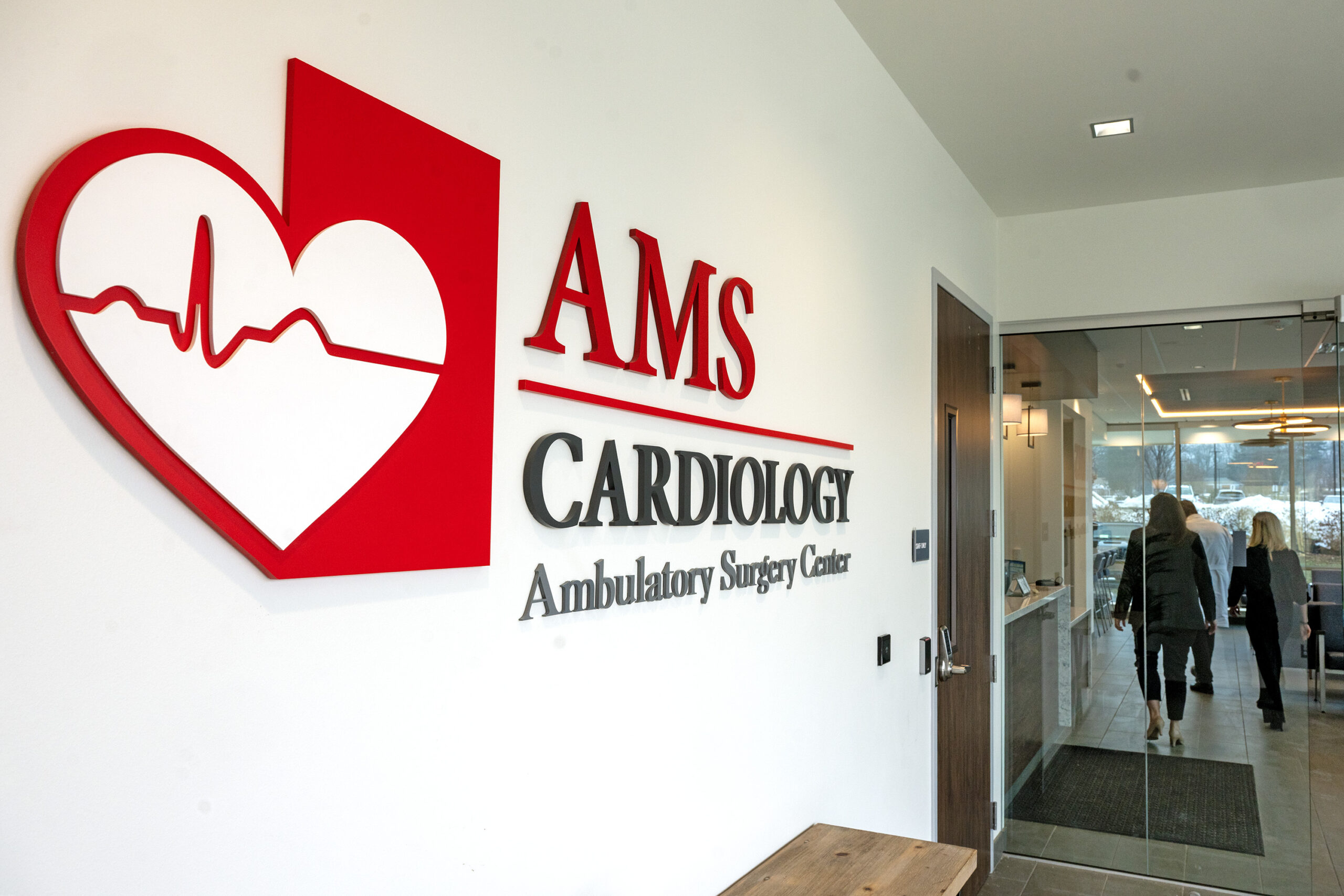
    AMS Cardiology’s ambulatory surgery center in Horsham is one of four new cardiovascular surgery centers in Southeastern Pennsylvania.

    Center City’s ReVaMP Health & Vascular Surgery Center wants to bring in cardiologists from nonaffiliated practices, and even the city’s big health systems. The facility opened last year, spearheaded by Re-Vasc Med Professionals’ two interventional cardiologists in partnership with Surgery Partners, a publicly traded manager of surgery centers nationwide.

    “I’m 100% sure this is going to be the trend of the future,” Re-Vasc CEO and founder Jon George said.

    A health insurer’s perspective

    Richard Snyder, a top executive at Independence Blue Cross, the largest health insurer in Southeastern Pennsylvania, has for years watched joint replacements and other procedures shift from hospitals to lower-cost surgery centers.

    The financial impact goes beyond the lower prices at surgery centers, he said, expecting that hospitals will not simply cede these patients to new competitors.
    Some hospitals might decide to take a lower payment for outpatient procedures. “Traditionally, that happens when we have capacity in lower-cost settings,” he said.
    At the same time, Medicare is pushing to pay the same price for services, wherever they are performed. “Hospitals, by necessity, will need to move some things to lower-cost settings in order to not lose money on them,” Snyder said.

  • Letters to the Editor | March 1, 2026

    Letters to the Editor | March 1, 2026

    A fan of LaBan

    After reading “Jesse and Matt Ito’s big Japan adventure,” I will never refer to writer Craig LaBan as just a restaurant critic. This essay — concise and cogent, but also expansive and even emotional — is one of the best I’ve ever read in The Inquirer, or anywhere else. I’m a sushi fan who relies on the menu translations when I order, and although LaBan’s piece is full of details about sushi styles, dishes, ingredients, and sources, he fed me a lot of information in digestible form. The same is true of his account of touring remote Japan with the Itos (though I did appreciate the map). Best of all, he wove three generations of Ito family history into the narrative, including some of the tough stuff families endure, evoking the real importance of their trip to their lives together. A must-read for anyone who must work, likes to eat, or has a family.

    Joe Jones, Mount Holly

    Political malpractice

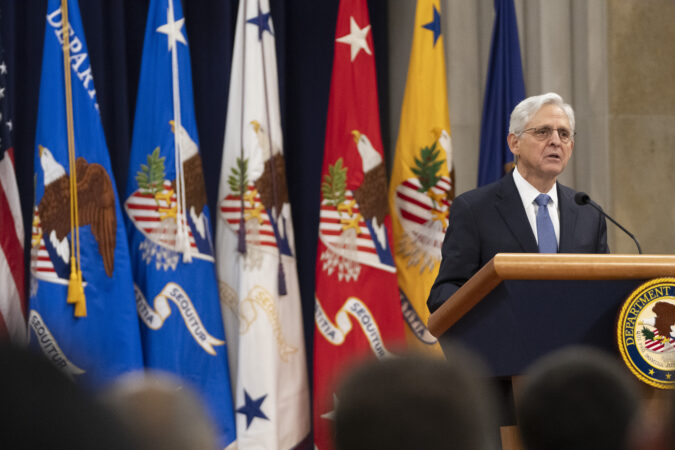
    Many concerned and worried Americans are calling out and condemning the transparent total politicization and weaponization of the U.S. Department of Justice, and deservedly so. But let’s not forget that it was a totally apolitical attorney general, Merrick Garland, whose extreme lack of political sensibility — combined with extreme and debilitating timidity — can rightfully be called out as a primary factor that allowed Donald Trump to run for and subsequently win the presidency. Garland’s interminable two years of foot-dragging before he appointed special counsel Jack Smith to investigate the president were unconscionable.

    Smith, in recent testimony before Congress, stated with categorical certainty that the evidence he compiled could have proved, beyond a shadow of a doubt, that Trump was guilty of crimes, and that he quite likely would have obtained a conviction if he’d had an opportunity to present his evidence. Maybe a modest touch of political awareness would have spared us from enduring and suffering through a second Trump presidency, with consequences whose outline can be seen but have yet to fully unfold.

    Ken Derow, Swarthmore

    West Bank killing

    The Feb. 19 Associated Press story “Israeli settlers kill 19-year-old Palestinian American” included multiple other issues, including Israeli “ethnic cleansing” of Palestinians in the West Bank, Israeli torture of Palestinians journalists, and the basic needs for Palestinians in Gaza. While each subhead in the report deserved a full article, the headline story certainly should receive more attention in a Philadelphia newspaper. The young man killed by Israeli settlers, Nasrallah Abu Siyam, was born here. According to news reports, he was shot while trying to stop settlers from stealing dozens of sheep. The AP story included some context but not all, such as the Israeli government’s de facto approval of the annexation of Palestinian land. Philadelphians should demand that the U.S. Department of State not only “condemn the violence,” but also cease military funding of Israel.

    Donna Sharer, Philadelphia

    Join the conversation: Send letters to letters@inquirer.com. Limit length to 150 words and include home address and day and evening phone number. Letters run in The Inquirer six days a week on the editorial pages and online.