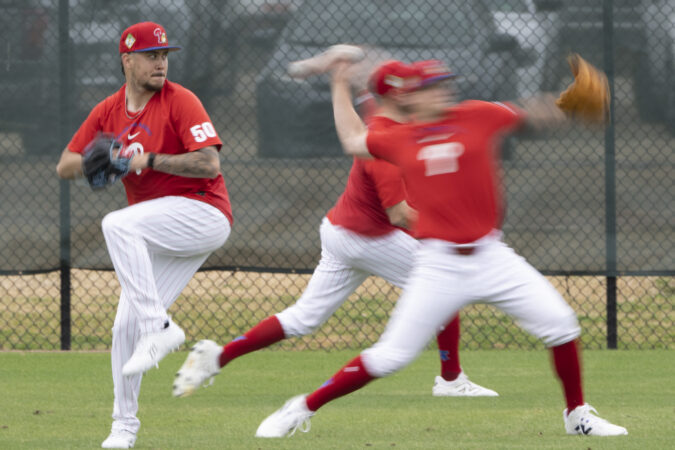
CLEARWATER, Fla. — Orion Kerkering couldn’t wait to get back on the mound.
The 24-year-old right-hander threw his first bullpen session in over two weeks on Saturday, after a mild hamstring strain had slowed his start to the spring. Part of the reason Kerkering had been so impatient throughout the rehab process was because he had been toying with a new splitter, and he wanted to get back to working on it.
Kerkering said he felt good coming out of the session, and thought his velocity was where he wanted it to be for the first outing. And he liked the shapes of the splitters that he threw.
“I think it’s a work in progress still, but I think consistently we’re getting a lot better each day with it,” Kerkering said.
Initially, Kerkering believed he had a charley horse when he felt something in his hamstring during a bullpen session last month, before camp had officially opened. He thought he could power through it, but knew something wasn’t right when he tried to run. That meant shutting down for a few weeks.
But now, he’s back on the mound, which means he’s one step closer to testing out his new pitch against hitters. This offseason, he had discussed with pitching coach Caleb Cotham the possibility of adding something to his repertoire of four-seam, two-seam, and sweeper.
“Give the hitters more, ‘Oh [expletive], there’s another fourth pitch here that I have to look for,’” Kerkering said.
He briefly considered a cutter, before deciding on the splitter for another weapon against lefties, one that Kerkering hopes will get more of a swing-and-miss.
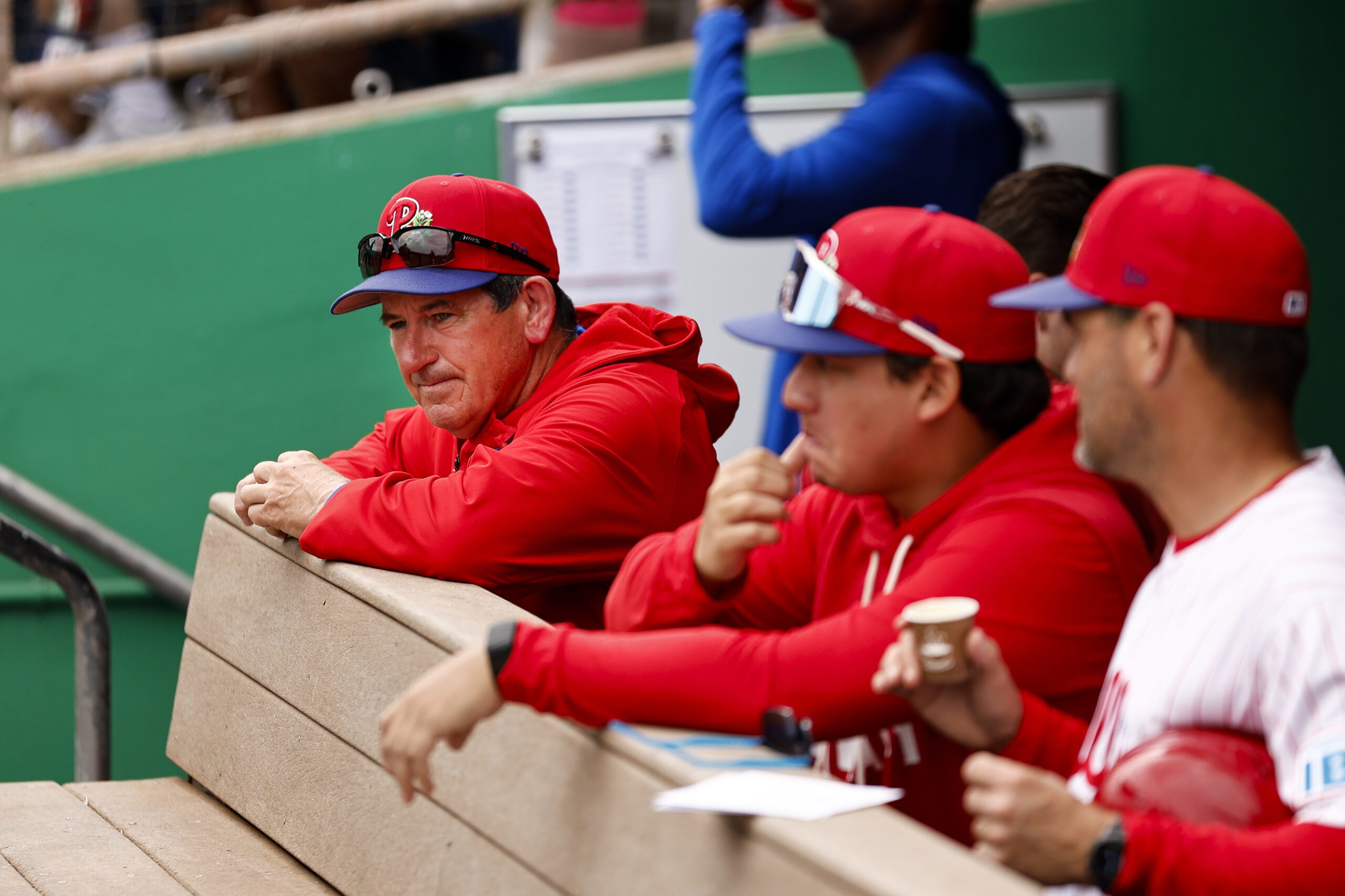
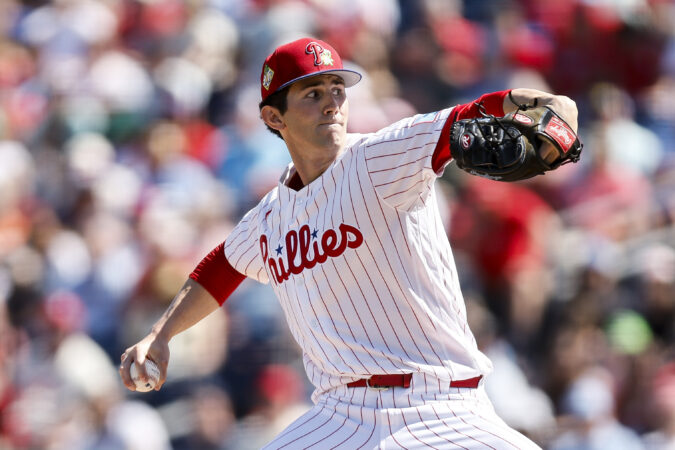
Phillies manager Rob Thomson says if Orion Kerkering can master his new splitter it will give him another look.
“It’s just another look,” said manager Rob Thomson. “He’s got a two-seam, got riding. He’s got a ball going this way with the slider. Now you got a ball going straight down, if he can master it. But he’s working on it, anyway.”
The pitch is still in its early stages, and he’s still toying with the grip. Kerkering watched videos of Mariners pitcher Logan Gilbert and other pitchers on YouTube breaking down their splitter grips over the offseason to get some ideas.
His next bullpen session is scheduled for Tuesday, and he plans to ask a hitter to stand in the box while he’s throwing to get their point of view.
“If they can see the difference in me trying to grab the grip,” Kerkering said. “… I think just overall, just see what the hitters see. And I think that’s my best feedback on that pitch.”
Wheeler’s second bullpen
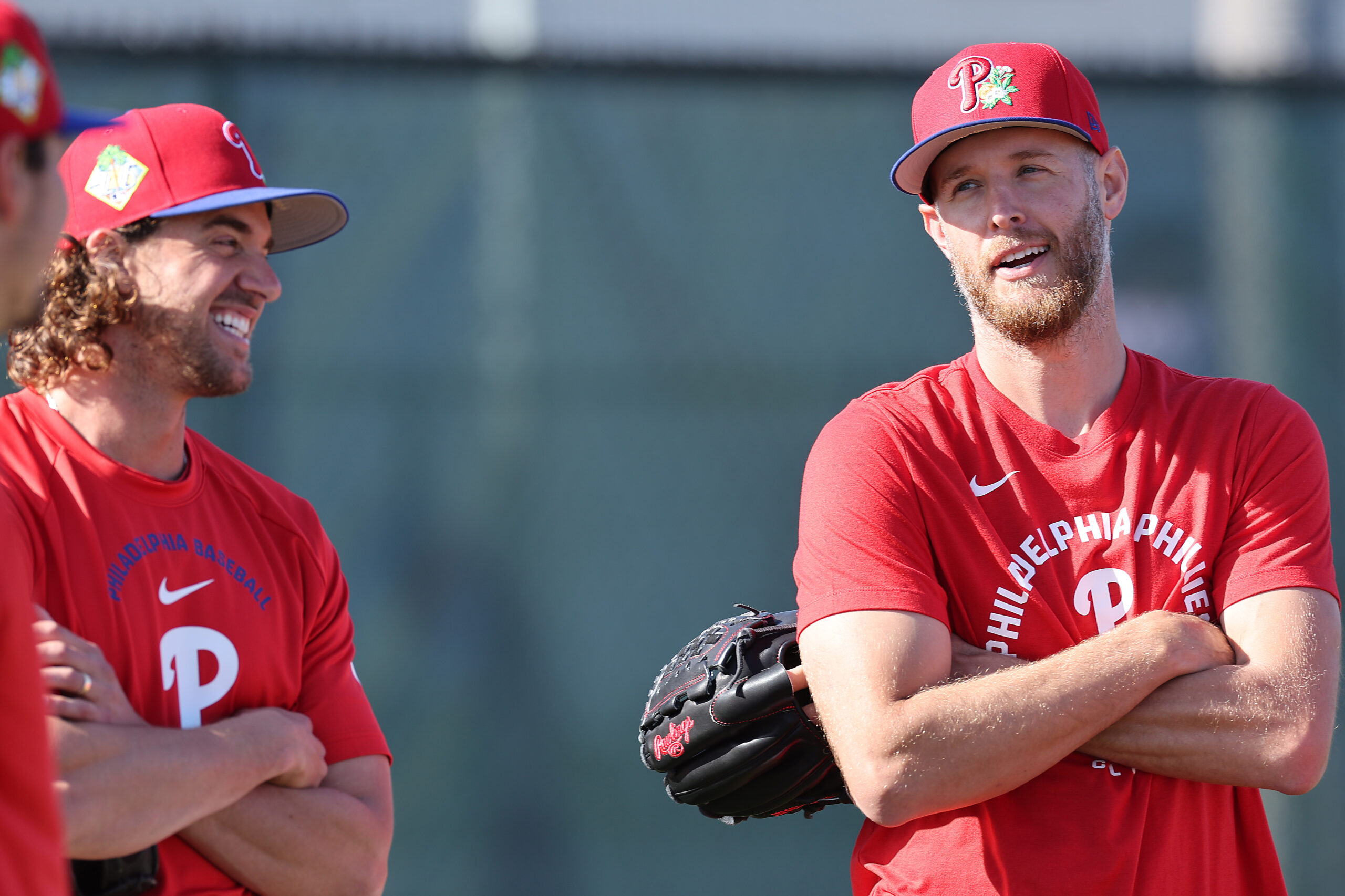
On Sunday morning, fans watching through the fence overlooking a pair of mounds at the Phillies’ complex were treated to the sight of Zack Wheeler and Aaron Nola pitching side-by-side.
Nola was throwing a side session in preparation for his second Grapefruit League start on Wednesday, before he joins Team Italy in the World Baseball Classic. And Wheeler was throwing just his second bullpen session after his thoracic outlet decompression surgery last September.
Aaron Nola and Zack Wheeler pitched side-by-side during a bullpen session on Sunday.
Wheeler, who had a blood clot near his right shoulder removed, threw 25 pitches on Sunday. He started mixing in his splitter, after only throwing fastballs in his first session.
“Split was really good,” Thomson said. “Had a lot of bottom to it. He threw the fastball where he wanted to.”
Wheeler is so far remaining on a typical build-up schedule, which involves two days off between bullpens. His next session is planned for Wednesday, and Thomson said he will start throwing other pitches in his arsenal and spinning the baseball more.
When February started, the Temple men’s basketball team was in a three-way tie for third place in the American Conference and in solid position to lock a top-four seed.
Now, after its 80-74 loss to Rice on Sunday at the Liacouras Center, Temple has a six-game losing streak.
During its previous five losses, Temple (15-14, 7-9) was plagued by cold shooting streaks. On Sunday, it was the defense. Rice (12-17, 6-10) constantly poked holes in Temple’s defense as it poured in 45 points in the second half.
Temple is back to the drawing board with two games remaining in the regular season and tied for ninth place, the second-to-last spot to qualify for the conference tournament.
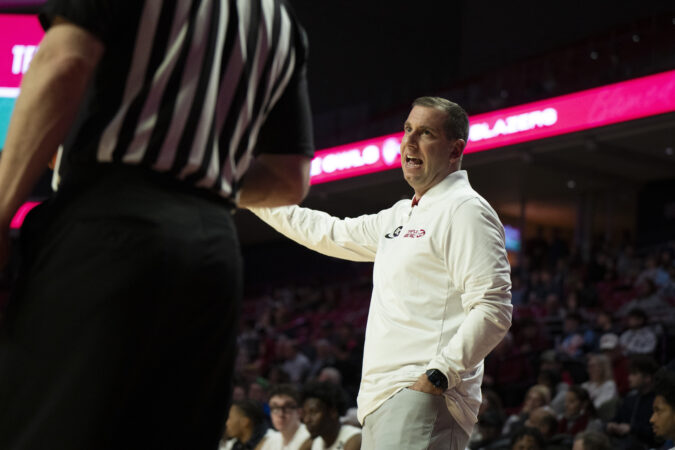
“I think we fight right. There’s no quit,” said coach Adam Fisher. “We have to make sure that continues. The fight. You got to believe that, This is what it’s got to take. We’re right there. And you got to figure out, one bounce, one extra effort … We asked every guy, ‘Look at yourself, starts with me, and I’ll be looking, trust me.’”
Statistical leaders
Temple’s offense kept pace with the conference’s sixth-best scoring offense. Temple shot 50% from the field, led by guards Derrian Ford and Aidan Tobiason. Each finished with 20 points. Temple’s issues came in three-pointers, as it went 5-for-17.
Meanwhile, Rice shot 52% from the field and won the rebounding battle 28-25.
Guard Nick Anderson led the team with 21 points. Guard Trae Broadnax and guard Jalen Smith added 15 points apiece.
What we saw
Tobiason scored six points three minutes into the game to help Temple take an 8-4 lead. Guard Gavin Griffiths ended a 4½-minute scoring drought with a three-pointer followed by a layup and a free throw to complete a three-point play to put Temple’s lead at 15-11.
— Temple Men's Basketball (@TUMBBHoops) March 1, 2026
But everything Temple threw at Rice was instantly answered, mainly through Anderson. Broadnax, Rice’s leading scorer, picked up two fouls in the first 12 minutes, forcing him to watch most of the half from the bench. Anderson stepped up in his place for 11 first-half points.
Temple did well containing Rice, but then it crumbled as halftime neared. Rice went on a 12-9 run, but a Ford jumper kept Temple up at halftime, 36-35.
After the break, Temple overcommitted on stopping Rice. Tobiason scored the team’s first six points in second half, but Rice contained him the rest of the way.
A nearly five-minute field goal drought for Temple ended when Ford drilled a three-pointer to cut Rice’s lead to 65-64. However, that was the closest Temple ever got.
— Temple Men's Basketball (@TUMBBHoops) March 1, 2026
“It’s not so much the second half,” Fisher said. “I think there’s things in the first half that you have to clean up and then it gets magnified in the second half.”
Temple’s defense lets up
Temple’s defense began to crack with the emergence of Broadnax and guard Jalen Smith. Broadnax got on the board with a jumper to tie the game at 42. Twenty-nine seconds later, Smith made a three-pointer to take the lead.
With Anderson, the Rice trio scored 18 straight points in a six-minute span. Temple had little to no answers as 37 of Rice’s 45 second-half points were from the three guards.
“Broadnax’s [is] their leading scorer, a veteran guy,” Fisher said. “He brings you into the post … Give him credit. He had a couple [of] tough shots.”
Up next
Temple will host Tulane (17-12, 8-8) on Thursday (7 p.m., ESPN2).
CLEARWATER, Fla. — From J.T. Realmuto’s point of view, Andrew Painter hasn’t changed much in three years.
Of course, in that span of time, Painter underwent Tommy John surgery, rehab, and then pitched a full minor league season. But the way Painter carries himself, which Realmuto got an up-close look on Sunday while catching in his 2026 Grapefruit League debut, is the same.
“Calm, cool, collected,” said Realmuto. “He throws the ball obviously like an elite pitcher, but his demeanor is something that I really look forward to working with.”
Painter’s two innings on Sunday were exactly three years to the day of Painter’s first-ever spring training start in 2023. At the time, he was 19, with a chance to win a spot in the Phillies rotation, but a UCL sprain brought that to a halt.
Andrew Painter retired all six hitters he faced in the Phillies’ 5-3 loss to the Yankees.
Painter has been waiting a while to make it back here. He retired all six hitters he faced in the Phillies’ 5-3 loss to the Yankees, using an efficient 20 pitches.
“I felt pretty comfortable out there, right when I toed the rubber. I felt like I was in control of the game,” Painter said. “Didn’t speed up on me. And that’s a big thing.”
There were times last year in triple A when Painter hadn’t looked in control. One of Painter’s biggest issues in his first season back from surgery, where he put up a 5.26 ERA, was fastball command. But he thinks both time and a slightly higher arm slot have helped with that.
“I’ve caught a couple pens, and that was the first time I’ve caught him in a live. And every time the command’s been really good,” Realmuto said. “He’s able to work both sides of the plate, but also work up and down as well, which is something that most of our starters do a good job with, and that’s why they’re so successful. So, being able to see him do that is important.”
Painter flashed six different pitches, but leaned the most on his four-seam, which averaged 96.8 mph. Yankees center fielder Trent Grisham and first baseman Ben Rice slugged .527 and .567, respectively, against fastballs in 2025. But Painter attacked both with his four-seam anyway, and the pitch induced a soft pop up from Grisham and a groundout from Rice.
He also won an eight-pitch battle against Jasson Domínguez. The Yankees left fielder fouled off a 97.8 mph fastball — Painter’s hardest pitch of the day — before Painter got him to strike out on a slider.
“I was very encouraged,” said manager Rob Thomson. “I thought he was great. Got ahead in the count, attacked.”
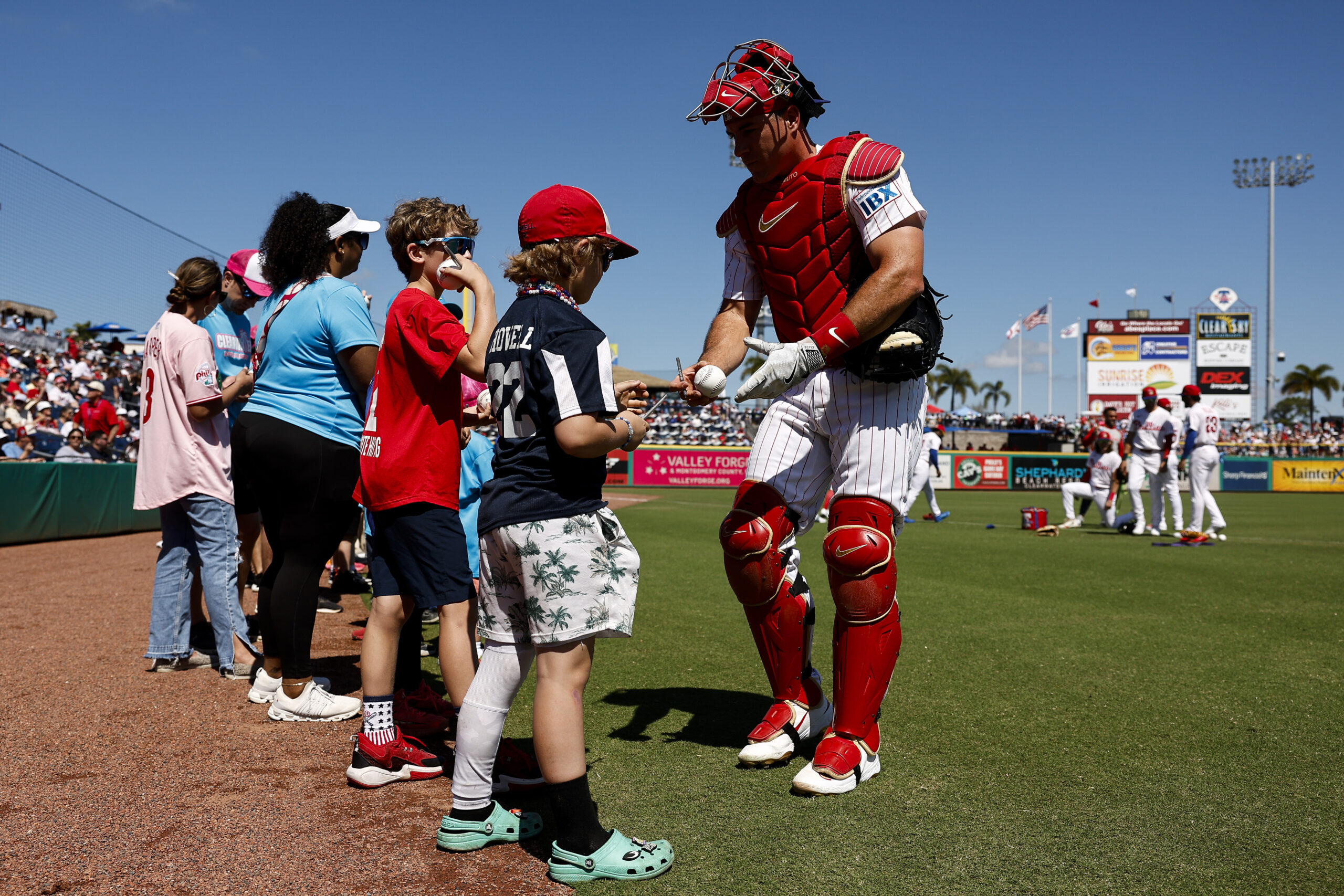
J.T. Realmuto greets Little Leaguers before the game against the Yankees on Sunday.
Painter’s outing was so efficient that he didn’t get the chance to work on throwing his changeup to left-handed hitters as much as he and Realmuto had hoped. He’ll get another chance in his next scheduled start on Saturday.
“It doesn’t feel real,” Painter said. “Still just trying to take it one day at a time and look forward to each start.”
Who stood out
Alec Bohm barreled up a Will Warren fastball that left the bat at 101.4 mph, but the Yankees center fielder made the catch on the warning track.
“Bohm’s had really good at bats throughout spring,” Thomson said. “He’s stronger now, and he’s driving the ball.”
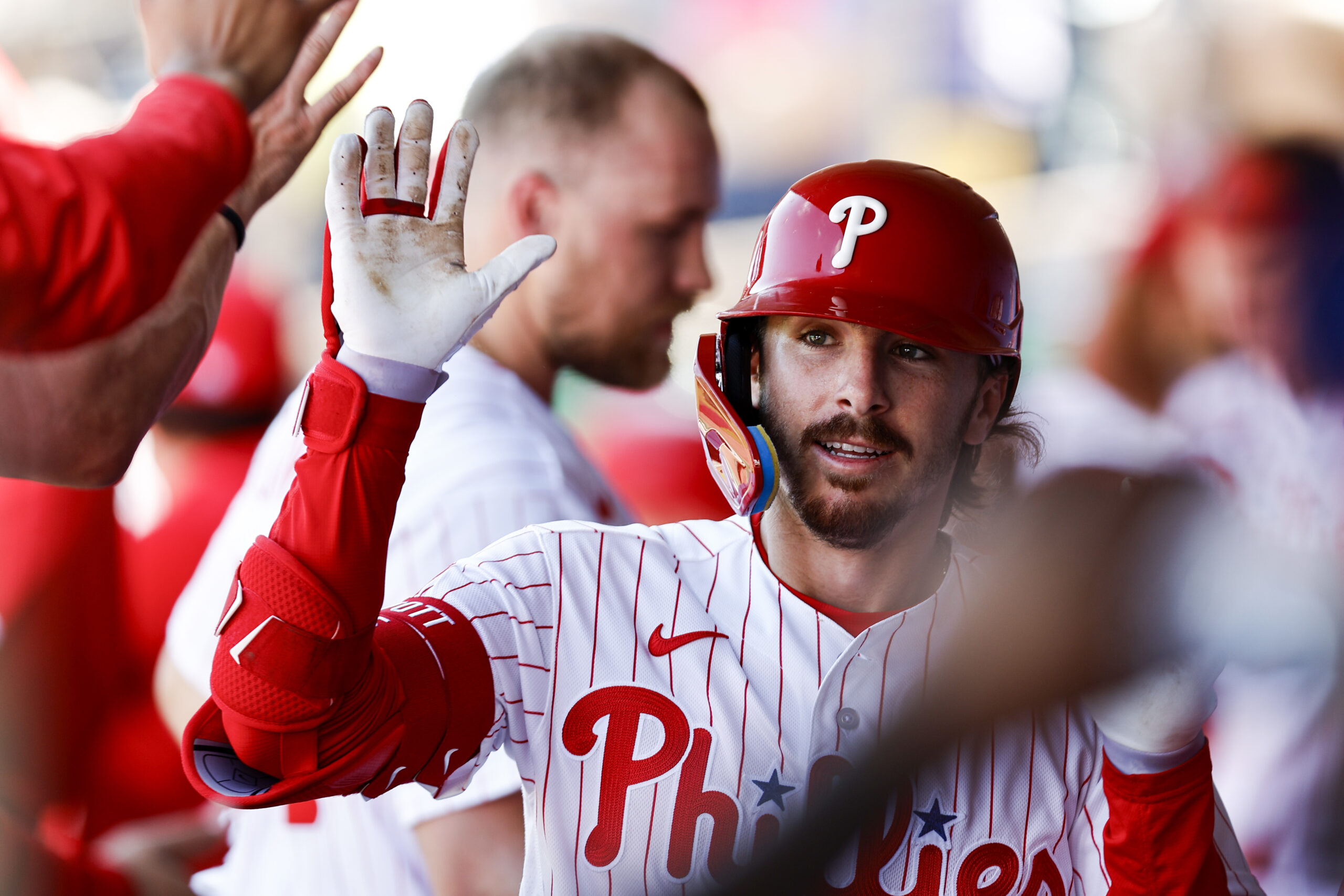
Bryson Stott is 5-for-8 with two homers in five spring games.
Bryson Stott homered to center field. The Phillies second baseman is 5-for-8 with two homers in five spring games.
Rafael Marchán finished 2-for-2 with a double. Outfield prospect Dylan Campbell hit a triple.
On the mound
José Alvarado, Tanner Banks, Kyle Backhus, Chase Shugart, and Jonathan Hernández each pitched a scoreless inning. Johnathan Bowlan allowed one run on two hits. Zach Pop was charged with four runs on a walk and three hits.
“He had a smile on his face when he came out, so that was good to see,” Thomson said of Painter. “He’s been waiting a while to do this. So I’m sure he’s very, very happy with his performance.”
On deck
The Phillies are off Monday before heading to Port Charlotte, Fla., to face the Rays on Tuesday (1:05 p.m., Phillies audio feed). Alan Rangel is set to start.
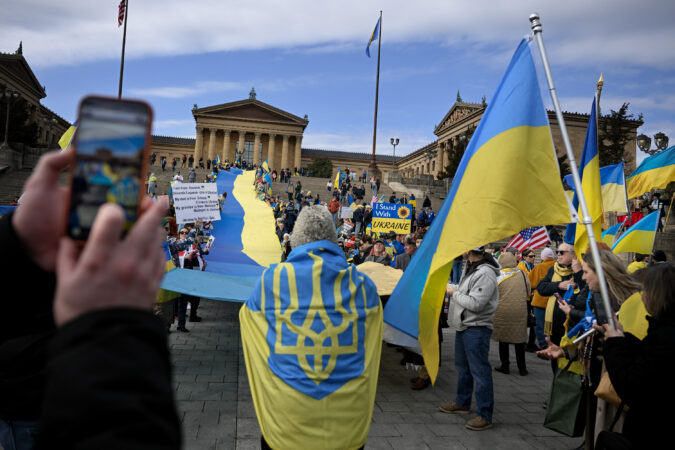
About 100 people gathered on the steps of the Philadelphia Museum of Art on Sunday to stand with Ukraine, marking the recent fourth anniversary of the Russian war on the European nation.
“You don’t have to be Ukrainian to know what’s right and wrong,” said Iryna Mazur, 50, honorary consul of Ukraine in Philadelphia. “You don’t have to be Ukrainian to have a heart, and to stand for justice.”
The event also drew a second group: a small crowd of less than 10 people with a pre-Revolutionary Iranian flag stood alongside Ukraine supporters. While a joint protest had not been planned, Mazur expressed support for the Iranian demonstrators.
“What happened to the dictator in Iran should have happened a long time ago,” Mazur said.
Nazanin Saleh, 42, said she supported the attack on Iran’s supreme leader. She said she was getting ready for a birthday party when she got a notification that Ayatollah Ali Khamenei was dead.
After years of sorrow, she said felt hope for a motherland she hasn’t seen since 2016.
“There is hope now, to be able to have a democracy and be able to have basic human rights, to vote,” Saleh said, pausing. “There is hope to be able to live as a free woman.”
She said the U.S intervention was necessary for the future of her loved ones back home.
“This war isn’t against the people of Iran,” Saleh said. “It is against an Islamic regime that’s forcefully killing people and taking away their freedom.”
After more than an hour at the Art Museum, the group marched down Benjamin Franklin Parkway, cheering for drivers who waved in support as they passed by.
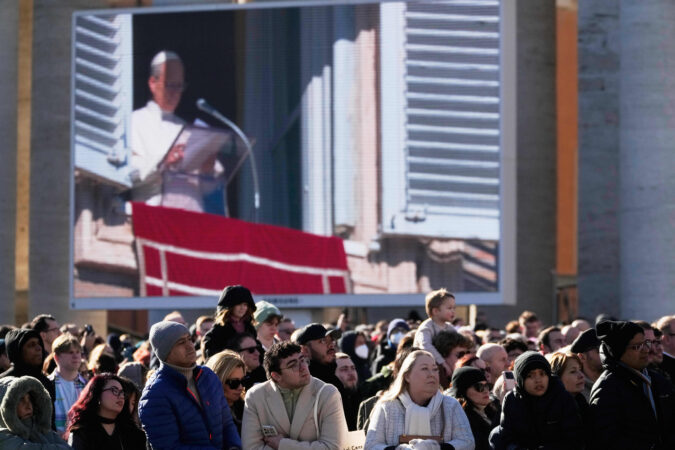
“Faced with the possibility of a tragedy of enormous proportions, I am making a heartfelt appeal to the parties involved to assume their moral responsibility to stop the spiral of violence before it becomes an irreparable abyss,” Pope Leo XIV said in his weeklyAngelus address Sunday morning.
The American-born pope wasn’t speaking only to the thousands gathered in St. Peter’s Square, but to the more than 1.4 billion Roman Catholics in the world, including those in the Trump administration who self-identify as Catholics, such as Vice President JD Vance or Secretary of State Marco Rubio.
“Stability and peace are not built with reciprocal threats or with weapons that sow destruction, pain, and death,” the pontiff said, “but only through reasonable, authentic, and responsible dialogue.”
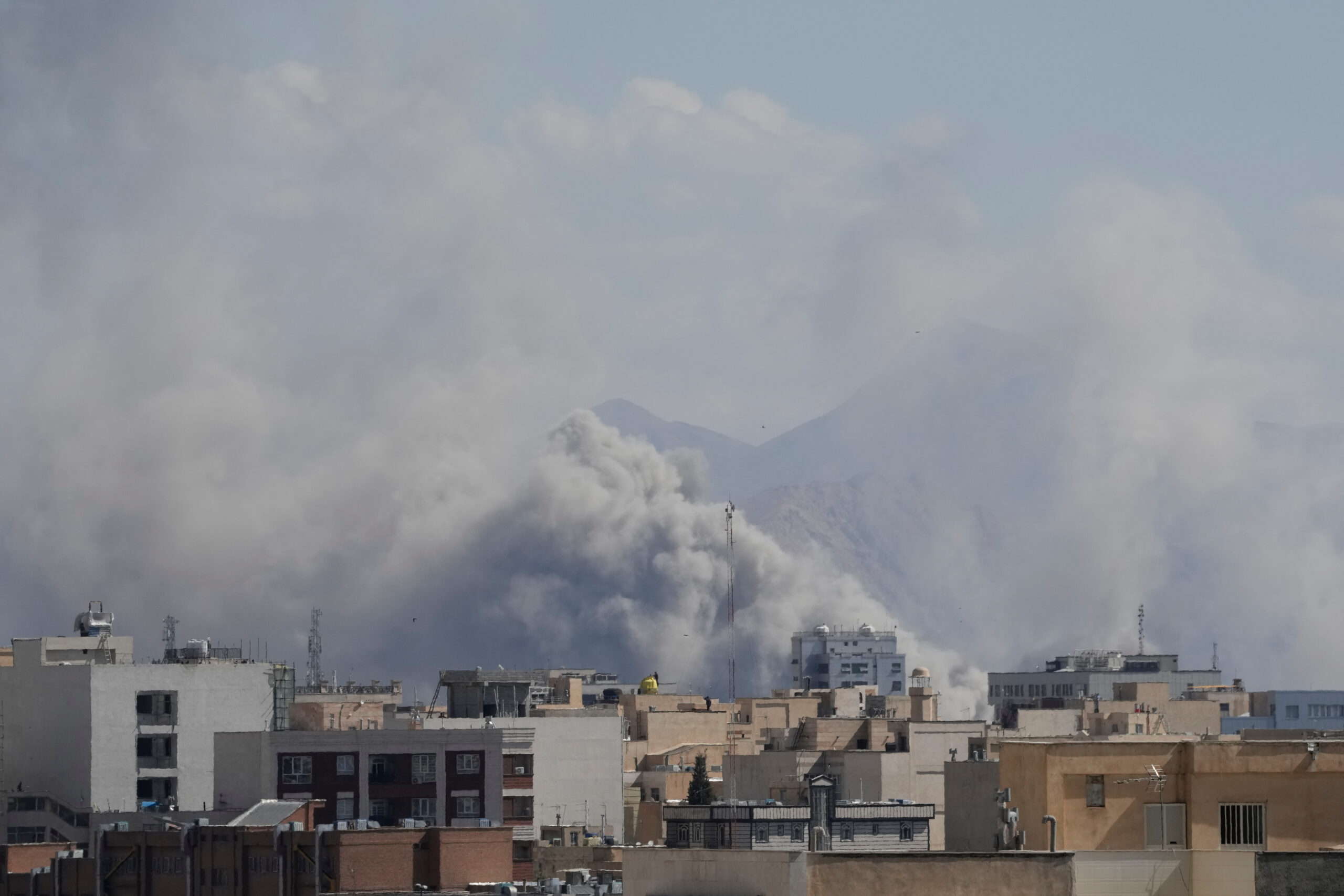
Smoke rises up after a strike in Tehran, Iran, on Sunday.
While the pope doesn’t wield the sort of temporal power that presidents and prime ministers do, his words carry moral weight for those within his religious tradition, and cannot be easily dismissed by politicians, nor the 52% of U.S. Catholics who still have a favorable view of Trump, according to a recent poll by the conservative EWTN News and RealClearPolitics.
It is not the first time Pope Leo has called out the Trump administration’s efforts to force regime change in sovereign nations with leaders who have been accused ofhuman rights abuses.
“The good of the beloved Venezuelan people must prevail over every other consideration and lead us to overcome violence and to undertake paths of justice and peace, safeguarding the country’s sovereignty, ensuring the rule of law enshrined in the Constitution, respecting the human and civil rights of each person,” the pope said during the Angelus address Jan. 4.
I often write about how religion impacts the lives of Latinas like me, who are trying to navigate a world that often seems to have eschewed moral clarity for political dissolution. As a Roman Catholic, I pay particular attention to the guidance offered not only by Pope Leo but also by the bishops who are tasked with providing moral counsel to their flock.
No one who has remained a Catholic as the church has been wracked by an ongoing, self-made crisis of clerical abuse can ignore the fact that some bishops are as opportunistic and power-hungry as our politicians. But under the leadership of Pope Leo, more U.S. bishops than ever have chosen to speak out from a place of genuine moral authority, untainted by the gross partisan and ideological bias that had previously infected the U.S. Conference of Catholic Bishops.
In January, three U.S. cardinals — whom some consider progressives — called on the administration to adopt a “genuinely moral” foreign policy with respect to Venezuela, Ukraine, and Greenland. Meanwhile, the archbishop for the U.S. military — widely considered a staunch conservative — reminded Catholic military personnel that it is “morally acceptable” for them to disobey an order that violates their conscience.
At the same time, 18 bishops asked for the government to cut U.S. military spending to invest in eradicating poverty instead, and across the world, bishops have disavowed the appetite for war and domination by military force that the Trump administration has modeled.
For example, the pope has declined to participate in a Trump-led “Board of Peace” that seems to be about anything other than peace. “A diplomacy that promotes dialogue and seeks consensus among all parties is being replaced by diplomacy based on force by either individuals or groups of allies,” Pope Leo said on Feb. 17.
“War is back in vogue, and the zeal for war is spreading.”
Cardinal Pierbattista Pizzaballa, Latin patriarch of Jerusalem, was more direct in his criticism of the board: “What do I think of the Board of Peace? I think it is a colonialist operation: others deciding for the Palestinians,” he told the Italian newspaper Il Sole 24 Ore.
While the Vatican releases Pope Leo’s Angelus addresses without much fanfare, it is important for Catholics seeking moral guidance on world events like the U.S. war on Iran to listen to the address directly rather than rely on the interpretation of those who might alter the pope’s words for political convenience.
In the instance of the pope’s Angelus address on Venezuela, for example, the Trump administration’s U.S. ambassador to the Holy See reportedly omitted the pope’s reference to safeguarding that nation’s sovereignty because it could not be aligned with the administration’s actions.
And Vance last year offered a justification of Trump’s mass deportation policies based on his misunderstanding of a Catholic theological concept. The vice president’s error was corrected and addressed by Pope Francis shortly before his death in April.
During Lent, we as Catholics are called to examine our habitual excuses, our profane tendencies, and our susceptibility to the spin of those with a stake in worldly power, to instead focus deeply on our spiritual life and its obligations.
For Catholics, in particular, Pope Leo’s words Sunday cannot be explained away. We must demand that our nation’s leaders stop the spiral of violence and acknowledge that peace cannot be built with weapons.
Swords into plowshares, mi gente, swords into plowshares. And we shall study war no more.
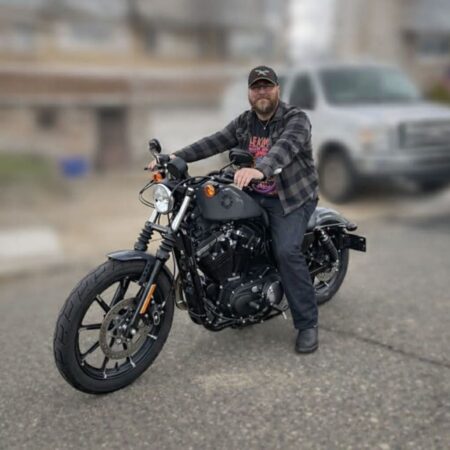
A motorcyclist from Northeast Philadelphia died Saturday after being struck by a car that detached from a tow truck, police said.
His sister identified the motorcyclist as Jason Harvey, 39, who she said was riding his Harley-Davidson at the time of the crash.
“Jason was an avid motorcycle enthusiast and loved his family,” said his older sister, Christine Harvey of Mantua, N.J. Harvey said her brother, who was born and raised in Northeast Philly, lived simply, “would never hurt a soul, and would never miss your call.”
The crash happened on the 4000 block of Frankford Avenue around 4:15 p.m. Saturday, according to Philadelphia police Inspector D.F. Pace.
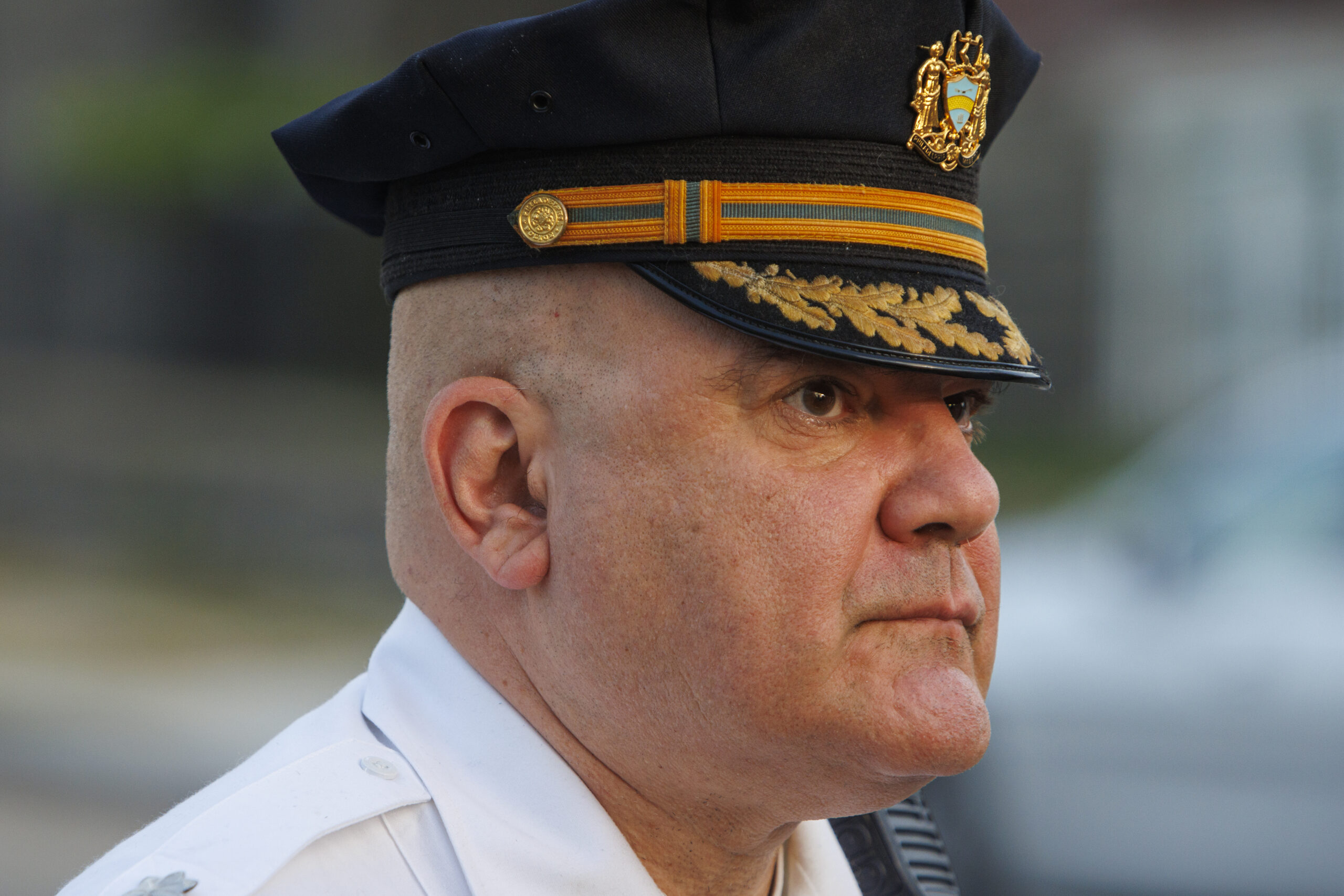
File photo of Philadelphia police Inspector D.F. Pace taken in August 2024.
A preliminary investigation found that a tow truck heading south on Frankford Avenue was hauling a silver Dodge Magnum when the car detached from the truck, Pace said.
“The unoccupied vehicle then rolled into the opposing lane of travel and struck an oncoming motorcycle head-on,” he said. The motorcyclist was taken to Temple University Hospital, where he was pronounced dead, he said.
The driver left the scene before police arrived, Pace said. Police used city surveillance cameras to identify the tow truck, which is being held as evidence, and have spoken to the towing company.
Police are still seeking the driver, who as of Sunday afternoon remained at large, Pace said.
Another tow truck driver, Brandon Harling with A. Bob’s Towing, said he removed the vehicles from the scene.
“It was very bad,” said Harling. “The bike was stuck in the driver-side doorway of the car.”
Christine Harvey said the family is still processing what happened. She noted that in 2017, her brother’s 9-year-old daughter, Prudence, died in a house fire in North Philadelphia.
“Although he continued to make everyone else smile, he just never stopped hurting over her loss,” Harvey said. “He gave the best hugs and if there is a heaven, God, I hope there is — he’s up there with his little girl.”
A failed exam and getting cut from University of Rochester’s basketball team led Gov. Josh Shapiro to his first political endeavor: student government.
Decades of politicking later — winding his way from Pennsylvania state representative, to county commissioner, then attorney general, and now the commonwealth’s highest executive — Shapiro says he still looks at leadership through the prism of basketball.
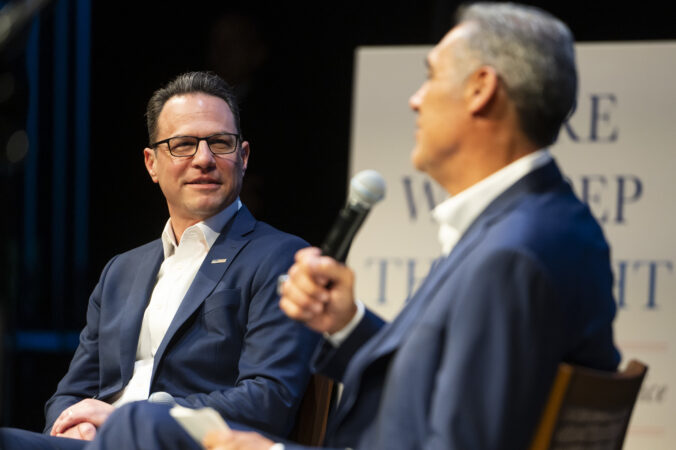
At the latest event to promote his memoir, Where We Keep the Light, Shapiro discussed his love of the sport Saturday evening at Villanova University alongside decorated former men’s basketball coach Jay Wright. While Shapiro is often floated as a likely 2028 presidential candidate, the conversation was largely apolitical, instead focusing on core themes of the book — family, faith, and the governor’s ethos.
Shapiro, once a point guard with a midrange jumper, talked about his “get stuff done” mentality and putting “points on the board” for Pennsylvanians.
“Teams win when every single player, every coach — even the players on the bench who don’t have a role on the floor — each operates at their highest level,” Shapiro said. “My job is to get the most out of myself and all the people around me so we can be successful for others.”
The governor spoke extensively about his propensity to listen: to constituents on the campaign trail; to his wife and children; to his beliefs. Shapiro said his family and Jewish faith have driven him to a life of public service.
A premier Catholic basketball school, Villanova was an apt venue for the event, as Shapiro described how he sees religion as a way to bridge divides. (Shapiro, however, incorrectly identified Villanova as Jesuit — not Augustinian. The crowd jeered, and Wright assured him it was a common mistake. “Even the Catholics don’t know all the orders,” Wright said.)
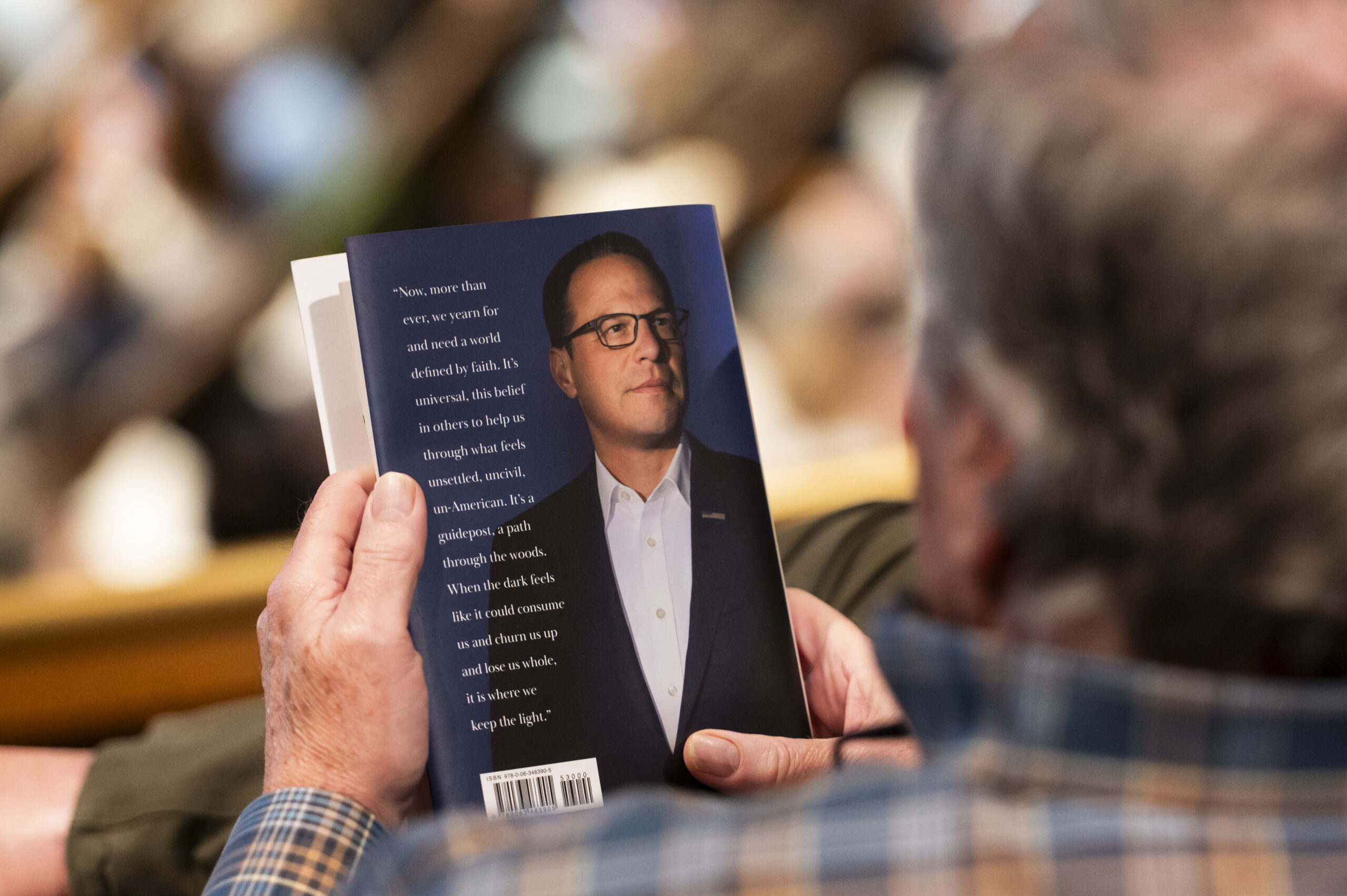
An attendee looks at the back of Gov. Josh Shapiro’s new book, “Where We Keep the Light,” before a book discussion with Jay Wright, former head men’s basketball coach, at Villanova University on Saturday, Feb. 28, 2026.
“By being close to my faith, it allows me to understand people of other faiths better,” Shapiro said. “There’s different ways religions go about their practice, there’s different customs, there’s different ceremonies. But there really is a shared through line of faith.
“Love thy neighbor, feed the hungry, clothe the naked — these are all universal teachings that I think sometimes we end up losing sight of, and frankly, I think that leads to a lot of division in our society.”
“There’s an emotional toll. … [My family] all had to be in,” Shapiro said. “They were all in because you can’t let the bad guys win. We can’t let those who try to intimidate good people from doing this work prevail. You’ve got to stay in the arena, and you’ve got to keep fighting.”
While the conversation largely steered away from politics, Shapiro promised fair midterm elections, discussed views on capital punishment, and touched on civil discourse and unrest nationwide.
“I’m still betting on the people of Pennsylvania — betting on the American people — to help us through this challenging moment that we’re in,” he said. “If the people really continue to rise up, … demand more, seek justice, try and build a world that has more equity in it, eventually politicians are enough to hear those voices, and that’s going to correct our politics. That’s going to help us find more light.”
Staff writer Katie Bernard contributed to this article.
The 2026 Winter Olympics in Milan may be over, but the political storm and protests stirred by the presence of U.S. Immigration and Customs Enforcement have not faded. With the FIFA World Cup set to bring millions of international fans to North America next, the Milan backlash now feels less like an isolated controversy and more like a warning of what could lie ahead.
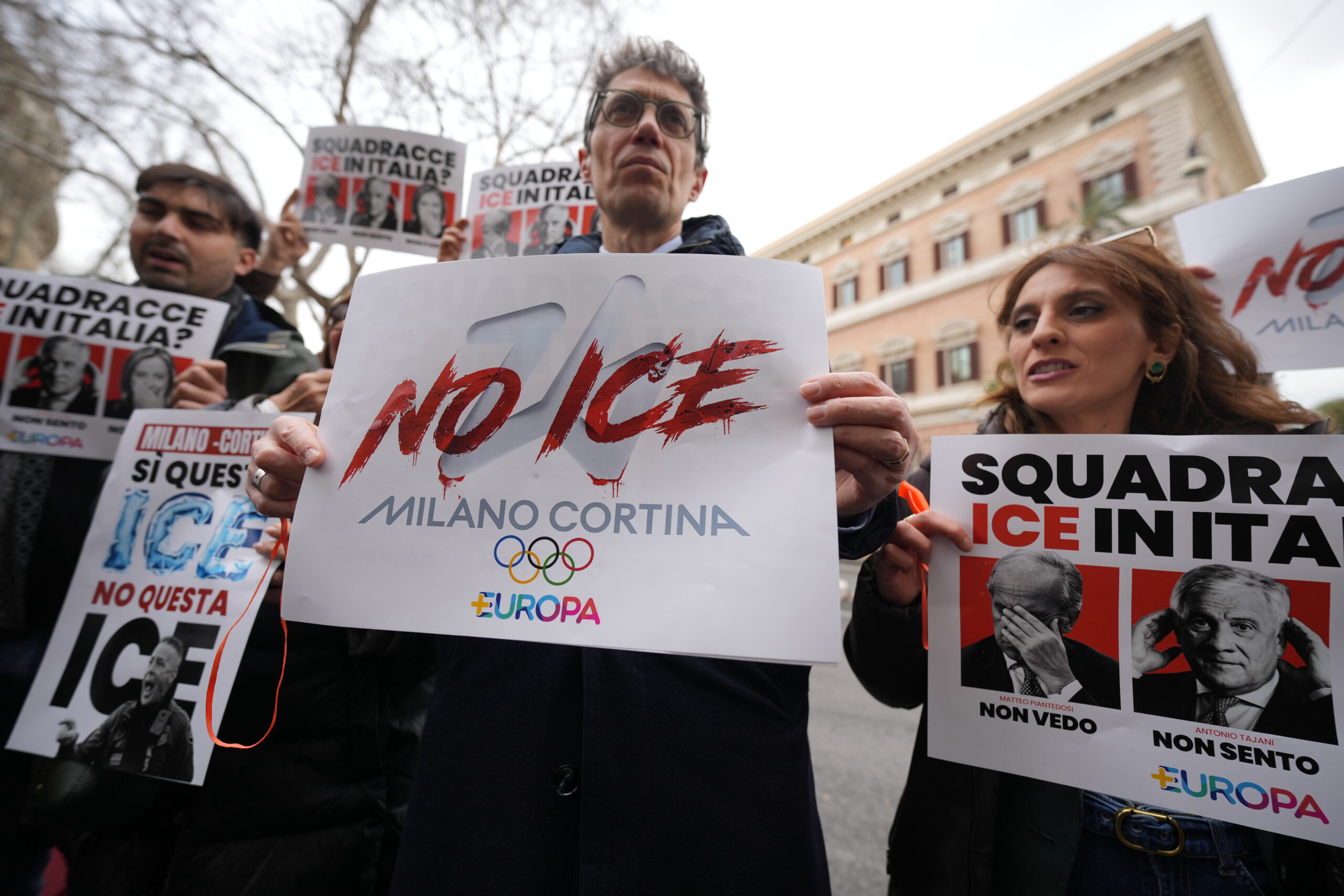
Italian lawmaker Riccardo Magi (center) shows a placard demanding that U.S. Immigration and Customs Enforcement (ICE) agents not be allowed at the Milan Cortina Olympics, during a protest staged outside the U.S. Embassy in Rome in January.
The last World Cup in Qatar drew about one million international visitors. The 2026 tournament — hosted across the United States, Canada, and Mexico — is expected to attract several times that number, making it the largest in soccer’s history. Its success will hinge not only on logistics and policing, but on whether teams and supporters feel welcome, safe, and able to move across borders within tight time frames.
That confidence is now under scrutiny. ICE acting Director Todd Lyons has said the agency will be a “key part of the overall security apparatus” for the World Cup. Yet, when immigration enforcement becomes visibly woven into the staging of a global tournament, it ceases to look like routine security and instead risks appearing as a projection of domestic policy onto an international stage.
Already, there are increasing calls to boycott the event for safety reasons, with fan groups like Football Supporters Europe expressing concern about the “ongoing militarization of police forces in the U.S.”
Meanwhile, supporters from Latin America, Africa, and the Middle East are already asking whether a valid visa will be enough. Could minor paperwork errors lead to detention? For mixed-status families living in the United States, the anxiety is sharper still. A major German team has reportedly canceled a U.S. tour, and online fan forums openly debate boycotts.
Sport has always intersected with politics. The 1936 Berlin Olympics were carefully orchestrated by the Nazi regime to project ideological confidence and international legitimacy, even as discriminatory policies continued at home. Decades later, the global boycott of apartheid South Africa — leading to the country being barred from the 1964 Olympic Games — showed that tournaments can reflect moral choices.
But there is a difference between holding regimes accountable and turning sporting events into stages for domestic enforcement policy. This point carries particular weight in the U.S., a country whose global appeal has long rested on openness and pluralism.
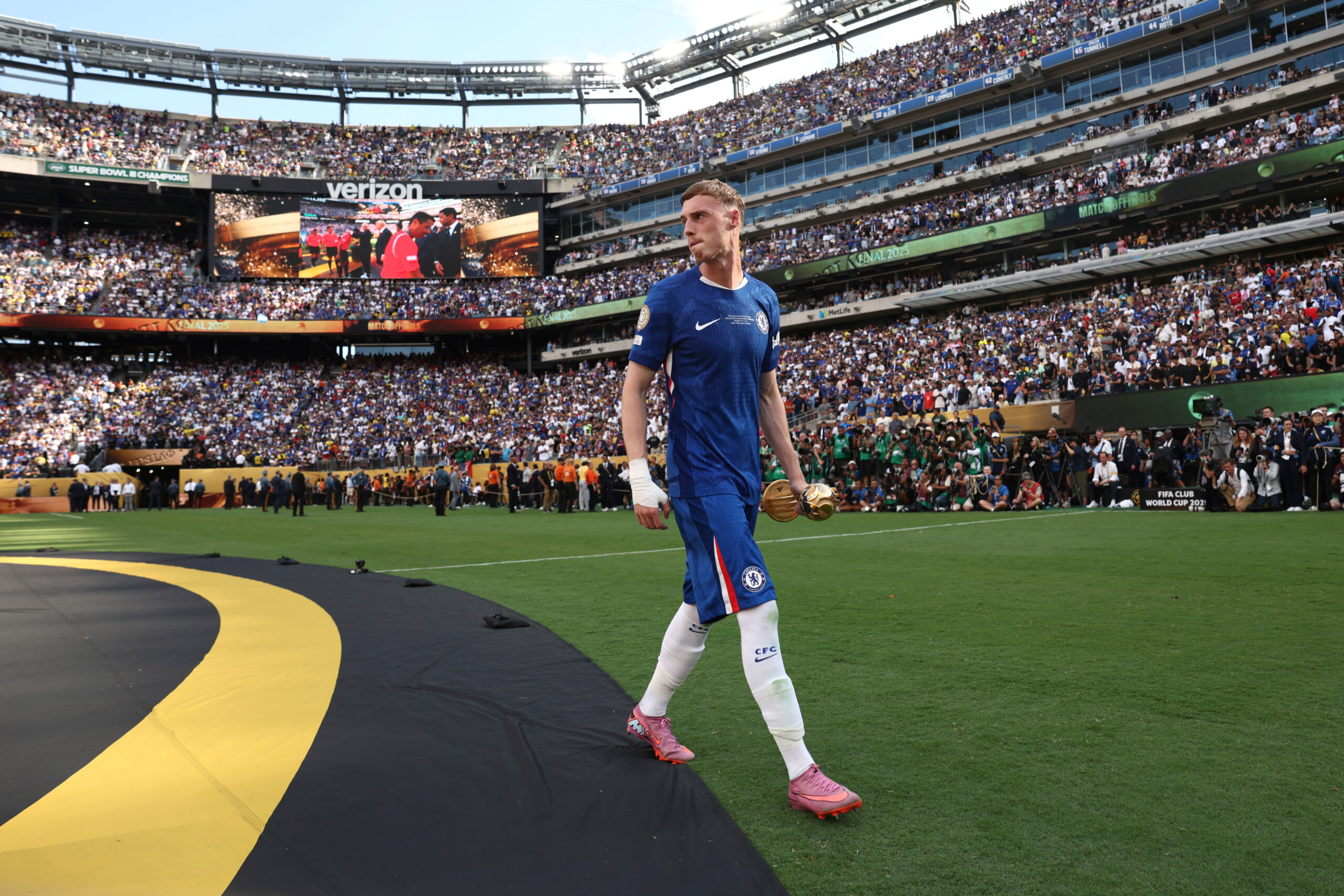
Chelsea’s Cole Palmer walks with the golden ball trophy after Chelsea won against Paris St. Germain in the Club World Cup final, at MetLife Stadium in East Rutherford, N.J., in July.
The World Cup is a soft-power moment. For one month, North America will present itself to billions of viewers not just as a host, but as a harmonious society — a rare global moment when rival nations share rules, rituals, and space on equal terms.
That is precisely why international bodies have treated soccer as a tool for cohesion rather than division. The United Nations has repeatedly promoted sport as a mechanism for refugee integration and social stability, while organizations working on counter-extremism and discrimination, including the Muslim World League, have similarly highlighted how athletics can cultivate “understanding, empathy and respect” across communities.
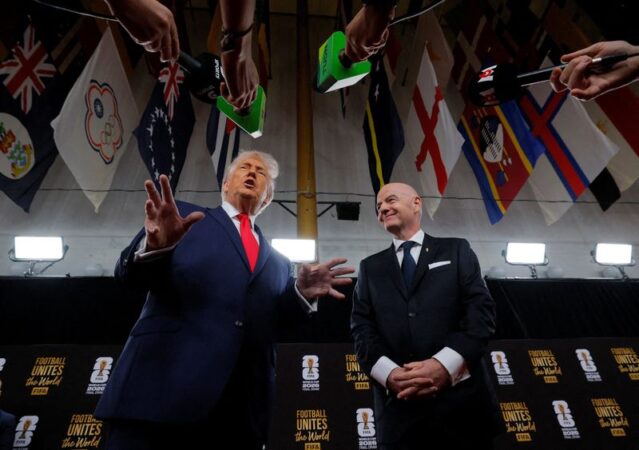
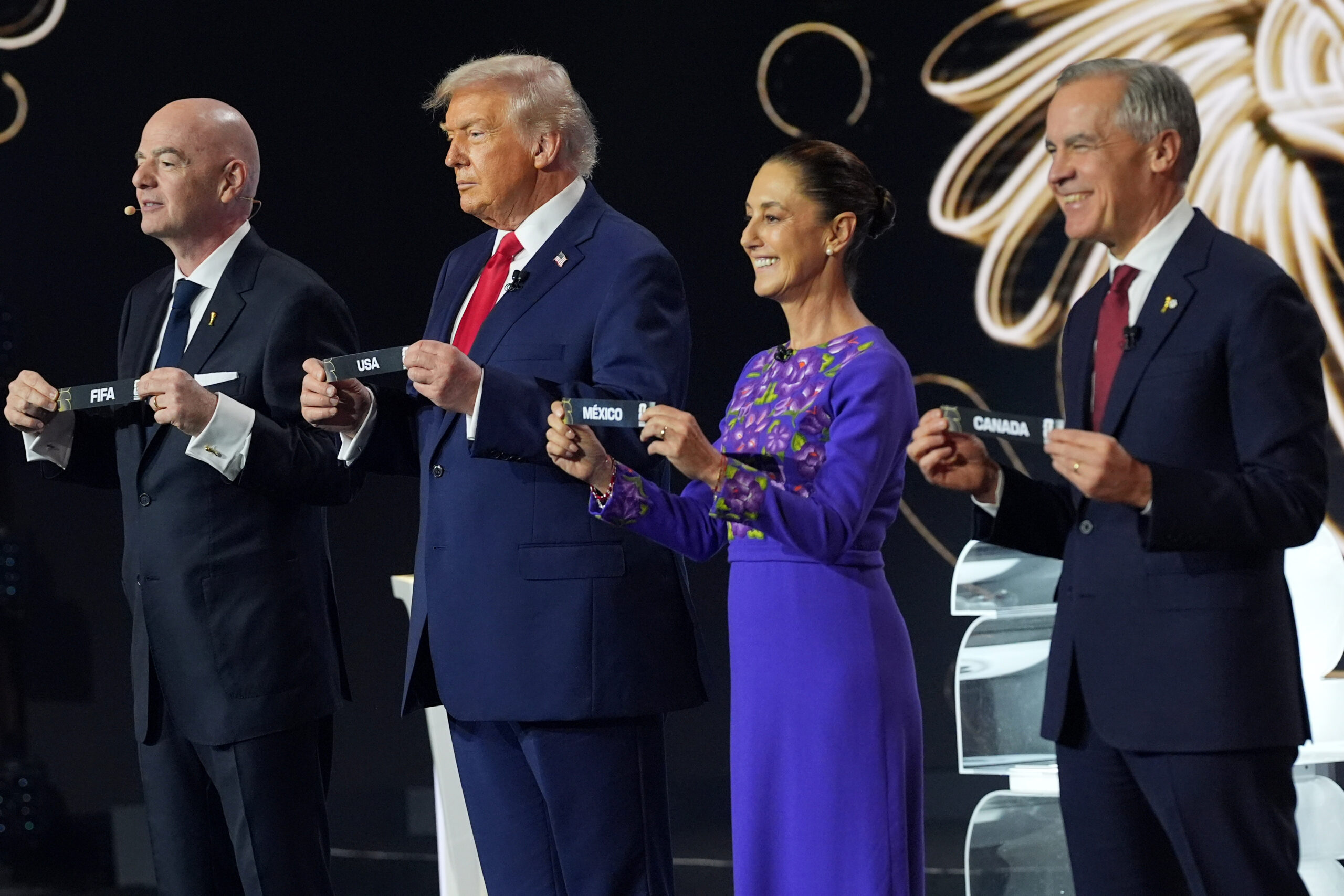
Canadian Prime Minister Mark Carney, Mexican President Claudia Sheinbaum, President Donald Trump, and FIFA President Gianni Infantino hold up country names during the draw for the 2026 FIFA World Cup at the Kennedy Center in Washington in December.
MWL’s secretary general, Mohammad bin Abdulkarim Al-Issa — who was recently recognized in the United States for his efforts to combat hate — has repeatedly warned that weak integration and social division are the biggest threats facing humanity today. Global sporting events, by contrast, offer rare shared civic spaces where diverse societies meet on equal terms, reinforcing inclusion rather than suspicion.
If enforcement spectacle overshadows the 2026 World Cup, the consequences will be economic as well as social. Travel hesitancy, empty seats, and reduced tourism would be immediate effects.
But the deeper risk is political: Visible exclusion at a global event reinforces narratives of division and grievance that extremists on all sides are quick to exploit. When people feel unwelcome in shared civic spaces, mistrust grows — and the integrative power that sport is meant to provide begins to erode.
That makes clarity from federal authorities essential. The U.S. Departments of Homeland Security and State and host city governments should coordinate to publish tournament-specific guidance covering visa processing timelines, entry procedures for ticket holders, and the scope of enforcement activity around official venues.
Clear assurances that immigration sweeps will not be conducted at stadiums, accredited fan zones, or public watch sites would reduce uncertainty without compromising border security.
For a country that prides itself on being a nation of immigrants — and for a president who places great stock in ratings, turnout, and global spectacle — the 2026 tournament presents an extraordinary opportunity to show that security and openness can coexist. Full stadiums and strong international attendance would reinforce the image of a confident, welcoming host nation.
If instead, travel hesitancy, empty seats, and visible enforcement dominate the optics, the tournament risks projecting exclusion rather than unity.
That outcome would not only diminish the World Cup’s global appeal but squander a rare moment of soft power that no amount of security planning alone can restore.
Khalid Sayed is the leader of the opposition for the African National Congress in the Western Cape Provincial Parliament in South Africa, now serving his second term. A former provincial leader of the ANC Youth League, he is an activist committed to social cohesion and democratic renewal in a postapartheid society.
Elizabeth Killough remembers the beginning of Media’s Fair Trade history as follows: She was sitting at her desk at UnTours, an unconventional Media-based travel company, next to her boss and UnTours founder Hal Taussig.
Taussig, sitting in his beloved rickety desk chair, began to share a vision with Killough: What if his hometown of Media could become a hub for Fair Trade, a global trading system that prioritizes quality products and fair wages for farmers in the developing world? What if Media’s shops and restaurants could stock products made and sold with equity and respect?
“I couldn’t even begin to imagine what that would be [like],” Killough remembers.
To humor Taussig, she googled “Fair Trade towns” (the internet was remarkably slow in the mid-2000s, so it took a few minutes to populate the results, she said). An email for Bruce Crowther, the father of Fair Trade in Garstang, England, popped up. Killough sent him a note. Despite the fact that it was 10 p.m. in England, Crowther wrote right back. He wanted to help make Taussig’s dream a reality.
In the months that followed, Taussig and Killough would help spearhead an effort to make Media the first Fair Trade town in the United States, a push that took the cooperation of local business owners, civic leaders, and borough council members. As Media marks 20 years of its Fair Trade Town status, Fair Trade products, and Taussig’s formidable footprint, can be found all over the Delaware County community.
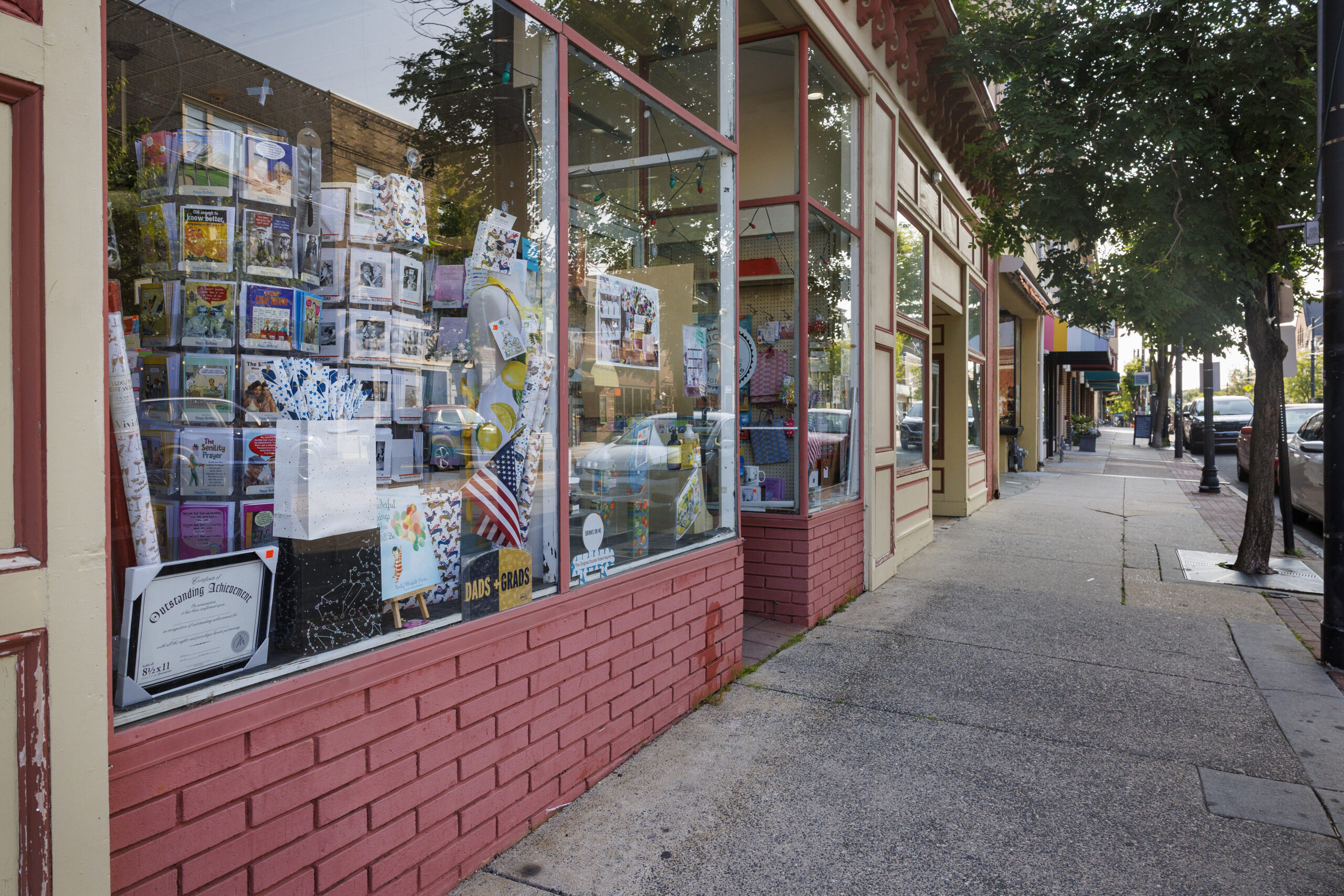
State Street, near Olive Street, on Wednesday, June 4, 2025, in Media, Pa. Businesses that sell Fair Trade products dot Media’s main commercial artery, a sign of the enduring legacy of Hal Taussig and Media’s Fair Trade advocates.
What is Fair Trade?
Fair Trade is a global trading arrangement under which farmers are paid higher wages in exchange for assurances that they will use eco-friendly practices, ensure safe working conditions, and invest in their communities. The trading practice seeks to uplift producers in the developing world, where environmental exploitation and forced labor can be common in the agriculture business. Common Fair Trade products include coffee, chocolate, and bananas.
Fair Trade guarantees farmers can charge minimum prices for goods, acting as a safety net against market instability. Some Fair Trade suppliers receive a “premium fund,” or an additional sum of money put aside to invest in education, healthcare, infrastructure, or business improvement products in their communities. In exchange for economic security, Fair Trade producers must provide workers with reasonable work hours, safe working conditions, and maternity leave, and are barred from using child and forced labor.
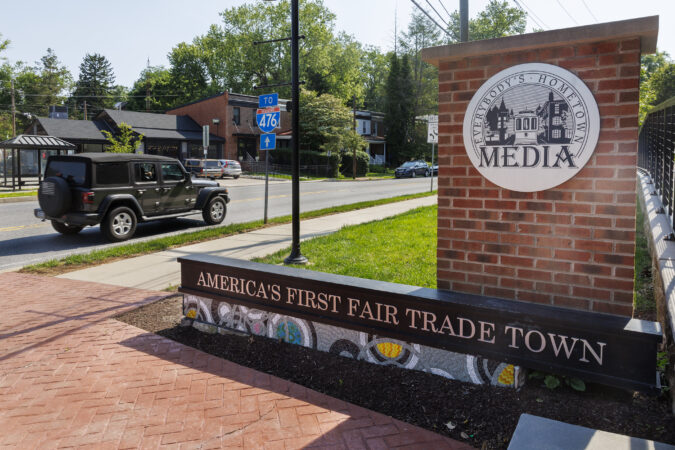
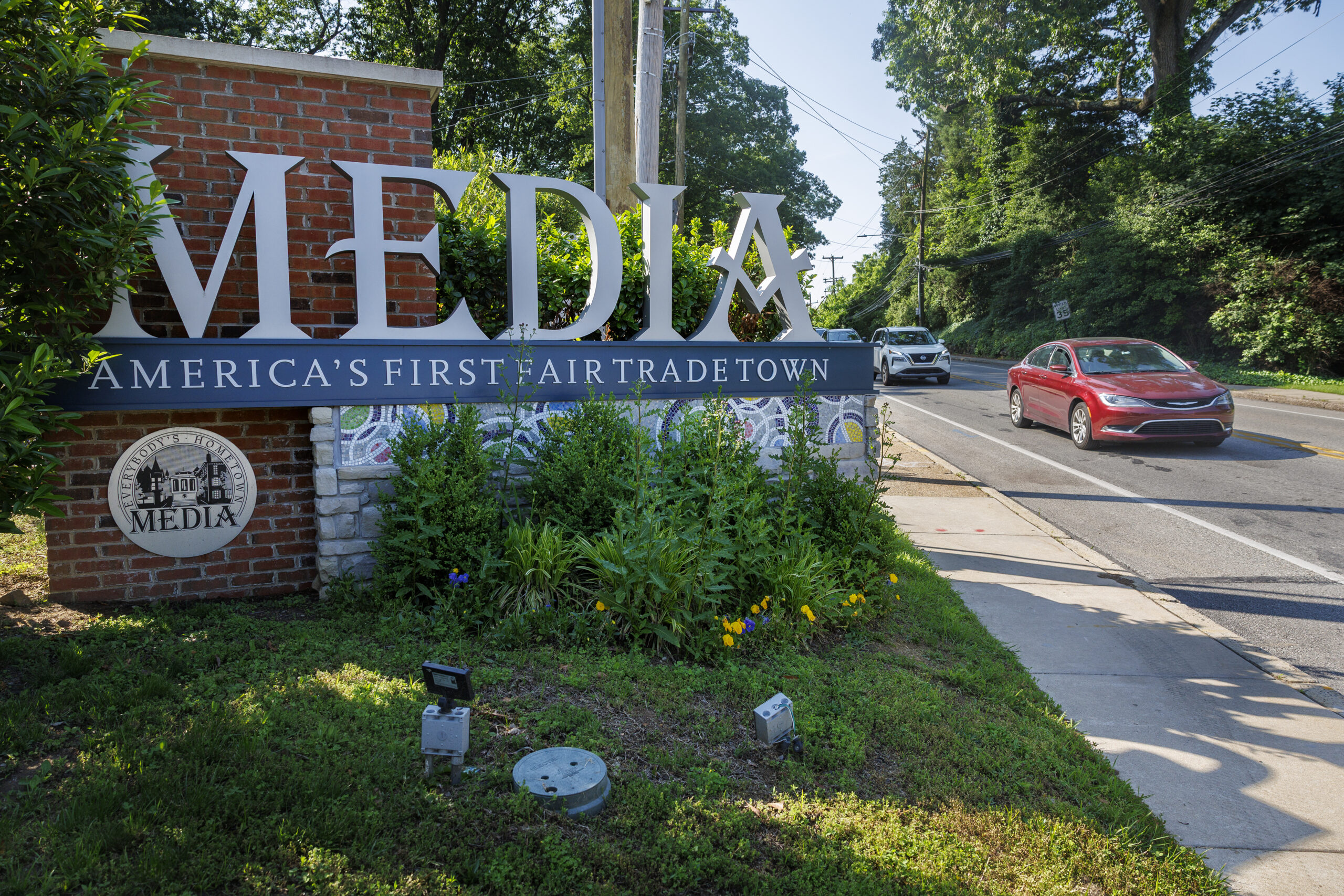
Killough’s email to Crowther set off a monthslong campaign to make Media the United States’s first Fair Trade Town, a moniker now proudly displayed on “Welcome to Media” signs on the borough’s outskirts.
Taussig had been thinking about sustainability in the global economy for decadesbefore Media’s formal designation. In 1992, Taussig and his wife, Norma, founded UnTours, an unconventional “slow travel company” that helped people connect to faraway lands through community engagement and sustainable tourism practices. Friends described Taussig as unique and empathetic. He was famously averse to making a profit, sharing UnTours’ returns with customers, staff, and, later, the UnTours Foundation, which invests in sustainable business ventures.
Taussig, who died in 2016, was “a really sweet man that cared about the world a lot,” said Ira Josephs, the executive director of the Media Fair Trade Committee.
Taussig and Killough began meeting with a group of stakeholders who shared the goal of bringing Fair Trade to Media. At the time, there was no organization overseeing Fair Trade communities in the U.S., so the Media group decided to “self-declare” under the criteria used by Garstang, the first Fair Trade Town in the world. They needed to persuade a certain number of Media retailers to sell Fair Trade-certified items and ask local schools and businessesto use Fair Trade goods. The guidelines also required Media to establish a Fair Trade committee; have an elected body pass a resolution supporting Fair Trade; and promote media coverage and education around Fair Trade.
A number of stores in Media already carried Fair Trade products, and many of its churches and Quaker meetinghouses used Fair Trade coffee and sugar. The working group made a website and brought on board Monica Simpson, a borough council member who helped convince the governing body to pass a Fair Trade resolution. The borough council saw it as a way for “this local community to make an international connection,” Killough said.
Once all of the criteria were met, “we just self-declared that we were the first Fair Trade town,” Josephs said.
At the time, New York City and Los Angeles were working on their own Fair Trade proposals. Yet Media, a 5,000-resident borough in the heart of Delco, beat them to the punch.
“It was rebellious,” Josephs said.
On July 12, 2006, Media held a public ceremony unveiling its status as a Fair Trade town.
Many of Media’s businesses got on board.
When Tara and Brent Endicott, the owners of downtown Media’s Burlap & Bean, first got into the coffee business, they knew they wanted “to feel like we were making a difference,” Tara Endicott said.
All of the coffee sold at Burlap & Bean is Fair Trade-certified and organic, a decision the Endicotts made in 2006 when they opened their first location in nearby Newtown Square,inspired in part by Media’s Fair Trade push.
Though their coffee-industry friends told them they were crazy for stocking only Fair Trade products, which are more expensive and harder to source, the Fair Trade beans won over the coffee purveyors and their Media-area customers.
Signage that reads, America’s First Free Trade Town, Media, PA., Wednesday, June 4, 2025. This sign is at N. Providence Road where it crosses N. Monroe Street.
Fair Trade in Media, two decades later
Fair Trade lives on in the stores, restaurants, and coffee shops that dot Media’s bustling downtown.
All of the international products at Earth & State, a pottery and craft shop, are from Fair Trade groups. Bittersweet Kitchen, a pizza and brunch spot, serves Fair Trade hot chocolate and coffee. Mom-and-daughter-owned yarn shop Homesewn sells yarn from Fair Trade Federation members and other companies that follow Fair Trade principles. Even Trader Joe’s, located in Media’s old armory building, stocks Fair Trade coffee.
On Valentine’s Day, the Media Fair Trade Committee hosted its annual Fair Trade chocolate tasting. The committee also hosts an annual juggling contest with Fair Trade soccer balls at Dining Under the Stars.
Fair Trade’s future is not entirely certain.
Fair Trade groups have come under scrutiny in recent years for corporatizing a once mission-driven practice. It has been hard at times to get businesses to splurge on Fair Trade goods, first during the 2008 recession and then again during the pandemic, Killough said. As rents rise in Media, there is a “constant turnover of store owners and restaurateurs,” Killough added, making it an ongoing effort to keep Fair Trade practices alive.
“It’s going to continue to require a lot of work, a lot of commitment, and a lot of education,” she said.
Last year was “the worst year financially that we’ve ever had,” Tara Endicott of Burlap & Bean said. Despite having the highest customer counts in Burlap & Bean’s history, high coffee prices and tariffs left the Endicotts taking home meager profits at the end of the day. They have thought about opening up their business to non-Fair Trade coffee but have not yet, relying on the hope that economic conditions will improve.
Ultimately, Brent Endicott said, he and his wife are proud to be in Media and to be serving Fair Trade beans.
“We’re thrilled to be able to do our part to help Media stay a certified Fair Trade town,” he said.
This suburban content is produced with support from the Leslie Miller and Richard Worley Foundation and The Lenfest Institute for Journalism. Editorial content is created independently of the project donors. Gifts to support The Inquirer’s high-impact journalism can be made at inquirer.com/donate. A list of Lenfest Institute donors can be found at lenfestinstitute.org/supporters.