BOSTON — After learning of the right oblique strain that will sideline Joel Embiid through at least Wednesday, Andre Drummond told The Inquirer that he wanted to “wrap him in a bubble sheet and give him a hug, man.”
“I just feel like he can’t get a break,” Drummond added of Embiid’s seemingly never-ending string of injuries.
Embiid’s importance to the 76ers was magnified in Sunday night’s 114-98 loss at the Celtics. The Sixers allowed a career-best 27 points, 17 rebounds, and three blocks to Neemias Queta, who is enjoying a wonderful season for the surprising Celtics but is not exactly regarded as a dominant interior force. The Sixers were blasted in the rebounding category, 59-37, including surrendering 19 offensive boards that Boston turned into 30 second-chance points.
And those harrowing numbers come one game before Tuesday’s home matchup against Victor Wembanyama, the 7-foot-4 NBA MVP contender, and the 43-17 San Antonio Spurs.
“It was frustrating for me,” Drummond said of Sunday’s sharp rebounding discrepancy, “because, like, I see them and I’m like, ‘[Expletive], I’m a little too close to the rim’ and it’s bouncing over my head. It’s one of those annoying games where you see it, and it’s just out of reach. …
“It just felt like everything we did, it just didn’t work.”
Embiid, in a clear attempt to protect his knees by limiting jumping, is not the rebounder or defensive anchor he once was. Yet he flashed an intimidating presence while averaging 30 points, eight rebounds, 4.5 assists, and one block during a 20-game, month-plus stretch before these latest injuries to his oblique, shin, and knee.
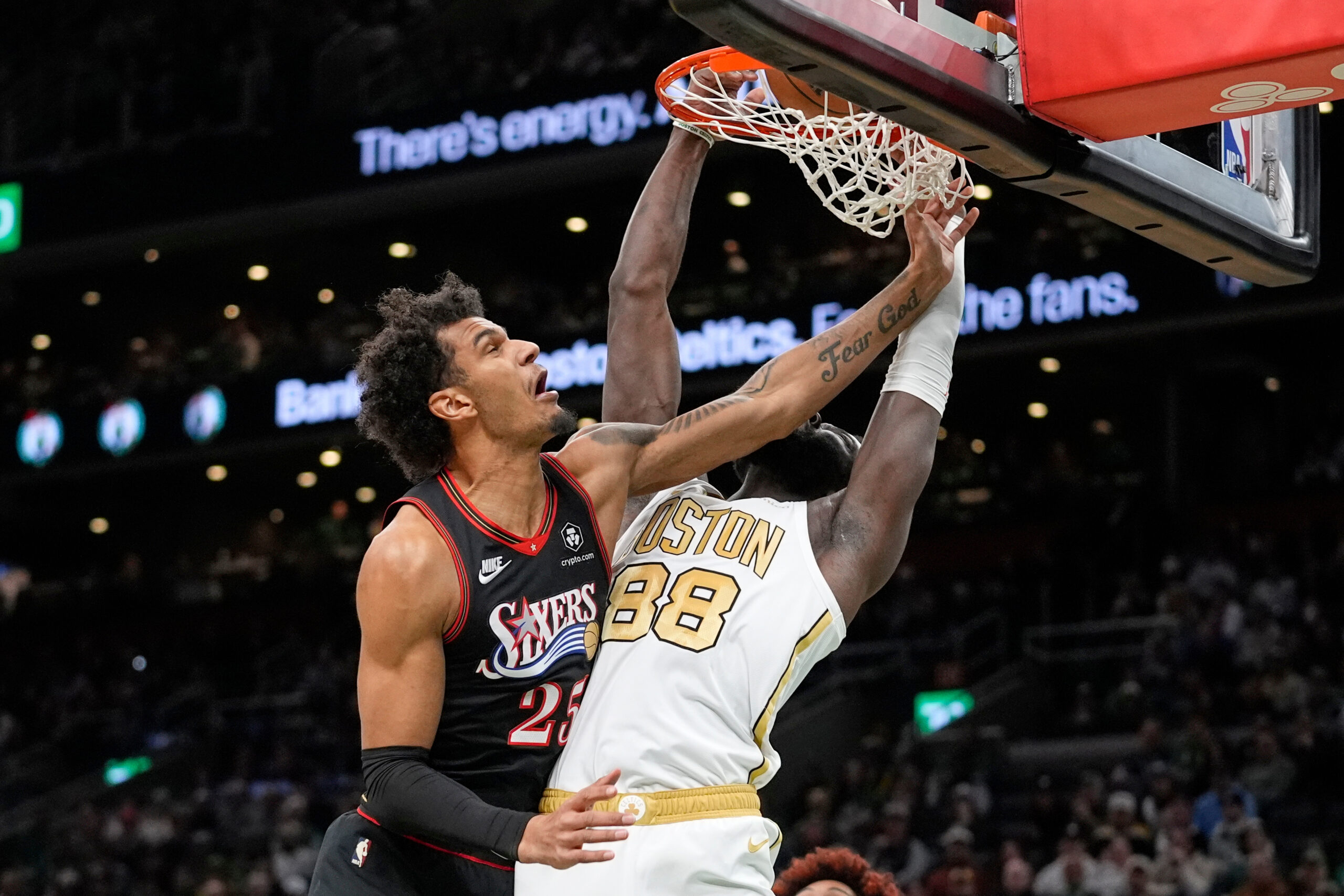
Celtics center Neemias Queta, dunking on the Sixers’ Dominick Barlow, had a career-best 27 points and 17 rebounds in a win on Sunday.
In Embiid’s absence Sunday, coach Nick Nurse again turned to the center pecking order of starting Drummond, who does not play when Embiid is healthy, and Adem Bona, who has typically been the backup whether Embiid plays or not.
Questions about rebounding have swirled around this Sixers roster, which lacked a traditional power forward, since media day more than five months ago. It was an emphasis for Nurse coming out of the All-Star break after the Sixers ranked 26th out of 30 NBA teams in defensive rebounding (31.1) during their first 54 games.
And Nurse said it was one of the keys to Sunday’s matchup at TD Garden, against a 40-20 Celtics team that exited the night ranked sixth in the league in overall rebounding (46.1 per game) and offensive boards (12.8 per game).
Nurse lamented that the Sixers (33-27) did not make enough shots — they went 39.8% from the floor, including 12 of 34 from All-Star point guard Tyrese Maxey — to control the boards. The Celtics, meanwhile, attempted 49 three-pointers, which often caused long and “funny” rebounds, Maxey said.
“Those are tough ones,” Maxey added. “ … If you’re not challenging [the shooter], we’ve got to try to come back and grab some of those. I got to run some of those down.”
But Queta, the fifth-year center averaging 9.8 points and 8.2 rebounds per game entering Sunday, was a beast inside. He totaled 16 points and 12 rebounds in the first half, earning a standing ovation from the home crowd when he checked out of the game in the second quarter.
Drummond, who was once off to a resurgent start but still has not looked the same physically since a late-November knee injury, said he was trying to “blitz” to get the ball out of the Celtics guards’ hands but struggled to move defensively.
Bona provided an energetic initial lift, but then picked up two fouls and never recaptured momentum. Nurse did not opt to go with smaller lineups, with either Dominick Barlow or Jabari Walker at center. Queta’s outing also arrived eight days after the non-Embiid Sixers allowed 37-year-old DeAndre Jordan, who had not played since Oct. 29, to amass 15 rebounds in the New Orleans victory over the Sixers.
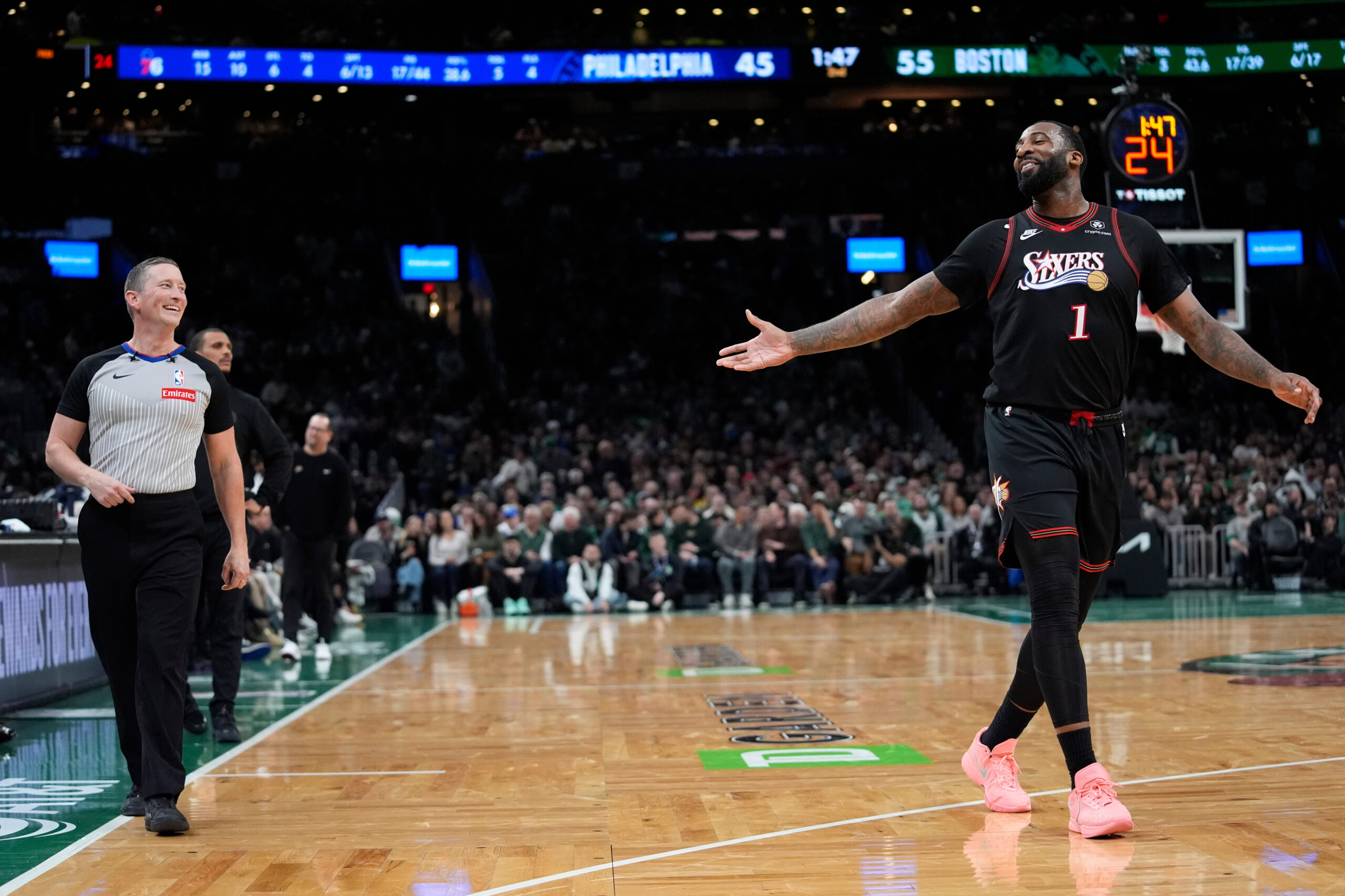
Sixers center Andre Drummond exchanges some friendly banter with referee Nick Buchert after being called for a foul on Sunday in Boston.
“[The Celtics] made the right plays by giving [Queta] the ball,” Drummond said from his locker after the game, “and he did what he was supposed to do by finishing shots. He was around the rim getting offensive rebounds. I try to block him out, [and] those weird bounces would just fall in his hands, or it would get tipped to him somehow, some way. …
“[Crummy] that it happened against me, but whatever. It is what it is. He had a good game.”
It is possible that Queta learned some of those rebounding tips from Drummond, who said the two centers have shared a postgame chat after every matchup since the beginning of last season.
Drummond has told Queta that, at the end of each practice, he watches teammates shoot to learn “what type of misses they have” and how to position himself to, in his words, become “one of the best rebounders to play.”
“Use this as momentum and build on it,” Drummond told Queta after Sunday’s game. “You should feel good about yourself. It was a great game. You played well. Do it again.”
Queta’s final touches on his breakout night included blowing past Drummond for a one-handed dunk, before a spin and finish through contact put the Celtics up 106-97 with less than three minutes to play. Queta then corralled two game-sealing putbacks in the final two minutes, playfully shaking his head after the second conversion. The home fans serenaded Queta with “M-V-P” chants multiple times in the fourth quarter.
No disrespect to Queta, but Wembanyama is an actual MVP contender. The Spurs, who are 9-1 in their last 10 games, are an even better rebounding team, entering Monday ranked third in the league with 46.4 per game.
And the Sixers must face that matchup without Embiid. With or without bubble wrap.
“We’re going to have to figure out who to guard [Wenbanyama] with,” Nurse said. “It will probably be a number of guys to take that challenge.”
Superintendent Tony B. Watlington Sr. and the Philadelphia School District have proposed 18 school closures, six colocations, and a vague, insufficiently transparent plan to reconfigure grade levels across numerous other schools, citing the need for “more efficient use of all of our resources” to deliver high-quality academic and extracurricular programming districtwide.
The Inquirer Editorial Board has endorsed the plan, pending adjustments to several sites, including Lankenau Environmental Science Magnet High School.
The district is right to pursue a comprehensive facilities plan that addresses toxic building conditions, overcrowding, and underutilization. But it is going about it the wrong way. Facilities planning should be an annual, longitudinal process grounded in sustained community engagement, not a punctuated moment of 24 mass closures that disrupt neighborhoods and sidestep the thoughtful incorporation of public input that only time and intention can provide.
Mistakes of 2013
Without such care, the district will repeat the mistakes of the 2013 closures, which led to students disappearing from school rolls in September, overcrowded receiving schools, and the racialized erasure of neighborhood histories and place-based educational traditions.
First, significant questions remain about implementation and transparency. Ten properties are slated to be “conveyed” to the city, reportedly tied to Mayor Cherelle L. Parker’s H.O.M.E. plan. Amid speculation about a 20-year tax abatement connected to redevelopment, it is unclear what mechanisms will ensure the benefits of these transfers accrue to the communities that have borne the brunt of closure, rather than to private developers. A two-decade tax abatement would symbolically and materially reinscribe the racialized disinvestment, neglect, and manufactured crisis that have too often paved the way for school closures in the first place.
Second, the data used to inform the closures have been called into question by many, and do not take into account the nuance of mixing school populations via colocation. For example, parents at Childs Elementary have cited the district’s plan to colocate a new Academy at Palumbo based on a building capacity of 1,000. However, a significant portion of the building’s classrooms is dedicated to special-education students. A colocation would displace SPED students from these classrooms while reinforcing a bifurcated culture among the catchment-based middle school students and Palumbo students in an already rapidly gentrifying neighborhood of Point Breeze.
Third, closure and conveyance to the city for resale do not guarantee public-serving outcomes. With my collaborators — Ariel Bierbaum, Amy Bach, and Elaine Simon — I have studied how thoughtful reuse, rooted in restoring community access and public control, can begin to repair the racially inequitable legacy of past closures.
Yet, private redevelopment has repeatedly failed to stabilize these properties. Selling off public assets does not guarantee revitalization; it often perpetuates stagnation or displacement. Developers frequently “flip” former school buildings, speculating on value rather than advancing community use.
After it closed in 2013, Germantown High School fell into decay and disrepair, a fate Julia McWilliams writes could be repeated.
Take the former Germantown High School and Robert Fulton Elementary, for example. Concordia Group bought them in 2014, only to abandon its plans and resell the buildings three years later to local developer Jack Azran, whose opaque redevelopment has sparked concern.
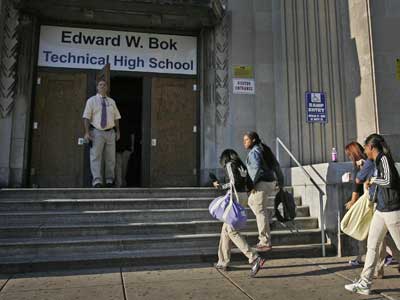
Moreover, once schools are sold to private entities, they are effectively lost to some communities and public education forever. South Philadelphia’s experience is a cautionary tale. As nearby elementary schools became overcrowded following the 2013 closures, the former Edward W. Bok Technical High School, once a public citywide admissions school, was transformed into a workspace for small-business owners, artists, and nonprofit organizations, closing classrooms forever.
This reuse no longer serves the same community of students and families as when it was a high school, and raises important questions: What does it mean for a community’s future when former schools become symbols of gentrification rather than centers of education? And what options remain when demographic shifts create new demand for neighborhood schools that no longer exist?
Had Bok remained in public hands, it could have flexibly adapted to those needs. Instead, it serves a much different population: South Philadelphia working artists, small-business owners, and local refugee-serving nonprofits, but also patrons who can afford $14 cocktails.
Slow down
Rather than defaulting to closure, the Board of Education should consider how underenrolled buildings might be repurposed for public-serving uses that retain community control. Could redevelopment proceed gradually, with clear commitments that investments in existing buildings benefit both local families and those who have chosen these schools?
Such an approach would require genuine public engagement and sustained dialogue. It would require slowing down and rejecting a disruptive, thinly deliberated plan shaped by speculative capital and instead committing to participatory, long-term facilities planning.
The district and the city face a choice. They can repeat a cycle of disinvestment and dispossession, or they can chart a more deliberative, community-rooted path. The question is whether they have the will to do so.
Julia McWilliams is the codirector of the Urban Studies Program at the University of Pennsylvania and a member of Stand Up for Philly Schools. She coauthored the forthcoming book, “Schools for Sale: Disinvestment, Dispossession, and School Building Reuse in Philadelphia,” from the University of Chicago Press.
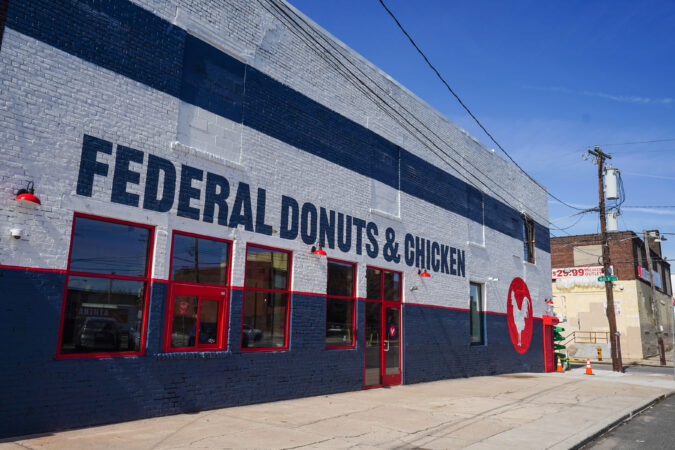
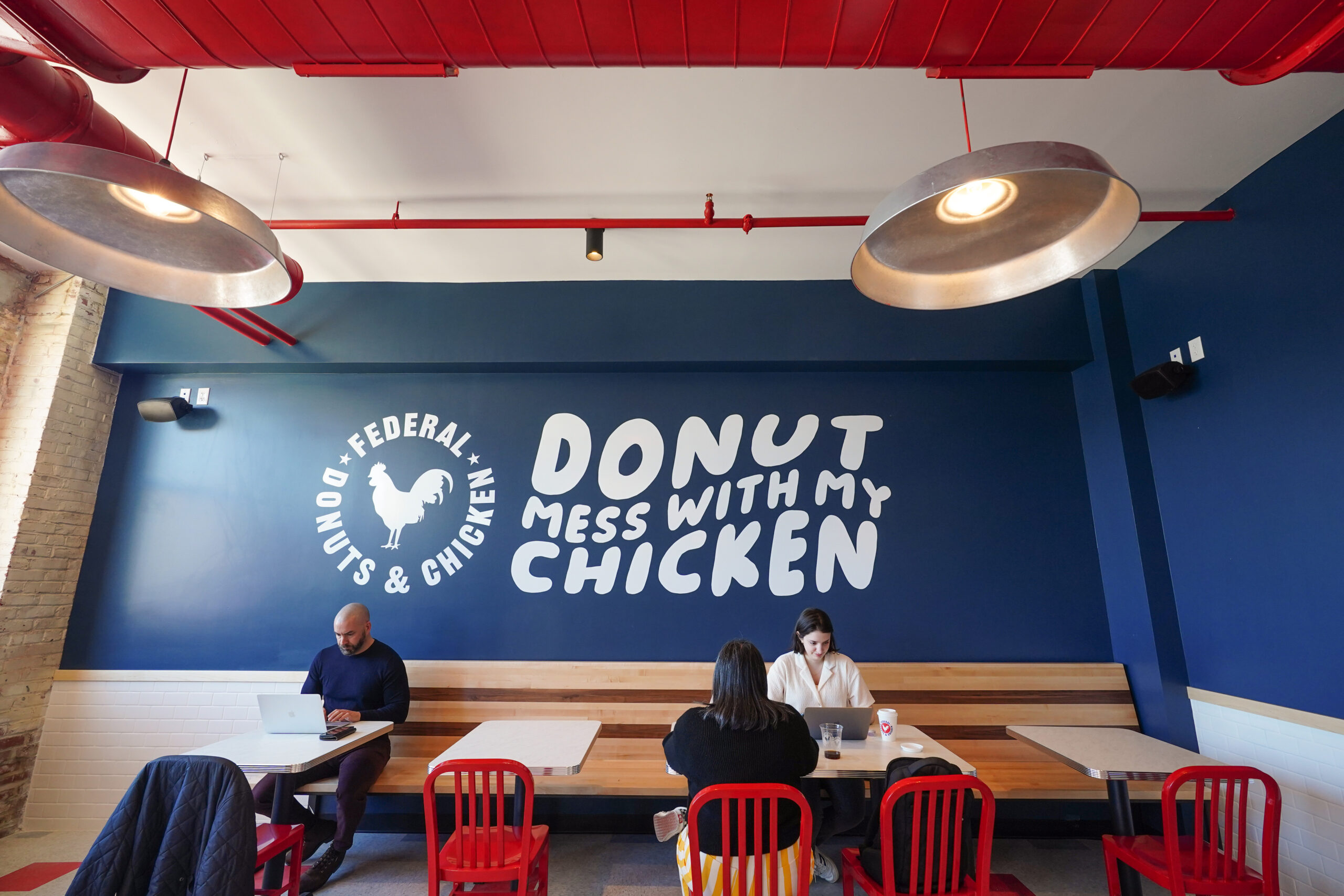
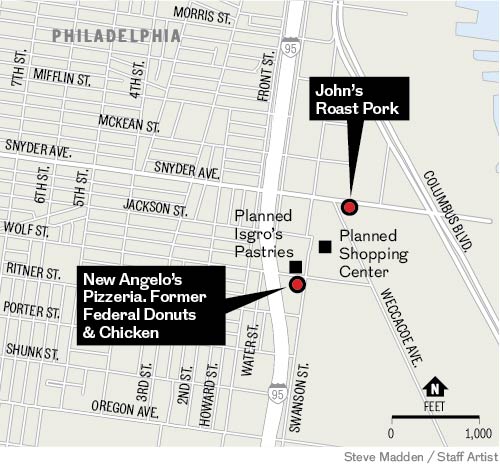
Angelo’s Pizzeria, bursting at the seams at its flagship shop on Ninth Street near the Italian Market, will take over the South Philadelphia location of Federal Donuts & Chicken, converting the chain’s largest outpost into a production hub with delivery, takeout, and limited seating.
The Federal Donuts location at Wolf and Swanson Streets, which opened in March 2024, closed Saturday. Its six employees have been offered jobs elsewhere in the company, cofounder Steve Cook said.
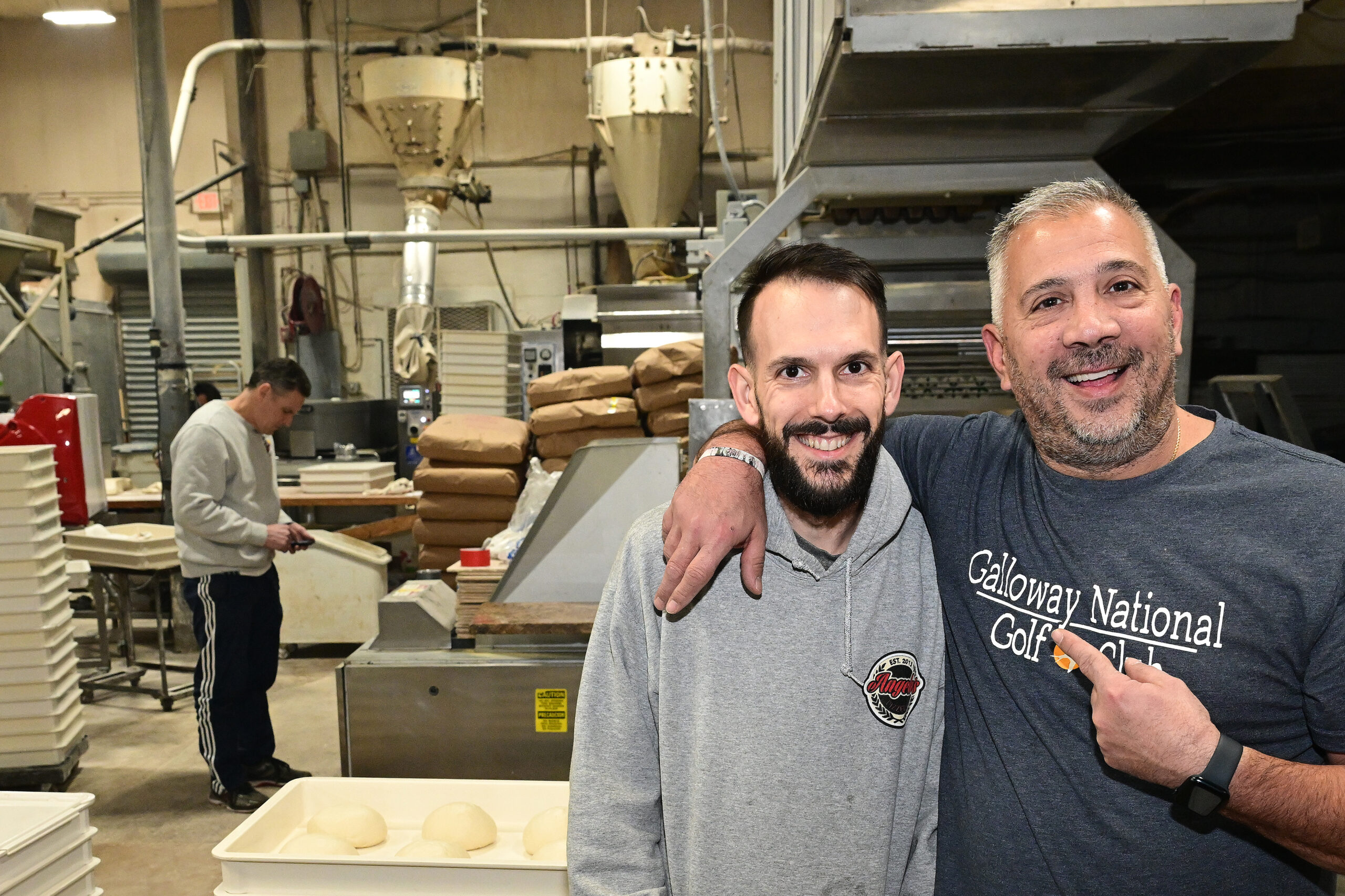
Danny DiGiampietro of Angelo’s Pizzeria (right) with longtime business partner Jared Braunstein at Angelo’s Baking Co. in Conshohocken, Pa., in December 2024.
Angelo’s owner Danny DiGiampietro told The Inquirer that the new location would solve key issues for the Michelin-honored pizza and sandwich business, whose house-baked rolls helped propel its popularity from its opening in 2019 after a move from Haddonfield.
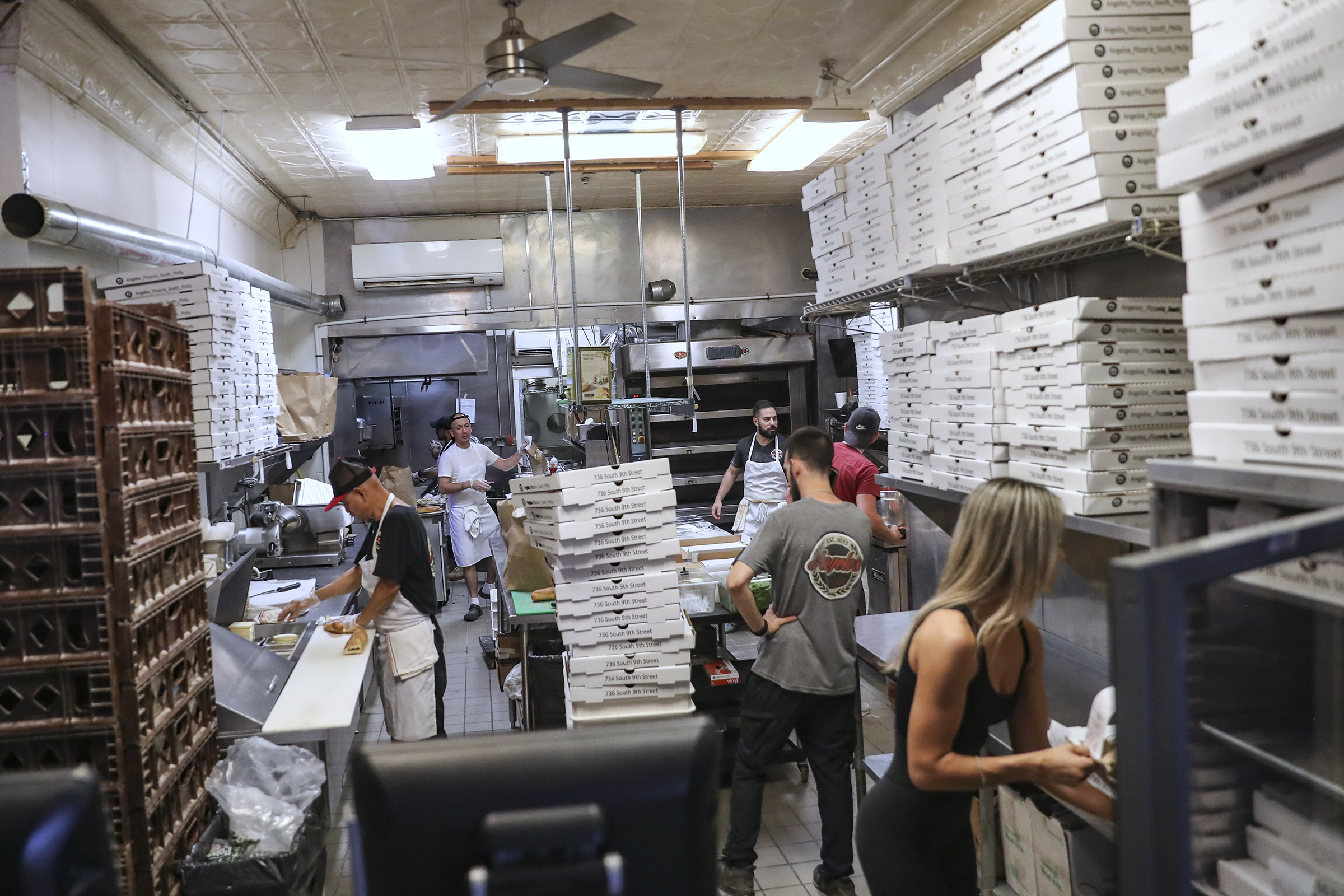
First, it will take the pressure off of the takeout-only Ninth Street storefront, which draws long lines — as well as neighbor complaints. “Ninth Street isn’t going anywhere — we’re not touching that,” he said.
Second, it will allow Angelo’s to move its third-party delivery out of North Philadelphia, where it launched in a ghost kitchen in October 2024. “We like working with them and it helped prove the concept,” he said of the kitchen, on Girard Avenue near 13th Street.
A cheesesteak with onions and Cooper Sharp American from Angelo’s.
Third, with a new kitchen five times the size of Ninth Street’s, “this will bring us back to doing what we used to do,” DiGiampietro said. “We made our bones with specialty sandwiches, like sausage scaloppine and 50 kinds of cutlets. When cheesesteaks and pizza took over, we had to take them off [the full-time menu]. Not knocking the cheesesteaks, but they’re boring. I want to get loose again.”
He said Wolf Street would also serve as a commissary and operate seven days from early in the morning (with house-baked bagels) to late at night.
DiGiampietro said the new building had been on his radar several years ago, before Federal Donuts signed on. “At the time, the build-out cost and the timeline — more than a year — just didn’t work for us,” he said. “The cloud kitchen was faster. But when this came back around, we moved on it fast.”
Angelo’s Pizzeria on Ninth Street during the lunch rush on Aug. 31, 2022.
Asked how many people will be employed at the new location, DiGiampietro replied: “I have no idea. I just come up with the ideas.” Jared Braunstein, his longtime business partner, added: “We’re reactionary here. We just figure it out.”
For Federal Donuts, the Wolf Street closure reflects a broader shift in its operating model. Cook, fellow chef Michael Solomonov, and several friends launched the fried chicken/doughnuts/coffee brand in 2011 as a complement to CookNSolo’s award-winning restaurant, Zahav.
The Federal Donuts & Chicken location at Swanson and Wolf Streets just before its debut in March 2024.
Wolf Street’s kitchen, at 5,000 square feet, was designed for high-volume production. But by the time it opened, that strategy had already evolved, Cook said. “We liked the retail opportunity there. We liked the development story there. But we’re still early on the retail side, and without the commissary to underwrite some of the overhead, it just didn’t really make sense.”
The move fits into Angelo’s broader expansion pipeline.
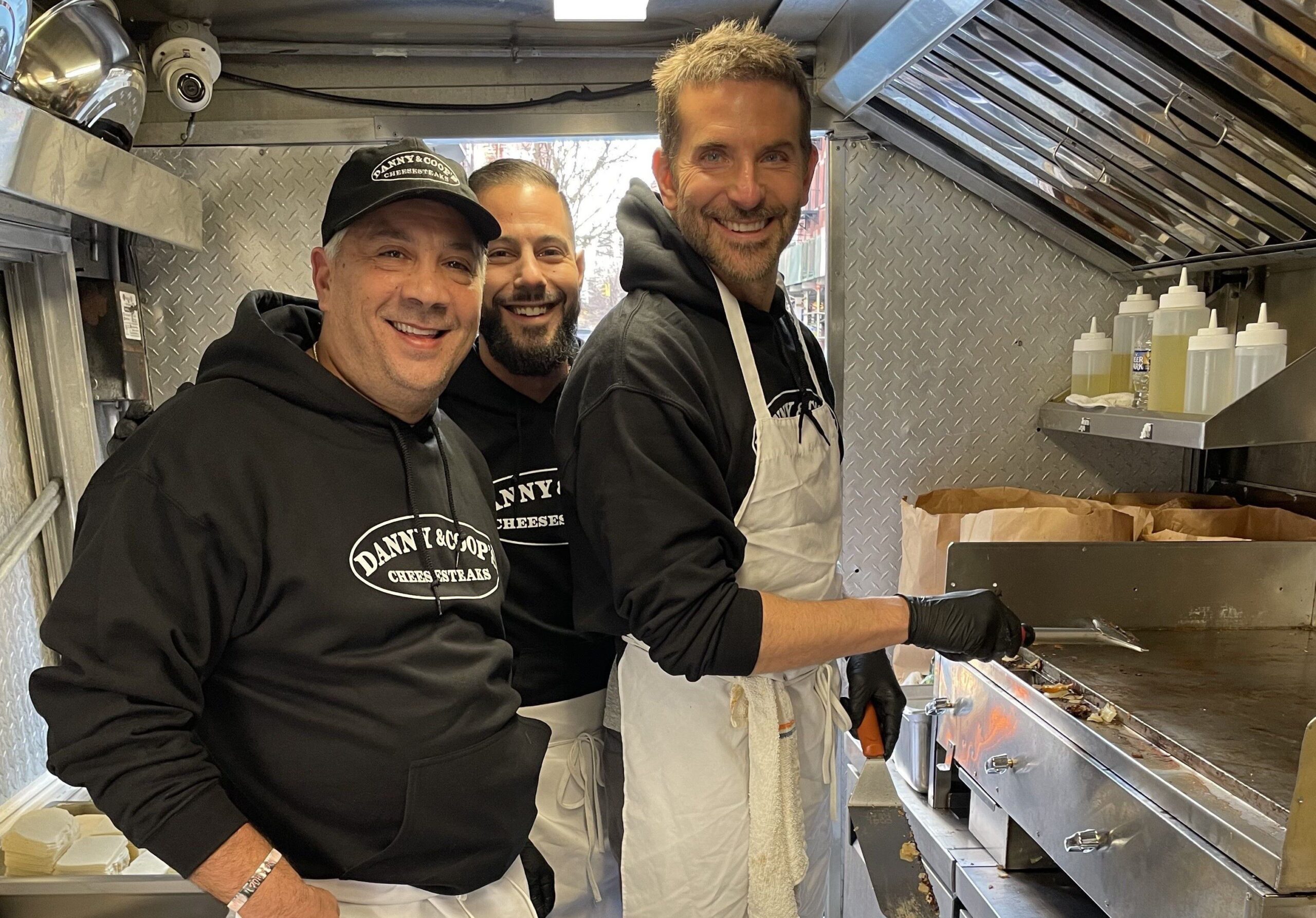
DiGiampietro, with partners, opened Uncle Gus’ Steaks in late 2024 inside Reading Terminal Market. He and the owners of the Wilmington restaurant Bardea opened Angelo’s cheesesteak stand last year in Wilmington’s DE.CO food hall. Actor Bradley Cooper, who walked into Ninth Street anonymously several years ago and bought a sandwich, is DiGiampietro’s business partner in a cheesesteak shop called Danny & Coop’s in Manhattan’s East Village.
Actor Bradley Cooper (right) and Angelo’s Pizzeria owner Danny DiGiampietro (left) work on the Danny & Coop’s cheesesteak truck, a precursor of their shop, with manager Seth Braunstein in New York in December 2023.
A long-delayed bakery project in Conshohocken is nearing completion. DiGiampietro said progress has been slowed by the need to bring the older building — formerly Conshohocken Italian Bakery — up to current code.
He said he hopes to open that retail bakery within a month.
DiGiampietro said a South Jersey location, planned for the former Di’Nics in West Collingswood Heights, is at least six months from opening. Work is expected to begin soon.
For now, DiGiampietro’s focus is on South Philadelphia, where the industrial-scale Wolf Street building offers room to grow without the constraints of a dense residential block.
Angelo’s Pizzeria is setting up at Swanson and Wolf Streets.
“It’s [in an] industrial [area], it makes sense operationally, and it gives us room to grow without bothering anyone nearby,” DiGiampietro said. “For us, it was a no-brainer.”
The surrounding corridor — long defined by warehouses and light industry, as well as big-box stores along Columbus Boulevard and the landmark John’s Roast Pork — is also in flux. Across Wolf Street, Isgro’s Pastries is planning a second location — a large-scale bakery and cafe — to open this summer. Just north on Swanson Street, the six-acre former Inolex Chemical Co. site has been cleared for a retail development whose prospective tenants include Shake Shack, Raising Cane’s, and Lidl.
Happy March, Philly. As we turn the calendar page, let’s hope that snow turns to sunshine, with the spring air upon us.
It’s also time to lock in on my favorite time of the year — college basketball. That’s right, it’s almost time for March Madness. The regular season is wrapping up, with some conference tournaments set to tip off this week, and Selection Sunday is about two weeks away.
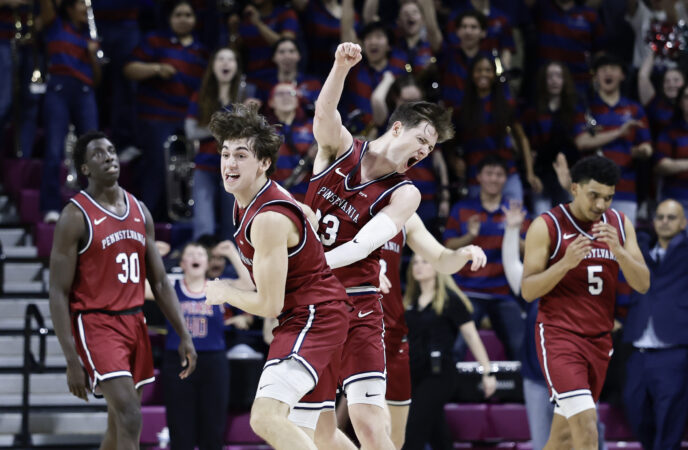
Some of our Big 5 schools will struggle to get a bid without winning their respective conference tournaments, while others, including Villanova men and women, are bound to receive at-large bids. Fran McCaffery’s Penn squad also clinched the team’s first Ivy League tournament berth in three years this past weekend.
And while Villanova suffered its worst loss in 29 years against St. John’s on Saturday, Kevin Willard is not reading too much into it. The loss, however, revealed that the Wildcats can’t climb any higher than third in the Big East.
Also, don’t forget, while some of Philly’s schools may not be playing in the NCAA Tournament, the madness will come to the area on March 20 and 22 for men’s games in the first and second rounds at Xfinity Mobile Arena.
So whether you’re a serious fan or looking for something to watch, get ready for the games to begin, and follow along all month with our coverage of college basketball.
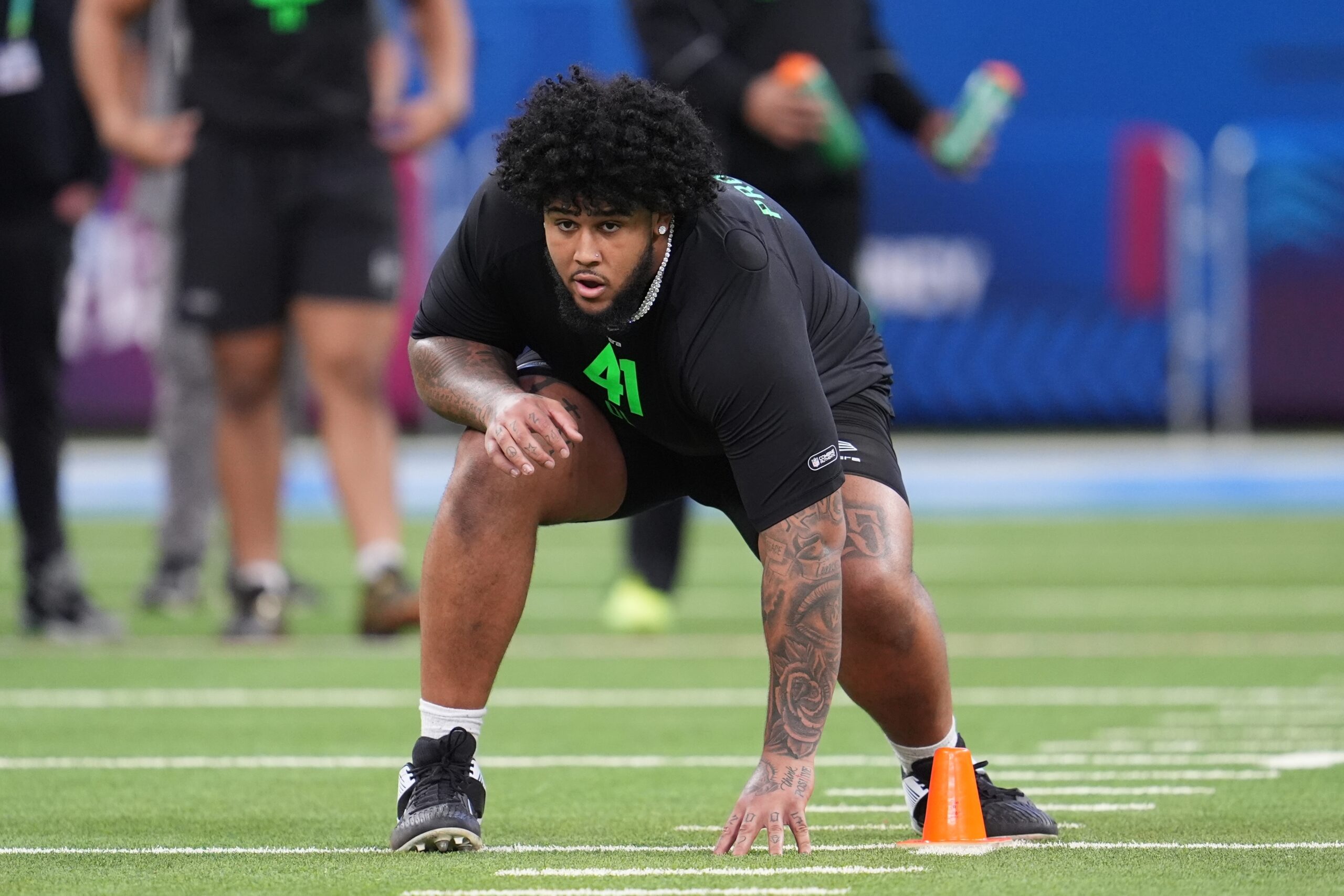
The Eagles showed significant interest in the tight ends and offensive linemen at the combine, including offensive tackle Kadyn Proctor.
The NFL Scouting Combine is officially over, and some team fits have began to materialize, including what the Eagles may end up doing with the 23rd pick. It seems like the Birds were interested in the tight ends and offensive linemen at the combine, and tackle Kadyn Proctor was among their formal meetings.
The free-agency period will help paint a clearer view of what needs remain ahead of April’s draft. For now, here’s how we’re projecting our second first-round mock draft.
What we’re…
🤔 Wondering: Are the Flyers still in the mix to make the playoffs? Well, they took a step closer with Saturday’s win over the Bruins.
🏀 Following: Joel Embiid’s injury status after being ruled out on Saturday of the Sixers’ next three games with a right oblique strain.
🗞️ Reading: The relationship between Edmundo Sosa and Adolis García, and how they’ve been reunited as Phillies with the “same goal.”
👀 Watching: Temple men’s basketball went from one of the top teams in the American Conference to nearly missing the conference tournament.
Andrew Painter was “calm, cool, collected,” during his two innings of work on Sunday.
Andrew Painter’s two innings on Sunday were exactly three years to the day of his first-ever spring training start in 2023. At the time, he was 19, with a chance to win a spot in the Phillies rotation.
Since then, he underwent Tommy John surgery, rehab, and pitched a full minor league season. Painter has been waiting a while to make it back to this point, and the wait was finally over on Sunday, where he was efficient and flashed six different pitches in two shutout innings of a 5-3 loss to the Yankees.
Orion Kerkering is also eager to get back on the mound. The right-hander threw his first bullpen session in over two weeks on Saturday, after a mild hamstring strain had slowed his start to the spring. He’s recently been working on a new splitter and is one step closer to testing it against hitters.
Team USA honored the late Johnny Gaudreau by bringing his No. 13 jersey and his daughter, Noa, and son, Johnny, onto the ice after their win over Canada in the men’s hockey gold-medal game at the 2026 Winter Olympics on Feb. 22.
Team USA honoring the late Johnny Gaudreau after its 2-1 overtime win over Canada in the gold-medal game was one of the most impactful moments of the Winter Olympics.
Meredith Gaudreau knew her late husband’s jersey had a place in the USA Hockey locker room in Milan, Italy, just as it had at the 4 Nations Face-Off in 2025. However, she didn’t expect the team to bring the jersey to the ice as it celebrated USA Hockey’s first men’s Olympic gold since 1980.
But the Gaudreau family might not have made it to Milan without the efforts of Brian Roberts, the chairman and CEO of Comcast.
The Union only mounted five shots on goal against New York City FC.
The Union entered Sunday evening’s match looking to avenge the playoff loss that halted their 2025 playoff campaign in the Eastern Conference semifinals. Instead, they fell 2-1 to New York City FC in the team’s Major League Soccer home opener at Subaru Park.
Despite the Union outshooting NYCFC, 17-13, New York City put 10 of those shots on goal, and the Union struggled to create meaningful chances in the first half.
Sports snapshot
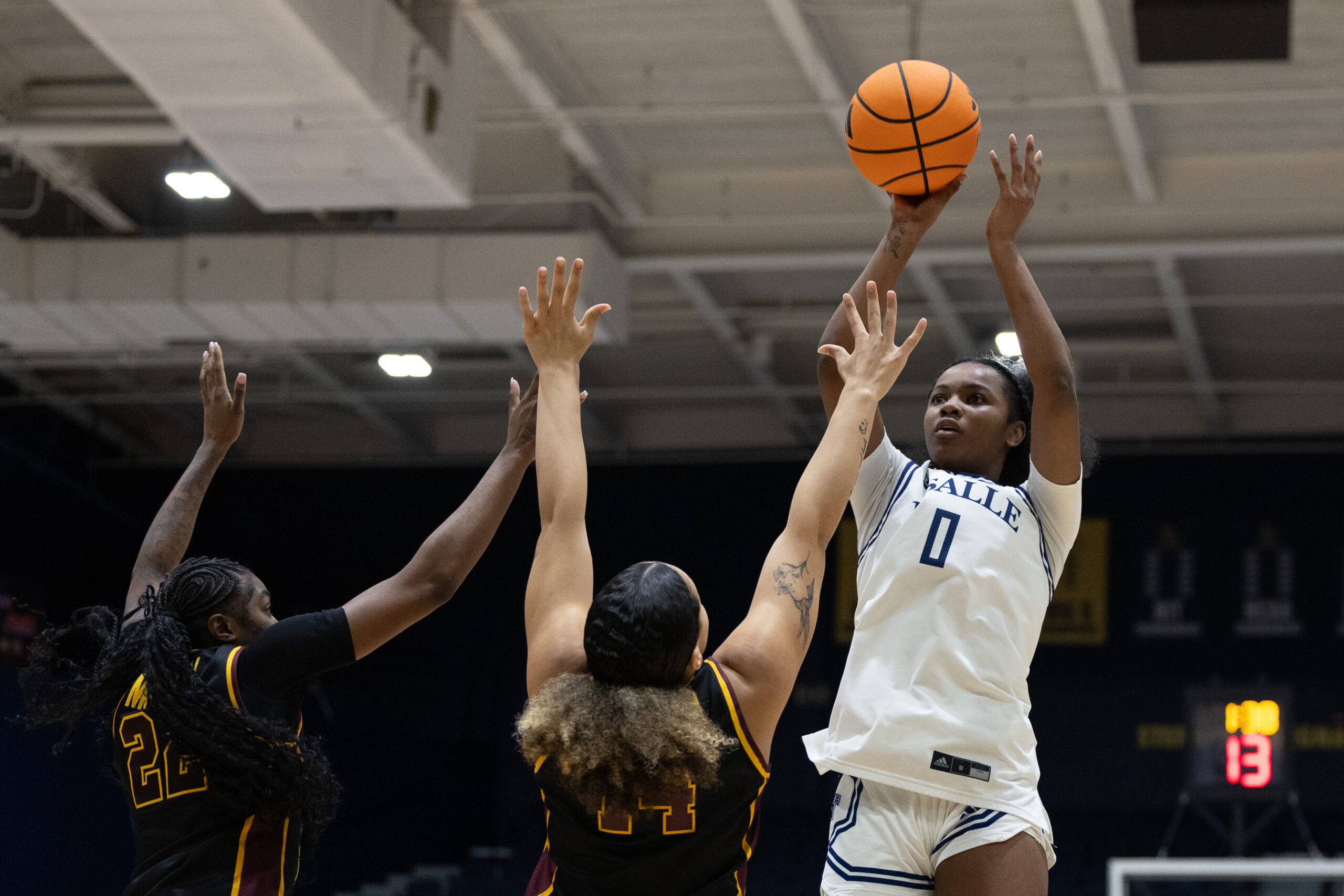
Explorers guard Aryss Macktoon finished with a double-double against Loyola Chicago on Saturday.
Record breaker: Aryss Macktoon became La Salle’s all-time single-season steals leader in its win over Loyola Chicago.
Matthew Tkachuk (left) and Brady Tkachuk pose for the team picture after receiving their gold medals.
Several of the USA hockey lads who were involved in the debauched postgame celebration with FBI director Kash Patel that devolved into a misogynistic phone call with President Trump have issued a range of regrets in the past few days. Maybe they’ll think twice next time before laughing about women — in this instance, their Olympic gold-medal counterparts, and the best women’s team ever assembled — being treated as their inferiors, writes columnist Marcus Hayes.
We compiled today’s newsletter using reporting from Marcus Hayes, Jeff Neiburg, Jonathan Tannenwald, Devin Jackson, Lochlahn March, Gina Mizell, Jackie Spiegel, Owen Hewitt, Ryan Mack, Conor Smith, and Avery Barber.
By submitting your written, visual, and/or audio contributions, you agree to The Inquirer’s Terms of Use, including the grant of rights in Section 10.
Thanks for getting your week started with me. Hope you have a wonderful Monday. Jim is out this week, so Matt Mullin will catch back up with you in Tuesday’s newsletter. — Bella
As the Union inflicted another loss upon themselves Sunday night, Matt Freese mostly got to just stand there and watch.
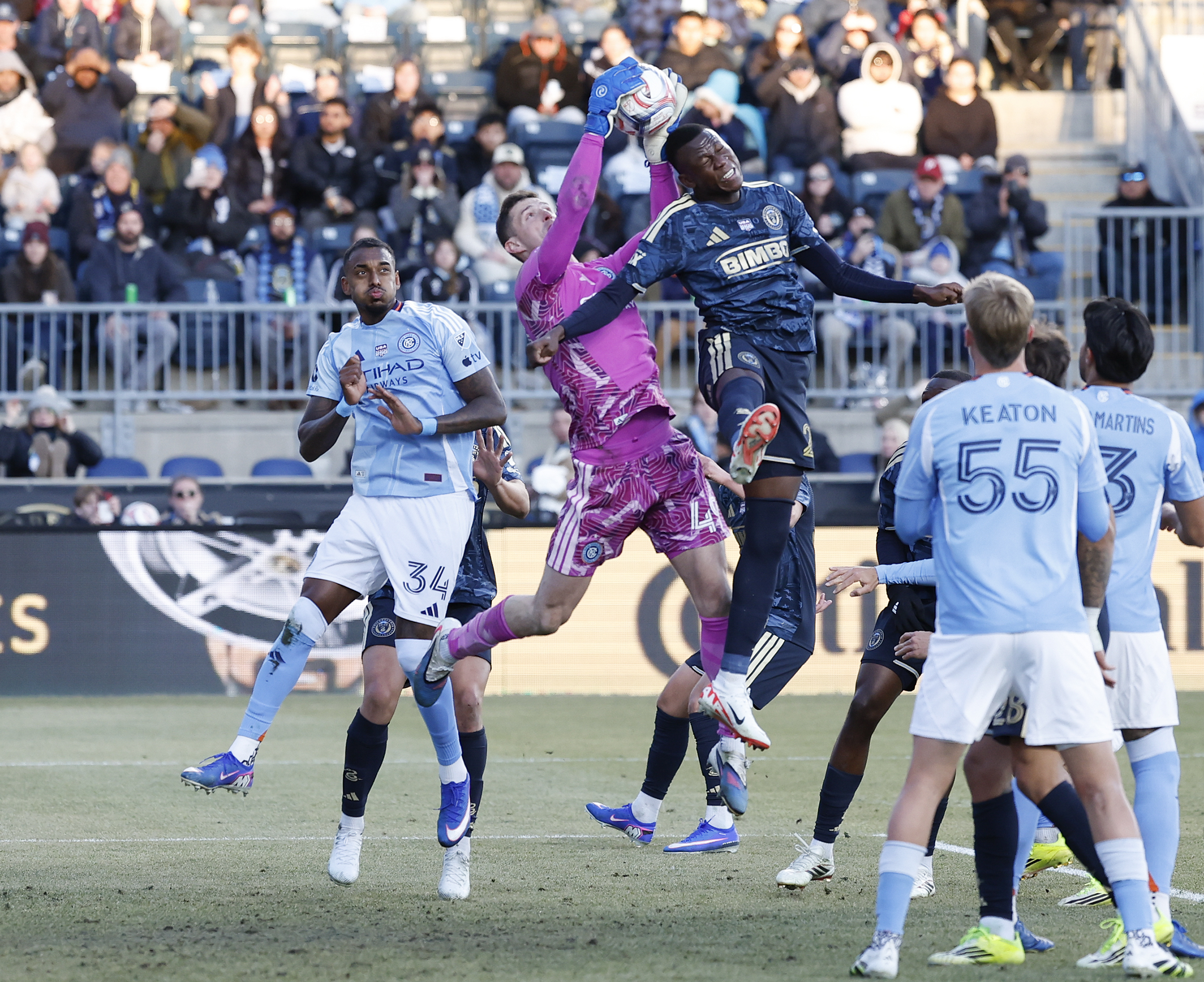
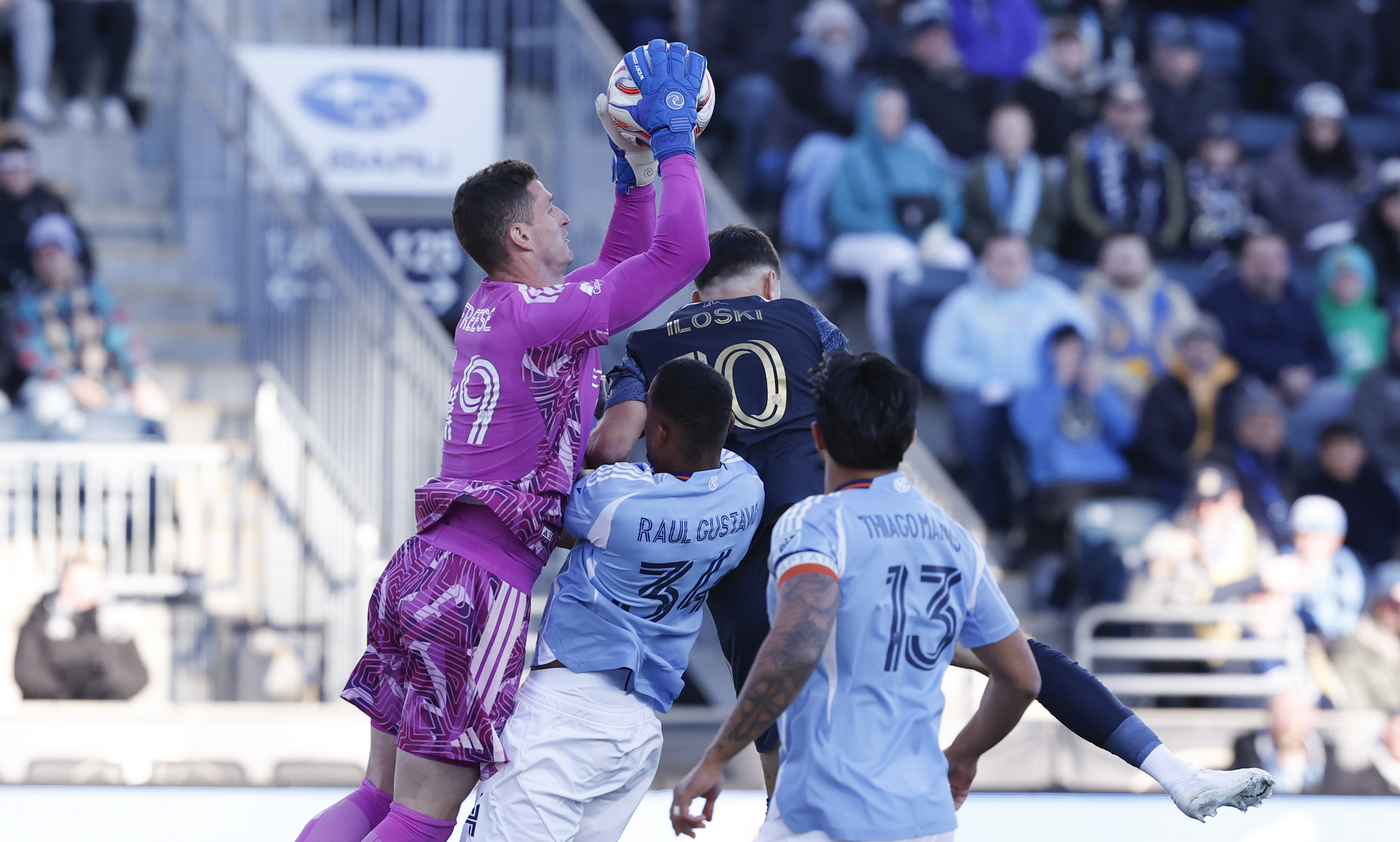
The Wayne native wasn’t really challenged until the late stages of his side’s 2-1 win at Subaru Park. In his sixth game for New York City FC against the team he grew up with, Freese didn’t face an official shot on target until the 54th minute, and the biggest save of his five didn’t come until the 80th.
Sure, there was Indiana Vassilev’s penalty kick equalizer in the 89th, followed by 10 minutes of stoppage time. But once Olwethu Makhanya was sent off for a second yellow card three minutes later, the field tilted back the other way, leading to Tayvon Gray’s eventual winner.
It might be a while before Freese has another day that easy, whether a Sunday or any other. In fact, many will soon be quite the opposite.
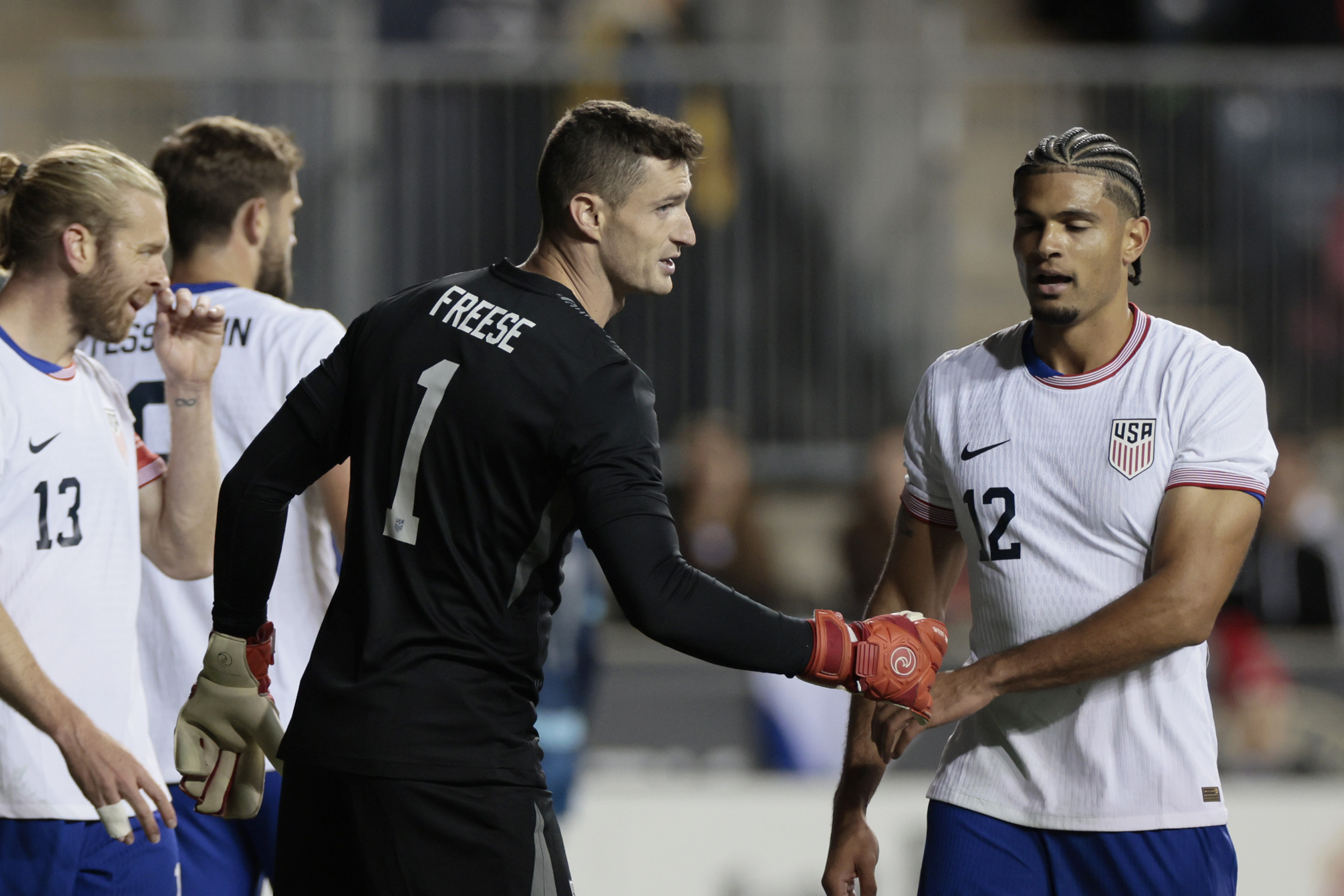
Three weeks from now, the 27-year-old goalkeeper will head to the U.S. men’s soccer team’s last training camp and games before the World Cup roster is set. Freese will arrive in Atlanta as the expected starter, a position he has done enough to keep while others have done too little to challenge him.
Along with the internal competition, Freese will be challenged by world powers Belgium and Portugal on the 28th and 31st. Both games will draw big crowds to Mercedes-Benz Stadium, with a sellout expected for the latter since it could be Cristiano Ronaldo’s first game on U.S. soil in 12 years.
Of all the positional battles to come in that camp, goalkeeper won’t be the most-watched. Centerback, central midfielder, attacking midfielder, and striker will all rank higher – which is every position except outside back.
But there will still be plenty of scrutiny on the net. Critics will pounce if Freese slips up, whether or not Matt Turner, Patrick Schulte, or any other candidate steps up to challenge him. Goalkeeper has been the U.S. team’s most solid position for decades, and it remains quietly awkward that right now it isn’t.
Matt Freese (center) in net during the U.S. men’s team’s game at Subaru Park last November.
Excitement for ‘big stages’
Freese isn’t thinking about that yet. He has enough on his plate with a New York team that hopes to silence its own critics, who see a starless roster.
“I’m just thinking about taking everything day by day, game by game,” he told The Inquirer. “I’m going to play some soccer today, and I’m going to play some soccer tomorrow, and [am] just going to continue on like that. So I’m really just focused on being present and improving every day, and making sure I’m ready for anything.”
“It’s a big stage, but I love big stages, I love big moments,” Freese said, “And the thing with big moments is, great preparation leads to great opportunities, and so that’s what I’m focused on: the preparation part.”
Matt Freese jumping to catch a ball in the air during the first half.
As it happens, Freese’s pre-World Cup schedule with New York is stacked with storylines. He’ll face the league’s three biggest stars, starting with Lionel Messi’s Miami on March 22 — the day before he goes to U.S. camp. Not many people these days get to face Messi and Ronaldo in a span of 10 days, and even fewer get to say they’ll host one of them at Yankee Stadium.
Later in the spring, Freese will visit Thomas Müller’s Vancouver, and host Son Heung-Min’s Los Angeles FC in Queens, the heart of New York’s big Korean population. He’ll also line up across from Schulte’s Columbus Crew, though he won’t face Turner’s New England Revolution until later in the year.
And for good measure, he’ll cross paths with Downingtown native Zack Steffen for just the second time. Steffen is out of the World Cup race at this point, but at least the duo might have some stories to swap.
On top in a growing rivalry
“Really, again, just focused on taking everything game by game,” Freese said. “In order to be the best, you’ve got to beat the best, and obviously this league at this point has, really, some of the best players in the world. It’ll be some big moments in the next two months of the games you’re talking about, but really just more focused on preparing for Orlando now [New York’s next opponent] after relaxing tonight.”
His use of “relaxing” was timely, given how much he could relax during the game. No one knows better how much of a rivalry the Union and New York City now have, except for maybe his old teammate Andre Blake.
“I think it’s just a matchup that brings the best out of each other,” Freese said. “I think it’s interestingly conflicting soccer philosophies, and I think that creates a really interesting game where we have to find different parts of us, and they have to find different parts of themselves. I think it really results in the two teams growing interestingly.”
This time, once again, the Union did not find different parts of themselves. After winning six of seven games against the Pigeons from 2022-24, New York has now won three of the last four, with Freese in net for all of them. And this time, he didn’t have to work too hard for it.
“It’s just part of the position, and that’s why I do so much work on staying in the present,” he said. “And just feeling the moment, and staying mentally engaged, staying vocally engaged, and physically engaged, following the game, and being ready for anything.”
He’ll have to be ready for a lot from now until the summer, and perhaps beyond.
With the NFL scouting combine in the rearview mirror, the collective focus will now turn to the fast-approaching free agency period, which will help paint a clearer view of what needs remain ahead of April’s draft.
But the past week also gave teams an opportunity to meet and learn more about the next group of NFL players. Some team fits have began to materialize, including what the Eagles may end up doing with the 23rd pick.
Here’s how we’re projecting our second first-round mock draft of this draft cycle:
1. Las Vegas Raiders: Fernando Mendoza, QB, Indiana
The buzz coming out of the combine is that Las Vegas is locked in on Mendoza atop the draft. That was the consensus coming into the combine, and the same remains true leaving it.
2. New York Jets: Arvell Reese, LB/edge, Ohio State
After an elite testing performance, Reese all but sealed his likelihood of getting selected inside the top 4, and the scuttlebutt from the combine all pointed to the Jets coaching staff favoring the versatile Ohio State player.
Bain didn’t test at the combine, but most teams aren’t deterred from drafting the standout Miami edge early in the draft. He can rush from the interior and as an outside pass rusher, and is a stout run defender that can help the rebuilding Cardinals.
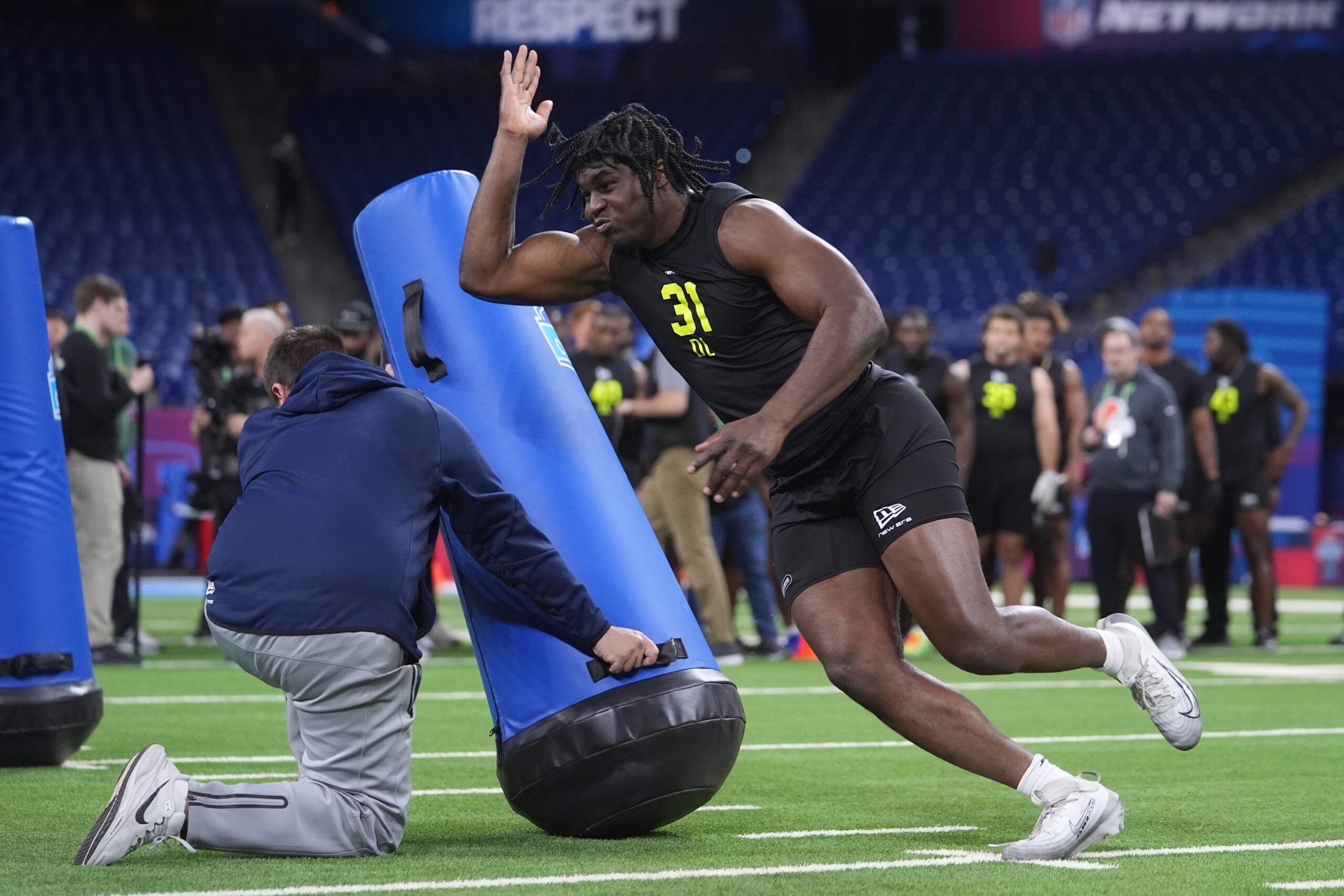
Defensive lineman David Bailey (31) runs a drill at the NFL Scouting Combine on Thursday.
4. Tennessee Titans: David Bailey, edge, Texas Tech
Notre Dame running back Jeremiyah Love’s range begins here, but in this scenario, Tennessee opts to take Bailey, who showed off his linear explosiveness and speed at the combine. Robert Saleh gets his pass rusher to build around for the future.
5. New York Giants: Sonny Styles, LB, Ohio State
Styles was already getting top-10 buzz coming into the combine, but his unreal testing performance (4.46 second 40-yard dash, 43.5-inch vertical jump, 11-foot, 2-inch broad jump, and 7.09 second three-cone) and New York’s need at linebacker may be too enticing for them to pass up.
Freeling’s stock continues to rise, despite making just 16 career starts. Cleveland gets a much-needed upgrade at a premium position with an elite athlete who shows promise as a pass protector and blocking out in space.
7. Washington Commanders: Jeremiyah Love, RB, Notre Dame
The idea of pairing Love with Jayden Daniels in the backfield would give nightmares to the NFC East and the rest of the conference. Love is a three-down back with elite speed (4.36 second 40-yard dash) and pass catching ability.
8. New Orleans Saints: Carnell Tate, WR, Ohio State
Despite running a 4.53 second 40-yard dash, Tate excels as a route runner when matched up one-on-one against defensive backs and gives Tyler Shough another outside receiver weapon to pair with former Ohio State teammate Chris Olave.
Kansas City’s offensive line has struggled, and Mauigoa can fill a need at either tackle or guard. He also said at his podium this weekend that he will play any of the five spots on an offensive line, which gives Kansas City the flexibility to play him at tackle or guard.
10. Cincinnati Bengals: Caleb Downs, S, Ohio State
Despite not testing at the combine, Downs is the most instinctual player in the draft and received rave reviews in his interviews with teams from across the league. Cincinnati seems to be the floor of where he will be selected in the first round.
11. Miami Dolphins: Olaivavega Ioane, OL, Penn State
This one is a bit of a surprise, considering Miami’s needs in the secondary, but Ioane has an argument as the best offensive lineman in the class and could help solidify a group that struggled at both guard spots last season.
Penn State OL Olaivavega Ioane getting some work in the kick slide drill
One of the worst-kept secrets is Dallas’ intention of drafting a cornerback early, and here that would get them Delane, a smooth cornerback with excellent anticipatory and ball skills that should fit under new defensive coordinator Christian Parker.
Kenyon Sadiq runs the 40-yard dash at the NFL Scouting Combine on Friday.
13. Los Angeles Rams (via Falcons): Kenyon Sadiq, TE, Oregon
The Oregon tight end tested historically well at the combine for the tight end position, and seems unlikely to make it out of the top 20. In joining Los Angeles, Sadiq gives Sean McVay and Matthew Stafford a receiving weapon that can replace free agent Tyler Higbee’s production.
Kenyon Sadiq had one of the best days ever by a TE at the Combine:
Woods’ stock is difficult to figure out because of his uneven play in 2025, but the Clemson defensive tackle’s pass rushing and gap shooting ability would be a nice addition to a defensive line that features Nnamdi Madubuike and Travis Jones.
15. Tampa Bay Buccaneers: Cashius Howell, edge, Texas A&M
Getting more consistent edge rusher production will be among the priorities for Tampa this offseason, and Howell brings that ability, despite having short arms (30¼-inch arms). He has shown the ability to win on a two-way go off the edge.
Cashius Howell (@AggieFootball) reached 14.52 mph while rounding the corner in the pass rush drill, the only defensive lineman to exceed 14 mph during the 2026 Combine.
Howell posted the fastest pass rush speed by any DL prospect since Will Anderson Jr. (14.90 mph) in 2023. pic.twitter.com/Bo0AxRfHBW
16. New York Jets (via Colts): Makai Lemon, WR, USC
Lemon looked smooth during the on-field combine drills, but there are concerns with his athletic profile. However, New York needs more playmakers in itsreceiver room and Lemon thrives at the catch point and after the catch.
17. Detroit Lions: Avieon Terrell, DB, Clemson
Detroit has needs along the offensive line, but Terrell has the fearless mentality, ball skills, and coverage instincts to fit at multiple spots in the secondary. Amik Robertson is set to be a free agent and Terrell played outside corner and nickel in college.
McCoy opted to not participate in the combine, and there is no guarantee he will at his pro day either, which could scare some teams from drafting him. He has shutdown corner ability, got his hands on the football in both man and zone coverages and would fit nicely in Brian Flores’ aggressive defense.
19. Carolina Panthers: Jordyn Tyson, WR, Arizona State
Tyson’s medical checks could have him go a lot lower than expected, but his fall ends here with Carolina, especially with Xavier Legette’s unclear future with the team. The Arizona State wideout is dynamic at the catch point and can win as a route runner in the slot and as an outside receiver.
Faulk, who showed some lower-body explosiveness at the combine (35-inch vertical, 9-9 broad jump), is an excellent run defender who played in a contain style of defense, which limited his pass rushing ability.
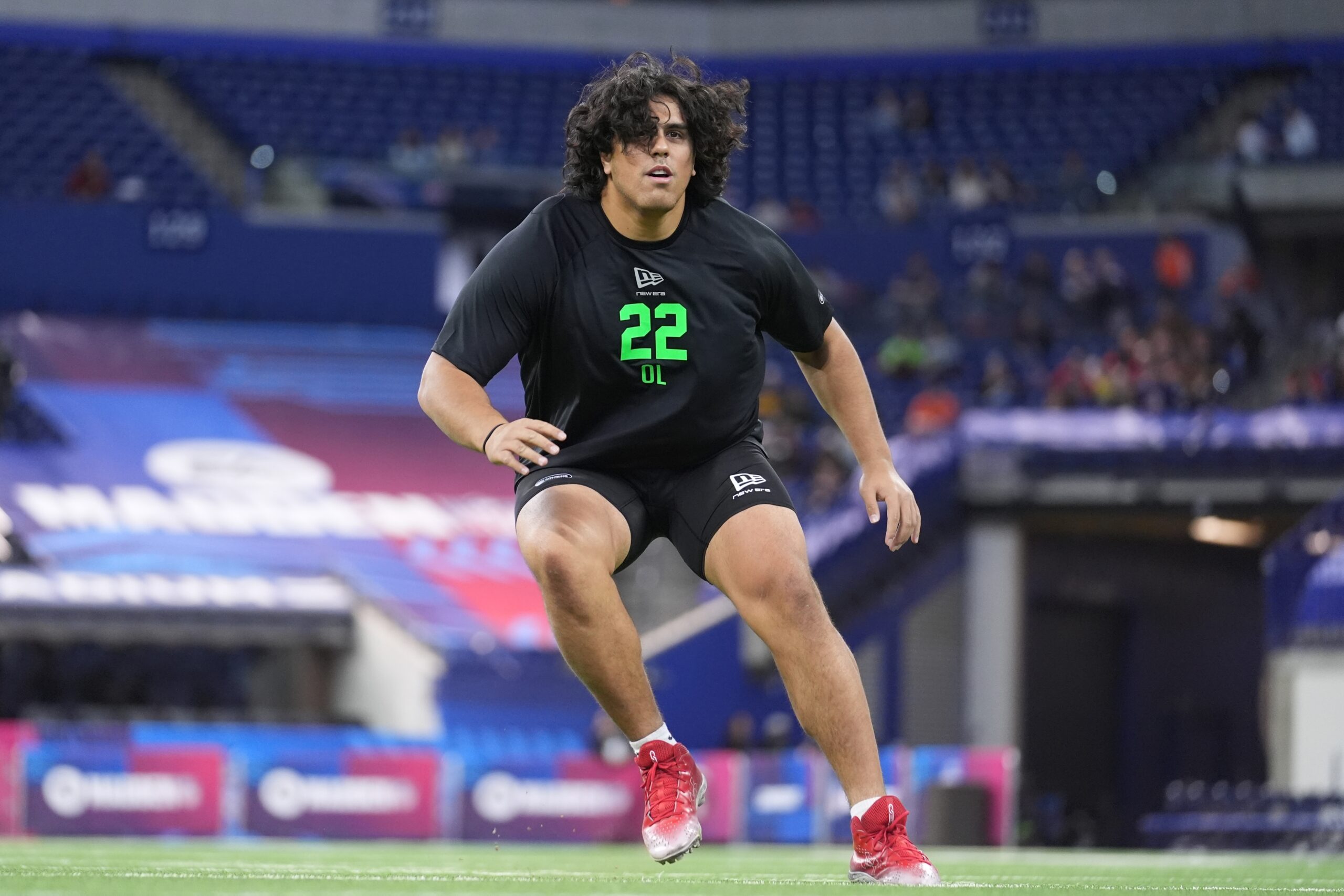
Utah offensive lineman Spencer Fano runs a drill at the NFL Scouting Combine on Sunday.
Isaac Seumalo could be on the way out for Pittsburgh, leaving an opening at guard for the Steelers. Fano has great feet and hands as a tackle, but his movement skills and run blocking disposition could be accentuated even more at guard.
22. Los Angeles Chargers: R Mason Thomas, edge, Oklahoma
Thomas did not run very well at the combine (4.67-second 40-yard dash) but he’s got an elite first step and can beat tackles on their outside or inside shoulders. Los Angeles desperately needs more juice from its pass rushers.
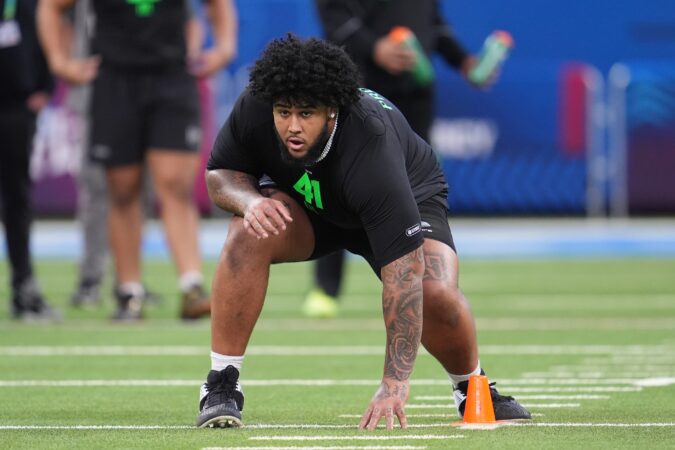
The Eagles showed significant interest in the tight ends and offensive linemen at the combine, and Proctor was among their formal meetings. The Alabama tackle said the Birds “have expressed a lot of interest in me,” during the process, and rightfully so, considering size, athleticism, and run blocking displacement skills.
He also admitted he was open to playing in the interior, a spot the Eagles could upgrade this offseason. He certainly checks the box for the “critical factors” the Eagles look for in offensive linemen.
#Alabama OT Kadyn Proctor says he’s met with with the #Eagles and that they “have expressed a lot of interest in me.”
Says he’s told teams his ideal playing weight has been 355 or less and wants to play tackle but is open to moving inside if teams need him to. pic.twitter.com/nwGlL6K5qu
24. Browns (via Jaguars): Kevin Concepcion, WR, Texas A&M
Concepcion is a dynamic athlete with the ball in his hands and would give Cleveland’s offense a much-needed vertical threat for whoever is under center next season, whether it’s Shedeur Sanders or a free agent signing like Malik Willis.
25. Chicago Bears: Dillon Thieneman, S, Oregon
Thieneman was the pleasant surprise of the combine, testing like an elite athlete (4.35 40-yard dash, 41-inch vertical, 10-5 broad jump) and showcasing the range to play as a single-high safety and the instincts to play a box safety role. With Jaquan Brisker, Kevin Byard, and C.J. Gardner-Johnson hitting free agency, Chicago gets a potential Day 1 impact player.
.@oregonfootball S Dillon Thieneman just casually out-running three of the best WRs in the game 🤷♂️
Allen, the standout Georgia linebacker, has good instincts and playmaking skills at the second level of a defense and fills a need with Matt Milano set to hit free agency for Buffalo.
Washington wide receiver Denzel Boston runs a drill at the NFL Scouting Combine on Saturday.
27. San Francisco 49ers: Denzel Boston, WR, Washington
Jauan Jennings is set to hit free agency this offseason, and the 49ers may be looking for his replacement in the draft. Boston is a big receiver who can win vertically and thrives at the catch point with his strong hands and impressive body control on jump balls.
28. Houston Texans: Caleb Banks, DL, Florida
Banks tested like a solid athlete at the combine, but he only played in three games in 2025 and needs to improve his pad level and down-to-down consistency. But his skill set will fit nicely in DeMeco Ryans’ defense.
29. Rams: Blake Miller, OT, Clemson
The Rams have a big need at corner, but instead they upgrade the right tackle spot with Miller, who has light feet in pass protection and the grip strength to stop pass rushers in his tracks. He also has the athleticism to block in space, a big component of Sean McVay’s offense.
30. Denver Broncos: Omar Cooper Jr., WR, Indiana
One name that kept popping up as a first-round player last week was Cooper, who has the speed to run by defensive backs (4.46-second 40-yard dash) and is tough to bring down in the open field after the catch. He would be a nice, complementary piece in Denver’s offense.
31. New England Patriots: T.J. Parker, edge, Clemson
The Patriots need more impactful pass rushers, and Parker relies on his power and is a physical run defender that can stack and shed offensive linemen in the run game. He also has experience dropping into coverage.
32. Seattle Seahawks: Chris Johnson, DB, San Diego State
Johnson’s rise is similar to Quinyon Mitchell’s a few years ago — Johnson crushed the predraft process first at the Senior Bowl, then at the combine (4.4 second 40-yard dash, 38-inch vertical, 10-6 broad jump). He is a sticky coverage player in man and zone coverages, and is competitive at the catch point, and fills a need for Seattle in the secondary.
The next two months will be franchise-defining for Howie Roseman and the Eagles. That’s partly a function of how much they need to accomplish in order to get their offense on a sustainable footing. But it’s also a function of how much opportunity they have to do so. In fact, they have more of it than most teams in their situation can hope to have.
The decision-making revolves around the draft, as it always does. The most honest thing anybody can say about the draft is that the best decisions are primarily a result of what’s available. Roseman deserves a ton of credit for projecting Quinyon Mitchell as an elite cornerback. But he gets credit for drafting him only because he lasted until the 22nd pick. Same goes for Cooper DeJean in the second round at No. 40. Who knows what this Eagles defense looks like if Mitchell and DeJean weren’t on the board.
I see a lot of parallels between that 2024 draft and this year’s. The Eagles’ offense is at a similar juncture, particularly in the pass-catching department. DeVonta Smith is great. He’s also the only guy on the depth chart at wide receiver and tight end, if we’re assuming that A.J. Brown is potentially on the way out. The best way to get yourself into trouble when you are on the clock is to focus on immediate needs over expected future value. The Eagles’ opportunity is that this year’s draft looks like it aligns with their needs.
If the mock drafts are to be trusted, the Eagles could have their choice of one of at least three potential difference-makers at No. 23 and perhaps a second if they can move up in the second round. Last year, I was beating the drum for Missouri receiver Luther Burden III, who ended up going No. 39 to the Bears. This year’s trio is even better.
Oregon tight end Kenyon Sadiq. Texas A&M wide receiver KC Concepcion. Alabama wide receiver/utility man Germie Bernard.
The comps are Vernon Davis, Antonio Brown/Stefon Diggs, and Deebo Samuel.
I’m not going to sit here and pretend I have an opinion on any of the linemen who could be on the board in the late first round. If the Eagles have a chance to draft one with a Lane Johnson or Jalen Carter grade, they should obviously do it. What I do know is that the pass-catchers should be a priority, and that there are three guys who could offer the value that Mitchell and DeJean did on the defensive side.
This draft is better than people are giving it credit for, particularly in the range where things start to look realistic for the Eagles. The precombine consensus had Sadiq going No. 19, Concepcion going No. 27, and Bernard going No. 69. The Eagles have picks No. 23 and 54, but I’m skeptical that they’ll be in position to pick two of the three.
The idea that Sadiq will last anywhere close to No. 23 always seemed detached from reality. That’s especially true after a combine performance unlike any we’ve seen at the tight end position in recent memory. Sadiq’s 40-yard dash time of 4.39 seconds was the fastest by a tight end since converted quarterback Matt Jones in 2003. His 1.54-second 10-yard split would have ranked him among the Top 12 wide receivers at this year’s combine. He also put up wideout-like numbers in the broad jump and vertical leap.
It would be one thing if Sadiq’s measurements were at odds with his game tape. But they aren’t. The game speed and explosiveness are there. Most notable is the way they show up off the ball. His combination of acceleration and compact strength allowed Oregon to use him in all sorts of ways in their blocking schemes: out wide on wide receiver screens, across the formation on running plays, etc. It is impressive to watch. This isn’t Kyle Pitts. I have to imagine every cutting-edge play designer in the NFL would love to have Sadiq’s skill set at his disposal. Don’t listen to the folks who try to compare him to fellow workout warrior Eli Stowers. The Vanderbilt tight end is a worthy late-second-round gamble. But watch both of their cut tapes and you’ll quickly realize one of these things is not like the other.
Kenyon Sadiq’s 40-yard dash time of 4.39 seconds was the fastest by a tight end since converted quarterback Matt Jones in 2003.
To be clear, Sadiq’s isn’t a conventional skill set. He isn’t anything close to your classic tackle-adjacent receiver-lineman tweener tight end. Which might be one reason why the draft industry rates him where it does. At 6-foot-3 with 31½-inch arms, he is at the negative extreme in terms of length at the position. Of the 14 tight ends who had a 1,000-yard season since 2010, only one was listed at 6-3 or shorter, according to Pro-Football-Reference.com (Delanie Walker, 2015). Sadiq’s arm length measurement ranks in the bottom 10% of tight ends at the combine since 2010. Combined with his chiseled 246-pound frame, he looks more like an H-back than a prototypical pass-catching tight end. That’s only a problem for a scheme that lacks imagination.
If anything, Sadiq’s overall pass-catching numbers are at odds with his game tape. His 892 career receiving yards in three years at Oregon would be the lowest for any tight end drafted with a top-28 pick since at least 2010. Every tight end drafted in the top 15 since 2010 had at least one season with 58-plus receiving yards per game. O.J. Howard at No. 19 in 2017 averaged 40.1 yards, which is about what Sadiq averaged this season (51 catches, 560 yards, 14 games).
Thing is, Sadiq looks the part on film. The guy pops in all phases of the game. Look at his two touchdown catches against USC in October. On goal-to-go from the 8-yard line, he beat USC safety Christian Pierce on a perfect in-breaking route and then was in the process of running away from him when he made the catch in the back of the end zone. On the second, he got behind a late rotation on a seam route and then made a great catch in traffic in front of the deep man before being sandwiched. Sadiq finished the season as one of two major conference tight ends in the last five years to have five TD catches of 20-plus yards.
Sizewise, I see Vernon Davis. The more intriguing comp is George Kittle. Sadiq may never be the blocker that Kittle is, i.e., one of the best ever at the position. But that’s not the point. The point is Kittle as a pass-catcher. In four years at Iowa, he had 48 catches for 737 yards, topping out at 22 catches for 314 yards as a senior. The 49ers drafted him in the fifth round. He would go higher in a redraft.
No position in the NFL draft is less contingent on college production than tight end. Jimmy Graham played one year at Miami, caught 17 passes, and was drafted in the third round. Antonio Gates never played college football. When Travis Kelce turned 23 years old, he was a senior at Cincinnati who’d caught 19 passes for 247 yards in 25 career games. They are the exceptions, sure. But name another position where three such exceptions went on to become three of the greatest of all time (four if you count Kittle).
Let’s reiterate our point here. It isn’t that Sadiq is the same type of prospect as the guys I just mentioned. He’s on a much higher level. It isn’t that he is going to become those guys. The point is that Sadiq’s relatively paltry receiving numbers shouldn’t make him fall in the draft. Chances are, they won’t.
KC Concepcion had 61 catches for 919 yards and nine touchdowns as a junior at Texas A&M.
Concepcion is more likely to be there at No. 23. He’s a bit slight at 6-foot, 196 pounds. He didn’t run the 40 or take part in any of the other athleticism tests at the combine. Silence in a court of law, etc. But none of that should matter when you see the film. The ability to create change-of-direction separation is elite. It shows up in the numbers. In addition to his 61 catches for 919 yards and nine touchdowns as a junior at Texas A&M, and his 70 carries for 431 yards and three touchdowns in three collegiate seasons, he is coming off a season where he averaged 18.2 yards with two touchdowns on 25 punt returns after returning just five in his first two seasons. Whatever the physical measurements, his is an NFL frame, and an NFL game.
Bernard is the DeJean of this year’s draft. Midway through his rookie season everyone will look back and say, how did this guy fall as far as he did? Assuming the current projections are correct and he won’t be a first-round pick. Comps are usually fuzzy things. Man, does he look a lot like Deebo Samuel did during his peak with the 49ers. At 6-1, 206 pounds with a low center of gravity and ballcarrier instincts, Bernard could easily pass for a third-down back. But he is a wide receiver, one who averaged 57 catches for 828 yards over his last two seasons at Alabama. He has as high of a floor as anybody can have at his position. Too many GMs chase upside in a draft. The real test is projecting a player’s probability of achieving that upside. Bernard plays the game with a fluidity and instinct that will translate in some meaningful capacity. So much so that the Eagles shouldn’t hesitate to draft him at No. 23 rather than gambling he’ll still be there beyond.
There is an elephant in the room here, one so large that he has already been mentioned. The Brown thing is simple. Even if he is here next year, he won’t be here much beyond that. Jalen Hurts isn’t one of the rare quarterbacks who makes the pass-catching talent around him better. The Eagles will fail and fail miserably if Smith is his only pass-catcher who is above replacement level. They would be wise to trade Brown if it lands them a draft pick that facilitates the acquisition of someone with the ability to help replace him.
“If someone is going to give you something you didn’t anticipate and you won’t even have the conversation, I don’t think you’re necessarily doing your job or really servicing the team you’re with,” Roseman said at the combine last week. “You never know what someone is willing to do.”
The perfect draft for the Eagles is Sadiq first and then one of Concepcion or Bernard second. Given the value that teams place on the trenches, it’s hard for me to believe in a worthwhile certainty/upside ratio with any lineman who would also be available.
Germie Bernard had 64 catches for 862 yards and seven touchdowns at Alabama last season.
I’m skeptical that Sadiq will last anywhere close to where the current mock drafts have him going. At this time last year, Daniel Jeremiah and Pro Football Focus both had Colston Loveland going in the 18-20 range. In 2024, PFF had Brock Bowers going 18th. Loveland ended up going 10th and Bowers 13th. Both were among the top nine non-quarterbacks off the board. So, I wouldn’t put too much stock into the current projections, which have Sadiq lasting into the 20s and potentially reaching the Eagles at No. 23. I also don’t think the Eagles can bet on Concepcion being there. Nor can they with Bernard at 54.
The idea of trading Brown makes a lot more sense from that perspective. It’s only true if Roseman can somehow finagle something like the No. 31 overall pick from the Patriots. Maybe by swapping No. 54 and No. 68 for the Pats’ No. 63. So, the Eagles trade Brown in order to move up 23 spots from No. 54 to No. 31 while moving down nine spots from No. 54 to No. 63.
There are at least three prospects who would make it worth it.
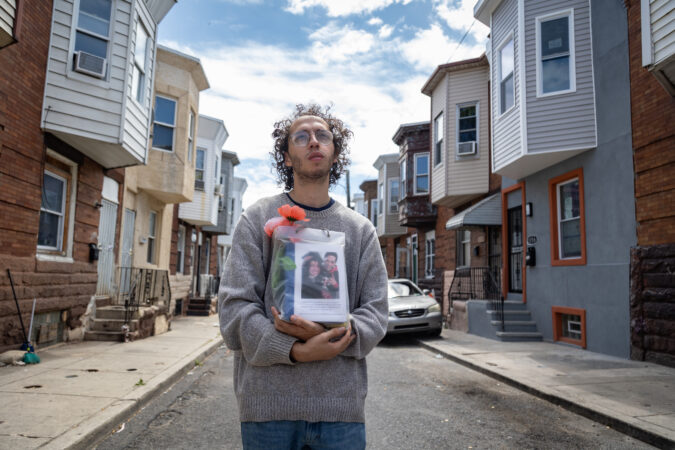
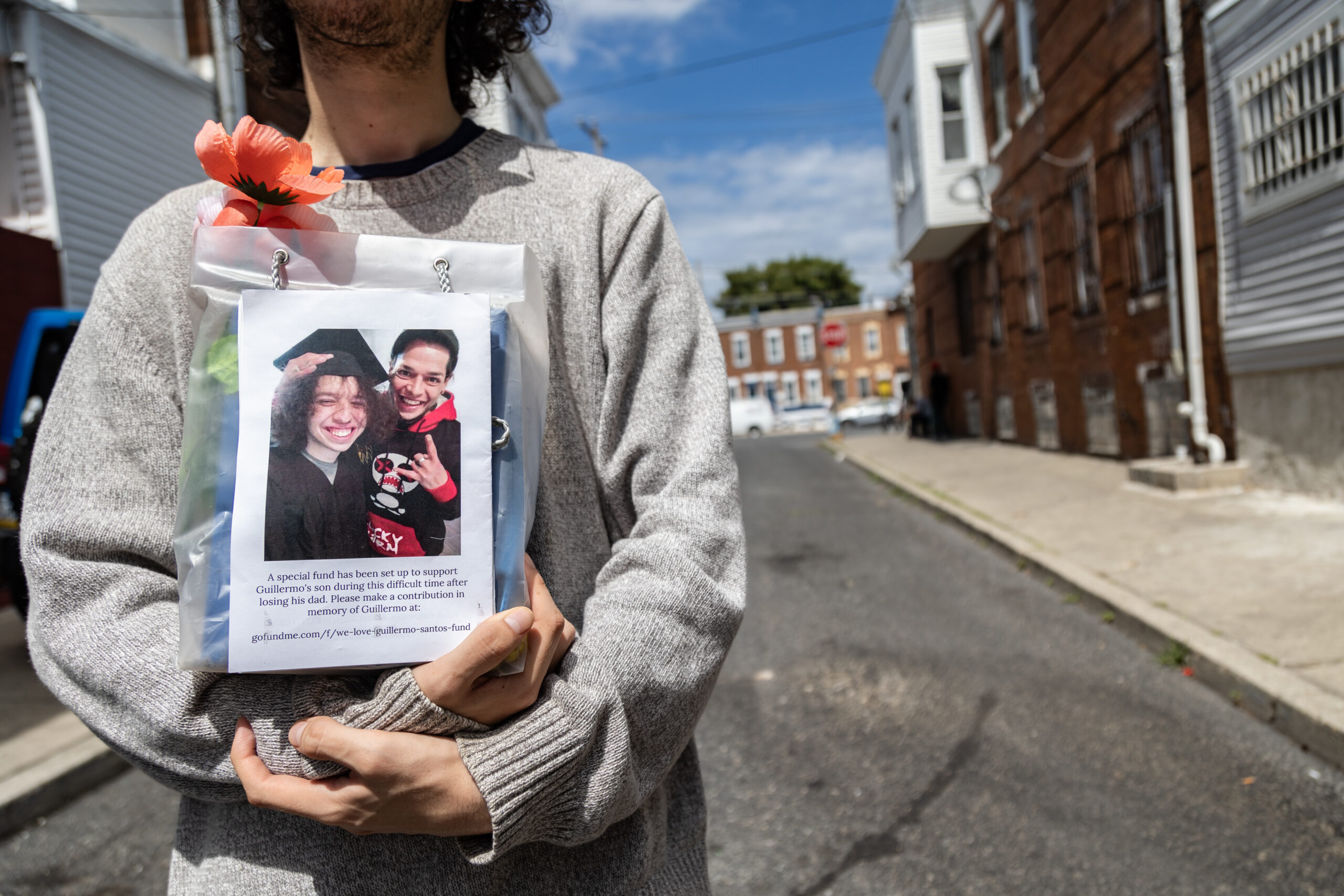
The box is heavier than he thought it would be. Outside his childhood home, Guillermo Santos Jr. looks down.
“This is the longest I’ve ever held him,” Santos says.
His father — Guillermo Santos Sr. — died of a fentanyl overdose in 2021, months after his virtual high school graduation. The elder Santos moved from Puerto Rico to Philadelphia after his father sent him to the city to learn English. There, he met Cheri Honkala and, soon after, Guillermo Santos Jr. was born.
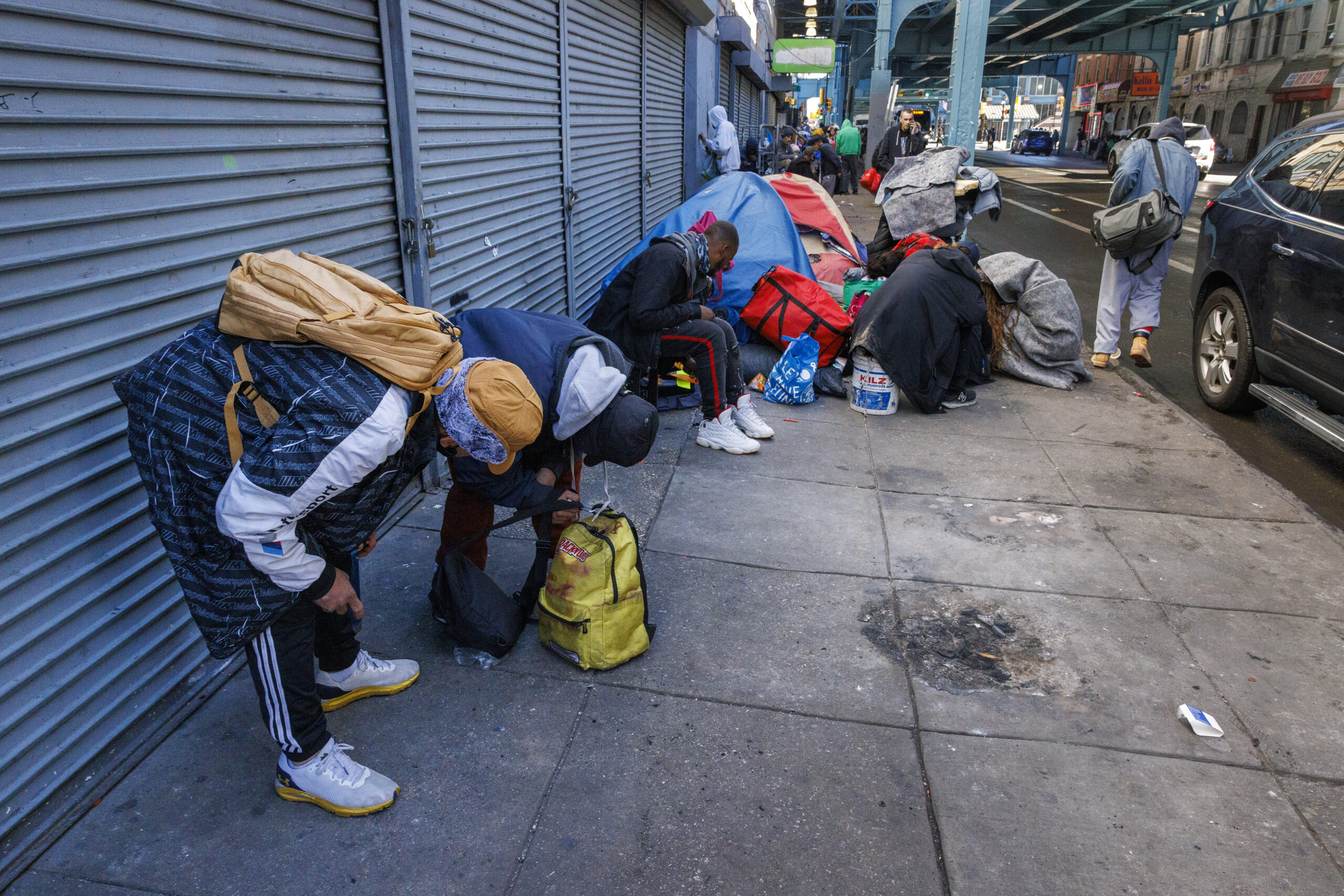
Raised in the heart of Kensington, a working-class Philadelphia neighborhood with a longstanding Puerto Rican community, the younger Santos recalls the caw of his neighbor’s roosters waking him for school. Walking to Market-Frankford Line, the city’s elevated train known locally as “The El,” he passed people lying out on the sidewalks.
“It wasn’t odd to me that my father was a heroin addict because everyone around me was, because of my neighborhood,” Santos said.
He describes Kensington as tight-knit. Although gunshots were constant, neighbors knew his mom, a housing rights activist, and protected their home.
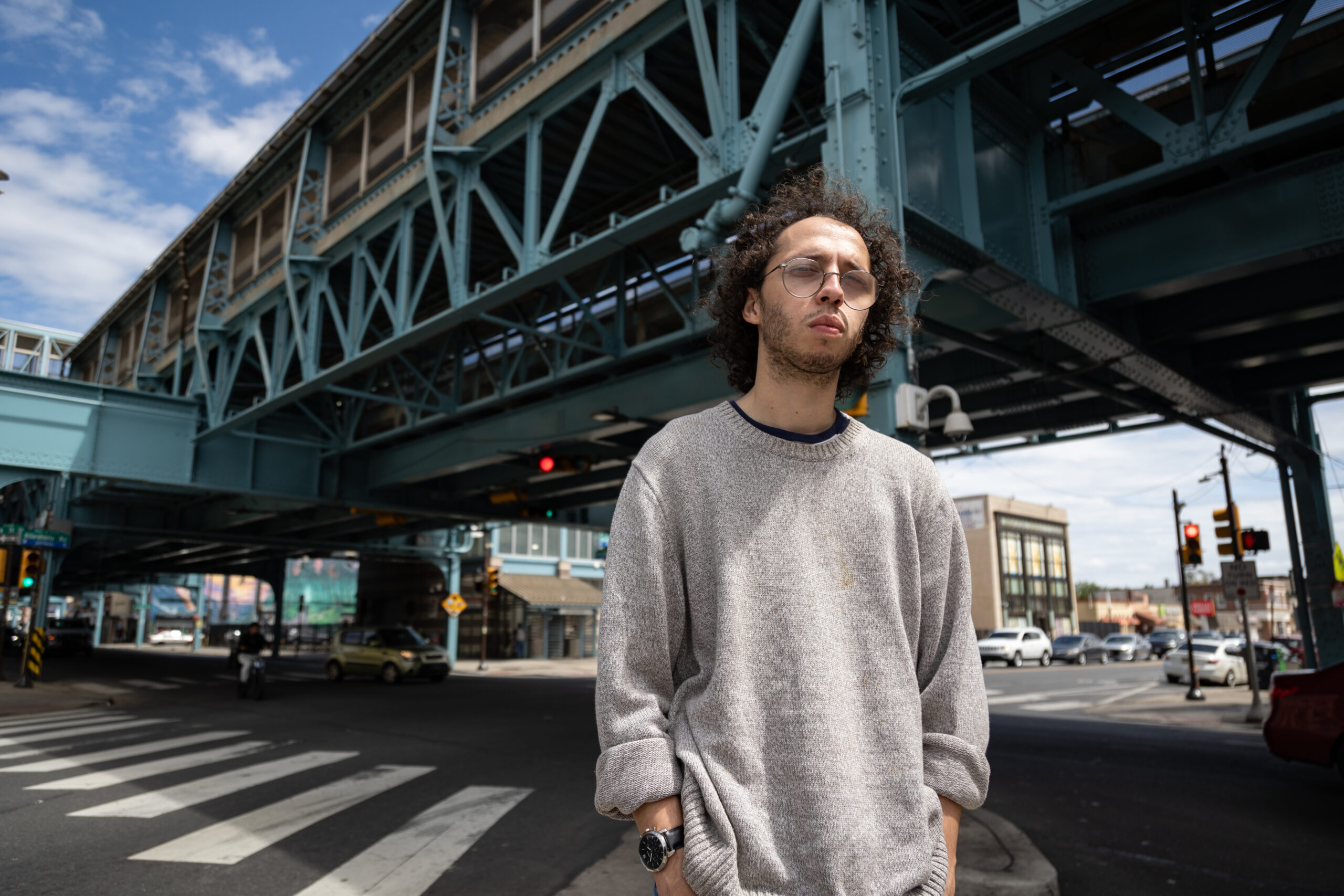
Guillermo Santos Jr. stands at the intersection of Kensington and Allegheny, near his childhood home, on Aug. 19, 2025.
Guillermo Santos Jr. is among the roughly 33% of people in Philadelphia who personally know someone who has died by overdose, according to Pew Heritage Trust’s most recent data. The Pennsylvania Department of Health’s tally from 2024 reveals that Latinos make up 9.7% of total overdose deaths; city public health data from 2023 put the overdose death rate at 77.9 per 100,000 residents. Nationwide, more than 42% of people have been impacted in some way by an overdose death.
Today, the young Philadelphian lives in New York City. During visits to Philly, he notices that his neighborhood is in the same condition as when he left, while new development crops up.
“The way that Philadelphia keeps itself frozen and doesn’t actually deal with a lot of the issues that are torturing its residents is so mind-boggling to me,” he added. “It is really devastating.”
His mom agreed.
“I raised a son after his dad died from an overdose in a city that didn’t have s— to offer,” Honkala said.
The city’s death certificate data reveal that unintentional overdoses were the second-leading cause of death among Puerto Rican residents for two years in a row. An analysis by Centro de Periodismo Investigativo (CPI) of 2023 public health data reveals men die of overdoses at double the rate of their female counterparts — across all racial and ethnic groups.
window.addEventListener(“message”,function(a){if(void 0!==a.data[“datawrapper-height”]){var e=document.querySelectorAll(“iframe”);for(var t in a.data[“datawrapper-height”])for(var r,i=0;r=e[i];i++)if(r.contentWindow===a.source){var d=a.data[“datawrapper-height”][t]+”px”;r.style.height=d}}});
Within the last 10 years, drug overdose deaths were highest among Puerto Rican men ages 45 to 54, according to a research paper in the International Journal of Drug Policy.
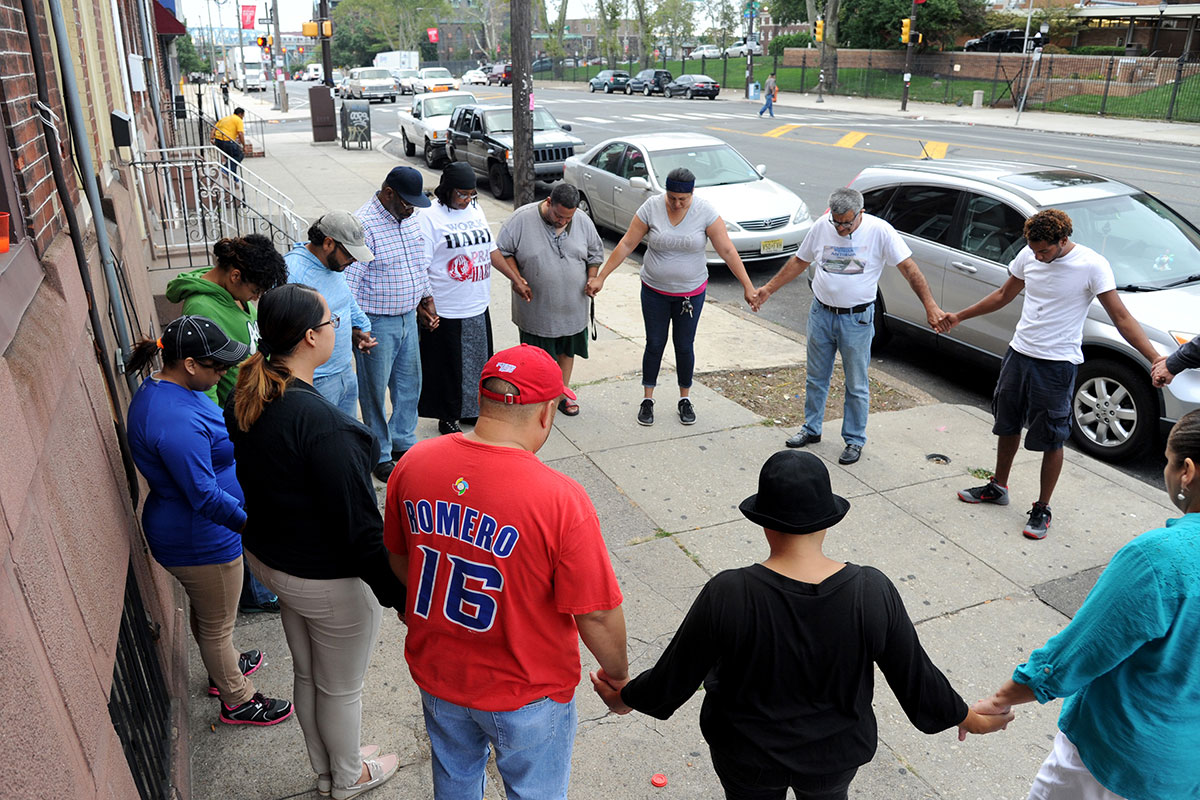
Charito Morales praying in 2016 with a group on Lehigh Avenue in Kensington, before heading into “El Campamento,” along the Conrail tracks where many heroin addicts lived.
Air Bridge: One-way tickets and promises of rehabilitation
This crisis isn’t new. Its roots trace back to the city’s economic crisis in the 1970s, which disproportionately impacted Black and Latino residents of industrialized neighborhoods like Kensington. In the 1980s, North Philadelphia became a hub for open-air drug markets.
“The drug economy was a very real financial attraction for young people whose families had few options for survival,” according to American Quarterly, a journal published by Johns Hopkins University Press.
When factories shut down in the late 1980s, unemployment rates soared, hitting racially segregated and economically disadvantaged areas the hardest. What began as a way out of poverty drew younger generations into drug use and homelessness.
In the 1990s, a movement known as “Air Bridge,” run by pastors and government officials, gave people with substance use disorders one-way tickets from Puerto Rico to cities such as New York, Chicago, and Philadelphia.
In Philadelphia, Air Bridge areas included Kensington and Fairhill, which compose the zip codes 19125, 19133, and 19134, some of the city’s poorest. A 2017 BBC report estimated that thousands landed in Philly from Puerto Rico through the Air Bridge movement.
Charito Morales, a community advocate in Philadelphia, witnessed Air Bridge’s false promises in real time when her brother was sent for rehab 30 years ago, but the care never came.
Morales’ family sent her brother, Alvin Luis Morales-Soto, to the U.S. under the guise of quality rehabilitation and medical care that did not exist in Puerto Rico and Air Bridge promised. When the family lost contact, she went undercover on her own and experienced the living conditions firsthand.
An Inquirer investigation from 2016 illuminated harrowing practices. People living in squalor, 20 men stuffed into tiny bedrooms in a small rowhouse that should fit no more than 10. SNAP benefits held hostage. No phones.
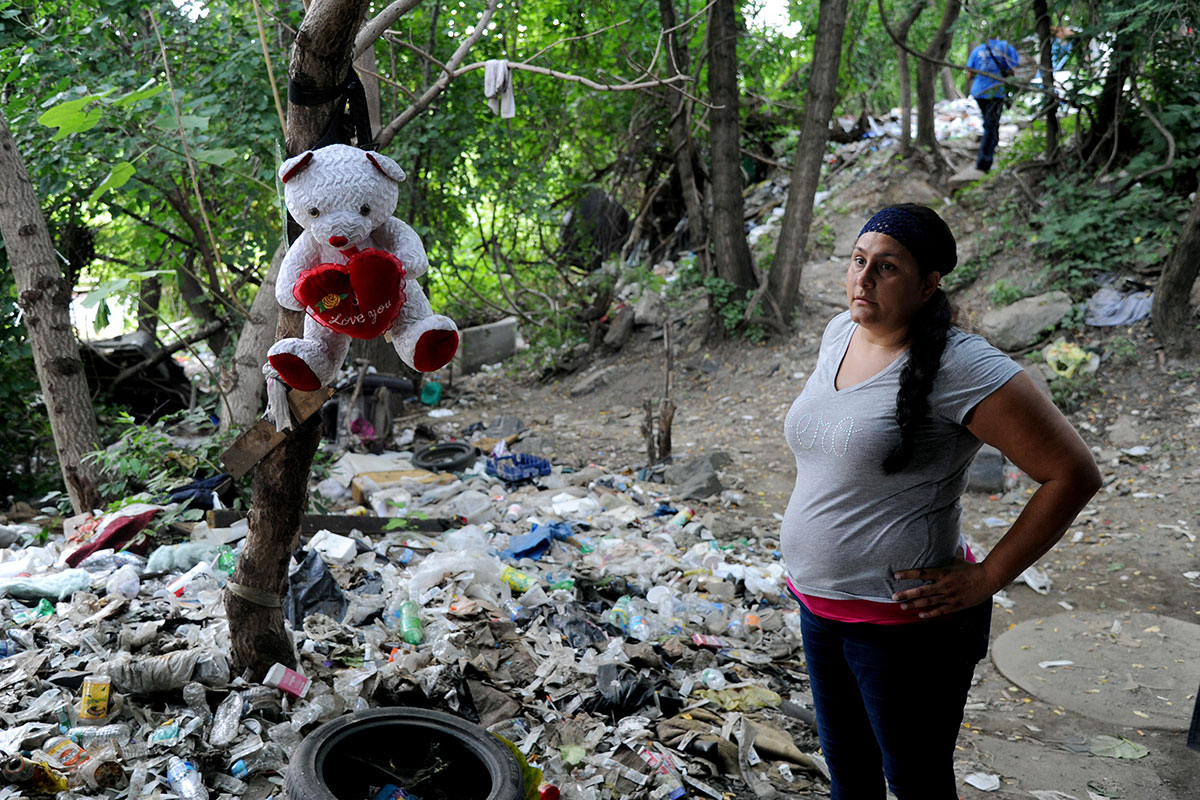
Charito Morales, a registered nurse and advocate for addicts, photoraphed in 2016 at “El Campamento,” a camp of homeless drug users along the Conrail tracks in Fairhill.
Morales served as a key source for The Inquirer, motivated to understand what happened to her brother.
“They brought him here — what did they offer him? Rehabilitation and all sorts of things,” Morales said. “My family, unaware and uninformed, believed this was the ideal place because it was the United States, and there are so many benefits, so many resources compared to Puerto Rico, and he would have everything within reach.”
He died of an overdose on June 18, 1998.
A former outreach worker with Asociación de Puertorriqueños en Marcha (APM), a nonprofit organization dedicated to Latino health and community services, identified as “AJ” for privacy purposes, told CPI that some unregulated recovery house managers connected to Air Bridge were driven by greed, as they intercepted and pocketed government benefits.
“Well, there was money to be made,” he told CPI.
AJ recalls a specific case involving a Christian ministry that operated as a recovery house. He said that one day, when the pastor was away, he found mail tucked above a cabinet in the church’s administrative office. The letters, he said, were addressed to program participants. AJ said he suspected that the mail may have been redirected from the recovery house to another address. In his view, that could have made it easier for third parties to access public benefits.
Tracy Esteves Camacho, a harm reductionist who met with Puerto Ricans who arrived by way of Air Bridge, heard the same thing firsthand.
“A lot of people were telling me the same story,” she said. “No one knows exactly if it’s the recovery houses here or if it’s someone in Puerto Rico trying to move these people around. A lot of them would end up here with nobody.”
With nowhere to go, many program participants ended up unhoused, some living beneath a bridge, covering themselves with cardboard boxes to stay warm in the winter. AJ said these conditions worsened the substance use issues they had left the island hoping to fix.
The few who found legitimate help, however, recovered and found stable housing. Today, AJ said, wraparound services such as housing and regulated addiction treatment seem out of reach, or less of a priority, particularly for Spanish-speakers.
“It’s a human disaster, the result of human error, an error by the Department of Health. A failure to classify narcotics use as a mental illness; instead, they criminalize it and continue to criminalize it,” Morales said.
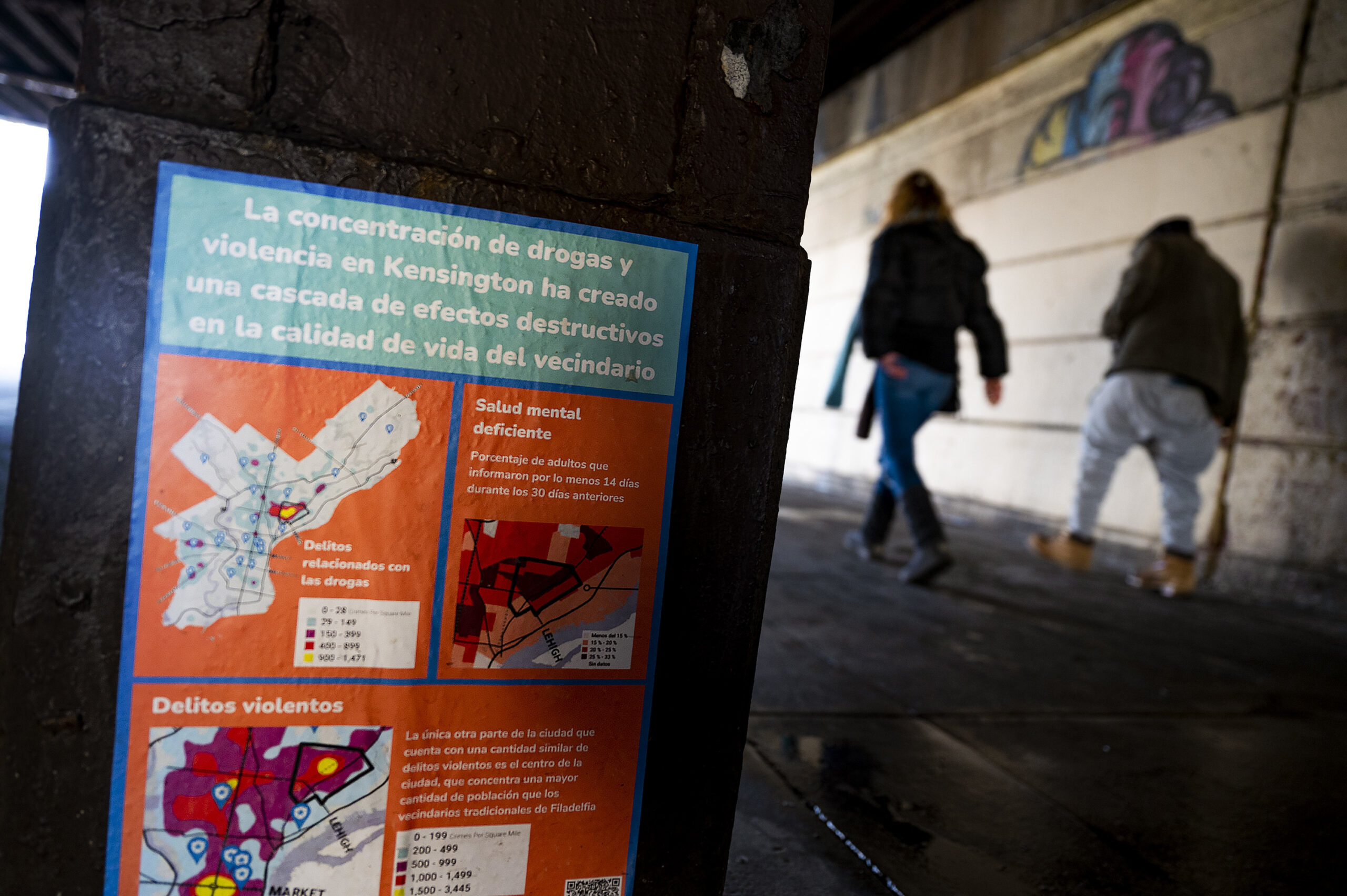
People near Allegheny Station at Kensington and Allegheny Avenue. Philadelphia Councilperson Quetcy Lozada (not shown) held a news conference October 16, 2023 in front of the Russell Conwell Middle School. She spoke about neighborhood clean up and the opioid epidemic.
A neglected crisis
Overdose deaths have steadily increased over the years in Philadelphia, disproportionately impacting Black and Hispanic residents, deemed to be an overlooked health crisis since 2023.
Guillermo Santos Jr. says the barriers his father faced in the ’90s persist today.
“We’re not doing anything about it because throughout my entire childhood, he kept wanting to get better. He was putting in active steps and he was shown that there was no place to go except back under the El train,” he said, referring to the bridge area where some unhoused people would go.
Honkala, his mom and a licensed medical care provider, agreed. She runs a rehab program part-time. Santos’ father is one of many who have been failed by disconnected social and health networks.
He was on and off city housing lists for 18 years, survived nine overdoses, and lived with worm-infested infections on his limbs. He was also HIV-positive.
Cheri Honkala poses for a portrait at McPherson Square Park in Kensington on Sept. 3, 2025. The park holds memories of her late husband, Guillermo Santos Sr., who died in 2021.
“He had a lot of people around him that tried to get him whatever was available to get him the help that he needed, and there was nothing,” she said. “Every time that he was sick and he was going into withdrawal and he’d go to Episcopal or Kensington Hospital, he would have to sit in the waiting room for 13 hours, s— himself, throw up on himself, and convince himself that, ‘Oh, yeah, I want to stay here and get clean.’”
In 2020, Esteves Camacho worked closely with Puerto Rican communities living with HIV who use intravenous drugs, providing care in a medical clinic integrated within a syringe exchange program at Prevention Point Philadelphia.
She knew Guillermo Santos Sr. and recalled him showing her photos of his son. The elder Santos had plans to become a barber in the future.
“It makes me want to cry. He was such a good person,” Esteves Camacho said.
He began using drugs again after his girlfriend’s overdose death, and his visits to the addiction treatment center, Prevention Point, became more unpredictable.
“It wasn’t his personality. He was hurting,” she added. “It was really heartbreaking when he passed away, knowing he had a son and that now this person is going to have to live without their father.”
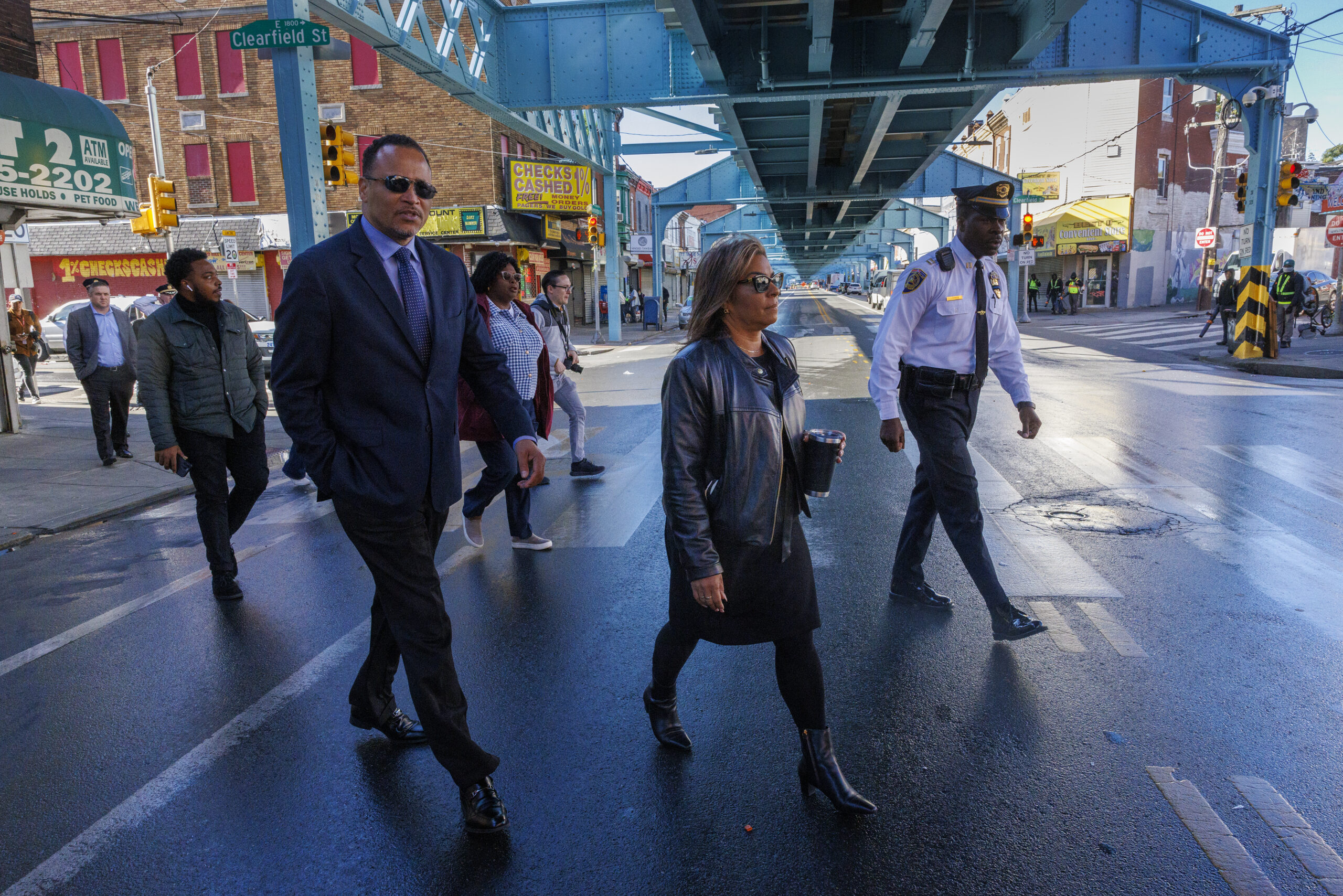
Kenneth A. Divers, SEPTA’s Director of Outreach Programs (left), walking across Kensington Avenue with Councilperson Quetcy Lozada in 2023. She spoke at a news conference about neighborhood clean-up and the opioid epidemic.
‘No one is turning a blind eye now’
The needs of the community in the throes of the opioid crisis are colliding with local and federal funding cuts.
On Jan. 13, the Trump administration abruptly canceled, then 24 hours later restored, nearly $2 billion for mental health and addiction treatment. In July 2025, the Trump administration issued an executive order to reevaluate and halt discretionary Substance Abuse and Mental Health Services Administration grant funds for harm reduction programs or “safe consumption” sites. Despite public health reports lauding their benefits, the administration falsely claimed that these methods “only facilitate illegal drug use and its attendant harm.”
Instead, federal dollars will be prioritized for drug courts and mental health courts. This is happening in Philadelphia already. In June 2024, Philadelphia Mayor Cherelle L. Parker ceased funding needle exchange programs, deferring to local nonprofits and philanthropic groups. Parker’s administration opted for a law-enforcement-heavy approach and changed how opioid settlement funds are distributed.
In the last two years, Philadelphia City Councilmember Quetcy Lozada, who represents the 7th District, has introduced resolutions and new bills that limit certain efforts, such as safe injection sites, and where mobile care units can provide services. The 7th District includes neighborhoods hardest hit by the opioid epidemic, such as Harrowgate, Kensington, and Olde Richmond.
She told CPI that she believes safe injection sites “keep them in that vicious cycle.”
Research shows that safe injection sites help reduce HIV transmission, infections, and other diseases caused by sharing needles. Public health experts explain that harm reduction is one tool to reduce health risks and overdose deaths.
Advocates warn that limiting where outreach workers and mobile care units can operate will delay critical care, putting more people at risk of infection or medical crises. Lozada told CPI her office is working with providers and community organizations to better understand what she can do to support the people in her district.
“No one is turning a blind eye now,” Lozada said. “Folks need to understand that this is not a ‘Let’s have a conversation today’ type of situation. It is very much still a crisis and we are still ground zero. That has not changed. The focus has been, and continues to be, prevention and education and making sure that everybody’s on the same page and that we continue to grow in the same direction.”
Roz Pichardo, founder of Sunshine House, a resource hub on Kensington Avenue, sees nearly 80 people by 9 a.m. on some days. Recently, Pichardo doubled the number of nurses on site, prompted by confusion surrounding the mobile care unit operation. People searched for her.
“We already feel like we’re triage here. There’s too much red tape,” Pichardo said. “How do we reduce stigma in a community that’s plagued with addiction? Just keep talking, keep showing people what empathy and compassion look like. Maybe they will pick up on it.”
She reiterates that care is not one-size-fits-all.
Roz Pichardo with Operation Save Our City holds her bible on March 7, 2024, with names of 2232 people she saved with narcan since 2018. Harm reduction activists gathered outside Philadelphia City Hall to ask for seat at table and funding for the opioid crisis.
Some reports suggest that programs like Police Assisted Diversion and Case Management, Assessment, Re-entry and Empowerment Services (PAD CARES) and “wellness courts” may not be working as intended.
Lozada proposes government-run medical programs, such as triage centers and “stabilization centers,” that address the physical symptoms and barriers to recovery, including open wounds.
“For a long time, the voices of those who were on substance abuse or those who are living in substance abuse were prioritized over those who are just trying to live day by day in that community,” Lozada told CPI.
She says residents want a better quality of life, for children not to be exposed to people with gaping wounds, and for elders in the neighborhood to feel safe walking around.
“The government created this. Government needs to respond to it,” she added.
In a follow-up interview, Lozada told CPI: “We’re constantly meeting and having conversations about what is working, what is not working. What needs to be adjusted? Where do we need more services? Who are the providers that are actually providing the work and the services and who are not? And those who are not, how do we reallocate or readjust values to those programs that are actually having a positive impact?”
City officials’ plans remain unclear, but Lozada said partnerships are still evolving.
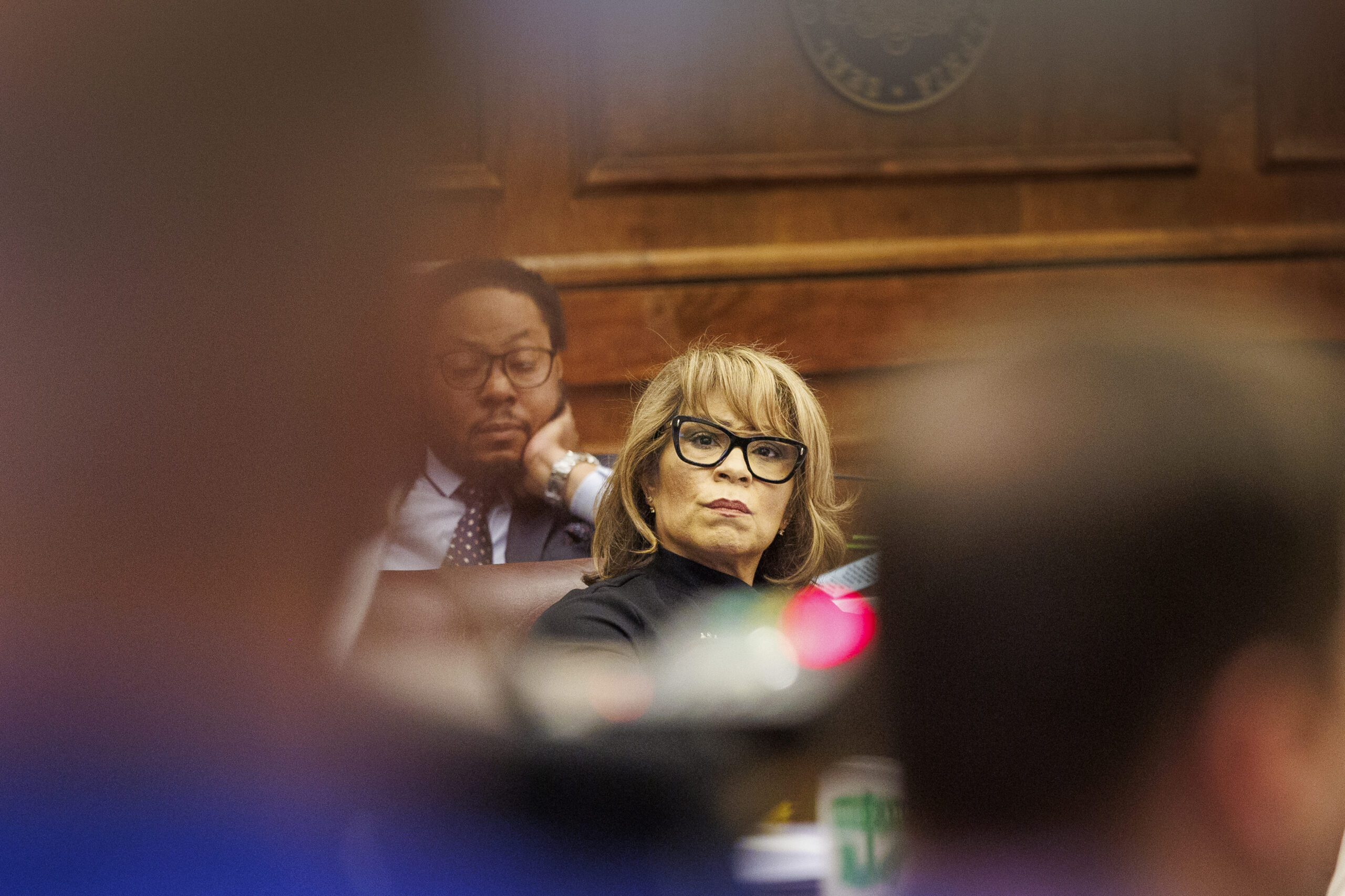
Philadelphia Councilperson Quetcy Lozada listens to public comment on her bill limiting medical providers in Kensington during public comment, City Council Chambers Philadelphia, Thursday, May 8, 2025.
Policy shifts and the limits of enforcement
Yet, researchers like Luis Valdez, an assistant professor in community health and prevention at Drexel University and founder of the GANAS Health Initiative, have concerns.
“Can we stop looking at this as a wasted budget line item?” Valdez asked. “People are dying. Those people are also constituents, folks that have families and hopefully futures, and people that grew up in these districts, right? The problem wasn’t created by drug use. The drug use is a symptom of all these other things that are happening.”
Some experts say officials’ decisions to restrict certain programs have complicated outreach efforts. Multiple harm reduction advocates claim city leaders are disregarding medical advice on addiction care.
“Our own health and human services [department] is not using evidence-based practices. We’re on a really s— trajectory from the top down,” said Nicole O’Donnell, a peer recovery specialist with the Center for Addiction Medicine and Policy (CAMP) at the University of Pennsylvania Health System. CAMP provides patients with a prescription for buprenorphine via telehealth services.
“People view substance use as a choice instead of an illness. The people out there using are also victims of the opiate problem, and so is the neighborhood. We’re trying to figure out … how do we support both?” added O’Donnell, who is in recovery and lost a sister to an overdose.
She testified before City Council in May, explaining that CAMP prioritizes connecting people to low-barrier rehabilitation treatment options and to a physician for continued care.
Meanwhile, new mixtures of street drugs, like xylazine, have complicated treatment and harm reduction efforts. In August 2024, a city health alert reported the emergence of an even more potent substance: medetomidine. Mixed with fentanyl, this drug can trigger potentially life-threatening symptoms — such as muscle rigidity and slowed breathing — that require admission to an intensive care unit.
Those shifts in the drug supply are showing up in hospitals. In the last two years, healthcare workers have experienced a sharp increase in emergency room visits related to substance use injuries and withdrawals, according to city data. Patients have also exhibited complications with wound infections and severe withdrawal symptoms.
“[That data is] a sign and symptom of other things that we’re tracking,” said Jeannmarie Perrone, an emergency room physician and director of medical toxicology and addiction medicine at the University of Pennsylvania.
Perrone presented this data to City Council’s Kensington Caucus in May. Between January and September of 2024, more than 200 patients with addiction were admitted to intensive care units at Temple University Hospital, Penn Medicine, and Jefferson Health.
“[That] is really unheard of for opioid withdrawal,” Perrone told City Council.
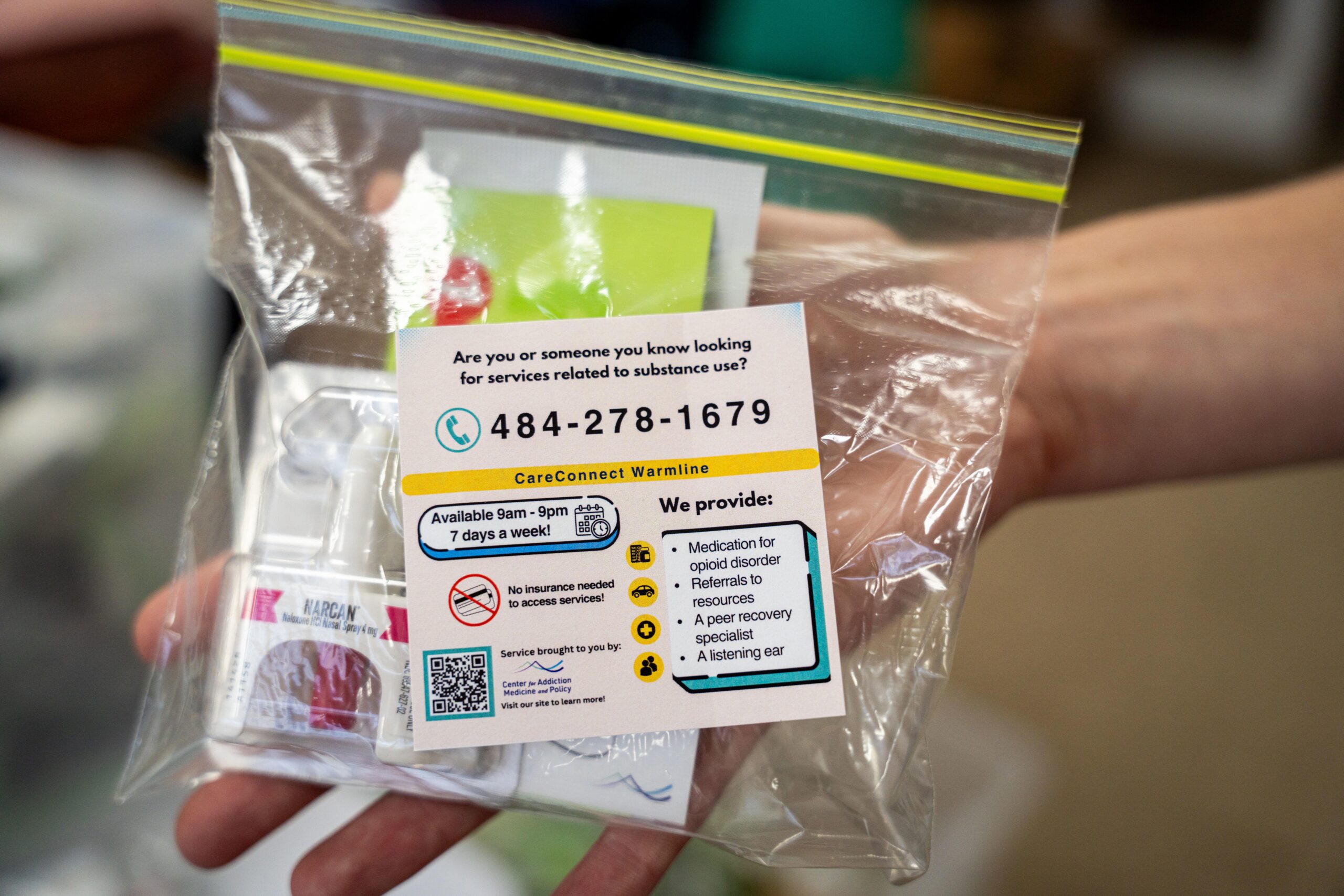
This packet, distributed by the Center for Addiction Medicine and Policy, contains Narcan, a medication used to reverse opioid overdoses.
Language barriers, access gaps
Spanish-speaking Puerto Rican populations already struggled to access healthcare, a previous CPI investigation found. Latino providers are even rarer in substance use programming.
Esteves Camacho, who is from Caguas, Puerto Rico, was one of those providers. She was raised in Philadelphia and saw people lit up when she spoke in their language.
“It’s important to have the cultural context of being Puerto Rican,” she said.
But language is not the only barrier. After Hurricane María, Puerto Rican migration to Philadelphia increased, driven in part by people seeking medical care and social services. Experts told CPI that some arrivals include people with substance abuse problems, often low-income and eligible for Medicaid, a pattern also reflected in multiple studies.
In those cases, access to treatment often depends on Medicaid, the public program that funds a significant share of behavioral health services, and one that is now under threat. Government medical assistance covers nearly half the cost of treatments for people with substance use disorder, according to the Kaiser Family Foundation (KFF).
A 2017 state hearing revealed that 1,626 Hispanic Philadelphia residents from Air Bridge neighborhoods sought drug or alcohol treatment programs through the city’s Medicaid-funded behavioral health service, Community Behavioral Health (CBH). Today, residents in those same areas are more likely to use Medicaid-funded centers, especially for substance use disorder.
In 2021, 114,268 Pennsylvanians with substance use disorder relied on the aid, KFF data show. As of July 2025, Philadelphia topped the list for total Medicaid behavioral health spending, tallying $151,422,117, according to Pennsylvania health department data.
However, Latinos in the city are more likely to be underinsured or enrolled in Medicaid.
Medicaid funding hangs in the balance as the Trump administration slashes budgets dedicated to harm reduction services and raises barriers to enroll or renew benefits.
Pennsylvania is expected to be among the hardest-hit states, with an estimated $46 billion decrease over the next decade, according to KFF. Peer support, inpatient and outpatient rehabilitation, and mental health support could be destabilized for nearly 18 million people across the U.S.
“La cuerda parte por lo más finito [The rope always breaks at its weakest point]. Who are those 18 million Americans? Are they drug users? Probably. People who are on methadone. People who are using drugs,” sociologist Camila Gelpí-Acosta said.
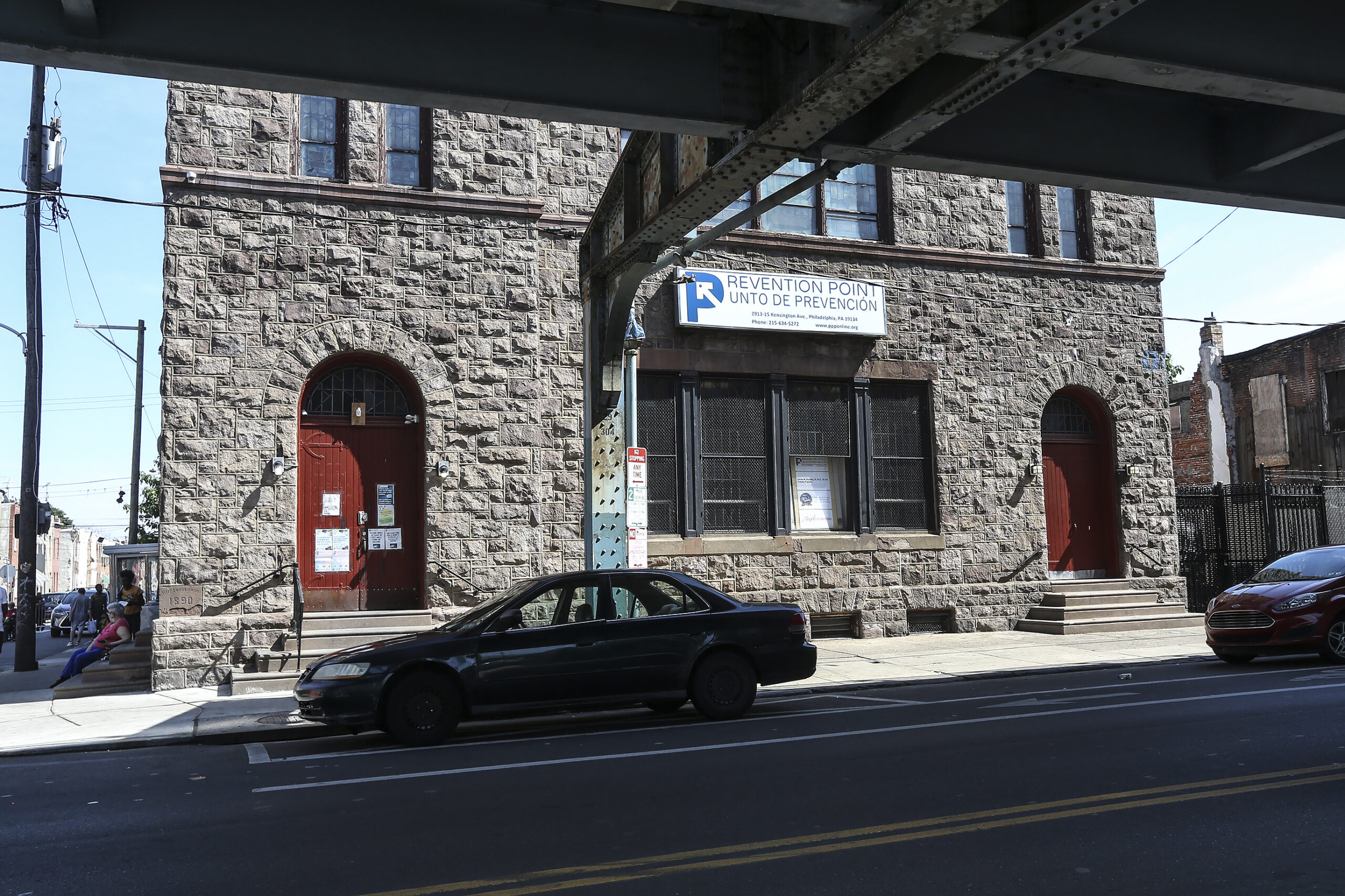
Prevention Point 2913 Kensington Avenue on June 14, 2022.
‘A blueprint of what not to do’
Puerto Rico, along with the Dominican Republic, has some of the highest rates of injection drug use in the Caribbean. Those areas also see increased demand for selling and buying drugs, says Josh Romig, assistant special agent in charge at the Drug Enforcement Administration’s Philadelphia field office, who has tracked drug trafficking for 26 years.
“Puerto Rico is positioned closely to the Dominican Republic, [which] sees Puerto Rico as a very viable and much easier option to import drugs, especially small amounts,” he said.
The drug trade has collided with a layered public health crisis, Gelpí-Acosta said.
“We’re talking about these six decades of using Puerto Rico as a launch pad toward the Northeast,” Gelpí-Acosta said. “It’s created a humongous drug-using population on the island in the archipelago.”
Limited addiction programs in Puerto Rico have pushed people to relocate to cities like Philadelphia, while drug trafficking organizations thrive on demand, as documented by an academic study in Centro Journal. Gelpí-Acosta and her wife founded El Punto en La Montaña, one of the few syringe exchange programs in Puerto Rico, seeing how drug use contributes to other health conditions such as HIV and hepatitis C. She underscored that weakened healthcare systems act as a catalyst for migration.
“They left the island because there were no services, because of many other complicated reasons,” Gelpí-Acosta said. “And here in the United States, they find services, but they end up homeless anyway, and they continue to use drugs. And then the HIV, overdose, and hepatitis C vulnerabilities remain unaddressed.”
Without treatment, people living with HIV or hepatitis C face chronic health complications, cancer, and death. Advocates and scholars say that failing to treat these conditions overlooks critical pieces of harm reduction.
“It’s not just an opioid crisis. … It’s a syndemic of overdose displacement. It’s structural neglect,” Valdez said.
The GANAS Health Initiative supports Latino men in Philadelphia, addressing overlapping needs such as housing, education and poverty.
A recent major drug bust illuminates those connections. In late October 2025, federal and state officials indicted 33 alleged members of a prominent drug trafficking ring in Kensington, led by dealers from Puerto Rico based in Philadelphia.
Allegedly, the head of the trafficking group allowed members to sell drugs “in exchange for rent,” according to the Department of Justice.
The drug economy in North Philadelphia persists in the zip codes with the highest poverty rates and the least social services funding.
“We have a blueprint of what not to do with alcohol from 1920 to 1932,” sociologist Gelpí-Acosta said, referring to the Prohibition era. “And yet, here we are. We continue to illegalize drugs, creating more dangerous drugs out there, not under our control. [Except] they’re not trafficking whiskey, they’re trafficking fentanyl.”
Valdez said health conditions that arise from substance use disorders emerge from what he calls “maladaptive coping skills” to stress. For example, suppressed trauma and limited access to Latino providers can exacerbate issues leading to self-medication.
Latinos often face complications with providers who are unfamiliar with their migration stories, family values, or cultural taboos around mental health and addiction.
“Language and cultural competency or responsiveness is not there,” Valdez said, rattling off other complications such as health insurance limitations and poor-quality housing. “Folks in power, whether we like it or not, would prefer an easy solution to a problem that’s really complex.”
“Culture is such a big part of our health context,” Seeburger said. “To not have that, we are not equipped in the city to provide adequate healthcare.”
Kensington Avenue on Feb. 22, 2024. Mayor Cherelle L. Parker vowed to end Kensington’s open-air drug market for good.
`No other way’
In Portugal, addiction specialists have identified possible solutions such as decriminalizing drugs, aiming to eliminate barriers to housing and jobs. Portugal’s program changed how law enforcement interacts with users: Rather than arrest people who use or have drugs on them, police officers work as social workers do and connect people to treatment options. In addition, the government provides free healthcare to expand access to methadone treatment.
“If we are dealing with a chronic relapsing disease, we must keep the investment that equates to this situation,” Portugal’s drug policy pioneer, João Goulão, said in a 2023 panel discussion at Georgetown University. He acknowledged doubt of the policy’s effectiveness and decreased participation in the program but blamed a lack of government-backed funding in social services.
Unintentional overdoses and long-term rehabilitation efforts require a health-first approach, he insisted.
This stands in stark contrast to Mayor Parker’s strategies.
“The single biggest risk factor for drug overdose death is a period of incarceration,” Seeburger said. “We’re not telling the whole story if we’re looking at acute overdose.”
Despite multiple requests, Parker remained unavailable for comment.
In 2024, Lozada told CPI the city must “respond aggressively” to address addiction.
“There are people we are allowing to die on those streets because we are afraid of what the optics will look like. We have to bring people into our system. There’s no other way,” she said. “We have to make people healthy in our system. … In a way, the optics are not going to look good.”
Pichardo, who helps people living on the streets and reverses multiple overdoses weekly, called these methods “retraumatizing.”
“They’re going to relapse because there’s no real structure. There’s no desire. It was forced upon them,” she said. “Twenty years of addiction does not equal 16 days of treatment.”
Luis Soto, a peer specialist, agrees. While he applauded Lozada’s efforts, he rejected the idea of coercing people into treatment.
“We cannot force recovery to no one,” he said. “That’s not the way.”
After his infant son died in 1995, Soto began using drugs. Between 1996 and 2011, he was incarcerated off and on, becoming entrenched in the drug trade along Kensington Avenue. For a few years, he was unhoused, until an outreach worker — whom he calls a mentor — helped him.
“In 2011, that’s when I opened my eyes,” Soto recalled.
The following year, Soto began working as a peer specialist. But he noticed a lack of Latino-focused services and shelters.
“There are no substance use treatment [or] resources specifically for women who speak Spanish. There is nowhere in the city of Philadelphia,” Seeburger confirmed. “There is one program for men who speak Spanish.”
“The city [doesn’t] have the background to provide services to this population,” he said.
But Roz Pichardo, Luis Valdez, and Luis Soto do, and they aim to fill that gap. Soto wants city officials to invest in more Latino peer specialists who can reach people where they are.
Guillermo Santos Jr. holds the ashes of his father, Guillermo Santos Sr., who died of a fentanyl overdose in 2021, outside his childhood home near Kensington and Allegheny on Aug. 19, 2025.
In August, Santos prepared to move into a new apartment with friends in New York City. He has been away from home for two years, during which cycles of addiction lured in a new wave of people, some of them his friends in their early 20s.
Determined, he won’t give up. Santos says he draws strength from the solidarity he sees in Kensington, where his mother, families, neighbors, and advocates keep pushing for help that matches the scale of the crisis.
“That plea for unity is what keeps me so alive to this kind of stuff,” Santos said.
With the sun setting, he strategizes how to get his record collection to his new home.
As he closes the door to his childhood home, his father’s ashes remain on the mantle above the fireplace.
This article was produced by Centro de Periodismo Investigativo, a nonprofit center for investigative reporting in Puerto Rico, and made possible by a fellowship from the Centro de Periodismo Investigativo’s Journalism Training Institute.
Weeks earlier, Brown was accused of robbing campaign donations from another Democrat more than a thousand miles away in Florida.
Brown, a Florida-based finance manager and campaign consultant who works primarily with Democrats and social justice groups, has over the last decade faced criminal charges for embezzlement and other allegations of financial fraud in at least four states totaling in excess of half a million dollars, according to an Inquirer review of hundreds of pages of court documents, campaign finance filings, and business records.
The misdeeds Brown, 46, has been accused of range from shaving money from campaign accounts to setting up sham jobs and billing nonprofits for work that was never performed. Two years ago, Brown paid $330,000 after pleading no contest to felony embezzlement in California, where prosecutors said she stole from a nonprofit and set up a fake loan under the name of a consultancy where she previously worked.
Through it all, she avoided jail time and, using three different surnames, continued to work on political campaigns from Florida to Philly, persuading candidates to trust her with access to their bank accounts and thousands of dollars in donations to their causes.
Khambrel Davis, a Florida-based criminal defense attorney representing Brown, says this is all a misunderstanding. He said that Brown is the victim, and that a rogue employee of Brown’s firm stole from the PACs in Philadelphia and St. Petersburg and then disappeared “in the wind.”
Davis said Brown reached out to law enforcement but has not heard back.
“[Brown] just can’t locate her, and now it’s kind of all coming back on her,” Davis saidin a phone interview Saturday. “Her history is coming up, so everyone’s just assuming she must have done this. They’re kind of putting together this narrative that she’s just this habitual thief.”
Records show Brown as the only employee of her firm who ever filed campaign finance paperwork for the campaigns now accusing her of theft.
Today, Brown’s whereabouts are unknown to the campaigns she once worked for.Her firm’s address listed in campaign finance filings is a mailbox rental shop, and her website went dark in February. She is registered to vote in Coral Springs, Fla., a suburb of Fort Lauderdale.
Davis, who said he has been in contact with Brown, declined to say where she is. He insisted she has been “transparent and forthcoming with everyone.”
Several other campaign consultants based in Florida told The Inquirer that they have identified suspicious transactions made last year while Brown had access to their accounts. And multiple law enforcement agencies are investigating Brown’s accounting, including the FBI, according to two sources who requested anonymity because they were not authorized to discuss the ongoing probe.
State Rep. Chris Rabb at a forum hosted by the 9th Ward Democratic Committee on Dec. 4, 2025. He is a Democratic candidate running to represent Philadelphia’s 3rd Congressional District.
Before Brown joined Rabb’s campaign in August, she worked with high-profile Democrats in New York, Illinois, and Florida — at times using her married name, Yolanda Rumph.
Her clients included former Tallahassee Mayor Andrew Gillum, who waged a closely watched campaign for Florida governor against Ron DeSantis in 2018. Gillum was indicted for making fraudulent transactions out of the same political action committee that Brown worked for — but prosecutors dropped the charges in 2023 after a jury deadlocked and the court declared a mistrial.
Rabb, a progressive who is considered among a handful of front-runners in the race to replace outgoing U.S. Rep. Dwight Evans, has said he is committed to continuing his campaign for the 3rd Congressional District seat, despite losing money that heis unlikely to see returned before the May 19 primary.
In January, before allegations of the missing money became public, Rabb was already significantly trailing the financial front-runner in the race. Records show he had about $100,000 in his campaign account at the start of the year, while State Sen. Sharif Street reported having more than five times that amount.
Rabb’s campaign declined to say how much money was taken, citing the ongoing law enforcement investigation.
Abe White, Rabb’s spokesperson, said in a statement that the campaign identified the unauthorized withdrawals after finding errors in its most recent campaign finance filing, which encompasses fundraising and spending activity from October to December.
He said the campaign had protocols in place to reconcile accounts and “immediately took action” after coming across the suspicious activity.
“The campaign’s former treasurer manipulated every campaign safeguard in place,” White said. “It’s what these people do.”
Davis, Brown’s attorney, said his client intends to pay back the funds he alleges were stolen by the employee.
“She’s just going to take responsibility,” he said, “and try to remedy the situation.”
No warning signs until it was too late
Very few people working on political campaigns have access to the bank accounts powering their efforts. The accounts see thousands — and sometimes millions — of dollars flowing in and out in a relatively short period of time.
That means candidates put significant trust in their treasurers, who are official designees responsible for ensuring campaigns comply with finance laws.
Matthew Haverstick, a managing partner with Kleinbard LLC, a Philadelphia-based law firm that often works with political campaigns and causes, said it is essential that campaigns thoroughly vet campaign treasurers and compliance consultants.
“This is why you work hard at the front end of this stuff in campaigns,” Haverstick, who is not working for any candidate in the race, said of Rabb’s situation. “When you’re deep into a campaign and a problem like this blows up, it has the potential to end the campaign. So the right time to spend a little more money and try a little harder is before you hire somebody.”
Rabb, a five-term Pennsylvania state representative, entrusted his account to Brown shortly after launching his run for Congress in July. Rabb had not worked with Brown before, and records show no other campaign in Pennsylvania has paid her or her firm for work.
The three other candidates who have so far raised the most money in the 3rd Congressional District race have treasurers based in Philadelphia. But it’s not unheard of for candidates to use consultants and staff from out of state, especially when they are seeking federal office.
White, Rabb’s spokesperson, said Brown “came highly recommended”and “there was no reason for concern” when she was hired.
Elsewhere, other Democrats who hired Brown said they similarly saw no warning signs until it was too late.
In January, the chairperson of a PAC backing St. Petersburg Mayor Ken Welch said she had reported Brown to law enforcement for misspending $207,000.
Brown had worked with the group, called the Pelican PAC, for about a year. Campaign finance records show that last fall, several transactions were made to transfer money from the PAC account into O’Reilly Business LLC, a separate entity that Brown controls.
Davis said Brown’s employee also had access to that LLC, and said it was the employee who moved the money.
Adrienne Bogen, who heads the Pelican PAC, said Brown was removed as the PAC’s treasurer in January.
She was hired following “standard onboarding practices,” Bogen said.
“Nothing was identified that raised concerns,” she added.
In this 2023 file photo, St. Petersburg Mayor Ken Welch greets the audience during a Suncoast Tiger Bay Club meeting at Tropicana Field in St. Petersburg, Fla.
In reality, Brown had been under indictment on 10 criminal charges in Alameda County, Calif., where she worked as a finance manager for Oakland-based consultancy BMWL & Partners. She was charged under the name “Yolanda Cheers.”
In 2019, prosecutors in court documents accused Brown — referring to her as “Cheers” — of routing money belonging to a nonprofit client of the consultancy to herself and then, years after being fired, taking out unauthorized loans in BMWL’s name. She faced charges of aggravated white-collar crime, grand theft by embezzlement, forgery, and identity theft, and could have faced years in prison.
The same year she was indicted in California, Brown faced legal trouble elsewhere. Authorities in Washington, D.C., accused her of fraud, allegations that came to light after she filed for bankruptcy in Minnesota.
Brown had previously worked as a grants manager for the local government in D.C. and owed the city $52,700 while filing for bankruptcy, the D.C. attorney general wrote in court papers. Authorities alleged that in 2014 and 2015, Brown asked two city contractors to hire her fiance,and she billed them for work that he supposedly completed — even though he was on an active-duty military assignment at the time.
The Minnesota bankruptcy case moved forward. Much of Brown’s debt was erased, but not the money that she owed in Washington.
On the other side of the country, the criminal case in California languished for nearly five years.
In February 2024, Alameda County District Attorney Pamela Price announced that her office had reached a plea deal. Brown pleaded no contest to one count of grand theft by embezzlement andwas required to pay $330,000 in restitution. She served no jail time.
Davis cast the no-contest plea as Brown’s attempt to put the charges behind her — not as an admission of guilt.
“Court could be kind of dragging on people,” he said. “It’s a very big burden.”
‘Some people will inevitably give in to temptation’
After the campaign allegations against Brown in St. Petersburg and Philadelphia trickled out this year, others who have worked with her said they reported activity they think is suspicious to law enforcement.
Jamie Jodoin, a Florida-based political and financial consultant, said she worked on a PAC last year that hired Brown as its treasurer. She said Brown wired $25,000 out of the PAC’s bank account and later closed the account without notifying the candidate.
“We have no idea where that went,” Jodoin said.
Political campaigns, which are small and short-lived entities, often don’t carry insurance against internal theft. But they do usually have review processes.
The Federal Election Commission recommends candidates put in place internal controls such as risk assessment and monitoring in order to prevent the misappropriation of funds. The guidance says that bank statements should be reviewed by someone who is not also writing the checks.
“Absent some basic checks and balances,” the commission says in its recommendations, “some people will inevitably give in to temptation.”
Campaign buttons for State Rep. Chris Rabb Dec. 4, 2025. A Democratic candidate running to represent Philadelphia’s 3rd Congressional District.
White said the Rabb campaign had safeguards in place. But he added that, after the unauthorized withdrawals were identified, the campaign newly established “airtight financial protocols” such as “strengthening oversight and internal controls.”
The campaign recently named a new treasurer and hired a new compliance firm.
Bogen, of Welch’s PAC in St. Petersburg, said Brown’s access to internal systems and bank accounts was “immediately revoked” once it was discovered that she had made suspicious transactions.
Brown, Bogen said, “has not been heard from since.”
Half days are disappearing in the Philadelphia School District.
Beginning in the 2026-27 school year, the district won’t have a single early dismissal — for teacher planning, report card conferences, or any other purpose.
Student attendance tumbles whenever Philadelphia has a half day, and parents scramble to plan for childcare when they happen, Superintendent Tony B. Watlington Sr. said.
At the superintendent’s request, the board amended the 2026-27 calendar, changing eight previously scheduled half days to zero.
Some days previously scheduled for professional development will now be full days off for students, and report card conferences — previously held over two half days — will now be scheduled on a single day off for students.
“When we have half days in the school district, it significantly impacts our student attendance,” Watlington told the board. “We now have clear data over 3½ years that when we have half days for professional development and the like, it lowers our overall student attendance.“
Watlington has emphasized student attendance as a key driver of academic improvement, and overall, Philadelphia’s student and teacher attendance has risen during his tenure, which began in 2022.
But half days were responsible for the largest single year-over-year drop in attendance in recent years. In December 2025, 54% of district students attended school 90% of the time or more, down from 66% over the same time period in 2024.
In January 2026, regular student attendance was 51%, down from 53% in January 2025, a dip Watlington said was “largely attributed to disruptions in the calendar.”
Controlling for half days, regular student attendance would have been 70% last month — proof, Watlington said, that half days need to disappear.
“This is very important,” the superintendent said, “because we know if we can get student regular attendance up, kids just learn more when they’re in school more.”
Half days planned for March, April, and May this school year will remain on the calendar, but the half day planned for students’ last day of the school year, June 11, is now a full day.