Tag: topic-link-auto

  • Philly kids get guaranteed recess, bathroom, and water breaks for the first time under a new school wellness policy

    Philly kids get guaranteed recess, bathroom, and water breaks for the first time under a new school wellness policy

    For the first time, Philadelphia School District students have guaranteed bathroom and water breaks. Recess is promised. Silent lunches and collective punishment are forbidden.

    Call it a victory for joy.

    Philadelphia’s school board just adopted the district’s first-ever comprehensive wellness policy, two years after a group of parents began pushing a “joy campaign” because, parent Jamila Carter said, “we refused to accept the unacceptable.”

    Jamila Carter speaks during a news conference celebrating the wellness policy / joy campaign at the school district building, in Philadelphia, on March 2, 2026.

    In the past, said members of Lift Every Voice — a grassroots, Black-led parent organization growing in numbers and clout in the city — students inside some district schools weren’t allowed to drink water during the day. Entire classes were punished for the misdeeds of one or two students. And sometimes, parents sent their children to school in diapers because children weren’t always allowed to use the bathrooms.

    The group of moms weren’t trained advocates, but they learned quickly, pushing the school board and district to codify rights that weren’t always guaranteed.

    Now they are — on Thursday night, the school board signed off on bathroom and water breaks and mandatory recess and movement breaks for every 90 minutes of seated time for elementary school students.

    With pom-poms and dancing, a drum line and cheers, Lift Every Voice members celebrated their victory at district headquarters Monday.

    But the two-year path to winning their demands was often sobering, and the district officials who locked arms with them at a news conference were slow at first to sign off on the policy.

    Superintendent Tony B. Watlington Sr. speaks during a news conference celebrating the wellness policy / joy campaign, at the school district building, in Philadelphia, on March 2, 2026.

    Superintendent Tony B. Watlington Sr., who now routinely talks about joy as one of the district’s core values, credited the parents for pressing the issue.

    “You know what Frederick Douglass once said? He said, ‘Power concedes nothing without a demand. It never has and it never will.’ And so I want to thank the members of Lift Every Voice. I wish we had done this much sooner. But I’m pleased that we’re doing it today,” Watlington said.

    Amy Faulring, a parent of two district students, said it was a happy day, but the campaign taught parents a sobering thing.

    “Even in some of the best schools, these practices were happening, in buildings that families fight to get into and feel proud of,” said Faulring. “That tells us this wasn’t about one school, it was about culture, and culture does not shift by accident. When basic protections aren’t written down, they become negotiable. They depend on which building you’re in or which parent feels empowered enough to speak up. Codifying this into policy changes that.”

    The policy, Faulring said, “sets a clear floor, it creates consistency, and it makes dignity non-negotiable.”

    The priorities, said Lift Every Voice member LaTi Spence, came right from kids.

    “Our children told us what was wrong,” said Spence. “They told us what it felt like to sit in classrooms thirsty, how hard it was to have silent lunches. They told us where joy was missing.”

    Councilmember Kendra Brooks said the policy fixes things that parents and students had to tolerate for too long.

    “When we think about children holding their bodies because bathroom access is protected, or sitting for hours without movement, or rushing through silent lunches, that’s not discipline,” Brooks said, who was a parent activist before she was a politician. “That’s not discipline. That’s not rigor. It’s actually dehumanizing.”


  • Philadelphia is on the short list to host the 2028 Democratic National Convention

    Philadelphia is on the short list to host the 2028 Democratic National Convention

    Philadelphia is one of five cities on a list of finalists to host the 2028 Democratic National Convention, a major gathering that could generate millions of dollars in economic impact for the city.

    Party officials are also considering Boston, Atlanta, Chicago, and Denver, the Democratic National Committee announced Monday.

    The convention will be held from Aug. 7 to Aug. 10, 2028, according to the party. If Philadelphia is selected, the convention would likely be held at the Xfinity Mobile Arena at the South Philly stadium complex, the largest indoor event space in the city.

    DNC leaders and advisers are expected to make site visits this spring before selecting a host.

    The DNC said in its statement that, in picking a host city, party leaders will consider how each city uses “new and innovative approaches in response to the challenges and opportunities that arise from hosting an event of this magnitude.”

    The Republican Party’s 2028 convention will take place in Houston.

    Top Philadelphia Democrats and donors formed a host committee — called Pick Pennsylvania — in recent months and, in partnership with Democratic Mayor Cherelle L. Parker, submitted a bid to host the 2028 convention.

    In a statement, Parker said that Philadelphia’s selection as a finalist “reflects the strength of its proposal and the broad coalition of civic, business, labor, and community leaders committed to hosting a convention that is inclusive and memorable.”

    Parker, who is up for reelection next year, would no doubt play a major role in planning for an upcoming convention. So would Gov. Josh Shapiro, a Democrat currently running for reelection who is considered a contender for the 2028 presidential nomination.

    The president of the Philadelphia host committee is David L. Cohen, a prominent party stalwart, and the chair is Daniel J. Hilferty, the CEO of Comcast Spectacor, which owns the Xfinity Mobile Arena.

    Hilferty also led Philadelphia’s successful bid to host World Cup games this year.

    He said in a statement that “there is no city more excited, more invested and more prepared than Philadelphia to host the 2028 Democratic National Convention.”

    Philadelphia — the largest city in a critical swing state — last hosted a presidential nominating convention in 2016 at the South Philly arena, then called the Wells Fargo Center. Democrats that year nominated former Secretary of State Hillary Clinton, who was later defeated by Republican Donald Trump.

    Before 2016, the city hosted major party conventions seven times, including the 2000 Republican National Convention. The GOP that year nominated then-Texas Gov. George W. Bush, who went on to serve two terms in the White House.

    Former U.S. Rep. Bob Brady, the chair of the Philadelphia Democratic City Committee, said Monday that he had spoken multiple times to DNC leaders about the prospect of the city hosting the 2028 convention.

    “We got a great reputation from the last convention we had,” Brady said. “Plus we’re going to show off the city very well this summer, which will really give us a good look.”

    The news that Philadelphia is again a finalist to host the DNC is a welcome development for the city’s tourism and hospitality industry, as party conventions draw thousands of visitors and can be a boon for spending in the city.

    The 2016 event generated $230.9 million in economic impact, according to the Philadelphia Convention and Visitors Bureau. Of that, about $132.9 million came from direct convention-related spending, and $11.1 million was generated by state and local taxes. That convention attracted more than 5,000 attendees and some 29,000 other visitors, leading to a record-breaking year for hotels in Center City, the bureau reported.

    In this July 28, 2016 file photo, then-Democratic presidential nominee Hillary Clinton walks on stage at the arena in South Philly to accept the nomination of her party on the final night of the DNC.

    If selected, Philadelphia may be uniquely positioned to host an influx of visitors.

    The city’s hotel supply has expanded since the last time it hosted a DNC — and there are more than 19,000 hotel rooms in the city, according to Visit Philadelphia. That’s an increase from about 16,000 available in 2016.

    The city has also invested millions of dollars on improvements to public spaces, transit hubs, and security ahead of several major events this year, including World Cup games, the MLB All-Star Game, and the commemoration of the 250th anniversary of America.

    Conventions are also major logistical undertakings. Attendees include high-profile politicians and celebrities, and protests often form outside the events. The federal government has over the last two decades designated both parties’ nominating conventions as National Special Security Events, meaning they are deemed at high risk for terrorism and require federally led security.

    In Chicago in 2024, the U.S. Secret Service led security planning alongside 16 other public safety entities, according to a local NBC affiliate. The law enforcement and security plan included designated protest zones, airspace monitoring, and traffic control.

    Host committees are also responsible for raising millions of dollars to pay for parties, transportation for delegates, construction and venue upgrades, as well as other logistical services such as consultants, accountants, and communications staff.

    In 2016, the Philadelphia host committee raised about $85 million — $10 million of which came from taxpayers in the form of a state grant. Other top contributions came from corporations, unions, and wealthy individual donors.

    The Chicago host committee two years ago raised about $97 million, according to the Chicago Sun-Times. The city’s tourism bureau estimated the 2024 convention generated $371.4 million in economic impact.

  • A Montco man is charged with soliciting sex with a 15-year-old girl after paying for pictures of her feet

    A Montco man is charged with soliciting sex with a 15-year-old girl after paying for pictures of her feet

    A 76-year-old Hatboro man has been charged with allegedly soliciting sex acts with a 15-year-old girl after paying her and her younger sister for pictures of their feet, Montgomery County District Attorney Kevin R. Steele said Monday.

    Dennis Reilly was arrested Friday and charged with multiple sex-related offenses. He was being held at the Montgomery County Correctional Facility in lieu of $99,000 cash bail, Steele said.

    On Thursday, two adults went to the Hatboro police station to report an alleged interaction between a man and a 15-year-old girl, Steele said.

    One of the adults, whose son is in a relationship with the teen girl, said he learned that she and her younger sister were recently outside walking a dog when they were approached by a man who was later identified as Reilly, according to the affidavit of probable cause.

    They were having a conversation when Reilly allegedly asked about the socks they were wearing, and this interaction led to Reilly paying the girls “around $100″ for pictures of their feet, according to the affidavit.

    The father of the 15-year-old girl’s boyfriend learned the girl was allegedly receiving multiple texts from Reilly asking for more photos of her feet, the affidavit said. The father then texted Reilly from his own phone pretending to be her and saying she had a new phone; thus, the teen would no longer be getting Reilly’s texts on her old phone.

    The father had a text exchange with Reilly that allegedly showed Reilly wanted to meet the girl to take more photos, specifically asking that she wear the “shoes you wore to school,” according to the affidavit.

    A Hatboro detective then used the father’s phone to continue pretending to be the teen girl and asked Reilly if she could do more to make $300, the affidavit said.

    Reilly allegedly made sexually explicit suggestions for what he wanted in exchange for the additional money and arranged for a meeting at a Wawa in Hatboro. The detective confronted Reilly at the Wawa and revealed Reilly had been texting with the police, the affidavit said.

    Reilly allegedly admitted he had a “foot fetish,” but he claimed he had not intended to go through with any sexual contact with the girl, the affidavit said.

    The detective asked to see the alleged pictures on Reilly’s phone of the girl’s feet, and Reilly “then accessed his cell phone photo library where I was able to see a large quantity of images of feet,” including the 15-year-old girl’s, the detective said in the affidavit.

    Reilly’s phone was taken as evidence.

    Hatboro Police Chief Mark Ruegg said that anyone who believes they have had a similar encounter with Reilly can call the Hatboro police at 215-675-2832.

  • Chester County’s CEO is off the job after about a year, as the county appoints new leadership

    Chester County’s CEO is off the job after about a year, as the county appoints new leadership

    Chester County has appointed a new top administrator after the county’s chief executive officer left his position Monday, officials said.

    David Byerman, who served as the county’s CEO for just over a year, left Monday. Erik Walschburger was immediately appointed to replace him, and will be overseeing the county’s staff and budget under the title of “county administrator” rather than CEO, a spokesperson said.

    Staff were informed of the changes Monday afternoon in an email from the county’s commissioners. The message, which announced Walschburger’s appointment, didn’t mention Byerman. His staff page was removed by Monday afternoon.

    The county did not give a reason for Byerman’s departure. He did not answer a phone call seeking comment.

    Walschburger comes into the role having served as deputy county administrator since 2022, with more than 15 years of experience in the county. As deputy, he oversaw the internal day-to-day operations. Prior to joining the county’s administrative side, he worked in the district attorney’s office, prosecuting criminal cases, managing diversionary programs, writing grants, and defending convictions on appeal.

    The email from the commissioners also said Megan Moser, the county’s chief experience officer, will continue in her role under a new title — the “deputy county administrator.” Moser joined the county last year, and has been involved with the response to multiple election errors in recent months.

    The county is searching for an acting deputy county administrator for operations to replace Walschburger, the email said.

    Byerman was appointed as CEO in November 2024, after years serving as the director of Kentucky’s legislative research commission and as the secretary of the state Senate in Nevada. As county CEO, Byerman oversaw the county’s more than 2,600 employees and managed the annual budget of roughly $730 million.

    “We look forward to working with the entire leadership team — and all of you — to establish and sustain a culture of collaboration and mutual support as we continue to provide the highest quality services to the residents of Chester County,” the commissioners said in their email to staff.

    The staff changes come as the county has made repeated missteps in recent elections, the most significant forcing more than 12,000 voters to cast provisional ballots in the November election. Residents told the commissioners last month that it had rattled their trust in county operations.

    This suburban content is produced with support from the Leslie Miller and Richard Worley Foundation and The Lenfest Institute for Journalism. Editorial content is created independently of the project donors. Gifts to support The Inquirer’s high-impact journalism can be made at inquirer.com/donate. A list of Lenfest Institute donors can be found at lenfestinstitute.org/supporters.

  • Aubrey Plaza’s latest directorial venture is an animated series about a cat named Kevin

    Aubrey Plaza’s latest directorial venture is an animated series about a cat named Kevin

    Delaware native Aubrey Plaza’s new adult animated series, Kevin, is set to premiere on April 20.

    The Prime Video comedy, written and executive produced by Plaza, was co-created by the Parks and Recreation actress and Joe Wengert, who also serves as showrunner. All eight episodes will drop together in more than 240 countries and territories.

    The streamer also revealed the show’s title sequence, which features the original song, “I’m Coming Home,” performed by actor Jason Schwartzman who plays a lead role in the series. Schwartzman co-wrote the song with series composer Dan Romer.

    The Prime Video animated comedy “Kevin,” co-created, executive produced, and starring Aubrey Plaza, is set to premiere on April 20.

    The show follows a cat named Kevin who leaves his humans after their unexpected breakup, and moves into a pet rescue in Astoria, Queens. He joins a “chaotic band of misfit animals,” who help him figure out what he “truly wants out of life,” according to the series logline.

    Schwartzman voices Kevin and Plaza voices Dana, one half of the broken-up couple Kevin leaves behind.

    The stacked cast includes Whoopi Goldberg as Cupcake, John Waters as Armando, and comedian Aparna Nancherla as Judy. They each play Kevin’s new cat roommates at the local pet rescue, which is run by Seth (Gil Ozeri) and his dog Brandi (Amy Sedaris).

    The Prime Video animated comedy “Kevin,” co-created, executive produced, and starring Aubrey Plaza, is set to premiere on April 20.

    Plaza, a Wilmington native, who started out performing improv and sketch comedy at New York’s Upright Citizens Brigade Theater, first rose to stardom playing the deadpan but hilarious April Ludgate in Parks and Recreation.

    This image released by Lionsgate shows Aubrey Plaza in a scene from “Megalopolis.” (Lionsgate via AP)

    Plaza has previously produced (and starred in) The Little Hours, the 2020 Black Bear, and the 2022 crime film, Emily the Criminal. She made her directorial debut in the 2021 series Cinema Toast, directing and writing the episode, “Quiet Illness.”

  • Snow and ice are expected Tuesday in Philly, but a warm-up is on the way

    Snow and ice are expected Tuesday in Philly, but a warm-up is on the way

    The remnants of winter are about to go on spring break — or at least yield to a “dirty warm-up” — but they evidently are going to take a messy parting shot at the region Tuesday morning.

    The National Weather Service has posted a winter weather advisory effective at 5 a.m. until 11 a.m. for the entire region for a mix of snow (not much) and ice beginning around daybreak before flipping to just plain rain.

    The precipitation is expected to start around daybreak as snow that won’t be plowable, or maybe even visible, but the more significant threat would be a glaze of freezing rain, said Nick Guzzo a meteorologist with the National Weather Service Office in Mount Holly.

    At most, snow would accumulate a few tenths of an inch, he said, transitioning to freezing rain and just plain liquid rain throughout the region before the morning is over.

    But coinciding with the peak morning commuting period, the timing is a concern, he added.

    Temperatures are due to be near freezing when the precipitation gets underway but climb into the mid-30s by midmorning. The March sun should make quick work of melting anything that freezes on the roadways.

    Then the temperature might not drop below freezing for the next 10 days, and make it to 70 degrees Sunday.

    But don’t expect it to be “bright and beautiful,” said Bob Larsen, senior meteorologist with AccuWeather Inc.

    A major pattern change is underway across the nation

    “It’s what we like to refer to as a ‘dirty warm-up,’” said Larsen. Here’s the dirt: It is due to be cloudy at least through Friday with rain possible Thursday and Friday and highs in 50s. Normal highs are in the upper 40s.

    The sun is due back Saturday with readings in the 60s, and perhaps into the 70s on Sunday, but with another chance of rain. Larsen said at least two days, and maybe four, next week are expected to feature highs in the 70s, before a cool down perhaps next Thursday or Friday.

    The surges of mild air are related to a major pattern change in the upper atmosphere. For the last several weeks, the atmosphere has aligned to favor cold, snow, and ice in the East and springlike temperatures in West.

    That’s about to reverse, as the West gets its turn with winter and the East gets a spring tease.

    But don’t put in the screens just yet, Larsen advises.

    “March can be a cruel month,” he said, and winter isn’t prone to go gently. “We’re not going to slam door on it yet.”

    He that some signs are pointing to a more-wintry end to the month, which would not be at all unusual.

    “In my mind there’s only two seasons, summer and winter,” Larsen said, and spring and fall are when they fight their turf wars.

  • The Flyers made changes to their defensive structure that Rick Tocchet thinks will ‘help in the long run’

    The Flyers made changes to their defensive structure that Rick Tocchet thinks will ‘help in the long run’

    TORONTO ― Heading into the holiday break, the Flyers ranked ninth-best in the NHL at 2.75 goals against per game.

    Then the wheels started to fall off.

    Thanks in part to a six-game losing streak that saw them allow a league-worst 31 goals while scoring 12, the Flyers’ goals-against average ballooned to 3.90. Between Christmas and the Olympic break, it was the third-highest.

    Woof. That’s quite a plummet.

    So with time off, first-year coach Rick Tocchet and his staff went to work and modified the defensive structure.

    “We’re not strict man on man, but we’re trying to be more aggressive,” he said of the new system. “When you’re a younger team, I think you’ve got to give guys a little more, simpler rules.

    “I think that’s why I’ve decided to go a little bit differently, less reach for our team; I think that’s going to help in the long run. Now, when we change things a little bit — say graduate — we’ll go a little bit more complex, but I think right now, we’ve got to play simpler.”

    When Tocchet came to Philly, he brought his box-and-one defensive structure. During training camp, he called it “a very aggressive zone” defense where he wanted his players to double and triple up when they could to keep the puck on the outside.

    It worked. Until it didn’t.

    The opposition started to get inside, taking advantage of breakdowns and scoring more weak-side or backdoor goals. According to Natural Stat Trick, at five-on-five, up to the holiday break in December, the Flyers allowed the fifth-fewest high-danger chances (301) and second-fewest high-danger goals (26).

    From late December to the Olympic break, they still held tight, allowing the second-fewest high-danger chances (158). But they also gave up 26 goals, the fifth-most in the league. That’s a 16% shooting percentage in 20 games, rising from 8.6% across the first 36.

    “It’s pretty similar,” defenseman Travis Sanheim said of the new system, “just a couple of different reads for the forwards and helping us pressure down low. So, just end up killing plays a little bit quicker.”

    Changing a system, even slightly, is a big deal because one misread or forgotten change can cause some havoc. It’s still a work in progress, but in the three games since returning to action, the high-danger shooting percentage has dropped to 12.5% for opponents (three goals on 24 high-danger chances). On Saturday against the Boston Bruins, they allowed five high-danger chances at five-on-five, with the Bruins’ lone goal considered high-danger by Natural Stat Trick; it came off a hard seam pass that hit the leg of Charlie McAvoy and bounced in.

    “I think it might cut down on some of those weak-side goals, because [there’s] a little bit more man-to-man in certain scenarios,” Sanheim said. “And I think when it comes to some of those weak-side goals, that’s kind of been our issue with some of the reads. And if we can limit that, that would be huge for us.”

    Breakaways

    Forward Travis Konecny did not participate in power-play practice at morning skate, and according to Tocchet is a game-time decision. … Dan Vladař will get the start in goal. It will be his third start in four games since the 2026 Milan Cortina Olympic break, and he is coming off a masterful performance in the Flyers’ win against the Bruins on Saturday. … Forward Denver Barkey is expected back in the lineup on Monday after being a healthy scratch on Saturday against the Bruins. A native of Newmarket, Ontario, which is part of the Greater Toronto Area, the winger will have a large contingent in attendance for his first NHL game at Scotiabank Arena. … It is also the first game back in Toronto for Nikita Grebenkin, who was acquired March 7, 2025, in the deal that sent Scott Laughton north. … Defenseman Noah Juulsen did not participate in morning skate due to illness. … On Sunday, the Flyers acquired forward Boris Katchouk, 27, from the Minnesota Wild for defenseman Roman Schmidt, who was acquired from the Tampa Bay Lightning on Dec. 8. Katchouk has spent the majority of the season in the American Hockey League and was acquired by the Wild from the Lightning in late December. The 6-foot-2, 212-pound winger has 36 points across 179 NHL games with the Lightning, Chicago Blackhawks, and Ottawa Senators. Katchouk was also a member of the 2018 World Junior team that won gold for Canada.

  • Former Delsea Regional High student alleges sexual abuse by math teacher in the 1980s

    Former Delsea Regional High student alleges sexual abuse by math teacher in the 1980s

    A former Delsea Regional High School student has accused a math teacher of sexually abusing him years ago and is suing the South Jersey school system for failing to protect him.

    A lawsuit filed in Superior Court in Gloucester County on Friday alleges the former student was subjected to predatory conduct and sexual abuse by former teacher Cheryl Cousin in the 1980s.

    According to court documents, the alleged abuse occurred when the student, David Reeves, was a junior and senior and not yet 18. Cousin was a math teacher in the district, but he was not her student, the lawsuit said.

    Attorney Jeffrey P. Fritz said Cousin groomed Reeves for abuse using her position of power and trust, and district employees who knew or should have known about the abuse failed to stop it.

    “Schools have both a legal and moral obligation to protect children entrusted to their care,” Fritz said in a statement. “When school officials become aware of suspected abuse, the law requires immediate reporting to authorities and decisive action which didn’t occur here.”

    Cousin, reached for comment Monday, said she was stunned by the allegations. She has retired from the district and is not defendant in the lawsuit, though she is named in the complaint.

    “I think I’m in shock right now. I guess I better call a lawyer,” she said, declining further comment.

    Delsea Regional Superintendent Fran Ciolciola did not respond to email and voicemail messages. The school board’s solicitor, Frank P. Cavallo Jr., said the district had not received a copy of the lawsuit Monday and declined to comment.

    Reeves, 55, said he decided to use his name in the case to encourage other child sex abuse victims, especially male victims, to come forward. (The Inquirer does not identify victims in sexual assault cases without their consent).

    The alleged sexual assault occurred between the 1987-88 and 1988-89 school years, Fritz said. There were at least 20 alleged assaults at various locations, the lawsuit alleges.

    David Reeves is shown in his Delsea Regional High School senior year photo.

    Reeves, who is now a health and physical education teacher in Camden public school schools, said in an interview he was afraid to come forward until now.

    “I have nothing to be embarrassed about,” Reeves said. “I am a victim who is standing up and putting my name on it.”

    Married and the father of two, Reeves said the alleged abuse began his junior year when a fellow basketball team member told him that Cousin liked him and gave him her number. Cousin was the girls’ cheerleading coach, he said.

    Reeves said he visited Cousin’s apartment and the two began a sexual relationship that continued into his senior year. Cousin purchased two pairs of Air Jordan sneakers for him and let him drive her Camaro, he said.

    Reeves said the relationship was well-known in the school among students and teachers. Girls refused to date him because they believed he was involved with Cousin, he said.

    “It couldn’t have been any more well-known,” Reeves said.

    According to the lawsuit, the then-school Principal Frank Borelli called Reeves to the office to question him about their suspicions. Reeves said he didn’t want to cause problems for Cousin so he denied that he was involved with her.

    “I was a child. I was scared to death,” he said.

    Borelli later became the district’s longtime superintendent and currently serves on the school board. He is not named as a defendant in the lawsuit, but the school board is listed as a defendant. Borelli did not respond to a message seeking comment.

    The lawsuit also alleges that the district failed to make mandatory reports of suspected abuse to the state’s child welfare agency, according to the complaint.

    It was filed under the 2019 New Jersey Child Victims Act, which extended the statute of limitations to allow child sex abuse victims to sue their abusers and the institutions that protected them until they turn 55. Reeves turned 55 Saturday.

    The law made it easier for child sexual abuse victims to seek justice in civil court. Thousands of cases have since been filed, many of them involving public and private schools and the Roman Catholic Church in New Jersey.

    Experts say victims of sexual abuse often struggle to disclose the trauma they experienced until an older age, often between 40 and 55.

    Reeves said his wife of 16 years, Stacy, encouraged him to come forward with his allegations. He said he has suffered from post-traumatic stress disorder and has battled drug and alcohol addiction.

    He wants to advocate for other victims, especially boys. It is estimated that 1 in 4 girls and 1 in 6 boys experience some form of sexual abuse before age 18, according to Child USA, a Philadelphia-based children’s rights advocacy group.

    “It does not matter if I am male. I was a kid,” Reeves said. “It has affected me a long time.”

  • Washington Square West historic district has been overturned in court

    Washington Square West historic district has been overturned in court

    The Washington Square West historic district, which covers 1,441 properties in Center City, has been overturned in a ruling by Court of Common Pleas Judge Christopher Hall.

    Approved in 2024, the historic district was the largest in decades, covering a variety of buildings that date between 1740 and 1985. It was supported by the nonprofit Preservation Alliance of Greater Philadelphia and the Washington Square West Civic Association.

    Opponents of the district, led by Washington Square West residents Jonathan Hessney, Colin Murphy, and Joshua Zugerman, contended that historic regulations would add cost burdens to property owners. In court, their lawyer, Dan Auerbach, argued against what he described as flaws in the Philadelphia Historical Commission’s consideration of the case.

    Auerbach took issue with the involvement of Emily Cooperman, a member of the Historical Commission, in drafting the nomination. He argued that her role in working on the case was improper, even though she recused herself from voting.

    Auerbach also argued that the nominators did not present substantial evidence at the commission meeting to support their claims that the large geographic area covered constituted a unified historic district.

    “There was literally no evidence to support that,” Auerbach’s legal brief says. “Nobody testified. The nominators seeking designation put no facts or evidence into the record.”

    In his one-page ruling, the judge appeared to agree with the challengers of the Washington Square West Historic District on those two arguments.

    In a brief footnote, containing the only explanation for his ruling, Hall described the nomination as “not in accordance with the law.”

    He cited an ethics provision in the Philadelphia code that no city officer or employee “shall assist another person by representing him directly or indirectly … in any transaction involving the city.”

    (function() {
    var l2 = function() {
    new pym.Parent(‘washwest_rescinded’,
    ‘https://media.inquirer.com/storage/inquirer/projects/innovation/arcgis_iframe/washwest_rescinded.html’);
    };
    if (typeof(pym) === ‘undefined’) {
    var h = document.getElementsByTagName(‘head’)[0],
    s = document.createElement(‘script’);
    s.type = ‘text/javascript’;
    s.src = ‘https://pym.nprapps.org/pym.v1.min.js’;
    s.onload = l2;
    h.appendChild(s);
    } else {
    l2();
    }
    })();

    In a phone interview, Cooperman said that she worked on the nomination largely because she had helped write a version of the case for a Washington Square West historic district that was presented in 2009, long before she sat on the commission.

    She said she believed that the small amount of paid work she did on behalf of the Washington Square West Civic Organization in bringing the 2024 nomination up-to-date was legal, as long as she recused herself from the case before the commission.

    “There have been other members of the commission that have had work before the commission, so that’s particularly surprising,” Cooperman said about Hall’s ruling. “That’s what the whole recusal aspect of the city’s ethics regulations are for.”

    Hall also agreed that the supporters of the historic district had not presented sufficient evidence to make their case.

    “The decision to designate the district, moreover, was not supported by ‘substantial evidence,’” Hall wrote.

    At the Feb. 19 hearing, Hall persistently questioned the city’s lawyer, Leonard Reuter, to present support for the Historical Commission’s ruling, dismissing his statements as “a conclusion” and not evidence.

    “At this time, the Historical Commission staff is working with the city’s Law Department to review the court’s decision and are preparing to evaluate their options,” city spokesperson Bruce Bohri said in an email. “We don’t have further comment beyond that right now.”

    Auerbach also argued that the historic merits of the case presented by the nominators to the commission were flawed, but the judge did not appear to rule on that claim.

    “Washington Square West was one of the most significant historical district designations in the city’s history,” Auerbach said in an email statement. “There was absolutely no evidence to support it. We are delighted that it has been overturned.”

    The appeal of the Washington Square West historic district is one of several recent cases against the Historical Commission.

    A judge ruled against a challenge to the Spruce Hill Historic District, a decision that is currently being appealed to Commonwealth Court. Another case against the Northwest Apartments Thematic Historic District — which covers 30 properties from the first half of the 20th century — has not yet been ruled on.

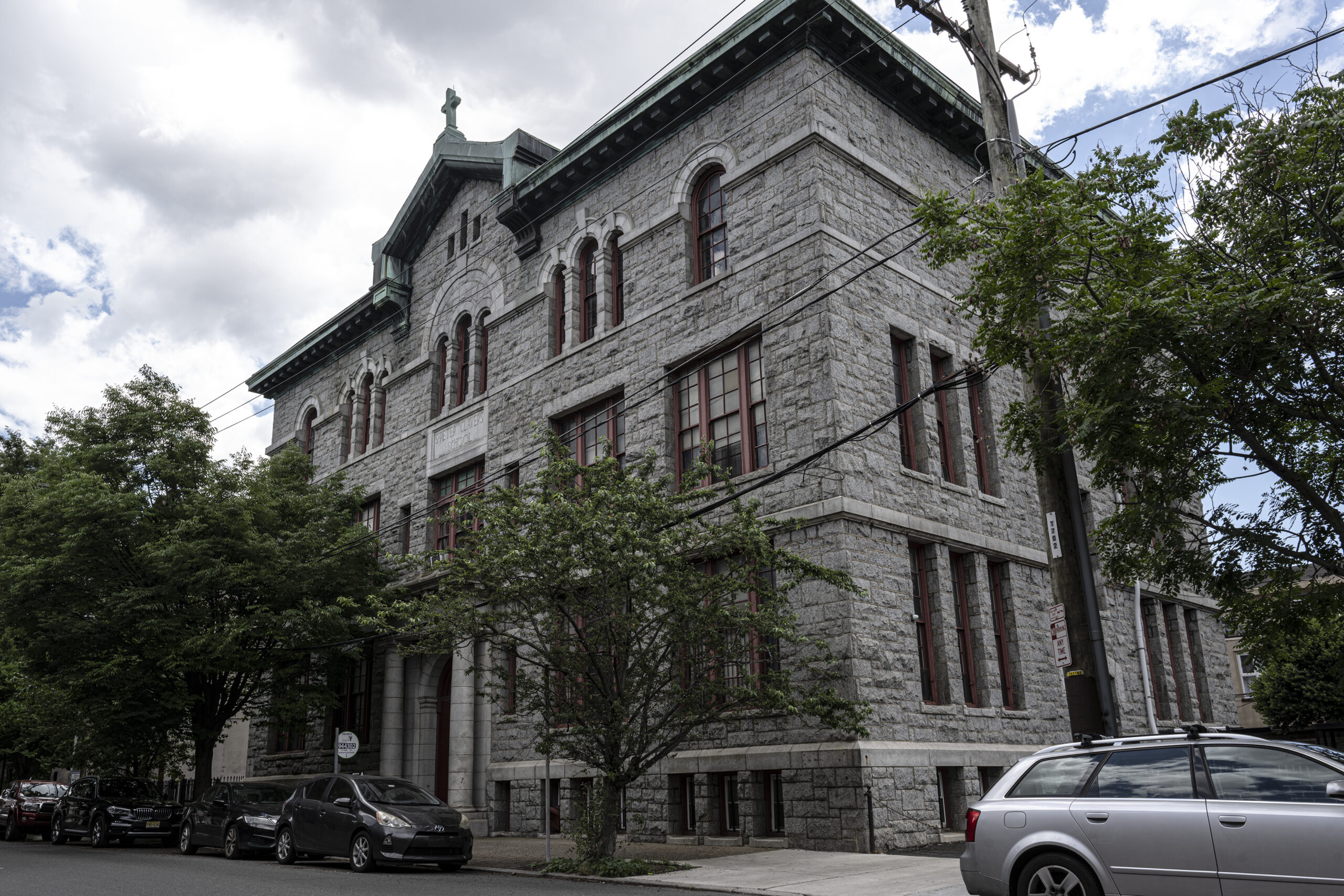
    St. Peter Claver’s School, in the Washington Square West historic district.

    Hall’s ruling will have no effect on cases that have already been decided.

    But Auerbach says it will require preservationists to be more careful in framing their cases: “Future nominations will have to be based on real evidence with procedures that far better protect property owners,” he said in an email.

    Historic nominations are frequently challenged, but the courts generally find in favor of the commission, trusting its expertise on historic matters.

    “This comes as a surprise and disappointment,” said Paul Steinke, head of the Preservation Alliance. “To our knowledge, the provisions of the city’s historic preservation ordinance with respect to designating historic districts were followed. We are confused as to what aspect of that process did not comply with the law.”

  • Trump’s war of choice with Iran makes a mockery of the Constitution | Editorial

    Trump’s war of choice with Iran makes a mockery of the Constitution | Editorial

    Donald Trump, the president of war, keeps killing people at home and abroad.

    Over the weekend, Trump presided over the assassination of Iran’s supreme leader. While many Iranians celebrated the end of Ali Khamenei’s 37-year reign of terror, the reckless gambit does not hide the fact that Trump violated the Constitution (again) by going to war without consent from Congress and unleashed more chaos.

    This was a war of choice by Trump, who was egged on by the bloodthirsty leaders of Israel and Saudi Arabia. The administration provided no evidence of an imminent threat from Iran.

    More alarming, Trump acted with no mandate, no plan, and no idea of what comes next.

    The bill is already coming due. At least six U.S. service members have been killed, and five others seriously injured. Trump blithely said more soldiers will likely die. Apparently, that’s the price of a senseless war started by an unstable leader.

    Oil prices jumped, and the stock market slumped, underscoring how Trump’s latest folly will cost Americans blood and treasure.

    The conflict has already spread to other countries across the Middle East, as Iran fired drones and missiles at Israel, Kuwait, Bahrain, Iraq, Oman, Syria, Qatar, and the United Arab Emirates. Dozens have been killed.

    Israel, the U.S.’s eager bombing partner, responded with airstrikes in Lebanon that killed at least 31 people. The volatile situation risks spinning out of control.

    Plumes of smoke from two simultaneous strikes rise over Tehran, Iran, on Monday.

    The FBI and the U.S. Department of Homeland Security are on high alert for terror attacks.

    Can either agency be trusted to keep Americans safe?

    Under Trump, scores of FBI counterterrorism agents have been fired, while DHS has undergone a mass exodus. DHS has been focused on arresting immigrants, killing Americans, and trampling the Constitution, while FBI Director Kash Patel was last seen pounding beers at the Olympics.

    Meanwhile, Pete Hegseth, the weekend TV commentator turned unfit and unqualified defense secretary, claimed that taking out Iran’s top leaders was not about regime change.

    That’s good, because the U.S. has a failed history when it comes to forcing its will on other countries, something presidents never seem to learn.

    So, what is the plan? No one knows — not even Trump, whose rationale keeps shifting.

    Trump urged Iranians to take control of their country. But that is impossible to do without weapons or outside support. Indeed, more than 30,000 Iranians were killed in January after they took to the streets.

    Defense Secretary Pete Hegseth listens to Chairman of the Joint Chiefs of Staff Gen. Dan Caine, during a news briefing at the Pentagon, Monday.

    Hegseth would not rule out sending American troops into Iran. That undercuts the president’s campaign promise to end costly forever wars like the ones in Vietnam — which Trump dodged — Iraq, and Afghanistan. Wars that cost thousands of lives and trillions in taxpayer dollars.

    Then again, the Trump doctrine is day-to-day and subject to hourly change, fits and starts, and overnight zigzagging.

    In fact, Trump now says the Iran war will go on until the U.S. achieves its objectives — whatever they are. Just last week, the president said Iran could avoid military conflict if it would end its nuclear weapons program.

    Iran agreed with negotiators last week to never stockpile enriched uranium. But even as the talks showed progress, Trump decided to start bombing while he hosted a $1 million-a-ticket fundraiser at his private club in Palm Beach, Fla.

    Let’s not forget Trump withdrew from a deal in 2018 that limited Iran’s nuclear enrichment and stockpiles of enriched uranium. He also claimed last year that Iran’s nuclear program was “obliterated” after a bombing campaign by the U.S. and Israel.

    Demonstrators rally in support of the U.S. and Israeli strikes on Iran, at the Iranian Embassy in Tbilisi, Georgia, on Sunday.

    Trump created all this chaos. An unserious president is leading the country into serious trouble. And the Republicans in Congress who have the power to stop him do nothing.

    Killing Iran’s leader comes on the heels of Trump ordering the illegal invasion and arrest of Venezuela’s president.

    That came after Trump’s illegal boat strikes in Central and South America that have killed more than 100 people without any evidence of wrongdoing.

    Meanwhile, Trump has threatened to take over Greenland, make Canada the 51st state, and attack drug cartels in Mexico. He continues to diss European allies, while doing nothing to stop Russia’s war crimes in Ukraine.

    Republicans who control Congress continue to defer to Trump, who is quickly turning the United States into a rogue state.

    Now, with no clear exit strategy in Iran, Trump appears poised to continue to try to bomb his way to a Nobel Peace Prize, while making a mockery of America.